Thirteen years ago, Martino Cartier sat next to a lion for a self-made music video for his charity to a cover of Katy Perry’s pop anthem “Roar.”
He dances with cancer survivors around a fire, and at the end of the video, giant letters spelling out CANCER engulf in flames. Today, Cartier’s hair salon logo — the face of a golden lion wearing a crown — is plastered all over his business’ windows.
“Lions are fierce, and they don’t back down,” said Cartier, 51, a celebrity stylist running for Gloucester County commissioner, as he walked through his property.
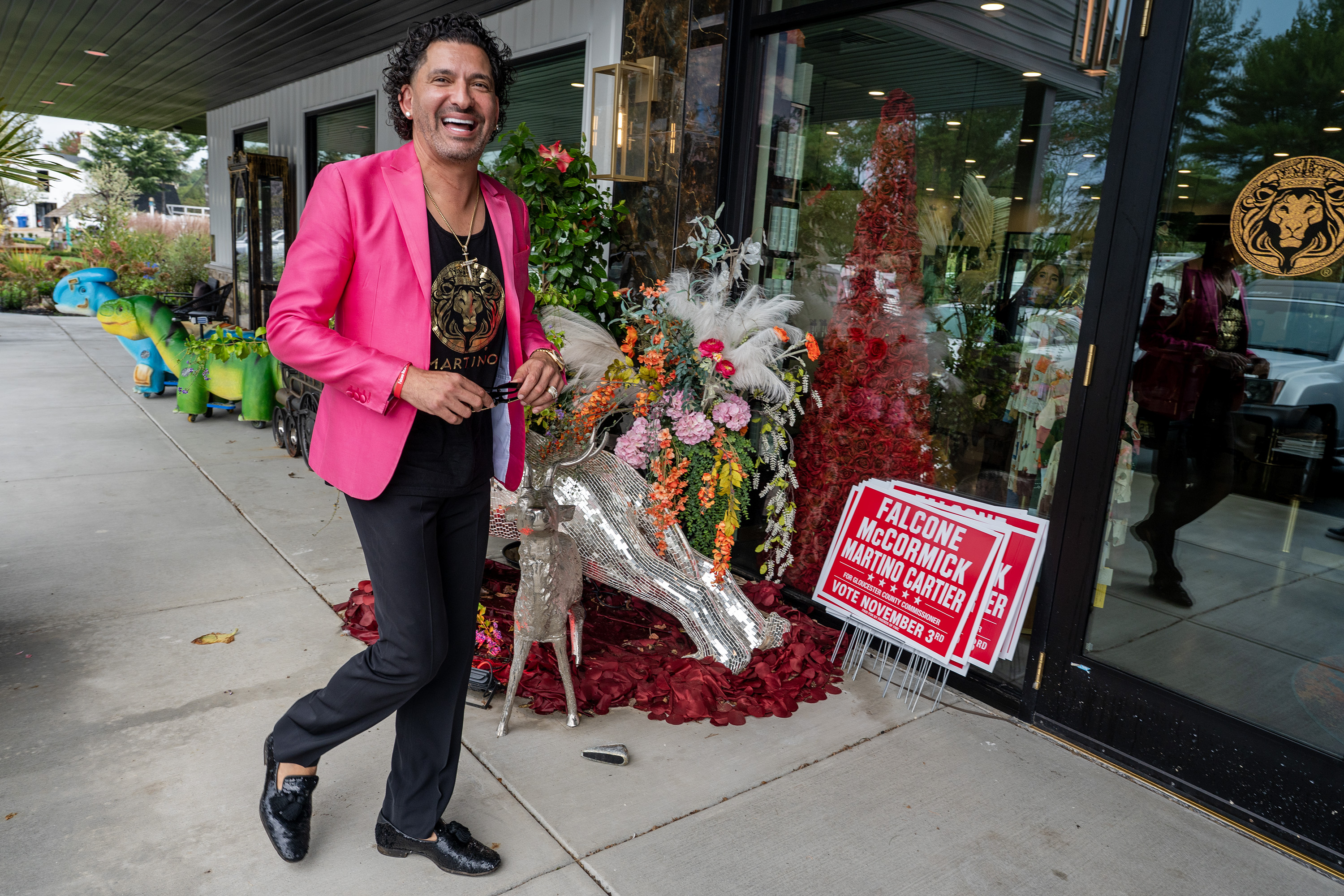
Cartier lives in the Sewell section of Washington Township down a long driveway lined with American flags blocked off by a golden gate adorned with two lions, right next to the salon. Outside, there’s a fountain with, yes, more lions.
His property is home to the nonprofit he runs: Wigs and Wishes, which gives wigs to women with cancer and grants wishes to children with cancer, like seeing their favorite celebrities or enjoying a petting zoo — there is also one of those on his property.
The farm and animal petting zoo on the grounds of the compound of celebrity hair stylist Martino Cartier Wednesday, Oct. 14, 2026. Tom Gralish / Staff Photographer
Cartier is one of three Republicans running to oust the three incumbent Democratic county commissioners up for re-election: Jim Jefferson, Joann Gattinelli, and Matthew Weng. But his eccentricity, online footprint, and controversial past have attracted an outsize amount of attention, particularly from the Gloucester County Democratic Committee, which posts about him regularly.
His critics have touched on a slew of issues, includingCartier’s past legal troubles, his President Donald Trump-branded apparel, and remarks on his Christian podcast that some have found offensive — to name a few.
Cartier, who said his first priority would be trying to fire Sweeney, has fiercely pushed back against the committee’s attacks on him.
Just a few years ago, Washington Township Democrats celebrated Cartier as a “hometown hero” on a parade float. In 2021, DemocraticU.S. Rep. Donald Norcross awarded him a Making a Difference Award at the county’s NAACP gala. Over several years, Gattinelli, one of the Democrats running for reelection, supported Cartier’s charity work, and he supported her mayoral bids. Cartier said they have not spoken since he launched his campaign.
“When you’ve walked side by side me and have seen the thousands of lives that I’ve changed, you should all be ashamed of yourselves,” Cartier said, ranting in a phone interview Sunday.
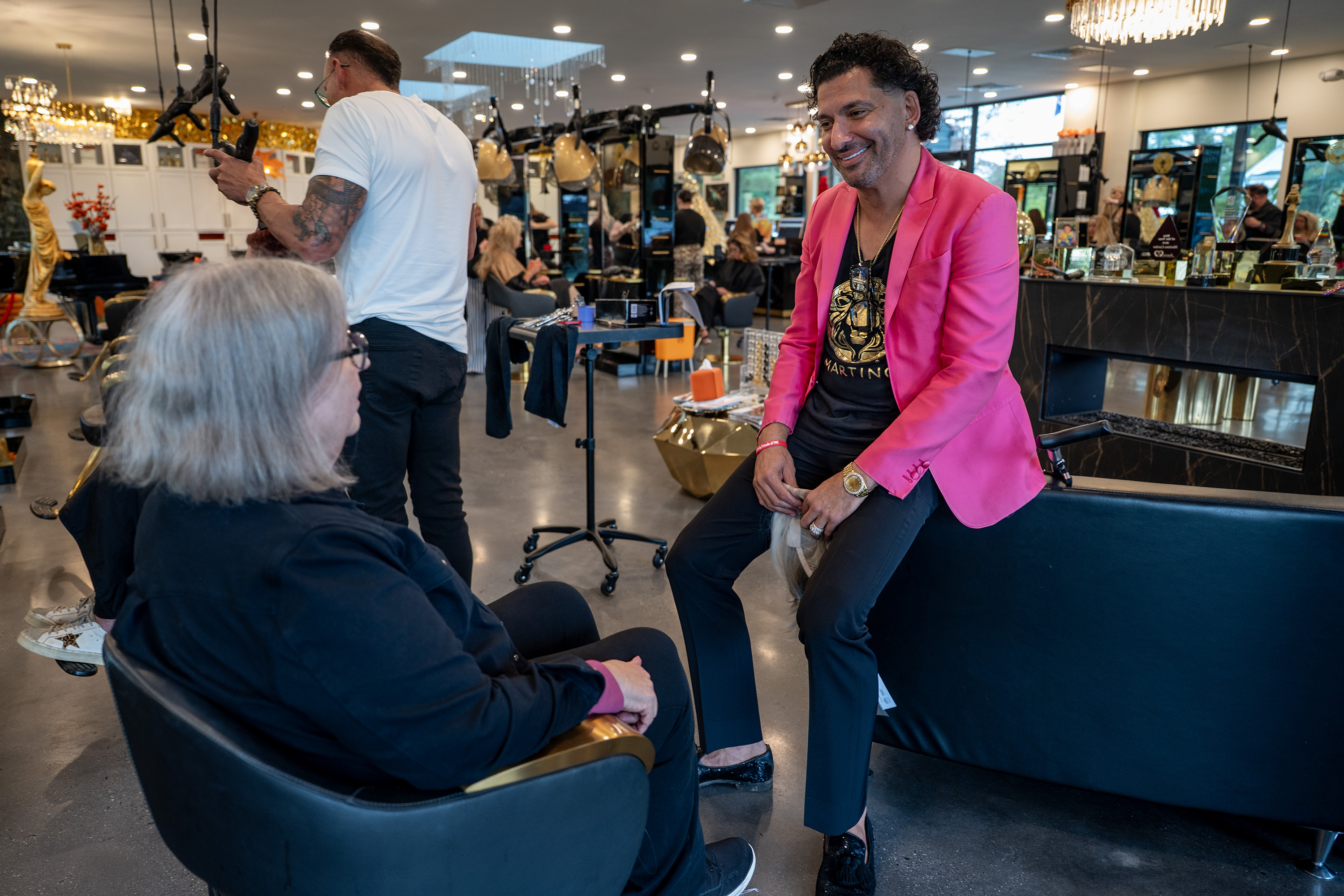
Celebrity hair stylist Martino Cartier is visited by one of his Wigs & Wishes clients, Nina Sorelle (left), at his salon, Wednesday, Oct. 14, 2026.Tom Gralish / Staff Photographer
It is a similar tone to what he has taken on Facebook Live and at a nonpartisan candidate forum hosted by the Gloucester County Chamber of Commerce.
“They can smear my name, they can smear my good work, but I won’t tolerate it, and I will defend it,” he snapped at the forum, and proudly held up his 2022 Ellis Island Medal of Honor, which honors immigrants and descendants of immigrants. He told an attendee that he does not know how to speak without passion.
Cartier was born Baby Boy Ayad and then named Martin Clinton Maguire Jr. when his Irish American parents adopted him in Jersey City. Cartier has publicly shared a story about how his biological mother was sent to the United States from Egypt for an abortion but she gave him up for adoption instead.
As Cartier grew up, he became tired of being told he didn’t look like a Maguire.He hated the name. So when he was expecting his first son in 1999, he rushed to get his name legally changed to Martino Ayad Cartier so his child would not have the same experience, he said. He came up with the name with the help of a hairstyling client. His name has now been passed on to his adult son Martino Brigade Cartier, toddler son Israel Martino Cartier, and newborn Judah Martino Cartier.
“I hope it keeps getting passed on,” he said.
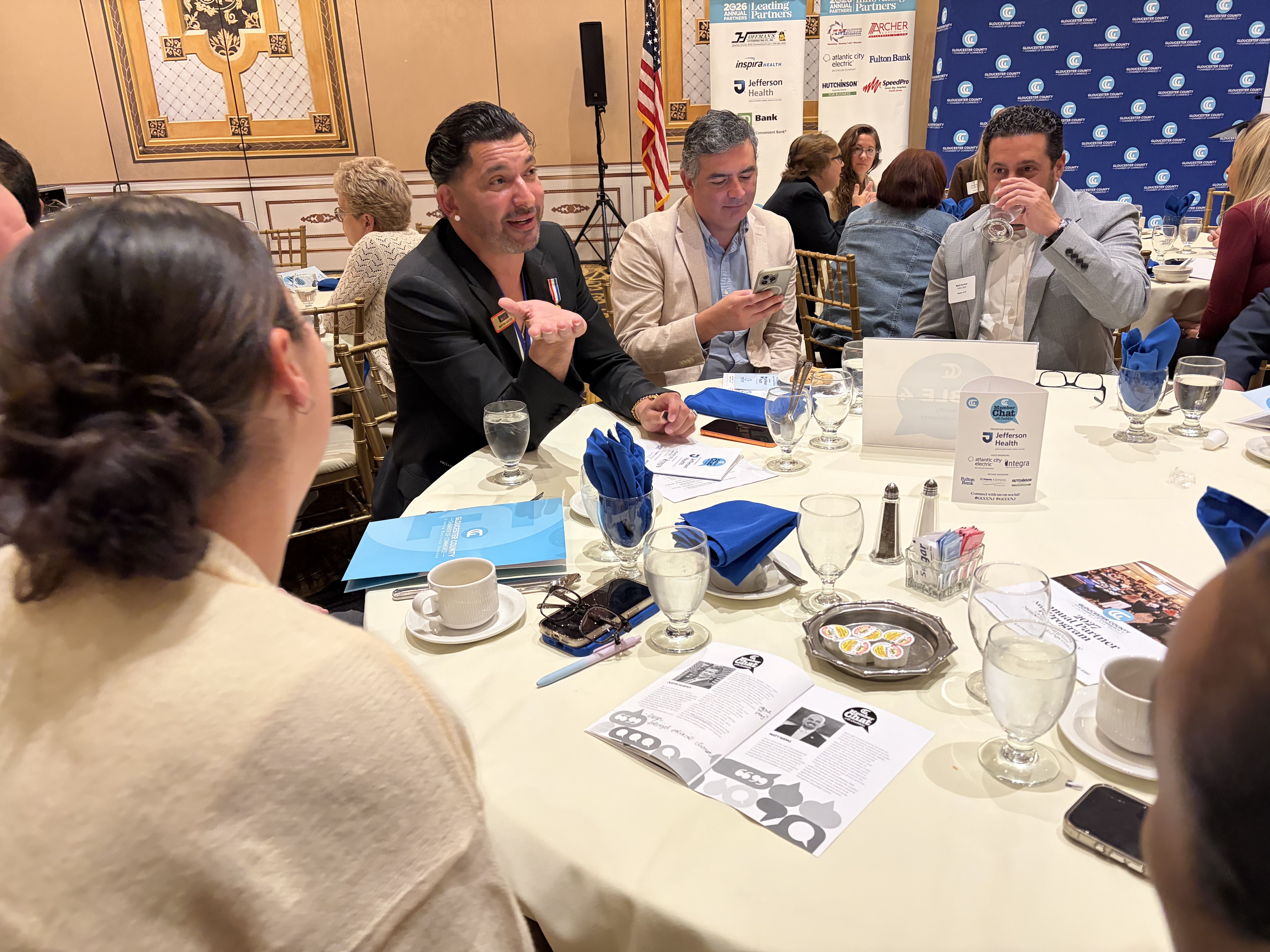
Martino Cartier speaks with attendees at a roundtable at a Gloucester County Chamber of Commerce forum on Oct. 7.Aliya Schneider / Staff
A chaotic reality TV appearance launching his success
Back in 2008, Cartier’s salon was featured as a chaotic mess onTabatha’s Salon Takeover, a reality TV show in whichhost Tabatha Coffey helped struggling salons. Coffey was shocked by dog poop on the floor of Cartier’s office, dirty work stations, and his touchy-feely approach with clients and staff, calling them names like “hun, babe, sweetie” and even licking them.
“Their husbands don’t call them that so they like coming here and feeling good,” Cartier said in the episode.
He opened up to Coffey about living beyond his means and owing hundreds of thousands of dollars to fund his lavish lifestyle.
“I’m $300,000 in debt,” he told her in the episode. “I had to borrow money from my mom, take out a second mortgage on my house, just to keep the salon afloat.”
When she returned for another episode twoyears later, Coffey was thrilled to hear Cartier share that he had improved his personal finances as well as the salon’s.
“I didn’t see him licking, lap dancing, or doing anything inappropriate with clients,” Coffey also noted in the reunion episode.
Cartier, who said he is now friends with Coffey, credited much of his success to his appearance on the show — and Coffey has made appearances with Wigs and Wishes. He has since traveled around the world as the face of various hair products, had his own brand on Home Shopping Network (HSN), and has been paid thousands for public speaking gigs.
“It was one of the greatest things that ever happened to me, and people all over the globe know that,” he said.
Celebrated by some, admonished by others
On a rainy Octoberday, Cartier dug through cabinets in his salon office for a wig that would match the natural hair color of a woman with cancer.
To his side was Gianna Cartier, 36, his then-pregnant wife, who helps run the charity as its “chief compassion officer” and manages the salon. Baby Judah was born days later.
Martino Cartier in the office at his salon, Wednesday, Oct. 14, 2026, with his personal assistant Gigi Donofrio (center) and wife Gianna Cartier (right).Tom Gralish / Staff Photographer
The Democratic committee has pointed out that Cartier’s nonprofit, registered as Friends Are By Your Side, is listed as noncompliant in the state’s charity database. Cartiersaid it was because his accountant requested an extension for the charity’s tax filings, and shared a photo of the returns dated Oct. 26.
The committee calls Cartier an “admitted criminal fraudster,” referencing his 2003 guilty plea over falsely reporting his car as stolen, which has since been wiped from his record because of a pretrial intervention program.
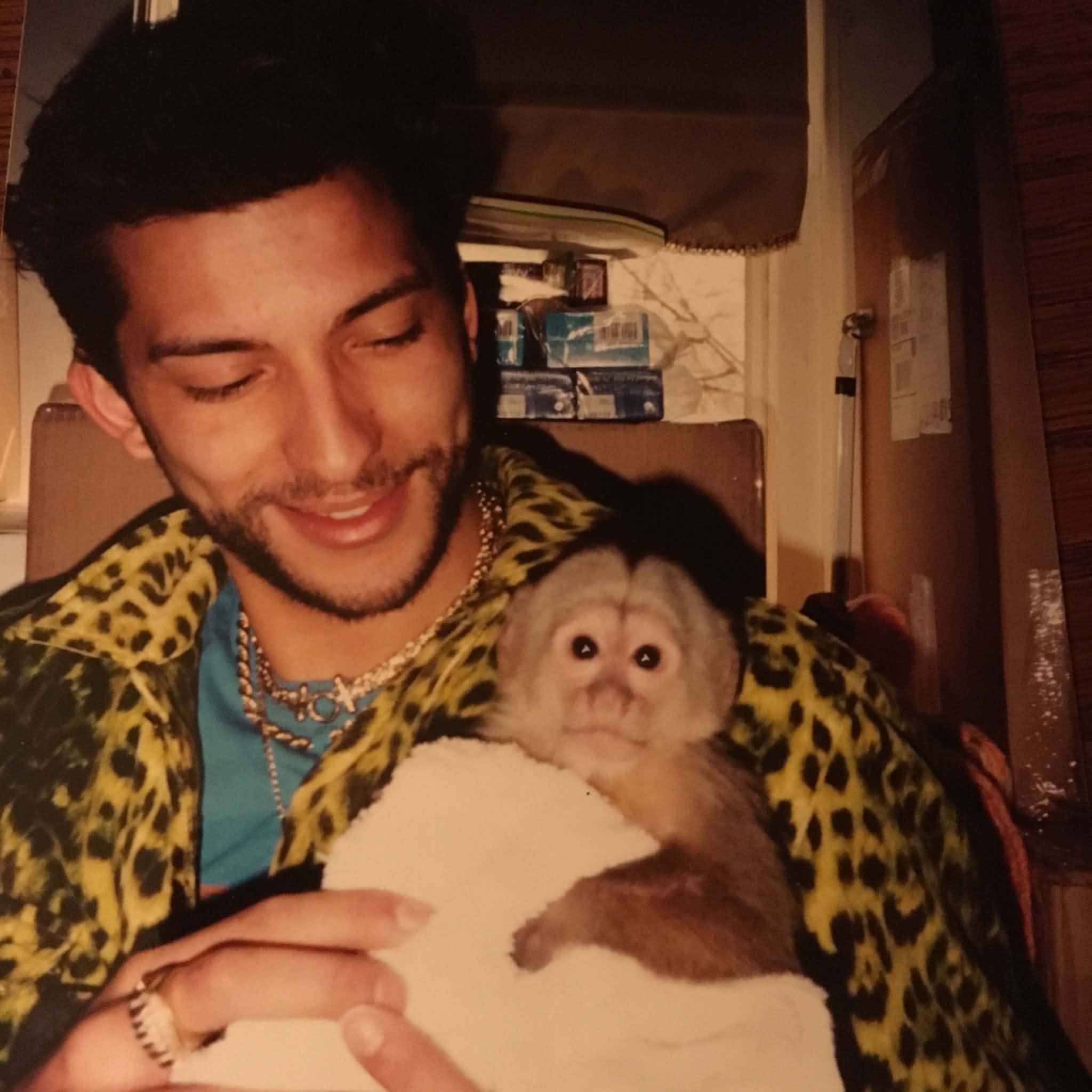
Another time Cartier got in trouble in the early 2000s: buying a pet monkey for his oldest son — a toddler at the time — which he also brought to his salon.
Cartier purchased Moochie, a capuchin monkey, from a licensed Pennsylvania breeder for $5,000 and sold it to a friend when he realized he would not be able to keep it in New Jersey, the Courier-Post reported in 2002. He was charged with illegally owning and selling the monkey and ended up pleading guilty and paying $500 for possession, according to the newspaper.
FILE – A 2002 photo of Martino Cartier holding Moochie, a capuchin monkey.Courtesy of Martino Cartier
In 2006, Cartier lost a Republican primary for Washington Township Council, garnering less than a quarter of the vote.
Over the years, Cartier has been in various legal battles.
He was sued by the luxury company Cartier over his use of the name. A customer filed a class-action lawsuit in 2022 over credit card information showing up on receipts at his salon. A model accused him of negligence for cutting her neck during a 2016 beauty show, which he described as a scratch, calling the suit a “money grab.”
“When you’re in business, when you’re in the limelight, and when you’re doing trade shows, you are more subject to things like this happening than the everyday Joe or Jenny,” Cartier said Tuesday.
Cartier entered a private settlement with HSN after it fired him in 2023, saying he had engaged in “unwanted physical contact with multiple team members and exhibited signs of being intoxicated.” In response, Cartier filed a $50 million defamation lawsuit.
In 2024, he sued Washington Township over zoning enforcement against statues on his property and his desire to build a Christmas tree farm next to his property.
“He’s been sued a lot by a whole lot of people … everyone can’t all be wrong,” Sweeney said in an interview.
Democrats have also accused Cartier of illegally intermingling his nonprofit with his political campaign.
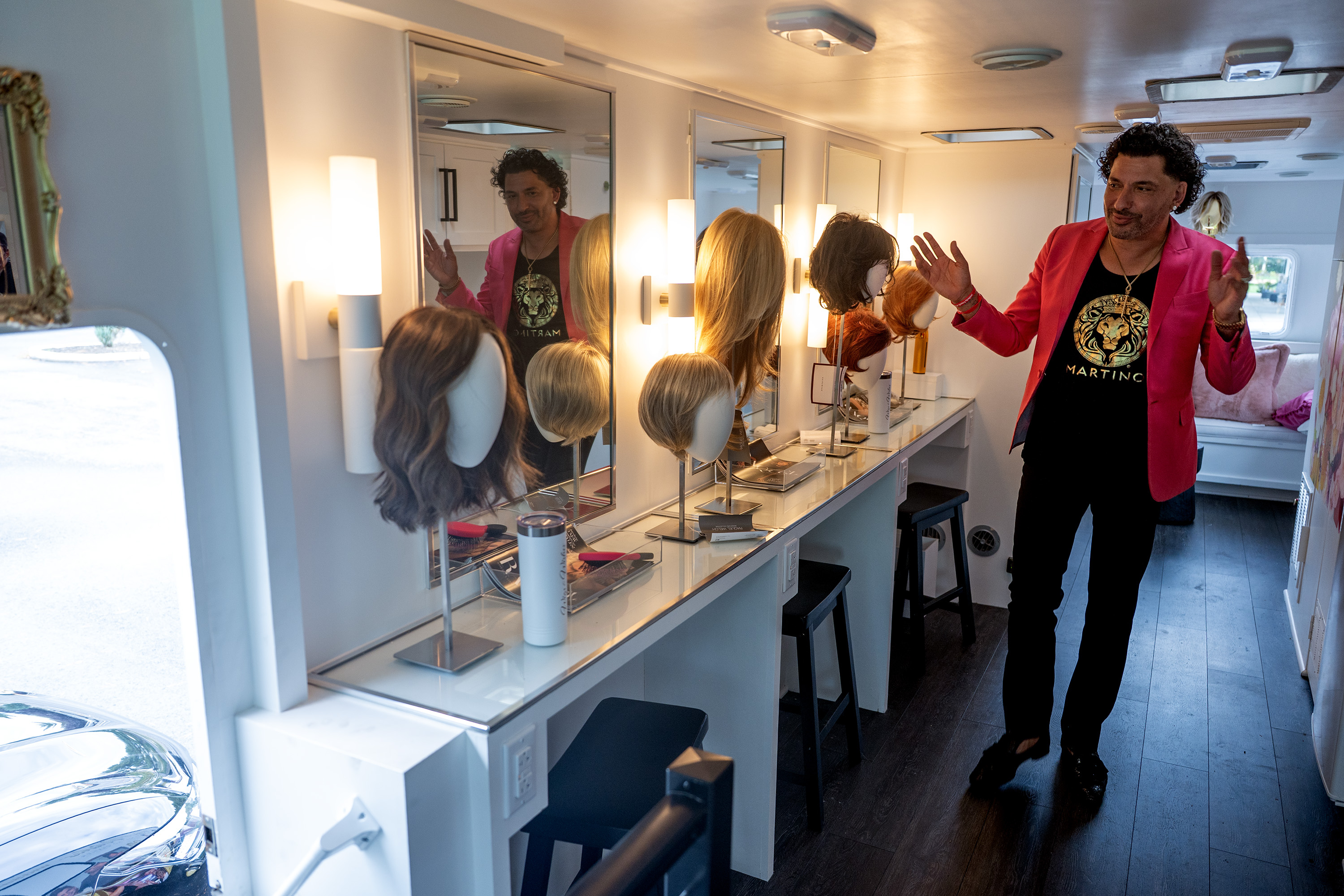
Martino Cartier in his Wigs & Wishes RV parked outside his salon, Wednesday, Oct. 14, 2026.Tom Gralish / Staff Photographer
Earlier this month, Cartier paraded his Wigs and Wishes motor home in the Monroe Township Halloween parade with hisRepublicanrunning mates, Katherine Falcone and Barbara McCormick, the vehicle decked out with campaign signs. Cartier uses the motor home for the charity, and it is wrapped with Wigs and Wishes branding. But he contended that he can do what he wants with it, saying it was gifted to himbya friend and it is registered and insured in his name.
“These scared incumbents … are so evil that they think everybody else is evil,” Cartier said on the phone Sunday.
Among the photos printed on the RV’s wrap is a shot of Cartier with Paula Abdul, the charity’s “celebrity sponsor and adviser,” whom Cartier described as his “ride or die.” She has not gotten involved with the campaign and declined to comment through Cartier, though she has previously praised him as “very special.”
But as much as he is beloved by allies like Abdul, he has also made comments that have offended others, particularly in clips on his podcast that local Democrats have circulated online showing him laughing at concepts behind Sikhism — New Jersey has one of the largest Sikh populations in the country — and jokingly calling TikTok CEO Shou Zi Chew “Ching Chong.”
A statue of celebrity hair stylist Martino Cartier and singer Paula Abdul with Makenzie Rose, a young cancer patient and the roses planted in her memory, on the grounds of his compound and salon, Wednesday, Oct. 14, 2026. Tom Gralish / Staff Photographer
He also faced backlash for a comment he made about slavery. “With American slaves, that was just greed of African American people that sold their own people,” Cartier said. In an interview, he said he “misspoke” by saying American after African.
At a Democratic get-out-the-vote rally Saturday, Jefferson, one of Cartier’s opponents, admonished him for “trying to lecture us why slavery happened and blaming it on Black people.”
Cartier said the podcast hosts were discussing the history of slavery and he was reading from a script he did not write. Regarding his podcast comments in general, he said he has reached out and apologized to people who have been genuinely offended by his languagebut said others are “trolling.”
Celebrity hair stylist Martino Cartier is with cancer survivor Simone Herbin-Canty (left) at his salon, Wednesday, Oct. 14, 2026. Tom Gralish / Staff Photographer
“It’s only offensive because I’m running for Republican commissioner, and you weren’t offended before, or you would have brought it up,” he said.
Simone Herbin-Canty, an unaffiliated voter in West Deptford and cancer survivor who wears a wig from Wigs and Wishes, said in an interview at Cartier’s salon that she laughs at the criticism of Cartier.
“I understand that people got a job to do, and they gotta twist things around or take little sound bites or little snippets of videos and try to make it work toward their benefit. But … show the whole video so that you can understand exactly where this man is coming from,” she said.
A deep connection with Israel and mixed feelings about Trump
Gianna Cartier said that it’s frustrating to “see something about your husband every day on the internet” butthat she just has to “let it go and just, like, let God do what God does.”
Sculptures, a bench with the Israeli flag, and the Wigs & Wishes RV are outside the salon of celebrity hair stylist Martino Cartier, Wednesday, Oct. 14, 2026.Tom Gralish / Staff Photographer
Cartier’s property has three giant wooden crosses towering near the road. He describes himself as an evangelical Christian, which is the root of his support for Israel. That connection deepened after Hamas’ Oct. 7, 2023, attack on Israel.
Among Cartier’s tattoos are his eldest son’s name, Brigade, “Made in Egypt,” and “Am Israel Chai” in Hebrew, which means “the people of Israel live.” He has a bench with the Israeli flag printed on it next to his salon parking lot, and a dreidel-shaped fire pit further back on the property.
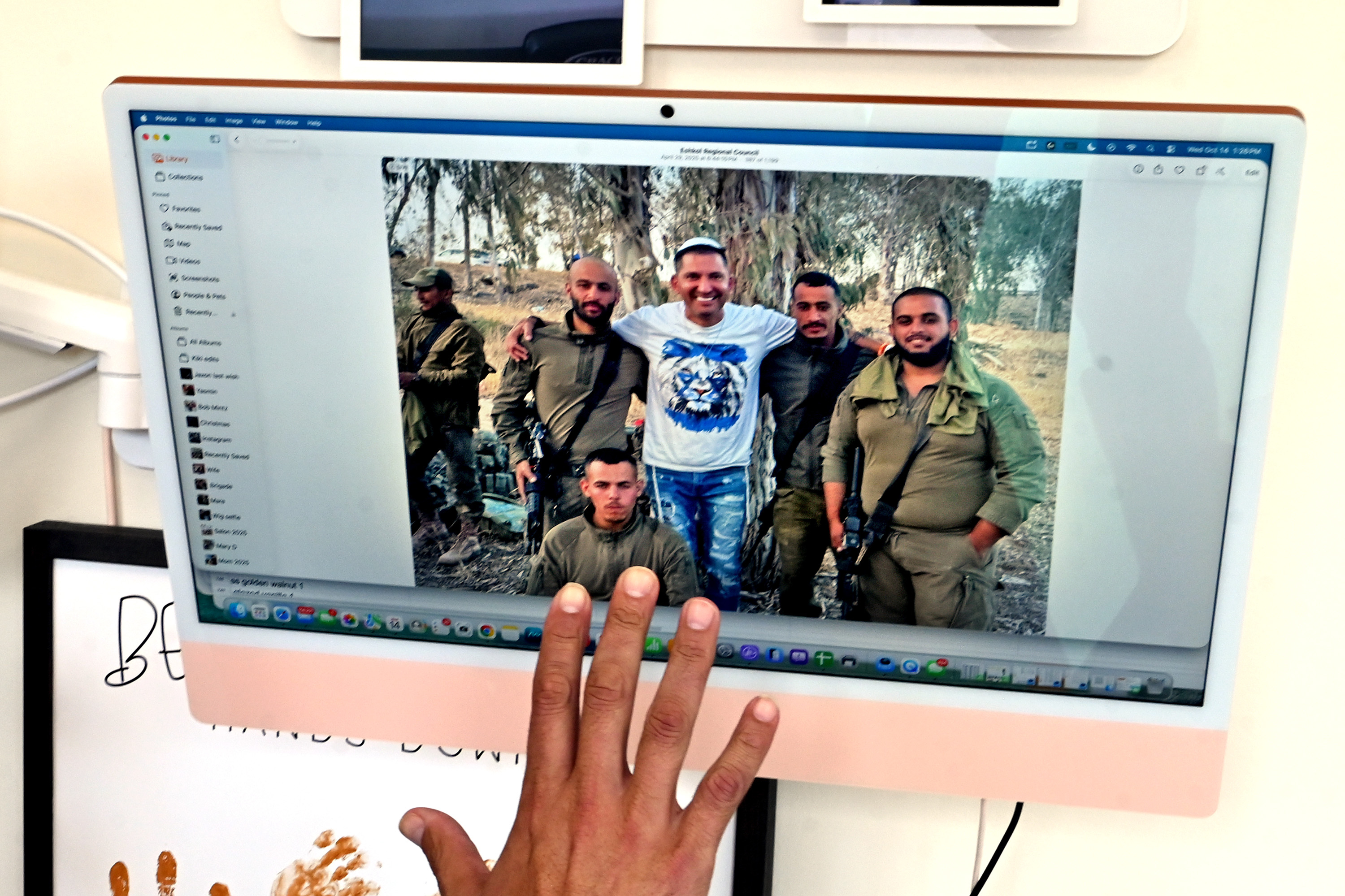
In 2020 he raised money for United Hatzalah, an emergency response organization in Israel. In April 2025, he went on a trip to volunteer with the Jewish organization Chabad and dressed in traditional Jewish garb. He wrapped his lion-branded cape around the front of countless Israeli soldiers and gave them free haircuts.
Celebrity hair stylist Martino Cartier, a Republican candidate for Gloucester County Commission, shows photos of himself posing with solders on a trip to Israel, on the computer in his salon office Wednesday, Oct. 14, 2026. Tom Gralish / Staff Photographer
After returning from that trip, Cartier put on an American flag Trump hat and golden Trump boots and posted a video on Facebook on June 22, 2025:
“I’ve never been more proud to be an American and I am so proud of President Trump! God bless America, God bless Israel, let’s go!”
Cartier said he was expressing his excitement for hostages coming home. That day, the Associated Press reported that the remains of three other hostages had been recovered by Israel, the week after the U.S. launched a surprise attack on Iran.
“President Trump may say a lot of stupid things and he may do a lot of stupid things as well, and there’s a lot of things I don’t agree with, but I am so thankful and grateful that those hostages came home,” Cartier said in a text.
Despite his apparel choices,Cartier said he is more of a “Reagan Republican” than the “MAGA extremist” Democrats are presenting him as, because he’s “for the people.”
Federal Election Commission records show Cartier contributed more than $3,500to support President Donald Trump’s 2020 and 2024 presidential campaigns spread across smaller donations, which Cartier said he did not remember making but noted were likely recurring.
He said that one photo Democrats have shared of him wearing a pink Trump hat signed by the president was a breast cancer awareness-themed gift from U.S. Rep. Scott Perry (R., Pa.) after he helped a 16-year-old with cancer. Cartier said if he got a hat signed by former President Joe Biden in the same situation he would have worn that proudly as well.
And the golden Trump boots in his video? He said he also wore those in a getup at a fundraiser at Mar-a-Lago for veterans suicide prevention.
“When I was on Home Shopping Network, or if I would do a trade show somewhere — you ask my wife — I would dress like Liza Minnelli, Liberace, and Elvis Presley had a baby. That would be my outfit, even if I was flying just to go sleep at the hotel, because that’s my persona,” he said. “And that’s how I met some of the most amazing people in my life.”
This article was updated to include the Attorney General’s Office response to an inquiry that was not answered by publication time.
How an earlier murder case against the man now accused of killing a Philly cop fell apart
Documents obtained by The Inquirer shed light on how Eric Lewis walked free in 2023 in a case that has sparked a criminal investigation and divided city leaders.
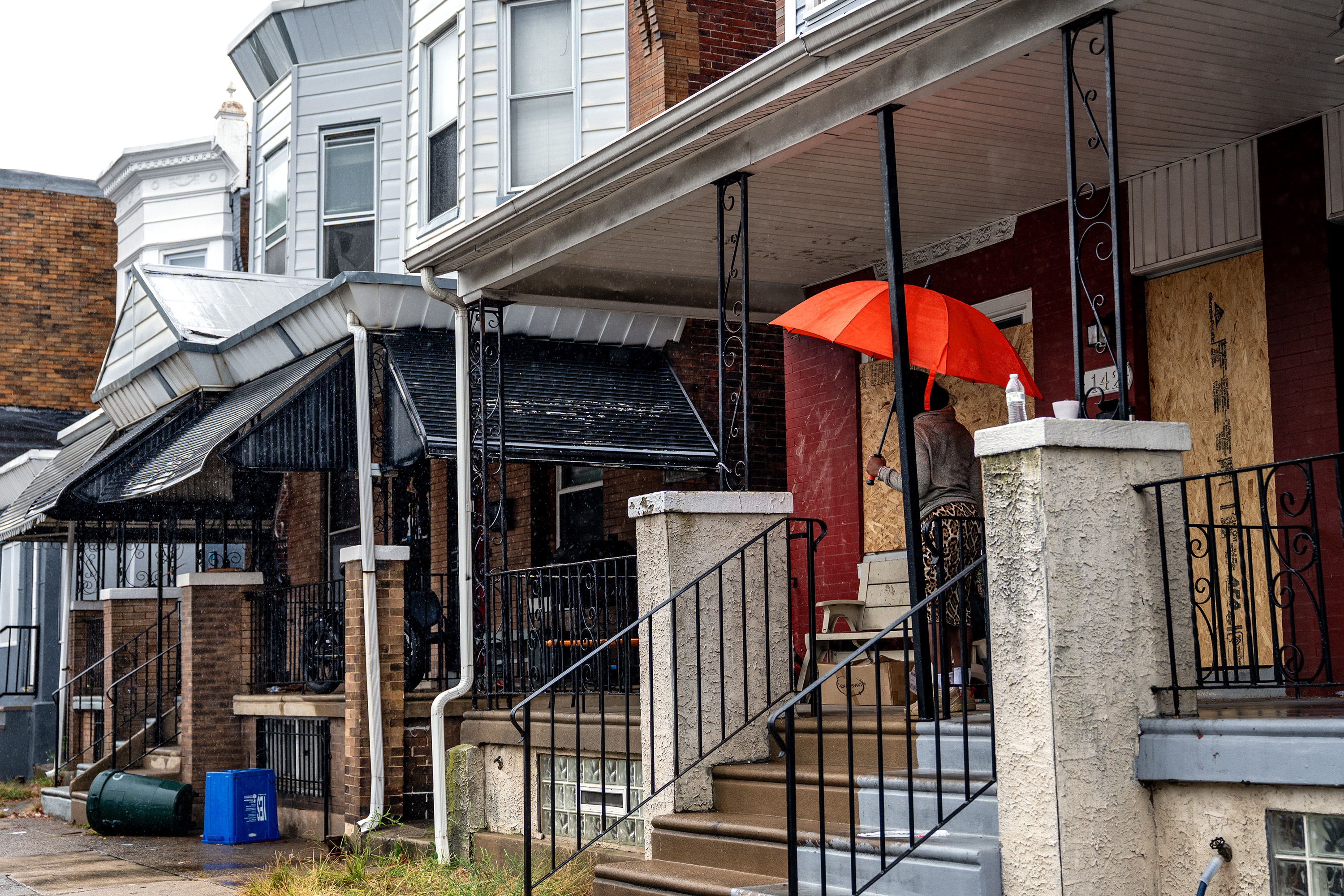
The scene outside the home of Eric Lewis (left) in the 100 block of North 52nd Street on Oct. 11.Tom Gralish / Staff Photographer
In the weeks since Eric Lewis was charged with killing Philadelphia Police Officer Shane Seiber, city officials and law enforcement have questioned why Lewis — who had been charged with committing a different murder several years ago — was free to allegedly kill Seiber in the first place.
Lewis was acquitted in that earlier case in part because of investigative and procedural missteps, an Inquirer review shows: Police mishandled key aspects of the murder investigation, and prosecutors struggled to overcome those errors in time to put on a successful case.
District Attorney Larry Krasner, ina stunning video Oct. 13, and again ina combative news conference last week, said the police mistakes in the case were so pronounced that the misconduct was “arguably criminal.” His office has not filed charges against any of the officers involved, but Krasner said he is considering it.
Eric Lewis, charged with murder in the shooting death of police officer Shane Seiber, is shown in a Philadelphia Police Department photo.Philadelphia Police Department
Still, he said, the record showed that one officer who identified Lewis as a suspect — and who was engaged to Lewis’ sister — went on to “torpedo” his own involvement by lying about an alternative suspect and failing to show up to court.
Separately, the homicide detective assigned to the case failed to take basic investigative steps — and appeared to have misrepresented her actions in official paperwork.
Police Commissioner KevinBethel forcefully condemned Krasner’s attempts to blame his department Thursday, saying it was unprofessional and insensitive to lob such incendiary accusations so soon after Seiber’s killing. He also said it was the job of Krasner’s prosecutors to check detectives’ work and ensure they had the evidence needed to convict someone before bringing a case to trial.
Because Lewis was found not guilty of the crime, the case against him was hidden from public view under Pennsylvania’s Clean Slate laws, and the records of the case were publicly unavailable.
A moment of silence was held for fallen Philadelphia Police Department Officer Shane Seiber before a Flyers game at Xfinity Mobile Arena on Oct. 11.Isaiah Vazquez / For The Inquirer
But The Inquirer obtained and reviewed hundreds of pages of records in the case, including the transcript of the two-day trial in 2023, homicide detectives’ investigative notes, and the Internal Affairs files for the officer and detective Krasner has now accused of tanking the case.
The documents offered the most fulsome understanding yet as to how the charges against Lewis fell apart — and the steps the police department and district attorney’s office took in the aftermath.
story continues after advertisement
The records detail an extraordinary set of circumstances: Prosecutors and a city judge told Internal Affairs about potential police misconduct, the department fired one officer and disciplined another, and the case against Lewis collapsed and let an accused murderer walk free.
And now, with that same defendant accused of killing one police officer and critically wounding another, Lewis’ court history and subsequent actions have fractured Philadelphia’s law enforcement agencies — and left the city’s top cop and prosecutor sparring in public and pointing fingers at one another.
Flanked by Councilman Curtis Jones (left), district attorney Larry Krasner announces charges against Eric Lewis on Oct. 10.Elizabeth Robertson / Staff Photographer
Here’s what we know about Lewis’ earlier murder case:
Lewis was accused of killing a man in a road rage shooting in West Philadelphia seven years ago.
Shortly after midnight on Aug. 31, 2019, Christopher Williams and a friend pulled onto the 900 block of North Fallon Street. A Nissan was parked on the one-way block, and Williams and his friend couldn’t pass. Williams honked, the woman with him later said, and a confrontation followed with the people in the Nissan.
During the argument, the woman said, a man from the Nissan walked up and shot into their car, striking Williams. Williams, she said, reached across her to grab her gun, and fired back. But he was struck and died later at the hospital.
Det. John Bartol was initially assigned to the case. But Williams’ mother, Darlene Brown, felt he was not communicating with her, and sent a letter to police leadership requesting a new investigator. (Bartol disputed that, and was absolved of any wrongdoing by Internal Affairs.)
By October, the case was reassigned to Det. Laura Harris, who at that point had been in the homicide unit for six years.
January 2020
A tip from a cop
A 2019 file photo of former Philadelphia Police Officer Naeem Crawley in the Frankford neighborhood.ELIZABETH ROBERTSON / Staff Photographer
The case stalled for several months. But then Officer Naeem Crawley, assigned to the 15th District, contacted Harris in early January 2020, and said he heard “a rumor” that Lewis — a West Philadelphia resident with a criminal history — was involved.
Crawley said Lewis lived on the street where the shooting occurred, and that he had recently gotten rid of a dark-colored Nissan that matched the description of the gunman’s. He showed Harris a photo on Lewis’ Facebook that pictured him standing in front of the car.
He told Harris that he used to date Lewis’ sister, but they were no longer together.
Harris submitted a warrant to preserve and review Lewis’ Facebook records, she wrote in her investigative notes on Jan. 5.
Crawley later provided Harris with Lewis’ cellphone number. And on Jan. 11, Harris wrote that she had submitted a warrant for his cell phone location records — a key piece of evidence that can show when and where people were around the time of the crime.
But Harris never actually submitted the warrant — and never obtained Lewis’ phone records.
She later said she didn’t obtain the information because she didn’t think she needed it.
And in court years later, when confronted about her lack of follow-through, Harris said she’d intended to submit the cellphone warrant, but never did because of what she called an “oversight.”
Homicide prosecutors are typically expected to ensure that certain records, including cell phone location data, are secured before trial, according to prosecutors and police familiar with the process who weren’t permitted to speak publicly.
And Harris’ supervisors in the police department, those people said, also could have checked that these steps were completed.
Still, Internal Affairs later blamed Harris, saying she had “failed to conduct a proper, thorough, and complete investigation,” and finding that she’d “falsified” records about the investigative steps she took.
Harris, according to Internal Affairs, “failed to submit that [warrant], possibly missing an opportunity to acquire the critical evidence that Mr. Lewis’ cell phone data may have contained.”
November 2020
Lewis is arrested
An undated photograph of Christopher Williams, seen on Oct. 12 in Philadelphia.Monica Herndon / Staff Photographer
Despite Harris’ initial missteps, her investigation continued. And several months later, she spoke to the woman in the car with Williams the night he was killed.
The woman, whose leg was grazed by a bullet in the incident, identified Lewis as the gunman as part of a photo array.
With an eyewitness identification — and a tip about Lewis’ involvement from Crawley, a sworn police officer — Lewis was charged with murder.
When the case reached the district attorney’s office, it changed hands several times as it progressed through court.
The first prosecutor, who handled the preliminary hearing, left to work at the state Attorney General’s Office. The second was later on extended sick leave.
In October 2022 — just weeks before trial — the case was assigned to Assistant District Attorney Erica Rebstock.
She quickly noticed its many flaws.
story continues after advertisement
November 2022:
An officer recants
With Lewis scheduled to stand trial in November, Rebstock began preparing her witnesses.
She subpoenaed Crawley to meet and discuss his statement, but the officer called and said he no longer wanted to be involved.
Rebstock said she eventually met with Crawley alongside a detective in the district attorney’s office — who joined at her request because of her concerns about Crawley’s conduct.
Crawley then disclosed he was now engaged to Lewis’ sister and shared children with her— a potential credibility concern — and, in a more alarming development, went on to change his story.
Rather than saying Lewis was the gunman, Crawley said the shooter might actually have been a person named “Spice.”
When Rebstock later met with Harris to discuss Crawley’s new account, the detective said Crawley had never said anything to her about “Spice.”
And then, days later, when Rebstock subpoenaed Crawley to appear in court for a pre-trial hearing, he never showed up, blaming his absence on a funeral.
Due to his wavering testimony and failure to appear, Rebstock spoke with Krasner and then-Assistant District Attorney Lyandra Retacco, who at the time ran a special unit that handled prosecutions of police officers.
Krasner said his office then took the unusual step of contacting Internal Affairs and asking that Crawley be investigated for potentially criminal misconduct.
Rebstock also told Crawley’s district-level bosses that he might have lied about the funeral to avoid showing up to court, and a police captain also reached out to internal affairs.
Internal affairs investigators concluded that Crawley had, in fact, lied — no one died, they said, and he’d made up the funeral to avoid going to court.
Then, Lewis’ defense attorney, Joseph Lewis Schultz, delivered even more concerning news to Rebstock: Crawley and his fiancée had called him and admitted he’d made up “Spice,” Schultz said. Crawley also acknowledged lying to Rebstock to avoid being involved with the case, he said.
As a result, Rebstock struck an agreement with Schultz, saying she would not introduce any information Crawley previously shared about Lewis at trial — eliminating a potential witness from her case.
The trial was postponed to the spring of 2023.
story continues after advertisement
Early 2023
More evidentiary problems
In the following months, Rebstock had several prep meetings with Harris and others to shore up what she could present at trial. The issue of missing Facebook and cell phone records was discussed.
Harris said she provided the Facebook records on a flash drive to the first assigned prosecutor, but they were not in the case file. Harris said she only made one copy of the results in part because she was “inexperienced with extracting electronic data.”
Facebook records are typically stored in a portal that Harris should have been able to re-access even if they had been misplaced, according to people familiar with the process. Rebstock said she asked Harris to “check her email,” but the results were never found.
It was not immediately clear whether Rebstock ever asked Harris to submit another warrant to Facebook, or sought the cell phone records once she realized they hadn’t been acquired. (Krasner, on Friday, said he would make Rebstock available to discuss the case with reporters at a later date, but said “not every problem can be fixed late.”)
Harris later told internal affairs investigators “there was no strategy discussed” as to how Rebstock planned to handle questions about the missing records during the trial.
But Rebstock, by then, had decided to make another difficult concession: Because she did not have any of Lewis’ cell phone or Facebook records, she told Lewis’ attorney she would not introduce them.
The decision further diluted the evidence she could present against Lewis.
Internal affairs investigators again found Harris largely to blame, later concluding that “the entire situation could have been avoided” had Harris made several copies of the Facebook records.
And that blunder, they wrote, coupled with Harris’ failure to secure Lewis’ cellphone records, had effectively handed Lewis a lifeline.
When the case against Lewis went to trial in April 2023, Lewis’ defense attorney — by then a lawyer named Michael Diamondstein — used the missteps as “fodder” to sow doubt about the reliability of the evidence against Lewis, Internal Affairs said.
Common Pleas Court Judge J. Scott O’Keefe — who presided over Lewis’ bench trial — couldn’t get past the large holes in the investigation and acquitted Lewis, finding that there was not sufficient proof to convict him of any crime.
Lewis walked free.
June 2023
A judicial referral
Still, the judge did not simply close the case and move on.
In a highly unusual decision, O’Keefe — for perhaps the only time in his judicial career — wrote a letter to then-Deputy Commissioner Robin Wimberly, saying he found several aspects of the investigation problematic — particularly Harris’ conduct.
Beyond the failure to secure Facebook and cellphone records, he wrote, Harris didn’t appear to investigate how the eyewitness’ testimony was inconsistent with the physical evidence.
In addition, he said, another officer — Clyde Frasier of the crime scene unit — had logged two different pieces of evidence under the same property receipt number, a clerical error that added to the “great deal of suspicion” about the investigation.
The overall effect, O’Keefe said, was that the murder case had become irreparably flawed by “numerous irregularities.”
story continues after advertisement
2025
Officers disciplined
Two years after Lewis was acquitted, Internal Affairs issued disciplinary findings against both Crawley — whose investigation was spurred by the district attorney’s office’s request — and Harris, whose conduct was probed based on O’Keefe’s referral.
Investigators found that Crawley — by lying to Rebstock, evading court, and giving a false statement to Harris — had neglected his duty and engaged in conduct unbecoming of a police officer.
Crawley was fired.
Still, internal affairs did not deem his conduct to be criminal — and did not send the results of its investigation to the district attorney’s office for potential prosecution. Krasner said last week that his office was revisiting the matter, and was considering charging Crawley.
Crawley could not be reached. In his statement to internal affairs, he said he feared losing his family by testifying, and that he’d told Harris from the beginning that he didn’t want to be publicly involved with the case.
“I thought they had everything they needed and Eric would take a plea,” he said. “I just wanted to keep my family.”
Harris, meanwhile, was found to have violated departmental policies by failing to obtain Lewis’ cellphone and Facebook records, and by saying in departmental paperwork that she’d taken investigative steps that she never actually completed.
The internal affairs report did not specify what penalty she should face. But Harris resigned earlier this month.
Her last day on the force was the day before Lewis allegedly killed Seiber.
Harris initially declined to speak about the case, and did not respond to follow-up requests for comment.
Internal Affairs did not deem Harris’ conduct criminal. But Krasner said his office was now probing whether she should face charges as well.
Rebstock, meanwhile, remains employed with the district attorney’s office and is now the director of training and trial strategy. Some fellow prosecutors and police officers have complained privately that she didn’t do enough to help overcome the investigation’s mistakes.
Rebstock — who has since married and goes by Erica Vandenekart — has not spoken publicly on the case, and did not respond to requests for comment. Krasner has defended her, saying she is an excellent prosecutor who was misled by Harris’ “untruthful” investigative notes.
“Upon finding out there were problems, we should do what we can to fix them. And I think the record is going to establish we did,” he said.
Lewis was accused in at least two other cases in the lead-up to the road-rage killing, including drug possession.
In 2020, he was arrested for threatening a family member with a gun in front of his children, and charged with aggravated assault, gun crimes, and endangering the welfare of children. But prosecutors withdrew the charges in November 2022 after the key victim and witness in the case died, Krasner said.
Darlene Brown holds an iPad with an undated photograph of her son Christopher Williams on Monday, Oct. 12, 2026Monica Herndon / Staff Photographer
Four years later, on Oct. 10, Lewis encountered Seiber and Officer Hector Rodriguez III outside his home on the 100 block of North 52nd Street.
The officers had responded to a 911 call for a report of a person with a gun, and when they walked onto Lewis’ porch, he confronted them and then quickly opened fire, police said.
He shot Seiber three times and Rodriguez a dozen times, police said, before stealing Rodriguez’s service weapon and retreating into the alley behind his house.
Lewis then shot at nearly a dozen other officers who responded to the scene before he was taken into custody.
He is now being held without bail in a city jail, and is facing charges in both state and federal court for murder, robbery, and related offenses.
Staff Contributors
Reporting: Ellie Rushing and Chris Palmer
Editing: Nancy Phillips and Ariella Cohen
Photography: Monica Herndon, Tom Gralish
Design: Lucas Reasoner
Subscribe to The Philadelphia Inquirer
Our reporting is directly supported by reader subscriptions. If you want more journalism like this story, please subscribe today
A Chester police officer was charged with possession of child pornography and using law enforcement resources to conduct unauthorized searches of people, Delaware County District Attorney Tanner Rouse said Tuesday.
Leon Paparo, 45, of Springfield, surrendered Tuesday to Delaware County investigators and was being held at the George W. Hill Correctional Facility in lieu of 10% of $500,000 bail, Rouse said.
In a statement, the City of Chester said the police department was notified in August of the investigation of Paparo, who was then placed on administrative leave.
Rouse described Paparo as a former Chester police officer, but the city said in its statement Paparo was still with the department. He joined the force in 2008 and has worked in the records department since around 2018, the city said.
“The Chester Police Department takes matters of this nature seriously and is committed to taking prompt and appropriate administrative action when warranted. As of today, he is still on administrative leave,” the city said in the statement on Tuesday.
“To protect the integrity of the investigation, the Department will have no further comment at this time,” the city said.
No attorney was listed Tuesday for Paparo in court records.
Rouse said the investigation began in April when the Chester Police Department found suspicious searches allegedly conducted by Paparo using JNET, a system in Pennsylvania for law enforcement and criminal justice professionals to access records online.
Paparo allegedly searched ex-girlfriends, Chester city personnel, court staff, local individuals, and employees from the Delaware County District Attorney’s Office.
During the investigation, a county detective learned about a 2015 incident in which Paparo allegedly had inappropriate contact with a then-underage girl. Charges were not filed in that case, according to the affidavit of probable cause.
Paparo allegedly conducted searches on the now-adult woman, identified only as “Jane Doe,” and her mother, the affidavit said.
Detectives conducted a search on Paparo’s iPhone and allegedly found a folder labeled “Random” that contained seven nude images of another underage girl photographing herself in a mirror. That girl was subsequently identified.
The investigation found that Paparo allegedly had photographed the images in 2024 as they were displayed on another phone’s Snapchat app used by a person related to Paparo, according to the affidavit. The affidavit does not further describe Paparo’s relative.
The victim, who was 16 when she took the photos, told investigators that she knew Paparo but did not intend for the photos to be obtained by him, according to the affidavit of probable cause.
Paparo was charged with 105 criminal counts, including seven counts of child sexual abuse materials.
“This case is not only an abuse of authority and betrayal of public trust, but a sickening reminder that sometimes we need to be protected from the protectors. To think that a law enforcement officer would abuse his power and position to solicit sexual images of minors is unimaginable, but all too real,” Rouse said in a statement.
“This case also hits close to home because employees of my office had their information accessed without any legitimate purpose. They come to work every day committed to serving the people of Delaware County and should never have to worry about their information improperly accessed by someone we are supposed to trust. I will not tolerate the abuse of authority or the exploitation of children,” Rouse said.
A federal grand jury in D.C. rejected an attempt by the Justice Department to indict former White House aide Cassidy Hutchinson for the account she gave lawmakers of President Donald Trump’s actions during the Jan. 6, 2021, attack on the U.S. Capitol, according to two people familiar with the matter who spoke on the condition of anonymity to discuss a grand jury matter.
In a brief court appearance Tuesday afternoon, Neville S. Hedley, who introduced himself as the acting senior litigation counsel at the Justice Department’s civil rights division, told U.S. Magistrate Judge Zia M. Faruqui that the grand jury had not concurred on the proposed indictment. Hedley did not specify the defendant, but the people familiar said he was referring to Hutchison.
The failure of the Justice Department to secure the indictment marks the latest rebuke of the law enforcement agency’s efforts to prosecute one of the president’s political enemies.
The decision to present a case to federal grand jurors followed years of calls from Trump and his Republican allies for Hutchinson to face legal consequences for providing what they contend was false and damaging testimony about what Trump said and did as his supporters stormed the Capitol that January day. The case was presented to the grand jury by the Justice Department’s civil rights division, in an unusual move for a false-statements investigation, the Washington Post has reported.
The Justice Department did not immediately respond to a request for comment.
It is exceedingly rare for grand juries to reject indictments, in part because prosecutors only need to convince a majority of grand jurors that there is probable cause that a crime was committed — a relatively low threshold.
But the Justice Department’s campaign to target Trump’s perceived adversaries has repeatedly been rebuffed by grand juries and judges, including in February, when another federal grand jury in D.C. refused to indict six Democratic lawmakers over their comments to military service members.
The Justice Department began investigating Hutchinson — who was an aide to White House chief of staff Mark Meadows in Trump’s first administration — after two of Trump’s Republican allies in Congress, Reps. Jim Jordan of Ohio and Barry Loudermilk of Georgia, referred her to the department this year for potential prosecution over what they alleged was false testimony.
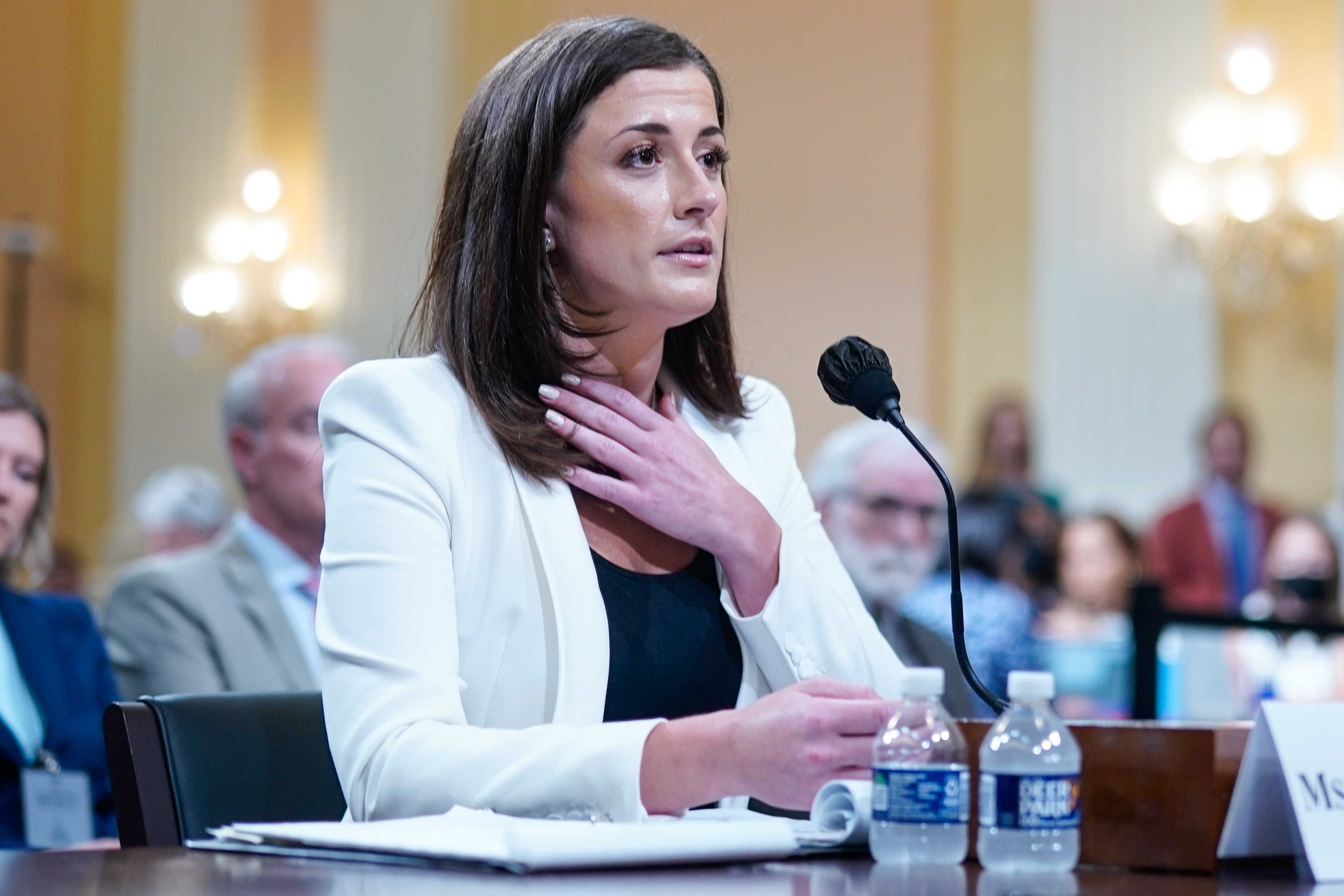
In 2022, Hutchinson, then 25, gave an explosive account of Trump’s behind-the-scenes actions on Jan. 6 to the House committee investigating the attack on the Capitol.
Her testimony during the televised hearing garnered 13 million viewers when it aired June 28, 2022, according to Nielsen.
At the hearing, Hutchinson testified that Trump urged his supporters to march on the Capitol despite knowing they were armed. She testified that another White House aide at the time, Anthony Ornato, told her that Trump had lunged at a Secret Service agent inside the presidential SUV after being told he could not accompany the group as they marched from the Ellipse.
When that failed, she continued, Trump “reached up towards the front of the vehicle to grab at the steering wheel.” Then, she said, the president “used his free hand to lunge towards Bobby Engel,” the head of his security detail, who was riding in the armored limousine with him.
But the Secret Service agent who drove Trump and Engel that day disputed Hutchinson’s testimony in an interview conducted months after her hearing, a transcript of which was released in 2024 by the Department of Homeland Security.
No other witnesses corroborated Hutchinson’s account of Trump in the limo, though several of those interviewed attested that the president was visibly angry.
The Trump administration was set to announce Tuesday a proposal to weaken a regulation that requires oil and gas companies to limit leaks of methane, a more potent driver of climate change than carbon dioxide, according to two people familiar with the matter.
President Donald Trump was expected to announce the Environmental Protection Agency’s proposed regulation at an event in Texas on Tuesday evening, the people said. EPA Administrator Lee Zeldin said earlier this month that the agency was “days not weeks” away from issuing the proposal, roughly outlining its contents.
Bloomberg News first reported the timing of Tuesday’s announcement.
The move comes even as several major oil companies, including Chevron and ExxonMobil, have long supported direct federal regulation of methane, arguing that industrywide rules are needed to curb leaks. But that support has not always extended to every provision: The companies have at times pressed regulators to narrow monitoring and reporting requirements.
Smaller independent producers and their trade groups have more aggressively fought methane rules as burdensome and costly. Executives at some of those firms — including several major donors to Trump — have pushed to roll them back.
Methane, which traps about 80 times as much heat as carbon dioxide over a 20-year period, accounts for roughly 12% of greenhouse gases, according to an EPA webpage that the agency removed from its site after Trump took office. Another EPA report says methane “emissions represent the greatest opportunity for low or no-cost mitigation” of climate change.
Last year, Zeldin said the rule aimed at curbing methane leaks and dozens of other regulations were being reconsidered in what he has called the largest deregulatory action in U.S. history, aimed at saving businesses and consumers money. Environmental advocates say any savings are more than outweighed by public health costs and damage to the economy caused by climate change and increasing weather extremes.
“Americans must be able to afford to heat their homes in the winter and fill up their car and drive to work,” Zeldin said in a statement earlier this month, before the proposal’s release, while attending the New Mexico Oil and Gas Association’s annual meeting. “They can’t do that when the people producing the energy are weighed down by unnecessary burdens.”
The 2023 Biden-era rule requires companies to reduce methane emissions from new and existing oil and gas infrastructure, demanding monitoring and retrofitting old equipment to reduce leaks. The standard also instituted curbs on volatile organic compounds, which can cause air pollution that is harmful to breath or warm the climate.
“The oil and gas industry says it’s a ‘good-faith’ partner eager to help craft regulations, but time and time again it’s worked behind the scenes to delay and weaken them. As a result, the United States today emits more methane from its oil and gas sector than any other country in the world,” Julia Kane, a researcher with Fieldnotes, an oil and gas watchdog group, said in a statement.
“Now, Lee Zeldin’s EPA is giving oil and gas corporations exactly what they’ve long wanted: a toothless methane standard they can use to pretend they’re well-regulated, all while they continue to knowingly leak and flare dangerous amounts of the heat-trapping gas.”
The Trump EPA proposal is expected to reverse the 2023 rule’s ban on routine flaring, allowing companies to burn off excess gas rather than capturing it. The draft policy would also eliminate the Super Emitter Program, which required companies to take action on major methane leaks when detected by third-party watchdogs.
Methane has accounted for about 30% of global temperature rise since the industrial revolution, according to the International Energy Agency, and the rollback is alarming environmental advocates.
The proposed regulation would also change standards for “marginal wells,” which produce only 6% of U.S. oil and gas but account for about half of the sector’s methane emissions.
Zeldin said in October that the old rules wrongly lumped together “mom and pop” oil and gas producers, which he said could be put out of business by the rules, with multinationals such as Exxon and Chevron.
“Part of this process has been to keep the concerns that are coming in from the application of [the regulations] to these far smaller operations and how to get the regulation right for them,” Zeldin told reporters in a briefing at EPA headquarters.
Myron Ebell, who ran the EPA’s transition team going into Trump’s first term, praised the potential regulation change for trying to “level the playing field” between Big Oil and independent producers.
The EPA weakened enforcement of existing methane regulations last year, saying the agency’s “enforcement and compliance will no longer focus on methane emissions from oil and gas facilities” in a memo on March 12, 2025. The Environmental Defense Fund, an advocacy group, estimates that additional gas released or flared in the first year under that policy could have otherwise supplied nearly 19 million households.
In November, the EPA also delayed deadlines to comply with many of the 2023 standards until 2027.
Peggy King, 96, formerly of Philadelphia, Hall of Fame TV and film actor, top-selling Rat Pack-era singer and entertainer,andpopular vocalist with the Philadelphia-based All-Star Jazz Trio, died Sunday, Oct. 25, of complications from Alzheimer’s disease at Saunders House assisted living center in Wynnewood.
Celebrated for her soaring soprano voice, girl-next-door appeal, photographic memory, and collegial nature, Miss King was discovered singing for a Cleveland radio station in 1950 by bandleader Charlie Spivak. Over the next 10 years, she toured with Spivak and other big bands, recorded hit singles and top-selling albums with Columbia Records, and sang with Frank Sinatra and Bing Crosby. She cohosted The George Gobel Show on TV, and earned film roles in The Bad and the Beautiful, Abbott and Costello Meet the Mummy, and Zero Hour!
She was nominated for an Emmy Award as best female singer on TV in 1955 and named best new singer in 1956 by DownBeat and Billboard magazines. On Oct. 22, 1955, she was on the cover of TV Guide.
“I belong on a stage singing anything I can touch people with,” Miss King told the Daily News in 1983. File Photo
Miss King started singing as soon as she could talk, she told jazz journalist Marc Myers in a 2015 interview on JazzWax.com. “Singing, to me, came naturally,” she said, “like waking up.” Her daughter, Suzy, said: “She was wildly creative.”
She also sang popular jingles for TV commercials in the 1950s and signed contracts with Columbia Records and several movie production companies. She became a favorite guest on TV game and talk shows.
She performed jazz and popular songs on variety shows and benefits, and played it straight in comedy routines with Crosby, Bob Hope, Tony Bennett, Mel Tormé, Sammy Davis Jr., Jimmy Stewart, Jack Benny, and other entertainers.
Everyone said she remarkably resembled actor and singer Judy Garland, even Judy Garland. She went shoppingwith actors Debbie Reynolds, Jane Powell, and Dinah Shore.
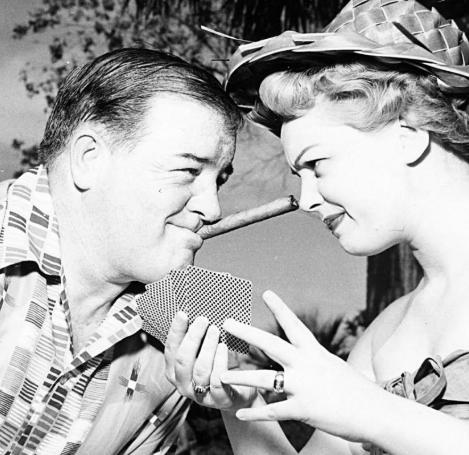
Miss King performed with comedian Lou Costello.Courtesy of the family
A writer for The George Gobel Show nicknamed her “pretty perky Peggy King.” Gobel used it on air, and it stuck.
“The grand dame of song has left us,” composer Andrea Clearfield said on Facebook. Clearfield called Miss King “a musical legend and such a wonderful, heartfelt human being.”
Miss King stepped away from show business after she married Philadelphia clothier Sam Rudofker in 1961. They lived in Merion, Gladwyne, and Philadelphia, and she returned to performing with the Philly Pops Orchestra and other groups in the 1980s.
“I know who I am, and I know where I belong,” she told the Daily News in 1983 after her son, Jonathan, and daughter, Suzy, left home for college. “I belong on a stage singing anything I can touch people with.”
Miss King (right) and Debbie Reynolds entertained troops in Korea in the 1950s.Courtesy of the family
She joined the Philadelphia-based All-Star Jazz Trio in 2013 after the death of her husband in 1994 and her son in 2000. In 2016, she released her first album in decades, Songs a la King.
“People turn to different things when their life turns upside down,” she told The Inquirer in 2016. “I lost them both in a short period. You either completely fall apart or you find a way to live with it. I knew the one thing I could count on was singing.”
In 2013, music writer A.D. Amorosi wrote in The Inquirer: “There’s bittersweet nuance to everything she sings.”
Miss King also mentored other singers and supported the Philadelphia Boys Choir, the Curtis Institute of Music, and other organizations. Her husband shared his love of classical music, and she studied Mozart and other composers.
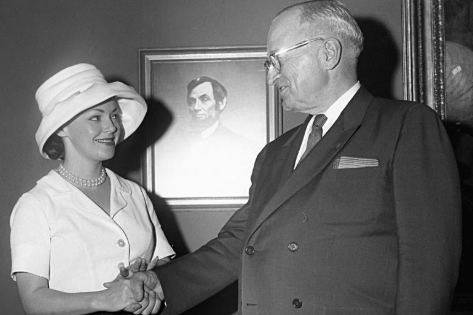
Miss King met President Harry S. Truman at the White House.Courtesy of the family
“She hungered for knowledge and always wanted to learn,” her daughter said. “She was a trailblazer.”
Margaret Elizabeth King was born Feb. 16, 1930, in Greensburg, Pa., 35 miles east of Pittsburgh. She told Marc Myers that she was adopted by her aunt and uncle during the Great Depression and that she inherited her singing voice from her birth mother, with whom she reconciled when she was a teen.
She practiced singing into a tin can on a broomstick when she was young, performed in all the school plays and musicals, and graduated from high school in Ohio when she was 16. She got jobs singing for a local radio station and a hotel band in Cleveland before being discovered by Spivak.
“I came from poverty and had to find a way to get out of it through singing,” she told The Inquirer in 2016.
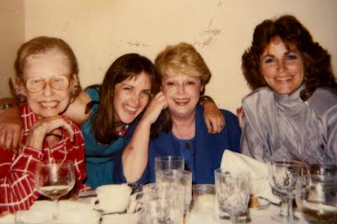
Miss King (second from right) enjoyed time with family and friends. Courtesy of the family
She married and divorced musician Knobby Lee in the 1950s and met Sam Rudofker while singing in Chicago. She moved to Saunders House from Philadelphia nine years ago.
Miss King was an avid reader and a Civil War buff. She posed with President Harry S. Truman in front of a portrait of President Abraham Lincoln at the White House and was close friends with Larry Bowa, the former Phillies player and manager, and his former wife, Sheena.
Dennis Creedon, former director of education for what is now Opera Philadelphia, said Miss King “celebrated the gift of life in all she did. No matter what crisis life presented, ice cream was always her cure.”
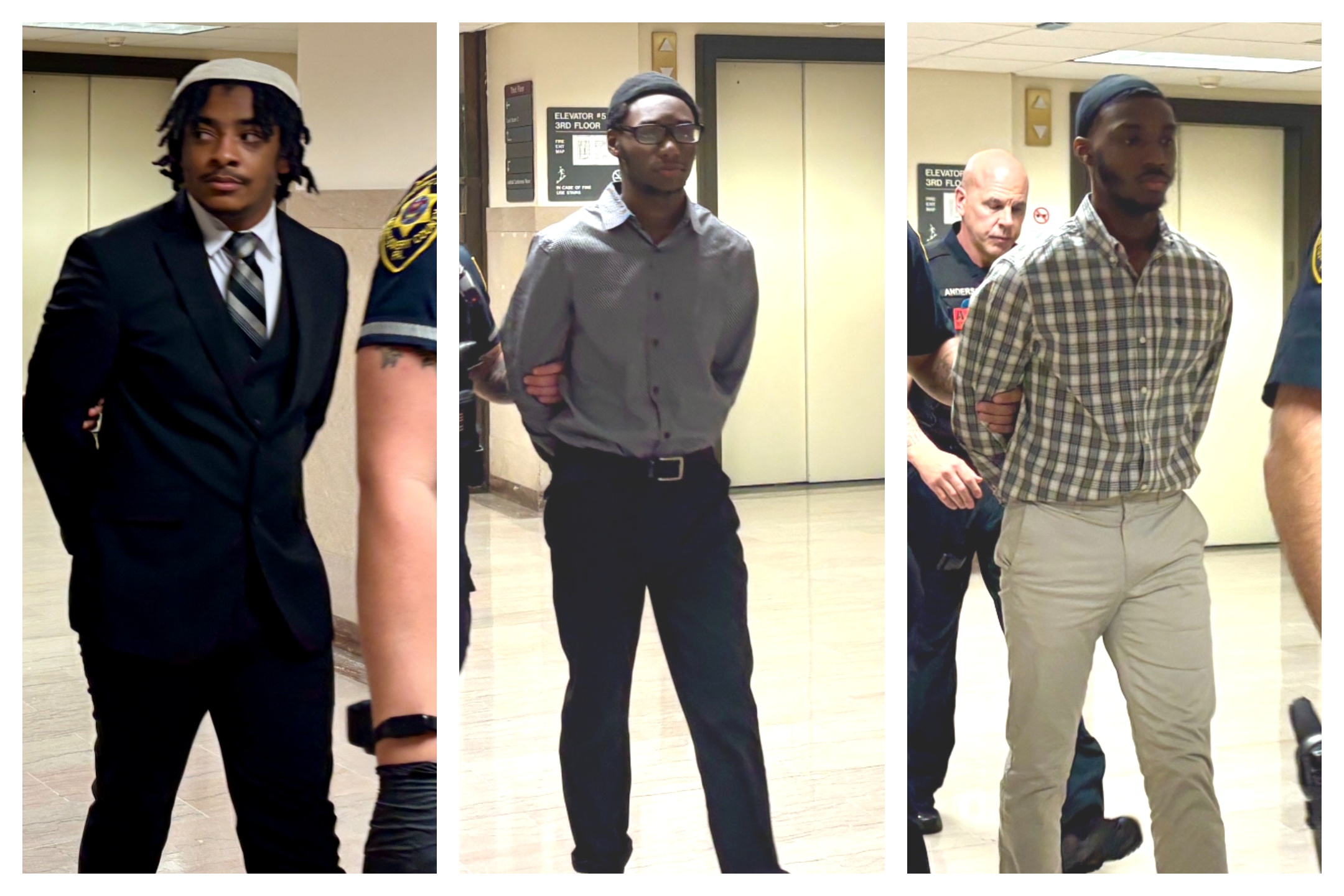
Now, the fate of Jabriil Morgan-Cook, 20, Naseem Worrell, 19, and Kaleem Roland, 17, is in the hands of a jury, set to deliberate Wednesday morning.
Assistant District Attorney Tanner Beck said in his closing arguments that the three were self-proclaimed members of the 300s/All Black Bandits and set out in May 2025 to “hunt” Harrison.
Harrison, according to prosecutors, belonged to the 6s/Grimy Boys, a rival group, and had mocked the murder of Seth “Pop” Marshall, a 15-year-old 300s member who was killed in a West Philadelphia corner store two days before Harrison’s death.
In a message sent on Instagram hours before his death, Harrison, 20, told Worrell that Marshall “died like a [expletive],” an insult that, given the code of the streets, the three suspects could not ignore, according to Beck.
“The second Harrison sent that message to Worrell, everything changed,” Beck said. “The second he sent that message about his homie, his fate was sealed and his casket was as good as closed.”
Harrison, shot once in his chest, later died at the scene.
Defense attorneys for the three suspects disputed Beck’s theory of the case, saying the investigation was rife with reasonable doubt and urging jurors to acquit their clients.
Surveillance footage of the shooting and from the area around Corson Street was grainy and difficult to view, according to the three defense attorneys. Alone, they said, it was not enough to identify who fired the fatal shots.
And there was no physical or DNA evidence taken from the crime scene that concretely identified them as the gunmen, aside from traces of Worrell’s found on a gun magazine left behind.
Morgan-Cook’s attorney, George Yacoubian Jr., said in his closing argument that the prosecution was “hanging its hat” on an Instagram live video featuring the three teens filmed an hour before Harrison’s death.
In that video, Morgan-Cook, brandishing a gun, talks about “dropping some shots” in the territory of the gang Harrison allegedly belongs to and saying he was “killing for [his] dead homie.”
Roland also wields a gun, and the trio perform a profanity-laced rap about gang violence.
But Yacoubian dismissed the video, saying it was nothing more than vulgar bragging.
“It’s puffing,” he said. “And it doesn’t equate to murder and conspiracy to commit murder.”
Worrell’s attorney, Richard Giuliani, told jurors they could not rely on key witnesses for the prosecution, including a longtime friend of Harrison’s who claimed Morgan-Cook threatened her by showing her a picture of her home when she accused him of killing Harrison.
That woman, according to text messages displayed in court, claimed to be afraid of Morgan-Cook, but then invited him into her home to bring her food from McDonald’s shortly afterward.
Three other witnesses who claimed to have been with the suspects before and after the shooting, and who identified to police the distinct clothing each wore, recanted their testimony during the trial.
They testified they were pressured into speaking with police and told them whatever they could to get out of custody. Beck later dismissed that, saying the real reason for their recanting was pressure from their friends and fellow gang members, seated across from them in the courtroom
Yacoubian, Giuliani, and Roland’s attorney, Thomas Egan, told jurors that if the prosecution’s theory about gang culture pervading Norristown was true, there would be a “wide net” of people upset at Harrison for mocking Seth Marshall’s death.
“You can’t shine a spotlight on just three guys when there’s a large group of people who’d take umbrage with saying [Marshall] ‘died like a [expletive],’” Egan said.
But Beck said it would stretch credulity to believe that all the circumstantial evidence, including the Instagram video and threats exchanged with Harrison online, was purely coincidental.
“They almost got away with it,” Beck told jurors. “Now, it’s up to you to make sure they don’t.”
Israelis surged to the polls in record numbers Tuesday as they chose whether to keep Prime Minister Benjamin Netanyahu and his far-right coalition in power or chart a new course in what many described as a make-or-break moment for the nation.
Opinion polls heading into the election suggested that Netanyahu’s allies and his rivals were roughly tied, and that assembling a governing coalition under Israel’s parliamentary system could take weeks or months.
By 8 p.m., two hours before polls were scheduled to close, 74.3% of voters had cast ballots — the largest percentage by that time since 1988, according to Israeli election officials.
Turnout appeared to be particularly high, compared with previous elections, among Arab citizens, who make up about a fifth of Israel’s population. By late afternoon, turnout in some Arab-majority towns had exceeded the totals from the last election, in 2022. By contrast, turnout in the five towns where Netanyahu’s Likud party won its strongest support in 2022 was lagging.
The Likud party said in a statement that it had asked Israel’s Central Elections Committee to extend voting hours past 10 p.m. The committee said it would not act at that stage of the vote.
The extension request came after Netanyahu urged his supporters to head to the polls, claiming that Israeli Arab citizens were “trying to steal the elections.”
Those comments, which were roundly condemned as racist, were the latest entry in Netanyahu’s long record of trying to motivate his political base by ringing alarms about Arab Israelis.
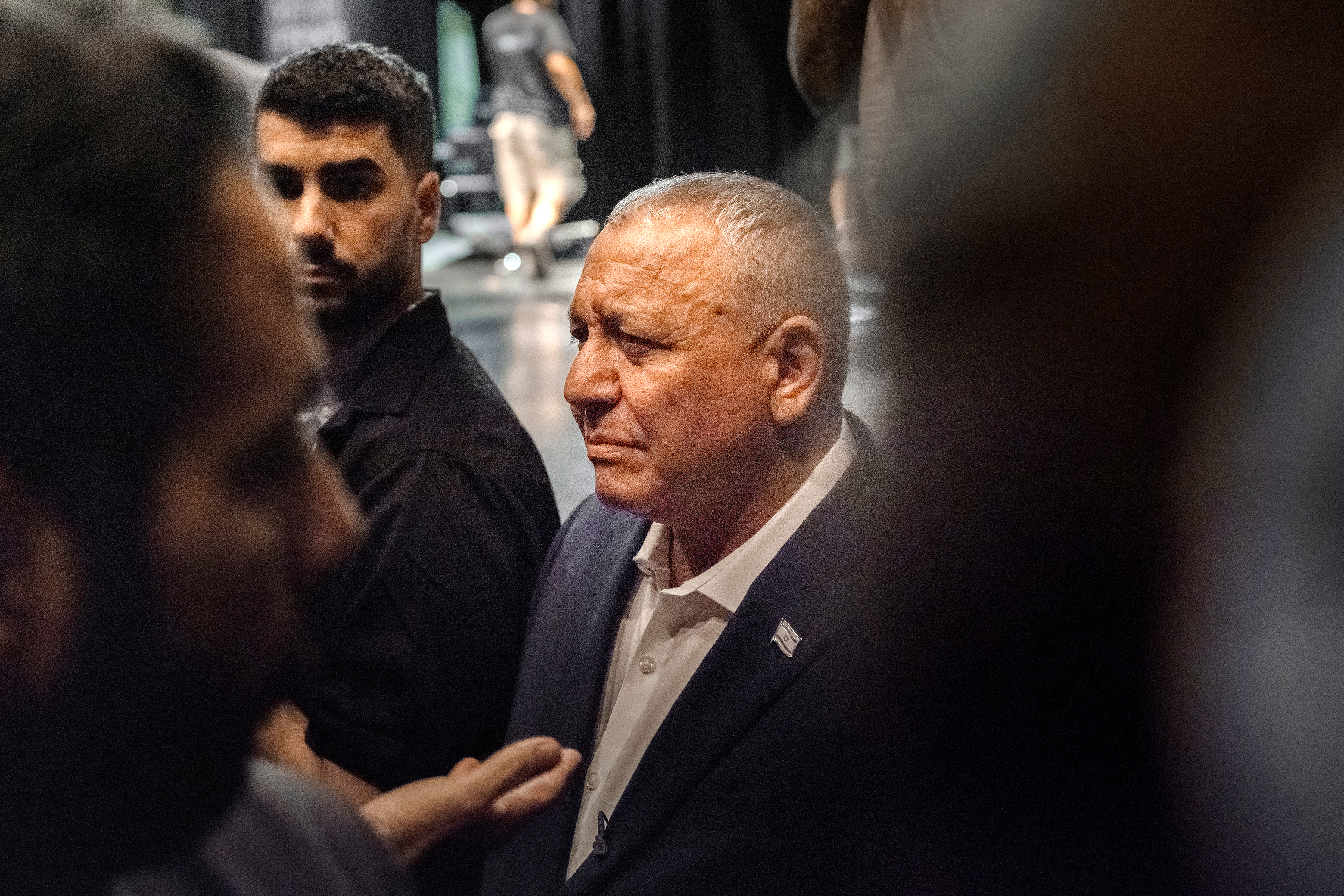
Yashar, the center-right political party of Netanyahu’s leading rival, Gadi Eisenkot, said it strongly opposed an extension of voting hours. It argued that the Likud was making the request to sow doubt about the election’s integrity.
The election was Israel’s first since the Hamas-led attack on Oct. 7, 2023, battered Netanyahu’s reputation as “Mr. Security” and ignited Israel’s devastating war in the Gaza Strip.
The contest pitted Netanyahu’s coalition, dominated by hard-line nationalists and ultra-Orthodox Jews, against a fractious group of opposition parties loosely led by Eisenkot, a former chief of staff in the Israeli military whose son was killed in the war in Gaza.
Both sides framed the election as a potential turning point. Netanyahu suggested that Israel could face annihilation without him in charge, a message he reinforced by posting an artificial intelligence-generated image on social media this week of a mushroom cloud exploding over Tel Aviv.
As Israel’s longest-serving prime minister, he has a deep well of support among conservative Israelis who regard him as an indispensable defender of the Jewish state.
“Bibi flows in my blood,” Shoshi Ashtbeker, 47, a school secretary from Tel Aviv, said Tuesday, referring to Netanyahu by his nickname, after she cast her vote for him. “No one can replace Bibi. He’s strong — a world leader.”
Others said they were ready for a change.
“Netanyahu did a lot of big things, but I think he’s done his job,” said Ayelet Veprinskiy, 25, a student in Jerusalem. She voted for the party led by Naftali Bennett, a former prime minister. “He’s had 20 years in this chair. He can go now.”
Netanyahu’s opponents cast the election as the last chance to preserve Israeli democracy and to pull the country back from the brink of becoming a pariah state under international sanctions.
Eisenkot accused Netanyahu of embroiling Israel in intractable wars, destroying its international standing, and dodging responsibility for security failures that preceded the Oct. 7 attacks. He promised to create a national commission to investigate the security failures that led to those attacks.
Eisenkot also vowed to enforce mandatory military service for ultra-Orthodox Jewish men, a major flashpoint in Israel as the country mobilized thousands of reservists for the war in Gaza.
Eisenkot has criticized Netanyahu’s prosecution of the war but has said he is prepared to carry out more attacks in Gaza if necessary. He has also promised to curb settler attacks on Palestinians in the Israeli-occupied West Bank, an issue that Netanyahu has played down.
But Eisenkot, like Netanyahu, has said he opposes Palestinian statehood.
Pollsters had expected Israel’s Arab voters to turn out in force to oppose Netanyahu’s coalition, and hours before the polls closed turnout figures suggested that many Arab voters were highly motivated.
“Overall, the feeling is very good,” said Fidaa Shehadeh, 42, an Arab Israeli voter in Lod, a city southeast of Tel Aviv, who cast her vote for an Arab party. “We’re seeing people getting involved. I expect that we can change the current government, because this government has been one of the worst for our community.”
Though Israeli Arabs have the same right to vote as all other Israelis, many have long felt that they are treated as second-class citizens. Netanyahu cast their high turnout in the direst terms in a last-minute bid to get his supporters to the polls.
“There are buses heading to the polls and long lines in Arab towns,” he said on social media. “Meanwhile, right-wing strongholds have yet to wake up! If we don’t go vote now, we will find ourselves with a government of Arab parties.”
Israeli Arab political leaders accused Netanyahu of racist fearmongering. Yousef Jabareen, who leads an alliance of Arab parties, said the prime minister was “inciting against Arab citizens and undermining the legitimacy of our vote.”
“I’m telling you: the Arab community knows how to punish you,” Jabareen said on social media. “Today we’re sending you and your bloodstained government packing.”
The Likud party and some far-right ministers in Netanyahu’s government also deployed incendiary messages about high Arab voter turnout.
In a video recorded near the entrance of an Arab-majority town in central Israel, Itamar Ben-Gvir, the national security minister, said that Arab voters were heading to the polls “at never-before-seen rates,” threatening Israel’s Jewish character.
The comments were not out of keeping for Netanyahu and his allies. On Election Day in 2015, Netanyahu declared that Arab voters were “being bused to the polling stations in droves” by left-wing organizations. He later apologized for the comments after they prompted criticism in Israel and abroad, including from the Obama administration.
Teachers, coaches, and school administrators who suspect hazing will now be required to report it to law enforcement, under a new law spurred by locker-room assaults on a Cheltenham football player last fall.
The new requirement, which takes effect Jan. 20, closes what lawmakers described as a loophole in Pennsylvania’s mandatory reporting laws, which require people who work with children to reported any suspected child abuse to a state hotline.
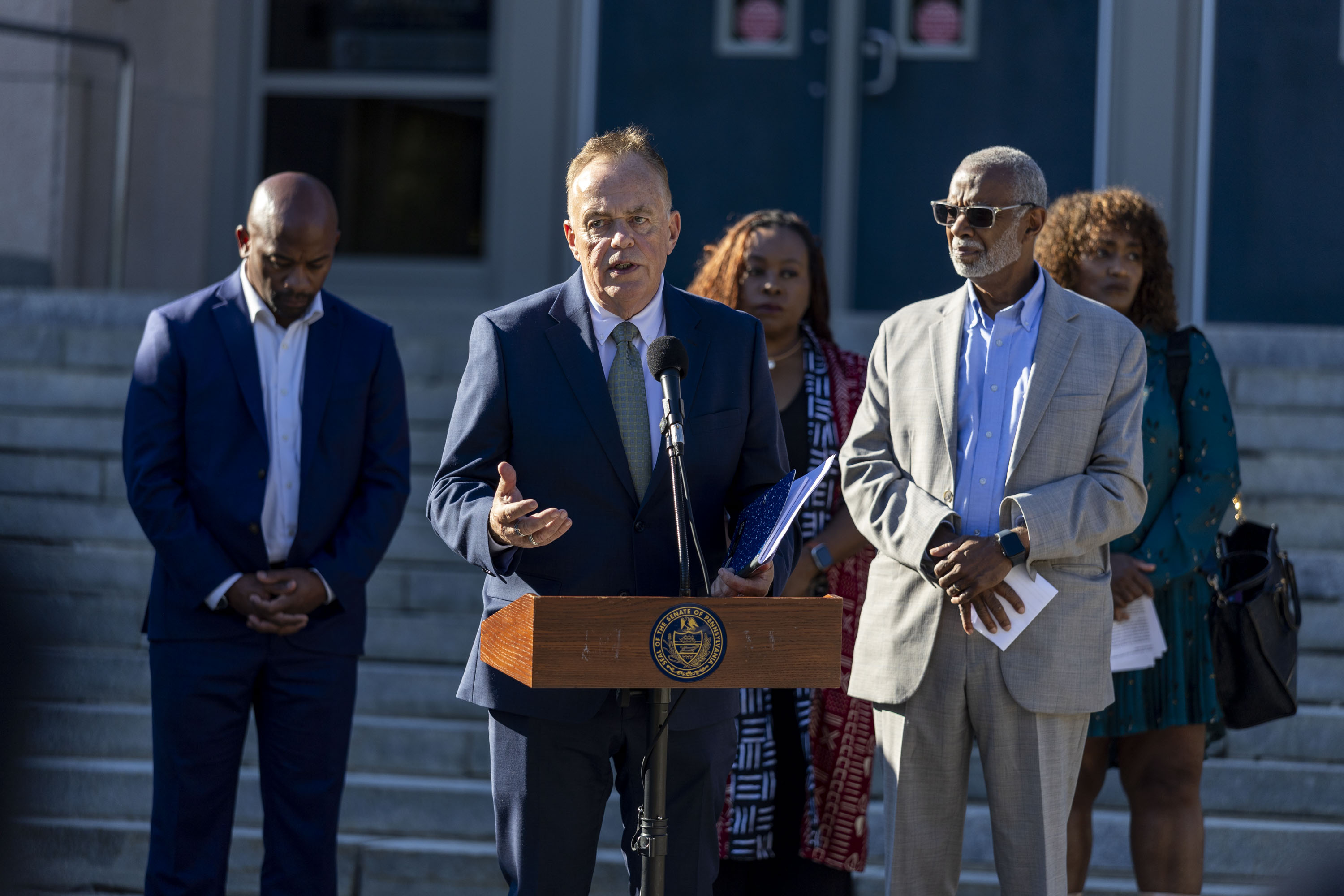
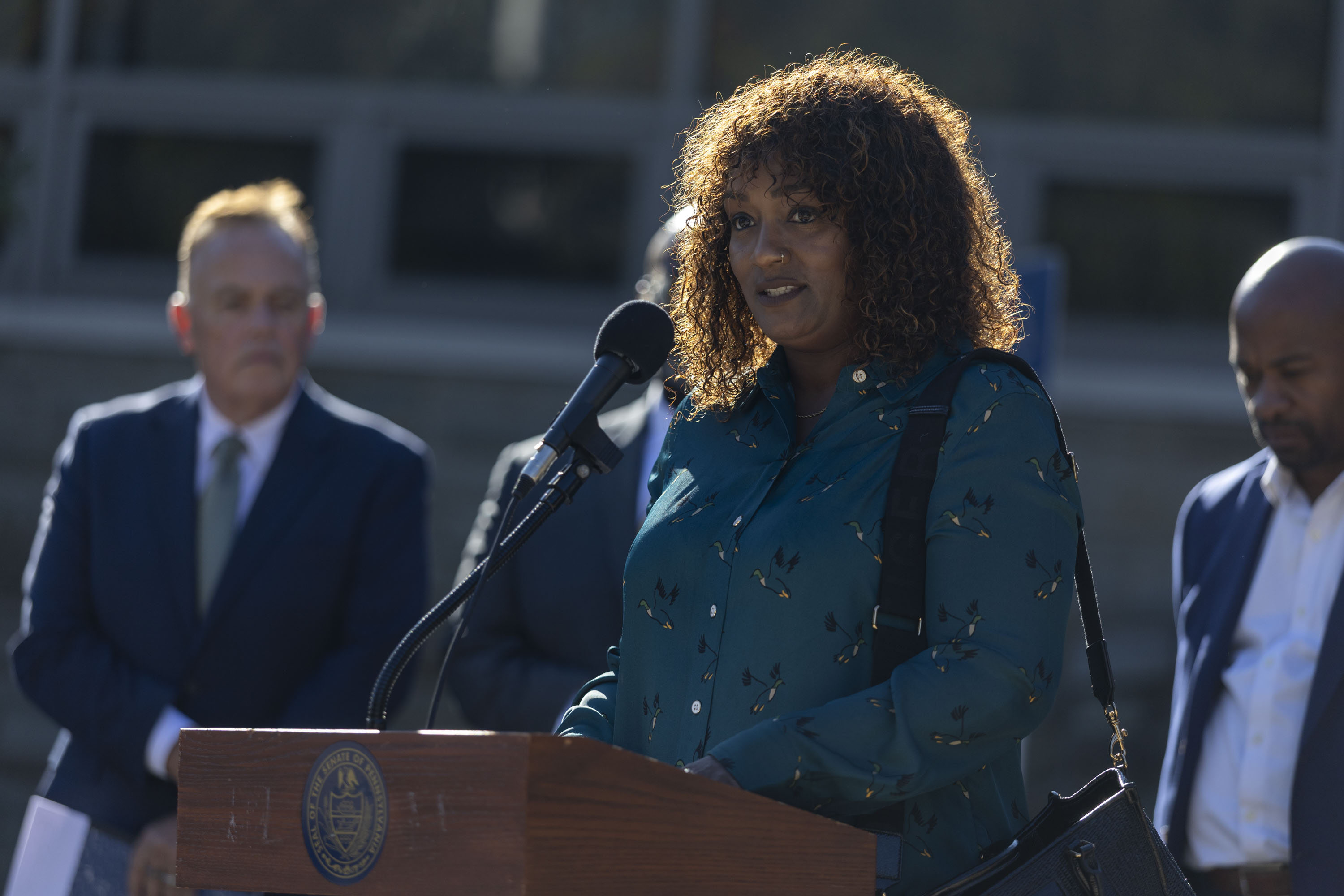
“Looking away is no longer permitted,” Ikysha Dearry, president of the Cheltenham African American Alliance, a parent group, said Tuesday at a news conference hosted by lawmakers and Cheltenham school leaders outside Cheltenham High School.
Ikysha Dearry, President of the Cheltenham African American Alliance and mother of two Cheltenham High School Students, speaks at a press conference on the announcement of a new law that makes hazing a mandated reportable offense at Cheltenham High School on Tuesday.Tyger Williams / Staff Photographer
The change comes after Montgomery County prosecutors in July charged four football coaches and six players in connection with two assaults on a player in August and September 2025 in a high school football locker room.
Prosecutors accused the coaches of trying to cover up the incident by instructing the player not to tell his parents what happened.
The district did not initially contact police when it learned of an alleged assault in September 2025. But police got involved after a tip later came into ChildLine alleging that a broomstick had been used in the assault.
Had the employees been required to contact the police when they were first notified, “the school administration would not have been able to open and control a biased investigation that was ultimately more concerned with protecting coaches and the institution than protecting a juvenile victim,” the grand jury said in its report.
The grand jury recommended added hazing to the state’s mandatory reporting law.
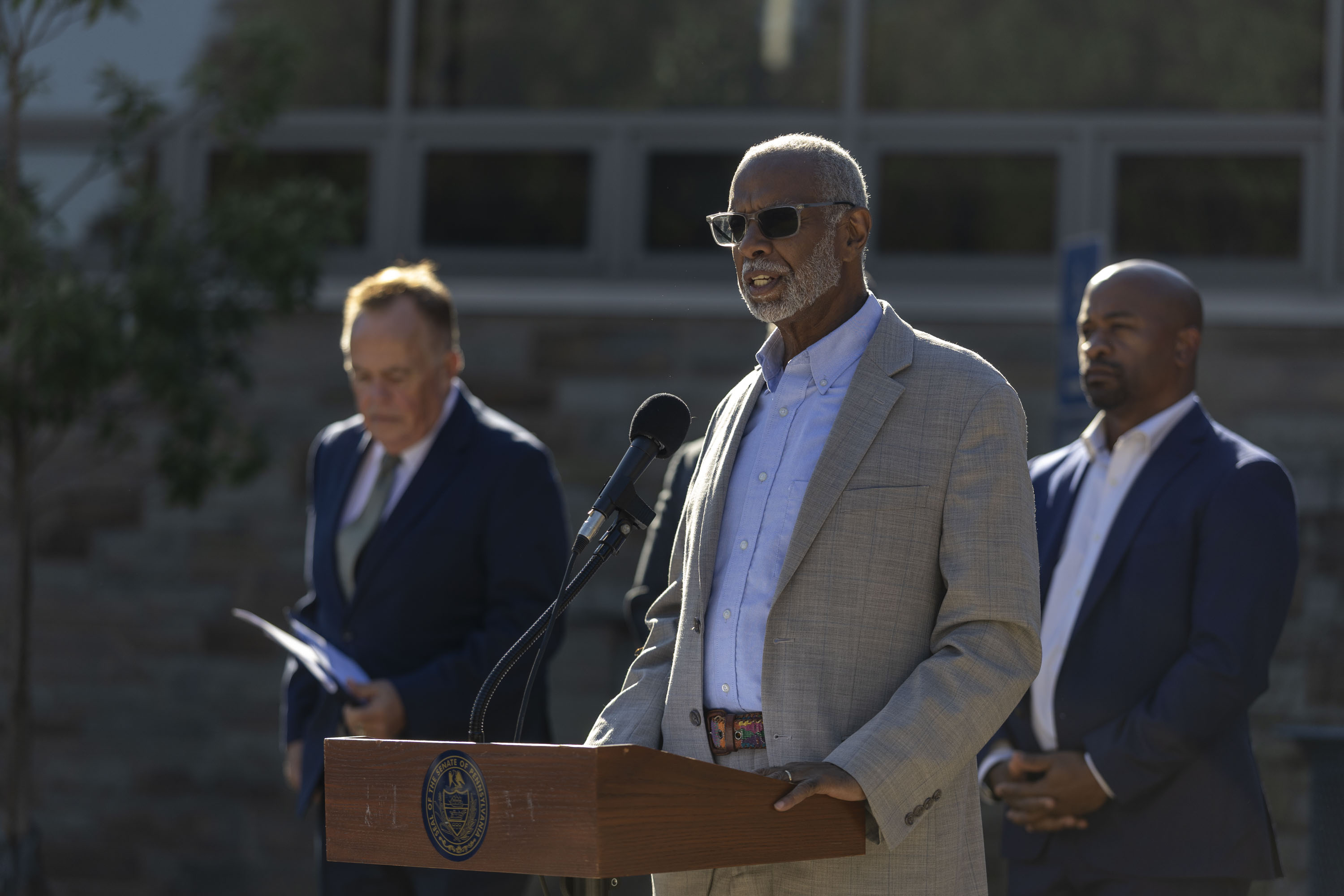
State Sen. Art Haywood, a Cheltenham Democrat who backed legislation to make that change, said Tuesday that it marked “an important difference in how hazing will be treated across the commonwealth.”
State Senator Art Haywood, speaks at a press conference to announce the passage of a new law that makes hazing a mandated reportable offense at Cheltenham High School on Tuesday, Oct. 27, 2026, in Wyncote, Pa.Tyger Williams / Staff Photographer
While Cheltenham school officials have voiced support for adding hazing to the mandatory reporting law, the district has also suggested the requirement might not have changed the way it handled the football incident.
Noting hazing’s legal definition in Pennsylvania — conduct for the purpose of initiating, continuing, or enhancing a student’s membership in a group — former Cheltenham Superintendent Brian Scriven said in a response to the grand jury report in July that the components of hazing were “not always immediately recognizable in reports of student-on-student assaults.”
Interim Superintendent Chris McGinley said Tuesday that the new law does not require school employees to determine whether hazing has occurred, only to report suspicions.
“It’s not a matter of making a series of decisions. It’s making one decision: Does this information concern me? Am I concerned about the safety of this child?” McGinley said.
A veteran school administrator, McGinley noted that the law does not apply just to sports, but to all student activities. He cited a hazing incident involving a theater group in another district he previously oversaw.
Employees will be instructed on the new rules as part of state-required mandated reporter training, McGinley said.
State Representative Napoleon Nelson, speaks at a press conference on the announcement of a new law that makes hazing a mandated reportable offense at Cheltenham High School on Tuesday.Tyger Williams / Staff Photographer
That type of work must now be the focus of Cheltenham and other schools, said State Rep. Napoleon Nelson (D., Montgomery), calling for a change in culture that “we can’t solve with legislation.”
“We must be the community that helps to model for every school district how we make sure that these incidents don’t happen again,” Nelson said Tuesday.
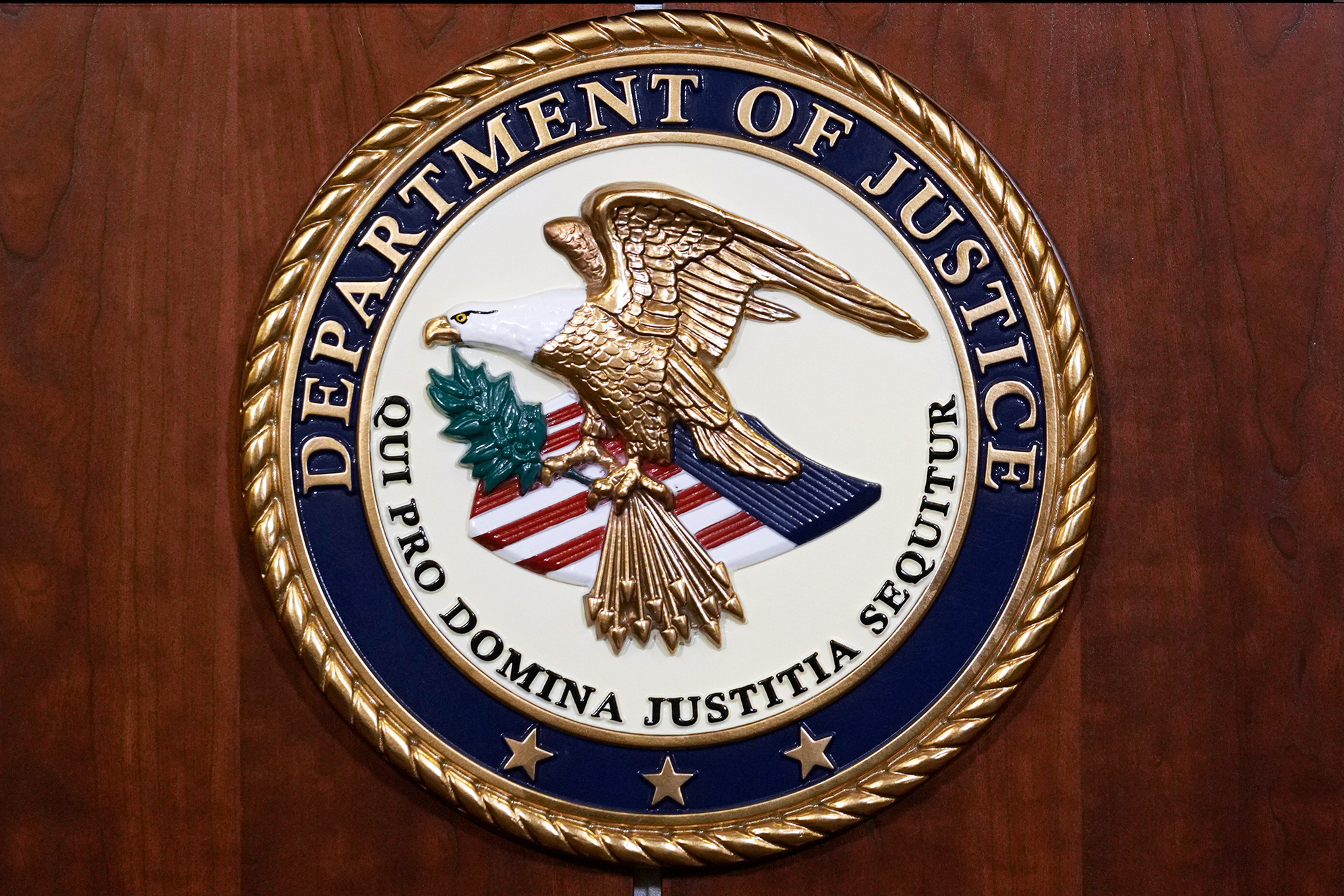
The Justice Department’s plan to send monitors to polling places in four Pennsylvania counties — including Philadelphia — is being overseen by a lawyer who joined the agency earlier this year, and whose background includes stints at private firms working on municipal law, corporate issues, and labor and employment matters.
James T. Catania, a trial lawyer in the Justice Department’s Civil Rights Division, sent a letter last week to Pennsylvania Secretary of State Al Schmidt saying federal monitors would be sent to Philadelphia, Allegheny, Luzerne, and Lehigh Counties for the Nov. 3 election to ensure polling places were complying with federal election laws, including the Voting Rights Act.
Catania — who joined the Justice Department in May, according to his LinkedIn page — is not alone in helping coordinate that effort. In his letter to Schmidt, he said he was the “regional coordinator” overseeing monitors in Pennsylvania, and he sent similar letters to officials in Michigan and Ohio in which he said at least one other attorney would be providing additional assistance.
At least five other Justice Department lawyers have sent letters with the same messages to election officials in states including Georgia, Indiana, Maine, Colorado, and Washington.
And Assistant Attorney General Harmeet Dhillon — who leads the agency’s Civil Rights Division — has said in television appearances and on social media in recent weeks that she is spearheading the national monitoring effort.
In all, Dhillon said, the Justice Department plans to deploy 1,000 monitors to all 50 states, and personnel — which will include lawyers and other staff — will be seeking to ensure polling places have proper disability access, offer sufficient language assistance for voters who speak or read limited English, and look out for instances of voter intimidation.
“We are going to have the largest number of monitors and observers at the polls on Election Day this year in American history,” Dhillon said on Newsmax earlier this month.
The expanded use of election monitors comes as some election officials nationwide worry about whether President Donald Trump will use the power of the federal government to act on his longstanding belief that many contests are “rigged.”
In Alaska, the Justice Department has already filed a lawsuit asking a federal judge to block the results if the Republican candidate loses because of potential confusion over two candidates on the ballot who have nearly identical names.
Still, federal election monitors are neither new nor particularly controversial if they perform the functions Dhillon has described, election experts say.
The American Civil Liberties Union of Pennsylvania said President Joe Biden’s administration used monitors in the same counties in previous elections without issue.
And Philadelphia City Commissioner Seth Bluestein said when Justice Department monitors were deployed to Philadelphia for the 2022 midterms — under Biden — their main focus was ensuring polling places had materials available in both Spanish and Chinese.
Bluestein said he did not believe this year’s monitoring announcements were cause for concern.
“It is my expectation that anybody who is in Philadelphia on Election Day will follow all applicable state and federal laws,” he said. “And I have every expectation that that will be the case here as well.”
The Justice Department declined to make Catania available for an interview.
A spokesperson said Catania, like the other regional coordinators involved in the monitoring effort, would be based in Washington, D.C., on Election Day. The spokesperson did not specify how many regional coordinators there are, but said each oversees a group of monitors and supervisors in the field, and are expected to “field any issues or questions reported up” by those making observations at polling places.
“All of this is in keeping with prior election monitoring practice at the DOJ,” the spokesperson said.
An Inquirer review of publicly available records did not appear to show a history of political donations by Catania.
He is listed in court records as a participant in lawsuits attempting to obtain the unredacted voting records of Virginia and West Virginia — but both lawsuits, which have been dismissed and are currently on appeal, were filed before he joined the agency earlier this year.
Catania earned his bachelor’s degree from Rutgers University in 2009, then earned a master’s degree in military strategic intelligence from American Military University, his LinkedIn page says. He was twice deployed twice to Afghanistan while serving in the Air Force, according to an archived online biography from an old job.
He briefly worked in the White House’s Office of Science and Technology Policy in 2016, his LinkedIn says, but then went on to study at Seton Hall University’s law school, where he was an associate editor at the Seton Hall Circuit Review, a student legal journal, and the president of the Student Veterans Association.
Bluestein, the Philadelphia city commissioner, said he expected to speak with Catania before Election Day about the monitoring effort.
And Catania, in his letter to Schmidt, said he would set up online conference calls with each jurisdiction to explain what Justice Department monitors planned to do — which he said was to ensure compliance with the Voting Rights Act, National Voter Registration Act, and Americans with Disabilities Act, among other provisions.