Category: News

  • Trump slams Supreme Court for rejecting his push to restrict mail ballots

    Trump slams Supreme Court for rejecting his push to restrict mail ballots

    WASHINGTON — President Donald Trump on Tuesday went after the Supreme Court after it rejected his push to restrict mail-in voting in this year’s midterms, saying justices who opposed him were “not the people I interviewed.”

    His social media missive was just the latest in a long history of Trump assailing justices, particularly those he had nominated, who ruled against him on his administration’s most prominent initiatives. The president has been publicly furious with the Supreme Court over its decisions against restricting birthright citizenship and his ability to issue tariffs unilaterally.

    On mail-in voting, the Trump administration had made a last-minute push to have the U.S. Postal Service play a central role in deciding who would be able to receive a ballot. But state election officials argued there was not enough time to make the changes for the Nov. 3 midterm elections — and said their systems were already secure and accurate.

    The court ruled late Monday in an emergency order that the restrictions would most likely lose in court, at least for this year’s election.

    “The Court’s inability and unwillingness to do the right thing for our Country will go down, in a very negative way, in the annals of History,” Trump wrote in a lengthy social media post Tuesday. “This Supreme Court is bullied and cajoled by the Radical Left into making decisions that have set America back at least a hundred years.”

    Justices Sam Alito and Clarence Thomas publicly dissented from the order, and Trump on Tuesday called them “legends both.” Trump has nominated three of the justices on the Supreme Court — Neil Gorsuch, Amy Coney Barrett and Brett Kavanaugh.

    “These are not the people I interviewed to serve on the United States Supreme Court, they are merely a shell of their original selves,” Trump said. He asserted that the court “is costing the United States Trillions of Dollars with shockingly bad rulings that are of such magnitude that it won’t be easily possible for our Country to recover or heal.”

    The president has a lengthy track record of attacking judges, often very personally, who issue decisions that go against his wishes, and Trump has long viewed his legal appointments as owing loyalty to the person who nominated them to the bench.

    So as Barrett, Kavanaugh and Gorsuch ruled against Trump at varying points over the years, the president has not hesitated to go after them publicly, while praising them if they sided with him in a case.

    Yet this court, led by Chief Justice John Roberts, has ruled in favor of Trump on several of his priorities, most notably the 2024 decision from the court’s conservative majority that said former presidents are presumptively entitled to immunity for all official acts. That paved the way for Trump to run for reelection without threat of a criminal trial that year.

    Trump has opposed mail voting and falsely blamed it for his 2020 election loss. A report by the Brookings Institution published in 2025 found that mail voting fraud occurred in only about four cases out of every 10 million mail ballots cast.

    Roughly a third of voters use mail ballots, and mail voting has already begun in some states. The decision allows states to continue sending out mail ballots under the same processes they’ve used for years.

    On Tuesday, Trump also complained that the decision took too long to issue.

    “It is not easy for me to write this criticism of the United States Supreme Court – it will likely cost me dearly for years to come – but I feel it my obligation and duty, as President, to do so for the America we love!” Trump said.

  • ‘Culture wars’ can matter deeply

    ‘Culture wars’ can matter deeply

    Trans rights, trad wives, and a testosterone-fueled military: these hot-button topics generate intense emotions in online spaces and cable-news panels, driving the culture wars that energize MAGA warriors. Culture wars focused on gender issues have been especially heated during the Trump era, but they are not new. Indeed, gender-based culture wars have long been a feature of democratic systems, particularly during times of political upheaval.

    Consider the example of France in the 1790s. The French Revolution of 1789 led to a change of government from one ruled by an absolutist monarch to one where (some) men could vote for their governing bodies. With the introduction of a new electoral system in 1791, suffrage and regular elections became part of the system and ambitious politicians needed constituents to vote for them.

    Rapid political and social change, including the debate over who qualified as citizens with the right to vote, generated both movements for change and a sense of impending disorder. Urban workers and peasants demanded the vote, as did some women. Dissatisfaction with the government’s response led to increasing violence, including riots and the overthrow of the monarchy in August 1792. The constitution that came into effect in June 1793 — after the creation of the French First Republic and the execution of King Louis XVI — granted universal male suffrage, including for workers and peasants. But it refused the same political rights to women.

    Still, representative government brought legal changes that benefited women. In the fall of 1792, the National Convention legalized and made divorce quite easy, a change vehemently opposed by church authorities. In the years that followed, more women than men sued for divorce under the new laws, reflecting their desire for greater autonomy. At the same time, adjustments to inheritance laws made it possible for women to demand a fair share of their family’s material goods, in many cases interfering with previous settlements that had disproportionately favored sons over daughters.

    While many French men and women approved of these transformations as promoting greater fairness, those disadvantaged by the changes expressed their outrage at the disruption to longtime religious and economic practices anchored in traditional ideas about gender. Conservatives were especially unhappy about restrictions on the ability of husbands to discipline a wayward wife or of fathers to direct the family’s resources toward an eldest son. His diminished patriarchal authority had profound implications for familial relations.

    Uneasiness about these cultural shifts intensified as war broke out in 1792, followed by civil war within France itself, triggered by resistance to what many saw as unacceptable attacks on their way of life. Opposition to the revolutionary government was particularly strong in western France, where religious sentiment and an attachment to the king and traditional hierarchies fueled resistance to government “meddling.”

    The Terror — an effort by the radical Jacobin government, with the support of the newly empowered lower classes, to clamp down on dissent by executing anyone perceived as a threat to the unity of the nation — was an attempt to impose order. But it instead created panic and paranoia along with a sense that giving power to the lower classes and women gave rise to chaos. The closure of women’s political groups along with the execution of several prominent women, including political activist Olympe de Gouges and the former queen Marie Antoinette, in the fall of 1793 was a response to those fears. The Terror’s end, with the execution of Maximilien Robespierre and his closest collaborators in July 1794, led to the creation of a new regime that promised to restore order: the Directory, a conservative republican government established by a new constitution in 1795.

    But the culture wars continued, fueled by fights over gender and family issues. While the new constitution significantly curtailed the power of lower-class men — the franchise was restricted to wealthy male property owners — many legislators were still committed to the egalitarian goals of the revolution and thus unwilling to overturn all previous social legislation. However, the visibility and perceived political and cultural influence of women became a flash point as critics continued to debate changes to divorce and inheritance laws that benefited women. Politicians and journalists blamed divorce as a root cause of social disorder; a woman who could threaten to leave her husband undercut his masculine authority and disrupted families.

    Writer and cultural critic Louis-Sébastien Mercier offered a harsh critique of the divorce law in 1797, asserting that “Friends of law and order, sensible people recognize that it opened the door wide to licentiousness and moral depravity, already so widespread.” Politicians demanded divorce law reform on behalf of their voters, decrying its “disastrous and scandalous effect.” French newspapers printed polemical essays and letters to the editor on the topic and reported on legislative debates.

    Purported sexual misbehavior also generated concern. Between 1794 and 1799, legislators and social critics complained about the shamelessness and political meddling of elite women who wore revealing clothing and pursued the pleasures of life beyond the home. The argument was that the changes in inheritance laws gave them access to resources that financed their independent and luxurious lifestyles, attending balls and hosting salons. One politician decried the consequences of female independence, which, he believed, led inexorably to adultery, warning, “Establish the independence of the mother, and you will render all paternity uncertain.”

    Made By History sponsors. FOR USE ON MADE BY HISTORY STORIES ONLY.Inquirer Staff

    Eventually, Napoleon Bonaparte took advantage of France’s disorder and cultural anxieties to establish male authoritarian rule. Defenders of Napoleon and his November 1799 coup d’état pointed to the political and social chaos of the Directory, exacerbated by the corrupting influence of ostensibly licentious women on weak men who had shown themselves incapable of exercising control over their families and the government. Napoleon believed this as well. It was high time that strong, “manly” men — preferably those with military credentials — took control of the government and their families. The Napoleonic Code of 1804 made getting a divorce more onerous, at least for women, whose ability to initiate divorce proceedings was severely limited (divorce would be outlawed entirely in 1816), and it tightened husbands’ control over their wives and family resources.

    The lesson? Deriding the power and potential liberty that sexual freedom and divorce offered women became a way to critique a society that empowered a more diverse citizenry. But in reality, perceptions of “chaos” and proposed solutions creating “order” through “traditional” values was — and still is — about restoring power to older regimens and hierarchies. It can also be cruel, limiting choices and freedoms. Perceived disorder is a powerful force for constraint; the desire for fairness is a powerful force for change.

    Christine Adams, a former American Council for Learned Societies and Andrew W. Mellon Foundation fellow at the Newberry Library, is professor of history at St. Mary’s College of Maryland and author of “The Creation of the French Royal Mistress” with Tracy Adams.

    Made by History takes readers beyond the headlines with articles written and edited by professional historians. Opinions expressed do not necessarily reflect the views of The Inquirer.

  • NATO jets shoot down drone over Lithuania and Russian ship fires flares at Danish helicopter

    NATO jets shoot down drone over Lithuania and Russian ship fires flares at Danish helicopter

    VILNIUS, Lithuania — NATO fighter jets shot down a drone that entered Lithuanian airspace overnight, officials said Tuesday, the day after the head of the alliance said strikes close to its territory would only increase its support for Ukraine in the war against Russia’s full-scale invasion.

    Military officials in Lithuania, a NATO member, said the incident marked the first time that a drone had been shot down in its airspace. Authorities didn’t comment on the drone’s origin or purpose, saying further investigation was needed, but two senior officials said the device was likely carrying explosives.

    Officials in other NATO countries, including Germany, Denmark, the United Kingdom, and Poland, have in recent weeks accused Russia of involvement in acts such as drone incursions, sabotage, arson, and surveillance of defense facilities and in plans to use a drone carrying explosives to attack an airport.

    Separately, Denmark said Tuesday that one of its air force helicopters was fired on with flares as it was carrying out surveillance of a Russian frigate in the Baltic Sea.

    Strikes close to NATO territory showed Russian President Vladimir Putin’s “desperation and also his desire to sow fear and terror,” NATO Secretary-General Mark Rutte said Monday. He spoke after a Russian drone struck a railway line near the Ukraine-Poland border on Sunday shortly after senior visiting officials passed through.

    Rutte pledged to bolster the 32-nation alliance’s own defenses along its long eastern border with Russia and with Belarus, a Russian ally.

    Ursula von der Leyen, head of the European Commission, said the incidents in Lithuania and Denmark were not isolated but “part of a broader pattern of Russian aggression and provocation against Europe, testing our readiness and our resolve.”

    “Russia will find our resolve only growing stronger,” she said.

    Drone found to be carrying explosives

    The drone downed Tuesday in Lithuania fell near the village of Pratkūnai, about 60 miles west of the capital, Vilnius, and near the Kaunas Reservoir, Lithuania’s National Crisis Management Center said Tuesday.

    Vilmantas Vitkauskas, head of the crisis center, told Lithuanian public broadcaster LRT that the drone most likely entered from Belarus. It remained in Lithuanian airspace for about 30 minutes and flew along the outskirts of populated areas before being intercepted, he said.

    Writing on Facebook on Tuesday, Lithuanian Defense Minister Robertas Kaunas said an explosive device was detected on the drone and neutralized by bomb-disposal experts.

    Menacing drones have repeatedly loomed over the skies of Lithuania, which shares borders with Belarus and the Russian exclave of Kaliningrad.

    In May, residents of Vilnius were told to take shelter, and the president and prime minister were taken to safe locations during an alarm over drone activity near the border with Belarus.

    Stray Ukrainian drones have also previously crossed the border into Baltic airspace, including in May, when a NATO fighter jet shot down a Ukrainian drone over southern Estonia.

    Meanwhile, Denmark accused Russia of firing flares at one of its air force helicopters in connection with “routine photographic coverage” of a Russian frigate in waters off the port of Gedser in the Baltic Sea.

    “This is completely unacceptable,” the Danish Foreign Ministry wrote on X, saying that the Russian ambassador was summoned over the incident.

    Russia’s ambassador to Denmark, Vladimir Barbin, said it was “not the first time” that Danish air force helicopters “carried out dangerous maneuvers near Russian warships.”

    He said the Danish helicopter conducted “provocative actions against the Russian frigate.”

    The Kremlin declined to comment Tuesday, with presidential spokesperson Dmitry Peskov saying that he did not have details.

    Kyiv says it’s ‘ready to support de-escalation’

    In Ukraine, Russian drone strikes continued across the country following a social media post from U.S. President Donald Trump on Monday that Russia and Ukraine had agreed “not to hit” each other’s energy infrastructure.

    Trump didn’t offer details on the purported agreement. Previous efforts to broker even a partial ceasefire have repeatedly fallen apart within hours, with both sides accusing the other of violations.

    Ukrainian President Volodymyr Zelensky said late Monday that Kyiv was “ready to support de-escalation” if the United States could ensure “Russia is genuinely ready to stop this war.”

    But Zelensky said Tuesday in a statement that Moscow had continued to attack Ukraine’s energy sector, logistics, and critical infrastructure, and that Kyiv responded by striking an oil refinery in Syzran, a city in western Russia.

    “There is no alternative to ending this war. And all forms of pressure on Russia must create the right diplomatic conditions,” Zelensky said.

    The Kremlin said Tuesday that it considered Trump’s proposal for a ceasefire on energy infrastructure to be “a good idea.”

    However, it stressed that strikes on Russian oil refineries were not the root cause of global supply issues for gas or diesel.

    “The core problem lies in the export of petroleum products to global markets,” Peskov said. He said that countries instead needed to guarantee safe navigation for oil tankers and lift global sanctions on Russian oil.

    The Kremlin’s comments contradict those of Trump, who on Sunday called on Zelensky to halt strikes on Russian oil refineries and claimed that such attacks had caused a global shortage.

    “Mr. Zelensky has to do one thing. He has to stop knocking out diesel fuel in Russia,” Trump told reporters, following news on Friday that diesel prices in the U.S. had soared past an average of $6 a gallon.

    “We spoke to Mr. Zelensky about it. There are plenty of other targets. Don’t hit diesel fuel, because that’s hurting, that’s hurting the world,” he said.

    Ukraine’s State Emergency Service said Tuesday that Russian strikes on Kyiv had killed one person and wounded seven other people since the start of the day, with attacks carried out on the capital’s gas stations.

    Two more people were killed in separate Russian strikes in the Ukrainian cities of Sloviansk and Kramatorsk, the emergency service said.

    Elsewhere, Russian forces shot down 222 Ukrainian drones overnight, Russia’s Defense Ministry said Tuesday.

    A “massive” Ukrainian drone attack sparked several fires in the Russian city of Taganrog, regional Gov. Yuri Slyusar said. He said on Telegram that two apartment buildings and three private homes had been damaged, as well as an educational institution, agricultural warehouses, and a site belonging to Russian e-retailer Ozon.

    Zelenskyy said Tuesday that Kyiv’s forces had targeted a drone-production facility in the city.

    Ukrainian parliament votes to dismiss prosecutor general

    In other developments, Ukraine’s parliament voted to dismiss Ruslan Kravchenko from the post of prosecutor general Tuesday.

    Kravchenko submitted his resignation on Sept. 7 amid an investigation into corruption in his office, though no notice of suspicion was issued against him. Zelensky had suspended Kravchenko from the post the day before. Kravchenko had served as prosecutor general since June 21, 2025.

    Repeated corruption scandals have hurt Zelensky’s approval ratings.

  • Federal Reserve is expected to raise its benchmark rate, defying Trump’s demands

    Federal Reserve is expected to raise its benchmark rate, defying Trump’s demands

    WASHINGTON — The Federal Reserve is widely expected to lift its short-term interest rate Wednesday for the first time in three years to fight stubbornly high inflation, a move that would put the central bank at odds with President Donald Trump’s support for a cut.

    A quarter-point increase in the Fed’s rate, currently about 3.6%, isn’t guaranteed because Fed Chair Kevin Warsh doesn’t provide the signals about next moves that his predecessors did. Still, most analysts and economists expect a hike after a speech two weeks ago at the Fed’s annual conference in Jackson Hole, Wyoming, in which Warsh argued that the Fed had not yet achieved its goal of putting inflation in check.

    A rate increase would throw another sharp shift into a volatile period for the economy and financial markets. As recently as March, the Fed had forecast it would cut its rate once this year. But with the Iran war flaring up again and causing sharp increases in oil and gas prices, inflation is likely to remain higher than the Fed’s 2% target for even longer.

    “I don’t see any end to the war in Iran right now,” Kristin Forbes, an economist at MIT’s Sloan School, said. “Given what everyone has been through in the last few years of high inflation, consumers are more sensitive, companies are more sensitive, they raise prices faster … The risks are much more on more persistent inflation than it falling quickly.”

    Surging investment in AI data centers has also been accelerating inflation and contributing to higher longer-term interest rates, though now leading companies are discussing slowing the technology’s development.

    All eyes are on interest rates before the midterms

    The Fed’s potential rate hike comes just seven weeks before the midterm elections in which high prices and affordability have taken key roles. Trump has demanded that the Fed cut rates, a move that isn’t on the table, and on Sunday the president said, “the United States is so strong we should be paying the lowest interest rate in the world.”

    Trump repeatedly attacked Warsh’s predecessor, Jerome Powell, in harshly personal terms, upending decades of tradition in which presidents treated the Fed as independent.

    Kevin Hassett, Trump’s top economic adviser, said Sunday on CNN that Trump “100% respects the independence of Kevin Warsh.”

    Yet at the same time, Hassett suggested in a Fox News interview that the Fed shouldn’t hike so close to the midterms.

    “I’d be wary of a rate hike … I think if you want an independent Fed, then one thing the Fed does is it stays out of the way of elections,” Hassett said.

    Financial markets expect that Warsh and the central bank will brush off such warnings. Traders now see a 90% chance the Fed will hike Wednesday, according to futures prices. That figure jumped after Friday’s inflation report showed that prices remain stubbornly high and core inflation, which excludes volatile food and energy, picked up in August from the previous month.

    After that report, and Warsh’s tough talk on inflation late last month, most economists argue that Warsh will have to hike rates or risk undermining his credibility with financial markets. Longer-term interest rates, such as those on the 10-year and 30-year Treasury bonds, could spike if he doesn’t hike, as they did after a Fed meeting in late July when Warsh failed to convince markets he was willing to lift rates if needed.

    “At the end of the day the Chair’s repeated stern warnings on inflation intolerance risk institutional credibility absent some action to back it up,” Michael Feroli, an economist at JPMorgan Chase, wrote in a preview of the Fed’s meeting.

    A rate increase could raise other questions

    Some members of the Fed’s interest-rate setting committee still expect inflation, outside of food and energy, to fade over time and may not feel a rate hike is necessary.

    But Warsh has not made that argument. Instead, in his Jackson Hole remarks, he said recent inflation reports “do not tell me that underlying trends have improved,” adding that if such improvement wasn’t seen soon, “we have work to do.”

    Ironically, by boosting Fed credibility, a rate hike could hold down longer-term interest rates that consumers pay for things like mortgages and auto loans. Some of the recent spike in mortgage rates has likely reflected concerns among investors that the Fed wasn’t committed to fighting inflation. Investors typically demand higher yields to own bonds when inflation is elevated.

    Still, if the Fed does increase its rate Wednesday, then Warsh will face a new set of questions: How many hikes will the Fed implement? How effective will they be in reducing inflation when much of it stems from higher oil prices, something the Fed can’t control? What will they do if an AI slowdown threatens to slow the economy, which would typically get the central bank to cut rates?

    Matthew Luzzetti, chief U.S. economist at Deutsche Bank, said it is rare for the Fed to lift its key rate just once, which is likely to have little impact on the economy, and so multiple hikes are likely.

    But how the Fed characterizes possible rate increases on Wednesday could give clues to its next steps, he said. For example, if Warsh suggests the Fed is unwinding the three cuts it made in late 2025 — when it feared that unemployment was rising — that would suggest two more hikes would be needed.

    Alternatively, Warsh could portray a hike as an act of “risk management,” Luzzetti said, with the Fed expecting inflation to cool but hiking rates to essentially ensure it falls. That could point to possibly just two increases.

    Warsh has resisted providing such guidance so far. But Wall Street traders expect three hikes — in September, December, and March — according to futures prices.

  • Trump’s effort to assert control over elections continues, despite court loss

    Trump’s effort to assert control over elections continues, despite court loss

    WASHINGTON — The Supreme Court dealt President Donald Trump a major blow Monday when it blocked his executive order to restrict mail ballots. But Trump’s battle to assert control over the election process is far from finished.

    The stymied attempt to have the U.S. Postal Service screen mail ballots was just one piece of a broader effort involving the full power of the federal government to take more control of state-run elections.

    Just days before the Supreme Court blocked Trump’s mail ballot order, the Justice Department sent threatening letters to at least 30 top election officials across the country, escalating a fight to gain access to private voter data and election records.

    Federal agents are scouring voter rolls managed by states for noncitizens, despite a lack of evidence of widespread fraud. Trump’s homeland security secretary recently pushed for an investigation into whether a commonly used voting machine can be trusted, casting doubt on digital voting systems.

    “This is far from over,” said Benjamin Hovland, who was ousted from the independent, bipartisan Election Assistance Commission by the Trump administration this year.

    Hovland acknowledged that the Supreme Court’s decision mitigated “real-world impact” on voters and election workers, particularly since voters in some states have already begun to mail in their ballots. But he said Trump’s actions were alarming.

    “What you’re seeing is using the apparatus of government, using federal agencies, using taxpayer dollars, to push that narrative that only undermines confidence in our democracy and ultimately hurts voters and election officials,” Hovland said.

    Trump argues that he is trying to secure the integrity of the vote, but his claims of widespread fraud in the election system have been investigated and debunked repeatedly, and critics say his actions needlessly sow doubt about the outcome of the vote.

    The White House did not immediately respond to requests for comment.

    There are stark differences between now and Trump’s first term, when his attempts to undermine the election results in 2020 ran into stiff pushback not only from the courts but also from his own government officials. In his second term, Trump has surrounded himself with loyalists willing to turn his obsession over the country’s election systems into a blitz of federal actions. He has also installed election deniers in key posts.

    The Supreme Court’s decision Monday did, however, add to a string of mounting losses for Trump, who said this year that he wanted to “take over” and nationalize elections. Even before the Supreme Court decision, two lower court judges ruled that Trump’s changes to mail-in balloting were most likely illegal and should not be imposed so close to the November elections.

    Trump administration lawyers had urged the Supreme Court to step in and clear the way for its plan to use the Postal Service to screen ballot envelopes after they are submitted by state elections officials. The new rules would require states to submit lists of voters approved to receive mail ballots. The Postal Service would then deliver mail ballots only to the voters on the lists.

    In addition to the loss Monday, Trump’s other attempts to pressure states over the election process have faced legal setbacks.

    The Justice Department has sued 30 states for unredacted voter lists, which include personal information such as driver’s license numbers and partial Social Security numbers.

    They have lost 23 of those cases. Decisions are pending in the rest.

    The federal actions, as well as the various court decisions, have caused alarm among local election officials and voters, according to election experts.

    This month, the chief election officials in seven Republican-controlled states filed a brief to the Supreme Court, arguing that with less than two months until Election Day, it was too close to the midterms to make any major changes to the election process.

    Some states including North Carolina, Delaware and Alabama had already mailed out their ballots, even before the Supreme Court issued a final decision.

    “Attempting to implement the rule now will almost certainly lead to mistakes, delays and confusion for both voters and election officials,” the brief stated.

    But it was not just the pending Postal Service rule that has caused confusion and upended coordination among local election officials and the federal government.

    The administration has also asked the Supreme Court to intervene to allow it to move forward with an effort to build citizenship lists by merging data from various agencies, including the Department of Homeland Security and the Social Security Administration. A lower court has so far blocked the use of that tool, which administration officials argue is needed to verify citizenship for voting, among other purposes.

    In July, Markwayne Mullin, the homeland security secretary, threatened election officials in a speech and said they could face prison time if they did not comply with the Trump administration’s efforts to change election policies. Officials in the Justice Department officials have also explored whether they could bring criminal charges against state or local election officials if the administration determined they had not sufficiently safeguarded their computer systems.

    The Federal Emergency Management Agency, which sits under the Homeland Security Department, is demanding that states change the way they conduct elections or risk losing tens of millions in federal terrorism-prevention funds.

    Kimball W. Brace, the president of Election Data Services, an organization that works with local governments on election preparedness, said he did not expect the Supreme Court decision to stop Trump’s broader effort to pursue his election grievances.

    “I don’t anticipate people on the Republican side not wanting to continue and push their side of the story as much as possible,” Brace said.

    Distrust of the election process among voters is growing as the November elections approach. A survey from The Associated Press and the NORC Center for Public Affairs Research and USAFacts showed that only 34% of U.S. adults trust government certifications of election results “a great deal” or “quite a bit,” down from 40% in 2024.

    Trump has also gutted the government’s election security infrastructure. Experts warn that his cuts to agencies tasked with coordinating election security with state governments could reduce visibility into foreign influence campaigns and cyberattacks.

    Brace said all the executive actions have fueled pressure on local election officials.

    “They don’t want to deal with this crazy pressure that various interests and various individuals have pushed on the election administration,” he said.

    This article originally appeared in The New York Times.

  • 🍎 The fall must go on | Inquirer South Jersey

    🍎 The fall must go on | Inquirer South Jersey

    Good morning, South Jersey.

    Despite still reeling from decimated apple crops due to a surprise spring freeze, South Jersey farmers are fighting to find a way to ring in fall with festivals, cider, and more.

    And Burlington County next week will welcome its free bus route, complete with 11 stops.

    Plus, voters will decide on the largest bond referendum in the Cinnaminson School District’s history, and more news of the day.

    — Taylor Allen (southjersey@inquirer.com)

    If someone forwarded you this email, sign up for free here.

    A shrunken apple-picking season

    South Jersey farmers have an uphill battle if they want to fulfill customers’ typical fall desires, from warm ciders to bushels of fresh-picked apples.

    They’re trying their best to fill gaps after a late April freeze left farms across the state with massive crop damages.

    With fewer apples, some have outright canceled their apple-picking offerings this year.

    It’s caused farmers to get more creative to retain customers who still want to have a festive season. Strategies include:

    🍏 Importing apples from other states

    🌻 Planting sunflower fields and popcorn plants for picking

    🗓️ Planning more events throughout picking season

    The Inquirer’s Sarah Nicell shares how farmers are navigating the season and how you can celebrate, despite the shortage.

    Catch Burlington County’s shuttle bus on the road next week

    Starting Sept. 21, Burlington County residents will able to ride on a free blue bus.

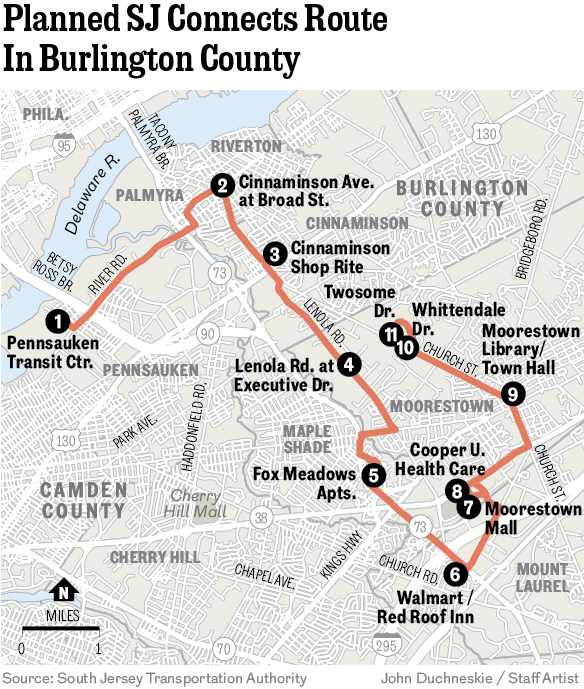
    The 11-stop route begins at the Pennsauken Transit Center and concludes at Twosome Drive and Church Street in Moorestown after looping south.

    The new public transit offering is called the Burlington County Shuttle, and it’s the last of the six lines that make up SJ Connects, a no-cost bus service run by the South Jersey Transportation Authority.

    Reporter Lacey Latch has more about the stops on this route, as well as the others that form SJ Connects.

    What to know today

    • Voters in Cinnaminson and Clementon will head to the polls today to decide on multimillion bond referendums that would raise local property taxes for school updates.
    • During a legislative hearing in Trenton on Monday, parents from Camden and Burlington Counties pleaded for New Jersey lawmakers to mandate the installation of cameras in group homes serving people with disabilities, The Inquirer’s Susan K. Livio reports.
    • According to the Philadelphia Business Journal, Burlington Stores aims to sell two of its properties: one facility in Burlington and an office building in Florence Township. The headquarters of the discount retailer is moving to Philadelphia.
    • New Jersey and 24 other state leaders reached a settlement that limits the Trump administration’s ability to make significant changes to AmeriCorps without at least 30 days notice.
    • Burlington County began repaving a 1.9-mile stretch of New Lisbon Road in Pemberton Township Monday. It’s expected to take two weeks, and those traveling eastbound will be detoured. Expect delays.
    • The Burlington County Clerk’s office is mailing out 52,000 vote-by-mail ballots ahead of the general election for registered voters who requested them. Residents should expect them to arrive in mailboxes soon.

    🗣️ Quote of the week

    Romagnoli, a player at Kingsway Regional High School in Woolwich Township, grew up playing coed flag football. Now that the New Jersey State Interscholastic Athletic Association has sanctioned girls’ flag as a high school varsity sport, the first season can begin in the spring of 2027.

    🧠 Trivia time

    Laura Quinn’s debut historical romance novel, Thicker Than Water, was set in Cape May, Wildwood, and Philadelphia. But where does the author live?

    A) Haddonfield

    B) Hainesport

    C) Burlington

    D) Williamstown

    Think you know? Check your answer.

    What we’re …

    🎃 Planning: A trip to Creamy Acres Farm in Mullica Hill when it turns into Night of Terror for Halloween season.

    🦅 Sharing: Eagles fans’ expectations for the season.

    🥂 Tasting: Unoaked chardonnay.

    Have a wonderful day. I’ll be back in your inbox tomorrow. ☀️

    By submitting your written, visual, and/or audio contributions, you agree to The Inquirer’s Terms of Use, including the grant of rights in Section 10.

  • A new fusion restaurant for Glenside | Inquirer Greater Abington

    A new fusion restaurant for Glenside | Inquirer Greater Abington

    Hi, Greater Abington. 👋

    Glenside is among the greater Philadelphia locales expecting a new restaurant soon as 60 eateries prepare to open in the area this fall. In other news, Cheltenham’s new manager sets his sights on taxes and aging infrastructure, some local elementary schoolers will soon have their recess time doubled, and a third-party gubernatorial candidate hails from Abington.

    — Laura Smythe (greaterabington@inquirer.com)

    P.S. We want your feedback! Tell us what you think of the newsletter by taking our survey or replying to this email.

    If someone forwarded you this email, sign up for free here.

    Glenside, Willow Grove eateries among 60 new area restaurants opening this fall

    Greater Philadelphia will welcome a host of new restaurants this fall. Among the newcomers will be Glenside’s Capperini, an upscale Italian-Mediterranean concept complete with a liquor license. The spot is anticipated to debut by November.

    Meanwhile, a trip to Marshalls in Willow Grove will place you across the street from the latest location of popular breakfast-and-lunch chain Nudy’s Cafe. It’s targeting a late-September open.

    And soon, local couple Mike and Joy Grafenstine, owners of Glenside’s Roberts Block and Abington’s Bonnet Lane Family Restaurant, will take to Doylestown to launch an upscale American concept dubbed Tusk.

    Whet your appetite with The Inquirer’s look at all 60 spots slated to bring fresh bites to the region in the coming months, including in nearby Ambler and Hatboro.

    Taxes, aging amenities among top priorities for new Cheltenham manager

    Cheltenham’s new manager is ready for a challenge.

    Jonathan Altshul, who stepped into the role last week, has a full docket of to-dos, including figuring out how to balance updating aging infrastructure with “holding the line” on tax increases for residents — who are already the most property tax-burdened in Montgomery County.

    It’s a puzzle he’s not taking lightly.

    “We’re talking about home,” Altshul told The Inquirer’s Jess Rohan, who details the tasks he plans to tackle first and why he thinks he’s the best man for the job.

    💡 Community news

    • With midterm elections less than two months away, much of the focus in the Pennsylvania governor race is on incumbent (and Abington resident) Josh Shapiro and his Republican opponent, Stacey Garrity. And yet, another name with local ties will appear on the ballot in November: Abington-based libertarian Ken Krawchuk, the only third-party candidate vying for the position, Spotlight PA reports.
    • Cheltenham police issued 32 violations to drivers during the first week back to school after school bus-mounted cameras captured them passing buses using red lights and stop signs to indicate student boarding.
    • A northbound lane will be closed in Cheltenham on Washington Lane between Ashbourne Road and Rock Lane through next Tuesday due to pipe replacement work. Additionally, paving will prompt an overnight lane closure in the township from 8 p.m. to 5 a.m. through Friday on Ashbourne Road, Montgomery Avenue, and Central Avenue between Washington Lane and Route 73.
    • “Why is Crestmont, a mostly Black community, sitting right in the middle of overwhelmingly white suburbs?” That’s the question Philly-area creative DJ Atkins looks to answer in this opinion piece about the unincorporated community in Abington Township.

    🏫 Schools briefing

    • New state legislation mandates that elementary schoolers have at least 30 minutes of recess, according to WHYY. Cheltenham students in third through fifth grade will soon see current recess time doubled in order to comply, The Inquirer’s Jess Rohan confirmed, and in Abington and Jenkintown, K-5 students already have 30 minutes of recess.
    • Following charges against Cheltenham High School football coaches and students over alleged hazing incidents, child welfare expert Janet Rosenzweig wrote an opinion piece about the “heroes” of the case that has shocked the community: the victim’s mother and the person who reported the attacks to the state’s Safe2Say system.

    🍽️ On our plate

    • Glenside Local takes a look inside the recently opened Bella’s Cremeria, a dream project from local resident Amanda Sheridan, who also launched Steak It Easy in Willow Grove earlier this year alongside her husband.

    🎳 Things to do

    😂 Yammering Into The Void Tour: Laugh ‘til your belly aches at a live set from acclaimed comedian and podcaster Marc Maron, known for his many appearances on late-night comedy shows. ⏰ Friday, Sept. 18, 8 p.m. 💵 $64.39-$319.42 📍 Keswick Theatre, Glenside

    🃏 Life of the Party: See if comedian and illusionist Jonathan Burns, who previously appeared on “America’s Got Talent,” can pull one over on you. ⏰ Friday, Sept. 18 and Saturday, Sept. 19, 8 p.m. 💵 $35-$45 📍 Smoke & Mirrors Theater, Glenside

    🏎️ Roslyn Fall Festival & Car Show: Check out head-turning vehicles at this 26th annual event hosted by Abington Township, the Roslyn Boys and Girls Club, and the Roslyn Business Association. ⏰ Saturday, Sept. 19, noon-5 p.m. 💵 Free 📍 Easton Road from East Avenue to Woodland Road, Abington

    🏡 On the market

    A charming 19th-century build with a front porch

    1316 Ashbourne Rd, Elkins Park, PA 19027

    This three-bedroom, three-bathroom house built in 1850 brings nearly 200 years’ worth of character to the Elkins Park East neighborhood. It features a fireplace, classic inlays, and a covered front porch, plus a family room with ample windows that bring natural light into the space. A walk-up attic adds extra storage space to the abode, which also has a deck and a fenced-in backyard. The house is under contract.

    See more photos of the property here.

    Price: $465,000 | Size: 2,169 SF | Acreage: 0.28

    🗞️ What other Greater Abington residents are reading this week:

    By submitting your written, visual, and/or audio contributions, you agree to The Inquirer’s Terms of Use, including the grant of rights in Section 10.

    This suburban content is produced with support from the Leslie Miller and Richard Worley Foundation and The Lenfest Institute for Journalism. Editorial content is created independently of the project donors. Gifts to support The Inquirer’s high-impact journalism can be made at inquirer.com/donate. A list of Lenfest Institute donors can be found at lenfestinstitute.org/supporters.

  • Burlington County’s free shuttle bus will finally hit the road next week

    Burlington County’s free shuttle bus will finally hit the road next week

    Some Burlington County residents might see an unfamiliar blue shuttle bus on the roads next week as the region welcomes its first new public transit option in more than two decades.

    The new route will officially start service on Sept. 21, the last of six new shuttle lines that form SJ Connects, a free bus service run by the South Jersey Transportation Authority (SJTA). The first five lines were launched on June 1 while the transportation authority worked to get formal authorization to operate in the county.

    Together, the shuttles can take riders from Cape May Court House to as far north as Palmyra with connections to other shuttles, SJTA routes, NJ Transit lines, and more sprinkled throughout.

    Though the newest route is called the Burlington County Shuttle, it technically begins over the Camden County line at the Pennsauken Transit Center before concluding 10 stops later at Twosome Drive and Church Street in Moorestown.

    Along the new route, up to 20 riders per bus can hop on or off at various locations including the Cinnaminson ShopRite, Fox Meadow Apartments in Maple Shade, or at Cooper University Healthcare’s Moorestown Mall location.

    Stretching from early morning to late evening, the shuttles will make a total of five visits to each of the stops along the route throughout the day.

    The first shuttle leaves from the Pennsauken Transit Center at 7 a.m. with the final drop-off scheduled for 8:11 p.m., according to the SJTA schedule. A full schedule for the Burlington County shuttle is available online.

    SJ Connects received $5 million in state funding from former Gov. Phil Murphy’s administration for an 18- to 24-month trial run to boost transit services in the region.

    Map of planned SJ Connects route in Burlington County.John Duchneskie

    The investment was secured in part thanks to the efforts of state Sen. Troy Singleton, a longtime Burlington County resident who called the county “the crown jewel of South Jersey.”

    “Burlington County is the largest county by land mass here in New Jersey and being able to connect what was a lot of former farmland to economic and educational opportunities is critically important,” Singleton said during a ride-along of the new route Monday.

    “We know that there’s enormous economic opportunity here in South Jersey as it connects to Philadelphia and connects to other parts of New Jersey so continuing that investment is one of my responsibilities that I take really personal,” he said.

    Many of the stops along the SJ Connects routes were chosen to help South Jersey residents travel between medical centers, educational institutions, and other areas of interest, said Stephen Dougherty, SJTA’s executive director.

    The Burlington County Shuttle will begin service on Sept. 21, 2026.Lacey Latch

    The half-dozen routes include stops at multiple Cooper and Inspira locations in addition to the region’s various community colleges and universities. The routes also have stops located at or near large employers, Dougherty said, including Logan Township’s Pureland Industrial Complex, the second largest industrial park east of the Mississippi River.

    “We know that these routes are crucial — based on the nature of what these stops are — to people’s everyday lives,” Dougherty said.

    Now that all six of the SJ Connects shuttles are ready for riders, local leaders are simply asking South Jersey residents to hop on for a ride.

    The more demand there is for this service in Burlington County, the more likely it will be for legislators to get state funding to keep the rides free and create more routes in the future, Singleton said.

    “My hope and my ask of the public is to utilize this free resource — their tax dollars coming to their benefit — in order for us to try and expand it even more,” Singleton said.

  • ‘I’m in it till I croak’: South Jersey farmers fight to make it through fall with fewer apples after the spring freeze

    ‘I’m in it till I croak’: South Jersey farmers fight to make it through fall with fewer apples after the spring freeze

    For many, a quintessential South Jersey fall includes apple picking, a warm cider, and sugared doughnuts.

    But fall in the Garden State might look a little different this year after a spring freeze left farms across the region with damaged apple varieties and huge crop losses — at least $300 million worth, Gov. Mikie Sherrill said in May.

    With pumpkin spice and Halloween decorations already signaling fall’s arrival, farmers and produce sellers are trying their best to get by with fewer apples, or none at all.

    At Russo’s Fruit & Vegetable Farm in Tabernacle, which typically attracts visitors for six weeks of picking, the apple crop was decimated by the freeze. The farm had to purchase apples from a farm in New York to sell this year, the most local they could get.

    Third-generation owner Joann Gsell, 59, said she won’t know the extent of their lost profit until fall is over, but the farmers are doing their best to fill in the gaps.

    Russo’s staff planted sunflower fields and popcorn plants for picking instead, both new experiments, along with their usual pumpkins. Gsell planned new events, too, spread across the picking season to draw in more customers.

    “Even if we get the same amount of customers coming out, the per-dollar sale won’t be what it was when apples were available,” Gsell said. “But we really don’t know until we’re past it.”

    Jersey’s apple harvest season typically begins in mid-July and wraps up by the end of October, according to a report by the state Department of Agriculture, but local farmers, who are still recovering from a tough summer of sparse berries and higher prices, say the season will likely be much shorter and will rely on success in their pumpkin fields.

    Still, fall must go on, farm owners say, starting with their apple festivals.

    17-month-old Rome Imbesi bites into a big apple next to his mother Kristen Imbesi, 34, of Haddonfield, after picking apples at Duffield’s Farm.Aidan T. Gallo / Staff Photographer
    17-month-old Rome Imbesi bites into his apple.Aidan T. Gallo / Staff Photographer

    ‘Figure things out’

    Tracy Duffield, who has worked at Duffield’s Farm Market in Sewell for four decades, said the Gloucester County farm had to push back the start of apple picking by a month.

    The freeze killed Duffield’s early apple crop planted in January, and with half its crop remaining, it’s uncertain how long picking will last this fall.

    But that didn’t stop Duffield’s from hosting its annual Apple & Food Truck Festival on Saturday, featuring apple picking, pony and hayrides, and face painting. It’s the official launch of the farm’s apple season this year.

    “I compare it to COVID. You have to get creative and figure things out,” Duffield said. “It is what it is. You just make the best of it.”

    Calah Donato, 26, of Port Elizabeth, N.J., holds her son Neo, 1, while he picks an apple off an apple tree at Duffield’s Farm.Aidan T. Gallo / Staff Photographer

    Duffield’s will still carry its beloved apple cider doughnuts this year, along with new apple-cider-doughnut-scented candles. But they did have to switch cider providers this year, buying from a Central Jersey-based farm instead of Mood’s Farm, 20 minutes away in Mullica Hill.

    Mood’s is not making fresh cider this year, said co-owner Patti Mood, but they’ll have frozen cider from past apple seasons to get them through.

    “We’ll just see how long it lasts,” Mood said. “We’re not sure what next year will look like.”

    Kristine Duffield (center), the daughter-in-law of farm owner Tracy Duffield, hosts an apple-themed story time at Duffield’s Farm in Sewell on Friday, Sept. 11.Aidan T. Gallo / Staff Photographer

    This fall, Mood’s doesn’t have enough quality apples to run its pick-your-own operation. At the farm’s own Apple Festival on Saturday, visitors gathered apples sourced from nearby states placed in bins in the orchard during discounted hayrides, instead of picking them off the trees.

    Other farms have canceled their apple-picking operations this year. Neither Strawberry Hill Farm in Chesterfield nor Johnson’s Corner Farm in Medford have apples to pick.

    Julian, who is two-and-a-half years old, makes a craft next to his grandmother Deb Carter, 69, of Washington Township, at Duffield’s Farm Market on Friday, Sept. 11.Aidan T. Gallo / Staff Photographer

    Off the farm

    Despite the shortage, apples are still being celebrated this year, on and off the farm. First Methodist Church of Moorestown is hosting its third apple festival on Sept. 18.

    And Medford Historical Society will host its 47th annual Apple Festival on Oct. 10, their biggest fundraiser of the year.

    Danny, 2, attempts to poke his sister Sosie, 4, with a piece of hay while being held by his great-grandmother Joan Ballah, 80, at Duffield’s Farm in Sewell on Friday, Sept. 11. The family is local to Sewell and comes to the farm often to participate in the farm’s activities and shop the farmer’s market.Aidan T. Gallo / Staff Photographer

    Thomas Gerber, copresident of the historical society, said their usual supplier in Pennsylvania lost all their apples and couldn’t provide the 320 pounds needed for the festival, so they found a different farm in New Jersey.

    Families wait to enter the hayride to pick apples out in the orchard at Duffield’s Farm in Sewell on Friday, Sept. 11.Aidan T. Gallo / Staff Photographer

    Amy Zorn, an eighth-generation owner of Hunter’s Farm in Cinnaminson, said their farm market has been able to buy Jersey apples from other farms, but they’ve had to pay higher rates for smaller apples compared to previous years. She hopes customers continue to support their local farms through this year’s challenges.

    “There are still Jersey fresh items out there,” she said. “You might not see as many apples, but there are fall squashes, sweet potatoes, and other things coming to Jersey. I encourage people to go out to their farmers markets.”

    Families exit Duffield’s Farm after the apple-themed activities concluded on Sept. 11.Aidan T. Gallo / Staff Photographer

    ‘For the long run’

    Mario Caltabiano, 31, has been farming since he was 6 years old. As the owner of MC Farms in Pilesgrove in Salem County, Caltabiano grows 14 varieties of apples, Asian pears, and several types of vegetables.

    He said he’s used to freezes that take out large sums of fruit, but apples, “the hardiest things,” usually power through.

    Caltabiano said one of his farms saw a total apple loss, and the other lost 90% of its crop. With about 20 apples clustered on each tree, and thousands of trees, Caltabiano said he’s not sure how long it’ll take the public to pick them all. Either way, Caltabiano has to continue to tend to the orchards to make sure the trees stay strong enough to produce fruit next season.

    “This year, when fruit is 90% of your business, you have the same amount of bills. You have to take care of the trees to the very end,” Caltabiano said. “How do you make up for that?”

    In recent years, MC Farms has ventured into the agritourism world, offering hayrides, barrel train rides for kids, cut-your-own flowers, and a wine garden settled in the orchards. Rising prices for fuel and fertilizer are still making work difficult, along with the destruction of most of his crops.

    But Caltabiano said he plans to make it to next fall, and the one after that.

    “I’m in it for the long run,” Caltabiano said. “I’m in it till I croak.”

  • ‘The kids are not learning’: Employees inside a North Philly charter detail chaos inside their school

    ‘The kids are not learning’: Employees inside a North Philly charter detail chaos inside their school

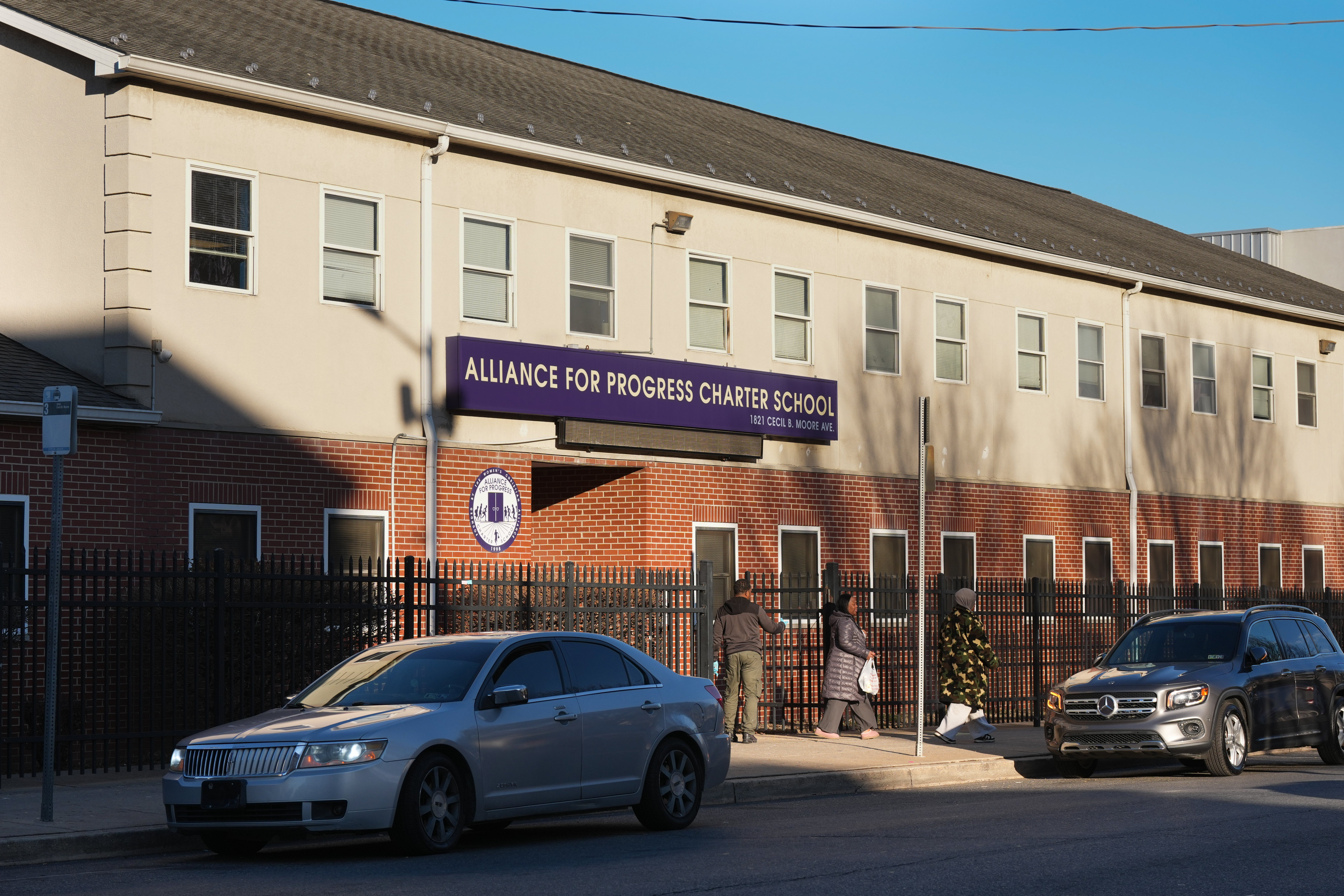
    The leadership meeting happened at midafternoon on a Tuesday at Alliance for Progress Charter School. It was a small huddle to discuss how the new school year was going.

    Unexpectedly, CEO Stacey Scott burst into the Aug. 25 meeting held inside the main office, disrupting the discussion.

    “You b—!” Scott said to the principal, Eric Langston, according to multiple people with direct knowledge of the meeting. She then spoke to the others in the room. “You can’t trust this snake! Motherf—!”

    Scott then walked out of the room, shouting, “F— this school,” and left.

    The extraordinary outburst, insiders say, shows Alliance for Progress, whose charter is up for renewal this year, is a school in turmoil.

    The Inquirer interviewed multiple people directly involved with the school, all of whom declined to be publicly identified because they fear reprisal.

    The North Philadelphia charter has churned through staff. Paraprofessionals — workers without college degrees or educational licenses — are providing instruction, those inside the school say. Students who never attended a day of school last year remained on Alliance’s rolls for the entire year, meaning the charter received payment for children it did not educate.

    Scott remains CEO, but is no longer working inside the building, according to the sources.

    Alliance, a K-8 school on Cecil B. Moore Avenue, had 616 students on roll last year.

    Both Scott and Larry Griffin, the president of the school’s board of directors, were asked to comment on the allegations. Griffin sent The Inquirer a statement. Scott did not respond.

    “Alliance For Progress Charter School continues our important work of educating our economically disadvantaged student populations,” Griffin wrote. “Respecting the privacy of all our AFPCS employees, we decline to comment on personnel matter.”

    Langston declined to comment.

    The Philadelphia School District’s charter schools office declined to comment. Officials from the charter office are expected to visit Alliance in late October to begin the enhanced review process that accompanies charter renewal.

    The school’s board of directors is scheduled to meet Tuesday night.

    Sounding an alarm

    Six weeks after joining Alliance as principal in July, Langston, who has spent time as a leader in the Mastery Charter system and at Northwood Academy, sent a confidential email outlining concerns he had about the school to the Alliance board of directors.

    The concerns, he said, according to the message obtained by The Inquirer, “have reached a level that gives me significant pause regarding leadership practices, organizational culture, transparency, and the long-term health of Alliance.”

    Langston asked for the board to shield him from possible retaliation. In 2025, the school’s former director of business and compliance filed a whistleblower lawsuit alleging he suffered reprisal — demotion — after reporting significant problems at the school.

    Raheem Harvey, who left Alliance last year, said he flagged to school and board officials violations of state and local bidding requirements, contracts issued without board approval, a student enrollment problem, skipped payroll taxes, and more.

    Scott told The Inquirer in December that Alliance officials “categorically deny all the allegations asserted by this disgruntled former employee.” That suit is still pending.

    Langston, in his email, laid out several issues raised by employees around ”Scott’s leadership and decision-making, including questions about whether decisions are consistently being made in the best interest of the school.” Alliance, he added, does not have “the level of psychological and professional safety necessary for adults to openly communicate, learn, disagree, grow and lead.”

    Different organizational structures are needed at the school, Langston said in the email. He proposed becoming chief schools officer — a promotion — which he said would result in “creating clearer lines of accountability and appropriately limit the extent to which Ms. Scott is involved in the daily instructional and operational decision-making of the school.”

    Langston also raised alarm over Scott instructing human resources to withhold the bonus an employee earned because the employee was taking family medical leave to care for an ill relative. Scott, he said, wanted to make sure the employee returned to Alliance after the leave.

    “I am deeply concerned that conditioning compensation already earned or otherwise due upon an employee’s return from protected leave may create significant legal, ethical and organizational exposure for Alliance,” Langston wrote.

    Langston also suggested Scott was misrepresenting staff vacancies and counting classes covered by substitutes as filled.

    “Our reporting should distinguish between FTE-filled positions, substitute-covered vacancies, and completely uncovered vacancies,” Langston wrote. “Anything less creates an inaccurate picture of our staffing reality. I believe the board deserves complete and transparent information upon which to make governance decisions.”

    ‘There are grave concerns’

    Four days after Langston sent the email to the board, Scott burst into his meeting shouting profanities, according to those with direct knowledge.

    Langston immediately notified the board of Scott’s conduct and asked for a meeting, which happened the next day.

    Some board members apologized for Scott’s behavior, but Griffin, the board president, neither offered an apology nor discussed the issues Langston raised, according to multiple insiders.

    Soon after the meeting, the board’s lawyer instructed Langston and the board to have no contact with each other. Alliance, at its lawyer’s instruction, has hired an outside consultant to investigate the situation.

    Langston remains on site at Alliance for Progress; Scott is working remotely, sending emails and issuing directives.

    Employees say Scott “has created a scope at the school where nothing can go on without her,” one employee said.

    The school’s atmosphere is “such a toxic working environment, not a healthy space. The kids are losing, the families are losing,” the employee said.

    “There are grave concerns,” the employee said. “We service families that come from challenging backgrounds, and we cannot assume that just the children have struggles. We have parents that cannot read. They do not know their children are not being serviced, their children are not being prioritized.”

    The employee said while the school’s climate is decent, Alliance lacks some organizational basics, including human resources processes and a formal student discipline cycle. Some students who never attended the school remained on roll all year, the employee said — an assertion confirmed by other employees.

    Some classes have been taught “for years” by unlicensed paraprofessionals, the first employee said.

    “It lacks stuff that a normal school understands,” the employee said. “It’s a very low tier, low level of support. The kids are not learning.”

    Just 9% of the school’s students meet state standards in reading, and 5% reached math standards. That is far below district and state achievement — in the Philadelphia School District, 33% of students were considered at grade level in reading and 25% in math; across Pennsylvania public schools, 50% of students are considered proficient in reading and 42% in math.

    A second employee, who also asked for anonymity for fear of reprisal, is particularly troubled by the school’s academic issues.

    “Our school is predominately Black and brown children, and they can’t read, and they’re just passed on to the next grade, and we go into these meetings, and they say, ‘These are the worst test scores I’ve ever seen.’ But what are we doing to make that different?”

    The second employee also expressed alarm about students on Alliance’s books who had left the school.

    “We noticed that students who’ve withdrawn were back on our roll. Students who haven’t been there for years. They literally lied on enrollment documentation,” the second employee said.

    Charters are allotted funding based on the number of students enrolled.

    “Something,” the second employee said, “is very wrong.”