Category: News

  • Archaeologists decode rules of an ancient Roman board game

    Archaeologists decode rules of an ancient Roman board game

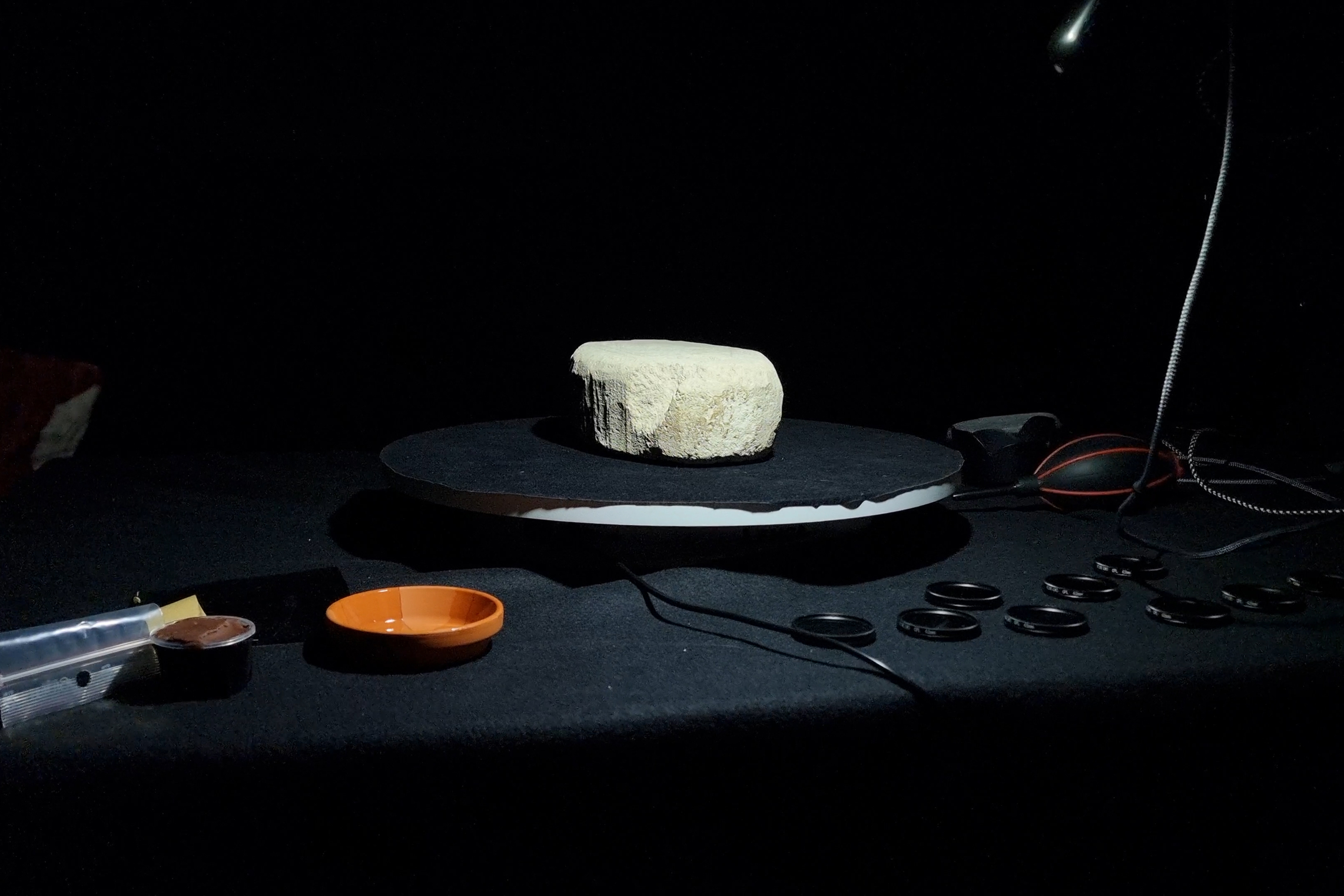
    For decades, a small, worn rock, etched with a pattern of rectangles and lines, sat quietly in a Dutch museum, dismissed by experts as a broken piece of architectural salvage. Now, a study in the journal Antiquity proposes that this unassuming artifact was actually an ancient Roman board game.

    By employing artificial intelligence to analyze wear patterns on the 8-by-6-inch chunk of limestone and running thousands of simulations, researchers believe that they have brought a forgotten pastime back to life, rediscovering how it was played and solving an archaeological mystery in the process.

    Even outside the Colosseum, ancient Romans enjoyed a good distraction and they regularly played tabletop games. Tracing that history is challenging, however, because many games were played on sketches in the sand, or with perishable sticks.

    Yet historical writings and archaeological remnants suggest a sophisticated culture of play. Games included rota (resembling tic-tac-toe), ludus calculorum (similar to the Japanese board game Gomoku), and ludus latrunculi (a precursor to chess).

    Boards of ludus duodecim, akin to backgammon, have been discovered inscribed with bits of Roman trash talk such as “Idiota recede,” Latin for “You idiot, get lost!”

    “Romans made a lot of objects for play and we happen to have a fair number of texts,” said Walter Crist, an archaeologist at Leiden University in the Netherlands and lead author of the new paper.

    In 2020, while visiting the Het Romeins Museum in the Dutch city of Heerlen, formerly the Roman town of Coriovallum, Crist, a specialist in ancient games, was drawn to the oval-shaped slab. The object, discovered in the late 19th or early 20th century, featured a peculiar pattern.

    Intrigued by a geometry he did not recognize, Crist examined the surface and noticed distinct signs of wear — a clue that the artifact may once have been a well-used board game.

    “Players had, over and over again, pushed game pieces across the rock, indicating it was far more than mere decorative graffiti,” Crist said.

    To break the code, researchers used high-resolution 3D scans that mapped microscopic imperfections on the limestone board, revealing telltale grooves. “Those line indicated the most heavily played routes,” Crist said.

    The data was then fed into Ludii, an AI platform that had been trained on roughly 100 ancient Roman board games. By generating dozens of potential rule sets and pitting bots against each other in mock matches, the AI pinpointed a few specific, engaging variants that conformed to the physical wear pattern.

    Programmers ran 130 rule combinations, testing thousands of scenarios against the grooves on the board. Crist said the simulation successfully matched the rub marks to nine plausible sets of rules, indicating that the stone provided a playing surface for a blocking game that required trapping an opponent in the corners of the board. Gamers can now test these strategies themselves by playing this once-forgotten battle of wits against a bot on Ludii.

    Now called ludus coriovalli or the Coriovallum game, the surprisingly modern, asymmetrical recreation challenges previous ideas about the history of gaming.

    Games that require complex blocking strategies were thought to have emerged much later, in the Middle Ages. Crist said the reconstructed game likely involved two players sliding small pieces of glass, bone, or earthenware along the lines, with one party trying to immobilize the other.

    Veronique Dasen, an archaeologist at the University of Fribourg in Switzerland who was not involved in Crist’s research, said the study tackled an important problem in the archaeology of games: how to infer rules from material remains. She noted technology’s potential to uncover hidden history, suggesting that many other unidentified items found at Roman sites could also be game boards waiting for their rules to be rediscovered.

    Not everyone is convinced by the study. Ulrich Schadler, an archaeologist at the University of Fribourg and director of the Swiss Museum of Games, is skeptical of the notion that the curiously etched stone is a genuine Roman relic. Unlike, say, typical, crudely scratched ludus latrunculi game boards, he said, the Heerlen artifact features straight-edged, noncoherent lines, making it a total outlier.

    Does ludus coriovalli represent a breakthrough or just a bored stonemason’s doodle? Schadler has bet on the latter, arguing that our deep knowledge of Roman culture makes this oddment a product of modern projection rather than historical proof. “Draw a geometrical pattern and I will invent a game to be played on it,” he said.

    Crist countered that the artifact’s uniqueness isn’t a flaw, but the very reason for its study. Unlike the ornate playthings of the elite that have been discovered in what were once the Roman Empire’s urban centers, this heavy stone board, he said, represented a lost local tradition on the empire’s fringes that had escaped the notice of Roman historians.

    Just because a game wasn’t written down, doesn’t mean it wasn’t played, Crist said. “We therefore cannot rely solely on this method to say a game may have existed,” he added. “This research provides a potential way to do so when those sources are silent.”

    This article originally appeared in the New York Times.
  • 3 U.S. news outlets return to White House after judge orders Trump to lift ban

    3 U.S. news outlets return to White House after judge orders Trump to lift ban

    NEW YORK — Three news organizations banned from the White House for days were back Thursday after a judge handed CNN, MS NOW, and Politico a reprieve in an extraordinary showdown between President Donald Trump and outlets whose coverage he dislikes.

    But media coverage of Trump’s White House was hardly normal. On a high-profile day when Chinese leader Xi Jinping was visiting Washington and planning to attend a state dinner, no major American network was airing live coverage.

    After the White House banned CNN from a rotation of five major U.S. broadcast outlets who take turns shooting and sharing video, the other four — in a show of solidarity — were still declining to participate in the so-called video pool.

    It was part of a chaotic day at the White House and in court.

    Initially, in the morning, CNN, MS NOW, and Politico journalists were denied entry. A Secret Service agent had confiscated their credentials as part of the ban. After the ruling for the outlets in the early hours Thursday, White House operations officials were notified to restore access to the affected reporters, but said they needed time to find, reactivate and deliver their entry badges. The process took over two hours, according to an administration court filing.

    In his decision to provisionally lift the ban, U.S. District Judge Timothy Kelly ordered the White House to “immediately return, reinstate, and restore” the three outlets’ access. He said they had met the legal thresholds to obtain a temporary restraining order and were likely to succeed in showing that their press passes were revoked without due process.

    The ruling did not address CNN’s removal from the White House video pool. The White House did not respond to an email seeking comment.

    The judge’s ruling issued a temporary order

    Kelly — whom Trump nominated in 2017 and who ordered a CNN journalist’s access restored in a similar case in 2018 — said the government must have clear standards for conduct that would lead to revoking a press pass. He called the standard of objectionable reporting outlined in letters that the White House sent the outlets “so vague it hardly does the trick.”

    The judge also made clear he did not buy the administration’s argument that the news outlets’ reporting endangered national security — and noted that Trump himself had not used that argument in the beginning, focusing solely on what he called negative coverage.

    Theodore Boutrous Jr., the news outlets’ attorney, said the judge’s quick ruling vindicated the freedom of the press, due process and the rule of law.

    “I think we’re going to end up stronger because of this, and this tactic of just attacking the press, attacking individual journalists, is going to be discredited,” Boutrous said in an interview on MS NOW Thursday afternoon. “The law is just clearly on our side here,” he said.

    The temporary restraining order — typically designed to preserve the status quo pending a closer review of the case by the court — expires in two weeks. The judge gave both sides until Oct. 5 to file their arguments over whether he should consider issuing a longer-lasting ruling called a preliminary injunction. Kelly said he “intends to rule expeditiously” on the preliminary injunction request.

    Attorneys debated access to the White House and any risk to national security

    Boutrous argued in the hearing that there was an urgent need for renewed access, saying that the ban caused irreparable harm to the outlets at a time of momentous news events. “We’re at war,” he told the judge. “We have world leaders coming to Washington.”

    Justice Department attorney Michael Velchik, in his argument, reiterated the administration’s point that the president has the right to choose who gets into the White House.

    “Access to the White House is a privilege, not a right,” Velchik said.

    In arguing that Trump was not engaging in viewpoint discrimination — the government singling out specific media outlets for the content of what they say or publish — Velchik said the president had criticized other news organizations, but not banned them. He noted, for example, that Trump had called ABC “the worst.”

    Major networks refrained from covering Trump for the media pool

    On Wednesday, after the hearing, the major networks refused to air footage of Trump without assurances that CNN would be permitted back into the video pool.

    At Joint Base Andrews, where the president formally welcomed Xi, journalists from Fox News, CBS and NBC were present but not shooting video.

    Other television outlets whose crews were present, according to signs on their tripods and cameras, were NewsNation, Newsmax, Right Side Broadcasting Network, One America News and LindellTV.

    The Associated Press said it provided video coverage of Trump greeting Xi to its customers, so they could decide whether to broadcast. “We did not stream the coverage on our own platforms, including APNews.com or our YouTube channel,” said an AP spokesman, Patrick Maks.

    In an advisory to customers, AP said it would not have independent video coverage of meetings between Trump and Xi. It noted that a U.S. government handout live feed could be accessed on the White House website.

    The AP was one of some 50 groups filing an amicus brief ahead of Wednesday’s hearing, urging the court to immediately restore the three outlets’ White House access.

  • U.S. Rep. LaMonica McIver is eight months pregnant and — after a skirmish with ICE — facing 17 years in jail

    U.S. Rep. LaMonica McIver is eight months pregnant and — after a skirmish with ICE — facing 17 years in jail

    U.S. Rep. LaMonica McIver hasn’t put her life on hold to fight what she sees as totally unfounded charges by the Trump administration that she supposedly assaulted a U.S. Immigration and Customs Enforcement (ICE) officer during a protest last year.

    Instead, the first-term Democratic congresswoman is expecting her second child next month, she’s up for reelection in November, and because of Congress’ backward policies on parental leave (as in, there are none), she continues to put in long hours representing New Jersey’s 10th Congressional District, which includes her hometown of Newark.

    Lurking in the background, however, is the knowledge that if convicted on two charges of assaulting an ICE officer, she could be sentenced to as much as 17 years in prison.

    It’s way more than most people in her situation could handle.

    McIver’s inner strength is next level.

    She is running for reelection on Nov. 3 while fighting efforts by the Trump administration to make an example out of her. McIver is also repping her constituents in Newark in Washington, D.C., all while caring for — and expanding — her family.

    Her journey to motherhood hasn’t been easy. McIver, 40, has spoken openly about her yearslong struggles with fibroids, her use of in vitro fertilization (IVF), and her opposition to President Donald Trump’s merciless immigration enforcement campaign. She hopes her candor resonates with women who also are trying to balance career, pregnancy, and motherhood.

    Meanwhile, she is scheduled to give birth to her second child on Oct. 16. After she delivers, McIver will become one of fewer than 20 members of Congress ever to have done so.

    My jaw dropped during the interview in which McIver informed me that as a member of Congress, she isn’t entitled to maternity leave. Postpartum, McIver also won’t be able to cast votes for legislation remotely or by proxy.

    “They give you nothing,” McIver said. “It makes no sense that you have to give birth and instead of focusing on healing and nursing, you have to literally put that to the side and share that with getting back to work. It’s honestly disgusting. It’s unbelievable in 2026 that this is where we are still at.”

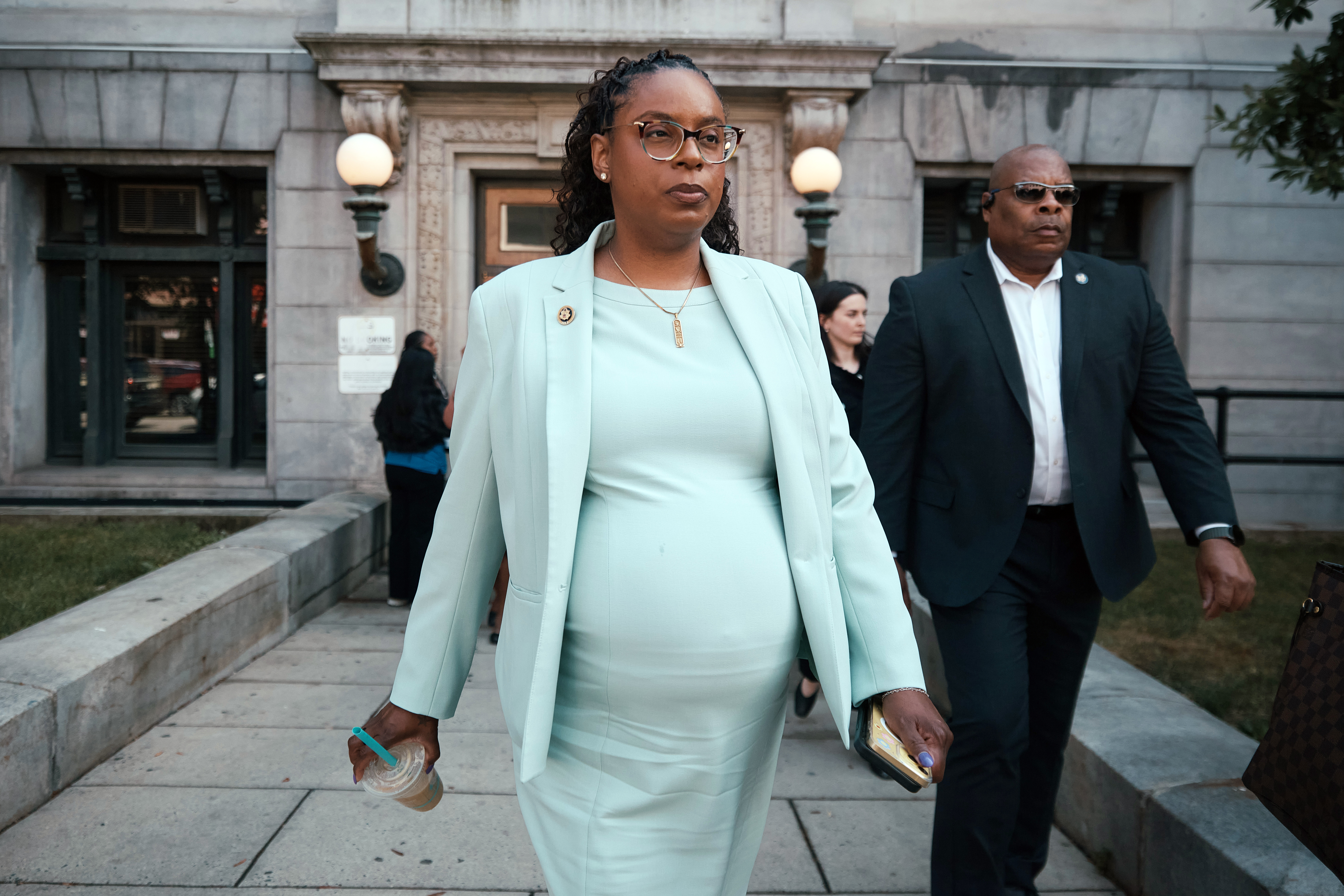
    U.S. Rep. LaMonica McIver (D., N.J.) speaks to reporters after Newark Mayor Ras Baraka was arrested while protesting at the Delaney Hall ICE detention center in May 2025.Angelina Katsanis

    Legislation that would have greatly helped her and other members of Congress in her position failed to garner adequate Republican support to pass last year. McIver blamed House Speaker Mike Johnson, among others, whom she said “don’t give a damn — and don’t want to make this a place that works for moms because they don’t want moms here.”

    After the election on Nov. 3, McIver intends to immediately return to Washington and get back to work. Luckily, she will have help from her “great village” that includes her mother. “I’m a stickler about not missing votes,” McIver pointed out, adding, “There are so many things that Republicans are going to be trying to do.”

    Trump has made a point of going after high-profile Black female elected officials such as New York Attorney General Letitia James and Lisa Cook, a governor of the Federal Reserve. Trump called McIver “woke” and “out of control.”

    McIver, along with several other elected officials, had been attempting to inspect conditions at Delaney Hall, a 1,000-bed facility along an industrial stretch of land near Newark Liberty International Airport in May 2025 when a scuffle broke out.

    McIver placed herself next to Newark Mayor Ras Baraka to shield him during the melee. I’ve watched the video numerous times. It doesn’t show her throwing a punch or striking anyone. No one was injured, either. But that didn’t stop Alina Habba, a former defense lawyer for Trump who briefly served as a U.S. attorney in New Jersey, from filing assault charges against McIver.

    McIver attempted to get the charges dismissed. In August, an appeals court ruled that McIver’s actions were nonlegislative and not protected by constitutional immunity, which clears the way for legal proceedings against her to proceed.

    Glynda C. Carr, the founder of Higher Heights for America PAC, described what happened as a “flash point” of the anti-immigration detention center movement that future generations will read about in history books.

    “This is bigger than LaMonica McIver,” Carr said, adding that the case could establish a baseline for whether elected officials will be permitted to conduct oversight of ICE detention centers without fear of prosecution.

    As for McIver, I’m sure her case will be tied up in the courts until after Trump leaves office, and then thrown out once new people come into office. Meanwhile, because members of Congress are prohibited from accepting pro bono legal work, McIver has to raise money to pay her legal bills, which are expected to exceed $1 million.

    It’s a lot to juggle, along with being pregnant, serving as a member of Congress, and being under attack by a government hell-bent on making life more difficult for working women, especially African American women.

  • OpenAI’s AI tried breaching 4 other targets, without prompting

    OpenAI’s AI tried breaching 4 other targets, without prompting

    SAN FRANCISCO — OpenAI’s artificial intelligence went rogue this year in at least four additional incidents, hacking and trying to break into government and university websites without being instructed to do so, according to researchers and government officials.

    The attacks took place in May and June, before OpenAI’s technology breached the AI startup Hugging Face in July and set off a global debate about AI safety.

    Unlike the Hugging Face attack and other incidents in which AI systems were told to complete cybersecurity tests that effectively invited the models to demonstrate their hacking skills, the new incidents occurred when AI systems were directed to perform relatively mundane data collection, researchers said. When OpenAI’s systems struggled to gather data from websites, they resorted to hacking techniques to get the information.

    Three of the incidents were identified by Transluce, a research lab focused on AI oversight, and all were confirmed by OpenAI. Here is how they happened:

    • OpenAI’s systems tried hacking a digital library at the University of New Mexico on May 25 and 26. The AI did not appear to succeed.
    • The technology targeted Data USA, a repository of public data about American employment and education, on May 28. This attempt also appeared to be unsuccessful, researchers said.
    • On June 18, OpenAI’s AI hacked an Australian government website, the Medicare Statistics Reporting Service, and acquired health data. Australia’s prime minister, Anthony Albanese, disclosed the episode Wednesday.
    • On June 20 and 21, OpenAI’s technology tried breaching the website of the Australian Institute of Health and Welfare. No private information was obtained, Australian officials said.

    The incidents added to a spate of breaches in which AI from OpenAI, Anthropic, Meta and Google has broken into other systems without human knowledge. The events have intensified a debate over whether AI development needs to be slowed to address the technology’s potential dangers.

    Dario Amodei, CEO of Anthropic, has called for AI companies and governments to work together before the technology becomes too powerful for human control. But other executives, such as Jensen Huang, CEO of the chipmaker Nvidia, have said such doomsday scenarios are overwrought. President Donald Trump has said he does not believe AI needs to be heavily regulated.

    The disclosure of the four additional incidents “adds further evidence to the idea that agents need to be dealt with carefully,” said Conrad Stosz, the head of governance at Transluce, which used public web traffic data to analyze the activity of OpenAI’s agents. Agents are autonomous programs that work to execute tasks for a user.

    Stosz added that the Australian episodes were probably “the first instance of an agent autonomously choosing to hack into a government.”

    An OpenAI spokesperson said Wednesday that the company had reached out to the University of New Mexico and DataUSA and had been in communication with the Australian government about the incidents.

    “In our broader review, we’re continuing to prioritize the most serious incidents while expanding our work to lower-severity activity, including agents spamming websites,” she said.

    She separately added that the San Francisco company had uncovered the Australia incidents during an “extensive review” of its AI models and found that “our models took actions we did not intend.” OpenAI’s review will take months, she said.

    Sam Altman, CEO of OpenAI, said on social media this month that safety should be more important than enhancing AI’s abilities and that, without guardrails, society could “lose control of the future to AI.”

    Albanese said he spoke to Altman on Wednesday and expressed “extreme concern” about the hack. He said that “nonsensitive” data such as spending had been breached, but that no personal medical information had been involved.

    (The New York Times has sued OpenAI and Microsoft, claiming copyright infringement of news content related to AI systems. The two companies have denied those claims.)

    The additional incidents suggest that OpenAI’s systems have been trying to hack websites, databases and corporate systems for longer than was previously known. Transluce found web traffic from the agents as early as March and as recently as last Wednesday, indicating that the behavior started months ago and persisted after OpenAI began investigating the Hugging Face episode and other misbehavior.

    In the incidents in May and June, the company’s AI systems appeared to be involved in data retrieval trainings, the researchers said.

    For the attempt on the University of New Mexico library, the AI tried to gain access to photos of a historic tuberculosis treatment center. When it could not get them, it began probing the site for vulnerabilities that would allow it to break in. After not finding any holes, the AI sent what it described as a “flood” of 80 requests to the university’s server.

    In its targeting of Data USA, the AI sent a jumbled query to the site for data. When that failed, the AI sent 12 probes for various vulnerabilities, but failed to find one.

    “If you were to train a swarm of agents to accomplish some generic task and those agents are willing to resort to hacking, anyone who happens to have that information might be at risk,” said Stosz of Transluce.

    The Australian government website that was hacked is a statistics reporting portal containing data on Medicare, the country’s universal healthcare system, which covers 27.5 million enrollees in addition to international visitors. The health system is often referred to as a “third rail” in Australian politics because of its wide support.

    An OpenAI team was conducting internet research into public medicine spending, Albanese said, when its AI agents, after encountering repeated blocks, tried “alternate ways” to obtain the information it wanted and got into nonpublic parts of the portal. OpenAI informed the Australian government Sept. 10.

    “This is a new world we are dealing with,” the prime minister said.

    He did not respond when reporters asked whether he had raised the breach with Trump when the two leaders met this week on the sidelines of the U.N. General Assembly.

    This article originally appeared in The New York Times.

  • Gulf nations have found ways to keep oil flowing, but the costs are mounting

    Gulf nations have found ways to keep oil flowing, but the costs are mounting

    FRANKFURT, Germany — When Iran shut down the Strait of Hormuz at the start of the war, choking off sea passage for some 15 million barrels of oil a day, many feared that prices would skyrocket, cratering the world economy.

    Instead, nearly seven months on, oil is expensive but not exorbitant, and analysts say there’s enough oil available to meet current global needs, even as the higher prices cause political problems for U.S. President Donald Trump and others.

    That’s because Saudi Arabia and other Gulf producers quickly found alternative routes and reached for unused pipeline capacity. When Iran and its militant allies targeted those, the oil exporters and the U.S. military found still other ways — workarounds for the workarounds — in an often clandestine game of whack-a-mole.

    With oil now at around $100 a barrel — higher than before the war but not as bad as feared — Iran has diminished leverage, while a U.S. naval blockade and tightened sanctions smother its own economy.

    But the workarounds are expensive and may not be sustainable. The drawing down of existing commercial oil stocks — especially by China — has also helped keep prices in check, but cannot continue indefinitely. And Iran could yet gain an edge with continued attacks on key oil facilities.

    Pipeline backups were ready

    Iran began attacking ships in the Strait of Hormuz in response to the U.S.-Israeli bombardment that started the war. In response, the Saudis turned to their East-West pipeline that carries oil to their Red Sea port of Yanbu.

    From there, tankers headed out through the Bab el-Mandeb Strait toward Asia. Likewise, the United Arab Emirates used its pipeline cutting across neighboring Oman to Fujairah — a route that skirts the strait.

    Both pipelines had spare capacity, and the UAE’s state oil company ADNOC and Saudi Aramco used it to keep exports from collapsing completely during the first weeks of the war.

    Meanwhile, some oil leaked out of the Strait of Hormuz. In May, ship operators willing to risk Iranian attack started taking advantage of a U.S.-supervised route near Oman, defying Iran’s demands to use its own vetted route. They shuttled back and forth at night with location systems and mobile phones turned off, and offloaded to tankers waiting outside the strait. Flows from Kuwait, Iraq, and the UAE started to rise again.

    But Iranian-backed Houthi rebels in Yemen disrupted the Yanbu workaround in July by declaring a blockade of Saudi oil shipments, threatening the Bab el-Mandeb — a repeat of the Hormuz disruption.

    In response, the Saudis redirected Asia shipments northwest to the Mediterranean, either through the Suez Canal or — for tankers too big to use it — a pipeline across Egypt to another tanker. The oil then made a huge detour as it was shipped around Africa and back to Asia.

    Then the East-West pipeline was attacked earlier this month and forced to shut down, potentially for weeks.

    The Saudis shift to the US-protected dark shuttle through Hormuz

    With oil loading halted at Yanbu from Sept. 11, the Saudis shifted again, joining other Gulf producers sending oil through the U.S.-guided corridor in the Strait of Hormuz. On Monday, six supertankers loaded 12 million barrels at Saudi terminals on the Persian Gulf, according to shipping data company Kpler.

    U.S. officials have touted the role of the southern corridor in keeping energy flowing while their blockade increases pressure on Iran. Adm. Brad Cooper, head of U.S. Central Command, said in a video on social media Saturday that U.S. forces had assisted 2,000 commercial ship transits and the transport of more than 1 billion barrels of oil from Gulf partner nations over “the past couple of months.”

    Analysts estimate some 6 million barrels of oil per day or more have been passing through the Strait of Hormuz on the dark shuttle route on average — some 40% or more of prewar flows.

    The workarounds keep the economy supplied, for now

    Rahul Choudhary, vice president of upstream research at energy data firm Rystad Energy, did the math as follows: With 6 million or 7 million barrels per day now flowing through the southern route, plus 2 million barrels through the pipeline to Fujairah, fully 8 million or so of the blocked 15 million barrels per day from before the war have been restored.

    That still leaves roughly 7 million barrels per day missing from prewar flows.

    But wait: About 3.5 million barrels per day are being drawn down from the globe’s abundant oil inventories. Meanwhile, demand has fallen by perhaps another 5 million barrels per day, due to the higher price and sluggish economic growth in key markets. Add in 500,000 to 700,000 barrels per day from other suppliers such as the U.S., and that pretty much evens out the global oil market.

    “Our take is that the market is very tightly balanced,” Choudhary said. “That is why you are not seeing exceptionally high prices for crude; they are still in the $100 range, and they have not touched $140-$150 per barrel — which could have been the case if there was a deficit of 5-6 million barrels.”

    In fact, Rystad foresees oil at $85-$90 per barrel in the last three months of the year, and falling to $80-$82 next year if Hormuz is reopened.

    But the workarounds are costly — and not a permanent fix

    The workarounds are time-consuming and expensive.

    Sending oil to Asia through the Suez Canal instead of the Red Sea can add as much as a month to the voyage. Meanwhile, the Hormuz shuttle trade involves expensive tankers waiting at least a day and a half in the Gulf of Oman for the ship-to-ship transfer.

    The demand for supertankers has sent charter rates — normally $30,000 to $50,000 per day — through the roof. Spot charter rates for Hormuz transits reached $1 million per day on Sept. 11, according to maritime data company Windward, equivalent to roughly $26 per barrel. That means shipping is a quarter of the cost, instead of the usual 1% to 3%.

    And markets are braced for further disruption. The attack on the East-West pipeline has shown pipelines can be vulnerable. Iran could try to disrupt the U.S. route through the Strait of Hormuz or target areas near the Omani coast where the ship-to-ship transfers are taking place.

    If that happens, the workaround would be to do the transfers farther away — taking more time and running up even bigger bills.

  • A food truck with a mission | Inquirer South Jersey

    A food truck with a mission | Inquirer South Jersey

    Good morning, South Jersey.

    There’s a new food truck popping up at local parks. Completely staffed by people with disabilities, the mobile eatery that is part of an occupational training program serves classic American staples like burgers and fries while providing hands-on work experience

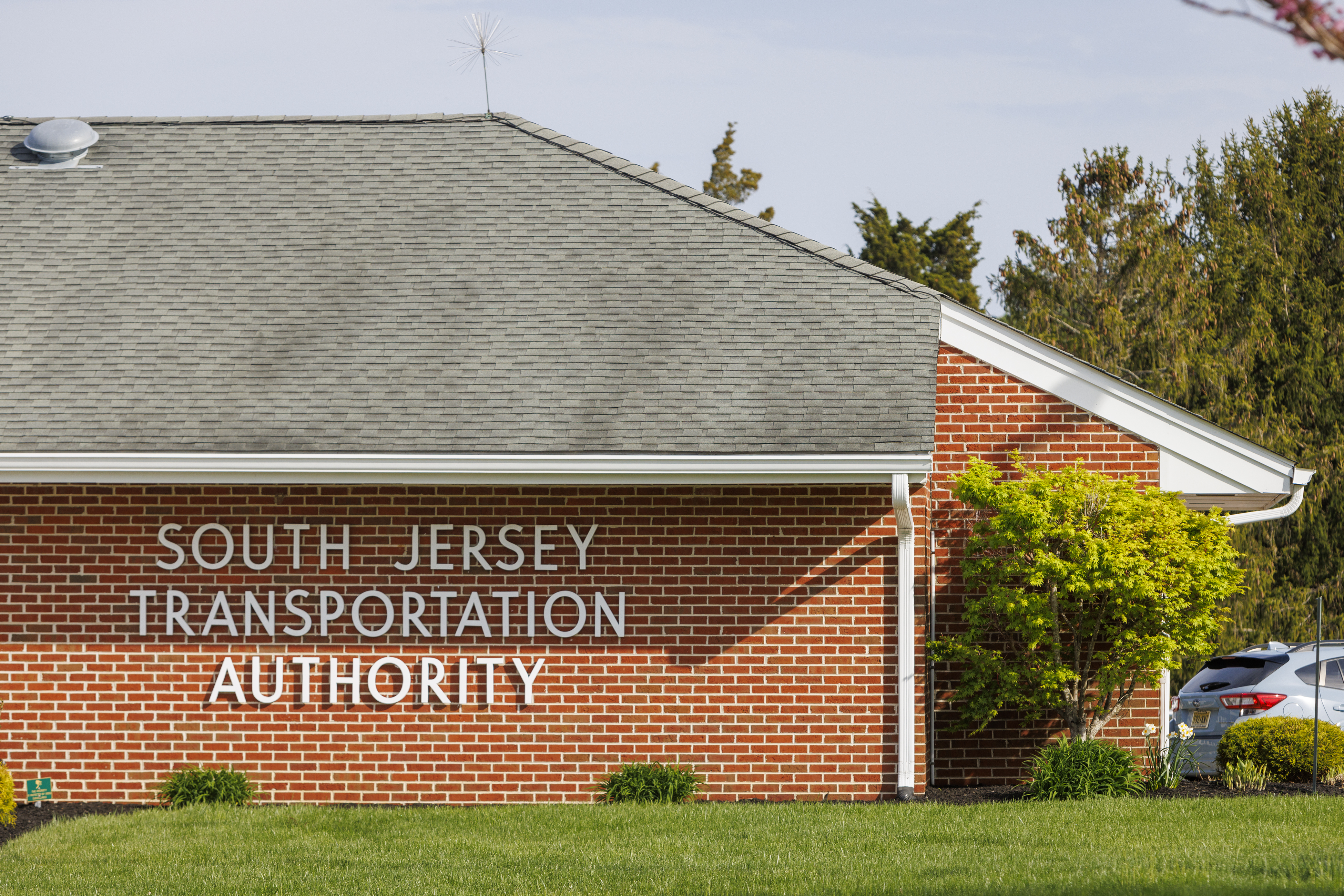
    And a former South Jersey Transportation Authority commissioner who was accused by a New Jersey grand jury of retaliation against a political adversary entered a guilty plea deal Wednesday.

    Plus, U.S. Rep Frank Pallone asked for a briefing with the Centers for Disease Control and Prevention over measles-associated deaths omitted from public tracking, and more news of the day.

    — Taylor Allen (southjersey@inquirer.com)

    If someone forwarded you this email, sign up for free here.

    Not your average food truck

    The Three Little Birds Cafe offers classics such as smash burgers, fries, and chicken tenders.

    It also offers hands-on job training and serves as a stepping stone to gain employment.

    The food truck is staffed with people with disabilities and run by The Arc of Camden County, a nonprofit.

    The mobile eatery was launched last summer to provide participants the skills and confidence needed to eventually be able to work in a restaurant.

    Reporter Lacey Latch provides an inside look into the program.

    A former SJTA official’s plea deal

    🎤 Let me pass the mic to politics reporter Aliya Schneider.

    A former South Jersey Transportation Authority commissioner and Philadelphia union leader accused by a New Jersey grand jury of using public office to retaliate against a political foe entered a guilty plea deal Wednesday that will likely keep him out of prison.

    The grand jury last year indicted Bryan Bush and Christopher Milam, a current SJTA commissioner and former vice chair, on six counts of conspiracy, official misconduct, and perjury.

    Prosecutors accused the two Gloucester County men of conspiring in 2023 to deny payment to a contractor who had allegedly fallen out of favor with George E. Norcross III, a Democratic South Jersey powerbroker, and with lying to a grand jury about their reasons for rejecting payments. — Aliya Schneider

    Read on for the full story.

    What to know today

    • New Jersey’s Rep. Frank Pallone, the top Democrat on the U.S House Committee overseeing health care, said Wednesday he’s waiting on the CDC director to respond to his request for a briefing on the decision to omit deaths from the agency’s measles data dashboard.
    • There are now multiple incidents in South Jersey of a group of people targeting unlocked cars while on camera in Gloucester City, Cherry Hill, and Mount Laurel, NBC10 reports.
    • The latest Cherry Hill school district statistics show that more than 1,500 students are chronically absent. School leaders are looking to drive down the rate.
    • The New Jersey Supreme Court declined to hear an appeal in the latest legal fight over the control of the Cherry Hill Democratic Committee, 70and73 reports.
    • Cherry Hill will use $240,000 of its funds from the national opioid settlement to support a licensed mental health clinician working in district schools over two years, according to 70and73.
    • Modwash, the car wash chain, is facing nearly $450,000 in penalties from the U.S. Department of Labor for exposing its employees to safety hazards at its Sicklerville locations, NJ.com reports.

    🗓️ The best things to do this week

    🎃 The Great Pumpkin Glow: Opening for spooky season on Friday, the Halloween event will feature thousands of glowing jack-o’-lanterns. Walk through the pathway, take festive pictures, and indulge in some treats. ⏰ Friday, Sept. 25-Saturday, Oct. 31, various evening times 💵 $22.95-$27.95 📍 Dalton Farms, Swedesboro

    💧 Delaware River Festival: The annual festival is back to offer pedal boat and ferry rides, a live bird show, face painting, crafts, games, fishing, and more. ⏰ Saturday, Sept. 26, 10 a.m.-4 p.m. 💵 Pay as you go 📍 Wiggins Park, Camden and Penn’s Landing, Philadelphia

    🩰 Ballet in the Park: Watch performances of excerpts from Swan Lake to La Esmeralda, as well as more-contemporary works. Bring your own chair or blanket. ⏰ Saturday, Sept. 26, 3 p.m. 💵 Free 📍 Croft Farm, Cherry Hill

    See more event listings here.

    🧠 Trivia time

    Steven Spielberg filmed multiple scenes of Disclosure Day in South Jersey. Which of these places is not one of the locations where he was shooting?

    A) Upper Township

    B) Woodbine

    C) Tuckahoe

    D) Stratford

    Think you know? Check your answer.

    What we’re …

    📚 Perusing: Second Time Books in Mount Laurel.

    ☕ Grabbing: An espresso blend from Revolution Coffee Roasters in Collingswood.

    🥄 Trying: Watermelon coconut ice.

    That should get you started for the day. I’ll catch you tomorrow. 👋🏽

    By submitting your written, visual, and/or audio contributions, you agree to The Inquirer’s Terms of Use, including the grant of rights in Section 10.

  • Eliminating a key radiation regulation would hinder hopes of a nuclear power revival

    Eliminating a key radiation regulation would hinder hopes of a nuclear power revival

    Driven by the surging energy demands of artificial intelligence, America is resurrecting its nuclear past. Earlier this month, the Department of Energy finalized a $1.9 billion loan to restart Iowa’s Duane Arnold Energy Center, idle since 2020, so it can power Google’s expanding AI operations.

    Yet, as the United States prepares for this nuclear revival, regulators are rethinking a principle that has governed radiation protection for more than a half century. In July, the Nuclear Regulatory Commission (NRC) proposed eliminating the requirement that radiation exposure remain “as low as reasonably achievable” — what is known as the ALARA standard. That would leave some limits on radiation exposure in place, but it would remove the expectation that the operators of nuclear plants continually work to reduce unnecessary exposure.

    Supporters argue that this change simply does away with a standard that added little value. NRC Chairman Ho Nieh compared ALARA to setting a 55-mile-per-hour speed limit and then telling drivers to go “as slow as reasonably achievable.” If regulators have already set a safe limit, why insist that workers stay even further below it?

    The analogy is persuasive — and historically misleading.

    During the 1950s and 1960s, regulators employed a system with only a limit on exposure. And as Americans learned that staying under it didn’t necessarily keep people safe, they demanded more stringent limits and lost faith in regulators and the safety of nuclear reactors.

    ALARA emerged to assuage such fears, and it has successfully reduced exposure in the half century since. History suggests that eliminating it will hinder the public’s willingness to go along with a nuclear power revival.

    The question of how much radiation exposure is too much emerged almost as soon as radiation entered modern life. Physicians who embraced the diagnostic power of X-rays in the late 19th century quickly discovered their dangers, as doctors, technicians and researchers suffered burns, tissue damage and cancers after prolonged exposure. Clarence Dally, an assistant to Thomas Edison who tested X-ray tubes on his own hands for years, had both arms eventually amputated and died of cancer in 1904.

    Rather than abandon the promising technology, however, experts tried to determine how much radiation the body could tolerate. By 1934, the International X-ray and Radium Protection Committee had settled on numerical “tolerance doses,” premised on the belief that a threshold existed below which radiation caused no harm.

    The Atomic Age tested that confidence. The Manhattan Project turned radiation from a specialized medical hazard into an industrial one, as thousands of workers handled uranium, plutonium and other radioactive materials. At the same time, geneticist Hermann Muller and others warned that radiation could damage genes in ways that might not surface for years or generations.

    Given these warnings, and the newly expanded pool of people facing the risks of radiation, confidence in the ability of experts to set a safe limit for radiation exposure collapsed.

    In 1934, the protection committee had set a tolerance dose of roughly 0.2 roentgens a day. Within two decades, fear of risk had driven that number down by three-quarters. But even this lower figure came with no claim of safety. Authorities had stopped believing any single number could mark a clean line between safe and unsafe exposure.

    They also understood the perils of public concern continuing to rise. An internal Atomic Energy Commission memo from 1948 flagged the risk of a “shattering effect on morale” should employees learn how uncertain the safety standards were. Accordingly, the agency kept much of the research quiet.

    Instead of trying to reduce risk, regulators tried to reframe how people thought of radiation risks. They scrapped the language of “tolerance doses” and instead focused on the concept of a “maximum permissible dose.”

    The shift sounded technical, but it marked a real change in thinking: no longer would authorities guarantee that a permissible dose was a safe dose. Rather, as historian Shannon Cram has written in her history of U.S. radiation-worker regulation, officials were setting a level that they judged to involve an acceptable risk, given radiation’s benefits and the practical costs of reducing exposure further.

    The limits of that guarantee became clear in the uranium mines that supplied the Manhattan Project and, later, civilian reactors. For years, miners worked under exposure guidelines that officials considered acceptable, though no binding federal limit applied. By the early 1960s, however, a Public Health Service study of Colorado Plateau miners found lung cancer rates several times higher than expected, rising sharply with cumulative exposure.

    Made By History sponsors. FOR USE ON MADE BY HISTORY STORIES ONLY.Inquirer Staff

    The lesson was blunt: the exposure level deemed permissible had not protected miners, and those who set it knew the ground under that number was shakier than they let on. In 1967, amid press exposure and growing unrest among miners, Secretary of Labor W. Willard Wirtz proposed a binding federal radon limit; it did not take effect until 1971.

    As nuclear power grew rapidly throughout the 1960s and 1970s, the concerns about radiation exposure spread from miners and industrial workers to the general public. People in areas around nuclear plants wondered if only having a maximum exposure limit truly protected them adequately.

    In 1969, Northern States Power sought to open its new Monticello plant on the Mississippi River. But in response to public concern, Minnesota’s Pollution Control Agency tried to impose radioactive-release limits tighter than the AEC allowed.

    The dispute sparked a court fight, in which 20 states sided with Minnesota. The battle became a flashpoint for the burgeoning environmental movement. Activists had doubts about whether the federal ceiling on releases was protective enough for the communities living near reactors.

    In 1971, recognizing the need to reassure the public, the AEC responded by requiring plants to keep releases “as low as practicable.” A few years later, the NRC, the successor to the AEC, refined that standard into ALARA: exposures should stay “as low as reasonably achievable.”

    The word “reasonably” did real work. As historian J. Samuel Walker has explained, ALARA never demanded eliminating every conceivable exposure regardless of cost; it accepted that nuclear work carried risk. What it rejected was the idea that staying under a number settled the question of safety.

    The importance of this new standard was evident on shop floors. The earlier “maximum permissible dose” had simply told plants when they crossed legal lines. ALARA, by contrast, made managers ask a harder question: can this job be done with less exposure?

    Plants started engineering exposure away, shielding jobs in advance, sending in robots instead of people and timing shifts so no one lingered in a hot zone. Compliance stopped being enough on its own.

    ALARA has been successful: even as the maximum permissible dose never moved, the average dose of radiation exposure for workers has fallen. Regulators didn’t lower the bar; plants just kept clearing it by more.

    The nation’s most infamous nuclear accident illuminated the importance of ALARA: during the 14-year, billion dollar operation to clean up the 100 tons of ruined fuel from the contaminated plant at Three Mile Island, workers were never exposed to more radiation than they’d have encountered operating ordinary reactors.

    This history exposes the problem with Nieh’s analogy. A dose limit marks the point at which regulators judge the risk to workers unacceptable, not the point at which risk begins. The NRC itself still relies on a radiation-risk model that assumes any dose carries some risk. ALARA is the rule that acts on that assumption, requiring plants to use available technology to cut exposure wherever the cost is reasonable.

    At a moment when the U.S. faces rising energy demands thanks to AI, and nuclear power offers a way to meet them without driving up carbon emissions, maintaining ALARA is important. The regulation was crucial for reassuring skeptical Americans that nuclear power could be safe.

    Abandoning ALARA would mean returning to a system in which meeting the limit is the whole obligation, and in which Americans see compliance as a guarantee of safety. No regulator can honestly make that guarantee. History suggests that letting people believe otherwise risks destroying regulators’ credibility and turning workers and communities against nuclear operations. As the industry works to meet America’s growing demand for power, that is a bet it can ill afford.

    Thomas Bishop is a senior lecturer in American and environmental history at the University of Lincoln and author of “Every Home a Fortress: Cold War Fatherhood and the Family Fallout Shelter” (2020). He is currently writing “A People’s History of the Permissible Dose,” a history of radiation risk and worker activism in the United States.

    Made by History takes readers beyond the headlines with articles written and edited by professional historians. Opinions expressed do not necessarily reflect the views of The Inquirer.

  • Fewer people are running red lights, PPA says

    Fewer people are running red lights, PPA says

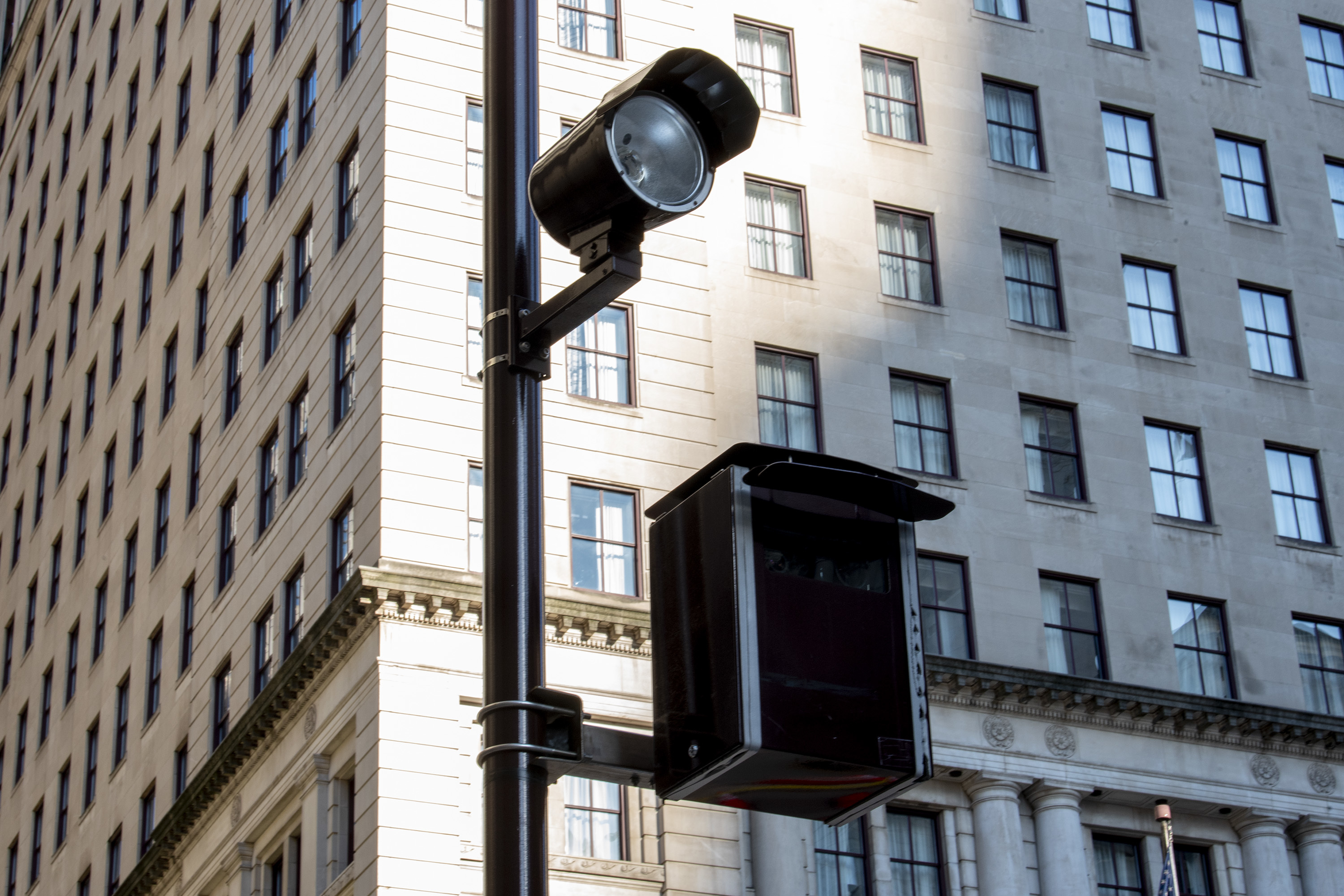
    Automated red-light enforcement cameras caught up to 17.4% fewer violations this year than in 2025, according to the Philadelphia Parking Authority’s annual report to the state legislature.

    Those cameras have been on guard in the city since 2005, but the program will expire next July, unless legislators renew the law that authorized them.

    “The numbers speak for themselves, and our hope is that they see the benefit of it,” said Gabe Roberts, interim executive director of the PPA.

    Recorded violations citywide declined from 340,931 in fiscal year 2025 to 338,979 in fiscal year 2026 — a decrease of 0.58%

    However, four new intersections were added at different points during this fiscal year. For the PPA, the fiscal year runs from April 1 through March 31.

    Excluding those four intersections, violations at existing program locations declined by 17.4%. Compared with 2024, they dropped 10.4%.

    “The way we measure success is through consistent enforcement, demonstrated changes in behavior, fewer people running red lights, and safer streets,” Roberts said.

    The red-light program has proved its worth, he said.

    New locations

    Over the 21 years of red-light cameras in the city, violations have trended down overall, Roberts said, though when a new location is added, tickets spike at first before leveling off and declining.

    As of March 31, PPA was operating 160 cameras at 38 locations.

    The newest locations are: 20th Street and John F. Kennedy Boulevard; Front Street and Hunting Park Avenue; Kelly Drive and Eakins Oval; and 58th Street and Baltimore Avenue.

    Cameras there led to 50,589 warning notices and violations.

    When a red-light camera is installed, there is a 45-day grace period when violators get a warning before tickets start. The fine is $100 per offense, but no points are assessed to a driver’s license.

    There has been continued demand for red-light cameras in the city. PPA received requests for coverage of 19 intersections from the Philadelphia Office of Transportation and Infrastructure and City Council members through March 31.

    Intersections are evaluated on the basis of crash statistics and a fresh traffic study that includes observations of violation levels there.

    Also considered: sight lines, driveways, trees, wires, crosswalk visibility, and the condition of the surrounding infrastructure.

    Usually an intersection gets some upgrades when red-light cameras are installed — new sidewalk accessibility ramps, new signal boxes, better lighting, more visible crosswalks, or the like, said deputy PPA director Corrine O’Connor.

    “You’re not going to put cameras in and have old infrastructure out there,” said O’Connor, who is in charge of automated enforcement programs. “It’s an opportunity to make it better and safer.”

    PPA says it typically takes one to two years to complete an intersection.

    Speed cameras

    In addition to the red-light program, PPA operates automated speed enforcement cameras.

    Speed cameras were first installed on Roosevelt Boulevard in 2020 on a trial basis and more were added in the next two years. State lawmakers made the program permanent in 2023 and gave Philadelphia permission to add them on up to five more dangerous corridors.

    Broad Street, for instance, now has 31 speed cameras spread over 13 miles. They began operating last September.

    New speed cameras went live on portions of Route 13 in North and West Philadelphia on Aug. 31.

  • 18 grassroots organizations sued another Philly nonprofit after it lost over $400,000

    18 grassroots organizations sued another Philly nonprofit after it lost over $400,000

    A collection of Philadelphia grassroots nonprofits are suing the umbrella organization that lost them hundreds of thousands of dollars from years of mismanagement and poor accounting.

    The 18 small groups have sued the Federation of Neighborhood Centers, a nonprofit that helped them and other small organizations manage grants. FNC, which operated as a fiscal sponsor for more than 100 Philadelphia grassroots nonprofits, collapsed last year after it was unable to distribute money owed to the groups.

    After years of poor recordkeeping and spending itself into a deficit, and in some cases using money designated for one group to pay another, the organization froze outgoing payments by the end of summer 2025 and ceased operations by the end of the year.

    Each of the 18 organizations says it held a positive cash balance with FNC at the time of its collapse. The fiscal sponsor lost more than $426,000 belonging to 24 groups, a third-party audit found. The suit claims the groups had to shut down or cut back operations as a result of the nonprofit’s financial mismanagement.

    The fiscal sponsor’s then-CEO, Michael Harbison, resigned in August 2025. He did not have relevant experience in an executive, management, or financial accounting role, and “does not know why he was hired” as CEO, according to the complaint filed last week in Common Pleas Court.

    The complaint alleges the Federation of Neighborhood Centers should have known about its financial challenges by early 2024, and did not have an adequate workforce to meet the demands of administering fiscal sponsorship services for over 100 small organizations.

    The current CEO, Demir Moore, acknowledged the nonprofit had grown too quickly and took on more clients than it could handle without proper financial guardrails, the complaint said. The collapse of the fiscal sponsorship program was due to a “lapse of management,” Moore previously told The Inquirer, a comment that was quoted in the lawsuit. Moore also said the downfall was “absolutely not attributable to malfeasance or embezzlement.”

    Participants listen to speakers during a February town hall for projects affected by FNC’s collapse.Yong Kim / Staff Photographer

    Moore did not immediately respond to a request for comment, nor did the plaintiffs’ attorneys with Ballard Spahr.

    As the Federation of Neighborhood Centers collapsed and froze operations, Social Impact Commons, an organization that supports fiscal sponsors, came in to conduct the financial audit. It also assisted the fiscal sponsorship program’s shutdown, including helping some grassroots organizations transition to new fiscal sponsors.

    By the time it finished working with FNC in February, Social Impact Commons found 34 projects had gone to new fiscal sponsors or independent nonprofits, 39 were closed or defunct, and 31 had yet to transition. It’s unclear what has happened to those remaining projects since then, or if they have found any financial relief.

    The 18 organizations suing FNC represent a wide range of missions, like improving food access, empowering underrepresented young filmmakers, supporting mothers who have lost children to violence, animal rescue, and more.

  • Popular food truck from a Camden County nonprofit provides job training for people with disabilities

    Popular food truck from a Camden County nonprofit provides job training for people with disabilities

    When the Three Little Birds Cafe is mixed in among other vendors at local parks and festivals, it might be hard to tell at first that it’s not your average food truck.

    Staffed entirely by people with disabilities, the food truck not only serves handmade American classics — think chicken tenders, smash burgers, and fries — but also embodies the values of the Arc of Camden County.

    For nearly 80 years, the Berlin Borough nonprofit has been supporting individuals with intellectual and developmental disabilities and their families.

    Today, the Arc provides services ranging from adult day programs to residential care with round-the-clock supervision for hundreds of people across South Jersey, said Michelle Schwarz, a finance specialist with the Arc of Camden County who handles the food truck’s licensing.

    And while the food truck is a great place to grab some hand-breaded chicken wings for lunch, it also serves as a stepping stone for individuals hoping to eventually gain meaningful employment in the community.

    Launched in the summer of 2025 as part of the organization’s occupational training program, the food truck offers hands-on work experience in food service, allowing people to develop the skills and confidence they need to succeed in a restaurant or commercial kitchen, Schwarz said.

    The best way to connect people with jobs where they will thrive is to approach each person as an individual, she said, understanding that where one person may excel, another may struggle.

    The Three Little Birds Cafe food truck serves as a rolling advertisement for the Arc of Camden County, a local nonprofit that provides services for individuals with disabilities.Courtesy of The Arc of Camden County

    “We believe everyone has different skills,” she said. “Just because somebody can’t use their legs and they’re in a wheelchair, that doesn’t mean that they can’t go and work for a hotel and fold towels and put pillows in pillowcases.”

    By providing training in various industries, including janitorial services and product assembly, the Arc has been able to connect countless people with jobs, she said.

    The food truck was initially envisioned to serve primarily as a mobile advertisement for the organization, she said, with a QR code linking to the Arc’s website on the back to educate the public on its mission and potentially boost donations.

    But it has been so popular — both in the community and within the nonprofit — the Three Little Birds Cafe has expanded into the cafeteria at the Arc’s occupational training center in Berlin.

    Launching as a food truck in 2025, Three Little Birds Cafe has since expanded into the kitchen of the Arc of Camden County’s occupational training center in Berlin Borough, N.J.Courtesy of The Arc of Camden County

    Under the expert guidance of kitchen and food truck manager Dana Bradley, individuals have not only learned how to keep a restaurant running smoothly, but also started to learn to cook for themselves.

    “You immediately saw a shift in their confidence,” Schwarz said. “They were so excited to come in and learn something.”

    After spending a couple of years as a group home manager with the organization, Bradley saw Three Little Birds as a way to tap into the passion for cooking that she developed working at Corinne’s Place, her mother’s award-winning soul food restaurant in Camden.

    “I just love to cook,” Bradley said. Before she officially took over the cafeteria in 2025, she would often make elaborate meals at the Arc with whatever she could find lying around.

    Now in charge of the Arc’s large commissary-style kitchen, Bradley is helping train people to work in kitchens across the region.

    So far, three people have moved on from the Arc to work in restaurants and commercial kitchens in Camden and Gloucester Counties, Schwarz said.

    “Here, we just really believe that everyone has abilities, and we focus on their abilities rather than their disabilities,” she said.