NEW YORK — More than 83 tons of meat are being recalled across the U.S. because the products were not properly inspected by federal authorities and were shipped out with falsified inspection stickers, the Department of Agriculture said.
Star Meat Delivery Inc., based in Lucama, N.C., is recalling more than 167,000 pounds of raw pork, beef, and goat nationwide. The USDA said that number could grow as it continues its investigation.
Food produced without inspection may contain undeclared allergens, harmful bacteria, or other contaminants, the agency said Tuesday in announcing the recall. So far, there have been no confirmed reports of illnesses or injuries from the meats, according to the USDA.
The meat in question was produced “on various dates” before Sept. 22 and has USDA inspection stickers falsely bearing an establishment number — EST. 1363 — that the agency said “does not have a federal grant of inspection.” However, some packages people purchased may not bear that labeling because retail stores may have applied their own stickers with pricing and safe handling instructions, the agency warned.
The products were shipped to Georgia distributor A&D Foods to send to retail and restaurant locations nationwide.
The USDA said the products should be considered misbranded and unsafe to eat and be discarded or returned to the place of purchase.
The agency said the problem was discovered during the USDA’s Food Safety and Inspection Service’s routine checks. It’s not clear whether anyone has been arrested or criminally charged.
Star Meat Delivery, in a statement posted on its Facebook page Thursday, pushed back at the notion that the inspection stamps on its products were somehow falsified. It said the establishment number in question was “legitimately reserved” as part of the USDA application process while it seeks approval to process and package meat for the Georgia distributor.
That approval process is still underway, Star Meat said, although the meat involved was sourced from a USDA-inspected supplier.
“No other products sold by Star Meat Delivery were mislabeled, and no other products sold by Star Meat Delivery are part of the recall that has been issued,” the company said. “We are cooperating fully with the appropriate authorities to finalize the application and are following the recall procedures that have been put into place.”
The USDA didn’t immediately respond to Star Meat’s statement.
Recalls triggered by forged inspection stamps are relatively rare, according to Keith Schneider, a food safety professor at the University of Florida in Gainesville.
“This is someone taking a shortcut,” he said. “Systems are in place to catch these sorts of things and it appears the system worked as intended. You can’t skip inspections.”
Last year, some 32,000 pounds of meat, including chorizo, pork chops and ribs, produced by Sabrositos Hondurenos, of New Jersey, were recalled after the USDA determined they had fake inspection stickers.
Allegations of Israeli genocide in Gaza are not only false but “the biggest lie of the century,” Prime Minister Benjamin Netanyahu told world leaders Thursday in a defiant speech that asserted his nation’s right to wage war against Iran — and was not heard by scores of delegates who trooped out before he started speaking.
Netanyahu, his voice rising in emphasis, said attacking Iran “was one of the easiest decisions I’ve ever had to make” and denounced as “moral cowards” a mass of delegates who walked out of the U.N. General Assembly when he took the podium to speak.
“In defending itself, Israel is also also defending many of the countries whose delegates just left this hall,” Netanyahu said. “In fact, I want you to know that many of their leaders even thank us privately for taking out Iran’s nukes.”
When Netanyahu walked to the rostrum, a mix of cheers, boos and mass walkouts erupted. Scores of delegates marched out and a majority of visible seats sat empty afterward. “Order in the hall, please,” General Assembly President Khalilur Rahman said repeatedly.
“If there are any other moral cowards who have not yet left the hall, please do so now,” Netanyahu said.
His remarks — which at times sounded like a stump speech as Israel gears up for elections — came after a week filled with speeches by world leaders accusing Israel of genocide and war crimes in Gaza.’’
Palestinians had called for a mass walkout
The Palestinian Mission to the U.N. said in a message to many of the 193 U.N. member nations to bring as many staff as possible to the assembly hall and “collectively walk out of the assembly” once the Israeli prime minister is announced.
“This will send a clear message to Netanyahu and his government that no one is willing to aid, abet, or be complicit in its genocide and war crimes and illegal occupation, which all peace-loving states and peoples demand must come to an end,” the message said.
Israel rejects allegations that it committed genocide and war crimes and is illegally occupying Palestinian territory. All Israeli settlements are illegal under international law, but the Israeli government insists they are legal.
Netanyahu, who is prone to using visual aids during his General Assembly speeches, at one point held up a pager while reminding the audience of Sept. 17, 2024, when Israel remotely detonatedthousands of pagers that had been distributed to the Iran-backed Hezbollah militant group in Lebanon. The pager attack wounded more than 3,000 people and killed 12, including two children.
He reminded the assembly of the scale of the Oct. 7, 2023, attack in which Hamas militants killed about 1,200 people. “This is equal to 40,000 innocent Americans slaughtered in less than 24 hours,” he said, or 16 times the death count on the 9/11 attacks that left nearly 3,000 people dead in New York.
Netanyahu thanked U.S. President Donald Trump for taking decisive action against Iran, and he insisted Israel would prevail: “We will continue to win because we have no other choice.”
Netanyahu followed the Palestinian president’s remote speech
Palestinian President Mahmoud Abbas also addressed the U.N. General Assembly earlier Thursday, delivering prerecorded remarks from his office in Ramallah after the United States denied him and other top Palestinian officials visas to attend the gathering for the second year in a row.
The 90-year-old leader’s popularity at home and relevance abroad have both waned. But in his remarks, Abbas made clear he did not intend to quietly accept being sidelined.
“We will not leave our homeland. We will not accept displacement. And we will not allow anyone to decide our future on our behalf,” Abbas said.
Though world leaders have repeatedly invoked the plight of Palestinians in speeches throughout the week, Abbas urged the international community to take more tangible action against Israel.
“How long will some countries continue to remain silent about Israel, or continue supplying it with weapons that it uses against our people? The world has witnessed the enormous cost in the Gaza Strip and the West Bank,” Abbas said. “What, then, is the international community waiting for before it acts to protect the Palestinian people?”
Netanyahu is in the city of a mayor who wants him arrested
In past years, Netanyahu has used his General Assembly speech to both denounce the United Nations as biased and make Israel’s case to world leaders. His address — scheduled for prime time in Israel — is the cornerstone of an abbreviated trip to the United States unfolding under the shadow of New York City Mayor Zohran Mamdani calling him a “war criminal” and pushing for his arrest.
Mamdani has acknowledged that New York does not have the authority to execute an International Criminal Court warrant but urged federal authorities to do so.
Israel has grown increasingly isolated throughout the war in Gaza. The war began on Oct. 7, 2023, when Hamas-led militants attacked Israel, killing around 1,200 people and kidnapping 251. At least 73,922 Palestinians have been killed in Israel’s subsequent offensive, according to the Gaza Health Ministry, part of the Hamas-run government whose numbers are generally considered reliable by the international community.
A ceasefire agreed to by Israel and Hamas last October halted the heaviest of the fighting and led to the release of the remaining hostages yet further steps have since stalled. Israel maintains control of most of Gaza and continues to carry out airstrikes on Palestinians near military-held zones. Hamas not disarmed or relinquished power and there has been no progress toward reconstruction in the mostly destroyed territory.
Netanyahu has said no Palestinian state will be established while he is Israel’s leader and has argued that the Palestinian Authority is not a partner for peace.
Netanyahu dismissed incidents of Israeli settler violence against Palestinians in the West Bank as a “handful of young juvenile delinquents” throwing stones, chopping down olive trees and lighting fires.
“I can’t stand that. I won’t stand for vigilantism,” the prime minister said before accusing foreign leaders and the international press of distorting the scale of violence in the West Bank.
Netanyahu’s government is dominated by settlers and their allies, including the Cabinet minister who oversees the police. There have been few arrests of settlers involved in attacks on Palestinians.
Israel captured the West Bank and east Jerusalem in the 1967 war, and the Palestinians want both as part of their future state. The Palestinians and much of the international community view the settlements as illegal and as an obstacle to creating a viable, contiguous Palestinian state.
The University of Pennsylvania’s endowment jumped 27.4% or $6.3 billion in the year ending June 30, 2026, university officials said Thursday.
The university’s endowment, which supports financial aid, research, teaching, patient care, and other projects, increased from $24.8 billion in 2025 to $31.1 billion, said Mark Dingfield, Penn’s executive vice president.
“The major story here was our exceptional endowment performance,” Dingfield told members of the university budget and finance committee Thursday, “… which leads to significant growth in our total net assets.”
It’s the largest one-year dollar jump in the university’s history and compares to 12.2% or $2.5 billion in 2025. The largest percentage increase in the endowment was 50% in 1983, followed by 41.1% or $5.6 billion in 2021, a university spokesperson said.
Dingfield noted that much of the endowment is restricted for specific uses, and that some of the gains will be absorbed by an increase in the federal excise tax on Penn’s endowment earnings. The tax rate increased on July 1 from 1% to 4%.
“So even though the endowment performance is exceptional and we’re celebrating, some of that will need to be going to paying off that tax liability under the new tax policy,” he said.
The endowment’s performance capped an overall strong fiscal year for the university, Dingfield said. That follows an earlier period of fiscal uncertainty. The university in January made another round of budget cuts in response to President Donald Trump’s administration’s actions that threatened future federal funding and revenues, and because of rising legal and insurance expenses.
Penn’s schools and centers were directed to cut 4% from certain expenses and keep in place financial cutbacks instituted the prior year, including a staff hiring freeze and freezes on midyear adjustments in staff salaries.
But the financial report on Thursday was bright.
“The bottom line here is that we ended the year with really strong, both balance sheet and operating performance, which does give us some flexibility heading into FY27,” Dingfield said at the meeting.
Yet, he said, “we are very much still focused on managing the risks that exist in our current environment.”
WASHINGTON — Despite rising political anxiety over the Iran war, senators on Thursday narrowly rejected a war powers resolution seeking to halt President Donald Trump‘s military action, which has been largely blamed for the spike in gas prices and become a flashpoint in the midterm election.
The Senate tally, 49-50, coming days after Trump’s bombastic address to the United Nations in which he threatened to “annihilate” Iran, was likely the last chance for lawmakers to go on record about the war ahead of November. More Republicans are peeling away from the president as the war drags on and as they campaign for control of Congress. The Senate outcome fell short, with four GOP senators joining most Democrats in favor of the resolution.
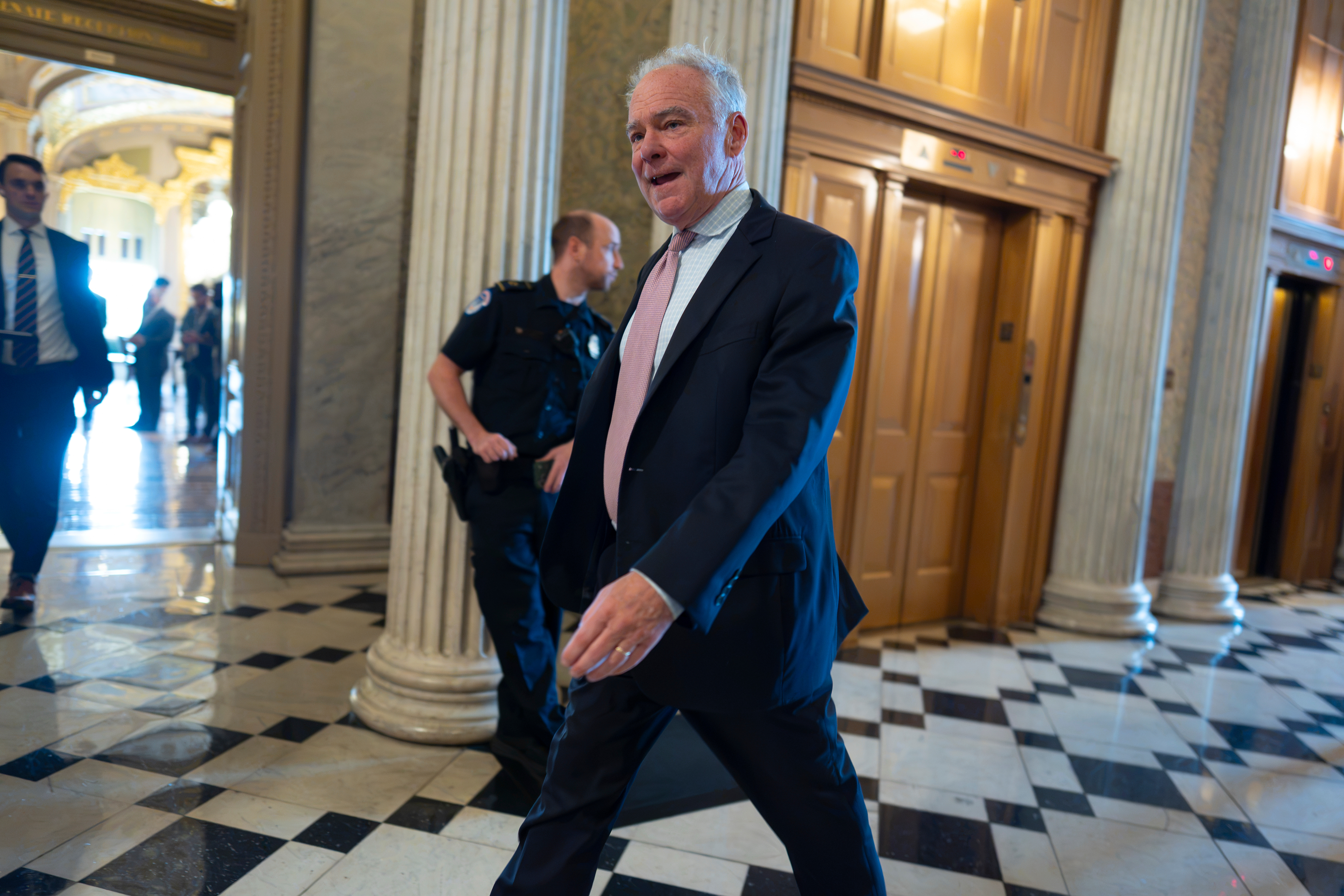
“They have been carrying water for this ridiculous and illegal war for months and months and months and not listening to their constituents,” said Sen. Tim Kaine (D, Va.), who pushed the war powers resolution forward.
About half of rural American voters believe the economy is worse off now than when Trump returned to office, according to a new survey from The Associated Press in partnership with KFF. The costs of groceries, gas, and healthcare rank as top pain points for the rural voters.
“We’ve got to break the cycle,” said Sen. Thom Tillis (R, N.C.), who joined in voting yes.
Republican Sens. Susan Collins of Maine, Lisa Murkowski of Alaska, and Rand Paul of Kentucky also voted for the resolution to end the war, as they have in many previous tallies. Sen. John Fetterman (D., Pa.) voted against.
This was the 14th time the Senate has considered a war powers resolution, since Trump launched the conflict on Feb. 28.
War powers resolutions are largely political statements, without the full force of law, but stand among the sharper tools the House and Senate have to express disapproval of the White House, short of halting funds for Trump’s military actions. As resolutions, they do not go to the president’s desk for his signature.
As gas prices climb, Republicans start to question the war
Republicans in control of Congress have shied away from directly confronting Trump over the war, now stretching past the seven-month mark. But their unrest is surfacing as stubbornly high gas prices leave voters in a cash crunch back home.
Diesel costs, in particular, have almost doubled, topping $6 a gallon, according to AAA.
Just returning from a swing through Iowa, Kansas, and Nebraska stumping for GOP candidates who are suddenly at risk in their elections, Sen. John Kennedy of Louisiana called on Trump to hold a prime-time address to the nation to explain the Iran war strategy and the end game.
“People are confused about the war and upset about the cost of living,” he said.
But he and others were not yet ready to vote against the war.
“My own view is that the focus right now needs to be on attacking the cost-of-living issues,” said Sen. Josh Hawley (R, Mo.) who opposes the war powers resolution and believes the president is acting within his authority to conduct the military action.
House Democratic Leader Hakeem Jeffries scoffed at the handful of Republicans now trying to distance themselves from what he called Trump’s failed economy. “Now all of a sudden they’re waking up,” he said.
Democrats keep pushing war powers votes in Congress
Earlier this month, the House for a third time approved a war powers resolution, this time with seven Republicans joining the Democrats, including two from battleground Iowa, Rep. Zach Nunn and Rep. Mariannette Miller Meeks, where affordability issues among rural voters are dominating the campaigns.
Senators, though, have rarely been able to confront Trump by passing a war powers resolution.
In June, the Senate approved a war powers resolution after four GOP senators joined Democrats, but Republicans abruptly reversed course the next day after Trump berated them during a private lunch over the outcome.
At the time, Sen. Bill Cassidy of Louisiana, stood up to defend his vote only to end up in a shouting match with Trump. He later switched to oppose the war powers resolution after receiving a personal briefing from the White House.
Thursday’s vote was on a resolution that had passed the House in July with GOP support. Rep. Pramila Jayapal, D-Wash., who authored the House resolution, said the Senate outcome was “a slap in the face to the millions of American people who want this war to end.”
Other options to halt the Iran war
As the war drags on, costing $43.5 billion so far, Congress is also seeking other ways to force Trump to rethink his military strategy in Iran.
Lawmakers also have the power of the purse to curtail military spending, something Republicans have been reluctant to do but Democrats are sure to tackle if they win power in the midterm election. The White House’s request for an additional $87.6 billion funding package for the war and other needs has idled in Congress.
First created in the aftermath of the Vietnam War as a way to hold a president accountable for military actions, the war powers act has long posed a test of the balance of power between the executive and legislative branches of government.
While the Constitution says only Congress can declare war, the president as commander-in-chief is also able to engage the military. The war powers act seeks to provide clarity by requiring the president, within 60 days of any such action, to seek approval — or risk disapproval — from Congress.
New Jersey is poised to allow political candidates to spend campaign donations on security guards and equipment, amid a rising toll of national violent threats and deadly attacks against politicians and their families.
The 80-member state Assembly on Thursday gave final approval to a bill that would enable politicians to buy alarm and motion-detection systems and hire guards “provided that the security measures address ongoing dangers or threats that would not otherwise exist were it not for the individual’s status or duties as a candidate or officeholder.”
The bill passed 53-13 with eight abstentions.
Majority Democrats did not speak during the debate. Some Republicans questioned why candidates’ safety should in any way depend on the size of their campaign fund. They recommended that concerned candidates apply for a firearm and protect themselves.
Assemblywoman Dawn Fantasia (R., Sussex) said she encountered “some real live wires out there” and has beefed up security in her own home. She has enlisted help from the state police and the attorney general’s office as well. But the bill still gave her pause.
“I don’t believe anyone has ever donated to me … thinking, ‘I hope it keeps her alive,’” Fantasia said.
Typically, candidates cannot not use political donations to cover personal expenses. But since the execution of New Jersey U.S. District Judge Esther Salas’ son in their Middlesex County home in 2020 by a self-described men’s rights lawyer, appointed and elected public officials nationwide have taken steps to protect their privacy.
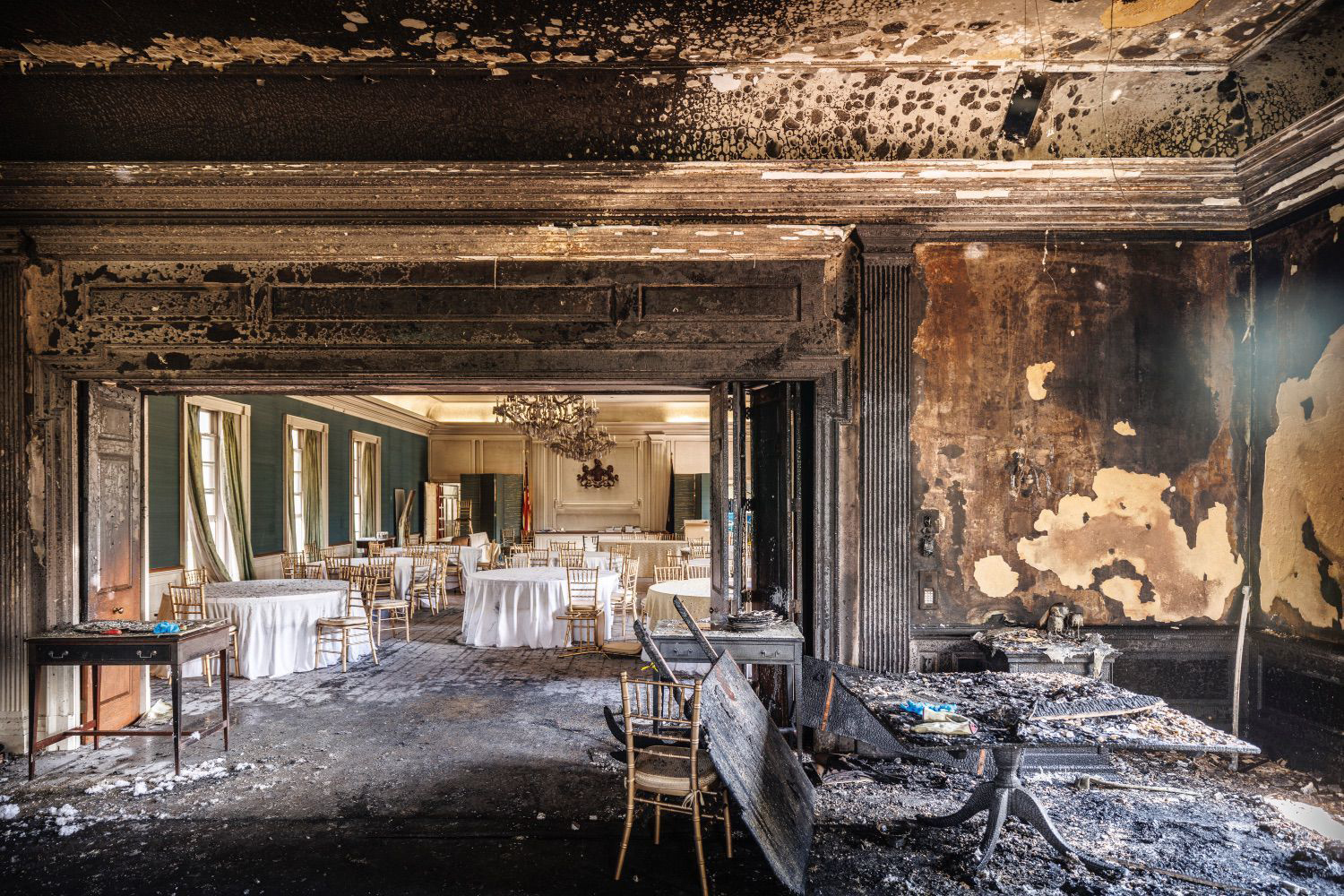
Those fears only multiplied after President Donald Trump was wounded during a shooting at a Pennsylvania campaign rally in 2024, last year’s arson attack at the Pennsylvania governor’s mansion while Gov. Josh Shapiro slept inside, and the 2025 assassination of Democratic Minnesota State Rep. and former House Speaker Melissa Hortman and her husband.
This image provided by Commonwealth Media Services shows damage after a fire at the Pennsylvania governor’s mansion while Democratic Gov. Josh Shapiro and his family slept inside on Sunday, April 13, 2025, in Harrisburg, Pa. (Commonwealth Media Services via AP)A
New Jersey would be the 17th state to allow political contributions to be spent on security, according to the National Conference of State Legislatures.
Rowan University political science professor Ben Dworkin called the need for such a bill “an unfortunate development in the hyper-partisan world we live in.”
“For any number of years, protecting the candidate meant staff walking in a circle around them, creating a bubble, and moving through the crowd,” said Dworkin, the director of the Rowan Institute for Public Policy and Leadership. “It’s sad if we have gotten to the point the majority of the legislature needs professionals.”
It is now up to Democratic Gov. Mikie Sherrill to decide whether to sign the legislation into law. The 40-member Senate passed the measure in June.
The next major statewide election is next year, when all 120 seats in the legislature are on the ballot.
The protections could extend to candidates’ immediate family members with whom they live. Security personnel could not be relatives, nor could candidates hire security companies owned by family, according to the bill.
Security devices may be sold after the campaign, according to the bill.
The state Election Law Enforcement Commission would implement the measure if Sherrill signs it.
WASHINGTON — President Donald Trump on Thursday hailed the “truly great friendship” he has forged with Xi Jinping as the Chinese leader began his highly anticipated state visit by pressing for the world’s two biggest economies to work more closely together to avoid friction as they compete.
While Trump has many thorny issues to discuss with the president of America’s biggest economic rival, he focused on his long relationship with Xi as the two gathered with aides for opening remarks before formal talks.
“From the time of my first election in 2016, President Xi and I have forged a friendship, a truly great friendship, actually, built on mutual respect and the vital interests of our people,” Trump said.
China has resisted the Trump administration’s urgings — and economic threats — to use its considerable leverage to prod Iran to agree to U.S. terms to end the nearly seven-month war. Xi wants to see Trump permanently halt arms sales to Taiwan and loosen export restrictions on cutting-edge advanced chips. The two sides on Wednesday agreed to extend by two months a one-year trade truce that was set to expire Nov. 10 as they work to find a more durable agreement.
Xi presses Trump on Taiwan
In their private conversation, Xi also urged Trump to “prudently handle the Taiwan issue,” according to the Chinese state media outlet Xinhua.
China has made clear it views Taiwan as the most sensitive issue in the U.S.-China relationship. Beijing considers Taiwan to be Chinese territory and vows to annex the island by force if necessary. The United States is obligated by law to provide Taiwan with sufficient hardware to deter any armed attack from the mainland. The U.S. has said it opposes any unilateral changes to the status quo by either side.
After that meeting, Trump said he was holding off on final approval for a record $14 billion arms package that was in the pipeline. He also described arms sales to Taiwan as a “very good negotiating chip” with China.
Chinese president once more invokes the ‘Thucydides trap”
Xi was also more pointed than Trump in his public remarks, saying Chinese and American interests are “deeply intertwined” and that the “competition should be a healthy one and should be kept within bounds.”
He also reiterated his warning that the U.S. and China must avoid the ” Thucydides trap,” referring to the idea that when a rising power threatens to displace an established one, the result is often war. Xi offered a similar warning when Trump visited Beijing in May.
“It should be a race of catching up with one another, not a wrestle in which one either wins or loses,” Xi added.
Xi also announced that China will invite 100,000 American youth to come to his country for studies and exchanges in the next five years and that China will send two pandas to the zoo in Atlanta. He called the beloved animals an “envoy of friendship” and that they will meet the American people in a “few days.”
Xi says China and U.S. should make sure AI is ‘always under human control’
“I want to leave it exactly where it is,” Trump wrote. “That is China’s position also.”
Xi also touched on AI in his opening comments, saying that the two countries had a responsibility to ensure that humans always operate AI.
“We have both the capability and responsibility to develop and manage AI for good and ensure that a development of AI is always under human control and serves the well being of the people,” the Chinese leader said.
The two countries’ finance ministers met earlier this week, with the U.S. proposing a new “notification mechanism” for AI incidents between the two nations.
Trump rolls out the red carpet for Xi and faces criticism from some White House allies
Trump has made clear he wants to impress Xi with the visit. The Republican president made sure construction of a new helicopter landing pad on the White House’s South Lawn was completed before the visit and he met Xi and his wife, Peng Liyuan, on Wednesday evening when they flew into Joint Base Andrews outside Washington.
The White House also arranged for an elaborate military review that the leaders and their spouses observed before the Oval Office talks. Following the military review, first lady Melania Trump accompanied Peng for a visit to the Smithsonian National Museum of Asian Art.
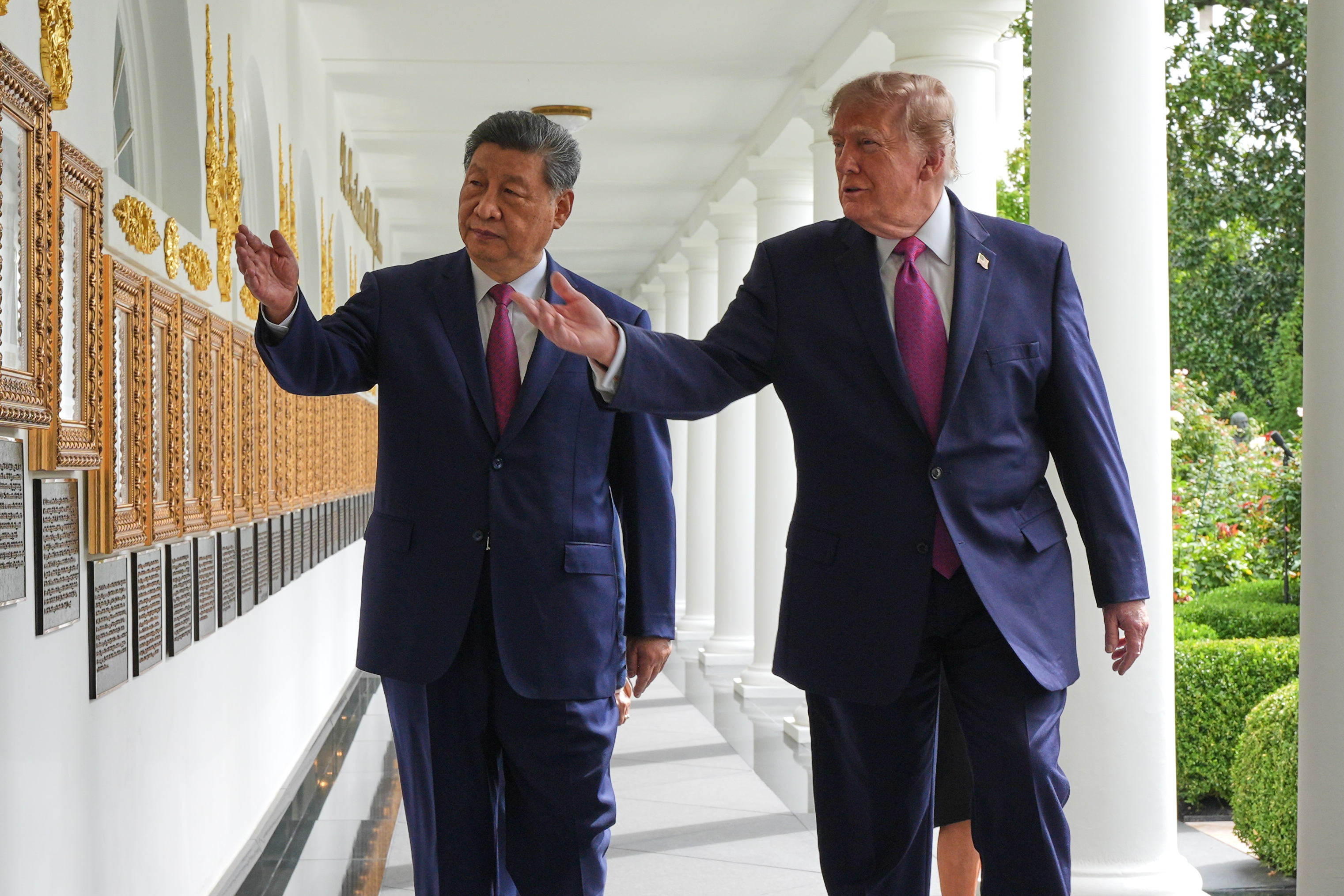
After about 90 minutes of talks, the leaders stepped out to the South Lawn so Trump could show off the new White House helipad and give Xi a tour of Marine One, the presidential helicopter. Trump and Xi also appeared to peer at the ballroom construction site from afar. Xi left the White House shortly after the quick tour and is to return in the evening for the state dinner.
“We had a great meeting,” Trump said in a brief exchange with reporters after the tour.
Later, the leaders will dine on sea bass at a black-tie dinner in the White House East Room, featuring red décor and a toast honoring the late President Richard Nixon, whose 1972 trip to China led to the establishment of diplomatic relations in 1979 and the parallel severing of formal ties with Taiwan.
Trump’s decision to roll out the red carpet for Xi has spurred criticism from lawmakers in both parties and some White House allies.
“Quite frankly, had the White House asked me for advice, I would have suggested the president not invite Xi Jinping to Washington for such a lavish welcome here in the United States of America based on all of the troubling issues we have with President Xi and the Chinese Communist Party,” said Sen. Roger Wicker, R-Miss.
Xi urges U.S. and Iran to return to interim agreement
The two sides also discussed the ongoing conflict in Iran, according to Chinese state broadcaster China Central Television.
Trump has argued to little effect that China, which is far more dependent on Gulf oil than the U.S., has plenty of incentive to use its sway with Tehran to help force an end to the conflict.
But Trump’s war of choice has unnerved Beijing, with the government condemning the U.S. and Israeli military action and Xi previously expressing concerns the conflict signaled a return to what he called the “law of the jungle.” The U.S. administration has warned China, Tehran’s biggest trading partner, not to aid Iran’s military effort.
Xi, during Thursday’s talks, said China supports the U.S. and Iran returning to a short-lived interim deal from the summer in an effort to wind down the war, according to CCTV. That agreement broke down soon after it was signed in June as the countries traded renewed fire over control of the Strait of Hormuz, a crucial waterway for energy shipments.
Only a handful of new traffic signals and some final paving work are left on the to-do list for the $155.1 million safety improvement project that essentially rebuilt a roughly 9-mile stretch of the highway.
In addition to repaving the road from Route 38 in Pennsauken to Cooper Avenue in Marlton, the work included new gas and water mains, traffic signal upgrades at 27 intersections, sidewalk and drainage improvements, and more.
“The investment NJDOT is making will help improve travel times, relieve congestion, and increase safety on this key roadway through Camden County, and these improvements are expected to benefit more than motorists,” said NJDOT spokesperson Steve Schapiro told the Inquirer this week.
“Reconstructed sidewalks and concrete curbs will mean improved safety for pedestrians, cyclists and other vulnerable roadways users,” he said. “Updated utilities, improved drainage and replaced culverts will ensure resiliency along the corridor and help to mitigate inclement weather events that may cause flooding.”
Over the next month, the final six traffic signals will be installed along the highway after “several utility-related delays” previously held up the work, Schapiro said.
The signal work is expected to be completed in October, he said, and will be followed by re-striping and paving in two remaining work zones.
First, the agency aims to finish repaving Route 70 between the Grove Street/Haddonfield Road intersection and Route 38 this fall, weather permitting, Schapiro said.
The final unfinished section of highway stretching from Route 295 to Cropwell Road, will be repaved this fall“where necessary, with final paving scheduled for next spring,” he said.
NJDOT is also working with Camden County on additional landscaping work to be conducted in the spring, he said.
It was early on a Friday evening, a week after her ninth birthday. Ashley Rivera, already in her pajamas, walked from her home to the 7-Eleven across the street to grab a snack. She was within eyesight of her stepdad, who sat on the front porch of their Kensington home, smoking Newports, crutches at his side.
Ashley left the convenience store and noticed a man in his 60s in a green Jeep. He had long, greasy, stringy hair and had been slowly circling the block.
At first, she didn’t pay him much attention. She lived in Kensington, where throngs of people suffering from addiction crowd the sidewalks, and sex workers linger under the El tracks. She figured he was just another guy looking to pay for drugs or a woman.
But he had his eyes on her.
The man pulled up, rolled down his window, and asked her to get into his car. He called her sexy.
Ashley moved away. But the man jumped out and gripped her arm tightly. She screamed for help as he dragged her toward his Jeep.
Even now, 17 years later, she remembers his eyes. “He looked very evil,” she said.
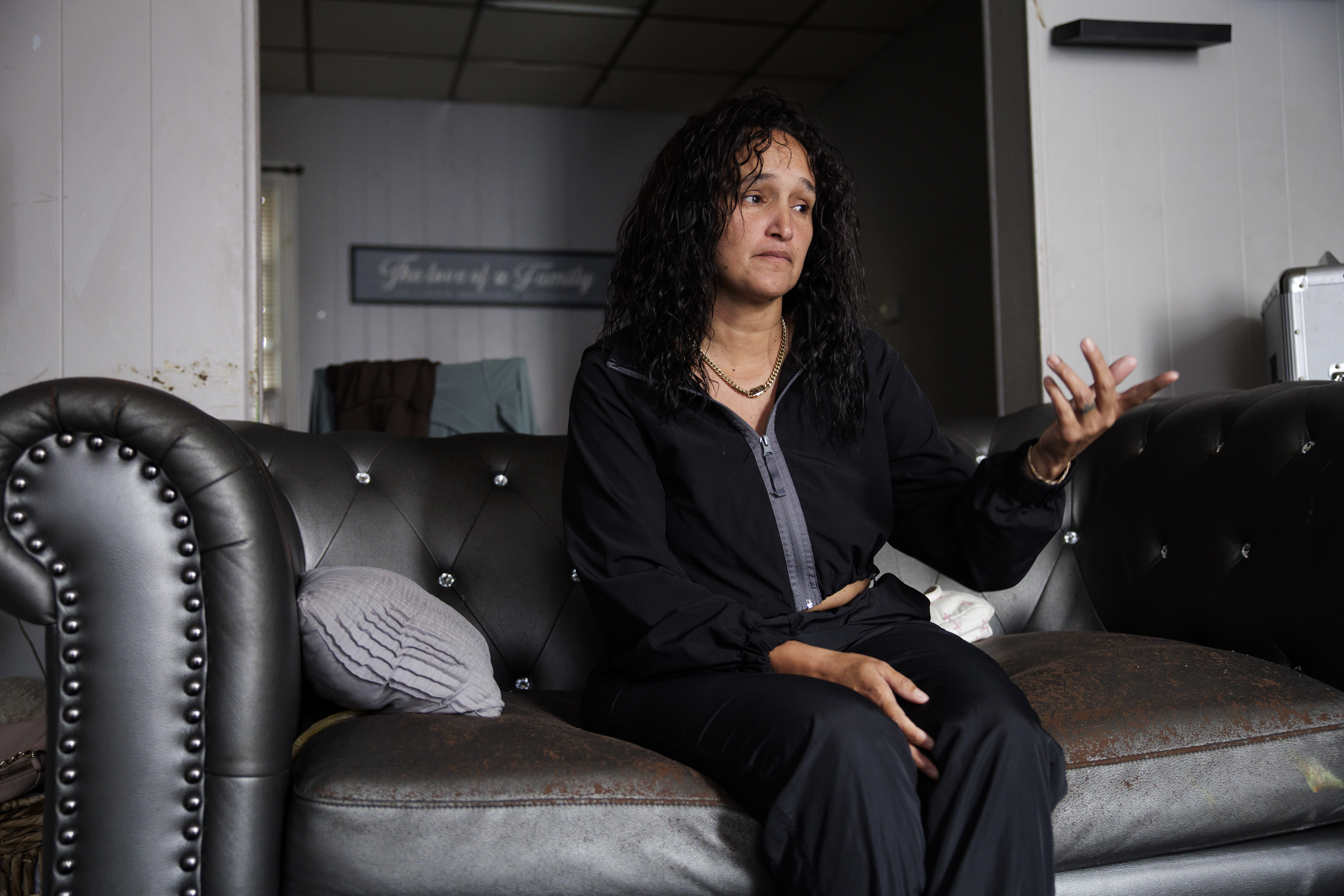
Sasha Rivera posed for a portrait at her home on Tuesday. Her daughter was 9 when accosted by Raymond Horsch in 2009.Monica Herndon / Staff Photographer
Ashley Rivera, who is 26, was stunned to learn this week that the man who tried to abduct her was Raymond “R.C.” Horsch, the shock-seeking pornographer now linked to at least seven missing women.
Horsch’s Olney home, and his bizarre past, have been at the center of a sprawling local and federal investigation since June that has uncovered a trove of disturbing digital evidence suggesting he may have killed women he lured off the streets of Kensington.
He died in 2025 at the age of 82. His son, Eugene, with whom he shared the Olney twin, is in prison on federal charges from a June 19 car stop near Independence Hall, in which authorities recovered the fake ID of a missing woman. Eugene Horsch has not been accused of any violent crimes involving the deaths or disappearances of the women.
Rivera’s account is the first known instance of Raymond Horsch attempting to victimize a child, and shows his violent obsessions may have extended beyond the women in addiction he exploited for decades. It also offers new insight into how Horsch evaded consequences.
“I really do feel like I escaped something big,” Rivera said. “He could have kidnapped me. He could have done the same thing to me that he did to those women. He could have raped me, killed me.
“I was a 9-year-old girl. I was just a kid.”
An unforgettable face
Rivera credits her stepfather with helping her escape Horsch’s grip that evening in March 2009.
When he heard her scream, she said, he hobbled off the front porch and hit the back window of Horsch’s Jeep with one of his crutches. Horsch sped off.
Rivera ran inside, crying to her mother, Sasha, who called 911.
Sasha Rivera, in an interview this week, said she then ran outside and saw Horsch circling their block.
“I chased him with a baseball bat,” swinging it at the Jeep as he drove by, she said. “I thought he was going to kill her. If he had taken her, I may never have found my daughter.”
Sasha Rivera talks about the night that Raymond Horsch tried to abduct her daughter, who was 9 years old at the time. Monica Herndon / Staff Photographer
Police arrived to find Horsch near the 3200 block of Kensington Avenue, according to an arrest report. Inside his Jeep, officers found a pair of high-powered binoculars, a digital camera, a telephoto lens, an eye patch, and a condom.
Officers asked Ashley and her mother if this was the man who had tried to lure her into his car.
There was no question it was him.
“I couldn’t forget that face,” Ashley Rivera said.
‘I just broke down crying’
Police arrested Horsch, and he was charged with luring a child into a motor vehicle and corrupting the morals of a minor.
Several months later, in January 2010, Rivera appeared in a courtroom in the decaying former Family Court building on Vine Street to testify against Horsch.
Rivera shook as she walked to the stand to testify. Horsch and his lawyers sat just a few feet away. She said he glared at her, with one eye looking straight ahead and the other bulging out crookedly.
“I was so scared, and he just kept staring at me. I just broke down crying,” she said. “I felt like I was looking at a killer.”
Rivera said her testimony had to be cut short.
“They made me get off the stand because I was crying so much,” she said.
The prosecutor on the case, Jill Fertel, said Rivera had to sit through Horsch’s attorneys accusing her of lying and saying she was not as innocent as she appeared because she grew up in a rough neighborhood.
“They said the morals of a girl from Kensington were harder to corrupt than a girl from Chestnut Hill,” Fertel said, referring to a wealthier neighborhood near the city limits.
The memory she can’t escape
Common Pleas Court Judge Roger Gordon convicted Horsch of both counts and sentenced him to 2½ to 5 years in prison.
The conviction meant Horsch would have been required to register as a sex offender under Megan’s Law, but he requested a “trial de novo,” or a new trial, in Common Pleas Court.
Unlike a typical appeal — in which a higher court reads the transcript of the lower-court proceedings to check for any legal or procedural errors — a trial de novo wipes the slate clean.
Ashley Rivera would have to testify again.
When she learned this, she begged her mother not to make her go back to court. Sasha Rivera, who is 46, said she could not put her daughter through such trauma again.
“I thought he and his family would do something to us,” Sasha Rivera said of Horsch.
A new prosecutor took over the case. But without Ashley Rivera, the Philadelphia District Attorney’s Office dropped the charges against Horsch. The original conviction was vacated and, in 2015, Horsch successfully petitioned for the case to be expunged.
Fertel said Rivera’s experience was “horrible.”
“The system was not designed for children,” she said. “There is a difference between being able to confront your accuser and being able to intimidate a victim.”
The state upgraded the crime of luring a child under the age of 13 to a felony in 2013. Fertel also said courts now more frequently allow children to testify on camera from another room to avoid their abuser.
Records from the case, including a psychological examination of Horsch, are at risk of being destroyed. The Inquirer has filed a motion with the court to preserve them and make them public, and a judge ruled Wednesday that they should not be immediately destroyed.
Ashley Rivera, who said she supports unsealing the records, said the incident with Horsch left her scared to play outside as a child. Even today, she said, she struggles with anxiety.
“When men stare at me, I’m instantly scared,” she said.
It has also affected the way she raises her son, who is the same age she was when Horsch grabbed her. She said she is afraid to let him go anywhere alone.
“We have a park down the block from my house, literally on the corner of my block,” she said. “He asks me, ‘Hey, Mom, can I go to the park by myself?’”
She tells him no. She’ll go with him. “And then he doesn’t want to go because he doesn’t want to go with his mom because all the other kids are by themselves.”
“I tried to get that memory out of my head,” she said. “But I can’t. It stays with me.”
Rivera now works as a receptionist in Northeast Philadelphia. She never realized Horsch walked free after she didn’t appear at his second trial. She said she feels guilt because had she been able to testify again as a child, perhaps the case would not have fallen apart.
“Maybe it’s my fault that he was free,” she said. “I thank God every day my stepdad was there to save me because I could be missing or dead. I feel really lucky.
“But I feel so bad for all the victims and their families. I didn’t have to go through what they went through.”
The Trump administration scrambled Thursday to halt a number of imminent deportations after an appeals court blocked authorities from expelling people to third countries without a chance to contest their cases, according to documents obtained by The New York Times.
The 1st U.S. Circuit Court of Appeals ruled late Wednesday that starting immediately, migrants need “a meaningful opportunity” to present evidence that they fear deportation to a third country.
Previously, the government had concluded that it could deport the people without such an opportunity by gaining assurances from the nation taking in the migrants that they would not be persecuted or tortured there. This legal interpretation has allowed the administration to sidestep certain processes, such as the fear screening, and rapidly expel people.
The third-country deportation program has been used by the Trump administration to get around rules barring certain people from being deported to their home countries. James Percival, the top lawyer at the Department of Homeland Security, said this week that more than 25,000 people had been deported to third countries.
The program has drawn criticism because many immigrants have been sent to countries with records of human rights violations.
The court decision adds a new burden for the government as it attempts to rapidly remove people from the United States without allowing their lawyers to try to block their deportation.
On Thursday, as news of the ruling spread inside the U.S. government, officials quickly moved to take deportees off flights to third countries such as Costa Rica, Honduras, and the Central African Republic, according to documents obtained by the Times.
The U.S. government has concluded that it cannot move forward — for the time being — with rapid deportations by simply relying on the diplomatic assurances, according to the documents.
Trump administration officials said they would immediately appeal the order.
“Without even allowing the government a chance to respond, and in the dark of night, a federal appeals court blocked us from conducting all third-country removals of illegal aliens, an entirely legal and invaluable tool to stem the tide of illegal immigration,” Attorney General Todd Blanche said. “We will immediately seek relief from the Supreme Court, which previously granted a stay in this very same case.”
A Philadelphia judge on Wednesday ordered a temporary halt on the destruction of court records related to Raymond Horsch’s 2009 conviction for attempting to lure a 9-year-old girl into his car in Kensington.
The ruling comes in response to an emergency motion The Inquirer filed seeking to preserve records of the child endangerment case that Horsch had expunged from his record in 2015.
The news organization argued that preserving the records is a matter of public interest because of the ongoing criminal investigation into the violent pornographer, whom police have now linked to seven missing women.
Horsch was arrested in March 2009 after approaching 9-year-old Ashley Rivera on East Ontario Street and attempting to lure her into his green Jeep Wrangler.
“Come here, in my car, sexy girl,” Horsch said to Rivera, according to an arrest report.
Horsch, who died last year, spent decades prowling Kensington seeking sex workers to film or photograph nude. Until the incident with Rivera, he had not been publicly accused of targeting children.
Rivera ran home, and her parents called the police, according to the arrest report. Officers found Horsch driving in the area hours later in the green Jeep, the report said. They searched his vehicle and recovered a pair of high-powered binoculars, a camera with a telephoto lens, and a condom, according to a news report at the time.
Horsch was charged with two misdemeanor counts of attempting to lure a child into a vehicle and corrupting the morals of a minor. At a bench trial, Rivera gave a tearful statement about the incident as Horsch glared at her from across the courtroom.
He was found guilty and sentenced to 2 ½ to 5 years in prison, and was required to register as a sex offender under Megan’s Law. However, Horsch’s lawyers sought a new trial in the Common Pleas Court and the case collapsed after Rivera was too afraid to testify a second time.
“I was so scared, and he just kept staring at me. I just broke down crying,” Rivera said this week, recounting her testimony at the first trial. “I felt like I was looking at a killer.”
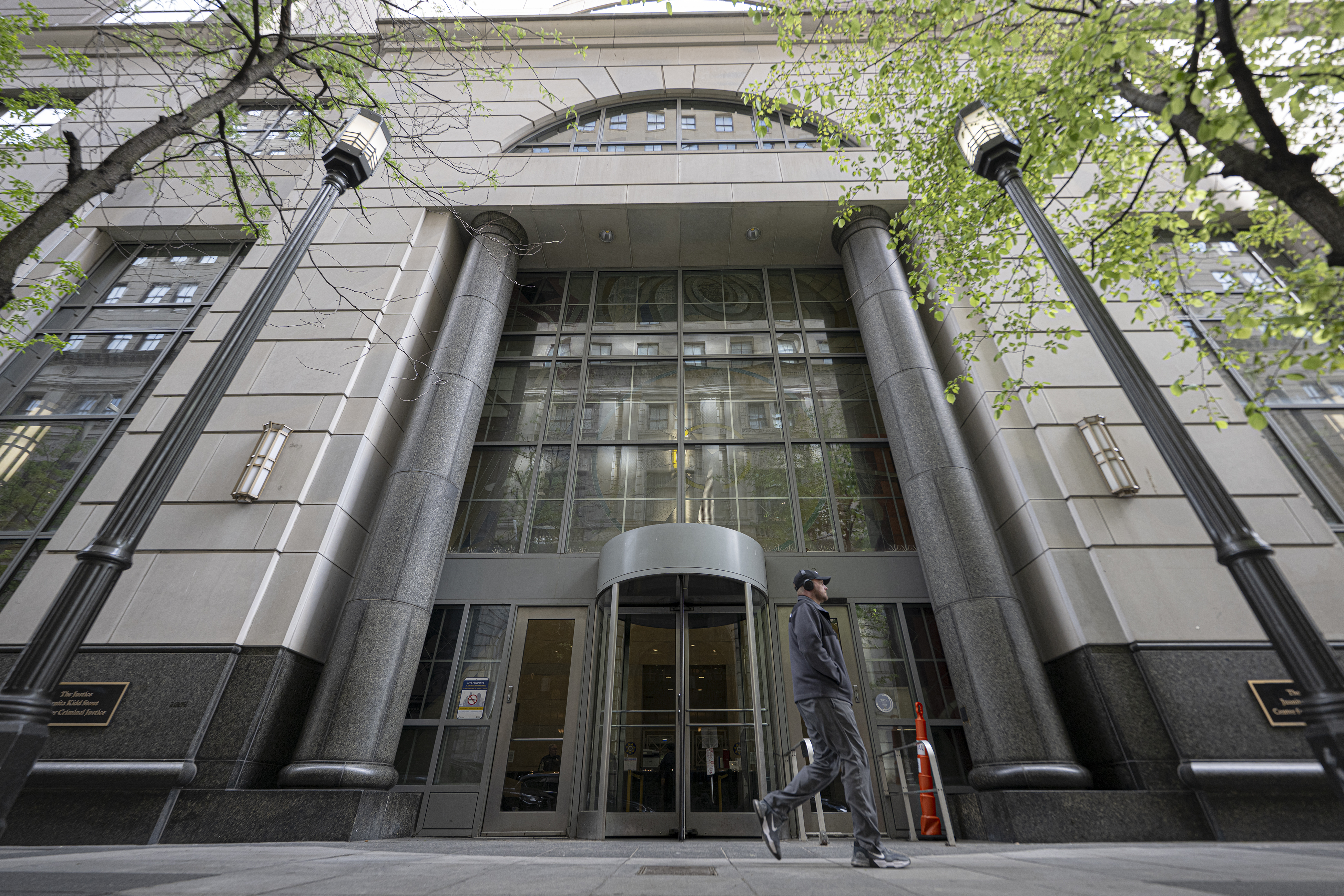
The Inquirer reported on the 2015 expungement and the existence of the court records on Tuesday, after reporter Ellie Rushing learned the documents remained on file at the Criminal Justice Center. When Rushing sought to review them, a clerk denied the request, saying the records should have been destroyed after the expungement.
Rushing, on behalf of The Inquirer, wrote a letter to administrative judges on Monday requesting that the records be preserved.
Horsch is now dead, she wrote, and the records may “hold pieces of information that are irreplaceable and important to the public and the criminal investigation.”
Kaitlin M. Gurney, an attorney for The Inquirer, filed an emergency motion reiterating those points and seeking an order allowing the news organization “access to inspect and copy all filings.” (Gurney’s husband, Patrick Kerkstra, is a managing editor at The Inquirer.)
State expungement laws, Gurney wrote, extend only to criminal histories — such as arrest records — and not to judicial records.
“Allowing court records to be expunged and permanently destroyed — not just sealed — would create significant tension with the press and public’s constitutional and common-law rights,” the motion said.
Newspapers have a constitutional right to inspect court records, except in the “most extraordinary cases,” Gurney wrote.
“These rights to access do not disappear simply because a record has been deemed expunged,” she said, adding that in this case, Horsch’s subsequent actions and suspected involvement in the deaths of multiple women had effectively invalidated the expungement.
“Given the unusual circumstances of this case, and the strong public interest in Horsch’s activities, any expungement order should be vacated,” she wrote.
On Wednesday, Common Pleas Court Judge Rose Marie DeFino-Nastasi, the supervising judge in the criminal division, ordered the Office of Judicial Records to cease “destroying or deleting any records” related to the case until further notice.
A hearing in the case is scheduled for Monday.
David Rudovsky, a prominent civil rights attorney, said that even with a deceased defendant and significant public interest, the case represents uncharted legal territory. A ruling to overturn the expungement could have far-reaching consequences, he said.
“It’s an extraordinary case,” Rudovsky said. “But I don’t know of any precedent in which an expungement can be reopened, even after the death of a defendant.”