The city is rolling back its geofence border around the FIFA Fan Festival to reduce the number of residential areas blocked from using rideshare.
The Philadelphia Office of Transportation and Infrastructure Systems (OTIS) announced Thursday that it would shrink the geofence to exclude large residential buildings on Pennsylvania Avenue.
The geofence, which blocks people within its borders from using rideshare services like Uber and Lyft, will now shrink to the south of Aspen Street, about half a block from its original border at 25th and Meredith Streets.
“We’re continuing to work with the community, elected officials, and operational partners to improve the experience for everyone, including residents impacted by Lemon Hill festivities,” an OTIS spokesperson said.
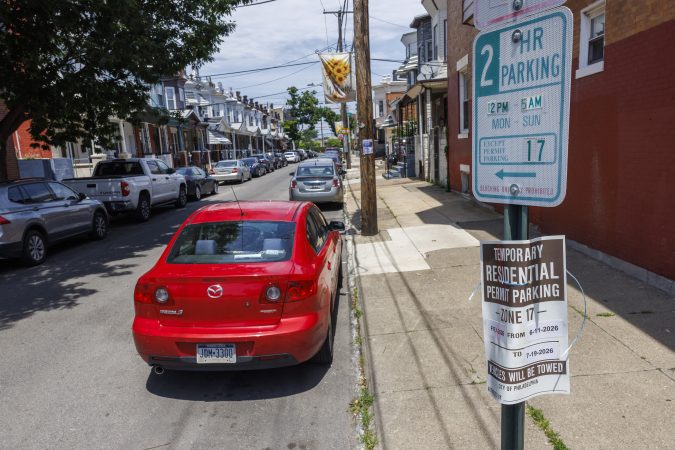
Additionally, four blocks in Fairmount had been designated for rideshare pickups and drop-offs, but OTIS is reducing rideshare zones to two, allowing for more parking for permitted residents.
The rideshare pickup/drop-off zones are now located only near Eastern State Penitentiary, at 23rd Street and Fairmount Avenue, and the 2200 block of Fairmount Avenue.
This was well-received news for residents who live in the area and have been concerned about the geofence’s restriction on residents with mobility issues.
Paul Stewart, an 86-year-old resident who lives in one of the large apartment buildings that initially had been geofenced, relies on Uber to visit his doctor at Thomas Jefferson University Hospital. But last week, when he planned to head to an appointment, he found he could not call a rideshare.
“The geofence that includes my building and all the businesses in the immediate area will continue for 39 days,” Stewart said before the geofence rollback. “Many people take Uber to and from the restaurants and bars in this neighborhood so that they can have a few drinks and not worry about driving drunk.”
Geofencing these large residential buildings and blocks was hindering everyday life, Stewart said. Now, he said, residents will be able to go about their business as they normally would.
The geofence reduction is just one of the adjustments the city has been making as it manages the traffic and fans around the FIFA Fan Festival in Lemon Hill. Since at least May, residents have been requesting traffic-calming measures on residential blocks. The Philadelphia Parking Authority and OTIS installed additional barricades and signage last week.
Angelo’s Pizzeria owner Danny DiGiampietro has been pursuing two ambitious goals: reviving a landmark Montgomery County bakery and opening a branch of his Michelin-recommended pizza-and-sandwich operation in South Jersey, where it all began.
Both projects now appear to be gaining momentum. While Angelo’s vaunted rolls are being baked at the former Conshohocken Italian Bakery property, which DiGiampietro purchased last year, the long-held plans to reopen the bakery’s counter to retail customers remain on hold. DiGiampietro said the building requires additional work, which he declined to specify. “Every time we fix one thing, something else comes up,” he said.
Danny DiGiampietro (left), owner of Angelo’s Pizzeria, with partner Jared Braunstein at the bakery in Conshohocken in December 2024.Jose F. Moreno / Staff Photographer
But Angelo’s is moving into wholesale bread production, the backbone of Conshohocken Italian Bakery’s business under the Gambone family for more than a half-century before its 2024 closing.
A key piece of the puzzle is on the way: a massive Polin oven imported from Italy to give his bakers more flexibility, DiGiampietro said.
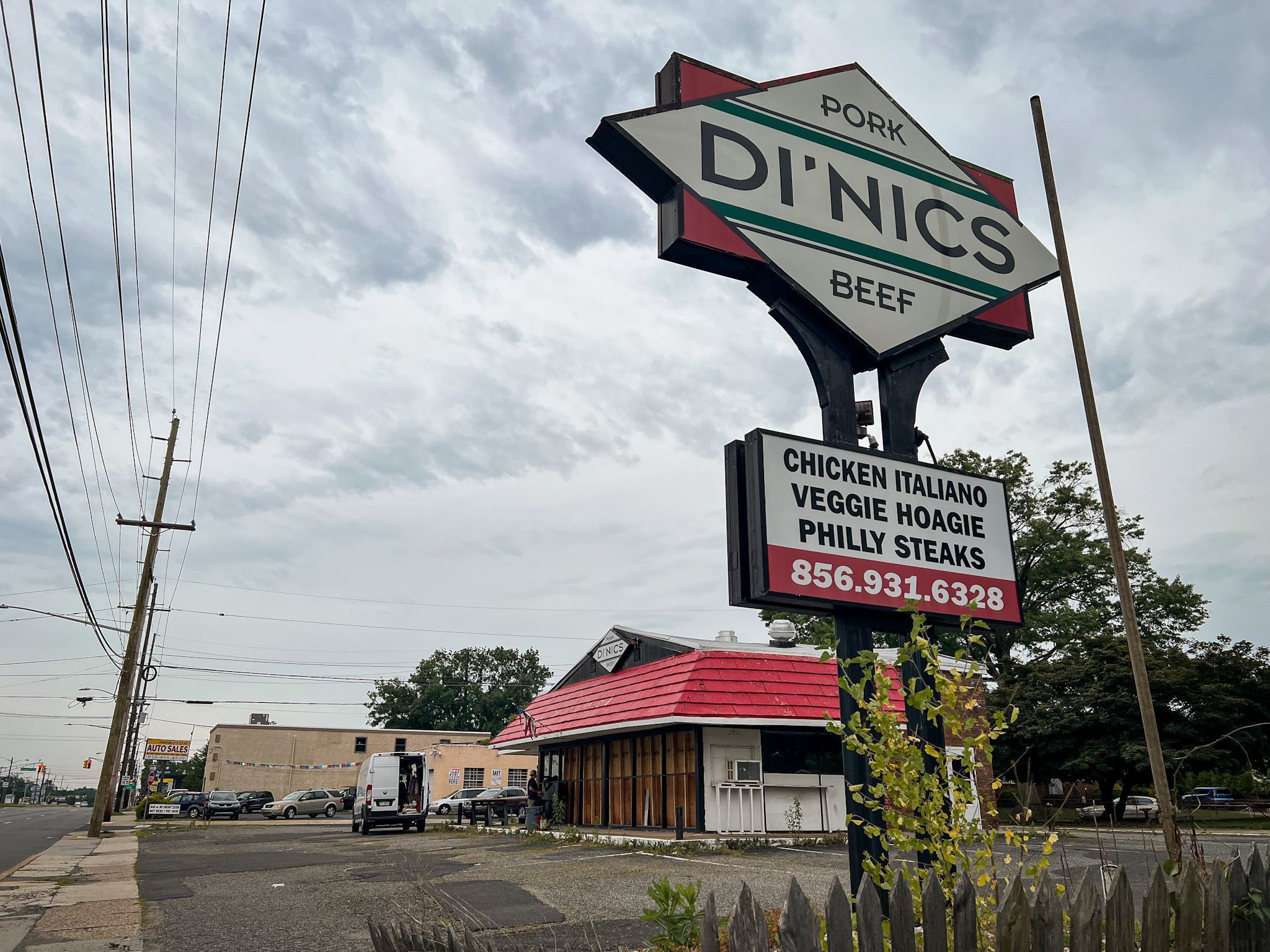
The future location of Angelo’s Pizzeria in West Collingswood Heights, previously Di’Nics, on June 18, 2026.Michael Klein / Staff
At “Conshy,” as the Jones Street bakery was known, the Gambone family supplied rolls and bread to hundreds of restaurants and sandwich shops throughout the region. Its closing created a frenzy among customers and competitors.
DiGiampietro said the new oven will allow bakers to create a line of kaiser rolls, potato rolls, steak rolls, and hoagie rolls. Although he will in effect be selling to his sandwich shop competitors, he likens it to giving shops “the canvas to make their art,” DiGiampietro said. “Everyone’s different.”
A return to wholesaling was not in the initial plans for DiGiampietro, who owned a bread bakery in South Philadelphia about 20 years ago. “I went bankrupt the first time. So hopefully I don’t go bankrupt again.”
Meanwhile, demolition and rebuilding are underway at the future Angelo’s Pizzeria location at 310 Black Horse Pike in the West Collingswood Heights neighborhood of Haddon Township, Camden County. The stand-alone building was formerly Di’Nics.
Crews recently gutted the building, which DiGiampietro hopes to transform into a full-service Angelo’s within the next several months.
The project will mark his return to New Jersey. DiGiampietro opened his first Angelo’s in Haddonfield in 2013 before closing it in 2018 to focus on the Ninth Street location in South Philadelphia, which opened in 2019 and helped turn Angelo’s into one of the region’s most sought-after pizzeria and cheesesteak shops.
The Angelo’s in West Collingswood Heights, about 10 minutes from the Walt Whitman Bridge, will include table seating as well as a counter overlooking the kitchen. Initially, DiGiampietro wanted more seating. Then he began talking about a takeout-only operation.
“But people love the show,” he said. “They like to see everything happening.”
The build-out still requires installation of a pizza oven, walk-in refrigeration, and other equipment. Even so, DiGiampietro believes the compact space can work.
“We think we can keep a dining room and still fit everything we need in there,” he said. “It’ll be tight, but we work on Ninth Street in basically a submarine, so how much tighter can it get?”
Former President Barack Obama formally opened his presidential center in Chicago on Thursday with a call to defend democracy as three other former presidents joined him on stage in an extraordinary event featuring politicians, A-list celebrities, athletes, and other internationally known figures.
“I hope this center will serve as an affirmation of just how special, how precious our democracy truly is and remind us what we can achieve when we embrace our shared responsibilities as citizens,” the nation’s first Black president told the crowd.
Bono, John Legend, Christina Aguilera, Marc Anthony, and Eddie Vedder took turns on the stage ahead of Bruce Springsteen and Stevie Wonder, who closed the show singing “Higher Ground” as the former presidents, world leaders, and others danced along.
President Donald Trump was conspicuous both in his physical absence and by not being mentioned by any of the speakers or performers. Trump called the $850 million center a “total disaster” in a social media post in February.
Obama voiced his support for character, honesty, integrity, kindness, compassion, and sense of duty, praising both Democrats and Republicans, including those he defeated.
“Every president here today, as different as we are, has tried our best to uphold values that John McCain and Mitt Romney believed in no less than I did,” Obama said. “It is our greatest inheritance.”
Reflecting on his arrival in Chicago in 1985 as an untested political organizer, he said he could not have built the Obama Presidential Center anywhere else. He met his future wife, Michelle, nearby, their wedding reception was within walking distance, his children were born in the neighborhood, and he launched his first candidacy not far away.
“It’s an expression of thanks, an acknowledgment that so much of what I hold most dear I owe to the people of this city and the people of the surrounding neighborhoods,” Obama said.
Michelle had some emotional words for her husband
The Obamas and their daughters shared the stage with former presidents Joe Biden, George W. Bush, and Bill Clinton along with former first ladies Jill Biden, Laura Bush, and Hillary Rodham Clinton. Former Vice President Kamala Harris and many other leading Democrats were in the audience.
Michelle Obama spoke directly to her husband when she stepped up to the podium. “Eight years in the crucible and not once did you melt in the heat. Not once did you let it harden you.
“Instead, you used it to reveal your truest essence,” she said. “Your stubborn optimism and unflinching courage. Your dazzling brilliance and unpretentious decency. Your ferocious work ethic and absolutely unshakable moral fiber. And to do it all as a first.”
She ticked off highlights from her husband’s eight years in office, including ordering the raid that led to the killing of Osama bin Laden, “standing up for marriage equality,” and “listening to science.”
“And you did it all with such grace and class and cool,” she said. “You made the hardest job in the world look like a walk in this beautiful park.”
Obama appeared to wipe away a tear as she praised him.
Michelle Obama also referenced the current “anxious and divisive times” and warned against being cynical or complacent as “everything feels so upside down.” She pitched the center as “a respite from all that.”
A-list entertainers, inspirational anthems, and protest songs
Jennifer Hudson sang the national anthem and Aguilera delivered a rousing rendition of “What a Wonderful World.” Pearl Jam’s Vedder, joined by Chicago teenagers in the nonprofit Guitars Over Guns program, sang an original song called “Better Believe,” written just for the dedication.
Legend sang “Someday We’ll All Be Free” and was joined by the rapper Common and Uniting Voices Chicago for their Academy Award-winning song “Glory.”
Bono, who said he was representing the Irish, joined with The Edge in singing the U2 song “City of Blinding Lights.” The Roots served as the house band. And Springsteen sang “Land of Hopes and Dreams” before turning to the Obamas and saying “I love you.”
Wonder sang “All I Do” and “Signed, Sealed, Delivered (I’m Yours)” before the grand finale, joined by the performers who preceded him.
The VIP crowd included several potential 2028 Democratic presidential candidates; civil rights leaders Andrew Young and Al Sharpton; Oprah Winfrey; comedians David Letterman, Conan O’Brien, and Stephen Colbert; actor Tom Hanks; tennis legend Billie Jean King; and Chicago Cubs Chairperson Tom Ricketts.
Former world leaders in attendance included former German Chancellor Angela Merkel and former Canadian Prime Minister Justin Trudeau.
Event kicked off weekend of celebration
The three-hour invitation-only celebration included commentary from a nearby park where thousands gathered, and it was livestreamed to many more. It kicks off a weekend of events as the center opens to the general public on Juneteenth.
“This is not a monument to the Obamas,” said Valerie Jarrett, the Obama Foundation’s chief executive and former Obama top adviser. “This is a tribute to all those who made this journey possible.”
The opening, like the ribbon-cuttings of other presidential libraries over the years, had a heavy focus on accomplishments. This former president also expressed some regrets — such as the increase in political polarization during his two terms. “It’s one of the few regrets of my presidency — that the rancor and suspicion between the parties has gotten worse instead of better,” Obama said in his final State of the Union.
“Some of the exhibits reflect unfinished business,” Obama said Thursday. “In some cases, my own shortcomings and mistakes.”
General admission tickets for the center are sold out through the end of October. More than a million visitors a year are expected at the nearly 20-acre campus.
Over a perceived debt of $8,000, a New York man stole an urn containing the ashes of his former employer’s daughter and attempted to hold the remains for ransom, according to Montgomery County prosecutors.
Nuo Chen, 30, told the victim that if she did not pay him, he would dump the ashesand flee back to his home in Flushing, Queens, according to the affidavit of probable cause for his arrest.
Chen happened to call the victim while she was being interviewed by Bensalem police about the theft, authorities said, and they were able to set up a meeting at the nail salon she owns under the guise of her paying him the money.
Officers took Chen into custody June 12, and he was charged with burglary, theft, and related crimes. He remained in custody Thursday with bail set at $50,000.
Montgomery County Deputy Chief Public Defender Michael Drossner, whose office is representing Chen, declined to comment on the case.
The victim also declined to comment on the case or speak about her daughter when contacted by a reporter Thursday.
Investigators say the woman told them Chen broke into her home June 12, using keys he had previously taken while staying there with her.
Earlier that day, Chen had visited her at the nail salon, arguing with her about money he said she owed him, the affidavit said. During the argument, Chen threatened to “smash things in the store” and pushed the woman.
She had fired Chen weeks earlier, police said, due to his erratic behavior.
After the argument at the nail salon, Chen drove to the woman’s home in Willow Grove and was seen on surveillance footage carrying the urn containing her daughter’s ashes, according to the affidavit.
He called the woman, telling her not to contact the police or she would never see the urn again, the affidavit said.
Later, after Bensalem arrested Chen outside the nail salon, he admitted that he had entered her home without her permission, using the key he had previously taken, authorities said.
Chen is scheduled to appear for a preliminary hearing on June 26.
WASHINGTON — It was less than 15 weeks ago when President Donald Trump, at the height of his bravado about how the war with Iran would end, declared “there will be no deal with Iran except UNCONDITIONAL SURRENDER.”
When the text of the deal intended to wind down the conflict was finally released Wednesday, read aloud paragraph by paragraph by a senior administration official who stopped to defend each section, it read nothing like a surrender document. Instead, the Iranians emerged from a confrontation with the world’s most powerful military having not only survived, but with much to celebrate.
It starts with the resumption of Iran’s ability to reap billions of dollars in oil sales, lifting pressure on the struggling regime even as negotiators prepare to begin haggling over a far more lengthy and critical document: the one Trump insisted in an interview Sunday will arrest Iran’s nuclear program for the next 15 or 20 years.
For a president who prizes leverage above all else, that decision is just another mystery of the war. But the wording of the “Memorandum of Understanding” also suggests that, over time, Iran may negotiate some permanent way to exercise sovereignty over the Strait of Hormuz. That seems in contradiction to Secretary of State Marco Rubio’s declarations just a few weeks ago that anything other than the kind of free passage through the strait that the world knew before the war was “not acceptable” and “cannot happen.”
And the memorandum, signed Wednesday evening by Iran’s president and Trump, describes a pathway in which Iran could begin receiving billions of dollars in assets that have been frozen for years. Trump insists the money will only be released in return for “good behavior.” But it is essentially the same concession that Barack Obama made 11 years ago, and that Trump has savaged ever since.
As Trump reminds reporters — often angrily — the United States did have many accomplishments on the battlefield: It sank Iran’s less-than-impressive navy, wiped out its small air force, destroyed much of Iran’s defense industrial base and demolished some of its missile emplacements and mobile launchers. But that was not Trump’s goal. As he said at the opening of the campaign, he sought the total destruction of the nuclear and missile programs, the fall of the regime and, as he suggested later on, U.S. control of the country’s oil industry.
In the next few days, the details of this agreement will be picked apart. Hard-liners in Trump’s party have already been expressing objections. So have the Israelis, frozen out of the negotiations and fearful they are being forced by Trump into a ceasefire with Hezbollah that will interfere with their ability to rip apart the terror group. Historians will grapple for years about the lessons of a conflict in which the United States spent tens of billions of dollars, with 13 Americans and more than 3,000 Iranians reported to have been killed.
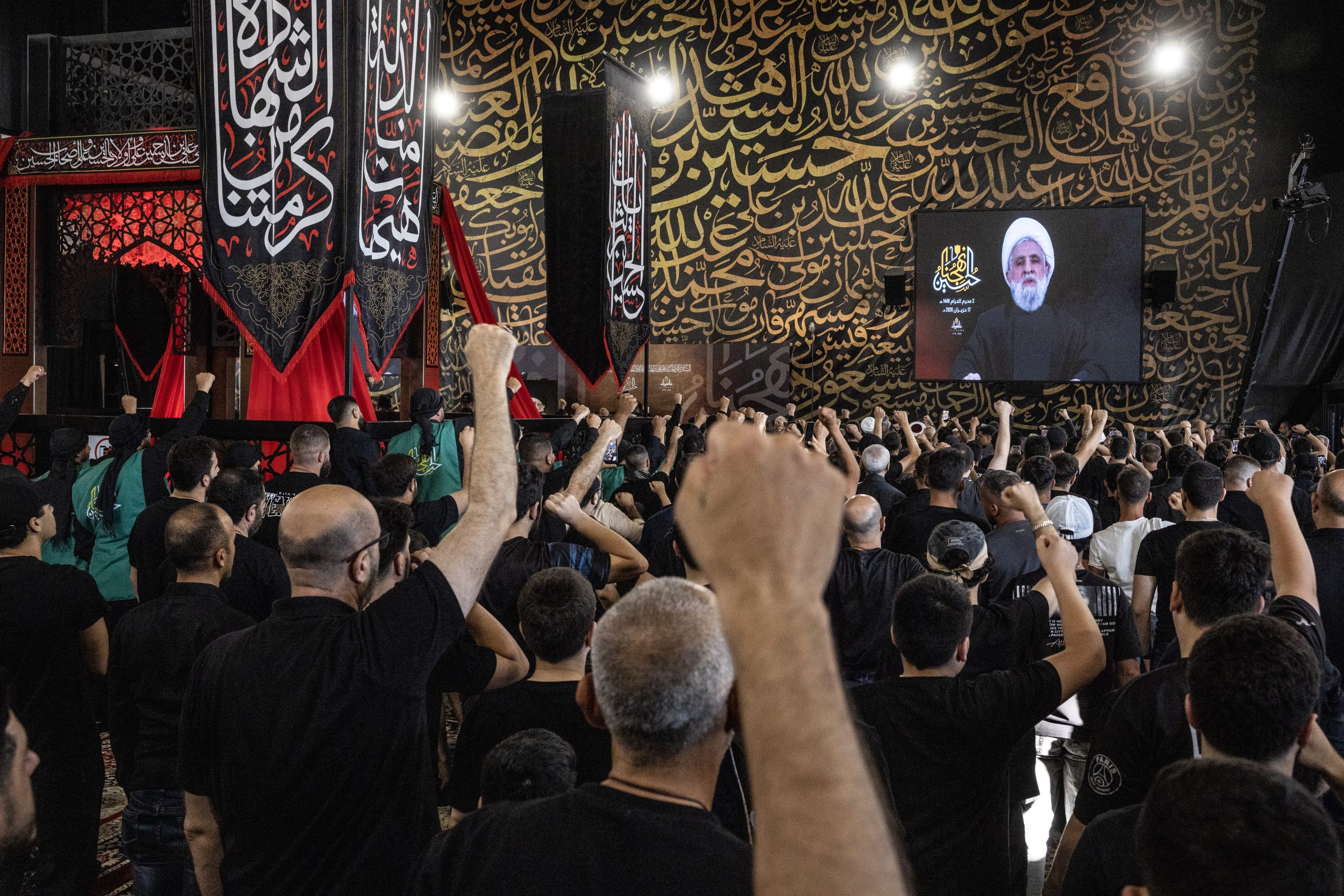
People chant the name of Hezbollah leader Sheikh Naim Kassem during his public address on Wednesday.David Guttenfelder
But it was Trump himself who offered what may be the most clear-eyed answer about why he needed to end this war so fast. He didn’t want comparisons to Herbert Hoover, he told reporters Wednesday at the Hotel Royal in Évian-les-Bains, on the shores of Lake Geneva.
“He was always the one I didn’t want to be,” Trump said of the 31st president, who presided over the market crash that ushered in the Great Depression. “I didn’t want to see economic catastrophe.” Later he noted that if the war continued, the world would have begun to run out of oil stockpiles.
That combination — economic chaos and disrupted oil markets — is exactly what the Iranians viewed from the opening days of the war as their most potent weapon. They executed on that vision with precision, closing the strait and blowing up petrochemical facilities, desalination plants, hotels and air bases across the Persian Gulf. And by the president’s own testimony, it worked.
If that was Phase 1 of Iran’s strategy, history suggests Phase 2 may be one of delay and more delay. In past negotiations, the Iranians refined the art of arguing over every paragraph, throwing in new obstacles to inspections or reinterpreting the meaning of “nuclear research” to embrace continued uranium enrichment. Few were more skilled at this process, former U.S. negotiators say, than Abbas Araghchi, the Iranian foreign minister, and a veteran of past talks.
And Trump, eager to move on, seems to be paving the way for a long, slow process. On Tuesday, he said he wasn’t especially concerned with getting Iran’s nuclear fuel — now buried under the rubble of last year’s U.S. air attacks — out of the country. On Wednesday, he acknowledged the talks would probably go beyond 60 days.
It is too early to say whether Trump will ultimately be able to claim more accomplishments. If, in the next stage of negotiations, he manages to get the Iranians to ship their stockpiles of nuclear fuel out of the country (as President Barack Obama did in 2015) and cease all enrichment activity for nearly two decades (which Obama failed to accomplish), then he may be able claim some long-term victory.
If the war turns out to have destabilized the Iranian leadership and triggered protests and an uprising, as Trump called for at the beginning of the conflict, he could well claim credit.
But for now it looks like the opposite is taking place. If anything, Trump has propped up the new leadership, ostensibly run by the new supreme leader, the injured and out-of-sight Mojtaba Khamenei, the son of Ayatollah Ali Khamenei, who was killed in the opening strike of the war.
The Revolutionary Guard, which has overseen the nuclear program for years, seems firmly in control, though a senior administration official argued to reporters several days ago that by bringing about a peace, Trump is now forcing the elite military unit to face the travails of governing.
Senior members of the Obama administration, having absorbed years of critiques from Trump about the shortcomings and loopholes in the agreement struck in 2015, saw their moment to exact a measure of retribution.
“The only ‘achievement’ of the ceasefire is the likely reopening the Strait of Hormuz — which was open before the war started,” former Secretary of State Antony Blinken wrote online Wednesday. “And we will apparently pay Iran to do so, in the form of waivers for the export of Iranian crude oil. Iran has now demonstrated the capacity to stop or slow the passage of oil, natural gas, fertilizer and other critical products upon which so much of the world depend.”
Blinken, an architect of the 2015 accord, concluded: “Going forward, it will almost certainly find ways to collect ‘fees’ for safe passage that will help entrench the regime.”
While some Republicans expressed cautious optimism that Trump’s peace-through-negotiation strategy may yet work, a good number of Iran hard-liners and America First adherents could not bring themselves to repeat the talking points in support of the accord that were being e-mailed by members of the administration. Among the most outspoken were those protected by impending retirement.
“Reagan is rolling over in his grave,” Sen. Bill Cassidy, R-La., who lost a primary last month after Trump targeted him for defeat, wrote on social media. He said that Iran’s nuclear ambitions “were not curbed” and that the war had taught the Iranians that they had more leverage over the Strait of Hormuz and the world economy than they knew. Cassidy termed the war “the worst foreign policy blunder in decades.”
But the bigger risk may be this one: When Iran’s leaders begin to clear the rubble left by 40 days of bombing, and think about how to spend the billions in oil revenue that will soon resume, they may well question whether they had the right nuclear strategy.
For more than two decades Iran walked right up to the edge of building a nuclear bomb, but never stepped over the line, figuring that a “threshold” capability was all it needed to deter the United States and Israel from attacking. That enabled it to stay in the nonproliferation treaty, and insist that it had only peaceful intentions, with the security of knowing that in months it could produce a weapon. The result was that it was bombed in June 2025 and attacked again in February 2026.
North Korea, in contrast, raced for the bomb, setting off its first successful nuclear test in 2006, and now has an arsenal of 60 or more weapons, according to U.S. intelligence agencies. It has escaped no nuclear strategist that these days, Trump isn’t issuing threats to North Korea.
On Sunday, when Trump called the Times, this reporter asked him whether Iran might now follow the North Korean model. “He’s got serious nuclear weapons,” Trump said of Kim Jong Un, whom he threatened with annihilation during the first Trump term, then met three times in a fruitless effort to convince him to disarm. “But that should not have been allowed,” he said, asking whether North Korea got the bomb under President Clinton or President Obama. (It made its first test under President George W. Bush.)
But Trump evaded the question of whether his decision to attack Iran could ultimately drive it to follow North Korea’s model. And he insisted his deal would stop Iran, saying Prime Minister Benjamin Netanyahu should thank him for keeping Israel from nuclear annihilation.
“Whatever it takes,” he said. “Forty-seven years,” he said, referring to the 1979 Iranian Revolution, “nobody was able to do it. And we did it. We did it the right way.”
History may prove him right, but it is far too premature to make that claim. Maybe even he knows that, based on his statements Wednesday morning. If the accord didn’t stick, he had a plan, he insisted. He would “go back to bombing.”
Ukraine hit a major Moscow oil refinery for a second time in a week and disrupted commercial flights at the city’s airports in one of its biggest drone attacks since Russia’s all-out invasion of its neighbor more than four years ago, Russian officials said Thursday.
The attack came hours after Ukrainian President Volodymyr Zelenskyy said he had held “an important coordination call” with the presidents of the United States and France, and had won key pledges of further support from the G7 summit this week.
Zelenskyy was expected in Brussels later Thursday for talks with NATO and European Union leaders, including discussions about the possible building of a continental system to protect against ballistic missiles. Russia has relentlessly struck Ukraine with those types of missiles, which air defenses struggle to counter.
Ukrainian Foreign Minister Andrii Sybiha said on X: “One of the most popular questions asked by Muscovites this morning is ‘What is going on?’ I can answer. Your country started a war of aggression against ours. For years, it has been killing our people. Now that you know what’s going on, ask Putin when he is planning to end it.”
Huge fires rage at Moscow refinery near Kremlin
Images and video released by the Russian media showed massive fires raging at the Moscow Oil Refinery, located about 15 kilometers (9 miles) from the Kremlin. Thick black clouds of smoke rose over the city.
The refinery is one of Russia’s biggest, according to its official website, and produces more than a third of the Moscow region’s fuel. It was last attacked by Ukrainian drones on Tuesday, catching fire, but officials said the blaze was swiftly put out.
Flights from four Moscow airports were temporarily halted, transport and aviation authorities said.
In the Moscow region, which surrounds but does not include the capital city, a drone hit a residential building in the town of Zhukovsky, and the building was being evacuated, according to Gov. Andrei Vorobyov.
Buildings elsewhere in the region were damaged by drone debris and 16 people, including two children, were wounded, according to Vorobyov.
Ukrainian drone attack embarrasses Putin again
The Russian Defense Ministry said that its air defenses overnight shot down 555 Ukrainian drones over multiple regions, with almost 200 intercepted as they were approaching the Russian capital.
That was roughly double the number of drones that Russia launched at Ukraine overnight, according to the Ukrainian air force.
The attack was the latest embarrassment for Russian President Vladimir Putin, after a Ukrainian drone attack on his hometown of St. Petersburg earlier this month just as he held a showcase economic forum in the city with foreign VIP visitors.
Putin on Thursday was in Kazan, some 700 kilometers (430 miles) east of Moscow, hosting leaders of the Association of Southeast Asian Nations as Russia seeks to bolster business and other ties with the nations of the regional bloc.
Zelenskyy said the attack on Moscow was part of Ukraine’s efforts to force Putin to the negotiating table. The Ukrainian president has accepted an unconditional ceasefire demanded by Trump but Putin has refused, and U.S.-led peace efforts have petered out.
“If Putin does not want to end this war and wants to continue it, we will not sit quietly — we will respond,” he added in a voice message to a group chat with journalists.
Ukraine disrupts Russian supply lines with drones
As well as pledges of more diplomatic and military help at the G7 summit, Ukraine recently has gained momentum on the battlefield against Russia’s bigger army thanks to its high-tech drones, Western officials and analysts say.
Longer-range drone strikes are choking Russian supply lines in occupied regions of Ukraine, in addition to disrupting Russian oil production.
Macron said the G7 summit was “very important for Ukraine” because its supporters — crucially including the United States — vowed to help it, although the French president provided no details. The U.S. under Trump has cut back assistance to Ukraine, leaving the Europeans as the biggest suppliers of military and financial aid. Trump and Zelenskyy have had an at times strained relationship.
“America is with us on Ukraine, that is very important,” Macron told reporters as he and Trump left the Palace of Versailles near Paris.
BRUSSELS — U.S. Defense Secretary Pete Hegseth lashed out at NATO allies on Thursday, announcing a six-month Pentagon review of American forces in Europe whose outcome will depend on how fast the Europeans take responsibility for their own security.
“This will be a real review. It will be designed to ensure that NATO is moving fast and irreversibly toward Europe leading, stepping up to take primary responsibility for the defense of Europe,” he told his NATO counterparts in Brussels.
Hegseth lambasted European allies for failing to provide U.S. forces access to bases in Europe to launch attacks on Iran, calling it “shameful.”
“These allies, they put America’s sons and daughters, our sons and daughters, at risk by denying them the predictable access, basing and overflight that never should have been in question at all,” he said.
Taking the microphone at the top of the meeting, Hegseth also railed against migration and gender equality policies in Europe, in remarks reminiscent to those of Vice President JD Vance in February last year that angered many Europeans.
“Instead of tanks and fighters and air defenses, the focus has been on gender equity and climate change and defense austerity. Europe’s borders flew wide open, welfare states expanded, defense budgets cratered. Along with Europe’s belief in itself and its civilization,” Hegseth said.
Hegseth’s comments largely mischaracterized European policies today. On defense, European allies and Canada have launched an unprecedented effort to boost defense spending and expand their armed forces. NATO Secretary-General Mark Rutte noted on Thursday that they spent $90 billion more on defense last year, a 20% increase over 2024. And while Europe accepted large numbers of migrants and asylum seekers more than a decade ago, most countries have tightened their borders since.
The Trump administration now wants a reboot of the 32-nation organization to turn it into a “NATO 3.0” capable of deterring any threat, Hegseth said.
Hegseth’s remarks came a few weeks after the United States told its allies that it would no longer supply certain warships and aircraft if one of them comes under attack. European allies and Canada are trying to work out how to plug the gaps.
NATO’s supreme allied commander, an American, is working on backup plans to defend Europe after the U.S. signaled on June 3 that it would no longer supply an aircraft carrier and support ships, aerial refueling planes and dozens of fighter jets, among other military assets, in a crisis.
The Trump administration insists that it needs to be able to plan for two simultaneous conflicts and wants more military resources at hand should a conflict break out with China in the Indo-Pacific region.
Under NATO’s collective security guarantee – Article 5 of its founding treaty – the 32 allies pledge that an attack on one of them will be considered an attack on all. It does not oblige them to provide military support, although many likely would.
In essence, the United States is scaling back how it might help should an ally trigger Article 5. The U.S. has by far NATO’s biggest armed forces. It does not intend to withdraw its nuclear weapons in Europe, which are key to NATO’s deterrence.
To underscore that point, NATO’s Nuclear Planning Group issued its first statement in 19 years after it had assembled at Thursday’s meeting.
In the statement, it “recalled that the strategic nuclear forces of the Alliance remain the supreme guarantee of Allied security and underpin NATO’s extended deterrence architecture.”
The ministers “agreed to continue enhancing NATO’s nuclear deterrence mission by modernizing NATO’s nuclear capabilities, strengthening its nuclear planning capacity, and adapting to achieve its security interests.”
CAIRO — The interim deal reached by the United States and Iran to end their war will reopen the Strait of Hormuz and bring the two adversaries back to the negotiating table over Tehran’s nuclear program, according to details released by both countries. It will also give Iran an immediate benefit, allowing it to sell its oil freely again.
Besides the new oil revenue for Iran, the two sides are more or less back where they were 3½ months ago — before Israel and the U.S. launched their war, which has left thousands dead across the region, triggered a global energy crisis and shaken the American economy.
Iran and the U.S. will enter a 60-day period of negotiations, and hanging over them will be the question of whether U.S. President Donald Trump can wrest a better deal than the 2015 nuclear accord he scuttled eight years ago.
Here’s what to know based on details released by U.S. officials and Iranian state media:
The interim deal would get the oil flowing again
Trump signed a physical copy of the deal Wednesday while dining with French President Emmanuel Macron at the Palace of Versailles.
In Tehran, President Masoud Pezeshkian signed the document, according to the state-run IRNA news agency, which posted an image of him holding up the deal with his signature and Trump’s.
Under the agreement, the Strait of Hormuz will reopen, and the U.S. will lift its blockade of Iranian ports — both of which should push gas prices down. Passage through the waterway will be toll-free for 60 days, and the deal doesn’t preclude fees after that, according to U.S. officials who spoke on the condition of anonymity to read details of the draft, which has not yet been officially released by Washington.
Iran’s closure of the strait, through which around a fifth of the world’s traded oil supplies passed before the war, proved perhaps its strongest weapon. It drove up global fuel prices, made food and other products like fertilizer more expensive, and helped push U.S. inflation to 4% ahead of this fall’s midterm congressional elections.
With the deal in place, the Islamic Republic has survived the most serious attempt ever by Israel and the United States to topple its government, despite the thundering opening volleys of the war that killed Iran’s supreme leader and other top officials.
Iran will be able to sell oil freely
The deal immediately waives, but doesn’t eliminate, sanctions that Trump imposed on Iran’s oil exports, allowing it once again to sell its crude on the world market and restoring a revenue stream worth billions.
Last year, Iran earned an estimated $45 billion from oil sales. But it had only one major buyer, China, and had to ship its crude through a shadow fleet of tankers to elude sanctions, eating into its profits. Under the blockade since April, its exports have nearly ground to a halt.
With the waiver, Iran will likely be able to find more customers and sell its oil for higher prices.
Iran got promises for the future
The draft agreement calls for Iran’s highly enriched uranium to be “downblended” — or diluted — under the supervision of the International Atomic Energy Agency. The two sides will work out the details during their negotiations as well as generally discuss Iran’s enrichment program, which it says it has a right to continue.
Iran developed the material in response to Trump’s scuttling of Tehran’s 2015 nuclear accord with world powers that prevented it from enriching uranium to high levels. He criticized the deal for giving Iran a huge windfall. But the interim deal outlines even more lucrative incentives if Iran reaches a new nuclear agreement.
One is the eventual lifting of all international sanctions, which would seem to go further than the 2015 accord. That agreement lifted sanctions related to Iran’s nuclear program but kept others in place over what the U.S. alleged were Tehran’s support for terrorism and rights abuses.
The interim pact also promises a $300 billion fund for postwar reconstruction. It’s not clear where that money will come from — but Trump said the U.S. would not contribute.
To give a sense of the extraordinary scale of the fund, the World Bank estimates that Syria, after 13 years of civil war, needs $215 billion for reconstruction; the Gaza Strip, largely flattened in two years of war between Israel and Hamas, needs $53 billion.
The deal also promises to unfreeze billions of dollars worth of Iranian assets held abroad under a procedure the two sides will work out, according to the text provided by U.S. officials.
Iran’s missiles and support for proxies don’t seem to be on the table
The Trump administration said its war aims were to “obliterate” Iran’s missile arsenal, “sever its support” for armed proxies in the region, “annihilate its navy,” and ensure it never acquires a nuclear weapon.
The seven weeks of U.S.-Israeli bombardment are believed to have heavily damaged Iran’s missile arsenal and production facilities as well as other parts of its military. How heavily isn’t known, though, and Iran continued to fire on Israel as recently as last week. Meanwhile, Iran’s ties with its militant proxies — Hezbollah in Lebanon, the Houthis in Yemen and Shiite militias in Iraq — appear as strong as ever.
Neither the missile arsenal nor Iran’s support for its allies appears to be on the table in the upcoming negotiations.
War in Lebanon could threaten the deal
The deal calls for an end to the war in Lebanon, where Israel has been fighting Hezbollah.
However, Israel and Hezbollah aren’t parties to the agreement. Iran insists Israel must withdraw from the large swath of southern Lebanon it is occupying, but the interim deal doesn’t explicitly require that and only ensures Lebanon’s “territorial integrity.”
Israel has vowed to keep troops in Lebanon, while Hezbollah says it is committed to resisting Israel “until full withdrawal is achieved.” Fighting between the two could derail the deal unless the U.S. and Iran can rein in their respective allies.
US-Israeli ties have been strained
Israel was squeezed out of the negotiations with Iran, and Israelis from across the political spectrum have called the deal a disaster, directing their fury at Prime Minister Benjamin Netanyahu.
Tensions between Trump and Netanyahu, meanwhile, have occasionally spilled into the open, including when the American president described the Israeli leader as “crazy.”
At the G7 summit in France this week, Trump said that Netanyahu “has to be more responsible with respect to Lebanon.”
Netanyahu is left in a precarious situation ahead of national elections later this year. His relationship with Trump may require downscaling a military campaign in Lebanon that is broadly popular in Israel.
Much depends on the final agreement
The 2015 agreement negotiated by the Obama administration severely limited Iran’s nuclear program for 15 years. During that period, Iran could only enrich uranium to a low level, far below what’s needed for a weapon. It could only stockpile 300 kilograms (660 pounds) of the material and had to sharply reduce its centrifuges carrying out enrichment. It was also put under stricter inspections by the IAEA.
One main criticism was the 15-year time limit, after which opponents said Iran would be able to quickly ramp up its ability to produce a bomb. Iran insists its nuclear program is for peaceful purposes.
A key question now will be whether the U.S. can win stricter limits for a longer term.
On May 22, detainees inside Delaney Hall in Newark, the largest immigrant detention center in the Northeast, operated by the private corporation GEO Group, announced a labor and hunger strike in response to months of abuse, unattended complaints over detention conditions, and unmet medical, legal, and personal needs. Detainees detailed these conditions in a series of public letters, as family and community members protested and advocated for freeing their loved ones.
Their protests were met with violence. Some detainees were pepper sprayed, brutalized, and transferred, while masked ICE agents assaulted protesters outside of Delaney. New Jersey state police later arrived on horseback, tear gassing the crowds and sending community members to the hospital.
Complaints had been ongoing since Delaney Hall was reopened as a detention facility in May 2025, but the origin of these abuses actually began four decades earlier ago in 1993, in Elizabeth, a small city less than 10 miles away, with the opening of New Jersey’s first privately run detention facility, the Elizabeth Detention Center (EDC).
The history of EDC helps us understand that the battles over Delaney Hall are the outgrowth of detention privatization, its intersection with mass incarceration, and bipartisan political support for detention that has rarely faltered. It also demonstrates the consistency with which detained people have resisted their detention. Far from the southern border, New Jersey has long been a central node in the detention and deportation machine—and in the fight to end it.
New Jersey was home to the Ellis Island Immigration Station, which opened in 1892. Before the Immigration Act of 1924, Ellis Island served mostly as a gateway and immigrant processing center, but from the 1930s and until its closure in 1954, it operated as a dedicated detention facility, leading a Supreme Court Justice to refer to it as an “island prison.”
Detention became more central to U.S. immigration policy in the 1980s and 1990s. In 1980, for example, the United States detained thousands of Cuban refugees who came during the Mariel boatlift. Private corporations, which governments had begun to turn to for running their prisons, expanded into new markets of immigrant detention. Today, more than 90% of detention centers are run by for-profit corporations.
The presumed “need” for expanding detention bed spaces surfaced after the first bombing of the World Trade Center in February 1993. The Immigration and Naturalization Service (INS), the predecessor to today’s immigration agencies, issued a request for proposals for a detention center, ideally located near the three major airports in the New York City area. Because the WTC plotters were foreign-born, politicians used national security as an excuse for wide-ranging changes to the immigration system.
Esmor Correctional Services, a for-profit company which operated halfway houses and welfare hotels, submitted the winning bid to turn a warehouse in Elizabeth into a NYC-area detention center housing up to 300 detainees. Almost immediately after its opening in 1994, people detained there began complaining of inhumane treatment and conditions.
By 1995, the awful conditions and frequent abuse became public knowledge when detainees organized a hunger strike described in numerous articles in the Bergen Record by journalist Elizabeth Llorente. As Hawa Jama, a Somalian asylum seeker and the lead plaintiff in a lawsuit against Esmor, described in a deposition, “I complained personally to every INS person, every Esmor official… I come to this country to save my life, to ask [for] asylum. And they put me in jail, hell. I can describe hell… Esmor was hell.”
On June 18, 1995, the detainees staged a riot inside the facility. The media attention spurred by the hunger strike and the uprising caused INS to terminate its contract with Esmor. In its place, INS contracted Corrections Corporation of America (rebranded as CoreCivic in 2016), which has run it ever since.
Detention space increased in 1996 when President Bill Clinton signed two laws affecting immigrants in the United States. The Illegal Immigration Reform and Immigrant Responsibility Act (IIRIRA) and Antiterrorism and Effective Death Penalty Act (AEDPA) delegalized lawful permanent residents who had committed certain crimes, widened what counted as an “aggravated felony,” and made more immigrants deportable and detainable, mandatorily, and indefinitely. This merged with the increasingly harsh penalties for drug crimes, which affected immigrants. The 1996 laws also targeted asylum-seekers as subject to potential removal, creating an artificial need for more detention space, and revoked the discretion of immigration authorities to release certain noncitizens from detention.
In the 1990s and early 2000s, EDC was just one piece in the larger infrastructure of detention in New Jersey. Bergen, Essex and Hudson counties had also begun to hold immigration detainees in their jails against payment from the federal government. Delaney Hall, which first opened in 2000 as a halfway house for people with substance abuse issues convicted of low-level offenses, also began to hold immigrants for profit. As Essex County Executive Joseph D. Vincenzo said to the Star Ledger in 2008, “This is a home run for us. We have to find a way to bring in new revenue, and this is the way to do it.”
ICE detention in New Jersey peaked in 2009, then declined until 2015, and increased again after President Donald Trump issued a January 2017 executive order that greatly expanded who would be detainable under the law. In New Jersey alone, ICE arrests more than doubled in 2017 as a direct consequence of the administration’s decision to prioritize the detention of migrants and asylum seekers with no criminal convictions. Because 2017 bail reform had reduced the number of people held in New Jersey’s jails awaiting trial, ICE detention became an even more attractive source of revenue for local county jails.
Activists and advocates working across the New York/New Jersey border had been fighting against immigration detention since the 1990s. Coalition members organized protests, advocated with communities, and pressured public officials to end ICE detention in New Jersey. Fearing that detention would become a death sentence during the early months of Covid-19, detained people in every facility in the state went on a hunger strike, bringing renewed attention to the campaign of ending detention.
Made By History sponsors. FOR USE ON MADE BY HISTORY STORIES ONLY.Inquirer Staff
In 2021, the political tide turned as county and state democrats came out publicly against ICE detention. Within the course of a year, the county jails depopulated their ICE detainees and Governor Phil Murphy signed a law (AB 5207) that banned the creation or renewal of detention contracts with ICE.
ICE detention was nearly eradicated in New Jersey. The EDC was the only facility still in operation. Under the new anti-detention law, when its contract came up for renewal, it, too, would close. Instead, CoreCivic sued New Jersey in a U.S. District Court, claiming the state law was unconstitutional. GEO Group soon filed suit as well. CoreCivic and GEO Group were joined by the Department of Justice under President Joe Biden, who saw New Jersey as essential to immigration enforcement.
The District Court’s 2023 decision striking down New Jersey’s anti-detention law was appealed by the New Jersey Attorney General’s office before the U.S. Court of Appeals for the Third Circuit. The federal appeals court upheld the 2023 ruling and thereby created the possibility for Delaney Hall to reopen on May 1, 2025, and to become the largest immigrant detention facility in the Northeast today.
The lawsuit shows a key tension that continues to play out. While immigration is managed by the federal government, the detention system that EDC and Delaney Hall are a part of, has been forged by bipartisan support at the county and state levels and motivated by economic interests. The overlapping “war on crime” and “war on drugs” caused mass incarceration and immigration detention to become intertwined. Trump has built on this foundation, not created an entirely new system.
Understanding the current situation at Delaney Hall requires this historical context. More than 30 years ago, the EDC proved to federal and state leaders that privatized immigration detention could “work” in New Jersey, as long as the mistreatment and abuse of detained people could be kept out of the spotlight. But history also shows us that when detained community members resist through complaints, lawsuits, hunger strikes and, even, an uprising, their voices and experiences reveal the system’s underbelly and inspire systemic change. We hope that history will teach future generations that such efforts are worthwhile.
Mary Rizzo is a historian at Rutgers University-Newark, and the co-author of a chapter in Elizabeth Detention Center.
Made by History takes readers beyond the headlines with articles written and edited by professional historians. Opinions expressed do not necessarily reflect the views of The Inquirer.
Federal prosecutors have charged a man in connection with a van striking an immigration officer this week while agents in New Jersey sought to make a traffic stop.
The suspect, Eduardo Cruz Garcia, had refused to roll down his window when he was pulled over by Immigration and Customs Enforcement agents Monday morning and then drove away, striking an ICE agent standing next to the van, according to a criminal complaint filed Tuesday in U.S. District Court in New Jersey.
The agent was injured when he was briefly “wedged” between the van and an ICE vehicle, the complaint said. The court documents included images of the agent’s scraped shin and bruised thigh.
The Department of Homeland Security said that the agent had fired his weapon.
Cruz Garcia, 39, was struck in the back of his right arm, according to Benjamin West, his lawyer. West said that federal prosecutors had told him the agent fired three shots.
Cruz Garcia was arrested a day later, and charged with assaulting and injuring a federal officer. Federal officials said he was from Mexico and in the United States illegally.
Robert Frazer, the U.S. attorney in New Jersey, said that Cruz Garcia had “weaponized his vehicle” against the federal agent.
“Law enforcement must be able to carry out their duties without fear of obstruction or even worse, assault,” Frazer said in a statement Wednesday.
The incident initially led to confusion about the driver’s identity.
While Cruz García was at large, the Homeland Security Department released a statement saying that the agents had been “conducting a targeted vehicle stop” in order to arrest a different person, a Peruvian immigrant named Friedrich Castillo Ormeño.
But Castillo Ormeño, 30, was not in the United States: He had self-deported to Peru with his girlfriend and 1-year-old daughter in March, he told The New York Times in an interview.
“My aunt who lives in the United States told me my name was all over the news in connection with an attempted homicide in New Jersey, and I told her, like, how? I’ve been here for three months now,” he said in a phone interview from Peru, in Spanish. “They were saying I had run over the ICE agent.”
Castillo Ormeño said he had entered the United States illegally in July 2022 along with his girlfriend, filed an asylum application and moved to New Jersey, where he found a job in a restaurant. He and his girlfriend had a baby. The family had decided to fly back to Peru on March 2, after an immigration judge ordered him to leave the country.
He said that they had received $5,200 from the Homeland Security Department about a month after returning to Peru, as a reward for self-deportation. Castillo Ormeño, who also spoke to Noticias Telemundo, shared pictures of his plane ticket and of the family on the flight to Lima, the capital of Peru, with the Times.
On Wednesday, the Homeland Security Department said that federal agents had shown up at Castillo Ormeño’s last known address in Manahawkin, a community in Ocean County along the Jersey Shore, where they saw someone “who looked similar to the target get into a van that departed the residence.”
Federal officials did not reply to questions as to why agents were seeking to arrest someone whom the Homeland Security Department had given a monetary award for voluntarily leaving the United States.
Castillo Ormeño said he was familiar with the driver of the van, Cruz Garcia, and that he was a cousin of his former housemate in New Jersey.
Surveillance footage from a restaurant reviewed by the Times shows that the agents had stopped the van near a busy intersection, not far from where Castillo Ormeño had lived.
The criminal complaint said that agents wearing vests identifying them as ICE agents surrounded the van and attempted to speak to Cruz Garcia and another person in the van’s passenger seat. The agents told them to lower their windows, but the men did not comply, the complaint said.
As the van rolled forward, video footage shows it appearing to swipe an ICE agent standing by the driver’s side door. The complaint included still images from body camera footage that show the side of the white van appearing to make contact with the agent.
The Homeland Security Department said in a statement that the driver’s actions had resulted “in the officer discharging his weapon.” The gunfire appeared to shatter the van’s rear window as it drove away, according to local police scanner traffic reviewed by the Times.
Experts said that firing at a moving vehicle is a risky form of lethal force that can lead to stray gunfire or cause vehicles to lose control, threatening bystanders.
Marc E. Brown, a use-of-force expert and former instructor at the Federal Law Enforcement Training Centers, said that shooting and potentially killing a driver could leave “2,000 pounds of metal, basically uncontrolled.”
“I’ve never seen an agency train to shoot at a moving vehicle,” he said. “I’m not saying it isn’t out there, but it’s not something general for most officers in basic marksmanship.”
A Homeland Security Department memo from 2023 on the agency’s use-of-force policies generally prohibits officers firing at a moving vehicle solely to disable the vehicle or “to prevent the escape of a fleeing subject.”
They are allowed to use deadly force if the officer “has a reasonable belief” that the target “poses an imminent threat of death or serious bodily injury” to the officer or another person, according to the memo.
The agency’s policies and the training of officers came under scrutiny this year after the fatal shooting of Renee Good in Minneapolis, which prompted questions about whether an ICE officer had been in danger as Good drove her vehicle forward.