Category: News

  • Pennsylvania and N.J. Turnpikes choose a design for a new $1.6 billion Delaware River bridge

    Pennsylvania and N.J. Turnpikes choose a design for a new $1.6 billion Delaware River bridge

    Officials of the Pennsylvania and New Jersey Turnpikes have chosen a design to replace the 70-year-old bridge over the Delaware River linking the toll roads: a six-lane span that would be built about 195 feet north of the existing one.

    Called a ”tied-arch” bridge, the $1.6 billion replacement would be cheaper than other styles considered and can be built fastest, said John Boyer, senior engineer for the Pennsylvania Turnpike Commission.

    “Shorter time frames mean less disruption to local businesses and daily life for the communities in this area,” said Boyer, the manager of the joint project.

    Because the new bridge would be farther from the existing Delaware River Bridge than alternatives, traffic can keep flowing as it’s built, he said.

    Planners for years have known that the region would need a new turnpike bridge because of exponential growth in traffic volume, especially trucks.

    Freight volumes nationally are projected to grow by 73% by 2050, with warehouses on both sides of the river relying on crossing.

    Before the nearby I-95/Pennsylvania Turnpike interchange opened in 2018, an average of 42,000 vehicles a day crossed the four-lane Delaware River Bridge. Now, that’s up to around 70,000. By 2050, projections say an average 93,000 vehicles will need to traverse the replacement.

    The surface of a tied-arch bridge provides tension to resist the horizontal forces pressing on either end of the arch, like the taut string that connects a bow. It requires less sturdy foundations than a bridge supported by cables.

    “You can be build those river piers while you’re building the arch structure off-site,” Boyer said. When the piers are ready, the arch can be brought in by barge and “you can essentially jack it and elevate it up into place,” he said.

    Federal authorities approved a new span in 2003, but the project was put on hold because of problems paying for it.

    In 2017, a crack was discovered in a truss supporting the existing bridge’s roadway, and it was closed for about two months.

    As congestion increased on the repaired bridge, more traffic capacity became imperative, officials said.

    Because the earlier federal approval was so old, officials had to start again with a new environmental impact statement and design studies. Last year, turnpike officials settled on two options.

    Now, they’re finishing up the environmental impact statement, with formal public hearings scheduled for the winter.

    Turnpike officials expect the Federal Highway Administration to make a decision on the project around April 2028.

    In March, Pennsylvania’s U.S. senators announced a $600 million federal grant for construction of the new bridge connecting Bristol, Pa., and Florence, N.J. New Jersey’s congressional delegation also worked on getting the grant.

    The two states’ turnpike agencies will finance the balance. Borrowing would be backed by toll revenue, but both say the bridge project won’t increase tolls for drivers.

  • Ebola cases increase almost 40% in a week as death toll passes 200

    DAKAR, Senegal — The Ebola outbreak in Congo and Uganda has claimed more than 200 lives in its first month and is the worst known outbreak at this stage, with up to 35,000 suspected potential contacts, Africa’s Centres for Disease Control and Prevention said on Thursday.

    With 894 confirmed cases so far, the current outbreak is three times worse than a previous outbreak in Uganda in 2000, which had 281 cases at the same point, said Wessam Mankoula, a medical epidemiologist at Africa CDC.

    The latest number of cases is believed to be higher because the outbreak was confirmed on May 15, weeks after it was suspected to have begun. The number of cases has increased 38% since last week and is now in 32 health zones across eastern Congo, said Mankoula.

    The outbreak is caused by the rare Bundibugyo virus, which has no approved vaccines or treatments and was not tested for in the early days. The more common Zaire virus, for which there is a vaccine, was responsible for most of Congo’s past 16 outbreaks of the disease.

    So far 74 patients have recovered from the disease across eastern Congo and Uganda. Experimental treatments like monoclonal antibodies are being developed for Bundibugyo.

    The outbreak is concentrated in Congo’s eastern province of Ituri, which accounts for more than 90% of the cases. Cases have also been recorded in the North Kivu and South Kivu provinces and have spread across the border to Uganda, where 19 confirmed cases have been reported and two people have died.

    Contact tracing remains an issue due to the area’s remoteness and ongoing insecurity in Ituri province, Mankoula said.

    “For those 800 confirmed cases, we should have between 17,000 to 35,000 contacts that should be in our contact list,” said Mankoula. Currently only around 4,000 contacts have been tracked and are being evaluated, less than 15%.

    “We are still far from controlling the situation of this outbreak,” said Mankoula.

    Nearly a million people have been displaced by years of conflict in Ituri, according to the U.N. humanitarian office, making contact tracing difficult as people flee attacks or move frequently in the vast province with dense forests, poor roads, and remote villages that can take days to reach.

    Tracing is also difficult among the thousands of miners who regularly move among remote sites in the mineral-rich region.

    Of the over $900 million pledged to fight the outbreak, only $90 million has been released, further complicating the ongoing crisis, according to Mankoula.

    Africa CDC estimates it needs 540 personnel to fight the outbreak and so far they only have 84.

    “We’re keeping our fingers crossed those new pledges will be fast tracked, and we’ll be following up with different member states and different partners about their commitment to turn those pledges into actual money released to their affected countries or partners,” said Mankoula.

  • A man was shot on the Market-Frankford Line in Center City

    A man was shot on the Market-Frankford Line in Center City

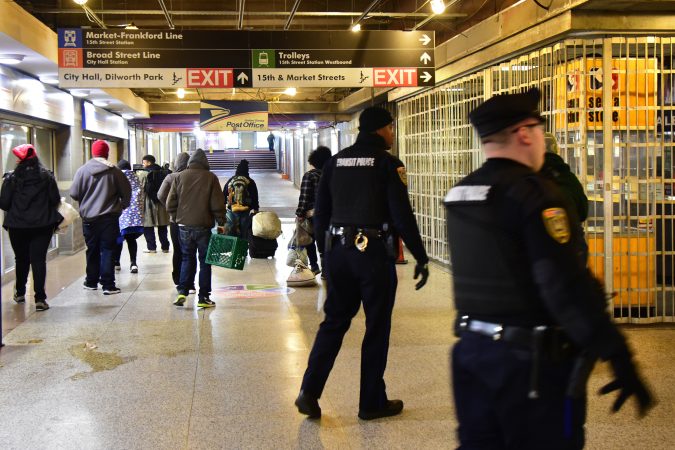
    A man was shot in the stomach while riding the L train in Center City on Thursday afternoon.

    SEPTA Transit Police were investigating the shooting, which occurred around 1:30 p.m. on a westbound L train, also known as the Market-Frankford Line, at 15th Street Station located under City Hall and Dilworth Plaza.

    Police transported the injured man, who was not identified, to a nearby hospital, where he was in stable condition, according to SEPTA. A search was underway for a suspect, whom police did not identify.

    L train and trolley service resumed after having been stopped for around 30 minutes, a SEPTA spokesperson said.

  • Ukrainian drones set a Moscow refinery ablaze in a major attack on the Russian capital

    Ukraine struck a major Moscow oil refinery Thursday for a second time in a week, sending huge plumes of black smoke over the capital and disrupting hundreds of flights at its airports in one of its biggest drone attacks since Russia’s full-scale invasion over four years ago, officials said.

    Ukraine has repeatedly targeted Russian oil facilities, aiming to cut Moscow’s revenue for the war and make Russians feel the consequences of the invasion. Some areas have reported fuel shortages.

    The attack by dozens of drones came hours after Ukrainian President Volodymyr Zelensky said he had held “an important coordination call” with the presidents of the United States and France and had won key pledges of further support from this week’s G7 summit.

    “If Ukraine is going to burn, your Moscow will burn too,” Zelensky said, adding that the attack was part of Kyiv’s effort to bring Russian President Vladimir Putin to the negotiating table. ”It is time to end the aggression, time to end this war.”

    Ukrainian attack embarrasses Putin again

    The Moscow attack was the latest embarrassment for Putin. Ukrainian drones attacked his hometown of St. Petersburg earlier this month as he welcomed foreign VIPs to his showcase economic forum in the city.

    Putin on Thursday was in Kazan, some 430 miles east of Moscow, hosting leaders of the Association of Southeast Asian Nations as Russia seeks to bolster business and other ties with the regional bloc.

    Russia’s state-controlled TV channels only briefly mentioned the attack on Moscow. Pro-Kremlin newspapers reported it, with some praising the performance of air defenses while noting that the strike highlighted the need to further strengthen the defensive shield around the capital.

    Vyacheslav Volodin, speaker of the lower house of Russia’s parliament, warned that Moscow would respond by ramping up its strikes.

    “Their action will lead to our counteraction and launching harsher blows, with more powerful weapons,” Volodin said in televised remarks.

    Some Russian hawks urged the Kremlin to respond with nuclear weapons. Nationalist Konstantin Malofeyev criticized the military for “fighting at half-strength in a gentlemanlike way.”

    “War means victory at any cost,” Malofeyev wrote on his Telegram channel, suggesting the use of “the nuclear weapons that our ancestors created and stockpiled while mobilizing the entire country’s strength precisely for this purpose — to win.”

    Fires rage at Moscow refinery

    Thick black smoke and occasional flames spewed from the Moscow Oil Refinery amid its red-and-white smokestacks on the southeastern edge of the city, about 9 miles from the Kremlin. Sooty rain fell on cars, according to local video.

    “One of the most popular questions asked by Muscovites this morning is ‘What is going on?’” Ukrainian Foreign Minister Andrii Sybiha said in a post on X. ”I can answer. Your country started a war of aggression against ours. For years, it has been killing our people. Now that you know what’s going on, ask Putin when he is planning to end it.”

    The refinery is one of Russia’s biggest, according to its website, producing more than a third of the Moscow region’s fuel. It was last attacked by Ukraine on Tuesday, but officials said that fire was swiftly put out.

    Thursday’s fire at the refinery was “largely contained,” Moscow Mayor Sergei Sobyanin said hours afterward, adding that remaining hot spots were being extinguished.

    As Ukraine pressed its strikes on Russia’s energy infrastructure, fuel supplies appeared to be under strain. Gas station chains in multiple regions have introduced restrictions on what drivers could buy. Russian independent news outlet Agentstvo reported that one out of every four gas stations has introduced some kind of restrictions.

    Authorities in the capital said in a statement hours after the attack that “supplies of oil products to Moscow and the work of all gas stations in the city continue as normal.”

    The attack also temporarily halted flights from four Moscow airports, transport and aviation authorities said. The Russian business daily Kommersant counted more than 500 delayed or canceled flights at the airports, based on their online flight information.

    In the greater Moscow region, a drone hit a residential building in the town of Zhukovsky, according to Gov. Andrei Vorobyov. Buildings elsewhere were damaged by drone debris, injuring 17 people, including two children, he added.

    Ukraine seeks more help from NATO, EU

    “Russia is on the back foot: militarily, economically and politically,” ‪EU foreign policy chief Kaja Kallas‬ said on X after meeting Thursday with Ukrainian Defense Minister Mykhailo Fedorov. “Now is the time to provide Ukraine with even greater support and to exert even more pressure on Russia to end the war.”

    Zelensky held talks Thursday in Brussels with NATO and European Union leaders, and the German and Ukrainian defense ministers signed an agreement to jointly develop an air defense system to counter ballistic missiles. Zelensky described it as the start of an “anti-ballistic missile coalition” and invited others to join.

    Russia has relentlessly struck Ukraine with those types of missiles, which air defenses struggle to counter.

    Russia says it downed over 500 Ukrainian drones

    The Russian Defense Ministry said its air defenses overnight shot down 555 Ukrainian drones over multiple regions, with almost 200 intercepted as they approached Moscow. That was roughly double the number of drones that Russia launched at Ukraine overnight, according to the Ukrainian air force.

    “If Putin does not want to end this war and wants to continue it, we will not sit quietly — we will respond,” Zelensky said in a voice message to a group chat with journalists.

    He has accepted an unconditional ceasefire demanded by U.S. President Donald Trump, but Putin has refused, and U.S.-led peace efforts have fizzled.

    Ukraine disrupts Russian supply lines

    Along with pledges of more diplomatic and military help at the G7 summit, Ukraine recently has gained momentum on the battlefield against Russia’s bigger army, thanks to its high-tech drones, Western officials and analysts say. Longer-range drones are choking Russian supply lines in occupied regions of Ukraine, in addition to disrupting oil production.

    French President Emmanuel Macron said the G7 summit was “very important for Ukraine” because its supporters — crucially including the U.S. — vowed to help it, although he provided no details. The U.S. under Trump has cut back assistance to Ukraine, leaving the Europeans as the biggest suppliers of military and financial aid. Trump and Zelensky have had a sometimes strained relationship.

    “America is with us on Ukraine, that is very important,” Macron said as he and Trump left the Palace of Versailles near Paris.

    In other developments Thursday, Russia struck the city of Sumy in northeastern Ukraine with two glide bombs that killed a 64-year-old man who was fishing in a river, said Oleh Hryhorov, head of the regional military administration. A Russian strike on the central city of Dnipro killed one man and wounded nine, said Oleksandr Hanzha, head of the Dnipropetrovsk regional military administration.

  • Janeese Lewis George wins the Democratic primary for mayor of Washington, DC

    WASHINGTON — Janeese Lewis George, who pledged to aggressively stand up to federal intervention into Washington, D.C.’s affairs, won Tuesday’s Democratic primary for mayor, setting up a potential showdown with the Trump administration over its moves to challenge the city’s limited autonomy.

    In an overwhelmingly Democratic city, Lewis George is likely to take the top spot in November’s general election, replacing moderate Muriel Bowser, who decided not to run again after three terms.

    Lewis George joins Robert White Jr., who won the Democratic primary for the district’s delegate to Congress, as the top local officials who likely will contend with the federal government’s intentions for the city. They each campaigned on a promise to take a harder line than their predecessors against the Trump administration’s moves on the district, including its deployment of the National Guard on an ongoing, open-ended mission meant to fight crime.

    “As mayor, I will work with anyone who makes D.C. safer,” Lewis George told a crowd of cheering supporters Tuesday night, “but I will also stand up to Trump.”

    Washington has limited autonomy and federal leaders retain significant control over local affairs, including approval of the budget and laws passed by the D.C. Council.

    President Donald Trump further encroached on that autonomy last year when he briefly federalized the city’s police force and deployed an ongoing law enforcement surge that included the National Guard. Trump’s efforts to downsize the federal government also roiled the capital region, costing thousands of people their jobs. He has also been reshaping the city by renovating storied landmarks and putting his name or image on buildings.

    Lewis George, a self-described democratic socialist and a member of the D.C. Council, has already come under fire from Trump, who last week threatened to place the city under federal control if she won.

    “Maybe we’d take back Washington, run it on the federal basis,” he said.

    Her main opponent, former D.C. Council member Kenyan McDuffie, conceded the race Thursday and said he had contacted Lewis George to congratulate her.

    “While the final certification process will continue, it is clear that the voters have chosen a different path,” he said in a statement. He wished Lewis George luck in the general election and called on his supporters to continue working.

    “The campaign may be over, but the work of building a safer, more affordable, more prosperous city continues,” he said.

    Lewis George, 38 and a third generation Washingtonian, has vowed to overrule an executive order by the city’s police chief permitting local law enforcement to cooperate with Immigration and Customs Enforcement agents. Lewis George argued the order “hurt the trust of our community.”

    Lewis George also vowed to use any levers available to her through the city’s home rule compact to resist what she called authoritarian infringements on the district’s local governance.

    “We have legal tools we can use to fight back,” she told the Associated Press in an interview before the vote. “And we know that when we have gone to court, we’ve won.”

    Bowser found herself walking a fine line between staying in Trump’s good graces and responding to the concerns of constituents, many of whom said she didn’t push back hard enough on Trump’s actions. Eleanor Holmes Norton, the 18-term, 89-year-old delegate to Congress, meanwhile faced mounting concern from critics who said she wasn’t forcefully pushing back on the Trump administration’s moves against the city.

    Lewis George has also made affordability a top priority, and her platform has included issues like rent support as well as ending below-minimum-wage pay for tipped employees and controlling high utility rates.

    Tuesday’s primary marked the first time in a generation that D.C. residents voted for a new mayor and delegate in the same election. It was also the city’s first election using ranked choice voting.

  • Reflecting Pool algae bloom is one of biggest recorded in years after $14M renovation

    Days after the completion this month of a $14 million renovation, the shallow water in the Lincoln Memorial’s Reflecting Pool had more algae in it than at any recorded point in the month of June for at least five years, according to a specialized analysis of satellite data.

    President Donald Trump vowed in April to clean up what he called the “filthy” and “disgusting” water in the Reflecting Pool. He promised to resurface the basin to eliminate persistent leaking and to paint it “American flag blue.” Once the pool started to be refilled, on June 4, he praised its “clean, beautiful water.”

    But the algae blooms that have long plagued the pool came roaring back, spawning more than a few conspiracy theories and much debate about the renovation. Some social media users said they suspected “bureaucrats” had seeded the algae bloom in an act of sabotage, while others claimed photos showing the reappearance of the algae were taken during the Biden years. Trump administration officials said the algae was caused by residual material in supply lines that had been dormant for weeks.

    Regardless, there was a lot of it.

    At the Washington Post’s request, Alana Menendez, a postdoctoral researcher at the University of Virginia’s Department of Environmental Sciences, analyzed light-reflectance data from a European satellite called Sentinel-2. The satellite captures clear images of the Reflecting Pool several times a month, and the data it produces can be used to estimate the presence of chlorophyll-a, a pigment found in algae.

    A higher value of that metric, known as the normalized difference chlorophyll index (NDCI), points to more algae in the water, Menendez said.

    Menendez’s analysis detected more algae in the reflecting pool in an image taken Saturday — in the week after it reopened — than in any June images going back to 2021. The algae level was among the highest measured in any month in the past two years, according to the analysis.

    Hot and sunny weather — which the Washington area has been experiencing — creates conditions in which the plantlike aquatic organisms thrive. The D.C. area experienced a heat wave just as the pool was being refilled earlier this month.

    Menendez found there was a strong indication of an algal bloom in the Reflecting Pool on March 10, when it was unseasonably hot. Just before construction began, on April 1, the bloom had reduced.

    “We would expect June to have more algae naturally than February, March, or April because there is more light availability and higher temperatures,” Menendez said.

    The Interior Department, which oversees the Park Service and contracted for the work, said in a statement that it is treating the pool with hydrogen peroxide and using “high-tech nanobubble ozone technology” to effectively cut off the algae’s food supply.

    White House spokesperson Taylor Rogers said the nanobubble equipment would “keep the Reflecting Pool crystal clear.”

    “Thanks to President Trump, new lining and industrial grade materials will permanently seal the Reflecting Pool, which previously leaked 16 million gallons per year and wasted countless taxpayer dollars,” she said.

    Trump has not publicly commented on the algae problem. On Monday, he posted that he would host a Trump rally on July 4 “with the backdrop of the Lincoln Memorial and surrounding the beautifully new Reflecting Pool.”

    Algae has been an on-and-off problem for the 6.75 million-gallon Reflecting Pool since it was built in the 1920s. It quickly reappeared after a more than $30 million renovation that was completed in 2012, though that project also changed the source of the pool’s water: Previously, it had been fed from the city’s drinking water, but after the renovation the water was drawn from the Tidal Basin, saving the city 32 million gallons of water a year.

    In its statement, the Interior Department said the Obama-era renovation “resulted in massive algae clumps taking over the pool’s surface following years of construction that cost taxpayers millions upon millions only to be broken and disgusting days later.”

    Last month, a local advocacy organization sued to stop Trump’s changes to the Reflecting Pool, alleging that the Interior Department failed to undergo required federal reviews for the project. The Trump administration in response called the work “routine maintenance” that will have “trivial aesthetic and environmental impact” and was not subject to certain environmental reviews.

    Contractors finished the project before a federal judge could rule in the case.

    As the pool was being filled earlier this month, Ed Stierli, an official with a different advocacy group, National Parks Conservation Association, wondered if the dark paint color was increasing the water temperature, exacerbating the algae problem.

    “These are all questions that would normally be answered during that review process that just was not done in this case,” he told the Post.

    By midday on Tuesday, the area was filling up with summer tourists and some locals who came to see how green the pool had become.

    “It’s the biggest tourist attraction now,” called out a biker as he wheeled past.

  • Budget office redirects $352M in Secret Service funds to White House security

    Budget office redirects $352M in Secret Service funds to White House security

    The Trump administration’s budget office has redirected $352 million that was intended in part for Secret Service training and recruitment to what it described as security measures at the White House, a government database shows.

    The White House and the Office of Management and Budget did not specify the purpose of the unusually large shift in response to questions on Wednesday. But a person familiar with the Secret Service budget, speaking on the condition of anonymity because they were not authorized to comment publicly, told the Washington Post the funding was to help pay for a new White House East Wing that includes a large ballroom.

    Asked about the shift and its purpose, a White House spokesperson issued a statement stressing the necessity of security enhancements for the East Wing project. “The East Wing Modernization Project is inextricably tied to the security of the President, the White House grounds and the certain security infrastructure assets,” spokesperson Davis R. Ingle wrote in a statement.

    The Secret Service did not respond to emailed questions.

    The transfer of Secret Service funds — equal to more than 10% of the agency’s annual budget in recent years — comes amid revelations that President Donald Trump’s controversial ballroom project will rely more significantly on taxpayer money than the administration has publicly acknowledged.

    Trump has claimed repeatedly that the project will cost $400 million and has generally said it will be funded entirely by private donors. But this week, the Post reported that the contractor overseeing the work told the White House in March that the expected cost was $600 million, with more than half coming from taxpayers.

    The March budget estimates obtained by the Post show that $155 million for the project was expected to come from the Secret Service. Most of the rest of the public funding was projected to come from the White House Military Office.

    The administration’s budget office on Friday disclosed in a public database that it was redirecting $340.8 million and $10.8 million in Secret Service money for “White House Security Measures.”

    The redirected money, included in the Republican spending package dubbed the One Big Beautiful Bill Act that passed last July, was intended to bolster the Secret Service after two attempts on the president’s life — the first at a rally in Butler, Pa., and the second at his West Palm Beach, Fla., golf course.

    The law provided the Secret Service with $1.17 billion and specified that the money was meant to provide for “personnel, training facilities, programming, and technology” as well as “performance, retention, and signing bonuses” for agency personnel.

    Sen. Chuck Grassley (R., Iowa), chairman of the Senate Judiciary Committee, issued a news release at the time celebrating the law’s passage, saying it “provides essential resources for U.S. Secret Service recruitment and training efforts in the wake of two assassination attempts against President Trump.”

    Neither the bill nor Grassley’s office made any mention of the White House’s East Wing. Grassley’s office did not immediately respond on Wednesday to questions about whether he supports use of the funds for the East Wing.

    Key senators from both parties questioned the redirecting of the funds, which was first reported by Roll Call.

    Sen. Susan Collins (R., Maine), chairperson of the appropriations committee, directed staff to look into the move, according to a Republican staffer familiar with the matter.

    On Tuesday, after the Post’s report, Collins said she had taken Trump at his word. “I’ve said repeatedly that the President has promised only private donations would be used for the ballroom, and I believe he should keep that promise,” she said in an interview.

    Sen. Jeff Merkley of Oregon, a member of the appropriations committee and the top Democrat on the Senate Budget Committee, said the transfer showed Trump was more interested in his “vanity project” than safety and security.

    “This funding was intended to pay Secret Service agents and ensure they have the technology and resources they need to keep individuals under their protection safe,” he said in a statement.

    The administration has been pressing Congress to allocate taxpayer funds for the project since an armed man ran through a security checkpoint at the White House Correspondents’ Association dinner in April. Department of Homeland Security Secretary Markwayne Mullin and Secret Service Director Sean Curran wrote to Republican congressional leaders after the incident to back a proposed $1 billion for the Secret Service in part for “security upgrades at the White House to minimize threats, including the security components to the East Wing Modernization Project.” In a private meeting, Curran pitched GOP senators on spending $220 million of that money on “hardening” the ballroom.

    Several Republican lawmakers in both chambers raised concerns about providing funding for the ballroom project in the lead-up to the midterm elections, especially as Americans express frustration with the cost of living. The funding was stripped out of a larger spending bill because rules prevented it from being included.

    Ingle, the White House spokesperson, said in his statement that an alleged plot to attack the White House during a UFC event last weekend “proves exactly why the East Wing Modernization Project is severely needed for large scale events, which include drone proof structures and drone ports among other critical security enhancements.”

  • Ecuadorian World Cup fans try to break the ‘Rocky curse’ after a fan travels thousands of miles with a handmade jersey for the Italian Stallion

    Ecuadorian World Cup fans try to break the ‘Rocky curse’ after a fan travels thousands of miles with a handmade jersey for the Italian Stallion

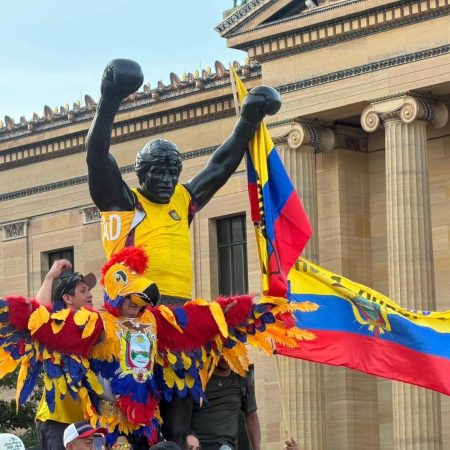
    Thousands of Ecuadorian fans came face-to-face with the Rocky statue curse over the weekend. As the Ecuadorian team fell to the Ivory Coast, 1-0, many blamed fans who draped the iconic statue of the Italian Stallion in their signature yellow jersey.

    Their actions even triggered the Pennsylvania Tourism Office to officially alert teams worldwide:

    “Philadelphia can’t wait to host you! (but Rocky does not need your kit),” the statement read.

    The warning came too late for Ecuadorian native Gigio Benavides, who had spent a week hand-making a version of his team’s jersey with loved ones just to place it on Rocky on June 13, the day before the Ecuadorian loss.

    But the 38-year-old didn’t know about the other teams that have suffered the same fate after gussying up Rocky in their own team’s unis.

    “Rocky is an example of discipline and consistency. He was always facing people who had so much more, but he never gave up. We needed that spirit,” Benavides said in Spanish.

    Ecuadorian soccer fans attend a flag-waving event at the Philadelphia Museum of Art steps along the Benjamin Franklin Parkway, ahead of their first round World Cup match against the Ivory Coast last weekend.Yong Kim / Staff Photographer

    A week before the World Cup began, he measured the statue through online pictures to ensure the shirt would fit.

    Five friends, who make school uniforms for a living, helped him bring the yellow shirt to life using a 2XL shirt template.

    They left the sides open to ensure the statue’s lifted arms would fit, and his aunt sewed clips on the sides in case more room was needed.

    “That was good because Rocky was really, really muscular,” Benavides said.

    To top it off, they added Rocky’s name on the back with the inscription: “Dream, transcend, and make history.”

    Benavides traveled 26 hours and 3,000 miles from his small town in Loja, Ecuador, to Philadelphia’s 30th Street Station. But, not before telling his friends that if they saw the shirt, to know that he made it.

    He arrived before sunset on Saturday, hours before Ecuadorians flooded the Philadelphia Museum of Art’s steps.

    “My only concerns at the time were not offending the people of Philadelphia or getting in legal trouble for putting the shirt on him,” Benavides said.

    Gigio Benavides puts a custom Ecuador shirt on Rocky during last Saturday’s gathering at the Philadelphia Museum of Art steps.Gigio Benavides

    When Benavides made it to the steps, the statue already had flags on, so he figured his shirt would only add to Rocky’s glory.

    It wasn’t until hours later, when hate messages began pouring in, that he realized his mistake.

    “Now everyone is saying I am bad luck,” Benavides said.

    Amid the death threats and cruel messages, falling asleep proved a challenge. But he chose to look at the bright side: “Maybe Ecuador could break Rocky’s curse and set the city free,” he recalled thinking.

    By Sunday morning, that hopefulness had turned into a need for survival. Yet, the full weight of the curse didn’t fall on his shoulders until he arrived inside the stadium.

    Lincoln Financial Field, renamed Philadelphia Stadium for the World Cup, was an ocean of yellow, and many Ecuadorian influencers had already put a target on him by posting his name online.

    By grace, his seat happened to be in a section where most of the spectators were not Ecuadorian. He sat between two men, one from Boston, the other from Brazil.

    As Ivory Coast faced Ecuador, Benavides felt himself sweating, seeing the score fixed at zero. The continuous tie by halftime made him feel a dose of relief.

    “I thought, if the curse is true, but we tied 0-0, then maybe we avoid it,” he said. “Either way, we must break it, because my life is on the line.”

    One minute before the 90th-minute mark, Ivory Coast scored, leaving Benavides sobbing on his seat.

    Ecuador forward Enner Valencia (center) and Ivory Coast defender Emmanuel Agbadou (right) collide when the head the ball in the first half of the World Cup Group E soccer match in Philadelphia on Sunday.David Maialetti / Staff Photographer

    The hate worried Benavides, but nothing hurt more than feeling his good intentions had cursed his beloved team.

    “I was crying so much that the guys from Brazil and Boston hugged me,” Benavides said. “They keep saying, ‘It’s OK man, it’s OK.’”

    Feeling like a truck hit him, Benavides stayed seated as fans left the stadium wondering what would happen next. But the storm and the drops falling on his face didn’t allow for too much time for reflection.

    By Monday morning, videos of Ecuadorians offering beer and Encebollado — a traditional Ecuadorian fish soup said to cure hangovers — to Rocky for him to lift the curse went viral.

    Other Ecuadorian fans tried turning the curse to their favor and putting Germany’s shirt on Rocky, ahead of their match in New York on June 25. It’s a move the Pennsylvania Tourism Office said on their Instagram post that won’t work, because “the statue will know.”

    Benavides himself did not attend, returning to plead with Rocky, but he did walk around the city before traveling to New Jersey, witnessing some of the fans himself.

    “Seeing everyone so caught up in the game made me realize how much soccer helps us free ourselves from the heavy thing happening,” Benavides said. “So it’s OK if I have to take the fall, but let’s not forget to still have hope, and send good vibes to our team.”

    Ecuadorian fans wait for their team to play Ivory Coast during the World Cup Group E soccer match in Philadelphia on Sunday.David Maialetti / Staff Photographer
  • The ‘Minneapolis 15’ ICE-protester indictments are meant to shut you up

    In the tumultuous five-plus months since masked federal immigration agents descended on her hometown, the Rev. Jen Crow of the First Universalist Church of Minneapolis has already been arrested at an airport sit-in, organized a vigil after the murder of her neighbor Alex Pretti, and held trainings at her church for volunteer observers.

    So when Crow learned on Tuesday that 15 local activists had been indicted by federal prosecutors on felony conspiracy charges for monitoring and allegedly at times impeding U.S. Immigration and Customs Enforcement and Border Patrol officers, she did the one thing the Donald Trump regime does not want anyone to do.

    She went down to the St. Paul federal courthouse to protest, again. Crow told me by phone Wednesday that everyday Americans who oppose immigration raids can’t surrender to the fear that the Justice Department wants to create by threatening long prison terms.

    “When you see the federal government turning on its own people, the thing is we have to act anyway and just trust in the purpose and trust in what we’re doing and our care for each other, and just really lean into that,” Crow said. “To let the fear wash through, but not get stuck in it.”

    Crow and as many as 200 other Minnesotans chanting “Free them all!” outside the 15 activists’ arraignment on Tuesday were rewarded for their ongoing courage with a blast of chemical irritants from U.S. Marshals, which, according to videos, started with little or no provocation by the outside protesters.

    “Witnesses tell me that what was going on at the time is that they were holding the doors open, so that you could hear the chants inside the building, when suddenly somebody saw folks putting on gas masks inside the courthouse,” local journalist Pilar Pedraza of KSTP-TV reported. “And all of a sudden they came out and started spraying a chemical irritant at them.” Videos showed other protesters hit with pepper spray, with one violently thrown to the ground.

    The indictment of the Minneapolis 15 — a so-called “conspiracy” that included innocuous acts of dissent like discussing ICE activities on the Signal app or publishing an article on a pro-anarchist website — and the chemical assault against citizens exercising their free-speech rights are all the same instinct from a violently repressive government.

    They want you to shut up. They want you to stay in your home. And they want to make you very afraid — five months before an election that they are practically screaming they plan to do everything in their dictatorial powers to steal.

    The good news is that the government’s intimidation campaign is being met with renewed resistance in the Twin Cities — the place where regular folks with whistles and cell phones eventually drove away most of the immigration raiders, albeit at the horrible cost of more than 4,000 immigrant arrests and two citizens gunned down in the street.

    “The only thing I did was care about this, my community and my neighbors,” Natasha Rakotz — one of the Minneapolis 15, a caretaker whom prosecutors accused of sideswiping an immigration agent’s vehicle — told reporters after her arraignment.

    The charges against the Minneapolis 15 — tied to a protest group known as Direct Action Minnesota, or DAMN — is arguably the most aggressive in a flurry of actions by Trump’s Justice Department aimed at convincing the public that the ideology of aggressively fighting fascism, known as “antifa,” is some kind of highly organized terrorist cell along the lines of ISIS or al-Qaeda.

    It’s one more over-the-top lie from a regime that swims in a stinky green algae pool of falsehoods.

    Federal prosecutors have been racing to crayon in the blanks since Trump’s September 2025 executive order that declared “antifa” — again, not an actual group — as a “domestic terrorist organization.” The Minnesota indictments are the most dramatic of a myriad of federal cases from New Jersey to Oregon.

    These prosecutions have run the gamut. In Texas, an actual criminal act that warranted charges — when a protester at an ICE detention site fired a gun — became the impetus for a sweeping dragnet that led to convictions against nine activists. In Spokane, Wash., prosecutors recently gained convictions against three protesters who tried to stop ICE agents from transporting two Venezuelan immigrants, even after an acting U.S. attorney resigned because he believed the charges were unwarranted.

    But other Trump efforts to criminalize dissent have collapsed, almost farcically so — from a jury’s speedy acquittal of the Washington, D.C. man who threw a salami sandwich at an agent, to the implosion of a case against Chicago ICE-detention-center protesters, including congressional candidate Kat Abughazaleh, known as “the Broadview Six.” The former defendants and some members of Congress are calling for an investigation of alleged grand jury misconduct by Chicago U.S. Attorney Andrew Boutros and his underlings to obtain their indictment.

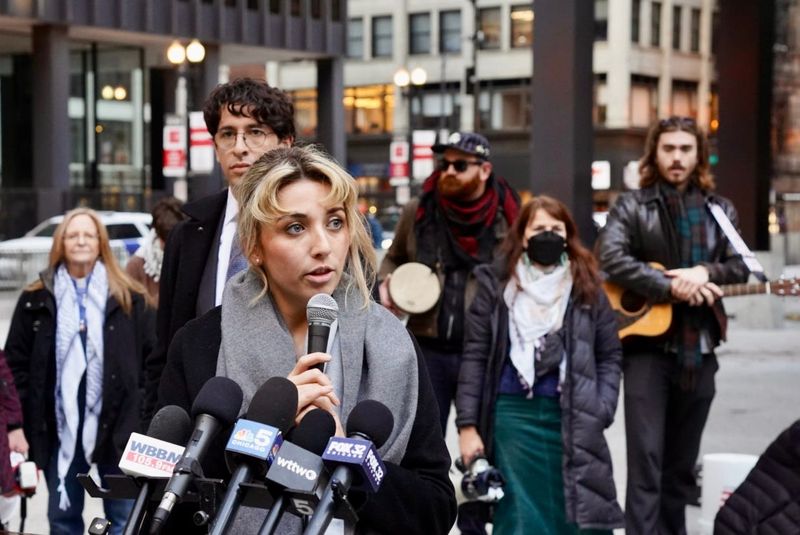
    Democratic Congressional candidate Kat Abughazaleh addresses supporters in downtown Chicago outside the federal courthouse where she pleaded not guilty to charges filed in connection with a protest against the Trump administration’s mass deportation campaign.Michael Loria, USA TODAY

    In Minnesota, U.S. Attorney Daniel Rosen strived on Tuesday to defend the new prosecution as skeptical reporters asked him why felony charges were lodged when not a single agent was hurt, why the urgency of this case when there’s been no prosecution of the agents who shot and killed Pretti or the unarmed motorist Renee Good, and whether the case amounted to what writer George Orwell famously called “thoughtcrime.”

    Rosen insisted that “whether or not they actually, at the end of the day, caused bodily harm is not the measure of whether or not they committed a serious federal crime.”

    Still, the federal case against the Minneapolis 15 contained just a couple of instances of alleged property violence ― the sideswipe and the kicking out of a vehicle’s tail light. Mostly, the indictment describes a lot of activities —like Signal chats, monitoring the movement of immigration agents on public streets, discussing the use of protective gear like shields, or an anarchist’s speaking tour about the protests — that would seem to be constitutionally protected free speech.

    With the enactment of the First Amendment in 1791, America’s founders vowed to protect “the right of the people peaceably to assemble, and to petition the Government for a redress of grievances.” Just days before the nation’s 250th birthday, an authoritarian regime in Washington wants to make this a crime for which you could spend a large chunk of your life in prison.

    “It does look like the government is throwing the book, maybe even over-charging some of the protesters,” Roy Gutterman, director of the Tully Center for Free Speech at Syracuse University, told me yesterday, noting that any act of actual violence wouldn’t be protected by the First Amendment. But he added that “even if some of the charges end up being thrown out, the breadth of the government’s arguments and the weight of the charges certainly send a message to protestors.”

    Exactly. Although the indictments are a living hell for the Minneapolis 15, the real target here is regular American folks like you — citizens who aren’t normally inclined to protest the government, but are starting to wonder what to do as the regime and its 80-year-old and increasingly out-of-touch leader spiral out of control.

    Before you even dare venture out to a church meeting where they pass out whistles and teach you how to warn your neighbors that masked ICE agents are snatching people off the streets, they want to plant seeds of doubt. Am I risking my freedom, and my family, just for posting something in a Signal or WhatsApp chat?

    They want you to be terrified, and on some level you should be afraid, not just of what the government is doing but why they are doing this now. Trump was already nearing record-low approval numbers before this week’s humiliating surrender deal aimed at ending the president’s foolhardy war of choice with Iran. The near inevitability of a Democratic House in 2027 all but guarantees Trump’s next impeachment and two years of political hell to end his 47th presidency.

    Thus, Trump’s desperate determination to interfere in the November election is becoming increasingly clear, with everything from unwarranted meddling by the U.S. Post Office to his insistence that grossly unqualified loyalist Bill Pulte serve as his director of national intelligence, in order to invent foreign election plots.

    Criminalizing dissent isn’t a sideshow. It’s central to the plan. They want to stop you from taking to the streets in massive numbers if and when they take illegal actions to keep the Republican Party in power. They are using these bogus indictments to lay the foundation for the solution that Vice President JD Vance proposed for Minneapolis back in January — to invoke the Insurrection Act and send in tanks.

    The case against the Minneapolis 15 reminds me of the remarkable novel Every Man Dies Alone by the German novelist Hans Fallada, based on the true World War II era heroism of Otto and Elise Hampel, who placed postcards around Berlin criticizing Adolf Hitler and the Nazis for two years before they were arrested and executed by guillotine. Are we now becoming such a totalitarian society?

    Hopefully not, if American citizens like the Rev. Jen Crow continue to speak out.

    “We’re not going anywhere,” she said after the feds’ courthouse chemical attack. “Those of us who care about each other and care about the rule of law and care about following the rules we’ve set out as a society that protect basic human rights, we’re not going anywhere.”

  • Supreme Court sides with a Texas man who says it’s not a crime for marijuana users to have guns

    WASHINGTON — The Supreme Court ruled Thursday against a broad federal ban on gun ownership by marijuana users, the latest in a line of firearm cases from a court that has expanded gun rights.

    The justices decided unanimously in favor of Ali Danial Hemani, a Texas man who argued that a law barring guns from anyone who regularly uses illegal drugs violates the Second Amendment.

    Justice Neil Gorsuch wrote that his opinion narrowly limits the government’s power to take guns away from drug users who are not considered dangerous. Hemani, who was not charged with any other crimes or accused of using the weapon under the influence, is thankful he “finally has closure,” lawyer Zachary Newland said.

    The decision is a loss for President Donald Trump’s Republican administration, which had defended the 1968 law despite arguing against other gun restrictions. Its core argument “fails under every measure,” Gorsuch wrote.

    The law was originally meant to keep guns away from dangerous people, but millions of people now use marijuana, Gorsuch wrote. It is broadly legal in about half the states and has gained widespread use for health purposes.

    “Whatever one thinks of these developments, the federal government has not just tolerated them; it helped fuel them,” Gorsuch wrote. “All of which leaves it awkwardly positioned to suggest that the millions of Americans who now regularly use marijuana are categorically and unusually dangerous.”

    The law was also used in a case against Hunter Biden, who was convicted in Wilmington, Del., of buying a gun while addicted to cocaine in 2018. He was later pardoned by his father, Democratic President Joe Biden.

    Someone addicted to an illegal drug could potentially still be prosecuted after Thursday’s decision.

    “We do not address efforts to ban addicts, or those presently intoxicated, from possessing a firearm,” Gorsuch wrote. Prosecutors could charge a marijuana user if they had evidence the person was dangerous, he said.

    Recreational use remains illegal on a federal level even after the Trump administration reclassified medical marijuana as a less-dangerous drug in April.

    The case made for some unusual political alliances.

    The American Civil Liberties Union and the National Rifle Association supported Hemani’s case, as did cannabis legalization groups such as NORML. On the other side were gun safety groups including Everytown that usually oppose the administration on Second Amendment issues.

    The ACLU applauded the ruling, saying that nearly half of Americans have reported using marijuana at some point in their lives.

    “The court has sent a strong message that the government cannot criminalize the conduct of large numbers of people by making categorical and unfounded assumptions about whether they are dangerous,” said Cecillia Wang, legal director at the ACLU.

    The Second Amendment Foundation called it a “major victory for gun owners.”

    The group Smart Approaches to Marijuana, which opposes legalization of the drug, condemned the court’s decision.

    “While the justices in this case appear to be most concerned with historical battles over Second Amendment rights, public health and safety are the collateral damage in this decision,” said CEO Kevin Sabet.

    Gun control groups were more muted, with Everytown saying that the decision still recognizes that “drugs and guns can make for a dangerous mix.”

    It is rare to see standalone criminal charges filed against people accused solely of owning guns and using drugs. The charge is more often filed against people also accused of other crimes.

    The opinion is the latest in a series of firearm cases to reach the Supreme Court since its landmark ruling expanding gun rights in 2022 led to a wave of challenges around the country.

    Since then, the high court has upheld a law aimed at protecting victims of domestic violence and strict regulations on ghost gun kits but has struck down a ban on bump stocks, an accessory that enables rapid fire. The justices are also considering a second firearm case this term over strict regulations on carrying guns in Hawaii.