Category: News

  • In the weeks before independence, the man from Monticello drafts a declaration

    In the weeks before independence, the man from Monticello drafts a declaration

    Philadelphia. June 1776.

    America stands on the brink. The ultimate question of independence hangs over Philadelphia.

    And Thomas Jefferson has a declaration to draft.

    His heart is in Virginia. His “country,” as he calls it. But here he is at Seventh and High Streets, 33 years old, living in two sweltering rooms, with his chance to make his mark on history.

    Unlike his fellow delegates, lodged in rooms along Philadelphia’s booming riverfront, Jefferson takes quarters along the city’s rural western edge, two blocks from the Pennsylvania State House, where the rebels conspire. The orchards and pastures bordering the downtown of British America’s largest and wealthiest city offer an escape from Philadelphia’s stifling summer heat and foul smells. Its stinking creeks, rotting trash, and unchoked illness. The verdant outpost, elsewise occupied by a bricklayer and his family, provides “the Squire,” as his friends back home call him, some small semblance of his mountaintop mansion, Monticello.
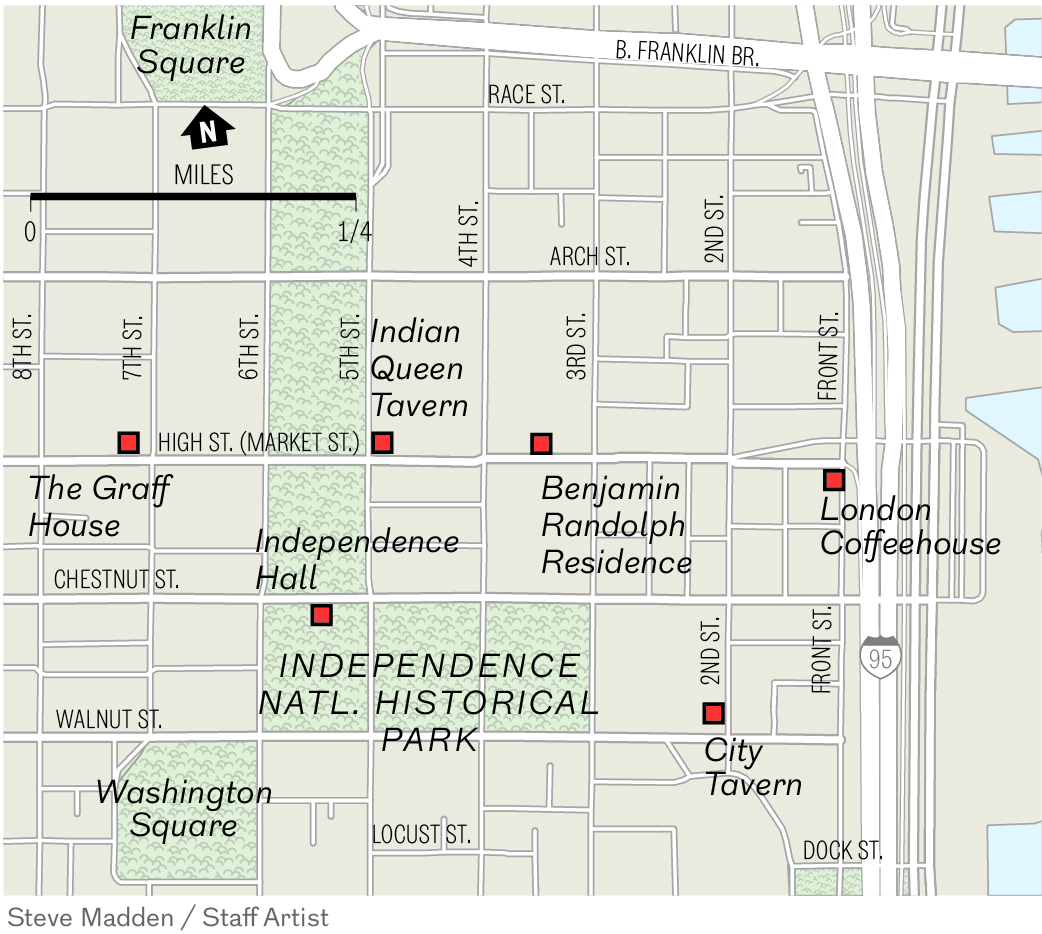
    Thomas Jefferson’s Philadelphia in 1776.Steve Madden

    He is living out of leather-bound trunks. Fresh air and sunlight stream through a window overlooking High Street — Philadelphia’s main thoroughfare, busy even on the outskirts. Hinterland farmers’ wagons clatter over cobbles, headed for the market. The sweet scent of fresh loaves drifts from a shopfront bakery. Jefferson’s thoroughbred — Caractacus, perhaps, his favored bay stallion, whose regal appellation derives from a first-century British chieftain — nickers in a nearby stable.

    Robert “Bob” Hemmings, Jefferson’s 14-year-old enslaved valet — and half brother of Jefferson’s future paramour, Sally — attends his every need in Philadelphia, sleeping in a garret off the writing parlor.
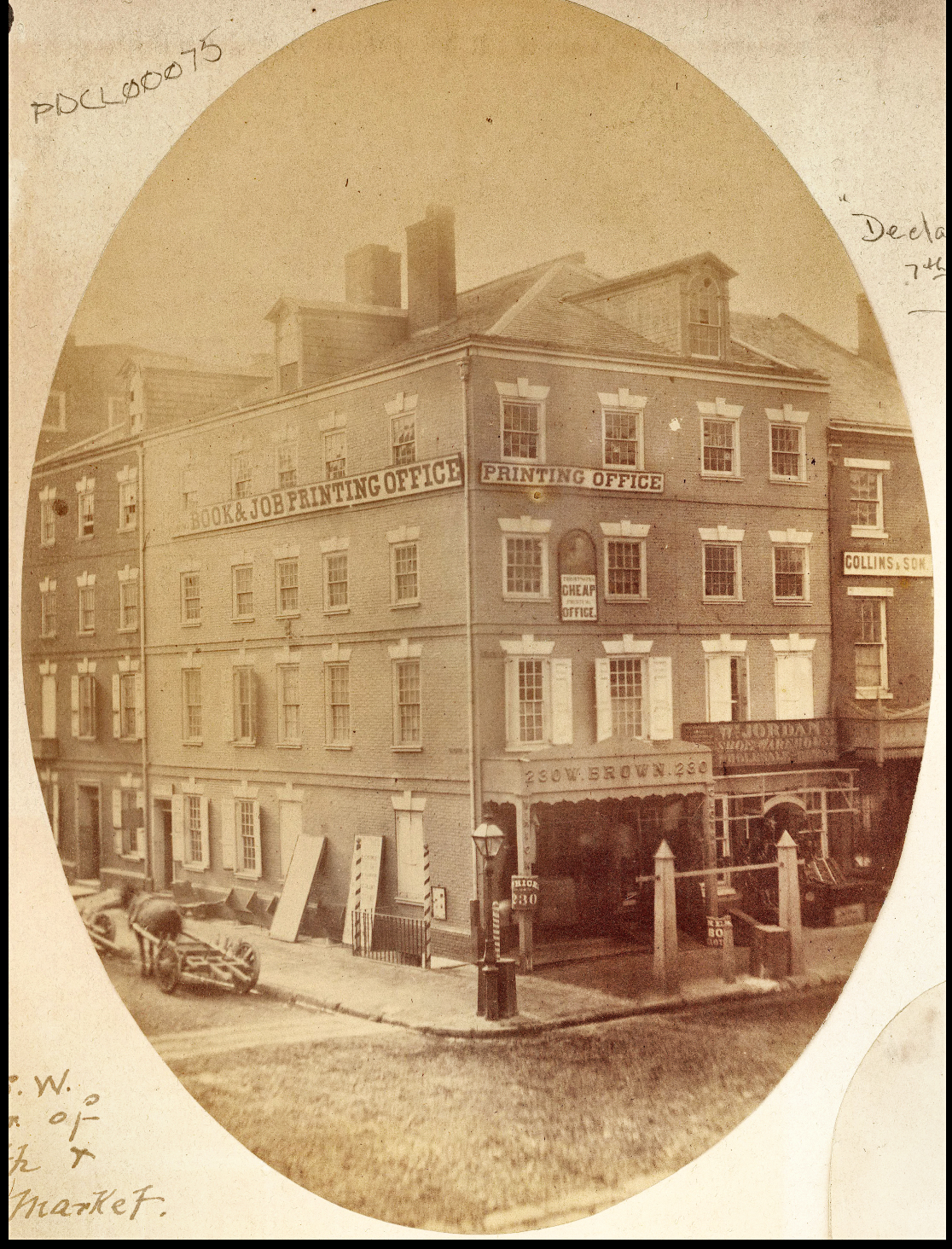
    The Declaration House, 7th and Market Streets, in 1856.Free Library of Philadelphia

    The rag paper resting on Jefferson’s mahogany travel desk — a small, portable lap device of his own design that the inveterate tinkerer had commissioned from a Chestnut Street cabinetmaker upon his arrival in Philadelphia a month earlier — remains blank. His quill is still. In the shadows, a grandfather clock ticks a stately rhythm.

    Tick … tock … tick … tock.

    The master of Monticello is working on a deadline.

    A momentum for independence

    Tarrying at the threshold of independence for months, the roar of rebellion echoes throughout Philadelphia by late spring.

    Just weeks earlier, more than four thousand Philly patriots braved driving rains to gather in the brick-walled yard of the State House. Celebrating the Second Continental Congress’ decree to form new governments apart from King George III — the masterstroke of John Adams, 40 — the drenched Philly masses thunder for independence.
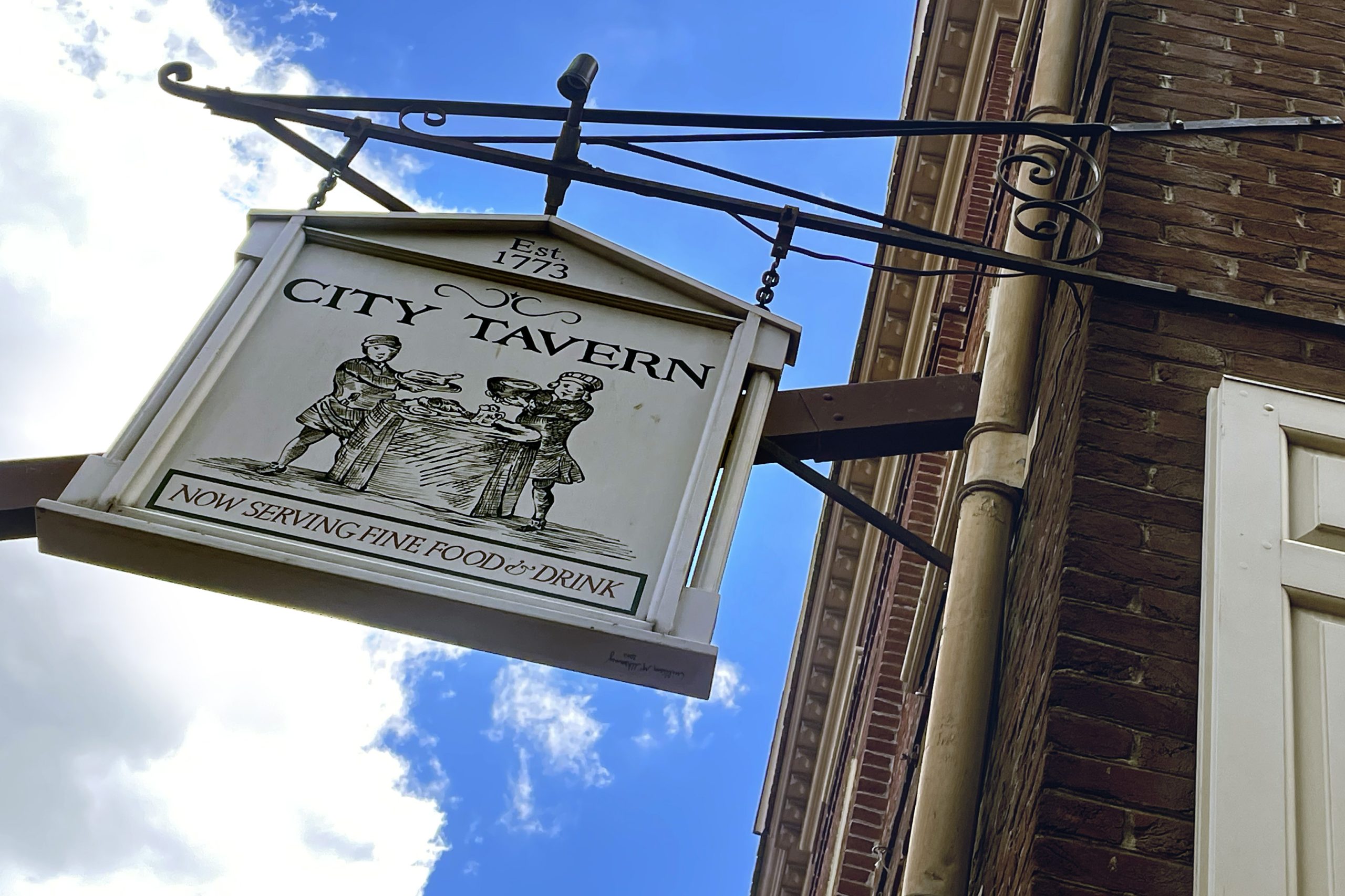
    City Tavern Monday, June 15, 2026. The original building was demolished in 1854 and reconstructed in 1975.Tom Gralish / Staff Photographer

    George Washington himself takes brief leave of his embattled army, digging in for an expected British assault on New York, to update the 56 congressional delegates in Philadelphia. The general’s tidings are lost to the centuries. But hear the lusty huzzahs that greet the stoic warrior at the representatives’ nightly repast at City Tavern, their unofficial headquarters.

    “George Washington, and victory to the American arms!” goes the toast.

    Inside the locked chamber, radicals like Adams and his older cousin, and backroom operator, Samuel, 53, lead the fight for liberty. Jefferson, whose resolve for popular government in America is unquestioned, but who detests public speaking, rarely rises.

    In early June, it is Jefferson’s fellow Virginian, the passionate patriot Henry Lee, who delivers a decisive stroke, boldly uttering words hitherto unsaid in Congress: “That these United Colonies are, and of right ought to be, free and independent.”

    The thunderclap is met by delay. Delegates from powerful colonies, including Pennsylvania’s own reluctant son of liberty, John Dickinson, are hesitant to cut the cord. Radicals work furiously to build unanimity.
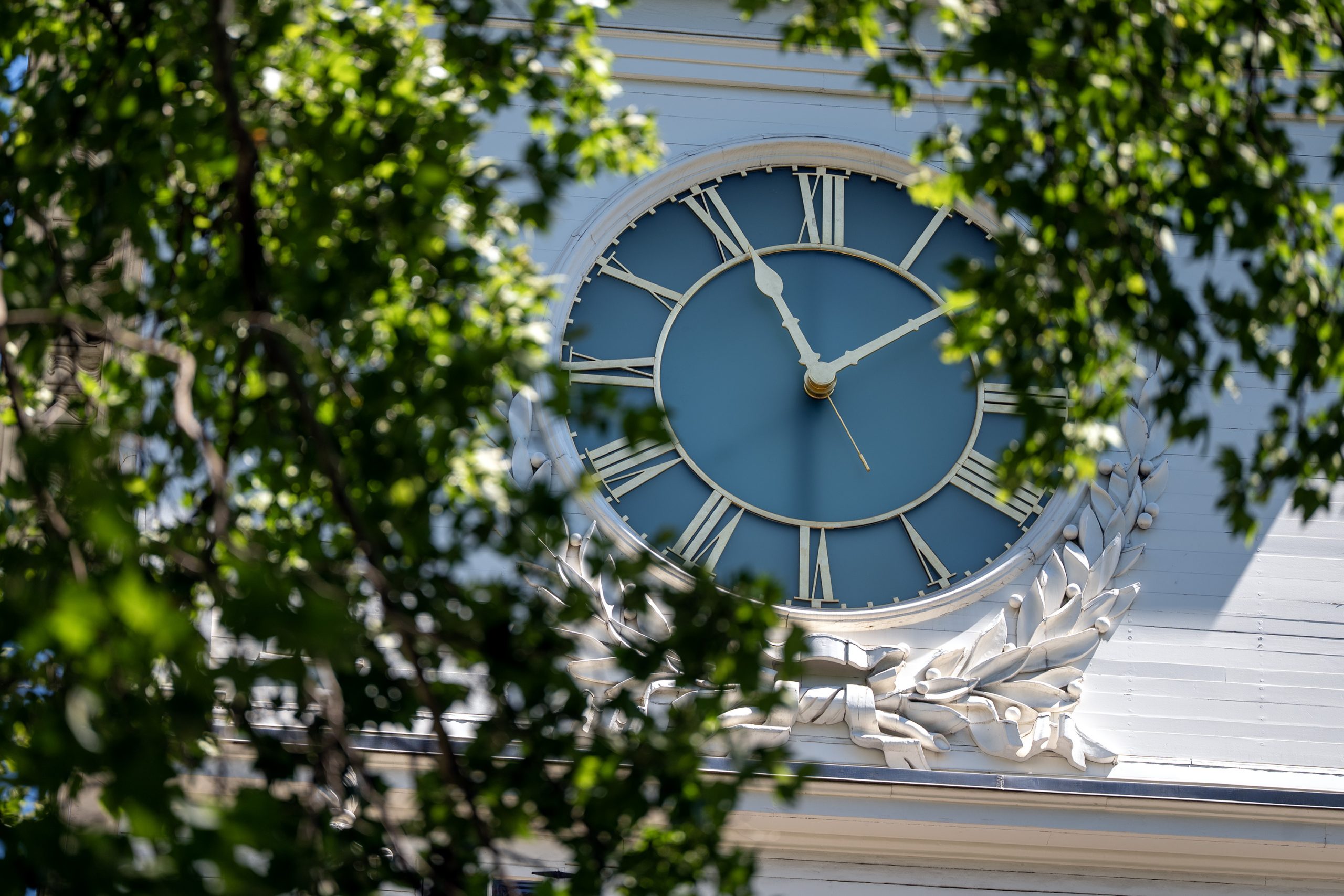
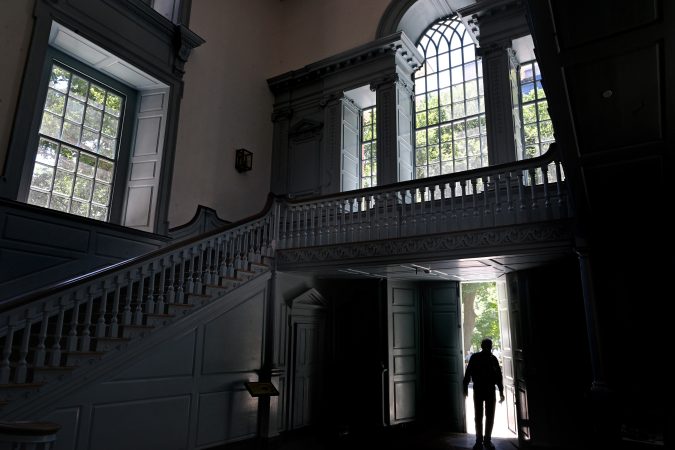
    Clock tower at Independence Hall (Pennsylvania State House) Monday, June 15, 2026.Tom Gralish / Staff Photographer

    Philly headlines — in the same papers publishing fugitive slave ads and notices for the sale of Black children far younger than Bob Hemmings — decry “our mortal enemy the King of Great Britain.”

    “The people wait for us to lead the way,” Jefferson will note.

    During the delegates’ fiery, closed-door debates, his long legs folded underneath his desk, Jefferson stays mum.

    But now the poet-philosopher and slaveholder, whose bright brilliance and dark contradictions mirror perfectly the promise and sins of the nation he seeks to author, must find all the words.

    A renaissance figure among the rebels

    It is John Adams, in characteristically gruff fashion, who appoints Jefferson first quill. The good gentleman from Virginia is but one of five men appointed to draft America’s creed — including Adams and Franklin, home sick with gout and other ailments — but Adams argues it is Jefferson, with his “peculiar felicity for expression,” who should do the writing.

    “Reason first, you are a Virginian, and a Virginian ought to appear at the head of this business,” Adams recalls telling Jefferson in the committee’s first convocation. “Reason second, I am obnoxious, suspected, and unpopular. You are very much otherwise. Reason third, you can write 10 times better than I can.”

    Adams is right.
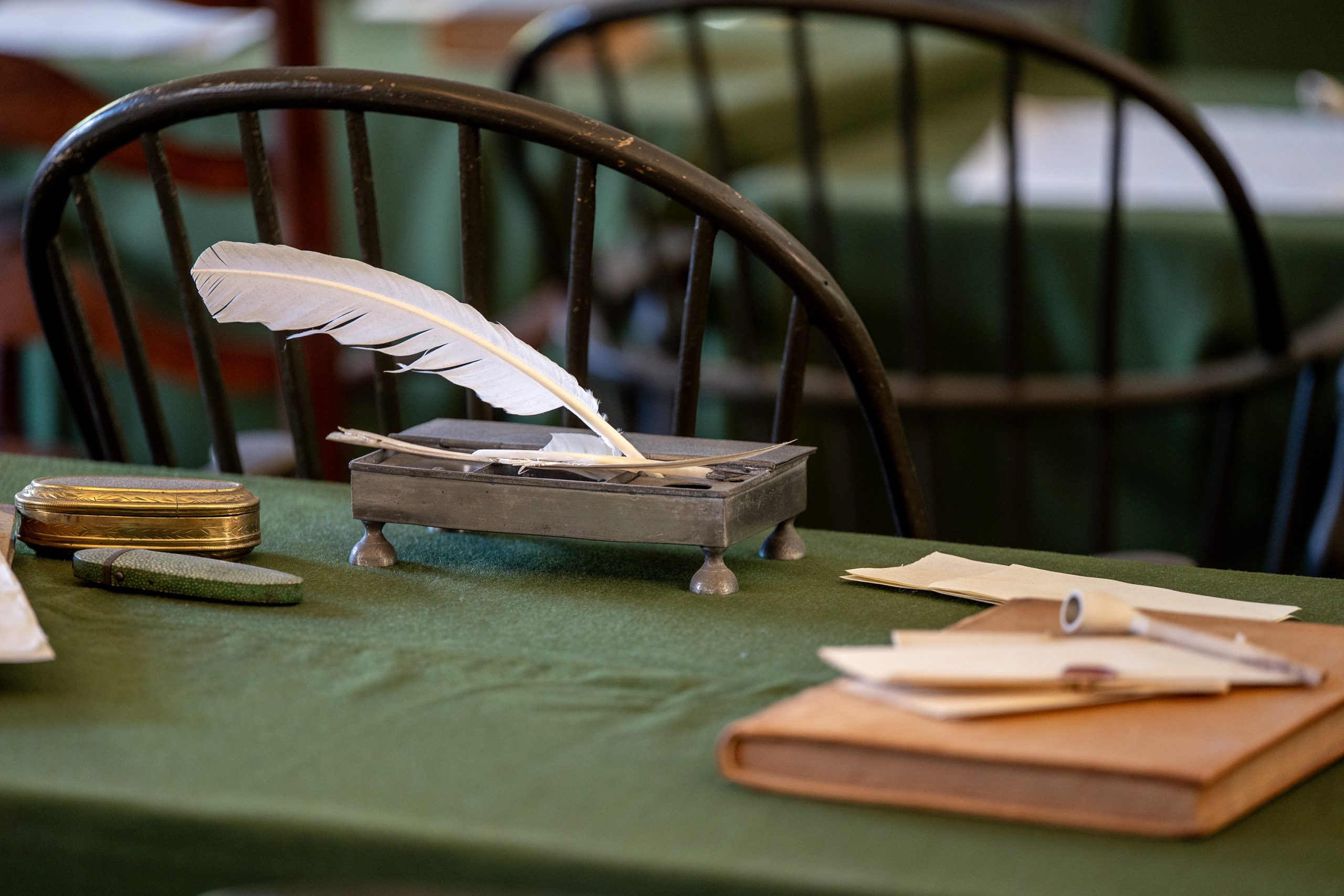
    Replica desks in the Assembly Room in Independence Hall (Pennsylvania State House) Monday, June 15, 2026.Tom Gralish / Staff Photographer

    Both drawn to the flame of American independence — the noblest cause of their age, and any other, they believe — the freedom fighters cut an odd coupling.

    Adams, short, plump, balding, cantankerous. Jefferson, tall, lean, formidable, a shock of copper hair, freckled in the Philly heat, his illusive eyes described as blue or hazel or light gray. The Southern planter and legislator who matriculated at the College of William & Mary is soft-spoken and painfully gracious and polite, charming, flirtatious. He abhors confrontation.

    Behold this true renaissance figure among the rebels.
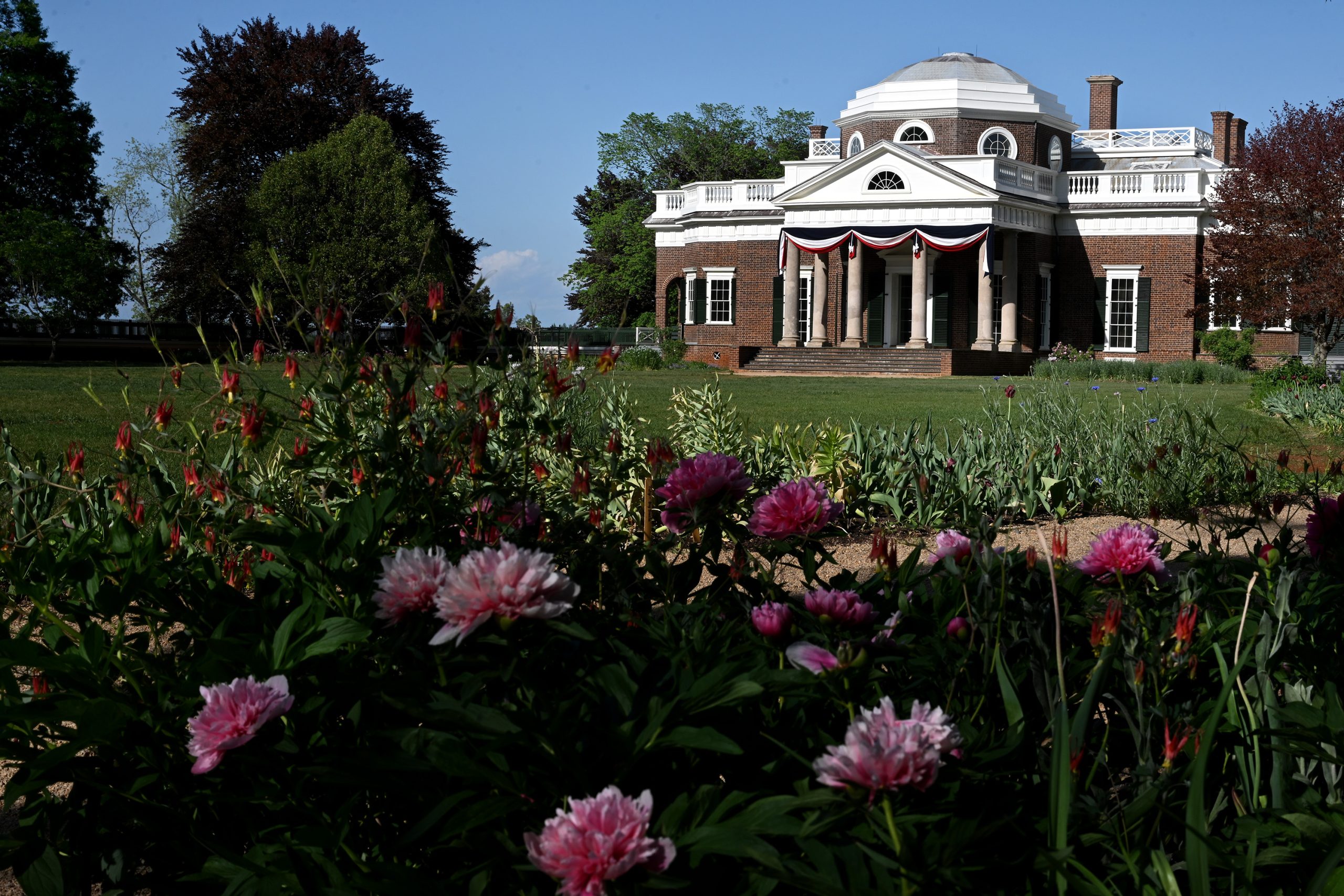
    Monticello, the primary residence and plantation of Thomas Jefferson in Charlottesville, Virginia, April 22, 2026.Tom Gralish / Staff Photographer

    A lover of food and wine and fine things, he studies art and history, philosophy and mathematics, science, botany, astronomy. He speaks four languages and can aptly read ancient Greek. He has been building his Palladian plantation house — situated on land more than five times bigger than the core of Philadelphia, the makeshift colonial capital city, and toiled by more than 100 chained souls — since the age of 14.

    Adams, obsessive even in his sightseeing, catalogs and compares the marvels of Philadelphia — its spacious thoroughfares, leafy green spaces, commanding skyline, including Christ Church’s heaven-kissing steeple, the tallest structure Washington had ever laid eyes on, its booming ports, gleaming institutions, exotic foods, and bottomless wine, porter, and punch.

    During his few hours free from the rigors of revolution, Jefferson shops.

    With Bob touting bulging bundles, the Squire strolls Philadelphia’s abundant artisanal shops, buying maps and books across all his tastes — so many volumes, he commissions his favorite Philly cabinetmaker to make a specialized bookcase to ship them home — and tools for Monticello. He buys fine fabrics for his wife, Martha, whom he is heartsick for. An elegant doll for his 4-year-old daughter, Patsy. He buys a straw hat for himself, and shoes and socks for Bob. At a market stall, he pays a shilling to gaze upon a merchant’s exotic monkey.

    Along with his compatriots, he sups at the City Tavern most nights, enjoying as many as three glasses of wine, but also favors the regal rusticity — and punch — of the Sign of the Conestoga Wagon Tavern on High Street.
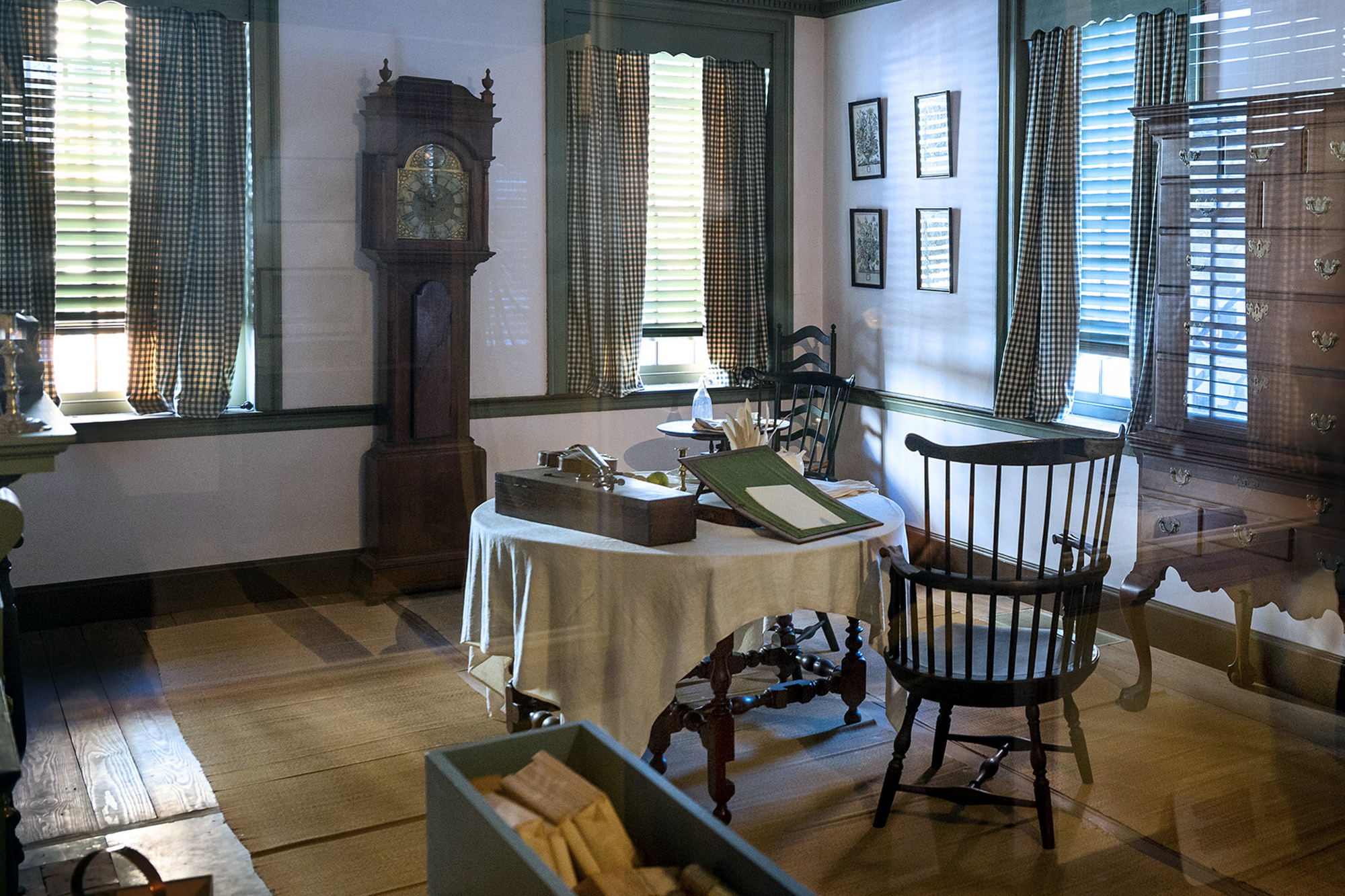
    A replica of the room where Thomas Jefferson wrote the Declaration of Independence, inside Declaration House (home of Jacob Graff, Jr.) Dec. 20, 2023.Tom Gralish / Staff Photographer

    Envision him, this sun-freckled Moses of American history, in flesh and bone, a living, breathing man, donning a sun hat, whose first memory is being held on a pillow by an enslaved worker, and who will within days pen the most revolutionary, if fatally flawed, manifesto ever put to parchment, walking among, but set apart from, the working classes of Philadelphia. The laboring, the indentured, and the enslaved — all those he would conversely see lifted to the altar of democracy or sold at the auction block.

    See this man. And understand America.

    An expression of the American mind

    He envisions his task to “place before mankind the common sense of the subject.” A justification for revolution, yes. A litany of proof that King George was a tyrant — and among other things, in an epic, and ultimately unsuccessful, act of blame-shifting, responsible for the entirety of the slave trade. But not a wholly original document. Rather, a soaring summation of the American revolutionary zeitgeist.

    “Neither aiming at originality of principle or sentiment, nor yet copied from any particular and precious writing, it was intended to be an expression of the American mind, and to give to that expression the proper tone and spirit called for by the occasion,” he will later explain.
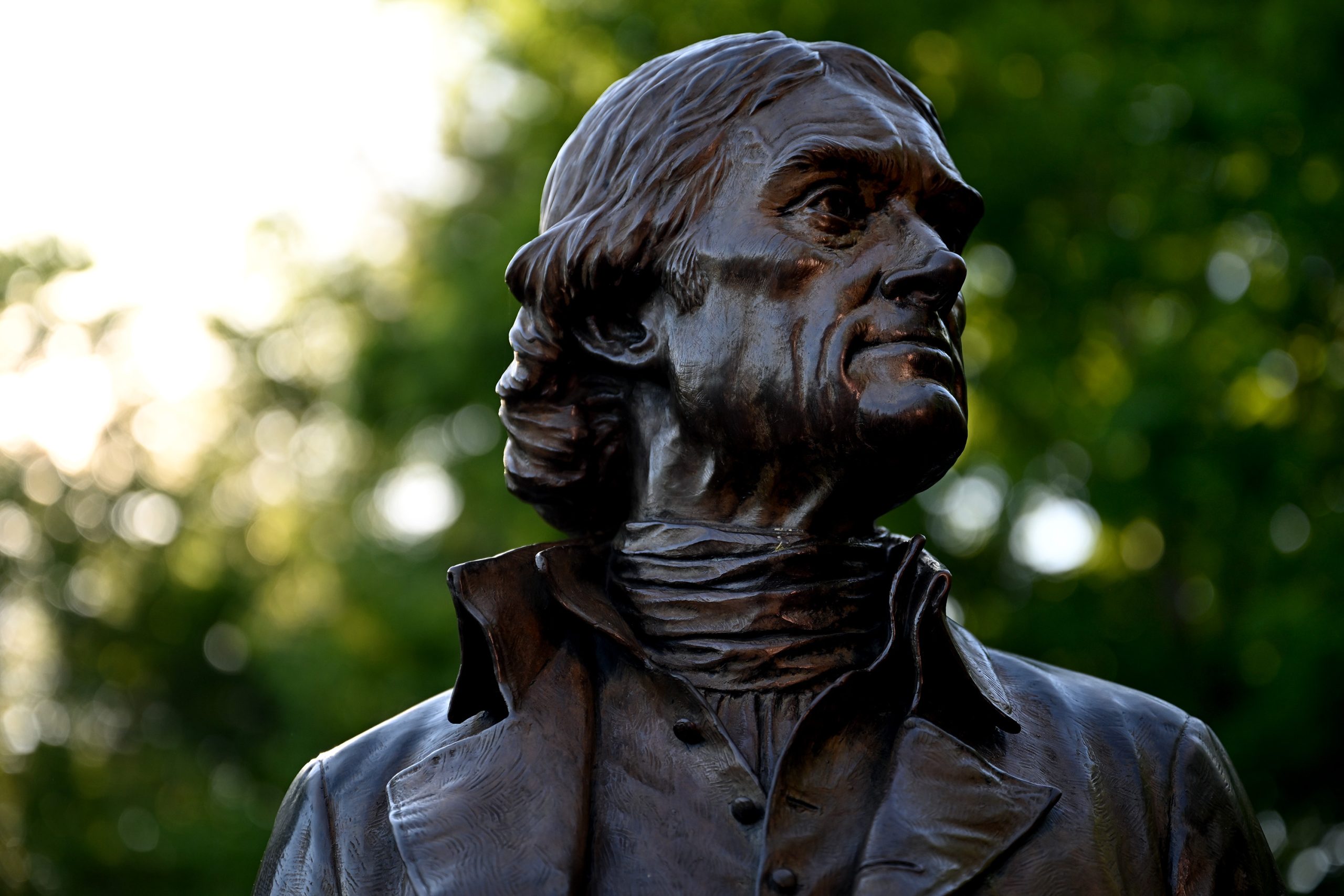
    Statue of Thomas Jefferson at Monticello, his primary residence and plantation of in Charlottesville, Virginia, April 22, 2026.Tom Gralish / Staff Photographer

    In his parlor, with the tall clock ticking and Bob tending to tea, Jefferson works fast, pulling from his own writing — including his recent draft for a new Virginia constitution — and also from a declaration of rights for Virginia, penned by pal George Mason. From the whirling stream of his intellect, he plucks at will the inspirations and ideals of the seminal works of enlightened thinkers like John Locke and David Hume, whose writings on natural rights and freedom (“Life, liberty, and property,” Locke wrote, before Jefferson amends it for the better) provide the bedrock for the revolution.

    Quickly, he begins to find his words. The rag paper fills.

    “We hold these truths to be self-evident,” writes the man from Monticello.
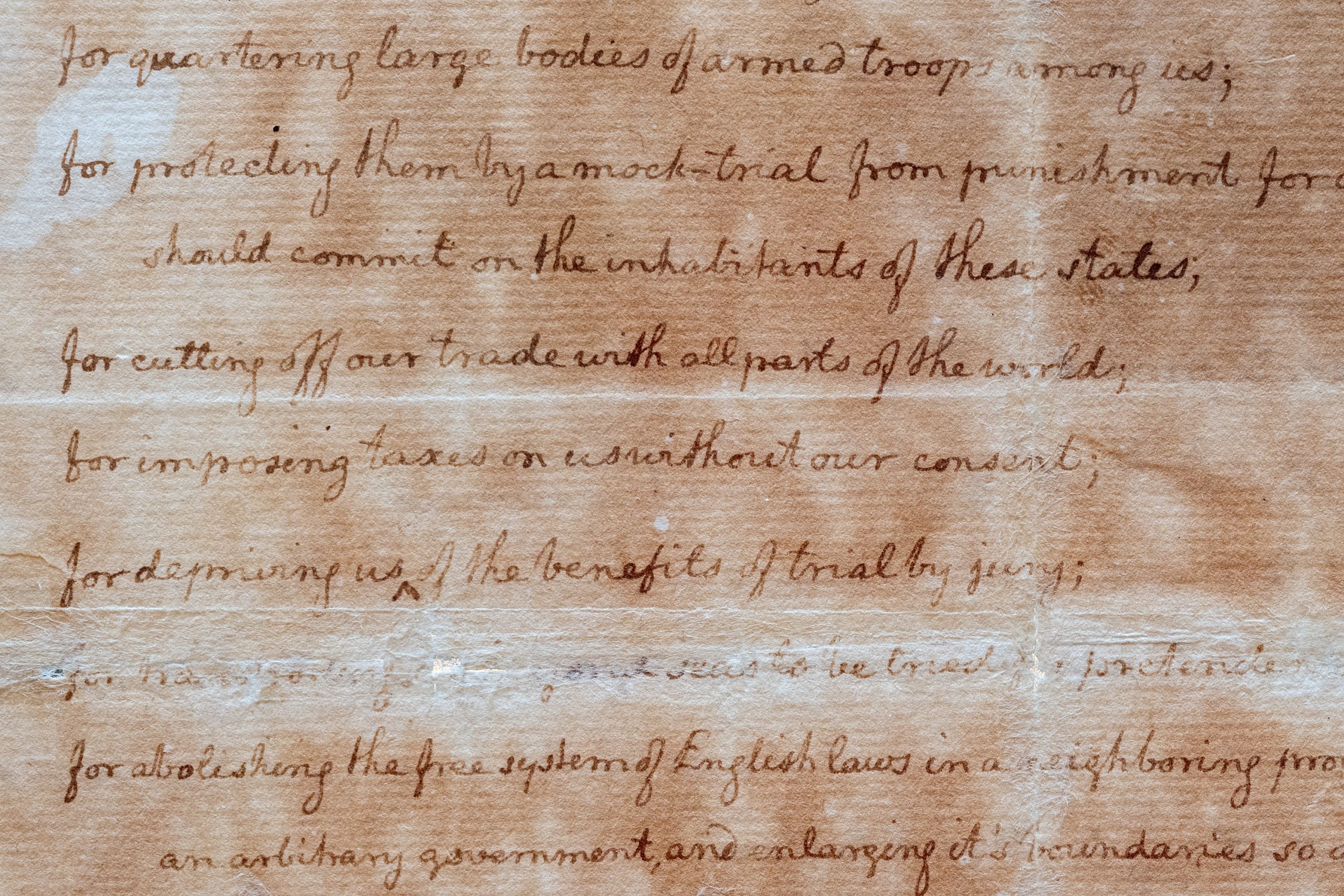
    A faded copy of a draft of the Declaration of Independence handwritten by Thomas Jefferson, known as the “Fair Copy,” on display at the American Philosophical Society Monday, June 15, 2026.Tom Gralish / Staff Photographer

    Dispatches from 1776, Part III will be published online on July Fourth. Read Part I here.

    This historical sketch is based on interviews with Tyler Putman, manager of gallery interpretation at the Museum of the American Revolution, and Michael Idriss, manager of the African American interpretive program at the Museum of the American Revolution, as well as J.M. Duffin, assistant archivist at Penn Libraries, historian and author Michelle Craig McDonald, and Stephen Nepa, history professor at Pennsylvania State University’s Abington campus. The author also based this series on historical newspaper accounts and research from “John Adams,” by David McCullough (Simon & Schuster, 2001), “Declaration: The Nine Tumultuous Weeks When America Became Independent, May 1-July 4, 1776,” by William Hogeland (Simon & Schuster, 2010), “American Scripture: Making of the Declaration of Independence,” by Pauline Maier (Random House, 1997), “The Revolutionary: Samuel Adams,” by Stacy Schiff (Little, Brown & Co., 2022), “Cocked and Boozy: An Intoxicating History of the American Revolution,” by Brooke Barbier (Chicago Review Press, 2026), “Thomas Jefferson: The Art of Power,” by Jon Meacham (Random House, 2012), “Rum Punch and Revolution: Taverngoing and Public Life in Eighteenth Century Philadelphia,” by Peter Thompson (University of Pennsylvania Press, 1999), “The Thomas Paine Reader” (Penguin Books, 1987), and “1776,” by David McCullough (Simon & Schuster, 2005).
  • Three years ago, the school choice debate shut down Harrisburg. Now Democrats are ready to engage.

    Three years ago, the school choice debate shut down Harrisburg. Now Democrats are ready to engage.

    HARRISBURG — Three years after a bitter budget standoff over allowing state funding to be used for private school tuition, top Democrats in Harrisburg are ready to engage on school choice.

    Legislative action and comments from a top House Democrat this week expressing openness to a federal school-choice program marked a notable change from 2023, when a fight over school vouchers put Democratic lawmakers at odds with both Republicans and Gov. Josh Shapiro, a member of their own party.

    The shift comes as Shapiro, who has embraced school choice and is a likely 2028 presidential contender, faces a deadline to opt in to President Donald Trump’s new federal tax credit program.

    House Majority Leader Matt Bradford (D., Montgomery) said this week that some of the uses of Trump’s tax credits, which are opposed by the country’s largest teachers unions, are “intriguing.” And he noted he is proud of some money the state now pours into one of the tax credits to fund private-school scholarships for low-income families in low-achieving districts. Those comments from Bradford, a top leader in Harrisburg, suggested a public softening on an issue that was previously a non-starter for his party — and signaled the school-choice debate may once again factor into state budget negotiations.

    “For our members of our caucus who want to see alternatives for the poorest kids in the poorest schools, we’re being responsive to the needs of those constituents,” he said in an interview, referencing growing support for school choice among some House Democrats, particularly those from Philadelphia.

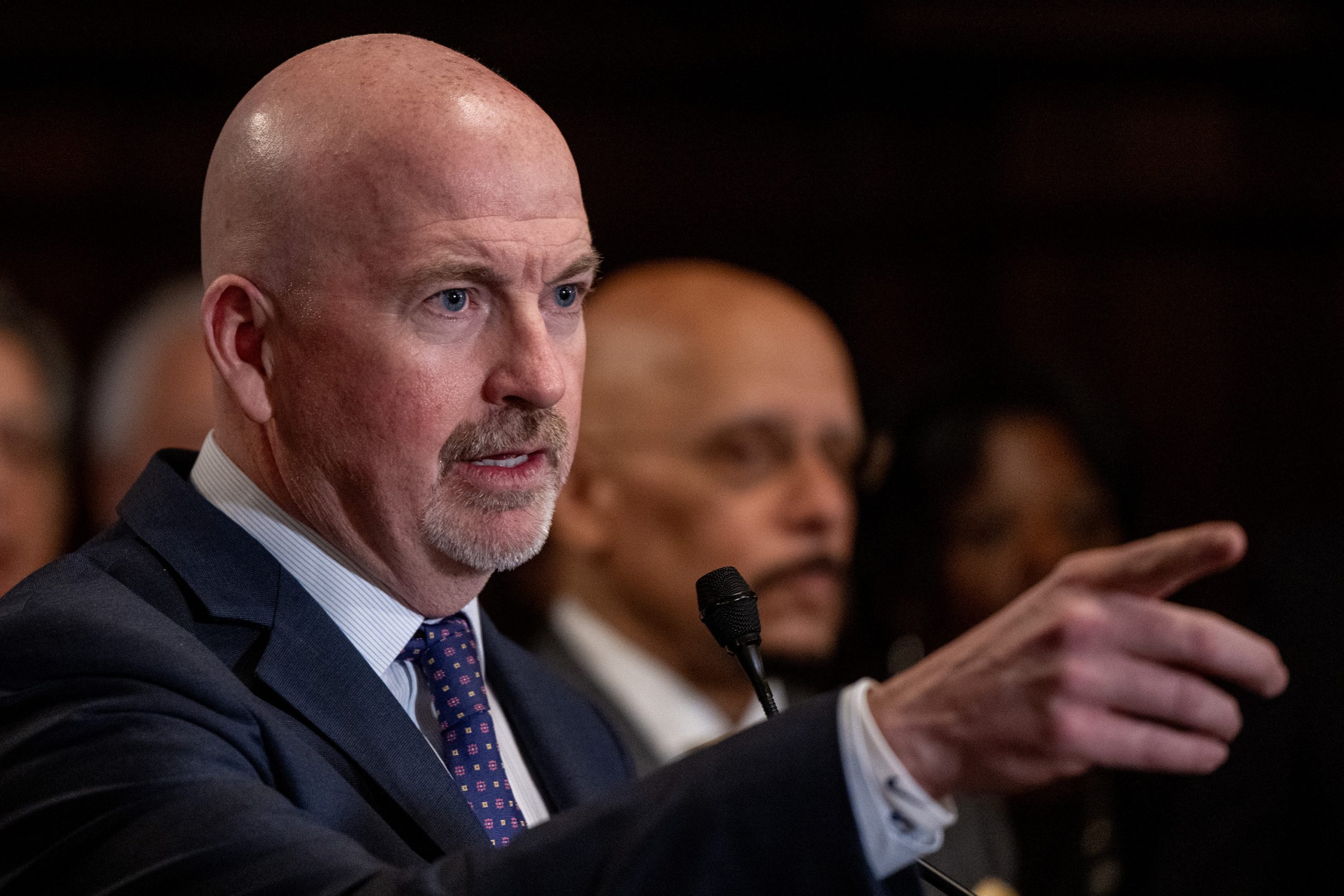
    State Rep. Matt Bradford (D., Montgomery County) during a press conference at the Capitol in Harrisburg Feb. 3, 2026.Tom Gralish / Staff Photographer

    The school-choice movement, a largely Republican-backed effort to allow public dollars to go to private schools, faces strong opposition from education advocates who say such programs can take money from public schools.

    And that debate is sure to continue. Bradford said more oversight — and an overall reform of the current tax credits — is needed to make sure the state tax dollars are actually reaching poor students.

    Earlier this week, House Democrats fast-tracked an overhaul to the state’s current $680 million school-choice tax-credit programs to require additional reporting from private schools in order to secure funding. The legislation is likely to face opposition in the GOP-led Senate, where Republicans on Thursday advanced a $25 million increase to the programs ahead of a June 30 deadline to pass a state budget.

    Senate Republicans called the tax credits a “priority for empowering parents,” while the Archdiocese of Philadelphia said the House bill would be “devastating” to local Catholic schools and lead to fewer scholarships for students.

    A spokesperson for Shapiro said his office is reviewing the House bill, and declined to comment on whether his position on school choice has changed. Shapiro, who has sent his own children to private school in Montgomery County, has previously said he supports school choice, including school vouchers.

    Shapiro has until the end of the year to decide whether to opt in to the federal program. But the signal of openness from Bradford, who is close with the governor, offers potential insight into his path forward.

    That program, enacted last year under Trump’s “One Big Beautiful Bill Act,” would offer federal tax credits to donors for giving to organizations that grant private school scholarships. Many GOP-led states have already signed on, while some Democratic governors have declined to participate.

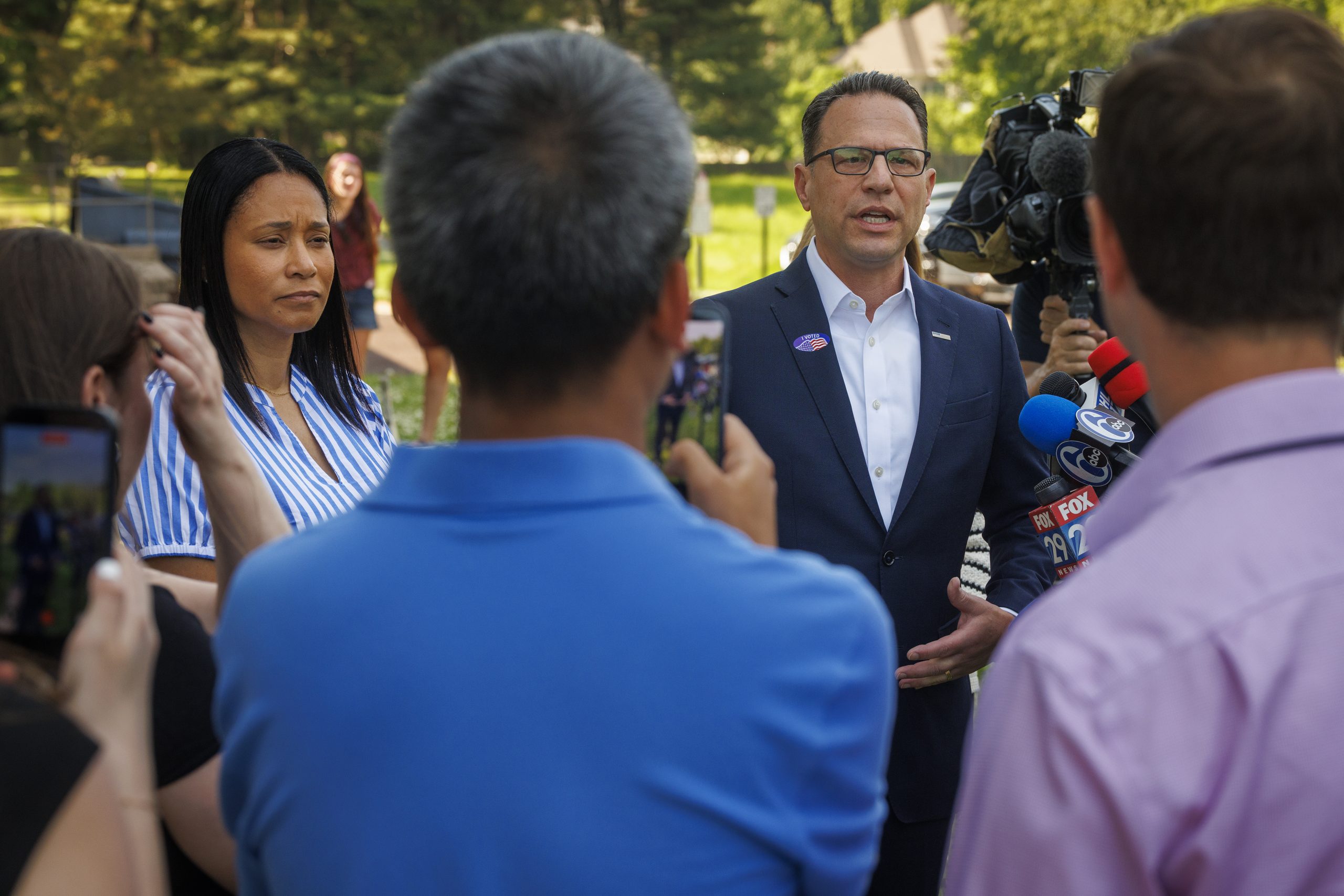
    Pennsylvania Governor Josh Shapiro taking questions from media on election day, Tuesday, May 19, 2026. He voted today at Rydal Elementary (West) 1231 Meetinghouse Road Rydal, PA. At left is Jamila H. Winder, Chair, Montgomery County Commissioners.Alejandro A. Alvarez / Staff Photographer

    Shapiro will also likely face questions about school choice on the campaign trail.

    He is running for reelection in November against Republican Treasurer Stacy Garrity. Garrity’s platform focuses, in part, on expanding school-choice options in Pennsylvania and she has the support of Commonwealth Partners, a political action committee largely funded by Pennsylvania’s richest man, Jeff Yass, which has poured money into supporting school choice.

    The issue will also likely surface a national stage if Shapiro enters the 2028 Democratic presidential primary race. His support for vouchers drew criticism from fellow Democrats in 2024, when he was a potential vice presidential nominee.

    Debate over state tax credits

    Pennsylvania does not have a direct school voucher program. Instead, the state sets aside $680 million each year for tax credits that allow businesses and individuals to write off charitable giving that supports private school scholarships.

    House Democratic support for those credits has quietly grown in recent years. In a June 2025 letter recently obtained by The Inquirer, 10 House Democrats, including five from Philadelphia and the head of the Pennsylvania Legislative Black Caucus, asked their leadership to expand a portion of the tax credits for students in the lowest-achieving school districts — revealing more Democratic support for the programs than was previously known.

    Public education advocates who oppose voucher programs say the state is funneling money to private schools with little accountability.

    “It’s just a pot of money that a bunch of people get, and nobody really knows where it goes or what happens to it,” said Susan Spicka, executive director of Education Voters PA.

    New requirements approved by the state legislature last year are set to take effect in November and will require scholarship organizations to report the dollar amount of each award, the recipient’s district of residence, and where they attend private school.

    The bill advanced by the House in a 105-97 vote this week would also require organizations to report each scholarship recipient’s income level — reducing the current limit to $144,000 for a family of four — and the amount of remaining tuition charged to a student. Advocates, including Spicka, called that information key to gauging whether scholarships are going to families who otherwise could afford private school.

    Bradford said he’s proud of the $110 million earmarked in existing state tax credits to provide additional money to kids attending schools where a majority of students are getting scholarships. House Democrats say their newest proposal would steer more money toward those students.

    But the proposed legislation — which would also reduce the tax credit donors could claim for some contributions, and require scholarship organizations to set 2% of funding aside for state oversight of the programs — drew swift backlash from private school advocates.

    Philadelphia Archbishop Nelson J. Pérez is “deeply concerned that this legislation would have a devastating impact,” said spokesperson Ken Gavin. “The clear intent is to lead to the dilution or elimination of the programs, which are vital.”

    Schools affiliated with the Philadelphia archdiocese educate nearly 44,000 students across 117 schools in the region, according to its website.

    Bradford, who is Catholic, said the Archdiocese’s response “missed the mark,” arguing that this legislative effort is trying to achieve a similar goal of serving students from poor families who attend the roughest schools.

    “I’m proud of my own Catholic faith. I love when my Catholic Church stands for those communities,” Bradford added. “No one should ever fear transparency, especially when you’re talking about three-quarters of a billion dollars of state tax dollars.”

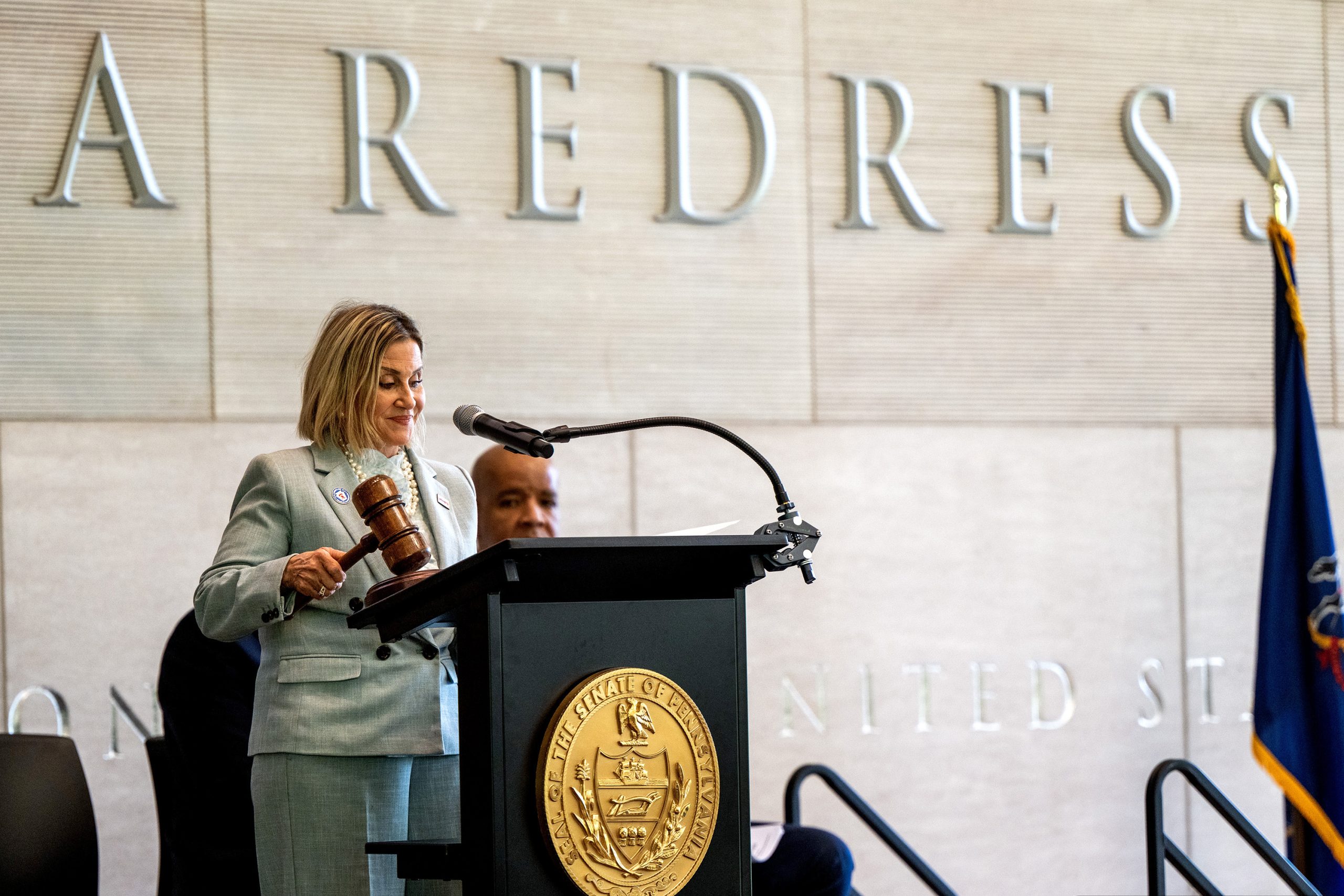
    President Pro Tempore Kim Ward gavels the opening as the Pennsylvania Senate hosts a ceremonial meeting at the National Constitution Center Tuesday, May 5, 2026. Tom Gralish / Staff Photographer

    Meanwhile, Senate Republicans on Thursday amended another House bill to increase the state’s current tax credit programs to $705 million.

    President Pro Tempore Kim Ward (R., Westmoreland), a staunch supporter of school vouchers, said in a statement that Bradford‘s attention to school choice is disingenuous, criticizing the House Democrats’ bill as “overly burdensome auditing requirements disguised as ‘transparency.’”

    The 2023 budget breakdown, where Shapiro ultimately vetoed the school voucher program he‘d helped draft with Senate Republicans because it couldn’t pass the Democratic-controlled House, continues to tarnish his relationships with top GOP leaders, including Ward. He and Ward have hardly spoken since.

    “While Senate Republicans have consistently advanced legislation to provide scholarships to disadvantaged students, the track record for Gov. Josh Shapiro and House Democrats has been nothing more than a case of whiplash as their words and actions rarely align,” Ward said. “To me, it seems like the support for school choice by the House Democrat Leadership is more of a façade as they continue to cater to political special interests.”

    Ward has also called for changes to Pennsylvania’s new public school funding system, which includes an adequacy formula that directs more money to the state’s poorest school districts, including Philadelphia.

    Bradford, in response, said he is open to conversation about accountability and transparency, but that debate needs to include private schools benefiting from taxpayer dollars.

    “We shouldn’t carve out any portion of our K-to-12 education,” Bradford added. “That conversation needs to be uniform.”

    A choice for states on Trump’s tax credits

    Shapiro has previously said he would wait for more details before making a decision on whether to participate in the new federal tax credit program. The U.S. Department of the Treasury earlier this month released additional details, including that it will allow individuals to receive up to $1,700 in credits for making donations to private school scholarships that can cover tuition, tutoring, and more. In Philadelphia, families making $368,100 annually, or 300% of the county’s gross median income, would be eligible to receive the scholarship.

    School-choice advocates say Pennsylvania taxpayers will be able to claim the credit regardless of whether Shapiro opts in. But in order for Pennsylvania schools and students to benefit, the governor needs to join.

    Shapiro’s press secretary Rosie Lapowsky said the governor appreciates the guidance, but continues to await information on “how this will affect use of our existing tax credits, how states will be expected to administer the program, and how eligibility will be determined.”

    Twenty-eight states have opted in to the program, most of which are led by Republicans. And Democrats are facing pressure to stay out of the program.

    In a letter sent to Democratic governors this week, American Federation of Teachers President Randi Weingarten and National Education Association President Becky Pringle called the program “a Trojan horse carrying near-universal K-12 private school vouchers into every state that participates.”

    So far, Democratic governors elsewhere have taken differing approaches to the program. New York Gov. Kathy Hochul has said her state will participate but is waiting for final guidance before officially signing on. Other governors like Minnesota Gov. Tim Walz and Oregon Gov. Tina Kotek have announced that their states will not participate. Democratic governors in Arizona and Wisconsin have vetoed legislative efforts to force their states to opt in, while governors’ similar vetoes in North Carolina and Kentucky were overridden by legislators.

    Bradford said it’s “an abomination” that funding for Trump’s program came from Republicans making other cuts to the federal budget, and emphasized that state Democrats remain committed to increasing public education funding.

    “Here in Pennsylvania,” he said, “we are a humble 102 [Democrats] in the Pennsylvania House and we are nimble and pragmatic.”

  • McCormick and Fetterman are stepping in to fill Pennsylvania’s empty booth at Trump’s Great American State Fair

    In the latest twist over Pennsylvania’s participation in President Donald Trump’s Great American State Fair, U.S. Sens. Dave McCormick and John Fetterman announced Saturday that the state where America was founded will be represented after all.

    Pennsylvania Gov. Josh Shapiro initially signaled the intention for the state to participate in Trump’s 16-day fair on the National Mall. But this week, he said state officials could not find a Pennsylvania business to sponsor the state’s booth.

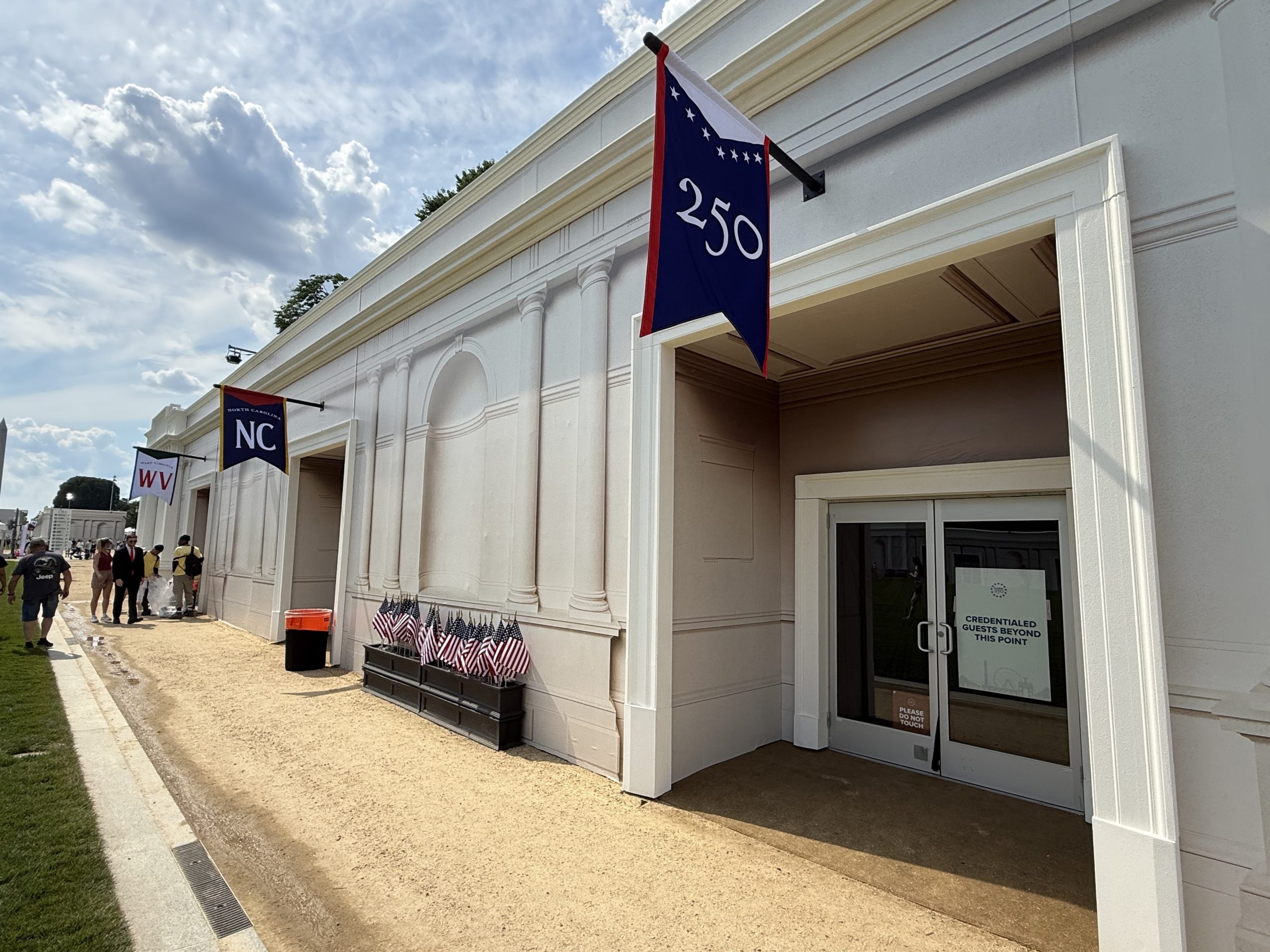
    On the fair’s opening day, Pennsylvania had no official presence, and the booth reserved for the commonwealth remained empty, except for a flag that read “250” in Pennsylvania’s space.

    After that news, McCormick (R., Pa.) and Fetterman (D., Pa.) said in a joint news release Saturday that they secured private-industry sponsors for the booth at no cost to taxpayers. Sponsors include the Pennsylvania Chamber of Business and Industry, the Pennsylvania Farm Bureau, and other organizations.

    “Pennsylvania is where America’s story began, and there was no way we were going to let the Commonwealth go unrepresented during our Nation’s 250th birthday celebration,” McCormick said in the release.

    “Celebrating America’s 250th birthday and Pennsylvania’s special role in our country is important and bipartisan,” Fetterman said. “We discovered our commonwealth wasn’t participating in the Great American State Fair on the National Mall, and we should be.”

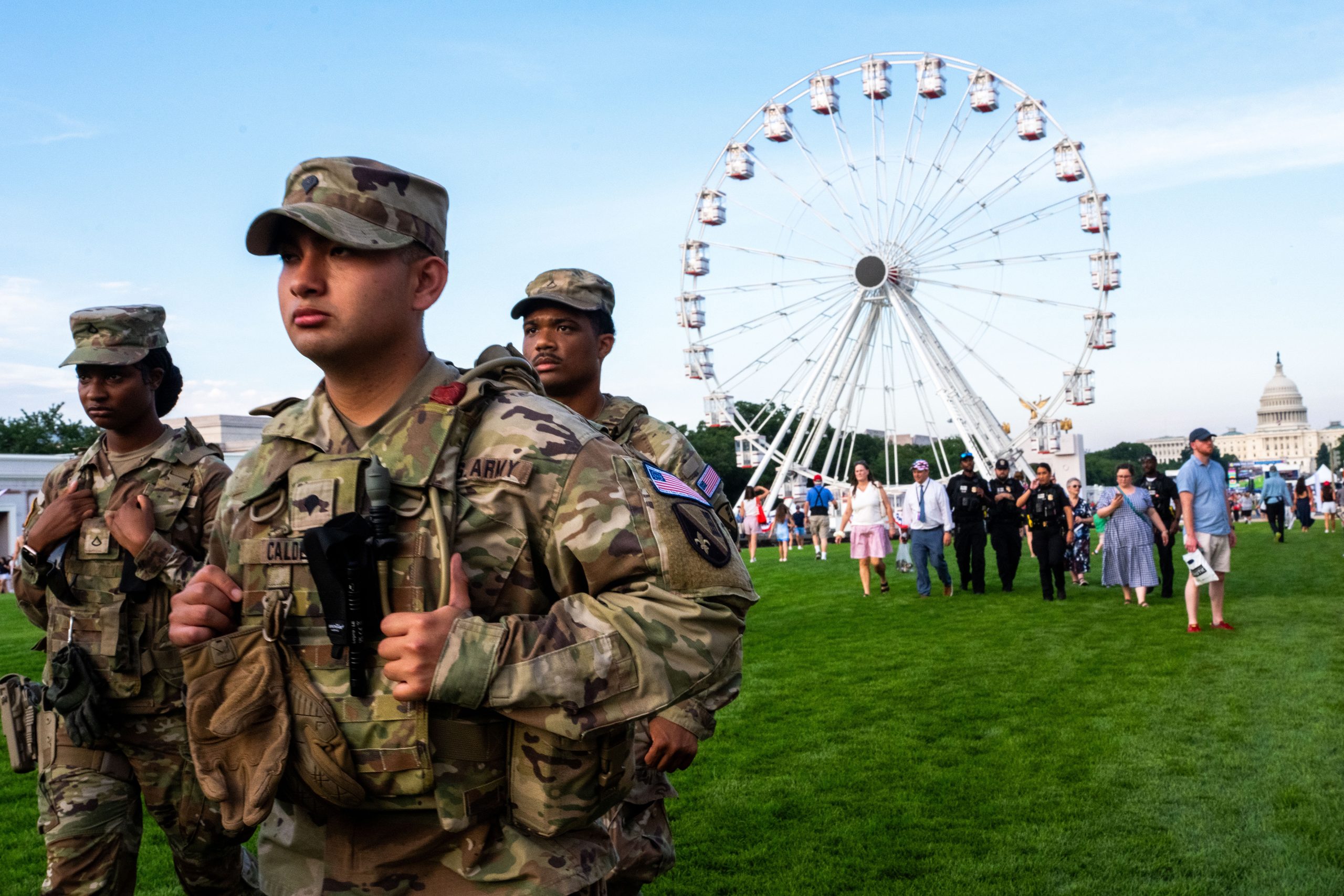
    A ferris wheel is on the National Mall as part of the Great American State Fair, one of the celebratory events organized by the Trump administration commemorating the 250th anniversary of the United States in Washington, D.C., June 25, 2026. At the kickoff to the Great American State Fair, exhibits celebrating the nation were on display. So were conservative themes. (Alex Kent/The New York Times)ALEX KENT

    Shapiro told the New Republic earlier this week that when his administration approached major Pennsylvania companies to participate, “none were interested.”

    “It reflects this sad state of affairs that we find ourselves in — that the president has politicized this to a degree that businesses don’t want to participate,” he told the New Republic.

    However, sources who worked on the sponsor search confirmed for The Inquirer that at least two major Pennsylvania companies agreed to provide products and other donations to give away at Pennsylvania’s fair booth but were unable to initially do so due to short notice. The sources asked The Inquirer to not name them because they were not authorized to speak on the search.

    In a statement Saturday after the senators announced their plans, a Shapiro spokesperson said the administration was “unwilling to spend hundreds of thousands of taxpayer dollars to fund the Great American State Fair amid the historic slate of events across Pennsylvania in 2026.”

    Before McCormick and Fetterman’s intervention, Shapiro administration officials were told that Freedom250, the organization planning the fair, would be “handling the booth” in the absence of formal state participation, said Rosie Lapowsky, Shapiro’s press secretary.

    Pennsylvania’s Department of Agriculture also sent state literature that began appearing in the booth on Saturday, according to Freedom250.

    The Great American State Fair Thursday, June 25, 2026, in Washington, D.C. This pavilion would have belonged to Pennsylvania if the state had participated in President Donald Trump’s 250th anniversary event on the National Mall.Sam Janesch / Staff

    But Pennsylvania’s search for business sponsors was brief, according to a source close to the search.

    The Pennsylvania Chamber of Business and Industry, which was charged with finding sponsors, said Shapiro’s office called the organization less than two weeks before the fair began. Other states, the chamber said, had been working on their displays since January.

    “The Governor’s team asked us for assistance with business outreach for the Great American State Fair just two weeks before the event. While there was interest, the short time frame made it difficult for many businesses to fully commit,” said Jon Anzur, the chamber’s senior vice president of public affairs. “We are now reengaging those and other companies as we partner with Sens. McCormick and Fetterman.”

    In the absence of official Pennsylvania representatives and sponsors, McCormick and Fetterman were suddenly on Saturday able to secure private groups to staff the booth and help coordinate sponsors for the remainder of the fair.

    According to a source briefed on the conversation, Shapiro and McCormick spoke Saturday about the senators’ plans to fill the booth, and Shapiro offered to send additional state literature. The Inquirer is not naming the source because they were not authorized to speak on the conversation.

    Crayola is among the sponsors that will send along crayons, markers, and coloring books for a coloring station, which should be operational as early as Sunday. Other sponsors have signed on as well, though they were not immediately identified and their contributions were not disclosed.

    Pennsylvania is among a list of at least 10 states, some Democratic-led, that have officially dropped out of the Great American State Fair, including Connecticut, Illinois, Maine, Massachusetts, North Carolina, Oregon, Rhode Island, Vermont, and Washington.

    During the fair’s opening days, nearly every other state was represented, with most sending government staff or tourism officials to host educational or interactive exhibits.

    New Jersey also officially declined to participate, but Cape May County, a Republican stronghold, stepped in to represent the state. Its exhibit features an 8-ton sand sculpture created by a Wildwood artist over the course of more than four days.

    Delaware highlighted Founding Father Caesar Rodney’s ride to cast the decisive vote for independence in Philadelphia.

    Sam Janesch and Andrea Padilla contributed to this article.

  • Police are investigating 2 separate killings near Hunting Park Recreation Center

    Police are investigating 2 separate killings near Hunting Park Recreation Center

    Philadelphia homicide detectives are investigating two fatal shootings that occurred days apart near Hunting Park Recreation Center, where both victims were found with gunshot wounds near the park’s recreational facilities.

    The victims — both adult males who have yet to be publicly identified — were discovered less than a week apart in separate areas of the recreation center, raising questions about whether the killings could be connected.

    Police have not said whether they believe the shootings are related.

    On June 26, just before 11 p.m., patrol officers discovered a man believed to be between 25 and 30 suffering from a gunshot wound to the back near the outdoor basketball courts. He was taken to Temple University Hospital, where he died a short time later. Police discovered a .40-caliber fired cartridge casing nearby.

    The killing came six days after police discovered a man shot to death near the center’s baseball field. It was shortly after 10 p.m. on June 20, when police responding to a call for a shooting, found the 45-year-old victim suffering from gunshot wounds while seated on bleachers near the field. The victim, who had been shot in the torso, was pronounced dead at the scene. Investigators discovered two 9mm fired cartridge casings during that investigation.

    Police have not released any motives or announced any suspects in the killings. Investigators have been searching the surrounding area for video surveillance footage, police said.

    According to the Philadelphia Police Department, 80 people have been killed in the city so far in 2026, a nearly 30% decrease from the same period last year.

    Anyone with information about either shooting is encouraged to contact the Philadelphia Police Department’s Homicide Unit at 215-686-3334 or submit an anonymous tip by calling or texting 215-686-TIPS (8477).

  • A woman missing since 2016 had close ties to the Olney house that’s now the target of a massive investigation

    A woman missing since 2016 had close ties to the Olney house that’s now the target of a massive investigation

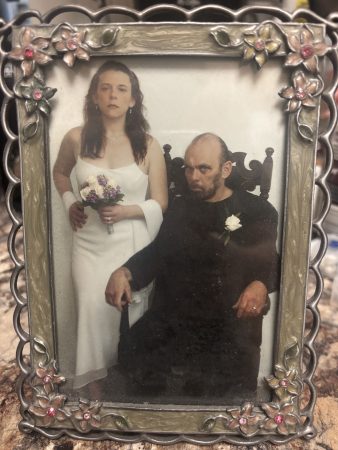
    Amy McHale and Raymond “R.C.” Horsch met on the streets when she was battling pneumonia and needed medical care.

    She had long struggled with mental health issues and drug and alcohol addiction. She saw Horsch, an erotic photographer and filmmaker 30 years her senior, as her rock, said her mother, Gloria McHale.

    “He was like her savior.”

    They held their wedding reception beside a greenhouse in the sprawling, serene backyard of his Chalfont home in September 2004. The marriage lasted only a few years, but Amy McHale kept going back to Horsch after he moved to a house on West Chew Avenue in the Olney section of Philadelphia with his son, Eugene Albert Horsch.

    She was staying there on June 14, 2016, when she left a voicemail message for her daughter, Amanda Stofer, saying all was OK. At the time, Amy McHale was a 44-year-old mom and grandmother of three.

    She has been missing ever since.

    “She would never leave her daughter and grandchildren,” Gloria McHale, 79, said by phone after news broke this week that authorities had been combing through that house for days. “She loved them, adored them.”

    For more than a week, Philadelphia police and federal authorities have been searching the crumbling Horsch twin home to determine if there is any connection to the disappearance of Amy McHale and one other woman.

    R.C. Horsch was a controversial figure who had been convicted of forgery and drug manufacturing when he died in May 2025 of chronic obstructive pulmonary disease at age 82. Police have not named him as a person of interest in a missing-person investigation.

    His son, Eugene Albert Horsch, is being held on $500,000 bail at Curran-Fromhold Correctional Facility on charges of illegal gun possession and drug crimes. He had a criminal history that included at least 10 other arrests for drug possession, dealing, assault, and drunken driving when he was arrested earlier this month near Independence Hall after his actions drew the attention of U.S. Park Police.

    “This is much ado about nothing,” said Eugene Horsch’s attorney, Jerome Brown, of his client’s connection to any missing-person investigation. “They’re barking up the wrong tree.”

    When the news broke, McHale’s mother and daughter thought they might finally discover what happened.

    “But I don’t feel much closure, and today is an emotional low,” McHale’s daughter, Amanda Stofer, said Saturday. “I was hoping for some answers about my mother from the home, but I’m doubtful that will happen.

    “It just feels heavy and sad.”

    The case came to light under bizarre circumstances. U.S. Park Police stopped Horsch, 44, near Sixth and Market streets on June 19. In his black BMW, officers recovered two firearms with obliterated serial numbers and a phony drug enforcement badge with Horsch’s photograph under the name “Eugene Frederick Steiner.” He also had large amounts of cocaine, fentanyl, and marijuana, according to an affidavit of probable cause for his arrest.

    A woman with Horsch gave officers a false name, one that belonged to a 38-year-old woman who had been reported missing in Kensington in February 2023. Horsch’s passenger told investigators that he had made her fake ID cards with that name before and advised that if she was ever stopped by police, she could use them.

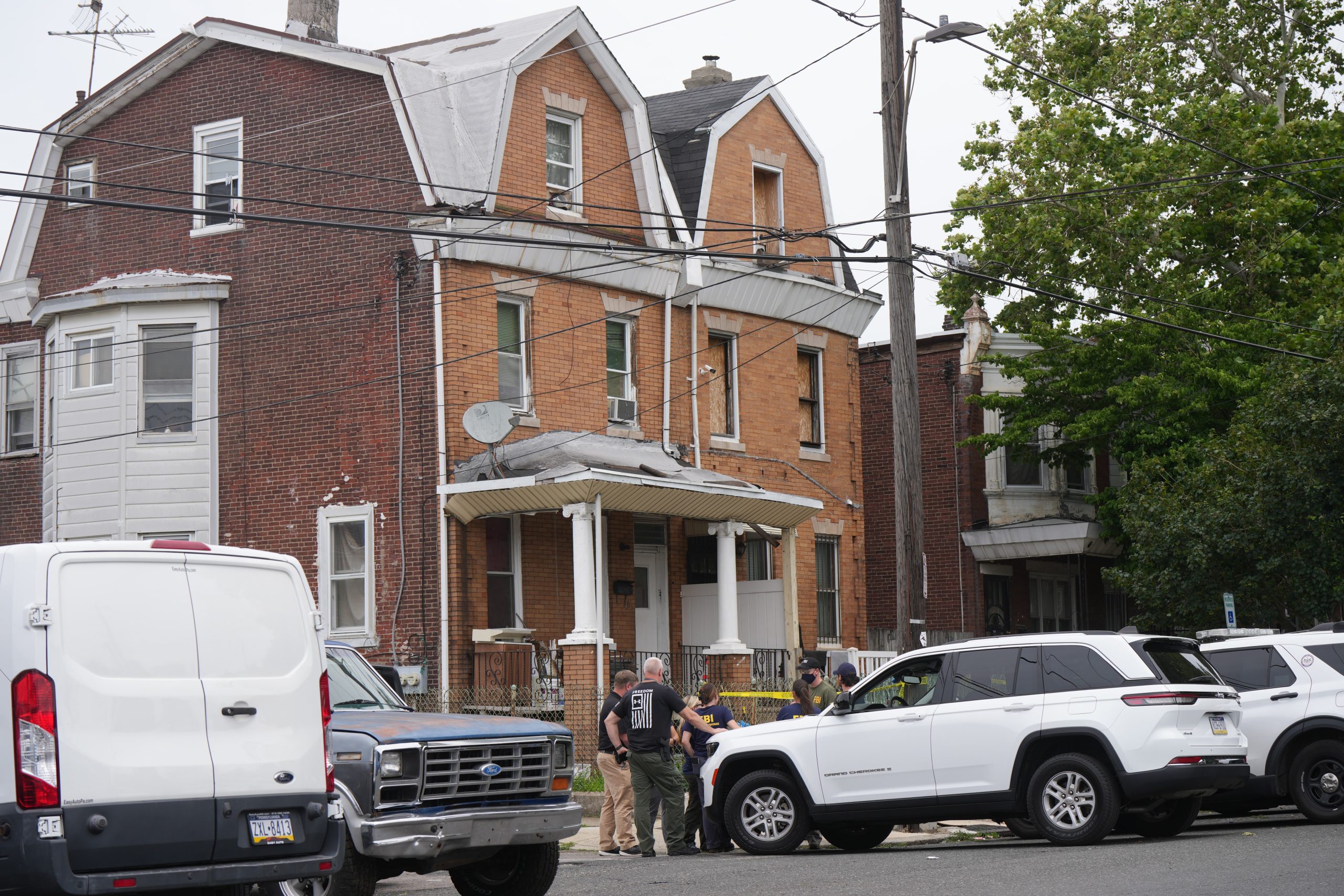
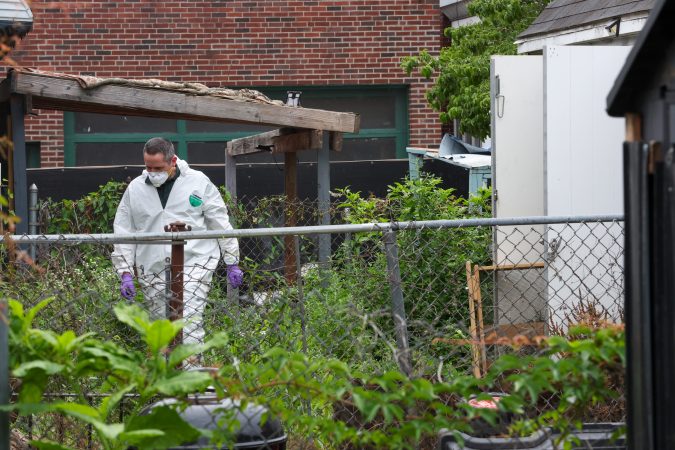
    Law enforcement wearing FBI clothing at the scene of an ongoing investigation in the 400 block of West Chew Avenue, searching a home in Olney.Jessica Griffin / Staff Photographer

    In Horsch’s dilapidated home, investigators found another handgun, hidden compartments, a 55-gallon drum with connections to water lines leading to a hole in the ground, and chemicals and bottles of liquid that forensics investigators are working to identify. There were also what appeared to be urns holding remains, one set of which was apparently his father’s. The basement resembled some sort of chemical lab.

    Federal investigators also found a unsigned and handwritten letter that referenced hurting unspecified people and the serial killer Ted Bundy, according to an affidavit of probable cause obtained by The Inquirer.

    Investigators are working to verify the authenticity of the letter, and whether it was meant to serve as a portion of a novel or screenplay.

    Under a gloomy sky Saturday, about 15 FBI agents, some wearing hazmat suits, streamed in and out of the boarded-up twin home. “They’ve begun processing the scene,” Philadelphia Deputy Police Commissioner Frank Vanore said. Forensic experts were determining what evidence had to be sent away for scientific analysis, he said. “It’s going to take some time.”

    Art and weed

    R.C. Horsch, who was born in East Stroudsburg, Monroe County, in 1943, is described in an author’s biography as “an artist, filmmaker, composer, writer, porn performer, drug smuggler, sometime political activist, art forger, counterfeiter, pot grower, air show pilot, army deserter, fugitive, sociopath, ex-convict and all-out villain.”

    Throughout his life, R.C. Horsch worked on avant-garde artwork and erotica, often focused on scantily clad women in sadomasochistic settings, including a book described as an “autobiographical memoir of a caring, empathetic serial killer.” He directed his first film, The Erotic Memoirs of a Male Chauvinist Pig, in 1973.

    A 1968 news report identified Horsch, then in his mid-20s, as the operator of a theater on the 2000 block of Sansom Street known as “Underground Cinema 16” — later the Roxy — which screened avant-garde films, including his own, but was shut down for operating without a license.

    Horsch was married at least three times. He married Anna Ferkuniak, a native of Nant-y-moel, Wales, who was Eugene Horsch’s mother. She died in 1989 at age 39 after a lengthy illness, according to her obituary.

    R.C. Horsch also had an extensive criminal history.

    He pleaded guilty to passing bad checks in North Carolina in 1973, and the following year the Secret Service charged him and another man in Doylestown with passing nearly $180,000 in fake 10-dollar bills and possessing phony driver’s licenses.

    In 1977, federal authorities raided what was described as his home laboratory, seizing equipment they alleged was meant to make methamphetamine. But Horsch left for New Zealand, later returning to California, according to court records, and operating under the alias “Richard Harris.”

    Eugene Horsch was born in 1981, while his father was still a fugitive.

    Authorities captured R.C. Horsch in Florida in 1985. A psychologist hired by his defense attorney claimed Horsch had a 140 IQ, according to court records, but had “deep rooted emotional problems.”

    He was sentenced to three years’ imprisonment, plus probation. He later settled in Chalfont but acquired the Chew Avenue house after his aunt died in 2004. In 2007, he used power of attorney to legally transfer ownership to his son for $1.

    In 2009, R.C. Horsch was indicted in Chalfont for growing “455 marijuana plants.” Investigators also confiscated two shotguns. The feds seized his suburban home and he was sentenced to 54 months in prison.

    Federal inmate records show he was released from prison in 2013, and later moved into the Chew Avenue property, where he would reside until his death. He authored several erotic novels in the 2010s, often focused on women battling substance abuse or mental health issues.

    Krista Marie Killen is credited as appearing in multiple erotic films that he directed, including one released as recently as 2021, and at times listed the Chew Avenue house as her residence.

    In 2025, a motorist sued R.C. Horsch, Killen, and an unidentified man, claiming the trio crashed their Chrysler 300 into her SUV near Adams Avenue and Montour Street in 2023. Court papers list Killen’s occupation as “caregiver” and the “adult in charge of residence.”

    She died the next month, according to an obituary, three months after Horsch.

    In searching the home recently, investigators found a death certificate for Killen. According to the affidavit of probable cause, the cause of death was drug intoxication.

    ‘People don’t vanish’

    R.C. Horsch and Amy McHale had become a couple in the 1990s.

    “I was a young kid when they started dating, and I want to say he had been around for at least 10 years by the time they got married,” Stofer recalled.

    They divorced after a few years and McHale moved in with her mother on South Hutchinson Street in Philadelphia. She went to Peirce College, became a paralegal, and was trying to get her life back on track, said Gloria McHale, 79.

    But she could not kick her drug and alcohol addiction, she said. She would periodically return to Horsch’s home on Chew Avenue.

    “They stayed friendly with each other,” Stofer said. “I’m sure it had something to do with the drugs and alcohol. I think he enabled her with things that weren’t really permitted in my grandmother’s house.”

    On June 13, 2016, she went to Horsch’s. She called her mom that night to tell her she was on her way home. “She was obviously very drunk and I told her to stay where she was, because to get home she would have to take the subway, and she was in no shape to take the subway.”

    The next day, she called Stofer and left a message. “She told me she was at Ray’s house and she was OK.”

    That’s the last they heard from her.

    Amy McHale would sometimes be gone for a couple of days, but never for much longer, they said. Stofer had three children, and her mother doted on them. Stofer was planning her September wedding.

    “My mom had her struggles with addiction,” said Stofer, 38. “But my mom would not want to disappear in my life. She would never do that. She always came back around. She never missed big things like my kid’s kindergarten graduation.”

    Gloria McHale searched all over for her daughter. “I put signs up all over Kensington,” she said.

    Detectives interviewed Horsch. He told police and the McHale family that she was drinking vodka and he went to bed. “He said when he woke up, she was gone,” McHale said.

    And Horsch stopped reaching out to her family.

    “When she would disappear before, Raymond would always keep calling me. ‘Did you hear from her?’ And after this I never heard from him.”

    McHale is hoping someone will come forward now with new information.

    “Somebody has to know something,” she said.

    “People don’t vanish into thin air.”

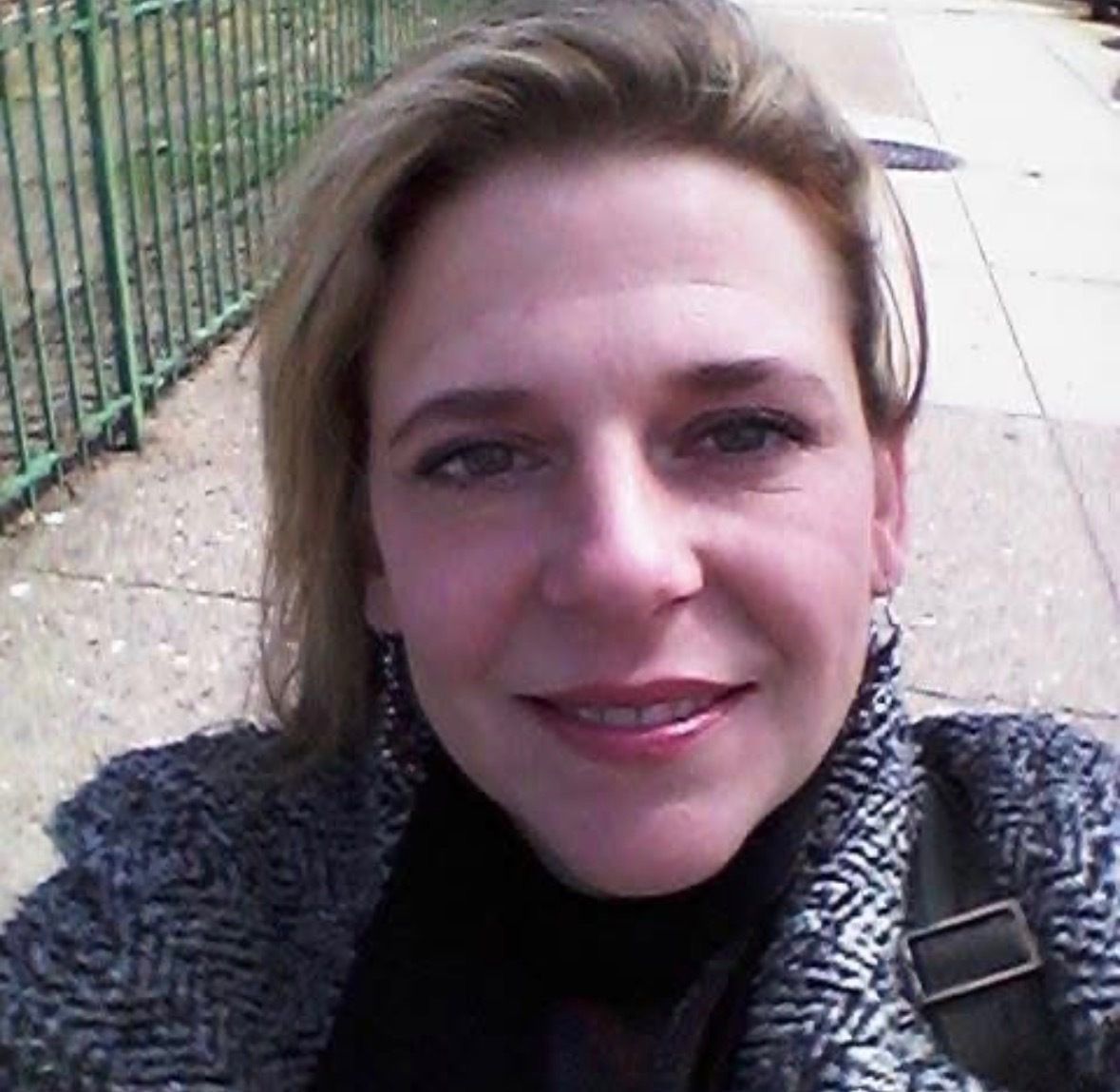
    Amy McHale.Courtesy of the family of Amy McHale

    Staff writers Brett Sholtis, Michelle Myers, and Isabel Maney contributed to this article.

  • What we know about the Olney investigation into missing women

    What we know about the Olney investigation into missing women

    A law enforcement search continued Saturday at a dilapidated three-story brick twin in Olney, where police are investigating the homeowner’s connection with at least two missing women.

    The house belongs to Eugene Albert Horsch, 44, who was arrested June 19 and charged with illegal gun possession and drug-related crimes.

    Horsch’s initial arrest sparked questions: Why did he have a fake ID showing himself to be a DEA agent? Why did a woman with Horsch identify herself as someone else who was reported missing in 2023?

    More questions unspooled as city police investigators and federal agents looked inside Horsch’s house, where they found hidden compartments, a 55-gallon drum, chemicals, unknown liquids, a woman’s death certificate, and a handwritten letter that seemed to describe hurting people.

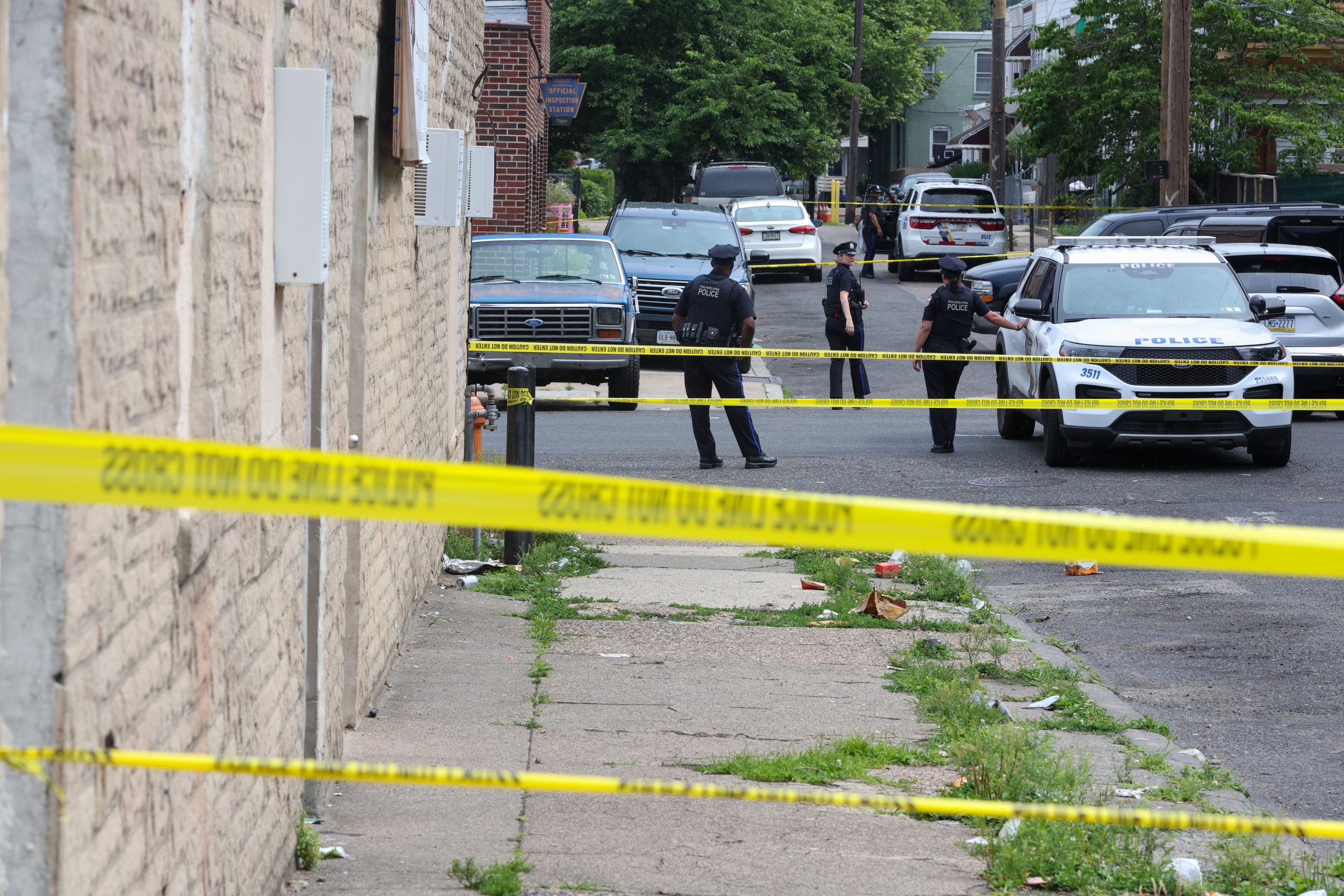
    On Saturday, Philadelphia police closed off the block and FBI forensic experts entered the property in hazmat suits.

    In addition to these questions, there’s an older mystery — the June 2016 disappearance of Amy McHale.

    Here’s what we know so far.

    What prompted the investigation?

    The morning of Friday, June 19, a U.S. park ranger near Independence Hall in Old City heard “a disturbance” coming from a black BMW, Philadelphia Police Department Deputy Commissioner Frank Vanore said Friday.

    The ranger heard a woman say she was concerned that Horsch was going to hurt her, Vanore said.

    The woman gave the ranger an identification card bearing her photo but the name of another woman who had been reported missing, Vanore said.

    “And the park ranger felt that there was illegal drug activity going on inside the vehicle,” Vanore said.

    Other law enforcement officers in the area were called to the scene, he said. In the car, police found cocaine, fentanyl, marijuana, two firearms with serial numbers removed, a collapsible baton, a cattle prod, and switchblade knives, sources told The Inquirer Friday.

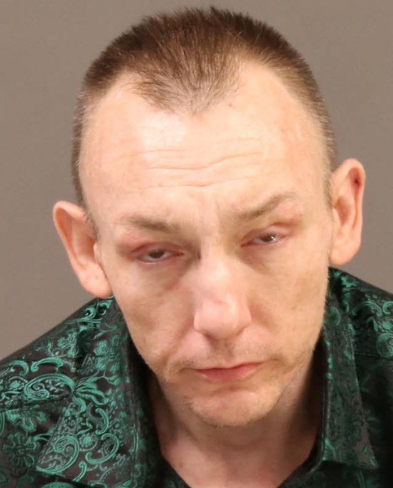
    Eugene Albert Horsch, 44, of Philadelphia.Courtesy of Philadelphia police

    Why did Horsch have fake DEA credentials?

    Law enforcement also found a fake U.S. Drug Enforcement Agency badge with Horsch’s photograph under the name “Eugene Frederick Steiner” in the car, sources told The Inquirer.

    Police haven’t spoken publicly about why they believe Horsch had the fake ID. However, they soon brought real DEA agents to the scene, Vanore noted.

    Soon, those agents were among those searching his Olney home.

    What did police find inside the Chew Avenue house?

    Police searched Horsch’s home on the 400 block of West Chew Avenue, where they found a 9mm firearm, ammunition, and a marijuana grow operation on one of the floors, Vanore said.

    “The further search of this property produced some other things that we have a lot of questions about,” Vanore said.

    Police brought in homicide investigators — who are now leading the investigation with FBI assistance — due to their experience and because several urns, possibly from deceased family members, were found, Vanore said.

    Investigators found at least one more fake ID presenting someone as federal law enforcement, Vanore said, as well as “computer evidence” that the DEA took for analysis.

    They also found bank cards in the name of the woman who went missing in 2023, and recovered what appeared to be a death certificate for another woman who died last year, The Inquirer reported Friday.

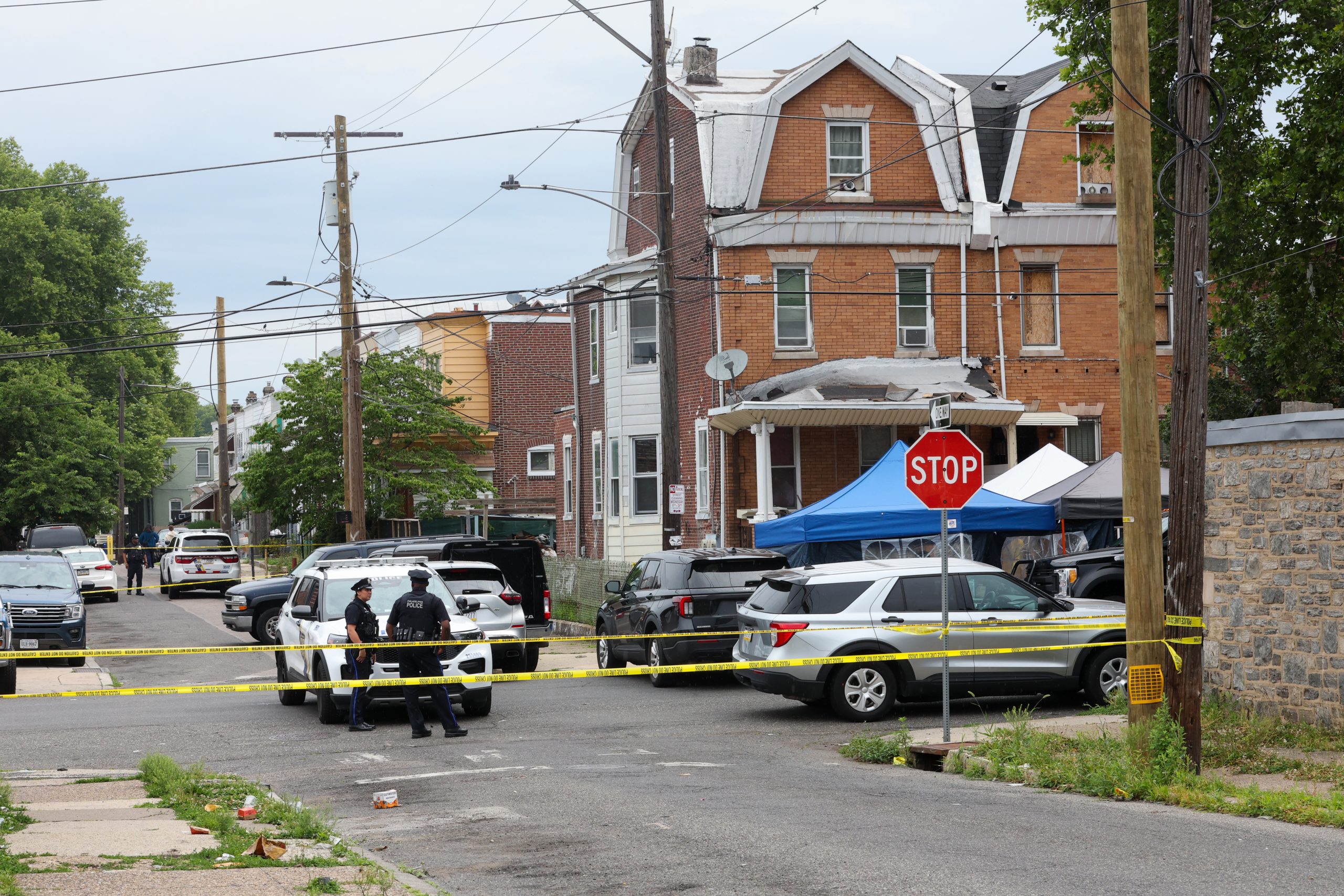
    Police have officially blocked off access to the street at 417 W Chew, in Olney home in Philadelphia, June 27, 2026. Residents in the area are unable to access the street since Saturday morning.Aidan T. Gallo / Staff Photographer

    Why is the FBI involved?

    Investigators also found hidden compartments, “hoses coming from barrels,” and bottles containing chemicals and unknown liquids, Vanore said.

    Some of the chemicals, if combined and ignited, could pose hazards, he said. The chemicals are what led investigators to ask for help from FBI experts, Vanore said.

    “There’s chemical work being done, but we just don’t know if he was trying to produce narcotics, or some other work,” Vanore said.

    What is the handwritten letter investigators found?

    Federal investigators also found an unsigned handwritten letter that described references to hurting unspecified people, and references to the serial killer Ted Bundy, The Inquirer reported Friday.

    “Acting on emotion is where problems occur. What I don’t think I told you was that the first time it was planned ahead of time. The threat was made before you know who came over and I already had a 2ft zip tie in my pocket and a drum set up,” the letter said.

    “I had been ready and waiting and I damn sure showed no hesitation. And it was fun,” the letter said, according to an affidavit of probable cause for a search of the home obtained by The Inquirer.

    Law enforcement sources said investigators were working to learn who wrote the letter and whether it may be part of a work of fiction.

    Have police found bodies at the house?

    Rumors spread quickly online Friday, with one of the most widespread ones being that human bodies or remains had been found at the house.

    Speaking to reporters, Vanore dismissed these rumors.

    “There’s no apparent bodies inside the house,” Vanore said. “Now, we’re going to further search. There’s a sump pump that looks like a hole in the ground, but there’s no bodies.”

    Who are the missing women?

    Police have not released the names of any missing women connected to Horsch.

    The woman whose name was on the fake ID went missing in February 2023 from the Kensington area, sources told The Inquirer Friday. The woman who was with Horsch when he was arrested told police she used the fake ID because she had outstanding arrest warrants. She didn’t know the missing woman, but feared that something bad happened to her.

    Vanore said he didn’t know if the missing woman had known Horsch.

    “I have nothing to say she was ever inside the house, but of course, that’s why we’re still holding it and we’re still going to look,” Vanore said.

    Vanore noted that Horsch had enough information about the missing woman to create a convincing fake ID.

    Another woman who disappeared was Amy McHale, of South Philadelphia, who went missing in June 2016. McHale was the ex-wife of Horsch’s father, R.C. Horsch. Police questioned R.C. Horsch about the disappearance at the time.

    Who is Eugene Albert Horsch?

    Horsch has a long criminal record including a May 2025 arrest for possession of marijuana and amphetamines, which got him three years’ probation.

    In March, he was charged with aggravated assault after police said he stabbed a man in the stomach at Eighth and Market Streets. Prosecutors withdrew the charges in May after a witness failed to appear in court, court records show.

    Horsch had at least 10 previous arrests for drug possession, dealing, assaults, and drunken driving. He was sentenced to four to eight years in prison after police discovered $1.9 million worth of cannabis inside the Chew Avenue home in 2013, court records show.

    Horsch appeared to be living at his house on Chew Avenue, despite its boarded-up windows and rundown look. Vanore said Friday that the woman who had the fake ID also was believed to have been staying there.

    What do we know about R.C. Horsch, Eugene Horsch’s father?

    R.C. Horsch, born Raymond C. Hoersch, was an erotic photographer and filmmaker who was convicted of forgery and drug manufacturing. R.C. Horsch changed the spelling of his last name.

    R.C. Horsch pleaded guilty to passing bad checks in South Carolina in 1973 and the following year was charged in Doylestown by the Secret Service with passing nearly $180,000 in fake 10-dollar bills and possessing phony drivers’ licenses.

    In 1977, federal agents raided what was described as R.C. Horsch’s home laboratory, seizing equipment they alleged was meant to manufacture and distribute methamphetamine. But R.C. Horsch absconded to New Zealand, later returning to California, and operating under the alias “Richard Harris.”

    Eugene Horsch was born in 1981, while his father was still a fugitive.

    R.C. Horsch was captured by authorities in Florida 1985. A psychologist hired by his defense attorney said he had an 140 IQ but had “deep rooted emotional problems.”

    He was sentenced to three years imprisonment, plus probation, and settled into a home in Chalfont, Bucks County.

    What was R.C. Horsch’s connection to the Chew Avenue house?

    R.C. Horsch acquired the Chew Avenue house after the death of his sister, Helen M. Hoersch, in 2004. In 2007, R.C. Horsch used power of attorney to legally transfer ownership of the property to his son for $1.

    In 2009, R.C Horsch was indicted in Chalfont for growing 455 marijuana plants. Investigators also seized two shotguns. The feds seized his suburban home and he was sentenced to 54 months in prison.

    Federal inmate records show he was released from prison in 2013.

    Are investigators examining R.C. Horsch’s role?

    R.C. Horsch died in 2025, and Vanore told reporters Friday that investigators were looking at a lot of different angles. Vanore declined to go into specifics about R.C. Horsch, and said he wasn’t going to name “other missing people” potentially connected to the house.

    “We’re certainly looking into the activities that went on at the house, even before he was there,” he said, referring to Eugene Horsch.

    Police have officially blocked off access to the street at 417 W Chew, in Olney home in Philadelphia, June 27, 2026. Residents in the area are unable to access the street since Saturday morning.Aidan T. Gallo / Staff Photographer

    What’s the latest from the investigation?

    Under a gloomy sky Saturday, about 15 FBI agents went in and out of the boarded-up home, some wearing protective suits.

    Next to the tent installed Friday outside Horsch’s home were four portable fabric shelters, with all sides shielded from public view.

    Neighbors walked around the sealed perimeter asking for information, while men in protective suits came and went from Horsch’s backyard shed.

    “They’ve begun processing the scene,” Vanore said Saturday. Forensic experts now are determining what evidence had to be sent away for scientific analysis, he said. “It’s going to take some time.”

    Inquirer staff writers Max Marin, Ellie Rushing, Barbara Laker, Michelle Myers, Chris Palmer, and Isabel Maney contributed to this article. For more details, read this story.

  • Desperation mounts in Venezuela as earthquake death toll rises to 1,430

    LA GUAIRA, Venezuela — Tensions flared Saturday as desperation grew among anguished residents of the Venezuelan state of La Guaira, where rescuers and civilians searched for earthquake survivors amid a sharply rising death toll.

    Venezuela’s government said the number of people killed rose to 1,430 Saturday morning and families reported at least 68,900 people missing, three days after the one-two punch of 7.2 and 7.5 magnitude earthquakes that devastated the South American nation.

    Venezuelans looking for loved ones and neighbors used shovels, heavy equipment, ropes, and bare hands atop mounds of toppled concrete throughout La Guaira, one of the country’s hardest-hit states.

    Most of those digging were civilians who took search efforts into their own hands, and tensions peaked over inadequate response from the Venezuelan government, whose soldiers, firefighters, police, and military cadets were evidently underprepared to respond to the tragedy.

    Frustration was only amplified by state efforts to project the image of a robust state response.

    “There’s a pile of bodies over there from last night. Newborn babies. Look what time it is, and they still haven’t come to recover them. At 8 p.m. there were people alive down there, and they haven’t bothered to rescue them. We’ve located several bodies, and they haven’t helped us recover them either,” said Mileidy Romero, who was among those searching the rubble in the seaside town of Caraballeada. “What are they waiting for?”

    Aid agencies consider the first 48 to 72 hours as crucial for retrieving people alive, though that can be extended if they have access to food and water.

    However, a growing number of international rescue teams were joining the effort to save lives nearly 72 hours after the quake.

    Acting President Delcy Rodríguez said on state television Saturday that more than 14,000 members of the military and police are patrolling the area, where access is now blocked and special permits are required to enter. More rescue teams sent by governments across the world arrived in Venezuela on Saturday.

    Simón Bolívar International Airport, which serves Venezuela’s capital, Caracas, was badly damaged in the quake. One runway was operational on Saturday as U.S. teams worked to repair the crucial throughway, Jeremy Lewin, a senior State Department official in charge of foreign assistance, told reporters.

    Government forces distributed food and water to survivors in La Guaira, and Rodríguez said her government was mounting a full response during these “critical hours for rescuing people alive.”

    The disaster poses a huge challenge for Rodríguez, the former vice president who took office in January after the capture and removal of then-President Nicolás Maduro by the United States. Venezuela has been facing economic disarray for more than a decade, and many people reject the legitimacy of the political movement Rodríguez represents.

    Search teams and foreign aid from Mexico, the U.S., Brazil, El Salvador, France, El Salvador, and more continued to arrive in Venezuela Saturday morning to bolster recovery efforts.

    Lewin, the State Department official, said the U.S. military would help coordinate flights to bring in search and rescue workers, mobile hospitals, and supplies. He said two 80-person search teams were at work and a U.S. Navy transport ship was docked off the coast of Venezuela ready to receive airlifted survivors in need of medical attention. Lewin said it is a “race against the clock” to find people injured in the quakes.

    “People are trapped under rubble, and the priority is to get the search and rescue teams and the medical professionals and others to them as quickly as possible to save lives,” he said.

    The International Organization for Migration said up to 6.76 million people could be affected, some 2 million of them in Caracas alone. The destruction was amplified by the quick succession of shallow quakes, experts said.

    Loyce Pace, the International Red Cross’ regional director for the Americas, said “people are still terrified to reenter what were their homes.”

    Indeed, many continued to sleep on the street.

    In the city of Maiquetia, people lined up outside stores and pharmacies that served them one by one behind closed doors. At one point a woman in a crowd threw herself to the ground to protect a package of diapers with her body, desperate to keep it.

    Traffic and throngs of motorcyclists at times disrupted search efforts. Mexican soldiers and volunteers repeatedly asked for silence to try to hear signs of life under the rubble, but bikers — civilian and uniformed — continued to honk horns and rev engines, to the first responders’ frustration.

    Yuleidy Cadenas, 28, stood across the street from a collapsed public housing building, hoping her son, mother, and brother would be pulled out alive.

    She fled barefoot from another building as it collapsed Wednesday and found her mother’s 12-floor apartment tower had pancaked.

    “I got on top of the rubble and told them to yell back, and nobody did, not my brother, nor my son, or my mother,” Cadenas said.

  • Trump’s Religious Liberty Commission takes aim at church-state separation

    Trump’s Religious Liberty Commission takes aim at church-state separation

    The Trump administration took aim at the separation of church and state Friday, issuing a draft report from the president’s Religious Liberty Commission that says the separation concept is a legal error and that Americans should view religion as an “essential support” and always remember “the Creator who made us and bestows our rights.”

    The 224-page report recommended the Justice Department issue guidance to promote “an originalist understanding” of how the Constitution sees the relationship between religion and government. The founders had diverse views about the topic, but recent Supreme Court rulings have suggested a more narrow interpretation of what justices considered constraints on religious freedom.

    Friday’s report also said faith-based groups working with the government shouldn’t have to accommodate civil rights laws or anything that conflicts with their religious beliefs; public schools should allow religious displays (it mentioned only the Ten Commandments); and soldiers who refused to be vaccinated and were punished should have their positions restored and be financially compensated. It called for the end to the Johnson Amendment, which bars nonprofits from making political endorsements.

    At an Oval Office news conference announcing the report, commission chairperson Dan Patrick, the Republican lieutenant governor of Texas, said the commission recommends that any official — in government, a school, the military, a hospital, etc. — who alleges a violation of church-state separation must in writing “point out exactly where you have violated the Constitution, because you have not, and from this day forward, that phrase should have no power over people of all faiths ever again in America.”

    While the phrase “church-state” separation is not in the Constitution, the concept of space between government and religion is in the First Amendment, which calls for no government “establishment of religion.” Americans have disagreed over the meaning of establishment since the founding.

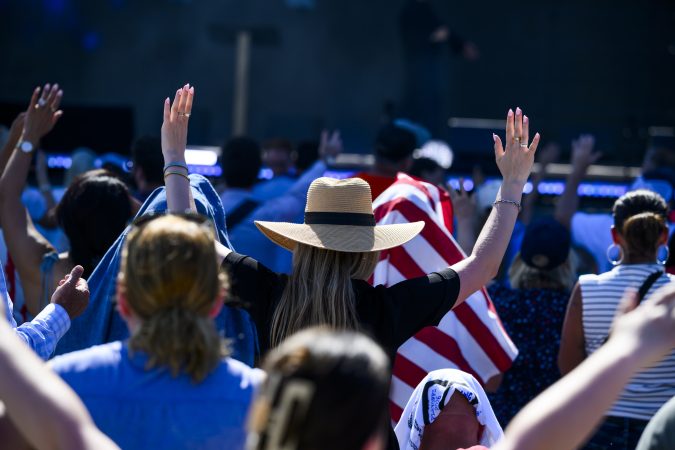
    The report was issued at a time when many conservatives are aggressively working to elevate religion — particularly Christianity — into the public square, fueled by Supreme Court decisions saying that such expression is constitutional. Several states have mandated that the Ten Commandments be displayed in public school classrooms, and many are requiring schools to release students for Bible classes during the school day. Last month, the White House hosted a daylong evangelical prayer festival on the Mall for the country’s 250th birthday, featuring commission members and others preaching from the stage.

    On Friday, the Texas education board approved a mandatory reading list for more than 5 million public school students in the state that includes Bible passages.

    President Donald Trump’s Religious Liberty Commission, created last year, is made up of all conservative Christians and one Orthodox Jew, groups who experts say make up a minority of Americans. In February, a coalition of groups representing other religious groups, as well as nonreligious and interfaith Americans, sued the administration over the commission, saying it was put together without the transparency and diversity required of a federal commission.

    The Rev. Paul Raushenbush, one of the plaintiffs in the lawsuit and head of the Interfaith Alliance, had applied unsuccessfully to be a member of the commission.

    The draft report, he wrote in a statement, “reflects the narrow, Christian nationalist worldview of the illegitimate commission. … A betrayal of the original intention of the promise of religious freedom guaranteed in the First Amendment, the report and the commission behind it fail to represent and uplift the importance of religious diversity and tolerance for all faiths in our country — not just a special, chosen few. The report is a wish list of divisive, unpopular ideas far-right religious groups have pushed for years.”

    Raushenbush also noted that while the report expresses concern about anti-Christian bias and antisemitism, it made no similar mention of growing Islamophobia around the country.

    The report is a draft, and comments from the public are open until July 12.

    The lawsuit against the commission had sought to stop the release of any report until the court ruled on whether the commission was illegally constituted. It also asked the court to mandate any commission recommendations include a disclaimer stating that the report was produced by a body that was not fairly balanced.

    Asked about the lack of religious diversity on the commission, a Justice Department spokesperson said the group was a way for Trump to create “opportunities for Americans from all walks of life to share their testimonies, concerns, and recommendations to better support Civil Rights and religious freedom in the United States.”

    “The Department of Justice’s mission is to uphold the rule of law and ensure fair and impartial justice for all Americans, which is an endeavor every American should support regardless of their political or religious beliefs,” the Justice Department statement said.

    People called to testify before the commission included a worker at an Alaska women’s shelter who turned away a homeless man who later sued for gender discrimination, and foster parents in Vermont who said their religion kept them from affirming children who were undergoing gender transitions — even though the state required foster parents to do so.

    Speaking at the White House, commission vice chairperson Ben Carson said Trump was doing more than anyone else in the country for religious liberty.

    “Our founding document says that our rights come from our creator and not from government,” he said. “People who try to divorce us from that heritage? Do they realize that that’s our family document? Do they realize that our family just says we are one nation under God?”

    Trump noted that he won the overwhelming majority of evangelicals in his elections.

    The White House is facing other litigation over its religion-related actions. Americans United for Separation of Church and State, among other advocacy groups, has a total of seven lawsuits.

    Some note that Trump’s Justice Department asked other federal agencies for examples of what it called “anti-Christian bias” and sought access to any complaints received as a result. Others note the proselytizing of some agency heads, including Defense Secretary Pete Hegseth and Agriculture Secretary Brooke Rollins.

  • U.S. says it struck multiple targets in Iran after drone attack on Bahrain, ship struck in strait

    DUBAI, United Arab Emirates — The U.S. military said Saturday it had struck multiple targets in Iran at President Donald Trump’s direction, continuing a string of attacks that have shaken the war’s uneasy ceasefire.

    The military said in a post on X that “Iran had a chance to honor the ceasefire agreement” but “elected not to” when its forces attacked a ship near the Strait of Hormuz earlier Saturday.

    Iran state TV reported explosions north of the Strait of Hormuz.

    Iran launched a drone assault targeting Bahrain while a ship in the Strait of Hormuz separately came under attack Saturday, in Tehran’s likely response to overnight airstrikes by the United States.

    The attacks in the Persian Gulf show the danger of the Iran war again spinning out of control, even after Iran and the U.S. reached an interim deal to try to agree on a final accord to end the conflict.

    The U.S. had launched airstrikes overnight in response to an Iranian drone attack on a container ship trying to leave the strait on Thursday, continuing a string of attacks that have shaken the war’s uneasy ceasefire.

    Meanwhile, a multinational maritime body overseen by the U.S. Navy said Saturday that it would expand a route near Oman in the strait to allow for both inbound and outbound traffic. That likely sets up a new flashpoint with Tehran, which sees the strait as a key source of leverage in ongoing talks with the U.S.

    Bahrain condemns Iran’s drone attack

    Bahrain has been one of the strongest critics of Iran and is home to the U.S. Navy’s 5th Fleet. It just hosted U.S. Secretary of State Marco Rubio for a meeting of the Gulf Cooperation Council’s foreign ministers, which ended with a call for an end to Iran’s attacks and for the strait to be completely open.

    A statement from Bahrain’s Foreign Ministry said a “number of Iranian drones” targeted the country. It called the attack “a flagrant threat to the security of citizens and residents.” There were no immediate reports of damage.

    Iran’s paramilitary Revolutionary Guard earlier on Saturday issued a statement carried by the state-run IRNA news agency saying it had targeted several locations “of the U.S. terrorist army in the region.” It did not name what areas were targeted.

    The U.S. military’s Central Command said the military struck Iranian missile and drone locations and coastal radar sites in the overnight strikes.

    U.S. Vice President JD Vance, who has led the negotiations with Iran, said on social media Friday night that Iran should “pick up the phone” if there are disagreements about the ceasefire agreement, “but violence will be met with violence.”

    The U.S. and Iran are negotiating terms of the deal including issues such as getting ships through the strait that are vital to global supplies of oil and natural gas and addressing the future of Iran’s nuclear program and stockpile of highly enriched uranium.

    Under the interim deal, the two sides have 60 days to work out the details. Ending the fighting in Lebanon between Israel and the Iranian-backed Hezbollah militant group is a key part of the deal.

    Ship comes under attack as strait route expands

    The British military’s United Kingdom Maritime Trade Operations center said that a tanker was attacked Saturday in the strait, with the crew safe and no environmental damage reported. No one immediately claimed the strike, but suspicion fell on Iran.

    Just after that report, the Joint Maritime Information Center, overseen by the U.S. Navy, said the route near Oman’s shore is expanding to allow for inbound and outbound traffic.

    Iran has insisted that ships must obey its orders and warned it will start charging fees for transit through the strait. However, ships have been increasingly trying to leave the Gulf in recent days.

    Ebrahim Azizi, who heads the Iranian parliament’s national security commission, wrote Friday that “the Strait of Hormuz is governed by Iran, so: Respect the rules.”

    The U.S. and Gulf Arab states have rejected Iran’s demands. The strait is considered an international waterway, despite being the territorial waters of Iran and Oman.

    The Joint Maritime Information Center warned that the threat to ships was “substantial,” adding that “mariners are advised of the existence of mines and should expect a naval presence as clearance operations continue.”

    The International Maritime Organization on Friday halted a new effort to evacuate ships and said it won’t resume until there are guarantees that other ships won’t be attacked. It said about 115 ships have been able to move out of the strait in recent days.

  • Inside the Flyers’ 2026 NHL draft party: Fans come together in Atlantic City to share passion — and critique the team’s first-round move

    Inside the Flyers’ 2026 NHL draft party: Fans come together in Atlantic City to share passion — and critique the team’s first-round move

    ATLANTIC CITY — Noel Cronon and Sarah Colon, both native Philadelphians and devoted Flyers fans, had never met in person before the Flyers’ draft party in Atlantic City on Friday night.

    The two first connected through Flyers Nation, a Facebook group with more than 67,000 members where fans discuss the team and post updates. Cronon saw Colon in the group and reached out, and asking if she wanted to go to the draft party together.

    “There aren’t a lot of female Flyers fans, so it’s nice that we found each other,” Cronon said. “There are a lot of women here tonight, though, which is good to see.”

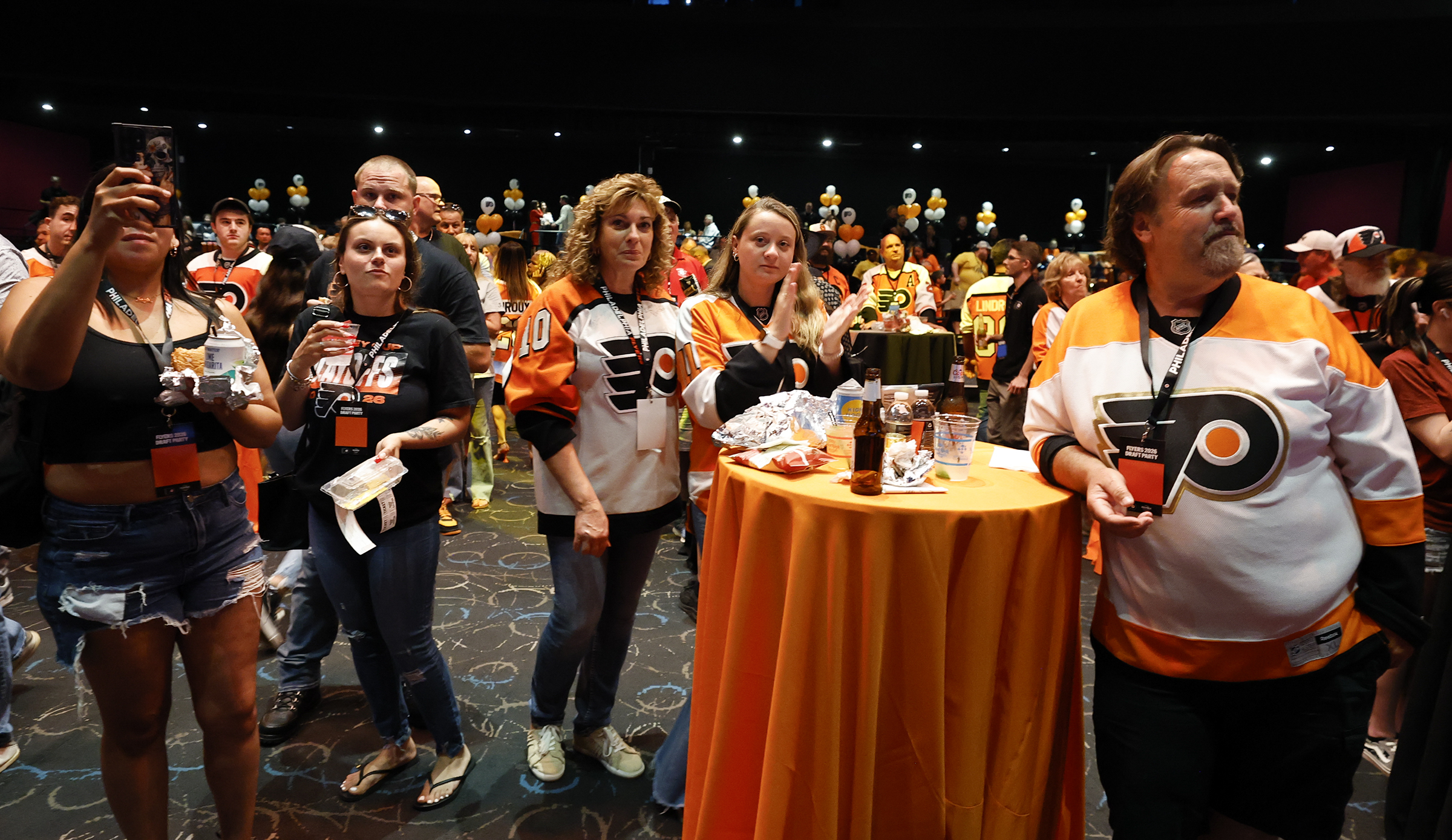
    Several hundred Flyers fans came together as a fan base at the Sound Waves Theatre at Hard Rock Hotel and Casino in Atlantic City to watch the 2026 NHL draft. Orange balloons, streamers, and Flyers memorabilia decorated the venue while fans came decked out in their best Flyers merchandise.

    Flyers fans watch the 2026 NHL draft during a party at the Hard Rock Hotel & Casino in Atlantic City on Friday.Yong Kim / Staff Photographer

    To kick off the night, past and present broadcasters Jim Jackson, Tim Saunders, and Steve Coates took the stage to share their thoughts on what general manager Danny Brière might do with the team’s first-round pick and energize the crowd.

    “We are back,” Coates said when he addressed the crowd. “Remember, this is a team that is going places.”

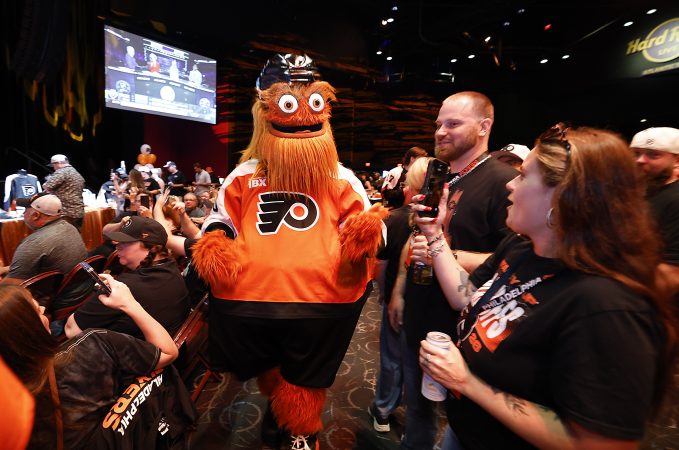
    The Austin City Nights band started the party, while the beginning of the draft played from monitors above the stage. Forward Porter Martone joined the band onstage and Gritty, the beloved Flyers mascot, posed for selfies and photos while Jackson went around the audience speaking with fans and taking photos.

    Father and son Grant and Trent Kitchenman have been season ticket holders since 1992 and said that they never miss events like this.

    “It’s really cool that they allow fans in on the draft night experience,” Grant said. “It makes it more personable and you get to see some of the players which is cool.”

    Garett Babik couldn’t have imagined watching the draft anywhere else.

    His dad took him to a playoff game against the Boston Bruins in 2010, and he’s been hooked ever since. During this year’s playoff run, Babik attended games dressed as Darth Vader to show his support for goalie Dan Vladař.

    “I’ve been a fan my entire life,” Babik said. “This is my life. I love this team from the bottom of my heart, and I can’t express that enough.”

    Fans (from left to right): Zack McErlain, Tug McErlain, Thomas McErlain and Stephen Dellaquilla react after the Flyers picked defenseman Maksim Sokolovskii with the 27th overall pick during the Flyers’ 2026 NHL draft party at the Hard Rock Hotel & Casino in Atlantic City on Friday.Yong Kim / Staff Photographer

    When it came time for the Flyers to make their first-round selection, the band stopped playing, and the theatre became quiet. Fans turned their attention to the monitors and anxiously waited for the announcement.

    When the trade alert came up on the screen and NHL commissioner Gary Bettman announced the trade, the crowd booed.

    Babik was not thrilled with the move either, he said.

    “I’m going to be totally blunt. I didn’t like it,” he said. “[Dallas Stars winger] Jason Robertson has been on the market, and I was hoping they would’ve got him. Don’t get me wrong, I understand we only have four picks in this draft, and they wanted to get more.”

    After they traded the 21st pick to the San Jose Sharks, moving down to No. 27, some fans immediately left, leaving the true diehards to wait until their pick.

    Among them were Eddie Bertino and Scott Parker, childhood friends from South Jersey who grew up playing hockey together and played in under-30 and under-40 leagues.

    Flyers Porter Martone signs his autograph for fans during the Flyers’ 2026 NHL draft party at the Hard Rock Hotel & Casino in Atlantic City on Friday.Yong Kim / Staff Photographer

    Bertino started playing hockey when he was 5 years old, with Parker’s dad as his coach. Both became lifelong Flyers fans thanks to their fathers, who had season tickets and attended the Flyers’ Stanley Cup victory in 1975.

    When Bertino secured the tickets for the draft party, he knew Parker was the right person to accompany him.

    “He is one of my few diehard Flyers fan friends,” Bertino said. “ I didn’t want to be here with some poseur, I wanted to be here with another diehard.”

    By 10:20 p.m., with the Flyers still waiting to pick and it being a Friday night in Atlantic City, Bertino was surprised so many fans decided to leave, but he wasn’t surprised by Brière’s trade.

    “The past two years he’s made some sort of trade, it’s kind of his thing,” Bertino said.

    Many fans didn’t stay around long enough to see the Flyers pick 6-foot-7 defenseman Maksim Sokolovskii with the 27th overall pick.

    However, a similar sentiment was shared with fans throughout the night — the future of Flyers hockey is bright, and they are proud to be a part of the fan base.