Category: News

  • Collingswood residents have spent years fighting for backyard chickens. This time, they think they might win.

    Collingswood residents have spent years fighting for backyard chickens. This time, they think they might win.

    Any Collingswood resident over the last 18 years can remember the fight to legalize backyard chickens. Or the second attempt. Or the third.

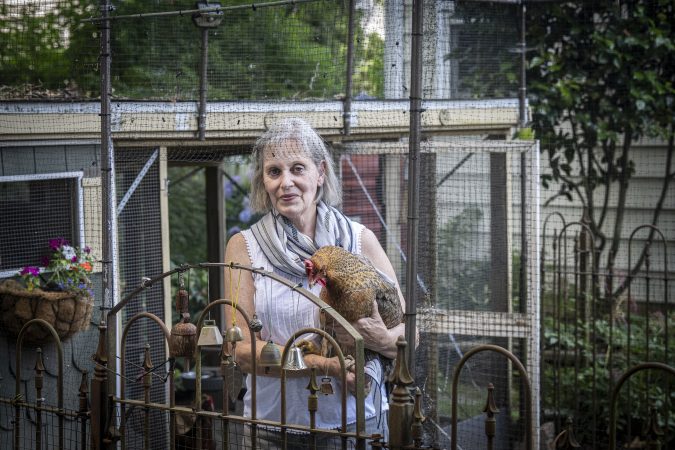
    Gwenne Baile, 77, knows the efforts well. A Haddon Township resident and the unofficial “Chicken Lady of South Jersey,” Baile initially became interested when she saw Martha Stewart showing off her chickens on TV. After retiring in 2009 from a long career as an ob-gyn nurse, Baile decided she needed a hobby.

    “I started looking into it,” Baile said, “but it was illegal here.”

    Since then, Baile said, she has played some part in changing the ordinances in 35 municipalities across South Jersey, including in her hometown. She keeps a list of places with pro-chicken zoning rules, including the 19 municipalities in Camden County that allow them. Baile now has five hens, taken in as fosters, including those injured by predators or forced from owners whose municipalities do not allow coops.

    One hen with arthritis lives indoors. Baile calls her a “mini me” since she hates the heat, doesn’t like exercise, and has golden feathers that match Baile’s hair.

    Gwenne Baile, an advocate of backyard chickens, holds Mimi, a family’s hen in Audubon.TRACIE VAN AUKEN / For The Inquirer

    Baile and a small group of hopeful Collingswood residents have frequented Collingswood Borough Board of Commissioners meetings in recent months. At its last working meeting on June 17, the group handed over proposed language that they hope the board will use in a future ordinance supporting backyard chickens, informed by Baile’s years of advocacy.

    The last major push for residential hens fizzled out in 2019 after several Collingswood residents spent more than a year regularly attending meetings to champion an ordinance that never saw the light of day.

    But this time feels different, Baile said, and some locals and officials agree.

    Dan DiVito, 42, has lived in Collingswood for six years and owns Front Yard Food, a business that teaches people how to grow their own crops and helps design the backyard infrastructure to do it. If Collingswood passes an ordinance, DiVito said, he will get chickens himself and join the new Backyard Chicken Advisory Board — a five-member commission that would oversee the initiative and investigate complaints.

    “Chickens are a no-brainer,” DiVito said. “It’s a pet that makes you breakfast.”
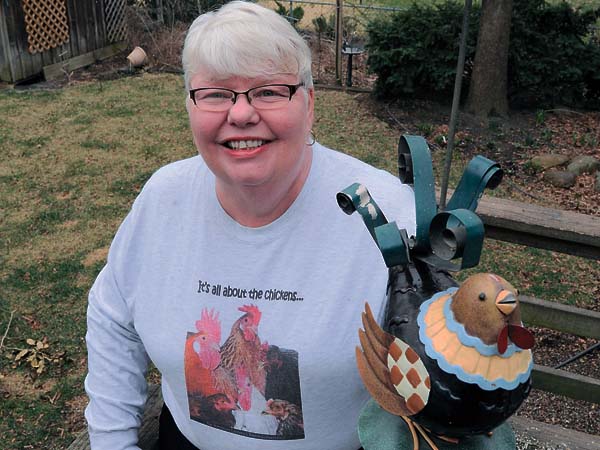
    Gwenne Baile in her backyard in 2014. CLEM MURRAY

    ‘A change and an opportunity’

    Collingswood did not always ban chickens.

    But in 2008, Collingswood’s three-person board of commissioners — made up of a mayor, deputy mayor, and a commissioner — adopted measures prohibiting residents from keeping or breeding a long list of livestock and fowl, including chickens.

    Local news records from 2008 do not give a clear explanation why the rules were adopted, other than comment from then-Mayor Jim Maley that the board wanted to “head off a problem before it presents itself.”

    The maximum penalty for violating the ordinance is a $500 fine.

    Repeated attempts to end the ban have been unsuccessful, even as neighboring municipalities passed ordinances to allow chickens. Some residents voiced concerns about the smell or the noise, or about Collingswood properties being too small to house chicken coops. Collingswood Chicken Uprising, the local Facebook group for the chicken resistance, was created 16 years ago and is up to 234 members.

    But a recent political shift in Collingswood has meant hope for some local chicken advocates.

    Maley’s 28-year tenure as mayor ended last May, when two progressive challengers joined Maley to win seats on the board of commissioners.

    Daniela Solano-Ward became the first female and Latina mayor of Collingswood in 2025, and Deputy Mayor Amy Henderson Riley became one of only a handful of women to serve on the board in the borough’s history. That shuffling was one factor that brought on the chicken resurgence.

    “Advocates and community members saw that this was a change and an opportunity to try this out with the new team and see what could happen,” Henderson Riley said.

    Maley, who has said that he would not want chickens living next door or support a backyard chicken pilot program, would be one of three votes if an ordinance makes it to the floor. It takes only a majority to pass.

    Passing an ordinance takes time. There must be two separate readings of the proposal, and time must be given for residents to comment. The next commissioners meeting is not until July 15, and Henderson Riley said Tuesday that she was unsure whether the proposal drafted by Collingswood residents would make it to the agenda.

    But with an organized, citizen-led group, Henderson Riley said, she suspects this is the most favorable effort thus far. Plus, with concerns like the cost of living and gas prices, she said, there are bigger things to worry about than banning chickens.

    “Let the chicken people have their thing,” she said.

    Maley and Solano-Ward did not respond to requests for comment.

    What advocates are proposing

    Suzanne Passante feeds her chickens inside the chicken coop in the backyard of her home in Haddon Township, N.J., on Wednesday, June 24, 2026.Jose F. Moreno / Staff Photographer

    Every municipality’s backyard chicken ordinance is slightly different. Most have strict requirements, including that coops are predator-proof, set a certain distance from other properties, and kept dry and clean.

    Collingswood residents’ pitch to the commissioners would ban roosters, forbid residents from selling their eggs, and require completion of an online course teaching applicants how to care for hens. Collingswood could have only 30 households with hens at a time (of the 6,900 estimated housing units the U.S. Census Bureau estimates are in Collingswood), and new licensees would be capped at four chickens.

    Chicken owners would have to pay $10 fees annually to renew their licenses. The Backyard Chicken Advisory Board would investigate complaints and help relocate chickens that are no longer wanted, since the advocates are calling for a ban on slaughtering hens.

    Any violations could result in a fine of up to $1,250 or imprisonment of up to 90 days, a more severe punishment than the current ordinance gives for keeping chickens.

    Henderson Riley, who has a doctorate in public health, took the three-hour backyard chicken course to learn more about the potential process residents would have to go through to get a coop.

    She passed, but not without a bunch of red markings and a reality check that owning chickens takes time, money, and energy that she does not have. Henderson Riley said she thinks the long list of requirements, along with the difficulty of raising hens, will dissuade the vast majority of people from partaking in the hobby.

    “It’s not like the hens are going to take over Collingswood.”

    Words of wisdom

    Lynn Parker, 52, has 10 hens in her backyard in Stratford Township, Camden County. When Stratford passed its ordinance allowing chickens in 2023 (an effort Baile helped with), Parker was the first person in line for a chicken permit.

    She now chairs the township’s Hen Advisory Commission, which inspects new coops and educates residents. Fourteen homes in Stratford have chickens now, Parker said, and there have been no complaints.

    Her advice to people who want to change their municipality’s chicken law is simple.

    “Even if you get a no, do it again,” Parker said.

    Suzanne Passante, 71 and Baile’s neighbor, chairs Haddon Township’s Backyard Chicken Advisory Board. She has four chickens and averages a dozen eggs per week.

    It took time to educate residents about the benefits of hens and to quell misconceptions, like chickens attracting rats, but she said complaints have been nonexistent in recent years.

    “Now, after 11 years, people don’t even think about it,” Passante said.
  • How Philly’s historical reenactors are preparing for their Super Bowl: The nation’s 250th

    How Philly’s historical reenactors are preparing for their Super Bowl: The nation’s 250th

    The players amble into the auditorium on a cloudy May morning to run through their schemes and formations and make last-minute adjustments to the roster. Some are already in uniform — waistcoats and breeches — fueling up on Wawa coffee and bagels. Others scroll aimlessly on iPhones or finish off their cigarettes outside the Free Quaker Meeting House near Independence Hall. They discuss contingencies, ready their gear, and buckle their latchet shoes tight.

    “Get out there and have fun,” their coach, Historic Philadelphia’s director of storytelling Johanna Dunphy, says as she sends her proud-chested team of historical reenactors off for their preseason opener.

    This is the start of the team’s Super Bowl run: the lead-up to the nation’s Semiquincentennial. The cast of Ben Franklins, John Adamses, and Betsy Rosses — actors who have spent months and uprooted their lives to learn about and live as colonial America’s key characters — will be at the front lines of the 250th birthday celebrations, which began with the cast’s opening day on May 23 and reach a fever pitch on July 4. They will become de facto historians, guides, entertainers, and ushers to an expected crush of tourists, all while anchoring how the country’s earliest days are memorialized and whose stories get to be told.

    “Fly!” Dunphy says with gusto as the performers shuffle out of the modest redbrick building.

    This set of actors is part of Historic Philadelphia’s Once Upon a Nation program — a series of performances staged throughout the summer and beyond in Philadelphia’s historic district and at Valley Forge. It’s Once Upon a Nation’s 21st season, but this year is expected to be one of its biggest ever, with the most actors, plays, scripts, and events.

    And, with tourism agencies expecting this summer’s events to draw upward of one million visitors, it’s almost certain to be the program’s largest audience.

    “Philadelphia is ready for you,” Amy Needle, Historic Philadelphia CEO, told the players on the last day of the preseason. “And I know you’re ready for them.”

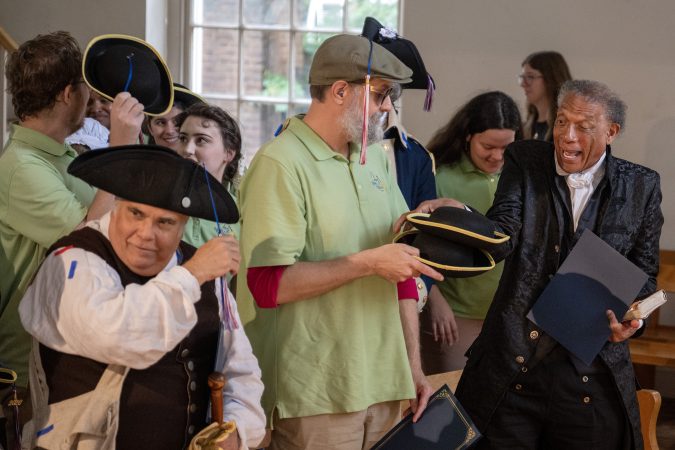
    Shecky Perlman as Ben Franklin, and other historical reenactors receive their diplomas on May 21, 2026, after weeks of intensive, immersive training at the Benstitute. Tom Gralish / Staff Photographer

    Four months to game day

    Actors, mostly local, file in and out of Jason Greenplate’s office on a chilly January afternoon. Greenplate, program manager for Once Upon a Nation, and his colleagues are seeking the strongest possible players who have the passion, the look, and the improvisational skills to take on the characters and become “history makers” — what Historic Philadelphia calls its reenactors. It’s essential for these coaches to choose players who are not only capable of taking on these roles but are also willing to challenge their own understanding of history.

    Spencer Salusky, a 23-year-old fresh William & Mary graduate, walks through the door.

    As a draft prospect, Salusky is an impressive pick. He can execute even the most complex of plays (tricky lines and blocking), and his stats (body measurements and head shape) are optimal.

    “He kind of looks like John Adams,” Greenplate thinks.

    After conferring with his peers, Greenplate chooses Salusky to become Once Upon a Nation’s next John Adams, and, one by one, 19 more actors are cast as history makers and storytellers, those who are stationed at the city’s historic sites in green polos to offer context to visitors. They join the existing 30 company members returning from prior years.

    Courtney Mitchell, who portrays Margaret Woodby (left), and Spencer Salusky (right) as John Adams, join other historical reenactors at graduation on May 21, 2026, after weeks of intensive, immersive training at the Benstitute.Tom Gralish / Staff Photographer

    Three months to game day

    The actors soon begin their training. For Salusky, that looks like receiving a large packet full of biographical information about John Adams — where he was born, his wife’s name, and his perspective on slavery — from Doug Thomas, director of history makers.

    Thomas is a player-coach, a star in his own right who can seamlessly transition to the coaches’ box. Like Deion “Prime Time” Sanders, Thomas is a Swiss Army knife on the field, having played every position in the game of historical reenacting, from William Penn and Patrick Henry to Francis Scott Key, and has been doing the work for nearly 30 years. But what makes him truly elite is his position as Mount Vernon’s George Washington.

    Out in the field, the players might be blindsided by a granular question from a tourist, an offensive remark from a passerby, or incessant badgering from a child. On the stage — where the history makers also perform a series of scripted plays — they must be prepared to embrace their characters’ conflicting motivations, shifting attitudes on political issues, and complex interpersonal relationships.

    Thomas is equipped to help them tackle it all.

    He guides them in studying their characters, trains them on redirecting conversations with visitors toward topics they’re knowledgeable about, and teaches them improvisational techniques. He also prepares them to embody the voice, posture, and behavior of historical figures.

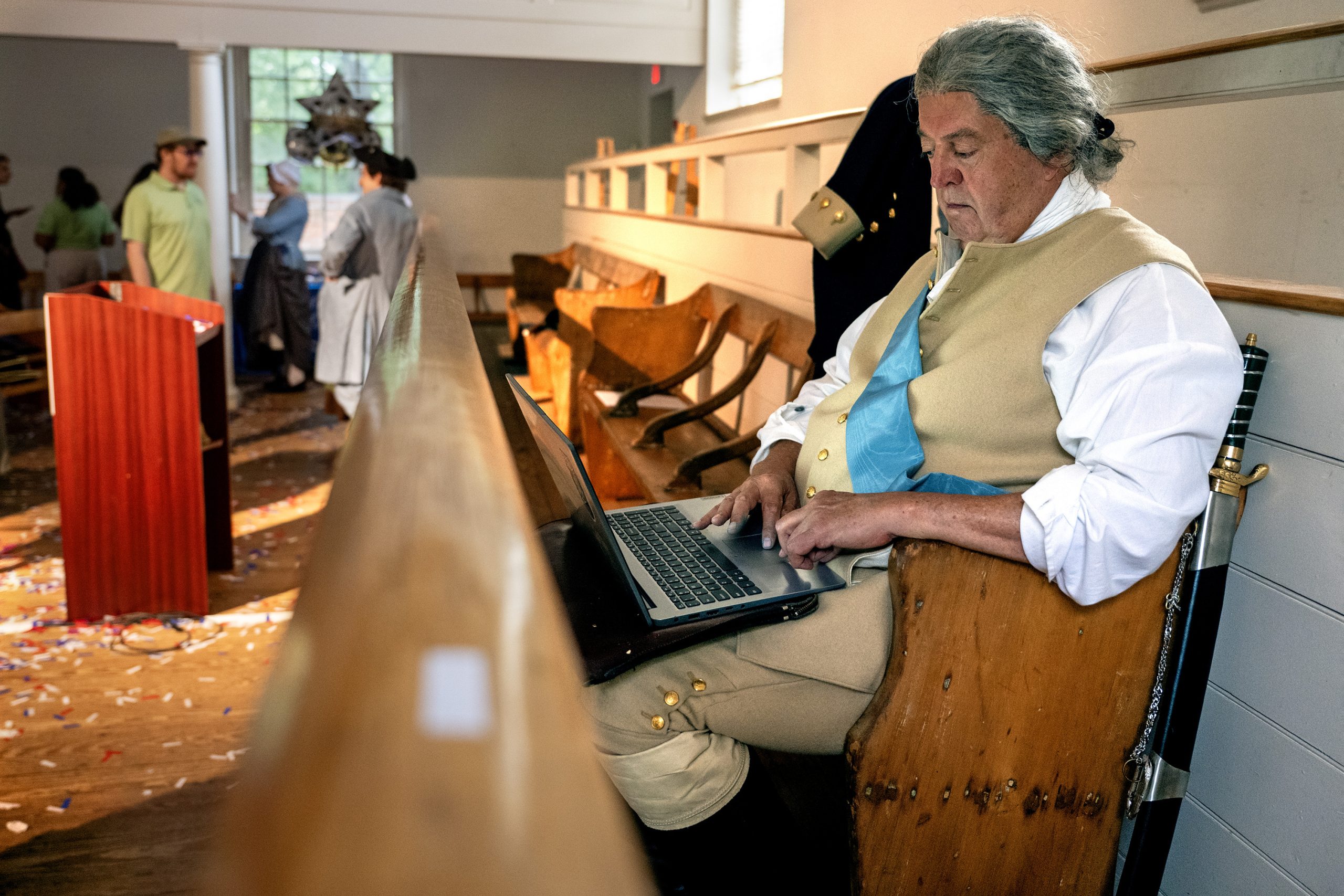
    Jim Fryer as George Washington checks in on his laptop on May 21, 2026, after the graduation of dozens of historical reenactors after weeks of intensive, immersive training at the Benstitute.Tom Gralish / Staff Photographer

    Three days to game day

    “Adams,” Thomas says, summoning Salusky during a rehearsal for Cocktails and Congress, a marquee performance in the Once Upon a Nation repertoire.

    On a scorching 95-degree afternoon that foreshadows what the players can expect during the steamy home games to come, Thomas scans the script, glasses poised atop silky black hair that grazes his shoulders. He directs Salusky’s attention to a moment in the dialogue: “Slavery is like a great cancer.”

    He cautions the actor to be careful with how he utters that line. Adams is torn about slavery at this point in his life, Thomas explains.

    “He doesn’t like it, he doesn’t support it, but also he does realize very practically what eliminating slavery would do to the economy,” Thomas tells Salusky.

    Salusky contemplates the note, sitting on a Meeting House pew with a mechanical pencil tucked behind his ear.

    “Adams is evolving,” Thomas tells him. But “he’s a practical man.”

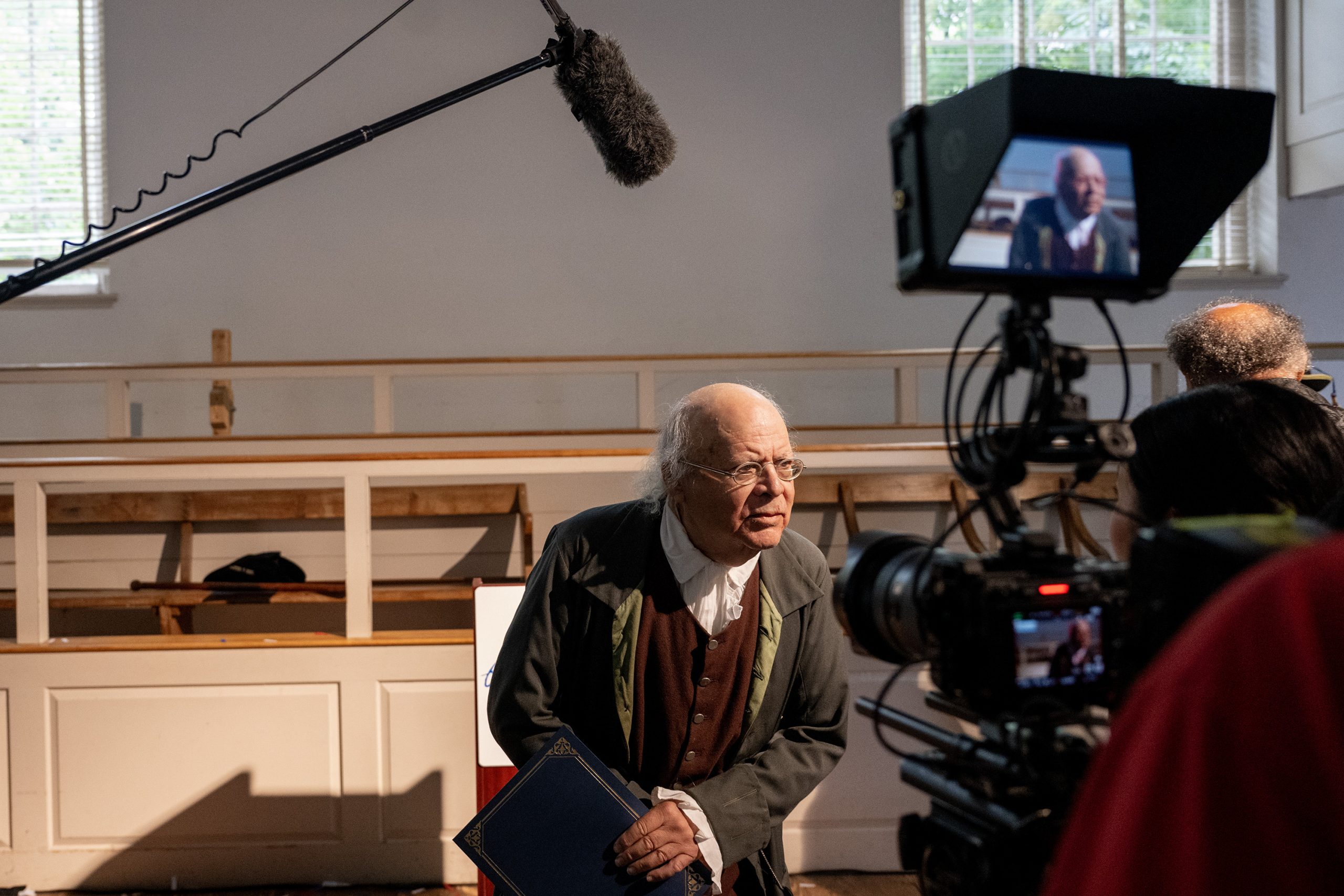
    Shecky Perlman as Ben Franklin, ready for his close-up, on May 21, 2026, as he is interviewed by a documentary film crew, as dozens of historical reenactors graduate after weeks of intensive, immersive training at the Benstitute. Tom Gralish / Staff Photographer

    Two days to game day

    Even with centuries of primary and secondary sources, and extensive research, there are still gaps in what’s known about 18th-century American life that the actors and program coordinators must contend with. There’s a trove of information on John Adams, for example, but the documented lives of women and people of color are far less complete, like that of Hannah Till, an enslaved cook for George Washington at Valley Forge, who purchased her freedom. What’s known about Till is often centered on her enslavers.

    West Philadelphia actor Miranda Thompson, who portrays Till as well as Sarah, a fictional composite character in Cocktails and Congress, relies on more general information about how women of color lived during the colonial era to inform her performance. “You just want to get it right,” Thompson, 43, says. “You want to give truth to who that person was. … I feel like if I’m grounded and honest within that interpretation, I think that I’ve done it justice.”

    For historian Sandra Mackenzie Lloyd, who authored many of the Once Upon a Nation scripts and founded the Benstitute — the immersive training program the actors undergo — the American story is about “more than the dead white dudes.”

    “It’s not a straight line,” Lloyd says. “We are people who have been through many difficult periods and ups, downs. This is a country that was created by people from many places with different beliefs, and that’s historic, and it’s contemporary.”

    Organizers were intentional about the stories and figures they chose to platform this summer, centering diverse and layered voices in the narrative of the nation’s founding, including those of Black Americans whose stories have been omitted in the retellings of the story of 1776.

    “Our history is being erased, voting rights [are being erased], certain books are banned,” Thompson says. “Representation matters … to know that we were there, and we played an important role.”

    Prominently featuring Black history during the 250th, she says, is also an opportunity to dismantle racist, archaic stereotypes about enslaved people through authentic storytelling and connection.

    “You can change a person’s mind,” Thompson says. “We’re human, we can always change our minds.”

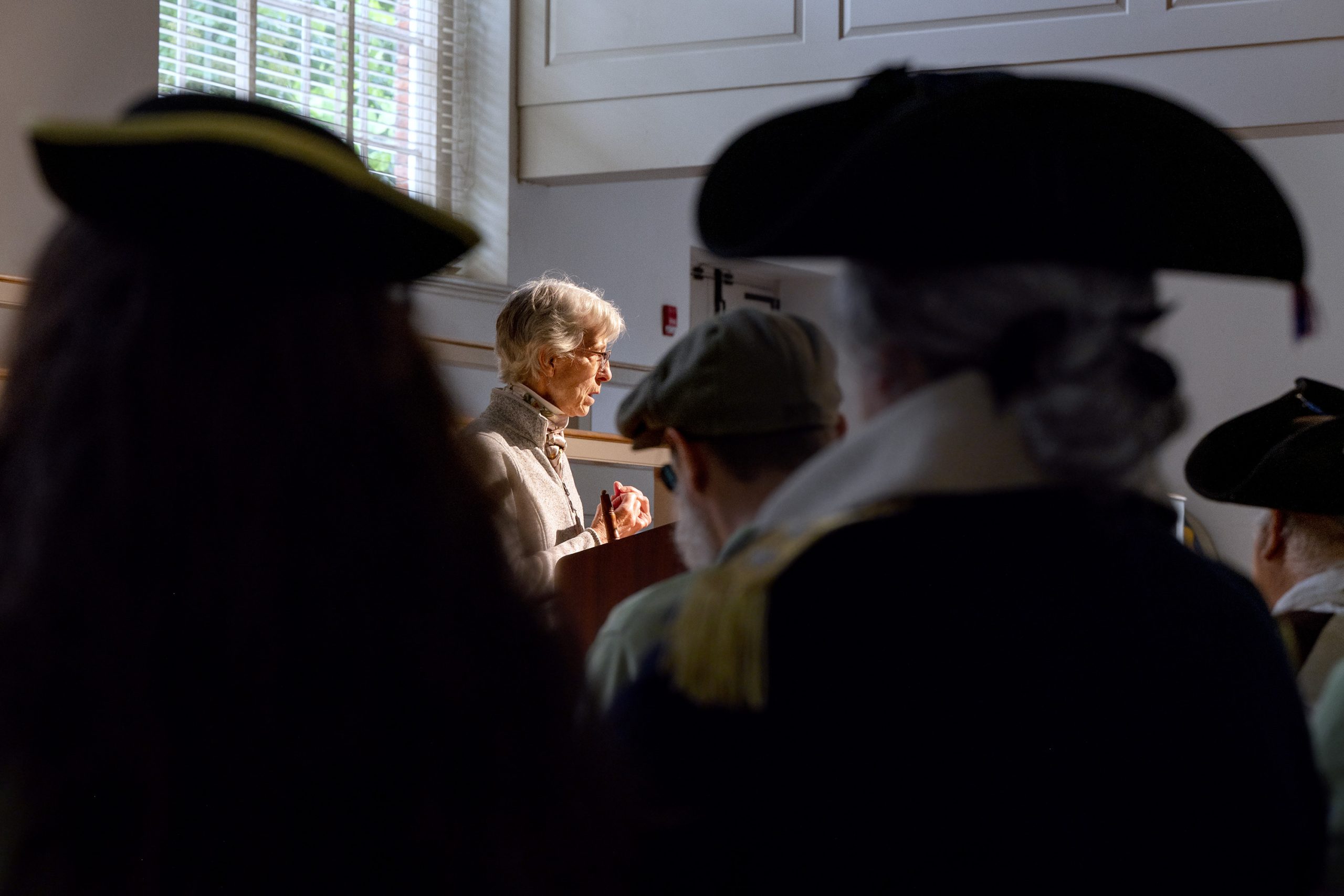
    Historian Sandra Mackenzie Lloyd, founder of the Benstitute, delivers the commencement address on May 21, 2026, as dozens of historical reenactors graduate after weeks of intensive, immersive training.Tom Gralish / Staff Photographer

    One day to game day

    Preparations for the reenactors include not only character work, but also tourism and hospitality training. They learn how to guide someone to the best cheesesteak or nearest toilet while staying in character and using period-appropriate vernacular. The actors also learn how to beat the heat in wool frocks and petticoats and stay safe.

    “Make sure to hydrate, hydrate, hydrate,” Dunphy, the storytelling director, tells her team during a morning gathering at the Meeting House before they hit the streets in costume, and a set of volunteer fake tourists heads out to test the reenactors’ skills before they’re faced with real tourists.

    She points them to a packet in their supply bags full of powder to pour into their water for extra hydration.

    “Drink this,” she instructs them.

    Most importantly, Dunphy reminds both the history makers and the storytellers what to do if they’re out in the field and feeling unsafe.

    “History makers, please remember this: If a storyteller says, ‘Have you seen John Adams?’ Don’t be cute. That is a plea for help; they need you to stay with them. It is not a joke. They need you to stay,” she says. “Things can turn on a dime.”

    And, as this is live performance, things often don’t go according to plan.

    During an April news conference at which a Betsy Ross and a Benjamin Franklin from the company stood onstage beside Gov. Josh Shapiro, a giant poster reading “America 250 PA” fell forward, scraping Franklin’s behind.

    Carol Spacht, the Betsy Ross at the event, acted quickly.

    “This is such an exciting announcement that the world is falling apart over it,” she exclaimed after the poster came down, gesticulating with a scroll clasped in her hand before turning to the Benjamin Franklin reenactor, Bill Robling.

    “Quite all right, Dr. Franklin?” she asked as he nodded. “We’re sturdy at our age. 250 years does that.”

    At a recent event at Reading Terminal Market, Salusky, as John Adams, had to navigate how to handle tourists approaching him, thinking he was Benjamin Franklin.

    “As John Adams, how do I react to people thinking I’m Ben Franklin. Well, he was a mentor of his. He really admired him, found him annoying, but would still be a little flattered,” Salusky says. “It’s kind of just like in-the-moment problem-solving.”

    Over the course of their four months of training, the actors finally reach a place of feeling ready for anything … mostly.

    “Speaking in 18th-century tongue continuously, I am nervous about that,” Thompson says. “I want to portray it real.”

    Cause for celebration

    Before the actors are on their own on the Philly streets, they and their mentors celebrate the completion of their Benstitute training with a graduation ceremony at the Free Quaker Meeting House.

    Graduates file in, some in polos and slacks and some in costume, all wearing red, white, and blue tassels dangling from the center of their mob caps and other historical hats. They sit in the pews, players awaiting the game-time whistle, as their coaches offer them final words of encouragement before they put their drills to the test and tackle the real world, beginning with their season’s opening day — their fervor not letting up until they run through the proverbial tunnel onto the championship field for July 4.

    “History is not just about buildings, artifacts, and famous moments. It is about people — their choices, their struggles, their disagreements, their courage, their hopes for the future,” says Steven Sims, superintendent of Independence National Historical Park. “Long after visitors leave Philadelphia, they may not remember every date they heard or every building they toured, but many will remember how someone made them feel connected to history. Many will remember you.”

    One by one, the reenactors and storytellers cross the stage, graciously accept their diplomas, smile for photos, and return to their seats.

    “Class of 2026, please stand up,” says Amy Needle, the Historic Philadelphia CEO. “Change your tassels. Congratulations! George Washington?”

    “Class of 2026,” a Washington reenactor calls. “Hip hip.”

    “Huzzah,” they respond.

    “Hip hip,” he repeats.

    “Huzzah!” they conclude as audience members deploy tiny silver confetti cannons and red, white, and blue rain down upon them.

    Shecky Perlman as Ben Franklin, his cane and feet, Thursday, May 21, 2026, among the confetti as dozens of historical reenactors graduate after weeks of intensive, immersive training at the Benstitute.Tom Gralish / Staff Photographer
  • Pa. Attorney General Dave Sunday talks Supreme Court’s Krasner ruling, abortion appeal

    Pa. Attorney General Dave Sunday talks Supreme Court’s Krasner ruling, abortion appeal

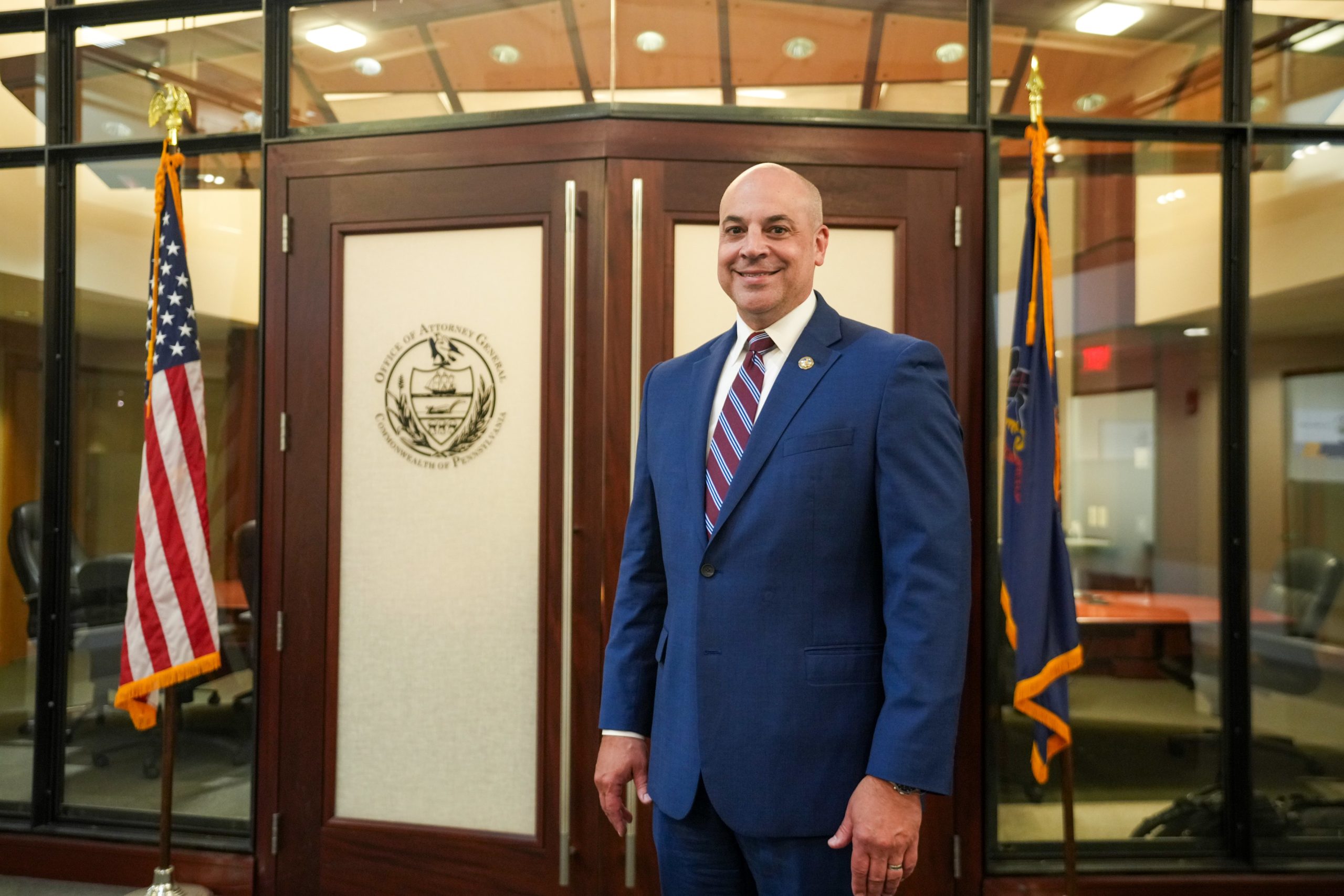
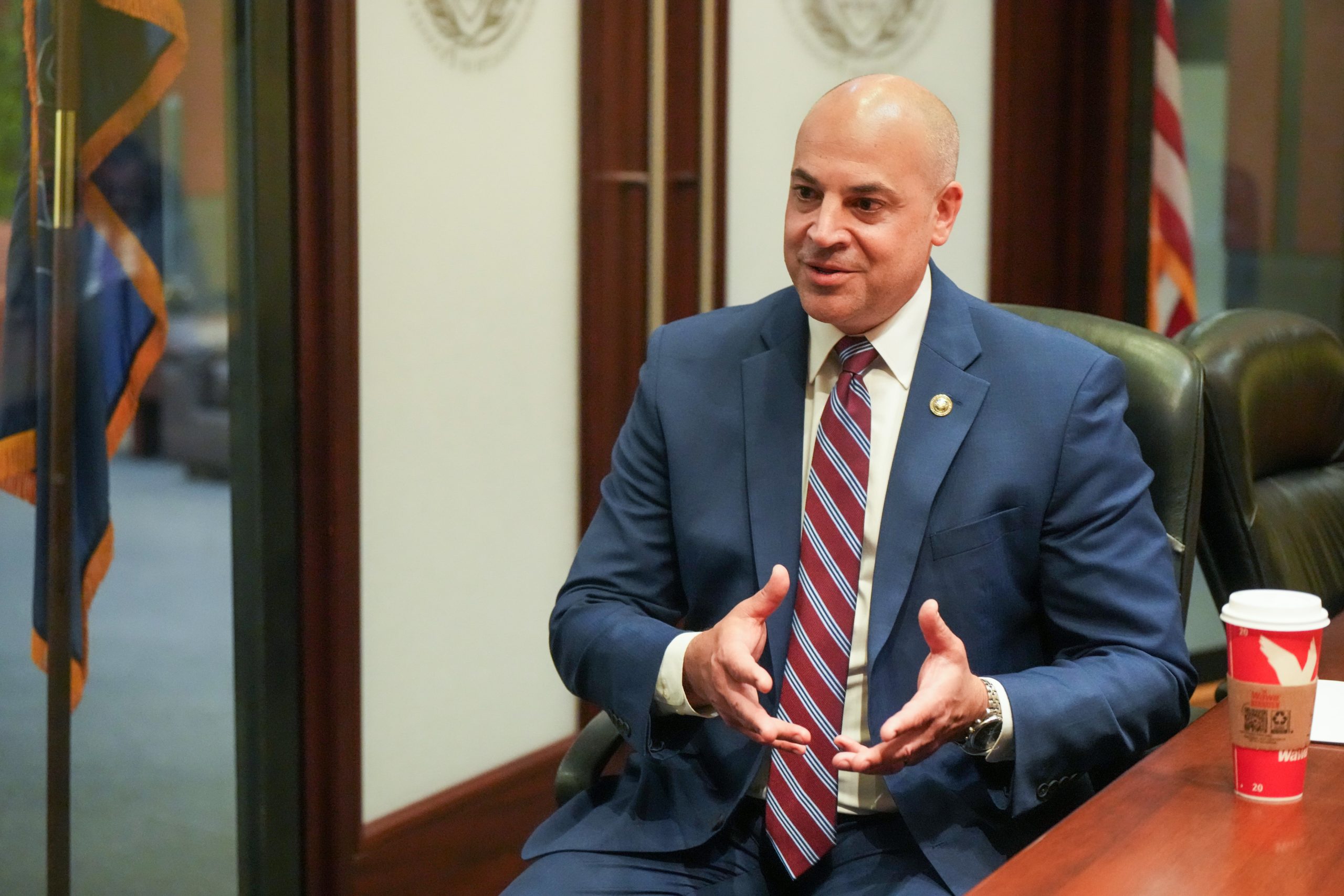
    Attorney General Dave Sunday has spent 18 months as the state’s chief law enforcement officer, overseeing a sprawling office that handles criminal prosecution, civil litigation, consumer protection services, civil rights enforcement, and more.

    In that time, the 51-year-old Republican and Harrisburg native says, he has taken on issues ranging from the opioid crisis to illegal crime guns. And last week, the Pennsylvania Supreme Court handed his office broad authority to review the efforts of Philadelphia prosecutors to overturn murder convictions they have called unjust, a signature initiative of District Attorney Larry Krasner’s office.

    In a recent interview at his Philadelphia office, Sunday talked about that and more.

    What is your reaction to the Supreme Court ruling on the work of District Attorney Larry Krasner’s Conviction Integrity Unit?

    Obviously, it’s an unprecedented ruling.

    Oftentimes, the best outcome is through the adversarial process. We work with the Philly DA’s office in a lot of different areas, and I viewed this ruling as any other that provides me with instructions on a way on which I have to run my office.

    Moving forward, the ruling requires your office to review any post-conviction concession that Krasner’s office aims to pursue. How will that work?

    There are questions. How many times will we have to intervene? What will that do to staffing? Will we have the logistics and resources to do it appropriately? I think that process will unfold over the next month or so.

    There’s no other real comparison for this ruling, and so what I can say very simply is this: It is absolutely crucial that there is a voice for the families of victims, and at the same time, I think it’s crucial to make sure that we protect the rights of individuals who are charged with crimes and convicted of crimes.

    That balance is found in applying the law and the facts to the issue. That’s something we will enthusiastically do.

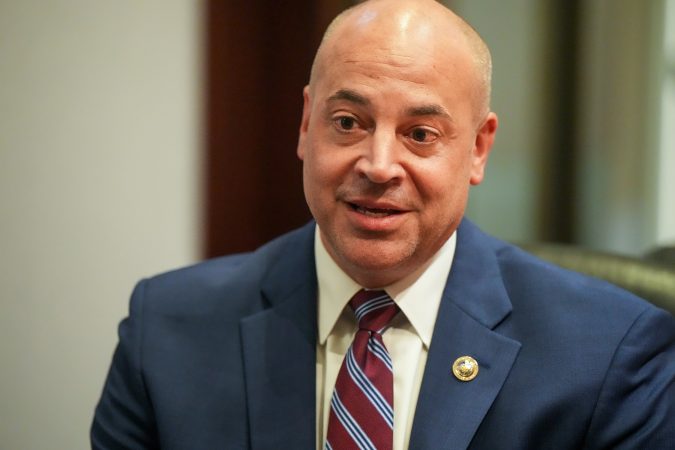
    .Assistant General David Sunday, in Philadelphia, June 23, 2026.Jessica Griffin / Staff Photographer
    Since Krasner first took office, his prosecutors have supported efforts to overturn around 115 convictions. Given the Supreme Court’s findings, do you now question whether some of those overturned convictions should be reconsidered?

    Well, we have to look at the legal process there. For individuals who the court has already ruled in a manner in which they’re out of prison, those cases are done.

    But with cases that are still going through the appellate process, individuals that are incarcerated, those are situations where we’re going to have to take a look at it. I mean, this is very serious, and when the Pennsylvania Supreme Court rules in this manner — not just the ruling itself, but the verbiage — I, as attorney general, take that extremely seriously.

    We will do our job, and we’ll do our duty, and we’ll review it, but it’s also important to understand that this isn’t a quest to prove someone wrong. It’s a quest to ensure that all parties are zealously advocated for.

    Krasner has strongly opposed the ruling. He’s likened this issue to the struggles of the Civil Rights Movement and said that the decision undermines the votes of those who elected him to office. What is your response to that?

    I don’t think that it benefits anyone for criminal justice leaders to editorialize a lot of the work we do.

    It’s critical that the citizenry knows and understands that their case will be dealt with by applying the facts to the law — and I know that’s not the most exciting answer, but there are things that are in my control and there are things that aren’t in my control, and his reaction to anything is completely out of my control.

    The last thing individuals who live in the community want to hear are elected officials yelling at each other. They want to see outcomes.

    Earlier this year, justices ruled that mandatory life sentences without parole for those convicted of second-degree murder are unconstitutional. What are your thoughts on that?

    Third-degree murder, second-degree murder, those are cases where the acts resulting in the crime are vastly different case to case. As a prosecutor, I’ve tried horrific second-degree murder cases — one was an in-home burglary where an individual was left face down on the ground, duct-taped, and they ultimately died from positional asphyxiation, which really is torture.

    At the same time, there are second-degree murder cases where you have multiple codefendants, and — this case is highlighted a lot — one of the codefendants pulls a gun out, kills an individual, and all those codefendants, because they were acting in concert and furthering some conspiracy, they’re all guilty of second-degree murder and they’re in for life.

    So there are second-degree murder cases where the individuals should have an opportunity for parole, and at the same time, there are cases that are absolutely horrific, where individuals should spend the rest of their lives in prison.

    The important place we’re in now is the legislative process, moving forward to ensure that the punishment is commensurate with the harm caused in the crime.

    Violent crime has fallen dramatically from its pandemic-era highs in Philadelphia and across the state. Should the attorney general’s office get some credit for that?

    There is no one individual or agency that can take credit for these outcomes. We’re with our federal partners, we work with everybody.

    After I was elected, some of the very first calls I made were to the Philadelphia mayor and the police commissioner, and I made it very clear that we’re partners. I’m excited, let’s go. And that’s what we’ve done.

    The Attorney General’s Gun Violence Task Force is a huge part. We do everything we can every day to go after gun traffickers, illegal straw purchasers. We’ve removed more than 500 crime guns off the streets [statewide] in 2025.

    In addition to that, our Bureau of Narcotics works every day in Philadelphia. Last year, we removed 56 million doses of fentanyl from the streets, and a large portion of that was in the city.

    The Commonwealth Court struck down a decades-old law that banned Pennsylvanians from using their Medicaid benefits to pay for abortions, and last month, your office appealed. Why?

    A lot of people don’t understand the role of the AG in a lot of issues. In Pennsylvania, we have the Commonwealth Attorneys Act, the rules that dictate the job, and one of the rules in there is that the attorney general shall defend the constitutionality of statutes in Pennsylvania.

    I have irritated the entire political spectrum, because I am defending statutes whether you like them or not. That’s literally my job. What a lot of people don’t understand is that the [Medicaid] law is part of the Abortion Control Act — the same law that allows abortions to occur up to six months of pregnancy, the very same law.

    In that law is a subsection that also says that government funds cannot be used for abortions — so I’m defending the abortion law in Pennsylvania, just like I would any other section of that law.

    Critics say that by appealing the ruling and prolonging this issue, you are denying Pennsylvanians of what the court called a “fundamental right to reproductive autonomy.” How do you respond?

    Just like every law we defend — every single one — there are people that like it and don’t like it, and they will have commentary. I certainly respect their absolute right to have that commentary.

    What I will say is, this decision has nothing to do with that. It is the job of the attorney general to defend the statute.

    .Assistant General David Sunday, in Philadelphia, June 23, 2026.Jessica Griffin / Staff Photographer
    What would you say has set your tenure apart from your predecessor, Gov. Josh Shapiro, and his appointed successor, Michelle Henry?

    Very simply, I came into this job as a prosecutor. I ran on public safety. I wasn’t a legislator, so when I look at the office, I view it as a place where you follow the facts in the law, and you fight hard to keep people safe.

    With that being said, I have hyper-focused on issues impacting citizens. We have huge crises in Pennsylvania that need to be addressed, specifically the mental health crisis.

    When I came into office, I saw our prisons are full of people that have mental and behavioral health challenges. Individuals go to jail solely because they have a mental health crisis, and what I want to see are people getting treatment.

    What we did was create a new initiative that gives police a toolbox, so when they come into contact with someone in a mental health crisis [who is committing a low-level criminal offense], they can get that person into treatment [if the person chooses to do so]. At the same time, that person can be charged, and the police have the flexibility to hold that charge.

    This is brand-new, and we have nine counties that are already signed up and are rolling. We have five more lined up and ready to roll over the next few months.

    President Donald Trump held a rally in Pennsylvania on Tuesday, and he was joined by some of the state’s other top Republican officials, such as Stacy Garrity. Is that an event you would have liked to attend?

    In all candor, I have events that have been scheduled for months and months, and the reality is, a lot of these [presidential] events pop up pretty quickly.

    On Tuesday, I had an event with the first elected attorney general in Pennsylvania, LeRoy Zimmerman. I was with him at a fireside chat, talking about what the AG’s office has looked like, and how it’s changed over the last 30 years.

  • An early morning shooting at a West Philadelphia bar left one worker dead

    An early morning shooting at a West Philadelphia bar left one worker dead

    A man was shot and killed at a West Philadelphia neighborhood bar early Sunday, according to police and media reports.

    The victim was an employee of a bar in the 1200 block of North 52nd Street in the Carrol Park neighborhood, which recently held a grand opening, NBC10 reported.

    The station said the shooting resulted from a quarrel with another employee over the duties involved in closing the bar.

    Police said they responded to reports of the shooting just before 4 a.m. They took the victim to Penn Presbyterian Medical Center, where he was pronounced dead at 4:28 a.m.

    The man’s identity was being withheld until his family could be notified. The suspect fled the scene. No arrests have been made,

    The case remains under investigation.

    Any information can be given to the Philadelphia Police Department’s Homicide Unit at 215-686-3334, or anonymously to 215-686-TIPS (8477).

  • Heat dome could bring triple-digit temperatures to the Midwest and Eastern U.S.

    Heat dome could bring triple-digit temperatures to the Midwest and Eastern U.S.

    A dangerous and prolonged heat wave is expected to build across central and eastern parts of the United States this week, with forecasters warning that temperatures could soar into the triple digits and reach record-breaking levels in some areas into the Fourth of July holiday weekend.

    From the Midwest to the East Coast, temperatures are forecast to reach the 90s to low 100s, said Marc Chenard, a meteorologist at the Weather Prediction Center.

    Parts of the East, particularly across the mid-Atlantic and the Northeast, could see temperatures climb above 100 degrees.

    “Washington, D.C., will almost certainly exceed 100 on at least one or two days,” Chenard said. “And Philadelphia and New York City are also currently forecast to go over 100.”

    He said daily records could be broken on Thursday and Friday in Washington, New York City, and Philadelphia.

    Philadelphia could tie its record high of 104 degrees for the month of June.

    The heat wave was expected to begin to take hold starting on Sunday across portions of the Plains, where temperatures were expected to rise into the 90s. The heat was expected to reach into the Great Lakes region, including Chicago, and toward the Gulf Coast on Tuesday.

    By Wednesday, much of the East Coast is expected to be experiencing the extreme heat.

    The high temperatures will be accompanied by high humidity, making conditions feel even more oppressive.

    The National Weather Service said that heat index values — a measure of what the temperature feels like to the human body, when humidity is considered with the air temperature — could reach 110 degrees, and locally up to 115.

    Little relief is expected during the nights, with temperatures remaining unusually high after sunset.

    Chenard said minimum temperatures were forecast to stay in the 70s, while some cities in the East could remain even warmer, particularly during the middle of the week, which could lead to numerous record-high low temperatures.

    “Areas like New York City, Philadelphia, and Washington, D.C., could have a low for one or two nights that doesn’t get below 80,” he said. “Chicago could be close to 80 on Tuesday or Wednesday morning, too.”

    The hot and humid conditions are expected to last through much of the Fourth of July weekend.

    Chenard said the longevity of the heat was being driven by a “pretty persistent” sprawling area of high pressure, often referred to as a heat dome.

    Toward the end of the holiday weekend, the heat dome was expected to shift west, back toward the Plains, allowing for cooler conditions in the East but also for the chance of thunderstorms.

    This article originally appeared in the New York Times.

  • Two relatives were killed Sunday in what police call a ‘murder-suicide’ in Abington Township

    Two relatives were killed Sunday in what police call a ‘murder-suicide’ in Abington Township

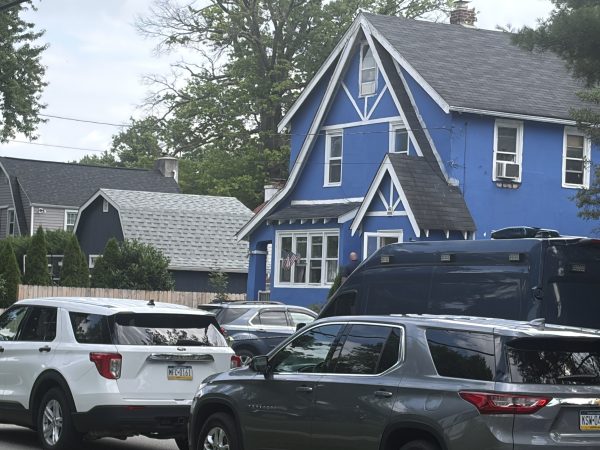
    Two men — an uncle and a nephew — were fatally wounded Sunday morning in Abington Township, Montgomery County, in what police said was a “murder-suicide.”

    Responding to a 911 call of a shooting around 11 a.m., Abington Township Police discovered William “Billy” Mauer, 54, dead from a gunshot wound inside a home on the 3000 block of Spruce Avenue.

    The two had been quarreling, police said.

    The nephew, Brandon Maurer, 28, was also found in the house, suffering from a self-inflicted gunshot wound, police said. He was taken to Jefferson Abington Hospital and pronounced dead at 11:39 a.m.

    At the time of the double shooting, police said, other unidentified family members were inside the home and were not injured. The nephew’s gun was recovered by police.

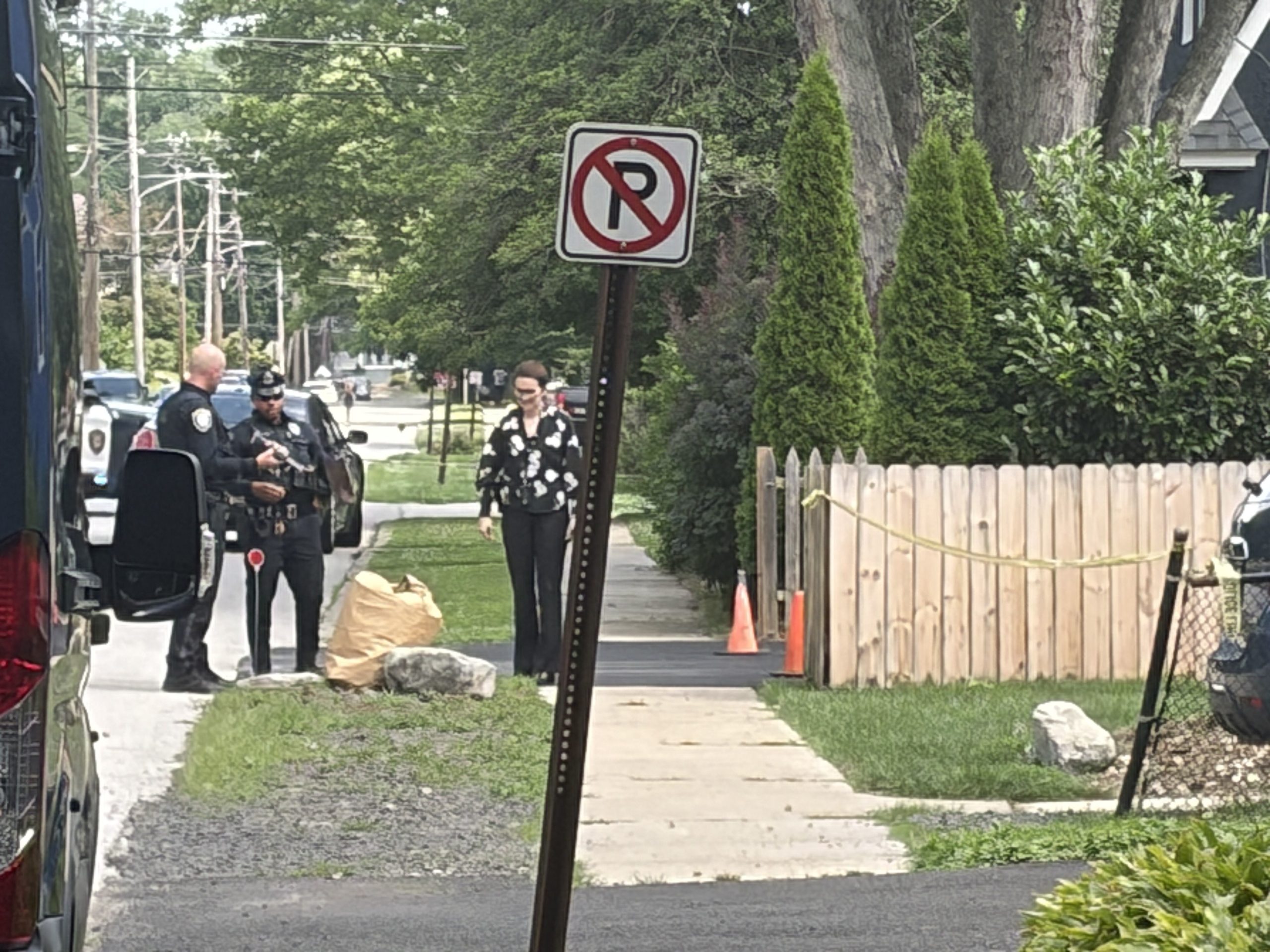
    Abington Township police closed down the 3000 block of Spruce Avenue after the shootings.Dylan Purcell / Staff

    With neighbors looking on, the block remained sealed off by police SUVs and caution tape Sunday afternoon while Montgomery County detectives and police continued to investigate.

  • Parades in New York and San Francisco wrap up LGBTQ+ Pride Month

    NEW YORK — Pride Month celebrations peaked Sunday with big parades in New York, San Francisco, and some other cities on the anniversary of the 1969 Stonewall uprising, which accelerated and transformed the modern LGBTQ+ rights movement.

    Pride events often mix celebration and calls to action, reflecting the political winds, cultural climate, and news around LGBTQ+ rights.

    This month’s parades and festivals around the U.S. have unfolded as President Donald Trump works to roll back transgender rights and diversity, equity, and inclusion initiatives. Among other moves, the Republican’s administration removed a rainbow Pride flag from the Stonewall National Monument earlier this year, then ultimately relented amid a lawsuit.

    “As LGBTQIA+ events and symbols are being erased, it’s vital that our community have safe spaces to show up and march to make clear: We are here,” Chris Piedmont, a spokesperson for New York parade organizers Heritage of Pride, said in a statement Friday. “We will not be erased.”

    Carlos Duarte came in from Long Island to attend New York’s parade.

    “It’s very important for us to be here … to be all together for love, peace, and to show the world who we are,” Duarte said.

    Meanwhile, multiple Republican governors have promulgated conservative-friendly designations for June, such as “Nuclear Family Month,” sometimes openly describing them as a counter to Pride. Other prominent Republican politicians, including Vice President JD Vance, criticized Major League Baseball‘s response to some San Francisco Giants players who added Bible verses to the rainbow-themed Pride Night caps they were issued.

    Against that backdrop, the NYC Pride March and the San Francisco Pride Parade set out to further their legacies as some of the world’s largest and oldest such celebrations.

    Both trace their roots to events held in 1970 to commemorate the Stonewall rebellion on June 28, 1969, when patrons of a New York gay bar called the Stonewall Inn resisted a police raid and ended up kindling a wave of activism.

    The Stonewall Inn still is a bar; the Stonewall monument centers on a small park across the street, about half a mile from the Pride March route at its closest point.

    The newer Queer Liberation March, founded by activists who saw the Pride March as too corporate and official, also was held in Manhattan on Sunday.

    This year, some transgender rights activists pressured Pride organizers to bar some New York City hospitals’ contingents from marching because the institutions announced in recent months that they would stop providing transgender youth treatments.

    Christen Clifford, a mother of two trans children, said during a news conference before the parade that New York City needs to enforce state laws that protect gender-affirming care.

    “How can you let institutions that are actively harming queer kids march in Pride?” Clifford said. “I hope that New York City Pride will ban these hospitals from any future Pride parades until they restart care and so that families like mine know that you are listening to our concerns.”

    The cutoff came amid funding threats from the Trump administration, and at least some of the hospitals also got federal Justice Department subpoenas for transgender patients’ medical records. A judge has temporarily blocked the document demand.

    Heritage of Pride said it has been talking with the hospitals about the issue. The group also noted the parade contingents are organized by LGBTQ+ employee groups, not by the top administrators responsible for decisions about care.

    A message was sent to San Francisco Pride organizers about whether they faced similar questions.

    Other cities with Pride parades Sunday include Seattle, where a World Cup soccer match Friday took on a Pride dimension after the countries whose teams were involved — Iran and Egypt — tried unsuccessfully to get the celebrations canceled.

  • Philadelphia-area Venezuelans are donating rescue tools and medicine to aid victims of massive earthquakes

    Philadelphia-area Venezuelans are donating rescue tools and medicine to aid victims of massive earthquakes

    The Cathedral Basilica of Saints Peter and Paul was a center of resilience Sunday, as dozens of Philly Venezuelans gathered to collect aid for folks affected by two earthquakes that struck the South American country on Wednesday.

    Emilio Buitrago, 52, was driving home when his brother called, telling him a 7.2 magnitude earthquake had decimated their home city of La Guaira, about 18 miles north of Caracas, the capital. Less than a minute later, a second tremor took place, this time reaching a magnitude of 7.5.

    One of his cousins was unaccounted for, for two days before being located on Friday morning.

    “My three cousins lost their homes; they are alive by a miracle. My uncle managed to get out, but he’s injured,” Buitrago said. “They are sleeping in the street because it feels safer [in case buildings collapse] and they said it’s starting to smell like decomposing bodies.”

    Since the earthquakes, Buitrago’s brother has been working nonstop, he said, removing rubble with his bare hands due to the lack of tools and machinery.

    Thousands of miles away from home, Buitrago thought the best way to help was to go to the cathedral and help with collecting donations and praying.

    By 1 p.m., 15 boxes sat on the area outside of the Cathedral’s chapel, being filled with donated masks, first aid supplies, medicine, electrolytes, nasal relief products, and more.

    Alex Moreno, president of the local nonprofit Gente de Venezuela, said the donations will be sent to Caracas, where their contacts are connecting with on-the-ground rescuers.

    “It has to be now, when we still have a chance to try to help get the people who are still trapped under the rubble out alive,” Moreno said.

    So far, the death toll has risen to 1,430 people, according to CNN, with many Venezuelans taking to social media to ask for help moving the structural debris to rescue their loved ones.

    Besides collecting physical donations, both Gente de Venezuela and another nonprofit, Casa de Venezuela, are raising funds through an umbrella group, the Venezuelan Organizations Network in the United States. By late Sunday afternoon, $16,310 had been donated for the effort, which has a goal of $75,000.

    That money, Moreno said, is destined for buying tools to help rescuers dig through the rubble. A first batch of hammers, gloves, drills, masks, and other supplies has been purchased with that money and sent to Venezuela, Moreno said.

    For future physical donations, he recommends following Gente de Venezuela and Casa de Venezuela to see where they will be receiving donations next.

    “The hope is to try and help rescue as many people as possible, because the rescuers on the ground are saying that the tragedy is too big for the number of hands able to help back home,” Moreno said.

    Despite the pain, the community is sticking together and his group plans plan to continue with their planned participation in the July 3 Salute to Independence parade in Philadelphia, to honor both the lives lost and the rescuers, Moreno said.

    “Above all, we are people of resilience, and we will continue to be here to support our community,” Moreno said.

  • Khadijah Farrakhan, ‘first lady of Nation of Islam’ as wife of famous pastor, dies at 90

    Khadijah Farrakhan, longtime wife of Nation of Islam leader Louis Farrakhan, died on Saturday, the Nation of Islam has announced. She was 90.

    “Mother Khadijah” worked alongside her provocative and charismatic husband for decades, helping lead their religious and sociopolitical movement, which espouses Black self-reliance. Its home base was Mosque Maryam on the south side of Chicago, where the pair lived.

    “The Honorable Minister @LouisFarrakhan with deep sadness yet with profound gratitude to Allah informs you that his beloved wife of 72 years, the first lady of the Nation of Islam, Mother Khadijah has returned to Allah (may Allah be pleased),” a statement by the Shura Executive Council said.

    Her death came only seven months after devotees had marked Khadijah’s 90th birthday. The statement said funeral services are to be announced.

    Mosque Maryam remembered Ms. Farrakhan as “a devoted follower” with “a precious soul, a sweet heart.”

    In a post on Facebook, R&B artist ZaRio Son Rise recalled her as “a true queen, a righteous woman, and one of the greatest examples of dignity, faith, loyalty, and grace our generation has ever witnessed.”

    Born Betsy Ross, Khadijah Farrakhan married her husband, then named Louis Walcott, in Boston on Sept. 12, 1953. The two had nine children. Their eldest son, Louis Farrakhan Jr., died in 2018, and son Joshua Farrakhan died in 2023.

    Khadijah Farrakhan converted to Islam in 1955, the same year that her husband joined the Chicago-based movement after being heavily influenced by Malcolm X, his friend from Boston. The pair changed their names around that time.

    Louis Farrakhan stepped into the organization’s leadership vacuum shortly after Malcolm X was assassinated in 1965. Among his most significant accomplishments was the Million Man March on Washington in 1995.

    Two years later, Khadijah Farrakhan spoke before a gathering of America’s Black women in Philadelphia dubbed the Million Woman March.

    “A nation can rise no higher than its women,” she told the crowd. “We focus on women but cannot lose sight that we must rise as a family — men, women and children.”

  • Inside the Onion’s quest to turn Infowars into a comedic revenge story

    Inside the Onion’s quest to turn Infowars into a comedic revenge story

    It’s not easy to parody Alex Jones, but that’s not stopping the Onion from trying.

    The right-wing conspiracy theorist behind Infowars, Jones has spent years promoting stranger-than-fiction ideas, arguing that chemicals in water turn frogs gay, the U.S. government deploys “weather weapons” against its own citizens, and that yogurt maker Chobani imports “migrant rapists.” (Chobani sued for defamation, and Jones apologized upon settling the lawsuit.)

    Days after a gunman killed 20 students and six educators at Sandy Hook Elementary School in Newtown, Conn., Jones falsely claimed the massacre was staged.

    The insidious lie cost him dearly: Jones was ordered to pay roughly $1.5 billion to the families of the victims in a landmark defamation case forcing him to declare bankruptcy.

    The satirical news site the Onion is trying to capitalize on the rare opportunity. For Ben Collins, CEO of the Onion’s parent company, Global Tetrahedron, the idea to buy Jones’s signature site began as a bit.

    On the social media site Bluesky, he saw a reposted newspaper ad marketing the Infowars assets.

    “I thought, ‘huh, this would be the funniest thing of all time if we pulled this off,’” he said. “It was, and is, but it’s also become the world’s biggest pain in the ass.”

    Since 2024, the Onion has been locked in a legal battle to take over Infowars and transform it into a parody site. Infowars assets are still largely tied up in bankruptcy court, preventing the Onion from absorbing the URL. Still, it’s moving forward with launching its site on Thursday, which will live at theonion.info.

    “There is a whole world of like grifters and weirdos who have not been made fun of, and have taken over like the United States,” said Collins. “We need to make fun of this more efficiently, and we need professionals to do it, and what better way to do it than to do a hostile takeover of where it all started.”

    As a reporter at NBC, Collins covered a unique beat in his prior life: “disinformation, extremism, and the internet.” He even wrote about Jones’s defamation trial.

    Now, he’s left the confines of a real news organization to run a fake one.

    Collins enlisted comedian Tim Heidecker, best known as one half of the comedy duo Tim and Eric, as the creative director of this parodic Infowars. He’s also the face of it, performing as a caricature of Jones — complete with his signature rasp, cadence, and penchant for selling questionable nutritional supplements.

    Jones did not respond to a request for comment.

    The Onion has faced roadblocks to taking over Infowars: In 2024, a judge prevented the Onion from buying Infowars at a bankruptcy auction. Instead, its assets were transferred to a court-appointed receiver. So the Onion struck a licensing deal with the receiver to pay $81,000 a month for the Infowars.com domain and brand. But in April, a Texas appeals court halted any transfer of Infowars assets, again thwarting the Onion.

    Collins said he never expected the legal proceedings to take this long: “We thought it was going to be like Storage Wars, and it wound up being more like a dream that you have when you’ve taken too much NyQuil.”

    A version of the site viewable before launch featured a video of Heidecker addressing viewers as “infowarriors,” mimicking Jones, and taking a fake call from President Donald Trump. The site’s homepage was full of fake ads imploring readers to buy oxygen capsules and another obvious troll of the embattled Jones: “Turn your gold into piss. Liquidate your assets today.”

    There’s an extra motivation for Collins: helping the Sandy Hook families.

    The Onion has said it’s worked closely with Sandy Hook families and is donating $100,000 to the families through proceeds from the site. The company called the gift “the first of many.”

    “No one else was going to get these families money, and he owes them,” Collins said about Jones. “He still owes them 1½ billion dollars, and we want to get them some cash.”

    Chris Mattei, a lawyer for the families who sued Jones in Connecticut, said the families appreciate the Onion’s commitment, though he said it’s never been about the finances for them.

    “The families we represent actually never cared about money at all,” Mattei said. The verdict let them “prove to the world in an open courtroom that Alex Jones was a fraud” and “demonstrate to the world the type of real-world harm that online misinformation can cause.”

    Collins emphasized that he wants the families to be at the heart of this effort — because they’re the ones who have suffered because of Jones’s false claims. “There’s a few sacred things that we really got to protect if we want to have like a society still,” Collins said. “And these [families] are some of them.”