Not to be left behind, Walmart has touted a “store of the future” concept for years as it opens and remodels hundreds of locations, including 32 in Pennsylvania this year, to have better layouts and services that aim to make the shopping experience seamless.
“By modernizing our stores, we’re making shopping faster, easier, and more convenient, all while empowering our teams to serve customers better and creating local opportunity,” said Annie Walker, senior vice president of the East Business Unit at Walmart, in a statement announcing the Pennsylvania investments this year.
The Walmart Supercenter in Warminster is the latest “store of the future,” unveiling its remodel this month.
I tried it out to see what the future holds for shoppers. Spoiler alert: It’s nothing out of The Jetsons, but a handful of customers told me they liked the improvements nonetheless.
“A lot of stuff is different, but it’s easier to find things,” said Cuong Kim, 41, of the new layout, walking out with a bag of toiletries.
Sparky, where are the fiber gummies?
Walking in, the store doesn’t feel that different from counterparts in South Jersey or Philadelphia. The polished concrete floors remain the same and there are an Auntie Anne’s and a Subway near the entrance.
Still, I could see the company followed through on its “elevated assortment of healthy foods” promise. There were meat and cheese snack packs galore, along with a wide range of ready-to-eat salads and sandwiches in the grab-and-go section.
Because better online/in-store integration is part of the company’s “store of the future” pitch, I brought an admittedly specific grocery list with me to test out Sparky, the company’s generative AI shopping assistant launched last year, another trend major retailers are adopting.
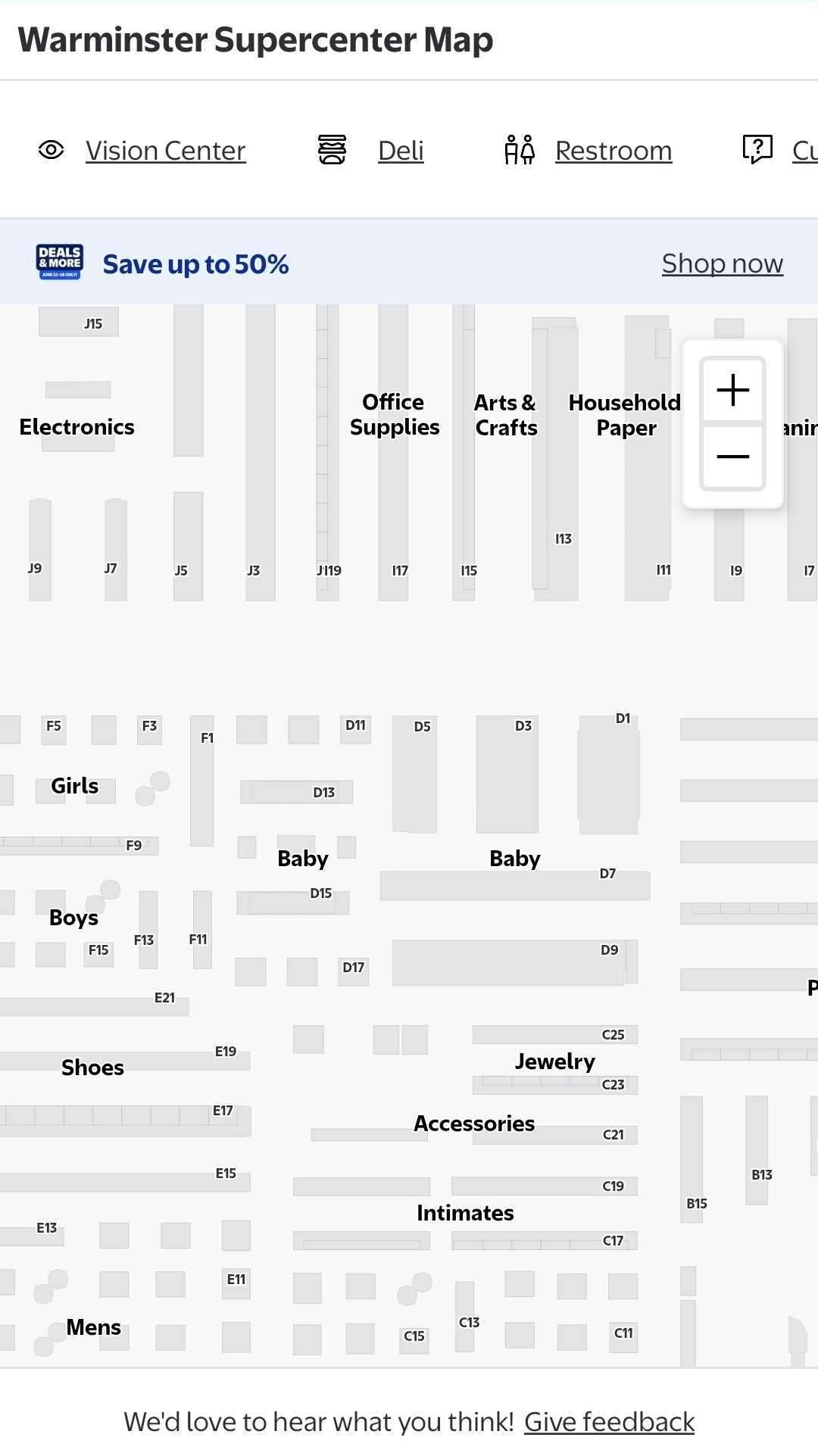
Though the Walmart app provided a handy static map of the store, Sparky was not helpful in helping me find mango pulp for a cheesecake I’m making or my fiber gummies, which I will need if my rich dessert plans move forward.
A static map of the Warminster Walmart in the app.Screenshot by Ximena
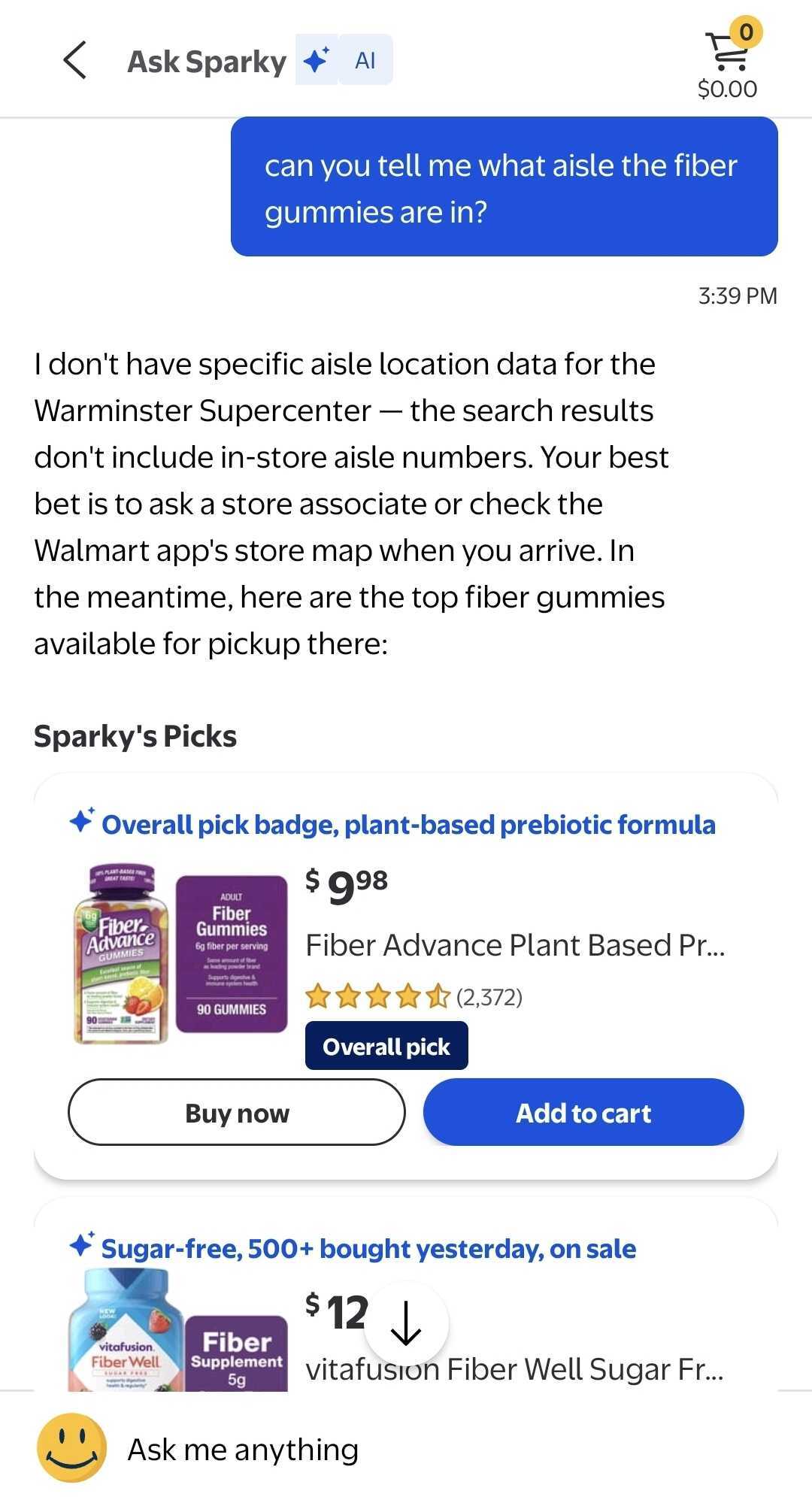
While Sparky pointed me to several fiber gummy brands, it was less helpful in telling me what aisle they were in.
“Your best bet is to ask a store associate or check the Walmart app’s store map when you arrive,” Sparky said.
Sparky, Walmart’s AI shopping assistant, doesn’t know what aisle the fiber gummies are in.Screenshot by Ximena
On the mango pulp front, Sparky showed me several options, which got my hopes up because I’d never used this item and was worried it might be hard to find.
Alas, none of Sparky’s suggestions were in the store, but could be shipped by the next day — helpful information if I weren’t already on site.
To be fair, one shopper told me that while Sparky doesn’t have a 100% hit rate, it is not a total dud.
He was right. Seltzer, another item on the list, was in aisle A22.
As I walked around the store, I noticed some aisles, like the beverage sections, could fit three shopping cartsacross. That’s some Costco-level width and another “store of the future” feature.
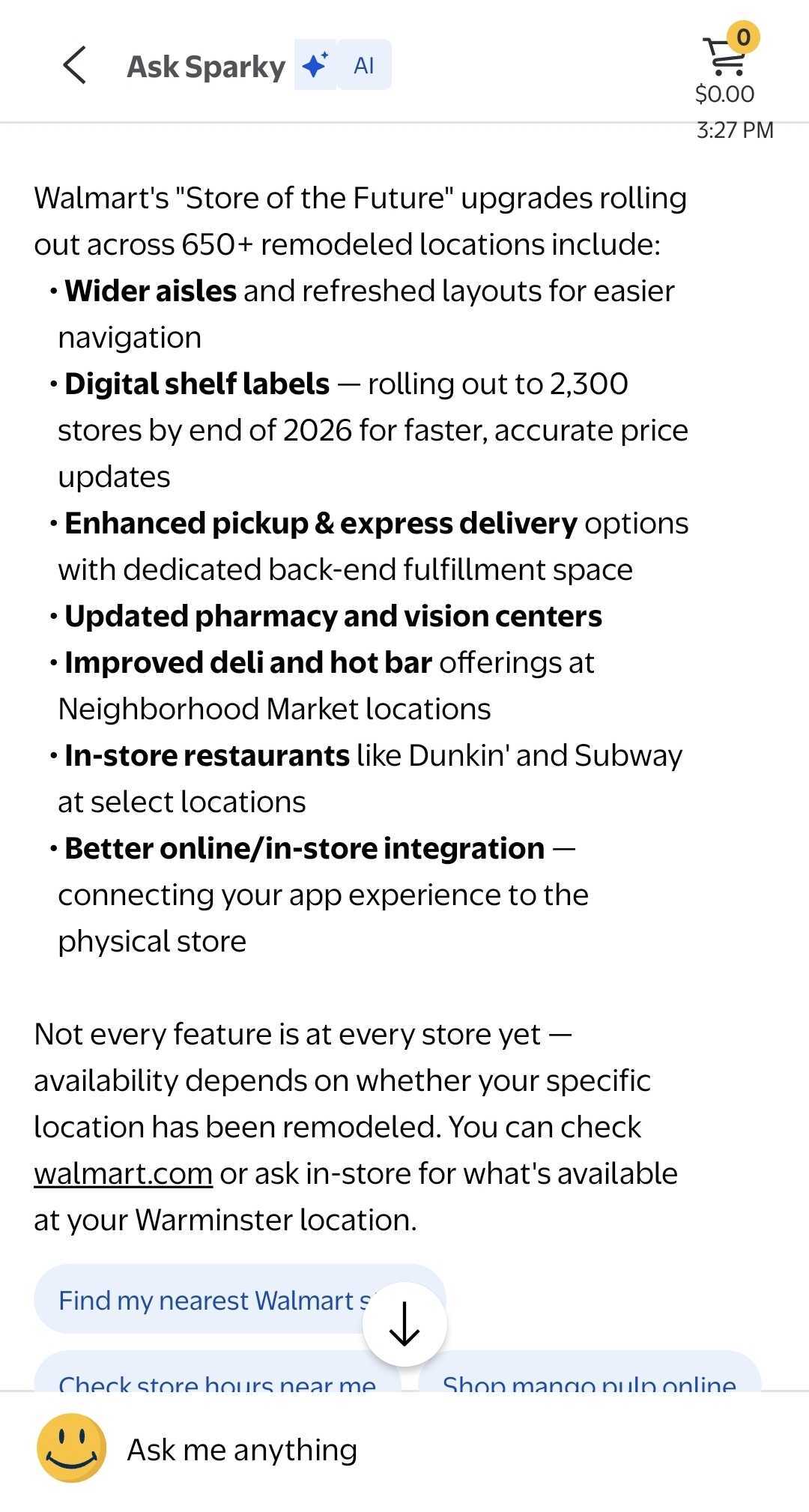
Even so, wider lanes, a semi-useful shopping assistant, and more snack packs didn’t make my shopping experience feel that futuristic, so I asked Sparky: “What’s new about my Walmart? I heard it’s the store of the future but not sure what’s changed.”
It reiterated some of what I’d already seen and highlighted the enhanced pickup and express delivery services. I recently had a laptop charger delivered from a different Walmart location and I can confirm it arrived in less than an hour.
Sparky lays out the store of the future upgrades.Screenshot by Ximena Cn
Ol’ Sparky, however, warned me “not every feature is at every store yet.” For example, Walmart plans to roll out digital shelf labels that allow rollbacks and price changes to appear in real time, but were nowhere to be found in Warminster.
I also asked an employee what was new with the store to fact-check Sparky.
“It’s little things,” said the cheerful associate. “There’s more [grab and go] coolers, more cash registers, and a bigger electronics section.”
A reminder that no one knows a store better than the people who work there.
What we learned
It seems the people who would get the most use out of Sparky are those ordering online for delivery or planning their haul ahead of time, checking to see if their desired items are in store. These features, however, are not exclusive to the 32 Walmarts up for a makeover.
Yet while not exactly futuristic, shoppers in Warminster certainly appreciated the less tech-centered changes, such as the added breathing room as they shopped in clearly labeled sections.
Kim, the shopperwho traveled from Northeast Philadelphia for his haul, also reminded me that sometimes the most seamless shopping experience is pretty simple. He’s not an app user like some of the other customers I talked to. But he travels to Warminster because very few items require waiting for an associate to unlock them from glass cases.
“It’s easier to shop here,” he said. “In Philly, they lock everything up.”
A move by the Haverford Township School District to buy artificial intelligence tools for students and teachers has been met with protest from parents who fear the technology will erode learning.
At a meeting last week, the Haverford school board voted 5-3 to approve contracts with School AI, which features AI “tutors,” and Brisk, which automates tasks for teachers, like developing quizzes and giving students feedback.
While administrators said the tools wouldn’t supplant teaching and learning, critics said it was inevitable that AI would be used inappropriately — making it easier for kids to avoid work.
“The idea of putting chatbots on computers — I don’t even care what age. I’m pretty disgusted by that,” said Christine Seewagen, a district parent of rising 12th and 7th graders.
The district already struggles to manage technology in the classroom, said Seewagen, who said her older child has observed students run math questions through an AI tool on their phones. Her younger child, meanwhile, had a teacher who directed students to upload essays to an AI tool to get feedback, Seewagen said.
“They’re just using AI, and not really being instructed on how to do it,” Seewagen said in an interview.
Administrators said they were recommending buying AI tools in part because teachers are already using freely available versions, and they want to “eliminate free roaming around platforms,” Robert Anderson, the district’s technology director, said at the June 18 board meeting.
Haverford’s superintendent, Matthew Hayes, said the School AI contract would “allow us to have a resource so that as we go through the process of the strategic plan and looking at all the implications down the line,” the district could begin teaching AI “thoughtfully, responsibly, ethically.”
He added: “And also reducing screen time,” without providing further details.
The controversy around AI in Haverford is the latest example of area parents pushing back on what they see as excessive and unchecked technology use in schools.
In Haverford, some parents said they were caught off guard by the proposal to adopt technology they felt posed risks to their kids.
Patrick Burland, the parent of an incoming 10th grader and 6th grader, noted he’d had to sign numerous permission slips for his younger child to participate in end-of-year celebrations.
“Apparently, sugar requires a signature, but cognitively rewiring her brain does not,” Burland told the board.
Anderson said Haverford had been considering how to incorporate AI for years. He said the district sought feedback from teachers, including through an AI working group, before proposing the contracts.
Board members who voted for the AI tools, meanwhile, said kids needed to learn how to use the technology responsibly.
“Not acknowledging that it’s here … we don’t gain anything, right? We actually lose and we put ourselves farther behind because it’s not going anywhere,” said board member LaTonia Lee.
But some raised questions about what the district was planning to do with the tools.
Dave Schwartz, another board member, said he would support teaching kids about AI. But the district hasn’t said how it plans to do that, he said.
“We’ve been talking very much in vague terms, and I can’t vote for something that I don’t understand,” Schwartz said.
A district spokesperson did not respond to a question this week about examples of how School AI might be used.
Board member Chris Shelton asked Anderson about criticism that the tool’s “historical figure” chatbots were giving students inaccurate information. (Last year, School AI acknowledged that responses from an Anne Frank character “didn’t provide critical historical details about the Nazis’ role in the Holocaust.”)
Anderson called it “unfortunate” that the company had promoted the historical figures feature, but said the district “would have the option to potentially not use something like that.”
John Flagler, a board member and English teacher, said he understood the burdens placed on teachers, “but I also believe there are lines that should not be crossed.”
The suggestion that grading papers is a “menial task” that could be offloaded to AI “is an insult to both the teacher and the student,” Flagler said, calling grading essential to teachers learning about students.
Administrators said Brisk wouldn’t be used for grading, but would provide “first-level feedback” — informing students they’re missing a topic sentence, for instance, said Meridith Herne, the district’s technology integration coordinator.
“We insist that our teachers read it over and modify it so it’s in their own voice,” Herne said of Brisk’s feedback. Hayes said that 97 district teachers already use a free version of the tool.
He said the tool was not meant to replace teachers.
“That’s not my intent at all,” Hayes said, describing Brisk as “an option for individuals who want exposure to it.”
He noted that the contracts with Brisk, for $22,260, and School AI, for $12,999, were each limited to one year.
Teachers will be trained on the School AI platform, Anderson said; it will be up to them to decide whether they want to use it. He said the district envisions the platform beingused in high school and “potentially” middle school, but isn’t planning for it to be used in elementary schools.
Parents like Burland and Seewagen, who said like-minded parents have been organizing on social media, weren’t persuaded.
“It does not feel like to me they have put any guardrails on,” Burland said in an interview. He questioned whether the district would have considered turning off School AI chatbots, for instance, had it not been asked at the board meeting.
Seewagen said many parents who have learned about the AI plans aren’t happy.
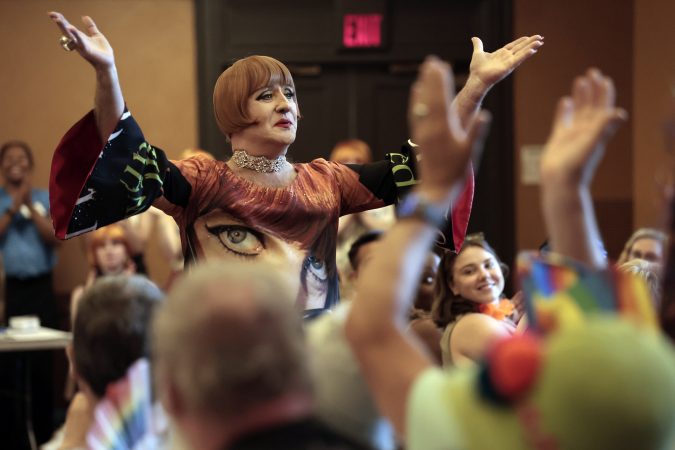
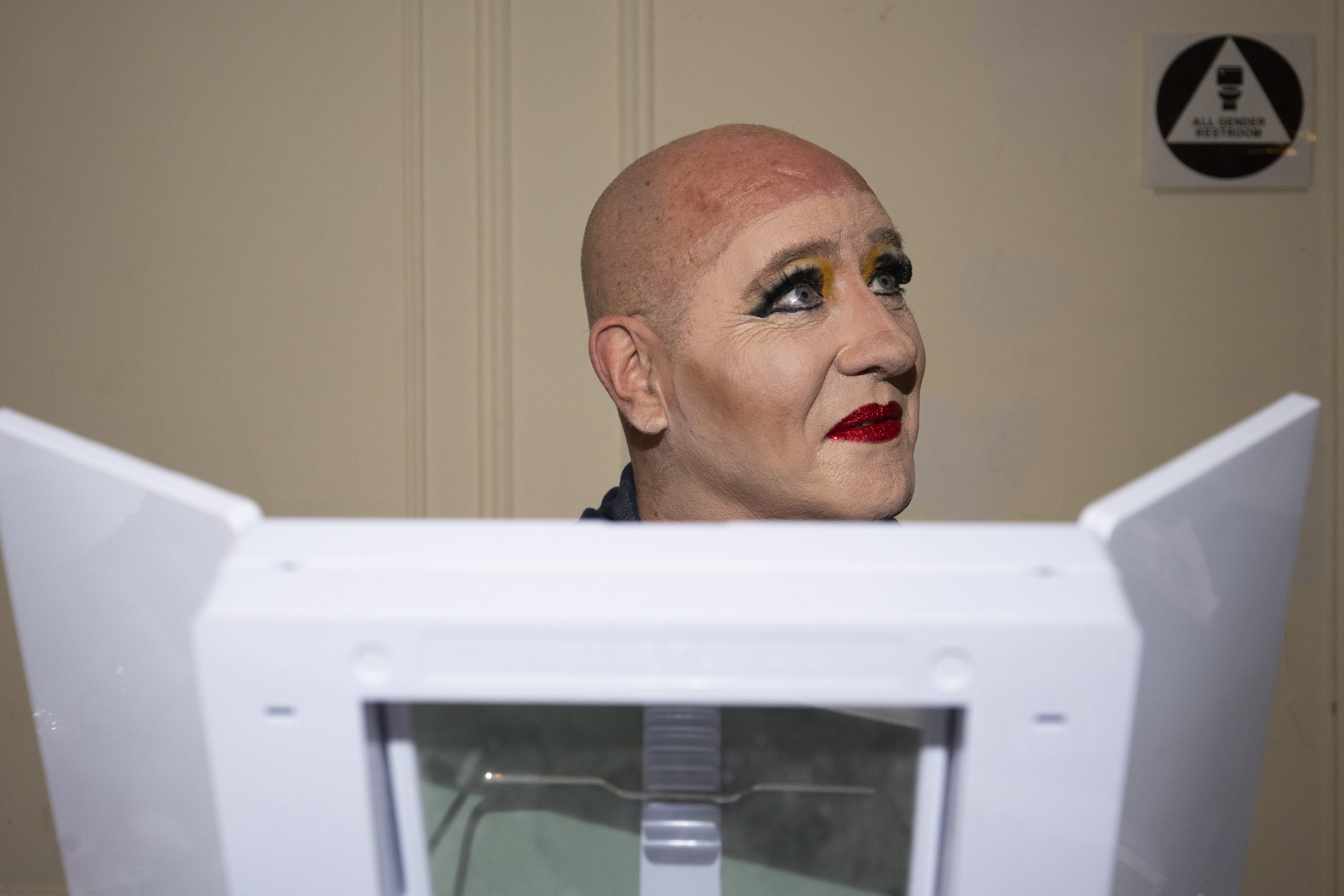
The legendary redheaded drag queen Carlota Ttendant donned a baby-blue Eva Gabor-inspired gown — its plunging neckline revealing tasteful chest hair — and sensible black heels.
At 65, arthritis stifles her strut in stilettos.
“Drag is a young girl’s game,” she said.
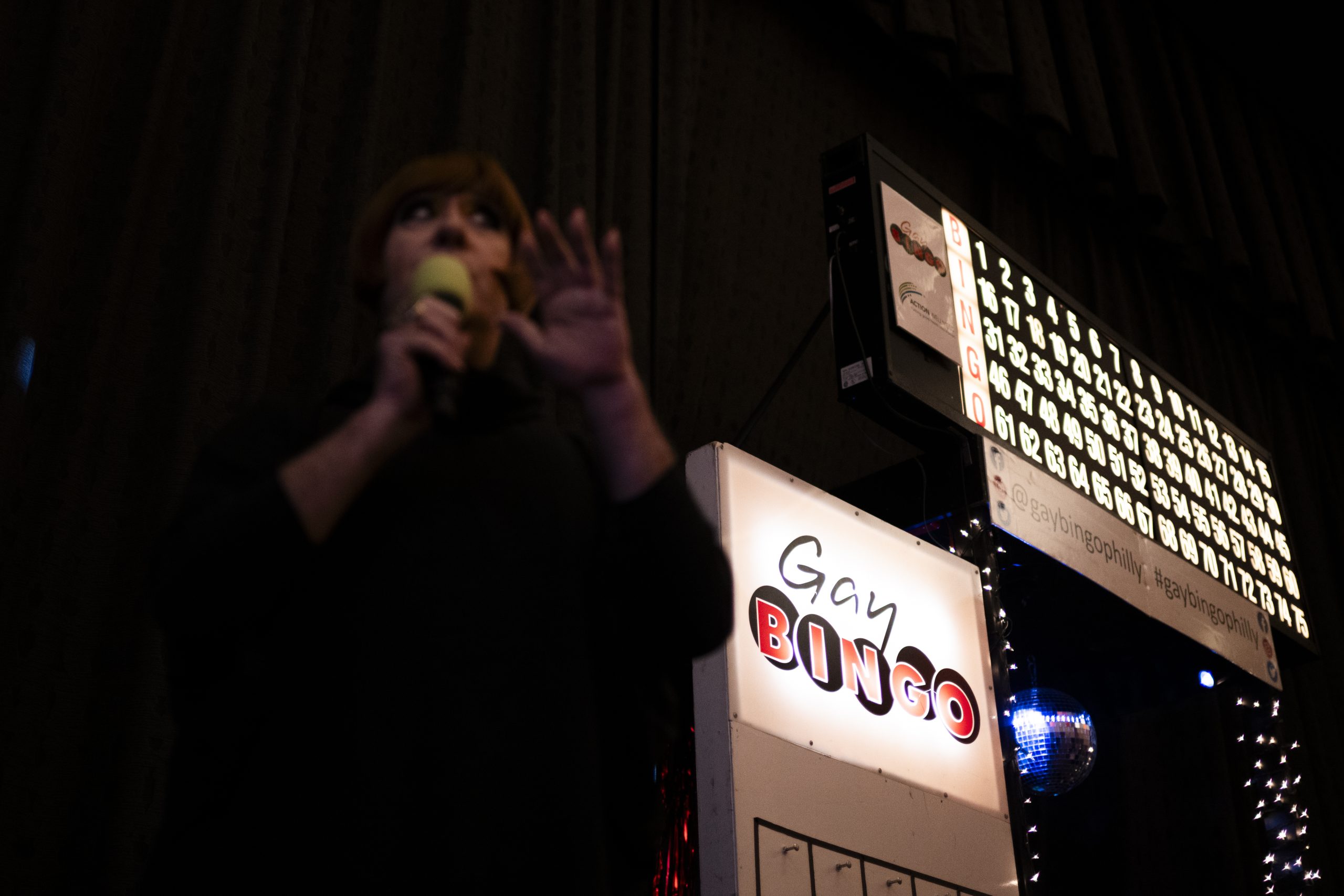
This was her swan song. At the close of its 30th season this Pride Month, the man behind the makeup, Michael Byrne, hung up his heels and bid adieu to his drag persona and his longtime gig hosting Gay Bingo, the camp, irreverent, slightly profane, and undoubtedly silly monthly HIV/AIDS fundraiser.
“I know it’s time,” Byrne said. And, “I’m excited to never wear Spanx ever again.”
Across three decades, Carlota Ttendant has called hundreds of games and elicited endless laughs, all while raising millions for people living with HIV/AIDS across the Delaware Valley. She helped steer a community through crisis, providing a respite to those experiencing immense loss and stigma. Even as medicine has advanced and HIV/AIDS has become manageable, she’s crafted a safe space for queer Philadelphians. For one night each month, she’s been an entertainer and an equalizer, responsible for uniting people — gay and straight, from Haddonfield to Phoenixville — around a common goal.
And since Carlota came into Byrne’s life, she’s taught him to lead with courage, practice gratitude, and be unabashedly unafraid. He’s gone from being the “worst waiter ever” and selling cosmetics, to being a performer, licensed clinical social worker counseling older LGBTQ+ folks through their own next phases of life, and president of Philly AIDS Thrift’s board.
“None of it would have been possible without all of you,” Carlota told the 400-person crowd — the biggest turnout in years — at her last Gay Bingo on June 13 in the basement ballroom at Congregation Rodeph Shalom. “In the ’90s there was horror happening, and today there is horror happening.
“But please, let’s do some laughing,” Carlota said.
“Let’s play bingo!”
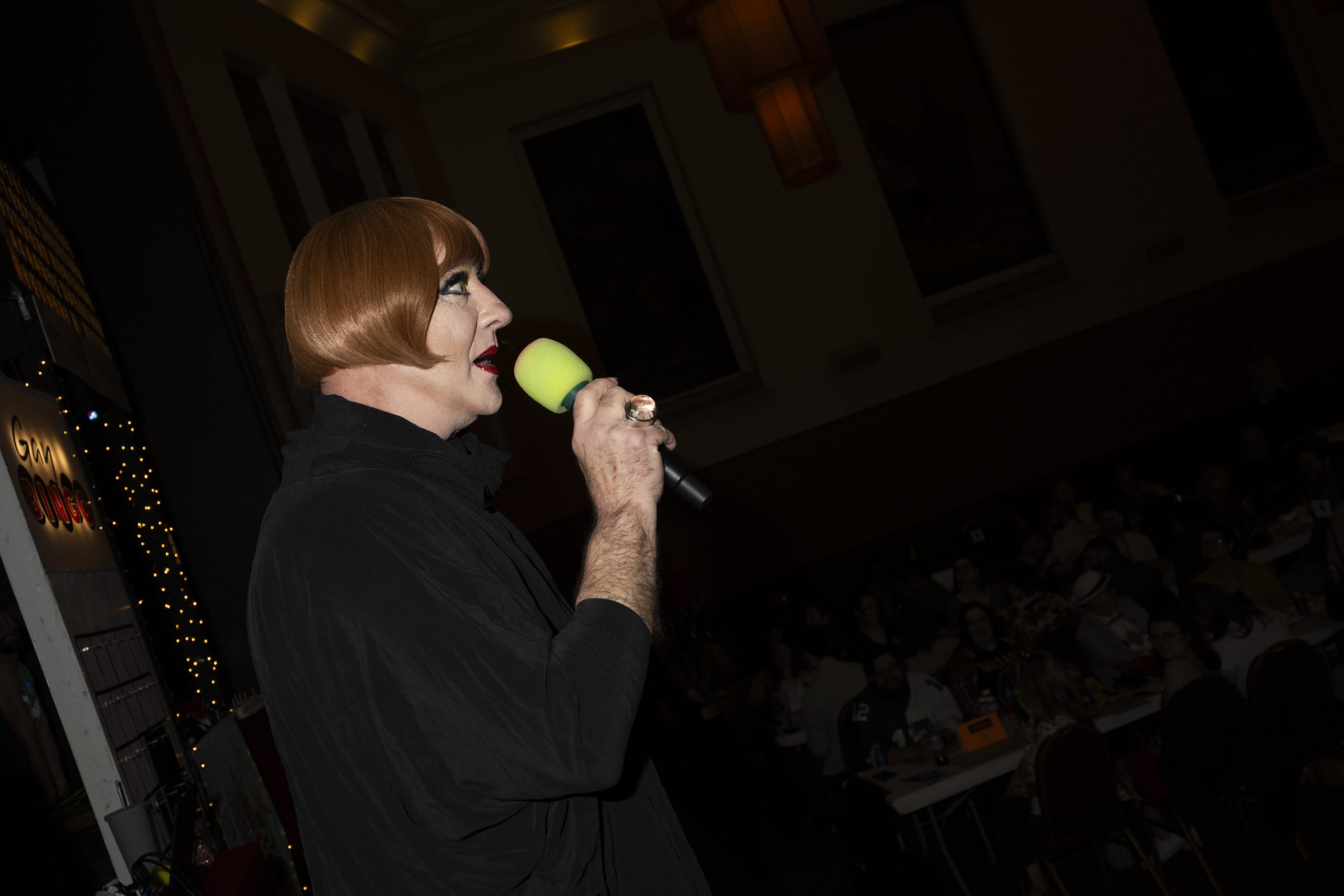
Michael Byrne, as his drag persona Carlota Ttendant, during Gay Bingo on Saturday, May 9, 2026, at Congregation Rodeph Shalom in Philadelphia.Joe Lamberti / For The Inquirer
Act I
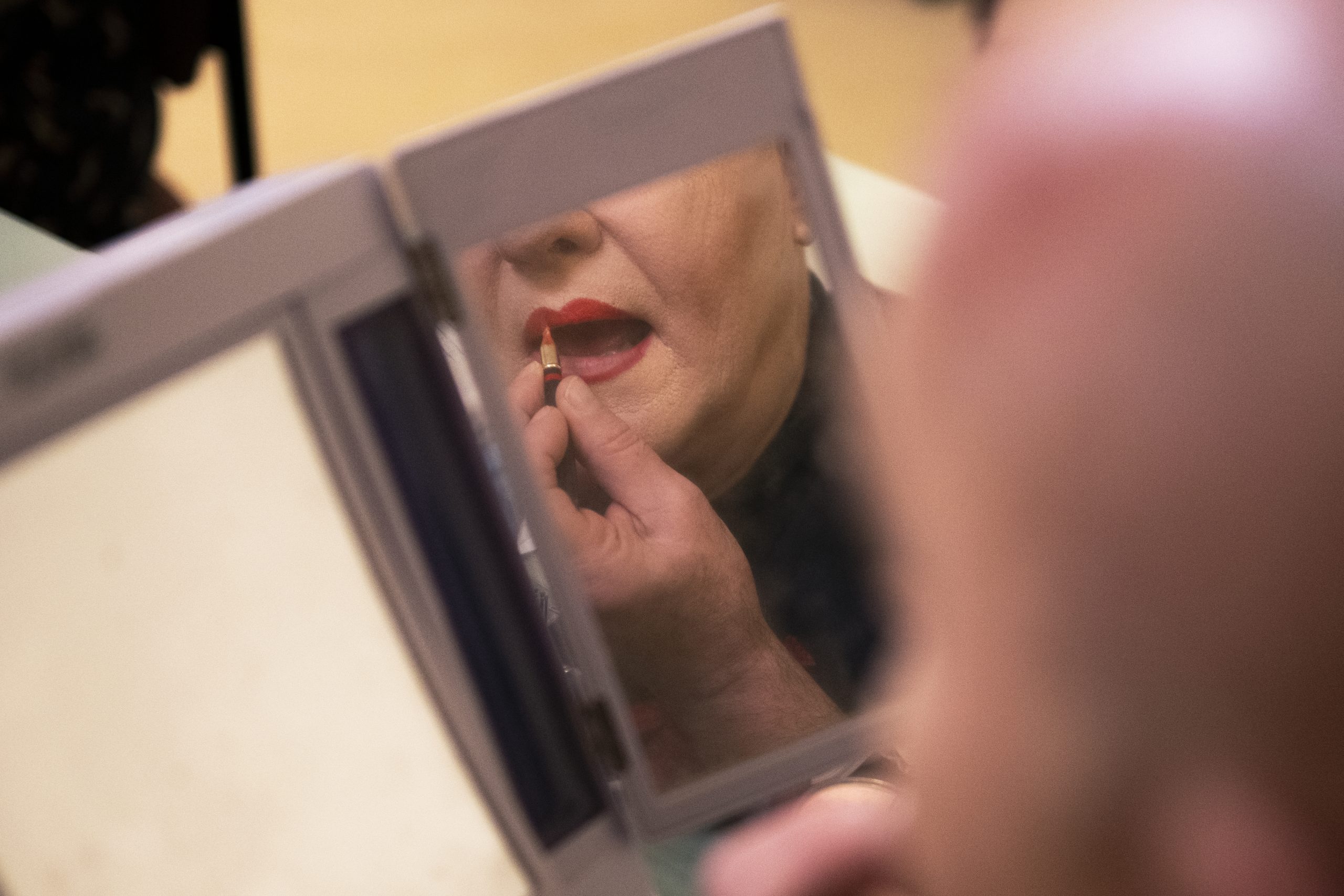
Like so many Saturdays before, Byrne, on June 13, slathered his face with foundation, carved out his cheeks, deepened his eyes, and painted on his red lip. There was haze — from the dusting of loose setting powder, bronzer, and blush — and musk — from sweat and heat and hairspray — in a Rodeph Shalom classroom, which moonlights as a bridal suite and a boudoir for the Bingo Verifying Divas or BVDs. At 10 minutes till curtain, he futzed with his press-on nails, shimmied into a mod swing dress, straightened the back seams of his tights, and dabbed on some glitter. With each gender-bending step, he transformed into his “twin sister,” Carlota.
Michael Byrne transforms into his drag persona Carlota Tendant ahead of Gay Bingo on May 9 at Congregation Rodeph Shalom in Philadelphia.Joe Lamberti / For The Inquirer
Like all classy ladies, Carlota’s exact age is lost to time. In the 1990s, Byrne was organizing a fundraiser for Big Mess Theatre, an avant-garde troupe that he helped establish as the spinning axis of Philadelphia’s alternative performance scene, complete with vaudeville acts, an oompah orchestra, and live auction with a striptease routine. Byrne was to host and make his drag debut, and Carlota Ttendant (read as car lot attendant) was conjured up over bourbon and blackjack. (He learned, years later, that there was a ’60s stripper at the famed Trocadero Theatre with the same name.)
Byrne never aimed to create a perfect, feminine illusion with Carlota. He left his chest unshaven and unstuffed, but short, thrifted dresses showed off his long and feminine legs. Carlota’s makeup was an extension of the exaggerated theater paint Byrne, who has been on stages since he was 10, knew; cheap wigs hid his sideburns. Nothing could mask his deep, raspy, anything-but-ladylike voice.
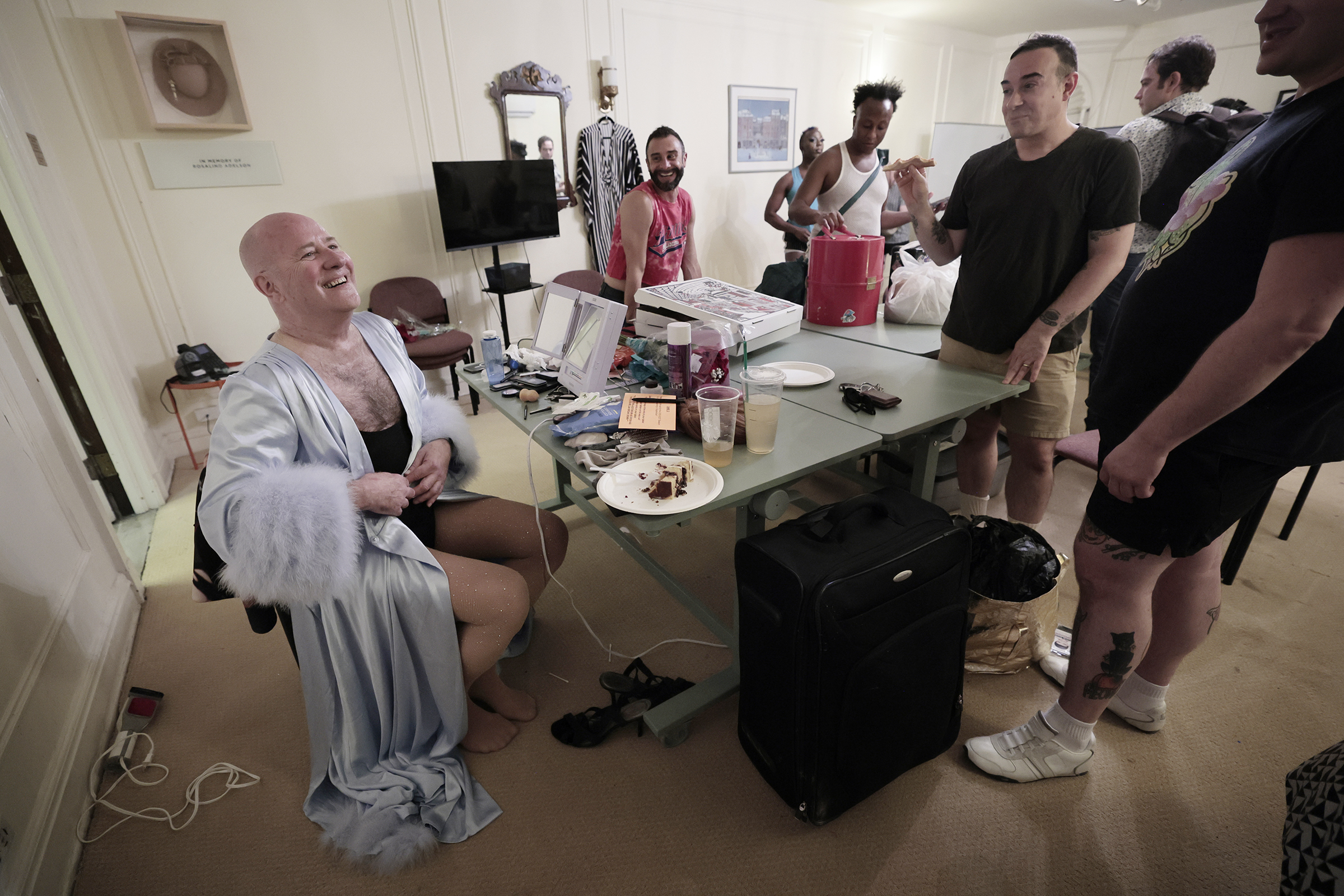
Carlota Ttendant (Michael Byrne) (at left) laughs with friends and fellow performers after Carlota’s final evening cohosting Gay Bingo at Congregation Rodeph Shalom in Philadelphia on June 13. Elizabeth Robertson / Staff PhotographerMichael Byrne transforms into his drag persona Carlota Ttendant ahead of Gay Bingo on May 9 at Congregation Rodeph Shalom in Philadelphia.Joe Lamberti / For The Inquirer
Carlota could be bossy and profane but never vulgar; she could poke fun at audiences without being cruel. She became the “drag queen you could bring your grandma to,” Byrne said.
Around the time Carlota came to be, the number of new AIDS diagnoses and deaths peaked in Philadelphia. In 1992, new AIDS cases surpassed 1,500; in 1994, AIDS deaths topped 900, according to city data.
(function(){function e(){window.addEventListener(`message`,function(e){if(e.data[`datawrapper-height`]!==void 0){var t=document.querySelectorAll(`iframe`);for(var n in e.data[`datawrapper-height`])for(var r=0,i;i=t[r];r++)if(i.contentWindow===e.source){var a=e.data[`datawrapper-height`][n]+`px`;i.style.height=a}}})}e()})();
Misinformation about the disease, which strips the body of its natural defenses and leaves it vulnerable to life-threatening infections and ailments, was rampant. People alienated gay men, wrongly fearing HIV/AIDS could be transmitted through a handshake, a hug, or across a dinner table, The Inquirer and Philadelphia Daily News wrote. Diagnostic testing took weeks; what rudimentary treatments were available sometimes made people sicker; and HIV often progressed to AIDS within a few years.
“It was not unusual to have people dying every month,” said Kevin Burns, who as a case manager with the nonprofit ActionAIDS (now called Action Wellness) connected clients to hospice care. Burns later served as Action Wellness’ executive director.
The need for resources was rife, and in 1996, Philly’s nonprofit AIDS Fund set out to supplement the money it made from its annual AIDS Walk, according to Sandra Thompson, former chair of its board of directors. An article in City Paper about an irreverent bingo-drag night sweeping Seattle — which, by one report in the Seattle Times, raised $10,000 a night — caught the attention of Mark “Chumley” Singer, then a fledgling events producer, who pitched the idea to the AIDS Fund. (The fund folded in 2024 due to the decrease in new AIDS cases, and turned ownership of Gay Bingo over to Action Wellness.)
Singer recalled thinking at the time: “I’ve been doing sad, mopey, candlelight vigil fundraisers. … Why can’t we raise money and have fun?”
Singer and Byrne had never met before the latter was tapped to host Gay Bingo, but their chemistry was kismet.
“There was never a show where we weren’t having more fun than everybody,” said Singer, who cohosted until the early aughts. Byrne and Singer left Gay Bingo around that time, but Byrne later returned.
Byrne remembers the magic of those early years of Gay Bingo. He remembers when 600 seats would sell out in 10 minutes, and he remembers doing his glittered red lip from the floor of the Gershman Y’s mirrored dance studio. He remembers two-show Saturdays and how six hours in heels would make him catatonic on Sunday. He remembers riffing with and ribbing Singer and the laughs their off-color jokes and mild profanity elicited. He remembers the constant movement of the bold and bawdy BVDs, on Rollerblades, or the electricity when O-69 was called and hundreds stood up, shaking and shouting with the fervor of their libidos.
But Byrne also remembers the solemn moments: the steelworker who told a documentarian about watching his bodybuilder son become emaciated; the families who sponsored games on the anniversary of their loved one’s death; the pharmacist who learned all he could about HIV drugs; Byrne’s own friends who were infected.
“Our community was in crisis,” Byrne said, “while we focused on it, we also focused on being fun and laughing.
“And we all needed that at that point.”
Act II
The “Rainbow Bombshell” Gay Bingo on June 13 doubled as a Pride extravaganza and an homage to all things Carlota. Her first outfit of the night was crafted from a promotional banner from her years hosting the Philadelphia Orchestra’s Halloween Concert. Alongside her, the BVDs dressed as Big Mess-era Carlota, Norma Kamali-inspired Carlota, Phillies Carlota, and fuzzy caftan-wearing Carlota. Attendees, ushers, volunteers, and even the American Sign Language interpreter wore that signature red bob — wigs that Action Wellness bought in bulk. One wore a T-shirt that read, “Dibs on the ginger.”
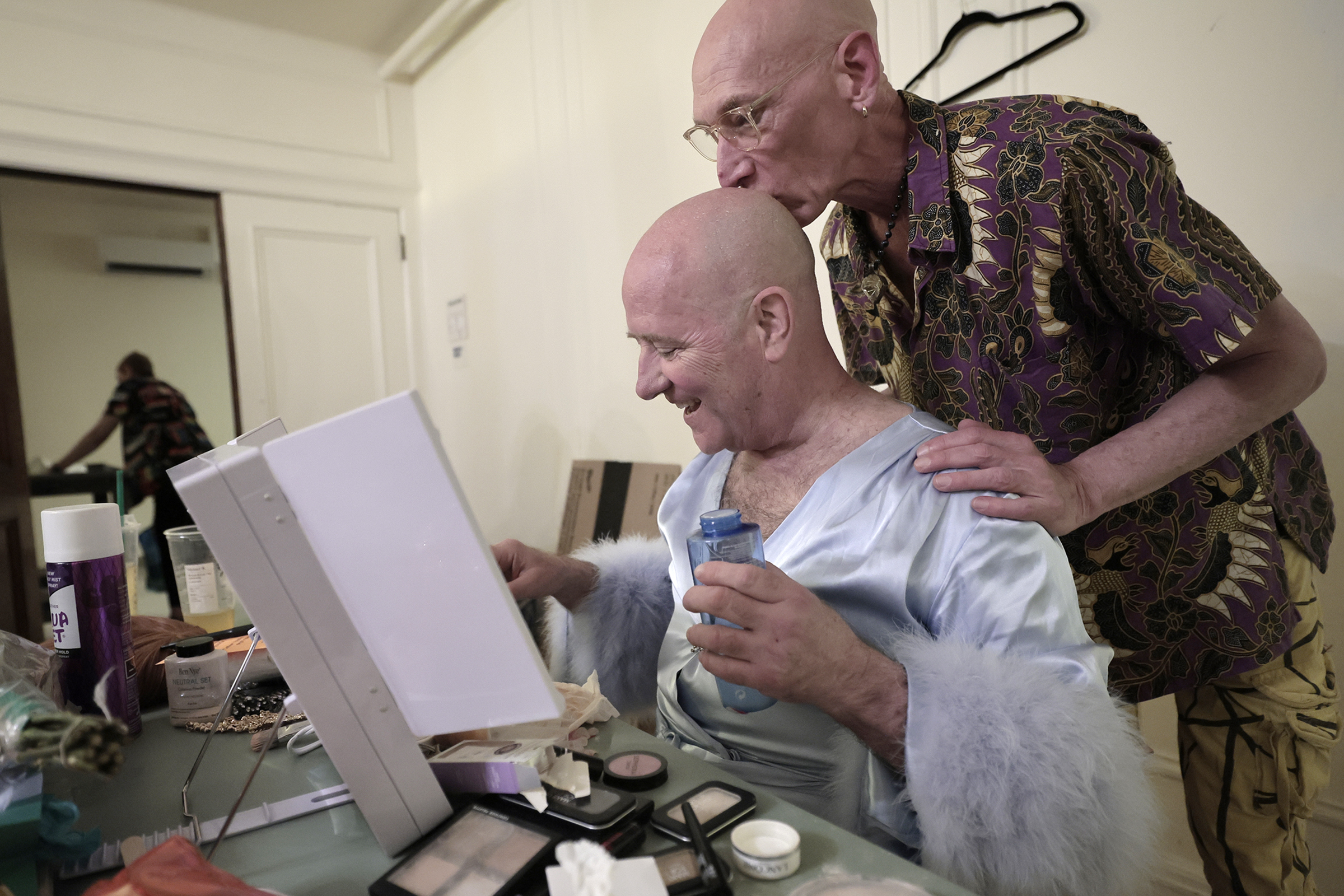
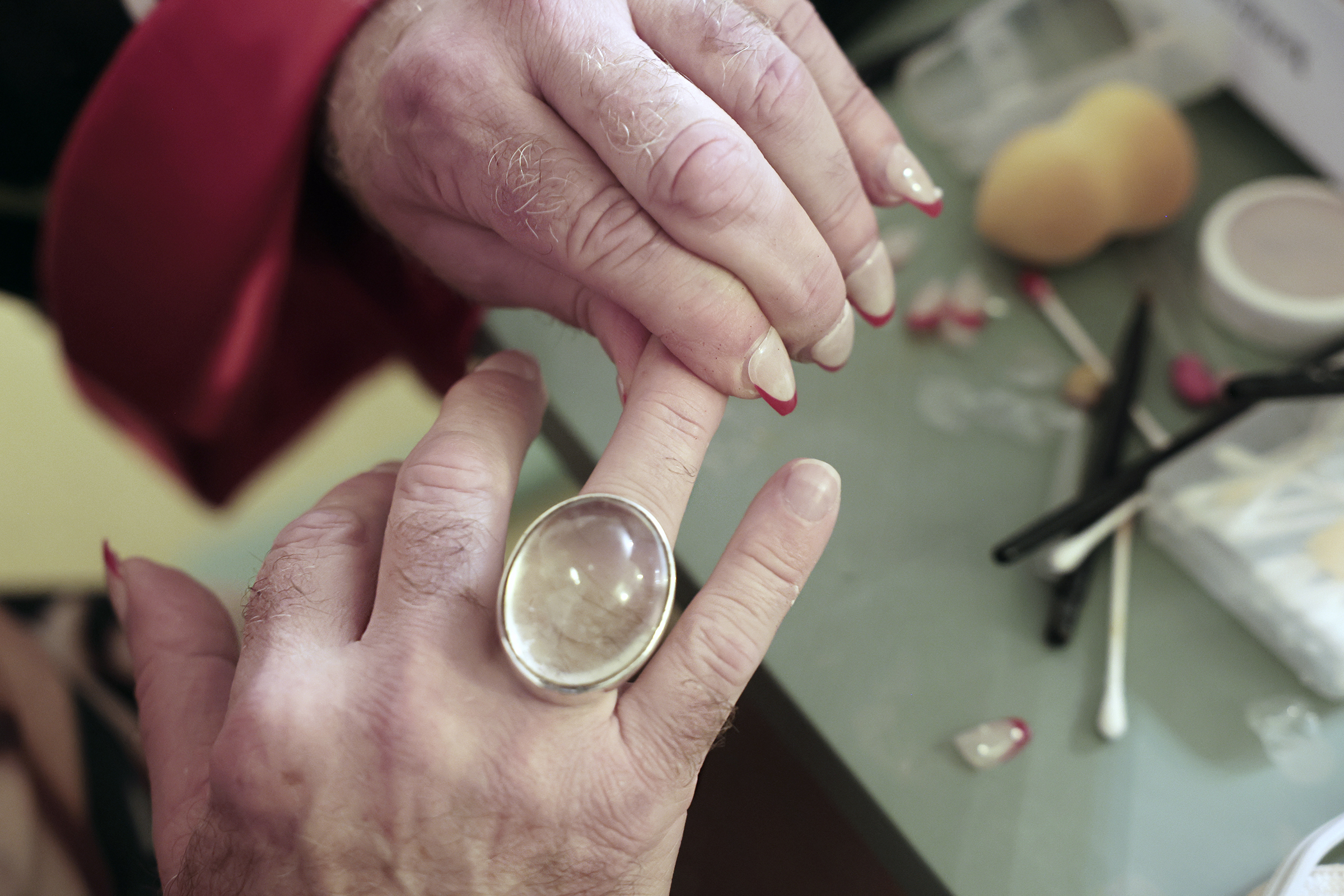
In the dressing room, Tess Tickle (Paul Struck) kisses Carlota Ttendant (Michael Byrne) on the head after Rainbow Bombshell Gay Bingo at Congregation Rodeph Shalom in Philadelphia on Saturday, June 13, 2026. “I love him” said Struck as he walked out of the dressing room.Elizabeth Robertson / Staff PhotographerCarlota Ttendant (Michael Byrne) puts on a favorite crystal ring and fake nails before cohosting Rainbow Bombshell Gay Bingo on June 13. Elizabeth Robertson / Staff Photographer
“Are we ready to win some money?” Carlota said, hyping up the crowd before the first of 12 rounds of bingo. Councilmember Rue Landau, the Philadelphia City Council’s first openly LGBTQ+ member, called the first game:
I-28.
I-26.
G-52.
B-14.
O-63.
B-3.
“Bingo!” someone cried out, as the audience let out an audible wave of disappointment, exasperation, and defeat, and the BVDs rushed over to authenticate.
“Did you just get bingo, girl?” Carlota wisecracked.
For 30 years, these Gay Bingo players have pledged each month to “keep on playing Gay Bingo until this crisis is over.” And today, HIV/AIDS deaths and new diagnoses have stagnated, according to the most recently available health department data, and drug cocktails have made it so people with HIV can live long, healthy lives and may never pass the disease onto others or have their illness advance to AIDS. Preventative medications, like PrEP, can also dramatically decrease the risk of becoming infected.
Michael Byrne, as his drag persona Carlota Ttendant, on May 9 at Congregation Rodeph Shalom in Philadelphia.Joe Lamberti / For The Inquirer
But there are still obstacles to ending the epidemic. HIV/AIDS disproportionately affects Black and brown communities and low-income people who experience barriers to healthcare, according to Action Wellness executive director Mary Evelyn Torres. The geographic disparities are also stark: Current drug regimens may be readily available in well-resourced countries, like the United States, but access is scarce in the world’s vulnerable pockets. These problems have only been exacerbated by President Donald Trump’s proposed cuts to domestic and foreign HIV/AIDS programs. The withdrawal of American dollars overseas, United Nations officials warned, could lead to more than 4 million AIDS-related deaths and 6 million more HIV infections by 2029.
(function(){function e(){window.addEventListener(`message`,function(e){if(e.data[`datawrapper-height`]!==void 0){var t=document.querySelectorAll(`iframe`);for(var n in e.data[`datawrapper-height`])for(var r=0,i;i=t[r];r++)if(i.contentWindow===e.source){var a=e.data[`datawrapper-height`][n]+`px`;i.style.height=a}}})}e()})();
“We’ve come a long way, but there’s still work to be done,” Torres said, “and that work is being threatened by this administration.”
As the epidemic has changed, so has Gay Bingo: The money raised — more than $5 million since its inception — now goes toward Action Wellness’ social services and programming. The BVDs ditched their roller skates at the Gershman Y (because of the new, carpeted venue). Tickets cost $50-$60, compared to $10-$12 in May 1996, and these days, attendance averages between 150 and 200 a month.
Drag has evolved, too. Spending centuries on the periphery as proto-punk-beatniks and after-midnight acts, queens disrupted and challenged the mainstream with wit and wonder. Then, the exploding popularity of RuPaul’s Drag Race, a drag reality-TV competition, seismically changed the culture, snubbing scrappiness for silicon and kitsch for couture. The show ushered drag into the zeitgeist: Its lingo became commonplace and its contestants turned into social media stars, with businesses, makeup brands, books, and podcasts, as the art form continues to face political bans and threats nationwide.
The show “has taken everything to a whole other planet,” Byrne said, “and that’s amazing and that’s really great.
“That’s also not what I do.”
Carlota was never concerned with “affecting female mannerisms” or “trying to be this woman or this drag queen,” Singer said. To Byrne, she’s come to embody the fiercest, most unafraid, and righteous versions of himself. But “Michael was never far from Carlota,” Singer said.
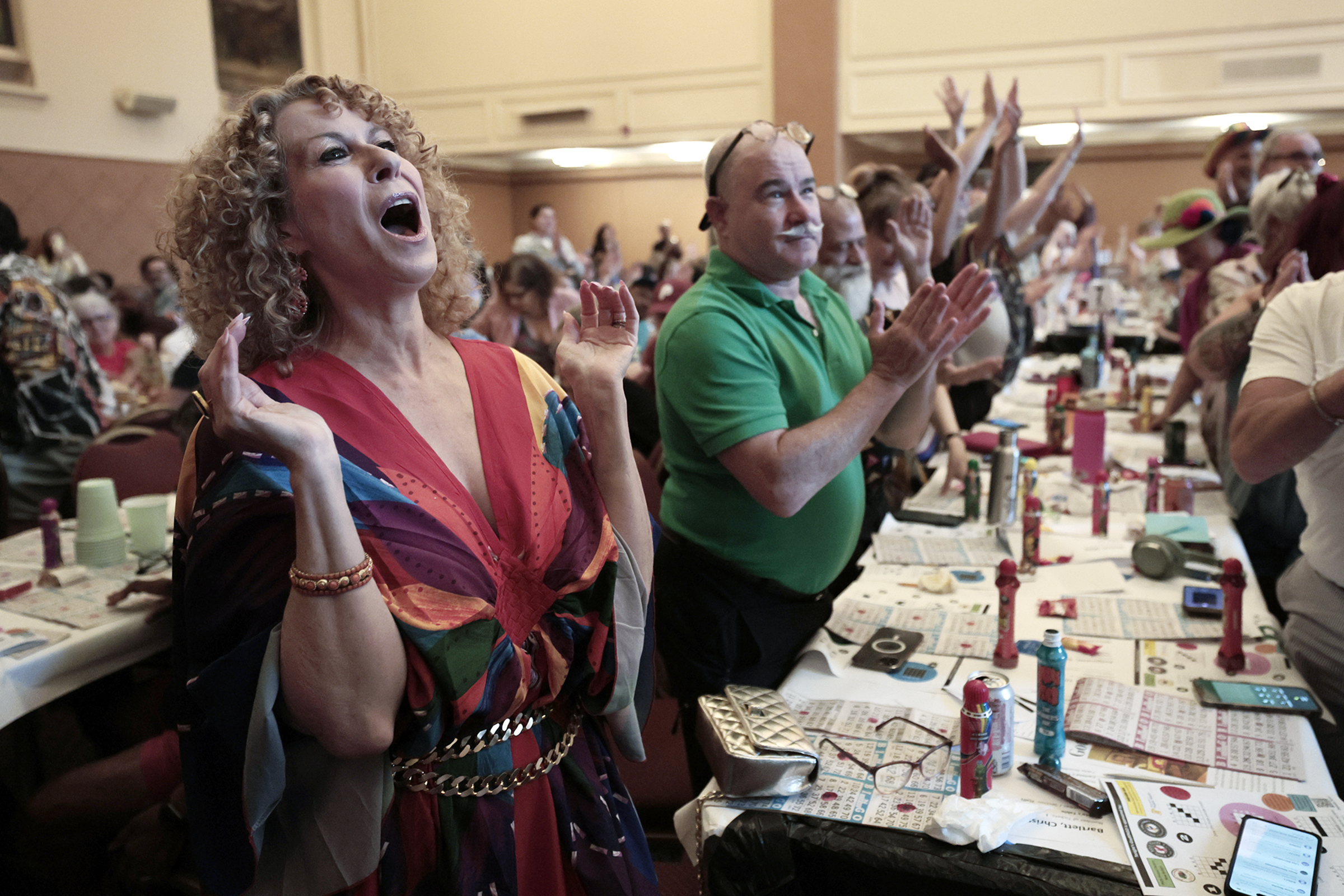
Janie Lopez of Philadelphia cheers for her friend Carlota Ttendant during Gay Bingo at Congregation Rodeph Shalom.Elizabeth Robertson / Staff Photographer
To those who know Byrne, Carlota’s come to represent someone purer and more singular, a testament to what joyful resistance and defiant resilience can achieve amid tragedy. Her ingenuity and authenticity have made her synonymous with Gay Bingo, according to Action Wellness event planner and cohost Tim Johnson (otherwise known as Stella D’Oro); her playfulness is what’s engaging, Burns said; the safe space she’s cultivated for the queer community is what keeps people coming back season after season, said regulars Cat Johnson, 47, and Katie Dickerson, 38, of Roxborough.
“It’s going to be really different without Carlota,” Johnson said. “No one’s going to fill her shoes, but I think that the vibe and the energy is going to live on.”
“It’s a lot easier to raise money when everyone is having fun,” said Amber Schlesman, 38, of Point Breeze, who’s been coming to Gay Bingo since its Gershman Y days. “And for the shoes, I’m guessing it’s a size 12.”
All those shoes will be donated to Philly AIDS Thrift soon enough, Byrne said.
Byrne’s voice cracked as he thought of the people who made Carlota’s run possible: the AIDS Fund organizers, Singer, the original cast of BVDs, the volunteers, those who came back monthly, the victims, their families. Many sent her off June 13 with a trove of well wishes, notes that read, “thanks for the memories,” and “so proud of all you’ve done.” They told her, “I love you,” and “hang up those high heels, baby.”
At the end of the night, Byrne’s best friend gifted him a throw pillow.
“Don’t be a lady,” it said. “Be a legend.”
Michael Byrne transforms into his drag persona Carlota Ttendant ahead of Gay Bingo on Saturday, May 9, 2026, at Congregation Rodeph Shalom in Philadelphia.Joe Lamberti / For The Inquirer
Dorothy Verdon had a history of moving around every few years. But when she found her lakefront — or, technically, lake-back — home in the Arbours of West Goshen in Chester County 12 years ago, she just really liked it.
Her loudest neighbors are the geese, who live at the banks of Fernhill Lake, a 64-acre impoundment formed from Aqua’s Township Line Dam. But under a plan from the public water company to partially decommission the dam and draw down the reservoir, returning the natural flow of Chester Creek, Verdon and her neighbors’ backyards would be subject to great ecological change in the coming years.
It’s a change environmentalists generally support, as dams greatly affect the ecosystem around them: increasing water temperature, generating algae growth, and fragmenting habitats. But residents, some of whom paid up to $20,000 for their lake-facing yards,worry what their backyards, and the developed habitat, could become.
“My immediate concern, and that of several residents and the township, is what’s going to happen to the ecosystem, because it is a water-based ecosystem,” Verdon said. “There’s that. It’s really financial. And it’s aesthetic. What are we going to have behind us as the lake gets drained?”
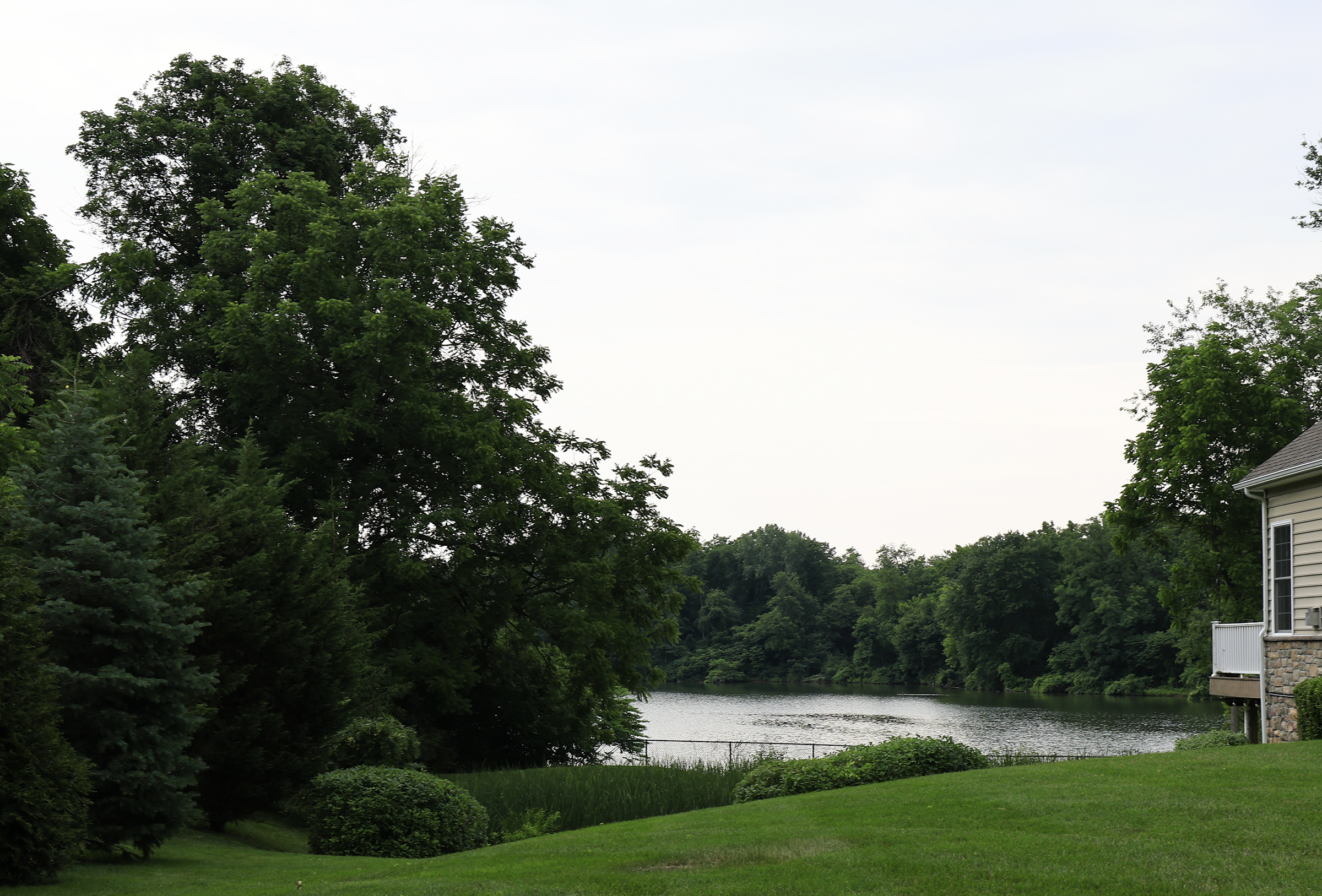
A view of Fernhill Lake from the Arbours at West Goshen in West Goshen, Pa., on Monday, June 22, 2026.Yong Kim / Staff Photographer
The planned decommissioning
Built in 1935, Township Line Dam once supplied drinking water for surrounding customers. But, as with a number of dams before it, that has not been the case for decades. Aqua acquired the dam in 1998 and does not use it for daily operations.
Township Line requires “extensive investment” to satisfy requirements from the Pennsylvania Department of Environmental Protection, which outweighs the benefits of a dam that no longer serves its purpose, Michael Fili, the company’s vice president of planning, design, and construction, wrote in a letter to the township’s board of supervisors in May.
Under its plan, the company will begin drawing down the water in the reservoir by eight to 10 feet, leaving the water at that reduced level until it begins construction for partial dam removal in early 2028 through 2029, Fili wrote. At that time, the entire lake would be drained. (The company originally planned to begin the process in July, but pushed the timeline back to fall following concerns from residents.)
A view of the Township Line Dam along Airport Road in West Goshen, Pa., on Monday, June 22, 2026. Yong Kim / Staff Photographer
Following decommissioning, Aqua proposed transferring ownership of the 114 acres to West Goshen Township, making the municipality “stewards of the land” that could “utilize the land for the benefit of its residents,” Fili wrote.
“We understand the reservoir and surrounding area is enjoyed by the community, and we do not take this action lightly,” Fili wrote.
The announcement drew concerns during a May board meeting from residents, who questioned why it had to be drawn down so quickly, and worried about what would become of the land — fearing further development, or lack of adequate care to keep it from becoming an eyesore. Some wondered if there might be a path to maintaining the lake.
“With all due respect to my fellow supervisors’ opinion, I don’t think we have an option here,” said Shaun Walsh, chairman of the township’s board. “If you keep it as a dam, you need to spend millions of dollars to fix it.”
Walsh said the township would keep it as an open space, possibly turning it into a mixture of wetlands, meadow, woodlands with walking trails — an “ultimately real beautiful amenity for people in the area to use,” he said.
“I think there are so many advantages in it becoming a publicly owned asset, given that the township is so built out,” he added. “I personally believe in 10 years’ time we should have an attractive amenity there for the community.”
(“When we’re all dead,” someone in the meeting responded.)
West Chester appears to have a right of first refusal to purchase the property at low cost, based on old agreements, officials for the borough said. West Goshen Township Manager Chris Bashore said that town was waiting to see what West Chester decides.
In a message, Aqua said it is communicating with both municipalities and “no determination has yet been made as to whether the 114 acres of property will be conveyed and to whom.”
Birds rest on the Township Line Dam along Airport Road in West Goshen, Pa., on Monday, June 22, 2026. Yong Kim / Staff Photographer
Dams and wildlife
Residents also worry about what will become of the waterfowl, turtles, fish, and a bald eagle who have begun to call it home over nearly a century.
Largely, environmental activists believe that “the positives of dam removal outweigh any kind of negatives” said Faith Zerbe, advocacy and science community action coordinator with the Delaware Riverkeeper Network, which has sought the decommissioning of multiple dams over the last two decades.
The Chester Creek, a tributary of the Delaware River, is steeped with “impairments” — situations when a waterway does not meet environmental or regulatory quality — along much of its length. Removing the dam would help chip away at some of those larger issues.
“Removing a dam, allowing the natural stream to find its pattern over time as that dam removal takes place, and then restoring the stream banks with natural native indigenous species is kind of a critical piece to getting ecology back to the river,” she said.
Aqua said it is coordinating with the Pennsylvania Fish and Boat Commission and Department of Conservation and Natural Resources, and the federal Fish and Wildlife Services, as it prepares for its drawdown.
It is essential for the dam decommissioning to be done right, environmentalists said. But when done “thoughtfully and with the proper permissions, dam removal can have remarkable benefits for local ecosystems, allowing these areas to return to their original landscape,” said Carly Lare, executive director of Chester Ridley Crum Watersheds Association.
Her organization has been communicating with Aqua to better understand the project’s goals and timelines, she said.
“Since colonization of the area, this landscape has greatly changed, which in turn alters which native species can survive throughout our region,” Lare said. “When habitats are fragmented, our creeks experience diminished migration of native fish populations, which in turn influences the health and diversity of other native organisms, ranging from freshwater mussels to river otters.”
This suburban content is produced with support from the Leslie Miller and Richard Worley Foundation and The Lenfest Institute for Journalism. Editorial content is created independently of the project donors. Gifts to support The Inquirer’s high-impact journalism can be made at inquirer.com/donate. A list of Lenfest Institute donors can be found at lenfestinstitute.org/supporters.
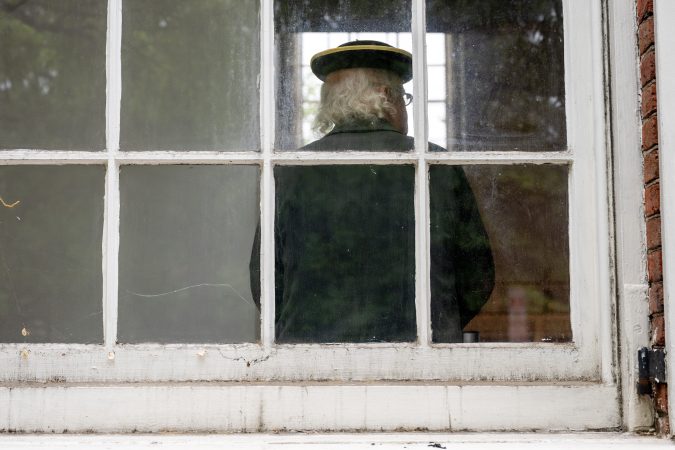
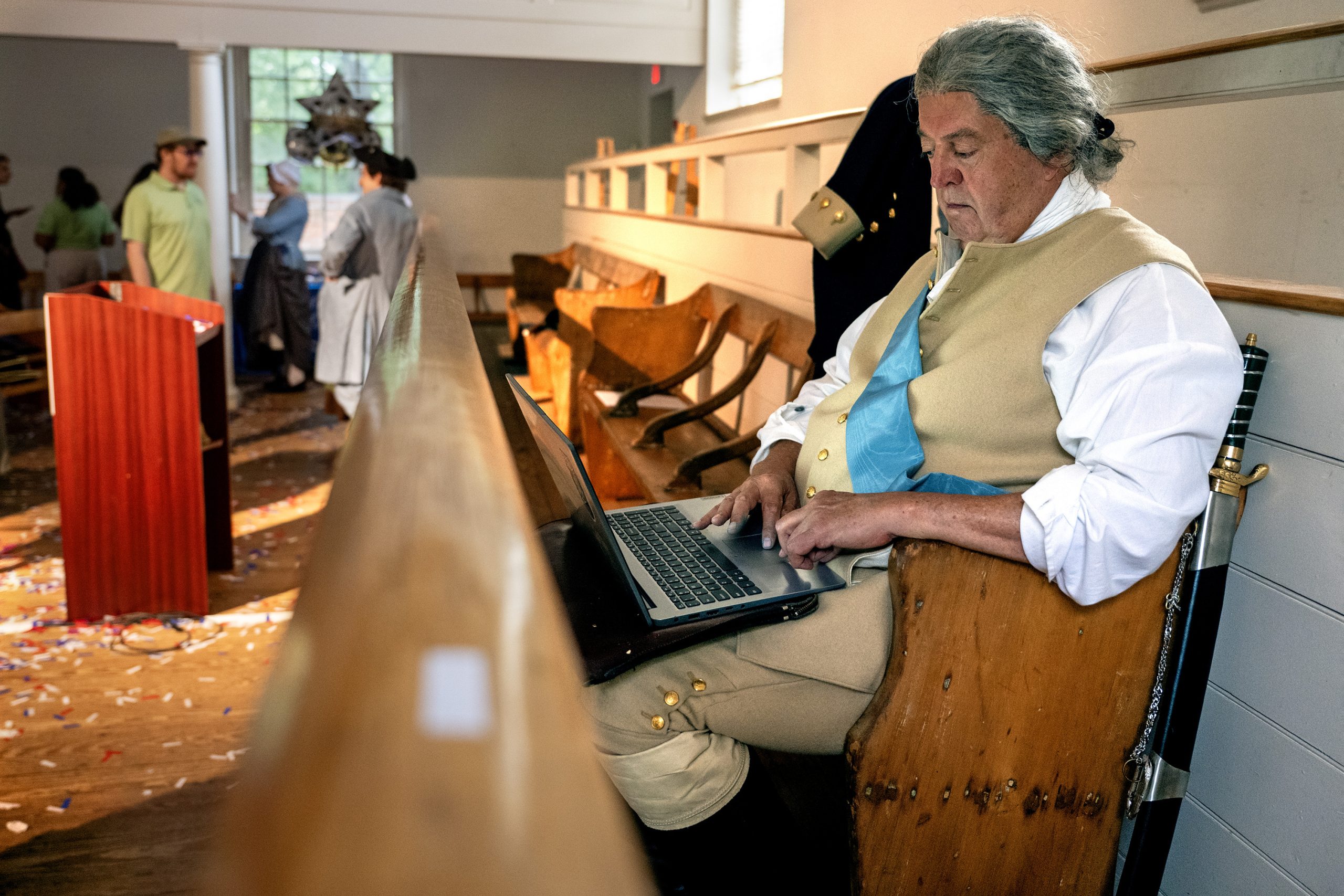
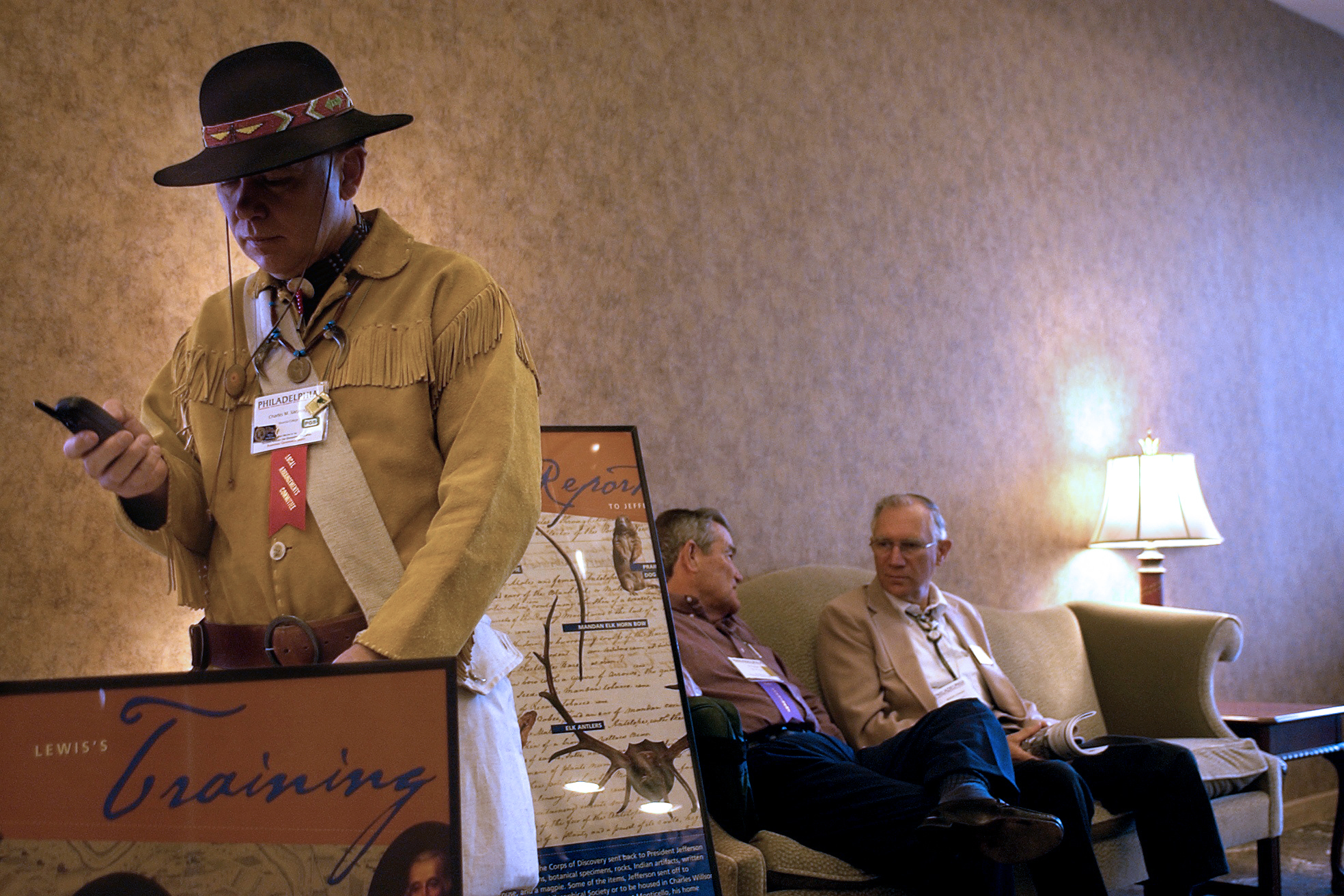
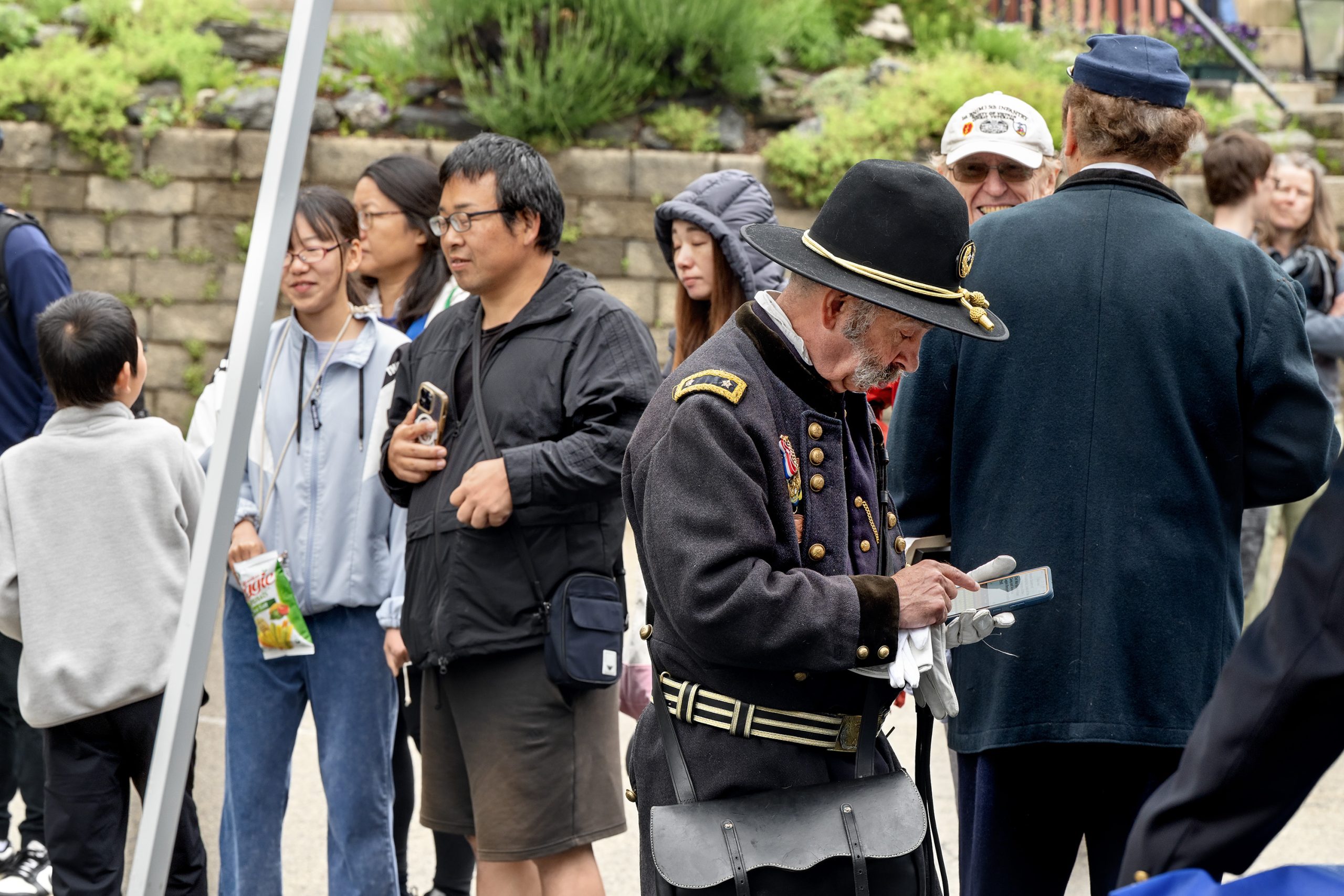
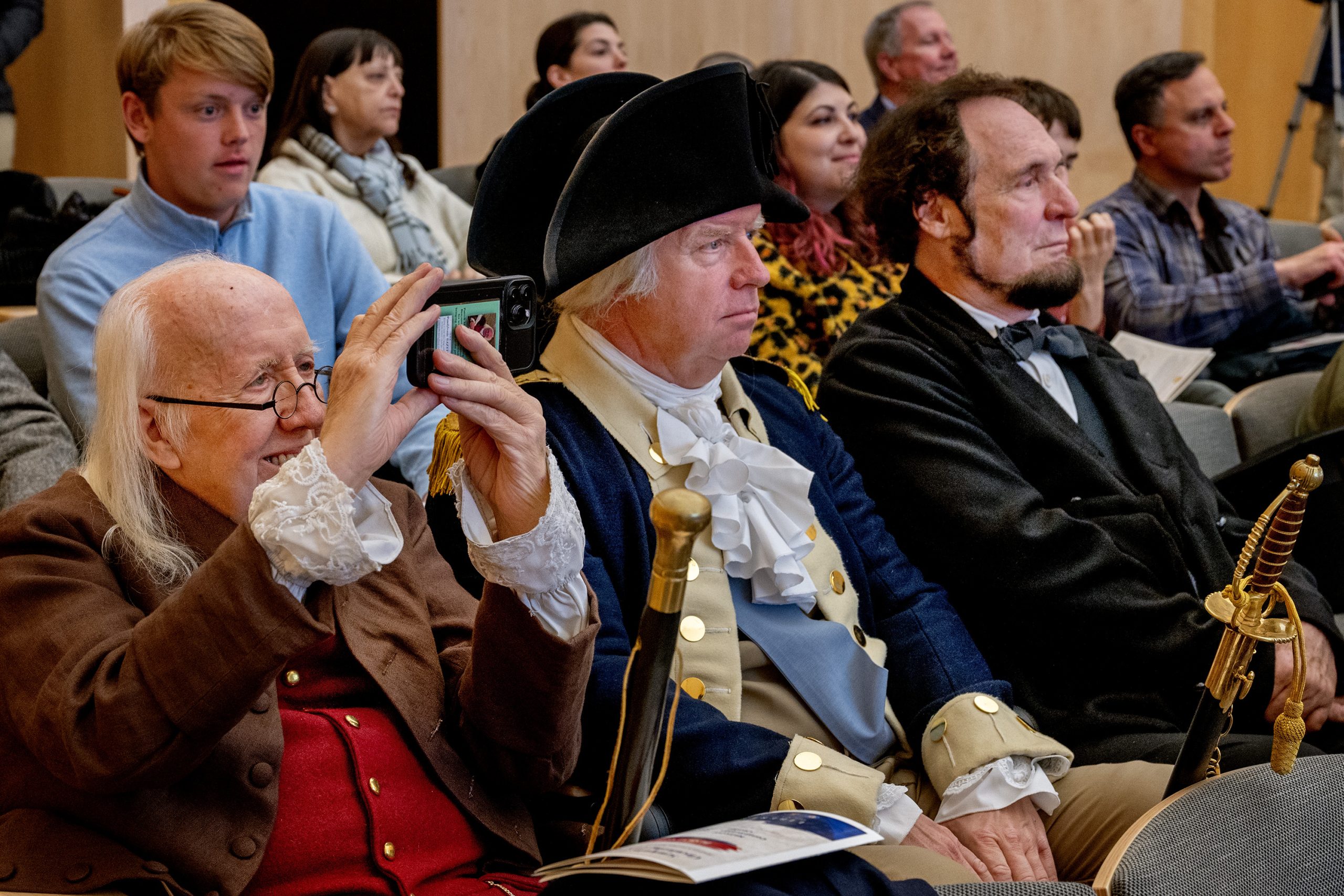
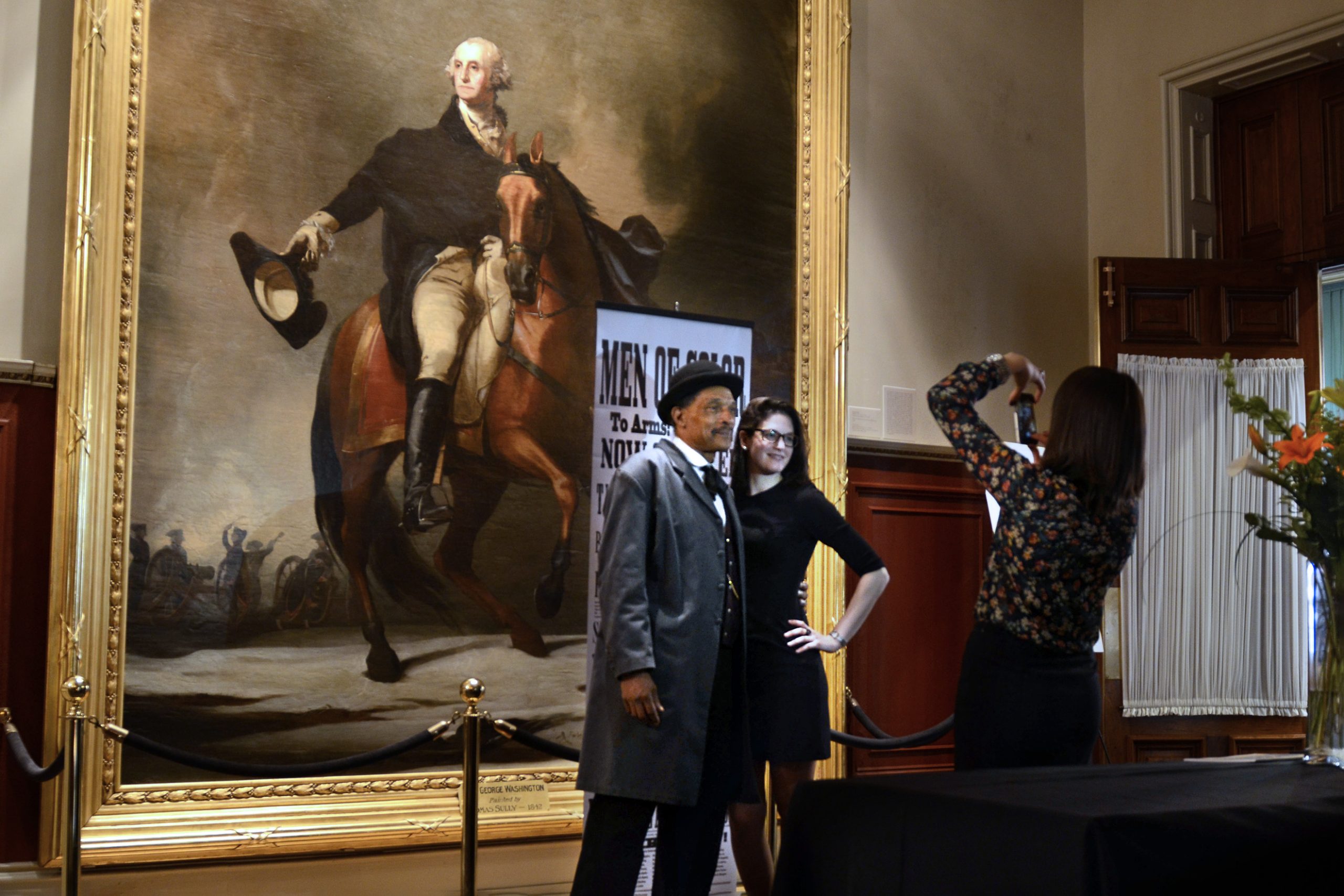
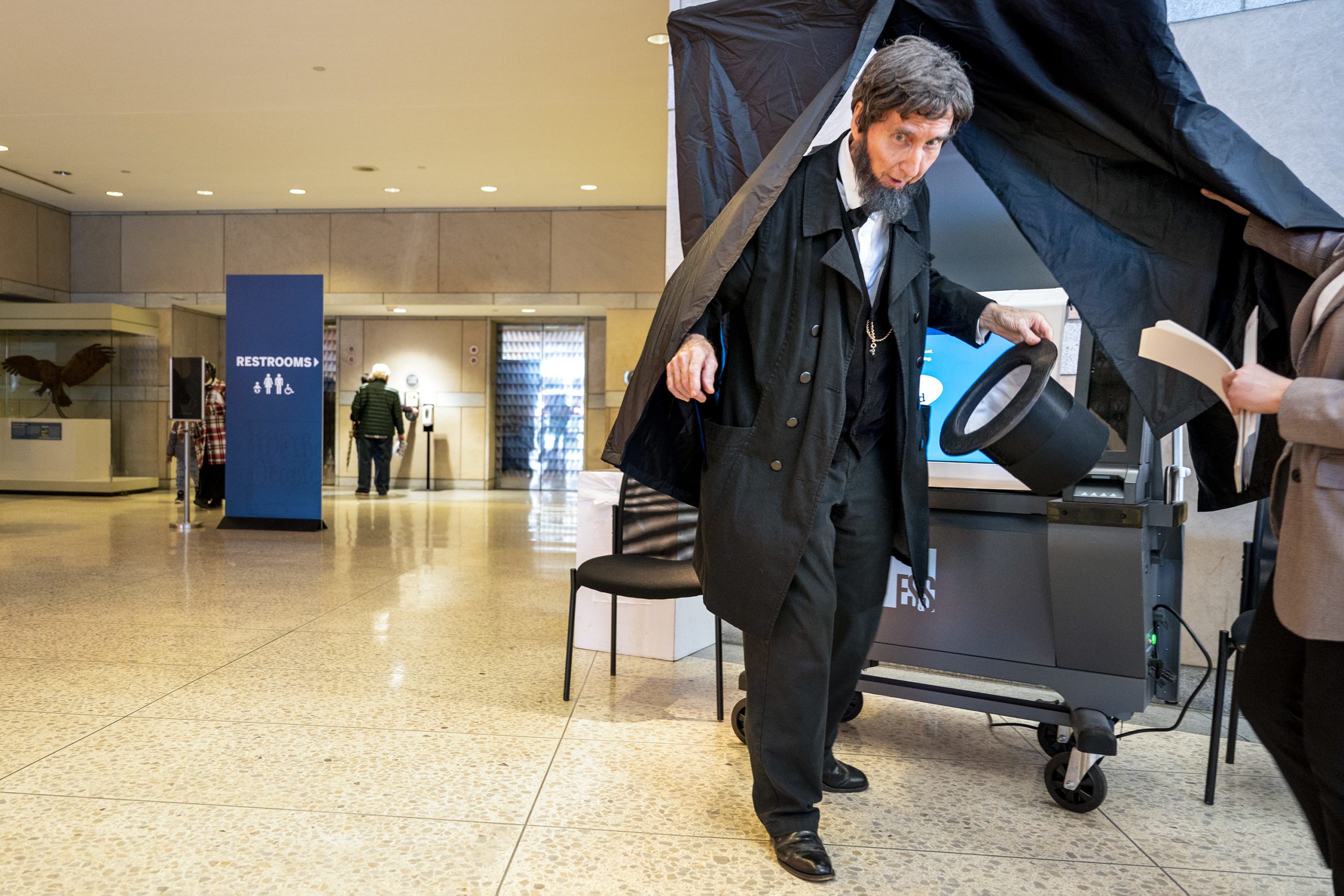
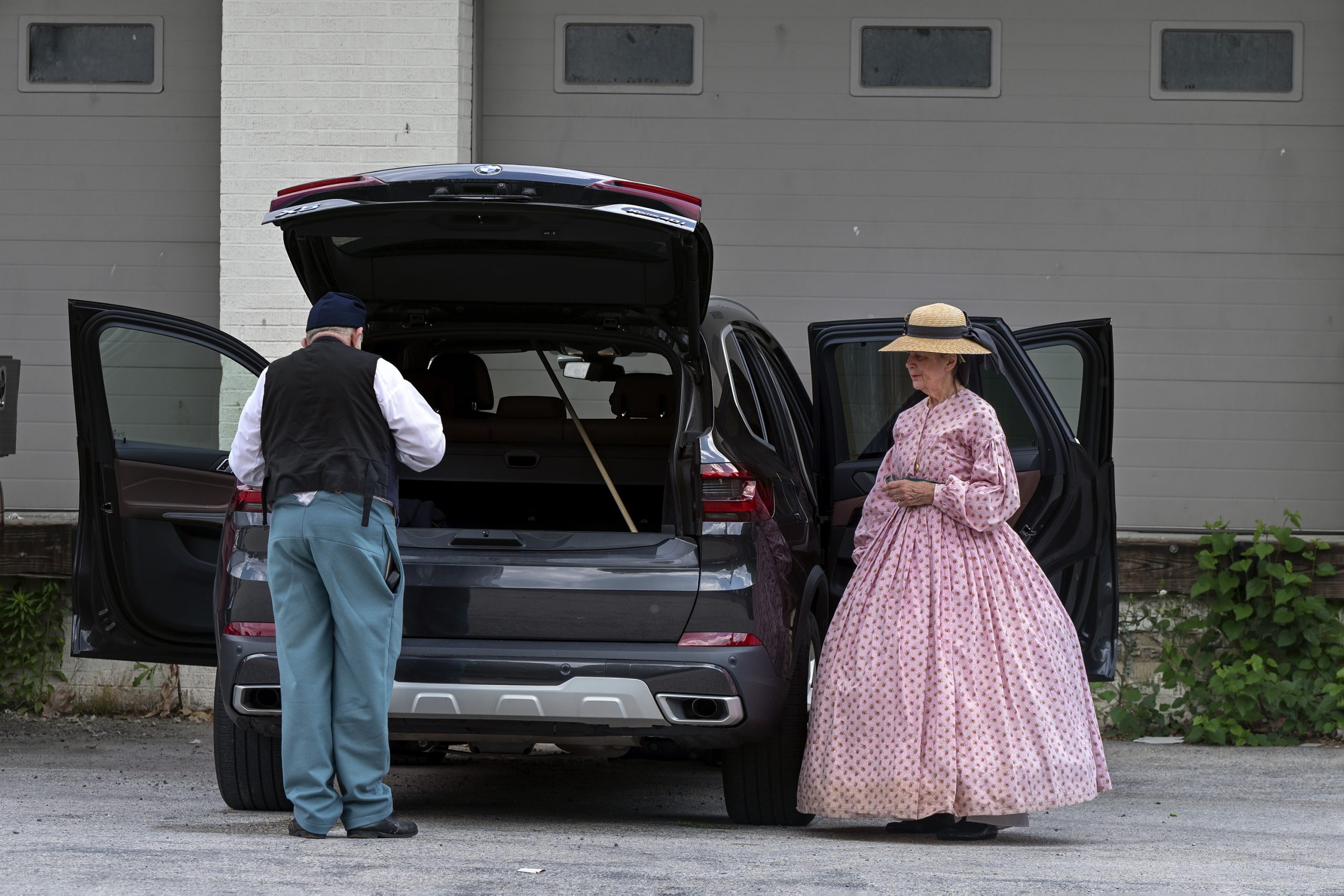
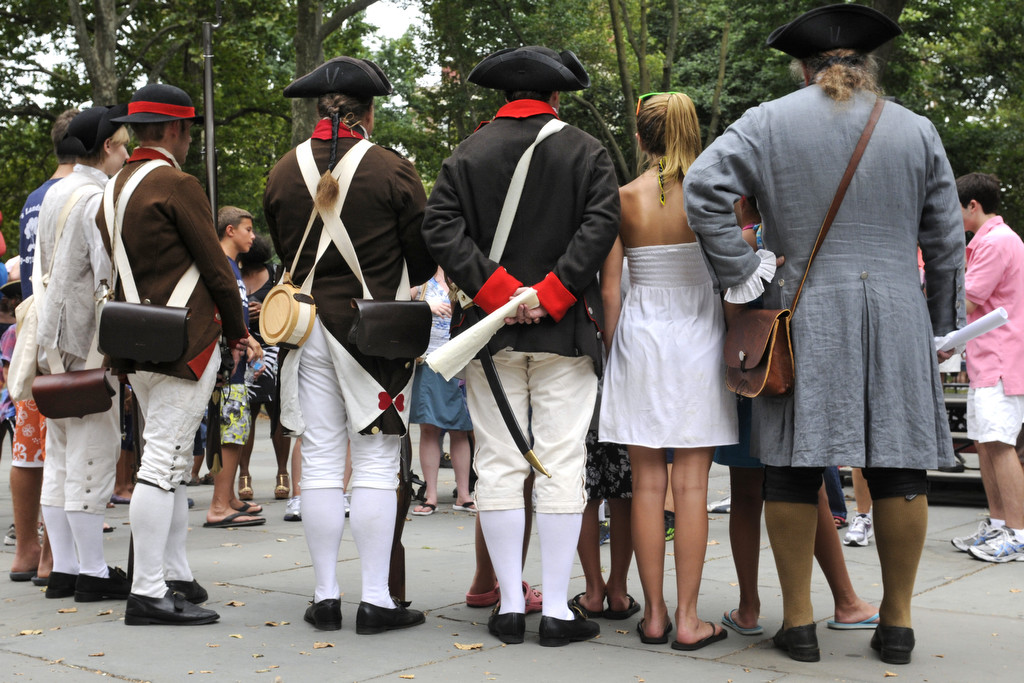
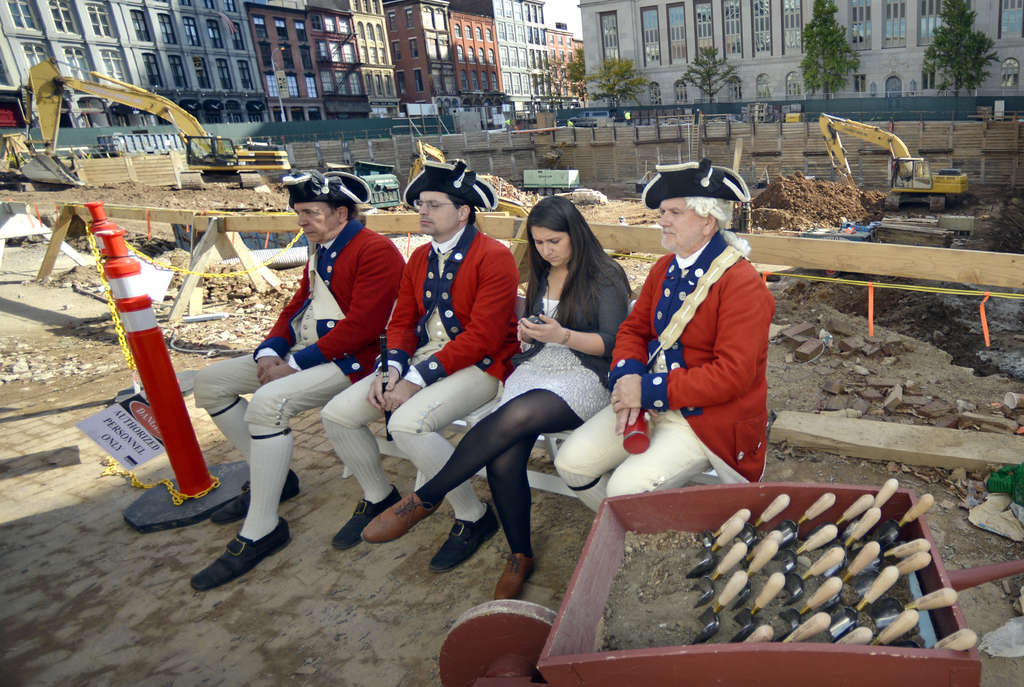
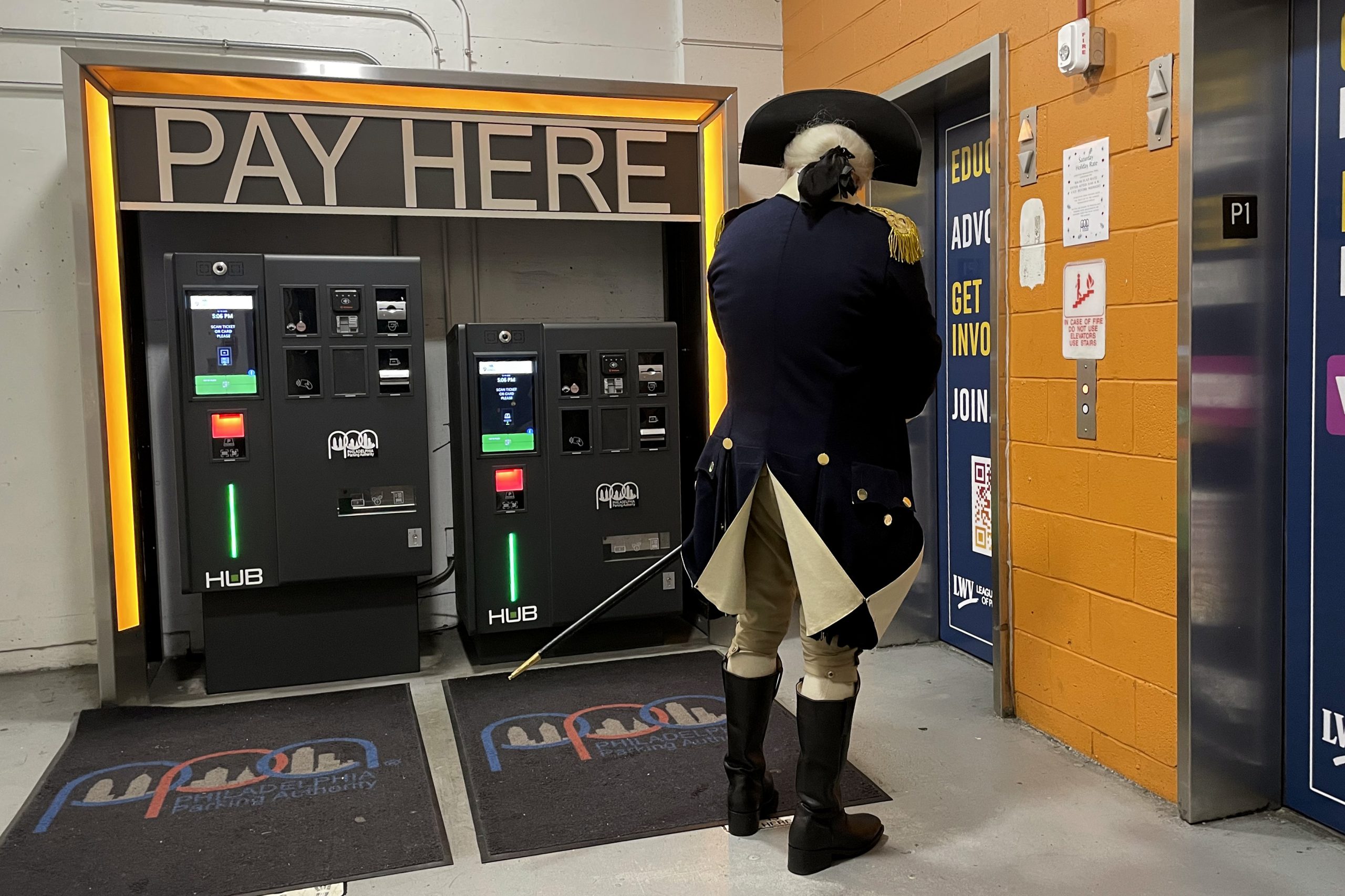
Besides shadows, reflections, silhouettes, pigeons, umbrellas, or hats one of my favorite photo gimmick-clichés is finding juxtapositions. Like catching historic reenactors in moments of chronological inconsistency.
The image of Ben above and George below was made on assignment for an upcoming story on the 21st season of Historic Philadelphia’s Once Upon a Nation program — where costumed actors perform first-person interpretations of real 18th-century Philadelphians in the Historic District and at Valley Forge National Historical Park.
May 21, 2026: Jim Fryer as George Washington.Tom Gralish / Staff Photographer
The photo of the actor portraying Franklin was made from outside the Free Quaker Meeting House at 5th and Arch Streets. It was established during the Revolution when a rift occurred among the Society of Friends. As pacifists they would not take up arms, pay war taxes, or take an oath of allegiance. A group calling themselves “Free” Quakers supported the American cause and were expelled or “read out of meeting” by the mainstream Friends.
Among those Free Quakers was Timothy Matlack, a clerk in the Pennsylvania Statehouse known for his excellent penmanship. He was chosen by the Continental Congress to produce the handwritten copy of the Declaration of Independence — the engrossed parchment version that we all recognize as the “original” — that was signed by the 56 delegates in August 1776. (Matlack, who was born in Haddonfield, N.J. was also one of the earliest opponents of slavery in America, and he felt that the Quakers were not moving quickly enough to abolish it.)
I only mention the Declaration as, along with many other stories, I have been photographing for in the Historic District and at the President’s House, I’ve been working on a photo essay on some of the direct descendants of the men who were in the room in Independence Hall (then the Pennsylvania State House) as America was born. Their photos, along with interesting and little known facts about the 17 local Signers from Pennsylvania, New Jersey, and Delaware will be published later this week as part of The Inquirer’s coverage of the 250th.
As promised in a previous column, I’ve collected a bunch of my Philly photo-anachronisms from over the years.
October 17, 2002: Charles Sacavage as Meriwether Lewis (of the Lewis & Clark Expedition).Tom Gralish / Staff PhotographerMay 24, 2026: Mike Gabriele as Civil War General Ambrose E. Burnside.Tom Gralish / Staff PhotographerDecember 10, 2025: Benjamin Franklin (from left) Gen. George Washington and President Abraham Lincoln.Tom Gralish / Staff PhotographerJanuary 15, 2014: Robert Branch (left) as 19th Century educator, intellectual, and civil rights activist Octavius V. Catto.Tom Gralish / Staff PhotographerFebruary. 20, 2023: President Abraham Lincoln votes.Tom Gralish / Staff PhotographerMay 26, 2024: Civil War reenactors Kathy and Ed Berna.Tom Gralish / Staff PhotographerJuly 8, 2012: After the annual reenactment of the first public reading of the Declaration of Independence.Tom Gralish / Staff PhotographerOctober 9, 2014: Ceremonial groundbreaking for the Museum of the American Revolution.TOM GRALISH / Staff PhotographerDecember 10, 2025: George Washington. Tom Gralish / Staff Photographer
Since 1998 a black-and-white photo has appeared every Monday in staff photographer Tom Gralish’s “Scene Through the Lens” photo column in the print editions of The Inquirer’s local news section. Here are the most recent, in color:
Next week, Philadelphia will begin a centuries-long stint as the host of a time capsule that is not meant to be unearthed for a quarter of a millennium.
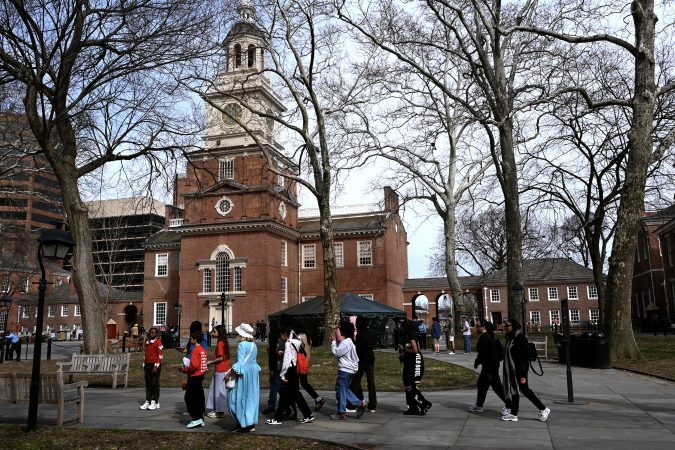
Set to be buried on July Fourth at Independence National Historical Park, the time capsule comes to the city as part of the celebrations surrounding the United States’ Semiquincentennial. After its burial, it is not slated to be seen again until 2276.
Known officially as “America’s Time Capsule,” it features items from every U.S. state and territory, as well as contributions from the three branches of government. Its creation was led by America250, a national, nonpartisan organization that Congress placed in charge of the 250th birthday celebrations.
Weighing in at 900 pounds, the time capsule — a massive cylinder emblazoned with an “America250” logo on its side — was sealed shut last week at a ceremony in Gaithersburg, Md. Its unveiling 250 years from now is intended to show future generations “the care, pride, and optimism with which Americans marked our 250th anniversary,” said America250 chair Rosie Rios in a statement.
Inside the capsule, which is constructed of stainless steel, archival contents sit organized largely in small boxes, with paper documents in a separate compartment. Many states submitted hundreds of letters, postcards, posters, poems, and other printed material for inclusion.
America250 has posted a detailed list of all the items included in the time capsule. Pennsylvania, for example, contributed a letter from Gov. Josh Shapiro, as well as an archival booklet. New Jersey, meanwhile, ponied up a stainless steel plate inscribed with a greeting for the time capsule’s future openers. And Delaware sent in a set of a dozen notecards from residents detailing their thoughts on what the state means to them.
There were some guidelines on what states could submit, as items that could degrade or rust were not allowed. Maryland, as a result, was not able to submit Old Bay seasoning, the Associated Press reported.
Some items were innovative. A “molecular data storage device” from the Library of Congress was included, and it contains synthetic DNA encoded with copies of several items from the library’s collection — including a draft of the Declaration of Independence, handwritten lyrics for “The Star-Spangled Banner,” and a 3-D rendering of President Abraham Lincoln’s hand, America250 said.
Items were sealed inside at 35% relative humidity to make sure they did not dry out or disintegrate, as well as to keep them from decaying due to moisture issues. The capsule is slated to be buried 10 feet below ground, which should keep it from being damaged by swings in temperature or storms.
“Philadelphia would have to be six feet underwater in order for this time capsule to even possibly take on water,” Michael Berilla, director of fabrication technology at the National Institute of Standards and Technology, told the AP. ”And if Philly is six feet underwater, you’ve got way bigger problems in the world.”
“For those who have the privilege to work here in the Capitol, you get a sense that you are just one chapter in a long history book,” Austin said. “The U.S. Capitol is a symbol of that history. In fact, it is the symbol of that American history.”
This is not the first time capsule project undertaken by the United States. In 1976, President Gerald Ford opened a “Century Safe” that had been created a century before, and the country that year created a Bicentennial capsule that is to be opened in 2076.
The time capsule set to be buried in Philadelphia on July Fourth, meanwhile, will be marked with a capstone that includes information about its contents and creation. Additional details about the time capsule’s burial were still forthcoming Friday, according to the America250 website.
This article contains information from the Associated Press.
Philadelphians have spent decades developing an inferiority complex about New York.
Maybe we’ve been comparing ourselves to the wrong city.
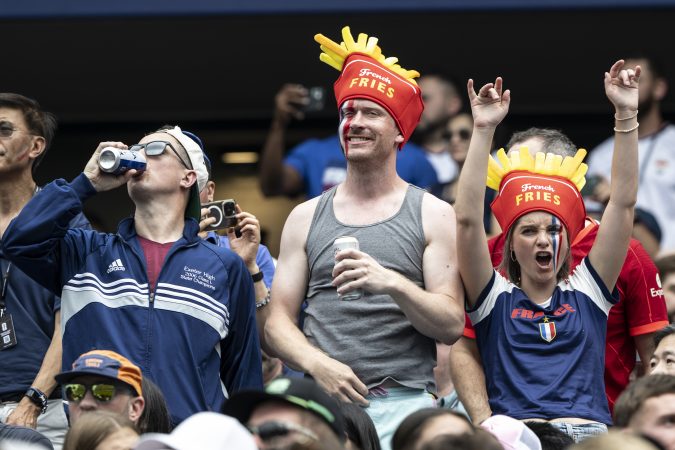
French soccer fans visiting for the World Cup spent this week looking around Center City and noticing something many locals overlook: Philadelphia is surprisingly French. The Parkway was modeled after the Champs-Élysées. City Hall looks like it belongs in Paris. Even Michelin once called Philadelphia the “Frenchest city” in America.
We’ll take it.
Most American cities get compared to other American cities: Philadelphia gets compared to one of the most beautiful and romantic cities in the world.
Sure, Paris has the Eiffel Tower. But Paris doesn’t have roast pork sandwiches, Gritty, or people arguing over parking permits at 7 a.m.
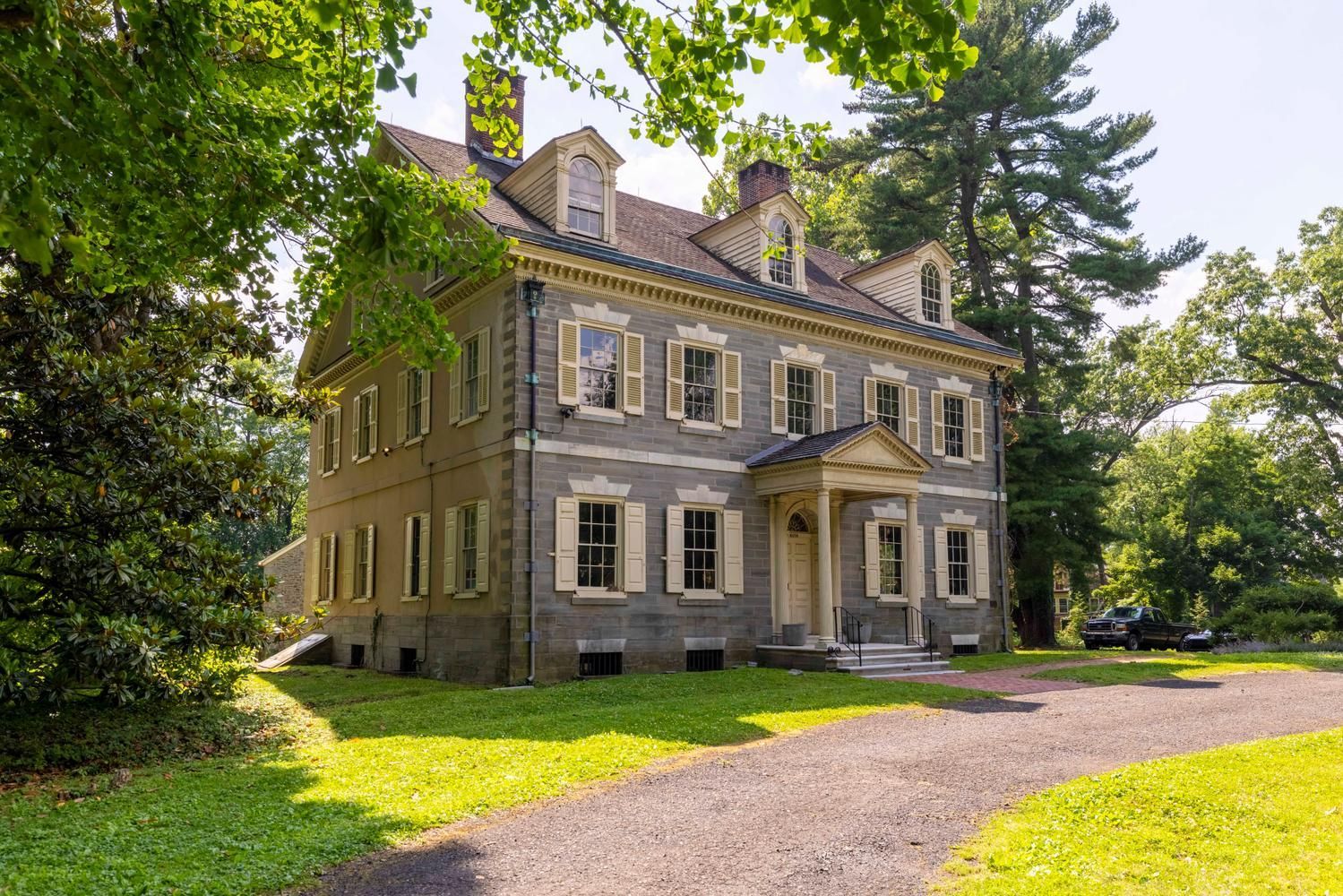
Upsala mansion on the 6400 block of Germantown Avenue was built in 1798 and is currently up for sale.Courtesy of Alex Aberle
A house that comes with Revolutionary War reenactments: A
Philadelphia real estate listings can get weird.
You might get a rowhouse with a hidden speakeasy, a church converted into condos, maybe even a former firehouse.
The owner of Upsala, a historic estate now listed for sale, revealed this week that the property’s easement requires future owners to allow reenactments of the Battle of Germantown. The reenactments haven’t happened since 2019, but the obligation remains, preserved in a 70-page legal document waiting for some future homeowner.
For a city preparing to celebrate America’s 250th birthday, this is a nice reminder that in Philadelphia, history isn’t always tucked away in museums. Sometimes it’s written into the paperwork.
A Phanatic-themed apartment: A+
There are plenty of ways Major League Baseball could have celebrated the All-Star Game coming to Philadelphia.
A logo, banners, a commemorative beer.
Instead, someone decided to create an apartment that appears to have been designed by the Phillie Phanatic after consuming several energy drinks, Philly Voice reported.
The result is a two-bedroom rental covered in green fur, baseball memorabilia, Phillies decor, and what can only be described as mascot maximalism. Two lucky fans can stay there for $19.78 a night and get tickets to All-Star festivities.
The obvious question is why this exists. The Philly answer is why wouldn’t it?
There’s a baseball glove chair, fuzzy green barstools, and a photo op with the Phanatic.
Every detail sounds made up, but they’re not! Which is amazing.
Philadelphians spend an awful lot of time explaining themselves. We feel underrated, maybe overlooked. And we’re not New York, D.C., or Boston.
A Chicago man posted a lengthy love letter to Philadelphia recently after a trip that included cheesesteaks, hoagies, roast pork, dive bars, the Barnes Foundation, Reading Terminal Market, Magic Gardens, and City Hall, which he declared his favorite building in America.
The review was so thorough that it started to feel like Visit Philadelphia had hired him.
But the most revealing part was that he kept comparing Philadelphia to Chicago.
Another city full of neighborhood pride, old bars, great sandwiches, beautiful architecture, and residents who spend half their time insisting everyone else overlooks them.
The commenters understood immediately. One called Philadelphia a mini New York. Another argued Chicago and Philadelphia people have more in common with each other than either would like to admit. They’re probably right.
But there’s no compliment Philadelphians love more than hearing someone came here expecting very little and left wondering why nobody told them how great it is.
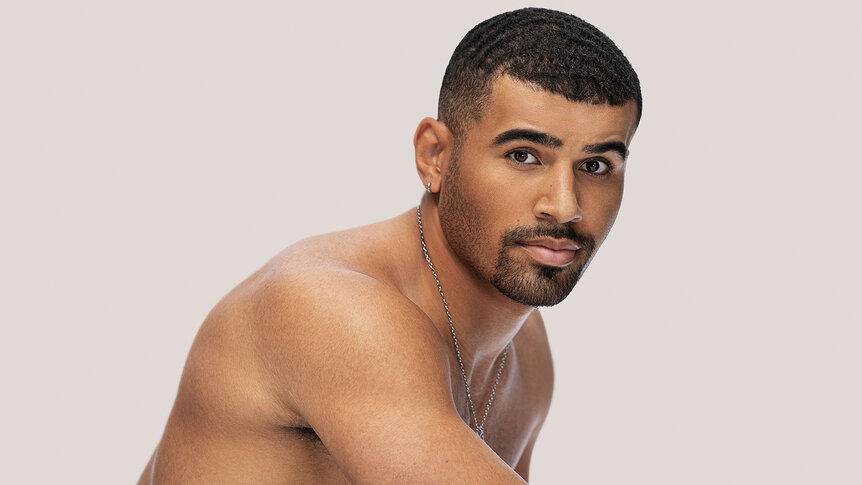
Ronnie Gunter, a lacrosse athlete and Drexel grad known for looking a lot like Eagles QB Jalen Hurts, is the latest bombshell on “Love Island USA.”Love Island USA / Peacock
The Jalen Hurts look-alike on Love Island: B+
Philadelphia has reached a level of cultural dominance where even our quarterback’s doppelgänger is getting reality TV opportunities.
Honestly, that feels very Philadelphia. We don’t just have celebrities, we also have backup celebrities.
The funniest part is that nobody on the show seems to have noticed yet. Viewers back home immediately saw Jalen Hurts. The contestants on a tropical island in Fiji just saw a handsome guy in swim trunks. Give it time.
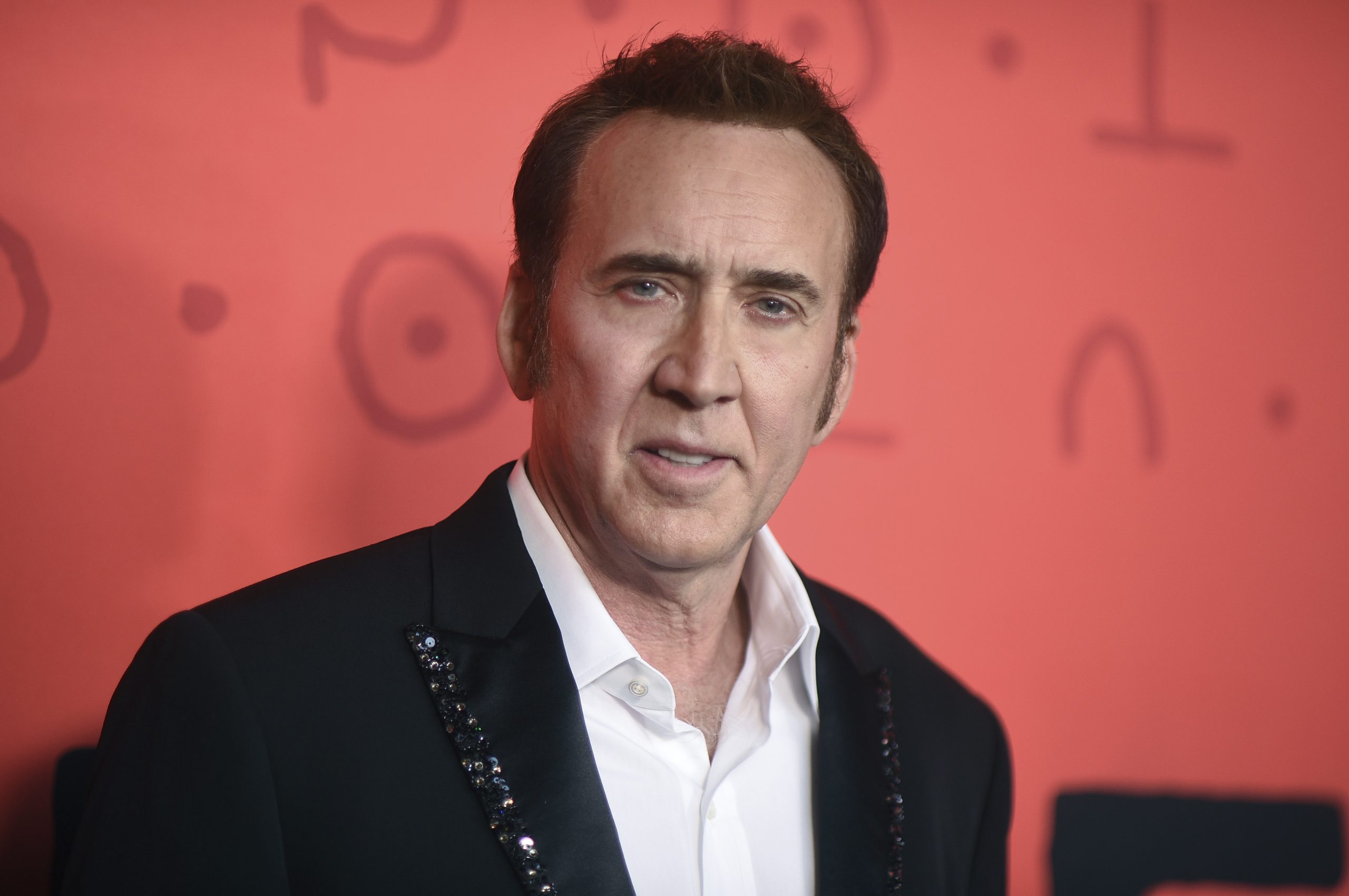
Nicolas Cage arrives at the premiere of “Longlegs” at the Egyptian Theatre on Monday, July 8, 2024, in Los Angeles. (Photo by Richard Shotwell/Invision/AP)Richard Shotwell
A Nicolas Cage bar crawl: A+
Philadelphia spent years planning America’s 250th birthday celebration. And somehow nobody thought to include the man who stole the Declaration of Independence.
Fortunately, Jenkintown stepped in.
This weekend’s Nicolas Cage-themed bar crawl features Cage cocktails, Cage trivia, Cage competitions, Cage masks, Cage movies, and what appears to be a community-wide commitment to a bit that has gotten completely out of hand.
The genius of Nicolas Cage is that nobody can quite agree whether he’s a great actor, a bizarre actor, or some third category that exists only for Nicolas Cage.
The same could be said for this event.
Jenkintown is hosting an evening built around a man whose filmography includes stealing national treasures, fighting John Travolta while wearing John Travolta’s face, and getting punched repeatedly in a wicker bear costume.
Frankly, if we’re celebrating America this year, Nicolas Cage probably deserves a seat at the table.
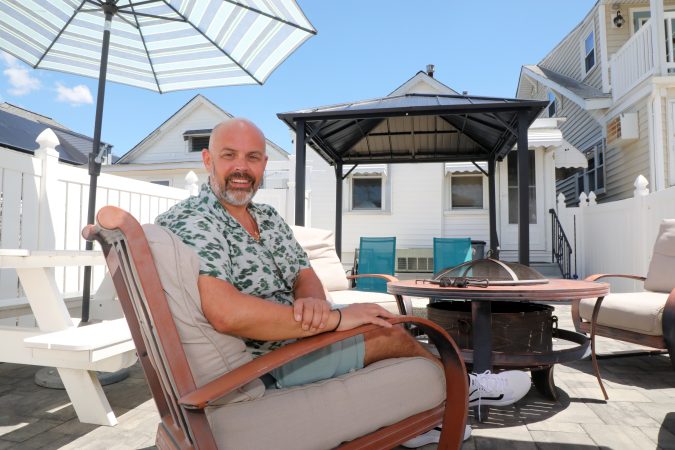
The house: An 800-square-foot two-bedroom, 1½-bath bungalow built in 1930 in Wildwood.
The price: Listed for $444,000; purchased for $441,000.
The agent: Marion Rowland, ReMax Surfside.
The ask: Wilson lives in Venice Beach, Calif., but grew up in Wildwood and Atlantic County and missed the East Coast. When he was a toddler, the family lived at the Regency in North Wildwood, where his parents were the offseason managers. “It was around the time The Shining came out, and my aunt used to tease them about living there with my sister and me when the whole of Wildwood was shut down!“ he said.
Wildwood was in his DNA for good. His dream was to buy a second home in Wildwood, a place with some old Shore charm, where he and the family could gather and revive traditions.
The search: Wilson’s aunt is a localreal estate agent in Wildwood, and they “combed the market for months,”he said.
He put in an offer on a renovated triplex in Wildwood Crest toward summer’s end in 2024 but was outbid. “It got 12 other offers above the asking price,”Wilsonsaid. “They were asking $575[000] I was willing to pay them $600,000.”
After a day of house hunting in September 2024, the two sat down for lunch at theDogtooth Bar & Grill. “We saw a listing two blocks away pop up,” he said. “We drove over to the house and started the process.”
The appeal: As soon as he walked in the house, Wilson said he thought, “I know what I need to make this good.”
The house checked a lot of boxes for him: charm, old-school bungalow feel, close to the ocean.
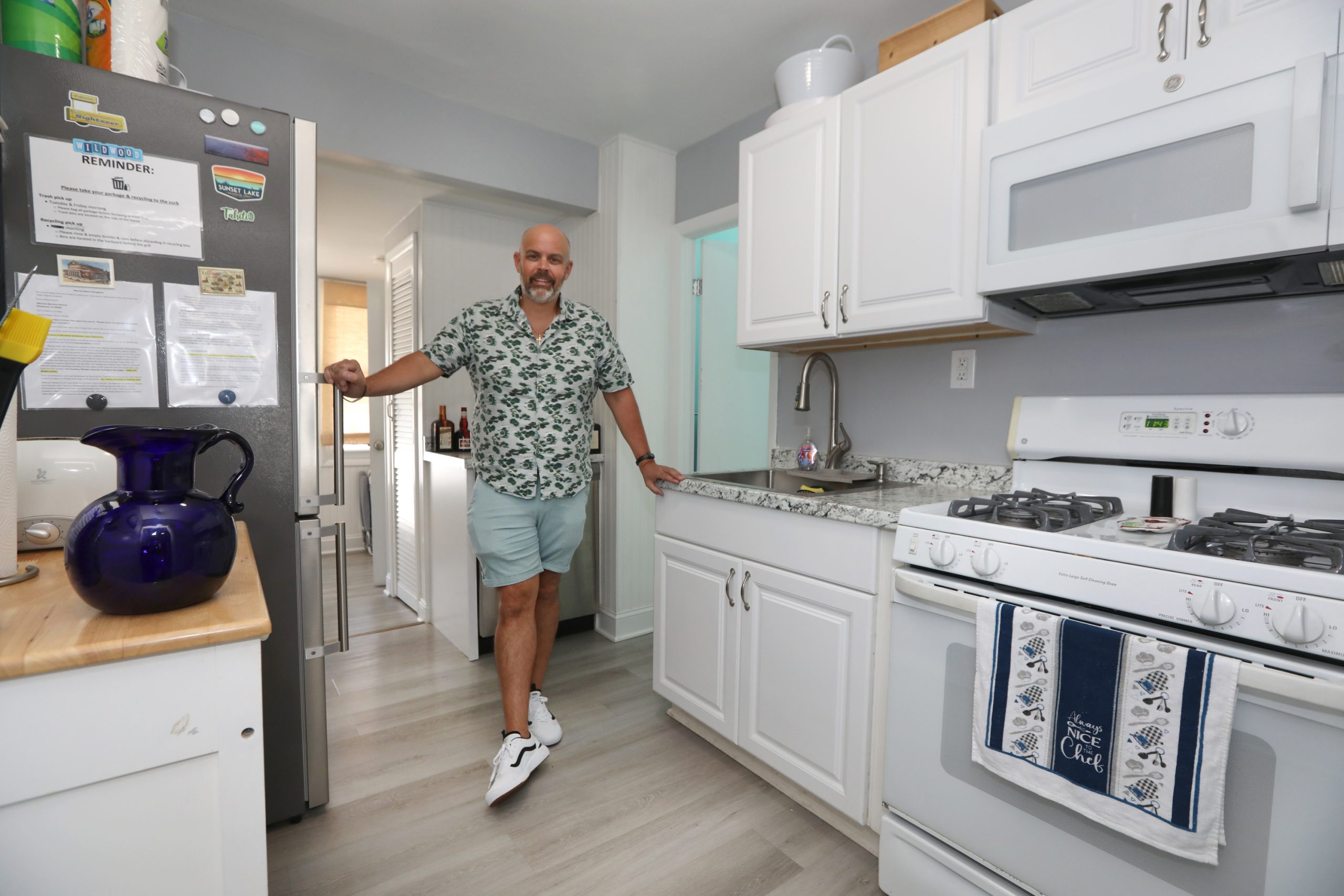
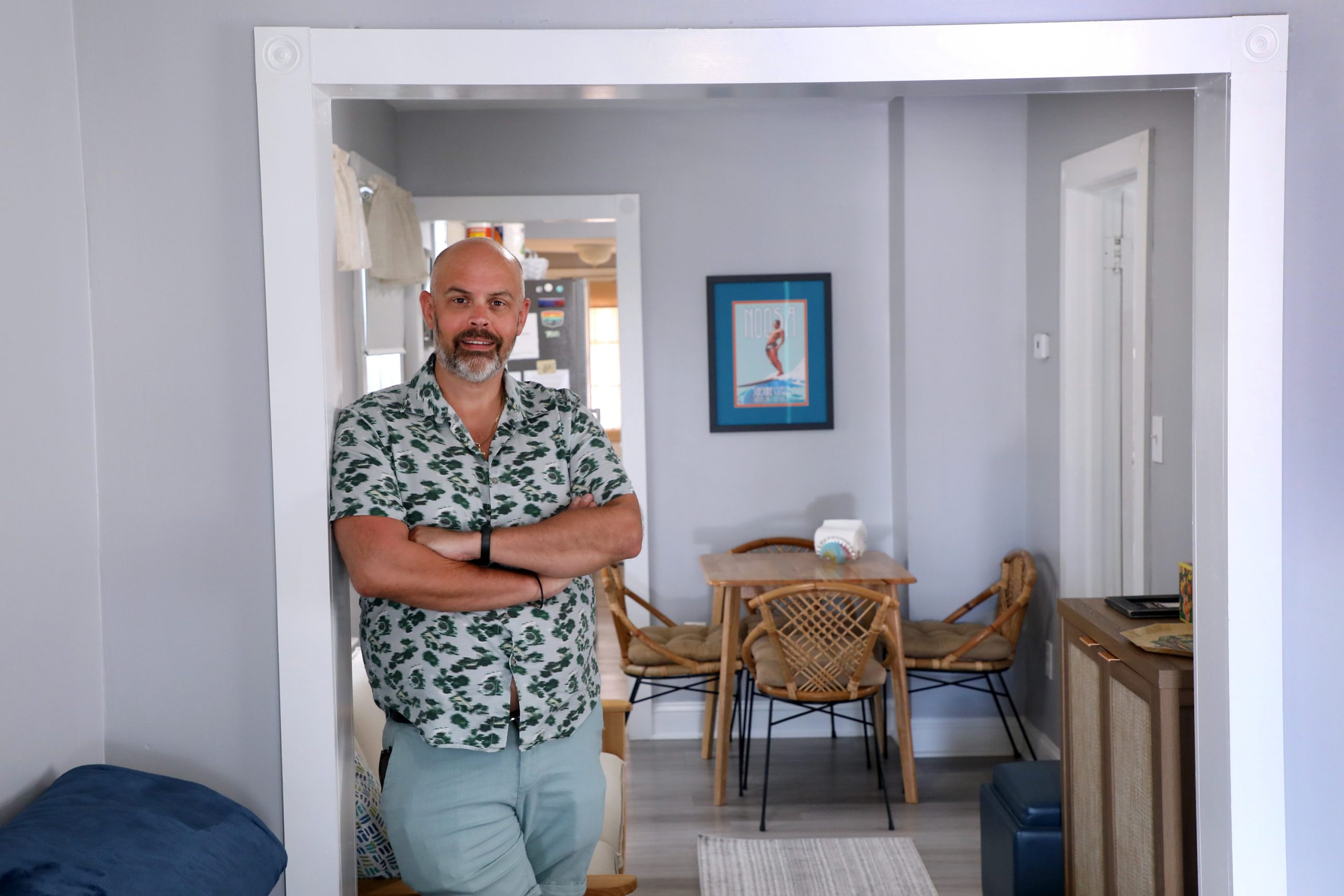
Jacob Wilson added a dishwasher to the kitchen along with other improvements at his home in Wildwood.Vernon Ogrodnek / For The Inquirer
“My mom’s been a Realtor in the area for 40 years,” he said. “She has a 1900 Victorian. I’ve always admired the work my parents did on that home. My cousin had a Craftsman bungalow. It reminds me of houses here in Venice.”
Both Wilson and his aunt appreciated being able to buy an original property in Wildwood and not tear it down.
“I have deep ties to Wildwood,” he said. “I really didn’t want to do that.”
A house across from his was recently torn down and a triplex built in its place. Plus, his house has a backyard.
“That just doesn’t exist anymore,” he said. “In the offseason, I can hear the waves from my backyard.”
The deal: Wilson said he put in an offer for the asking price and beat two other offers. “The house sold in three days,” he said. The inspection revealed some termite damage, and the seller reduced the price by $3,000, he said.
“The work to remedy the problem was estimated to be over $10,000,” he said, “and it cost me around $15,000 altogether with foundation work and pest treatment.”
Because of the competitive environment, he said, “I took the $3,000 reduction to make the sale happen.”
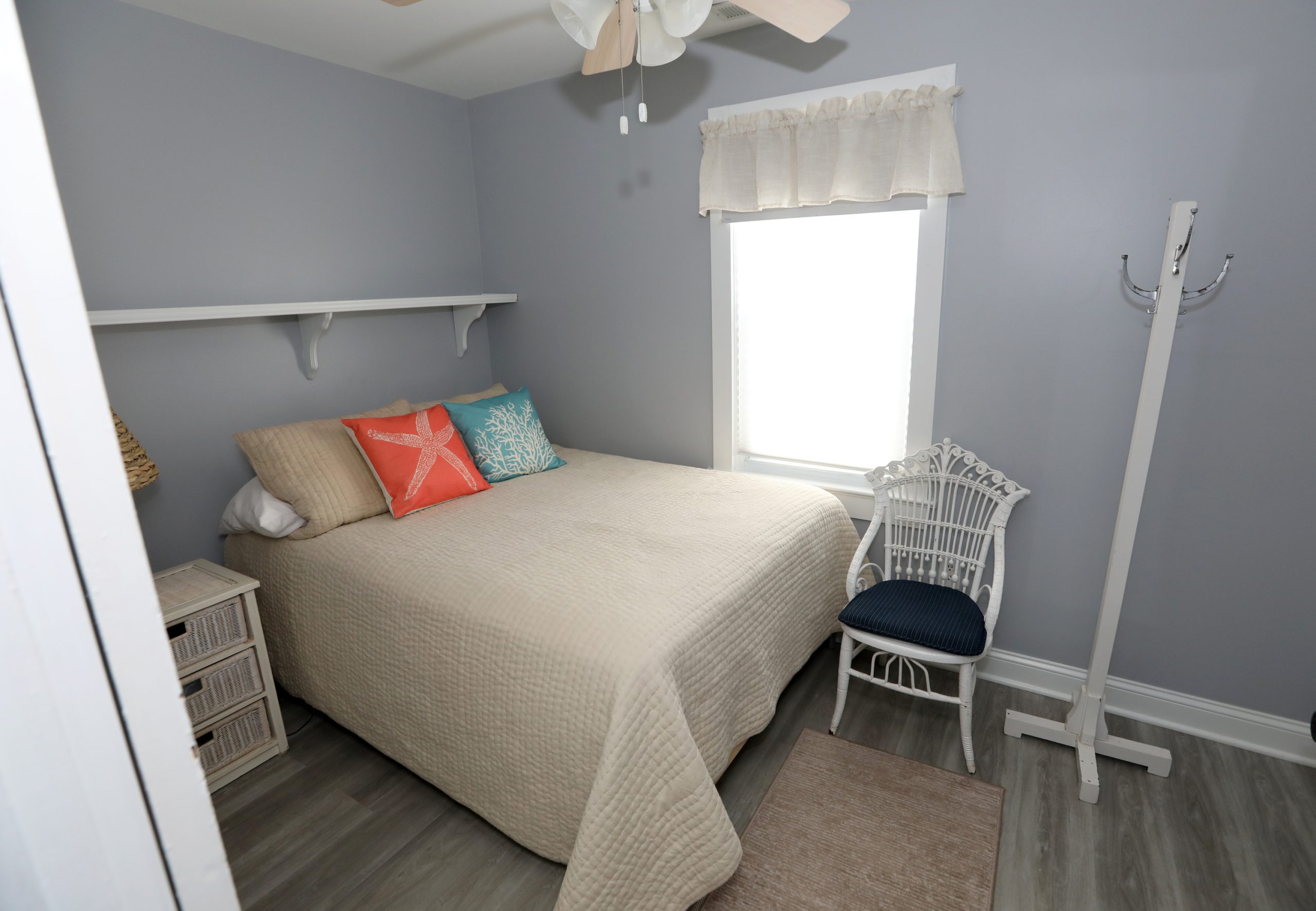
Jacob Wilson wanted his Wildwood property to feel “like a modern beach house” and was happy that the previous owners had redone the floors with light gray planks. Vernon Ogrodnek / For The Inquirer
His aunt was proud of him for buying and preserving a house in Wildwood, he said, the place where two of his grandparents were born.
The money: Wilson did it in a traditional way: 20% down payment, a mortgage with the local Ocean First Bank. “Kudos to Ocean First,” he said. “They don’t sell the mortgage.” His mortgage rate was 7%, higher due to its being an investment property, he said.
Using the property part of the summer as a weekly rental and a longer-term winter rental covers his mortgage, he said. “I don’t really have too many out-of-pocket expenses,” he said. “Taxes are $4,000 a year. Utility bills a few hundred a month.”
The move: There were some changes. He liked the way the former owners used gray plank boards to replace the original parquet wood that made it “more like a modern beach house.”
But, Wilsonsaid, “some things inside were a little too country.”
“I wanted to make it more beachy,” he said. There was shelving in the doorways that he got rid of, and some closets that inexplicably had the doors removed and curtains put up. Luckily, he found the original doors in the attic and put them back on. He replaced the door knobs and repainted the entire interior.
“The big thing that showed up was termite damage,” he said. “I had to do a lot of foundation work when I bought the place.” He replaced the old insulation with spray insulation, he said, and installed a dishwasher and new refrigerator.
“A lot of things like that to make it look sharp,” he said.
A cozy bedroom in the Wildwood bungalow. Vernon Ogrodnek / For The Inquirer
Life after close: This will be his second summer using the Wildwood bungalow. He’s spending a month there over June and July and expecting a stream of visitors to revive old family traditions. He plans to block out more time for himself in the shoulder seasons.
“It’s all kind of like nostalgia for me because we spent so much time there as a kid,” he said.
“I had a lot of strong feelings about going back,” he said. “As an adult, I appreciate it more.”
About six months after he bought the house, “Someone called me and asked if I was interested in selling it,” he said. No way.
“Keeping it long term is my goal,” he said. “I feel like I made a good investment choice. No regrets.”
Did you recently buy a home in the Philadelphia area or South Jersey? Share the story of how you did it. Email Inquirer real estate reporters at properties@inquirer.com.
Summer is here, and there’s no better way to cool off than at Philly’s water features. We’ll show you a photo of a pool or splash park, you drop a pin where you think it was taken. Closer to the location results in a better score. Good luck!
Round #39
Question 1
Where is this lifeguard?
Loading…
ClickTap on map to guess the location in the photo
ClickTap again to change your guess and hit submit when you're happy
You will be scored at the end. The closer to the location the better the score
Olivia Sandom / Staff Photographer
Pretty good/Not bad/Way off! Your guess was from the location.Spot on! Your guess was exactly at the location. Here's also where a random selection of Inquirer readers guessed.
Lifeguard Khadijah Davis watches over swimmers at Kelly Pool in West Fairmount Park on June 25, 2019. Located behind the Please Touch Museum, Kelly Pool is an Olympic-sized swimming pool and was the first pool to open this year on June 12 as part of Philadelphia's pool-opening schedule.
Quiz continues after ad
Question 2
Where is this spray feature?
Loading…
Allie Ippolito / Freelance
Pretty good/Not bad/Way off! Your guess was from the location.Spot on! Your guess was exactly at the location. Here's also where a random selection of Inquirer readers guessed.
A child runs across the splash pad at Love Park on July 28, 2023. According to Philadelphia Parks & Recreation, Philly has more than 90 spray features to help residents cool down.
Quiz continues after ad
Question 3
Where is this pool and mural?
Loading…
Heather Khalifa / Staff Photographer
Pretty good/Not bad/Way off! Your guess was from the location.Spot on! Your guess was exactly at the location. Here's also where a random selection of Inquirer readers guessed.
Ford Pool and Recreation Center, located at 6th Street and Snyder Avenue in South Philadelphia, features A Step Ahead, a mural by Kein Nguyen that was completed in 2008. More than 250 people participated in painting the mural, according to Mural Arts Philadelphia.
Your Score
ARank
🏊♀️Amazing work. A *stroke *of genius!
BRank
🤿Good stuff. That went swimmingly!
CRank
🌊C is a passing grade, you’re making some waves.
DRank
🛶 D isn’t great. You were barely afloat.
FRank
🛟 We don’t want to say you failed, but buoy oh buoy.
You beat % of other Inquirer readers.
We’ll be back next Saturday for another round of Citywide Quest.
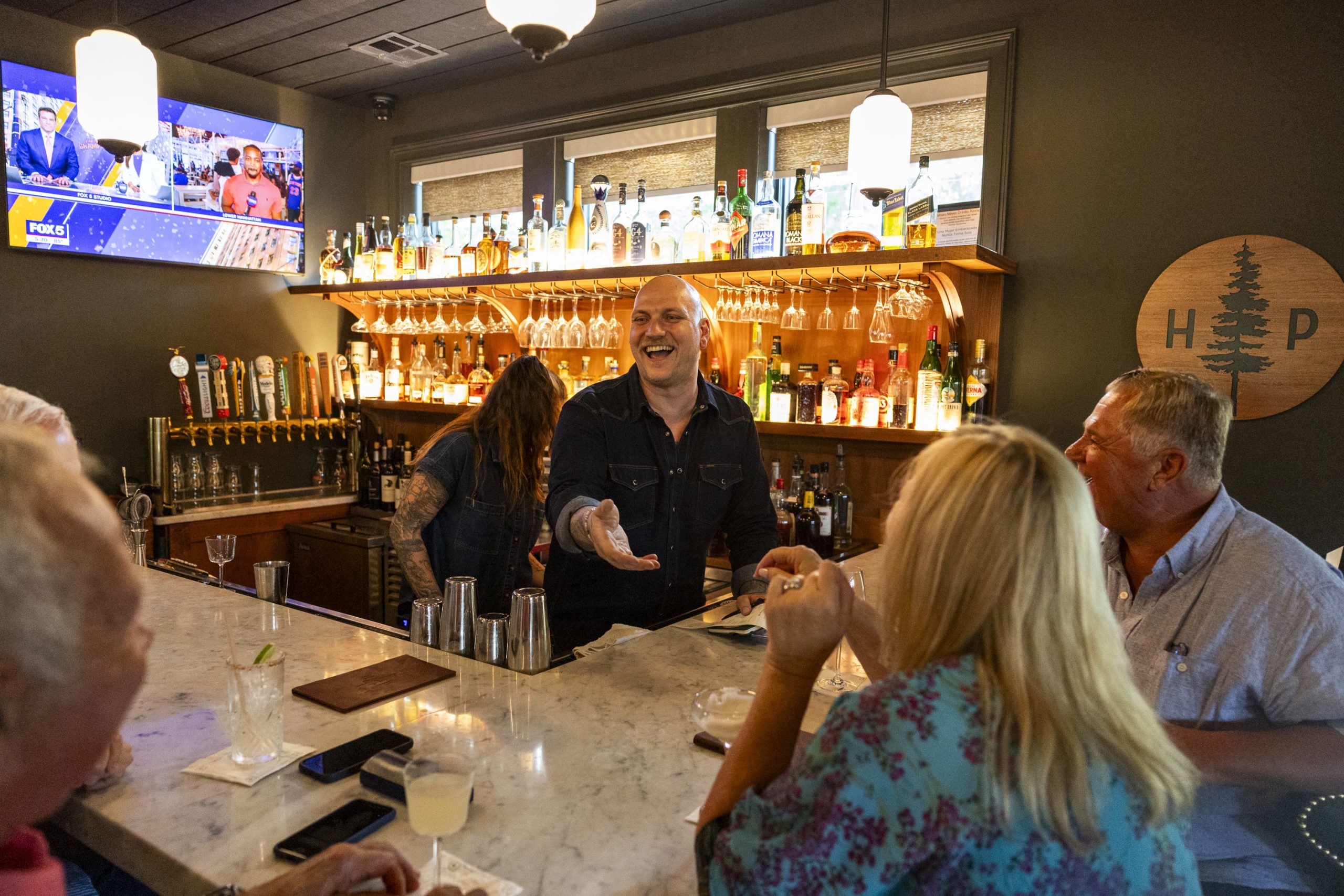
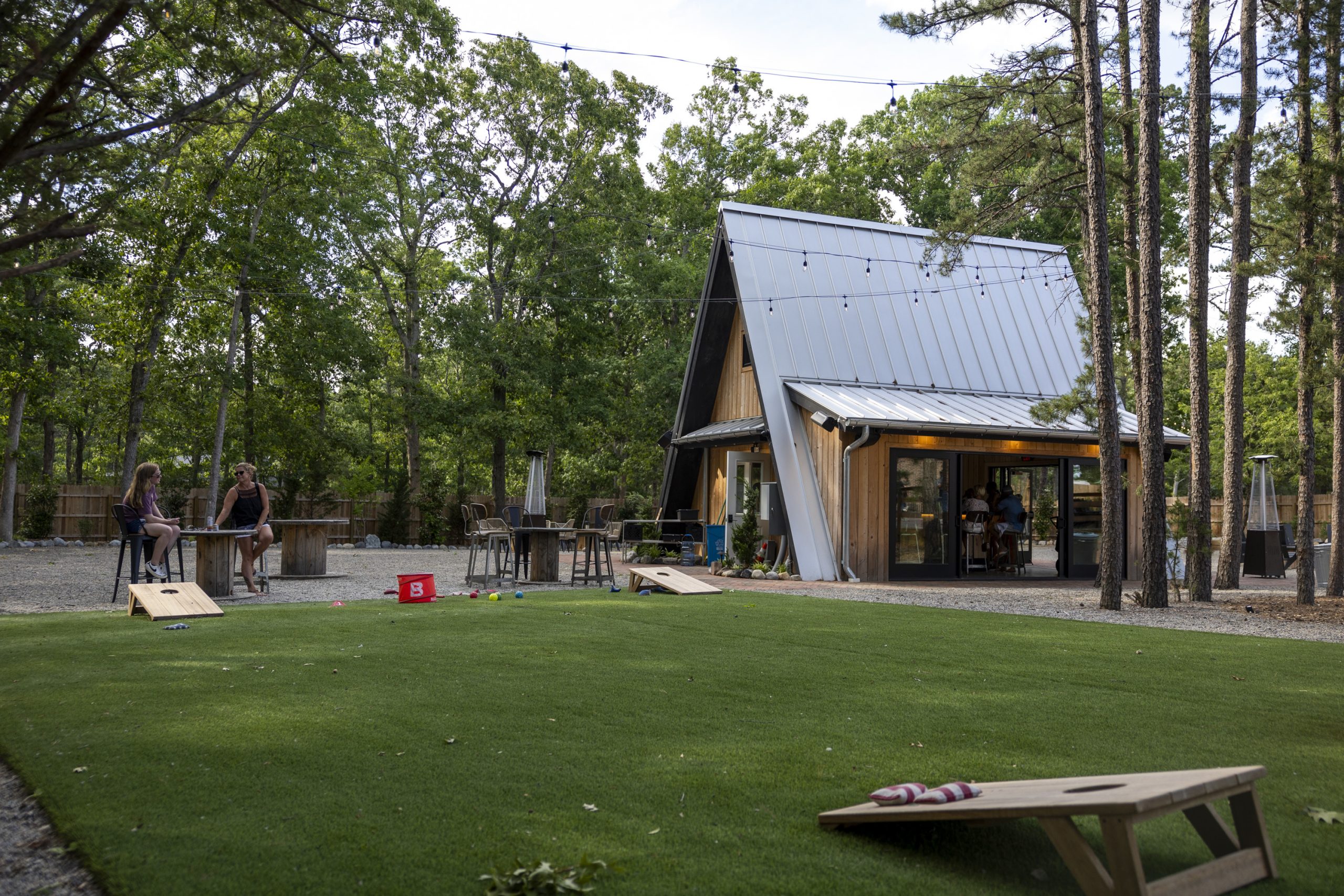
The fire pits are ablaze by dusk at Hollow Pines, a sprawling compound with an outdoor bar, bocce courts, and a massive A-frame lodge where craft cocktails, duckpin bowling, and updated comfort food with a Jersey twist have been drawing guests by the hundreds to West Creek.
The vibe at this ambitious newcomer off Route 9 from the Tide Table Group, which opened in February, conjures a funhouse in the woods more than a beachside resort, even if it’s only half a mile from the bay just south of Manahawkin. It’s also part of a larger trend: the biggest new restaurant openings at the Jersey Shore this year are on the mainland rather than the barrier islands, where real estate prices have skyrocketed.
Veronica Smith of Barnegat (left) and Makayla Williams of Absecon enjoy drinks at Hollow Pines in West Creek, N.J., on Thursday, June 18, 2026.Tyger Williams / Staff Photographer
“There’s only so much land on the islands, and the property value there is higher if you subdivide and put residential on it,” says Hollow Pines co-owner Billy Mehl. “Plus, the short season [on the islands] makes it harder to recoup the cost.”
The logic is similar farther south in Somers Point, where two mega-openings — the 400-seat Pablo and 250-seat Webster’s Tavern — aim to draw the growing year-round population as well as thirsty summer tourists pouring across the bridge from the dry island of Ocean City.
“You should see our after-church crowd! We sell a lot of Bloody Marys and it’s terrific,” says Webster’s owner Chris Webb, noting the construction of hundreds of new homes nearby as a reason for optimism beyond the summer season. “Somers Point is on fire right now.”
Of course, bigger is not necessarily better. New menus up and down the Shore have trended more conservative this summer, toward the safe bets of American tavern classics (wings, chicken Caesar wraps, and burgers), hedging for mainstream tastes at even a taco-themed fusion concept like Pablo. So, while I was sure to check out these large new players — results were mixed — I also explored some flavorful highlights from the international communities that have also settled on the mainland across from Atlantic City, from a stellar new chilaquiles specialist to the kebab combo platter of my dreams.
If you prefer to eat closer to the beach, do not fret. This is just the first part of my annual shore guide. I still have exciting dining dispatches from the barrier island towns coming the following weeks, with reports from more than 20 places from Cape May to LBI. But first, here’s a look at some of the rapidly growing options for food and fun before you even cross a bridge.
Nicholas Bisbee of Tuckerton, lead bartender and head trainer, chats with customers at the upstairs bar at Hollow Pines in West Creek, N.J., on Thursday, June 18, 2026.Tyger Williams / Staff Photographer
PINELANDS
Hollow Pines
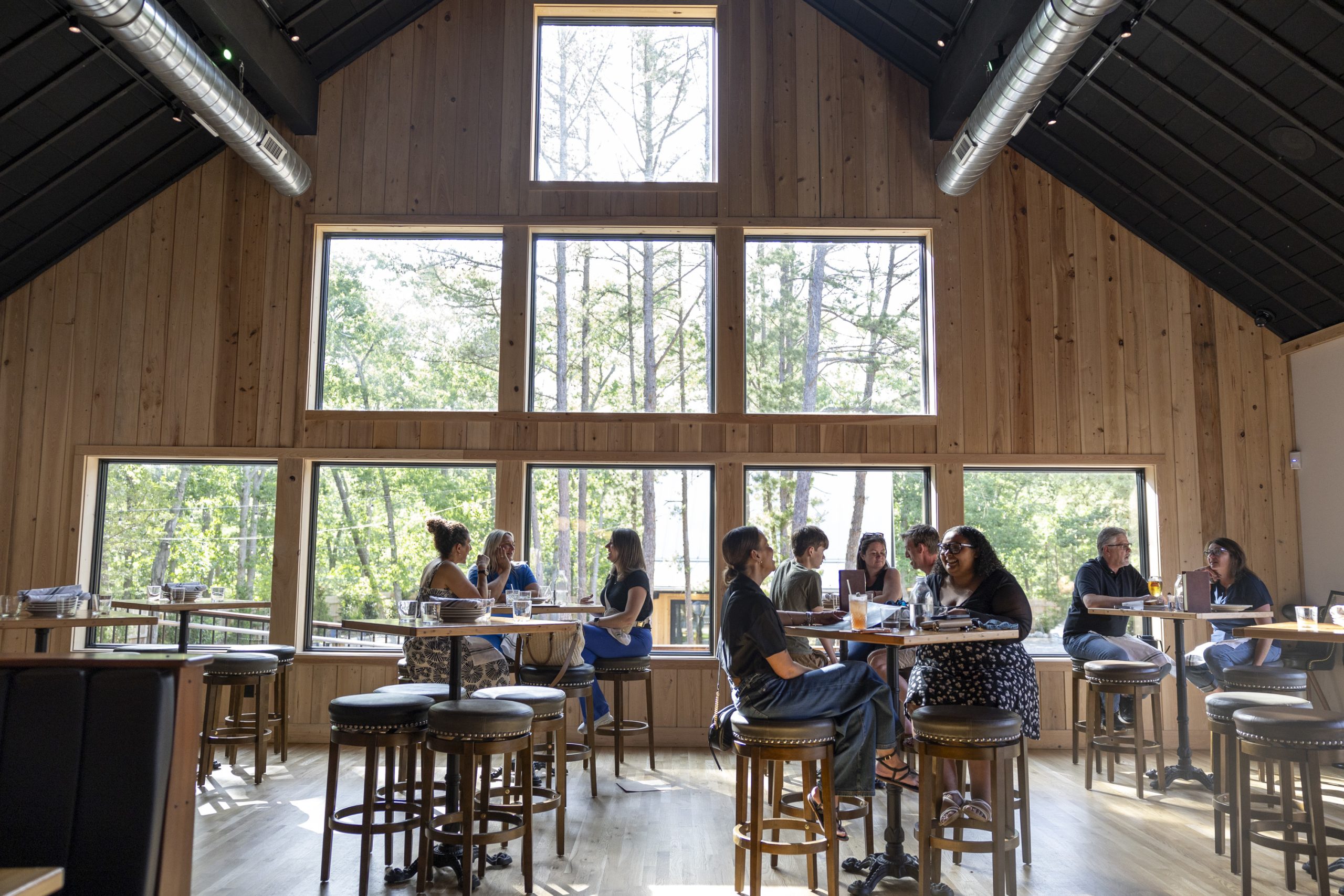
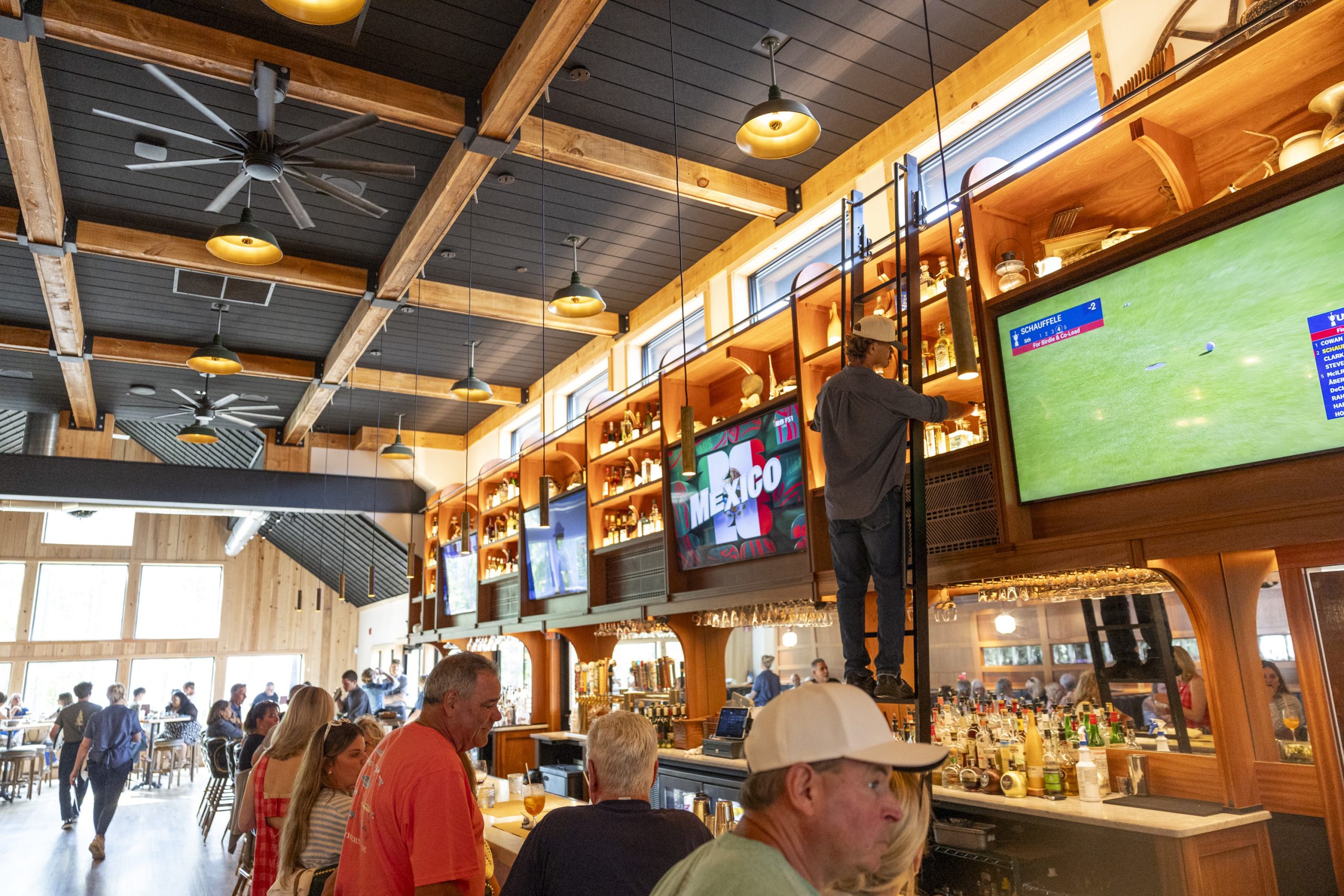
It took eight years and nearly $8 million for the Tide Table Group to finally complete Hollow Pines, a multipurpose destination built on five acres of marshland just beyond the edge of the Pinelands National Reserve. The owners envisioned a place for big groups to linger and play, not just eat and run. And its indoor-outdoor spaces offer a variety of activities to that effect, from cornhole beside a separate outdoor bar serving Spaghett beer cocktails, composed shots, and other drinks, to a lively four-lane duckpin bowling alley on the ground floor of a roomy split-level tavern hall lined with TVs and a more intimate mezzanine dining room tucked upstairs.
The outside bar and outdoor entertainment give patrons a reason to linger and play at Hollow Pines in West Creek, N.J., on Thursday, June 18, 2026.Tyger Williams / Staff PhotographerThe inside main seating and bar area at Hollow Pines in West Creek, N.J., on Thursday, June 18, 2026.Tyger Williams / Staff Photographer
With Tide Table’s track record for good dining experiences at restaurants such as Mud City Crab House in Manahawkin and Parker’s Garage in Beach Haven, it’s no surprise the food and drink programs here are thoughtfully crafted. There’s a wide selection of upscale comfort foods from chef Al Cuff, from a pull-apart hot dog wrapped in a horseshoe of puff pastry to rich crab chowder and tomato bisque and a homey, double-crusted pot pie filled with an herbal chicken velouté.
Some ideas were a bit too cute, like the salad heavily dressed with sour cream-and-onion dressing topped with potato chips. But the pasta is homemade in the pappardelle tossed with a hearty ragù of braised short rib. There’s plenty of lobster bits in the risotto to add some glamour to the salmon, and the oysters broiled in zesty Calabrian chili butter are decidedly local Briny Pinys. Jersey duck for the cassoulet and venison for the lasagna are appealing nods to the state’s sportsman traditions.
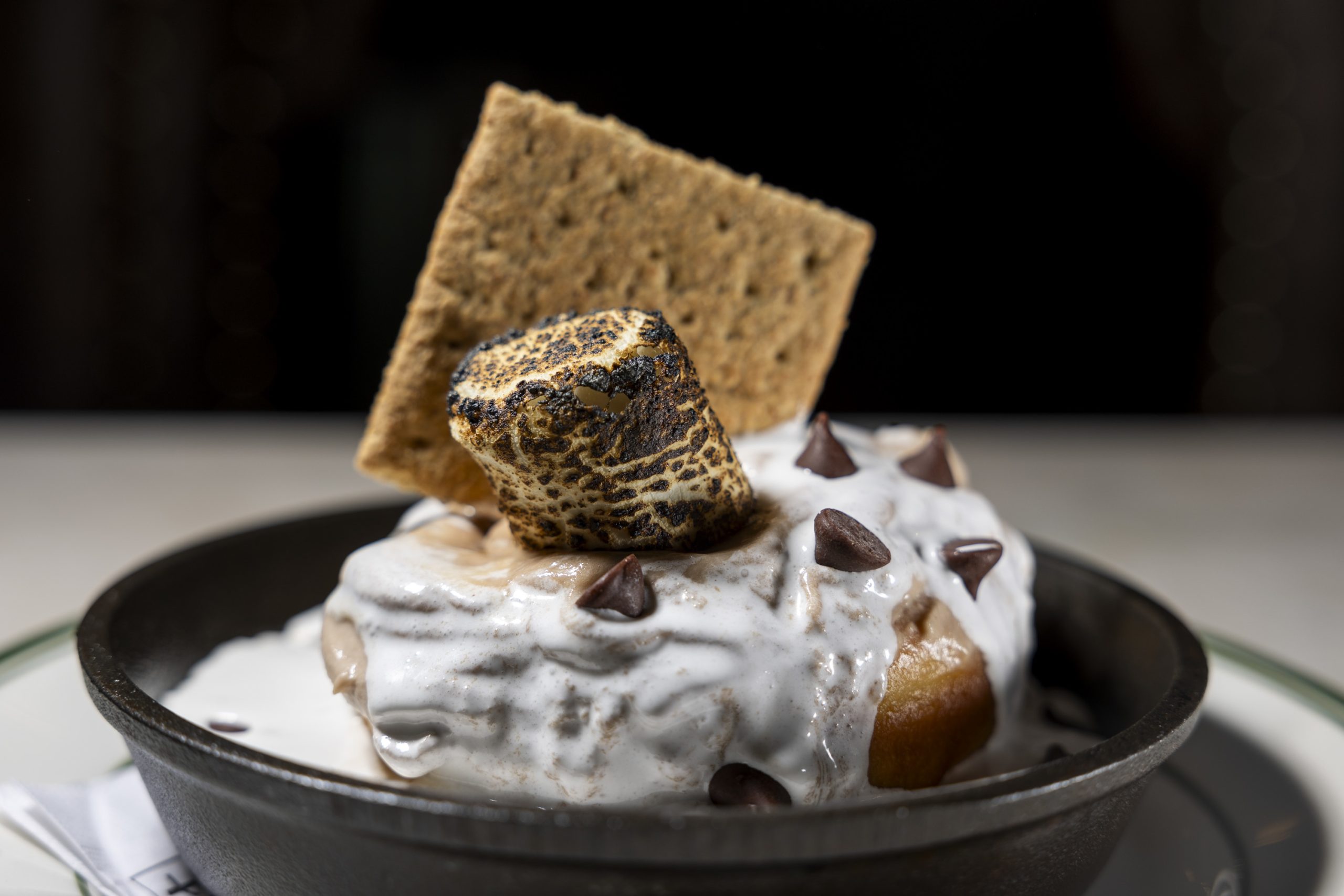
The S’more’s doughnut dessert at Hollow Pines in West Creek, N.J., on Thursday, June 18, 2026.Tyger Williams / Staff Photographer
All this is fueled by a drink program that bubbles with local beers and whimsical cocktails, from an ice-cold tomato water martini (Nona’s Freezer Door) to the smoke bubble-topped rosemary gin drink (the Controlled Burn) appropriately named for a sipper at the edge of a national preserve. For dessert, I’m all about channeling the summer campfire vibe with the S’mores doughnut, a freshly fried fritter topped with molten marshmallow fluff that flows into a chocolate sauce studded with chips. It was both delicious and still on theme. Hollow Pines offers a nice reminder that New Jersey summers can be just as tasty in the forest as at the beach. Hollow Pines, 475 Main St, West Creek, N.J. 08092; 609-891-2558; hollowpinesnj.com
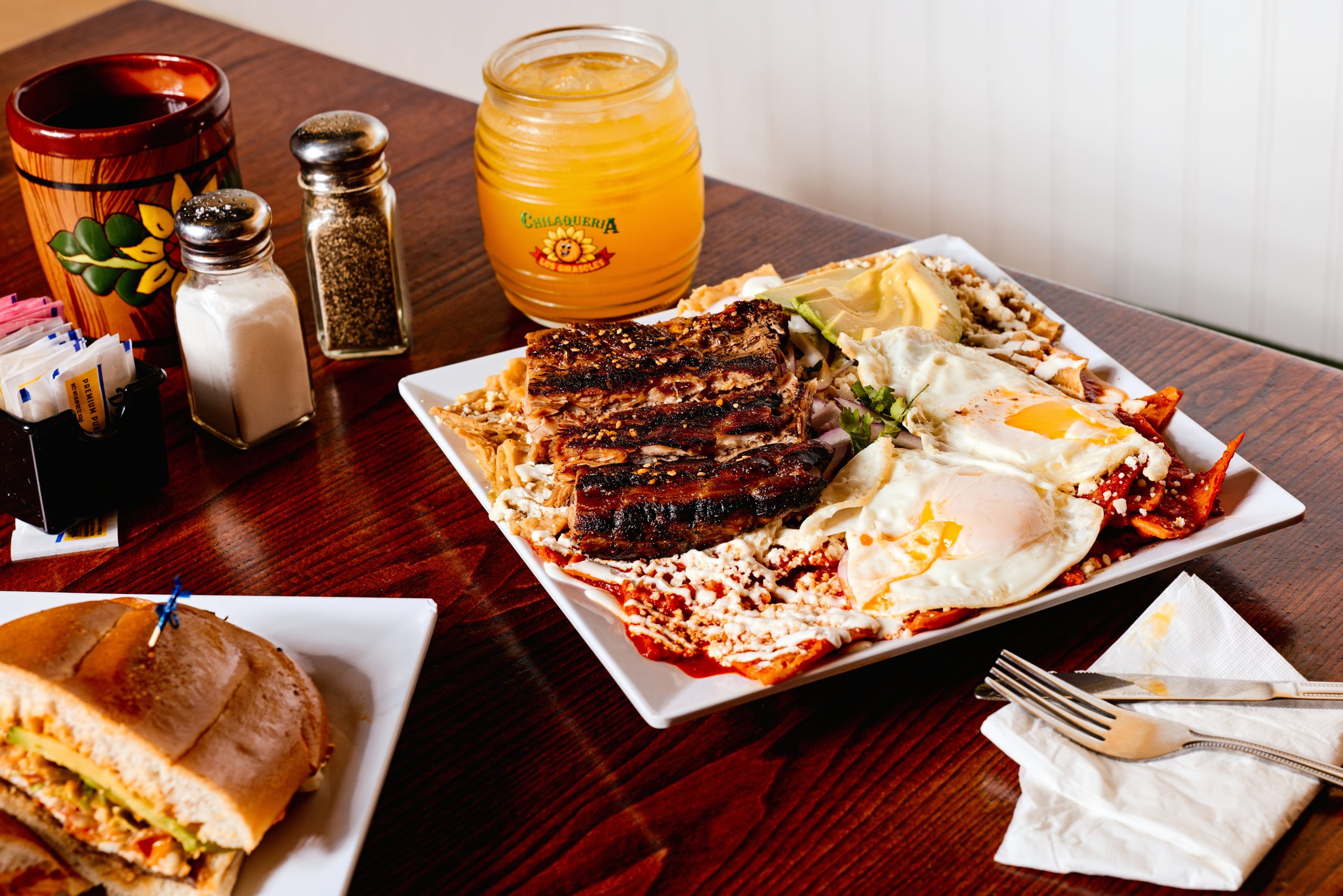
The chilaquiles divorciados dish, paired with a passionfruit drink, rests on a table at Chilaqueria Los Girasoles in Pleasantville, N.J. on Friday, June 19, 2026.Ted Nghiem / For The Inquirer
PLEASANTVILLE
Chilaqueria Los Girasoles
While the Shore has no shortage of Americanized Mexican food, you can find more traditional flavors just six miles north of Somers Point in Pleasantville, which has become a vibrant hub for multiple Latin American communities. At least a dozen Mexican restaurants operate within its city limits, and one of the newest, Chilaqueria Los Girasoles, is already one of my favorites. As the name suggests, chilaquiles is the focal point, with nine varieties of salsa combos used to sauté tortilla chips until they achieve the perfect balance of crunch and softness (they’ll even ask your preference). The traditional choices of salsa roja and salsa verde are so good, I’d recommend Los Girasoles’ unique pairing of the two for side-by-side fields of tangy green and earthy red on one plate, to be topped with protein of your choice. Try a hearty helping of eggs and steak, or salted cecina beef, then plan for a good nap when you’re done. The sweet and spicy mole poblano variation, made from a mole base shipped from Puebla, is also fantastic.
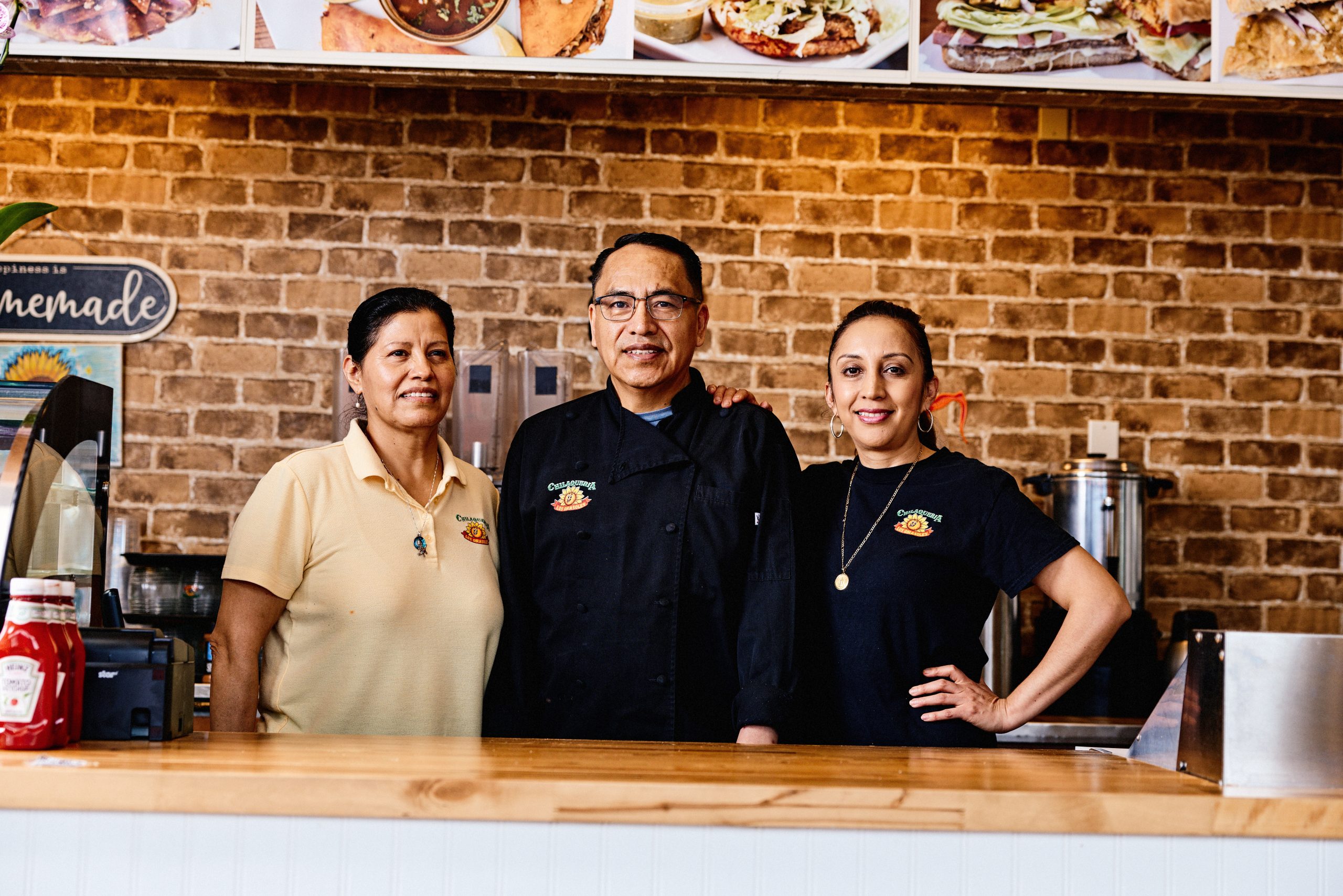
Raquel Soto, Miguel Cerón, and Sandra Aguilar at Chilaqueria Los Girasoles in.Pleasantville, N.J., on Friday, June 19, 2026.Ted Nghiem / For The Inquirer
As unique as this concept is (even in Mexico such a focus on chilaquiles is rare), this year-old project in a brightly rehabbed former Subway, owned by Sandra Aguilar, her husband, chef Miguel Cerón, and his cousin, co-chef Raquel Soto, is also an evocative tribute to their home state of Hidalgo. Their occasional weekend special of lamb barbacoa is outstanding, and I cannot stop thinking about their Hidalgo-style torta. A soft roll is stuffed with a thin slice of breaded top round beef, tender from its zesty marinade, then layered with stretchy quesillo cheese, creamy avocado slices, and a warm salsa of lightly cooked tomatoes and onions that gives this sandwich the perfect moistness. For dessert, don’t miss the fresh and delicate crêpes Cerón perfected while working in a previous job at a breakfast diner. Chilaqueria Los Girasoles, 310 S New Rd, Pleasantville, N.J. 08232, 609-241-0269; chilaquerialosgirasoles.com
Pollos Asados PLV
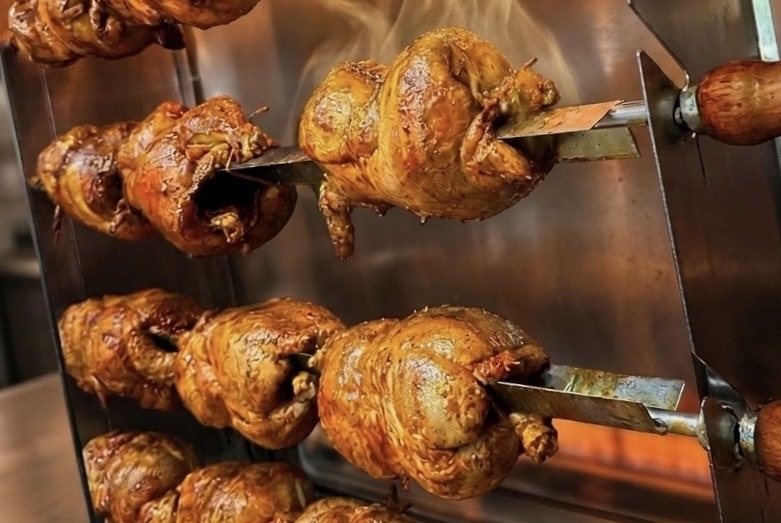
Since fire-roasted chicken is in the name, it’s no surprise that the juicy birds turning on a rotisserie spit, seasoned with a Chiapas-style marinade, are the big draw to Pedro Rincon’s restaurant in downtown Pleasantville. It’s been so popular that he’s moving July 1 from his current location (114 N. Main St.) to a larger space next door at 104 N. Main St. Few meals I’ve eaten at the Shore were more satisfying than a whole bird here served simply cut up into pieces in a Styrofoam box with a bundle of fresh-pressed tortillas, two squeeze bottles of vibrant salsas, and belly-filling sides of refried black beans and rice.
Chiapas-style chickens roast on the spit at Pollos Asados PLV in Pleasantville.Courtesy of Pollos Asados PLV / Pedro Rincon
But Rincon’s kitchen has other worthy gems you absolutely should not miss, from the platters of extra-large seven-inch-wide tacos (I loved the juicy al pastor) to the paddle-sized bundles of Chiapanecas quesadillas, whose pliant tortillas are made with a blend of corn and flour. The long envelopes are big enough to share and come stuffed with quesillo cheese and a variety of fillings, from nopales to chicken. But the real quesadilla star here is the deshebrada de res, a stew of tender shredded beef so full of flavor, I just about ate the whole darn thing. Pollos Asados PLV, 104 N. Main St. (after July 1), Pleasantville, N.J. 08232, 609-640-6347; pollosasadosplv.com
Staff serve guests at Ruhani Kitchen in Egg Harbor Township on Friday, June 19, 2026.Ted Nghiem / For The Inquirer
EGG HARBOR TOWNSHIP
Ruhani Kitchen
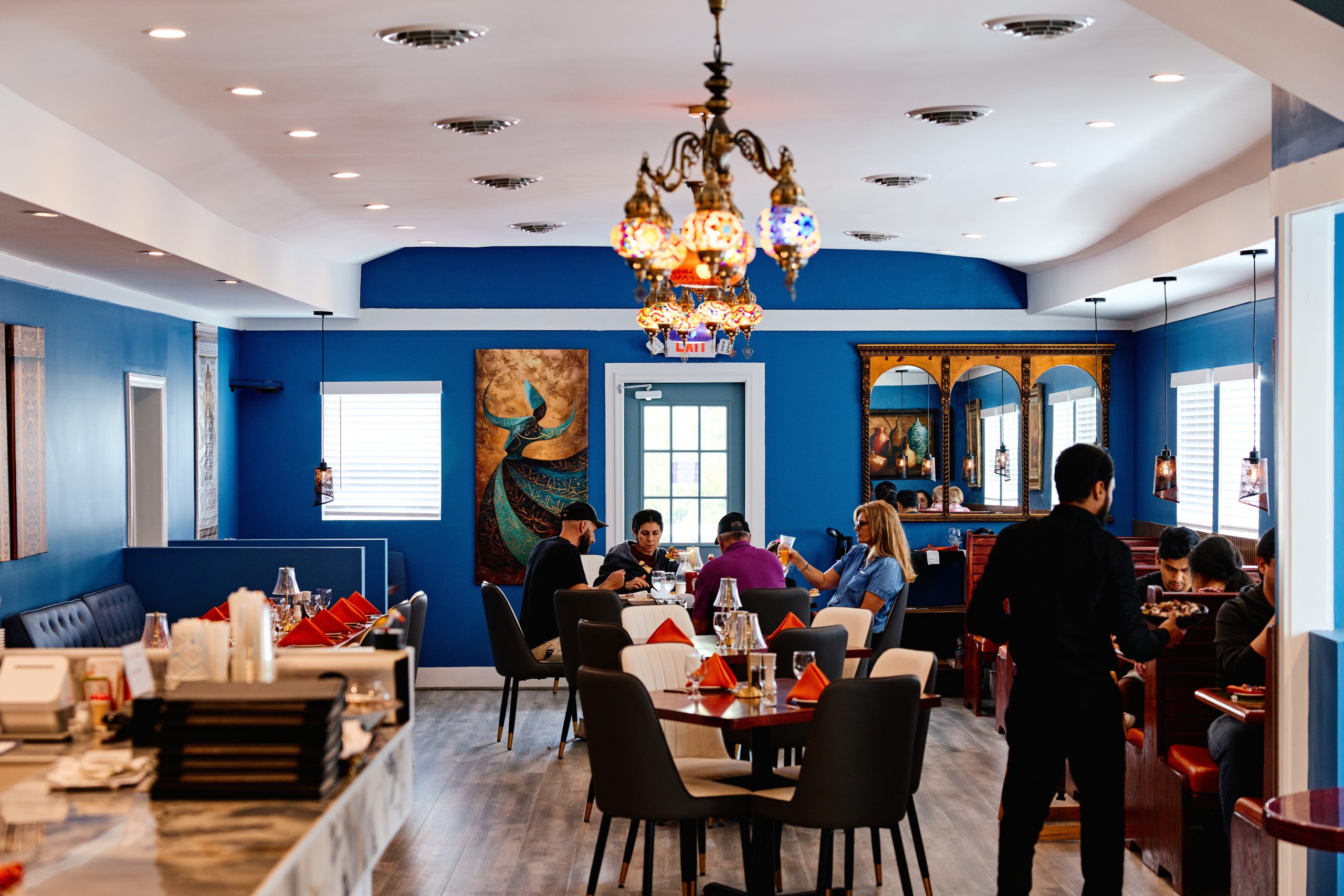
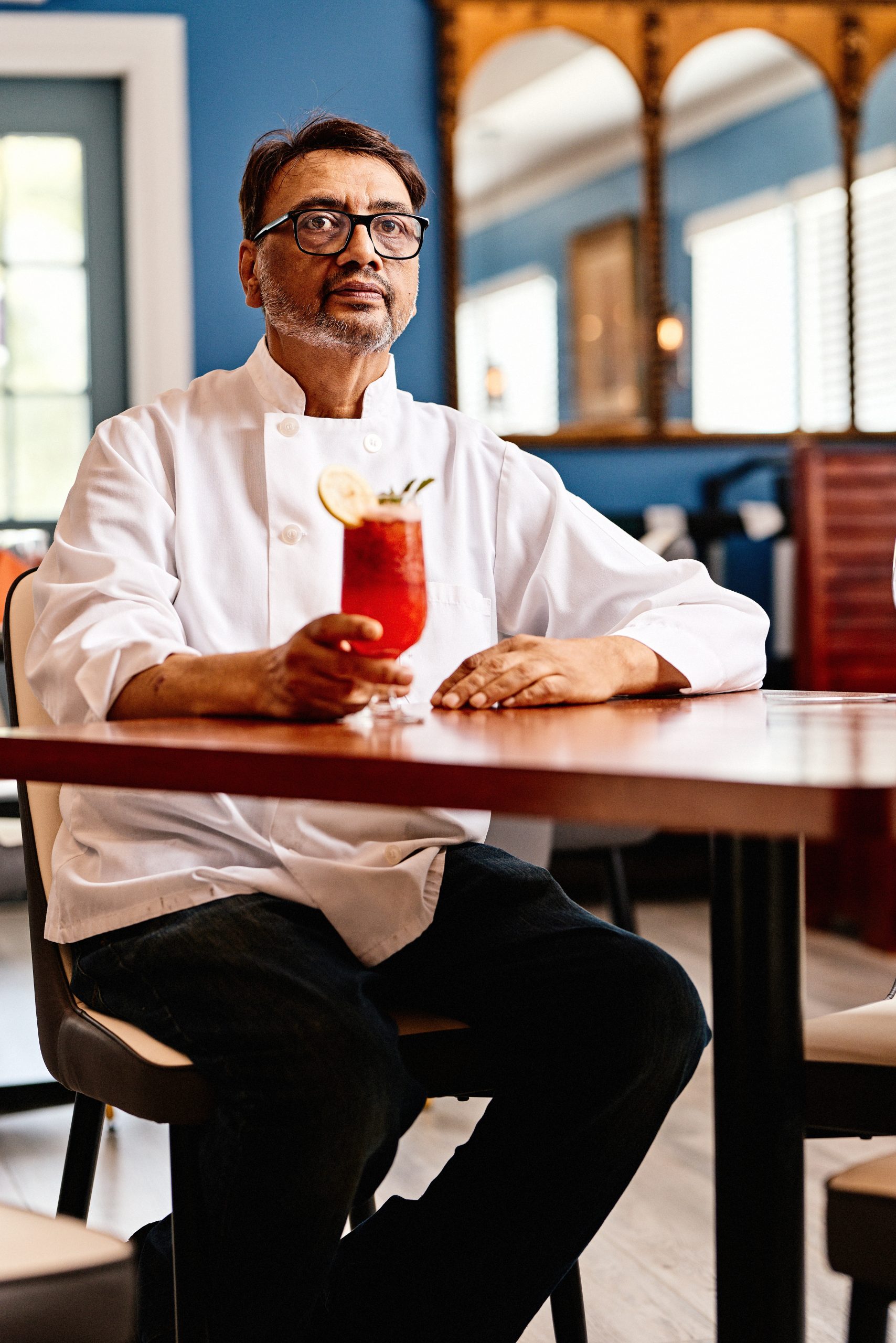
Chef Syed Abbas is best known for The Nizam’s, the well-regarded Indian restaurant in Egg Harbor Township that he owned for 15 years before selling it in 2022. The New Delhi-born chef says he needed a break for health reasons, and over the next three years traveled extensively through the Middle East. He worked for free in several kitchens in Dubai, shadowing chefs in Turkey, and gathering inspiration for a new concept back in New Jersey that would draw on dishes from across the region while also reflecting his family’s Persian roots. Ruhani Kitchen, which opened in December in the same narrow white roadhouse where he’d launched the first version of Nizam’s, is the result — and it is a delight.
The space has been completely rehabbed with vibrant blue walls, imported rugs, and comfortable furniture. The menu offers a greatest-hits list of Mediterranean and Middle Eastern dishes from Lebanon to Afghanistan, and though the range is so broad that some nuances may not always be in perfect register, Abbas’ skill as a chef always shines through in the quality halal ingredients and satisfying flavors. The mixed app platter is a perfect place to start, from smoky baba ghanoush to tangy-sweet muhammara and vibrant green falafel made with fava beans.
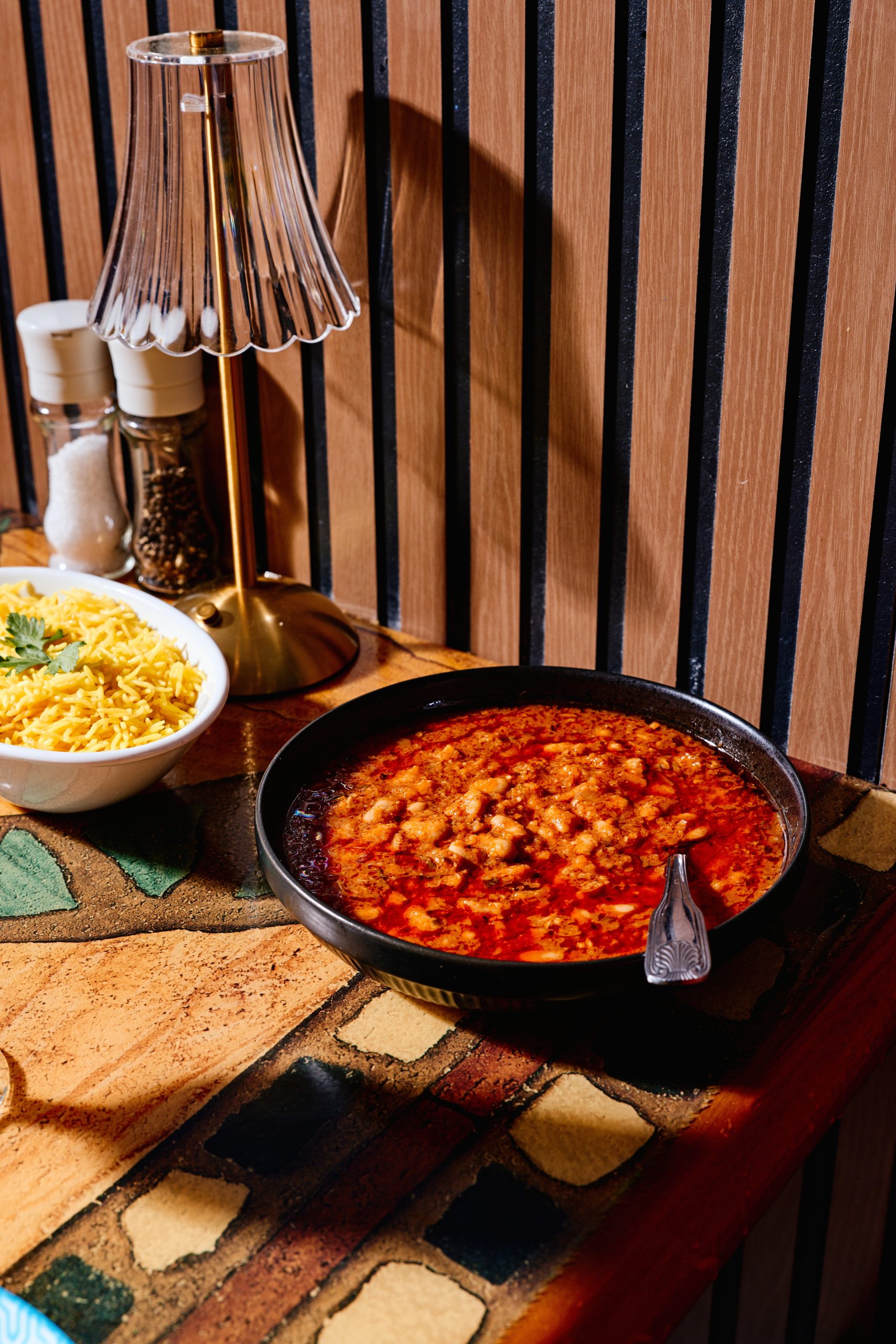
Chef Syed Abbas at his restaurant, Ruhani Kitchen, in Egg Harbor Township on Friday, June 19, 2026.Ted Nghiem / For The InquirerThe fasooli baida spicy white bean soup with a side of rice rests on a table Ruhani Kitchen in Egg Harbor Township on Friday, June 19, 2026.Ted Nghiem / For The Inquirer
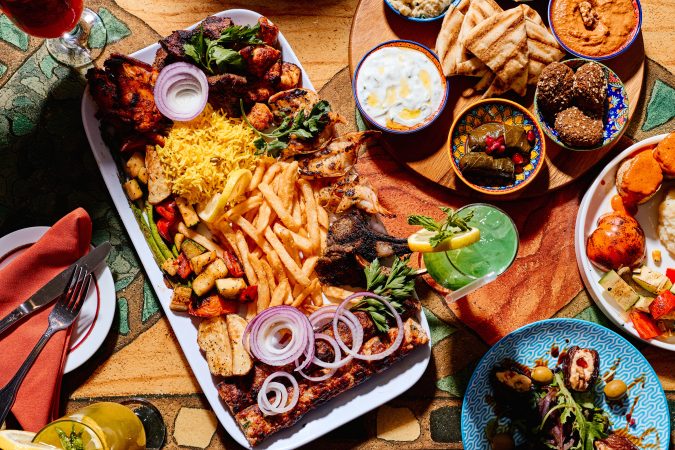
But the main courses are where Ruhani most impresses, especially with the Sultan’s platter, a generous medley of grilled meats — lamb and chicken kebabs tenderized with yogurt and fragrant seven spice; succulent shell-on shrimp; adana kebabs of both ground chicken and lamb scented with cumin and sumac — that can easily feed a crowd. Abbas’ talent with lamb shanks is also worth noting, served either Afghan-style plain over a pilaf enriched with lamb juices and sweet carrot laces, or Persian-style in creamy saffron sauce. I also couldn’t stop eating Ruhani’s take on the spicy white bean and tomato stew known as fasooli baida. The only thing off-key at Ruhani were the desserts, including a non-traditional knafeh that was strangely soupy. But even the ever-confident Abbas knows his limitations with sweets: “I cannot be good at everything.” Ruhani Kitchen, 6666 Black Horse Pike, Egg Harbor Township, N.J. 08234, 609-855-9719;ruhanikitchen.com
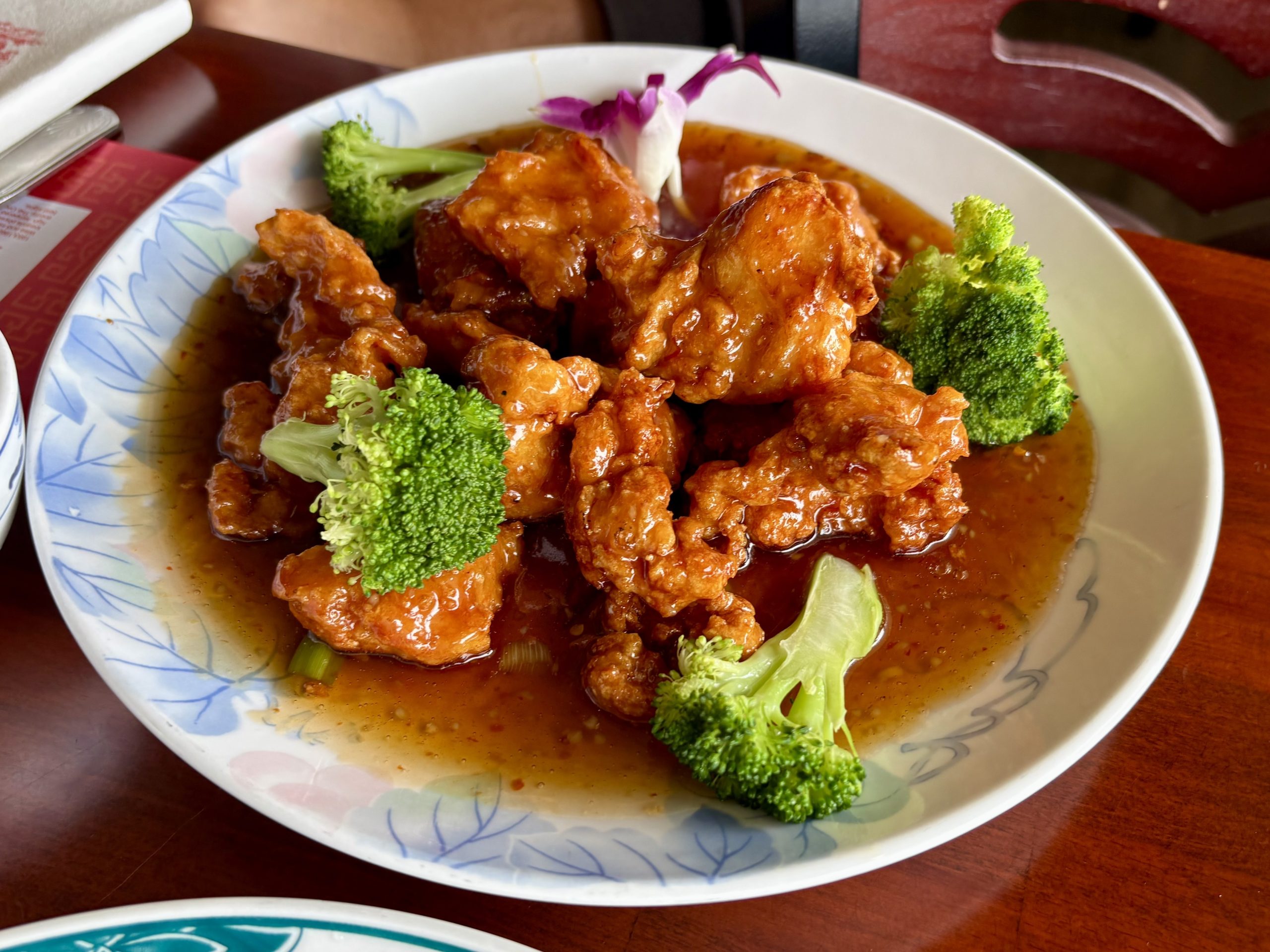
General Tso’s chicken is made gluten-free at China Sea of Absecon.Craig LaBan / Staff
ABSECON
China Sea of Absecon
China Sea is a survivor on the Shore’s dining scene, an unassuming standby that has thrived for 31 years in an Absecon strip mall. Founders Lily Lin and her husband, chef Chei Lin, delivered consistently good Cantonese food with a special distinction: an expansive selection of gluten-free options. Chinese food can be tricky for diners with gluten intolerance because of the heavy use of soy sauce and fryers that are commonly contaminated by wheat flour. But once chef Lin discovered his own restrictions with gluten, he developed an entire repertoire of modified dishes that are rarely seen elsewhere, including what my daughter Alice, who has celiac disease, declared as the best gluten-free General Tso’s chicken she’s ever tasted. Tender nuggets of meat are encased in delicate crusts crisped in a dedicated wok and tossed in a vivid orange sauce with a hint of heat that was flavorful without being cloyingly sweet. I consider it one of the best General Tso’s of any sort that I’ve tasted. But that wasn’t all. There were excellent gluten-free versions of plump shrimp in peppery Hunan sauce, perfectly deep-fried chicken “wing dings” in a crackly salt-baked crust, and impressively tender beef with peppers that hummed with a mellow savory balance.
An entirely gluten-free Cantonese feast is served at China Sea of Absecon, including, clockwise from top left, fried rice, beef chow fun, General Tso’s chicken, pepper steak and Hunan shrimp.Craig LaBan / Staff
Such consistently good flavors bode well for continuity at China Sea, which has been in a gentle transition since the Lins retired in September and sold to Lily’s niece, Melissa Xie, and her husband, chef Billy Zheng. The couple, who both previously worked as poker dealers in Atlantic City’s nearby casinos, have plans to introduce more traditional seafood dishes from Zheng’s home province of Fujian, where the former pro chef mastered lobster in ginger-scallion sauce, a spicier rendition of Singapore noodles than what the standard menu currently serves, and whole fish. Xie promises that China Sea’s classics will remain, but I’d definitely return to explore some of this kitchen’s new moves: “My husband [Billy] is very famous for his cooking within our [local Chinese] community,” she says, “but we have to be careful to keep everything else the same because we have customers who come from all over.” China Sea of Absecon, 662 White Horse Pike, Absecon, N.J. 08201; 609-569-1995; chinaseaofabsecon.com
Jersey Cow Ice Cream
Bordeaux cherry chip ice cream is one of the highlight flavors at the Jersey Cow Ice Cream chain.Craig LaBan / Staff
The Jersey Shore has plenty of options for your daily scoop. But here comes Jersey Cow, a fast-growing mini-chain of retro-style takeout windows with modern touch-screen menus that’s expanded over four years from the original location in Northfield, to Absecon, Brigantine, and now Margate, where the frozen treat competition is already fierce. If my visit to the Absecon storefront is any indication, Jersey Cow has come to play, especially in the hand-dipped category, where the ice cream is made from high-fat milk that allows them to achieve more vivid flavors with less sugar. The Chocolate Therapy is fudgy and intense, while the Bordeaux Cherry Chip (so named for the premium variety of dark cherries) has a more fruit-forward punch than the typical maraschino version. I wasn’t a fan of the icy vegan salted caramel, and Jersey Cow is still outsourcing its soft-serve base. But I’ll go back for any of their originals, especially some of the unique Asian flavors featured on the rotating specials — ube, black sesame, mango sticky rice, or red bean served atop a pandan green waffle — inspired by co-owner Maureen Gaw’s upbringing in Myanmar. Jersey Cow Ice Cream, 610 Mill Rd., Absecon, N.J. 08201, 609-796-2525; details on Northfield, Brigantine, and Margate locations noted on website, jerseycow-icecream.com
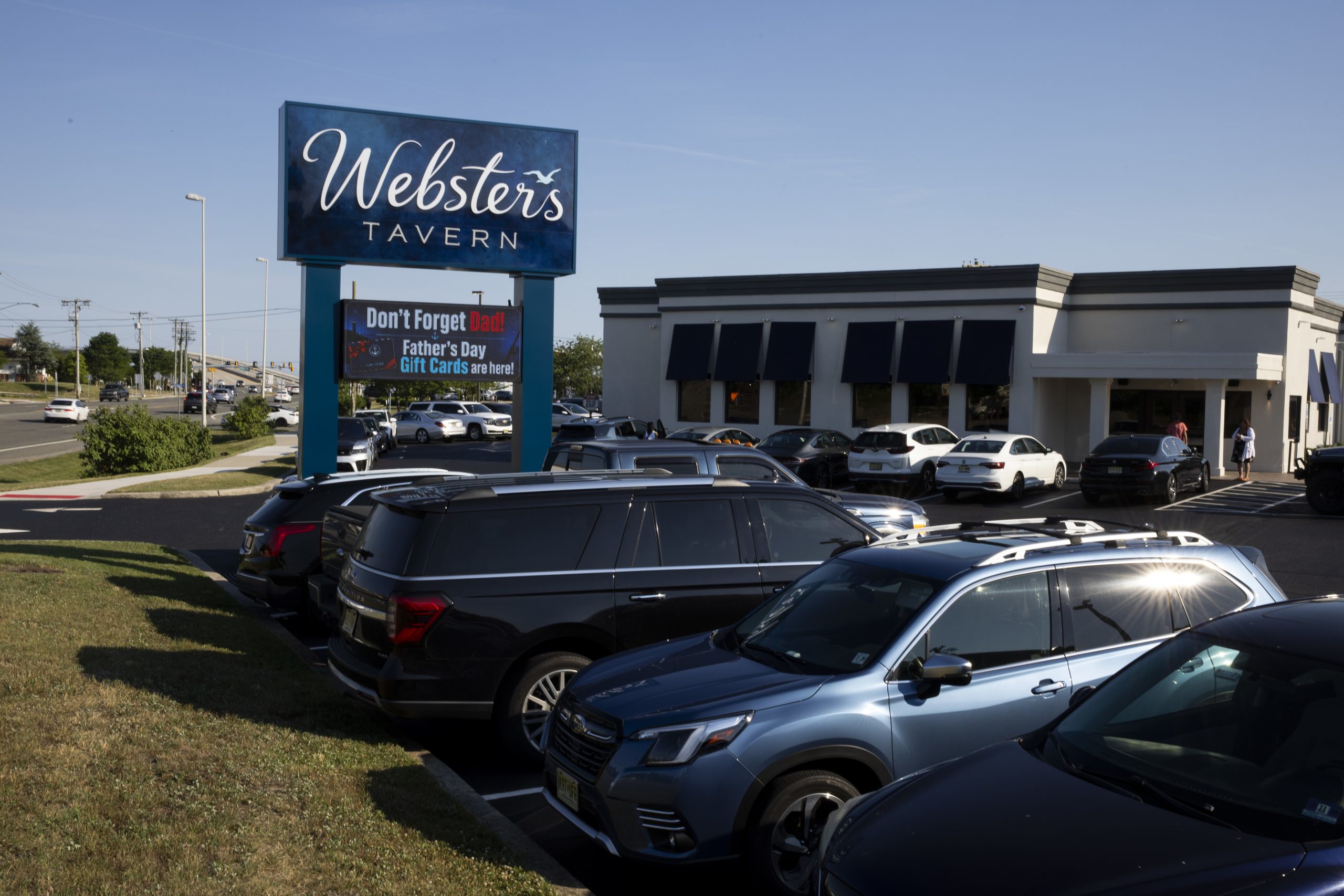
The exterior of Webster’s on Wednesday, June 17, 2026, in Somers Point.Monica Herndon / Staff Photographer
SOMER’S POINT
Webster’s Tavern
Some people come to the Shore to relax on the beach, dig holes in the sand, body surf, and read. For those suffering from screen-time withdrawal, Webster’s Tavern is there for you. “An elite TV program,” as I’ve heard it described, has helped pack the big parking lot of the former Windjammer turned giant sports bar in Somer’s Point. So many customers are willing to wait up to an hour for a chicken wing feast bathed in the pulsing glow of 38 TVs that owner Chris Webb has concluded “we’re going to add more [TVs], including one on the kitchen wall.”
The early days of Webster’s operations have exhibited some predictable hiccups as the tavern’s traffic rocketed to 750 customers a day within a couple weeks of opening in early June. The rushed pacing resulted in a multi-course meal that lasted barely as long as our 45-minute wait. The margarita was oversalted and sloppily mixed. (The pineapple-tinis, crushes, espresso martinis, and mud slides are apparently the safer move here). I appreciated the inclusion of local beers from Slack Tide and Somers Point Brewing on a list otherwise heavy with national brands and hard seltzers.
The something-for-everyone menu typical of the corporate restaurant world Webb comes from (he was a vice president at P.J. Whelihan’s) was uneven to say the least. The French onion soup and sheet pan nachos were solid, as was the classic tavern burger, which landed with a perfect medium rare on a branded brioche bun (a fair quality value for $17). But the house-breaded chicken wings were dry and chewy. The seafood mac ’n’ cheese was skimpy on the seafood. The chicken lettuce wraps were tepid and drowned in too much sweet soy marinade. The fried shrimp were oddly mealy. I take heart in hearing that Webb has already made some smart early corrections, switching to house-breaded shrimp since my visit. It’s a good sign to know that this personable and veteran restaurant executive is ever-present on the ground of his first solo project and that he is paying as much attention to the food as he is the number of TVs. Webster’s Tavern, 18 MacArthur Blvd., Somers Point, N.J. 08244, 609-657-3470;websterstavernsp.com
Pablo
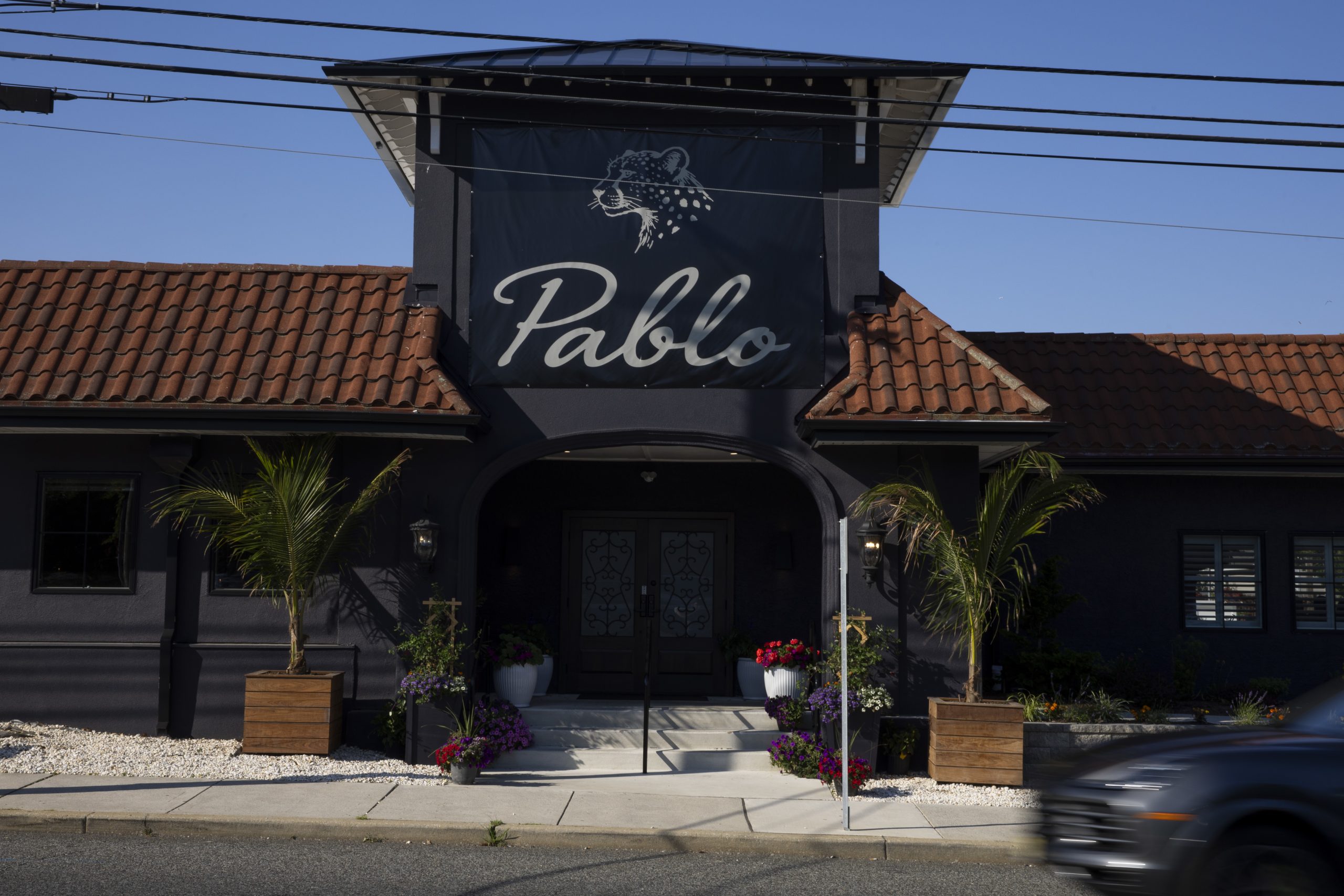
Who is Pablo? That name was atop the list of every local I surveyed before my visit to the beach. It’s easy to see the curiosity factor at play: cars are often spilling out of the lot and parked on both sides of East Maryland Avenue beside the massive black hacienda of a restaurant and night spot called Pablo in Somers Point. The Zest Restaurant Group opened Pablo this summer after pouring $2 million into a renovation of the short-lived former Mexiquila. The Zest group, known for its stylish Cape May restaurants Port, Fish House, and Tacos Caballito Tequileria, has similarly transformed this rambling property (originally Clancy’s By the Bay) into a multi-room, four-bar, 400-seat extravaganza. There’s a moody lounge at the rear anchored by a DJ spinning house music, boosted by live musicians and pyrotechnics, an airy greenhouse dining room on the other side with skylights and garage doors that roll-up to a patio bar where they’ve re-created a beach. Fresh-juice cocktails fuel this fiesta, accounting for about 75% of the sales from the 1,200 or so guests that come through on a busy evening, says co-owner Ross Hammer, who concedes Pablo is a made-up name for the restaurant’s cheetah logo. (“Sorry, I’m Miguel,” said a passing server when I asked him for Pablo’s whereabouts.)
The exterior of Pablo on Wednesday, June 17, 2026, in Somers Point.Monica Herndon / Staff Photographer
Pablo’s menu is a more affordable than its upscale-yet-underwhelming predecessor and conscientious to accommodate dietary restrictions. I only wish the kitchen put as much energy into making better-tasting food. Our meal was full of tepid overcooked meats, dry rice, stadium-grade nachos welded together with cheap cheese, and a parade of fusion tacos so disappointing that it was an all-out Taco-pocolypse, whose brightest bite was a tortilla topped with a cheeseburger. By that point, I realized that the wait — Hammer says it averages two to three hours for a seat in this no reservations dining room — is not worth it. Go to Pleasantville (see above) or pretty much anywhere else for your tacos, then return to Pablo for a tequila-spiked espresso martini, if you’re so determined, and boogie the night away on its ersatz beach. Pablo, 101 E. Maryland Ave., Somers Point, N.J. 08244, 609-469-6991; pablosomerspoint.com