Category: News

  • America 250 celebrations bring extraordinary security challenge to Washington

    WASHINGTON — Federal law enforcement authorities in Washington, D.C., are preparing for one of their largest and most complex security operations as the nation’s capital gears up to celebrate the 250th anniversary of the nation’s freedom.

    With rising political violence, including recent incidents near the White House, and a president who enjoys being at the center of public pomp yet has repeatedly faced attempts on his life, a major security challenge awaits.

    “It comes as no surprise to you that D.C. on a normal day is a target-rich environment,” said Darren B. Cox assistant director in charge of the FBI’s Washington Field Office at a recent news conference detailing the security preparations. “We are prepared for any threats.”

    Hundreds of thousands of people are expected to visit Washington in the coming weeks for the festivities.

    The throngs will be joined by thousands of law enforcement officers and agents and 5,000 National Guard troops, along with military-style vehicles and other hardware they don’t often see on the streets of America.

    Authorities are preparing for a major security operation

    The largest crowds are expected July 4, with multiple events happening simultaneously, including the Great American State Fair, a showcase for each state and a signature attraction of the celebrations that stretches across the National Mall.

    The annual fireworks display that night is designated a National Security Special Event for the first time by the Department of Homeland Security, granting it the highest classification for federal security coordination.

    For visitors, that means strict ID requirements, long lines, and magnetometers, similar to air travel security. Snipers are also expected to be deployed at some events.

    Flights at Ronald Reagan Washington National Airport, which is across the Potomac River from Washington, will be suspended longer than in other years because of the scope of the celebrations — from noon on July 4 until the next day. Other America 250 events that include flyovers or parachute jumps could prompt more flight disruptions.

    The FBI, Secret Service, U.S. Capitol Police, U.S. Park Police, and D.C. National Guard have all been involved in security coordination for the events. At the news conference earlier this month, equipment that could be deployed to guard the city was on display, including BearCat armored SWAT vehicles, Mine-Resistant Ambush Protected, known as MRAPs, as well as communication vans and FBI diving boats.

    “Our protective model is meant to adjust to any type of direct or indirect threats that we come across,” said Tara McLeese, special agent in charge of the Secret Service Washington Field Office. “I can assure you that we have no lack of imagination as to the potential threats out there.”

    Brig. Gen. Leland Blanchard II, interim commander of the D.C. National Guard, said the planning had been underway for months and included rehearsals.

    Blanchard said the guard members would continue the roles they have served the last 10 months as part of a deployment to the city President Donald Trump says is meant to fight crime. Blanchard highlighted that guard members, including military police officers, would be helping with duties like traffic and crowd control as well as responding to emergencies around the events.

    Trump, who has already attended several events leading up to July 4, including the kickoff rally last week launching the Great American State Fair, has said on Truth Social that he would hold a rally on the National Mall.

    Speaking at a news conference Monday updating the upcoming security preparations, Cox reiterated that “at this time we are not tracking any credible threats related to the July 4th event, but we always remain vigilant.”

    Recent violence has shaped the threat picture

    The festivities come at a fraught moment, with recent political violence creating a complex threat environment for authorities. One man, Cole Tomas Allen, has been charged with attempting to assassinate the president after he sprinted past security at the White House Correspondents’ Association dinner in April. Allen has pleaded not guilty.

    In the following weeks, two men on two separate occasions opened fired at Secret Service officers, the service said. Each incident happened in the vicinity of the White House.

    More recently, the FBI announced it had thwarted a planned attack targeting Trump’s UFC cage-fighting show at the White House. Several suspects have been arrested in that case.

    Security was already enhanced on the National Mall ahead of the launch of festivities, as Trump claimed without providing evidence that vandals had damaged the Reflecting Pool that he had recently renovated.

    Matt Dallek, a political scientist at George Washington University who studies extremism, said Trump posed a unique security challenge because he is “both an accelerant and a target of political violence.”

    The nation’s bicentennial offers a historical parallel

    Observers draw some parallels to the 1976 bicentennial. The nation was coming off Watergate and Vietnam, and 10 months before the celebration there were two assassination attempts against then-President Gerald Ford.

    “There was a lot of sourness in the country in ’76, a lot of cynicism about the direction of the country,” Dallek said. But both Ford and his democratic opponent Jimmy Carter understood the threat political divisions posed and “were looking to bring down the level of vitriol.”

    Angelyn Spaulding Flowers, professor of homeland security and administration of justice at the University of the District of Columbia, said the amount of security was unparalleled for the city, citing the ongoing and open-ended National Guard presence that has flooded Washington with additional security patrols for months.
  • Uber driver pleads no contest in the rape of a Villanova student inside her dorm room

    Uber driver pleads no contest in the rape of a Villanova student inside her dorm room

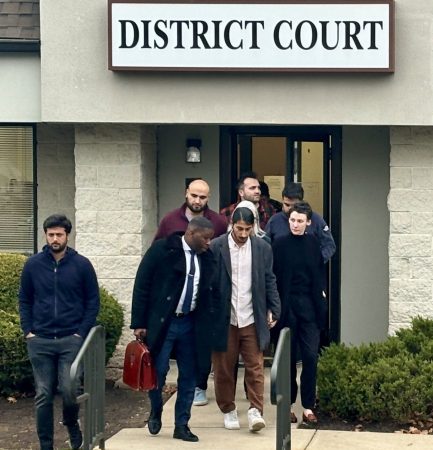
    An Uber driver pleaded no contest Monday in the rape of a Villanova University student inside her dorm room in 2024.

    Mirvan Dinler, 27, was set to begin his trial before Delaware County Court Judge Mary Alice Brennan when he instead entered the no-contest plea to rape of an unconscious victim. Prosecutors said Dinler attacked the woman after driving her home from a bar in North Philadelphia and walking her to her dorm room as she drifted in and out of consciousness.

    Semen found on a comforter and towel inside the dorm room were found to be a match to Dinler’s DNA, according to Assistant District Attorney Danielle Gallaher. And surveillance footage taken from cameras outside of the dorm building showed Dinler escorting her inside, arm-in-arm, because she was too intoxicated to walk on her own, the prosecutor said.

    In agreeing to plead no-contest, Dinler did not admit guilt but did not dispute the prosecution’s statement of the facts in the case.

    Gallaher said she would seek a prison term of three to six years at sentencing in October.

    Dinler’s attorney, Shaka Johnson, did not return a request for comment Monday. Previously, Johnson said there were “glaring, glaring cracks” in the woman’s account of what happened that night.

    The woman, who was a senior at Villanova at the time, testified at a preliminary hearing that she woke up, drunk and disoriented, as Dinler raped her in September 2024. She said she was too terrified to fight back or call out for help.

    Earlier that evening, she said, she had been drinking with friends on campus before the group headed to Warehouse on Watts, a bar in North Philadelphia.

    The woman said she did not drink regularly, but on that night had three glasses of wine and two shots of liquor. After arriving at the bar in the city, she said she felt dizzy and ill, and decided to return home.

    “I knew I wasn’t feeling good, and I didn’t want my friends to have to babysit me,” she said.

    The woman ordered an Uber, and Dinler arrived in his Toyota Prius to pick her up, she said.

    Her memory was spotty, she said, until waking up to find that Dinler was raping her.

    After the assault, she said, Dinler returned to the dorm and loudly banged on her door, demanding that she pay a cleaning fee because she had vomited in his car during the ride.

    Gallaher, the prosecutor, said there was evidence that Dinler, using the victim’s phone with her permission, sent a $150 payment to a friend of his through Venmo. That person then transferred the money to Dinler’s bank account.

  • Venezuelans search more earthquake ruins as aftershock rattles rescuers in disaster zone

    LA GUAIRA, Venezuela — With the window for finding survivors shrinking fast, Venezuelans combed Monday through more ruins of buildings toppled by last week’s powerful back-to-back earthquakes, and a 4.6 magnitude aftershock rumbled through the disaster zone in the northern state of La Guaira.

    Relief organizations say the first 72 hours after a natural disaster is the most crucial time period for rescues, though survival can be extended if people have access to food and water. Five days after the twin quakes struck northern Venezuela, attention turned to the humanitarian crisis that was taking shape in devastated regions.

    The death toll stood at more than 1,700 people, according to the government.

    Major questions loomed about whether the cash-strapped government under acting President Delcy Rodríguez — who came to power in January after the Trump administration seized former President Nicolás Maduro — will be able to coordinate the effort needed to care for thousands of people who have been left homeless.

    Facing criticism that authorities have done too little, too slowly, the government has promoted its rescue efforts on social and state-run media. On Monday, it shared footage of Rodríguez inspecting a school-turned-shelter for displaced people in the hard-hit northern town of Catia La Mar and of survivors being lifted out of the ruins to applause.

    But such bright spots are rare at the quake’s epicenter, where families keep vigil at search sites.

    “We have to stay strong, even without food, without sleep,” said Ana Rada, watching as civil defense workers looked for her brother. “Until I see the body, I still have hope.”

    Aftershock rattles rescuers

    Following a weekend of smaller aftershocks, Monday’s temblor struck near the epicenter of last week’s quakes — 17 miles north of Caraballeda on Venezuela’s Caribbean coast — and measured 4.6 magnitude, according to the United States Geological Survey. Colombia’s geological survey put the magnitude at 5.1.

    Jorge Rodríguez, the leader of the Venezuelan National Assembly, said there were no immediate reports of additional damage, but the aftershock sent residents in the capital of Caracas screaming into the streets.

    “Here we are again, back in the street. I don’t know when we’ll have a moment of true peace,” said Concepción Hernández, 51, who evacuated her apartment building in the Chacao municipality of Caracas.

    The Caracas Metro said it would temporarily suspend service Monday to inspect infrastructure following the aftershock.

    Questions over extent of U.S. help

    The disaster has raised expectations for the Trump administration, considering its takeover of Venezuela’s oil industry earlier this year.

    In a briefing with reporters, a senior State Department official said 300 first responders sent from the U.S. are working on the ground — alongside dozens of other international rescue teams — and two dozen C-17 military transport planes arrive every day with supplies. Financial support from the U.S. now exceeds $300 million.

    The American military is also assisting with some repairs, including damage to the port in La Guaira to enable the arrival of more relief supplies by sea. Another team is helping to manage air traffic after the quakes destroyed part of the control tower at Simón Bolívar International Airport in Caracas, said the official, who spoke on condition of anonymity because he was not authorized to speak publicly.

    It seemed unlikely, however, that the Trump administration would grant temporary legal protections to Venezuelans as previous administrations have done for people from disaster-stricken countries already in the U.S. Such action was taken after earthquakes in 2010 in Haiti and 2001 in El Salvador.

    Venezuelans have been a major focus of the Trump administration’s immigration crackdown, with officials revoking temporary legal protections for hundreds of thousands of Venezuelans and stepping up deportation flights.

    Rescuers included a miner deported from the U.S.

    Among the rescuers digging through the rubble Monday in La Guaira was miner Jean Sosa, who said he was deported from the U.S. in January over a missed immigration court hearing and returned to Caracas last month, dazed by an odyssey that he said began in shackles at an Arizona immigration detention center. The journey involved traveling by bus through five countries after immigration agents left him in southern Mexico without his passport, phone, or wallet.

    Since arriving Wednesday in La Guaira to visit family and friends, Sosa has raced to pull people from the rubble in the absence of national rescue teams.

    “I’m not involved in politics, but I believe many people could have been saved if there had been equipment and support from top authorities from the very beginning,” he told the Associated Press, wearing a helmet and a black T-shirt splotched with dust in the port city where he said he had already rescued 20 people alive.

    Those rescues heartened him, he said, and gave him hope for more despite the lack of supplies. “We’re working without gloves, without equipment, borrowing supplies, improvising bandages and whatever else we can.”

    Government, U.N. offer vastly different numbers of people affected

    The full scale of the damage remained unclear. Jorge Rodríguez, who is the brother of the acting president, said that as of Monday, a total of 15,866 people had been affected, while the number of damaged or collapsed buildings had reached 855.

    A preliminary assessment by NASA estimated that the earthquake damaged or destroyed 58,870 buildings. The assessment relied on radar imagery from the European Space Agency’s Sentinel-1 satellites, which can detect changes to infrastructure.

    The United Nations has said that up to 6.8 million of Venezuela’s nearly 30 million residents may be affected, which could mean being displaced or losing access to essential services such as electricity and water.

    Because of the chaos and poor cell phone service, many Venezuelans have turned to non-governmental digital databases to report their loved ones as missing. More than 50,000 people were reported missing on one such database, though it is unclear how many have been found.

  • Three men have been shot near Hunting Park Rec Center over the last month in what appear to be linked crimes, officials say

    Three men have been shot near Hunting Park Rec Center over the last month in what appear to be linked crimes, officials say

    Philadelphia police are investigating whether three men shot near the Hunting Park Recreation Center in the last month — two of them fatally and just six days apart — were targeted by the same gunman, according to law enforcement sources.

    The two men killed this month were found partially undressed and shot in the torso inside the large North Philadelphia park, said the sources, who spoke on the condition of anonymity to discuss an ongoing investigation. A third man was shot in late May and survived.

    Police believe the same person was involved in both killings, the sources said, and are looking into whether the men had met the suspect through a dating app.

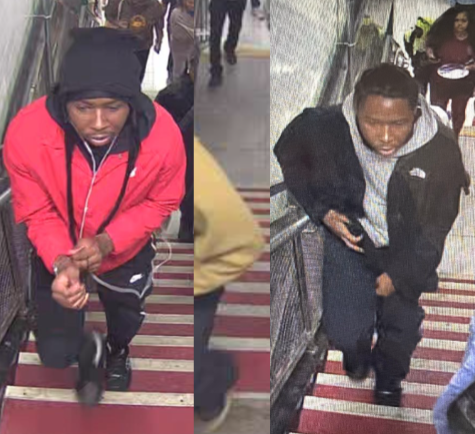
    Deputy Police Commissioner Frank Vanore said investigators have identified a person of interest interest in the case, a man in his late teens or early 20s, after capturing his image on surveillance footage as he entered and exited a Broad Street Line station.

    The man — whom investigators did not identify — is considered armed and dangerous, Vanore said at a news conference Monday.

    Philadelphia police said this man is a person of interest in the shooting deaths of two men near the Hunting Park Recreation Center in separate incidents within the last 10 days.Courtesy of Philadelphia police

    “All three incidents are perpetrated very similarly, in the same geographic area,” he said. “We’re believing now that they’re all connected and being done by the same person.”

    On June 20, officers responded to the park, at 1101 W. Hunting Park Ave., shortly after 10 p.m. and found Martin Higgins, 45, on the bleachers of the baseball field, suffering from a gunshot wound to the torso. He died at the scene, police said.

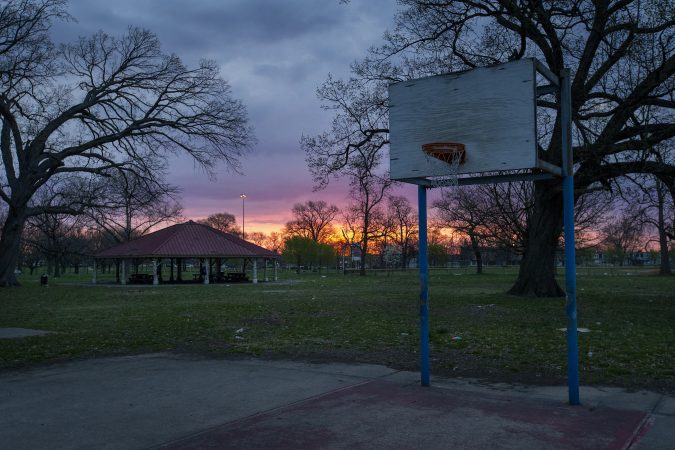
    Then, on June 26, police responded and found another man just before 11 p.m. suffering from multiple gunshot wounds near the basketball courts. Police have not yet identified the man but said he was 29-years-old.

    Police now believe a third shooting last month is linked to the gunman.

    In that May 29 incident, a 55-year-old man was shot in the elbow and torso in the park just before 10 p.m. The victim later told investigators that a man wearing all black who appeared to be in his 20s approached and told him that he was being robbed, according to Vanore.

    Vanore said investigators had yet to determine a motive tying the cases together, though they believe robbery is the motivation behind the shooting that was not fatal.

    Asked whether the victims had met the suspect on a dating app — a detail law enforcement sources said they are investigating — Vanore declined to comment, citing the ongoing investigation.

    “If that is [part of the case], that’s something we’ll have to develop moving forward,” he said. “But at this point we know that this individual appears to be preying on people.”

    Higgins’ relatives could not be immediately reached for comment Monday. An obituary shared online said he was a graduate of Temple University’s business school and worked as an inspector for the city’s Community Life Improvement Program.

    “Marty was known for his passion for clothing, style, and self-expression,” the obituary said. He had a “kind heart, generous spirit, and unwavering support for those he loved” and “was the person who showed up when someone needed him, always making time for family and friends no matter what was going on in his own life,” his family wrote.

    He was one of six children and was an uncle to many nieces and nephews.

    Meanwhile, as investigators continue to search for the gunman, they are asking anyone with information about the crimes to contact the homicide unit at 215-686-3334 or submitting an anonymous tip at 215-686-TIPS (8477).

  • An explosion leveled a home in Bucks County, drawing a multi-agency response

    An explosion leveled a home in Bucks County, drawing a multi-agency response

    Local police and fire responded to a house explosion in Sellersville, Bucks County, on Monday that left the property in ruins and white debris scattered in a broad blast radius.

    Hilltown Police Department, which serves Sellersville, said the reports of the explosion on Highview Road came in sometime around 9 a.m.

    Hilltown Police Chief Christopher Engelhart told Fox29 that a contractor was on site at the time of the explosion and was taken to an area hospital for treatment. His injuries and condition, however, were not immediately clear, though Engelhart said the worker was expected to survive.

    The blast resulted in a flood of support from neighboring fire and police departments.

    Silverdale Volunteer Fire Company, Sellersville Fire Department, Hilltown Police, Hilltown Township Volunteer Fire Company, Souderton Fire Company, and Telford Fire Company were among the crews on site.

    The source of the blast is under investigation.

    Properties on Highview Road are spaced out with lots of green space between, and aerial footage from local television stations shows the debris was largely contained within the home’s property line.

    The three-bedroom “contemporary designer farmhouse” sits on a three-acre lot, according to a previous real estate listing. The home garnered media coverage from publications such as Elle Decor and Philadelphia magazine in 2022 after interior designer Ghislaine Viñas listed the renovated property for sale.

  • Supreme Court rules states can count late-arriving mailed ballots, rejecting Trump-led challenge

    WASHINGTON — The Supreme Court on Monday ruled that states can count ballots that arrive after Election Day, a persistent target of President Donald Trump.

    The decision rejected a Republican-led attack on laws in more than half the states and the District of Columbia that permit mailed ballots to arrive and be counted some number of days after the election, provided they are postmarked by Election Day. The outcome spares officials the headache of changing their ballot rules just a few months before the 2026 midterm congressional elections.

    In just over half those states, the more forgiving deadlines apply only to ballots cast by military and overseas voters.

    The legal challenge was part of Trump’s broader attack on most mail balloting, which he has said breeds fraud despite strong evidence to the contrary and years of experience in numerous states. Trump has repeatedly claimed that his loss to Joe Biden in 2020 resulted from fraud even though more than 60 court decisions and his own attorney general said that argument had no merit.

    The court heard arguments in March in a case from Mississippi pitting the state against Trump’s Republican administration and the Republican and Libertarian parties. At issue was whether federal law sets a single Election Day that requires ballots to be both cast by voters and received by state officials.

    The federal appeals court in New Orleans struck down a Mississippi law allowing ballots to be counted if they arrive within five business days of the election and are postmarked by Election Day.

  • Man stabbed on SEPTA bus in West Philadelphia, authorites say

    Man stabbed on SEPTA bus in West Philadelphia, authorites say

    A 39-year-old man was stabbed during a fight on a SETPA bus in West Philadelphia early Monday, authorities said.

    The incident began around 2:44 a.m. when two men got on the L1 Owl bus at 15th and Market Streets and began fighting, police said.

    The bus driver flagged down a nearby Philadelphia police officer for assistance.

    After an unsuccessful attempt to separate the men, the officer deployed a Taser on the 39-year-old man, whom police did not identify.

    While taking him into custody, the officer saw that the man had been stabbed. He was taken to Jefferson Hospital, where he remained in stable condition late Monday morning.

    Investigators are looking for a the second person they said was involved in the fight and fled the scene.

    Officers recovered a knife. Police gave no motive for the stabbing which remains under investigation.

  • Americans’ pride in U.S. history and democracy drops, polls find

    WASHINGTON — Americans have grown less proud of their country’s history or the way its democracy works over the past decade, according to a new AP-NORC poll.

    Americans’ pride in the U.S. on several key attributes has dropped since 2017 — including the nation’s military and its political influence around the globe — according to the survey from the Associated Press-NORC Center for Public Affairs Research. This poll was conducted in April, as the United States and Iran fought over the Strait of Hormuz in a prolonged war that started with the U.S. and Israel launching strikes on Iran.

    New Gallup polling also finds that only 53% of U.S. adults are “extremely” or “very” proud to be an American, the lowest reading in the trend dating back to 2001.

    The findings point to a broad decline in patriotic sentiment over a tumultuous period that included most of President Donald Trump’s first term, the COVID-19 pandemic and rising inflation that contributed to a backlash against President Joe Biden. That timeframe also covers Trump’s return to the White House, where he’s taken more aggressive actions on immigration and issues abroad.

    Much of the falling positivity comes from Democrats, who have become increasingly disenchanted with the country since Trump’s first term.

    At the same time, most U.S. adults say that being an American is “extremely” or “very” important to their identity, highlighting an enduring connection, even as some become increasingly critical of the country’s past or the government’s current actions.

    American pride declines on the armed forces, democracy

    Americans’ pride in the way democracy works in the U.S. has declined 14 percentage points, falling from 42% in February 2017 to 28% now.

    In addition, Americans’ pride in their armed forces has dropped 19 percentage points since 2017, and pride in the U.S.’s history has declined 14 percentage points. In each case, the drop is largely driven by Democrats, with some movement among independents as well.

    Karla Galdamez — a 48-year-old Democrat who used to teach U.S. history — believes America has regressed under the Trump administration. While the Californian is not proud of Trump, she is pleased with how far the U.S. has come in 250 years.

    “It’s a country that really wanted to be different and really wanted to be better,” she said. ”Despite some of the very ugly history that we have of segregation and slavery … if you look at the trajectory of the last 250 years, we’ve done nothing but get better and move toward a more egalitarian nation.”

    Only 14% of Democrats and 28% of independents say they are “extremely” proud to be an American, according to Gallup’s new poll, compared with 70% of Republicans.

    The AP-NORC poll found that Republicans are especially likely to be proud of the nation’s armed forces. About 9 in 10 Republicans say the military makes them “extremely” or “very” proud, compared with about 6 in 10 U.S. adults.

    Samantha Fulks, a 40-year-old in San Antonio, Texas, says she’s proud to be an American and doesn’t hide it. The Texas Republican showcases that pride with an American flag in her front yard — as well as Trump flags in the back yard — and she plans to wear red, white, and blue on the Fourth of July. Fulks comes from a military family, and while she believes the country’s involvement in Iran is unnecessary, she remains a proud supporter of the military.

    “I still support our troops no matter what they do,” Fulks said.

    Being an American matters more for identity among Republicans, older adults

    Matt Stafford, a 39-year-old in Massachusetts, is proud of being an American, even if the U.S. political system frustrates him.

    He has a bald eagle tattooed on his back to represent the United States, its freedoms, and “all the things we’re supposed to stand for as a country.” But despite that national pride, he often finds himself frustrated by politicians on both sides. Stafford — a centrist who identifies as “politically homeless” — wants Democrats and Republicans to come together to look out for their constituents in middle America.

    “I love America, but our biggest problem is how we’re pushing both sides — like the left and the right — to the extremes,” he said.

    For many Americans, their partisanship is often intertwined with their national identity. The poll finds that Republicans are much likelier than Democrats or independents to say being an American is “extremely” or “very” important to their personal identity.

    Younger people are also much less likely than older people to say being an American is highly important to their personal identity. About three-quarters of Americans ages 60 and older say being an American is highly important to them, compared with only about one-third of U.S. adults under 30.

    Race or ethnicity matters more to Black Americans

    The AP-NORC survey found that the vast majority of Black Americans — 73% — say their race or ethnicity is “extremely” or “very” important to how they see themselves, higher than the share that say that about being an American.

    Vincent Harris, a 60-year-old in California, says his identity as a Black man rises above other attributes for him because of how Black men are treated in America.

    “A lot of people are scared of Black men just because we are Black and we are male. And that’s crazy,” Harris said. “People don’t even take you for who you are as a person; they just look at your race.”

    About half of Hispanic Americans say their race or ethnicity is highly important to them, compared with 22% of white Americans.

    Black and Hispanic adults are also more likely than white adults to say their family’s ancestry or country of origin is highly important to their personal identity.

    Harris, who identifies as a gay man, says being an American is “a wonderful thing” because of the freedoms that Americans have, despite the obstacles he’s had to overcome.

    “It’s great to be an American — regardless of race, gender, sexual orientation, religion, or whatever. As long as you have that freedom of choice as an American, that’s a great thing,” Harris said. “Right now, I wouldn’t live in any other country in the world. I’m here. I love it.”

  • After a century of false starts, soccer has taken off in the U.S.

    The 2026 FIFA World Cup — which includes six games in Philadelphia — has taken the U.S. by storm. The excitement generated by the tournament reflects how, in contemporary American society, soccer has become a feature of everyday life.

    Parents drive their kids to and from soccer practices and fork out large sums of money for travel games. At the professional level, Major League Soccer (MLS) and the National Women’s Soccer League (NWSL) are thriving. The U.S. women’s national team has won a record five Olympic gold medals and four World Cup titles. Even European soccer has taken off with American fans: this year, the English Premier League (EPL) season opener between Chelsea and Manchester City drew close to 2 million viewers in the U.S.

    The meteoric rise of soccer in the U.S., however, is a recent phenomenon. While Americans have played the game for centuries, it struggled to take off in the U.S. A number of factors drove soccer’s struggle to catch on, including ideas about masculinity and Americanness, a lack of infrastructure and the failure to build robust college soccer programs. Yet, in the 21st century, immigration, demographic shifts, technological changes and the rapid growth of youth soccer have transformed the landscape. Soccer has moved from a fringe and unpopular sport to become one of the most popular sports in America — even ahead of baseball according to one poll.

    In 1869, Rutgers beat Princeton 6-4 in the first American collegiate soccer game. By the early 20th century, teams like Fall River Football Club had become established enough to play against European teams including the Glasgow Rangers and Sparta Prague.

    Bethlehem Steel, based in Bethlehem Pa., was one of the most dominant teams in the early 20th century. It built what was widely regarded as the first soccer specific stadium in the U.S. and went on to win a record five U.S. Open Cups.

    Although the game seemed to be taking root — especially after the formation of the American Soccer League (ASL) in 1921 — it was predominately an amateur sport, even as professional soccer took off in Europe.

    The ASL hit rough shoals in its earliest days: only three of the initial clubs returned for a second season. Financial struggles were quite common in the league, and crowds were sparse.

    In the early 20th century, the near absence of soccer on American college campuses entrenched its status as a fringe sport. Other sports like baseball and basketball were taking off on campuses at the time, a signal of what sports young people were interested in playing. The problem was compounded by the lack of a national administrative structure, which ensured that almost no organized soccer took place beyond high school.

    Soccer also suffered from the lack of physical infrastructure. While sports like baseball and basketball developed at the professional level in the U.S. — including the construction of stadiums and arenas — soccer was forced to rely on baseball stadiums for games. For instance, Grand Avenue Baseball Ground in St. Louis, hosted four U.S Open Cups between 1929 and 1948 while also serving several Major League Baseball teams. Soccer in 20th century America simply wasn’t a robust enough business to justify the construction of multimillion-dollar stadiums.

    These challenges and tribulations plaguing soccer had a significant impact on sport’s growth in the U.S.

    At the college level, the game remained on the periphery of the American sports landscape. In 1939, only eight universities and colleges had men’s soccer teams and there were no interregional matches or postseason tournaments. It would take another 20 years before the National Collegiate Athletic Association sponsored a postseason soccer championship.

    Meanwhile, American football remained dominant on college campuses. Commenting in a New York Times article on soccer, an official from an unnamed American university argued that it was a good sport and must be played “in addition to football but should not supplant the latter game.”

    Soccer was stuck in neutral, even after two rival professional leagues, the National Professional Soccer League and the United Soccer Association, merged to form the North American Soccer League (NASL) in 1968.

    In 1975, the arrival of Edson Arantes do Nascimento — better known as Pelé — was supposed to change everything. Following sustained lobbying from New York Cosmos General Manager Clive Toye and intervention by U.S. Secretary of State Henry Kissinger, the superstar agreed to bring his talents to the U.S.

    Hopes, however, for a soccer revolution never truly materialized. While Pelé drew huge crowds to his games, his proclamation that soccer had “finally arrived in the United States” proved to be only hype. A decade after his heralded arrival, the NASL actually collapsed due to ballooning costs — leaving the U.S. without any serious professional league for several years.

    Made By History sponsors. FOR USE ON MADE BY HISTORY STORIES ONLY.Inquirer Staff

    No one was quite sure precisely why the most popular global sport couldn’t break through in the U.S. Some observers wondered if the problem was that the sport simply wasn’t American.

    The game ran afoul of American ideas of masculinity, which were primarily associated with aggression and capacity for violence, both of which were celebrated aspects of football. Dick Young, the former sports columnist for the New York Daily News once described soccer as “a game for commie pansies.”

    While sports like baseball and basketball weren’t as violent as football, they had the built in infrastructure — stadiums, robust college programs, big money television deals — and cultural cachet from a century of being in the top tier of American sports. Soccer lacked these advantages, and its inability to overcome the deep seated stigmas about the game kept the sport on the margins of the American sports landscape throughout the late 20th century.

    In the 21st century however, everything has shifted. The structural barriers holding soccer back began to erode, starting with youth leagues. Youth soccer grew in prominence, including the development of travel leagues. This growth, in turn, produced a pipeline of talent for professional soccer teams. Highly skilled American players like Christian Pulisic and Weston McKennie have become global superstars.

    Major League Soccer, which launched in 1993 as part of the U.S. bid for the 1994 World Cup, was initially treated as a retirement league for star players with declining skills. Yet, the emergence of this homegrown talent pipeline created a pool of exciting young players for MLS teams.

    Immigration has also bolstered soccer, both in terms of generating interest in the MLS and in expanding the talent pool. Reforms to immigration policy in 1965 created opportunities and demographic shifts that peaked in the early 2000s. Scholar Maurico Espinoza-Quesada argues that the majority of immigrants coming to the U.S. in the 21st century were primarily from “soccer-crazed countries in Latin America, Europe and Africa.”

    Tapiwa Gumunyu, a Zimbabwean immigrant living in Ohio, has attended several Columbus Crew matches with his family. Such matches have become social events for the relatively small Zimbabwean community living between Ohio and Kentucky. Similar trends can also be observed among Latin American communities that have brought their global soccer zeal to different cities across the US.

    MLS clubs have recognized the potential business opportunities offered by immigrant communities. The Seattle Sounders, for one, have tried to grow their fanbase by broadcasting their games in Spanish. Ric Jensen, a scholar of sport fandom and management, argues that MLS clubs regularly recruit “well-known Hispanic players to maximize sponsorship dollars” and expand their fanbase among Hispanics.

    Looking at the U.S. men’s national team, it’s also hard to ignore the impact that immigrants and their descendants have had on the growth of soccer in America. The U.S. has benefited immensely from players who would otherwise play for different countries altogether. Folarin Balogun could have played for England and Nigeria. Haji Wright was eligible to play for Ghana but like Balogun, chose to play for the U.S.

    The popularity of the game among immigrant communities has undoubtedly played a major role in elevating the MLS and injecting a generation of talented players and passionate fans into the local game.

    The popularity of soccer in the U.S. has also extended to foreign leagues — and technology has played a role in this shift. The internet and social media have created an interconnected world that allows fans to engage in rivalries and subcultures across previously unprecedented distances. There is now a generation of Americans who passionately identify as die hard “Culers” (Barcelona fans) or “Gooners” (Arsenal fans) despite never having set foot in Spain or England.

    One recent poll even suggested that soccer had surpassed baseball to become the third most popular sport in the U.S. Given how quickly soccer has grown, it seems possible that after decades of false starts, the sport may finally soon come to rival football and basketball atop the American sports landscape.

    Abraham Seda is an assistant professor of history at Lafayette College. He is currently writing a book on boxing and colonialism in Rhodesia.

    Made by History takes readers beyond the headlines with articles written and edited by professional historians. Opinions expressed do not necessarily reflect the views of The Inquirer.

  • The battle for backyard chickens | Inquirer South Jersey

    The battle for backyard chickens | Inquirer South Jersey

    Good morning, South Jersey.

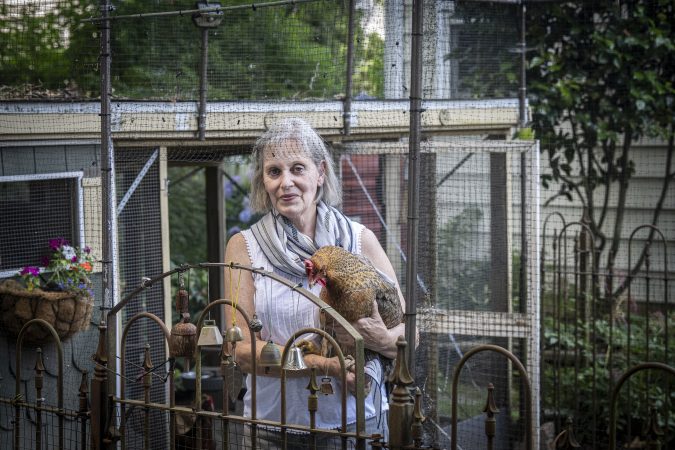
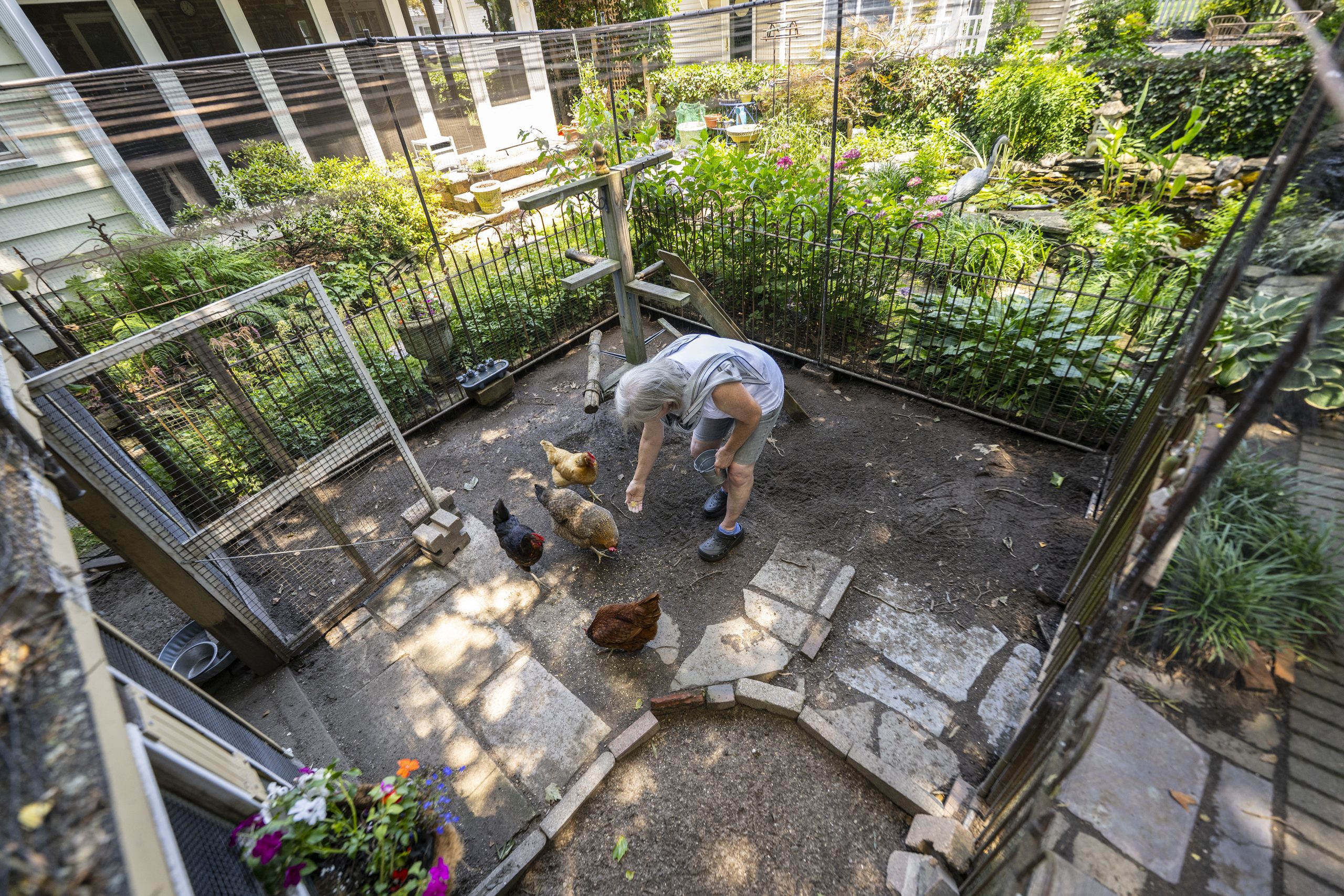
    A small but mighty group of Collingswood residents are fighting to legalize backyard chickens.

    And hospitals in New Jersey could lose an estimated $3.6 billion through 2032 because of Medicaid changes.

    Plus, home insurance rates in New Jersey are on the rise, and more news of the day.

    — Taylor Allen (southjersey@inquirer.com)

    If someone forwarded you this email, sign up for free here.

    ‘Let the chicken people have their thing‘

    The push to lift Collingswood’s ban of chickens has been an ongoing effort for years.

    But after new leadership joined and reshuffled the board of commissioners, a small group of residents thinks this could be their year to finally get the green light to have backyard chickens.

    Advocates have been showing up at board meetings lately. And most recently, they provided proposed language for the board to use in a future ordinance to support it during its last working meeting earlier this month.

    In the past, commissioner and former Mayor Jim Maley has said he would not support a backyard chicken pilot program. Meanwhile, Deputy Mayor Amy Henderson Riley said she suspects this effort has better chances than the ones before.

    Reporter Sarah Nicell details the specifics of what advocates want in the proposal.

    P.S. Read the article for the local government news, but stay for the chicken pictures.

    N.J. hospitals could lose $3.6 billion

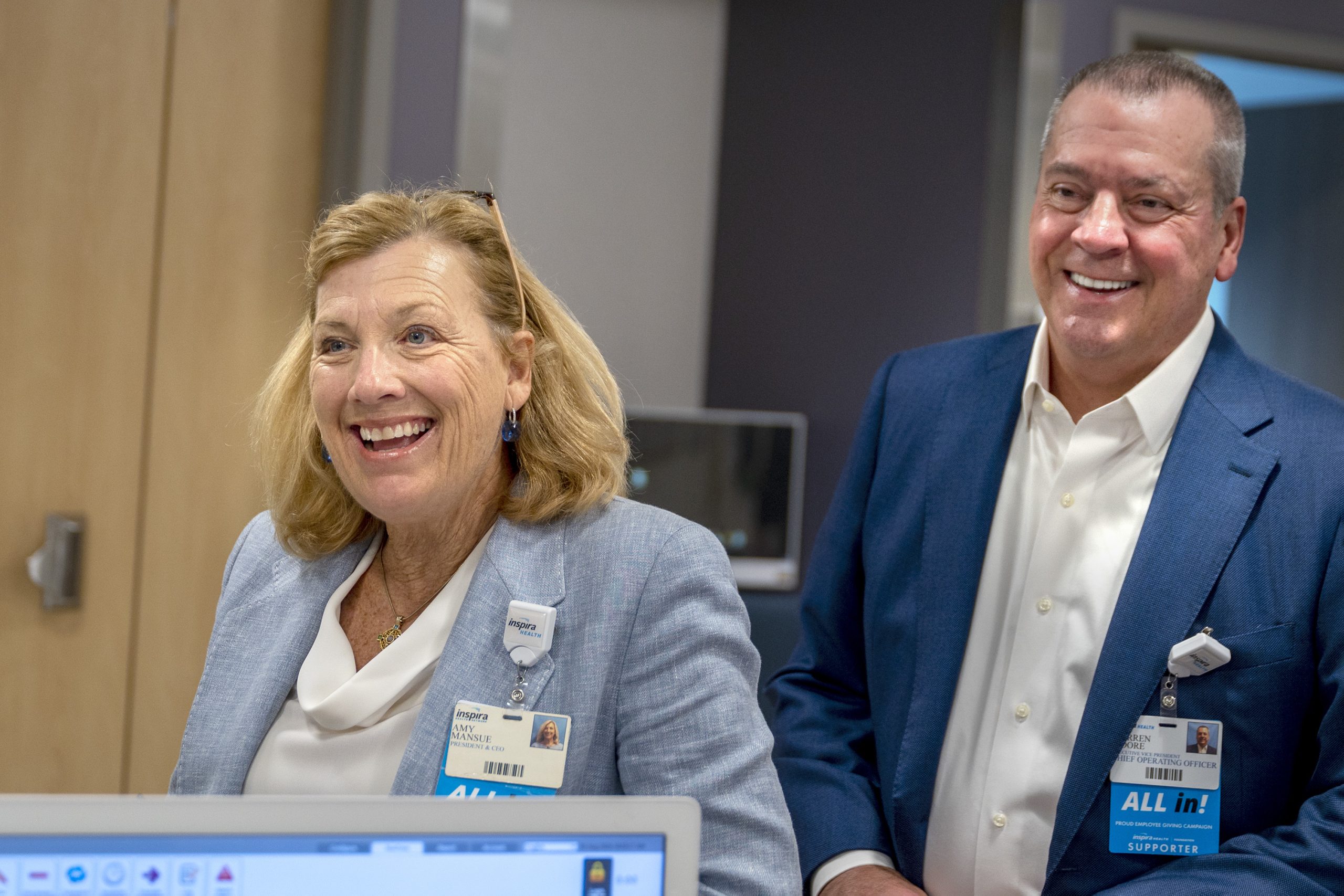
    During a panel discussion in Cherry Hill last week, Inspira Health Network CEO Amy Mansue said New Jersey hospitals could lose about $3.6 billion from Medicaid changes through 2032.

    According to Mansue, these changes will force hospitals to alter the way they operate to bring expenses in line.

    That high-figure estimate does not include the costs that hospitals absorb from the growing number of uninsured people who show up to emergency departments because they don’t have the money for a doctor’s visit.

    Almost 69,000 people’s individual coverage from New Jersey’s Affordable Care Act marketplace have already lapsed, and thousands more are expected to lose their Medicaid coverage when new requirements go into effect next year.

    The Inquirer’s Harold Brubaker explains the hospitals’ regulatory hurdles and workforce development efforts.

    Plus: Gov. Sherrill’s visit at SoccerFest26

    🎤 Allow me to pass the mic to South Jersey politics reporter Aliya Schneider.

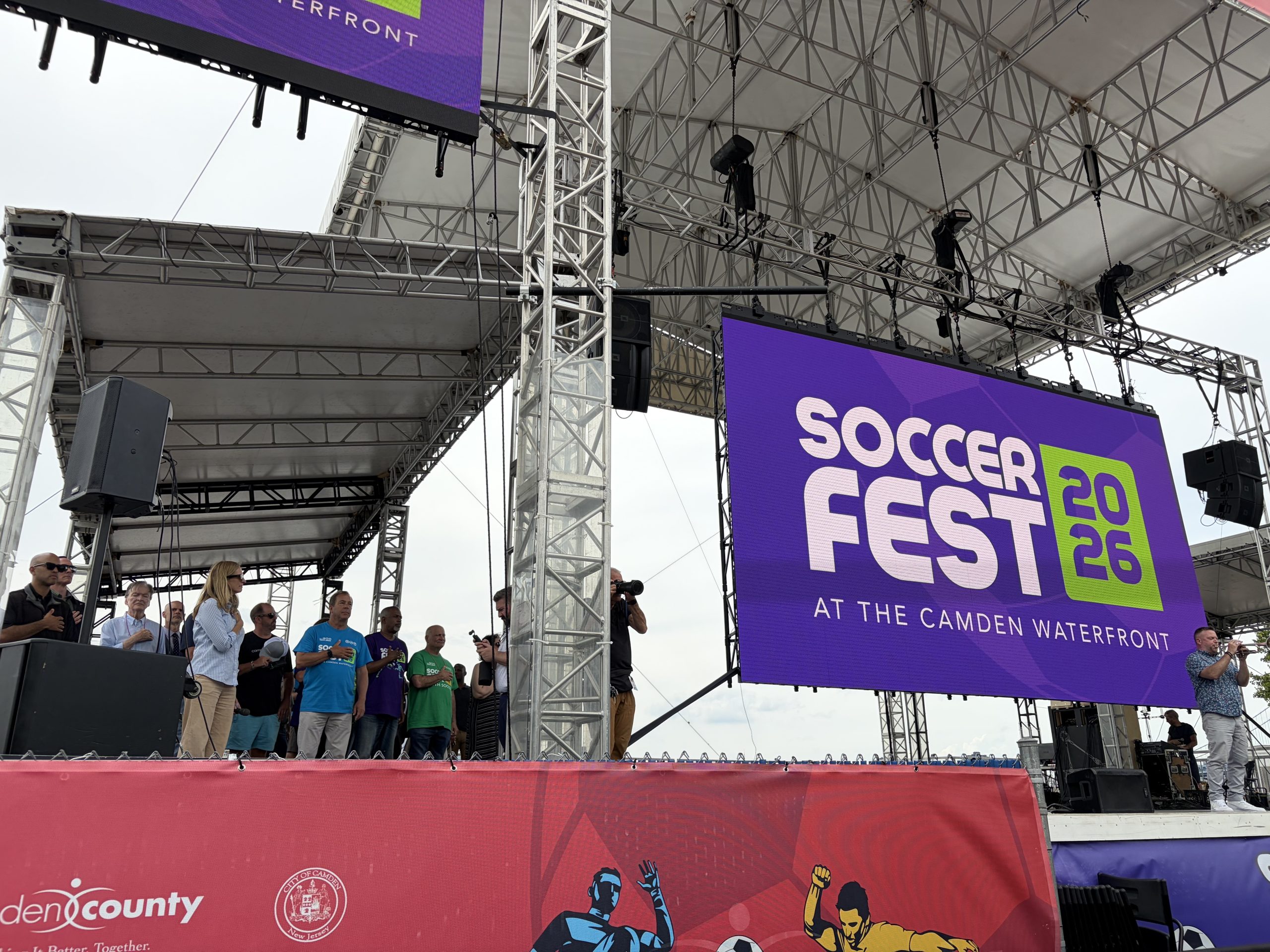
    Gov. Mikie Sherrill visited the SoccerFest26 fan fest at the Wiggins Waterfront in Camden on Friday afternoon.

    “These are kind of heavy times, they’re kind of dark times; there’s a lot of conflict going on,” Sherrill said in brief remarks on stage in front of a scarce crowd during her Friday afternoon visit. “But what I love about soccer is, it doesn’t matter where you’re from, doesn’t matter who you voted for, it doesn’t matter who you pray to. We all come together as a world.”

    Officials credited Sherrill for including South Jersey in World Cup festivities. Former Gov. Phil Murphy’s administration planned to hold a large fan fest in North Jersey but Sherrill’s administration canceled that plan and instead organized regional celebrations.

    Her Camden visit came just days before the state budget deadline on Tuesday. The governor agreed on a budget framework with legislative leaders a week before the deadline, but the details remained unclear.

    “I’m getting a little more concerned,” she told reporters on Friday. “And so I know they [legislators] are hard at work and I’m going to keep reminding them of the constitutional deadline.”

    Sherrill proposed massive funding cuts to various South Jersey programs in her March budget proposal. But because of cuts she’s found in the budget with legislative leaders, there’s money for lawmakers to “really push into their local projects,” she said. Rowan University’s veterinary school, a medical center for abused children, and Hispanic Women’s Resource Centers are among the many causes asking for a piece of the pie.

    What to know today

    🧠 Trivia time

    What year was Burlington City established?

    A) 1596

    B) 1677

    C) 1776

    D) 2000

    Think you know? Check your answer.

    What we’re…

    💧Borrowing: A kayak to explore the The Cooper River Water Trail.

    🛍️ Shopping: For a new sundress at the Cherry Hill Mall.

    🏡 Ogling: This two-bedroom bungalow built in 1930. (Did you recently buy a home in South Jersey? Share the story of how you did it. Email Inquirer real estate reporters at properties@inquirer.com)

    📬 Your South Jersey view

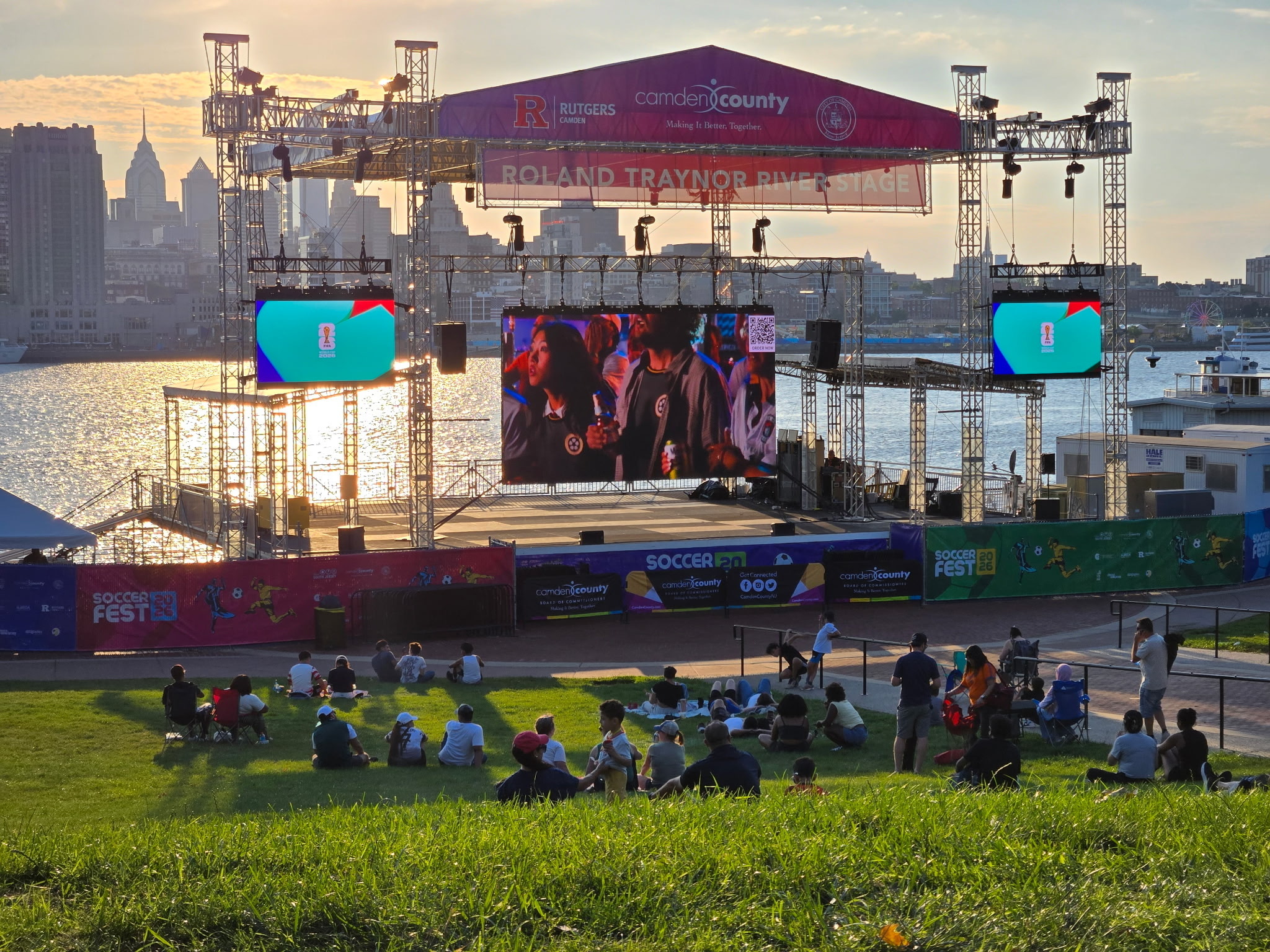
    Festival goers watch a large screening of a match during opening night of SoccerFest26 on Thursday at Wiggins Park in Camden.Anthony Pearson

    My fiancé and I strolled through the festival, ate tacos, and watched the games as the sun was setting.

    What does your community look like? Submit a photo and a brief description for a chance to be featured in the Monday edition of this newsletter.

    🗞️ What other South Jersey residents are reading

    Thanks for starting your week with The Inquirer. I’ll catch you tomorrow. 👋🏽

    By submitting your written, visual, and/or audio contributions, you agree to The Inquirer’s Terms of Use, including the grant of rights in Section 10.