Category: News

  • The controversial East Whiteland data center project has been issued its second stop-work order

    The developers of a controversial 1.5 million-square-foot data center have again been ordered by East Whiteland Township officials to stop work, this time over a lack of “clear documentation” showing the project will have sufficient water to operate the facility.

    The stop work order, issued Wednesday, tells the developers to “immediately cease work” on preliminary construction, such as concrete pads, footings, and a control house that has been partially completed.

    It is the second time in recent months that the township has told the developers to halt work at the Foote Mineral Co. Superfund site. In July, township officials had directed the developers to stop any work that moved earth while the township sought “greater clarity” on the soil and health and safety plans. The order came amid concerns from residents that the Superfund site had not been sufficiently remediated. Work resumed by the end of the month.

    Under the latest stoppage order, work at the proposed data center site will not restart until developers Green Fig LLC and Sentinel Data Centers provide the township with confirmation from Aqua, the water utility company, that “sufficient water is available and committed to this project and the Developer’s commitment to move forward with ensuring sufficient water is brought to site.”

    A representative for the developers did not immediately respond to a request seeking comment on whether they have the documentation needed.

    Earlier this month, through a Right-to-Know request, residents surfaced a 2024 letter from Aqua telling the developers: “Unfortunately, Aqua does not have the capacity to meet the peak demand … as requested.” The letter recommends the developers “evaluate the construction of a storage tank on your site to provide peak flow requirements if needed.”

    <iframe src="https://drive.google.com/file/d/1-8epaPC67vXIsipqNq9PTNMSWTu8OKME/preview" width="640" height="480"></iframe>

    The letter arose at an Aug. 19 board of supervisors meeting, with community members pressing the township to stop construction and revoke permits.

    The developers have tried, through several avenues, to alter the final design of the project that was originally approved in 2024 by moving away from using millions of gallons of water a day to cool the data center and instead installing air chillers.

    An attempt to update the plan earlier this year drew staunch opposition from residents, who turned up to protest the project, in one case shutting down the meeting. The developers tried to appease the community with an offer to downsize the project, but abandoned the updated proposal, saying they would instead build the 2024 approved plan after the township did not act fast enough.

    They returned to the township in July, however, again seeking to alter how the building is cooled, emphasizing that it would save water.

    Along with the proposed changes, the developers again offered to radically downsize the footprint of the complex, from 1.5 million square feet with two data center buildings roughly 772,000 square feet each to a total of 536,000 square feet. That offer came in response to a request made by a township official the day prior to the public meeting, according to emails obtained by The Inquirer.

    The township’s three elected officials tabled making a decision then and still have not voted on the proposed changes. They next meet on Sept. 9.

    Meanwhile, in an Aug. 3 email obtained by The Inquirer, a representative for the developers recanted the offer to resize the data center, telling the township that due to the “delay occasioned” by the tabling, “the Applicant is no longer able to facilitate further modifications … regarding building size.”

    This suburban content is produced with support from the Leslie Miller and Richard Worley Foundation and The Lenfest Institute for Journalism. Editorial content is created independently of the project donors. Gifts to support The Inquirer’s high-impact journalism can be made at inquirer.com/donate. A list of Lenfest Institute donors can be found at lenfestinstitute.org/supporters.

  • Catastrophic floods kill over 350 in Nepal and Tibet, with more than 1,300 missing

    Catastrophic floods kill over 350 in Nepal and Tibet, with more than 1,300 missing

    DEVIGHAT, Nepal — Rescue teams and military helicopters searched Thursday for hundreds of missing people along the mountainous Nepal-China border, where a deadly torrent of water and mud several stories high swept through communities a day earlier following a glacier collapse.

    Videos of the disaster showed people running before the floodwaters swallowed them up and washed out buildings and bridges. More than 390 people were killed, according to authorities in Nepal and China, and more than 1,400 were missing, including hundreds of foreigners and pilgrims. Hundreds of others have been displaced across the Himalayan region.

    The steep slopes and lush valleys below the Himalayan mountain range — home to many of the world’s highest peaks and remaining glaciers — are especially vulnerable to flooding and landslides. Melting glaciers have become more common because of human-caused climate change.

    Images showed what appeared to be the second floors of buildings in Nepal’s hard-hit Nuwakot district slathered in mud after the torrent rushed by. Riverbanks and village streets were covered in mud. Debris hung from tree branches and wires. Vehicles were buried, and some stunned survivors were caked in mud.

    Before-and-after images aired by state broadcaster China Central Television showed a multistory building and more than a dozen vehicles covered in mud. A two-lane road running along a river in a valley in Tibet’s Shigatse prefecture was completely buried. Aerial footage also showed that a lake had formed and expanded on the China-Nepal border, with authorities warning of a possible dam break.

    Nirajan Paudyal, a journalist based in Nepal’s capital of Kathmandu, worried for his parents and other relatives in the district’s village of Soley.

    “I fear there won’t be any update,” Paudyal said.

    U.S. President Donald Trump said the flooding was terrible to see, describing how “strong, well-built buildings were wiped out like they were toothpicks.”

    Speaking to reporters in the Oval Office, Trump said the U.S. spoke with Nepalese leaders and offered to provide “anything they want.”

    Helicopters deployed for rescue because of damaged roads

    The torrential floods that ran miles through mountains left at least 389 people dead and more than 460 injured in Nepal, according to police. Another 910 people are reported to be missing in Nepal. Authorities in Tibet, an autonomous region of China, reported at least three dead and 558 missing.

    Nepalese officials said dozens of bridges were destroyed and nearly 25 miles of roads were damaged, complicating search efforts.

    The Nepalese army has rescued more than 100 people by helicopter, army spokesperson Brig. Gen. Raja Ram Basnet said. Army teams also evacuated people trapped inside facilities linked to the Trishuli hydropower project, he added.

    Dozens of injured people were transported to Kathmandu for medical care.

    Rescuers found bodies in Chitwan district hundreds of miles downstream from the hardest-hit areas.

    Bishal Kumar Bhandari, chairman of the Nepal Red Cross Society, said the agency has shifted its focus from rescue to large-scale relief operations in the flood-hit districts. He said that around 1,200 people were displaced from at least three villages.

    In Tibet, the roaring mudslide that struck Wednesday engulfed a multistory port building and swallowed a bus parking lot at the land border crossing of Gyirong Port. Mud left in the surrounding areas was more than 5 feet deep on average, Chinese state broadcaster CCTV reported. Roads leading to the crossing were all damaged, while secondary collapses or landslides might occur as rain continued in the area, it added.

    China’s premier, Li Qiang, arrived Thursday in Gyirong to direct rescue efforts, alongside 500 military and paramilitary personnel. Military helicopters circled overhead, searching for survivors, assessing the disaster and mapping out possible rescue and evacuation routes.

    Chinese authorities also warned that the newly formed lake at the confluence of the Tsogyal and the Purupqiangzangbu rivers is overflowing and may burst. The lake contained 70 million cubic feet of water as of Thursday morning and was expected to receive another 106 million cubic feet in the next three days, China’s Ministry of Water Resources said.

    The ministry warned there was a high risk the dam could fail, causing further flooding.

    The United Nations’ humanitarian chief, Tom Fletcher, announced Thursday on X that he ordered the release of $2 million from the U.N.’s Central Emergency Response Fund to help with medical care, shelter, and water. He called the floods “horrifying.”

    “We pledge to support national efforts to deliver emergency aid and support,” U.N. Secretary-General Antonio Guterres told reporters.

    More than 1,400 are missing, including hundreds of foreigners

    Many people in the disaster zone waited to hear whether their loved ones were alive.

    Shova Shrestha, 33, has spent more than a day seeking word of her husband, Rajan Shrestha. She said his phone rang when she first called after the floods, but it later became unreachable. Since then, she has watched every helicopter that landed in Bidur, the capital of Nuwakot district, hoping he might be among the survivors.

    “I keep looking at each helicopter, hoping he will step out of it,” Shova said.

    Among the missing are 517 foreigners, according to Nepal’s tourism board.

    They include 178 people from India, more than 60 from the U.S., and people from 30 other countries, including Ukraine, the U.K., South Africa, and Japan, the board said.

    Many of the missing may have been on a pilgrimage to Mount Kailash in Tibet, a sacred site for Hindus, Buddhists, and others.

    Seventy-seven people from one pilgrimage group were caught in the floods at the immigration office at the border, according to a post on X from Indian spiritual guru Sadhguru Jaggi Vasudev.

    A visibly emotional Sadhguru said in a video that the group included 22 Americans and others from various countries. He said that there was no official information on their whereabouts.

    The U.S. State Department said 90 Americans were unaccounted for in China and Nepal after the flood. The department said it was unaware of any U.S. deaths and that three Americans had been rescued.

    The Indian Ministry of External Affairs said Thursday that 288 of the country’s people, including some workers on a power project, were missing.

    Chinese Ministry of Foreign Affairs spokesperson Lin Jian said that nearly 100 Chinese citizens were missing in Nepal. According to preliminary information, 260 of those missing in Tibet were foreigners, he said.

    A glacier collapse may have caused floods

    The U.S. Geological Survey first reported a magnitude 4.4 earthquake early Wednesday, about 40 miles north of Kathmandu, near the border.

    The agency later updated its analysis to say the seismic event was instead a magnitude 5.2 glacier collapse that sent debris flowing downstream.

    Climate experts at the Kathmandu-based International Center for Integrated Mountain Development said an avalanche from a glacier likely caused Wednesday’s flash flood.

    In an emailed statement, they said water levels at one point on the Trishuli River rose by as much as 27 feet in half an hour.

    The increasingly unstable Himalayan ice system threatens communities, infrastructure and water supplies across one of the world’s most densely populated regions.

    The region saw similar flash floods in August 2025, when a glacial lake in Tibet overflowed because of high temperatures. Nine people were killed, and critical infrastructure, including a bridge connecting Nepal and China, was damaged.

  • Democrats want to draw more safe House seats. It could cost Black lawmakers.

    Democrats want to draw more safe House seats. It could cost Black lawmakers.

    A clash over Black representation in a recent South Florida congressional primary brought national attention to an increasingly urgent debate within the Democratic Party, as it searches for ways to counter the off-cycle nationwide redistricting campaign that President Donald Trump launched last year.

    Republicans have added more than a dozen conservative-leaning House districts across the country, giving them an outside shot at holding on to their threadbare majority in November — and leaving Democrats, who have limited options to offset those gains, desperate to catch up.

    Searching for places to create new blue seats, Democrats are considering breaking up urban districts drawn to elect Black members in liberal states such as Illinois, New York and Maryland, then moving some of those voters to Whiter, more conservative suburban districts. Some within the party vehemently oppose this idea because they fear it could further reduce the number of Black Americans in Congress, which is already set to take a hit from Republican redistricting.

    In Florida, Black politicians criticized Democratic Rep. Debbie Wasserman Schultz, who is White, for decamping from a more competitive seat to a safely Democratic but heavily Black district nearby after state Republicans redrew congressional lines this year to benefit the GOP.

    Whether the seat — one of only about three dozen nationwide with a Black majority or plurality — should continue to have a Black representative, as it did for decades, became a major point of contention in the competitive primary, which Wasserman Schultz ultimately won.

    Democrats are now facing a conundrum as they chart a path forward: When control of the House is on the line, how much can they afford to prioritize diversity in their ranks?

    It’s a political headache for a party that prides itself on being powered by Black voters. About three-quarters of Black people lean Democratic, according to the Pew Research Center, nearly double the rate of White people. All but a handful of the five dozen Black members of Congress are Democrats.

    “If we’re going to be in this together, then let’s truly be in this together. Let’s not do the pick and choose,” said Florida Rep. Felicia Robinson (D), chair of the state’s Legislative Black Caucus, who once called Wasserman Schultz’s decision to move districts “a slap in the face” to the Black community.

    While she agreed that Democrats should prioritize maximizing House seats, Robinson said that, if the party silences Black voters in the process, “you make it kind of easy or more appealing for people” to become independents or Republicans instead.

    House Minority Leader Hakeem Jeffries (D-New York), who declined an interview request, and his allies argue that Democrats may need to sacrifice some predominantly Black districts in order preserve Black political power on the whole.

    They contend that winning back Congress is more important than protecting individual seats, because congressional control would allow Democrats to stop Republicans from further dismantling civil rights protections, including the extreme gerrymandering that has decimated Black representation across the South.

    Chris Taylor, a spokesperson for the Congressional Black Caucus, acknowledged that redistricting could shift some of their members’ seats. But the interests of the Black community, he said, are not served if Republicans subservient to Trump remain in control of Congress.

    “The shared goal of the caucus is to ensure that we’re able to fight for the American people,” Taylor said.

    The matter is especially sensitive in the wake of an April Supreme Court decision that cleared the way for Republican states such as Tennessee, Louisiana and Alabama to eliminate Black-majority districts once protected by law. Without those seats, membership of the Congressional Black Caucus, which reached a historic peak this session, is poised to decrease next year. Some Democrats worry their party’s redistricting efforts could accelerate that decline.

    “There could be backlash to the Democratic Party if they started trying to dilute Black voting power,” said Christian Grose, a professor of political science at the University of Southern California and director of its Democracy and Fair Elections Lab, who published a book on race and representation in Congress. “They are core members of the party.”

    A new intraparty debate is stirring

    One early effort to expand the number of safe Democratic seats already snagged over concerns about diversity.

    In Illinois, the push for another Democratic-leaning district — perhaps by shifting voters from a safe, historically Black seat on Chicago’s South Side to a Republican-leaning district in the outer suburbs — faded last fall partly because of opposition from Black state lawmakers, who objected to a new map that might diminish Black representation.

    “How much more juice can you get out of that squeeze? I mean, there’s nothing left here,” said Rep. Jonathan Jackson (D-Illinois), who has held the South Side seat for two terms and opposes redrawing it. “The people don’t have an interest in that. The answer is no.”

    Jackson said it’s important to preserve the distinct character and legacy of districts like his, which has had Black representation for nearly a century. Democrats should instead consider other strategies to flip Republican seats, he said, including reengaging with rural Americans and holding year-round voter registration drives to boost turnout.

    “Let’s go play the rest of the map,” Jackson said. “This represents urban America.”

    But Democrats are also under tremendous pressure from their increasingly restive liberal base to match Republican gains. While the GOP has already drawn itself more favorable lines in 16 districts since last year, Democrats have only picked up an advantage in six more.

    In May, after the Supreme Court ruling that kicked off renewed Republican redistricting, a Politico poll found 45 percent of Democratic voters favored maximizing new seats over preserving majority-minority districts, compared to 32 percent who said it was more important to protect the voting power of Blacks and other minorities.

    Jeffries and other Democratic leaders have waved off concerns about what redistricting will do to Black representation by noting that dozens of Black members, including Reps. Lauren Underwood of Illinois and Janelle Bynum of Oregon, were elected from districts with small Black populations, some of which are majority White. Unpacking predominantly Black seats, they say, does not necessarily mean wiping out Black members.

    Political scientists like Grose agree that Democrats could reduce the number of Black voters in some districts while maintaining their decisive role in elections, because the Democratic primary electorate is more Black than the general voting population.

    The proportion of Black voters needed to elect their preferred candidate to a House district in northern states is significantly lower than in the South, where voting trends are more racially polarized, said Andra Gillespie, a political science professor who directs the James Weldon Johnson Institute for the Study of Race and Difference at Emory University. That could allow Democrats to unpack heavily Black seats without losing their incumbents.

    “You can put a multiracial Democratic coalition together,” Gillespie said.

    Debate about Black districts isn’t going away

    Whatever the outcome of Democrats’ redistricting campaign, the consequences for Black voters could be significant.

    Grose, the USC professor, said that while race does not appear to be a significant factor in congressional voting records, it does make a difference for constituent services. His research found that Black Democrats tend to allocate more resources, including federal funding, to Black communities than White Democrats in similar districts. He attributed that to “electoral coalitions” — Black members are more dependent on Black voters to win and consequently prioritize them more.

    “What you end up doing as a member of Congress is you support your base,” he said.

    More serious conflicts over representation likely loom after the 2030 Census. Populous and diverse Democratic states, such as California and New York, are projected to lose seats through reapportionment, potentially forcing them to combine majority-White and majority-minority districts and pitting incumbents against each other.

    “What does that mean when you’ve got to figure out who loses a congressional seat?” Gillespie said. “That’s where I expect to see the fight happen.”

    But this trade-off may ultimately matter more to politicians, whose careers are on the line, than the voters they represent.

    Despite the furor in South Florida, Wasserman Schultz won her primary handily. Meanwhile, Black voters in Memphis returned Rep. Steve Cohen (D-Tennessee), who is White, to Congress for two decades.

    Cohen, who is retiring this year after Republican state legislators cracked apart his majority-Black district, called it a “splendid example of people voting based on your work ethic, what you produce and the content of your character” rather than race. He said he earned the trust of his Black constituents with a long track record of supporting issues that mattered to them.

    When Willie Herenton, the first Black mayor of Memphis, launched a primary challenge to Cohen in 2010, arguing that at least one member of Tennessee’s congressional delegation should be Black, Cohen still beat him by nearly 60 percentage points.

    “Maybe the Black politicians want it, because it’s going to give them more clout,” Cohen said. “The proof is in the voters and they elected me over and over again.”


  • Here’s what is changing for teens on Instagram and Facebook

    Here’s what is changing for teens on Instagram and Facebook

    SAN FRANCISCO — Meta said Wednesday that it would change how teenagers use Instagram and Facebook as part of a landmark settlement with 47 states, the District of Columbia and U.S. territories over social media addiction claims.

    Instagram and Facebook currently allow anyone 13 or older to open accounts. Users younger than 18 are automatically directed into Teen Accounts, which are set to private by default and limit certain types of harmful content.

    The settlement is expected to alter the apps further. Meta said new features will be introduced in the next six months, while other changes, like how the company verifies user ages, could take up to a year. In the past year, Meta had already started to introduce some changes mentioned in the settlement.

    Here’s a guide to what to expect.

    Time limits

    Teenagers will be limited to just two hours a day on Instagram and Facebook, unless a parent goes into their settings to give permission for more time. Young users will also be automatically restricted from using the apps overnight, between midnight and 6 a.m.

    In addition, Instagram and Facebook notifications will be silenced during school hours of 8 a.m. to 3 p.m.

    Turning features off

    For the first time, young users will be able to turn off “autoplay,” a feature that automatically plays content while a user watches. They can instead elect to tap or swipe to see the next photo or video on the app. Until now, users were not able to turn that feature off.

    Teenagers will also gain the ability to switch off a setting that gives them an algorithmic, personalized feed. Instead, they can choose to be shown content that is not personally catered to them. This is another option that did not previously exist.

    And every time a user younger than 18 is on Instagram or Facebook for 15 consecutive minutes, that person will receive a prompt on the screen, though Meta did not detail what it would say. The prompts will also appear after 60 minutes and 90 minutes of use, the company said.

    Meta said it would also disable “like” counts, which some people have said can cause anxiety, and block teenagers from using “extreme makeup filters” and filters that mimic cosmetic surgery.

    Extra protections

    Meta said it would roll out stronger protections against “unwanted contact from strangers,” including restricting adults from messaging teenagers or viewing their content. The company did not explain how the protections and restrictions would work.

    Meta also promised to give teenagers a new way to report harmful content and pledged to respond to 90% of those reports within six hours.

    Meta agreed to maintain and improve the tools it offered parents to see how much time their children spent on the apps, what content they were searching and the kinds of contact they made with adults. Parents will be alerted when their children create new accounts or have interactions with accounts the company deems suspicious.

    Age verification

    Social media apps have long struggled to figure out how old their users are, and Meta and others have been developing tools to confirm the ages of new users. Last week, OpenAI announced “ChatGPT for Teens,” a new mode for the chatbot with more protections for young users, and said it tracked more than 2,000 signals to detect whether a user was younger than 18.

    As part of Wednesday’s settlement, Meta said it will invest more in age verification technology to identify which users are teenagers and remove those who it believes are younger than 13.

    This article originally appeared in The New York Times.

  • Hearing to review Bill Cosby’s assets as he faces $59 million judgment

    Hearing to review Bill Cosby’s assets as he faces $59 million judgment

    A judge in California has ordered Bill Cosby or his lawyers into court next month to address questions about his assets as a woman who sued him for sexually assaulting her seeks to enforce payment of a $59 million judgment she was awarded earlier this year.

    In March, a civil jury made the award after finding that Cosby had drugged and sexually assaulted the woman, Donna Motsinger, a former server at a Sausalito restaurant, after escorting her to one of his comedy shows in 1972.

    In court papers, lawyers for Motsinger said Cosby, 89, hasn’t paid anything toward the judgment and, citing bank records, raised concern that in the past he and his family had moved assets around in a way that could hinder their ability to collect the judgment.

    “Cosby has paid none of the judgment, while showing a clear record of liquidating assets and then immediately dissipating the proceeds,” Motsinger’s lawyers wrote in court papers.

    Lawyers for Cosby did not respond to a request for comment.

    A hearing in the effort to enforce the judgment had originally been scheduled for January in Los Angeles Superior Court. But Motsinger’s lawyers, citing the financial transactions outlined in the court papers, asked the judge in the case, Bradley S. Phillips, to move up the date. In an order issued Tuesday, the hearing was set for September.

    Cosby has consistently maintained that any sexual contact he had with women was consensual. He has lodged an appeal of the trial finding.

    Judgments become due at the time they are awarded, though enforcement of them is left to the party who won to arrange. The lawyers for Motsinger wrote in the complaint that Cosby had failed to respond to post-judgment questions meant to identify his assets.

    One of the lawyers, Jesse Creed, detailed financial transactions in court papers that, while they occurred before the award of the judgment, were indicative, he argued, of an effort to transfer assets in ways that could prevent them from being subject to an enforcement action. For example, he cited bank records obtained by subpoena that showed that proceeds from the sale of a New York town house were wired into a Cosby account last November and within 48 hours, $1.29 million was transferred to other accounts, including those belonging to friends.

    Though dozens of women have come forward to accuse Cosby of sexual abuse, he was only criminally charged in one case. He was convicted, but in 2021 that conviction was overturned for procedural reasons after Cosby had served three years of a three- to 10-year sentence at a prison outside Philadelphia.

    In that case, he was convicted of drugging and sexually assaulting Andrea Constand, a former Temple University employee to whom Cosby had become a mentor. He was freed after the Pennsylvania Supreme Court ruled that a “non-prosecution agreement” with a previous prosecutor meant he should not have been charged.

    Cosby promoted the Pennsylvania Supreme Court decision as a full exoneration, and over the years, Cosby’s lawyers have depicted him as someone who unfairly became a target of the emotions stirred by the #MeToo movement.

    But the Motsinger case is one of two recent civil court findings that reinforce an image of him as a person who wielded his celebrity to take advantage of women.

    After his release from prison, Cosby was the subject of a civil trial in 2022 brought by another accuser, Judy Huth. In that case, the jury found that Cosby had sexually assaulted Huth in 1975, when as a 16-year-old girl she accepted his invitation to join him at the Playboy Mansion in Los Angeles.

    In Motsinger’s lawsuit, she described how Cosby had attacked her when they were both in their 30s, after giving her wine and a pill that had left her incapacitated. Cosby did not testify at the trial.

    Years ago, Motsinger’s case would have been time-barred because she did not make the accusation until after the expiration of the statute of limitations for such suits. But her case became possible because California is among the states that have amended the statutes in sexual assault cases so accusers can come forward even after a lengthy passage of time.

    Cosby says he has recently run into financial difficulties. During a deposition in the Motsinger case, he described being unable to get the high-profile work he once enjoyed as a comedy star whose television series “The Cosby Show” became a major success.

    But an expert witness Motsinger’s lawyers called to the stand before the jury’s final decision this year estimated that Cosby was worth roughly $128 million.

    This article originally appeared in The New York Times.

  • 🌊 Winding down, finding solace | Down the Shore

    🌊 Winding down, finding solace | Down the Shore

    It’s not all spike ball and boogie boards at the ocean’s edge. That singular spot can be a place of reflection, beauty, memories both welcome and painful, a grasping for meaning, a bracing crash of the waves of time.

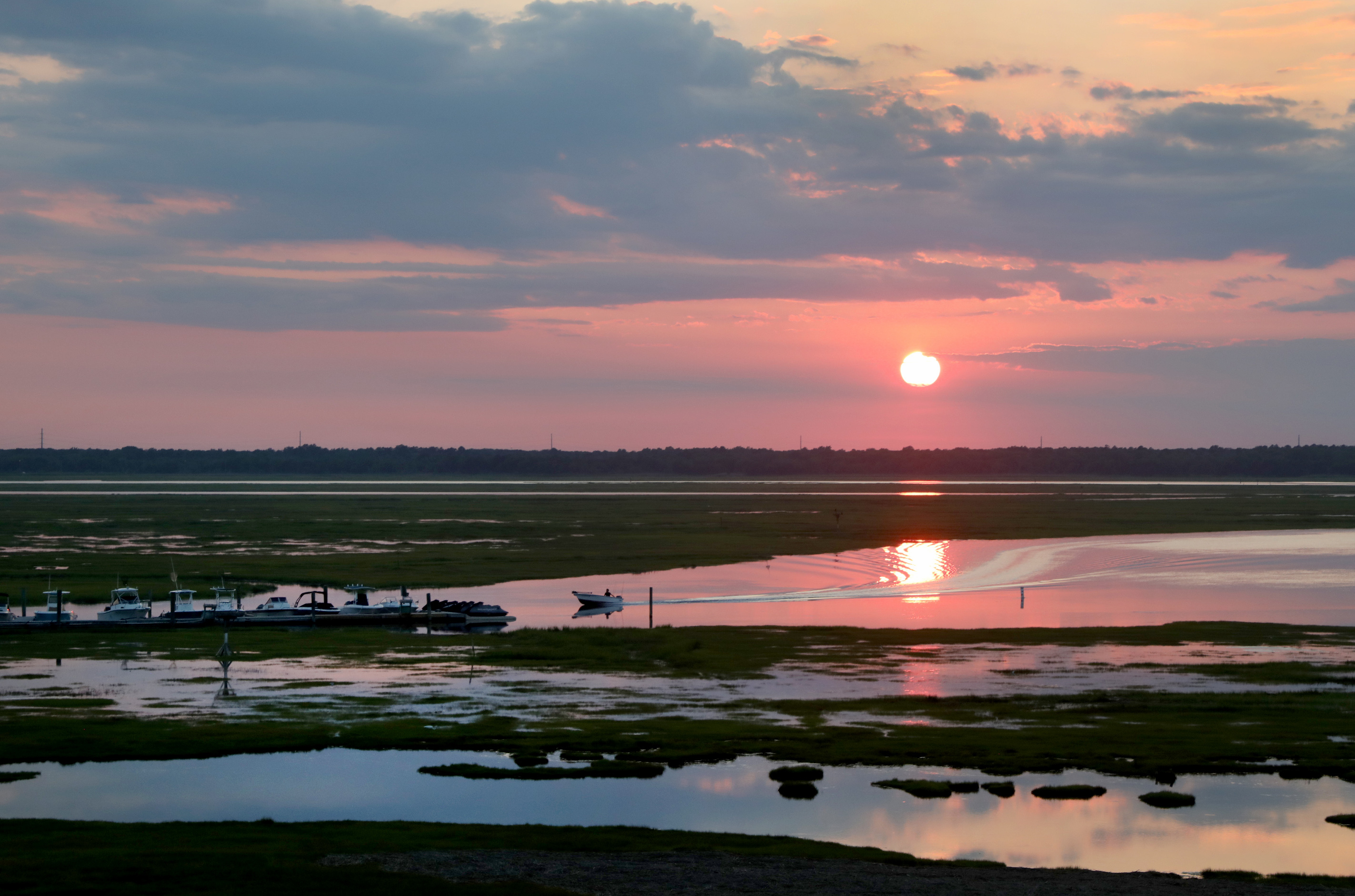
    One recent evening, I went to sit out after work, a perk of living here, but it started with an uncomfortable land breeze: hot, flies, stifling air, and existential doubt. Should I just go back inside and watch Jeopardy? But then, a lovely wind shift, spectacular in its suddenness. Things became lighter, cooler, calming. Everything seemed, well, solvable. There was that lesson again: perspective, insight, change, sometimes just a wind shift away. I stayed for that lovely pink dusk.

    This week, I spoke with Shanda McManus, former resident of Ventnor, family physician and professor, and author of the riveting new memoir Brother Epistles, a collection of letters to her little brother, Monir Hall, who was shot to death in Philadelphia in 1992 at the age of 20. Now living in Monmouth County, not far from Sea Bright, McManus, 56, has written vividly of her girlhood in North Philadelphia, across from the old Connie Mack Stadium — it’s “a really Philly book,” as she says. She also writes of the adulthood she moved through without her brother, most of it at the Jersey Shore. How, and why, their trajectories diverged underscore McManus’ intimate storytelling.

    “I do feel like young Black boys aren’t given the same opportunity to be children,” she said. “Even when I lived in Ventnor, two nephews came to visit, and the police chased them home, they assumed they would have stolen those bikes. What does that do to you if you’re always suspect?”

    Shanda’s decades of proximity to the ocean, to the natural beauty and spaces that were mostly missing from her Philly childhood, she says, has helped her grieve.

    “The access to the ocean and the beach, natural places in general — if you grow up in the inner city, North Philly, there’s not a lot of places,” she said. “Growing up, my grandmom and granddad, they used to drive down the Shore, but we would never go on the beach. We would go in the stores and get saltwater taffy. It wasn’t until I was an adult that I actually sat on the beach. To have the community here, with my children. It was restorative.”

    As she writes in Brother Epistles, “Grief for me is not a series of five steps, but a spiral and a repeating loop. I walk alone outside of time. The past is the present is the future — it is infinite and eternal, like you and me.”

    Like the ocean.

    Keep scrolling for a slam book Q&A with Shanda, and a Shore memory. Plus, your thoughts on Ocean City remaining a dry town. Shanda’s forthcoming Philly appearances are here.

    📮 What is it about the ocean that transcends the usual pandemonium for you? Has it helped you make sense of things in your life? To grieve? Find joy? Let us know, and we’ll feature some of your thoughts in an forthcoming newsletter.

    👋 That’s it for me this season. Jason Nark, as usual, will wrap up Down the Shore next week. Thanks for playing along! Let us know what you liked and didn’t like! What would you want to see more of in this newsletter or in our Shore coverage? Send your thoughts to us here.

    🥶 Nights are starting to cool off down here, bring on September (local’s summer).

    — Amy S. Rosenberg (Follow me at @amysrosenberg, on Instagram at @amysrosenberg. 📧 Email me here.)

    If someone forwarded you this email, sign up for free here.

    Shore talk

    🌊 As seas rise, scientists race to save coastal marshes.

    🛥️ Townsend’s Inlet is becoming difficult for boats to navigate, says CBS3’s Joe Holden.

    💰 Strathmere approved beach tags.

    🎶 Asbury Park got $75 million to restore Convention Hall.

    🐢 The Wetlands Institute is temporarily retreating from its causeway headquarters to elevate marshland trails.

    🏄🏾‍♂️ Surfboards but no Wifi for this Ocean City family cottage.

    What to eat/What to do

    🦀 Go crabbing like this Philly chef.

    🌝 Look for Thursday’s near blood moon and near total eclipse.

    🏖️ Australian electronic dance music trio Rüfüs Du Sol will perform Saturday on the beach in Atlantic City.

    ⏰ Be patient. Restaurants have lost employees who’ve gone back to school, and have had to reduce hours or hire new people.

    🦪 The inaugural Cape May Oyster Festival is this weekend, with local oysters including those from the elusive Sweet Amalia’s.

    🎣 The 72nd annual Surf Fishing Classic begins this weekend on LBI, a Shore sign of fall.

    Shore snapshot

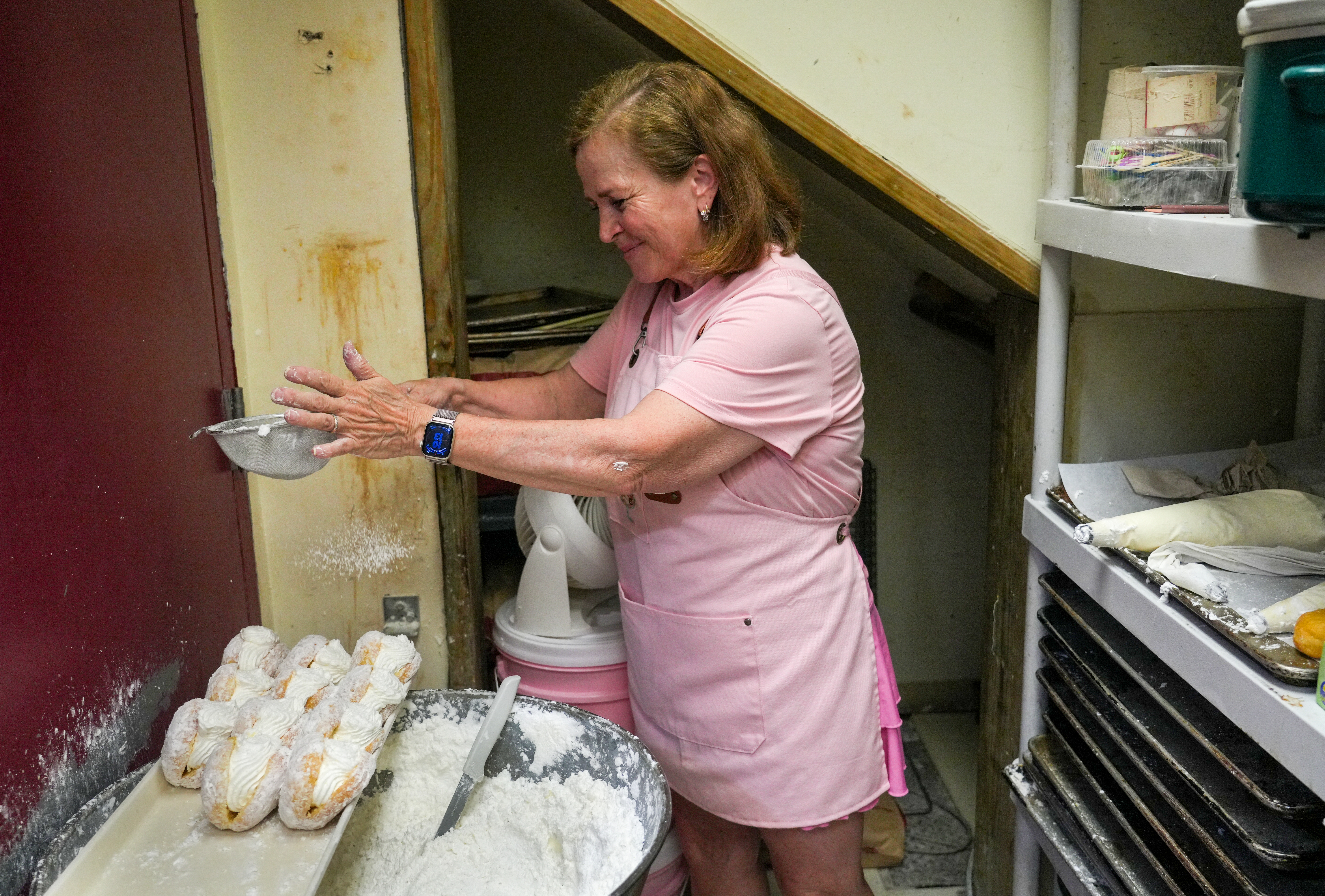
    Cathy Green, owner of Cathy’s 14th Street Bakery in Ocean City, finishes preparing cream-filled donuts on Aug., 13, 2026. Former Cathy’s dishwasher and junior baker, Dominic Sessa, plays Anthony Bourdain in the new A24 biopic “Tony.”Tim Hawk / For The Inquirer

    🧠 Trivia time

    Rich Coniglio was first with last week’s answer: Atlantic City has the country’s oldest operational beach patrol, established in 1855.

    This week: Ocean City’s been dry since 1909, and drinking on the beach was officially banned in 1951. But it took a city council vote to totally eliminate BYOB.

    What year did Ocean City do away with wine-with-dinner?

    A. 1984

    B. 1964

    C. 1979

    D. 1929

    If you think you know the answer, email us back!

    Ask Down the Shore: Should Ocean City remain dry?

    We asked our Shore Line texters. Not many advocated bringing bars or liquor stores to Ocean City, but there was some sentiment for BYOB.

    The best case for remaining dry: For years I wanted BYO’s but lately the old charm of this town seems to be drifting away. I have little doubt that the OC would lose its unique identity. It should remain a dry town.

    The best case for BYOB: I think it would be nice if Ocean City was at least a BYOB. So many wonderful restaurants, but we just don’t go for that exact reason.

    Let us know what you think by replying to this email.

    📖 Shore slam book

    Author Shanda McManus shared her faves. (She’s still got a soft spot for Ventnor after all these years in Monmouth County.)

    Favorite beach: Ventnor. We live 10 minutes from Sea Bright, but we’ll drive down to go to the beach in Ventnor. The sand is softer. I love the community.

    Favorite summer breakfast? Blueberries. Fresh.

    Perfect beach day: Going to the beach with two books and finishing one and a half and sitting on my chair all day.

    Perfect night: Walking on the boardwalk, stopping for ice cream, walking back with that nice wind.

    Favorite Shore sandwich: I don’t usually buy lunch meats, but when I’m down at the beach, it’s Lebanon bologna, peppered turkey, Martin’s potato rolls.

    Water ice order: Classic lemon water ice.

    When the end of summer approaches I feel: Devastatingly sad. I can feel the winter coming.

    Surfing or fishing? Reading.

    Sunrise or sunset? Sunrise.

    Shore pet peeve: People riding their bikes on the boardwalk during the hours they’re not supposed to.

    The Shore could be improved if: It enlarged access. I would love if the beaches were free and open to all. Up here [Sea Bright], I live in the land of the beach clubs. It’ll cost you $5,000 for a locker.

    Your Shore memory

    In Brother Epistles, McManus writes: I lived a short walk from the ocean for five years. You know where? Ventnor, the town right next to Atlantic City. I could see the casinos from the beach. AC was the place to go and party. Dad never took us to the beach because he didn’t like sand, and that was even before he had his prosthetic foot. Grandmom took us to Atlantic City and Wildwood, but that was to ride the rides on the boardwalk and get saltwater taffy. It never occurred to me that we might sit on the beach like the white people we saw. Grandmom laughed at them for “trying to get Black.” I never thought of Atlantic City being a place of natural beauty either, where ocean waves crashed and foamed. But it is. From my house in the next town over, I could hear the steady, endless roll of waves crashing at night. The sound made me think of infinity or eternity or our souls. I would pack up however many kids I had at the time, and we’d spend days in the sand and water.

    Send us your Shore memory! In 200 words, tell us how the Shore taps into something deep for you, and we will publish them in this space.


    By submitting your written, visual, and/or audio contributions, you agree to The Inquirer’s Terms of Use, including the grant of rights in Section 10.

  • ACLU-NJ defends Bellmawr protesters | Inquirer South Jersey

    Good morning, South Jersey. I’m sorry to report that the region is under yet another flood watch.

    The American Civil Liberties Union of New Jersey has urged Bellmawr police to investigate its officers after they allegedly targeted protesters engaging in “free-speech activities.”

    And a destination for Czech delicacies is moving from Mount Laurel to Haddonfield.

    Plus, the state will get more than $500 million from a Meta settlement over child protections, and more news of the day.

    — Julie Zeglen (southjersey@inquirer.com)

    If someone forwarded you this email, sign up for free here.

    Protesters allege unlawful targeting

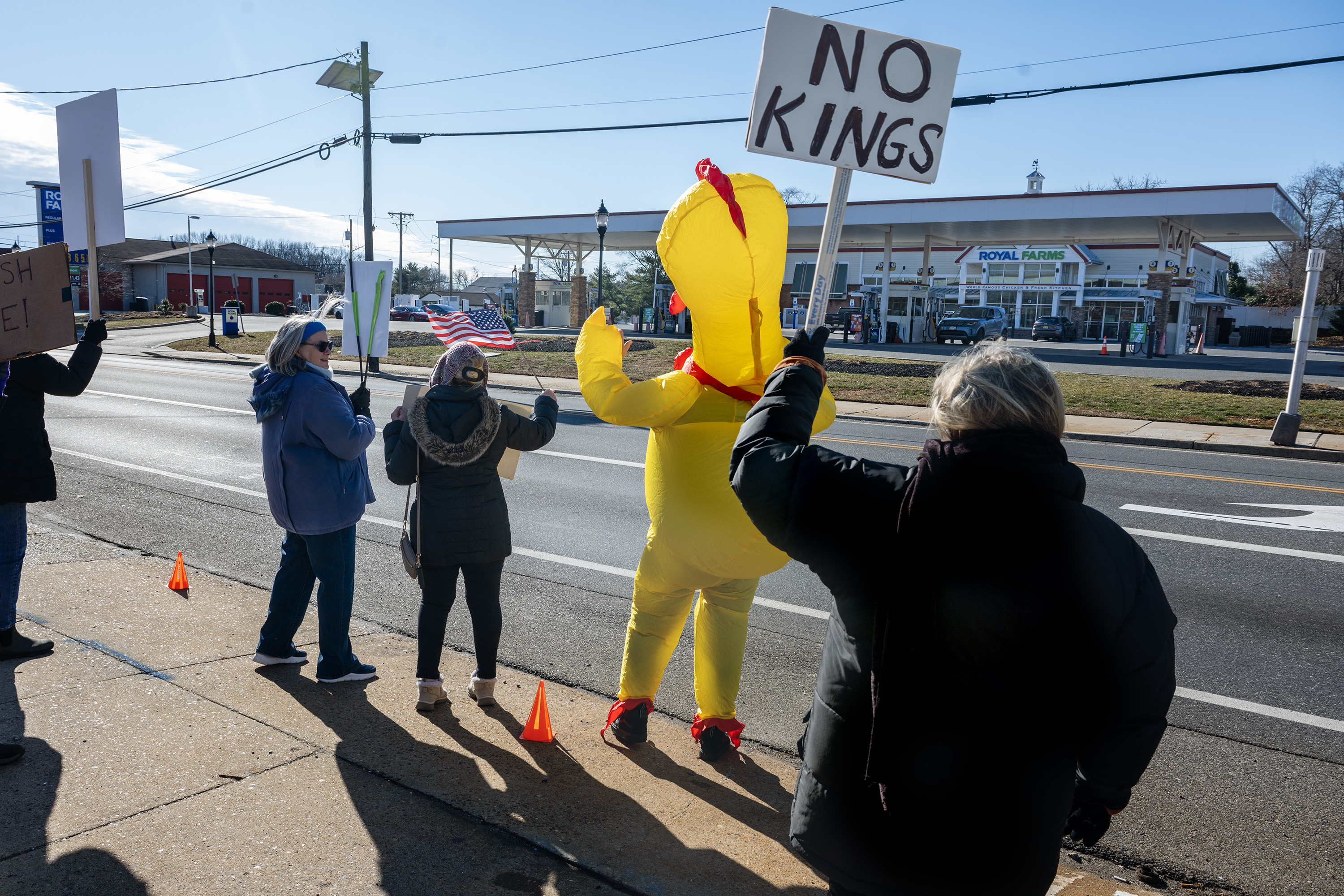
    ACLU-NJ is defending protesters who received traffic and criminal citations from the Bellmawr Police Department during summertime protests against President Donald Trump and his administration.

    The infractions include honking and jaywalking, according to the roadside rallies’ organizing group, Cooper River Indivisible.

    ACLU-NJ sent a letter to the Camden County borough’s police department asking it to investigate officers’ conduct regarding the protesters’ “free-speech activities.”

    “No one’s freedom of speech should be chilled because they’re afraid of getting a citation,” ACLU-NJ’s criminal law reform advocacy director told The Inquirer.

    Reporter Sarah Nicell has more details.

    ‘It’s culture that no one gets here unless you fly home’

    Bohemian doughnuts, traditional kolaches, apple strudel, babka — Four Green Cats Cafe is known for these Czech treats and more, with customers traveling from both nearby in South Jersey and across the country to sample its authentic European flavors.

    The Mount Laurel café will soon be taking over a larger space in Haddonfield to meet demand.

    The new location will allow Four Green Cats to offer more menu items and host more live events for those of the Czech diaspora and beyond, owners Mila and Nadia Vasa say.

    The Inquirer’s Lacey Latch visited the cozy Rancocas Woods spot to learn more about the coming move.

    What to know today

    • New Jersey will get more than $500 million from a landmark Meta settlement over child protections, part of a larger payout of up to $17.1 billion. A multistate coalition sued the tech giant for failing to keep kids from becoming addicted.
    • A Franklin Township man has been charged with first-degree murder for allegedly strangling his 40-year-old daughter in June, prosecutors said.
    • A dean of research at Rutgers University has been charged with invasion of privacy for allegedly taking “upskirt” photos while working at the Jersey institution.
    • A Philadelphia man was arrested for allegedly trying to meet and have sex with underage girls in a Mount Laurel hotel.
    • Camden County officials are warning residents to follow federal guidance on rabies prevention and safety after a rabid raccoon was discovered in Barrington.
    • Marlton-based Virtua Health and other health systems in the region have filed lawsuits against healthcare provider network MultiPlan and several major insurers, Philadelphia Business Journal reports.
    • RIP, Dolly Parton, who is remembered as both a singer and philanthropist whose Imagination Library worked to get books into children’s hands. Mount Laurel-based nonprofit Foundations Inc. ran the first Imagination Library program in Philadelphia and awarded Parton as its “Champion of Children” in 2020.

    🗓️ The best things to do this week

    🌿 Life that Glows: Take a guided walk and use UV flashlights to see fluorescence on various plants, invertebrates, and mushrooms that glow in various colors at night. ⏰ Friday, Aug. 28, 7:30-9:30 p.m. 💵 Free 📍Long Bridge Park, Hainesport.

    🎤 Music on the Porch Day: Enjoy live music on porches, storefronts, lawns, and other gathering spaces. ⏰ Saturday, Aug. 29, noon-4 p.m. 💵 Free 📍 Downtown Mount Holly.

    🍷 Wine Down Summer: Sample award-winning wines, listen to live music, and peruse food and artisan vendors at this annual fest. BYO chairs, blankets, and pop-up tents. ⏰ Saturday, Aug. 29 and Sunday, Aug. 30 12-5 p.m. 💵 $20-25 plus fees, $5 for spectators 📍Veterans Island at Cooper River Park, Pennsauken.

    See more event listings here.

    🧠 Trivia time

    What rating did Barstool Sports’ Dave Portnoy give Lillo’s Tomato Pies when he visited the Hainesport location for his “One Bite Pizza Reviews”?

    A) 6

    B) 7.5

    C) 8.4

    D) 10

    Think you know? Check your answer.

    What we’re …

    🎶 Remembering: When Willie Nelson performed at the Outlaw Music Festival in Camden last year.

    🍃 Visiting: Swede Run Fields in Moorestown.

    🍂 Ready for: Cooler weather and pumpkin spice truffles.

    Thanks for starting your day with The Inquirer. Ellen Dunkel has you covered tomorrow.

    Clarification: Yesterday’s newsletter featured a story on the opening of Del Buono’s Pastry Shop. Its cream doughnuts are reminiscent of the ones McMillan’s Bakery once sold.

    By submitting your written, visual, and/or audio contributions, you agree to The Inquirer’s Terms of Use, including the grant of rights in Section 10.

  • Vernick alum helming a new eatery | Inquirer Lower Merion

    Vernick alum helming a new eatery | Inquirer Lower Merion

    Hi, Lower Merion! 👋

    Two longtime friends are opening a live-fire cooking restaurant nearby this fall. Here’s what to know. Also this week, we look at how effective the red-light enforcement cameras have been so far, Kylie Kelce made a guest appearance on Ilona Maher’s new show, plus we peek inside a more-than-century-old Bryn Mawr home that’s for sale.

    If someone forwarded you this email, sign up for free here.

    Harriton alums team up to launch restaurant Old Friend in Wayne

    Old Friend will open a newly built mixed-use development in Wayne. Larry Kagan

    A pair of Harriton High School alums who first met in 1984 when they were students at Welsh Valley Middle School are teaming up to launch a new restaurant — complete with a nod to their longtime friendship.

    Larry Kagan and Chas McFeely plan to open Old Friend this fall in the ground floor of the newly built Apartments at Wayne Station on Lancaster Avenue. The menu will focus on contemporary American cuisine, complete with live-fire cooking. Their mix of dishes will include shareable larger-format proteins.

    It’s the first restaurant venture for the friends, who have tapped Fork and Vernick Food & Drink alum Sam Henzy — who also did a stint at Copenhagen’s famed Noma — to helm the kitchen, as well as Stove & Co. chef-owner Joe Monnich as a consultant.

    The Inquirer’s Michael Klein has the details.

    💡 Community News

    • It’s been just over a month since ticketing for the township’s automated red-light enforcement cameras went into effect, resulting in 663 citations.
    • A “soulful” century-old stone home in Bryn Mawr with four bedrooms and original hardwood floors recently hit the market with an asking price of just under $700,000. Take a look inside.
    • Narberth native Kylie Kelce joined former U.S. Olympian Ilona Maher last week on the first episode of the retired rugby player’s new YouTube fitness show, Power Hour with Ilona Maher. They talked about everything from dating failures to sexism in sports to the Kelce family and what motherhood looks like for her.
    • Lower Merion police arrested two people who were allegedly attempting to break into a home on the 2000 block of Old Gulph Road last week, according to 6abc. A third individual was also involved, police said.
    • The first phase of Narberth’s gas-powered leaf blower ban goes into effect Tuesday. Here’s everything you need to know.
    • Maivie, a chain known for its pressed floral workshops, has opened an Ardmore outpost at 74 Rittenhouse Place.
    • There will be overnight ramp closures from northbound I-476 to westbound I-76 and from westbound I-76 to southbound I-476 tomorrow at 10 p.m. until Saturday at 9 a.m.

    🏫 Schools Briefing

    🍽️ On our Plate

    • Bagels are having a moment — in Philadelphia and nationally — and Lower Merion is no exception. Two spots have opened outposts here recently: PopUp Bagels in Ardmore and Bart’s Bagels in Bala Cynwyd. But is the bagel boom really just a bagel bubble? The Inquirer’s Michael Klein explores.
    • While we knew what rating Barstool Sports founder Dave Portnoy gave Johnny’s Pizza on a recent visit for his “One Bite Pizza Review,” his full take has finally landed. The verdict on the Bryn Mawr (definitely not pronounced “Bawn Mire,” like he thought) joint’s pie? In a word: “Spectacular.” See the full segment here.

    🎳 Things to Do

    🎶 Bryn Mawr Twilight Concerts: Jonatha Brooke, who’s known for blending folk, melodic pop, and rock, headlines this week’s show, along with Nashville singer/songwriter Liz Longley. ⏰ Friday, Aug. 28, 7 p.m. 💵 $25.88, free for kids 12 and under 📍 Bryn Mawr Gazebo

    🔪 JCC Global Cooking Class: Learn to make a traditional Jewish Ukrainian dish during this class. ⏰ Tuesday, Sept. 1, 10-11:30 a.m. 💵 $10 📍 Kaiserman JCC

    🎥 Casablanca: See a screening of the 1942 Humphrey Bogart and Ingrid Bergman classic. ⏰ Tuesday, Sept. 1, 7:15 p.m. 💵 $11.75-$16.25 📍 Bryn Mawr Film Institute

    🏡 On the Market

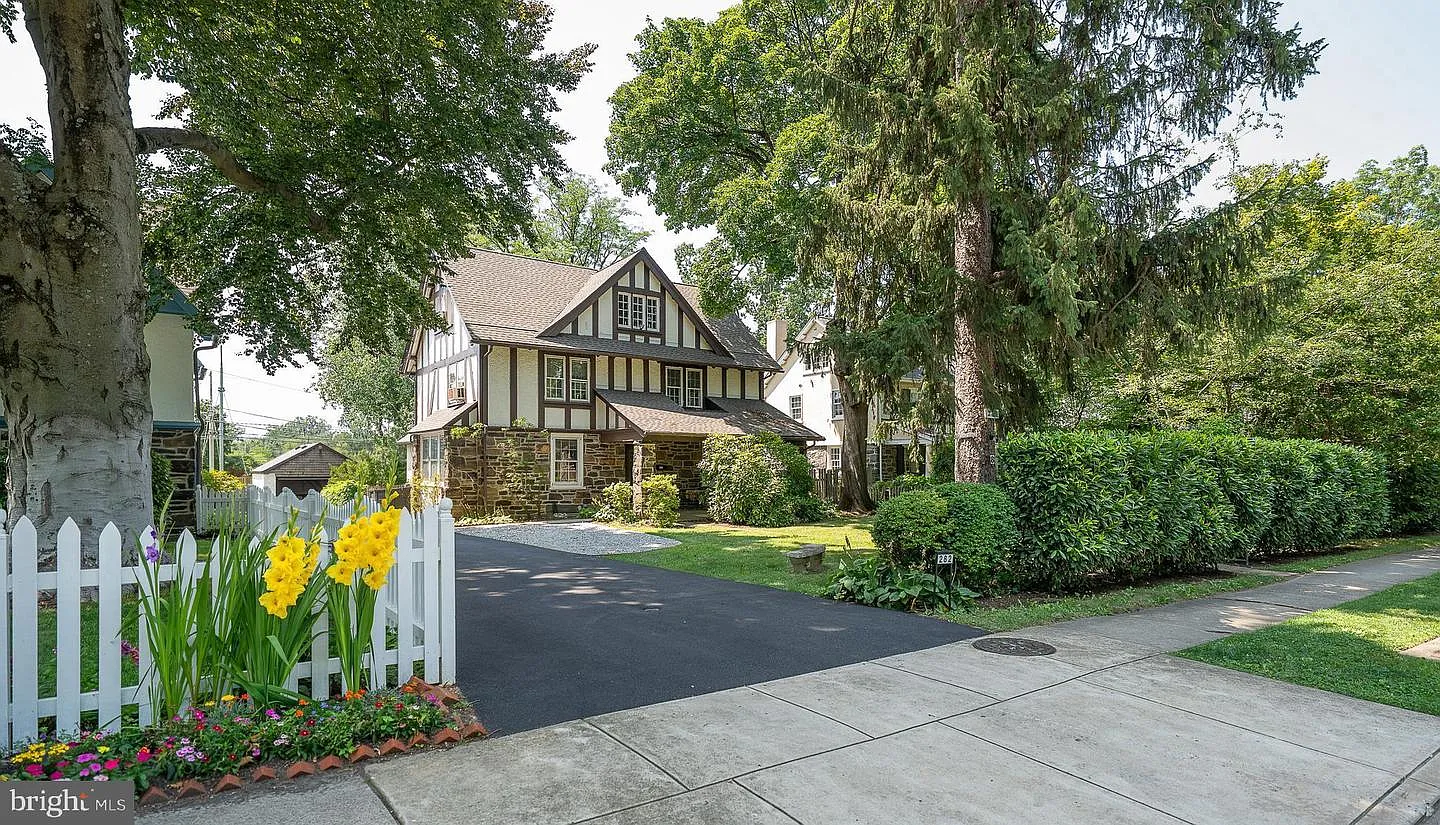
    A charming six-bedroom Wynnewood Tudor

    The home was built in 1900.Dave Ocenas | Courtesy of Bruce Kirkpatrick/ BHHS Fox & Roach

    This Wynnewood Tudor has a classic center hall layout, complete with dining and living rooms off the entry, an eat-in kitchen, a butler’s pantry, and a family room. Its six bedrooms, including a primary suite, are spread across the second and third floors. Out back, there’s a patio and fenced yard, as well as a detached garage. There are open houses tomorrow from 4 to 6 p.m., Saturday from 11 a.m. to 1 p.m., and Sunday from 1 to 3 p.m.

    See more photos of the home here.

    Price: $975,000 | Size: 3,418 SF | Acreage: 0.26

    🗞️ What other Lower Merion residents are reading this week:

    By submitting your written, visual, and/or audio contributions, you agree to The Inquirer’s Terms of Use, including the grant of rights in Section 10.

    This suburban content is produced with support from the Leslie Miller and Richard Worley Foundation and The Lenfest Institute for Journalism. Editorial content is created independently of the project donors. Gifts to support The Inquirer’s high-impact journalism can be made at inquirer.com/donate. A list of Lenfest Institute donors can be found at lenfestinstitute.org/supporters.

  • That ‘curious’ lane switch in the middle of the Manayunk Bridge? Planners say it’s on purpose.

    That ‘curious’ lane switch in the middle of the Manayunk Bridge? Planners say it’s on purpose.

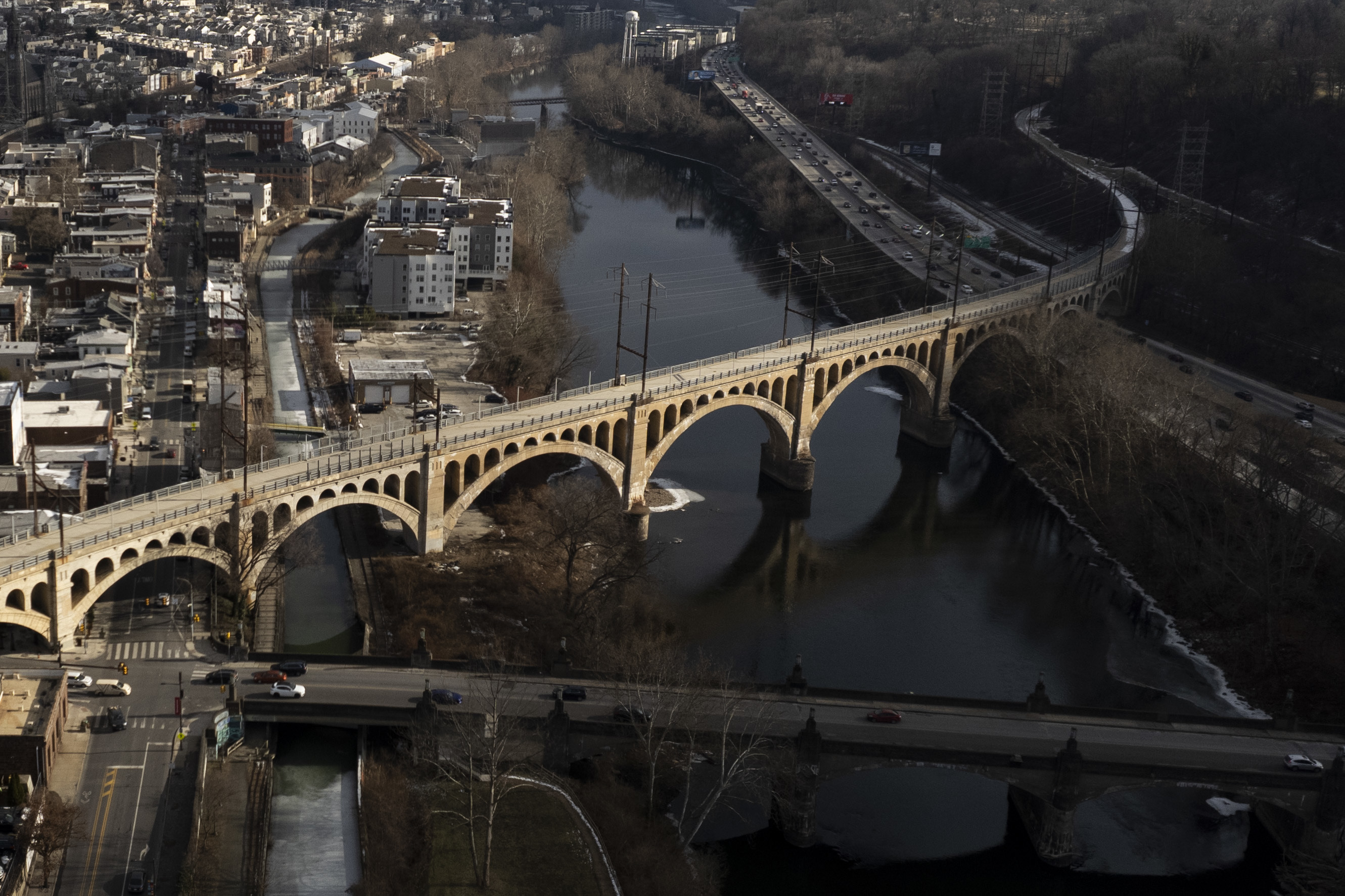
    Towering 80 feet above the Schuylkill and shaped by its colossal concrete arches, the Manayunk Bridge is a key connector in the region’s trail system and a link between Philadelphia and its suburban neighbor, Lower Merion Township.

    While the trail is beloved by city dwellers and suburbanites alike, a mid-trail traffic pattern switch for bikers and pedestrians has confused some users and prompted one reader to write in, asking The Inquirer to investigate. According to city and township officials, the traffic flow switch-up midway across the bridge is no accident.

    The Manayunk Bridge connects Manayunk to Bala Cynwyd. Monica Herndon / Staff Photographer

    The Manayunk Bridge connects the 80-plus mile Schuylkill River Trail with the Cynwyd Heritage Trail, a 2-mile multiuse path that runs along an unused segment of SEPTA tracks in Lower Merion. Much of the trail was once SEPTA’s Ivy Ridge line, which connected Philadelphia with Manayunk via Bala Cynwyd, but was truncated in the 1980s due to poor track conditions. The trail’s completion in 2011, and extension in recent years, has marked a major transformation for the previously underutilized corridor of Bala Cynwyd.

    Penn Valley resident J.J. Cutuli enjoys running and biking with his kids on the Cynwyd Trail.

    “We really love the pedestrian bridge. We really love the trail,” Cutuli said.

    But halfway across the Manayunk Bridge, “there’s this curious little thing that happens,” Cutuli said. The trail’s traffic pattern switches. The bicyclist side becomes the pedestrian side, and vice versa.

    “I’m kind of a rule-follower. One of my kids is a rule-follower, and he asked me that question. He was like, ‘What side should I be on? Should I be on this side? Should I be on that side? What are the rules of the road?’” Cutuli said.

    Unable to summon an answer himself, Cutuli wrote into Curious Lower Merion, The Inquirer’s forum for answering questions about the Lower Merion community.

    » ASK US: Have something you’re wondering about in Lower Merion? Submit your Curious Lower Merion question here.

    Chris Leswing, Lower Merion’s director of building and planning, said the traffic pattern switch was a deliberate choice to slow bikers traversing the downward slope from Lower Merion to Manayunk.

    It’s “easy to speed through areas where people may linger and watch the river” and the “idea was that bikers would need to be aware of the pavement markings to check their speeds,” Leswing said in an email.

    The city concurred.

    The switching of the bike and pedestrian zones was designed to slow bikes down and allow users to “experience both sides of the bridge and the amazing views,” Ra’Chelle Rogers, spokesperson for Philadelphia’s parks and recreation department, said in an email.

    The traffic pattern switch was in response to “what was heard from the public and stakeholders,” according to Rogers.

    Are trail users following the rules? Not completely.

    On one Reddit post, cyclists said the traffic pattern change and accompanying signage “makes zero sense” and “could not be more Looney Toons.” Most cyclists and pedestrians just stay to the right, commenters said.

    This suburban content is produced with support from the Leslie Miller and Richard Worley Foundation and The Lenfest Institute for Journalism. Editorial content is created independently of the project donors. Gifts to support The Inquirer’s high-impact journalism can be made at inquirer.com/donate. A list of Lenfest Institute donors can be found at lenfestinstitute.org/supporters.

  • Biking cross-country to school | Inquirer Greater Media

    Biking cross-country to school | Inquirer Greater Media

    Hi, Greater Media! 👋

    Do you remember how you got to college? For one incoming Swarthmore student, it involved a 2,000-mile journey on bike. We explore why he took the road less traveled. Also this week, six local municipalities are gearing up to decide on a regional emergency medical services authority, Strath Haven High School earns high marks in a national ranking, plus a nearby Italian eatery has closed after less than two years in business.

    If someone forwarded you this email, sign up for free here.

    Why a Swarthmore freshman biked from Colorado to campus

    Finn Fremstad left Colorado in late July on a monthlong trip to Swarthmore College. Courtesy of Finn Fremstad

    As carloads of students and their families make their way to campuses across the nation, one Swarthmore College freshman has taken a different approach to the journey.

    Finn Fremstad spent the past month biking from his hometown of Fort Collins, Colo., to Swarthmore, where he’s slated to start classes next week. A longtime cyclist, the 18-year-old planned the 2,000-mile journey after some of his other summer plans fell through and decided he wanted to see the nation and meet people he wouldn’t otherwise.

    The Inquirer’s Denali Sagner spoke with Fremstad about the experience.

    💡 Community News

    • Six local communities — the boroughs of Media, Rose Valley, Rutledge, and Swarthmore, along with Nether Providence and Upper Providence Townships — are hosting a meeting Wednesday at 7 p.m. at Strath Haven Middle School to discuss a proposed joint regional emergency medical services authority. Here’s what that could look like.
    • Longtime Springfield resident, Springfield School District board member, and Springfield High School hockey coach Phillip Eastman died over the weekend in a vehicle crash. The 68-year-old was remembered as a mentor who helped student athletes “develop teamwork, responsibility, perseverance, and other lifelong skills.”
    • Nemours Children’s Health is planning to open a pediatric urgent care at its Glen Mills location near the intersection of Routes 1 and 202 next month.
    • Media resident Florence Lauria was one of 30 artists featured recently at the second annual Older Artists of PA Showcase. Lauria was recognized in the “artist over 60 living with dementia” category for her watercolor of flowers in a vase. She was the only Delaware County resident selected, and at 100, the oldest, the Daily Times reports.
    • The Walgreens at 51 Baltimore Pike in Glen Mills will permanently close next Thursday. The next closest locations are in Aston and Brookhaven.
    • A pair of sisters recently gave birth just one day apart at Riddle Hospital, delivering down the hall from one another ahead of their due dates, People magazine reports.

    🏫 Schools Briefing

    • Monday is the first day of school for both the Rose Tree Media and Wallingford-Swarthmore School Districts.
    • As measles cases continue to climb in the state — resulting in Pennsylvania’s first related deaths in 35 years — several local elementary schools fell under the 95% measles, mumps, and rubella vaccination rate among kindergarteners in 2025, a figure needed to reach so-called herd immunity. Rose Tree Elementary School had a 91.8% rate, St. Mary Magdalen School was at 93.8%, and the School in Rose Valley had 89.3%. Here’s a look at local vaccination rates.
    • Strath Haven High School earned high marks in the latest U.S. News & World Report rankings of the best public high schools in the state, landing at No. 17. The school came in No. 578 in the nation.

    🍽️ On our Plate

    🎳 Things to Do

    🥾 Full Moon Hike: Adults and teens can hit the trail under a full moon. ⏰ Thursday, Aug. 27, 7:30-9:30 p.m. 💵 $12.75-$20 📍 Tyler Arboretum, Media

    🪴 Pokémon Shadow Box Terrarium: Create a mini living ecosystem fit for Pikachu. ⏰ Saturday, Aug. 29, 5 p.m. 💵 $65 📍 Nimble Craft, Media

    👨‍👩‍👧 Intro to Genealogy Workshop: Learn the basics about tracing your ancestry. Registration is required. ⏰ Tuesday, Sept. 1, 10-11:30 a.m. 💵 Free 📍 Middletown Free Library, Media

    🗞️ What other Greater Media residents are reading this week:

    By submitting your written, visual, and/or audio contributions, you agree to The Inquirer’s Terms of Use, including the grant of rights in Section 10.

    This suburban content is produced with support from the Leslie Miller and Richard Worley Foundation and The Lenfest Institute for Journalism. Editorial content is created independently of the project donors. Gifts to support The Inquirer’s high-impact journalism can be made at inquirer.com/donate. A list of Lenfest Institute donors can be found at lenfestinstitute.org/supporters.