WASHINGTON — Sen. Chris Van Hollen, D-Md., on Thursday plans to introduce a resolution that would order the Trump administration to provide Congress with a detailed accounting of Israel’s human rights practices in the West Bank, laying the groundwork to force a vote on the matter in coming weeks.
The measure, the latest bid by Democrats in Congress to challenge the policies and actions of Israel’s government, invokes a provision of the Foreign Assistance Act that allows lawmakers to request information from the State Department about the human rights record of any country receiving U.S. security assistance.
Cosigned by 10 Senate Democrats, the resolution is privileged, meaning that Van Hollen could force a vote on it even if Republican leaders refuse, as expected, to bring it to the floor. That could lead to yet another vote in Congress showcasing Democrats’ divide over Israel as a growing contingent in the party turns against the Jewish state.
“We’ve seen ongoing human rights violations on the West Bank, but we’re going from bad to abysmal,” Van Hollen said in an interview.
The resolution focuses on at least nine U.S. citizens who have been killed in the West Bank since January 2022, including Shireen Abu Akleh, a Palestinian American journalist killed in 2022, and Aysenur Ezgi Eygi, who was fatally shot by an Israeli soldier in 2024. It argues that Israeli authorities have failed to punish those responsible and that U.S. agencies have failed to conduct their own independent investigations or provide substantive information about existing ones.
“If the United States Senate shines a spotlight on this, we will save lives,” Van Hollen said. “We will save the lives of American citizens. We will also save the lives of Palestinian civilians.”
Concern about violence in the West Bank has steadily grown among Democrats in Congress. Last year, Sen. Cory Booker, D-N.J., introduced the West Bank Violence Prevention Act, which Van Hollen cosponsored, to impose visa and financial sanctions on people who commit or facilitate violence against civilians there. The bill attracted broad Democratic support but did not advance out of the Republican-led Foreign Relations Committee and was never brought up for a vote.
J Street, the liberal pro-Israel advocacy group that backed that legislation, has argued that sanctions are needed to disrupt networks supporting extremist settlers and Palestinian militant groups and preserve the possibility of a two-state solution. The group has cited estimates that settler violence rose 30% during the first months of 2025 compared with the same period a year earlier.
The issue has also prompted unusually sharp criticism from Israeli officials. Yechiel Leiter, Israel’s ambassador to the United States and a longtime settler, said earlier this year that extremist settler violence was a “stain” on Israel and was costing the country support in Washington. He said the Israeli government was taking this seriously.
The issue has gained renewed focus this month following a new spate of violence in the West Bank with extremist settlers trapping two Palestinian families in their homes in the Israeli-occupied territories. One of the homes is owned by Louai Abu Ridi, an American citizen, prompting condemnation from U.S. officials including Mike Huckabee, the U.S. ambassador to Israel, who called the actions of the settlers “thuggish” and said the Israeli military and local police had acted at his urging to “remove the Israeli terrorists doing this.”
“Actions by those who carried out this horrific act of terror meant to intimidate and harass this family are disgusting,” Huckabee said in a social media post this month.
Shortly after, Leiter echoed the remarks, saying in his own post that “you cannot settle the land through destabilizing and disruptive behavior, as my esteemed colleague Mike Huckabee brilliantly put it when he spoke of ‘unsettling behavior.’”
Extremist settlers have carried out at least 1,380 attacks in 250 communities in 2026, according to U.N. data from late July. Those settlers have faced a near-total lack of consequences.
Van Hollen’s resolution would draw in the legislative branch to confront the issue directly.
It would give the secretary of state 30 days to provide congressional committees with an unclassified report detailing what U.S. officials know about the killings, the status of investigations and the identities of potential suspects and Israeli security units involved.
The administration would also have to determine whether credible information implicates any Israeli security units in such violence.
The resolution also demands information about Palestinian children held under Israeli military law, including allegations of torture and other mistreatment.
Van Hollen said the American deaths raised a broader question about Washington’s willingness to enforce its human rights laws against a close ally.
“If we can’t get accountability for them,” he said, “how are we actually implementing our human rights laws with respect to the government of Israel as it relates to the West Bank?”
“This has been building for a long time,” he added. “Enough is enough.”
WASHINGTON — President Donald Trump said Thursday he is renaming Lake Ontario to be known as “Lake America” in the United States as he exacerbates his trade war with Canada.
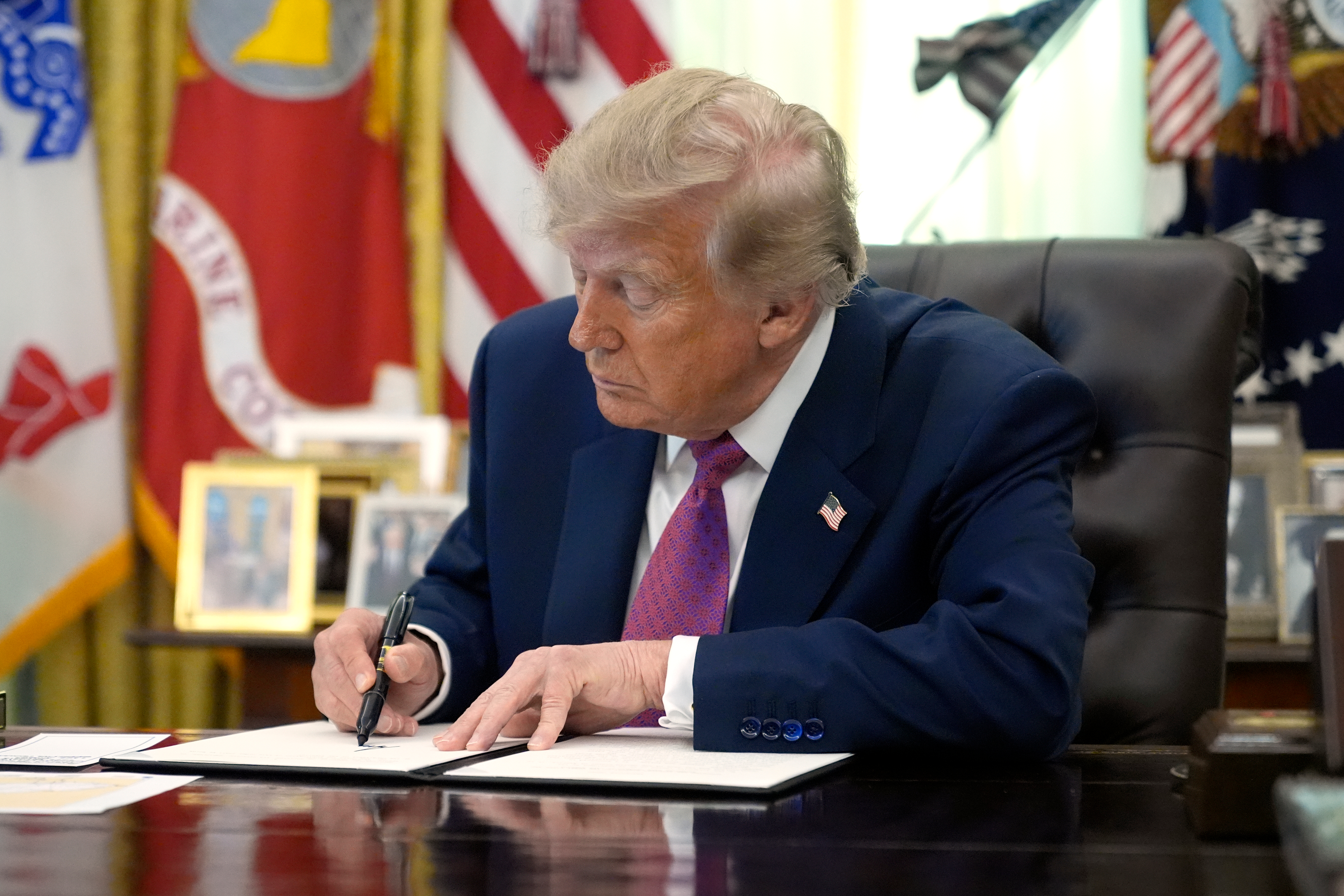
The Republican president signed an executive order that updated the lake’s name for the U.S. geographic naming service. Trump cannot force Canada to follow his preferred naming convention, however.
The move, which Trump said was “effective immediately,” is reminiscent of his move last year to rename the Gulf of Mexico as the “Gulf of America.’”
Trump has been floating the idea of the name change in recent days as the U.S. announced it was imposing 50% tariffs on $20 billion worth of Canadian goods over the weekend after talks between the countries broke down. Trump has been needling America’s northern neighbor since he returned to the White House last year, suggesting the ally with whom the U.S. once had warm relations should instead be absorbed as the 51st state.
Canada responded to Trump’s import taxes this week by imposing retaliatory tariffs on $20 billion worth of American goods, including steel, dairy products, appliances and farm equipment
Trump, who signed the order as he was sitting at the Resolute Desk in the Oval Office, had a large sign behind him propped on a stand with a map of the Great Lakes. Over Lake Ontario, in big red letters, the map read “Lake America.”
On the other wide of the president was another map with the words, “MAKING THE GREAT LAKES EVEN GREATER.”
He told reporters that Canada is “the worst” to deal with on trade. “They feel entitled and we can’t have that,” he said.
The lake is one of multiple Great Lakes that the U.S. and Canada share borders along.
Trump on Thursday suggested his push to rename bodies of water may not be finished.
“So, if you think about it, we have a gulf and we have a lake. Now, all we need is an ocean,” Trump said. “So maybe we’ll have to change the name of the Atlantic and or the Pacific. Maybe we’ll change them.”
The official U.S.-Canada border stretches across the water between Lake Ontario’s northern and southern shores. The body of water forms much of New York state’s coastline and separates Buffalo from Toronto, the capital of the province of Ontario. Toronto is Canada’s most populous city and Ontario its most populous province.
Ontario is also the single largest export destination for more than a dozen U.S. states.
The lake’s name comes from the Huron Indigenous people’s word “oniatarí:io,” which means “lake of shining waters,” and it predates European settlement in the region. The province, founded in 1867, took its name from the lake.
The International Hydrographic Organization — of which both the United States and Canada are members — works to ensure that the world’s seas, oceans and navigable waters are surveyed and charted uniformly, and also names some of them. But there is no single international body that determines names of international bodies of water.
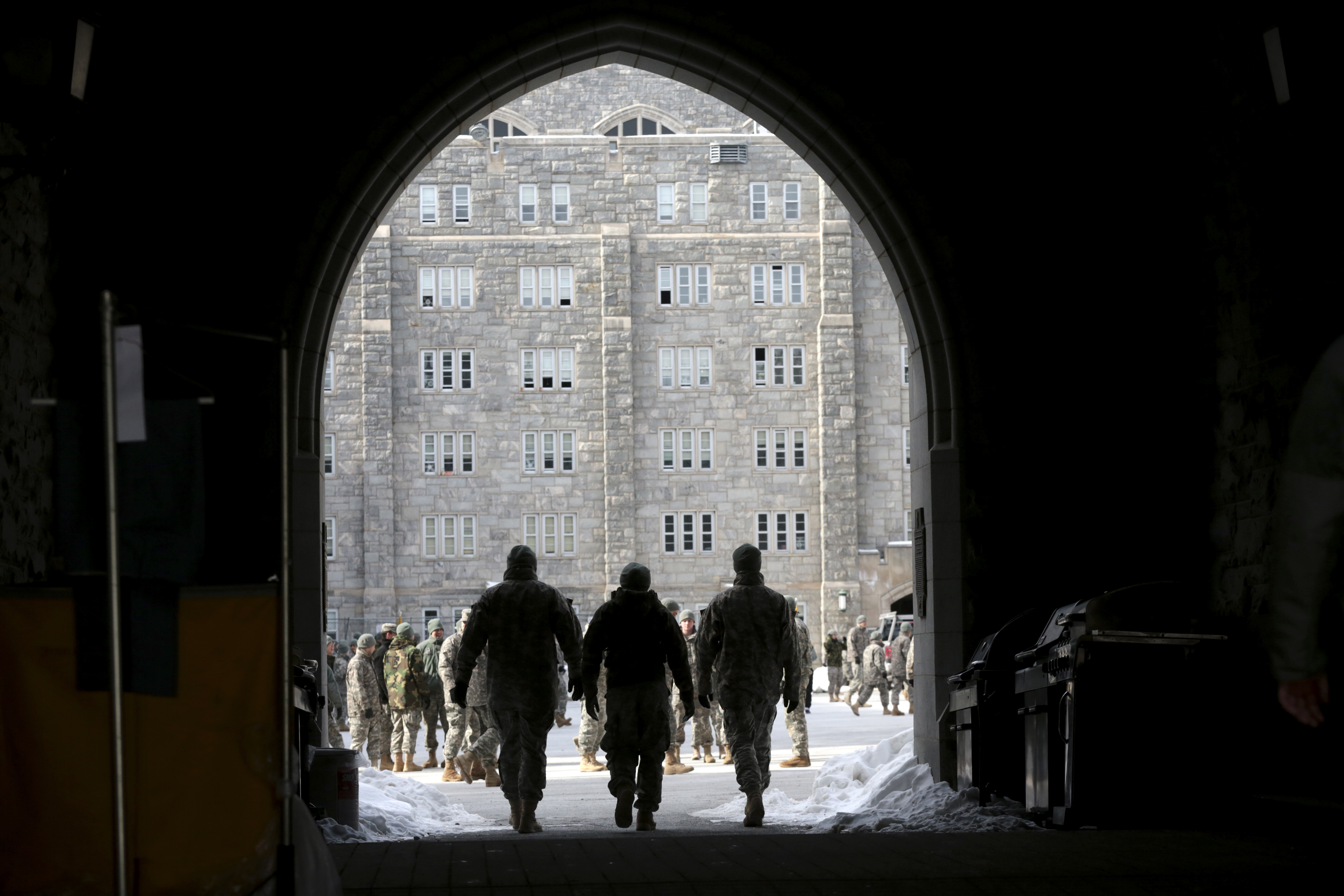
After 17 years of teaching science at West Point, Adam Kalkstein says he was suddenly ordered last year to cut from his curriculum information about the human causes of climate change, according to a new lawsuit filed against the U.S. Military Academy.
The change was immoral and potentially illegal, Kalkstein says he told Brig. Gen. Shane R. Reeves, who at the time was dean of West Point. Instead of upholding Army values, Kalkstein said he felt like a liar and a fraud.
Reeves stormed out of the room when Kalkstein declined a suggestion that he resign, according to the lawsuit. Six months later, the tenured professor was told his contract would not be renewed.
Filed in the Southern District of New York, the lawsuit accuses West Point of breaking the law by violating Kalkstein’s First Amendment rights by forbidding him from teaching about human-driven climate change, an order that required him “to omit a massive, fundamental, essential component of the course and to defy science,” according to the suit. Spokespeople for the Pentagon, West Point, and White House did not return requests for comment.
Michael Sussman, the lawyer for Kalkstein, said his client is a conservative Republican who believes the military needs to be taught the true causes of climate change when it comes to national security. In a letter to Defense Secretary Pete Hegseth, Kalkstein said understanding the causes of global warming was important not for social justice reasons but for things like competing with the Russians in the Arctic and knowing why sea ice was melting.
“He is loyal to the cadets and the academy,” Sussman said about the professor. “And to his perspective, edicts that he can’t say what’s true in a classroom is beyond his tolerance and totally counterproductive.”
Kalkstein’s lawsuit is the latest example of the Trump administration’s attempt to force conservative cultural changes on the education system. President Donald Trump has made frequent public statements dismissing scientific consensus on global warming, and his administration has categorized federal and international climate change programs as “woke, weaponized and wasteful spending” along with diversity, equity and inclusion initiatives and transgender policies.
The administration has repeatedly targeted the military for cultural change. Last year the administration banned hundreds of library books at the U.S. Naval Academy that did not align with Trump’s political agenda. Many of the books have since been returned, according to a Defense Department spokesperson.
In May, Judge Cathy Seibel of U.S. District Court in White Plains, New York, ruled in favor of another West Point professor, Tim Bakken, the longest-serving law professor in the military academy’s history, who had sued over the school’s new restriction on expressing his opinions to students in the classroom on subjects he teaches.
The latest lawsuit comes against the backdrop of a push by Hegseth to remake the service academies by dramatically scaling back the number of civilian professors and revising their curricula. A draft memo circulating inside the Pentagon this summer argued that the academies had been infected by “civilian academic norms” that were diluting the “focus on lethality.” The memo’s existence was first reported by CBS News.
The memo argued that tenure had led the academies to elevate the “research priorities of the tenured academics” over the needs of the military. The memo also called for “a comprehensive review” that would examine the “operational relevance” of all course offerings at the academies.
Hegseth in his 2024 book, The War on Warriors, bashed the academies as “Marxist-adjacent” institutions and blamed civilian professors for the shift.
“Civilian professors were welcomed on campus for reasons of ‘diversity’ as well as expediency. And with them came the predictable, radical left-wing educational philosophies,” Hegseth wrote.
Critics of Hegseth’s view have maintained that the civilian professors have improved and broadened the quality of instruction at the academies at a time when winning wars requires agile thinkers.
BROWNSVILLE, Texas — An Immigration and Customs Enforcement officer charged with shooting a man and lying about it during the immigration crackdown in Minneapolis was released from a Texas jail Thursday, after a judge refused to order his return to Minnesota.
Christian Castro was released at the break of dawn from a detention center in Brownsville. He motioned his hand toward a few camera operators and a reporter crowding around him and quickly got into an SUV that drove off.
A day earlier, U.S. District Judge Fernando Rodriguez Jr. wrote in an order that said he couldn’t prevent a county sheriff from releasing Castro or order Texas Gov. Greg Abbott to sign his extradition warrant.
Castro is charged in Minnesota with assault and falsely reporting a crime in the Jan. 14 shooting of 24-year-old Julio Cesar Sosa-Celis.
Castro is accused of firing gun through door of home
Castro is accused of firing a gun through the front door of a Minneapolis home, shooting Sosa-Celis in the leg. Prosecutors say Castro also falsely accused Sosa-Celis and another man of attacking an ICE officer with a broom handle and a snow shovel.
After a Minnesota judge issued a nationwide warrant for Castro’s arrest in May, authorities, including Minnesota’s Bureau of Criminal Apprehension, arrested Castro in Cameron County on May 29. Minnesota authorities have sought his extradition since his arrest, but he remained in custody in Brownsville, a city bordering Mexico.
Under Texas law and barring extradition, Castro had to be released after 90 days of detention, which was Thursday.
Minnesota officials believe Castro could flee to Mexico.
Minnesota Attorney General Keith Ellison filed a request for a temporary restraining order last week seeking to block Castro’s release or to order his return to Minnesota.
Abbott waiting for internal state investigation about Castro
Texas attorneys on Tuesday argued the judge could not rule on a decision that’s still pending. Abbott has not denied the extradition. Instead he is waiting for the outcome of an internal state investigation considering whether Castro was legally a “fugitive” under the Extradition Clause, the lawyers said.
The judge wrote in Wednesday’s order that the court couldn’t yet step in.
“The Court concludes that it lacks subject matter jurisdiction because the case is not ripe for adjudication,” the order read. “Minnesota cannot premise its causes of action on the allegation that Governor Abbott may violate those authorities in the future; it must prove that a violation has already occurred.”
The judge said in his order that the extradition laws do not outline how long the Texas governor can take to make that decision.
Abbott said last week he would not respond to the extradition request, citing the ongoing investigation into fraud in government social service programs in Minnesota, which President Donald Trump used to justify his immigration crackdown there.
Abbott directs ‘bad lawyers’ comment at Minnesota attorney general
After the judge’s decision, Ellison posted online that the Texas governor had an obligation to extradite Castro. And by refusing to extradite him, “Greg Abbott is turning Texas into a sanctuary state for violent criminals.”
Abbott responded to Ellison.
“You guys are such bad lawyers. You showed up unprepared, uninformed & unpersuasive,” Abbott wrote online. “You don’t know the law & it showed.”
The Texas governor accused Minnesota of refusing to enforce immigration laws and threatened to send immigrants in the future to their state as he did with New York City, when thousands were released into Texas under President Joe Biden’s administration.
A message seeking reaction from Ellison was sent to his office Thursday.
Minnesota officials say Castro could flee the country, citing calls he made from jail to a woman in Mexico, talking “about marrying her and buying a house in Mexico when he is released,” according to the lawsuit.
The judge conceded that Castro could flee the country but added that “the threat of injury by itself does not create an issue ripe for adjudication.”
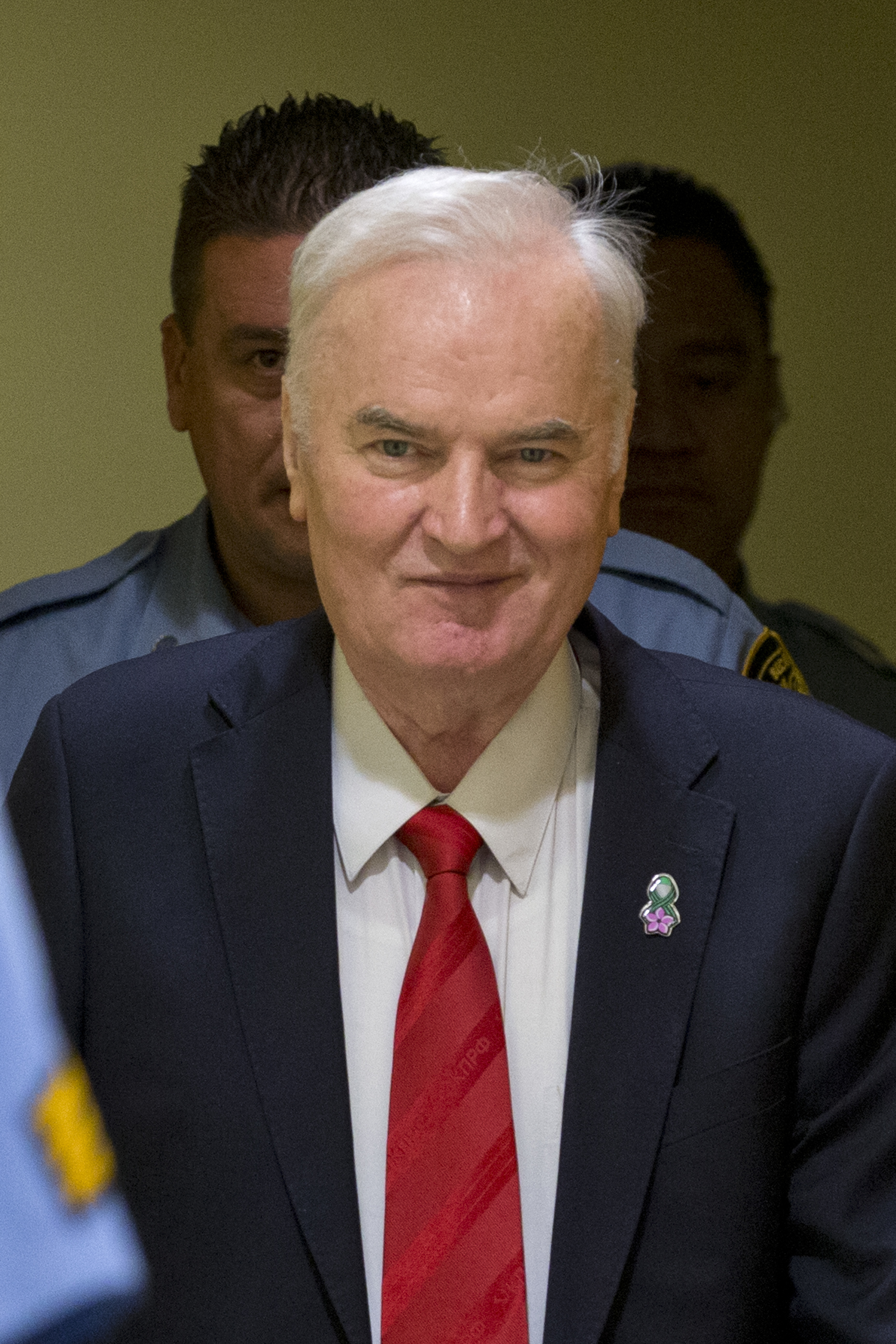
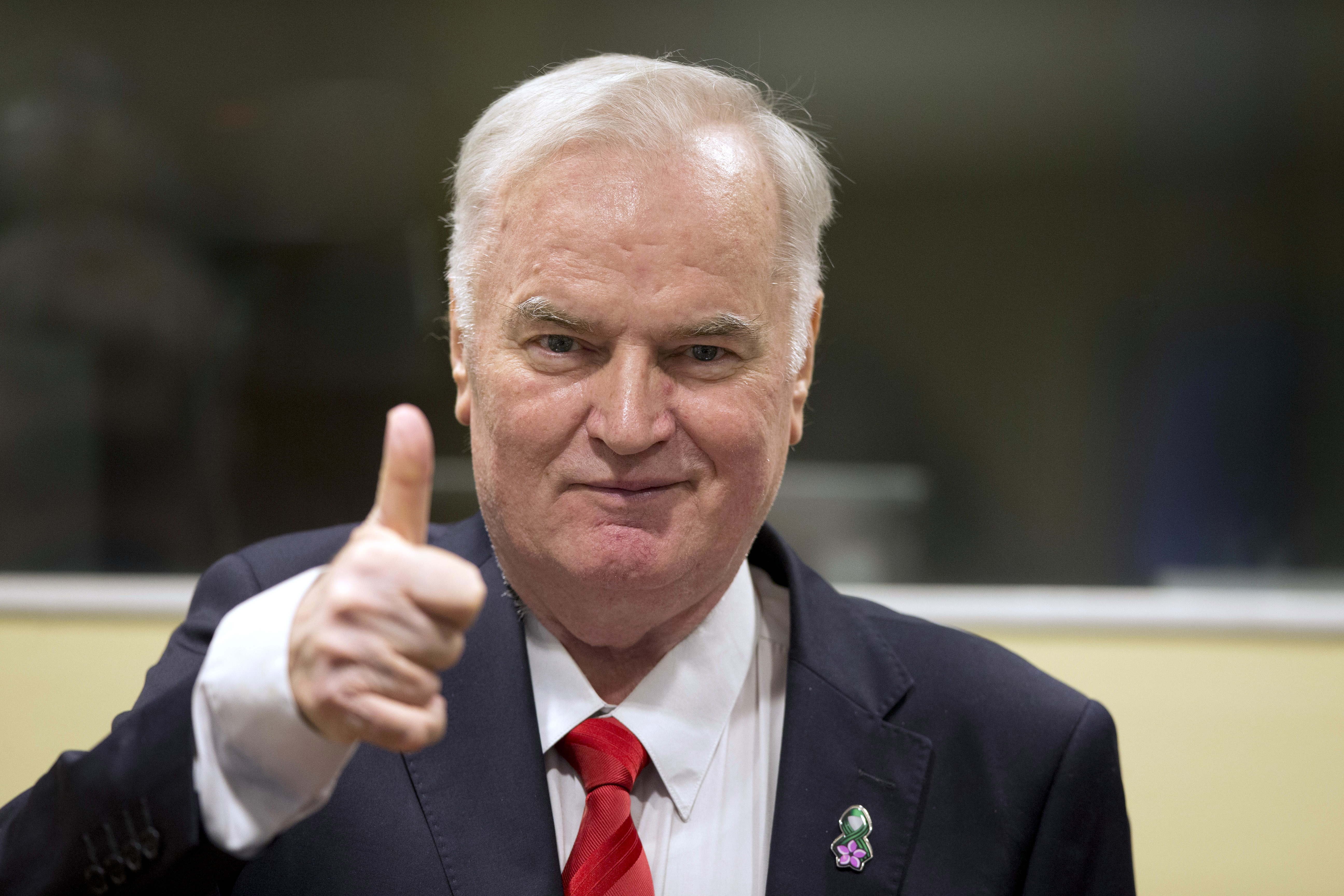
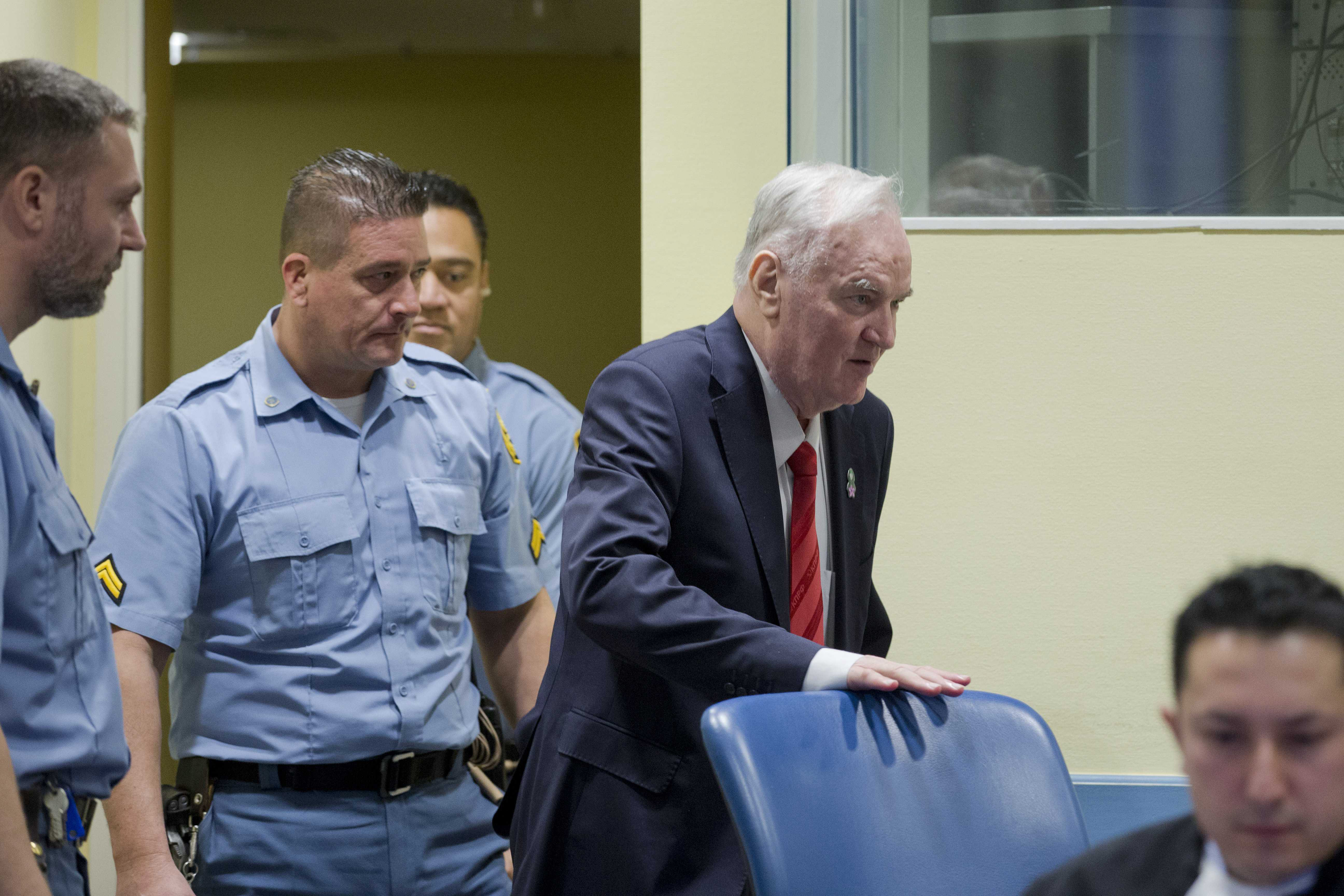
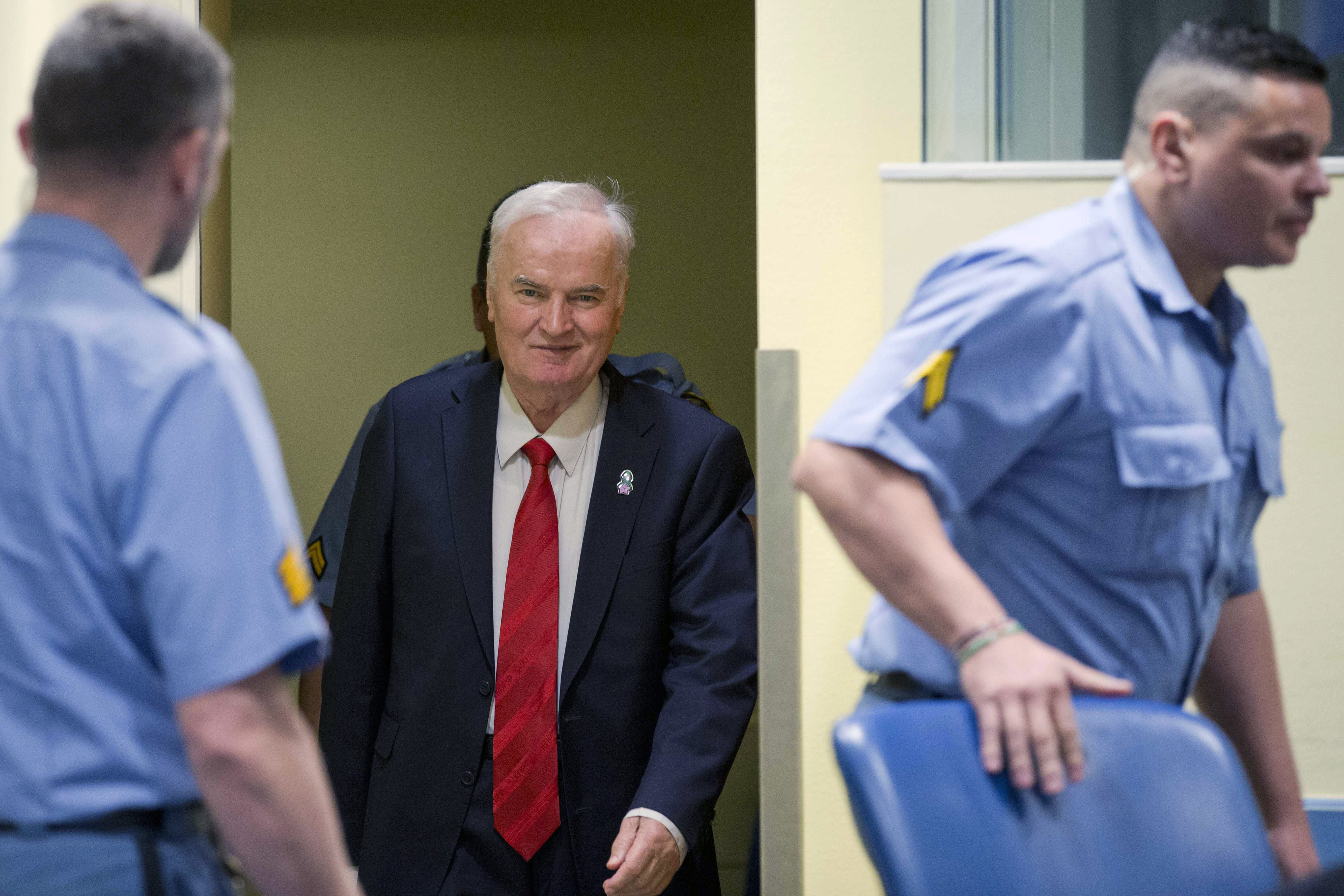
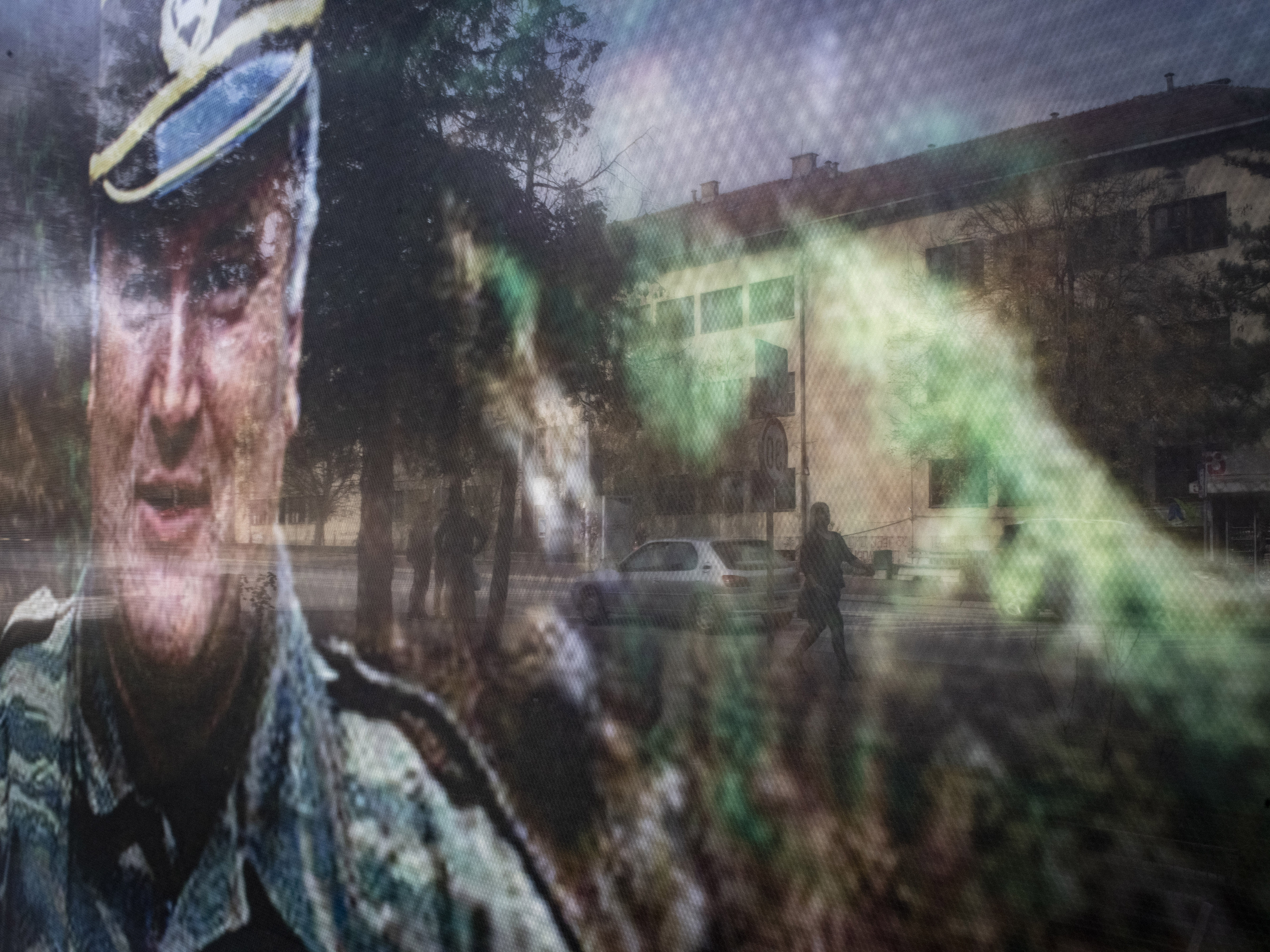
Ratko Mladic, the former Bosnian Serb general whose actions during the Balkan wars of the 1990s led to him being called the “Butcher of Bosnia” and who was held responsible for Europe’s deadliest massacre since World War II, the killing of some 8,000 Muslim men and boys at Srebrenica in 1995, has died. He was 83.
His death was announced Thursday by Serbian state media.
Mladic was captured May 26, 2011, in a farming village north of Belgrade, Serbia’s capital, after almost 16 years as a fugitive, ending one of the longest searches in modern history. His 2017 conviction by an international tribunal on charges of genocide, crimes against humanity, and war crimes marked the end of a dark and bloody chapter.
In pronouncing a life sentence, the presiding judge, Alphons Orie, said Mladic’s crimes ranked “among the most heinous known to humankind.” Mladic appealed the verdict, which was upheld in 2021.
The Balkan wars erupted as Yugoslavia was breaking up into independent states. Slobodan Milosevic, the nationalist president of Serbia, one of those states, was intent on creating a Greater Serbia. He reawakened old ethnic and religious enmities and started wars pitting Serbs against Slovenes, Croats, Bosniaks, and the Albanians of Kosovo.
Roughly 100,000 people died during the conflict, and more than 2.5 million were displaced.
A ruddy-faced and intimidating man with a bellowing voice, piercing blue eyes and a grandiose sense of himself, Mladic, an officer in the Yugoslav People’s Army, led the army of the Bosnian Serbs in the early 1990s.
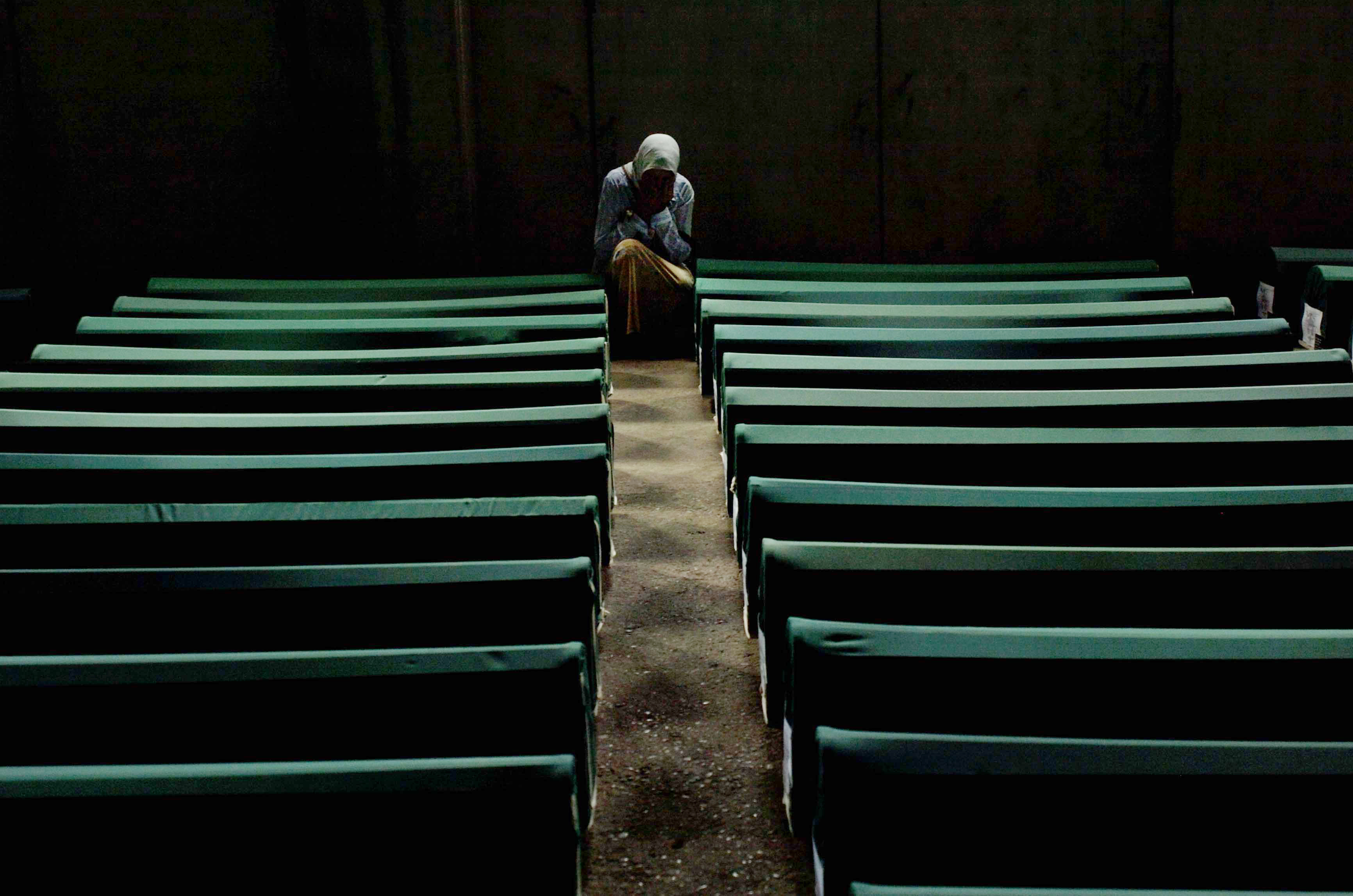
On the eve of the Srebrenica massacre, he promised to avenge the conquest of Serbia centuries before by the Ottoman Muslim Turks. Over 10 days, his soldiers hunted down, captured, and summarily executed thousands of Bosniaks, lining them up with hands tied behind their backs and shooting them. Women were raped. International pleas for restraint were ignored.
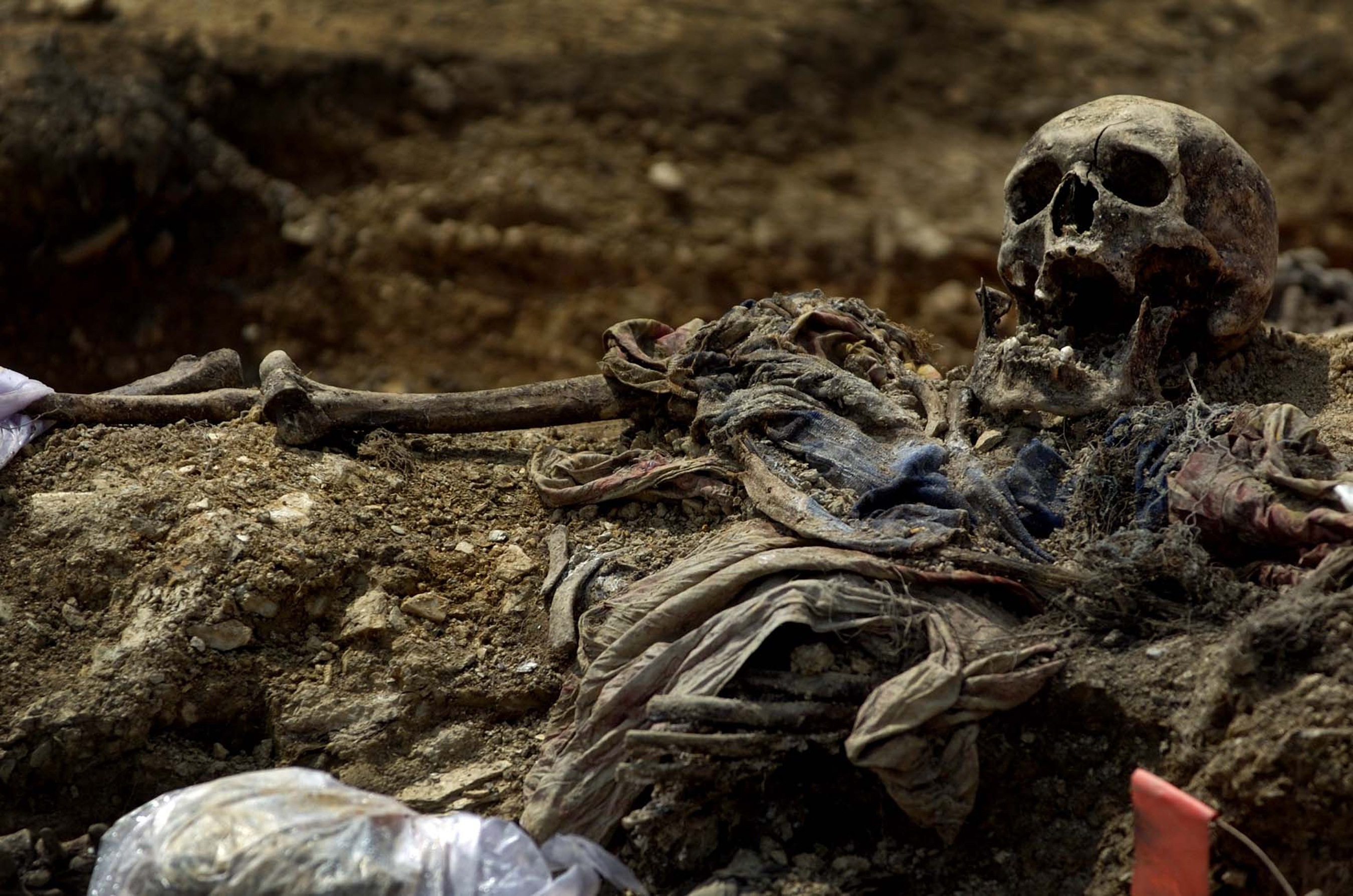
Serb forces buried the remains, dug them up again, and scattered them in distant mass graves in an organized effort to hide damning evidence of war crimes.
Mladic’s trial was among the last high-profile ones at the International Criminal Tribunal for the former Yugoslavia in The Hague. The tribunal wound down after trying nearly 100 of those responsible for the atrocities of the Balkan wars, including Mladic’s boss, Radovan Karadzic, the political leader of the Bosnian Serbs.
Arrested in 2008, Karadzic was convicted in 2016 on charges almost identical to Mladic’s, and his sentence was extended to life in prison three years later.
Mladic’s arrest was a signal moment in Serbia’s long effort to shed its status as a pariah nation. It removed a major obstacle to the country’s still-pending accession to the European Union, which had grown weary of the refusal of successive Serbian governments to capture him.
When he was finally tracked down, he was hiding in the house of a cousin and was so desperate for money that one of his repeated demands was the restoration of his frozen military pension.
During his trial, Mladic, once a seemingly invincible warrior, at times appeared reduced to a meek old man as witness after witness offered harrowing testimony about the violence he had unleashed. His right arm was impaired by the effects of at least two strokes he suffered while a fugitive, and he was unable to take notes.
Flashes of the mercurial, domineering general remained, though. In his first court appearance in June 2011, he dismissed the charges against him as “obnoxious” and “monstrous.” At other times, he yelled at the judges.
At one point, he was absent from a session, apparently to receive treatment for high blood pressure. When he returned, he raged at the bench, shouting, “Everything you are saying is a pure lie!” He was removed from the court.
In addition to masterminding the massacre at Srebrenica, Mladic was eventually also convicted of multiple crimes tied to the nearly four-year siege of Sarajevo, Bosnia’s capital, in which 10,000 people died, including 1,500 children.
During the siege, the longest in the history of modern warfare, Mladic’s men shelled the city from surrounding mountains and terrorized civilians with sniper bullets. Judges also found him guilty of the persecution and extermination of non-Serbs living in large swaths of Bosnia.
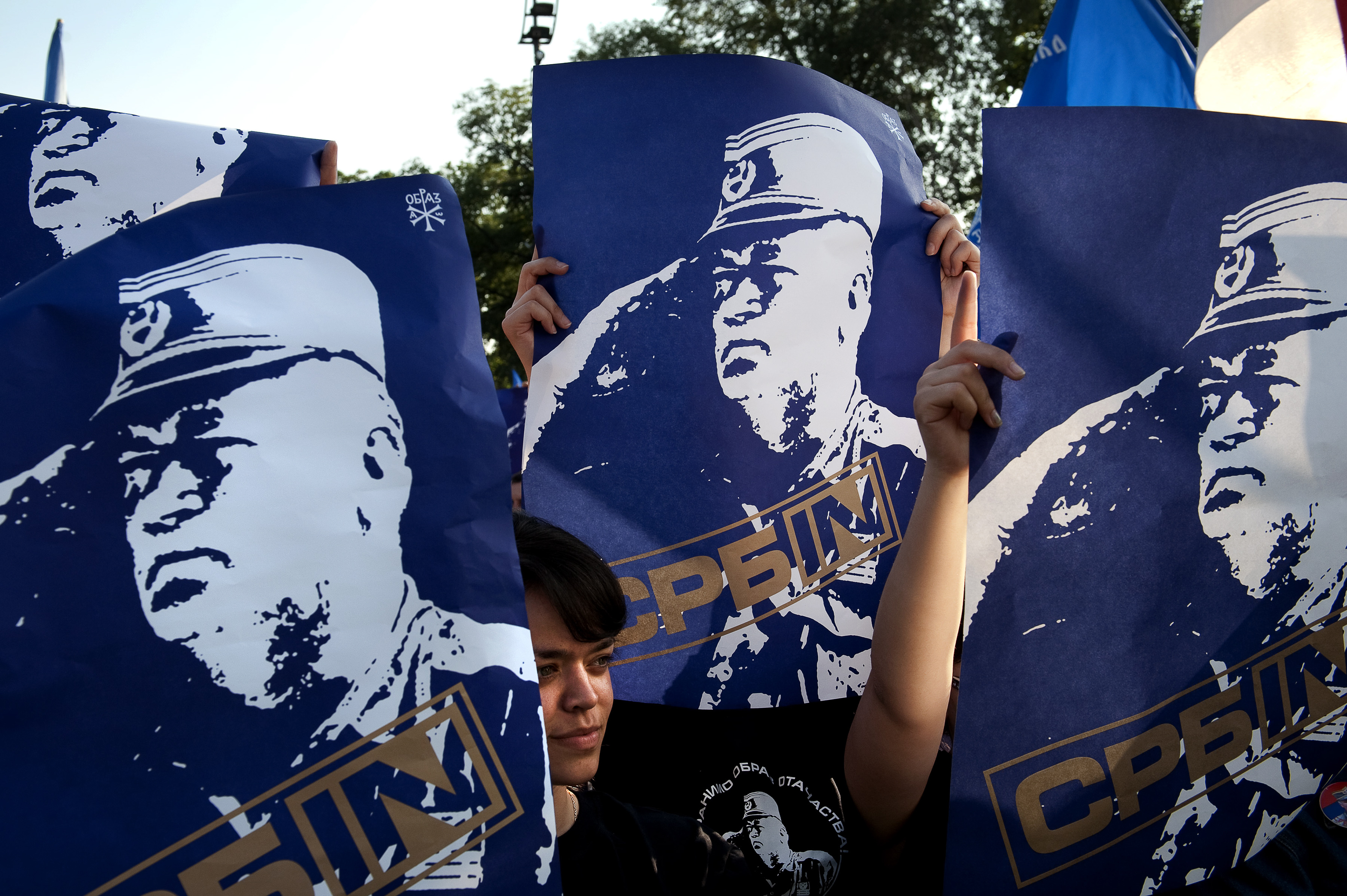
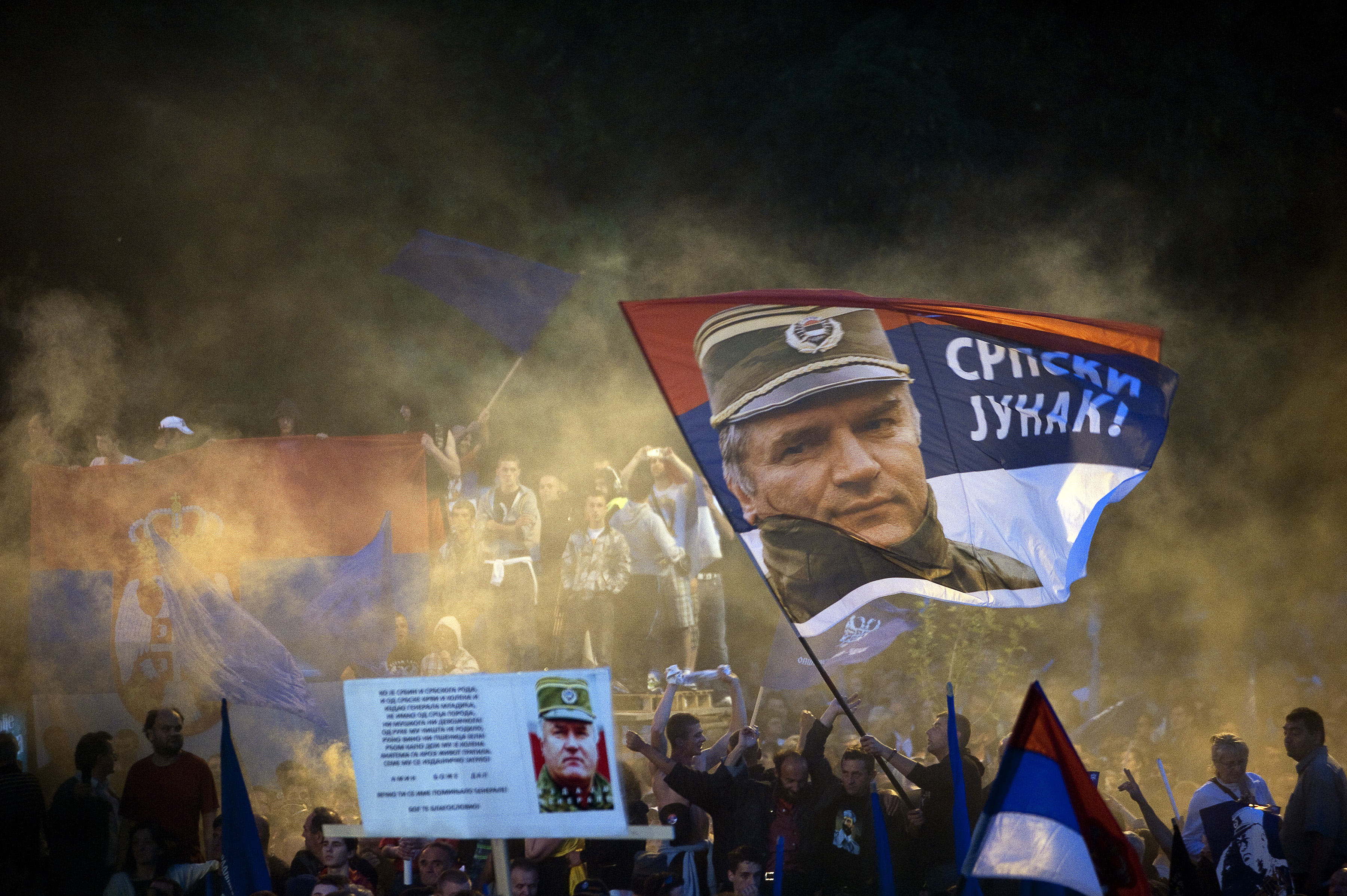
Within Serbia, Mladic’s military prowess was legendary. Ljiljana Bulatovic, who wrote a biography of him, said he remained a hero to many Serbs, who would always regard him as “the mythical protector of the Serbian people.”
But the magnitude of the crimes he was accused of — and the immense suffering he inflicted on Bosnians and Croats driven from lands slated for Serbs — provoked international revulsion and the offer of a $14 million reward for his capture, though it was never claimed after Serbian war crimes investigators seized him.
His early life of desolation and struggle may have helped sustain him during his long, spartan years as a fugitive.
“He had a strong psychological makeup,” Ratko Skrbic, a former general who served under him, later said. “It has to do with military honor. He was brought up never to surrender.”
Ratko Mladic was born into poverty in the remote village of Bozanovici on March 12, 1943, when the area was part of the Independent State of Croatia, a Nazi puppet state dominated by fanatical Croat nationalists.
His father, Neda Mladic, an ethnic Serb member of the communist-led partisan resistance, was killed when Ratko was a toddler, and his mother, Stana (Lalovic) Mladic, raised him and his two siblings. His family’s experience planted in Mladic a deep fear that ethnic Serbs, unless they held the upper hand, would always face persecution by Croats and other ethnic groups.
He was a metalworker as a young man but soon turned toward the military for his schooling. With his sharp mind, physical strength, and a charisma that inspired deep loyalty, Mladic rose swiftly in the Yugoslav People’s Army.
He was said to have adhered early in his military career to Josip Broz Tito’s brand of communism, which rejected nationalism and called instead for Yugoslav brotherhood as a way of holding together Yugoslavia’s fragile assemblage of multiethnic, multireligious republics.
Tito died in 1980, and after Milosevic stirred up nationalist grudges and Yugoslavia had begun to disintegrate in the early 1990s, Mladic took up Milosevic’s cause: halting separatism and assuring the dominance of the Serbs, the largest ethnic group. In 1992, a month after the Bosnian Republic’s declaration of independence, Mladic’s forces began the siege of Sarajevo.
In 1994, his daughter, Ana, a medical student in her early 20s, killed herself with his prized military pistol, apparently distraught by her father’s actions in the war.
Zoran Stankovic, a former Serbian minister of defense and friend of Mladic’s who performed her autopsy, later said Mladic had asked him to cut off a lock of her hair and extract the bullet from her head, and to give them both to him as mementos.
Friends said he became unhinged after her death, and he insisted on visiting her grave under guard before his extradition from Serbia to The Hague.
“After the suicide,” Stankovic said, “I never saw brightness in his eyes, only sadness.”
Before the massacre at Srebrenica, Mladic summoned the Dutch commander of a United Nations peacekeeping force that was protecting the Muslim community there and ushered him to a room where a live pig was tied up.
Mladic ordered his men to slit the pig’s throat, sending blood gushing over the floor. “That’s how we deal with our enemies,” Mladic said, according to witnesses.
In July 1995, with video cameras rolling, Mladic’s bodyguards handed out candies to Bosniak children. “No one will be harmed,” Mladic told terrified women and children July 12, patting a young boy on the head. At the time, his soldiers were preparing to conduct the mass killings.
After the massacre, the outrage in Washington and Europe prompted a NATO bombing campaign that overcame Bosnian Serb forces and led to the Dayton Accords that ended the Balkan wars in December 1995, though conflict in the former Yugoslavia erupted again in 1998 over Kosovo.
In 1995, the international tribunal in The Hague, which had been created two years earlier, indicted Mladic on war crimes and genocide charges related to the Sarajevo siege and the Srebrenica massacre.
Mladic, who had the protection of Milosevic, did not immediately lie low. He moved among military barracks, according to friends who said they would visit him to play table tennis or chess. For several years, he visited his daughter’s grave. Surrounded by bodyguards, he attended a Chinese-Yugoslav soccer match in Belgrade in 2000.
Milosevic fell from power in 2000 and the next year was arrested and sent to The Hague to stand trial. (He died in 2006, as his trial was nearing its end.)
Mladic was forced underground, and is believed to have been protected by allies in the Serbian military and intelligence services. His wife, Bosiljka, and his son, Darko, sought unsuccessfully to have him declared dead. They survive him.
In the end, he was captured alone, with two loaded pistols at his side, and surrendered willingly.
“Congratulations,” he said when officers stormed in. “I’m the one you’ve been looking for.”
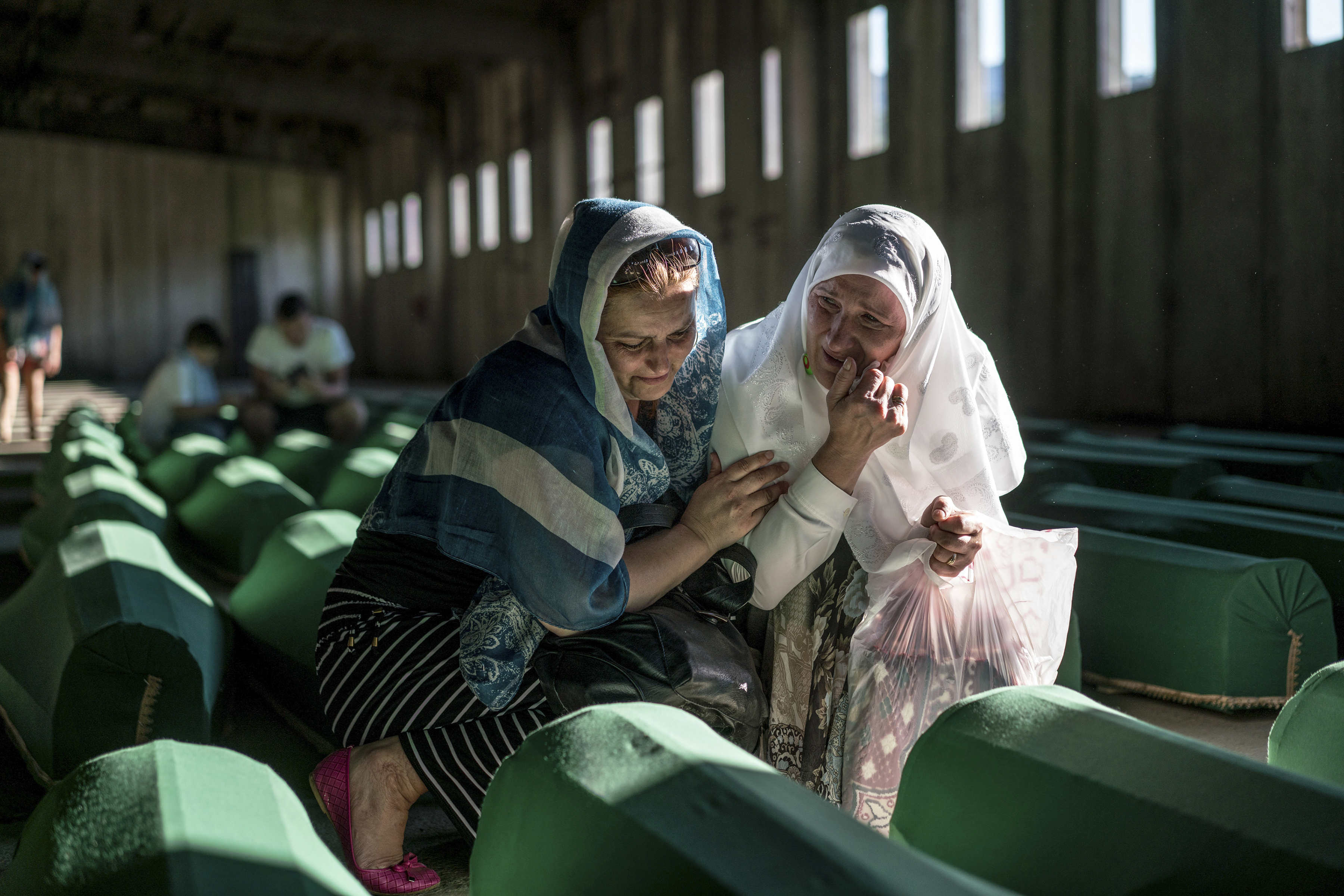
FILE — The body of a victim of the Srebrenica massacre, the worst ethnically motivated mass murder on the continent since World War II, lies in a mass grave in Budak, Bosnia on July 9, 2005. Ratko Mladic, the former Bosnian Serb general who was captured in 2011 and convicted in international court of responsibility for the killing of some 8,000 Muslim men and boys at Srebrenica, has died, Serbian state media announced on Aug. 27, 2026. He was 83. (Andrew Testa/The New York Times)ANDREW TESTAFILE — A woman mourns among the coffins of the nearly 600 victims of the Srebrenica massacre, the worst ethnically motivated mass murder on the continent since World War II, in Potocari, Bosnia on July 9, 2005. Ratko Mladic, the former Bosnian Serb general who was captured in 2011 and convicted in international court of responsibility for the killing of some 8,000 Muslim men and boys at Srebrenica, has died, Serbian state media announced on Aug. 27, 2026. He was 83. (Andrew Testa/The New York Times)ANDREW TESTAFILE — Ratko Mladic, the former Bosnian Serb general dubbed the “Butcher of Bosnia” for his actions during the Balkan wars of the 1990s, enters a courtroom in The Hague on Nov. 22, 2017, to hear the verdict from a United Nations war crimes tribunal. Mladic, who was captured in 2011 and convicted here of responsibility for the killing of some 8,000 Muslim men and boys at Srebrenica, has died, Serbian state media announced on Aug. 27, 2026. He was 83. (Peter Dejong/Pool via The New York Times) — NO SALES. FOR EDITORIAL USE ONLY —PETER DEJONGFILE — Ratko Mladic, the former Bosnian Serb general dubbed the “Butcher of Bosnia” for his actions during the Balkan wars of the 1990s, enters a courtroom in The Hague on Nov. 22, 2017, to hear the verdict from a United Nations war crimes tribunal. Mladic, who was captured in 2011 and convicted here of responsibility for the killing of some 8,000 Muslim men and boys at Srebrenica, has died, Serbian state media announced on Aug. 27, 2026. He was 83. (Peter Dejong/Pool via The New York Times) — NO SALES. FOR EDITORIAL USE ONLY —PETER DEJONGFILE — Ratko Mladic, the former Bosnian Serb general dubbed the “Butcher of Bosnia” for his actions during the Balkan wars of the 1990s, enters a courtroom in The Hague on Nov. 22, 2017, to hear the verdict from a United Nations war crimes tribunal. Mladic, who was captured in 2011 and convicted here of responsibility for the killing of some 8,000 Muslim men and boys at Srebrenica, has died, Serbian state media announced on Aug. 27, 2026. He was 83. (Peter Dejong/Pool via The New York Times) — NO SALES. FOR EDITORIAL USE ONLY —PETER DEJONGFILE — Ratko Mladic, the former Bosnian Serb general dubbed the “Butcher of Bosnia” for his actions during the Balkan wars of the 1990s, enters a courtroom in The Hague on Nov. 22, 2017, to hear the verdict from a United Nations war crimes tribunal. Mladic, who was captured in 2011 and convicted here of responsibility for the killing of some 8,000 Muslim men and boys at Srebrenica, has died, Serbian state media announced on Aug. 27, 2026. He was 83. (Peter Dejong/Pool via The New York Times) — NO SALES. FOR EDITORIAL USE ONLY —PETER DEJONGFILE — An image of Ratko Mladic, the former Bosnian Serb general dubbed the “Butcher of Bosnia” for his actions during the Balkan wars of the 1990s, is projected on a building in the Serbian part of Sarajevo, Bosnia and Herzegovina, on Nov. 3, 2018. Mladic, who was captured in 2011 and convicted in international court of responsibility for the killing of some 8,000 Muslim men and boys at Srebrenica, has died, Serbian state media announced on Aug. 27, 2026. He was 83. (Laura Boushnak/The New York Times)LAURA BOUSHNAKFILE — Supporters of Ratko Mladic, the former Bosnian Serb general dubbed the “Butcher of Bosnia” for his actions during the Balkan wars of the 1990s, demonstrate in Belgrade, Serbia, on May 29, 2011. Mladic, who was captured in 2011 and convicted in international court of responsibility for the killing of some 8,000 Muslim men and boys at Srebrenica, has died, Serbian state media announced on Aug. 27, 2026. He was 83. (Andrew Testa/The New York Times)ANDREW TESTAFILE — Supporters of Ratko Mladic, the former Bosnian Serb general dubbed the “Butcher of Bosnia” for his actions during the Balkan wars of the 1990s, demonstrate with flags and posters bearing his image in Belgrade, Serbia, on May 29, 2011. Mladic, who was captured in 2011 and convicted in international court of responsibility for the killing of some 8,000 Muslim men and boys at Srebrenica, has died, Serbian state media announced on Aug. 27, 2026. He was 83. (Andrew Testa/The New York Times)ANDREW TESTA
PLYMOUTH, Mass. — Lindsay Clancy strangled her three children because she was depressed and tired of living, not because of failings with mental healthcare, a prosecutor told jurors Thursday before they began deliberating in her murder trial.
“It was a choice to take them with her,” prosecutor Jennifer Sprague said. “It is a choice that we don’t want to think about that a mother could make.”
“But it’s a choice she made,” Sprague said.
Clancy’s mental state is at the center of the closely watched trial that has drawn attention to maternal mental health after childbirth. The debate has stirred deep divisions among the public over whether she should be held criminally responsible for the January 2023 killings.
Her attorney contends she was experiencing postpartum psychosis when she killed her children, telling jurors she was a loving mother before her mental health spiraled and that she repeatedly sought help that failed her. The rare mental illness is linked to stress, sleep deprivation and hormonal changes following childbirth.
Clancy, who did not testify during the monthlong trial, has pleaded not guilty by reason of lack of criminal responsibility. Clancy, now 36, had sought treatment from multiple providers in the months before the killings and was prescribed various drugs.
Less than three weeks after being discharged from a psychiatric hospital, she killed Cora, Dawson and Callan Clancy, ages 5, 3 and 8 months, at the family’s Massachusetts home. She then jumped from a second-floor window and remains paralyzed from the waist down.
Lindsay Clancy was depressed, prosecutor says
During more than four weeks of testimony, jurors heard differing views from medical experts about Clancy’s mental state after Callan’s birth.
Defense attorney Kevin Reddington said her condition worsened “because of the damned medicine and the lousy medical care that she got.”
Clancy dabbed her eyes with a tissue and put a hand to her forehead as the prosecution described how she killed her children and confronted a central question in the case:
Why would a mother who loved her children kill them?
“She was depressed. She was exhausted. She was done. She didn’t want to try anymore. She felt damaged,” Sprague said. “But those kids, those kids were her protective factor. Those kids were keeping her from ending her misery.”
Sprague said the case shouldn’t be a referendum on the nation’s mental healthcare system or how it treats women. She argued that Clancy had access to many providers and a wealth of family support.
If convicted of murder, Clancy faces life in prison without parole. If found not guilty due to a lack of criminal responsibility, she still could be committed to a state mental health facility.
Mental health is at the heart of Clancy trial
Clancy’s decision not to tell her mental health providers about thoughts she had in December 2022 of harming her children showed that she understood those thoughts were wrong, Sprague said.
She also made sure she had just enough time to kill her children on Jan. 24, 2023, Sprague said, by sending her husband to pick up dinner and medicine for one of the kids.
The prosecutor acknowledged that Clancy sought help for her mental health struggles, but said she did not always take medications as prescribed or give her providers complete and accurate information.
Both Clancy’s mother and sister testified in the trial that she became anxious, paranoid and suicidal.
Lindsay Clancy lived for her kids, attorney says
Clancy’s attorney criticized the prosecution’s case and raised doubts about the police investigation while painting Clancy as a good mother.
He said prosecutors tried to suggest her suicide attempt wasn’t serious. “You know that is not what happened,” he said.
He said investigators didn’t take pictures or test blood found at the home. He held up a copy of the book “Good Moms have Scary Thoughts” that investigators found at the Clancy house. He said a mental healthcare provider gave it to her.
He showed jurors a small “wish box” that Clancy and then-husband Patrick bought on their honeymoon. Over the years, the couple filled the box with slips of paper wishing to have healthy, successful kids, Reddington said as Lindsay Clancy wiped away tears.
Reddington told the jury that Clancy “lived for her kids” but after she starting seeing a doctor that “it was not a wonderful life anymore.”
“You have the medical records. You heard the testimony. You know her concerns. You know her fears,” he said.
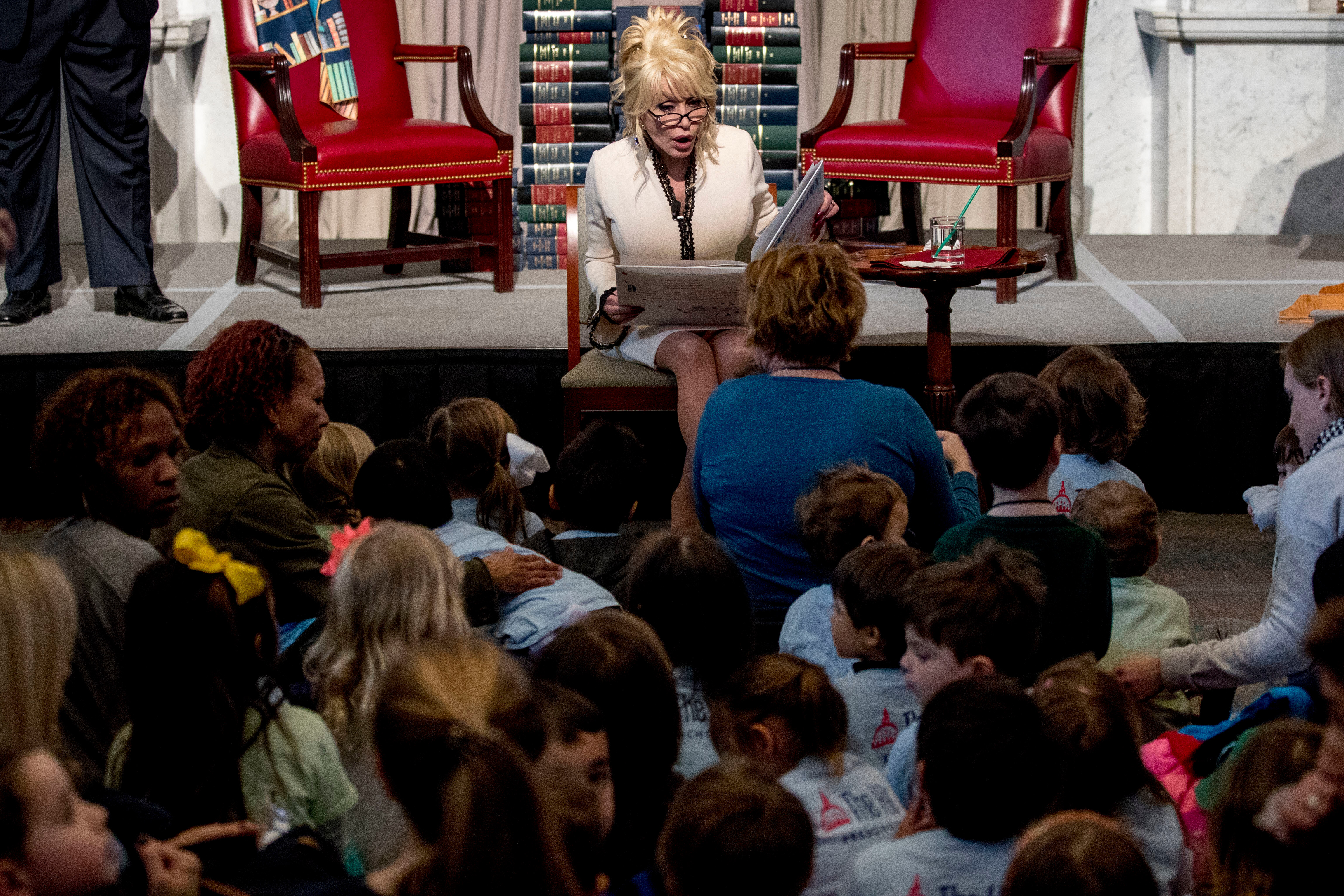
Dolly Parton’s literacy program, Imagination Library, has provided nearly 800 children with free monthly books mailed to their homes in West Philadelphia.
In Montgomery County, around 3,500 children have been served in the Norristown and Pottstown areas since 2023, thanks to Parton’s program.
“We don’t anticipate any changes to the program,” said Jennifer Leith, executive director of the West Philadelphia Alliance for Children (WePAC).
Imagination Library, which Parton started in 1995 in Tennessee, provides deeply discounted books that are mailed each month to any child in a given zip code whose parent or guardian applies to participate. Governments and nonprofits provide funding to cover the remaining costs of the program, which is available for children from birth to age 5.
The Dollywood Foundation said in a recent fact sheet that it has delivered more than 300 million books to children in the United States, Canada, the United Kingdom, Australia, and Ireland.
WePAC started with one zip code, 19104, in July 2024, then expanded to include four more zip codes in July 2025, Leith said.
“In that time, literally thousands of books have been delivered to West Philadelphia children,” Leith said.
“Anyone from any income level, from any background, can participate,” said Eliza Brumbaugh, executive director of the Literacy Council of Norristown, which helps to run the program, with assistance from the Justamere Foundation, in Montgomery County.
Leith said “it would be great” if Mayor Cherelle L. Parker or Gov. Josh Shapiro “decided to do this in honor of Dolly Parton’s legacy.”
In Delaware County, The Community’s Foundation has provided books from the Imagination Library program to more than 140 children in Eddystone since 2024, said Dierdre Woody Konar, president of the nonprofit.
“The Dolly Parton Imagination Library has shared with TCF and their other partners that they have prepared carefully for this day and for the future of the Imagination Library,” Konar said in an email Wednesday morning.
“TCF is incredibly sad to hear of Dolly’s passing, and we look forward to continuing this important work,” Konar said.
Foundations Inc., a national education nonprofit based in Mount Laurel, ran the first Imagination Library program in Philadelphia for five years, helping to provide books to children in North Philly’s 19133 zip code.
“It was pretty much a book desert,” Casey Jones, executive director of marketing and communications for Foundations, said of the zip code before the program started.
Through Parton’s program, Foundations was able to deliver around 27,000 books to children in that one zip code until the five-year commitment was completed at the end of 2025, said Rhonda H. Lauer, CEO and president of Foundations.
“We went to Dollywood to present it to her in person,” Lauer recalled, saying she had several in-depth conversations with Parton about life and family and the program.
In the end, Lauer said, “all she cared about was getting books in the hands of children.”
People take phone photos as Dolly Parton performed at the Wilmington Public Library, in 2022. She promoted her Imagination Library, a free book gifting program for children.JOSÉ F. MORENO / Staff Photographer
Six South Jersey gas stations that the White House promoted in July, touting below-market fuel prices, have racked up environmental violations with the state dating back to 2023.
The New Jersey Department of Environmental Protection issued close to $430,000 in fines in May to operators who run 17 gas stations, including the six Freedom Fuel locations, for the violations accrued over the years, according to an administrative order first reported by Politico and obtained by The Inquirer. The fines were issued before these stations rebranded to Freedom Fuel.
The Freedom Fuel stations, which made their debut this summer, accrued more than $202,000 in fines, according to department records. All 17 stations are owned by asset manager Blue Owl Capital and operated by Cherry Hill developer Shamikh Kazmi and his brother Syed Kazmi.
Blue Owl and the Kazmi brothers could not be reached for comment.
The owner-operators have requested a hearing, according to DEP spokesperson Larry Hajna, but no date had been set as of Wednesday.
The violations include failing to properly register underground storage tanks, failing to provide overfill prevention for some tanks, failing to cut and cap lines that lead to out-of-service tank systems, and violating delivery bans.
A Freedom Fuel location at 6801 Tilton Rd. in Egg Harbor was issued a fine of $50,000, the maximum penalty for the violation. The location received four deliveries in November 2023, despite having been banned from doing so because it did not properly register its storage tank.
In its justification for the fine, the department described the operator’s actions as a “deliberate and knowing act,” noting it was a major violation.
The Kazmi brothers have been embroiled in at least two lawsuits related to previous gas station ventures, including a 2021 trademark dispute with BP American Inc. and BP Products North America Inc. Additionally, Petroleum Marketing Group Inc., a fuel distribution company, accused the brothers of stealing thousands of gallons of gas from the company.
City won’t shut down Philly Freedom Fuel station
The Freedom Fuel station on Bustleton Ave. in Philadelphia.Dana Munro / staff
The network’s Bustleton Avenue station — also linked to the Kazmi brothers — failed a license renewal inspection at the end of July that could have forced its closure. But the owners remedied the issue and can continue to operate the station, according to a city spokesperson.
More than two months after having been loudly promoted by the White House and PresidentDonald Trump, Freedom Fuel’s owners have remained silent about their discount gas operation.
Baltimore Ravens assistant coach Randy Brown and former commodities trader Yoni Gontownik signed the company’s certificate of formation in Delaware and have not spoken publicly about the highly touted enterprise.
Freedom Fuel launched with prices 40 to 50 cents a gallon cheaper than nearby stations, frustrating competitors and confusing experts who follow the notoriously low-margin business.
“With every new site, we’re driving down gas prices at the pump for more communities,” reads a message on the network’s website.
In recent weeks, prices across Freedom Fuel locations have risen closer to other discount locations.
Take the location on Dreshertown Road in Upper Dublin Township, which was promoted in a video shared by the White House. When it launched at the beginning of July, the station sold gas for $3.47 a gallon — a nod to Trump being the 47th president. But as of Tuesday, the station was selling gas for $3.89 a gallon, about a dime cheaper than a nearby Citgo station and slightly more than Sam’s Club, according to gas-tracking website GasBuddy.
The average cost of a gallon of gas in Philadelphia on Tuesday was $4.15, according to AAA. That was up more than 28% from this time last year, when the cost averaged $3.23.
U.S. colleges are increasingly slashing their African American studies and related programs, citing low enrollment and limited funding, at a time when the federal government is exerting intense pressure to end racial diversity efforts.
Some academics blame politics, pointing out that Republicans and the Trump administration have taken aim at scholarships, admissions policies, and other efforts to boost diversity. At least a dozen schools, including private colleges and public flagship universities, have scaled back Black, African, or African American studies programs since Trump signed an executive order targeting diversity, equity, and inclusion programs, a Washington Post review found.
“Politics is the engine, not a factor,” said Jafari Sinclaire Allen, director of the Institute for Research in African American Studies at Columbia University.
Allen, whose institute has surveyed colleagues around the country, says the cuts are so deep that they could damage the pipeline for important research and training for new scholars for years to come.
“They are not cutting at the fringe,” said Allen, who is also a professor of African American and African diaspora studies at Columbia. “They are striking the foundations.”
Universities that have closed or merged African American studies units over the past two years include the University of Iowa, the University of Texas at Austin, and the University of Kansas.
Others have eliminated or begun phasing out majors and degrees, including Kennesaw State University, the University of Toledo, and Indiana University at Bloomington. Several colleges have also trimmed classes, removed them from the core curriculum, or cut staff.
Enrollment in the programs has been falling in recent years, data shows.
For three straight years, students received fewer than 700 degrees in African American studies nationally, the lowest level in the last two decades, according to an analysis of federal data through 2025 by a researcher at the American Academy of Arts & Sciences. That’s despite the fact that the number of schools offering degree programs has gradually risen during the same span.
“It is quite puzzling,” said Robert Townsend, director of humanities, arts, and culture programs at the academy, an honorary society and policy research center.
Low enrollment has made the programs a target for cuts at some schools.
Take the University of North Texas (UNT), which projected a $45 million shortfall for the fiscal year ending this month. The university blamed falling enrollment, especially among international graduate students, and cuts in state funding for instruction and operations.
“UNT is facing a significant budget challenge,” the school said on its website.
To help balance the budget, the school said it would close or consolidate a long list of programs, including undergraduate minors in Africana studies, Asian studies, Mexican American studies, LGBTQ studies, women’s and gender studies, and degrees related to linguistics.
Some states have passed laws requiring schools to review and cull programs that yield few degrees. For instance, the University of Toledo cited such a law in Ohio when it suspended admissions to its bachelor’s program in Africana studies last year.
And the University of Iowa noted that there were only nine students in the bachelor’s program for African American studies when it decided to eliminate the major. It also closed its African American studies program.
But department chairs point out that the cuts are coming at a time when some states have also passed laws restricting courses focused on race or ethnicity.
For instance, a Florida law enacted in 2023 bars core general education classes — select courses required for graduation — from teaching “identity politics.” A North Carolina law passed this year generally bars public universities from requiring courses “related to divisive concepts” involving race or gender. And Texas A&M canceled eight courses, citing new policies governing race and gender instruction. The canceled courses included “Introduction to Race and Ethnicity” and several courses focused on diversity.
On the federal level, the Trump administration has attacked diversity, equity, and inclusion programs, arguing that they amount to race discrimination that violates civil rights laws. As part of the anti-DEI effort, the administration blocked many research grants related to race.
The Education Department did not respond to a request for comment on the cuts to African American studies programs.
Erica R. Edwards, chairperson of Black studies at Yale University, said such programs have become a target because “the field is unapologetic in its critiques of fascism, antiblackness, sexism and antitransness, and anti-immigration.”
“Given the concerted attempts of our current administration and its allies to suppress history and silence truth, it comes as no surprise that Black Studies programs are facing challenges from the inside — cuts, intense scrutiny, censorship, and consolidation — as well as attacks from the outside,” Edwards wrote in an email to the Post.
Some say the cuts are part of a broader ideological attack on the humanities.
“Although conservative attacks on the humanities have recurred periodically over the past several decades, the present moment is markedly different in scale and coordination,” said the executive committee for the American Studies Association, a scholarly organization, in a recent public statement.
Neetu Arnold, a policy analyst for the conservative Manhattan Institute, said the cuts are probably driven by low enrollment rather than politics. Still, Arnold said she believes that Black and African American studies departments have blurred the line between scholarship and advocacy.
“It’s hypocritical for department chairs to deride the cuts as political when they’re the ones who have allowed their departments to become highly politicized hotbeds of scholar-activism,” Arnold said.
To be sure, some cuts may be temporary. The University of Louisville in Kentucky paused admissions to three graduate programs, including its Pan-African studies Ph.D., because of tight funding. But a spokesperson said it is likely that admissions will reopen when more funding is available.
And some universities said they are continuing to offer classes and fund research in the field, despite consolidation and other administrative cuts.
Consider Northwestern University in Illinois. The school recently decided to move its African studies program from its research office to its provost’s office and eliminate two positions that supported the program. The move received national attention in part because the university says the program, founded in 1948, is the oldest of its kind in the United States.
Despite the changes, a Northwestern spokesperson said the program will continue to conduct research, offer a certificate for graduate students, and sponsor both a major and minor for undergraduates.
“None of that is changing — it will all continue,” said spokesperson Jon Yates. “To be clear: The program is not being downgraded.”
Still, more cuts could be coming to African or African American studies programs across the country.
For instance, the University of Georgia said it is evaluating whether to drop low-enrollment programs as part of a regular review.
When fires swept through the Great Smoky Mountains in 2016, killing 14 and displacing thousands, a local legend answered the call to help.
Dolly Parton, the country music luminary, who died this week at 80, offered $1,000 per month to families who had lost their homes in Sevier County. The money kept flowing for months, and the songwriter and star behind hits including “My Tennessee Mountain Home” ultimately sent $12.5 million back to the county where she was born.
Parton’s support for the fire victims was just one node in a constellation of charitable activities that distinguished her as one of pop culture’s most prolific philanthropists. With cash gifts, benefit concerts, and telethons, Parton supported causes that included early childhood literacy, wildlife conservation, and the development of the COVID-19 vaccine.
She became so effective at distributing her own money that the ultrawealthy asked her to distribute theirs. In 2022, Amazon founder Jeff Bezos and his future wife, Lauren Sanchez, gave Parton $100 million to distribute to causes of her choosing. And this summer, Taylor Swift and Travis Kelce gave Parton’s Imagination Library $2 million to fund the distribution of children’s books.
“Her philanthropy was so much more significant and serious than what you see from other celebrities,” said Stacy Palmer, CEO of the Chronicle of Philanthropy. “As a woman, she was a standout giver, and she gave to the kinds of causes that a lot of rich people don’t give to, ones that were based on her life experience.”
Parton started her own charitable organization, the Dollywood Foundation, in 1988, the same year that Trio, her album with Emmylou Harris and Linda Ronstadt, won album of the year at the Academy of Country Music Awards.
The foundation was initially focused on reducing school dropout rates in Sevier County, in part by offering $500 gifts to graduates. Cold, hard cash proved a powerful incentive; high school dropout rates plummeted to just 6% in the county, from 35%. The Dollywood Foundation, which reported $141 million in assets last year, also offers local high school graduates $15,000 scholarships.
“She gave cash gifts to people in need long before it was popular,” Palmer said. ”She trusted the people that she wanted to help.”
At her theme park, Dollywood, Parton opened a special attraction: a 30,000-square-foot aviary to house rehabilitated bald eagles that could not be released into the wild.
In 1995, Parton started the Imagination Library, a program that sent one book per month to children in Sevier County from birth until their first year of school. The inspiration for the effort came from Parton’s father, who didn’t know how to read.
“As we see all these superwealthy people thinking about strategic plans, her brilliance was just making it so easy for people to read,” Palmer said. “Send them the book.”
The program expanded across the world, and last year, the Imagination Library said it had distributed some 305 million books.
“I just give from my heart,” Parton said in 2022, when accepting the Carnegie Medal of Philanthropy in New York. “I never know what I’m going to do or why I’m going to do it. I just see a need and if I can fill it, then I will.”
Parton often saw need in the aftermath of disasters. After Hurricane Helene cut a swath of devastation across the Southeast, she personally donated $1 million to the Mountain Ways Foundation to support flood victims, while her businesses and the Dollywood Foundation pledged $1 million more.
She announced her gift in a Walmart parking lot in Newport, Tenn., not far from where she was born, and sang a Hurricane Helene-themed version of her classic song “Jolene” to the crowd.
“There’s any number of celebrities who could give money after disasters, and don’t,” said David Callahan, the founder of Inside Philanthropy, a news site that writes about charitable giving. “But she had a powerful sense of empathy.”
In the months after the COVID-19 virus emerged, Parton learned that Vanderbilt University in Nashville was helping with the early trials of the vaccine made by Moderna, and she gave $1 million to support the effort.
“It was a shot in the arm,” said Mark Denison, emeritus professor of pediatrics at the Vanderbilt School of Medicine. “We were starting this work but we didn’t have specific funding for it, and she recognized that this was a critical human problem that was going to impact the country and the world. It allowed us to quickly scale up and get into the lab.”
For the staff at Vanderbilt, her gift was also an enormous morale booster.
“We’re all in Nashville, and there were some people who were serious fans,” Denison said. “The fact that she was supporting our work was something that you could not put a price on.”
The next year, she made a $1 million gift to Vanderbilt to support work on infectious diseases in children, and the year after that, she created an endowment to support additional research.
“This is an area that is undersupported and not really popular for charity,” Denison said. “But she was really good at recognizing short-term needs but maintaining a long-term vision.”
In 2021, Denison and his wife had dinner with Parton. Over the three-hour meal, she mostly asked questions about their work and why they had chosen their careers, he said. Denison has traded on the story ever since.
“I got more credibility with my family and friends from that one interaction than I did from 40 years of research,” he said.
Parton’s support for medical issues went well beyond the COVID-19 vaccine.
In 2007, she performed at a benefit concert for a new hospital in Sevier County, and the Dollywood Foundation donated funds for the new building as well. When the hospital opened in 2010, it featured a 30,000-square-foot Dolly Parton Center for Women’s Services.
In 2017, following the release of a children’s album, I Believe in You, Parton donated $1 million to the Monroe Carell Jr. Children’s Hospital at Vanderbilt University Medical Center. The gift was made honor of her niece, who was treated for leukemia at that hospital.
In February, officials at the East Tennessee Children’s Hospital in Knoxville renamed it the Dolly Parton Children’s Hospital after receiving what they called a “generational commitment” from Parton. The amount has not been disclosed.
“Sometimes philanthropists have tons of fundraisers who come to them and say, ‘Put your name on this building, do this important thing, and it’ll get you access to a museum or the other people you want to hang out with,’” Palmer said. “She just never really forgot about the roots that she grew up in, and this obligation she felt to the people who helped her thrive in life.”
Palmer said the question now was what will become of Parton’s remaining fortune, which is estimated to be about $500 million, according to Forbes.
“She did so much while she’s alive, but I’m super curious what her will says,” Palmer said. “Because she had so much wealth, and she did not have children. So we may yet see more of her.”
This article originally appeared in the New York Times.