Category: News

  • Democrats begin pulling Platner endorsements after Maine candidate faces sexual assault allegation

    A woman who previously dated Maine Democratic Senate candidate Graham Platner said he drunkenly forced her to have sex after she told him to stop, according to a Politico report released Monday, leading prominent supporters to pull their endorsements and throwing a must-win race for the party into turmoil.

    Platner denied the allegation, but said he would be considering next steps for his campaign.

    “Regardless of the inaccuracy of the reporting but mindful of the political reality it will inflict, we’re taking the time to reflect on the best path forward,” he said in a video released on social media.

    Jenny Racicot, who lives in Maine, told Politico that Platner entered her home in 2021 while drunk and assaulted her. Racicot said she had been in an on-and-off relationship with Platner, but she cut off contact with him after that night and told him the incident wasn’t consensual. A voicemail left at a number listed for Racicot seeking comment did not receive an immediate response, but she said in a CNN interview on Monday evening that she opted not to fight back for fear of Platner, a former Marine, becoming more violent.

    “He violated multiple layers of consent that night,” Racicot said.

    Platner’s campaign did not immediately respond to an email and phone message from The Associated Press seeking comment.

    “Any accusation of non-consensual behavior is categorically false,” Platner said in his video.

    Uproar in the Democratic Party

    Platner won the Democratic nomination last month, setting himself up to face Republican Sen. Susan Collins, who has beaten back previous attempts to dislodge her from the seat that she’s held for nearly three decades.

    Although Platner has long been controversial, the sexual allegation sparked a flight away from the candidate, who canceled a handful of town hall events. The main campaign arm of Senate Democrats called on Platner to drop out and said it would spend no money on the race, which is considered critical to control of the chamber, if he is the nominee.

    “Graham Platner needs to immediately withdraw as the Democratic nominee for Senate and allow Maine Democrats the opportunity to choose a new candidate who can defeat Susan Collins,” Kirsten Gillibrand, chair of the Democratic Senatorial Campaign Committee, and Chuck Schumer, the top Senate Democrat, said in a joint statement.

    The Democratic National Committee sent out an email soliciting money for Senate races hours after the Politico report posted, but Maine was not one of them. Ken Martin, the party chair, said, “Maine Democrats should select a new nominee.”

    Rep. Ro Khanna, a California Democrat who stood by Platner even as the candidate faced previous controversies, said Monday’s allegation was enough. “I’ve been very clear that sexual assault or violence against women is a red line,” Khanna said. “These allegations are very serious and credible. Graham Platner should drop out from the race. I am withdrawing my endorsement.”

    Arizona Sen. Ruben Gallego and Massachusetts Sen. Elizabeth Warren announced they were pulling their endorsements and called on Platner to drop out. The Democratic leaders of Maine’s legislature and top officials at the state Democratic Party did the same.

    “This Senate race comes at a pivotal moment in the struggle against a government, supported by Senator Collins, that serves the interests of the wealthy and powerful at the expense of ordinary Maine people. It is essential that we refocus this campaign on that struggle,” party chair Charlie Dingman, vice chair Imke Schessler and executive director Devon Murphy-Anderson said in a joint statement.

    Collins issued only a brief statement.

    “These allegations are appalling,” she said. “Nevertheless, it is not up to me to choose the Democratic nominee for Senate.”

    State law allows Platner to be replaced on the ballot if he withdraws by July 13. The replacement candidate must be named by July 27.

    The Associated Press generally does not name victims of sexual assault, but in this case Racicot spoke in an interview with Politico.

    A succession of campaign controversies

    Platner had never before held elected office, and Democratic leaders in Washington preferred Gov. Janet Mills in the primary. However, Mills, 78, dropped out as Platner, 41, consolidated support with help from progressive leaders at a time when Democratic voters have grown disenchanted with the party establishment.

    While some Democrats came around to support him after his commanding primary win, Platner’s controversial history had already left others openly despairing of their chances of winning the race. A veteran who also worked for a private security contractor, Platner has a chest tattoo recognized as a Nazi symbol, reportedly sexted with other women shortly after getting married and had a history of inflammatory comments on social media.

    In 2013, Platner posted on Reddit that people shouldn’t get so drunk “they wind up having sex with someone they don’t mean to” and that sexual assault victims should “just take some responsibility for themselves.” He’s since apologized for the post and says he no longer holds those beliefs.

    The New York Times also reported that Platner had volatile relationships with previous girlfriends, one of whom said an argument became physical. Platner denied the allegation.

    Hasan Piker, a leftist commentator and streamer who backed Platner, seemed to reverse himself Monday following the Politico report.

    “If new evidence presents itself, I’m going to change my perspective — it’s that simple,” Piker said during a livestream on Twitch, adding: “This is a clear-cut instance of verifiable sexual assault allegations. It’s completely irredeemable.”

    Our Revolution, a progressive organization founded by Sen. Bernie Sanders of Vermont, said Platner should withdraw because the allegations “are too serious to treat as a distraction from the campaign or the issues.”

    It also hinted at the potential battle over who would replace Platner.

    “Whoever leads this movement forward must be someone who has actually lived the fight Graham Platner ran on: a record with working people, with unions, against corporate money, already tested and trusted by the same base that delivered this result,” said a statement from Joseph Geevarghese, executive director of Our Revolution.

    Platner had pitched himself as a blue-collar oysterman and veteran who could reach disaffected voters. But as controversies mounted, some state Democrats had heartburn, embodied by Mills’ refusal to endorse Platner after she dropped out of the primary. Chatter circulated about possible replacements, including former state senator and logger Troy Jackson and Secretary of State Shenna Bellows.

    “I’ve known this has been coming,” said Marie Follayttar, a Democrat and community organizer in Maine, talking about the growing whispers inside the state’s small population that had been bracing for yet another revelation surrounding Platner. “I’ve been scared and I’ve been sick waiting.”

    Mike Connelly, a business owner and Democrat in Brunswick, Maine, said in an interview that he wants Platner to drop out after the latest allegations. But Connelly said he’d vote for him if he stays in.

    “I would vote for a comatose Democrat before I would vote for Susan Collins,” Connelly said.

  • US support for Israel slips as Democrats grow more critical, AP-NORC poll finds

    NEW YORK — After decades of reliable bipartisan backing for Israel, a new AP-NORC poll reveals a dramatic erosion of support for the longtime U.S. ally, with rising opposition from Democrats and signs of division among Republicans.

    The survey by The Associated Press-NORC Center for Public Affairs Research arrives at a moment when a once-consensus foreign policy issue is increasingly polarizing Americans along partisan and generational lines, driven by criticism for Israel’s conduct nearly three years after the outbreak of its latest war with Hamas in Gaza.

    About one-third of U.S. adults — including roughly half of Democrats — believe that Israel has committed genocide against Palestinians during the war in Gaza, an accusation that’s been leveled by some human rights organizations and vehemently denied by Israel and the U.S. government. About 2 in 10 Americans say Israel has not and the rest, about half, don’t know enough to say.

    A similar share, 30%, of Jewish adults say Israel has committed genocide, although about half, 49%, say it has not.

    Harold Kalmus, a 69-year-old Democrat from Arden, Delaware who describes himself as Jewish by birth, said he remembers being proud of Israel when he was younger. Not anymore.

    “I realize that there is a threat from Hamas. And I realize they’re in a very difficult situation, but what they have done is just an unspeakable horror,” he said of Israel’s military action against the Palestinians. “They’re trying to wipe out a civilization as far as I’m concerned.”

    The findings show sharply eroded views of Israel in the U.S., nearly three years after Hamas’ attack on Oct. 7, 2023, which left 1,200 people dead in Israel, mainly civilians, while 251 hostages were taken back to Gaza. More than 73,000 Palestinians have died in Gaza according to the Hamas-run Gaza Health Ministry, which doesn’t distinguish between civilian and militant deaths, including more than 1,000 killed since the beginning of the latest ceasefire. American sympathies had been shifting toward the Palestinians and away from the Israelis since around 2020, according to other polling, but has nose-dived since the latest war in Gaza began.

    Many Americans, about 4 in 10, don’t know enough to say whether Israel’s immediate military response to Hamas’ attack or its ongoing military operations were justified. Among those who did have an opinion in each case, most say the initial retaliation was justified — but a majority think its current actions are not.

    About three-quarters of Jewish adults said Israel’s initial response was justified, but only about 4 in 10 believe that about its ongoing operations.

    Only about one-third of U.S. adults view Israel as an “extremely” or “very” important issue to them personally. But it’s been a searing topic in American politics as the relationship between the two countries remains tense, just four months before high-stakes midterm elections determine the balance of power in Congress for President Donald Trump’s final two years in office. Vice President JD Vance recently criticized Israeli leaders who have expressed frustration with Trump, while vocal critics of Israel recently defeated establishment-backed Democrats in New York and Colorado primaries.

    Democrats’ support for Israel drops

    The AP-NORC poll reveals a decisive shift within the Democratic Party.

    About 58% of Democrats now say the U.S. is “too supportive” of the Israelis, up from 45% in an AP-NORC poll from January 2024 when former President Joe Biden was in office. That includes 51% of Jewish Democrats in the new poll.

    Roughly 6 in 10 Democrats, 62%, say the U.S. is “not supportive enough” of the Palestinians, up from 49% in 2024. Younger Democrats — those 45 and younger — are still more likely than older ones to say that the United States is “not supportive enough” of the Palestinians, but older Democrats are catching up to their younger counterparts. About 57% of older Democrats now say the U.S. should do more for the Palestinians, up from 39% two years ago.

    Joy Jennik, a 73-year-old Democrat from Brookfield, Wisconsin, said she didn’t have strong opinions about the U.S. relationship with Israel until after Hamas’ Oct. 7 attack.

    Now, she believes Israel is guilty of genocide.

    “The Gaza Strip, there’s not a lot left of it. Those poor people are barely living,” said Jennik, a retired home economics teacher.

    GOP stays behind Israel, but less so among young Republicans

    Just a sliver of Republicans, 13%, describe Israel’s actions as genocide, although there is an apparent age gap. About 2 in 10 Republicans under 45 say Israel has committed genocide, while about 1 in 10 Republicans ages 45 and older say the same.

    Overall, 60% of Republicans describe the U.S. support for Israel as “about right.” Only about 2 in 10 Republicans say that the United States is “too supportive” of the Israelis, although Republicans under 45 are more likely to say this.

    The share of Republicans overall who say the U.S. is “too supportive” of Israel has not changed meaningfully since 2024, but the share who say the U.S. is “not supportive enough” has shrunk from 39% to 15%.

    Mike Cardona, a 70-year-old Republican from suburban Phoenix, said he’s pleased with the level of support that the U.S. is giving Israel and rejects the notion that Israel has committed genocide.

    “I wish they’d gone in harder and better,” Cardona, a retired industrial supply salesperson said of Israel’s military action in Gaza. “Unfortunately, some innocents will be hurt, but Hamas and Hezbollah never took that into consideration when they were killing children and women in Israel.”

    Netanyahu is broadly unpopular, while views of Mamdani are split

    In interviews, several respondents emphasized that their criticism of Israel was focused on its leaders, especially Prime Minister Benjamin Netanyahu, who is perceived as closely aligned with Trump after repeated clashes with Democratic presidents.

    Overall, only 20% of U.S. adults have a favorable view of the Israeli prime minister, while about twice as many, 38%, have an unfavorable view. About 41% don’t know enough to have an opinion.

    Netanyahu is particularly unpopular among Jewish adults: about 6 in 10 view him unfavorably, while about one-third see him positively.

    Younger adults, regardless of party, are more likely than older adults to say they don’t have an opinion about Netanyahu. But while older Republicans see Netanyahu more positively than negatively, younger Republicans’ views tilt unfavorably.

    New York City Mayor Zohran Mamdani has gained prominence as an outspoken critic of Israel, and 27% of U.S. adults have a favorable opinion of the 34-year-old democratic socialist. Another 28% of U.S. adults have an unfavorable opinion, while 44% don’t know enough to say.

    Jewish adults, who overwhelmingly identify as Democrats, have a more positive view of Mamdani than of Netanyahu, with 44% viewing the New York City mayor positively, 39% viewing him negatively, and 17% saying they don’t know enough to say.

    About half of Democrats overall have a favorable impression of Mamdani and only about 1 in 10 have an unfavorable view of him, while the rest, about 39%, don’t have an opinion.

    Meanwhile, the U.S.-Israel relationship is not top of mind for many Americans as they think about the upcoming midterm elections.

    For people like Michael Ripka, a 34-year-old stage hand from Casper, Wyoming who typically votes Republican, the economy is by far the most important thing on his mind.

    “Everything is mad expensive,” he said. The conflicts in the Middle East, he added, is “100% a very big distraction.”

  • Explosions rock Damascus, wounding 18, as French President Macron visits Syria

    Explosions rock Damascus, wounding 18, as French President Macron visits Syria

    DAMASCUS, Syria — Explosions rocked Damascus on Tuesday as France’s president met with his Syrian counterpart in a landmark visit, wounding at least 18 people, Syria’s Interior Ministry said.

    Emmanuel Macron was inside the presidential palace when the explosions happened, and Macron’s office said he was safe and that the meeting with Syrian President Ahmad al-Sharaa continued.

    “Nothing can smother the aspiration of Syrian women and men to live in a fully sovereign, safe, pluralistic, and united Syria,” Macron said in a post on X hours after the deadly explosions. “This morning I met Syria in all its diversity. I saw dignity, courage and determination.”

    A large plume of smoke could be seen from the site of the explosion near the Four Seasons Hotel, where Syrian media reported Macron was staying. Footage widely circulated on social media showed a van and a motorcycle on fire and blood stains on the street in the area on a busy street near the headquarters of the Tourism Ministry and the Damascus National Museum.

    The explosions represent a challenge to al-Sharaa, who came to power after leading an insurgency that ousted Bashar Assad in 2024 and ending the country’s 14-year uprising turned-civil war. Assad’s dynasty ruled Syria with an iron fist for half a century.

    Al-Sharaa has since pushed to assert full control over and bring stability to war-torn Syria, appeal to minorities skeptical of his Islamist-led rule, and win the support of Western governments who were concerned about his past leadership of the formerly al-Qaeda-linked Hayat Tahrir al-Sham group. His government has promised political and economic reform after decades of autocratic rule.

    Macron is the first major Western leader to visit Syria since al-Sharaa came to power and his visit comes before he is set to head to Ankara, Turkey later Tuesday for a NATO summit. Macron also plans to hold a joint news conference with his Syrian counterpart. The official spoke on condition of anonymity to discuss Macron’s whereabouts and security.

    The French head of state played a major role in pushing Europe and the United States to drop most sanctions on Syria. He arrived in the country Monday night with an economic delegation, and is scheduled to sign memorandums of understanding with his counterpart as the battered country tries to lure investors to help it rebuild after 14 years of war.

    The Interior Ministry in a statement reported by Syrian state media said that the two blasts in the heart of the capital were caused by explosive devices, one placed in a garbage bin and the other in a parked car. It added that four of the wounded were police officers, and no deaths were immediately reported.

    An investigation is currently taking place at the scene of the attack. No group immediately claimed responsibility.

    Macron arrived in the country Monday night with an economic delegation, and is scheduled to sign memorandums of understanding with his counterpart as the battered country tries to lure investors to help it rebuild after the war.

    The incident comes days after an explosive device was detonated in a cafe near the Justice Palace in Damascus, killing at least 10 people and wounding more than 20.

    While Syria’s new rulers have wrestled with violence involving different groups in the country as they work to assert control, the capital has largely been peaceful during the turbulent period.

    The conflict in Syria killed nearly half a million people and displaced millions. Syria’s infrastructure lies in ruins, and while other nations and businesses have made large investment pledges, the country still needs hundreds of billions of dollars to rebuild and lift millions out of poverty.

    Before arriving at the presidential palace, Macron met with members of Syrian civil society, though his office did not give details on who.

  • How farmers are surviving lost crops | Inquirer South Jersey

    How farmers are surviving lost crops | Inquirer South Jersey

    Good morning, South Jersey.

    Local farmers are getting creative to recoup costs from lost crops after a devastating April freeze.

    And scrapyard operators are saying the rise of lithium-ion batteries in appliances is the cause of recent fires.

    Plus, Camden County experienced intense flooding and about 1,000 emergency calls because of Monday morning’s thunderstorms, and more news of the day.

    — Taylor Allen (southjersey@inquirer.com)

    If someone forwarded you this email, sign up for free here.

    How farmers are making it work

    The freeze in April destroyed crops across the Northeast, with New Jersey’s estimated losses hitting at least $300 million. It’s why the state secured a disaster declaration that allows farmers in every county to be eligible for emergency federal loans.

    Even with the help, farmers are finding creative ways to survive until next year. Their tactics include:

    🫐 The promotion of frozen fruit

    🍒 Higher prices

    🌺 More reliance on U-pick cut flowers

    “Everybody is kind of in the same boat,” said a Sewell farm owner who planted pumpkins early to make up for wiped-out peaches. “Just support your local farm. We’ll recover.”

    Reporters Lacey Latch and Sarah Nicell have the story on how farmers are rushing to adapt.

    Exploding lithium-ion batteries

    Since Camden city officials halted operations at EMR recycling facility in June after its latest fire, scrap metal has been piling up in the area scrapyards.

    To reopen, EMR CEO Joseph W. Balzano agreed to pay the city $4.5 million upfront and an additional $2.2 million over the next five years in a proposed settlement. City Council is set to review the proposal this evening.

    Scrap dealers are pointing the finger at lithium-ion batteries, which are often found in lawn movers, construction tools, and household appliances as the cause of the fires.

    “It’s the biggest issue all recyclers face,” Balzano said. “Regulations need to be put in place that keep these batteries out of commerce.”

    Meanwhile, New Jersey lawmakers are pushing bills to track such batteries and regulate scrapyards.

    The Inquirer’s Joe DiStefano explains the impact on yards around the region.

    What to know today

    🗣️ Quote of the week

    Sally Hopkinson learned she was a descendant of Francis Hopkinson, a signer of the Declaration of Independence from New Jersey, when she was in the fifth grade.

    🧠 Trivia time

    Which New Jersey-based retailer opened its first store on Route 130 in 1972?

    A) Spencer’s

    B) Burlington

    C) ShopRite

    D) The Vitamin Shoppe

    Think you know? Check your answer.

    What we’re …

    💭 Wondering: If you can name the players who played for both the Sixers and the Celtics.

    🍰 Remembering: When renowned South Jersey cake decorator Al DiBartolo and pastry chef Manny Agigian won second place on TLC’s Next Great Baker.

    🍴 Touring: Craig LaBan’s latest recommendations at the Shore this year.

    That’s all I have for you this morning. Thanks for spending it with The Inquirer. ☀️

    By submitting your written, visual, and/or audio contributions, you agree to The Inquirer’s Terms of Use, including the grant of rights in Section 10.

  • Cherry Hill Mall to get new stores including Aritzia

    Cherry Hill Mall to get new stores including Aritzia

    The Cherry Hill Mall is soon set to welcome five new stores that have committed to more than 25,000 square feet of retail space at the South Jersey mall.

    The additions include Aritzia, the viral women’s clothing brand, which is set to open a store at the 1.3 million-square-foot Camden County mall by spring 2027. The complex is also adding legacy brands such as Timberland and True Religion, according to executives with PREIT, which owns the mall.

    “Retailers at this level are choosing their next locations very carefully right now, and the fact that six of them chose Cherry Hill Mall in the same leasing period speaks volumes,” Paula Charles, PREIT’s senior vice president of leasing, said in a statement.

    “For shoppers, it means more of the brands they want in one place and an experience that keeps getting better every time they visit,” Charles added.

    The new stores are slated to open in 2026 and 2027, PREIT executives said.

    The retailers will join Dick’s House of Sport, a 120,000-square-foot interactive sporting goods store that is on track to open later this year.

    Construction on Dick’s House of Sport at the Cherry Hill Mall, as seen in February.Tom Gralish / Staff Photographer

    Built on the site of a former office building, the two-story experiential space is set to include a climbing wall, golf simulators, an outdoor track and field, and batting and soccer cages.

    One of dozens of Dick’s House of Sport outposts, it will be represent “the largest single-tenant addition to Cherry Hill Mall in more than a decade,” PREIT executives said.

    The new retailers will also join Crocs, which last month opened a 2,000-square-foot store near the future Dick’s House of Sport, and DoneRight Doner Kebab, a fast-casual Mediterranean food spot that mall executives said will open later this summer in the food court.

    People walk by a new store, Pop Mart, at Cherry Hill Mall on Black Friday 2025.Tyger Williams / Staff Photographer

    Meanwhile, elsewhere in the region, some mid-level malls continue to struggle and even die. Chester County’s only enclosed mall, Exton Square, closed last week after more than five decades in business.

    But higher-end complexes like Cherry Hill and King of Prussia seem to be thriving. King of Prussia Mall, in Montgomery County, also just announced a slate of new openings.

    Here’s what to know about the new shops coming soon to the Cherry Hill Mall:

    • Timberland: The boots and outdoor-wear company is set to open an 1,800-square-foot store later this summer. It will be near Dick’s House of Sport.
    • Indochino: The custom-suit-maker is set to open a 1,200-square-foot store before the 2026 holiday season. It will be off the Grand Court, near American Eagle and Pop Mart.
    • Aritzia: Set to occupy more than 20,000 square feet in the central Grand Court, its space will include not only a clothing store but also an A-OK Cafe, the brand’s in-house coffee shop. It is on track to open in spring 2027.
    • True Religion: The denim company is set to open a 2,230-square-foot store sometime early next year near Dick’s House of Sport.
    • Gorjana: The viral jeweler known for its gold pieces is set to open a 1,107-square-foot store by the 2027 holiday season in the Grand Court.

    Also at the mall, Pandora and Spencer’s recently moved into larger storefronts, and Lululemon is set to relocate into an expanded space in the Grand Court before the 2026 holiday season.

  • Here’s what we know about Sen. Mitch McConnell’s health

    Sen. Mitch McConnell has been hospitalized for more than three weeks, and his office still will not say what sent the 84-year-old Kentucky Republican there, his latest condition, or when he might return.

    McConnell, who has served in the Senate since 1985 and led Senate Republicans from 2007 until 2025, has not cast a vote since June 11. His absence comes as Republicans are navigating a narrow Senate majority. It has helped stall spending bills in the Appropriations Committee and added uncertainty around a senator already in the final months of his career.

    Here’s what we know about his health.

    What happened to McConnell?

    McConnell was admitted to the hospital on the morning of June 14, according to a statement from his office that said that he was “receiving excellent care.”

    EMS dispatch audio from the morning of June 14 suggests that emergency medical personnel were sent to McConnell’s home to attend to an unconscious person in cardiac arrest.

    According to the dispatch audio, a call went out at 8:36 a.m. for an “unconscious” person at McConnell’s address, and an ambulance was sent with an advanced life support crew. Six minutes later a medic radioed that CPR was “in progress.” At 8:43 a.m., a dispatcher relayed the emergency as a “cardiac arrest.” McConnell is named nowhere in the recording, though the address is his.

    The next day, Senate Majority Leader John Thune (R., S.D.) and Senate Majority Whip John Barrasso (R., Wyo.) — the top two Senate Republicans — told reporters that they had spoken to McConnell.

    What else do we know?

    McConnell’s office has been quiet on his condition in the weeks since and has not provided additional information on his treatment or the cause for his hospitalization.

    On June 22, eight days after McConnell was hospitalized, his office said that he wouldn’t be voting that week “as he continues his recovery.”

    Thune, on the same day, told reporters that he spoke with McConnell “toward the end of last week” and that McConnell “sounded good and was anxious to get back.”

    A July 2 statement from McConnell’s office provided little new information but said he was still in the hospital.

    “The Senator continues to improve, and is working closely with his staff on Kentucky and Senate matters while the Senate is out of session,” his office said.

    His office has not provided additional information since and did not respond to a request for comment on Monday.

    What does his continued absence mean?

    Any extended absence for McConnell could make matters more difficult for Republicans to pass legislation this year, as it would temporarily shrink their majority to 52-47 in the chamber.

    McConnell’s absence also further complicates matters for the Senate Appropriations Committee, which is already running behind schedule. The committee has not advanced any spending bills for the 2027 fiscal year due to disagreements over defense funding.

    Without McConnell, the Senate Appropriations committee is split evenly between Republicans and Democrats. This could prevent Republicans from advancing their spending priorities if all Democrats vote against them, as any vote within the committee that splits evenly along party lines would fail.

    The committee already had postponed plans to mark up spending bills during the week of June 22 due in part to McConnell’s absence, according to a Republican aide who spoke on the condition of anonymity.

    McConnell did not run for reelection this year and is set to retire from the Senate in January at the end of his term.

    What health issues has McConnell faced before?

    McConnell’s health has drawn repeated attention in recent years.

    McConnell had polio as a child and has long had difficulty climbing stairs.

    In March 2023, he was hospitalized after falling at a Washington hotel and was away from the Senate floor for several weeks. Months later, he had two highly public episodes in which he stopped speaking during news conferences and had to be helped by others.

    He was injured again in December 2024 after tripping outside a Senate Republican lunch, and earlier this year, he spent more than a week in the hospital after his office said he had flulike symptoms.

  • Pa. officials mourn the death of former State Sen. Shirley Kitchen, who represented North Philly for 20 years

    Pa. officials mourn the death of former State Sen. Shirley Kitchen, who represented North Philly for 20 years

    Pennsylvania elected officials are mourning the death of former State Sen. Shirley Kitchen, the second Black woman to serve in the state Senate and a champion for progressive issues who represented parts of North Philadelphia for more than two decades. She died Saturday at 79. A cause of death was not immediately clear.

    Kitchen represented the 3rd Senatorial District, composed of parts of North Philadelphia, for 20 years. She is remembered by her former colleagues as a pillar and matriarch of her community who worked tirelessly to improve the lives of low-income people, even after she retired.

    “She did so many things for so many people. Now that I’m old enough to appreciate it, I’m not quite sure how she did it — and she did it with such force,” said State Sen. Anthony H. Williams (D., Philadelphia), who served alongside Kitchen in the Senate and had known her for decades. Kitchen was elected to the state Senate in 1996 and served five terms before retiring in 2016.

    Her former colleagues, some through tears, credited many of Pennsylvania’s recent criminal justice reforms as being born under Kitchen’s leadership, with her early legislative proposals paving the way for their passage years later. For example, Kitchen authored early drafts of what is now known as the Clean Slate Act, which automatically seals some nonviolent convictions after 10 years, hiding them from most employer and landlord background checks. She first introduced similar legislation in Harrisburg years earlier and it failed. In 2018, two years after Kitchen retired, the Clean Slate Act became law in Pennsylvania and was heralded as a first-in-the-nation model for criminal justice reform.

    Elected officials across the city shared their condolences, remembering Kitchen as an advocate who cared deeply for her community.

    Mayor Cherelle L. Parker in a social media post on Sunday recalled Kitchen as “fighting for people who often had no one else to fight for them,” and as a trailblazer for Black women in politics.

    “Shirley Kitchen cared about working people, and she cared about Philadelphia,” said Parker, the city’s first Black female mayor and a former state representative.

    City Council President Kenyatta Johnson said in a statement that Kitchen “never forgot who she was fighting for,” dedicating her life to making people’s lives better.

    State Rep. Joanna McClinton (D., Philadelphia), Pennsylvania’s first Black female speaker of the House, wrote in a social media post that Kitchen was “a mentor and her service in the state House and Senate inspired me greatly.”

    Williams added that Kitchen also sought to elevate other Black politicians, like himself, to elected office — and laid the groundwork for much of the city’s current political progressivism.

    “The reality is that a lot of the infrastructure that helps them, Shirley had everything to do with it, and more,” Williams said, noting her advocacy and experience during the Civil Rights Movement. “I would hope the progressives in this generation would tip their hat to a generation that really created the progressive movement.”

    State Sen. Sharif Street (D., Philadelphia) had known Kitchen since he was a child, and said she helped him see the power a Senate seat has in improving the lives of his neighbors. When she decided to retire, Kitchen encouraged Street, who was on her staff at the time, to run to fill the vacancy in the 3rd District following her fifth and final term in the state Senate.

    Williams and Street recalled Kitchen as a fair but demanding mentor.

    “If she told you to do something, you better do it,” Williams said, with a laugh.

    For Street, Kitchen “didn’t limit her advice. She had opinions about everything in my life, including when my wife was right and I needed to listen to her.”

    Street said he spoke with Kitchen weekly, and Williams said he remained in touch with her as recently as last month. She often had ideas or issues she wanted the senators to take up. Street spoke with her last week about a forthcoming Registered Community Organization meeting that she was leading about a new proposed development nearby, emblematic of her continued involvement in her community.

    Prior to her election to the state Senate, Kitchen was involved in the National Welfare Rights Movement, which was a progressive advocacy group for the dignified treatment of women and children, largely led by Black women, during the 1960s and 1970s, Williams said.

    Kitchen served as the minority chair of the Senate Public Health and Welfare committee, in which she often leaned on her social work experience to inform her legislative proposals.

    A Democrat in a time where Republicans controlled the state legislature, she served her entire tenure in the minority party, but was still able to garner bipartisan support for some of her legislative proposals.

    “This image of her being an urban Black woman from Philadelphia would limit her ability to get stuff done in the Senate just wasn’t true,” Williams added. “She could analyze people and figure out what way to approach them with exceptional skill.”

    Born in 1946 in Augusta, Ga., Kitchen attended the Philadelphia School District and graduated from Antioch University in 1979 with a bachelor’s degree in human services, according to her Senate Library biography. She went on to work for former Philadelphia Mayor John Street, Sharif Street’s father, before she was elected to the state House in a special election in 1987. After she lost reelection to the seat in 1989, Kitchen returned to Harrisburg a decade later after her election to represent the 3rd Senatorial District.

    “She was a transformational figure that loved her community and understood that the purpose of those of us holding elected power is to be able to make a difference in the lives of the people we serve, in a way that they can feel and see,” Sharif Street added.

    Funeral services will be announced in the coming days, he said.

    Senator Shirley Kitchen in the audience during speeches in honor of the historical marker that was unveiled at Sullivan Progress Plaza September 14, 2016. The plaza was the first black-owned and operating shopping center in America. Wednesday, Sept. 14, 2016.Margo Reed/ Staff Photographer
  • Philly police ID officer and man he fatally shot outside St. Christopher’s Hospital for Children

    Philly police ID officer and man he fatally shot outside St. Christopher’s Hospital for Children

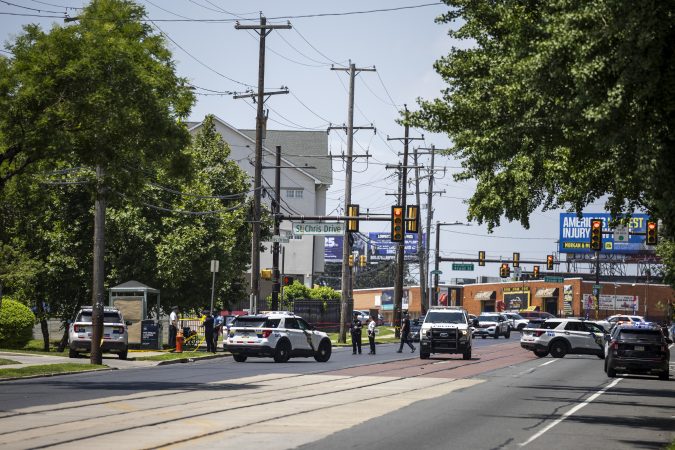
    Philadelphia police on Monday identified both the officer and the 32-year-old man he fatally shot last week during a confrontation outside St. Christopher’s Hospital for Children.

    Joseph Smithers allegedly pulled a Smith and Wesson handgun from his waistband at a bus stop on Erie Avenue when he was shot multiple times by Officer Azieme Lindsey, the police department said.

    “He did not fire his weapon,” Police Commissioner Kevin Bethel said Thursday evening about Smithers.

    A 29-year-old woman, identified last week by Police Commissioner Kevin Bethel as Smithers’ girlfriend, sustained a graze wound to her neck. She was taken to Temple University Hospital to be treated. Bethel said Thursday evening that she was in good condition.

    Lindsey and a second responding officer both had body-worn cameras that were activated during the encounter, the department said Monday.

    Lindsey, 28, was placed on administrative duty while the shooting was being investigated by the police department and the Philadelphia District Attorney’s Office.

    Just after 10:20 a.m. Thursday, two police officers responded to the area of St. Christopher’s after being dispatched for a report of a person with a weapon, the department said Monday.

    It was later determined that the original 911 caller, described as a family member, had contacted police out of concern that Smithers was experiencing a mental health crisis and was suicidal, the department said.

    It was also later determined that around the time of the 911 call from the family member, Smithers had been told by security that he was not allowed in the hospital because he had been asked to leave the day before and was no longer permitted on the property, the department said.

    No explanation has been given for why Smithers was asked to leave on Wednesday, but Bethel said last week that Smithers was there because his son was at the hospital.

    Smithers was “left without incident” when hospital security turned him away on Thursday, the department said.

    “The hospital was at no time under threat,” Bethel said Thursday evening.

    When Lindsey and the second officer — who were in full uniform and in a marked police vehicle — arrived at the hospital, they were met by a security officer who directed them to the nearby bus stop where Smithers was last seen, the department said.

    As Lindsay exited the patrol vehicle, Smithers allegedly began moving backward while also pulling the gun, the department said. Lindsay then fired, striking Smithers multiple times.

    Smithers was transported to Temple hospital, where he was pronounced dead at 10:44 a.m. Thursday.

    The department said the handgun was legally possessed by Smithers, who had a permit to carry a concealed firearm.

  • Former strength coach charged with criminal hazing in death of Bucknell University football player

    Former strength coach charged with criminal hazing in death of Bucknell University football player

    A former strength coach at Bucknell University was charged Monday with criminal hazing in the 2024 death of Calvin “CJ” Dickey Jr., an 18-year-old freshman football player with a known medical condition who collapsed after being required to perform drills until he passed out, Pennsylvania Attorney General Dave Sunday said.

    Mark Kulbis, 34, who worked for Bucknell at the time, surrendered to authorities late Monday morning and was arraigned on the charges, Sunday said. Bail for Kulbis was set at $10,000 unsecured.

    Dickey, originally from Florida, was participating in the first day of freshman football practice for the university in Lewisburg, Pa., on July 10, 2024, “when he was directed to do extensive calisthenics, which put him in risk of death due to his sickle cell trait,” the attorney general’s office said.

    Kulbis allegedly “subjected Dickey to the hazing, even after being made aware of Dickey’s medical condition and receiving training from the university on sickle cell trait and state law and NCAA standards regarding hazing,” Sunday’s office said.

    Dickey was required to perform 100 “up-downs” and several full-body plank drills: “both considered extraneous calisthenic exercises. This was done in spite of training and direction from other coaches that such exercises were not appropriate or safe for use as part of training,” the attorney general’s office said.

    Dickey, who was recruited to play lineman positions, “was visibly struggling with the exercises and Kulbis, the only coach in the training room, did not summon help until Dickey passed out,” Sunday’s office said.

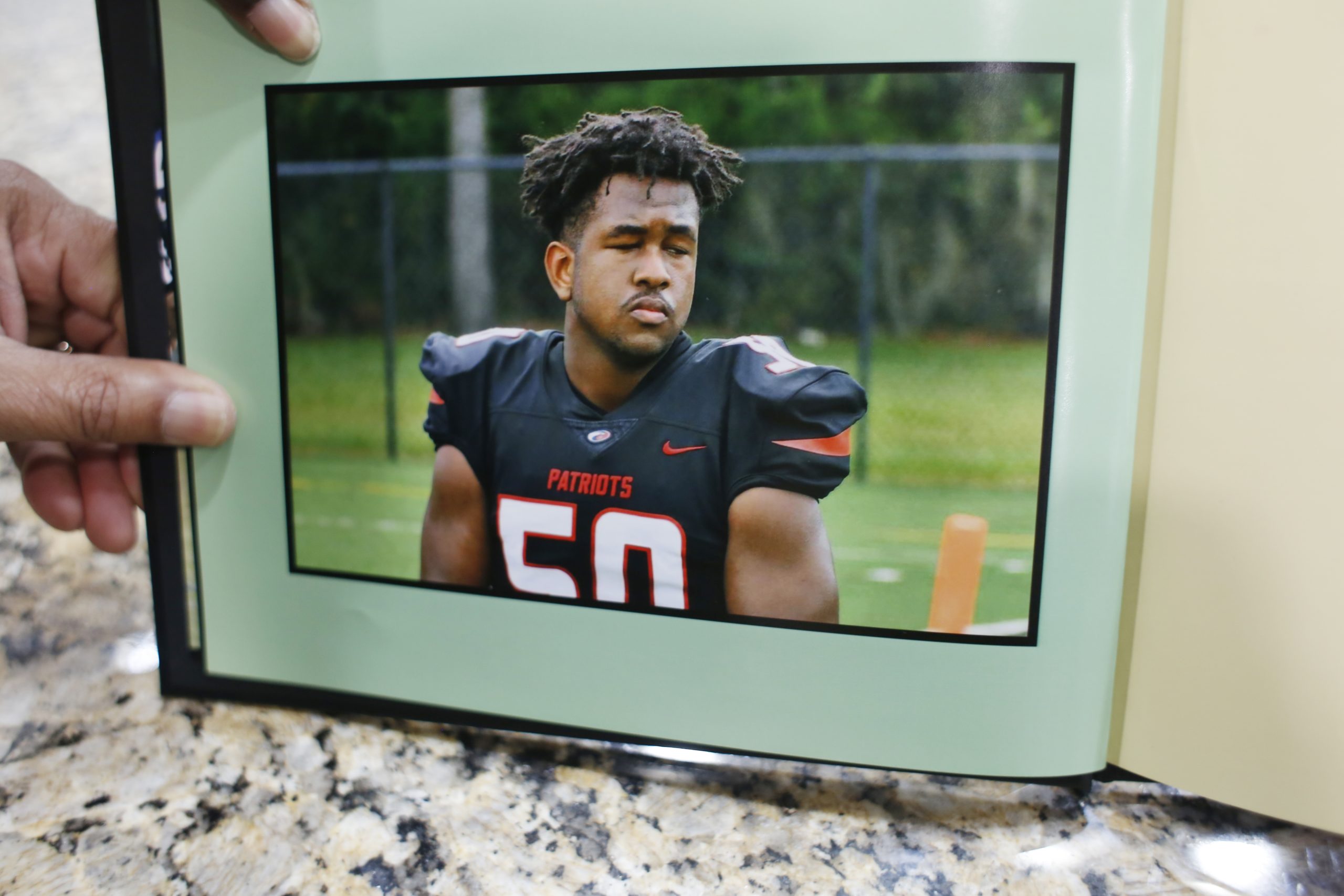
    Photo of Calvin “CJ” Dickey Jr. The 18-year-old died in 2024 after collapsing on the first day of freshman football practice for Bucknell University.Octavio Jones/ For the Inquirer

    Dickey was hospitalized, but died on July 12, 2024. An autopsy determined that Dickey’s death “was caused by Kulbis subjecting Dickey to the exercises in combination with Dickey’s Sickle Cell trait, body weight, and exertional rhabdomyolysis,” the attorney general’s office said.

    “This is an extraordinary tragedy, worsened by the fact that C.J.’s death was preventable,” Sunday said in a statement.

    The sickle cell trait can make intense exercise dangerous in certain situations. It used to be the leading cause of death in college football, but the rate of death associated with it among Division I football players dropped by nearly 90% after the NCAA began requiring testing and education in 2010, according to a report published in Sports Health Journal.

    NCAA guidelines say coaches should allow student athletes to set their own pace, build up slowly while training, and rest and recover between intense bouts of exercise.

    The criminal case was referred to state prosecutors last year by the Union County District Attorney, Sunday said. The campus in Lewisburg, located about a hour north of Harrisburg, is located in Union County.

    In an emailed statement, Bucknell University said Monday that university officials were aware of the criminal charges announced against Kulbis.

    “Bucknell has cooperated with the Pennsylvania Attorney General’s Office throughout its investigation,” the university said.

    “Because this is now an active criminal matter, and related civil litigation remains pending, the university will not comment on the allegations or legal proceedings,” the university said.

    “We continue to remember Calvin ‘CJ’ Dickey, Jr. and extend our deepest sympathies to his family and friends,” Bucknell said.

    Barbara Zemlock, an attorney for Kulbis, could not be reached for comment. ESPN reported that Zemlock provided a statement defending Kulbis.

    “While the death of Calvin Dickey is tragic, Mark Kulbis did not contribute to it and is not responsible for it,” Zemlock told ESPN.

    “The strength and conditioning program that was implemented was appropriate and in accordance with the training that Mr. Kulbis received, and with applicable standards.”

    Zemlock added: “There are facts and other circumstances surrounding this matter that, once presented at the appropriate time, will demonstrate that Mr. Kulbis did not commit the crimes charged,” and that “we intend to vigorously defend the charges.”

    Late last month, a federal judge allowed a lawsuit to proceed against Bucknell University filed by Dickey’s parents.

    Kulbis was charged with felony aggravated hazing and misdemeanor counts of involuntary manslaughter, reckless endangerment, and hazing. Sunday said.

    The aggravated hazing charge was made into Pennsylvania law in response to the 2017 hazing death of Penn State University student Tim Piazza.

    “This law exists because it recognizes what hazing is: criminal conduct that, in the best possible scenario, humiliates and dehumanizes an individual — and at its worst, takes lives and leaves families and friends forever devastated,” Sunday said.

  • Macron arrives in Syria as first major western leader to visit war-torn country under new leadership

    DAMASCUS, Syria — French President Emmanuel Macron arrived Monday in Syria, making him the first major western leader to visit the war-torn country since the ouster of Bashar al-Assad in 2024.

    Ukrainian President Volodymyr Zelensky visited in April but Macron is the first leader from western Europe or North America to do so.

    The French president’s visit comes during a period of relative calm in the Middle East after the monthslong war in Iran and Lebanon. He will travel next to Ankara, Turkey, for the NATO summit, where Syrian President Ahmad al-Sharaa is also expected to attend and hold a high-profile meeting with U.S. President Donald Trump.

    Syria’s state-run SANA news agency said Macron would visit with a business delegation to discuss regional security as well as business and investment opportunities.

    The French president was greeted at Damascus airport by Syrian Foreign Minister Asaad al-Shibani.

    “I have come to express France’s commitment to the Syrian people. For a sovereign Syria, united in its diversity and at peace with its neighbors,” Macron said in a post on X. “Together, let us open a new chapter of stability and peace.”

    France supports all those who can “contribute to build a new Syria” in line with the aspirations expressed since the 2011 Arab Spring, Macron’s office said, referring to a period of widespread uprisings across the Middle East that called for political change and reform.

    Macron will meet with al-Sharaa at the presidential palace and “engage directly with diverse Syrian people,” his office said.

    The French president’s meetings are scheduled throughout Tuesday, beginning with members of Syrian civil society, his office said, though no details were disclosed. Macron will then meet with al-Sharaa, before holding economic talks and signing memorandums of understanding. The two leaders will hold a joint news conference afterward.

    Macron hosted al-Sharaa in Paris in May 2025, where he urged European and U.S. leaders to lift longstanding sanctions on Damascus. Most of those sanctions have since been lifted.

    Paris supported Syria’s new leadership even at a time where others were skeptical of al-Sharaa’s Islamist-led rule and former role as the head of the Hayat Tahrir al-Sham militant group, previously linked to al-Qaida.

    Western governments were especially concerned about the treatment and inclusion of women and minorities, and whether Syria’s new government would transition into a more democratic rule.

    Syria has managed to sidestep the region’s recent conflicts, but the country is still battered from 13 years of war that left much of it in ruins, drove millions into poverty, and will cost hundreds of billions of dollars to rebuild. While Syria has signed memorandums of understanding with states and large companies for large investment projects, they have not yet come to fruition.