Category: News

  • Police release images of suspect SUV in hit-and-run death of Temple University student

    Police release images of suspect SUV in hit-and-run death of Temple University student

    Philadelphia police on Tuesday released surveillance images of the white SUV suspected in a the fatal hit-and-run crash on Kelly Drive last month that killed 20-year-old Temple University student Bryce Wolfe.

    The unidentified driver dragged Wolfe for more than a mile on Kelly Drive, police said.

    The police department’s Crash Investigation Division released two images of what investigators believe is 2001-08 Chevrolet Trailblazer and a stock image that more clearly shows what the make and model looks like.

    Police said the white Trailblazer may have damage on the driver’s side with possible red paint transfer, a broken rear windshield, and a discolored passenger-side front wheel.

    A $10,000 reward funded by an anonymous donor is being offered to anyone who provides information leading to the arrest and conviction of the driver, Temple University president John Fry said last week.

    Wolfe, of Conyngham, a borough in Luzerne County, was an actuarial science major in the Fox School of Business and had just completed his sophomore year.

    Bryce Wolfe, 20, of Luzerne County, had just completed his sophomore year at Temple University when he was killed by a hit-and-run driver on Kelly Drive.Wolfe family

    Philadelphia police said they responded to a report of a crash at Kelly and Reservoir Drives around 11:15 p.m. on June 24.

    Wolfe was riding a red 2004 Triumph motorcycle when he was struck by a white SUV on Kelly Drive at Reservoir Drive. The eastbound SUV driver was trying to make an illegal turn onto Reservoir Drive, but then attempted to return to eastbound Kelly Drive when the SUV entered Wolfe’s westbound path.

    The 20-year-old became trapped beneath the SUV and was dragged to the area of Fountain Green Drive before he was dislodged from the SUV, police said. Wolfe was transported by medics to Penn Presbyterian Medical Center and pronounced dead at 4:41 a.m. on June 25, police said.

    Lori Wolfe, Bryce’s mother, said in a text message Tuesday evening that she was hopeful that the case would be solved.

    “We feel this along with the 10k reward will help to give our son justice in finding the driver,” she said.

    A GoFundMe page has been created to help Bryce Wolfe’s family.

    Fry, Temple’s president, in a June 30 joint statement with Jodi Bailey Accavallo, vice president of student affairs, and Denise Wilhelm, interim vice president for public safety, said Wolfe “had quickly established a reputation as both an excellent student and engaged member of the Temple community,” maintaining a high grade-point average while being enrolled in both Temple and Fox Honors program.

    “Bryce was also deeply involved outside of class as he was a member of the student professional organization Gamma Iota Sigma and had recently started an internship with United States Liability Insurance Group,” Fry said.

    “There is no doubt that he had a very bright future ahead of him, and that’s what makes delivering this news especially difficult,” Fry said.

  • Historians reject White House’s criticism of Smithsonian museum

    Historians reject White House’s criticism of Smithsonian museum

    On July 4, the White House posted a lengthy report condemning the Smithsonian Institution’s National Museum of American History, accusing it of promoting “extreme ideological activism” while denigrating the nation’s founders and its founding.

    Historians have started to reply with failing grades of their own.

    The Organization of American Historians, the nation’s largest group of scholars of U.S. history, blasted the report in a statement Monday, accusing the administration of presenting a partisan ideological attack in the guise of historical critique.

    “The National Museum of American History interprets America’s history through its vast collection,” it said. “This report’s objective is to punish it for doing that in a way that makes U.S. history accessible to and reflective of all Americans. The report is only the latest chapter in a broader, systematic campaign that now targets an institution that was never meant to answer to any single administration.”

    The group accused the administration of ignoring decades of scholarship and trying to “erase the conflict, struggle, and diversity — the complexity — that have always defined the American experience.”

    “Make no mistake: The report represents an attempt to turn back the clock to a time when U.S. history was taught as the history of white Christian men who conquered a continent, U.S. military leaders who rarely lost a battle and U.S. presidents who were single-handedly responsible for national greatness, all under the cover of ‘anti-DEI’ and ‘anti-woke’ crusading,” it said.

    The White House report presents a wide array of charges, including that the museum promotes transgender issues and engages in “pro-illegal immigrant activism.” But at its core is a complaint that it fails to tell an “inspiring and unifying” national story that focuses on the heroism of the founders and acknowledges Christianity’s “constructive role” in “shaping the nation and its freedoms.”

    In a separate email to the New York Times, the president of the Organization of American Historians, Marc Stein, questioned the symbolic timing of the report.

    “Released on July 4, 2026, the 250th birthday of the U.S. Declaration of Independence, the report is a declaration of independence from history,” he said.

    Stein, a history professor at San Francisco State and the author of a recent history of the 1976 Bicentennial, defended the museum’s director, Anthea M. Hartig, a scholar of architectural history and cultural heritage who took over that role in 2019.

    The report “mischaracterizes and misrepresents the words of Anthea Hartig, who has consistently worked to educate and inform visitors to the museum with innovative exhibits and inspirational programs,” he said. (Hartig is a past president of the Organization of American Historians.)

    Some historians have questioned the accuracy of some of the report’s claims, including that the museum largely ignores the American Revolution and figures such as George Washington.

    Sarah Weicksel, the executive director of the American Historical Association, which has more than 10,000 members, noted in an email that the museum includes some “extraordinary” Revolutionary-era objects, like the newly restored gunboat Philadelphia, which it is highlighting for the nation’s 250th anniversary.

    Weicksel questioned some of the report’s criticisms of specific wall labels — for example, one about the history of U.S. education that refers to portraits of George Washington that have hung in many classrooms to promote patriotism. The report faults the label for not including biographical information about Washington and why he is important.

    “Studies of museum visitation have shown that labels should be presented no higher than an eighth-grade reading level and that most visitors will read no more than a brief label,” she said. “If every label that mentions Washington or Lincoln needs to recount a rote interpretation of their importance to the country, visitors will never learn anything new.”

    This article originally appeared in the New York Times.

  • A W hotel building contractor is hit with another court judgment, this time for $42.4 million

    A W hotel building contractor is hit with another court judgment, this time for $42.4 million

    One of the largest building contractors in the United States has been hit by another multimillion judgment as a result of the dispute over the W and Element hotels in Center City.

    Philadelphia Common Pleas Judge James Crumlish III ordered California-based Tutor Perini Building Corp. to pay $42.4 million in damages to the subcontractor retained to install the building’s exterior, the Chicago-based Ventana DBS LLC.

    “Throughout the project, Ventana was forced to navigate numerous obstructions and obstacles, stemming from Tutor Perini’s pervasive material breaches of contract,” Crumlish’s ruling read last week.

    That judgment comes on top of a $174.7 million judgment Crumlish issued earlier this year for 2,797 days of construction delays to the 51-story building, to be paid to Philadelphia-based Chestlen Development LP.

    A Tutor Perini spokesperson said in April that the firm disagreed with the decision and intended to appeal it.

    The contractor declined to comment on the new developments.

    “This ruling is an important affirmation of the facts and of the principles that govern successful project delivery,” said Bob Clark, executive chairman of Clayco, a real estate development company that is Ventana’s parent company.

    “We are pleased that the Court awarded Ventana $42 million in damages and recognized that Tutor Perini failed to properly coordinate its subcontractors while acting in bad faith by concealing its knowledge of significant concrete defects,” said Clark.

    The judgment is the latest in the fallout from a construction project that Crumlish has said in an earlier ruling went “off the rails” because of Tutor Perini. Five years after the W hotel opened, the litigation is ongoing.

    Tutor Perini was in court again Tuesday for the start of a new trial, this time for the judge to assess how much a concrete subcontractor, Thomas P. Carney Inc. Construction, owes Tutor for botching the job.

    The proceeding had a tense opening as attorneys for Tutor Perini and Carney spent the morning arguing over motions.

    Crumlish, who has previously chastised the parties for their animosity and turning the litigation into a “challenging behemoth,” expressed frustrations at times and ordered everyone to stop talking.

    “I’m getting cranky, I will admit it,” the judge said at one point.

    Disruptive and costly delays

    Tutor Perini retained Ventana in 2015 for $14 million to assist in the design and installation of the building’ exterior and window-wall systems for floors nine to 50.

    But when Ventana moved to install the hotel’s wall-window systems, they immediately noticed a “big problem,” according to the judge’s October memo. In many places, the concrete was not level or did not meet the elevation requirements in the design.

    Tutor Perini denied there was a problem, while quietly attempting to grind the edges of the concrete slabs to address the issue.

    By failing to supervise the concrete pours, Crumlish wrote in the recent ruling, Tutor Perini caused the “inefficient, obstructed, and impaired installation” of the window-wall systems.

    “Ventana repeatedly encountered disruptive and costly delays due to Tutor’s lack of coordination while attempting to install its window wall systems,” the judge’s memo said.

    Tutor Perini, for example, didn’t clear debris left by other subcontractors, the judge said, to allow the Ventana team to transport the window-wall components.

    And while Tutor’s consultants confirmed the problem was the concrete pour, the company rejected Ventana’s delay notices and stopped paying the contractor.

    Crumlish ordered Tutor to pay Ventana the $7.5 million unpaid subcontractor balance, $7.3 million in labor inefficiency costs, and $2.4 million unpaid change order requests, and $18 million in other costs.

    The company is also on the hook for $7.1 million in attorney’s fees, expert witness fees, and litigation costs, bringing the total judgment to $42.4 million.

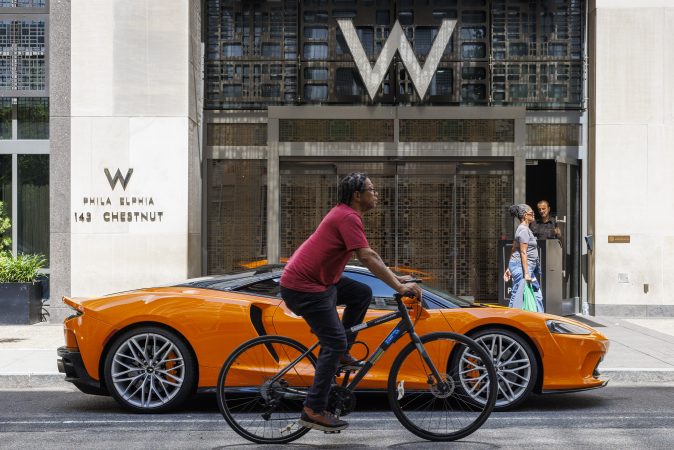
    The W hotel opened in 2021 at 15th and Chestnut Streets, three years after its intended opening date, and it still cannot be fully occupied because some window vents are inoperable.

    The project was developed by Brook Lenfest, son of former Inquirer owner H.F. “Gerry” Lenfest, whose foundation continues to own the newspaper.

    Editor’s note: This article has been updated with a statement from the subcontractor Ventana’s parent company.

  • 7 heat-related deaths have been reported in Philadelphia this month, 8 for the year

    7 heat-related deaths have been reported in Philadelphia this month, 8 for the year

    Philadelphia so far has confirmed seven heat-related deaths in the last week, bringing the seasonal total to eight, the city health department reported Tuesday.

    And officials in the Garden State are investigating 29 “suspected” heat-related deaths, most of them in the central and northern parts of the state, a spokesperson for the New Jersey Health Department said..

    Four deaths were reported on Monday, and three additional fatalities Tuesday, said James Garrow, a spokesperson for the Philadelphia Department of Public Health, with an eighth earlier in the season.

    No details were available about the victims, including their ages and when and where the deaths occurred.

    The possible New Jersey heat-related deaths would have occurred during the record three-day hot spell that ended on July Fourth, the state said.

    In Philadelphia, temperatures on those three days hit 101 degrees or higher, the first time that had happened in the period of record dating to 1873, the National Weather Service said.

    It also was only the third time that they officially reached triple digits on three straight days.

    In New Jersey, the suspected victims ranged in age from the mid-30s to the 80s, said health department spokesperson Dalya Ewais. She added, however, that death toll numbers “are still unconfirmed,” pending forensic examinations.

    In the last decade Philadelphia has averaged but five deaths annually, a dramatic drop from the deadly summers of the 1990s.

    In 1993, Philadelphia recorded 118 heat-related deaths — compared with 50 in the 10-year period that began in 2017. The eight reported so far are the most since the eight of 2022, according to health department records.

    The shock of the 1993 death toll in Philly — which foreshadowed Chicago’s 1995 disaster, and Europe’s in 2003 — led to the creation of the city’s heat-response system, recalled David L. Cohen, who was chief of staff under former Mayor Ed Rendell.

    Federal officials have lauded the program as a model for other cities. It includes setting up cooling centers, encouraging people to look in on neighbors, and having the Philadelphia Corporation for Aging set up a heat hotline.

    A study published in the Bulletin of the American Meteorology Society in 2025 credited the program with saving 270 lives from 1995 through 1998.

    If the forecast holds, the city can give the program a rest at least through the week. No highs of even 90 degrees are expected through Monday.

  • Repression turns to rage after quakes in Venezuela

    Repression turns to rage after quakes in Venezuela

    LA GUAIRA, Venezuela — As postquake efforts in Venezuela start shifting from rescue to recovery, a crack has opened in Venezuelan society, and people are speaking out against their repressive government with a force and openness that has not been seen in years.

    Across La Guaira, the northern state hardest hit by the twin quakes, grieving citizens have shouted down police officers and national guard members, accusing them of standing by as civilians and international aid workers dig for the living, and now, the dead.

    In interviews, Venezuelans are openly criticizing the country’s ruling party and its leader, Delcy Rodríguez, something that would have been unthinkable just a year ago.

    They are also turning their anger toward the Trump administration, which has spent the last few months facilitating economic deals between U.S. companies and Venezuela, and has stood by the government’s management of the disaster.

    Inside Venezuela, fears of imprisonment, torture, and forced exile, once powerful incentives for silence, are being pushed aside as feelings of frustration and impotence grow.

    “Why would I be afraid?” said José Silva, 47, who on Friday was resting on a sidewalk not far from a giant public housing complex now turned to rubble. Some 700 families had lived inside.

    Silva’s clothes were drenched with sweat; it was evening, only partway through his 10th day pulling survivors and bodies from under slabs of concrete. He lashed out at the government: the police were rescuing only their own, he said, and the government had sent only “second rate” tools.

    “Why would I be afraid,” to speak out, he said, “if I was born to die?”

    This anger runs parallel to growing political tension over the leadership of Rodríguez. When U.S. forces captured her predecessor, Nicolás Maduro, in January and greenlit her ascension from vice president to president, the Trump administration characterized Rodríguez as a force of stability.

    Before the quake, President Donald Trump said that she was doing a “very good job” running the country.

    But criticism of her government’s response to the disaster, particularly in the critical first 72 hours when victims are most likely to be rescued alive, and the growing fury in the streets, has raised questions about whether she can cement that stability.

    The public outrage could also complicate the Trump administration’s strategy of supporting Rodríguez so the United States can benefit from Venezuela’s resources.

    Trump’s envoy to Venezuela, John Barrett, has supported Rodríguez, saying in a television interview after the quakes that Washington had “a great deal of confidence” in the Venezuelan authorities.

    But in recent days a chorus of hard-line congressional Republicans have doubled down on criticism of her management, calling for political change as soon as possible.

    “They’re failing at their job right now,” Rep. Carlos Gimenez (R., Fla.) said in an interview with CNN, calling Rodríguez an “interim dictator.”

    Venezuelans have gathered outside the U.S. Embassy, pleading with Barrett to do more to help victims. One man, yelling into news media microphones outside the embassy recently, harangued Barrett for sitting with government officials the United States had once deemed criminals and terrorists, while victims suffered “just two blocks away.”

    “The grievance is indeed directed at John Barrett,” he shouted. “Why has he not sat with Venezuelan civil society — the honest ones, the ones who haven’t stolen anything?”

    Maria Corina Machado, the country’s popular opposition leader, has been trying to get back into the country, but she does not have a passport, or permission from Rodríguez or the United States, to enter Venezuela.

    At a news briefing on Thursday, Rodríguez defended her government’s response to the disaster, saying she had immediately dispatched 4,000 government workers to respond to the quakes, a number that had grown to 19,000.

    “What happened in Venezuela on June 24 was a natural tragedy of a scale we never imagined,” she said.

    In response to accusations of a poor state response, Rodríguez asserted repeatedly that “media laboratories” were inventing a narrative of chaos.

    As evidence of the government’s mobilization, official social media accounts have heavily publicized a handful of state-supported rescues, including one in which dozens of well-equipped emergency workers from Chile rescued a man who had survived a week in the rubble. Rodríguez visited the man at the hospital.

    But these videos contrast sharply with the reality in La Guaira, where civilians in sneakers and T-shirts are doing a vast amount of the rescue and recovery work, using shovels and pickaxes and their bare hands to pull friends, neighbors, children, spouses, siblings, and parents from the rubble. Some lack masks to protect themselves from the dust and stench of decomposing bodies.

    Rodríguez was widely criticized in Venezuela as out of touch after she was photographed wearing a luxury ski jacket, a logo of the Italian brand Moncler on her arm, to visit quake victims.

    “It’s a lie that the government is helping,” Silva said.

    Soon after he spoke, darkness fell. Not far way, a group of men had just discovered five bodies in a hole they had dug in the side of the mountain of broken concrete.

    The men wrapped the bodies in sheets and then laid them gently on the ground. Survivors looking for relatives crowded around, pulling back the sheets to try to identify the deceased. One was the body of a little girl. The others were unrecognizable.

    Thousands of people are now homeless, and the death toll, officially over 3,500, is likely to be far greater. In the coming weeks, the government will be under intense pressure to address an increasingly complex humanitarian crisis.

    Outside of another collapsed public housing building, Kimberling León, 39, a resident of the complex, described the government response in the hours and days after the quakes hit.

    She was searching for her sons, ages 9 and 13, who she believed were trapped in the rubble.

    “The police came by, normal, filming, they didn’t help us,” she said, her voice flat, like a person still in shock.

    “We said to them: ‘help us, help us,’ they didn’t come to our aid. We started digging with our hands, but the smoke was too much, the flames rose high, the gas tanks had exploded.”

    The second or third day, a shovel and pickax arrived, she said.

    “We started digging, digging, digging. We called for machines to help, but they just passed us by, headed to the private buildings” where people could pay, she said.

    Silence has been one of the most valuable commodities in La Guaira, as rescuers try to make out the taps and calls of any living that might still be buried in the rubble.

    Often, rescuers shoot a fist in the air and call for quiet, instructing drivers to cut motors and people to stop walking.

    On a recent day, profanities rained down on the interior ministry workers who rolled past a silent zone with sirens blaring. Civilians banged on the car in anger.

    While the quakes have opened space for people to vent years of pent up fury, this public outcry could also spur a crackdown, leading to questions about how the United States would respond to any repression.

    The last major social outburst was in 2024, after the ruling party stole a presidential election.

    Venezuelan officials halted protests in a matter of days by sending the military into the streets, killing protesters and locking up civilians accused of minor expressions of dissent.

    Last week, a volunteer rescuer named Wilmer Cruz who had been filmed speaking out about the government response disappeared, according to human rights groups.

    When activists publicly accused the government of retaliating against Cruz, the authorities released him from prison.

    Oscar Murillo, who leads Provea, a human rights group, said the arrest highlighted for him that the quakes have not changed the “authoritarian model” in Venezuela.

    This article originally appeared in the New York Times.

  • George E. Johnson, who built a Black hair care empire, dies at 99

    George E. Johnson, who built a Black hair care empire, dies at 99

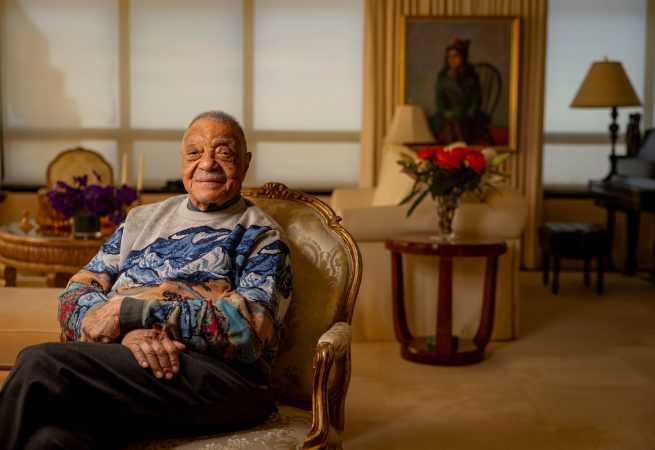
    George E. Johnson, a hair care magnate who rose from a sharecropper’s cabin to found, with his wife, Joan, what was said to be the first Black-owned company listed on a major American stock exchange, and who made a fortune on products like Ultra Sheen and Afro Sheen, died on Monday at his home in Chicago. He was 99.

    His death was confirmed by his second wife, Madeline Murphy Rabb, who said the cause was respiratory illness.

    Long before sports figures, entertainers, and Fortune 500 executives commanded sky-high salaries, the Johnson Products Company, which sold Black hair products and cosmetics, made its founder, Mr. Johnson, one of the nation’s wealthiest African Americans.

    He also helped found one of the first, and largest, Black-owned banks, the Independence Bank of Chicago, where he served as chairperson until it was sold in 1995. And for decades, Johnson Products indirectly influenced pop culture through its sponsorship of the nationally syndicated television dance show Soul Train.

    Johnson Products originated in the laboratory of Samuel B. Fuller, a Black cosmetics entrepreneur, where Mr. Johnson worked after dropping out of high school. Up to that point, his experience — starting at the age of 9, when an aunt gave him a shoeshine box — had been menial jobs.

    Mr. Johnson started at Fuller Products as a salesperson — “carrying the black bag,” as he put it — though he initially found it distressing to peddle pomade and face powder amid urban deprivation.

    “I had a problem with it unless I really needed money,” he said in an interview for this obituary. “Then I would sell like hell.”

    After requesting to work indoors, Mr. Johnson created his first product, a hair relaxer for men he called Ultra Wave. With Fuller’s blessing, Mr. Johnson teamed up with his wife and a barber to found Johnson Products in 1954.

    After one branch of a finance company rejected his request for a business loan as a “ridiculous” idea, Mr. Johnson secured the $250 in seed money from another branch by saying he needed the funds to take Joan on a vacation to California. Those early financing troubles later inspired him to help start a bank.

    He found himself on the road again to peddle his product when his partnership with the barber soured. From his station wagon, he sold Ultra Wave and other products to barbers from the Upper Midwest to New York City.

    But he soon found that barbers were not loyal. “They couldn’t resist the next deal that came along, although it involved poor quality, cheaper stuff,” Mr. Johnson told the New York Times in 1976.

    So he started eying beauty shops, where he observed women using hot combs and mineral oil to straighten hair, a smoky and unhealthful process. He modified Ultra Wave for the women’s market, creating Ultra Sheen, which he said reduced smoke by as much as 75% and could be used in the home.

    Sales took off. In the 1960s, the company had an estimated 80% of the Black hair care market, and by 1970 it had annual sales of $12.6 million, or more than $100 million today. The company listed on the American Stock Exchange in January 1971.

    Johnson Products spent heavily on advertising in its heyday — $5 million in 1975, or more than $31 million today — and was the first Black-controlled company to sponsor a national television program, Soul Train, which aired weekly for almost 35 years, until 2006.

    (Johnson Products is not related to Johnson Publishing Company of Chicago, the former publisher of Ebony and Jet magazines. Nor is it related to Robert L. Johnson, a co-founder of Black Entertainment Television.)

    Cultural and regulatory challenges — and even severe weather — exacted a toll on Johnson Products, which was struggling for survival by the late 1970s and posted its first loss in the mid-1980s.

    The company, which relied on straighteners, was late to adapt to the growing popularity of Afro hairstyles in the 1960s. Near the end of that decade, its reformulation of Ultra Sheen as Afro Sheen resulted in a poor product for long, curly hair, Mr. Johnson acknowledged.

    In the 1970s, a Federal Trade Commission investigation into the marketing of hair straighteners disrupted the industry, and in 1976 Johnson Products negotiated a consent order to add a warning that its products containing sodium hydroxide, or lye, and could cause scalp irritation and eye injury. This was over a year before Revlon, its far larger competitor, agreed to similar warning labels, a lag that may have given Revlon an edge with Black consumers.

    While African Americans made up a small part of Revlon’s market, they represented almost all of Johnson Products’, and its share of the relaxer market skidded to 45% from 85% in two years.

    Mr. Johnson also said he faced racial discrimination, contending that distributors “don’t seem to want Black products to be exposed to all Americans.”

    In early 1979, a heavy snowstorm in Chicago brought the company to a near standstill for more than a month, blocking truckers from transporting supplies or shipments and damaging its plant.

    George Ellis Johnson was born June 16, 1927, in a sharecropper’s shack in Richton, Miss., and moved to Chicago with his mother, Priscilla, when he was 2. Although his education ended in 11th grade, he was awarded nine honorary doctorates over his lifetime.

    Last year, Mr. Johnson published Afro Sheen: How I Revolutionized an Industry with the Golden Rule, From ‘Soul Train’ to Wall Street, a memoir, written with Hilary Beard.

    Joan Johnson wound up with control of the company when the couple divorced in 1989. After some disruptions, including the departure of her son Eric as president and CEO, she sold Johnson Products to the Ivax Corporation in 1993, netting about $32 million, or about $75 million today.

    The Johnsons remarried in 1995. She died in 2019.

    In addition to Rabb, whom he married in 2022, Mr. Johnson is survived by his sons, Eric, John, and George Jr.; his daughter, Joan; 10 grandchildren; and seven great-grandchildren.

    Ivax sold the company to Procter & Gamble in 2004 before it was bought by a consortium of African American investment firms in 2009.

    “When I think about pioneers, the real pioneers are the people who are able to make a path where none exists,” Eric Johnson told CNN after his mother died in 2019. “Johnson Products in many ways was that company. She and my father had no provided path. They created a path where there was none.”

    This article originally appeared in the New York Times.

  • Democrats begin to clash over who replaces Platner even before he exits

    Democrats begin to clash over who replaces Platner even before he exits

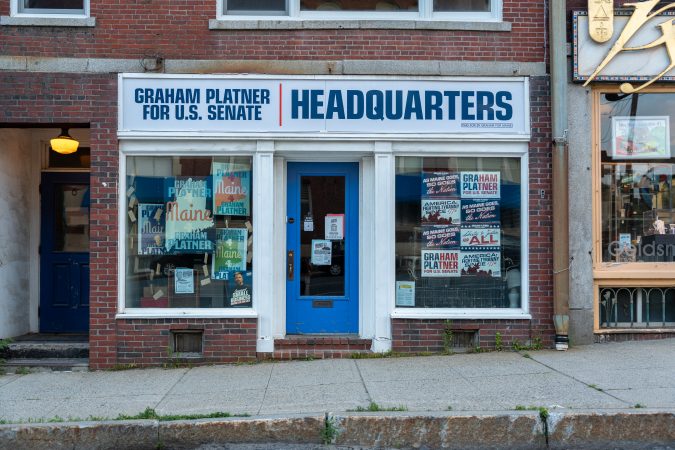
    The implosion of Graham Platner’s campaign for Senate in Maine after an accusation of rape has ripped open divisions inside the Democratic Party as its progressives and moderates battle to pick his successor even before he has said he will step aside.

    National Democrats have grown alarmed that a seat seen as crucial to winning control of the Senate could be slipping from the party’s grasp. Platner had survived a series of controversies — about a tattoo with Nazi symbolism, inflammatory old Reddit posts, and his relationships with women — but many in the party abandoned him after the rape accusation, including the leaders of the Maine Democratic Party and Senate Minority Leader Chuck Schumer.

    They have demanded that Platner step down before a Monday deadline for him to be replaced on the ballot to find a new Democrat to run against Sen. Susan Collins, a longtime Republican fixture in the state. The main super political action committee for Democratic Senate candidates said it would redirect $24 million in ad reservations to other states if he remained.

    Sen. Bernie Sanders (I., Vt.), one of Platner’s earliest and most prominent backers, joined the chorus on Tuesday afternoon.

    “I have spoken with Graham Platner about the best path forward for Maine,” Sanders said in a statement. “In light of these very serious allegations, I have recommended that he step aside.”

    Platner, who has denied the allegation, said on a private call with his campaign staff on Monday evening that he believed he still had leverage to influence which candidate would replace him on the ticket, according to three people familiar with the conversation. On the call, he did not announce plans to withdraw but implied such a decision would be coming, the people said.

    Platner’s campaign had stopped running ads on Meta’s platforms, such as Facebook and Instagram, as of Tuesday, according to the company’s ad disclosure database. He had been running multiple ads as recently as Monday evening.

    The drama comes almost exactly two years after the Democratic Party was roiled by the exit of Joe Biden, then the president, from his reelection race and the speedy anointment of Vice President Kamala Harris as the Democratic nominee. That process — and Democrats’ ultimate loss in 2024 — has left deep scar tissue for many in the party.

    Many on the left — including, it appears, Platner himself — want any replacement to come from the progressive wing of the party after he won the primary over Gov. Janet Mills, a moderate two-term Democrat, who withdrew over a month before the election.

    “To the Democratic establishment: This is not your opening,” said Joseph Geevarghese, executive director of Our Revolution, a group that emerged from Sanders’ 2016 presidential campaign. Referring to Senate Democrats’ campaign arm, he added, “Mainers did not vote by an overwhelming margin against Janet Mills and the DSCC’s handpicked pick just to be handed another status-quo candidate anyway.”

    On the flip side, many in the party establishment believe those on the left should show some humility after Platner’s collapse.

    A range of Democratic groups and activists engaged in the politics of “I told you so.”

    “When women raise the alarm, listen,” said a social media post from EMILY’s List, a group that works to elect Democratic women and that had backed Mills. “Graham Platner’s behavior is disqualifying (AS WE HAVE SAID THIS WHOLE DAMN TIME), and he should end his campaign.”

    On Tuesday morning, more Democrats who are ideological allies of Platner called for him to step aside, including New York City Mayor Zohran Mamdani.

    “I believe that it’s time for him to drop out of the race,” Mamdani said when asked at a news conference. “I think the focus of today should be to respond to the gravity of what so many of us have read, and I think the only appropriate response is for the campaign to come to an end.”

    Mamdani and Platner share several advisers, including Morris Katz and Rebecca Katz of the Fight Agency.

    The progressive group MoveOn also dropped its endorsement.

    As the situation in Maine threatened to spiral out of control, Schumer and the Democratic Senatorial Campaign Committee are set to host major donors this week for a fundraising retreat at the Broadmoor in Colorado Springs. Donors are asked to contribute $44,300 to attend, according to a copy of the invitation.

    The event, which was previously scheduled, was billed as a “special weekend to discuss the DSCC’s strategy and campaigns for taking back the Democratic Senate majority,” but now talk is likely to be consumed by the developments in Maine.

    Platner can be replaced as the Democratic nominee if he withdraws voluntarily by Monday. The state Democratic Party would then have until July 27 to pick his replacement, under state law. But the law does not dictate how the state party itself needs to pick Platner’s replacement.

    What that would look like remains unclear. The options under discussion include a convention or a statewide caucus in late July.

    “We ask for your patience as this work continues,” Devon Murphy-Anderson, the state party’s executive director, wrote in a message to committee members on Tuesday, adding: “Whatever process is ultimately adopted must reflect our Democratic values. It should be open, inclusive, transparent, and fair.”

    A range of candidates are being discussed, with some early attention on those who ran and lost the primary for governor this year. Those Democrats include Troy Jackson, a former president of the Maine Senate; Nirav Shah, a former director of Maine’s public health agency; and Shenna Bellows, Maine’s secretary of state. But some Democrats were concerned about elevating someone who just lost.

    Supporters of Jackson, who had backed Platner in the primary, created a Draft Troy website, and he filed paperwork with the Federal Election Commission for a Senate exploratory committee. Shah put out a statement that said he had received “hundreds of encouraging messages,” adding that anyone who ran for the nomination should commit to a televised debate and “multiple town halls across every corner of the state.”

    Another possible candidate is Dan Kleban, a co-founder of the Maine Beer Co., a brewery outside Portland. He briefly ran for Senate last year before dropping out and endorsing Mills. But like Platner, he has never held elected office or been through the rigors of a campaign.

    Yet another possibility is Jordan Wood, who also previously ran for Senate and dropped out. Wood ran instead in the primary for Rep. Jared Golden’s House seat and lost.

    Golden, a moderate Democrat and veteran who holds the most pro-Trump House seat of any Democrat in Congress, is retiring and previously said he was ready to step away from elected office.

    In recent days, Golden has fielded calls gauging his interest in a run for Senate, according to two people familiar with those conversations who spoke on the condition of anonymity to describe private discussions.

    Golden has not commented since the latest allegations against Platner emerged.

    More unconventional picks were being bandied about, as well. One Democratic firm in recent days included actor Patrick Dempsey in a poll. (He was viewed favorably by 52% of voters in the survey.) Others floated the popular liberal historian Heather Cox Richardson, who is based in Maine.

    Some Democrats erupted after the news emerged that Platner wanted a replacement who was aligned with him politically. One person familiar with the Platner campaign’s internal discussions said Monday that Platner would seek a guarantee he would be replaced by someone in agreement with “the values and vision and policy agenda” that he had pressed.

    Others argued that under the circumstances, Platner’s support would be damaging.

    Joe Baldacci, a state senator who ran and lost in the primary for Golden’s House seat this year, said the idea that Platner would bless a replacement would be the equivalent of “tying a lead weight” to the person.

    “After you have put the Democratic Party in a shambles and undermined all Democratic candidates running for office in Maine then you should have no say in who will be your successor,” Baldacci wrote on social media. He added, “Any connections to Platner will doom that person’s campaign from the very beginning.”

    This article originally appeared in the New York Times.
  • Hackers stole private information of more than 50,000 clients from a Philly-based law firm, lawsuits say

    Hackers stole private information of more than 50,000 clients from a Philly-based law firm, lawsuits say

    Cybercriminals duped a Blank Rome attorney into sharing the personal information of 57,554 former and current clients, two federal lawsuits filed Monday say.

    The firm, which is headquartered in Philadelphia and has 15 other offices nationwide, notified impacted clients a month after the incident, according to the complaints.

    The two nearly identical proposed class-action lawsuits, filed in the Eastern District of Pennsylvania by former Blank Rome clients from California, accuse the firm of negligence, breach of contract, and violation of consumer protection laws, among other claims.

    Blank Rome failed to use industry standards for cybersecurity and to comply with safeguards mandated by a federal medical privacy law, according to the complaints. It also didn’t appropriately train staff to identify these types of cyber schemes, the suits said.

    The lawsuits asks a judge to certify the class action on behalf of all people impacted by the breach, award them damages, and order action to ensure their identities are protected.

    “The exposure of one’s Private Information to cybercriminals is a bell that cannot be unrung,” the suits say. “Before this data breach, its current, former, and prospective clients’ Private Information was exactly that — private. Not anymore.”

    The incident was limited to one attorney and the firm’s network was never breached, a Blank Rome spokesperson said.

    “We are committed to protecting our clients’ information and maintaining the trust they place in us,” the firm’s statement said. “We believe the lawsuit has no merit and will aggressively defend against it.”

    The firm disputed that all people impacted were clients, but did not say who else was impacted.

    The attorney who filed the two lawsuits did not respond to a request for comment.

    Class-action lawsuits following cybersecurity breaches have become increasingly common. Earlier this year, Comcast agreed to pay $117.5 million to settle two dozen suits over a 2023 data breach, and the University of Pennsylvania was sued multiple times over an October breach that impacted fewer than 10 people.

    They are also lucrative for class attorneys who can pocket as much as a third of the settlement’s amount.

    The Blank Rome data breach took place on May 21 after an “unauthorized third party” posing as a member of the firm’s IT department instructed a Blank Rome attorney to upload files to an external Google Drive, according to a notice of breach attached to the complaint.

    Clients began receiving notice on June 26, the suits say.

    The firm identified the breach within two hours, deleted all the files on the drive, and opened an investigation, the notice said. Blank Rome also notified law enforcement.

    The notice was sent to clients whose information, which included names and Social Security numbers, was stolen. Clients’ addresses, dates of birth, driver’s license numbers, passport numbers, and medical and health insurance information were also potentially obtained by the hackers, the notice said.

    Blank Rome provided complimentary credit monitoring to impacted clients, the notices said, and has taken internal steps “mitigating similar risk,” including by working with cybersecurity professionals.

    “We are notifying you of this incident and want to assure you that we take it seriously,” the firm’s notice said.

  • Judge rejects Justice Department attempt to get names of 2020 election workers in Fulton County

    Judge rejects Justice Department attempt to get names of 2020 election workers in Fulton County

    ATLANTA — The U.S. Department of Justice cannot have the names and personal contact information for every person who worked during the 2020 election in Georgia’s Fulton County, a federal judge ruled Tuesday.

    The Justice Department in April obtained a grand jury subpoena seeking the names and personal contact information of county employees and volunteer poll workers. President Donald Trump has long claimed without evidence that widespread voter fraud in Georgia’s most populous county, a Democratic stronghold, cost him victory in the state in 2020.

    Fulton County asked a judge to quash the subpoena, arguing it was meant to “target, harass, and punish the President’s perceived political opponents” and that it was “grossly over broad and untethered to any reasonable need.”

    “Given the low need for the subpoenaed information and the highly burdensome nature of the disclosure of the same, the Subpoena is unreasonable and must be quashed,” U.S. District Judge William Ray wrote in his ruling, calling the scope of the request “staggering.”

    Emails seeking comment were sent to both the Justice Department and Fulton County.

    While grand juries often work with federal prosecutors to investigate alleged crimes, “that does not give the DOJ the right to use the Grand Jury to do whatever the DOJ wants,” he wrote.

    Even if the records sought by the Justice Department could help find people who worked for the county during the 2020 election who support the theory that the election was unfair, the information couldn’t be used to charge anyone, Ray wrote.

    “That is because the statute of limitations for any possible crime arising from the 2020 Election has long expired,” he wrote.

    The subpoena came after the FBI in January served a search warrant at the Fulton County election hub and seized hundreds of boxes of ballots and other documents from the 2020 election. A federal judge in May denied the county’s request to force the federal government to return the ballots.

    The Justice Department argued in a court filing that the subpoena was the “next step in the normal investigative process” and that it seeks “records identifying persons with relevant knowledge.”

    Kamal Ghali, a lawyer for the county, argued that the subpoena “will chill participation by election workers” and that the statute of limitations for any of the alleged misconduct had already lapsed.

    Justice Department lawyer William McComb argued the statute of limitations issue is not relevant at the investigative stage. The point of the investigation is to figure out what charges can be brought, he said.

    “My point is, as we sit here now, we are not sure what charges can be brought. That’s the whole point of the investigation,” he said.

    The request for election workers’ contact information, McComb said, “would simply be a pathway to determine and speak with and interview certain individuals who worked at the polls who may have seen, heard or done something in and of themselves.”

    The judge noted that the Justice Department had expressed concern about possible criminal actions in the years that followed the election, including an alleged failure by the county to preserve electronic ballot images. But he pointed out that the subpoena seeks information related to what happened during the 2020 election and its immediate aftermath.

    “In these hyper-political times in which we currently live, there are sure to be some who disagree with this decision because they believe the allegations of fraud in the 2020 Election and believe that ‘light’ should be brought to those claims,” Ray wrote.

    He added that nothing prevents continued investigation into those allegations by people who believe those claims — such as Congress or even the Justice Department — but the power of the grand jury, “which exists to investigate potential crimes and to bring viable indictments,” cannot be used for that purpose. Otherwise, anyone in power could use the grand jury process to subpoena personal information of citizens “with no legitimate law enforcement purpose,” he wrote.

    “Thus, everyone, whether you support the President or you do not, or whether you believe the 2020 Election was fair or believe that it was not, should be concerned about the DOJ’s ability to utilize the power of the Grand Jury to appropriate your private information without a legitimate purpose,” Ray wrote.

  • Trump-promoted Freedom Fuel gas stations are opening around Philly. Here’s what we know.

    Trump-promoted Freedom Fuel gas stations are opening around Philly. Here’s what we know.

    Philadelphia-area drivers can now fill up their tanks with less-expensive gasoline promoted by President Donald Trump’s administration, but details on the entire enterprise remain scarce.

    The White House on Tuesday announced the opening of the first Freedom Fuel gas station in Upper Dublin Township, at a former Sunoco station.

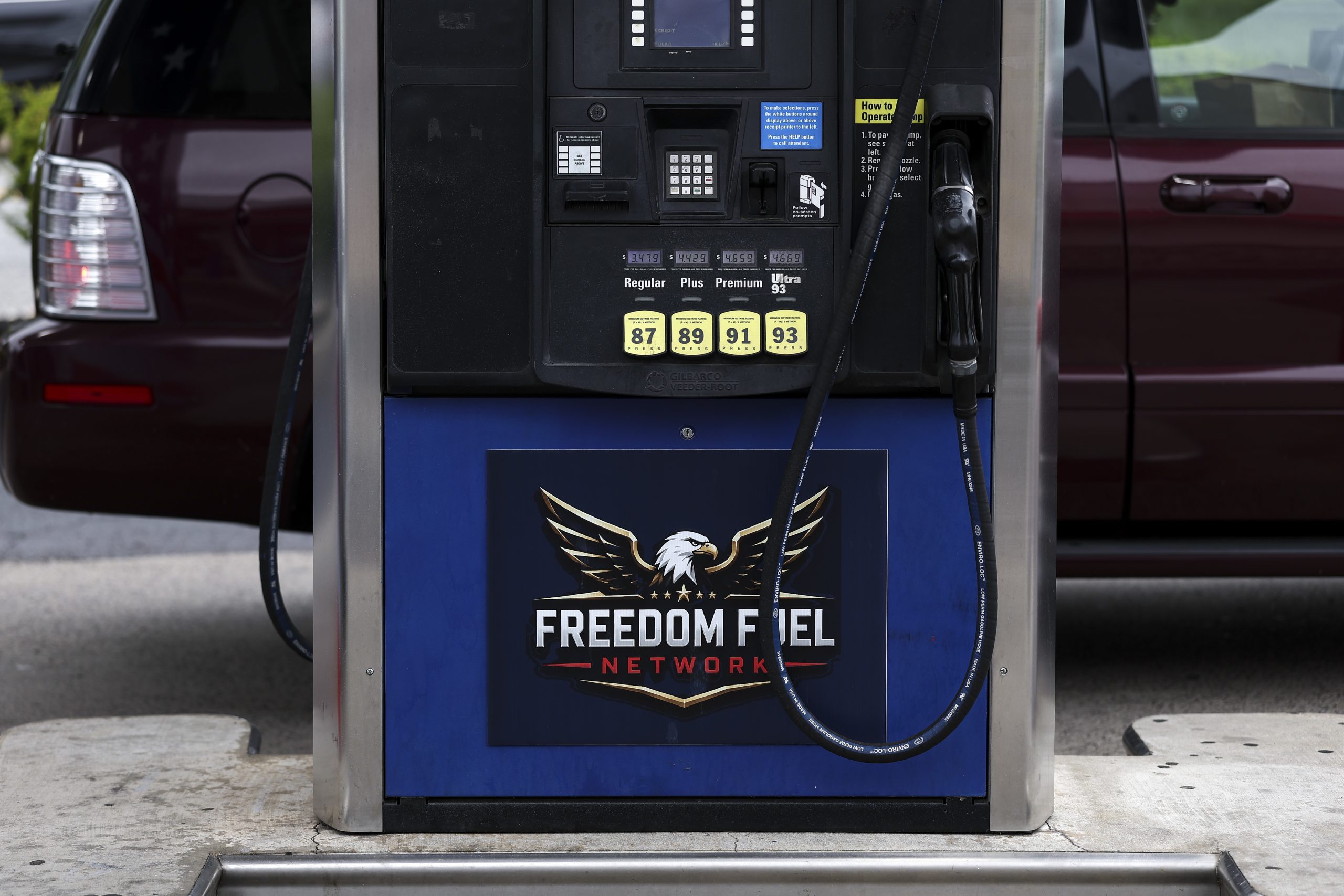
    In the undated video, drivers happily filled their tanks for $3.47 a gallon, which the White House said was to honor “our 47th President.” That’s cheaper than the least-expensive gas at nearby stations, according to prices posted by GasBuddy.

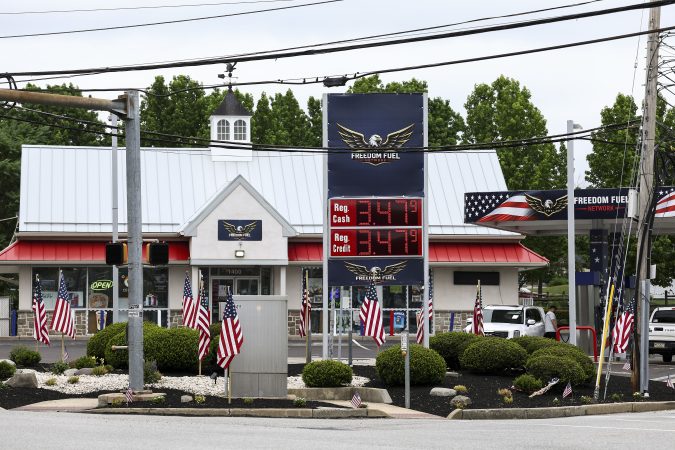
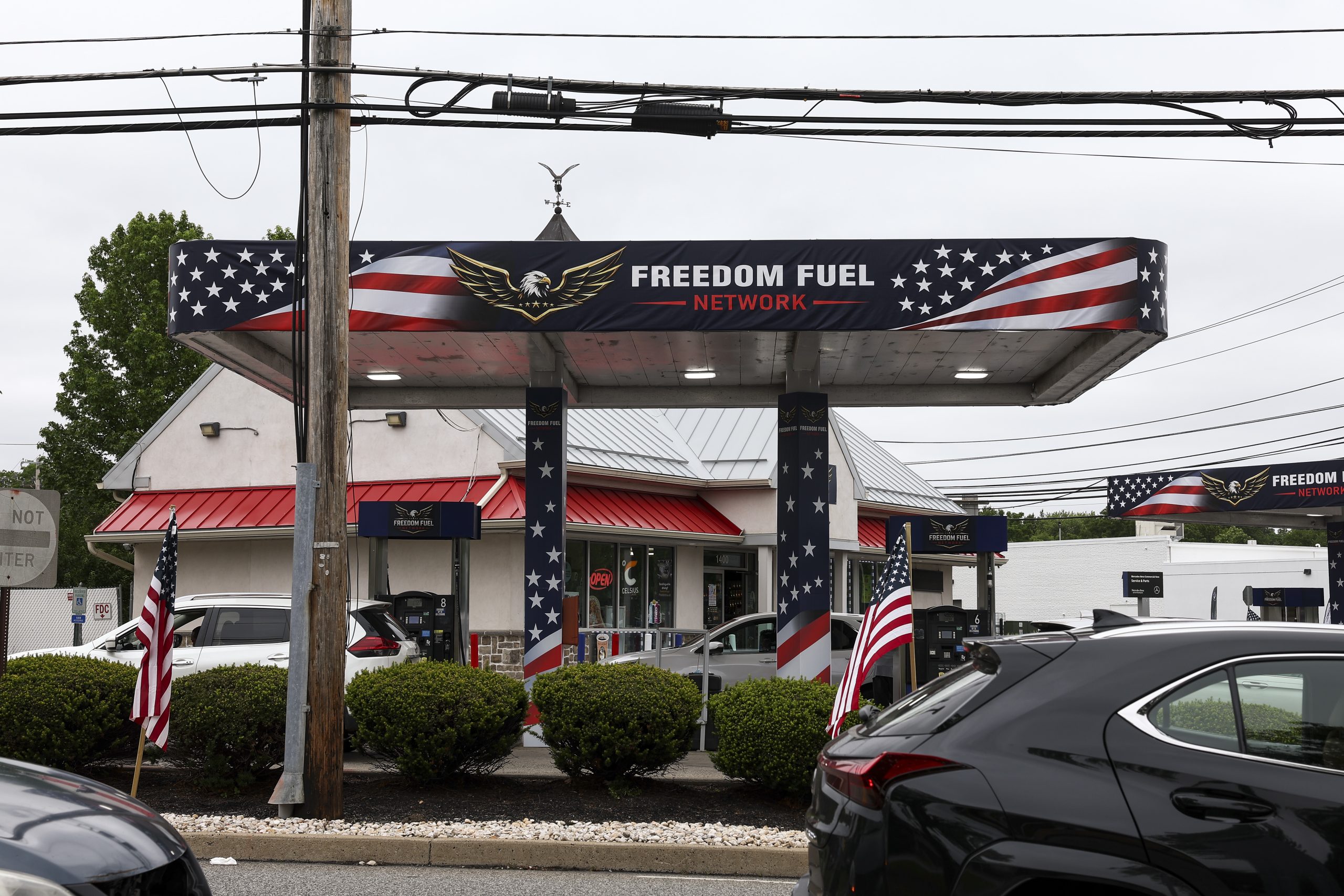
    The Freedom Fuel station in Dresher is near a McDonald’s and across the street from a shopping plaza. But what sets it apart from other nearby gas stations is the assortment of American flags planted across its footprint — and the cheaper gas.

    While a nearby Citgo station, about five minutes away, prices regular gas at $3.79 a gallon, and a Gulf offers it at $3.85, Freedom Fuel offers it at $3.47 a gallon.

    For many patrons stopping by Tuesday afternoon, the branding was new — and secondary to savings.

    The Freedom Fuel Network gas station at 1400 Dreshertown Road in Dresher.Monica Herndon / Staff Photographer

    Jessiah Brice, 25, said the Freedom Fuel station was convenient because it is near her job. She had noticed the new branding after the July Fourth holiday and had no idea what it was about, but she welcomed the idea regardless of the affiliation with Trump.

    “Gas should be cheaper,” she said. “My only issue is: How is it $3.47 here and $5 by me?”

    Another gas buyer, who declined to give her name out of privacy concerns, said she had heard of Trump’s efforts to bring cheaper gas to people but had not connected it to her local gas station.

    “What’s not to love?” said another patron, before driving away with a full tank.

    Seyer Hamidi, 36, stumbled upon the station after picking up his car, which he likes to fill up with premium gas, from the mechanic. He, too, welcomed the idea.

    “Gas is going to be high whether you’re a Republican or Democrat,” the Republican said, noting the cheaper gas was a step in the right direction.

    A lot remains unclear, including the names of the participating businesses and how they are able to sell gasoline cheaper than nearby competitors.

    A White House spokesperson confirmed that a website for the Freedom Fuel Network, which showed 25 locations across the Philadelphia region and South Jersey, was accurate. The White House did not confirm that all 25 locations are open and did not provide information about the company.

    The list includes stations in Elmwood Park, Bustleton, and Hunting Park, but it was unclear if every location on the Freedom Fuel website was open.

    A White House spokesperson said the Freedom Fuel Network was a private company and not a government program, adding that the company was not purchasing gasoline at a discount and that the administration has not provided funding. The spokesperson said the business was simply making gas more affordable for drivers in Pennsylvania and New Jersey but did not elaborate.

    The company behind the Freedom Fuel Network did not respond to a request for comment.

    The fuel pumps at the Freedom Fuel Network gas station at 1400 Dreshertown Road in Dresher.Monica Herndon / Staff Photographer

    Beyond that, not much information was available beyond the White House social media post and a statement made by Trump, who wrote on his Truth Social account last week that a “very smart retailer” located throughout the Northeast was “stepping up” to offer a discount at the pump.

    Patrick De Haan, head of petroleum analysis at GasBuddy, crunched the numbers and said there was no profitable way for Freedom Fuel stations to sell gas so cheaply.

    “Stations selling at this price, it’s not sustainable,” De Haan said. “Generally, when losses happen, somebody’s got to pay for it.”

    De Haan had no insight on who owns the stations or what deals they might have made to purchase gas, but did confirm many of the stations exist in GasBuddy’s database, though the names were “vastly different.”

    Gas prices have been dropping in recent weeks after peaking in May. Prices soared after the United States attacked Iran and the Strait of Hormuz — a key shipping lane — was shut down.

    The average cost of a gallon of gas in Philadelphia on Tuesday was $3.95, according to AAA. That was up nearly 20% from this time last year, when the cost of a gallon of gas averaged $3.31.