Category: News

  • Suffocating dome of smoke descends over Philly region

    Suffocating dome of smoke descends over Philly region

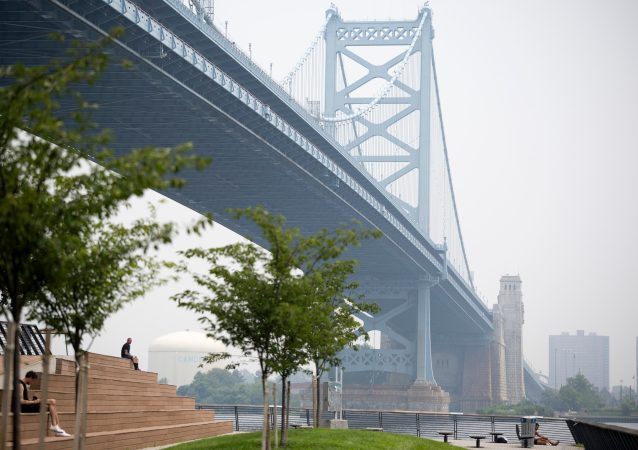
    Philadelphia’s jinxed July, which had already featured a record-setting dome of heat and microburst storms that razed hundred of trees, now includes a smothering, suffocating smoke.

    The polluted campfire-like vapor from Canadian wildfires plummeted air quality Thursday, lowered visibility enough that flights were delayed at Philadelphia International Airport, and prompted cancellation of a concert at Cooper River Park in Camden County. The Phillies moved Thursday night’s game up one hour due to air quality concerns.

    The smoke, which was expected to blanket the region at least through Friday, originated from fires burning in Western Ontario, said Sarah Johnson, a meteorologist at the National Weather Service’s Mount Holly office.

    It was swept in by winds that mixed to keep it closer to the ground.

    “It’s just a factor of the winds at all levels kind of working together,” Johnson explained.

    It is difficult to pinpoint when the air quality might return to normal, she said. Those forecasts come from state environmental protection departments and are usually no more than 48 hours out.

    The Pennsylvania Department of Environmental Protection has declared a Code Purple Air Quality Alert for Friday. Code purple signifies very unhealthy air, meaning people should avoid long or intense outdoor activities, and sensitive groups should avoid all outdoor activities. The department suggested not using gas-powered lawn and garden equipment, and avoiding the burning of leaves or trash.

    Rain forecast for Saturday could help suppress the smoke, Johnson said, but on Thursday afternoon it was too early to be sure.

    Poor air quality caused by the fires remained the biggest issue as they burned through forests and buildings before their smoke swept south, collecting ambient pollution from Boston, New York, and other areas before reaching Philadelphia.

    Philadelphia issued a Code Red Air Quality Caution Day on Thursday, meaning some people were at risk of experiencing health effects, including elevated risks for people with heart or lung disease, asthma, older adults, children, pregnant people, immunocompromised people, people experiencing homelessness, people who use drugs, people without access to air filtration, and outdoor workers.

    The city advised people to limit their time outdoors and consider rescheduling activities.

    “Today is not the day to start your marathon training plan,” Palak Raval-Nelson, commissioner of the Philadelphia Department of Public Health, said in a statement.
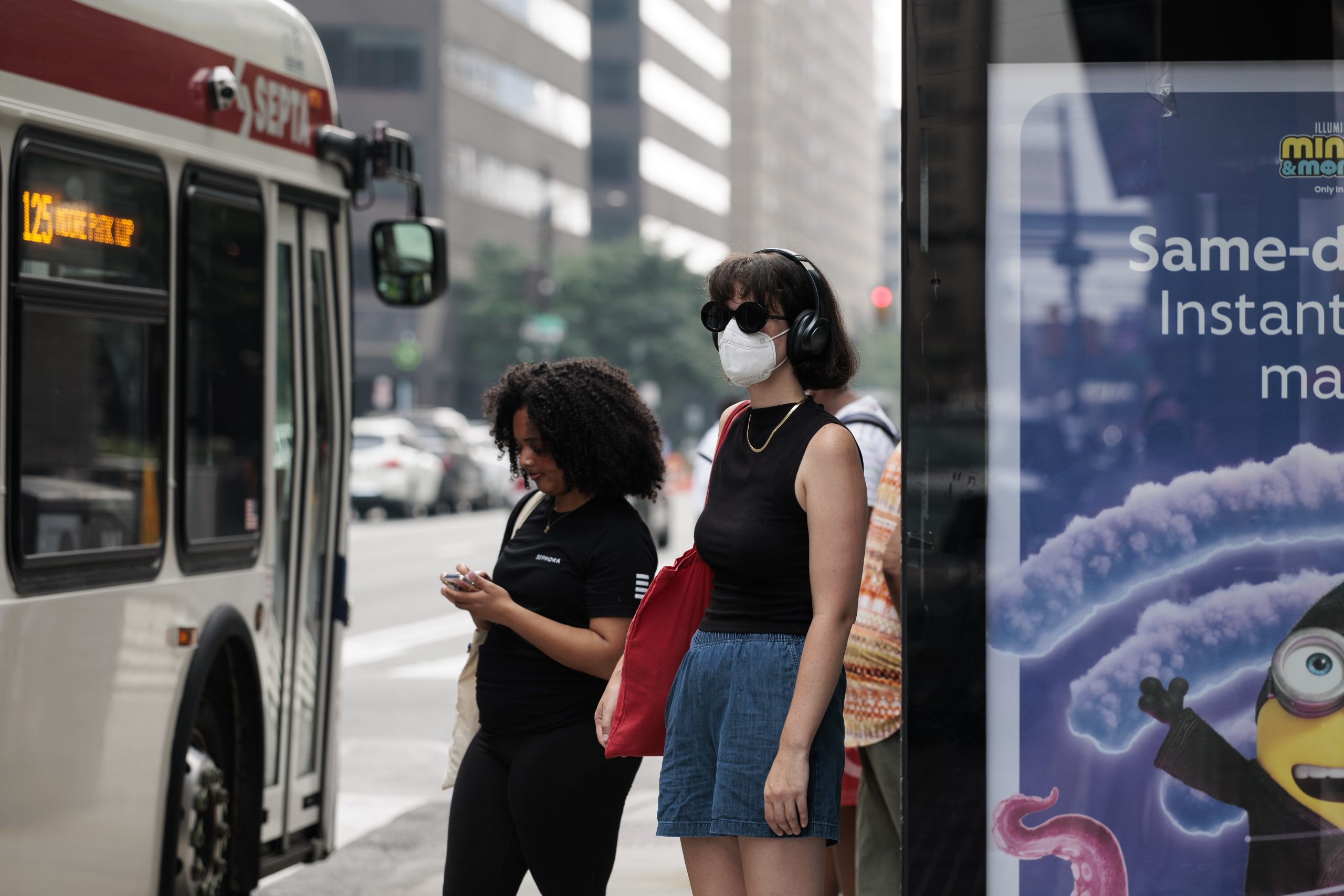
    Penn State graduate student Ray Boone waits for the bus with a face mask on because of the air quality, on Thursday, July 16, 2026 at 17th Street and JFK Boulevard in Philadelphia. The Pennsylvania Department of Environmental Protection has declared a statewide Code Red air quality day due to Canadian wildfire smoke blowing into the Philadelphia region.Monica Herndon / Staff Photographer

    High temps increase risks

    The smoke affected thousands of square miles in the region, from the Poconos to the Shore through Delaware.

    The Air Quality Index, or AQI, by the U.S. Environmental Protection Agency was in the unhealthy range for all of the region as of 4 p.m. Thursday. The index ranges from 0 to 500. Unhealthy is from 151 to 200.

    Censors in Centre County, Pa., recorded a hazardous AQI of 345 by Thursday afternoon, the highest and most dangerous level. Other sensors in Lycoming and Bradford Counties recorded AQIs above 200, or very unhealthy.

    Center City had an index of 192, which is considered unhealthy. Northeast Philadelphia, Chester, Norristown, and Camden all were similarly in the unhealthy range.

    Not helping: Temperatures in the 90s with humidity so high that it made it feel in excess of 100 degrees.

    Julie and Bill Guise, 66 and 72, respectively, basked in the somewhat cool breeze billowing from a giant fan inside the President’s House complex at Independence National Historical Park, hoping to get relief from the oppressive air. The Flagstaff, Ariz., residents, however, were unaware of what exactly was causing it.

    “We couldn’t figure out what it was,” Bill Guise said of the haze in the atmosphere.

    But it did not change their plans. The couple are used to wildfires.

    “It’s much worse out West,” Julie Guise added, likening the western smoke, when it’s extra bad, to sitting next to a campfire.

    Eric Balaban, a pulmonary and critical care fellow at Temple University, was hesitant but still went running Thursday morning.

    “If I didn’t have an addiction to running, I would not have gone. And I would recommend other people not to run. Do as I say, not as I do,” he said with a laugh.

    But exposure to the smoke is a serious matter, Balaban said. He noted that the smoke that travels “carries a uniquely toxic profile that poses severe health risks to both healthy individuals and vulnerable populations.”

    Ruth McDermott-Levy, a professor at Villanova University’s school of nursing, said that air quality had become a risk not only for those already suffering from health issues, but for everyone.

    “All of us are at risk,” McDermott-Levy said. “Certainly there are groups of people at greater risk, from pregnant women, children, older people, and those with cardiac and respiratory illnesses. But we’re at an unhealthy level for everyone.”

    The Philadelphia Museum of Art behind a smokey haze on Thursday, July 16, 2026 in Philadelphia. The Pennsylvania Department of Environmental Protection has declared a statewide Code Red air quality day due to Canadian wildfire smoke blowing into the Philadelphia region.Monica Herndon / Staff Photographer

    What’s in the air?

    The two major pollutants of concern are ground-level ozone and fine particulate matter known as PM2.5.

    Ground-level ozone is a pollutant that forms when nitrogen oxides and volatile organics emitted by vehicles, power plants, and industry react in sunlight, especially during hot days. It can cause airways to constrict, leading to shortness of breath. It can especially affect those with asthma, emphysema, and chronic bronchitis.

    Fine particulate matter is so small that it can cross from the lungs directly into the bloodstream, bringing a body-wide exposure that can increase the risk of heart attacks and strokes, in addition to causing acute chest tightness, shortness of breath, and dizziness in otherwise healthy people.
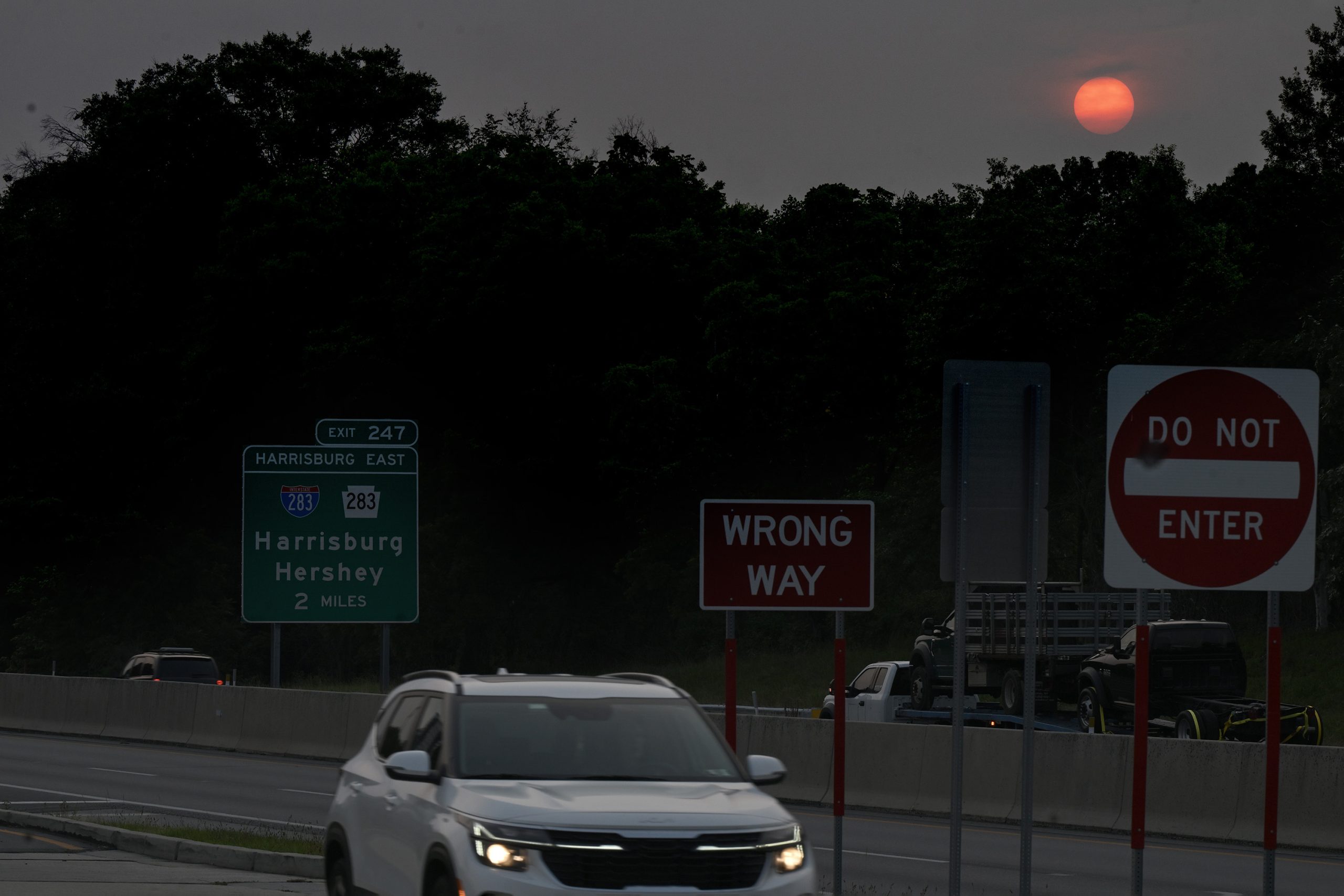
    The sun sets in a hazy sky over the Pennsylvania Turnpike Wednesday, July 15, 2026 as the Canadian and Great Lakes wildfire smoke moves into the region’ This at the Highspire Service Plaza], eastbound near Middletown.Tom Gralish / Staff Photographer

    Staff writer Nate File contributed to this article.
  • Blanche to meet with Epstein accusers after demand from Republican senator crucial to confirmation

    Blanche to meet with Epstein accusers after demand from Republican senator crucial to confirmation

    WASHINGTON — Acting Attorney General Todd Blanche was expected to meet Thursday with accusers of Jeffrey Epstein after a key Republican senator said it was necessary to earn his support for Blanche’s nomination to lead the Justice Department.

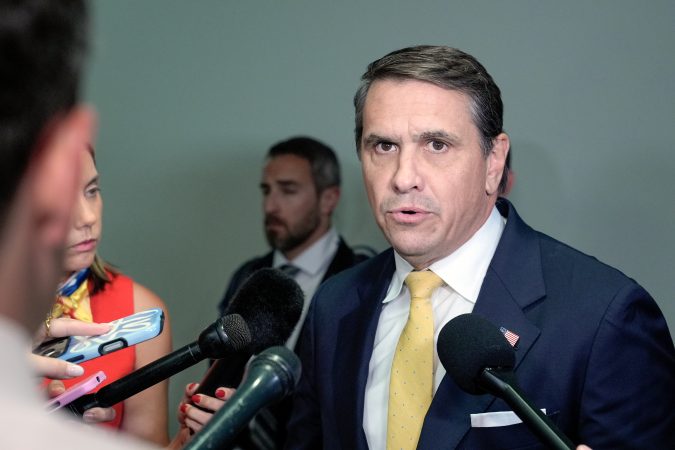
    Sen. Thom Tillis had indicated during Blanche’s confirmation hearing on Wednesday that he was leaning toward backing Blanche, who has been leading the department in an acting capacity since April. But after an Epstein accuser testified a day later, Tillis said he expects a meeting to occur before he’s “willing to vote out of this committee.”

    Shortly after Tillis’ remarks, Blanche — who had been meeting with senators on Capitol Hill — told reporters he had tried to meet the Epstein accusers in a Senate office building but “it didn’t work out” and they were working to coordinate schedules. The Justice Department said later that the meeting was rescheduled for Thursday afternoon, adding: “He looks forward to their discussion.”

    “The Department of Justice will always meet with victims or their representatives, and if those victims or their representatives have evidence that anybody committed a crime — whether it has to do with Jeffrey Epstein or anybody else — we will of course move forward and investigate and prosecute,” Blanche told reporters.

    Epstein’s case and the Justice Department’s handling of millions of files related to his sex trafficking investigation have been a persistent political headache for the Trump administration.

    After missteps by then-Attorney General Pam Bondi that enraged Trump’s base, Blanche as deputy attorney general oversaw a massive review and release of millions of files related to the investigation into the disgraced financier with connections to wealthy and powerful people.

    Without Tillis’ support, Blanche’s nomination won’t make it through the Senate Judiciary Committee, which questioned Blanche for hours on Wednesday about the Epstein files as well as the creation of a fund to compensate Trump’s allies, a tax immunity deal for the president and a slew of other issues.

    Another Republican on the committee who says he has not made up his mind whether to support Blanche — Sen. John Cornyn — conveyed concerns that the Trump administration has yet to commit in writing that the fund is dead and could therefore conceivably be resurrected.

    One Epstein accuser, Dani Bensky, told lawmakers earlier Thursday that women harmed by Epstein repeatedly asked to meet with Blanche “through multiple channels and he never responded.”

    “We deserve to be heard directly, not dismissed and ignored,” Bensky said.

    Blanche has pushed back on suggestions that the Justice Department has been dismissive of the late financier’s accusers, saying Wednesday that officials have spoken with more than 30 representatives of the women over the course of its sweeping review of the files.

    Blanche has also defended the department’s staggered release of the Epstein files, a process beset by problems, including redaction errors that left exposed nude photos showing the faces of potential victims.

    Blanche said during his confirmation hearing on Wednesday that he takes responsibility for mistakes that were made, but noted that department lawyers were given a “herculean task” to quickly review millions of files for release. Blanche said department lawyers took pains to protect the women involved, and quickly fixed any errors that were found.

    “I am sorry that in about 1% of the documents mistakes were made,” Blanche said Wednesday. “But what I will say on top of that is we put tons of resources to rectifying those mistakes immediately, including pulling down documents within minutes of being informed that there were mistakes.”

    The political firestorm over the Epstein files dogged the Trump administration for much of last year, with lawmakers eventually passing a measure that compelled the release of a massive trove of documents in the government’s possession related to its investigation.

    The Justice Department began releasing the documents in late December, which included photos, call logs, grand jury testimony, and interview transcripts. The release did little to tamp down skepticism from conspiracy theorists and online sleuths, who have long pushed allegations of a government cover-up, without evidence.

  • White House faces stiff pushback on subjecting grants to political review

    White House faces stiff pushback on subjecting grants to political review

    WASHINGTON — Some of the nation’s top law enforcement officials were not pleased when the White House embarked on its push to assert more political control over more than $1 trillion in annual federal grants.

    The proposal, unveiled in May, stood to enable the administration to steer significant funding to causes and organizations aligned with President Donald Trump — and to cancel grants if recipients did not conform to his political views. That troubled a set of groups representing sheriffs, narcotics officers, and district attorneys, which said this month that the “undefined expectations” in Washington could interfere with public safety.

    The letter was one of roughly 500,000 formal comments that have flooded the Trump administration in recent weeks. Many of the posted submissions expressed misgivings with the draft White House plan to take greater control of federal spending.

    The opposition has been wide-ranging, spanning academic researchers, artists, city leaders, civil engineers, congressional lawmakers, housing experts, state attorneys general and regular Americans, who have warned that the White House could imperil public services if it subjects federal grants to political review.

    The administration proposal, which is not final, targets a vast set of federal funding for climate, education, health, housing, and infrastructure. If carried out, the regulation would require Trump’s political appointees to approve grants before they are awarded to cities, states, nonprofits, and other institutions. The review would primarily aim to ensure that the money supports purposes that “demonstrably advance the president’s policy priorities.”

    Recipients of federal funding would also be subject to broad political handcuffs. Taxpayer dollars could not “promote anti-American values,” for example, or be doled out to nonprofits that engage in some kinds of “issue advocacy” or that have certain “memberships and affiliations.” And a large set of topics would be off-limits, especially for scientists and researchers, who could face some of the most severe restrictions.

    The White House budget office has described the changes as necessary to eliminate waste, fraud and abuse, including spending that the office’s director, Russell T. Vought, deems to be “woke.” To achieve that goal, the administration has adopted an expansive view of its budgetary powers, even though Congress possesses the power of the purse under the Constitution.

    Many recipients of federal grants told the White House over the last two months that the proposed changes could be debilitating and that they cannot afford to have their aid revoked if Trump does not agree with their agenda.

    “This will put a lot of things up in the air,” said Andy Schor, mayor of Lansing, Mich., a Democrat. He added that the plan would affect “policing to housing to all the dollars we get from the feds.”

    Such interruptions have already plagued Schor’s community. The mayor recalled a series of incidents in which federal grants to the city and local nonprofits, including money to address redlining and combat violence, had been interrupted or canceled under Trump.

    Schor said the consequences could be greater if White House officials could more easily cancel a larger set of grants simply because “they suddenly decide they don’t like something.” In that case, the mayor said he would face a dilemma that could force him to choose between “staff we have to lay off or dollars we can’t get into the community for these important things that are needed.”

    A spokesperson for the Office of Management and Budget did not respond to a request for comment.

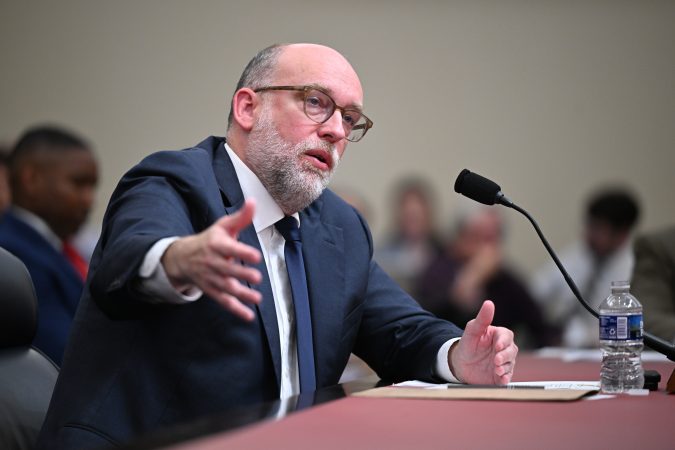
    Testifying at a Senate hearing Thursday, Vought said the proposal aimed to ensure “that we have democratic control of the spending that is going out.”

    But the stakes of his approach became clear when Sen. Tina Smith (D., Minn.) asked Vought how the administration might approach federally funded cancer research. She raised the example of a grant devoted to identifying the source of high cancer rates among Black people — and the extent to which the administration would disallow the money because of the president’s long-stated opposition to diversity, equity, and inclusion.

    Vought began by saying the White House was “against DEI policies,” adding, “How that would impact with that particular grant would be a decision for a political official, policy official, at NIH,” referring to the National Institutes of Health. He said administration appointees would “make the final decisions,” though they would take expert views into account.

    Smith said that revealed the “absurdity and the bias of this proposed rule, and the danger of what happens when you bring political ideology into grant-making processes, particularly around healthcare.”

    The proposed rules are the latest step in Trump’s contentious campaign to recalibrate how the government spends its money. With the help of Vought, the administration has fired thousands of federal workers while taking steps to hold up or cancel billions of dollars in congressionally approved aid, arguing that the spending was unnecessary or misaligned with Trump’s beliefs.

    Lawmakers from both parties sharply criticized some of Trump’s moves, and federal judges have repeatedly declared the president’s actions illegal. Yet the White House has continued pressing ahead and has taken steps to formalize some of its practices with its proposal targeting federal grants.

    The roughly 400-page blueprint, which the White House aims to put into effect in October, quickly stoked broad opposition.

    In Pennsylvania, the United Way, a network of nonprofit providers, warned that the grant rules could create “unpredictable financial and legal risks” for organizations that provide food, housing and other essential services. The group warned that those entities probably did not have the resources to comply or contest the government’s proposed restrictions.

    The Los Angeles County Department of Arts and Culture took issue with the way the administration tried to restrict the political activities of grant recipients. The agency said that approach could “chill free speech, creative expression, and activities supportive of diverse cultures and communities,” including at museums.

    The National Sheriffs’ Association and other law enforcement groups said they did not have the resources to incorporate all of the changes the White House had envisioned. A national network of civil engineers said the plan would impinge on its ability to collaborate with foreign counterparts on infrastructure research.

    And scientists, researchers and health providers expressed some of the loudest opposition. More than 300 organizations — many representing practitioners working on cancer cures, ALS and HIV treatments and pediatric medicine — urged the Trump administration to slow down because of the risks to their work and patients.

    The White House proposal reserved some of its strictest rules for academics funded by federal dollars. It aimed to limit the research they pursue, the conferences where experts can appear, and the organizations and foreign labs with which they are allowed to collaborate.

    Entire research areas would also be restricted if the rules were to take effect as drafted: Grants could not support work related to diversity, equity or inclusion, for example, or projects or groups that “deny the biological reality of sex or the sex binary in humans.”

    The strictures amounted to a major “escalation” from the president’s previous attempts to slash and control funding at agencies like the NIH and the National Science Foundation, according to Sudip S. Parikh, CEO of the American Association for the Advancement of Science, a nonprofit that promotes scientists.

    “It overemphasizes the political at the expense of scientific opportunities and the needs of the American people,” he said.

    Despite the president’s pursuit of deep cuts, Democratic and Republican lawmakers have ignored the requests and opted to keep most health and science funding intact. So the renewed push by Trump to cement his control over federally funded research enraged many Democrats, who view the proposed regulation as another encroachment of their spending powers.

    Rep. Rosa DeLauro (D., Conn.), who leads her party on the Appropriations Committee, said that the president, if successful, could undermine the idea enshrined in the Constitution that “money is directed based upon the needs of the American people, and that is transmitted through elected representatives.”

    DeLauro also joined with the 11 other House Democrats who serve in leadership positions on key appropriations committees this week to express deep reservations with the administration’s plans. The lawmakers estimated that the White House effort would affect more than $1 trillion every year.

    Democrats were not alone in airing frustration. In a separate letter last week, Sen. Susan Collins of Maine, the Republican chair of the Appropriations Committee who is facing a tough midterm election race, said the White House could imperil much-needed funding in ways that “harm small and rural communities.”

    The proposal drew support among Trump’s conservative allies. Daniel West, the government relations director for Heritage Action, said that some of the backlash had been “hyperbolic” and that he did not expect the White House budget office to retreat.

    “Everything I’ve seen indicates that OMB cares deeply about ensuring the proper stewardship of federal dollars, and they are moving this rule with that intention in mind,” West said.

    Some opponents still seemed to be readying for a legal battle. Citing the implications for education, healthcare, housing, science and other “critical services to hundreds of millions of people,” a group of governors and attorneys general from two dozen states told the White House on Monday that its proposed changes to grants would violate the Constitution. Many of the same states, including New York, California, and Colorado, have successfully fought Trump in the past over budget cuts enacted without the express permission of Congress.

    “The rule offends the Constitution,” the states argued at one point in their missive.

    This article originally appeared in The New York Times.

  • Trump administration revives rule that could deny green cards to immigrants who use public benefits

    Trump administration revives rule that could deny green cards to immigrants who use public benefits

    MIAMI — The Trump administration is reviving a rule that could deny green cards to immigrants who use public benefits that could include food stamps, Medicaid, and housing vouchers.

    The policy, known as “public charge,” appeared on Thursday in the Federal Register. It will be formally published on July 20 and take effect Sept. 18. Under the policy, applicants for green cards have to show they wouldn’t be burdens to the country or “public charges.”

    The policy was first implemented in February 2020 as one of President Donald Trump’s moves to limit legal immigration during his first administration, but it was reversed after Democratic President Joe Biden came to power.

    Its return comes when the Republican administration is implementing a hard-line policy to curb both illegal and legal immigration, and when the cost of healthcare and food is rising.

    The federal government “is reaffirming the requirement of self-reliance, protecting public resources and ending policies that encouraged dependency on the backs of hard-working American taxpayers,” U.S. Citizenship and Immigration Services said in a post published on its X account.

    “Under President Trump, USCIS is restoring the basic principle that immigrants must be able to support themselves,” the post said.

    While the administration’s crackdown on immigration has an increased focus on deportations and immigration enforcement in cities across the country and at borders and entry points, it has also taken actions that target legal immigrants and mixed-status families, in which the parents are foreign nationals with U.S.-born children.

    The rule expands disqualification options

    Federal law already requires those seeking permanent residency or legal status to demonstrate that they will not become a public charge. The Trump administration’s rule, however, broadens the grounds for disqualification.

    The new rule does not describe or specify by name the benefits and programs that could be considered a public charge. Instead, it says that officers who would implement the policy will make “individualized, fact-specific public charge inadmissible determinations, based on a totality of the alien’s circumstances.”

    It says that, “using good judgment and discretion, officers will more accurately assess an alien’s likelihood at any time of becoming a public charge.”

    The Trump administration first promoted the rule in 2018 as a way to ensure that only those who were self-sufficient came to the U.S. Immigrant rights advocates criticized it, saying it amounted to a “wealth test.” Public health experts said it would lead to worse health outcomes.

    Manatt Health, a group that provides advice to state and federal governments, estimated the policy would have deterred as many as 26 million people from seeking healthcare, food, housing, or other aid through programs for which they qualified under federal law. About half were U.S. citizens, mostly children or adults living in a mixed-status family, according to the group.

    Experts also noted that most people who receive benefits from the government are already legal residents.

    A 2020 study from the Migration Policy Institute said that while the “chilling effects” may be vast, the number of immigrants who could be deemed ineligible for legal permanent residence based on use of one of the public benefits under the rule was small.

    The institute estimated that no more than 167,000 people — less than 1% of the 22.1 million noncitizens residing in the United States at that time — could be determined ineligible for a green card based on their current use of a listed benefit.

    There were 22.8 million noncitizens living in the U.S. in 2023, according to the Census Bureau.

    Critics say the rule creates fear in the community

    Nongovernmental organizations said the policy generated confusion and fear and caused many immigrants and their U.S.-born relatives to decide not to apply for benefits and services to which they were entitled.

    Immigrant advocates condemned the government’s decision to revive the “public charge” rule and expressed concern.

    “This regulation is a direct assault on immigrant families, and a threat to our country’s health and economic security,” said Adriana Cadena, executive director at the Protecting Immigrant Families Coalition. “The Trump administration is basing immigration decisions on bias and politics, regardless of the resulting harm.”

    Sarah Krieger, senior policy counsel at the National Immigration Law Center, said the rule would make immigrants afraid to go to the doctor, buy food at the grocery store and file taxes.

    “With this new rule, they are sowing fear and chaos to ultimately reshape America into a country where only the few who are white and ultra-wealthy are welcome,” Krieger said. “The rule is not just deeply harmful, it also violates the law.”

  • Pew Charitable Trusts has named a new CEO with Lower Merion roots

    Pew Charitable Trusts has named a new CEO with Lower Merion roots

    The hazy smoke above Philadelphia may not emanate from the Pew Charitable Trusts offices, but the organization has chosen its new leader.

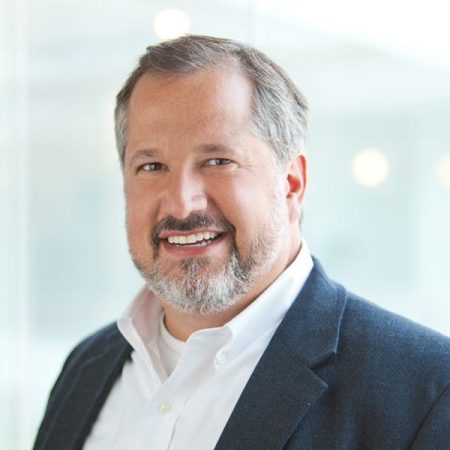
    William Foster, a nonprofit consultant who grew up in the Philadelphia area, will be Pew’s next president and CEO, the organization announced Thursday.

    Foster’s tenure will begin in March, and Pew’s current president and CEO, Susan K. Urahn, will remain in position through the end of February. Urahn announced her coming retirement from the research, policy, and grant-giving nonprofit in October.

    Foster is currently a Boston-based managing partner with the Bridgespan Group, a powerful nonprofit consulting firm affiliated with Bain & Co. He has been with the firm since 2002, and is “an active thought leader on issues of philanthropy and social change,” according to his Bridgespan bio. He is from Lower Merion and attended Friends Central High School.

    “William brings a deep understanding of the nonprofit sector and a strong commitment to nonpartisan, evidence-based work, and he is a thoughtful leader who builds strong teams and invests in people,” Christopher Jones, chair of Pew’s board of directors, said in a statement.

    Though Pew has a strong Philadelphia presence, Foster will work from the organization’s office in Washington, like Urahn. Bridgespan has worked with Pew in recent years on Philly matters, including a four-year strategic learning initiative funded by $4 million from Pew and Harris Philanthropies, which included 80 Philadelphia-area organizations.

    “I am inspired by what Pew has accomplished and by what makes it distinctive, and I am energized by the possibilities ahead,” Foster said in a statement.

    “I believe that Pew’s commitment to rigorous nonpartisan work, and its inherent optimism, is more important than ever, and I am honored by the opportunity to build on that foundation and to work alongside Pew’s talented staff and partners,” he said.

    Urahn has been at the helm of Pew, which is made up of several trusts valued at a combined $6.1 billion as of 2024, since 2020. She took over from Pew’s longtime and transformational CEO, Rebecca W. Rimel, in 2020. Urahn began working at the nonprofit in 1994, the same year Rimel began as chief executive, making Foster the organization’s first outside leader since at least Bill Clinton’s presidential administration.

    Urahn and other colleagues had worked with Foster over the last decade. The departing leader said in Pew’s statement she believed he had demonstrated the right experience, perspective, and understanding of Pew to lead the organization.

    “As I continue in my role through the transition, my focus remains on ensuring continuity, stability, and a smooth handoff to William Foster, whose leadership and vision will help guide the organization into its next chapter,” she said.

  • DA withdraws all charges against Family Court judge accused of attacking his wife and daughter

    DA withdraws all charges against Family Court judge accused of attacking his wife and daughter

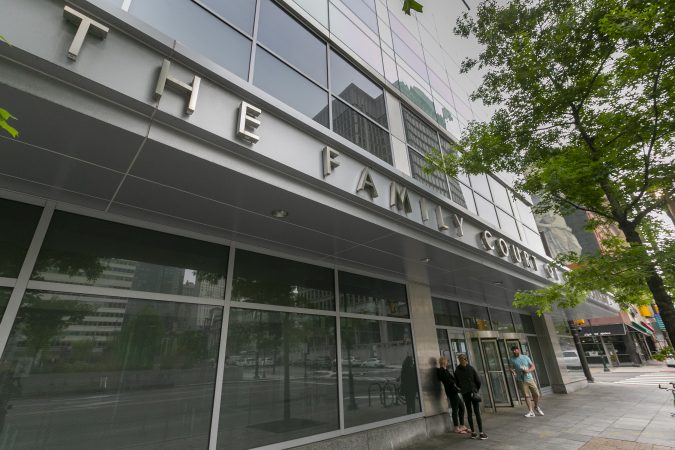
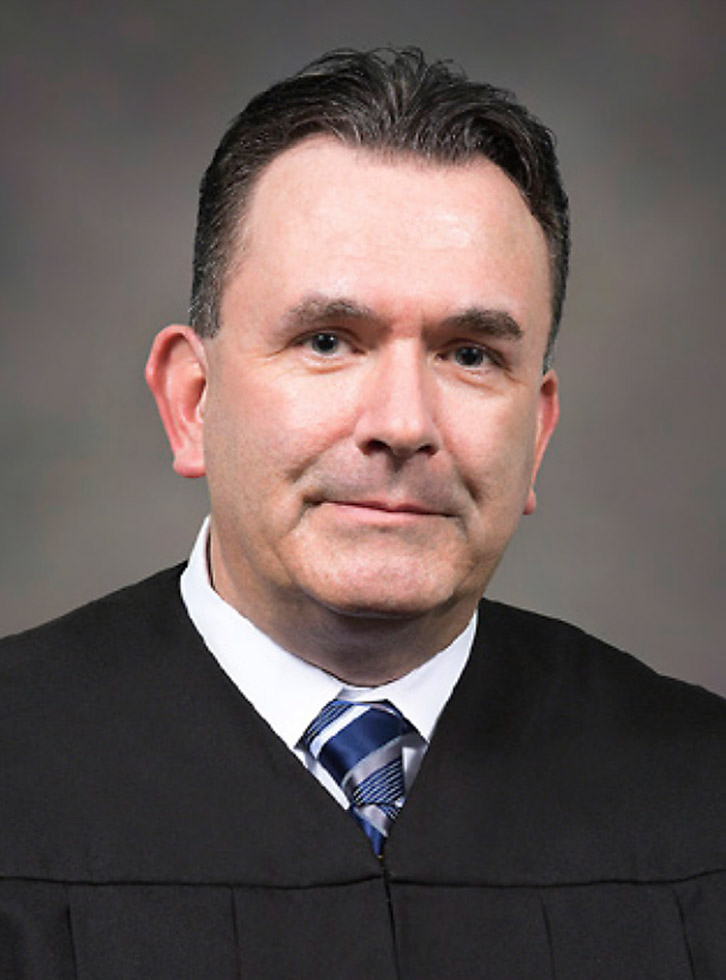
    Prosecutors on Thursday withdrew all charges against a Philadelphia Family Court judge accused of assaulting his wife and daughter earlier this year, saying that the women did not wish to proceed with the case and that the judge had shown proof of “extensive mitigation” in the months since the incident.

    Michael Fanning was charged with aggravated assault, strangulation, and related crimes in March after prosecutors said he repeatedly punched his wife in the face, choked her, and dragged his 30-year-old daughter to the ground by her hair, causing her to cut her face, during a fight at their East Torresdale home.

    But Assistant District Attorney Brian Collins said Wednesday that the two women were evaluated by medics and did not suffer injuries. They did not want to move forward with prosecuting Fanning, he said.

    Common Pleas Court Judge Michael Fanning.Courtesy of Philadelphia Courts

    That, combined with the “extensive mitigation” records Fanning provided to prosecutors and the court, led the district attorney’s office to withdraw the charges, he said.

    Collins did not detail the forms of mitigation Fanning presented, and Berks County Court Judge Jeffrey Sprecher, who presided over the case to avoid any conflict of interest with Fanning’s peers, did not ask during the brief hearing.

    But at a hearing in March, Fanning’s wife said he had voluntarily entered a 30-day inpatient recovery program to treat his alcoholism, an issue the family had worked to address in the past.

    Fanning did not testify during Wednesday’s hearing. He thanked Sprecher for his time before leaving the courtroom.

    He declined to comment through his attorney, Fortunato Perri Jr.

    Collins also declined to comment on the decision.

    Fanning was appointed to the Common Pleas Court bench in 2014 by then-Gov. Tom Corbett. He won a 10-year term in the 2015 election, and was retained for another term in November. He has been serving as a Family Court judge throughout his tenure.

    Within days of his arrest, the Pennsylvania Court of Judicial Discipline, which adjudicates complaints against judges, suspended him without pay.

    It was not immediately clear Wednesday how that judicial discipline case would proceed after the outcome of the case, or whether Fanning would be allowed to return to the bench.

  • Gerry O’Reilly, Villanova track Hall of Famer, Irish Olympian, and Vanguard executive, has died at 61

    Gerry O’Reilly, Villanova track Hall of Famer, Irish Olympian, and Vanguard executive, has died at 61

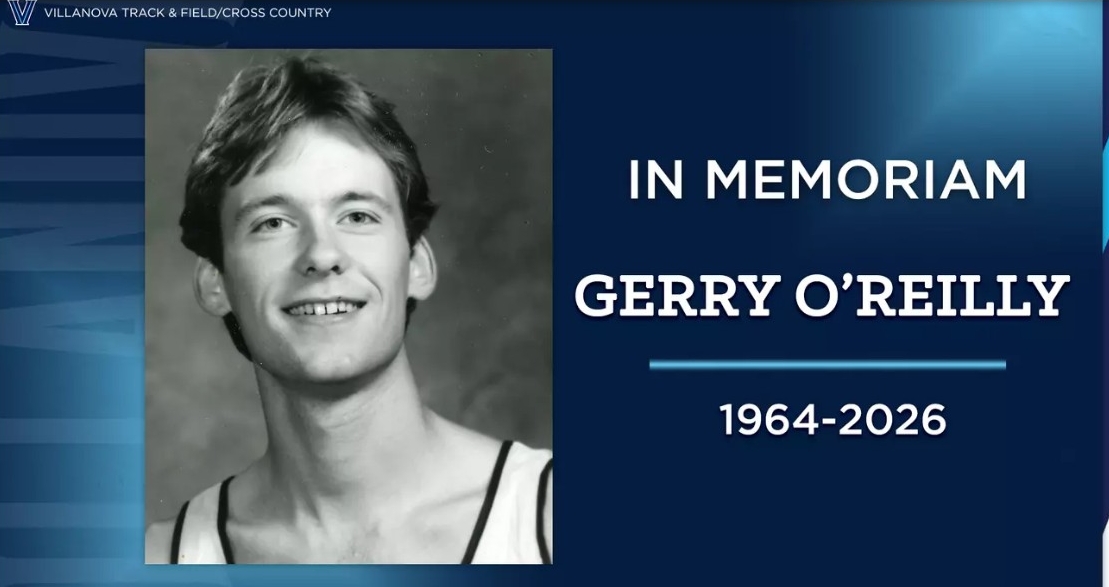
    Gerry O’Reilly, 61, of Chester Springs, Hall of Fame middle distance track star at Villanova University, 1988 Irish Olympian in the 1,500-meter run, longtime executive at the Vanguard Group Inc., mentor, and role model, died Thursday, June 11, at Phoenixville Hospital after an earlier sudden cardiac event.

    Born and reared in Dunboyne, County Meath, Ireland, Mr. O’Reilly earned a track scholarship to Villanova in 1983 and joined a dozen other Irish athletes in what became known as the school’s Irish Pipeline to the Main Line. He went on to run cross-country and indoor and outdoor track, win seven Big East Conference championships, and hold the Big East outdoor record in the 1,500 for 37 years.

    He ran the 1,500- and 3,000-meter runs, the mile, and the distance medley relay at Villanova, and was named All-America four times. He won six national collegiate championships, was named outstanding performer at the 1986 Big East Indoor Championships, and was inducted into the Penn Relays Wall of Fame in 2007 and the Villanova Varsity Club Hall of Fame in 2009.

    “Without exaggeration, those were four of the best years of my life,” Mr. O’Reilly told Dave Thomas on the Belmont Plateau Hall of Fame podcast. Villanova “kind of set me up both athletically and academically for the rest of my life.”

    Marcus O’Sullivan, former Villanova teammate and countryman, now director of track and field and cross-country at Villanova, said Mr. O’Reilly “had a steadfast moral compass that guided him in his life, and in doing so it had an intoxicating influence on others. … We all need a person like Gerry O’Reilly in our lives.”

    After college, Mr. O’Reilly competed in the international Millrose Games in New York, the 1987 World Championships, the 1989 World Indoor Championships, and for Ireland in what is now the World Athletics Championships. At the 1988 Summer Olympics in Seoul, South Korea, he made it to the semifinals of the 1,500.

    Irish Olympic team officials called him “an exceptional athlete” and praised his “genuine commitment to helping the next generation.” They said: “Once an Olympian, always an Olympian.”

    Irish marathon Olympian John Treacy told the Irish Times: “Gerry was a smashing runner and just the nicest guy, great for staying in contact and communicating with other Irish runners over the years.”

    Mr. O’Reilly ran miles at night after school in the rural Irish fields and lanes, and joined the Dunboyne Athletic Club when he was 9.
    Villanova University

    Mr. O’Reilly was also inducted into the Belmont Plateau Hall of Fame in 2025 and recently honored by his hometown Dunboyne Athletic Club.

    He earned a bachelor’s degree in economics in 1987, joined Vanguard in 1992 and the trading desk in 1994, and worked as an investment leader and portfolio manager. He was a mentor, colleagues said in a tribute, “who made immeasurable contributions to several of Vanguard’s flagship index funds.”

    He served on corporate panels and lectured at leadership development events. Colleagues called him “riveting and influential” and “a giant in every sense except ego.” One said: “You could tell he truly cared about the markets and about doing things right.”

    A friend said: “Great athlete, great person.”

    This photo and a story about Mr. O’Reilly (left) appeared in The Inquirer in 1987.Newspapers.com

    Gerard Christopher O’Reilly was born July 1, 1964. He was the oldest of six children and excelled at cross-country, track, soccer, and other sports.

    He ran miles at night after school in the rural Irish fields and lanes, joined the Dunboyne Athletic Club when he was 9, and was inspired, he said later, by Irishman Eamonn Coghlan’s fourth-place finish in the 1,500 at the 1976 Summer Olympics. Mr. O’Reilly went on to win the 1983 Irish Junior 1,500 championship.

    He met fellow track star Melody Sye, and they married in 1992 and had a daughter, Meghan, and sons Keelan, Jack, and Conor. They divorced later.

    “Despite all his trophies and merits,” Mr. O’Reilly’s family said in a tribute, “he always remained humble and would say being a dad to his four kids was his proudest accomplishment.”

    Villanova honored Mr. O’Reilly online.Villanova University

    Mr. O’Reilly was an avid bicyclist, and he spent many weekends on long rides and at Eagles games on Sundays. He liked poker, hikes with his dog, Bear, and watching sports with his family.

    “Most of all,” his family said, “he simply enjoyed cracking jokes, sharing stories, and spending time with his friends and family.”

    In addition to his children and former wife, Mr. O’Reilly is survived by three sisters, two brothers, and other relatives. “His final gift,” his family said, “was saving multiple lives through organ donation.”

    Services were held earlier.

    Donations in his name may be made to the American Heart Association, 7272 Greenville Ave., Dallas, Texas 75231; Special Olympics, 2600 Virginia Ave. N.W., 11th Floor, Washington, D.C. 20037; and the American Cancer Society, Box 6704, Hagerstown, Md. 21741.

  • Fetterman says he’d leave the Democratic Party if it becomes anti-Israel. A majority of House Democrats voted to end aid.

    Fetterman says he’d leave the Democratic Party if it becomes anti-Israel. A majority of House Democrats voted to end aid.

    Only one House Democrat from Pennsylvania voted against an amendment on Wednesday that would have ended aid to Israel.

    The rest backed the measure, along with a plurality of Democrats in the chamber, highlighting shifts and factions within the party. The vote also inches closer to crossing a line that Democratic Sen. John Fetterman of Pennsylvania says could cause him to abandon the party.

    The amendment, which would have cut $3.3 billion in military and humanitarian aid to Israel, was offered by U.S. Rep. Thomas Massie, a Kentucky Republican who has clashed with President Donald Trump and was the only member of his party to support the measure.

    Massie’s amendment failed in a 104-314 vote, but it showed shifting sentiment around Israel in the Democratic Party.

    U.S. Rep. Brendan Boyle, who represents parts of Philadelphia, was the only Pennsylvania Democrat who voted against the amendment.

    Boyle said that the U.S. should push back against the actions of Israeli Prime Minister Benjamin Netanyahu’s government, but that the amendment was too broad to present a viable solution.

    “This amendment would have forced the closure of the U.S. Embassy in Israel, ended refugee resettlement programs, cut off vital humanitarian and diplomatic efforts, and weakened our ability to combat terrorist organizations,” Boyle wrote in a statement to The Inquirer. “The United States must change course in response to the far-right Netanyahu government’s conduct, the settler violence, and the devastating suffering of Palestinian civilians. But this sweeping amendment was not the answer.”

    The six other Pennsylvania Democrats supported the measure, while all Republicans present from the state voted no; U.S. Reps. Scott Perry of York County and Ryan Mackenzie of Lehigh County missed the vote.

    The share of Democrats voting for the amendment showed a striking difference from two years ago, when a similar amendment from U.S. Rep. Summer Lee, a progressive from Pittsburgh, garnered only 37 Democratic votes and 21 GOP votes.

    “Thousands and thousands of Palestinians have been killed using our tax dollars,” Lee wrote on X. “This shift in the party is a testament to the movement but it’s still unconscionable for any member of Congress to justify sending any aid to fuel Israel’s genocide.”

    The Israel-Hamas war started in October 2023 after a Hamas-led attack killed 1,200 Israelis. Since then, the Palestinian death toll has surpassed 73,000, the Associated Press reported.

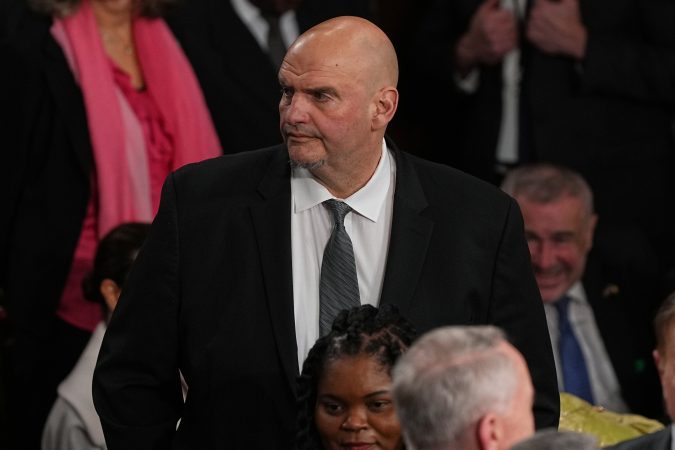
    Fetterman, a staunch supporter of Israel, said that though he has no current plans to leave the Democratic Party, ending support for Israel is a line that could push him out of the party.

    “If our party ever becomes — and just makes it official — the anti-Israel party, that’s when I would leave because that’s been a moral clarity for me,” Fetterman said to the Hill on Wednesday.

    Fetterman has been insistent that he is still a Democrat, publishing an opinion piece in the Washington Post in May emphasizing he is still “pro-choice, pro-weed, pro-LGBT, pro-SNAP, pro-labor and even pro-rib-eye over bio slop.”

    But recently, more and more of Fetterman’s support has been coming from across the aisle.

    According to a Quinnipiac University poll released on Wednesday, 77% of surveyed Republicans said they approve of Fetterman, while only 19% of Democrats do.

    The poll also found that more than half of registered Pennsylvania voters want Fetterman to leave the Democratic Party altogether — a number that reflected majorities of voters from both parties.

  • Need for speed? Driving above the speed limit costs you — and doesn’t actually save much time

    Need for speed? Driving above the speed limit costs you — and doesn’t actually save much time

    Speeding in your car to work, to pick up your children from school, or go from one errand to the next not only wastes money in gas and sends harmful emissions into the air, it barely saves you time, new research says.

    It is something to think about as gas prices stay elevated throughout the summer months and add pain to day-to-day driving and seasonal road tripping.

    Instead, abiding by posted speed limits can save U.S. drivers millions of dollars at the gas pump and eliminate millions of gallons of fuel each day, according to a study published Thursday in the Nature journal Communications Sustainability. That is fuel that, when burned, emits planet-warming gases into the atmosphere. To top it all off, changing driving habits wouldn’t even add a full minute to a driver’s commute.

    University of Minnesota researchers analyzed 120 million vehicle trips across the United States from four Wednesdays in 2021 using driving data on national road networks, speed limits and U.S. Geological Survey elevation data. The analysis included roads with speed limits of 45 mph and higher.

    More than 43% of the studied trips included at least one instance of speeding, and drivers spent nearly 12% of their driving time going faster than the speed limit.

    They found that if drivers of light-duty, conventional internal combustion engine vehicles actually drove at posted speed limits, it could save an average of $22 million, based on fuel costs at the time, 6.7 million gallons of fuel, and 57,000 metric tons of carbon dioxide every day. The researchers said that is comparable to taking about 5.5 million passenger vehicles off the road.

    And while drivers say that speeding saves them precious time, researchers found that is not really the case. With an average daily driving distance of 28.6 miles, driving at or below the posted limit corresponds only to about 54 seconds longer per day.

    “If your goal is to shave one minute off your time, then you’ve got to drive fast. If your objective is to get to your destination safely and to save fuel, then you might drive slower than the speed limit,” said William Northrop, mechanical engineering professor at the University of Minnesota and study co-author.

    The research considered battery-electric vehicle efficiency only in California given the level of EV adoption in the U.S. at that time. Based on the California modeling, “We find that driving slower is beneficial for EVs as well,” he said.

    Interestingly, the study found differences among states. Nevada saw elevated speeding prevalence as well as high speed excess. There was high speeding prevalence in Florida, Georgia, and North Carolina, though those states did not necessarily exhibit high speed excess. Montana, Wyoming, Idaho, and South Dakota showed both low speeding prevalence and speed excess.

    The cost of faster driving today

    Driving faster increases a vehicle’s energy use and the emissions from its engine, as well as reduces efficiency. Vehicle engines have become increasingly more efficient over the past several decades even as vehicles have gotten bigger and more powerful. But speed limits have also climbed since the Emergency Highway Energy Conservation Act was implemented, which mandated 55 mph national speed limits amid the 1970s energy crisis.

    Accounting for the average cost of gas today and more vehicle miles traveled, that increases to roughly $26 million and 7.2 million gallons of fuel that Americans collectively could save each day this year just by not putting the pedal to the metal.

    One limitation of the research is that slower driving could impact traffic patterns, which could play a role in efficiency.

    However, it is especially timely as U.S. drivers remain price-sensitive to volatile gas prices as the war in Iran has sent the cost for a gallon of fuel above $4 this year. Experts have said there are a number of ways to improve one’s gas mileage, including something as simple as slowing down. Less fuel needing to be purchased because of better efficiency could influence oil market demand, which in turn could impact pricing.

    Rob Middleton, associate research scientist of mechanical engineering at the University of Michigan who was not involved in the research, said the study was well-done. But he also noted that the fuel saved from driving more slowly still only represents a fraction of daily gasoline consumption in the U.S., which is about 375 million gallons daily.

    “It’s a big number, but it’s a small fraction,” Middleton said. “This is a ‘freebie’ in that it doesn’t really cost anyone anything to do.”

    “The market penetration of selling EVs is still small, so we still need fuel, we still need ICE [internal combustion engine] vehicles, we’re still going to have them for a very long time,” he added. “Things that we can do to either make the new ones better or to improve our fuel supply, we need to do.”

  • Ukrainians protest Zelensky’s ouster of his popular defense minister

    Ukrainians protest Zelensky’s ouster of his popular defense minister

    KYIV, Ukraine — President Volodymyr Zelensky shook up his wartime government, drawing thousands into the streets Thursday across Ukraine to protest the ouster of his youthful defense minister — seen as an innovator of the country’s successful drone technology but who clashed with the traditional military establishment.

    The personnel overhaul, which included replacing his prime minister, could become a test of Zelensky’s political authority as Ukraine’s fight against Russia’s full-scale invasion approaches 4½ years. Zelensky has remained in office under martial law because wartime elections are prohibited but has periodically reshuffled his government.

    The moves threw Ukraine’s military leadership into an unwelcome crisis at a time when its actions against Russia are starting to bear fruit and as Moscow has unleashed unrelenting aerial attacks. Two people were killed and five others were wounded, including a child, when Russian missiles hit the capital of Kyiv overnight, Ukraine’s Emergency Service said.

    In making the changes, Zelensky cited friction between outgoing Defense Minister Mykhailo Fedorov and Gen. Oleksandr Syrskyi, the commander of Ukraine’s armed forces.

    “I’m just showing that if the sides can’t resolve an issue, I will have to resolve it,” Zelensky said at a news conference.

    The outgoing defense chief was seen as a modernizer

    Fedorov, 35, is considered to be a vigorous modernizer whose technological expertise is credited in part with significantly improving Ukraine’s military performance in recent months against Russia’s bigger army. He is leaving the government after only six months in the post.

    Fedorov appeared at a news conference in a dark T-shirt and jeans, and accused Syrskyi of blocking reforms needed because “the war has changed completely” due to new technology like drones.

    During his time in office, he secured restrictions on Russian forces’ access to the Starlink satellite communications system, allowing Ukraine to better leverage its midrange strike capabilities giving Kyiv significant battlefield advantages.

    Fedorov said he was willing to work with Syrskyi, “but we encountered a situation in which all the initiatives we proposed began to be blocked.”

    “Under this arrangement [with Syrskyi as commander], I personally do not know how the war can be won,” he said.

    On social media, Fedorov highlighted what he called his major achievements: redirecting funds earmarked for salaries into midrange strike capabilities, fiber-optic drones, reconnaissance systems and other technologies. He pointed to expanded drone procurement, Patriot missile defense contracts, successful ballistic missile tests and sweeping changes to military procurement.

    But he acknowledged he was unable to complete the Defense Ministry’s organizational transformation “according to NATO standards and common sense,” and move all procurement to competitive tenders, and build a culture of accountability.

    Syrskyi didn’t appear in public but in a Facebook post thanked Fedorov and said he hoped he would continue to serve Ukraine. “I wish him to continue to remain in the Ukrainian team,” Syrskyi said without elaborating.

    Zelensky said he had asked Maj. Gen. Yevhen Khmara to perform the defense minister’s duties in the meantime, according to a post on the Telegram messaging app. Since January, Khmara has been acting head of the state’s security service, known as the SBU. He had previously led the SBU’s elite Alpha special forces unit.

    Zelensky described a difficult relationship between the Defense Ministry and the military at multiple levels, not simply a matter of personalities, and he said both sides share responsibility for the consequences.

    “Together we win, and together we’re responsible for the things that cause confusion and public reaction,” he said, standing beside British Prime Minister Keir Starmer, who was making his final foreign visit before leaving office next week.

    Mostly young protesters support Fedorov

    Syrskyi, 60, initially organized the defense of Kyiv in February 2022, and seven months later masterminded a successful counteroffensive in the Kharkiv region. Born in 1965, he attended the Moscow Higher Military Command School before serving in the Soviet Artillery Corps before the USSR’s collapse in 1991.

    The Ukrainian military has rallied under Fedorov, slowing Moscow’s front-line advance to a virtual standstill and striking refineries and other energy sites inside Russian territory, causing widespread fuel shortages, Western officials and analysts say. Zelensky’s decision to fire him despite that record has dismayed many people.

    Before becoming defense minister in January, Fedorov headed Ukraine’s digital transformation policies. He won popularity by spearheading the rapid development and deployment of drone technology and introducing several successful e-government platforms.

    As minister, he moved to combat corruption, an issue that carries particular weight with Ukrainians who have repeatedly protested graft. Fighting corruption meant working against the interests of groups that had long profited from programs within the ministry, he said in interviews. He also sought to overhaul weapons procurement to make it more transparent.

    He had promised sweeping military reforms, saying it had faced about 200,000 desertions and draft-dodging by some 2 million people.

    The mostly young protesters who took to the streets of Kyiv and other cities to support Fedorov made crude remarks about the current military commander, chanting, “Syrskyi, go away!” and “A European army for a European country!”

    Kyiv resident Bohdan Huryak said he was “deeply outraged” by Fedorov’s exit.

    “I’m not deeply invested in the internal political debates, but this is a person who shows results on the battlefield, we see results, we feel the fighting spirit and confidence in victory rising,” Huryak told the Associated Press. “And then, six months later, he is removed from office? Come on.”

    Russian military correspondents and pro-Kremlin bloggers relished the controversy. Pro-Kremlin political analyst Sergei Markov described Fedorov’s comments as a “rebellion” against Zelensky.

    The deputy commander of Ukraine’s air force, Col. Pavlo Yelizarov, quit over Fedorov’s dismissal, saying on social media it will weaken Ukraine’s air defenses and lead to more deaths from Russian attacks.

    “I believe that the dismissal of Mykhailo Fedorov is a great evil for the country’s defense capability,” he wrote in his resignation letter on Facebook.

    State energy company chief is new prime minister

    Parliament overwhelmingly approved Serhii Koretskyi, the head of state energy company Naftogaz, as the country’s new prime minister.

    In nominating Koretskyi, Zelensky cited his record in the energy sector and argued he was best prepared to guide Ukraine through another winter, when Russian attacks on the power grid intensify.

    Unlike other senior government officials, the 48-year-old engineer did not rise through political parties, parliament or the civil service. He spent more than two decades managing fuel and food businesses before being picked to run some of Ukraine’s most troubled state-owned energy companies and gained a reputation as an effective crisis manager who could make them profitable.

    Zelensky has faced protests before over his decisions. Large demonstrations broke out in July 2025 when he fast-tracked a law that would have curbed the independence of the country’s anti-corruption watchdogs.

    The outcry threatened his leadership for the first time since Russia’s invasion, and he swiftly reversed course and submitted legislation to restore the agencies’ independence.