Category: News

  • Shapiro visits Philly to debut $125 million investment in Pennsylvania’s life sciences industry

    Shapiro visits Philly to debut $125 million investment in Pennsylvania’s life sciences industry

    Gov. Josh Shapiro visited a University City life sciences incubator on Tuesday to celebrate a new $125 million fund aimed at boosting Pennsylvania’s life sciences industry.

    The funding — approved in the $50.8 billion state budget deal reached earlier this month — will go toward developing new talent pipelines, help offset the cost of clinical trials, and expand access to venture-capital funding.

    While Philadelphia has historically trailed other metropolitan areas, like Boston and San Francisco, in attracting life sciences investments — including in the biotechnology and pharmaceutical fields — lawmakers and industry leaders said they hope the new funding will help close the gap. The money will be available for projects across the state.

    “I think you can feel the momentum building all across our commonwealth in the life sciences space,” said Shapiro, who was joined at the B+labs facility by industry leaders and Democratic state lawmakers. “After really not being on the field of competition in the life sciences space for years and years and years, Pennsylvania is not just competing again. Pennsylvania is winning.”

    The new funding comes as some of the nation’s largest life sciences companies have announced their plans to invest billions in Pennsylvania, an accomplishment touted by Shapiro’s administration.

    Johnson & Johnson announced this spring its plans to build a $1 billion cell therapy plant in Montgomery County. And pharmaceutical giant Lilly is expected to break ground on a $3.5 billion manufacturing facility in the Lehigh Valley, set to be fully operational in 2031.

    Chris Molineaux (left) president & CEO of Life Sciences Pennsylvania introduces Gov. Josh Shapiro as he visits B+labs Tuesday, July 21, 2026 to tout a new $125 million program “to expand venture capital access” for Pennsylvania companies investing in life science innovations.Tom Gralish / Staff Photographer

    Shapiro on Tuesday noted Pennsylvania’s potential to be a national hub for the life sciences industry, given the state’s robust research universities, adding that more than 100,000 Pennsylvanians work in the sector.

    The $125 million investment is the state’s most significant in almost three decades and is a “true differentiator,” said Chris Molineaux, the CEO of Life Sciences Pennsylvania, a trade group. Last year, Shapiro called for Harrisburg to invest $30 million in life sciences funding, but the money was not allocated in the final state budget.

    Of the nearly 1,000 businesses in his organization, Molineaux said, more than 400 are small start-ups with fewer than 10 employees, and will benefit from the additional dollars. A vibrant start-up landscape in Pennsylvania, he added, means there is plenty of innovation, but also competition for limited funding.

    “Entrepreneurialism is alive and well in Pennsylvania,” Molineaux said. “But it’s also an extremely fragile community that needs the kind of public policy support, the nurturing, and the financial support.”

    Madeline Bell (right), CEO of Children’s Hospital of Philadelphia joins Gov. Josh Shapiro as he visits B+labs Tuesday, July 21, 2026 to tout a new $125 million program “to expand venture capital access” for Pennsylvania companies investing in life science innovations.Tom Gralish / Staff Photographer

    Children’s Hospital of Philadelphia CEO Madeline Bell told the crowd the story of a baby whose rare metabolic disorder was treated by the hospital’s doctors with a first-of-its-kind custom gene-editing therapy. That type of innovative treatment is made possible through outside funding and support from lawmakers, Bell said, stressing the importance of the state’s new investment.

    “It’s going to make our breakthroughs possible. It is going to get them from the bench to the bedside more quickly,” Bell said.

    The state will finance the program through the sale of insurance premium tax credits to insurance companies.

    Shapiro said the funding is expected to become available in a few weeks and will be disbursed through an application managed by the Pennsylvania Department of Community and Economic Development.

    The program is structured to prioritize projects that address needs specific to Pennsylvania, according to literature provided by the state, and will support projects developed by companies founded by people in historically underrepresented groups that have not always had access to funding.

    “Part of this funding will go to make sure that folks who historically did not get invested, get invested,” said Democratic State Sen. Vincent Hughes, who represents West Philadelphia. “That communities not too far away from here, blocks away from here, get the opportunity to allow their young people and their genius to be realized.”

    Tiny cupcakes offered at B+labs Tuesday, July 21, 2026 as Gov. Josh Shapiro visits to tout a new $125 million program “to expand venture capital access” for Pennsylvania companies investing in life science innovations.Tom Gralish / Staff Photographer

    The program — named Innovate in PA 2.0 — builds on the 2013 Innovate in PA initiative signed into law by then-Gov. Tom Corbett, which offered $100 million in seed funding to technology startups.

    “Innovators, we believe in you. This state believes in you,” Hughes said. “There is a group of people in this commonwealth of Pennsylvania who believe in you, will continue to invest in you, and want to make sure that your dreams of saving lives turn into reality.”

  • A tech innovator and an old guard general are the focus of Ukraine’s political crisis

    A tech innovator and an old guard general are the focus of Ukraine’s political crisis

    KYIV, Ukraine — One is a tech-savvy drone innovator with no military experience who became Ukraine’s youngest defense minister six months ago and was credited with contributing to successes in defending against Russia’s 4-year-old invasion.

    The other is a seasoned, Soviet-trained general more at home with traditional top-down command culture who led Ukraine’s armed forces.

    When their personalities and policies clashed, President Volodymyr Zelensky decided one of them had to go as part of a wider government reshuffle. He dismissed the popular young upstart, sparking protests across the country.

    A look at the contrasting careers of Defense Minister Mykhailo Fedorov and commander of Ukraine’s armed forces, Gen. Oleksandr Syrskyi.

    The youthful face of Ukraine’s drone war

    The 35-year-old Fedorov was credited with modernizing Ukraine’s drone program and changed military procurement rules in a crackdown on corruption. He argued that the military establishment was resisting changes demanded by the evolving war with Russia.

    The former tech entrepreneur drove forward Ukraine’s innovative drone technology that has recently reshaped the battlefield and has earned the interest of other countries, including the United States, as well as those in Europe and the Middle East.

    “We transformed Ukraine into a global tech leader and a defense powerhouse,” he said on social media after he lost his job last week in Zelensky’s government shake-up.

    Fedorov also took credit for restricting Russian military access to Elon Musk’s Starlink satellite internet services.

    Before becoming defense minister in January, Fedorov headed Ukraine’s digital transformation policies and introduced successful e-government platforms.

    Fedorov got that job after running the digital operations of Zelensky’s presidential election campaign in 2019. Before that, he ran a digital marketing company.

    After his dismissal, Fedorov publicly accused Syrskyi of blocking military reforms and insisting on a traditional command culture. That criticism echoed complaints from soldiers and veterans over heavy casualties in costly front-line assaults.

    Appearing at a news conference in a dark T-shirt and jeans, Fedorov accused Syrskyi of blocking reforms needed because “the war has changed completely” due to new technology.

    The Soviet-trained general dubbed ‘the Butcher’

    Protesters framed Fedorov’s removal as an example of Zelensky siding in the feud with an entrenched military old guard over a modernizer.

    Syrskyi, 60, was born when Ukraine was still part of the USSR. He attended Moscow Higher Military Command School and served in the Soviet Artillery Corps. He has long been associated with a Soviet-style, top-down command culture.

    He played a key role in some of Ukraine’s biggest victories in its war, overseeing the successful defense of Kyiv in the early days of the invasion in February 2022. Seven months later, Syrskyi was credited with orchestrating the counteroffensive in the Kharkiv region, one of the most significant Ukrainian victories in the war.

    “I’m not fighting the (defense) ministry. I’m fighting Russia,” Syrskyi said in a column published Monday in the Ukrainian military outlet Militarnyi that defended his conduct.

    “The General Staff has never opposed the ministry — we have cooperated and will keep cooperating with whichever minister the state appoints. Because in the army, you don’t get to choose who you serve with. In the army, you follow orders and do your job,” he said.

    Within the military, Syrskyi earned the nickname of “Butcher,” a label that gained wider currency during his command of the ill-fated defense of Bakhmut, one of the war’s longest battles that killed tens of thousands of people.

    His reputation took another hit after the Ukrainian outlet Babel published an investigation last month detailing allegations of abuse within the Skelia assault regiment, a unit closely associated with Syrskyi. It reportedly has suffered higher-than-average losses. The investigation documented dozens of deaths among recruits.

    The ouster brings protests in Ukraine, glee in Russia

    The protests of Fedorov’s ouster and the backlash against Syrskyi reached into the military, with the air force’s deputy commander resigning and warning it would weaken Ukraine’s air defenses. Veterans and soldiers on leave joined the protests. Many demonstrators said they wanted a new generation of generals who would prioritize preserving soldiers’ lives.

    The stakes are high for Zelensky. The outcry appeared to leave him open to accusations that by ousting Fedorov, he was trying to get rid of a possible political rival. The episode threatened to undermine his authority.

    Ukrainian political analyst Volodymyr Fesenko called Syrskyi “a more convenient and more comfortable” choice for Zelensky to keep in his government, adding that it turned out to be a “major miscalculation.”

    Zelensky “underestimated the extent to which part of Ukrainian society had come to see Fedorov as perhaps the main driver of the positive changes in Ukraine’s war against Russia,” added Fesenko, head of the Penta Center think tank.

    Russian war bloggers responded to Fedorov’s dismissal with glee, noting his role in masterminding long-range drone strikes on oil facilities that have caused a fuel crisis and midrange attacks that disrupted military logistics.

    Syrskyi, some noted with grudging respect, has built a string of defenses that have stalled Russian advances.

    Many Moscow commentators voiced hope that the controversy would fuel political infighting in Ukraine and weaken its military.

  • A Chester man was convicted in his friend’s murder after recruiting him for the botched ambush of their rival

    A Chester man was convicted in his friend’s murder after recruiting him for the botched ambush of their rival

    A Chester man who recruited his friend to carry out the execution of a criminal rival in June 2024, only to have that friend die during the botched ambush, was convicted of first-degree murder by a Delaware County jury.

    Jesse Allen Jr., 20, was charged with the murder of Zaheem Sabree, even though he did not fire the shot that killed him, under the legal theory of transferred intent. The person who pulled the trigger, Tyjohn Walker-Jones, 18, was the target of Allen and Sabree, who were out for revenge after Walker-Jones allegedly killed their friend weeks earlier.

    Text messages presented during Allen’s three-day trial showed that he had begun plotting Walker-Jones’ death immediately after the murder of Sabrie “Breezy” Pierce.

    “Everybody gone pay,” Allen said in the message, displayed in court.

    Surveillance footage from a nearby deli recorded Allen and Sabree walking together down 24th Street on the day of the shooting, then hiding nearby — Allen in shrubbery and Sabree behind a concrete wall. Moments later, Walker-Jones is seen on the video walking through the area and then ducking behind a parked car as the gunfire rang out, prosecutors said.

    Shell casings found at the scene showed that Walker-Jones and Sabree shot at each other multiple times — Sabree with a .45-caliber pistol and Walker-Jones with a 9mm, prosecutors said. Walker-Jones and Allen then fled in opposite directions.

    Sabree was found near that scene, shot in the head. Police took him to Crozer-Chester Medical Center, where he was later pronounced dead.

    The jersey of Chester High School football player Zaheem Sabree hangs on the fence while the Chester High School before a game in August 2024. Sabree was gunned down in Chester during the botched ambush of another teen.Yong Kim / Staff Photographer

    Allen’s attorney, Brian Malloy, urged jurors in his closing arguments to acquit his client. The real killer, he said, was Walker-Jones, who, while awaiting trial in Pierce’s murder, was given a “two-for-one deal” by prosecutors.

    During Allen’s trial, Walker-Jones, who was not charged in connection with Sabree’s death, took the stand and admitted to shooting Sabree in the head.

    “He knows he has to play along, say what he has to say, but actions speak louder than words,” Malloy said. “We watched videos of him killing two people, and he’s not sitting at this table, and that’s a crazy thing.”

    Malloy suggested that Walker-Jones was the aggressor, chasing Allen and Sabree as they walked through Chester.

    But Deputy District Attorney Matt Krouse said Allen took deliberate steps to plan the ambush and was directly responsible for Sabree’s death.

    Allen directed Sabree, a star football player at Chester High School and an honors student at STEM Academy, to wear all black and meet him at a deli in Walker-Jones’ neighborhood, which was nowhere near his own, Krouse said. He deliberately left his cell phone at a friend’s house, knowing his movement would be tracked.

    And after the shooting, Allen, in text messages, bristled at the rumor circulating through Chester that he had left his wounded friend to die, saying he had no choice.

    “He knew already on June 30, 2024 that he was guilty of everything he was charged with,” Krouse said. “But just like he ran from his so-called best friend to avoid the consequence of his actions, that’s what he’s trying to do today and this week.”

    Allen is to be sentenced in October. Walker-Jones’ trial in the death of Sabrie Pierce is scheduled to be held later this year.

  • Israel is building a miles-long earthen barrier inside Gaza, entrenching its division

    Israel is building a miles-long earthen barrier inside Gaza, entrenching its division

    CAIRO — The Israeli military is quietly but quickly building a giant earthen barrier separating the over 50% of the Gaza Strip it controls from the rest of the territory, according to satellite imagery, further entrenching the division of the tiny Palestinian enclave.

    More than 14 miles have been constructed in recent months, running through Palestinian communities demolished by the military. That is equivalent to more than half the length of the coastal strip, which is some 25 miles long and 7 miles wide, and home to over 2 million Palestinians.

    When presented with the satellite images, Israel’s military confirmed to the Associated Press it has built a physical barrier in the area of the so-called yellow line, the boundary to which Israeli troops withdrew under the October ceasefire deal with Hamas. The line was envisioned in the U.S.-backed agreement as a temporary division of the territory pending a fuller Israeli withdrawal.

    But as the truce stagnates, it appears Israel is digging in, heightening Palestinian fears that the line is morphing into a border. Neither U.S. Central Command, which is tasked with monitoring the ceasefire, nor the Board of Peace, the body led by U.S. President Donald Trump meant to eventually oversee Gaza, would comment on the barrier.

    Along with the barrier, the military told AP it has developed a “security zone” around the line, equipped with intelligence and technological assets. It declined to give details on the route of the barrier when asked how far it would be extended. It said the barrier aimed to prevent infiltration and protect Israeli troops and Israeli communities near Gaza.

    Construction of the barrier is proceeding rapidly

    Since the ceasefire deal took hold, Palestinians in Gaza have feared Israel would not return the area of Gaza it controls. But few appear to be aware of the berms now being built around them — because of the danger of even approaching that area.

    A portion of the berm network in southern Gaza was extended by more than 1.2 miles in two weeks this month, according to the satellite images provided by Planet Labs PBC.

    The berm was about 0.3 miles long on July 1. By July 15, it was about 1.5 miles, splicing the Israel-controlled ruins of the city of Rafah from Muwasi, site of some of the largest Palestinian tent camps.

    If construction continues in its current direction, it will join up with the longest stretch of the barrier, which runs nearly unbroken for around 10 miles from the southern city of Khan Younis to near Gaza City, in the north.

    Construction began on that stretch in February, and it appears work to extend it further south is continuing, according to the satellite images. More than 0.6 miles was added between June 21 and July 7, running close to an Israeli military base built on the ruins of the town of Bani Suheila, near Khan Younis.

    In the far north of Gaza, several unconnected stretches of berms run just outside the largely leveled town of Beit Lahia.

    The height of the berms in each place remains unclear. In some places, the barriers appear to run outside the yellow line.

    Israel has mostly destroyed and depopulated the half of Gaza it controls

    Gaza’s population has been crowded into the coastal area west of the yellow line, most living in squalid tent camps and dependent on aid.

    On the other side of the line, satellite imagery shows that Israeli forces have leveled the vast majority of buildings using bulldozers and explosives, virtually erasing several towns and Rafah, once home to more than a quarter million people.

    They have carved new road networks and erected new bases on the ruins of Palestinian towns. Agricultural land has also been destroyed. The Israeli military says it is demolishing infrastructure used by Hamas.

    The yellow line was never precisely defined, whether in the ceasefire deal or by Israeli or U.S. officials, and it has been inconsistently marked on the ground. The military told AP it is working to clearly mark the route of the yellow line to “reduce friction and prevent harm to uninvolved individuals.”

    Israeli forces have killed Palestinians who came close to the line or crossed it. The Israeli military says it fires on those believed to be militants threatening its troops. But those killed have included children and other civilians seemingly unaware of the line. Some soldiers have said they don’t always know who they are firing on and have orders to kill anyone crossing the boundary.

    Israeli strikes have killed hundreds of Palestinians since ceasefire

    Israeli forces have killed more than 1,100 Palestinians since the ceasefire began, most in airstrikes and drone strikes around Gaza. Militant attacks have killed five Israeli soldiers in the same period.

    Early on Tuesday, an Israeli strike in Gaza City killed Firas al-Masri, his wife, and their four children, ages 6 to 13, according to Shifa Hospital. Israel’s military only said that they conducted a strike on Hamas militants in the area at that time.

    Firas’ brother, Ahmad al-Masri, lives nearby and said he heard the children’s voices at the moment of the blast.

    “They were calling out to me, ‘Uncle! Uncle!’” he said. “But the fire was raging, and we couldn’t do anything.”

    Under the ceasefire deal, Israel is eventually supposed to withdraw its troops further to the very edges of Gaza, to be replaced by an international security force. But implementation of the deal has been stalled for months.

    A former U.N. diplomat now in charge of coordinating the ceasefire has blamed Hamas’ failure to disarm. Sporadic talks to reach a formula for decommissioning its weapons appear to have made little progress, and Hamas accuses Israel in turn of violating the ceasefire.

    The war began after Hamas-led militants attacked Israeli communities on Oct. 7, 2023, killing around 1,200 people, mostly civilians, and taking 251 others hostage. Israel responded with a punishing military offensive that has killed more than 73,000 people, according to the Gaza Health Ministry.

    The ministry, which was part of the recently dissolved Hamas-run government, maintains detailed records viewed as generally reliable by U.N. agencies and international organizations. It does not distinguish between civilians and militants but says women and children make up around half of all fatalities.

  • Appeals court rejects Biden’s bid to block release of recordings of ghostwriter interviews

    Appeals court rejects Biden’s bid to block release of recordings of ghostwriter interviews

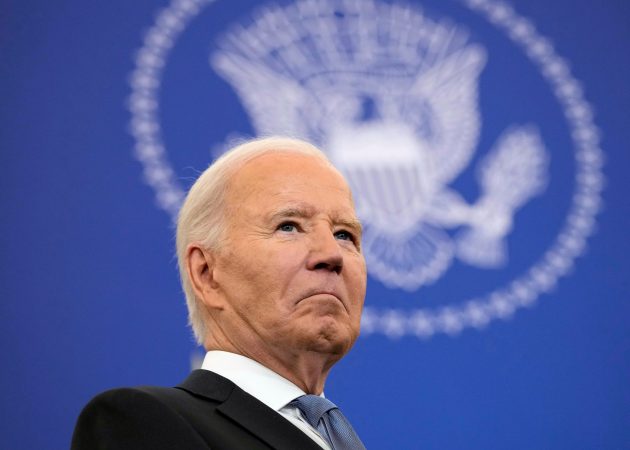
    WASHINGTON — A federal appeals court has rejected a request by former President Joe Biden to block the release of audio recordings and transcripts of his interviews with a memoir ghostwriter before he was elected president.

    A divided three-judge panel from the U.S. Court of Appeals for the District of Columbia Circuit suspended its decision until Aug. 3 to allow more time for Biden to consider another appeal.

    The panel’s 2-1 ruling late Monday found there is a “substantial” public interest in disclosing the material that Biden wants to keep under wraps. Redactions to the recordings would help protect Biden’s privacy, the majority noted.

    “We conclude that any remaining incursion on personal privacy from disclosure of the now-redacted materials likely does not outweigh the public interest in disclosure,” the ruling says.

    Judge Florence Pan, who was nominated by Biden, a Democrat, wrote a dissenting opinion in which she said Biden has shown a “substantial privacy interest” in keeping the material hidden.

    “The conversations at issue took place in Biden’s home, and the recordings of them were obtained by the government in the course of a criminal investigation that did not lead to an indictment,” she wrote.

    The appeal also was heard by D.C. Circuit Chief Judge Sri Srinivasan and Judge Gregory Katsas. Srinivasan was nominated by President Barack Obama, a Democrat who chose Biden as his vice president. Katsas was nominated by President Donald Trump, a Republican who as president lost to Biden in 2020 but was elected again to the White House in 2024.

    Mark Zwonitzer, who worked with Biden on two memoirs, 2007’s Promises to Keep and 2017’s Promise Me, Dad, interviewed him at his home in 2016 and 2017. Biden’s lawyers say the conversations were candid, personal, and intended to remain private.

    Biden spokesperson T.J. Ducklo said the former president disagrees with the ruling but “respects the courts and the vital role an independent judiciary plays in a healthy democracy.”

    “President Biden’s conversations for a book a decade ago that discussed his late son are private, and were provided to the Department of Justice on the express condition they stay that way,” Ducklo said in a statement. “Reversing course and making them public is just the latest example of this administration weaponizing the (Justice Department) for political retribution.”

    The recordings were obtained by special counsel Robert Hur, who investigated Biden’s handling of classified documents from his time as a senator from Delaware and as Obama’s vice president. Republicans in Congress demanded the material after Hur declined to file charges against the then-president.

    Biden sued and sought an injunction to prevent the Justice Department under Trump from releasing the recordings to Congress and the conservative Heritage Foundation. The department previously argued that the recordings were exempt from disclosure under public records law.

    Biden appealed after U.S. District Judge Dabney Friedrich, who was nominated by Trump, ruled in June that the public interest in the material outweighed whatever privacy rights Biden had.

    Pan noted that the majority is effectively ruling in favor of immediately disclosing the material by denying Biden’s request for an injunction pending appeal.

    “That, of course, will moot this case,” she wrote.

  • U.S. actions harm global efforts to prevent and treat HIV in dozens of countries, new report says

    U.S. actions harm global efforts to prevent and treat HIV in dozens of countries, new report says

    The Trump administration’s disruptions to a global AIDS relief program have forced organizations to close clinics, lay off staff, and cut services, seriously impeding efforts to prevent and treat the disease in dozens of countries, a new report released Tuesday shows.

    The President’s Emergency Plan for AIDS Relief, known as PEPFAR, is credited with saving at least 26 million lives since its inception in 2003. But last year, it was impaired by the dismantling of the U.S. Agency for International Development and cuts to thousands of global health grants.

    “The disruptions were very widespread,” with services for young women, orphans, and children impacted, said Elise Lankiewicz, policy associate for the nonprofit amfAR, the Foundation for AIDS Research, which released the report.

    Researchers contacted groups that got PEPFAR funding to deliver HIV services last year. Nearly a quarter — 166 groups from 46 countries — responded to an electronic survey conducted between last November and April, providing information on their funding, staff, and services.

    The survey didn’t reach all PEPFAR groups and certain types of organizations — like those that were most severely disrupted or still receiving U.S. funding — may have been less likely to respond. That could result in an underestimate or an overestimate of disruptions, depending on which organizations were missed. Nevertheless, the findings are a window into the struggles that some groups faced last year.

    Some key findings were:

    — Most organizations had at least one award terminated or payment delayed last year. Terminations led to the closure of more than 1,700 clinics, drop-in centers, and other service delivery sites, and to the loss of more than 16,000 full-time staff members.

    — Even though the U.S. government directed services providing HIV treatment, testing, and prevention of mother-to-child transmission to continue, a majority of partners still reported a disruption to those services.

    — Cuts were concentrated on services for populations most impacted by HIV. Most organizations previously serving groups such as sex workers, men who have sex with men, transgender people, and people who inject drugs reported permanently ending a service for these groups. Even among organizations that didn’t lose funding, some reported stopping a service for one of these key populations to comply with U.S. policy.

    — HIV prevention has been sharply reduced, with many organizations stopping condom programs or services offering what’s called PrEP, preventive medicines to guard against sexually transmitted HIV. From fiscal years 2024 to 2025, prevention spending fell 51%, according to PEPFAR expenditure data.

    — Locally-based partners were much more likely than international organizations to have an award terminated and to close service delivery sites. Funding disruptions also destabilized interconnected HIV service systems.

    “Taken together, these results describe widespread degradation of the infrastructure built to deliver HIV services worldwide, with the deepest damage falling on the populations and partners most essential to controlling the epidemic,” the report says.

    The survey doesn’t provide data at the country level, but amfAR officials point out that the majority of responses came from African countries.

    When asked about the report, a State Department spokesperson said in an email that the Trump administration has “strengthened PEPFAR through clear, strategic direction.”

    “As a result, the number of children testing positive and on treatment for HIV has continued to decline,” the spokesperson said.

    In April, the U.S. State Department released PEPFAR data for one quarter in 2025: July through September. Officials said PEPFAR-supported programs provided standard HIV treatment for 20.6 million people in more than 50 countries, which they said is stable from the same reporting period in 2024. They also said PEPFAR started 103,000 pregnant and breastfeeding women on PrEP, up from 43,000 the previous year.

    The data from that quarter “demonstrates the resilience and strength of the program,” the spokesperson said.

    But researchers from amfAR and the International AIDS Society combined that quarter’s data with another data release that included all four quarters and found substantial disruptions across PEPFAR services.

    Other research, published in the journal Nature Health in June, specifically examined treatment globally using PEPFAR data. It found that nearly 2 million fewer people living with HIV were receiving PEPFAR-supported antiretroviral treatment in fiscal year 2025 as compared with the previous fiscal year — about a 10% decline.

    “That does raise really important questions about program stability,” said Ramona Godbole, an author of that study who wasn’t involved in the latest report.

    AmfAR’s report made numerous recommendations to help restore care. It said the U.S. government and PEPFAR leaders should reinstate support for all HIV services, not just treatment. It also called on other national governments to spend more on HIV services and contract with nongovernmental organizations, including those led by people in key vulnerable populations.

    But Jennifer Sherwood, amfAR’s director of research and public policy, said even if money is put back into the system, it will take time to get the services up and running and regain the trust of communities.

    “And unfortunately, with HIV and infectious disease, each day is deadly,” she said. “Each day that we don’t have those systems in place, you see new infections.”

  • Trump officials seek to weaken public, state input on federal projects

    Trump officials seek to weaken public, state input on federal projects

    The Trump administration is seeking to loosen federal rules intended to protect historic sites, alarming outside groups who say the changes would allow government agencies and developers to pursue major projects — such as President Donald Trump’s planned triumphal arch — without soliciting public input.

    The Advisory Council on Historic Preservation, a low-profile federal agency that oversees preservation reviews and advises the president and Congress, on Friday proposed significant revisions to a federally required process that governs changes to landmarks such as the National Mall, sites that are significant to Indigenous tribes, and other properties eligible for listing on the National Register of Historic Places. The process currently applies to any construction projects that are on federal land or receive federal funding, as well as private projects that require any type of federal approval.

    Under the current rules, federal agencies must undertake a multistep Section 106 review assessing the potential effects of construction projects and soliciting public input, among other requirements. The revised rules would let federal agencies build their own projects or grant approval for construction by private developers without public input, according to a proposed rule and an accompanying document obtained by the Washington Post.

    Trump officials have previously said the 60-year-old rules can hamper development projects and needed renovations and had called for the regulations to be overhauled. But the timing of the administration’s announcement and the breadth of the proposed changes caught many historic preservation groups off guard.

    “What is going to happen regularly is communities are not going to know that major projects are happening in their backyard until the bulldozers show up,” said Marion F. Werkheiser, a founding attorney at Cultural Heritage Partners, who has reviewed the proposed changes. Werkheiser’s firm is involved in litigation against the Trump administration over plans to alter the Eisenhower Executive Office Building and the Kennedy Center.

    Sara Bronin, who led the ACHP under the Biden administration, called the proposed rules a “sloppy, ill-conceived draft” and predicted they would be challenged in court.

    Travis Voyles, a Trump appointee who serves as the council’s vice chairman, asked council members to vote on the proposed changes to Section 106 by this coming Friday, according to an email obtained by the Post. If council members support the new regulations, they could advance to the White House for the next step in the formal rulemaking process, Voyles wrote.

    ACHP did not immediately respond to questions about the planned changes and whether the White House had directed them. The White House declined to comment. The Atlantic previously reported the proposed changes.

    Experts said the rules govern changes to 1.4 million properties across the country, ranging from several thousand national landmarks to local historic districts and sites in many communities.

    Several Trump administration projects, such as the president’s planned triumphal arch near Arlington National Cemetery, have been bound up in the ACHP’s historic-preservation reviews. Outside groups have said that the rules are essential to protecting key sites and public spaces and warned that the planned changes would undercut decades of precedent.

    “This is not only a massive assault on laws that have benefited that nation for some 60 years, it almost completely eliminates the role of the public,” Charles A. Birnbaum, the CEO of the Cultural Landscape Foundation, an education and advocacy organization, said in a statement. “The proposal actually eliminates language that says: ‘The views of the public are essential to informed Federal decision making in the section 106 process.’ How un-American is that?”

    The proposal narrows what is considered a “historic property” that can be protected, tightens the scope on what is considered an “undertaking” affecting that property under the law, and makes the process of consulting states and the public optional. What qualifies as a historic property is now limited to places that are “geographically compact” and have been improved by humans at some point.

    “For the avoidance of doubt, noncompact, unimproved natural features such as mountains, valleys, bodies of water, or landscapes, including ethnographic landscapes, do not qualify as property,” according to the proposal.

    Outside groups said they had little chance of stopping this week’s vote. Twenty of the 24 seats on the ACHP are either directly appointed by the president or are reserved for the heads of federal agencies, such as the Interior Department, which are controlled by Trump.

    The Trump administration has separately remade other federal panels, such as the Commission of Fine Arts and the National Capital Planning Commission. Those panels have swiftly advanced some of Trump’s pet projects, such as his planned White House ballroom.

    Several Trump officials at an ACHP meeting last month shared their frustration about the existing Section 106 rules and said they supported reforms.

    Michael Boren, an Agriculture Department official who oversees the Forest Service, said that some efforts to replace unsafe, decades-old infrastructure at ski areas that are on national land had been stymied by the regulations.

    “When they’re over 50 years old, they’re historic structures and when we’re trying to replace them, we sometimes are delayed for years just by the historic piece,” Boren said.

    Werkheiser said the change would exclude landscapes that tribes hold sacred that would have been previously considered under the existing rules, potentially opening them up to development and destruction by industry. That could also remove the law’s protections against projects such as one that would build power lines near Thomas Jefferson’s Monticello estate and spoil the view from the historic site, she said.

    Bronin said that provision would allow the Trump administration to expedite some controversial projects, such as a planned copper mine in Arizona located on a sacred Apache site known as Oak Flat. Democrats and historic preservationists have said that the planned mine will destroy the site.

    “In the urban context, taken to the extreme, this phrase may be used to limit protected properties to just a building or a handful of buildings — making larger historic districts, like the French Quarter in New Orleans or historic Savannah vulnerable to needless destruction,” Bronin wrote in a message.

    The proposal would also give federal agencies a new way to approve projects without reaching agreement with states, tribes, or other parties involved in the review process. Historically, those decisions were memorialized through a “memorandum of agreement” negotiated with state or tribal authorities and other interested parties.

    The new rules would create an alternative called a “memorandum of decision,” allowing an agency to move forward on its own, without consultation with the states or the public. States and tribes would no longer be able to try to block a project or invoke a dispute-resolution process if they object. Agencies would still have to consult affected tribes but would not have to incorporate their feedback.

    Several experts also noted that the current Section 106 rules have required the Trump administration to take public feedback on some of Trump’s projects. Under the new regulations, the federal government could unilaterally decide that public input is not in the general interest, exclude the public from the process, and issue its decision unilaterally.

    “The agency is going to decide if it’s in the public interest to inform the public about what they’re getting ready to do in that public’s local community. And that just seems so Orwellian to me,” Werkheiser said.

  • A worker was hospitalized after suffering life-threatening injuries at EMR in Camden, shortly after a judge allowed it to reopen

    A worker was hospitalized after suffering life-threatening injuries at EMR in Camden, shortly after a judge allowed it to reopen

    A worker was sent to the hospital with life-threatening injuries on Saturday, just days after the EMR scrap metal recycling plant reopened in Camden, following a court ruling.

    The company had sued Camden after the city suspended its operations last month following the latest in a string of fires at the facility. Just under two weeks ago, a judge permitted the company to reopen with heightened safety precautions meant to prevent further fires. The company announced Monday of last week that it would begin activities on site that day and start full operations this past Friday.

    The next day, an employee working on behalf of EMR was sent to the hospital with “life-threatening injuries,” confirmed Dan Keashen, Camden County spokesperson.

    He said the Camden County Police Department is investigating the “industrial accident.”

    Emergency response units responded to a report of a male with injuries from an accident inside the EMR facility about 11:30 p.m. Saturday, Keashen said.

    He said emergency medical services transported the man to Cooper Medical Center and, as of Tuesday, the worker was in critical but stable condition.

    Camden city spokesperson Vincent Basara confirmed that the Camden Fire Department and EMS were called to the EMR facility on Saturday regarding an injury in the workplace and a person was “taken to the hospital with significant injuries.”

    Representatives for EMR did not respond to requests for comment on Tuesday. The company also faced an emergency across the river last week when a blaze broke out at an EMR facility in Darby, Delaware County, prompting air quality concerns.

  • Emil DeJohn, celebrated clothing designer and longtime college fashion professor, has died at 88

    Emil DeJohn, celebrated clothing designer and longtime college fashion professor, has died at 88

    Emil DeJohn, 88, of Ambler, celebrated clothing designer, longtime college department chair and professor of fashion, lecturer, volunteer, and mentor to generations of designers, tailors, dressers, models, and students, died Wednesday, June 24, of a heart attack at his home.

    Born in Philadelphia, Professor DeJohn worked for 37 years with Bill Blass and other notable clothing designers on Seventh Avenue in New York, and for 21 years as chair of the fashion department at Moore College of Art and Design, director of fashion career development at Drexel University, and professor of fashion at the now-closed Art Institute of Philadelphia.

    He designed clothing of all kinds for men, women, and children for Jones New York, OshKosh B’Gosh, and other international labels from 1960 to 1997. He established his own label, Alex DeJohn by Emil, in the 1980s, and his creations appeared on the covers of Vogue, Harper’s Bazaar, and other magazines.

    Several of his gowns were offered to singer Barbra Streisand in the 1960s, and he received design compliments from, among others, film star Elizabeth Taylor and Andre Leon Talley, former editor-at-large at Vogue. In the 1980s, he was chosen by then-first lady Nancy Reagan to design a colorful clothing collection promoting her “Just Say No” antidrug campaign.

    In New York, Professor DeJohn showed designs at Bergdorf Goodman, Saks Fifth Avenue, Neiman Marcus, and Macy’s. In Philadelphia, he showed at Bonwit Teller and other top shops.

    He also showed in London, Paris, Milan, Hong Kong, and elsewhere around the world. He lectured about fashion at other universities, represented the industry at high school career fairs, and mentored many young designers.

    At fashion shows, they always gave him a front-row seat. “It’s an incredible profession,” he told The Inquirer in 2001. “Lots of ups and just as many downs. I wouldn’t trade one day.”

    In 1997, looking to engage less with consumers and more with emerging designers, Professor DeJohn left the workshops and showrooms in New York for classrooms in Philadelphia. He spent six years as chair of the fashion design department at Moore, several years as director of fashion career development at Drexel, and finally retired in 2018 as a professor of fashion at the Art Institute.

    At Moore, Professor DeJohn recruited Bob Mackie, Betsey Johnson, and other renowned designers to meet his students and provide internships and jobs. At Drexel, he oversaw the Crystal Star Award for design program and taught a class called Aspects of Fashion and Merchandising.

    Professor DeJohn (left) attended many galas as director of the Crystal Award for design at Drexel. Emil DeJohn

    He hosted a fashion club at the Art Institute and was named the school’s 2017 Teacher of the Year. “He was always happy to answer our questions and tell us about the industry,” a former student said in a tribute. Another said: “He inspired all of us to dream big.”

    Professor DeJohn won the city’s Phashion Phest Philadelphia Award for design in 2001 and told The Inquirer: “Teaching the students has been a gift to me. I never envisioned anything I could enjoy more than designing. But this has become an amazing part of my life. I actually love coming to work.”

    He earned other awards for design and his volunteer work at the Rowan House, the Ronald McDonald House, and other nonprofits. “He stood as a beacon of hope,” said his granddaughter Alexandra, “always making everyone feel like he believed in them, always bringing out what made them special.”

    His granddaughter Isabella said: “His legacy continues to inspire me every day.”

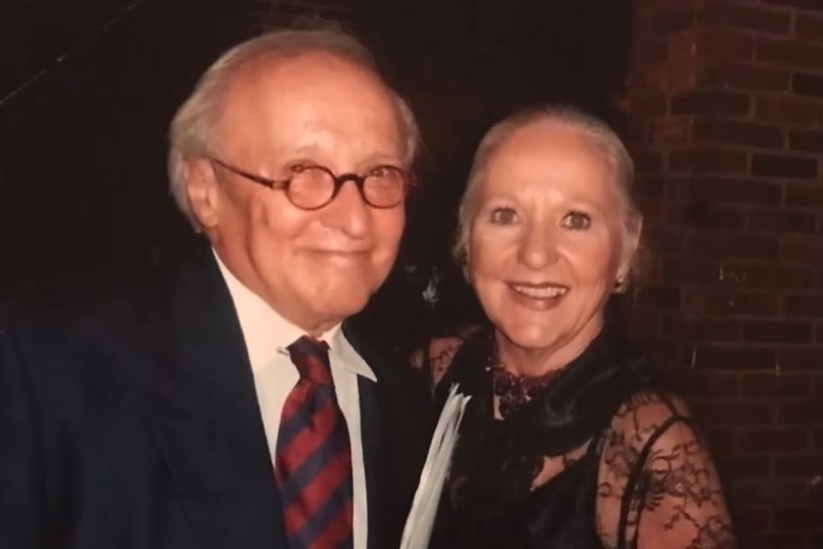
    Professor DeJohn met Bette Anne DeChiaro at a dance at the Shore when he was 17, and they married in 1963. Courtesy of the family

    Emil Joseph DeJohn was born Dec. 20, 1937, in his mother’s bedroom in South Philadelphia. The youngest of three children, he discovered art in grade school, took art classes at Fleisher Art Memorial, and graduated from John Bartram High School.

    He earned a bachelor’s degree in fine arts at the old Pennsylvania Museum and School of Industrial Art in 1959. He won the school’s design citation as a senior and worked at first as an illus­trator for the Bul­letin’s fashion pages.

    He met Bette Anne DeChiaro at a dance at the Shore when he was 17, and they married in 1963. They had a daughter, Leisa, and a son, Christian, and lived in Center City, Wyncote, and Ambler.

    Professor DeJohn liked antiques, flowers, and anything blue and white. He supported the old Carmelites monastery in Philadelphia and belonged to St. Luke the Evangelist Church in Glenside.

    Professor DeJohn first became interested in art and fashion in grade school. Courtesy of the family

    He made friends on his daily two-hour train rides to New York and said he never considered leaving Wyncote. “I loved leaving all that and coming home to cut the grass,” he told The Inquirer in 2001. “My neighbors didn’t even know what I did for a living.”

    He designed his daughter’s wedding dress, took his granddaughters to mesmerizing fashion events, and made memorable trips to Ocean City, N.J., Longwood Gardens, New Hope, New Mexico, and Florida. He especially enjoyed decorating his home and Christmas tree with ornaments and live flowers.

    “He made us all feel seen and special,” his daughter said. “He did that for everyone he met.”

    In addition to his wife and children, Professor DeJohn is survived by four grandchildren, one great-granddaughter, and other relatives. A sister, a brother, and a son-in-law died earlier.

    Professor DeJohn (right) said he would never leave Wyncote for New York. Courtesy of the family

    Services were held earlier.

    Donations in his name may be made to the Carmel of Jesus Crucified Monastery, Attn: Mother Pia, Box 308, Muenster, Texas 76252.

    Professor DeJohn (second from right) enjoyed time with his family.Courtesy of the family
  • Philadelphia police and FBI to begin excavating Olney house in connection to missing women case

    Philadelphia police and FBI to begin excavating Olney house in connection to missing women case

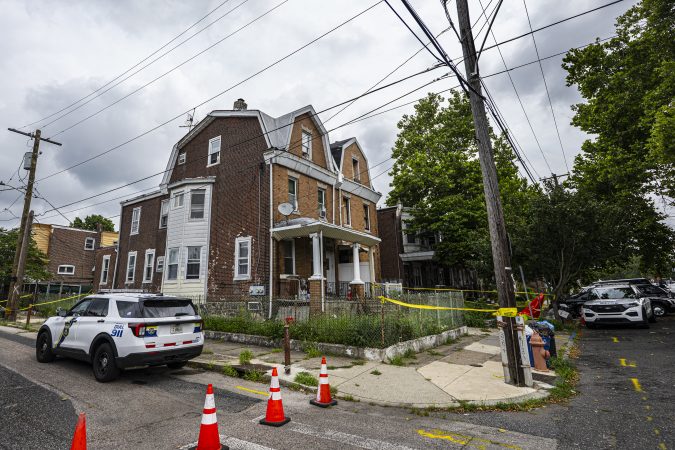
    The Philadelphia Police Department and the FBI are to begin excavating part of the Olney house that has been at the center of a monthlong investigation into at least two missing persons, law enforcement officials said Monday.

    Sgt. Eric Gripp, a police department spokesperson, confirmed that the Philadelphia Water Department would assist federal and local officials by unearthing a pipe under the property on the 400 block of West Chew Avenue as part of the widening probe.

    “The general scope of the dig is to excavate and remove a pipe that will be subsequently examined by FBI and PPD forensics for any evidence that may be present,” said Gripp, who declined to provide a timetable for the work.

    The excavation is the latest development in a case that has generated widespread interest since last month, when authorities connected the crumbling twin home to the disappearance of at least two women over the last decade.

    Federal prosecutors have charged the owner of the property, Eugene Albert Horsch, 44, with carrying illegal firearms and fake federal law enforcement credentials.

    Police apprehended Horsch on June 19 near Independence Mall with drugs, guns, and various other weapons, as well as a phony U.S. Drug Enforcement Administration badge. A woman who was with him at the time was carrying a fake ID in the name of Blair Tonzelli, a woman struggling with drug addiction who was last seen in 2022 at Horsch’s home.

    The monthlong search of Horsch’s property has turned up an array of evidence, authorities say: hidden compartments, vats filled with chemicals, a 55-gallon drum with connections to water lines in the basement, and what police sources described as “a significant amount” of blood.

    Forensic testing of the evidence found in the home remains ongoing, and police have yet to confirm whether the blood is human. Horsch has not been charged with any violent crimes in the current case.

    Investigators also found Tonzelli’s bank card, other fake IDs in her name, and an unsigned, handwritten letter that appeared to describe hurting people and referenced the serial killer Ted Bundy, according to the affidavit of probable cause to search the home that was obtained by The Inquirer.

    The probe grew more complicated when investigators learned that Amy McHale, the ex-wife of Horsch’s late father, Raymond Horsch, was also last seen at the Olney property in 2016, according to her family.

    And adding to complexity of the circumstances is Raymond Horsch’s unusual career as an erotic filmmaker and writer, whose work fixated on sadomasochist themes, serial killers, and women struggling with drug addiction. He died in August 2025.

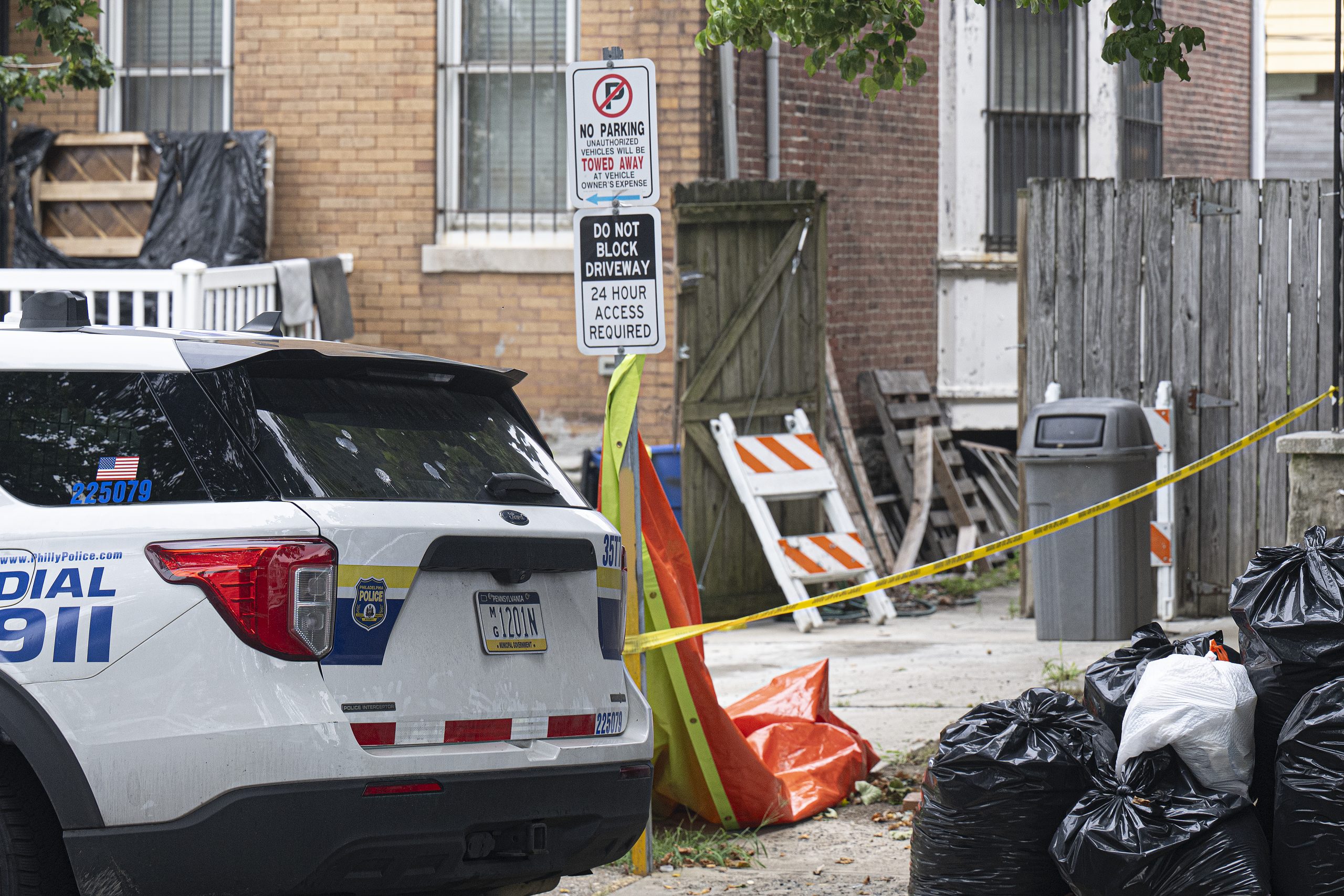
    Police maintain a presence outside the home of Eugene Albert Horsch on West Chew Avenue in the Olney section of Philadelphia Tuesday, July 21, 2026.Jose F. Moreno / Staff Photographer

    It remains unclear if authorities have linked any of the evidence in the house to foul play involving the missing women.

    Jerome Brown, a lawyer for the Horsch family, has denied any connection to McHale’s disappearance, saying that she had struggled with addiction and mental health issues. Eugene Horsch was incarcerated at the time of her 2016 disappearance, according to state prison officials.

    Eugene Horsch has a lengthy criminal background involving multiple drug convictions, including one linked to the discovery of a marijuana-growing operation after a house fire last year. After the latest search, investigators recovered numerous chemicals also suspected of being used in drug production.

    The department did not provide an estimated cost for the dig.

    Questions about the investigation have swelled among neighbors in Olney, as the probe continues in its second month. Two police cruisers have been stationed around the property 24-7 to prevent anyone from tampering with the active crime scene.

    At a crowded community meeting in the basement of an Olney billiards hall this month, 35th District Police Capt. Walter Burks tried to ease anxieties, refuting erroneous reports on social media that falsely claimed police had discovered multiple dead bodies in the property.

    Burks emphasized the house “does not pose a threat to the community” while acknowledging that he could not answer specific questions.

    “I know you all see the cars outside,” he said. “You know it’s something serious. It’s an active crime scene we have to protect.”