Category: News

  • Inside the Philly Police Department’s plan to act like a ‘modern business’: Quality-of-life officers, AI, and video calls

    Inside the Philly Police Department’s plan to act like a ‘modern business’: Quality-of-life officers, AI, and video calls

    Until last year, Philadelphia police detectives wrote search warrants on typewriters. Officers still take incident reports with pen and paper, and hand deliver them to detective bureaus. And when someone reports a minor crime, it can take hours for police to respond — if they do at all.

    To Police Commissioner Kevin Bethel, those details capture something bigger: a department in need of a systems upgrade.

    In a new five-year strategic plan released Thursday, Bethel broke from the tradition of his predecessors by treating the police department and its nearly $900 million budget as a business in need of modernizing — with an eye toward better “customer service” for residents — rather than centering on crime-fighting tactics like commanders of the past.

    “If we’re going to be a modern police department,” he said in an interview this week, “we have to take on some of the structures of a modern business.”

    To him, that involves tackling many of the less glamorous parts of police work: upgrading internal records systems, streamlining police report forms, and expanding training for officers.

    But there are also some flashy — if not eyebrow-raising — initiatives within the 73-page plan: integrating artificial intelligence into 911 calls, allowing residents to report nonemergency crimes via video chat, and creating an internal diversion program for officers who violate low-level department policies.

    Some parts of the plan — built on conversations with more than 200 people in the department, city leadership, and community — would be funded through grants, the department said, while others would need to be approved and funded by City Council, which has been largely amenable to Bethel’s budget requests in recent years.

    The department said the long-term view “allows future needs to be considered through the normal budget process well before they arise.”
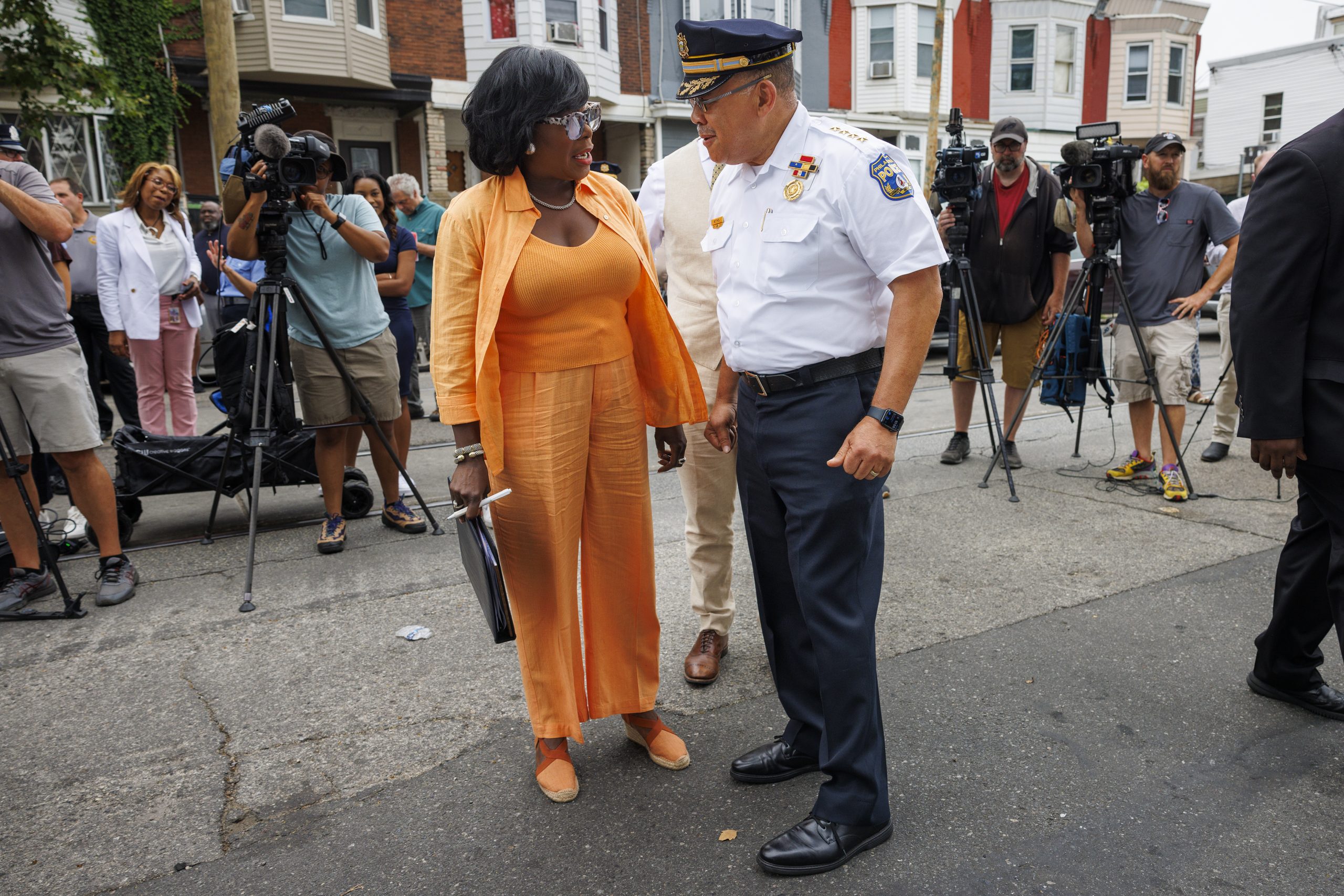
    Philadelphia Mayor Cherelle Parker and Police Commissioner Kevin Bethel speak at a press conference in 2024.Alejandro A. Alvarez / Staff Photographer

    It has been one of Bethel’s signature undertakings since Mayor Cherelle L. Parker appointed him as Philly’s top cop in January 2024, part of a long history of police commissioners and mayors working together to craft long-term public safety plans to guide their administrative goals.

    In 2012, then-Mayor Michael Nutter said the department would focus on confiscating illegal guns, and ramp up overtime to put more cops on the street. And in 2020, amid an unprecedented spike in gun violence, then-Police Commissioner Danielle Outlaw outlined goals to increase the clearance rate for homicides and shootings.

    Bethel’s plan, by contrast, is light on specifics for traditional crime fighting. While it broadly describes strategies like increasing foot patrols on SEPTA and expanding the use of digital forensic evidence in investigations, it does not set targeted reductions in homicides, shootings, or traffic deaths.

    That, he said, was intentional.

    “This plan is really not a crime plan. We have a crime plan. We’ve been covering it for a long time. We know that space of it,” he said. “But we’ve never done anything as an organization with, how do we move into being a modern and forward-thinking, always-evolving organization?”

    Bethel’s plans come as Philadelphia faces a more positive outlook. The city is on track to record the fewest homicides in more than half a century. The homicide and shooting clearance rates have hovered around 98% and 40%, respectively, the highest in decades. And Philadelphia is no longer the poorest big city in America.

    That has likely given Bethel the rare breathing room to look past the crime stats that have defined past administrations and focus instead on the machinery behind them.

    Here are some standout parts of the plan:
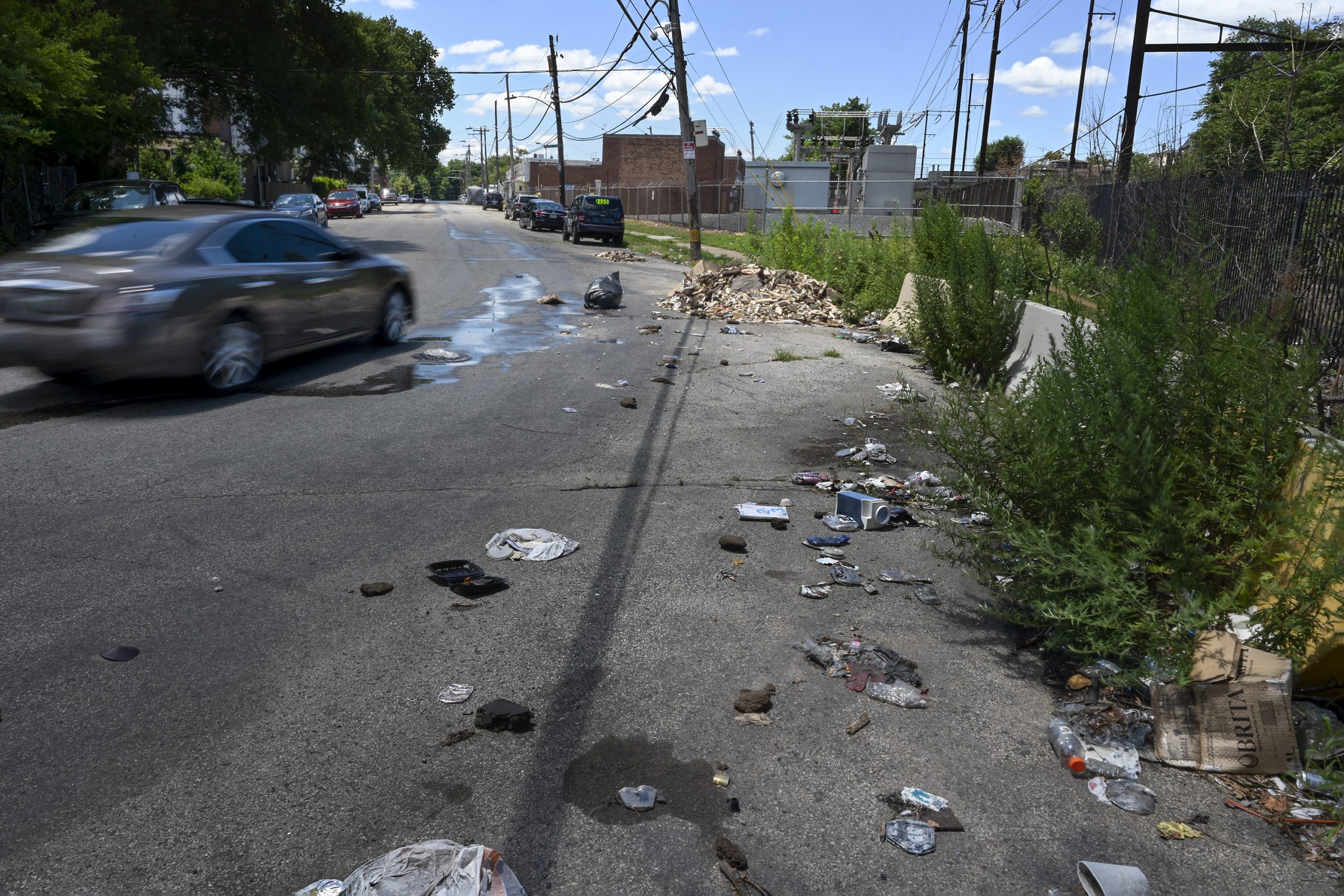
    Illegally dumped trash piles up at South 56th and Hoffman Streets in Kingsessing in this 2024 photo. Residents would now have officers in their police district to specifically help address quality-of-life issues. Tom Gralish / Staff Photographer

    New quality-of-life officers

    Quality-of-life concerns have long dominated community police meetings, Bethel said. So within the next two years, the department plans to install “quality-of-life officers” in every police district to be the point of contact for residents on issues like abandoned cars, illegal dumping, and nuisance businesses.

    Those officers, Bethel said, would be responsible for coordinating calls with other city departments to more quickly resolve problems.

    Report low-level crimes via video call

    One of the biggest issues for the department, Bethel said, is poor “customer service.”

    Officers typically juggle high-priority calls — like shootings and assaults — alongside reports of nonviolent crimes like petty theft, vandalism, or minor car crashes. Because the lower-level offenses are considered less urgent, officer response can sometimes take several hours, leaving residents frustrated.

    Under the new system, he said, people would be able to report low-level crimes online and be provided with a link to a video chat with officers, who could take the report and send a copy to the caller digitally, with no in-person visit needed.

    Filing a report over the phone will still be possible, he said, but for people who want to avoid an emergency call for minor issues, this is a new option.

    The new system could start to roll out within the next year.

    AI-assisted 911 calls

    The department also plans to test 911 call systems that use artificial intelligence to screen calls.

    When people call for help, they will be connected to an emergency dispatcher, with AI listening in the background. Callers who report lower-level crimes, like vandalism or theft, will be transferred to an AI-assisted line and have the option to report the matter online or via video call.

    There will also be a separate, nonemergency phone number that will be answered by an artificial voice. The system will screen for keywords or issues linked to high-priority crimes, like a robbery or shooting, and immediately transfer those calls to a human dispatcher, the department said.

    The hope is this would lead to faster response times and reduce complaints that calls for help have gone unanswered.

    Bethel said the department is still evaluating potential pitfalls, and acknowledged the nuances: “A theft can turn into a robbery, and a robbery can turn into a shooting, a shooting can turn into a murder,” he said.
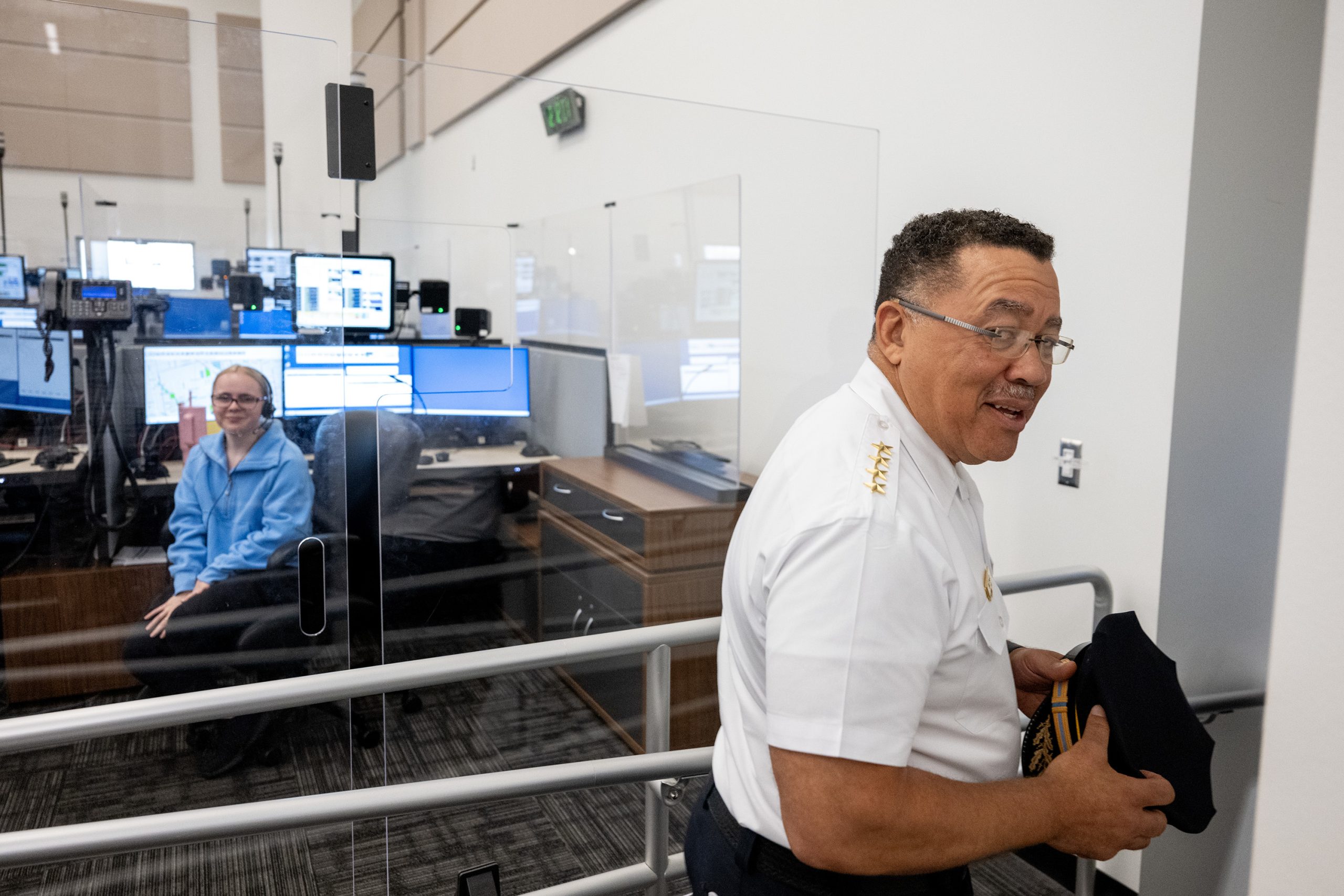
    Police Commissioner Kevin Bethel inside the radio room at PPD headquarters in 2024.Tom Gralish / Staff Photographer

    An internal diversion program

    When city police officers violate department policy, their disciplinary cases are sent to the Police Board of Inquiry, and reprimands can remain on their record and affect future promotions unless appealed and overturned through union arbitration.

    Under a new initiative, officers accused of lower-level violations could go through an internal diversion program that requires them to undergo training and avoids a mark on their record. Among those offenses are sleeping on duty, dismissive behavior, using derogatory or offensive language, or failing to activate body-worn cameras. In the latter case, Bethel said, the diversionary program would not be available for officers with repeated failures to turn cameras on.

    Officers would not be eligible for diversion if they are found to have committed the same offense within the previous six months, or if the offense happened alongside more serious violations ineligible for the program.

    Bethel said the diversion option was developed in coordination with the Citizens Police Oversight Commission with a goal of giving officers “a second chance, but also train them.”

    Expand communication with the public

    The department intends to develop transition plans when captains or commanders leave neighborhood police districts — something community leaders had requested, Bethel said.

    It will also host quarterly community meetings to review data, and develop publicly available dashboards with additional crime, quality-of-life, and other types of data to measure performance.

    By expanding points of contact with the community, Bethel said, “they’re going to hold us accountable.”

  • To reduce problem gambling, Pa. commission recommends enacting some strict prohibitions. Don’t bet on it, sportsbook alliance says.

    To reduce problem gambling, Pa. commission recommends enacting some strict prohibitions. Don’t bet on it, sportsbook alliance says.

    The tension between the rise of legalized sports betting and the specter of gamblers developing ruinous addictions came into sharp focus last week, between the stark recommendations of a nonpartisan Pennsylvania commission and a baseball star’s social media post.

    Lawmakers could impose restrictions on sportsbook operators, such as banning in-game microbets and curtailing VIP programs, the Joint State Government Commission wrote in a 126-page study on sports betting and interactive gambling that was published July 13.

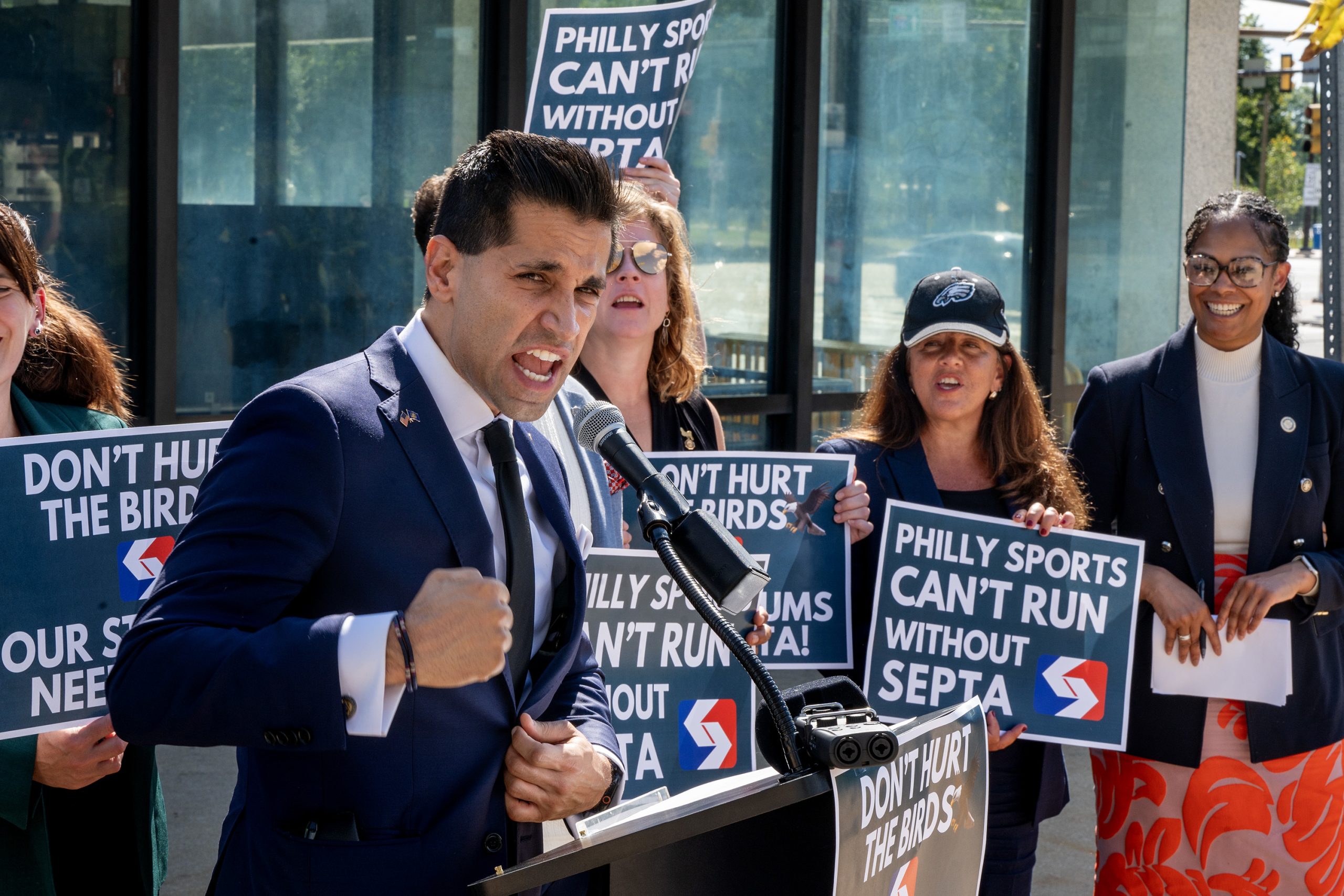
    A bill to prohibit microbets and other sports gambling products that could amplify addiction is currently being drafted, said State Rep. Tarik Khan, who introduced the resolution that authorized the commission’s research.

    “The scope of the problem is worse than we thought,” said Khan (D., Philadelphia).

    State Rep. Tarik Khan said lawmakers are drafting legislation that will seek to prevent sportsbook operators from offering in-game microbets.Tom Gralish / Staff Photographer

    He referenced surveys, cited by the study, showing that 48% of men ages 18 to 49 have an account with at least one sportsbook company, while 52% reported wagering an increased amount of money after they experienced losses.

    “Sometimes you have to be very clear on what companies can and can’t do, especially when money is involved,” Khan said.

    Americans spent a record $165 billion on sports betting in 2025, and were projected to wager at least $3 billion on the recent FIFA World Cup.

    Analysts have predicted that microbets — wagers that can be made on individual plays and outcomes during a live game — could grow by $14 billion by the end of the decade.

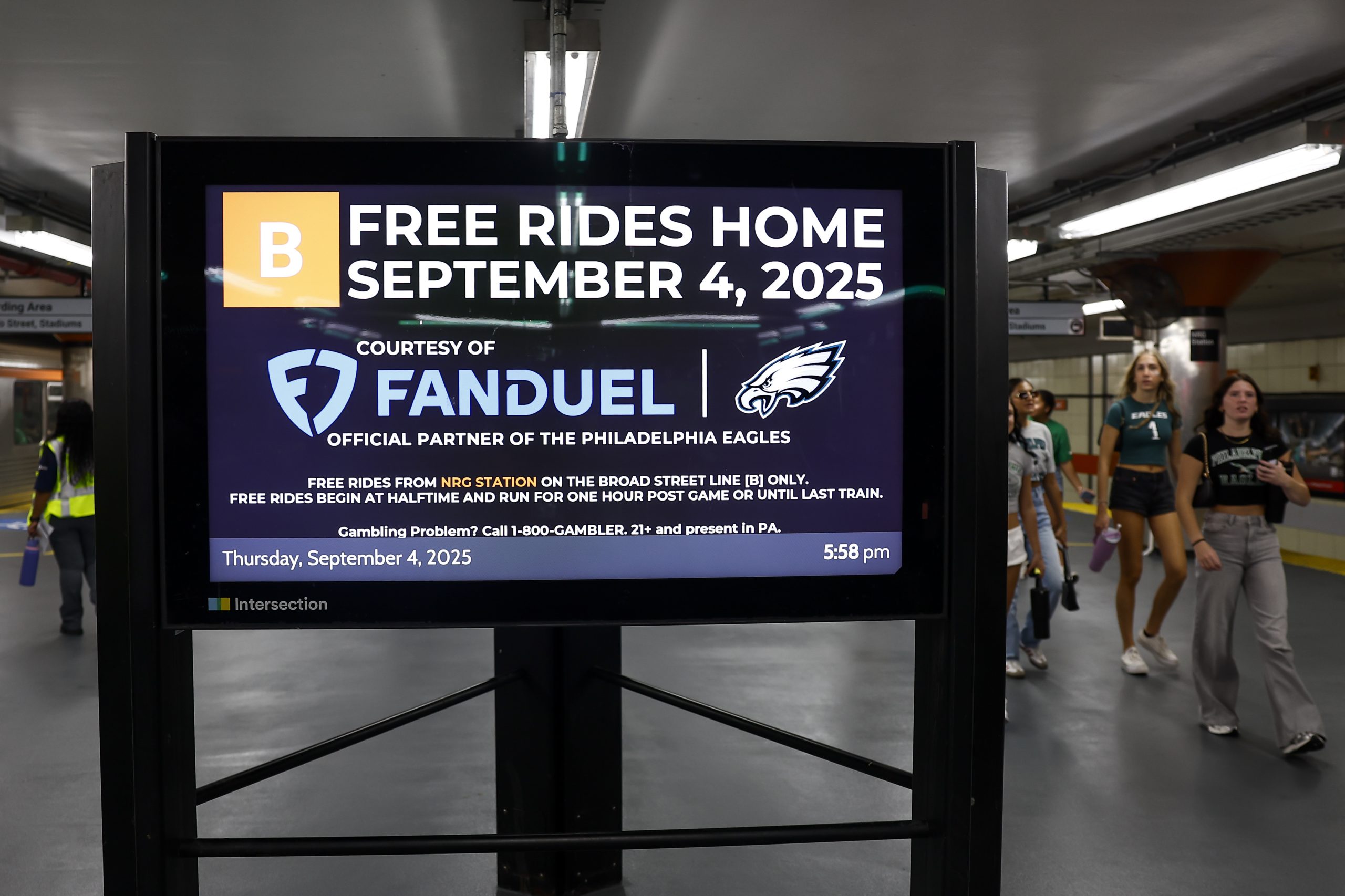
    The sports gambling industry is likely to oppose eliminating such a lucrative product, according to Joe Maloney, the president of the Sports Betting Alliance, a national advocacy organization whose members include FanDuel, DraftKings, BetMGM, bet365, and Fanatics.

    “I’m just not sure that something as proscriptive as banning that market achieves what is the stated endgame,” Maloney said. “I’m not entirely sure what the problem is that they’re trying to solve.”

    The same day the state study came out, Philadelphia Phillies first baseman Bryce Harper took to Instagram to explain how FanDuel had acquired a personalized video he made in 2024, which the sportsbook company then sent to Terry Thompson, a local VIP bettor who suffered from a gambling addiction.

    Harper wrote that he had recorded the 21-second video — a copy of which was obtained by The Inquirer — through the video service Cameo. In it, Harper said he was doing the video on behalf of a FanDuel host. But the nine-time All-Star later said that he was not aware that FanDuel intended to use the recording for business purposes or that Thompson had an addiction.

    “Had I known FanDuel’s true intent,” Harper said, “I would not have made the video.”

    The state study summarized litigation that sportsbook operators are facing in Pennsylvania, including a lawsuit filed in March by the Public Health Advocacy Institute on behalf of Thompson and another man against FanDuel and DraftKings. The suit alleges that the companies profit from the compulsive nature of microbets and use VIP rewards to entice gamblers to keep betting, even after they have displayed signs of addiction.

    Thompson, of Montgomery County, lost nearly $2 million to wagers that he placed with FanDuel and DraftKings.

    “These companies’ profit margins are dependent on people with gambling disorders,” Khan said. “It’s clear. Did [FanDuel] tell Bryce Harper that they wanted a video for a person who had lost that much money? Of course not.”

    Maloney disputed Khan’s characterization of sportsbook companies’ business practices.

    He compared VIP programs to customer rewards that retailers like Starbucks or T-Mobile offer, and said bettors can easily opt out of the programs or from receiving promotional offers.

    “There’s no sustainable and durable future for this industry if it is not responsible and committed to integrity,” he said. “The notion that any industry can sustain itself across a small and finite number of users is completely false.”

    The regulation battle

    The commission, a research and policy development agency for the Pennsylvania legislature, retraced the evolution of sports betting in the U.S. and identified measures that lawmakers could pursue to curb addiction.

    Since the U.S. Supreme Court ruled in 2018 that states could establish their own sports betting laws, sportsbook companies and lesser-regulated prediction markets have entered into highly visible partnerships with professional sports leagues and teams that once were uniformly opposed to gambling.

    The rise of the sports betting industry has helped fill state coffers. Pennsylvania recorded $6.7 billion in gambling revenue in 2025, with $602 million derived from sports wagers.

    Tales of bettors who grew addicted to the instant dopamine spike of gambling on mobile devices or placing in-game microbets, then tumbled into a whirlpool of spiraling debt, have also become plentiful.

    “States are waking up to the reality of sports betting now. They’re seeing a lot of the downstream impacts,” said Uttara Ananthakrishnan, an assistant professor of information systems at the University of Washington and an expert on online betting and gambling addiction.

    The NFL, like other professional sports leagues, has abandoned long-held opposition to gambling entities, and entered into partnerships with sportsbook operators.Monica Herndon / Staff Photographer

    Ananthakrishnan said new research suggests that gambling is not only associated with financial stress, but also can lead to more crime, suicide, divorce, child maltreatment, and housing instability, while siphoning state lottery revenue.

    A recent study conducted by Pennsylvania State University’s Criminal Justice Research Center found that 2.5% to 6.4% of Pennsylvania adults may be problem gamblers, while a 2025 National Council on Problem Gambling survey showed that at least 20 million Americans reported experiencing problematic gambling behavior during the previous year.

    The state commission study, meanwhile, cited a Harris Poll that found 79% of Americans believe gambling addiction is “as serious or more serious” than alcohol or drug addictions.

    “It’s very, very disturbing,” Khan said.

    The commission suggested that lawmakers could obtain customer data from gambling companies and have them independently analyzed to better understand which practices and products are most harmful.

    It offered other, more immediate recommendations as well: preventing bettors from using credit cards to place deposits; mandating that customers limit the duration of their gambling and the frequency of their deposits; and forbidding companies from sending promotional offers to gamblers if they have logged out of their accounts, or using artificial intelligence to create individualized promos.

    The study also suggested prohibiting gambling advertisements from public university campuses.

    “I don’t sit here as a voice of the industry and deny the science,” Maloney said. “Gambling is an activity that can become problematic, and for some people, it can become addictive.”

    But Maloney argued that many of the gambling studies and surveys that experts cite do not prove a direct link between gambling products and those who develop addictions.

    “By all means, it’s a policy conversation that we absolutely want to have if the legislators are responding to highly publicized research, and confusing correlation with causation, and relying on national media interlopers who are largely transcribing academics and researchers in that space, and delivering clicky headlines,” Maloney said.

    Sports betting helped drive gambling revenue in Pennsylvania to a record $6.7 billion in 2025. Jeff Chiu

    Ananthakrishnan said the negative effects are real.

    “I am glad Pennsylvania is recognizing the problem and looking at evidence-based policy to curtail problem gambling,” she said.

    Ananthakrishnan said the legislature should act on at least two proposals in the study: Require gambling apps to use their own data to predict problem gambling behavior, rather than using the information just to convince users to place more bets; and require the apps to release anonymized player stats that could be analyzed by an independent research entity.

    “This creates a pathway to design evidence-based policies that directly address the specific mechanics of digital addiction without relying solely on operator self-reporting,” she said of the latter proposal.

    ‘Too close to the edge’

    While legislators in Pennsylvania and other states, like New Jersey, grapple with how to enforce guardrails on sports betting, leagues continue to face headline-grabbing gambling scandals.

    The NFL last week indefinitely suspended an Arizona Cardinals official, Ryan Gold, who is accused of leaking information about the team’s draft plans and participating in parlay bets on NFL and college games, ESPN reported. Gold has denied any wrongdoing through his attorney. The matter is now being investigated by the Arizona Department of Gaming.

    In May, a DraftKings employee was arrested in Las Vegas and charged with conspiracy and related offenses for allegedly participating in a sports betting ring with a basketball player from Fresno State.

    Hours before he participated in the All-Star Home Run Derby on July 13, Bryce Harper wrote on Instagram that he didn’t know FanDuel planned to use a video he recorded through Cameo as a reward for a VIP bettor. Monica Herndon / Staff Photographer

    The Pennsylvania Gaming Control Board, meanwhile, is reviewing the controversy over FanDuel’s use of the Bryce Harper video.

    Major League Baseball’s commissioner, Rob Manfred, told reporters that Harper did not violate the league’s collective bargaining agreement, which allows players to engage in some promotional work for sportsbooks and casinos, provided they do not encourage betting on baseball.

    The gaming control board has separately proposed new regulations to address gambling addiction, said a spokesperson, Doug Harbach.

    Among the changes the board wants to implement are daily, weekly, and monthly limits on deposits that bettors can make to cashless gaming systems, and prohibiting companies from implying that betting is risk-free or a way to pay bills.

    “We have to make sure there are safeguards,” said Khan, the state representative. “Sometimes people get too close to the edge.”

    The Inquirer will continue to report on issues related to the growth of gambling addiction — among teens and adults — across Pennsylvania. If you, or someone you know, would like to speak with a reporter, please contact David Gambacorta or William Bender at dgambacorta@inquirer.com or wbender@inquirer.com

  • Mideast oil producers step up plans to bypass the Strait of Hormuz

    Mideast oil producers step up plans to bypass the Strait of Hormuz

    Before the war in Iran, roughly 15 million barrels of Persian Gulf oil were shipped each day through the Strait of Hormuz. Within a few years, much of that oil could bypass the strait.

    As Iran’s chokehold over the strait drags on and oil prices surge, countries across the Gulf are planning to spend billions of dollars to build pipelines enabling them to redirect more supplies to ports along the Red Sea and the Gulf of Oman.

    At least seven major pipeline projects are under construction, in the planning stage or being discussed as possibilities, according to government officials, oil companies and analysts. The war has been a wake-up call for Gulf oil producers, who are determined to become less dependent on a transit point that hugs Iran’s coast.

    But alternatives to Hormuz are also vulnerable to disruption. Yemen’s Iran-backed Houthi rebels said early Thursday they had attacked two Saudi oil tankers in the Red Sea, a key alternative route to the strait for Saudi oil exports.

    Some alternative routes will take the oil on longer and more expensive paths to market. Regardless, producers have realized that relying so heavily on the Strait of Hormuz “is no longer a prudent long-term strategy,” said Victoria Grabenwöger, senior research analyst at data firm Kpler.

    The Red Sea and Gulf of Oman have become vital alternatives to Hormuz

    The effective shutdown of the Strait of Hormuz would have been an even greater shock to the world economy were it not for a pipeline Saudi Arabia built in the 1980s amid fears that Tehran would disrupt shipping through the strait during the Iran-Iraq war.

    The Saudis’ East-West pipeline carries oil across the desert nation from a processing facility in Abqaiq to the city of Yanbu on the Red Sea coast. Once there, it is loaded onto tankers that head either south to the Arabian Sea or north to the Suez Canal.

    The United Arab Emirates has been sending more oil to the port of Fujairah, which abuts the Gulf of Oman, about 145 kilometers (90 miles) south of Hormuz.

    Combined, the two pipelines had spare capacity of about 3.5 million to 5.5 million barrels per day before the war began, according to the U.S. Energy Information Administration. The two pipelines are now running near full capacity.

    More oil could begin flowing through a UAE port by next year

    The state-owned oil company of Abu Dhabi, one of the UAE’s seven emirates, is accelerating construction of a $3 billion, 300-kilometer (200-mile) pipeline to Fujairah. That pipeline, which will run parallel to an existing one, aims to increase oil supplied to Fujairah by more than 1.2 million barrels a day.

    The project, which started before the war, is now reportedly about halfway completed, according to Kpler. The pipeline is intended to be completed by early 2027, but Kpler says mid-2027 is more likely given the need to expand the port at Fujairah.

    The ambitious timeline “has only become feasible against the backdrop of the Strait of Hormuz blockade,” Kpler’s Grabenwöger said.

    Plans to pipe more oil to Turkey and Syria will take longer

    In Iraq, officials are ramping up plans to develop alternative export routes for southern oil fields around Basra. Iraq is so dependent on the Strait of Hormuz that it has had to scale back production.

    The Iraqi government, which gets some 90% of its revenues from oil sales, has been pursuing pipeline projects with U.S. companies. One would take supplies from an oil terminal in Basra — through which more than 3 million barrels were exported daily before the war — to the port of Ceyhan in Turkey, along the Mediterranean Sea.

    That pipeline would also have a branch extending to the Mediterranean port of Baniyas in Syria. Some 2 million barrels a day of oil could ultimately flow through the pipeline to Baniyas, which the U.S. State Department has called “a critical energy corridor.”

    Iraqi officials have also held discussions with Jordan on advancing long-discussed plans for a pipeline that would carry oil from Basra to Aqaba. From there it would be exported via the Red Sea or the Suez Canal to Asia and beyond.

    The new pipelines will add time and costs — and are also vulnerable to attacks

    Taken together, the new projects to bypass Hormuz could carry an added 3.8 million barrels of oil a day by the end of next year, and 7.3 million barrels per day by the end of 2028, according to analysts at the investment bank Goldman Sachs. The projects would mean some 60% of the Gulf’s total prewar exports of 23 million barrels a day could bypass Hormuz if needed, the analysts said.

    Pipelines from the Persian Gulf to the Mediterranean Sea send oil in the wrong direction to help Asian countries that relied on exports through Hormuz, requiring a much longer trip around the southern tip of Africa.

    Any additional supplies piped from Saudi Arabia to the Red Sea will also be vulnerable to attacks by Houthi rebels in Yemen, as Thursday’s attacks show; the rebels have successfully disrupted shipping before at the Bab el-Mandeb Strait, which connects the Red Sea to the Gulf of Aden.

    That oil could also be sent to the Suez Canal instead to reach the Mediterranean. But the canal cannot accommodate the industry’s largest tankers, which hold up to 2 million barrels per vessel and are often the most cost-efficient way to transport oil long distances.

    And pipelines themselves are not immune to attack. The Saudi East-West pipeline was shut down by a Houthi drone strike in May 2019.

    Meanwhile oil pipelines don’t help with the disruption to supplies of liquefied natural gas, or LNG, carried by ship. About one-fifth of the world’s LNG — much of it from Qatar and headed for Asian customers — transited the strait before the war.

  • Trump poised to restart tariff campaign, using provision on forced labor

    Trump poised to restart tariff campaign, using provision on forced labor

    The Trump administration is expected as soon as this week to introduce permanent new tariffs to replace the temporary import penalties it imposed after the Supreme Court earlier this year abruptly upended President Donald Trump’s trade strategy.

    The first batch of new tariffs is expected to affect 60 nations that the administration said in June were importing goods produced using forced labor, putting higher-paid American workers at a disadvantage.

    Nations that do not prohibit such goods would face tariffs of 12.5%, while those that have such laws but fail to enforce them would be hit with 10% levies, under a proposal that Jamieson Greer, the president’s chief trade negotiator, made public last month. The president could adjust those numbers before taking final action on what are called “Section 301” tariffs.

    Those tariffs would fill the gap left by the scheduled expiration at 12:01 a.m. Friday of a stopgap measure that Trump introduced in February after the nation’s high court invalidated levies he imposed last year under the 1977 International Emergency Economic Powers Act.

    In response, Trump used a different legal authority to levy a 10% tariff, limited to just 150 days. Now those tariffs are lapsing.

    Forced to start his tariff campaign anew, Trump appears eager to pull every lever of trade power he can identify, using laws considered less vulnerable to challenge than the rushed approach he employed last year. Some are well-established weapons in major laws dating to 1962 and 1974. Others, like his use this week of an untested 1930 law to challenge Canada, reflect his unquenchable desire to test legal limits.

    “The specific authorities this administration is using have changed but the trade strategy has not,” Greer told the Senate Finance Committee on Wednesday.

    Indeed, the president’s goal of greater domestic manufacturing has remained constant since he entered the political arena more than a decade ago. Through tariffs, he aims to encourage manufacturers to invest in new American factories rather than import foreign products.

    In his Senate testimony, Greer said the administration is making progress. The trade deficit through the first five months of the year is down by almost 4%, according to Commerce Department data. The United States is exporting more merchandise and — rather than buying foreign consumer goods — is importing machinery needed to equip new factories that will employ American workers, he said.

    The administration has used tariff pressure to secure 10 so-called reciprocal trade arrangements, which pried open some foreign markets while cementing in place higher U.S. tariffs. Broader trade and investment accords have been reached with the United Kingdom, Japan, and the European Union.

    “They’ve gotten a number of trade agreements that they otherwise would not have,” said Blake Harden, managing director of Washington Council EY, a consultancy. “The way that they used [the International Emergency Economic Powers Act] really resulted in commitments by trading partners that the U.S. has been seeking for quite some time, both on tariffs and nontariff barriers.”

    Yet U.S. factories employ 75,000 fewer workers than when Trump returned to the White House. And despite administration denials, tariffs are aggravating inflation, according to a recent study by the Federal Reserve Bank of Dallas. Without tariffs, the Fed’s preferred inflation measure would have risen at an annual rate of 2.3% in March, instead of its actual 3.2% figure, the Dallas bank said.

    Meanwhile, Trump’s insistence on using the International Economic Emergency Powers Act (IEEPA) to impose his initial round of tariffs in April 2025 — which permitted him to take immediate action — has had far-reaching consequences. After the Supreme Court disallowed his use of the law in February, the administration was required to refund tariffs it had illegally charged importers, an amount the Cato Institute estimated at more than $170 billion. Through the end of June, the government had paid out more than $71 billion, U.S. Customs and Border Protection told a federal judge this month.

    As Trump has sought to rebuild his tariff wall, he has turned instead to Section 301 of the Trade Act of 1974. In addition to pursuing the forced-labor tariffs, the administration is probing 16 nations it says deliberately maintain excess production capacity, leading to a global glut of low-cost products. Some of the largest U.S. trading partners — including China, the European Union, Japan, Mexico, South Korea, and India — subsidize manufacturing at the expense of U.S. producers, the administration says. New levies could result from that probe within weeks.

    The latest flurry of tariff activity began with the imposition earlier this month of 25% tariffs on Brazilian goods, which the administration said was a response to Brazil’s “unfair” trade practices.

    On Tuesday, the president took to social media to announce a 100% tariff on imported generic drugs, effective Aug. 1, 2028, and rising to 200% one year later.

    And on Monday, he cited an untested 1930 trade law to threaten 50% tariffs on Canadian products, which would take effect in 30 days.

    In addition, the Commerce Department has a number of open investigations under Section 232 of the Trade Expansion Act of 1962, which authorizes the president to impose 25% tariffs on national security grounds.

    And Trump could get new tariff powers under a Russian sanctions bill in the Senate that would empower him to levy 100% tariffs on major importers of Russian oil. Business groups such as the National Foreign Trade Council oppose the provision, fearing that Trump would stretch those powers in unforeseeable ways. China, India, and the EU could be at risk of punishing trade taxes if the legislation is approved.

    The administration’s renewed legal maneuvering will arm the president for future trade negotiations, including ongoing talks over revisions to the U.S.-Mexico-Canada Agreement, and equip him to respond when domestic industries seek protection, said John Veroneau, a U.S. trade negotiator under President George W. Bush.

    “The steps they’re taking to get their legal house in order does not necessarily mean that they’re gearing up for massive levels of new tariffs. I think it does suggest they need to get their legal house in order and want to have flexibility to act in targeted ways as they see fit,” Veroneau said.

    Still, this month’s spate of tariff news has left importers and foreign governments scrambling to keep pace.

    “There’s a little bit of whiplash in terms of keeping track of the various duties on Brazil, France, Russia, Canada, you know, the hits just keep on coming,” said Jake Colvin, president of the NFTC, which represents companies such as Coca-Cola, Google and IBM. “It feels like the administration is trying out every tool in its toolbox to come up with new tariffs.”

  • U.S. on track to have historically low number of homicides in 2026, report says

    U.S. on track to have historically low number of homicides in 2026, report says

    LOS ANGELES — Data collected from 30 American cities showed an 18% decrease in the homicide rate from 2025 compared to the same period in 2026, translating to about 215 fewer homicides this year, according to a new report from the independent Council on Criminal Justice.

    Should the trend continue, it would push the annual homicide rate to the lowest levels in over a century once final numbers are released at the end of the year.

    The report, released Thursday, tracked 13 crimes and recorded drops in nine of those categories, including carjackings, residential burglary, and aggravated assaults. There was a small jump in shoplifting, domestic violence incidents, sexual assaults, and drug offenses over the same period between 2025 and 2026, the report showed.

    Experts say the broadly positive changes are exceeding expectations, improving on baseline crime rates from before 2020 and the COVID-19 pandemic, which brought historic surges in violence.

    Democrats and Republicans across the country have tried to capitalize on the positive developments during a competitive midterm election year. But the trends documented in the report carry through in cities with leadership across the political spectrum.

    That suggests the most significant factors contributing to the improvements are taking place nationwide and are not specific to a single local public safety measure, said Adam Gelb, the president and CEO of the Council on Criminal Justice, a nonpartisan think tank for criminal justice policy and research.

    “Murder and other crime rates are falling across the map in cities with different political leadership, different housing and economic conditions, different policing and prosecution and violence reduction strategies and different levels of federal enforcement activity,” Gelb said.

    The council collects data from police departments and other law enforcement sources. Some of the report categories include data from as many as 36 cities, while others include fewer cities in their totals because of tracking gaps or differences in definitions for specific crimes.

    Notably, Gelb said that a significant number of violent crimes were less deadly: There was a 23% drop in the lethality of the crimes committed, which is measured by the share of serious violent crime that is fatal.

    Many of the non-violent crimes tracked in the report also saw declines, including a 13% drop in residential burglaries year over year and a 50% drop in burglaries compared to pre-pandemic levels in 2019. At the same time, reported shoplifting bucked the trends of other property crimes, showing a 5% increase. And while there was a small increase in drug offenses, those were still lower than pre-pandemic levels.

    Roughly a third of the 30 sampled cities defied average homicide rate declines across the country, recording an increase in deadly violence from the first half of 2025 to the same period in 2026. That includes Norfolk, Va., which saw a 64% increase in homicides, and San Francisco, which saw a 55% increase. The number of cities that saw a longer-term increase was far smaller: Only Norfolk, Austin, Pittsburgh, and Minneapolis experienced more homicides in 2026 than in the same period in 2019.

    Philadelphia has recorded 96 homicides so far in 2026, a 23.8% decline from the same period in 2025. If the current pace continues, Philadelphia is on track to record fewer than 200 homicides for the first time since the 1960s, a remarkable turnaround from just five years ago, when nearly three times as many people were killed.

    There are many factors that could impact why a location sees increases or decreases in certain crimes when another doesn’t, according to John Roman, director of the Center on Public Safety and Justice at the National Opinion Research Center from the University of Chicago.

    Roman said that conservative politicians affiliated with President Donald Trump will point to intensified immigration crackdowns and the deployment of the National Guard in cities like Los Angeles and Memphis, whereas liberal politicians might point to former Democratic President Joe Biden’s public safety legislation that strengthened background checks on firearm sales.

    But ultimately, Roman said, the best explanations transcend specific administrations. That ranges from decreased drug usage and therefore fewer purchases from illegal markets, which are often linked to violence, to an influx of federal funding for localities after the pandemic that was spent on social programming.

    Those programs, Roman said, often funded jobs like teachers and social workers who primarily work with “young people who are the highest risk of violence and victimization.”

    While both Gelb and Roman concurred that there wasn’t a single reason, Gelb said the outcomes should be studied for future insights and celebrated.

    “This is one of the most significant public safety developments in decades. It means lives are being saved, families are spared trauma and communities are regaining stability,” Gelb said.

  • EU hits Google with $1 billion fine over its Play app store and search

    EU hits Google with $1 billion fine over its Play app store and search

    BRUSSELS — The European Union on Thursday hit Google with a fine of 890 million euros ($1 billion) after it said the technology behemoth broke digital antitrust regulations by setting up Google Play and its ubiquitous search engine to corral consumers towards its own services and apps to the detriment of competitors.

    It was the latest major crackdown on Big Tech by Brussels, which has led the world in reining in some of the world’s largest companies from Silicon Valley to Beijing.

    Google had recently lost its appeal of a $4.5 billion antitrust fine imposed by the EU for throttling competition and reducing consumer choice through the dominance of its mobile Android operating system.

    The European Commission, the bloc’s executive branch and highest antitrust enforcer, said it was acting in the interest of consumers after running an antitrust investigation of Google.

    “The best products should succeed because they’re better, not because they’re owned by the company running the search engine. And European consumers have a right to be told by app developers where to sign up to the best offers, even when the app store owner does not get a cut,” said Teresa Ribera, the commission’s Executive Vice President for Clean, Just and Competitive Transition.

    Google’s President of Global Affairs Kent Walker blasted the fine as “product degradation driven by a small group of self-serving complainants” that will have a negative impact on European businesses and consumers.

    He said that the EU’s Digital Markets Act forces Google “to strip away real-time search features Europeans love — like instant pricing and direct availability for hotels, flights, and restaurants — and dismantle safety protections on Google Play.”

    Brussels has ratcheted up the pressure on U.S. and Chinese tech giants despite the risk of incurring the wrath of President Donald Trump, who has lashed out at the 27-nation bloc’s digital regulations and vowed to retaliate if American tech companies are penalized.

    The EU describes the world’s seven tech giants — Amazon, Apple, Google parent Alphabet, Meta, Microsoft and TikTok owner ByteDance — as “gatekeepers” that control access for consumers.

    “In the EU, businesses have the right to compete fairly. Gatekeepers have the obligation to ensure a level playing field and consumers the right to choose for cheaper alternative offers,” European Commission spokesperson Thomas Regnier said.

  • 🏖️ Overstuffed Sea Isle | Down the Shore

    🏖️ Overstuffed Sea Isle | Down the Shore

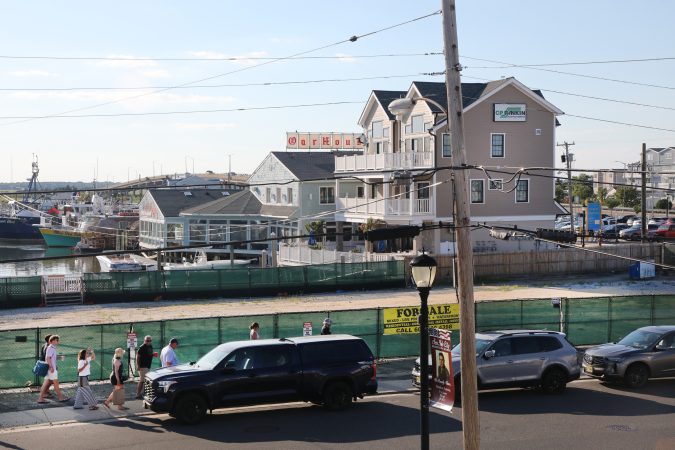
    Is Sea Isle City becoming Avalon (which already became Stone Harbor, which is basically the Hamptons)?

    I wrote about Delco’s favorite Shore destination, about how changes in visitor routines, upscaling, development, and new construction have transformed Sea Isle block by block.

    Some like it (like the Kelces, apparently, who are patiently on the wait list for the Sea Isle Yacht Club, at No. 78 of 251).

    Some don’t, like many Sea Isle loyalists who have been priced out and have watched the town change around and without them.

    Is that so different from what’s happening in other Shore towns?

    If you haven’t already, read my story here.

    Here’s a sampling of reaction to the piece:

    Jack Fleming, who splits his time between Sea Isle and L.A., says he loves living in a place people come to vacation and be happy in, with family-owned businesses like Dalrymple’s, Braca Cafe, and Basilicos.

    • “My wife and I had the good fortune to buy our home at 34th & Central in 1985. I was 35 and my wife was 33. Can you imagine two 30-year-olds being able to do that today? I do feel bad that isn’t possible in today’s day and age. Certainly, things have changed; I hate some of these housing monstrosities. Those changes aside, I love Sea Isle and consider ourselves absolutely blessed to call it home.”

    Bernadette Mastrogiovanni wrote that her in-laws purchased a large house in Sea Isle in 1946, and sold in 1997 after her husband’s 100-year-old grandmother passed away.

    • “We saw what the future of Sea Isle was becoming many years ago when the quaint little cottage next door was sold, demolished, and converted into a QUADRUPLEX!”

    Brian Smith thinks the city should focus on using its land for a parking garage.

    • “As a 45-year-old ‘shoobie’ to Sea Isle, your article was spot on. Sea Isle is trying its darnedest to become Avalon. More upscale and ritzier, pricing riffraff like myself out. But what they’ve done, in my opinion, has made ridiculous decisions with the real estate available to the city.”

    Another reader, who said he waited two years on the Yacht Club wait list, said he felt the story didn’t ring true.

    • “What shore point town in NJ have (real estate) prices not risen dramatically since COVID? I don’t know of any. Sea Isle is a popular family town and has always been crowded with limited parking on big summer weekends forever! The same as it was (50) years ago when my wife vacationed with her family in Sea Isle.”

    📮 Are changes in Shore towns like Sea Isle a good thing? Does the Shore feel like the Shore of your childhood? Should that matter? Can’t Shore towns be allowed grow up?

    Let me know what you think by replying to this email and I’ll include your most interesting responses in a future letter.

    ⬇️ Keep scrolling for news, what to do, your thoughts on dress codes, a Shore memory, trivia, and my thoughts about a $5 doughnut.

    🧐 Have ideas or news tips about the Shore or this newsletter? Send them to me here.

    🌞 After some wild weather last weekend and again on Tuesday, this weekend’s forecast looks lovely. The ocean has warmed up quite a bit from the low 60s to around 75.

    — Amy S. Rosenberg (Find me at @amysrosenberg, or on Instagram at @amysrosenberg. 📧 Email me here.)

    If someone forwarded you this email, sign up for free here. Join our text group, the Shore Line, here.

    Shore talk

    🌪️ Tornado warnings were issued in Cape May and Atlantic County on Tuesday, and there was a waterspout sighting in Cape May Point that the National Weather Service has confirmed came on shore briefly as a tornado.

    🏢 The Brigantine Citizens Alliance wants to know why commercial land continues to be rezoned residential.

    📸 Rosie O’Donnell and family were posting photos from Long Beach Island.

    💰 Strathmere, one of the last free beaches in South Jersey, is considering beach tags.

    🛻 Jeeps took over the Wildwood beaches, and Bob Kelly was there.

    🇺🇸 U.S. Sen. Andy Kim said he’d secured $1 million in funding for Cape May’s Harriet Tubman museum.

    🤍 Two children died after a family boat hit a buoy in Barnegat Bay.

    What to eat/What to do

    🌊 Watch the newly-renamed Chief Rod Aluise Atlantic City Lifeguard Classic at 6:30 p.m. Friday at the Albany Avenue beach.

    🏝️ Tour New Jersey’s islands along the Delaware River.

    🍋 Check out Nuso Cucina, the pretty new Italian restaurant in A.C.’s Orange Loop.

    🍝 A.C.’s extremely popular Cafe 2825 completed its expansion, but it’s still near-impossible to get through to make a reservation.

    🥂 The least dry day in this dry town’s summer, Ocean City’s Night in Venice, is upon us!

    🚴 Bike from the Ben Franklin Bridge to the Shore.

    🥙 Attend this weekend’s annual Lebanese Festival at Our lady Star of the Sea in Pleasantville.

    🚌 Take a $5 ride from Philly to the Shore courtesy of Pacifico.

    🍩 Sample a $5 donut from Sonny’s House of Donuts in Margate. I did. I’ve seen some grumbling about the price and if you’re getting a dozen or more, paying $4 or $5 each does add up. I tried a $5 Bavarian cream, and what I’ll say is, they’re big and can be shared. I still lean toward the $1.50 still-warm plain or cider donut found at Brown’s in Ocean City. The winner of the $5 sugar bomb category, for my money, is the Sesame Semolina Sugar Cookie from Ventnor’s Florida Cuts.

    Shore snapshot

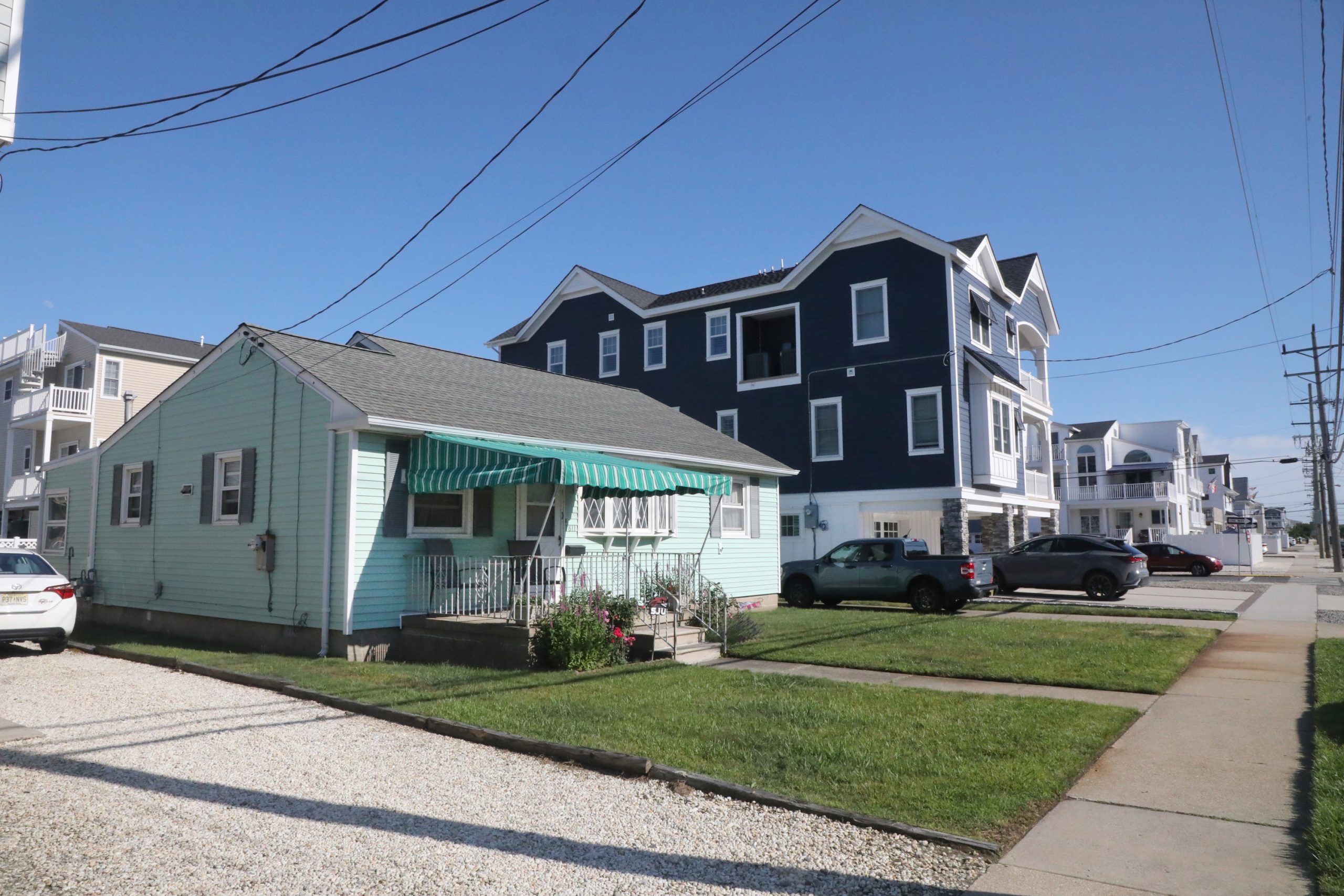
    Smaller bungalows are becoming harder to find as they are replaced by larger construction, like here at 79th Street, in Sea Isle City, on June 24, 2026.Vernon Ogrodnek / For The Inquirer

    👗 Your thoughts on: Shore dress code

    Last week we raised the question of how to dress at the Shore, how casual, how intentional, how repetitive?

    Discreet reader “R from Cape May” has this advice:

    Wear what you want at the actual beach, but step it up if you are going for drinks or dinner at a nice establishment. Rule of thumb: If they have cloth napkins, dress to impress. In Cape May, many restaurants are a little more upscale; no flip-flops or hoodies. Guys — invest in a few nice outfits — shirts with collars and a pair of nice loafers. Ladies — summer dresses and cute sandals. Don’t forget a pedicure (both of you). If you are spending $20+ on a cocktail and $40+ on an entree, dress like you can afford it. No one wants to be publicly shamed by the (cringe- inducing) self-appointed shore social secretary Lady Whistledown.

    OK then!

    🧠 Trivia time

    Maureen Farrow was first with the correct answer to last week’s question about which two Shore towns never rebuilt their boardwalks after the 1944 hurricane: Beach Haven and Stone Harbor.

    This week’s question:

    This sweaty bar in Avalon closed 39 years ago this summer and featured the Greaseband on Sunday nights.

    Was it:

    A. The Bongo Room

    B. Maloney’s

    C. Jack’s Place

    D. Fred’s Tavern

    If you think you know the answer, email us here. First one with the right answer gets a shout-out.

    Any and all memories of this establishment encouraged!

    Your Shore memory

    Joe Farley titled this memory “Breathtaking.”

    The first time my grandson, Iggy, really saw the ocean, he was absolutely stunned. About twenty of us were staying at a large condo in Bethany Beach. We were a force in our caravan of pickup trucks packed to the hilt. We followed the highway to the parking lot where you have to deflate your tires so you wouldn’t get stuck in the sand; then a bumpy ride over dunes.

    I kept my eye on Iggy, who was about four. He was handed a raft which he hugged to his chest, then stumbled in the sand looking for where to set it. He dropped it next to my beach chair, turned toward the roaring ocean and froze. He looked out at the relentless waves splashing onto the shore and uttered his famous often-repeated line:

    “Wait a minute — does this go on all day?”

    📬 Send us your Shore memory! In 200 words, tell us how the Shore taps into something deep for you, and we will publish them in this space during the summer.


    By submitting your written, visual, and/or audio contributions, you agree to The Inquirer’s Terms of Use, including the grant of rights in Section 10.

  • How 6,600 noncitizens got registered | Inquirer South Jersey

    How 6,600 noncitizens got registered | Inquirer South Jersey

    Good morning, South Jersey.

    Our main story explains how 6,600 noncitizens in the state were registered to vote ahead of the 2024 election — and what happens next.

    And Audubon has a new history museum that covers more than a century of the borough’s past.

    Plus, the National Weather Service in Mount Holly confirmed there was a tornado as Tuesday’s storms swept through the state, and more news of the day.

    — Taylor Allen (southjersey@inquirer.com)

    P.S. Drop your burning questions about the region for Curious South Jersey. The answers might end up in our team’s reporting, and of course, in this newsletter.

    If someone forwarded you this email, sign up for free here.

    🗳️ ‘Accountability starts now’

    Gov. Mikie Sherrill disclosed Tuesday that 6,600 noncitizens between June 2023 and June 2024 were illegally registered to vote, and fewer than 400 of those cast a ballot.

    🗳️ How did this happen?

    New Jersey allows automatic voter registration when a citizen gets a driver’s license at the Motor Vehicle Commission unless they decline. According to Sherrill, the noncitizens who were improperly registered answered no when asked on a keypad if they were citizens, but were registered anyway through a software error.

    🗳️ What’s next?

    Sherrill said she ordered an investigation, and ordered noncitizens to be removed from voter rolls.

    For more answers — like how President Donald Trump’s administration is responding — see reporter Aliya Schneider’s latest.

    Plus: Within hours of Sherrill’s disclosure, the Department of Justice sent an updated request for New Jersey’s voter database and said it’s to ensure more noncitizens aren’t registered to vote.

    Audubon’s new history museum

    Camden County’s newest museum invites visitors to peruse items that cover more than a century of Audubon.

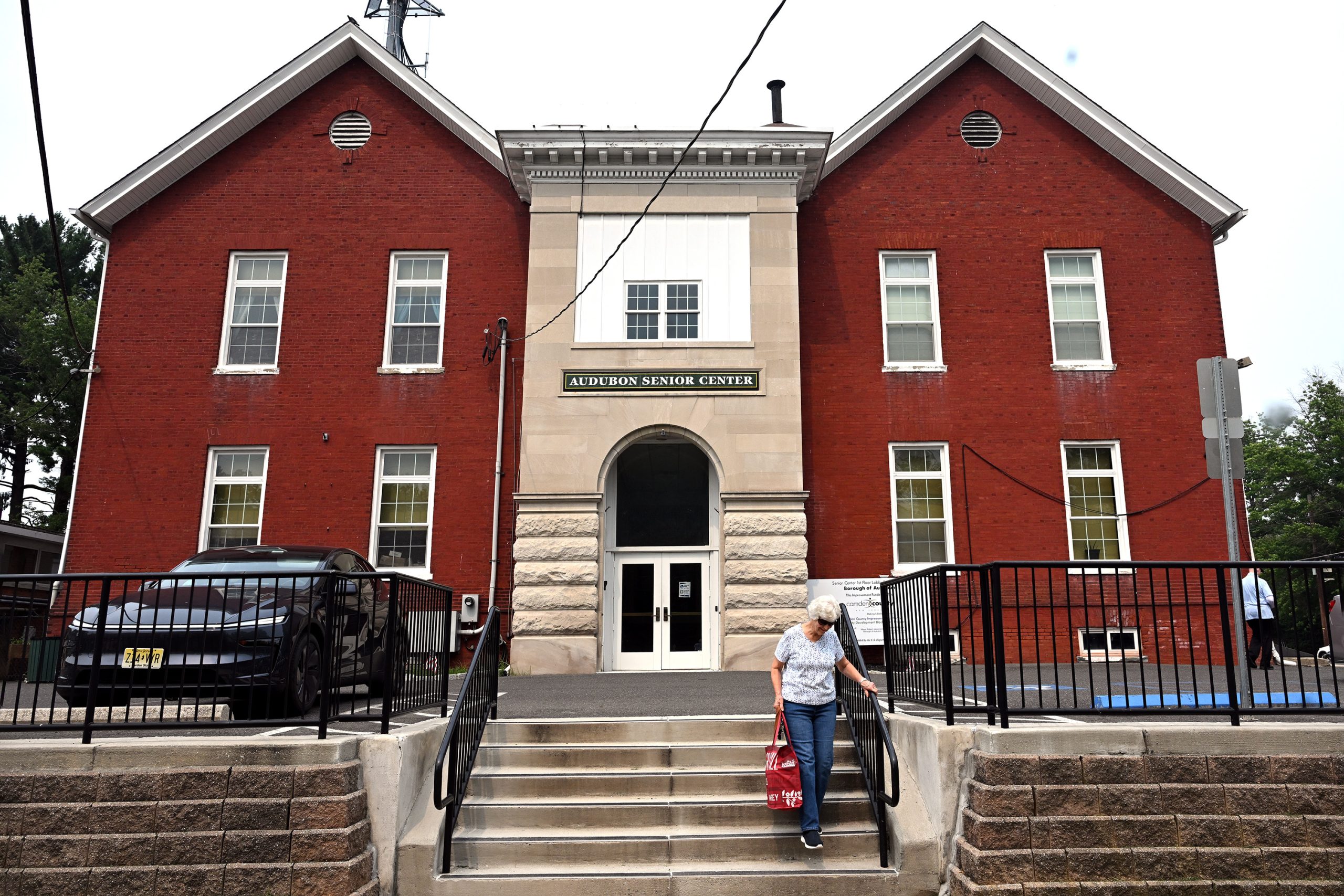
    The Audubon Borough Historical Society museum on the second floor of the Audubon Senior Center boasts a collection made up of donations from residents, including a few from historical society members.

    Items include a Monopoly board based on the borough, outdated land-use maps, and memorabilia featuring NFL star and Audubon High alum Joe Flacco.

    Starting Aug. 8, the museum will be open for two hours on the second Saturday of every month.

    The Inquirer’s Sarah Nicell has the sneak peek of the standouts on display.

    What to know today

    🗓️ The best things to do this week

    🚜 Burlington County Farm Fair: The 80th annual fair returns for five days, featuring agricultural exhibits, games, competitions, rides, various food vendors, and more. ⏰ Daily through Friday, July 24, from 2-10 p.m.; Saturday, July 25 from noon-10 p.m. 💵 Pay as you go 📍 1990 Jacksonville Jobstown Rd., Columbus

    🎵 Swedesboro’s Food Truck Festival & Dancing in the Park: Enjoy food trucks and live music from The Company. Bring your own lawn chair. ⏰ Thursday, July 23, 7-10 p.m. 💵 Pay as you go📍 Auction Park, 101 Leahy Ave., Swedesboro

    🚲 Spellbound Century: South Jersey’s largest summer cycling event is back for its 12th year. Participate or spectate as bikers ride various routes that pass local horse farms and historic towns. ⏰ Saturday, July 25, 6 a.m.-4 p.m. 💵 Free for spectators; rider registration is $75 📍 1 Park Dr., Mount Holly

    See more event listings here.

    🧠 Trivia time

    The South Jersey bakery Two Sweet Boutique made a treat based on inspiration from which two celebrities?

    A) Taylor Swift and Travis Kelce

    B) Jason and Travis Kelce

    C) Nick and Joe Jonas

    D) Bruce Springsteen and Jon Bon Jovi

    Think you know? Check your answer.

    What we’re …

    🧁 Hoping: “Little treat culture” is here to stay.

    🏀 Checking: The Bron-O-Meter to see if LeBron James will join the Sixers. Based on the latest info — and vibes — we’re at a maybe!

    🍴Touring: The Anthony Bourdain New Jersey food trail.

    Thanks for reading all the way through, and for starting your morning with The Inquirer. I’m off to grab my first cup of coffee. ☀️

    By submitting your written, visual, and/or audio contributions, you agree to The Inquirer’s Terms of Use, including the grant of rights in Section 10.

  • Audubon has opened its new history museum. Here’s what you’ll find there, from a New Century Theater seat to ‘Mudubon’ photos.

    Audubon has opened its new history museum. Here’s what you’ll find there, from a New Century Theater seat to ‘Mudubon’ photos.

    More than a century’s worth of varsity jackets, trophies, civic documents, photos, and more memorabilia from Audubon Borough have made their way into Camden County’s newest museum.

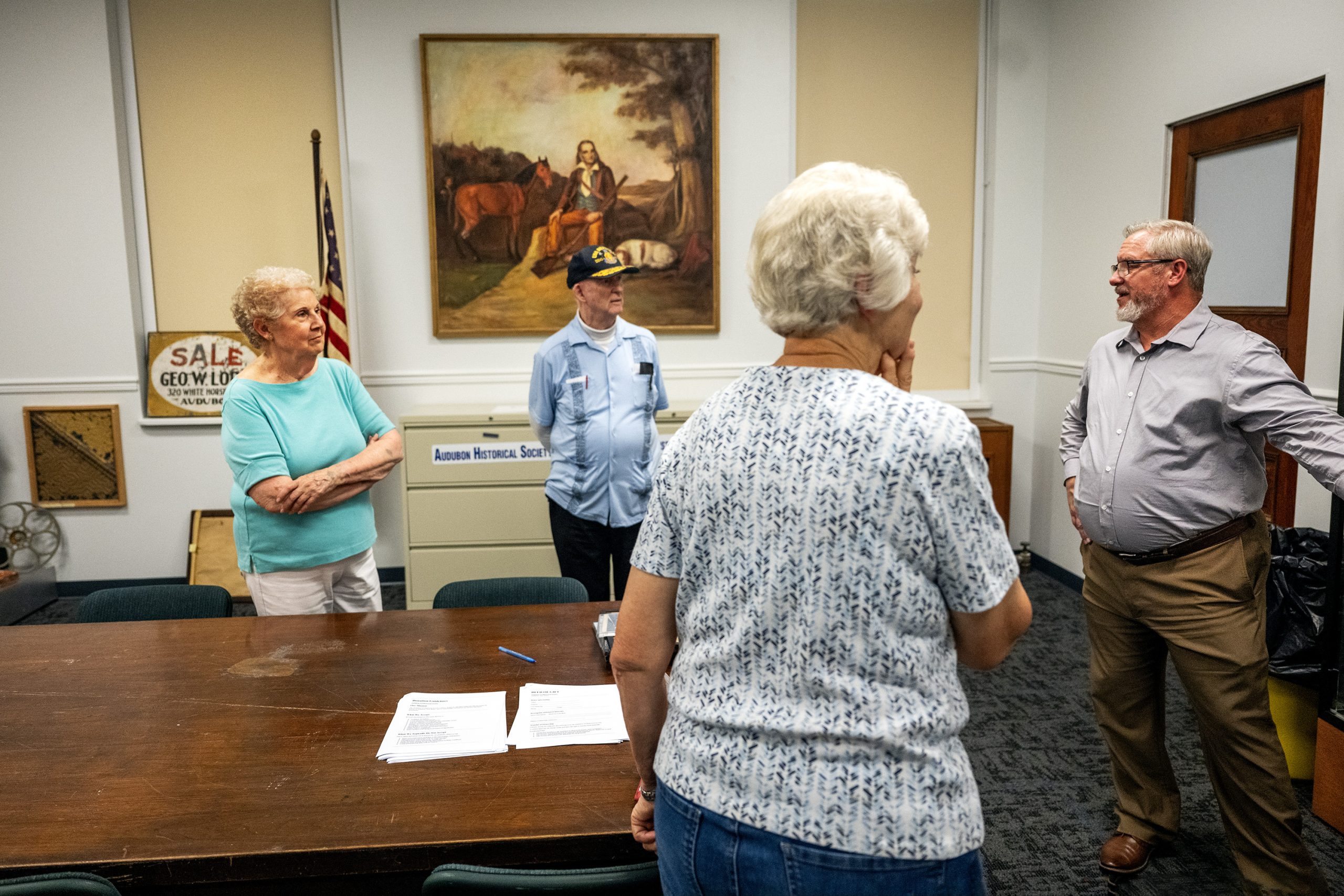
    The Audubon Historical Society Museum takes up much of Audubon Senior Center’s second floor, a red brick building that once served as Audubon School No. 1. The collection includes donated items from Audubon residents, including from the historical society’s own members, found in basements.

    Even though there are still more artifacts to put on display, from a 45-star American flag to thousands of pictures, Audubon’s rich history is already well represented. There’s memorabilia repping Joe Flacco, an NFL player and Audubon High School grad; an Audubon-themed Monopoly board created for a fundraiser; outdated land use maps; and an old police radio. A large section of the museum covers Audubon’s military history, including information about the borough’s three medal of honor recipients and two naval vessels named in their memory.

    The museum hosted its first public open house on July 4, and about 60 people came despite the heat, said Rob Jakubowski, Audubon’s mayor. Starting Aug. 8, the historical society will open the museum from 2 to 4 p.m. on the second Saturday of every month.

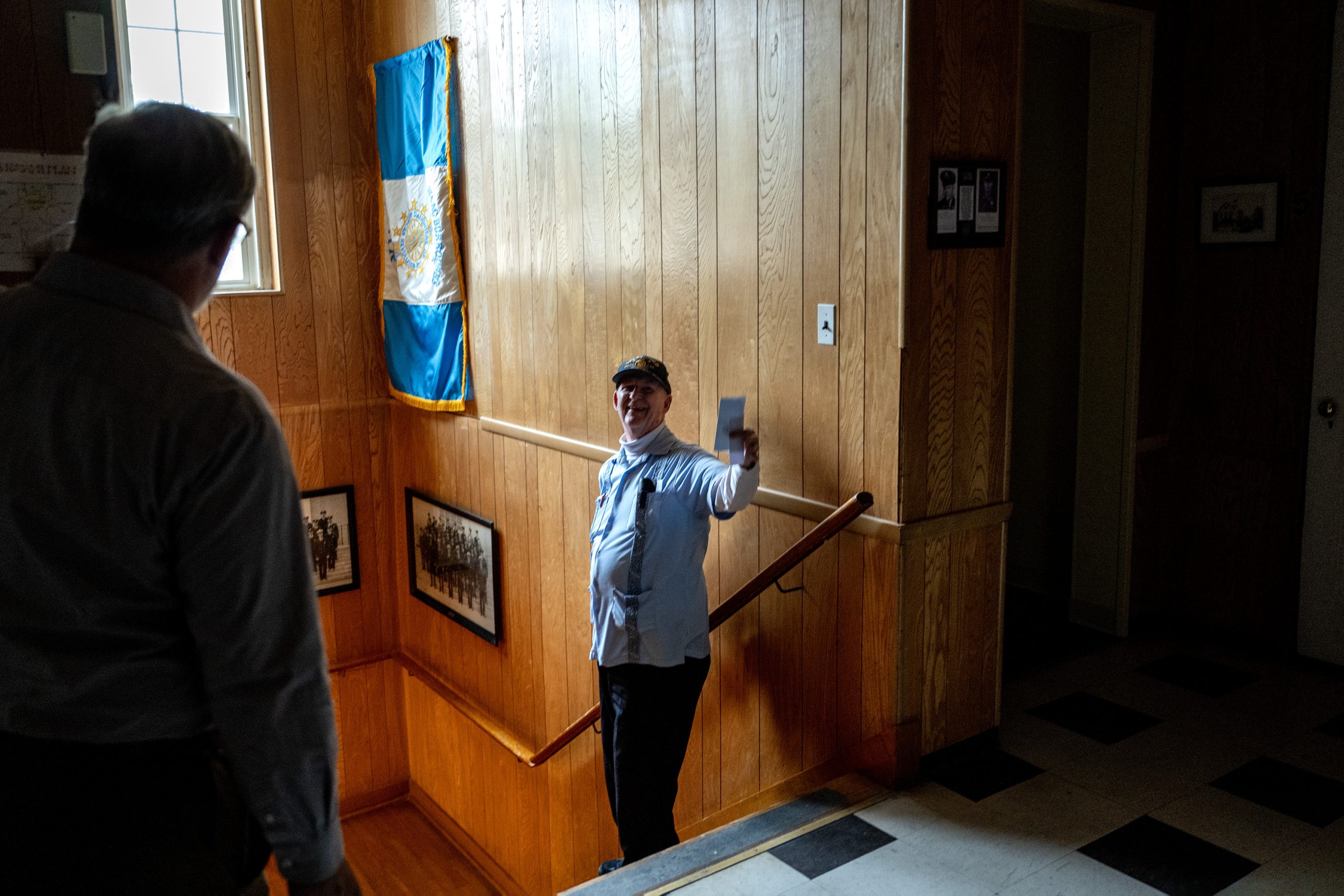
    Mayor Rob Jakubowski (left) and Craig E. Burgess on the stairs at the newly opened Audubon Historical Society Museum. They plan to use the wall space for more displays.Tom Gralish / Staff Photographer

    Jakubowski worked to develop the museum with a small group of Audubon Historical Society members, kept on task by corresponding secretary and longtime Audubon resident Nancy Whalen, 80. The museum, the brainchild of the late Walter Casebeer, a founding member of the society, came together 18 years after his death. Members sorted through four full closets of donated relics to establish the museum’s initial displays.

    “We were able to set up what is a really beautiful museum with a lot more work to do,” Jakubowski said.

    Though the senior center isn’t a schoolhouse anymore, the museum, funded by $40,000 in Camden County grants, was clearly once two classrooms, divided through the middle by chalkboard panels that pull out from the wall. The seniors running the museum hope to rotate the items on display as time passes, but for now, the group is proud to show off their hard work.

    Here are a few of the standouts.

    New Century Theater

    New Century Theater, founded in 1921, is no longer standing. The theater, renamed the Coronet in the ‘60s, was demolished in 2003. The space is currently being developed by a car wash company.

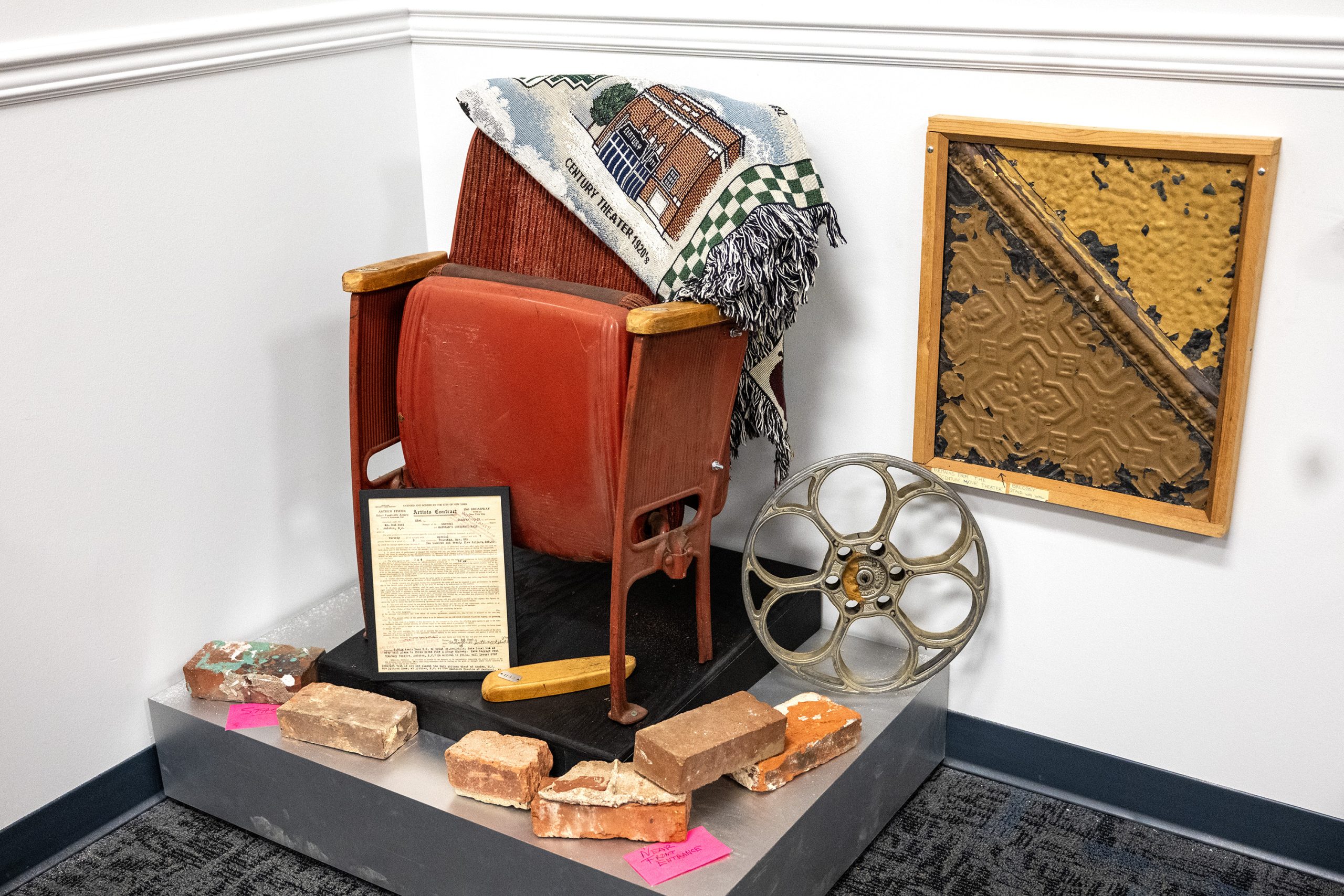
    But the historical society managed to acquire many keepsakes to remember the theater’s past. They have a seat someone rescued before the building got knocked down, a part of the wall, bricks, faint blueprints, and a movie reel Jakubowski said he found on eBay. A 1931 vaudeville contract is propped against the seat.

    Craig E. Burgess, 81, remembers when he could see a movie, a newsreel, a serial, and get candy, all for 10 cents at New Century Theater. When he found out the Audubon staple was going to be torn down, Burgess, who lived in the same house in Audubon for 73 years before moving to Collingswood, didn’t let the theater die without a last trip.

    “I stood in front of the door and said, ‘You don’t get in here until I get in to get some photos and get some video. If you won’t do that for me, then I will stay here, and you’ll have to push me over into the rubble,’” Burgess said. “And they believed me. I got in.”

    A theater seat and other memorabilia from the New Century Theater that opened in 1921, on display at the newly opened Audubon Historical Society Museum. Tom Gralish / Staff Photographer

    ‘Mudubon’

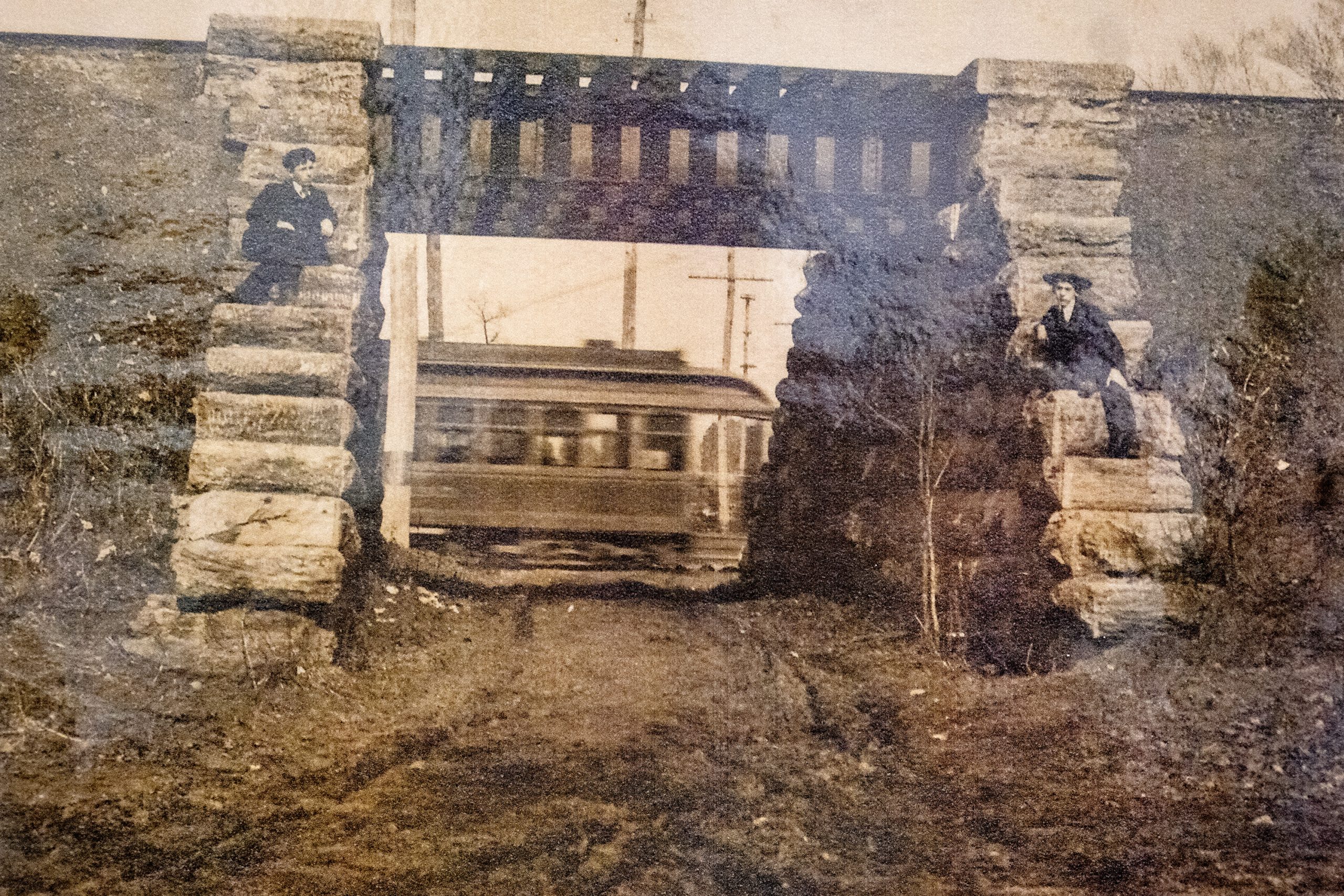
    Audubon, a part of Haddon Township until residents voted to become a borough, was incorporated in 1905. That was a couple of decades before paved roads boomed in the U.S., which made for a lot of wet dirt streets in the early 20th century in Camden County. Some photos at the new museum show those mucky roadways.

    Thus, the nickname Mudubon. It came from the mouths of delivery drivers trekking Audubon after bad weather, Jakubowski said.

    Burgess said ice trucks and milk trucks, along with the horses pulling them, used to get bogged down in the mud when it rained. He likes to tell a story about a boy who spent the summer away with his grandparents in the early 20th century, and returned home to paved roads — and confusion.

    “Mom took him out to visit his grandparents, came back on the bus to get off at Merchant Street. And he refused to get off the bus,” Burgess said. “He said, ‘This is not Audubon. I know my hometown.’”

    An early 20th-century photo showing an unpaved Nicholson Road and the train overpass on display at the new Audubon Historical Society Museum. The trolley passing behind was on the line between Camden and Clementon Park that ran along East Atlantic Ave. The train line is no longer active, but Nicholson Road still goes under the bridge.Audubon Historical Society

    Nancy Ryan, 79, moved back to her native Audubon nine years ago to retire. She recalls stories from her father about the pavers coming in when he was 4 years old, watching the steam shovels digging up Cedar Croft in 1917 or 1918.

    Now, Ryan said, the only people who call the borough Mudubon are non-natives who like to make fun, like her husband. But Audubon residents know the borough has grown far beyond its muddy origins, Burgess said.

    “We’ve come a long way in the last 110 years, more or less,” Burgess said.

    100 years at Audubon High School

    Nearly a century ago, about 500 students took the first classes offered at Audubon High School on Edgewood Avenue in September 1926.

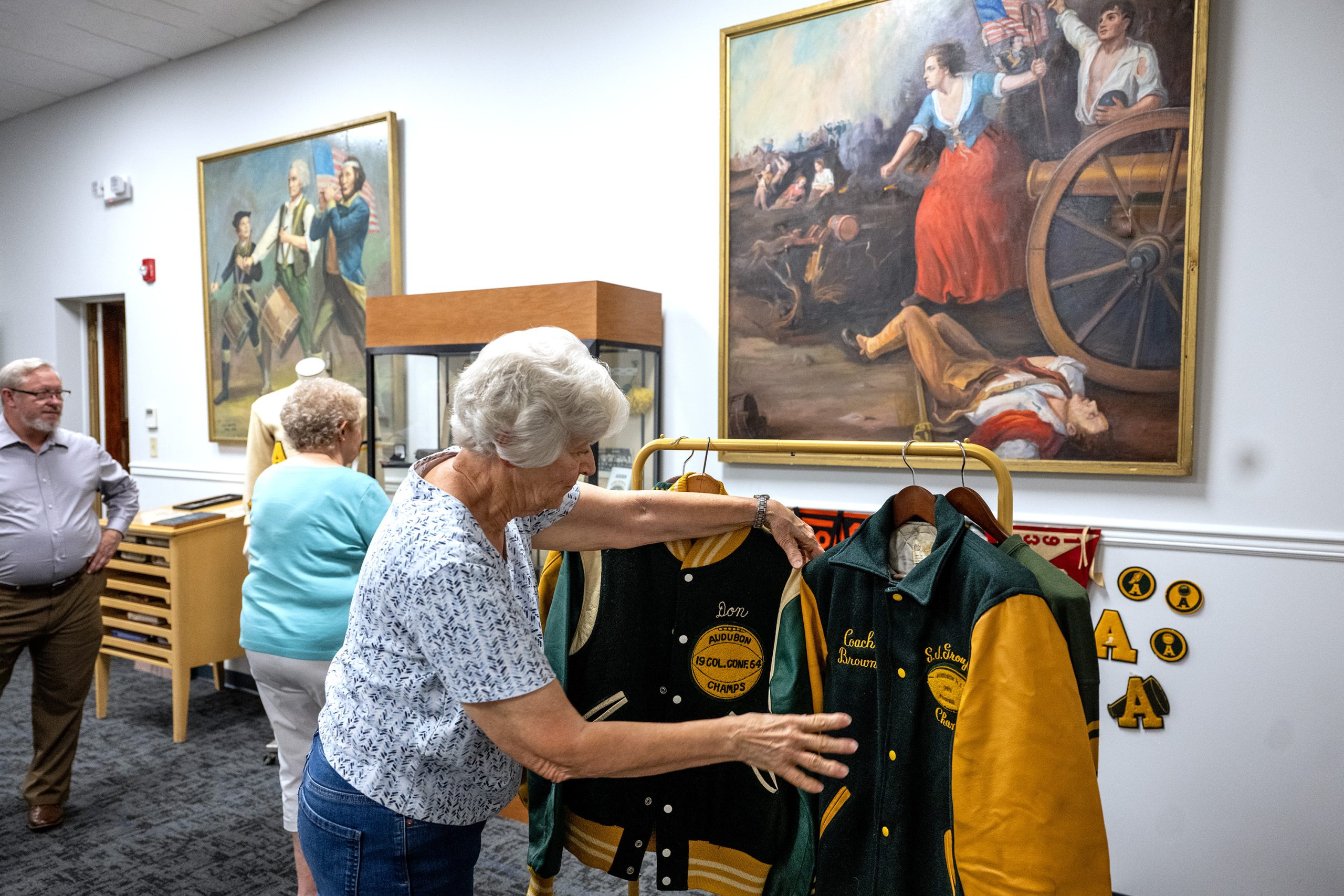
    Today, items spanning the high school’s history are on display: a booklet teaching children the 20th-century Palmer Method to learn cursive, pennants, a rack of letterman jackets, school handbooks, admission cards, and a cream varsity cardigan from 1966. A candlestick telephone used by the school’s first principal, Grace Kramer, sits at the bottom of a display case.

    Mayor Rob Jakubowski (from left), Nancy Whalen, and Nancy Ryan at the newly opened Audubon Historical Society Museum.Tom Gralish / Staff Photographer

    Three replica oil paintings recreated by the late Michael J. Miceli, a Mount Ephraim local, hang on the walls, too. They picture military drummers, fictionalized American Revolutionary War heroine Molly Pitcher, and French American artist and ornithologist John J. Audubon, the borough’s namesake. Their previous home was the Audubon High School auditorium, but when they were removed during recent renovations, a history teacher saved them, Jakubowski said.

    Plus, every high school yearbook available since the school’s founding line a bookshelf in a back room, in case anyone comes looking to do archival research.

    From left: Nancy Whalen, Craig E. Burgess, Nancy Ryan, and Mayor Rob Jakubowski at the newly opened Audubon Historical Society history museum on the second floor of the Audubon Senior Center Thursday, July 16, 2026. Behind them is a painting of naturalist, ornithologist, and painter John James Audubon, for whom the town was named. Tom Gralish / Staff Photographer

    The group is still open to taking donated artifacts, though with their large existing collection, they’re not afraid to decline duplicates. In the meantime, the historical society will continue sorting their archives. It’s a lot of work, all volunteer.

    “But that’s what makes it fun,” Burgess said.

  • Josh Shapiro may be the biggest fundraising juggernaut Pennsylvania politics has ever produced

    Josh Shapiro may be the biggest fundraising juggernaut Pennsylvania politics has ever produced

    The Rev. Ed Stafford first donated to Josh Shapiro in August 2024, sending the Pennsylvania governor $10 through the Democratic fundraising platform ActBlue. A few weeks later, he gave him $5. And then he made two more $5 contributions on the same day toward the end of the month.

    He would go on to make 105 separate contributions to Shapiro between that August day two years ago and early June, an average of one donation every 16 days.

    “I’ve been getting a lot of text solicitations, and his [Shapiro’s] have come by rapidly and frequently, and that’s how I got to get to know him,” said Stafford, a priest at the Diocese of Youngstown, Ohio. He was particularly impressed with Shapiro’s handling as attorney general of the Catholic Church child sex abuse scandal in the state.

    Stafford’s donations, totaling just under $1,200 over the last two years, form a microscopic share of the $60 million Shapiro has raised since the current fundraising cycle began in 2023. But smaller, repeat contributions from dedicated donors like him are one piece of a strategy — along with eye-popping checks from wealthy donors and a nationalized fundraising network — that has allowed the governor to shatter state fundraising records as he looks beyond this November’s race to a prospective presidential run in 2028.

    Blowing past prior candidates

    Between the start of 2023 and June 8, Shapiro raised more than $60 million, 56% more than the $39 million he raised at this point four years ago when adjusted for inflation.

    That figure is nearly double that of the second-best fundraiser: former Democratic Gov. Tom Wolf, who had raised an inflation-adjusted $31 million at this point in his successful 2018 reelection campaign.

    Shapiro raised the eye-popping amount from roughly 22,000 unique individuals, about 44% more than the 16,000 who had given to his campaign at this point last cycle. That is more than triple the number of donors for the closest comparison, former Republican Gov. Tom Corbett in 2014, who had only about 6,000 donors at this point in his unsuccessful reelection campaign.

    That figure does not include contributions from donors who gave $50 or less in a campaign finance reporting period, as campaigns are not required to disclose information on those individuals. When including that group, Shapiro’s campaign said, it has more than 120,000 unique contributors. The campaign declined to comment on the rest of this article.

    Perhaps most staggering, Shapiro’s current campaign has raised nearly one in every five dollars collected by every major party gubernatorial candidate since the 2010 cycle.

    (function(){function e(){window.addEventListener(`message`,function(e){if(e.data[`datawrapper-height`]!==void 0){var t=document.querySelectorAll(`iframe`);for(var n in e.data[`datawrapper-height`])for(var r=0,i;i=t[r];r++)if(i.contentWindow===e.source){var a=e.data[`datawrapper-height`][n]+`px`;i.style.height=a}}})}e()})();

    Robin Kolodny, a political science professor at Temple University, said Shapiro is benefiting from a strong personal brand, a weak GOP opponent in State Treasurer Stacy Garrity, and a favorable national environment with an unpopular president of the opposing party dragging down GOP candidates across the country.

    “This is what happens when you have a highly popular incumbent running for reelection,” Kolodny said.

    Differing motivations for large and small donors

    Shapiro has raised about $2.5 million from donors who have given $50 or less in any given campaign finance reporting period — more than any prior candidate since 2010. That is about 4.3% of his total fundraising. Garrity has raised about $530,000 — 9.6% of her funds — from such small donors.

    Among Pennsylvania gubernatorial candidates who raised at least $1 million, Shapiro’s percentage is relatively high. Only Garrity; Shapiro’s 2022 opponent, State Sen. Doug Mastriano; and 2010 GOP candidate for governor Samuel Rohrer raised a higher share from small-dollar donors. Shapiro’s 2026 run is also pulling in a slightly smaller percentage of small-dollar givers than his 2022 campaign.

    Kolodny suggested that improvements in technology have likely aided Shapiro’s hunt for smaller-dollar donors.

    “It’s so much easier to reach somebody on their phone with an Instagram post or whatever and get them to Venmo me 10 bucks, while it was definitely more steps in earlier elections,” Kolodny said.

    Stafford, whose most common contribution was for $10, agreed.

    “They make it real fast and easy to donate,” Stafford said of the multiple daily text messages he gets from ActBlue. “You gotta watch [that] you’re not pressing the button too quickly if you don’t want to let go of all your money,” he added with a laugh.

    (function(){function e(){window.addEventListener(`message`,function(e){if(e.data[`datawrapper-height`]!==void 0){var t=document.querySelectorAll(`iframe`);for(var n in e.data[`datawrapper-height`])for(var r=0,i;i=t[r];r++)if(i.contentWindow===e.source){var a=e.data[`datawrapper-height`][n]+`px`;i.style.height=a}}})}e()})();

    Dan Mallinson, an associate professor of public policy and administration at Pennsylvania State University’s Harrisburg campus, suggested an additional factor: National politics has filtered down to state politics in ways it had not in the past.

    “[Pennsylvania] voters don’t have a presidential candidate on this ballot to express support or anger [about],” Mallinson said. “So that gets translated into these other races, and Shapiro’s is obviously the most high-profile.”

    On the flip side, Shapiro has raised more than $33 million from donors who have given $100,000 or more in aggregate. That figure is vastly greater than any prior candidate for the office since 2010 and accounts for about 58% of his total funds raised. Garrity, by contrast, has raised about 21.3% of her money from such mega donors.

    Kolodny said big donors’ motivations can differ from those of more modest givers.

    For some donors, it’s practical: They want access to the halls of power in case their business interests intersect with government policy — regardless of the party in charge.

    With such donors likely viewing Shapiro’s reelection as a sure thing, Kolodny suggested their money has one place to go.

    “There’s no reason for a lot of these donors to even think, ‘Well, just in case, I should give some money to Garrity,’” Kolodny said. “There’s only one horse to bet on.”

    For other donors, it’s ideological: They share Shapiro’s moderate views and want to demonstrate their support.

    A national fundraising network

    More than two-thirds of Shapiro’s money has come from donors who live outside Pennsylvania. That figure is vastly higher than any prior candidate for governor since 2010. Only 6.4% of Garrity’s money has come from outside the state.

    Mallinson pointed out that Shapiro finds himself in a unique position among the state’s recent crop of gubernatorial candidates.

    “This is the first time Pennsylvania’s really had a governor who’s attracting the national attention that Shapiro’s gotten,” Mallinson said, referring to the widespread expectation that he will run for president in 2028. “So if we’re comparing across governors, it makes sense he’d be attracting more outside [the state] money.”

    Among the $33 million Shapiro has raised from donors who have given at least $100,000 or more over the course of the campaign, nearly 70% has come from outside Pennsylvania, with California accounting for about 29% of the money and New York accounting for a little over 18%.

    (function(){function e(){window.addEventListener(`message`,function(e){if(e.data[`datawrapper-height`]!==void 0){var t=document.querySelectorAll(`iframe`);for(var n in e.data[`datawrapper-height`])for(var r=0,i;i=t[r];r++)if(i.contentWindow===e.source){var a=e.data[`datawrapper-height`][n]+`px`;i.style.height=a}}})}e()})();

    Here, too, changes in media and technology likely play a role.

    “At an earlier point in time, we didn’t have that much information about people representing other areas that shared a characteristic or a position similar to me as the donor, but now, this is easy information to find,” Kolodny said.

    Shapiro, for example, has repeatedly emphasized the impact his Jewish faith has had on his political values and how those values are shared among adherents of many religions. That sort of openness about his identity can be appealing to donors of all faiths.

    As he learned more about the governor, Stafford, a devotee of Catholic social teaching, came to believe the two men shared similar values.

    “He’s a good, just man — a good, holy man — set on serving people, especially people who’ve been hurt and victimized, and those are the kind of leaders we need more than ever.”

    Staff writer Michelle Baruchman contributed to this article.