Gov. Mikie Sherrill is placing the blame on a vendor for the thousands of illegal voter registrations amid what she calls broader “disarray” at the Motor Vehicle Commission.
And a bankrupt weed company is set to close two of its grow sites in Vineland and lay off 86 employees.
Plus, a presumed lightning strike from Tuesday’s storm caused the closure of two Maple Shade businesses, and more news of the day.
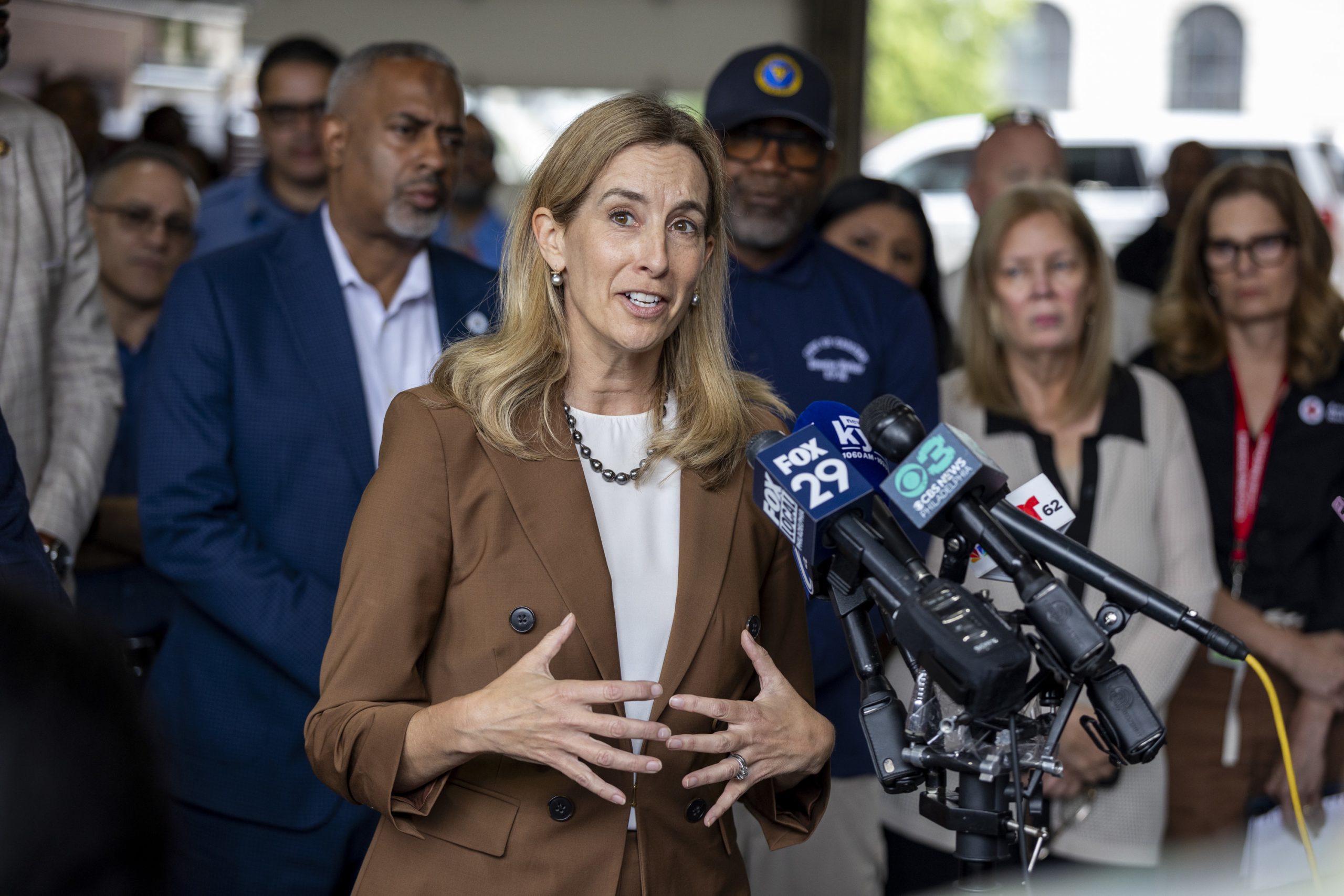
Gov. Sherrill shared Thursday that she was already less than impressed with the vendor that she says is responsible for illegally registering 6,600 noncitizens to vote before she discovered the issue.
In fact, she said, she had been trying to get rid of the company, IDEMIA, and that the new state Motor Vehicle Commission administrator “was already in the process of removing them for their incompetence.”
Earlier this week, Sherrill disclosed that a software glitch at the MVC operated by IDEMIA registered people to vote through the state’s automatic motor vehicle voter registration program even after people identified themselves as noncitizens.
The vendor responsible for the error is also to blame for long waits, bureaucracy, and red tape, according to Sherrill.
Meanwhile, IDEMIA released a statement blaming the New Jersey Department of State’s Division of Elections, saying that the department is “ultimately responsible for verifying eligibility to vote.”
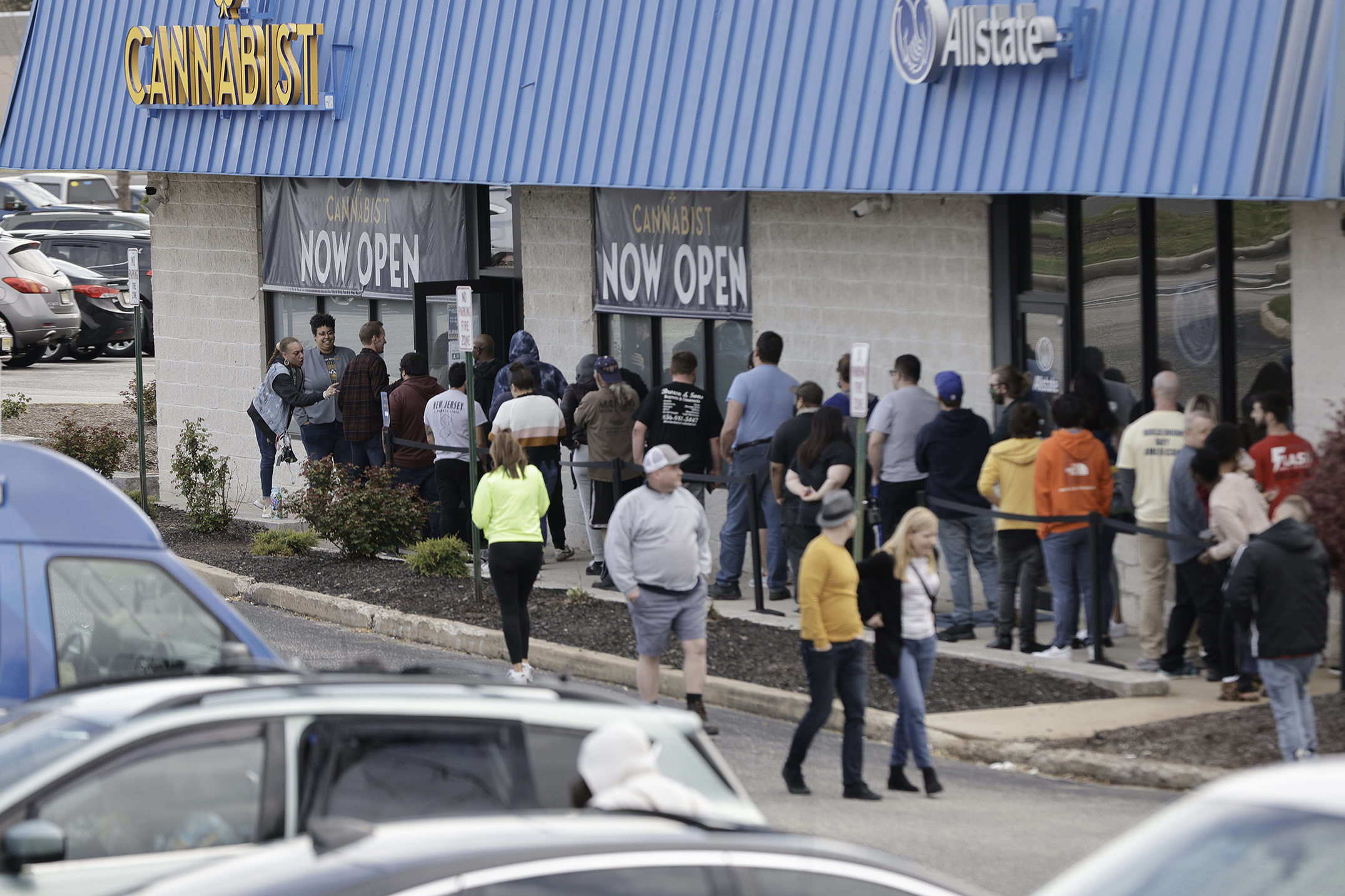
The Cannabist Company dispensaries in New Jersey were among the first adult-use locations to open when the state began to allow recreational weed sales in 2022.
Four years later, the company will shut the doors of its two Vineland grow sites in October after the company filed for bankruptcy back in March.
Nearly all of the Cannabist’s cultivation and manufacturing employees in New Jersey will be laid off. That’s a total of 86 staff members out of a job.
The company also plans to sell the rest of its operation in the state, including the retail store in Deptford.
New Jersey, Pennsylvania, and Delaware are part of a lawsuit against President Donald Trump to reverse new rules that tie disaster aid funding to abiding by the Trump administration’s requests for voter data.
A lightning strike from Tuesday’s storms is suspected to have started a fire and forced a chocolate shop and a bakery to close on Maple Shade’s Main Street. The official investigation into the cause is ongoing.
Chef Nana Araba Wilmot, raised in South Jersey, competed in Season 23 of Top Chef, Bravo’s elimination-style reality culinary competition show. Where exactly was she raised?
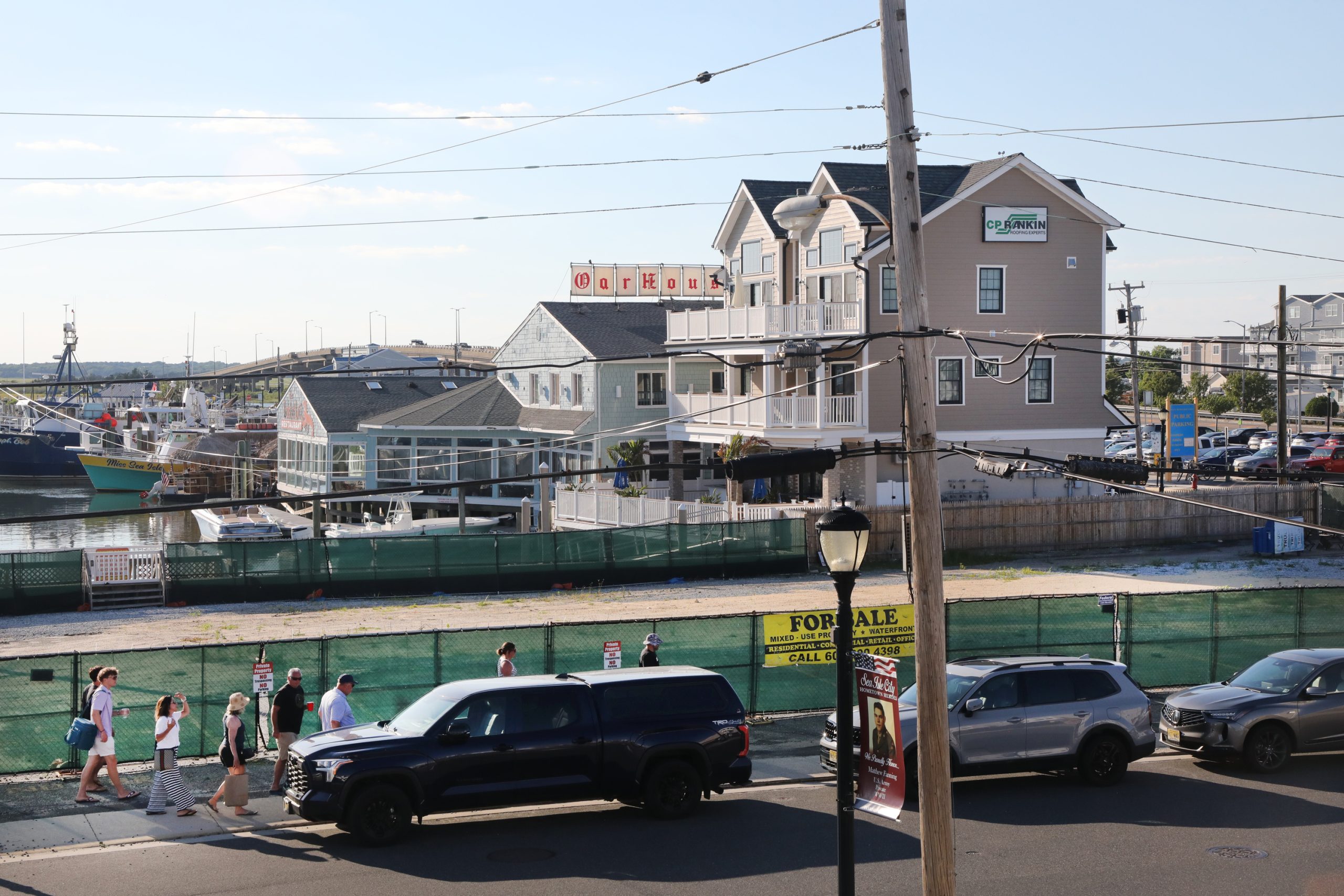
Amy recently published a story about how Sea Isle has undergone a transformation and has become an upscale Shore town. Whether or not that’s a good thing is up for debate.
Below are two responses to the piece:
“My wife and I had the good fortune to buy our home at 34th & Central in 1985. I was 35 and my wife was 33. Can you imagine two 30-year-olds being able to do that today? I do feel bad that isn’t possible in today’s day and age.Certainly, things have changed; I hate some of these housing monstrosities. Those changes aside, I love Sea Isle and consider ourselves absolutely blessed to call it home.”
“We saw what the future of Sea Isle was becoming many years ago when the quaint little cottage next door was sold, demolished, and converted into a QUADRUPLEX!”
How do you feel about Sea Isle’s changes? Is it that different compared to other Shore towns? Email Rosenberg your thoughts at downtheshore@inquirer.com.
📸 Photo of the week
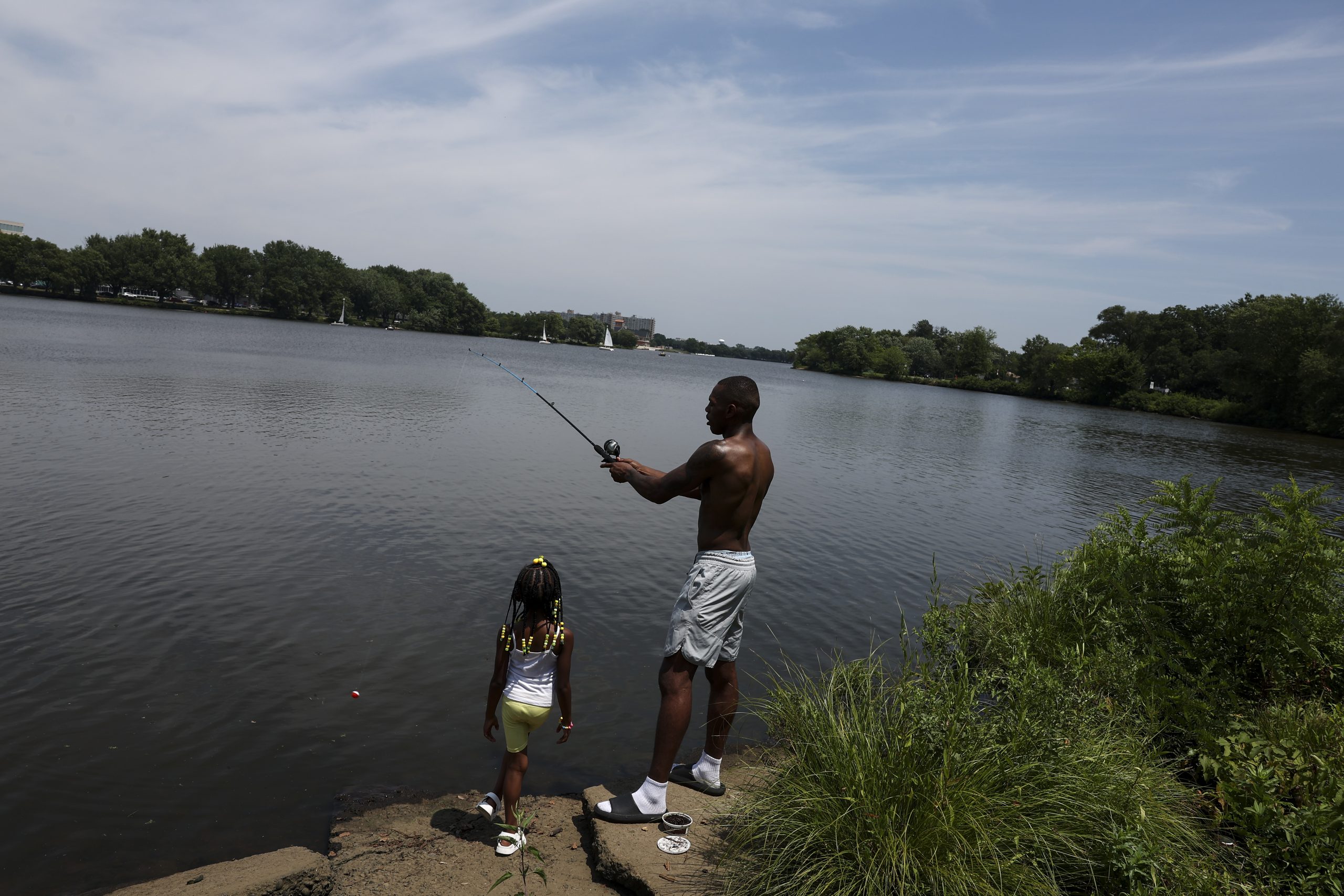
Nahir Albright, of Sicklerville, right, fishes with his daughter Gia Albright, 5, on the Cooper River in Collingswood, N.J. Monica Herndon / Staff Photographer
Have a wonderful weekend and I’ll see you on Monday!
By submitting your written, visual, and/or audio contributions, you agree to The Inquirer’s Terms of Use, including the grant of rights in Section 10.
Collingswood is hoping to get more pets on the books as a way to help fund the borough’s animal control services.
Per New Jersey law, all cats and dogs 5 months of age and older are required to be licensed with their local municipality, but borough officials say registration is lagging.
Without the fees collected through licensing, Collingswood has to find the funding for animal control services from elsewhere in the budget, Deputy Mayor Amy Henderson Riley said.
In 2025, the borough spent $33,305 on an animal control officer and other services, she said. But as of the June 17 commissioners meeting, Collingswood had collected only $5,740 this year through residential pet licenses, which cost between $5 and $20 each annually.
Assuming animal control services will cost the same for 2026, that leaves a more than $27,000 gap to fill.
“This isn’t meant to be, you know, a ‘nanny state,’” Henderson Riley said of pet licensing. “This is meant to help have a balanced budget in town. We can find the money elsewhere, but I’d much rather have that $27,000 for all the rest of the required and amazing things that we do in town.”
The cost for a license in Collingswood varies by type of animal and whether it is spayed or neutered:
Spayed/neutered dog: $17.
Non-spayed/neutered dog: $20.
Spayed/neutered cat: $5.
Non-spayed/neutered cat: $8.
Since 2020, Collingswood has struggled to collect even close to half the amount needed to pay for annual animal control services, averaging around $7,680 in fees paid each year, according to borough records.
As of July 21, registrations were further behind than they were at this time last year, when the borough had already collected around 20% more in fees, totaling over $7,000.
In response to the drop, the borough is planning a small informational campaign on social media and in town bulletins to spread the word and get licensing rates up, Henderson Riley said.
She said she wants to better inform the public on how this money is used, including for euthanasia of critically injured animals and reunification services for lost pets.
If the funding gap continues, she said, the borough will consider conducting a pet census, hiring staff members to go door-to-door counting the animals in town.
And while Henderson Riley said she understands that many household budgets are already tight, she argues that a relatively small fee can go a long way in helping animals across the borough.
“Affordability is the word of the year,” she said. “People are paying a ton in taxes, and I think sometimes they think, ‘Why should I be paying for a pet license for my 14-year-old dog?’”
The money residents spend on licensing may not go directly to their pet, she said, “but it might help care for an animal who’s hurt or injured or who got loose from their house.”
Think you know your news? There’s only one way to find out. Welcome back to our weekly News Quiz — a quick way to see if your reading habits are sinking in and to put your local news knowledge to the test.
Question 1 of 10
Nike’s newest Air Force 1 shoes, called “Horse of a Different Color,” feature pony hair in a certain colored hue. They, in turn, look a lot like this Philly icon:
CorrectIncorrect. XX% of other readers got this question right.
Nike's new "campfire orange" pony hair sneaker is basically Gritty's doppelgänger, writes Inquirer reporter Maggie Prosser. Social media users agree. “Gritty force 1s,” one user on X dubbed the new shoes.
Question 2 of 10
South Street bar Tattooed Mom is unable to host events with music — ranging from drag shows and burlesque performances to karaoke — indefinitely, following an order from the Department of Licenses & Inspections. The required license for events would take at least this long for the business to procure:
CorrectIncorrect. XX% of other readers got this question right.
The license procurement process requires a public meeting followed by a separate hearing with the delay-plagued Zoning Board of Adjustment. As of March, the wait time for a hearing was 180 days — or roughly six months — according to a manual from the City of Philadelphia. (A $750 expediting fee cuts the wait time down to 140 days, or 4.5 months.) Tattooed Mom has yet to apply for the special exception.
story continues after advertisement
Question 3 of 10
A grassroots parallel parking competition in Philly already has more than 400 applicants. But organizers are only allowing for how many competitors?
CorrectIncorrect. XX% of other readers got this question right.
There are only 20 slots available to compete in the parallel parking competition. Contestants will be judged on speed, clearance length, and closeness to the curb. The winner will get bragging rights and a $76 cash prize to cover a PPA ticket.
Question 4 of 10
Kurt Vile has never repped his hometown so hard as on his new album, Inquirer music critic Dan DeLuca wrote in a recent profile. The album, which came out in May, includes shout-outs to Lincoln Drive, the Schuylkill, and Sun Ra, and an infectious single “Chance to Bleed” that features Philadelphia gangsta rap pioneer Schoolly D in a video shot at Kung Fu Necktie. What is Vile’s album called?
CorrectIncorrect. XX% of other readers got this question right.
Vile, whom DeLuca calls a “Philadelphia fixture” celebrated his new album, Philadelphia’s Been Good to Me with a vegan cheesesteak giveaway at South Philly’s Triangle Tavern.
Question 5 of 10
The Phillies will play in the MLB’s third Field of Dreams game, played at a ballpark (complete with cornfields) based on the movie and constructed next to the field used in the 1989 film. The game will air on Netflix. The team’s throwback uniforms for the special game were unveiled this week. What color hats will the team will wear?
CorrectIncorrect. XX% of other readers got this question right.
The Phils will wear navy hats with a bold red “P” on the front. The jerseys — a sharp gray top with red and navy “Phillies” script across the chest — were unveiled Monday along with the uniforms that will be worn by Minnesota on Aug. 13 in Dyersville, Iowa.
Subscribe to The Philadelphia Inquirer
Our reporting is directly supported by reader subscriptions. If you want more journalism like this story, please subscribe today.
What local connection do the famous hedge maze scene in The Shining and the Rocky run sequence up the Philadelphia Museum of Art steps have in common?
CorrectIncorrect. XX% of other readers got this question right.
Oscar-winning cinematographer Garrett Brown — a Philadelphia native — invented several camera systems, most notably the Steadicam, a wearable camera rig that allows for stable running shots without any shakiness. The Steadicam was used on The Shining and Rocky, and now, Brown's story is the subject of a documentary Thank You, Mr. Brown.
Question 7 of 10
Philly restaurant Middle Child's BLT is its hottest selling summer sandwich, with locations in Center City and Fishtown preparing 200 to 250 of them per day — and quickly selling out. Each BLT sandwich costs customers:
CorrectIncorrect. XX% of other readers got this question right.
At $16 each, Middle Child’s classic BLTs consist of tomatoes from Urban Roots Farm in Newtown Square, five pieces of Leidy’s bacon, Duke’s mayonnaise, and locally grown arugula dressed with tomato vinaigrette all sandwiched on slices of rye bread from Merzbacher’s bakery. There are about $2.60 worth of tomatoes on each sandwich.
Question 8 of 10
Comedian Shane Gillis recently set two Guinness World Records with a performance at Lincoln Financial Field, one of which was the largest audience for a comedian. What was the other record?
CorrectIncorrect. XX% of other readers got this question right.
Gillis' show sold 77,047 tickets, and was billed as the largest headlining performance of the comedian's career. Previously, North Philadelphia native Kevin Hart packed the stadium in 2015, but only sold 53,000 tickets.
Question 9 of 10
This Pennsylvania snack company went public six years ago, but is now set to become a private company again as part of a $2.9 billion deal with a German acquirer:
CorrectIncorrect. XX% of other readers got this question right.
When the latest deal is done, Utz’s founding families, the Rices and Lissettes, will own 50% of the company, and Intersnack Group, a snack maker in Europe and the Pacific, will own the other half. Since 1921, Utz has produced its trademark chips and other snacks from Hanover, York County, about 120 miles west of Philadelphia.
Question 10 of 10
The Delaware River stretches some 330 miles between Delaware and New York, and is home to about how many islands across its lengthy run?
CorrectIncorrect. XX% of other readers got this question right.
The federal government, states, counties, corporations, and private individuals all own Delaware River islands that are used for recreation, industry, or, in most cases, nothing at all. Some islands are mere shoals or sandbars, while others span hundreds of acres. Some are no longer true islands after reattaching to mainland via nature or human engineering.
Your Results
You have skipped .
You scored XX out of 10.
The average reader scored XX out of 10
Seems like you’ve been skimming more than reading there, buddy. There’s always next week.
You’ve read some articles (or made some educated guesses) but we wouldn’t come to you first for our local news recaps. Better luck next week!
Do you work here? You’re a local news stan with the latest updates on Philly happenings. Your friends definitely ask you for summaries on what’s going on and it shows.
And the next day, on July 21, 1969, the Muppets landed on televisions across Philadelphia.
But unlike the moon landing, the Muppets’ debut was a test run.
Over five days, producers of Sesame Street broadcast five hour-long test-pilot episodes on WHYY-TV’S UHFChannel 35 on televisions spread across 70 homes throughout the city.
So, why Philly?
“The station is one of the country’s top public TV stations,” Edward Palmer, then Sesame’s director of research, told The Inquirer in August 1969. “It has displayed great interest in the [Children’s Television] Workshop and has been most cooperative. And it has Channel 35.”
Those first few episodes, set at the fictional Manhattan meeting place at 123 Sesame Street, paired a snappy theme song with a cast of unusual and friendly oddballs.
The program, which can trace its roots to the mid-20th-century civil rights movement, would go on to delight, instruct, and entertain,thanks to the worldview and genius of Jim Henson.
But it wasn’t a complete home run.
The Philly research showed that of course the kids loved the Muppets, but they were bored by live-action street segments featuring only human actors.
This taught the producers that they had to integrate the Muppets with the human cast, and have them interact, rather than keep the Muppets and humans separate.
“Test audiences of preschoolers in Philadelphia had rejected live-action sequences shot on a mock urban street, with trash cans on the curb and laundry hanging from tenement windows,” according to Michael Davis’ book Street Gang: The Complete History of Sesame Street.
The human-operated puppets would go on to charm millions of children and parents, and their names would become iconic: The Count, Cookie Monster, Big Bird, Bert, Ernie, Oscar, Miss Piggy, Elmo, Kermit, and many others.
And they would later be joined by an endless A-list of guest stars.
Apocalyptic images continue to emerge from Venezuela after the earthquakes of June 24: residents pulling relatives from collapsed homes, bodies piling up outside morgues, apartment buildings reduced to rubble and families in parks building makeshift shelters from nylon sheets and scrap metal.
Yet Venezuela was embattled even before the earthquakes. The collapse of oil revenues, combined with crippling U.S. sanctions, has pushed the economy into a prolonged crisis, eroding wages and savings. Eight million people have fled since 2017. Political instability deepened in January when the United States abducted President Nicolás Maduro and installed Delcy Rodríguez as acting president.
The earthquakes have accentuated that fragility. Yet in Latin America, earthquakes have long been more than natural disasters. They have repeatedly served as moments that unearth existing crises, intensify social fissures and spark political mobilization. That pattern stretches back to the birth of the Venezuelan republic itself, in the rubble of Caracas two centuries ago.
On March 26, 1812, Venezuelans converged on Caracas’s Plaza Mayor on Holy Thursday. The city streets were filled with religious processions when, suddenly, violent tremors brought the festivities to a halt. Residents scattered as government buildings, churches and homes collapsed around them.
When the dust settled, the city lay in ruins. Thousands perished under falling rubble and debris, and an estimated three-quarters of Caracas’s wealth was destroyed in an instant. Devastation also radiated across rural regions and the Atlantic coast. “Mérida no longer exists,” mourned survivor Francisco de Yepes in the aftermath.
The tremors struck at a tumultuous moment in Venezuelan history. The War for Independence was raging and, just two years earlier, revolutionaries had deposed the Spanish colonial government in Caracas. The new republic declared independence from Spain shortly thereafter but remained deeply divided. The quake exacerbated these social fissures and exposed the fragility of the fledgling state.
Capitalizing on the crisis, many royalists framed the destruction as divine punishment for the rebellion against the Spanish Crown. Prominent patriots such as Simón Bolívar countered by casting the convulsions as a call to realize, rather than reject, the revolutionary project. “If Nature is against us,” he proclaimed, “we shall fight nature and make it obey.” He would ultimately help bring this promise to fruition by 1821.
Bolívar became the first but not the last leader in modern Latin America to find possibility in tragedy. A century later, in 1944, another earthquake leveled San Juan, Argentina. Over the previous years, successive governments had failed to address deep inequality in the rural region, where wealthy elites owned sprawling estates while landless workers languished in flimsy dwellings.
Just months before the earthquake, a military coup overthrew a civilian administration, denouncing the “corruption” and “inhumanity” of the ruling regime. The devastation of San Juan appeared to confirm these claims by the armed forces, as tens of thousands of the province’s poorest residents lost their lives in the rubble.
In response, leading political and religious figures attempted to politicize the moment. President Pedro Pablo Ramírez described the disaster as divine punishment for “past errors” under liberal rule. Argentina’s archbishop agreed, describing San Juan as a “sacrifice” for the nation’s sins, a province “purified by pain.”
Juan Perón, a then-obscure military leader, responded more shrewdly. Rather than portray the wreckage as the wrath of the Almighty, he argued that it revealed the poverty plaguing Argentina.
As Secretary of Labor and Welfare, Perón launched an unprecedented relief effort, delivering food, water, medical aid and housing to survivors, and praised compatriots for “march[ing] to San Juan to clear the rubble…even those who have little to offer.” The campaign expanded his political base and helped propel him to the presidency. As historian Mark Healey has argued, Peronism was inaugurated in the rubble of San Juan.
If Argentina’s catastrophe thrust Perón into high office, the remains of Managua in 1972 ushered in Anastasio Somoza’s downfall. For nearly 40 years, the Somoza family had ruled Nicaragua through repression, relying on the National Guard and U.S. military aid to crush popular opposition. This alliance had produced an uneasy standoff by the early 1970s. Leftist insurgents could not seize power, yet the capitalist prosperity promised by Somoza and Washington never materialized.
A powerful earthquake shattered this political paralysis in December 1972. Managuans witnessed working-class barrios flattened, as fires consumed churches and municipal buildings. Overnight, over 250,000 people became homeless.
Instead of providing aid, the vaunted National Guard engaged in widespread looting across Managua, prompting the United States to deploy Marines to prop up Somoza. Reports emerged that the dictator himself diverted blood plasma provided by international aid groups to sell on the black market for personal gain.
Opposition leaders branded the Somoza clan as “mosquitos” sucking the literal blood of the pueblo in their moment of desperation. Even allies of the president, including members of the Conservative Party and younger business leaders, accused him of playing politics with tragedy. By the mid-1970s, the United States began conditioning military and economic aid to Somoza, laying the groundwork for the dynasty’s eventual ouster by the Sandinistas.
Four years after Managua, neighboring Guatemala faced a similar reckoning. There too, an earthquake struck a society marked by deep inequality and state neglect. As the population boomed, families increasingly crammed into tiny plots in the countryside or ramshackle shelters in the city, lacking access to clean water, food and health care. Successive right-wing governments ignored these needs, instead diverting funding to repression and counterinsurgency.
On February 4, 1976 a massive earthquake transformed chronic crises into calamity. In just 39 seconds, the shaking destroyed over 250,000 houses and claimed the lives of 22,000 Guatemalans. More than a million people, disproportionately Mayas from rural regions, were left unhoused.
The government’s inept response compounded an already widespread sense of abandonment. President Kjell Eugenio Laugerud García placed the military in charge of reconstruction, aiming to expand the institution’s reach into civilian life. He then proclaimed that rebuilding was ultimately “the responsibility of all Guatemalans,” declaring that his administration would “not tolerate bums or social parasites.”
Guatemalans responded to the president’s directive in ways he never anticipated. In Guatemala City, newly displaced residents commandeered private and public property to rebuild their shelters. Doctors and nurses staged unprecedented nationwide strikes in damaged hospitals, calling for more resources. These actions broadened the popular front against military rule over the following years.
Unlike in Nicaragua, that pressure did not culminate in a revolutionary victory. Instead, the armed forces used the organizational capacity they built amid the chaos of the quake to initiate a brutal counterinsurgency. This calamitous campaign culminated in a genocide against Ixil Maya communities by 1982.
Made By History sponsors. FOR USE ON MADE BY HISTORY STORIES ONLY.Inquirer Staff
Guatemala’s outcome differed from those of Caracas, San Juan, and Managua. Yet the broader historical pattern remains clear. Earthquakes do more than level cities. They shake loose the social and political foundations of societies. In their wake, ruins become a reckoning, inviting citizens to question what came before and compelling authorities to demonstrate their ability to respond.
Venezuela’s earthquakes are likewise becoming a test of political legitimacy. The convulsions transformed a nation already reeling from U.S. intervention, hyperinflation, mass outmigration and state repression into one engulfed by catastrophe. In response, some are racing to repair the old order. On June 28, President Rodríguez militarized La Guaira, a devastated coastal state, even as her government struggled to establish a coordinating committee for relief efforts, leaving survivors to fend for themselves.
At the same time, many Venezuelans are using the rubble to advance an alternative vision of state power, grounded in care rather than coercion. On June 30, one resident from La Guaira confronted Venezuelan troops sent by Rodríguez. “What did you bring your weapons for?” the man shouted, “you should’ve brought a shovel, and a pickaxe…that uniform is to defend the homeland.” “This is the country,” he stressed, gesturing to the rubble, “it needs you, not a weapon.” An admonition, made by history.
What Venezuela emerges from this catastrophe remains to be seen. As Antonio Gramsci once observed, “the old is dying and the new cannot yet be born.” One thing is clear, however. The tremors, like so many others in Latin American history, have created an opening for a new order to emerge.
Ilan Palacios Avineri is a historian of Central America, specializing in the politics of catastrophe and recovery in Cold War Guatemala.
Made by History takes readers beyond the headlines with articles written and edited by professional historians. Opinions expressed do not necessarily reflect the views of The Inquirer.
Two cannabis grow sites in South Jersey will close their doors in October, laying off 86 staff members as multistate operator the Cannabist Company files for Chapter 15 bankruptcy.
The cultivation facilities — located at 17 W. Park Ave. and 1560 N. West Blvd. in Vineland — will close on Oct. 11, laying off nearly all of the Cannabist’s cultivation and manufacturing employees in New Jersey according to a Worker Adjustment and Retraining Notification, or WARN, filing with the state.
In its bankruptcy filings, the company stated that due to “regulatory, industry, and financial challenges,” it was facing a severe liquidity crisis and “unable to meet its financial obligations as they become due.” The Cannabist Company did not respond to a request for comment.
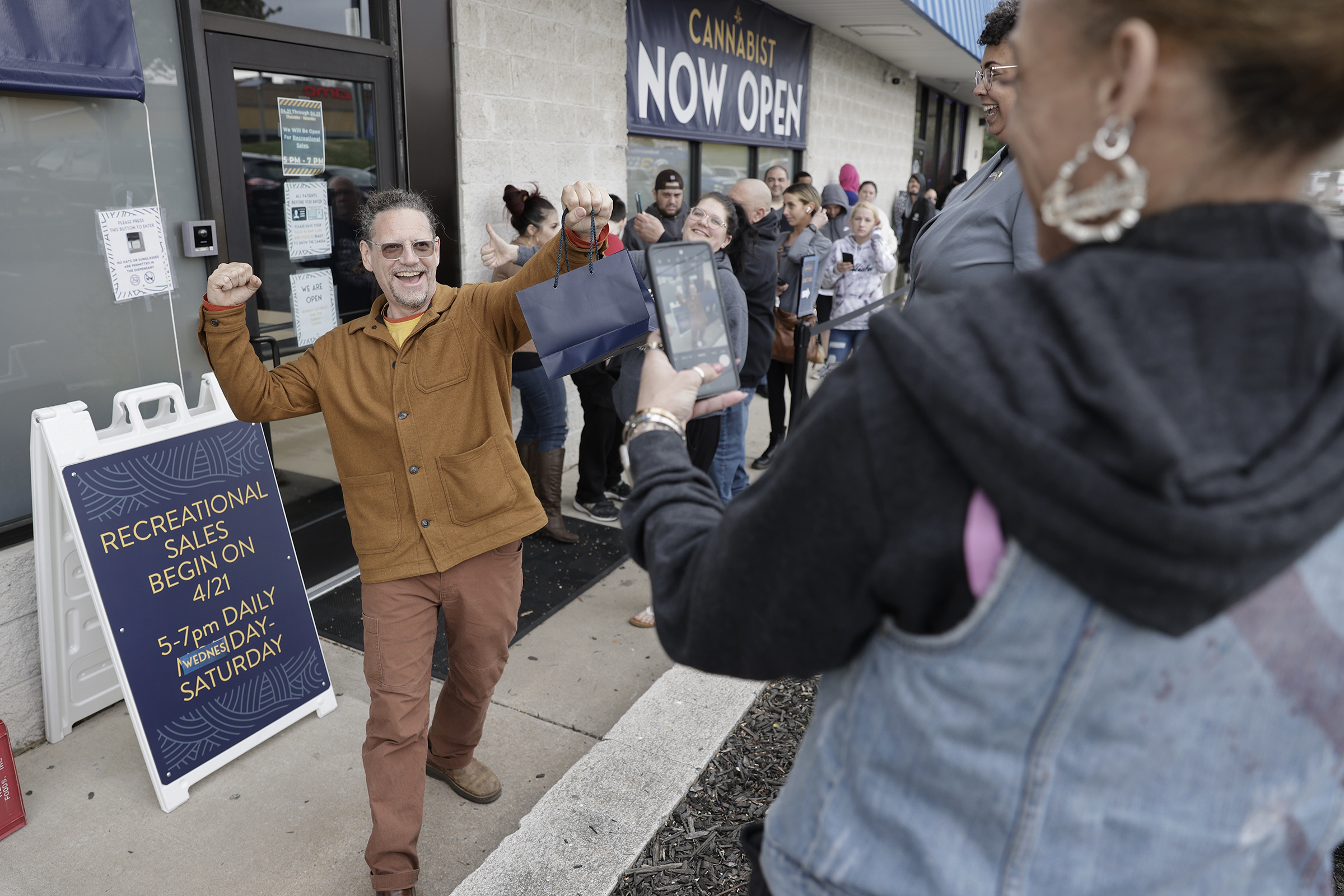
Frank Burkhauser of Woodbury handed his phone to Cannabist employee Jennifer DeWalt so he could have a photo to remember this day that he made a legal marijuana purchase at Cannabist in Deptford on April 21, 2022. Burkhauser said he has been working for the legalization of marijuana since the early ’90s.ELIZABETH ROBERTSON / Staff Photographer
The Cannabist’s New Jersey dispensaries were among some of the first adult-use locations to open in 2022. It operated one of the closest recreational weed dispensaries to the Philadelphia border. On the first day of Jersey’s recreational weed sales, it attracted consumers from all over, with a line wrapping around the building to the front door.
The New York-based weed company operates 40 dispensaries and 14 cultivation and manufacturing facilities across 10 markets, including in New Jersey and Delaware. Those sites are being closed or sold off to new buyers. Last week, The Cannabist announced layoffs at one of its Denver grow sites, laying off 50 people in September, according to Colorado WARN notices.
Customers line up just after 5:30 pm to make legal marijuana purchases at Cannabist in Deptford on April 21, 2022.ELIZABETH ROBERTSON / Staff Photographer
Following the news of the two Vineland grow site closures, The Cannabist announced it would be selling the rest of its New Jersey operation, including the three retail stores in Deptford, Vineland, and Mays Landing, to Vireo Growth Inc for $35 million. The sale will also include some of the Cannabist’s operations in Colorado, Illinois, Massachusetts, and West Virginia markets.
The Cannabist Co., which got its start as Colombia Care, began in Massachusetts in 2012 and soon expanded to 10 states. As of February, the company employed more than 1,200 people, including 101 manufacturing and 43 retail workers in New Jersey.
Frank Burkhauser of Woodbury displays the legal marijuana purchase that he just made at Cannabist in Deptford on its opening day in 2022. ELIZABETH ROBERTSON / Staff Photographer
In March, Cannabist filed for Chapter 15 bankruptcy due to owing lenders and the IRS more than $270 million. In addition to closing many operations across the country, Cannabist sold its Virginia business to Parma for $130 million, Delaware to Arboretum DE PermitCo for $16.5 million, and its Ohio dealings to Holistic for $47 million.
Since the Cannabist Company is also filing for bankruptcy in Canada, this case is poised to be the first time a U.S. Bankruptcy Court recognizes a foreign insolvency proceeding related to a marijuana business, despite cannabis remaining federally illegal.
Joyce Brooks is dismayed by the contractors who illegally dump behind a shopping center at 15th and Wingohocking Streets.
But it’s the neighbors who dump therewho sadden her most, she said. Some bring children with them to toss waste in a dump that has lasted 20 years, despite being cleaned out over and over again.
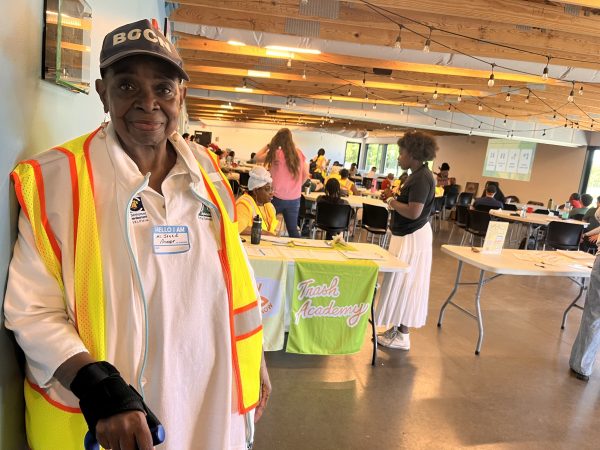
“That’s a legacy. Passing it from adults to children to their children,” said Brooks, who leads the Block Captains Committee of Nicetown, a neighborhood grassroots group.
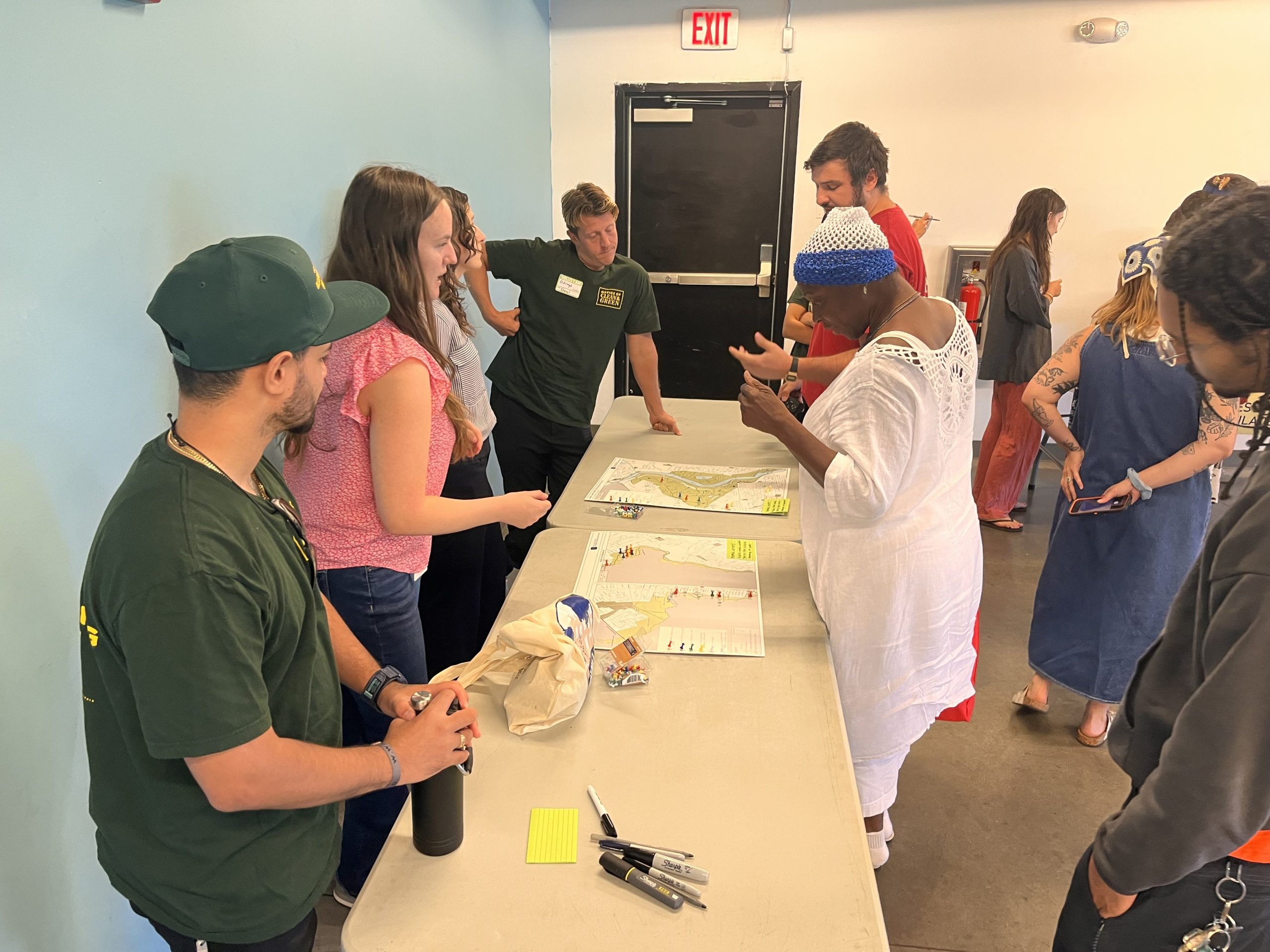
Brooks was one of about 75 Philadelphia residents representing neighborhood groups and nonprofits who gathered Thursday at the Discover Center in Fairmount Park to map by hand illegal legacy dumps scattered throughout the city.
The groups want a comprehensive, transparent map of illegal dump sites across city streets, vacant lots, and parks as a step toward being able to address them comprehensively.
The event was organized by Clean Philadelphia NOW, a collaborative with multiple neighborhood organizations and nonprofits. It pulled together community groups and residents from 11 neighborhoods.
“I just want to encourage us as a people to stop this,” Brooks said, “not just in Nicetown but all over this city of Philadelphia. … I believe there’s hope.”
Legacy dumps are one of the biggest issues affecting the quality of life in Philadelphia, said those at the event, and theywant to find solutions.
In April, The Inquirer identified one of the largest illegal dumps in the city. The dump spans more than a blockdown a slope off Pennway Street in Northeast Philly and finally comes to a dirty halt just feet from a clear creek.
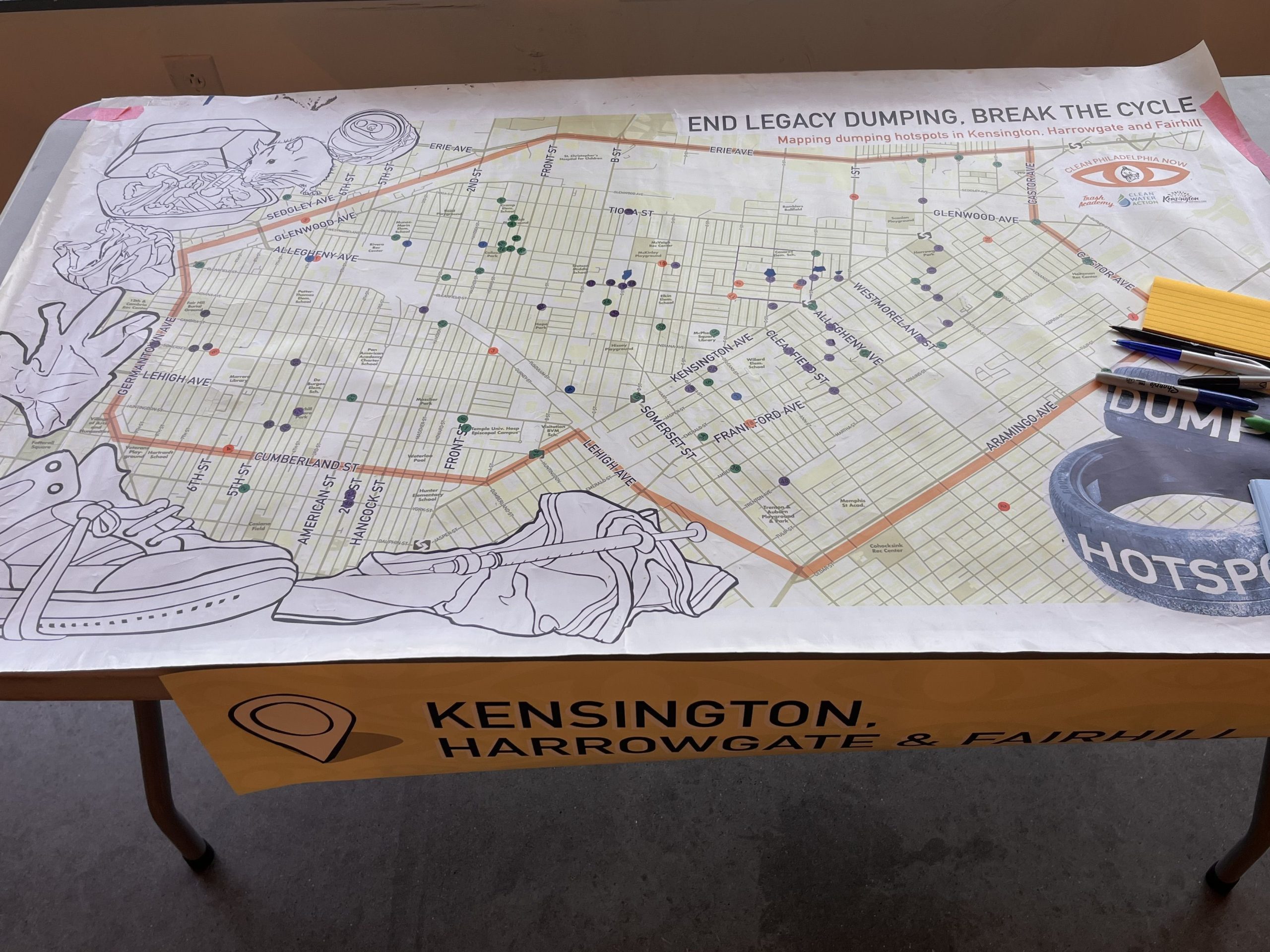
One of the maps where event attendees added pins to show the locations of potential dumping sites in their neighborhoods.Frank Kummer
The root cause
Shari Hersh, a codirector of Trash Academy, one of the groups collaborating under Clean Philadelphia NOW, said the goal is not only to clean sites but also toreplace outdated waste management systems with sustainable, long-term solutions.
The Clean Philadelphia NOW initiative began mapping sites in fall 2024, initially documenting 48 dump sites in the Fairhill and Harrowgateneighborhoods. It hosts the map on its website.
While the city has heavily invested in abatement, Hersh argues that the approach falls short of addressing the root causes of the persistent “clean-dump-clean cycle.”
Hersh said community cleanups are not a solution.
She said some illegal dump sites, such as one at Ninth and Ontario Streets in North Philadelphia, have been actively dumped on multiple times a week since 2005. Simply cleaning them out does not stop dumping.
“It can’t just be the neighbors who have the time to work on it,” Hersh said. “It has to be that we have a successful waste management system in the city of Philadelphia.”
She believes dumping is fueled by several factors.
“There are a lot of reasons why there’s dumping, and there are a lot of people doing it because, to some degree, it’s normalized in Philly,” said Hersh, who lives in Fairmount. “They think, ‘It’s always been dumped there, so we’re just going to keep using it as a dump.’ And some people don’t even know it’s wrong.”
Hersh said collaborators would like to see municipal curbside composting to manage the food odors from residents putting trash out on non-collection days.
And they would like to see cost-effective voucher programs for construction and demolition waste.
“We don’t just want to manage illegal dumping,” Hersh said. “We want to end it.”
She said she did not have a final tally yet on the number of legacy dump sites but estimated the group’s current totalcould be around 100.
On Thursday, event attendees hand-pinned dumping sites to a physical map. Clean Philadelphia NOW volunteers will vet the sites against an online map to get a true count.
Hershexpects the list of illegal dumping locations could swell to 200 as they keep adding more through the end of the year.
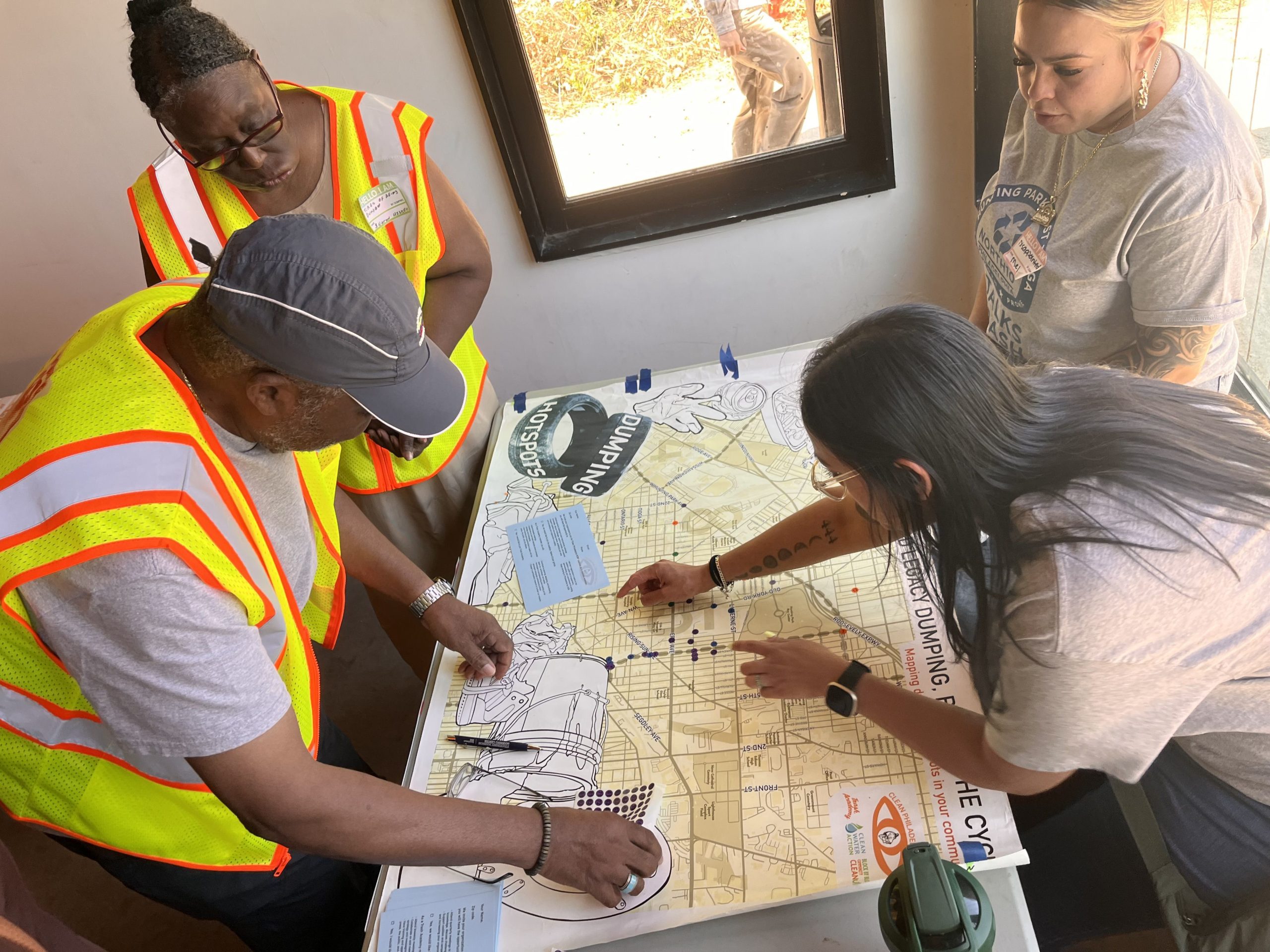
Rosemary Duarte (front right) and Melmarys Gonzalez (back right) of the group North10 Philadelphia help mark a map of Hunting Park.Frank Kummer
A sense of pride
Dallas Herbert Sr. of the 215 People’s Alliance said he hopes the collaboration can help “create a sense of pride in the community.”
Construction waste is a big issue, he said. It worsens as homes are razed and new ones built. He calls itan “unintended consequence” of the city’s attempt to create more housing. People unload the contents of old homes at the sites. Some contractors dump debris there.
Herbert said contractors should have to show proof to the city that they dispose of waste correctly, andthe city should “hold them to account.” He said much construction waste can be recycled.
Most of those in attendance at Thursday’s event credited the city‘s focus on litterunder Mayor Cherelle L. Parker. But they would like to see more done.
Residents crowd around a table at an event organized by Clean Philadelphia NOW that focused on having residents from 11 neighborhoods map known illegal dumps sites. Seen here are maps of Cobbs Creek.Frank Kummer
A dumping voucher
Rosemary Duarte, director of neighborhood impact services for the nonprofit North10 Philadelphia, believes there are solutions. The group works to improve the Hunting Park and East Tioga neighborhoods.
She said one dump in her neighborhoodgets cleaned by the city each Tuesday and is monitored by video cameras. Still, contractors and others sneak in at night.
North10 Philadelphia has a grant from the William Penn Foundation to give residents $120 vouchers for bulk-itemtrash taken to Burns Services in an effort to curb dumping. Burns has a 13-acre Hunting Park complex where demolition debris is sorted for resale to steel mills, building-materials makers, plastics plants, and other re-users.
So far this year, North10 Philadelphia has given out $10,000 worth of vouchers, Duarte said.
The group reaches illegal dumpers by posting signs at legacy locations that read “Please don’t dump here” and telling them how to reach out for vouchers.
School faded as a priority when Simone Smith was a senior at Lincoln High, after her beloved grandmother died.
“I didn’t have no one telling me to get up, go to class, so I missed a lot of school,” said Smith, 18.
Her grades slipped, and she narrowly missed graduating with her class in June. But that near-miss galvanized her.
Soon to be graduate Simeone Smith remembers her late grandmother Elodee, in the green room lounge ahead of the 2026 Summer Graduation Ceremony at the Met, on Thursday.Bastiaan Slabbers / For The Inquirer
Summer school “was easy” once she buckled down, Smith said — she completed social science and English requirements, and on Thursday, she collected her hard-won diploma, one of nearly 400 Philadelphia School District students who crossed the stage at summer graduation after earning a handful of credits in summer school.
“This graduation was delayed, but not denied,” author, actor, and poet Jaylene Clark Owens told a packed auditorium at the Met on North Broad Street.
Smith, who wore a custom-made stole honoring her grandmother and will now enroll andplay Division I basketball at Georgia Southern University, was thrilled.
“It just feels great to be able to do this,” she said. “Me and my sister are the only ones that got our high school diplomas — my family has a lot of dropouts. But I wanted to do it for my Nana.”
Soon to be graduates listen to the rendering of the National Anthem and Black National Anthem during the 2026 Summer Graduation Ceremony at the Met, on Thursday.Bastiaan Slabbers / For The Inquirer
The graduation was a boisterous scene of joy and celebration: young people in an array of caps and gowns representing schools from all over the district, some in T-shirts and shorts under their robes, some in party dresses. Families wept, cheered, shouted: “You did that!” There was a steady drumbeat of applause, a sea of flowers and camera flashes, the arms of bursting-with-pride-parents reaching out to touch passinggraduates.
A beaming school board president Reginald Streater said Thursday’s graduation was no less significant or important than the ceremonies that happened in June.
Family members and friends react as graduates celebrates receiving their diploma during the Philadelphia School District’s summer graduation ceremony at The Met on Thursday.Bastiaan Slabbers / For The Inquirer
“You took ownership of your future,” Streater said. “There is never just one path to success. We believe in you, and we can’t wait to see all that you accomplish.”
School Board President Reginald Streater and Superintendent Tony Watlington shake hands with graduates during the 2026 Summer Graduation Ceremony at the Met, on Thursday.Bastiaan Slabbers / For The Inquirer
Gov. Josh Shapiro spent months preparing a set of standards he promised would “hold data center developers accountable.”
But behind the scenes, top Shapiro administration aides were drafting the framework with the input of Amazon and thepowerful data center lobby and sharing early drafts with company officials before making them public, records show.
The emails, first reported by climate change media outlet HeatMap earlier this year and obtained by an anti-data center activist in Montour County through the state’s open records law, show a cozy relationship between Shapiro’s administration and data center developers. But they also show the role the technology giants played in influencing the final version of Shapiro’s guardrails — though that influence only went so far.
Shapiro in May introduced the initiative as the Governor’s Responsible Infrastructure Development, or GRID, which are a set of transparency and environmental standards data center developers would need to meet to access state tax breaks and other incentives Shapiro asked the General Assembly to write into law. The Democratic-controlled state House approved these standards, but it’s stalled in the GOP-controlled Senate, as legislators struggle to find common ground on one of the most hot-button issues facing them today.
A spokesperson for Shapiro said the administration consulted numerous stakeholders as part of the drafting of the policies, including the Pennsylvania Building & Construction Trades Council, the Pennsylvania Environmental Council, the Natural Resources Defense Council, and more. Data center development is supported by many building trade unions across the state, which are likely to benefit from the major projects.
Environmental groups broadly support Shapiro’s proposal and want stronger regulations on data center projects. Some groups want to ensure the provisions are mandatory, instead of voluntary, as Shapiro proposed.
“As finalized, the Governor’s GRID standards set firm guardrails to protect Pennsylvania communities and hold data center developers accountable to strict standards requiring them to take additional action to ensure Pennsylvania communities benefit — and are not harmed — by these projects,” said Rosie Lapowsky, Shapiro’s press secretary, in a statement.
Shapiro, a Democrat seeking reelection this year and a possible 2028 presidential contender, has remained data-center friendly and emphasized that Pennsylvania should play a core role in the “battle for AI supremacy.”
But he has sharpened his rhetoric in recent months, citing his own personal evolution on the issue, as public opinion has also shifted with roughly 76% of Pennsylvanians across party lines opposing the projects.
“Too many of these projects have been shrouded in secrecy, with local communities left in the dark about who is coming in and what they’re building,” Shapiro said in his budget address in February.
Yet as other states like New York have put moratoriums on data center development, Shapiro has chosen to fast-track permits and support tax breaks to incentivize the massive projects, though he now believes they should meet certain voluntary standards.
Amazon has already committed to a $20 billion investment in Pennsylvania — the biggest investment in state history — to build two data center campuses in Luzerne and Bucks counties and will access the state’s sales tax exemption for data centers as approved by the General Assembly in 2021.
The Data Center Coalition — the powerful industry group made up of data center developers like Amazon, Google, Anthropic, OpenAI, and Microsoft — shared feedback on several drafts of Shapiro’s GRID principles and approved of most of its measures. But the industry still has “some significant concerns” with the voluntary program, including its clean energy provisions requiring certain percentages of its power to be from low- or zero-carbon sources.
Dan Diorio, the Data Center Coalition’s executive vice president of state policy and government affairs, described the proposed GRID program’s requirements to access tax breaks as “extensive” compared to the 37 other states that offer sales tax exemptions.
“We look forward to continuing to work with the legislature and the governor’s office on outlining what would ensure Pennsylvania remains a strong and competitive data center market,” Diorio said.
Fengqi You, an energy systems engineering professor at Cornell University and data center expert, said it’s best practice for governments to consult all stakeholders, including industry leaders. But data center developers and local communities have opposing viewpoints that must be balanced, he said.
“The right model, in my view, is to consult widely all the stakeholders, decide independently, and disclose transparently,” You said. “The standards are only as strong as the conditions and the consequences.”
But some of the conditions should not be voluntary incentives, like Shapiro proposed, You said. This has been echoed by some environmental and anti-data center groups, which argue that the provisions don’t go far enough if compliance is ultimately voluntary for the tech giants.
“It’s a useful starting point, but the incentive conditions should not substitute a minimum public protection for all,” You said. “If a company is receiving a tax exemption, then the state should have every reason to attach some very strong public interest conditions.”
‘Not ban or discourage data centers’
Ahead of Shapiro announcing his plans for GRID as part of the state budget address, Shapiro administration officials went further in their efforts to reassure companies like Amazon, which they’ve courted for years, records show.
In a Feb. 3 email, Department of Community and Economic Development Secretary Rick Siger wrote to Amazon Web Services staff that Shapiro would not “ban or even discourage data centers” and that “this new approach will not look back at projects or agreements already in place.”
Other emails, sent in March by Sam Robinson, a deputy chief of staff to Shapiro, request that Amazon and the Data Center Coalition submit their feedback and mark up drafts. Shapiro’s administration declined to share those earlier feedback drafts.
Legislators in Pennsylvania’s split General Assembly did not write Shapiro’s GRID proposal into law as part of this year’s $50.8 billion budget deal, and only enacted one new data center requirement despite near-unanimous support to repeal tax breaks for the projects. Shapiro now says he’s “considering all executive actions” he can do without the legislature.
Colby Wesner, a pediatrician in Montour County, received troves of emails from top Shapiro administration officials, top Amazon staff, and more as part of several Right-to-Know Law requests he submitted to find out more about a now-blocked project near his home.
“It’s a really insincere attempt,” Wesner said of the GRID principles. “It’s a public relations stunt.”
Now that Shapiro is considering acting on his own, Wesner said he wants to know whether Shapiro will add restrictions or continue to welcome the projects into Pennsylvania.
“Maybe he is listening to constituents and an executive action will demonstrate that he is listening to citizens,” Wesner added. “If it is, then great for him. But to date, everything he has done has been pro-data center industry.”
Amazon , for its part, declined to comment on its role in the drafting of the GRID principles, which, if approved, would not apply to their ongoing projects. Becky Ford, a principal for global infrastructure expansion at Amazon Web Services, replied to Robinson on March 18 that they “look forward to providing feedback.”
“We’re committed to being good neighbors in the communities where we build and operate, and will continue working with state and local leaders to invest responsibly and to keep creating good jobs across the Commonwealth,” an Amazon spokesperson said in a statement.
CAIRO — The U.S. military announced Thursday that it is conducting the 13th night of strikes against Iran as clashes escalate over shipping routes. Earlier Yemen’s Iran-backed Houthi rebels said they attacked two Saudi oil tankers in the Red Sea, potentially widening the Iran war as international oil topped $100 a barrel.
U.S. Central Command said the latest attacks are designed to “further degrade Iran’s ability to threaten civilian mariners and commercial vessels transiting regional waters” as the Americans push to regain control over the Strait of Hormuz and restore the flow of international shipping.
A short time later, Iranian state media reported explosions along the strait in Bandar Abbas and Qeshm, as well as to the northwest near Andimeshk and Omidiyeh.
President Donald Trump threatened “major military punishment” against the Houthis if their attacks on ships continue.
“If they do this again, the U.S. will hold Iran responsible, in that the Houthis are a Surrogate and/or Proxy of Iran, and major military punishment will be inflicted upon Iran and, of course, the Houthis, themselves,” Trump wrote on social media.
As the rhetoric escalated, so did the economic fallout. The price of Brent crude oil, the international standard, spiked more than 6% Thursday, to about $100 a barrel. That is the highest level since May, before the two sides reached a preliminary peace agreement last month that has since collapsed.
Prime Minister Ali al-Zaidi of Iraq, which has close ties to both the U.S. and Iran, was in Tehran on Thursday to call for peace and dialogue, and he promised not to allow Iraqi territory to be used for attacks on Iran, his office said. Al-Zaidi met with Trump earlier this month in Washington.
U.N. Secretary-General António Guterres warned Thursday that the region is being pulled “into an ever-widening circle of confrontation” with one crisis feeding another and every escalation triggering the next.
“Diplomacy is the only way forward,” Guterres told the U.N. Security Council. He called for Pakistan’s efforts to mediate an end to the war to be strengthened.
Houthi attacks are a ‘double whammy’ on oil shipments
The Houthis’ SABA news agency said the rebels had struck two tankers, the Encelia and the Layla, in the Red Sea, causing fires on both. There were no reports of casualties.
It was the first reported Houthi attack on a vessel since they announced a blockade of Saudi-linked shipping through the Bab el-Mandeb Strait earlier this week in retaliation for the kingdom’s blockade on Yemen and a recent attack on the international airport in Yemen’s rebel-held capital, Sanaa.
Bab el-Mandeb, at the southern tip of the Arabian Peninsula, is a vital shipping chokepoint connecting the Red Sea to the Gulf of Aden. Around 12% of the world’s trade, including a fourth of global container traffic, passes through there, moving between Europe and Asia via Egypt’s Suez Canal.
The state-run Saudi Press Agency reported an attack set the Encelia ablaze overnight in the Red Sea. It did not mention the Layla.
The United Kingdom Maritime Trade Operations Center said it received a report of a tanker being struck by “an unknown projectile” 80 miles southwest of Al Shuqaiq, Saudi Arabia, in the Red Sea.
The Houthi attacks put at risk oil shipments from Saudi Arabia’s Yanbu port on the Red Sea and present a “double whammy” on top of the disruption in the Strait of Hormuz, said maritime data and analysis firm Lloyd’s List Intelligence.
Saudi Arabia has diverted millions of barrels a day of oil exports to Yanbu via an overland pipeline as the war has bottled up the Persian Gulf.
The Houthi threat “raises questions on the viability of this route,” Lloyd’s said in slides accompanying an online webinar Thursday.
The rebels say they are blockading Saudi Arabia, but during their announced blockade of Israel at the height of the war in Gaza, they targeted many vessels with little or no connection to that conflict, disrupting global trade.
Both sides dig in over Strait of Hormuz
Iran says it has the right to manage traffic and potentially charge fees in the Strait of Hormuz, which was open to all toll-free before the war. It has attacked ships using a route through the strait that is overseen by U.S. forces and intended to be outside Tehran’s control.
Trump said on social media Thursday that sanctioned Iranian funds in the possession of the U.S. will cover the expense of fixing boats damaged in the war.
“Please let this statement serve to represent, until further notice, that from this point forth, any and all damages done to Ships, Cargo, or anything related thereto, will be paid for by Iranian Money that the United States has in its possession, and controls,” Trump said.
It was unclear what legal mechanisms Trump would use to access and spend the funds, but he said that doing so would be “the fair and equitable thing to do.”
In response to Iran’s attacks, the U.S. began the widening campaign of strikes across Iran and restored a naval blockade of Iran’s ports. U.S. Central Command said it has redirected about a dozen commercial vessels and disabled one since the blockade resumed.
The war of words has also escalated. Iranian Foreign Minister Abbas Araghchi said Tehran would adopt an “eye for an eye” policy on U.S. strikes against its infrastructure. U.S. Secretary of State Marco Rubio retorted that Trump’s policy is “a head for an eye.”
“The price will continue to get higher every single night until they come to their senses,” Rubio told reporters while traveling in the Philippines for a regional summit.
Iran’s health ministry said Thursday that 55 people have been killed and 629 have been wounded since renewed U.S. airstrikes began on June 27.
Iran has responded to U.S. attacks by targeting energy infrastructure and desalination plants providing drinking water in parched neighboring Gulf countries.
Polls have shown the war is unpopular among Americans, a fact reflected in the narrow passage Thursday of a resolution in the U.S. House to halt the war. Though a handful of Republicans crossed party lines to support the measure, the vote remained largely symbolic.