Category: News

  • Under pressure from its accreditor, University of Valley Forge offers students information on transferring

    Under pressure from its accreditor, University of Valley Forge offers students information on transferring

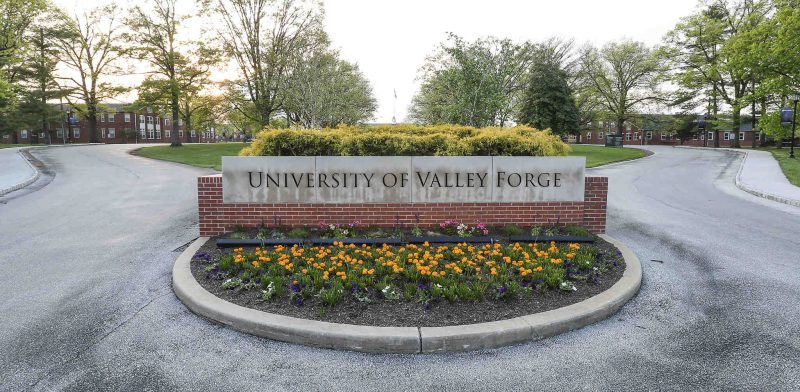
    Under pressure from its accreditor, the University of Valley Forge is offering students and families information on how to transfer to other colleges.

    The move comes as the Phoenixville-based college — which enrolls 589 students, according to the National Center for Education Statistics — faces the possible loss of its accreditation by the Middle States Commission on Higher Education. Colleges need accreditation to keep their students eligible for financial aid.

    Middle States last month issued its most serious warning — “show cause” — to the small Christian college that prepares students for leadership in the church and the world. It cited concerns about finances, planning, and governance.

    The university is among the latest institutions in the region to face the threat of closure amid a declining pool of high school students and increased competition. The University of the Arts and Cabrini University closed in 2024. Rosemont College’s campus has been purchased by Villanova University, and the college plans to conclude its operations in 2028. Peirce College has been merged into Lackawanna College, a process that has been approved by the U.S. Department of Education and was sanctioned by Middle States this month.

    University of the Sciences and Philadelphia University were phased out in previous mergers with St. Joseph’s University and Thomas Jefferson University. Pennsylvania State University plans to close seven of its Commonwealth campuses next year.

    On its website, the University of Valley Forge says that it is not closing, but that it has established several colleges as “teach-out partners” that would streamline admission of University of Valley Forge students in the event of a closure. The school was required under the Middle States process to develop “teach-out plans” that would provide students with options to complete their education if the school were to close.

    “Although this process does not require the university to provide students with teach-out options at this time, we understand that students may wish to consider alternative pathways for completing their academic programs during this period of uncertainty,” the school wrote in an email to students.

    The school, according to its website, plans to charge $41,020 in tuition, fees, and room and board for next academic school year, which is scheduled to start Aug. 30.

    The school held an event on campus earlier this month with representatives from the partner institutions — Eastern University in St. Davids, Messiah University in Mechanicsburg, and Southeastern University in Florida — so that students could get information. All three schools are private, Christian universities.

    But the University of Valley Forge on its website, which was updated as recently as Tuesday, said it is “actively pursuing strategies to strengthen enrollment, finances, partnerships, and operations.”

    “While no institution can guarantee future outcomes,” the school said, “leadership remains committed to preserving and advancing the university’s mission.”

    The challenges appear to be substantial.

    Earlier this month, the school said that it planned to soon communicate decisions about staff furloughs and that it would have to delay payroll for up to one week, according to emails obtained by The Inquirer from a source close to the university who was not authorized to discuss the matter and requested anonymity.

    “I am deeply sorry for the disruption and for the hardship this may cause,” university president David Kim wrote, according to the email.

    Kim, board members, and several other administrators and faculty have not responded to a request for comment. The emails did not indicate if furloughs occurred, how many, or for what period.

    The school employed 419 people in calendar year 2021, according to the school’s most recently filed Form 990. With expenses of $20.2 million, the school operated with a $1.9 million loss that year, the tax document shows.

    The Rev. Don Immel, a member of the University of Valley Forge board, addressed the Middle States action in responding to a July 11 Facebook post asking why the college was requesting “urgent prayer.” The university held a day of prayer and fasting on July 8 following the Middle States’ action.

    “The need is financial,” Immel wrote. “We have a donor who has the capacity and has expressed the willingness to step in. Please pray that the donations is released.”

    In other public Facebook posts, parents of students, alumni, and others have expressed concern.

    “I have a daughter enrolled at UVF right now, and is supposed to be starting her sophomore year come this fall,” one parent wrote. “I don’t know at this point what to do concerning her returning to campus in the fall, or do we need to look at transferring now.”

    An alumnus also had questions.

    “Should we be doing anything to secure duplicate degrees or official transcripts (in the event that we lost ours or anticipate needing copies in the future)?” the alum wrote.

    The school has until Sept. 1 to “show cause” to justify why it should not lose accreditation, according to Middle States. The commission will review the university’s submission, the school said on its website, and take its next action — which could include up to revocation of accreditation — in November.

    In issuing the show-cause decision, the commission cited “insufficient evidence that the institution is in compliance” with standards involving planning, resources, and institutional improvement, and governance, leadership, and administration.

    The university must document in its show-cause report “financial resources, funding base, and plans for financial development to support its educational purposes and programs and to ensure financial stability,” the commission said. The school also must provide information on long-range financial planning that includes “realistic enrollment projections and the assumptions on which they are based,” the commission said.

    The university started in 1939 as the Eastern Bible Institute, which was aimed at training pastors, evangelists, missionaries and Christian educators, and lay workers, according to the school’s website. It became a college in 1975 and the University of Valley Forge in 2014. The university is part of an international network of Assemblies of God colleges and universities and offers more than 60 degree programs, according to its website.

  • This mini pig has a big job

    This mini pig has a big job

    In the Beaux-Arts grandeur of Union Station’s main hall, beneath the gold-leafed ceiling, towering columns, and 46 Roman centurion statues, there is a pig.

    She is very small (5.2 pounds) and very young (7 months).

    Her name is Synergy.

    Her footsteps click-clack as she toddles on the marble floor, and she can’t walk more than a few yards before someone stops her to take a photo. Today, she’s on the job.

    About 100,000 people pass through Union Station in Washington, D.C., daily — tourists hoisting duffel bags, or locals bustling to their offices. Train stations also tend to attract a disproportionate share of unhoused people, who come for amenities that are hard to access when you’re without a physical home: air-conditioning, heat, Wi-Fi, bathrooms, restaurants, and, occasionally, generous strangers.

    Union Station is also the headquarters of the h3 Project, a crisis intervention and anti-human-trafficking group, founded in 2020. Ami M. Angell started the project, which stands for home, health, and happiness.

    Synergy is her pig. Angell is her real last name.

    “It is a little pig! I’ve always wanted one!” shouts Logan McGraw, Angell’s client, from across the plaza.

    He makes toward Angell with his wife, Evone. As they scratch behind her ears, Synergy rubs her back against the foot pedal of Evone’s wheelchair.

    “Can I take her home with me?” she asks.

    In the last year, Angell has matched 93 individuals with housing, administered 217 doses of the overdose reversal drug Narcan, and ordered 537 documents, including legal identification. But the year also brought challenges, including decreased funding, directives from a Trump task force to sweep homeless encampments. and the long-standing notion that homelessness outreach organizations attract more unhoused people.

    Angell has long partnered with Amtrak police, who know to call her team if they witness someone experiencing a crisis. She says the influx of federal law enforcement officers at Union Station, most of whom are unfamiliar with her work, has led to heightened interactions between armed guards and her clients, often at their worst moments.

    But Angell’s clients have also adapted. Several have told her that instead of posting up somewhere semi-permanently, they break down their tent every morning and wait to pitch it until late at night.

    “Our folks are so resilient,” she says.

    Difficult moments require creative solutions. Synergy, for example.

    ‘Moving forward because of Synergy’

    Angell isn’t a smoker, but she always keeps a pack in her bag. She can’t count how many times she’s offered a cigarette to someone in a crisis, often mental-health- or substance-induced. It buys her the time and calming distraction she needs to de-escalate and provide case management.

    “We have to think outside the box, because every individual is unique,” she says. “What works for one individual may not work for another person. It’s figuring out the way in, and if you can get that door open a little, then you can get it open a lot larger.”

    So when a friend of a friend told her about Juliana pigs — a hypoallergenic, friendly breed colloquially known as mini pigs — she started thinking about her clients.

    “A lot of the folks that we work with, they’ve never seen a pig, let alone touched one,” she says. “With pigs, it doesn’t matter your age, your race, your gender; they love you equally.”

    She found a breeder in Michigan and waited for a litter to be born in late December. Synergy moved into her home in March.

    Every day that Angell goes to work, Synergy tags along. In the h3 Project office donated by Union Station, she’s hidden now under a mountain of blankets. The vast space is crowded with shelves and bins of donations — tees and sneakers organized by size, toothbrushes and deodorant stashed in boxes. And in the center is Synergy’s pen, with a litter box and a bowl of apple juice.

    “Synergy!” Angell calls.

    Up pops a little pink head with blue-gray eyes and a perpetual smile. Her flat nose is damp, and her skin is wrinkled and covered in wiry hair, a miniature Benjamin Button.

    “Want a treat?” Angell asks.

    Synergy presses her snout to a green button atop the carpet, which chimes out “Yes yes yes yes yes.”

    “Do you want it right now?”

    “Yes, baby!” says Synergy via a button. Angell obliges with a treat.

    At her young age, Synergy already knows how to pass a tunnel-and-ring agility course and play a toy piano. She’s learning how to skateboard. Like many toddlers, she is still learning how to like vegetables.

    Angell says she’s already helping people.

    One woman in her late 60s, whom Angell has known for seven years, has continually refused case management. “She’s not rude or anything,” Angell says. “She just wasn’t ready.”

    When she saw Synergy, her face erupted into a smile, and she shook her head. It was the icebreaker Angell needed.

    “Now she wants to work with me,” she says. “As long as the pig is right there, she will answer my questions, she will do the work with me. She’s moving forward because of Synergy.”

    ‘That’s my pig!’

    The pig is, notably, not called Babe or Wilbur. Angell instead chose a name that spoke to what she hoped her pig would be. We are where we are, Angell says, because of our positive and negative experiences.

    “There is a synergy to it all,” she says. “I just wanted her to ground folks and remind them that there’s always more to life and more to be than what is right now. For my homeless, they aren’t defined by who they are now. This is just one piece of their life. They deserve to be somewhere better.”

    And it seems like Synergy knows it, too. Because now, as Angell and her pig take the elevator down to Union Station’s west porch to work with clients, her stringlike tail is wagging.

    “That’s my pig!” says Randall Baldree, with whom Angell has worked for several years.

    “Well, you’ve definitely kissed her more than anyone,” Angell responds.

    Baldree describes himself as “one of the originals of h3.” He’s among Synergy’s biggest fans.

    “She helps me when I’m down, helps me when I am depressed and when I can’t get through life,” he says. “I have somebody to depend on.”

    According to Angell, pets are a lifeline for some unhoused people — they can help prevent substance use or motivate people to seek stability. A man most people know by the name Cheez It (legally Joshua Bunker) has been working with h3 for eight months but is just meeting Synergy today. He didn’t bring his pit bull, Dot Dot, but thinks they would get along.

    “I’ve always had dogs, and a bird, and a turtle,” he says. “They say what humans can’t say. They see what humans can’t see.”

    Working, please do not disturb

    When they see Synergy tip-tapping through Union Station, people tend to react as if they’ve seen a celebrity — phone cameras whip out, hands cover open mouths, gasps of delighted shock erupt.

    With her nails painted red and her pink cheetah print harness, she does look like a diva.

    As she’s working with clients, Angell tends to brush off other conversations with a business card that links to information about h3 and Synergy’s Instagram. She trades Synergy’s leash sash from one that reads “I Am Working, Please Do Not Disturb” to one that reads “Wellness Ambassador for the Homeless.”

    The questions come immediately.

    “Can I get a picture?” asks one traveler.

    “How old is she?” questions another.

    “Will you be able to carry her forever?”

    “It’s diet and genetics,” Angell answers, over and over again. “One parent is 12 inches tall, one is 13 inches tall. She will get bigger.”

    But to Angell, the best questions are the ones that give her an opportunity to talk about the h3 Project.

    “Are you a vet?” says Wendy Lesko, who was shopping in the station.

    Angell responds that she worked in international law. “I came here for human trafficking, but in D.C., homelessness is closely intertwined.”

    Synergy isn’t just a way in for unhoused people — she’s also a conversation starter with the public at large. And for the people who work with h3, she can be the difference between accepting help and going it alone.

    “Hey little piggy!” calls one of Angell’s clients, Dannitta Jenkins.

    Her voice echoes under the stone awning. “She’s such a cutie pie!”

    “I can’t believe you haven’t met Synergy,” Angell responds as Jenkins hustles over.

    Jenkins goes in for a hug. Synergy, cradled snugly in Angell’s arms, aims a lick at Jenkins’s bag of cinnamon sugar pretzels.

    “I’m so glad you’re in your house now,” Angell whispers. “It’s been a long time.”

  • A South Philly car crash killed a 16-year-old girl and hospitalized 5 other teens

    Pennsylvania State Police are investigating after a car full of teenagers crashed in South Philly early Friday morning, killing a 16-year-old girl and sending five other teens to the hospital.

    Around 1:30 a.m., Philadelphia police requested state police assistance to close the off-ramp from I-95 southbound to Columbus Boulevard after a “serious” crash, state police said. When troopers arrived, they determined the vehicle crash had begun on the interstate.

    The car, a Nissan Maxima, “exited the off-ramp at a high rate of speed, struck the concrete median prior to the traffic light, and became airborne until coming to final rest in the center of the intersection,” said State Trooper Paul Holdefer.

    Six teens — four of them sitting in the back — were inside the Nissan, Holdefer said.

    A 16-year-old girl who was sitting “in the center rear of the vehicle” was pronounced dead at Thomas Jefferson University Hospital, Holdefer said. Another girl and the 17-year-old boy who was driving the car also were taken to Thomas Jefferson University Hospital.

    A 17-year-old girl who had been sitting in the back was taken to Penn Presbyterian Medical Center in critical condition, Holdefer said.

    Two 17-year-old boys, one who had been sitting in the front passenger seat and the other in the rear, were taken to Children’s Hospital of Philadelphia and were in stable condition.

    Police did not identify anyone involved in the crash, which remained under investigation.

  • No blood or DNA from missing women was found in Olney house, sources say

    No blood or DNA from missing women was found in Olney house, sources say

    What initially appeared to be a significant amount of blood inside the Olney home tied to a missing persons investigation was not real blood, according to law enforcement sources.

    Forensic testing conducted so far also has found no DNA belonging to the two missing women at the center of the evolving investigation, the sources said.

    Philadelphia police and FBI agents began searching the home of Eugene Horsch last month after police arrested him with a woman carrying a fake ID in the name of Blair Tonzelli, a woman struggling with drug addiction who was last seen at the property in 2022. The probe also renewed interest in another missing person, Amy McHale, the ex-wife of Eugene’s father, who was last seen in 2016 at the same house on West Chew Avenue.

    But detectives did not find the DNA of either woman on items tested so far, and while preliminary tests indicated that a significant amount of blood was present in the house, subsequent forensic tests came back negative, said the sources, who spoke on the condition of anonymity to discuss an ongoing case.

    The Philadelphia Police Department did not immediately respond to a request for comment Friday.

    This week police began excavating a pipe beneath the property to search for more evidence. And FBI agents are examining hundreds of pages of handwritten and typed documents, CDs, videos, and text messages for clues related to the missing women, the sources said.

    Police arrested Horsch on June 19 near Independence Mall with drugs, guns, and various other weapons, as well as a phony U.S. Drug Enforcement Administration badge in the name of “Eugene Frederick Steiner.” He remains in federal custody on charges related to those offenses but has not been accused of any crimes in connection to the missing women.

    Horsch, 44, was incarcerated for a previous drug conviction at the time McHale’s family reported her missing in 2016. But his father, Raymond “R.C” Horsch, who died in May 2025, has become another focal point of the investigation.

    Raymond Horsch was an erotic photographer and filmmaker whose career in the porn industry dates to the 1970s. His work depicted graphic sexual violence and simulated death scenes, often involving women in addiction. Some scenes used what appeared to be prop blood. Horsch also penned semi-autobiographical novels that featured sadomasochists and serial killers.

    While the forensic testing has not shown that any real violence took place, investigators continue to examine other evidence found in the home, including unpublished film and writing, law enforcement sources said. One of those items is a handwritten note that describes hurting people and references the serial killer Ted Bundy.

    Shortly after Raymond Horsch’s death last year, a fire led police to search the property and arrest Eugene after they found a drug manufacturing operation and several illegal firearms.

    When police searched the property again last month, they found additional drugs and guns, as well as hidden compartments, vats filled with chemicals, and a 55-gallon drum with connections to water lines in the basement.

    When police arrested Eugene Horsch near Independence Mall in his black BMW, a woman with him showed police a fake ID in Tonzelli’s name. According to an affidavit of probable cause to search the Olney home, the woman told police that she did not know Tonzelli. She said Eugene never harmed her, but he told her he knew the chemicals needed to dissolve human bodies.

    Testing of the pipe excavated from the property this week remains ongoing.

  • 15-year-old arrested for murdering man driving for DoorDash, authorities say

    15-year-old arrested for murdering man driving for DoorDash, authorities say

    A 15-year-old boy was charged with murder and related crimes for fatally shooting a 43-year-old man in Southwest Philadelphia earlier this month, authorities said.

    Zakah Johnson, of East Mount Airy, was already in custody for an unrelated crime when police accused him Friday of killing MD Mahfuzul Haque, who investigators said was shot dead on July 7 in the city’s Kingsessing section.

    Police responded to a residence on the 100 block of South Ithan Street that evening to find Haque with a gunshot wound to the back of the head.

    He was pronounced dead at Penn Presbyterian Medical Center around 9:30 p.m.

    On Thursday, police took Johnson into custody for an unrelated investigation. Before he was set to be released, authorities kept him in custody and charged him for Haque’s killing.

    Johnson will be tried as an adult, police said. In addition to murder, he was charged with robbery, conspiracy, and a handful of firearms crimes.

    He is being held in the Philadelphia Juvenile Detention Center and was denied bail.

    Haque, a native of Bangladesh, had been delivering food for DoorDash at the time of the shooting, investigators said.

    He lived in Philadelphia with his wife and child.

  • Chester man convicted of murder for killing two of his coworkers at Delaware County Linen

    Chester man convicted of murder for killing two of his coworkers at Delaware County Linen

    A Chester man who gunned down two of his coworkers during an armed rampage two years ago was convicted of murder Friday.

    Wilbert Rosado-Ruiz, 63, was also convicted of four counts of attempted murder — three for other coworkers he wounded in the May 2024 shooting, and one for another man he attempted to shoot before his gun jammed.

    Rosado-Ruiz had no reaction as the verdict was handed down by Delaware County Court Judge Kevin Kelly, who presided over the bench trial. Kelly will sentence Rosado-Ruiz in October. A conviction for first-degree murder carries a mandatory penalty of life in prison.

    Leovanny Peña Peña, 30, and Giguenson Peña Peña, 26, were killed by Rosado-Ruiz during the shooting at Delaware County Linen, an industrial laundry facility where he had worked for 10 years. The three other victims were seriously wounded, including Charles Doyle, who said that he suffered severe internal injuries that have left him with limited use of his arms.

    During his trial before Kelly, Rosado-Ruiz testified that he acted in self-defense: A group of his coworkers, including the Peña Peña brothers, cornered him inside the facility and threatened to kill him and his family.

    The brothers, he said, were holding knives as they slowly walked toward him.

    Prosecutors disputed Rosado-Ruiz’s version of events. Evidence from the scene, including surveillance footage and witness accounts, showed Rosado-Ruiz was the aggressor, screaming that he was “tired” of his coworkers during an argument near the facility’s time clock.

    He then pulled out his 9mm handgun and opened fire, according to Nilamarie Valdivieso, the first person Rosado-Ruiz shot that morning.

    In her closing arguments, Assistant District Attorney Sophia Polites said none of the victims were armed, and no weapons were recovered from the scene. She asserted that Rosado-Ruiz went room-to-room, searching for more victims as they fled from the initial gunfire, and at one point paused to reload his gun before continuing to fire.

    Rosado-Ruiz intended to kill more people, according to the prosecutor, and would have done so had his gun not jammed. He fled the scene, and was arrested by a Trainer police officer not far from his home.

  • Nearly 150,000 mail ballots rejected in California’s primary despite efforts to count every vote

    Nearly 150,000 mail ballots rejected in California’s primary despite efforts to count every vote

    LOS ANGELES — Nearly 150,000 California voters had their mail-in ballots rejected for the state’s June primary, a spike from recent elections even as the state attempts to make voting easier with the goal of boosting participation and counting every ballot.

    California has become notorious for its ponderously slow vote counts that can drag on for weeks and sometimes longer, largely the result of multiple changes over the years that were intended to increase turnout but have done little to achieve that. Among the changes: Every voter receives a mail-in ballot that can arrive at an election office seven days late and still be counted, provided the envelope is postmarked by Election Day.

    Yet even with that generous weeklong window, the primary driver of the higher rejection numbers is late-arriving ballots, according to data compiled by the secretary of state’s office. Voting experts suspect the main problem is postmarks on ballots that came after Election Day, making them ineligible to be counted. The culprit could be U.S. Postal Service changes that might affect the timing of when postmarks are applied.

    Late-arriving ballots drove the rejections

    According to state data, 148,241 mail ballots were rejected in the June election, or a rate of 1.73% of all mail ballots.

    In raw numbers, that’s up from the 2024 primary, when 108,982 mail ballots were rejected, or a 1.56% rate. In 2022, 105,818 mail ballots were voided during the primary, or a rate similar to 2024.

    Lateness accounted for 93,479 rejected ballots in June, by far the largest category for disqualifying a ballot. That was up from about 70,000 in the 2022 primary and about 76,000 in the 2024 primary, though turnout in those elections was smaller compared to last June.

    Kim Alexander, president of the nonpartisan California Voter Foundation, said the jump in rejected ballots because of lateness is a major concern that — along with postal procedures — might also be connected to a late surge in ballots in June. Many voters waited until the final days to make a decision in a wide-open and chaotic race for governor.

    “Ballots rejected due to lateness are caused primarily to being postmarked too late to count, not because they arrived too late to count,” Alexander wrote in an email.

    Rejection rates have fluctuated over time, but the growing number of those set aside for lateness compared to recent elections “does really demand the question why this is happening,” said Mindy Romero, director of the Center for Inclusive Democracy, a nonpartisan research group.

    Lawmakers concerned about USPS postmark changes

    In January, a group of mostly Democratic U.S. senators sent a letter to the U.S. Postal Service, alarmed that mail-processing changes might affect postmark dates for mail-in ballots during an election year that will determine control of Congress.

    Updated agency policy says postmarks might not indicate the first day the Postal Service received the mail, but rather the day it was handled in one of its processing centers. Those centers are increasingly likely to be further away from certain communities because of recent consolidations within the Postal Service, which could further delay postmarks.

    On Thursday, two Wisconsin Democrats, U.S. Sen. Tammy Baldwin and Gov. Tony Evers, called on the Postal Service to address delays that caused hundreds of ballots to arrive after Election Day in the state in April. In June, a federal judge halted President Donald Trump’s executive order that sought to create a federal voter list and limit who can receive a mail ballot.

    Earlier this year, California election officials urged voters to send their mail ballots early, warning that Postal Service changes could lead to slower mail service.

    In California, the highest mail ballot rejection rate in June — 3.52% — was in Tulare County, in the agriculture-heavy Central Valley. It was followed by Alpine County, south of Lake Tahoe, and Merced County, also in the Central Valley, which both notched a 3.36% rejection rate.

    Mismatched signatures and multiple ballots in an envelope

    Nearly 44,000 ballots were set aside because the voter’s signature didn’t match the one on record with county officials. Over 8,300 ballots were rejected because there was no signature on the returned ballot envelope.

    In 743 cases, the voter had already cast a ballot, so the mail ballot was voided. Other reasons for rejection included a ballot being missing from the return envelope, or multiple ballots were sent back in a single envelope.

    The data didn’t break down the uncounted ballots by party registration.

    Florida, Texas and other large population states quickly wrap up vote counting, while California is a national laggard.

    After the June primary, President Donald Trump seized on California’s reputation as the national slowpoke in vote counting to renew his long-standing criticism of the state’s elections, while the Republican’s Department of Justice launched an investigation into Los Angeles County’s elections.

    There is no indication of any widespread problems with mail voting, which has gained in popularity among Democrats and Republicans alike. A report by the Brookings Institution published in 2025 found that the number of cases of mail voting fraud was minuscule — about four cases per 10 million mail ballots.

  • How surfing came to the Jersey Shore

    How surfing came to the Jersey Shore

    Long Beach Island recently hosted the 18th annual Coquina Jam at Brant Beach, an all-women surfing event that raises funds for the David’s Dream & Believe Cancer Foundation and the Jetty Rock Foundation. With summer in full swing, there are many opportunities to catch waves down the shore: for example, on Aug. 22, people ages 5 to 60 can compete at Ocean City’s 7th street at the Eastern Surfing Association competition. Kids and adults alike can book a lesson up and down the shore.

    Surfing might be a part of the shore experience today, but it was not always a staple of the East Coast. In fact, surfing was once seen as the domain of the countercultural West Coast. But during the 1960s, fanatics brought their boards to New Jersey in the hope of disassociating surfing with its rebellious and countercultural image—and instead promote it as a purposeful pursuit and competitive sport. Positioning surfing as no different than playing basketball, baseball, and football helped entrench it in New Jersey seaside life, while also reinforcing ideas about conformity and respectability.

    Surfing’s image has evolved greatly over the years, with its roots tracing back to Hawaii. Since about the 12th century, Hawaiians of all classes and genders took to the waves. They steered large, finless, wooden boards known as alaia and olo boards.

    However, by the late 19th century, an influx of American Christian missionaries into the islands pushed the “lustful” sport to the margins, casting it as incompatible with the aims of settlers and businesses. Nevertheless, Hawaiians continued to find ways to surf, and soon white settlers began to appropriate Indigenous beach culture for their own purposes.

    In the early 20th century, tourism-minded opportunists including Alexander Ford Hume, Tom Blake, and writer Jack London promoted surfing to draw white American settlers and vacationers to the pristine warm waters of Hawaii. In his book chapter “A Royal Sport,” published in 1907 and 1911, London remarked, “I was chiefly conscious of ecstatic bliss at having caught the wave.” Local surfing legends Duke Kahanamoku and George Freeth then spread surfing to the mainland United States. Freeth brought lifeguarding and beach culture to Southern California, while Kahanamoku traveled the globe, showcasing his Olympic-level swimming and extraordinary surfing skills.

    In 1912, after the Stockholm Olympics where he won the gold in the 100-meter freestyle event, Kahanamoku visited Atlantic City, exposing the shore resort to “the sport of kings” for the first time. In the early 1930s, Tom Blake, an innovator who manufactured surfboards for U.S surfers in the first half of the 20th century, introduced his 13-foot wooden longboards to Ocean City. But despite these early exposures, surfing did not catch on in the Garden State until the 1960s.

    Movies and music were instrumental to surfing fever at the Jersey Shore. Viewers were drawn to Gidget’s (1959) Cliff Robertson as “the Big Kahuna,” a youthful nonconforming rebel who valued the hedonism of the beach and consistent access to surf over responsibilities. Young people were captivated by the carefree lifestyle found in the Beach Party (1963) franchise. These movies were fictional but spoke to growing white affluence and greater access to leisure in real-life postwar America. Teenagers flocked to local theaters to watch the globe-trotting adventures of surfers Robert August and Mike Hynson in 1966’s The Endless Summer.

    Some New Jersey teenagers embraced the fad, perhaps hoping to foster the freedom and youthful expression associated with surfing in their own waters.

    Soon, surf shops popped up and down the coast, sponsoring new surf teams and providing locals with access to equipment. Ron Jon Surf Shop was founded in Ship Bottom in 1961, while Surfer Supplies in Ocean City, and Heritage Surf Shop in Sea Isle both opened in 1962. The New Jersey Hobie team was hosted by the Manatee Surf Shop, founded in Belmar in the early 1960s.

    Yet as surfing proliferated along the shore, initial community reactions were sour. Young surfers were seen as troublesome, an unpredictable hazard on crowded beaches. Police, concerned parents, and hotel owners all spoke out against surfers, viewing them as vandals with unkempt, long hair, huge unwieldy surfboards, and worst of all, they used profanity and disobeyed authority figures. The presence of surfers threatened to disrupt the peace of beachside resort towns, places for respectable families who followed the rules.

    In 1966, for example, authorities in Bradley Beach curtailed surfers’ access to the Kent Avenue Beach, with Police Chief Harvey Gaunt reporting that surfing was a safety hazard. He claimed that surfers “set fires in trash barrels, illegally exchanged beach badges, are often injured, are often poor swimmers, leave their boards where bathers may walk into them, use foul language, create a danger when they carry their boards, and use the beach instead of a toilet.” The litany of charges revealed an almost visceral disgust at people who surfed, evoking an ongoing moral panic about juvenile delinquency and the erosion of middle-class norms.

    Made By History sponsors. FOR USE ON MADE BY HISTORY STORIES ONLY.Inquirer Staff

    To overcome such associations and convince the broader community that surfing deserved a place down the shore, surfers organized, hoping to show how surfing might channel young people’s energy and coexist with other popular shore activities and sports. They formed surfing associations and clubs.

    In 1963, Cecil Lear, a schoolteacher from Belmar, along with eight other members, founded the Jersey Surfing Association (JSA), aiming to garner respect for surfing as a growing American sport. In his fight to establish designated surfing beaches in New Jersey, the schoolteacher touted the positive health benefits of surfing: it provided quality exercise, and what’s more, morning surfing sessions could promote earlier bedtimes—keeping young surfers out of late-night trouble. The association hosted successful competitions during the 1960s, such as the Greater Point Pleasant Jaycee Contest and the Jersey State Open State Surfing Championships in Belmar.

    In 1965, John “Bull” Carey, a real estate developer and former lifeguard and surfer, and Don Pileggi, Ocean City’s Recreational Director, founded the Ocean City Surfing Association (OCSA). They instituted a yearlong tournament schedule that operated around school breaks.

    The summer season featured contests every Tuesday, where bronze, silver, and gold medals were awarded, culminating in early September with a final event, the Ocean City Open Surfing Championship. During the school year, a contest was held each school break: the Turkey Trot over Thanksgiving, the Polar Bear over winter break, and the Spring Fling over spring break.

    By the middle of the decade, the surfing association was strengthening relationships with the city and local businesses. For example, in preparing for the Polar Bear Championship on Dec. 28, 1966, the OCSA worked closely with the city, the Port-O-Call Hotel, and Bob Harbaugh’s oceanside restaurant, providing free hot showers and changing rooms for frozen contestants, drum fires along the contest beaches at 14th and 15th streets, hot coffee and soup on standby, and a catered lunch for the winners.

    Treating surfing as a competitive sport and potential money-maker for local businesses helped reposition surfing as a purposeful pursuit, not just teenage trouble.

    However, this reframing also solidified a surfing demographic that was solidly middle class, mostly white, and mostly male—thereby marginalizing people of other identities who wished to surf. In this small way, surfing culture reinforced a history of segregation at the Jersey Shore, fortifying the beach and the ocean as mostly white spaces. Events like the Coquina Jam, an all-women surfing competition, may be eroding such boundaries today—but due to the history of how surfing came to the Jersey Shore, there is still a long way to go.

    Thomas DiGiovanni is a graduate student at Rutgers-Camden interested in the intersections of race and class within sporting cultures, with a concentration on surfing history.

    Made by History takes readers beyond the headlines with articles written and edited by professional historians. Opinions expressed do not necessarily reflect the views of The Inquirer.

  • Russian ballistic strike kills 10 after Ukraine’s Zelensky hosts U.S. company making Patriots

    Russian ballistic strike kills 10 after Ukraine’s Zelensky hosts U.S. company making Patriots

    KYIV, Ukraine — A Russian attack Friday on a site near Kyiv that was hosting a defense industry event killed at least 10 people and wounded nearly 100 others, Ukrainian government and industry officials said.

    The ballistic missile strike came a day after Ukrainian President Volodymyr Zelensky met in Kyiv with senior representatives of Raytheon, the U.S. company that makes the Patriot air defense systems that Ukraine desperately needs to counter the devastating ballistic missiles Russia uses to advance its invasion. Raytheon didn’t immediately respond to an email inquiring whether any of its workers were at the event.

    “Missiles for Patriot systems are the number one priority,” Zelensky said on social media, where he reported the attack.

    The attack hit the grounds of a privately operated military training site that was hosting an event, acting regional military administration head Ruslan Oliinyk wrote on Facebook, citing preliminary information. The site is about 12-19 miles from central Kyiv, in the Bucha district.

    Emergency crews responded to the area, where 27 homes and 44 vehicles also were damaged, Oliinyk said.

    The Ukrainian Defense Industry Council, which describes itself as the country’s largest association of private defense manufacturers, said industry representatives were at the site when it was hit, although it did not immediately provide further details.

    Ruslan Kravchenko, the country’s prosecutor general, opened a war crimes investigation into the attack and a separate criminal case over possible negligence in organizing the event.

    Investigators will examine who approved its location, timing, and format, and whether adequate precautions were taken, Kravchenko said.

    The Ukrainian government imposed reporting restrictions on the attack.

    Meanwhile, a Ukrainian attack on a military plant in Russia killed six people and wounded 26 others, the regional governor said.

    Zelensky meets with delegation from U.S. company Raytheon

    The Raytheon meeting came less than three weeks after U.S. President Donald Trump vowed to give Ukraine a license to produce Patriots. The pledge marked an important shift, as Trump recently adopted a more positive tone toward Zelensky.

    In another sign that Ukraine is changing minds in Washington, ardent Trump ally Laura Loomer met with Zelensky in Kyiv on Thursday. After years of minimizing the invasion, she rebuked Russian President Vladimir Putin for missile attacks on Ukraine.

    The Ukrainian leader said late Thursday that he held talks with a Raytheon delegation, adding that the company was ready to jointly produce Patriot interceptors with Ukraine. The system is comprised of radars, command-and-control systems, and different types of interceptor missiles.

    The company made no immediate comment about the meeting on its website or social media accounts.

    “Our teams — both at the government level and from the private sector — will stay in close touch to work (it) out,” Zelensky said on social media.

    Zelensky is keen to move quickly on a coproduction agreement as Russia relentlessly fires ballistic missiles that are hard to stop and cause civilian casualties as well as inflicting huge damage on civilian areas.

    Zelensky has for several years been pleading for more and quicker Patriot deliveries from Western partners. Ukraine has developed its own innovative air defenses, but large-scale production is vital.

    Even so, experts and Kyiv officials have cautioned that setting up production in Ukraine would likely take years.

    Ukraine hits another hub of Russia’s biggest online retailer

    When the Trump administration engaged in a diplomatic effort to end the war last year, Putin portrayed Russia as negotiating from a position of strength. The peace efforts have produced no results so far.

    But since first attacking its neighbor in 2014, Russia has captured only around 20% of the country.

    Now, the Russian army’s advance is stalling due to Ukraine’s successful front-line and mid- and long-range attacks using cutting-edge drone technology it has developed at home and that is now coveted by other countries, Western officials and analysts say.

    Ukraine has expanded its campaign of disruption with bigger and increasingly frequent drone attacks inside Russia that are hitting high-profile targets, causing fuel shortages and piling pressure on Putin.

    Ukrainian forces again targeted the logistical hubs of Wildberries, Russia’s biggest online retailer that is often compared to Amazon, the company’s founder said Friday.

    Founder Tatyana Kim said Wildberries logistical facilities came under attack in St. Petersburg, the adjacent Leningrad region, and in Simferopol — a city in illegally annexed Crimea.

    Photos and videos published by Russian media showed massive plumes of smoke rising over St. Petersburg.

    Ukraine struck four other Wildberries warehouses across Russia in recent days, sparking massive fires.

    Kyiv officials want ordinary Russians to feel the consequences of the war and question whether Putin can keep them safe. The almost daily attacks have caused consternation in Russia.

    Ukraine keeps targeting Russian oil facilities, weapons plants

    Ukrainian long-range weapons hit an oil facility nearly 840 miles from the Ukrainian border, as well as a military plant, Zelensky said Friday.

    The plant in Russia’s Kirov region makes components for aircraft and missiles used in attacks on Ukrainian cities, he said.

    The Ukrainian attack on the military plant killed six people and wounded 26 others, regional governor Alexander Sokolov said. He didn’t identify the plant, but Astra online news outlet said it was the Avitec plant, which makes air defense missiles and aircraft components.

    The Russian Defense Ministry reported Friday that its air defenses shot down 571 Ukrainian drones overnight.

  • EU finds TikTok violates its digital rule book by failing to protect privacy of minors

    EU finds TikTok violates its digital rule book by failing to protect privacy of minors

    BRUSSELS — The European Commission on Friday said it found TikTok had not adequately protected children’s privacy rights on its platform by allowing adults to view the accounts of minors.

    The action exposed children to cyberbullying, unwanted contact and predatory behavior, commission spokesperson Thomas Regnier said.

    “Children’s content must never be visible to strangers,” he said. If TikTok does not take steps called for by the European Union’s landmark Digital Services Act, “minors are exposed to predators, to grooming and to cyberbullying,” Regnier said, adding that children aged 13 to 15 can “easily” change their accounts from private to public and the private accounts of minors aged 16 to 17 can be seen by anyone on the internet. “We do not accept this,” Regnier said. “Putting default settings for minors is not a beauty contest under the DSA. It must be effective.”

    The investigation comes on the heels of back-to-back crackdowns on Big Tech by Brussels, which has led the world in regulating tech behemoths including Meta and Apple.

    TikTok can now defend itself and reply to the findings. If unsatisfied with the Chinese firm’s response, the European Commission could issue a so-called non-compliance decision and possible fine worth up to 6% of the company’s total annual revenue.

    The Chinese social media firm, whose parent company ByteDance is based in Beijing, said in a statement it would review Brussels’ findings and “continue to engage constructively with the Commission.”

    “Protecting minors online is a goal we share, and we are committed to building on our strong track record of continuous improvement,” TikTok said in a statement.

    If unsatisfied with the firm’s response, the commission could issue a so-called non-compliance decision and possible fine worth up to 6% of the company’s total annual revenue.

    The commission estimates most of TikTok’s 170 million users in the EU are children, with 7% of children aged 12 to 15 spending four to five hours daily on the app.

    The 27-nation European Union found in February that TikTok had breached another aspect of its digital rule book with an “addictive design” of features such as autoplay and infinite scrolling that could harm the physical and mental health of users and minors especially.