Category: News

  • The Pennsbury School District hid a student’s gender identity from parents, a Christian legal group alleges

    The Pennsbury School District hid a student’s gender identity from parents, a Christian legal group alleges

    A conservative Christian legal group is asking the U.S. Department of Education to investigate the Pennsbury School District, after a mother and father said the district violated their rights by hiding their child’s use of a different name and pronouns for nearly three school years.

    After parents confronted the Bucks County district last year, it agreed to use the student’s given name at graduation, but did not change its policy to require that parents be notified of a student’s name change, according to the complaint filed last week by the Orlando-based Liberty Counsel.

    “Parents have the right to know when their child is struggling with an issue, and are the first line of defense for their child,” said Richard Mast, a staff attorney with Liberty Counsel, which has brought cases favoring religious liberty and opposing LGBTQ+ rights.

    A Pennsbury spokesperson declined to comment Monday. The K-12 district enrolls about 9,400 students from Yardley Borough, Lower Makefield Township, Falls Township, and Tullytown Borough.

    The complaint comes as President Donald Trump’s administration has escalated pressure on school districts over policies protecting transgender students. The U.S. Department of Justice earlier this month sued the Kansas City, Kan., school district, alleging it violated parents’ rights by facilitating “gender transitions” for students without informing their parents.

    The Education Department also this month opened an investigation into a Massachusetts school district for using a male name and pronouns for a student without parents’ knowledge.

    Conservative legal groups are also taking aim at schools: The Chester County Intermediate Unit this month rescinded a policy that barred staff from disclosing a student’s transgender status to parents without the student’s permission after receiving a letter from the Alliance Defending Freedom and the Harrisburg-based Independence Law Center, the groups said Monday. A spokesperson for the intermediate unit said it recommended the policy’s repeal “as part of its ongoing review of board policies and in recognition of the evolving legal landscape regarding transgender students.”

    “There is absolutely a targeted attempt by the administration, and those aligned, to try to erase trans students from our schools and elsewhere from our culture,” said Kristina Moon, a senior attorney with the Education Law Center, a Philadelphia-based group that advocates for LGBTQ+ students. The Education Department earlier this year opened an investigation into the Great Valley School District in Chester County for a policy allowing transgender girls to participate in girls’ sports teams.

    Students “need to feel safe and be able to be themselves in school,” Moon said, adding that she worries schools are getting a “very harmful message … that if you care about trans students having a sense of belonging, then you too will be targeted by the Trump administration.”

    Name changes and ‘a right to privacy’

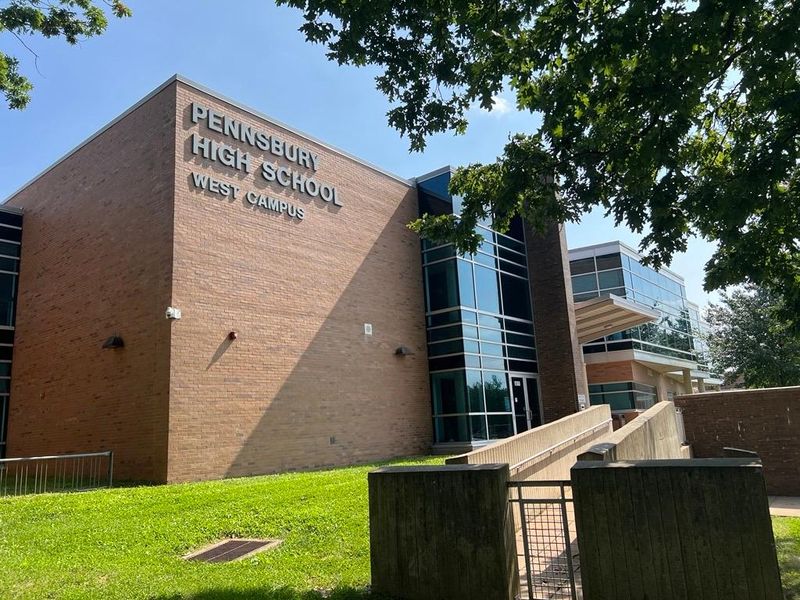
    The complaint filed Sept. 21 by Liberty Counsel against Pennsbury alleges that the mother and father did not learn until the end of their child’s junior year that Pennsbury High School staff had been calling the student by a male name and pronouns since ninth grade. The complaint does not identify the student, who has since graduated, or the parents.

    The district used a “false male name” and pronouns for the student in both personal interactions and electronic information systems, according to the complaint.

    In one handwritten note included in the complaint, a coach wrote to the student in October 2025: “My son! My boy! It’s finally senior night! … Your high school years may not have always been like you dreamt it would be, but it’s okay! … I could not be more grateful and honored to be your coach/mom.”

    While the student’s mother had heard other students referring to her child by the name during sophomore year, the student brushed it off, saying, “‘It’s just a silly name,’” Mast said in an interview Monday. The mother “didn’t pry further,” Mast said.

    But when the student brought home a memory book during junior year, the mother saw a male name was used for her child, Mast said. She then went back and reviewed other memory books and saw they also used the name.

    Had the parents known sooner, “they would have helped the child get the counseling she needed to be comfortable with her natal sex,” said Mast, who said the parents’ relationship with their child has suffered. “No girl should be made to feel like she is born in the wrong body.”

    On Nov. 17, the parents demanded that Pennsbury use their child’s given name and female pronouns, according to the complaint. After a Dec. 1 meeting, the district said it would do so going forward, the complaint said.

    But it did not fulfill all of the parents’ requests, leading Liberty Counsel to issue a demand letter on March 6, according to the complaint.

    The district agreed to use the student’s given name at graduation and on the student’s diploma, but said it could not control what appeared in the memory books, because those were issued by a booster club, the complaint said.

    And it has not updated its policy related to transgender students, according to the complaint. The parents had asked the district to require principals to communicate with parents before a student could be called by a different name.

    The district’s policy says it will accept a student’s asserted gender identity, and “all persons, including students, have a right to privacy. This includes the right to keep private one’s transgender status or gender expansive presentation at school.”

    The policy also includes a section about “parental consent” that says that if a parent or student requests a name change without proof the name has been changed legally, “the parent/guardian and student will be provided” with a form. That did not happen in this case, according to the Liberty Counsel complaint.

    Pennsbury is ‘not unique’

    Pennsbury’s policy is “not unique” among Philadelphia-area districts, said Jeffrey Sultanik, a solicitor for numerous districts in the region.

    Lower Merion’s policy, for instance, says “school personnel should not disclose information about a (transgender or gender diverse) student’s gender identity and expression to others, including the student’s parents/guardians and/or other school personnel, unless legally required to do so or unless the student has authorized such disclosure.”

    The Pennsbury complaint “may dictate what other school districts end up doing,” depending on how the Education Department responds, Sultanik said.

    The complaint alleges violations of the Family Educational Rights and Privacy Act, a federal law protecting the privacy of student educational records.

    The law “prohibits a federally funded school district from maintaining a policy that denies or effectively prevents a parent from inspecting and reviewing a minor child’s education records,” according to the complaint, which also alleges violations of the Protection of Pupil Rights Amendment — a federal law governing surveys administered to students on sensitive topics — and Title IX.

    Moon, of the Education Law Center, said “there is currently no law that schools have to notify parents about students sharing to their counselor, or a trusted teacher, that they identity as transgender.”

    In cases Moon is familiar with, she said, school counselors ask students if they have told their parents about their gender identity.

    “I really don’t think in the vast majority of cases, this is anything like teachers trying to avoid, or counseling students to avoid, conversations with their families,” Moon said.


  • Residents brace for a possible Russian hybrid attack on Poland’s border with Ukraine

    Residents brace for a possible Russian hybrid attack on Poland’s border with Ukraine

    DOROHUSK, Poland — Three times in one day, phones lit up across this Polish border community with a warning: A drone or a missile could cross from Ukraine, and residents should stay vigilant in case they might need to take cover.

    Above the village of Dorohusk in eastern Poland, vapor trails cut across the pale blue sky and military helicopters rumbled overhead. Just 1.24 miles away, traffic at the border crossing into Ukraine was suspended three times, and staff were even evacuated once.

    The alerts and disruptions on Thursday came as the Associated Press was visiting the village. They reflected a new reality along Poland’s eastern frontier, where the war in Ukraine — now 4½ years old — has felt increasingly close.

    Russia isn’t at war with Poland, but over the past few years European leaders say it’s mounted a series of so-called hybrid attacks to pressure to pressure adversaries in the West and NATO that include sabotage, disinformation, and cyberattacks. Poland is worried that the drones or missiles strikes could spill over from Ukraine, whether by accident or as part of a Russian strategy of ambiguous attacks.

    The anxiety intensified after two Russian drones exploded on the Ukrainian side of the Dorohusk-Yahodyn crossing in the early hours of Sept. 13. The explosions could clearly be heard in Dorohusk.

    “There is new restlessness and fear because you could hear those explosions very well on that night in our village,” said Wojciech Sawa, the Dorohusk mayor. “We had never had something like that before. This was the first time the sirens wailed.”

    Poland is preparing for a more serious Russian hybrid attack

    Polish Prime Minister Donald Tusk warned on Sept. 17 that Russia was planning hybrid strikes with drones or rockets on European countries supporting Ukraine, among them Poland, and regions bordering Ukraine would be especially vulnerable in the coming months. Other European leaders and intelligence services have shared his warnings that Russia is likely to step up its hybrid campaign.

    In Dorohusk, people have lived in the shadow of the war for years. They watched Ukrainian refugees flee across the frontier in the early days of Russia’s 2022 invasion and, this July, had a Russian missile pass through airspace in eastern Poland before crashing some 56 miles inside the country.

    But the recent drone attacks and the Polish government’s efforts to prepare the population for further serious incidents have brought a new sense of apprehension — and also confusion — among locals.

    Kids in border regions have to evacuate when sirens sound

    Jarosław Wójcicki, the Dorohusk school’s director, said staff, including the school psychologist, now discuss with students “practically every day” how to stay safe.

    The school had to be evacuated once so far and Wójcicki showed the two rooms in the basement of the school building where the kids took cover. Windows had been boarded up to avoid glass shards hurting anyone in case of an explosion.

    “The older children had no problem at all, without showing any particular emotion,” the director said. “You could see a little fear among the younger children, but they were well looked after by their teachers.”

    Wójcicki is responsible for the safety of hundreds of children who travel from nearby villages to attend school in Dorohusk, and his voice wavered as he described the extent of the task.

    Poland’s Defense Minister Władysław Kosiniak-Kamysz visited the Dorohusk-Yahodyn border crossing on Sept. 22 and announced new air defense elements were being brought to the border region. He added that Patriot batteries were deployed in the two Polish regions bordering Ukraine, including the one where Dorohusk is located.

    More work to be done on civil preparedness

    While the government’s warnings are stark, even communities closest to Ukraine are still catching up on civil defense preparedness.

    “We are at the beginning of the process of building civil resilience and the resilience of the state to threats,” said Mirosław Sokal, head of resident safety for the city of Lublin, west of Dorohusk. “We have to remember that over the past 40 years we thought we would be living in peace.”

    He said, given the lack of more solid infrastructure, Poles should respect one minimal rule when there’s an air threat: get inside and put two walls between them and any window.

    Sawa, the Dorohusk mayor, said villagers typically live in individual homes with basements and that is the obvious place to hide in case of air threats. “If I don’t have a basement myself, my neighbor likely does,” he said.

    But people on the streets of Dorohusk seemed more confused about their options in case of a real attack.

    “For now, I sleep well at night, so I don’t really hear it,” said Irena Popek, a woman in her 80s. If planes are coming, she said, her basement was not an option as it was flooded. ”I simply have nowhere to hide, and that’s it.”

    Renata Pastuszo, a local shop employee, said she continued working through the recent siren alarm because it’s better to keep a positive spirit in front of the Russian threat.

    Krzysztof Rulka, another resident, complained that alerts were now coming too often, leaving people confused about their meaning.

    “If someone told me that a drone was going to explode in the center of Dorohusk, then I would know what to do,” he said. “But this kind of confusion — there’s an air attack somewhere in Ukraine — well, what am I supposed to do now? Run to Germany?”

  • NFL calls on Trump administration to remove post featuring Eagles legend Brian Dawkins

    NFL calls on Trump administration to remove post featuring Eagles legend Brian Dawkins

    The NFL asked the Department of Homeland Security to take down a social media post featuring Eagles legend Brian Dawkins to promote the immigration enforcement efforts of President Donald Trump’s administration.

    ⅔

    The official DHS X account responded to a post on Sunday by Leading Report, a conservative-leaning misinformation outlet, about a purported migrant caravan heading toward the U.S. border with a montage of the Eagles Hall of Famer’s iconic tunnel walkout entrance. Korn’s “Blind” can be heard playing in the background.

    DHS captioned the post, “Our time has come.”

    A DHS spokesperson said it used Dawkins in its post because “DHS is playing lockdown defense at the border.” On Monday, the NFL said it requested that DHS remove the post from its social media accounts.

    “We have requested DHS take down the video,” Brian McCarthy, a spokesperson for the NFL, said.

    Dawkins, who played for the Eagles from 1996 to 2008, was known for leading the team onto the field before games in a menacing “Weapon X” entrance, in which he would run on his hands and feet like X-Men character Wolverine, ready to eviscerate the opposing team’s offense.

    In a video shared on social media Monday afternoon, Dawkins said he did not authorize the Trump administration to use his highlights to promote their immigration agenda.

    “I did not give permission for my name, image, and likeness to be used by anybody, all right? By anybody,” Dawkins said.

    The video of Dawkins’ entrance implied DHS and U.S. Immigration and Customs Enforcement would take aggressive action against the migrant caravan. DHS said it has been tracking the group of about 600 people since it left San Pedro Sula, Honduras, on Sept. 20.

    Former NFL player Brian Dawkins delivers a speech during an induction ceremony at the Pro Football Hall of Fame in 2018.David Richard

    Dawkins is not the first ex-NFL star to be featured in the Trump administration’s increasingly meme-centered presence on social media. The White House’s official X account posted a highlight reel in March of bone-crushing tackles in NFL history, including Eagles cornerback Sheldon Brown’s hit against rookie Reggie Bush, edited to include footage of real drone strikes conducted by the U.S. military in Iran.

    Musical acts like Sabrina Carpenter, Olivia Rodrigo, and Kenny Loggins have seen their music be used in official government posts, including with videos of ICE agents arresting immigrants. The White House has also used popular video game characters like Mario and Halo’s Master Chief to promote Trump policies.

    Trump taxpayer-funded TV ads

    The Dawkins social media post follows the White House’s use of taxpayer funds to air a television ad centering Trump before the midterms. The ad that aired in at least two NFL game broadcasts on Sunday, according to CNN, features Donald Trump walking through a hallway declaring “this is the final battle.” At the end of the commercial, a disclosure reads “Paid for by the U.S. Government,” which drew criticism from both sides of the aisle.

    Sen. Andy Kim (D., N.J.) questioned how much taxpayer money was spent on the ad on Sunday. “Trump has overseen the most corrupt administration in modern history, making billions of dollars for him and his friends, while your costs go up,” he said in a social media post.

    Sen. John Kennedy (R., La.) in an interview on CBS’s Face the Nation said no public official should spend public money on private ads for themselves. “The White House sees differently, but you can’t spend money to promote yourself.”

  • Secretive group’s latest anti-Trump artwork placed in D.C. — and Greenland

    Secretive group’s latest anti-Trump artwork placed in D.C. — and Greenland

    The mysterious art collective responsible for more than a dozen installations mocking President Donald Trump and his administration over the past two years struck again on the National Mall in Washington on Monday morning, this time with an international twist.

    The group, Secret Handshake, created Operation Epic Furious: Nuuk ’Em All, a satirical video game playable on three video game cabinets placed under the dome of D.C.’s World War I Memorial near the under-repair Lincoln Memorial Reflecting Pool.

    The game, according to a news release sent by Secret Handshake, “turns all of Trump’s latest Greenland ambitions into an unhinged Arctic adventure.” Nuuk, a city of about 20,000 people, is the capital of Greenland, an autonomous territory of Denmark.

    In the game, the group says, the president “battles unthinkable evils like Fully Vaccinated Children, Woke Yetis, and the happiest people on Earth, the Danish. All the while, the player’s greatest challenge is trying to keep President Trump from falling back asleep.”

    The White House did not immediately respond to a request for comment on the new installation. It has previously dismissed the group’s work. In response to a mocking Iran War Participation Trophy that Secret Handshake installed on the National Mall in July, the White House said, “These untalented ‘artists’ should stick to their ugly ‘art’ and refrain from weighing in on foreign policy — which they clearly know nothing about, given the fact that the United States Military achieved all of its objectives during Operation Epic Fury.”

    A fourth video game cabinet for Operation Epic Furious: Nuuk ’Em All appears to have been placed in Nuuk over the weekend, according to photos posted on Secret Handshake’s Instagram account. The photos show a console on a hillside overlooking the coastal town.

    Representatives of Greenland’s government in Washington declined to comment on the installation.

    The four video game consoles take aim at positions held by the Trump administration in regard to the United States’ relationship with Greenland. They are decorated with cartoon images of Trump as well as Vice President JD Vance, Defense Secretary Pete Hegseth, FBI Director Kash Patel, and Health and Human Services Secretary Robert F. Kennedy Jr. There are also images of cartoon penguins wearing ammunition belts and American flag patches and a map of Greenland with made-up names and a large section of it labeled “Future Golf Course.”

    Numerous quotes attributed to Trump adorn the consoles, including “That’s Our Territory. All we’re asking for is to get Greenland,” and “We need Greenland very badly. One way or the other, we’re going to get it.”

    On Monday morning, a few visitors happened upon the video games. Shantha Tellambura, 62, and his wife, tourists from Australia who were spending their first day in Washington, said they were surprised to see the installations in a public setting.

    “I think it’s very interesting and it signifies freedom of expression,” Tellambura said. “It’s important that ordinary people are allowed to express their opinions.”

    The message the work delivered, he said, was necessary.

    “We are headed toward a problematic time especially with the possibility of nuclear war,” he said.

    Secret Handshake members have declined in phone interviews with the Washington Post to provide any identifying information. The group has previously placed installations and artwork critical of Trump at locations across Washington.

    They include a statue of Trump and Jeffrey Epstein holding hands, a mock tribute to Trump from the world’s authoritarian leaders, and a reproduction of the desk of former House Speaker Nancy Pelosi (D., Calif.) with a pile of fake excrement on it that ridiculed the Jan. 6, 2021, rioters who sought to overturn the 2020 election.

    In May, the group installed its first video game project. A playable game titled Operation Epic Furious: Strait to Hell targeted the war with Iran.

    Previous installations by the group, all of which had a National Park Service permit for temporary display, were at prominent spots on the Mall, including directly in view of the Capitol’s west side. The group has also installed works in Philadelphia and Portland, Ore.

  • Congo’s Ebola outbreak tops 8,000 confirmed cases as disease remains out of control

    Congo’s Ebola outbreak tops 8,000 confirmed cases as disease remains out of control

    BUNIA, Congo — The number of confirmed cases of Ebola virus in Congo has surged past 8,000, as the country runs out of health workers to contain the deadly disease.

    Congo announced an outbreak on May 15, caused by the rare Bundibugyo virus, which has no known treatment or vaccine, and has struggled to contain it.

    The latest data from Congo’s health ministry released Sunday showed that 8,067 cases have been confirmed, with 3,901 deaths as of Sept. 26 across 63 health zones in seven of the country’s 26 provinces, with a fatality rate of more than 48%.

    “The continuously high crude case fatality ratio, and especially the continuously high rate of deaths occurring in communities, highlights the seriousness of the disease and the persistent challenges in timely case detection and access to early and adequate patient care,” the World Health Organization said in its latest report.

    It means that a large percentage of those infected were dying, without taking into account factors like delays in seeking help or hidden cases.

    The U.N. Office for the Coordination of Humanitarian Affairs said on Monday that the outbreak has begun to have an impact on other essential services in the hot spots as resources are mobilized toward fighting Ebola. According to OCHA’s report, routine primary healthcare services fell by 13% between April and June in Ituri province alone.

    “The indirect impact of the outbreak reflects both reduced health service availability — as a result of staffing and operational pressures — and reduced demand, as fear of infection and isolation discourages care-seeking,” OCHA said.

    Last week, WHO said that Congo was running out of health workers to contain the disease. Health workers have complained about delayed or missing payments, triggering several strikes. According to the Africa Centers for Disease Control and Prevention, 50 health workers have died since the outbreak was announced.

    Some areas have shown signs of improvement, with fewer confirmed cases in the past several weeks, including in Ituri province and Haut-Uele, but officials say the disease is spreading further in other areas, expanding its geographical reach.

    According to data from the Africa CDC, the current outbreak has outpaced the two-year West Africa regional outbreak in terms of spread in the same time. By week 19, the regional outbreak between 2014 and 2016 recorded 3,781 cases, while the current outbreak recorded 7,840. WHO said that it’s on track to surpass the regional outbreak, which killed 11,000 people.

    Containment efforts have been hamstrung by insecurity, displacement, a health workers’ strike, and intense population movements.

  • A Delco firefighter was sentenced to house arrest for calling a woman the N-word during an argument

    A Delco firefighter was sentenced to house arrest for calling a woman the N-word during an argument

    A former assistant volunteer fire chief in Delaware County was sentenced Monday to 23 months of restrictive probation for calling a Black woman the N-word during what he described as a “road rage encounter” in 2024.

    John Romano, 48, must serve the first seven months of his sentence on house arrest, according to a ruling from Judge Margaret Amoroso. He also must undergo anger management and racial sensitivity training, and have no further contact with the victim.

    Amoroso convicted Romano earlier this year of ethnic intimidation, terroristic threats, and related crimes during a bench trial.

    During Monday’s proceeding, First Assistant District Attorney Kristin Kemp asked the judge to send Romano to jail for up to two years.

    “I don’t doubt he’s a racist,” the judge said. “But being a racist, in and of itself, is not a crime.”

    Amoroso said she was focusing more on threats Romano made to the victim, which included taking a picture of her license plate and telling her he would “take care” of her at her home.

    Romano, the former assistant fire chief of the Sharon Hill Fire Company, encountered the woman on Hook Road in Darby Township in November 2024, while he was using a forklift to unload Christmas trees. His forklift was blocking the road, the woman testified at trial, causing a traffic jam of irritated drivers who were honking their horns.

    After the car in front of hers squeezed through a small gap near the forklift, the woman said, Romano got out of the forklift and “rushed” to her passenger window. Romano then called her the N-word. He later told Darby Township officers who responded to her 911 call that she was “a wild animal” and said he was “tired of dealing with them,” according to body camera footage played in court.

    In a statement to the judge, Romano said Monday that he never intended to threaten the driver, and expressed frustration that he was “being prosecuted over words.” He took a photo of her license plate, he said, because she struck his forklift and he was afraid she would drive off without exchanging insurance information.

    Kemp, the prosecutor, said Monday that Romano had demonstrated a pattern of violent, bullying behavior throughout his life, including an arrest in 2006 for ethnic intimidation in a similar incident and a 2013 gun-possession conviction for which he spent two years in state prison.

    “This isn’t someone who had a bad day and mouthed off about his beliefs,” Kemp said. “This is someone who seeks others out to put them in fear, whether with a weapon or his hands.”

    Romano’s attorney, Christopher Boggs, said the case had been blown out of proportion.

    “I have never understood the level of attention this case received,” he said.

    Unlike other people charged with ethnic intimidation, Romano had made no effort to “hunt or stalk” someone, Boggs said, drawing comparisons to crosses burned on Black families’ lawns.

    Two people close to Romano spoke on his behalf, saying, despite his strong personality, he is dedicated to his community through his volunteer firefighting, as well as other service he’s provided during floods and snow storms.

    But Amoroso made her feelings clear.

    “Maybe you’re a great guy to the people who don’t piss you off,” she told Romano. “But you’re a bully, and that’s what you did: You threatened [the victim] for pissing you off.”

  • Trump administration lowers fuel economy standards, critics say at a significant environmental cost

    Trump administration lowers fuel economy standards, critics say at a significant environmental cost

    DETROIT — The Trump administration on Monday released new fuel economy standards that relax regulatory requirements for automakers to control pollution from gasoline-powered cars and light trucks. The new rules were released shortly after President Donald Trump rejected an Iranian proposal to open the Strait of Hormuz, sending oil prices soaring.

    The change furthers Trump’s promise to revoke policies that encouraged or created incentives for the production of electric vehicles and, ultimately, will expose Americans to more planet-warming pollution from vehicles.

    Mileage standards, known as Corporate Average Fuel Economy, or CAFE, requirements, have been implemented since the 1970s energy crisis, and set out how far new vehicles need to travel on a gallon of gasoline. Over time, automakers have gradually improved their vehicles’ average efficiency.

    The Department of Transportation and the National Highway Traffic Safety Administration estimated that the finalized standards would correspond to a combined industry fleetwide average of roughly 34.9 miles per gallon for passenger cars and light trucks in the 2031 model year. That’s up from 30.1 miles per gallon for model year 2024, but down from a projected 50.4 miles per gallon in 2031 under rules put in place by the Biden administration.

    “Thanks to President Trump’s leadership, we have finally ended the illegal mandate that forced automakers to produce more expensive electric vehicles that American families didn’t want,” Secretary of Transportation Sean Duffy said in a statement touting vehicle affordability.

    NHTSA had projected last December that the new standards would hover at roughly 34.5 miles per gallon.

    The news comes amid ongoing tensions as the war in Iran persists, with Trump refusing a deal with Iran to open the strait as recently as Saturday, impacting the world’s oil supply.

    Environmental groups concerned over rollback

    News of the revised standards immediately drew rebukes from environmentalists.

    The DOT said Monday that the rule would cut yearly oil consumption in 2050 by about 1.3 billion barrels as compared to yearly oil consumption in 2024.

    But when the 2024 standards went into effect, NHTSA estimated they would save 14 billion gallons of gasoline from being burned by 2050. The agency also said that while new fuel-efficient vehicles cost more up front, savings on gasoline over the lifetime of the car or truck would more than make up for that.

    Environmental groups estimate now, without stricter standards, cars could produce 22,111 more tons of carbon dioxide per year than under the Biden-era rules in 2035.

    The rule also translates to an extra 90 tons a year of deadly soot particles and 4,870 additional tons a year of smog components such as nitrogen oxides and volatile organic compounds emitted into the air in coming years, experts say.

    Transportation already accounts for much of total U.S. greenhouse gas emissions that warm the planet: 28% as of the last estimate in 2022.

    It “ignores the feasibility of clean technology and the millions of fuel-efficient cars already on the road,” Dan Becker, director of the Center for Biological Diversity’s Safe Climate Transport Campaign, said of the rule.

    Since taking office, Trump has also pulled back auto tailpipe emissions rules, repealed fines for automakers that do not meet federal mileage standards, and terminated consumer credits of up to $7,500 for EV purchases.

    The president has repeatedly pledged to end what he falsely calls an EV “mandate,” referring incorrectly to former President Joe Biden’s target that half of all new vehicle sales be electric by 2030. No federal policy has mandated auto companies to sell EVs.

    According to data from Cox Automotive, EVs accounted for 5.7% of total new-vehicle sales in August, down from 7.4% for all of 2025.

    Katherine García, director of the Sierra Club’s Clean Transportation for All campaign, vowed the environmental group would fight the rule.

    “Less fuel-efficient cars mean more gas burned, spending more at the pump, and dirtier air in our communities,” Garcia wrote in a statement.

    The state of the industry

    Automakers and industry groups have said the new rules will increase Americans’ access to the full range of gasoline vehicles they need and can afford.

    “NHTSA made the right call to better align fuel economy standards with the law and current market conditions,” John Bozzella, president and CEO of the Alliance for Automotive Innovation, which represents the domestic auto industry, said in a statement. He said the previous standards “effectively required a switchover to electric vehicles that was out of step with market realities and customer demand. Today’s final rule is an appropriate course correction.”

    “What the industry needs is long-term regulatory stability that includes balanced, durable, and achievable fuel economy standards that continue to reduce emissions and improve fuel economy,” Bozzella added. “This is the formula for preserving consumer vehicle choice and keeping the U.S. auto industry globally competitive.”

    A spokesperson for Ford Motor Company, maker of the top-selling pickup truck, the F-150, said: “We appreciate Secretary Duffy and the Administration’s work to align regulations with market realities. As we evaluate the final rule’s full impact on our business, we’ll continue working with the Administration to build a strong American auto industry.”

    A General Motors spokesperson said in a statement the company supports the goals of the rule “and its intention to better align fuel economy standards with market realities.”

    Stellantis also welcomed the changes.

    “These standards will allow us to offer our customers the freedom to choose from a range of vehicles and powertrains that meet their needs, from brands they love and trust,” a Stellantis spokesperson said in a statement.

    Trump wrote on his Truth Social media account Saturday that the less stringent mileage requirements would “take the waste out of building cars in America” and save families “thousands on a new, beautiful and safe car,” while boosting auto production in the U.S.

    The DOT reiterated on Monday that the changes will cut the average cost of a new vehicle by $1,300, and save Americans $138 billion over the next five years.

    Americans, however, are spending more on gas as Washington’s war with Iran disrupts the global flow of fuel; gasoline prices averaged $4.47 on Monday, according to the AAA motor club, up from $3.13 a year ago. The rising cost of oil weighed on U.S. stocks to start the week.

    “Trump is tanking sensible mile per gallon standards at the worst possible time for consumers, who are getting hit with sky-high prices at the pump,” the Center for Biological Diversity’s Becker said. “Consumers will pay the price for these reckless rollbacks while Trump’s Big Oil and Big Auto buddies reap the short-term profits.”

    Experts have also said that less stringent rules do not necessarily translate to more consumer purchases of new vehicles that may have more safety features.

    The average new car in America sold for $50,089 in August, crossing over the $50,000 line for the first time since last December, according to Kelley Blue Book data.

  • Senate Republicans make a final legislative push ahead of the midterms

    Senate Republicans make a final legislative push ahead of the midterms

    Barely five weeks before November’s midterm elections, Senate Republicans are rushing to pass more legislation that they can run on as polling shows Democrats within striking distance of retaking the chamber.

    The Senate is expected to vote on legislation this week meant to protect consumers from high electricity costs caused in part by the data center building boom. And some Republicans are pushing to take up other bills to address voters’ frustrations with the cost of living.

    Senate Majority Leader John Thune (R., S.D.) decided against sending senators home early last week to campaign, opting instead to keep the Senate in session to try to bolster Republicans’ legislative record. This week is the last that the Senate is scheduled to be in session before Election Day.

    Republicans are confronting the once-unthinkable prospect that they could lose the Senate. Democrats are running competitively even in some states that President Donald Trump won by double digits in 2024, giving the party a shot at picking up the four seats they need to recapture the chamber.

    Almost no Republican is in more danger of losing his seat than Sen. Jon Husted (Ohio), who introduced the data center bill that Republicans are set to take up.

    Former Democratic senator Sherrod Brown, who is challenging Husted, has spent millions of dollars on ads attacking Husted over his support for data centers, which the ads blame for “causing electric bills to spike by thousands of dollars.” The National Republican Senatorial Committee warned in a memo last month that the ads are effective, describing data centers as an “anchor hanging around Husted’s neck.”

    Sixty-nine percent of likely voters in Ohio say data centers — enormous warehouses filled with servers that power the artificial intelligence boom and the rest of the internet — are mostly bad for home energy costs, according to a Bowling Green State University/YouGov poll conducted this month.

    Husted has defended his record on data centers and criticized Brown for supporting them in the past. He described his bill as a way to “show the American people that we’re serious about driving down electric prices and making life more affordable for them” — and he almost dared Democrats to block it.

    “If Senate Democrats want to be the lone obstacle to passage, then shame on them,” he told reporters. “That shows that they don’t really care about affordability.”

    It is not clear whether Husted’s bill will pass.

    The House approved it overwhelmingly, but Sen. Martin Heinrich (D, N.M.) blocked Husted from fast-tracking its passage this month, arguing that it did not go far enough. Heinrich sought to pass his own bill to force data centers to shoulder the costs of upgrading the electric grid, which Republicans blocked.

    Husted’s bill does not take full effect for two years and would not bring down electricity prices before the midterms. Some Democrats have argued that it would do little to address affordability at all.

    “Senator Husted’s bill is a fraud,” Senate Minority Leader Chuck Schumer (D., N.Y.) told reporters last week. “It’s voluntary. No company has to do it.”

    Republicans say Democrats are just trying to deny them victories. Sen. Bernie Moreno (R., Ohio) accused Democrats of blocking Husted’s bill “so they can just put up another TV ad to say that electricity prices are high so that they can win an election.”

    Senate Republicans have spent much of the past two weeks working to pass legislation from Sens. Ted Cruz (R., Texas) and Maria Cantwell (D., Wash.) to overhaul regulation of college sports. Cruz has argued the bill is crucial to “protect an American institution that millions of people love,” but some Republicans have groused that it is hardly the most pressing issue for the party to tackle right before the midterms.

    “With gas at over $4 a gallon, a persistent war with Iran, $40 trillion in debt, the Senate has decided that the most urgent thing now is to dictate how college sports are run from Washington,” Sen. Rand Paul (R., Ky.) said on the Senate floor.

    Sen. John Kennedy (R., La.) said he was prepared to support the bill if he secures an amendment vote but argued it is not a priority for voters, describing it as a way “to make the football coaches happy.”

    “I haven’t met a single person on the campaign trail, when they lie down to sleep and can’t, who are worried about the football coaches,” Kennedy told reporters.

    Husted is not the only Republican senator facing a tough race who has pushed to pass legislation that can be campaigned on before heading home.

    Sen. Susan Collins (R., Maine), who is seeking a sixth term in a Democratic-leaning state, has pressed Senate Republican leadership to take up a bipartisan bill to force insurers to cap the cost of insulin at $35.

    Another vulnerable Republican, Sen. Dan Sullivan (Alaska), tried to pass legislation last week meant to protect salmon in his state. He was blocked by Sen. Ed Markey (D., Mass.), who said he needed more time to seek feedback from fishermen in his state.

    Husted and other Republicans are campaigning on the tax and domestic policy bill that Trump signed into law last year, which cut taxes on tips and overtime. But some Senate Republicans have pushed for months to do more to address voters’ affordability concerns.

    Sen. Josh Hawley (R., Mo.) said he had urged Senate leadership to take up the insulin bill, along with legislation to suspend the federal gas tax and other bills to make life easier for working families.

    “My view is that ought to be our sole focus,” Hawley said. “If we’re not going to do that, it’s not clear to me what we’re doing here.”

    Rep. Ashley Hinson (R), who is facing a tight race for an open Senate seat in Iowa, last week called on the House to return to Washington to vote on suspending the federal gas tax as well as other steps to reduce fuel prices. The House adjourned earlier this month and has no plans to return before Election Day.

    Thune has faulted Democrats for obstructing his party’s agenda. Republicans and Democrats have spent months negotiating over legislation to overhaul the federal permitting process, which could bring down energy costs by making it easier to build power lines and other infrastructure. Thune said the Senate could take up such a bill before the midterms if the two sides were to reach a deal, but he acknowledged Thursday that it would not happen, which he blamed on Democrats.

    “While they may acknowledge the need for permitting reform, what they really care about is denying Republicans another legislative win” ahead of the midterms, Thune said on the Senate floor.

    Sen. Sheldon Whitehouse (R.I.) and Heinrich, the Democrats leading permitting negotiations, said Friday that they wanted to give senators more time to review the legislation and warned that trying to pass it before the midterms could kill the bill.

    “We are talking about major changes to how America builds energy and infrastructure,” they said in a statement. “Getting that right has to matter more than election-year deadlines.”

  • New Montco group wants to protect you from getting scammed

    New Montco group wants to protect you from getting scammed

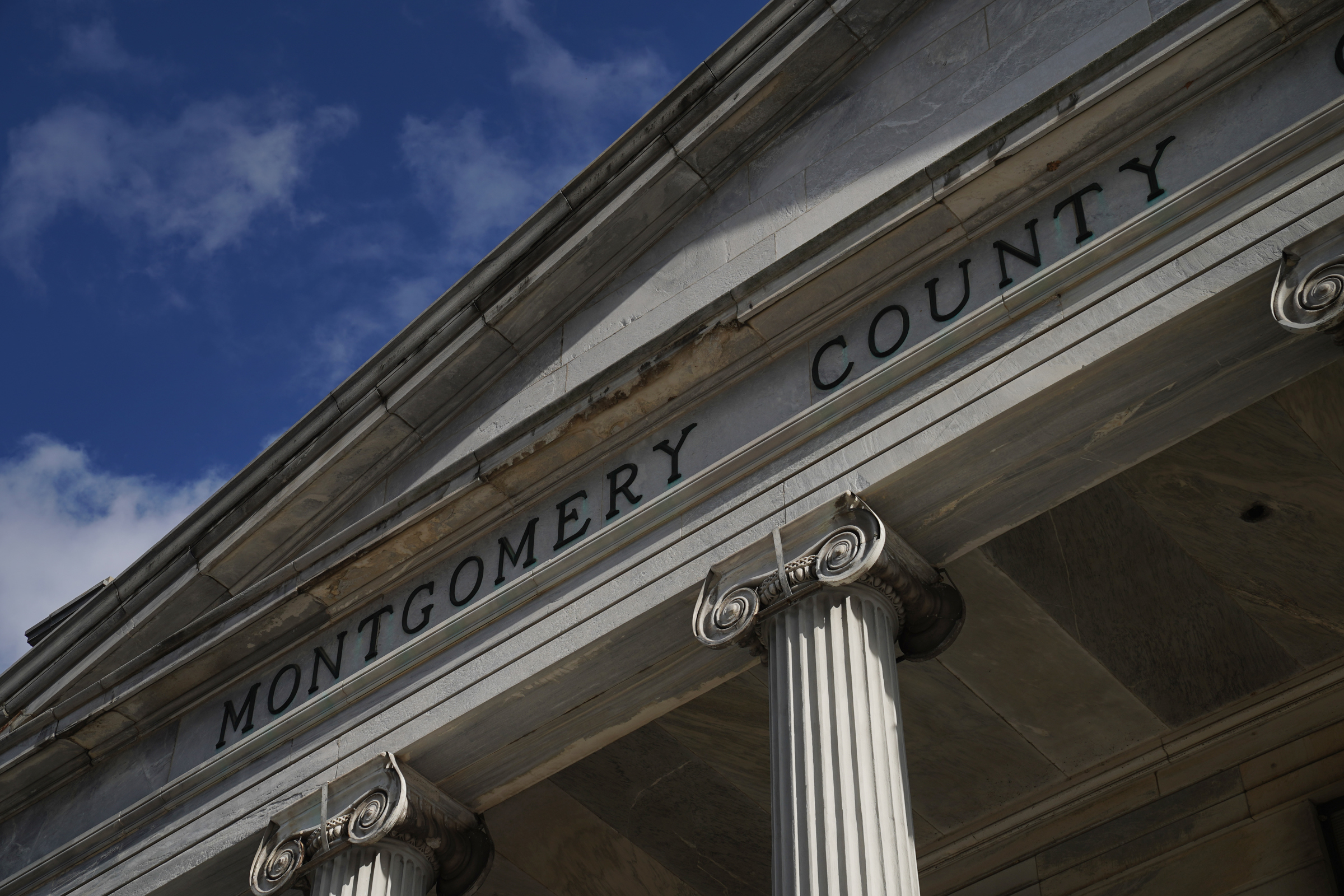
    Montgomery County officials are starting a new consumer protection collaboration and taking on cash-advance apps in one of its first cases.

    Montgomery County District Attorney Kevin R. Steele and the Montgomery County Board of Commissioners announced the effort Monday, saying that the solicitor’s office and district attorney’s office would work together to investigate issues that impact the finances, health, and well-being of residents.

    “When companies engage in unlawful or deceptive conduct that harms our residents, we will use every available tool to hold them accountable,” Steele said in a statement.

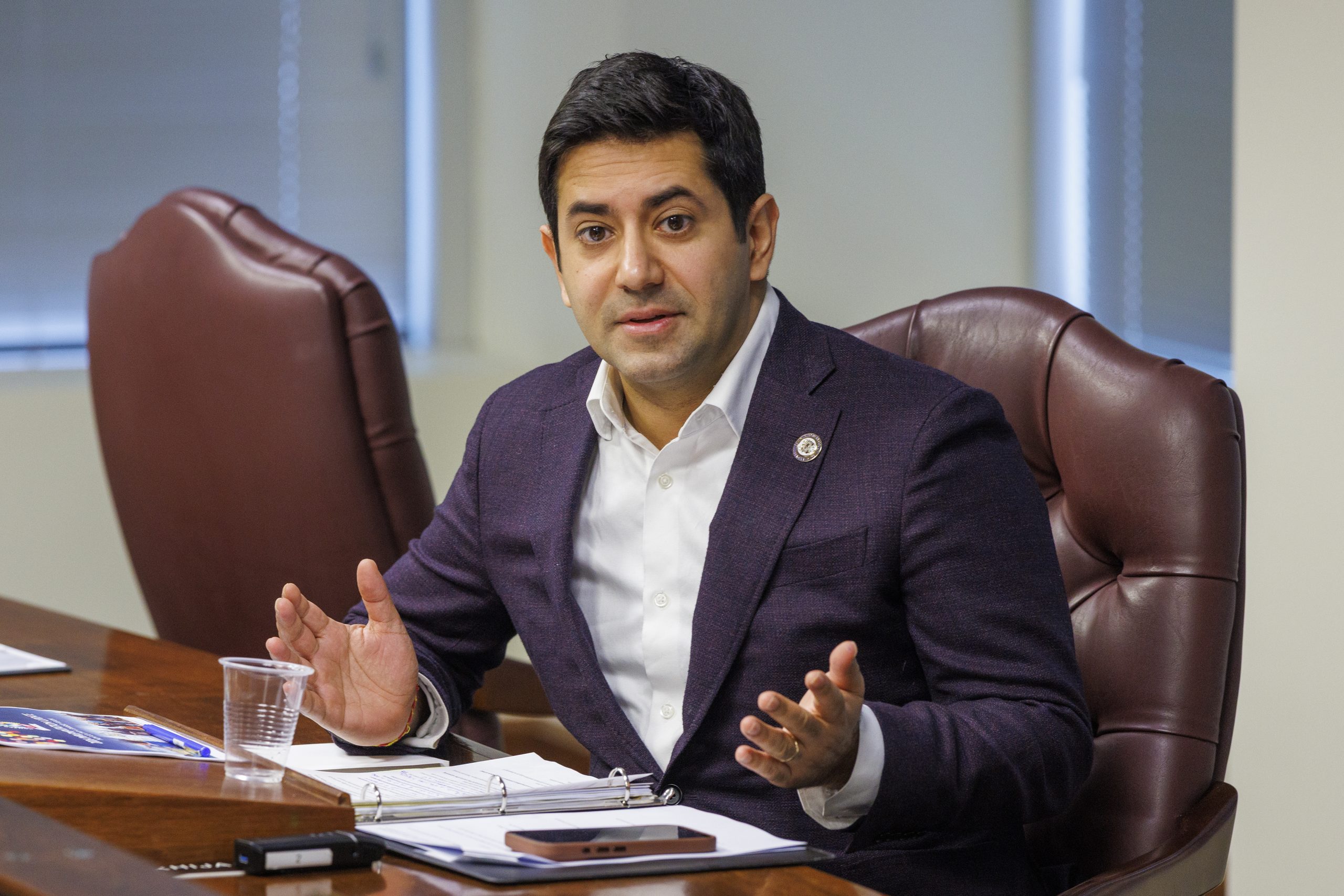
    “This is the first long-term partnership on consumer protection that we’re aware of,” Montgomery County Commissioner Neil K. Makhija said in an interview. He added that it is particularly important given continued economic uncertainty.

    “People are struggling to cover everyday needs,” Makhija, a public interest attorney, said. “Some companies see that and they see an opportunity to make a profit.”

    Montgomery County Commissioner Neil K. Makhija says digital lending apps have taken advantage of Pennsylvanians who are struggling to make ends meet.Alejandro A. Alvarez / Staff Photographer

    Some digital lending apps are among those companies, according to Montgomery officials.

    Traditional payday lending involves taking out a short-term, high-interest loan due on a consumer’s next payday. The practice is illegal in many states, including Pennsylvania and New Jersey.

    But Montgomery County officials say some apps continue to give out similar loans, disguised as interest-free cash advances.

    On Monday, the county district attorney’s office filed two lawsuits against the apps MoneyLion and Dave, alleging that the companies provide short-term cash advances and then tack on fees, tips, and other charges so they effectively function as high-interest loans, violating Pennsylvania law.

    Spokespeople for MoneyLion and Dave did not immediately return requests for comment.

    More than a million Pennsylvanians have used these apps, Makhija said, and officials hope to learn through the lawsuits how many Montgomery County residents have been impacted. Suits such as these can result in financial settlements or orders to stop illegal practices, the commissioner said.

    “The reason this is so powerful is that we are not bound by the fine print” that consumers often agree to when they sign up for these apps, Makhija said. “Consumers today unknowingly are waiving their rights to a jury trial … what we are able to do is take action on behalf of the Commonwealth by our district attorney.”

    The county accounted for this effort in its 2026 budget for the district attorney’s office.

    “These cases pay for themselves: You’re addressing harm and you’re able to recover funds to continue the work,” Makhija said. “This is not a cost sink for the county.”

    As part of the consumer-protection collaboration, Montgomery County also sued some of the country’s largest social media companies over youth mental health impacts, and joined other local districts attorney in a suit against online ticket-reseller Vivid Seats over hidden fees.

    Montgomery County residents can email consumer.complaint@montgomerycountypa.gov with tips about ongoing cases or other issues, Makhija said.

  • 41 arrested in HUD-backed operation targeting Philly fugitives receiving public housing assistance

    41 arrested in HUD-backed operation targeting Philly fugitives receiving public housing assistance

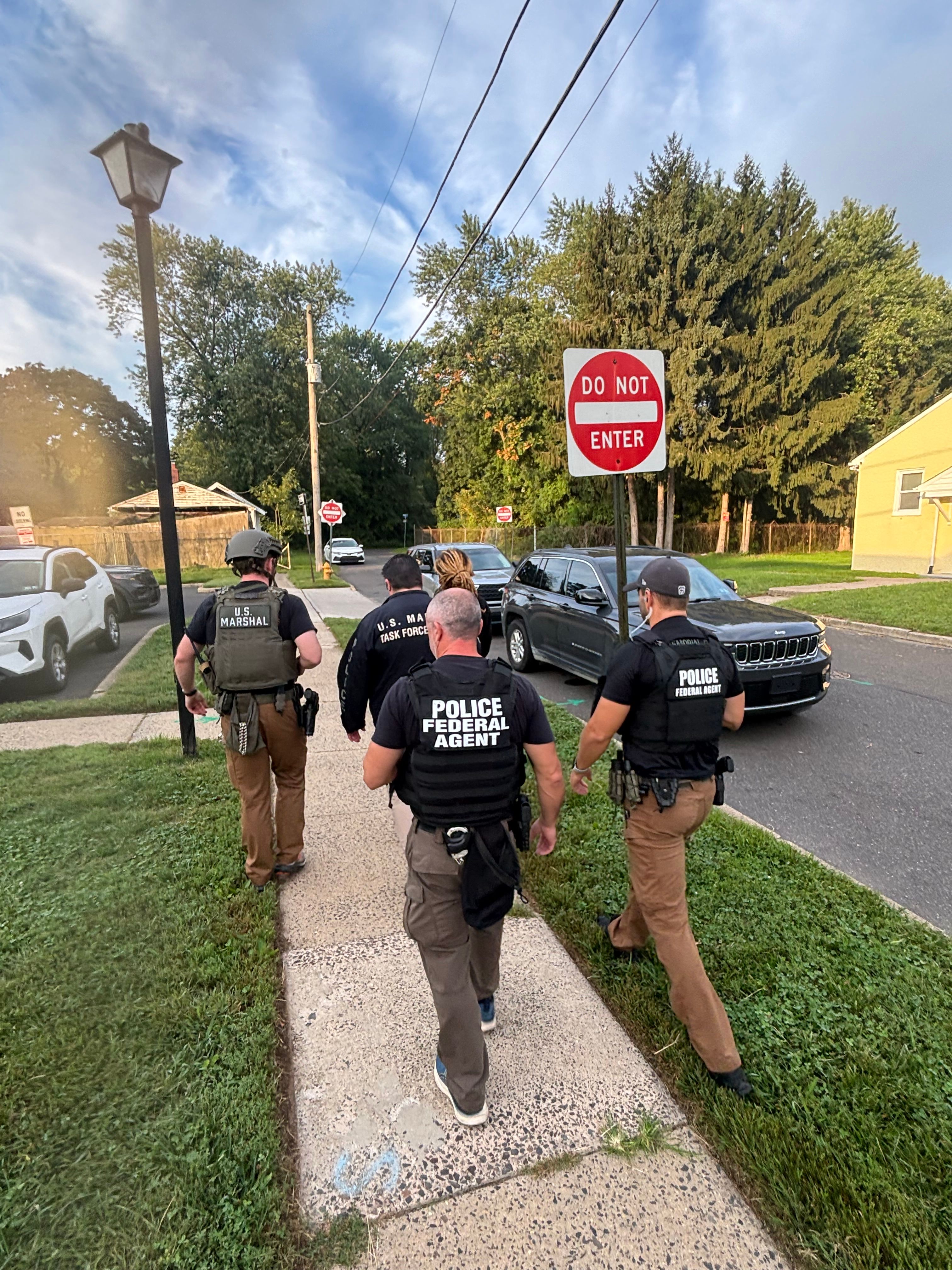
    Forty one people in Philadelphia and surrounding areas were arrested in a sweeping operation conducted by the U.S. Marshals Violent Crime Fugitive Task Force this month, the agency said Monday.

    The effort, dubbed “Operation Moving Day” targeted people wanted for violent felonies who were living in federally subsidized housing.

    The initiative is part of a larger federal criminal enforcement campaign being carried out in cities across the country this year by the Inspector General’s Office of the Department of Housing and Urban Development with support from U.S. Marshals.

    The Philadelphia-area operation led to the arrests of people wanted for felonies including arson, aggravated assault, armed robbery, crimes against children, and at least one shooting.

    Robert Clark, a spokesperson for the U.S. Marshals’ Eastern Pennsylvania Violent Crime Fugitive Task Force, said most of those arrested during the operation were living in private apartment units and had been receiving subsidized rental assistance through federal programs.

    Arrests occurred in neighborhoods across the city, according to Clark, along with a handful of arrests occurred outside city limits and as far north as Lehigh County.

    Among those arrested was a 31-year-old man wanted by Philadelphia police for his role in an early August shooting. The incident occurred on the 3300 block of North Smedley Street and left a woman hospitalized with a shoulder injury.

    Marshals also arrested a 23-year-old employee of Bregy Elementary School in South Philadelphia who had been charged with indecent assault and unlawful contact with a minor in late August, Clark said.

    The operation marked the first time U.S. Marshals in Eastern Pennsylvania took part in a joint law enforcement effort backed by HUD, he said.

    This summer, U.S. Marshals task forces in other major cities have aided HUD in arresting fugitives living in federally subsidized housing, such as Kansas City, Mo., Memphis, Minneapolis, and most recently in New York and New Jersey.

    The arrests were part of a national operation called ‘Operation Clean House.” The initiative launched after the success of an operation in Columbus, Ohio last winter that led to the arrests of more than 50 people with outstanding felony warrants, Clark said.

    A spokesperson for HUD did not immediately return a request for comment.

    In February, after 16 people were arrested in a similar operation in Minneapolis, U.S. Department of Housing and Urban Development Acting Inspector General Brian D. Harrison said the operation had successfully targeted “dangerous fugitives” living in federally subsidized housing.

    “Defeating fraud in housing remains a top priority for HUD OIG,” Garrison said in a statement. “HUD housing is America’s housing serving millions of deserving Americans, and we are unwavering in our commitment to ensuring accountability throughout HUD’s programs.”