Category: News

  • How more than 3,000 Pennsylvania state government employees are using AI at work

    How more than 3,000 Pennsylvania state government employees are using AI at work

    HARRISBURG — When Pennsylvania announced plans in 2024 for a first-of-its-kind generative artificial intelligence pilot program with the tech giant OpenAI, Steve Catanese believed he was seeing a familiar pattern: the introduction of a new technology that could jeopardize the jobs of his union members.

    As president of the labor union SEIU Local 668, which represents 10,000 state workers, Catanese approached Pennsylvania officials about entering into an agreement to provide its members with job protections as the state continued to introduce AI tools.

    The state agreed to talk. And, to the pleasant surprise of Catanese, a series of back-and-forth discussions throughout that winter led to a deal. Gov. Josh Shapiro published a public letter outlining commitments to state employees amid the rising popularity of AI use, and the union reached a separate agreement with the state, establishing protections for its members.

    Across Pennsylvania’s government, more than 3,000 state employees are now using AI tools, up from the 175 who first piloted the technology. And 6,000 more are currently enrolled in training programs as a prerequisite for accessing the software. In June, Code for America — a civic tech nonprofit — recognized Pennsylvania as one of the top states for AI readiness.

    The state, which has established a Generative AI Governing Board and a series of policies regulating its AI use, has stressed that using AI tools has improved government efficiency without eliminating jobs.

    Bry Pardoe, the state’s chief information officer, said in a statement that the Shapiro administration is “focused on the safe and responsible adoption of generative AI and other AI technologies.”
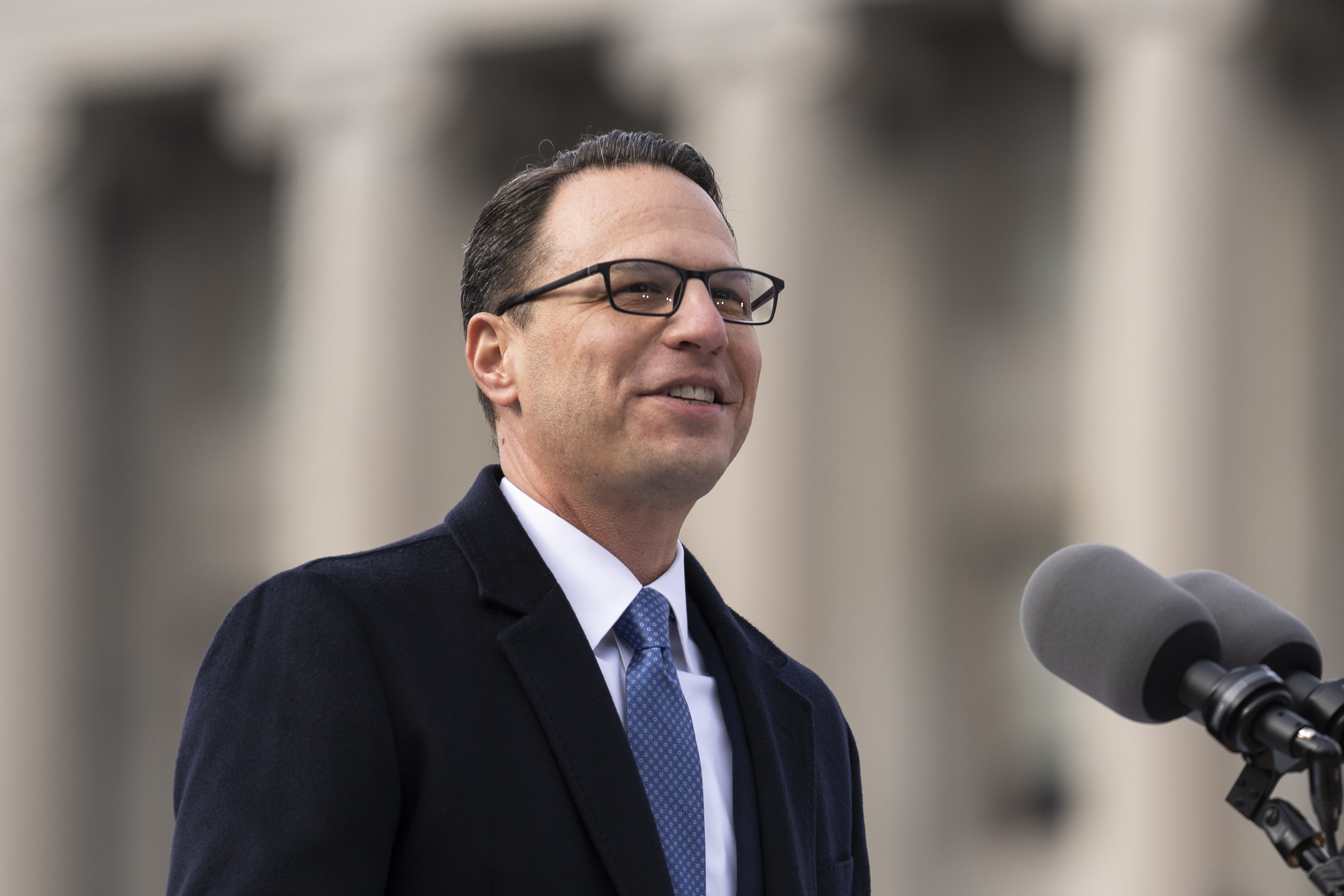
    Gov. Josh Shapiro speaks at the state Capitol in Harrisburg, Pa., Jan. 17, 2023. Pennsylvania state government would prepare to use artificial intelligence in its operations, Shapiro said Wednesday, Sept. 20, 2023, as states were increasingly trying to gauge the impact of AI and how to regulate it. Matt Rourke

    Today, Pennsylvania state employees use AI for a range of functions but focus on relatively basic tasks: deciphering handwritten clemency applications, scanning documents, and triaging customer service requests.

    Most employees access generative AI tools through no additional cost according to the Office of Administration. For the 721 employees who have access to ChatGPT Enterprise, the cost is $25 dollars per month for each user, bringing the annual cost — based on current usage — to $216,000 a year.

    Mark Fagan, a lecturer at Harvard University’s Kennedy School of Government and author of a book on how governments can use these tools, said that generative AI can serve as an important resource to deliver public services to constituents.

    “There are endless opportunities for using AI to improve the way we either provide higher quality, more efficiency, or more equity in our public services,” he said.

    But to do this best, he said, governments should first find friction points and inefficiencies in their operations and then determine if the technology can help.

    “AI is often a solution to pain, but that’s not enough,” Fagan said. “If you’re going to use AI, it should be the best solution to the problem.”

    A first-of-its-kind pilot

    In January 2024, the Shapiro administration launched a pilot program in partnership with OpenAI, the company behind the generative AI chatbot ChatGPT, to test the rollout of tools among a select group of executive agency employees.

    The program made Pennsylvania the first state in the nation to enter into an agreement with OpenAI, and also marked the first time employees within the state were permitted to use generative AI tools.

    “The pilot was designed to explore using AI tools from the perspective of Commonwealth employees; to understand when, where, and how tools could be of useful to them, where using these tools may introduce opportunities for risk, and areas where employees might need additional training or resources to be successful,” Dan Egan, a spokesperson for the Office of Administration, which has overseen the state’s AI rollout said.

    Sam Altman, OpenAI’s chief executive officer, said at the time of the rollout that the pilot “showcases Pennsylvania’s commitment to innovation” and would “provide valuable insights into how AI tools can responsibly enhance state services.”

    Open AI Chief Executive Officer Sam Altman, center, speaks at the Advancing Sustainable Development through Safe, Secure, and Trustworthy AI Event on Sept. 23, 2024, in New York. (Bryan R. Smith/Pool Photo via AP, File)Bryan R. Smith

    (OpenAI has since introduced a new model tailored specifically for government use and entered into partnerships with other states across the country. In February, Massachusetts officials announced they would make ChatGPT available to their entire 40,000 person executive branch.)

    In Pennsylvania, the pilot involved 175 employees from 14 state agencies.

    Participants, including Office of Administration employees, lawyers, and construction project managers, were equipped with access to ChatGPT Enterprise, OpenAI’s model for businesses which contains additional privacy features. Information submitted to the chatbot isn’t used to train additional models.

    Employees most commonly used ChatGPT during the pilot to assist with drafting emails or other writing.

    With access to ChatGPT, participants reported saving an average 95 minutes per day and 85% of employees said their experience was “somewhat” or “very positive.”

    During a news conference last March, Shapiro said state employees from lawyers to construction managers used the tools and found them beneficial. The pilot, the first-term Democratic governor added, allowed his administration to reduce the time needed to onboard a new employee by 30 days and to help to consolidate the number of state technology policies by 60%.

    “There are too many public officials who think they can stick their head in the sand and ignore this,” Shapiro said. “I believe we need to embrace them and we need to use it for the betterment of society and the betterment of the people we serve.”

    Protections for employees

    Shapiro, in his letter to state employees, wrote that his administration would implement AI tools with a goal of boosting productivity “not with the agenda of substituting Commonwealth employees with AI.”

    In its agreement with SEIU, the state made a commitment that AI tools will follow a “human in the loop” process in which “human workers oversee, review, and guide generative AI tool outputs to ensure accuracy, fairness, and compliance with workplace standards.”

    The agreement also affirmed the definition of a public employee as a person, something Catanese said was particularly important to his union.

    “I think right now, whether you work for the government or big business, or whatever type of entity, you want to work for an employer that actually sees in the long term there is a role for humans,” Catanese added.

    But, he is cognizant that the technology is advancing rapidly, and the union will need to remain vigilant in ensuring those human-in-the-loop protections remain in place to protect workers.

    Chinmayi Sharma, a professor of law at Fordham Law School whose research focuses on artificial intelligence, said a dissonance can exist between the draw of using AI tools and the diligence required to check their work.

    Organizations may turn to AI tools to make jobs more efficient or more accurate. But ensuring there is a human involved to check the work of those tools requires an additional level of vigilance and care, she said.

    “Are these humans in the loop being trained about AI to the point where they can identify subtle or nonobvious errors?” Sharma, whose research is generally cautionary about the use of AI, said.

    As far as he knows, Pennsylvania is the only state government at this point that has given a union collectively bargained protections around the use of AI, Catanese said.

    Within the union’s membership, perspectives on the rapidly changing technology are varied.

    “Most of our members do have some serious concerns about what it means for their future in the long term,” Catanese added.

    Other members, Catanese said, believe the tools could help lessen their workload. He said current use cases and restrictions on the types of data that can be entered into the tools means that some of those benefits aren’t yet clear.

    “Is it fully guaranteed forever? No,” Catanese said of the protections agreed to by the state. “Is it some level of protection that almost every public servant in the country doesn’t have other than our members at the state? Yes.”

    ‘A solution’

    The state’s use of AI is governed by a set of policies that are reviewed annually.

    Human involvement is required in work produced by generative AI and any use of AI tools must be disclosed if a customer is directly interfacing with them. Personally identifying, confidential and nonpublic information also can’t be submitted into AI interfaces.

    Throughout the AI rollout, the state has consulted researchers through ongoing partnerships with Carnegie Mellon University and the University of Pennsylvania. Subject matter experts from both institutions have answered questions for the state on an as-needed basis as the administration decides to implement new tools and policies.

    As the state considers future use cases, Pardoe said she wants “people to have confidence in the services they get from state government.”

    That means, she said, “being thoughtful and deliberate about where and how we choose to implement AI as a solution.”

    As AI becomes more complex, Sharma predicted that the same logic that makes AI tools attractive now will continue to apply as the technology becomes more advanced. If a government is under-resourced, temptations could exist to redirect resources away from paying human employees and toward something else.

    And, she noted that officials may be motivated to continue to adopt more tools.

    “I don’t know of a politician that’s going to enjoy coming out and saying, ‘We just put a lot of time and effort into this AI pilot, turns out we were wrong, it’s not a great thing for us to do and we are rolling it back,’” she added. “That’s a tough sell.”

    Fagan, the Harvard lecturer, believes that states with successful pilot programs, like Pennsylvania, will likely adopt the technology at a faster rate in the future.

    The important question, he said, won’t be whether more places are using these tools, or whether existing states expand the number of employees using them.

    “The question is whether it creates value or not,” he said of government AI usage. “The real value is in finding problems, finding where there is pain, and solving it.”

    Ethan Young is an intern with the Pennsylvania Legislative Correspondents’ Association. He can be reached at ethanmyoung@gmail.com.

  • Villanova U. spent more than $100 million on renovations of the former Cabrini campus. Students will begin living and learning there this fall.

    Villanova U. spent more than $100 million on renovations of the former Cabrini campus. Students will begin living and learning there this fall.

    The former Cabrini University campus has undergone a more than $100 million, Villanova-fueled rebirth, and students will begin attending classes and living there this month.

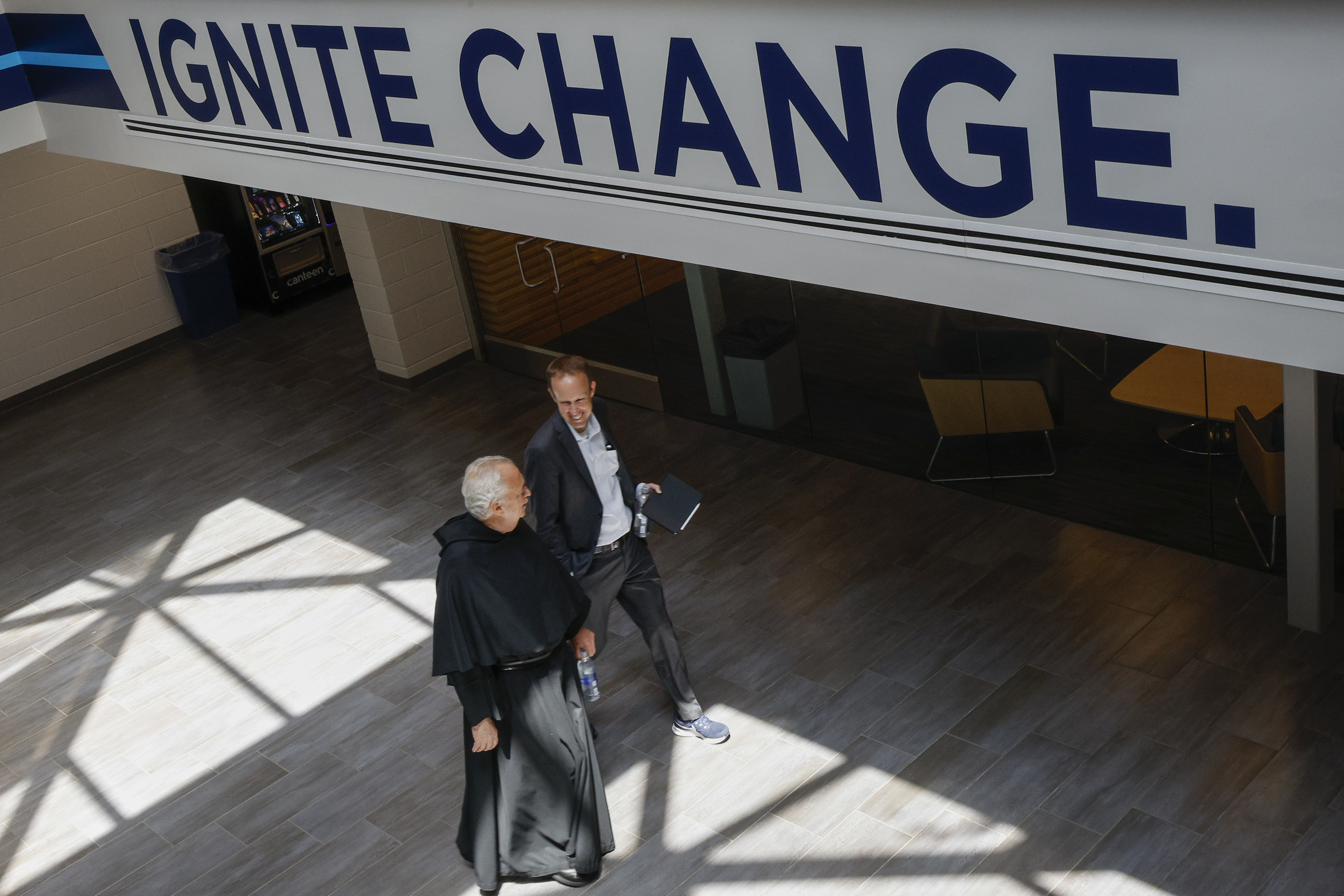
    Large signature blue and white V’s for Villanova University are everywhere. “Ignite Change. Go Nova,” says a wall in the student recreation center. Beds in the residence halls now have navy blue sheets, and many of the buildings have been renamed to honor Villanova’s Augustinian heritage.

    The Radnor campus once in dire need of maintenance sports a fresh look, including new light poles, landscaping, painting, furniture, boilers, roof repairs, a running fountain, pickleball courts, and restored architectural flourishes, in addition to upgraded educational technology for classrooms.

    The university removed dead trees, installed firepits on the campus green, and connected the two campuses’ phone and internet systems.

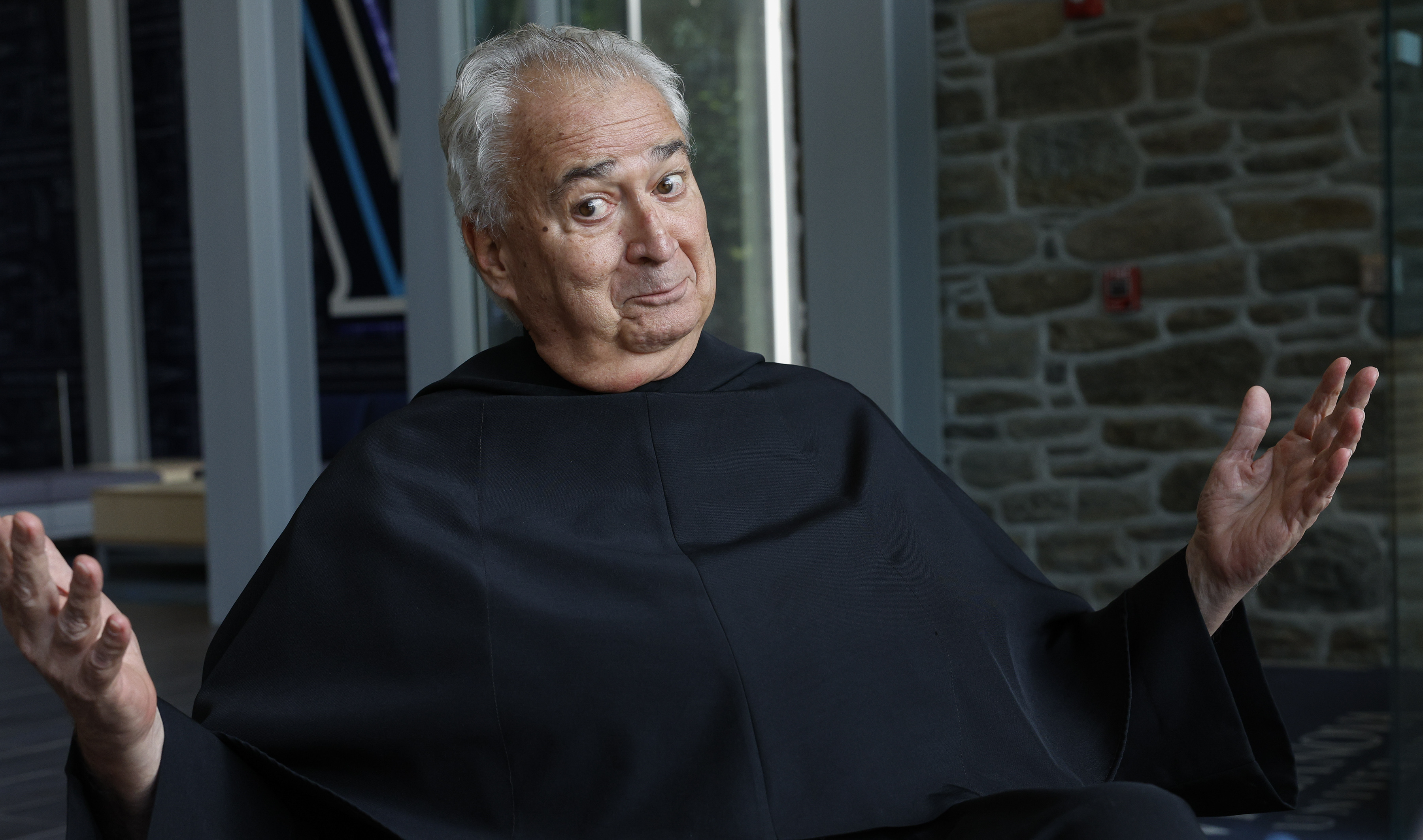
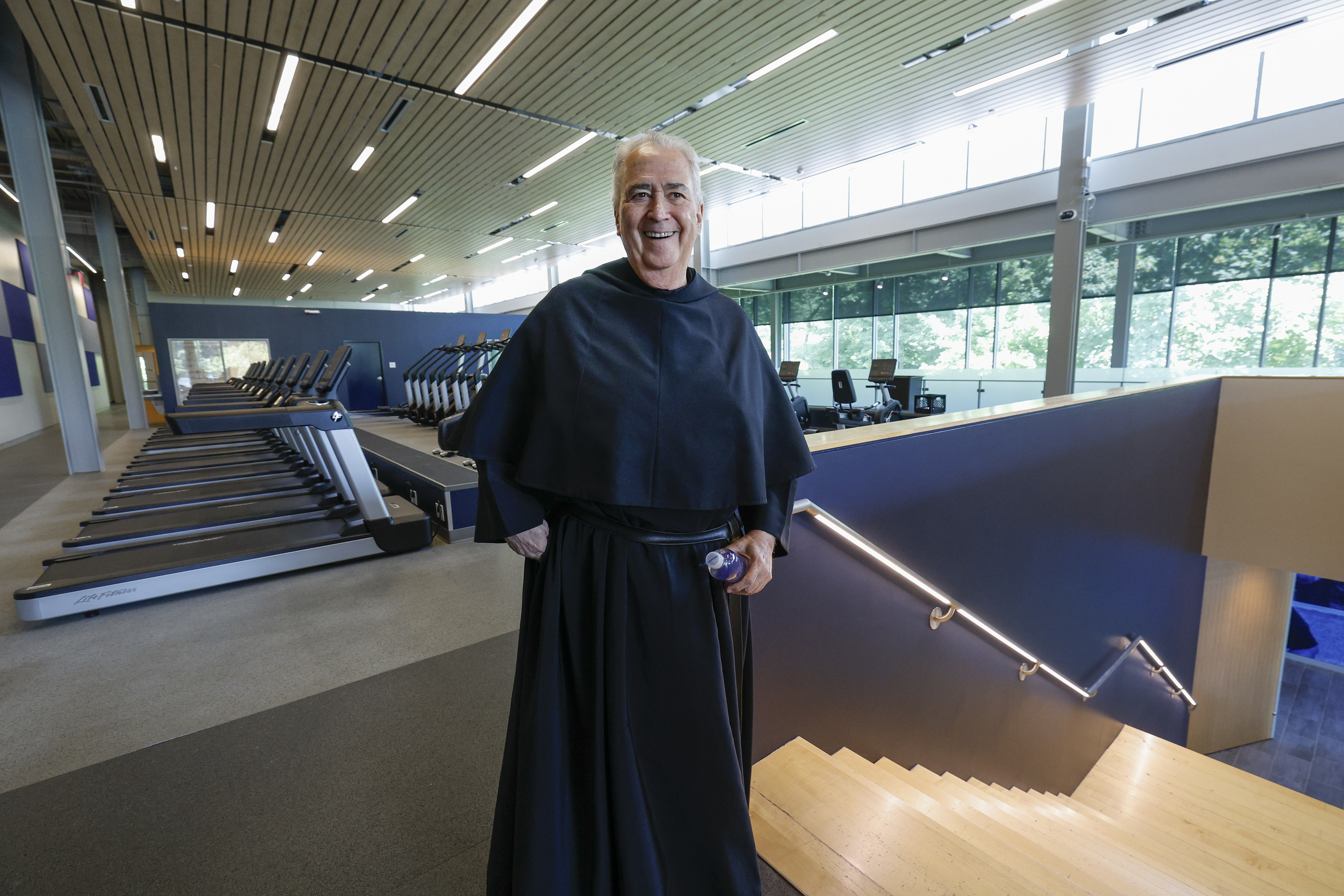
    Villanova President Rev. Peter M. Donohue walks down the stairs at the Dixon Center, which has been covered in Villanova signage and colors. Steven M. Falk / For The Inquirer

    It is all part of Villanova’s effort to make the 112-acre campus that it acquired from the shuttered Cabrini look and feel decidedly Villanovan. The campus has been closed for the last two years as the planning and upgrades took place.

    “It’s always been a beautiful campus, but it looks very Villanova now,” said Kelly Tuzio, assistant director of Villanova’s graduate nursing program, who worked at Cabrini from 2005 to 2011.

    “You can feel the change,” she said, helping to ready the Iadarola Center, the building she works in, for the opening. “Everything is just done to perfection.”

    Some things remain largely untouched, like the signature statue of Mother Cabrini on the green and the Mansion, Cabrini’s former administrative building, which is on the National Historic Register. It was renamed Montefalco Hall. Masses will continue to be celebrated in the chapel: Cabrini was a Catholic university, as is Villanova.

    Villanova University purchased the nearby campus of the now shuttered Cabrini University two years ago and has had the site closed for remodeling. But this fall, students will live and study there. Steven M. Falk / For The Inquirer

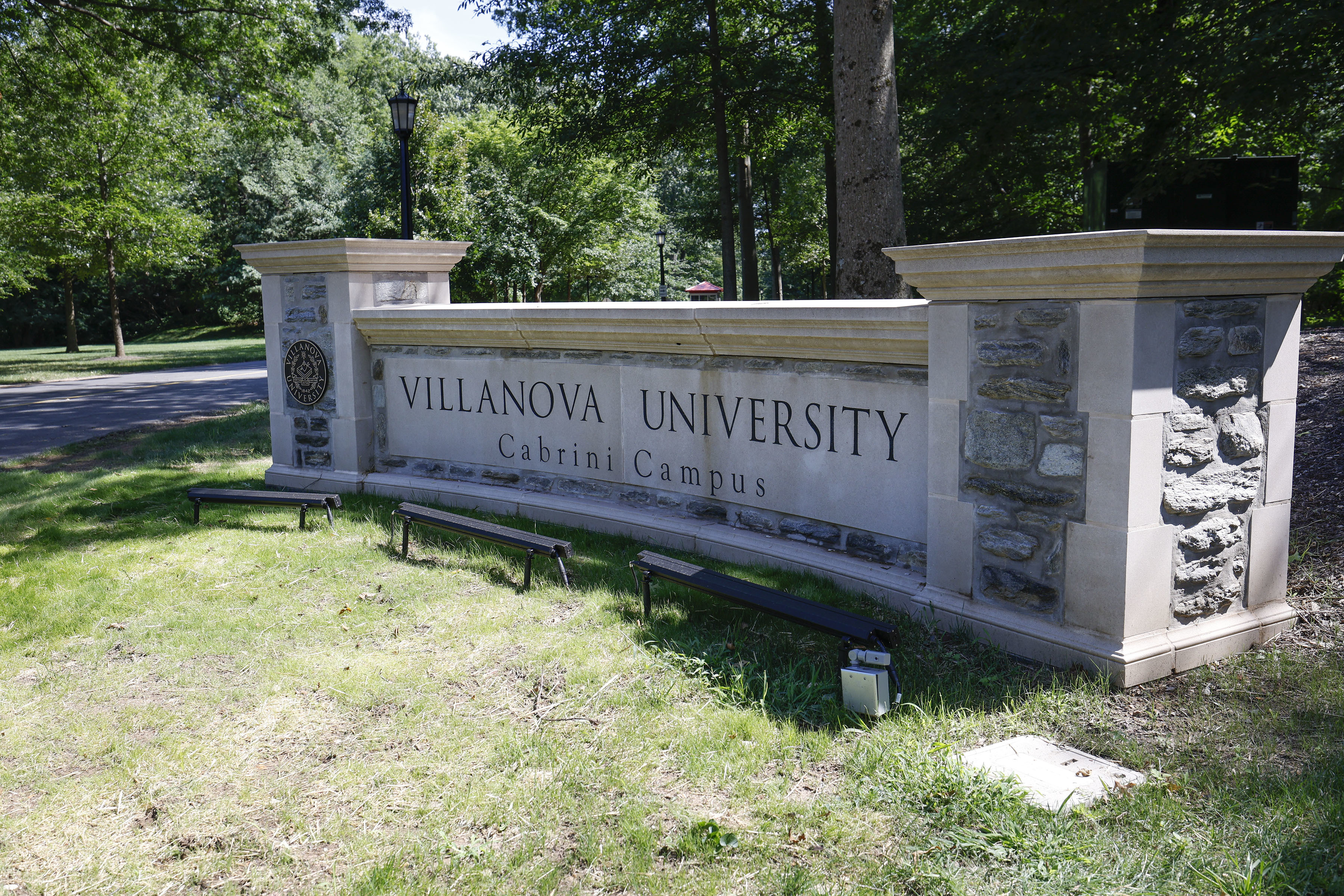
    And signs at the entrance to campus say: Villanova University, Cabrini Campus — a nod to Villanova’s larger promise to retain Cabrini’s legacy.

    A new era of growth

    The acquisition of the campus, which officially opens for fall classes Aug. 24, marks an era of new growth for Villanova.

    As many other colleges have lost enrollment in recent years, Villanova plans to grow its undergraduate student body, now at about 7,000, to 8,000 over the next four years, said the Rev. Peter M. Donohue, Villanova’s president. That growth started this year with about 250 additional freshmen. And the school plans to maintain its selectivity; it admitted just 29% of applicants for this fall’s class and saw more than a 10% surge in applications over the last year.

    Villanova, which has a 260-acre main campus, will expand 43% in size with the addition of Cabrini. The university’s acquisition of Rosemont College — which will be complete in 2028 — will add 58 acres, increasing Villanova’s total to 430 acres.

    The Cabrini campus will house five academic departments: psychological and brain sciences, graduate nursing, education and counseling, ethics, and part of communication. About 75 faculty — 10% of the total — will be based there.

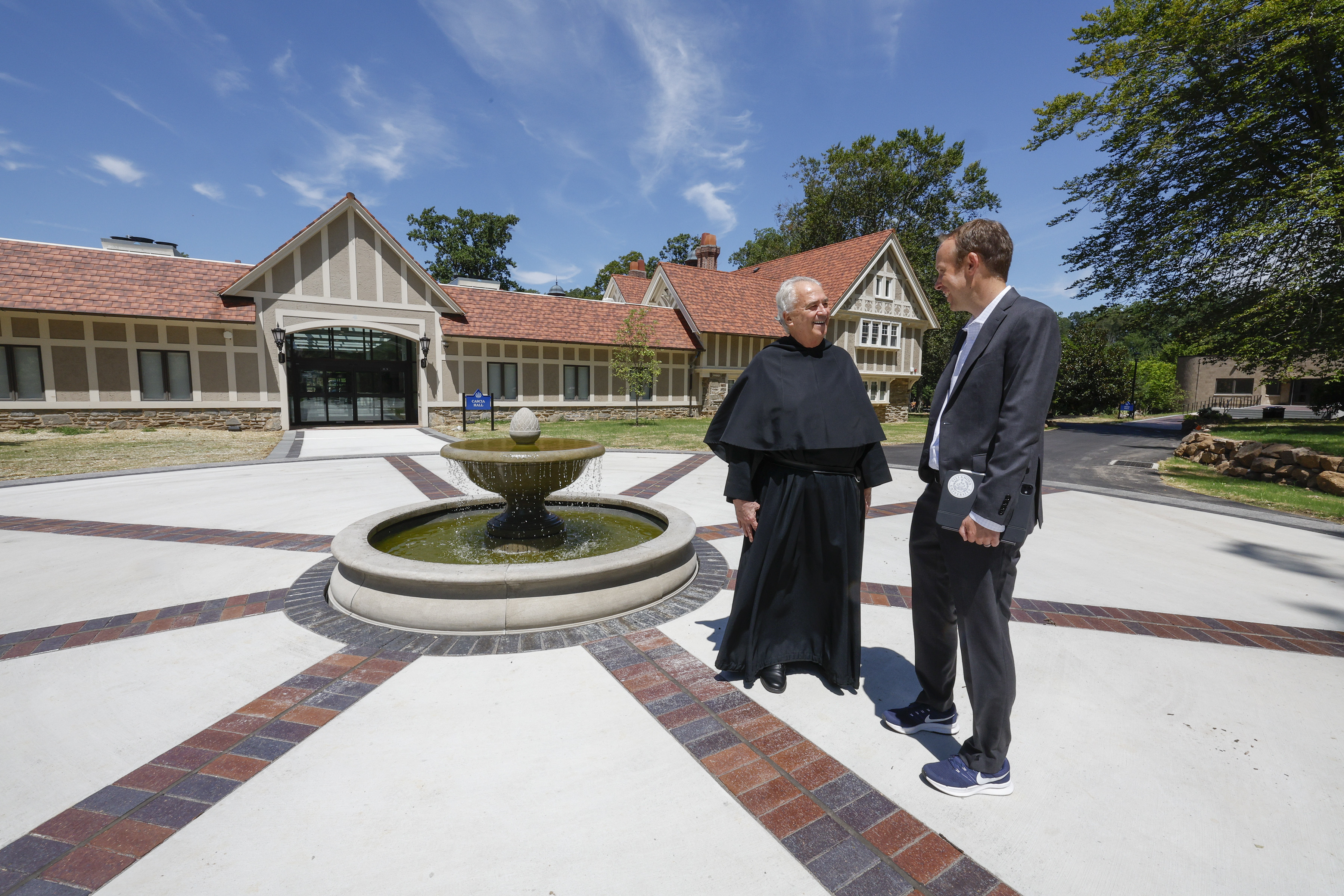
    Villanova University President the Rev. Peter M. Donohue left, and Timothy Hoffman, vice provost for finance and administration, stand in front of a newly installed fountain outside Cascia Hall, which received a lot of renovations inside and out. It houses the student center. Steven M. Falk / For The Inquirer

    About 900 sophomores — roughly half of those enrolled at Villanova — will live on the campus, expanding the percentage of undergraduates who live on Villanova’s campuses to more than 80%.

    In addition, more than 2,000 undergraduate and graduate students — about a fifth of Villanova’s overall student population — will take classes at the Cabrini campus in the fall, said Timothy Hoffman, vice provost for finance and administration.

    “I’m just excited to see life again on the campus,” said Michelle Filling-Brown, formerly dean of academic affairs at Cabrini and now associate vice provost for the integrated student experience at Villanova.

    She has been designing themed living and learning communities for the new Cabrini campus.

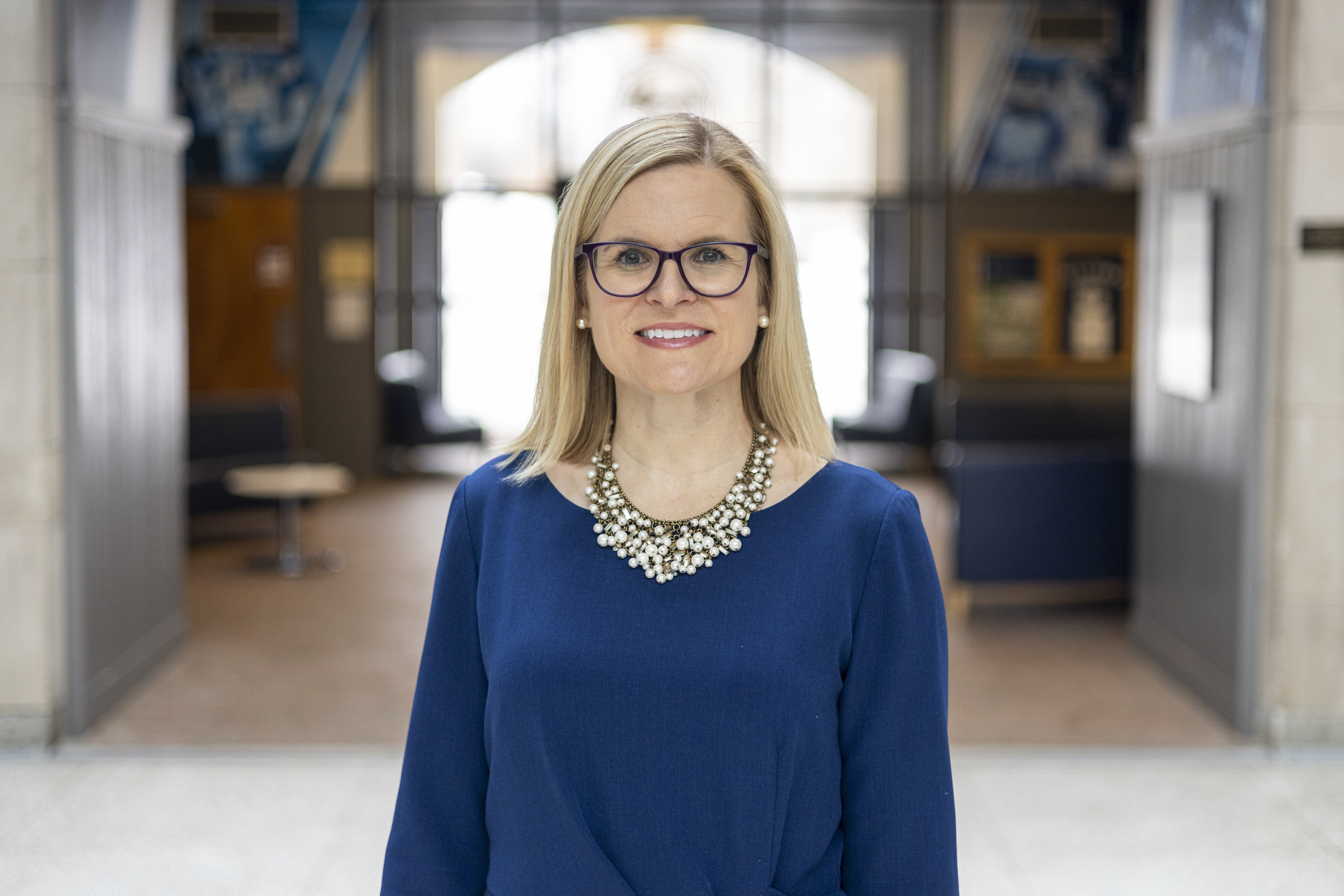
    Michelle Filling-Brown, a former top administrator at Cabrini, now works at Villanova.Tyger Williams / Staff Photographer

    Started in 1957, Cabrini was the only college founded by Sister Francesca Cabrini’s Missionary Sisters of the Sacred Heart. The university announced in 2023 it would shut the next year and Villanova would take it over, giving students and employees a year to find a new runway. The decision came as enrollment plummeted, finances tightened, and deferred campus maintenance mounted.

    In spring 2024, the 67-year-old school marked a series of lasts, including its final commencement.

    Cabrini became one of a growing number of shuttered colleges in the region whose campuses have been acquired by others. St. Joseph’s University bought the University of the Sciences campus, Thomas Jefferson University the former Philadelphia University campus, Drexel the former Salus University, and Lackawanna College the former Peirce College. Various entities, including Temple University, bought pieces of the former University of the Arts. Plans for the soon-to-close University of Valley Forge have not been announced.

    Donohue said Villanova has not yet made specific plans for Rosemont.

    A classroom with new educational technology at the Iadorala CenterSteven M. Falk / For The Inquirer

    Before beginning renovations, Villanova invited Cabrini alumni to collect memorabilia, Donohue said. The school also donated truckloads of old furniture and materials that it did not plan to use to nonprofits.

    A $170 million-plus investment

    The university has invested more than $170 million into the Cabrini purchase, including the $70 million it paid to close out Cabrini’s debt and acquire its land, buildings, and assets, and more than $100 million on renovations. Donohue said it will take just four years for the school to recover that money through the operation of the campus.

    The university was able to keep $15 million of Cabrini’s $42 million endowment, the school said.

    Though the campus has not officially opened yet, a few students have begun to move in. Last Tuesday, a group of young staff members huddled in a room, planning grand-opening activities. Others unpacked and organized nursing equipment.

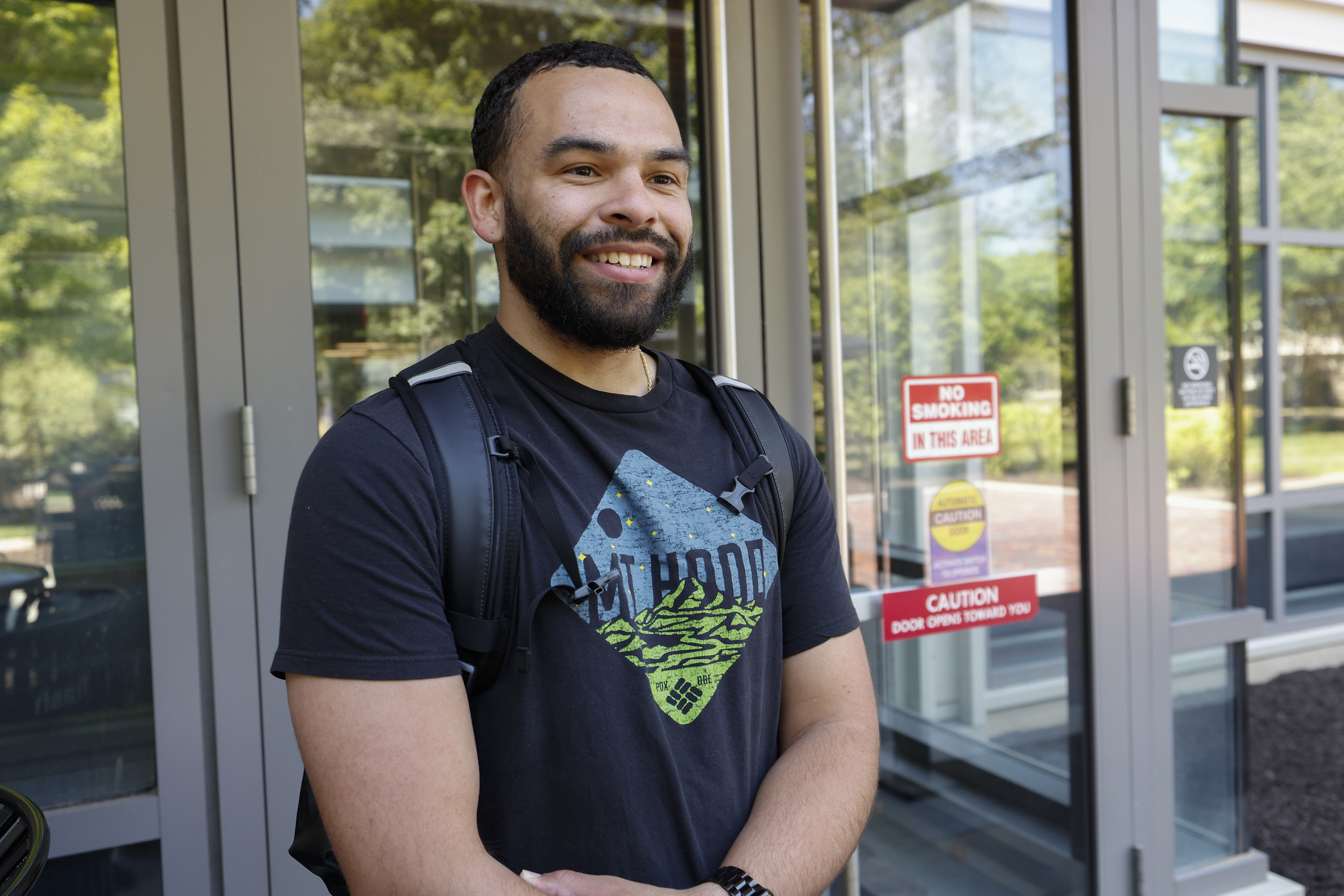
    Graduate student Curtis Wesley stops by the Iadarola Center where he will study this fall.Steven M. Falk / For The Inquirer

    Curtis Wesley, 26, an incoming graduate student in the nurse anesthesia program, strolled out of the building where his classes will be.

    “I just wanted to come and check it out,” said Wesley, who is from Kansas. “I was excited to see all the new technology.”

    Timothy Hoffman, vice provost for finance and administration, emerges from the stone-walled turret leading to what will be a Villanova apparel shop. The turret was uncovered during remodeling at Cascia Hall. Steven M. Falk / For The Inquirer

    One of the buildings that received the most renovation was the former Grace Hall, now Cascia Hall, home to the student center. The building used to be a stable house for the Woodcrest Mansion. Over the years, Cabrini put up drywall and turned much of it into office space.

    Villanova knocked those walls down and uncovered architectural flourishes including gargoyle-like stone carvings and a cavernous, stone-walled turret with a wooden-framed doorway, leading to what will be a Villanova apparel shop.

    Renovations at Cascia Hall uncovered some architectural flourishes, including these stone carved gargoyles. Steven M. Falk / For The Inquirer

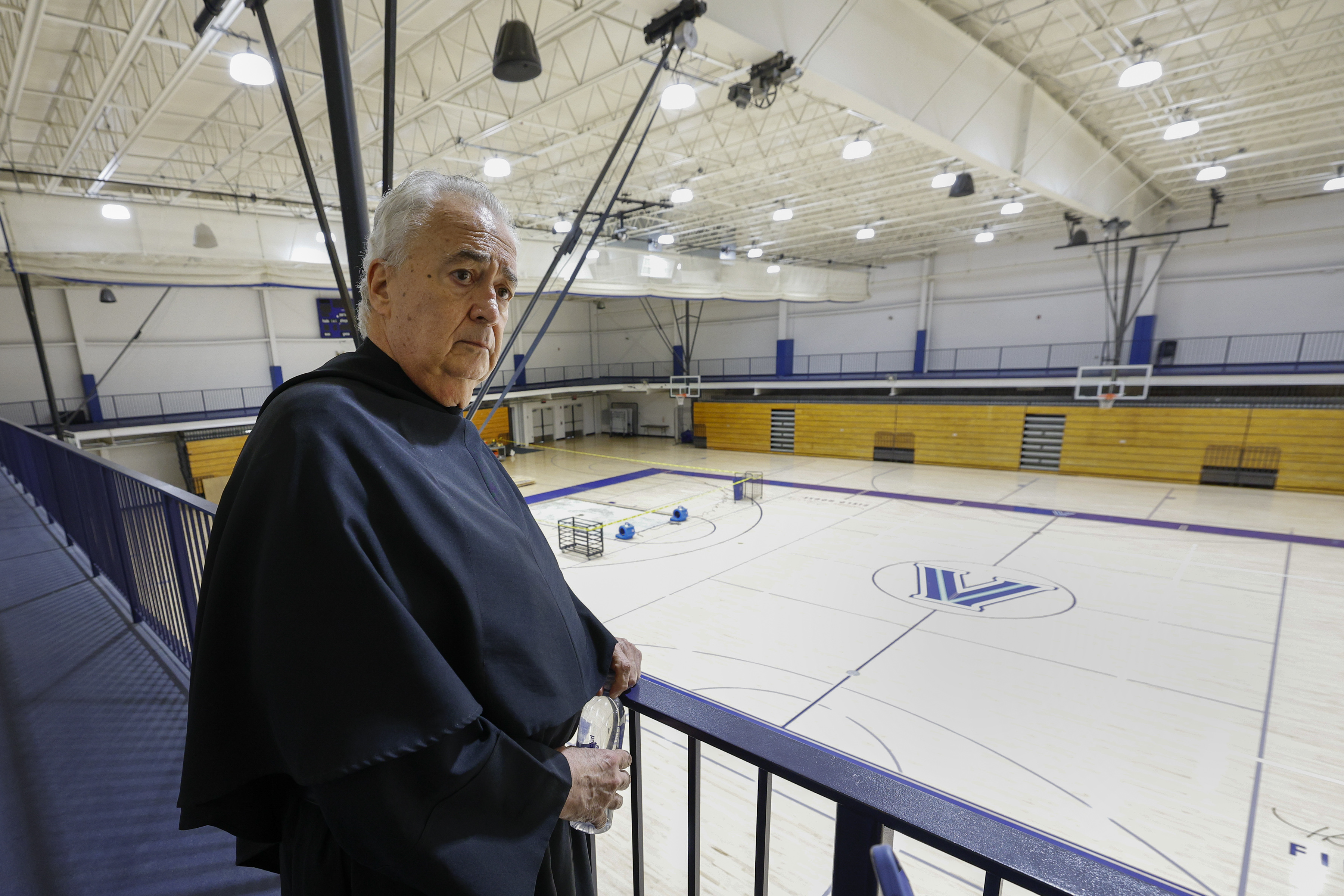
    The Dixon Center will remain an athletic facility, but now the basketball court has a large V in the center and the smoothie bar will offer treats such as the Brunson, named after Villanova Wildcats basketball star-turned-New York Knicks standout Jalen Brunson, and the Father Peter Power, honoring the university president.

    Donohue couldn’t name the ingredients in his new signature drink.

    “I didn’t know it existed,” he said.

    The facility, which also got new cardio equipment and reupholstered weight benches, will be used for non-varsity sports recreation.

    Villanova President the Rev. Peter M. Donohue overlooks the basketball court at the Dixon Center. Steven M. Falk / For The Inquirer

    “Our intramural basketball activity goes into the wee hours because we’re limited in our number of courts, so we are delighted to have this space,” Hoffman said.

    The Iadarola Center, Cabrini’s former science building, includes a new nursing simulation facility that Cabrini had recently finished. But Villanova added upgrades, including a vivarium for psychology department research and more space for the brain science program. The former Cabrini library has been converted into student study space.

    ‘Many more dorm options’

    Seven residence halls will house students, including two that had been closed amid Cabrini’s enrollment decline. One of them had a malfunctioning boiler — not anymore.

    Sophomores were given the choice of living at Cabrini. Villanova ran tours of the campus for students last academic year. Those who chose Cabrini said they were attracted to the renovated dorms and larger room configurations that allow them to live with several roommates and share a bathroom. Options on main campus for sophomores are largely limited to doubles with a large bathroom shared by an entire floor or wing.

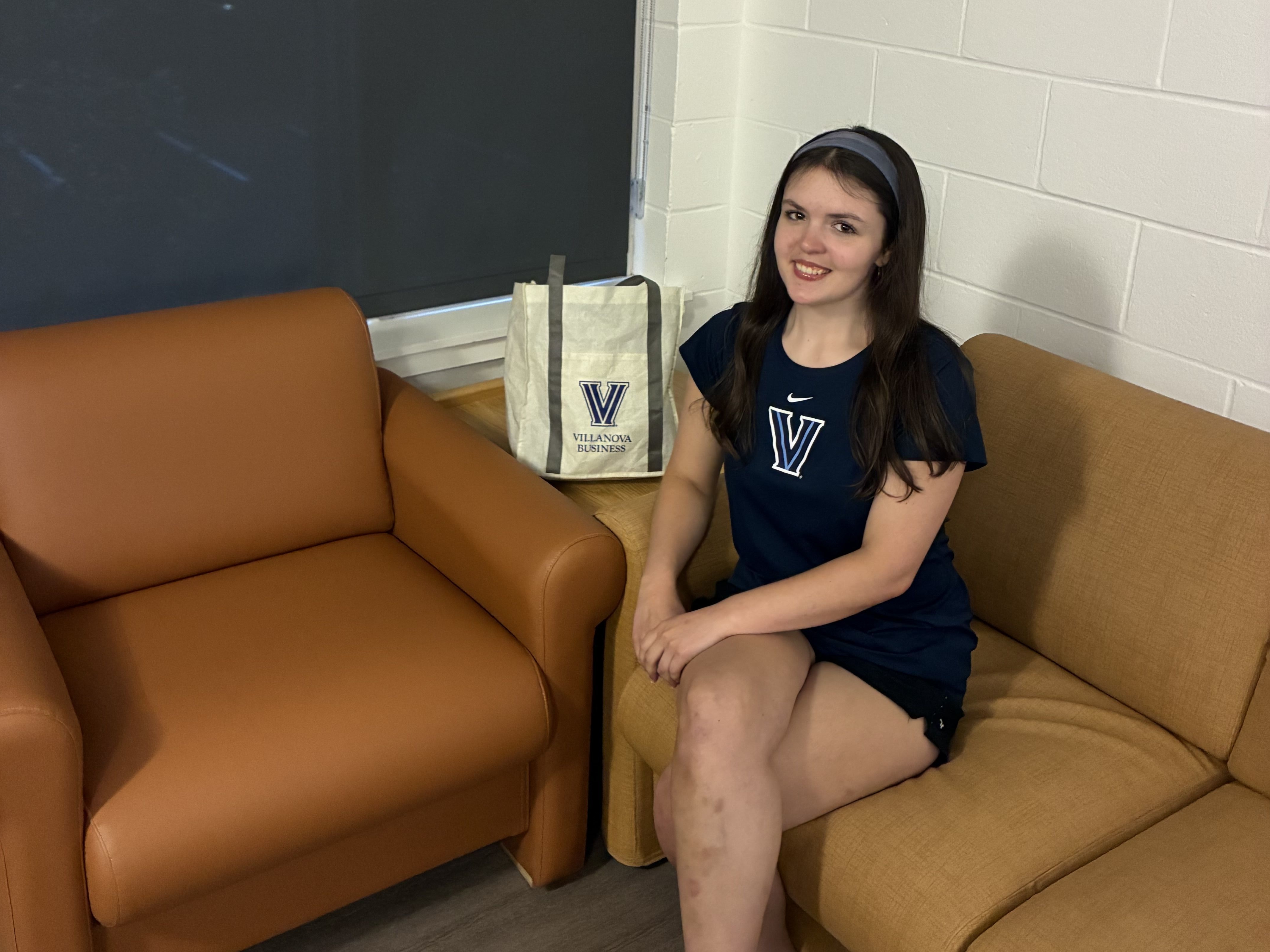
    Villanova University sophomore Molly Dunphy-Culp has moved into her new apartment on the Cabrini campus.Courtesy of Molly Dunphy-Culp

    “With Cabrini, there are so many more dorm options,” said Molly Dunphy-Culp, 19, a sophomore who was born in Boston and grew up in Abington.

    She will be sharing an apartment in Lecceto Hall with three classmates.

    She acknowledged that she will have to take the shuttle to main campus for classes, but said the short ride will be worth it. Dunphy-Culp also has a job on Cabrini as a recreation center supervisor — another plus for living there.

    About half the students on campus will be allowed to have cars. Sophomores do not have that option on main campus.

    “Two of my close friends are both going to have cars on campus,” said Ella Hayman, 19, a sophomore from just outside Boston. “This will give us a little more freedom we didn’t have last year. That was a big motivation.”

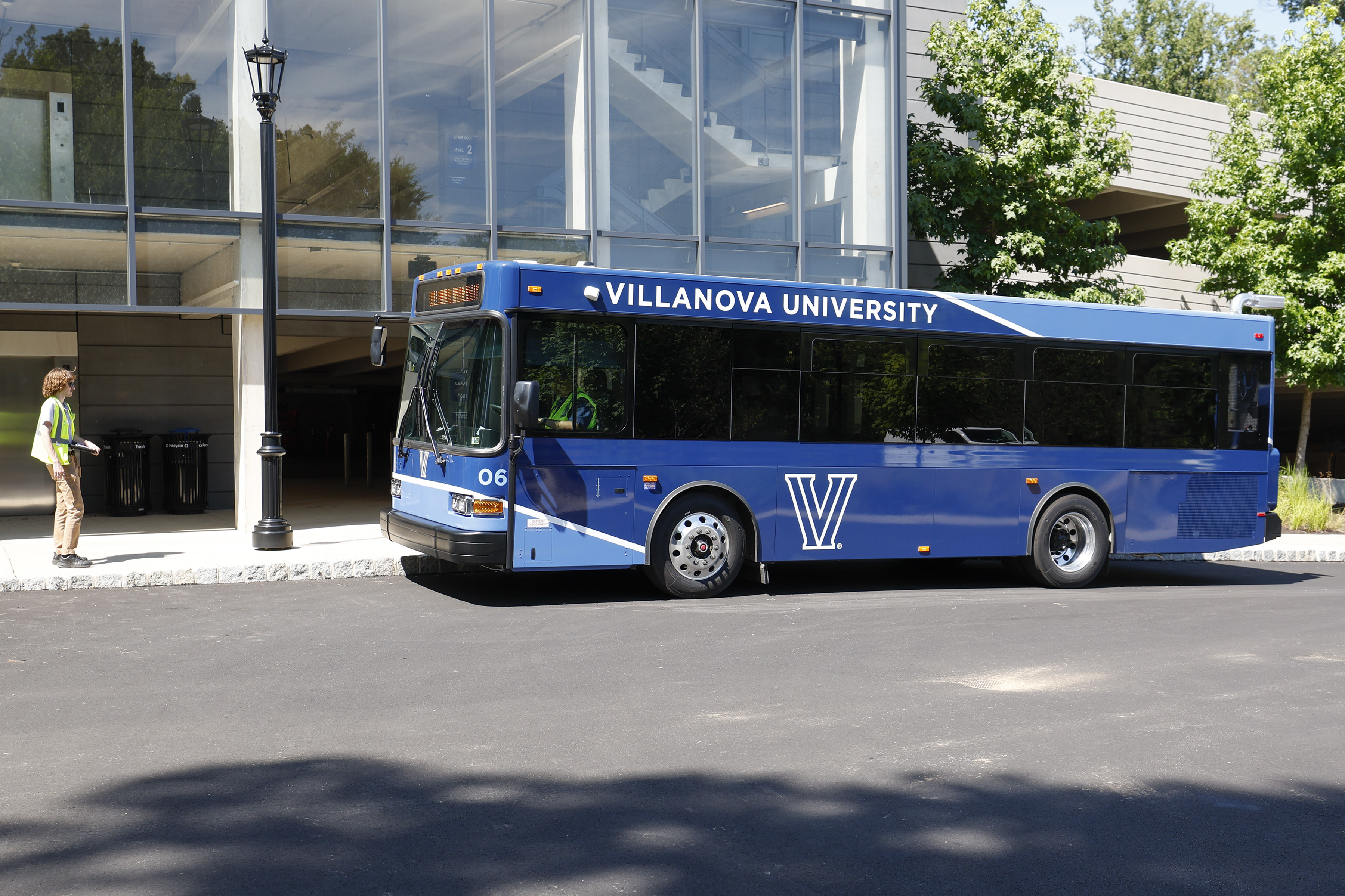
    Shuttle buses including this one will transport students between Villanova’s main campus and the Cabrini campus 1.9 miles away. Steven M. Falk / For The Inquirer

    Thirteen shuttle buses will transport students between the two campuses, which are 1.9 miles apart — a seven- to 12-minute ride, Hoffman said. A team of Villanova employees over the last couple of years visited five universities with multiple campuses, including Lehigh and George Washington, to learn how best to integrate them. They looked closely at models for a shuttle system that would keep students informed of where and when buses would be arriving and departing, Hoffman said.

    Among new dining options on the campus is the restaurant-style Table 1842, named for Villanova’s founding year, where students can order off a menu. It is located in the former Founder’s Hall, now Bellesini Hall, which also was heavily renovated, including the installation of a new entrance that leads directly into dining facilities so people do not have to climb as many steps.

    Bellesini has become the third-largest classroom building at Villanova. Some of the nearly 30 classrooms on the Cabrini campus had to be expanded to accommodate slightly larger class sizes, Hoffman said. Cabrini’s classes were 12 to 14, and Villanova starts at 16, Hoffman said.

    Villanova University President the Rev. Peter M. Donohue left, and Timothy Hoffman, vice provost for finance and administration, walk through the Dixon Center. Steven M. Falk / For The Inquirer

    Some improvements are still to come, including renovations to the former Mansion, which will be costly, and a nature trail, Donohue said.

    Villanova named Francesca and Xavier Halls for Mother Cabrini and is continuing Cabrini’s Center for Immigration; Villanova converted it to the Mother Cabrini Institute on Immigration. Villanova also launched an elementary education major in honor of Cabrini’s former program.

    Preserving a legacy

    “They had a strong desire to make sure some of their legacy lasted, and we wanted to protect that,” Donohue said.

    The game room at Cascia HallSteven M. Falk / For The Inquirer

    Coincidentally, there is a stained glass window of St. Augustine — namesake of Villanova’s founding order — in Cabrini’s chapel and a stained glass window of Mother Cabrini in Villanova’s Corr Hall chapel.

    Filling-Brown, the former Cabrini administrator now at Villanova, said it seems meant to be.

    “It’s beyond my wildest dreams for the campus,” Filling-Brown said. “It’s the best outcome to see Catholic higher education continue on that campus.”

    Villanova President the Rev. Peter M. Donohue discusses all it took to remodel the Cabrini campus. Steven M. Falk / For The Inquirer
  • A father is searching for answers after lawyers say a police pursuit of an ATV ended in his son’s death

    A father is searching for answers after lawyers say a police pursuit of an ATV ended in his son’s death

    The father of a Philadelphia man who was killed in an ATV crash this spring said police officers pursued his son moments before he drove the wrong way down a one-way street, ran a red light, and collided with a sedan.

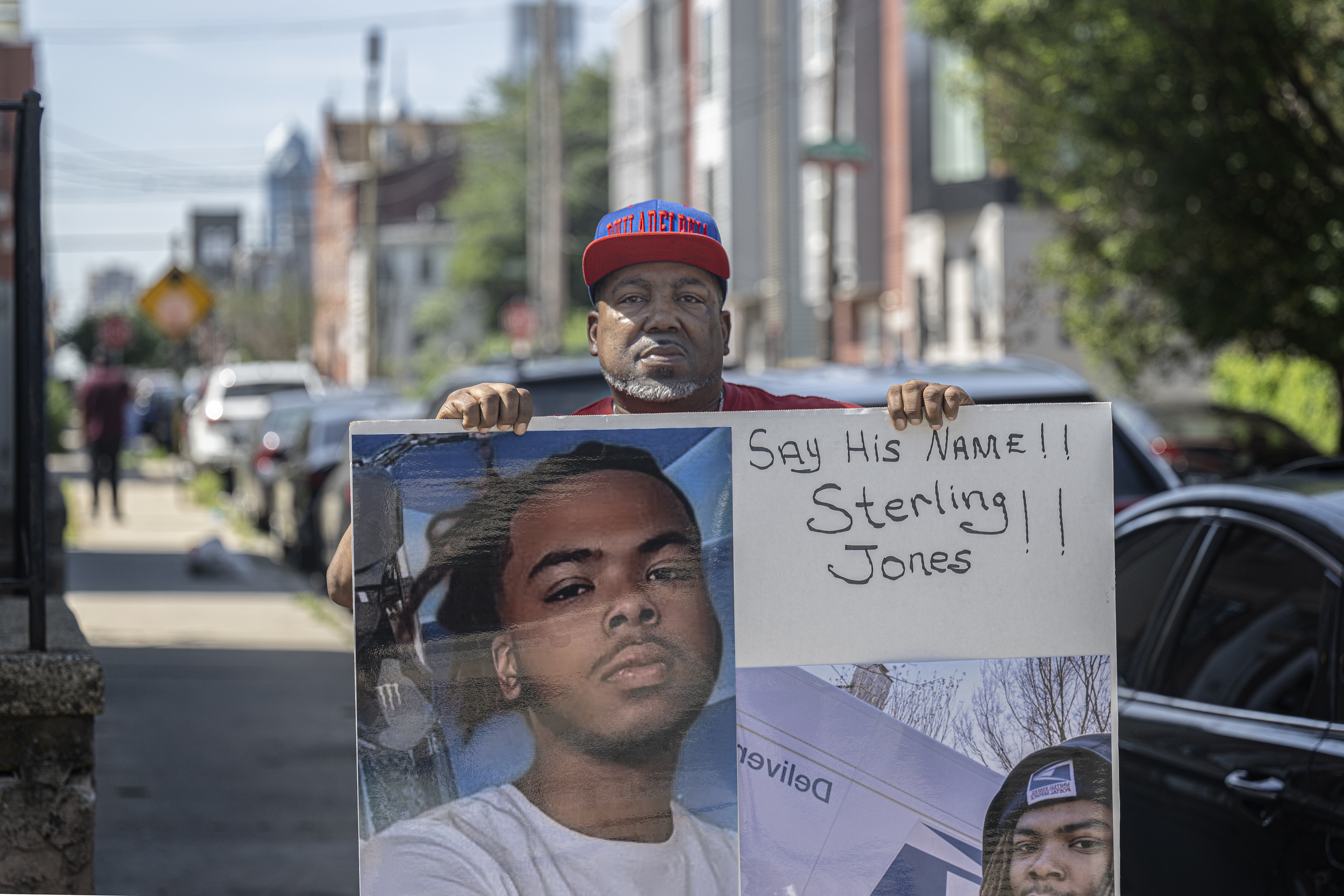
    Sterling Jones, 22, was killed on May 9 after the crash in North Philadelphia, according to police.

    Lawyers for Jones’ father, Sterling Lamont Jones Sr., said his son and a group of friends had been riding off-road vehicles near Broad Street and Fairmount Avenue when officers from the police ATV and dirt bike detail spotted the young men popping wheelies and began a pursuit.

    They followed Jones up Broad Street to West Thompson Street, the attorneys said. There he briefly sped in the wrong direction down the one-way street and ran a red light before striking an Uber driver’s Toyota sedan at the intersection as it turned onto 15th Street.

    He was taken to Temple University Hospital and pronounced dead shortly after his arrival.

    Sterling Jones Sr., 57, has since hired a team of attorneys to investigate the incident. Late last month, they filed a notice of intent to sue the city, alleging that the officers and the department violated Jones’ constitutional rights when they chased him and caused his fatal injuries.

    Sterling Jones, a 22-year-old who lawyers say was killed in an ATV crash after being chased by police officers.Courtesy of Sterling Lamont Jones Sr.

    Riding ATVs and dirt bikes on public streets in Philadelphia is against the law, and police have increased efforts to crack down on that behavior in recent years.

    But the incident raises questions about whether the officers followed a department directive barring vehicular pursuits for all but the most serious offenses — a policy enacted because of the public safety risks posed by such chases, particularly in densely populated areas.

    The initial police account of the incident did not mention that officers had been pursuing Jones before the crash. It could not be learned whether the department had since concluded that officers were engaged in a pursuit and whether it was conducted a high rate of speed, as the lawyers contend.

    Sgt. Eric Gripp, a police spokesperson, said the incident is under investigation by the department’s internal affairs bureau. He declined to comment further, referring questions to the city’s law department.

    A spokesperson for the law department said the city does not comment on pending litigation.

    Surveillance footage gathered by lawyers for Jones’ father and viewed by The Inquirer showed at least eight police officers on dirt bikes, a squad car, and a tow vehicle tailing Jones that evening.

    Around 9:23 p.m., Jones was seen cutting through a Sunoco gas station and speeding down West Thompson Street with dirt bike officers close behind. Within seconds, his ATV careened into the driver’s side of the sedan.

    Under police department policy, vehicular chases are allowed only in situations in which officers believe they can prevent imminent danger to others, or if a suspect is either fleeing after committing a violent felony or in possession of a deadly weapon used in a crime.

    As complaints mounted over off-road riders on city streets, officials have sought alternative methods to curb illegal ridership, such as stopping or seizing vehicles, arresting riders when they are stopped, and destroying vehicles when riders cannot prove ownership.

    And while riding off-road vehicles violates city code, attorneys for Sterling Jones Sr. say that type of infraction still should not trigger a police chase.

    “The police department’s policy is, in our view, clearly violated,” said Thomas Kline of Kline & Specter, which is handling the case alongside the firm Hill & Associates.

    A 2025 Inquirer investigation found police in Philadelphia and across Pennsylvania were conducting hazardous and unnecessary chases, disproportionately endangering young people. Roughly half of all reported pursuits conducted by city police were not justified under department policy, the investigation found.

    A police department spokesperson attributed the increase in chases to the COVID-era surge in violent crime, and said the department investigates every crash for policy violations.

    Between 2020 and last year, records show, the city had paid out $20 million in crash- or chase-related settlements as a result of such chases.

    In 2017, a 6-year-old girl and her great-aunt were seriously injured when they were struck by a dirt bike rider who was being chased by Philadelphia police into Upper Darby Township. The city settled a lawsuit with their attorneys for nearly $3 million last year.

    Sterling Jones Sr. said that while he was planning to sue, no amount of money could make up for the loss of his son.

    The young man was a graduate of Hunting Park Christian Academy and had been working for two years as a delivery driver for the U.S. Postal Service before his death. He had bought the ATV with money from that job, his father said.

    “He wasn’t a criminal. He had a license,” he said.

    Jones Sr. learned of the crash in the early morning of Mother’s Day, when his son’s mother came to his house to tell him Jones was dead.

    He said he hired lawyers with the aim of ensuring that the officers who pursued his son would be reprimanded and removed from the beat.

    “They killed my only son,” he said. “I just want justice.”

  • This may be one of the most mysterious parts of a total eclipse

    This may be one of the most mysterious parts of a total eclipse

    On Wednesday, a total solar eclipse will plunge a swath of Greenland, Iceland, and Spain into a sudden midafternoon darkness. A deep twilight azure will descend over the landscape. Venus will shine as daylight disappears.

    But the most stunning spectacle will be as scientifically valuable as it is visually scintillating: the corona, or the sun’s atmosphere.

    The corona is the outermost part of the sun’s atmosphere. It’s normally obscured by the sun’s brightness. It’s never visible from Earth unless the sun’s light is somehow extinguished. That can happen only during a total solar eclipse. (The northern portion of the United States, from Alaska to North Carolina, will see only a partial eclipse.)

    The corona is beautiful. It radiates millions of miles into space, appearing as hairlike silver tendrils blowing away from the sun. The light is sculpted by the sun’s ever-evolving magnetic field; it traces currents of the solar wind. Witnessing it is magical.

    But despite advances in science, the corona remains mysterious. Heliophysicists, or scientists who study the sun, still aren’t sure why it’s so hot. The visible surface of the sun, known as the photosphere, is about 10,000 degrees Fahrenheit. But the corona? About 1.8 million to 5.4 million degrees.

    “It’s a fundamental question that we’re still working on,” said Jon Linker, a heliophysicist and the president of Predictive Science, a group that models the sun’s magnetic field. “It’s called the coronal heating problem. I think to a large extent that we know that heating is coming from the solar magnetic field itself, and that also ties into how the solar wind is accelerated.”

    The solar wind carries high-energy particles and magnetic energy toward Earth. That can have implications for terrestrial navigation systems, satellites and aviation.

    “On a very large scale, [magnetic fields] get twisted up, and we see flares and coronal mass ejections,” Linker said. Coronal mass ejections, sometimes nicknamed “solar storms,” are akin to shock waves in the solar wind. Strong coronal mass ejections interact with Earth’s magnetic field, often producing widespread displays of the aurora.

    But on the small scale, Linker said, contortions in the sun’s magnetic field help to dissipate heat, potentially making the corona hotter.

    “The field is also getting braided and twisted and things, and that leads to current sheets that can then dissipate heat,” he said.

    That’s why scientists are anxiously awaiting this latest eclipse, eager to get a glimpse of — and document — the intricacies of the corona. In the meantime, Linker’s team has built an ultracomplex model to predict what the corona will look like.

    After all, as the sun’s magnetic field changes, so does the shape of the corona.

    “We model that with what are called the magnetohydrodynamic equations,” Linker explained, likening the process to how meteorologists use weather models. “But [solar magnetism] equations are actually far more complex, and have more surprises and difficulties.”

    The sun’s magnetic field is most complicated every 11 years, at the peak of the solar cycle. During what’s known as solar maximum, the sun is blotted in sunspots, or bruiselike discolorations that spew magnetism. The more sunspots, the more chaotic the magnetic field and the wonkier the corona.

    The last solar maximum was in late 2024. We’re now in the descending phase of the solar cycle, but there are still lots of sunspots.

    “We’re still in a phase of the sun that is very active” Linker said. “I think it’ll probably still have more of a structure … with perhaps some [streamers] that are a little bit more pronounced.”

    That’s exactly what Linker’s model depicts — the north and south poles of the sun’s magnetic field are visible, but lots of loops and hairlike streamers fan out in all directions. That should make Wednesday’s eclipse memorable.

    In the meantime, Linker is looking forward to watching the eclipse in — of all places — the town of A Coruña, Spain. That’s where a cosmology, or solar physics, conference will be running from Monday to Friday.

    A Coruña translates to crown, or corona, and the town is in the heart of the path of totality.

  • Scientists race to save Florida’s coral reef as El Niño heats the ocean

    Scientists race to save Florida’s coral reef as El Niño heats the ocean

    The waters off the coast of South Florida were already growing warm by late June — ominously warm to Ken Nedimyer and other scientists and conservationists still scarred by a devastating 2023 marine heat wave that led to the worst mass coral bleaching event on record in the state.

    Nedimyer, technical director for the nonprofit Reef Renewal USA, and other colleagues kicked into gear. They moved dozens of vulnerable elkhorn and staghorn corals from offshore nurseries into deeper, cooler water. They took other specimens to onshore labs, where temperature-controlled systems will offer refuge until ocean temperatures return to safer levels.

    “It was like Noah’s ark,” Nedimyer, weary from a late night spent off Key Largo, monitoring corals during their annual spawning, said of the recent effort. “Keeping them alive is our main focus right now.”

    Three years after a blistering marine heat wave created a full-blown emergency along the only living coral barrier reef in the continental United States, researchers determined to protect coral species from extinction are taking steps to be better prepared as another potentially scorching summer unfolds.

    The National Oceanic and Atmospheric Administration has warned that the most intense El Niño event in 150 years is contributing to exceptionally warm waters. Already, the agency has issued an “alert level 2” for parts of the Florida Keys, meaning there is a risk for reef-wide bleaching and mortality, particularly among heat-sensitive corals. An even higher alert level could soon follow.

    Climate models predict that perilously warm seas could linger into fall, and the stress on corals could continue.

    “The temperatures we are seeing right now are basically mimicking what we saw at this same time in 2023,” said Cynthia Lewis, director of the Florida Institute of Oceanography’s Keys Marine Laboratory. “It’s the calm before the storm.”

    For Lewis and others who work on coral conservation, the memory of that catastrophic marine heat wave and the damage it inflicted on Florida’s roughly 360-mile-long reef — the third largest on the planet — looms large.

    “It was traumatic. It was horrible. I’ve never seen anything like it in my life,” Lewis said, recalling the monthslong frenzy to rescue and rehabilitate as many stressed corals as possible in land-based labs around the state.

    Coral bleaching is a stress response. It occurs when heat upends a coral’s metabolism, causing it to turn white as it expels the symbiotic algae that provide it with nutrients and color. Prolonged bleaching, which scientists say rising sea temperatures is making more frequent and severe around the globe, can lead to mortality.

    That is what happened along much of Florida’s reef in 2023, one of multiple bleaching events the region has faced in the past decade. Underwater temperatures reached 93 degrees in some spots, more than five degrees above normal.

    A NOAA-led study published last year found that around the Florida Keys and Dry Tortugas, the event left ecologically critical elkhorn and staghorn corals functionally extinct — at least 98% of their colonies died. Along southeastern Florida where cooler sea temperatures remained, mortality was lower but still nearly 40%.

    Derek Manzello, coordinator of NOAA’s Coral Reef Watch program, later described the episode as “unprecedented,” saying it “started earlier, lasted longer, and was more severe than any previous event in that region.”

    The ripple effects are shaping how scientists around the state are responding.

    “Everybody who experienced that in 2023 has a little PTSD from it,” Lewis said. But, she added, “I think we are better prepared mentally and physically, as well as structurally.”

    At her laboratory on Long Key, that preparation has meant the recent completion of a new temperature-controlled system, which added 20 more seawater tables to support coral restoration. Each is equipped with the machinery needed to keep rescued corals thriving until they can be returned to the reef.

    “It’s keeping them as happy as possible, keeping them growing so they can propagate,” Lewis said.

    Meanwhile, a group of 11 of the state’s leading coral conservation and restoration organizations recently announced an effort to team up during what could prove to be another record-breaking summer for ocean temperatures.

    In recent days, dive teams from the groups have headed out repeatedly into the waters near Key Largo to collect coral eggs and sperm before transporting them to a temporary laboratory set up by Mote Marine Laboratory at nearby John Pennekamp Coral Reef State Park.

    The effort is part of a NOAA-funded partnership to collect, fertilize, and grow a more resilient generation of elkhorn and staghorn corals. Many of the corals selected for the effort survived the crippling 2023 heat wave, making them among the most heat-tolerant in Florida’s waters.

    “We have the parents of the corals of the future, if we just take care of them,” Nedimyer said.

    Katey Lesneski, research and monitoring coordinator for a NOAA program created to restore iconic reefs throughout the Keys, said other scientists will soon experiment with a different approach, placing shading structures above corals off Big Pine Key to try to reduce the sunlight and heat they receive.

    “This is the first real field trial during an actual bleaching event,” she said. “This is a perfect opportunity to test this new intervention.”

    The approaches unfolding all along the reef matter more than ever, say advocates who are intent on preventing another disaster like the one in 2023.

    “Nobody is giving up,” said Lewis, because so much is at stake.

    The sprawling reef, she said, protects the state’s coastline against hurricane-fueled storm surges. It attracts tourists that boost the economy and supports fisheries. The reefs are also “are an incredibly diverse ecosystem of all kinds of plants and animals and fish,” she said.

    For all those reasons, Nedimyer said, the long days and significant investment he and many others have put in to prepare is worth it.

    “The outcome if we do nothing,” he said, “is pretty clear.”

  • Pilots of helicopter that crashed while fighting wildfire in Utah are dead, officials say

    Pilots of helicopter that crashed while fighting wildfire in Utah are dead, officials say

    Two helicopter pilots who crashed while they were fighting a wildfire in Utah are dead, officials confirmed Saturday.

    The pilots were killed when their Sikorsky Skycrane helicopter went down Friday morning, according to the Sevier County Sheriff.

    The helicopter was among those fighting a fire in the Fishlake National Forest. The crash ignited a new fire that spread to connect with the existing blaze, which has now scorched nearly 174 square miles.

    Officials did not identify the pilots but said they were employed by Helicopter Transport Services, which was contracted by the U.S. Forest Service.

    Initially officials said they were unable to reach the crash site because of the fire. Then, on Saturday, crews were able to enter the area and confirmed the deaths, according to the Sevier County sheriff and coroner.

    The National Transportation Safety Board will investigate once its team can examine the wreckage. It will likely take the NTSB a year or more to determine the cause.

    Numerous fires also were burning in other parts of the West, including one that closed part of Mount Rainier National Park in Washington.

    The National Park Service shut down access to the Sunrise and White River areas of the park after a new wildfire burned less than a third of a square mile. Firefighters were working to gain control of it.

    Larger fires near Spokane, Wash., have now burned more than 15.6 square miles, but firefighters constructed more than 75 miles of containment line to help control those flames.

    Elsewhere in Oregon, hot and dry conditions helped an uncontrolled fire spread beyond 30 square miles.

    Firefighters were still trying to identify the best places to set up containment lines around the Wrights Spring fire as they mourned the death of 47-year-old Jason Ensign, who was killed while operating a bulldozer for a timber company. The blaze grew rapidly Thursday and cut off Ensign’s escape route.

    And north of the border in British Columbia, more than 20,000 people had to evacuate ahead of another fast-moving wildfire.

  • Boat capsizes in New York Harbor, woman and 5-month-old baby die

    Boat capsizes in New York Harbor, woman and 5-month-old baby die

    NEW YORK — The operator of a boat that capsized in New York Harbor, killing a mother and her infant daughter, is facing criminal charges and authorities are investigating whether the vessel was an illegal charter, the U.S. Coast Guard said Sunday.

    The 22-foot Bayliner speedboat overturned around 10:25 p.m. Saturday near Liberty Island, home to the Statue of Liberty, the U.S. Coast Guard said.

    Twelve people were rescued from the water before police arrived, and police divers later located the 27-year-old woman and 5-month-old girl in the water. Both were taken to a hospital where they were pronounced dead. According to the Coast Guard, the others were in stable condition.

    “We are deeply saddened by the tragic loss of life last night, and our thoughts are with the victims’ family and loved ones during this incredibly difficult time,” said Captain Doreen McCarthy, the Coast Guard Sector New York Commander. “We are extremely grateful for the heroic, swift actions of our partner agencies and Good Samaritan vessel who assisted in rescuing survivors from the water.”

    Manuel Hernandez, 46, of New York, has been charged with 13 counts of reckless endangerment, police said. No phone number for him could be found Sunday, and the case had not yet been entered into online court records.

    The victims’ identities have not been released pending notification of family, police said Sunday.

    McCarthy said Coast Guard investigators are working with police to investigate and are committed to holding lawbreakers accountable. According to the Coast Guard, an illegal charter is any passenger-for-hire vessel operation that lacks Coast Guard credentials, safety equipment, and inspection certificates.

  • Shooting on Germantown Avenue prompts Temple University alert

    Shooting on Germantown Avenue prompts Temple University alert

    Two men were shot Sunday morning in the Franklinville section of North Philly, prompting Temple University to alert its students to avoid the area.

    Around 11:50 a.m., police responded to a shooting on a highway in the 3400 block of Germantown Avenue, near Temple University Hospital, according to Philadelphia Police.

    Two people in a vehicle fired at a different vehicle, striking two people and driving away, Denise Wilhelm, Interim Vice President for Public Safety and Chief of Police at Temple, said in a statement.

    An injured person walked into Temple University Hospital, while another was transported by police. They are being treated for non-life-threatening injuries, Wilhelm said.

    The shooting scene is being held for investigation, police said, and Temple Police are assisting detectives in reviewing security video.

    In the meantime, Wilhelm said, Temple University is increasing its police patrols in the area.

    While Wilhelm said there is no connection between the university and the shooting, Temple is offering support for students through Tuttleman Counseling Services, and an assistance program for faculty and staff.

    Anyone with information about the shooting can contact the PPD tip line at 215-686-TIPS (8477) or East Detectives at 215-686-3243. Temple’s Investigations Unit is also open for tips at 215-204-6200 or Temple Police at 215-204-1234.

  • El-Sayed spoke with Obama as Michigan Democrats look to unite after a bitter Senate primary

    El-Sayed spoke with Obama as Michigan Democrats look to unite after a bitter Senate primary

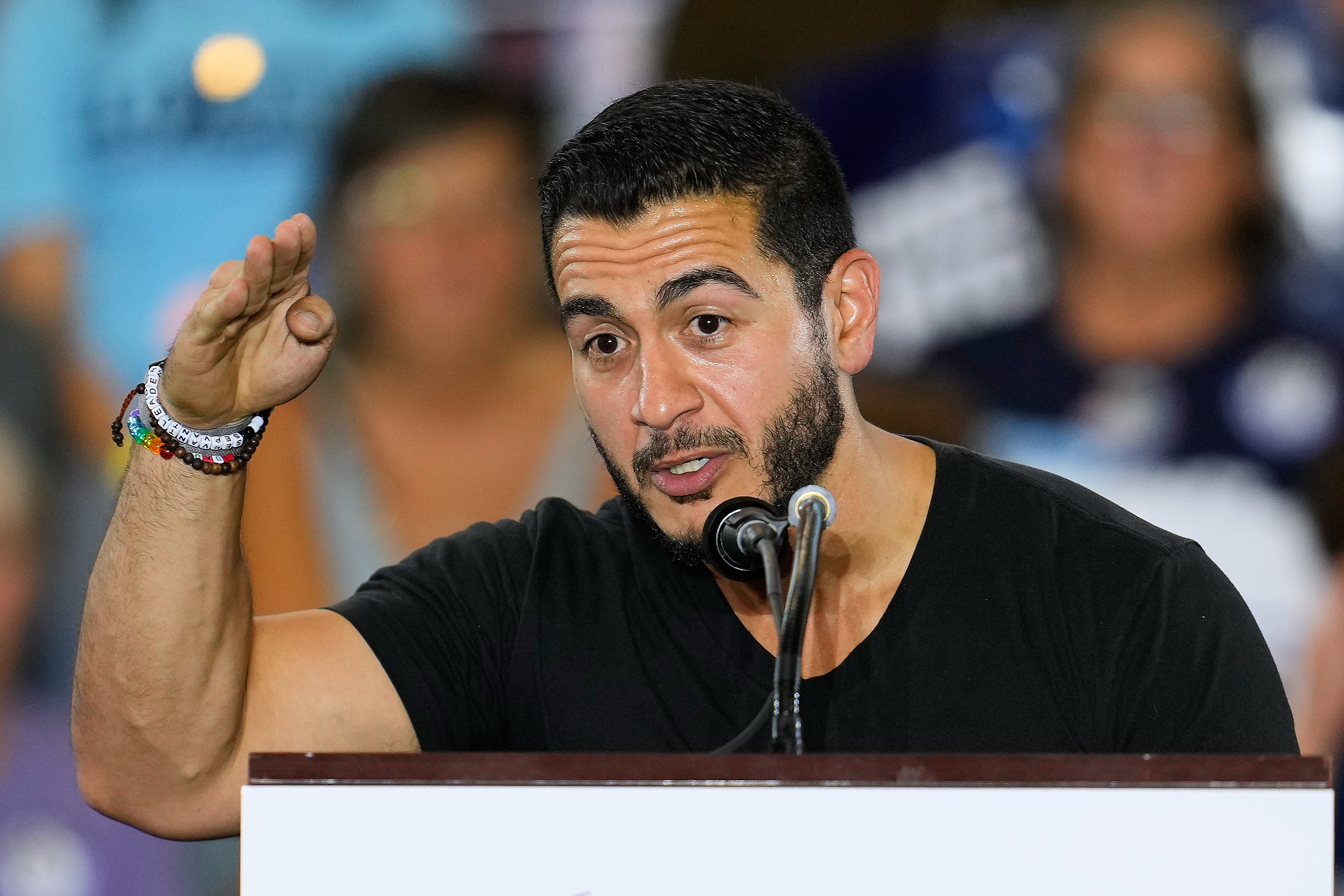
    BRIDGEWATER, N.J. — Abdul El-Sayed, the Democratic nominee for U.S. Senate in Michigan, said Sunday he has spoken with Barack Obama and hopes the former president campaigns with him as the party tries to unite after a bitter primary that exposed deep rifts between its progressive and moderate wings.

    El-Sayed said his Friday conversation with Obama was “really warm and inspiring.” The candidate did not provide details.

    “I was grateful for his advice. It was very warm, very inviting, and I know that he knows the critical role that Michigan is going to play,” El-Sayed told NBC’s Meet the Press.

    Asked if he would like to see Obama come to Michigan to drum up support for Democrats before the midterm elections in November, El-Sayed said he “really” hoped so and that Obama “knows a lot about winning Michigan” after carrying the state in the 2008 and 2012 presidential races.

    An Obama spokesperson confirmed the call.

    The discussion came the same day that a group of Michigan nominees and other notable national Democrats tried to present a united front at a rally in Detroit. The crowd cheered loudest for El-Sayed, a former public health official who last week narrowly beat establishment-backed U.S. Rep. Haley Stevens in a contentious and closely watched primary. A Democratic victory in the fall is crucial to the party’s chances of regaining a Senate majority.

    Democratic Sen. Gary Peters is not seeking reelection in the perennial swing state, which Republican Donald Trump won in 2016 and 2024, while Democrat Joe Biden carried it in 2020.

    El-Sayed faces Republican Mike Rogers, a former congressman who narrowly lost a Senate race to Democrat Elissa Slotkin in 2024 and has tried to capitalize on lingering tensions within the Democratic Party.

    Rogers has released a video message attempting to appeal to Democrats who feel their party may be moving too far to the left with El-Sayed. “You have a home with us,” Rogers says in the video.

    During an interview Sunday with CNN’s State of the Union, El-Sayed acknowledged that “we aired our differences” in the heated primary. But he said the internal divisions are “so much smaller than the similarities that we share.”

    “You’re seeing folks come together,” El-Sayed said, before adding of moderate Democrats, “We might see the world differently. But we also recognize the responsibility to come together.”

  • Many immigrants face deportation without a lawyer at their side in court. This program tries to help

    Many immigrants face deportation without a lawyer at their side in court. This program tries to help

    SACRAMENTO, Calif. — Lawyer Kamalpreet Chohan ran her finger down a list of 57 names of people scheduled to appear during a morning of hearings at the immigration court in California’s capital and pointed out one glaring absence.

    “None of these folks are represented,” she said.

    Chohan is the coordinator of a program that sends volunteer lawyers to immigration courts to assist people without representation and help them navigate the complicated legal system where the stakes are a future in America or deportation.

    Appearing without a lawyer opens up even greater risk under the second Trump administration, with the courts playing a key role in its mass deportation agenda. Courts are increasingly denying asylum, deportation officers have arrested immigrants in court hallways, the administration has packed courtrooms to cut backlogs, and reduced lead time on hearings, prompting people to miss them.

    Data shows that legal representation can be vital to winning in court but many immigrants, unable to pay for a private lawyer or find a pro bono one, navigate the system without an attorney at their side.

    “Folks go into immigration court not knowing what’s happening. They come out not knowing what’s happening. And when there’s an attorney present,” Chohan said, “it’s just so helpful.”

    Immigrants aren’t provided an attorney but legal help makes a difference

    Unlike criminal court, there is no guaranteed lawyer in immigration courts.

    Immigrants have to hire one at a cost of thousands of dollars or hope to get represented by one of the nonprofit organizations assisting low-income immigrants. But waitlists with those organizations are long, and many parts of the country just do not have that many immigration attorneys.

    Of the roughly 3.2 million pending deportation cases currently in U.S. immigration courts, people in 52% of those cases do not have a lawyer, according to an analysis of immigration court data by the Vera Institute of Justice, a think tank.

    A Congressional Research Service study from 2024 found that only 19% of people who did not have a lawyer won asylum or another avenue to stay in the United States. Among those who did have a lawyer, 47% were successful.

    “Having an attorney is just super critical to be able to navigate the system successfully,” said Adriel Orozco of the advocacy group American Immigration Council.

    Chohan said she frequently runs into people who have been scammed by lawyers or people posing as lawyers who take their money but do nothing for their case.

    “I will give him a list of attorneys who are free and we have vetted,” she told one man who said he was scammed. “They have long waitlists but he should still ask.”

    Speaking later to the Associated Press, the man described how he left Guatemala after being threatened by gangs and came to the U.S. in 2024 seeking asylum. Ever since, he said, he has done everything that has been asked of him while he tries to make ends meet, occasionally painting houses. He spent $4,500 on a lawyer who in the end did nothing to help him, he said.

    “He turned out to be a scammer,” said the man, who did not want to be identified for fear of endangering his case. He is worried about what comes next in court after being warned by the judge that he could be deported. “I don’t know what I’m going to do,” he said.

    A nonstop day of consulting with clients

    Outside the Sacramento building where the court is housed is a long line of immigrants waiting for appointments with U.S. Immigration and Customs Enforcement, which is in the same building. Volunteers with a local anti-ICE resistance group stand ready to help.

    Upstairs, two immigration judges are on the bench. One hears the in-depth individual cases of immigrants who are pursuing their claim of asylum.

    The other judge has the master calendar docket, where dozens of immigrants will appear in brief hearings geared to making sure their case is ready to go to the next step.

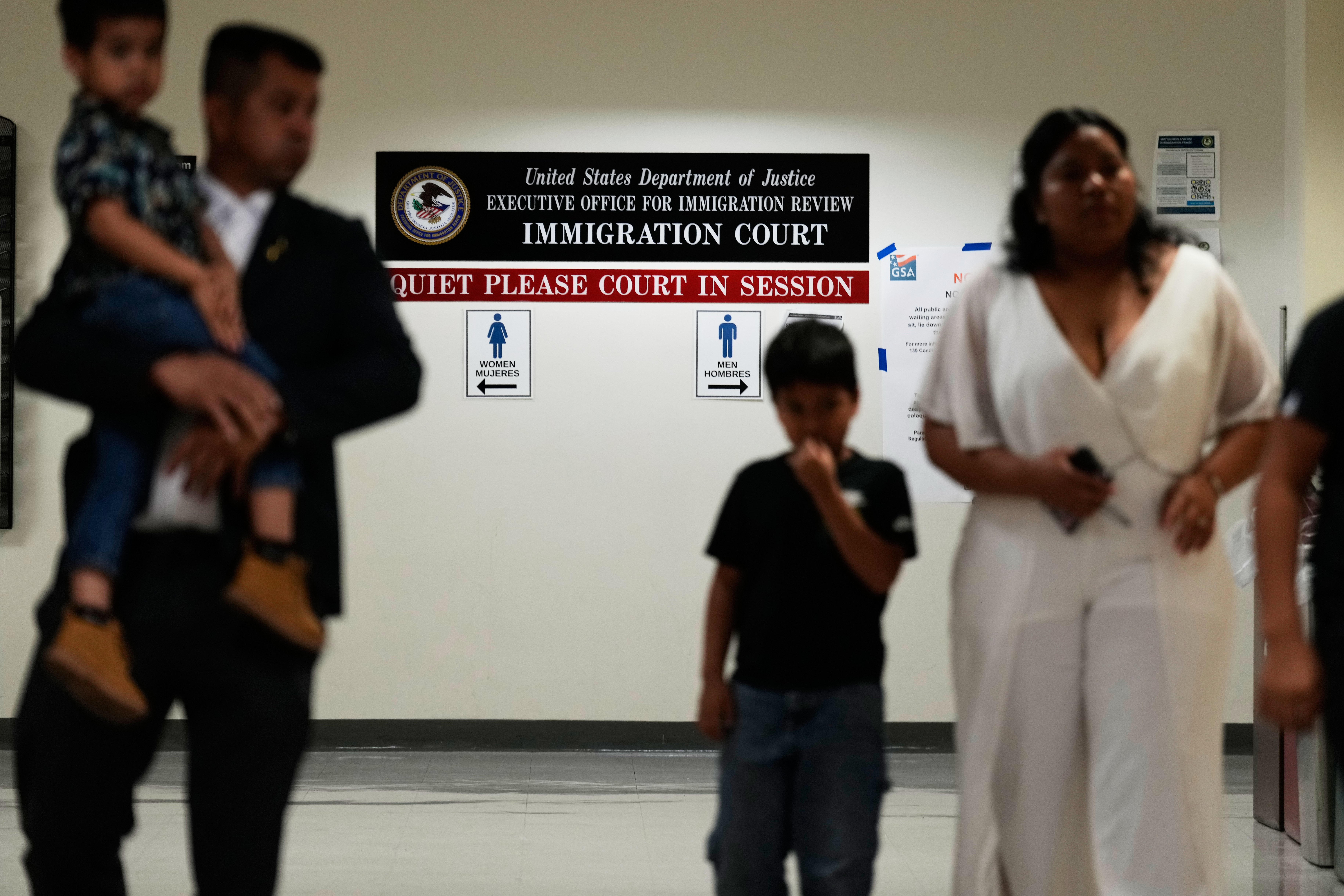
    Signs taped to the wall remind people not to videotape or record inside the court complex. A security guard makes sure no one loiters in the hallways. Most people clutch stacks of papers documenting their cases.

    After immigrants file into the courtroom for their hearings, Judge Susan Phan introduces Chohan and describes the services her organization offers.

    “You are not required to meet with her but it is a rare opportunity that we have someone volunteering their time,” Phan said before launching into the day’s work.

    The need for a detailed asylum application

    Chohan, who works with the California Immigration Project, starts each hearing in the courtroom. She has a clipboard to take notes, extra copies of forms, and a crate of books for restless children attending court with their parents. She spends the bulk of her time in the waiting room, talking to immigrants after their hearings and scanning their documents to flesh out what else they need.

    Speaking to one young man from Mexico, she asks to see his asylum application, noting that the judge had pointed out that it was not that detailed.

    “Sometimes judges can deny a claim if there isn’t enough detail,” she said through one of the organization’s volunteer translators.

    The organization frequently has clinics to help immigrants fill out their asylum application. Chohan said she will alert him to the next one.

    Another woman holding a stack of documents is there with her son and wanted to make sure her children could come with her if she is deported. Chohan also briefed her on what to expect at her upcoming asylum hearing and said the organization will send her an asylum filing guide.

    Chohan highlighted places on forms where people need to give answers or answer in more detail. It’s OK to write “none” but she advises them to not leave boxes blank.

    Everything submitted in Spanish must be accompanied by a translation into English that must be done by a person, not an automatic online translator. Copies of every single page of a passport must be submitted. Documents must be sent in two weeks before the applicant’s hearing so the judge can review them.

    Over and over, Chohan reminds immigrants to download their receipt showing they paid the $102 asylum application fee so they can submit it to the court.

    Chohan said a lot of these procedures and forms are discussed in court but it happens so fast that, with immigrants listening through a translator, they do not always understand what is happening.

    “A lot of times when they go into court, they’re just happy that they’re out of court and they’re not being arrested,” she said.

    A changing immigration court system

    Chohan has witnessed the upheaval in the immigration courts during Republican President Donald Trump’s second term.

    She was in the court hallways last summer when ICE officers waited to arrest immigrants after their hearings. Earlier this summer she watched as the administration started holding “mega masters,” hearings with dozens of respondents at a time that are meant to clear a backlog but have created chaos.

    Chohan said there are not enough pro bono lawyers in the Sacramento area to help everyone who needs one so the “Attorney of the Day” program is often the next best thing. She believes everyone should have access to a lawyer.

    Until that day, she said, the program “helps bridge that gap.”