Category: News

  • WHO says Congo’s fast-moving Ebola outbreak started months before it was declared

    WHO says Congo’s fast-moving Ebola outbreak started months before it was declared

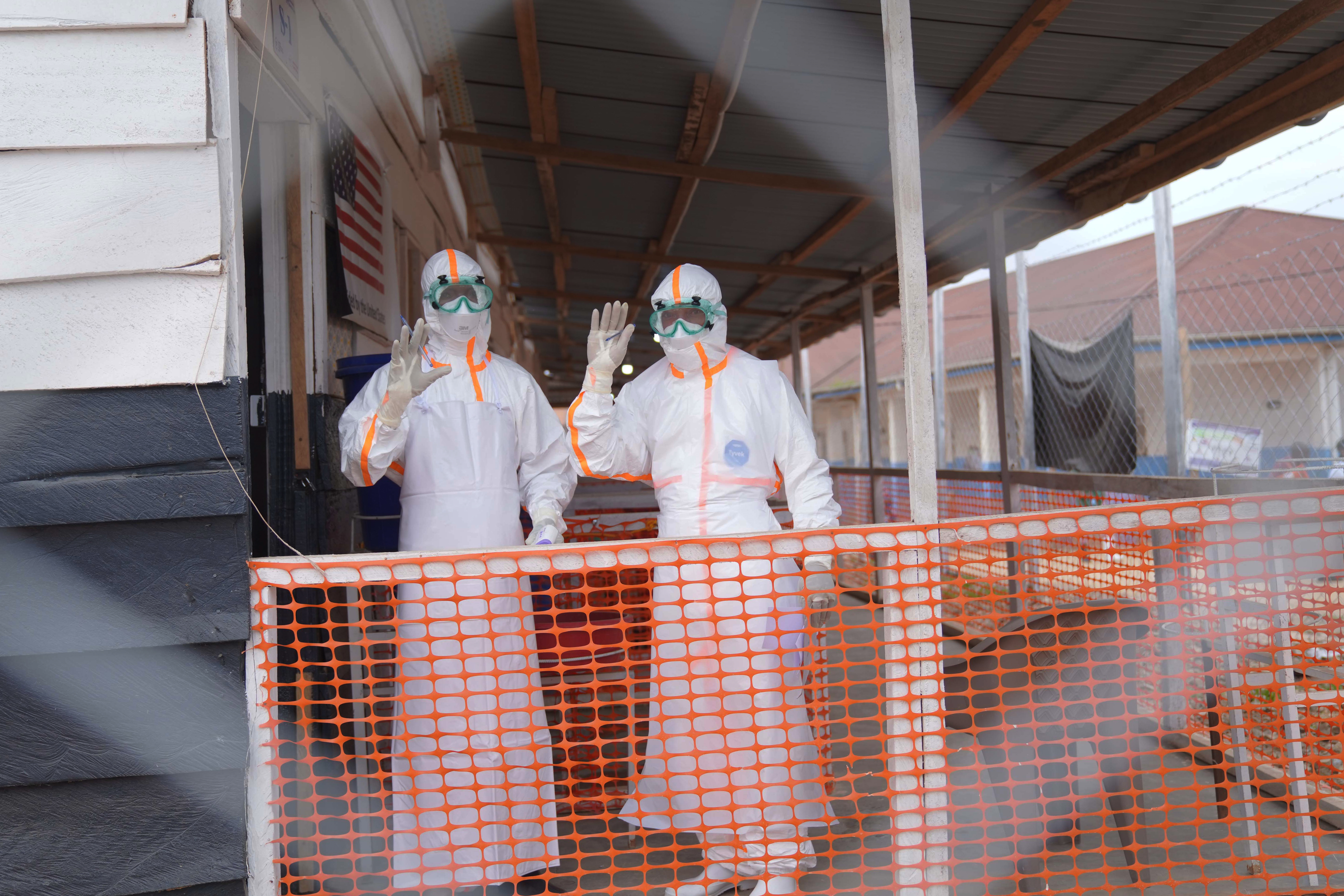
    BUNIA, Congo — The fastest-growing Ebola outbreak on record started in February, months before it was officially declared in mid-May, the World Health Organization said Monday as responders in eastern Congo struggle to catch up.

    The WHO regional director for Africa, Mohamed Yakub Janabi, told a news conference that sequencing indicated the outbreak’s start. He said some cases early on were wrongly attributed to other diseases, including malaria and typhoid.

    “So we are chasing the virus, the virus is ahead of us,” Janabi said.

    Thierno Balde, WHO’s incident manager for the Ebola response, said the genetic sequencing was conducted under the leadership of Steve Ahuka, head of the virology department at Congo’s National Institute for Biomedical Research.

    Confirmed cases of Ebola in this outbreak have reached 4,200, including over 1,900 deaths, according to the latest government figures.

    WHO assesses the global risk of spread as low because Ebola does not travel through the air, making it much harder to spread than respiratory viruses. Cases detected outside the affected region have so far been quickly identified and contained without leading to sustained transmission, according to the agency.

    The outbreak declared on May 15 is unlike most previous ones for Ebola because the rare Bundibugyo virus responsible for it has no approved vaccines or treatments. Early testing was conducted for the more common type of Ebola, contributing to delays.

    The outbreak is unfolding in some of the most challenging conditions imaginable, with strikes by some unpaid health workers, threats by rebel groups, anger from long-traumatized communities, and misinformation asserting that Ebola isn’t real. Health teams travel remote, unpaved roads and have reported shortages of protective gear, while a vast population of displaced people struggles to find reliable water sources for washing hands.

    This Ebola outbreak has killed more people at a quicker rate than any other, including the 2014-2016 outbreak in West Africa that is considered the worst on record with over 11,000 deaths out of at least 28,000 cases. That one took about eight months to reach 1,000 deaths.

    Ebola is rare but highly contagious and can be contracted from bodily fluids such as vomit, blood, or semen and from contaminated surfaces and materials such as bedding and clothing. The disease it causes is severe and often fatal.

    Last week, WHO Director-General Tedros Adhanom Ghebreyesu said Ebola is spreading faster than efforts to fight it. New cases are doubling in some hot spots, Tedros said on X after meeting with officials in the capital, Kinshasa.

    Health authorities have said between 60% and 70% of new cases are recorded outside of contacts being monitored, and that the outbreak is spreading at an “alarming” rate.

    Access to healthcare in the region already had been challenged by years of rebel conflict in one of Congo’s most remote and vulnerable areas, near the borders of South Sudan, Uganda, and Rwanda. Now some pregnant women and others are avoiding health centers for fear of the virus, at risk to their lives.

    Several past Ebola outbreaks have also been declared weeks or months late, including the 2014-2016 West Africa outbreak. That outbreak was declared in March 2014, although the first human case later was found to have occurred in December 2013.


  • Zuckerberg spokesperson says his yacht did not hear call for maritime assist

    Zuckerberg spokesperson says his yacht did not hear call for maritime assist

    A yacht owned by Mark Zuckerberg didn’t respond immediately to a call for help from a small skiff that ran out of fuel off the coast of Alaska, but a maritime law expert said Monday the crew may not have been obligated to after the Coast Guard determined the boat wasn’t in distress.

    A spokesperson for the Meta CEO also said the crew didn’t immediately hear the radio call for help and by the time it did, another nearby ship had already rendered assistance.

    The Aug. 3 incident gained attention in recent days after a passenger on the cruise ship posted on social media that the captain had said Zuckerberg’s yacht “refused” to respond.

    The U.S. Coast Guard said the 21-foot Hewescraft vessel first hailed it for assistance at approximately 9:32 p.m., using a radio frequency all boats are expected to monitor. About 25 minutes later, the Coast Guard determined the vessel was not in distress and issued an assistance request. The skiff was able to make it safely to Farragut Bay after the Wilderness Legacy cruise ship towed it there and helped it refuel.

    When another ship is in distress, everyone in the area is obligated to respond as long as doing so doesn’t put their own ship at risk. But maritime law expert Ian Ralby said this situation appears different, and the crew of Zuckerberg’s yacht wouldn’t face that legal obligation.

    “It’s the difference between calling AAA and 911. You need an ambulance on site, that’s a distress call. You need somebody to give you a jump or to tow your car, you call AAA,” said Ralby, who is president of Auxilium Worldwide. It is a big difference in terms of the emergency type, he said. “Both concerning, both needing assistance, but the legal obligations to respond are very different.”

    Zuckerberg and his family were not on the 387-foot Launchpad yacht when this happened, according to his spokesperson.

    “As the Coast Guard noted, the boat was not in distress, and by the time the crew reviewed the Coast Guard contact on a different radio channel from the one they were operating on, the assist was already underway. We’re grateful all parties are safe,” Zuckerberg’s spokesperson Brian Baker said.

    The Alaska Beacon first reported on what happened after Michael Love, who said he was a passenger on the Wilderness Legacy cruise ship, posted on Bluesky on Aug. 5.

    “Our boat rescued a stranded vessel last night and apparently we did that after the Coast Guard radioed Mark Zuckerberg’s yacht — which was closer — and they repeatedly refused to respond. (There was near unanimous booing when the captain announced this),” he said.

    The Coast Guard said in a statement that they determined within half an hour of when the skiff radioed in that the small ship wasn’t in distress. A marine assistance request was broadcast on their behalf, and the Wilderness Legacy responded, reaching the 21-foot vessel about an hour later.

    It’s a little unusual that the Launchpad crew missed the call for help because it is common practice for ships to always be monitoring channel 16 on their radios and keep it as the default frequency. That’s where this call for help was transmitted, but it is also where the Coast Guard would broadcast warnings about any hazards in the area, whether that’s a brewing storm or anything else.

    “The situation was resolved without any harm to life,” said Ralby. ”It does not seem that there was any immediate issue in terms of threat to life of mariners or concerns for the marine environment, which are the two main things that lead to that urgent distress call where all mariners no matter who they are are legally obligated to try and respond.”

  • Alexandria Ocasio-Cortez says she’s freezing her eggs

    Alexandria Ocasio-Cortez says she’s freezing her eggs

    Rep. Alexandria Ocasio-Cortez (D., N.Y.) made a public video announcement over the weekend about a private matter: The congresswoman is freezing her eggs.

    Ocasio-Cortez, 36, posted a series of videos on social media in which she said this is a decision she made to “feel more in control of my life.” She said she had been weighing the decision and saving up for the pricey fertility procedure, which often isn’t covered by insurance, for a long time.

    The congresswoman said she was going public with her decision against the backdrop of steps by the Trump administration to curtail abortion access and some forms of reproductive care across the country. It also comes amid speculation that she could seek higher office. She said that she was making the egg-freezing decision in a “privileged position” and said that, unlike men, women applying for jobs or running for office face intense scrutiny about when, or if, they will have children.

    “I think it’s important for us as leaders to have these conversations and share these processes, especially for working women across the country, and normalize them,” Ocasio-Cortez said on ABC’s This Week With George Stephanopoulos on Sunday morning.

    Egg freezing is an increasingly popular procedure in which a woman’s eggs are extracted from her body, frozen, and then stored. Those eggs can later be fertilized. The fertilized eggs then grow, and when the embryos are ready, they are transferred into the uterus in the hope that the woman becomes pregnant, according to UCLA Health.

    Women opt to have the procedure for many reasons, including to preserve their eggs and reproductive ability if they are undergoing chemotherapy or other medical treatments that could affect their fertility.

    But many healthy women who are not ready to have children during their biologically prime reproductive years also use the process.

    A 2025 UCLA study found that between 2014 and 2021, there was a sharp increase in the number of planned elective egg-freezing cycles. In that period, women began freezing their eggs at younger ages, with the average age dropping from 36 years in 2014 to 34.9 in 2021.

    The study also landed on the surprising finding that only a small number of women — 5.7% who froze their eggs between 2014 and 2016 — returned to use their eggs in the next five to seven years.

    In her videos, Ocasio-Cortez showed viewers the array of medications she is required to self-administer for the process.

    The medication process typically lasts 10 to 12 days, with women injecting themselves with two or three hormone medications every day, according to Johns Hopkins Medicine. During that time, women will have frequent bloodwork and four to six pelvic ultrasounds.

    Once the eggs have matured, a medical professional will retrieve them in a 20-to-30-minute ultrasound-guided surgical procedure during which the patient is under anesthesia.

    Ocasio-Cortez filmed herself injecting hormones into her abdomen, jokingly telling her viewers: “Don’t be weird about this. Even though I know all of you will be.”

    When it was done, she said it “wasn’t so bad.”

  • Trump nominates loyalist to office that would oversee Reflecting Pool review

    Trump nominates loyalist to office that would oversee Reflecting Pool review

    President Donald Trump nominated Project 2025 author and former political appointee Dennis Kirk to lead the Interior Department’s inspector general office, raising concerns about the independence of the watchdog that has been asked to review the troubled Reflecting Pool renovation.

    Kirk, who was nominated Friday, previously had been working within the office of the inspector general of the intelligence community while serving as an adviser to then-Director of National Intelligence Tulsi Gabbard as of last year. At the time, lawmakers and watchdog advocates raised concerns that his dual roles blurred the lines between Gabbard and the office investigating the use of the Signal messaging app to discuss a pending U.S. military strike.

    The Interior Department’s inspector general’s office recently has been receiving inquiries from Democrats to investigate the troubled Reflecting Pool renovation. Democrats also have sought investigations into senior administration officials’ potential conflicts of interest. One of those officials, Interior Associate Deputy Secretary Karen Budd-Falen, acknowledged in a video that she was involved in changes to grazing policies that benefited ranching businesses such as her family’s, The Washington Post previously reported.

    Rep. Jared Huffman (Calif.), the top Democrat on the House Natural Resources Committee, called Kirk a “fake and fraudulent watchdog” and a “political puppet” who shouldn’t be in the office overseeing ethics and corruption investigations that involve senior administration officials. “It’s no surprise the White House suddenly wants its own man inside the one place that Trump’s cronies still have reason to fear,” Huffman said in a statement.

    A spokesperson for the inspector general’s office declined to comment on Kirk’s role. White House spokesperson Taylor Rogers said in a statement that “Kirk has consistently demonstrated loyalty to the rule of law during his long career within government.” The Interior Department and Kirk did not immediately respond to requests for comment.

    Kirk co-wrote a key section about the federal workforce for Project 2025, the blueprint for Trump’s second term. In the first Trump term, Kirk held senior roles at the Office of Personnel Management and was nominated to serve as chairperson of the Merit Systems Protection Board, though he faced steep opposition from unions that said he lacked experience, and his nomination was withdrawn by President Joe Biden.

    Mark Lee Greenblatt, a former Interior Department inspector general who was fired amid Trump’s purge of inspectors general early last year, called on the Senate to reject Kirk’s nomination. Greenblatt, who was nominated by Trump in his first term, said Kirk’s involvement would damage the credibility of the office’s investigations amid controversy related to recordkeeping and chill whistleblowers’ openness to speaking out.

    “This is a particularly fraught moment with respect to the Interior Department in light of the very public allegations that are flying around regarding the Reflecting Pool and the arch,” Greenblatt said in an interview, referring to the monument Trump wants to build near Arlington National Cemetery. “I would think that the White House and President Trump would want an independent review, an independent actor in that position, because otherwise those reports won’t have credibility.”

    The Center for Western Priorities, a conservation advocacy organization, also condemned Kirk’s role and called on Congress to use its subpoena power to compel records after Politico reported that Interior Department staffers had routinely shredded documents and used disappearing Signal messages.

    “Interior’s watchdog was fired, left vacant for 18 months, and is now hosting one of the architects of Project 2025,” said the center’s executive director, Aaron Weiss. “At least five investigation requests from members of Congress are sitting in that office right now, and its integrity has been compromised.”

  • Six killed, more wounded in wave of weekend violence in Philadelphia

    Six killed, more wounded in wave of weekend violence in Philadelphia

    Six people were killed in Philadelphia between Friday morning and Sunday night — five shot and one stabbed — in a wave of violence across the city, according to police.

    At least two others were wounded in the spate of attacks, a jarring stretch of violence in a year that has otherwise been among the least deadly Philadelphia has recorded in decades.

    At a news conference on Monday, District Attorney Larry Krasner acknowledged the weekend’s toll but pointed to the city’s steep drop in killings, arguing that a brutal few days had not erased months of historic progress.

    “We had a bad weekend,” Krasner said. “We’re not having a bad year.”

    As of Monday, Krasner said, there had been 108 homicides so far this year in the city — 29 fewer than at the same time last year.

    Even so, the six deaths amounted to more than 5% of the city’s homicides this year, a striking toll for a single weekend. The victims ranged in age from 26 to 70.

    The bloodshed began shortly after 9 a.m. Friday, when officers responded to a report of a gunman on the 2100 block of North 20th Street in North Philadelphia West and found Savion Young, 31, shot in the chest and arm. He was pronounced dead at Temple University Hospital about 20 minutes later, police said.

    That same evening, Felix Serrano, 70, was found shot inside a BMW on the 4300 block of North Seventh Street in Hunting Park, according to police. Investigators believe Serrano’s vehicle may have traveled a short distance after he was shot before his car struck a parked vehicle. He was also pronounced dead at Temple University Hospital.

    The killings resumed before dawn Sunday. At about 3:20 a.m., police who were called to the 800 block of West Oxford Street in Ludlow found Rafi Colón-White, 30, shot in the head inside a Subaru Outback.

    Colón-White was pronounced dead at Temple University Hospital. A 34-year-old man who arrived separately at the hospital with gunshot wounds to his legs was in critical condition, police said. That man, whom police have not identified, was also a victim in the shooting, said police spokesperson Cpl. Jasmine Colón-Reilly.

    Sunday evening brought three more killings in as many hours. About 8:20 p.m., a man was fatally stabbed on the 500 block of West Courtland Street in Logan, and pronounced dead at Einstein Medical Center, police said. He has not been publicly identified.

    Less than an hour later, DaJuan Coffee, 26, was shot multiple times on the 2000 block of East Lehigh Avenue in East Kensington and pronounced dead at Temple University Hospital, police said.

    The weekend’s final killing came at about 11:49 p.m. Sunday. Officers sent to the 2800 block of North 24th Street in Strawberry Mansion for a report of a person with a gun found Michelle Wilson, 61, on a porch, shot in the neck and back, police said. She was pronounced dead moments later.

    Wilson’s husband was also on the porch and was shot, but survived, police said. They did not share the man’s condition, but said he was stable.

    Loved ones lingered on the sidewalk in front of the North 24th Street house Monday afternoon, hugging, trying to find comfort in one another amid their grief. They declined to be interviewed.

    A 71-year-old neighbor said the family has lived on the block for decades.

    “They were quiet people,” said the woman, who asked not to be identified for fear of reprisal. On Sunday afternoon, she said, Wilson’s family had a barbecue, with children and extended family playing on the porch.

    Surveillance video from a business on the block, reviewed by The Inquirer, showed a man wearing a hat and surgical face mask walking down the street when he appeared to take a black handgun from his bag and slip it into his jacket. The video showed him then calmly walk up to the porch and open fire.

    Police have not shared the video with the public, nor identified the man captured in it as a suspect.

    Nearby, on North 20th Street, an array of candles, stuffed teddy bears, and handwritten posters lay Monday across the sidewalk where Young was killed Friday morning.

    Police said Young and his girlfriend were arguing outside the apartment around 9:10 a.m. when the woman’s 16-year-old brother pulled a gun and shot Young multiple times, police said. He died at the hospital.

    The teen is wanted for murder.

    Tributes for Young, also known as Apex, poured across social media over the weekend, and hundreds gathered in North Philadelphia for a balloon release.

    Young had a daughter and large family scattered across the city, friends said. He had just started a clothing brand called Bad English, and neighbors said he was frequently seen lifting weights and working out outside his rowhouse.

    “This was his Planet Fitness,” a man who trained with him said Monday on the block. The man, who declined to give his name for privacy reasons, looked down at the dozens of candles melting into the sidewalk beneath a collection of silver balloons. “He will be truly missed,” he said.

    William Fritze, chief of the district attorney’s office Gun Violence Task Force, declined to provide additional information on the incidents, citing ongoing investigations.

    No arrests have been made in any of the cases, said Colón-Reilly. Police are asking anyone with information to contact the department’s homicide unit at 215-686-3334, or its tip line at 215-686-TIPS.

    Last year marked Philadelphia’s fewest homicides in nearly six decades, with 222 people killed. The last time the city’s homicide numbers fell below that mark was in 1966, when there were 178 murders.

    During Monday’s news conference, called to announce grants awarded to more than 20 anti-violence organizations in the city, Krasner called the weekend’s violence a tragedy that “no one would ever celebrate,” even as he stressed that the city remained far safer than in years past.

    “The facts are clear: Homicides are way down,” he said. “In almost every category, crime is down.”

  • Trump scoffs at Iran’s demand for war reparations and other Mideast developments

    Trump scoffs at Iran’s demand for war reparations and other Mideast developments

    President Donald Trump on Monday scoffed at Iran’s demand for reparations for devastation caused to the country by the U.S. and Israeli bombardment over the past five months — a demand he said Tehran’s negotiators hadn’t raised until now.

    Trump’s social media post Monday came after Iranian Foreign Ministry spokesperson Esmail Baghaei stressed that Iran will not reopen the Strait of Hormuz until the U.S. meets its conditions.

    Tehran wants the U.S. to end its blockade of Iranian ports, lift economic sanctions, and release Iran’s frozen assets. It also said the U.S. must pay compensation for war damage.

    “It is up to the U.S. side to stop and make amends for its illegal and destructive actions,” Baghaei said.

    Trump responded that he is now demanding “compensation from Iran, for all of the people that they have killed and gravely wounded with their roadside bombs and many conflicts.”

    The U.S. government has blamed Iran-backed militants for the deaths and injuries of hundreds of Americans over several decades. They include a 1983 bombing that killed 241 U.S. military personnel at a Marine compound in Beirut and the deaths of at least 603 U.S. troops in Iraq between 2003 and 2011.

    Trump said he also wants Tehran to compensate the families of Iranian protesters who were killed.

    “I have instructed my representatives to put this firmly into any, and all, future negotiations,” Trump said in his post.

    The closure of the Strait of Hormuz — through which roughly one-fifth of the world’s traded oil supplies passed before the war — has kept energy prices as a major focus of U.S. politics ahead of November’s midterm elections.

    Iran’s supreme leader is said to want ‘unity’

    Iran’s president said Monday the country’s supreme leader is calling for “unity and cohesion” as the Islamic Republic faces economic hardships and sanctions stemming from its war with the United States.

    President Masoud Pezeshkian described a nearly seven-hour meeting with Ayatollah Mojtaba Khamenei in an interview with Iranian state television that aired amid apparent tensions among the Islamic Republic’s leaders.

    Pezeshkian told the state-run IRIB that he and Khamenei discussed “people’s livelihoods, the state of the market, employment, people’s housing,” as well as “problems that are now being created as a result of the (U.S.) sanctions.” He didn’t say when or where they met.

    Most important, he said, was Khamenei’s emphasis on unity.

    “All of the enemy’s plans are aimed at creating division,” Pezeshkian said. “What we have to do is prevent divisions from emerging.”

    It is only the second time the Iranian president said he has met with the new supreme leader since Khamenei was appointed in March following a U.S.-Israeli strike that killed his father. Khamenei, believed to have been wounded in the same attack, has not appeared in public since then.

    Iran names former Revolutionary Guard leader to top security post

    Iran on Sunday appointed Mohsen Rezaei, a military adviser to its new supreme leader, to head its powerful Supreme National Security Council.

    Rezaei commanded Iran’s paramilitary Revolutionary Guard from 1981 to 1997, a period that includes Iran’s 1980s war with Iraq. The 71-year-old hard-liner last week threatened American forces with “serious risks and casualties” if the U.S. did not lift its blockade of Iranian ports.

    Rezaei replaces Mohammad Bagher Zolghadr, who will become a political adviser to Khamenei.

    While Rezaei appears willing to negotiate with the U.S. to “secure Iran’s maximalist aims, including control of the Strait of Hormuz,” he has also been “unwilling to present any Iranian concessions,” wrote the Institute for the Study of War, a U.S.-based think-tank.

    Israel declares closed military zone in Taybeh

    Israel’s military said Monday it had declared a Christian-majority town in the occupied West Bank a closed military zone to keep out Israeli settlers and other non-residents.

    The new tactic is designed to keep Israelis out of Taybeh, which has been subject to arson, vandalism, and settlers coming onto private and village property. The army said Palestinian residents and journalists would be allowed unless soldiers determine their presence poses a threat. The army said its troops would detain suspects and disperse gatherings to keep the peace.

    The designation comes after months of the army and police struggling to maintain order throughout the territory, where at least 87 Palestinians have been killed by Israeli settlers or soldiers in 2026, according to the Ramallah-based Palestinian Health Ministry.

    Yemen provides death toll on Sunday’s Houthi attack

    Yemen’s Iran-backed Houthi rebels attacked a Red Sea port town controlled by government forces on Sunday, killing seven and injuring 30 people. Yemen’s Defense Ministry — which operates under its internationally recognized government — said four military personnel and three civilians were killed.

    Clashes continued Monday near the village of Taiz. The Houthi group said a 13-year-old child was killed by artillery shelling and another child was injured.

    The attack on Mokha is the latest in one of the largest waves of Houthi strikes on Yemeni military positions and areas held by the Saudi-backed government since a 2022 truce. It comes as threats to shipping through the Strait of Hormuz have renewed focus on the Red Sea and Bab el-Mandeb Strait at its southern tip.

  • The Philadelphia Portal is moving out of City Hall

    The Philadelphia Portal is moving out of City Hall

    City Hall will wave farewell to Ireland, Lithuania, and Poland. After almost two years, the Portal — the video art installation that shows livestreams of people in other countries — must move.

    Brought from New York City in 2024, the 3.5-ton circular video screen first found a home in LOVE Park until vandalism prompted its relocation to the City Hall courtyard.

    Now, their permit is running out.

    “We would have been happy to keep it at City Hall courtyard, but as we understand, the city has prior commitments for the winter market, so they are just not able to extend the permit,” said Nicolas Klaus, CEO of Portals.org

    The Portal’s permit is set to expire on Oct. 31; the city did not immediately respond to a request for comment. So, Portals.org is looking for a sponsor that can help house and relocate it.

    Sponsors can be public or private — such as nonprofits, foundations, cultural institutions, or local businesses — and can work collaboratively to house the Portal as long as they can provide:

    • An area preferably accessible to the public.
    • Cover the cost of relocating the Portal as well as “minor refurnishing work,” Klaus said.
    • Sponsor the yearly cost of maintaining the Portal and paying for the 24/7 connection, which can be about $30,000 a year, Klaus said.

    If a new home isn’t found by the end of September, Philly runs the risk of losing the Portal to a different city.

    “We are in contact with a few different cities, but Philadelphia is our first option; it’s the right place for the Portal,” Klaus said.

    The Philly Portal is the only one of its kind in North America, and has continued to add connections to new countries. Earlier this year, windows to the Philippines and Brazil were added to the City Hall livestream.

    “The attraction that the Portal provides is not the Portal itself; it’s the human connection it facilitates,” Klaus said.

  • Trump officials propose new scrutiny of food additives and ingredients

    Trump officials propose new scrutiny of food additives and ingredients

    WASHINGTON — U.S. health officials on Monday proposed a rule change that would require food manufacturers to notify regulators before introducing new ingredients or additives into processed or packaged foods.

    The proposal would change a decades-old policy that advocates have called a regulatory loophole, blaming it for allowing thousands of unvetted ingredients into the U.S. food supply.

    Under the proposed rule from the Food and Drug Administration, companies would have to document and submit their safety findings for new ingredients, giving regulators the opportunity to investigate if they see a potential safety risk. Currently companies can decide for themselves if an ingredient or additive is “generally recognized as safe” and there is no requirement for companies to notify or submit evidence to the FDA, although some do.

    “Shifting to a mandatory notification system closes a decades-old information gap, giving the FDA the comprehensive visibility needed to enhance postmarket safety,” acting FDA Commissioner Kyle Diamantas told reporters on Monday.

    The FDA will take comments on the proposal for 120 days.

    Consumer advocates who have long pushed for changes said FDA’s proposal should require more than giving advance notice about new ingredients.

    “It must also include strong, science-based safety standards and thorough, independent FDA review before chemicals are allowed in our food,” said Melanie Benesh of the nonprofit Environmental Working Group.

    Scrutiny of ultraprocessed food continues, but with few details

    In a separate move, the FDA said it completed work on the federal government’s first-ever definition of ultraprocessed food, but did not release any details or the proposed language. The agency said it has submitted the definition to the White House for further review.

    Health advocates consider an official definition of ultraprocessed food a key step toward bringing greater scrutiny to packaged foods that are blamed for multiple chronic health problems afflicting Americans. A government-backed definition could pave the way for more federal research and, eventually, possible labeling or other restrictions on processed foods.

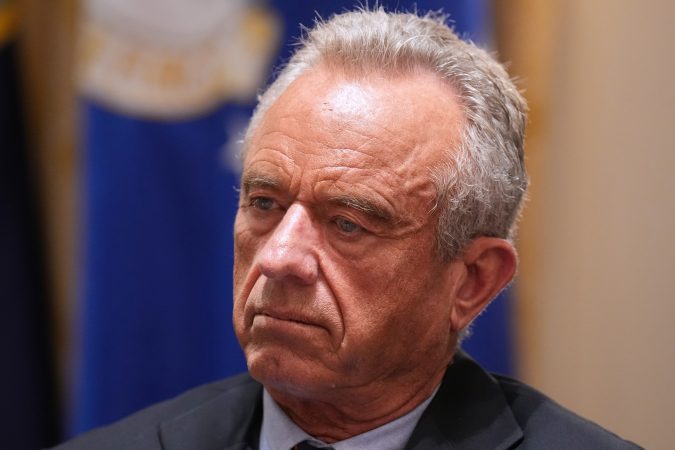
    Neither of Monday’s announcements is likely to immediately impact American diets, which are packed with fats, sodium, and sugar and are blamed for a host of chronic diseases such as obesity, diabetes, and heart disease. But both initiatives are considered top priorities for Health Secretary Robert F. Kennedy Jr., who entered government vowing to crack down on artificial colors, additives, and other ingredients.

    “These two actions will change how the federal government oversees what’s in our food and how we understand the foods that Americans eat,” Kennedy said at an event Monday at HHS headquarters.

    Ultraprocessed foods are made using industrial processing and additives, colors, preservatives, or other ingredients not found in home kitchens. The foods include sugary cereals, sodas, chips, frozen pizzas, and other grocery items.

    Scientists have been working to define and classify processed foods for well over a decade. But sweeping definitions come with downsides. They can be often applied to foods like whole grain bread, yogurt, and granola that are all highly processed but still considered nutritious. Some recent efforts to define ultraprocessed foods include carve-outs for foods that meet nutrition standards, despite having processed ingredients.

    FDA proposal would bring new insights on additives

    In the U.S., an estimated 10,000 additives are allowed in food, including thickeners, preservatives, and packaging ingredients.

    Consumer advocates have long argued that many of those ingredients have never been properly vetted because of the FDA’s policy allowing manufacturers to certify for themselves that new additives are “generally recognized as safe,” or GRAS.

    FDA’s Diamantas stressed Monday that the new policy would not require all new ingredients to undergo FDA review. He said that type of mandatory review would need to be enacted by Congress to rewrite FDA’s food authorities.

    “What we’re doing is requiring companies that utilize the pathway to notify us of their conclusions so that we have greater visibility into those conclusions and consumers have awareness,” Diamantas said.

    Under the proposal, the FDA would be expected to review new ingredient submission within 180 days. If FDA regulators have safety concerns they could request additional information from manufacturers or request that they delay introducing the ingredient.

    Kennedy said the Trump administration would ask Congress to grant FDA additional powers over food ingredients.

    “Congress needs to give FDA the additional tools it needs to keep pace with the changing food supply and protect the American people,” Kennedy said.

    Rule change in the 1990s created what advocates call a loophole

    Any substance intentionally added to food is supposed to undergo formal review — unless the additive is considered safe. Since the late 1950s, the government recognized that many common ingredients in foods, such as spices and vinegar, were widely consumed and understood to be safe for consumption.

    The FDA policed the GRAS exemption for years, but it took time and resources. Starting in 1997, the FDA began allowing companies to independently determine that a new additive is safe based on publicly available scientific evidence and the consensus of qualified experts.

    However, the list of products deemed GRAS by companies grew to include many synthetic and natural additives, all incorporated into the food supply without independent review.

    The process has created a “secret GRAS loophole,” according to the consumer advocacy group Center for Science in the Public Interest, that “undermines the integrity of our food safety system.”

    Food industry officials contend their internal reviews of additives are as rigorous as the FDA’s own processes.

  • Trump picks longtime aide Will Scharf as new top White House lawyer

    Trump picks longtime aide Will Scharf as new top White House lawyer

    President Donald Trump has named Will Scharf as the next top White House lawyer, replacing David Warrington, who is “going on to the Private Sector,” Trump wrote in a social media post Sunday.

    The change in the office of White House counsel will take place Sept. 1.

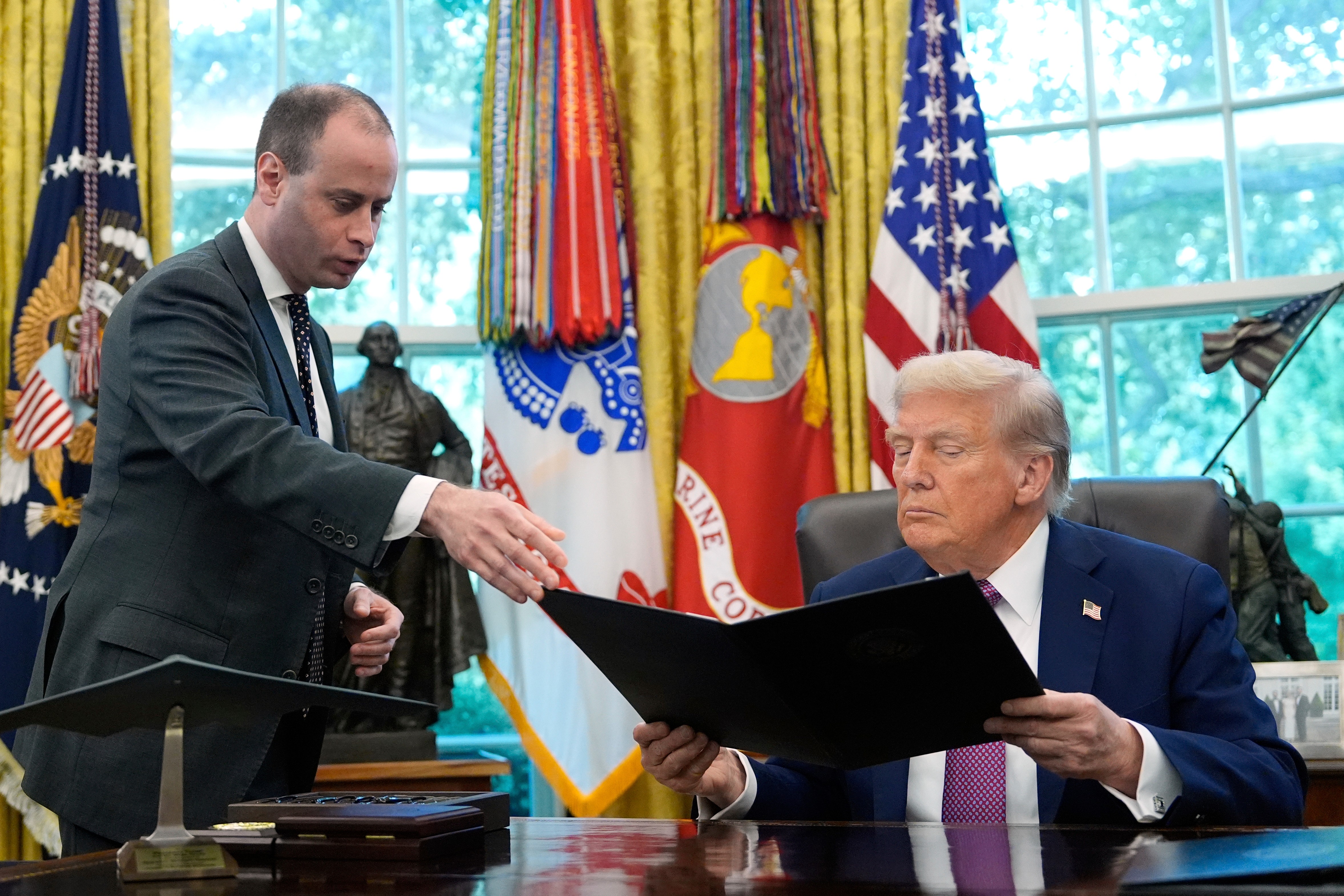
    Scharf, currently the White House staff secretary, is perhaps best known as the lawyer frequently standing over Trump’s shoulder in the Oval Office when he signs executive orders and explaining their details.

    Before that, Scharf, 40, was an unsuccessful candidate for Missouri attorney general in 2024, who also worked as one of Trump’s personal lawyers.

    “I know Will well! He previously represented me in numerous cases, including at the Supreme Court, during the Biden Administration’s corrupt and illegal campaign of Weaponization,” Trump wrote on his Truth Social website.

    Trump added that Warrington did “a truly outstanding job” as counsel. The change is the latest example of Trump White House staff — many of whom have had longer tenures than aides in Trump’s first term — increasingly leaving the administration in recent months.

    Before being brought on at the White House, Warrington served as Trump’s campaign general counsel during the 2024 election, after joining Dhillon Law Group, the firm owned by current Assistant Attorney General Harmeet K. Dhillon. There, he represented controversial Trump allies like Michael Flynn and Sebastian Gorka.

    Scharf has also served since last year as the chairperson of the National Capital Planning Commission, a low-profile federal agency charged by Congress with overseeing federal construction projects in the Greater Washington region. In that role, Scharf has expedited several of Trump’s handpicked projects, including the president’s planned White House ballroom, which the commission approved in April.

    Scharf has also sped up the commission’s reviews of Trump’s planned triumphal arch, which is expected to be approved by the commission at its next public meeting in September.

    Trump, who is seeking to complete the projects before he leaves office in January 2029, has cheered the commission’s swift approvals. The commission historically has taken much longer to review significant changes to the White House and new monuments around Washington.

    In his role as the commission’s chairperson, Scharf has also argued that the planned 250-foot-arch and other federal projects should not be subject to a federal law that restricts most construction in Washington to a maximum height of 130 feet, a position echoed by the Trump administration but opposed by historic preservationists.

  • A Lancaster County man pleaded guilty to fraud after the feds accused him of running a $400 million Ponzi scheme

    A Lancaster County man pleaded guilty to fraud after the feds accused him of running a $400 million Ponzi scheme

    A Lancaster County man pleaded guilty Monday to defrauding investors in his ATM businesses out of more than $400 million, a long-running scam that federal authorities have characterized as a Ponzi scheme.

    Daryl Heller, 56, of Lititz, was indicted last year after prosecutors said he deceived thousands of people who had invested in several businesses he owned that he used to buy and operate ATMs.

    As he sought to raise money for his firms, prosecutors said, Heller promised investors guaranteed monthly returns, which he said would be the result of operating the ATMs. And he also courted investors by using forged or fraudulent financial documents to inflate the purported health of his businesses, prosecutors said.

    Once Heller got cash infusions, prosecutors said, he used them to pay back old investors. He also spent some of the money on personal expenses or business debts.

    The scheme began to fall apart in 2023, when one of his companies, Paramount Management Group, began struggling to raise new money. Several months later, prosecutors said, Paramount stopped making payments to its older investors.

    Heller later filed for bankruptcy protection — which remains pending — and the U.S. Attorney’s Office in Philadelphia indicted him last August.

    In all, prosecutors said, Heller raised about $770 million from 2,700 people between 2017 and 2024, causing his investors to lose about $400 million. (Heller’s attorneys said Monday that they don’t agree with that number and plan to dispute it in court before he is sentenced.)

    Heller said little in court beyond responding to routine legal questions while pleading guilty to a securities fraud charge. He declined to comment after the hearing.

    U.S. District Judge Catherine Henry is scheduled to sentence Heller in December. He faces a maximum sentence of 20 years in prison.