Category: News

  • Democratic Arizona Gov. Katie Hobbs chooses former Republican Mayor John Giles as her running mate

    Democratic Arizona Gov. Katie Hobbs chooses former Republican Mayor John Giles as her running mate

    PHOENIX — Democratic Arizona Gov. Katie Hobbs has picked a Republican-turned-independent to be her running mate in a tough reelection campaign, setting up a bipartisan ticket as voters elect the state’s first lieutenant governor.

    Hobbs’ selection Tuesday of John Giles, a former mayor of Mesa, a Phoenix suburb that is Arizona’s third-largest city, is an overture to the Republicans and conservative independents she must win in a state that was once a GOP stronghold. Republicans have expanded their voter registration advantage over Democrats since Hobbs eked out a narrow win over Kari Lake, a fierce ally of President Donald Trump, in 2022.

    Hobbs is considered the most vulnerable Democratic governor in the country. Giles, a registered Republican for decades, changed his party affiliation to independent on May 17 and voted in the Democratic primary last month, according to county voting records.

    The Republican nominee is U.S. Rep. Andy Biggs, who last week picked Sine Kerr, a farmer and Republican former state lawmaker, to be his running mate. Kerr’s rural roots balance Biggs’ base in parts of metro Phoenix.

    In an interview with the Associated Press before Hobbs publicly announced that she had picked Giles, he said he still considers himself to be a conservative and said he stuck around the Republican Party probably longer than he should have in a crusade to save it. “A few months ago, I realized that it was time to give up that crusade,” Giles said.

    Giles led a conservative city for a decade

    Giles, who was Mesa’s mayor from 2014 to 2025, has been a vocal Trump critic and has endorsed Democrats, including Trump’s 2024 rival, then-Vice President Kamala Harris. Giles spoke in favor of Harris at the Democratic National Convention, saying Trump’s policies would hurt Mesa.

    Giles also backed Democrats running against Trump allies, including Hobbs in her 2022 race against Lake and the state’s current U.S. senators, Mark Kelly and Ruben Gallego.

    As mayor, Giles signed a proclamation promoting equal treatment for lesbian, gay, bisexual, and transgender residents in housing and accommodations, a controversial move in the conservative city.

    The Biggs campaign, in anticipation of Hobbs’ announcement, launched a website highlighting Giles’ support for Harris in 2024 and his participation in the Democratic convention. Drew Sexton, a senior adviser in the Biggs campaign, issued a statement early Tuesday saying Hobbs’ selection of Giles “is of no surprise to Arizonans who have been paying attention. As Kamala Harris’ favorite Arizona mayor, Giles is aligned with Hobbs on all the issues that have hurt Arizonans the most over the past four years.”

    Sexton also said Giles “has been an aspiring Democrat since he first voted for Joe Biden in 2020.”

    As a member of the Church of Jesus Christ of Latter-day Saints, Giles can be an ambassador for Hobbs. Church members make up about 6% of the Arizona population. Latter-day Saints, widely known as Mormons, have been a reliably Republican voting bloc for decades, but many have been ambivalent about Trump since his first run for the White House.

    Democrats have been working to woo Latter-day Saints turned off by Trump’s penchant for foul language and demeaning rhetoric toward women and people of color, which clashes with the church’s values of humility, morality, and compassion.

    Biggs is also a member of the church.

    Picking a former Republican as a running mate hones the bipartisan image Hobbs has tried to create, contrasting with Biggs’ background as a far-right congressman and, before that, the state Senate president. But it also risks inflaming tensions on the left.

    In the AP interview, Hobbs said she takes a nonpartisan approach to her work in government. When she was asked whether some supporters might be frustrated because she picked a former Republican as her running mate, she said, “It shouldn’t be a surprise.”

    Both Hobbs and Giles portray Biggs as an extreme partisan. Giles said it’s disingenuous for Biggs to present himself as more of a moderate when he was “unapologetic about being the most conservative person in the roo in any room.”

    Arizona is electing a lieutenant governor for the first time

    Arizona is one of just five states without a lieutenant governor position, along with Maine, New Hampshire, Oregon, and Wyoming.

    That will change in January.

    Voters added the post in 2022 to more clearly define the line of succession. Until then, the secretary of state will continue to serve as the next in line to be governor.

    Gubernatorial succession is especially relevant in Arizona, where five governors since 1975 have entered the office through succession rather than election.

    In fact, of Arizona’s 12 governors over the past 50 years, only one, Republican Doug Ducey, entered and left the office through the typical pathways of being elected and serving out a full term. Among the others, one died, one was impeached and removed, one resigned after being convicted of fraud, and two quit to accept presidential appointments.
  • An Upper Darby teen who killed his high school classmate is heading to state prison

    An Upper Darby teen who killed his high school classmate is heading to state prison

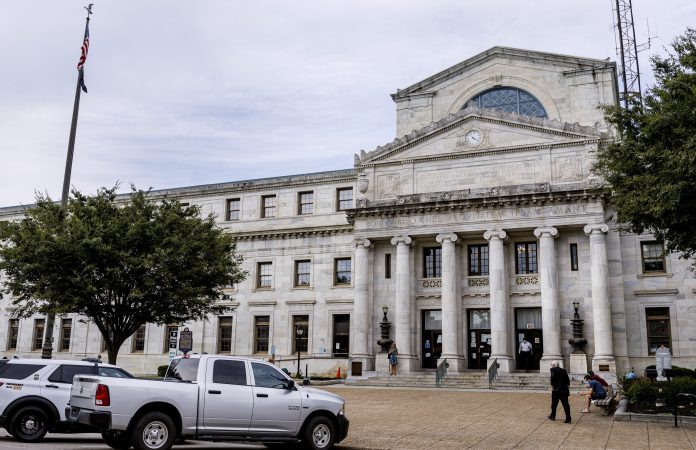
    When Michael Nixon pulled the trigger on the handgun he was carrying last May, he robbed Khalief Webster Jr. of his future, Webster’s family of a loving son, and the community of any semblance of safety, Webster’s mother said Tuesday in a crowded Delaware County courtroom.

    “Khalief was not just the headlines, not just the crime scene tape that haunts me through the night, not just a victim,” Talaya Shaw said of her 17-year-old son. “Khalief was a young boy growing into a young man with a heart bigger than this world could handle.”

    And Nixon, she told Judge Deborah Krull, “had no God-given right to decide when and how he left this world.”

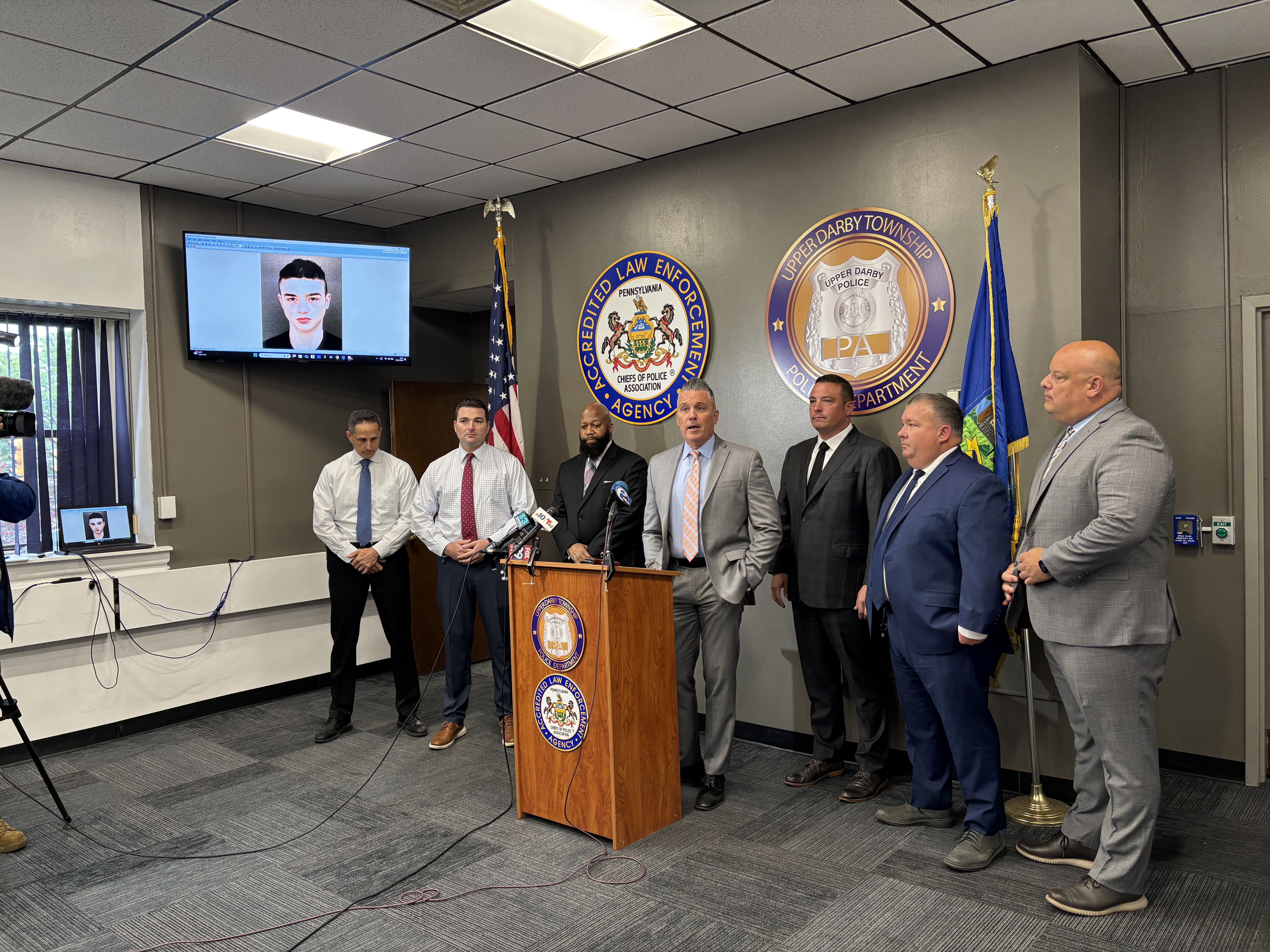
    For killing Webster, Nixon, 18, of Upper Darby, was sentenced to 18 to 36 years in state prison. Nixon pleaded guilty to third-degree murder earlier this year for the fatal shooting, which unfolded in May 2025 as the two teens, classmates at Upper Darby High School, crossed paths on Long Lane near Pine Street.

    Emotions and tempers flared during Nixon’s hours-long sentencing, which the judge had to pause multiple times to rein in outbursts from those who filled the standing-room-only courtroom. Webster’s friends and relatives screamed to be heard, calling Nixon a coward, among other insults, and demanding justice.

    Sheriff’s deputies barred more people from entering the hearing, and had to respond to a scuffle that erupted outside the courthouse after Nixon’s sentence was handed down.

    In May 2025, Upper Darby Police Superintendent Tim Bernhardt (center) announced the arrest of Michael Nixon for the murder of Khalief Webster.Vinny Vella / Staff

    On the day of the shooting, Webster was riding a miniature dirt bike when he encountered Nixon, who had walked 25 minutes from his own neighborhood to the area, according to investigators.

    What happened next was the subject of debate during Tuesday’s hearing.

    Nixon’s attorney, Pete Manaras, said Webster asked his client if he was the “young boul” he had seen “the other day,” and got off the bike to confront him.

    The two teens, he said, knew each other and had gotten into disputes before. Nixon, fearing for his safety, shot Webster in the abdomen, Manaras said.

    But Senior Deputy Attorney General Christopher Phillips, who prosecuted the case, said Nixon was the aggressor. He was out looking for Webster, Phillips said, armed and lying in wait in an area where he knew he would encounter the other teen.

    “The public needs to be protected from people that would do such a thing on a sunny afternoon, on a beautiful May day, to a young man who didn’t see it coming,” Phillips said.

    After the shooting, Nixon fled and was recorded on a surveillance camera telling someone on a phone call that he had shot somebody in the chest, according to the affidavit of probable cause for his arrest. Nixon’s mother then picked him up and drove him away.

    Nixon addressed Webster’s family Tuesday to apologize, saying he wished he could take back what had occurred.

    “I didn’t want to kill him. I never wanted to hurt him,” Nixon said. “I was just scared and my body reacted before my mind.”

    Nixon said he encountered Webster by chance. He was carrying the gun because of previous run-ins with him, he said, and needed it for protection as he walked to a friend’s house.

    Webster grabbed at his waistband as he confronted him, Nixon said. He believed Webster was reaching for a gun and reacted.

    Nixon said he had grown up in an abusive household and that made him “perceive everything as a threat” and grow anxious when people get too close to him.

    “I’m not saying this as an excuse for my actions, because I know I deserve to be locked up for what I did,” he said. “But that doesn’t mean I don’t want to turn my life around, because I do.”

    Webster’s relatives, including his grandmother, Charlotte Webster, said that while they have not yet forgiven Nixon, they know that will come in time through their faith.

    Still, she said, the pain Nixon caused their family was devastating.

    “I believe this was a deliberate, heinous crime he committed,” she said. “He didn’t care about anything or anyone.”

  • Former Eagles running back granted early release from prison to see dying daughter

    Former Eagles running back granted early release from prison to see dying daughter

    Wendell Smallwood Jr. will be by his daughter’s side in her final days after being granted early release from prison.

    Gloucester County Superior Court Judge Renard Scott approved a motion to withdraw Smallwood’s guilty plea from last year, on August 7, in order to see his dying daughter, The News Journal reported on Monday.

    Mila, Smallwood’s eight-year-old daughter, was diagnosed with diffuse anaplastic Wilms tumor, an aggressive and rare childhood kidney cancer, in 2026. After unsuccessful chemotherapy treatments, she is in palliative care and is expected to live for weeks at most, according to the report.

    Smallwood, a former running back with the Eagles, Commanders and Steelers, was sentenced to 18 months in prison last September for a COVID-19-related fraud scheme. He pleaded guilty in December 2024 to charges of felony wire fraud, conspiracy and tax fraud tied to economic relief programs.

    In March, he pleaded guilty to second-degree unlawful possession of an assault firearm for possessing an AR-15 rifle in New Jersey. He was sentenced to three years in state prison, concurrent to his federal sentence.

    At the time, New Jersey banned the ownership of assault weapons, but a July ruling from the 3rd Circuit Court of Appeals ruled that New Jersey’s ban on assault weapons was unconstitutional. This provided Smallwood legal grounds to withdraw his guilty plea.

    Smallwood’s emergency hearing on August 7 ruled that Mila’s severe illness was a notable reason for granting Smallwood’s motion, which could have seen him released as early as Monday.

  • Colombia searches for over 3,000 missing after a powerful earthquake kills more than 100

    Colombia searches for over 3,000 missing after a powerful earthquake kills more than 100

    PEREIRA, Colombia — Rescue crews and civilians in Colombia painstakingly searched through rubble Tuesday in the hopes of finding survivors trapped under debris after a powerful earthquake left thousands missing in dozens of cities and towns.

    The 7.4 magnitude earthquake that hit western Colombia on Monday wreaked havoc, collapsing buildings, buckling roads, crushing cars, and leaving devastated residents to console each other among the wreckage of their homes. Excavators and heavy machinery cleared heavy chunks of concrete, while buckets of rubble were passed hand-to-hand along a line of volunteers.

    Rescue crews and volunteers picked through flattened concrete buildings in affected cities, searching for signs of life. They raised their hands to call for silence when they thought they heard someone beneath the piles of debris. At least one woman was retrieved — alive — from the rubble.

    Colombian President Abelardo de la Espriella said the earthquake killed at least 181 people and left 2,595 more injured. He said at least 195 remained missing, but civilian-run databases suggest that number could be closer to 4,000.

    Crews race to find survivors

    Authorities said the deaths were concentrated in the cities of Cali, Pereira, Manizales, and Quibdo, but local leaders and families worried about casualties and damage in rural areas, from where very little information has emerged. Aid agencies consider the first 48 to 72 hours crucial for retrieving people alive, though that threshold can be extended if they have access to food and water.

    De la Espriella said more than 1,000 homes were destroyed and yet more damaged.

    Standing near the remains of his brother’s collapsed apartment building in Pereira, Jairo Vargas said he made the 135-mile drive from Medellin, hoping to find him alive.

    “I’m absolutely certain he’s here. Absolutely certain,” Vargas said, adding that his brother’s car was still parked outside. But he fears his sibling did not survive.

    “The debris surrounding my brother is soft,” he said, as heavy machinery rumbled nearby. “It’s possible that it’s protecting him, but we can’t hear any noises anymore. I don’t know. I have little hope.”

    Colombia’s new president faces his first serious challenge

    The earthquake presents the first major test for first-time officeholder de la Espriella, who entered office just days before the natural disaster. The leader, who split the country in recent elections, now seeks to unite Colombia in its disaster response.

    That challenge was particularly notable in Choco, the region at the quake’s epicenter. It is one of Colombia’s poorest and most neglected regions, often beset by warring armed groups. Much of Choco is accessible only by boat, through the jungle, or by airplane.

    Sterling Palacios, a religious and environmental leader in the region, said Choco’s capital and smaller communities along the Atrato River were devastated. Homes were reduced to rubble and aftershocks continued to rumble, terrifying residents who slept in the streets overnight.

    The Colombian Geological Service said it has documented more than 100 less powerful aftershocks since the initial quake.

    “There are towns where people have lost everything, where people have died, where homes have been destroyed,” he said. “We don’t have a full panorama of the damage, but we know it’s been massive.”

    De la Espriella traveled to Quibdo in Choco on Monday night where he announced he was mobilizing “the entire military and police apparatus,” as well as deploying engineers, rescue workers, and search dogs.

    “Choco will never again be the ‘land of the forgotten,’” he said.

    Palacios said the government’s response has so far been “concentrated in the capital,” and that authorities were flying the wounded from Quibdo to hospitals in the city of Medellín.

    The biggest challenge, he said, remains towns in rural areas only reachable by boat — journeys that can take hours or days. That response is also complicated by a toxic slate of armed groups warring for control who, during the COVID-19 pandemic, blocked healthcare workers from traveling to remote areas.

    “It’s a risk and it’s very difficult to predict” what could happen, he said, adding it could take weeks to fully assess the devastation.

    Desperate residents seek news of loved ones

    Families posted information about missing loved ones on citizen-run websites.

    Dana Carolina Zamora posted an image of her missing 60-year-old uncle, Miguel Ángel Zamora, cradling his dog. The farmer was living in a rural area of El Cairo, not far from the quake’s epicenter in San Jose Del Palmar.

    Local authorities said 80% of El Cairo, a town of about 7,000 people, was damaged. Zamora said her uncle lived in a traditional house of sticks and mud.

    “We are afraid. We hope that is not the case, that he is all right and that it is only a communication failure. But we haven’t heard anything from him,” Zamora said.

    The earthquake left many people unnerved after back-to-back quakes devastated neighboring Venezuela in late June, destroying hundreds of buildings and killing more than 6,300 people.

    Mónica Sánchez, who lives in Pereira, one of the worst-hit cities, said when the quake happened a wall collapsed inside her clothing factory. Sánchez and her 12 employees escaped just in time.

    “It was shocking — the city fell down around us,” she said.

    On Tuesday, rescue workers pulled a woman alive from the rubble. Diana Troncoso lay on a stretcher, dusty and scraped up, with her eyes closed. Observers burst into applause as she emerged, but search teams raised their hand to call for quiet so they could continue their search for survivors.

    Pereira and Cali enforced curfews Monday night to prevent looting, and private vehicles were banned from the roads of Pereira so ambulances, police, and rescue workers were able to navigate what’s left of the roads.

    The U.S. State Department has announced it would provide $15.5 million for emergency shelter, food, and other aid. Governments across Latin America have also lined up to help.

    “This has been a tragedy for the whole city, for thousands of families,” Pereira Mayor Mauricio Salazar told local media, his voice quavering. “But here we are, and we will continue forward with the hand of God.”

  • Trump’s plane ruse echoes Clinton’s Pakistan swap, but with press pool at risk

    Trump’s plane ruse echoes Clinton’s Pakistan swap, but with press pool at risk

    When President Bill Clinton deplaned in Islamabad, the sleight of hand became clear.

    A decoy jet with all of the markings of Air Force One touched down in view of the news media, and a Secret Service agent resembling the president emerged. Then, an unmarked plane landed, and the real president disembarked.

    It was March 2000, and Susan Page, a White House reporter covering the trip for USA Today, was one of a small group of people who knew about the ruse.

    Before the India-to-Pakistan flight, White House officials called Page, then the White House Correspondents’ Association president, and summoned her for an off-the-record conversation. There, White House press and security officials explained the operation, informing her of the president’s location and safety measures in place for journalists on the trip, Page said in messages with the Washington Post.

    “They told me about the extraordinary security procedures being taken because of the dangers in flying there, including use of the decoy plane,” she said. “Of course, the dangers threatened the journalists covering the trip as well as President Clinton.”

    Page’s briefing, which has not been previously reported, meant at least one journalist in the traveling press corps knew the president would not be aboard Air Force One.

    More than 25 years later, the White House faced a similar security dilemma — but handled the press very differently.

    On Monday evening, the Post reported on an extraordinary maneuver in which security personnel in Turkey secretly moved President Donald Trump from a plane marked as Air Force One to a smaller, unmarked Air Force plane, using an airport catering truck. The operation, which took place last month, was prompted by a credible Iranian threat to Trump, the Post reported.

    As the swap took place, reporters aboard the decoy plane, who were instructed to lower their window shades, were unaware of the president’s maneuver, according to the Post’s reporting.

    The incident could further degrade the already-fraught rapport between the Trump White House and the press corps, a relationship marked by name-calling, threats, legal restrictions, and lawsuits from Trump.

    Page, now USA Today’s Washington bureau chief, declined to comment on the newly revealed incident but broke a decades-old agreement with the Clinton White House to describe her experience.

    “I haven’t spoken about this episode before, because of the off-the-record ground rules of that discussion,” Page said in a text message. “But since more than a quarter-century has passed — and since the ruse became evident as soon as President Clinton disembarked in Pakistan — I think it’s OK for me to relay it now.”

    Jacqui Heinrich, current president of the WHCA, declined to comment.

    The White House did not respond to a request for comment on the operation’s impact on the journalists aboard the decoy plane.

    “As the President has said recently, there are many enemies of America who have their sights on him, and we use every tool at our disposal to address those threats,” White House Communications Director Steven Cheung previously told the Post.

    The White House press pool consists of a rotating group of journalists who send reports, photos, and footage of the president’s activities for the entire press corps. This formal system has existed since 1937, though the White House first brought in a pooler in 1881 after President James Garfield was shot. Associated Press reporter Franklin Trusdell sat outside of the president’s room, monitoring his breathing and sharing updates with his colleagues.

    The system is designed to ensure that someone from the press is present to observe the president’s movements and activities, giving the public an independent accounting.

    Because the press was seemingly in the dark about the operation, Garrett Graff, a journalist and historian, said that the Post’s reporting describes an event that is probably unprecedented in modern presidential history.

    “That the White House would lie to the press corps in its entirety about where the president is,” he said. “That’s a new Rubicon that’s being crossed.”

    The breach was not merely one of journalistic access, according to Graff. The details of the threat that prompted Trump’s operation are unknown, so it’s impossible to calculate the risks to the press pool. However, the reporters aboard the plane were probably exposed to the very threat that had prompted the extraordinary security measures, Graff said.

    “Knowing that this was a series of actions that the White House and the military took precisely because of a threat that they were deeply worried about, it makes it all the more egregious that the press was kept out of the loop,” he added.

    Former CNN Pentagon correspondent Barbara Starr said that the press fully understands and respects the security requirements of covering the president.

    But, she said, “there will be a level of distrust now that we have not seen before … their own lives were potentially at risk without them even knowing it, without them having the option of making a different choice of how to get home.”

    Politico reporter Megan Messerly was the print pooler on the day of Trump’s trip. “We are wheels up from Ankara as of 8:43 p.m.,” she reported. “We have been advised to keep our window shades in the press cabin closed. See you on the other side.”

    After landing, she wrote that the flight was “uneventful” with “no visitors to the press cabin.”

    Hours later, a reporter peppered Trump with questions about whether there was a security threat to Air Force One that warranted the shades being closed, according to Messerly’s pool report.

    “Well, I have a threat all the time. I’m number one on their list, before you,” Trump responded. “But if I go, you go. Right? Perhaps someday you want to change professions.” Messerly did not respond to a request for comment.

    The disclosure quickly prompted a scramble among White House reporters for more information.

    “We (and no doubt every other newsroom in Washington) are asking the White House and sources for more info,” NBC chief White House correspondent Garrett Haake wrote on X.

    ABC’s Michelle Stoddart, who was the TV pool producer aboard the flight, sent WHCA members additional details on the trip, following the Post’s reporting.

    “Upon arrival to the airport, the events did not seem particularly out of the ordinary to the travel pool,” she wrote. “Our photographer noted that the stairs were quickly pulled away as the press loaded.”

    She said that a photographer seated behind her opened a shade on board and was quickly instructed to close it again by a White House staffer who said it was a “request from Secret Service.”

    One White House reporter, speaking on the condition of anonymity because they weren’t authorized to speak publicly, said that they were outraged to learn about an operation that might have put the press corps in danger.

    “When you sign up to work at the White House, even as a civilian, part of your job is to defend the president,” the reporter said. “That’s not my job. I cover the president. Reporters take risks as part of the job, but not on behalf of the president.”

  • A Philly mom fights for more speed bumps after her son was killed near one of the city’s most dangerous roads

    A Philly mom fights for more speed bumps after her son was killed near one of the city’s most dangerous roads

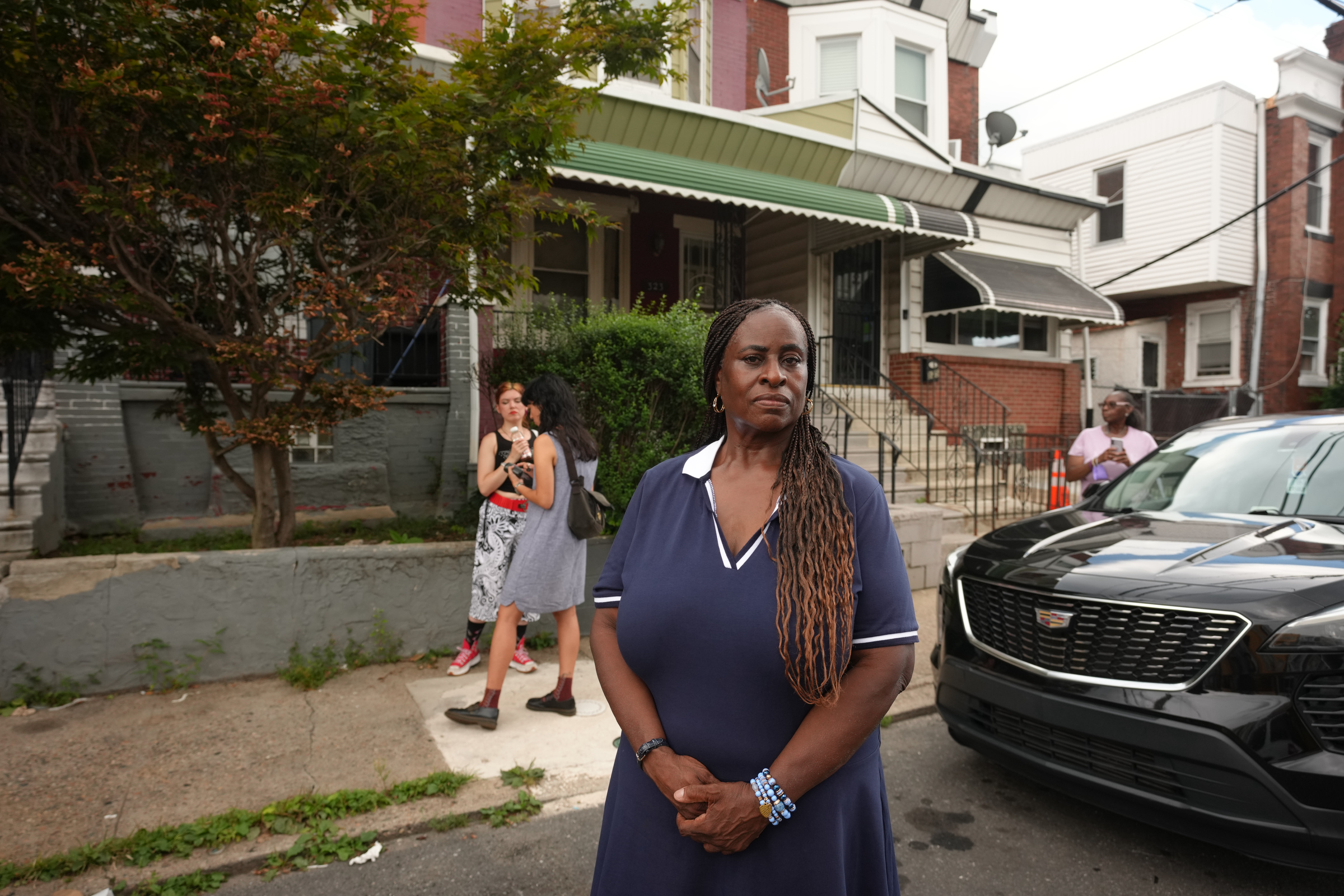
    Angela McDonald caught her breath on the sidewalk at the intersection of South 58th and Delancey Streets in Cobbs Creek, a few feet from where her son, Mark Ringgold, was killed last year in a hit-and-run crash by a speeding driver in a Jeep Cherokee.

    She wants someone to answer for her son’s death and for the city to install speed bumps on the streets and other road-design changes to slow drivers down. And surveillance cameras.

    “This is what my purpose is now,“ McDonald said Friday, a year after the crash. ”I will fight until God calls me home.“

    Ringgold, 33, was crossing Delancey Street after leaving a friend’s house shortly before 3 a.m., when he was hit and left in the street. The family calls it a blessing they were able to say goodbye to him in the hospital before he died.

    Last year, 28 pedestrians were killed in hit-and-run crashes in Philadelphia, according to the city’s count.

    “Don’t wait for it to come to your door before you do something. Nobody knows what’s coming. Make change now,” said McDonald, 62, a retired Philadelphia police officer.

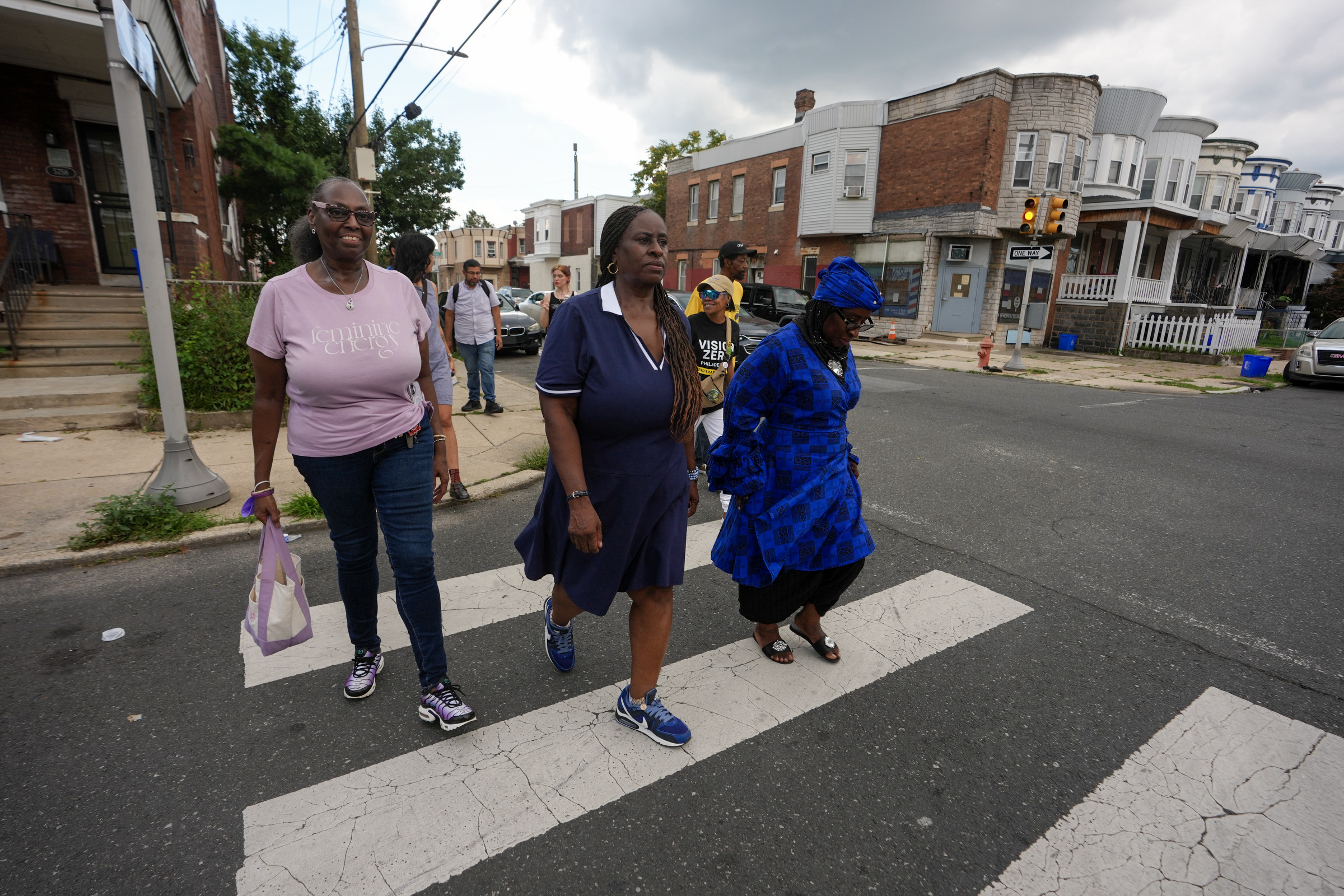
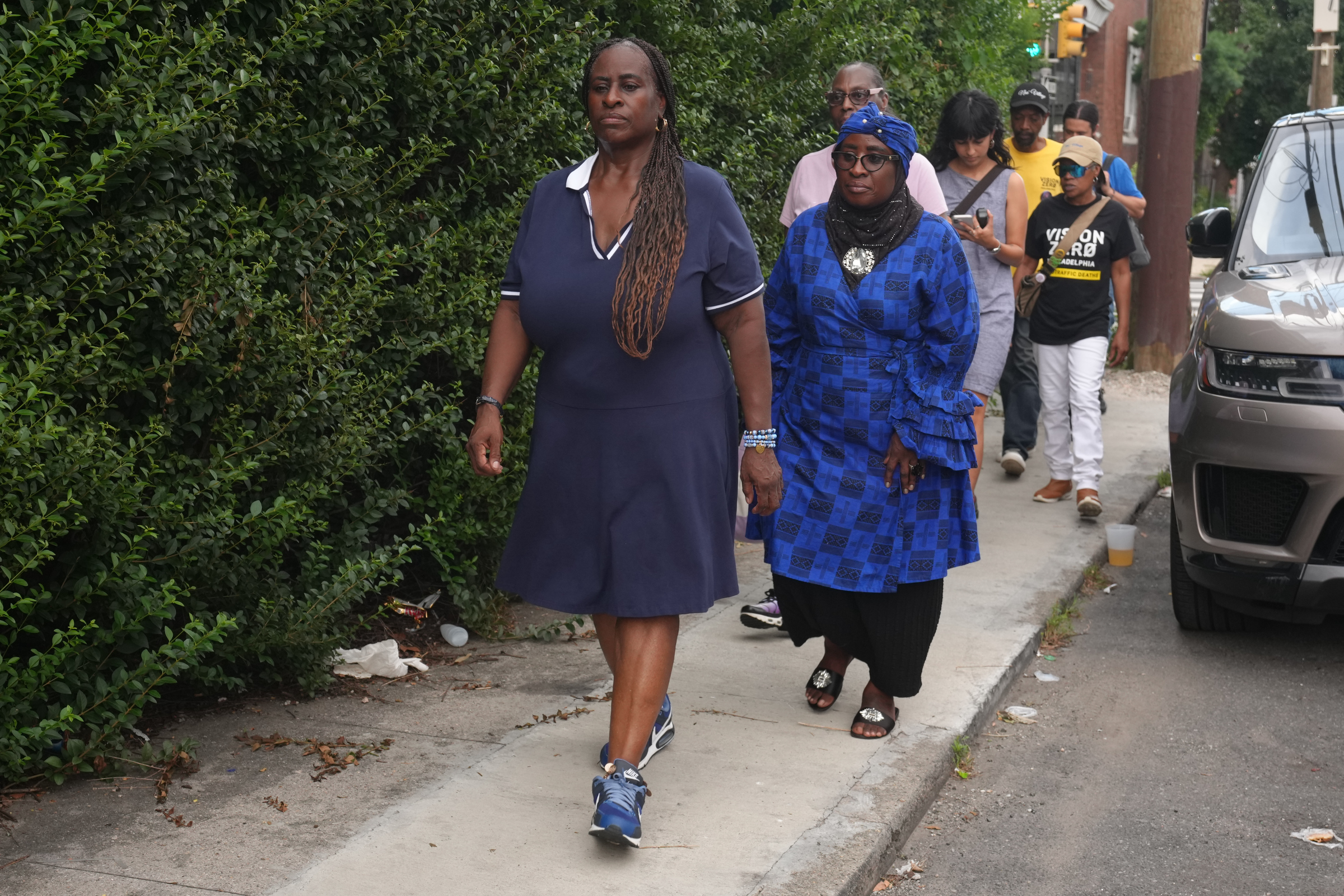
    Angela McDonald and other traffic-safety advocates held a community walk in memory of her son Mark, who was killed by a hit-and-run driver. Jessica Griffin / Staff Photographer

    A group of family, neighbors, and traffic safety advocates walked the streets Friday in heat brushing triple digits as thunderstorms rolled in.

    Cobbs Creek Parkway, a state-designated highway not far away, is listed on the High Injury Network, one of the 12% of city roads where 80% of traffic crashes have occurred. Many of those streets are thoroughfares or state highways, like Broad Street (Route 611).

    South 58th Street is not on the map, though there are speed bumps near a recreation center at South 58th and Spruce Streets.

    And the city is working on a Neighborhood Slow Zone nearby, about five square blocks bounded by 52nd Street, 57th Street, Spruce Street, and Baltimore Avenue. The program imposes a 20 mph speed limit on residential streets and adds traffic-calming infrastructure such as speed cushions, narrower pedestrian crossings at intersections, and other elements.

    “We have a lot of traffic violence on streets in regular Philadelphia gridded neighborhoods, not just on the High Injury Network or thoroughfares,” said Andrew Goodman, director of equitable development in the office of Councilmember Jamie Gauthier, who is working on getting some safety treatments for South 58th Street and Delancey Street.

    Evidence shows that the interventions work, city officials say.

    “We get calls from people asking for speed bumps consistently,” Goodman said. “There are so many needs, so much demand. Driver behavior seems to be getting worse by the day.”

    McDonald wants the neighborhood to get consideration. Speed-enforcement cameras are limited, with installations requiring specific authorization by the state legislature.

    But she wonders about police surveillance cameras. If there is a hit-and-run crash, they might be able to capture the image of the driver. Police have recovered the car that hit her son, but there is no footage of the driver and there has been no arrest.

    “As long as I have been traveling this road, since I was a young girl, 58th Street has always been a racetrack,” McDonald said.

    “Speed bumps are definitely going to slow people down, because if you don’t, you’re going to tear your car up,” she said. “You may flip yourself over.”

    One year after a fatal hit-and-run took the life of Angela McDonald’s son, Mark, she and other traffic-safety advocates are pushing for traffic-calming improvements.Jessica Griffin / Staff Photographer
  • Ukraine’s push to cripple Russia in Crimea is just getting started, drone chief says

    Ukraine’s push to cripple Russia in Crimea is just getting started, drone chief says

    EASTERN UKRAINE — The commander leading Ukraine’s drone war says his country’s recent strikes in Crimea are the first phase of a campaign aimed at rendering the peninsula — illegally annexed by Russia in 2014 — unusable as a staging ground for Russian forces.

    Maj. Robert “Magyar” Brovdi, one of Ukraine’s most prominent commanders among a new generation of soldiers, said his forces could strike seven times more military targets in Crimea if the money pledged by Western allies came faster.

    “Crimea falls within the key conceptual pillars on the path to ending the war,” Brovdi told the Associated Press in an interview.

    Despite that shortfall, Ukraine’s summer campaign in Crimea has already inflicted significant damage: striking rail bridges, oil depots, and power infrastructure to disrupt supply lines and blind Russian air defenses as drones fly in.

    Brovdi said his forces are equipped at just 14% of what they would need to carry out the Crimea campaign at full capacity.

    A firm believer in numbers since his past life running an international grain trading business, Brovdi joined Ukraine’s territorial defense as a volunteer in the war’s opening days. He rose quickly, commanding one of the country’s most effective drone brigades before being tapped to lead a force with no precedent before this war — Ukraine’s Unmanned Systems Forces.

    “It’s not that the production capacity of Ukrainian manufacturers doesn’t allow us to make the necessary quantities” of drones, Brovdi said. “It’s the banal problem of untimely financing, which our partners do allocate, but which moves significantly slower than our plans.”

    A lover of the arts

    A devoted patron of the arts, Brovdi works in an underground command post that resembles a museum, with pieces of Ukrainian art on display, including by renowned painter Maria Prymachenko — each with small placards noting their titles and a QR code linking to more information. “Please don’t touch the sculpture,” reads a sign beneath one piece.

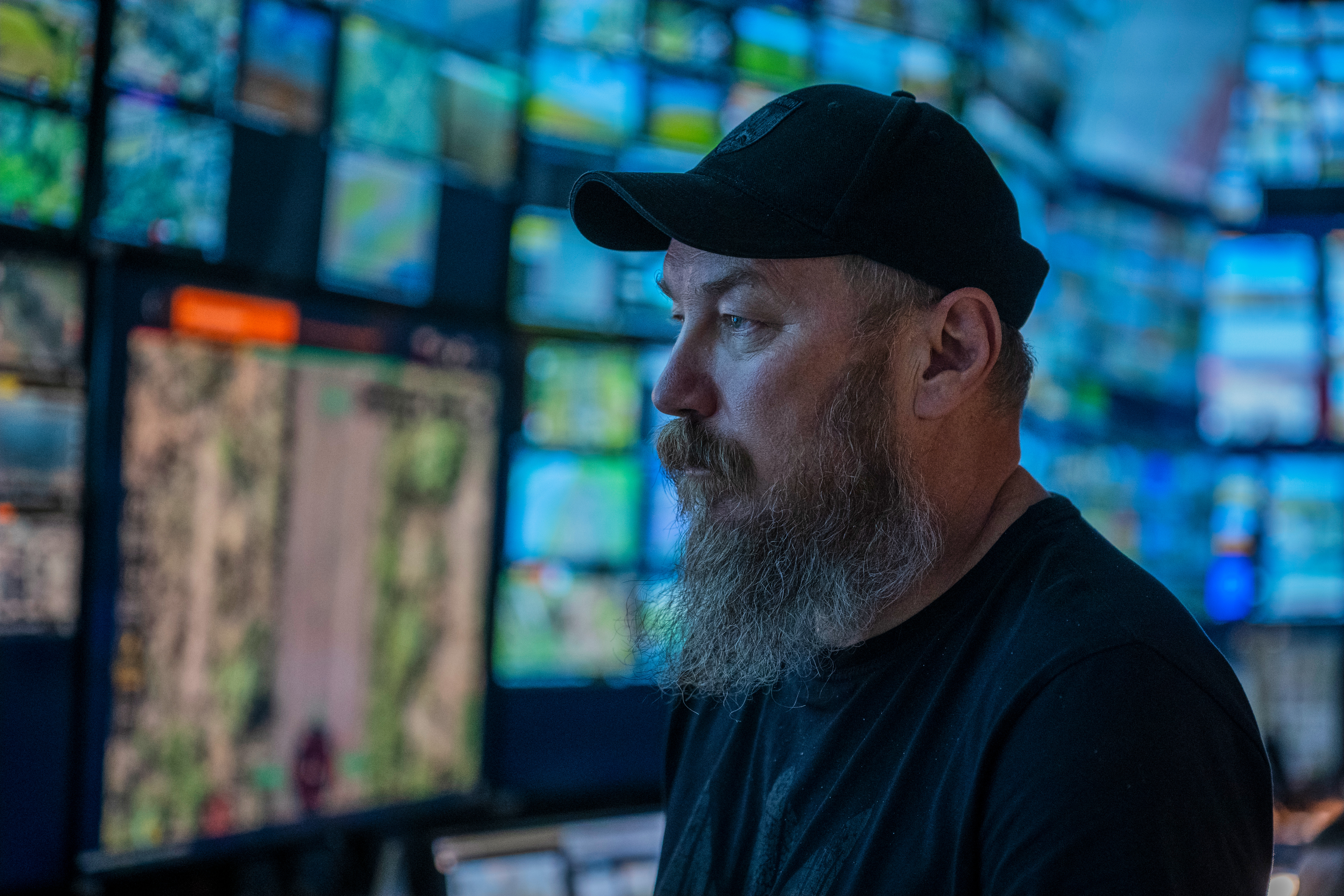
    The artwork sits against a backdrop of dozens of screens streaming live footage from the front, along with real-time data that drives decisions on the battlefield. Soldiers can grab good coffee, pick a book, work out, or rest in sleeping pods — a culture that feels closer to a Silicon Valley office than a war room.

    They work around the clock to try to prevent Crimea from functioning as a staging ground for the Russian military, said Brovdi, whose call sign, Magyar, nods to his ethnic Hungarian roots in Zakarpattia, the western Ukrainian region bordering Hungary.

    He pointed to one sign of progress — in four recent large-scale Russian missile barrages from the peninsula, only five missiles were launched in total, a drop he credited to the systematic destruction of Russian air defenses there. The AP couldn’t independently verify the claim.

    To open that “window” for drones to strike the peninsula without being shot down en masse, his forces destroyed more than 300 air defense assets over recent months — surface-to-air systems, radar stations, electronic warfare equipment.

    The window metaphor sends him into a sidetrack about something personal — he loves sleeping with one open, a pleasure he rarely gets anymore as one of Russia’s most hunted men, who spends most of his time in underground bunkers.

    Forcing Russia out of Crimea

    Much of Russia’s Soviet-era air defense hardware runs on the power grid, which is one of the reasons Crimea’s electrical infrastructure has become a recurring target. Russian soldiers become “blind,” left with just machine guns and rifles, he said. The tactic has also impacted access to power for civilians, and Brovdi said he has twice publicly apologized to Ukrainians living in Crimea for the disruptions.

    Wherever Starlink connectivity reaches across Crimea, his forces can now destroy even the most heavily defended target using an average of just three drones, mixing munitions with different characteristics and warheads depending on what’s being hit. He described the strikes as deliberately calibrated — different munitions for a bridge pier than for a fuel truck or a moving train — and said his forces avoid hitting civilian infrastructure.

    “Creating conditions that make it impossible for any kind of military capability … to remain there will make Crimea uninteresting … as a military staging ground,” he said.

    Ukraine is also working to dismantle Crimea’s role as a naval base — a blow to Russia’s presence near NATO’s borders, he added.

    The campaign’s early results have not been made public, Brovdi said. But roughly two weeks into the offensive that began in late June, he said Ukrainian intelligence indicated Russian authorities had ordered all military commands and security services to relocate off the peninsula, along with a covert order to remove secret archives and artworks. The AP could not independently verify the account.

    Threats from Russia

    Meanwhile, Russia is working to counter Ukraine’s edge. It is installing jamming systems at a scale that will, to some degree, degrade Starlink connectivity, Brovdi said.

    Russia is also building its own satellite communications system to rival Starlink, he said. “This is a risk for the entire planet,” Brovdi said, “because a dictatorship will gain access to information across the whole globe.”

    He also pointed to other threats facing Ukraine. The concentration of jet-powered Shahed drones, which are much harder for Ukraine to shoot down, has increased 2½ times in recent weeks, he said.

    Russia’s military can currently fire a simultaneous salvo of 77 ballistic and cruise missiles, he said, and plans to increase that to 200. That is one of Ukraine’s most vulnerable points, since the country is running short of interceptors for the U.S.-made Patriot — the only system Ukraine has in its arsenal against ballistic missiles — meaning dozens fired by Russia during mass barrages get through and hit their targets.

    “Even if they only manage half of that, it will all be flying at us,” Brovdi said. The only way to bring the number down, he said, is by striking every facility involved in producing those missiles — underscoring the importance of Ukraine’s long-range strikes deep inside Russian territory.

    Ukraine’s plan for Russia’s Wildberries

    Ukraine has increasingly targeted Wildberries, Russia’s largest online marketplace, sometimes described as the country’s answer to Amazon, and Brovdi named it as a target.

    “Wildberries is, first of all, a supply platform — it’s the war’s quartermaster,” he said, noting the company runs a dedicated section selling goods for Russia’s military.

    The Kremlin has denied the site supplies the Russian military and has accused Ukraine of striking civilian targets. Russia regularly attacks Ukrainian logistics and retail facilities.

    At the same time, Brovdi said, the strikes on Wildberries are meant to make ordinary Russians feel the war directly, in hopes the resulting desire to end it could weigh on Russia’s ability to keep fighting.

    Brovdi declined to give a timeline for the Wildberries campaign, saying only that the strikes will continue “until it becomes impossible for it to recover quickly.”

    “Ultimately, Wildberries is, forgive the expression, a consumer gambling addiction,” he said, arguing that losing access to it — like restrictions on social media — creates an intrusion on one’s personal life that most Russians feel.

    “It turned out to be a sensitive sensor of the comfort of Russia’s massive population — people who consider themselves completely untouched by the actions of the aggressor country,” he said.

  • I-95 on-ramp in Northeast Philly is closing for good next week

    I-95 on-ramp in Northeast Philly is closing for good next week

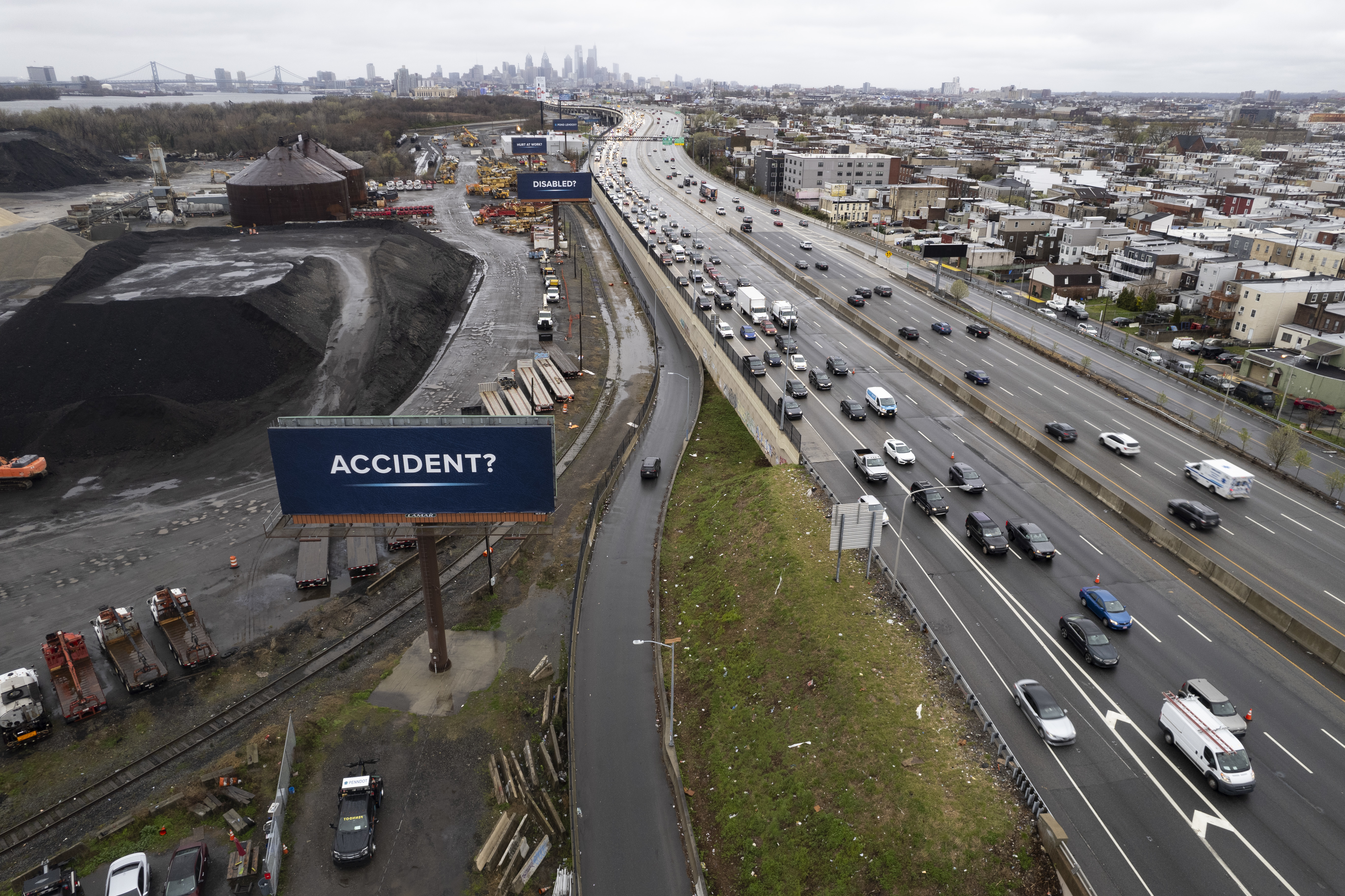
    An I-95 ramp in Northeast Philly is set to close for good next week.

    The ramp from Bridge Street to I-95 North is slated to shut down at 8 p.m. on Friday, Aug. 21, the Pennsylvania Department of Transportation announced Monday.

    The closure will make way for construction of a new I-95 entrance from Tacony Street and the Delaware Avenue extension, which the agency expects to open in late 2027.

    Until then, drivers will be detoured to Tacony Street and State Road/New State Road, where they can get on I-95 North via the Milnor Street ramp.

    The rerouting is part of a larger I-95 rehabilitation, which includes nearly $268 million of Northeast Philly improvements, including the reconstruction of the viaduct over Bridge and Tacony Streets.

    In addition to the ramp closure, I-95 North drivers will experience a traffic shift from 8 p.m. Aug. 21 to 5 a.m. Aug 22. They will be temporarily rerouted to southbound lanes as northbound reconstruction begins at the Bridge Street Interchange. PennDot expects to complete that project in 2028.

    The agency advises drivers in the area to allow for extra time, as backups and delays are expected due to the ramp closure.

  • Former U.S. Marine held in Russia for more than 4 years has been released, his advocates say

    Former U.S. Marine held in Russia for more than 4 years has been released, his advocates say

    WASHINGTON — Russia has released an American military veteran who spent more than four years in prison on disputed charges under abusive conditions and was said to be gravely ill and at risk of dying, a group advocating for him said Tuesday.

    Robert Gilman was on his way to a U.S. military hospital in Texas, where he will be medically and psychologically assessed and treated, said Eric ‌Lebson, chief strategy officer of Global Reach, a group that’s been working to free him and other American detainees abroad. Gilman’s family has flown to Texas to be with him, including his mother, who was in Russia attempting to see him at a hospital.

    Gilman, a 32-year-old teacher detained since 2022, was initially handed a 3½-year sentence when he was convicted of beating a police officer after being taken off a train for causing a disturbance. He later was convicted of attacking a prison inspector during a cell check, beating an investigator, and assaulting a guard, and he was sentenced in October 2024 to eight years and one month. His sentence was extended last year to 10 years after he was found guilty of assaulting prison guards.

    Gilman’s sister, Lexie Hudson, credited President Donald Trump and U.S. Sen. Ed Markey of Massachusetts with bringing about the former Marine’s release.

    “There is no other reason that Robert is alive today other than that President Trump heard about the case and took action,” said Hudson, who thanked Markey “for leading our advocacy efforts in Congress.”

    “The Russians treated my brother so badly,” Hudson said. ”They hurt him for no reason, other than that he was both an American and a Marine. What did they get out of this? Why did they do this to such a wonderful person?”

    The State Department said that Gilman, who had been determined recently to have been wrongfully detained, was released on humanitarian grounds and “was not part of an exchange, and no other concessions were provided.”

    “This as a welcome step that we hope leads to the release of Americans unjustly held in Russia, such as wrongful detainee Stephen Hubbard,” it said.

    Before Gilman was flown out of Russia, he had been in “a dissociative stupor” for 47 days due to the abuse he has suffered in prison, Lebson said. Gilman had been moved from a prison to a civilian hospital, where he was hooked up to a feeding tube and handcuffed to a bed.

    Hospital reports conveyed Gilman’s condition “as dire and life-threatening,” pushing the U.S. government into action and leading to “a unilateral humanitarian release” by Russian officials, Lebson said.

    Markey had called on Russia and the U.S. to work together to get the Massachusetts resident released. Gilman was among at least eight Americans who remained in Russian custody after a series of high-profile prisoner exchanges with the U.S. in recent years.

    Markey blamed Russia for Gilman’s poor health, saying his return to the U.S. was long overdue.

    “It is a tragedy that it took Robert’s near-death condition for his case to receive the attention that it required for his release to be negotiated,” Markey said. “Throughout his detention, Robert was subjected to physical torture, forced medication, and provocations by Russian authorities. There is no doubt that his treatment by Russian authorities is the reason Robert is in this precarious state today.”

    The Associated Press was making efforts to get comment from Russian officials on Gilman’s release.

  • A 224-unit senior living facility is proposed for Radnor to help address ‘a woeful lack of senior housing’

    A 224-unit senior living facility is proposed for Radnor to help address ‘a woeful lack of senior housing’

    A Gladwyne-based senior services organization is planning to build an independent living community on an estate in Radnor Township, a move the group says is necessary as demand for senior living services rises in the region.

    Waverly Senior Services presented an early proposal to Radnor Township’s planning commission on Aug. 3 for a large senior living facility at 452 S. Roberts Rd., a historic estate owned by the Haverford School.

    The proposal includes 208 multifamily housing units across 15 buildings, 16 twin homes, and a handful of administrative buildings, including a maintenance building and a welcome house.

    Waverly Senior Services, a nonprofit organization, is in the process of purchasing the 43-acre property, which the Haverford School acquired in 2022.

    Waverly operates Waverly Heights, a life care residence in Gladwyne, as well as in-home healthcare and personalized care management services.

    Tom Garvin, Waverly’s president and CEO, told the Radnor planning commission that the organization is seeing “unprecedented demand” for life care facilities as baby boomers age and their housing and care needs change.

    “There’s a woeful lack of senior housing across the country to serve that sort of bubble that’s coming in the population,” Garvin said.

    The number of U.S. residents 65 and older grew nearly five times faster than the total population between 1920 and 2020, according to the U.S. Census Bureau.

    More than 560,000 senior housing units will be needed to meet the demand for older adult housing, according to market research firm NIC MAP. Under current development rates, only 191,000 will be built.

    Waverly currently serves around 365 residents, the vast majority of whom are local, Garvin said.

    The Radnor site would primarily be home to independent living, with some additional care for residents who need it as they age in place. It will not be a skilled nursing facility.

    Waverly representatives said that they are early in the process — they will still need to finalize the land sale and secure township approval — and that it could be three to five years before shovels hit the ground. However, Garvin said, the organization felt it had to jump on the opportunity in a region where it is difficult to find open space to develop.

    “This opportunity for a piece of property that’s 43 acres, zoned institutional, in our primary market area is one we just couldn’t pass up,” he said.

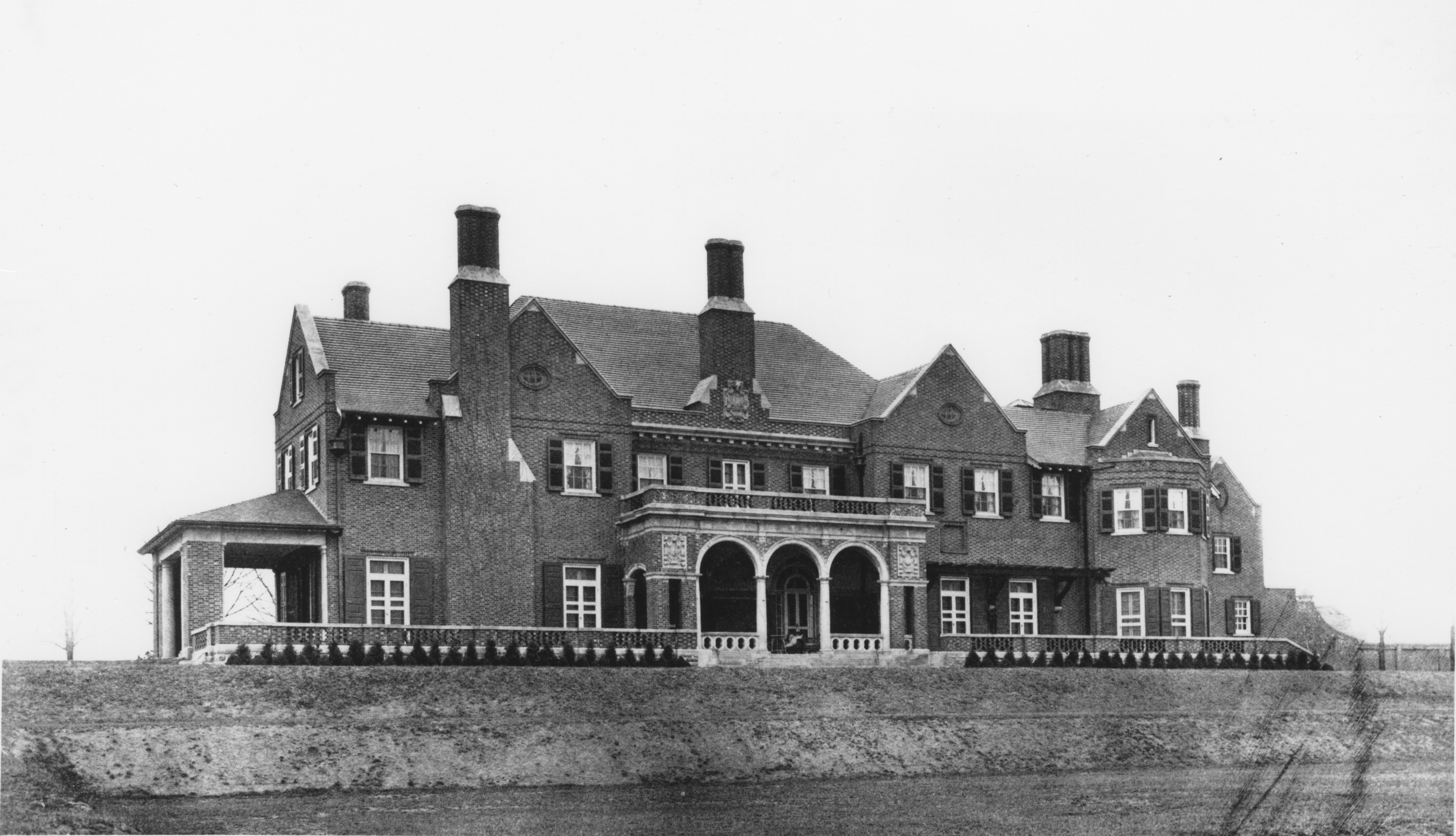
    The property is home to the Glencoe estate, built in 1907 for Thomas McKean Jr., and purchased by Samuel Robinson, founder of Acme Markets, in 1925, according to the Radnor Historical Society. In 1960, Robinson left the estate to Presbyterian Children’s Village, an orphanage run by a local Presbyterian group. The orphanage transitioned over time to become a residential treatment program for children with emotional and behavioral challenges, and in 2019 became Gemma Services after a merger with Silver Springs-Martin Luther School. Gemma Services is building a new campus in Plymouth Meeting.

    The Haverford School purchased the property in 2022 from Gemma Services for $19.88 million and said at the time that it did not have a specific plan for the site.

    Waverly’s early proposal involved retaining the historic mansion and knocking down its dormitory buildings, which are in “poor shape,” said Marc Heil, Waverly’s vice president of campus development.

    Heil said any new construction would “have that Main Line flair to it” and would not be “commercial looking.”

    Planning commission members expressed an openness to having the site developed, but raised concerns about the early plans.

    Commission member Stephen Varenhorst called the plan “chaotic” and “random” and encouraged the organization to reconsider its approach. Lane Vines, the commission’s chair, said he hoped more of the historic property could be retained.

    Residents expressed concern about increased traffic in the quiet neighborhood, stormwater management, and a potential increase in ambulance traffic, especially if an EMS station is placed on the site, a possibility.

    Waverly officials said they will submit plans to the planning commission, which will issue a recommendation to the Radnor Township commissioners, who will ultimately vote on whether to approve the project. Representatives from Waverly said the organization may also seek additional zoning relief if they pursue renovations outside of the property’s institutional zoning classification, which would require a separate approval process through the zoning hearing board.

    This suburban content is produced with support from the Leslie Miller and Richard Worley Foundation and The Lenfest Institute for Journalism. Editorial content is created independently of the project donors. Gifts to support The Inquirer’s high-impact journalism can be made at inquirer.com/donate. A list of Lenfest Institute donors can be found at lenfestinstitute.org/supporters.