Category: News

  • With U.S.-Iran talks stalled, diplomatic efforts expand to unlikely European players

    With U.S.-Iran talks stalled, diplomatic efforts expand to unlikely European players

    WASHINGTON — Faced with an increasingly bellicose Iran as talks to end the war have stalled, the Trump administration appears to be reaching out to a broader swath of countries that might be able to help pressure Tehran or ease its hardline position where traditional mediators have not succeeded so far.

    While discussions between Iran and Oman, as well as between Iran and Pakistan, Turkey, and Qatar, persist at an uneven and unpredictable pace, the U.S. administration quietly has expanded its outreach to include perhaps unlikely interlocutors in Europe.

    Just this week, Secretary of State Marco Rubio met in person in Washington with the foreign minister of Austria on Tuesday and held a call with the foreign minister of Greece on Wednesday.

    Those interactions were not notable beyond the normal course of relations between the U.S. and two close European allies. The official State Department readouts of the discussions were bland and vague and did not mention Iran by name as a topic of conversation.

    But it then emerged that both foreign ministers — almost immediately after their talks with Rubio — spoke Thursday with Iranian Foreign Minister Abbas Araghchi.

    The apparent new tack to break the negotiation logjam comes as the U.S. and Iran are both pushing for control of the Strait of Hormuz, the crucial oil shipping corridor. President Donald Trump faces little wiggle room in his next steps as the economic fallout from the war and dwindling stockpiles of key weapons pose political problems for Republicans ahead of November’s midterm congressional elections.

    A desperate push is on to break the diplomatic logjam

    The entry by Austria and Greece is likely less of a formal mediation attempt, analysts say, and more reflective of a desperate push to halt the conflict because of the impact it has on an increasing number of countries, beyond those in the Middle East.

    “Everyone is just urging both sides to stop this reckless game of chicken,” said Ali Vaez, Iran project director at the International Crisis Group.

    It also shows how much Iran’s effective closure of the Strait of Hormuz has forced countries, which otherwise were neutral bystanders to the larger conflict, to exercise any diplomatic sway they may have on their Iranian and American counterparts to kick-start a lasting resolution.

    Mona Yacoubian, director of the Middle East Program at the Center for Strategic and International Studies, warned that any efforts by Greece, Austria, or any other nonmediating country could prove to be futile.

    “While the calls to both sides may entail encouraging both Iran and the U.S. back to the negotiating table, such efforts fall short of mediation, which is a very complex endeavor and requires trust to be built by the mediator with both sides,” Yacoubian said.

    She added that it’s not something that any country can “just jump into.”

    Rubio discussed Iran with his Austrian and Greek counterparts

    The State Department said Friday that it could not comment on the timing of calls by other countries’ foreign ministers and maintained that Rubio had made no requests of either to get in touch with Iran or pass messages to Araghchi.

    One European diplomat, who was briefed on the matter and spoke on condition of anonymity to detail sensitive diplomatic conversations, said the timing of the calls was not an accident.

    The State Department did allow, however, that Iran had been a topic of conversation in Rubio’s discussions, which occurred as Trump is facing serious political headwinds over a war for which he has offered shifting objectives.

    No longer purely about making Iran incapable of producing a nuclear weapon, the immediate goal has become reopening the Strait of Hormuz, where a fifth of the world’s oil usually passes through and which was open before the U.S. and Israel launched attacks on Iran on Feb. 28.

    “That’s goal number one: Keep oil and gas cheap for Americans all over our country,” Vice President JD Vance said in an interview Thursday on Fox News Channel. But he did not say anything about the strait being open and toll-free for transiting ships, as he had in the past.

    The second goal, Vance said, is to ensure that Iran will never get a nuclear weapon.

    The two European countries have key connections to war’s fallout

    Austria and Greece may not be obvious choices to assist on the Iran portfolio, but Vienna is home to the International Atomic Energy Agency, which will play a key role in any resolution to the Iran’s nuclear program, and hosted the final negotiations that resulted in the 2015 Iran nuclear deal. Greece is a major maritime nation in the Mediterranean and has significant shipping interests in the Strait of Hormuz and the Red Sea.

    In statements from the Austrian, Greek, and Iranian foreign ministries, it was clear that Iran had been a top topic in all of the conversations this week.

    The Greek foreign ministry said Foreign Minister George Gerapetritis had been briefed by Araghchi on “regional developments, and in particular on the ongoing talks regarding the Strait of Hormuz.” It said Gerapetritis “underlined the importance of freedom of navigation and maritime security.”

    The Austrian foreign ministry offered Austria’s services as a venue for further potential talks with Iran and said Foreign Minister Beate Meinl-Reisinger had stressed to Araghchi “the urgency of restoring stability in the region through serious diplomatic efforts.”

    “There can be no military solution,” it said. “A diplomatic solution remains possible. Our priority is to safeguard freedom of navigation through the Strait of Hormuz.”

    Iran’s foreign ministry, expectedly, took a different tack in explaining the calls.

    It said Friday that in Araghchi’s calls with his European counterparts they discussed “mechanisms for the future management of the Strait of Hormuz,” which he said had been disrupted by the “unlawful aggression by the United States and the Israeli regime against Iran.”

    In both calls, he accused the U.S. of violating the interim deal signed by both sides in June to end the immediate hostilities and begin broader talks to end the war.

  • Cheltenham’s new police chief is a longtime crisis negotiator and played a key role in the Bill Cosby case

    Cheltenham’s new police chief is a longtime crisis negotiator and played a key role in the Bill Cosby case

    Cheltenham’s new police chief is a longtime crisis negotiator who led one of the township’s most famous criminal investigations.

    Richard Schaffer will be sworn in as Cheltenham’s new police chief next week to replace John Slavin, who is retiring after 37 years with the department. The salary range for the new chief was listed as $180,000 to $195,000 in the township’s job posting.

    Schaffer has led a variety of community policing efforts in his 26 years at Cheltenham, spending more than two decades as a crisis negotiator and heading the township’s gun violence task force.

    In 2024, he embedded a county mental health worker into the police department to assist in cases with behavioral health concerns.

    Schaffer, who holds a master’s degree in criminal justice from St. Joseph’s University, made the case for community policing in a speech at a school board meeting this week.

    The new chief takes the reins at a tumultuous time for Cheltenham School District, which has faced a range of safety concerns in recent years — most notably two alleged assaults in a high school locker room last year that led to criminal charges for four football coaches and six players.

    “We have not lived up to our shared ideals. We must acknowledge the victims from recent cases, and we must promise to do things better not only for them but for future students,” Schaffer said.

    “I would urge parents and the board to commit to a greater partnership with the police department.”

    Some Cheltenham residents have advocated for removing a physical police presence from schools in recent years.

    Schaffer pledged at the meeting to “push back on some of those who sought to drive the police from the schools.”

    “Police interacting with students, faculty, and staff is a good thing,” Schaffer said. “We want to be proactive by leveraging information and our relationships to get ahead of problems.”

    District spokesperson Kevin Kaufman did not answer questions Friday about the current status of security programs at Cheltenham schools.

    Schaffer also led the 2005 investigation into allegations that Bill Cosby drugged and assaulted Andrea Constand at his Cheltenham home.

    Although the Montgomery County district attorney declined to press charges at the time, the case was reopened in 2015, and Schaffer was eventually called to testify.

    He testified in 2018 that he had believed Constand’s allegations at the time, and still did.

    Cosby’s conviction was overturned in 2021 on procedural grounds.

    This suburban content is produced with support from the Leslie Miller and Richard Worley Foundation and The Lenfest Institute for Journalism. Editorial content is created independently of the project donors. Gifts to support The Inquirer’s high-impact journalism can be made at inquirer.com/donate. A list of Lenfest Institute donors can be found at lenfestinstitute.org/supporters.

  • As Lemon Hill Park restoration begins after FIFA Fan Festival, park caretakers doubt long-term city support

    As Lemon Hill Park restoration begins after FIFA Fan Festival, park caretakers doubt long-term city support

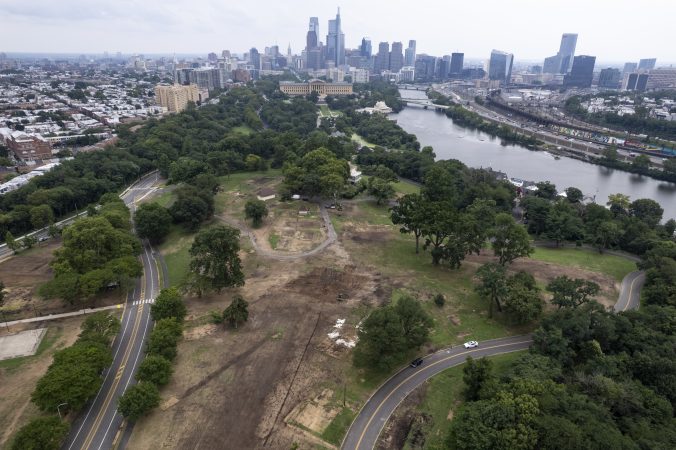
    The marred fields of Lemon Hill Park are the remaining signs of the longest summer party the city has ever seen. Half a million people gathered in the park for 39 days straight, dancing to the All-American Rejects, cheering on World Cup matches, and sharing meals on blankets across more than a million square feet of the Fairmount park.

    The FIFA Fan Festival, by most accounts from the city, tourists, and residents, was a resounding success, offering a premium World Cup experience at a sliver of the cost of attending a game. Philly’s fan experience was considered one of the most affordable and popular in the country.

    Soccer fans gather to watch Mexico play South Africa on a giant screen during the opening day of the FIFA Fan Festival at Lemon Hill on June 11.Jose F. Moreno / Staff Photographer

    Now that the party is wrapped, the caretakers of Lemon Hill and nearby residents are hoping the city makes good on a promise to restore the park to its former glory, if not better.

    Philadelphia Soccer 2026, organizer of the FIFA Fan Festival, committed $4 million to park upgrades, from new picnic pavilions and a playground to safer sidewalks and traffic-calming measures at intersections. Additional funding will come from the city, but when asked, a city spokesperson declined to reveal the total budget and said more details will come during a groundbreaking celebration in September.

    The city gathered input from the community across nine public engagement sessions beginning in 2024 that netted 350 comments from 200 participants that helped shape which improvements would be prioritized.

    While residents and caretakers welcome park improvements, it is not lost on them that financial backing comes only after large companies use the space, though locals have been requesting help for years, said Shaun Cerborino, a co-organizer of Lemon Hill’s volunteer parks group. What’s more, without long-term maintenance funding, the upkeep of the park and its new upgrades will fall to caretakers once again.

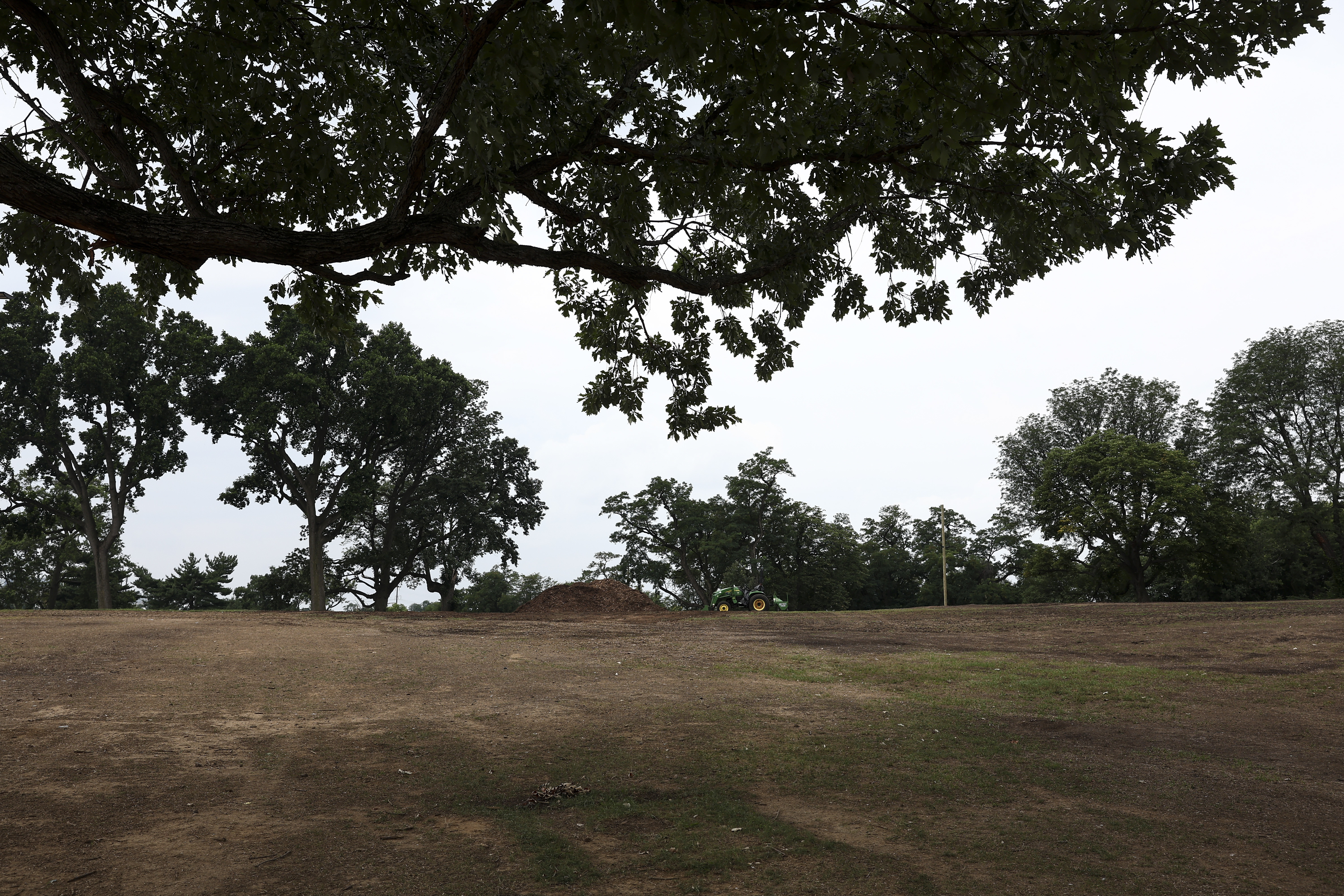
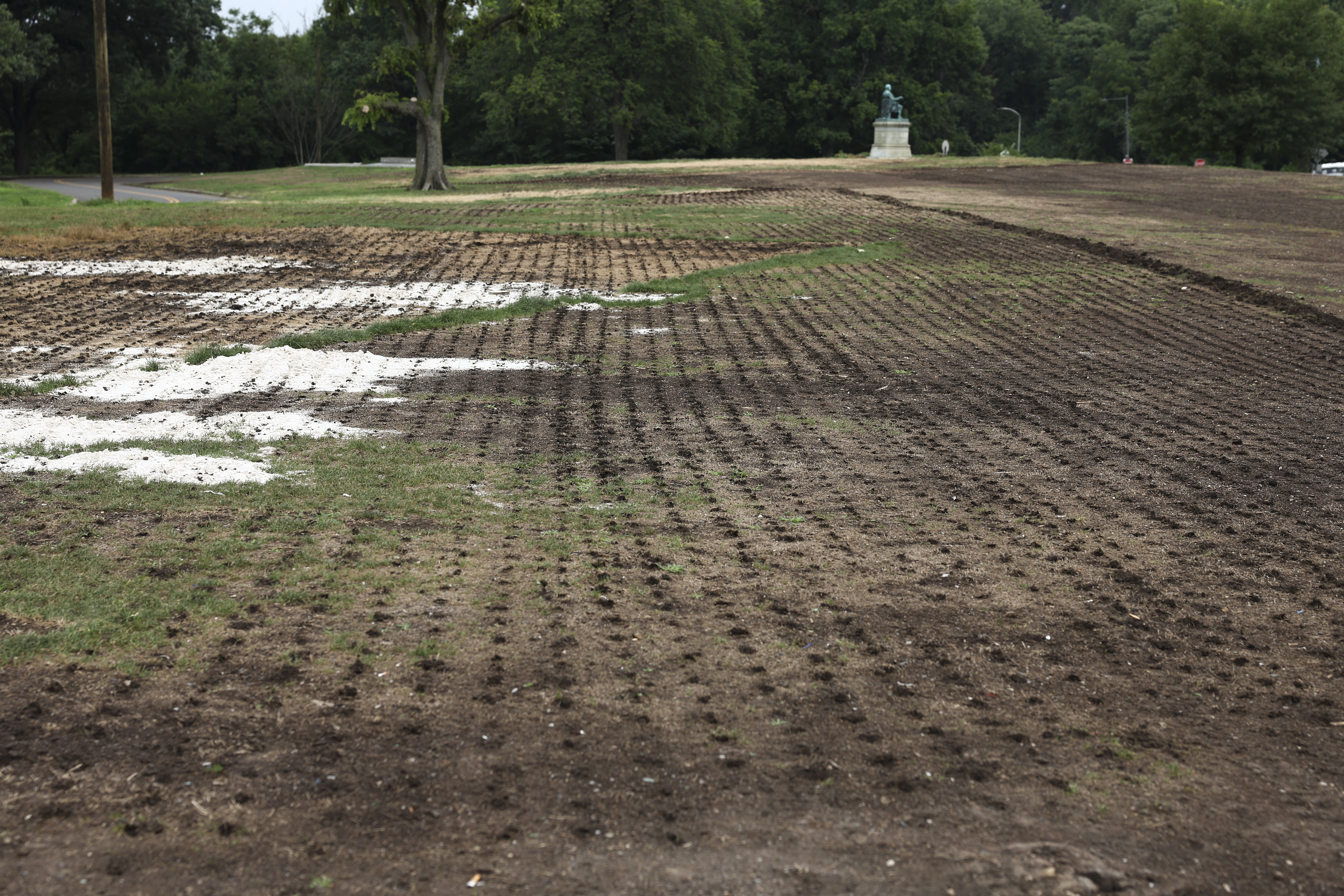
    Large grass-less sections remain following FIFA Fan Festival at Lemon Hill on July 28. Fan Fest wrapped up on July 19.Monica Herndon / Staff Photographer

    Deferred maintenance billed as ‘legacy projects’

    A month after the World Cup ended, the largest Lemon Hill field that staged the festival is still mostly filled with dirt, patches of wilting grass, and the occasional leftover screw and other small construction waste. The city began aerating and preparing the soil for regrowth in July.

    The grass will grow back, said Cerborino and Nissa Eisenberg, Fairmount residents and co-organizers of the Lemon Hill Neighbors Association, which provides regular volunteer maintenance to the park. But what caretakers truly are concerned about is long-term support after the city finishes its upgrades months from now.

    Additionally, many of the improvements considered legacy projects are really “deferred maintenance” that had been requested for years, and came about only when corporations needed to use the park, Cerborino said.

    Large grass-less sections remain following FIFA Fan Festival at Lemon Hill on July 28. Fan Fest wrapped up on July 19.Monica Herndon / Staff Photographer

    “Instead of properly funding Parks and Recreation, the city looks toward private ventures to help keep the lights on and generate enough money to maintain — which we’re barely doing anyway,” Cerborino said.

    In Philadelphia, there is no dedicated budget for parks and open space; instead, the city and volunteers rely on the Philadelphia Parks and Recreation budget to maintain parks. They also look to grants, private nonprofits, and thousands of volunteers who weed, fix, and maintain trails and park space as part of “Friends” groups. Philadelphia relies on volunteers at more than twice the national average.

    Since taking office, Mayor Cherelle L. Parker has raised the parks and recreation department’s budget each year, doubling its spending from $53 per resident on parks in 2024 to $110 per resident in 2026. And while 97% of Philadelphians can walk 10 minutes and find a park, far exceeding the national average, Philadelphia still spends about half as much on its parks as the national average, according to the Trust for Public Land.

    Improvements like upgraded sidewalks, lighting, signage, and recreation areas are standards that should already be met by the city, which is home to some of the highest-ranked parks in the country, Cerborino said.

    Small holes line sections of the park, possibly following aeration, after FIFA Fan Festival at Lemon Hill on July 28. Fan Fest wrapped up on July 19.Monica Herndon / Staff Photographer

    Residents may have their park back, but restoration is far from over

    Fairmount residents are all but back to their usual park routines after the festival equipment was removed, but they say it is still a long way before Lemon Hill is back to normal.

    Last month, Samantha Tartaglino was walking her German shepherd, Marley, through the flattened fields. Marley sprinted through swaths of dead, brown grass, unfazed by the patches. Tartaglino said Marley was just happy to be back in wide-open spaces, as the dog had to make do with a smaller park nearby for weeks.

    Lemon Hill’s open fields are a key reason for why many move to this part of Fairmount, Tartaglino said, but even before the fan festival, residents felt the park was not being supported to its fullest potential.

    “I feel like FIFA and World Cup put the city under pressure and kicked them into gear,” Tartaglino said.

    The city has already put into place many of its legacy commitments, like new ADA-compliant sidewalks and ramps along Sedgley Drive, traffic-calming measures at the intersection of Sedgley and Poplar Drives, and additional lighting fixtures.

    But the community’s request for permanent bathrooms, water fountains, and portable water stations has gone unanswered, Eisenberg said. The city says those things can happen only if there is an on-site park staffer due to concerns about maintenance and vandalism.

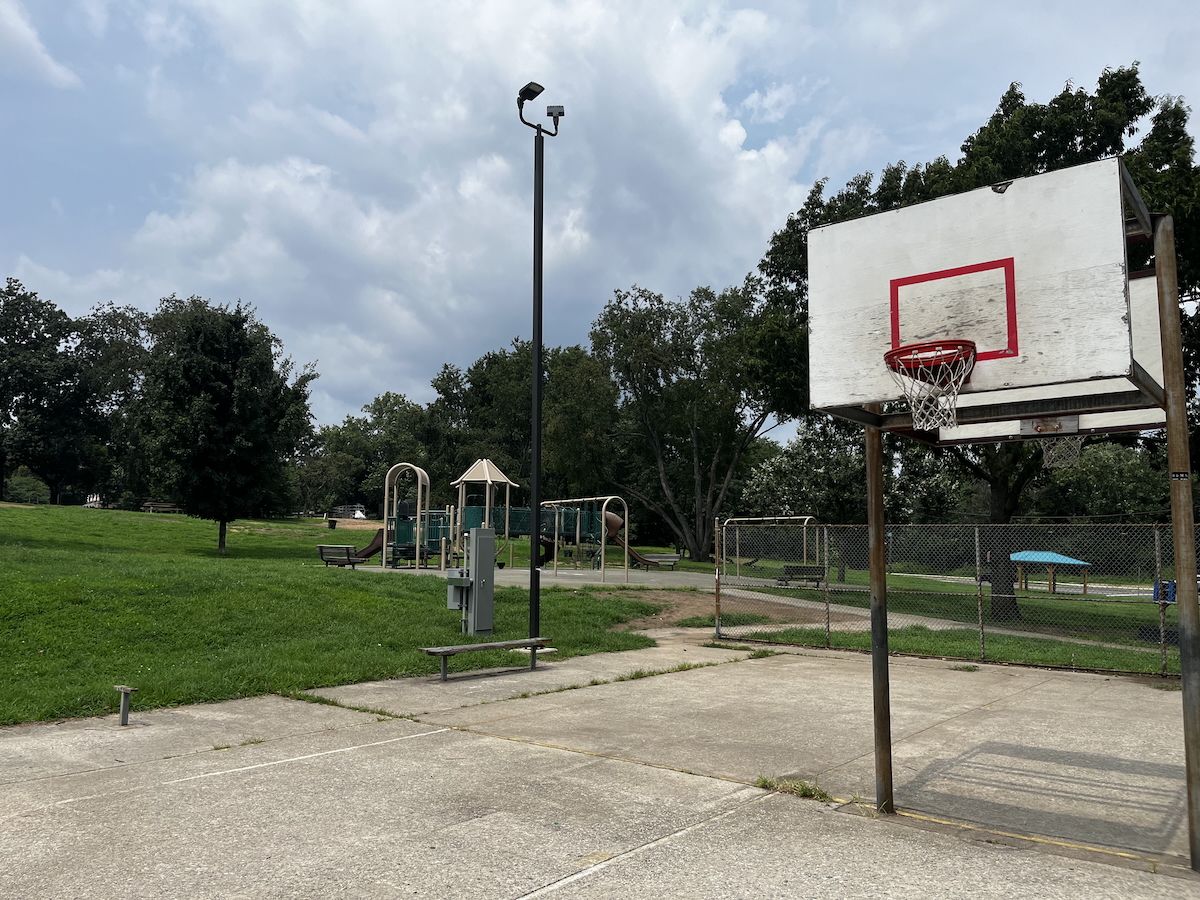
    A project with a longer timeline will be a new 43,500-square-foot playground, with construction expected to stretch into April 2027, according to Philadelphia Soccer 2026 and the city. And while construction is underway, the playground and basketball courts will be closed.

    Eisenberg lamented that. What was once presented as a plan for residents to give up park space for two months during the World Cup will now last much longer, she said, as grass fields will need to grow back and other amenities are closed for renovation.

    “The basketball court is one of the most heavily used assets of the park, but they’re planning to use the court as a staging area for the construction,” Eisenberg said. “Which I get because it’s conveniently located, but you just put on this multimillion-dollar event; I’m sure you can find another area to stage construction materials so that at least the basketball court isn’t offline all winter.”

    City officials say the plan is worth the wait.

    “We expect the legacy improvements to be completed next spring and are excited for neighbors and future visitors to enjoy a renewed Lemon Hill … that builds on the excitement of this summer while serving Philadelphians for years to come,” a city spokesperson said.

    The playground and basketball courts at Lemon Hill Park in the Fairmount neighborhood of Philadelphia. Since the 2026 World Cup has ended and the FIFA Fan Festival staged at the park has left, restoration efforts are underway with funding from various private and public stakeholders.Henry Savage / Staff

    Lack of long-term maintenance funding

    While projects such as renovating the playgrounds, basketball courts, and baseball fields are welcome, the Lemon Hill Neighbors Association fears that once city crews finish the work, the caretakers will be right back where they started — working off “love and duct tape” with little financial support.

    This means park improvements come only after long periods of push and pull between Philadelphia Parks and Recreation staffers and volunteer park caretakers, leaving long-term maintenance to fall to volunteer groups that dedicate their time and money to keeping parks usable.

    “We understand that a lot of times Parks and Recreation is understaffed or underfunded, but then that means we’re going to have to pick up that role,” Eisenberg said. “We need help, and the Parks and Recreation budget needs to reflect it.”

    Earlier this week, Temple graduate student Kyle McCurly was lounging in the undamaged grass surrounding the large field that just housed the festival. Having grown up in rural Georgia and recently back from a trip to Austin, Texas, McCurly said Philly’s parks could be so much more with long-term maintenance, and not just at Lemon Hill. He noted that Austin invests twice as much money as Philadelphia does in its parks per resident, according to the Trust for Public Land.

    “Everyone’s going to have different opinions on how the funding itself is created,” McCurly said. “But I think that it’s worth consistent investment to make green spaces more accessible and enjoyable in the city.”

  • Inside the world of competitive Amish volleyball

    Inside the world of competitive Amish volleyball

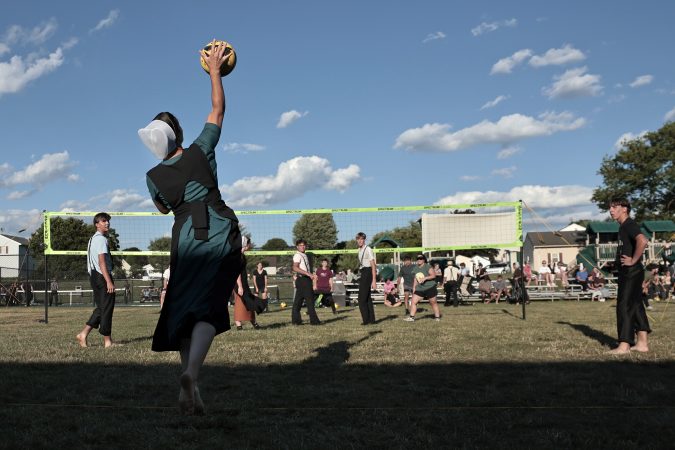
    INTERCOURSE, Pa. — A young Amish woman stood barefoot in the back right corner of a grassy volleyball court, spinning a ball in her hands.

    She wore a simple green dress with a black apron, and when she leapt and hammered a serve over the net with a grunt, her prayer covering looked as white as the passing clouds.

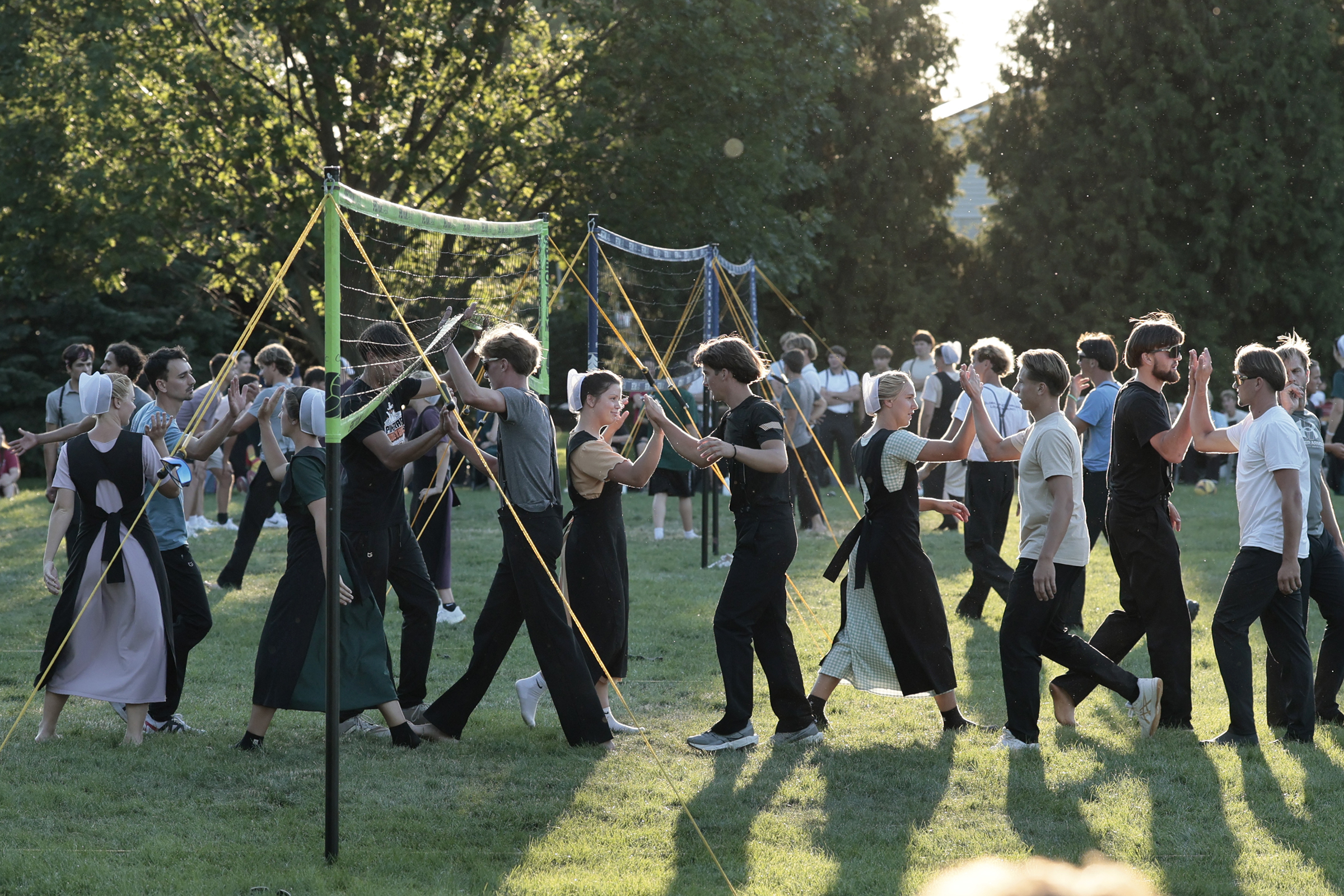
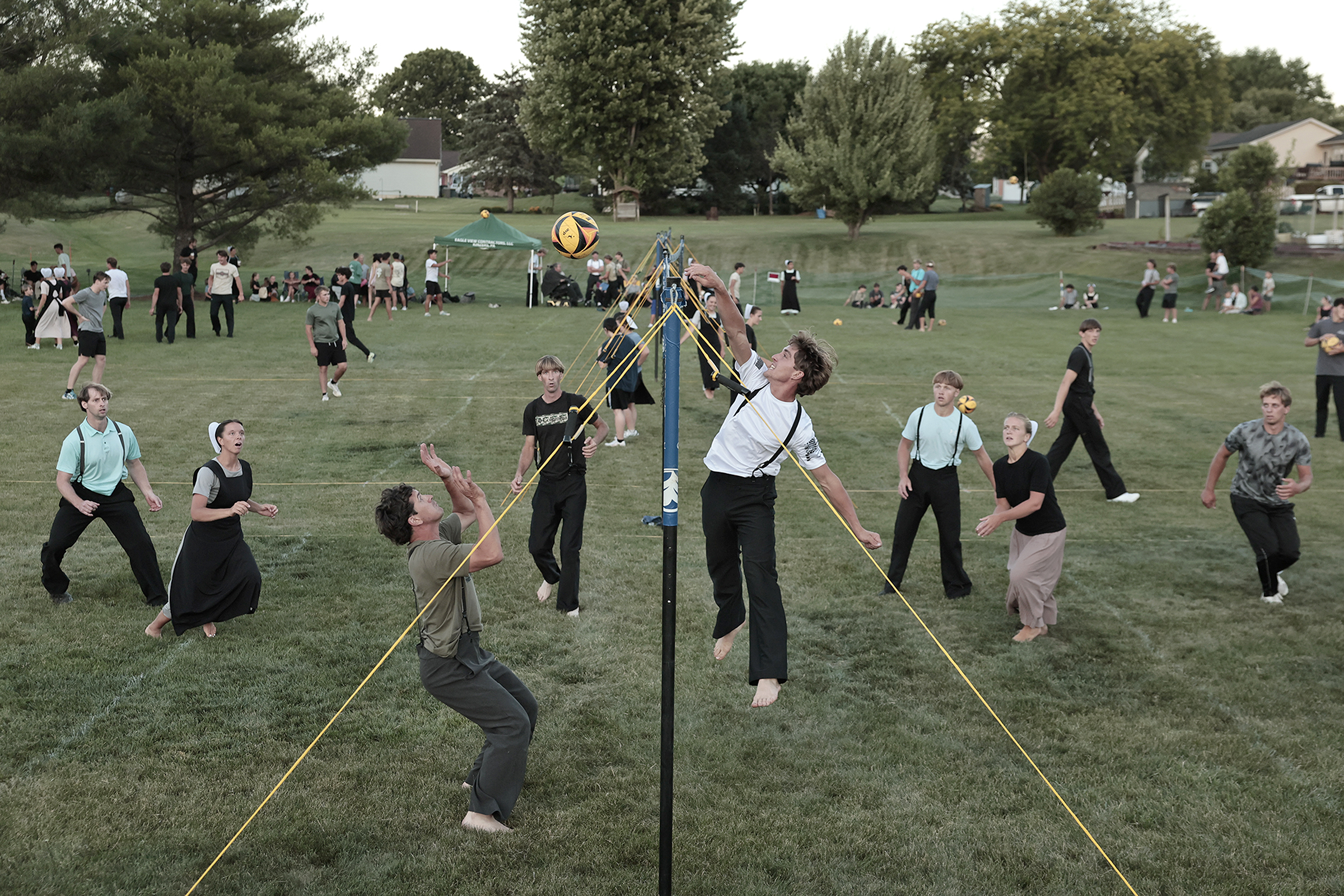
    On this beautiful afternoon in late June, the coed competitors were among the hundreds of young Amish players from Pennsylvania, Ohio, and other states who converged on Intercourse Community Park, about 60 miles west of Philadelphia, in Lancaster County, for the annual volleyball tournament. Hundreds gathered around the courts in lawn chairs to watch, including Amish men with long beards alongside “English” children in sneakers and sports jerseys.

    Teams high-five each other after a volleyball match during the first day of the Heritage Days Volleyball Tournament at Intercourse Community Park in Gordonville, Pa., on June 19.Elizabeth Robertson / Staff Photographer

    The Amish in Pennsylvania, for reasons few could fully explain, love competitive volleyball. Some simply shrugged their shoulders when asked why. Others said they play volleyball because previous generations played too, a skill they learned just by watching, much the same as shoeing buggy horses or baking whoopie pies.

    “I guess it’s just part of our culture,” said Ray Beiler, the tournament’s organizer. ”Competition-wise, though, it’s slow-pitch and volleyball, but volleyball is probably the biggest.”

    The Amish also dabble in ice hockey when ponds freeze, Beiler said, and, in Indiana, they play basketball, of course. In Intercourse, the sharp pop of pickleball paddles on this Friday afternoon revealed another growing sport among the Amish.

    Volleyball, it seems, has always been there, some said.

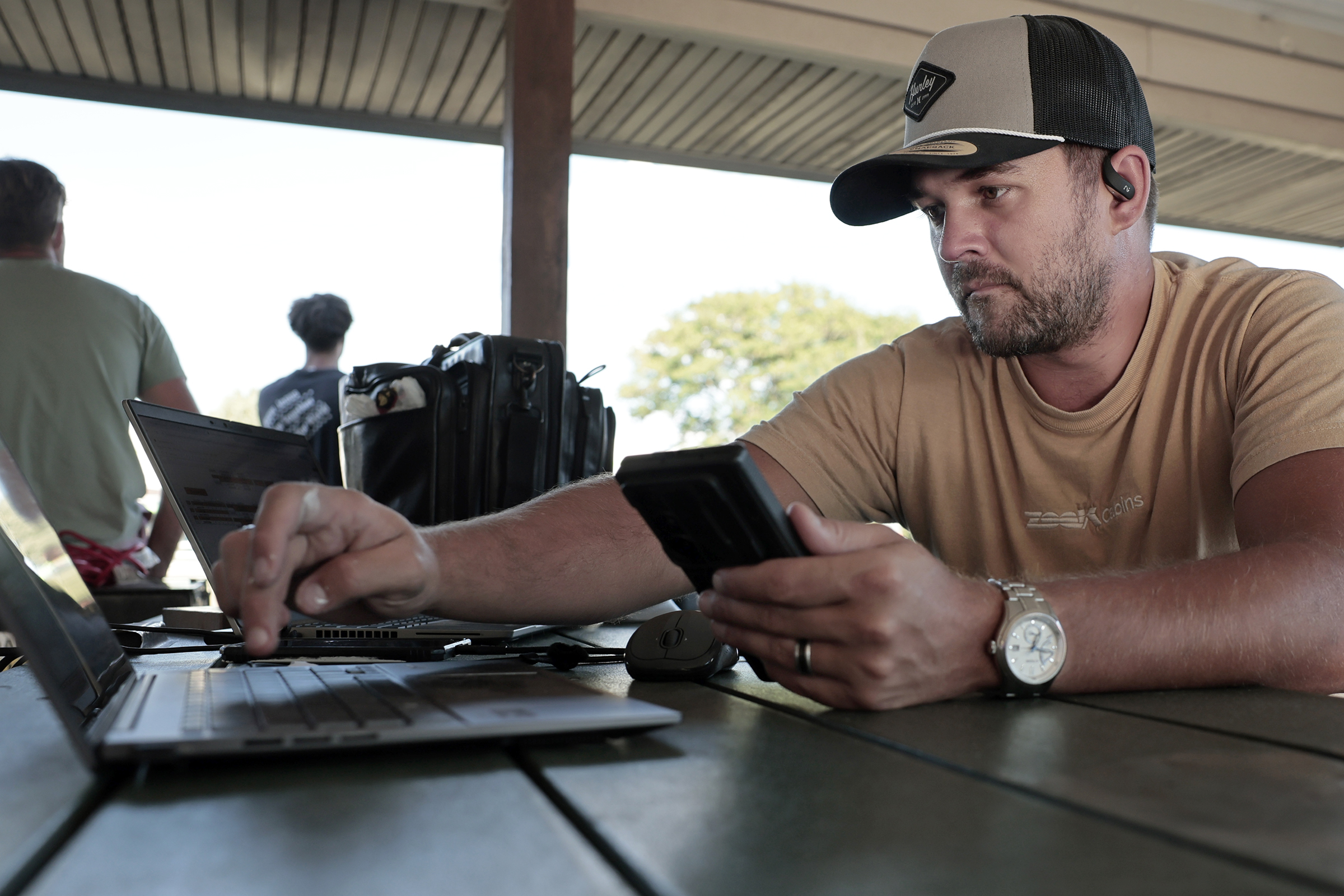
    Ray Beiler updates the scores and standings during the Intercourse Heritage Days and Heritage Days Volleyball Tournament at Intercourse Community Park in Gordonville, Pa., on June 19.Elizabeth Robertson / Staff Photographer

    “I grew up with it,” said competitor Irv Beiler, 18, of Christiana, Lancaster County. “It’s a team game.”

    One older Amish man said he grew up playing softball, but reckoned volleyball was a new phenomenon. When asked his name, the man spoke to his wife in Pennsylvania Dutch, and declined to answer.

    The Amish do have a traditional game called cornerball, or “eck balle” in Pennsylvania Dutch, that looks like a cross between baseball and dodgeball, but is played in a cow pen. According to AmishAmerica.com, the sport was originally played with homemade balls made by “wrapping a quarter-sized steel nut in twine and covering it with black tire tape.”

    According to the website, eck balle is a disappearing sport.

    Erik Wesner, founder of AmishAmerica.com, said the purpose of volleyball and other sports in Amish communities is mostly about socialization, not competition.

    “This is a game that’s played commonly at the Sunday youth group gatherings or meetings at church members’ houses for dinner,” he said. “It’s a way for teens and young adults to interact.”

    Older Amish in Intercourse didn’t know much about the rise in popularity, but, ever efficient and resourceful, said volleyball takes up little room, compared to say, soccer, and can keep a lot of children busy at a gathering.

    Irv Beiler serves the ball during the Heritage Days Volleyball Tournament at Intercourse Community Park in Gordonville, Pa., on June 19.Elizabeth Robertson / Staff Photographer

    John Lapp, 51, of Gap, Lancaster County, said there are “volleyball barns” in the area where the more serious players gather in the winter.

    “I played softball,” he said. “Volleyball was just a sport that took hold, I suppose.”

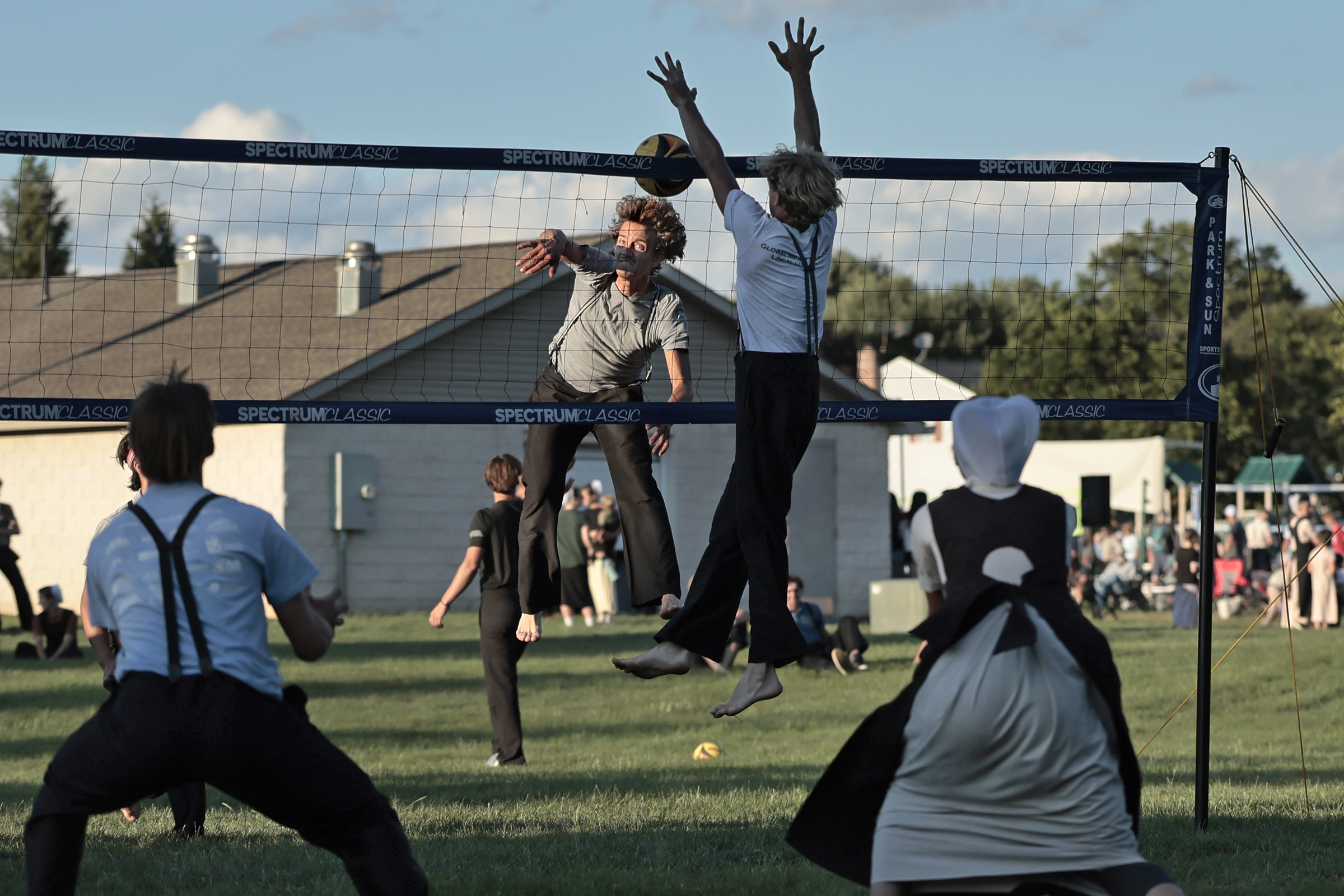
    There doesn’t appear to be much trash talk in the competitive world of Amish volleyball, unless you understand Pennsylvania Dutch, but the talent is plain as day. That makes sense, locals said, if you consider the day-to-day life of Amish youth. They’re wrangling calves, riding kick scooters, and lifting hay, building muscle and balance the whole time.

    “I used to play too,” said Simon Stoltzfus. “I just can’t jump as high as I could or stay up there as long.”

    Wesner said sports tend to be more prevalent in progressive Amish communities, like in Lancaster County, and less so in more conservative areas, like Mifflin and Clearfield Counties.

    Serious play during the Heritage Days Volleyball Tournament at Intercourse Community Park in Gordonville, Pa., on June 19.Elizabeth Robertson / Staff Photographer

    Last year, The Inquirer spoke to Melvin Byler, who grew up Amish in Western Pennsylvania, after he won the Professional Bull Riding event in Reading. Byler had to leave his Amish community to pursue bull riding as a profession.

    “I didn’t even see bull riding until I was 14, and when I told my parents I wanted to do it, they said it was a phase,” Byler said.

    Steven Nolt, an Elizabethtown College professor who has researched and written about the Amish extensively, said situations like Byler’s are rare. Ray Beiler said a college coach came to one of the Intercourse tournaments and said many of the competitors could play at higher levels, but Nolt said it’s unlikely that even the most talented volleyball players would pursue the sport more competitively.

    “It would be hard to imagine,” Nolt said. “They’d be making a choice not to join the Amish.”

    Chris Haley oversaw the pickleball tournament at the Intercourse Heritage Days, where there are new courts. He said the Amish quickly took up that sport, too, and some have makeshift courts at their house.

    “They are talented and determined,” Haley said.

    They compete in sports for the fun of it, not for the prospects of future scholarships, and, at a tournament as big as Intercourse, the socializing was front and center. Young Amish slipped off their black leather boots and Crocs for sneakers or went barefoot, dozens chatting up one another in both English and Pennsylvania Dutch.

    “This tournament is most definitely for the fun of it,” said Wilmer Stoltzfus, 20.

    Friends and family watch the play during the Heritage Days Volleyball Tournament at Intercourse Community Park in Gordonville, Pa., on June 19.Elizabeth Robertson / Staff Photographer

    The players took big gulps from jugs of water and walked onto one of several courts spread out over several acres in the park. Some of the men wore thick, black work pants with suspenders, but others wore shorts. When one young Amish man dove for a dig and missed, his teammates rushed to help him up.

    “Good job,” they said.

    By Saturday night, only one net would remain, and a few thousand spectators would be crowding the court for the finals. The winners would get tall trophies housed in an exhibition room, with silver and gold volleyballs fastened to the tops.

    They’d also get bragging rights until next year, maybe.

    “Not bragging, no,” said Wilmer Stoltzfus. “We don’t really brag.”

    Serious play during day one of the Heritage Days Volleyball Tournament at Intercourse Community Park in Gordonville, Pa., on June 19.Elizabeth Robertson / Staff Photographer
  • You think you know a place

    You think you know a place

    Say you’re delivering packages, pizzas, or people. Or you’re a newspaper photographer out looking for pictures. If you’ve been driving around a city for a few years, the streets might seem ordinary, but then something about an intersection, a store front or a sign gives you that feeling of Déjà vu.

    Of all our senses, sound, taste and smell are usually considered the most powerful memory triggers. Like when Sam “Plays it again” in Casablanca or Anton Ego tastes Remy’s ratatouille. Or when any of us open a brand new box of Crayola crayons.

    But as a photographer it is the visual reminders that are powerful. Driving in the city I am always taken back to a graduation party I photographed down a particular street, or the sunset I framed. Or how I negotiated a hill in a snowstorm, or covered a shooting on that block.

    Sometimes I feel like I have been leaving bread crumbs behind me as I drive everywhere, waiting to be remembered.

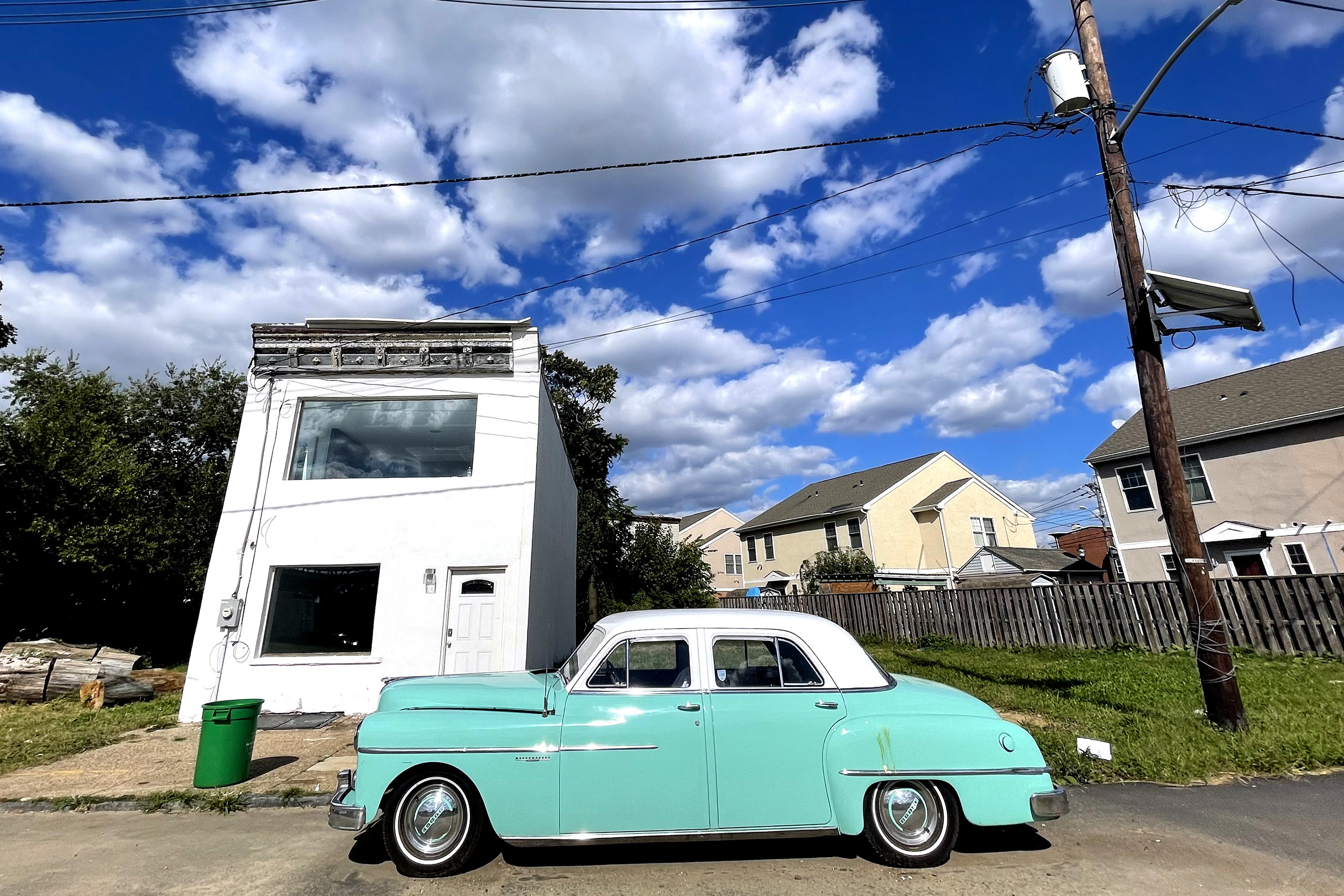
    A 1950s Dodge Meadowbrook parked near Front and Main Streets in Camden.Tom Gralish / Staff Photographer

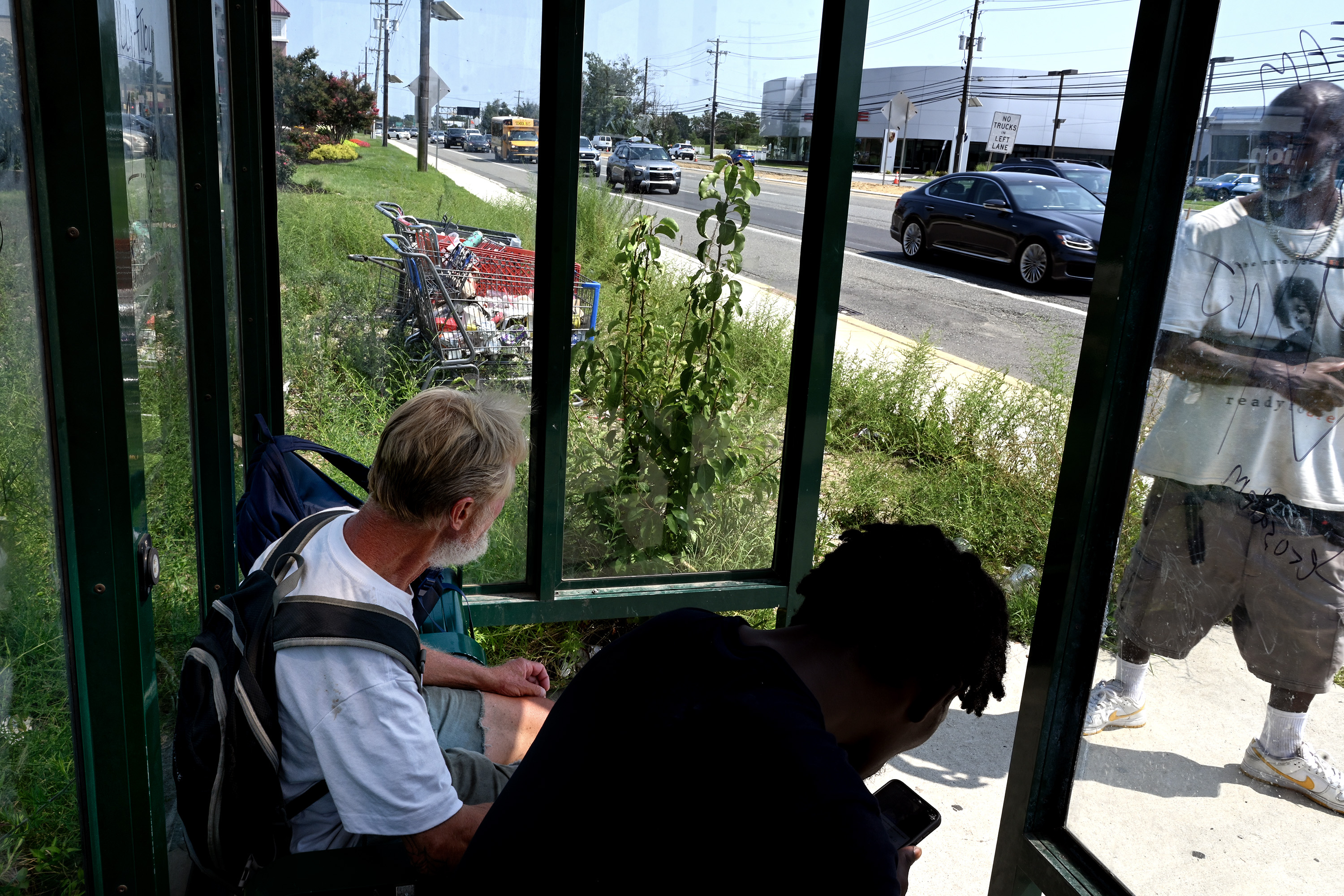
    Stalled in backed-up traffic for the ongoing construction on Rt. 70 in Cherry Hill last week, I glanced over at a bus shelter. I recalled years ago seeing riders standing in the slim shadow of a utility pole to get just a tiny bit of some shade from the sun while waiting for their bus.

    They waited next to a multimillion dollar retail development on the site of the former Garden State Racetrack. The mostly minimum wage workers who rode the bus to their jobs there didn’t even have a bench to sit on — let alone relief from the elements while waiting to go home. Back then I photographed commuters sitting on overturned shopping carts and tried to interest an editorial writer to take up their cause.

    Eventually, a bench was put there, and a few years later a shelter was installed. But as I sat in my car the other day, it still didn’t look right. I turned into the shopping center and walked over.

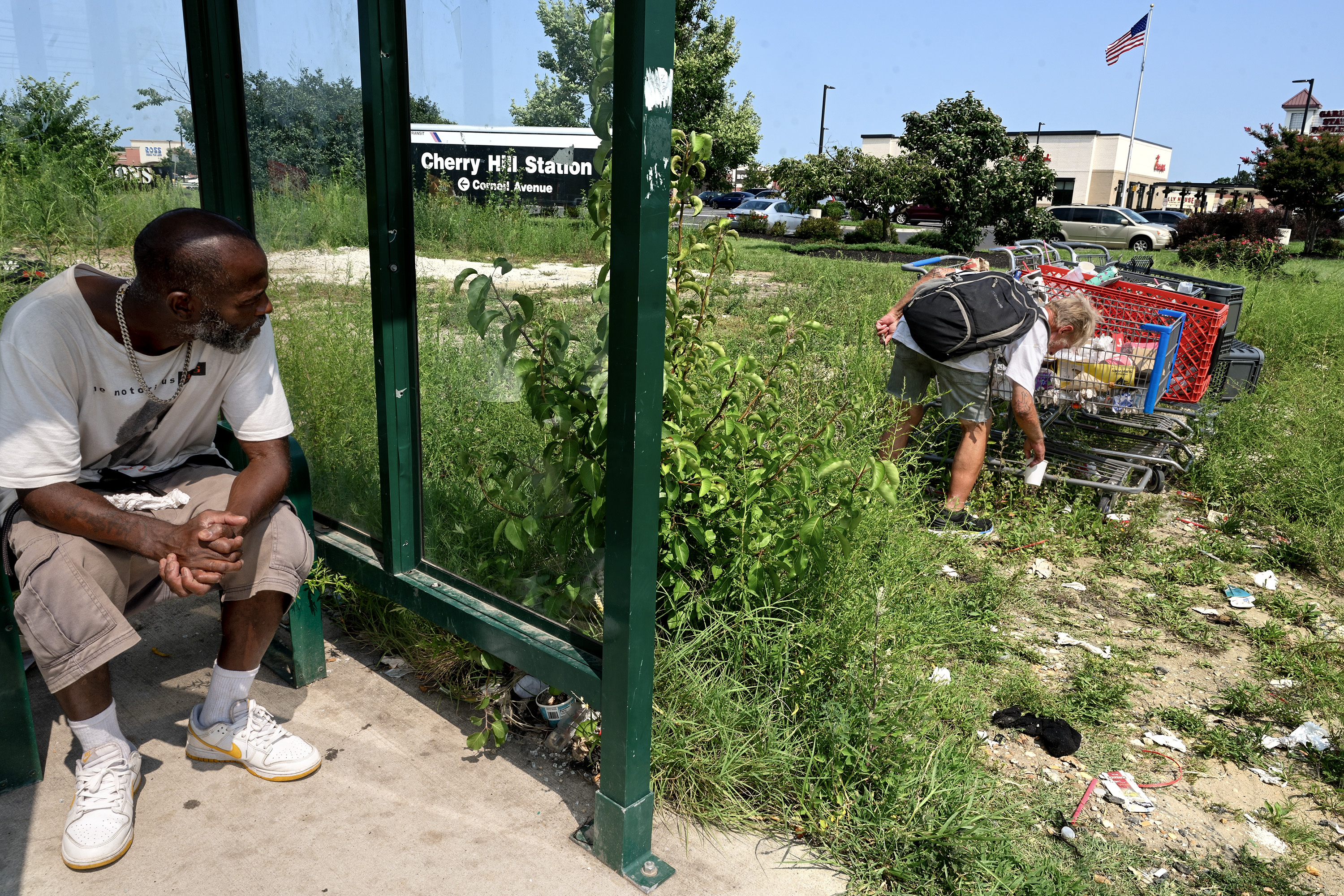
    Wayne Peters picks up trash while waiting for a bus with Bobby White.Tom Gralish / Staff Photographer

    Wayne Peters tells me he’s been taking NJ Transit’s 406 bus to and from Camden for about two years, and says this stop has “gotta be the worst in the state.” He says he always picks up trash when he’s there, and adds more to the piles already in the shopping carts that serve as receptacles.

    Fellow rider Bobby White added, “You’d think something in Cherry Hill would be better. How hard would it be to put a trash can here?” Before their bus arrives, Peters, trying to be positive about the shelter, reminds him “They fixed a broken window once.”

    Another thing about revisiting so many corners of our region is it becomes easy to think I’ve seen it all. And then I hear about a place I didn’t know anything about.

    A semi-retired friend from Bucks County and her friend try to take weekly drives every Thursday they call “Highways of History.” Last week she texted me some photos saying “guess where we are.”

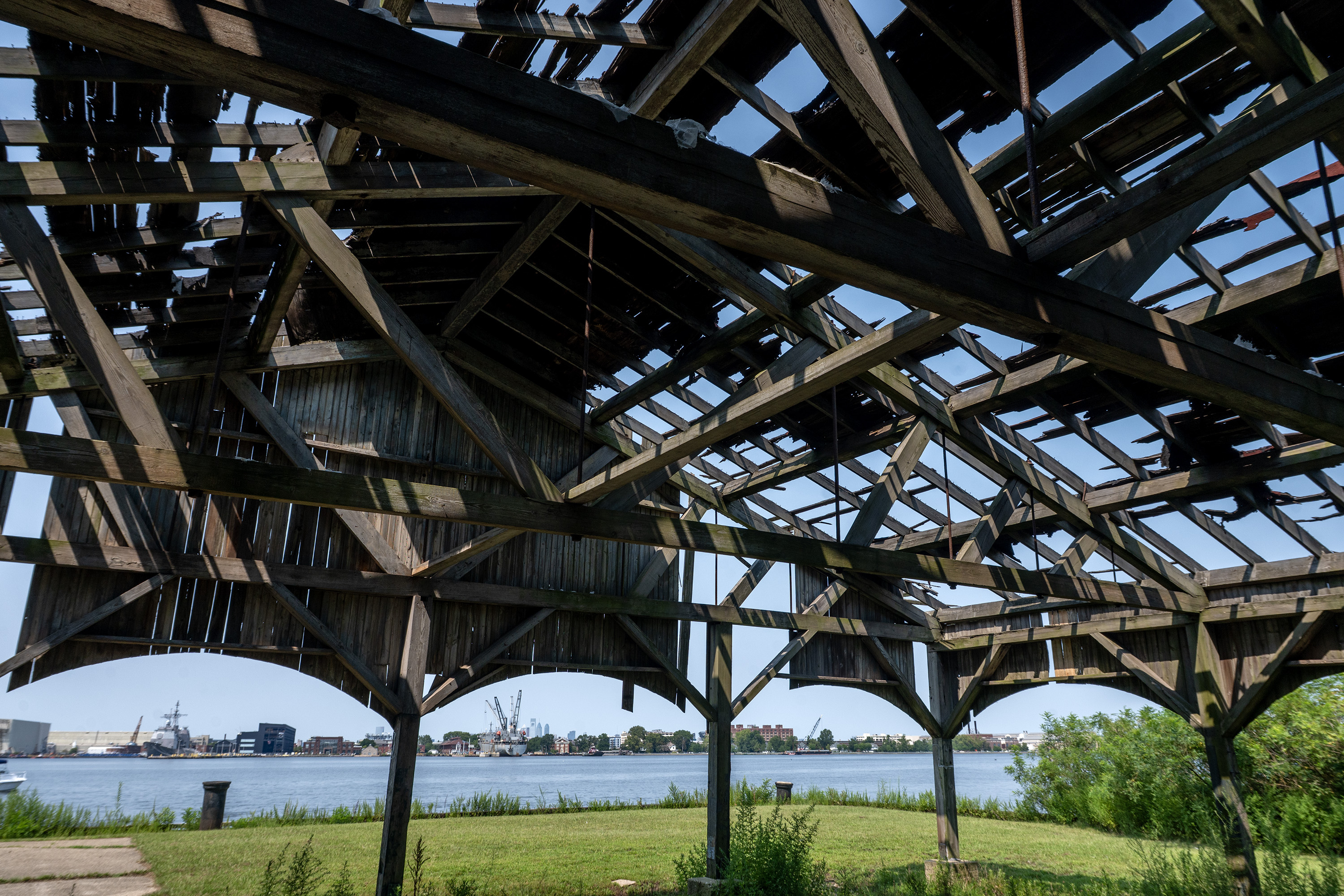
    My photo of an old wharf and pavilion on the Delaware River Wednesday, Aug. 12, 2026. The Nary Yard in Philadelphia is across the river.Tom Gralish / Staff Photographer

    Now in all my years of being like a UPS, DoorDash, or Lyft driver I had never been to the place in her pictures. I could tell from her other stops that she was nearby, which made it even more mysterious. There was a carousel and other things for kids, like a smaller version of the giant covered wooden slide I’d been to at Smith Memorial Playground & Playhouse in Philadelphia’s Fairmount Park.

    Just like the well-known Philly playground that is considered a childhood rite of passage, a New Jersey version has been around for well over a century and when she told me it was only twenty minutes from my house I was completely gobsmacked.

    Not only had I never even heard of the place as a journalist, but it never even entered my consciousness during those years when my wife and I were constantly googling “things to do with a toddler” finding ways to keep our kids — and ourselves — entertained and out of the house.

    She told the me her father took the ferry there from Penn Treaty Park in Fishtown and “spent many a happy day along with hundreds of other poor kids in the 1930s for free soup and crackers and a carefree day.”

    It’s called Soupy Island. It was founded in 1877 on an island in the Delaware River by the Sanitarium Association of Philadelphia, a group of doctors who wanted to help sick city kids with tuberculosis recover with fresh air, playtime, and that free soup. When the Delaware was dredged a few years later and the island was wiped out, the camp moved to the mainland, on the Jersey banks of the river.

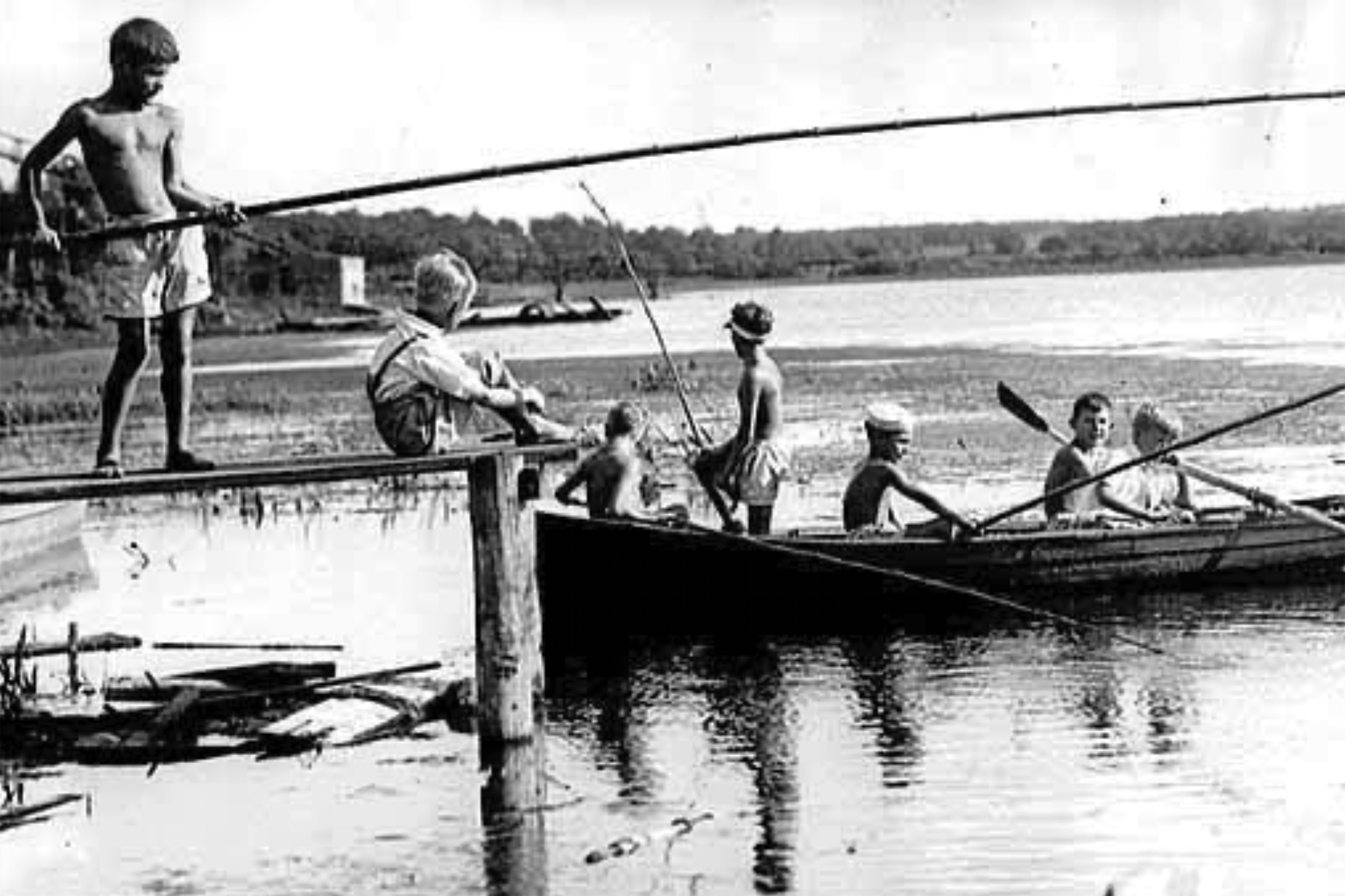
    My love of history was sparked and I could not believe the connections. My own father, growing up in St. Paul, Minnesota, was sent away every summer to the “Prev.” He shared many great memories with me of learning how to swim and fish at a preventorium on a lake.

    Boys fishing at the Children’s Preventorium on Lake Owasso near Shoreview, Minnesota in the 1930s.Minnesota Historical Society

    As its name implies, it was designed to halt tuberculosis among children by getting them away from their crowded, mostly immigrant inner-city neighborhoods and out to the country.

    I spent the weekend digging around and reading everything I could to learn all about Soupy Island, amazed to see The Inquirer had done a number of stories about it, even in the years I’d lived here (kids were still coming over by ferry from Penn Treaty well into the 1980s.)

    An original 1930s German-made Ferrari-Heyn carousel at Soupy Island.Tom Gralish / Staff Photographer

    Seeing that it was closing up for the summer, I planned to reach out the caretaker on Monday to go make pictures. That’s when I learned my colleague, reporter Sarah Nicell, was visiting on their penultimate day of the season. She grew up in South Jersey, and she had never heard of it before either.

    I made sure I got the photo assignment.

    Since 1998 a black-and-white photo has appeared every Monday in staff photographer Tom Gralish’s “Scene Through the Lens” photo column in the print editions of The Inquirer’s local news section. Here are the most recent, in color:

    » SEE MORE: Archived columns and Twenty years of a photo column.

  • A $10K Shore vacation, the LeBron tax, and Philly sports for the holidays | Weekly Report Card

    A $10K Shore vacation, the LeBron tax, and Philly sports for the holidays | Weekly Report Card

    Philly owns the holidays: A

    Hope the rest of the country likes Philadelphia, because apparently we’re coming to their holiday gatherings this year.

    The Eagles play on Thanksgiving and again on Christmas Eve. Then, we have the Sixers on Christmas Day. Really, can you blame the networks? The Eagles are one of the biggest draws in football, and the Sixers just added LeBron James. Basically if you need people to stop talking to their relatives and look at the TV for three hours, Philadelphia can help.

    Not everyone considers this a gift. One fan corrected “running” the holidays to “ruining” them, while another pointed out that getting together with family is stressful enough without adding an Eagles game. But nothing brings a family together quite like a holiday, until a questionable fourth-down call has Uncle Mike pacing around the living room refusing to speak to anyone.

    The only thing we need to complete the calendar, one fan noted, is the Eagles on Valentine’s Day in Super Bowl LXI.

    @cait.vogel

    Anyone outside the tri-state area will never understand 🤯 #jerseyshore #seaislecity #phillytiktok

    ♬ original sound – shannon

    The $10,000 Shore house: C

    Every summer, someone discovers how much it costs to vacation at the Jersey Shore and the internet holds a small trial.

    This year’s defendant is a Philly mom who went viral after revealing her family pays $10,000 for a Shore rental — one where they still have to bring their own sheets, toilet paper, paper towels, coffee, and, presumably, half the contents of their house, the New York Post reported.

    Her description was pretty devastating: “Basically, we’re paying $10,000 to camp.”

    Naturally, the internet had feelings. “For $10,000, you could go to Greece! The Caribbean! Somewhere with turquoise water where nobody makes you buy a beach tag!”

    And, OK, they’re not wrong. Ten grand is a ridiculous amount of money to spend on a house where you arrive Saturday afternoon and immediately realize someone forgot the cardboard box with the BYO ketchup bottle, olive oil, and salt and pepper shakers.

    But the Jersey Shore has never been a purely rational vacation decision. For a lot of families around here, it’s the same town every summer, the same pizza place, the same mini golf course, the same people crammed into a rental house together. You know exactly what you’re getting.

    Would $10,000 get you farther somewhere else? Sure. But Greece doesn’t have your family’s 25-year grudge over who gets the bedroom with the good air conditioner.

    Phillies pitcher Orion Kerkering leaves after allowing three runs during the eighth inning of the game against the Toronto Blue Jays at Citizens Bank Park on Aug. 9, 2026. The Phillies won in extra innings 7 to 6.Monica Herndon / Staff Photographer

    The Phillies bullpen experience: C-

    At this point, a Phillies starter leaving the game with a four-run lead feels less like good news and more like the beginning of a hostage situation.

    Jesús Luzardo gave them seven innings Sunday, struck out 12, and handed the bullpen a 5-2 lead. Orion Kerkering promptly helped turn it into a tie game. The Phillies eventually won, but only after 12 innings and considerably more stress than should have been required.

    Then came Monday, when the bullpen was so depleted that Don Mattingly essentially had one reliever left. If the Cardinals forced extra innings, the backup plan was Garrett Stubbs. Yes, the catcher.

    Luckily, Andrew Painter carried a no-hitter into the sixth, Alan Rangel got within one run of disaster before escaping the eighth, and Jonathan Bowlan needed only 10 pitches to record his first major league save. Mattingly summed up the evening afterward: “We survived, right?”

    That’s pretty much where we are. The Phillies have enough talent to get to October, but we’re getting awfully close to the part of the season when “we survived” needs to become a less eventful way to win a baseball game.

    The acclaimed chicken sandwich at the Point Breeze corner store owned by Lynda Cong and her husband, Jimmy Cong, on Aug. 5, 2026.Tyger Williams / Staff Photographer

    Philly’s nameless chicken sandwich: A+

    Apparently, one of Philly’s best chicken sandwiches comes from a corner store we’re not entirely sure how to name.

    Some people call it Mrs. Lee’s. Others call it Jimmy’s. Credit card receipts say Kim Woa Store. There’s no visible sign outside to settle the matter, which hasn’t stopped people from finding their way to 17th and Wharton for nearly three decades.

    In fact, former Point Breeze residents drive back from New Jersey, Delaware, and even North Carolina for the $9 sandwich, and TikTok has now sent customers from Canada. All for two crispy chicken cutlets on potato bread from a corner store where you can also grab a single roll of toilet paper.

    The Cong family says they’re selling about 50 sandwiches a day now, although they seem considerably less impressed by their newfound internet attention than everyone eating them.

    Philly vs. the universe: D

    The universe put on quite the show Wednesday: a partial eclipse, four planets lined up in the sky, and the Perseid meteor shower reaching its peak overnight.

    And Philadelphia got … clouds.

    To be fair, we weren’t missing much with the eclipse. Only about 8% of the sun was blocked here, which an actual astrophysicist said you probably wouldn’t even notice. But the Perseids were supposed to be the real prize, with a moonless sky making this one of the better nights to look up and catch a few meteors.

    Unfortunately, after a summer of heat, humidity, and random downpours, the weather couldn’t give us one night off.

    The Sixers’ P.J. Tucker tries to block a shot by LeBron James during the Los Angeles Lakers at Philadelphia 76ers game at the Wells Fargo Center on Dec. 9, 2022.Elizabeth Robertson / Staff Photographer

    The LeBron tax: B

    Remember when we were all having fun with this?

    LeBron James is a Sixer! People were sunburning his number into their backs! We’re getting a Christmas Day game! Maybe this really is the year!

    Well, here comes the invoice.

    Tickets haven’t even officially gone on sale yet, and the cheapest seats on the secondary market for the Sixers’ home opener against Cleveland are already flirting with $500, NBC reported. Last year, comparable seats for opening night were around $100.

    It’s not exactly surprising. The Sixers added LeBron James and Jaylen Brown to a team with Tyrese Maxey, and suddenly every game comes with the possibility of seeing something you’ll be talking about for years.

    Still, there’s something cruel about finally assembling the kind of Sixers team we’ve been begging for and immediately discovering we may have to enjoy it from the couch. At least it won’t be $30 for a beer at home.

  • 2 men wounded in separate North Philly shootings

    2 men wounded in separate North Philly shootings

    Two men were wounded in separate North Philadelphia shootings Friday night, police said.

    Around 8:15 p.m., an unidentified man was shot multiple times in the area of 21st and Gratz Streets. He was transported by police to Temple University Hospital, where he was listed in critical condition.

    Less than 20 minutes later, a 23-year-old man was shot in the area of 25th and Elkhart Streets, said Inspector D.F. Pace.

    The man was transported by private vehicle to Temple, where he was listed in stable condition.

  • Philadelphia man found guilty in string of groping incidents around Rittenhouse Square

    Philadelphia man found guilty in string of groping incidents around Rittenhouse Square

    A judge on Friday found a man guilty of assaulting seven women in separate incidents last year near Rittenhouse Square, in a string of attacks prosecutors called “remarkably similar” that left the women shocked and scared.

    Dynel Walker, 38, was found guilty of more than a dozen crimes tied to the incidents, spanning from indecent assault to forcible compulsion, harassment, simple assault, and related offenses, Common Pleas Court Judge Nicholas Kamau decided following a two-day trial.

    Kamau also acquitted Walker of more than a dozen charges, including unlawful restraint, harassment, and simple assault, among others, finding that prosecutors had not presented sufficient evidence to support them.

    Prosecutors said Walker targeted women who were alone and walking in the early-morning hours in the Rittenhouse Square area, approaching them on the street before groping them, exposing himself, or masturbating in their presence. In several of the incidents last July and August, Walker followed the women before confronting them. Once, he pushed a woman to the ground when she fought back, prosecutors said.

    In one incident, prosecutors said, Walker approached a woman walking her dog near 19th and Spruce Streets and groped her, then fled.

    In another incident, Walker made eye contact with a woman in the 1600 block of Pine Street, then masturbated on the sidewalk while he watched her, prosecutors said.

    Walker knocked one woman down as she fought him off, leaving her with minor scrapes on her arms and one leg, prosecutors said.

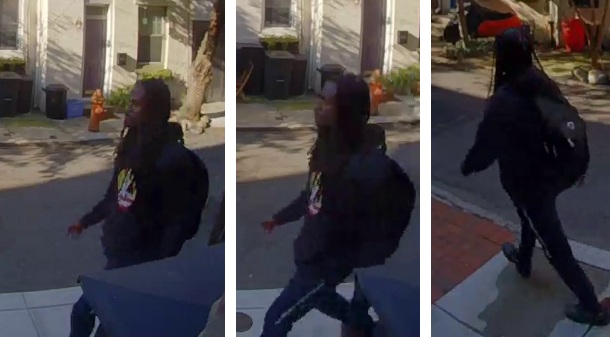
    At least three of the assaults were captured on surveillance video, which showed clear images of Walker wearing a distinctive black hooded sweatshirt with a chicken on its front, said Assistant District Attorney Megan Odonnell.

    Philadelphia detectives began searching for Walker after screenshots from the surveillance videos were shared with local media and led to an anonymous tip identifying Walker. Detectives later found images on Walker’s cell phone showing him wearing the same hooded sweatshirt as the assailant, prosecutors said. All seven women eventually linked Walker to their assaults through photo arrays.

    The women’s identification of Walker became a point of contention for his defense attorney, Ryan Ivins, who argued that the women picked Walker only after images had been widely disseminated by the media, including The Inquirer.

    Even then, Ivins said, about half of the women were not completely certain that Walker was the man who had accosted them.

    One told police she was 60% sure, Ivins said, while another gave Walker a seven out of 10 chance of being her attacker. That, Ivins argued, “casts significant doubt” on the reliability of the women’s identification of Walker and whether the photo arrays were tainted by the media coverage.

    Before rendering his verdict, Kamau also had the opportunity to watch Walker’s initial interview with detectives, in which he acknowledged the images shown in the news were, in fact, of him.

    In the video of the interview, Walker also told detectives that he was homeless and often slept in the area of Rittenhouse Square because “I felt safe in that area.” Because of that, Walker said, he was not surprised that surveillance cameras had captured him nearby.

    But Walker denied committing the assaults, telling detectives: “I don’t have any involvement in that. … I wouldn’t get any enjoyment from that.”

    Walker is slated to be sentenced by Kamau in November.

  • Police grapple with a lack of bodies in disturbing Olney investigation — and for families, a lack of closure

    Police grapple with a lack of bodies in disturbing Olney investigation — and for families, a lack of closure

    Philadelphia police this week acknowledged that the sprawling missing persons investigation in Olney has evolved into something even more complex — a death investigation without any dead bodies.

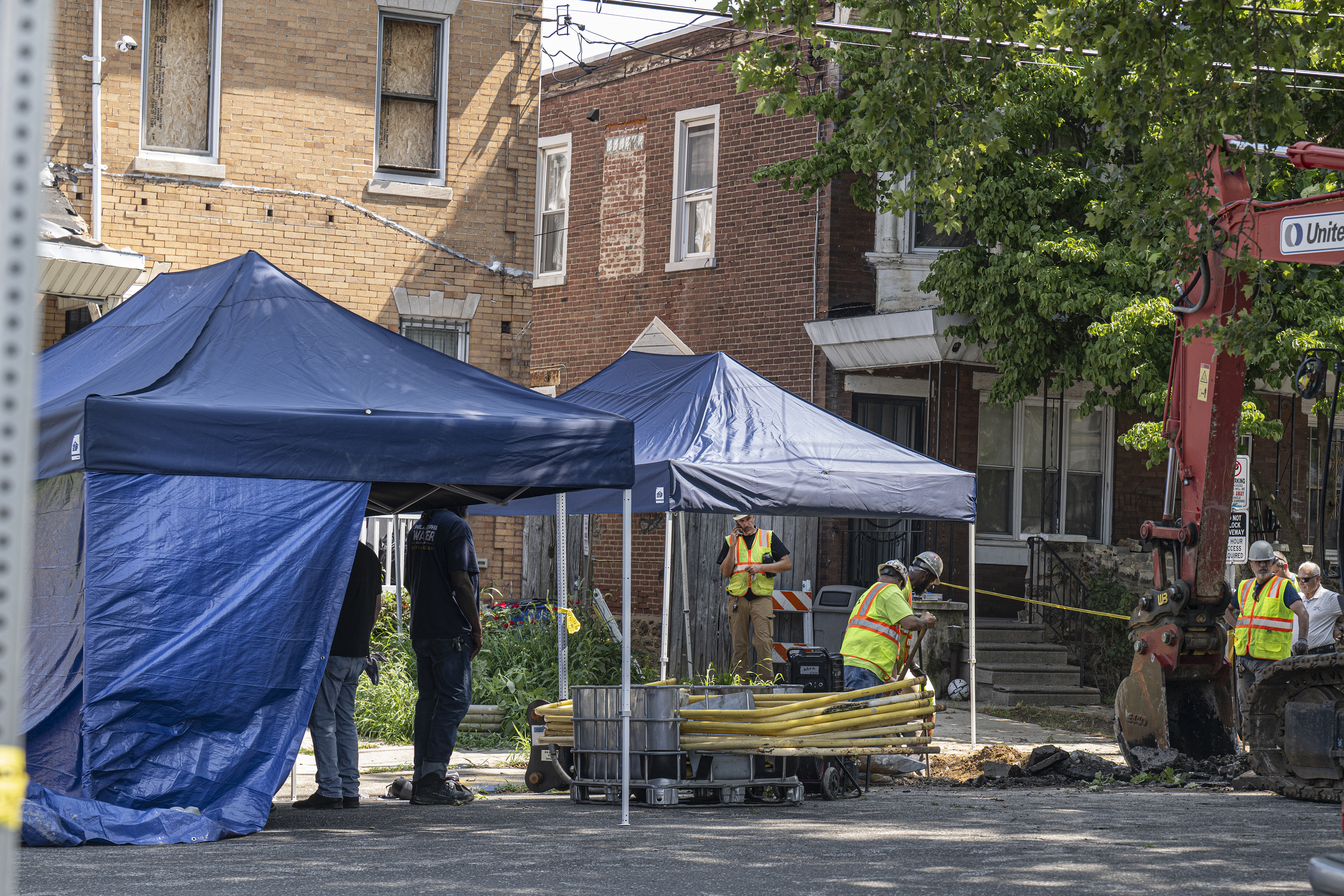
    Adding to the challenge is that there are now at least four missing women linked to a crumbling house on West Chew Avenue, where for decades, Raymond “R.C.” Horsch had lured drug-addicted women to shoot pornographic photos and movies depicting graphic violence.

    On Wednesday, Police Inspector Raymond Evers said a hard drive recovered from the family home of Raymond and his son Eugene Albert Horsch contained “images and video of what appeared to be two deceased females” taken inside — and that police believed the women had really died there, even though they have found no human remains.

    “Usually when we have a homicide investigation, we have a body, we have body parts,” Evers said. “This time we do not.”

    Police said they have not yet determined when Gabrielle Amarando and Maribel “Bella” Fresses died. Without a body, the medical examiner, too, cannot determine a cause or manner of death, and officials did not share publicly, or with the women’s families, the extent of their injuries.

    Law enforcement sources said the images showed women with ashen skin, posed in ways that would be nearly impossible for someone who was still alive. Authorities are still working to identify dozens more people featured in the materials to determine where they are today — and if they’re still alive, said the sources, who spoke on condition of anonymity to discuss an ongoing probe.

    The images are further complicated by the fact that Raymond Horsch spent decades using women struggling with addiction as models in apparent snuff films and pornographic photos that featured bondage, sexual violence, and death. Some appeared to be staged or digitally altered.

    Michael Yoder, a retired FBI agent who has advised on over 45 no-body homicide cases, said he had never seen a case of this nature, as the typical such case involves a missing spouse or relative.

    “This is a no-body homicide and a potential serial homicide case,” Yoder said. “The fact that you also have these videos of simulated deaths or assaults, I’ve never seen that in a no-body homicide case.”

    Gabrielle Amarando (left), missing since 2012, and Maribel Fresses, 27, reported missing in 2018. Police believe they were killed inside the Olney home.Obtained by The Inquirer

    Detectives have so far reviewed around 5% of hundreds of thousands of photos, videos, and written materials recovered in the home. Yet despite the trove of digital files, police say they have found not a trace of human remains or DNA from any missing women.

    Police say they have evidence that some works likely went beyond make-believe.

    The two women police said died at the house were last seen about a decade ago.

    Evers said Wednesday that “if the images and the video are real and not altered in any way,” the women are dead. That leaves police facing the unusual prospect of seeking formal death declarations for both women in the city’s Orphans’ Court without a body, which adjudicates the rights of persons unable to handle their own affairs.

    Police were first led to the home after Eugene Horsch, 44, was arrested during a June 19 car stop that uncovered illegal weapons and the phony ID in the name of another woman, Blair Tonzelli, who was reported missing in 2023 and last seen at the Olney home. A fourth missing woman, Amy McHale, Raymond’s ex-wife, was also last seen at this house in June 2016.

    Inside the crumbling twin, investigators found chemical vats, dozens of computers and hard drives, and a cryptic handwritten note that referenced harming people and alluded to serial killer Ted Bundy.

    Raymond Horsch died last year. Eugene has not been accused of any violent crimes. He was incarcerated at the time of at least one disappearance. An attorney for Horsch has declined comment.

    After years of silence from their daughters, the Fresses and Amarando families said they were devastated to learn from police that the women are dead. But their relatives still don’t have all the answers they seek.

    “I hate to say it, but I don’t have an actual body to say, ‘OK, this is my daughter,’” said Patricia Fresses, Maribel’s mom. “I need to see it.”

    Maribel Fresses, 27, reported missing in 2018. Police believe she was killed inside the Olney home.Courtesy of Melissa Fresses

    A rise of no-body homicides

    Bodiless murder cases have become more common in recent decades, thanks to advances in forensic technology that have enabled prosecutors to bring charges in cases with limited physical evidence.

    Some past cases locally have ended in successful convictions.

    In 1997, the FBI arrested former Delaware prosecutor Thomas J. Capano, who was a suspect in the 1996 disappearance of congressional aide Anne Marie Fahey in Philadelphia.

    To this day, Fahey’s remains have never been found. However, the pair were known to be having an affair, and they were last seen together dining in Center City. Letters written by Capano pointed to an increasingly controlling romantic relationship, and a search of his car and home later revealed traces of Fahey’s blood.

    The former prosecutor was later arrested and convicted in 1999 of murder.

    But that outcome is not always certain.

    In Chester County, in 2025, Malvern resident Allen Gould was charged with homicide following the 2017 disappearance of his wife, Anna Maciejewska, who has also never been found. Prosecutors alleged that Gould demonstrated little concern about this vanishing, reporting it to law enforcement only under pressure from family and friends.

    Yet without a body or murder weapon, Gould’s lawyers have argued the prosecution is built on circumstantial evidence.

    That case is expected to proceed to trial later this year.

    A former U.S. Attorney told The Inquirer in 2013 that, nationwide, 88% of the 400 no-body homicide cases that had gone to trial ended in convictions. Yet this figure only accounts for the cases that are actually brought before a court.

    In the Capano matter, investigators were able to charge the former prosecutor because of additional forensic evidence, and the suspect’s own inconsistent testimony about their final moments together.

    But investigators in the Horsch case face three steep challenges: There are no bodies, no other human remains, and one potential suspect — Raymond Horsch — died last year from a lung condition at the age of 82.

    Yoder, the retired FBI profiler, said a no-body homicide prosecution would require evidence that clearly shows someone else was responsible for the deaths, and said additional forensic details like metadata taken from the photographs could establish a compelling timeline. Raymond’s graphic fantasies, he reasoned, would be irrelevant to the prosecution of another suspect.

    “If you say he videoed women in fake death or fake assaults on video, it’ll throw a jury through a loop,” he said. “You’re getting the point of, if they don’t believe something, they won’t believe everything.”

    Gabrielle Amarando as a child. Gabrielle was missing since 2012 and police believe she was likely killed in the house on Chew Avenue in Olney.Courtesy of Karen Amarando Riley

    No bodies, no closure

    Regardless of the possibilities for justice in court, death declarations also generally mark the end of any hope that an individual or their remains will ever be found or properly interred.

    In a 1980s article on the Orphans’ Court, a judge told The Inquirer they handled about a half dozen bodiless death declarations annually, but could not recall any in which a missing person was later found.

    “Most of them just disappear,” the judge said.

    Last year, Gabrielle’s mom, Karen Amarando Riley, talked to a psychic in a desperate attempt to get answers about her missing daughter.

    Riley said the psychic described Gabrielle’s descent into addiction, and that she couldn’t see Gabrielle alive past the age of 27, which would have been in 2017.

    The mother was shaken.

    “She nailed everything … the time she started doing drugs and what drugs she did and everything in her life,” she said. “The last image she could get was Gabrielle standing in front of a brick building in a city.”

    “I just wanted closure,” she said. “And she couldn’t give it to me either.”

    Gabrielle Amarando with her mother, Karen Amarando Riley. Gabrielle was missing since 2012 and police believe she was likely killed in the house on Chew Avenue in Olney.Courtesy of Karen Amarando Riley

    The families of the Fresses and Amarandos — and potentially others seeking loved ones who vanished in Kensington — now face the possibility of closure without the recovery of a body or, possibly, a homicide conviction.

    Riley, of Ocala, Fla., last heard from her daughter Gabrielle when she called from a Philadelphia prison on Christmas Day in 2012.

    “I thought maybe she overdosed because she would have been in touch with somebody, if not me, somebody,” Riley said.

    She is tormented by the thought that her child was reduced from the beautiful aspiring model she once knew, falling into addiction and, police say, ultimately being lured into the home on Chew Avenue.

    “It tears me up. I don’t know what he did to her before he killed her,” she said. “I always wanted closure, but I didn’t want this.”

  • American missionary kidnapped in Niger soon to be reunited with family

    American missionary kidnapped in Niger soon to be reunited with family

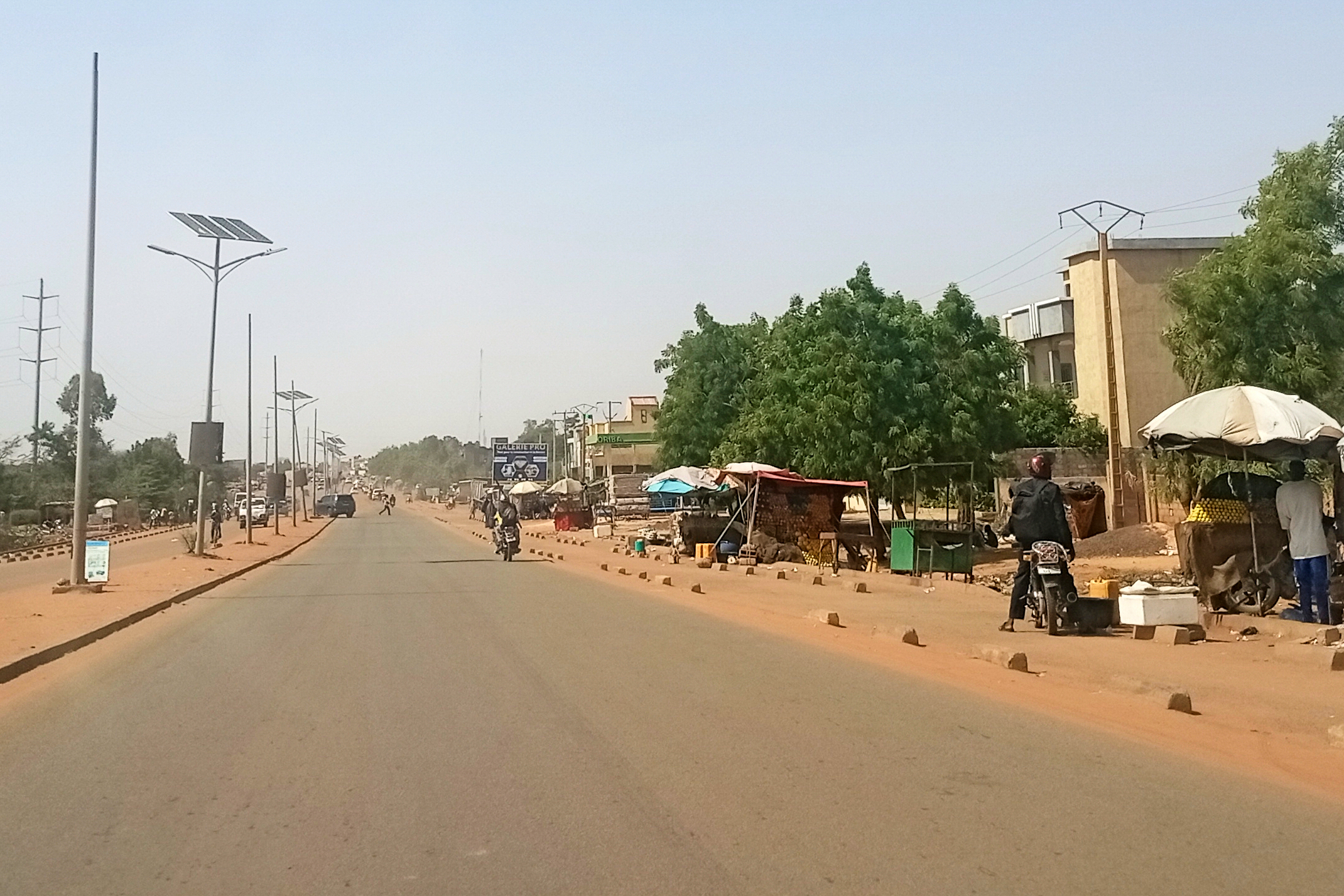
    A mission organization said on Friday that a pilot who was kidnapped while working for the group in the West African country of Niger last year was in “good health” after his release.

    The missionary pilot, Kevin Rideout, was seized from his home in Niamey, the capital of Niger, in October. A U.S. official said on Friday that Rideout had arrived at Ramstein Air Base in Germany and was undergoing medical evaluation. Like others in this article, the official spoke on condition of anonymity to discuss operational matters.

    Rideout’s organization, called Serving in Mission, said in a statement that he would soon be reunited with his loved ones.

    “We are grateful to confirm that our good friend and brother in Christ, Kevin Rideout, has been released,” the statement read. The mission noted that he was in “good health in the care of U.S. officials” and would soon be reunited with his wife, Krista; their four children; and his extended family.

    “Krista and the rest of Kevin’s family are profoundly grateful for the prayers offered on their behalf by people around the world throughout his captivity,” the statement added.

    Another U.S. official said on Thursday that Rideout’s release, which was earlier reported by the New York Times, was not the result of a military rescue operation but “by other means,” offering no further details.

    The official linked Rideout’s release to U.S. military pressure on the Islamic State in Nigeria, Niger’s southern neighbor, in recent months. In May, President Donald Trump said that American and Nigerian forces had killed Abu Bilal al-Minuki, a high-ranking Islamic State leader in Lake Chad, a region at the intersection of four countries, including Nigeria and Niger.

    The official said that raid had helped influence the kidnappers’ decision to release Rideout.

    How and where he was released were not yet clear, U.S. officials said earlier, and it was also unclear which group held him at the end of his captivity. Rideout’s release had been a major priority for the White House and for the military’s Africa Command.

    In May, French journalist and researcher Wassim Nasr, who has been monitoring jihadi groups in the area for several years, said that Rideout was being held in Ménaka, a region in Mali just over the border with Niger. That area is mostly controlled by a local branch of the Islamic State.

    For years, Mali and Niger have been battling insurgents affiliated with al-Qaida and the Islamic State. In April, al-Qaida-linked militants launched coordinated attacks across Mali, seizing a major city and killing the country’s defense minister.

    This article originally appeared in the New York Times.