The Philadelphia School District will soon offer a new way to have a say in how Philadelphia school closings, mergers, and other transitions happen.
The district announced Thursday that it will soon open applications for 50 transition teams to help manage what comes next for a host of schools — those closing or beginning phaseouts at the end of the 2026-27 school year, and those receiving students from those schools in 2027-28.
The school board voted in April to close 17 Philadelphia schools, some as soon as the end of the 2026-27 school year. It’s also ordering mergers and other changes. The $3 billion plan, the funding for which is not assured, also plans for 169 renovation projects at schools around the city.
The aim for the transition committees, officials said, it to “bring together students, families, educators, staff, and community partners to provide input, help identify priorities, and support the development of transition plans that reflect the needs of each school community.”
“We know that successful school transitions require more than a plan — they require meaningful partnership with the students, families, staff, and communities who will experience these changes,” Superintendent Tony B. Watlington Sr. said in a statement. “This next phase gives communities a clear opportunity to help shape the transition process and ensure that we are planning thoughtfully, collaboratively, and with students at the center.”
The applications will open Aug. 31 and can be filled out through Sept. 18.
Transition committees, made up of up to roughly 20 members, may include teachers and staff, parents and families, community members, and students.
Officials said the committees won’t be the only way for people to have their say. School-specific feedback opportunities will be announced later, they said.
Which 50 schools are forming transition teams?
The schools closing in 2027-28 are:
Blankenburg
Fitler
Lankenau High School
Robert Morris
Overbrook Elementary
Parkway Northwest
Parkway West
Pennypacker Elementary
Paul Robeson High School
John Welsh Elementary
The schools beginning phase-outs in 2027-28 are:
AMY Northwest
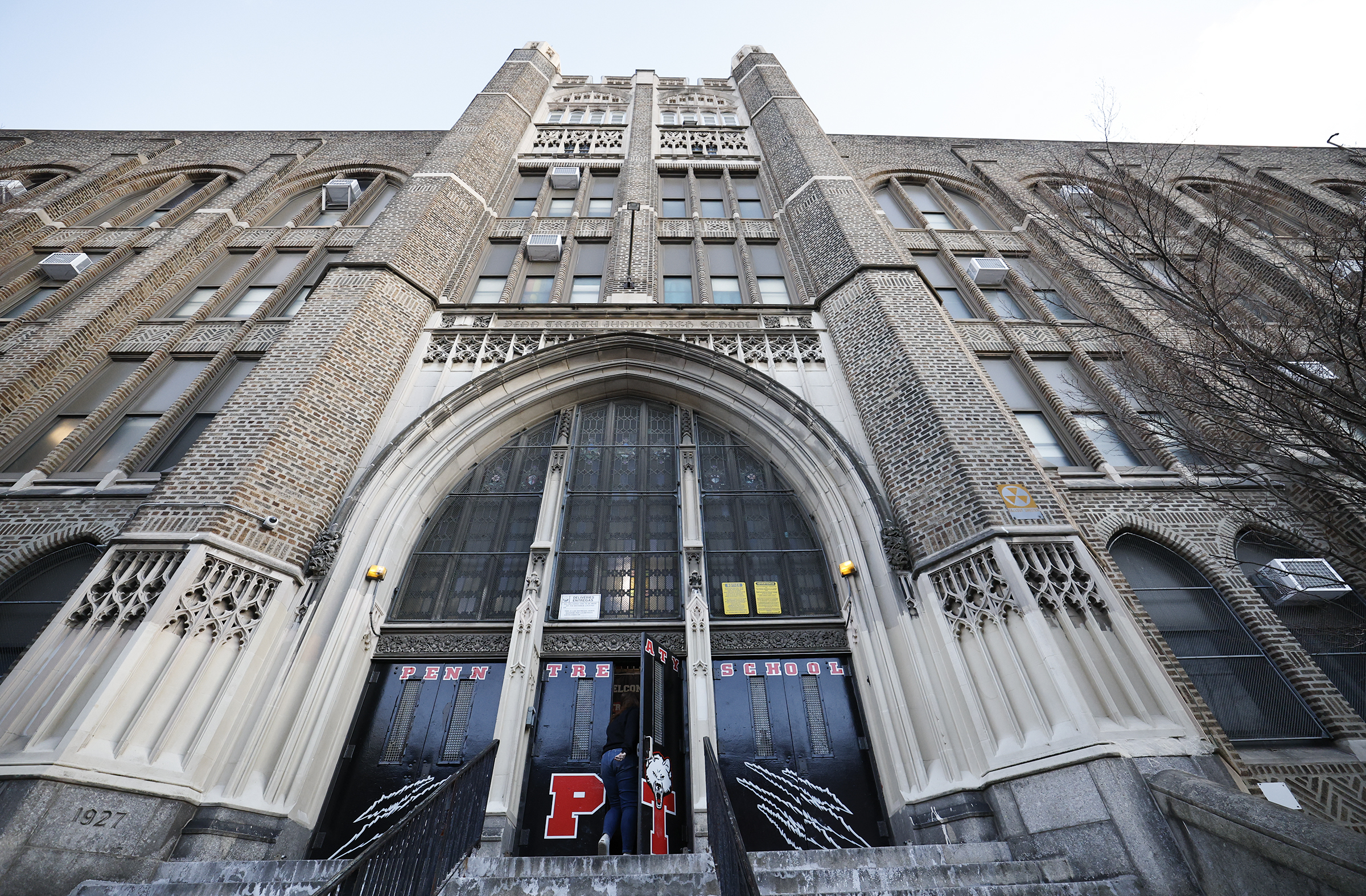
Penn Treaty
Harding Middle School
Stetson Middle School
Tilden Middle School
Wagner Middle School
The schools receiving students starting in 2027-28 are:
MOGADISHU, Somalia — Six million people in Somalia are facing acute food insecurity while the World Food Program has only a tenth of the resources it had in 2022 when it helped avert famine in the drought- and conflict-stricken East African nation, the head of the U.N. agency told The Associated Press.
“We can only do the bare minimum,” WFP executive director Carl Skau said Wednesday during a visit to a nutrition center on the outskirts of the capital, Mogadishu. “We’re only providing these nutrition supplies to the children that are really the worst hit.”
The reduced funds, because of cuts in international aid by donors and the redirection of resources to other humanitarian crises, meant that the WFP is unable to expand its assistance in Somalia, Skau said.
Millions of people at risk but far less aid
The WFP projects that 1.9 million children under age 5 in the country will suffer acute malnutrition this year, including nearly 500,000 who will require urgent treatment for severe acute malnutrition. Overall, around 30% of the population faces critical levels of food insecurity, the U.N. has said.
“We had 10 times more resources than now,” Skau said of the 2022 hunger emergency that was caused by a prolonged drought. “We were able to step in, and we prevented a famine here in Somalia.”
“We know what’s going on, we have the capacity, we have the experience of dealing with this. We just need the resources now to do it.”
The consequences of the current food shortage, which is also a result of drought, conflict and the displacement of people, are seen at the Feynuus Health Center in Mogadishu’s Kahda district. Dozens of women carrying babies waited beneath a large tree or crowded along the veranda of the corrugated-metal facility seeking help.
Inside, health workers placed children in a blue weighing sling, screened them for malnutrition, and distributed therapeutic food.
One desperate mother tells her story
Halima Mohamed Hassan, a mother of six, had walked nearly 2 miles carrying her malnourished 4-year-old child. She is pregnant, but said she hadn’t eaten for two days. Her last meal was plain rice.
Health workers treated the child she brought with a special nutrient-dense food, while Hassan said that her other children were also malnourished, but she wasn’t able to bring them to the center.
“I could not carry all of them,” she said.
Hassan fled the Lower Shabelle region four months ago after her husband died of malnutrition, she said. Food and water became scarce, and conflict made it increasingly dangerous for the family to stay.
She and her children walked for four nights before reaching a camp for internally displaced people on Mogadishu’s outskirts.
Hassan now shares a makeshift shelter with her widowed mother and her mother’s four other children. The two women look for occasional work washing clothes in nearby neighborhoods to feed their household of 12.
A health center tries its best to help
The Feynuus center receives between 250 and 350 patients daily, mainly displaced women and children from regions outside Mogadishu, said Abdirahman Barkhad, program director of Youth Link Somalia, which operates the center.
Barkhad said that about 10 nearby health and nutrition centers had closed because of a reduction in humanitarian funding, increasing pressure on those that remain.
“We have witnessed children collapsing, because their families do not have enough food,” he said.
Mohamud Moallim Abdulle, commissioner of the Somali Disaster Management Agency, described the country’s food situation as “extremely alarming.”
He said that an estimated 1.85 million children are malnourished, while around 6 million people are affected by drought, and 2 million urgently need assistance.
They don’t know where their next meal is
Skau said that mothers he met this week in the town of Burhakaba described drought, insecurity, and also rising food prices as the main drivers of the crisis. Some had lost their crops and fled their homes. Others walked for three or four hours to reach health facilities, because aid workers couldn’t reach them.
“I spoke to women with eight to 10 children,” Skau said. “They don’t know where the next meal is going to come from.”
Insecurity, with Somalia battling a 20-year-long insurgency by the al-Shabab militant group, also makes humanitarian operations more expensive. WFP must use aircraft in areas where staff and supplies can’t travel safely by road, and some communities are inaccessible, Skau said.
He said that conflict in the Middle East was adding to the pressure by driving up fuel and food prices, limiting agricultural supplies, and drawing funding toward other emergencies.
After her child received some food at the center, Hassan began the walk back to the camp they live in. Her five other children were still waiting and hungry, she said, and she would have to return with them one at a time.
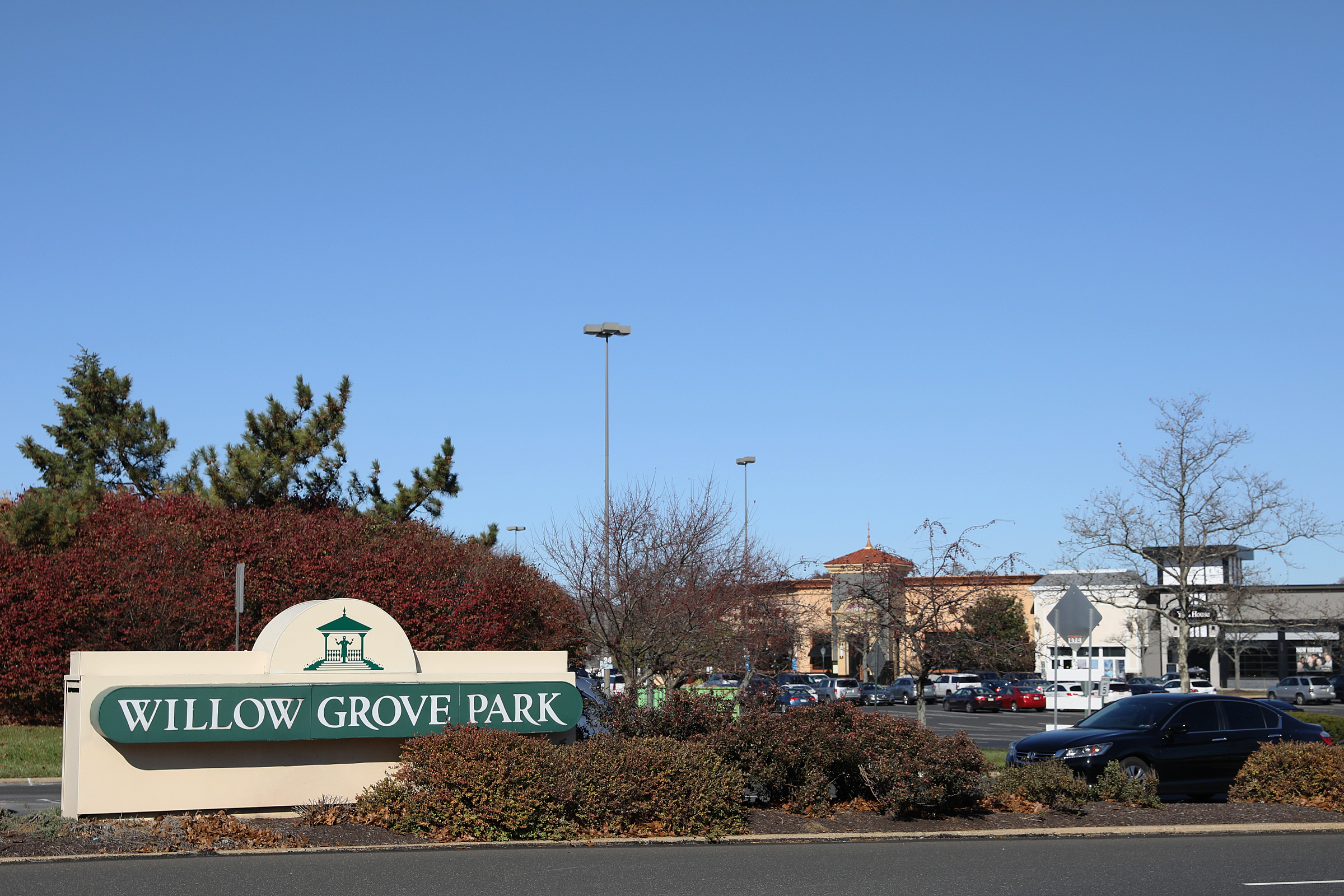
Willow Grove Park Mall is on track to be sold soon.
A representative for Pennsylvania Real Estate Investment Trust (PREIT), which owns the Montgomery County mall, said in a statement Thursday that “a lender-directed sale process is underway and expected to be completed in the near term.”
The Philadelphia Business Journal first reported the news, saying that a partnership of New York firms — Namdar Realty Group, Mason Asset Management, and CH Capital Group — were set to buy PREIT’s 725,000-square-foot section of the 1.2 million-square-foot mall, as well as its debt on the property, for an undisclosed price.
The sale would include most of the mall, including Macy’s, Cheesecake Factory, and Nordstrom Rack, but not parcels that house Primark and Bloomingdale’s, according to the Journal, citing marketing materials that have since been removed from real estate firm JLL’s website. JLL did not return a request for comment.
The Willow Grove Park Mall is shown in 2019.TIM TAI / Staff Photographer
The potential new buyers, all based in New York, did not return calls or emails from The Inquirer.
Willow Grove Park Mall would not be their first acquisition in the region.
The Willow Grove Park Mall opened in 1982 at a time when the Philadelphia suburbs were flush with shopping malls. The complex got off to a bumpy start, failing to meet its first-year sales expectations and leading some mall developers to say, as an Inquirer headline read at the time: “No more malls.”
Banners hung over the elevator court in the Willow Grove Park Mall in this 1984 photo.Michael Plunkett / Staff Photographer
PREIT has had a stake in Willow Grove Park Mall since 2000, when it and the Pennsylvania State Employees’ Retirement System signed on to buy the center for $140 million.
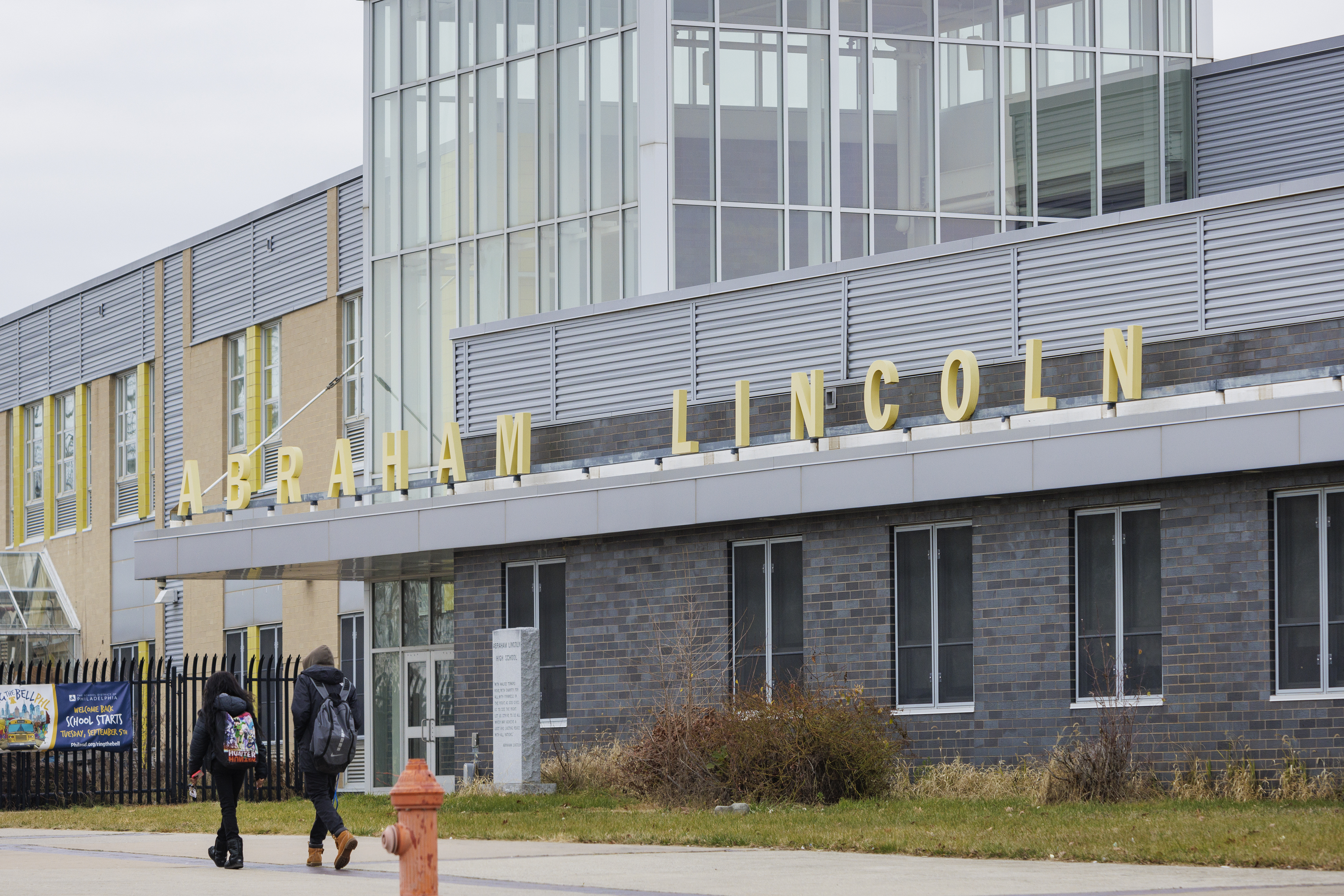
A Lincoln High parent and a Mayfair resident are attempting to block the planned relocation of Kensington High School students to the former Austin Meehan Middle School in the Northeast.
Harold Brown, a Lincoln parent, and Peter McDermott, who is active in Mayfair civic life and Democratic politics, filed suit Thursday against the Philadelphia School District, Superintendent Tony B. Watlington Sr., and the city itself in Common Pleas Court.
While the former middle school has been used as a swing space since it closed in 2022, Brown and McDermott say that moving 400 Kensington High students and 90 staff there will create student safety concerns because the campus is already overpopulated. Meehan is adjacent to Lincoln High and Northeast Community Propel Academy, both of which are overcrowded, with student bodies that exceed the capacity of their respective buildings.
The relocation, they argue, also violates the terms of a 2018 community benefits agreement that allowed the school district to build Propel.
Brown and McDermott want a judge to halt the move before school begins for students on Monday.
The district ordered Kensington relocated to the former Meehan site, more than seven miles away on Ryan Avenue, over asbestos concerns. A contractor working on a new HVAC system for Kensington this summer disturbed asbestos, then tracked it throughout the school, officials said.
District administrators initially believed they could fix the asbestos issues in time for school to start; after urging from the Philadelphia Federation of Teachers, they decided to relocate staff and students through the end of the calendar year.
The district last year spent $11 million to place trailers at Lincoln, which houses over 2,000 students in a school built for 1,200.
City Councilmember Mike Driscoll last week raised worries about adding students from another high school to the Lincoln-Propel campus, and the district said it would prepare and share a school safety plan before classes began.
“The absence of a disclosed and tested plan prevents families from evaluating whether defendants can safely supervise two separate high-school populations and a K-8 population in the same immediate campus area,” the suit says.
The suit suggests students be moved instead to Penn Treaty High or Roberto Clemente Middle School. (The district had initially planned to move Kensington students and staff into Clemente, then judged that building did not have enough room.)
Moving Kensington to Meehan will overtax the campus on multiple levels, the suit said, from congestion and personnel to security and transportation.
“For Plaintiff Brown’s son and the existing Lincoln student body, adding another complete high-school population to an already over-capacity campus will predictably diminish teacher access, disrupt orderly transitions and arrival and dismissal, reduce access to shared services and activities, and materially impair the quality and continuity of the students’ daily learning and overall school experience,” the suit said.
Brown and McDermott also say the district has failed to live up to several promises made in the community benefits agreement — including demolishing Meehan, sprucing up fields, and replacing fencing. Those things have not been done, the suit says.
Philadelphia School District officials could not immediately be reached for comment.
After years of scattered discussion and debate, the future of Collingswood’s long-standing status as a dry town is officially in the hands of voters.
The Collingswood Board of Commissioners passed a resolution Wednesday to add the question to the borough’s general election ballot in November, just days ahead of the Aug. 21 deadline giving the Camden County Clerk’s Office enough time to put it on the ballot.
The three-person board was required to adopt the resolution after residents submitted a petition in favor of adding the ballot question that was signed by at least 15% of borough voters who participated in the last general election.
Of the more than 1,100 signatures submitted, the borough verified that 1,019 came from recent Collingswood voters, officials said Wednesday, just eight more than the number of valid signatures required to place the referendum in front of voters.
The signatures were collected in a hurry over the last three weeks by Booze on the Ballot, a group of residents who, after years of what they viewed as unproductive back-and-forth on the issue among borough officials, got together to finally give voters the chance to settle the debate, organizer Joe Sperlunto said.
The bipartisan group did not explicitly take a position on the issue but rather emphasized this as an opportunity for residents to decide for themselves what they want for the future of their community.
“We’ve just seen it kicked around a lot for a long time, and we just felt like it was time for the community to make a decision about it,” Sperlunto said.
Petitioners equipped with clipboards and pens fanned out across town, collecting signatures wherever they could — among the crowds at the popular Saturday farmers market, in front of businesses along Haddon Avenue, and even knocking door to door, Sperlunto said.
After the resolution was approved, Collingswood Mayor Daniela Solano-Ward noted that as Election Day approaches, there will be informational sessions for voters to learn more about the referendum as well as any others that may be on the ballot.
“Just to give everyone the facts and the information,” Solano-Ward said.
“You make your decisions as you wish, but we want to make sure that you have information from us as to what is real, what is not real,” she said. She added, for example, that BYOBs will still be permitted in the borough if liquor licenses are issued, contrary to a popular misconception.
What could allowing liquor licenses mean for Collingswood?
Repealing Collingswood’s liquor license ban would represent a historic shift for a borough that has prohibited alcohol sales by ordinance since the 19th century, linking back to its Quaker heritage.
If the ban were lifted, the borough would have two options for how to award licenses, borough solicitor Caitlin Harney Norcia said during a commissioners meeting earlier this year.
Collingswood could award licenses in a competitive bidding process, which could generate one-time revenue for Collingswood’s budget, she said, or the borough could enact an application and review process that includes annual fees and public presentations by prospective licensees.
The number of liquor licenses permitted within the borough is limited by a state-mandated population-based cap. If voters decide to lift the ban, Collingswood could issue either a single distribution license for a liquor store or up to four retail consumption licenses that permit restaurants or bars to serve alcohol.
Annual licensing and renewal fees could generate between $1,000 and $10,000 for the borough each year, Harney Norcia said.
Proponents of lifting the longtime ban see liquor licenses as an opportunity to bolster Collingswood’s local restaurants while generating revenue for the borough.
At the same time, borough administrator Cassandra Duffey previously told The Inquirer, some business owners are worried that existing Collingswood restaurants would be overlooked for licenses awarded through the public bidding process.
If alcohol sales are ultimately permitted, Duffey said, the borough will work to not “disrupt the balance” of its established businesses.
Just a few miles down the White Horse Pike, Haddon Heights is preparing to sell its first retail liquor license at a public auction next month after getting rid of its de facto ban on alcohol sales in 2024.
The efforts in both towns appear to be in line with goals set forth in legislation signed in 2024 by then-Gov. Phil Murphy to increase the availability and affordability of liquor licenses statewide. The measure was touted as an unprecedented reform of New Jersey’s liquor laws, which have been criticized as being arcane and antiquated.
Amazonhas proposedinstalling hundreds of backup natural gas generators for the hyperscale data center it is building in Falls Township, Bucks County, just off the Delaware River.
The generators require permission from the Pennsylvania Department of Environmental Protection, which has green-lighted five other environmental permitsfor the project.
But on Tuesday, Shapiro issued sweeping new guardrails on data centers, including removing Amazon from the state’s fast-track permitting process.
The move was a stark shift from Shapiro’s position on data centers in June 2025, when he championed the Amazon deal as part of a $20 billion Pennsylvania data center investment. Since then, public pushback to data centers has reached a fever pitch.
Tuesday’s announcement raises questions about the DEP’s decision on the Falls Township project, one of the few hyperscale data center developments nearingcompletion in the region to meet the power-hungry computing needs of artificial intelligence.
Robyn Briggs, a DEP spokesperson, said that as of Thursday, the agency’s air quality team was still reviewing the latest permit application for the generators. The process includes a 30-day public comment period that endedMonday. The DEP has not said when it expects to make a decision.
Briggs said that the DEP received 1,236 comments about the permit and that each would be given “equal weight and consideration.”
It was widely expected that many residents had writtento oppose the approval, given the large amount of social media posts on the topic. Nearly 5,000 people have signed a petition calling for a moratorium on data centers in the township.
What the DEP is deciding
Amazon Data Services Inc. is developing a 250-acre campus within the Keystone Trade Center in Falls Township on a site formerly occupied by U.S. Steel.
Amazon plans 2 million square feet of data center space across 10 buildings for cloud computing and AI.
It already has both local and state approvals for the first of two expected phases of the project’s build-out. The DEP requires permits to ensure companies meet state and federal standards when sending pollution into the air or water.
To date, Amazon has been approved for five environmental air and water discharge permits. That includes approval last year for 72 diesel-fired emergency engines.
Amazon has also applied to install 280 natural gas-fired “critical backup generator engines” at 4,287 horsepower each.
It also wants to install three more diesel backup generators.
The generators and pollution
The company says the generators wouldprovide backup power in the event of a main utility power supply interruption and would not be used to meet peak demand.
The generators wouldhave pollution controls to lower nitrogen oxide, carbon monoxide, and volatile organic compound (VOC) emissions, including formaldehyde and ammonia, according to the company. Emissions would be restricted to below allowable maximum levels.
The DEP is reviewing public comments before making a decision on Amazon’s permit.
If the permit for the backup generatorsis approved, Amazon would still need additional permitting for a plannedsecond phase of the project.
Shapiro’s new guardrails
Shapiro signed an executive order on Tuesday dramatically restricting data center development in Pennsylvania. He had been an early champion of data center development, including a $20 billion commitment from Amazon to build the Falls Township data center, as well as one in Luzerne County.
Now he is taking a hard-line stance against the industry as proposed projects draw bipartisan backlash. Although his order does not include a moratorium on data center development, it requires local approval for projects to receive state permits, which may block development.
The order removes all data center developments, including those by Amazon, from the fast-track permitting program, and no data centers will be considered for the program moving forward.
The DEP said the governor’s new permit review process would compel all data center projects going forward to enter into consent orders, which are legally binding agreements for environmental requirements, such as wastewater conservation standards.
When Amazon announced plans to build the data center in 2025,Falls Township officials welcomed theproject as a boost to the 1,800-acre Keystone Trade Center being redeveloped by NorthPoint Development on the old steel mill grounds. NorthPoint is working with Amazon.
Shapiro also hailed the data center as a job creator and tax revenue generator.Hesaid his team had worked with Amazon on the deal and would help to garner local support, develop infrastructure, and ensure “our permitting processes move quickly and efficiently.”
Data center opposition
Opposition to data centers has gained critical mass over the last year, with local groups fighting against each proposal. Criticsfear air and noise pollution and the amount of electricity and water the centers would need. The data centers are also the target of a chorus against rising electricity prices, much of which can be attributed to utility companies’ and regional grid operator PJM’s struggle to keep up with the demand for power.
Falls Township has been no different, but its data center is the closest to completion.
After a particularly contentious community meeting in July, the Falls Township Board of Supervisors approved a resolution declaring a portion of a zoning ordinance used for data centers “substantively invalid.” The board said staff would review sections of the ordinance for possible amendment.
“We heard the people,” Falls Supervisor John Palmer said in a statement.
However, the amendment would have no impact on Amazon’s data center, which the township approved in March 2025 before the public announcement with the governor.
Staff writers Jake Blumgart and Gillian McGoldrick contributed to this article.
Both astronomy and meteorology suggest that it won’t be long before these things decline in frequency, but in the meantime another flash-flood watch is in effect for the Philly region.
A tornado watch also was posted for Philadelphia and the neighboring Pennsylvania counties.
The National Weather Service watch spans from noon Thursday until 2 a.m. Friday, for the potential for rain rates of 2-to-4 inches an hour in areas along I-95 and South Jersey.
And the federal Storm Prediction Center has posted a severe-thunderstorm watch, in effect until 10 p.m., for storms that could kick up gusts approaching 60 mph.
“There could be multiple rounds of heavy rain over urbanized areas,” said Joe Wegman, a meteorologist with the government’s Weather Prediction Center. In advance of the anticipated main events, a blob of light rain moved through the region late Thursday morning.
Also, the federal Storm Prediction Center sees an outside chance of severe-level storms, those with gusts near 60 mph, and a 5% chance of tornadoes in and around Philly.
And those who have not had the good fortune of spending the last two months in heat-free and smokeless environments probably can skip the next paragraph.
The timing, ferocity, rain totals, and targets all remain uncertain.
What is the best estimate on the storm timing in Philly?
The higher-resolution models were suggesting that the likeliest time for storms to arrive in the Philly region would be between 2 and 3 p.m. Thursday, Wegman said.
The worst of it may hold off until 4 or 5 p.m., said Matt Benz, senior meteorologist with AccuWeather Inc.
The storms likely would back off between 6 and 7 p.m., but that timing could disrupt a peak commuting period.
“Why would we conveniently time these things?” Wegman quipped.
“There’s plenty of moisture coming up, and a front approaching from the west,” he said. “If the front stalls, the storms might linger longer than people want them to.”
Plus, renegade storms could race out ahead of the front, setting off precipitation earlier, he added, and that appeared to be case Thursday.
The weather service in Mount Holly said the “greatest risk” for severe storms would be between noon and 10 p.m.
But timing remains one of the most vexing challenges for severe-weather forecasting, says Bill Bunting, deputy director of the storm center, in Norman, Okla.
“I have seen remarkable progress,” said Bunting, who has been at it for 40 years, “but we’re nowhere near perfection. In the end, the science has its limitations.”
The forecast for the weekend and the rest of August
The storm experts have had plenty of practice around here this summer. So far, Philadelphia officially has recorded 21 thunderstorms since June 1, several more than normal.
It has also been a banner summer for smartphone alerts and assorted scare grams.
About 11 inches of rain has been measured at Philadelphia International Airport, roughly four inches above normal, since July 1.
That said, yes, both Chester County and the entire state of New Jersey remain under state-declared drought warnings, with residents asked to conserve water.
And drier times may be coming, or at least a reduced incidence of those late-day thunderstorms, said Brian Hurley, senior branch forecaster with the Weather Prediction Center.
The days are getting shorter, and the sun is losing some of the gas it uses to fuel convective storms, he said.
But all pumpkin spice aside, summer is not quite over, and shower chances are in the forecast into Sunday night.
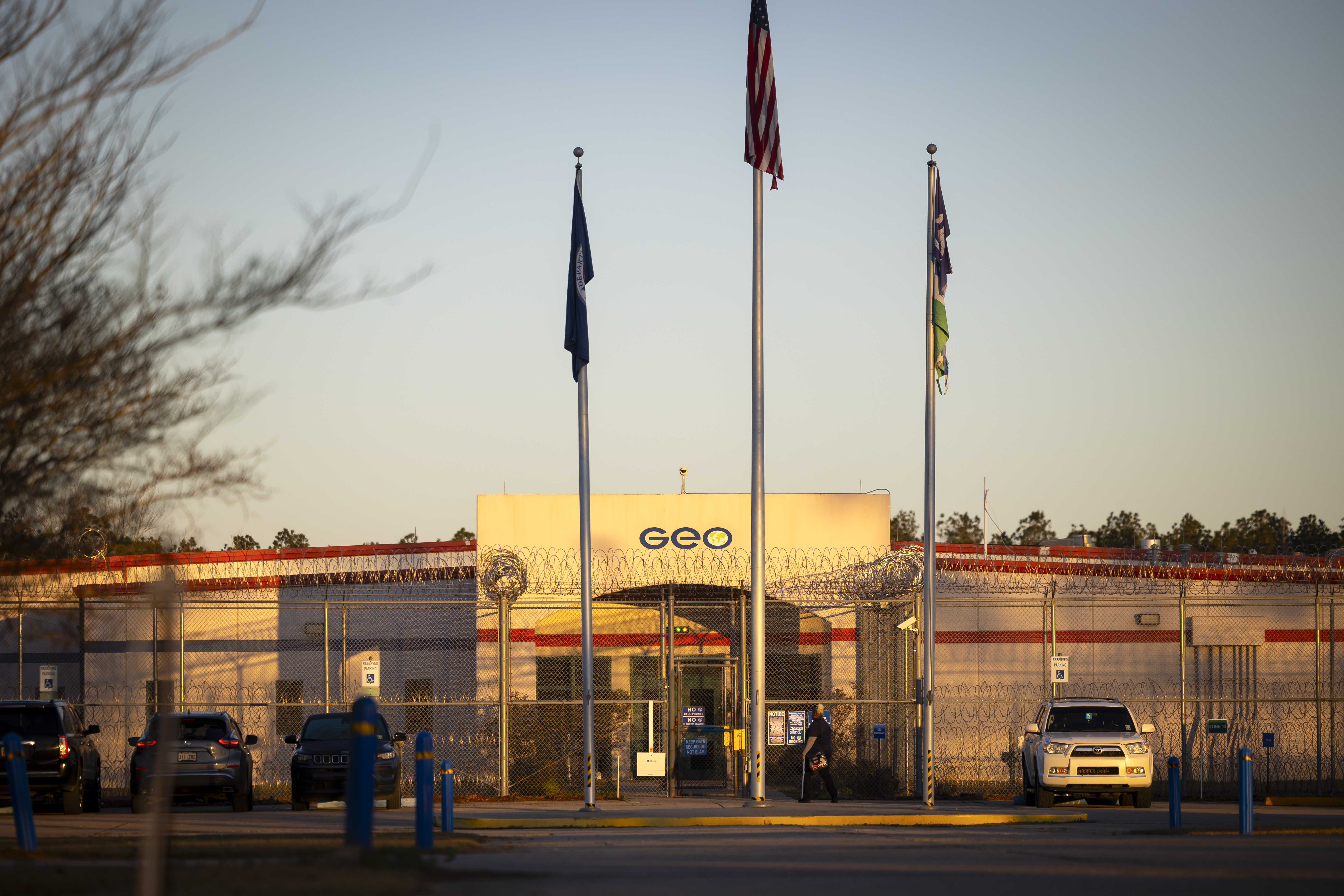
Camila Toro de Paula, a 25-year-old transgender woman from Venezuela, has spent the past 11 months in a federal immigration detention center for men, where she said she has been assaulted, threatened, and deprived of medical care.
Toro de Paula, who entered the United States seeking asylum, has lingered in solitary confinement without ready access to water for up to 24 hours a day, her lawyer said. Medical files from the center in Jena, Louisiana, where she is being detained show that she has complained to social workers about being punished because of her gender expression.
“I’m afraid of dying here,” Toro de Paula said in Spanish during a video interview from the federal facility. Immigration officials said Toro de Paula had entered the country illegally and cited her criminal history in the United States. Records show that the most serious charges against her, of felony assault and possession of a weapon, had been dismissed.
The case of Toro de Paula comes as the federal government has halted specialized care for transgender detainees inside at least 10 detention centers from Calexico, Calif., to Batavia, N.Y., according to public records. Officials no longer consistently provide transgender inmates with hormones and other gender-related care.
An Obama-era policy that provided basic rights for transgender people in immigration detention was deleted from the Department of Homeland Security website in February 2025. And officials have dissolved longstanding protections meant to shield transgender detainees from being harassed or physically harmed.
“We are NOT wasting U.S. taxpayer dollars to provide hormone therapy to illegal aliens seeking to change their sex,” the Department of Homeland Security said in an email to The New York Times, which did not address the other changes in policy.
Homeland Security has in recent months declined to say how many transgender migrants are in custody, but experts on incarceration estimate that there are at least several dozen out of more than 65,000 people in detention as of July 11. On Jan. 12, 2025, the latest date for which the government reported a count, the Immigration and Customs Enforcement agency had 47 transgender people in custody, according to data archived by the Vera Institute of Justice, a think tank focused on criminal justice reform.
Many migrants have complained about mistreatment and shoddy medical care in federal facilities. While transgender detainees represent a small fraction of those being held, they are an especially vulnerable population. Many are fleeing harassment in other countries and had just begun to be given some protections within the U.S. detention system in recent years.
Medical experts say that withholding hormones and other treatment for gender dysphoria can cause unique physical and mental health complications.
A hotline run by Immigration Equality, a nonprofit organization that helps LGBTQ+ and HIV-positive people who are in the immigration system, recorded a 68% increase in calls from LGBTQ+ detainees in 2025 compared with the year before. (The group does not have data specifically for transgender detainees.)
Immigration Equality’s clients include transgender women who said they had been removed from detention center units that had been reserved for them during the Biden administration and placed with men or in solitary confinement. The group said that the federal government had denied requests from transgender women to be transferred to facilities for women or transgender people.
“The administration is creating a humanitarian disaster” by changing policies that were meant to protect transgender people, said Bridget Crawford, the legal director at Immigration Equality.
The Department of Homeland Security rejected claims that conditions inside detention centers were inhumane. The agency did not directly respond to Toro de Paula’s assertions of assault and mistreatment, and identified her with male pronouns. Toro de Paula has received hormones for years, and her lawyer said that she has been denied hormone treatment in ICE detention.
“No detainees are being beaten or abused,” the federal agency said. “No lawbreakers in the history of human civilization have been treated better than illegal aliens in the United States.”
The actions of the Trump administration have been welcomed by opponents of transgender rights, including the Women’s Liberation Front, a women’s rights advocacy group that defines gender based on sex at birth and does not acknowledge transgender women. The group has argued that placing transgender women in prisons for women violates the constitutional rights of female inmates who are not transgender, including the Eighth Amendment right to protection from cruel and unusual punishment.
The Center for American Progress, a left-leaning think tank, issued a report citing ICE data that Democrats in Congress had collected. It found that LGBTQ+ migrants have a disproportionately higher chance of being abused in migrant detention centers. The statistics were collected during the 2017 fiscal year, which spanned Democratic and Republican administrations.
The report said that transgender detainees, on average, spent 99 days in solitary confinement, more than double the average for all immigrants in ICE custody. In the 2017 fiscal year, 1 in 8 transgender detainees was placed in solitary confinement, which officials said is done when detainees are viewed as a threat to other immigrants or personnel, or for protective purposes.
Data from the federal government show that in the 2024 fiscal year, during the Biden administration, 244 detainees who identified as transgender were booked into ICE custody.
In 2023, Immigration Equality interviewed 41 LGBTQ+ and HIV-positive immigrants who had been in detention. About one-third said that they had experienced sexual abuse, physical assaults, or sexual harassment because of their identity while in detention.
Almost all the participants said that they were the targets of homophobic, transphobic, xenophobic, racist, or other verbal and nonverbal abuse. Most said that they had received inadequate medical care for a range of conditions, and about half said that they had been placed in solitary confinement. Of the 41 participants interviewed for the report, 14 were transgender.
Safeguards under President Joe Biden have vanished during President Donald Trump’s second term.
In May, the federal government closed the Office of the Immigration Detention Ombudsman, which was responsible for investigating misconduct and abuse of all kinds in the immigration detention system.
“The violations that we’re seeing now are, to some extent, what we had seen in Trump’s first term — it’s almost like they’re on steroids, though,” said Lynly Egyes, the legal director of the Transgender Law Center, a civil-rights group. “It was often difficult for trans people to access medical care. Now, it is almost impossible.”
Many transgender migrants in detention, like Toro de Paula, came to the United States seeking asylum.
She told the story of a violent childhood in Venezuela. From the age of 8, she said that she was raped repeatedly by relatives. When she was about 10, she said that she tried to hug her mother, who recoiled and splashed her with hot cooking oil. She said that police stabbed her when she was 14 in what she described as a homophobic attack.
In October, a doctor who was retained by her legal team evaluated Toro de Paula and found an irregular hyperpigmented patch inside her left elbow where she said her mother had burned her. She had long scars on her left wrist and hand and on her right leg where she said Venezuelan police had sliced her skin with a knife when they had detained her.
Texas Gov. Greg Abbott (right) and Montana Gov. Greg Gianforte greet members of the National Guard as they arrive with fellow governors for a 2024 news conference along the Rio Grande to discuss Operation Lone Star in Eagle Pass, Texas. Eric Gay
Two years ago, she made the dangerous journey on foot to the United States. In September 2024, she reached Eagle Pass, Texas, where officials gave her food and clothes and put her on a flight to New York City. At the time, Gov. Greg Abbott of Texas had been sending thousands of migrants to Democratic-led cities as part of his multibillion-dollar border security effort, known as Operation Lone Star.
In New York, she joined a community of transgender women and attended parades and parties for LGBTQ+ people.
Her new life unraveled in August 2025 when she was arrested during a routine appointment at the New York City offices of ICE. She was flown to Louisiana and placed in a detention center for men, despite objections from her lawyer, Laura Berger, who works with the Legal Aid Society. The placement, Berger said, would put her client in danger.
The Department of Homeland Security said Toro de Paula had a criminal history that included charges for felony assault and criminal possession of a weapon, both of which were dismissed and sealed. According to her lawyer, those charges related to her arrest in the Bronx on June 30, 2025, after she was accused of hitting a man on the head with a skillet. Her lawyer said Toro de Paula was fending off a robber. The charges related to that incident were dismissed in October, court records show.
In a separate case in Queens, Toro de Paula was charged with prostitution; that was dismissed. She was also charged with pickpocketing in Queens and pleaded guilty to jostling.
“A lot of people don’t understand us,” said Jessica Guaman, a transgender woman who organized gatherings that Toro de Paula had attended in New York. “Camila is a good girl.”
Many transgender people in detention have fled persecution in their home countries, said Crawford of Immigration Equality.
Wilmar Quintero, a 50-year-old transgender woman from Venezuela, came to the United States seeking asylum and was detained in Michigan for about three months. Quintero said that she had fled her native country because police officers tortured her and left her for dead after she spoke out against civil rights abuses. Photographs of her bare chest revealed an expansive stretch of pinched, red scars that mark where officers carved out her breast implants, she said.
Quintero said that she was sexually assaulted by another migrant while being detained in Michigan.
“I lived through the worst horrors and humiliations imaginable,” Quintero said in Spanish. “They treated me like an animal.”
Immigration officials deported Quintero to Venezuela in April, and she went into hiding there. She said she is afraid of the police in Venezuela.
Crawford shared the stories of eight transgender clients who had similarly complained of discrimination, harassment, or abuse inside immigration detention facilities.
Toro de Paula said that detention center officials had pressured her to voluntarily agree to return to Venezuela, but she had refused. She said that they had humiliated her by forcing her to wear a mask and gloves while she is outside her cell because she is HIV-positive, even though the virus does not spread through the air. She has not been allowed to replace her wig, and officials have refused to give her undergarments for women. The Department of Homeland Security said Toro de Paula had worn the mask by choice — a claim that her lawyer disputed.
“I want to be heard,” Toro de Paula said. “Women like me have been disrespected enough. No more.”
Police are looking for a group of men who used firearms to steal a Lamborghini and a Porsche from an Old City parking garage early Thursday morning, authorities said.
The incident happened around 4:20 a.m. at a garage on the 300 block of Race Street.
Police said the robbery began when two men approached a parking booth with guns and threatened the attendant inside.
They then used a hand tool to crack the window and kick it in, police said. When the attendant fled through the door, one of the men held him up using a semiautomatic handgun.
The other suspect removed two sets of keys from the booth.
Police said the men were last seen leaving the garage in an orange or yellow Lamborghini and a dark gray Porsche.
A third suspect was waiting nearby in a dark-colored vehicle, police said.
The attendant was injured by glass on his left leg and was treated at Pennsylvania Hospital.
Police are investigating and urge anyone with information to submit an anonymous tip by calling 215-686-TIPS (8477).
CHICAGO — Meta insists it has a long history of protecting its youngest customers as it defends itself against a swath of lawsuits alleging its social media empire harms children.
In the latest such instance, the social media giant is fighting allegations in a California federal court that it contributes to the youth mental health crisis by deliberately and stealthily designing features to get children hooked on its platforms Instagram and Facebook. Four states are seeking billions of dollars in damages as well as fundamental changes to how Meta runs those apps.
Children’s mental health, and what they do and see on social media, are all issues “Meta takes seriously and tries to act on,” Paul Schmidt, a lawyer for the tech giant, said in opening statements this week.
Critics say the company’s safety record falls short and that many of its protections simply don’t work.
They include Marc Berkman, executive director at the Organization for Social Media Safety, who said Meta introduced safeguards promising to protect children in response to public pressure rather than out of concern.
There’s been a “lack of real institutional willingness to act here,” Berkman said.
Here’s a look at some of the changes Meta has introduced, along with the work advocates say could still be done.
Instagram users have always been able to block others — and, along with Meta’s oldest crown jewel, Facebook — the app has gradually added features for reporting problematic accounts and inappropriate content.
In 2016, Instagram users were given the option to delete or filter comments they found offensive, and later added warnings that prompted users to reconsider posting potentially harmful content, as well as options to limit comments and tags on their posts.
Meta also says it prevents adults from starting private chats with teens if they are not already connected, and has increased checks to make sure users under 13 — the minimum age for holding a Facebook or Instagram account — aren’t online. Schmidt said in his opening remarks that Meta recognizes some users still sign up using incorrect birthdays but that the company takes enforcement of age limits seriously.
The company says it also posts warnings and resources at the top of Instagram search results related to suicide, self-harm and eating disorders, and touts its “Teen Accounts,” launched in 2024, as a safe space for teenagers online. It aligns photo and video restrictions for teen accounts with those for a PG-13 movie, unless there’s parental permission otherwise.
Critics complain these changes amount to little more than corporate posturing.
A September 2025 report from former employee and whistleblower Arturo Béjar and four online safety advocacy nonprofits accused Meta of not taking “real steps” to address youth safety, instead opting for “splashy headlines about new tools for parents and Instagram Teen Accounts for underage users.”
“We really found that overall what Meta was marketing under Teen Accounts was very lacking in actual protections,” said Haley Hinkle, policy counsel at Fairplay, which co-authored the report. They evaluated 47 of Meta’s 53 safety features for teens on Instagram and found 60% of them were either not available or didn’t work as advertised, Hinkle said.
Meta called the report’s findings “misleading” and “dangerously speculative.”
Scrolling and core design
Researchers say Meta’s efforts to reduce the risk of children becoming addicted to the scrolling features of social media platforms have been largely unsuccessful.
Ashley Shea, a Ph.D. candidate specializing in social media and online spaces at Cornell University, points to what academics call “attention-capture deceptive designs” that are not exclusive to Meta’s platforms. They include infinite scrolling, “casino style” pulls to refresh content, push notifications and algorithmic recommendations. Those features “prey on the cognitive vulnerabilities” of young people with developing brains, in particular the need to feel rewarded.
Meta has taken important steps to address problematic content, cyberbullies, and sexual predators, Shea said, but she has not seen the same level of effort to offset the addictive impact of attention-capture deceptive designs.
Nudges and time management controls
“There’s no question that some teens struggle to manage their time with social media,” Schmidt said Tuesday, adding that Meta’s time management tools prove its evolution on the issue. Those tools include parental supervision controls and in-app “nudges” for teen users who repeatedly look at the same type of content or spend too long on Instagram or Facebook late at night.
Hinkle notes the “entirely voluntary” time management tools are not easy to set up, and amount to “far too little, too late.”
Béjar, the former Meta employee and whistleblower, agrees. In testimony Wednesday, he said a tool called “Take a Break” is “designed to fail.” Users have to turn the feature on themselves and, he said, very few do.
Across the board, tech companies exist to maximize revenue, said Berkman, and for almost every social media platform today, that means “maximizing children using their features for as long as they can.”
Legal challenges focused on “the fact that these are defective products by design because of their features, not the content per se” is something new, Shea added. And beyond the courtroom, mounting pressure on lawmakers could bring more industrywide changes.
“The momentum only continues to grow,” she said. “Ultimately, these are for-profit companies that respond to economic pressures. And so I think that the more economic pressure they’re confronted with through these litigations, the quicker they will have to adapt.”