Category: News

  • Saudi Arabia has few options as Houthis aim at heart of its ambitions

    Saudi Arabia has few options as Houthis aim at heart of its ambitions

    RIYADH, Saudi Arabia — After the deadliest attack in Saudi Arabia in more than a decade, Crown Prince Mohammed bin Salman faces growing pressure to find a way to stop the Iran-backed Houthi militia in Yemen from firing missiles and drones at his country.

    Yet the prince, Saudi Arabia’s de facto ruler, has few options as he confronts an asymmetrical conflict with an adversary that has become stronger since he led a disastrous war against it a decade ago, analysts say.

    The Houthis have carried out three fatal attacks on an international airport in the Saudi capital, Riyadh, over the past week. Those included a strike on a passenger terminal Saturday that killed at least 12 people and injured more than 300, many of them critically, forcing officials to suspend operations at the airport. Saudi officials did not specify the nature of the attack, but a Gulf official and a U.S. official briefed on the strike said that the Houthis hit a terminal at the airport with a cruise missile.

    The attacks have brought the kingdom’s faraway war in Yemen home, stripping Saudi Arabia’s civilians of the sense of security that they had largely maintained throughout years of a Saudi-led bombing campaign in neighboring Yemen.

    The Houthis say their strikes are retaliatory. They have hit at the heart of Crown Prince Mohammed’s ambitions to transform Saudi Arabia from an insular, oil-dependent nation into a global hub for business and tourism.

    There is no easy path forward for the crown prince. Reaching a political resolution with the Houthis has become more difficult as their demands have grown, and attempting to vanquish the group militarily is unlikely to succeed, analysts say. The militia has little to lose and has become increasingly battle-hardened after repeated confrontations with more powerful enemies.

    Saudi Arabia is receiving significant military support from the United States to fight the Houthis, including targeting assistance and aerial refueling. President Donald Trump said he would “make a decision” about intervening more directly in the conflict after Saturday’s attack. Trump, however, carried out a bombing campaign against the Houthis last year and declared a swift victory after the United States burned through weapons and munitions at a rate of about $1 billion in the first month alone.

    “The only realistic solution for the Saudis is an end to the Iranian-American war, in which the U.S. gets the Iranians to commit the Houthis to an end of hostilities as part of the overall deal,” said F. Gregory Gause, a Saudi specialist at the Middle East Institute, a Washington-based research group. “Unfortunately for the Saudis, it is not clear how much President Trump listens to them on this.”

    The Saudi government will probably try to weaken the group before negotiating a deal to end the conflict, said Yasmine Farouk, the Gulf and Arabian Peninsula project director at the International Crisis Group, a research firm.

    From Saudi Arabia’s perspective, it is too early to enter talks while the Houthis still “retain the capacity to launch” such attacks, Farouk said.

    In recent days, a Houthi military spokesperson, Yahya Saree, has issued repeated warnings to airlines and travelers against using Saudi airports, declaring them a “theater of operations for our forces.”

    The attacks on the airport came ahead of several large political and business events in Saudi Arabia, including Crown Prince Mohammed’s flagship annual investment summit, during which world leaders, billionaires, and executives typically descend upon Riyadh. It is unclear whether high-profile guests will feel safe enough to attend now.

    “The problem for the Saudis is that they experience more damage from Houthi strikes on their infrastructure than the other way around,” Gause said. “A strike on Riyadh Airport could lead someone thinking about investing in the country to reconsider.”

    In contrast, much of Sanaa, the Yemeni capital, which the Houthis control, has already been destroyed.

    The attack Saturday was the deadliest in Saudi Arabia since a suicide bombing at a mosque in 2015, and the deadliest attack in any Gulf Arab country since the start of the U.S.-Israeli war with Iran in February.

    The Houthis rose to power in 2014, when they took over Sanaa, routing Yemen’s internationally recognized government.

    Soon after, Crown Prince Mohammed, in one of his first acts as Saudi Arabia’s 29-year-old minister of defense, pledged to restore the Yemeni government by declaring war against the Houthis, at the time a ragtag group of rebels.

    The crown prince has since consolidated his power inside Saudi Arabia and beyond. Yet the Houthis have also become stronger and more self-sufficient, and they pose one of the most intractable challenges to his plans. The militia, which rules over its impoverished territory with an iron fist, appears to be calculating that it can inflict more pain on Saudi Arabia than the kingdom can inflict on it, analysts say.

    The Saudi-led bombing campaign a decade ago precipitated one of the world’s worst humanitarian crises and contributed to the deaths of hundreds of thousands of people in Yemen from violence, hunger, and disease. Rights groups said the campaign disproportionately targeted civilians. In one of the most notorious strikes, which spurred international condemnation, a Saudi fighter jet bombed a school bus in 2018, killing 44 children and 10 adults.

    Yet the Houthis survived, cementing their power over northern Yemen.

    A truce in 2022 brought a fragile peace to the country, until the United States and Israel attacked Iran more than seven months ago, sparking a regional war.

    Tensions between Saudi Arabia and the Houthis began to escalate in July, when an airstrike hit the international airport in Sanaa. The militia accused Saudi Arabia of launching the attack. The Saudi-backed Yemeni government claimed responsibility and said it had been acting to prevent an unauthorized Iranian plane from landing. Analysts, however, say it is unlikely that the Yemeni government, which depends heavily on Saudi Arabia for financial and military support, acted on its own.

    After that attack, the Houthis, who have long bristled at restrictions on their airspace that are enforced by Saudi Arabia, announced that they intended to enforce a “blockade for blockade” policy. They declared an embargo on Saudi shipping in the Red Sea, which has become an important alternative route for Saudi oil exports after the Iran war disrupted shipments through the Strait of Hormuz.

    Yemen’s civil war reignited, with fierce clashes between the Houthis and Saudi-backed forces allied with the Yemeni government. That culminated last week, when the Yemeni government announced a new offensive against the Houthis, promising to push them out of the territory they had seized over the past 12 years. Saudi Arabia announced a new bombing campaign to support the government.

    Despite the escalating conflict, Saudi officials have sought to maintain a sense of normalcy. Authorities kept Riyadh airport open after two deadly attacks and closed it only after the mass casualty event Saturday.

    “The Saudis have been claiming that they are the great kingdom and that ragtag militia cannot possibly threaten their security,” said Abdulghani Al-Iryani, a senior researcher at the Sana’a Center, a Yemeni research organization. “They’re still keeping the facade despite the fact that it’s been totally ripped to shreds.”

    On Sunday, while foreign diplomats in Riyadh received warnings of a potential missile bound for the capital, advising them to shelter in place, a meeting of energy ministers in the city went forward as planned. The only announcement from organizers asked attendees to take their seats as they awaited the arrival of Prince Abdulaziz bin Salman, the Saudi energy minister.

    “It is sad not to have all of our friends, but understandably they have their own precautionary measures which did not enable them to be with us,” Prince Abdulaziz told the crowd.

    Bob McNally, president of Rapidan Energy Group, a Washington-based research group, said he arrived “safely and soundly” on Saturday. But about 30 minutes after he left Riyadh airport, it was struck.

    Still, McNally said he was not surprised that the Saudi government was moving forward with the events.

    “Saudi has a lot invested in this, literally and figuratively, and they’re determined to go ahead,” he said.

    This article originally appeared in the New York Times.
  • India’s Cockroach protest movement leaders freed from detention, vow to continue demonstrations

    India’s Cockroach protest movement leaders freed from detention, vow to continue demonstrations

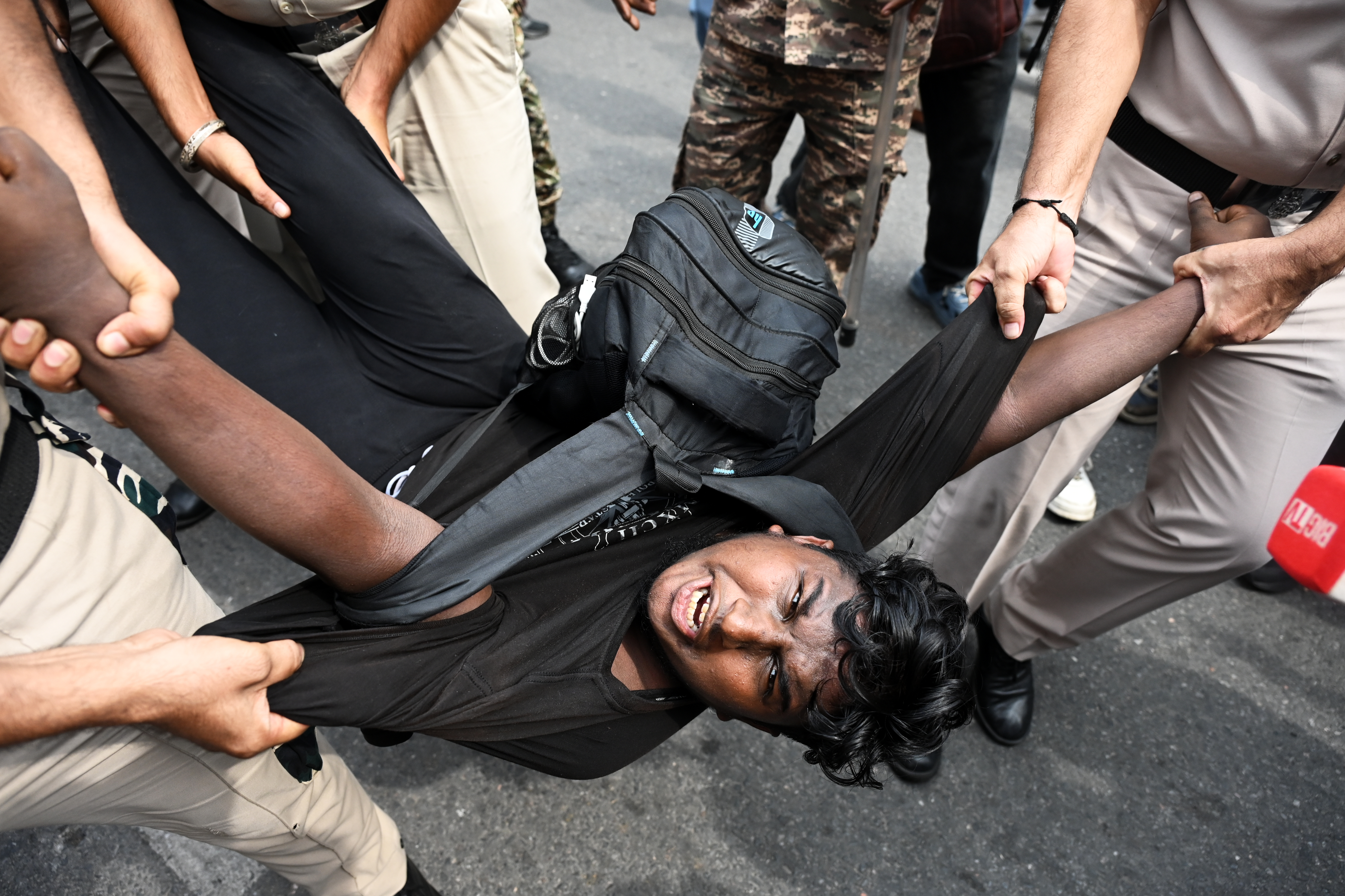
    NEW DELHI — Leaders of a popular Indian youth movement vowed to continue protests Sunday after being released from detention, a day after police cracked down on demonstrations against a controversial revision of voter lists. The movement is demanding the resignation of the country’s election chief.

    The protests were triggered after authorities removed more than 130 million voters from the list since last year. Critics say the move is politically motivated. Prime Minister Narendra Modi’s ruling Bharatiya Janata Party and the Election Commission deny manipulation allegations.

    The Cockroach Janata Party’s three leaders — Abhijeet Dipke, Saurav Das, and Ashutosh Ranka — were freed on condition that they commit “no breach of peace for one year,” Ratna Singh, the movement’s legal director, said in a social media post. It was unclear what the condition meant or whether it would restrict their participation in protests.

    Police boarded the leaders’ flight from Mumbai after it landed in New Delhi on Saturday and took them into custody as they prepared to lead a demonstration in New Delhi.

    After his release, Dipke called Modi “an embarrassment to India.”

    “Never has this country seen a bigger coward and bully,” he wrote on X.

    Das, a spokesperson for the movement, urged supporters to take to the streets. “A situation has been created where the state is at war with its own citizens,” he told reporters Sunday.

    Following Saturday’s protests, authorities launched a sweeping security crackdown in the capital, detaining more than 2,000 protesters, including several opposition lawmakers. Train services to the capital were canceled, metro stations closed, and mobile internet suspended in parts of the city.

    Most of those detained were released late Saturday, police said.

    Small groups of protesters returned to the Indian capital on Sunday, staging marches across the city. The police quickly broke up most of the demonstrations, detaining some protesters again.

    Protesters are demanding the resignation of Gyanesh Kumar, the chief election commissioner. Modi’s party has said the voter revision is needed to eliminate duplicate and ineligible entries.

    The Cockroach movement began as an online satirical campaign this summer after India’s chief justice compared unemployed young people to parasites. Many young Indians embraced the remark, adopting the cockroach as a symbol of resilience.

    Protests led by the group forced the resignation of Modi’s education minister in July, a rare setback for the prime minister, who has been in power for more than 12 years.

  • Trump’s Medicaid cuts strip refugees and other legal immigrants of their health coverage

    Trump’s Medicaid cuts strip refugees and other legal immigrants of their health coverage

    New restrictions have stripped Medicaid coverage from certain legal immigrants, including refugees and victims of human trafficking, as part of broader federal changes to the health insurance program that are expected to force millions off their coverage.

    The change effective Oct. 1 cut from Medicaid what is estimated to be hundreds of thousands of people who legally immigrated to the United States, many of whom work and pay taxes, in the latest Trump administration policy to target foreigners.

    The move is part of sweeping changes to Medicaid under President Donald Trump’s 2025 tax cut and policy law, with many set to take effect early next year. The Medicaid changes are projected to result in 7.5 million fewer people with health insurance, according to the Congressional Budget Office’s 2025 estimate.

    Advocates say that without Medicaid, people will not be able to afford private insurance and will either delay care or end up in emergency rooms, adding pressure to a strained health system. For immigrants, the cuts could be felt more acutely, compounding the effects of other administration efforts to restrict their access to public assistance as part of a broader immigration crackdown.

    “This is about telling every immigrant in the United States that they are not welcome here and that they should leave,” said Ben D’Avanzo, a senior strategist at the National Immigration Law Center, which has pursued litigation against the Republican administration over its immigration agenda.

    Refugees, asylum seekers, and victims of human trafficking and domestic violence are among those who have lost coverage. Green-card holders were not impacted.

    Lauren Bis, a White House spokesperson, said in a statement that “immigrants must be able to support themselves without taking from overburdened benefits programs paid for by hard-working American taxpayers.”

    D’Avanzo said many people who have lost coverage will likely only realize it when they need medical care. But for some, the change has been felt immediately.

    Dwindling supplies of lifesaving medication

    In Tucson, Ariz., María Chacon has been caring for her son Jesus for almost five years since a car accident at 17 left him unable to breathe on his own. He requires a ventilator, a feeding tube, and daily medication, and must be turned once every two hours to stop sores from forming. Chacon said he sometimes opens his eyes.

    The family is originally from Mexico and entered the U.S. on a T visa, offered to victims of human trafficking, in 2018.

    Chacon said Medicaid has helped cover almost $25,000 per month of care for her son, which includes a small stipend for her and her husband as compensation for being long-term caregivers. She said doctors have explained that even if they both worked 24 hours a day, they would not be able to cover the cost of his care.

    “Since that day I haven’t been able to sleep. We haven’t been able to eat or anything. We’re wondering what we’re going to do?” Chacon said.

    Jesus takes medication that Chacon estimates costs $7,000 a month. The supply runs out in mid-October. Without coverage, she does not know how her son is going to survive.

    Chacon found out just days before the cuts that she was losing care. She called the state’s Medicaid offices to appeal. Although she is in the process of obtaining a green card, Medicaid coverage would only kick in five years after she is approved.

    Steven Camarota, research director for the Center for Immigration Studies, a right-leaning think tank that seeks less immigration, said the administration “is trying to nibble around the edges” with the Oct. 1 cuts, finding piecemeal ways to curb immigration into the U.S.

    Camarota believes the government should screen legal immigrants for income potential and education, reducing the number who might rely on public benefits once they cross the border.

    “You need immigrants who are unlikely to need welfare,” he said, or those with high educational attainment.

    The administration recently revived a federal rule that could deny green cards to immigrants who use public benefits that could include food stamps, Medicaid, housing vouchers, and others.

    Chacon believes the cuts to Medicaid coverage are part of the administration’s clampdown on immigrants. She said her son is in no condition to travel.

    “I know that’s what he’s doing, but, as my son is, I couldn’t go to Mexico,” Chacon said.

    Millions more will be dropped from Medicaid

    Medicaid, jointly funded by states and the federal government, has become a political focal point during Trump’s second term. The president has pushed to root out what he describes as fraud in the program. In July, the administration deferred over $1 billion in Medicaid payments to California and Minnesota, claiming there was suspected fraud; critics argued the move targeted Democratic-led states.

    As more people are cut from Medicaid, the federal government is predicted to reduce program spending by $911 billion, according to healthcare research nonprofit KFF.

    In Arizona, officials said 29,000 legal immigrants were cut from Medicaid rolls on Oct. 1. In Florida, estimates are closer to 177,000. Overall, more than 281,000 immigrants from nine states and the District of Columbia are estimated to lose Medicaid coverage, according to KFF.

    As more states implement various restrictions to coverage, 7.5 million people are expected to lose coverage by 2034, according to analysis by the Congressional Budget Office.

    Without coverage, people will turn to emergency rooms for care. When people delay seeing a doctor, conditions can worsen and become even more expensive to treat.

    “At the end of the day, it does raise the cost for the states because once you get these people in for something that could have been prevented, they could not go to the doctor because they were uninsured; they most likely will end up at a hospital in an emergency room,” said Carmen Feliciano, the vice president of policy and advocacy at UnidosUS, a Latino civil rights organization.

    UnidosUS partners with community organizations to help provide medical care, but Feliciano said they already are overwhelmed and would not be able to support the number of people who are going to lose medical coverage in the coming months.

    “We are not going to have the capacity to serve all the people who need it,” Feliciano said.

  • America’s elected officials are living in fear

    America’s elected officials are living in fear

    In January, a caller began leaving threats in the voicemail inboxes of members of Congress: “I want to see their throat cut from ear to ear.”

    Another caller left a blunt threat for a U.S. senator: “I’m going to murder you, and I’m going to start with your children.”

    A state attorney general received this three-word missive: “Bang, bang, bang.”

    Serving in public office in the United States is dangerous. From state and local government to Congress, an unending river of violent threats is washing through the mailboxes, offices, voicemail, and texts of those who govern the nation. Thousands of public servants are living, working, and, in the final weeks of election season, campaigning in a state of fear.

    And it’s getting worse, officeholders said in dozens of interviews.

    An investigation by the New York Times examining hundreds of records obtained through Freedom of Information Act requests, court documents, and law enforcement logs has found that, over a two-year period from 2024 to August of this year, thousands of violent threats inundated the lives of elected officials in unprecedented ways.

    Some threats were vague; some were frighteningly specific. They promised torture, stabbing, rape, and murder. They aimed at Republicans and Democrats alike, and at a range of officeholders from county clerks to U.S. senators. They targeted spouses, parents, siblings, and children.

    At least 44 governors, as well as their staff members and families, have been subjected to violent threats over the past two years, the Times’ investigation found. That’s also true of at least 70 of the nation’s 100 senators, and at least 185 members of the House of Representatives — nearly half the body. More than half of the country’s secretaries of state, most of whom serve as their states’ chief election officers, have received threats of violence.

    Actual violence also spiked during that period: assassination attempts against President Donald Trump, the killing of Charlie Kirk, the assassination of a legislative leader and her husband in Minnesota, the firebombing of Gov. Josh Shapiro’s home in Pennsylvania. For many elected officials, the escalation is a grim testament to the toxicity of violent rhetoric and how it can shake the country’s democratic institutions.

    The threats have also reshaped private lives. Dozens of officials have fortified their homes, installed cameras, and hired private security guards, often at their own expense. They’ve changed their daily routines, moved their children to new schools, grocery-shopped only at certain times and places. They’ve scrubbed the internet to remove personal information about themselves and their loved ones.

    Some of them have altered what they say in public and, in rare cases, how they govern. Some, including members of Congress, have quit. Both parties have struggled to recruit candidates, especially women.

    And policing violent threats against officials is a difficult task. The Times’ review of federal court data from the past two years found only 53 cases in which individuals were charged with threatening public officials, excluding the president.

    Vague state and federal laws and free speech protections can make prosecution challenging. Anonymous letters and screen names can be hard to track. The sheer volume of threats can make hunting down those responsible virtually impossible.

    This new normal can also be measured in dollars spent. In the 2017-18 election cycle, candidates for federal office spent roughly $6 million on security-related items, according to campaign finance records. In the current midterm cycle, candidates had already spent at least $25 million by Aug. 1, with the final general election sprint still to come. That excludes what many officials are spending from their own pockets.

    Overall, the threats tallied by the Times are likely undercounts; state laws and communication policies bar many offices from disclosing security issues. Many members of Congress said privately that it was hard to imagine any remaining offices on Capitol Hill that have not experienced a violent threat this decade.

    The rhetoric is abetted by the anonymity of the internet, a polarized political landscape, and the entrenched public opinion that politicians are not improving American lives. Those receiving threats include divisive figures who have juiced the increasingly belligerent tone of political rhetoric, as well as others who avoid inflammatory talk but are targeted for their policies, ideology, or party affiliation.

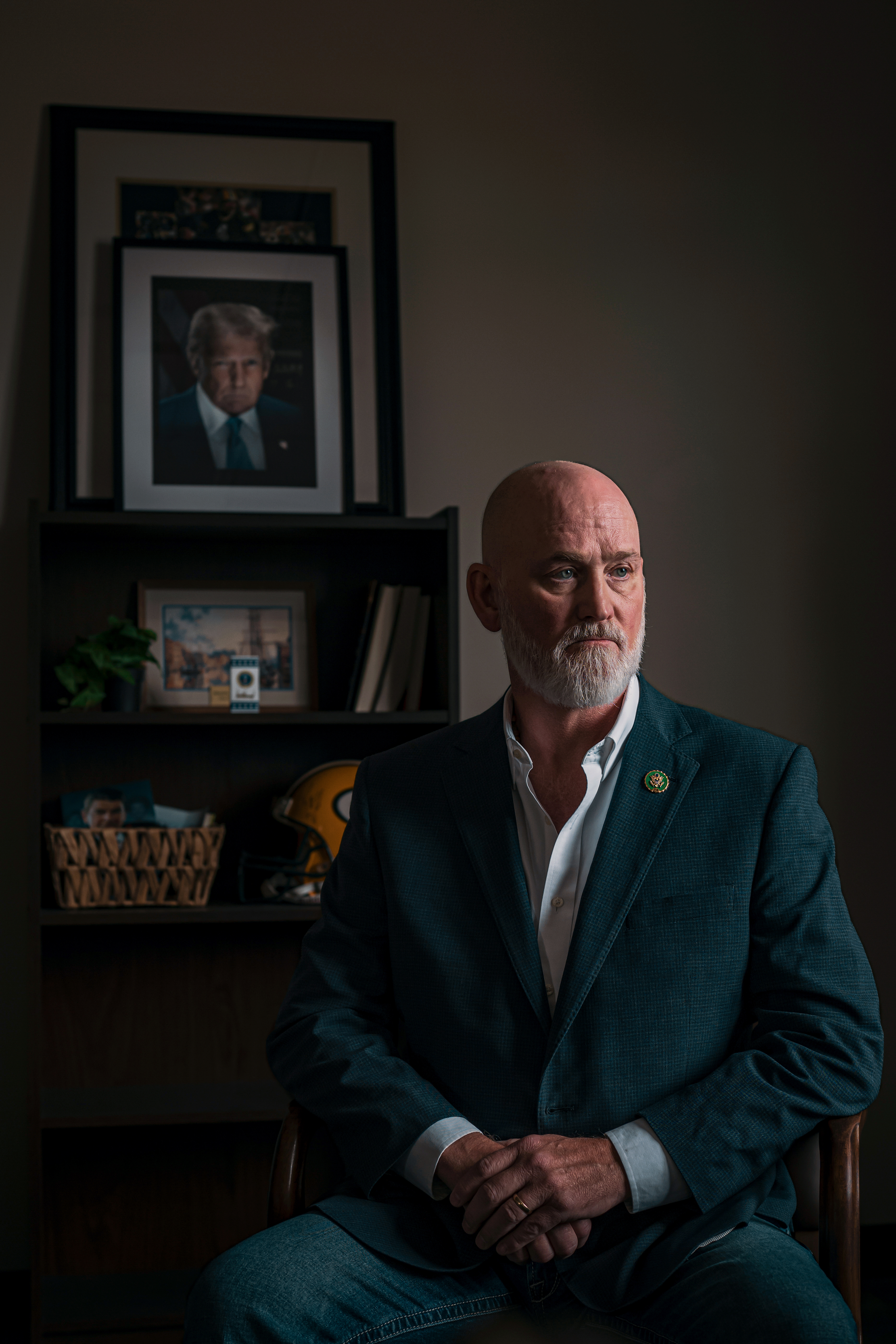
    Rep. Derrick Van Orden (R., Wis.), who is seeking reelection next month, attended the “Stop the Steal” rally on Jan. 6, 2021, in support of Trump’s false claim that he had won the 2020 election. Van Orden was outside the U.S. Capitol that day when a mob attacked it, though he has denied entering the building. He was elected to Congress in 2022.

    That’s when the threats began.

    “I was a Navy SEAL for over 22 years,” Van Orden said in an interview with the Times. “I hunted terrorists around the world a lot and was very successful at that. Never had a single threat to my family. Ever.”

    Now, Van Orden travels with armed security personnel. His family, he said, is “protected 24 hours a day.”

    ‘What are the risks and what is the reward?’

    For much of her political career, Marjorie Taylor Greene, a former Republican House member from Georgia, injected herself into the most pitched political battles. Her liberal foes said she courted controversy to raise her profile. But her rapid rise also came at a cost.

    What started out as a flood of threats primarily from the left evolved into menace from the right, too, after Greene’s break with Trump last fall.

    Greene’s dispute with the president centered largely on Jeffrey Epstein, the sexual predator who eventually killed himself in jail. Like many on the far right, Greene had agitated for the release of government files pertaining to Epstein. Then she began agitating directly against the president she had once fawned over, when his government refused to do so.

    Her disillusionment expanded after Trump took the country to war against Iran. She believed his tariff policies and curtailment of health subsidies were hurting her constituents in rural northwest Georgia, she said, and flouting his promise to put “America First.”

    Her breaking point came after the president called her a “traitor.” Of the torrent of threats that followed, one stood out. It was aimed at her son.

    “That’s the one that bothers me on a visceral level,” she said.

    Greene reached out to Trump, hoping for compassion from a president she had stood by for years. She forwarded copies of the threats to him, hoping that seeing the threats against her family would be enough to tone down the attacks.

    She got a five-word reply from the president: “Your fault, you deserve it.”

    Weeks later, Greene announced her retirement from Congress.

    “I looked at what are the risks and what is the reward,” she said. “And for me, it was, I’m not going to be treated that way, and I’m not going to have my children’s lives threatened.”

    A White House spokesperson, Davis Ingle, did not deny the contents of Trump’s text, but he said Trump condemned political violence.

    “Having survived multiple assassination attempts — and having seen his dear friend Charlie be assassinated last year — no one understands the dangers of political violence more than President Trump,” he said, referring to Kirk.

    Women are often more aggressively targeted than men, and harder to recruit, said Greta Neubauer, the Democratic minority leader in the Wisconsin state Assembly. Mothers are more apt to avoid the risk to themselves and their families, she said.

    If potential recruits don’t bring up fears of violence on their own, Neubauer does. “There is an amount of risk that you and your family are going to need to accept if you choose to do this,” she regularly says to potential candidates. “And we want to make sure that you are fully aware of that in advance.”

    Minnesota Gov. Tim Walz, a Democrat, nearly walked away, too.

    He was inundated with violent threats after Kamala Harris, then the vice president, selected him as her running mate in 2024. But it was the assassination of two close friends, former Minnesota House Speaker Melissa Hortman and her husband, Mark, in June 2025, that led Walz to question his resolve to keep going.

    The tragedy also altered Walz’s daily life. His security team was on increased alert. He felt helpless to protect state lawmakers who felt exposed and unsafe after losing one of their own.

    “We’re a part-time legislature,” Walz said. “These folks go back home and teach school, run their business. They’re dentists. They’re nurses. They do all those things. How do you follow them in the nine months they’re not here?”

    When families are targets

    A former CIA analyst and Defense Department official, Sen. Elissa Slotkin (D., Mich.) had been trained to deal with a variety of “threat environments.”

    Her family had not. So when political foes started targeting her parents, including an ailing father, Slotkin couldn’t shield them from a toll they had not invited.

    Last November, Slotkin joined five others in a video telling U.S. soldiers that they did not have to follow unlawful orders.

    The message infuriated Trump, who described it as “seditious behavior from traitors” and “punishable by death.” Conservatives labeled the lawmakers the “seditious six.” The threats poured in — especially to Slotkin, the one who had posted the video on social media platform X.

    The Capitol Police assigned round-the-clock shifts to protect her. What they couldn’t prevent: her parents’ home being swatted in the middle of the night. Her father, 81 at the time, was dying of cancer when someone called local police with a false report that a man was killing his wife at the couple’s address.

    The senator’s brothers put security details in front of their homes. Staff members temporarily moved out of theirs. Her father died just a few weeks after police came to his door.

    “I signed up for this, but my family and my staff did not,” Slotkin said.

    Threats to family and staff feel more chilling, several officials said, and the effects are often more disruptive.

    “My daughter just sent me one yesterday,” Walz told the Times, “where somebody said, ‘Wait what I’ve got in store for you — and then a picture in front of the house.”

    Van Orden moved his family because of violent threats. “I know exactly what these people are trying to do,” he said. “To make me leave the public square through threatening my family, because they know threatening me has no effect at all because of my background.”

    Many officials cite a desire to improve their country for their children and grandchildren as motivation for seeking office. The deluge of threats has done the reverse, pushing the civic-minded out of the public square to shield their loved ones from an increasingly toxic world.

    Carly Koppes, a Republican county election official in Colorado, saw a new kind of violent threat after her pregnancy became public: messages targeting both her and her unborn child.

    The challenge of staying safe

    Rodric Bray, the Republican leader of the Indiana Senate, drew critics, but rarely threats, after he became a well-known power broker in Indianapolis — until his chamber bucked Trump’s push to eliminate the state’s two remaining Democratic congressional districts.

    Amid headline after headline about the intraparty disagreement, threats of violence overwhelmed the staid political atmosphere of the Indiana Statehouse. Bray became the main target.

    Bomb threats were called into his office. Death threats, too. “They were very short,” he said. “Just saying, ‘I’m going to come down there and kill you.’” Same with messages about his house. “Just, ‘There’s going to be a bomb mailed to your house,’ or ‘There’s been a bomb placed at your house.’”

    Bray said he forced himself into a stressful state of high alert. He changed his daily routine. He talked with his family about staying “extra vigilant” around the house and away from home. Friends kept watch. Once, law enforcement noticed something suspicious on his patio, alarming neighbors and keeping family away until it was cleared.

    Koppes said she, too, changed her hours and took different routes to work after learning that some threats against her had come from a man living directly across from her office. “Good day War Criminal,” one of them read. “You traitor guilty of treason and sedition; oath breaking piece of trash loser, you should get gang raped.”

    Shenna Bellows, the Democratic secretary of state in Maine, and her husband moved out of their home after law enforcement told her it wasn’t safe to stay. Bellows, Maine’s chief election officer, had been receiving threats at least since 2020, when Trump and his allies convinced thousands of his supporters, without evidence, that the election that year had been rigged.

    Bellows was swatted in 2023, a day after she removed Trump from the state’s presidential primary ballot under the U.S. Constitution’s insurrection clause. She later reversed herself after a court ruled against a similar measure in Colorado, but the threats kept coming.

    In January, someone posted her cell phone number and other personal information online. Menacing voicemail and text messages poured in. Her social media was inundated. “Shenna bellows I’m coming for you,” one person wrote, adding profanity. “Beheaded soon.”

    Gina Hinojosa, a Democratic member of the Texas House of Representatives, was out of state when an activist posted a picture of her home online. She urged her family to move in with relatives.

    “It was a feeling of being hunted,” she said.

    Now the Democratic candidate for governor in Texas, Hinojosa has installed new fencing and other barriers at home “so that we’re just not as easily accessible, we’re not as easily seen.”

    Officials are also buying guns. Jennifer Johnson, a county judge in rural Florida, recently purchased one and enrolled in a firearms course after an animated video of her being murdered circulated online.

    Security equipment has become a huge expenditure for officeholders. Much of it has come on Capitol Hill, where, in the wake of the Jan. 6 riot, threats of violence spiked dramatically.

    J. Thomas Manger took over as chief of the Capitol Police in 2021. He more than doubled his roster of investigators. Offices were fortified and modernized. Furniture was scrutinized and rearranged. District offices across the country got security assessments.

    The House’s sergeant-at-arms, who oversees security in that chamber and helps govern the Capitol Police, spent more than $28 million in 2025, the second most in recent history, according to congressional records.

    Among the expenditures: $1.8 million on an alert system, and more than $200,000 on a gunshot detection system.

    By the time Manger retired in May 2025, the volume of threats had gotten worse, he said.

    One reason is the difficulty of mounting prosecutions, which reduces the deterrent effect, he said. Fewer than 10% of the cases Manger’s team investigated in 2021 led to criminal charges, he said.

    Some of that is due to mitigating circumstances such as a lack of a criminal record or mental health struggles. Some of it results from the use of diversion programs such as counseling.

    Making a threat is also a tricky crime to prosecute. Explicit death threats against members of Congress are illegal, but some stop short of that line and are ruled menacing, not explicit.

    “One member got a photograph, an actual physical photograph, mailed to them, and it was a photograph of their, I think it was an 8-year-old child walking a dog in their neighborhood,” Manger said. “All it said on it was ‘cute dog.’”

    Some officeholders don’t control government purse strings. State lawmakers, election officials, council members, and school board officials are often left to fend for themselves.

    Hinojosa said that almost every fortification she had undertaken had come at personal expense.

    Threats have remade how candidates run for office. Outdoor events are increasingly rare. Sweeping event spaces is a regular part of campaign advance work. Metal detectors and frisks are common. Many candidates have a security official in their inner circle.

    Such measures have made candidates feel isolated, yet the public has taken notice.

    For some, at a certain point, it all becomes too much.

    Greene recalled that her feud with the president came shortly after the assassination of Kirk. That made the subsequent deluge of threats more personal and more frightening.

    “I said, you know what? This is just not worth it for me personally,” she said. “I’m a very happy person without being in Congress. Much happier actually. And probably a lot safer.”

    This article originally appeared in the New York Times.

  • Justice Department is investigating TV networks over Trump pool coverage

    Justice Department is investigating TV networks over Trump pool coverage

    The Justice Department is investigating whether the major television networks — ABC, CBS, CNN, NBC, and Fox News — violated federal antitrust laws when the group briefly suspended their pooled coverage of President Donald Trump, according to six people with knowledge of the department’s action.

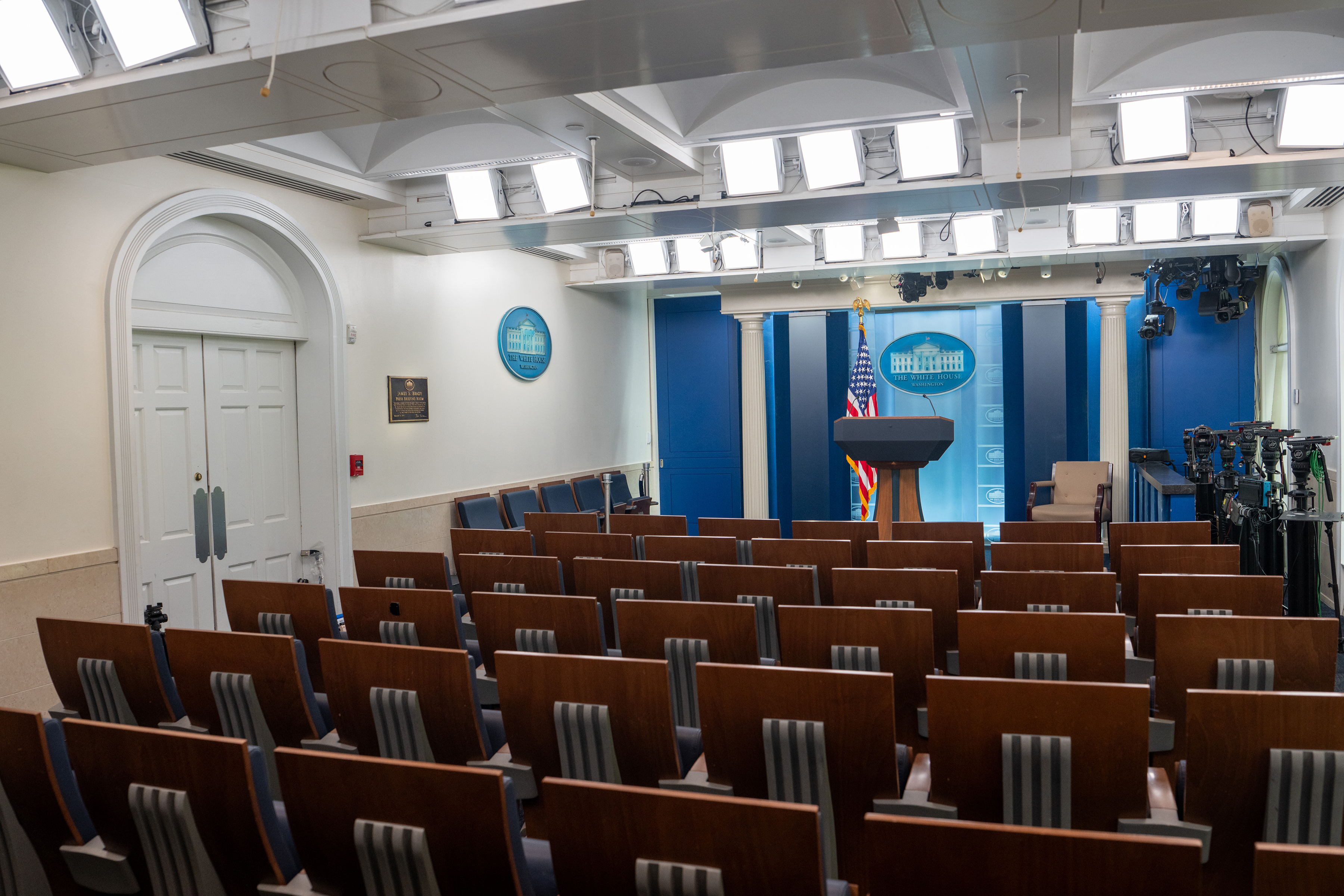
    Officials from the Justice Department contacted networks Friday and demanded communications and materials related to the White House TV pool, the people said. The pool is a long-standing system where the networks share the responsibility of providing footage of the president and distributing it to other news outlets.

    Last month, the networks collectively suspended their pool footage of Trump for several days after the president banned CNN journalists from the White House grounds, which prevented CNN from participating in the pool.

    The inquiry by the Justice Department is a profound escalation of the Trump administration’s ongoing battles with the White House press corps. It also follows a pattern of the Trump administration using the levers of government against its perceived foes in the media. The Justice Department has subpoenaed reporters from the New York Times and seized a laptop from a Washington Post journalist.

    A Justice Department spokesperson, Emily Covington, said in a statement Saturday: “Members of the television press pool have proudly boycotted covering White House events. Group boycotts among commercial competitors can violate the Sherman Act,” a core antitrust law.

    “The Antitrust Division is simply investigating to determine whether these news organizations have violated the antitrust laws,” Covington added.

    The White House did not immediately respond to an inquiry Saturday, and representatives for the five networks did not immediately comment.

    The latest skirmish was set off when Trump, lamenting what he described as “purposely negative stories,” barred CNN, Politico, and MS NOW from the White House on Sept. 18.

    The three news organizations sued, calling the president’s action a violation of their First Amendment rights; the administration argued that access to the White House was a “privilege.” A federal judge issued a temporary block on the ban, which is set to expire Tuesday.

    This article originally appeared in the New York Times.
  • Pentagon raises official toll of troops who died during war with Iran to 21

    Pentagon raises official toll of troops who died during war with Iran to 21

    The Pentagon acknowledged late Friday that the number of troops who have died in the Middle East during its operations against Iran is higher than previously reported, and updated the official count to include two more noncombat deaths.

    The Washington Post exclusively reported last month, based on information from six U.S. officials, that the numbers of service members lost was greater than what the Pentagon was reporting in its official, public database, known as the Defense Casualty Analysis System, or DCAS.

    Defense Secretary Pete Hegseth at the time called that reporting “a complete lie” in a social media post. However, late Friday, the Pentagon raised the figure publicly reported in DCAS to include additional deaths.

    As of Friday, the total troop deaths the administration is connecting to operations against Iran and officially reporting in DCAS stands at 21.

    That figure includes two additional noncombat deaths: Maj. Sorffly Davius, 46, an Army National Guard member who died in Kuwait on March 6, and an unidentified Navy suicide that occurred in September, according to a U.S. official, who spoke on the condition of anonymity to provide additional context on the troop deaths.

    In addition, 865 service members have been wounded, according to updated data in DCAS.

    The military also acknowledged one additional soldier’s training accident death that it said was not tied to ongoing operations against Iran.

    Sgt. Devin A. Seibel, 26, died during a training accident in Iraq in May. His death is now recorded in DCAS under Operation Inherent Resolve, the military’s decade-long named operation against the Islamic State. That service member’s death brings the total number of troops who have died in the Middle East since Feb. 28, the date that operations against Iran began, to 22.

    On Friday, two of the top Democratic members of the House Armed Services Committee said they were glad the Pentagon had made a “public correction” to the overall losses in the war.

    “There is no excuse for a mistake of this magnitude,” the committee’s top Democrat, Rep. Adam Smith (Wash.) and Rep. Chrissy Houlahan (Pa.), the top Democrat on the military personnel subcommittee, said in a statement, calling the fact that Congress had to get involved to have the Pentagon correct its numbers “an embarrassment” for the military.

    In a statement to the Post, the Pentagon did not acknowledge the changed numbers but instead said it is making further revisions to how DCAS reports casualties, including a new category of “pending adjudication” as it works through casualty reporting. The new adjudication category was first reported by Defense Scoop.

    The Pentagon “continues to maintain a steadfast commitment to the transparent, accurate accounting of all Service member casualties,” it said in a statement.

    It has been difficult for the public and lawmakers overseeing the Pentagon to get a clear picture of how many troops have been injured or killed during the conflict in part because the Trump administration changed mid-conflict the way it was publicly accounting for troop deaths, something critics have charged is a way for President Donald Trump to hide the true cost to military personnel.

    In previous conflicts those injuries or deaths — whether caused by hostile action or nonhostile causes, such as accidents or suicides — have been captured by named conflict in DCAS.

    In part, what has confounded DCAS data in this conflict is that earlier this year Trump declared that Operation Epic Fury had ended, even though the U.S. and Iran were still exchanging fire. In response the Pentagon created a new category of injured and killed that was not tied to Epic Fury, saying instead those numbers would be tallied under overseas contingency operations.

  • Some Republicans reject Trump’s move to import diesel fuel from Russia

    Some Republicans reject Trump’s move to import diesel fuel from Russia

    President Donald Trump’s announcement of a deal with President Vladimir Putin of Russia to import Russian diesel has drawn criticism from some Republicans running in the most competitive midterm races, as the party grasps for ways to contain soaring energy prices.

    The president announced the arrangement, which undercuts U.S. sanctions on Moscow, under pressure to rein in the surging price of diesel. The product’s cost has climbed because of the war with Iran, which has clogged a vital oil-shipping corridor, and high energy prices have become a severe campaign liability for Republican candidates in the midterms.

    But the campaigns of two Republicans running in pivotal Senate races — former Rep. Mike Rogers of Michigan and Sen. Dan Sullivan of Alaska — expressed disapproval of the deal with Russia. And other Republicans running in competitive Senate and House races had little to say about the agreement, which Trump trumpeted Friday on social media as a “very big and important” deal, claiming it would swiftly bring down energy costs.

    “It’s a grave error by the president,” said Rep. Don Bacon, a Nebraska Republican from a battleground district who is not running for reelection. “People realize that the sanctions on Russia are appropriate when Russia’s invading a country and bombing cities at night.”

    Bacon predicted the deal would have little effect on soaring diesel prices but would offer a victory for one of America’s adversaries. And the congressman said that the agreement would not help Republican candidates. “It looks desperate,” he said.

    The White House did not immediately respond to a request for comment. The deal received some Republican praise. Rep. Anna Paulina Luna, a Florida Republican running in a competitive race, wrote on social media that it would “massively benefit the American people.”

    The United States introduced sanctions on energy exports from Russia after the country started its full-scale invasion of Ukraine in 2022. Trump’s deal, and his declaration Saturday that Ukraine should “get a new president,” escalated U.S. tensions with Kyiv. The issue of U.S. support for the country has for years divided Republicans; the two Republican Senate candidates who questioned the deal have long been supporters of Ukraine.

    Some Midwestern Republicans have called for a pause on diesel exports to try to lower costs for American consumers, a notion that Trump has ruled out.

    Energy experts say the deal is not likely to have a major impact on the cost of diesel, which has spiked to around $6.28 a gallon, according to the AAA motor club, up from $3.67 a year ago. Andrew Lipow, president of Lipow Oil Associates, an energy consulting firm in Houston, said the deal would introduce a “very small” amount of diesel into the market “compared to U.S. demand.”

    In Michigan, Rogers, who has recently sought distance from Trump by calling for the president to end both the Iran war and his tariff fight with Canada, told reporters on Friday that he supported an agricultural rebate for diesel, but not the president’s approach.

    Rogers, long a foreign policy hawk, cited concern about offering Putin a victory. “You just don’t want to give that guy an inch,” he said.

    The Associated Press reported that a bipartisan group of six senators on Sunday called for Trump’s administration to “immediately reverse course” on the diesel purchase.

    Four Republican senators and two Democratic senators signed onto the statement released Sunday protesting the deal. They said the administration failed to consult with Congress or submit any explanation to justify its decision as required by statute.

    “The United States should not provide Putin with a financial lifeline while Russia continues to kill Ukrainian civilians. The Administration must immediately reverse course,” they wrote.

    The Republican senators who signed onto the statement are Sens. Susan Collins of Maine, Lisa Murkowski of Alaska, Thom Tillis of North Carolina, and John Curtis of Utah. The Democratic senators are Sens. Jeanne Shaheen of New Hampshire and Richard Blumenthal of Connecticut.

    Tillis, in an interview that aired Sunday on NBC’s Meet the Press, said there’s a legitimate case for saying the president is not following the law if the administration goes through with its diesel purchase plan.

    “We were very clear that Russia is the aggressor. Russia is the one who can end this war by backing out of territory that they occupied,” Tillis said.

    Democrats pounced on the deal. Sen. Chuck Schumer of New York, the Democratic minority leader, wrote on social media that the president had made a “deal with the devil to try to help his flailing political fortunes.”

    Rep. Chris Pappas, the Democratic nominee in the competitive Senate race in New Hampshire, said in a statement that the agreement was a “slap in the face to Ukraine and our allies overseas.” The campaign of his Republican opponent, former Sen. John E. Sununu, did not immediately respond to a request for comment.

    The high cost of diesel poses a particular risk for Republicans running in states whose farming-heavy economies are powered by diesel, such as Nebraska, Iowa, and Kansas.

    Rogers, Sullivan, and Hinson have all called for the United States to pause diesel exports. Last month, Trump proposed banning or limiting U.S. diesel exports, worrying European countries. But recently, he said, “We are not going to be doing the export ban.”

    This article originally appeared in the New York Times.
  • Trump says Russia and Ukraine reach ‘energy ceasefire’ but gives no details

    Trump says Russia and Ukraine reach ‘energy ceasefire’ but gives no details

    WASHINGTON — U.S. President Donald Trump said Sunday that Russia and Ukraine had agreed to an “energy ceasefire” in the 4½-year-old war, but he offered no details on it and Kyiv reported attacks by Moscow on energy sites after his statement.

    Trump’s brief social media post said only that the ceasefire took effect immediately, adding: “Do not break it!”

    Moscow did not immediately comment. Ukrainian President Volodymyr Zelensky said that while his country “welcomed” the announcement by Trump as “good news for everyone,” Russia was still hitting energy infrastructure in Kyiv and in the city of Kharkiv.

    “Unfortunately, Ukrainian skies have been infested with Russian ‘shaheds’ all day today,” he said in an evening address, referring to drones launched by Moscow. “There have been glide bomb strikes and strikes on our energy infrastructure too. A power plant in Kharkiv was attacked this evening.”

    The presidential office confirmed the Kharkiv attack came after Trump’s ceasefire post.

    Zelenskyy said Ukraine was “ready to refrain from striking Russian energy infrastructure — and we count on the same readiness from Russia.”

    Russia has sought to deny Ukrainian civilians power, heat, and running water during the war, hoping to wear down public resistance to Moscow’s full-scale invasion. Ukrainian officials describe the strategy as “weaponizing winter.”

    Zelensky said Ukraine has proposed many de-escalatory steps but Russian President Vladimir Putin “had one answer to all of them — ‘nyet.’ We do hope that he will finally say something different to America, Ukraine, and the entire world.”

    He said Kyiv is maintaining contact with the U.S., and he thanked Americans for their support. He said on X that he had spoken about the development with Canadian Prime Minister Mark Carney, Finnish President Alexander Stubb, and NATO Secretary-General Mark Rutte.

    In an interview broadcast earlier Sunday, Zelensky said Kyiv was ready to stop striking Russian refineries if Moscow halted attacks on Ukraine’s energy system, and he asked Trump to press the Kremlin to agree.

    “We are asking President Trump, (to) give them (a) signal, not (to) attack energy infrastructure of Ukraine,” he told ABC’s This Week.

    On Sept. 14, Trump claimed on social media that both countries had agreed “not to hit” each other’s energy infrastructure but offered no details on that proposal either. While Zelensky had said Ukraine was ready to comply if Russia did, nothing came of the proposal.

    Trump spars with Zelensky

    Trump said Saturday it was time for Ukraine to get a new president, suggesting Zelensky has not done enough to end the war and blaming him for high diesel prices in the U.S.

    Zelensky said in response to Trump’s comments that Ukraine could hold elections if Russia agreed to a 60-day ceasefire.

    “Give us two months, 60 days off. Total ceasefire, 60 days, and we will organize elections,” he said, adding that Ukraine would be ready to accept whatever choice its people made.

    “With all respect to President Trump, it’s up to our society, up to our people to choose one or another leader,” he said. Holding an election during the war would be unlawful and Ukraine would need security guarantees to allow for safe voting, Zelensky added.

    Ukraine has been under martial law since Putin launched the full-scale invasion in February 2022, and the Ukrainian Constitution bars elections while it remains in force. Beyond the legal barrier, a nationwide vote would be vulnerable to Russian attacks, and organizing one is widely seen as logistically impossible, with roughly a fifth of the country held by Russia, millions of Ukrainians displaced abroad, and soldiers on the front line. Zelensky’s term formally expired in May 2024, but the constitution allows him to remain in office until a new president is sworn in.

    The exchange came as Kyiv pressed its campaign against Russian infrastructure, with a drone attack on Sunday shutting down a data center in the city of Vladimir, east of Moscow, run by technology giant Yandex. It was the third strike on the company’s facilities in four days.

    Russia and Ukraine have been waging a long-range aerial war while their armies remain largely deadlocked on the front line.

    Trump, who on Friday struck a deal with Putin to buy diesel from Moscow in an attempt to address high fuel prices ahead of U.S. midterm elections, has been urging Zelensky for weeks to stop striking Russian energy infrastructure.

    He has sought to blame record U.S. diesel prices on Ukraine rather than the U.S.-led war in Iran, which has driven up world energy prices. Ukrainian and European officials reacted to the diesel deal with dismay, saying it will help pay for Russia’s war effort.

    Ukrainian strike on Russian data center triggers outages

    The Ukrainian drone attack on the Yandex data center in Vladimir caused outages across the company’s services, leaving users in dozens of Russian cities and in Kazakhstan, Belarus, and Armenia unable to order taxis or access banking services, according to Russian independent news outlet Astra.

    “Operations at the data center have been completely halted. There were no injuries,” said the Yandex Cloud Telegram channel, which updates service availability.

    Moscow residents described disruption to everyday tasks. Pavel Belyavskiy, a driver for Yandex Taxi, said it was unclear whether orders were coming through at all, and that he had to cancel several rides after waiting a long time because he could not reach the passenger.

    “I’d press the ‘call’ button to contact them, but nothing happens,” he said. “There’s nothing I can do, so I’m just forced to cancel.”

    Igor Mann said he tried to check on an order on the Yandex Market shopping platform but the page was unavailable, and connecting through a virtual private network did not help. “Nothing worked,” he said.

    Another Muscovite, Eduard Malyavko, said the outages had a “direct impact” and weren’t just about “convenience.” He said they affected “healthcare, and everything else.”

    On Thursday, a drone attack took a Yandex data center offline in the Ryazan region, southeast of Moscow. The next day, Ukrainian drones hit the company’s major data center in the Kaluga region, southwest of Moscow, disabling part of the facility, Yandex said.

    Yandex, often described as Russia’s Google, runs the country’s most popular search engine and a wide range of digital services, and it is heavily involved in Russia’s artificial intelligence development.

    Zaporizhzhia death toll rises to 23

    Elsewhere, search and rescue operations ended in the southern city of Zaporizhzhia after a Russian bombing on Saturday, according to Ivan Fedorov, former regional head and co-chairperson of the regional defense council.

    Zelensky said 23 people were killed in the attack, including four children. More than 30 people were wounded, Fedorov said, with eight still hospitalized.

    A man was killed and two women wounded in a Ukrainian drone strike on Russia’s Bryansk border region, local officials said Sunday.

  • Pope Leo will have surgery to remove a nodule in his lung. A Villanova medal ceremony remains unclear.

    Pope Leo will have surgery to remove a nodule in his lung. A Villanova medal ceremony remains unclear.

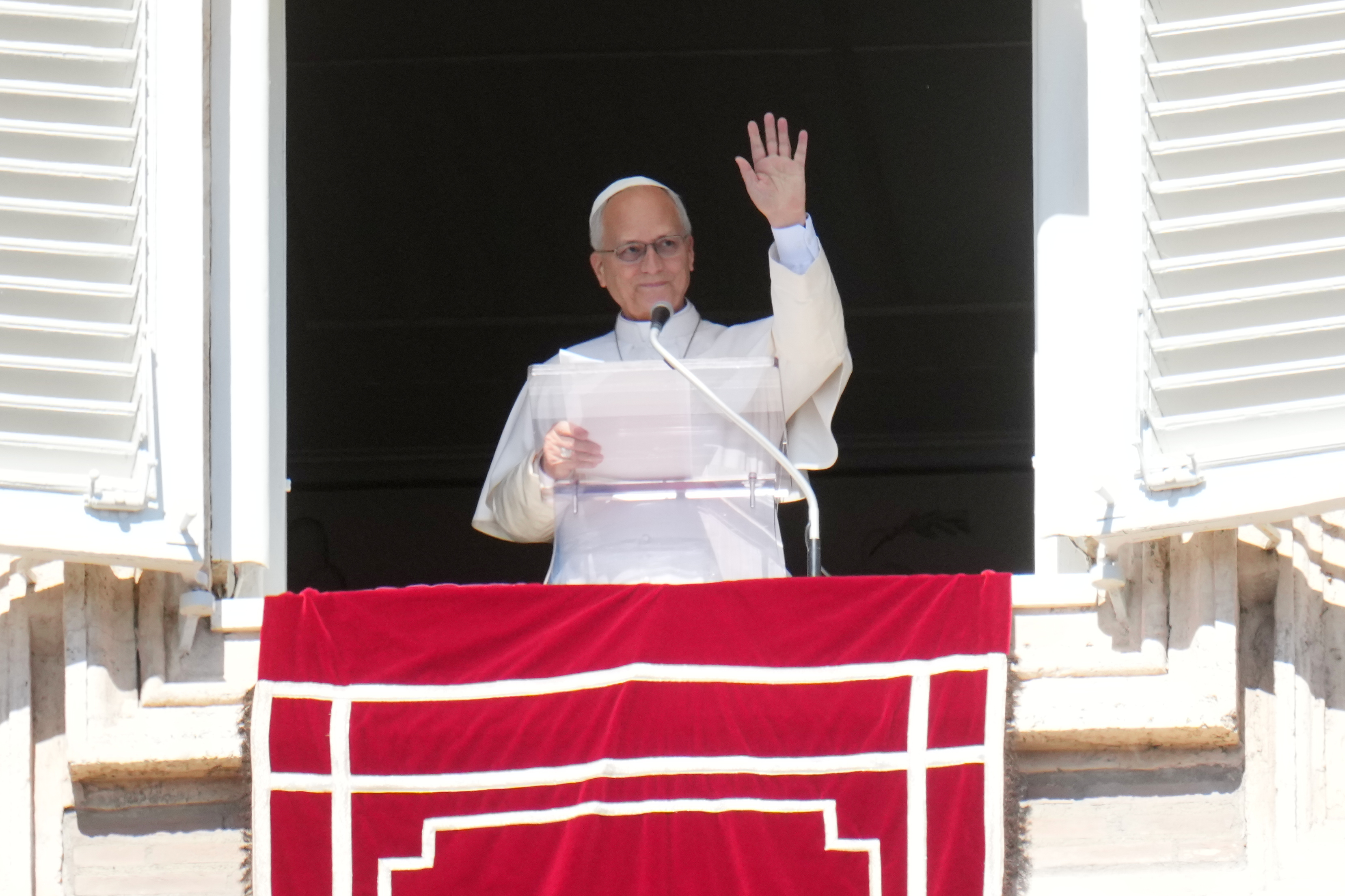
    Pope Leo XIV said he would undergo surgery in the coming days so doctors can remove a small growth discovered in his lung. The procedure marks his first major medical issue since becoming the first U.S.-born pontiff last year.

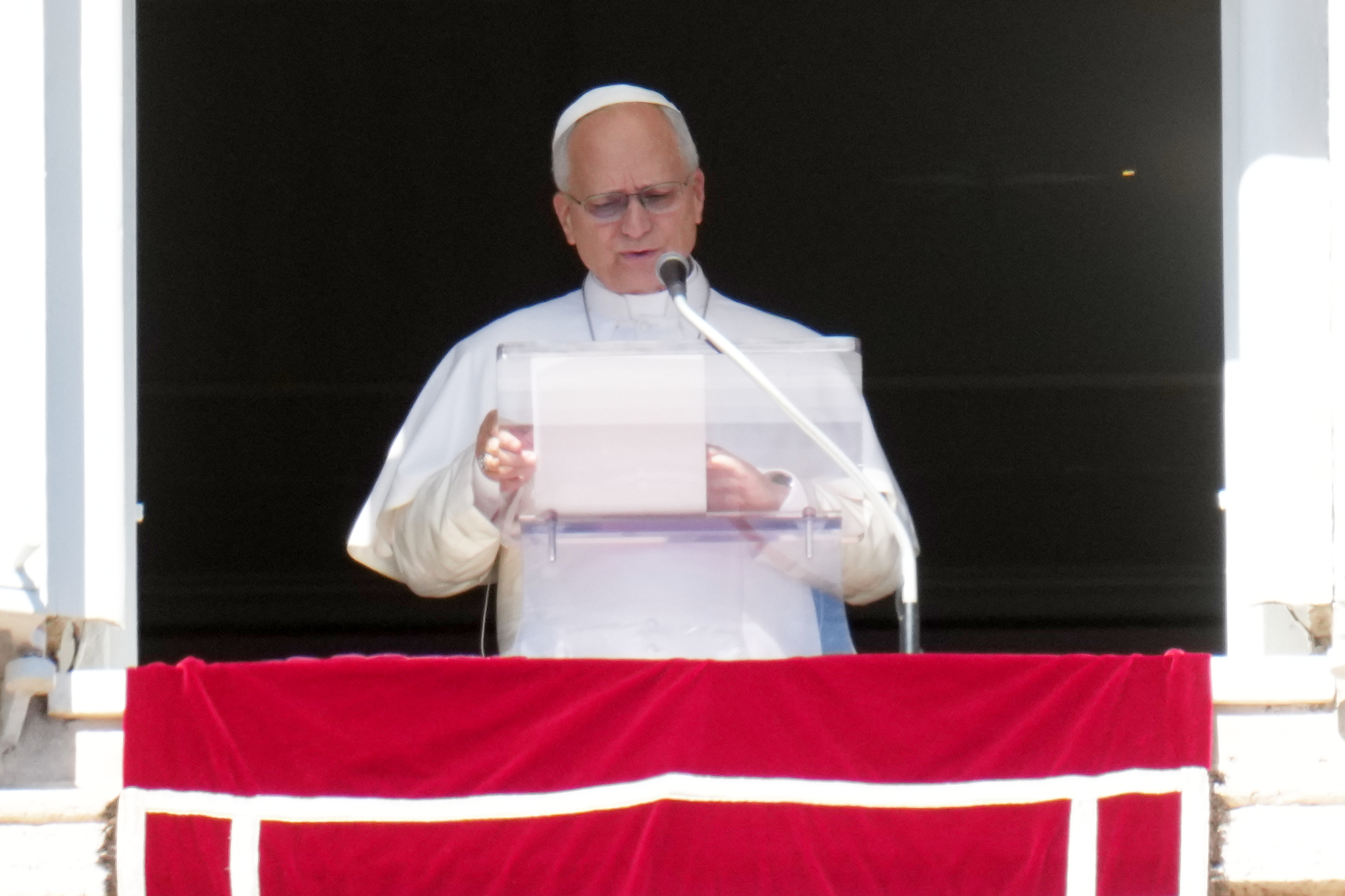
    Speaking during his regular Sunday address in St. Peter’s Square, the 71-year-old said doctors had detected the nodule “at a very early stage” and that it was “well localized.” He decided to follow doctors’ recommendations to have it removed. The surgery is expected to take place at Rome’s Gemelli Hospital. The pope is expected to require some hospitalization during his weeklong recovery, Vatican officials said.

    Pope Leo XIV delivers the Angelus prayer in St. Peter’s Square at the Vatican, Sunday, Oct. 11, 2026. (AP Photo/Gregorio Borgia)Gregorio Borgia

    “Thank you for your spiritual closeness, and I entrust myself to your prayers,” Leo told worshipers.

    It is unclear if Pope Leo will still be able to present Villanova University’s inaugural sustainability medal in his name at an international conference in Rome on Tuesday. A Villanova alumnus, Pope Leo is scheduled to bestow the award to Cardinal Michael Czerny, who founded an AIDS network.

    Nodules are small, often non-symptomatic, lung lesions that prove cancerous in less than 5% of patients, according to the American Cancer Society. They are often discovered during unrelated screenings. Procedures to remove them are considered routine. The Vatican did not release any further details about the nodule.

    Pope Leo XIV is not known to suffer from any serious medical ailments. The physically active pontiff maintains a home gym in his newly renovated papal apartment.

    The operation is not expected to affect the pope’s trip to Latin America in November, Vatican officials said.

    The Pope Leo XIV Sustainability Medal was established earlier this year, inspired in part by Pope Leo’s call to serve the poor and vulnerable, Villanova officials said.

    “Care for creation cannot be separated from care for people,” the school said.

    Czerny, who was born in Czechoslovakia and raised and ordained in Canada, has focused on helping vulnerable people worldwide for decades.

  • What we know about the shooting in West Philadelphia that killed a police officer

    What we know about the shooting in West Philadelphia that killed a police officer

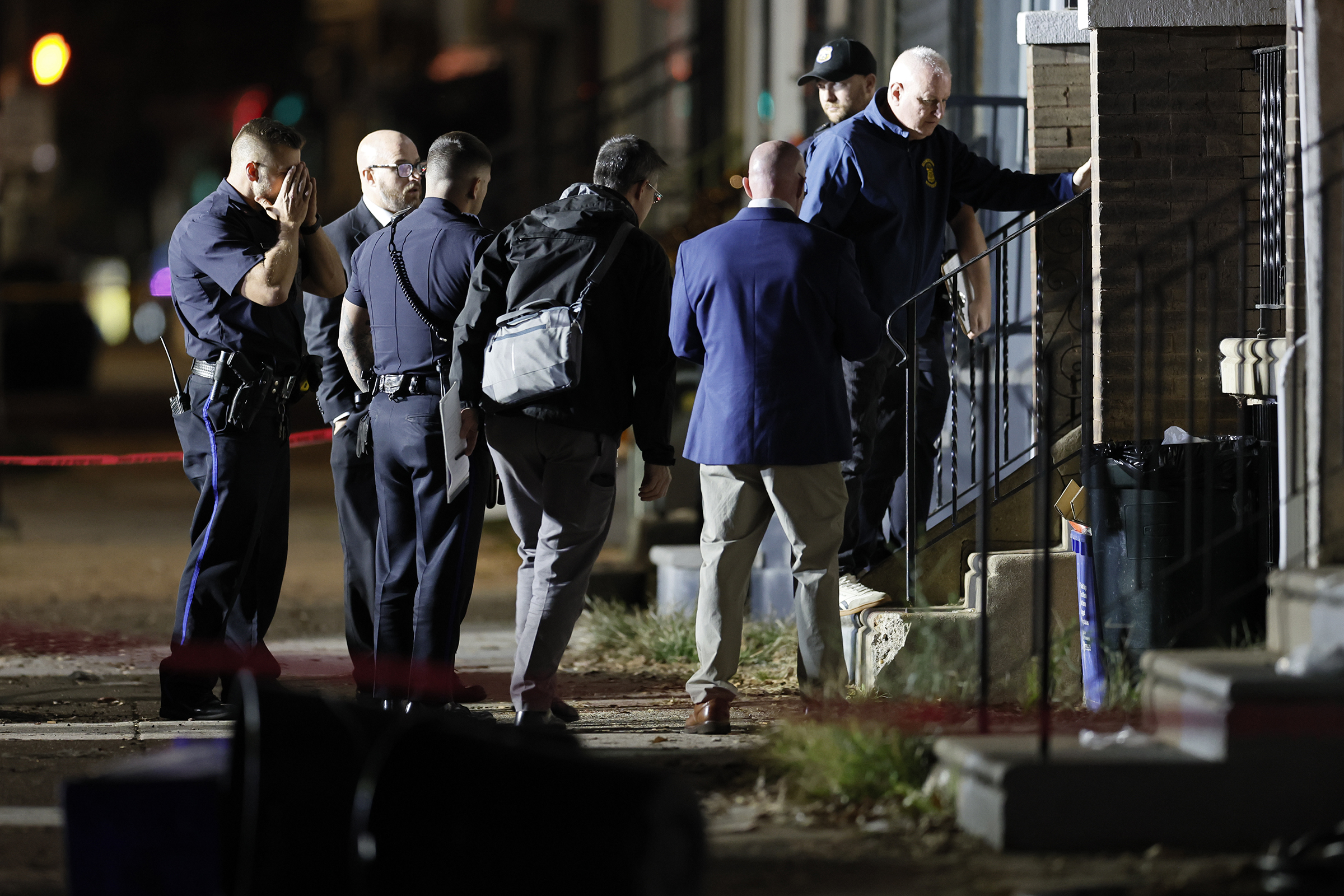
    A Philadelphia police officer was killed and another was critically injured Saturday after a man ambushed them outside his West Philadelphia home, according to authorities.

    As police approached the home on North 52nd Street, gunfire erupted, striking Officer Shane Seiber multiple times, authorities said. Seiber, a 40-year-old father of two, died from his wounds hours later. His colleague, a 33-year-old man, was shot 12 times and remains hospitalized.

    The accused gunman is a city employee.

    Here’s what we know so far.

    What happened?

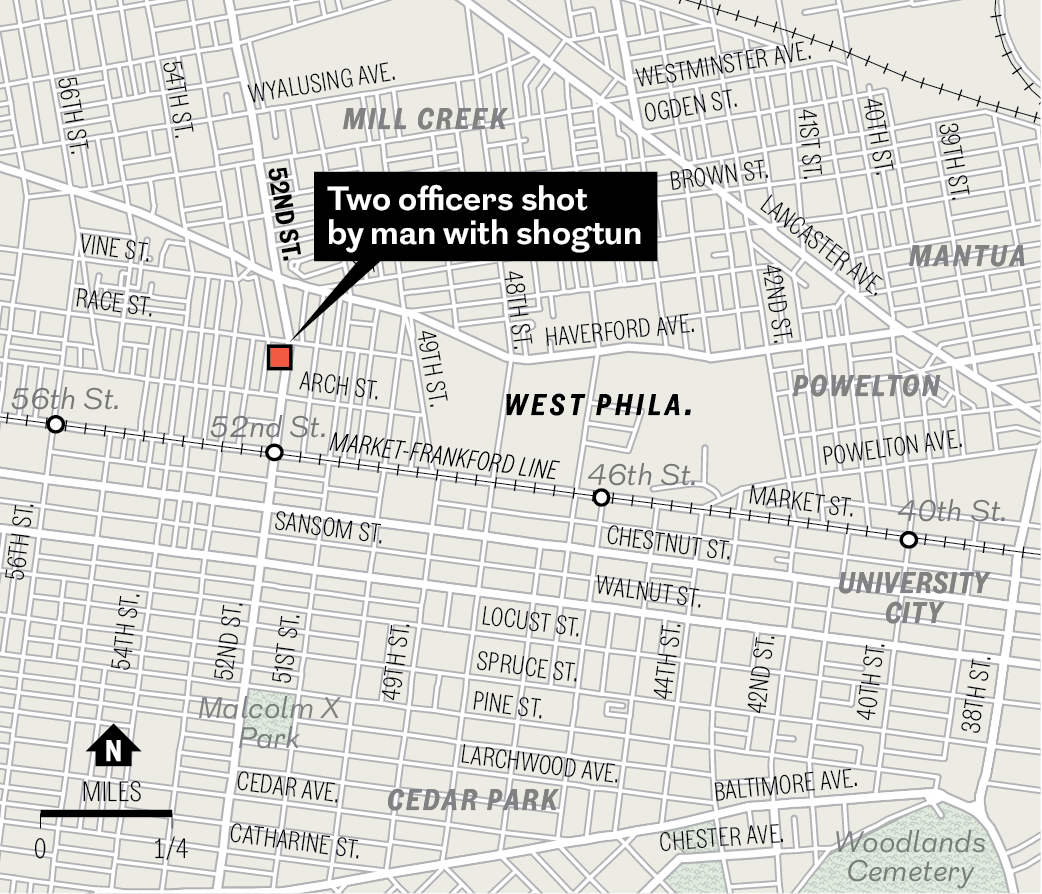
    Police were called just after midnight about a man with a gun outside in the 100 block of North 52nd Street. Officers were dispatched about 30 minutes later, Police Commissioner Kevin J. Bethel said.

    Seiber was knocking on the door of a home when a man — later identified as Eric Lewis — approached, according to a law enforcement source. The officers asked whether he lived there and Lewis began yelling and acting aggressively, said the source, who spoke on the condition of anonymity to discuss an ongoing investigation.

    Map of where two police officers were ambushed by a man with a shotgun in West Philadelphia.John Duchneskie

    A brief struggle ensued, then gunfire erupted, according to the source and an arrest report obtained by The Inquirer. Later, Lewis would tell police he shot the officers after they put their hands on him.

    “I did what I did because they did what they did,” Lewis said, according to the arrest report.

    Lewis continued to fire as the officers laid on the ground, bleeding from their wounds, the source said.

    Other officers arrived found the two men unconscious on the porch; they were carried to a nearby patrol car and rushed to the hospital.

    From an alleyway, the gunman fired at nine additional officers who rushed in, but none were struck.

    A SWAT team responded, and two snipers on a rooftop heard a man’s voice coming from a tree in the alley below, the report said. The voice asked officers not to shoot.

    Lewis soon fell from the tree, hitting branches on the way down. He was surrounded then taken to a hospital, the report said.

    Police recovered two handguns — including a 9 mm Glock service weapon that police said belonged to the injured officer— from the area where Lewis was found and a shotgun from a nearby yard. The 9mm handgun had been loaded with a magazine that came from Seiber’s belt, the police report said.

    Who was killed and wounded?

    Seiber, a 10-year veteran of the force, was shot three times and died at Penn Presbyterian Medical Center shortly after 9 a.m. Saturday, Bethel said.

    “He fought valiantly, but he lost his life today,” Bethel said. Seiber’s loved ones were at his side before he died.

    Seiber was remembered by public officials as a husband and father of two young children, ages 3 and 7, who made a “noble and courageous” decision to become a police officer, Mayor Cherelle L. Parker said.

    After Seiber graduated from the police academy in 2017, he thanked those who had supported him in a Facebook post, promising to “do my best to make y’all proud in this crazy, crazy occupation I’m about to begin.” He also praised his academy classmates as “some of the greatest people I’ve ever met.”

    In the same post, Seiber thanked his wife, who he said had endless patience for his “constant shenanigans, pranks, and general goofing around.”

    Officer Shane Seiber.Courtesy of the Philadelphia Police Department

    The 33-year-old injured officer, who has nine years with the department, was stable Saturday but “not out of the woods yet,” the commissioner said. An update on his condition was not available Sunday afternoon.

    His identity has not been made public. The department generally withholds such information in the early stages of an investigation to protect the officer and their family’s privacy.

    What’s known about the gunman?

    Lewis, 35, faces charges of murder, 10 counts of attempted murder, assault of a law enforcement officer, and a host of additional crimes. At Lewis’ first court appearance overnight Sunday, he was denied bail on the murder charge.

    City payroll records show that Lewis is a trades helper for the water department.

    District Council 33 of the American Federation of State, County and Municipal Employees, a union representing city workers, said the crimes Lewis is charged with do not represent the union’s standards.

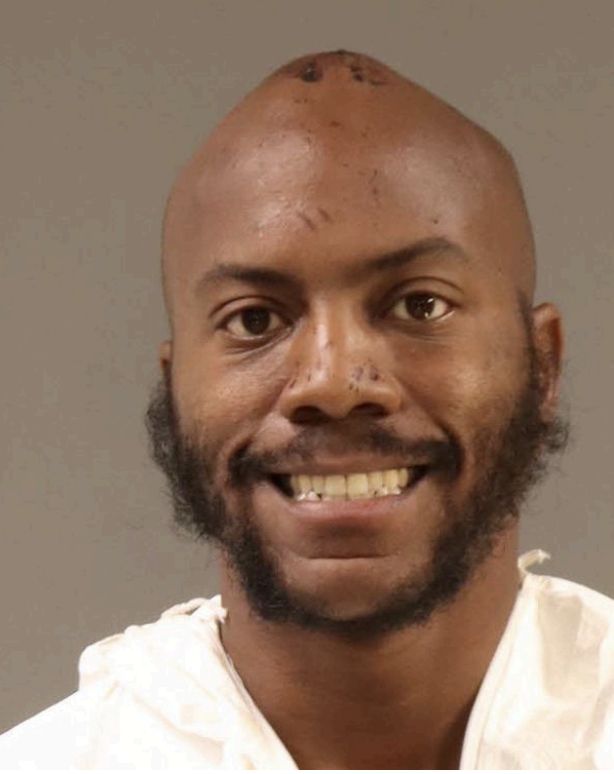
    Eric Lewis, charged with murder in the shooting death of police officer Shane Seiber, is shown in a Philadelphia Police Department photo.Philadelphia Police Department

    At a news conference Saturday afternoon, Parker said her administration would seek to expand involuntary commitment laws to cover severe mental health crises and substance use disorders that “interfere with Philadelphia’s ability to keep itself safe.”

    It is unclear what prompted the mayor to raise those issues.

    Parker did not directly say the shooter exhibited signs of mental illness or substance use, and District Attorney Larry Krasner declined to answer when asked about that.

    Lewis has a criminal history dating back more than a decade, court records show, but no felony convictions that would have prevented him from owning a firearm, Krasner said.

    In 2012, he was charged with theft and receiving stolen property. He was later convicted and sentenced to two years’ probation. A judge also ordered Lewis to undergo substance abuse treatment, court records show.

    He was arrested again the following year and charged with carrying firearms in public and simple assault, both misdemeanors. He was convicted in 2015 and was sentenced to five years’ probation. A judge ordered Lewis to receive a drug and alcohol assessment and a mental health evaluation.

    Toward the end of his supervision, in 2018, he was convicted of disorderly conduct for fighting and was sentenced to a year’s probation, as well as an additional three years of court supervision in the firearms case.

    What don’t we know yet?

    Officials said police were responding to a report about a man with a gun. It wasn’t immediately known what happened before officers arrived.

    Staff writers Ellie Rushing, Brett Sholtis, Jillian Kramer, and Jesse Bunch contributed to this report.