Category: News

  • Inside Elon Musk’s $276 million midterm rescue mission for Republicans

    Inside Elon Musk’s $276 million midterm rescue mission for Republicans

    WASHINGTON — Elon Musk has quietly funneled more than $276 million into Republican groups and his super political action committee since the start of July, building a huge turnout operation to help the party battle headwinds in the midterm elections.

    The staggering amount of money makes Musk, the richest person in the world, by far the largest known donor in the midterms. Representatives for Musk supplied the previously unreported figures on his political giving to the New York Times before a federal filing deadline Thursday.

    In an effort to save Republicans’ Senate majority, Musk gave a total of $158 million this summer to the Senate Leadership Fund, the main super PAC backing the party’s candidates for the chamber, according to his team. In sum, that is one of the largest political donations in American history, and more than the group’s Democratic rival raised from all of its donors that quarter.

    Musk has also built a major Republican turnout operation through a super PAC he founded in 2024, America PAC. He donated over $76 million this summer to the group, which in turn spent that much on building a sprawling canvassing program to try to turn out hard-to-reach Republican voters. The group is active in seven Senate battlegrounds and nearly three dozen House races.

    Musk has already given far more money, about $366 million, to federal committees during the 2025-26 election cycle than he did during the 2024 election, when he laid out roughly $290 million to help return President Donald Trump and Republicans to power. He has given even more in undisclosed donations during both elections, according to people briefed on the giving.

    The latest torrent of spending has helped give the Republican Party a financial advantage in the midterms, as well-funded outside groups like Trump’s powerful super PAC flood the airwaves with advertising in the final weeks. No Democratic billionaire is spending nearly as much as Musk, and money remains a central worry for the party in an otherwise favorable political environment.

    The donations also clear up the mystery of how much staying power Musk wants to have in American politics.

    “In terms of political spending, I’m going to do a lot less in the future,” he said in May 2025.

    Musk, who oversees a vast business empire that has benefited from enormous federal contracts, is famously unpredictable and often jumps from one project to another. He has been far quieter about his political work since his dramatic blowup with Trump last year. After months of wielding vast influence inside the White House and overseeing Trump’s government cost-cutting project, he raged against the president’s major domestic policy bill and floated threats to start a third party.

    But the two men have warmed back up, appearing together at three events in the last two weeks and praising each other.

    Now Musk has donated more than a quarter-billion dollars to help Trump and Republicans in the midterms. The money signals his commitment to the right and sets him up as a potential player in the 2028 presidential election, when his super PAC says it intends to remain active — the first time it has confirmed such plans.

    Beyond Musk’s donations to his super PAC and the Senate Leadership Fund, his representatives said that from July through September, he had given smaller but still substantial amounts to other conservative groups:

    — $20 million to the Congressional Leadership Fund, the main super PAC for House Republicans

    — $10 million to Lone Star Liberty PAC, a group supporting Ken Paxton, the Republican nominee for Senate in Texas

    — $10 million to the Republican Governors Association

    — $2 million to the Republican Attorneys General Association

    “If Democrats take control of Washington and win key gubernatorial and attorney general races this November, then America risks becoming a socialist, woke, and borderless country,” said Andrew Romeo, a spokesperson for America PAC. “These robust investments have allowed the GOP apparatus to get its message out so Republicans can have a fighting chance to defy history.”

    Pushing for Paxton

    On voters’ doors across Texas, the campaign literature carries a stark warning: “Radical Democrat socialists are winning elections all across America. Could Texas be next?”

    The hanging door cards are the work of Musk’s voter-turnout operation, which deployed nearly 3,000 paid canvassers last week around the country, according to America PAC officials.

    The group has devoted most of its more than $76 million in midterm spending so far to this canvassing program, shelling out smaller amounts on advertising, mail, phone calls, and text messages. Much of the messaging targets Democrats, sometimes in misleading or overheated ways.

    This spring, Trump’s political advisers asked Musk to reprise America PAC’s 2024 field program, a person familiar with the conversation said. Despite the challenging environment for Republicans, some party strategists believe that a field program can make the difference in particularly tight races.

    America PAC relies on a few voter-canvassing firms that compete aggressively with one another for work and for staffing, according to people briefed on the operation.

    Turnover in the canvassing industry is high. One canvasser who worked for America PAC told the Times that he was paid between $1.50 and $3.00 for each door he knocked on across Texas in the heat. America PAC says it has knocked on about 6.5 million doors across the country so far.

    Musk and his operation, people close to them say, have been particularly focused on the Texas Senate race. The group has unloaded over a third of its disclosed spending in that expensive race, more than in any other. It is uncommon to run an extensive field campaign in large states like Texas, where television ads are more often used to reach voters.

    Musk, a resident of Austin, has extensive business interests and property holdings in Texas. Paxton, the state attorney general, has investigated Musk’s opponents, including Media Matters, a liberal group.

    Musk’s $10 million donation to Paxton’s super PAC came at a critical time, when the Republican candidate was being badly outspent.

    And Musk’s $158 million in donations to the Senate Leadership Fund, the most the super PAC has ever received from a single donor in a quarter, may have made it possible for that group to suddenly spend big for Paxton after months of reluctance.

    That is because Musk’s donations preceded the decision in late August by the super PAC, led by allies of Sen. John Thune of South Dakota, the majority leader, to start what has become a $149 million pro-Paxton ad campaign.

    A focus on transgender issues

    As it did in 2024, Musk’s operation is focused not on persuading swing voters, but on registering and turning out voters with conservative beliefs — especially “low-propensity” ones who are less likely to cast a ballot.

    This is a lot harder for Republicans in a midterm election, without Trump at the top of the ballot.

    To do it, Musk’s super PAC is leaning hard into the culture wars, especially transgender issues. (Musk’s daughter, who is transgender, has spoken about their clashes over her identity, and he has suggested that this led to his increased political engagement.)

    At voters’ doors in Texas, canvassers are told to target Gina Hinojosa, the Democratic candidate for governor, over her record on transgender issues, according to parts of a script reviewed by the Times.

    Similarly, the Musk operation is leaving literature on doors that claims that James Talarico, the Democratic nominee for Senate in Texas, has a “radical trans agenda.” And America PAC’s top ad in the state, according to the media tracking firm AdImpact, denounces Talarico over his past comments suggesting that “God is nonbinary.”

    The Musk group is also targeting other Democratic Senate candidates over transgender issues, including Josh Turek, the party’s nominee in Iowa. Nationally, one of the super PAC’s most visible ads on Facebook features a man in makeup and reads: “He made his plan to vote. Did you? Don’t stay home while crazies elect radicals.”

    The group is running ads and sending mail on a broad range of topics, but socialism is a core theme. The Musk super PAC regularly attacks Democrats as socialist and ties them to figures such as New York City Mayor Zohran Mamdani and Rep Alexandria Ocasio-Cortez of New York, according to 48 pieces of direct mail shared by Mintt, a mail-tracking firm.

    Online, it is even running personalized messaging that invokes a voter’s first name. For example, in a video showing smiling Democrats: “Why are they smiling? Because Christopher hasn’t made a plan to vote yet.”

    Much of this outreach points voters to an America PAC website where conservatives can learn how to register to vote. The super PAC is pushing what it calls an “America Pass,” a digital card on Apple or Google wallets on voters’ phones that lists their registration information, along with election dates and deadlines in their home state.

    A big spender with a backseat role

    While Musk is spending big again and using some tactics that are similar to those he deployed two years ago, this is not 2024 anymore.

    He is in a different place politically. While he and Trump appear to be on good terms again — “our modern-day Thomas Edison,” the president called him Thursday — Musk is taking a hands-off approach this election and does not appear as personally passionate.

    He has not brought up the midterm elections or the Trump presidency much in private conversations with friends, according to people who have spoken to him in recent months. He is focused on his businesses, these people say, and he and his business lieutenants have taken a less active role in America PAC’s operations, entrusting major decisions to Chris Young, his top adviser.

    And on the social platform X, a semi-reliable indicator of where the billionaire’s mind is, Musk has written just seven direct posts this year about candidates in competitive midterm races, according to a Times review, a far cry from his relentless calls throughout 2024 to elect Trump. Five of those posts focused on Talarico — and one appeared critical of Sen. Susan Collins, a vulnerable Republican in Maine.

    Gone, too, are Musk’s barnstorming campaign stops, such as the ones he did in Pennsylvania in October 2024 or a Wisconsin judicial election in the spring of 2025. There are no more sweepstakes where he personally hands an oversize check of $1 million to those who register voters or sign a petition, a gambit that drew legal challenges.

    Musk has not evidently grown infatuated with candidates this time around, as he did with Trump. The closest he came was a $10 million donation for a long-shot Republican running for the U.S. Senate in Kentucky — an investment that went poorly.

    The $276 million figure is, of course, just what is publicly known. Musk has also made some seven-figure donations to support midterm candidates through groups that are not required to disclose their donors, according to a person with knowledge of the matter.

    This article originally appeared in the New York Times.

  • True Food filed for bankruptcy, but its King of Prussia location is still open

    True Food filed for bankruptcy, but its King of Prussia location is still open

    A healthy-food chain closed a third of its restaurants nationwide as it declared bankruptcy earlier this month, but the King of Prussia location remains open.

    True Food Kitchen and several related entities filed for bankruptcy in Texas on Oct. 4, court filings show, closing 12 restaurants the same day.

    But the restaurant, which is right next to the King of Prussia Mall, remains open as of Oct. 12, spokesperson Charlotte Stone said.

    “The company will continue to evaluate the business, including its restaurant footprint,” she said.

    Lacey Hamilton (left) and her mother, Joy Lott, listen to server Eonnah McKenzie describe menu options at True Food Kitchen, located along Mall Boulevard next to the King of Prussia Mall, in 2017.JESSICA GRIFFIN/ Inquirer Staff

    The CEO told The Inquirer when it opened in 2017 that the brand likes to set up shop “where there are residents with active lifestyles, who are healthy eaters.”

    More recently, the chain’s plant-based options landed it on The Inquirer’s list of the suburbs’ best vegan takeout.

    Training manager Rosie Bramble (right) slices tomatoes in the open kitchen at True Food Kitchen, which is located at 239 Mall Blvd., next to the King of Prussia Mall, July 28, 2017.JESSICA GRIFFIN / Inquirer Staff

    A news release suggests that the company hopes to use the bankruptcy to strengthen its operations, although the brand will go up for sale as part of the proceedings.

    “This process is the best path forward to simplify the business and focus on what we do best: delivering craveable, health-forward food and genuine hospitality,” CEO Jeff Chandler wrote in the release.

    This suburban content is produced with support from the Leslie Miller and Richard Worley Foundation and The Lenfest Institute for Journalism. Editorial content is created independently of the project donors. Gifts to support The Inquirer’s high-impact journalism can be made at inquirer.com/donate. A list of Lenfest Institute donors can be found at lenfestinstitute.org/supporters.

  • Pope Leo will not present Villanova sustainability medal due to upcoming surgery

    Pope Leo will not present Villanova sustainability medal due to upcoming surgery

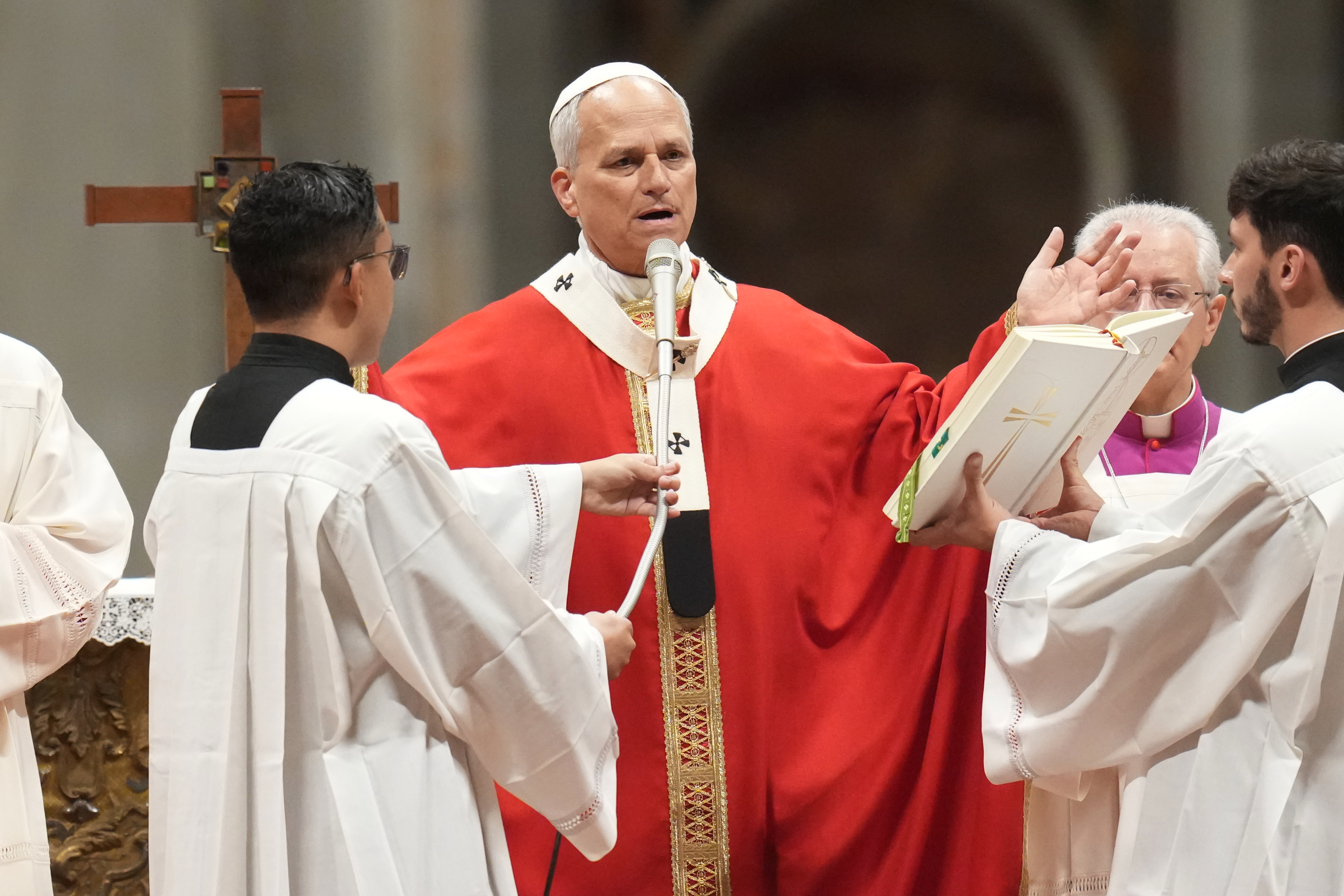
    ROME — Pope Leo XIV will not present an inaugural Villanova University sustainability medal in his name, as he is slated to undergo surgery in the coming days to remove a small growth discovered in his lung.

    The 71-year-old pontiff said during his regular Sunday address in St. Peter’s Square in Vatican City that doctors had detected a nodule “at a very early stage” that was “well localized.”

    Pope Leo was scheduled to present the medal at a conference in Rome on Tuesday. Pope Leo planned to present the award to Cardinal Michael Czerny, who founded an HIV and AIDS treatment network in Africa and has directed the Institute for Human Rights of the Central American University in El Salvador.

    The pope is the first pontiff born in the United States and a Villanova alumnus, having graduated from the university’s College of Liberal Arts and Sciences in 1977.

    The sustainability award named for him is meant to honor an individual who “demonstrates exceptional commitment to advancing sustainability and ecological responsibility in their communities and beyond,” and who demonstrates “the ethical mandate of caring for the marginalized,” according to Villanova’s website.

    It was not clear who would present the award in Pope Leo’s place.

    The statue of late Pope John Paul II is pictured at the Agostino Gemelli Polyclinic where Pope Leo XIV is scheduled to be hospitalized, in Rome.Andrew Medichini

    About 350 people are attending the 2026 International Sustainability Conference, 90 of them Villanovans. While attendees were sad they wouldn’t be able to see Pope Leo present the medal, they said their primary concern was for the pope’s health.

    “We pray that this is a simple procedure, that he is OK,” said the Rev. Peter M. Donohue, Villanova’s president and a friend of the pope. “May God’s healing presence be with you, Pope Leo.”

    “We all are holding Pope Leo very close in our hearts,” said the Rev. John Lydon, inaugural director of Villanova’s Mother Cabrini Institute on Immigration, who graduated from Villanova the same year as the pope, then known as Robert Prevost, and maintains a friendship with him.

    “I know that he has all of the conference’s and Villanova’s prayers,” said Finley Gust, 20, a sophomore environmental science major who will be making a presentation at the conference. “While we were hoping to see the pope, we all are just primarily praying for him in this time.”

    Conference attendee Innocent Wefon, a Mill Hill missionary from Cameroon, said he had been looking forward to sharing the pope’s environmental vision.

    “He’s a great environmentalist like his predecessor,” he said.

    But he said his prayers were with the pope. “It was the saddest news I had yesterday,” he said.

    Pope Leo’s surgery is expected to take place at Rome’s Gemelli Hospital. He is anticipated to require some hospitalization during a weeklong recovery, according to Vatican officials. This is the first known significant medical event of Pope Leo’s papacy, which began in May 2025.

    “Thank you for your spiritual closeness, and I entrust myself to your prayers,” Leo told worshipers in St. Peter’s Square on Sunday.

    The surgery is not expected to affect the pope’s upcoming trip to Latin America in November, Vatican officials said.

    “I ask all people throughout the Catholic Church of Philadelphia to join their hearts and voices in prayerful solidarity for the intention of Pope Leo’s health,” Archbishop of Philadelphia Rev. Nelson J. Pérez said in a statement.

    Lung nodules are fairly common and typically asymptomatic masses that are found to be noncancerous about 90% of the time, according to Stacey Su, chief of thoracic surgery at Temple Health’s Fox Chase Cancer Center. But it is nonetheless important to biopsy or remove them in case the nodule is cancerous, Su said.

    “Lung cancer remains the biggest cancer killer in men and women worldwide,” she said, with 25% of lung cancer patients never having smoked.

    Su said removing a nodule like Pope Leo’s typically is minimally invasive and would be performed laparoscopically or with the assistance of a surgical robot. Patients undergoing the procedure usually are hospitalized one to three days, and recover at home over the following three to four weeks, she said.

    The Vatican has not released further details about Pope Leo’s nodule.

  • Judge orders Trump administration to answer for tree removal at D.C. golf course

    Judge orders Trump administration to answer for tree removal at D.C. golf course

    WASHINGTON — A federal judge on Monday excoriated the Trump administration for ripping up hundreds of mature trees at a Washington golf course over the holiday weekend, even though she had directed officials to disclose any major changes before work was started.

    In an explosive, four-hour emergency hearing, Judge Ana C. Reyes of the U.S. District Court in Washington ordered a one-day halt to any more tree removal at East Potomac Golf Links, and said she would continue proceedings Tuesday.

    But first she directed Justice Department lawyers to track down a succession of progressively more senior officials involved in the decision, and ordered them to testify on the spot, as she demanded answers about who had authorized the trees to be cleared and whether the decision was linked to the White House. President Donald Trump has eyed the municipal course in southeastern Washington for redevelopment into a luxury championship course similar to those on his personal properties.

    “I am thoroughly unamused right now,” Reyes said, appearing remotely from Istanbul, where she had been traveling. She raised her voice at several points to near shouting level.

    “What has happened has cost the government all of its credibility with me in this case,” she said, before listing all of the times she had directed the government to alert her to major alterations.

    The Monday morning hearing was technically to address the tree removal, but Reyes made clear that her larger concern was the possibility that the Trump administration had flouted her instructions. Since Trump returned to office last year, judges have repeatedly been forced to interrogate whether the government has complied with orders across a variety of cases.

    Two Washington residents and a preservationist organization had sued in February over the president’s stated goal to redevelop the affordable municipal course into a championship-level one. In June, Trump was photographed touring the grounds and studying blueprints with Doug Burgum, the interior secretary, and Tom Fazio, a well-known architect who has designed other courses owned by the Trump Organization.

    At a hearing in July, Reyes, an appointee of President Joe Biden, ordered the Trump administration to notify the court before making sudden alterations to the course. She said that she was worried about how quickly plans were taking shape, and that she did not want to find out work had begun too late to “stop the trains.”

    On Friday evening, the Justice Department filed documents showing the administration intended to remove 529 trees as part of a larger restoration. By Saturday morning, machinery could be seen cutting down trees. The government acknowledged Monday that more than 400 were removed in one fell swoop over the weekend.

    In a filing Sunday night, lawyers representing the DC Preservation League asked Reyes to block further action, noting that the government had indicated that there were still “hundreds more” trees to be cut, prompting her to call for the emergency hearing.

    She fumed at the hearing that she had given the Trump administration “the benefit of the doubt” at every turn to disclose its plans for the course, only to learn while traveling that the government had moved ahead.

    When Marissa Piropato, a Justice Department lawyer, could not explain why the government had waited until Friday night to alert the court to action planned for the following day, Reyes reacted furiously.

    “Ignorance is not an excuse here,” she said.

    She told Piropato at another point that “what I find most frustrating about this, counsel, is that this is all double speak.”

    Reyes said she needed to figure out the chain of events that led to the tree removal, to figure out “whether or not I’ve been lied to.”

    One official, Kevin Griess, a National Park Service official overseeing public lands in Washington, testified that plans for the tree removal were finalized Oct. 5, and that he received the go-ahead to proceed over the weekend from Frank Lands, a deputy director at the park service.

    At that point, Reyes ordered that Lands be located to testify. Appearing remotely from his car in a parking lot, Lands explained that he formalized plans to renovate the course with Gregory Wischer, a Trump appointee at the Interior Department. Lands said that he and Wischer had also discussed Trump’s ideas to remake the site into a premier competition course.

    Reyes then ordered Wischer, a deputy chief of staff at the Interior Department, to appear, but Piropato said the department was unable to reach him. At that point, Reyes concluded the hearing for the day, ordering that Wischer be prepared to testify as early as Tuesday morning.

    “We’re going to get him in here tomorrow,” she said.

    In the meantime, Reyes blocked the government from removing more trees until 2 p.m. Tuesday, and she said she would consider whether to block the government from doing any work at the course for two weeks. She added that she would “try and take this step by step.”

    She ordered Griess, Lands, and their staff members to preserve records about the decision, and warned of repercussions if the government did more work at the course Monday, given her orders to stop.

    “I promise you, if that order is violated by two seconds, there are going to be contempt proceedings,” she said.

    Reyes said she felt betrayed by the Justice Department after she had repeatedly declined to formally block the Trump administration from conducting work at the site, despite repeated requests from the group that had sued.

    “I wanted you all to be better than you have been,” she told Piropato.

    This article originally appeared in The New York Times.

  • The SS United States is set to be sunk in mid-November

    The SS United States is set to be sunk in mid-November

    Nearly a year after last-minute efforts to save the ship and two years since it departed Philadelphia waters, the SS United States is about to set sail on its final voyage.

    The 990-foot retired ocean liner that stayed docked for three decades at Pier 82 will become the world’s largest artificial reef. Officials in Okaloosa County, Fla., announced plans for the historic ship to be sunk in November.

    The ship’s winding history and its yearslong purgatorial state piqued locals’ interest for what seemed like forever. It stood as an unofficial geographical marker in South Philadelphia, with a number of different owners sinking more than $40 million into ownership, maintenance, and other various plans for its future.

    All that changed in 2024 when the ship sold to Okaloosa County.

    Its previous owners, the SS United States Conservancy, worked hard to avoid the scrapyard, making appeals to different states for funding after its Pier 82 landlord took it to court for the ship’s removal.

    As the deadline loomed, Okaloosa County’s tourism department emerged as a buyer with plans to sink the ship and create the artificial reef as a boon for tourism.

    The Florida plans were met with mixed reviews. Late last year, the New York Coalition to Save the SS United States launched an appeal to stop the move and allocate New York City funding for the ship’s preservation. The plans fell short — and Okaloosa County moved forward.

    Florida officials said they worked for months clearing the ship, removing nonmetal items, and cutting holes through its body since the sinking is to be done without explosives.

    Now, according to a county spokesperson, the plan is to deploy the ship in the Gulf of Mexico, about 22 nautical miles southwest of Destin-Fort Walton Beach in the second week of November. The exact sink date will depend on weather and other logistics.

    “The Okaloosa County Board of County Commissioners is working with our safety and security partners for a safe and efficient deployment,” the spokesperson said. “This is an exciting move forward to create a one-of-a-kind resource for the environment and for our tourism industry.”

    Staff writer Ximena Conde contributed to this article.

  • Agents search Rep. Omar’s Washington home in criminal probe as she vows she won’t ‘be silenced’

    Agents search Rep. Omar’s Washington home in criminal probe as she vows she won’t ‘be silenced’

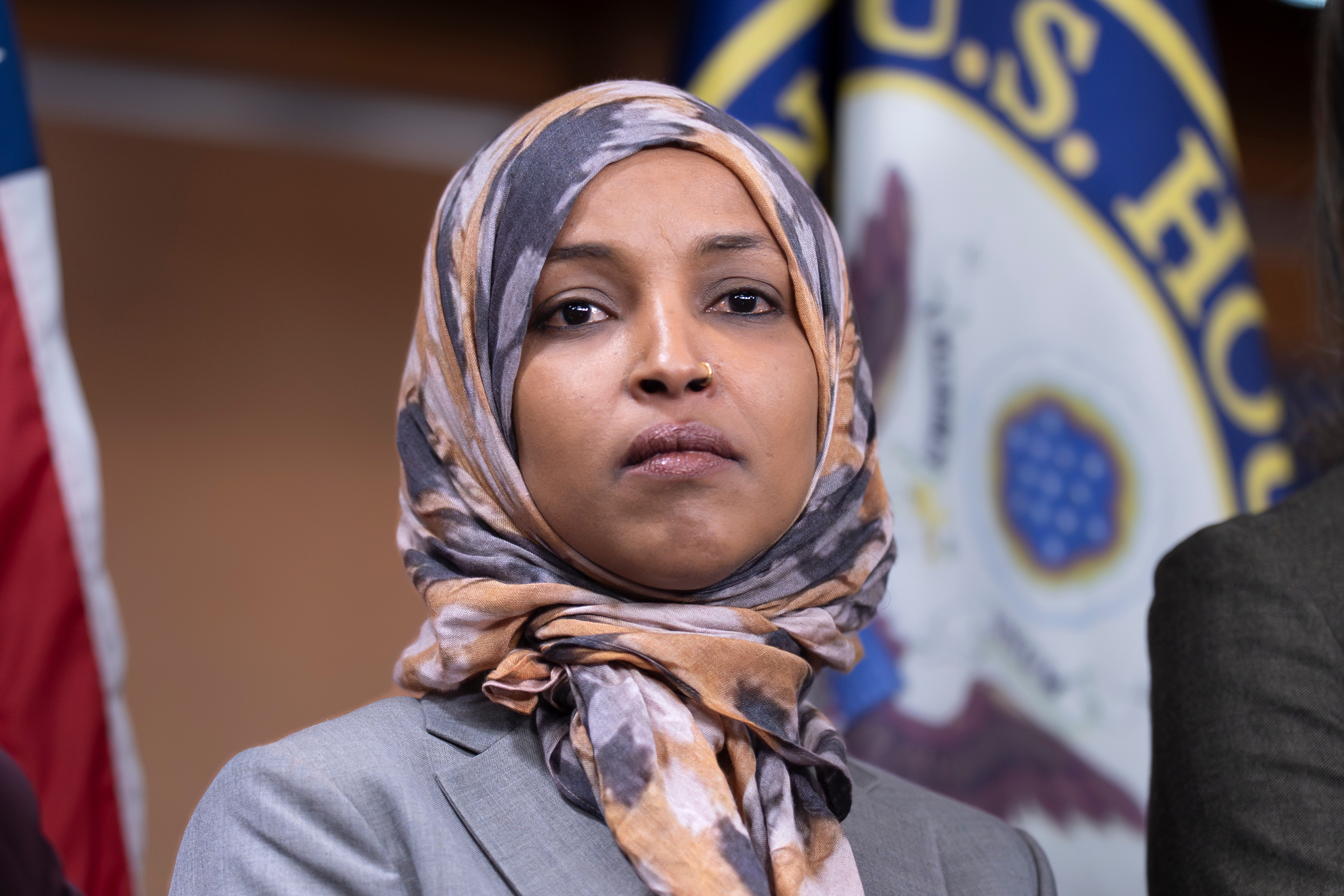
    WASHINGTON — Federal agents on Monday searched the home of Democratic U.S. Rep. Ilhan Omar, a startling escalation in a criminal investigation that brings renewed focus to the frequent target of Trump administration derision in the final weeks of her reelection bid.

    The search of the Minnesota congresswoman’s home so close to next month’s midterm contests that will determine control of the House and the Senate was swiftly condemned by top Democrats in Congress, who raised questions about the timing given longstanding Justice Department protocol to avoid overt investigative steps involving political candidates in the direct run-up to an election.

    Omar, an outspoken critic of President Donald Trump, said she was being targeted as one of the Republican’s “political enemies.”

    The scope of the investigation was unclear, though Trump and officials in his administration have repeatedly referred in recent months to the existence of an inquiry into Omar, a Somali-born Democrat whose status as an immigrant to the U.S. and left-wing views have drawn scrutiny from the White House and other Republicans.

    Homeland Security Secretary Markwayne Mullin last month cited an “ongoing investigation” that he suggested was examining potential fraud in her family’s immigration paperwork.

    In a statement on X on Monday, Omar called the search an “attempt to target political enemies and weaponize federal law enforcement.”

    “For ten years, Trump has targeted me with baseless lies and smear campaigns. This is just the latest escalation in his campaign of political intimidation,” she said. “I will not be silenced.”

    Though the Republican focus on Omar’s background dates back years, the search notably took place three weeks before the November midterms, in which Omar is seeking reelection. The Justice Department has historically sought to avoid public investigative actions involving a candidate within 60 days of a primary or general election. Top Democrats seized on the timing as the latest instance in what they said was the “continued corrupt weaponization” against Trump’s perceived adversaries.

    “For years, Donald Trump and far-right extremists have relentlessly targeted Congresswoman Omar with vile personal attacks and baseless accusations,” said a joint statement from House Minority Leader Hakeem Jeffries and other top congressional Democrats. “Now, less than 30 days until the midterm election, his violent mass deportation machine has descended upon the home of a duly elected Member of Congress and her family.”

    Trump says he had ‘nothing to do’ with search

    The search was carried out by agents with Homeland Security Investigations, which is part of the Department of Homeland Security.

    A DHS spokesperson referred questions to the Justice Department, which said in a statement that HSI agents had executed a judicially authorized search warrant in the Washington, D.C., area related to an ongoing federal criminal investigation but provided no other details.

    The street around Omar’s home was blocked off Monday morning as some HSI agents removed boxes labeled “Seized Property Evidence.”

    The operation came just days after Trump referred pejoratively to Omar at a rally in Tennessee as coming from a country of “crime and squalor” and suggested that Vice President JD Vance “and our people” were investigating her.

    Hours after the search, Trump told reporters he had “nothing to do” with it and it’s “really up to the DOJ.”

    Vance has in the past accused Omar of committing immigration fraud, an allegation she has denied, and has said the administration was looking for pathways to investigate her.

    Omar has long been a target for Republicans

    Omar, who was first elected to the House in 2018, represents Minnesota’s 5th District, including Minneapolis. She is part of the Squad of progressive lawmakers who are a vibrant political force on the left wing of Congress but have also endured repeated attacks from Trump, dating back to his first term. She was one of the first two Muslim American women in the House and the first African refugee to be elected to Congress.

    When Republicans swept control of the House in 2023, they voted to oust Omar from the House Foreign Affairs Committee, citing her anti-Israel remarks.

    In January, Trump lashed out at Omar during a rally in Iowa hours before an assailant sprayed the congresswoman during her own town hall meeting in Minneapolis with a substance that turned out to be vinegar. The attacker was sentenced to 14 months in prison.

    Omar has repeatedly refuted allegations about her marriage and immigration status raised by conservative critics, even before she joined Congress.

    According to her House biography, Omar has said she and her family fled Somalia’s civil war when she was 8: “The family spent four years in a refugee camp in Kenya before coming to the United States in 1990s. In 1997, she moved to Minneapolis with her family.”

    Conservative online sites have alleged that Omar married a brother to commit immigration fraud. Omar has broadly denied the allegations as “disgusting lies” and called the insinuation “absurd and offensive.”

    “It certainly seems like something fishy is there, but everybody’s entitled to equal justice under the laws,” Vance told reporters in May. “So we’re going to investigate it. We’re going to take a look at it. If we think there’s a crime, we’re going to prosecute that crime. And that’s something the Department of Justice is looking at right now.”

    In an interview last March with conservative podcaster Benny Johnson, Vance said without offering evidence that “we actually think that Ilhan Omar definitely committed immigration fraud against the United States of America.” Omar’s office at the time dismissed Vance’s claims as fabricated and defamatory.

    Last month, when the podcaster Johnson reminded Mullin about Vance’s comments on Omar and asked whether anything would happen from that investigation, the Homeland Security secretary responded, “Something’s going to happen.”

    He cited an “ongoing investigation” that he suggested was examining potential fraud in the family’s immigration paperwork.

    “If we actually move a case forward, it’s not a political case. It’s actually a case because they did things wrong,” Mullin said. “If you decided to break the law or lie on the information that you gave to the United States, to be able to come into the United States … there’s no expiration to that.”

  • Oxford Area High School reopens after a measles case prompted its closure

    Oxford Area High School reopens after a measles case prompted its closure

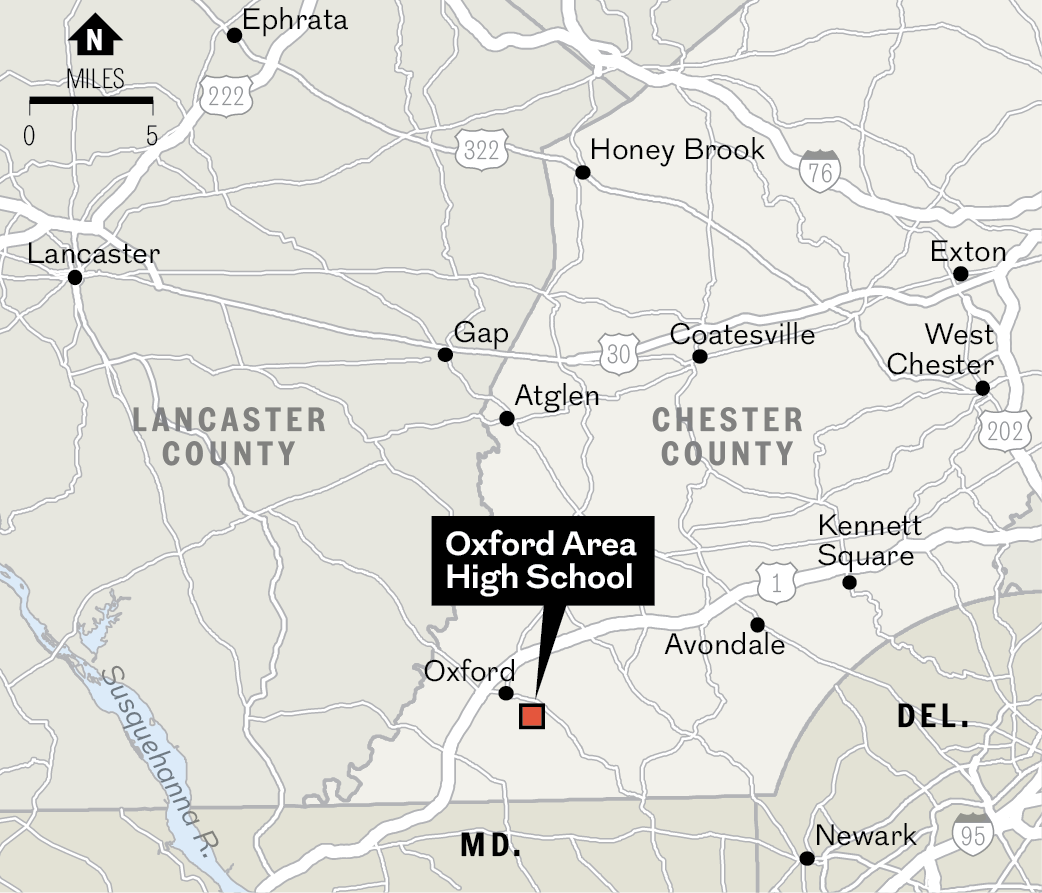
    In-person learning resumed Monday at Oxford Area High School after classes were canceled last week as the district collected employees’ vaccination statuses following a confirmed measles case.

    In a message posted to its website, Superintendent David Woods said that the district worked with health officials “to ensure that all necessary measures have been taken to support a safe return for students and staff.”

    “The building has undergone appropriate cleaning and sanitization procedures, and we are confident in the measures implemented to welcome our school community back safely,” he wrote.

    Staff and students who are unvaccinated “have been, or will be” contacted about quarantining for up to 21 days, he added. The district did not disclose how many people were affected by quarantine.

    The high school was closed to students and staff Friday after a confirmed measles case prompted Chester County’s health department to direct the school to verify the vaccination status of its employees, Woods said in a letter last week.

    Schools are required by state law to track and report data for all required vaccines — including the measles, mumps, and rubella (MMR) vaccine — for students but not for staff.

    Officials canceled scheduled homecoming events, but allowed for a high school football game, hosted in Kennett Square, to proceed, according to a Facebook post.

    The closure came as Chester County has seen an increasing number of measles cases, more than most entire states in the country, with most of its more than 80 cases along the western border with Lancaster County, where the outbreak is centered. Pennsylvania has the largest outbreak in the nation, sickening more than 1,100 people across more than half of the state’s counties.

    Districts in other outbreak areas have not closed schools, but Oxford wasn’t alone last week. In nearby West Grove, Technical College High School Pennock’s Bridge Campus operated virtually on Friday after Chester County health officials notified its administrators of possible measles exposures between Sept. 30 and Oct. 2.

    This suburban content is produced with support from the Leslie Miller and Richard Worley Foundation and The Lenfest Institute for Journalism. Editorial content is created independently of the project donors. Gifts to support The Inquirer’s high-impact journalism can be made at inquirer.com/donate. A list of Lenfest Institute donors can be found at lenfestinstitute.org/supporters.

  • Trump urges Sen. John Fetterman to switch parties and become a Republican

    Trump urges Sen. John Fetterman to switch parties and become a Republican

    JOINT BASE ANDREWS, Md. — President Donald Trump openly encouraged Democratic Sen. John Fetterman of Pennsylvania to switch parties and become a Republican just weeks before the midterm elections could reshape control of Congress.

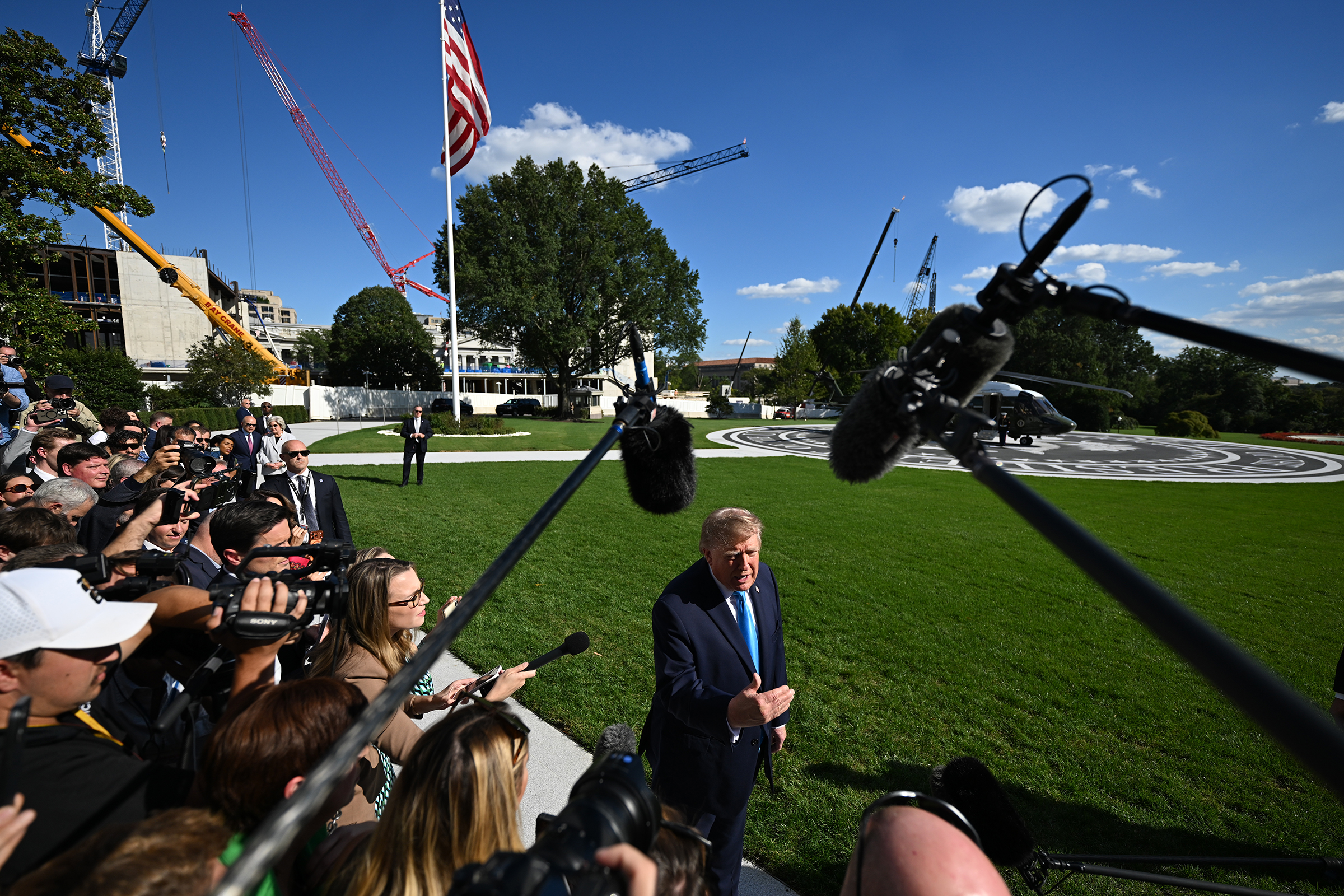
    “I’d love to see him as a Republican,” Trump told reporters at Joint Base Andrews on Saturday as he returned to Washington from a rally in Tennessee. “He does better as a Republican than he does as a Democrat.”

    The comments were among the most direct overtures by Trump to woo Fetterman into the GOP, a matter of growing importance as the party could lose its Senate majority in next month’s elections. With his everyman appeal, Fetterman was a Democratic star when he was first elected to the Senate in 2022. But during his time in Washington, he has split with Democrats on issues ranging from immigration to Israel, leading to speculation that he might switch parties.

    A representative for Fetterman didn’t immediately respond to a request for comment.

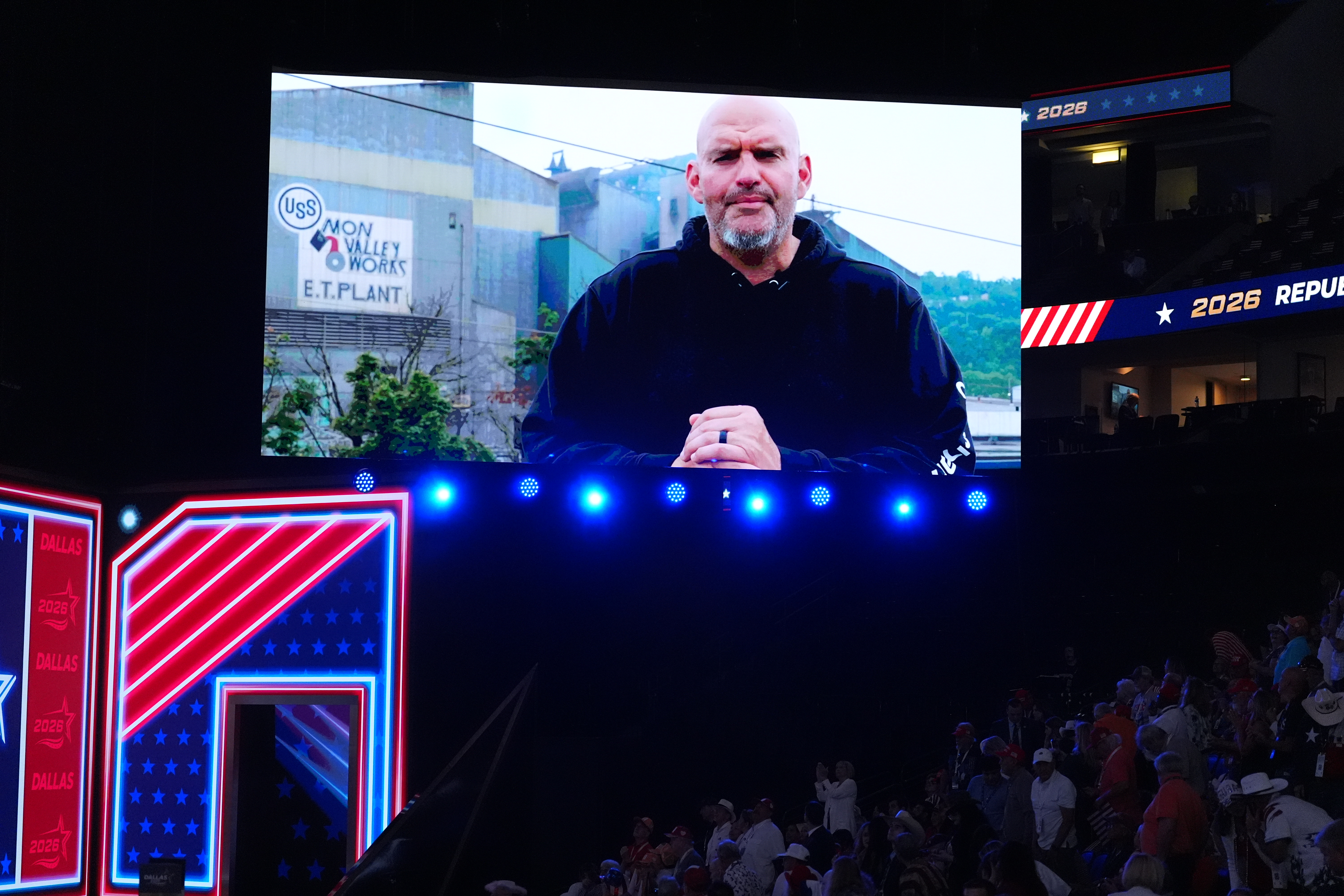
    Fetterman has repeatedly rejected the notion of becoming a Republican, writing in The Washington Post in May that he would be a “terrible Republican who still votes overwhelmingly with Democrats.” His relationship with fellow Democrats became more tenuous after he recorded a video for the Republican midterm convention last month praising his fellow Pennsylvania senator, Republican Dave McCormick, suggesting there were extremists in his party.

    “I’m always going to stand with America,” Fetterman said in the video. “I’m always going to reject the extremes and socialism and that anti-American way of life.”

    Such flirtations with the GOP could make it extremely difficult for Fetterman to win the Democratic nomination for another term in the Senate, a prospect Trump raised on Saturday as he encouraged the party switch.

    Democrats need to pick up four seats to retake the Senate majority, a once remote prospect that remains challenging for the party. But Trump’s unpopularity and the economic fallout from the Iran war have intensified headwinds for the GOP, making Democrats more bullish about a path to Senate control.

    If Democrats picked up the four seats for a 51-seat majority, that could potentially put Fetterman in an influential position, reducing the incentive to switch parties.

    The last senator whose party switch affected control of the chamber was Jim Jeffords of Vermont, who left the GOP in 2001 to give Democrats a narrow majority. Former Pennsylvania Sen. Arlen Specter’s decision to abandon Republicans in 2009 helped Democrats achieve a supermajority.

  • Pennsylvania shooter who killed 8 was family’s patriarch, father of toddler killed says

    Pennsylvania shooter who killed 8 was family’s patriarch, father of toddler killed says

    ERIE, Pa. — A man whose toddler was among eight people killed in a mass shooting in Erie, Pennsylvania, said Sunday that the gunman was a grandfather who never seemed distressed or out of the ordinary.

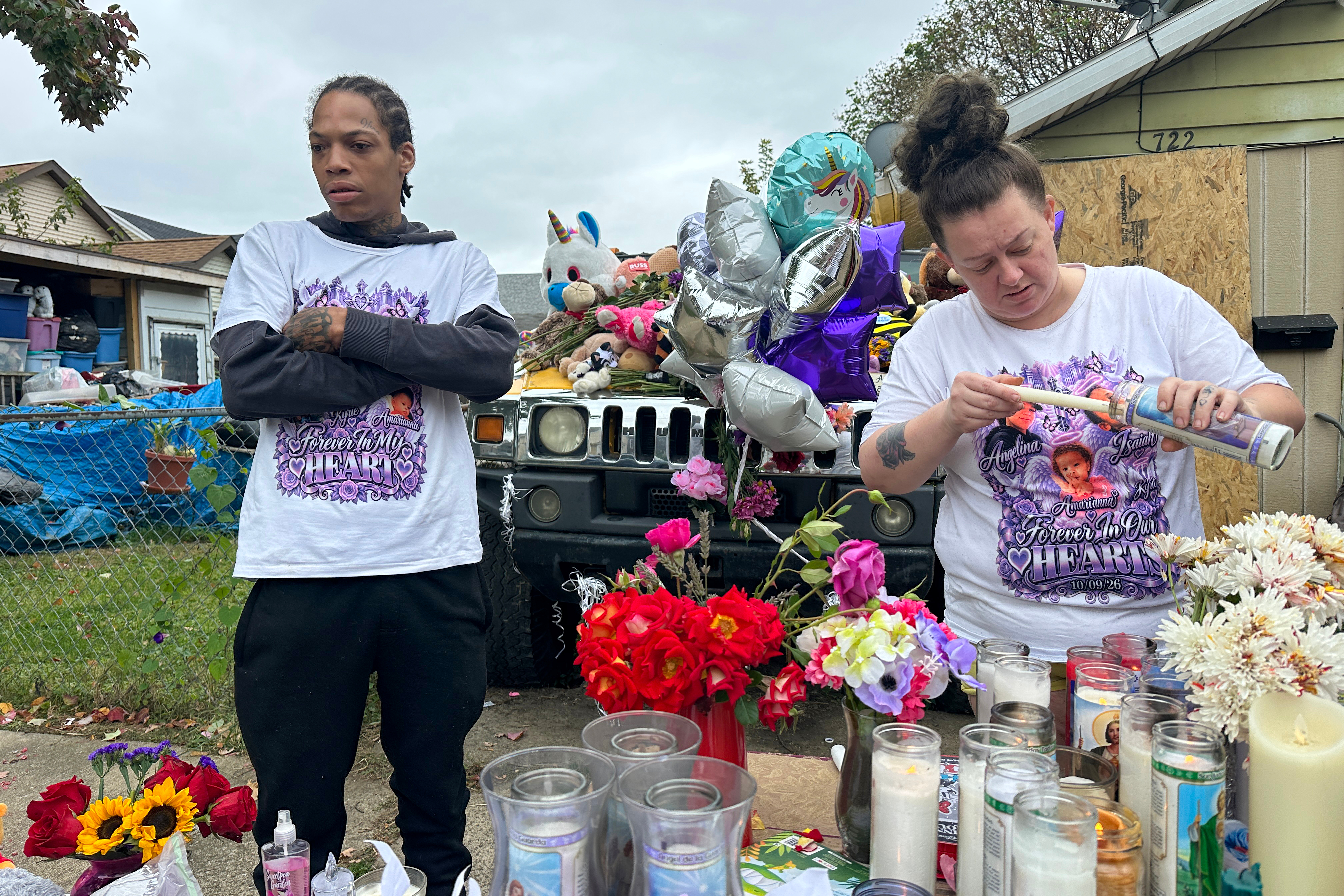
    “I think that was a front for him,” Julius Windham said as he stood at a memorial to victims of Friday’s shooting, including his 1-year-old daughter Amarianna, her pregnant mother and the woman’s 5-year-old son and unborn baby.

    “Him every day, him smiling and being just — you would think of nothing like that would happen,” Windham said.

    The 45-year-old gunman took his own life. Authorities have not released his name, but Erie Police Chief Rick Lorah said he was related to seven of the victims. The eighth was a friend of the pregnant woman, he said. Police have not made their names public, either.

    Those killed include 2 women outside the home

    Mourners on Sunday placed candles, flowers and stuffed animals outside the home where the man opened fire shortly before 5 p.m. Friday. Windham wore a T-shirt with pictures of the women and children and the words, “Forever In My Heart.”

    “Words can’t even explain what I’m going through right now,” Windham said. “But I gotta be strong for my community, you know what I’m saying? My family, my daughters, my sons, everybody.”

    Video and audio evidence recovered by investigators included muffled gunshot sounds coming from inside the home just before two “distressed” women arrived and began pounding on the door, Lorah said. The gunman then came out and shot them as they ran toward him, before returning inside.

    Responding officers found the two women dead outside. After deploying a drone and robot, they went inside and found the bodies of the 5-year-old boy and 1-year-old girl on the first floor; two more women and two young men in a stairwell; and the shooter on the second floor.

    “Out of respect for the victims and the families, I will not discuss the details of what our officers encountered inside that home,” the chief said at a news conference.

    “But I want our community to understand the gravity of what happened and the profound impact this tragedy has had on those involved and on our community as a whole,” he said.

    Police decline to discuss motive as investigation continues

    Erie is about 120 miles north of Pittsburgh.

    Lorah declined to discuss motive but suggested mental health could be a factor. He said investigators would talk to relatives and examine the cellphones of the women who were killed outside the home.

    “They knew something was going on at that house,” Lorah said. “We have to figure out what that is.”

    Nicole and Debra Eller, whose best friend was among the victims, said they’ve known the family for more than 30 years. Nicole Eller said the shooter “was a good guy, and then he started going downhill with everything.”

    “They were a lovely family. Who would have thought this would ever happen?” Debra Eller said. “Oh my gosh, this is so upsetting. This should have never happened to her or the kids or anybody. His grandchildren, his kids, how can you do that?”

    The Erie shooting was reminiscent of a 1982 massacre in Wilkes-Barre, Pennsylvania, in which a man killed 13 people, including five of his own children.

    At a news conference on Saturday, Erie Mayor Daria Devlin addressed a portion of her remarks directly to the victims’ families.

    “I am so deeply sorry,” Devlin said. “What happened to you was horrific, and there is nothing that any of us can say today that will make this any easier. … Our entire community is with you, we’re grieving with you. And we are here to support you.”

  • Federal judge bars Trump administration from airing publicly funded ads

    Federal judge bars Trump administration from airing publicly funded ads

    A federal judge on Sunday evening ordered the Trump administration to stop airing taxpayer-funded ads that had drawn widespread backlash for their explicit glorification of President Donald Trump.

    The commercials ran on network and cable television and were paid for through a $20 million contract from the Department of Homeland Security. One bragged about the capture of the former Venezuelan leader Nicolás Maduro. Another echoed a campaign video from 2024 that denounced political enemies of Trump as “villains.”

    A coalition of liberal organizations sued the administration over the ads last week in federal court. In a four-page order, Judge Jennifer L. Rochon of U.S. District Court in Manhattan, who was appointed by President Joe Biden, wrote that the administration must cancel any “slot, placement, reservation, or arrangement for the airing or dissemination of the challenged advertisements.”

    In a statement, Democracy Forward, which represented the coalition that had sued to stop the airing of the ads, praised Rochon for preventing “more taxpayer dollars from being used for such blatantly unlawful political propaganda.”

    In a filing Saturday night, the Justice Department said that the administration had no plans to make any further ad buys, which totaled $19 million through Sunday.

    The ads had run during programs and shows like Good Morning America and Jimmy Kimmel Live! as well as during weekend football games on Fox. Some officials had said the administration might have violated federal law by using taxpayer money for publicity or propaganda.

    Along with Trump, Secretary of State Marco Rubio and Defense Secretary Pete Hegseth are featured in the ad gloating about the capture of Maduro.

    “Don’t play games with this president’s in office because it’s not going to turn out well,” Rubio says.

    Trump was personally invested in seeing the ads air. He instructed Russell T. Vought, the director of the Office of Management and Budget, to find the money for the ads, the New York Times reported this month. In late September, U.S. Customs and Border Protection, which falls under DHS, awarded a contract to a Maryland marketing firm for the commercials.

    Some Republicans expressed discomfort with the ads for their tone and that they were funded by taxpayers. Yet others, like Speaker Mike Johnson, defended their message as referring to “America’s greatness.”

    “It wasn’t a plea to vote for anybody,” Johnson said during a campaign stop. “It was just, it was pro-Americana.”

    Trump announced last week that his super PAC, MAGA Inc., would pay for the ads. But the next day, White House officials said that would apply only “moving forward” and that Trump would not reimburse taxpayers for what had already been spent.

    The Washington Post reported Monday that two of the ads aired numerous times after the deadline passed at 6:45 p.m. Eastern time Sunday, according to data provided by AdImpact. The two ads ran during airings of various shows, including America’s Funniest Home Videos, ABC’s World News Tonight, and CBS News’ 60 Minutes.

    “DHS did not receive notice from the court in time to cancel the ad buys,” the White House wrote in a Monday statement. “The PSAs will be paid for by outside groups moving forward.”

    This article originally appeared in the New York Times.