Category: News

  • MLBPA supports banning players from promoting sportsbook VIP programs

    MLBPA supports banning players from promoting sportsbook VIP programs

    The Major League Baseball Players Association said Monday that it supports prohibiting players from participating in personalized marketing campaigns for sportsbook VIP programs, amid congressional scrutiny of a video of Philadelphia Phillies star Bryce Harper that a FanDuel employee sent to a customer who had a gambling addiction.

    Jeffrey Perconte, MLBPA’s general counsel, wrote in a letter to U.S. Sen. Richard Blumenthal (D., Conn.) and U.S. Reps. Paul D. Tonko (D., N.Y.) and Valerie P. Foushee (D., N.C.), that the union would be willing to adopt this restriction as part of a new collective bargaining agreement that it is negotiating with Major League Baseball.

    The three members of Congress had sent letters on Aug. 10 to MLB, the players’ union, and FanDuel, demanding that each take corrective action to address The Inquirer’s reporting on the personalized video Harper recorded and a FanDuel VIP host sent in 2024 to Terry Thompson, a Montgomery County resident who lost $1.5 million on sports wagers that he placed with FanDuel.

    Thompson planned to die by suicide earlier this year rather than acknowledge to his family the scope of his losses, according to a lawsuit that the nonprofit Public Health Advocacy Institute filed in March on Thompson’s behalf against FanDuel and DraftKings, which had also allegedly provided him with VIP perks.

    Harper has said that he recorded the message through the video service Cameo but didn’t know that FanDuel would utilize the 21-second video as a reward for an addicted gambler.

    The Democratic lawmakers told FanDuel to end its VIP program, which they described as predatory, and called on MLB and the MLBPA to prohibit players from performing promotional work for gambling entities.

    That players aren’t prohibited from doing promotional work for gambling companies is a “systemic failure,” the lawmakers wrote, “rooted in the deep enmeshment between leagues, teams, and sports books.”

    In his response, Perconte noted that the current collective bargaining agreement, which expires in December, allows players to appear in advertisements or make personal appearances for casinos, racetracks, or sportsbook companies, provided the ballplayers do not encourage betting on baseball.

    “We believe the restrictions on endorsements and partnerships in our collectively bargained policies represents a good-faith effort to allow responsible betting-related promotional activity by teams and players,” Perconte wrote.

    “That said, our current policies do not explicitly reference or otherwise address the types of ‘predatory VIP programs’ described in your Aug. 10 letter. The Association stands ready to make proposals to fill that gap.”

    FanDuel responded in a separate letter to the lawmakers, explaining that the company offers tools that enable bettors to limit how much and how often they wager, and extensively reviews customers’ betting history before offering them VIP status, according to a copy of the message that was posted online by the outlet Sports Betting Dime.

    “Employees who are primarily responsible for engaging with VIPs — VIP Account Managers — are salaried employees,” wrote Cory Fox, a FanDuel senior vice president. “Their compensation is not tied to how much their customers wager or the results of those customers’ wagering activities.”

    FanDuel did not address questions that the Congress members raised about whether VIP managers had sent videos of other athletes or celebrities to gamblers.

    Since the U.S. Supreme Court voted in 2018 to give states the authority to enact their own sports betting laws, MLB and other professional sports leagues have entered into lucrative partnerships with sportsbook companies and prediction markets.

    Perconte wrote that half the league’s 30 franchises have partnerships or sponsorships with sports betting operators, while the owners of three teams — the Boston Red Sox, Chicago Cubs, and Los Angeles Dodgers — are “seed investors in a newly announced prediction market futures trading platform called FutureSports.”

    As part of collective bargaining negotiations, the players union has proposed lobbying with MLB to ban proposition bets and event contracts that are based on a player’s in-game performance, which the union said is linked to higher rates of problem gambling and bettors harassing players and their families.

    “And while MLB has thus far rejected this proposal, we intend to continue pursuing it,” Perconte wrote.

    Elected officials in Pennsylvania are separately planning legislation that would restrict or eliminate sportsbook VIP programs, and in-game microbets, an effort that Joe Maloney, the president of the Sports Betting Alliance — a national advocacy organization whose members include FanDuel, DraftKings, BetMGM, bet365, and Fanatics — said the organization will oppose.

    Pennsylvania’s Gaming Control Board, which regulates casinos, online gambling and sports wagering, has also said that it is reviewing the Harper video.

    The Inquirer will continue to report on issues related to the growth of gambling addiction — among teens and adults — across Pennsylvania. If you or someone you know wants to speak with a reporter, please contact David Gambacorta or William Bender at dgambacorta@inquirer.com and wbender@inquirer.com


  • Body of Delran woman who helped rescue drowning girl found in Delaware River

    Body of Delran woman who helped rescue drowning girl found in Delaware River

    The body of a 33-year-old woman who disappeared in the Delaware River after she rescued a struggling swimmer on Monday afternoon has been recovered, the Delran Township Police Department said Tuesday.

    Search crews located the body of Priscila Alvares Pereira Dos Santos about 20 feet off a beach at Amico Island Park in Riverside shortly after 8 a.m. Tuesday, Delran police said, roughly 16 hours after she was last seen in the water.

    Alvares Pereira Dos Santos reportedly drowned after saving a girl who was struggling in the river around 4 p.m. on Monday, according to officials.

    She was able to push the girl toward bystanders on the shore before she vanished under the surface, they said.

    The girl she saved has not been publicly identified and her condition is unknown.

    Amico Island Park was closed Tuesday as the investigation into the incident continued.

  • Ex-Sharon Hill cop pleads guilty to trading confidential information for cocaine from dealer

    Ex-Sharon Hill cop pleads guilty to trading confidential information for cocaine from dealer

    A former Sharon Hill police detective admitted Tuesday that he provided confidential information to a drug dealer in exchange for cocaine, using his inside knowledge as a member of the Delaware County Drug Task Force to help the man evade arrest.

    Vincent Procopio pleaded guilty to unlawful use of a computer, criminal use of a communication facility, hindering apprehension, and related crimes. He is scheduled to be sentenced by Judge Deborah Krull on Oct. 7.

    His attorney, Meaghan Wagner, said after the hearing that Procopio accepted responsibility for his actions as a means of continuing “to move forward in a positive direction in his life.”

    “Meanwhile he continues to work on his sobriety every day and celebrates eight months sober on Sept. 7,” she said.

    Before he resigned after his arrest in April, Procopio, 34, of Newtown Square, had worked for Sharon Hill for four years. He was at Academy Park High School on the night 8-year-old Fanta Bility was killed by a stray bullet amid a shooting caused by three of his colleagues.

    Procopio and the dealer, whom investigators did not identify, met through mutual friends in 2025, according to court filings. The dealer told police Procopio approached him, saying he “wanted in” on his drug-smuggling operation.

    Over the course of the next year, the dealer would give Procopio $100 baggies of cocaine in exchange for information from police databases, including whether undercover officers planned to make drug busts in the area where he was operating, and whether there were any warrants for his arrest.

    The narcotics, prosecutors said, were for Procopio’s personal use and “wholly unrelated to his law enforcement duties.”

    The scheme unraveled when the dealer was pulled over in Chester in December with 63 grams of cocaine in his car. He called Procopio for help, and Procopio made calls on his behalf, telling officers in Chester the man was a friend and was in the process of signing up to become a confidential informant.

    Procopio later told investigators he knew the man had sold drugs, but said he had recently stopped. He said he never saw the dealer sell cocaine and had never bought cocaine from him.

    Prosecutors said that Procopio’s statement was a lie, and that Procopio had deleted text messages between him and the dealer that made that clear.

    Procopio and the dealer had developed a jocular relationship, they said. On the day they met, the detective snorted a line of cocaine with the dealer inside his truck. He later went to the man’s home, where they “stayed up all night doing cocaine,” according to the affidavit of probable cause for Procopio’s arrest.

    The two regularly exchanged text messages, including one in which the detective, on his way to Sunday Mass, asked the dealer for a bag of cocaine.

    And Procopio instructed the man to tell any police officer who stopped him that he was the detective’s cousin, prosecutors said.

    In a statement announcing Procopio’s arrest earlier this year, State Attorney General Dave Sunday, whose office is prosecuting the case, decried Procopio’s actions, saying his “selfish, criminal acts also stain the reputations of many public servants who make sacrifices for their communities every day across the Commonwealth.”

    As part of the same investigation, another Sharon Hill officer, Domenic Dellabarba Jr., was arrested for allegedly providing confidential information to the dealer.

    Dellabarba, 27, is charged with obstructing the administration of the law and related crimes, and his case is pending in Delaware County Court.

  • Under Trump, protected wild horses are going to slaughter

    Under Trump, protected wild horses are going to slaughter

    They once had run free through the desert mountains of the West, a multicolored band of 68 wild mustangs that had never been saddled or corralled.

    Then the federal government rounded them up with helicopters in an attempt to control wild populations on public lands. The horses were held for years in a feed lot in Idaho while the government tried to find them what it called “loving homes.”

    Abruptly this March, the government found a home. Whether it was loving didn’t seem to matter.

    The horses were packed into metal trailers and trucked 1,800 miles east to the pens of a livestock trader in Ohio named Brandon Jones, who bought them for $25 each.

    A day later, two double-decker cattle trucks pulled up at midnight, loaded the mustangs, and quickly drove off into the night.

    From there, the mustangs disappeared. The trader won’t say where they went. Wild horse advocates suspect the horses were shipped to slaughter.

    But that’s not the government’s concern. It got what it wanted: two more truckloads of wild horses off its books.

    An examination of government records by the New York Times found that all over the country, the Bureau of Land Management, the agency in charge of protecting wild horses, is quietly selling thousands of horses to buyers like the one in Ohio. Slaughtering wild horses is illegal, but the bureau’s actions create a loophole that enables people to get mustangs on the cheap and then quickly resell them to be exported alive, processed into cuts of meat, and sold abroad.

    Livestock inspection records show mustangs sold by the government soon ended up on trucks bound for slaughter plants in Canada.

    The U.S. government’s sales of wild horses were once rare but started to rise after President Donald Trump took office. In 2025, they more than doubled to 3,700 horses, according to bureau records.

    In that time, the bureau has sent about 500 horses to Jones.

    In an interview, Jones said he was able to resell the horses quickly, though he didn’t advertise online or even post a “For Sale” sign at his corral. He would not say where the horses went and denied selling any to slaughter.

    The government can spend more than $3,000 to capture a mustang and bring it to market but sells each for as little as $25. A horse can fetch up to $750 at a slaughter plant. The potential for profit keeps buyers coming.

    By selling mustangs at a huge loss, animal welfare organizations say, the agency in charge of protecting wild horses is, instead, subsidizing their destruction.

    “The BLM is saying to the public that slaughter is off the table, but they’re doing it in plain sight using a third party,” said Clare Staples, who runs a wild horse sanctuary in Oregon called Skydog Ranch.

    The bureau did not respond to questions about its sales or make leaders available for comment. An unattributed statement from the agency said it “remains dedicated to placing animals into good homes, protecting their welfare, and upholding its statutory responsibilities on behalf of the American public.”

    About 73,000 wild horses roam federal public lands in the West, where they are protected from hunting or capture. For decades, in an attempt to keep the population sustainable, the bureau has rounded up 9,500 on average each year and offered them for adoption. But it finds adopters for only about half.

    The rest go into a labyrinth of feedlots and pastures that the bureau calls “the holding system.” The system now stores 58,000 wild horses at an annual cost of $100 million. Caring for them eats up most of the bureau’s $142 million wild horse budget.

    Over the years, bureau leaders have floated various lethal proposals for reducing the herds. But Congress — aware that the public wants mustangs protected — has barred the bureau from spending any money to kill healthy wild horses.

    There are alternatives to the roundups that have left so many horses in storage. For 20 years, the bureau has had access to inexpensive fertility-control drugs delivered by dart gun. They have been used effectively to control a few wild herds, and the government’s own experts have repeatedly urged the bureau to use them more widely.

    But because the bureau is spending so much on storage, it has little left to make the changes that would save it from storing more.

    And because the bureau has been unable to stop horses from coming into the storage system, it is now focused on getting them out.

    While the bureau can’t kill wild horses, it can use a series of bureaucratic maneuvers and financial transactions to transform them on paper into domestic livestock, stripping their legal protections.

    First, the bureau has to show a wild horse can’t be adopted. It does this by posting hundreds of horses at a time on its online adoption site. After a horse has three one-week listings with no takers, the law permits the government to designate it as unadoptable.

    Then it can be put up for sale.

    That’s an important legal distinction because a wild horse that is adopted retains its federal protections. One that is sold loses those protections immediately.

    A sold horse still can’t be legally killed — at least not yet — because the buyer is required to sign a contract promising not to slaughter the horse or “knowingly” sell it to anyone who intends to resell it for slaughter.

    But if the buyer resells to a middleman without asking questions, the buyer is safe from prosecution.

    The middleman has not signed a contract with the bureau and is free to legally sell the mustang to slaughter.

    Jones, 35, appeared out of nowhere in the wild horse world last spring and quickly became the bureau’s biggest buyer, bureau records show.

    He said he sold horses only two or three at a time to good owners. “I’m not dealing with traders,” he said. “I’m dealing with a farmer, come up the road, who wants to buy a horse.”

    Shown photos and video of the trucks of horses that left his property at midnight — taken by a local wild horse lover and shared with the Times — he questioned whether it had happened.

    “Could have been cattle,” he said.

    To buy large numbers of mustangs, Jones had to get approval from top officials in the bureau. His application stood out.

    Nearly all of the other buyers who have qualified over the years have well-established mustang sanctuaries. Not Jones.

    He had no ties to the wild horse world and no history of working with mustangs. The application asked what veterinarian would care for the horses. He listed an office an hour away from his land with a website that says it treats only small animals.

    On Facebook, he was friends with a number of livestock dealers but no wild horse rescues.

    For a year, his application sat at the bureau with no action. Then, in March 2025, a federal court ordered an end to one of the bureau’s leading ways of off-loading horses — the program that paid adopters $1,000 per horse.

    A few weeks later, Jones’ application was approved.

    He denied selling mustangs to the traders. He said it was wrong to see him as a bad guy. By reselling mustangs, he said, he had saved the government millions.

    There are small clues to what may have happened to the wild horses sold to Jones.

    Four showed up late last fall at an auction in Tennessee frequented by slaughter buyers.

    Jones said the horses in Tennessee were the result of just one bad sale to an irresponsible buyer.

    Another clue emerged at the Canadian border.

    The United States has no horse slaughter plants. The industry here was shut down in 2007, so horses are now exported to Canada.

    Jones lives about an hour from the main Canadian horse export crossing.

    Last summer, a few weeks after Jones received a load of 97 mares, export records show that one of the largest exporters of slaughter horses to Canada, an Ohio man named Fred Bauer, shipped two truckloads of horses to Canada. Grainy photos of the trailers’ interiors taken by border inspectors show some of the horses had distinctive serial numbers on their necks — government wild horse brands.

    Jones denied that his horses went to Canada through the exporter, saying, “I’d never deal with Freddy Bauer. Me and Freddy Bauer don’t get along.”

    Reached by phone, Bauer declined to say whether he had bought mustangs from Jones. When asked where Jones’ horses were going, Bauer said it would be simple for authorities to track the horses.

    “The government put Brandon Jones in charge of this whole wild horse situation,” he said. “There’s all kinds of records. So they ought to be able to find out what he’s doing if they want to.”

    This article originally appeared in the New York Times.

  • Jenkintown might expand its historic, 187-year-old library

    Jenkintown might expand its historic, 187-year-old library

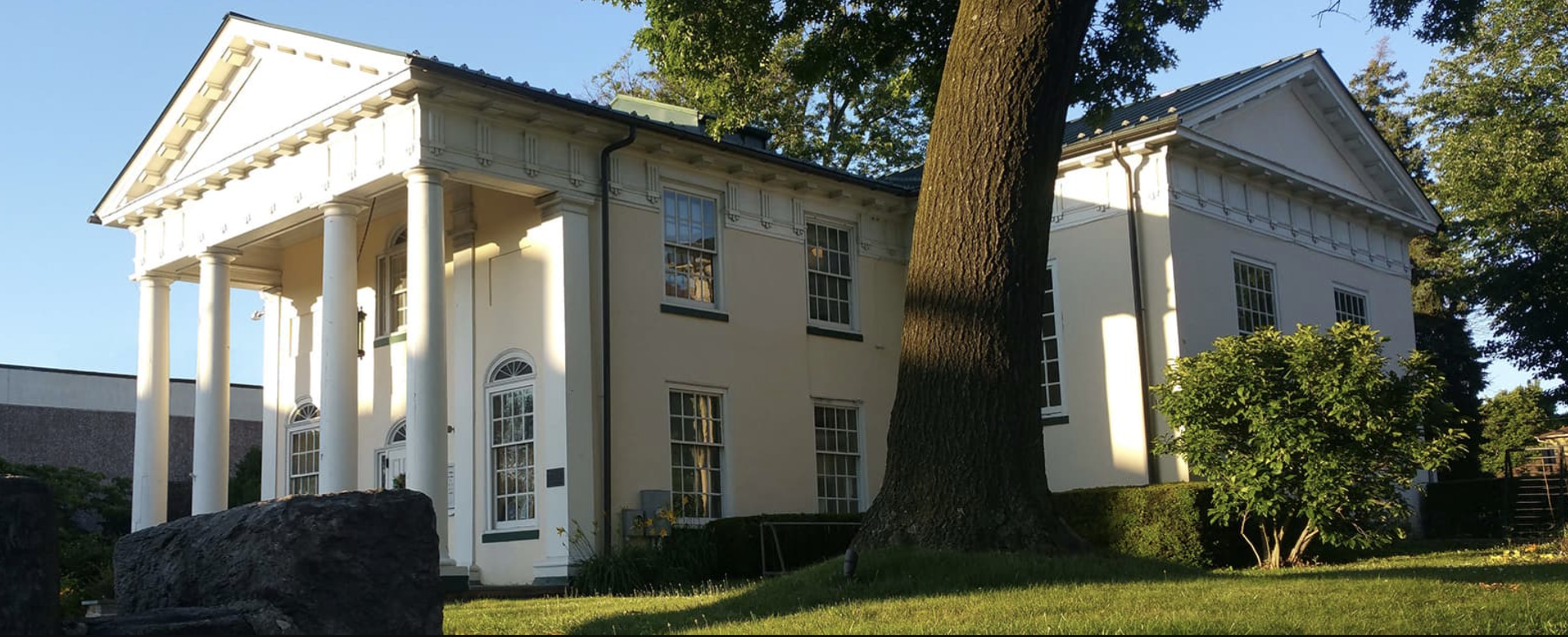
    Jenkintown Borough is seeking a design and engineering consultant to help decide whether to expand or reorganize its historic library.

    Library use is booming, according to Jenkintown’s request for consultant proposals: Almost a third of the borough’s residents are active patrons, owing in part to new apartments within walking distance, borough officials wrote. Visits from Philadelphia residents are also up 28% from last year.

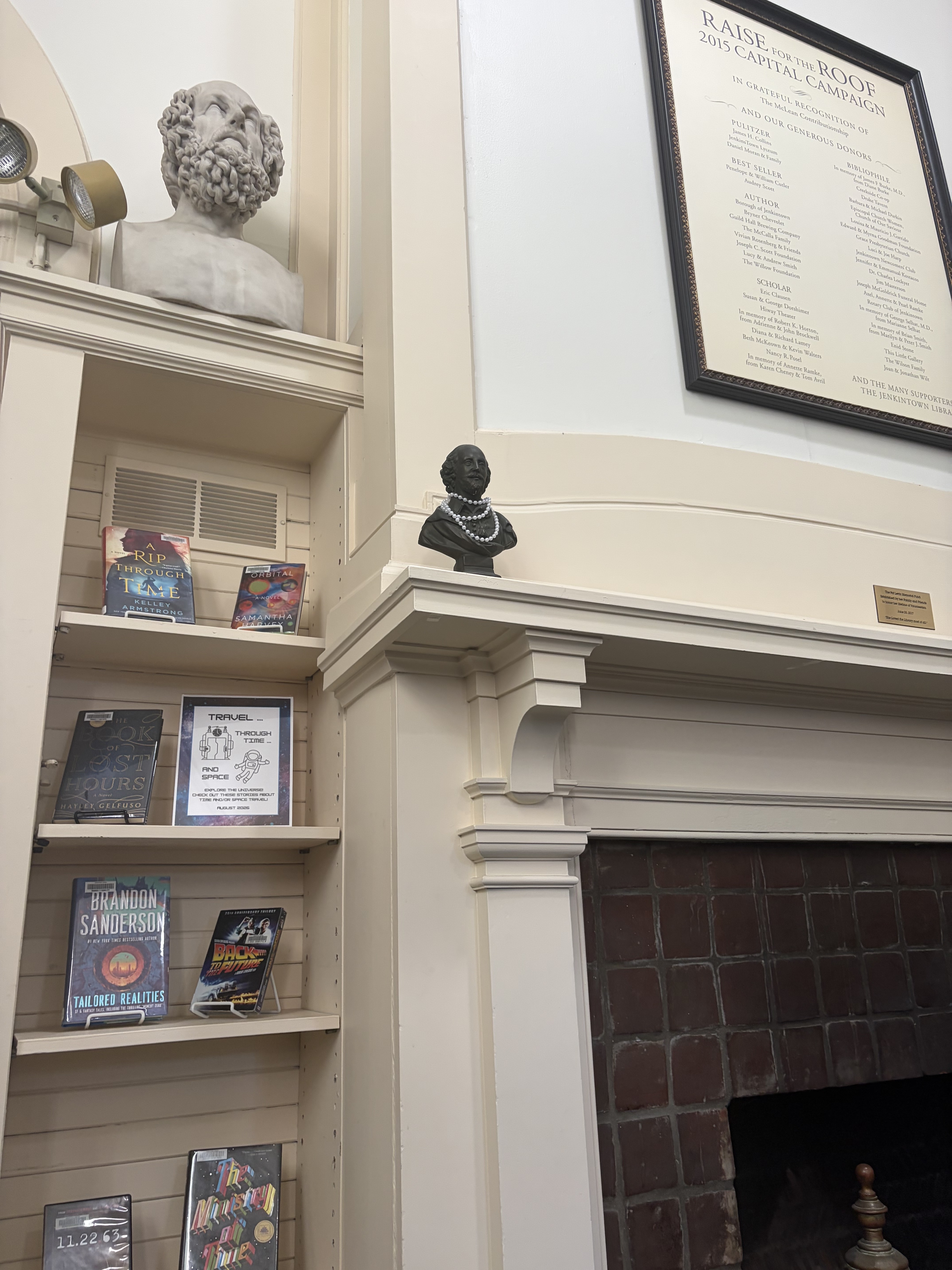
    Busts by the fireplace at Jenkintown Library, a pre-Civil War building listed on the National Register of Historic Places.Jess Rohan

    But the 187-year-old building, which is on the National Register of Historic Places, is not suited to the needs of modern library users. The building, which includes additions from 1909 and the 1970s, has just six computer stations and no quiet study areas. Originally designed as a lecture hall, the library also lacks energy efficiency and accessibility.

    “These spaces were designed for a very different era,” borough officials wrote.

    Jenkintown won a state grant for $81,900 to fund the master plan process, which the borough will match with its own money under the grant requirements.

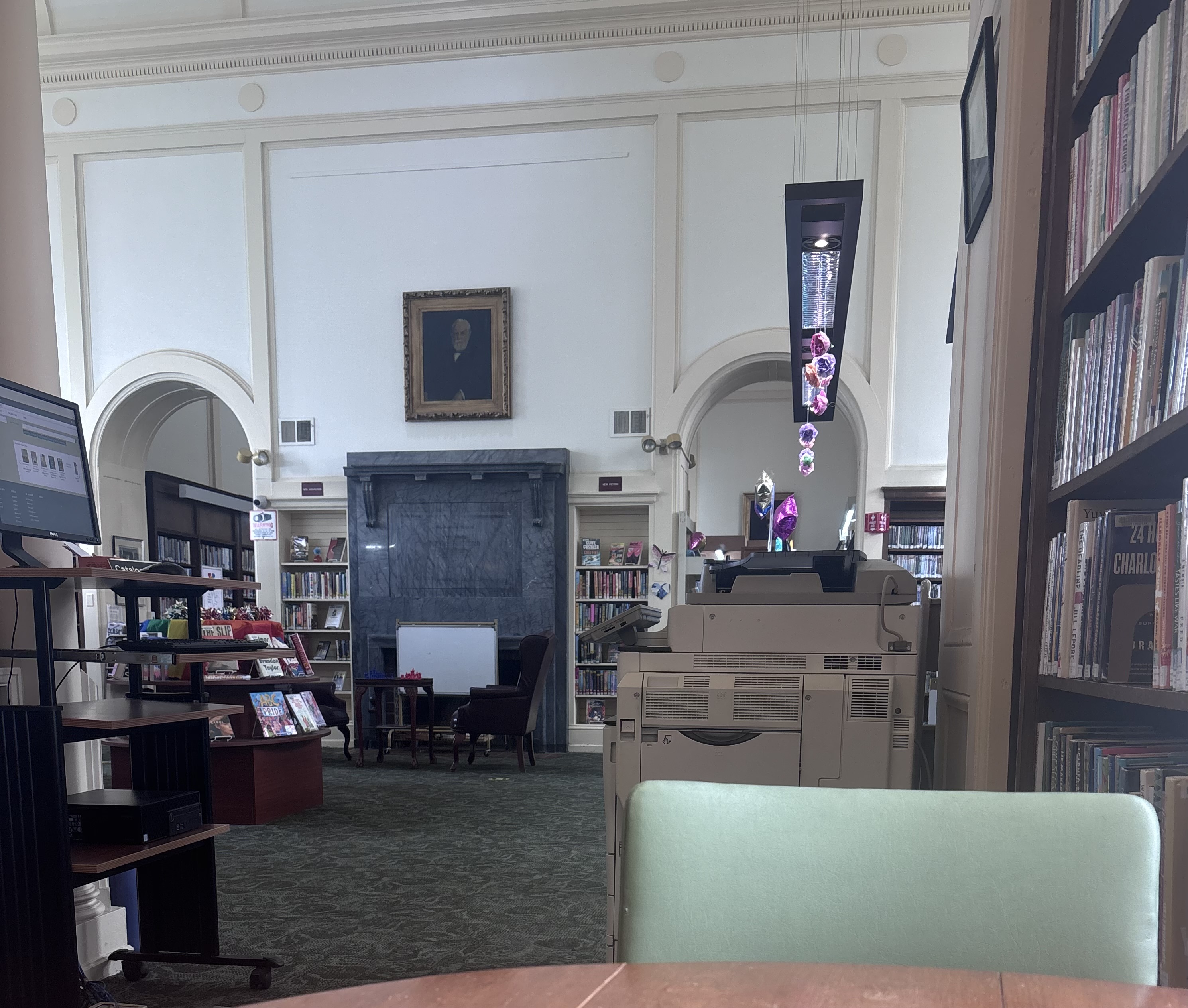
    Jenkintown Borough plans to either reorganize or expand its historic library, which has only six computer stations and no quiet study room.Jess Rohan

    The consultant will assess all of the library’s facilities, including fire code compliance, the electrical system, and architectural elements, and identify short- and long-term facilities needs.

    The community would then be presented with the consultant’s recommendations for two options: either expanding the library or reconfiguring the existing space. The consultant would use the community feedback to create the final master plan.

    This suburban content is produced with support from the Leslie Miller and Richard Worley Foundation and The Lenfest Institute for Journalism. Editorial content is created independently of the project donors. Gifts to support The Inquirer’s high-impact journalism can be made at inquirer.com/donate. A list of Lenfest Institute donors can be found at lenfestinstitute.org/supporters.

  • Paying parents to become influencers and other priorities for Philly schools superintendent in 2026-27

    Paying parents to become influencers and other priorities for Philly schools superintendent in 2026-27

    Philadelphia Superintendent Tony B. Watlington Sr. zigzagged the city Monday, visiting seven schools across the city to start the 2026-27 year.

    The late-summer weather was perfect, sunny but not sweltering — an important factor in a school system laden with old buildings, where extreme heat sometimes means about a quarter of the district’s 113,000-plus students cannot learn in person or at all,

    Watlington is hoping that the back-to-school weather was an omen.

    “The way we start is going to be the way that we roll, and the way we finished last year,” the superintendent said. “We started off really well.”

    Watlington sat down with The Inquirer on Tuesday to preview the 2026-27 school year. Here are five things to know from the conversation.

    Priorities for this school year

    Three priorities will drive his administration this year, Watlington said: academics, customer service, and family engagement.

    Though new data are not yet available, Watlington is leaning hard on a study released earlier this year that found Philadelphia School District students’ post-pandemic learning is tops among large urban school systems, according to research out of Harvard and Stanford Universities.

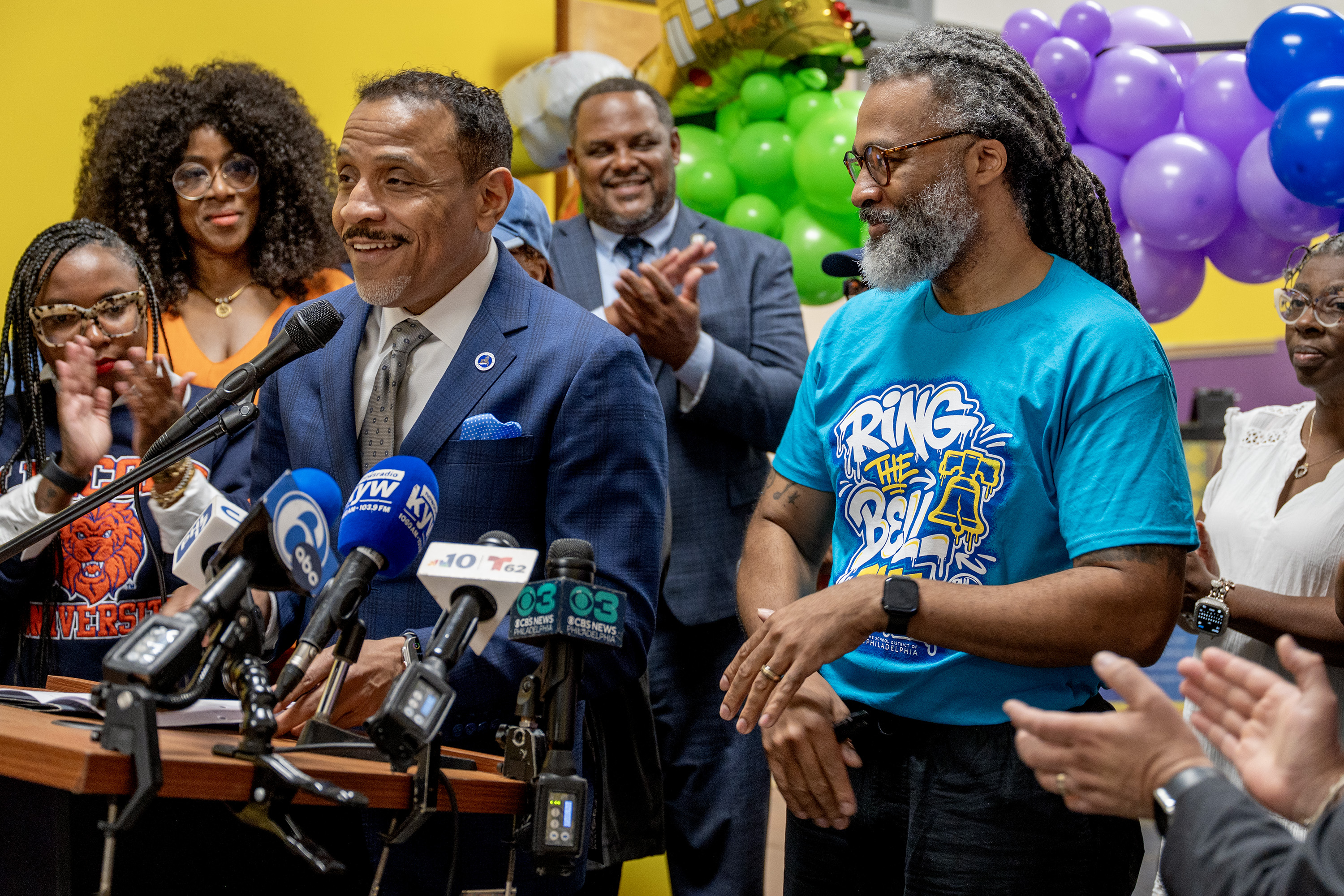
    Superintendent Tony B. Watlington Sr. (left) and district board president Reginald L. Streater (right) hold a press conference at McClure Elementary Monday, Aug. 24, 2026 on the first day of school in the Philadelphia School District. Behind them in center is Carlton Williams, just a week into his job as the City’s Philadelphia’s Managing Director (he started Aug. 17)Tom Gralish / Staff Photographer

    “We want people to stop and digest that for a moment,” Watlington said. “Because people will say, ‘Well, are the scores still too low?’ I’d say absolutely, yes, we’ve got a lot of work to do and it’s not acceptable that two out of three kids don’t read or perform on grade level in math, but we’re getting better faster than the 25 largest school districts, and that’s our goal to be the fastest-improving, so we’re well on our way,” Watlington said.

    “We believe it’s important for us to work with parents as equal partners because they are our children’s first teachers, and when we support our parents and families, our kids just do better in school,” he said.

    Some parents will be paid to help schools improve

    Watlington said this is the year the district will begin paying some parents to help schools reach their goals. He announced a plan to do so in 2023, when he first laid out his strategic plan, but this year it is finally happening.

    The Parent and Community Ambassador Program will provide small stipends to “key community members and parents who just have a level of influence and cachet that no teacher, principal, counselor, police officer, or superintendent has in communities,” Watlington said. “If we can figure out how to connect with some of these key community folks, it will do nothing but help us to improve student attendance in schools where there may be some tensions or poor communication between families and school staff.”

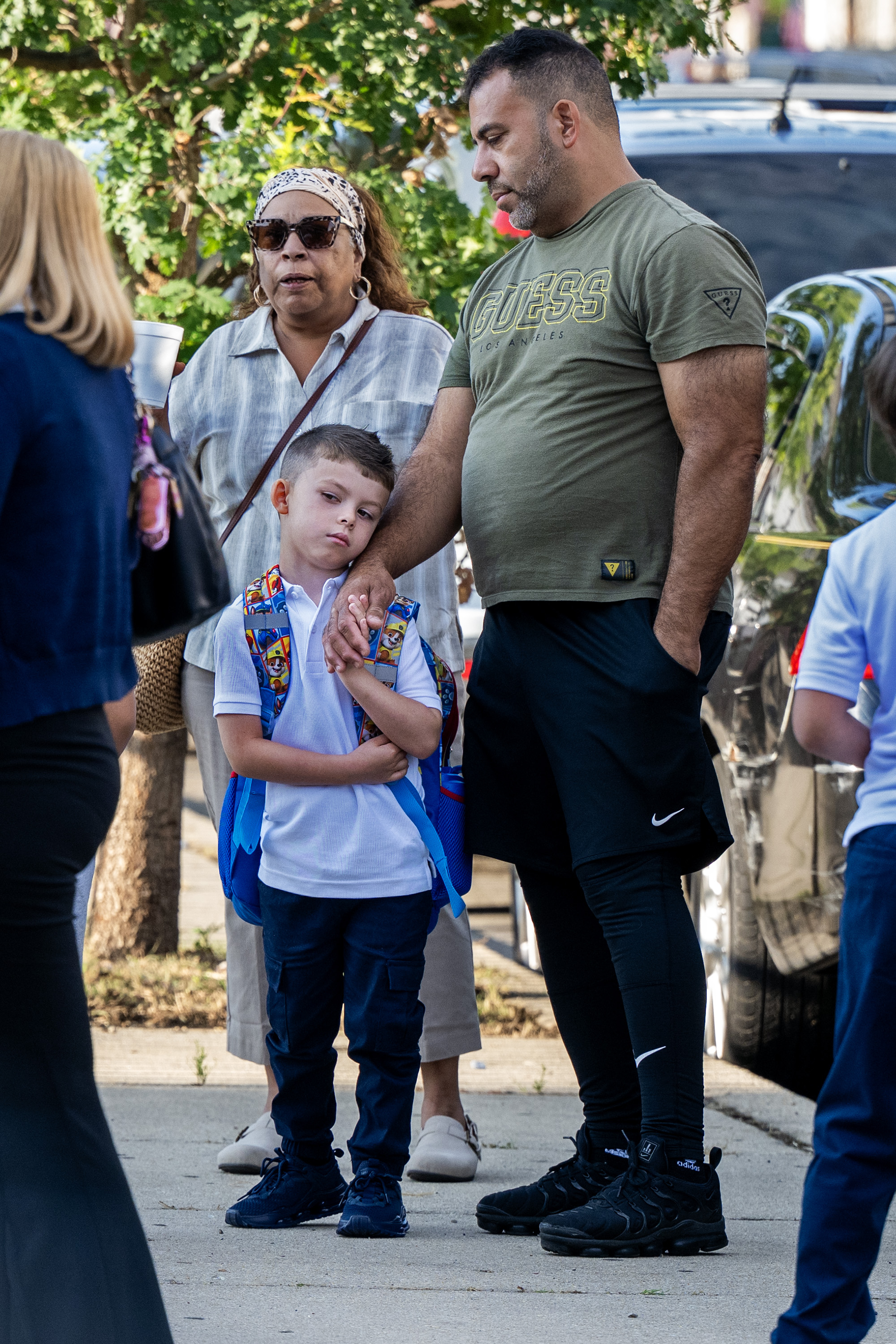
    Johnny Beauchamp (right) waits with his son Johnny (5, not a Jr.) as they arrive early at McClure Elementary Monday, Aug. 24, 2026 on the first day of school in the Philadelphia School District. Young Johnny is going into kindergarten and Beauchamp, a single father, took two days off from his work as a truck driver to make sure he could be there on “the start of the rest of his life.”Tom Gralish / Staff Photographer

    The aim, the superintendent said, is to address issues like homework completion, or family cooperation with key school initiatives.

    “We think that’s a pioneering effort,” Watlington said. “Families first in 2026-2027.”

    The program will begin as a pilot in a limited number of schools. Watlington did not provide details about how much ambassadors will be paid or how many schools will participate initially. He said details will be released soon.

    About those PSSA and Keystone scores

    There has been significant speculation around the release of state test scores. Pennsylvania released preliminary data to districts in the late spring, as it typically does, but Philadelphia has shared only limited student PSSA scores with select staff. Most Philly principals and teachers have not seen the scores, though other districts and schools have not withheld the data.

    Wuimarlyn Sanchez, (left) , 7, is greeted by a classmate outside McClure Elementary Monday, Aug. 24, 2026, starting as second graders on the first day of school in the Philadelphia School District.Tom Gralish / Staff Photographer

    The Pennsylvania Department of Education notified districts last week that statewide results, typically available to districts in late August or early September, would be delayed, though the release of the data to parents and the public does not typically happen until the fall.

    Philadelphia officials then suggested the state holdup was the reason for their own delay.

    Watlington said Tuesday that “we’re just going to wait for the official, verified data to come to us. We’re not trying to hide anything, but we need to get the verified data.”

    The superintendent suggested, however, that both statewide glitches in the administration of the test on the first day of PSSAs and the shift to online administration of exams, which research links to decline in student scores, will show an effect when the scores are finally made public.

    “My hunch is that, at the end of the day, online testing will have had some impact, but I don’t want to speculate on that across the Commonwealth of Pennsylvania,” Watlington said. “When the state verifies the data, we’ll release it immediately.”

    Some students were unable to access tests for up to 40 minutes on the first day PSSAs were administered.

    “All things being equal, I personally would like to be able to do over every single first-day test,” Watlington said. “That’s not really financially or time practical, but in an ideal world that would be my, my superintendent’s wish.”

    School selection’s still up in the air

    The district’s much-watched school selection process will open this year on Sept. 8 and close on Oct. 30. Watlington said its details are still being worked out, given the state score wrinkle.

    Pencils and crayons in the first grade classroom of teacher Lauren Cucinotta at Fanny Jackson Coppin Elementary are ready to write and color Tuesday, Aug. 18, 2026, as she prepares for the start of the School District of Philadelphia school year on Aug. 24.Tom Gralish / Staff Photographer

    Students who wish to gain admission to the system’s 37 criteria-based schools typically submit PSSA scores for consideration. Last week, district officials said they would not use PSSAs for school selection.

    Watlington said Tuesday that his team was “currently reviewing a number of options about how to handle the fact that we won’t have 2025-26 data in time for our school selection process. So we’re reviewing all of our options. I believe there was a thinking initially that we’d have students who have access to some special test — the Terra Nova, etc. We’ve not finalized a decision there yet, so we don’t want to get ahead of our skis just yet.”

    District size, and winning back kids to Philadelphia schools

    When Watlington talks about Philadelphia being one of the 10 largest school systems in the U.S., he is counting children enrolled in both traditional district schools and charters — all of which are supported by taxpayer dollars.

    Counted together, last year, the district had 113,735 students, and charters enrolled 64,469.

    The district’s enrollment grew for the first time in a decade in 2024-25, inching up by a little fewer than 2,000 students. It then lost 794 students last year, which Watlington attributes to a SEPTA strike at the beginning of the school year that caused a pronounced drop in student attendance and, he believes, caused some families to disenroll children from district schools.

    “It’s too soon to know exactly where our numbers will shake out, but my expectation and hope would be that we maintain the similar enrollment to last year,” Watlington said. “I expect this school district to grow over time, though.”

    Why? Watlington touted Masterman’s recent ranking by U.S. News & World Report as the nation’s No. 3 public high school in the country and the district’s academic gains.

    “We just need to tell that story,” Watlington said, “and go out and market ourselves to parents.”

  • Canada strikes back at US with retaliatory tariffs as trade war escalates

    Canada strikes back at US with retaliatory tariffs as trade war escalates

    TORONTO — Canada struck back at the United States on Tuesday with retaliatory tariffs on about $20 billion worth of American goods, including steel, dairy products, appliances, and farm equipment, as the trade war between the once-friendly neighbors escalated sharply.

    The confrontation threatened one of the world’s largest trading relationships and further strained ties between the United States and a country long considered one of its closest allies. A prolonged dispute could raise costs for American businesses and consumers less than 2½ months before the midterm elections.

    The new tariffs extended well beyond industrial goods, hitting everyday purchases such as seafood, cheese, clothing, cosmetics, and toilet paper, with some facing duties as high as 50%.

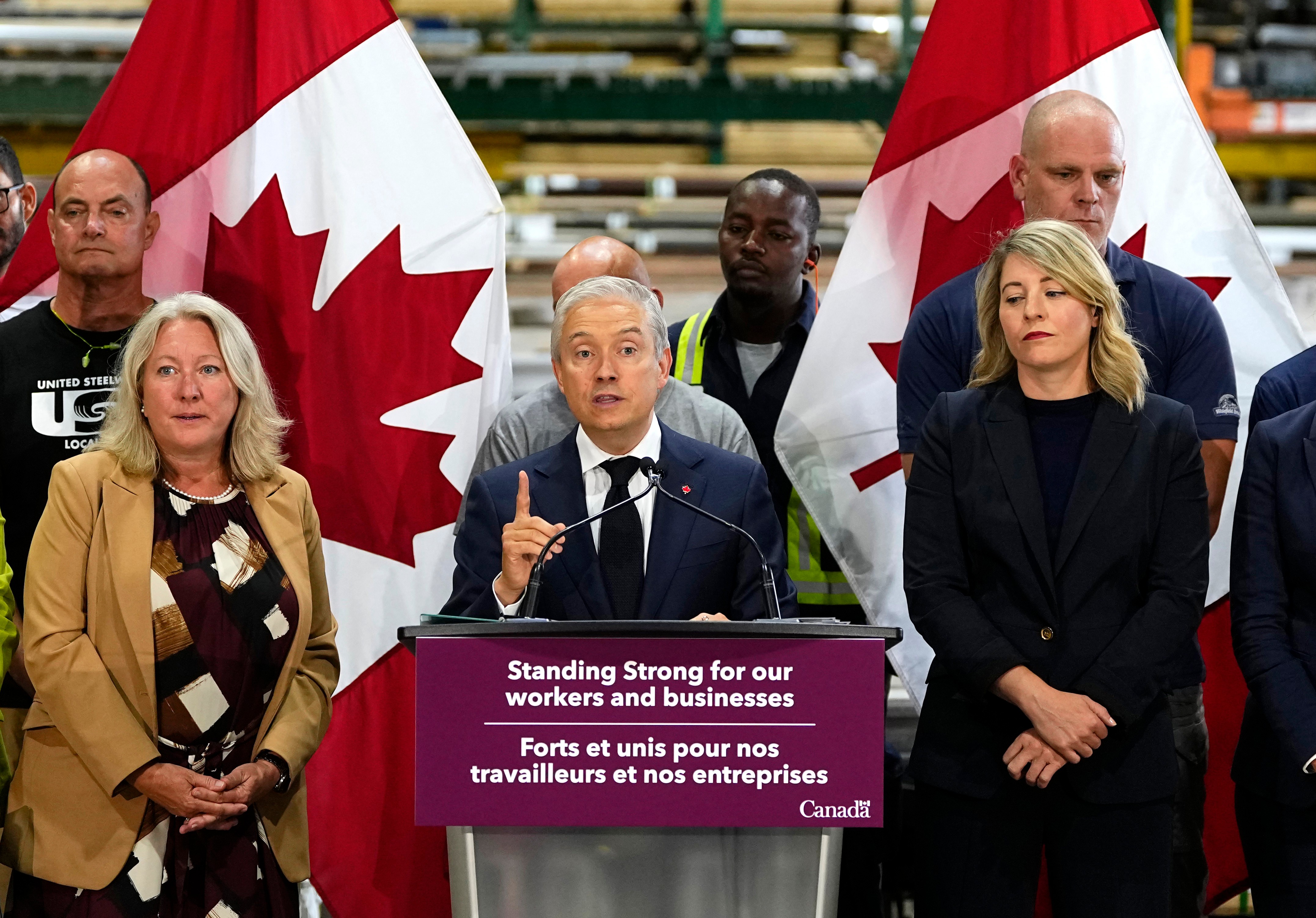
    “We did not choose this conflict, but when our economic integration is used as a weapon rather than the foundation for a win-win partnership, we need to stand up,” Finance Minister François-Philippe Champagne said in French, calling the situation “an unprecedented challenge imposed on Canada.”

    Industry Minister Mélanie Joly urged Canadians to buy Canadian goods, saying doing so would help protect jobs and launch a “movement of resistance.” She said Canada selected some American products for tariffs to put political pressure on particular U.S. states. Canadian officials used a similar strategy during Trump’s first term, when retaliatory tariffs targeted Kentucky whiskey, Florida orange juice, and Wisconsin yogurt.

    Canada’s retaliation came after the Trump administration imposed 50% tariffs over the weekend on Canadian goods following the collapse of trade negotiations. Canadian Prime Minister Mark Carney accused Washington of trying to subordinate Canada and said U.S. demands during the failed talks showed that Americans wanted to “destroy our major industries.”

    Trump told Canadian leaders to ‘fall in line’

    Trump intensified the confrontation Monday, telling Canadian leaders to “fall in line” or face consequences “far WORSE” than existing tariffs and threatening new 50% tariffs on Canadian vehicles, auto parts, and steel.

    Trump added another provocation Tuesday, saying the United States was giving “serious consideration” to renaming Lake Ontario “Lake America” in a feud with Ontario Premier Doug Ford. Such a change would be reminiscent of the Republican president’s unilateral action last year by executive order to rename the Gulf of Mexico to the Gulf of America.

    In the hours before Canada’s announcement, Trump went on a social media tear against the country, accusing it of ripping off American farmers and driving American companies out of business.

    “I deal with many countries, and Canada is easily the most difficult and unreasonable,” Trump wrote in one post. “They feel entitled, but they are not a State, and will be entitled no longer!”

    Tariffs on many U.S. products would double

    The tariffs will take effect Sept. 8 at rates of 15%, 25%, and 50%, with Canada matching the corresponding U.S. tariff rate on more than 700 products such as pulp and paper and electronics. The tariffs on many American products would double from 25% to 50%, with the largest share of the new measures affecting steel and aluminum.

    Canadian officials said the goal is not to raise revenue but to protect Canadian companies and reduce U.S. imports.

    U.S. steel imports, for example, have already fallen 30% since Canada imposed a 25% tariff, and the new 50% rate is expected to cut them further, Canadian officials said.

    Goods facing 50% tariffs include some steel and aluminum products, furniture, and clothing. Appliances, dairy products including cheese, fish and seafood, and certain steel and aluminum derivatives will face 25% tariffs. Existing Canadian countertariffs on U.S. autos will remain in place.

    Canada also announced a support package for workers and businesses affected by the dispute worth $7.5 billion in Canadian dollars ($5.4 billion in U.S. dollars).

    Canadian officials acknowledged the counter tariffs will raise costs for some businesses and consumers but said they expect the overall economic effects to be moderate.

    They said the government has provided more than $30 billion Canadian dollars (US$21.7 billion) in tariff-related support since the beginning of 2025 — far more than it has collected in retaliatory duties — as it tries to cushion the blow from the trade fight.

    Countries have integrated supply chains

    Canada and the United States have deeply integrated supply chains across autos, energy, agriculture, and manufacturing, making a prolonged trade fight potentially costly for businesses and workers on both sides of the border.

    Businesses and consumers are caught in the middle, facing uncertainty about how much prices may increase.

    Michael Howard II, owner of a furniture business in Warren, Mich., outside Detroit, said the tariffs will hamper the “ability for us to put food on the table for our family” and affect ”the ability for us to give back to our community.”

    Howard and his wife started their business a decade ago. They make and sell everything from dining room tables to bookcases.

    “To say that we don’t need Canada is just disingenuous,” he said. “It’s dishonest. And it’s just absolutely not truthful. We need our neighbor, but also they need us.”

    On Monday, Carney said U.S. negotiators had raised objections to French-language content on streaming platforms and French-language labeling rules. He rejected the idea that those issues were negotiable, saying in French: “For the Americans, questions about the French language, Quebec culture, francophone culture, and Canadian culture are irritants. Here in Quebec, here in Canada, they are rights.”

    In a social media post early Tuesday, Trump wrote: “I would never interfere with Canadians speaking French! In fact, I have never even thought of doing such a stupid thing. This lie was made up by a weak and ineffective Prime Minister in an attempt to gain political support, which he has totally lost, from the people of Quebec. I love French Canadians!”

  • El-Sayed joins Fox News for some light verbal combat and a pitch to Republicans

    El-Sayed joins Fox News for some light verbal combat and a pitch to Republicans

    “You’re filibustering.”

    “Pipe down one second.”

    “That’s a dodge, Abdul.”

    Through tense smiles and laughter, Fox News host Jesse Watters frequently reminded his guest — the Democratic nominee for Senate in Michigan, Dr. Abdul El-Sayed — that Watters was the one conducting their prime-time interview as the candidate swerved through a minefield of hostile questions about issues ranging from transition surgeries to reparations to Islam to immigration.

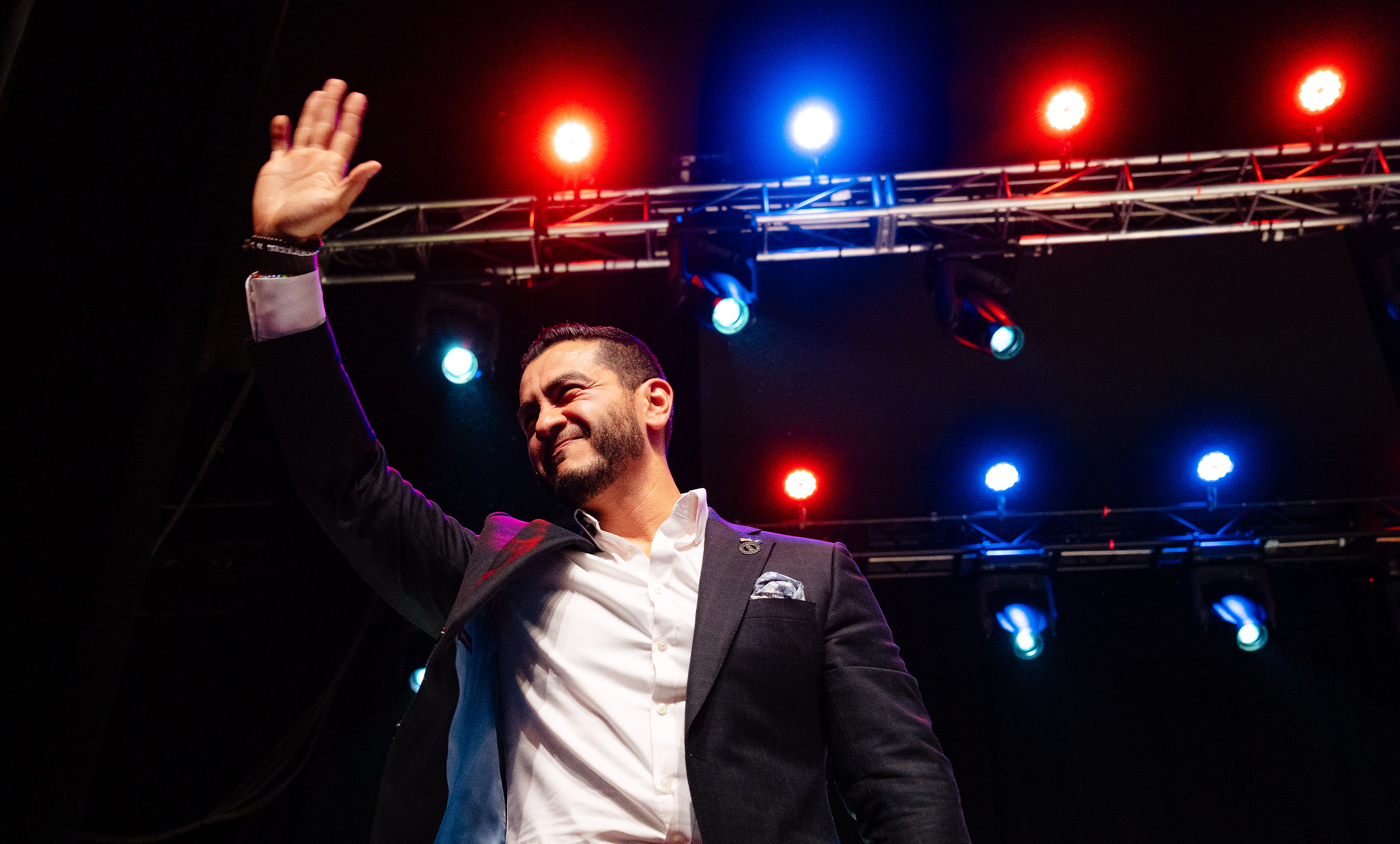
    The appearance Monday night by El-Sayed, a progressive who has sought to dispel worries from moderate Democrats that he is too left-wing to win battleground Michigan, signaled his growing efforts to reach Republican voters and previewed his messaging strategy for the general election. His hard-fought primary victory this month has set up a race against former Rep. Mike Rogers, a Republican, in a contest considered crucial to Senate control.

    When Watters sought to pin down El-Sayed, the candidate would often redirect the question to more favorable political terrain. He pivoted from a question on immigration enforcement to high gas and grocery costs, and turned an inquiry on whether he drives an electric car (he drives a plug-in hybrid, he said) into a jab at President Donald Trump’s new trade war with Canada.

    In the most eye-popping moment of the exchange, Watters asked if El-Sayed believed it was OK “for a parent to slash his kid’s ding-a-ling off,” referring to transition surgeries for minors.

    El-Sayed responded by asking if Watters was circumcised.

    “Uh, yeah, but that’s a personal question, doctor,” Watters responded, laughing, before contending that “circumcision’s different than castration.”

    El-Sayed said that he believed the government should not tell Americans what healthcare procedures they could undergo, but he did not directly say whether he approved of transition surgeries.

    The interview showed the strategy El-Sayed is adopting as Rogers seeks to paint him as a radical leftist who is out of touch with Michigan voters. The Democratic nominee’s approach is to cast “culture-war” issues as a distraction from the everyday problems Americans face, like rising costs and worries about health care.

    The interview also previewed the kinds of arguments that could animate El-Sayed’s planned debate against Rogers, which is set for Oct. 8 on WOOD-TV, both campaigns announced Monday. The two men may face off sooner if they agree to additional debates.

    After Watters brought up Shariah — the system of Islamic religious rules often invoked by opponents to portray Islam as dangerous and anti-American — El-Sayed countered by asking the host if he knew about canon law, the code of religious rules that guides the Roman Catholic Church.

    “Nobody is trying to push Shariah law on anyone else, just like I hope nobody is trying to push canon law on anybody else,” El-Sayed said. “Because we live in an America where you should have the freedom of your religion.”

    Watters responded by saying: “Maybe. Shariah law in Michigan is kind of scary.”

    El-Sayed argued that voters were far more concerned about affording gas, seeing doctors and keeping their jobs than they were about Shariah.

    Asked about his position on trans athletes in sports, El-Sayed said he believed that matter should be “decided by the people who govern sports,” not him.

    “I’m out here trying to take on the healthcare crisis and Big Pharma, and you’re asking me about who gets to play what sports,” El-Sayed said. “It’s silly.”

    El-Sayed’s appearance Monday was his third televised interview with Fox News of the campaign, and his first of the general election.

    Whether or not he is able to attract a slice of Republican voters, he has already sought to capitalize on Watters’ comments about him. He started airing an ad Thursday that features the Fox News host saying after the primary, “You’ve got to respect Abdul because he beat the machine.”

    At the end of the interview Monday, Watters gave his guest “credit for facing the music” by going on his show, but called him “a little naive” and said some of his policies were “straight-up wacky.”

    El-Sayed contended that Trump’s ballroom renovations amid the war with Iran were “wacky,” and then said he would “love to come back on” to talk about money in politics, affordability and Medicare for All.

    “We’ll do it again, Abdul,” Watters said, smiling amusedly and adding, “Good luck in Michigan.”

    This article originally appeared in The New York Times.

  • Canada to announce retaliatory tariffs as Trump tells its leaders to ‘fall in line’

    Canada to announce retaliatory tariffs as Trump tells its leaders to ‘fall in line’

    TORONTO — Canada will announce retaliatory tariffs against the United States on Tuesday after relations deteriorated sharply Monday, with President Donald Trump telling Canadian leaders to “fall in line” or face consequences “far WORSE” than existing tariffs and Prime Minister Mark Carney accusing Washington of trying to subordinate Canada.

    Trump also threatened new 50% tariffs on Canadian vehicles, auto parts and steel, while Carney said U.S. trade demands showed Washington wanted to “destroy our major industries,” including autos, steel and aluminum.

    Finance Minister François-Philippe Champagne and three other Cabinet ministers are also expected Tuesday morning to share details of supports for workers affected by tariffs. Carney said earlier Monday that Canada may need to move away from matching U.S. tariffs dollar for dollar and instead use more targeted retaliation aimed at protecting Canadian workers and businesses.

    “An attitude at the negotiation table that Canada is a subsidiary of the United States” is “not something we’re going to accept,” Carney said.

    Carney was even more blunt in French.

    “We learned during the negotiations that the Americans want to destroy our major industries, including autos, steel and aluminum,” Carney said. “That was one of the main reasons we said no. It was a bad deal.”

    The fiery words from both sides show how U.S.-Canada relations have deteriorated since Carney walked away from trade negotiations with the Trump administration late Friday, triggering the president’s threatened 50% tariffs the next day on about $20 billion worth of Canadian goods.

    Canada and the United States share one of the world’s largest trading relationships, with deeply integrated supply chains across autos, energy, agriculture and manufacturing, making a prolonged trade fight potentially costly for businesses and workers on both sides of the border.

    Carney cast doubt on the U.S.’s dependability, saying Canada was finding reliable partners “everywhere in the world, except in the United States. Except in the United States. And Russia.”

    Trump unleashes personal attacks on Canadian leaders

    On Monday, Trump came back with further tariffs, warning that he would impose them on Canada’s auto industry beginning next year.

    “Canada has been ripping off the United States of America for years,” Trump wrote on social media, criticizing what he called the country’s “ridiculously high tariffs” on American farmers.

    Carney said Washington’s auto-sector proposals would gradually have the effect of dismantling Canadian production.

    “This is the most successful automotive partnership in history,” Carney said, referring to the deeply integrated Canada-U.S. industry.

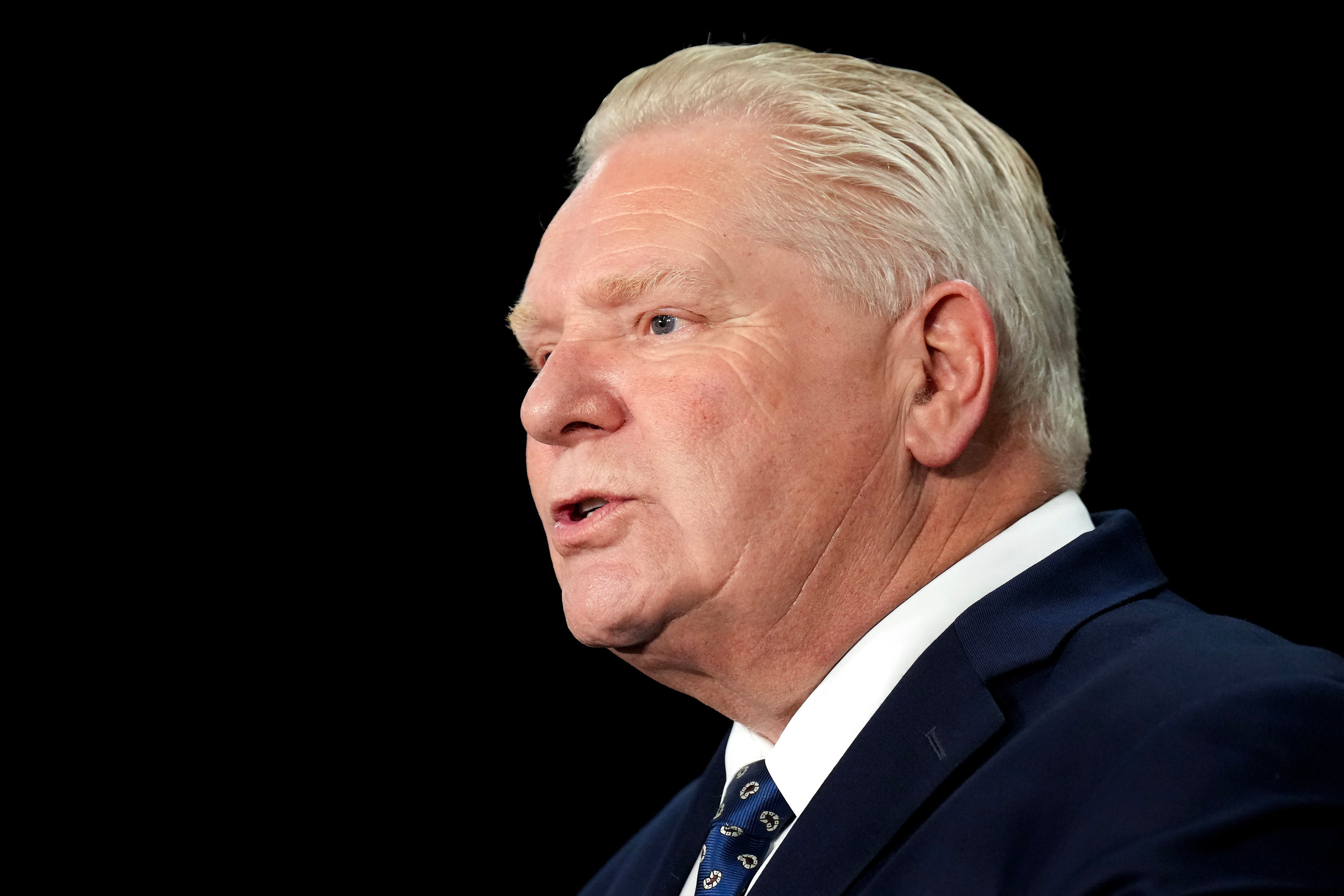
    Meanwhile, Ontario Premier Doug Ford unleashed his own tirade. In an interview with The Associated Press, he said Trump had underestimated Canadians’ willingness to endure economic pain rather than give in to U.S. pressure.

    “We’re all in,” Ford said. “Up here, we’re at a fever pitch; everyone’s in for an economic war. They know they’re going to have to sacrifice.”

    Trump responded in a social media post by attacking Ford personally, calling him “the less charismatic, intelligent, and overall unimpressive brother of the late, great, Rob Ford,” and once again referring to Canada’s prime minister as “Governor Carney.”

    Ford dismissed the insults: “If you think an insult from him hurts me? Well, bring it on, buddy, I’m ready.”

    Ford is a Progressive Conservative whose party differs from that of Carney, a Liberal, but the two underscore broad political unity in Canada over the trade fight with Trump.

    Ford threatens critical minerals and electricity

    Ford said “everything is on the table” if the dispute worsens, including cutting off electricity and critical minerals from Ontario.

    Critical minerals are increasingly important to U.S. national security and manufacturing. The Pentagon has sought more secure supplies of minerals used in military aircraft, missiles, munitions and electronics as Washington tries to reduce reliance on China, which dominates the mining or processing of several strategically important minerals.

    Ford said Canada should also consider increasingly severe retaliation if Trump continues targeting Canadian industries, including oil and potash, while Ontario could raise electricity prices or stop sending power south.

    “We power 1.5 million homes and businesses,” Ford said. “Everything’s on the table. I’ll do whatever it takes.”

    Ford has used electricity as leverage before. During an earlier phase of the dispute, Ontario imposed a 25% surcharge on electricity exported to Michigan, Minnesota and New York. Trump responded by threatening to double tariffs on Canadian steel and aluminum before both sides backed away.

    Auto industry becomes a central battleground

    Ford accused Trump of not simply seeking a better trade deal but aiming to hollow out Canadian industries and move production south.

    Ford said Trump wants to make Canada a vassal state.

    “He wants to bleed out every single sector and bring them down to the U.S.,” Ford said.

    The auto sector is especially important to Ontario, the center of Canada’s vehicle manufacturing industry. Plants and suppliers in Ontario are tightly integrated with factories in Michigan and other U.S. states, with parts routinely crossing the border multiple times during production.

    Automakers including Ford, General Motors and Stellantis operate major assembly plants in Ontario, and the wider supply chain supports tens of thousands of jobs. Trump’s new threat of a 50% tariff on Canadian vehicles and parts puts that sector directly at the center of the escalating dispute.

    U.S. Trade Representative Jamieson Greer said Monday that “the only reason Canada has auto production in the first place” was because of the 1960s Auto Pact, under which Canada used access to its market to encourage vehicle production north of the border.

    Ford says he opposed preliminary deal

    Ford also disclosed that he had opposed the preliminary agreement Carney was considering before Canada walked away from negotiations, and that he was unwilling to restore American liquor to Ontario store shelves as part of an agreement.

    “I wasn’t going to put the booze back on the shelves,” Ford said. “I was ready to go out there and call a press conference … and say I’m not buckling over.”

    Ford said he understood Washington had sought language late in the negotiations that would have restricted Canada’s ability to negotiate trade agreements with other countries without U.S. approval. Carney has called that demand unacceptable and a question of Canadian sovereignty.

    Carney said the dispute also exposed a deeper divide over language and culture, saying protections for French and Canadian culture that Washington views as trade irritants are considered fundamental rights in Canada.

    “Who does he think he is?” Ford said of Trump. “You gotta be kidding.”

  • Black voters have long been politically pragmatic

    Black voters have long been politically pragmatic

    Fierce primary fights throughout the spring and summer have exposed deep ideological fractures within the Democratic Party. They’ve also reopened an internal party debate about whether African Americans — one of the pillars of the Democratic Party — will support “progressive” or left-wing candidates in primaries against moderate opposition.

    In Michigan’s contentious Senate primary, upstart candidate Abdul El-Sayed narrowly beat establishment candidate Haley Stevens, despite the latter performing better overall with African American voters. In Wisconsin, however, African American voters proved decisive, as David Crowley eked out a narrow victory over Democratic Socialist Francesca Hong. In both campaigns, perceptions of electability in November became a key issue and a key indicator of whether a candidate could win Black support.

    This fight isn’t new. The Democratic Party has long featured debates over electability, and whether it ought to prioritize finding candidates who can excite base voters or identifying candidates who have crossover appeal in November.

    This question has unique importance for African American voters. They take a deeply pragmatic approach, one that has been shaped by the fraught racial environment that is, sadly, a key part of American electoral history. For close to a century, that has translated into a reluctance to back political causes or campaigns that make broad promises, but will have difficulty delivering results. While African Americans have been a stalwart Democratic constituency for more than 60 years, they have not automatically gravitated toward left-wing causes.

    The 1948 presidential campaign took place at the height of the Cold War abroad and the Second Red Scare at home. It also had a critical civil rights dimension.

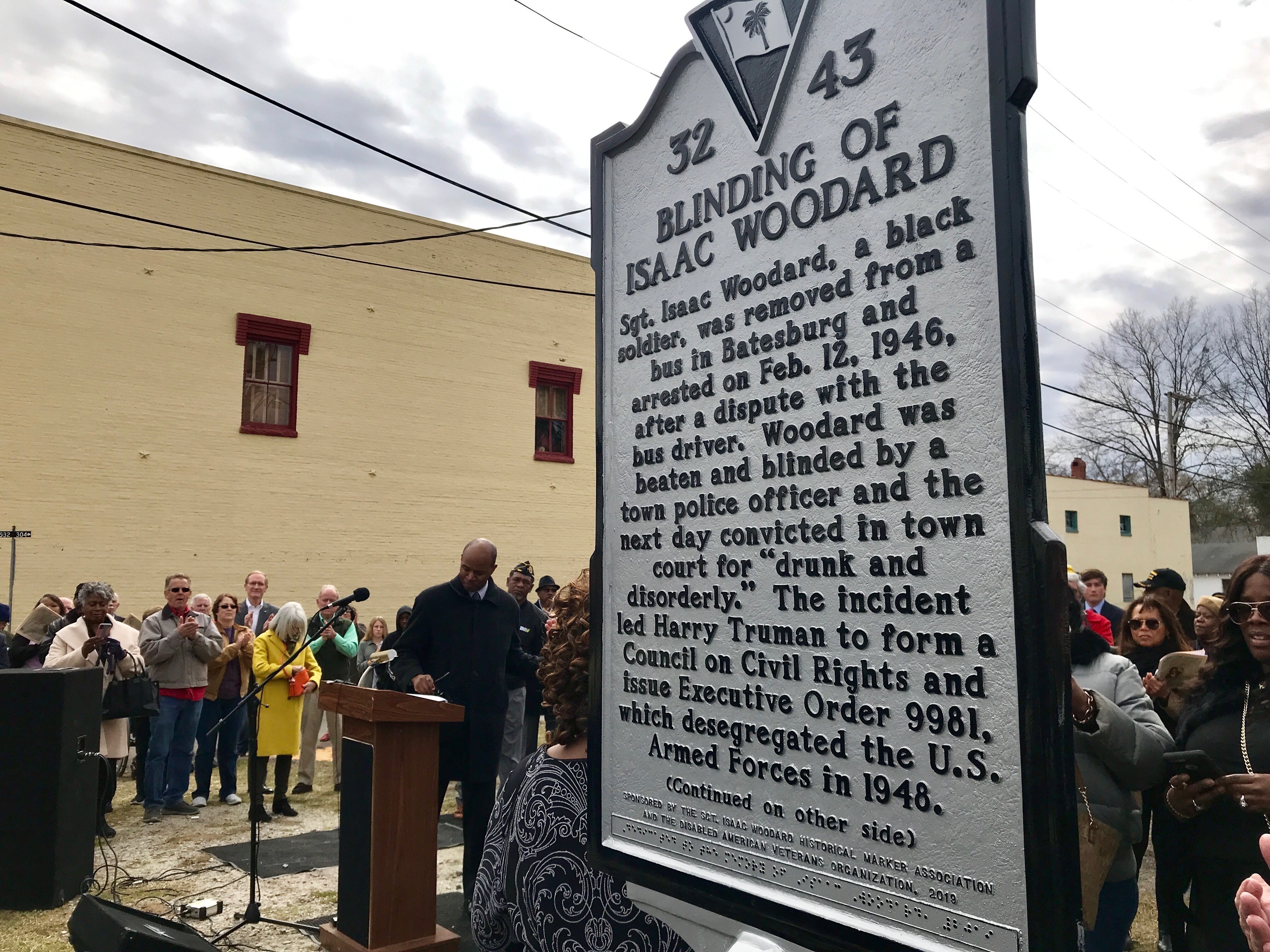
    Many Black soldiers had fought in World War II for a “Double V” — victory against fascism abroad and victory over racism at home. Yet, returning after the war, they discovered that many of their white counterparts did not want to eliminate Jim Crow segregation in the South, or other forms of white supremacy and discrimination elsewhere in the country. Lynchings and racial violence dramatically increased after the war, most memorably, the beating and blinding of Pacific War veteran Sergeant Isaac Woodard in South Carolina in 1946.

    In this Feb. 9, 2019, file photo, the Blinding of Isaac Woodard historical marker was dedicated in Batesburg-Leesville, S.C. Woodard, a uniformed World War II veteran was headed home on a bus in 1946, when he was removed and beaten by a white South Carolina police chief, leaving Woodard permanently blind.Christina Myers

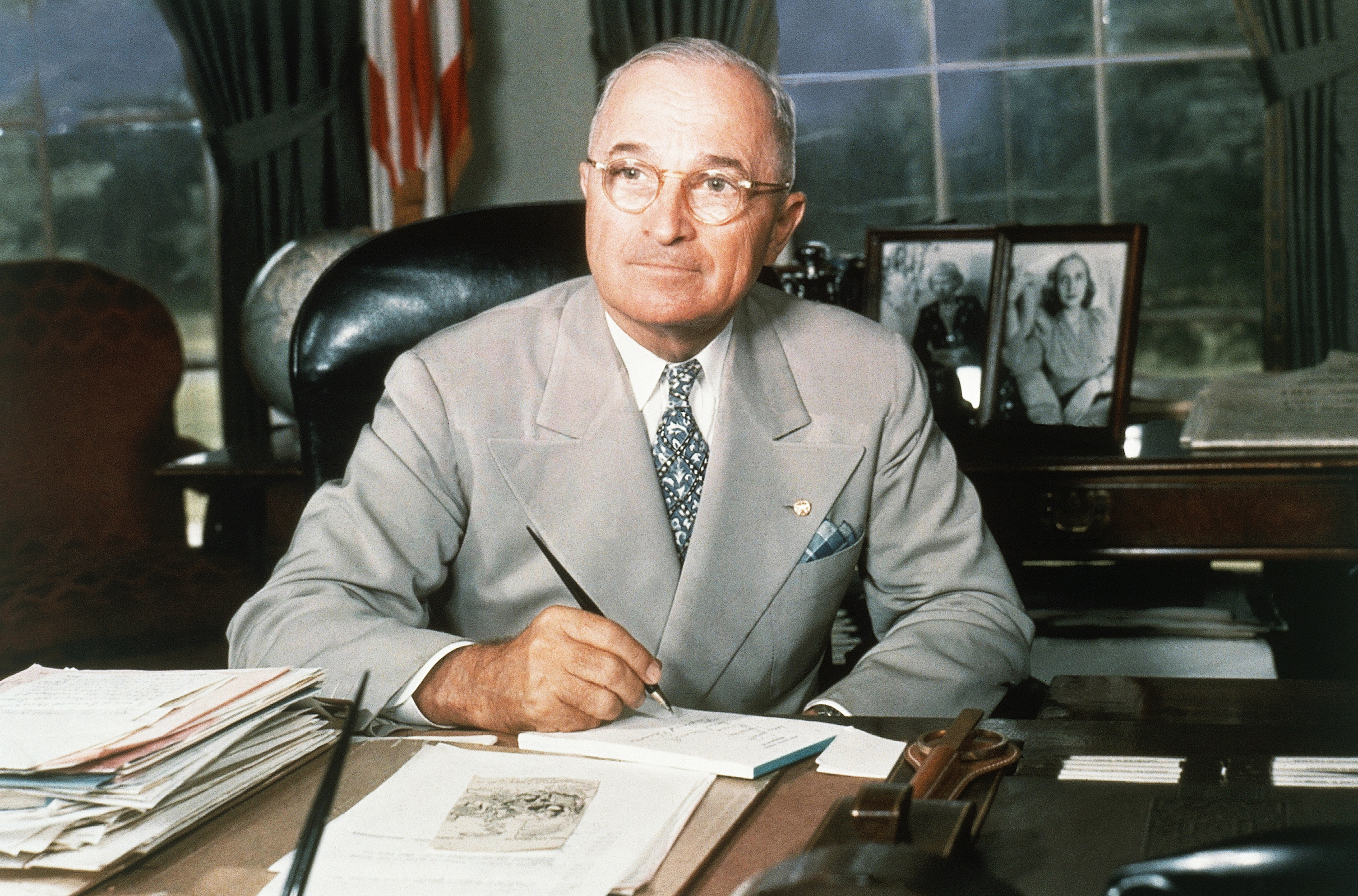
    Black Americans demanded that embattled President Harry Truman embrace new civil rights protections. Truman was aghast at the treatment of returning veterans and believed in fairness. He also realized that he’d need the votes of African Americans to have any chance of winning reelection.

    In 1947, Truman began making a concerted effort to advance the civil rights cause. He became the first president to speak at the National Association for the Advancement of Colored People’s annual convention. The White House also released To Secure These Rights, a book detailing how the Truman administration both acknowledged the problems facing African Americans and the steps it would take to ameliorate them. Additionally, Truman desegregated the armed forces, a critical step in showing he was serious about embracing civil rights.

    Truman made these moves to showcase American freedom and democracy and juxtapose it with Soviet communism, while also trying to shore up the African American vote. That was especially critical because of a political insurgency that threatened Truman’s hope for reelection: the rise of Henry Wallace and the Progressive Party.

    Wallace had served as agriculture secretary during Franklin Roosevelt’s first two terms as president and as vice president during Roosevelt’s third term. He had also served as Truman’s secretary of commerce. Many on the left saw Wallace as the only hope for achieving their main goals: preventing a full-blown war with the Soviets, and securing greater labor, civil and human rights at home.

    Wallace’s backers included prominent African Americans like Paul Robeson and W.E.B. Du Bois, who distrusted Truman. Both men supported Wallace due to the former’s strong stance in favor of civil rights at home and deep-seated opposition to the brewing Cold War abroad. Their support helped catalyze a debate in the Black community over which candidate to back.

    Forums like The Crisis, the official magazine of the NAACP, became spaces for African American voters to debate Wallace vs. Truman. In early 1948, The Crisis editors declared “Wallace is straight on our question,” referring to his unabashed support for civil rights. They refrained, however, from outright endorsing him, noting his mixed record as secretary of agriculture.

    Made By History sponsors. FOR USE ON MADE BY HISTORY STORIES ONLY.Inquirer Staff

    Readers remained divided over this support for Wallace. Some felt the editorial was too harsh about his policies as secretary, while others believed he had not done enough for Black Americans in the federal government. “I challenge you to name another American of equal stature,” Robert and Selma Singer from Chicago wrote to The Crisis offices after its April 1948 issue, “who has mass support, who has given such impetus toward solving the ‘Negro Problem.’”

    Yet, others, such as Max Womack of Iowa City, argued that Wallace had no chance as a third-party candidate, and would merely split the votes of people who’d otherwise back Truman. He also wondered why the editors hadn’t given “President Truman any credit at all?”

    This last question hinted at the prevailing sentiment in the Black community: most African American voters backed Truman that November. They preferred trusting the incumbent — a proven commodity — rather than taking a chance on what turned out to be a quixotic campaign.

    Their overwhelming support delivered key margins in battleground states in the North and Midwest, like Michigan, a testament to the maturing power of the African American vote. “Negro leaders pointed out,” proclaimed the front page of the Black-owned and operated Detroit Tribune, “that the Michigan Republican party seemed to go out of its way to avoid the Detroit population and its political desires.”

    Black voters siding with mainstream, liberal Democrats over more radical ideas proved to be no anomaly. Twenty-four years later, in 1972, Black voters again engaged in an ideological skirmish. Activists debated the best way forward after the heyday of the Civil Rights Movement and the election of Republican Richard Nixon in 1968 against a deeply divided Democratic Party.

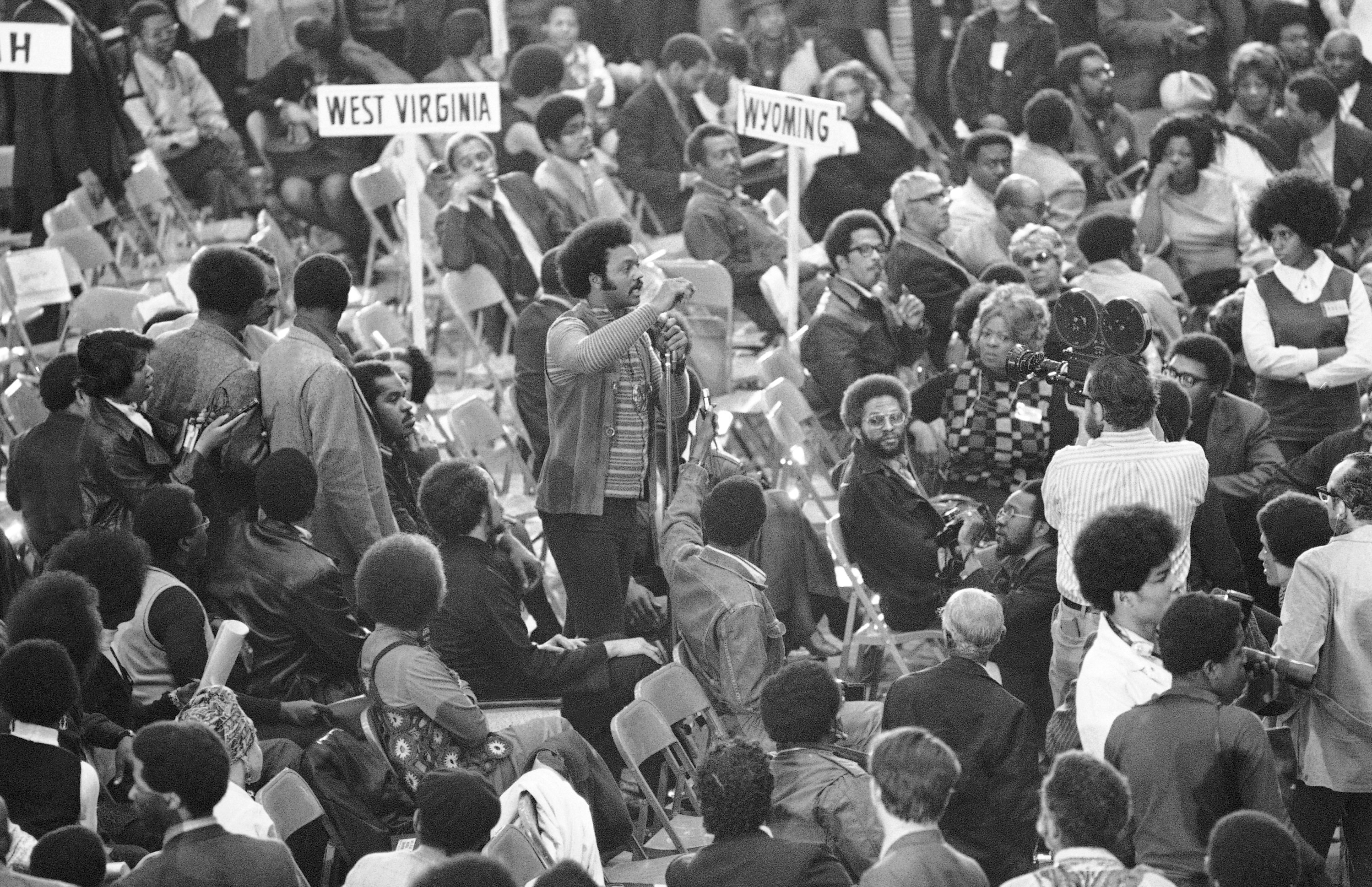
    At the National Black Political Convention, held in Gary, Indiana, African American liberals, moderates, socialists, nationalists, and even conservatives gathered to map out a strategy for adjusting the politics of Black America to a new normal. Nixon’s administration had largely practiced “benign neglect” on racial issues, while suppressing the Black Power Movement. Attendees grappled with an overall backlash to the Great Society programs spearheaded by the liberal wing of the Democratic Party.

    In this March 13, 1972, file photo, the Rev. Jesse Jackson, executive director of Operation: PUSH, speaks from the floor of the National Black Political Convention in Gary, Ind.Jim Wells

    The Convention’s “Gary Declaration” gave voice to the frustration of many Black Americans, arguing, “Both parties have betrayed us whenever their interests conflicted with ours (which was most of the time), and whenever our forces were unorganized and dependent, quiescent and compliant.”

    Still, despite the critique of both Nixonian conservatism and Great Society liberalism, the members of the Gary Convention disagreed over a radical proposal to create an all-Black political party that could, in theory, broker deals with both major parties on behalf of Black America. Later that year, most Black Americans stuck with the Democrats — one of the few constituencies to back the doomed campaign of George McGovern.

    The primary that year had illustrated Black political pragmatism at work. Ebony magazine journalist Alex Poinsett acknowledged that McGovern was far from perfect and that Black voters lacked a truly satisfactory option. Yet, he argued that the candidate’s support for elements of the Gary Declaration — and a competing “Black Bill of Rights” proposed by the Congressional Black Caucus — made him a sensible option over several longer shots, including African American congresswoman Shirley Chisholm.

    The choice of McGovern over Chisholm reflected how Black voters’ wariness about progressivism that did not seem to be electorally viable even applied to Black candidates. The same was true three decades later: Barack Obama struggled with Black voters in polling until his victory in Iowa in January 2008 made it clear he was a candidate who could win.

    These cases epitomize how, over time, Black voters have stuck with liberals in the Democratic Party who demonstrate a genuine chance of victory over more radical options that might promise better policy. They aren’t always happy with their choices, but they know what to expect from mainstream Democrats.

    This choice reflects how, ultimately, for African American voters, a pragmatic view of politics overrules almost everything else. The old saying that “politics is the art of the possible” is, often, the rueful outlook on politics by African Americans.

    Robert Greene II is associate professor of history at Claflin University. He is also managing editor of “Global Black Thought” and co-host of the award-winning podcast, “Our New South.”

    Made by History takes readers beyond the headlines with articles written and edited by professional historians. Opinions expressed do not necessarily reflect the views of The Inquirer.