Category: News

  • ACLU-NJ defends Bellmawr protesters | Inquirer South Jersey

    Good morning, South Jersey. I’m sorry to report that the region is under yet another flood watch.

    The American Civil Liberties Union of New Jersey has urged Bellmawr police to investigate its officers after they allegedly targeted protesters engaging in “free-speech activities.”

    And a destination for Czech delicacies is moving from Mount Laurel to Haddonfield.

    Plus, the state will get more than $500 million from a Meta settlement over child protections, and more news of the day.

    — Julie Zeglen (southjersey@inquirer.com)

    If someone forwarded you this email, sign up for free here.

    Protesters allege unlawful targeting
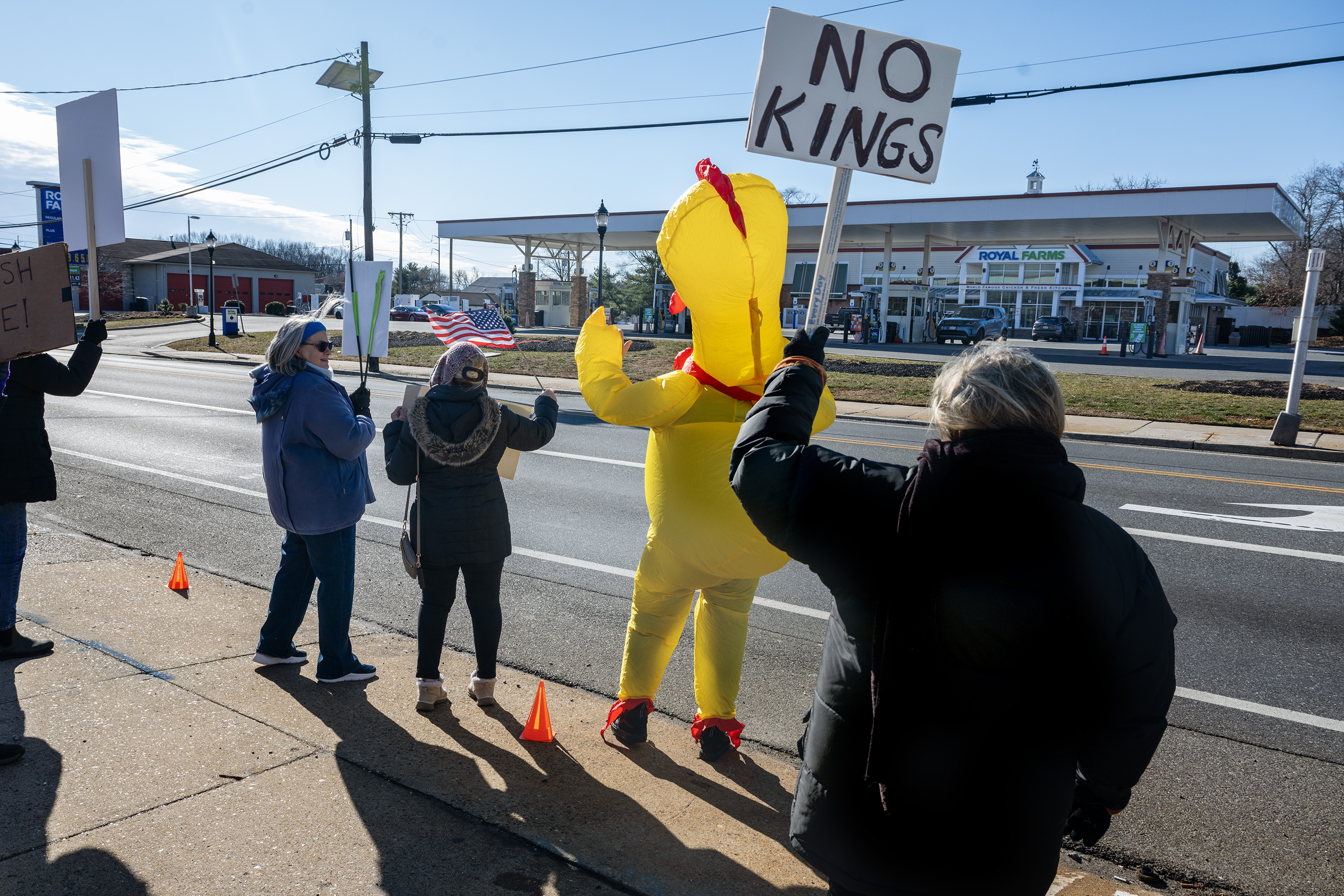
    ACLU-NJ is defending protesters who received traffic and criminal citations from the Bellmawr Police Department during summertime protests against President Donald Trump and his administration.

    The infractions include honking and jaywalking, according to the roadside rallies’ organizing group, Cooper River Indivisible.

    ACLU-NJ sent a letter to the Camden County borough’s police department asking it to investigate officers’ conduct regarding the protesters’ “free-speech activities.”

    “No one’s freedom of speech should be chilled because they’re afraid of getting a citation,” ACLU-NJ’s criminal law reform advocacy director told The Inquirer.

    Reporter Sarah Nicell has more details.

    ‘It’s culture that no one gets here unless you fly home’
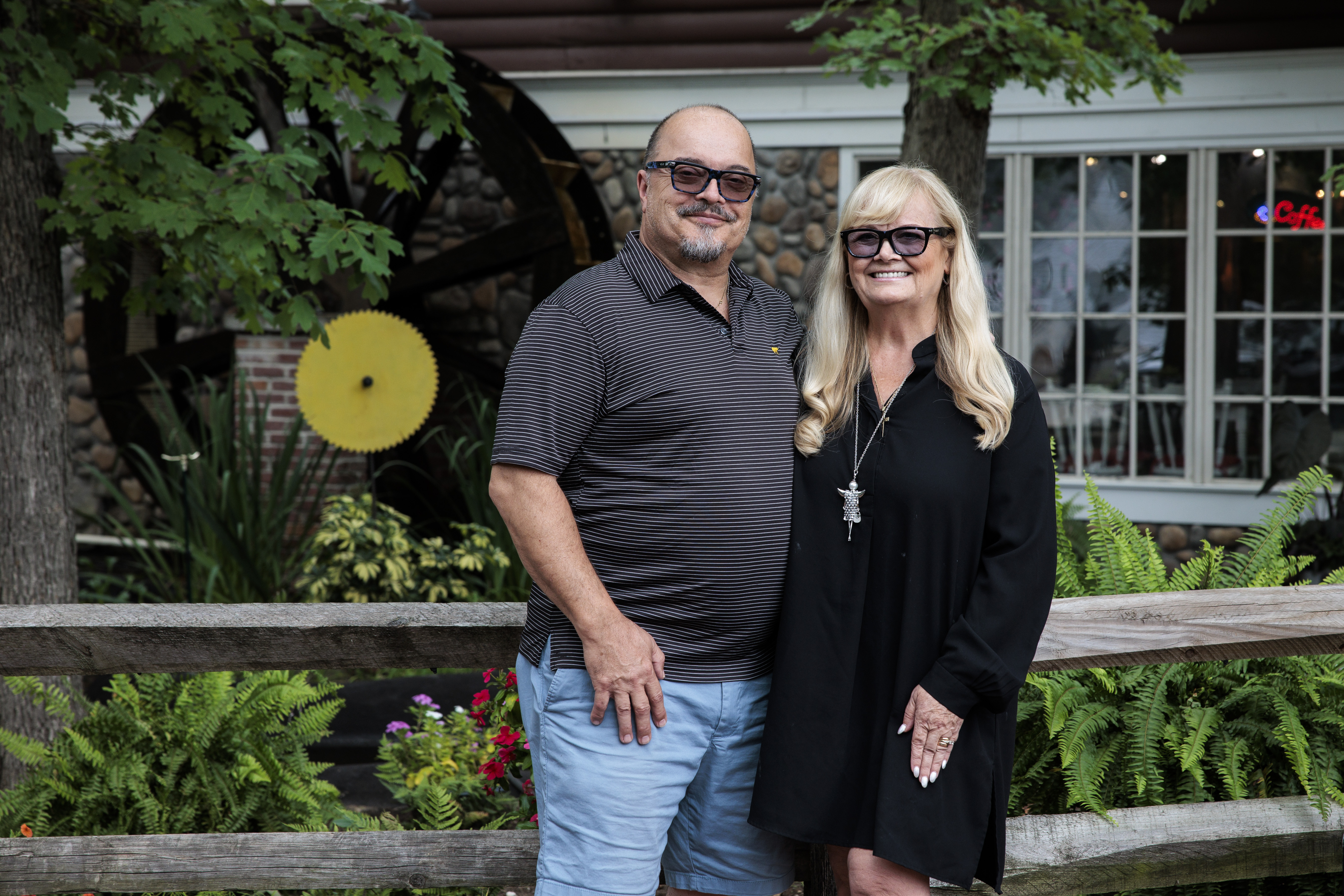
    Bohemian doughnuts, traditional kolaches, apple strudel, babka — Four Green Cats Cafe is known for these Czech treats and more, with customers traveling from both nearby in South Jersey and across the country to sample its authentic European flavors.

    The Mount Laurel café will soon be taking over a larger space in Haddonfield to meet demand.

    The new location will allow Four Green Cats to offer more menu items and host more live events for those of the Czech diaspora and beyond, owners Mila and Nadia Vasa say.

    The Inquirer’s Lacey Latch visited the cozy Rancocas Woods spot to learn more about the coming move.

    What to know today

    • New Jersey will get more than $500 million from a landmark Meta settlement over child protections, part of a larger payout of up to $17.1 billion. A multistate coalition sued the tech giant for failing to keep kids from becoming addicted.
    • A Franklin Township man has been charged with first-degree murder for allegedly strangling his 40-year-old daughter in June, prosecutors said.
    • A dean of research at Rutgers University has been charged with invasion of privacy for allegedly taking “upskirt” photos while working at the Jersey institution.
    • A Philadelphia man was arrested for allegedly trying to meet and have sex with underage girls in a Mount Laurel hotel.
    • Camden County officials are warning residents to follow federal guidance on rabies prevention and safety after a rabid raccoon was discovered in Barrington.
    • Marlton-based Virtua Health and other health systems in the region have filed lawsuits against healthcare provider network MultiPlan and several major insurers, Philadelphia Business Journal reports.
    • RIP, Dolly Parton, who is remembered as both a singer and philanthropist whose Imagination Library worked to get books into children’s hands. Mount Laurel-based nonprofit Foundations Inc. ran the first Imagination Library program in Philadelphia and awarded Parton as its “Champion of Children” in 2020.

    🗓️ The best things to do this week

    🌿 Life that Glows: Take a guided walk and use UV flashlights to see fluorescence on various plants, invertebrates, and mushrooms that glow in various colors at night. ⏰ Friday, Aug. 28, 7:30-9:30 p.m. 💵 Free 📍Long Bridge Park, Hainesport.

    🎤 Music on the Porch Day: Enjoy live music on porches, storefronts, lawns, and other gathering spaces. ⏰ Saturday, Aug. 29, noon-4 p.m. 💵 Free 📍 Downtown Mount Holly.

    🍷 Wine Down Summer: Sample award-winning wines, listen to live music, and peruse food and artisan vendors at this annual fest. BYO chairs, blankets, and pop-up tents. ⏰ Saturday, Aug. 29 and Sunday, Aug. 30 12-5 p.m. 💵 $20-25 plus fees, $5 for spectators 📍Veterans Island at Cooper River Park, Pennsauken.

    See more event listings here.

    🧠 Trivia time

    What rating did Barstool Sports’ Dave Portnoy give Lillo’s Tomato Pies when he visited the Hainesport location for his “One Bite Pizza Reviews”?

    A) 6

    B) 7.5

    C) 8.4

    D) 10

    Think you know? Check your answer.

    What we’re …

    🎶 Remembering: When Willie Nelson performed at the Outlaw Music Festival in Camden last year.

    🍃 Visiting: Swede Run Fields in Moorestown.

    🍂 Ready for: Cooler weather and pumpkin spice truffles.

    Thanks for starting your day with The Inquirer. Ellen Dunkel has you covered tomorrow.

    Clarification: Yesterday’s newsletter featured a story on the opening of Del Buono’s Pastry Shop. Its cream doughnuts are reminiscent of the ones McMillan’s Bakery once sold.

    By submitting your written, visual, and/or audio contributions, you agree to The Inquirer’s Terms of Use, including the grant of rights in Section 10.

  • Vernick alum helming a new eatery | Inquirer Lower Merion

    Vernick alum helming a new eatery | Inquirer Lower Merion

    Hi, Lower Merion! 👋

    Two longtime friends are opening a live-fire cooking restaurant nearby this fall. Here’s what to know. Also this week, we look at how effective the red-light enforcement cameras have been so far, Kylie Kelce made a guest appearance on Ilona Maher’s new show, plus we peek inside a more-than-century-old Bryn Mawr home that’s for sale.

    If someone forwarded you this email, sign up for free here.

    Harriton alums team up to launch restaurant Old Friend in Wayne

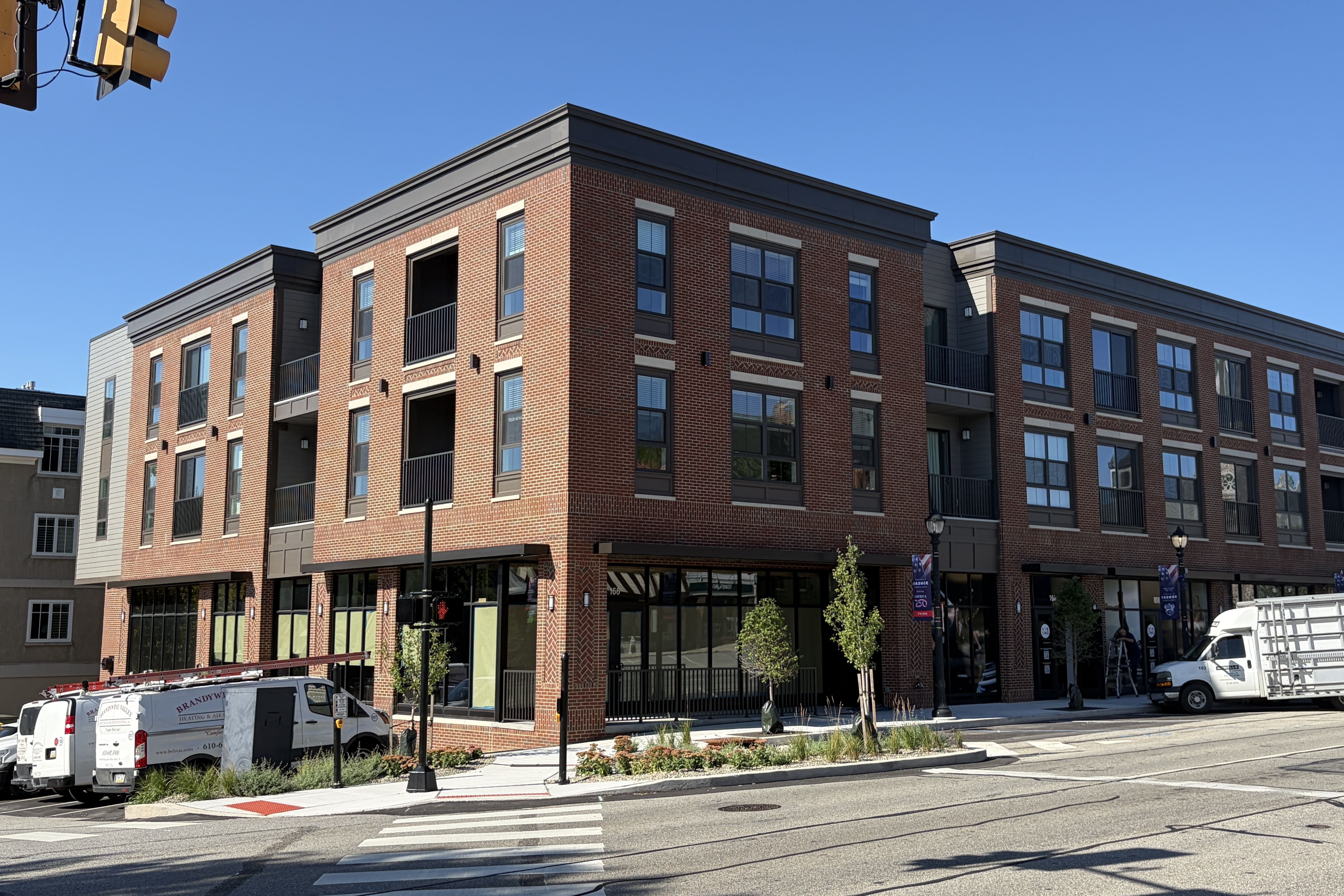
    Old Friend will open a newly built mixed-use development in Wayne. Larry Kagan

    A pair of Harriton High School alums who first met in 1984 when they were students at Welsh Valley Middle School are teaming up to launch a new restaurant — complete with a nod to their longtime friendship.

    Larry Kagan and Chas McFeely plan to open Old Friend this fall in the ground floor of the newly built Apartments at Wayne Station on Lancaster Avenue. The menu will focus on contemporary American cuisine, complete with live-fire cooking. Their mix of dishes will include shareable larger-format proteins.

    It’s the first restaurant venture for the friends, who have tapped Fork and Vernick Food & Drink alum Sam Henzy — who also did a stint at Copenhagen’s famed Noma — to helm the kitchen, as well as Stove & Co. chef-owner Joe Monnich as a consultant.

    The Inquirer’s Michael Klein has the details.

    💡 Community News

    • It’s been just over a month since ticketing for the township’s automated red-light enforcement cameras went into effect, resulting in 663 citations.
    • A “soulful” century-old stone home in Bryn Mawr with four bedrooms and original hardwood floors recently hit the market with an asking price of just under $700,000. Take a look inside.
    • Narberth native Kylie Kelce joined former U.S. Olympian Ilona Maher last week on the first episode of the retired rugby player’s new YouTube fitness show, Power Hour with Ilona Maher. They talked about everything from dating failures to sexism in sports to the Kelce family and what motherhood looks like for her.
    • Lower Merion police arrested two people who were allegedly attempting to break into a home on the 2000 block of Old Gulph Road last week, according to 6abc. A third individual was also involved, police said.
    • The first phase of Narberth’s gas-powered leaf blower ban goes into effect Tuesday. Here’s everything you need to know.
    • Maivie, a chain known for its pressed floral workshops, has opened an Ardmore outpost at 74 Rittenhouse Place.
    • There will be overnight ramp closures from northbound I-476 to westbound I-76 and from westbound I-76 to southbound I-476 tomorrow at 10 p.m. until Saturday at 9 a.m.

    🏫 Schools Briefing

    🍽️ On our Plate

    • Bagels are having a moment — in Philadelphia and nationally — and Lower Merion is no exception. Two spots have opened outposts here recently: PopUp Bagels in Ardmore and Bart’s Bagels in Bala Cynwyd. But is the bagel boom really just a bagel bubble? The Inquirer’s Michael Klein explores.
    • While we knew what rating Barstool Sports founder Dave Portnoy gave Johnny’s Pizza on a recent visit for his “One Bite Pizza Review,” his full take has finally landed. The verdict on the Bryn Mawr (definitely not pronounced “Bawn Mire,” like he thought) joint’s pie? In a word: “Spectacular.” See the full segment here.

    🎳 Things to Do

    🎶 Bryn Mawr Twilight Concerts: Jonatha Brooke, who’s known for blending folk, melodic pop, and rock, headlines this week’s show, along with Nashville singer/songwriter Liz Longley. ⏰ Friday, Aug. 28, 7 p.m. 💵 $25.88, free for kids 12 and under 📍 Bryn Mawr Gazebo

    🔪 JCC Global Cooking Class: Learn to make a traditional Jewish Ukrainian dish during this class. ⏰ Tuesday, Sept. 1, 10-11:30 a.m. 💵 $10 📍 Kaiserman JCC

    🎥 Casablanca: See a screening of the 1942 Humphrey Bogart and Ingrid Bergman classic. ⏰ Tuesday, Sept. 1, 7:15 p.m. 💵 $11.75-$16.25 📍 Bryn Mawr Film Institute

    🏡 On the Market

    A charming six-bedroom Wynnewood Tudor

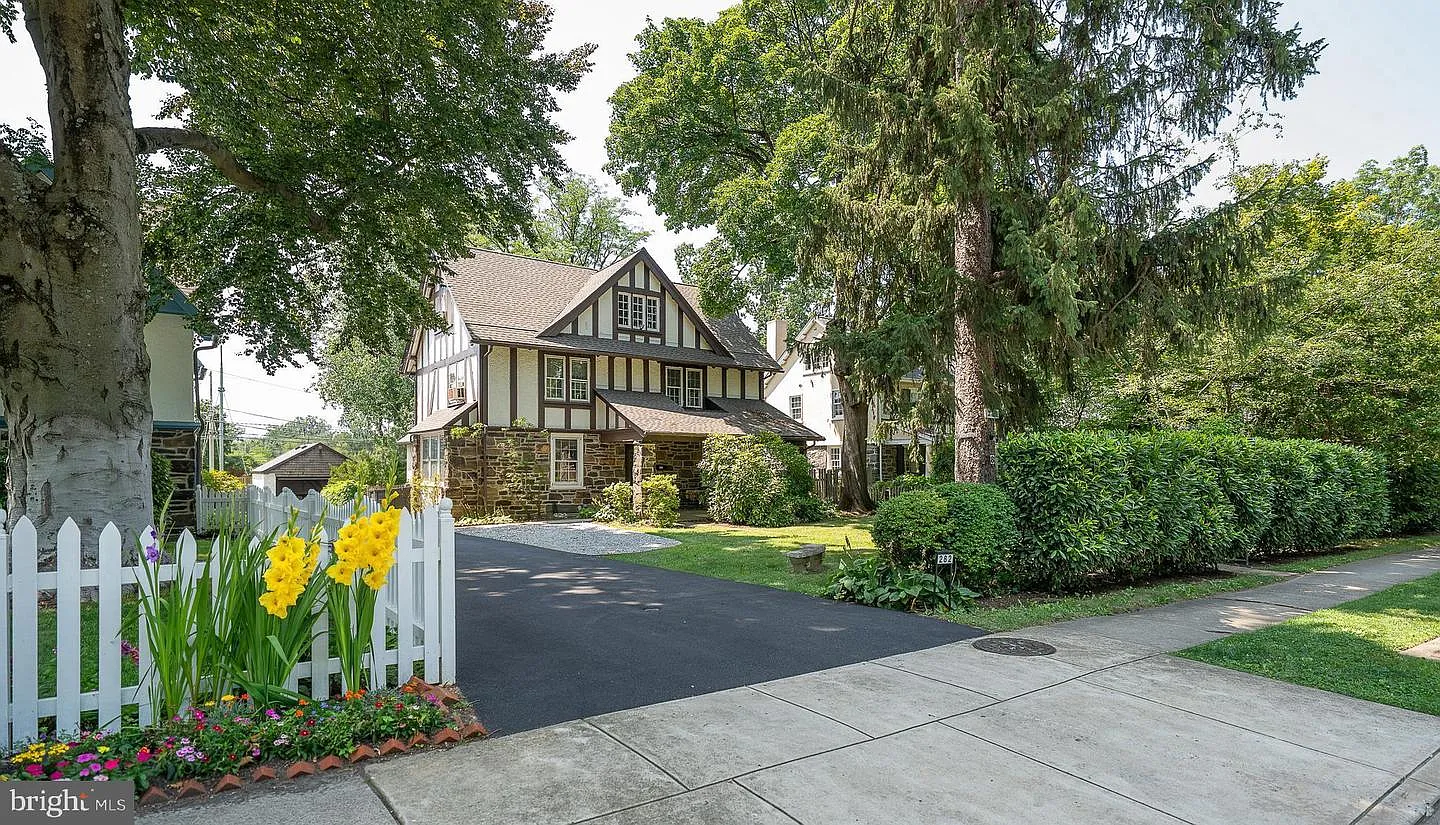
    The home was built in 1900.Dave Ocenas | Courtesy of Bruce Kirkpatrick/ BHHS Fox & Roach

    This Wynnewood Tudor has a classic center hall layout, complete with dining and living rooms off the entry, an eat-in kitchen, a butler’s pantry, and a family room. Its six bedrooms, including a primary suite, are spread across the second and third floors. Out back, there’s a patio and fenced yard, as well as a detached garage. There are open houses tomorrow from 4 to 6 p.m., Saturday from 11 a.m. to 1 p.m., and Sunday from 1 to 3 p.m.

    See more photos of the home here.

    Price: $975,000 | Size: 3,418 SF | Acreage: 0.26

    🗞️ What other Lower Merion residents are reading this week:

    By submitting your written, visual, and/or audio contributions, you agree to The Inquirer’s Terms of Use, including the grant of rights in Section 10.
    This suburban content is produced with support from the Leslie Miller and Richard Worley Foundation and The Lenfest Institute for Journalism. Editorial content is created independently of the project donors. Gifts to support The Inquirer’s high-impact journalism can be made at inquirer.com/donate. A list of Lenfest Institute donors can be found at lenfestinstitute.org/supporters.

  • That ‘curious’ lane switch in the middle of the Manayunk Bridge? Planners say it’s on purpose.

    That ‘curious’ lane switch in the middle of the Manayunk Bridge? Planners say it’s on purpose.

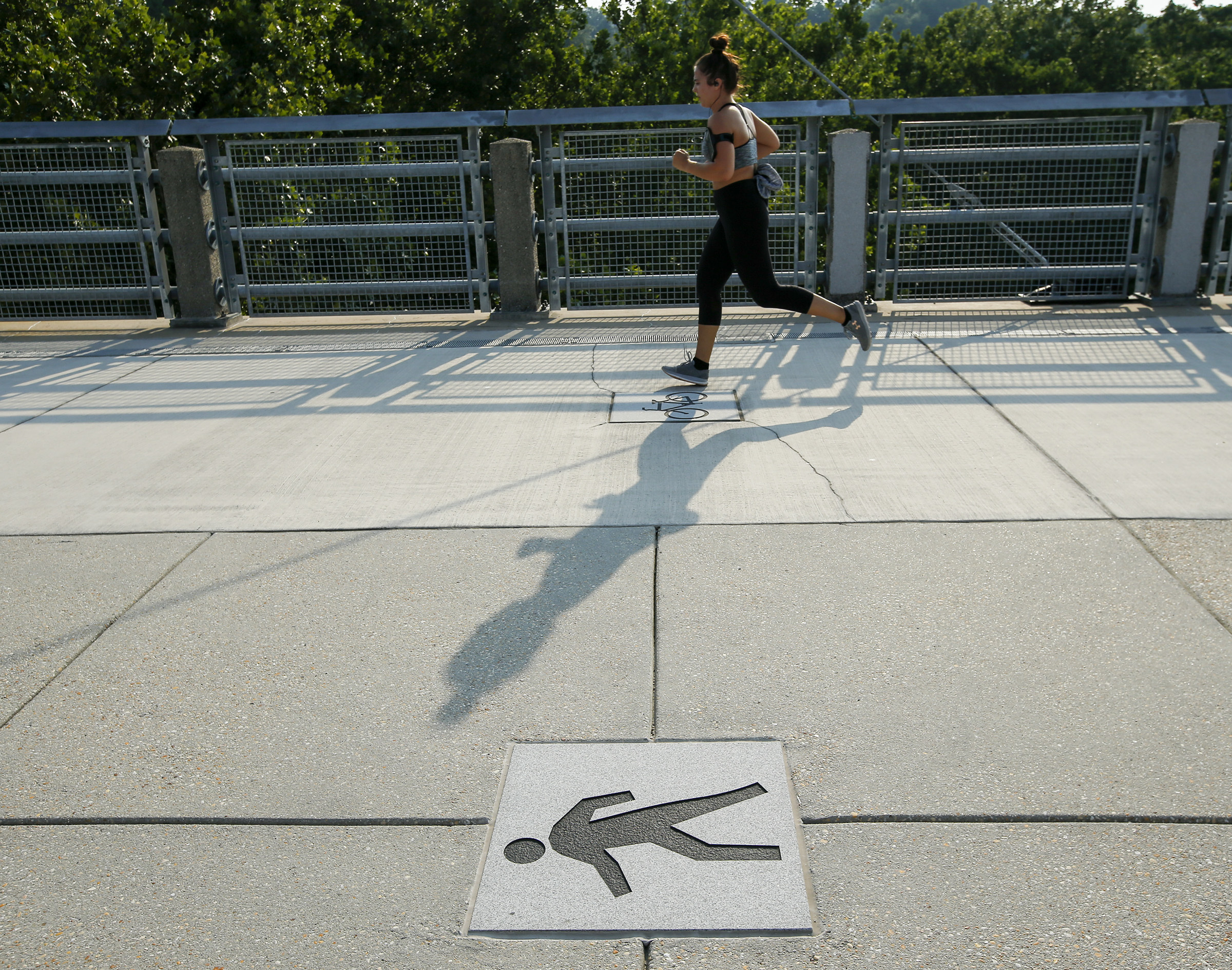
    Towering 80 feet above the Schuylkill and shaped by its colossal concrete arches, the Manayunk Bridge is a key connector in the region’s trail system and a link between Philadelphia and its suburban neighbor, Lower Merion Township.

    While the trail is beloved by city dwellers and suburbanites alike, a mid-trail traffic pattern switch for bikers and pedestrians has confused some users and prompted one reader to write in, asking The Inquirer to investigate. According to city and township officials, the traffic flow switch-up midway across the bridge is no accident.

    The Manayunk Bridge connects Manayunk to Bala Cynwyd. Monica Herndon / Staff Photographer

    The Manayunk Bridge connects the 80-plus mile Schuylkill River Trail with the Cynwyd Heritage Trail, a 2-mile multiuse path that runs along an unused segment of SEPTA tracks in Lower Merion. Much of the trail was once SEPTA’s Ivy Ridge line, which connected Philadelphia with Manayunk via Bala Cynwyd, but was truncated in the 1980s due to poor track conditions. The trail’s completion in 2011, and extension in recent years, has marked a major transformation for the previously underutilized corridor of Bala Cynwyd.

    Penn Valley resident J.J. Cutuli enjoys running and biking with his kids on the Cynwyd Trail.

    “We really love the pedestrian bridge. We really love the trail,” Cutuli said.

    But halfway across the Manayunk Bridge, “there’s this curious little thing that happens,” Cutuli said. The trail’s traffic pattern switches. The bicyclist side becomes the pedestrian side, and vice versa.

    “I’m kind of a rule-follower. One of my kids is a rule-follower, and he asked me that question. He was like, ‘What side should I be on? Should I be on this side? Should I be on that side? What are the rules of the road?’” Cutuli said.

    Unable to summon an answer himself, Cutuli wrote into Curious Lower Merion, The Inquirer’s forum for answering questions about the Lower Merion community.

    » ASK US: Have something you’re wondering about in Lower Merion? Submit your Curious Lower Merion question here.

    Chris Leswing, Lower Merion’s director of building and planning, said the traffic pattern switch was a deliberate choice to slow bikers traversing the downward slope from Lower Merion to Manayunk.

    It’s “easy to speed through areas where people may linger and watch the river” and the “idea was that bikers would need to be aware of the pavement markings to check their speeds,” Leswing said in an email.

    The city concurred.

    The switching of the bike and pedestrian zones was designed to slow bikes down and allow users to “experience both sides of the bridge and the amazing views,” Ra’Chelle Rogers, spokesperson for Philadelphia’s parks and recreation department, said in an email.

    The traffic pattern switch was in response to “what was heard from the public and stakeholders,” according to Rogers.

    Are trail users following the rules? Not completely.

    On one Reddit post, cyclists said the traffic pattern change and accompanying signage “makes zero sense” and “could not be more Looney Toons.” Most cyclists and pedestrians just stay to the right, commenters said.

    This suburban content is produced with support from the Leslie Miller and Richard Worley Foundation and The Lenfest Institute for Journalism. Editorial content is created independently of the project donors. Gifts to support The Inquirer’s high-impact journalism can be made at inquirer.com/donate. A list of Lenfest Institute donors can be found at lenfestinstitute.org/supporters.

  • Biking cross-country to school | Inquirer Greater Media

    Biking cross-country to school | Inquirer Greater Media

    Hi, Greater Media! 👋

    Do you remember how you got to college? For one incoming Swarthmore student, it involved a 2,000-mile journey on bike. We explore why he took the road less traveled. Also this week, six local municipalities are gearing up to decide on a regional emergency medical services authority, Strath Haven High School earns high marks in a national ranking, plus a nearby Italian eatery has closed after less than two years in business.

    If someone forwarded you this email, sign up for free here.

    Why a Swarthmore freshman biked from Colorado to campus

    Finn Fremstad left Colorado in late July on a monthlong trip to Swarthmore College. Courtesy of Finn Fremstad

    As carloads of students and their families make their way to campuses across the nation, one Swarthmore College freshman has taken a different approach to the journey.

    Finn Fremstad spent the past month biking from his hometown of Fort Collins, Colo., to Swarthmore, where he’s slated to start classes next week. A longtime cyclist, the 18-year-old planned the 2,000-mile journey after some of his other summer plans fell through and decided he wanted to see the nation and meet people he wouldn’t otherwise.

    The Inquirer’s Denali Sagner spoke with Fremstad about the experience.

    💡 Community News

    • Six local communities — the boroughs of Media, Rose Valley, Rutledge, and Swarthmore, along with Nether Providence and Upper Providence Townships — are hosting a meeting Wednesday at 7 p.m. at Strath Haven Middle School to discuss a proposed joint regional emergency medical services authority. Here’s what that could look like.
    • Longtime Springfield resident, Springfield School District board member, and Springfield High School hockey coach Phillip Eastman died over the weekend in a vehicle crash. The 68-year-old was remembered as a mentor who helped student athletes “develop teamwork, responsibility, perseverance, and other lifelong skills.”
    • Nemours Children’s Health is planning to open a pediatric urgent care at its Glen Mills location near the intersection of Routes 1 and 202 next month.
    • Media resident Florence Lauria was one of 30 artists featured recently at the second annual Older Artists of PA Showcase. Lauria was recognized in the “artist over 60 living with dementia” category for her watercolor of flowers in a vase. She was the only Delaware County resident selected, and at 100, the oldest, the Daily Times reports.
    • The Walgreens at 51 Baltimore Pike in Glen Mills will permanently close next Thursday. The next closest locations are in Aston and Brookhaven.
    • A pair of sisters recently gave birth just one day apart at Riddle Hospital, delivering down the hall from one another ahead of their due dates, People magazine reports.

    🏫 Schools Briefing

    • Monday is the first day of school for both the Rose Tree Media and Wallingford-Swarthmore School Districts.
    • As measles cases continue to climb in the state — resulting in Pennsylvania’s first related deaths in 35 years — several local elementary schools fell under the 95% measles, mumps, and rubella vaccination rate among kindergarteners in 2025, a figure needed to reach so-called herd immunity. Rose Tree Elementary School had a 91.8% rate, St. Mary Magdalen School was at 93.8%, and the School in Rose Valley had 89.3%. Here’s a look at local vaccination rates.
    • Strath Haven High School earned high marks in the latest U.S. News & World Report rankings of the best public high schools in the state, landing at No. 17. The school came in No. 578 in the nation.

    🍽️ On our Plate

    🎳 Things to Do

    🥾 Full Moon Hike: Adults and teens can hit the trail under a full moon. ⏰ Thursday, Aug. 27, 7:30-9:30 p.m. 💵 $12.75-$20 📍 Tyler Arboretum, Media

    🪴 Pokémon Shadow Box Terrarium: Create a mini living ecosystem fit for Pikachu. ⏰ Saturday, Aug. 29, 5 p.m. 💵 $65 📍 Nimble Craft, Media

    👨‍👩‍👧 Intro to Genealogy Workshop: Learn the basics about tracing your ancestry. Registration is required. ⏰ Tuesday, Sept. 1, 10-11:30 a.m. 💵 Free 📍 Middletown Free Library, Media

    🗞️ What other Greater Media residents are reading this week:

    By submitting your written, visual, and/or audio contributions, you agree to The Inquirer’s Terms of Use, including the grant of rights in Section 10.
    This suburban content is produced with support from the Leslie Miller and Richard Worley Foundation and The Lenfest Institute for Journalism. Editorial content is created independently of the project donors. Gifts to support The Inquirer’s high-impact journalism can be made at inquirer.com/donate. A list of Lenfest Institute donors can be found at lenfestinstitute.org/supporters.

  • New trail connector lets bikers ride 70 miles from Philly to Reading. It’s ‘a really, really big deal.’

    New trail connector lets bikers ride 70 miles from Philly to Reading. It’s ‘a really, really big deal.’

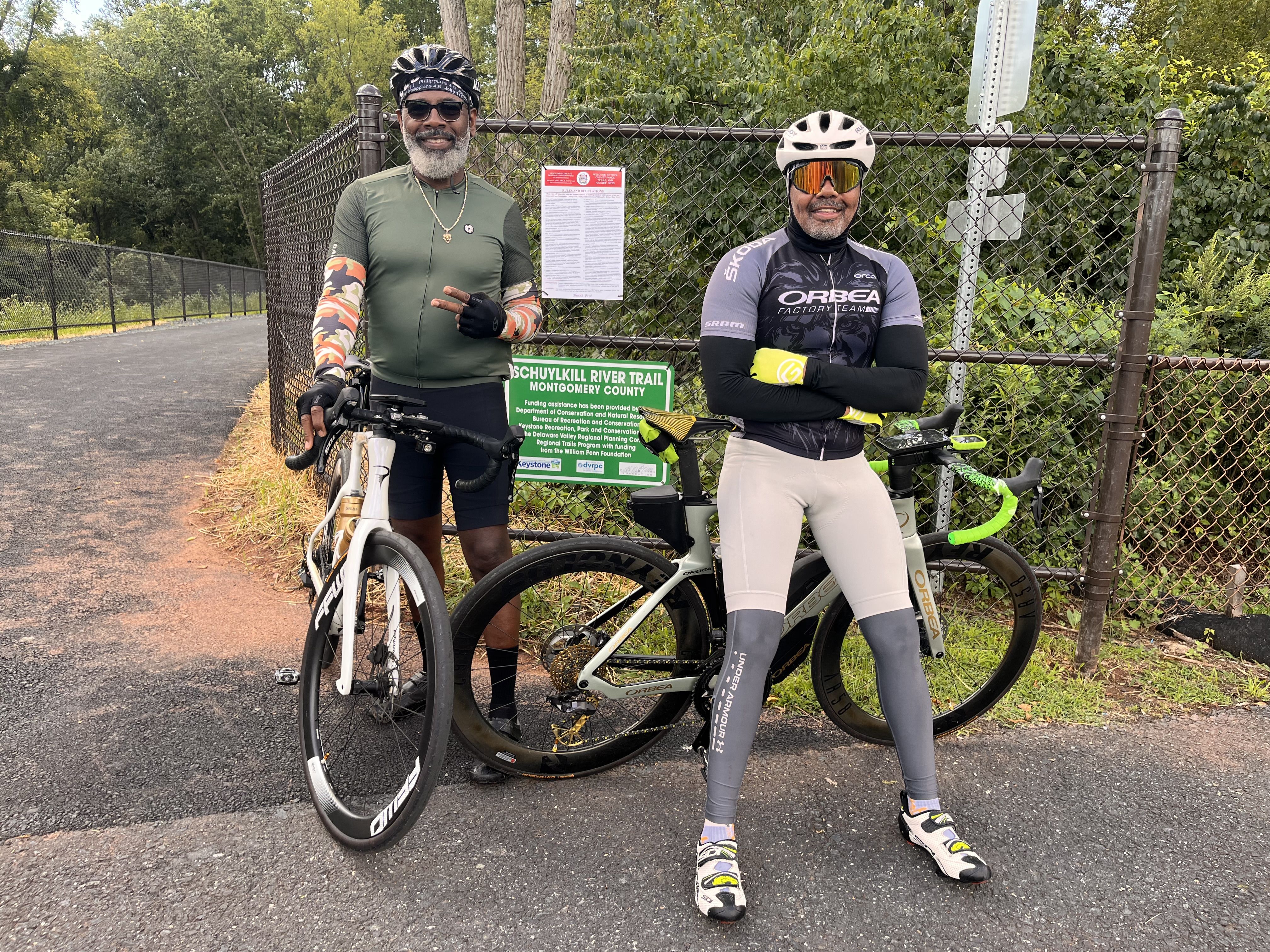
    Cyclists Alvin Morris and Rick Young departed Philadelphia via Shawmont Avenue on the Schuylkill River Trail on Tuesday morning for a heart-pumping, 75-mile round trip ride.

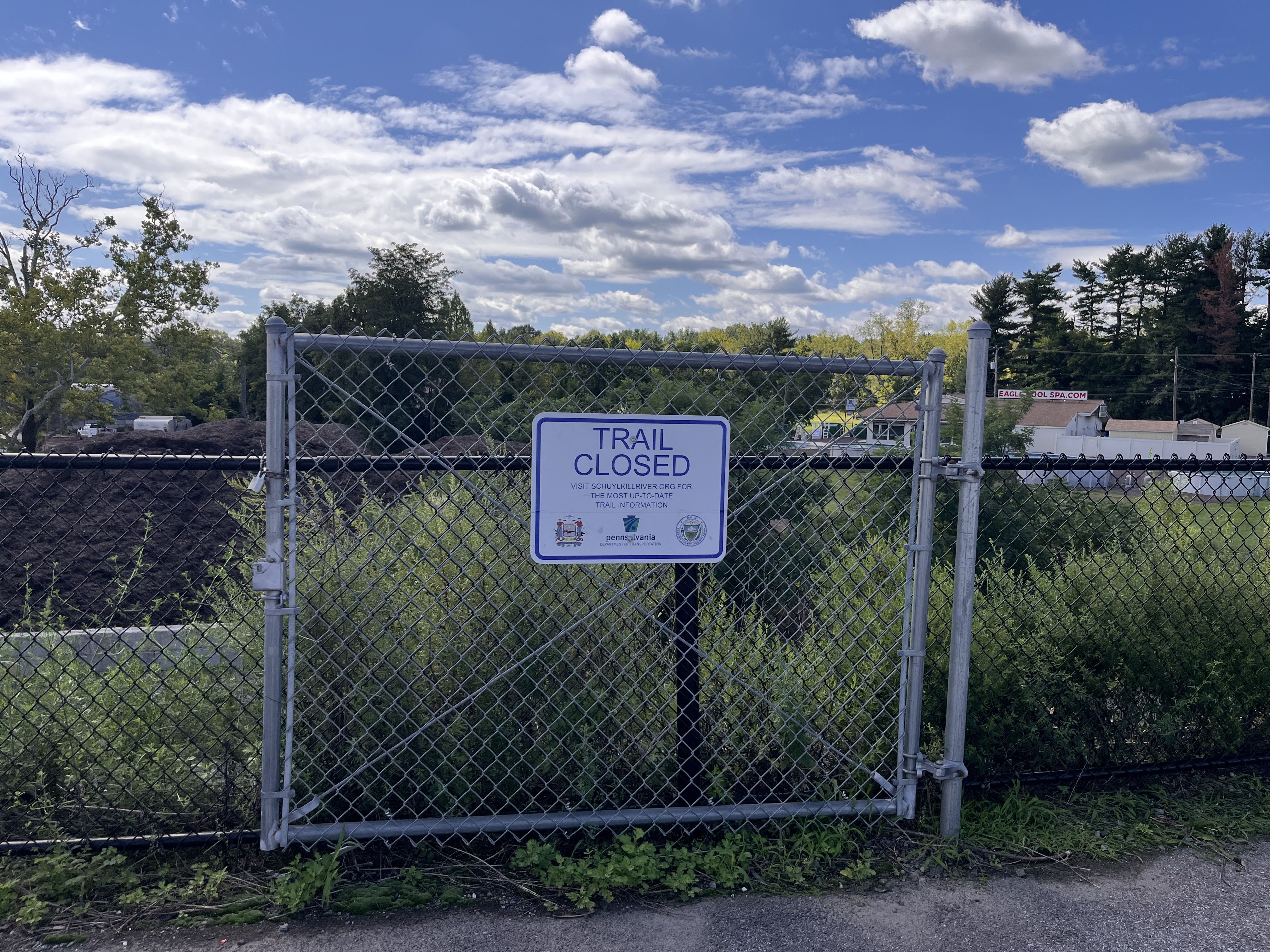
    On previous trips, they, like thousands of other riders, had to stop at a gate where the trail abruptly ended near Pottstown and decide whether to risk traveling a busy alternate route.

    No more.

    Schuylkill River Trail organizers are celebrating the completion of a nearly one-mile connector in Montgomery County that gives cyclists a clear 70-mile path from Philly to Reading. The connector took about 10 years from planning to its Aug. 19 opening.

    “I just found out about the connector Sunday,” Young said. “I love it. I told Al about it. We’re preparing for the [city-to-Shore] MS ride, so we need to get in some distance.”

    The duo planned to continue on the Schuylkill River Trail for a few more miles past the connector before returning to Philly.

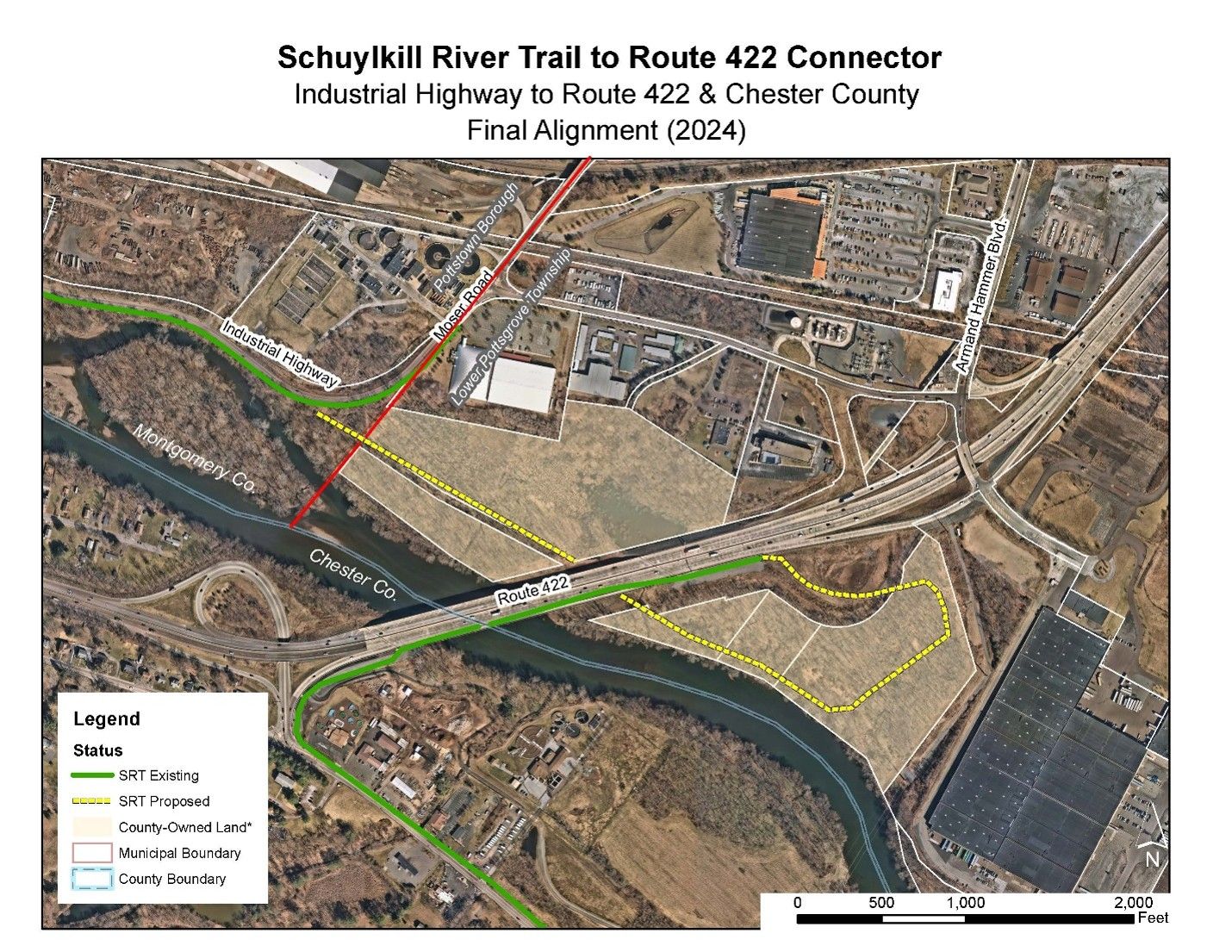
    A Montgomery County Planning Commission map of the new Schuylkill River Trail connection between Industrial Highway and the Route 422 bridge near Pottstown. The 0.9-mile section of paved asphalt trail is now open, providing an unbroken path from South Philadelphia to Reading.Frank Kummer

    ‘A really, really big deal’

    Elaine Paul Schaefer, executive director of the nonprofit Schuylkill River Greenways, says the connector is more than just a new trail segment.

    “It’s a really, really big deal,” Schaefer said. “On many, many levels.”

    Schaefer and others believe the unbroken 70-mile stretch could be a tipping point for cycling tourism because it is long enough for cyclists to plan trips that allow them to linger in towns for brews and food, or overnight stays, she said.

    “At that point, the economic impact to towns along the way really exponentially increases,” she said.

    Her group manages the Schuylkill River Greenways National Heritage Area, connecting people to the river and trail. Schuylkill River Greenways has its office in Pottstown, but manages 40 miles of the trail in Berks and Schuylkill Counties, raising money to help maintain it.

    The new connector allows riders pedaling south from Chester County to ride parallel to Route 422 in Pottsgrove Township, Montgomery County, then loop under the busy highway and continue into Pottstown Borough.

    “The trail now connects the population centers of Philadelphia to Montgomery County and Reading,” Schaefer said. “Soon, it will connect beyond that.”

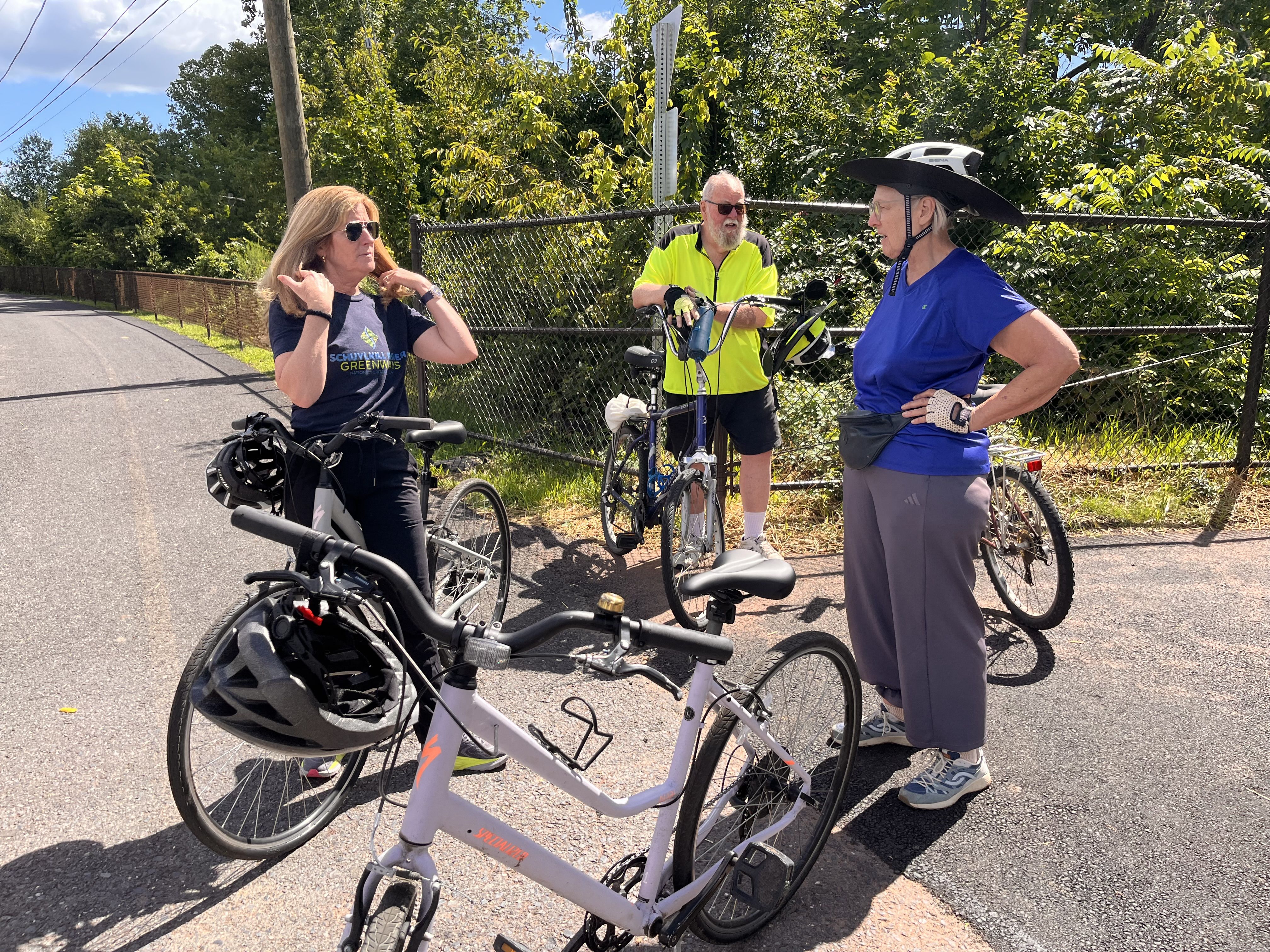
    Elaine Paul Schaefer, executive director of the nonprofit Schuylkill River Greenways, speaks with Sue Shellman, foreground, and her husband, Bill Shellman, in yellow, both of Skippack, at the new connector.Frank Kummer

    A boost for Pottstown?

    Schaefer believes the new connector will lure cyclists willing to stop and spend money in Pottstown, a former steel town whose sizable downtown contains restaurants, inns, and breweries. Pottstown’s Riverfront Park along the trail is already widely used.

    Peggy Lee-Clark, executive director of the nonprofit Pottstown Area Economic Development Inc., said it is too early to judge the impact of the connector, but there is “excitement.”

    “I think that always any connection for the trail is an economic boost,” she said.

    Commuting workers also use the trail, Lee-Clark noted.

    “The river is an important asset to us, as is the trail,” Lee-Clark said. “The connector is just one more thing that brings people to the area and exposes them to all of the other opportunities here in Pottstown.”

    When complete, the Schuylkill River Trail will run about 120 miles from Fort Mifflin near Philadelphia International Airport to Frackville, Schuylkill County. About 80 miles of paved and crushed stone trail are currently open. A swing bridge connecting Grays Ferry to Bartram’s Garden is nearing completion.

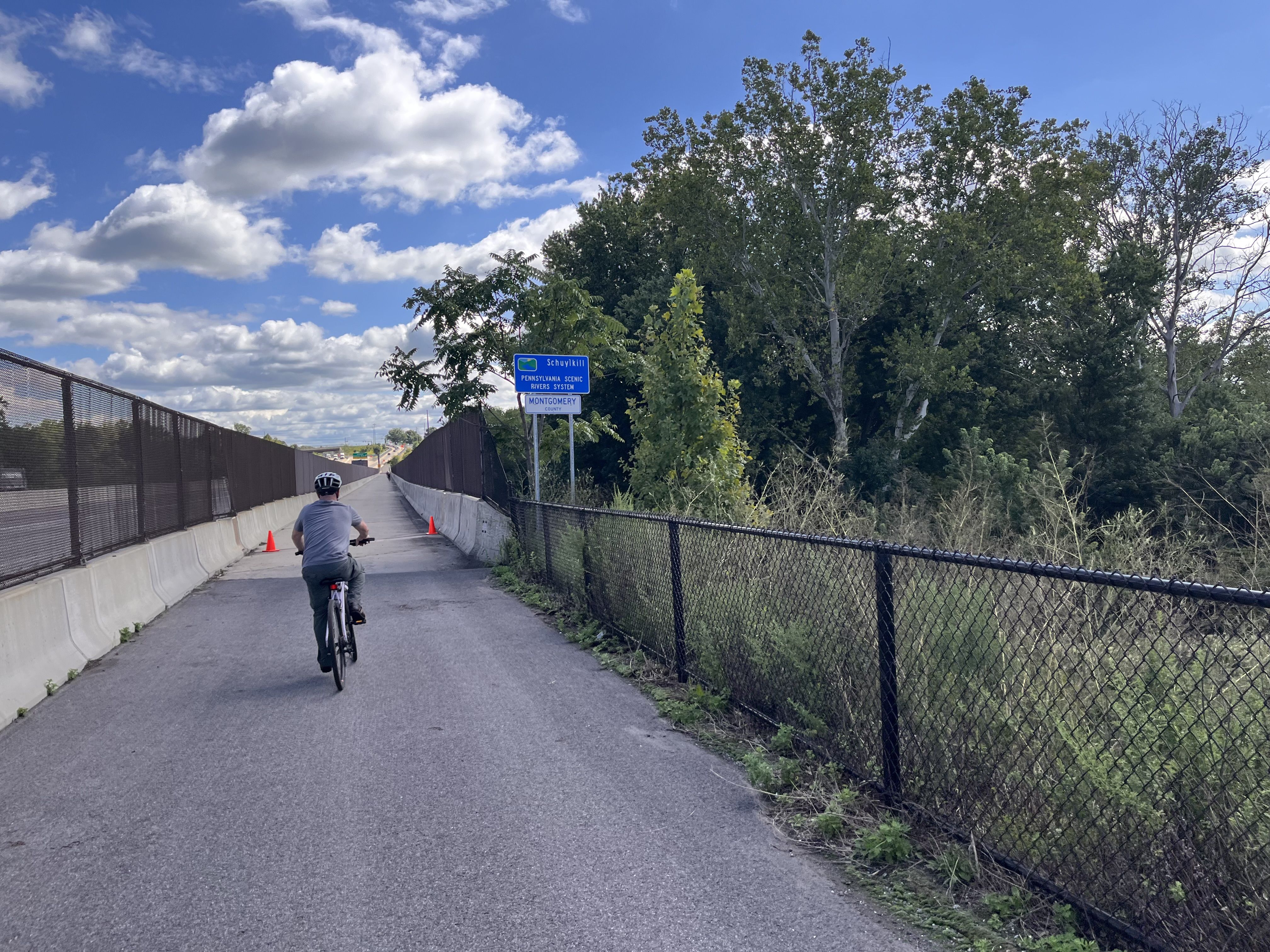
    Jason Brudereck, of the nonprofit Schuylkill River Greenways, rides new the Schuylkill River Trail connector as it crosses from Chester County into Montgomery County.Frank Kummer

    How the connector got built

    Montgomery County is planning a formal ribbon-cutting on Sept. 29 for the connector, which is already popular. On Tuesday, dozens of cyclists were riding at midday.

    Scott France, executive director of the Montgomery County Planning Commission, said the county started trying to acquire rights-of-way to the land a decade ago.

    “We are super excited this is open,” France said. “It’s been a long time in the works. This has had its share of challenges, but the fact is that we got there.”

    The connector cost $1.28 million, France said. Most of it was paid for from a $550,000 grant from the Pennsylvania Department of Conservation and Natural Resources, and a $542,000 grant from the William Penn Foundation. The county funded the balance.

    Although the connector is less than a mile, it was a challenge, France said.

    This is the sign cyclists and pedestrians once had to stop at before the connector was finished.Frank Kummer

    The county had to build around a state-owned bridge, work with Peco and Verizon to move utilities, and obtain permits to build in a flood zone. Additionally, crews had to stop work during the breeding season of the northern red-bellied turtle, a threatened species common in the area.

    Bill Hartman, trails and open space planning manager for the commission, said the connector serves another key role.

    “It provides full access to a number of other trails,” Hartman said, including the Cross County and Perkiomen Trails.

    Further, Montgomery County Commissioner Neil Makhija noted that the connector and Schuylkill River Trail are also part of the much wider Circuit Trails network, a planned 850 miles of interconnected trails in the Philadelphia region, including South Jersey.

    Makhija said he plans to celebrate his 40th birthday on Sept. 13 by riding the inaugural Tour de Montco, a 40-mile ride from Pottstown to Bala Cynwyd.

    The new trail segment, Makhija said is, “not just a trail in the woods — it’s a connection, bringing us closer to Philly and Reading and connecting the two.”

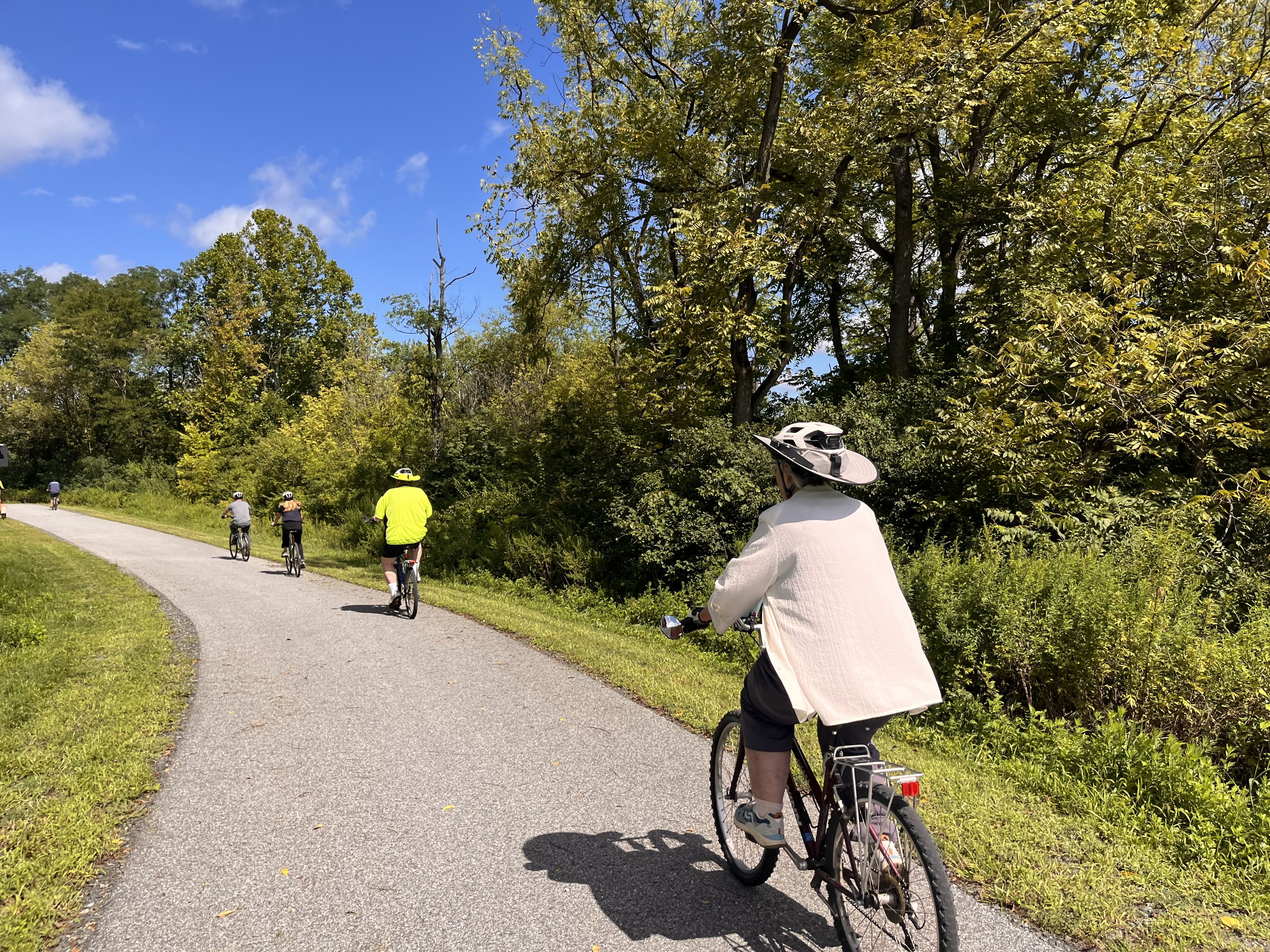
    Sue Shellman, foreground, and her husband, Bill Shellman, in yellow, both of Skippack, ride from Chester County onto the new Schuylkill River Trail connector into Montgomery County.Frank Kummer
  • Pew gives $1.15 million for a greening program in Nicetown and Tioga

    Pew gives $1.15 million for a greening program in Nicetown and Tioga

    The Pew Charitable Trusts has awarded $1.15 million over the next four years to the Pennsylvania Horticultural Society to support the next phase of its greening plan in Philadelphia’s Nicetown and Tioga neighborhoods.

    The grant will continue funding the horticultural project, including placing more plants, trees, and flowers, and programs aimed at building community connections. Those initiatives will include front porch beautification, adding solar lighting, signage, fence improvements, and more in the neighborhoods.

    The funding will also be used to study outcomes from the greening plan, and to continue collecting resident feedback.

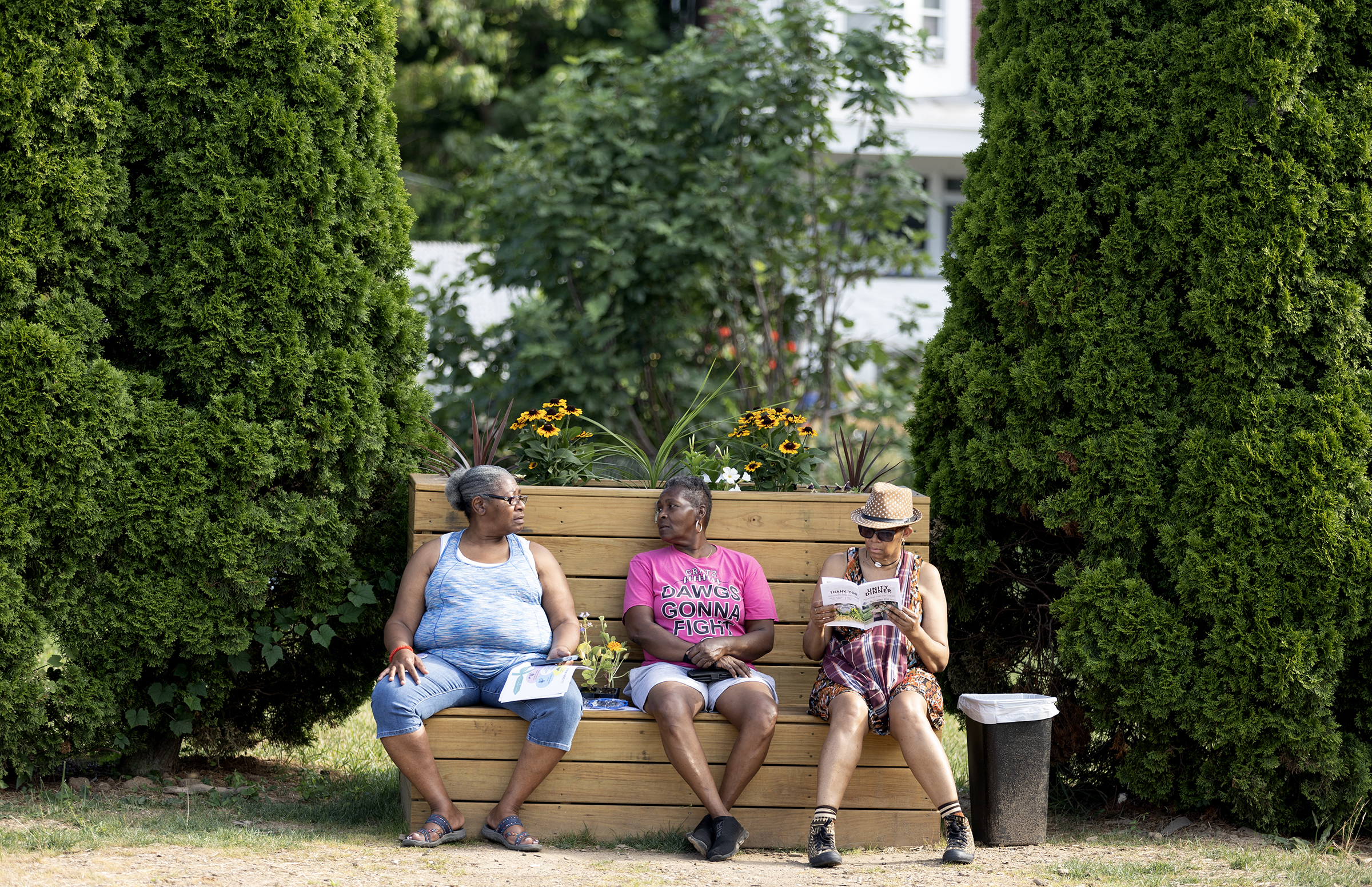
    L-R: Marilyn Berry, Shirley Anderson, and Dr. Renae Norris-Jones relax in the park. Gardeners and community members came out to a unity dinner at Tioga Hope Park and Garden to celebrate green space and push the city’s agricultural plan.Charles Fox / Staff Photographer

    “We believe that Philadelphians need to be able to meet their basic needs, feel safe in their neighborhoods, and have access to public and community spaces and cultural enrichment. Only when these needs are met can people begin to think about gaining skills and finding quality jobs that lead to economic advancement,” said Donna Frisby-Greenwood, Pew’s senior vice president for Philadelphia and scientific advancement in a statement.

    PHS president and CEO Matt Rader said the greening plan began in earnest about a decade ago, when the nonprofit shifted its focus toward using horticulture to influence well-being.

    “Our core thesis, our core strategy as an institution, is to put horticulture to work to transform the social determinants of health, so that everybody yields a healthier life,” he said.

    After researching which Philadelphia neighborhoods could benefit most from a greening plan, in 2019 PHS connected with Nicetown and Tioga residents who were enthusiastic about greening. PHS and community groups Nicetown CDC and Tioga United then collectively engaged with more than 400 residents. Those residents identified reducing trash and crime in the neighborhood and increasing access to healthy food and job opportunities as priorities.

    The groups developed a plan based on how greening could address those concerns. Beginning in 2022, they focused on cleaning and greening vacant lots, restoring the neighborhood tree canopy, supporting residents’ gardening and beautification efforts on their blocks, helping residents get green jobs, and mobilizing neighbors and local businesses to build healthy food access.

    “It’s not really about [greening]. It’s about how it changes the social, economic, and social environment of the neighborhood,” Rader said. He gave the example of the program’s curbside appeal challenge, which was a contest for residents to develop the best gardens and porches in front of their homes.

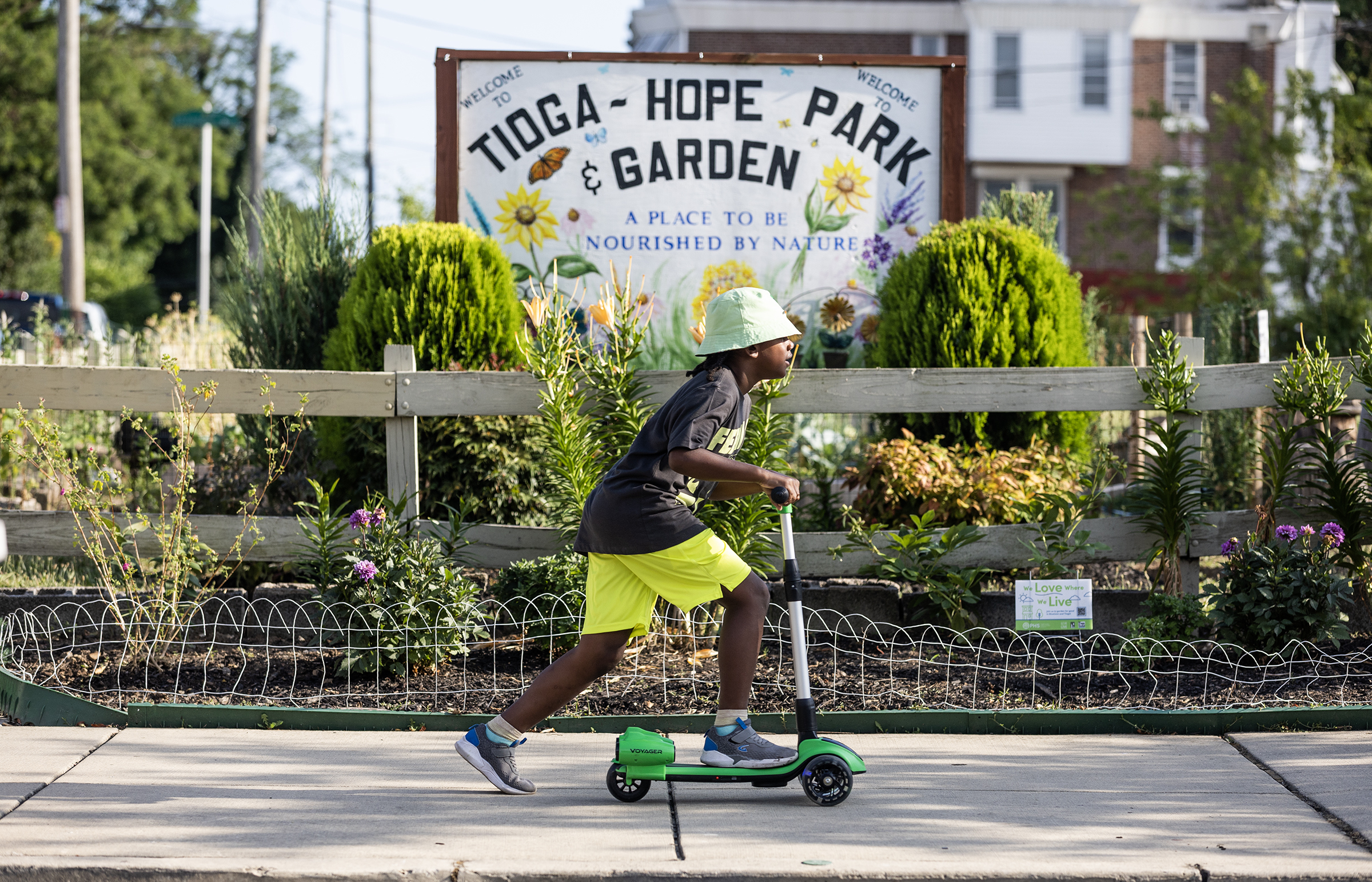
    Dhavon Thomas goes by the Tioga Hope Park and Garden sign on his scooter on June 28, 2024Charles Fox / Staff Photographer

    “You have whole blocks that have organized themselves by participating. … You have people that have gotten to know each other across the neighborhood by trading ideas,” he said. “… It really has helped build a social fabric around gardening and greening.”

    Pew and PHS’s strategy is informed by research that suggests greening and connective programming can have wide-ranging benefits, from reducing violence to improving neighborhood mental health and sense of community. A 2018 University of Pennsylvania study found a 29% reduction in gun violence in Philadelphia neighborhoods below the poverty line where vacant land was restored or greened.

    Rader said it was critical to build sustainability and longevity for the social and greening impacts. Far too often, he said, nonprofit programming drives positive change that gets eroded as the formal programs end and the funding stops.

    “We approach this as a long-term investment in Nicetown and Tioga, to support the residents there to do what they want,” he said.

    Estelle Vaughn, 63, lives in the same Tioga home her parents carried her into as a baby. Her mother and their neighbors always maintained some kind of garden along West Tioga Street, but she never got very involved herself until her son was playing baseball at a field across the street, where she noticed there were some underutilized garden planters.

    “I’m kind of fidgety, so I was like, well, we got to make this park look good,” she said, and began planting flowers.

    Two youngsters pick berries off of a bush in the Tioga Hope Park and Garden on June 28, 2024.Charles Fox / Staff Photographer

    Now, she is a member of the Green Team, the community-led steering committee for the greening plan, and an avid gardener. Vaughn said the horticultural society has “been our saviors.” She has appreciated the organization’s willingness to let residents’ concerns drive the plan strategy, particularly since she said she recalls visiting the beautiful horticultural work at the Philadelphia Flower Show over the years, but not feeling like that was something for neighborhoods like hers.

    The program has already made positive changes in Tioga, Vaughn said. When PHS hands out new flowers, pots, and soil, her neighbors are so excited “they’re like children,” she said. When Canadian wildfires worsened Philadelphia’s air quality earlier this year, Vaughn went out into the Tioga Hope Park and Garden that was a focus of the first phase of the plan, and said the air felt cooler and cleaner.

    “I think that people are just generally happier … it brings our communities together,” she said.

  • Philly judge imposes six months of outside supervision for sheriff’s auctions

    Philly judge imposes six months of outside supervision for sheriff’s auctions

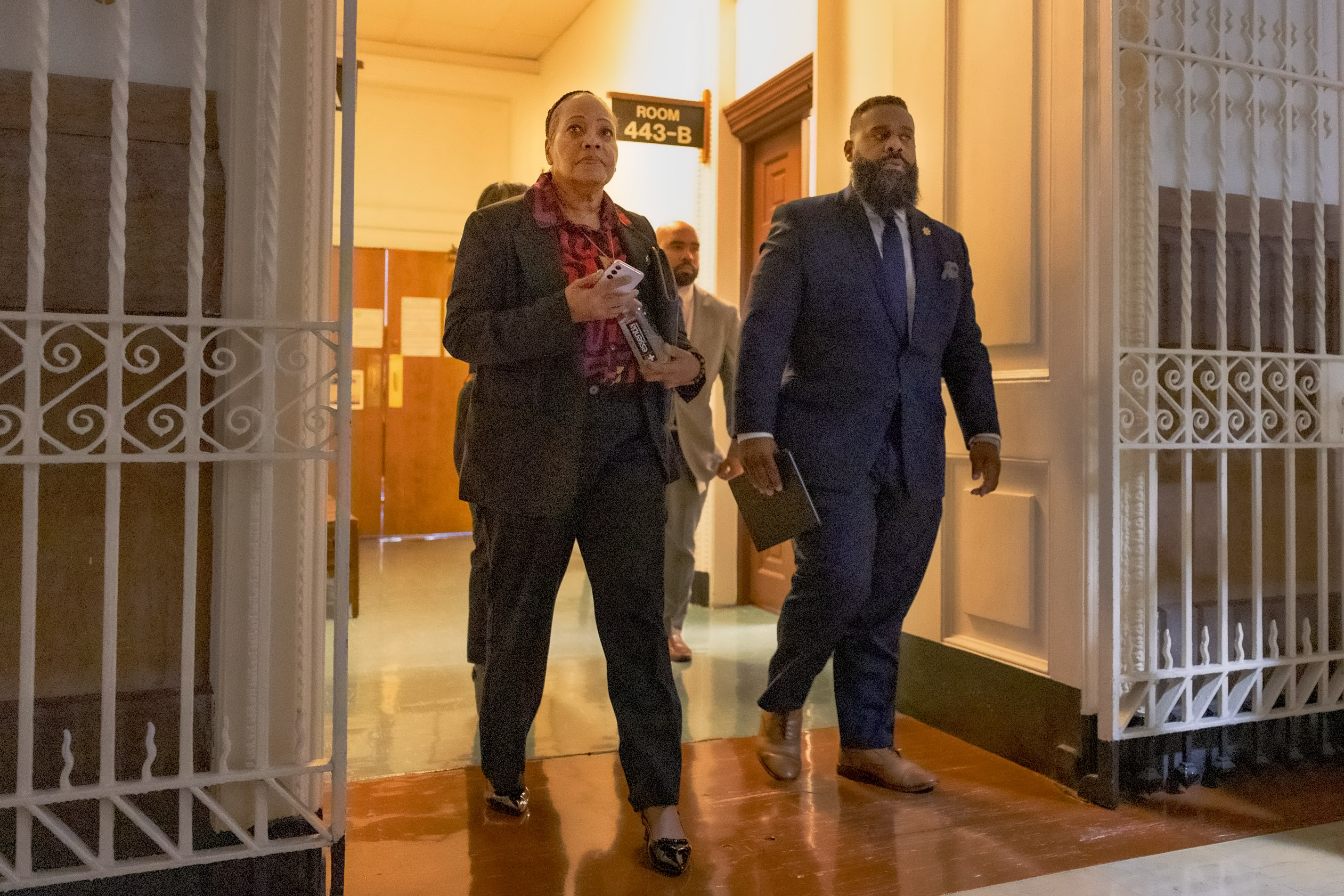
    A Philadelphia judge on Wednesday took the rare step of imposing six months of outside supervision of sheriff sales after years of dysfunction in processing deeds and distributing money from the auctions.

    The decision came after a hearing in City Hall in which a top aide to Sheriff Rochelle Bilal acknowledged withholding thousands of pages of documents the judge had previously requested.

    Common Pleas Court Judge Paula Patrick grilled representatives of Bilal’s office over the surprise revelation, which followed a Monday Inquirer report noting that many of the requested records were missing.

    “My order,” the judge said, “was very specific.”

    Patrick, supervisor of the court’s commerce division, had requested the documents in May and scheduled Wednesday’s hearing following years of complaints about chronic delays in processing deeds and distributing funds from sheriff sales.

    Since at least mid-2024, winning bidders at property auctions have been paying the sheriff, then waiting a year or more for the office to process deeds of sale.

    The courts have been bombarded with petitions for those deeds, which prompted Patrick to take action. She required Bilal to produce, among other things, “a detailed accounting of all sales proceeds received and disbursed” since she took office in January 2020.

    In July, the office submitted thousands of pages of records to an official court docket along with a statement indicating it had resolved many of the deed delays and complied with all terms of the order.

    When The Inquirer asked Friday why none of the submitted records detailed sale revenues distributed after 2023, Bilal and her staff declined to comment.

    Bilal’s representatives admitted in the hearing Wednesday that the records were not submitted.

    On Tuesday afternoon, following the publication of The Inquirer’s report, an attorney for Bilal dropped in excess of 5,000 pages of sales records into the court docket.

    Steven Wakefield, a former city tax attorney appointed in June as deputy undersheriff to clean up the troubled sheriff sale process, said in the hearing that his initial representation to the court, based on assurances from staff that all sales had been pulled, “was not accurate.”

    Wakefield said that after the news organization’s inquiry Friday morning, he immediately followed up with staffers about the missing post-2023 sales records.

    “They said, ‘Oh, yeah, we didn’t do that,’” Wakefield recounted.

    It was unclear Wednesday whether all the records from that time period would ever be turned over.

    “Some of the information the court asked for did not exist,” said Jonathan Rardin, an attorney appointed by the city to represent Bilal.

    Later Wednesday afternoon, Bilal’s staff agreed to allow an outside person or group to monitor how auctions are conducted, then report back to the court in six months. The judge did not name the overseer or say when the outside supervision would begin.

    “This is in essence exactly what we were asking for,” said Daniel Bernheim, a lawyer for JSB Property Group, a real estate investment company that filed a lawsuit in March alleging that Bilal had breached the terms of a 2003 consent order requiring the office to issue deeds within 40 days of settlement.

    Bernheim said Patrick’s order will “have somebody independently come in, take a hard look at what’s going on, ask a lot of the questions that still need to be asked, and make recommendations.”

    Bilal, in civilian dress, sat before the judge silently during the hearing and did not respond when asked by an Inquirer reporter for comment.

    After the hearing, Bilal told a group of reporters that she supported the court supervision.

    “It’s better that we come together and make an agreement so we can continue working together and moving forward,” she said. “That’s all it is.”

    Bilal’s attorney had filed a last-minute motion on Friday seeking to protect the sheriff from having to testify at the hearing, writing that it involved “matters outside her unique personal knowledge.” Patrick denied the motion. But, in the end, Bilal was not called to testify.

    The hearing offered other insights into the sheriff’s office, which has struggled in recent years to perform many of its core functions under Bilal.

    Wakefield blamed the deed delays on a single person: Melissa Simpson, Bilal’s former director of real estate. He said Simpson had been manually filing documents and became overwhelmed when auctions picked up in the aftermath of the pandemic.

    In a certification filed last month, Wakefield claimed Bilal was not even aware of the deed backlog.

    “Simpson was telling everyone it was fine,” Wakefield said Wednesday. “One person can’t do the whole job.”

    Simpson could not be reached for comment. But three current sheriff’s office employees, who were not authorized to speak publicly, disputed that Simpson was solely to blame for the problem.

    Even when more staffers were hired, Wakefield said, the office could process only 40 or 50 deeds a day at most.

    Wakefield also said the slow pace of deed filings was eclipsed by even more serious problems with the issuance of legally mandated distribution sheets, which detail how money from each auction is divided.

    “The distribution backlog is worse than the deed backlog,” he said. “There was a period of time where distribution sheets were not being uploaded.”

    Even so, Wakefield presented a picture of an office that has now been reformed. He said it was moving to automate large parts of the deed process.

    However, he acknowledged that despite his July statement to the court that the outstanding backlog had been cleared, there are still some that must be processed.

    Wakefield told the judge that a recently hired staffer, William A. Brownlee Sr., is conducting an audit to find any sales that were inadvertently passed over.

    One real estate agent told The Inquirer last week that he was still waiting on deeds from auctions that occurred in late 2024.

  • Judge denies Minnesota’s bid to compel the extradition of an ICE officer from Texas

    Judge denies Minnesota’s bid to compel the extradition of an ICE officer from Texas

    BROWNSVILLE, Texas — A federal judge on Wednesday refused to order Texas to extradite an Immigration and Customs Enforcement officer charged with shooting a man and lying about it during the immigration crackdown in Minneapolis.

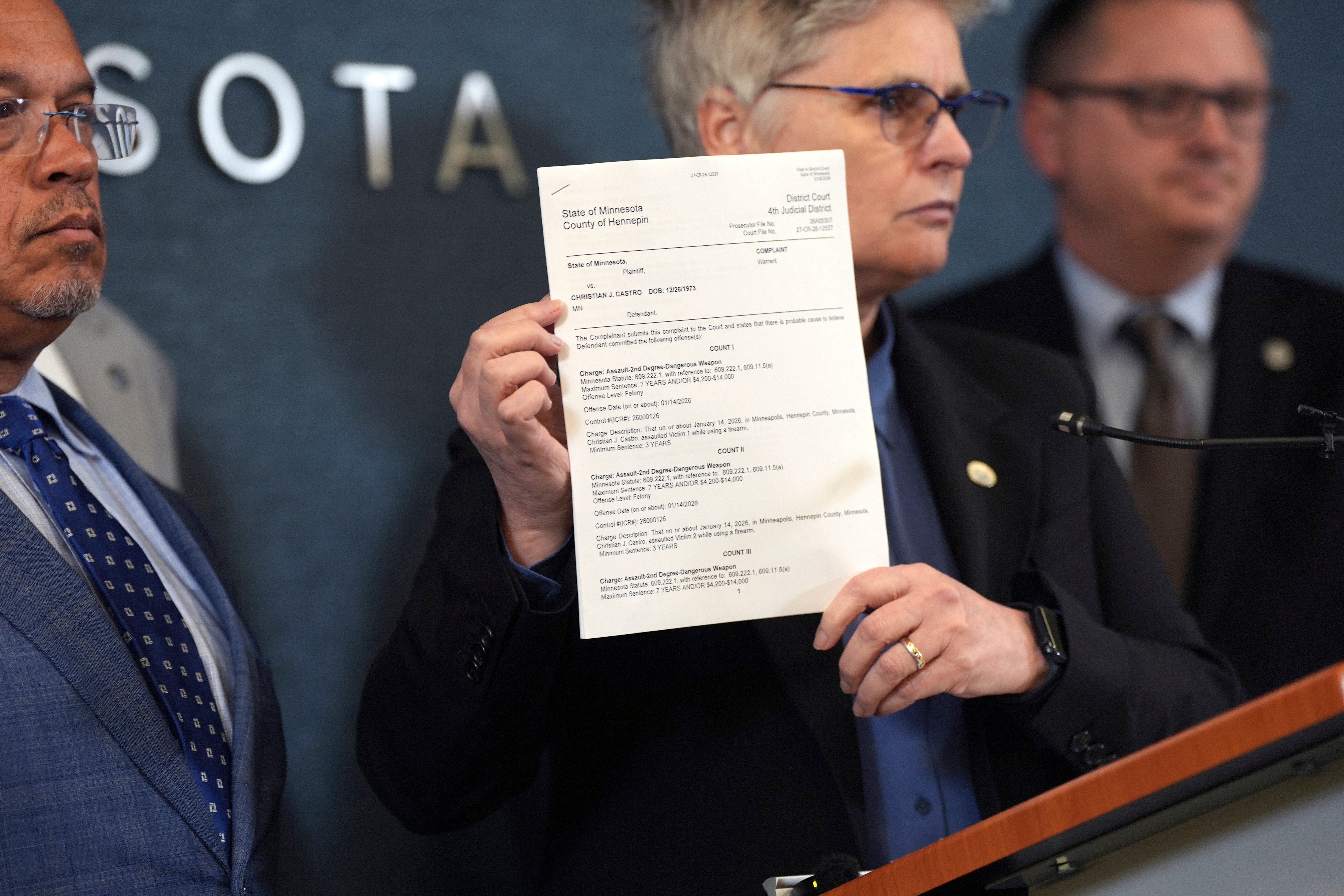
    Christian Castro is charged in Minnesota with assault and falsely reporting a crime in the Jan. 14 shooting of 24-year-old Julio Cesar Sosa-Celis. Minnesota authorities have sought his extradition since his arrest, but he remains in custody in Brownsville, Texas, a city bordering Mexico.

    Under Texas law and barring extradition, Castro must be released after 90 days of detention, which is Thursday.

    Minnesota Attorney General Keith Ellison filed a request for a temporary restraining order last week, asking a federal judge to prevent the sheriff in Cameron County, Texas, from releasing Castro, and to order Texas Gov. Greg Abbott to sign his extradition warrant.

    Minnesota officials believe Castro could flee the country, citing calls he made from jail to a woman in Mexico, talking “about marrying her and buying a house in Mexico when he is released,” according to the lawsuit.

    Castro is accused of firing a gun through the front door of a Minneapolis home, shooting Sosa-Celis in the leg. Prosecutors say Castro also falsely accused Sosa-Celis and another man of attacking an ICE officer with a broom handle and a snow shovel.

    At a federal hearing in Brownsville on Tuesday, attorneys with the Minnesota Attorney General’s Office argued it would be hard to compel Castro to face charges in their state if he is released, and they fear Castro may flee the country, citing his phone conversations with a woman who lives in Mexico.

    Texas Gov. Greg Abbott said last week he would not respond to the extradition request, citing the ongoing investigation into fraud in government social service programs in Minnesota, which President Donald Trump used to justify his immigration crackdown there.

  • Lower Merion has issued more than 600 violations from red-light cameras since mid-July

    Lower Merion has issued more than 600 violations from red-light cameras since mid-July

    Lower Merion’s automated red-light cameras have captured hundreds of violations since they went into effect last month.

    As of Monday, red-light cameras installed at the intersection of Lancaster Avenue and Remington Road had led to 663 citations, according to Andy Block, Lower Merion’s superintendent of police.

    The cameras went live on May 13, kicking off a 60-day warning period before the police department began issuing tickets on July 13.

    Lower Merion’s cameras capture photos and videos of drivers apparently running red lights. Video and photo evidence is sent to the police department, which reviews each case and determines whether to send a citation to the vehicle’s owner. Red-light violations come with a $100 fine and can be contested at an in-person municipal hearing.

    The intersection of Lancaster Avenue and Remington Road was chosen as the first site for the automated red-light enforcement cameras, and officials have said they hope to expand the program to other high-traffic intersections. Other locations being considered for red-light cameras include the intersections of Montgomery Avenue and Airdale Road and of Lancaster Avenue and Haverford Station Road.

    The township has estimated that if cameras are placed at all three high-traffic intersections, around $24 million in annual revenue could be captured initially, with revenue dropping to around $8 million annually as compliance improves.

    The township, however, will not collect revenue from the automated red-light tickets. Collected funds will cover administrative costs, with the rest going to a state fund that supports transportation enhancement projects across Pennsylvania. Municipalities that participate in the automated red-light enforcement program receive priority status when applying for transportation grants from the state.

    The township has stated that the program is, first and foremost, about traffic safety. Residents have long complained of dangerous conditions for drivers and pedestrians traversing the township’s roads. Nearly 3,800 vehicle crashes were reported in Lower Merion between 2019 and 2023.

    Block said in an email that traffic enforcement is a priority for the police department and that using the automated cameras “provides additional safety for our motorists traveling in the township.”

    Under the township’s ordinance, the cameras must be used strictly for red-light violations, not general surveillance. Photo and video evidence taken by red-light cameras must be destroyed within 30 days of a violation being settled and cannot be released under Right to Know requests.

    This suburban content is produced with support from the Leslie Miller and Richard Worley Foundation and The Lenfest Institute for Journalism. Editorial content is created independently of the project donors. Gifts to support The Inquirer’s high-impact journalism can be made at inquirer.com/donate. A list of Lenfest Institute donors can be found at lenfestinstitute.org/supporters.

  • Fire in a hospital nursery kills 14 newborns in Pakistan’s capital

    Fire in a hospital nursery kills 14 newborns in Pakistan’s capital

    ISLAMABAD — A fire triggered by an exploding air conditioner killed 14 newborns in a hospital nursery in Pakistan’s capital on Wednesday, officials said.

    One baby of the 15 who were in the nursery at the Pakistan Institute of Medical Sciences was rescued, the hospital said.

    Television footage showed rescue workers using ladders to reach the third-floor nursery through broken windows. Grieving parents and relatives gathered at the hospital, some weeping while others demanded answers about how the fire began and whether the nursery had adequate firefighting equipment.

    The government has opened an investigation, and Prime Minister Shehbaz Sharif ordered Health Secretary Aslam Ghauri, the Health Ministry’s highest civil servant, to be removed from office.

    A woman who identified herself as Mrs. Mohammad Sami said she gave birth three days earlier and her baby was receiving intensive care in the nursery when the fire broke out.

    “I don’t know what to say or whom to blame,” she said through tears. “I have lost my child.”

    The fire was confined to the hospital’s nursery

    The fire was confined to the nursery at the institute, which is one of Islamabad’s largest public hospitals. The rest of the facility was unaffected with no other injuries reported, according to hospital officials and witnesses. The blaze was later extinguished, Islamabad Chief Commissioner Suhail Ashraf said.

    It was among Pakistan’s deadliest recent tragedies involving children. In June, 14 schoolchildren were killed when the roof of a tutoring center under construction collapsed in the eastern city of Lahore.

    Health Minister Mustafa Kamal, who confirmed the death toll, told the Geo News channel that he was traveling from Karachi to Islamabad to oversee the investigation.

    Dr. Aneeza Jalil, a hospital spokesperson, said a doctor rescued one baby. She said the bodies of six babies had been handed over to their families, while the remaining bodies would be released soon.

    The government is investigating how the fire started and the response

    The Islamabad district magistrate appointed a fact-finding committee and asked it to submit a report within 24 hours. The panel will investigate the cause of the fire and its spread, determine whether adequate fire-safety measures were in place, and evaluate the emergency response, according to a government order.

    Interior Minister Mohsin Naqvi and Sharif, the prime minister, expressed sorrow over the fire.

    “A tragedy involving children is an irreparable loss,” said Sharif, who held a high-level meeting with officials from relevant agencies hours after the fire.

    President Asif Ali Zardari also offered condolences to the families, describing the deaths as “heartbreaking and an irreparable loss.” He called for those responsible to be brought to justice and urged hospitals to ensure effective fire-safety measures and emergency procedures.