Category: News

  • Congestion pricing, dog beaches, eliminating beach tags: 11 ideas to improve the Shore

    Congestion pricing, dog beaches, eliminating beach tags: 11 ideas to improve the Shore

    The Jersey Shore is like the old joke: Nobody goes there anymore, and also, it’s more crowded than ever.

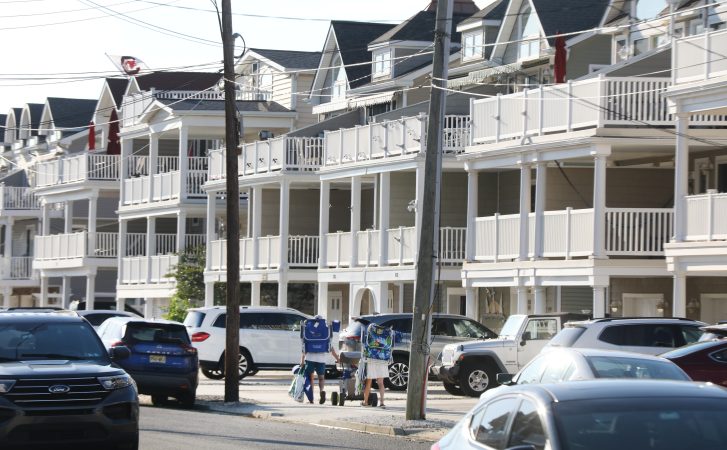
    It is true that many Shore stalwarts have been priced, or annoyed, off the beach. And that towns feel busier and sometimes tenser than ever: more cars, not enough parking, canopy-to-canopy beaches, prohibitive housing costs, that occasional rudeness.

    Not to mention rising sea levels, nuisance flooding, and seemingly regular tornado watches.

    To move from complaining to solutions, we racked our brains, asked experts, and solicited ideas from our readers for ways to improve the Shore experience for everyone.
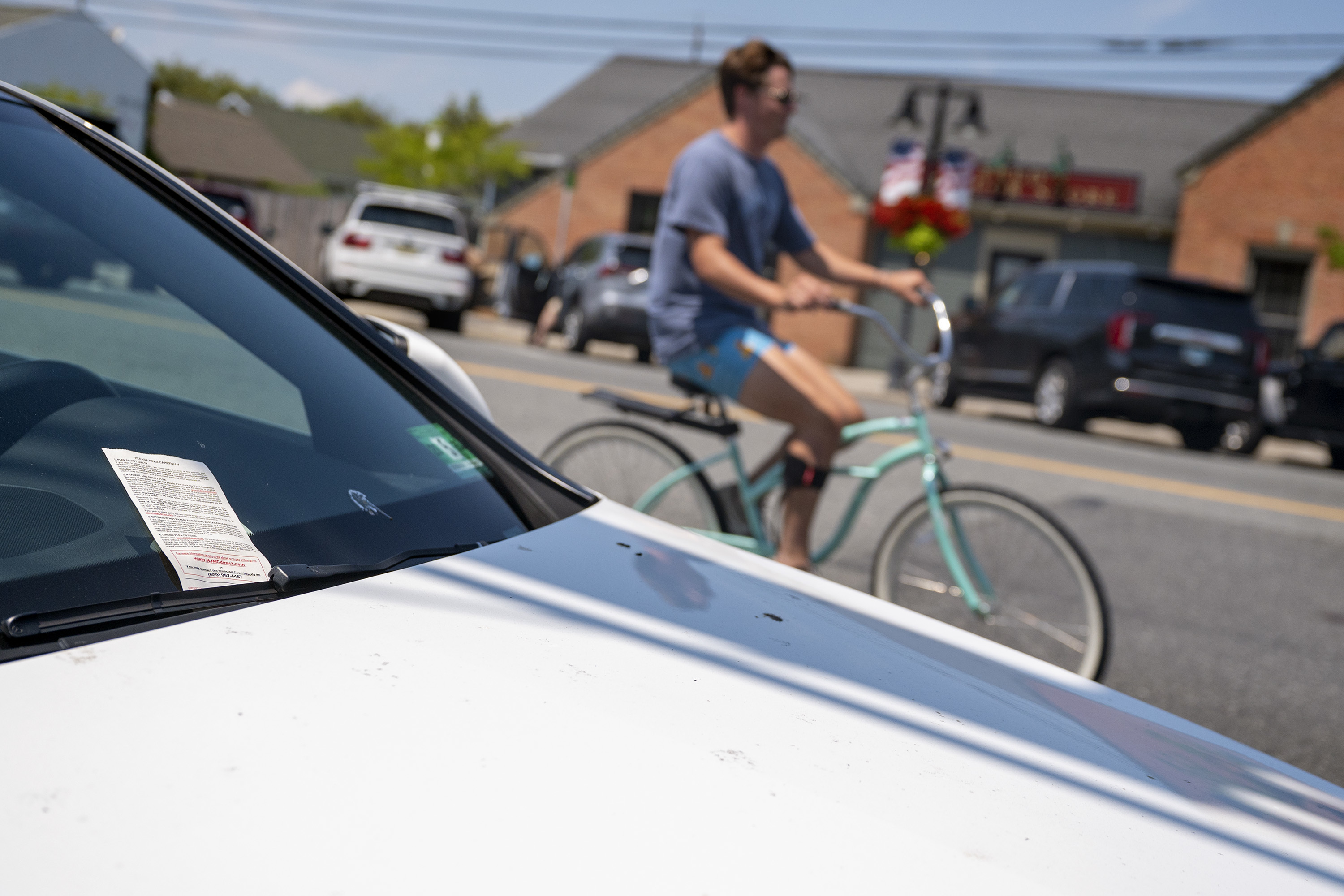
    A car with a parking ticket on 96th Street, the main shopping and dining street in downtown Stone Harbor on July 12, 2023.Tom Gralish / Staff Photographer

    Leave the cars off the island

    So many of the suggestions had to do with reducing traffic and the sheer number of cars in beach towns during the summer.

    Wrote one reader: “We need fewer cars on the island so bikers can safely travel — need to open lots on parkway and run shuttles.”

    This reader proposed giving every homeowner two parking passes. “I live in Sea Isle,” the reader said. “Too many cars.”

    Kara Cumiskey said that tenants brought seven cars to her four-bedroom rental in Ocean City.

    “I think that there should be a ‘beach tag’ for cars,“ Cumiskey wrote to us. “Or some type of ‘congestion pricing’ for bringing your car onto the island. Something that gives people some pause for bringing a car for every person.”

    While a mandatory ban or limit on cars seems unlikely, giving people the option of leaving their cars off the island and shuttling or Jitney Guy-ing into paradise seems like an interesting idea. The golf cart and e-bike rental business would definitely pick up. Fewer turtles would be squashed.
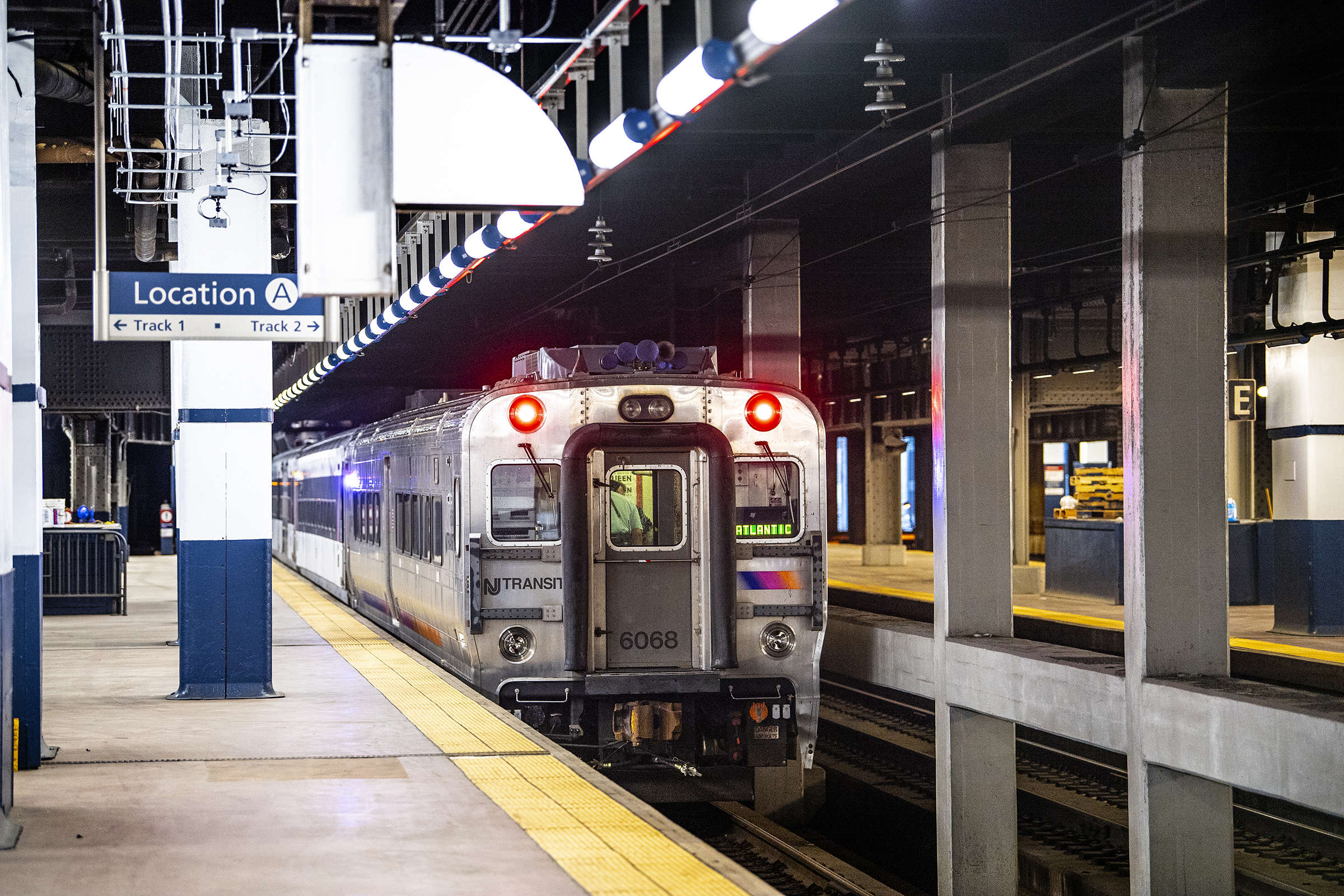
    A NJ Transit train en route to Atlantic City is shown at 30th Street Station in Philadelphia on May 12, 2019.JOSE F. MORENO / Staff Photograp

    We need more trains

    Relatedly, there were calls to increase and improve public transportation to the Shore. The current NJ Transit train is fantastic to take (and from the Shore end, NJ Transit riders can park their car for free at the A.C. Convention Center), but man, is it slow.

    An hour and 34 minutes at best between 30th Street Station and Atlantic City? Two hours between trains? Connections to the PATCO high-speed line only help a little. Still, I’ve noticed a lightness in the steps of the people who get off in Atlantic City with their suitcases and sunglasses. They’re onto something.

    Others noted that train service once ran down to various towns in Cape May County. Wouldn’t that be lovely.

    The Ocean Sands Motel at 3710 Ocean Ave. in Wildwood, N.J., on Tuesday, Jan. 24, 2023.Monica Herndon / Staff Photographer

    Convert old motels to affordable housing

    Ariela Rutbeck-Goldman, senior staff attorney at Fair Share Housing Center, says the Shore’s housing crisis is “increasingly a threat not just to affordability, but to the Shore economy itself.”

    “The Jersey Shore can’t remain a place where the people who work in restaurants, hotels, shops, and other local businesses can’t afford to live,” she said.

    Fair Share says more Shore towns are building affordable housing under the requirements of New Jersey’s affordable housing law.

    Belmar, for instance, is “repurposing dilapidated motels and other underutilized properties to increase their housing supply,” she said.

    “The goal shouldn’t simply be to create “employee housing,” so that workers can make it through the summer,” she said. “The Shore needs enough homes that teachers, nurses, service workers, young families, seniors, and other people who make these communities work can afford to live there year-round.”
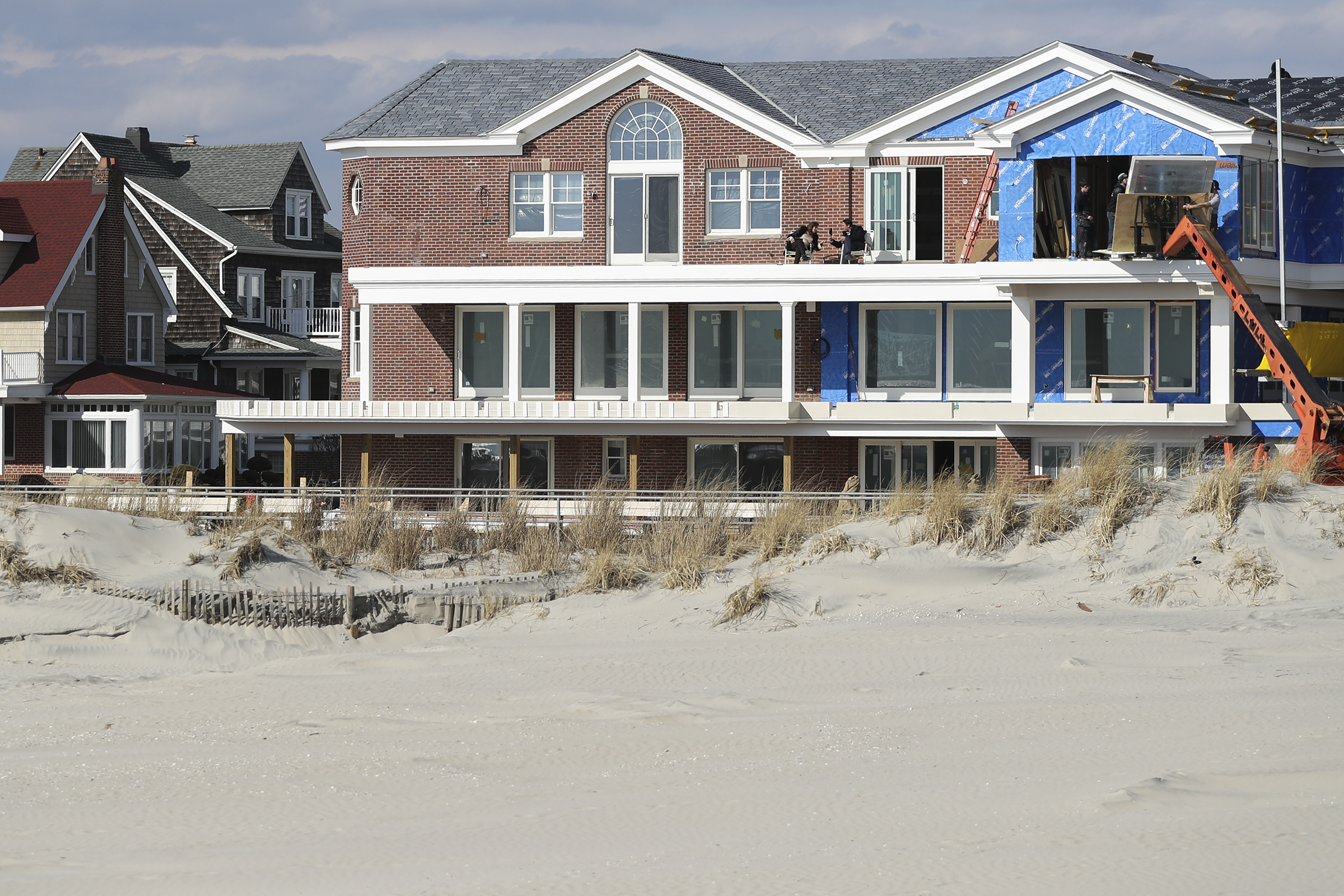
    A shore home is under construction along the boardwalk by the Ventnor City Fishing Pier in the Jersey Shore town of Ventnor City, N.J., on Friday, Jan. 22, 2021.HEATHER KHALIFA / Staff Photographer

    ‘Stop the monster houses’

    As one reader wrote, “Stop the monster houses being built. The charm of the shore is getting bulldozed one lot at a time. These new builds are ugly!”

    Another noted the homogeneity of the new construction, in particular the white boxes with the black roofs and trim. In a lot of Shore towns, this ship has sailed. Sea Isle City, for example, is almost totally built out. But there is some hope for others, where the old Shore houses, whether they are the big turn-of-the-century Dutch colonials or the small ranchers of the Wildwoods, are hanging in there.

    Fair Share Housing is advocating for programs that help nonprofits acquire and preserve older homes to protect housing for year-round residents, as well as expanding tenant protections to prevent evictions.

    “Monmouth Beach, one of the Shore’s wealthiest communities, recently authorized the purchase of a two-bedroom condominium that will be deed-restricted and sold to an income-qualified household,” said Rutbeck-Goldman. “That’s a relatively small investment, but it demonstrates that municipalities don’t have to wait for a large development project to create affordable homes.”
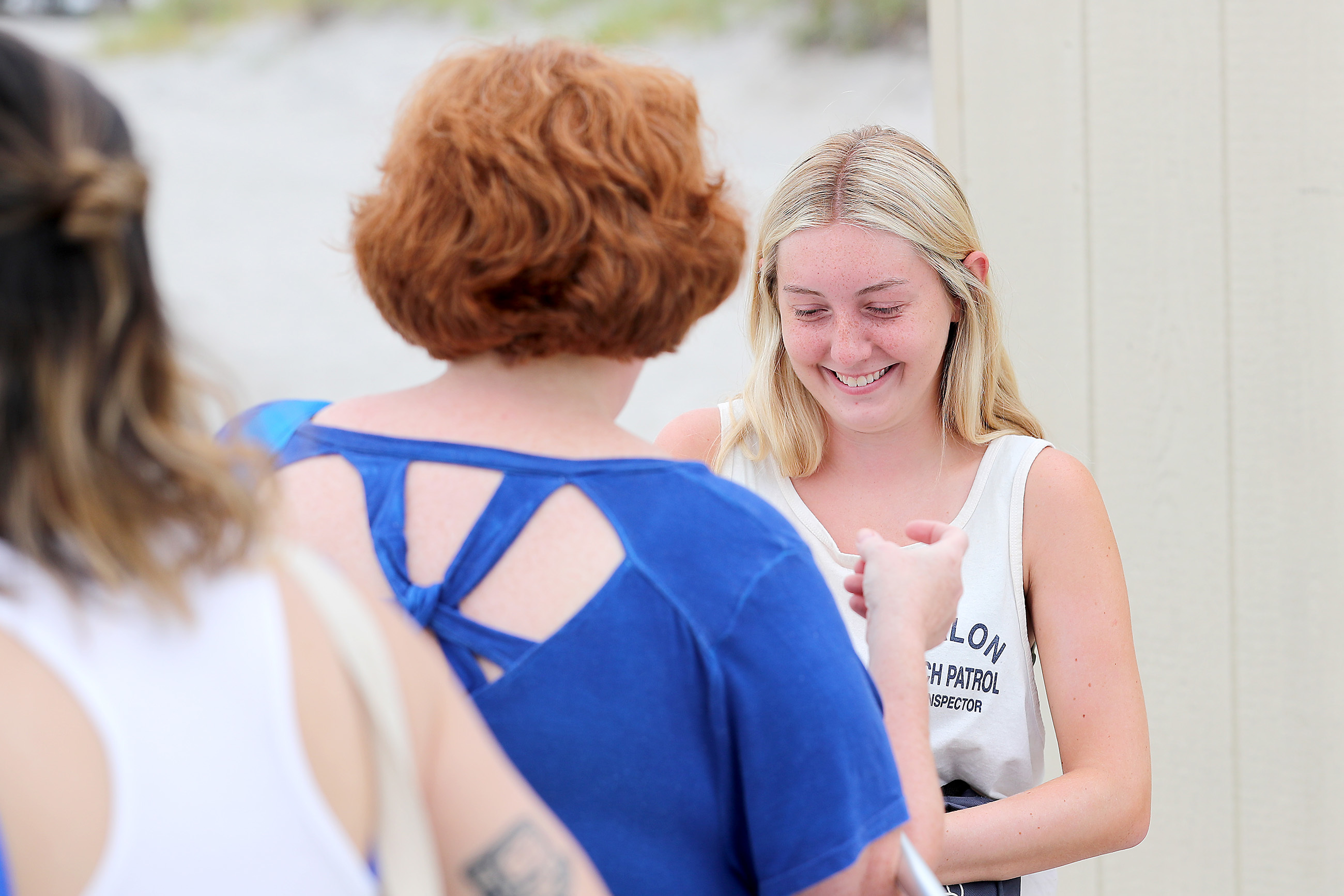
    Shanna Killion, of Northeast Philly, works as a beach tag inspector in Avalon, N.J., on Sunday, Aug. 14, 2022. Killion said among the interesting items she has seen people carrying to the beach was an inflatable bed.DAVID MAIALETTI / Staff Photographer

    Eliminate beach tags (or at least make them reciprocal)

    Lots of people urged New Jersey beach towns to do away with beach tags. Dream on. Strathmere, one of the last three free beaches in the Philly area of the Jersey Shore, just voted to start charging $10 a day, $45 a season, or $30 if you buy a tag before Presidents’ Day. That leaves just Atlantic City and the Wildwoods beach-tag free.

    One interesting idea was to make the beach tags reciprocal to other towns. Some towns, like Ventnor and Margate, do have reciprocity, but readers imagined a Cape May County beach tag, for instance, that would encourage exploring.

    Related, a bill that would require towns to be transparent about where their beach tag revenue is actually going has stalled in the New Jersey legislature.
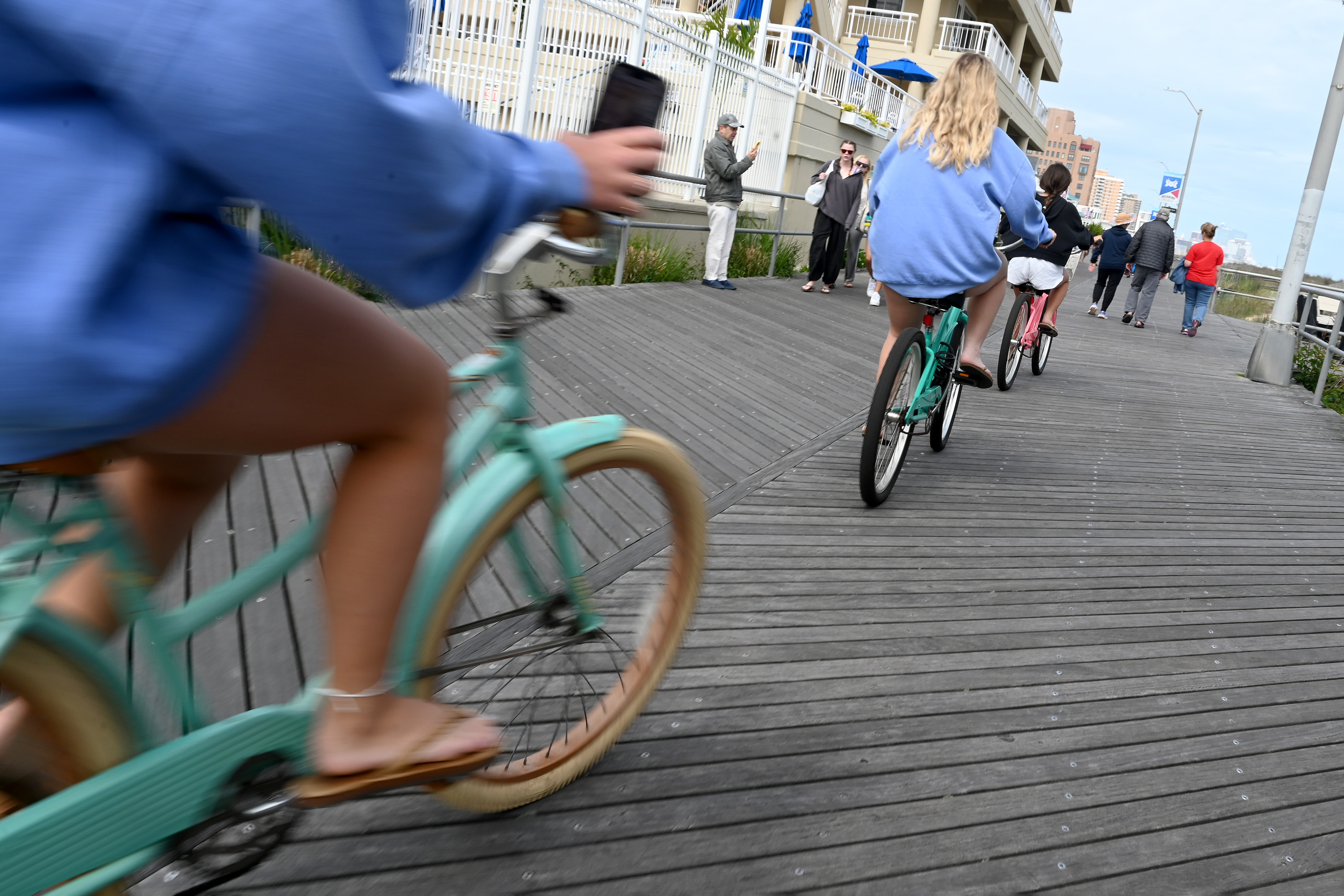
    Bike riders on the promenade boardwalk in Sea Isle City at the Jersey Shore on May 24, 2023.Tom Gralish / Staff Photographer

    Make the Shore better for bikers and pedestrians

    Many towns have expanded bike lanes and redesigned roads to calm traffic. More of this, please! No matter the pedestrian laws, the reality is, it’s still a miracle if the cars stop for you as you start to cross, or if the bike lane isn’t clogged with runners going in the opposite direction.

    Roads one block from the beach should be one lane in each direction, with traffic calming measures like flashing pedestrian lights and bright flags for the pedestrians to carry across. It will require a lot more patience than Jersey is known for. It’s OK! There should be a safe way to commute to jobs by bicycle and return home at night.

    A flight at Behr Brewing in Cape May in 2023.Jenn Ladd / Staff

    Let Ocean City BYOB already

    I know this is not going to happen. But what a wonderful restaurant renaissance might follow! A mini Cape May! As one reader wrote, “I have had a place in OC for 25 years and other than [Ocean City Yacht Club], have never eaten dinner in OC because can’t even have a glass of wine!”

    A backyard with access to the bay, at a Beach Haven, Long Beach Island home on June 13, 2024.Tom Gralish / Staff Photographer

    Embrace ‘coastal naturalization’

    Cindy Zipf, executive director of Clean Ocean Action, worries that the entire Jersey Shore is becoming more high-end resort, less natural coastline.

    Zipf advocates a concept known as “coastal naturalization” and says residents and visitors must rally against the “overdevelopment and citification” of Shore towns. That includes expanding parks with native plants and trees, which Zipf says will increase both quality of life and resilience to storms.

    The Surfrider Foundation has an Ocean Friendly Garden program to help.

    Zipf advocates an end to “the unchecked paving and urbanization that erodes community character while contributing to increased flooding, polluted runoff, and litter.”
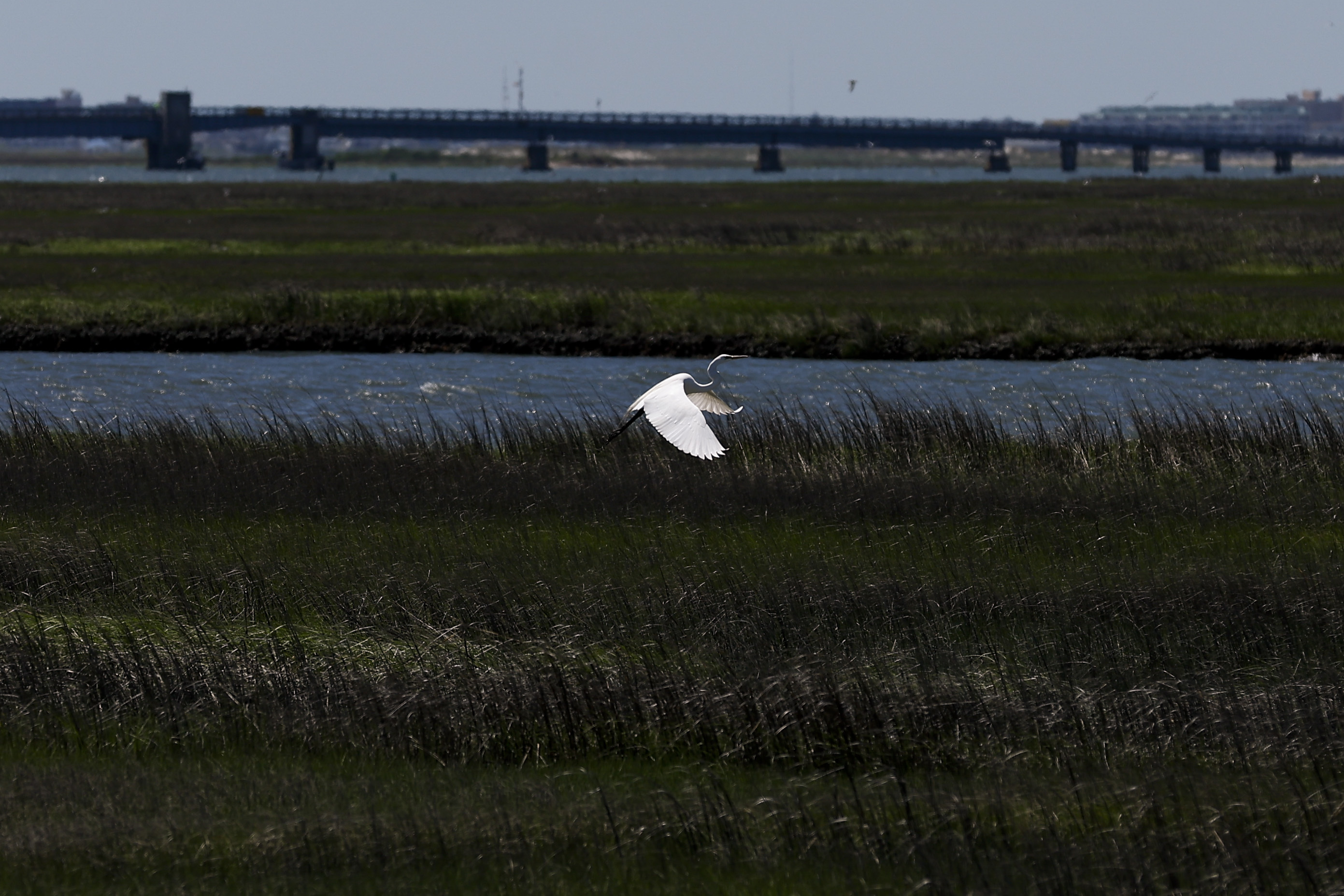
    A snowy egret flies over the salt marsh at the Wetlands Institute on May 19, 2025, in Stone Harbor, N.J. Dredged material was used to raise the height of the marsh in the Scotch Bonnet Island project.Monica Herndon / Staff Photographer

    Increased marsh restoration and flooding mitigation measures

    Speaking of increased flooding: The Wetlands Institute announced that it’s temporarily retreating from its half-century headquarters on the Stone Harbor Causeway to rebuild its trails and building because of increased flooding.

    The institute focuses on coastal resilience and marsh restoration, with nature-based solutions. It is elevating and widening its Salt Marsh Trail and creating a new high marsh designed for diamondback terrapin nesting and coastal birds.

    Lenore Tedesco, the institute’s executive director, says marsh rescue is critical for storm-risk reduction.

    “By elevating the Salt Marsh Trail, we are also creating a barrier to storm waves but unlike many coastal protection features that wall off people and wildlife, we are doing it in a way that benefits marshes and wildlife,” she said.

    The Wetlands Institute is hoping other coastal communities learn from the approach.
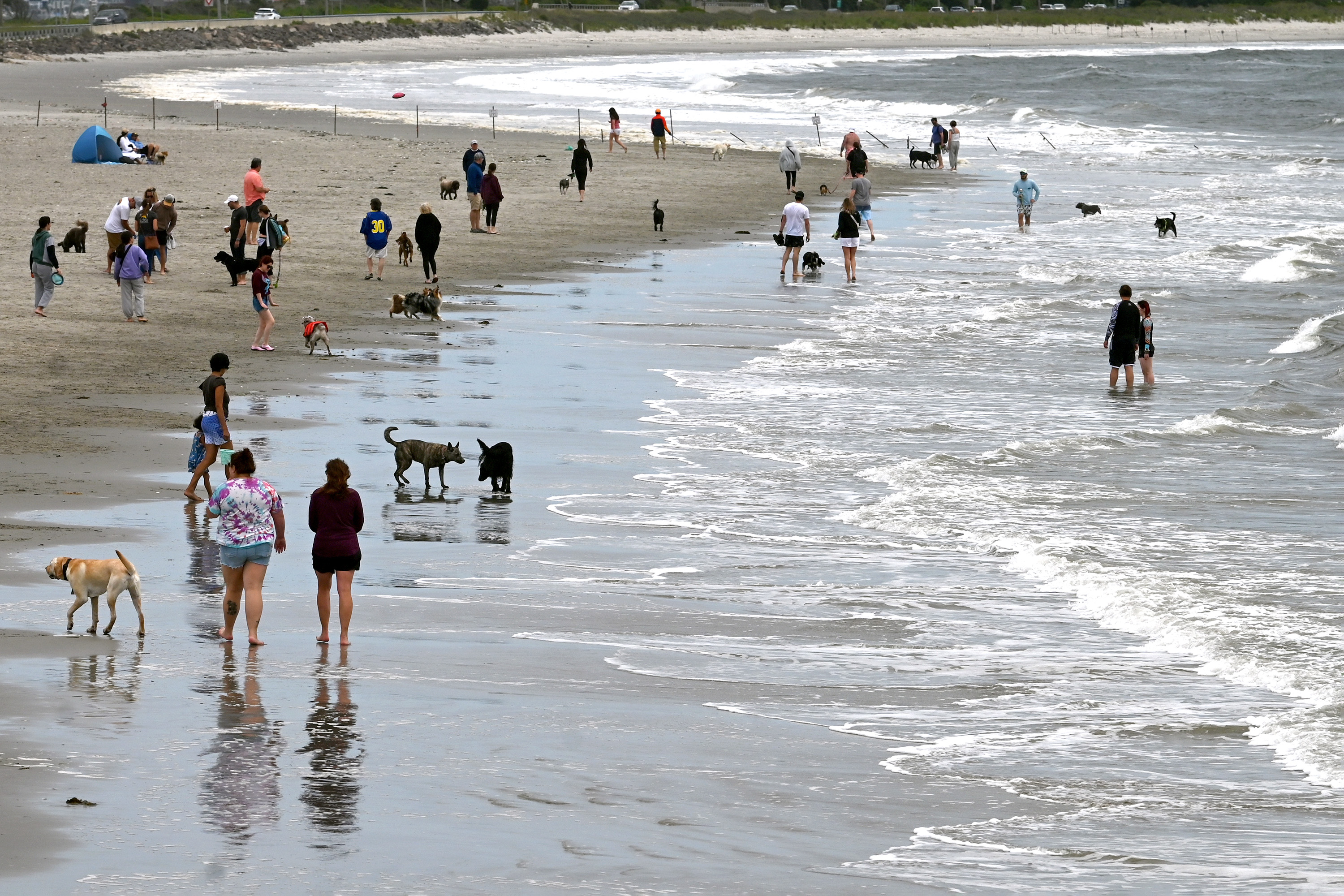
    Dogs and their owners enjoy the sand and water at the Malibu Beach Wildlife Management area in Egg Harbor Township at the Shore during the Memorial Day weekend, on May 28, 2023.Tom Gralish / Staff Photographer

    More dog beaches and dog hours

    Are dogs so bad? What if every town, or every island, had a beach dedicated to dogs and their owners? What if there were dog hours … on the boardwalks? What if all the towns allowed dogs to run free on the beach before, say, 8 a.m. in the summer? As Bob Dylan wrote, “In harmony with the cosmic sea / True love needs no company / It can cure the soul, it can make it whole / If dogs run free.”

    Fans pack the beach for blocks as Phish performs a beach concert in Atlantic City, Friday, Aug. 13, 2021.VERNON OGRODNEK / For The Inquirer

    Fully fund A.C. concerts

    There’s been a welcome uptick in big-name acts booked to A.C.’s estimable Boardwalk Hall, including Shakira, Phish, and Goose (also, Disney on Ice). Rüfüs du Sol performed on the beach this year. But the sophisticated and intimate Thursday night jazz concerts on the Atlantic City Boardwalk only started in August this year. In previous years, this popular tradition ran all summer long. There were a few A.C. beach concerts this summer and a couple jazz nights at Gardener’s Basin, but nothing like in past years.

    On the upside, there is a robust food truck scene at the A.C. Seawall and at O’Donnell Park, and new housing construction projects in places that have long been vacant. And no beach tags. But the city is under increased pressure from expected job losses due to New York casinos. Will Atlantic City put the pieces together?


    Have more ideas? Email us at downtheshore@inquirer.com!
  • The neurologist who led Penn Medicine’s diversity efforts and saw his title changed after Trump came to office has a new role

    The neurologist who led Penn Medicine’s diversity efforts and saw his title changed after Trump came to office has a new role

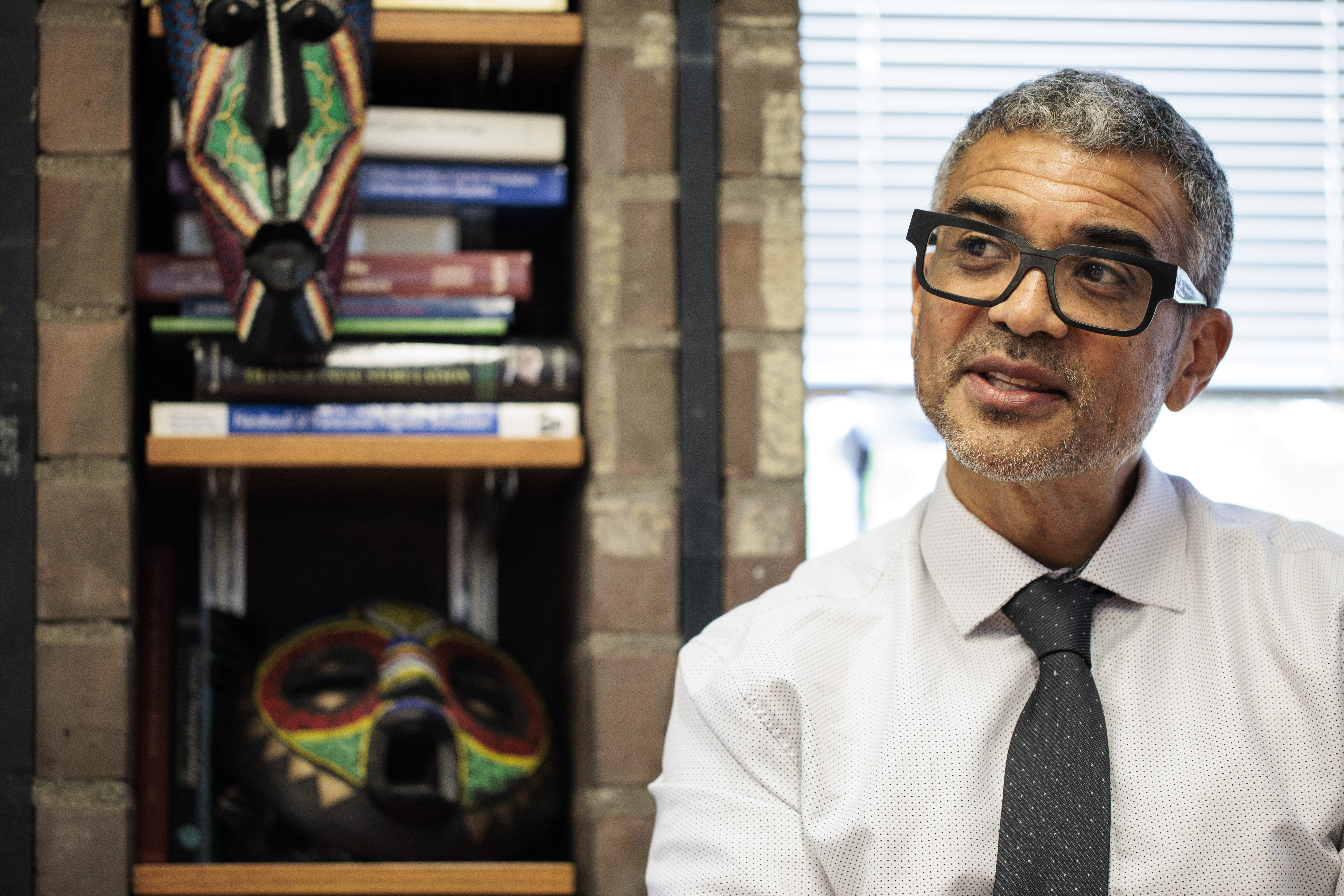
    Roy Hamilton’s varied racial, social, and religious identities helped him in his former role as a chief diversity leader at the University of Pennsylvania — and now they will help him in his new role as chair of Penn’s faculty senate.

    The behavioral neurologist at the Perelman School of Medicine is the son of a Japanese immigrant and an African American. He is married to a white woman who is Jewish, while he was raised as one of Jehovah’s Witnesses and now is a secular humanist. And one of the couple’s children is LGBTQ+; he is an ally. Add to that growing up in a lower middle-class family and learning to navigate an Ivy League education system, first as an undergraduate and then as a medical school student.

    That background has made it easier for him to understand a range of factors in his own life and how they affect his thinking, Hamilton said, and more readily understand where others are coming from and look for common ground.

    Those same skills, he said, will be just as valuable as he steps into a position leading Penn’s faculty senate, the representative body for the school’s approximate 3,000-member standing faculty in a system of shared governance.

    Hamilton said one of his primary goals will be to make the faculty senate representative of the collective views of a vastly diverse staff and foster conversation across those views.

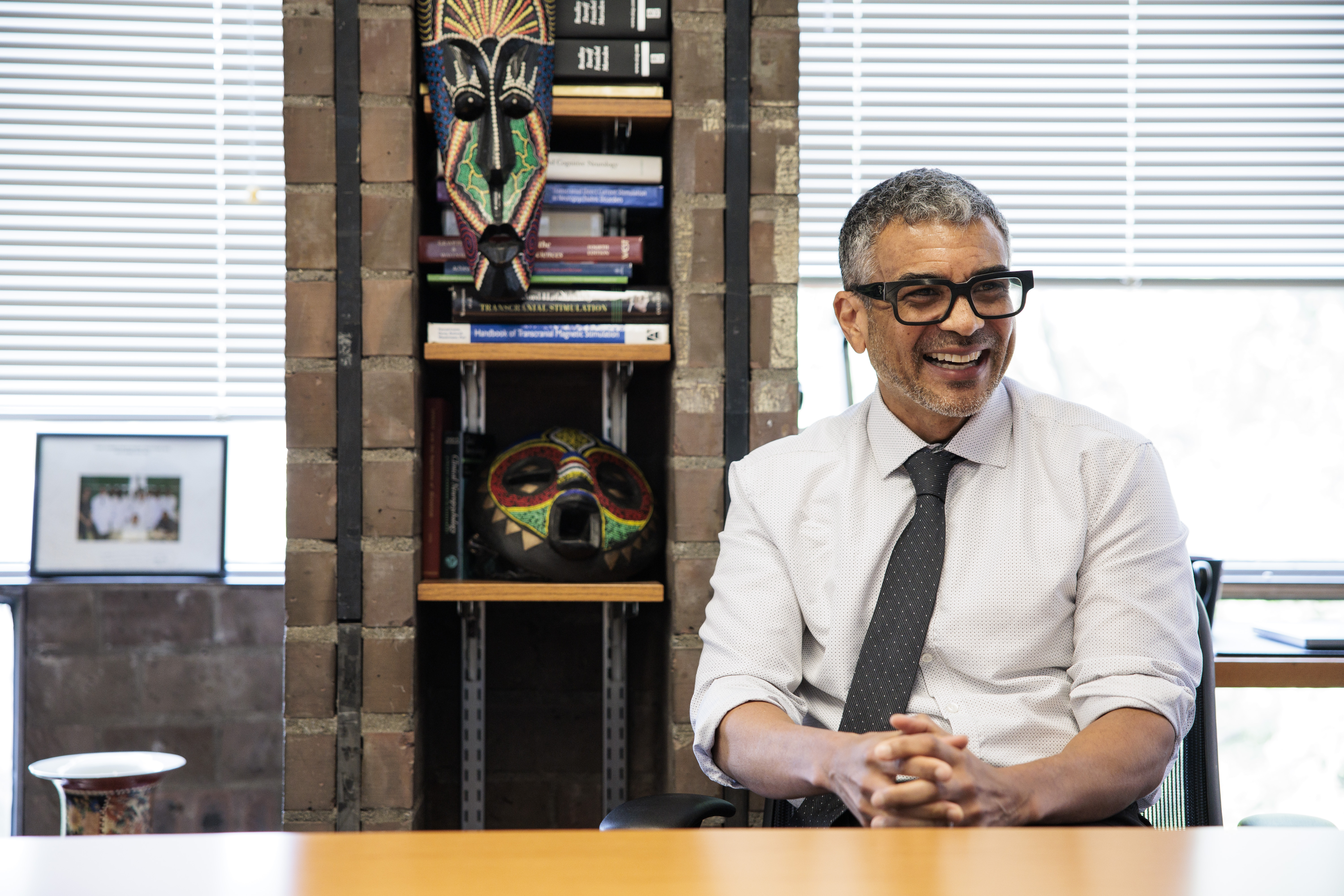
    “It does call for a person who is interested in hearing and honoring a multiplicity of opinions and perspectives and then coming to some kind of collective consensus as to how to act in the face of that,” Hamilton, 53, said during an interview in his office this month.

    “Penn has acted judiciously in a difficult time,” when responding to Trump, said Roy Hamilton, faculty senate chair and a behavioral neurologist at Penn. “It’s trying to thread a needle. Time will tell whether that strategy ultimately pays off.” Monica Herndon / Staff Photographer

    The senate plays a key role on campus discussing issues of faculty concern, making policy recommendations, responding to regular reports of university administrators, and providing oversight on issues that include academic freedom and research policy. And Hamilton, who has spent 24 years at Penn, comes in as chair at a pivotal time. The school is searching for a new president to replace J. Larry Jameson, who will step down next summer, and continuing to operate under the scrutiny of the federal government, which has targeted elite universities. There are ongoing concerns about access to federal research funding, and the school this year plans to adopt new guidelines for open expression on campus that have drawn strong objections from faculty.

    “As Penn confronts the major questions of our time, the Faculty Senate’s contribution is not to provide a single set of answers, but to pursue a constructive process of thoughtful deliberation and principled engagement conducted in good faith,” he said in a message to faculty last week.

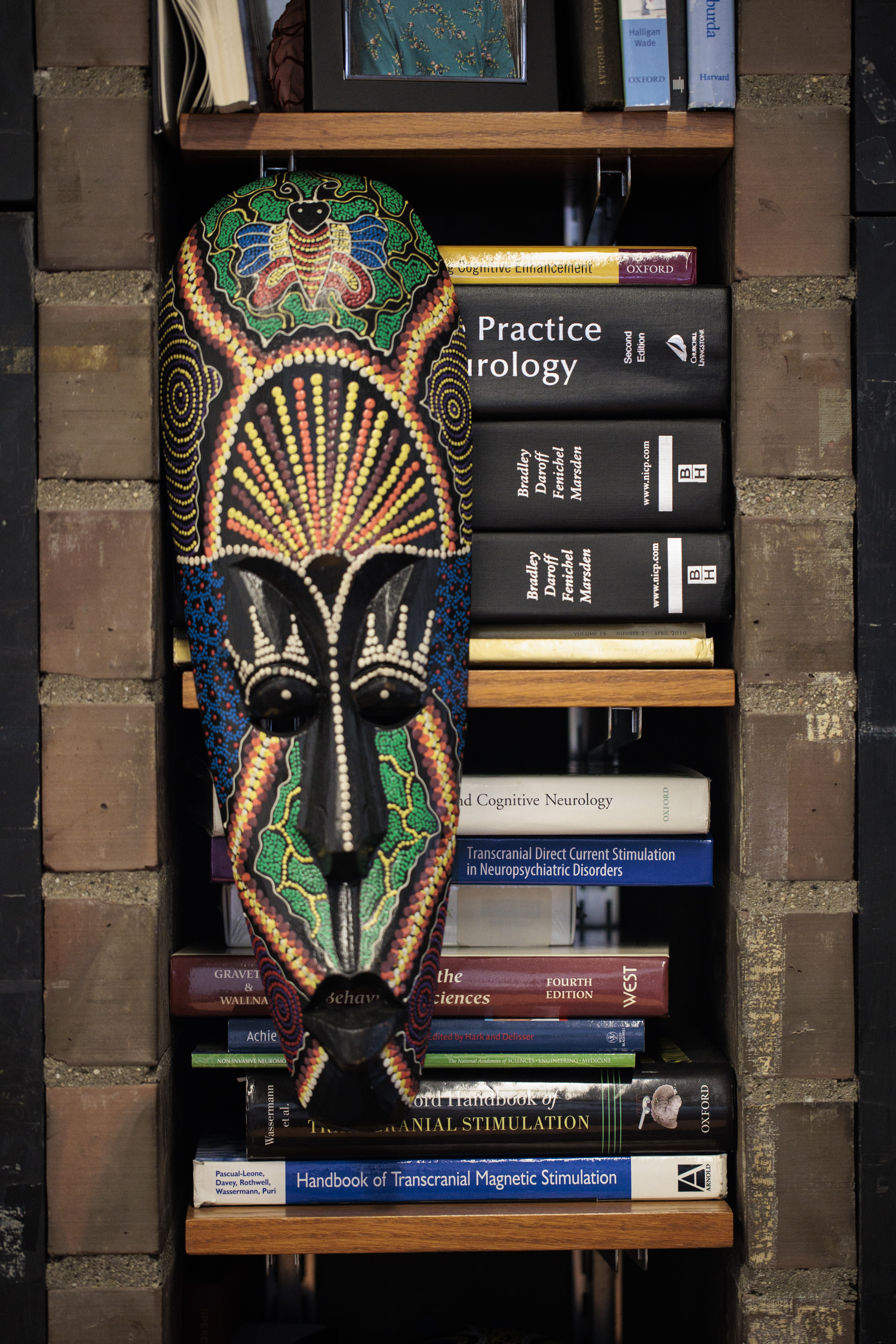
    Roy Hamilton collects masks and his office is filled with pieces he has received from his students and mentees over the years. Monica Herndon / Staff Photographer

    ‘Trying to thread a needle’

    Hamilton has been in the hot seat before. He was the medical school’s vice dean for inclusion, diversity, and equity when President Donald Trump’s administration last year cracked down on diversity initiatives in higher education and Penn scrubbed its websites of those programs. Hamilton’s own title was changed to special adviser to the dean.

    “It would be disingenuous to say that it was easy,” Hamilton said. “It was a huge change. It was a difficult change. It was a change that I wish the institution didn’t feel like it had to make.”

    But Hamilton — who for more than a decade held administrative roles centered on diversity and inclusion at Penn — said he understood that Penn felt it had to make changes, given its reliance on federal research funding. Hamilton pointed out that he gets National Institutes of Health funding for his work.

    “If you jeopardize some of the fundamentals of how the institution works and runs, you jeopardize lots of positions and roles, including the roles of persons like myself and the very diverse lab that I run,” he said. “So I understand the Sophie’s choice that the medical school was faced with. That doesn’t mean I have to be happy about it.”

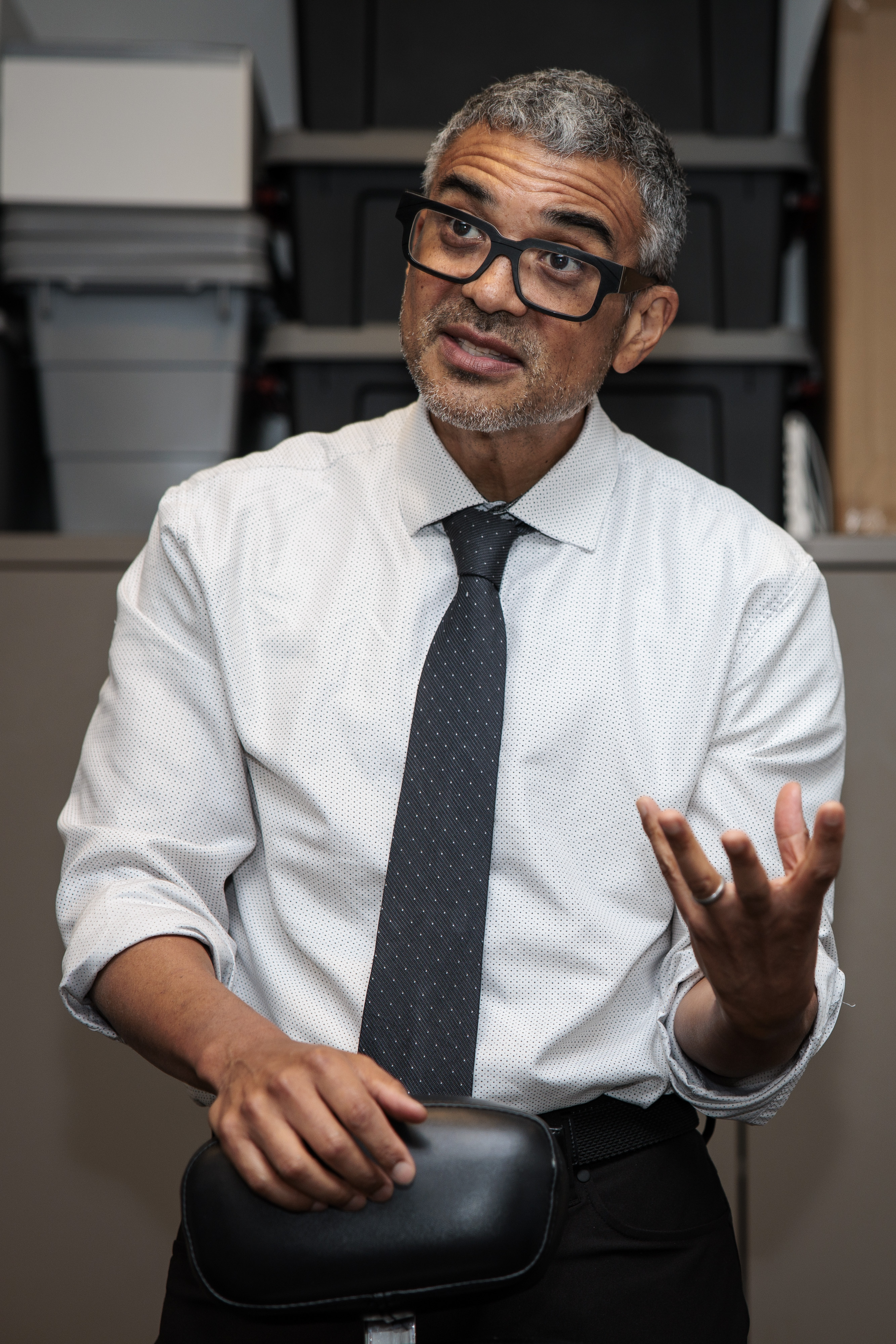
    Roy Hamilton talks about his work as a behavioral neurologist.Monica Herndon / Staff Photographer

    Still, he said, some of the work continues.

    “We are the same people, and I believe that Penn’s values will endure,” he said.

    Penn at times has stood up to the Trump administration and at times negotiated. It ardently opposed the Equal Employment Opportunity Commission’s quest to get lists of Jewish people on campus for its investigation into antisemitism. The EEOC dropped its subpoena last month and said it would not take further measures to seek the information through other means.

    Last summer, the school entered into an agreement with the administration over the past participation of transgender athlete Lia Thomas on the women’s swim team. Penn met a number of the White House’s demands, including adhering to the Trump administration’s definitions of sex, female, male, women, and men only as they apply to athletics, and sending letters of apology to female athletes who felt aggrieved by Thomas’ position on their team during the 2021-22 season.

    “Penn has acted judiciously in a difficult time” when responding to Trump, Hamilton said. “It’s trying to thread a needle. Time will tell whether that strategy ultimately pays off.”

    “I was one of those guys, even as a small child, sort of door to door trying to talk to people about the Bible and what God had planned,” Roy Hamilton said, discussing his upbringing as one of Jehovah’s Witnesses. Monica Herndon / Staff Photographer

    Hamilton’s upbringing was instrumental to his interest in diversity.

    “Every step of the way has felt like I was … some kind of explorer finding some new territory,” he said. “I’ve historically been very interested in seeing to it that other people don’t have that level of alienness in the process.”

    Raised as one of Jehovah’s Witnesses, then on to Harvard

    Born in Long Beach, Calif., Hamilton grew up as one of Jehovah’s Witnesses. His late father worked in a brewery and his mother, who got her undergraduate degree in Japan, earned money as a seamstress, working from the family home. (She later returned to college, earned a master’s degree, and became a teacher.)

    Neither of his parents was raised in the Jehovah’s Witnesses faith, but his father had several family members who belonged. When his mother emigrated from Japan, she told his father she would like to go to church, and he took her to a Kingdom Hall, the worship place of Jehovah’s Witnesses.

    “By the time I was a small child, she was one of Jehovah’s Witnesses, and so that was the background in which I was raised,” Hamilton said. “I was one of those guys, even as a small child, sort of door-to-door trying to talk to people about the Bible and what God had planned.”

    But he and his family parted ways with the religion when it came time for Hamilton to go to college. Hamilton was in the gifted and talented program as a child, did well in school, and wanted to continue. At that time, the faith generally discouraged higher education, he said.

    He recalled congregation elders pulling him aside and questioning his intent to apply to college.

    “It had the same kind of vibe as if I had been caught smoking in the boys’ bathroom,” he said.

    Hamilton did not just go to college — he went to Harvard University. His father feared flying, so Hamilton took the train from California and arrived three days later in Massachusetts.

    The Ivy League experience was “a huge adjustment,” he said. One of his roommates hung out with a son of media mogul Rupert Murdoch, he recalled. A student down the hall was dating then-Vice President Al Gore’s daughter.

    He got his bachelor’s degree in psychology and graduated from Harvard’s medical school, where he said he felt a bit of “impostor syndrome.” He also got a master’s degree in health sciences technology from Massachusetts Institute of Technology.

    At Harvard, his interest in the brain grew and was amplified when he worked in the lab of cognitive neuroscientist Nancy Kanwisher, whose work led to the discovery of the region of the brain that processes facial recognition.

    “It’s the reason why we recognize incredibly subtle differences between faces,” he said.

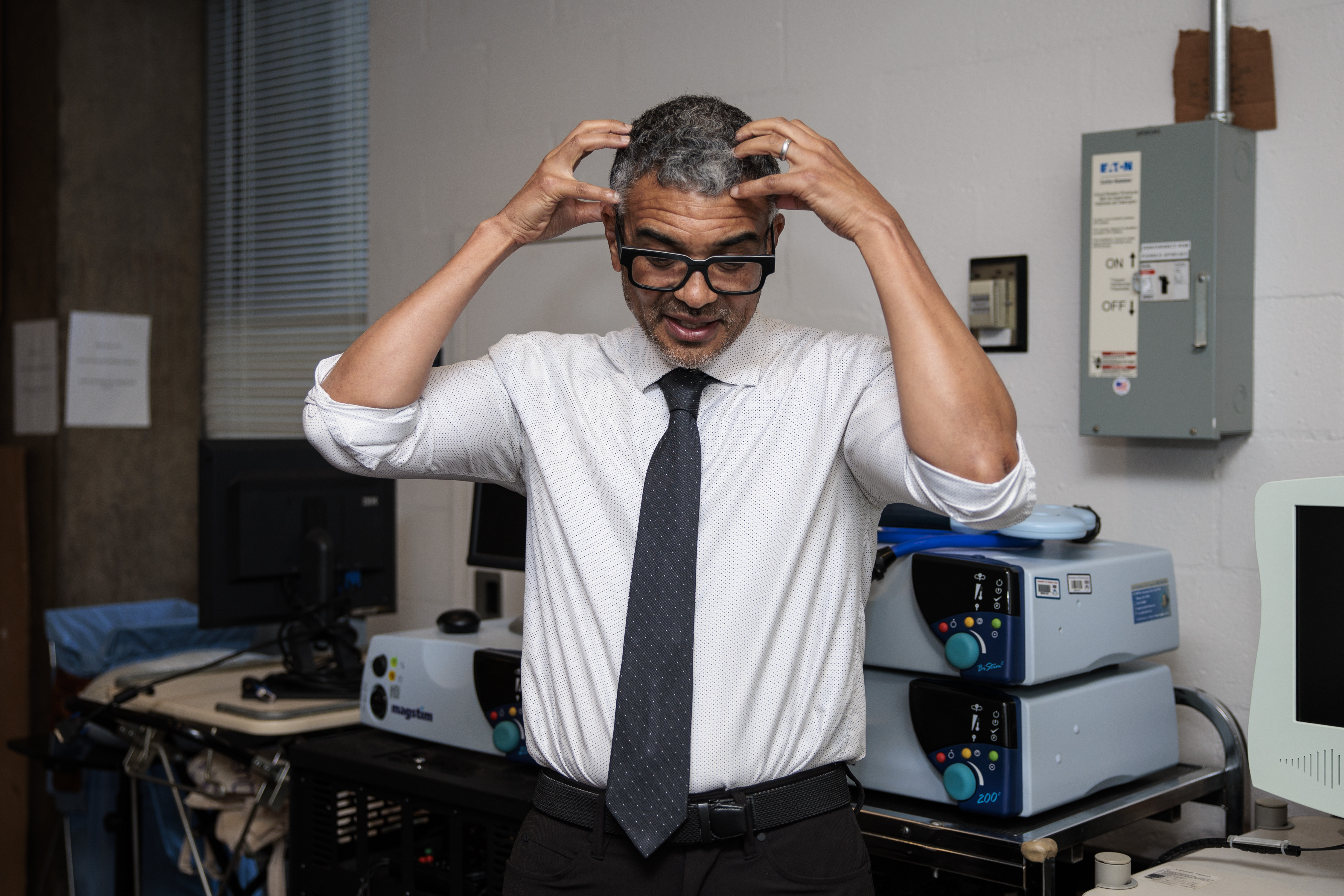
    Roy Hamilton discusses how transcranial magnetic stimulation (TMS) units are used in helping to study the brain and develop new treatments for patients with conditions like aphasia. When a TMS device is triggered, the box-shaped main unit discharges a large current through the attached coil. This creates a magnetic field that, when placed against the scalp, activates electrical signals in the brain.
    “You can basically force the brain to fire,” he said.

    Monica Herndon / Staff Photographer

    Another key moment came when neurologist Alvaro Pascual-Leone visited his medical school seminar and showed how magnets aimed at the head could temporarily affect behavior in the brain.

    “I was like, ‘That is the most amazing thing I’ve ever seen in my life,’” he said. “‘I’m going to do that for the rest of my life.’”

    Magnets and the brain

    After an internship at UCLA, in 2002 he came to Penn, where he now runs the Laboratory for Cognition and Neural Stimulation, as well as the Brain Stimulation, Translation, Innovation and Modulation Center. Putting it simply, he said: “I take magnets. I put them on people’s brains and I make them think different things.”

    He sees patients struggling with memory and cognition disorders, such as dementia and aphasia.

    “The central but not sole clinical focus of my research is in persons with language loss,” he said.

    He is married to Dawn Mechanic-Hamilton, a clinical neuropsychologist and associate professor in Penn’s department of neurology.

    Last year, Hamilton became chair elect of the senate, which functions under tri-chairs — chair-elect, current chair, and past chair — all one-year terms for a three-year commitment.

    The senate earlier this year was charged with naming faculty to serve on a committee outlining priorities for Penn’s next president. Among its priorities this year, the senate will focus on implications of artificial intelligence on teaching and learning, he said.

    “While Penn’s future remains full of promise, the road ahead may not always be easy,” he wrote to faculty. “Difficult moments, however, provide an opportunity to think carefully about the principles that give purpose to our work and ought to guide our decisions.”

  • Some Freedom Fuel stations have been able to sell gas cheaply because some fuel wasn’t paid for, a lawsuit claims

    Some Freedom Fuel stations have been able to sell gas cheaply because some fuel wasn’t paid for, a lawsuit claims

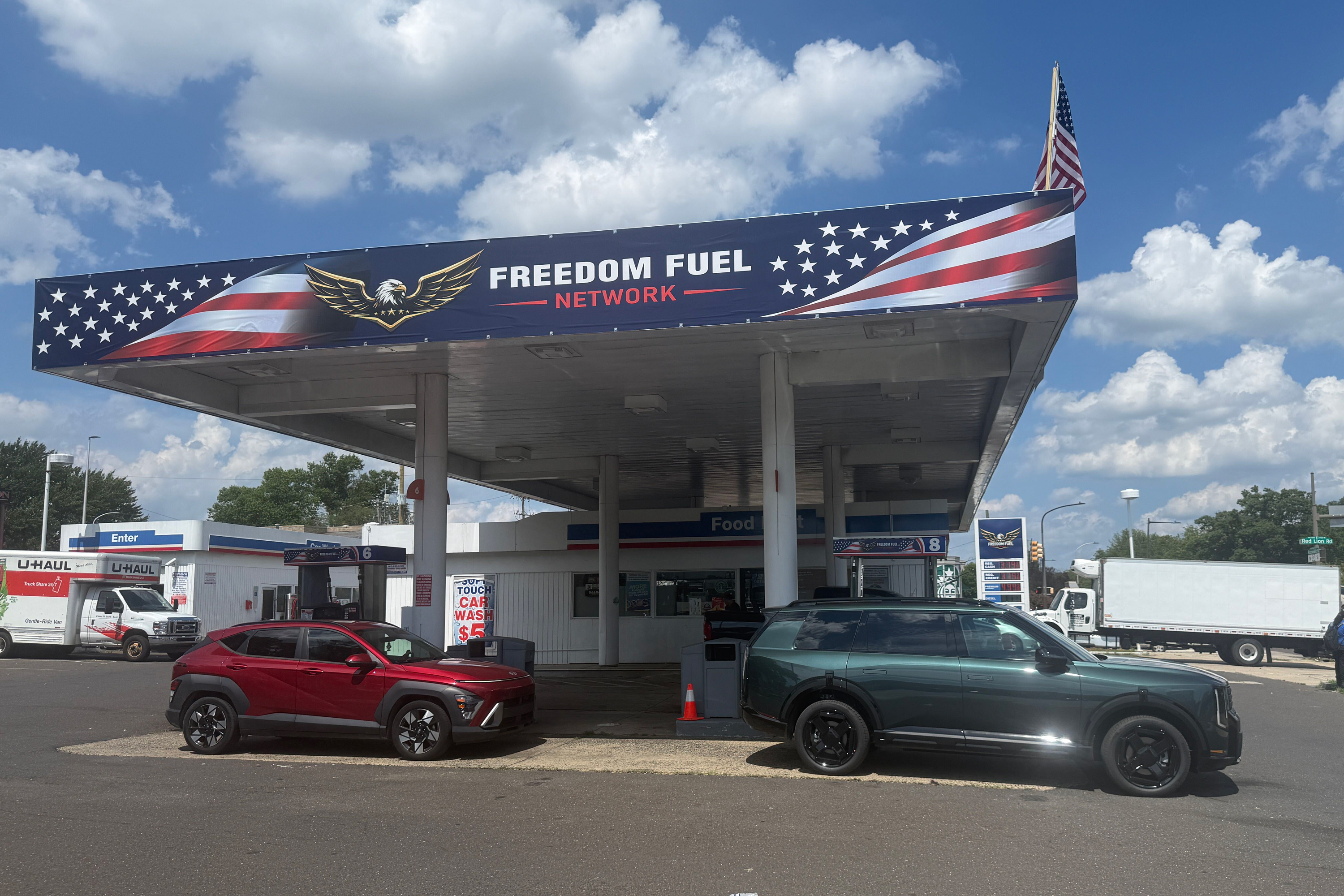
    A petroleum distributor has filed suit in federal court alleging it supplied $4 million worth of gasoline sold to multiple Freedom Fuel Network gas stations but has never been paid for it.

    That is at least one reason, the civil suit claims, Freedom Fuel Network gas stations have been able to sell gas so cheaply after President Donald Trump touted the brand.

    Georgia-based plaintiff Mansfield Oil Co. of Gainesville Inc. filed the civil suit against KRSM Inc. in U.S. District Court in Philadelphia earlier this month.

    The suit says that Syed Kazmi, as president of KRSM, requested in May to buy gasoline from Mansfield at Energy Transfer’s Twin Oaks terminal in Aston, Delaware County.

    KRSM then took 1.12 million gallons of gasoline and sold it to stations that are part of the Freedom Fuel Network. The price of the purchase was just shy of $4 million, according to the suit.

    “KRSM was able to sell such fuel for such low prices and garner such publicity because it never paid [Mansfield] for such fuel,” the suit said.

    The suit does not specify which Freedom Fuel locations it says sold gas originally purchased from Mansfield.

    The White House promoted Freedom Fuel when it launched its first location in July on Dreshertown Road in Upper Dublin Township, Montgomery County. The station initially sold gas for $3.47 a gallon, a nod to Trump being the 47th president.

    “They are doing this because they love the U.S.A.,” Trump wrote on his Truth Social account on July 1.

    “The administration has had zero contact or dealings with the defendant: KRSM Inc or Sayed Kazmi,” a White House spokesperson said in a statement Saturday.

    Kazmi and his brother, Cherry Hill developer Shamikh Kazmi, are linked to at least eight of Freedom Fuel’s 29 locations. Neither could be reached for comment Saturday. However, attorney Mauro Tucci said in a statement on Saturday: “KRSM disputes the allegations in this case, which is an accounting dispute over fuel invoices mispriced by Mansfield Oil. We will not be commenting further on this pending litigation.”

    The Inquirer reported last week that six of the network’s New Jersey stations had racked up environmental violations with the state dating back to 2023.

    For its part, Mansfield says in the suit that it initially had difficulty sending invoices to KRSM, but managed to begin doing so by July.

    The contract specified that KRSM was to pay the invoices in full within 10 days of receiving them or face 1.5% per month interest on the balance.

    Mansfield said that, as of Aug. 17, it had not received any payment for the 150 loads of fuel KRSM purchased at the Twin Oaks terminal.

    The suit cites breach of contract and five other counts in seeking $4 million for the fuel, interest, and attorney costs from KRSM.

    The Kazmi brothers have been embroiled in at least two lawsuits related to previous gas station ventures, including a 2021 trademark dispute with BP American Inc. and BP Products North America Inc. Additionally, Petroleum Marketing Group Inc., a fuel distribution company, accused the brothers of stealing thousands of gallons of gas from the company.

    The network expanded to 29 locations earlier this month, but one Philly station was nearly shut down by the city after it failed a license renewal inspection.

    Freedom Fuel first launched with prices 40 to 50 cents a gallon cheaper than nearby stations, confounding experts and angering competitors due to the network’s apparent connection to the White House. Prices have since risen closer to other discount chains.

    The White House has maintained it is not involved in Freedom Fuel’s operation or provided the company with any subsidies.

    “Freedom Fuel Networks is a private company,” a White House spokesperson told The Inquirer in July. “They are not purchasing gasoline at a discount. The administration has not provided any funding. They are simply lowering their costs to make gas more affordable for drivers in PA and NJ.”

    Baltimore Ravens assistant coach Randy Brown and former commodities trader Yoni Gontownik signed the company’s certificate of formation in Delaware and have not spoken publicly about the highly touted enterprise.

    Freedom Fuel’s owners have been silent about their discount gas operation more than two months after the network was loudly promoted by the White House.

  • Two men, one with an AR-15-style rifle, robbed a victim of gold chains and a watch

    Two men, one with an AR-15-style rifle, robbed a victim of gold chains and a watch

    Two masked men, one wielding an AR-15-style rifle, robbed a man of his jewelry and a watch Friday in Center City, according to Philadelphia police.

    Central detectives are investigating the incident, which took place about 2:15 a.m. on the 1500 block of Sansom Street. It was the second such robbery in Center City involving an AR-15-style rifle within a week.

    Friday’s robbery occurred as a 23-year-old man and two friends were returning home.

    Two masked men got out of a light gray or beige four-door sedan with tinted windows, police said. One was carrying the AR-15-style rifle, according to police. The second was armed with a black semiautomatic handgun.

    The robbers stole two gold chains off the victim’s neck and demanded his silver diamond watch. They then fled west on Sansom Street, police said.

    No one was injured.

    Early on the morning of Aug. 23, masked men armed with handguns and what appeared to be an AR-15-style rifle robbed three men in Center City, forcing at least one of the victims to his knees at gunpoint, according to police.

    The victims — ages 27, 35, and 36 — were talking on the sidewalk around 3 a.m. on the 1500 block of Locust Street when three robbers stepped out of a gray Hyundai sedan and demanded the men’s belongings, police said.

    Two of the men complied but the third resisted, and one of the robbers hit him in the face with a handgun. He was taken to a hospital with injuries that were not life-threatening.

    The assailants took cell phones, watches, car keys, wallets, driver’s licenses, and cash, police said.

    Surveillance video showed one victim on his knees on the sidewalk as two of the robbers pointed guns at his head.

  • In the wake of alleged hazing incidents, Cheltenham parents and officials marched to support students before school starts

    In the wake of alleged hazing incidents, Cheltenham parents and officials marched to support students before school starts

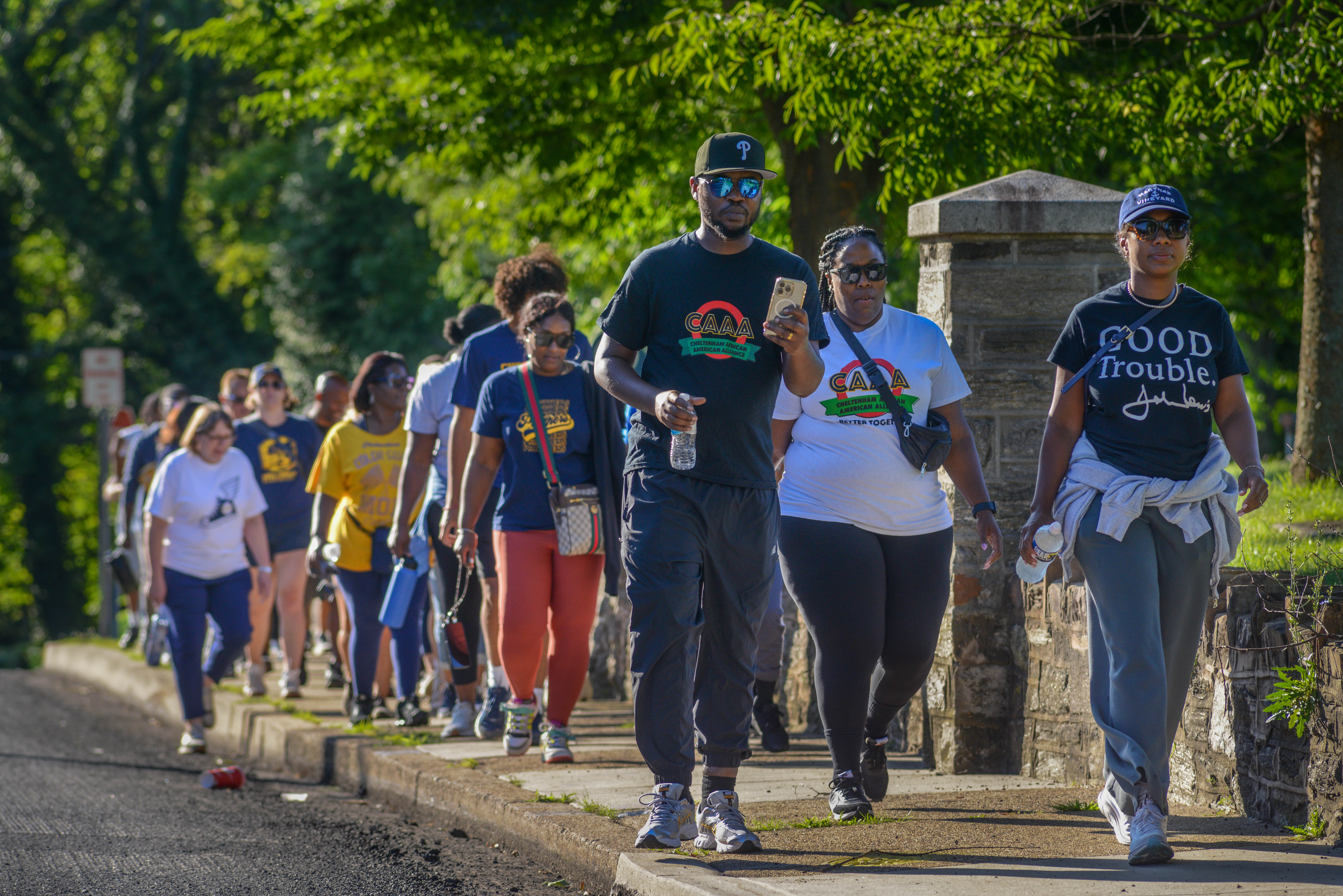
    After a football hazing scandal led to criminal charges for coaches and players, about 35 Cheltenham School District parents, students, and school board members marched across town Saturday morning to show their support for students.

    The purpose of the march, just days before school starts, was to show students that the community cares about what they are going through, and is calling on the school board to make needed changes, organizers said. Marchers also said it is important to portray the district in a positive light.

    “We need to come together as a community, address needed changes, and also push back against some of the false information out there,” said Ikysha Dearry, president of the Cheltenham African American Alliance.

    Dearry said the school has faced a barrage of negative attention online from opportunists who want to bring issues like race and the region’s changing demographics into the discussion. “That can have an impact, not just on how our district is viewed, but on how our students are viewed,” she said.

    School board director Caroline Watts was one of the first to arrive in the parking lot behind the Cheltenham School District building Saturday morning. She wore athletic shoes for the nearly two-mile walk to the high school. Watts said the message of the march was a “delicate balancing act.”

    ”We’re addressing what happened, making sure it doesn’t happen again, and we’re starting the school year,” Watts said.

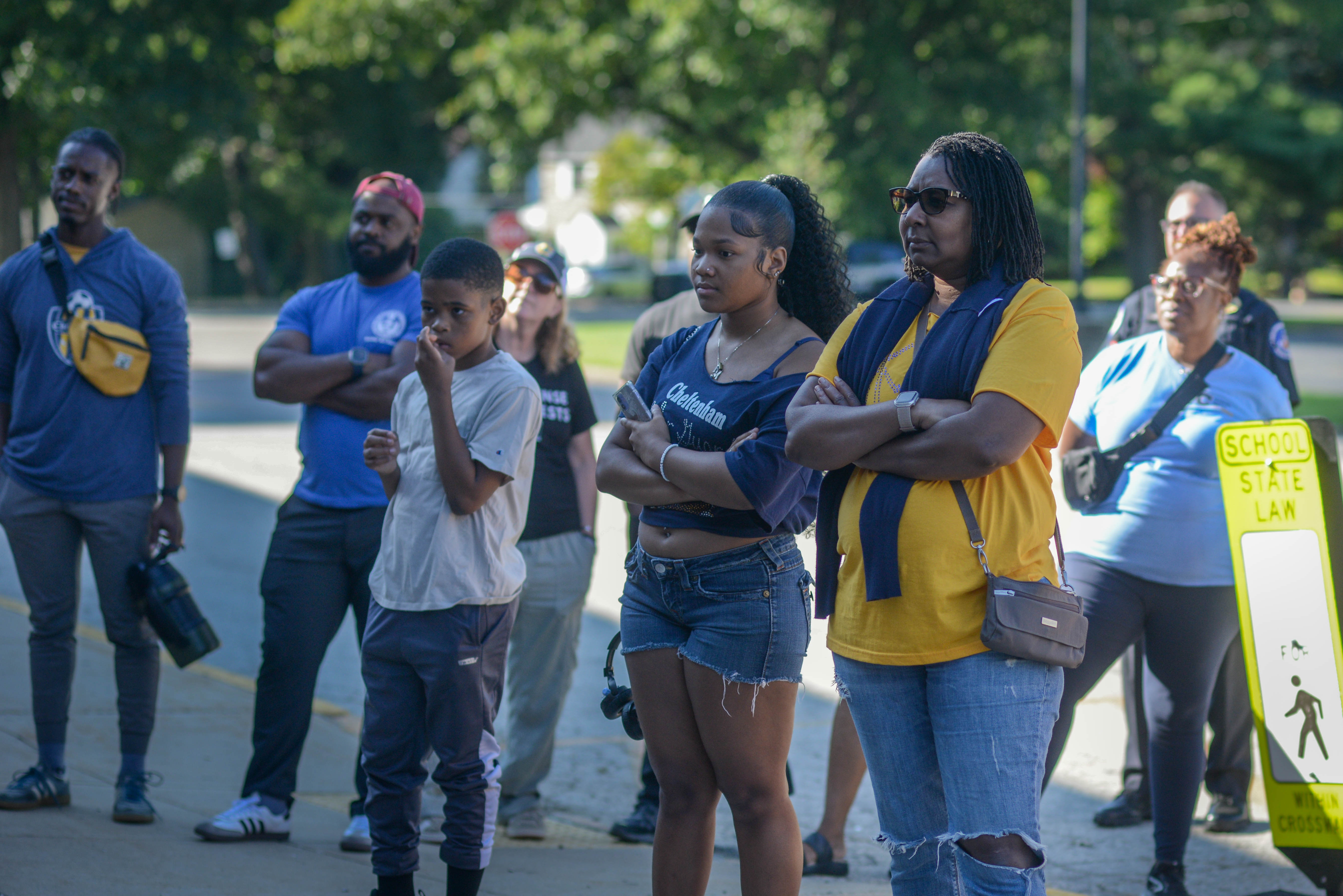
    Participants listens as Ikysha Dearry, president of Cheltenham African American Alliance (not shown), addresses the crowd after a community march was held as residents are banding together before the new school year begins to advocate for students, Saturday, Aug. 29, 2026, on Ashbourne Road near the Cheltenham School District Administration Building in Elkins Park. Dr. Brian Scriven resigned as superintendent of the Cheltenham School District in the aftermath of Cheltenham High School football coaches and players being charged with assault in a locker-room hazing incident. Dr. Chris McGinley recently took over as interim superintendent.William Thomas Cain / For The Inquirer

    Montgomery County prosecutors in July charged four football coaches and six players in connection with two 2025 assaults in a Cheltenham High School locker room that led to the cancellation of last year’s football season. During the assaults, prosecutors said, a 15-year-old was beaten by teammates who poked a broomstick toward his buttocks.

    “It’s horrific, what happened,” board vice president Jenny Lowman said before the march. “To think that it happened more than once, it’s also horrifying. Those coaches were responsible for these children. And two of the coaches were parents of students on the football team.”

    According to prosecutors, the coaches urged the player not to tell his parents. And according to a grand jury report, high school employees downplayed a complaint from the player’s mother and took then-head coach Terence Tolbert at his word that he had not instructed the boy not to tell his mom.

    The report faulted the district’s handling of the situation from the start, saying employees had included Tolbert in their investigation and failed to discover there were two assaults. Employees were also confused about their duties to report child abuse, and at least five football coaches did not have clearances related to mandatory-reporter training, according to the report.

    A community march was held as residents are banding together before the new school year begins to advocate for students Saturday, Aug. 29, 2026, on Ashbourne Road near the Cheltenham School District Administration Building in Elkins Park. Dr. Brian Scriven resigned as superintendent of the Cheltenham School District in the aftermath of Cheltenham High School football coaches and players being charged with assault in a locker-room hazing incident. Dr. Chris McGinley recently took over as interim superintendent.William Thomas Cain / For The Inquirer

    Cheltenham parent Aubria Nance said the alleged assaults have “absolutely shaken” the students. Nance, a board member of the Cheltenham African American Alliance, said students need to know their concerns are being taken seriously.

    “We want the board and the interim superintendent to know that we are advocating for the safety of our students,” Nance said.

    Cheltenham parent Kisha Rodwell-Green said the type of hazing she believes to have happened is called “broomsticking.” Searching online, she said, she learned that many other schools had dealt with this.

    Rodwell-Green wants the board to approve funding to work with an advocacy group called Stop Hazing. She said the athletic department needs to build a “culture of trust,” one where athletes feel comfortable speaking up if something does not seem right.

    “We know we have a lot to correct in our community, and we are starting to see that work being done,” said Rodwell-Green, who also serves as president of a parent-teacher organization called United Parents Group.

    Jackson Scott, a student at the high school, speaks to a reporter after a community march was held as residents are banding together before the new school year begins to advocate for students Saturday, Aug. 29, 2026, on Ashbourne Road near the Cheltenham School District Administration Building in Elkins Park. Dr. Brian Scriven resigned as superintendent of the Cheltenham School District in the aftermath of Cheltenham High School football coaches and players being charged with assault in a locker-room hazing incident. Dr. Chris McGinley recently took over as interim superintendent.William Thomas Cain / For The Inquirer

    Still, she said, the issues Cheltenham High faces are not unique to the school, and media attention from the hazing incidents has cast an unfair light on a good school.

    “Comments on Facebook got very nasty,” Rodwell-Green said. “There’s a microscope on Cheltenham, and we want to take that microscope off.”

    For some community members, the criminal charges added fuel to complaints that the district has not been taking safety seriously enough. Parents of football players said they had urged the district not to hire Tolbert, citing concerns he let bullying go unchecked during his one-year stint as Abington’s head football coach.

    At Cheltenham Elementary School, parents said they have been battling with the district after repeated assaults by students against peers and teachers, and pointed to the football charges as proof of a systemic problem in the district.

    The district, which in May canceled the forthcoming football season, has responded to the charges by commissioning an outside investigation and hiring a new superintendent. Chris McGinley, a veteran educator who had served as Cheltenham’s superintendent two decades ago, was approved by the board on Aug. 18 to lead the district under a one-year contract. He replaces Brian Scriven, who resigned last month.

    The changes also have forced high school students to grapple with the fallout.

    Cheltenham senior Jackson Scott, 17, had mixed feelings. Scott, a soccer player, said it was unfair that his friends on the football team had their seasons canceled. Steps must be taken to stop such incidents from happening again, he said, but he also wondered if some of the details of the hazing incidents had been exaggerated.

    Senior Isabella Pero, 17, said she was disgusted that other students said nothing despite knowing about the hazing.

    Pero said she was shocked to learn that Tolbert, who taught one of her classes and seemed like a nice person, was involved. The same goes for the students involved in the alleged assaults, she said. She struggled to square her impression of the students with the violence.

    “In my opinion, in the moment, you’re so hopped up in wanting to win a game, and have a good season, that you make those tainted, not good decisions,” Pero said.

    Parent Michelle Gregorio said she hopes athletic director Sam Sheridan will help the district move forward. “And we don’t want to sweep under the rug what happened, but we want to let students know we’re addressing it.”

  • Ontario premier answers Trump’s ‘Lake America’ with giant ‘Lake Ontario’ sign

    Ontario premier answers Trump’s ‘Lake America’ with giant ‘Lake Ontario’ sign

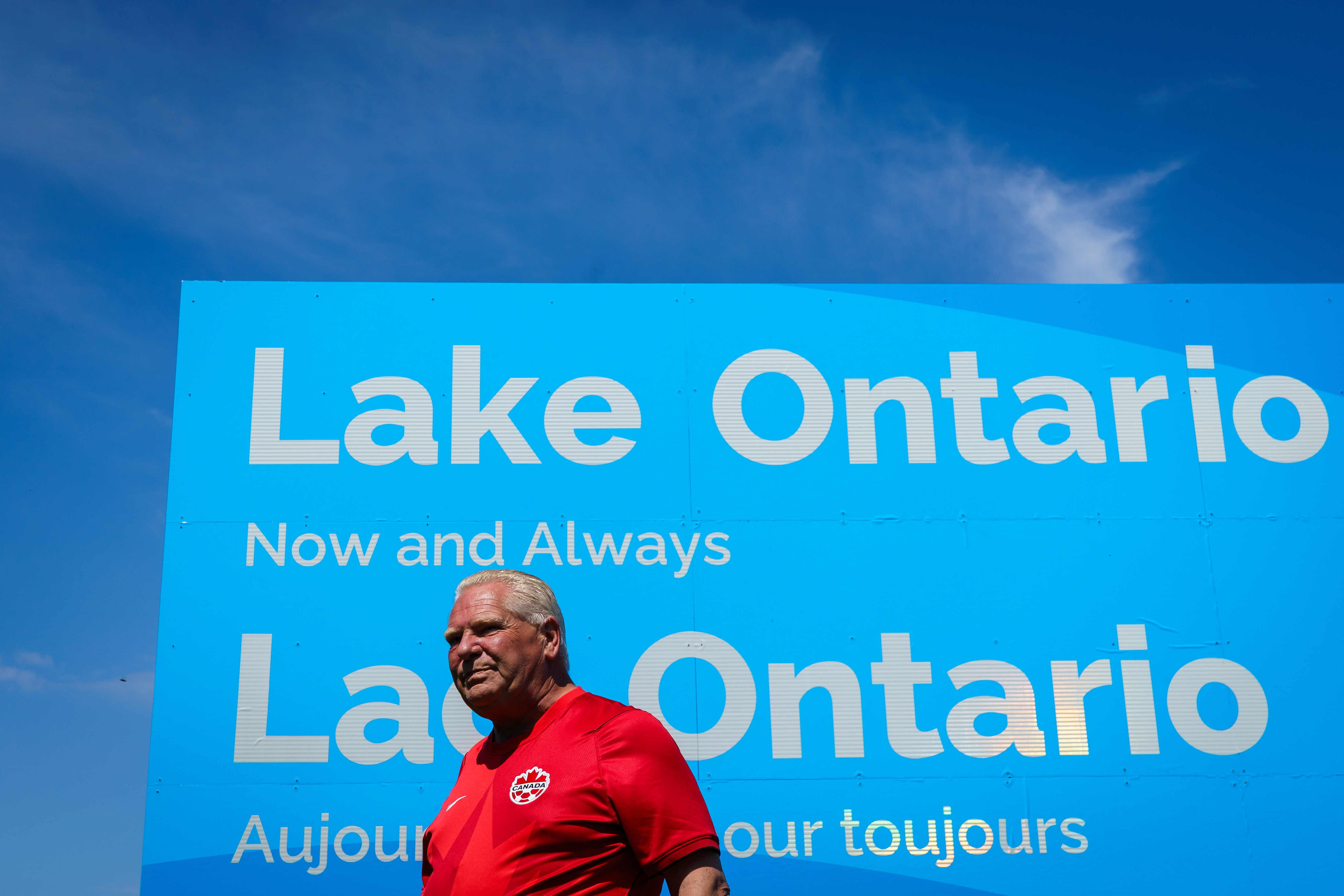
    TORONTO — Ontario Premier Doug Ford answered President Donald Trump’s “Lake America” decree Saturday with a billboard-sized message on the Canadian shoreline: “Lake Ontario. Now and Always.”

    Wearing a Team Canada soccer jersey, Ford unveiled the sign near Grimsby, Ontario, and posed for photographs. The 24-by-12-foot sign stands on 6-foot legs, putting its top about 18 feet above the ground — roughly two stories high. The message is repeated in French.

    It was the latest show of defiance after Trump signed an executive order directing U.S. federal agencies to call Lake Ontario “Lake America.” After months of tariffs, threats to make Canada the 51st U.S. state, and personal attacks on its leaders, the move has been met in Canada largely with ridicule.

    Ford said Trump was trying to rename the lake because Ontario and Canada were “standing up for ourselves” and argued the name would outlast the president.

    “Long after President Trump is gone, it will still be called Lake Ontario,” Ford said in a video posted on social media.

    Manitoba Premier Wab Kinew compared Trump to an aging rock band trying to revive an old hit.

    “You know when a rock band is really over the hill and you see them like in a casino playing some song from like 50 years ago. I think that’s the part of Donald Trump’s presidency we’re at now, Like he thought they had a real hit, a real golden oldie, with the Gulf of Mexico,” Kinew said, referring to Trump’s executive order renaming the Gulf of Mexico the Gulf of America. “And he’s trying to bring back that, and he’s trying to play the hits for his base. But I think everybody here thinks it’s a little sad and it’s not his best work.”

    The mockery was not limited to politicians. Canadian historian Robert Bothwell was even more scathing.

    “The greatest country on earth takes this moron seriously?” Bothwell said.

    But Bothwell said the dispute was more serious than the jokes, arguing Trump’s broader aim was “to subordinate Canada and at best make it a colony, at worst absorb it into the United States.”

    Nelson Wiseman, professor emeritus at the University of Toronto, said Trump “would like Canada to act like a vassal state, but it refuses to do so. That irritates him.”

    The dispute comes as relations between the longtime allies worsen over trade. Negotiations collapsed last week, both governments accused the other of making late demands, and Canada announced retaliatory tariffs set to take effect next month.

    Trump’s order also came amid an escalating war of words with Ford. In an interview with the Associated Press earlier this week, Ford said Ronald Reagan would be “throwing up” over Trump’s tariff policies and “disgusted with President Trump.”

    Trump fired back by dismissing Ford’s comments as “bluster,” calling him Prime Minister Mark Carney’s “flunky” and mocking him as the “less charismatic, intelligent, and overall unimpressive brother” of the late Toronto Mayor Rob Ford.

    Trump continued promoting the new name Saturday, reposting a meme showing Canada geese with Trump-like blond hair firing rifles as they “protected” Lake America.

    Trump has repeatedly used maps to make political points. A “Gulf of America” map was displayed for a time beside the Resolute Desk in the Oval Office, and Trump has posted images depicting Canada as part of the United States or as the 51st state.

    The name Lake Ontario comes from the Huron Indigenous people’s word “oniatarí:io,” which means “lake of shining waters.” The Canadian province of Ontario, founded in 1867, took its name from the lake.

    Wendat Nation Grand Chief Pierre Picard, whose people historically lived from the St. Lawrence Valley to the Great Lakes and whose language gave Lake Ontario its name, called Trump’s move an attempt to erase Indigenous history.

    “I want to tell him that it is unacceptable for us, as a nation, to have a president who can eradicate our history, our culture, and our identity,” Picard said.

    Canadian Prime Minister Mark Carney rejected the move, noting the lake’s Indigenous roots and that the name predates both Canadian Confederation and the U.S. Declaration of Independence. Trump cannot require Canada to adopt the new name.

  • This educator just gave away his 5 millionth book — and will give away thousands to Philly and N.J. teachers this year

    This educator just gave away his 5 millionth book — and will give away thousands to Philly and N.J. teachers this year

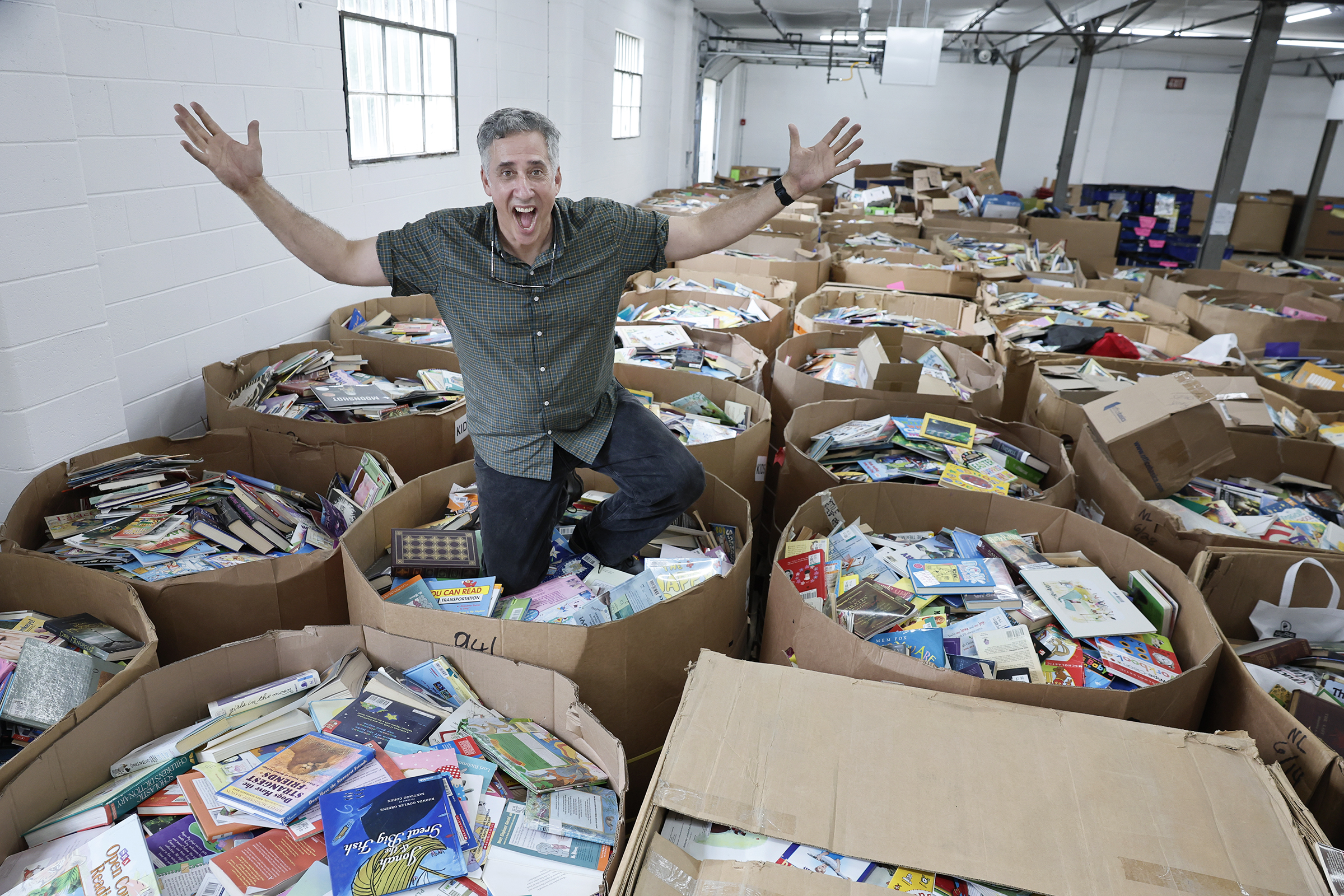
    Inside a cavernous warehouse just off I-295 in Cherry Hill, Larry Abrams spread his arms, gesturing to the sea of industrial-size cardboard boxes that surrounded him.

    “We’re sitting on a rocket ship,” said Abrams, a third-generation teacher.

    Abrams’ rocket ship is composed of books: thousands and thousands of them — picture books and out-of-date science textbooks, cookbooks and battered novels. He sees them as a way to change kids’ life trajectories.

    The BookSmiles van and a staffer’s car parked outside of BookSmiles new warehouse in Cherry Hill.Elizabeth Robertson / Staff Photographer

    To date, BookSmiles, the nonprofit Abrams started out of his garage in 2017, has distributed five million books. It just outgrew its third location, expanding into a 14,000-square-foot space in Cherry Hill that is formally opening next week.

    Book banks are not a new idea. But Abrams believes he’s got the secret sauce.

    “We’re the only book bank in America that does this — we actively trade pallets of grown-up books for pallets of upcycled gently used children’s books,” Abrams said. “Never before has there been a low-cost way to get so many beautiful, upcycled books into the homes and hands of kids who need them the most.”

    ‘It’s simply about lack of book access’

    Abrams served in the Navy — he was stationed on an aircraft carrier during the Persian Gulf War — and managed a copy shop. Then he settled into a career as an English teacher, working first in Moorestown, then in Lindenwold.

    “I thought, ‘Why do most of the Lindenwold kids in my ninth-grade class read at a third- or fourth-grade reading level?’” Abrams said. “It’s simply about lack of book access. It’s not fair that some kids grow up with no access to books, and other kids have everything.”

    Abrams thought long and hard about how to change that equation. What if he redistributed books from wealthy and middle-class communities to the places that didn’t have them?

    BookSmiles founder Larry Abrams works in the loading dock area of BookSmiles’ new Cherry Hill warehouse on Friday, Aug. 28, 2026.Elizabeth Robertson / Staff Photographer

    He put out a social media call for children’s books, and got thousands.

    There is no market for reselling used children’s books online, Abrams found — you can’t sell them and make any kind of money. So the BookSmiles concept developed.

    Now, people from all over New Jersey and Pennsylvania donate books — any kind of books, from old encyclopedias to nearly new novel series. The BookSmiles team (at first, just Abrams himself; now, it’s 11 people and a growing corps of volunteers) sorts through every single book.

    The organization gets books in myriad ways: from folks dropping off what they salvage after cleaning out a bookshelf to donations of entire estates of books. BookSmiles accepts library discards and scrap paper, too.

    Adult books, old textbooks, and kids’ books that are not in excellent condition are sold, not for cash, but for gently used children’s books that are distributed directly to teachers, daycares, and other nonprofits that get them in kids’ hands.

    ‘There’s a low-cost way to raise test scores’

    BookSmiles grew so significantly that Abrams retired from teaching and now works full-time as executive director.

    But his educator hat is always on. Research shows that access to books, and books in children’s homes, is a powerful determinant of kids’ educational outcomes and economic success.

    “This comes from a place of me being a teacher, and seeing there’s a low-cost way to raise test scores,” said Abrams, dipping his hand into a cardboard box and fishing out an old dictionary that will end up being recycled for paper.

    BookSmiles founder Larry Abrams among boxes of childrens books ready for young readers in BookSmiles new Cherry Hill warehouse on Friday, August 28, 2026.Elizabeth Robertson / Staff Photographer

    The largest share of BookSmiles’ books moves out through its “Teacher Take” program. Teachers pay a nominal fee — BookSmiles asks for $35 annually — and can then take hundreds of books multiple times a year, either for classroom libraries or for distribution.

    BookSmiles also sponsors “Fair Book Fairs,” where schools get enough books for every child to take home at least three volumes at no cost.

    Schools that serve predominantly students from economically disadvantaged backgrounds are asked to kick in just $200 to get a Fair Book Fair. Others pay a little more.

    In 2025, BookSmiles gave away half a million books to teachers and kids in Philadelphia schools. Another 500,000 went to New Jersey teachers and schools, and the remainder, about 250,000, were sent overseas.

    With libraries often on the chopping block in low-wealth school systems — Philadelphia had fewer than five people working as full-time, certified school librarians last school year — classroom libraries are key, and teachers often need resources to build them.

    “We can hook them up,” Abrams said. “I can’t give them school supplies, but I can give them books.”

    Book joy

    Abrams still gets struck by moments of “book joy” when he looks at the Teacher Take room, or the massive room of books waiting to be sorted or moved out.

    “It’s almost like walking into Willy Wonka’s world, but it’s not candy, it’s books,” he said. “Sometimes, you can’t tell the difference between what Barnes & Noble is selling and what we’re giving away.”

    Larry Abrams shows BookSmiles books to Lindenwold Elementary School students in the nonprofit’s early days. This file photo is from 2018.TOM GRALISH / Staff Photographer

    BookSmiles’ new space, across the street from the PATCO Woodcrest station, just off I-295, is a level up for the organization. It will allow BookSmiles to move from distributing 1.3 million books per year to five million books per year, and can accommodate more volunteers.

    Abrams, like many, is thinking of Dolly Parton a lot these days.

    The music icon and humanitarian, who died Tuesday, was an inspiration for BookSmiles and a mentor to him, though he never met her.

    Parton began her Imagination Library, a program that sends free books directly to children’s homes, as a tribute to her father, who never learned to read.

    “I don’t know if I’ll ever get to 300 million books,” Abrams said. “But we know that if books are in the home, children will be more successful academically. We know that access to books changes equations.”

    BookSmiles, 100 Melrose Ave., Cherry Hill, N.J., accepts book donations and volunteers. Its Teacher Take program resumes soon.

  • This Appalachian memoir author is running as a Democratic contrast to JD Vance

    This Appalachian memoir author is running as a Democratic contrast to JD Vance

    CLIFTON FORGE, Va. — Veterans flock to a law office in this old railroad town for help wrestling with the feds over healthcare. Across the mountains in Waynesboro, families who can’t afford groceries spend hours waiting outside the food pantry. Up in Monterey, the town economic development director works for free because budgets are thin.

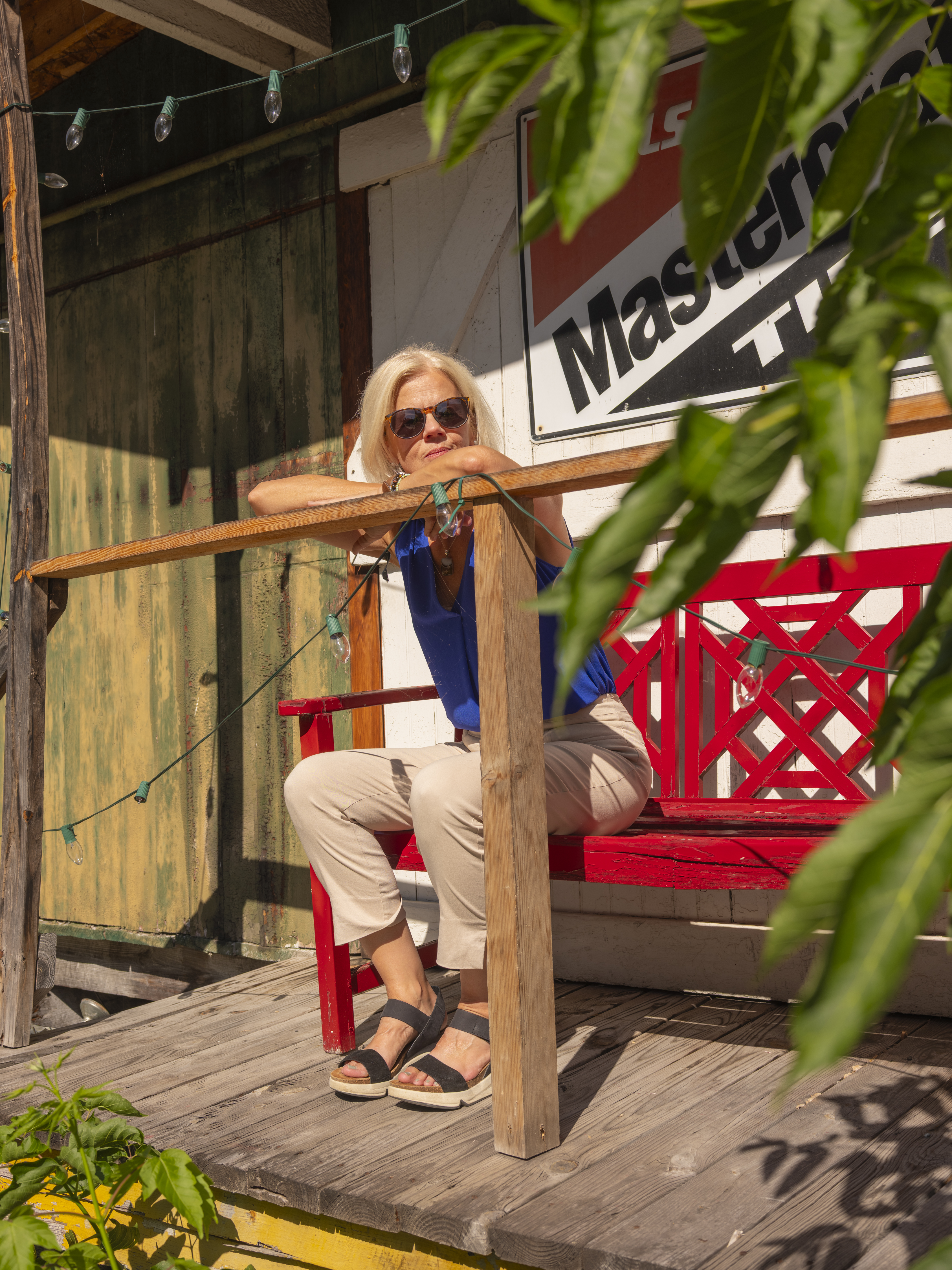
    Beth Macy writes it all down, still chasing stories across Appalachia after 40 years as a newspaper reporter and author of books including Dopesick, an exposé about Big Pharma’s contributions to the opioid crisis that became an Emmy-winning Hulu miniseries.

    After the memoir Hillbilly Elegy catapulted JD Vance to prominence as an authentic child of the Rust Belt and Appalachia, Macy is leaning on her own roots and her writing about the region to jump into politics. But her long-shot bid for a House seat as a Democrat in a bright red Virginia district positions her as a kind of anti-Vance.

    In an essay in the New York Times shortly before Vance was elected vice president, Macy faulted him for fearmongering about immigrants and turning his back on the public institutions that helped him escape poverty.

    “I’m coming at it from the perspective of an old-school mountain Democrat,” Macy said in a recent interview. “Let’s make it safe, let’s protect working people.”

    The two writers hail from Ohio hometowns only 60 miles apart: Middletown for Vance and Urbana for Macy. Both are the product of dysfunctional families and economic hardship. But Vance went on to the Ivy League and venture capital, urging the downtrodden to take personal responsibility for their prospects in life.

    Macy, 62, published her own life story last year in Paper Girl, which examines the same terrain as Hillbilly Elegy but comes to very different conclusions.

    Macy, who put down roots in Appalachia and spent decades writing about the region’s struggles for Virginia’s Roanoke Times newspaper, believes Vance blames poor people for their own plight. She sees outside forces working against the region going back generations, including the opioid makers who falsely claimed that their drugs were not addictive, and government policies driving the offshoring of manufacturing jobs.

    Campaigning with pad and pen in hand, Macy says she aims to “connect pain to policy,” and she criticizes both major parties for a system that fails those in need. The message was warmly received on a recent campaign swing, and many voters were thrilled to meet Macy, who made sure the Dopesick show was filmed partly in the district.

    But after years of division stoked by culture wars, folks who came out to see Macy the celebrity are not sold on casting a ballot for someone with a D after her name.

    “Exactly the issue she has to overcome here — and I’m not sure how — is that an awful lot of people vote by just the R or the D, as simple as that,” said Robin Sullenberger, who spent two decades as a supervisor in Highland County and stopped by a recent Macy campaign appearance in Monterey. The supervisor jobs are nonpartisan, but Highland County — Virginia’s least populous county — has picked a Republican for president in every election since Alf Landon in 1936.

    Macy is running against Republican incumbent Ben Cline in Virginia’s bright-red 6th District, a New Jersey-sized stretch of mountains and valleys that stretches from Winchester in the north to Roanoke in the south.

    The nonpartisan election handicapper Cook Political Report rates the district as “Solid Republican.” Cline, seeking his fifth term, beat his 2024 Democratic challenger by 28 percentage points and outperformed Donald Trump, who won by 24 points.

    “I know that her liberal positions on the issues appeal to some sections of the Democrat base, but to compare her to JD is to suggest that her message may sell here,” Cline said in an interview. “It’s not selling here in the Shenandoah Valley, in the Roanoke Valley. There are common-sense conservative values here.”

    Macy is navigating a tricky path within her party. She repudiates the recent rise of democratic socialists and also blames establishment lions such as President Bill Clinton for the NAFTA trade deal that she says wrecked the region’s economy.

    She depicts her campaign as focused on practical solutions: addressing the “immigration disaster” through humane treatment and clear paths to citizenship; providing affordable healthcare through Medicare-for-all; aiding farmers by ending tariffs; taxing billionaires.

    Macy has raised more money than Cline as of July 15, at $1.7 million compared with his $1.4 million, according to analysis by the nonpartisan campaign finance site Virginia Public Access Project. Almost all of her donations have come from individuals, while Cline has received more than $400,000 from GOP political action committees, according to VPAP.

    Macy didn’t get involved in politics until last year, when friends in Roanoke — the blue-leaning city in Southwest Virginia where she lives with her husband — convinced her she had the name recognition to challenge Cline.

    At the time, Macy was fine-tuning the manuscript of Paper Girl, which is part memoir and part hard-eyed examination of what’s become of her hometown. Macy grew up poor with an alcoholic father and a mother who took any job to provide for the family. Community support helped them get by, and federal Pell grants enabled Macy to go to college and pursue a career in journalism.

    Returning to Urbana, Macy wrote about finding a town hollowed out by poverty and drug addiction. The sense of community, she says, has been replaced by a divisive strain of Christian nationalism and MAGA-fueled anger toward anyone seen as an outsider. A place once proud of its heritage helping enslaved African Americans seek freedom on the Underground Railroad is now peppered with Confederate flags.

    A central figure in the book is a transgender young man struggling to get by in the community. Macy is deeply sympathetic to LGBTQ+ people because one of her two grown children is in a same-sex marriage and the other is nonbinary.

    An editor pushed her to end the book with a strong statement about political solutions. “Basically, elect better people to office, people who will do the most good for the most people,” Macy said. “I didn’t think it would be me.”

    Campaigning still feels odd to a journalist who spent years striving to be nonpartisan. She habitually takes notes, asking everyone she meets for their phone number and the spelling of their name. If she fills up a notebook, she’ll bum another from anyone nearby.

    Macy says stories are the heart of her campaign: her own family member who died young after refusing two organ transplants because the donors had received the coronavirus vaccine. The farmer who can’t afford diesel fuel for his tractor because of the war in Iran. The sheriff who can’t get emergency calls because his mountainous county has only one cell tower.

    And, everywhere, the families who have lost loved ones to painkillers that were promoted as safe.

    “I don’t care if you’re Republican or Democrat or moderate. We’re people. We’re Americans,” Macy told a group of Democrats at a fundraiser outside Harrisonburg — like other college towns, a blue island in the district. Her message was simultaneously that President Donald Trump’s policies are making problems worse and that people can fix them by overcoming political divisions.

    “We’re not going to win this thing,” she said, “without meeting people in the middle.” She claimed incremental success, but for offbeat reasons. One business owner told Macy he’d vote for her because he didn’t like the way Trump disrespected Rob Reiner after his tragic death, she said; another Republican was going to switch after seeing Trump post an image of himself as Jesus that appeared to be AI-generated.

    “I’ll take it,” Macy said.

    In Clifton Forge, where the exteriors were shot for Dopesick several years ago and where actor Michael Keaton was seen in local restaurants, the economy has struggled for decades since the Chesapeake & Ohio Railroad shifted jobs elsewhere.

    Kristen McConnell sees desperation every day in her law practice focusing on veteran healthcare and disability issues. Solving problems is harder, she said, because of politics.

    “Everybody wants healthcare, everybody wants childcare, everybody wants a livable wage,” McConnell said, but if a Democrat talks about those subjects, it is viewed as socialism.

    “People don’t understand that these things they use every day are the things that they’re railing against,” she said.

    On a sizzling Friday at the end of July, Macy greeted people at a monthly downtown festival, as booths along the closed-off streets sold baked goods, homemade jewelry, hot dogs, and barbecue.

    John and Charlotte Waugh from nearby Covington set up folding chairs with a good view of the Bart Chucker Band, a local favorite alt-country group. John Waugh, 65, retired from a manufacturing job, is a big fan of Trump. Charlotte, 64, a retired educator, is not.

    John has read some of Macy’s work, he said, and thinks she’s right on the money in diagnosing the region’s problems. But while his wife plans to vote for her, he will not.

    “It’s more not just her — it’s the whole Democratic Party,” he said, saying that Democrats want boys to play girls’ sports. “I got granddaughters.”

    Up the street at her consignment shop, Jennifer Oeltjen, 75, stayed open late to take advantage of the happy festival crowd. She was thrilled when Dopesick was filming there. The crew bought clothes from her for costumes, she said, and she remembers watching a night shoot when black-clad production assistants scurried around like ninjas.

    A longtime Republican, Oeltjen worries that people nowadays expect too much help from the government. While she does not approve of the way Trump talks, she said the Democrats she sees on Fox News spend too much time battling him. She also cannot square pro-transgender policies with her religion.

    Oeltjen has read Macy’s work and watched her speak to local groups. “She’s a good person,” Oeltjen said. “If I were going to vote for a Democrat, it would be Beth.”

    But that’s not likely, she said, even though she knows very little about Cline. She intends to vote Republican this fall.

  • Far-right British provocateur Milo Yiannopoulos has been deported after his immigration arrest in US

    Far-right British provocateur Milo Yiannopoulos has been deported after his immigration arrest in US

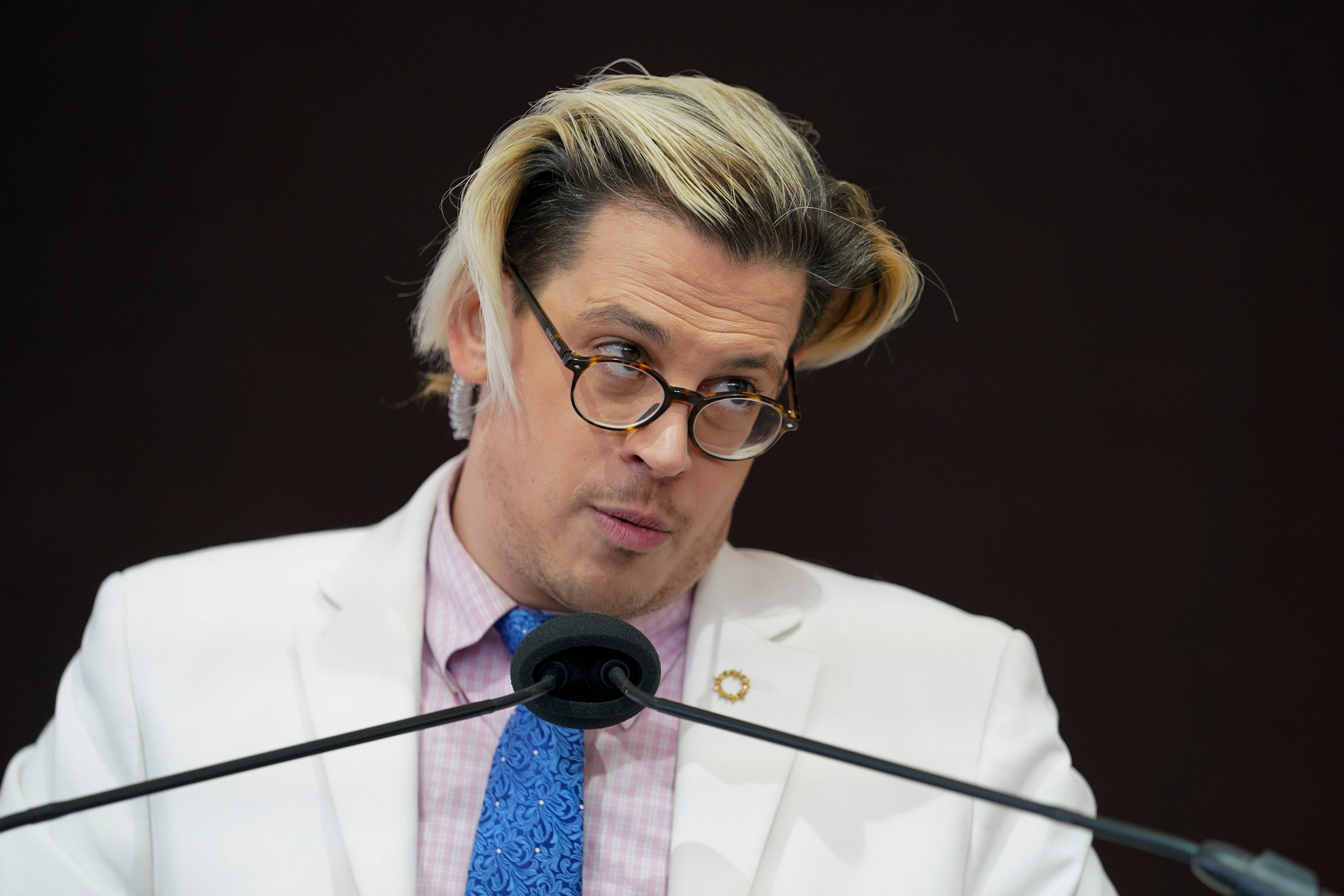
    British far-right commentator Milo Yiannopoulos has been deported back to the United Kingdom after his arrest by American immigration authorities, U.S. officials said Saturday.

    The U.S. Department of Homeland Security said Yiannopoulos was returned to his home country on Friday after being accused of overstaying after entering the U.S. legally in May 2019. An immigration judge had issued a final order of removal on July 22 after he failed to show up for an immigration hearing, a Homeland Security spokesperson said.

    Yiannopoulos was arrested Thursday at Louis Armstrong New Orleans International Airport in Louisiana and detained by Immigration and Customs Enforcement.

    “He chose to overstay his welcome in violation of our nation’s laws,” a Homeland Security spokesperson said in a statement.

    Yiannopoulos and his representatives did not respond to requests for comment. He has not posted on his X social media account since Thursday.

    Yiannopoulos is a well-known champion of conservative causes and has frequently taken provocative public positions criticizing feminism, Islam, and immigrants. He has been especially supportive of President Donald Trump’s immigration crackdown.

    “Zero immigration for the next 20 years. No ifs, no buts,” Yiannopoulos wrote on X last year.

    The British national has most recently worked for the rapper Ye, formerly known as Kanye West, who performed in New Orleans on Friday evening.

    Yiannopoulos rose to fame in the early 2010s as an incendiary writer for the conservative website Breitbart News. He resigned from the company in 2017 after a video of him endorsing pedophilia resurfaced online. He later apologized for the remarks and said he himself was a victim of sexual assault as a minor.

    Yiannopoulos’ arrest on Thursday comes amid a nationwide uptick in detentions as part of Trump’s immigration crackdown.

    Far-right conservative activist Laura Loomer swiftly took to social media to applaud Yiannopoulos’ arrest after years of public feuding between the two personalities.

    “I was the first person to report on the fact that Milo was in the U.S. illegally where he incited violence against President Trump and worked for Marjorie Traitor Greene,” Loomer wrote on X.

    Controversy around Yiannopoulos ballooned in 2017 when he carried out what he called his “Troll Academy Tour” across college campuses nationwide. Fights broke out when some students protested Yiannopoulos’ appearances and accused him of hate speech, while others celebrated him as a champion of free speech. Around that time, Buzzfeed reported on Yiannopoulos’ cozy relationships with self-proclaimed white nationalists.

    In recent years, Yiannopoulos continued to work in the orbit of conservative activism. In 2022, he was an intern for former U.S. Rep. Marjorie Taylor Greene, according to the Washington Post. He subsequently ran the short-lived 2024 presidential campaign for Ye.

    Most recently, Yiannopoulos has worked as a spokesperson for Ye, who has been beset by controversy of his own following antisemitic comments that the rapper has since apologized for. The Washington Post reported Saturday that two sold-out Ye concerts in St. Petersburg, Russia, were canceled in part because of his history of such remarks.

  • Trump cannot deport students for criticizing Israel, judge rules

    Trump cannot deport students for criticizing Israel, judge rules

    SAN JOSE, Calif. — Citing the importance of the First Amendment, a federal judge in California says the U.S. government is unconstitutionally silencing critics of Israel’s war in Gaza and others as part of the Trump administration ‘s quest to deport noncitizens who it says disrupted college campuses while expressing their views.

    Judge Noël Wise, in a ruling Friday, delivered a victory for the student newspaper at Stanford University, which has said some international students were afraid to speak out because of the deportation threat.

    The decision largely piggybacks on findings from nearly a year ago by a U.S. district judge in Boston, who ruled that the Trump administration violated the Constitution when it targeted people who are not citizens for deportation solely for supporting Palestinians and criticizing Israel.

    Wise wrote that the freedoms of speech and the press are “foundational to America’s enduring democracy.” The judge cited free-speech and vagueness flaws that violate the First Amendment and Fifth Amendment as she struck down portions of the provisions that the federal government follows regarding deportations.

    Wise cited retaliation in March 2025 by U.S. immigration authorities against people who engaged in speech supporting the Palestinians and against Israel’s actions — which a growing number of experts, including those commissioned by a U.N. body, have said amount to genocide. The judge also cited retaliation against people who were critical of Charlie Kirk after the Turning Point USA co-founder was assassinated last September.

    “Tomorrow, or perhaps even today, targets may include anyone in the United States who exercises their freedom of speech to simply express opinions the government does not like,” the judge in San Jose said.

    “This downward spiral is antithetical to our Constitution that recognizes our right to speak freely,” she added. “Here you can simultaneously hate the content of a person’s speech and love the country that cherishes the freedom to allow it. Zealous protection of our Constitutional right to free speech is a provocative demonstration of our country’s powerful lack of fear.”

    The Justice Department did not respond Saturday to a message seeking comment on the decision.

    Conor Fitzpatrick, an attorney with the Foundation for Individual Rights and Expression, which brought the lawsuit, praised the ruling.

    “In America, free speech doesn’t just belong to the people who say things the government agrees with,” Fitzpatrick said in a release.