After more than two decades of melted cheeses and chocolates, diners in South Jersey hoping to dip into an entirely fondue-based meal will have to look elsewhere after The Melting Pot closes its doors this weekend.
The restaurant’s final day will be Oct. 25, franchisee Charlie LaRosa said through a spokesperson for the company.
“This milestone marks the close of a meaningful chapter filled with memorable experiences, special celebrations, and lasting connections with guests and the community,” LaRosa said in the statement.
Known for providing a one-of-a-kind dining experience, the restaurant chain founded in 1975 offers a wide range of options including a multi-course, interactive meal centered around fondue pots at each table.
Today, the company has more than 90 locations worldwide where diners can enjoy their choice of a variety of melted cheeses with bread, vegetables, and fruit for dipping before they cook their own entrees — a mix of meat, seafood, and vegetables — in flavorful, simmering broth.
The meals then typically conclude with a chocolate fondue desert accompanied by fruit, brownies, pound cake, and more.
Following the restaurant’s closure in Maple Shade, only two Philadelphia-area Melting Pot locations will remain: King of Prussia and Wilmington, Del. The Melting Pot has one other New Jersey location in Red Bank, according to the company’s website.
Melting Pot gift cards do not expire and are redeemable at all restaurant locations.
While the fondue pots might be leaving the building, it appears that the restaurant won’t be empty for long.
Istanbul Bay Premium Mediterranean Restaurant recently signed a lease for the 6,500-square-foot restaurant and plans to move in as soon as permits allow, said Emre Yucel, the restaurant’s leasing agent.
Serving authentic Turkish cuisine, Istanbul Bay operates locations across New York and New Jersey, including a restaurant in Englishtown that opened this summer.
The William Penn School District reinstated some of its fall sports teams Monday, reversing abrupt suspensions imposed last week after the district learned of an incident it said “implicates culture and climate in athletics.”
“After reviewing student-athlete survey feedback, the district will move forward with reinstating the following fall high school teams: cheer, boys’ soccer, boys’ and girls’ cross-country, volleyball, and girls’ tennis (although their season is over),” the district said in a statement Monday. “Our athletic director is working with coaches and teams to complete the remainder of the fall season.”
The district did not specify when or if football might be reinstated. Middle school athletics were not mentioned in the release.
William Penn announced on Thursday that all Penn Wood High School sports were suspended “in response to information received about an alleged incident that implicates culture and climate in athletics.”
The district, which added Friday that middle school sports were also suspended, did not describe the incident, or which team or teams were allegedly involved. Students at the high school walked out Friday in protest.
The district said that it was trying to ensure student safety and that suspensions were not meant to be permanent.
On Monday, William Penn said it had “partnered with Grand River Solutions (GRS) who will coordinate a response under district policy and investigate specific allegations of misconduct.”
The California-based firm’s website says it has experience investigating “allegations of harassment, discrimination, retaliation and bullying, as well as sexual violence and stalking.”
William Penn said it is also “reviewing athletic operations and using feedback from students and coaches to identify areas for improvement.”
Bucks County-based W. Atlee Burpee Co., which celebrated its 150th anniversary this year, has been acquired by Central Garden & Pet Co.
Burpee, a pioneering seed and garden supply company, has been rooted in the Philadelphia area since it was founded in 1876 in Philadelphia by W. Atlee Burpee.
The company has changed hands in the past but has remained local and still operates Fordhook Farm in Doylestown. Its headquarters is in Warminster.
Burpee was purchased in 1991 by George Ball, now the former owner and executive chair.
“Burpee is an unmatched, beloved brand in home gardening, and my goal in this transaction was to find it a home that would be a strong steward of that legacy,” Ball said in a statement, noting that current leadership will remain.
The acquisition by California-based Central Garden & Pet closed on Sept. 30. The announcement was made Monday.
Burpee will continue to operate as a separate entity and remain headquartered in Pennsylvania, according to a news release. CEO Jamie Mattikow will continue to lead the company.
“Burpee is an iconic American brand with a remarkable 150-year legacy of innovation, quality and consumer trust,” said Niko Lahanas, chief executive officer of Central Garden & Pet.
Lahanas said Burpee’s established relationship with its customers and digital capabilities “make it a compelling addition to our garden portfolio.”
Based in Walnut Creek, Calif., Central Garden & Pet has been in the pet and garden industries for 45 years.
Its portfolio includes Pennington, Ferry-Morse, and American Seed in the lawn and seed categories. It also includes pet foods, plant fertilizer, flea and tick control, and aquarium products.
It had net sales of $3.1 billion in fiscal year 2025 and employs over 6,000 people, mostly in North America, according to the company.
Burpee’s iconic seeds
Burpee began introducing what would become its iconic seeds starting in the 19th century. Over the decades, it developed iceberg lettuce, Big Boy tomatoes, Snowbird sugar snap peas, and Golden Bantam sweet corn.
Burpee’s growth exploded when it became an early adopter of mail-order catalogs. Its catalog became a rural household staple.
In 1888, Burpee bought a farm on New Britain Road in Doylestown. He named it Fordhook and transformed it into the company’s experimental garden and began conducting thousands of seed trials. The 60-acre property still opens to the public once a year.
Burpee expanded beyond seeds long ago and sells other products such as live plants and supplies like soil and cages. Its products can be found in big box stores and online.
In a previous interview, Mattikow, Burpee’s CEO, declined to share financial details or an employee count. But, he said, consumers spent $242 million on Burpee products in 2025, a 120% jump from 2019.
On Monday, Mattikow said in an email that “the Burpee team and I are excited about the news.”
He called Central Garden & Pet “a successful company committed to the gardening category who appreciate what makes Burpee special as a brand and a company” and has “resources to help us accelerate our growth and provide opportunities for our employees.”
The online sportsbook recently extended a new offer to some of its VIP customers: an opportunity to bring their kids to the Philadelphia Zoo on Saturday for its annual “Boo at the Zoo” festivities, promising in an email “the perfect combination of Halloween fun, family entertainment, and VIP treatment for all ages.”
A digital flyer for the event, obtained by The Inquirer, shows that the perk also includes complimentary parking passes, and lunch and snacks at the zoo’s Garden Pavilion for the sportsbook’s VIP customers and up to three guests. The flyer notes that FanDuel will have a registration table near the zoo’s entrance.
“Kids and adults can get into the spirit with face painting, personalized caricature drawings, and explore the zoo in costume as part of the beloved Boo at the Zoo tradition,” reads one passage of the flyer.
Addiction experts said the offer of a benefit that could be enjoyed by children of heavy gamblers, in a family-centric setting, is troubling, and raises new questions over how VIP programs operate.
“So, this is a bad idea,” said Timothy Fong, the co-director of the UCLA Gambling Studies Program. “Maybe someone in the zoo’s offices doesn’t understand the gravity of the situation. Even if [FanDuel] pays a good chunk of money, the zoo still has a choice to say no.”
Fong said this particular VIP reward could create “a brand value” with a family that is able to visit the zoo specifically because of FanDuel. “I’m not castigating them,” he said, “but [FanDuel] is an adult product for people who are 21 and up.”
A spokesperson for the zoo did not respond Monday to a request for comment. Messages left for John Ginter, chairman of the zoo’s board of directors, and Jo-Elle Mogerman, its president and CEO, were not immediately returned.
On its website, zoo admission tickets for two adults, two children, and a parking pass for Oct. 24 would normally cost $134.
In an email Monday, a FanDuel spokesperson wrote: “FanDuel is not a sponsor of ‘Boo at the Zoo’ and there is no FanDuel branding on site. FanDuel has played no role in the planning or execution of this event and purchased tickets through normal channels to give customers the option of attending.
FanDuel is offering VIP customers and their families admission to the “Boo at the Zoo” celebration, now in its 20th year, as well as lunch, snacks, drinks, and parking. Philadelphia Zoo
“Like many consumer companies, we offer our most loyal customers a range of complimentary benefits. Examples include access to museum exhibits; tickets for sports and cultural events; and priority restaurant reservations.”
The flyer, however, describes the offer as a “Boo at the Zoo VIP Event” with “lasting memories in true FanDuel VIP style.”
Doug Harbach, a spokesperson for Pennsylvania’s Gaming Control Board, said on Monday that “providing a benefit to someone under 21 years old is a matter in which we may request more info, and we’re looking into this particular situation to see if that is occurring.”
The board doesn’t review in advance rewards that gambling companies might offer their customers, Harbach said. “At the same time, in the normal course of our regulatory processes, a promotion is subject to audit.”
Longtime addiction counselors have said that Pennsylvania is the epicenter of a gambling addiction crisis. Researchers at Pennsylvania State University have found that between 2.4% and 6.4% of Pennsylvanians might be problem gamblers — more than double the reported national average of 1% to 3%.
Pennsylvania recorded $7.7 billion in overall gambling revenue in 2025, a sum that trailed only Nevada, while the Philadelphia media market last year outpaced even Las Vegas and New York City for gambling advertisements.
Sportsbooks have expanded into other corners of everyday life with sponsorship arrangements. Last fall, when SEPTA enacted service cuts amid a budget crisis, FanDuel paid $80,000 to cover the operating cost of express trains on the Broad Street Line during and after an Eagles game against the Dallas Cowboys, while DraftKings recently paid for visitors’ parking at a state fair in Texas.
In 2025, FanDuel paid $80,000 so that SEPTA could offer additional express trains on the Broad Street Line for an Eagles game against the Dallas Cowboys. A budget crisis had forced the transit agency to cut service.
But Cort M. Dorn-Medeiros, an addiction expert and professor in the Counseling, Therapy, and School Psychology department at Lewis and Clark College in Portland, Ore., said a kid-friendly zoo event — which includes the promise of a free lunch and “spooktacular snacks” — represents a dangerous escalation.
“It’s the desensitization and targeting of a market that is not yet in your realm, but very soon could be, and a very lucrative target population,” Dorn-Medeiros said.
A 2025 Common Sense Media survey of 1,017 boys ages 11 to 17 found that 36% had participated in some form of gambling during the previous year. At least 49% reported that they had encountered gambling content on social media, and nearly 60% said the content appeared even when they had not searched for it.
“An event like this, nothing happens by accident,” Dorn-Medeiros said. “I think these companies know what they’re doing. They can present it as appreciation for customers, but why are children involved? Why is it being held in a venue that clearly is for children?”
Galapagos tortoises Mommy (right, estimated to be 97 years old) and Little Girl (left, estimated to be 85 years old) at the Philadelphia Zoo in 2025. Tom Gralish / Staff Photographer
Three members of Congress have since August accused FanDuel of using its VIP rewards to “drive bettors into debt and addiction” and called on the company to end such programs, citing The Inquirer’s reporting about a VIP account manager who in 2024 sent a video of Harper personally greeting a local bettor who had an addiction and his young son.
In a written response to the lawmakers’ criticism, a FanDuel executive insisted that the company’s customer rewards are “not designed to encourage destructive gambling,” and that its VIP managers are trained to recognize and report signs of problem betting.
Frank James, a psychiatrist with the Department of Child and Adolescent Psychiatry and Behavioral Sciences at Children’s Hospital of Philadelphia, said the general idea of a gambling company being involved with a kid-friendly event is reminiscent of how the tobacco industry once found creative ways to market chewing tobacco and cigarettes to adolescents.
In 1998, the four largest tobacco companies — facing nationwide litigation over the harm their products caused to consumers’ health — entered into a master settlement agreement with the National Association of Attorneys General. The companies paid more than $200 billion to 46 states, including Pennsylvania, and were prohibited from marketing their products to adolescents.
“We learned from this when it came to cigarettes and kids. We need to look at what we learned in the past and maybe apply it to gaming and gambling,” James said. “I think if [Boo at the Zoo] was sponsored by a tobacco company we would have a different reaction to it.”
Brian Carr, a former president and chief operating officer of Sands Casino Resort Bethlehem, said that it’s not unusual for brick-and-mortar casinos to do charitable outreach to seniors or veterans, or to sponsor a booth or a stage at a music festival.
Such efforts were clearly “focused on adults,” Carr said. “It was always an unspoken rule that you didn’t do anything with kids.”
Carr, now a casino consultant, said that if he still operated a gambling entity, he “wouldn’t be comfortable signing off” on a bettor reward that could potentially involve children.
“If someone brought it to me,” he said, “I’d be like, ‘No.’”
The Inquirer will continue to report on issues related to the growth of gambling addiction — among teens and adults — across Pennsylvania. If you, or someone you know, wants to speak with a reporter, please contact David Gambacorta or William Bender at dgambacorta@inquirer.com and wbender@inquirer.com
U.S. District Judge Ana C. Reyes began her workday with the president of the United States calling her a “crazed lunatic” and questioning whether she “may be insane.” She ended it telling a packed courtroom that her family was alerting her to reports that she had received death threats.
In the nearly seven hours between, the federal judge overseeing President Donald Trump’s planned overhaul of East Potomac Golf Links tried to untangle conflicting statements from the president, his administration, and the attorneys representing it about what exactly the government intends to do with the historic public golf course.
“This is where we are,” Reyes said near the end of the hearing, after saying her mother and brother had contacted her about news reports of threats and referencing disturbing emails and voicemails she had received. “A federal judge is getting death threats over a golf course. I really don’t think that’s what the founders envisioned.”
The extraordinary atmosphere followed a Justice Department request Friday that Reyes recuse herself, accusing her of “open hostility” toward the administration. Reyes, a Biden appointee, rejected the request Sunday night, and Trump responded Monday morning with his personal attack while declaring that Interior has an “absolute right” to remake East Potomac and that work would begin “IMMEDIATELY!”
The tension spilled into the courtroom early on Monday. Reyes ordered the government to resubmit its latest filing with the names of Justice Department lawyers who were willing to stand behind it, then asked those attorneys to raise their hands. Associate Attorney General Stanley Woodward Jr., the department’s third-ranking official and the lone lawyer who signed Friday’s recusal motion, objected and instructed them not to respond.
The confrontation set the tone for a hearing in which Reyes repeatedly struggled to reconcile what Trump was saying publicly with what his administration was telling her in court.
Trump said Sunday that the Interior Department and famed golf architect Tom Fazio had “developed a plan” to transform East Potomac into a championship course and that the existing course would close Nov. 15. By Monday morning, Trump said work would begin immediately.
Senior officials responsible for the property offered a markedly different picture.
Gregory Wischer, Interior Secretary Doug Burgum’s deputy chief of staff for policy, testified that he learned of the Nov. 15 date from Trump’s social media post. He said he first saw the new Fazio design last Thursday, when it was sent to his personal cell phone from Gavin Fazio, the architect’s son.
Asked about Trump’s announcement Monday that work would begin immediately, Wischer said: “We’re not ready at this point.”
Jessica Bowron, the acting National Park Service director, testified that she had not been made aware of any plan to close East Potomac on Nov. 15 and said such a decision was something she “would certainly” expect to know about. Justice Department lawyers, meanwhile, maintained that there is no final plan.
“If there’s no plan, if it’s still in development, how is it going to start immediately?” Reyes asked.
Later, after a government attorney again said the Park Service had no plan to close the course Nov. 15, Reyes put it more starkly: “So who do I believe? Do I believe the president of the United States or do I believe you?”
The questions have become more consequential since National Park Service crews and contractors removed more than 400 trees from East Potomac on Oct. 10, prompting Reyes to temporarily halt further cutting, saying she felt misled by the government lawyers.
The administration has maintained that the tree removal was unrelated to Trump’s overhaul and instead was a response to recommendations from a 2019 report intended to restore East Potomac’s historic links-style design.
Wischer and Bowron testified Monday that they became familiar with the seven-year-old report only in late September. Within days, a tree-management plan was drafted and approved, and the cutting began Oct. 10.
“There is no universe in which all of this just coincidentally happened at the same time,” Reyes said. “There just isn’t.”
The Fazio rendering would replace East Potomac’s existing 36 holes with a single 18-hole championship course. It also appears to eliminate Ohio Drive, a historic miniature golf course, and a century-old grove of Japanese cherry trees, potentially affecting thousands of runners, cyclists, and other visitors to Hains Point.
Bowron testified that the Park Service was seeking to protect East Potomac’s historic landscape, while Trump’s rendering depicts an entirely new course.
“I’m hearing testimony after testimony after testimony that the basis of this was to go back to the original design,” Reyes said, “and now I have indications that we’re going to get a brand new design.”
“I don’t know what to do when I keep getting different stories from the government,” she said later.
By the end of Monday’s hearing, Reyes said the evidence had pushed her toward a consequential conclusion: that the removal of the trees was part of Trump’s broader plan to remake East Potomac.
“I absolutely plan, as of this moment, to make that finding,” she said.
Trump offered his own description of the project Monday at the White House.
“It’s old, it’s tired, it’s beaten up, it’s useless, it doesn’t do much business,” he said of East Potomac, the region’s busiest public golf facility. “We’re going to basically build a better golf course. You can call it a renovation. It should be very simple.”
Bowron reaffirmed Monday that a major renovation would require environmental and historic-preservation reviews before proceeding. Trump, by contrast, said Interior is “allowed to do” the project and is simply fixing up federal property.
Reyes did not rule Monday. She indicated she was unlikely to halt Trump’s redevelopment altogether but was considering continuing the prohibition on additional tree removal and requiring advance notice before other irreversible changes.
“There’s no way we’re going back to, you know, ‘Just trust me. We’ll give you notice,’” Reyes said. “We’re way past that.”
A Tulane University dean and Middle East and North African studies scholar will become the new president of Haverford College, the school announced Monday.
Brian T. Edwards, dean of Tulane’s school of liberal arts since 2018, will replace Wendy Raymond, who announced nearly a year ago she would step down in June 2027.
Edwards will start July 1 at the small, highly selective Main Line college that enrolls about 1,470 students.
His appointment comes asHaverford continues to face controversy over its handling of antisemitism complaints. The school in August reached a settlement with a Jewish group suing the college over its handling of antisemitism allegations, prompting an outcry from a group of alumni and students calling on Haverford to “preserve the rights to free speech and academic freedom.”
“I’m incredibly grateful to have this opportunity at this particular moment, because I’m sure that Haverford — and I’ve sensed it — is optimistic, too, and is looking for a next chapter,” said Brian T. Edwards, who will become Haverford College’s president July 1. Jessica Griffin / Staff Photographer
The lawsuit was filed in May 2024 as tensions mounted on many college campuses, including Haverford, in the wake of the Israel-Gaza war, following Hamas’ 2023 attack on Israel. Raymond last year faced intense grilling by a Republican-led congressional committee probing antisemitism complaints on college campuses.
And Guangtian Ha, an assistant professor of religion at Haverford, was arrested earlier this month and accused of sending antisemitic threats to a colleague.
Edwards, 58, said his approach to the issue will be “listening and respecting voices and making safe spaces for students, faculty, and staff to speak to one another and to listen to one another.”
“These are fractious times, where people have become polarized on a whole lot of issues,” he said in an interview. “I often find that some students in general in the United States … are just increasingly nervous about speaking and learning and hearing each other… Listening to one another, being able to change your mind about something, that is actually what education is.”
Edwards said he’s optimistic about Haverford’s future and has heard the same from those on campus.
“I’m incredibly grateful to have this opportunity at this particular moment, because I’m sure that Haverford — and I’ve sensed it — is optimistic, too, and is looking for a next chapter,” he said.
Michael B. Kim, chair of Haverford’s board of trustees, said in a statement that Edwards is “the ideal person to lead Haverford.”
“He has the experience and the deep commitment to the liberal arts we were looking for, but what really sets him apart is how well he understands what this place is all about: trust in our students, a commitment to ethical leadership, and the value we place on listening to one another,” Kim said.
Edwards said the need has never been greater for liberal arts graduates who can provide ethical leadership through difficult challenges and in an ever-changing career landscape.
“I stand in front of the first-year students at Tulane … and I say, four years from now, most of you will be applying for jobs or career paths that don’t exist right now,” he said. “I feel comfortable and confident that the kind of broad liberal arts education that we provide to students is exactly what they should be doing.”
He also said fundraising will be a priority. Haverford in 2024 set the goal of increasing its endowment, which has lagged behind some of its peers, to $1 billion by 2030. The endowment stood at $869 million as of Sept. 30.
“I am very ambitious for building Haverford’s endowment to where it needs to be,” Edwards said. “There are already ambitious goals, but we’re already talking about even more ambitious goals, and I’m very confident that we’ll reach them.”
Growing the endowment will allow the college to provide more financial aid, he said. Haverford is among 15 colleges nationally where total costs including tuition, fees, room and board, books, and transportation top $100,000, according to the Princeton Review, though many families receiveaid and don’t pay that sticker price.
“For a lot of people, going to Haverford is much cheaper than going to their state school because of the financial aid,” Edwards said, noting that the school needs to better communicate that.
Before Tulane, Edwards was a professor of Middle East studies, English, and comparative literary studies at Northwestern University for 18 years. He was also the founding director of the program in Middle East and North African studies (MENA).
Born in Brooklyn, Edwards grew up in Connecticut, the son of a middle school principal and information consultant.
He graduated magna cum laude from Yale University with a bachelor’s degree in English and got his doctorate from Yale in American studies. He has written about literature, film, and new media from Morocco, Egypt, and Iran and has spent time there doing research.
“Right now I’m finishing an essay … on this Singapore artist who works on the water and I go and see him and we travel on the water,” he said.
His wife, Kate Baldwin, a professor of English, communication and gender and sexuality studies at Tulane, also will be moving to Haverford, as a visiting professor. The couple has four children ranging from ages 14 to 27.
He enjoys tennis and running and looks forward to cheering on the Phillies. New Orleans, where Tulane is based, doesn’t have a baseball team.
Edwards said he plans to start meeting and listening to a lot of folks in the Haverford community this weekend, which is “family and friends weekend” at the college.
President Donald Trump, defending his decision to ease tariffs and other sanctions against Russia, said on Sunday that he was making “great progress” in a peace deal with the Kremlin and suggested for the first time that the process included “hostage negotiations.”
He did not specify whose release he was seeking. But the only American now categorized by the State Department as “wrongfully detained” in Russia is Stephen Hubbard, a Michigan teacher who was seized from his home in Ukraine just months after Russia invaded that country in February 2022 and was charged with being a mercenary. He was sentenced to more than six years in a penal colony, on charges that the United States has said are fabricated.
“My decision on Russia is a very simple one,” Trump wrote on social media, an apparent reference to his move late Friday to neutralize the sanctions resolution that he had signed only a few weeks earlier. “I am in the process of negotiating Peace in the war between Russia and Ukraine, and don’t want to do anything that will drive, foolishly, Russia away from the bargaining table.”
Until Sunday, Trump had said little about the remarkable, rapid-fire steps he has taken over the past 10 days to side with the Russians in a conflict that has now gone on longer than World War I. Those steps amount to the reversal of nearly five years of sanctions following Russian President Vladimir Putin’s decision to invade Ukraine.
In that time period, Trump has announced that the United States will buy diesel fuel from Russia — though the announced purchases are far too small to have a significant effect on prices, despite Trump’s claims — and that he will waive imposing tariffs on Russia under a newly signed law named for its chief proponent, Sen.Lindsey Graham (R., S.C.), who died in July.
Both decisions have been criticized by U.S. lawmakers, including fellow Republicans. Sen. Darline Graham, who was appointed to her brother’s seat and is now running for a full term, gently disagreed on Saturday with Trump’s decision on the sanctions law, saying that she “would choose to put the pressure on Russia to end the war and get gas prices down.”
The breach with Ukraine has been sudden and perhaps irreparable.
Trump has declared publicly that Ukraine needs a new leader, the first time he has called for replacing President Volodymyr Zelensky, with whom Trump has had a contentious relationship. And he and other administration officials have declined to explain whether they deliberately cut off intelligence warnings to Ukraine about incoming missile and drone attacks, or throttled the speed of data to the country from Starlink, Elon Musk’s critical satellite network, or its military cousin, called Starshield.
Taken together, those steps amount to a major reversal in U.S. strategy, after more than four years in which, to varying degrees, the United States has sided with Ukraine as the victim of Russian aggression.
And while Trump has episodically tacked toward Putin, for whom he has often expressed admiration, the United States has largely let intelligence assistance flow and continued to sell arms to Ukraine through the Europeans, who are paying for the deliveries.
But Trump and his two leading negotiators — Steve Witkoff, his special envoy, and Jared Kushner, his son-in-law, who holds unofficial status as the president’s personal negotiator — have been trying a new approach. They have scrapped the administration’s previous insistence that business deals with Russia would come only after a peace accord was struck. Now they have announced the diesel deal, and they are trying to put together a purchase of Lukoil, one of Russia’s biggest energy companies, as an early confidence-building measure to assure Putin that they are about to uncork a series of lucrative projects.
Trump on Sunday accused Zelensky of targeting diesel refineries in Russia “knowing that these attacks are seriously hurting the world diesel markets, including those in the United States.”
It is the opposite of the position he has taken in defending the blockade on Iranian oil shipments, in which he has said Americans are paying a necessary price to ensure that Iran never gets a nuclear weapon. (Russia already has the world’s largest nuclear arsenal, and at various points in the Ukraine war, Putin has hinted that it may be used.)
In his social media post, Trump praised Russia for “sending, at a low price, millions of barrels of diesel to the World,” and he accused Zelensky of ingratitude. “Zelensky doesn’t care, and frankly, with all the money that Europe is famously giving him, and that Crooked Joe Biden gave him in the past, he doesn’t want to end this war, and probably never did.”
Zelensky, for his part, has lamented Trump’s decisions as “weak” — a word he knows will inflame the president — and accused the president of pressuring Ukraine to relent to Russia.
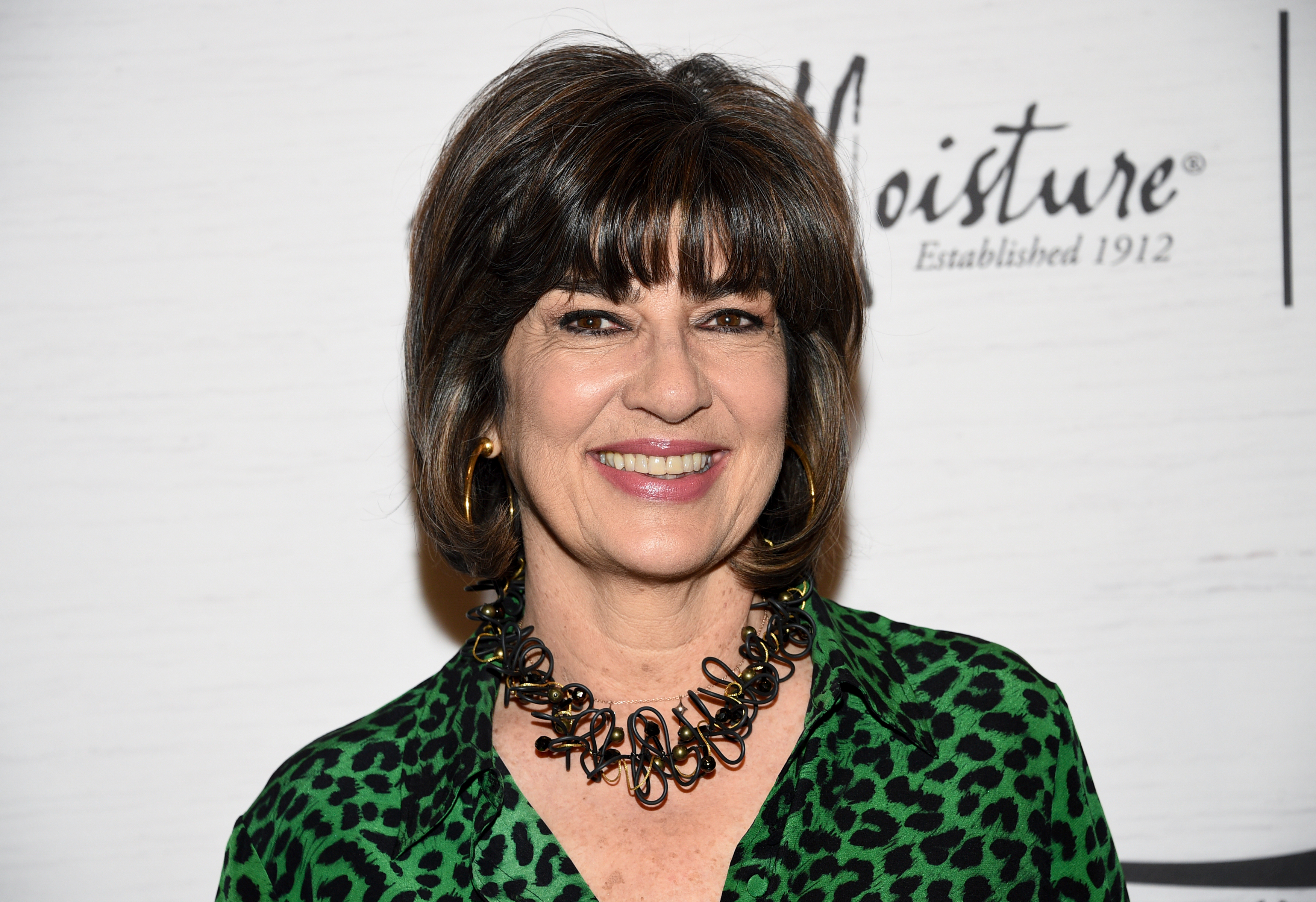
Longtime CNN anchor Christiane Amanpour, who began as an entry-level assistant and rose to become one of the most visible correspondents and anchors on TV, reporting from war zones and hot spots for decades, will be leaving the network after 43 years.
Amanpour, the network’s chief international anchor, will scale back her daily show, Amanpour, on CNN International to once a week at the beginning of 2027, and end it in May, leaving the network the following month. She said in a statement Monday that she looks forward to “interesting new projects down the line.”
Amanpour, 68, also will end her PBS show, Amanpour & Co, at the end of the year, she said in her statement, shared by CNN. She will continue her podcast, The Ex Files, with her ex-husband, Jamie Rubin, a former U.S. diplomat.
“After many months of thought and a few sleepless nights, I have decided to separate from CNN, my partner of 43 fantastic years!” Amanpour said. She added she would “always be rooting for CNN and maintaining its history of independent journalism. Remember: Always be truthful, not neutral.”
No reason given for her departure
Amanpour did not give a reason for her departure, nor did she specifically mention changes at her network. But her exit coincides with a new era at CNN as it comes under a new owner, Skydance. After a yearlong process, Skydance-owned Paramount closed its $81 billion buyout of Warner Bros. Discovery on Oct. 6. The merger unites under one roof two giants in TV news — CBS and CNN.
On a personal front. Amanpour has spoken openly about her 2021 diagnosis of ovarian cancer and two later recurrences, calling it “the invisible killer.” She has urged others to “get all the scans that you can.”
Amanpour joined CNN as an assistant in Atlanta in 1983. In his own message Monday, CNN’s chief executive, Mark Thompson, wrote that at the time, her promise was not universally appreciated. “Famously, one of her bosses told her back then that she didn’t have what it took to become a foreign correspondent — or to hold any on-air role at all,” Thompson wrote. “Boy, did she prove him wrong!”
Fame came during the first Gulf War
Amanpour became a reporter, and an international correspondent seven years later. She earned fame in the early 1990s, covering the Gulf War, conflict in the Middle East, and many other hot spots. War reporting is “a sense of mission, it’s a sense of purpose, it’s a sense of being able to tell a story,” she said.
She aimed to bring international news — including complicated stories — to American viewers. “I’ve never believed that things are too complicated to put on American television,” she told the Associated Press in 2023. I’ve never talked down to an audience. I’ve never believed that they just want to know what’s happening in their backyard.”
Amanpour also noted that her upbringing gave her a unique perspective.
“Because of my upbringing — I’m half-Iranian and half-British — I’ve had the great privilege of being able to see the world from two very distinct perspectives,” she said. “I’ve always spoken out about the need to bridge gaps. I know we can live in a world that’s not 100% tribalized.”
In her remarks Monday, Amanpour thanked her field crews and show teams,
“From my very first big exciting assignment covering the first Gulf War, to the horrors of the Bosnian War, Rwanda, Afghanistan, Ukraine, and Iran and all the points in between, it’s the teams and the camaraderie that counted so much,” she wrote, “as we together battled to seek the facts, the evidence, and the humanity, so that CNN could always broadcast the truth about the world and to the world, without fear nor favor.”
CAIRO — Iran-backed Houthi rebels struck Yemeni government forces with ballistic missiles on Monday, killing at least 53 soldiers at a military camp in one of the deadliest attacks since a resurgence in fighting this summer, Yemeni military officials said.
The attack wounded an additional 200 recruits at the military camp in the southern province of Shabwa, the provincial government there said. The rebels acknowledged targeting the camp.
The fighting between the Houthis and Yemen’s Saudi-backed government forces is a widening front in the Iran war that began in February. The escalation shattered a 2022 ceasefire deal that largely stopped fighting in Yemen’s civil war.
The Houthis have put their growing military capabilities on display on multiple fronts in recent weeks, repeatedly striking Saudi Arabia’s main international airport from hundreds of miles away and seizing territory inside Yemen near a key shipping chokepoint.
Iran and its allies in Lebanon and Iraq provide expertise, training, and sophisticated weapons to the Houthis, according to U.N. and other experts. Iran denies arming the Houthis, which would violate a U.N. embargo.
The provincial government in Yemen says death toll may rise
The provincial government in Shabwa said the death toll from Monday’s attack could rise. “This bloody, treacherous attack targeted new recruits in the training and preparation phase and is considered an extremely critical military escalation and a blatant aggression on the security and stability of Shabwa province,” the statement said.
It called on Yemen’s president, the Saudi-led coalition, and the government to expedite air defense and early warning systems to reinforce Shabwa’s capabilities.
The head of Yemen’s ruling Presidential Leadership Council, Rashad al-Alimi, promised a “firm response” and said the attack reflects the Houthis’ “approach of resorting to cowardly terrorist attacks whenever they face pressures or their Iranian-backed sabotage plots falter.”
One Yemeni military official said the missiles struck while recruits were lining up in formation for a training session. The official spoke on condition of anonymity because they were not authorized to talk to the media.
A Houthi military spokesperson claimed the camp was targeted because it is operated by Saudi officers, and that some of them were killed in the attack — though he provided no evidence. The Saudi government did not immediately comment.
Saudi Arabia cancels investment conference
On Sunday, the Houthi-run Health Ministry blamed Saudi-led forces for an airstrike that killed at least nine people in Yemen’s rebel-held northern province of Saada. Five children and two women were killed in the attack, one of several that killed or wounded more than 30 people over the weekend, according to the rebels.
There was no immediate comment from Saudi Arabia.
The Houthis, a Shiite religious and political movement rooted in northern Yemen, are increasingly attacking Saudi Arabia because it supports Yemen’s internationally recognized government in the civil war. The Sunni kingdom, which has long feared the emergence of a well-armed ally of Shiite Iran on its border, joined the war in 2015 after the rebels seized much of northern Yemen, including the capital, Sana’a.
In recent weeks, the Houthis have targeted Saudi airports, oil and military facilities, and the headquarters of Saudi oil giant Aramco.
On Monday, Houthi rebels claimed to have carried out six attacks targeting oil infrastructure, airports, and military sites across Saudi Arabia, including facilities in the kingdom’s east and the international airport in the capital, Riyadh. But the group did not specify when the attacks took place.
The Saudi Civil Defense issued danger alerts but no immediate reports of casualties or damage. However, in a sign that the Houthi attacks are unsettling Saudi society, the kingdom on Monday said it was canceling a global investment conference scheduled for next week that was expected to draw executives from Wall Street and beyond.
In Yemen, the Houthis recently seized more territory along the Red Sea coast and near the Bab el-Mandeb Strait, a crucial shipping alternative to the Strait of Hormuz. The Saudi-led coalition launched a major military offensive earlier this month to dislodge the rebels from that strategic perch and retake the territory.
Monday marked five years since Houthis detained more than 20 Yemeni staff of the U.S. embassy in Sana’a. The embassy had suspended operations in 2015 but local staff still provided security and basic maintenance of the facility. The State Department on Monday called for their “immediate and unconditional release.”
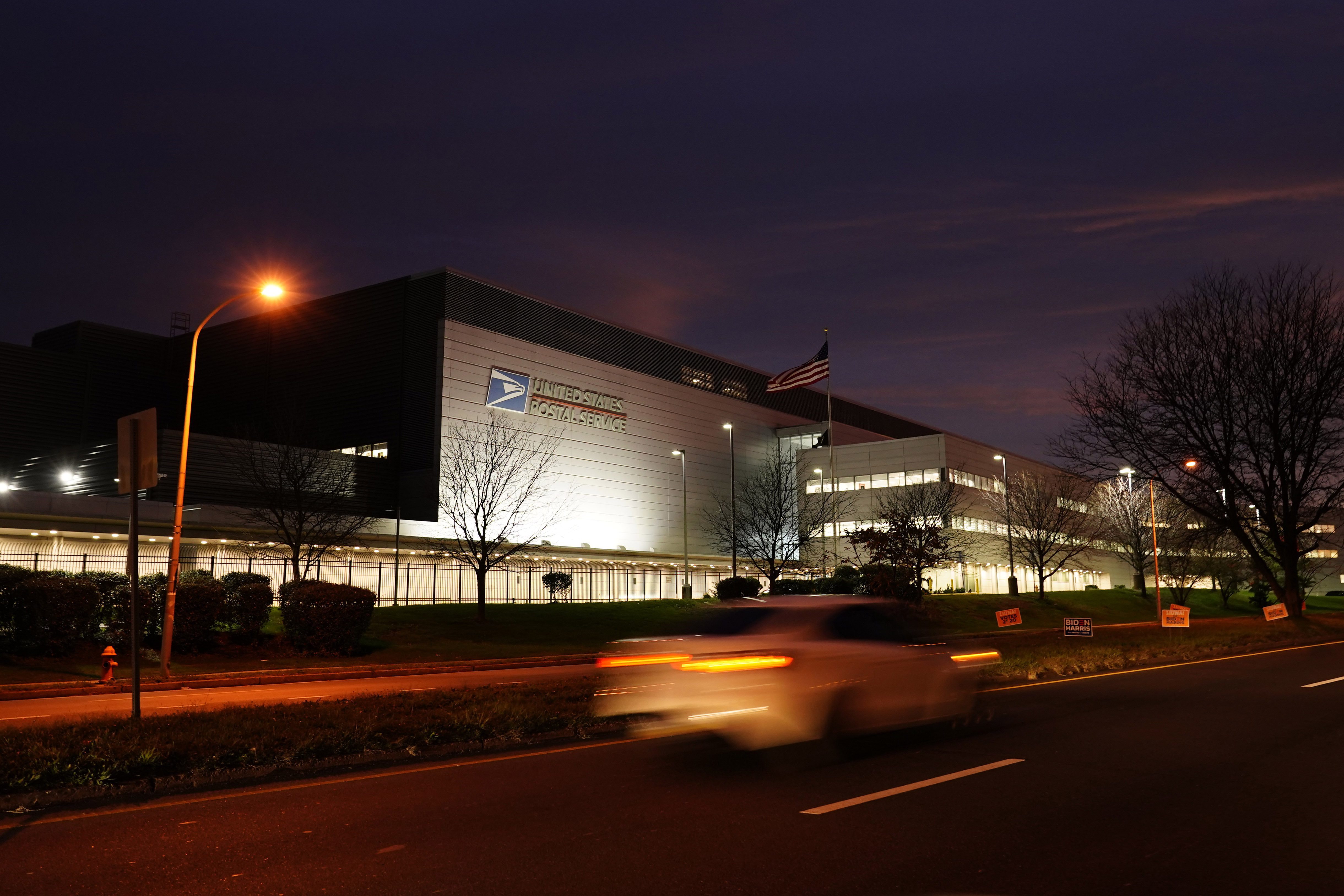
While working as a U.S. Postal Service clerk in Philadelphia, Saahir Irby had access to government-issued checks that were marked “return to sender” when they couldn’t be delivered.
Starting in 2023, prosecutors said, rather than help those checks get back to the U.S. Treasury Department, Irby decided to begin stealing them: stuffing them into his coat, his pockets, his backpack, and then working with other people to resell them on the social media platform Telegram.
In about a year, prosecutors said, Irby pocketed profits of nearly $75,000 — money he and his lawyers said he put toward a “severe” gambling addiction.
But the face value of the checks he stole exceeded $84 million, prosecutors said. And the government ultimately paid out about $11 million in fraudulent benefits to people who’d bought stolen checks from Irby or his co-conspirators.
On Monday, U.S. District Judge Joshua Wolson sentenced Irby to more than five years in prison for his role in the scheme, which the judge called a “significant, serious crime.”
Irby, 28, said he understood and apologized. He told Wolson his gambling addiction had consumed him and led him to take actions he knew were wrong — at one point, he said, he was directing 80% of his earnings toward casinos — and he vowed not to commit similar transgressions in the future.
“I owe it to myself, and especially my son, because I don’t want him to follow in my footsteps,” Irby said.
The penalty imposed on Irby served as a final chapter in the check-stealing scheme. His three co-defendants — Tauheed Tucker, Cory Scott, and Alexander Telewoda — were each also sentenced to at least three years in prison by Wolson.
Assistant U.S. Attorney Jessica Rice said in court Monday that Irby was the “lynchpin” of the conspiracy, and said the number of checks he stole, and the amount they were worth, were “eye popping.”
Both she and Wolson also said that beyond the monetary loss, the scheme was a violation of Irby’s responsibility to the public. As a Postal Service worker, they said, he had access to huge amounts of sensitive materials being sent by mail — including the government-issued checks, which came from agencies such as the Internal Revenue System, Social Security Administration, and Department of Veterans Affairs.
The Postal Service “needs employees in its facilities operating the various lines, and it needs them to be honest and upright,” Wolson said. “Mr. Irby breached that trust.”
The scheme began in June 2023, prosecutors said, when Irby started coordinating with Scott and Telewoda. Irby’s role was to steal the checks from the postal facility, prosecutors said, then give them to Scott and Telewoda, who would advertise them for sale online at a fraction of their face value. Buyers could then try to find a bank or financial institution to cash the stolen checks.
Rice said Irby, during his shifts, would visit the part of the facility where checks were sent after they couldn’t get delivered to their intended recipients. He would then steal dozens at a time, often by stuffing them into bags or his clothes.
Later that summer, prosecutors said, Irby recruited Tucker, his younger cousin and coworker, to help steal checks from the facility. Each received a small cut of the resale proceeds.
The conspiracy continued for about a year, prosecutors said, at which point Irby and Tucker were fired and charged alongside Scott and Telewoda with conspiracy and theft-related crimes.
All pleaded guilty earlier this year.
Irby’s sentence will total 63 months in prison, along with three years of supervised release.
Telewoda earlier this year received a six-and-a-half year prison sentence, Scott was sentenced to nearly six years behind bars, and Tucker was sentenced to three-and-a-half years in prison.