Category: News

  • DA says a teen who recorded San Diego mosque shooting livestream has been charged with murder

    DA says a teen who recorded San Diego mosque shooting livestream has been charged with murder

    A 17-year-old North Carolina girl who recorded a livestream of a shooting that killed three people at a San Diego mosque and disseminated the attackers’ white-supremacist writings has been charged with murder by aiding and abetting, a district attorney said Monday.

    Forsyth County District Attorney Jim O’Neill said at a news conference in Winston-Salem that the girl, identified in court records as Sarah Lindsey Santiago, was arrested last week. A grand jury indicted her on three counts of murder and one count of conspiracy Monday.

    Santiago’s attorney did not immediately return a message from the Associated Press seeking comment Monday.

    Under North Carolina law, the aiding-and-abetting charges carry the same penalties as if the girl had committed the attack herself, O’Neill said. According to the indictment, Santiago agreed prior to the attack that she would record the livestream, distribute it, and release a document written by the attackers. She carried out those tasks, it said, and she purchased a patch bearing a white-supremacist symbol and sent it to one of the gunmen to wear during the attack.

    “The individual here, locally, was the person who was recording the livestream,” O’Neill said. “She disseminated that information and she published their manifesto.”

    Cain Clark, 17, and Caleb Vazquez, 18, stormed the Islamic Center on May 18 before being driven back outside by a security guard who exchanged gunfire with them as he initiated a lockdown, helping to protect 140 children who were just steps away.

    The pair killed the guard, Amin Abdullah, and two other men before taking their own lives in a vehicle nearby. They left behind rambling writings full of vitriol against a wide range of people, and cited the shooter who killed 51 people at two mosques in Christchurch, New Zealand, in 2019, as one of their models for their violence.

    The two also planned subsequent attacks on two other targets: a Jewish temple and a predominantly Black high school, O’Neill said. He credited the guard and other victims at the mosque with having saved countless lives.

    The attackers’ writings cited a range of far-right ideological inspirations, including the notion that white people are being replaced by other populations, and detailed their motives and goals. They included hateful rhetoric toward Jewish people, Muslims, and Islam, as well as the LGBTQ+ community, Black people, women, and the political left and right.

    They indicated they were trying to accelerate the collapse of society. Vazquez wrote of having “some mental health issues” and being rejected by women.

    In a written statement, the Vazquez family said Caleb Vazquez was on the autism spectrum and had grown to resent parts of his identity. The family said they believed that, combined with exposure to hateful rhetoric online, contributed to his radicalization.

  • Supreme Court clears way for White House ballroom construction to continue

    Supreme Court clears way for White House ballroom construction to continue

    The Supreme Court on Monday allowed construction to continue on the White House ballroom, handing President Donald Trump a victory as he races to complete the largest expansion to the executive mansion in decades.

    The justices found that the historical preservationists who challenged the controversial project had not suffered the direct personal harm required to bring a lawsuit. The ruling means their legal action appears to be dead.

    The National Trust for Historic Preservation had argued that work on the ballroom, which Trump has said is part of a larger complex necessary for national security, must stop until approved by Congress.

    That argument prevailed in lower courts, which twice ordered the White House to pause work on the ballroom. But amid legal machinations, those orders were put on hold, allowing construction to move forward without interruption.

    The high court ruled the National Trust had not shown that it suffered a real-world injury from the ballroom project, meaning it did not have what is known as standing to bring its case.

    The ballroom, which is expected to be able to hold about 1,000 guests, is being built in conjunction with a five-story underground military complex that will include a hospital and shelters to protect the president and senior officials.

    Trump has said that the total cost of the ballroom may be $400 million and will be paid for with private donations, but contractors’ invoices obtained by the Washington Post show that the cost of the project will be $600 million and that taxpayers will foot about half the bill.

    Lower courts have not blocked work on the underground complex, and the justices’ decision pertained only to the aboveground portion.

    The majority in the unsigned ruling said the Trust had not met the required legal standard to bring its case.

    “Today, we do not pass upon the legality of the government’s East Wing project,” the majority wrote. “We conclude only that, based on the submissions before us, the government is likely to prevail in showing that the Trust lacks … standing to challenge the project in federal court.”

    The ruling came over the objections of an unusual coalition of justices, who often are on different sides. Chief Justice John G. Roberts Jr., a conservative, joined with the court’s three liberals in dissent.

    Writing for the group, Roberts said the decision “is no victory for the separation of powers.” He referenced Alison Hoagland, a Trust board member.

    “The White House is not just any building, and — when it comes to historic preservation — Hoagland is not just any person,” Roberts wrote. “In failing to appreciate as much, the Court misconceives the plaintiff’s injury, allowing the Executive’s likely infringement of the Legislature’s power of the purse and authority to regulate federal property in the District of Columbia to continue.”

    The White House and the National Trust did not immediately respond to questions about the ruling.

    Before the Supreme Court order, the U.S. Court of Appeals for the D.C. Circuit upheld a federal judge’s April ruling that work on the 90,000-square-foot addition to the executive mansion probably requires congressional approval to continue.

    Shortly after U.S. District Judge Richard Leon ordered work to stop, the appeals court stepped in and paused that ruling while it decided whether to issue its own injunction.

    The appeals court blocked aboveground construction anew on Aug. 7, finding that Trump had exceeded his power in authorizing the destruction of the East Wing of the White House and the building of the ballroom.

    That decision was stayed for two weeks to give the Trump administration time to appeal to the Supreme Court.

    “We are aware of no instance in American history in which a President unilaterally and using privately collected funds demolished substantial portions of the White House that Congress authorized to be built and American taxpayers paid for. Until now,” the appeals panel wrote.

    In its filings with the high court, the Trump administration argued that it was too late to stop ballroom work because the project was 65% complete, and that the injunction put the lives of Trump and others at risk.

    The filing cited a number of alleged attempts on Trump’s life, including a 2024 incident at a Pennsylvania rally when a would-be assassin’s bullet grazed his ear.

    “The injunction would wrongfully install a single district judge as sole arbiter of what further construction is ‘strictly necessary’ to protect the safety of the President, his family, staff members, and visitors to the White House, including foreign dignitaries, and presidents and prime ministers of other countries,” Solicitor General D. John Sauer wrote.

    Trump initially characterized the ballroom as necessary for presidents to entertain VIP guests, but in recent months he has shifted to arguing it was crucial on security grounds.

    The Trump administration has said the ballroom, which will be built with missile-resistant columns, a drone-proof roof and blastproof windows, will shield the military complex below and the White House more generally.

    To bolster the claim, the administration shared affidavits from Secretary of State Marco Rubio, FBI Director Kash Patel, and others who claimed that completing the ballroom was necessary to protect the president.

    Trump recently posted on Truth Social that the ballroom was a “desperately needed National Security structure” and derided the preservationists as “treasonists.”

    The White House announced the project in July 2025, saying at the time that the privately funded addition would hold 650 guests and cost $200 million. But both the capacity and the price have spiraled upward.

    The National Trust sued to block construction of the ballroom in December, saying that the Trump administration had not gone through the legally mandated review process and that Congress has sole authority to authorize major White House construction.

    The group was skeptical of the claims that pausing the project would create a security risk. In recent court documents, the National Trust argued that the Trump administration was racing to complete the ballroom to thwart oversight.

    “Rather than obtain permission from Congress, Petitioners have instead decided to try to outrun judicial review,” the National Trust wrote in its filing.

    The group also cited a National Park Service environmental assessment that found the ballroom would interfere with sight lines and disrupt the historical continuity of the White House grounds.

    About 30 congressional Democrats filed an amicus brief supporting the National Trust in the case.

    “Questions about how best to protect current and future White House residents, staff, and visitors fall well within the ambit of Congress’s powers over federal property and federal spending,” the Democrats wrote.

    The Post reported in June that an internal contractor’s estimate put the final cost of the project at about $600 million and that roughly half the money would come from taxpayers. The administration has approved a $500 million no-bid contract to construct the ballroom.

  • Asianfresh Food Market is expanding from Chinatown to Cherry Hill

    Asianfresh Food Market is expanding from Chinatown to Cherry Hill

    Chinatown’s popular Asianfresh Food Market is bringing its fresh produce, seafood, and hard-to-find Asian imports to Cherry Hill.

    The specialty market is preparing to open its second location at 2005 Route 70 East, less than two miles away from the newly renovated H Mart.

    Like its two-story flagship on 10th Street between Race and Cherry Streets in Philadelphia, the new store will be stocked with specialty products and seasonal items imported from across Asia.

    Asianfresh Food Market will be holding a grand opening for the new store on Sept. 12 at 11 a.m., said spokesperson Karen Louie. The details for the event are still being finalized, Louie said, but they are planning to have giveaways, contests, and more to celebrate the store’s opening.

    Throughout the summer, the grocer has been posting periodic updates on social media showing stocked shelves and full seafood tanks as they prepare for visitors.

    By late last week, the exterior Asianfresh sign was up on the building and rows of branded shopping carts were lined up and waiting for shoppers. A flier indicating that the store is hiring for all departments was taped to the front doors, the view inside blocked by brown construction paper.

    Shopping carts are lined up outside of Asianfresh Food Market’s new location in Cherry Hill on Aug. 28, 2026.Lacey Latch

    The Asianfresh expansion comes not long after the Korean grocery store H Mart reopened in June following extensive upgrades, including a new food court, bakery, and beauty shop.

    The efforts by both international grocery stores to enhance their offerings in South Jersey reflects the growing demand for these products in the area and nationwide.

    The number of Asian residents in Cherry Hill Township grew by 32% between 2014 and 2024, according to U.S. Census Bureau data.

    The township’s population was in line with national trends as Asian Americans remain the fastest-growing racial or ethnic group in the U.S.

    The openings also come at a time when Asian grocery staples like ghee, miso, chili oils, and more are becoming increasingly popular with non-Asian shoppers.

    Sales from the “Asian/ethnic aisle” commonly found in American grocery stores jumped almost four times more than overall sales between April 2023 and April 2024, according to the New York Times, citing data from market research company Circana.

  • Expanded weed rules could let Barrington’s shuttered International Paper plant become a cannabis business, mayor says

    Expanded weed rules could let Barrington’s shuttered International Paper plant become a cannabis business, mayor says

    Barrington has introduced three ordinances that would expand, regulate, and tax sales for cannabis businesses.

    Kyle Hanson, Barrington’s mayor, said the legislative moves are an effort to make the borough’s International Paper facility, which was set to close Monday, attractive to cannabis companies that could move in.

    The Memphis-based company with nearly 200 facilities across the country announced this summer that its Barrington plant would close in the third quarter of 2026 as part of its restructuring plan and lay off 126 workers.

    Amy Simpson, an International Paper spokesperson, said Monday was the last production date for the Barrington facility.

    While no cannabis business (or others) have approached Barrington about taking over the facility, Hanson said he brought the idea to the borough’s council in the hope that broadening permitted uses could bring more economic development to the closing facility and vacant properties in the district.

    “The decision was more about being proactive with our zoning and giving ourselves additional options as we prepare for the loss of a long-time town business,” Hanson said by email.

    The package, which had its first reading by Barrington’s council on Aug. 11, would allow cannabis cultivators, manufacturers, distributors, and delivery establishments, along with cannabis wholesalers and retailers already permitted in the borough, to operate in the manufacturing district. The proposal would allow cannabis delivery companies to work in the business commercial district, too.

    The borough would apply a 2% municipal transfer tax to sales by those businesses, except cannabis wholesalers, which would get a 1% tax. One ordinance also sets conditions, including that the facilities would be more than 200 feet away from educational buildings and other cannabis plants and more than 50 feet from residential neighborhoods.

    International Paper has other facilities in South Jersey, including in Bellmawr, West Deptford, and Vineland.

    Simpson said the site at 100 E. Gloucester Pike isn’t currently on the market, but a sale should come in mid-2027. She did not answer whether an agreement is currently in place for the property.

    The ordinances are scheduled for a public hearing and vote on Sept. 8. at a borough council meeting. Hanson said council unanimously agreed to move forward with the ordinances for a vote, so he expects all members to approve.

  • Congo authorities report more than 6,000 confirmed Ebola cases and nearly 3,000 deaths

    Congo authorities report more than 6,000 confirmed Ebola cases and nearly 3,000 deaths

    BUNIA, Congo — Congo’s authorities said Monday that the fastest-growing Ebola outbreak in history has topped 6,000 cases with 2,911 deaths.

    More than 1,360 people have recovered from the virus, in what authorities said was an “encouraging” development.

    The outbreak in eastern Congo is spreading under extremely difficult conditions, fueled by insecurity, displacement, a health workers’ strike, and intense population movements. The situation is particularly concerning at displacement sites, where residents already live in extremely precarious conditions.

    Last week, the virus spilled into two new health zones in the region.

    The World Health Organization has said that it remains out of control and is on track to surpass the 2014-2016 West Africa Ebola outbreak, the deadliest on record, which killed more than 11,000 people, primarily in Guinea, Liberia, and Sierra Leone.

    On Saturday, an Ebola response team was attacked on the outskirts of the town of Mambasa in Ituri province while responding to a call to secure a body. Young people armed with machetes stormed the site of the funeral, forcing the team to flee and injuring one member, a representative told the Associated Press.

    “We demand greater security so we can operate in the field and do our work without endangering our lives,” said Floribert Magene, a member of the response team.

    Bodies of those who died of Ebola can be highly contagious and lead to further spread when people prepare them for burial and gather for funerals.

    In response to the outbreak, Congolese authorities have mandated that the dangerous work of burying suspected victims be managed wherever possible by authorities, which can be met by protests from families and friends.

    The outbreak is caused by the Bundibugyo virus, a rare type of Ebola that has no approved vaccine or treatment.

    Last week, Congo began vaccinating health and other front-line workers with the Ervebo vaccine that was effective in past Ebola outbreaks caused by a different, more common type called Zaire.

    Clinical trials are underway to find a licensed vaccine for the Bundibugyo virus.

    Although the current outbreak was declared in mid-May, officials believe it had been spreading since February. It has spread from three health zones to nearly 60, with most cases and deaths occurring outside the network of monitored contacts and within communities.

    Efforts to bring the outbreak under control — from limited public gatherings to social distancing and airport closures — have disrupted life in the six provinces, particularly Ituri, which also has been ravaged by rebel violence.

    The government has introduced some measures, including installing health and sanitary equipment at some locations, but advocacy groups say more needs to be done to build trust with the community.

    While neighboring Uganda declared itself free of Ebola last month, the risk of further cross-border spread remains, WHO said last week.

  • Philly schools transition committee app opens as district moves ahead with $3B facilities plan

    Philly schools transition committee app opens as district moves ahead with $3B facilities plan

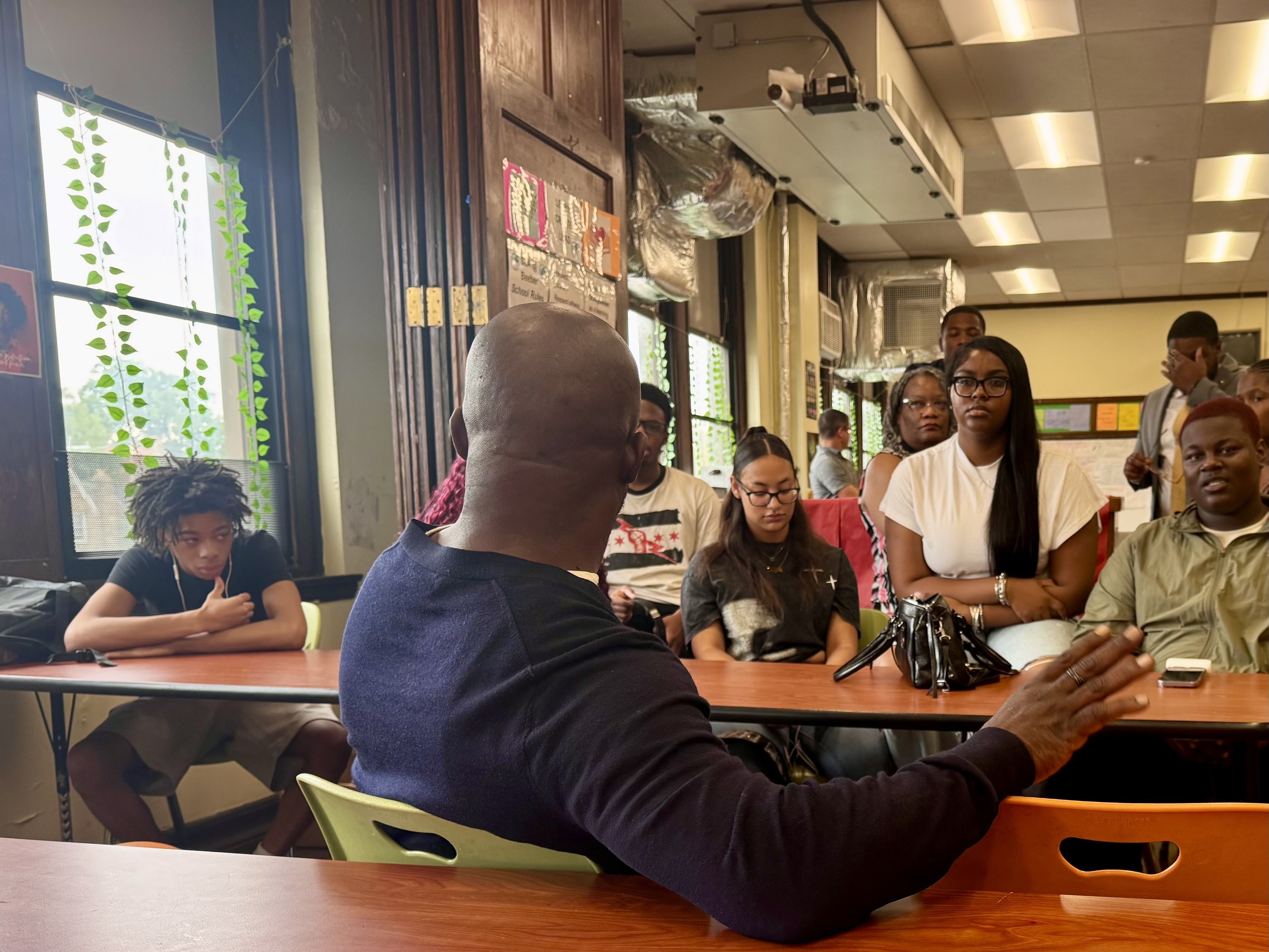
    Chris Johnson, principal of Science Leadership Academy at Beeber, looked at the students in front of him — 10th and 11th graders at Parkway West, a school that’s closing in June.

    “What’s coming up for you?” Johnson asked them.

    “Division,” one student said plainly.

    SLA Beeber won’t be doing that, Johnson said. On the first day of school last week, Johnson told his students if they were going to have issues accepting the Parkway West kids coming next year, they could leave.

    “We don’t do stepbrothers, stepsisters. We do family. Ain’t no division. We’re family,” said Johnson.

    The conversation came as Philadelphia School District officials toured SLA Beeber to tout a new process for managing school closings.

    Applications opened Monday for transition teams that will affect how changes will happen at 50 schools that will be closed or beginning phaseouts at the end of the 2026-27 school year, and those receiving students from those schools in 2027-28.

    Ten Parkway West students traveled to SLA Beeber Monday to get a preview: tours of the school, a sit-down with Johnson, shaking hands with Superintendent Tony B. Watlington Sr., school board members, and others.

    “We’ve got to do some things differently in Philadelphia to address the fact that we have a 65% occupancy rate across the district, which means 35% of our seats in our buildings in the district-operated schools are empty,” Watlington said at a news conference in a third-floor classroom.

    The school board in April approved a $3 billion facilities plan that will close 17 schools and modernize 169 over a decade, though the timeline and scope is not set in stone, as more than half of the plan is not yet funded. Some public officials, including several City Council members, are still pushing against the plan, demanding some schools be removed from the closing list.

    Shakeera Warthen-Canty, whom Watlington appointed this summer to lead a new School Transition Office, said transition committees will help think through concerns about safety, transportation, space planning, and more.

    “We understand that for some communities this is very hard, but we want to make sure that we are hearing them and we’re providing as much support as we can,” Warthen-Canty said. “The red carpet, white-glove treatment Dr. Watlington talked about, that’s what we want to make sure our principals, our staff, our students, and our families have.”

    Each transition committee will have about 20 members. Applications, available through the district’s website, will be open through Sept. 18. Those who are selected to sit on committees will be notified by Oct. 1, with work expected to begin the week of Oct. 12.

    ‘There’s a lot of uncertainty’

    When Parkway West first showed up on the list of possible school closings, principal William Brown and Johnson of SLA Beeber began meeting regularly, they said.

    William Brown (center, speaking at podium), principal of Parkway West, speaks at a news conference at SLA Beeber. Brown’s school is closing at the end of the school year, and its students will be sent to SLA Beeber.Kristen A. Graham / Staff

    “I’d be lying if I said this was an easy time for the Parkway West community,” Brown said Monday. “There’s a lot of uncertainty out there for the people involved.”

    SLA Beeber enrolled 533 students in grades 5 through 12 last year; Parkway West had 151 students in grades 9 through 12.

    While Parkway West students will have the opportunity to go to SLA Beeber, most staff will be force transferred to other schools, without a chance to follow their students. Still, Brown said, the focus is on children.

    “These are our young people, we really have to make sure they’re OK,” said Brown, who said the SLA Beeber and Parkway West communities “are united” around that goal.

    Later, SLA Beeber students Mohamed Ali, 15, and Sebastian Delgado-Colón, 16, showed Watlington, board president Reginald Streater, board member Whitney Jones, and others around their school. Other SLA Beeber classmates took Parkway West students on a tour.

    What do you think of the coming changes, the dignitaries asked Ali and Delgado-Colón.

    “I can’t imagine what they’re feeling, going into a completely new environment,” said Delgado-Colón.

    At first, Ali said, he thought about what the change would mean for SLA Beeber students.

    “Our teachers are very one-on-one with us. Is this going to change that? But we’re going to make the best of it,” said Ali.

    “We were looking at it in more of a tense way — now we’re looking at it as a net positive,” said Delgado-Colón.

    “It can build on community,” Ali added.

    Philadelphia Superintendent Tony B. Watlington Sr., school board member Whitney Jones, and Science Leadership Academy at Beeber students Sebastian Delgado-Colon and Mohamed Ali look at SLA Beeber’s engineering lab. Delgado-Colon and Ali gave Philadelphia School District officials a tour of the school, which will receive students from Parkway West after Parkway West closes at the end of the school year.Kristen A. Graham / Staff

    District officials have stressed that closing schools will enhance resources citywide.

    The cooperation between Parkway West and SLA Beeber, Watlington said, is a hopeful one.

    “It shows that we can make tough decisions and we can do it in a way that all of us absolutely can become winners and not losers,” the superintendent said. “Our gain doesn’t have to necessarily come at anybody’s expense.”

  • Pentagon secretly installs military influencers in civilian roles

    Pentagon secretly installs military influencers in civilian roles

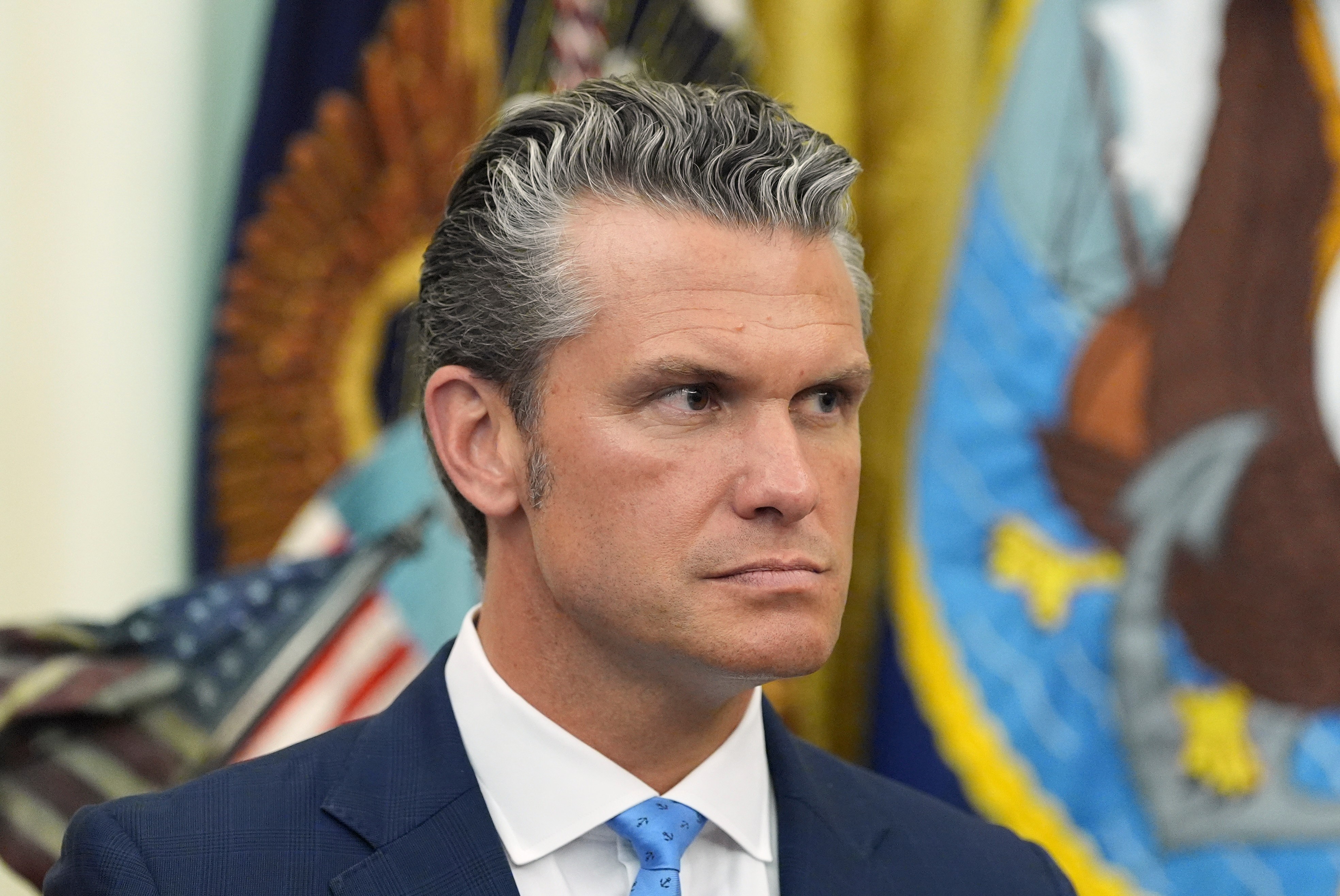
    The Pentagon has secretly installed several conservative military veterans with large online followings in government roles, declining to disclose their assignments as they amplify Defense Secretary Pete Hegseth’s viewpoints and attack those who scrutinize the Trump administration, according to people familiar with the matter and corroborating material.

    At least some of the influencers have been assigned to civilian roles that could lead to changes in policy, the people familiar with the matter said. Like others, they spoke on the condition of anonymity because of the sensitivity of the issue.

    Neither the Pentagon nor those involved have disclosed the government roles despite the Trump administration’s claims that they are running the most transparent Defense Department ever.

    Those involved include Rob Maness, a retired Air Force colonel, and Kurt Schlichter, a retired Army colonel, people familiar with the matter said. Pentagon records reviewed by the Washington Post show that both have active official government email addresses as of this past week and are assigned to the office of Anthony Tata, the undersecretary of defense for personnel and readiness. The email addresses include a “.civ” suffix, meaning they are labeled as civilian employees, rather than as military personnel or contractors.

    Both served for decades in uniform and, since retiring, have turned from the military to conservative commentary. Maness has more than 135,000 followers on X, while Schlichter has nearly 620,000.

    Another retired Army colonel and influencer, Thomas Anderson, was listed in Pentagon records earlier this year with a “.civ” email address and assigned to Tata’s office, according to people familiar with the matter and records reviewed by the Post. An attorney, he writes online under the pen name Cynical Publius and has more than 323,000 followers on X. He was no longer listed in Pentagon records late this past week, the people familiar with the issue said.

    The assignments for all three have not previously been reported. Questions have been raised online about influencers’ connections with the Pentagon, including in an article last week by the Bulwark.

    Pentagon spokesperson Joel Valdez declined to comment to the Post about whether any of the three are drawing a taxpayer-funded salary, what roles they have, or how long those jobs are expected to last. Tata did not respond to a request for comment.

    Maness and Schlichter did not respond to emails or other messages requesting comment. Anderson declined to comment in a short phone call.

    The individuals are assigned as either “special government employees” or “highly qualified experts,” people familiar with the issue said. Schlichter appears in a government database with an “HQE” designation after his name, according to material reviewed by the Post.

    SGEs are limited by law to working no more than 130 days in any 365-day period. Those with HQE status can work full or part time, with or without compensation, according to government guidance on the issue released in 2023. It was not clear what financial agreements were reached with Maness, Schlichter, and Anderson, and when each of their assignments began.

    Tata’s team has taken on a number of culture-war issues, including scrutinizing war colleges for “woke” ideology and reviewing how the Biden administration adopted COVID vaccine mandates for U.S. troops.

    Hegseth, a former Fox News personality and Army National Guard officer, has attempted to reshape the public discourse about Pentagon affairs. Last year, he imposed new restrictions on Pentagon press corps members that forced dozens of journalists out of the building and later introduced a new, primarily right-wing press corps to replace them.

    The increased attention on the Pentagon’s influence efforts comes after another conservative influencer, Jennica Pounds, accused a State Department official this month on social media of attempting to entrap her into publishing government secrets. Pounds, writing under the pen name DataRepublican, posted text messages online that showed the official approached Pounds with documents to publish and tout as a journalistic scoop.

    Sarah Rogers, the undersecretary of state for public diplomacy, later disclosed on social media that she was the official who had reached out to Pounds. Rogers posted the documents herself, saying it was not a “trap,” and Pounds later said that she regretted “making a public spectacle” and “pulling people I respect into the swirl.” Rogers has been nominated by President Donald Trump to lead the U.S. Agency for Global Media, which oversees Voice of America and other government-funded media.

    The dustup was followed by the Pentagon and Pounds disclosing that she works as a special government employee for the Defense Department. She posted on social media that she became an employee in July, after holding a credential as a journalist in Hegseth’s new Pentagon press corps until June. Pounds has said on social media that she applied for a Pentagon press pass and received it in April.

    Pounds did not respond to a request for comment.

    The disclosure has roiled social media, where some fellow influencers have defended Pounds’ work amid criticism that she should have disclosed she was working for the government.

    Adam Kinzinger, a former Republican congressman and Air Force veteran, posted that it appears the Pentagon “is using your tax dollars to hire influencers on X to put out partisan talking points.”

    “How many more people that are blue checkmarks on X that are putting out information on behalf of the federal government, and Donald Trump, and the Republican Party … are actually special government employees?” said Kinzinger.

    Maness, Schlichter, and Anderson appeared on behalf of the Pentagon’s Senior Service College Task Force at the Army War College in Carlisle, Pa., in May, two people familiar with the visit said. The task force was organized in the spring with the goal of rooting out ideology deemed “toxic” or “woke,” Hegseth said in March.

    The task force has completed its research and prepared a report that has not yet been released, one of the people familiar with the visit said.

    After initial publication of this story, Anderson said on social media on Sunday night that he was asked to join the task force after he published an article in February recommending changes to the war colleges. Anderson said he was a special government employee through July 26 with work “exclusively limited” to the task force.

    “At no time have I ever received any compensation of any kind from any government source of any kind for anything I write or have ever written on X or in any magazine or other source,” Anderson wrote.

    While in Carlisle task force members met with students and professors over a number of days and asked questions about the performance of leaders like Hegseth and Gen. Dan Caine, chairman of the Joint Chiefs of Staff, one of the people familiar with the visit said. Some students were uncertain how candid they should be and whether there would be negative consequences if administration officials did not like the answers, this person said.

    The other person familiar with the visit said the task force members had concerns about the syllabus for a class focused on how military officers communicate with Congress.

    Maness retired from the Air Force in 2011 and has run unsuccessfully for a U.S. Senate seat in Louisiana. He is listed as the chairperson of GatorPAC, a political action committee that says on its website that it wants to “drain the swamp” in Washington and find more military veterans to run for office. The PAC’s website also includes videos of an online political commentary show starring Maness.

    In an article published last month by the conservative Daily Caller, Maness argues that Hegseth’s team needs to root out “disloyal” career employees in the department and laments “careerists who treat the Pentagon as their permanent fiefdom.” That article cites his decades of military experience, but does not say whether he is a current Pentagon employee.

    In an article published Wednesday on the website Campus Reform, Maness attacked a decision made by Army leaders to pull back efforts to toughen academic requirements for college students in Reserve Officers’ Training Corps programs. “Secretary Hegseth’s outrage is justified,” Maness wrote. The article likewise does not mention any government assignment.

    Maness also had a letter to the editor published in the Post in July in which he defended Hegseth’s efforts to reduce the number of military officers who attend elite universities for fellowships. He describes himself there as a retired Air Force officer, but no government role is mentioned. A Post spokesperson said that Maness did not disclose any connection to the Pentagon before publication.

    Schlichter is a columnist with the conservative site Townhall, writing and podcasting on politics, immigration, and military affairs. On Aug. 6, he published a column calling Trump a “hero for finally fighting back against Iran.”

    “He could have waltzed into the midterms, dragging Republicans behind him toward success,” Schlichter wrote. “But he had the courage to do what was necessary to stop these bastards before they made it impossible to prevent them from getting a [nuclear] bomb.”

    On social media, Schlichter posted a video earlier this month of Hegseth praising sailors aboard the USS Abraham Lincoln, an aircraft carrier that has faced morale problems during a long deployment.

    “We are,lucky to have @PeteHegseth,” Schlichter wrote on X on Aug. 14. He describes himself on X as a retired Army colonel, lawyer, and columnist, but does not disclose current Pentagon employment.

    On social media, Anderson has been a frequent critic of journalists, fellow veterans, and others opposing the Trump administration and has defended Hegseth’s efforts to overhaul military affairs. Writing for the Federalist in April, he assessed that there is “a cancer in America’s military ranks, and it must be expunged before it’s too late.”

    This past week, he repeatedly defended Pounds on X for serving as a special government employee as he also declined to answer questions from several people about whether he was an SGE employee, too.

    “The law does not view such people the same as civil servants, and they are legally allowed to continue whatever other private endeavors they were undertaking,” Anderson wrote. “In many cases, they are prohibited from revealing their status because of the sensitive nature of their work.”

    Another military influencer, John Konrad, also defended Pounds while noting he had discussions with the administration this spring about becoming a special government employee at the Pentagon. Konrad, a former member of the U.S. Merchant Marine and founder of the maritime website gCaptain, said that the Pentagon sought him out for a role and he later felt “ghosted.”

    The Pentagon also brought on Jerry Dunleavy, a journalist with the conservative Just the News, to assist Hegseth’s team with an ongoing review of the fall of Afghanistan. The Pentagon disclosed Dunleavy’s involvement in May.

    Dunleavy previously worked as an investigator for the GOP-led House Foreign Affairs Committee during an earlier investigation of the collapse in Kabul and quit in protest, saying the committee had not gone far enough.


  • U.S., Iran exchange attacks after monthlong lull in fighting

    U.S., Iran exchange attacks after monthlong lull in fighting

    DUBAI, United Arab Emirates — The United Arab Emirates said that it intercepted an Iranian drone over its waters Monday, an attack that comes after the United States and Iran exchanged fire over the weekend for the first time in a month.

    Iranian officials said two people were killed and several others wounded in the U.S. attack Sunday night on Larak Island in the Strait of Hormuz. Iran responded by launching missiles at U.S. sites in Jordan, which were intercepted.

    During the lull in fighting, the U.S. has been ratcheting up economic pressure on Iran with the hope of forcing concessions out of Tehran, including reopening the Strait of Hormuz to shipping.

    After the U.S. and Israel attacked Iran on Feb. 28, Iran established a chokehold on the vital strait, through which a fifth of the world’s traded oil passed in peacetime, slowing ship traffic to a trickle. That has roiled the global economy, raising prices worldwide for energy and other goods.

    As the fighting resumed, the price of Brent crude oil, the international standard, climbed above $90, up about 25% from the start of the war, presenting a growing problem for U.S. President Donald Trump before the midterm elections.

    A return to open conflict would be dangerous for the region, where Iran has targeted U.S. military bases and infrastructure in Gulf countries since the war began.

    In the wake of the renewed violence, Anwar Gargash, a diplomatic adviser to the UAE’s president, said on social media that “the state of neither war nor peace cannot be a sustainable solution.”

    He called for a political solution that would return normal navigation to the Strait of Hormuz, but also a “more realistic approach” than the June memo of understanding between Iran and the U.S., which, he said, “failed to outline a practical and acceptable” road map.

    UAE says Iranian attack is a ‘dangerous escalation’

    In a short statement earlier, the UAE Defense Ministry said it “dealt with” an Iranian drone that was detected over its waters approaching from Iran. There were no reports of damage.

    “This dangerous escalation constitutes a blatant violation of the UAE’s sovereignty, security, and stability, and a direct threat to the safety of its citizens and residents,” the Foreign Ministry said.

    The Defense Ministry later issued a second statement denying a claim by the Iranian army that the Al Minhad Air Base in Dubai had been targeted, saying it was false.

    In the wake of the U.S. attack on Sunday, Iran’s military warned that any further U.S. attacks would draw a far heavier response, including strikes on bases or other points from which attacks against Iran are launched, state-run IRNA reported.

    “The U.S. military has no choice but to leave the region,” the statement from Iran’s Armed Forces General Staff and the Khatam al-Anbiya Central Headquarters said.

    Iran says it has right to defend itself and will ‘respond decisively’

    Speaking after the first day of the Shanghai Cooperation Organization’s summit in Kyrgyzstan, Iranian Foreign Minister Abbas Araghchi said the United States must abide by the June memo before the current conflict can end, state television reported.

    Araghchi said Iran would continue defending its rights and that the solution to ending the conflict remained “completely clear.”

    The summit brings together a group billed as a counterweight to U.S. global influence, and includes Chinese President Xi Jinping, Russian President Vladimir Putin, and Indian Prime Minister Narendra Modi. Iranian President Masoud Pezeshkia was scheduled to meet with Putin on the sidelines Tuesday.

    U.S. weekend attack comes after weeks of rising economic pressure

    Meantime, U.S. Treasury Secretary Scott Bessent opened meetings of the Group of 20 finance ministers in North Carolina on Monday, as Washington pressures other countries to help the U.S. economically isolate Iran.

    The shifting strategy centers on threats to punish any country or entity that conducts business with Tehran.

    Two weeks ago, the UAE suspended all trade with Iran after saying it had come under renewed fire from Iran with two missiles splashing down harmlessly in the Persian Gulf. Iran denied the attack.

    Bessent later suggested it was pressure from Washington that led to the UAE decision.

    Trump stressed last week that he is “not in a hurry” to get Iran back to the negotiating table, and he continues making the case that the Islamic Republic’s leadership is on the ropes.

    Appointments to Iran’s senior security leadership in the past month, however, have signaled Tehran’s defiance after weathering decades of sanctions.

    U.S. military says strike on Iranian rocket launchers ‘precise’

    On Sunday, U.S. Central Command said it struck Iranian launchers after observing forces with Iran’s Revolutionary Guard Corps preparing to launch rockets with sea mines into the Strait of Hormuz. The U.S. military said last week that it had completed clearing sea mines from the waterway’s international shipping routes.

    U.S. military officials disputed Iran’s claim that the latest American strikes were an act of aggression, calling them a “limited, precise action” against what they said were minelaying forces.

    Iranian state television later showed what it said were ballistic missiles being fired at American bases in Jordan, and Jordan’s military said it intercepted eight that had entered its airspace.

    The last time the U.S. military confirmed targeting Iran was July 29, when it announced a “heavy wave of strikes” on dozens of Revolutionary Guard targets.

  • This principal in Nepal evacuated 900 students before flooding swept away their school

    This principal in Nepal evacuated 900 students before flooding swept away their school

    BIDUR, Nepal — Rajendra Dawadi was inside his classroom when a colleague rushed in with a warning: Floodwaters were racing through Nepal’s Trishuli Valley, tearing apart homes, bridges, and entire villages.

    Then a teacher received another warning by phone. Moments later, a parent arrived to take her child home. The danger had not yet been confirmed, but Dawadi, the principal, had little time to act. He rang the school bell and ordered his students and staff out of the building and toward higher ground.

    “I immediately decided to stop … school” and get the children out, he told the Associated Press.

    As he followed them to a nearby hill, the floodwaters rose behind him. From the safety of the hillside, he turned to watch the school where he had once been a student — and where he had spent years teaching — disappear beneath a torrent of water, mud, boulders, and debris. Two staff members could not make it and remain missing.

    Dawadi’s decision to evacuate the school saved at least 900 students from last week’s devastating flash floods in Nepal, unleashed after a glacial collapse in the Himalayas. The disaster has killed over 900 people across Nepal and China, while more than 4,700 remain missing.

    As Nepal grapples with the catastrophic natural disaster, Dawadi’s story has emerged as a striking example of foresight and courage.

    The Tribhuvan Trishuli Secondary School had 1,643 students. At least 900 were on campus that morning, while some students were still making their way to school. Dawadi ordered those already there to leave and called bus drivers to tell them not to come.

    One bus, packed with students, had already reached the school when Dawadi told the driver to turn back, he said. The bus crossed a newly constructed bridge and, moments later, the old bridge beside it collapsed.

    For Dawadi, the scale of the destruction has become personal, as the school had been both his workplace and a large part of his life.

    “I have no words. I got education from that school. And I gave education at that school,” he said.

    The destruction of Dawadi’s school was not an isolated loss.

    Across northern Nepal, the floods have left thousands of children without classrooms, disrupted their education, and raised fears that the disaster could cost them months of schooling. Charity group Save the Children said in a statement that at least 69 schools in northern Nepal have been completely destroyed, putting the education of nearly 19,000 students at risk.

    Dawadi’s quick thinking and swift response during the disaster have been hailed as an act of heroism. When he returned to the site of the school days later, parents embraced him as they thanked him for saving their children.

    “Their parents hugged me, they cried with me,” he said. “They were emotional.”

    Student Suvina Tamang, 14, said the building was swept away shortly after the students had been evacuated. “I will thank him when I see him” for saving my life, she said.

    But Dawadi is reluctant to accept the role of hero. For him, rescuing his students was his responsibility. Now he says, students will need psychological counseling. Then, lessons must begin again, even if the school must temporarily relocate.

    His appeal to the Nepalese government is simple: rebuild the schools and get children back to classes.

  • Democrats want the midterms to be about Trump. He does, too.

    Democrats want the midterms to be about Trump. He does, too.

    For vulnerable politicians, the safest place to be in a difficult midterm year is usually far from an unpopular president.

    Donald Trump has other plans.

    Next week, as primaries give way to a perilous general election campaign for vulnerable Republicans, Trump will headline two nights of a GOP political convention in Dallas. Over the next two months, his super PAC plans to run advertisements that feature his name and play up his political record. And although he will not appear on any ballot in the midterms, he has told voters they should behave as if he is. Even the party’s program for prized congressional recruits, previously known as “Young Guns,” has been renamed the “MAGA Majority.”

    It is a risky strategy two months before Election Day. Vulnerable Republicans cannot afford to antagonize Trump because they need his help to turn out his base and tap into the $400 million war chest he controls. And he is not extending the leeway past presidents have for candidates to run their own races, even if that means keeping their distance.

    Trump has told aides he wants ads paid for by his super PAC, MAGA Inc., to tout his second-term record, according to two people familiar with the conversations. Advisers already prepared some ads for the Texas Senate race and showed them to Trump, who provided detailed feedback, said the people, who spoke on the condition of anonymity because they were not authorized to discuss internal strategy.

    Some donors, skeptical of the strategy, have become resistant to giving more money to Trump’s super PAC while it sits on hundreds of millions of dollars without sharing any plans about how it will use the money, said a Republican strategist involved in Senate races, speaking on the condition of anonymity to discuss unfinished plans.

    The Trump-centric approach marks a reversal from 2022, when the super PAC ran ads in competitive Senate races that did not mention Trump — a sign that his own advisers accepted his liabilities. A MAGA Inc. spokesperson declined to comment, saying the PAC doesn’t reveal its plans through the media.

    As his poll numbers have fallen to record lows, Trump has repeatedly insisted that his record deserves to win in November. He has argued that voters are overlooking his economic achievements and defended the Iran war and its economic costs as the price of preventing Tehran from obtaining a nuclear weapon.

    At a Las Vegas rally in early August, Trump touted rising manufacturing investment, record stock market gains, and falling prices, despite a more complicated economic picture with rising inflation. “We had the greatest economy in the history of our country in my first term,” he said. “But this is blowing it away.”

    “Trump doesn’t want people distancing themselves from him. He sees it as a personal insult,” said Tevi Troy, a presidential historian and former White House domestic policy adviser under President George W. Bush. “His greatest power is his ability to destroy a Republican who goes against him.”

    Trump’s posture differs from that of his recent predecessors — and even from his own first-term approach. But Troy said Trump’s political calculation is rooted in a simpler reality: In an era of heavily gerrymandered districts, many races are increasingly decided by which side can turn out its own voters.

    “What we’ve seen over the course of the past decade is, when Trump is on the ballot, you get better turnout if you’re a Republican,” Troy said.

    Trump has not been able to deliver every candidate he supports to victory. His picks recently lost gubernatorial primaries in Iowa, Georgia, Wyoming, and Minnesota, as well as House races in Tennessee and Michigan. He snapped that losing streak Tuesday when Darline Graham, his choice to succeed her late brother, Sen. Lindsey Graham, won South Carolina’s GOP Senate runoff, and Mike Mazzei narrowly won a runoff to be the Republican nominee for Oklahoma governor.

    General-election polling underscores the risk for vulnerable Republicans. Trump’s approval ratings remain historically low, and national polls show Republican House candidates running six points ahead of him among registered voters: 44% support the GOP for Congress, while 38% approve of Trump. Republican Senate candidates are also outperforming the president by about two points on average, though some of that gap reflects large numbers of undecided voters in several races.

    That gives Republicans in the most competitive districts an incentive to calibrate their proximity to Trump — embracing him where he remains an asset while trying to keep their contests from becoming referendum on his presidency.

    “The president’s going to look right in the camera and say, ‘I am on the ballot,’” House Speaker Mike Johnson (R., La.) said of the Dallas convention on Thursday at an event with vulnerable Rep. Monica De La Cruz of Texas. “Because even though his name isn’t, right, his administration, his legacy, the America-first agenda is.”

    The Dallas convention forces Republicans to decide between angering swing voters by appearing with Trump or angering Trump by staying away. None of the Republicans in competitive Senate races responded to questions from the Washington Post on whether they will attend.

    “It’s going to be a Trumpapalooza you’re not going to want to miss!” RNC Chairperson Joe Gruters said in a social media video.

    Aides to one Republican who has announced his plans to skip Dallas, Rep. Tom Barrett of Michigan, rejected the suggestion that he is distancing himself from Trump. They noted that Barrett has appeared with the president several times, including at a General Motors proving ground in Milford last month.

    “Attending a convention two months before an election in a top target seat was never a consideration,” Barrett spokesperson Jason Roe said. “It has nothing to do with the optics and everything to do with where the voters are.”

    Roe said voters already understand the basic political alignment between Barrett and Trump. “I think it’s pretty baked in with voters that Republican members of Congress support the Republican president, and vice versa,” he said, adding that Barrett is “running on his record of accomplishment for the 7th District.”

    Natalie Baldassarre, a spokesperson for the Republican National Committee, said Republicans cannot escape being associated with Trump’s policies and that Democrats will make the link regardless.

    “The Democrats are going to brand our candidates with the president no matter what, so it’s not beneficial for Republicans to run against his agenda and bleed from both sides of the political spectrum,” she said. “The president has cut taxes, lowered drug costs, secured our border — Republicans should be touting that in battleground races across the country.”

    Rep. Jamie Raskin (D., Md.) has argued that Democrats should make Trump’s record inseparable from the Republicans running alongside him, portraying GOP candidates as enablers of what he calls the administration’s “illegal war” and “disastrous economic policies.” In a recent fundraising appeal, Raskin said Democrats could build a “Blue Wave” by tying Trump and “MAGA Republicans” together and making the election a judgment on their shared record.

    So far Republicans have tiptoed around putting space between themselves and Trump. The campaign website for Ralph Alvarado, running with Trump’s endorsement for a Kentucky congressional seat in a district Trump won by 15 points, removed references to Trump from its website, replacing “America First Fighter” with “Independent Leadership.”

    The political calculus varies by race, said Republican strategist Alex Conant. Some House Republicans, particularly those representing suburban swing districts, may be better able to court independent voters with distance from the president. But many of the Senate contests likely to determine control of the chamber are unfolding in Republican-leaning states, where Trump remains a potentially powerful turnout engine.

    “So distancing yourself from Trump isn’t going to help you win a Republican state like Texas or Ohio,” Conant said.

    Trump also may have little use for Republicans who seek to separate themselves from his actions. He has long prized loyalty, and said he expects his administration to face extreme pressure from Democrats if they retake either chamber.

    “I think he views a disloyal Republican as just as useless as a Democrat,” Conant said. “And if he’s looking at what the next two years hold, it’s probably going to be impeachment fights and a lot of other big fights. He’s probably not looking to have anybody there who’s not loyal.”

    In a polarized, heavily gerrymandered country, Trump is betting that turning out voters already inclined toward Republicans matters more than persuading those in the middle — and that he can summon voters who might otherwise stay home when his name is absent from the ballot, Troy said.

    That distinguishes him from recent presidents who, when their popularity sagged, generally gave endangered members of their own party room to run away from them.

    In 2006, Bush largely confined his late campaigning to places where Republicans believed he could still help, while vulnerable GOP candidates advertised their independence from him and avoided appearances with him. Eight years later, Barack Obama watched endangered Democrats criticize his policies, skip his visits, and keep him out of some of the states where they faced the toughest races.

    President Joe Biden made that accommodation almost a running joke. During the 2022 midterms, as some vulnerable Democrats kept their distance from an unpopular White House, Biden frequently told candidates: “I’ll come campaign for you or against you — whichever will help the most.”