Category: News

  • Trump’s push for deals with Russia powers his frustration with Ukraine

    Trump’s push for deals with Russia powers his frustration with Ukraine

    WASHINGTON — He shunted aside a bipartisan law, signed just weeks ago, imposing new tariffs on Russia. He cut a deal to purchase diesel from Moscow. His negotiators agreed on the vague outlines of a deal for much of Lukoil, a battered Russian energy firm. And he called for the replacement of President Volodymyr Zelenskyy of Ukraine, whose success in taking the fight inside Russia deeply frustrates him.

    President Donald Trump’s intensifying effort in the past few weeks to rehabilitate Russia and usher President Vladimir Putin back into diplomatic society is remarkable for its speed, its characterization of Zelenskyy as the primary obstacle to peace, and its brazen denial that Russia is continuing the war that Trump says he is trying to end.

    “Russia, frankly, has been fine on Ukraine,” Trump said on Monday, speaking to reporters outside the White House as he left for a campaign rally. “They haven’t been doing much,” he said, making no mention of the Russian missiles and jet-powered drones that have been targeting apartment buildings in Kyiv and Ukraine’s surviving electricity grid.

    In contrast, he said, “We’ve given a lot to Ukraine. They’ve given nothing to us. Remember that.” He repeated the statement for emphasis. The night before, he wrote on social media that Zelenskyy “doesn’t want to end this war, and probably never did,” because it brought him a flow of cash and arms from Europe, making no mention that Ukraine is fighting for its sovereignty and even survival in a war that it did not start.

    Trump’s disdain for Zelenskyy is hardly new. Nor is his willingness to give the benefit of the doubt to Putin, for whom he has often expressed respect and even admiration.

    But what is different now is Trump’s increased determination to force a deal on Zelenskyy, telling him that holding out to retain occupied portions of the country’s eastern provinces is not worth it — and that there is money to be made for Ukraine, as well, if it would only drop its objections to an accord, even one written largely on Russia’s terms.

    That will be the U.S. message to Zelenskyy on Tuesday in Oslo, Norway, where Trump’s special envoy, Steve Witkoff, and his son-in-law, Jared Kushner, are expected to meet the Ukrainian president.

    Participating in the discussion, officials say, will be Norway’s prime minister, Jonas Gahr Store, and Alexander Stubb, the president of Finland. (Finland has become an enthusiastic member of the NATO alliance. In World War II it ceded about 12% of its territory to Russia, and has never gotten it back.)

    The next day Witkoff and Kushner will fly to St. Petersburg, Russia, to meet Putin in his hometown. There, Trump’s representatives are expected to take the next step in their efforts to show the benefits of dealmaking with Putin by securing the release of a long-held American.

    Trump discussed the prospect of a hostage release again on Monday, but did not say who was involved. The only American the State Department categorizes as “wrongfully detained” in Russia is Stephen Hubbard, who Russia accused of fighting as a mercenary for Ukraine when he was seized in 2022. Hubbard, who is in his mid-70s, was sentenced to more than six years in a penal colony.

    The timing of the release, if it happens, says volumes about Putin’s strategy. Ridding Russia of an elderly American hostage costs Putin nothing, and does no good for Ukraine. But in the midst of midterm elections in the United States it allows Trump to make the case that he is pursuing an America First foreign policy, complete with the heartwarming images of a prisoner being reunited with his family.

    But the larger goal here, for Putin and Trump, is to normalize a relationship that began to go off the rails more than a decade ago, when Putin took Crimea, a territory that was integrated with Ukraine during the Soviet era, and when he began to send Russian fighters into eastern Ukraine.

    Europe and the United States responded with sanctions. But a year later, then-Chancellor Angela Merkel of Germany signed a deal with Putin to build the Nord Stream 2 gas pipeline, calling the Russian leader a “reliable supplier.”

    The idea was to reintegrate Russia with the West, in hopes of curbing Putin’s territorial appetites. The effort failed; seven years later Russia launched its full invasion of Ukraine.

    Today, that history, and the rationale behind it, is replaying itself. But it is Trump who is taking the role that Merkel once played.

    Trump’s ambitions are clearly bigger. There is already talk of a three-way meeting in China between Trump, Putin and Xi Jinping of China on the sidelines of a larger summit of Pacific Rim countries scheduled for next month. Trump said on Monday the goal would be to discuss the three largest nuclear arsenals in the world, and “denuclearization.” (He likely meant arms control, since none of the three powers seems remotely interested in eliminating their nuclear stockpiles.)

    That is exactly what Putin has in mind: Expanding the discussion with the United States to other topics, apart from Ukraine, that make the long-running conflict look like just one of many issues to be managed. And should the three-way meeting happen, the image of the leaders of the three largest nuclear powers talking would likely carry the suggestion that they are carving the globe into zones of influence, much as Josef Stalin, Winston Churchill and Franklin D. Roosevelt did at Yalta.

    A month later the three are scheduled to be together again, this time at a G20 summit meeting at Trump’s Doral resort in Florida. Several months ago, Trump invited Putin to attend, the first indication that the Russian leader was being called back in from the cold.

    To get to that point, however, Trump had to abandon all talk of helping Ukraine defend a fledgling, if still corruption-plagued, democracy. While he insists that any settlement of the war would come with “security guarantees” to keep Russia from reinvading, Ukrainian officials say they now doubt that the United States would really come to their aid, at least while Trump is in office.

    “The reason it’s hard to think of a precedent of America switching sides in a conflict like this is that there really isn’t one,” said Richard Haass, a longtime diplomat who served Republican and Democratic administrations from the end of the Cold War through the invasion of Iraq 23 years ago.

    “What’s unprecedented here is the decision to reverse course and penalize the victim of the invasion — Ukraine — while rewarding the aggressor.”

    In fact, as Haass suggests, there is no satisfying analogy in recent history.

    Yes, President Richard Nixon shocked allies in 1972 with his opening to China, which led, years later, under President Jimmy Carter, to diplomatic recognition of the People’s Republic, and the withdrawal of formal diplomatic relations with Taiwan. But there was no active war when Nixon made the move, and it came with extensive commitments from Washington to protect Taiwan, a strategy that has worked, so far, for nearly half a century.

    The United States pulled out of Vietnam, but while it had extensive disputes with South Vietnam it did not openly side with the North. And Trump, in his first term, and then President Joe Biden, negotiated and executed a deal with the Taliban that quickly led to the takeover of Afghanistan — again, a withdrawal that resulted in the collapse of a government that the U.S had tried to prop up. But there have been no business deals brewing with the Taliban leadership.

    Trump’s aides insist that the war between Russia and Ukraine is now at what they call an “inflection point.” The next move is Zelenskyy’s, they insist, saying he must prove to Trump that he, too, is willing to deal with the Russians, even if it means giving up sovereign territory.

    That is something the Ukrainian leader once promised to Congress that he would never do. He got a standing ovation in return, and promises that U.S. support would never flag. On Sunday, appearing on NBC’s “Meet the Press,” he acknowledged that the atmosphere was different. Asked if his country could survive without U.S. military and intelligence aid, he responded: “Of course, in all the difficult situations, you have a chance. But we will have a low chance — low chance to survive without support of the United States.”

    This article originally appeared in The New York Times.

  • From France to Albania, social unrest is setting Europe’s streets ablaze

    From France to Albania, social unrest is setting Europe’s streets ablaze

    MADRID — Rising fuel costs, discontent with the state of schools, declining public services, and a housing crisis are fueling an autumn of protests in Europe.

    Crowds have protested for weeks in major cities, with some demonstrations marked by arrests, looting, injuries, and violence across France, Italy, and Albania. In Spain and Portugal, tent camps have sprung up to protest unaffordable housing.

    Young Europeans are experiencing “a strong sense of uncertainty and a lack of control,” said María Silvestre, professor of sociology at the University of Deusto in Spain. “And when specific situations come together, a spark suddenly ignites that is capable of channeling that discontent and driving people into the streets.”

    Cities have turned into battlefields as top EU economies, including France, Italy, and Spain, approach pivotal elections, while far-right parties have made electoral gains in Germany and could do so elsewhere. It also comes as Europe faces a critical moment in its support for Ukraine, with President Donald Trump making overtures to President Vladimir Putin even as Russia is blamed for increasingly frequent arson attacks, cyberattacks, and other acts of sabotage in NATO countries.

    Right-wing politicians have seized on the chaos. While protests in France have appeared broad-based, Trump portrayed immigrants as responsible for the destruction, writing Monday on his Truth Social platform: “The migrants have taken over France. They must CLOSE THE BORDERS, FAST!”

    Many of the protests have been fueled by frustrated young people. Other actors, including black-clad, masked agitators, have fomented violence, but French authorities and police have not blamed immigrants.

    Here’s a look at what’s driving the unrest:

    Students say education resources are dwindling

    In France, which has a centuries-old tradition of popular protest, high schoolers have staged blockades and demonstrations for more than three weeks, demanding more resources for schools they describe as understaffed and dilapidated, especially in lower-income neighborhoods.

    The protests broadened as France’s CGT labor union and other activists joined in while students paused for a fall break. The movement now includes demands over rising living costs and public services.

    Despite hundreds of thousands of people marching peacefully, the weekend’s unrest led to 2,400 arrests and serious disturbances in parts of France, including looting in Paris, Marseille, Lyon, and Bordeaux. In Limoges, flames engulfed the 19th century City Hall and nearly destroyed the building. Some schools were set on fire. As students and rioters threw firebombs and law enforcement responded with tear gas, hundreds have been injured.

    French President Emmanuel Macron condemned Saturday’s violence, accusing far-left activists of trying to foment chaos by attacking buildings and police.

    “Those who looted will have to pay for the damage, and those who sought to bring down the Republic will be held accountable,” Macron said Sunday in a rare televised address.

    In Spain, elementary and secondary schoolteachers began an indefinite strike in Madrid last week to demand better pay and working conditions. Discontented teachers staged similar walkouts elsewhere in Spain this year.

    Unaffordable housing stymies young people

    In Madrid’s central Puerta del Sol, tarpaulin tents have blanketed the square for weeks to protest rising housing costs, sparked by the eviction of María del Carmen Abascal, an 87-year-old woman who later died while hospitalized. Smaller protest camps followed in other Spanish cities.

    The public pressure led the ruling Socialist government to approve affordable housing measures, but they lacked support in Parliament, leading Prime Minister Pedro Sánchez to call for an early election in November. A general strike also was called for November — the first in 14 years.

    Similar housing protests have sprung up in Portugal’s largest cities, Lisbon and Porto, and in Barcelona, a focal point of Spain’s overtourism and housing challenges.

    Spain’s minimum wage is 1,221 euros ($1,370), while the average monthly rent for an 80-square-meter apartment is around 1,130 euros (about $1,270), according to an analysis by the business newspaper Expansión.

    “Most of my paycheck goes to the rent. My roommate struggles to make ends meet just like I do,” said Diana Manzanares, a 20-year-old server at the Madrid encampment. “This is my reality and the reality of most of us living in this city.”

    Untenable living costs as inflation rises in Italy

    “Italia in Piazza,” or Italy in the Streets, has galvanized thousands of demonstrators, voicing demands for better employment, healthcare, education, and access to housing, as well as higher wages. Inflation in Italy rose to 4.2% in September, surpassing the eurozone’s 3.8%, according to government data.

    The peaceful marches were followed by violent riots in Turin and Bologna, and in Italy’s finance and fashion capital of Milan, where masked rioters clashed with police, looted stores, and set property on fire. Milan police said 271 people were arrested — most of them minors — and 14 security officers were injured during two days of unrest.

    Now a newly formed group calling itself the Oct. 17 Movement has announced what it describes as a “permanent mobilization” to demonstrate every Saturday at 3 p.m. in cities across Italy.

    Students in Albania join anti-corruption protests

    Anti-government protests have stretched over a week in Albania’s capital of Tirana, with clashes escalating after high school and university students joined the broad anti-government Flamingo movement calling for Socialist Prime Minister Edi Rama to resign.

    Rama has condemned the protesters as “ideologized and radicalized” by antifa, an umbrella term for loosely organized far-left militants. President Donald Trump has designated the movement a terrorist organization in the United States.

    Ending corruption is a major demand of the movement, which was named for the natural habitat of flamingos in an area where Rama’s government agreed to allow a major luxury tourism development linked to Jared Kushner, Trump’s son-in-law. They also want protections for healthcare, education, and public pensions, according to its website.

    In Serbia, the university students leading mass anti-corruption protests for nearly two years are challenging an attempted return to power by the Balkan country’s former populist leader Aleksandar Vucic in parliamentary elections.

    The former authoritarian president is aiming to be named prime minister after the Oct. 25 vote. The youth-backed Students’ List party is believed to be running close to Vucic’s party, making the outcome uncertain and fueling fears of possible violence.

  • The Gaudreau brothers crash case trial | Inquirer South Jersey

    The Gaudreau brothers crash case trial | Inquirer South Jersey

    Good morning, South Jersey.

    A January trial date has been set for Sean Higgins, the driver accused of fatally striking hockey players Johnny and Matthew Gaudreau.

    And New Jersey legislators are calling for more state oversight of homeschooling after the death of a 9-year-old girl in Paulsboro.

    Plus, two Deptford neighbors have appeared on Wheel of Fortune less than a year apart, and more news of the day.

    — Taylor Allen (southjersey@inquirer.com)

    If someone forwarded you this email, sign up for free here.

    A set trial date

    The trial date for Sean Higgins, the driver charged with vehicular homicide in the 2024 deaths of Johnny and Matthew Gaudreau, is set for Jan. 4, New Jersey Superior Court Judge Michael Silvanio ruled Monday.

    Higgins is charged with two counts of second-degree reckless vehicular manslaughter, two counts of first-degree aggravated manslaughter, tampering with evidence, and fleeing the scene. The Gaudreaus died while biking on Aug. 29, 2024, in Oldmans Township, Salem County.

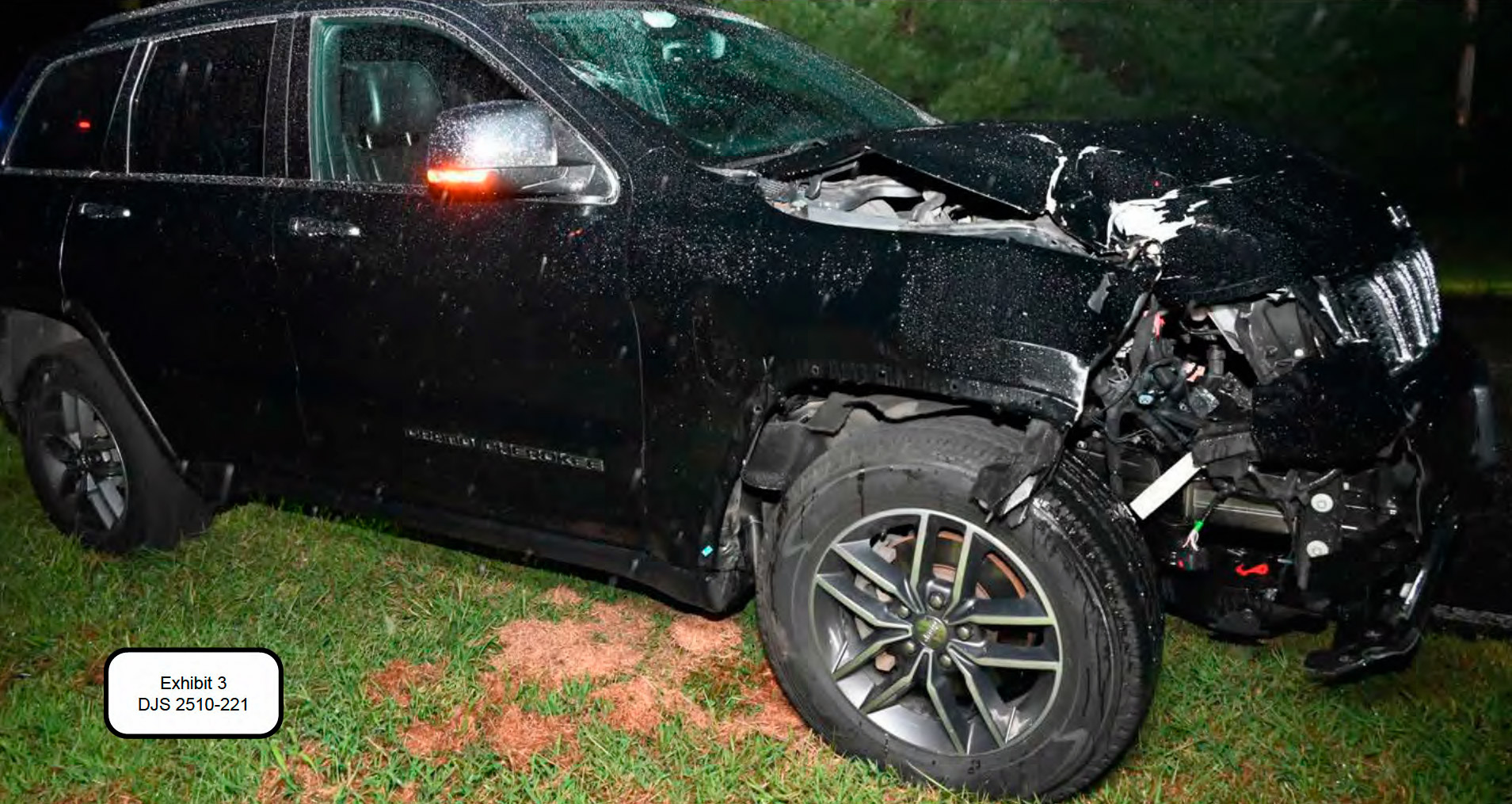
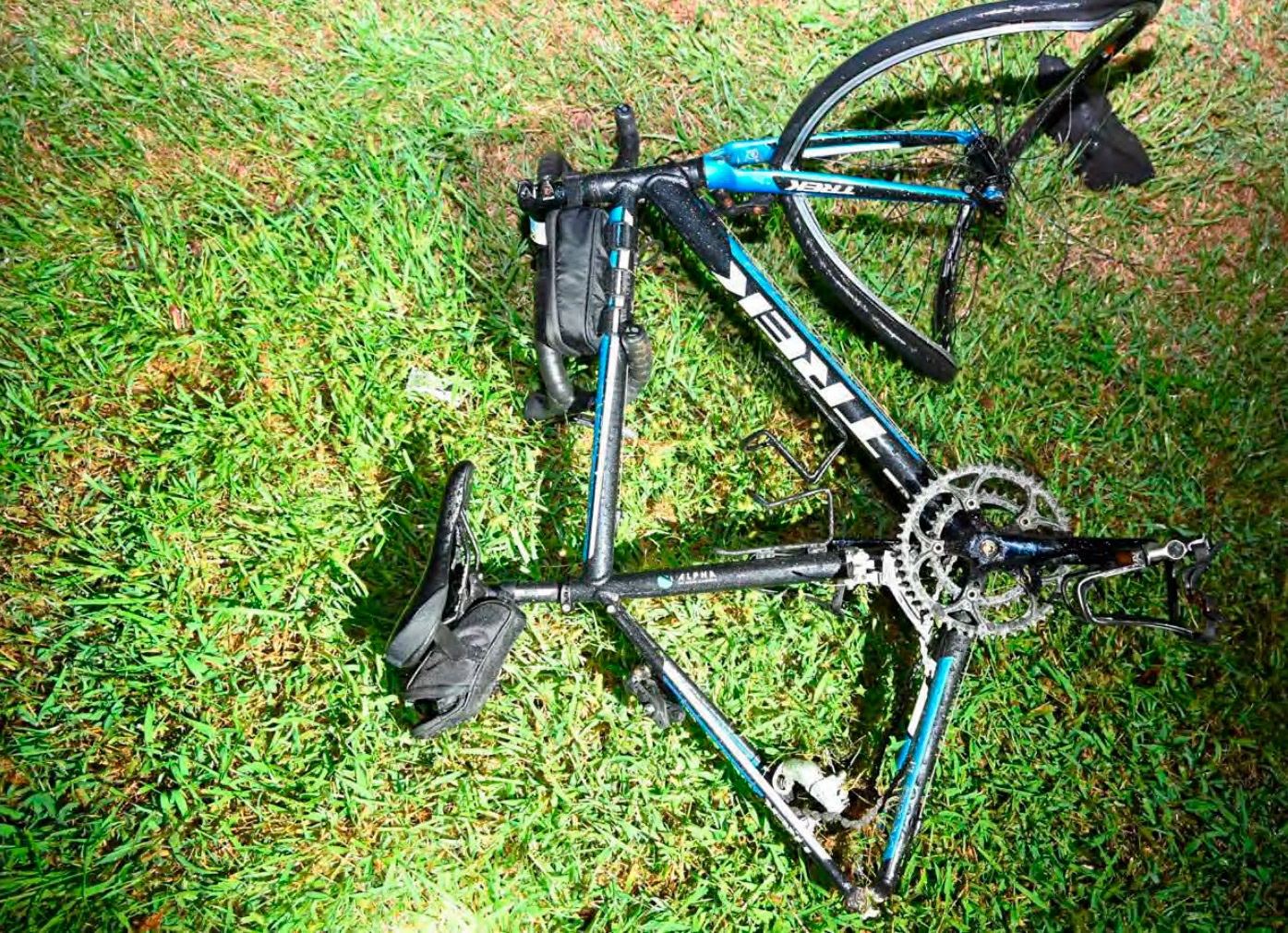
    Also, multiple documents are now available, including photographs of a damaged bicycle and the Jeep Cherokee from the crash site, after the defense filed a motion for their release in an effort to find evidence to help their arguments.

    Jury selection is set to begin in December, and the trial is expected to last three weeks.

    If found guilty, Higgins faces up to 91 years behind bars.

    Reporter Jesse Bunch has the story.

    ‘We don’t know how many other Mayas are out there’

    State Sens. John Burzichelli and Paul Moriarty are calling for more protections for homeschooled students.

    It comes after 9-year-old Maya Thomas died last week in a Paulsboro home, where she allegedly faced “prolonged abuse.” Her mother and stepfather are charged with her murder.

    New Jersey parents don’t have to tell the state that they’re opting to homeschool their children. The state also doesn’t require reviews of curriculums, nor does it necessitate parents to have teaching qualifications.

    “We don’t know how many other Mayas there are out there that are suffering behind a barrier that has caused them to drop off the radar screen and become invisible,” Burzichelli said.

    Meanwhile, homeschool advocates worry that the association of Maya’s death with homeschooling could stigmatize parents who opt to teach at home.

    The Inquirer’s Sarah Nicell has more insight into the latest push to alter the state’s rules.

    What to know today

    🗣️ Quote of the week

    Perelman, originally from Randolph, is a 22-year-old student at the University of Pennsylvania and is among a new generation of bird-watching enthusiasts.

    🧠 Trivia time

    How tall is Big Rusty, Hainesport’s troll made of recycled trash?

    A) 35 feet

    B) 20 feet

    C) 15 feet

    D) 400 feet

    Think you know? Check your answer.

    What we’re …

    🦅 Providing: A timeline of everything we know about the lead-up to Jalen Hurts’ diagnosis.

    🏀 Meeting: The Sixers, by going through each player’s outlook ahead of tonight’s opener.

    🏠 Weighing: The cost comparison of renting vs. buying.

    And that’s been your roundup for this morning. I’ll have more news to share tomorrow. 📧

    By submitting your written, visual, and/or audio contributions, you agree to The Inquirer’s Terms of Use, including the grant of rights in Section 10.

  • As drones become cheaper and easier to use, suburban police in the Philly region are adopting them as ‘first responders’

    As drones become cheaper and easier to use, suburban police in the Philly region are adopting them as ‘first responders’

    When Upper Darby Police received notice that a car thief out of Maryland was making his way through the township in June, they responded immediately. A high-speed chase ensued, but the department quickly broke it off, fearful of the risk it presented.

    They didn’t want the driver to harm himself or bystanders, Upper Darby Police Superintendent Tim Bernhardt said.

    Minutes later, officers caught up to David Graham, with the stolen Nissan Maxima, on a side street where he had attempted to blend in as the car’s owner, doing repairs on the vehicle.

    Graham’s arrest on receiving stolen property, fleeing police, and related charges was calm and straightforward, and the case is pending trial, Bernhardt said. That resolution came because his officers were able to keep an eye on Graham, tracking his movements from 400 feet above.

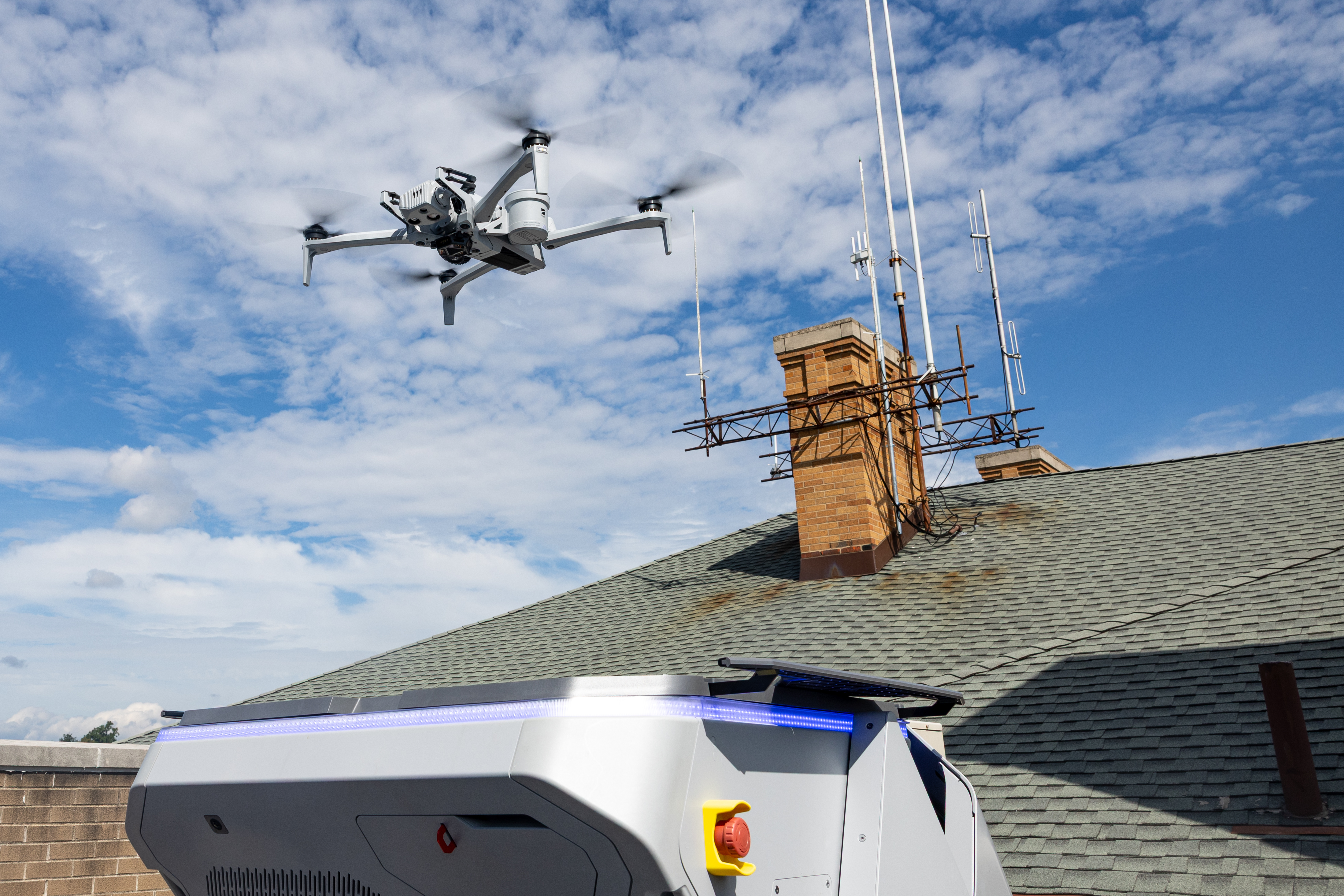
    Upper Darby is the latest police department in the Philadelphia region to adopt drone technology, using it to supplement their patrol and surveillance capabilities. Bernhardt and other local officials tout the new technology as a way of de-escalating arrests.

    Upper Darby police use drone to apprehend an alleged car thief
    Video: Upper Darby police use drone to apprehend an alleged car thief

    “That police officer in a marked car with lights and sirens going, the adrenaline is going, we no longer need that,” Bernhardt said. “And on the opposite end of that, the suspect, they don’t hear or see the police coming, and we take them into custody without that fight, without that resistance, without that fleeing.”

    But experts say the adoption of drones by police, often done with little community input, has raised concerns about the potential for departments to overstep privacy boundaries in the name of civil service.

    Bernhardt is adamant that his officers have no interest in spying on people.

    “We’re not surveilling people that shouldn’t be surveilled,” he said. “We’re using this as a another tool in our tool belt, and it’s allowing us to apply our resources better.”

    Upper Darby Police Lt. Kristine McAleer demonstrates how the department’s drones operate.Aidan T. Gallo / Staff Photographer

    On the other side of Philadelphia, Bensalem Township police have applied drones in a novel way: using them as virtual first responders to certain crimes, including reports of retail theft from big-box stores that are easy targets for thieves.

    Director of Public Safety William McVey said since the department started using drones in 2024 to track alleged thieves, following them as they attempt to escape, retail theft has decreased by 29%.

    And the closure rate of retail cases has jumped to 75% in that same period — three out of every four reported thefts end in an arrest, he said.

    McVey cited one recent case, when a thief who stole from a Target in the township fled on foot, was tracked via drone and was arrested nearby, even after changing his clothes in an attempt to hide from police.

    McVey said the drones are part of the department’s Bensalem Secure Theft Reduction Taskforce, which also includes an information-sharing system that connects retailers commonly hit by thieves directly with his officers, allowing them to respond faster when the thefts occur.

    “If it was your store, if it was your business, you would want us doing it,” McVey said, responding to criticism he sometimes hears about focusing on something as seemingly minor as retail theft.

    Bensalem Director of Public Safety William McVey (left) and Lt. Keith Christie (right) observe as drone operator police Sgt. Matt Malcolm (seated) flys a drone over the township. McVey said drones have helped his department respond faster to 911 calls, with a particular impact on reports of retail theft.Tom Gralish / Staff Photographer

    “And what most people don’t realize is the people on this list are committing other crimes as well,” he said. “They’re not just going and stealing one time and done, usually they escalate as they go along their criminal ways.“

    Other municipalities in the region are taking notice. In September, Lower Merion Police Department leaders asked the township for $375,000 to fund a “first responder” drone program that would automatically dispatch a drone to the scene of certain 911 calls, including burglaries and missing-persons reports. Council members were split in their reactions, with some voicing concern over increasing surveillance. No decision has been made.

    Andrew Guthrie Ferguson, a scholar of police tactics and author of Your Data Will Be Used Against You: Policing in the Age of Self-Surveillance, said the debate about drones is happening throughout the country as the technology becomes cheaper and easier to use.

    “I think it feels both practical and dystopian at the same time,” he said. “On one hand you can understand why chiefs want this, but on the other hand, the idea that someone steals some toothpaste and is followed by a drone just feels like a different police world than we’re used to living in.”

    Ferguson said too often departments implement new technology policies without input from community leaders, and only begin putting limits on the technology when residents, or officials, learn about them after the fact.

    “We sort of defer either to a company selling it or a chief adopting it and not having kind of the democratic back and forth about ‘OK, we’re trading up some privacy and autonomy and security for police’s ability to find a person in the stolen car,’” he said. “Are we OK with that?”

    (function() { var l = function() { new pym.Parent( ‘drone-explainer__graphic’, ‘https://media.inquirer.com/storage/inquirer/ai2html/drone-explainer/index.html’); }; if(typeof(pym) === ‘undefined’) { var h = document.getElementsByTagName(‘head’)[0], s = document.createElement(‘script’); s.type = ‘text/javascript’; s.src = ‘https://pym.nprapps.org/pym.v1.min.js’; s.onload = l; h.appendChild(s); } else { l(); } })();

    In Philadelphia, those concerns have only recently been addressed by City Council, two years after the city’s police department began using drones to respond to emergency calls in a handful of districts.

    Philadelphia Police have a fleet of 21 drones that have been deployed more than 8,000 times since they were put online in 2024, an Inquirer investigation found earlier this year. Unlike other large cities, like Boston and Los Angeles, there is no independent oversight of police drones in Philadelphia.

    The department has said drone footage was the primary source of evidence in at least 15 arrests, but declined to divulge any information about those cases, including even the names of the arrested individuals.

    City Councilmember Rue Landau has expressed concerns about the lack of transparency, and has said she wants Council and independent experts to have more input in how the devices are used.

    In response to The Inquirer’s reporting, and pressure from Landau and other council members, the police department agreed in April to compile an annual report on its drone usage.

    Across the city line, in Bensalem, McVey welcomes that level of scrutiny for his drone operators.

    “It’s about getting eyes to an area where a cop can’t get immediately. We’re not using it to go fly over people’s houses,” he said. “And if anyone ever suspected that, they should reach out to the police department, because everything we do is categorized and documented.”

    Staff writer David Gambacorta contributed to this article.

  • ‘The mystery continues’: Latest hunt for Amelia Earhart’s plane comes up empty

    ‘The mystery continues’: Latest hunt for Amelia Earhart’s plane comes up empty

    Search after search has failed to find the plane of Amelia Earhart, the pioneering pilot who disappeared over the Pacific Ocean in 1937. One recent expedition mistook rocks for the aircraft. Now, another has found trees.

    An American team searching a remote atoll in the South Pacific said in a statement Monday that it had found “no conclusive evidence” of wreckage from Earhart’s Lockheed 10-E Electra.

    What had looked like a metallic Y-shaped fragment in a satellite image was most likely a collection of trees covered with coral sand, the team said.

    “This mystery has been ongoing for 90 years, and the mystery continues,” Rick Pettigrew, a member of the expedition, said in a video from an atoll in Kiribati, the Pacific island nation where the search took place.

    Here’s what to know Earhart’s disappearance, the decades-long effort to find her plane and the latest search.

    Who was Amelia Earhart?

    Earhart was born July 24, 1897, in Atchison, Kan., according to the Federal Aviation Administration. Her father was a lawyer, and her grandfather was a judge. After attending school in Chicago, she moved to Toronto in 1918 to become a nurse’s aide at a military hospital.

    She took her first plane ride in 1920, an experience that inspired her to become a pilot. “As soon as I left the ground, I knew I myself had to fly,” she declared, according to the National Air and Space Museum at the Smithsonian in Washington.

    She began taking flying lessons from Anita Snook, a pioneer of aviation, in 1921 and received an international pilot’s license in 1923.

    Earhart achieved many aviation milestones. She was the first woman to fly to an altitude of 14,000 feet (1922), to fly across the Atlantic Ocean as a passenger (1928), and to make the crossing solo (1932), according to the National Air and Space Museum.

    In 1937, she was attempting to become the first woman to fly around the world at the Equator when she and her navigator, Fred Noonan, disappeared over the Pacific Ocean. They had left Papua New Guinea on what was to be the third-to-last leg of the journey and were heading to Howland Island, about 400 miles northwest of Nikumaroro, the remote atoll where the latest search unfolded.

    She was 39 when she disappeared and was declared dead in 1939.

    Searches have come up empty

    After Earhart and Noonan disappeared, the U.S. launched one of the largest air-sea searches in history at the time, spending two weeks scouring an area of the Pacific Ocean roughly the size of Texas. That search cost more than $4 million.

    Over the following decades, others invested millions in efforts to locate the wreckage of their plane.

    Since 1989, a nonprofit organization called the International Group for Historic Aircraft Recovery, or TIGHAR, has led repeated expeditions to Nikumaroro, pursuing a theory that Earhart and Noonan landed on the island and eventually died there as castaways.

    In 2012, the group led a $2.2 million search that received public support from then-Secretary of State Hillary Clinton. The expedition failed to locate the aircraft, and a sonar image of an underwater object also failed to produce a confirmed discovery.

    In 2019, Robert Ballard, the explorer famous for discovering the Titanic, led a two-week, multimillion-dollar search. His team came up empty.

    In 2024, Tony Romeo, CEO of Deep Sea Vision, said a sonar image that his company captured on an $11 million expedition appeared to show a plane resting about 3 miles below the surface of the Pacific Ocean. The object lay somewhere within a 100-mile radius of Howland Island.

    The company later announced on social media that what it had thought was wreckage from the plane was a rock formation.

    The disappearance has recently drawn renewed attention from Washington. Last year, President Donald Trump called on the federal government to unseal all remaining classified files on Earhart, a trove of more than 4,600 pages of documents.

    What’s the latest?

    The Taraia Object expedition, a joint effort by the Archaeological Legacy Institute, Purdue Research Foundation, and Purdue University, was looking for an object with a reflective surface that it first saw in a satellite image of the Nikumaroro atoll in 2020. The team thought the object could be a metallic fragment from Earhart’s plane, which had been purchased with money from the Purdue Research Foundation.

    TIGHAR’s longtime leader, Ric Gillespie, was skeptical, arguing before the team arrived that the object was probably a fallen tree.

    By the time the team of 17 arrived at the island last week, a large portion of the material they had once seen in the satellite imagery had washed away, leaving a smaller, Y-shaped fragment. In its statement Monday, the team said the fragment was most likely part of a collection of trees coated in a shiny, hardened mixture of coral sand.

    Despite the findings, the expedition said its members continue to support TIGHAR’s theory that Earhart and Noonan survived as castaways on the atoll.

    This article originally appeared in the New York Times.

  • Trial date set in Gaudreau brothers vehicular homicide case, as unseen photos of N.J. crash site become available

    Trial date set in Gaudreau brothers vehicular homicide case, as unseen photos of N.J. crash site become available

    The trial of Sean M. Higgins, the man charged with vehicular homicide and related crimes for fatally striking National Hockey League star Johnny Gaudreau and his brother, Matthew, as they biked in New Jersey is scheduled to begin in 2027.

    Higgins, 45, will appear in Salem County Court in January for the opening of what is expected to be a three-week proceeding, New Jersey Superior Court Judge Michael Silvanio said Monday. Jury selection begins in early December.

    The looming trial comes as Higgins’ defense team continues to push the state to produce evidence they say may potentially aid their arguments.

    In September, Higgins’ lawyers filed a motion compelling prosecutors to clarify whether there were additional documents tied to the official New Jersey State Police crash investigation, suggesting officers could have made notes that did not appear in the final report they received during discovery.

    Prosecutors objected, saying the notes were drafts that, if anything, reflected grammatical rather than substantive changes to information that could potentially be used in court.

    But the exchange nonetheless triggered the release of a trove of documents this month detailing how police reconstructed of the fatal Oldmans Township collision — including previously unseen photos captured from the crash site.

    An image of a damaged bicycle taken from the site of the fatal Gaudreau brothers collision.New Jersey court records

    Months after the fatal August 2024 crash, a grand jury indicted Higgins on two counts of second-degree reckless vehicular manslaughter, two counts of first-degree aggravated manslaughter, tampering with evidence, and fleeing the scene of a fatal crash.

    Prosecutors said Higgins had a blood-alcohol content over the legal limit when he attempted to pass an SUV on the right in his Jeep Grand Cherokee, striking Johnny, 31, and Matthew, 29, as they cycled home from their sister’s wedding rehearsal dinner.

    Police found Higgins about a quarter-mile from the County Route 551 crash scene, his damaged vehicle stalled. He told them he had consumed about a half-dozen beers that day, some behind the wheel.

    Higgins pleaded not guilty to the crimes. His attorney, Richard F. Klineberger III, argued that the Gaudreau brothers, themselves intoxicated, contributed to their own deaths by consuming alcohol that evening and cycling in the dark without rear safety lights.

    Silvanio rejected that argument last year when he denied Higgins’ request to dismiss or reduce the charges.

    It was not the last time such an effort would be made.

    In May, Silvanio again said the case would stand after rejecting a defense theory that prosecutors had misled the grand jury about Higgins’ blood alcohol content and that it may have actually been slightly below the legal limit.

    Klineberger, speaking Monday in Silvanio’s courtroom to discuss his latest motion, said the goal was to identify which state police notes contributed to the crash investigation and whether they reflected information that did not appear in the report.

    He also requested that prosecutors identify a man — likely an off-duty police officer — who appeared on a state police sergeant’s body-worn camera at the scene of the crash. The man relayed that the condition of the Gaudreau brothers did not “look good,” according to Klineberger’s recollection of the video.

    Prosecutors were insistent they had “nothing else left” to offer Klineberger’s team.

    “Everything that is in the final report from the officers, that’s what [witnesses are] going to be testifying to,” Assistant Prosecutor Michael Mestern said.

    Still, Mestern said prosecutors would check whether there were any additional notes and provide any such relevant documentation in the coming days.

    Judge Silvanio later asked Higgins if he understood that by going to trial, he would forfeit the right to accept a plea deal. The deal offered would see him admit guilt to two counts of aggravated manslaughter and one count of driving while intoxicated in exchange for 28 years in prison.

    Should Higgins be found guilty at trial, he faces up to 91 years in prison.

    Higgins said he understood. A trial date was set for Jan. 4.

  • 6abc picks Adam Joseph to replace Cecily Tynan on ‘Action News’

    6abc picks Adam Joseph to replace Cecily Tynan on ‘Action News’

    At 6abc, one veteran meteorologist will replace another.

    Adam Joseph, a familiar face to Action News viewers for two decades, was named the station’s chief meteorologist Monday, taking over a position held by only one other person — Cecily Tynan.

    “I am honored to pass the clicker to you,” Tynan said in a prerecorded message Monday.

    An emotional Joseph, tissues in hand, said it was the “privilege of a lifetime” to follow in the footsteps of Tynan and two other former 6abc weather reporters — Dave Roberts and the late Jim O’Brien.

    “For me, this is a dream that truly started at birth,” Joseph said, noting he was born during a flood. “Weather has always been the ultimate constant in my life. I live, I breathe, I obsess over getting the forecast as perfect as possible, even when Mother Nature throws us a sharp curveball.”

    Joseph will be on during Action News broadcasts at 5 p.m., 6 p.m., and 11 p.m.

    6abc general manager John W. Morris called Joseph a “clear choice” to fill the position vacated by Tynan, who retired in August after nearly 31 years on Action News. Morris praised Joseph’s enthusiasm and his ability to break down complex weather systems affecting viewers in Philadelphia and across the region.

    “Adam is a beloved figure in the region’s broadcasting community and a viewer favorite,” Morris said in a statement.

    Joseph, who was born and raised in the Boston suburbs, joined 6abc in 2005 after stints at two stations in West Virginia. He began on weekends but quickly moved to doing weather reports during the week and becoming a staple of the station’s event coverage, including the Thanksgiving Day Parade and the Philadelphia Flower Show.

    Joseph and Tynan offered plenty of forecasts together over the years, which sometimes led to a few laughs. During coverage of Hurricane Sandy in 2012, Joseph had microphone problems and it appeared Tynan was caught by a hot mic calling him a “moron.” Leave it to longtime anchor Jim Gardner to break up the potential tension with some humor.

    “What Cecily was saying was do you want mine on, my microphone on?” Gardner helpfully cleared up. “So if you thought that Cecily called Adam an untoward name, that’s not the case, at all. We don’t do that here. We are a family, we love each other.”

    Then Gardner turned to face his colleagues, who were standing off camera, and said, “You’re acting like a moron.”

    Weather has been Joseph’s passion since tracking the impact of storms at Bird Park as a child in his hometown of East Walpole, Mass. He was part of the “Weather Club” in middle school and did his first weather reports on the front porch of his neighbor’s home.

    “We expected to see you on those hurricane shows chasing the hurricanes, chasing the tornado,” Lana, his former neighbor, told 6abc in 2015.

    After choking up during Monday’s telecast, Joseph composed himself enough to offer a pretty terrific seven-day forecast, featuring lots of sun and temperatures hovering in the high 60s and low 70s.

    “The one flaw I got is being an emotional person,” Joseph said as he concluded his report. “I care, I care about everything I put my passion into.”

  • The Pa. House voted to ban cell phones in schools, bringing the bill one step closer to law

    The Pa. House voted to ban cell phones in schools, bringing the bill one step closer to law

    A ban on cell phones in Pennsylvania schools is one step closer to becoming law, after House lawmakers on Monday passed a bill that would require all schools to bar students from using phones throughout the school day.

    The bill, which passed the Democratic-led House 141-62, now heads to the Republican-led Senate for final approval. Republicans who control the Senate did not immediately return a request for comment Monday.

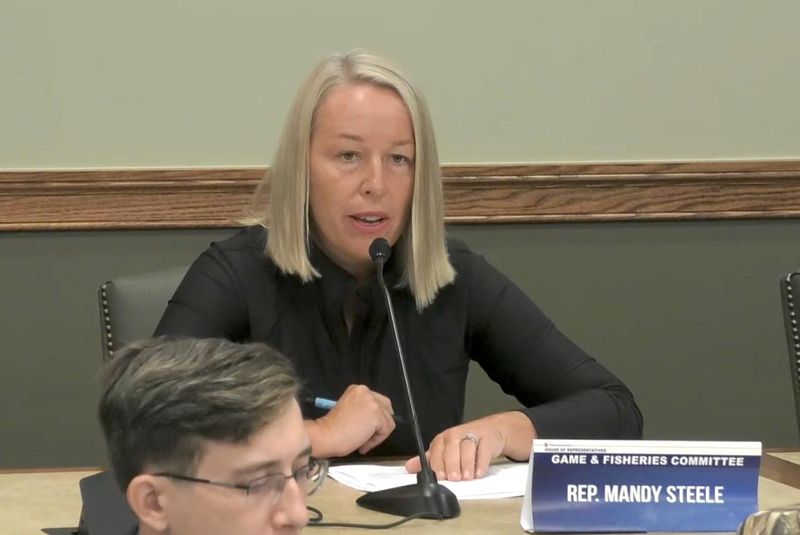
    “Our children are being held captive by Big Tech,” said Rep. Mandy Steele (D., Allegheny). “This is a massive public health crisis, the likes of which we have never seen.”

    Citing declining test scores and rising mental health issues among young people, Steele said, “The absolute bare minimum we can do is to get these things out of our schools.”

    State Rep. Mandy Steele speaks in 2025 during a Pa. House Game and Fisheries Committee hearing. On Monday Steele spoke about the need to approve a cell phone ban in schools. “The absolute bare minimum we can do is to get these things out of our schools,” shw said. Pa. House live stream

    If the bill passes both chambers, it is expected to be signed by Gov. Josh Shapiro. The Democratic governor earlier this year urged lawmakers to send a bell-to-bell ban — prohibiting cell phones from the start of the school day to the end — to his desk.

    The measure would require both public and private schools to adopt policies starting in the fall of 2027 that bar students from using cell phones during the school day. Schools wouldn’t be required to take phones away from students, but would have to decide how to restrict students from using them.

    Students with certain medical conditions and special needs would still be able to use phones.

    Rep. Scott Barger (R., Blair/Huntington) voted against the bill because he said phones should be banned for all students, no exceptions.

    “If they are as dangerous as you say they are, get them out for everybody, all the time,” Barger said.

    The bill comes amid a broader parental backlash to technology in schools, and as school cell phone bans have increasingly become the norm nationally.

    Thirty states, including New Jersey, have bell-to-bell bans prohibiting cell phone use at any point during the school day, while another eight bar use during instructional time, according to Education Week.

    Shapiro earlier this year called on lawmakers to pass a ban “to get distractions out of the classroom and create a healthier environment in our schools.” The state’s largest teachers union, the Pennsylvania State Education Association, has also endorsed a cell phone ban.

    But while bans have bipartisan support, they aren’t universally popular. Many area schools restrict cell phones during classes but have hesitated to impose full bell-to-bell bans, with some school leaders expressing concerns about enforcement. Others say students need to learn self-regulation around devices that aren’t going away.

    Relatively few schools took the state up on grant money to buy lockable cell phone pouches.

    The Pennsylvania School Boards Association has opposed a bell-to-bell ban, saying that most of Pennsylvania’s 500 school districts already have policies in place related to cell phone use.

    The Senate has already passed a version of the bill, but both houses have to agree on a version in order for it to move forward.

    PA Unplugged, a statewide group with about 5,000 supporters, said both bills are similar.

    “We are imploring the PA Senate to finalize either bill, which both establish statewide standards for proven bell-to-bell policies, in their few remaining days this session in order to protect our kids, our teachers, and our schools,” the parent-led group said in a statement.

    Noting bipartisan support, the group called on legislators to “promptly act to set strong regulations establishing overdue safeguards around these products and platforms with algorithms driving dangerous, addictive content that is manipulating and harming our kids.”

    Staff writers Gillian McGoldrick and Kristen A. Graham contributed to this article.

  • Russia proposes a Trump-Xi-Putin meeting in China next month

    Russia proposes a Trump-Xi-Putin meeting in China next month

    Russian President Vladimir Putin has proposed a meeting with President Donald Trump and Chinese leader Xi Jinping, people familiar with the Russian and Chinese discussions said.

    Putin raised the possibility of meeting on the sidelines of the Asia-Pacific Economic Cooperation (APEC) forum in Shenzhen, China, next month, according to a person familiar with the Russian conversation and who spoke on the condition of anonymity to discuss sensitive details.

    The Chinese side has reached out to “U.S. counterparts” for clarity about the desire for such a meeting, said an Asian diplomat familiar with Chinese discussions on the matter and who likewise spoke on the condition of anonymity.

    Any discussions between Washington, Moscow, and Beijing could turn to the matter of the war in Ukraine, without the involvement of Ukrainian President Volodymyr Zelensky.

    In remarks to reporters Monday during a trip to Samarkand, Uzbekistan, Secretary of State Marco Rubio said that a meeting had been discussed but not finalized. “I think the president is open to anything that he can do to help bring the war to an end, if it’s possible,” Rubio said.

    Speaking to reporters Monday, Trump said he was open to meeting with Putin and Xi in China without Zelensky but did not say whether such talks would occur.

    Kremlin spokesperson Dmitry Peskov said a meeting between Trump, Xi, and Putin had been discussed “hypothetically,” but he noted that “no substantive proposals or agreements — neither regarding the meeting itself nor regarding a possible agenda or the content of the meeting — were discussed or put forward by anyone.” China’s Foreign Ministry declined to comment on the matter.

    The timing of the request — amid a deadly escalation in the war as both sides target a widening array of infrastructure — could mean Putin is seeking to take advantage of an apparent fraying of the U.S.-Ukraine relationship.

    On Sunday, Zelensky publicly accused the White House of restricting Kyiv’s access to Starlink, the Elon Musk-owned satellite internet service critical for Ukrainian military operations, without warning. Trump and Secretary of State Marco Rubio denied doing so.

    Ukrainian Foreign Minister Andrii Sybiha criticized the idea of a meeting in China without Ukraine’s input. “A trilateral meeting between the leaders of Ukraine, the U.S., and Russia could help end the war sooner. A trilateral meeting between the leaders of Russia, China, and the U.S. would do only the opposite: encourage Putin to continue this war,” Sybiha wrote in a post on X.

    Zelensky “doesn’t want to end this war, and probably never did,” Trump wrote in a Truth Social post Sunday, accusing Ukraine of hurting U.S. businesses by striking Russian diesel refineries. Trump earlier also withheld a sweeping sanctions package designed to further target the Russian economy.

    But despite the friction, it is unclear whether China or the United States would accede to the Russian request. China, which is set to host APEC for the first time in 12 years in Shenzhen on Nov. 18 and 19, may balk at allowing a high-profile meeting with the potential to eclipse the 21-member forum. And Beijing is cautious over the possibility of provoking the European Union, one of Ukraine’s strongest backers and a crucial trading partner for China.

    A trilateral meeting would be “more in the interests of Moscow than Washington or Beijing,” the person familiar with the Russian discussion said.

  • Legislators want homeschooling oversight after death of 9-year-old girl allegedly abused in a South Jersey home

    Legislators want homeschooling oversight after death of 9-year-old girl allegedly abused in a South Jersey home

    New Jersey legislators are calling for changes to the state’s homeschooling rules after a 9-year-old girl died in a Paulsboro home.

    Maya Thomas died Oct. 13 after India Miller and Sean Scott, her mother and stepfather, called police to report that they suspected their daughter had been struck by a vehicle. Instead, an autopsy revealed “injuries not consistent with a vehicle crash” that suggested she had faced “prolonged abuse,” prosecutors said last week. Her parents were charged with murder, among other crimes.

    Lynn Miller, Maya’s maternal grandmother, who lives in Spokane, Wash., told NJ.com last week that Miller and Scott homeschooled Maya to hide her bruises.

    Maya lived across the street from Second Baptist Church and next to the playground at Loudenslager Elementary School, which she would have attended if she had not been homeschooled, local officials said.

    “It’s just heartbreaking when you think this 9-year-old child could see a beautifully manicured playground at the school,” said State Sen. John Burzichelli, a Democrat who represents Gloucester County.

    Burzichelli, a former mayor of Paulsboro, lives two blocks from the home where Miller and Scott allegedly abused Maya. He said he drives by the house every day, and he never saw anything suspicious. None of his neighbors have either, Burzichelli said, but there are now rumors.

    “Nothing, nothing, nothing, nothing, nothing,” Burzichelli said. “There are now some stories. Somebody saw her mother at the post office, saw [Maya] with her mother on another occasion. The child looked like maybe she had a bruise. But there weren’t enough interactions where that stuff could be registered.”

    Burzichelli and his colleague, State Sen. Paul Moriarty, are calling for more protections for children who do not go to school.

    New Jersey is one of 13 states that the Home School Legal Defense Association recognizes as having “low regulations” for homeschooling. Parents in New Jersey do not have to notify the state that they are homeschooling their children. It is unclear exactly how many children across the state are homeschooled.

    Parents who homeschool also do not need any teaching qualifications. No review or approval is required for curriculums set by parents, and local boards of education are not required to establish records for children who learn outside of school.

    Parents and guardians need only to give their children “equivalent instruction” to typical schooling, and previous state court cases have affirmed that the term applies only to academic lessons, not social development, according to the New Jersey Department of Education.

    “We don’t know how many others Mayas there are out there that are suffering behind a barrier that has caused them to drop off the radar screen and become invisible,” Burzichelli said. “That’s a 9-year-old child that had no one else to speak for her.”

    Homeschooling can be successful, Burzichelli said, so he does not want to upend New Jersey’s education rules. But it is currently too easy for children with no record to slip through the cracks, he said. If Maya had gone to school, Burzichelli said, a watchful teacher likely would have noticed her injuries.

    Burzichelli said his office is researching homeschooling rules implemented by other states and coordinating with leadership in the legislature to soon propose legislation to refresh the state’s alternative education statute.

    He is not certain yet which child protections New Jersey should take from other states, he said, but he wants to find a system that protects kids from flying under the radar, including a potential requirement for homeschooled children to meet with the school district annually and to ban guardians with criminal records from teaching children at home.

    This would not be the first time state legislators have tried to amend New Jersey’s homeschooling rules.

    Last year, after a Gloucester Township couple was charged with abusing their homeschooled teenager by locking her in a dog crate, both the New Jersey Assembly and Senate introduced bills that would have required children in home education programs and their parents to meet annually with a school district representative. Burzichelli was a sponsor, but the bill did not progress to a vote in either chamber.

    An identical bill was proposed in January but has not progressed. Another bill that followed the Gloucester Township case, proposed by Assemblyman Sterley Stanley, would have required registration and oversight of home education programs, but that didn’t get anywhere, either.

    Burzichelli said he wants to meet with homeschool advocates to make sure new legislation can move forward.

    “We don’t have the luxury of making this a war with people who may not be favorable to this,” Burzichelli said.

    The state’s homeschooling advocates say they worry conflating homeschooling and Maya’s killing could hurt parents who elect to teach from home.

    “Keeping a child home is not the same as homeschooling. Genuine homeschooling involves educating a child; a child being kept out of school does not, by itself, establish that homeschooling is taking place,” the New Jersey Homeschool Freedom Association wrote in a statement.

    The NJHFA instructed parents to call Burzichelli and Moriarty on Monday to “express [their concerns] that public statements connecting this tragedy to homeschooling risk stigmatizing thousands of responsible New Jersey homeschooling families.”

    Pamela Kerr, a New Jersey Homeschool Association board member, expressed similar sentiments in a social media message to The Inquirer.

    “Please be clear that Maya Thomas’ murder is a tragedy that has nothing to do with homeschooling,” Kerr wrote. “Abuse happens all too often. It happens to children who attend school. It happens to adults who go to work. Less frequently, it happens to children or adults who have been secluded from society and unlawfully restrained.”

    Kerr added that children who are homeschooled do not have to fear ongoing safety issues, like school lockdowns, and benefit from individualized attention. Kerr said the NJHA believes New Jersey’s current law “appropriately gives parents the opportunity and right to educate their children without undue interference.”

    Paulsboro Mayor John Giovannitti, who has worked in the borough’s school district for 39 years and now serves as an assistant principal, said the state should track children who learn at home.

    He also said those children should have access to Paulsboro’s counseling services and extracurricular programming to keep them as engaged in the community as possible.

    “A twice-a-year check to see how they’re doing, I don’t think it could hurt,” Giovannitti said. “It’s just, ‘Where is this kid? How are they doing?’”