Category: News

  • How the Pentagon is getting into the Venezuelan oil business under Trump

    How the Pentagon is getting into the Venezuelan oil business under Trump

    WASHINGTON — As the U.S. government faced shortcomings in the country’s weapons manufacturing, the Pentagon set up a new office that would make investments to help boost defense industrial production.

    That effort, which began in 2022 during the Biden administration, is now taking a sharp turn with the Pentagon’s involvement in an oil production deal between the United States and Venezuela that President Donald Trump announced on Friday.

    The Pentagon’s little-known Office of Strategic Capital, which reports to the deputy defense secretary, is the leading U.S. government entity in forming a partnership with a private oil producer whose founder, Alejandro Betancourt López, is a powerful and polarizing figure in international commerce.

    Trump said Pete Hegseth, the defense secretary, and Marco Rubio, the secretary of state and White House national security adviser, reached the agreement with the Venezuelan government on securing billions of barrels of oil reserves “through a partnership with private business.”

    The deal would give the U.S. government the option to take up to a 35% stake in the parent company of Betancourt’s firm, North American Blue Energy Partners. This would come in the form of a financial instrument known as a warrant, plus preferential access to much of the oil that the company produces.

    Warrants would give the government the right to buy shares in the oil company at a predetermined price. The value of warrants, which can be bought and sold, fluctuates based on the value of the company that issued them.

    In this case, the warrants would be what are known as penny warrants, according to two people familiar with the deal, meaning they could be converted into shares for very little money, often just 1 cent.

    Typically, companies issue warrants in exchange for something of value. During the coronavirus pandemic, for example, the federal government bailed out U.S. airlines with more than $50 billion in grants and loans to help the companies pay employees and cover other costs. In return, the Treasury Department received warrants from roughly a dozen airlines, most of which it later sold to private investors.

    In this case, the deal would come “all at zero cost to the United States,” the White House said in a statement Monday night. The federal government’s partnership and seal of approval could make it easier for the company to raise money from private investors and also shield it from legal scrutiny or political upheaval in Venezuela.

    In a statement, Betancourt said the deal would unleash Venezuela’s potential “to the great benefit of both Venezuelans and Americans.”

    During the Biden administration, the Office of Strategic Capital made loans to private companies to bolster strategic industrial production in the United States, and asked for repayment of the loans with interest at below-market federal rates. In the Trump administration, the office has typically asked companies to give it warrants as well as repay the loans.

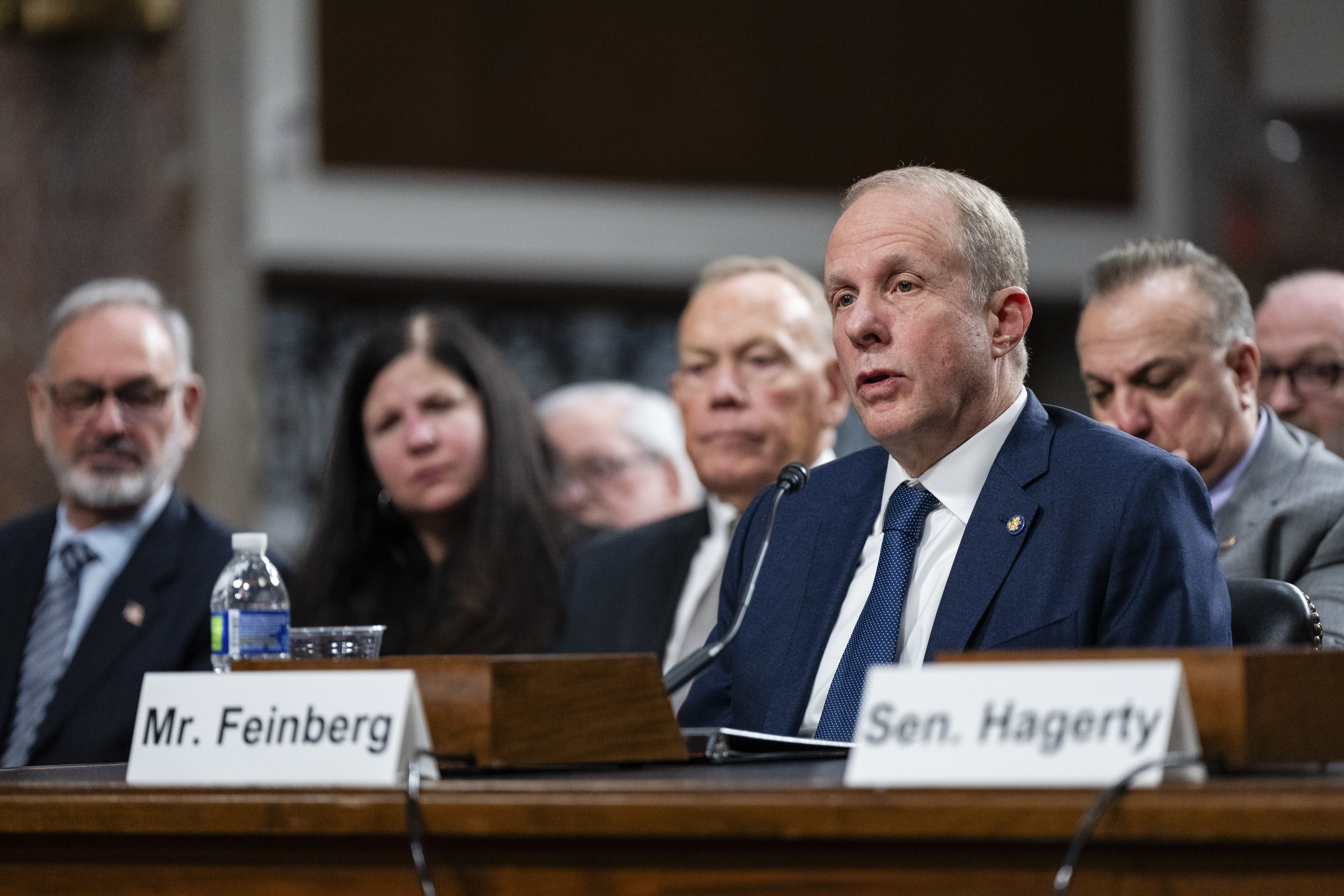
    The office falls under Stephen A. Feinberg, the deputy secretary of defense. Feinberg, a billionaire businessperson and political appointee under Trump, has been tasked with trying to help rejuvenate the U.S. defense industrial base. Feinberg approves the office’s deals.

    The office was founded under the previous defense secretary, Lloyd Austin. At that time, in 2022, U.S. officials were concerned about the fact that critical items for certain weapons systems were made in China. They were also grappling with weaknesses in arms production exposed by Russia’s war against Ukraine and global supply chain problems exposed by the pandemic.

    Those issues have become even more acute, given the drawdown of U.S. weapons stockpiles during the war against Iran that Trump and Israel started six months ago.

    The office’s initial $1 billion loan authority has ballooned to $100 billion, largely because of a boost from Trump’s major domestic policy legislation that Congress passed in July 2025.

    The director of the office is now David Lorch, who worked at Cerberus Capital Management, the private equity firm cofounded by Feinberg. In November, the month Lorch started his job, the office announced a loan of $620 million to Vulcan Elements and one of $80 million to ReElement Technologies to increase domestic magnet production and “significantly bolster U.S. critical minerals supply chains.” The office said it would get warrants from those companies.

    That kind of financing would help the United States decrease its dependency on Chinese manufacturing. But Vulcan Elements has financial ties to the president’s oldest son, Donald Trump Jr., which prompted Democratic senators to criticize the arrangement. Peter Navarro, a White House aide and friend of the younger Trump, requested the financing, ProPublica reported.

    By July, the other company, ReElement Technologies, a rare earths firm, had withdrawn from the loan process because it was struggling to meet federal due diligence standards, Reuters reported.

    On Saturday, the chief Pentagon spokesperson, Sean Parnell, said in a statement that the office “does not take equity stakes in private companies.” The White House’s statement on Monday about the deal contradicts Parnell’s assertion.

    In addition to receiving warrants, the federal government would be guaranteed 20% of the oil that Betancourt’s company produces “at production cost,” according to the White House, meaning at a favorable price. The State Department would also have right of first refusal to buy the remaining 80% of the company’s output.

    That would put the State Department in an unusual role since it is oil companies and other traders who typically buy and sell oil. Any decision to buy oil to refill U.S. government stockpiles would require authorization, including from Congress, and typically be handled by the Energy Department.

    In any case, it would most likely take years for new projects in Venezuela to generate meaningful amounts of oil.

    Betancourt, the U.S. government’s partner, received no-bid oil contracts in Venezuela many years ago. He has been under investigation in Spain and Switzerland on accusations of money laundering and tax fraud. He usually lives in Britain and was barred from foreign travel by the British government while he was in that country because of an extradition agreement with Switzerland, where prosecutors had issued an arrest warrant.

    However, Rubio wanted to get Betancourt to Venezuela to work on oil deals and production, and the State Department in recent months pressed the Swiss and British governments to ease up on him, said a person with knowledge of that effort.

    “Mr. Betancourt has never been charged with a crime in any jurisdiction,” Sara Chouraqui, general counsel for North American Blue Energy Partners, said in a statement Saturday.

    This article originally appeared in The New York Times.

  • Rescuers comb through mud and debris as Nepal-China floods leave more than 1,000 dead

    Rescuers comb through mud and debris as Nepal-China floods leave more than 1,000 dead

    KATHMANDU, Nepal — Rescue teams with search dogs combed through mud, rocks and debris Tuesday in Nepal and China looking for thousands of people still missing after catastrophic flooding tore through communities across the Himalayas, leaving more than 1,000 dead.

    Nepal’s disaster agency said Tuesday that 987 deaths had been counted there, with 3,916 people missing, including 583 foreigners. Chinese authorities, in their latest update on Sunday, reported 16 deaths and 546 people still missing, including 261 foreigners.

    The scale of last week’s disaster was hampering rescue efforts in both regions, with landslides, destroyed roads and widespread damage cutting off remote areas. Crews faced challenging conditions as they searched unstable terrain and piles of debris, raising fears the death toll could rise as rescuers reach isolated communities.

    Rescuers race to reach missing hydropower workers

    In Nepal, rescuers were racing to reach hundreds of workers believed to be trapped inside tunnels at hydropower projects damaged by the floods. About 900 workers are missing from 12 projects, with roughly 500 believed to be trapped in tunnels, according to Nepalese authorities.

    Brig. Gen. Raja Ram Basnet, Nepal’s army spokesperson, said teams assisted by foreign experts were working at several hydropower projects. Visuals released by the army showed rescue teams entering dark, debris-filled tunnels, wading through mud and water and climbing over rocks as they searched for signs of life.

    On the Chinese side, rescue crews scoured areas hit by mudslides, particularly around the Gyirong Port border crossing, which was destroyed.

    Some rescuers, aided by search dogs, searched gaps among rocks and debris for signs of life. Other teams used heavy machinery to clear a major highway leading to Gyirong Port, hoping to clear the way for equipment, personnel and supplies to reach the disaster zone, according to China’s state-run Global Times newspaper.

    Relief operations expand to reach stranded communities

    At least 11,814 people have been rescued so far, according to Nepalese authorities. Emergency crews were using helicopters and other aircraft to reach stranded communities in areas where roads and bridges have been destroyed by the flooding and landslides.

    Authorities on Tuesday also stepped up efforts to provide assistance to survivors in areas where roads and other transportation routes had been damaged or cut off.

    Chinese Foreign Ministry spokesperson Guo Jiakun said China’s second batch of relief supplies for Nepal was expected to ship Tuesday, including drones, DNA testing and water purification equipment. Chinese DNA testing experts will also help Nepal identity bodies, he said.

    Bimal Sharma, a helicopter pilot who has been flying rescue and relief missions since the disaster began, said he was shocked to see the devastation in Timure, a border town close to Tibet that he has known for years.

    “It felt like I was flying over an entirely different landscape,” he said.

    Sharma said he has had little opportunity to speak with the people he rescued, but their expressions told him how deeply the disaster had affected them.

    “I can see the pain in their eyes. It’s heartbreaking,” he said.

    The disaster began with a glacial collapse high in the Himalayas

    The Aug. 26 disaster began with a chain of events high in the Himalayas. A glacial collapse sent large amounts of rock, ice and meltwater into valleys below, triggering powerful floods downstream.

    Scientists studying satellite imagery said the collapse appears to have involved the failure of bedrock beneath a glacier in the Himalayan region. The rockfall was powerful enough to register as a magnitude 5.2 seismic event.

    The resulting surge of water and debris entered rivers that flow through valleys in Tibet and Nepal, causing them to rise rapidly. Floodwaters swept away homes, buildings, roads and bridges and carried mud and rocks downstream.

    Nepal’s Prime Minister Balendra Shah said that the disaster highlighted the need for action to combat climate change.

    “This incident has indicated that the risks we face in the Himalayan region are increasing with climate change,” Shah said in a social media post Monday night. “Therefore, this region must be alert, and at the same time, it is time for us to strongly raise the issue of disasters caused by climate change before the international community.”

  • The godfather of US sports betting | Inquirer South Jersey

    The godfather of US sports betting | Inquirer South Jersey

    Good morning, South Jersey.

    Chris Christie is best known for his political career as a former New Jersey governor, presidential candidate, and U.S. attorney. But his most lasting impact could be his role in setting the stage for the rise of sports betting in the United States.

    And Asianfresh Food Market is set for the grand opening of its location in Cherry Hill next week.

    Plus, the mayor of Barrington hopes the International Paper plant could turn into a cannabis business, and more news of the day.

    — Taylor Allen (southjersey@inquirer.com)

    P.S. Ask your questions about the region through Curious South Jersey. It might turn into a story someday.

    If someone forwarded you this email, sign up for free here.

    Chris Christie’s sports betting legacy

    Former Gov. Chris Christie began his push for legalized sports gambling through state law in 2012. But he didn’t officially win his crusade until 2018, after the U.S. Supreme Court overturned a federal law that gave states the freedom to enact their own sports-betting laws.

    In a recent interview, he said he did not foresee sports gambling’s evolution and the rise of prediction markets supported by the Trump family.

    “I don’t think I could ever have anticipated that it would be in everybody’s pocket,” Christie said. “That’s a little bit disturbing to me, to tell you the truth, the proliferation of it. And obviously prediction markets have been very disturbing to me, particularly because they market to teenagers, which is strictly prohibited for the legal gaming companies.”

    Read the full interview with The Inquirer’s David Gambacorta, including Christie’s thoughts on the Supreme Court’s potential future involvement in the industry.

    Asianfresh Food Market is coming to Cherry Hill

    Chinatown’s Asianfresh Food market is set to open a location in Cherry Hill, 2 miles away from the recently revamped H Mart.

    Just like the original location, the new store will offer specialty products and seasonal items imported from across Asia.

    Its grand opening will be held Sept. 12. The international grocery store is planning to host giveaways, contests, and more to celebrate the new chapter.

    Reporter Lacey Latch has the story.

    What to know today

    • Barrington Mayor Kyle Hanson said recent legislative moves to expand, regulate, and tax sales for cannabis businesses aim to entice them to move into the International Paper facility that was set to close Monday.
    • A fire caused the second floor of an apartment in Deptford to collapse. Officials said at least nine apartments were damaged or lost to the fire, but no one was injured, NBC10 reports.
    • The Subaru of Cherry Hill dealership plans to move to the site that was once the corporate headquarters of Subaru of America until it moved to Camden in 2018, according to 70and73.
    • Camden County released its latest list of roadwork projects, and residents in Camden and Cherry Hill should be prepared to take the most detours this week.
    • New owners are taking over The Ice Cream Boutique in Bordentown.

    🗣️ Quote of the week

    Abrams’ nonprofit, BookSmiles, outgrew its third location and is expanding into a 14,000-square-foot space in Cherry Hill. It will allow the organization to distribute 5 million books per year to schools and teachers.

    🧠 Trivia time

    Originally from Burlington County, Jordan Gershowitz is a two-time Emmy-nominated writer and the story editor of Netflix children’s series Hot Wheels Let’s Race. Which township is he from?

    A) Westampton

    B) Pemberton

    C) Woodland

    D) Bordentown

    Think you know? Check your answer.

    What we’re …

    💭 Wondering: Are you a seasonal-creep Grinch?

    🏠 Ogling: An unplugged beach cottage in Ocean City with no Wi-Fi. (Is your house a “Haven”? Nominate your home by email — and send some digital photographs — at properties@inquirer.com.)

    🚙 Learning: How to ditch our cars (as much as possible).

    Thanks for starting your morning with The Inquirer. I’ll see you tomorrow. 👋🏽

    By submitting your written, visual, and/or audio contributions, you agree to The Inquirer’s Terms of Use, including the grant of rights in Section 10.

  • Marching to move forward | Inquirer Greater Abington

    Marching to move forward | Inquirer Greater Abington

    Hi, Greater Abington. 👋

    Cheltenham parents, students, and school district officials marched across town to show support for students ahead of the new academic year as the community continues to grapple with the fallout of the recent football hazing scandal.

    Also on the radar, a judge ruled Cheltenham’s controversial pool project can continue, Jenkintown may expand its library, and a few nearby kindergartens are below the herd immunity vaccination rate against measles.

    Heads up: Next week’s edition of this newsletter will arrive in your inboxes on Wednesday, Sept. 9, instead of Tuesday, as our team will be out of the office for Labor Day on Monday.

    — Laura Smythe (greaterabington@inquirer.com)

    P.S. We want your feedback! Tell us what you think of the newsletter by taking our survey or replying to this email.

    If someone forwarded you this email, sign up for free here.

    Cheltenham community marches to support students after alleged hazing incidents

    Roughly three dozen parents, students, and officials of Cheltenham School District marched across town over the weekend in an effort to show support for students in the aftermath of a football hazing scandal that led to criminal charges for coaches and players.

    Taking place just days before the start of the 2026-27 academic year, Saturday’s march covered an almost two-mile stretch from the school district building to the high school.

    “We need to come together as a community, address needed changes, and also push back against some of the false information out there,” said Ikysha Dearry, president of the Cheltenham African American Alliance.

    Attendees who spoke with The Inquirer shared the mixed feelings of a community contending with public outrage while trying to guide students through a new school year.

    💡 Community news

    🏫 Schools briefing

    • The 2026-27 academic year for Abington School District begins next Tuesday.
    • Schools are closed on Monday in the Cheltenham and Jenkintown school districts in recognition of Labor Day.
    • A few area kindergartens have dipped below a 95% vaccination rate against measles — the threshold recommended by scientists to achieve herd immunity against the highly contagious disease. See what’s happening at your school.

    🍽️ On our plate

    🎳 Things to do

    🧗 Wyncote Women’s Climb: Rock climbers of all skill levels can climb and connect. ⏰ Tuesday, Sept. 1, 6-8 p.m. 💵 $30.50 for a day pass 📍 Philadelphia Rock Gyms, Wyncote

    🎲 Game Night for Adults: Get to know your neighbors over some board and card games. ⏰ Tuesday, Sept. 1, 6:30-8:45 p.m. 💵 Free 📍 Glenside Library

    🐦 Curtis Arboretum Bird Walk: Spot late-summer migrant birds during this outdoor excursion with Liberty Bird Alliance. ⏰ Friday, Sept. 4, 8-10 a.m. 💵 Free 📍 Curtis Arboretum, Wyncote

    🏡 On the market

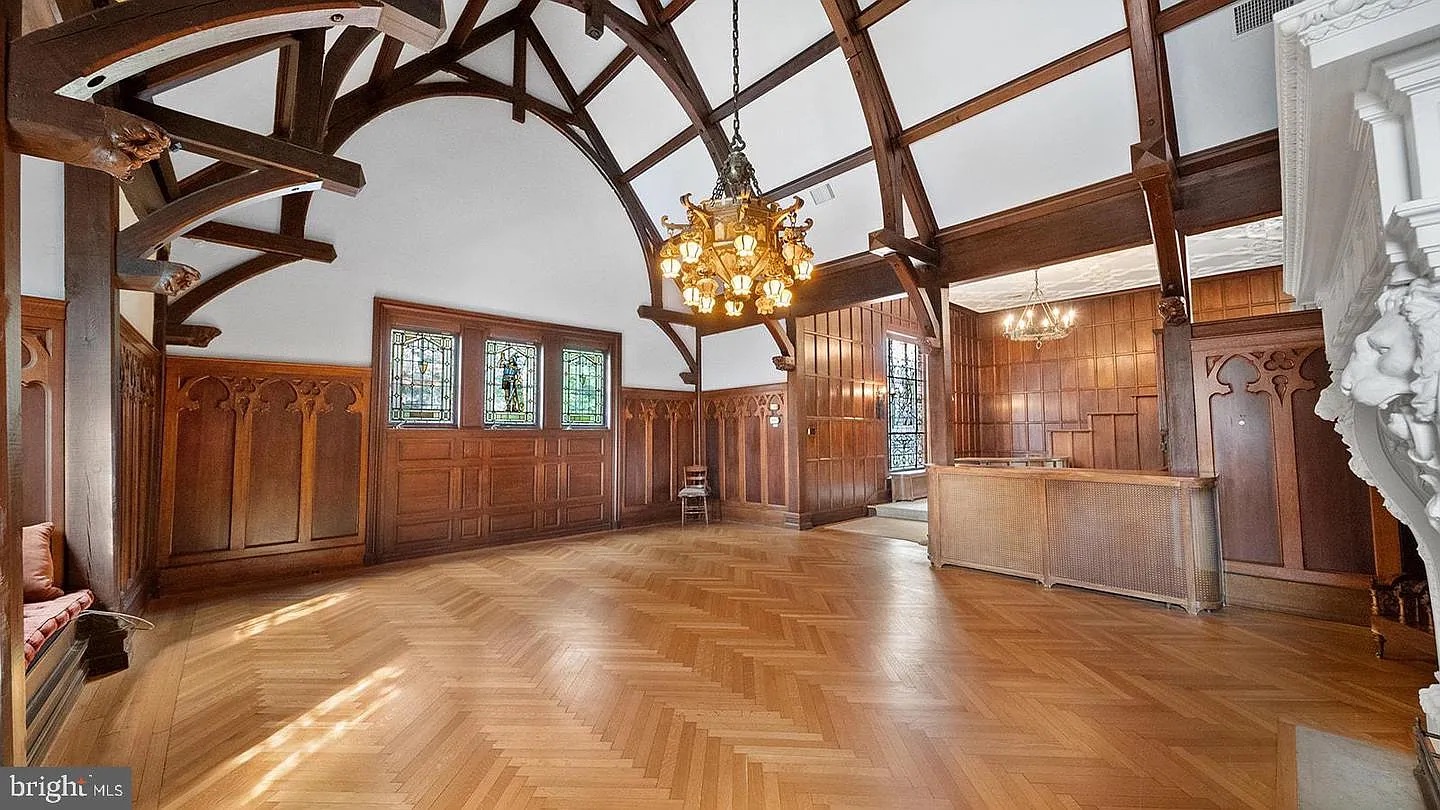
    A sprawling estate with a pool house by Philadelphia Museum of Art’s architect

    1717 Woodland Rd. in Abington, Pa.

    This nine-bedroom, eight-bathroom estate dates back to 1903 and has played host to a slew of interesting people within its walls: Inventor Walter Herring, who has ties to ticket turnstiles and the Slinky, once called the Normandy Tudor-style residence home, while Amelia Earhart and composer John Philip Sousa are thought to have spent time there.

    Hand-painted and -crafted elements include exposed wooden beams and murals, and stained glass windows portray various fairy tales. The roof is composed of Italian terracotta shingles, per the listing agent. The property features a concrete whisper bench, plus a pool house designed by Horace Trumbauer, the Beaux-Arts architect who worked on notable buildings including Elkins Park’s Lynnewood Hall and the Philadelphia Museum of Art.

    See more photos of the estate here.

    Price: $2,900,000 | Size: 12,000 SF | Acreage: 5.38

    🗞️ What other Greater Abington residents are reading this week:

    By submitting your written, visual, and/or audio contributions, you agree to The Inquirer’s Terms of Use, including the grant of rights in Section 10.

    This suburban content is produced with support from the Leslie Miller and Richard Worley Foundation and The Lenfest Institute for Journalism. Editorial content is created independently of the project donors. Gifts to support The Inquirer’s high-impact journalism can be made at inquirer.com/donate. A list of Lenfest Institute donors can be found at lenfestinstitute.org/supporters.

  • Former N.J. Gov. Chris Christie discusses his legacy as the godfather of legal sports betting, prediction markets, and the Trumps

    Former N.J. Gov. Chris Christie discusses his legacy as the godfather of legal sports betting, prediction markets, and the Trumps

    Chris Christie has been a two-time Republican presidential candidate, the governor of New Jersey, and a U.S. attorney. But history might show that he generated the most enduring national impact in a different role, as the godfather of legalized sports betting.

    In 2012, when he was still New Jersey’s governor, Christie signed a bill that would allow customers to wager on professional and collegiate sports at 12 casinos and four racetracks.

    He correctly predicted that the bill — which directly challenged a longstanding federal law that restricted legal sports betting to just a handful of states — would lead to him being sued by powerful opponents, and that over the long haul, his efforts would succeed.

    But in a recent interview with The Inquirer, Christie said that even he did not imagine that sports gambling would evolve from a location-based attraction to phone apps that are readily accessible and open for business around the clock. Americans spent a record $165 billion on sports wagers in 2025, amid growing concern from health experts and lawmakers that mobile gambling is driving a health epidemic.

    Nor did Christie — who now works as a strategic adviser to the American Gaming Association — envision the rise of prediction markets, some of which have been accused in lawsuits across the U.S. of running illegal sports betting operations. Christie, however, said he is unsurprised that two prediction market companies count Donald Trump Jr. among their advisers.

    Christie’s sports gambling crusade began just two months after New Jersey voters approved a referendum in November 2011 to legalize sports betting in the state.

    Casino industry lobbyists had long championed the type of bill that he signed, predicting that sports betting would be a double win for the state, attracting new customers to struggling casinos and generating revenue to benefit elderly and disabled residents.

    But a federal law, the Professional and Amateur Sports Protection Act, had since 1992 restricted legal sports betting to Delaware, Montana, Nevada, and Oregon. Christie wasn’t deterred.

    “Am I expecting there may be legal action taken against us to try to prevent it? Yes,” he told reporters in 2012. “But I have every confidence we’re going to be successful.”

    Then the National Collegiate Athletic Association — along with Major League Baseball, the NFL, the NBA, and the NHL — sued Christie for violating the federal law, igniting a legal saga that would wind for years through district and circuit courts before reaching the U.S. Supreme Court in 2017.

    Christie argued that PASPA had been a constitutional overreach that violated the Tenth Amendment’s “anti-commandeering” doctrine.

    “We lost the first six times [in lower courts],” Christie said. “I had the sense that maybe I was wrong.”

    In 2018, the Supreme Court voted to overturn PASPA, giving states the freedom to enact their own sports betting laws.

    This interview with Christie, 63, has been edited and condensed for clarity.

    Why was legalizing sports betting in 2012 a priority for you?

    I was trying to differentiate Atlantic City, and give the casinos something new and different to offer, and to help preserve the horse racing business. I saw it at the time as an offensive and defensive measure. That was the motivation.

    The leaders of professional sports leagues were critical of your efforts, and deeply opposed to legalizing sports gambling. What did you think of their position?

    I thought that their opposition was both wrongheaded and hypocritical, and I told them so. [Then-NBA commissioner] David Stern was probably the most vehement against it, but [NFL Commissioner] Roger Goodell was a driving force, too. I told them, ‘[Sports betting] is happening anyway. You’d rather have people bet with illegal bookies — either mob-related, or offshore — than companies who are in the business and regulated by the state?’ It made no sense.

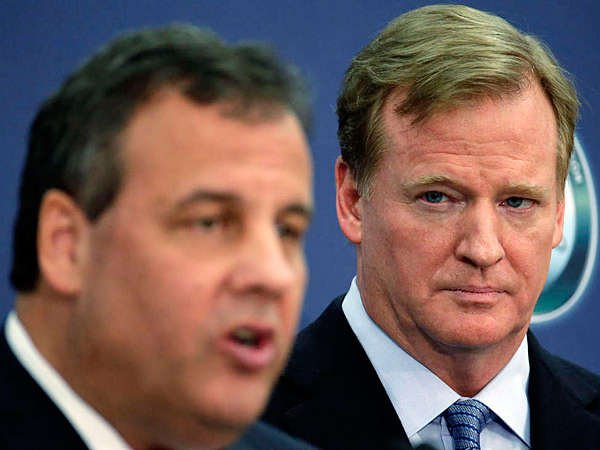
    Along with his peers in other professional sports, NFL Commissioner Roger Goodell (right) was opposed in 2012 to an expansion of legalized sports betting.
    Were you surprised to see those leagues later enter into lucrative partnerships with sportsbook companies?

    I wasn’t surprised at all. The leagues have shown an extraordinary ability to chase a dollar. I’m still waiting for the statue that they’re going to build of me, or the thank-you note. [Legalizing sports betting] has helped their TV contracts as well. People who weren’t even necessarily interested in sports before are now extraordinarily interested because they have a little bit of a wager on it. It’s kind of amazing.

    In the years since the Supreme Court overturned PASPA, NBA and MLB players have been arrested for conspiring with gamblers. An NFL executive was recently suspended for sharing inside information about the team’s draft plans.

    It’s inevitable that was going to happen. But I think because there is such a great deal of transparency, the leagues can act quickly. That makes it much more different from when gambling was illegal, and you still had some athletes or people associated with sports interacting with [bettors]. The regulation brings about transparency, and transparency makes it easier to police.

    Sports betting has evolved into a 24/7 mobile enterprise. Do you consider it to be a different product than what it was in 2012?

    Completely. I don’t think I could ever have anticipated that it would be in everybody’s pocket. That’s a little bit disturbing to me, to tell you the truth, the proliferation of it. And obviously prediction markets have been very disturbing to me, particularly because they market to teenagers, which is strictly prohibited for the legal gaming companies.

    Prediction markets have also faced backlash for allowing people to wager on U.S. military operations and the deaths of foreign leaders.

    I think the whole thing is absurd, and not good for the public.

    President Trump’s son, Donald Trump Jr., was reportedly given $300,000 worth of Kalshi shares in 2025, after becoming an adviser to the company. MARSHALL SCHEUTTLE
    President Trump’s son, President Donald Trump Jr., is an adviser to Kalshi and has shares of the company, and his venture capital firm has invested in Polymarket. Those companies are regulated by the federal Commodity Futures Trading Commission. Does that seem like a conflict to you?

    I think common sense gives you the answer to that. If it’s a money-making enterprise for the Trump family, then the odds are it’s going to face light regulatory action.

    Some state attorneys general have sued Kalshi. They allege that the company is running an unlicensed, illegal sports betting operation. Kalshi insists it is a commodity exchange. Will this end up being decided by the Supreme Court?

    It’s betting. It’s not an investment. It’s not a commodity. The Supreme Court has ruled that states have the right to regulate sports betting. I think that it’s going to go to the Supreme Court, and I’m confident [the prediction markets] will lose.

    We’ve interviewed addiction experts who say that sports gambling addiction is now a health epidemic, similar to tobacco and opioid abuse.

    I always thought that a big portion of this [revenue] has to go toward addiction treatment, and I think that’s got to continue.

    Elected officials in Pennsylvania, New Jersey and other states are exploring new regulations for sportsbook operators, like curtailing or eliminating in-game microbets or VIP programs. Are those kinds of reforms needed?

    As long as [sports betting] is a venture that creates tax revenue, then the states are always going to be examining this issue. They’re partners. They can’t claim no responsibility. I don’t know how it’ll manifest, or where it’ll land. … I think all regulation should be rooted in evidence-based research. So if there are changes that we see that could help make [gambling] safer, they should be considered.

    The Inquirer will continue to report on issues related to the growth of gambling addiction — among teens and adults — across Pennsylvania. If you or someone you know wants to speak with a reporter, please contact David Gambacorta or William Bender at dgambacorta@inquirer.com and wbender@inquirer.com

  • William Dunbar, a key adviser for Mayor Cherelle Parker’s 2023 campaign, pleaded guilty to federal tax evasion charges

    William Dunbar, a key adviser for Mayor Cherelle Parker’s 2023 campaign, pleaded guilty to federal tax evasion charges

    William F. Dunbar Sr., a Philadelphia lobbyist who was an important unpaid adviser to Mayor Cherelle L. Parker’s 2023 campaign, on Monday pleaded guilty to federal criminal charges related to a tax fraud scheme that lasted six years.

    Dunbar’s lawyer, Brian McMonagle, said Dunbar “accepts full responsibility for his conduct.” The charges were filed in July but were under seal until Monday morning. Dunbar entered his plea on Monday afternoon before District Court Judge Kelley B. Hodge.

    Dunbar, 42, was charged with four counts including tax evasion and filing a false tax return. He was charged by information, a process used when a defendant intends to plead guilty.

    “Today’s plea reflects his commitment to resolving this matter with honesty, accountability, and respect for the judicial process,” McMonagle said. “He has taken decisive steps to satisfy his outstanding tax obligations and has implemented appropriate financial controls and professional oversight to help ensure this does not recur.”

    McMonagle added that Dunbar “has dedicated his professional and personal life to serving his community through public service, civic leadership, and charitable engagement.”

    A spokesperson for the U.S. Attorney’s Office declined to comment on the case Monday.

    The charges carry a maximum sentence of 16 years in prison, plus supervised release and fines. A sentencing hearing was scheduled for Jan. 11, and Dunbar was released on bail pending sentencing.

    Dunbar pleaded guilty to filing fraudulent income tax returns for himself and his wife from 2020 through 2025. Prosecutors say Dunbar inflated his charitable giving and business expenses while dramatically undervaluing his taxable income, a scheme that likely would have lowered the couple’s tax bill.

    For example, they said, in the 2024 tax year, Dunbar claimed $1.45 million in total business expenses while indicating he had no taxable income. Dunbar also reported that he owed $46,000 in total taxes for that year, a sum that can include other taxes outside the income tax, but prosecutors said the amount he actually owed was “materially greater” than what he reported on his tax form.

    Prosecutors did not specify how much money Dunbar owed the government in taxes, but said in court papers that it was between $350,000 and $750,000.

    Assistant U.S. Attorney Louis D. Lappen told Hodge that, due to the fraudulent returns, Dunbar for tax year 2023 received a refund of about $30,000 while his spouse received a refund of about $36,000. Lappen said the couple claimed similar refund sums each year from 2020 through 2025, and that they should have paid additional taxes when they filed their returns instead of receiving refunds.

    “Had the taxes been filed accurately and appropriately and without fraud, [Dunbar and his spouse] would have owed,” Lappen said.

    Although prosecutors accused Dunbar of inflating expenses associated with his political consulting firm, Dunbar Public Affairs & Associates, there are no accusations in his charging documents that connect his conduct with Parker or others affiliated with her campaign.

    Dunbar was a key member of Parker’s “kitchen cabinet” of informal advisers during her 2023 run, in which she bested a crowded field to win the Democratic primary and become the city’s first female mayor. Dunbar also has had ties to other high-profile Democratic politicians, including Gov. Josh Shapiro, U.S. Sen. Cory Booker of New Jersey, and members of Philadelphia City Council.

    The Inquirer reported earlier this month that federal investigators last summer issued subpoenas for documents and financial records related to Dunbar, according to three sources with direct knowledge of the probe.

    One of the sources said the investigation appeared to be a “fairly broad” review of Dunbar.

    Parker’s campaign has dramatically increased its spending on legal services since early 2025, around the time the sources said subpoenas were issued, according to campaign finance reports.

    The campaign paid its law firm, Dilworth Paxson, about $108,000 since the start of 2025, The Inquirer reported. By comparison, it paid the firm less than $15,000 during the 2023 election year and about $19,000 in 2024.

    Parker last week declined to comment on the subpoenas related to Dunbar or on her campaign’s increased legal spending.

    Spokespeople for the mayor’s office and for Parker’s campaign declined to comment on the charges against Dunbar on Monday.

    Dunbar was never paid for his role in the campaign during the 2023 mayoral election.

    In 2024, Parker’s first year in office, Dunbar took over management of the campaign. The campaign paid Dunbar’s firm a series of rent payments totaling $22,850 between March 2024 and November 2024.

    Parker let Dunbar go from her campaign in the summer of 2024 in a move that Dunbar said at the time was the mayor’s decision. The campaign is now managed by Aren Platt, who was one of the architects of Parker’s 2023 run and served as chief deputy mayor in her administration before resigning in October 2024.

    Dunbar appears to still be active in politics despite no longer being on Parker’s team. Two weeks ago, he posted on social media a series of behind-the-scenes photos from a filming session at a West Philadelphia barbershop for a Shapiro campaign advertisement, writing: “Where politics meets the people.”

    Manuel Bonder, a spokesperson for Shapiro’s reelection campaign, said in a statement that Dunbar has “no formal or informal role with the Shapiro for Pennsylvania campaign.”

    Dunbar’s lobbying clients include Comcast, the Chamber of Commerce for Greater Philadelphia, and Jackmont Hospitality, an airport concessions company, according to his lobbying registration with the city.

    Dunbar previously lobbied for the Philadelphia School District, but a district spokesperson said earlier this month that he stopped working for the district in June.

    Staff writers Abraham Gutman and Ryan W. Briggs contributed to this article.

  • House lawmakers return to Washington with a stopgap funding bill atop the list of priorities

    House lawmakers return to Washington with a stopgap funding bill atop the list of priorities

    WASHINGTON — House lawmakers returned to Washington on Monday with a short to-do list after five weeks back in their home districts. The first order of business is most likely a vote on a stopgap spending bill designed to keep the federal government fully funded through early December, removing the possibility of a shutdown before the midterm elections.

    With election season getting underway, votes are also expected on measures designed to amplify the GOP’s messaging strategy going into November, most notably a resolution condemning socialism. Republicans are trying to tie the Democratic Party in general to the democratic socialist candidates who have succeeded this year in running for office.

    “The first thing is we’ve got to make sure this government gets funded and we don’t have another Democratic shutdown,” Speaker Mike Johnson told reporters as he prepared to open the chamber for business. The funding vote will most likely take place today.

    One significant item that did not make its way onto the House schedule this week is a Senate-passed bill that imposes sanctions on key segments of the Russian economy and allows President Donald Trump to impose steep tariffs on goods imported from countries that buy the vast majority of Russian oil and gas. The effort led by the late Sen. Lindsey Graham aims to deprive Russian President Vladimir Putin of revenue used to finance the war against Ukraine.

    The bill passed 86-11 in the Senate. House passage would send the bill to Trump’s desk for his signature. However, some key House Democrats oppose the bill. Democratic leader Hakeem Jeffries said the legislation risks providing Trump and his administration with new sanction and tariff authorities that “we believe they will abuse.”

    “I have serious concerns with the legislation,” he told reporters.

    The return to Washington also brings a renewed focus on improper behavior by lawmakers as the House will have its first chance to act on a recommendation from the House Ethics Committee to censure Rep. Chuck Edwards (R., N.C.) for engaging in persistent unprofessional and inappropriate conduct toward two young female aides in his congressional office.

    Edwards implores colleagues to reject censure vote

    Edwards has disputed the committee’s conclusion that he failed to adhere to the spirit of the rules prohibiting sexual harassment and unwanted advances toward House staffers. He points to the committee’s conclusion that found no evidence he “engaged in sexual activity or explicitly propositioned any individual under his employ.”

    Edwards said he was not asking lawmakers to approve of every gift, compliment, or social interaction, but to distinguish between conduct that someone might find unconventional and conduct that actually establishes sexual harassment.

    “Individual acts that were not themselves prohibited were gathered together, assigned the most damaging possible interpretation, and then used collectively to support a conclusion far more serious than the underlying evidence,” Edwards wrote in a letter to colleagues first reported by NOTUS.

    The committee said Edwards provided the two staffers with lavish and recurrent gifts, made comments regarding their dress and appearance, invited them to intimate dinners and vacations, sent notes regarding his effusive affection, and invited them to other activities as a way to spend time together.

    A vote to censure registers the House’s deep disapproval of a lawmaker’s conduct that does not meet the threshold for expulsion. Edwards dropped his reelection plans after the committee’s report came out.

    Lawmakers are working to avoid another shutdown

    The short-term funding bill underwent some significant changes in the Senate, which made it more palatable for Democrats. It delays a proposed rule from the Office of Management and Budget that would give political appointees more power over the distribution of federal grants. It also includes language to ensure the administration can’t transfer funds to the Border Patrol.

    But a provision that delays for one month a federal ban on intoxicating hemp THC products has prompted criticism from many GOP lawmakers. As a result, GOP leaders will likely place the bill on a fast-track process that avoids a separate procedural vote, bypassing any Republican efforts to block or stall the legislation. Suspension bills require a two-thirds vote to pass, meaning a significant number from both parties need to support the measure for it to pass and advance to Trump’s desk.

    Lawmakers are anxious to avoid the possibility of a shutdown as voters weigh their options going into November. The funding bill passed by a 90-6 vote in the Senate, showing that lawmakers from both political parties want to avoid a repeat of the two historic shutdowns that occurred this past year.

  • After more than three decades, Cecily Tynan delivers her final forecast for 6abc

    After more than three decades, Cecily Tynan delivers her final forecast for 6abc

    The long-term forecast for 6abc? No more Cecily Tynan.

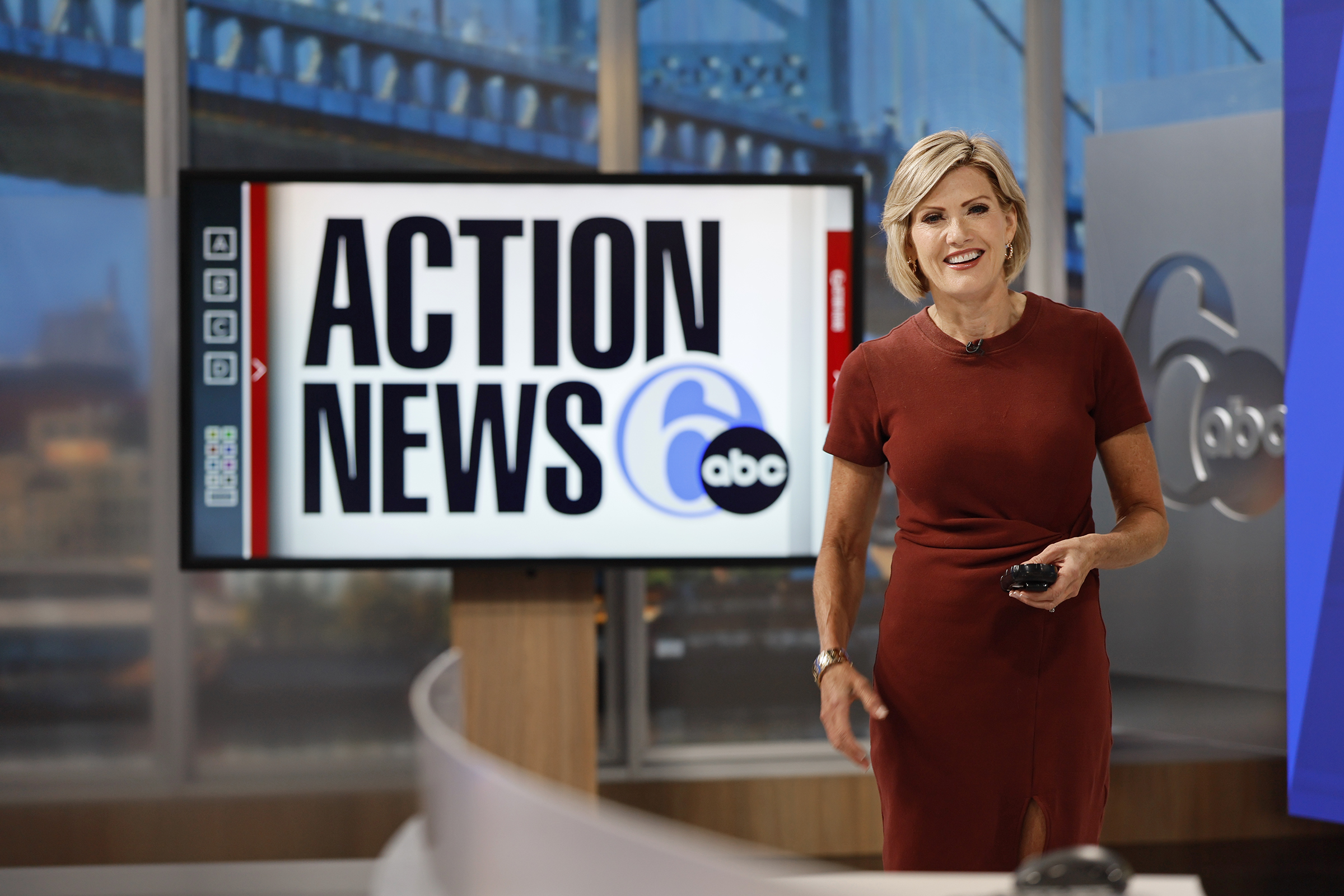
    The beloved meteorologist offered her final weather report on Action News Monday night, capping off a career spanning three decades as one of Philadelphia’s most-watched personalities.

    Tynan choked up as she thanked 6abc for giving her a chance nearly 31 years ago and praised her colleagues for letting her be her “authentic self” as she rose up the ranks from weekend weather anchor to become the station’s first meteorologist.

    “We’ve been through so much together,” Tynan said before ticking off major storms like the record snowstorm of January 1996 and Superstorm Sandy in 2012. “But after I leave here, that’s not what I will remember the most. I’ll be thinking about just how much fun I’ve had here for more than three decades now.”

    “I may be retiring, and you won’t see me here on the news anymore, but I know I will always be part of the Action News team,” Tynan added. “And I thank you for that.”

    Tynan devoted most of her farewell message to thanking viewers across the Delaware Valley, who have followed her career — and weather forecasts — for more than a generation.

    “I’ve met families who’ve been watching Action News for several generations. Most people in this area can sing the Action News theme song, and I’ve even met several young Cecily’s named after me,” Tynan said. “What an honor.”

    Among those on hand to celebrate Tynan’s final broadcast was retired Action News anchor Jim Gardner, a Philly media institution in his own right who trekked back to his former studio to celebrate his former TV partner.

    “The viewers will miss her terribly,” Gardner said. “She such a compelling television personality who really owns the screen when she’s on camera. The rest of us just appeared on TV.”

    “I’m not sure people give her enough credit for being a scientist, which is what she is first and foremost,” Gardner added. “She’s so committed to keeping viewers safe and informed when the weather presents serious challenges.”

    Cecily Tynan, seen here in 6abc’s weather center, has been the station’s chief meteorologist since 2009. Elizabeth Robertson / Staff Photographer

    Tynan’s other longtime partner, current Action News anchor Rick Williams, was there in 1995 when she first joined the station fresh off a stint in Las Vegas. Nearly 31 years later, Williams offered a heartfelt goodbye during the 5 p.m. newscast to his “closest friend,” though the two couldn’t avoid cracking a joke or two.

    “You’re my work husband,” Tynan said.

    “And we’re getting divorced,” Williams shot back.

    Despite retiring relatively young at 57, Tynan has no immediate plans, outside of splitting her time between her Delaware County home and waterskiing at her second house in Florida with her husband, Greg. She even turned down a chance to host the Thanksgiving parade one final time so she could spend the holiday with her family.

    “We’ve always been in a hotel by the parade route, and I’ve never actually cooked,” Tynan told The Inquirer last month. “This year I was like, ‘No, I’m going to stay home. I’m going to cook Thanksgiving dinner from scratch.’ Hopefully my family appreciates it.”

    Tynan’s departure is the latest in a string of exits in recent years by some of the city’s most-beloved and longest-serving media personalities.

    Tracy Davidson retired from NBC10 last year after nearly 30 years with the station, while Jim Donovan said goodbye to CBS3 after 22 years. Muckraker Jeff Cole also walked away from the spotlight last year after spending 25 years with Fox 29.

    They were all preceded by Gardner, who delivered his final newscast nearly four years ago.

    “Retirement is a thief, if you ask me,” longtime 6abc anchor Brian Taff joked on social media.

    6ABC meteorologist Cecily Tynan grabs a shoe from one of two shoe drawers she has in the weather center.Elizabeth Robertson / Staff Photographer

    6abc hasn’t yet announced who will replace Tynan as the station’s chief meteorologist on the 6 p.m. and 11 p.m. editions of Action News. The obvious candidates are 6abc veterans Karen Rogers and Adam Joseph, both of whom have spent more than 20 years on Action News.

    “Channel 6 is so much bigger than any individual, and it will continue on with extremely talented people doing the weather,” Gardner said. “But there’s only one Cecily Tynan.”

  • Army Secretary Dan Driscoll is stepping down after 18 months on the job, White House says

    Army Secretary Dan Driscoll is stepping down after 18 months on the job, White House says

    WASHINGTON — Army Secretary Dan Driscoll is stepping down after 18 months on the job, the White House said Monday, in the latest departure of a top military leader during the Trump administration.

    No reason was given for the departure of Driscoll, who is a friend of Vice President JD Vance, but tensions with Defense Secretary Pete Hegseth have been widely reported. It marks the latest in a series of shake-ups of top military leadership, with the Army especially seeing major upheaval.

    “Secretary Driscoll has been highly effective in advancing President Trump’s agenda to Make America Strong Again at the Department of the Army by providing outstanding leadership during historic military operations, restoring an emphasis on readiness and lethality, assisting with negotiations between Russia and Ukraine, and more,” White House spokesperson Anna Kelly said in a statement.

    “The United States Army is more powerful than ever thanks to his work alongside the Commander-in-Chief and Secretary of War,” she added.

    The Pentagon referred questions to the Army. The Army had not immediately responded to an email seeking comment. A spokesperson for Driscoll had not responded to a text message.

    Hegseth suddenly ousted the service’s top uniformed leader, Gen. Randy George, in April, while the Army’s commander in Europe and Africa, Gen. Christopher Donahue, unexpectedly stepped down in June.

    Gen. Christopher LaNeve, who has made a meteoric rise under Hegseth, took George’s place as the Army’s acting chief of staff. Under LaNeve, the service is pulling the plug on a drone modernization program that Driscoll had heralded. An Army unit based in Europe was building its own drones before LaNeve directed it to end its efforts and return to being a traditional infantry battalion, officials said this week.

    Driscoll was a George ally and lamented his departure, along with both Republican and Democratic lawmakers. He told Congress in April that he and his family drove to George’s house following his resignation “and we all gave him a hug.”

    “That being said, the civilian leadership, the design of our system, is that they get to pick the leaders that they want,” Driscoll added.

    Driscoll is an Iraq war veteran, tech investor, and former adviser to Vance, whom Driscoll met at Yale Law School. When nominating Driscoll in 2024, President Donald Trump called him “a disruptor and change agent.”

    As Army secretary, Driscoll was tapped for the unusual role of key negotiator to try to end the war between Russia and Ukraine. He was also a major force behind trying to cut the red tape for military contractors to quickly develop more drones and counterdrone capabilities as warfare rapidly changes around the world.

    The Senate confirmed him in February 2025, voting 66-28, following an Armed Services Committee hearing that was largely unconfrontational and focused on how the Army could modernize its systems, improve recruiting and beef up the military industrial base.

    Driscoll noted that his father and grandfather served in the Army and he vowed to be a secretary focused on the needs of soldiers. According to the Army, Driscoll served as an armor officer from August 2007 to March 2011, deploying to Iraq from October 2009 to July 2010.

    He also ran unsuccessfully in the Republican primary for a North Carolina congressional seat in 2020, getting about 8% of the vote in a crowded field of candidates.

    His departure comes after Hegseth ousted several other generals and admirals, including the head of the Navy.

    The Pentagon abruptly announced in April that Navy Secretary John Phelan was leaving the job, becoming the first head of a military service to depart during Trump’s second term.

  • Subaru is planning to relocate its Cherry Hill dealership

    Subaru is planning to relocate its Cherry Hill dealership

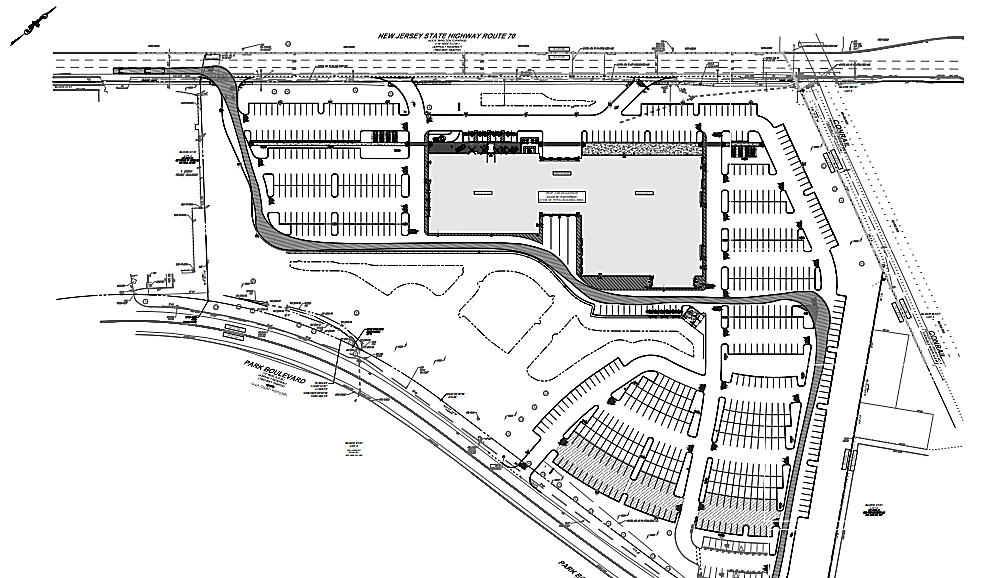
    In a case of corporate déjà vu, the Subaru of Cherry Hill dealership plans to move from one side of Route 70 to the eastbound side on about 14 vacant acres that held the corporate headquarters of Subaru of America until its 2018 move to Camden.

    The new Subaru dealership, first approved in 2023 by the Cherry Hill Planning Board, now requires amended plans that include site design changes to reflect New Jersey Department of Environment Protection flood hazard regulations. The Cooper River is across Park Boulevard from the property.

    Subaru’s amended application is scheduled to be considered by the board at its Sept. 8 online meeting, which begins with a caucus at 7 p.m. The showroom, service area, and other offices will occupy a 67,035-square-foot building footprint that includes a 21,840-square-foot showroom and 36,350-square-foot service area. Site plans call for 658 parking spaces, of which 454 will be used to store Subaru’s car inventory.

    The five-story, $18-million Subaru corporate headquarters on Route 70 opened in 1986 and was demolished in 2019 after the corporation’s 2018 move to a new $118-million home in Camden.

    The site plan for the new Subaru dealership in Cherry Hill. Route 70 is at top and Park Boulevard at the bottom.Subaru's application to the Cherry Hill Planning Board

    Subaru’s headquarters wasn’t the most famous building to occupy the 2235 Route 70 site.

    The Latin Casino, where some of the most famous entertainers of the day performed, opened there in 1960 and was demolished in the early 1980s.

    Steve Martin, Tom Jones, Dean Martin, Dionne Warwick, Frank Sinatra, Ray Charles, Aretha Franklin, Ella Fitzgerald, and Johnny Mathis performed at the 1,500-seat dinner club in Cherry Hill, according to website Concert Archives. Rhythm and blues singer Jackie Wilson in 1975 was performing on stage when he had a massive heart attack that left him in and out of comas until his death in 1984.

    The Subaru dealership plans originally were approved by the Planning Board in 2023. Star Real Estate of Cherry Hill II LLC, the developer at the time, assigned its approvals to Subaru of America Inc. and Subaru Insurance Agency Inc., which are now developing the site, according to the township. The current dealership is at 1800 Route 70 westbound.

    An operations statement from the developer says the site will have about 35 employees in the sales area and about 45 employees in the parts and service area, according to township records.

    Test drives would turn right onto Park Boulevard, turn right at the Audi dealership, and left at the light onto Route 70, according to the application. Drivers would go to the Wawa in Pennsauken and turn around and come back on Route 70.

    Landscaping at the new dealership will be designed by the Pennsylvania Horticultural Society and will be consistent with Subaru branding and similar to the Camden headquarters, according to the dealer’s application.

    70and73.com is a hyperlocal news site focused on South Jersey, including the communities of Cherry Hill, Evesham, Mount Laurel, Voorhees, Medford, Medford Lakes, and Moorestown.