Category: News

  • A former confidant to Mayor Cherelle L. Parker tried to bilk campaign for rent money, court document shows

    A former confidant to Mayor Cherelle L. Parker tried to bilk campaign for rent money, court document shows

    William F. Dunbar Sr., a former confidant to Mayor Cherelle L. Parker who pleaded guilty this week to federal tax fraud charges, also sought to bilk a political campaign out of rent payments he was not entitled to, according to a court document filed Tuesday.

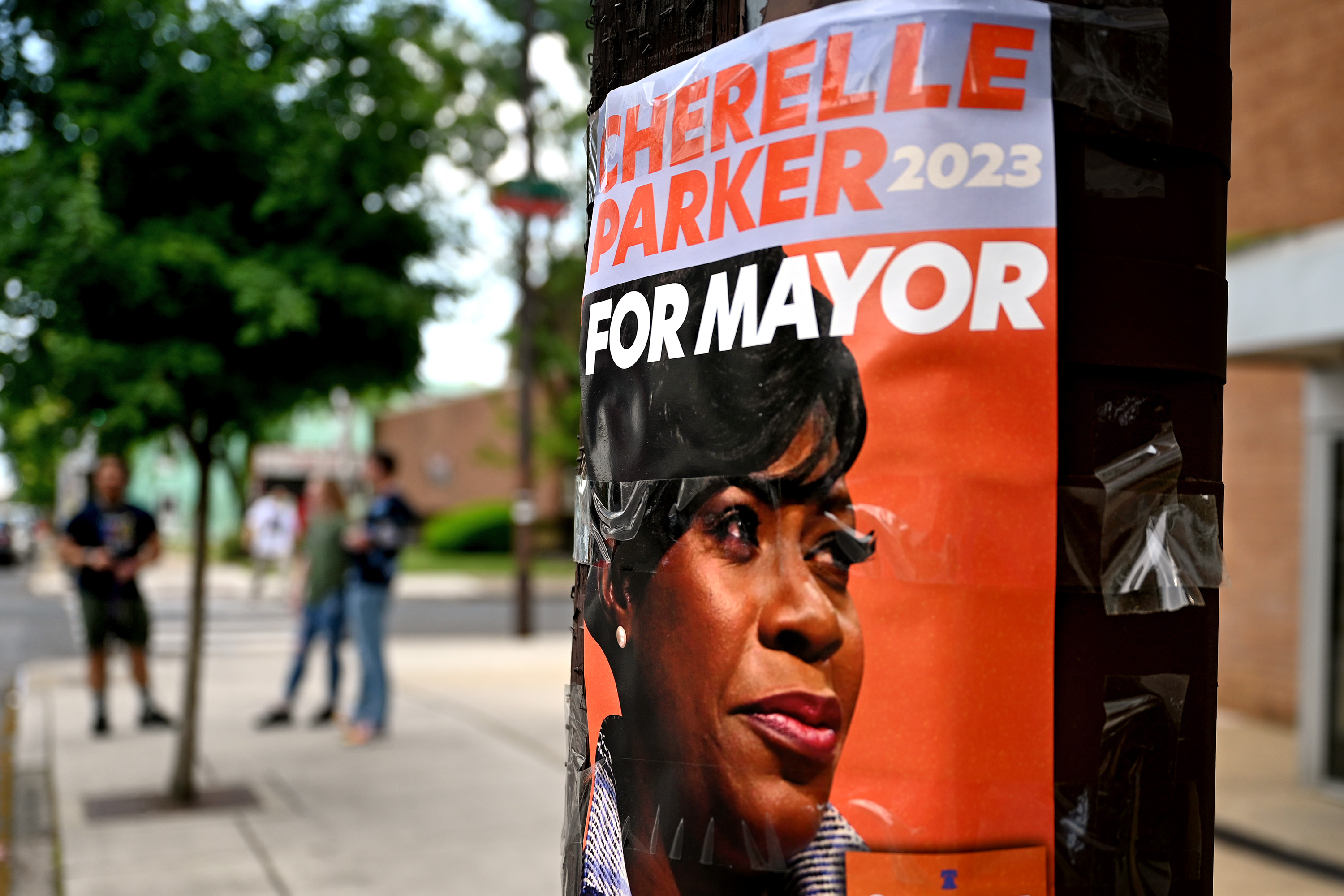
    The document does not name the campaign, but it appears to be Parker’s.

    Dunbar, 42, never actually received any ill-gotten funds related to the lease with the campaign, prosecutors said, and he was not charged in connection with the matter.

    But prosecutors said in court documents that he’s agreed to let a judge consider the episode and two other incidents of “additional misconduct” as she weighs his sentence for tax fraud.

    Dunbar, a Philadelphia lobbyist, was an unpaid but important adviser to Parker during her winning campaign for mayor in 2023. He officially joined her campaign, People for Parker, around the time she took office in January 2024.

    The mayor let Dunbar go from her campaign in July 2024 in a move that Dunbar at the time described as Parker’s decision.

    The campaign made a series of rent payments totaling $22,850 to his lobbying firm, Dunbar Public Affairs & Associates, between March 2024 and November 2024, according to campaign finance records. The address listed for the rent payments was an office in the Penn Center complex near Philadelphia City Hall.

    According to Dunbar’s plea agreement, in February 2025 he “falsified certain terms of a lease agreement for office space that [he] had entered as the lessor with a Philadelphia political campaign.”

    The city’s online database of campaign finance records shows People for Parker as the only campaign that has made rent payments to Dunbar’s firm.

    “The facts speak for themselves,” said Aren Platt, executive director of People for Parker, declining to comment further on Tuesday.

    Dunbar declined to comment.

    William F. Dunbar Sr., a lobbyist and a former informal adviser to Mayor Cherelle L. Parker.Courtesy of William F. Dunbar Sr.

    The plea agreement, which was signed by Dunbar and his attorney, said he “falsely modified the terms of the lease agreement” to increase the notice the campaign was required to give him to terminate the lease.

    Had the campaign not discovered the change, the agreement said, Dunbar would have received money he was not owed. “The defendant’s efforts in this regard did not result in his obtaining any funds, and he ceased making any efforts to obtain these funds before learning of the federal criminal investigation resulting in the charges in this case,” the agreement said.

    Dunbar on Monday pleaded guilty to filing false tax returns for himself and his wife between 2020 and 2025 and claiming substantial refunds when, in reality, they owed money. Prosecutors said in court papers that the tax loss related to the fraud was between $350,000 and $750,000. The charges carry a maximum sentence of 16 years in prison, plus supervised release and fines.

    Dunbar’s attorney, Brian McMonagle, said in a statement Tuesday that the plea agreement “reflects Mr. Dunbar’s acceptance of responsibility for his own conduct.”

    McMonagle said that the agreement “does not include any cooperation obligations” and that Dunbar is “not required under the agreement to provide information or testimony regarding any other individual.”

    The four charges to which Dunbar pleaded guilty are unrelated to his firm’s lease with the Parker campaign and the two other incidents of “additional misconduct” that Dunbar stipulated in the agreement. The other incidents involve falsifying a document for a mortgage application and submitting false financial information to receive additional financial aid at a private school.

    Although those episodes did not lead to criminal charges against Dunbar, U.S. District Court Judge Kelley B. Hodge will be able to consider them when determining his sentence. A sentencing hearing is scheduled for January.

    Staff writer Chris Palmer contributed to this article.

  • Oil giant Chevron is expected to announce it will expand operations in Venezuela, U.S. official says

    Oil giant Chevron is expected to announce it will expand operations in Venezuela, U.S. official says

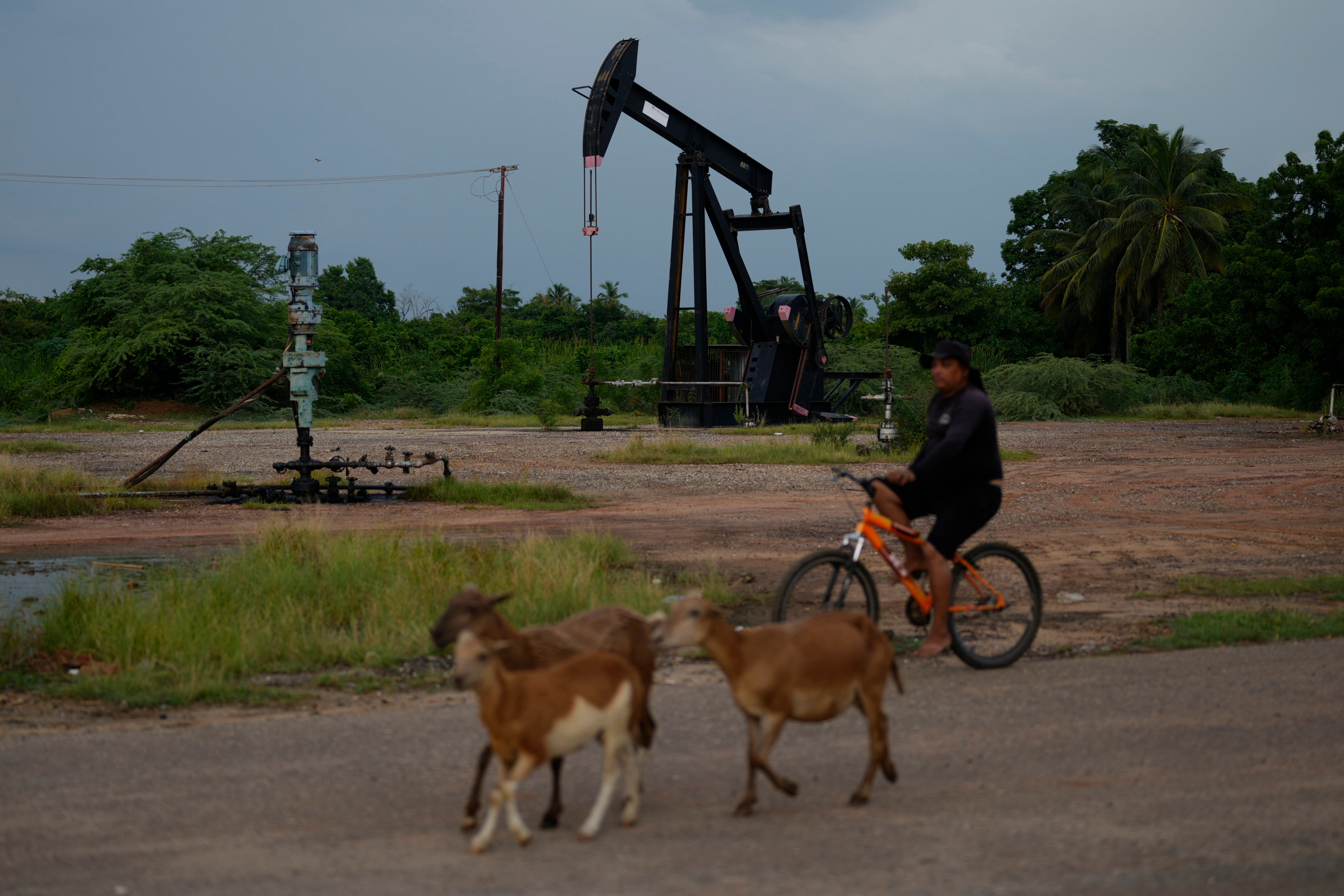
    WASHINGTON — Oil giant Chevron is planning to expand its operations in Venezuela, a U.S. official said Tuesday, just days after President Donald Trump announced an ambitious deal to develop the nation’s oil reserves and give the Pentagon a stake in the profits.

    The official, who briefed reporters on the expected announcement, said the company’s officials and Energy Secretary Chris Wright are expected to visit Venezuela on Wednesday where the new investment will be formally unveiled. The official spoke on condition of anonymity under ground rules set by the White House for the call.

    Chevron is the second-largest U.S. oil company and the only one with a major presence in Venezuela. Chevron did not immediately respond to a request for comment.

    The announcement comes after the White House confirmed on Monday it is partnering with North American Blue Energy Partners as part of President Donald Trump‘s push to tap into Venezuela’s oil industry.

    The sweeping agreement has been met with skepticism from analysts who say it will take years to revive Venezuela’s production. They have questioned whether Venezuela’s acting President Delcy Rodríguez has the legal authority to give the company 100-year rights over 17 oil fields with reserves of 65 billion barrels — and whether future Venezuelan or American administrations would overturn the agreement.

    Deal being pitched as step toward stability, democracy for Venezuelans

    The Trump administration wants elections to happen as quickly as is feasible, but is aiming to maintain stability as it helps Venezuela transition following decades of autocratic rule, the official said.

    The official argued that maintaining stability during such transitions “almost invariably requires you to work with elements of the existing structure, even as you are creating a new one.”

    The Pentagon’s role in the deal comes through its Office of Strategic Capital, which was created under former President Joe Biden to invest in technology needed for national security.

    A second U.S. official speaking on condition of anonymity described the Venezuela agreement as “a very standard deal” and said the office has made several similar ones since Trump returned to office.

    Trump says other companies are readying for business

    Trump has had his eyes on Venezuela’s oil since Maduro’s capture, and his aides call it a path away from reliance on oil from the Middle East. Trump has been pressing to get U.S. businesses to restore a presence in the country. President Hugo Chávez completed the nationalization of Venezuela’s oil industry in 2007, leading major players like ExxonMobil and ConocoPhillips to leave Caracas.

    Talking to reporters at the White House on Monday, Trump suggested that other oil companies were readying for business in Venezuela. “We have Exxon going in, we have Chevron going in. We have our big oil companies going in,” he said. ExxonMobil did not immediately respond to a request for comment. Trump in January said he was inclined to leave Exxon out of Venezuela after CEO Darren Woods called the country “uninvestable.”

    Chevron has been the only major American oil company actively operating in Venezuela since the nationalization.

    Trump was scheduled to meet with a group of large and small oil refiners on Tuesday to discuss ways to increase America’s capacity to refine oil into gasoline.

    The White House has said that increasing the number of refineries and expanding the capacity at existing facilities would eventually reduce prices for consumers. The administration also sees the need for more refineries to process oil from Venezuela.

  • The Academy of Natural Sciences museum is closing. What happens to memberships and planned events?

    The Academy of Natural Sciences museum is closing. What happens to memberships and planned events?

    Drexel University and the Academy of Natural Sciences announced Tuesday that the museum would close for good on Sept. 30. Its last day open to the public with regular hours will be Sunday, Sept. 27.

    While the Academy’s research and collections will be unaffected by this closure, here’s how things will change for the museum’s members and its events.

    Will museum members get refunds?

    Most recently, memberships for the Academy museum cost $65 for individuals. $135 for families.

    “Members will receive direct communication in the coming days with information about their memberships, including benefits, expiration dates, and transition options,” Drexel said in a statement.

    The Franklin Institute, the university said, will honor Scademy memberships through their expiration dates, so members can visit the institute situated only about a block away from the Academy.

    Members could also “adjust the tax-deductible portion of their membership or request a prorated refund for the remaining membership period,” the university said.

    The university said it will provide information to members and also post it on the Academy’s website when it becomes available.

    What will happen to events scheduled at the museum?

    “All programs and events scheduled to take place before the closure will continue as planned,” the university said. The university did not respond to what will happen to events that are rescheduled after Sept. 30 or if there are any.

    What happens to the interns and students currently working in co-ops at the museum?

    “Five Drexel students are currently working at the Academy in co-op positions. Their roles support the Academy’s research and collections’ activities and are not affected by the closure of the museum,” the university statement said.

    Will hours be expanded if the closure announcement drives a high turnout?

    The university said visitors should come to the museum through Sept. 27 “and participate in programs and events offering opportunities to experience and celebrate the museum during its final weeks.”

    The Academy of Natural Sciences of Drexel University, 1900 Benjamin Franklin Parkway, is open Friday to Sunday 10 a.m. to 5 p.m. ansp.org

  • Drexel and the Academy of Natural Sciences are close on deal to continue the Academy’s operations and keep it in Philadelphia, Pa. leader says

    Drexel and the Academy of Natural Sciences are close on deal to continue the Academy’s operations and keep it in Philadelphia, Pa. leader says

    David L. Cohen, the former U.S. ambassador to Canada and Comcast executive, said the governor asked him to be his “agent” in helping to broker a deal between Drexel University and the Academy of Natural Sciences.

    No one, he said, wanted to see another University of the Arts, which abruptly closed in June 2024, leaving a hole in the city’s arts landscape and sending students and staff scrambling.

    “I don’t want to lose the Academy on my watch, and neither does the mayor,” Gov. Josh Shapiro told Cohen, Cohen said. “Can you figure out if there’s a solution here? If there’s a solution, can you help convince the Academy and Drexel to pursue that solution.”

    That’s what Cohen said he has been doing, holding 40 or 50 meetings over the last several months in search of an agreement and producing a draft proposal for the future of the Academy.

    The two entities, he said, are close to agreeing to terms on governance and finances. While the museum is closing, as Drexel and the Academy announced Tuesday, the larger agreement would allow for the continued operation and growth of the Academy in Philadelphia, without jeopardizing Drexel, which is facing its own financial challenges.

    “We want to preserve the Academy,” he said, “but we also don’t want to jeopardize Drexel.”

    “Drexel and the Academy are working with my office, with Gov. Shapiro’s office, and with Ambassador David L. Cohen, as the governor’s representative, to preserve the essential mission of the Academy. We are working collaboratively toward the outcome we all seek for the City of Philadelphia,” Mayor Cherelle L. Parker said in a statement.

    The governor’s press office did not responded to requests for comment.

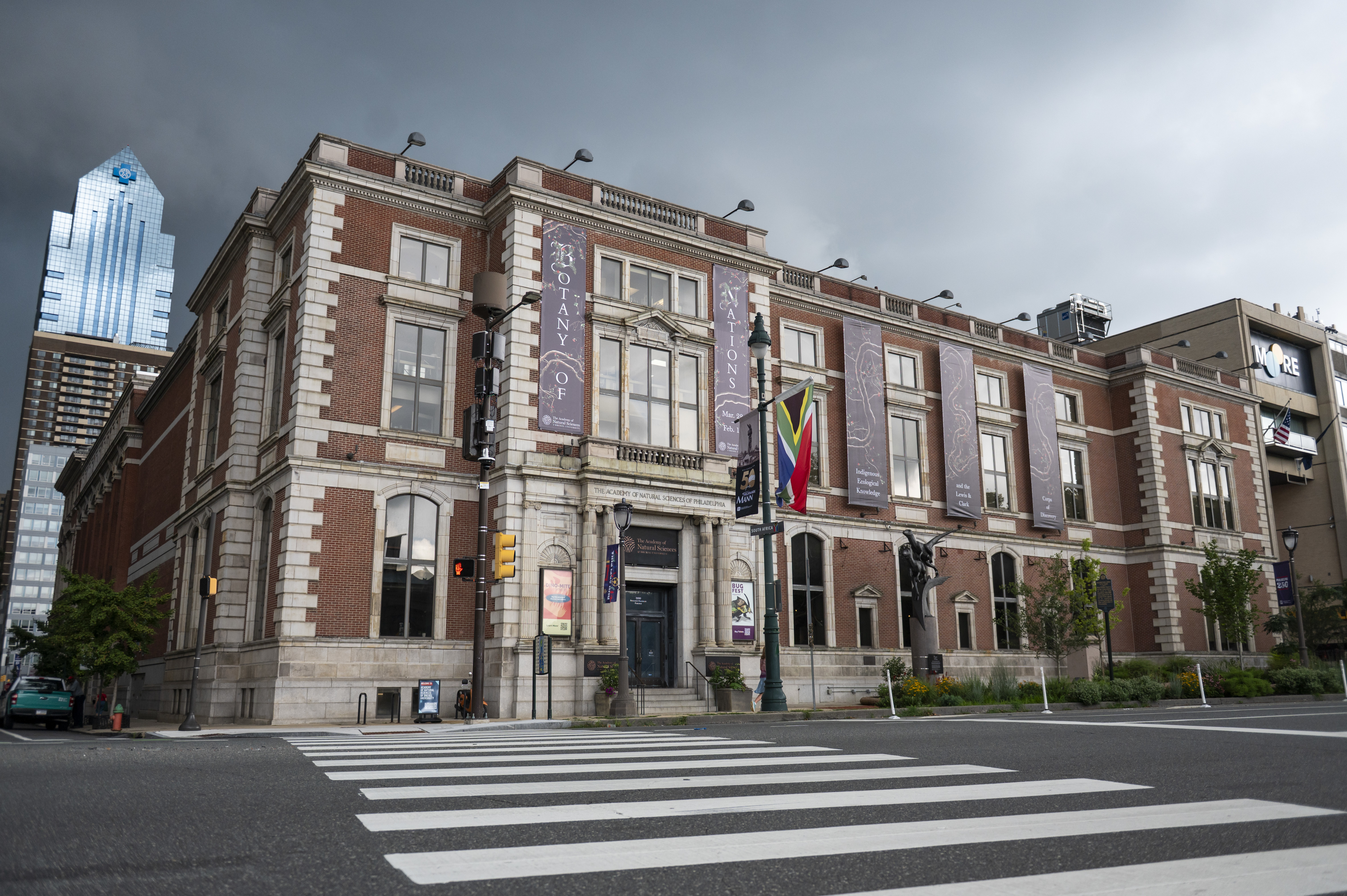
    The exterior of the Academy of Natural Sciences on Wednesday, Aug. 5, 2026.Allie Ippolito / For The Inquirer

    Cohen has long been a negotiator in many major city issues, formerly serving as chief of staff to former Philadelphia Mayor Ed Rendell and leading the board of trustees of the University of Pennsylvania.

    Shapiro, he said, was clear about the objectives.

    “The goal that the governor articulated to me and the mayor was to preserve the essential mission of the Academy, all three legs on the stool,” he said citing research, education and public engagement with the collection. “Some of the legs might be a little shorter. They might be a little skinnier. But the goal is that the Academy survives and has a foundation to thrive and grow in Philadelphia. This is a matter of civic importance.”

    Drexel and the Academy are exploring establishing another museum, maybe a smaller one, in another location through a third partner, Cohen said.

    “That’s a work in process,” he said. “I had an hour and a half meeting yesterday with one of the potential institutions that could serve that function for the Academy and for Drexel.”

    Cohen said he hopes ultimately the community rallies around the Academy and helps to support it.

    “We don’t need a single savior here,” he said. “This can be a community effort. I know the Philadelphia nonprofit and foundation community, and time and again this community has stepped up, and I have every hope that we, and it’s a we, will step up again.”

    Cohen credited both Drexel and the Academy for their cooperation and willingness to “focus on a common need for the community as a whole. They really deserve the credit for doing this.”

    The mayor, too, commended Drexel University and the Academy of Natural Sciences “for its significant, ongoing work to preserve the Academy’s educational mission and extraordinary two-century legacy as a natural history institution, including its world-renowned collections.”

    Cohen said he first got involved in the matter about a year ago when he was home recovering from back surgery and got a call from two members of the Academy board about the issues they were having with their partner, Drexel.

    The Academy was looking at possibly leaving the city, though it really didn’t want to do that, he said. He suggested they talk to the mayor and the governor. The board members told him they had been trying to do that but were unable to get attention.

    Cohen texted the governor and mayor on the spot from his living room, he said. Meetings were convened, and that led to the governor seeking Cohen’s help.

    “My wife says to me ‘why in the world did you take this on,” Cohen recalled. “Let me tell you, this legacy, this mission, this institution is worth fighting for. There is real history here, real value.”

  • Wendell Berry, writer who extolled America’s agrarian past, dies at 92

    Wendell Berry, writer who extolled America’s agrarian past, dies at 92

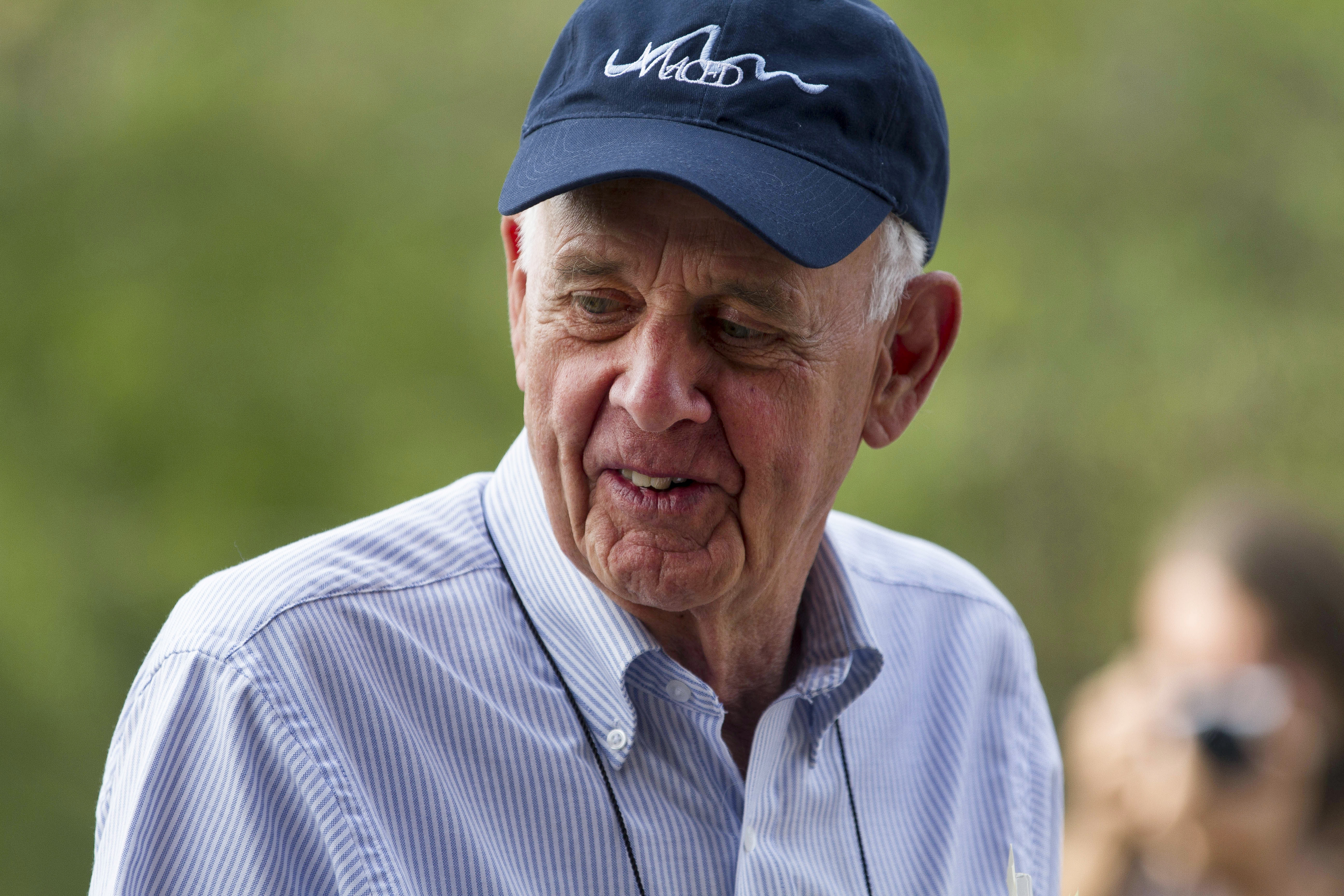
    Wendell Berry, a Kentucky farmer who plowed his fields behind Belgian draft horses and wrote lyrical poems, novels, and essays — mostly in pencil and without electric light — that explored his elegiac visions of the life and death of agrarian America, died Monday at his home in Port Royal, Ky. He was 92.

    His daughter, Mary Berry, confirmed the death.

    Lanky and rawboned in middle age, with melancholy eyes, a jutting chin, and a widow’s peak reminiscent of Lincoln’s, Wendell Berry wrote more than 50 volumes of poetry, fiction, and argument that championed small family farms, the environment, local foods, and interdependent communities, and railed against chemicals, most technologies, agribusiness, and distant government.

    “The national economy that is really run for the benefit of a very few people is preying upon and slowly destroying local communities everywhere,” Mr. Berry told Sierra magazine in 1990. “Everything we produce in rural America makes more money for other people than it does for those who produce it. We’re destroying rural America.”

    Mr. Berry was once hailed by author and historian Page Smith as “a prophetic American voice of our day.” He never became a household name but, as his oeuvre grew over a half-century, advocates of agrarian and ecological causes embraced his work as an eloquent, if sometimes didactic, expression of their own hopes. Some critics likened his landed exhortations to those of Henry David Thoreau or Thomas Jefferson.

    Toward the end of his long fight for agrarian justice, waged from a cabin in the backwoods of Kentucky, Mr. Berry was showered with honors, including the National Humanities Medal, the nation’s highest award for humanitarian services, presented by President Barack Obama at the White House in 2011, “for his achievements as a poet, novelist, farmer, and conservationist.”

    Raised on a farm in north-central Kentucky, he studied English at the University of Kentucky and writing at Stanford with the environmentalist-novelist Wallace Stegner, traveled in Italy, and landed in New York, intending to write and teach. He married, had two children, and taught for two years at New York University.

    But at 30, he confronted in himself a deep need to return to his roots — specifically, to an old two-room cabin on the Kentucky River at Port Royal, in Henry County, where his ancestors had lived since 1803. The cabin had been built in the 1920s by a great-uncle. He had known the place all his life; indeed, had visited it often as a boy and spent a summer there with his wife, Tanya.

    “In the life we lived that summer, we represented to ourselves what we wanted — and it was not the headlong pilgrimage after money and comfort and prestige,” he recalled in an essay titled for its inspirational setting, “The Long-Legged House.”

    In 1964, the couple resolved to stay and work the land. Nearby, they bought a 125-acre farm, called Lanes Landing, and started raising sheep, corn, and grain crops, and planted gardens for their own table. Mr. Berry also initiated a 20-year teaching association at the University of Kentucky, in Lexington.

    Returning to his home as a place to write for the rest of his life was a way to insure, to himself, that he would always be bound by the truth, Mr. Berry said in a phone interview in 2018 for this obituary.

    “It made a permanent connection between me and my native place, and with its landscape,” he said. “The landscape was there to check me if I was wrong. I could never go away and make up stuff at cocktail parties about the backwoods of Kentucky. I worked with people here in all walks of life and learned from them. It’s been a very rich experience.”

    He rebuilt the Long-Legged House and began writing there about sustainable agriculture and the culture of life on small farms and in farming towns — polemics about how such places were vital to individual liberties and why they were rapidly disappearing from a landscape increasingly afflicted with topsoil erosion, polluted water, and toxic chemicals.

    Over the next half-century, he wrote with a pencil or pen on paper during daylight hours. His farmhouse had electricity, but he refused to use electric lights at the Long-Legged House, where he wrote, because, he said, the power was supplied by strip-mined coal. His wife critiqued his work and typed his manuscripts on an old Royal standard. He refused to have a television set, or a computer after they came along.

    Mr. Berry first won national attention with The Unsettling of America: Culture & Agriculture (1977), a manifesto to save small farms from big business and a government bent on agricultural efficiencies that, he said, were destroying the land and a way of life. The book launched the modern movement for sustainable farming and became a conservationist classic.

    “The concentration of farmland into larger and larger holdings and fewer and fewer hands — with the consequent increase in overhead, debt, and dependence on machines — is a matter of complex significance, and its agricultural significance cannot be disentangled from its cultural significance,” Mr. Berry wrote.

    In a review for the New York Times, farmer-poet Donald Hall hailed its “worldview that derives its premises from the experience of working on the land.” Its author, Hall added, “argues with careful logic for the recovery of lost land, for the return of the small farmer to the countryside, the small farmer expropriated by the army of agribusiness.”

    Mr. Berry elaborated on this theme in The Gift of Good Land (1981) and Home Economics (1987), essay collections that described organic farming techniques in America and abroad. They argued that “industrial values” were killing family farms and threatening American society as a whole.

    (END OPTIONAL TRIM.)

    Marshaling fiction to his cause, Mr. Berry wrote more than a dozen novels and volumes of short stories. He invented a Kentucky town, Port William, as a setting for generations of lives interwoven in tales of murder, alcoholism, marital discord, and remembrance against subtexts of fading agrarian life. Some critics called his fiction moralistic and short on plot and character development.

    Others found his novels moving. The Memory of Old Jack (1974), the recollections of a 92-year-old farmer on his last day of life, was “magnificent,” English scholar Joan Joffe Hall wrote in the New Republic, saying it “makes us grieve that these rhythms of work and speech are lost to us.”

    As a poet, Mr. Berry produced some 30 volumes of collected verses, starting with The Broken Ground (1964). His “Sparrow,” in its entirety, was typically economical:

    A sparrow is

    his hunger organized.

    Filled, he flies

    before he knows he’s going to,

    And he dies by the

    same movement filled

    with himself, he goes

    by the eye-quick

    reflex of his flesh

    out of sight,

    leaving his perfect

    absence without a thought.

    “The quiet but sure and melodious voice of Wendell Berry makes The Broken Ground an immediate pleasure,” poet and critic Robert Pack wrote in a review for the Times. “He is essentially elegiac, ranging from praise to requiem; throughout his poems there broods a reverential hush.”

    Farmers caught in an economic squeeze regarded Mr. Berry’s ideas as naive. So did Charles Barnhart, a dean at the University of Kentucky’s college of agriculture.

    “What Wendell is talking about is a primitive agriculture,” Barnhart told the Times in 1988. “It’s a nice way of life if you have a rich father and you’re a tenured member of the faculty at a university. But I don’t see a great proportion of the American public returning to farms. And I don’t see it as an industry that would ever be capable of feeding 225 million people.”

    Still, Mr. Berry won a wide following. “It’s a movement on the way up, and Wendell’s influence in it is pervasive,” Ron Kroese, director of the Land Stewardship Project in Stillwater, Minn., told the Times in 1988. “Wendell Berry has been the contemporary conscience of American agriculture.”

    Wendell Erdman Berry was born in Louisville, Ky., on Aug. 5, 1934, the first of four children of John Marshall Berry, a lawyer and tobacco farmer in Port Royal, and Virginia (Erdman) Berry. The families of both parents had farmed in the county for more than five generations.

    Like his siblings — John Jr., Mary Jo, and Martha — Wendell Berry helped work the farm. He learned from a grandfather how to harness and drive a team of mules. He was a melancholy boy. But in childhood retreats to the Long-Legged House, he found peace and solitude and read Walden, Thoreau’s reflections on two years in a woodland cabin in Concord, Mass.

    A rebellious teenager, Mr. Berry was sent to Millersburg Military Institute, a boarding school near Lexington. He hated it. “The highest aim,” he recalled, “was to produce a perfectly obedient, militarist, puritanical moron who could play football.”

    At the University of Kentucky, he earned a bachelor’s degree in 1956 and a master’s in 1957.

    Mr. Berry and Tanya Amyx were married in 1957. In addition to his wife and daughter, he is survived by a son, Pryor Berry, known as “Den”; two sisters, Mary Jo Berry and Martha Baxter; five grandchildren; and four great-grandchildren.

    In recent years, still living and writing in Port Royal, Wendell Berry also joined nonviolent protests against mountaintop-removal coal mining, coal-fired power plants, and the death penalty.

    Besides the humanities medal, Mr. Berry received more than 30 awards, including the Sewanee Review’s Allen Tate Poetry Prize in 2014 and the Ivan Sandrof Lifetime Achievement Award of the National Book Critics Circle in 2016. He was the subject of a 2016 documentary, Look & See: A Portrait of Wendell Berry, directed by Laura Dunn and Jef Sewell.

    “His writing has sometimes been called radical, but he thinks of himself as a conservative, conserving what is most human in our landscapes and ourselves,” journalist and artist Paul Trachtman wrote in a 2005 Smithsonian magazine profile of Mr. Berry.

    “You know,” the story quoted Mr. Berry as saying, “if you subtracted the Gospels and the Constitution and the Declaration of Independence from my work, there wouldn’t be very much left.”

    This article originally appeared in the New York Times.
  • U.S. strikes Iran and Tehran fires back as hostilities flare again

    U.S. strikes Iran and Tehran fires back as hostilities flare again

    WASHINGTON — The U.S. military hit targets in Iran on Tuesday and Tehran fired missiles and drones in response as hostilities flare once again in an intermittent war that has lasted more than six months. One U.S. strike hit a home hosting a wedding, killing two people and wounding dozens, local officials said.

    The U.S. strikes followed others on Sunday that abruptly ended a month without military action and threatened to fully reignite a conflict that has spiked global oil prices and posed political problems for Republicans in November’s midterm congressional elections. The renewed fighting comes after President Donald Trump had appeared to pivot toward trying to bend Iran to his will through economic sanctions.

    “If the failed Nation of Iran retaliates for this very justified attack, they will be hit again at a much harder and higher level, but it will not be the biggest attack of them all, that is waiting in the wings,” Trump warned on social media.

    U.S. Central Command said the latest strikes were in response to Tehran trying to attack commercial ships and American forces in the Middle East. Trump offered an additional explanation, telling Fox News in a phone call that U.S. forces struck Iran’s radars.

    “They tried to rebuild their radar because they can’t see anything,” Trump told Fox. “We waited until it was almost built and then we hit it.”

    Iranian state media reported that the U.S. had bombed civilian sites along Iran’s southern coast and hit a civilian airport. A U.S. strike hit a home where a wedding ceremony was being held in Kuhestak in southern Iran, killing two people and wounding at least 50 others, Ahmad Nafisi, Hormozgan Province’s deputy governor, told Iranian state television in a phone call. Red Crescent rescue officials in the province said the death toll had risen to four, including a child.

    U.S. Central Command did not immediately respond to an email seeking comment on those reports.

    Iran’s military warns of ‘devastating blows’

    Iran’s Armed Forces General Staff and its joint military command said the armed forces would deliver what they described as “crushing and devastating blows” against the United States. The state-run IRNA news agency cited a statement by Iran’s paramilitary Revolutionary Guard, which warned that the attacks have only strengthened the Islamic Republic’s resolve and tightened Iran’s effective closure of the Strait of Hormuz, through which 20% of the world’s oil normally flows.

    Explosions were reported across several southern Iranian coastal areas, including the port city of Bandar Abbas that is home to naval and air force facilities as well as Qeshm Island in the Strait of Hormuz. Witnesses in Bandar Abbas told the Associated Press that the explosions were stronger than those on Sunday and said they saw smoke rising from the eastern part of the city on the strait.

    Iranian state television said U.S. strikes hit a fishmeal factory on Qeshm Island and several civilian sites in Hormozgan province. It said a fishing pier and a Ports and Maritime Organization tower in Sirik were among the locations struck.

    State TV also reported that the U.S. military struck the civilian Jiroft Airport in central Iran’s Kerman province, saying a projectile struck an area outside the runway and caused no casualties or damage to airport infrastructure.

    The U.S. and Iran are both seeking control over the Strait of Hormuz, a narrow waterway off Iran’s coast that is a vital oil shipping corridor. Tehran effectively closed it after the war began.

    Oil prices have moved sharply higher this week with renewed clashes between Iran and the United States. Crude, already up about 7% this week, continued to rise following the strikes on Tuesday.

    The price of crude has jumped more than 50% this year and it’s dragged the cost of gasoline upward with it. The cost for a gallon of regular gasoline in the U.S. ticked higher again overnight to $4.10, according to AAA. Last year at this time, a gallon cost $3.19.

    Strikes have renewed after Iran said it would stick to a ceasefire deal if the U.S. did the same

    Before military action began again, the Trump administration had argued that hitting the right economic target in a campaign of financial isolation would get Tehran to its breaking point. Now, strikes are renewing even as U.S. stockpiles of advanced interceptors have been diminishing and the war has been unpopular among many Americans.

    A return to open conflict would be dangerous for the region, where Iran has targeted U.S. military bases and infrastructure in Gulf countries since the war began.

    Iranian President Masoud Pezeshkian said earlier Tuesday before the latest strikes that the Islamic Republic is ready to return to the interim ceasefire deal reached with the U.S. in June if Washington does the same.

    “If the U.S. returns to its commitments in the memorandum of understanding, the Islamic Republic of Iran will immediately reciprocate,” Iranian state media cited Pezeshkian as saying at the Shanghai Cooperation Organization summit in Kyrgyzstan.

    The June interim deal called for an immediate ceasefire and started a 60-day period for negotiations aimed at reaching a wider agreement, but crumbled soon afterward.

    In the previous strikes on Sunday, U.S. Central Command said its forces struck Iranian rocket launchers that would launch sea mines into the strait.

    Iran responded to Sunday’s attacks by launching missiles at U.S. sites in Jordan, which were intercepted, while the United Arab Emirates said it stopped an Iranian drone over its waters. Trump acknowledged Monday that more strikes might be necessary.

    The American military in recent days has cast the renewed fighting as limited, though Trump had acknowledged Monday that more strikes might be necessary.

    U.S. Central Command said Monday on X that its attacks on Iranian targets on Sunday were narrowly focused.

    “U.S. forces took limited, precise action against IRGC minelaying forces posing an imminent threat in the Strait of Hormuz,” U.S. Central Command said. “In essence, Iran created the threat and the U.S. military eliminated it to protect civilian mariners, commercial shipping, and the free flow of global commerce.”

    Central Command reiterated Tuesday that its attacks followed Iranian aggression against commercial vessels and American troops in the region.

  • College student steps into traffic, is killed after losing immigration status

    College student steps into traffic, is killed after losing immigration status

    A Haitian immigrant who had grown increasingly distraught after losing his protection from deportation and being outfitted with an ankle monitor was run over and killed Monday in what his family believes was a suicide.

    Pierre Damas Bel, 20, parked on the shoulder of Interstate 70 in Springfield, Ohio, some time before 8:45 a.m., got out of his vehicle and walked into westbound traffic, the Ohio State Highway Patrol said. He was hit by a tractor-trailer and pronounced dead at the scene.

    Like an estimated 350,000 Haitian immigrants, Bel had recently lost temporary protected status, which is given to people fleeing nations experiencing disaster. He had a pending asylum claim but had been summoned to an Immigration and Customs Enforcement office after the Supreme Court allowed the Trump administration to proceed with canceling the status for Haitian recipients. Federal immigration agents placed an electronic monitoring device on his ankle, which is one way the agency tracks immigrants it is seeking to remove from the country.

    “He felt like he was treated like an animal,” his father, Pierres Ronal Bel, 40, recounted in a handwritten statement.

    Ohio authorities said they are investigating the crash.

    The Department of Homeland Security declined to comment on the circumstances of Bel’s death while the investigation is ongoing. The Trump administration has been calling Haitian immigrants into ICE offices to be equipped with ankle monitors and has sent two deportation flights to Haiti since temporary protected status was canceled for people from the troubled Caribbean nation. Advocates for the immigrants say the U.S. government is sending people back to a country where criminal gangs are responsible for massacres, kidnappings, and extortion.

    Haitian leaders in Springfield and beyond said Bel’s death is symptomatic of the extreme stress many immigrants are under as they fear being detained and sent back.

    “These policies are what caused his untimely death,” said Guerline Jozef of the Haitian Bridge Alliance, a nonprofit that provides legal and humanitarian aid to migrants.

    Bel came to the U.S. in 2024 to reunite with his parents, who had fled Haiti three years before. ICE said its records show he entered through CBP One, the mobile app the Biden administration established for immigrants to enter the country at a port of entry and request asylum.

    The family was granted temporary protected status, purchased a home in Springfield and settled into life in the U.S. Bel dreamed of studying medicine and graduated from high school in May with honors and as a proud member of the Junior Reserve Officer Training Corps (JROTC), his father said. He was the eldest of three siblings, and his family described him as smart and responsible.

    The young man’s Instagram account is full of photos of himself smiling in his JROTC uniform and displaying his diploma and various academic awards.

    Bel wanted to continue life as a cadet in the program but was distressed by what transpired after temporary protected status was canceled for Haitians. His father said he couldn’t play soccer as he had for years because of the weight of the tracker. Classmates bullied him and made cruel remarks. He begged federal immigration officers to remove the bracelet, his father said, but they refused.

    “I came to this country to pursue my education. I didn’t come here to commit a crime or hurt anyone,” he wrote on Instagram in late July. “Yet now I’m walking through the streets of the United States with a GPS monitor on my leg, carrying a feeling of shame and humiliation that I never imagined I would experience.”

    Then on Friday, his JROTC class instructor handed students their uniforms, which resemble those of the U.S. armed forces, but did not give one to Bel. His father said the college student concluded it was because of the device strapped around his ankle.

    “He came home that day feeling very bad,” Pierres Ronal Bel said through an interpreter.

    The younger Bel’s next asylum court hearing was scheduled for October. He did not want to return to his home country because he was afraid of the rampant violence, according to Vilés Dorsainvil, executive director of the Haitian Support Center in Springfield, which is supporting the family.

    On Monday morning, he left his family’s home and placed a video call to his father at 8:03 a.m.

    “‘I’m not feeling OK,’” Pierres Ronal Bel recalled his son stating. “I told him to come so that we can talk.”

    Hours later, he said police officers arrived at his door to report that his son “threw himself under a truck.”

    Community leaders consoled Bel’s parents at their home Monday evening. His solemn father gave interviews with reporters, and his mother wailed from an upstairs room. Residents have been banding together to support Haitian neighbors and call for an end to ICE’s enforcement campaign against them.

    Carl Ruby, a pastor who leads a Springfield congregation and advocates for Haitian immigrants, said he was struggling to make sense of the younger Bel’s untimely death.

    “I know that I’m a pastor and I’m supposed to be forgiving,” he said. “But right now as I sit with a broken family, I’m crying out to God for righteous judgment in those who made this happen.”

    If you or someone you know needs help, visit 988lifeline.org or call or text the Suicide & Crisis Lifeline at 988.

  • Flash flooding causes major damage to the Grand Canyon’s critical water pipeline

    Flash flooding causes major damage to the Grand Canyon’s critical water pipeline

    WASHINGTON — The sole pipeline that supplies water for millions of Grand Canyon visitors was badly damaged by weekend flash flooding, setting up a tricky repair scenario and upending a yearslong construction project to upgrade the line laid over terrain so rugged helicopters are often required to make basic fixes.

    “We anticipate miles of the pipeline being destroyed,” Grand Canyon Deputy Superintendent Brian Drapeaux said, but a full survey of the devastation wouldn’t be completed until Tuesday at the earliest.

    From flyovers, park officials estimate that roughly 40% of the pipeline endured damage. The long-term implications to the park’s infrastructure, visitors, and year-round residents weren’t immediately clear. The 12.5-mile-long Transcanyon Waterline has endured dozens of breaks in recent years. A more than $200 million repair and replacement project was well underway when the floods hit.

    At least two people died in the floods, and one person remained missing Monday night after rescuers saved some 80 people over the weekend, officials said. The park halted overnight accommodations, and officials said significant water reductions are needed — short showers, turning off the tap while brushing teeth, and flushing toilets selectively to protect the limited stored water on the South Rim, where most visitors go.

    “They have got to keep law enforcement going, they have to keep rescue operations going, backcountry operations, park admin going, the clinic, and the campground,” said longtime river runner and Grand Canyon hiker Tom Martin. “In the past, the park has hauled water” in tanker trucks.

    Even routine repairs can be tricky

    The pipeline, which was finished in the 1970s, has broken more than 85 times since 2010. It moves water from one side of the canyon, down to its base, across a bridge and back up the other side of the rough landscape. Any effort to fix a break from rock falls or flash floods is time-consuming, precarious, and costly, so addressing the latest damage will be complicated.

    The pipeline upgrade project, which began in 2023, took more than a decade to design, consider, and fund. It involves installing helicopter pads, building water treatment facilities, and replacing several miles of pipeline. The project also sought to move the water intake for the pipeline farther down the canyon to Bright Angel Creek. That would place it closer to Phantom Ranch, a popular lodge at the base of the canyon. An evaluation of the project in 2018 said key infrastructure for the intake would be outside of areas likely to flood.

    Basic decisions were complicated. For example, the original pipe was aluminum, which is lighter and easier to move into the steep canyon but is susceptible to breaking. Engineers picked a flex-steel material to balance weight with durability.

    Frequent breaks cause water restrictions

    Even routine pipeline breaks force water restrictions. In 2016, a hotel on the canyon’s rim that offers luxury dining and boasts about its history hosting presidents was forced to reduce dishwashing and use paper plates and plastic utensils.

    In 1995, a 28-day repair effort on the pipeline required officials to truck in water.

    The park had water conservation measures in place even before the latest bout of flooding and damage.

    The flooding has forced parts of the park to close and additional flooding was possible Monday, according to the National Park Service.

    “Consider changing your plans if you were going to hike, boat, or paddleboard to a slot canyon or normally dry wash. If you do still decide to recreate, check in at a nearby visitor center or ranger station,” a notice on the park website said.

    Officials said previously that the repair and replacement project would ensure that the park will be able to meet its water supply needs for the next 50 years or more. The park had roughly 4.4 million visitors last year.

    When the original pipeline was nearing completion in the 1960s, more than a foot of rain fell, flooding the inner canyon. That rare, historic flood caused 40% of the project to be destroyed, officials said.

  • The Academy of Natural Sciences is closing its museum after nearly two centuries

    The Academy of Natural Sciences is closing its museum after nearly two centuries

    Philadelphia’s Academy of Natural Sciences of Drexel University is closing its museum after nearly two centuries in existence, citing financial pressures and dwindling attendance.

    The museum, which opened to the public in 1828, will cease operations at the end of the business day Sept. 30. Its last day open to the public with regular hours will be Sunday, Sept. 27, staff were notified on Tuesday.

    Visitorship at the museum had slipped in recent years, according to a statement signed by Drexel president Antonio Merlo and Academy board chair Suzanne Biemiller. Though the Academy had worked to rebuild attendance after the pandemic, “patterns of visitation and audience behavior changed in lasting ways, while the costs of operating the museum continued to rise,” the statement said.

    “Over time, it became clear that these were not temporary pressures, but fundamental changes in the economics of the Academy’s operational model, costs that have imperiled the Academy’s ability to discharge its overall mission and preserve its legacy.”

    Closing the current Parkway museum, was, therefore, “a difficult decision taken to concentrate resources on the Academy’s enduring scientific assets and research,” said the statement.

    The aim is ultimately to relocate the Academy’s collections and sell the building, which, is owned by the Academy, and has a lot of deferred maintenance needs, said a source close to the talks between Drexel and the Academy, who asked not to be identified.

    The Academy building on the Benjamin Franklin Parkway at 19th Street, “will continue to house collections and laboratories while we consider possible pathways forward that place the utmost priority on preservation and support of the collections, library, archives, and research initiatives,” a Drexel spokesperson said.

    Biemiller declined to comment on the potential relocation of the collections.

    The museum cut back its hours of operation from five days a week to three — Friday through Sunday — as of last Oct. 1 (though it added back Thursdays in July and August for its Dino-Mite Summer program).

    One of two shell sculptures placed on either side of the 19th Street entrance to the Academy of Natural Sciences of Drexel University on Aug. 17.Tom Gralish / Staff Photographer

    Drexel said 27 of the Academy’s 80 employees — about a third — will be “impacted” by the closure. The university did not say whether that meant they would be laid off or transferred, and did not respond to a question on how much money the move will save.

    Simultaneously Tuesday, the university and science institute announced that Scott Cooper, Academy of Natural Sciences president and CEO for nearly nine years, is stepping down immediately.

    The Drexel and the Academy boards will “continue working together to identify an appropriate governance structure and interim and permanent leadership for the Academy,” the statement said.

    Former Comcast executive and U.S. Ambassador to Canada David L. Cohen, who has been helping to broker an agreement between Drexel and the Academy, said the two institutions are close to striking a deal on a “term sheet” on governance and finances. He has been tapped by Gov. Josh Shapiro to serve as a third-party facilitator in the process, the university said in its message.

    “We want to preserve the Academy,” he said, “but we also don’t want to jeopardize Drexel.”

    Collections and research will remain unaffected

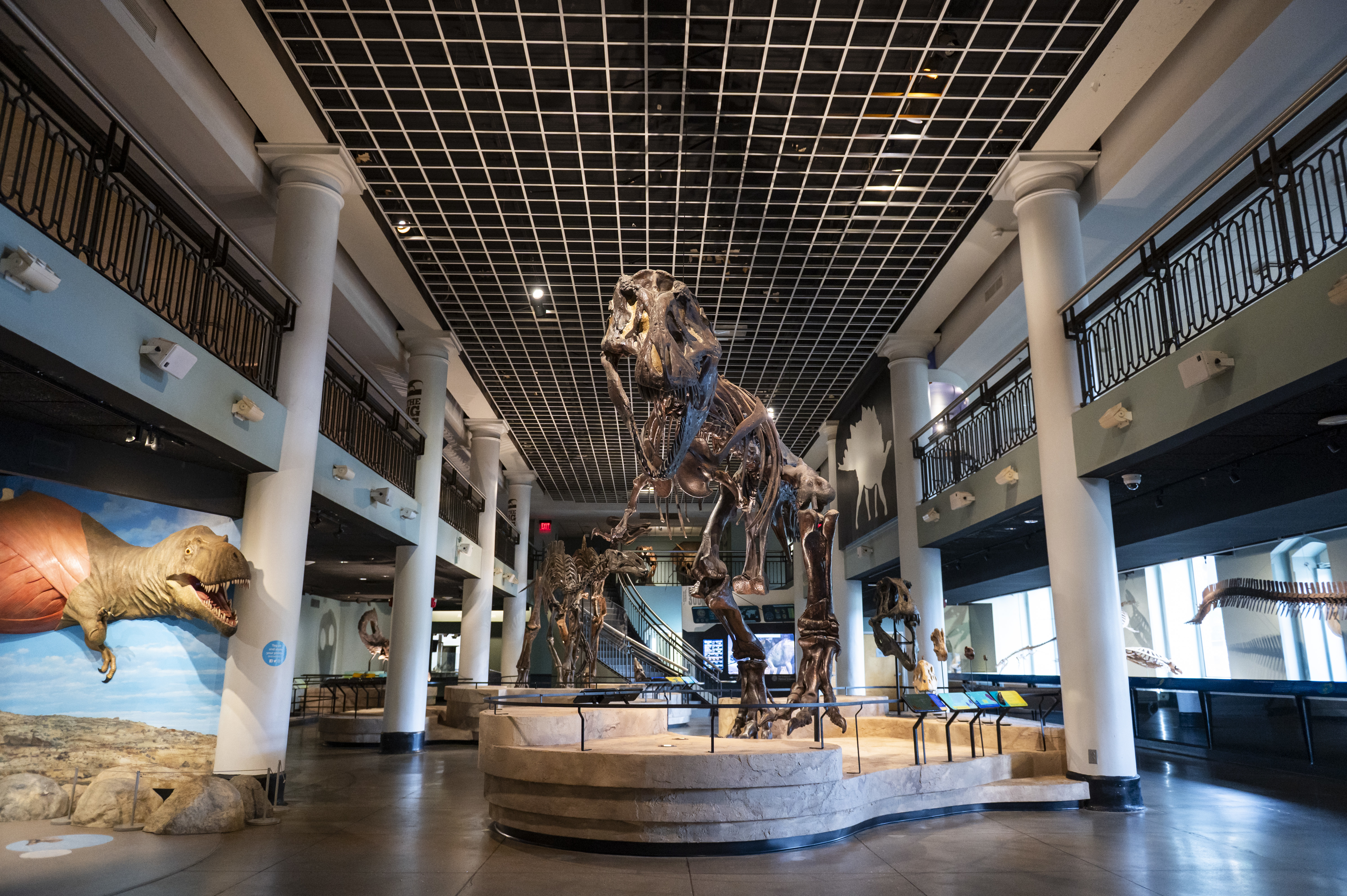
    The Academy, which became affiliated with Drexel in 2011, is known to the general public for its museum that features a Dinosaur Hall with dinosaur bones and full-scale replicas. Its exhibitions have explored environmental issues and centered on the Academy’s collection of approximately 19 million specimens, as well as historically significant items associated with Thomas Jefferson and Lewis and Clark.

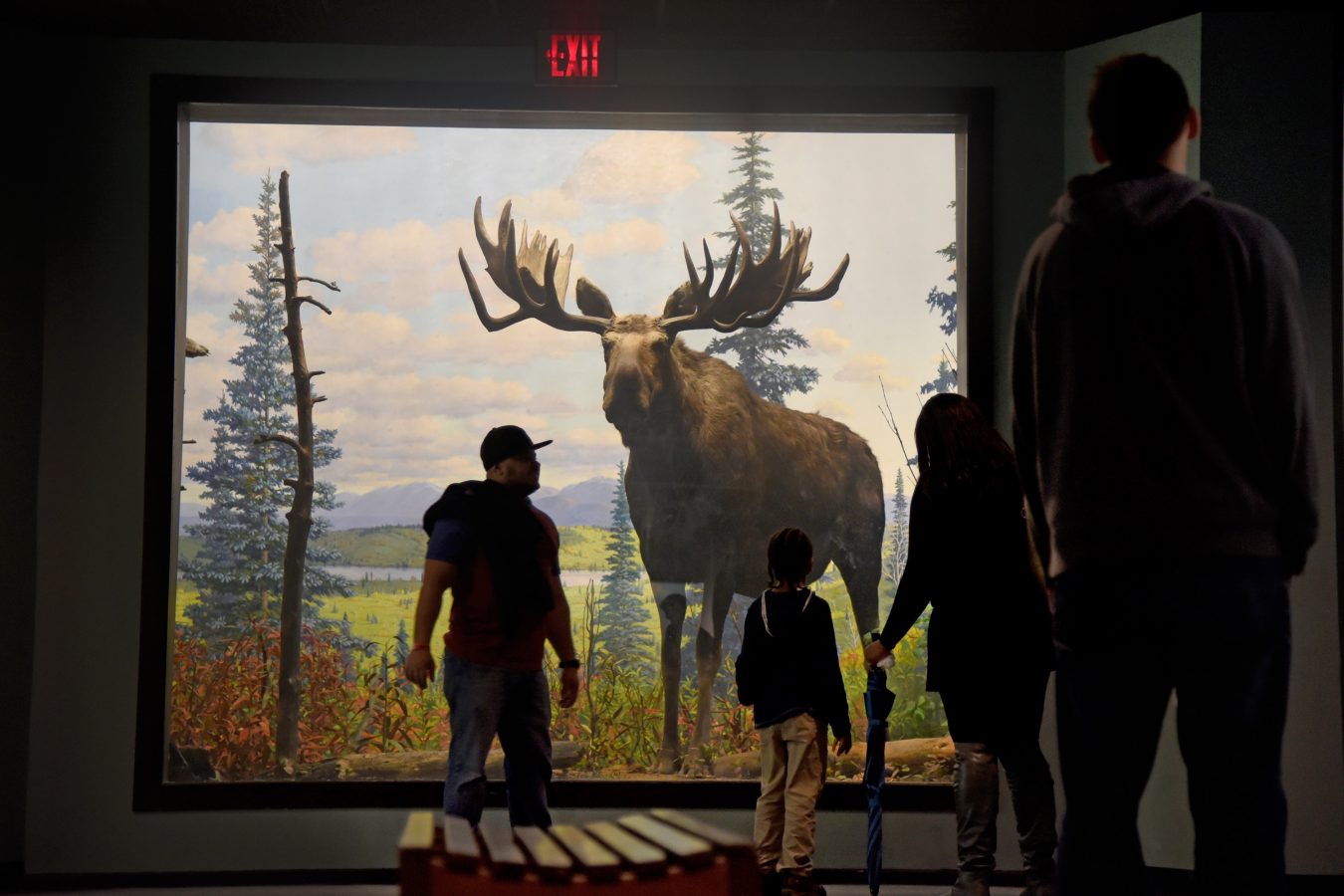
    It offers hands-on science experiences, like a “big-dig” fossil exhibit, and old-school dioramas of bison, bears, tigers, and other animals in their ecosystems. The museum’s current “Botany of Nations” show “reshape[s] the historic tale of Lewis & Clark through Indigenous perspectives,” says an exhibition description.

    Closure of the museum does not affect the rest of the institution, which builds and maintains the collections and conducts research through departments such as the Patrick Center for Environmental Research, all housed in the Parkway structure. All of that will remain there, the university said.

    Biemiller said that “the trustees of the Academy know that this news about the closure of the museum is going to be a blow to Philadelphians, and I would love for them to know we share their feelings of loss about this beloved space and place. And we also know that work remains to develop and fund a new strategic and operating model that will ensure that the Academy’s important centuries-long mission to understand the world and inspire us to care for it continues.”

    Asked whether the intent was to reopen a museum, Biemiller said: “I would hope so. That’s the goal. I think we have not given up on that part of our mission. The Academy is research, it is [specimens and library] collections, and it is public engagement.”

    While she said it was “incumbent upon us to find places and ways” for the museum to continue, what form it would take has not been determined.

    “It could be at the current location in a different configuration, it could be a new location, it could be imagined in different ways.”

    What’s important, she said, was the “fundamental goal to ensure that people have access to the natural world, can see these birds from North American or dinosaur bones and fossils the Academy scientists have collected and understand how they connect to the world.”

    “It’s a sad day to see it close,” said Franklin Institute president and CEO Larry Dubinski of the Academy museum, which is about a block from the institute. “It’s a profound loss for the community and for the city and the region. And it’s one of those days that I hope the community takes stock in. This is a city driven by arts and culture. We have a phenomenal city of arts and culture, unlike almost any other in the United States.”

    However, Dubinski said, the arts here are “underresourced and underfunded, and that does continue to challenge the ability to have a sustainable arts and culture community. I think today’s another wake-up call to that issue.”

    Dinosaur Hall at the Academy of Natural Sciences Aug. 5, 2026.Allie Ippolito / For The Inquirer

    Ongoing financial challenges at Drexel

    The museum closure comes amid financial challenges at Drexel University, which has been seeking to overcome a budget deficit, overhaul academic programs, change from a quarter-based calendar to semesters by fall 2027, and cope with another national dip in high school students beginning this year.

    Over about the last decade, the West Philadelphia university has lost about 20% of its enrollment. Last fall, Drexel saw a 19% drop in freshmen; numbers for this fall aren’t yet available, though the school is projecting a 16% jump in first-year students. And the school, which enrolled 20,868 undergraduate and graduate students in 2025-26, is projected to continue to run deficits through fiscal year 2028, according to a report from Moody’s, a global financial services company that releases credit ratings.

    Merlo, Drexel’s president, told The Inquirer in April that the school projected ending the year with a $20 million deficit, down from almost $40 million last year and $63 million in 2024. In May, the school said it had implemented $93 million of “permanent strategies” to deal with the “structural imbalance” and had identified $11 million more.

    The Academy has become a drain on the university, a source familiar with the situation, who was not authorized to speak about the matter and asked not to be identified, told The Inquirer in April.

    The university has provided the Academy with substantial support — $8,288,000 and $8,914,000 for operations in fiscal years 2025 and 2024, respectively, according to financial statements posted on the Academy website. These numbers include in-kind support that Drexel is providing to the Academy.

    Friction between the Academy and Drexel became public in April, The Inquirer reported, revealing Drexel’s wish to totally take over the Academy, or end the partnership.

    Uncertain long-term future for the Academy

    Talks are continuing between the two institutions, with the offices of Gov. Shapiro and Mayor Cherelle L. Parker involved, underscoring the importance of the Academy to both the city and the state.

    “I don’t want to lose the Academy on my watch, and neither does the mayor,” Shapiro told Cohen, according to Cohen, who has led dozens of meetings over the last eight months and created a draft proposal for an agreement between Drexel and the Academy.

    “Drexel and the Academy are working with my office, with Governor Shapiro’s office, and with Ambassador David L. Cohen, as the governor’s representative, to preserve the essential mission of the Academy,” Parker said in a statement.

    “We are working collaboratively toward the outcome we all seek for the City of Philadelphia.”

    The governor’s press office did not respond to The Inquirer’s request for comment.

    Cohen has long been a negotiator in many major city issues, formerly serving as chief of staff to former Philadelphia Mayor Ed Rendell and leading the board of trustees at the University of Pennsylvania.

    “Together, we are advancing discussions focused on the Academy’s long-term future and identifying new opportunities to strengthen its scientific mission, ensure access to its world-renowned collections, expand public engagement in the natural sciences, and maintain the Academy’s enduring presence in Philadelphia,” the statement said.

    The Academy of Natural Sciences on the Parkway, Aug. 5, 2026.Allie Ippolito / For The Inquirer

    The Academy’s affiliation with Drexel is 15 years old. It announced a partnership agreement with Drexel in 2011 that blended the two organizations somewhat, but stopped short of being a full merger. The two groups maintain separate boards.

    According to a 2013 Drexel audit, the 2011 affiliation agreement between the two institutions stated that the Academy would retain its status as separate nonprofit organization, but that as of September 2012 it would become a Drexel subsidiary owned 100% by the university.

    A Drexel spokesperson said in April that the school had “invested a substantial amount annually in the Academy to maintain access to the Academy’s collections while we worked with the Academy and the community to identify a sustainable path to keep this resource in Philadelphia.”

    Cooper was named the Academy’s leader in 2017 after serving as vice president of collections, knowledge and engagement at the Royal British Columbia Museum in Victoria, Canada. Before that, he was director of museums at the Qatar Foundation in Doha, Qatar.

    Under his leadership, the Academy “renewed its public and scientific mission,” Tuesday’s joint statement from Drexel and the Academy said. “It revitalized galleries, developed original exhibitions showcasing its collections and research, and advanced co-curatorial approaches that brought new voices into programs and interpretation.”

    Cooper, who will remain for a time as a consultant to the Academy, was not available for comment, a spokesperson said.

    “We’re sorry he’s leaving, but understand his decision,” said Biemiller.

    “It’s a competitive world that museums inhabit, and people make choices every single day,” Cooper told the Inquirer after his 2017 announcement. “We need to ensure that when they come to the Academy they are getting a reward for their investment of time.”

  • U.N. report finds Syria was building a nuclear reactor in Deir el-Zour under former President Assad

    U.N. report finds Syria was building a nuclear reactor in Deir el-Zour under former President Assad

    VIENNA — Syria was constructing a nuclear reactor in Deir el-Zour under the leadership of ousted former President Bashar Assad, according to a U.N. report seen Tuesday by the Associated Press.

    Inspectors with the U.N. nuclear watchdog visited several sites in Syria in August and carried out verification work that confirmed the existence of a long-suspected nuclear site, according to the confidential report circulated to member states.

    Based on this visit, the International Atomic Energy Agency reported that it is “able to establish that the former Syrian authorities had failed to report nuclear material, facilities, and activities as required under the NPT Safeguards Agreement.”

    This information included a nuclear reactor under construction in Deir el-Zour, a fuel fabrication plant, and another site used for fuel storage during the rule of Assad.

    Under Assad, Syria was believed to have operated an extensive undeclared nuclear program that included a nuclear reactor built by North Korea in eastern Deir el-Zour province. Following Assad’s ouster, the new government agreed to give IAEA inspectors access to suspected former nuclear sites.

    The site in Deir el-Zour only became public knowledge after Israel launched airstrikes in 2007 that destroyed the facility. Syria later leveled the site and never responded fully to the IAEA’s questions about it. Israel is believed to have its own undeclared atomic weapons program that makes it the only country in the Mideast with nuclear bombs.

    Israel neither confirms nor denies having atomic weapons.

    The IAEA took samples at the site in 2024 and reported last year that they contained uranium particles.

    The new Syrian authorities have also expressed an interest in developing a civilian nuclear energy program and said any nuclear material found in the country would remain in Syria’s custody under international safeguards.

    The IAEA reported Tuesday that its inspectors visited the Deir el-Zour site on Aug. 29 “to monitor progress on the excavation work.”

    “Based on observations made at the location, the Agency confirms that the cooling infrastructure which has now been uncovered is consistent with that of a nuclear reactor.”

    In its confidential report, the IAEA said three locations were “functionally related” to the Deir el-Zour site. One was related to “conversion and/or fuel fabrication activities,” another was for “temporary storage of construction material,” and another was for the “temporary storage of construction materials being transferred to/from” the site, as well as for “planned reprocessing activities.”

    During the visit to Syria, IAEA Director General Rafael Grossi and a team of senior inspectors also visited a previously undeclared site in the country.

    Syria notified the agency of the site’s existence in a July 17 letter and invited the IAEA “to cooperate with the Syrian authorities in the inspection and verification of the site and of any nuclear material to be potentially found.”

    The IAEA said in its report that this new site contained “natural uranium metal in the form of fuel rods with cladding.” The agency verified the material and confirmed “the presence of around 73 tonnes of natural uranium metal.” The agency reported that “all of this nuclear material is currently subject to Agency containment and surveillance measures.”