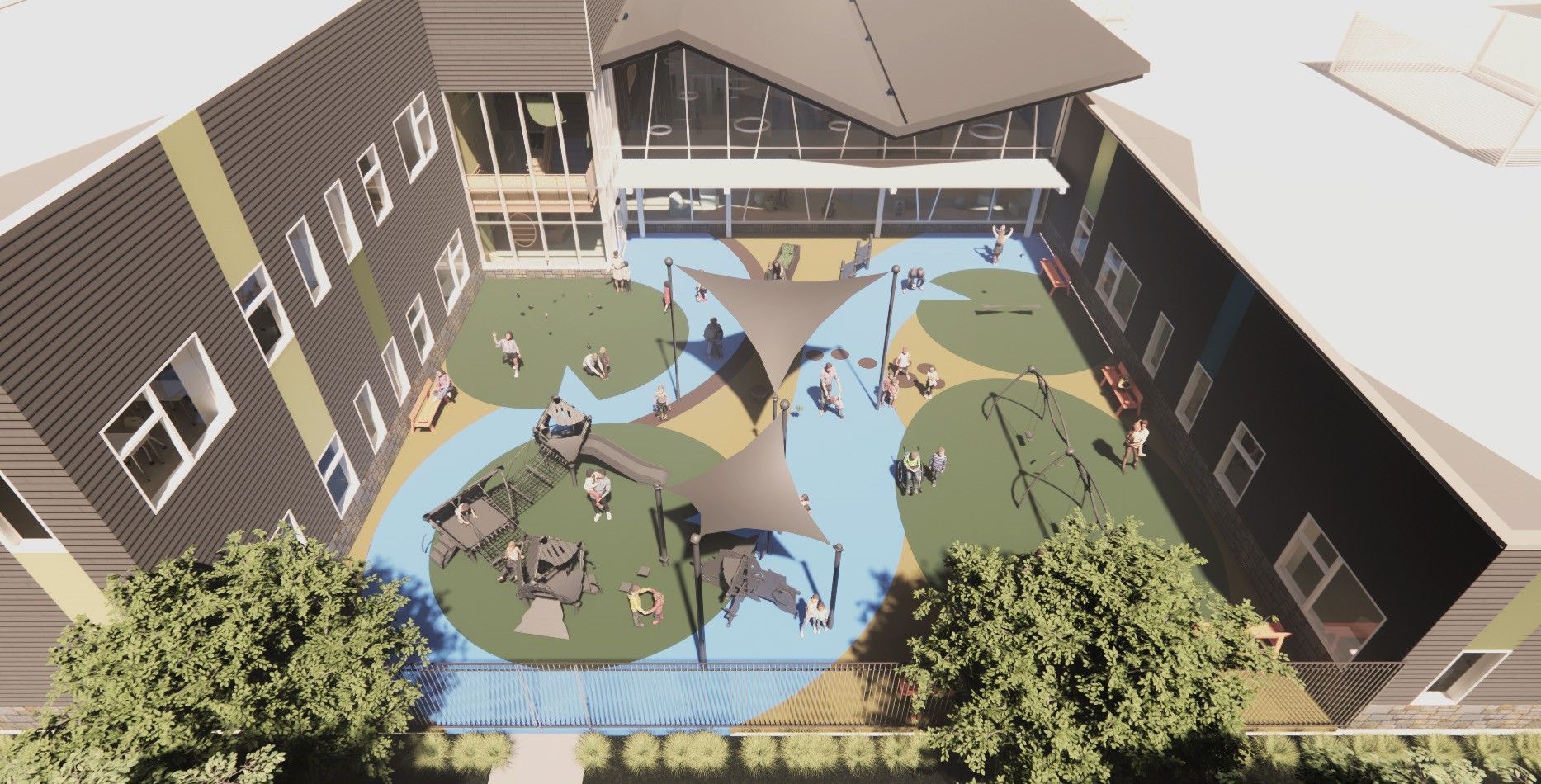
Children with autism and developmental disabilities will attend the two-story, 55,205-square-foot school when it opens in 2028.
An estimated 188 staff members will work with the children, who will be between 3 and 11 years old, according to Bancroft’s plans. The staff is larger than the expected enrollment because of the needs of the students, according to Bancroft.
The school’s preliminary and final major site plan was approved for former agricultural land that now is a lawn on the southeast part of the Welsh Campus, according to the application.
Bancroft’s overall 80-acre Mount Laurel campus was approved by the planning board in 2016.
A possible additional future expansion on the southwest part of the property is mentioned in the elementary school documents, but details were not provided.
70and73.com is a hyperlocal news site focused on South Jersey, including the communities of Cherry Hill, Evesham, Mount Laurel, Voorhees, Medford, Medford Lakes, and Moorestown.
Nestled neatly between a bustling shopping center and two schools, the lush old-growth forest that sits along MacArthur Boulevard in Haddon Township can be easy to overlook.
But this environment, home to hundreds of unique plant and animal species, is being threatened by beech leaf disease, a fast-spreading invasive condition that has taken hold among the American beech trees in Saddler’s Woods. The “widespread” disease, first discovered in New Jersey five years ago, has infected trees in every county in the state, according to the New Jersey Department of Environmental Protection.
So far, the Saddler’s Woods Conservation Association has counted more than 200 infected American beech trees on the 25-acre preserve, said Janet Goehner-Jacobs, the organization’s executive director.
There is no effective treatment to combat the disease, she said.
The disease, caused by a microscopic worm believed to have originated in Asia, can affect trees differently depending on their age, health, and site conditions, but it nearly always kills them.
And while this is not the first time Saddler’s Woods has dealt with an invasive species, the worm that causes beech leaf disease presents a particularly daunting challenge, Goehner-Jacobs said.
“There’s mitigations, there’s hope the numbers game works out in your benefit, there’s succession plans that we can build, but it’ll be pretty devastating,” she said.
The disease is putting centuries-old ferns and countless other plant and animal species at risk of losing the various life-sustaining resources that beech trees provide, she said.
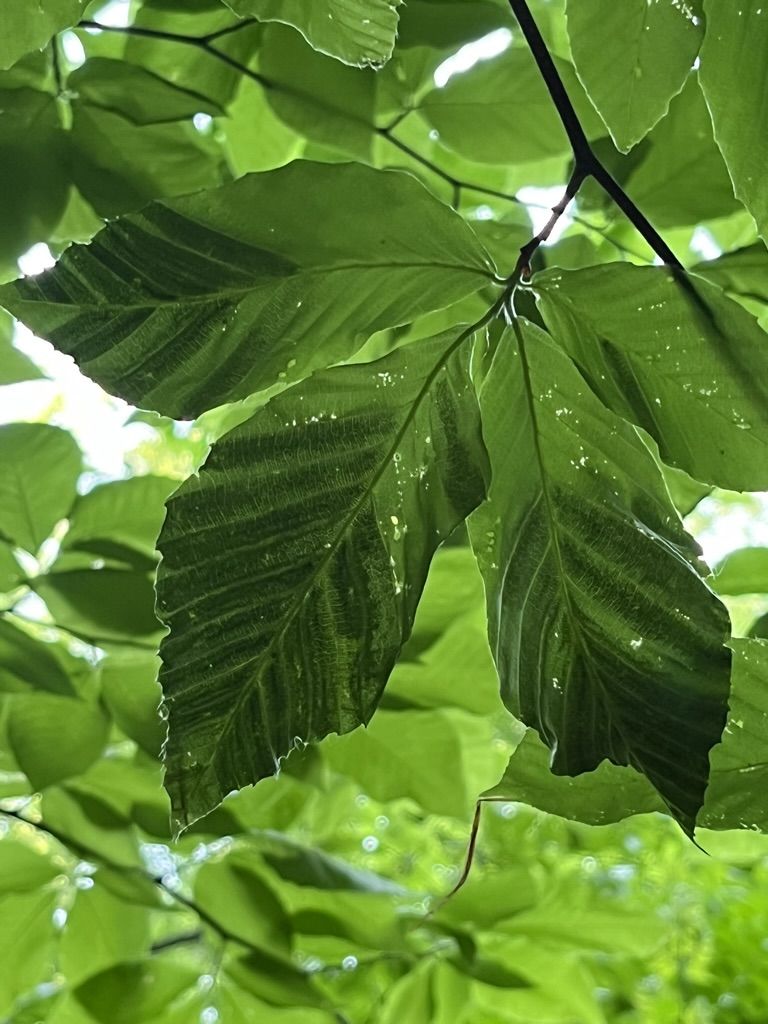
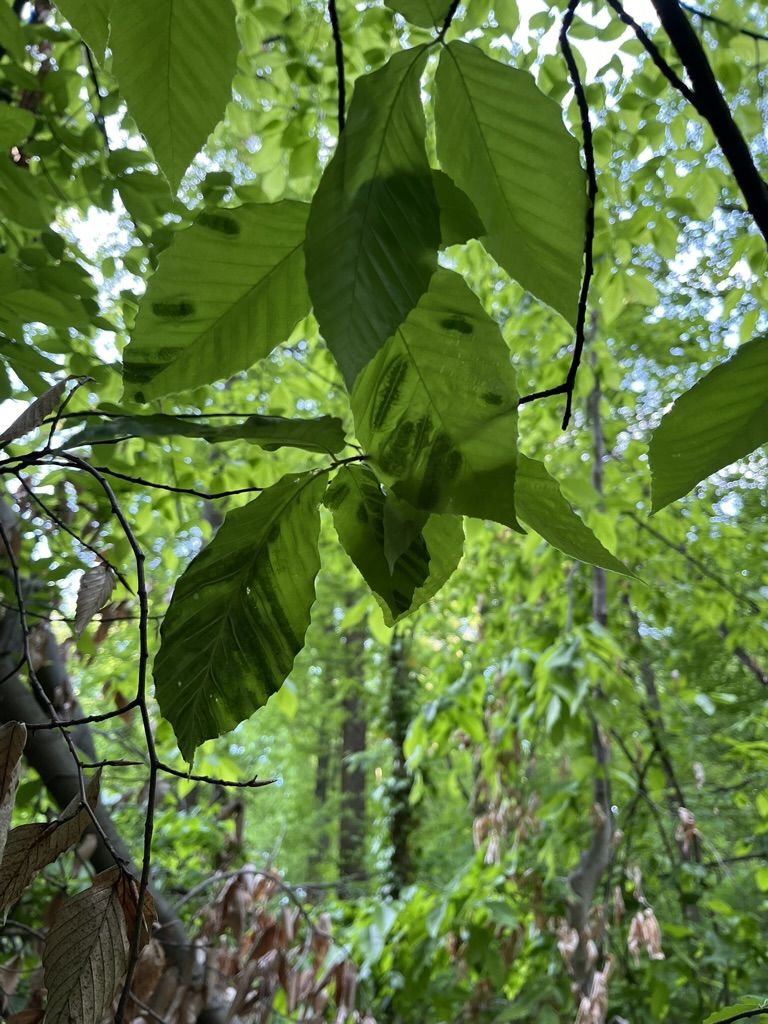
Signs of beech leaf disease can be found on more than 200 American beech trees throughout Saddler’s Woods in Haddon Township.Courtesy of Saddler's Woods
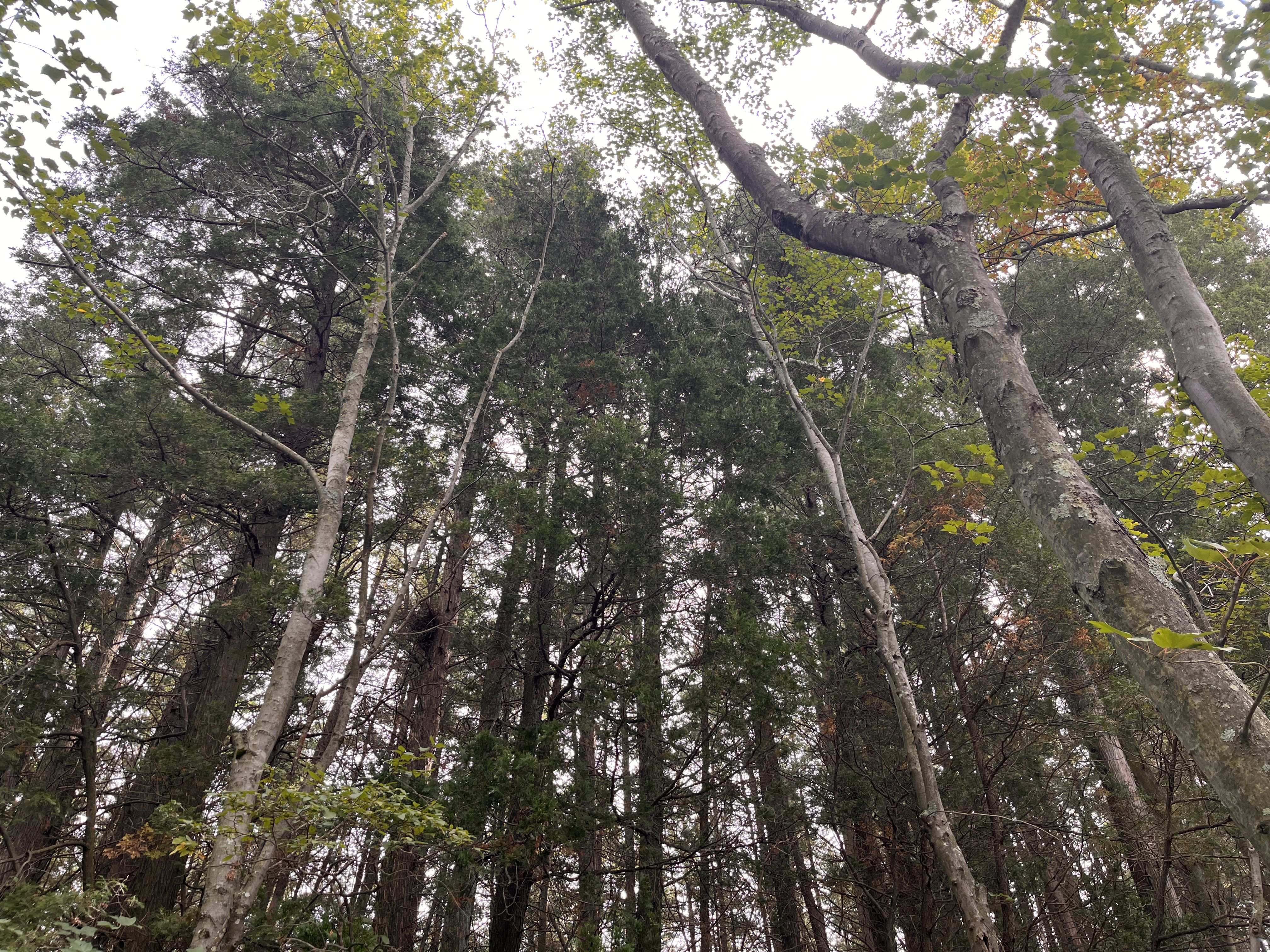
Most of the old-growth trees forming the densest part of the tree canopy in Saddler’s Woods are American beech, Goehner-Jacobs said. The shade provided by the canopy allows for young beech trees to mature over time, eventually replacing old or dying trees and filling their gap in the canopy.
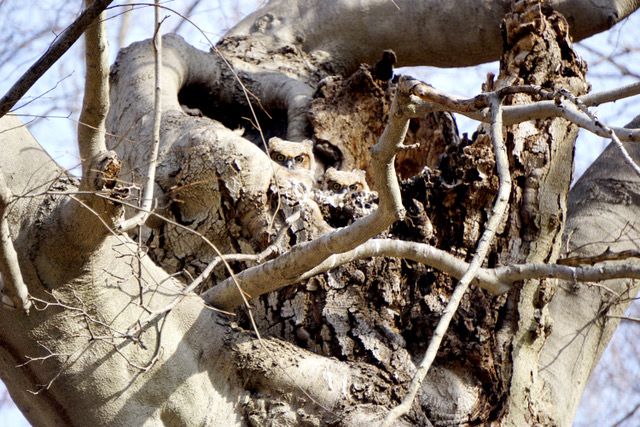
“Not only are you subject to the loss of those trees, but everything in the ecosystem will collapse to some level that you have to try and rebuild,” she said. The beech nut is a critical food source for many animals, she said, while the tree’s hollows often serve as a nursery nest for horned owls.
Since it was first confirmed in Bergen and Essex Counties in 2020, beech leaf disease has “spread to all 21 counties — affecting all species of beech — and is considered widespread in the state,” New Jersey Department of Environmental Protection spokesperson Raeanne F. Raccagno said in an email.
Baby owls nest in a hollowed beech tree in Saddler’s Woods. The bird is just one species that could be impacted by the death of the forest’s American beech trees from invasive beech leaf disease.Courtesy of Saddler's Woods
With approximately 14 million American beech trees throughout the state, it is likely that several million have been impacted by this disease, Raccagno said, including the nonnative European and Oriental beech trees.
The state’s forest service reports that across New Jersey, “it is currently more difficult to find a beech tree with no symptoms of Beech Leaf Disease than a tree that is asymptomatic,” Raccagno said.
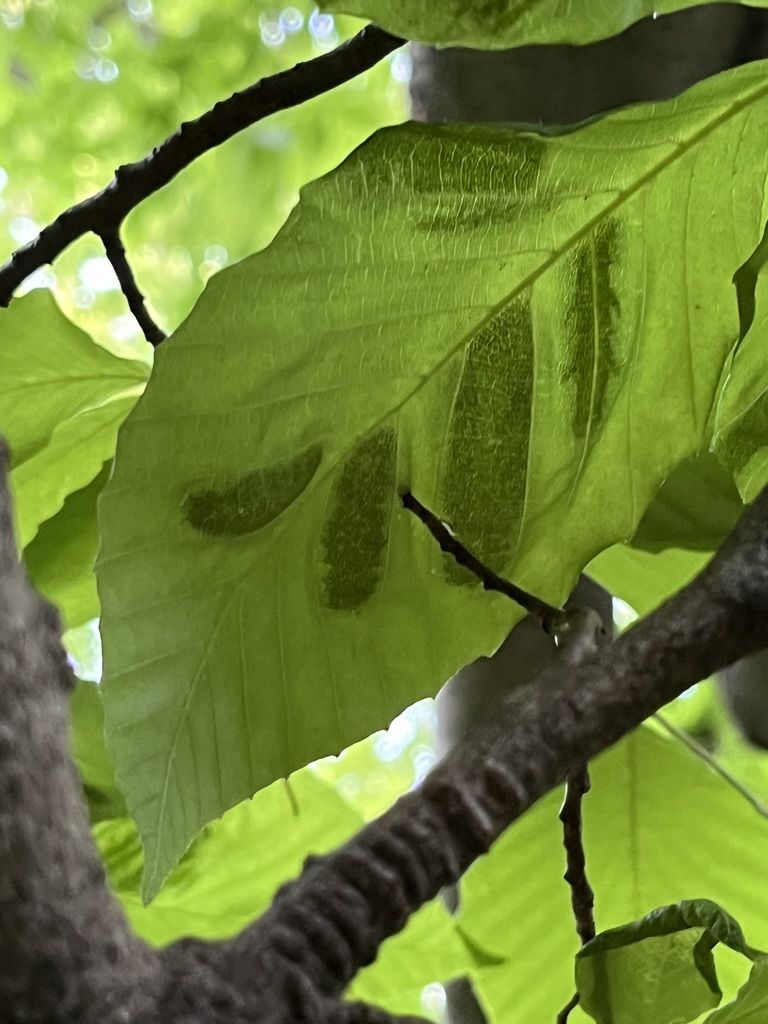
In infested trees, black banding forms between the veins of leaves, and as thedisease progresses, leaves can become smaller, curled, and discolored.
Trees typically die within four to five years after initial infestation, forest service monitoring has shown, and the consequences of this widespread disease in New Jersey could last for generations.
In addition to drastically shifting the composition of forest ecosystems, the widespread loss of so many beech trees could shorten “natural forest succession timelines by hundreds of years,” Raccagno said.
Beech leaf disease is almost always fatal, often killing trees within four or five years of initial infection, according to the New Jersey Department of Environmental Protection.Courtesy of Saddler's Woods
“As beech declines, other tree species and understory species will fill the available space vacated by dead beech trees,” she said. “With high beech mortality, invasive plant species have the capacity to become more prevalent as light availability and growing space increase in areas previously occupied by dense canopy beech trees.”
With no clear solution to the threat, the conservation team at Saddler’s Woods — composed entirely of volunteers — is “actively working every angle we have” to combat the disease, Goehner-Jacobs said.
This includes documenting what currently exists in the forest and creating a succession plan for how the ecosystem can survive and recover if a large number of beech trees die in the coming years, she said.
The team is also working to identify a few mature beech trees that might benefit the most from an expensive and experimental fungicide treatment that has been shown to help boost the defenses of some trees against the disease, she said.
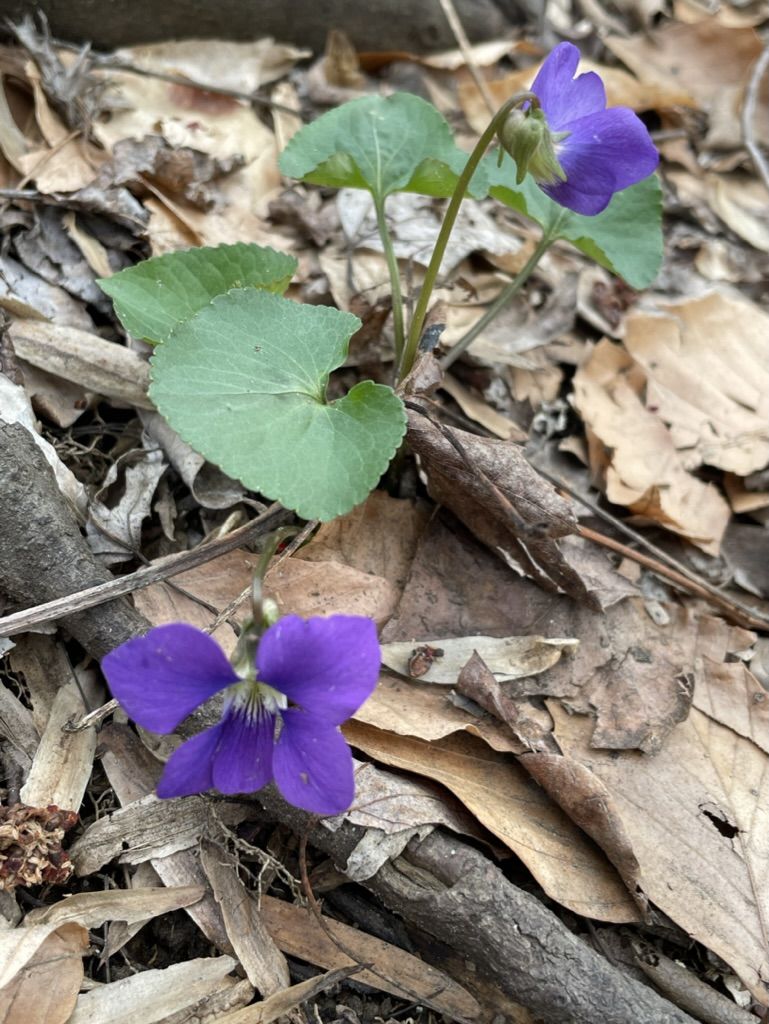
A native violet sprouts from the forest floor in Saddler’s Woods. The flower is just one of the countless species of plants and animals that rely on the shade cover provided by the canopy of the American beech tree.Courtesy of Saddler's Woods
Because the overarching mission of the Saddler’s Woods Conservation Association is to preserve the forest in perpetuity, the group has to approach potential solutions thoughtfully, Goehner-Jacobs said.
While the organization is working to slow and hopefully stop the disease’s spread, the best solution will likely be the defenses that the tree itself develops naturally through evolution, she said.
But evolution, by definition, takes time. Time that New Jersey’s beech trees might not have, she said.
“Eventually, just like some people never got COVID, some of these trees will have a defense, and you’re waiting for that one,” she said. “Will it be in Saddler’s Woods? I don’t know.”
ATLANTIC CITY — Will New Yorkers on Wall Street be hopping on a high-speed ferry next summer for some beach and casino time in Atlantic City?
Promoters of the proposed Intercoastal Motorcar & Yacht Club, a $4 billion luxury development in Bader Field, say there’s interest for such a service from Seastreak Ferries.
Seastreak currently runs ferries between New York City and Atlantic Highlands, a Shore destination in Monmouth County.
The proposed A.C. trip would take 2 1/2 hours and cost $145 round trip, said Tommy Carr, a partner in Deem Development. The ferry would come into the Farley State Marina near the Golden Nugget casino.
Deem has an agreement with the city of Atlantic City to build its ambitious “car-centric” development on the city’s old municipal air field on Albany Avenue. Under the agreement, the city would sell the site for $100 million. Deem would contribute $15 million to a community center. Carr says the company has secured the financing it needs.
“We’re trying to help develop Atlantic City,” said Carr, who has convened several meetings with stakeholders to drum up interest, and talked it up with N.J. Gov. Mikie Sherrill at a recent gathering at the governor’s residence, Drumthwacket. “We need tourists. We need families to start coming down and buying properties.”
Atlantic City public relations executive Phyllis Lacca and Tommy Carr, a partner in the planned Bader Field development, with N.J. Gov. Mikie Sherrill on Oct. 5 at the governor’s residence, Drumthwacket.Coutesy Tommy Carr
Sherrill recently told the Press of Atlantic City that Bader Field was a “huge opportunity,” but that she still had questions about the proposal.
Atlantic City has recently seen renewed interest from developers of higher-end residential homes, including the Kushner Co., Brian Zoubek, and K. Hovnanian. As real estate prices along the Jersey Shore skyrocket, A.C. is increasingly being seen as one of the last places along the Jersey Shore with affordable oceanfront property.
What could a high-speed ferry ride look like?
At Seastreak, owner James Barker said in an interview that the company had two 600-person ferries, the Courageous and the Commodore, that could make the ocean voyage. Should it be successful, there are higher-speed ferries that could cut the trip to two hours.
Barker cautioned that the company was still in the exploratory phase.
“It’s a feasibility question,” Barker said. “Do we have boats that will be available in peak season? We’re excited about the opportunity. We’re still trying to understand what the Atlantic City opportunity looks like. The Commodore and the Courageous, those are our workhorses, some of the best commuter boats in the country.”
Based in Atlantic Highlands, N.J., Seastreak also operates ferries from New York City to Martha’s Vineyard and then on to Nantucket.
Should the company bring those boats on an Atlantic City run, Barker said, the travelers would find a lot to like.
“Those boats are comfortable,” he said. “There’s Wi-Fi and a bar. They can do their last Zoom call of the day, and no one has to know they’re on a boat.”
In peak season, he said, Seastreak is running 19 round trips between Atlantic Highlands and New York City.
Carr said another company, Connecticut-based Tradewind Aviation, is looking at expanding charter air service to Atlantic City. The company operates a fleet of 40 small jets out of smaller regional airports like Teterboro.
Atlantic City’s International Airport has been wanting for business since Spirit Airlines shut down in May. Currently, two commercial airlines, Breeze and Allegiant, operate limited flights to destinations in Florida and Myrtle Beach.
As for the Bader Field development, a “motor-centric” project long in the planning stages, both Carr and A.C. Mayor Marty Small Sr. said approvals from the state Department of Environmental Protection are all that stands in the way of a ground breaking.
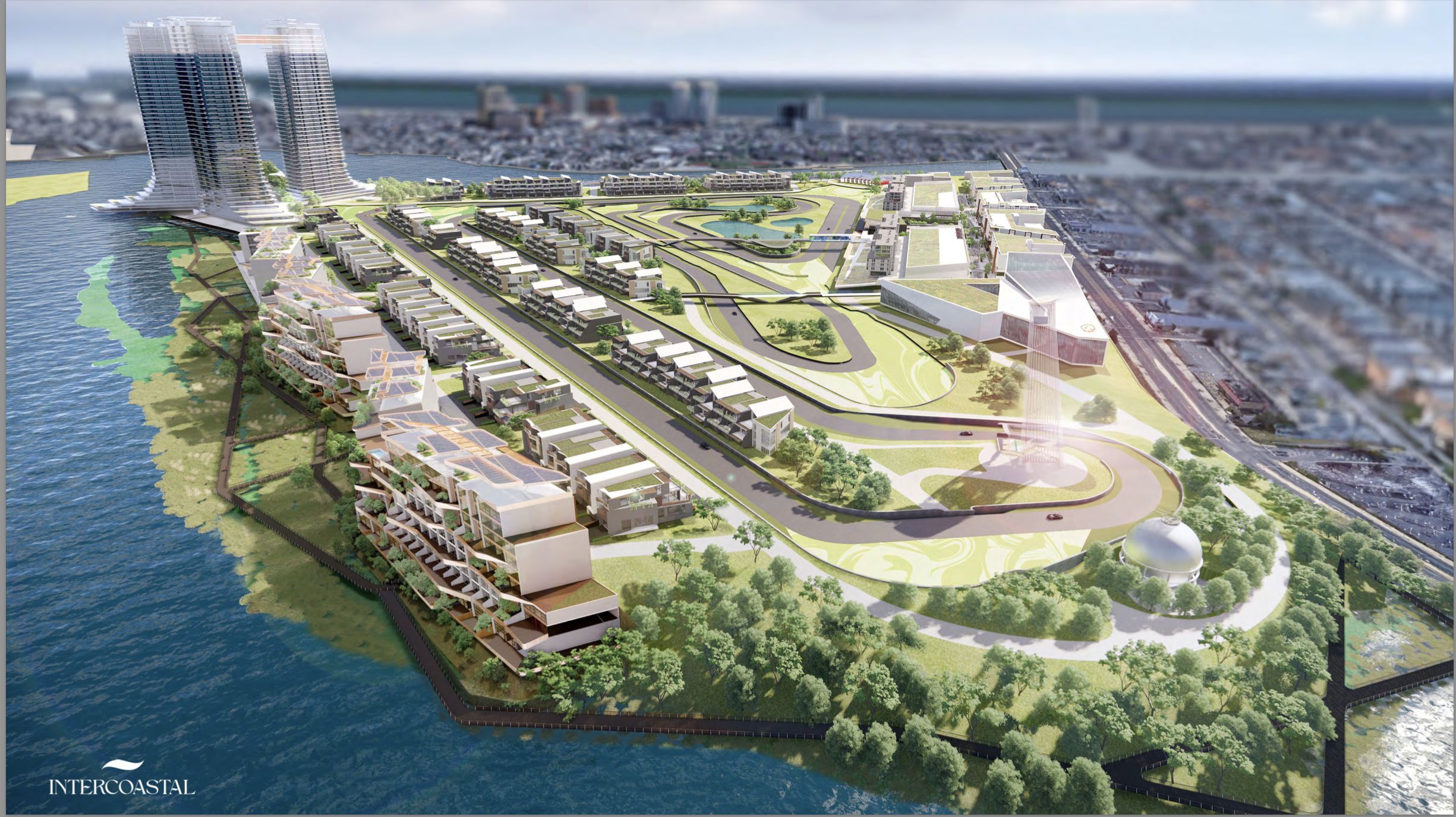
The project promises a “holistic, sustainable, redevelopment” of Bader Field with a renewable energy microgrid and a 2.44-mile members-only driving circuit designed for members to race their luxury cars recreationally. (It is not being built as a Formula One race venue.)
The developers say they will transform the old air field’s runways into public bike paths and a boardwalk, with access for water recreation, and to build a car museum and other retail.
The 1,237 residences will range from market-rate townhouses to multimillion-dollar luxury waterfront condos with terraces.
Carr says the project has already drawn interest from athletes, celebrities, and even a Middle Eastern prince, all with luxury-car collections.
While the ferry service could come as soon as Memorial Day weekend, the Intercoastal project is at least five years from completion, Carr said.
Carr thinks Atlantic City’s luxury moment has come, despite headwinds from casinos in New York City that some believe might lead to the closure of some casinos.
A developer in Asbury Park, Carr says he’s seen the transformation of that city and Long Branch.
“In five years, you’re not even going to know Atlantic City,” he said. “I have seen it with Long Branch. I have seen it with Asbury Park. People are investing in Atlantic City.”
I encounter art almost every day while traveling around the city on assignment as a newspaper photographer.
Public art isn’t unusual in cities around the world, but Philadelphia stands out for the way it has made art part of its infrastructure and identity.
The city has had a civic strategy for creating it since 1959, when it established the Percent for Art program, dedicating a portion of public redevelopment budgets to public art projects. More than 350 works have been commissioned over the decades. And since 1984, Mural Arts Philadelphia has been telling stories, celebrating neighborhoods, and addressing social issues through more than 4,000 murals.
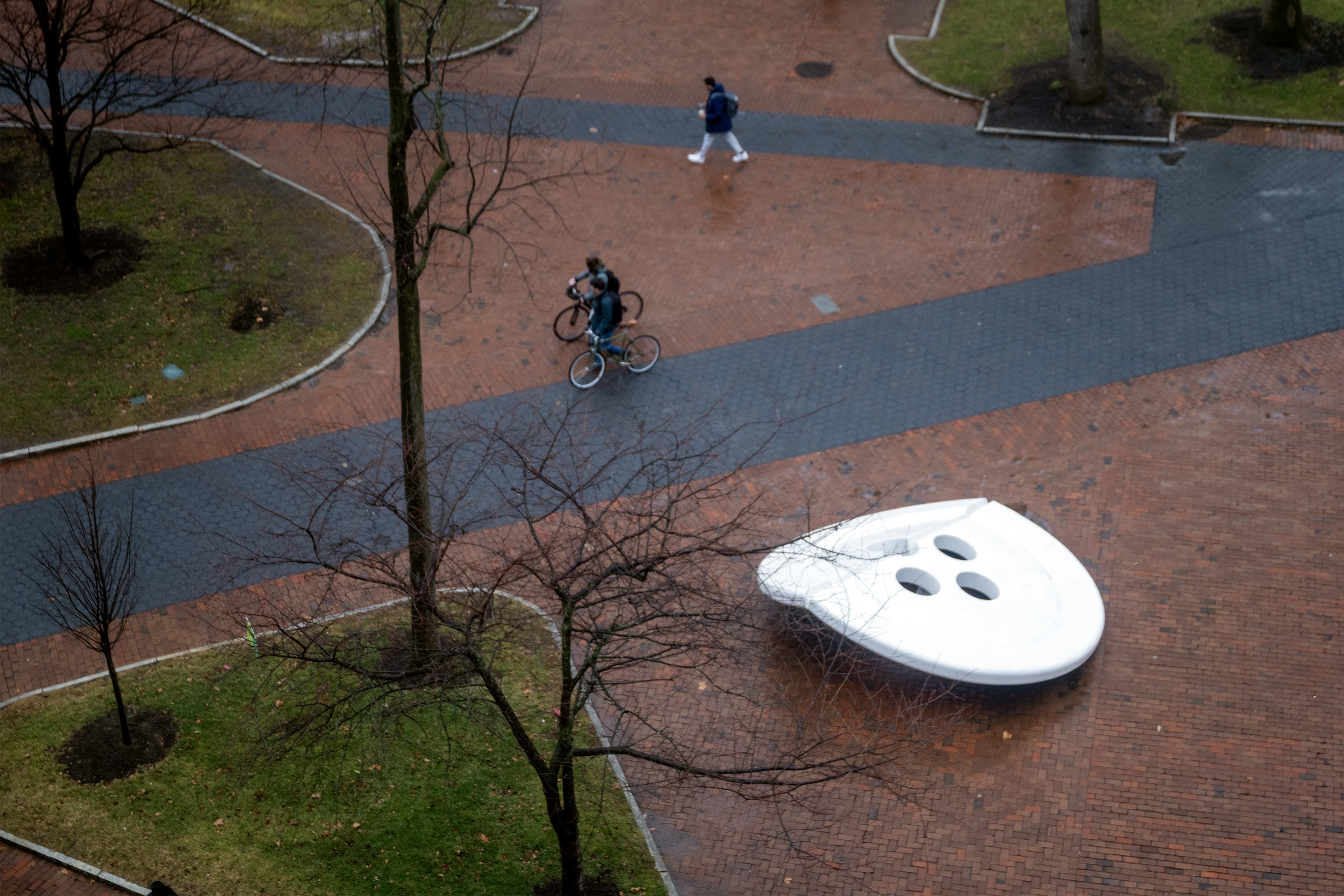
The 1981 painted aluminum sculpture “Split Button” by Swedish-American Pop-art sculptor Claes Oldenburg and Dutch art historian Coosje van Bruggen, on the University of Pennsylvania campus Feb. 6, 2025. Tom Gralish / Staff Photographer
I could spend decades trying to document them all, but I’m not that kind of photographer. I’ve always wrestled with how to “rephotograph” another artist’s work. They are expressing a personal vision, emotion, or concept, while my job is to inform the public by documenting real events as they happen.
But even as I show readers what the art looks like, I want my pictures to reflectwithout distracting from the artist’s work, being accused of infringing, or making it all about me. (Disclaimer and apologies: Some of those links contain only text. None of the photos survived our digital archiving.)
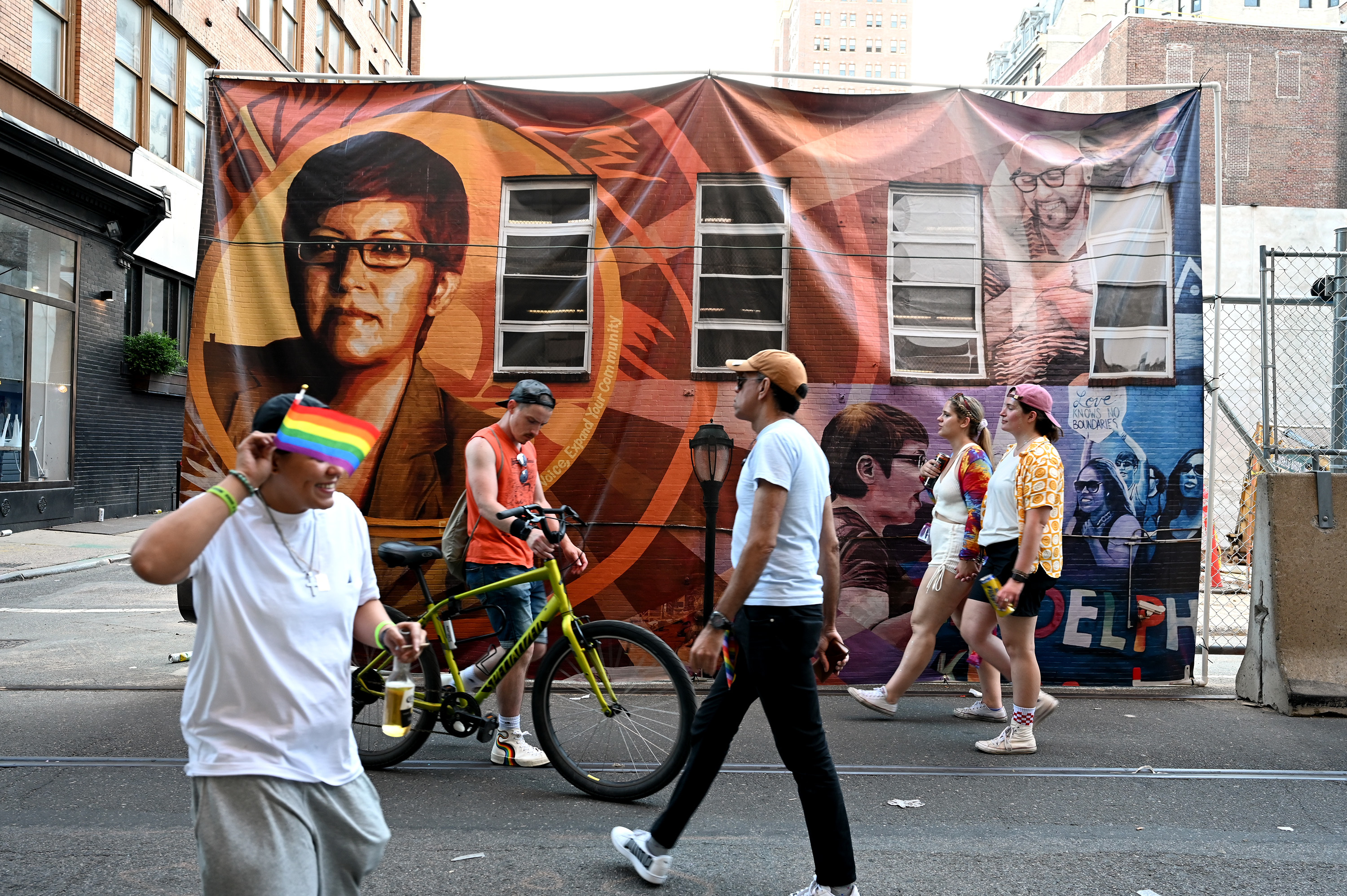
Author Toni Morrison (who passed away in 2019) at the dedication of a mural at 6th & Lehigh in 1996 painted by North Phila. artist Danny Torres. (The mural no longer exists)Tom Gralish / Staff PhotographerA large copy of the 2015 mural, “A Tribute to Gloria Casarez” by Michelle Angela Ortiz hangs on a construction fence in 2022 during the city’s 50th annual Pride celebration. The original mural on South 12th St. was painted over by a developer two years earlier without any warnings. Casarez, the city’s first director of LGBT affairs, died in 2014, after a five-year battle against breast cancer. Tom Gralish / Staff Photographer
So while I often stop to admire and study other artists’ work, I tend to avoid photographing it. Unless something changes. Or there’s a good reason.
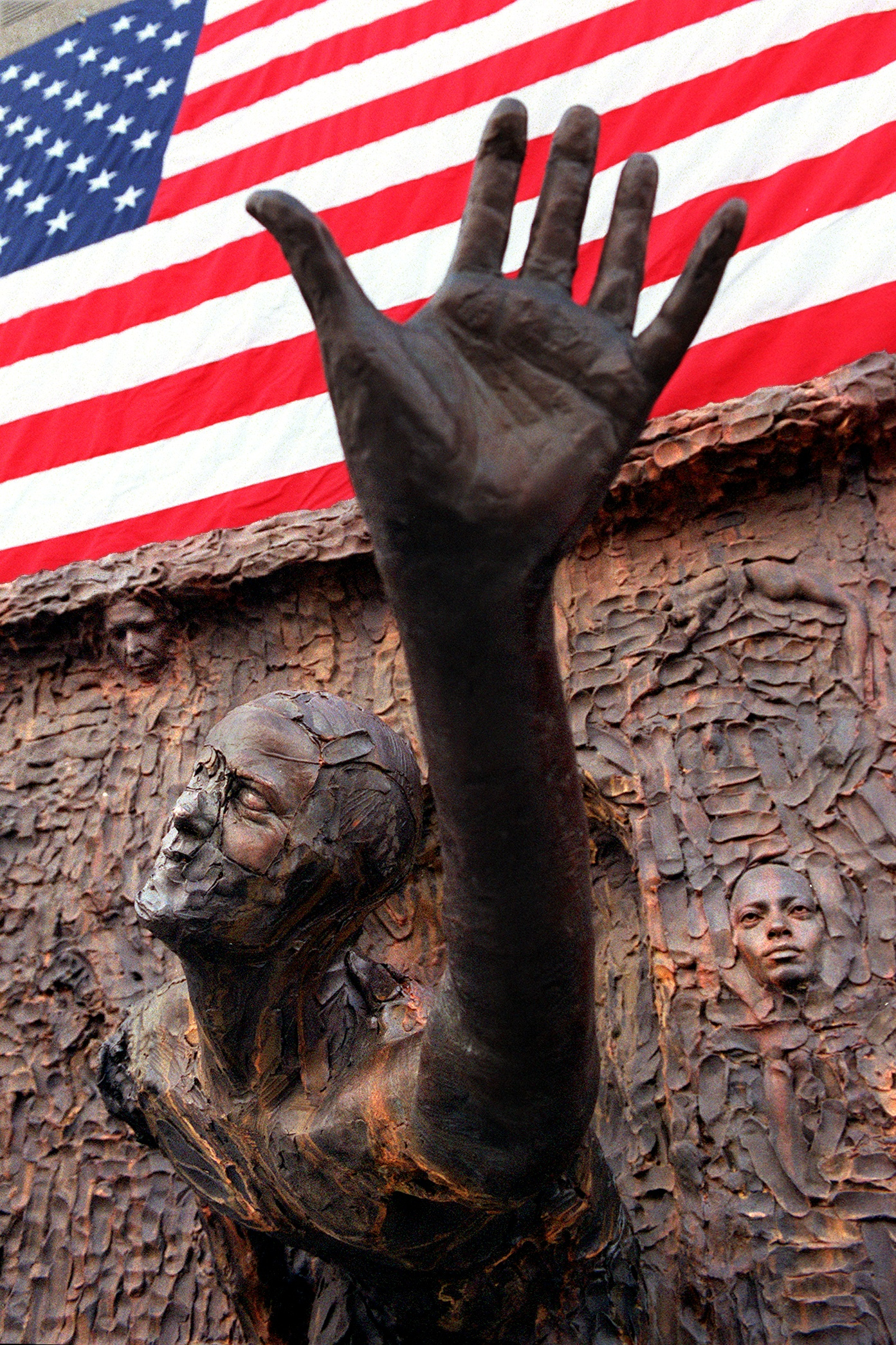
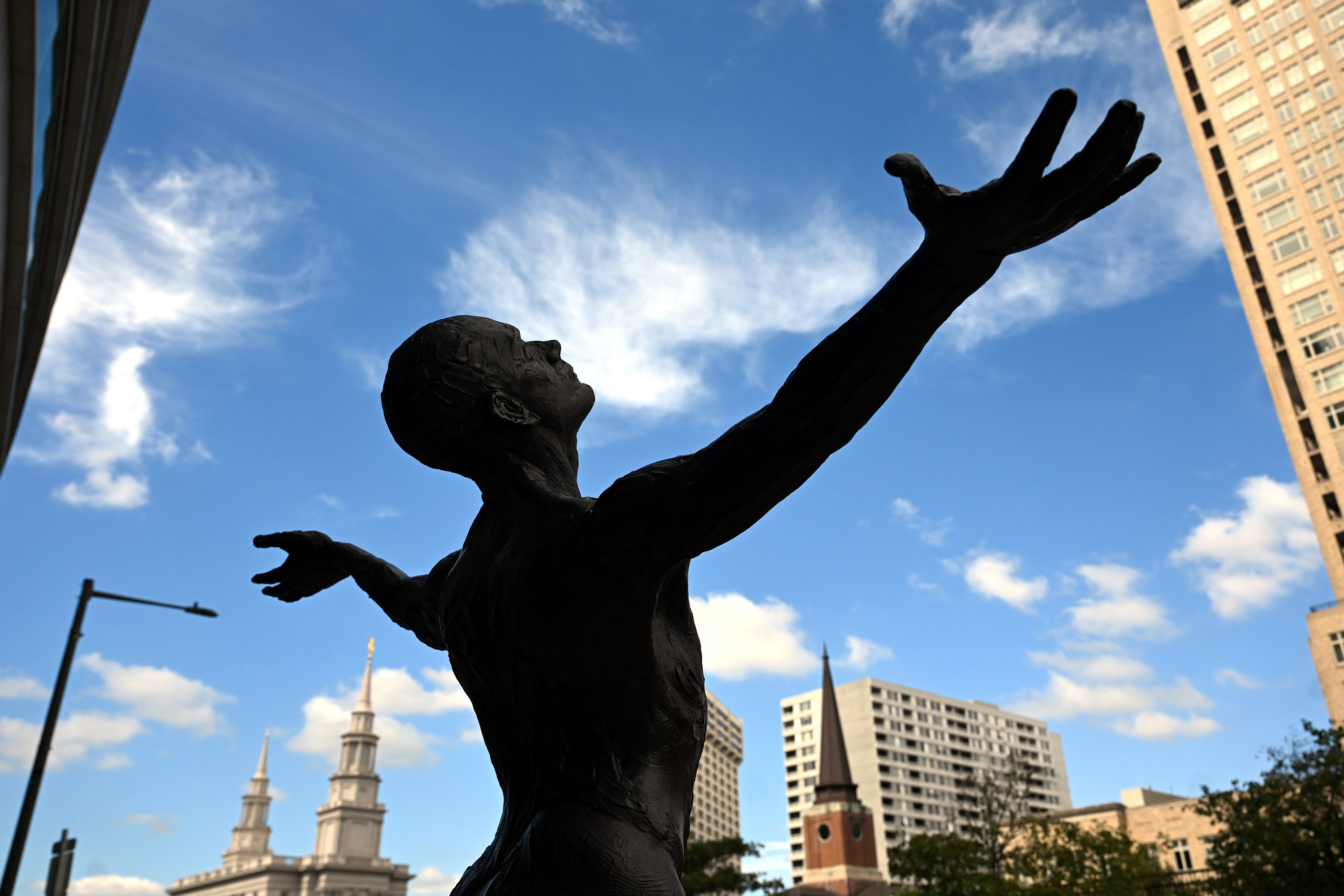
Like after 9/11. While documenting local reaction to the terrorist attacks, I spotted an American flag added to Freedom, the sculpture by Zenos Frudakis at 16th & Vine Streets. The 7,000-pound, 20-foot-long bronze piece had been dedicated just a few months earlier.
Frudakis later invited her to his studio, and while other photographers captured his work for her story, I was assigned to “update” our file photo of Freedom.
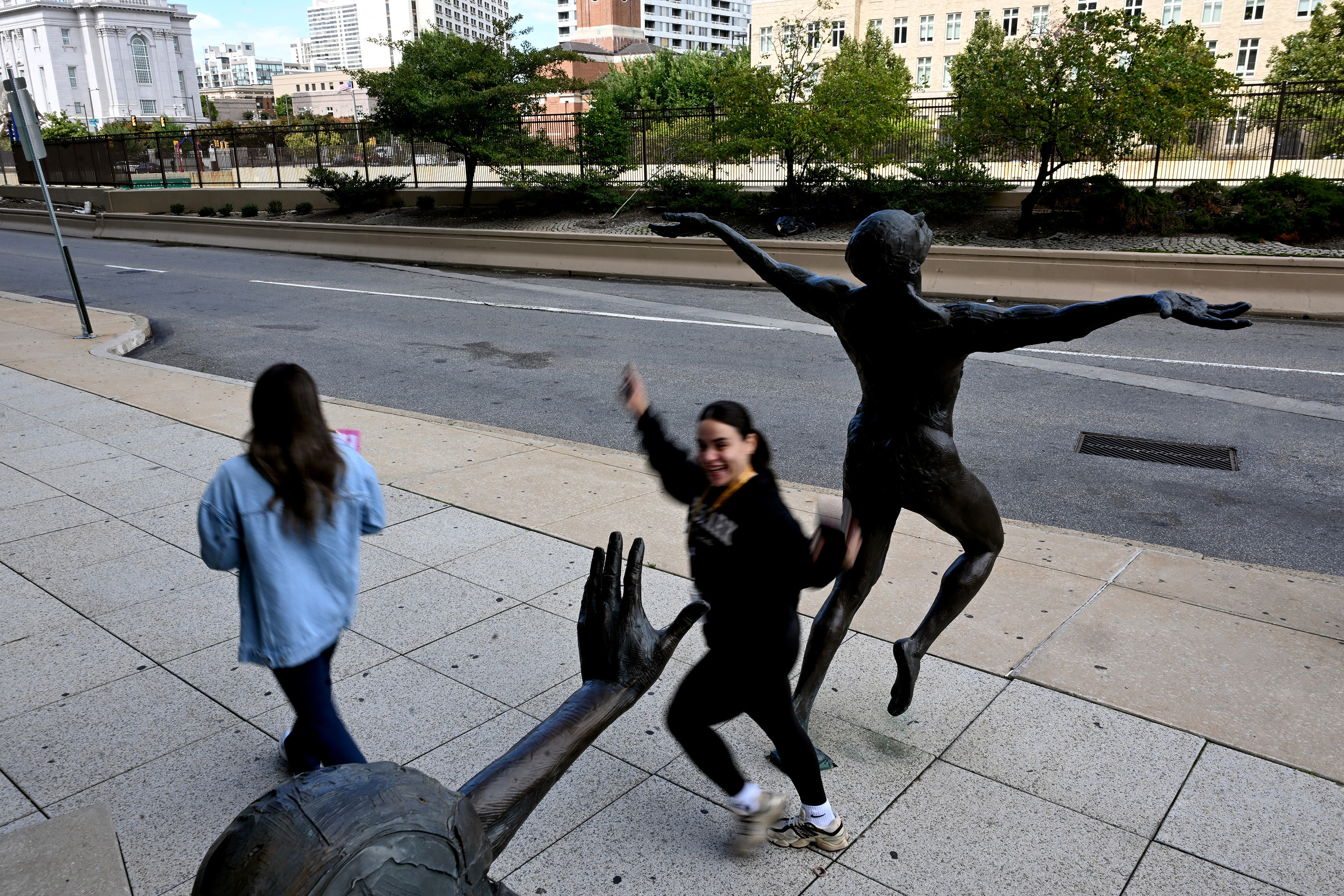
And as if I needed another reason, Frudakis invites passersby to become part of his art. He included the words ‘stand here’ inside the empty space from which the figure has broken free. So I dove right in, photographing it from plenty of other angles, too.
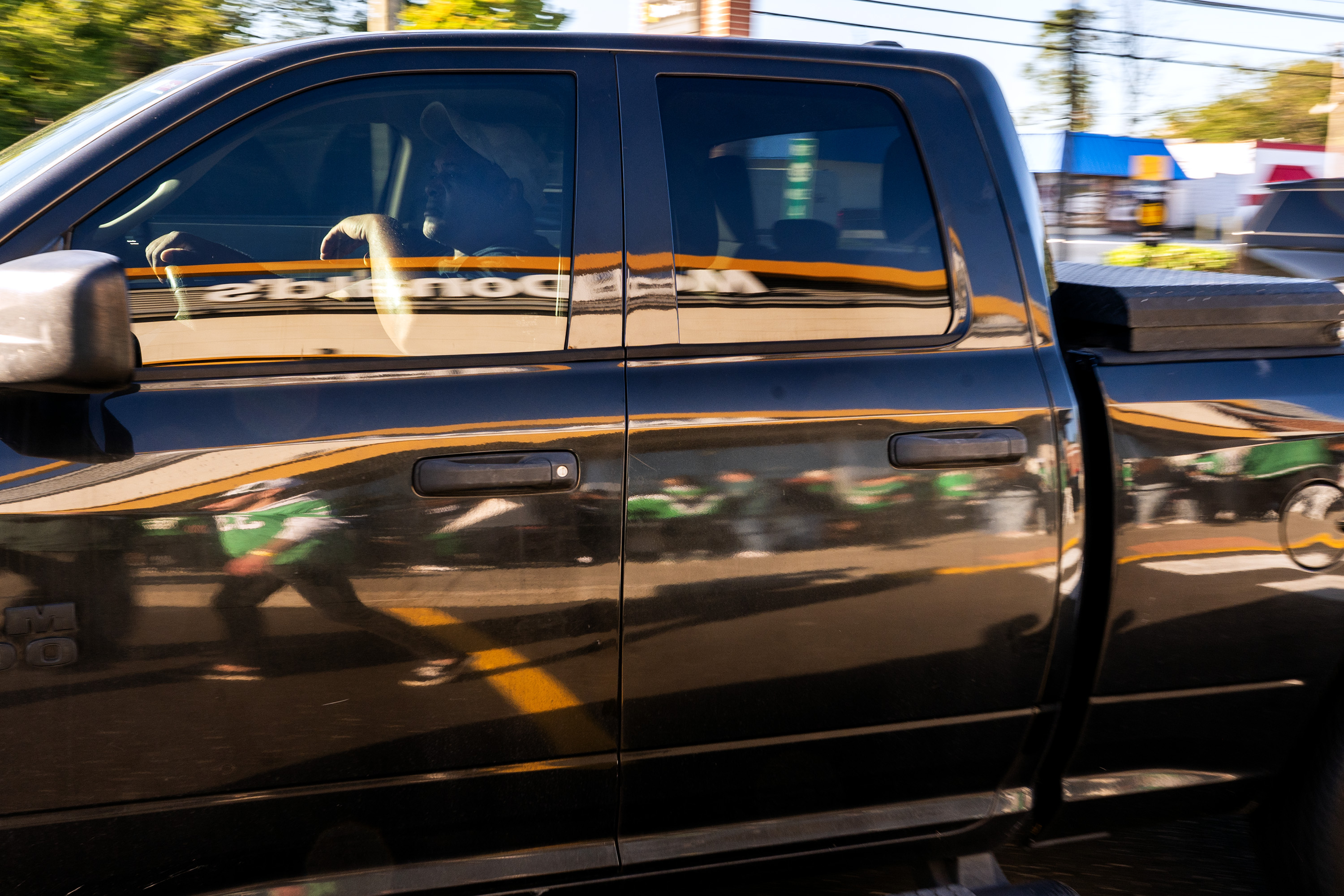
Finally this week, almost two years to the day after photographing another prominent celebrity working at McDonalds, I kept my “sports photographer” membership active.
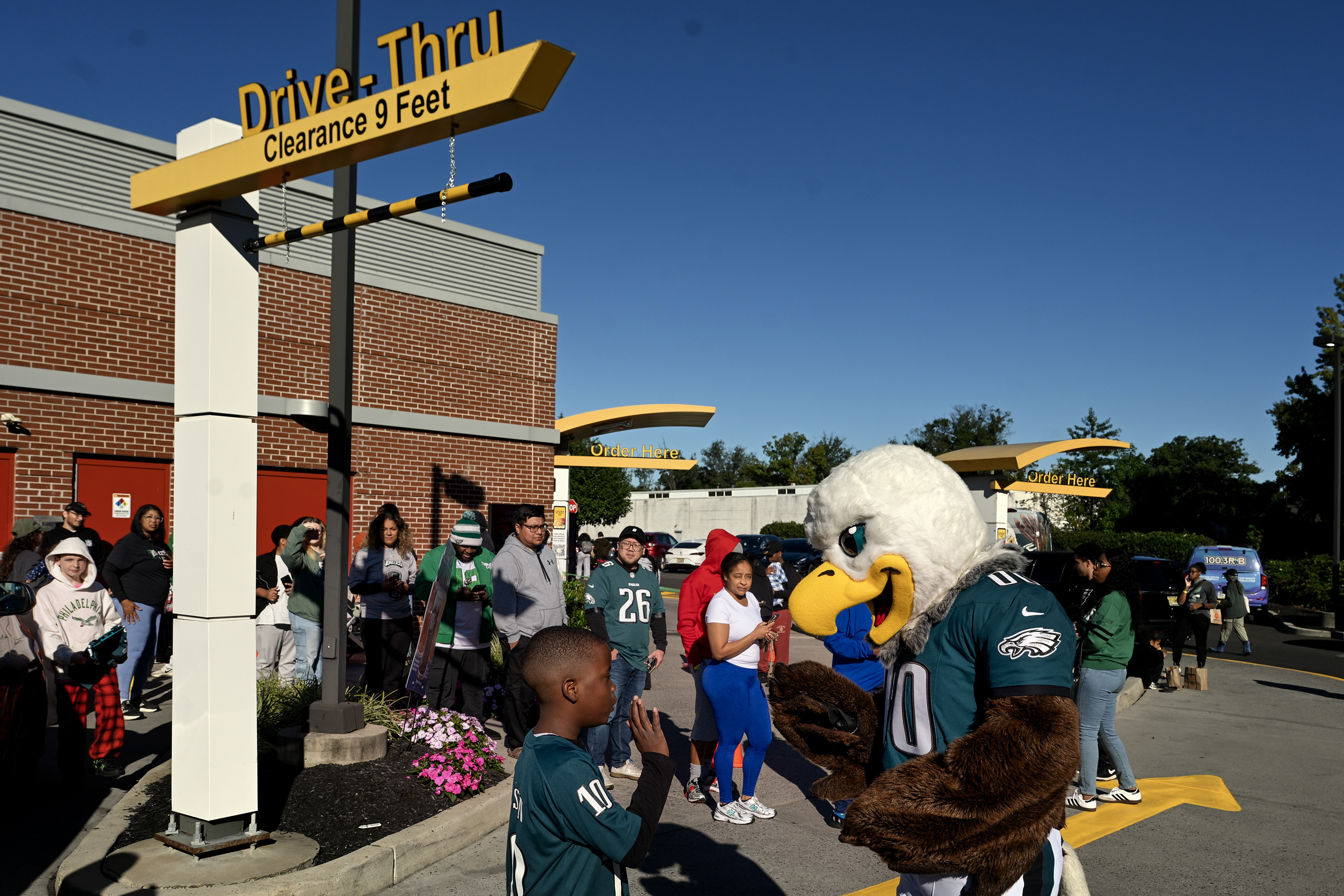
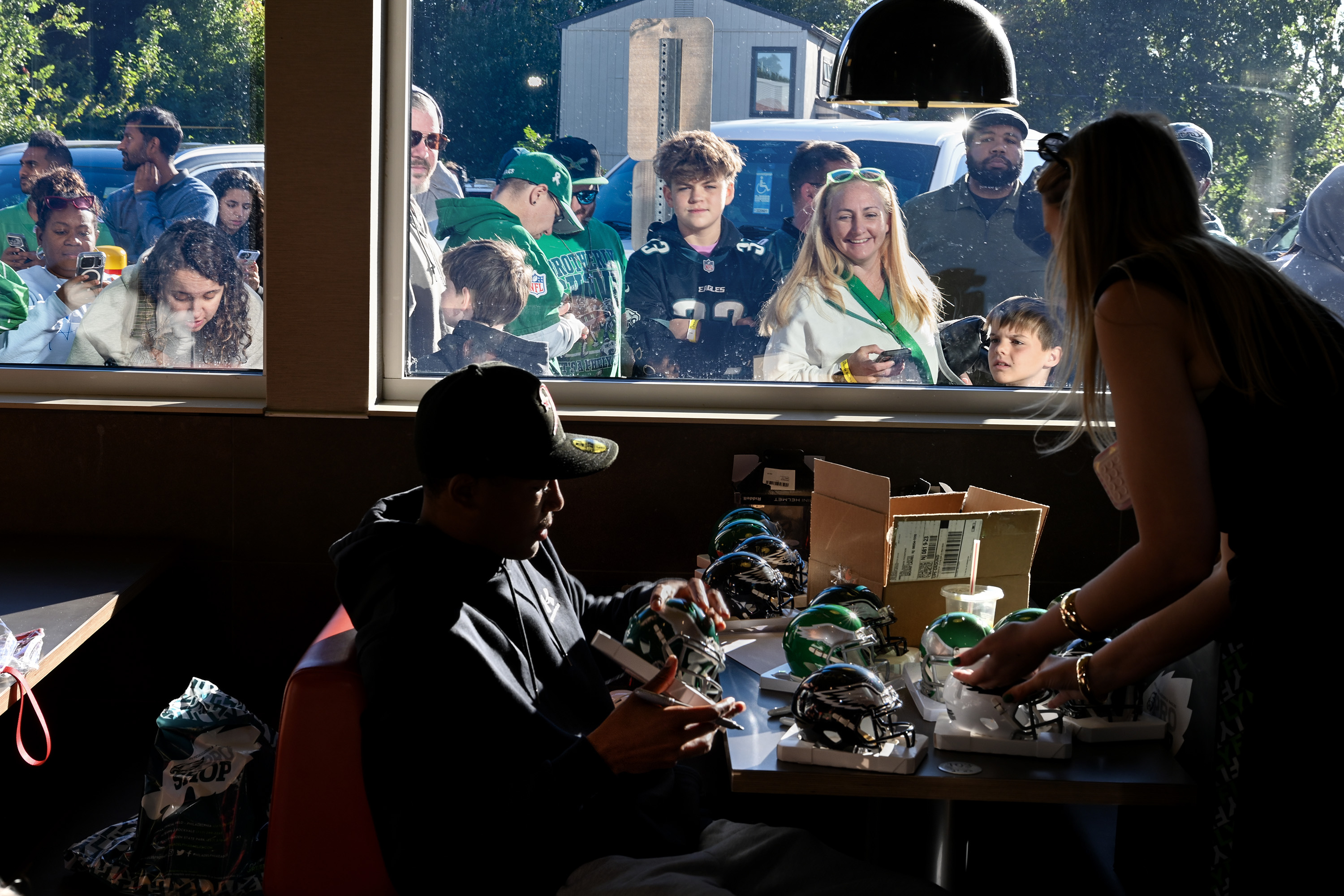
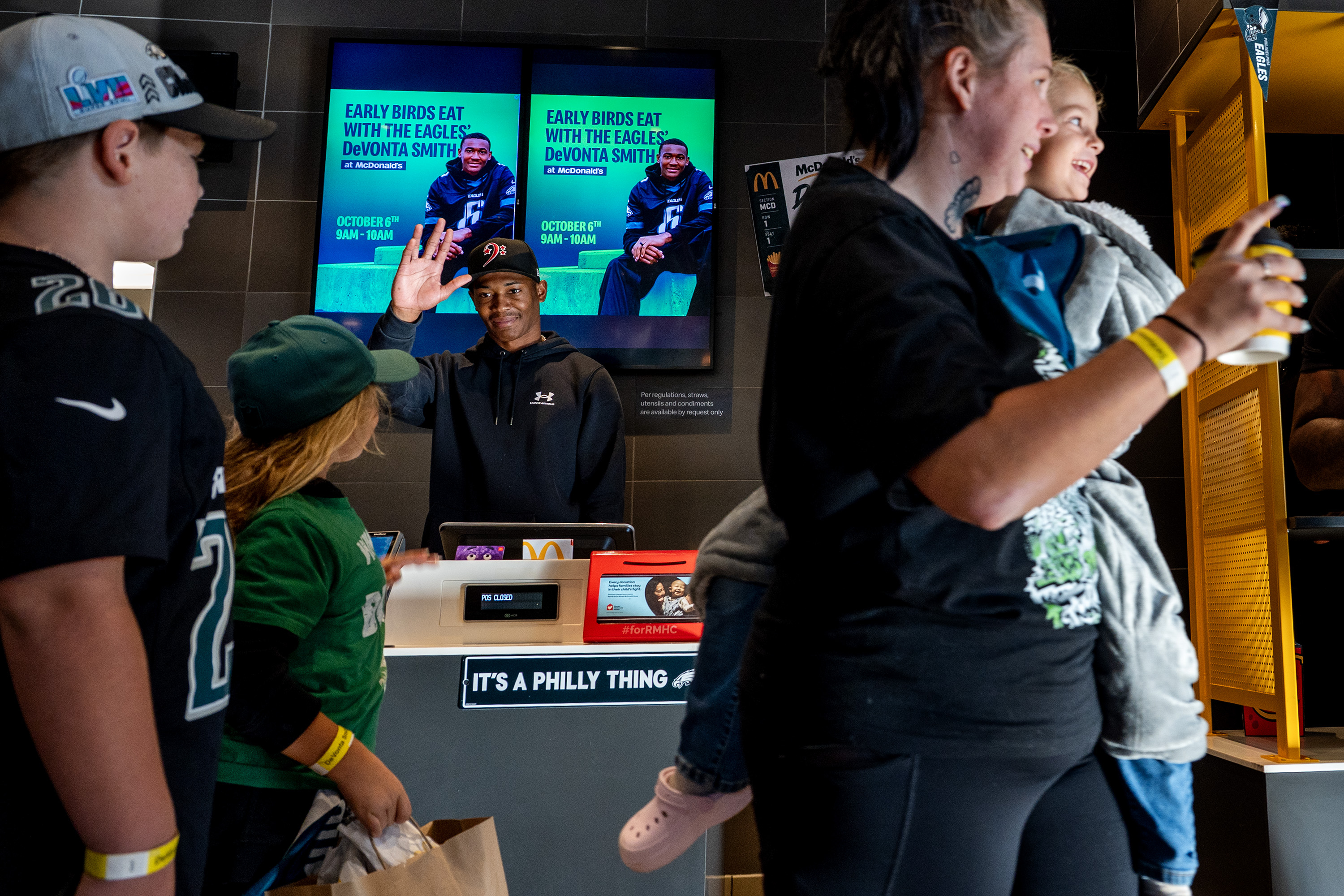
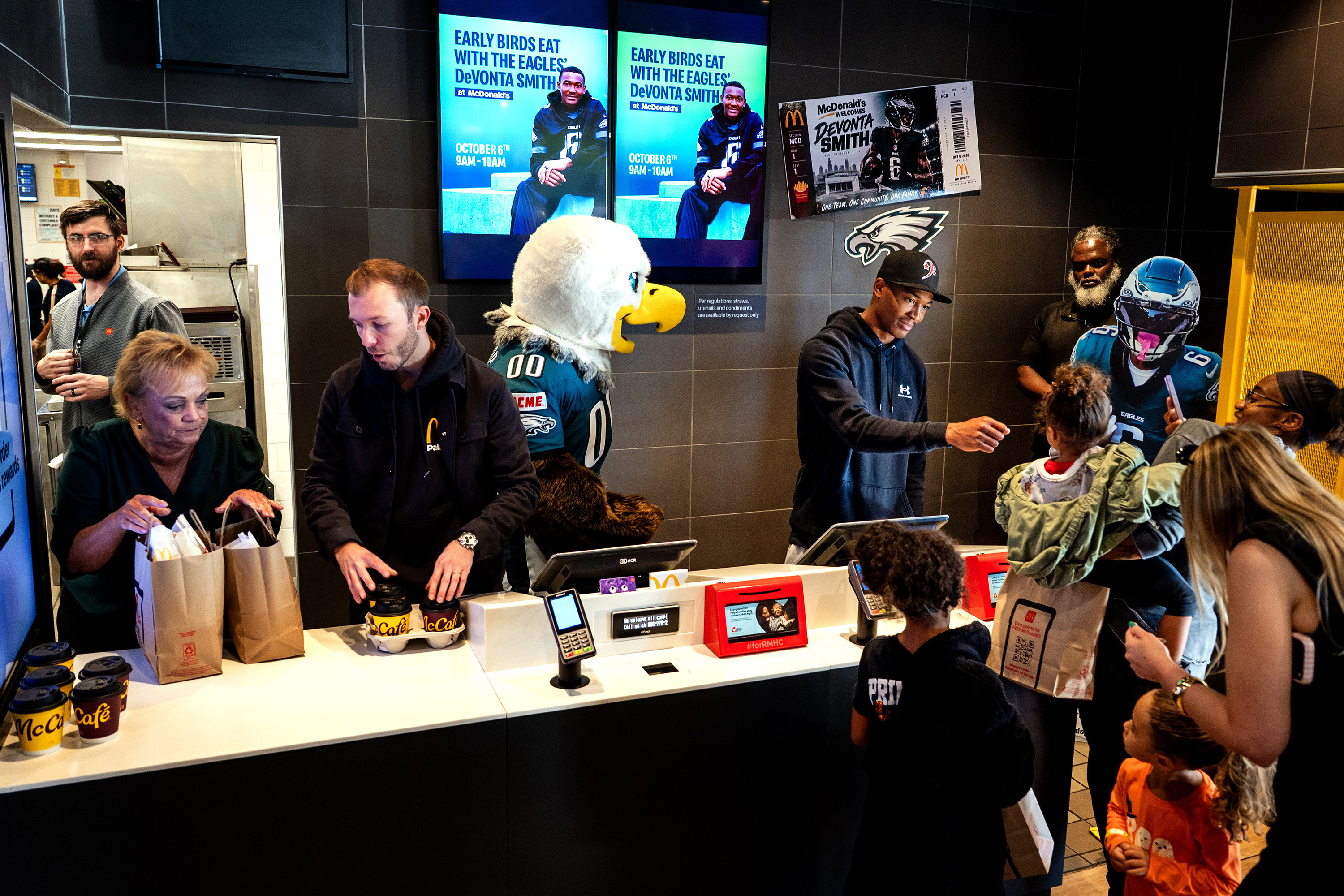
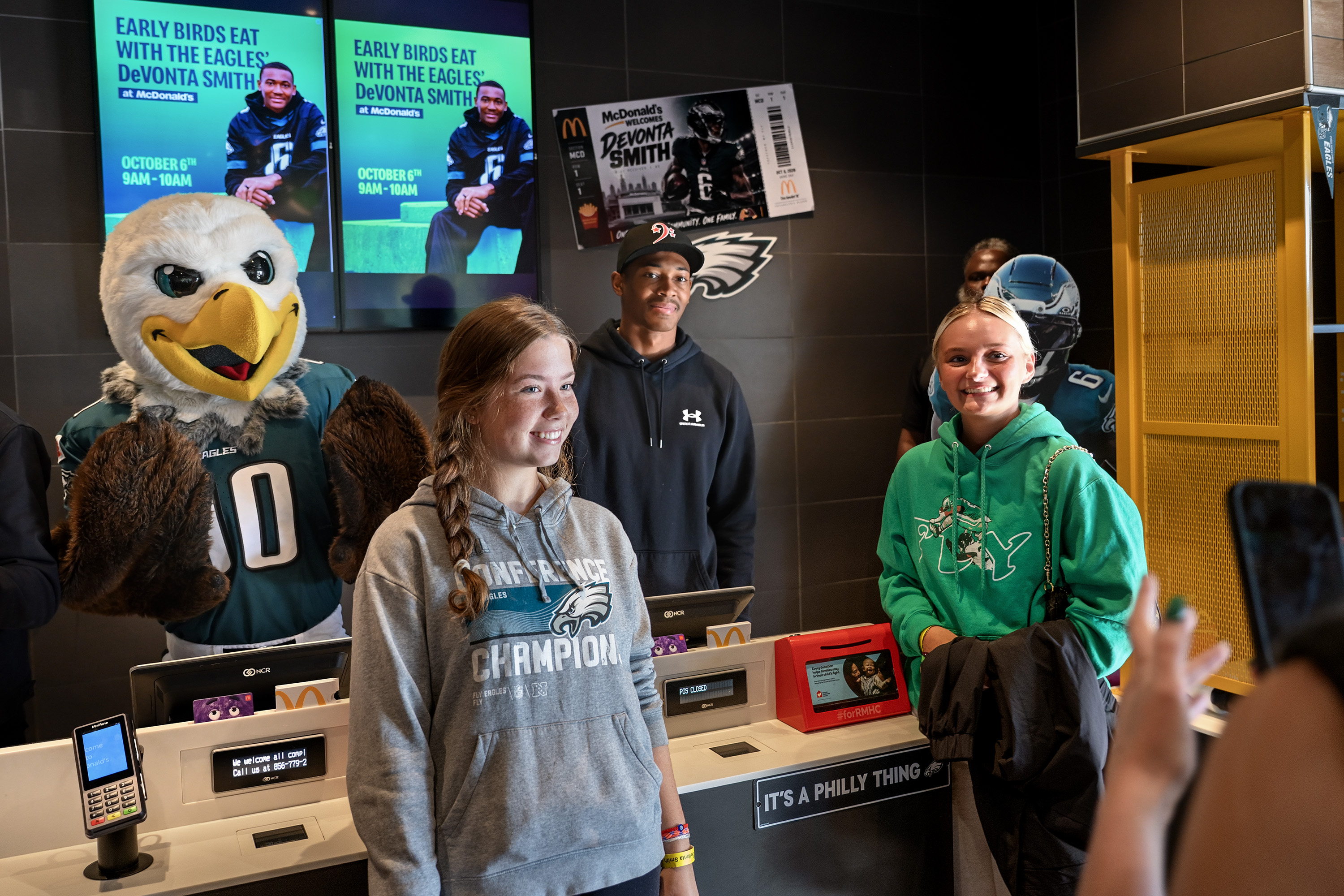
I made The Inquirer’s Big Picture gallery of the week’s best sports photos with my usual non-action coverage, this time of Eagles star wide receiver DeVonta Smith greeting fans and posing for photos at a McDonald’s in Cherry Hill.
Fans wait outside for the arrival of DeVonta Smith on Tuesday at the McDonald’s on Rt. 38 in Cherry Hill.Tom Gralish / Staff PhotographerJemai Gibson, from Camden, waits outside with her standard poodle, Jem, Tom Gralish / Staff PhotographerSwoop greets fans lined up all the way back to the drive-thru lanes.Tom Gralish / Staff PhotographerFans waiting in line outside look in as Smith signs miniature helmets inside the restaurant before they opened the doors.Tom Gralish / Staff PhotographerSmith greets fans while the restaurant serves free coffee and breakfast.Tom Gralish / Staff PhotographerFans wait in line inside the McDonald’s.Tom Gralish / Staff Photographer“McDonald’s does a lot with the community with Ronald McDonald House and things like that,” Smith said, noting it’s more than just fast food.Tom Gralish / Staff PhotographerThe drive-thru remains open during the event.Tom Gralish / Staff PhotographerAva Cannon (left) of Mount Laurel and Kelsey Cepas (right) of Haddon Township, both 20, look through the window as they wait in line outside…Tom Gralish / Staff Photographer…and then get their turn posing for a photo with Smith – and Swoop.Tom Gralish / Staff PhotographerMiniature helmets signed by Smith that were later raffled off for fans.Tom Gralish / Staff PhotographerEagles star wide receiver DeVonta Smith poses with fans at the McDonalds in Cherry Hill.Tom Gralish / Staff Photographer
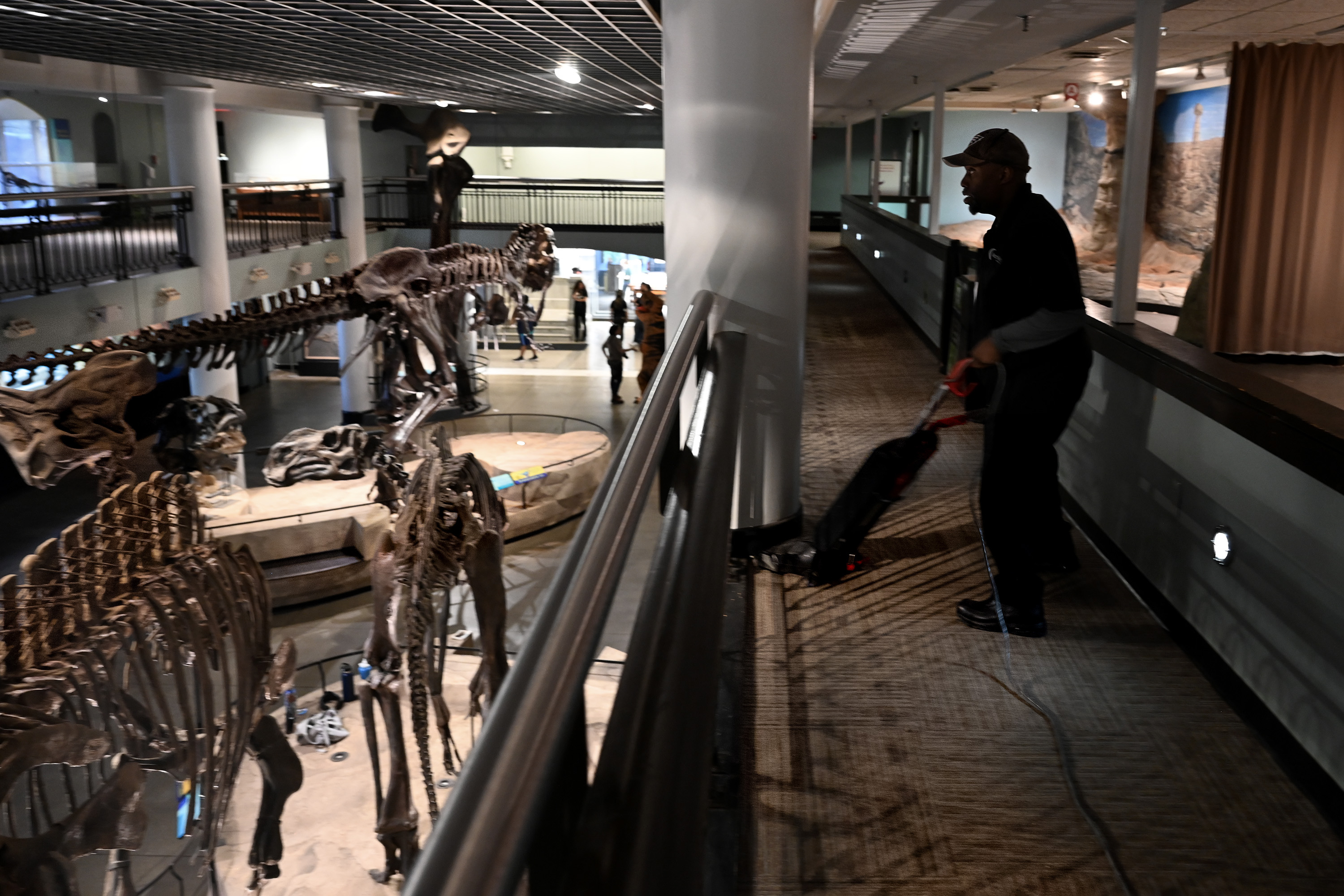
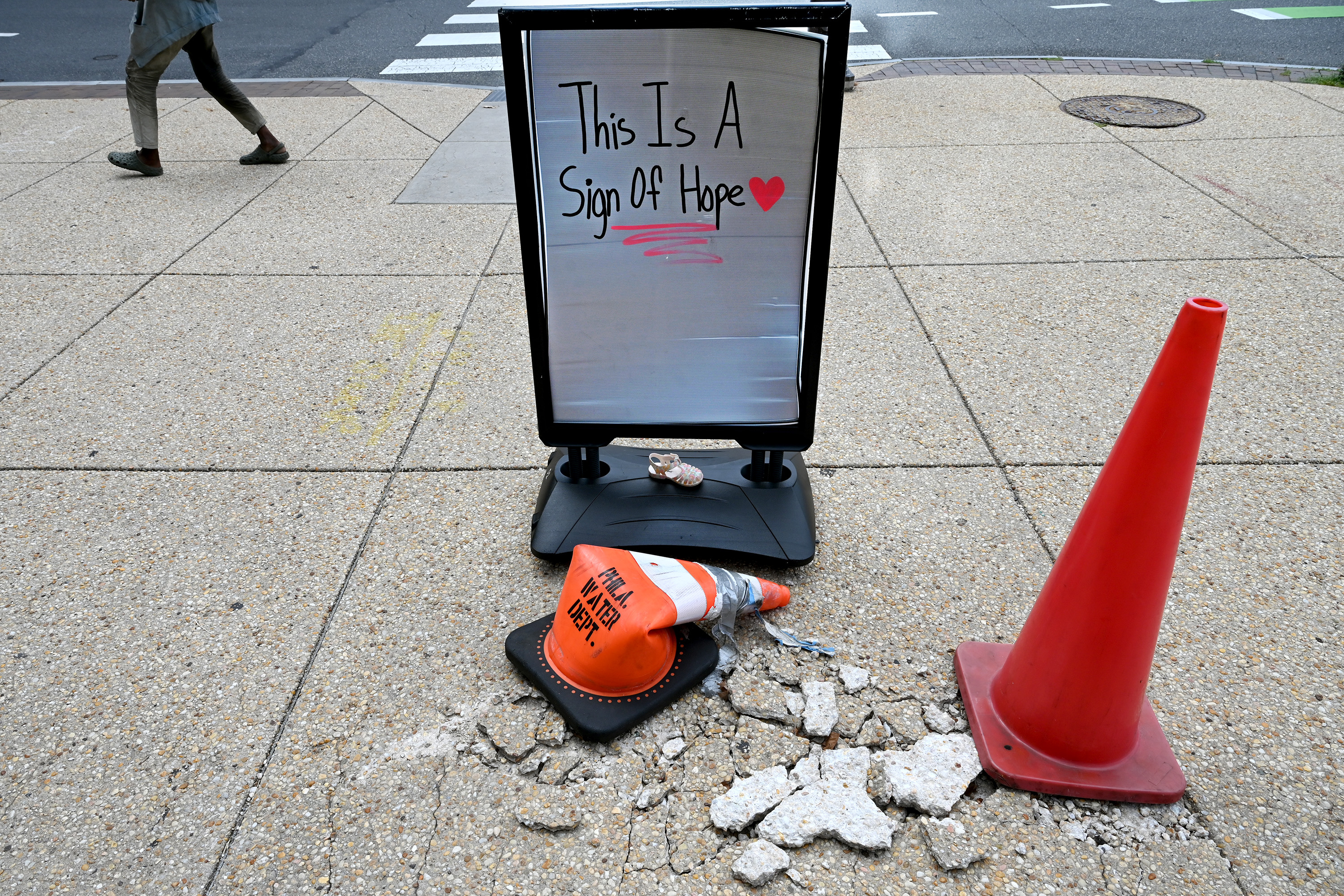
Since 1998 a black-and-white photo has appeared every Monday in staff photographer Tom Gralish’s “Scene Through the Lens” photo column in the print editions of The Inquirer’s local news section. Here are the most recent, in color:
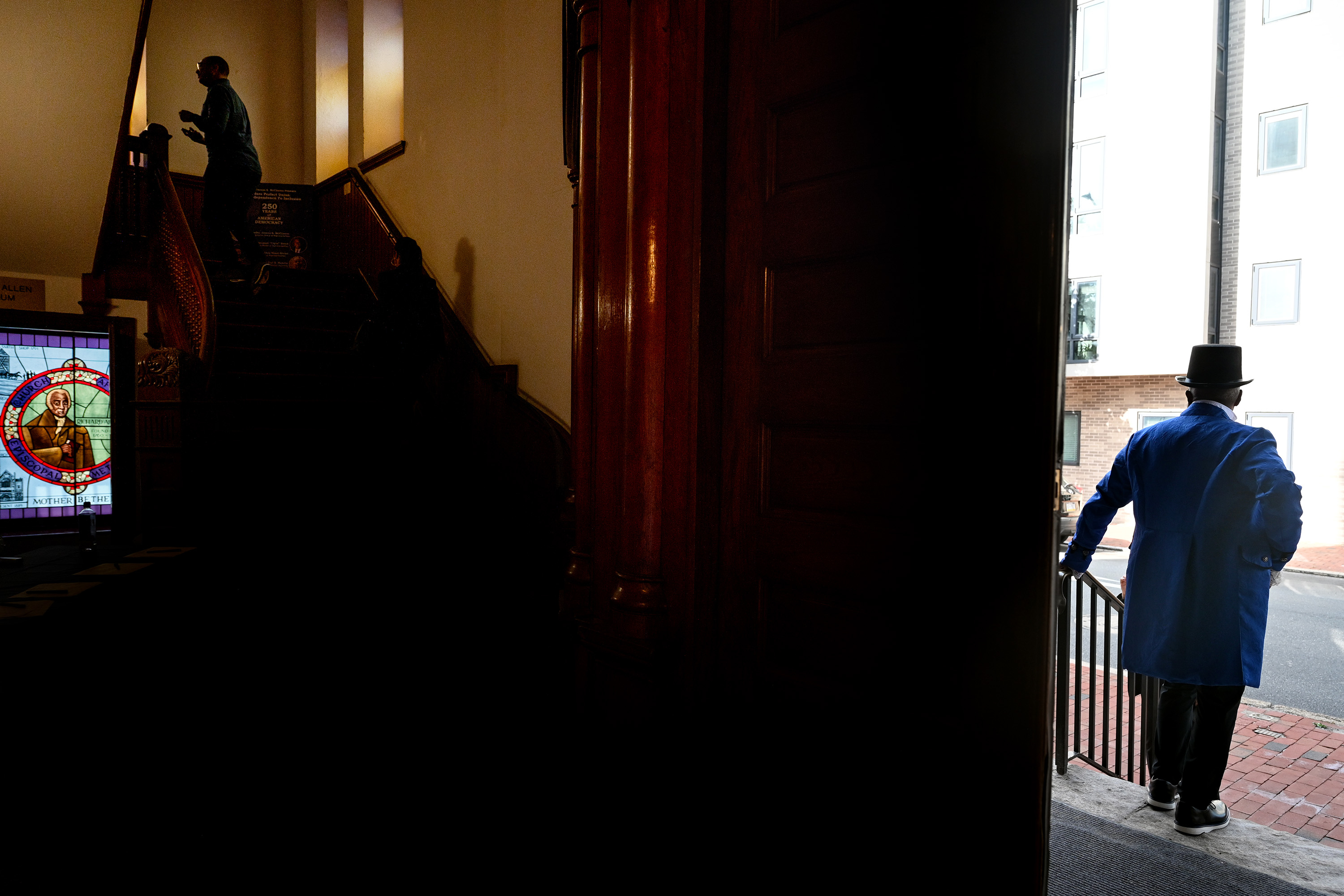
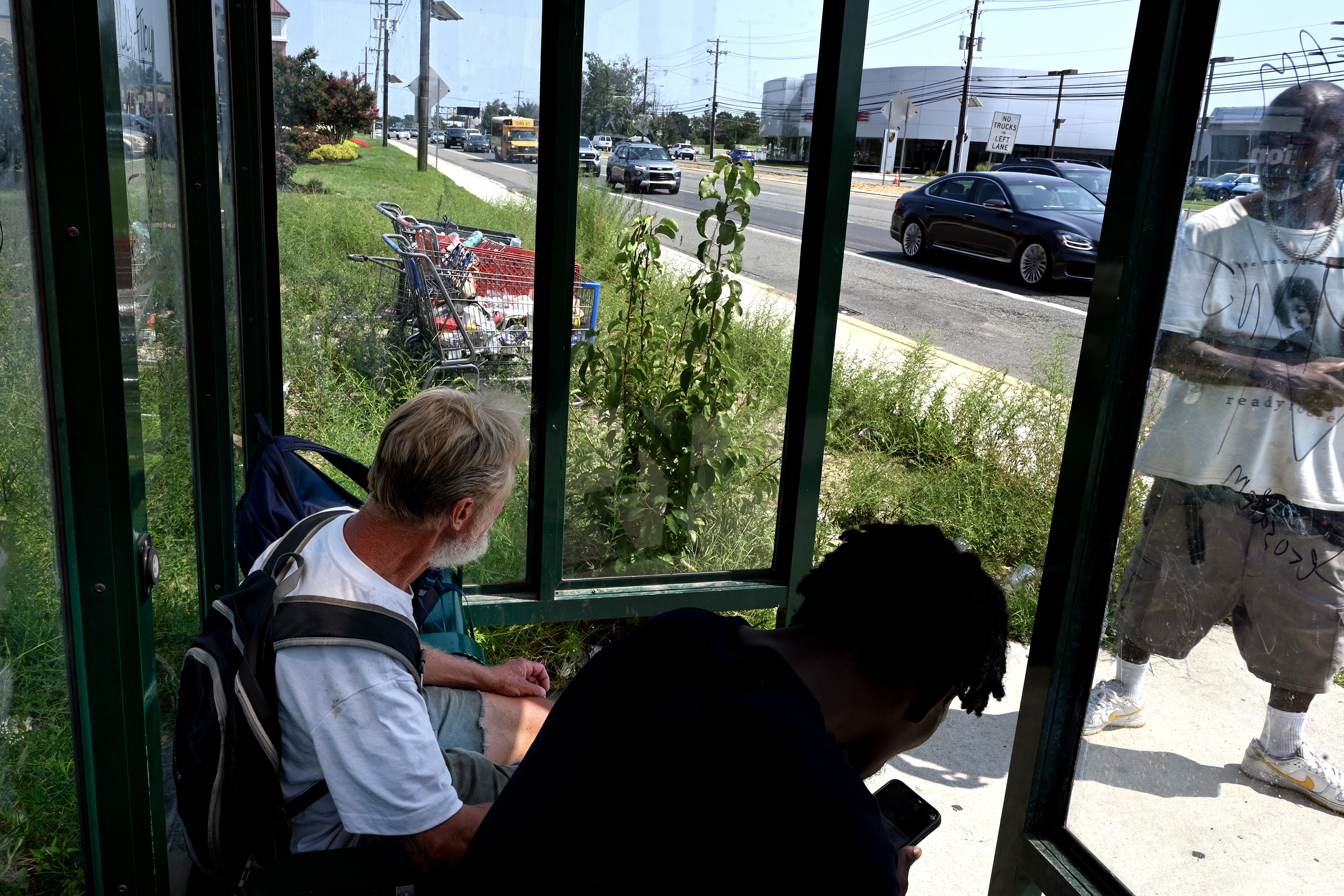
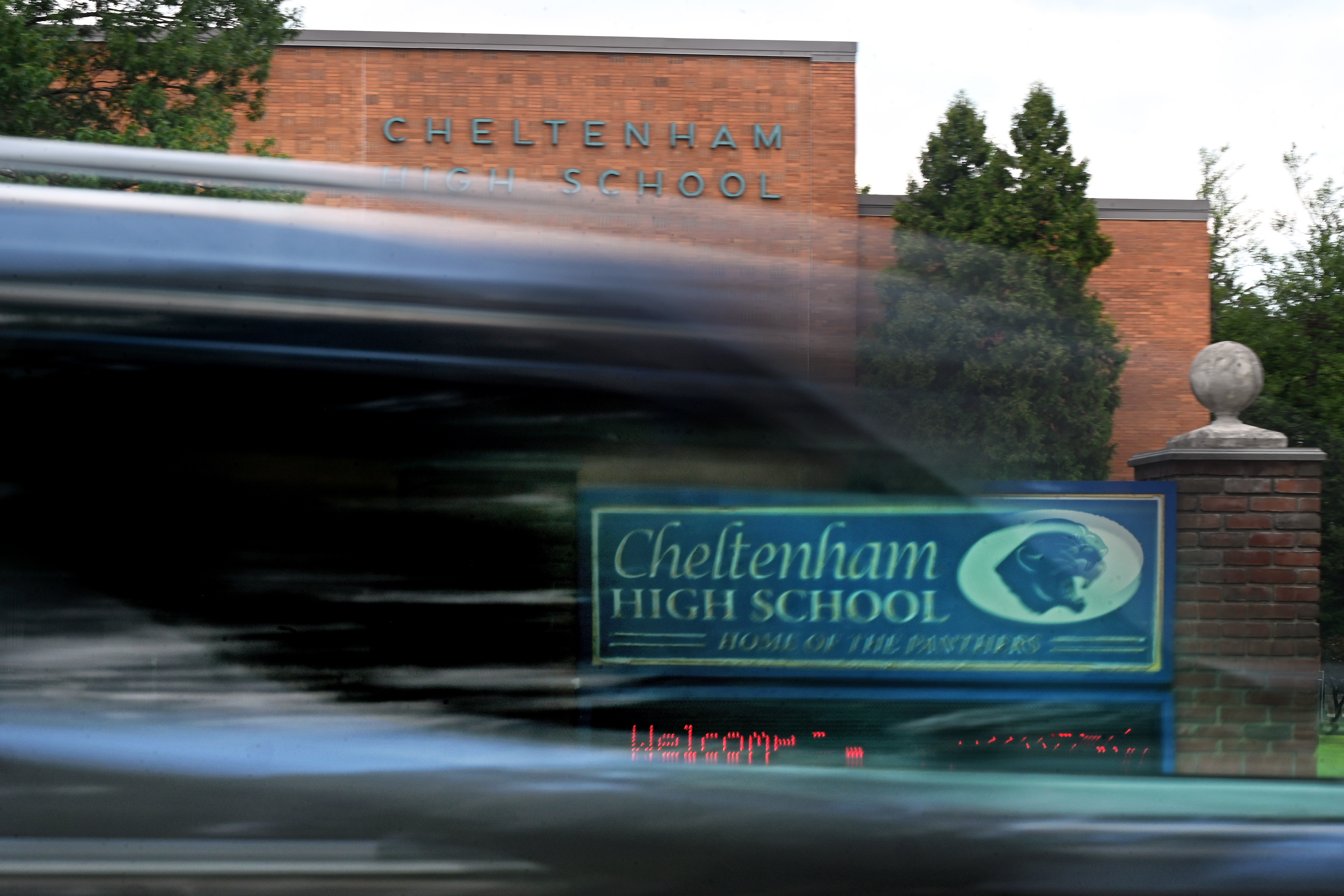
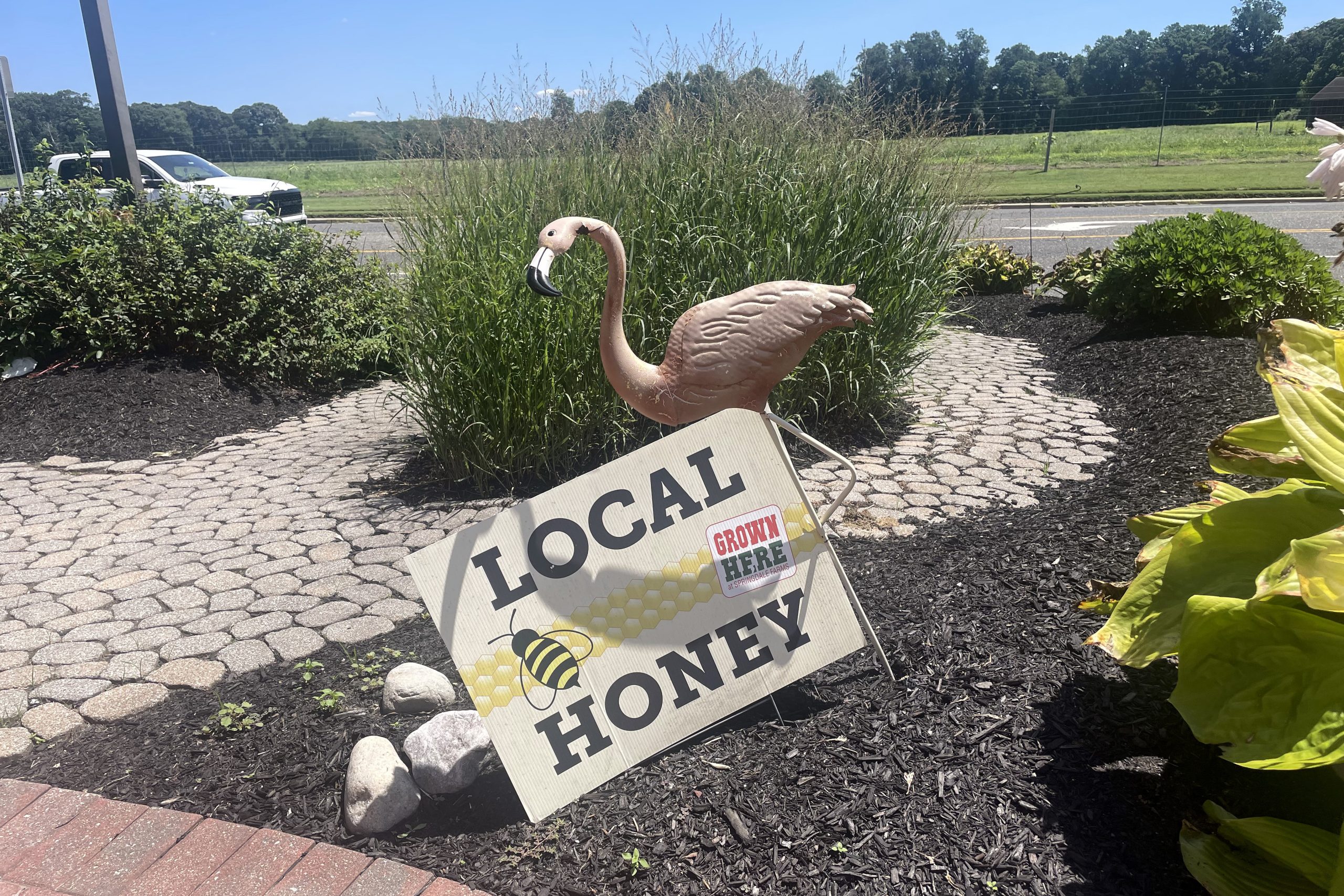
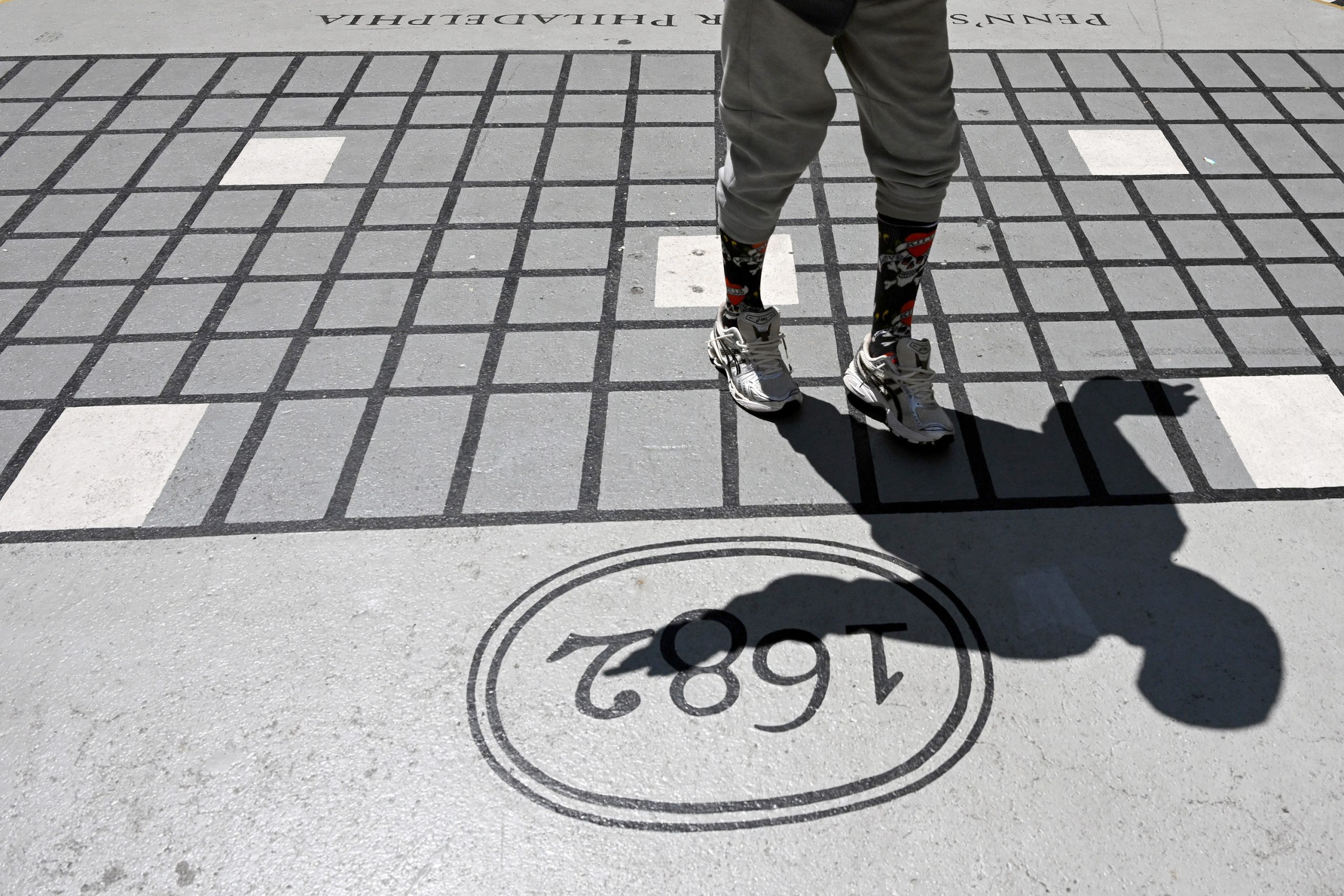
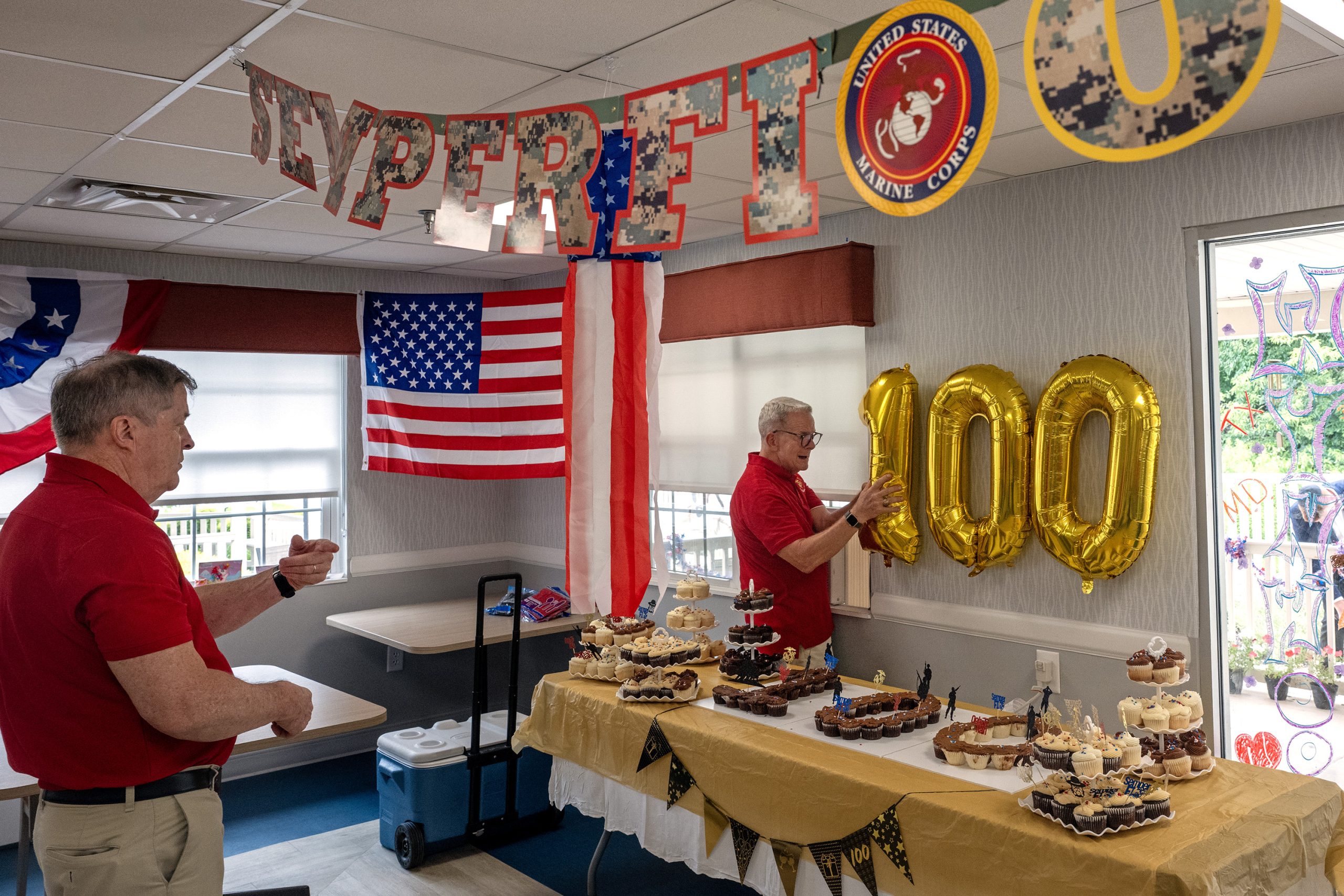
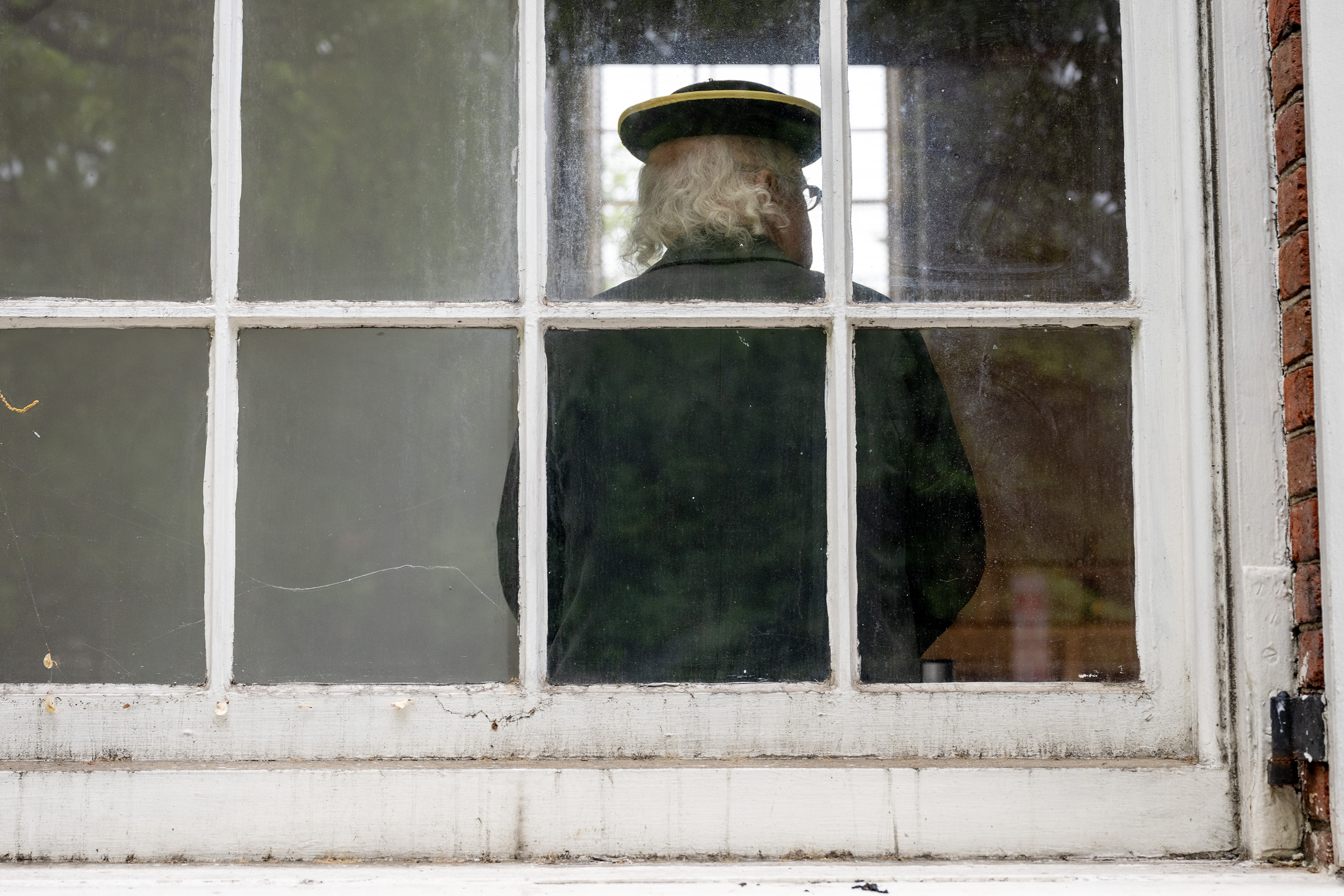
October 5, 2026: Jerry Atwood vacuums inside the Academy of Natural Sciences of Drexel University after it closed the doors at 5 p.m. on the final day the museum was open to the public Sunday, September 27, 2026. Tom Gralish / Staff PhotographerSeptember 28, 2026: A hopeful sign a sidewalk repair might be imminent, in the Logan Square neighborhood where residents have apparently been waiting a while for something to happen.Tom Gralish / Staff PhotographerSeptember 21, 2026: Students wait in the auditorium before the arrival of Eagles linebacker Jalyx Hunt at an assembly at Little Flower Catholic High School for Girls where he announced the establishment of three scholarships and an endowment to support students. Tom Gralish / Staff PhotographerSeptember 14, 2026: Chris Lewis (right), portraying James Forten, an abolitionist, activist, and sailmaker in colonial America, greets visitors outside Mother Bethel A.M.E. Church as they arrived for an America 250 Conversation hosted by Pennsylvania House Speaker Joanna McClinton on Sept. 10. The stainedglass window at left depicts Richard Allen, founder and first bishop of the African Methodist Episcopal Church in 1816, the first independent black religious denomination in the United States. Tom Gralish / Staff PhotographerSeptember 7, 2026: Joe Ackler of Skippack shops for a race T-shirt during a lull between laps in the Philadelphia Cycling Classic on Aug. 30. He is wearing a shirt he bought in 2003 when he attended the Tour de France. Tom Gralish / Staff PhotographerAugust 31, 2026: Robin P. Cooper (upper right) watches as Superintendent Tony B. Watlington Sr. (far left) gathers school and city officials for a group photo outside the district bus, stopped at McClure Elementary on the first day of school in Philadelphia. The bus was on its annual back-to-school celebration visit to schools throughout Philadelphia. Cooper later left the bus to join in the photo. Tom Gralish / Staff PhotographerAugust 24, 2026: Pencils were sharpened in the first-grade classroom of teacher Lauren Cucinotta at Fanny Jackson Coppin Elementary as she prepared for the start of the new school year for the Philadelphia School District on Monday.Tom Gralish / Staff PhotographerAugust 17, 2026: Wayne Peters (left) and Bobby White (right) wait for the #406 bus to Camden, on Rt. 70 in Cherry Hill, near the entrance to stores at the Garden State Pavilion shopping center and NJ Transit’s Cherry Hill station. Peters says it “Gotta be the worst bus stop in the state,” with White adding, “You’d think something in Cherry Hill would be better. How hard would it be to put a trash can here?” Before their bus arrives, Peters, trying to be positive about the shelter, reminds him “They fixed a broken window once.”Tom Gralish / Staff PhotographerAugust 10, 2026: Cheltenham High School in Wyncote, on the day the Montgomery County district attorney announced charges in connection with two assaults in the school’s football locker room. A photo of the static signs was made more visually interesting by using a slow camera shutter speed to blur the passing cars. Tom Gralish / Staff PhotographerAugust 3, 2026: Sign for locally “grown” honey outside the market at Springdale Farms, the only working farm left in Cherry Hill. Before WWII, when it was still known as Delaware Township, there were 82 farms in operation feeding South Jersey markets and supplying the massive fresh vegetable and crop demands of the Campbell’s Soup Company in Camden. Tom Gralish / Staff PhotographerJuly 27, 2026: Lyn-el “The Torch” Wright pauses on the City Hall Courtyard’s rendering of William Penn’s Philadelphia city grid plan. Penn designed the 1,200-acre “Greene Countrie Towne” between the Delaware and Schuylkill rivers with wide, crisscrossing streets to prevent the overcrowding and fires he had witnessed in London. July 20, 2026: Pat Dailey (left) and Ken Hopper with the Tun Legacy Foundation prepare a room at the Wynwood Rehabilitation & Healthcare Center in Cinnaminson, N.J., for a surprise 100th birthday party for WWII U.S. Marine Corps veteran Stephen Anderson. Dailey founded the nonprofit that supports veteran causes, Masonic charities, and educational scholarships. The organization is also rebuilding and reestablishing an authentic reproduction of the original Tun Tavern building in Philadelphia. The Tun, constructed in 1693, was the first documented lodge in North America and the birthplace of the U.S. Marine Corps in 1775.July 13, 2026: The Independence Visitor Center offers free birthday cake to the public on the Fourth of July, in the form of a massive American flag made of 5,000 cupcakes frosted red, white and blue.July 6, 2026: National Park Police Deputy Chief Rebekah Spedaliere shows off her own bald eagle tattoo while posing for a photo with bald eagle “Indy” and handler Amanda Sweeney with the Auburn University Raptor Center, during ceremonies over the July Fourth weekend. Indy came to Auburn, in Alabama, in 2018 after suffering a wing injury as a young bird and imprinted on humans during rehabilitation, so she couldn’t be released back into the wild. Now, she serves as an ambassador bird, teaching people about raptors, conservation, and the ecosystems that sustain them. Not her first rodeo in Philly, she made her first appearance at the Linc for an Eagles’ game in 2023. Tom Gralish / Staff PhotographerJune 29, 2026: Shecky Perlman as Ben Franklin is inside the Free Quaker Meeting House on Independence Mall as he and other historical reenactors receive their diplomas after weeks of intensive, immersive training for the 21st season of Historic Philadelphia’s Once Upon a Nation program — where costumed actors perform first-person interpretations of real 18th-century Philadelphians in the Historic District and at Valley Forge National Historical Park.Tom Gralish / Staff Photographer
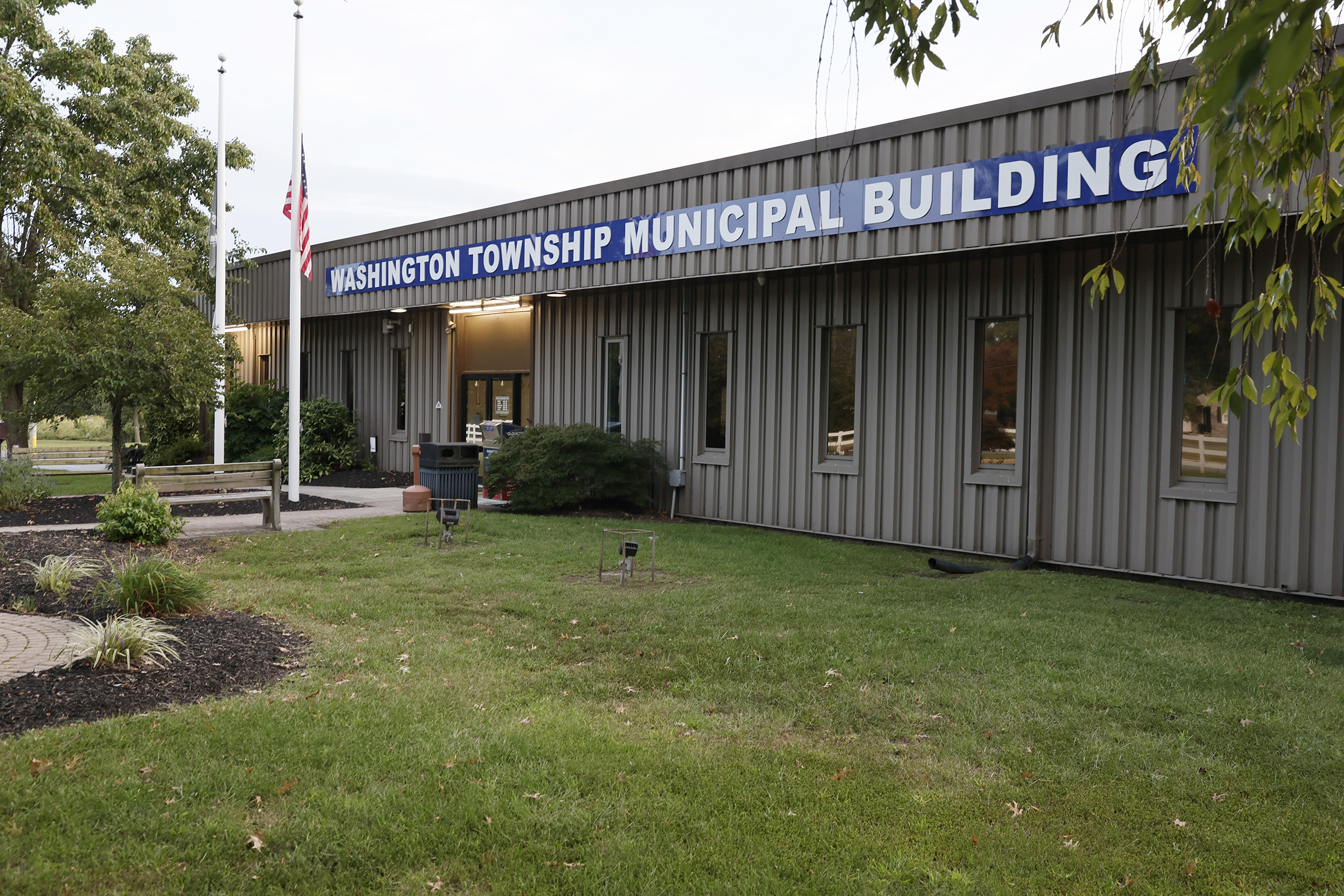
Washington Township didn’t spend any of its opioid settlement money on drug education programming in 2024 and 2025, after telling the state it was investing in “drug education,” NJ.com reported Friday.
Instead, the Gloucester County township bought SUVs and Flock surveillance cameras for its police department.
According to state data in the NJ.com report, Washington Township, the most populous municipality in Gloucester County, had the highest number of treatment admissions for heroin use in the county in 2025.
Plus, Washington Township “ranked among the worst 30% of municipalities” for heroin use treatment admissions per capita across the state during the peak of the opioid crisis, NJ.com reported.
Settlement money first came to New Jersey, its counties, and municipalities in 2022, after federal lawsuits against pharmaceutical giants and others implicated in the decades-long opioid epidemic gave officials across the U.S. access to funds earmarked for drug treatment, prevention, and education.
In 2024 and 2025, Washington Township told the state that it spent $170,446.70 in settlement funds on a “school-based narcotics and education program” and “drug education,” according to documents NJ.com obtained through records requests and while analyzing the town’s “bill lists, meeting agendas, meeting minutes, audit reports, and social media.”
Township officials instead spent the money on “two 2024 Chevrolet Tahoe SUVs and 15 Flock surveillance cameras for its police department,” NJ.com reported. The township spent nearly $268,000 on the SUVs and cameras from November 2024 to April 2026, NJ.com reported, using the funding specifically allocated by the federal government for opioid remediation.
Currently, towns and counties self-report to the New Jersey Department of Human Serviceshow they spend the settlement proceeds and are not required to routinely provide receipts or documentation. DHS told NJ.com that the department is not responsible for ensuring that municipalities spend the settlement funds appropriately.
There isn’t a clear process for tracking how municipalities spend opioid settlement dollars, NJ.com reported, or an accountability mechanism for when residents say their governments are spending the money wrong.
Sandy Gibson, an addiction researcher and counselor education professor, told NJ.com that the state should be held accountable for the township’s “egregious” spending habits, especially given the number of people admittedfor opioid use treatment in Washington Township. In 2025, Washington Township saw 95 admissions for heroin treatment reported to DHS, but the state doesn’t say whether the people treated were residents of the 50,000-person township.
“I can’t see how there’s been no response or action taken to address that. Inaction at the level of the state is permission,” Gibson told NJ.com.
At a council meeting in September, Patrick Gurcsik, the township’s police chief, explained that the police department intended for the license plate readers to “play a role in breaking the cycle of addiction-related crime” in Washington Township. He said other states have also used the funds for the readers.
“Moving forward, we are developing a master plan that will identify the needs of our community and establish clear priorities for future use of these settlement funds,” Gurcsik said.
On Sept. 23, the council passed a resolution, NJ.com reported, to advertise a request for proposals for “settlement fund consulting services.”
And on Monday, Cody Miller, a Democratic state assemblyman representing Gloucester County, introduced legislation to make state and local opioid settlement spending more transparent, including by educating counties and municipalities on the approved uses of the funds through a training program.
The state comptroller and Attorney General’s office reportedly declined to confirm to NJ.com whether Washington Township is under investigation for its spending.
When Subaru vehicles roll into a newly approved Cherry Hill dealership, they’ll be surrounded by landscaping different from most commercial developments.
Subaru, which promotes an eco-friendly corporate image, will plant sustainable landscaping that the township planning board has agreed will not require a permanent irrigation system that’s a requirement in Cherry Hill’s zoning ordinances for other commercial projects.
Instead, the drought-resistant plantings in the native pollinator garden will not include turf or require fertilizers, mowing or an irrigation system, said Bernadette Szakal, associate director of real estate and corporate facility services at Subaru.
She told board members the plan follows Subaru’s corporate landscaping philosophy that was designed by the Pennsylvania Horticultural Society for the carmaker’s Camden headquarters, according to the board resolution adopted on Monday memorializing approval of the project’s preliminary and final major site plan with bulk variances.
The only irrigation will be from water trucks that temporarily water the landscaping after the initial planting, Tom Morris, vice president of public gardens and landscape operations at the Horticultural Society, told the board.
Neither Szakal nor Morris was available for comment beyond their board testimony.
First approved in 2023, the new Subaru dealership required amended plans that include site design changes to reflect New Jersey Department of Environmental Protection flood hazard regulations. The Cooper River is across Park Boulevard from the property.
Another twist to the dealership move from across Route 70 to the now-vacant land: The site held Subaru corporate headquarters from 1986 until 2018 when it moved into a new $118-million campus in Camden. The Cherry Hill headquarters building was demolished in 2019.
The Subaru showroom, service area, and other offices will occupy a 67,035-square-foot building footprint at 2235 Route 70 eastbound that includes a 21,840-square-foot showroom and 36,350-square-foot service area. Site plans call for 658 parking spaces, of which 454 will be used to store Subaru’s car inventory.
Ziad Nashed, owner and operator of Subaru of Cherry Hill, told board members the dealership employs 72 and operates from Monday through Saturday.
Nashed testified his employees also use a system that solves the noise pollution that’s hotly criticized by neighbors of other dealerships.
Rather than use a vehicle’s key fob to sound a vehicle’s horn to locate it, the Subaru dealership tracks its vehicles with a digital phone-based system that does not sound the horn.
70and73.com is a hyperlocal news site focused on South Jersey, including the communities of Cherry Hill, Evesham, Mount Laurel, Voorhees, Medford, Medford Lakes, and Moorestown.
New Jersey parents have less than two months to get their kids vaccinated against the flu if they want to keep them enrolled in a preschool or childcare center this year — a deadline that has moved up from past years.
The New Jersey Department of Health now requires that children 6 months and older who attend a childcare center or preschool receive an annual flu shot by Nov. 30 each year. Children under six months old cannot get the flu vaccine. Students in kindergarten through 12th grade are not required to get a flu shot.
The deadline, previously Dec. 31, was adjusted in January alongside a number of other changes to the state’s immunization laws “to ensure that children are protected when flu season begins in late fall and to help with timely collection of immunization data from the facilities for follow-up,” according to New Jersey Department of Health spokesperson Dalya Ewais.
Children who do not get their flu vaccine by the deadline will be excluded from school until they either get the shot or the official flu season ends on March 31. The health department’s existing rules for medical and religious vaccine exemptions are still in place.
The earlier deadline should help better protect kids against the virus by getting them immunized before flu season is in full swing on the East Coast, according to Jeff Fendrick, a Gibbsboro pediatrician who works within the Children’s Hospital of Philadelphia network.
“It does look like we’re going to be seeing the flu at an earlier time and so in moving up the date, that’ll make the protection for all these kids earlier, and that’s a good thing,” Fendrick said.
“We don’t want anyone to get the flu, but we definitely don’t want them to get seriously ill,” he said. “And that’s where protecting the kids with the vaccine — especially younger than 5 — is so important.”
The exact timeline for flu season is hard to predict, said Lori Handy, associate director of the Vaccine Education Center at the Children’s Hospital of Philadelphia.
Multiple circulating strains often peak at different times, she said, but the season generally runs from early fall to late spring.
“If you think about a child in daycare, maybe a family forgets and they get back to daycare Jan. 2 after the holidays and realize they’re not vaccinated. Now you’re chasing vaccine opportunities far into flu season,” Handy said.
“So by moving to Nov. 30, there’s a lot more opportunity to capture the families, make sure they get vaccinated before flu season has taken off, and it actually makes the policy effective instead of really kind of rolling into the New Year,” she said.
Young children are among the most at risk of having severe complications from the virus, Handy said.
Children ages 6 months to 5 years have the second-highest rate of hospitalization from the flu, surpassed only by kids who are too young to be vaccinated, she said.
“What a flu vaccine really does is it may not prevent infection altogether, but it prevents those bad outcomes, those emergency department visits, hospitalizations, ICU admissions,” she said. “And so you’re really helping those kids who are most at risk of becoming most severely ill.”
The flu vaccine typically takes one or two weeks to become effective, she said, so the earlier that kids receive their shots, the better.
Democratic Sen. Cory Booker took to the stage Thursday for a debate with Justin Murphy, the South Jersey Republican mounting a long shot campaign to unseat the well-funded incumbent.
As of June 30, Booker raised more than $33 million while Murphy raised just over $27,000.
There are nearly 865,000 more Democrats than Republicans in New Jersey. The state’s electorate, as of June, includes 38% Democrats, 35% unaffiliated voters, and 25% Republicans.
The debate, which was hosted by the New Jersey Globe and Rider University and broadcast nationally by C-SPAN, lasted about one hour.
The moderators focused much of their questions onTrump’s policies.Booker criticized congressional Republicans, who he said have “enabled” the president. Murphy, on the other hand, praised the current economy — a stark contrast to Democrats’ messaging this campaign season.
The two candidates were mostly civil, shaking hands and posing for a photo before getting started. Booker, who is bald, made a couple of jokes about Murphy’s voluminous head of hair.
The most raucous part of the debate was when audience members erupted during both Booker and Murphy’s remarks about the state’s sanctuary policy for immigrants.
Here are the highlights.
Sen. Cory Booker, left, and his South Jersey Republican challenger Justin Murphy, shaking hands on the debate stage Thursday night.Pete Borg / Rider University
Focus on Trump: His cabinet, Iran, and the Epstein files
Murphy supports Trump but said he’s not a “blind rubber stamp.” He admitted he is not well-versed on Trump’s cabinet picks or the Epstein files.
When asked about Trump’s cabinet members, the Republican said he trusts the president’s judgement but that he doesn’t know enough about them.
“I don’t know about their backgrounds. I couldn’t name them all for you right now,” he said.
“You’ve gotta be honest,” he added.
The Republican also said his knowledge is limited on the Jeffrey Epstein files, in which Trump is referenced thousands of times. Trump lobbied against releasing them to the public until it was clear he didn’t have enough support from his own party. Murphy said he supports the law that required the files to be released with redactions and exceptions — and supports an overall increase in transparency around them.
Booker had fierce criticism of the president on both subjects.
The incumbent said he voted for some of Trump’s appointees for his first term but the second time around, “something happened where it suddenly seemed like the standard he was creating for a cabinet position was loyalty to him.”
He said the Trump administration’s handling of the Epstein files was an example of Trump’s White House working to protect the president from valid inquiries “and as a sword to go after anybody that criticizes him.”
As for the Iran war, Murphy defended Trump but also said the president should wrap it up.
“Mr. President, put your cowboy hat on and get out there, and kick some … and get this done and done right,” he said to cheers from supporters.
Booker responded that Murphy’s attitude is precisely the problem, calling it a “false bravado.”
“We do not need yahoo policy,” Booker said. “We need sound people that use military force as a last resort, who know the power of diplomacy, who don’t insult your enemies and threaten to invade Canada and Greenland, but pull our allies together.”
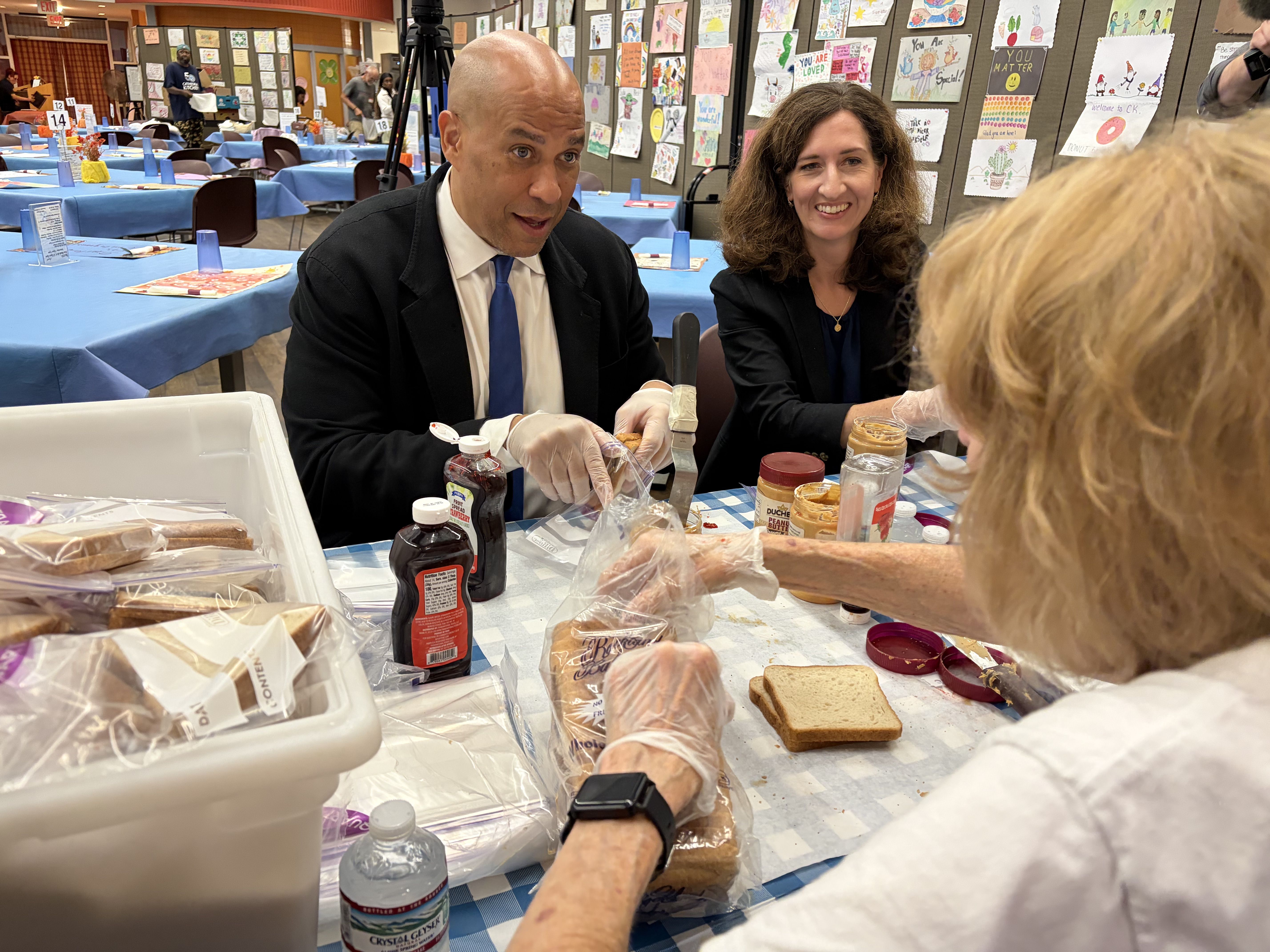
Sen. Cory Booker sits with volunteers at Cathedral Kitchen in Camden on Thursday, Aug. 27.Aliya Schneider / Staff
Housing policies
Sahmya Smith, a Rowan student and Passaic County voter, asked the candidates how they would address the racial wealth gap in New Jersey driven by home ownership disparities.
Booker touted bipartisan housing efforts including a new housing law and opportunity zones, the second of which he said resulted in affordable housing construction in Atlantic City.
“For me, as a guy who was the mayor of Newark, New Jersey, a majority minority city, we were able to double the production of affordable housing during the last housing recession we had in 2008, 2009, it’s something that I feel is really urgent right now,” he said.
He said that Trump’s trade war with Canada is driving up building costs.
Murphy said the best way towards home ownership “is being gainfully employed with low interest rates.” He said the Republican Party is providing the opportunity for the American Dream and that the country, referencing statistics from the Census Bureau that found that the median household income reached a historic high in 2025 since tracking began in 1967 and the poverty rate is the lowest it has been since tracking began in the 1960s.
That being said, the bureau also found that income inequality remained high, and the supplemental poverty measure — which considers non-cash benefits like food aid and household expenses — reached an all time low in 2021 under former President Joe Biden, AP reported.
“We continue to empower people through economic empowerment and betterment,” Murphy said, citing tax relief on tips, overtime, and Social Security benefits. He also noted that there should be more housing supply.
Candidate Justin Murphy, in the suit, at a Pinelands Republican Club event on Jan. 29, 2025.Aliya Schneider / Staff
Sanctuary state
New Jersey’s Immigrant Trust Directive, known as the state’s sanctuary policy, limits state law enforcement’s cooperation with federal immigration officers. Booker said the policy made immigrants feel more comfortable contacting law enforcement to report crimes, but that people feel unsafe again because of ICE immigration sweeps directed by Trump.
“My first priority is keeping New Jersey towns, municipalities, and cities safe, and to do that, I believe the policies of our state are good in keeping bright lines between what is a federal responsibility and what is a county and state and local responsibility,” he said.
Someone off camera shouted that they had to “butt in” and verbal chaos erupted with shouts from the audience.
Murphy said sanctuary policies “are a magnet for criminal illegal aliens,” even though “not every illegal alien is in this country to do us harm.”
“Sanctuary jurisdictions are a problem. They incentivize illegal immigration, and I don’t believe they help our state stay safe,” he added.
As he elaborated on his stance, another interruption erupted from the audience. Murphy responded by saying his position is “not xenophobia.”
Murphy recently received heat from Democrats for comments he made at an August town hall hosted by the Morris County GOP, saying “Islam creates a problem” in response to a question that mentioned a “big Muslim problem.”
Booker at the time called Murphy’s remarks “vile.” Murphy told Politico he intended to reference “radical Islam” and not all Muslims.
The vote by the 15-member commission allowsthe New Jersey Forest Service to broaden cedar cover over 171 acres in Wharton State Forest.
It’s the first phase of an ambitious $19 million state plan to restore 10,000 acres statewide. The state holds the East Coast’s last major concentrations of the tree. It’s historical 115,000 acres have dwindled to 25,000.
But the process has been bumpy as some environmentalists have railed against cutting existing cedars and the potential use of herbicides.
Mark Lohbauer, a commissioner from Pennsauken, voted against the plan. So did Commissioner Jessica Rittler Sanchez.
Lohbauer said he did not believe there had been enough public input or discussion of the project.
A major sticking point for Lohbauer, and some representatives of area environmental nonprofits, is the location chosen for the project off Sandy Causeway in Waterford Township, Camden County.
They say the tract already has existing, healthy, mature cedars they fear will be cut down as part of the process.
“I’m just not comfortable approving a blanket project,” Lohbauer said before casting his no vote. “The plan as it is includes acreage of what I consider to be cathedrals of Atlantic white cedar … as far as the eye could see.”
He also questioned the potential use of herbicides.
Lohbauer spoke after a lengthy presentation by Bill Zipse, supervising forester, and Todd Wyckoff, the state forester.
Zipse said the area was chosen because it has healthy cedars that can provide a natural seed bank for regeneration. The plan calls for both cedars and competing hardwoods to be removed to create zones where new cedar can thrive.
He also said that if herbicideis used, it could be limited to one application. Herbicides are often the only way to control rapidly growing competing vegetation such as phragmites, a reedy grass, the foresterssaid.
Correction: This story has been corrected to note that New Jersey Pinelands Commissioner Jessica Rittler Sanchez voted against the plan.
A pedestrian was struck and killed by a vehicle traveling east on Route 38 on Thursday night, according to the Cherry Hill Police Department.
Michael V. Mancuso, a 36-year-old Cherry Hill resident, died after a vehicle struck him while he was crossing Route 38 near Longwood Avenue around 7:56 p.m.
The driver of the vehicle was uninjured and cooperated with investigators, police wrote in a statement.
The crash is currently under investigation by Cherry Hill police, with help from the Camden County Prosecutor’s Office and the Office of the Medical Examiner, according to police.