Category: New Jersey News

  • Paulsboro man gets 3 decades in prison for sex assault of young teen

    Paulsboro man gets 3 decades in prison for sex assault of young teen

    A 48-year-old Paulsboro man was sentenced Friday to more than three decades in state prison for sexually assaulting an underage teen girl in 2023, the Gloucester County Prosecutor’s Office said.

    After an eight-day trial, a state jury in April found Jason L. Bailey guilty of first-degree aggravated sexual assault, second-degree endangering the welfare of a child, third-degree aggravated criminal sexual contact, and fourth-degree refusal to provide a DNA sample.

    Prosecutors said Bailey in December 2023 sexually assaulted a girl between the ages of 13 and 16. When Bailey was arrested, he refused to provide a mandatory DNA sample, prosecutors said.

    The jury also decided that Bailey was a persistent offender, based on his criminal history.

    Bailey must serve 85% of his 30-year sentence for aggravated sexual assault, prosecutors said.

    He also was sentenced to an additional 18 months for refusing to submit a DNA sample.

    In April, prosecutors said Bailey faced a maximum life sentence. If he were eligible for release, he would be required to register as a sex offender under Megan’s Law and be subject to parole supervision for life.

    Bailey’s lawyer could not be reached for comment.

  • ICE’s policy to detain nearly all undocumented immigrants is unlawful, a Philly-based federal appeals court ruled

    ICE’s policy to detain nearly all undocumented immigrants is unlawful, a Philly-based federal appeals court ruled

    U.S. Immigration and Customs Enforcement’s controversial policy mandating detention for nearly all undocumented immigrants is unlawful, a split Philadelphia-based federal appeals court ruled Friday.

    In a 2-1 ruling, the U.S. Court of Appeals for the Third Circuit held that ICE violated the federal immigration law and the Fifth Amendment of the U.S. Constitution by holding undocumented immigrants who have been in the country for years in detention without a hearing. The policy, enacted last summer, has been a key part of efforts by President Donald Trump’s administration efforts to ramp up deportations across the country.

    The ruling will take immediate effect in Delaware, New Jersey, Pennsylvania, and the U.S. Virgin Islands.

    Undocumented immigrants who have lived in the United States for decades “are entitled to due process rights beyond those provided to noncitizens at the border,” Circuit Judge Patty Shwartz wrote in the majority opinion.

    The government has a legitimate interest in keeping dangerous noncitizens in custody, the judge said, but a “neutral decisionmaker” should make that assessment on a case-by-case basis — rather than a practice of detaining all undocumented immigrants indefinitely.

    Circuit Judge Theodore A. McKee, who was appointed by Bill Clinton, joined the opinion written by Schwartz, who was appointed by Barack Obama.

    In a dissent, Circuit Judge Jennifer L. Mascott said the ruling was inconsistent with federal immigration law.

    “A bond hearing focused on flight risk and dangerousness would generate irrelevant facts, not material to individual determinations,” wrote Mascott, who was appointed by Trump.

    The Justice Department disagrees with the ruling and believes its position will “ultimately be vindicated,” a spokesperson said in a statement.

    “This is a huge win for due process,” said Rachel Rutter, a lawyer and executive director of Project Libertad, a Phoenixville-based nonprofit that provides free legal and social services for migrant youths facing deportation. “The Third Circuit has joined a chorus of other circuit courts striking down the Trump administration’s inhumane practice of mandatory detention of people who have spent years building lives in the U.S.”

    The decision “reaffirms decades of case law stating that these people have the right to challenge their detention through a bond hearing,” Rutter said.

    Nine other circuit courts have issued rulings on mandatory detention, and seven found the policy unlawful. The Justice Department petitioned the Supreme Court in June, asking the high court to resolve a split it said was “disrupting the orderly administration of immigration law.”

    The mandatory detention policy was rolled out by the Trump administration last year, and has led to an avalanche of lawsuits by immigrants who challenged their incarceration and demanded a bond hearing.

    These requests, known as habeas corpus petitions, were rare not long ago, but since the policy change, they’ve dominated the docket in Philadelphia’s federal courthouse. More than 1,100 such petitions have been filed since September. Between 2020 and 2024, by contrast, only 11 such suits were filed.

    Philadelphia’s federal judges have granted these requests at near-universal rates, often chastising ICE for continuing the practice despite the overwhelming judicial pushback.

    The Third Circuit case involved two undocumented immigrants who have been in the United States for over a decade and were picked up by ICE after the mandatory detention policy took effect. Neither has a criminal history. Federal judges in Philadelphia ordered their release, finding their detention was unlawful.

    Christopher Casazza, a Philadelphia-based immigration lawyer who represented one of the immigrants at the center of the case, called the court’s decision a “great ruling that will help thousands of people.”

    The benefit for immigrants, he said, would come primarily in two forms: Anyone still being detained in the region after being arrested under the Trump administration policy can now apply for a bond hearing. And going forward, anyone who is arrested will be able to ask an immigration judge for bond.

    That doesn’t guarantee release, Casazza said, but it provides people the opportunity to make a case to an immigration judge, as had been the practice before the new policy took effect after Trump began his second term.

    “We’re going back to the rule of law that’s been the case for 30 years,” he said.

  • New Jersey permanently allows the sale and delivery of to-go alcoholic beverages

    New Jersey permanently allows the sale and delivery of to-go alcoholic beverages

    In New Jersey, “to-go” alcoholic beverages are officially here to stay.

    Gov. Mikie Sherrill on Friday signed legislation making permanent the COVID-era provisions that allowed bars, restaurants, and other permitted businesses to sell and deliver alcoholic beverages for off-premises consumption. Intended to be temporary, those allowances were previously set to expire Sept. 1.

    Moving forward, the legislation allows certain establishments to sell and deliver mixed cocktails in closed, sealed containers, and alcoholic beverages in their original containers, to be consumed away from their locations. Craft distillery licensees will also be able to sell and deliver their products under certain conditions.

    “New Jersey’s small businesses shouldn’t have to navigate outdated rules just to serve their customers and grow,” Sherrill said in a statement. “Cocktails to-go worked, customers liked it, and small businesses told us it was another way to bring in revenue. Today, we’re making it permanent.”

    The bipartisan legislation making those to-go alcohol changes permanent passed both New Jersey houses in late June.

    In addition to restaurants and bars, under the law, other permitted businesses with retail consumption licenses, such as hotels, may also sell alcoholic beverages for delivery and off-site consumption. Deliveries can be made by the licensed business itself, or a permitted third-part delivery company.

    New Jersey distilleries, meanwhile, can sell mixed drinks for on-site consumption when the beverages are made using alcohol manufactured on premises. Those businesses can also sell mixed drinks using their own distilled alcohol for off-site consumption, though the beverages must be sold in containers with a tamper-evident seal. And distilleries can also sell their own products accompanied by nonalcoholic beverages and food items that enable customers to make their own mixed drinks.

    “During the pandemic, this commonsense policy helped restaurants survive one of the toughest periods in their industry’s history,” said state Sen. Declan O’Scanlon, a Republican from Monmouth County. “I’m proud that the flexibility we gave these businesses will now be permanently available to them with the signing of this law.”

  • Cherry Hill district’s pre-K students are absent from school almost as much as seniors

    Cherry Hill district’s pre-K students are absent from school almost as much as seniors

    Getting all prekindergarten students to consistently attend school has proven to be a challenge as the Cherry Hill district rapidly expands its program for early learners.

    Absenteeism rates among the district’s pre-K students is second only to Cherry Hill high school seniors, the grade with the highest chronic absenteeism rate, according to state data. The district’s experience is similar to other districts rolling out pre-K programs with state funding, which reaches $1.4 billion in the latest budget.

    “Unfortunately, I have to say that preschool had one of the highest rates of chronic absenteeism,” Farrah Mahan, assistant superintendent for pre-K to grade 12 and curriculum, told school board members at this week’s meeting. She explained some tactics being used to combat high absenteeism.

    The chronic absenteeism rate, a widely used measure in education, shows the percentage of students absent 10% or more days in the school year.

    In Cherry Hill public schools in 2024-25, the latest year available, the rate for Cherry Hill pre-K students was 23.5% compared with a statewide average of 29.9%, according to the New Jersey Education Department School Performance Reports.

    Overall, the district’s rate was 14%, slightly less than the state average of 14.4%. However, 25.8% of all high school seniors were chronically absent — more than the statewide average of 21%.

    The district’s preschool social workers and other staff members have been working with parents to get the youngest children to attend school, Mahan said.

    “They’ve really been acting almost as like a social service agency, which is really sometimes what our families need, making sure that they are connected to the appropriate resources that are available in the community to ensure that their child is able to get to school on a daily basis,” she told board members.

    Sometimes it is as simple as greeting students at the bus or as they’re exiting the family car in the morning or providing extra attention during the school day, she said.

    “But we’ve also had some tough conversations like, this really matters,” Mahan said. “When you were in a private preschool location, maybe it was OK to take a vacation that second week, because it was more convenient and a little bit cheaper for families. But really expect your preschooler, if they’re enrolled in the program, to be in school.”

    She said the focus has resulted in reducing the chronic absenteeism rates among the preschoolers.

    Mahan joked that when schools open on Wednesday she looks forward to welcoming the Class of 2041.

    Pre-K enrollment has increased sharply in Cherry Hill and some other districts as former Gov. Phil Murphy and Gov. Mikie Sherrill have supported free and expanded access to early childhood education.

    Cherry Hill and other districts have had to rely heavily on private providers to help take on the growing enrollment as parents shift from privately paid to publicly funded preschool. The district has two district preschool locations and uses nine private providers.

    With its expansion to 11 sites last year, the district was able to clear the initial wait list, Mahan said. All 559 students who applied for a pre-K seat were accepted, so the district opened up the list to additional families. A total of 93 applied and the district could offer spots for 34.

    In the new school year, nearly 900 preschoolers have been offered spots. The total will include 740 general education seats, 55 preschool inclusion seats, and 96 disabled student seats, Mahan said.

    The district’s program has grown from 17 classrooms after preschool expansion was announced in 2023 to 53 classrooms in the 2026-27 school year.

    Mahan said the goal is to eventually expand to a projected 1,700 seats — more than a 90% increase over this coming year’s group. She said 110 classrooms will be needed to accommodate the enrollment.

    The district’s private providers for the new school year are Adventure Kids, Cadence Academy, Discovery Corner, Goddard School, KinderCare, Lightbridge Academy. Primrose School, Chesterbrook Academy of Voorhees, Mosaic Early Learning of Oakland. The two in-district locations are at Kilmer Elementary School and the Malberg Early Childhood Center.

    “Children who participate in early childhood education programs generally enter kindergarten with stronger foundational skills,” Mahan told the board. “The research in early childhood education states that early learning environments foster essential language skills, early literacy, and basic math concepts,” she said.

    Supervision of curriculum and teaching at all 11 locations is important to the preschool program, she explained.

    “It is imperative that we have consistency across all of our locations. So when we speak about our preschool private provider locations and our in-district locations, we talk about consistency across all of our guidelines, our curriculum,” Mahan said.

    70and73.com is a hyperlocal news site focused on South Jersey, including the communities of Cherry Hill, Evesham, Mount Laurel, Voorhees, Medford, Medford Lakes, and Moorestown.


  • Camden drops uniforms in high schools in favor of a dress code

    Camden drops uniforms in high schools in favor of a dress code

    The Camden school district has dropped its longtime mandatory school uniform policy at its five high schools.

    Instead of wearing uniforms that included khaki pants and a shirt based on their school colors, students returning to school on Sept. 3 will have a dress code that allows more flexibility but bans durags, bonnets, hair rollers and curlers, pajamas, and revealing clothing.

    Superintendent Alfonso Q. Llano Jr. said the decision was made after feedback from students and staff in the South Jersey school system. Elementary and middle school students will continue to wear uniforms. In a social media post earlier this month, the district explained the decision as a response to students who expressed “desire for greater opportunities to express themselves through their clothing while maintaining a safe learning environment.”

    High school will also start an hour earlier at 8:05 a.m. and run until 2:25 p.m. The district said the earlier time aligns with national start times and better meets the needs of students who work after school or have extracurricular activities.

    The new dress code has drawn mixed reaction from students and staff. It will impact students at the district’s two traditional high schools, Camden High and Eastside High, and three magnet schools, Dr. Charles E. Brimm Medical Arts High, Creative Arts High, and the Big Picture Learning Academy.

    “I think it’s a good idea. It allows students to break the mode, creates more creativity,” said Odalys Dejesus, 17, a rising senior at Eastside. “It’s a good step forward.”

    Former school board member Jose E. Delgado said the uniform policy was established more than two decades ago to improve security by making it easier to identify students entering buildings, curb bullying, and stop students from wearing gang colors.

    Delgado and others who served on the board that adopted the uniform policy have asked state Department of Education Commissioner Lily Laux to review whether Llano followed procedures for switching to a dress code.

    “It makes no sense,” Delgado said. “The uniform policy was working.”

    A state education department spokesman said the dress code policy was a local matter. Camden has been a state-operated district since 2013.

    Llano has been making changes since becoming schools chief in March. He sent pink slips to the entire central office staff. He backpedaled on a plan to merge the three magnet high schools after a backlash.

    State superintendent Alfonso Q. Llano Jr. speaks during the Camden City board of education regular meeting in Camden on Tuesday, April 21, 2026.Elizabeth Robertson / Staff Photographer

    Delgado believes the dress code policy is too subjective and can be interpreted differently by school leaders. He also worries about enforcement.

    “The teachers are not going to enforce this,” Delgado said. “They have enough problems.”

    Camden Education Association President Pam Clark said she supported the new policy for high school students only.

    “I’m for the district giving the students a chance to wear their regular clothes,” Clark said. “However, the students need to know there will be consequences if they do not come to school presentable.”

    The policy also bans open-toe shoes, most face coverings like ski masks, baseball hats, short shorts and mini-skirts, and baggy pants with underwear showing. Hoodies are allowed but the hood must be removed when the student enters the building.

    The policy calls for progressive disciplinary action for violators, beginning with a warning, and possibly escalating to in-school suspension and a meeting with a parent or guardian for repeat offenders.

    Last year, then-acting Superintendent Davida Coe-Brockington said the district would enforce a long-standing policy banning students from wearing all-black outfits at the Camden High campus.

    Interim state-appointed Camden school Superintendent Davida Coe-Brockington.Camden school district

    The complex houses four separate wings, and students were assigned shirt colors based on their school. Coe-Brockington said the all-black outfits made it difficult for staff to easily identify which school a student attends.

    Karen Borrelli, a veteran health and physical education teacher at Brimm, does not support the move to a dress code. She said the uniforms gave the schools identity, especially at the Camden High campuses. Some parents depended on district-issued vouchers to purchase uniforms, she said.

    “They don’t have the money to get outfits and keeping up with the Jones,” Borelli said referring to possible peer pressure students may face to wear the latest fashions. “Our parents can’t afford that.”

    Llano said students may still opt to wear uniforms. Borrelli expressed doubt that they would because they would stand out.

    “The focus shouldn’t be on what they are wearing to school, but on academics,” Borrelli said. “It’s going to be a mess.”

    Tuskegee University sparked a national debate earlier this year when president Mark Brown tackled the thorny issue of proper attire for students at the historically Black college.

    Like Camden, Tuskegee banned students from wearing hair bonnets and durags, which customarily are worn to protect Black hairstyles while people sleep.

    The Philadelphia school district leaves it to schools to set a dress code policy for students “so that their appearance does not constitute a health or safety hazard.”

    Last school year, an uproar flared at Philadelphia High School for the Creative and Performing Arts when female students complained they were unfairly flagged for dress code violations.

    Students said they were told by administrators that the crackdown was imposed because men outside of school were following female students. The district said it would review the dress code policy.

    Staff writer Kristen A. Graham contributed to this report.

  • ⛽ Freedom Fuel fines | Inquirer South Jersey

    Good morning, South Jersey. Parts of Gloucester County got more than 5 inches of rain in Thursday’s storms. More thunderstorms are possible today before the skies clear for the weekend. (Assuming the skies get the clearing-out memo.)

    Before Freedom Fuel stations were being touted by the White House, six South Jersey locations were fined over environmental transgressions.

    Sen. Cory Booker talked healthcare and food during stops in Camden and Mount Laurel on Thursday.

    Plus, apple picking is back in South Jersey, and more news of the day.

    — Ellen Dunkel (southjersey@inquirer.com)

    If someone forwarded you this email, sign up for free here.

    N.J. Freedom Fuel stations racked up big fines

    Freedom Fuel stations quietly popped up in South Jersey earlier this summer — and then were less quietly touted by the White House for prices that were lower than other gas stations.

    In early July, gas at some Freedom Fuel stations was $3.47 a gallon. The 47 was a nod to President Donald Trump.

    But it turns out before the White House shouted them out, the owners of six South Jersey Freedom Fuel locations had been fined hundreds of thousands of dollars for a variety of environmental violations.

    Along with the six Freedom Fuel stations, those fined include 11 others, all owned by asset manager Blue Owl Capital and operated by a Cherry Hill developer and his brother.

    Reporters Ximena Conde and Rob Tornoe have the details.

    Healthcare should start with better food, Booker says

    The United States needs a “food revolution,” Sen. Cory Booker said during a swing through South Jersey Thursday.

    “What’s stupid is that we’re sitting here talking about the cost of healthcare and how to pay for it, but not why we need so much healthcare in the first place,” the New Jersey Democrat said during a speech for a Chamber of Commerce Southern New Jersey luncheon at the Westin Mount Laurel.

    The country should better support small farmers, Booker said, while he decried that the majority of agricultural subsidies go toward crops that are turned into ultra-processed foods, rather than fruits and vegetables.

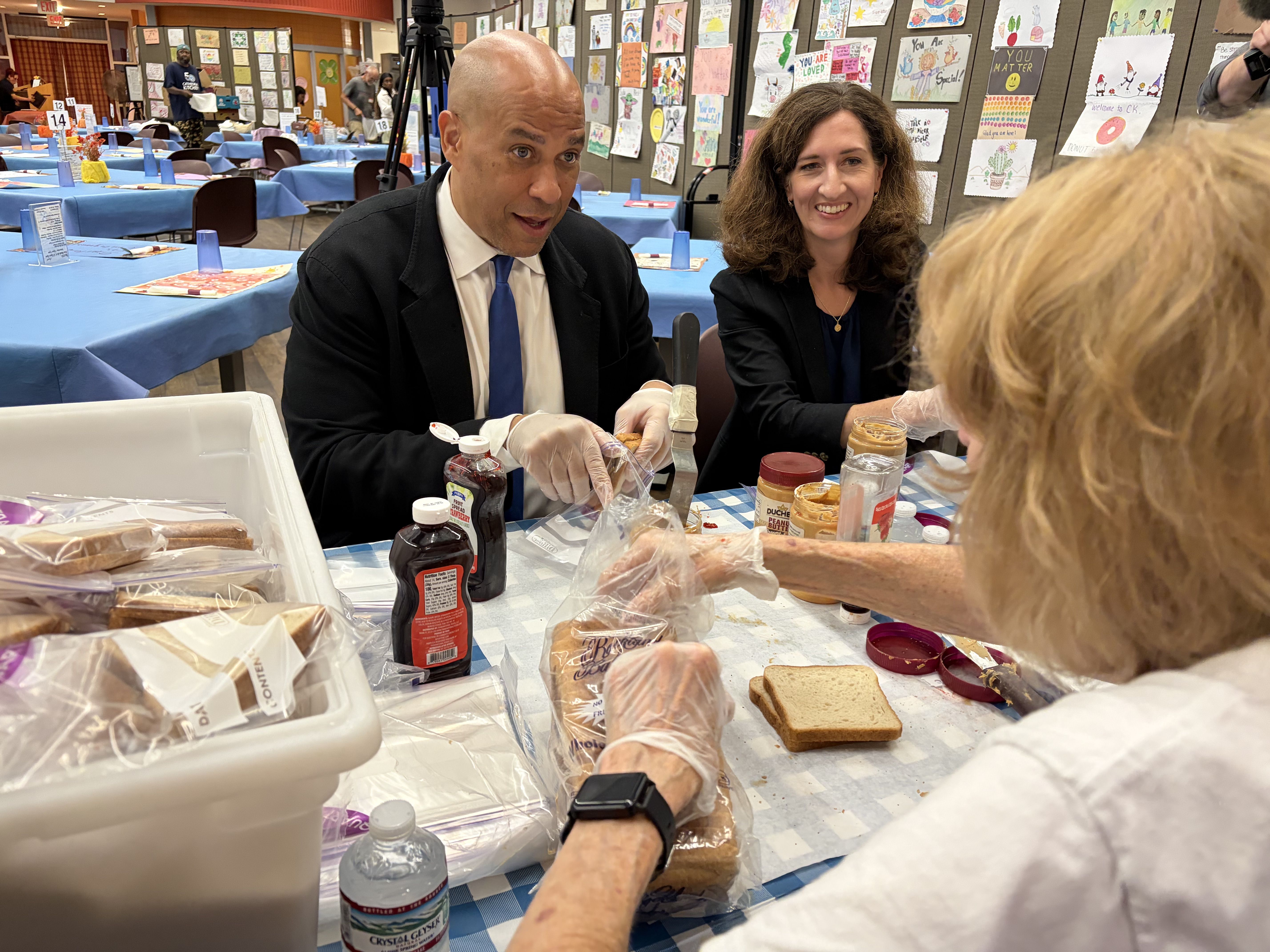
    He also visited Cathedral Kitchen in Camden, where he packed sandwiches alongside the nonprofit community kitchen’s volunteers.

    The Inquirer’s Aliya Schneider has more on Booker’s visits.

    What to know today

    🧠 Trivia time

    Which Phillies player holds batting practices in hotel rooms?

    A) Luis Arraez

    B) Bryce Harper

    C) Trea Turner

    D) Kyle Schwarber

    Think you know? Check your answer.

    What we’re …

    🌊 Planning: A weekend trip to Ocean City.

    🍴 Sharing: A gluten-free guide of where to eat while you’re at the Shore.

    🍿 Rewatching: Hulu’s Deli Boys amid its recent cancellation.

    🏖️ Down the Shore

    This “Ask Down the Shore” feature appears as part of our weekly summertime series from Shore reporter Amy S. Rosenberg. Subscribe to her free Down the Shore newsletter here.

    Should Ocean City remain dry? We asked our Shore Line texters.

    Not many advocated bringing bars or liquor stores to Ocean City, but there was some sentiment for BYOB.

    The best case for remaining dry: For years I wanted BYOs but lately the old charm of this town seems to be drifting away. I have little doubt that the OC would lose its unique identity. It should remain a dry town.

    The best case for BYOB: I think it would be nice if Ocean City was at least a BYOB. So many wonderful restaurants, but we just don’t go for that exact reason.

    What do you think? Do you prefer it to stay as is or do you wish you could at least bring a bottle of wine to a restaurant? Let us know what you think by replying to Down the Shore.

    📸 Photo of the week

    Chef Liz Grothe of Scampi returns to the dock in Sea Isle City after an afternoon of crabbing at the Jersey Shore on Sunday, Aug. 2, 2026.Tom Gralish / Staff Photographer

    🦀 One last crabby thing: Philly chef Liz Grothe goes crabbing in Sea Isle City every year with family. “I’m in it for the love of the game, not the catch,” she says. Go behind the scenes of this summer’s trip, from skiff to kitchen to table.

    Hope the weekend brings beautiful weather. But any sort of weekend is nice. Enjoy yours!

    By submitting your written, visual, and/or audio contributions, you agree to The Inquirer’s Terms of Use, including the grant of rights in Section 10.

  • Cory Booker says the U.S. needs a ‘food revolution’ in South Jersey visit

    Cory Booker says the U.S. needs a ‘food revolution’ in South Jersey visit

    Sen. Cory Booker said the United States needs a “food revolution,” blaming sugary and processed food for contributing to the nation’s health woes during a South Jersey visit Thursday.

    “What’s stupid is that we’re sitting here talking about the cost of healthcare and how to pay for it, but not why we need so much healthcare in the first place,” Booker said during an almost hour-long speech to the Chamber of Commerce Southern New Jersey at the Westin Mount Laurel.

    The speech was one of four stops Booker made in South Jersey Thursday. The Newark Democrat also packed sandwiches at the Cathedral Kitchen community kitchen in Camden, one of the nonprofits shouldering a greater demand amid rising grocery costs and cuts to the Supplemental Nutrition Assistance Program enacted by President Donald Trump. Booker said he would try to steer federal resources to the group, and that he hopes at least one chamber of Congress will flip so Democrats can push to restore money for Medicaid and Affordable Care Act subsidies.

    But during his speech to the chamber, Booker signaled support for one piece of Trump’s health agenda by criticizing the use of SNAP for soda. Booker, a vegan, aligns with some of Health and Human Services Secretary Robert F. Kennedy Jr.’s policies on nutrition though he vehemently opposes Kennedy’s push to scale back recommended vaccines for children.

    “Sugar water companies literally, annually, make billions of dollars from SNAP payments,” Booker said after joking about Coke and Pepsi not being members of the chamber. “You all know what SNAP stands for: Supplemental Nutritional Assistance Program. Yet we allow SNAP payments to be used for that, but make it really hard for them to be used for the kind of food we want people to have abundant access [to].”

    The U.S. Department of Agriculture gave the green light to nearly two dozen states — mostly Republican — to restrict people from using food stamps for sugary drinks, the New York Times reported, though just eight were actually implemented as others are in the process or have been blocked by a court ruling.

    New Jersey and Pennsylvania are not among those states.

    Sen. Cory Booker speaks to members of the Chamber of Commerce Southern New Jersey at the Mt. Laurel Westin.Aliya Schneider / Staff

    Booker said the country should support small farmers more, and decried that the vast majority of agricultural subsidies go to “massive commodity crops” such as corn and soybeans that are used for ultra-processed foods instead of “specialty crops” like fruits and vegetables.

    The ballroom podium was unnecessary for Booker, who paced on stage and juggled a microphone between whatever hand he wasn’t reaching, pointing, or otherwise speaking with.

    “Think about this: A kid in Camden goes into a bodega and gets a Twinkie product cheaper than an apple because we subsidize everything in the Twinkie product and nothing in the apple,” he said.

    “Or hear this: You go to a fast food restaurant and you get a $1 meal, and if you want to get a bucket of salad, it costs you $15. How can we be a system that sustains such high levels of illness?”

    He told a story about meeting with a Las Vegas-based business owner whose healthcare costs decreased after replacing deep fried food options for his staff with healthier choices, and shared an anecdote about a woman whose health improved after an urban farm was established in Newark, where Booker was mayor.

    In an interview after his speech, Booker said he’s pushing for the restoration of programs that connect crops from small farms with people in need of food.

    “New Jersey farmers are suffering with tighter and tighter margins,” he said.

    Sen. Cory Booker smiles for a photo with volunteers and staff at Cathedral Kitchen in Camden.Aliya Schneider / Staff

    Booker got tips on making a good peanut butter and jelly sandwich and placed ham and cheese on bread alongside volunteers at Cathedral Kitchen. He said nearby workers cracking eggs were “doing some egg-celent work” and that at first he didn’t know “what the shell” they were doing. In line with his dad jokes, he chatted about how he wants to have kids soon with his wife Alexis Lewis, whom he married last year.

    Carrie Kitchen-Santiago, the president and CEO of the Camden-based organization, said 2022 set a record for demand for meals, groceries, and hygiene products, and it’s grown each year since. She said the organization mostly relies on donations and revenue from a catering program but expects the need to increase when benefits cuts are implemented later this year.

    She said roughly 2% of the organization’s budget is from government funds but that it does not have any federal funding.

    Kitchen-Santiago said providing nutritious meals is a balancing act.

    “You want to make sure people are healthy, but also give them something they’ll eat and be culturally appropriate,” she said. “Like, we’re not going to be able to give a stuffed acorn squash. Nobody’s going to eat that. On the other hand, we might be able to do a stew that has vegetables and meat in it.”

    The speech and visit to the kitchen were part of a larger swing through South Jersey by Booker while the Senate is on recess. Booker also presented a $2 million check to Inspira Medical Center in Mullica Hill to expand technologies and telehealth services — a congressional allocation from Fiscal Year 26 — and visited Salem Community College’s Glass Education Center.

    His schedule on Friday includes presenting $1 million to AtlantiCare Health System and a visit to Atlantic City’s Orange Loop, a neighborhood that was designated an Opportunity Zone under a law he co-authored. He was also slated to visit the Cape May–Lewes Ferry Terminal in North Cape May and a Cumberland County farm.

  • Strong storms are moving through the Philly region, bringing yet another round of flood warnings

    Strong storms are moving through the Philly region, bringing yet another round of flood warnings

    It’s been a while — about a week, actually — but fresh rounds of strong thunderstorms and flooding bedeviled the Philadelphia region yet again Thursday.

    South Jersey evidently was bearing the brunt of the ferocity during the afternoon, with 5-plus inches of rain reported in Gloucester County, where flooding closed portions of Route 130.

    A tornado warning had been posted in Salem County, but it was not yet known if one was sighted.

    During the late-day commute, a second round of heavy rain moved into northern Chester County and central Montgomery County, prompting flood warnings.

    “Multiple water rescues” were reported in Parkesburg, Chester County, the National Weather Service said, with water up to car windows. Flooding on Route 422 in East Conventry Township resulted in at least one vehicle accident.

    After a couple of uncharacteristically pleasant days, pulses of moisture have returned, and the National Weather Service was warning that as much as three to five inches of rain could fall in “isolated” areas into Thursday night.

    Drivers on the New Jersey Turnpike exit for the Molly Pitcher Service Area during a rain storm Thursday.Tom Gralish / Staff Photographer

    Strong storms rumbled through the area late in the morning and pounded South Jersey in the afternoon.

    Officially, 1.48 inches of rain was measured at Philadelphia International Airport, bringing the 2026 total to 28.84 inches, for 0.03 inches over the year-to-date normal.

    (function(){function e(){window.addEventListener(`message`,function(e){if(e.data[`datawrapper-height`]!==void 0){var t=document.querySelectorAll(`iframe`);for(var n in e.data[`datawrapper-height`])for(var r=0,i;i=t[r];r++)if(i.contentWindow===e.source){var a=e.data[`datawrapper-height`][n]+`px`;i.style.height=a}}})}e()})();

    Heavy rains also set off flash flooding warnings in Delaware County and in portions of Bucks County.

    In addition, a severe thunderstorm watch was in effect for the entire region.

    The flood watch is in effect for the city and the seven neighboring counties from noon Thursday to 4 a.m. Friday, with rain-repelling high pressure moving offshore and a warm front migrating northward.

    Said Cody Snell, meteorologist with the national Weather Prediction Center in College Park, Md., “It’s a pretty typical pattern that we’ve seen before this summer.”

    Indeed.

    Computer model runs were suggesting that the atmosphere would not only be moist, but charged with energy, the weather service in Mount Holly said Wednesday afternoon.

    The federal Storm Prediction Center in Norman, Okla., listed a 15% chance of severe storms, those with wind gusts approaching 60 mph, along the I-95 corridor. At least it made no mention of possible tornadoes — yet.

    When might the storms hit the Philly region?

    The likeliest window for the main events would be between 2 and 8 p.m., said Bill Deger, senior meteorologist with AccuWeather Inc. said

    The sun is likely to appear after the morning rain shuts off, he said, and that would “help destabilize the atmosphere,” adding a kick to potential thunderstorms.

    He expected a midafternoon round, followed by an encore in the evening.

    What areas are likeliest to see flooding or severe storms?

    For severe weather, all of Southeastern Pennsylvania and New Jersey areas along the Delaware River are in the storm center’s highest risk zone, which extends from the Maryland-Virginia border to upstate New York.

    Along the Delaware River, Snell said, “there’s a little bit of signal for training thunderstorms.” Those are the kind to develop and not move, the kind that can wring out three to five inches.

    “The biggest threat is flash flooding,” said AccuWeather’s Deger, with the higher potential in Philly and areas west of the Delaware.

    He said the west-to-east moving storms may run out of steam by the time they get to Jersey.

    However, any rains are likely to cause trouble, he said.

    “Our ground can’t handle much more at this point,” said Deger, who lives in the Quakertown area and has seen the harvests of the downpours in his backyard.

    “I’m mowing every four days,” he said.

    Staff writer John Duchneskie contributed to this article.

  • South Jersey man charged with first-degree murder in strangling of 40-year-old daughter

    South Jersey man charged with first-degree murder in strangling of 40-year-old daughter

    A 71-year-old South Jersey man was indicted Wednesday on a first-degree murder charge for allegedly strangling his 40-year-old daughter in June, the Gloucester County Prosecutor’s Office said.

    Dennis J. Hall of Franklin Township faces a maximum of life in prison if he is convicted.

    On June 11 around 6:15 a.m., Franklin Township police responded to a home on East Avenue after Hall allegedly called 911 to report that his daughter, Devin Hall, was not breathing and that he had strangled her, the prosecutor’s office said.

    Dennis Hall was arrested at the scene. A public defender representing Hall could not be reached for comment.

    Police attempted lifesaving measures on the 40-year-old woman, who was then transported to a hospital. She was removed from life support the next day and pronounced dead.

    The Gloucester/Salem/Cumberland Regional Medical Examiner’s Office performed an autopsy and determined that cause of death was asphyxiation, and the manner of death was homicide.

    Devin Hall’s online obituary described her as “a special daughter who endured many challenges and struggles during her life on this earth. She was an inspiration to others, and she touched many with her beauty, gentle kindness, and innocent presence.”

    The obituary said she had traveled to 32 states and loved music, especially Toby Keith. Besides many family members, Devin Hall left behind one dog and four cats, the obituary said.

    Her mother, Jan Hall, told 6abc that she was born with multiple disabilities, used a wheelchair, and did not speak.

    Jan Hall said Dennis Hall, her husband, awakened her and allegedly said he had strangled their daughter.

    In June, the prosecutor’s office said that a witness, who was not identified, was awakened by Dennis Hall, who told the witness that he had strangled his daughter.

  • South Jersey destination for Czech delicacies is moving to Haddonfield

    South Jersey destination for Czech delicacies is moving to Haddonfield

    Four Green Cats Cafe, which has brought authentic European flavors to Mount Laurel for the last seven years, is about to get a bigger home.

    Started as a farmers market stand in 2019, the Rancocas Woods café, whose owners have Czech Republic roots, has become a destination both for South Jersey locals and within the broader Czech diaspora.

    Now, with the building’s lease expiring at the end of the year and business that owner Nadia Vasa says has been more popular than ever, she’s soon planning to move her offerings of handmade Czech delicacies to a new, larger location in Haddonfield.

    Mila and Nadia Vasa posed for a portrait outside of Four Green Cats Cafe on Tuesday, Aug. 25, 2026, in Mount Laurel. Nadia is moving the cafe to a larger location in Camden County.Monica Herndon / Staff Photographer

    “To continue to provide the customers authentic food and entertainment, we need a bigger space,” Nadia Vasa said in Czech, translated by her husband and business partner, Mila Vasa.

    The new spot at 18 Tanner St., the former home of Sang Tong Thai, has both a larger kitchen and dining area to provide enough space to expand their menu and to continue to host musical performances, comedians, and other live events.

    The expanded menu will undoubtedly include the staples that Four Green Cats has become known for: Bohemian doughnuts, traditional kolaches, apple strudel, babka — all handmade with flour imported from Europe.

    Chimney cakes on display at Four Green Cats Cafe. Monica Herndon / Staff Photographer

    Soon to be equipped with a full-service kitchen, the Vasas hope to add new breakfast and lunch offerings in addition to Nadia’s traditional Sunday night dinners.

    Once complete, Nadia envisions the new location as embodying the character of classic European cafés of the past that could have been found on street corners from Vienna to Paris.

    The Vasas are aiming to open the new location sometime in September and will run both locations concurrently until their Rancocas Woods lease expires, they said.

    And while they never wanted to leave Mount Laurel, they hope that the community they’ve built over the years will make the move with them.

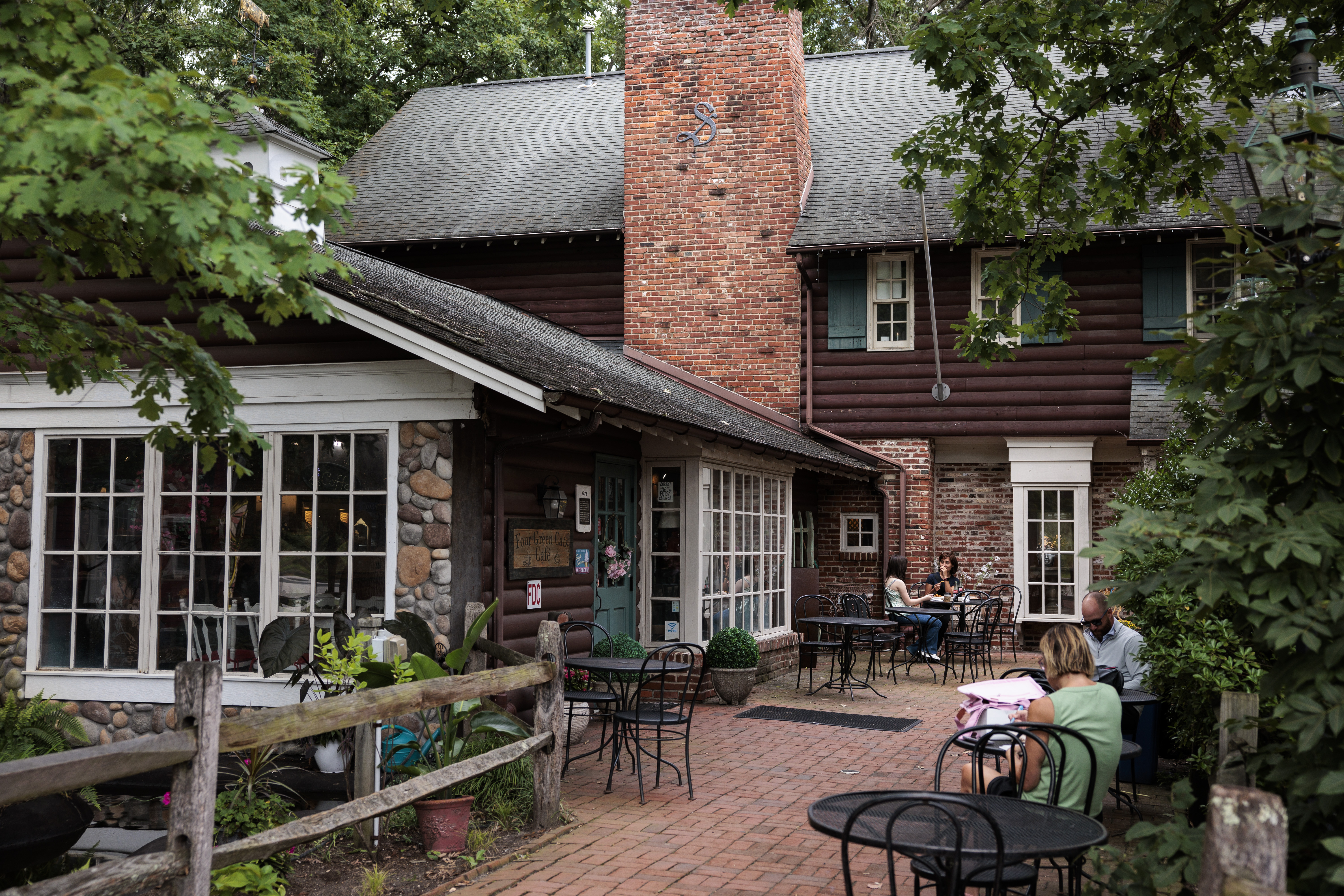
    The exterior of Four Green Cats Cafe on Tuesday, Aug. 25, 2026, in Rancocas Woods in Mount Laurel. Monica Herndon / Staff Photographer

    “We’re hoping some of our customers follow us,” Mila said, but he knows that they’ll inevitably lose some of their regulars, especially those who currently live close enough to walk to the café.

    More than just a coffee shop and bakery, Nadia sees Four Green Cats as a window into the world that raised her.

    Owner Nadia Vasa holds a plate of Czech sandwiches at Four Green Cats Cafe. Monica Herndon / Staff Photographer

    She makes every decision thoughtfully and with cultural authenticity at the forefront, from using her great-grandmother’s recipes to decorating the walls with her grandfather’s art, she said.

    “It’s culture that no one gets here unless you fly home,” Mila said.

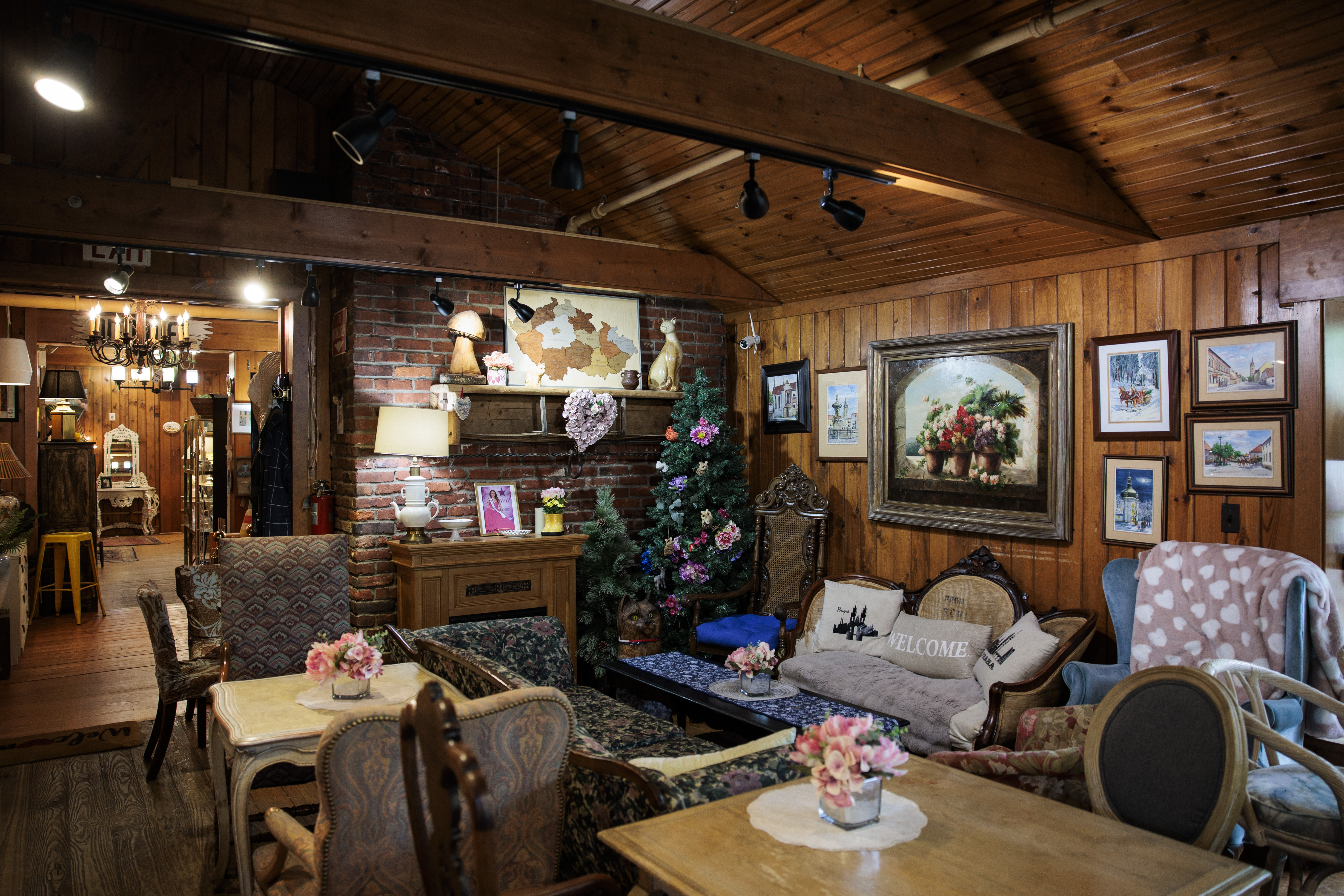
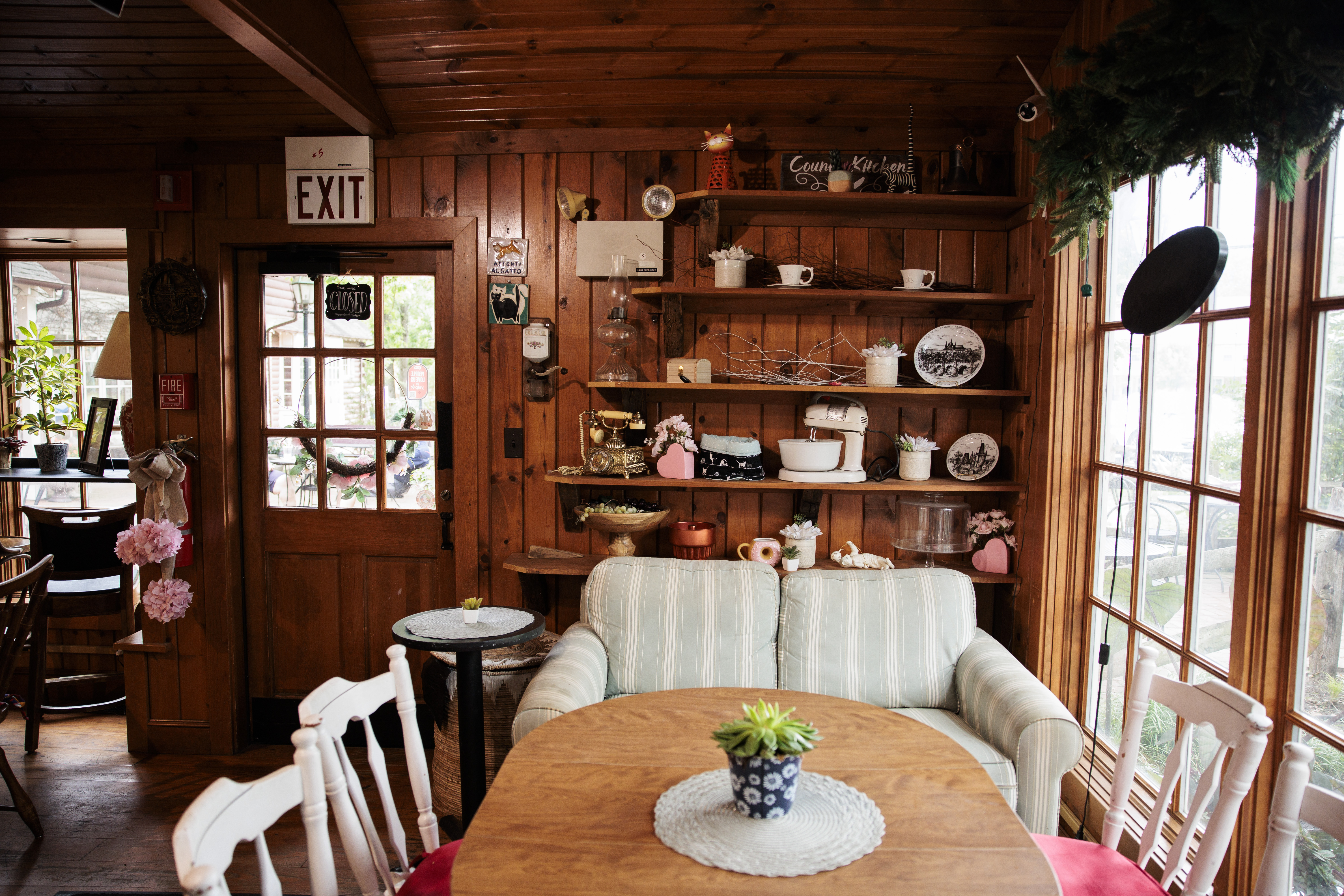
    The interior of Four Green Cats Cafe. Monica Herndon / Staff Photographer

    Customers have traveled from across the country to get a taste of their European roots without having to cross the Atlantic, Mila said.

    Over the years, the business has also developed a relationship with the Czech embassy in Washington, he said, which will routinely send traveling musicians and artists to Four Green Cats to experience a taste of the Czech Republic.

    The interior of Four Green Cats Cafe on Tuesday, Aug. 25, 2026 in Mount Laurel. Monica Herndon / Staff Photographer

    More than once, he said proudly, traveling Czechs have raved that Nadia’s food is better than what they have at home.

    “Now, she has the room to do what she wants to do,” Mila said.