Category: Nation & World

  • Trump demands Senate cancel August break until it passes voting bill

    Trump demands Senate cancel August break until it passes voting bill

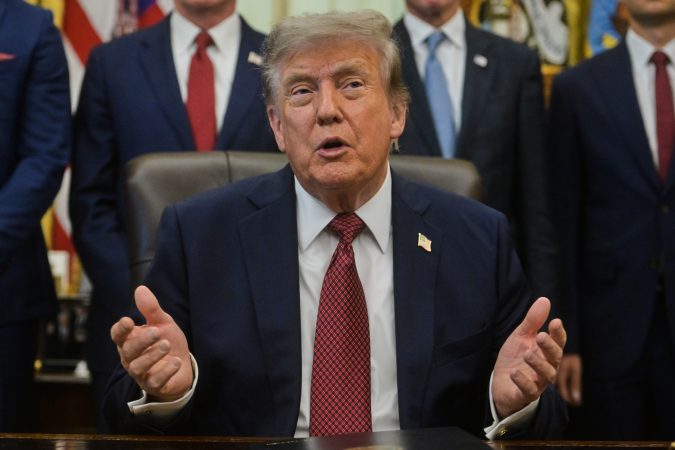
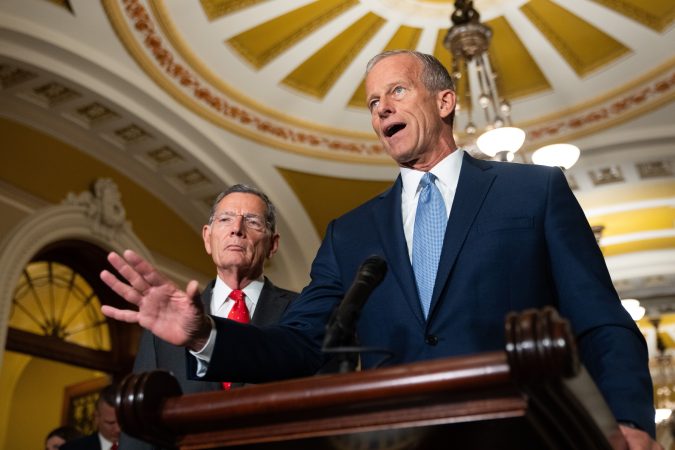
    WASHINGTON — President Donald Trump on Monday demanded that Senate Majority Leader John Thune cancel the chamber’s upcoming August break until senators pass a strict proof-of-citizenship voting bill, even as Republicans lack the votes to advance it.

    Trump has repeatedly urged Thune to scrap the legislative filibuster, which effectively sets a 60-vote threshold for most legislation in the 100-member Senate, or find another workaround to pass the voting bill, known as the SAVE America Act. But Republicans hold only a 53-47 majority, and Thune has consistently said they don’t have the votes to pass the bill or change the rules to get around the filibuster.

    “John Thune should not allow the United States Senate to ‘leave town’ until it passes The Save America Act or, far better still, TERMINATES THE FILIBUSTER,” Trump wrote on social media.

    He later insisted to reporters Monday that he has a good relationship with the Senate majority leader but said Thune has “got to get his job done.”

    It’s the latest escalation in a monthslong pressure campaign by Trump and others in the GOP base to pass the SAVE Act ahead of the midterms. A small but vocal group of Republican senators has also increasingly pressed Thune to find a way forward.

    House Republicans have also attempted to create another path for the legislation through the budget reconciliation process, which would allow grant money associated with voting rules to pass the Senate with a simple majority.

    The House last week approved a budget framework that included $10 billion for voting-related changes aligned with the SAVE America Act. But Thune has said Republicans don’t currently have the votes for that approach, either.

    Trump’s pressure comes during an important period

    The fight threatens to complicate the Senate’s final legislative sprint before the August break, when Thune had hoped to focus on a long list of priorities that includes government funding, cryptocurrency legislation and sanctions on Russia. The August break, scheduled to start on Aug. 7, is a pivotal stretch for senators to return home and campaign ahead of the midterm elections.

    Several Republican senators are facing competitive races, including Maine Sen. Susan Collins, Ohio Sen. Jon Husted and Alaska Sen. Dan Sullivan. Republicans currently hold a 53-47 Senate majority. Republicans are confronting broader political headwinds as well, including an unpopular war in Iran, surging gas prices and costs that remain high for voters.

    Thune has enjoyed broad support from his GOP conference all year as he’s pushed back on Trump’s demands. He previously kept the SAVE Act on the Senate floor for weeks in an effort to build additional support, but was unable to secure the votes needed to advance it.

    Utah Sen. Mike Lee, who has led the push for the bill in the Senate, escalated his pressure late last week, warning that how Republicans handle the SAVE America Act “could impact not only the November midterm elections, but also the Senate GOP leadership elections.”

    “Leaders must lead. And if they don’t, they’re not leaders,” Lee wrote on social media Friday.

    Frustrated by the pressure when he doesn’t have a route to pass the bill, Thune has urged Trump, Lee and others to help him find the votes. Trump on Friday said he’d “certainly be willing” to help call senators.

    Asked last week if Trump is frustrated with Thune, White House press secretary Karoline Leavitt said that “his patience is running out.” But Trump told reporters on Air Force Once Monday while traveling to an event in Michigan, that he hasn’t “even thought” about potential replacements for Thune.

    The late-summer dispute echoes a similar fight before last year’s August recess, when Trump pressed Thune to keep senators in Washington to clear a backlog of his nominees. The Senate ultimately left town without a deal after negotiations with Democrats collapsed.

    The SAVE America Act would create new national rules

    The SAVE America Act, which stands for Safeguard American Voter Eligibility, would require Americans to prove they are citizens when they register to vote, mostly through a valid U.S. passport or birth certificate. It would also require a valid photo identification before voters can cast ballots, which some states already demand.

    Voting experts have said the bill could disenfranchise some 20 million American voters who don’t have birth certificates or other documents readily available.

    Trump has made it his legislative priority in 2026, saying it would “guarantee the midterms” and falsely claimed that election cheating is “rampant.” He previously declined to sign any other legislation until it was passed.

  • This Sixers fan has the tweets to prove he waited almost a decade for LeBron to join the team

    This Sixers fan has the tweets to prove he waited almost a decade for LeBron to join the team

    An X (formerly Twitter) account that’s been around since 2017 has only ever had one question: Is LeBron James a 76er yet?

    After having lost hope and gone dormant years back, the anonymous account has returned for what fans are calling “the greatest re-login” of all time.

    It was a moment of redemption when @IsBronA76erYet came back online Friday. The user didn’t use words, but rather posted a popular GIF from the TV show BMF, where one of the main characters, Lamar, opens his eyes while on oxygen after waking from a coma. Millions of viewers knew exactly what they meant.

    You see, not much is known about X user @IsBronA76erYet besides their fandom. X stats show the account was created in July 2017, is based in the United States, and follows only two accounts — take a wild guess who.

    @IsBronA76erYet followed a format popular across Twitter accounts throughout the aughts. The “is [insert topic] XYZ yet” accounts were devoted to constantly answering a lingering question, usually in the pop culture realm, with a brief status update.

    Know Your Meme has documented dozens of so-called “gimmick accounts” on Twitter over the years, with the earliest examples dating back to 2007, according to managing editor Zach Sweat.

    Examples include “Is Winds of Winter out yet?” an account devoted to George R.R. Martin’s sixth novel in the A Song of Ice and Fire series, @knickswintrack, which follows if the Knicks have won, or “Is GTA 6 out yet?” which has been waiting since 2019 for the latest Grand Theft Auto installment.

    “When these pop up dedicated to a specific event, most of the time they fizzle out or are forgotten when the thing they’re dedicated to never happens,” Sweat said. “However, when they do come true, people love digging them up and reviving them, and it’s always really funny seeing them come back to life and seeing how users react to them like they were an oracle or something.”

    Over the course of @IsBronA76erYet’s lifespan, it would repeatedly just tweet: “No.”

    There was a brief moment of hope for this devoted X user in August of 2017 when media outlets suggested James was done with the Cleveland Cavaliers. “No, but soon,” the account mused.

    But in 2018, when James announced he was headed to the Los Angeles Lakers, the user took it like a dagger to the heart. “He never will be now,” the user tweeted on July 1, 2018. “Time to deactivate.” The account went quiet.

    For years, fans speculated that James’ retirement from the league was imminent. Even James, the NBA’s oldest active player at 41, said there were moments he thought he was done, too.

    “I was pretty sure I played my last game,” James said in a series of social media posts Friday morning. “I still truly love this game, and I have more to give.”

    That’s when the figurative oxygen tank started hissing for this X user — or probably more likely, when they started fervently trying to find their old dormant account’s login information.

    At 9 p.m. Friday, it was the tweet seen around the world.

    Is LeBron A 76er Yet was back.

    Their prophecy had been fulfilled. And the internet was there to see it.

    The wordless post with the GIF has been viewed over 50 million times and has 1 million likes — more than the 400,000 or so likes for ESPN insider Shams Charania’s post breaking the news about James in the first place.

    Users have been enamored with the account’s determination.

    “One million likes from a non verified account who’s finally got Bron in Philly, after not tweeting for 7 years. We’ll never see this organic tweet ever again,” one user wrote. The account “rose from the ashes,” said another. “Remembering the password on an account you haven’t been able to use in eight years is worth the [likes] alone,” another remarked.

    On Monday, @IsBronA76erYet posted again. This time, they wrote something they’ve never gotten to say before. One word, three letters. “Yes.”

  • 67 boat strikes. 221 dead. The cocaine hasn’t slowed, officials report.

    67 boat strikes. 221 dead. The cocaine hasn’t slowed, officials report.

    The Trump administration’s deadly military strikes on alleged drug trafficking boats have not reduced the amount of cocaine entering the United States, but they’re prompting criminal organizations to develop new strategies and tactics and undermining traditional investigative methods, according to a previously unreported assessment by the Drug Enforcement Administration, a closed-door congressional briefing, and interviews with current and former U.S. and foreign officials.

    In a recent assessment reviewed by the Washington Post, DEA analysts found the strikes had failed to affect the supply or price of cocaine in the United States and had led traffickers to diversify beyond go-fast boats and to avoid international waters, opting instead for larger boats and hemming close to coastlines, where U.S. forces are less likely to open fire. In a closed-door briefing last month, Pentagon officials told lawmakers the strikes in international waters off South and Central America had not reduced the drug’s purity.

    Traffickers are also relying more on aircraft, which take off from clandestine airstrips along the Colombian-Venezuelan border and head east to Guyana and Suriname to avoid U.S. forces, according to the DEA assessment.

    “When you squeeze the balloon on one side, it always expands on the other side,” one DEA official told the Post. “They always find the weak spots and exploit them.” The official spoke on the condition of anonymity because they were not authorized to discuss the matter publicly.

    Chief Pentagon spokesperson Sean Parnell said Operation Southern Spear was accomplishing “exactly what it was designed to do: detect, disrupt, and dismantle designated terrorist organizations and the networks they rely on to traffic narcotics, generate illicit revenue, and threaten the security of the United States and the Western Hemisphere.”

    “Transnational criminal organizations have continually adapted their tactics for decades,” Parnell told the Post. “That does not indicate the pressure is ineffective. It demonstrates that we are imposing systemic friction on their operations.”

    The DEA did not comment. A spokesperson for Senate Armed Services Committee Chairperson Sen. Roger Wicker (R., Miss.) did not respond to a request for comment.

    Preliminary findings two months after the strikes began last September showed that they had disrupted smuggling routes, the DEA analysts reported, causing increases in cocaine prices and drug-related violence. But prices have since reverted to previous levels. “Smugglers have adapted to the intensified pressure,” they wrote. “Price and availability have not been noticeably affected.”

    In one example, they allege, traffickers on Colombia’s La Guajira peninsula pay officials to disclose the locations of U.S. ships, then launch their vessels “once U.S. military assets have departed the area.”

    The Colombia Defense Ministry didn’t return a request for comment.

    Pentagon officials told members of the Senate Armed Services Committee last month that DEA analysis of confiscated cocaine showed high levels of purity, according to a congressional aide familiar with the briefing. High purity suggests supply remains consistent, the DEA official said; dealers do not need to dilute the drug to stretch inventory.

    The reports contradict public claims by President Donald Trump. Trump has said at least 15 times, including as recently as last month, that the strikes have reduced maritime drug trafficking into the country by 97% or 98%. “98.2% of Drugs coming into the U.S. by Ocean or Sea have STOPPED!” he wrote on Truth Social in April.

    Trump has transformed traditional U.S. drug enforcement into a military campaign that fuses the legal and strategic approaches of the war on drugs and the war on terror. In the past year, U.S. forces have attacked at least 67 boats, captured Venezuelan President Nicolás Maduro, killed Tren de Aragua leader Héctor “El Niño” Guerrero, and attacked an alleged camp of FARC dissidents in Ecuador.

    The boat strikes have killed at least 221 people since September. Legal analysts have denounced them as executions without trials. Administration officials say they’re aimed at reducing the flow of “deadly poison” into the country.

    The White House defended the approach.

    “These measures have not only eliminated narcoterrorists themselves, but also discouraged bad actors from trying to smuggle drugs into our country should they meet the same deadly fate,” spokesperson Anna Kelly said in a statement to the Washington Post. “President Trump is using every tool at his disposal to save lives from the scourge of illicit narcotics, and any suggestion that these efforts have not been effective are laughable.”

    The U.S. militarization of the decades-long war on drugs has begun to influence Europe, where a lead enforcement agency is urging nations to adopt more aggressive tactics.

    But a senior Colombian security official said the boat strikes have had a minimal impact.

    “There was a dissuasive effect in one type of transportation,” the official said. “So it has forced them to seek out other methods. Taking the drugs out through ports has increased, stockpiling it on large ships.” The official, like others interviewed for this article, spoke on the condition of anonymity because they were not authorized to discuss the subject publicly.

    Trump and other officials initially described the attacks as part of a broader war against fentanyl, the leading cause of illicit drug deaths in the United States, an issue on which Trump campaigned. But the majority of fentanyl enters the United States by land, not sea. On the shipping routes targeted by Operation Southern Spear, the principal illicit cargo is cocaine.

    When the military began blowing up boats, Monroe County, Florida, Sheriff Rick Ramsay was thrilled. His jurisdiction includes the Florida Keys, for centuries a smuggler’s playground.

    “This is war, and they are bringing death to the U.S. every time they get a boat here,” he said. “Every boat that doesn’t arrive will save U.S. lives.”

    The “kinetic strikes” haven’t stopped the flow of cocaine there, he said. “We see drugs floating up on a weekly basis,” he said. “Floating up on beaches, behind houses. … It’s continuing on strong.”

    Still, he said, they’re a “necessary evil.”

    “You don’t give up just because you’re losing the battle.”

    Marine Gen. Francis L. Donovan, the commander of U.S. Southern Command and senior officer overseeing Operation Southern Spear, told the Senate Armed Forces Committee in March that the strikes are “probably not the most effective tool” and “aren’t the answer.”

    “But putting total systemic friction from point of production to point of delivery,” he said, “I believe that actually kinetic strikes will be one of the many tools.”

    But the strikes have made investigating drug trafficking more challenging, according to the DEA official. Investigators typically rely on low-level informants to provide intelligence on routes and meeting points to build cases against higher-ranking managers and bosses. Now those sources are being pulled back from the field, the current official said, to protect them from being killed in U.S. attacks.

    Based on pricing, there might, in fact, now be more cocaine circulating in the United States. In Florida, cocaine is selling for $13,000 to $15,000 per kilogram, a senior DEA official said, a drop of roughly 50% over the last five years.

    Global cocaine production, centered in Peru, Bolivia, and particularly Colombia, has reached an all-time high, the U.N. Office on Drugs and Crime reported last month. From 2014 to 2024, the office reported in its 2026 World Drug Report, the area under coca cultivation tripled to more than 1,480 square miles and illicit cocaine manufacture quadrupled to 4,100 tons.

    “The business is so extraordinarily profitable that the cartels do not mind paying freight costs that are five or even 10 times higher,” an Ecuadorian naval intelligence official said. “They know that while the United States may destroy one speedboat, they will successfully get 10 semisubmersibles — or other speedboats that evade detection — through.”

    Xinming Du, an economist at the National University of Singapore, reported in March that Colombia’s cocaine boom was linked to 1,000 to 1,500 overdose deaths in the United States annually.

    The boat strikes, she said, are unlikely to diminish cocaine supply in the United States.

    “Coca cultivation at the source in Colombia is the supply factor most directly linked to U.S. [cocaine] overdose deaths,” she said. “With source production at record levels, total flow is driven mainly by what is grown rather than by what is intercepted in transit.”

    Derek Maltz, the DEA’s acting administrator during the first four months of Trump’s second term, has called for greater military involvement to fight trafficking. He said the strikes send a necessary message to the world.

    “America is now actually in a real drug war,” Maltz, who retired from the DEA in May 2025, told the Post. “Over the years we talked about a drug war, but we didn’t fight them as if they were enemies.”

    He acknowledged that the strikes hadn’t succeeded at “disrupting the flow of cocaine.”

    “We are seeing very significant cocaine seizures inside the U.S.,” he said. “We’re back to seeing hundreds of pounds of cocaine being seized.”

    The U.S. Coast Guard continues to stop and board vessels it suspects of carrying drugs.

    As commander of Coast Guard Station Miami Beach, Lt. Matthew Ross is responsible for operations over more than 4,000 square miles of ocean. On one boat in December, station personnel found 3,715 pounds of cocaine, the largest bust by a small-boat Coast Guard station in 30 years, Ross said. They found 1,535 pounds on another, in May, and 900 pounds on a third later that month.

    “Smugglers have been bringing contraband into South Florida for 400 years,” Ross said. “They aren’t going to stop.”

  • Clinton Foundation launches an institute to help state governments find nonpartisan solutions

    Clinton Foundation launches an institute to help state governments find nonpartisan solutions

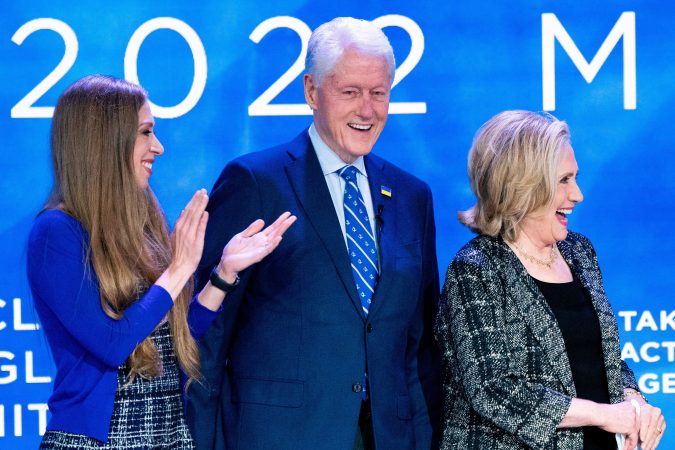
    The Clinton Foundation unveiled a new initiative Monday to help state and local governments develop and enact nonpartisan policy solutions to improve health outcomes, especially for women and children, economic security, and democracy.

    The foundation’s first new initiative in more than a decade, the Clinton Policy Institute has already begun convening political leaders from both parties, research experts, and Americans affected by the issues being studied to create new approaches to long-existing problems.

    “Rising costs, economic uncertainty, rapid technological change, and growing pressures on our public institutions are making it harder for families to get ahead,” former Secretary of State Hillary Rodham Clinton said in a statement to the Associated Press. “We created CPI because we believe there are still practical, evidence-based solutions that can improve people’s lives.”

    CPI is building on its work with New York state in banning cellphones from schools in the past academic year. Though the institute did not technically exist last year when it teamed with New York Gov. Kathy Hochul’s administration on creating distraction-free schools in the state, the Clinton Foundation saw promise in its approach and decided to expand it before publicly announcing CPI’s creation. It’s a strategy that the foundation, also led by former President Bill Clinton and public health expert Chelsea Clinton, used when it launched the Clinton Health Access Initiative in 2004.

    Zayn Siddique, former principal deputy director of the Domestic Policy Council, will serve as CPI’s chief executive officer. Jennifer Klein, who was director of the White House Gender Policy Council under former President Joe Biden, will be CPI’s chair.

    In New York, CPI helped create the Teen Tech Council so that students could help make the phone-ban program more effective. The result, according to Hochul’s office, was that educators found a marked improvement in classroom behavior and engagement.

    “CPI is bringing together policymakers, researchers, business leaders, and community organizations to identify what works, build stronger policy networks, and help turn those ideas into policy,” Hillary Clinton said. “We’re taking a particular focus on states and local communities, where so much innovation is happening.”

    Kansas Gov. Laura Kelly praises CPI’s nonpartisan approach

    Kansas Gov. Laura Kelly said a CPI conference on improving the lives of children earlier this month was “the best roundtable I’ve been involved with since becoming governor.”

    Kelly, who will leave office in January due to term limits after serving two consecutive terms, said she was inspired by CPI’s nonpartisan approach to solving problems affecting children.

    “I am a Democrat governor in what is considered a very red state,” Kelly told the Associated Press in an interview. “It became very clear to me that if I wanted to accomplish anything in my political life, I was going to need to do it in a bipartisan way.”

    Kelly believes that, despite political polarization, CPI can succeed in finding nonpartisan solutions — especially to issues involving children and healthcare — and giving state leaders the research and other support to implement them.

    “Every once in a while, you get people from both sides of the aisle who come together and crafted, maybe not sexy legislation, but something that really needed to be done,” Kelly said. “And they get it through.”

    Jerome Adams, former U.S. Surgeon General in President Donald Trump’s first administration, agrees that nonpartisan solutions are possible to find. But he says the nonpartisan nature of the solutions has to be intentional.

    “Health is inherently political,” said Adams. “When you talk about access to healthcare coverage, when you talk women’s health issues, particularly around the issue of abortion and contraception, when you talk about drug policy and whether you’re in favor of harm reduction, when you talk of firearm safety — all of these are inherently political issues.”

    Former Surgeon General Adams sees broad support for children’s issues

    That is complicated further, Adams said, because “we live in a country that is very binary, so every issue, no matter how nuanced, is, for purposes of elections, turned into black/white, yes/no, all or none.”

    However, Adams said CPI has already found a way to get bipartisan buy-in for some of its solutions to adverse childhood experiences (ACEs). In 2020, the state of California launched the ACEs Aware initiative to begin screening for ACEs — which include abuse, neglect, and household challenges — and treating them early to reduce the impact and the cost to the state later.

    Through CPI, Adams was asked to become the co-chair of the National Leadership Council for the ACE Resource Network in June in an effort to bring California’s work treating ACEs to other states.

    “I’m very interested in work that has proven and practical solutions,” he said. “We bring in states and say, ‘Hey, let’s look at the best evidence in terms of what works around adverse childhood experiences and state level policy and then try to implement it in your state’.”

    That strategy has led Republican-led states like Utah and Georgia to consider parts of Democrat-led California’s work on the issue, Adams said.

    He said it’s a sign that CPI’s approach works and can be expanded to other areas.

    The Clinton Foundation hopes that will be the case.

    “Too many people have lost faith that progress is possible,” Hillary Clinton said. “But across the country, leaders are developing innovative policies that are strengthening families and communities. Those ideas deserve to be shared and scaled.”

  • Chiefs assistant Eric Bieniemy’s son charged in shooting of his mother in Virginia, authorities say

    Chiefs assistant Eric Bieniemy’s son charged in shooting of his mother in Virginia, authorities say

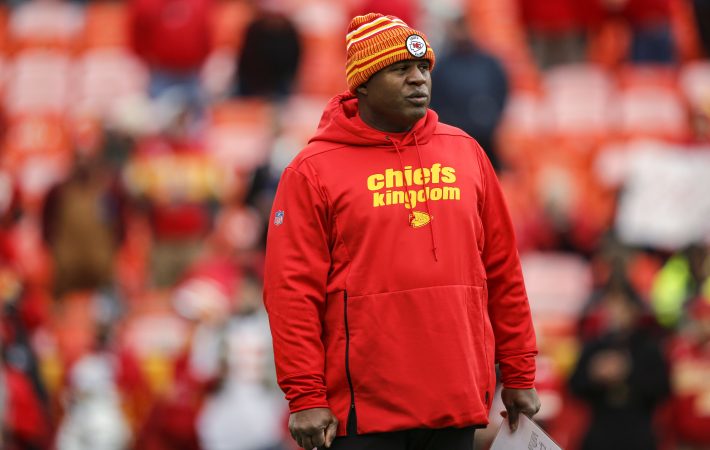
    ST. JOSEPH, Mo. — The son of Chiefs assistant coach Eric Bieniemy has been arrested and charged with the shooting of his mother, Mia Bieniemy, the wife of the Kansas City offensive coordinator, according to authorities in Virginia.

    The Loudon County Sheriff’s Office said Monday that deputies responded late Sunday to a shooting in Ashburn, Virginia, where they found 57-year-old Mia Bieniemy with multiple gunshot wounds. She was transported to a hospital and was in stable condition Monday.

    Elijah Zion Bieniemy, the 27-year-old son of the couple, was arrested in connection with the shooting. He has been charged with malicious wounding, use of a firearm in commission of a felony and discharge of a firearm inside a dwelling, and is being held without bond at the Loudoun County Adult Detention Center.

    Eric Bieniemy was with the Chiefs at their practice in St. Joseph, Missouri, earlier Sunday. He was not present for Monday’s workout.

    “The club is aware of the incident involving Eric Bieniemy’s family,” the team told The Associated Press in a statement. ”Out of respect for their privacy, we won’t have a comment at this time. Our thoughts and prayers are with them.”

  • Questions mount after deadly Berlin Pride attack. Here’s what to know

    Questions mount after deadly Berlin Pride attack. Here’s what to know

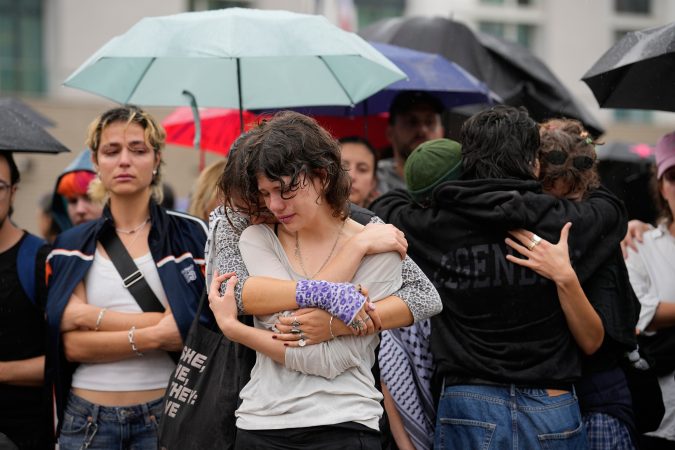
    BERLIN — Berliners mourned Monday after the deadly attack near the city’s Pride festival as questions mounted over how the suspect was able to move freely following a conviction linked to his ties to the Islamic State group.

    The 21-year-old Abdul Ballout, a German citizen, was killed following a search that lasted nearly 24 hours after Saturday night’s attack in downtown Berlin. He was suspected of driving a van into a crowd near the Pride festival before apparently cutting others with a machete in what authorities believe was an extremist terror attack.

    One woman was killed and 29 were injured.

    Chancellor Friedrich Merz on Monday wanted to know how the attack could have been prevented. Prosecutors said Ballout previously sought to join IS.

    “We must do everything to protect people in Germany as best possible from such criminals, from dangerous people who for whatever reason can’t be taken into custody,” Merz said.

    Here’s what we know:

    Officials seek answers about suspect’s sentencing

    Ballout, who was born in Germany and has Lebanese roots, traveled to Lebanon in 2025 with the goal of going to Syria to join the Islamic State group, Berlin prosecutors said. He made contact with several people who were presumed members — or at least he believed them to be, prosecutors said.

    He was arrested in Lebanon and sentenced by a military court to three months’ imprisonment for offenses including incitement to religious and sectarian conflict. He returned to Germany after completing his sentence, where he was arrested at the Berlin airport.

    In May, a juvenile court in Berlin convicted Ballout of preparing a serious act of violence endangering the state, as well as publishing Islamic State propaganda on his Instagram account and other charges, prosecutors said. He was sentenced to one year and 10 months in youth custody, which Berlin prosecutors appealed.

    Offenders who are 18 to 21 can be prosecuted in Germany’s juvenile system.

    Officials have said Ballout was given a suspended sentence. The Berlin courts, however, said his sentence had not been suspended but they had been determining whether it should be.

    The court said it released him because he was no longer in pretrial detention, which had been particularly long, and he did not meet statutory requirements governing flight risk, reoffending and other factors.

    Some German officials questioned the court’s decision. They vowed to investigate how Ballout ended up free and whether juvenile sentencing, sometimes seen as too lenient, needs to be reformed.

    Interior Minister Alexander Dobrindt, in an interview with public broadcaster ZDF, said that considering Ballout’s conviction and history of supporting the Islamic State group, it did not make sense why he was on the streets.

    “You can assume that it certainly would have made sense to put this person in custody,” he said.

    During an interview with regional broadcaster RBB, Berlin Mayor Kai Wegner said he didn’t want to question the court system’s independence but in this case, “words fail me.”

    Deradicalization experts believed he was unwilling to change

    The court ordered Ballout to attend a deradicalization program for high-risk offenders. He was evaluated twice by the Berlin-based Violence Prevention Network, which works with people at risk from right-wing extremism and Islamism. The organization defines deradicalization as a person successfully detaching from extremism ideology and distancing themselves from violence.

    Ballout was scheduled to meet with their staff Monday for his third and final evaluation, according to Cornelia Lotthammer, the nongovernmental organization’s public relations director.

    The staff expected to tell the court that Ballout was not a candidate for their program because he sought to misrepresent himself as a friendly person who was not an extremist and therefore did not need to be deradicalized.

    “Normally high-risk people are very convinced of themselves and of their ideology, and they would propagate it within those sessions,” Lotthammer said. “And then it’s easier to work with them. This is not a typical incident.”

    Ballout appeared to try to anticipate what the staff wanted to hear, she said.

    “They could see that he is a problem. I mean, everybody knew that he was a high-risk person,” she said. “But still, if he does not work together with our colleagues, then we can’t do anything.”

    She added: “But nobody would have said, ‘He’s not a threat, just let him go.’”

    He did not seem to be planning any attacks, Lotthammer said. If the staff had any indication otherwise, they would have involved law enforcement.

    Ballout would have had to find another organization to work with, or he might have been sent back to prison, Lotthammer said.

    She declined to comment on whether their organization believed Ballout should have been released from detention, calling that the court’s jurisdiction.

    Tragedy comes ahead of major German elections

    Three German states including Berlin hold elections in September. The attack is likely to feed into campaigning, and there are fears that anti-migrant rhetoric could boost the far right.

    A string of deadly attacks committed by immigrants was one factor in the 2025 national election in which the far-right Alternative for Germany, or AfD, finished second.

    AfD has assailed the government over migration and capitalized on discontent with other issues. In the eastern state of Saxony-Anhalt, it hopes to get its first state governor.

    Kristin Brinker, AfD’s local leader in Berlin, asked on X how a supporter of the Islamic State group was able to move freely in Germany after being in custody.

    “Who bears responsibility for that in the city government?” she said.

  • Trump wants to give U.S.-Iran talks ‘some space’ as he weighs escalation, aide says

    Trump wants to give U.S.-Iran talks ‘some space’ as he weighs escalation, aide says

    President Donald Trump wants to give ongoing talks with Iran “some space” as he considers whether to escalate attacks, the U.S. ambassador to the United Nations said Sunday.

    Mike Waltz’s comments came as the U.S. military paused its bombing raids on Iran over the weekend after 13 consecutive days of heavy strikes and warnings by Trump of an even more aggressive bombing campaign.

    On Friday, Trump emphasized ongoing talks between the United States and Iran in an Oval Office appearance. The day prior, he had told Axios that he is “considering a massive attack. Bigger than ever before. I am close to making a decision.”

    When asked Sunday on NBC’s “Meet the Press” whether the U.S. has decided against ramping up attacks on Iran, Waltz said: “I wouldn’t go that far at all.” He said Trump is keeping “all options on the table.”

    “What the president is doing right now, as we’ve seen all along, is giving some talks some space,” Waltz said, adding that discussions are ongoing “on every level,” both technical talks and between governments.

    Waltz pushed back on reports that the decision to back away from escalation was driven in part by concerns within the Trump administration about depleted U.S. munitions.

    “The U.S. military, and I’ve verified this every which way, has everything that it needs to conduct this campaign” effectively, he said.

    Though the Pentagon has dismissed concerns about U.S. stockpiles, Pentagon officials have expressed far greater anxiety in private, according to current and former officials, arguing that the military desperately needs more money to replenish munitions, including to deter China and Russia.

    Waltz said one diplomatic challenge in negotiations is that those on the Iranian side are “divided.” He said that “there’s internal fighting,” with some seeking guidance from the supreme leader and others who “want to move in a different direction.”

    Still, the ambassador warned that Iran should “take the president very seriously. … The U.S. military is locked and loaded. In fact, more assets have gone into the region.”

    Despite the pause in U.S. strikes, the conflict with Iran has widened amid new turmoil in the Red Sea. Yemen’s Iran-backed Houthi rebels asserted responsibility for strikes Saturday on oil facilities belonging to the Saudi state oil company, Aramco, in the Red Sea towns of Yanbu and Jazan.

    The Houthi strikes could add to the pressure on global oil markets, which are already under severe strain amid disruptions caused by the closure of the Strait of Hormuz.

    On Sunday, Iranian state-affiliated media reported that an oil tanker exploded after hitting a mine in the strait.

    In a separate incident, Iran’s Foreign Ministry accused Ukraine of attacking a commercial Iranian vessel in the Caspian Sea on Saturday and killing a sailor.

    In a Saturday statement on Telegram, President Volodymyr Zelensky said Ukraine has had “good results” with long-range strikes on Russian targets, including in the Caspian Sea. He said targets included a warship and vessels involved in the transportation of military cargo linked to Iran.

    Iran’s Foreign Ministry on Sunday summoned Ukraine’s chargé d’affaires in Tehran over the attack. Iran’s assistant foreign minister, Manouchehr Moradi, said in the meeting that it amounted to an act of aggression, Iranian state media reported.

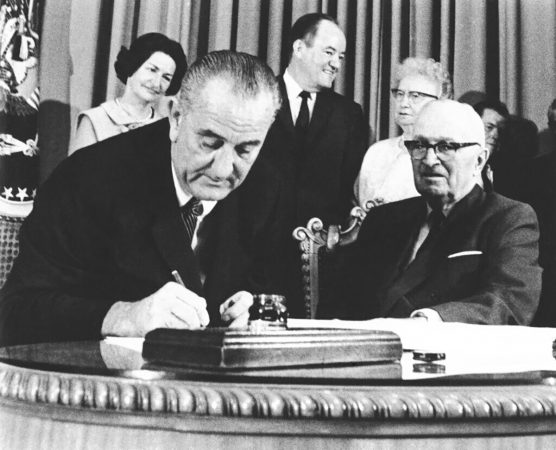
  • Medicare was one of the most successful civil rights laws in history

    Medicare was one of the most successful civil rights laws in history

    When Americans think of the seminal Civil Rights legislation of the 1960s, they think of laws like the 1964 Civil Rights Act and the 1965 Voting Rights Act. Yet, there is one piece of historic 1960s legislation that unleashed a powerful civil rights tool that rarely gets remembered as “civil rights” legislation: Medicare.

    Hospitals desegregated — some almost overnight — worried that they would get cut off from Medicare funds. “White Only” signs came down, white-only facilities and segregated wards admitted patients without regard to race and Black clinicians received admitting privileges.

    And yet, a racial healthcare crisis persists. Over the past two decades, Americans have made no progress in narrowing racial disparities in medical care, although we know more about them today than ever.

    Black patients are less likely than white patients to receive pain medication, emergency cardiology care, lung cancer surgery, a kidney transplant, an appropriate mental health diagnosis and end-of-life home hospice care. Black people are disproportionately hospitalized for psychiatric services, excessively diagnosed with schizophrenia and more likely to have amputations. Surgery is more likely to kill Black patients, including children, than white patients, and Black mothers are three times as likely to die in childbirth as white mothers.

    These disparities remain after accounting for other characteristics that influence health.

    The history of Medicare, which turns 60 this year, offers a suggestion of how to rectify some of these problems. The desegregation of hospitals didn’t come when experts recognized that they were segregated, or even when courts declared such practices unlawful. Instead, the changes came when the government required hospitals to do better, verified compliance and withheld Medicare funding when they failed.

    This transformation forged by Medicare was as unexpected as it was abrupt.

    Hospitals, especially in the South, had been segregated before the Civil Rights Act. The federal government didn’t formally even document the practices and, in many cases, willfully ignored them.

    Title VI of the 1964 Civil Rights Act aimed to address this problem. It prohibited discrimination in federally funded institutions. Medical school-affiliated hospital facilities, which received much of their funding from federal government training and research grants, quietly began taking steps toward integration. Yet, at all other facilities, passage of the law changed little.

    Nationwide, but most dramatically in the South, Black patients continued to struggle to get care. Hospitals still hung “White” and “Colored” signs, separated patient records by race and shunted Black patients into basements or separate buildings, if they’d treat Black patients at all. Black women continued to give birth in dangerous conditions. Sometimes, while in labor, they had to solicit care from multiple white-only hospitals or facilities with limited beds for Black patients until one perhaps admitted them.

    Civil rights organizations filed hundreds of Title VI complaints. Yet, the federal government had no staff assigned to enforce compliance. As a result, the complaints accomplished very little.

    There were also several other impediments preventing progress. While healthcare facilities had long received federal funds through programs like the Hill-Burton Act, which paid for the construction of segregated hospitals, mostly in the South, Washington could not easily claw back federal dollars that had already been distributed to hospitals. Further, Title VI had no built-in enforcement mechanism. The Johnson administration, which in its first two years had been consumed with passing and implementing an array of ambitious legislation like the Civil Rights Act and the Voting Rights Act, was faced with going after individual hospitals on a case-by-case basis.

    Everything changed after Congress passed Medicare in 1965. Urged on by civil rights organizations, John Gardner, secretary of the Department of Health, Education, and Welfare (HEW), announced that to receive Medicare dollars, hospitals must comply with the Civil Rights Act. The new health insurance program covered 19 million seniors and promised to pay billions to healthcare facilities — but only if they complied. To Gardner, it was an unprecedented enforcement tool.

    HEW devised a process for determining compliance. Federal workers would inspect facilities. Were patients admitted and assigned the first bed available, regardless of race? Did hospitals extend admitting privileges to Black doctors? Were there disparities between their patient population’s racial composition and that of their service area?

    Made By History sponsors. FOR USE ON MADE BY HISTORY STORIES ONLY.Inquirer Staff

    Hospitals clearly in compliance would receive Medicare dollars. Others clearly out of compliance would not.

    Gardner did not have enough HEW staff to dispatch to inspect the nation’s 4,000 hospitals. So he put out a call for federal employees willing to volunteer in his department and conduct inspections. Over 1,000 came forward including tax accountants, veterinarians and scientists.

    In April 1966, civil rights movement activists trained them. Some violations would be obvious. That included “whites only” signs above entrances, bathrooms and in cafeterias, racially separate medical records and infants segregated by race.

    But trainers warned that hospital administrators might disguise a facility as integrated for the visit. Some did. One put a white administrator in a patient gown in a room with a Black patient. Another placed four comatose patients, each a different race, next to each other.

    Doing the “HEW shuffle” of fixing signs and shifting a few patients was insufficient, the inspectors explained. Facilities needed to be race-blind.

    The combination of a strict standard coupled with inspections worked.

    In three months, nearly all hospitals ended formal segregation and had been Title VI-certified as Medicare providers. After July 1, hospitals that had not been certified as Title VI compliant — those that lagged transforming their facility or refused on principle to do so — could not provide care for Medicare patients.

    The lives of Black people in the South radically changed. Before the intervention Black infants below the Mason-Dixon line died at twice the rate of whites. By 1971, however, Black infant mortality halved, largely because they more readily received care for treatable conditions and their mothers had access to hospitals for the first time.

    Yet, even as Medicare proved enormously successful in erasing formal segregation, racial stratification patterns remained apparent in hospitals throughout the U.S., exacerbated by residential segregation and referral networks systems.

    Ironically, we know this from Medicare itself. The program has long served as a tool for researchers to investigate disparities in healthcare: beneficiaries share a common insurance which makes it easier to isolate inequities.

    And racial separation persists among Medicare patients. Black Medicare patients are disproportionately treated at hospitals with fewer resources and worse outcomes. In some hospitals, certain teams treat only Black Medicare patients. Other teams treat only white ones.

    Starting in 2003, Medicare Advantage expanded the enrollment of Medicare recipients in commercial insurance alternatives. In Medicare Advantage, the federal government pays insurance companies fixed amounts for each enrollee and the companies then manage benefits. These programs, separate and unequal, also expose racial double standards.

    Even within the same Medicare Advantage plan, care is worse for Black and poor enrollees. Black enrollees tend to have worse follow-up care and chronic disease management than white enrollees. Additionally, they experience higher rates of preventable hospitalizations than white beneficiaries and are more likely to be readmitted.

    The 60th anniversary of Medicare should remind us that our greatest advance in health equity came from enforceable commitments to providing equal care, regardless of race. Racial disparities in healthcare can be eliminated if the federal government requires compliance — and then enforces it.

    For hospitals and physicians in 1966, equal treatment suddenly became a condition of financial survival. The immediate gains Black patients received suggest that if the federal government required healthcare systems and insurers to make real, measurable progress toward addressing racial health disparity, it would produce immediate and significant gains once more.

    The question is whether Americans — and their government — are willing to demand such accountability as they did 60 years ago?

    David Barton Smith is emeritus professor of health management and policy at Temple University. He was the recipient of a Robert Wood Johnson Health Policy Research Investigator Award and is author of three books and numerous articles related to this topic.

    Leila Morsy is an economic justice research fellow at the Legal Defense Fund Thurgood Marshall Institute and a senior lecturer at Flinders University. She is writing a book about the history of the exclusion of Black doctors and its contemporary consequences.

    Made by History takes readers beyond the headlines with articles written and edited by professional historians. Opinions expressed do not necessarily reflect the views of The Inquirer.

  • Trump administration reviewing ICE vetting process after Maine shooting

    Trump administration reviewing ICE vetting process after Maine shooting

    The Trump administration is reviewing its process for vetting U.S. immigration officers after reports that a man allegedly involved in the fatal shooting of an immigrant in Maine had a history of violent outbursts, a senior White House official said Sunday.

    In an interview with The Washington Post earlier this month, Ashley Brouillette, said her former spouse, David Brouillette, told her in a phone call that he was the Immigration and Customs Enforcement officer who fatally shot Colombian immigrant Johan Sebastián Durán Guerrero, in Biddeford, Maine, on July 13.

    Ashley Brouillette said her ex-husband had a pattern of violent outbursts, including throwing boiling hot water on her while she was holding their young daughter.

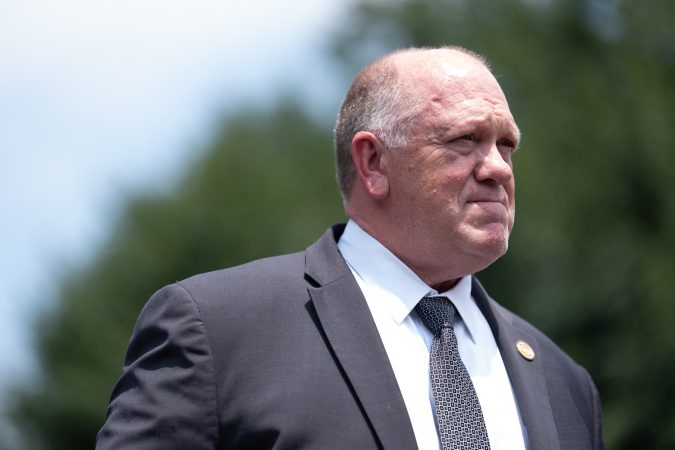
    “If this person had that type of history, it would have been a vetting issue, and it should have been brought to the attention of those” who make such decisions, White House border czar Tom Homan told CNN’s “State of the Union.”

    Homan did not confirm that David Brouillette shot Durán, but he said that the Department of Homeland Security is investigating whether the vetting process failed.

    “When they hire somebody, they put them through a vetting process and look at all that stuff, so I know, based on that information, that that’s part of the ongoing investigation,” Homan said.

    “Was that information not available? Did they not know? So there’s a separate administrative investigation on what happened here,” he added.

    The Department of Homeland Security has not publicly released the name of the officer who shot Durán. The 25-year-old’s death led to mass protests in Maine.

    Ashley Brouillette identified David Brouillette as the officer seen on video footage of the scene in Biddeford. The video does not show the shooting itself, but it does show two officers in the moments afterward.

    She accused her ex-husband of pointing a gun at her and threatening her, among other instances of past violence. Ashley Brouillette also told The Post that he was diagnosed with several mental health disorders as a young adult. The Post could not independently verify those claims.

    David Brouillette’s other ex-wife, Lucinda Brouillette, also has described a pattern of physical and mental abuse in court filings. In some filings, she said Brouillette had been medically discharged from the military in 2015 because of post-traumatic stress. The Post has not independently verified that claim.

    In a statement to The Post, Lucinda Brouillette said that throughout her marriage, “and in the years that followed, I have feared for a long time that his anger, aggression, and escalating behavior would eventually result in severe, life threatening violence.”

    The Post reported Friday that David Brouillette was found by a judge to have made statements in court last year that were not credible.

    He said in an October court hearing related to child support payments that he was struggling to earn money because he had health issues and his driver’s license had been revoked, but a judge concluded in a Nov. 17 ruling that those claims were not credible.

    The judge denied his request to terminate his child support payments to a former wife. Instead, the judge concluded that David Brouillette was “voluntarily underemployed.” David Brouillette did not respond to calls or emails for the story.

    Ashley Brouillette said David Brouillette was hired by ICE in November, as the federal agency was rushing to put thousands of new officers on the streets. Former Department of Homeland Security officials have publicly questioned whether those new hires were properly vetted.

    In the CNN interview, Homan said that ICE is also reviewing agent training and that agents are undergoing additional training.

    “I know this specific case, as far as the vetting, is under review by internal affairs section, so we’ll see where it lies,” he said.

    Durán, who had a work permit issued by the Trump administration, was shot shortly after leaving for work on July 13.

    ICE has said that officers were in the area surveilling an address associated with an individual who has a final order of removal when they saw Durán leave and attempted to stop his vehicle. The agency has alleged that Durán tried to flee the officers and that an officer fired because he feared for public safety.

    After the shooting, the office of Maine Attorney General Aaron Frey said the officer would be placed on leave. Sen. Angus King (I-Maine) said at a news conference that none of the officers involved in the fatal shooting were wearing body cameras.

    A spokesperson for King said Homeland Security Secretary Markwayne Mullin told the senator that Durán was not the target of the ICE operation.

  • Pentagon’s official Iran war death toll no longer lists 4 troops killed during renewed fighting

    Pentagon’s official Iran war death toll no longer lists 4 troops killed during renewed fighting

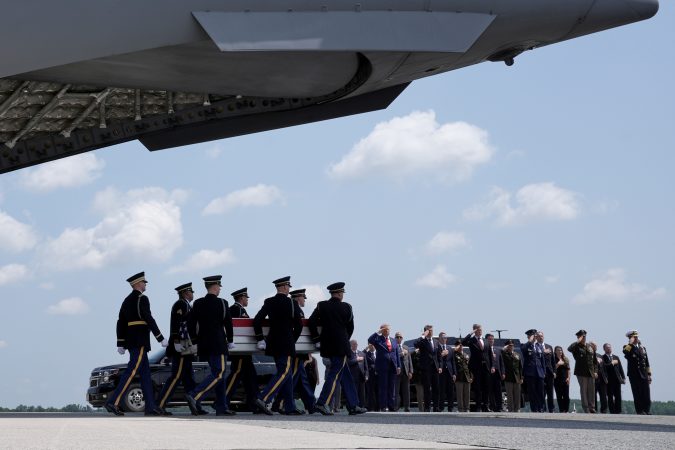
    WASHINGTON — The four American troops killed during renewed fighting between the U.S. and Iran in recent weeks are no longer listed as part of the Iran war death toll in the Pentagon’s official casualty count but have been placed in a new, separate category.

    It is raising questions about properly counting the impact to U.S. service members as the Trump administration escalated strikes on Iran in a bid to reopen the Strait of Hormuz, while providing little indication of how it intends to wind down a conflict that is unpopular with many Americans.

    The Defense Casualty Analysis System, which Pentagon officials have repeatedly pointed to as the definitive source on the numbers of dead and wounded from the conflict, removed the four fallen soldiers as well as dozens of wounded troops from its Iran war tally last week.

    On Sunday, a new category called “Overseas Operations” emerged on the system’s website, listing the four Army deaths by name as well as 207 wounded. It was unclear if all of the wounded were injured in the Iran conflict.

    U.S. Central Command, which oversees operations in the Middle East, referred questions to the Pentagon, which did not immediately respond.

    Pentagon described earlier changes to the system as ‘data disruptions’

    Pentagon press secretary Joel Valdez argued Thursday that the drop in casualty figures in the online system was not an effort to hide the growing human toll of the war but rather the result of “anomalies” and “temporary data disruptions” that were being resolved “imminently.”

    As late as Tuesday, the website was reporting the war’s official toll as 18 killed and 482 wounded.

    It appeared to reflect that four soldiers had been killed since fighting resumed despite the signing of an interim ceasefire deal last month — three on a base in Jordan that was struck July 17 by Iranian ballistic missiles and drones, and one in Iraq a day later during a controlled detonation of an Iranian drone.

    Adding further confusion, when the Pentagon announced two of the deaths in Jordan, it said the troops were supporting the U.S. mission to counter the Islamic State group. The other two were announced in press releases simply as supporting overseas operations.

    President Donald Trump has confirmed the total, writing in a Truth Social post on Tuesday that the “Iran Military Conflict” had claimed 18 lives.

    By Wednesday, the Iran war figures in the Pentagon’s system fell back to 14 dead and 420 wounded. However, a U.S. official told the Associated Press at the time that the actual number of wounded personnel in the war had grown to well over 500 troops.

    The Pentagon’s top spokesperson, Sean Parnell, took to social media that day to assert that the reported drop was a “temporary data disruption.”

    New category lists casualties following date of renewed fighting

    The U.S. and Israel launched the war in Iran on Feb. 28, and 14 troops were killed in the initial waves of fighting. Washington and Tehran agreed to a ceasefire in April and then signed an interim deal to end the war in mid-June.

    It was short-lived. Iran struck three merchant vessels in the Strait of Hormuz on July 7 that were transiting along a route near the coast of Oman overseen by the U.S. military. American forces launched strikes in response to the attacks on vessels in the key energy shipping corridor. Trump soon declared that the ceasefire was over.

    The Pentagon system’s new “Overseas Operations” category says it tallies casualties starting July 7.

    Since then, the U.S. and Iran have exchanged regular fire in a bid to control the crucial waterway, with the U.S. hitting Iranian targets nightly for nearly two weeks and Tehran responding with attacks on neighboring countries hosting American forces. There have been no strikes for two nights as mediators push for diplomacy.

    Since the renewed hostilities began, the Pentagon has provided even less information about military strategy and casualties than it did during the first phase of the conflict. The Pentagon has not held a press briefing about the war since early May, and officials at U.S. Central Command have stopped providing casualty updates to reporters.

    Pentagon officials such as Valdez and Parnell have insisted that the DCAS website is proof of the commitment to transparency about the number of dead and injured in the war.