Category: Nation & World

  • Lindsay Clancy’s attorney makes public plea for Trump pardon

    Lindsay Clancy’s attorney makes public plea for Trump pardon

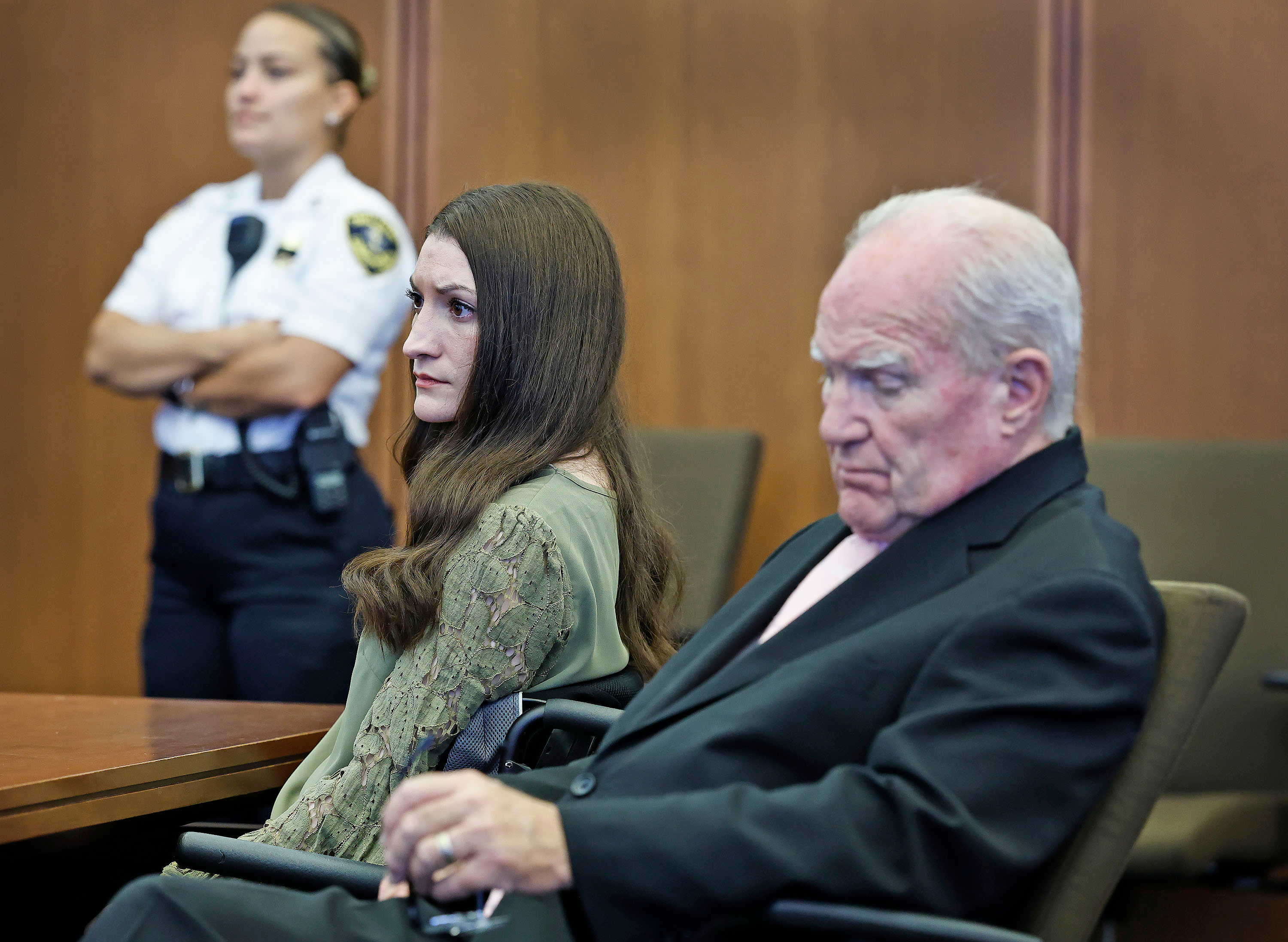
    An attorney for Lindsay Clancy, the 36-year-old Massachusetts mother who admitted to killing her three children, said he hopes President Donald Trump would consider a pardon for his client after the high-profile murder case ended in a mistrial last week.

    “Mr. President, I would hope that you would consider this young lady, the type of person she is, what she’s been through, and consider a pardon,” Kevin Reddington said Tuesday on Good Morning America.

    The president cannot pardon state-level crimes, and Clancy’s case is being tried in state, not federal, court.

    Governors can grant clemency for state crimes; under pressure from Trump, Colorado Gov. Jared Polis (D) in May reduced the state prison sentence of former county clerk and election conspiracy theorist Tina Peters, who was convicted for a scheme to copy her county’s election computer system.

    Asked about the trial and pardon request, the White House referred the Washington Post to Trump’s comments on Friday in which he described the case as a “horrible tragedy.”

    “It’s a terrible situation. Look, she did a horrible, horrible, thing. Can’t be worse,” he said. “But you’ll find out what the price to pay is. There’ll be a price. It’s going to be mental institution or jail or something.”

    Reddington also said he hoped he would “be able to work something out that would be acceptable to both sides,” after a mistrial was declared on Friday. Prosecutors have not said whether they will seek another trial.

    Clancy’s case captured the public’s attention and became a cultural touch point, putting postpartum mental health issues in the spotlight. She had said she killed her three children by strangling them at home in 2023, and the jury was asked to decide whether she should be held legally responsible for her actions. Reddington had argued that she was suffering from postpartum psychosis at the time, which prosecutors disputed.

    The jury was dismissed after failing to reach a unanimous decision after deliberations hit nearly 40 hours following a trial that stretched more than six weeks.

  • Travel chaos at U.K. airports as over 600 flights canceled due to air traffic control issue

    Travel chaos at U.K. airports as over 600 flights canceled due to air traffic control issue

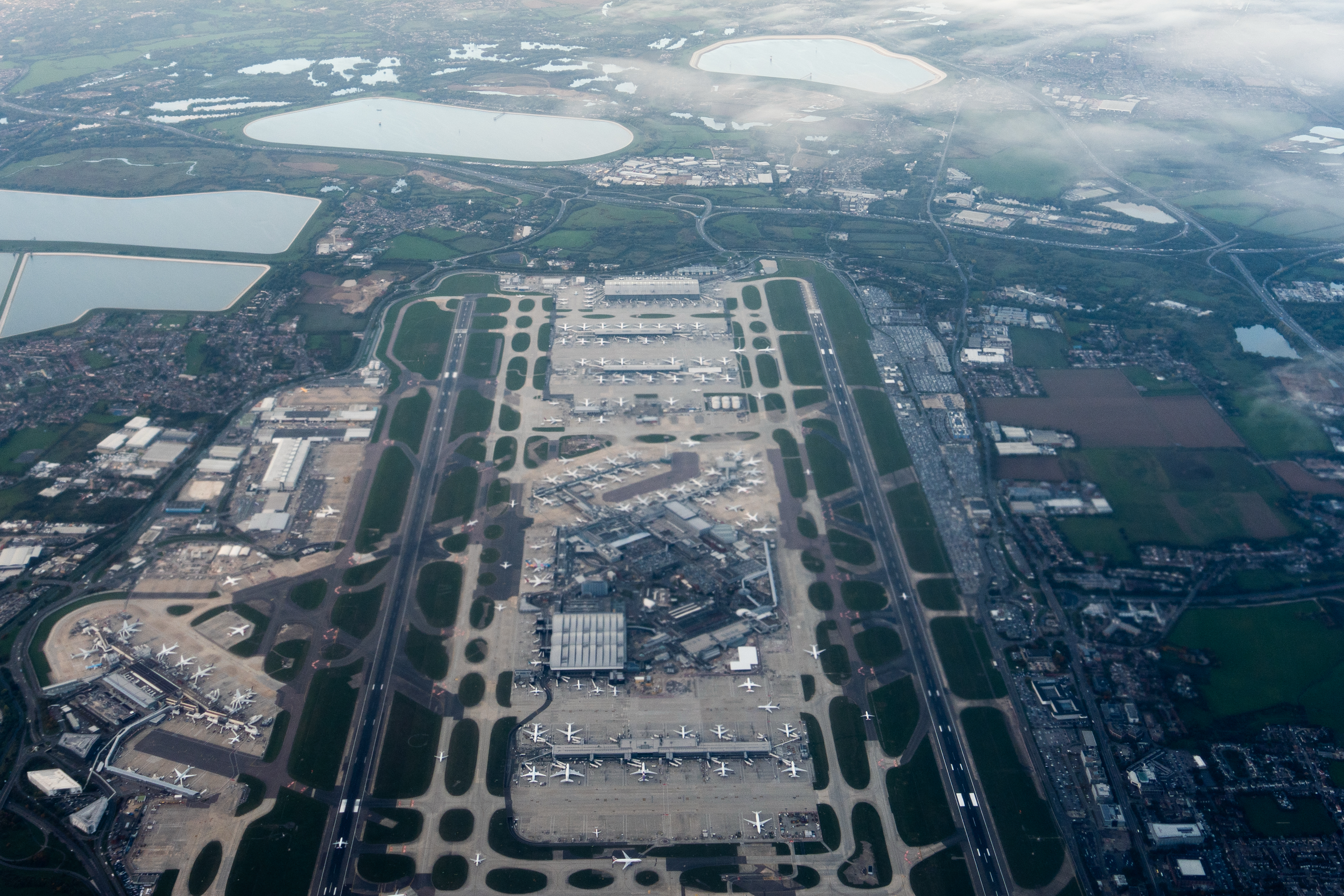
    LONDON — More than 600 flights were canceled on Tuesday due to a technical issue in Britain’s air traffic control system that caused disruptions at major airports across the U.K., the flight monitoring website Flightradar24 reported.

    Britain’s National Air Traffic Services said a problem had been identified in its flight processing system and engineers were urgently working on the issue, which affected flights across the U.K.

    In an update, it said it had “implemented a fix and our flight system is starting to recover.”

    At least 625 flights to and from U.K. airports, including London Heathrow, were canceled, affecting services operated by multiple airlines, including British Airways, EasyJet, KLM, and Lufthansa, according to Flightradar24.

    Some passengers took to social media to complain about being stuck on the tarmac for hours, before their flights were eventually canceled. Many expressed frustration about a lack of communication from airlines.

    The affected airports included Stansted and City in London, as well as those in Manchester, Birmingham, Gatwick, and Scotland. They warned passengers to check the status of their flight with their airline.

    Budget airline EasyJet said some of its flights were “unable to operate” and that the system failure caused “delays to flights across Europe.”

    Heathrow’s website showed that many short-haul flights departing for European destinations had been canceled or delayed.

    It was not immediately clear what caused the technical problem.

  • Veterans and Democrats intensify fight against Trump’s planned arch

    Veterans and Democrats intensify fight against Trump’s planned arch

    Veterans and Democrats are escalating efforts to prevent construction on President Donald Trump’s planned arch as the anticipated start of site work approaches, arguing the project is illegal and would diminish the experience of visiting nearby Arlington National Cemetery.

    VoteVets, a political organization aligned with Democratic veterans, on Tuesday launched a new messaging campaign to mobilize more veterans against the planned 250-foot-tall arch.

    In a 2½-minute video, which was first shared with the Washington Post, speakers call attention to the Trump administration’s stated plan to spend 20 hours per day building the arch over several years, which they note could conflict with military burials. The arch also would feature an observation deck for tourists to gaze at the city — and look out at the cemetery.

    “We don’t need tourists overlooking funerals. I’m just appalled,” Karen Meredith, a Gold Star mother whose son is buried at Arlington, said in the video.

    Home of the Brave, a political advocacy group whose leaders and advisers include prominent Trump critics such as commentator Bill Kristol and former Biden administration official Susan Rice, is also supporting the campaign. In an interview, people involved in the effort said they would start with social media posts this week and could expand to paid promotion.

    Meanwhile, Rep. Chellie Pingree (D., Maine) on Tuesday urged House Speaker Mike Johnson (R., La.) to sue and halt construction before it begins. Johnson and other Republican leaders have shown no interest to date in blocking Trump’s construction projects.

    “Congress has neither appropriated funding nor granted authority for this project under the Commemorative Works Act. The Administration is building it anyway, betting this body will do nothing to stop it,” wrote Pingree, the top Democrat on a House subcommittee that oversees funding for the Interior department. “I am asking you to take all necessary steps to file suit immediately, while there is still ground left to save.”

    Trump officials, emboldened by a Supreme Court ruling last week that allowed construction of the president’s ballroom to proceed, signaled Thursday that site work on the arch would begin this month.

    The court’s decision, which found preservationists seeking to stop Trump’s planned ballroom likely lacked standing, has become part of the administration’s construction strategy. Justice Department lawyers cited the ballroom ruling in asking a federal judge to dismiss a legal challenge brought by three military veterans and a historic preservationist, who are seeking to halt the triumphal arch.

    The high court’s ruling also sent advocacy groups scrambling to reconsider how to oppose the president’s construction projects. Some say they are reassessing whether they need to have other individuals or organizations join their challenges.

    Several legal experts pushed back on the Trump administration’s efforts to invoke the Supreme Court’s ballroom ruling to dismiss the arch and other projects.

    “The Justice Department would like to turn the ballroom decision into a universal immunity card for presidential construction projects,” said Greg Werkheiser, a co-founder of Cultural Heritage Partners, a law firm that has advised preservation organizations. “But the Supreme Court decided one standing question involving one plaintiff, one project, one factual record.”

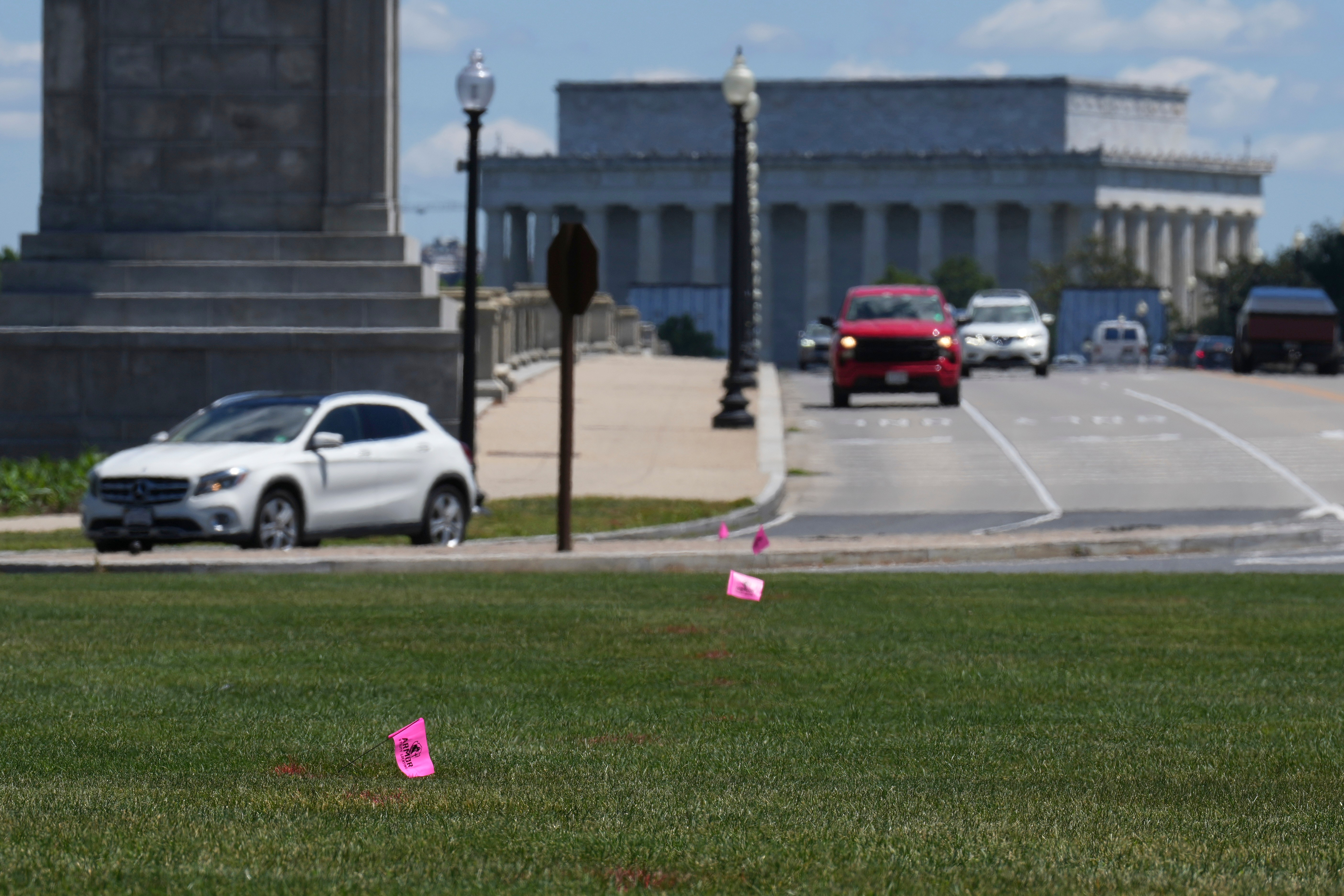
    Trump has spoken for nearly a year about his plans to build a triumphal arch that will honor the nation’s 250th anniversary, vowing that it will be the largest triumphal arch in the world — about 86 feet taller than France’s famed Arc de Triomphe. The administration plans to erect it on federal parkland in Memorial Circle, a traffic roundabout near Arlington National Cemetery and just inside the city’s boundaries.

    Interior Secretary Doug Burgum said last week that construction would soon begin.

    “We are pleased to announce that after a very long wait (over 125 years!), we are preparing to start, over the next two-week period, the excavation work necessary for the Great Triumphal Arch and Military Observation Deck,” Burgum wrote on X.

    While Burgum’s announcement catalyzed a wave of new legal filings, Trump officials have argued that it is too soon for a federal judge to decide whether the project can be halted because Trump and other officials’ statements are not binding and the project has not been formally approved. The National Capital Planning Commission, a federal review panel that reviews the administration’s construction projects, has issued preliminary approval for the arch but has yet to award final approval.

    Trump officials also said last week that the work they plan to do soon at the arch site is for informational purposes.

    “This activity is not construction, or demolition in preparation for construction, of an arch,” Justice Department lawyers wrote in a court filing Friday.

    U.S. District Judge Tanya S. Chutkan ordered that the administration provide her with 48 hours’ notice “before engaging in any activity on Memorial Circle” other than on-site information gathering.

    Preservationists have stressed that an arch does not belong in the solemn corridor between the Lincoln Memorial and Arlington National Cemetery.

    Charles Birnbaum, the founder of the Cultural Landscape Foundation, a Washington-based advocacy organization, invoked 1916 comments by Frederick Law Olmsted Jr., a landscape architect who helped design Washington.

    Olmsted said that “to build a monumental feature such as an arch would be a ‘slap in the face’ to the Lincoln Memorial,” Birnbaum said in the VoteVets video.

    Paul Eaton, a retired major general and VoteVets adviser, told the Post that he has heard from Republican veterans who are also opposed to a new structure towering over the cemetery. He called for veterans to submit comments to their lawmakers and to the National Capital Planning Commission.

    “There’s nothing partisan about what we’re doing right now. It has everything to do with how the United States honors its dead,” said Eaton, whose father’s remains are interred at the cemetery. “That’s why we are so focused on this particular vanity project on the part of Mr. Trump.”

  • As Social Security fund runs dry, some Republicans say it’s time to raise taxes

    As Social Security fund runs dry, some Republicans say it’s time to raise taxes

    For decades, Washington has replayed the same fight over taming the soaring national debt: Democrats cite a need for more taxes. Republicans refuse. And anyone who suggests cutting the biggest source of spending — federal retirement benefits — gets attacked.

    But a coming crisis in Social Security appears to be pushing at least a few Republicans off the GOP’s long-standing pledge never to raise taxes.

    This summer, Sen. Bernie Moreno (R., Ohio) joined Sen. Elizabeth Warren (D., Mass.) in proposing to raise the payroll tax cap so people with higher incomes pay more into the program. Now the idea is emerging as an acceptable fix among other GOP lawmakers, including Rep. Tom Cole (Oklahoma), the influential chairperson of the House Appropriations Committee.

    “We’ve got too many people who say, ‘Well, we have to stay within the current income level or stay at the current tax rate,’” Cole said in an interview. “I’m willing to look at the tax rate. I am willing to raise the amount of income through tax.”

    The rare GOP concessions on taxes come as lawmakers begin to confront a Social Security shortfall so large and so imminent that the party’s traditional demand for curtailing benefits is unlikely to suffice. In just six years, millions of Social Security recipients will absorb a 22% cut in benefits unless lawmakers provide an immediate infusion of nearly $500 billion.

    “Twenty or thirty years ago,” when the shortfall was far in the future, “you could come up with a straight-faced solution” that solved the problem entirely by cutting future benefits, said Charles Blahous, a senior research strategist at George Mason University’s Mercatus Center who served from 2010 to 2015 as the Republican public trustee for Social Security.

    Now the problem is so big and urgent, Blahous said, “I don’t think you can look at it with a straight face and not do all of the above.”

    Grover Norquist, founder of Americans for Tax Reform and the longtime enforcer of Republican anti-tax orthodoxy, dismissed the crack in party discipline, arguing that Republicans should stick to demanding spending cuts. Otherwise, he said, they risk infuriating voters already angry about the high cost of living.

    “When Republicans say no to tax increases, they win. When they say yes to tax increases, they lose,” Norquist said. “They don’t get spending cuts — at all. And, they get smeared in the next election.”

    But Cole, at least, said he thinks the political blowback from Social Security benefit cuts would be far worse than a comprehensive solution that includes raising taxes.

    “I love Grover. But … you’ve got to deal with Social Security,” Cole said. “And believe me, you’ll have a lot bigger problem if it goes bankrupt than you’ll have keeping it whole, because people will feel cheated.”

    Created during the Great Depression, Social Security provides monthly cash benefits to more than 70 million Americans. It is the single largest program in the $7.4 trillion federal budget, paying out $1.7 trillion this year, according to the nonpartisan Congressional Budget Office. (Medicare is a close second at $1.3 trillion.)

    The program is funded by a payroll tax on wages up to a “cap” of $184,500 a year, with workers and employers each paying 6.2%. Workers who pay into the system can receive monthly checks as early as age 62, though the full retirement age is 67.

    For years, annual tax collections exceeded the cost of benefits, allowing the program to amass a surplus known as the Social Security trust fund. As the baby boom generation retired, however, the math flipped: Social Security now pays out far more than it collects and is draining the trust fund to make up the difference.

    The trust fund is projected to run dry in 2032. At that point, Social Security would have to rely solely on incoming tax collections — meaning monthly checks would shrink by $440 on average unless Congress acts, according to the Bipartisan Policy Center, a Washington think tank.

    Closing the shortfall would require $459 billion in cuts or fresh revenue in 2033 alone, according to the BPC — and the sum would grow larger every year.

    That relentless math persuaded Moreno, a former car dealership owner who rode into office with President Donald Trump’s endorsement in 2024, to break ranks with his party on tax hikes. In his proposal with Warren, Moreno calls for eliminating the payroll tax cap so highly compensated workers pay the tax on their entire income.

    “Why should a middle-class nurse pay a larger share of her paycheck than a wealthy corporate lawyer?” Moreno and Warren wrote in an op-ed for the New York Times, noting that one recent poll found that 62% of Republicans support lifting the cap. “This is doubly unfair in an economy in which top earners’ wages, over time, have pulled far ahead of those of the average worker.”

    Moreno declined an interview request. His spokesperson Reagan McCarthy said in an email: “Sen. Moreno promised Ohioans he would fight for them in DC and make sure they get the benefits they were promised and that’s exactly why he’s leading this effort.”

    Removing the cap without increasing benefits for high-earning workers would close more than half the program’s shortfall, according to the Committee for a Responsible Federal Budget, a nonpartisan group focused on deficit reduction. Blahous and others have cautioned against that approach, saying it would sever the connection between contributions and benefits that makes Social Security different from — and more popular than — other social welfare programs.

    Uncapping the payroll tax alone would push the top marginal federal tax rate over 50%, according to the Manhattan Institute, a conservative think tank.

    Some Democrats would go further. Sen. Sheldon Whitehouse (D., R.I.) argues not only for lifting the payroll cap but also for taxing the investment income of wealthy households and closing a loophole that lets business owners shrink their personal tax bills.

    That proposal, which would fall entirely on the backs of the wealthy, would raise enough cash to fully fund Social Security for at least 75 years, according to a 2023 estimate by the program’s chief actuary.

    The historic link between contributions and benefits makes changing Social Security politically perilous. That’s why many in Congress want negotiations to be outsourced to a bipartisan commission or advisory board.

    Cole has introduced one of several proposals to form such a panel. He argues that more tax revenue, including from raising the payroll tax cap, “ought to certainly be on the table” alongside adjustments that would reduce future spending, such as raising the retirement age.

    A third GOP lawmaker, Rep. Lloyd K. Smucker of Pennsylvania, has also said he sees more tax revenue as part of a Social Security fix. “You’ll probably have to do something on the payroll half of the money being paid into the system,” Smucker told Roll Call last week.

    Smucker said lawmakers should also consider means testing, so benefits are reduced for the wealthy while low-income retirees are protected. Smucker’s office did not respond to requests for comment.

    Though raising taxes is unpopular among Republicans, it has long been part of bipartisan plans to solve the Social Security puzzle. In 1983, President Ronald Reagan, a Republican, and House Speaker Tip O’Neill, a Democrat, saved the program from its last bout with insolvency, agreeing to a mix of solutions that included increasing payroll taxes and gradually raising the retirement age.

    In 2005, Sen. Lindsey Graham (R., S.C.) argued for raising the payroll cap and trimming benefits. Weeks later, President George W. Bush said he was open to a “variety of options,” though his plan to curtail future benefits for all but low-income retirees and divert some tax dollars to new private retirement accounts was dismissed by Congress.

    And in 2010, several Republicans on a commission formed by President Barack Obama voted in favor of a debt-reduction plan that included raising the payroll cap, raising the retirement age to 69 and trimming benefits for wealthy retirees. The plan offered by the so-called Bowles-Simpson commission never received a vote in Congress.

    Sen. Mike Crapo (R., Idaho) was among the commission’s yes votes. Crapo now serves as chairperson of the powerful Senate Finance Committee, which has jurisdiction over both taxes and Social Security.

    At a committee hearing last month, Crapo said the Bowles-Simpson plan “has informed subsequent Social Security solvency discussions.” His office did not respond to questions about his current position on tax hikes.

    Another hallmark of Social Security reform has been deep involvement by the White House. Cole said he has urged Trump to take on the hard work of fixing the program, calling it a potential “crowning achievement.” Since Trump is not running for office again, he could “do it with no political risk,” Cole said, adding, “I think he’ll get enormous political credit for it.”

    But while Trump has warned Republicans not to cut “a single penny from Medicare or Social Security,” he has not said how he would raise the vast sums needed to bolster the programs’ deteriorating finances.

    White House spokesperson Liz Huston did not respond to questions about fixing the program, saying via email only that “there will be zero reductions to Social Security payments” under Trump’s leadership.

  • Charles views the Bayeux Tapestry, this time as king

    Charles views the Bayeux Tapestry, this time as king

    LONDON — The last time King Charles III of Britain saw the Bayeux Tapestry, in September 1987, he had to travel to its home in northern France. Accompanied by Diana, Princess of Wales, the then prince marveled at the over 900-year-old embroidery depicting William the Conqueror’s invasion of England in 1066, and he impressed local residents with a brief speech in French about its impact.

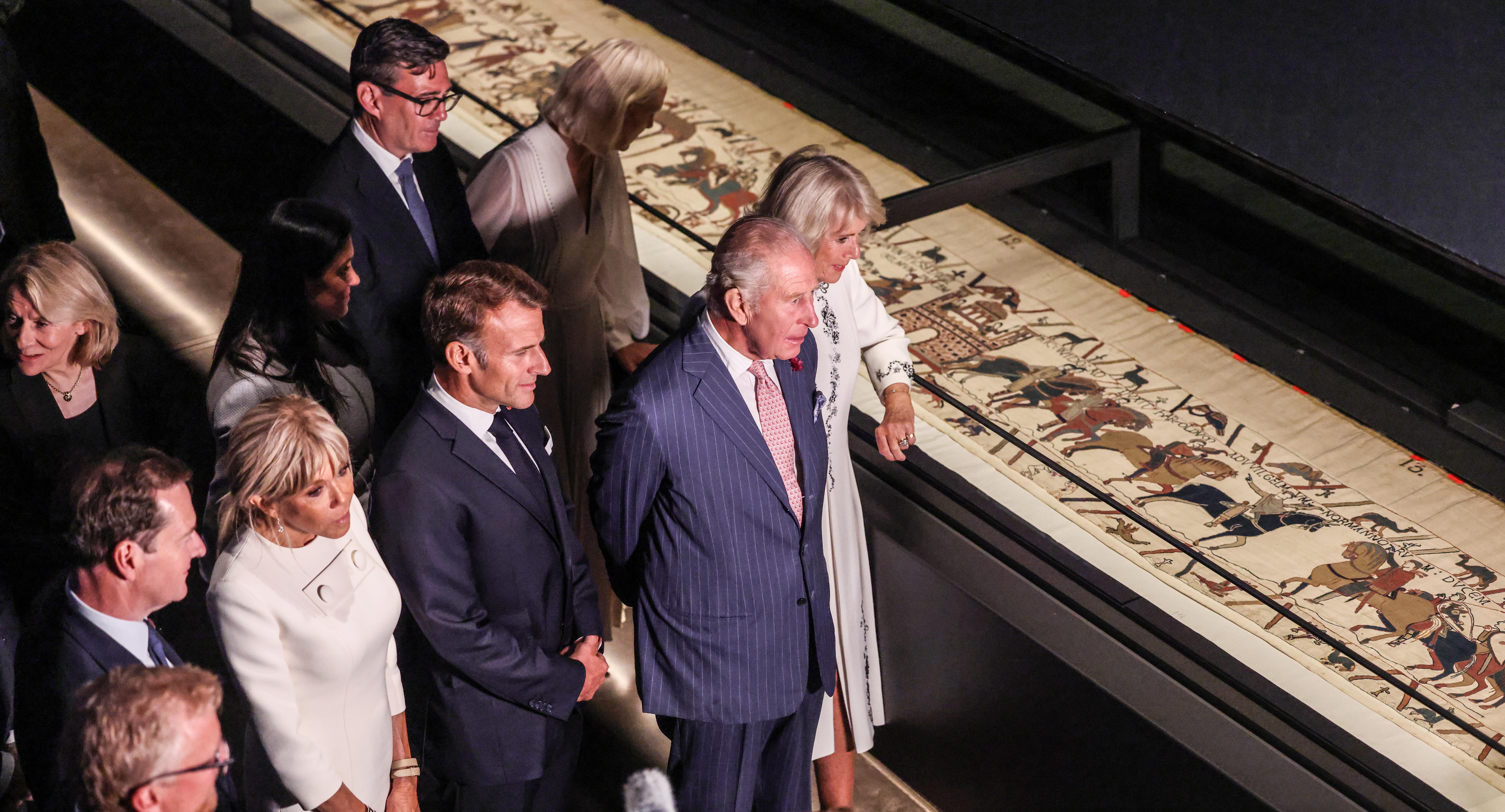
    On Sept. 2, almost 40 years later, Charles got to view the tapestry in notably different circumstances — now as king, just like the tapestry’s main characters, and this time without having to leave his home soil. Instead, he went to the British Museum in London, accompanied by Queen Camilla, to witness the tapestry’s return to Britain for the first time since it was made.

    The tapestry is not just a historic artifact, but a personal reminder of “what I like to think of as the French side of my family’s history,” Charles joked during an eight-minute speech at the museum. He also spoke of his joy at seeing the 220-foot-long embroidery in London, where it is the focus of a blockbuster exhibition that opened on Thursday.

    “The tapestry’s story is one of ambition and uncertainty, of oaths and journeys, of ships, councils, kings, comets, and consequences,” Charles said, calling it “70 meters of memory and artistry.”

    The British Museum hopes that attendance for the show, which runs through July 11, will rival the 1.6 million visitors who flocked to its “Treasures of Tutankhamen” exhibition in 1972.

    Before the speeches, British Museum curators had walked Charles along the tapestry and pointed out key scenes, including one showing the coronation of Harold Godwinson, England’s last Anglo-Saxon monarch, and another depicting Godwinson’s death at the Battle of Hastings. In that scene, the dying monarch clasps an arrow that has thwacked his eye.

    Although the tapestry shows a time of conflict between France and England, the recent event was a sedate affair, bringing together President Emmanuel Macron of France and Prime Minister Andy Burnham of Britain and their wives, alongside Charles and Camilla.

    The tapestry recounts a conflict, Charles said during his speech, “yet here it is today, nearly 1,000 years later, as a precious symbol of trust at a time when trust seems sadly to be in short supply between nations.”

    Macron also spoke at the museum, saying how the Norman invasion depicted in the tapestry “was just the start” of events that have entwined Britain and France, including “marriages, alliances, inheritances, and successions” as well as shared cultural artifacts.

    The tapestry’s reappearance in Britain was a long time coming. Embroidered in the 11th century, most likely in Canterbury, England, it was later moved to Bayeux, France, where it eventually was listed in a 1476 inventory of the town’s cathedral.

    Over the past 70 years, British officials have repeatedly tried to borrow the artwork — including for the coronation of Elizabeth II, Charles’ mother — but French art experts insisted that it was too fragile to travel.

    That situation changed in 2018, when Macron announced that France had agreed to lend the tapestry to Britain as a gesture of friendship between the two nations. The loan has been able to go ahead thanks to techniques developed by conservation experts to ensure that the tapestry could travel to London.

    Last year, Macron said in a speech at the British Museum that Charles had been a key figure behind the scenes encouraging the project.

    Charles has long been a supporter of arts and culture, and as a prince, he often discussed his love of traditional art and architecture in interviews. In 2004, he co-founded an academy for traditional arts, whose short courses include training in weaving and embroidery. And his foundation, in collaboration with Chanel, runs specialist embroidery courses aimed at students who want to work in high-end ateliers.

    The royal has also added stitches to several artworks inspired by the tapestry. In 2000, he sewed the final stitch for the New World Tapestry, an attempt to depict British colonialism in the Americas that has since been accused of perpetuating racist stereotypes.

    In 2012, on a visit to Alderney, one of the Channel Islands, Charles contributed a few stitches to a work of embroidery that aims to continue the Bayeux Tapestry’s story beyond its current end point depicting William the Conqueror’s successful invasion of England.

    Kate Russell, a founder of that tapestry project, said in an interview that during his visit Charles urged people to go and see the original tapestry in Bayeux. She also said it was obvious why he would love the tapestry given the story it relays: “You can’t be a member of the English royal family and not have a sense of the ties to those events.”

    Toward the end of Charles’ speech, the king switched to French and pointed out that the tapestry’s final scenes were missing. (They were likely worn away over time.)

    “It falls to each generation to add its own stitch to the fabric of our shared history,” Charles said, “from this evening and into many generations to come.”

    This article originally appeared in the New York Times.

  • U.K. government bans goods from Israeli settlements and accuses settlers of ‘ethnic cleansing’

    U.K. government bans goods from Israeli settlements and accuses settlers of ‘ethnic cleansing’

    LONDON — The United Kingdom on Tuesday banned trade with Israeli settlements in the occupied West Bank, where it says “settler terrorists” are carrying out “ethnic cleansing” of Palestinians, in a significant toughening of Britain’s stance toward a longtime ally.

    France and Canada announced they would take similar action in an attempt to prevent expanding settlements and growing violence from making it impossible to establish a future Palestinian state.

    Israel responded angrily and said it would close the British consulate in Jerusalem.

    Foreign Secretary Ed Miliband said the U.K. will ban imports of all goods from the settlements and bar companies from providing services for the settlements, including financing, construction, infrastructure, real estate, and advertising.

    “I do not believe the British people want us supporting the occupation by accepting products from settlements in our shops and supermarkets,” Miliband said.

    In a joint statement, British Prime Minister Andy Burnham, French President Emmanuel Macron, and Canadian Prime Minister Mark Carney said settlement expansion and settler violence in the West Bank “pose a direct and urgent threat” to the two-state solution. They said they decided to act “before it is too late.”

    The economic impact is likely to be limited, since the settlements produce only a small amount of largely agricultural exports. But the move is a symbolic expression of displeasure with Israel by some of its closest allies, and it offers a new sign of the Israeli government’s growing isolation as a result of the Gaza war.

    Miliband said that he feels “a deep sense of shame about what has unfolded in Palestine under the eyes of the international community.”

    “We will not acquiesce in the destruction of the two-state solution,” he said.

    Israeli Foreign Minister Gideon Sa’ar condemned the “despicable” move. He said Israel would expel U.K. representatives from a joint military center monitoring the Gaza ceasefire and end U.K. training of the Palestinian Authority’s security forces in the West Bank. In addition, Israel barred entry to a dozen British lawmakers and other U.K. citizens whom Sa’ar said were “involved in antisemitic and anti-Israel activity.”

    Settlements have expanded under Netanyahu

    Under the ultranationalist government of Israeli Prime Minister Benjamin Netanyahu, settlement construction in the West Bank — seized by Israel in the 1967 Mideast war — has surged. Netanyahu’s government views the West Bank as the biblical and historical homeland of the Jewish people and is opposed to the creation of a Palestinian state.

    The international community overwhelmingly considers such construction to be illegal. Britain and other countries have voiced particular concern about the E1 settlement project approved by Israel, which would effectively cut the territory in two.

    There have been marked increases in attacks by settlers on Palestinians, evictions from Palestinian towns, Israeli military operations, and checkpoints that choke freedom of movement, as well as several Palestinian attacks on Israelis.

    “The British government agrees that there is ethnic cleansing of Palestinians in areas of the West Bank, perpetrated by settler terrorists,” Miliband said. He said there had been “houses bulldozed, roads and public infrastructure destroyed, families displaced from their homes.”

    The ban on trade will be in place in six to nine months, Miliband said. He said Denmark, Finland, Iceland, Poland, Portugal, and Sweden have pledged to “support further action.”

    The Netherlands, Ireland, Belgium, Spain, and Norway have either banned goods from settlements or are in the process of doing so, he said.

    Miliband also tightened Britain’s embargo on weapons sales to Israel for use in Gaza to include arms “that materially contribute to the occupation” of Palestinian territories.

    Move follows U.K. recognition of a Palestinian state

    Britain recognized Palestinian statehood last year in an attempt to revive dwindling efforts to achieve a two-state solution.

    In a change of Britain’s position, Miliband said Tuesday that the U.K. regards Israel’s occupation of the West Bank, and not just the settlements, as illegal.

    The new position is likely to be welcomed by many Labour voters and lawmakers, who have urged the government to go further in sanctioning Israel and supporting the Palestinians.

    But some expressed concern that the sanctions could boost support for Netanyahu, who is facing a tough battle for reelection in October, or lead to attacks on British Jews. The U.K.’s chief rabbi, Ephraim Mirvis, said it was “a dark day for British Jews.”

    Opposition Conservative Party foreign affairs spokesperson Tom Tugendhat said that “turning Israel into a pariah will risk sectarian division in our own country and risk a further rise in antisemitic violence on our own streets.”

    Announcement sparks anger in Israel

    Before Miliband’s announcement, Itamar Ben-Gvir, Israel’s hard-line public security minister and a settler leader, called on Netanyahu to recognize Argentina’s claim to the Falkland Islands, a British overseas territory in the South Atlantic known in Argentina as the Malvinas.

    Israeli President Isaac Herzog called the ban “a grave miscalculation, a decision that will fall on the wrong side of history.

    “In the current context, it would be a gross interference in the democratic elections of a sovereign nation,” he said.

    The move was also criticized by the U.S. ambassador to Israel, Mike Huckabee, a longtime supporter of the settlements, who said that it was “discrimination against the Jewish people.” He said the U.K. could face “repercussions or retaliations” from the U.S. if it imposed the sanctions.

    Several U.S. states have laws banning contracts or investments with businesses that boycott Israeli firms, including those based in the West Bank.

    Burnham’s office said he spoke with U.S. President Donald Trump on Monday and set out “the U.K.’s commitment to working toward peace and security in the region” and achieving a two-state solution. There was no word on how Trump responded.

    Miliband, whose parents came to the U.K. as refugees from the Nazis, told lawmakers he spoke “as a proud British Jew” and supporter of Israel.

    “Our argument is not with the people of Israel, with whom the U.K. has unshakable bonds,” Miliband said. “Our argument is with the conduct of its government.”

  • Trump threatens to ban Bombardier jet sales as Canada’s tariffs take effect

    Trump threatens to ban Bombardier jet sales as Canada’s tariffs take effect

    President Donald Trump threatened to ban the sale of Canadian Bombardier jets unless they are built in the United States, as Canadian retaliatory tariffs on U.S. goods came into effect amid an escalating trade war between the countries.

    “NO MORE SELLING BOMBARDIER IN THE UNITED STATES!” Trump said in a Truth Social post Monday that also urged people to “BUY AMERICAN.”

    It was not immediately clear how Trump would restrict the sale of the jets. The White House did not immediately respond to an overnight request for comment.

    The president’s comments mark the latest escalation in the ongoing tit-for-tat trade feud between the U.S. and Canada. Just after midnight on Tuesday, Canada’s countertariffs of up to 50 percent on $20 billion worth of U.S. imports came into effect. The levies apply to a vast range of products, including steel and aluminum, dairy, appliances, agricultural equipment, plastics and electronics.

    The move came in response to the U.S. imposing 50 percent tariffs on about $20 billion in Canadian goods last month. After trade talks between the two sides faltered, Prime Minister Mark Carney vowed that Canada would retaliate “dollar for dollar.”

    In his Monday post, Trump said that if Bombardier wanted access to the U.S. market, “they must build here, and stop treating America like a ‘piggybank.’”

    In a statement that did not directly address Trump’s comments, Bombardier said it had sites in nine U.S. states and Washington D.C., and noted that it manufactured its wings in its Texas facility, and flight-control components in California.

    It added it worked with about 2,800 American companies across 47 states and that it “values its great partnership with American companies and its U.S. employees.”

    The Quebec-based firm has previously said it employs more than 3,000 people in the U.S.

    Quebec Premier Christine Fréchette said she had contacted Bombardier’s chief executive to offer “our full support.”

    “Quebec will not allow anyone to dictate where our companies must produce in order to access a market. We will defend our companies, our workers, and our expertise with resolve,” she said in a post on X.

    U.S.-Canada relations have deteriorated drastically during Trump’s second term. In addition to the trade war, Trump has threatened to make Canada the 51st state and signed an executive order renaming Lake Ontario as Lake America.

  • Blood, flags, and fear: 25 years later, looking back on how Philadelphians reacted to 9/11

    Blood, flags, and fear: 25 years later, looking back on how Philadelphians reacted to 9/11

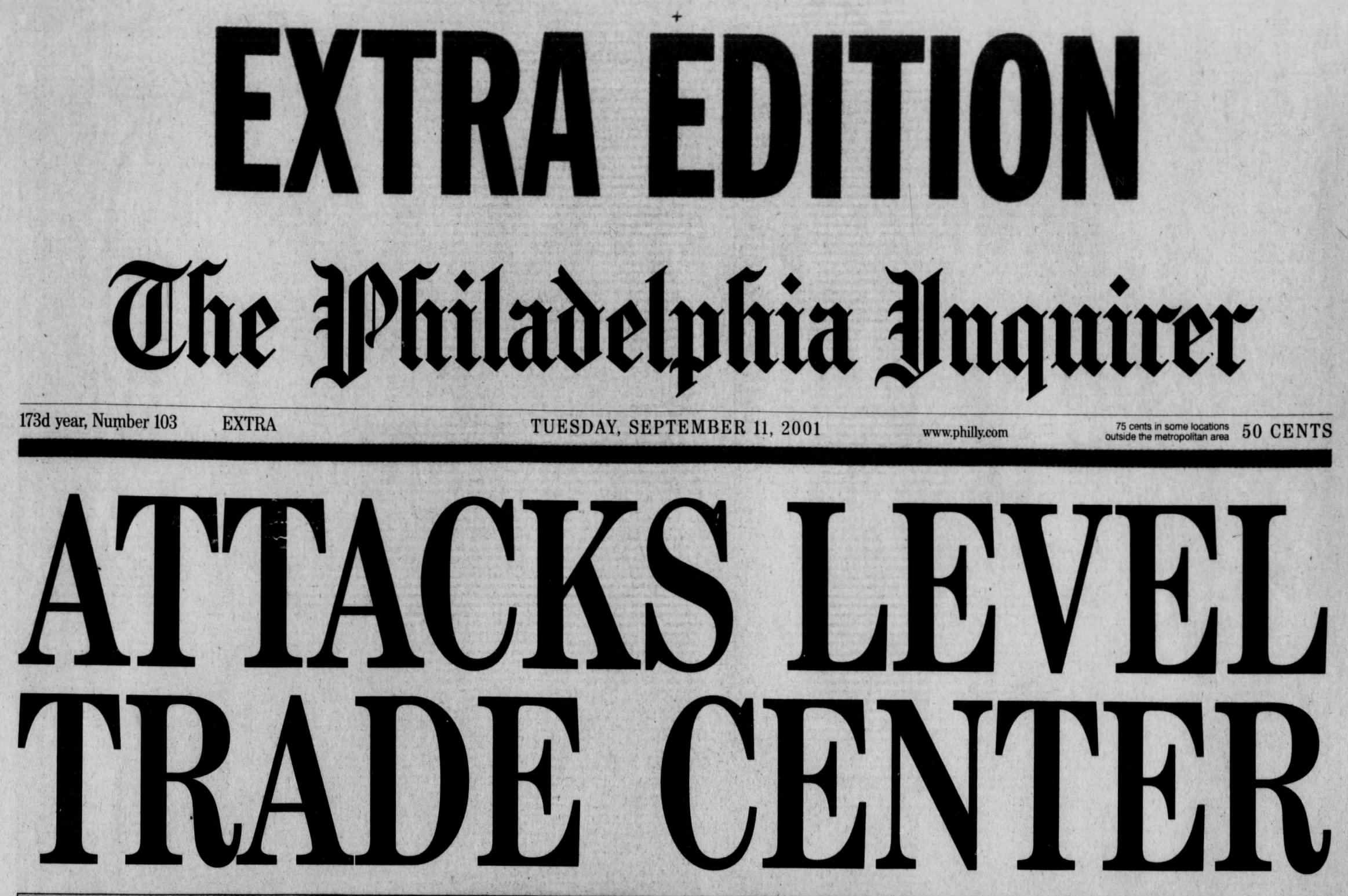
    As the sun set on Philadelphia on Sept. 11, 2001, the city, like the nation, was in shock. Its citizens raged and wept, confronted with unprecedented acts of violence in New York City; Washington, D.C.; and Shanksville, Pa.

    It wouldn’t be known for quite some time, but the attacks that rocked the East Coast that day took about 3,000 lives. Among them were dozens of people with local connections, including several crew members on the doomed flights.

    But in the immediate aftermath of the 9/11 attacks, Philadelphia was focused on survival, and worried that the birthplace of the nation could be the next target. We evacuated, took refuge in religion, worried for the future, gave our blood and time to help, and focused our anger and confusion on our neighbors.

    Now, 25 years later, the impacts of 9/11 continue to reverberate. And though society continued on, in the first few days after the tragedy, it seemed as if it could not.

    Here is how The Inquirer and Daily News covered it:

    https://www.newspapers.com/article/the-philadelphia-inquirer/205152877/

    Article from Sep 12, 2001 The Philadelphia Inquirer (Philadelphia, Pennsylvania) <!— –>

    Panic in Center City

    In the wake of the attacks, panic set in on Philadelphia. Fears the city could be the next target spread quickly, prompting the closure of city government offices, federal buildings, businesses, schools, and historic landmarks by noon.

    “We are taking every reasonable precaution to ensure the safety of our citizens,” Mayor John F. Street said at a late morning news conference.

    Thousands of people began a frantic commute home, gridlocking Center City’s streets and sidewalks. An estimated 50,000 SEPTA Regional Rail passengers were likewise stuck, with several lines suspended. Like all airports nationwide, Philadelphia International Airport was shut down.

    By midafternoon, Center City was essentially a ghost town. Subway lines were all but deserted. Streets were eerily still and empty of cars. Philadelphia’s high-rises largely sat devoid of workers. And as the day wore on, the trauma continued to set in.

    “I feel more shocked today,” said Southampton resident Paul Brown, 81, who survived the attacks on Pearl Harbor 60 years before. “I’m despondent, bewildered, and confused.”

    https://www.newspapers.com/article/philadelphia-daily-news/205152937/

    Article from Sep 12, 2001 Philadelphia Daily News (Philadelphia, Pennsylvania) <!— –>

    Blood and flags

    Almost immediately, horror and sadness turned to anger. Though the enemy was not yet clear or confirmed, there were loud calls for retribution — including from the Daily News.

    In its Sept. 12 issue, under a cover that read “Blood for Blood,” in an editorial headlined “Now, It’s Our Turn,” the People Paper wrote: “Revenge. Hold on to that thought. Go to bed thinking it. Wake up chanting it. Because nothing less than revenge is called for today.”

    Others were more charitable, donating blood to help victims who may have survived. Thousands of people, in fact, streamed into blood donation centers to such a degree that the facilities were overwhelmed. Officials asked that anyone thinking of donating to wait to ease the crush.

    “I feel pretty helpless, and I just wanted to do something,” said Andy Hartlove, 45, of Exton. “Giving blood seemed to be the only thing I could do.”

    Then, there were the flags. So many people bought them to show their support that stores — specialty shops to big box stores alike — sold out completely, and manufacturers began running overtime shifts to make more.

    “Nothing’s going to make anybody feel all that better, but it makes everyone united,” said Jim Whitehead, 22, who worked at National Flag & Banner.

    https://www.newspapers.com/article/philadelphia-daily-news/205153079/

    Article from Sep 17, 2001 Philadelphia Daily News (Philadelphia, Pennsylvania) <!— –>

    A turn to God

    Faced with such monumental violence, many Philadelphians turned to the only being who they felt could provide answers: God.

    Though schools, businesses, and government buildings shut down, many sanctuaries and religious institutions remained open. The city even organized an interfaith prayer service held at Dilworth Plaza on Sept. 13, which thousands attended.

    Many religious leaders reported swellings of their congregations not seen since the bombing of Pearl Harbor. Religion, it seemed, was poised to regain a more prominent place in American lives.

    “People realize when all is said and done that faith in God is the only thing that somebody else cannot take away from them,” said Msgr. John T. Conway, Archdiocese of Philadelphia vicar.

    Many religious leaders took the opportunity to encourage reconciliation instead of revenge. Imam Shamsud-Din Ali, formerly of the Philadelphia Masjid, even encouraged worshipers to pray for the attacks’ perpetrators, noting that in order to perpetrate such a violent act, they must have been badly injured and were in need of God’s mercy.

    The Jewish holiday of Rosh Hashanah arrived as the first religious holiday after the attacks. Paul Bender, the leader of Congregation Ner Tamid in Cherry Hill, sounded a shofar — a ram’s horn blown to sound the start of the Jewish New Year — at a ceremony, likening it to the sounds of wailing of those who lost loved ones. The “sudden, nightmarish anarchy” of the tragedy, he prayed, would soon give way to peace among all people.

    “May that day come soon,” Bender said.

    https://www.newspapers.com/article/the-philadelphia-inquirer/205153160/

    Article from Sep 14, 2001 The Philadelphia Inquirer (Philadelphia, Pennsylvania) <!— –>

    Faith and race targeted

    Philadelphia’s Muslim and Arab American communities were on high alert, and immediately condemned the violence. Federal, state, and local leaders urged the public to not blame those groups, but violence and threats against them were prominent.

    A week after 9/11, officials said, at least 20 bias crimes were reported against Jews and Arabs in New Jersey, and an “untold” number in Pennsylvania. Many people who weren’t Arab or Muslim were also targeted, their attackers believing them to be somehow associated with the tragedy.

    “Apparently, all you need to be right now is brown,” said Emily Hornaday, spokesperson for the New Jersey Division of Criminal Justice.

    Among the most prominent crimes in the area was an incident in which two off-duty Philadelphia police officers pulled a gun on a Lower Merion Township 7-Eleven store clerk at about 3 a.m. the night after the attacks. The clerk, who was from Pakistan, was unharmed, and one of the officers was charged with reckless endangerment and other offenses.

    Taxicab drivers were pulled from their cars and threatened. Islamic religious centers boarded up their windows. A Palestinian flag was pulled down from the wall of Lincoln High School in Northeast Philadelphia, resulting in two arrests. A SEPTA bus passenger threatened a Moroccan man, and begged police to let him “kill the Pakistani.”

    “Are we going after the perpetrators,” asked Amin Elarbi, president of the Al-Aqsa Islamic Society, “or are we targeting an entire faith and race?”

    https://www.newspapers.com/article/philadelphia-daily-news/205153372/

    Article from Sep 17, 2001 Philadelphia Daily News (Philadelphia, Pennsylvania) <!— –>

    Vanishing normalcy

    Even in the early days of the aftermath, it was clear life was about to change. By midweek, city schools reopened, the local government began operating again, and, though curtailed and under new rules, flights began coming and going from PHL. Normalcy, however, was nowhere to be found.

    Large public activities for the weekend after the attacks, such as a Mexican Independence Day festival at Penn’s Landing and a festival celebrating Philly’s connections with Italy known as the Splendor of Florence, were canceled.

    Experts, meanwhile, predicted a swift, lasting change to daily life in the U.S. As Philadelphia Police Commissioner John Timoney put it, we needed to “reexamine how we go about our business.”

    Among those changes, said Geoffrey Herrara, a Temple professor of political science who specialized in post-Cold War security, were an ever-greater electronic surveillance apparatus that would surely be stepped up. Cameras, he said, would be linked with biometrics, and tracking of our movements was to be expected in the future. Some of our privacy, he said, “may disappear.”

    City leaders, however, focused on strategies to get tourists and workers back in town, and back in the high-rises they had quickly come to fear. Occupancy rates at area hotels fell to an abysmal 60%, and the sense that big-city life would be on the decline was palpable. Ultimately, though, we had to keep going, they said.

    “I think we need to communicate to the hearts and minds of Philadelphians that we need to get on with life,” said George Burrell, the mayor’s secretary of external affairs. “The things that attracted you here are still here.”
  • Party’s over for crypto scammers who went on a spending spree after a $240 million bitcoin theft

    Party’s over for crypto scammers who went on a spending spree after a $240 million bitcoin theft

    WASHINGTON — They pulled off one of the largest cryptocurrency thefts in U.S. history, duping a stranger out of bitcoin worth over $240 million. They tried to hide their digital fingerprints, carrying out a sophisticated scheme to launder the proceeds.

    And then the party started.

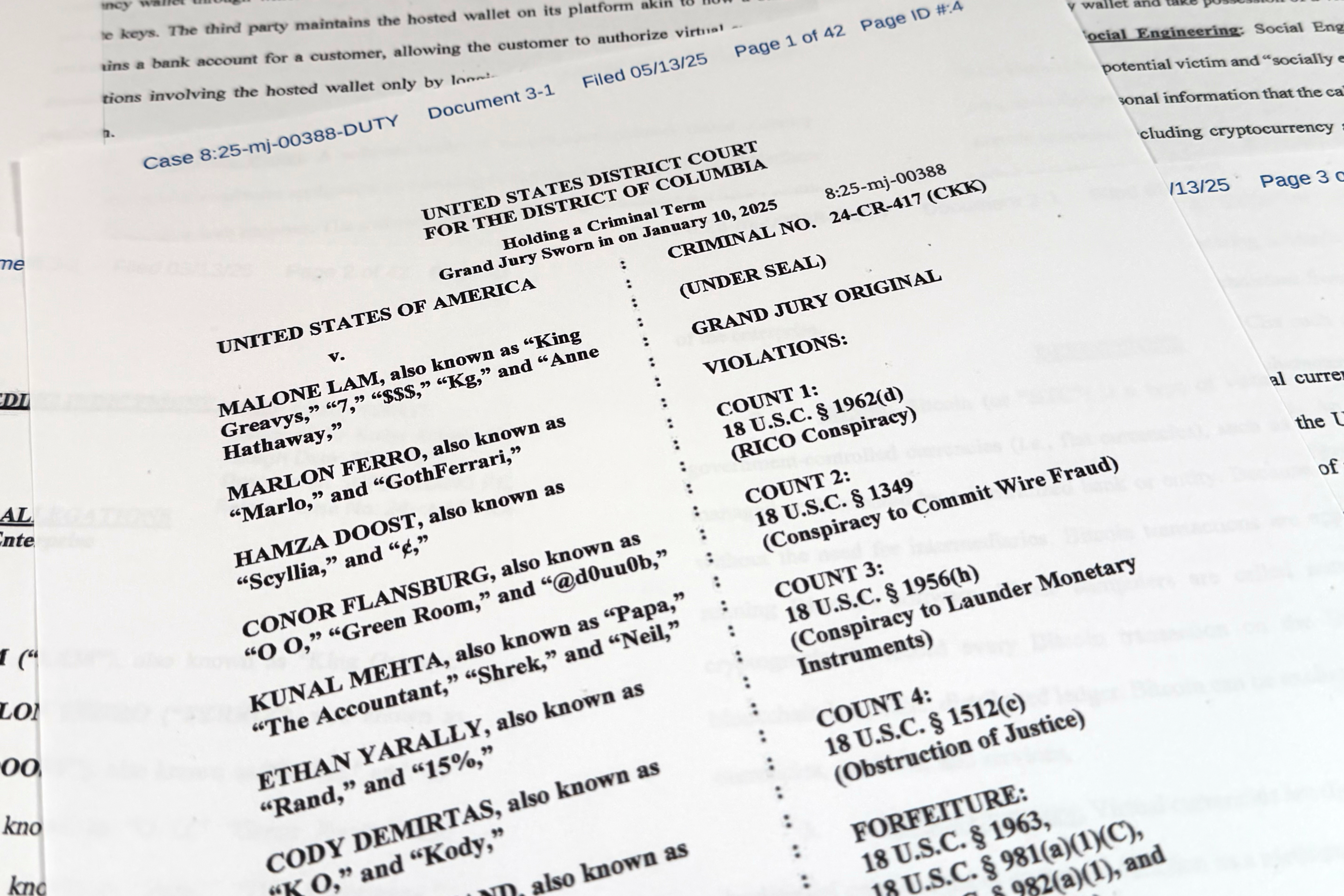
    The scammers — a network of young men in their late teens or early 20s — celebrated the August 2024 heist by embarking on a wild spending spree. They purchased fleets of sports cars, flew on private jets, hired security guards, and rented mansions in Miami and the Hamptons. An alleged ringleader, 22-year-old Malone Lam, spent over $569,000 in one evening at a Los Angeles night club.

    Their bender lasted a month before FBI agents arrested Lam on charges that he organized a “social engineering” attack on the Washington, D.C., resident. Lam, an eighth-grade dropout from Singapore, has a plea agreement hearing set for Tuesday. His conviction would be a capstone for the government’s investigation.

    The charges against Lam and 17 others are an extreme example of an increasingly common form of cybercrime. Complaints of cryptocurrency investment fraud to the FBI rose by nearly 50% in 2025, while Republican President Donald Trump’s administration largely abandoned a regulatory crackdown on the volatile industry.

    Last year, the Justice Department disbanded a unit dedicated to prosecuting crypto-related crimes. Meanwhile, crypto companies that complained of unfair treatment during Democratic President Joe Biden’s presidency are enjoying the government’s hands-off approach under Trump, who took in roughly $1.2 billion from his crypto businesses in 2025.

    Cybersecurity researcher Allison Nixon, who has spent years tracking the Com, an underground subculture of young hackers united by the “insane amount of money” that crypto fraud can generate, advocates for more law enforcement resources to go after them.

    “If we don’t seriously ramp up the resources to take these people down and do it faster, then it’s going to spread more and more,” she said.

    Scammers nabbed millions though ‘social engineering’ heist

    A man identified as “Victim 7” in court filings was at home in Washington on Aug. 18, 2024, when his phone rang. The first caller identified himself as a Google representative inquiring about attempts to breach his account. A second, claiming to be from the Gemini crypto exchange, warned the man of a malware attack affecting his crypto wallet.

    The callers manipulated the man into giving them access to his Google Drive and revealing security codes that allowed Lam to siphon off over 4,100 bitcoin, according to prosecutors. They said Lam and his friends on the calls — Veer Chetal and Jeandiel Serrano — targeted the man because he was a wealthy, longtime crypto investor.

    A private recording captured the moment when the friends realized how much money they just stole, according to a video posted by a well-known private investigator of cryptocurrency crimes who goes by ZachXBT.

    “Oh, my God! Bro, bro, I’m going to spaz out!” a voice on the video said.

    Once they swiped the man’s savings, they used money laundering specialists to wash it through multiple exchange platforms and convert virtual currency into government-issued cash.

    It wasn’t the first social engineering scam for the friends, who met in online gaming forums. They had teamed up on other multimillion-dollar thefts since late 2023 using a similar playbook, according to prosecutors.

    This time, however, one of them made a costly mistake: Serrano failed to conceal his IP address when he created an account on a cryptocurrency exchange to hold nearly $30 million in stolen crypto, according to prosecutors. Investigators linked the IP address to a home in Encino, Calif., that Serrano was renting for $47,500 a month.

    Lavish spending quickly drew attention

    Serrano was vacationing in the Maldives when investigators identified him as a suspect. Lam was in Los Angeles, where he and friends spent $4 million at nightclubs in one month, authorities say. Chetal gifted a Lamborghini to his parents and hid a duffel bag filled with $500,000 in cash in their laundry machine.

    Word of their windfall quickly spread in crypto scammers’ circles. A week after the big score, Chetal’s parents were driving in Danbury, Conn., when several masked men cut them off, forced them out of their new car, beat Chetal’s father with a baseball bat, shoved the couple into a van, and bound their hands.

    The captors, from Miami, had intended to use Chetal’s parents as leverage for extorting him into giving up his share of the stolen crypto. But the ransom plot fell apart when witnesses notified police, who apprehended the carjackers.

    The FBI showed up to search Chetal’s apartment in Brunswick, N.J., on Sept. 9, 2024, and found $37 million in stolen crypto in his possession. He agreed to cooperate with their investigation.

    Lam was attracting attention, too, for spending hundreds of thousands of dollars a night at clubs and tossing handbags worth tens of thousands of dollars to women in the crowds. He also used stolen cryptocurrency to buy a $2 million watch and over 30 cars, including custom Porsches, Lamborghinis, and Ferraris, according to the FBI.

    “This luxury lifestyle, of which so many young men and women could only dream, was just built on a foundation of fraud,” a prosecutor, William Hart, said during a recent sentencing hearing for a money laundering co-defendant.

    ‘Ferris Bueller gone bad’

    Serrano was wearing a $500,000 watch when FBI agents arrested him at Los Angeles International Airport on Sept. 18, 2024. He initially professed his innocence but soon admitted to having roughly $20 million of the D.C. man’s stolen crypto, prosecutors said.

    Lam was arrested at one of his Miami mansions on the same day as Serrano. An off-duty law enforcement officer had tipped off Lam that authorities were on their way to arrest him, the indictment says.

    “We always talked about what it would be like if I were to go down, but never thought it would be this crazy,” Lam told associates from jail on a recorded call, according to his indictment.

    The judge for Lam’s initial court appearance in Miami sounded astonished by a prosecutor’s summary of his lavish spending.

    “I could only think of Ferris Bueller gone bad,” U.S. Magistrate Alicia Valle said, referring to the school-skipping protagonist of the 1986 movie Ferris Bueller’s Day Off.

    Lam’s capture didn’t stop the splurging. Ferro, who pleaded guilty to a racketeering conspiracy charge last year, used stolen funds to cover Lam’s legal expenses.

    Judgment days

    Eighteen defendants have been charged. Lam would be the 11th to plead guilty. At Lam’s first court appearance, a prosecutor estimated that his sentencing guidelines would recommend a prison term of at least 14 years upon conviction.

    U.S. District Judge Colleen Kollar-Kotelly, who presides over Lam’s case, already has sentenced three of his co-conspirators. She sentenced two money launderers to prison terms of approximately six years.

    Chetal pleaded guilty to conspiracy charges in November 2024 and awaits sentencing. Serrano’s charges remain pending.

    Tucker Desmond, who pleaded guilty to destroying evidence of other plotters’ crimes, was sentenced to probation. Desmond apologized at his sentencing hearing in March, saying he “got obsessed with the image of success rather than actually becoming a hard-working individual myself.”

    Ferro declined to address the court during his sentencing hearing in May. His attorney, Kevin Wilson, described the co-defendants as mischievous “young kids,” but the judge didn’t accept that as an excuse.

    “Being young only goes so far,” Kollar-Kotelly said.

  • Trump officials strip military language criticizing Confederate memorial

    Trump officials strip military language criticizing Confederate memorial

    The Trump administration has removed language criticizing a memorial to the Confederacy formerly located in Arlington National Cemetery, part of its ongoing effort to reshape portrayals of the Civil War.

    The Confederate Memorial, a 32-foot bronze statue commissioned by the United Daughters of the Confederacy and unveiled in 1914, was removed from the military cemetery in 2023. Its removal followed a congressional mandate to rid U.S. military property of names and symbols honoring the Confederacy and its leaders.

    The decision by the bipartisan Naming Commission to remove the statue was based on criticism and backlash over the memorial’s depictions, which included an enslaved woman carrying an infant child of a white officer and an enslaved man following his owner to war.

    A Defense Department website and a marker at the memorial’s former site included contextual language describing the sculpture as portraying a “nostalgic, mythologized vision of the Confederacy, including highly sanitized depictions of slavery.” The website also described the two Black figures as enslaved people, including an enslaved woman depicted as a “Mammy,” and it remarked on how the portrayal of the “faithful slave” helped to shape American pop culture.

    Now, that language has been removed from the website, and the marker in the cemetery has been replaced by a new sign that omits wording critical of slavery and the Confederacy.

    The website also formerly featured additional context about the sculpture’s symbolism, including a Latin phrase inscribed on it.

    “An inscription … construes the South’s secession as a noble ‘Lost Cause,’” the website previously read. “This narrative of the Lost Cause, which romanticized the pre-Civil War South and denied the horrors of slavery, fueled white backlash against Reconstruction and the rights that the 13th, 14th and 15th Amendments (1865-1870) had granted to African Americans.”

    That language and other text was removed in recent weeks, according to photographs of the sign and archived versions of the webpage.

    Asked about the changes to the sign and the website, the Defense Department referred questions to Arlington National Cemetery, which did not respond Monday.

    The statue was relocated to the Virginia Military Institute in 2023 amid some congressional GOP opposition. Defense Secretary Pete Hegseth said last year that the statue would be reinstalled at Arlington National Cemetery. Last year, then-Virginia Gov. Glenn Youngkin (R) had said that the statue would return next year.

    “The Army expects to display the sculpture at this site in 2027 after it has undergone comprehensive conservation and refurbishment,” according to a new marker in Arlington National Cemetery at the statue’s former site.

    Stephen West, a Catholic University historian, said he first noticed that the sign had been changed when he visited Arlington National Cemetery on Sunday.

    “The language that used to be on the sign and website described the Memorial correctly. Ezekiel’s sculpture did sanitize slavery, and it did mythologize the Confederacy,” West wrote in a text message to the Washington Post. “And so as a historian, I’m deeply disturbed by the removal of that language and by plans to restore the statue — especially because they’re of a piece with the censoring and slanting of history at other federal sites.”

    Trump has previously said he supports efforts to recognize the Confederacy and sees it as a freedom of speech issue.

    “When people proudly have their Confederate flags, they’re not talking about racism,” Trump said in a 2020 interview with Fox News. “They love their flag, it represents the South; they like the South.”

    The president has decried efforts to remove Confederate statues and worked to reinstall them in his second term.

    A statue of Confederate Gen. Albert Pike that was torn down and torched by protesters in 2020 was restored to its original location in downtown Washington in October. And last year the Pentagon ordered that a portrait of Gen. Robert E. Lee in his Confederate uniform be restored to the West Point library. The painting, which had been ordered removed by the Naming Commission, featured an enslaved man in the background tending to Lee’s horse.

    Ty Seidule, a retired U.S. Army brigadier general who served as vice chair on the commission, said he was particularly disturbed by the Confederate Memorial’s pending return.

    The Confederate Memorial “is the cruelest monument that I have ever seen,” Seidule said in an interview Monday. He said that he and a number of his colleagues called the statue “the most egregious example of racism that they had seen on any public land in America. It is a pro-slavery, anti-United States monument.”

    Seidule said the rewording of the marker and the website is the first step the administration is taking before bringing the memorial back to the cemetery. Restoring the monument, he said, would be “against the will of the American people through their elected representatives in the law that they created.”