Category: Nation & World

  • Suspect in deadly Berlin Pride attack killed in confrontation with police

    Suspect in deadly Berlin Pride attack killed in confrontation with police

    BERLIN — The suspect in the deadly Berlin Pride attack that left one person dead and 29 injured was shot and killed by police during a confrontation on Sunday in a suburb of the city, authorities said.

    Abdul Ballout, a German citizen with Lebanese roots, was killed following a search that lasted nearly 24 hours after the attack in downtown Berlin. Prosecutors said he had previously sought to join the militant Islamic State group.

    Ballout was suspected of driving a van into a crowd near Berlin’s Pride festival Saturday night before apparently stabbing others with a machete in what authorities believe was an Islamic extremist terror attack.

    Interior Minister Alexander Dobrindt said the attack occurred a few hundred yards from a party near the Brandenburg Gate that was supposed to close out the city’s Pride festival.

    Ballout was tracked down around 6 p.m. Sunday at a garden in Spandau, a Berlin suburb, the city’s police department wrote on X. They said he apparently ran toward officers with a sharp instrument, and police fired at least one shot. He died at the scene.

    Ballout was born in Germany, the minister said. His mother was naturalized in 2002, three years before he was born.

    Ashley Jump, a 26-year-old U.K. resident, had traveled to Berlin for Saturday’s Pride parade but had left the celebrations before the attack. They returned Sunday to leave flowers at a memorial near the crime scene in support of the LGBTQ+ community.

    “They’ll never erase us, we’ll never be gone,” they said. “As long as humanity has existed, we’ve existed. And as long as humanity exists, we will exist. We will not be removed.”

    Suspect convicted of ties to Islamic extremism

    Ballout traveled to Lebanon in 2025 with the goal of going to Syria to join the Islamic State group, Berlin prosecutors said Sunday.

    There, he made contact with several people who were presumed members of the militant group — or at least he believed them to be, prosecutors said. He was arrested in Lebanon last year and sentenced by a military court to three months’ imprisonment for offenses including incitement to religious and sectarian conflict.

    He returned to Germany after completing his sentence, where he was arrested at the Berlin airport.

    In May, a juvenile court in Berlin convicted Ballout of preparing a serious act of violence endangering the state, as well as publishing Islamic State propaganda on his Instagram account and other charges, prosecutors said.

    The court handed down a suspended sentence of 1 year and 10 months in youth custody, which Berlin prosecutors had appealed.

    The court said it took Ballout’s months of pretrial detention in Germany and Lebanon into account. It also said it considered that Ballout had confessed to the crimes, appeared to distance himself from the militant group, and no actual threat had ever materialized.

    He was released from detention pending the appeal.

    Berlin’s Pride festival is one of Europe’s largest LGBTQ+ celebrations

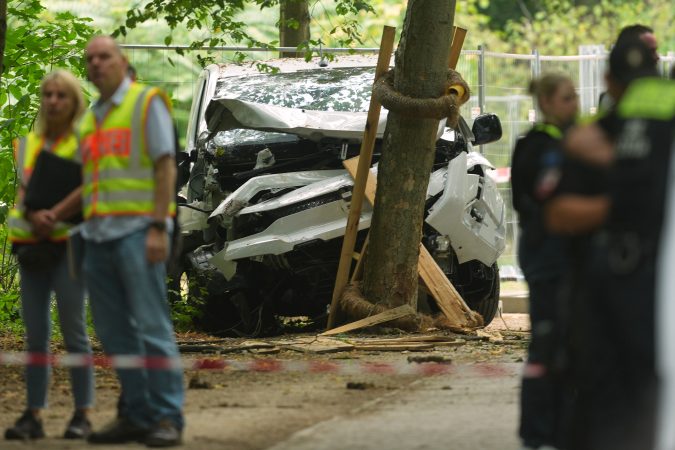
    According to police, a white van drove into the Tiergarten park around 10 p.m. and hit several people before colliding with a tree. The closing party at the Pride festival, known as Christopher Street Day, was ongoing at the time next to the Brandenburg Gate, a short distance away. The party followed a parade with some 80 trucks that had made its way through downtown Berlin earlier in the day.

    The attack did not occur at the festival, along its route, or at the closing party. Rather, the violence took place a few hundred yards away on a track in the Tiergarten park. The van drove into a crowd that was likely a mix of festivalgoers and other locals or visitors.

    Police said a woman was killed.

    On Sunday afternoon, hundreds of mourners gathered at a memorial at the iconic gate. They hugged each other and laid down flowers, candles, rainbow flags, and homemade signs, including a cardboard one that said: “The only thing more powerful than hate is love.”

    Hundreds of thousands had come to Berlin to celebrate on Saturday, though it’s unclear how many were still at the festival by late evening. The event is one of Europe’s largest LGBTQ+ celebrations.

    “We are simply stunned by what happened,” said Andre Lehmann, a top official with the main national LGBTQ+ association, LSVD+. “This suspected attack hits the heart of the queer community.”

    Amsterdam says it will celebrate freedom in the wake of Berlin attack

    Chancellor Friedrich Merz urged the nation to remain united in the aftermath of the attack.

    “I would like to say this to Christopher Street Day participants here in Berlin but also across Germany: Don’t let yourselves, let us not let ourselves, be intimidated,” he said. ”These acts have only one purpose: They aim to divide our society. They want to take away from us the most important thing we have: Namely our openness and our freedom.”

    Dobrindt said he expected security measures at other major events in Germany, including Pride events elsewhere, to be reviewed and if necessary significantly boosted.

    Berlin has seen Islamic extremist attacks before. In December 2016, a rejected asylum seeker from Tunisia plowed a hijacked truck into a Christmas market, killing 13 people and injuring dozens. He was killed days later in a shootout in Italy.

    In February last year, a Spanish tourist was stabbed and seriously wounded at Berlin’s Holocaust Memorial, an attack that saw a Syrian man convicted in March and sentenced to 13 years.

    This week, Amsterdam will be hosting World Pride alongside its own annual Pride celebrations. Mayor Femke Halsema said authorities and organizers “are closely monitoring the security situation” after the Berlin attack but aim to prevent any extra measures getting in the way of celebrating freedom and love.

  • Trump officials vote to rewrite historic preservation rules, in boon for arch

    Trump officials vote to rewrite historic preservation rules, in boon for arch

    Trump officials on Friday voted to rewrite federal rules intended to protect historic sites, sending the plan to the White House for further review.

    The Advisory Council on Historic Preservation, a federal agency that oversees preservation reviews and advises the president and Congress, said it was moving forward with changes to a federally required process that governs changes to landmarks such as the National Mall, sites that are significant to Indigenous tribes, and other properties eligible for listing on the National Register of Historic Places. The process currently applies to any construction projects that are on federal land or receive federal funding, as well as private projects that require any type of federal approval.

    If codified into law, the new rules would make it easier for President Donald Trump to pursue his controversial construction projects — such as building his planned triumphal arch — and could eliminate the need for public input on other major federal projects.

    The ACHP is dominated by Trump appointees, leaving little doubt the proposal would pass.

    The proposed rules “will now move to the interagency review process” overseen by the White House’s Office of Management and Budget, Ashley Fry, an ACHP official, wrote in an email. Once it clears that review, the proposal will be opened for public comment before being finalized.

    Under the current rules, federal agencies must undertake a multistep Section 106 review assessing the potential effects of construction projects and soliciting public input, among other requirements.

    The changes would allow federal agencies to approve construction projects that would impact historical sites without the previous requirement to seek the agreement of affected states, tribes, and other interested parties. The proposal also would allow an agency to unilaterally decide whether or not it’s in the public interest to allow public participation in the review process.

    The proposed rules could make it easier to change or destroy sites like Native American burial grounds or historic downtowns, or to build projects that change the view from historic sites such as power lines near Thomas Jefferson’s Monticello estate.

    The current process has created speed bumps for some of Trump’s projects, which he has sought to rush through federal reviews and complete before his term ends in January 2029.

    Under the existing Section 106 rules, outside groups are currently weighing in on Trump’s plan to build a 250-foot-tall arch on federal parkland near Arlington National Cemetery.

    Trump officials complained last month that the current process was overly burdensome.

    “Consulting parties also often request mitigation that is beyond the agency’s authority, unacceptable to a project proponent or the agency, or unduly burdensome, which can lead to disagreements that delay the completion of the process,” said Kevin Lilly, acting assistant secretary for fish, wildlife, and parks at the time, adding that the agencies could be forced into “endless consultation” under the current rules.

    Historic preservationists and advocacy groups have decried the administration’s plan to overhaul the existing rules and vowed to mobilize resistance.

    “The proposed changes threaten the history of our nation and the fabric of our society — this is an attack on our civic and cultural inheritance,” Brent Leggs, the CEO of the National Trust for Historic Preservation, said in a statement on Friday night.

    The National Association of Tribal Historic Preservation Officers, a nonprofit that focuses on protecting culturally important places for Native Americans, said in a statement that the proposed changes are “an affront to Tribal sovereignty.” Other groups warned about the potential lack of protections.

    Rep. Chellie Pingree (D., Maine), the top Democrat on a House subcommittee that oversees funding for the Interior Department, said that the administration’s plan would allow rushed construction projects that could “permanently damage” historical sites.

    “They have shown time and again that they’re not interested in respecting the full scope of America’s history — only in fast-tracking the president’s vanity projects and giving sweetheart deals to donors and supporters,” Pingree said in a statement.

    Sara Bronin, who led the ACHP under the Biden administration, told the Washington Post that she was not surprised the council voted to advance the proposed rule. Twenty of the 24 seats on the council are either directly appointed by the president or are reserved for the heads of federal agencies, such as the Interior Department, which are controlled by Trump.

    “I expect the ACHP to ignore public comment and finalize the rule in the next month or so,” Bronin said. “Once they do, the preservation community and its allies will be ready both to challenge their action in court and to ask Congress to intervene.”

  • How the lighthearted social media trend of teen takeovers took a serious turn

    How the lighthearted social media trend of teen takeovers took a serious turn

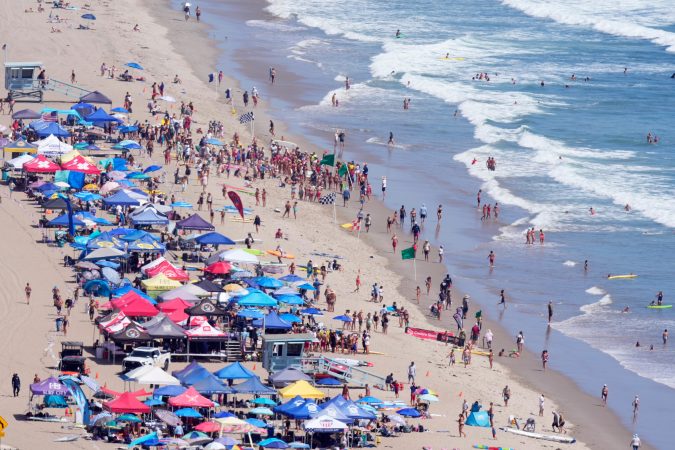
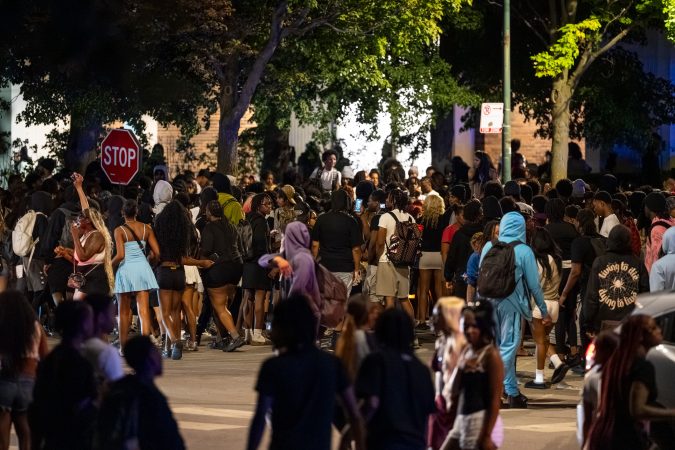
    When Damarion Spann, 18, saw an Instagram flier calling for a massive gathering on a beach near downtown Chicago, he immediately wanted to go. Thousands of others joined him that night on the sand, blasting music and dancing.

    The cultural trend of so-called teen takeovers has popped up across the U.S. in recent years, influencing local policing and national politics. The events, often hyped online and captured in videos on social media, have led to shootings, theft, and vandalism. City officials and police are concerned about an increase over the summer, and are under pressure to prevent similar gatherings or to punish those who participate.

    Over the July 4 holiday weekend, several thousand young people converged in two spots in Raleigh, N.C., police said. Nine people, including an adult who was not part of the gatherings, were shot and wounded.

    There were also takeovers in Pensacola, Fla., where a 19-year-old was shot and killed; and Newport Beach, Calif., where more than 400 were arrested after the police chief said teens launched “explosive mortars and other projectiles” at officers ordering them to disperse.

    But Spann and other teens say that the events are largely misunderstood. They point to formal curfews or limits on group size at malls and movie theaters that have made it harder for teens to gather, exacerbating a feeling of disconnection they trace back to remote learning during the coronavirus pandemic.

    How cities are tracking the social media trend

    Communities and police across the country are trying to identify organizers, fine parents of those involved, and impose curfews.

    In Detroit, officials say they “thwarted” 19 gatherings so far this year by monitoring time and location changes as young people coordinated across social media, said Teferi Brent, director of the Mayor’s Office of Neighborhood and Community Safety.

    “We have eyes on all the behaviors and activities of those who have expressed interest in trying to take over and we have done a good job of being way ahead of the curve and being able to prevent a lot of these things,” Brent said.

    Alderperson Jessie Fuentes, who chairs the Chicago City Council’s subcommittee on youth employment, said her office has tried to find solutions that don’t rely exclusively on police and instead coordinate with parents and community members to prevent conflict or crimes.

    Blue Island, a south Chicago suburb, has taken another tack: to fine parents or guardians and use the funds to cover cleanup after events. That might include debris left behind or other damages like cars dented from scores of teens clambering over them while fleeing police.

    Other places have taken harsher approaches, as in Florida, where state officials said prosecutors can apply racketeering laws, typically targeting criminal gangs or organized crime, if takeovers appear to be facilitated by “an organized network.”

    But some have pushed back on the idea that the threat of harsh legal punishment could prevent the gatherings in the first place.

    “What we know about adolescent brain development is that the stakes are not going to be what prevents a young person from engaging in risky behavior,” said Melissa Milchman, the executive director for the nonpartisan organization the Coalition for Juvenile Justice. Milchman added that mass arrests often ensnare those who are going for innocent fun without preventing others from breaking the law.

    Teens say there aren’t safe spaces for them to gather

    For Spann, the recent media attention on the events has largely failed to capture the appeal to young people.

    “You feel like a young person who has freedom, who’s not being held to something,” said Spann, who is Black. At the event he went to, he was able to catch up with people he hadn’t seen since 8th grade.

    He said that the events are a direct result of a cascade of school closures across Black neighborhoods over the past couple of decades in Chicago. To deter people from gathering even at basketball courts, where there were sometimes fights, officials have removed the nets. Spann said that his mom, who grew up in the same neighborhood, frequently talks about how much easier it used to be to hang out outside without a fear of gun violence.

    When Spann goes to malls in more affluent areas with his mostly Black group of friends, shoppers often stare and security guards question them. To avoid scrutiny, Spann and his friends sometimes sneak into outdoor shopping centers or areas downtown in smaller groups at staggered times.

    By contrast, in the same spaces, Spann said, “If I’m with my white friends, I feel like I belong.”

    Despite the physical dangers that come with takeovers and the threat of getting a ticket or even arrested, the allure is strong, according to Jeffrey Bernstein, a psychologist and author.

    “The kids still do it because they feel like it’s their second family,” which he said “really takes over as their primary sense of connection.”

    “They’re getting things from their peers that they can’t get from their parents.”

    Some cities have tried to meet that need head-on, instead of cracking down with law enforcement.

    In St. Louis, officers have started to bring some teens to community centers instead of jails so their parents can pick them up, and in Baltimore, officials have tried leaning on public schools to provide alternative programming. In Chicago, Spann received a $11,000 grant from the city and partnering nonprofits to host an event for his peers at the end of the summer, in an effort to give his community more places to gather.

    What cities are doing to address teen takeovers

    In April, Daveion Page, a 16-year-old in Detroit, was bored. He turned to his phone, creating a post on social media promoting a teen takeover. Hundreds of teens soon flocked to a site downtown and fights broke out by the end of the night. At another takeover in May, a 14-year-old was shot and wounded.

    After the Detroit event in April, Page told reporters that he didn’t intend for the takeover he organized to result in violence.

    “I just wanted to get out of the house, have fun, enjoy time with my family and my homeboys and my homegirls, too,” said Page, who was flanked by Detroit Mayor Mary Sheffield and other city officials at a news conference.

    He told city officials that young people might respond if there were more safe places to gather.

    Before the takeovers, there were already plans to use $1.5 million from the city’s budget for summer programming and to support violence prevention programs. In response to the takeovers, the city has launched an office of youth affairs, met and listened to students at schools, and created a youth advisory board comprised of teens and young adults.

    “We have brought them to the table and made them a part of our structure in regards to identifying what the needs and concerns are of the young people in the city,” Brent said.

    In Detroit, a late-night basketball league has formed as an alternative hangout spot for teens and young adults. Jerseys and sneakers are provided by the city.

    “This league just helps me find something to do,” Cameron Chandler, 21, said while playing basketball at the recreation center.

    He’s never participated in a takeover, but recently after practice, he stumbled on one near his home.

    “There were a lot of cops and some people got arrested,” Chandler said. “You just have to think, ‘that could easily be me.’”

  • More health workers strike as Ebola cases in Congo near 3,000, including over 1,300 deaths

    More health workers strike as Ebola cases in Congo near 3,000, including over 1,300 deaths

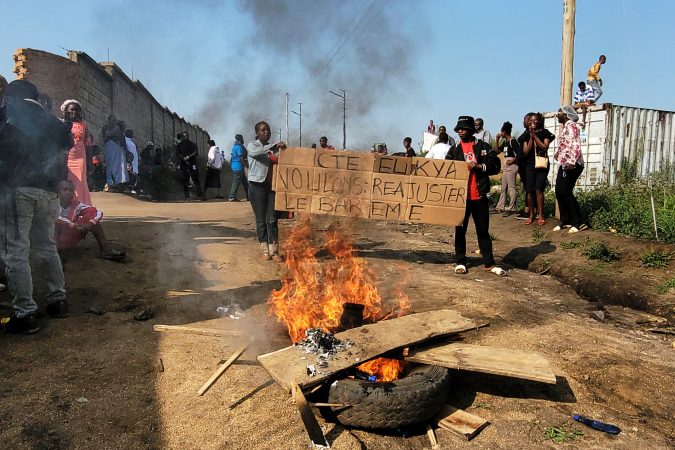
    BUNIA, Congo — Health workers at an Ebola treatment center in eastern Congo went on strike on Saturday, demanding their pay. The walkout disrupted care for patients in the epicenter of the country’s rapidly growing outbreak.

    The number of confirmed cases of Ebola in Congo has reached 2,973, including 1,309 deaths, according to government data released on Friday in what authorities say is the fastest-growing outbreak on record.

    The Elikya Ebola Treatment Center in Bunia, Ituri province, came to a standstill after doctors, nurses, and security staff stopped work.

    About a hundred health workers protested outside the treatment center on Saturday. They said the unpaid bonuses were undermining morale and disrupting patient care, and called on Congolese authorities to resolve the backpay so they could resume their work.

    “We need to be paid, because in the meantime the disease is spreading at the treatment center,” Martin Bolombi, one of the health workers on strike, said.

    “I’ve already had five people die who are still inside there. A solution must be found for us,” he added.

    In a statement issued Friday, staff said they had unanimously voted to strike until “concrete solutions” were found to resolve “two months of unpaid performance bonuses.”

    The strike comes a day after Congo’s Prime Minister Judith Suminwa came to Ituri, touring major treatment hubs in Rwampara and Mongbwalu, to assess the outbreak response. During her visit in Mongbwalu, she faced urgent demands from healthcare personnel protesting payment issues.

    Adelard Lufungula, operations manager for the Ebola response, said Saturday the payment issue is “being resolved,” with workers now paid via mobile money instead of cash, and that the backlog “should be cleared” in the coming days.

    Last week, health workers at Bunia General Hospital, the region’s largest medical center, had already gone on strike over unpaid salaries. Some told the Associated Press they had not received any payment since they started work at the onset of the outbreak.

    The World Health Organization says more than 100 healthcare workers have been infected since the beginning of the outbreak.

    The Central African nation has been battling the Ebola outbreak caused by the rare Bundibugyo virus since May 15. A total of 766 patients remain in isolation or in hospitals, while 540 have recovered so far, according to data from Congo’s Ministry of Health.

    The eastern province of Ituri accounts for nearly 90% of confirmed cases.

    The outbreak continues to spread faster than health officials can track despite an expanding response. A key challenge is that patient zero has yet to be identified in the outbreak, while displacement from armed conflict and illegal mining in the region have made it difficult to trace thousands who have come in contact with infected individuals.

    The response is also hampered by a funding gap, attacks on health centers, an ongoing conflict in eastern Congo, and mistrust among local communities.

    There is also a lack of approved vaccines or treatments for the Bundibugyo virus, unlike the more common Zaire virus, for which there is a vaccine and which was responsible for most of Congo’s past 16 outbreaks of the disease.

    Enrollment in a highly anticipated study of two possible Ebola treatments recently started in Ituri.

    WHO says the global risk of the outbreak spreading outside Central Africa is low, noting that Ebola spreads through direct contact with the bodily fluids of an infected person rather than through the air, making it much harder to spread than respiratory viruses.

  • Wisconsin’s capital city cancels signature events, grapples with fallout from police shooting

    Wisconsin’s capital city cancels signature events, grapples with fallout from police shooting

    MADISON, Wis. — A police shooting in Wisconsin’s progressive capital city this week put the spotlight on persistent and deep racial divisions, prompting cancellations and other changes to popular summertime events as protesters said they were determined to continue public pressure for change in Madison.

    Corey Ruiz, who is identified as Black or Latino in Wisconsin court records, was shot and killed by a Madison police officer on Wednesday after a brief scuffle at an intersection in the city’s most liberal neighborhood just yards away from a popular 52-year-old food co-op.

    It marks the third time since 2012 that Madison police have shot and killed someone in the same neighborhood. The shooting has sparked renewed calls for police reforms and forced the city to once again reckon with calls from the Black community to address racial justice issues.

    Pressure from protesters, and sympathy for their cause, has also led to the cancellation or disruption of many of Madison’s signature summertime events.

    “Our community has spoken loud and clear: this is NOT business as usual,” Black activist Clyde Mayberry posted on Facebook on Friday amid a string of cancellations. “Your decisions have helped ensure that this city continues to acknowledge the pain, the loss, and the call for accountability.”

    Protesters took to the streets hours after the shooting, disrupting a popular Wisconsin Chamber Orchestra outdoor concert at the state Capitol that attracts about 30,000 every week in the summer.

    The scene captures a familiar divide in Madison, a city that is more diverse than the state overall but still 70% white. Protesters, many of whom were Black, stood over white concert attendees sitting at tables near the stage that cost as much as $1,800 to rent for the night.

    Concert organizers canceled the event.

    Threats of a protest on Thursday led the city to postpone the grand opening of a new public market, just a few blocks away from where the shooting occurred. A popular neighborhood festival near the shooting called AtwoodFest, scheduled to begin on Saturday, was also canceled in the face of potential protests.

    “Our community and our Marquette neighbors witnessed another horrific officer-involved shooting just blocks from our festival grounds, leaving us in deep pain and justified anger,” organizers of the festival wrote. “In acknowledgment of what has happened far too often in our community and our country as a whole, this year’s AtwoodFest, themed ‘The Heartbeat of the Neighborhood,’ is canceled.”

    And on Saturday, the popular downtown farmers market that attracts about 20,000 people each week around the Capitol building shut down nearly four hours earlier than usual in solidarity with protesters.

    “We mourn with our community,” market organizers posted on social media. “And we agree — business cannot proceed as usual.”

    A handful of protesters showed up at the Capitol as vendors were breaking down their booths at around 10 a.m.

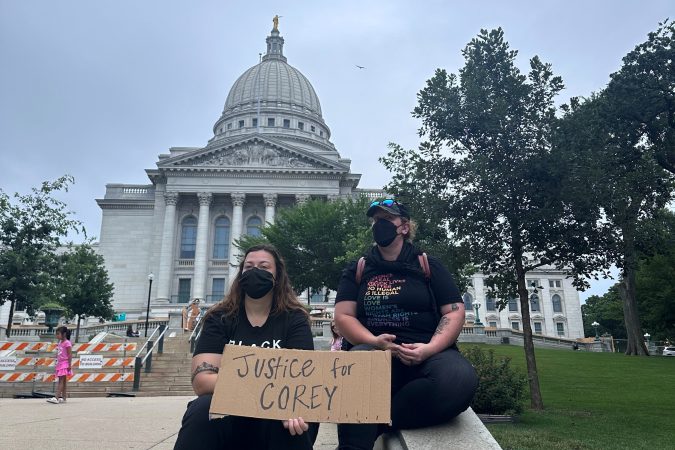
    “No one should be thinking this is just another Saturday,” said Reba Bergmann, who sat with Lilly Nimmer holding a sign that said “Justice for Corey.”

    “It’s not life as normal,” Nimmer said. “We should be more mad. We should stand up for what we believe in.”

    Charles Alt, 30, supported the decision to close down early.

    “It’s important to keep focus on the real tragedy, which is that someone got killed,” said Alt, who was shopping at the market. ”Missing some market time, that’s sad, but that’s not what’s important.”

    But Rodney Hathaway, who was visiting Madison from Milwaukee, was caught off guard by the market’s early closure.

    “It’s ridiculous,” he said. “This is peoples’ livelihoods. It’s just unfortunate. We have such a short summer season for these people to sell their wares.”

    Investigations into the shooting continue. Civil rights attorney Ben Crump, who represents the Ruiz family, said on Friday at a new conference in the Capitol that the officer who fired the shots should face criminal charges.

    Madison Police Chief John Patterson, who is white, has tried to calm tensions, even allowing protesters to overtake a news conference that he was leading along with the mayor inside the police department’s downtown headquarters on Thursday.

    Patterson took questions from angry protesters, one of whom held a sign just feet away from the chief that said “corrupt cops deserve to die too.” After one protester hurled an insult at Patterson, the chief calmly responded, “I appreciate you being here.”

  • France and Spain battle wildfires as more than 250,000 people are forced to flee homes

    France and Spain battle wildfires as more than 250,000 people are forced to flee homes

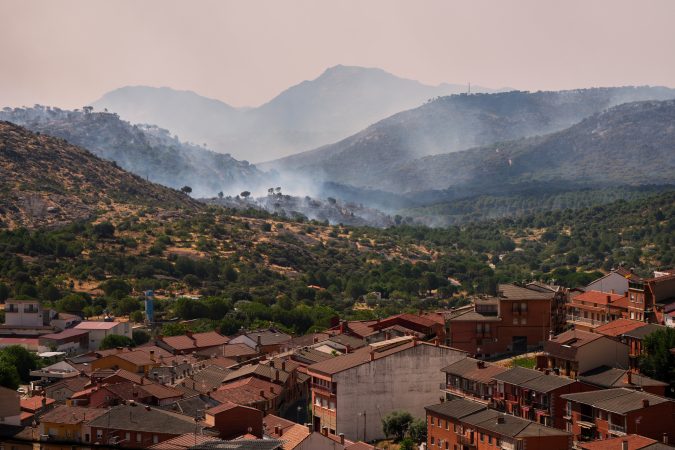
    LEGE-CAP FERRET, France — France sent a hulking military cargo plane to dump tons of flame retardants as it battled raging wildfires on Saturday and slashed the final stage of Tour de France to redeploy security personnel to the blazes that forced tens of thousands of people to flee their homes.

    The giant A400M transporter swooped in low, its long plume of ochre-colored retardant trailing over drought-hit woodlands in the southwest as fire crews on the ground fought flames that authorities feared could spread toward the wine region city of Bordeaux.

    Race organizers and the Paris police department announced a truncated 21st and final stage on Sunday for the three-week Tour, France’s most famous annual sporting event, reflecting the immense strain that two large fires in the southwest are causing for emergency services.

    Tour riders will race Sunday inside Paris, rather than starting from Thoiry, west of the capital, on a circuit of 55 miles — down by a third from the 82.5-mile route that had been planned. Part of the race’s security detail will instead “reinforce the response efforts in the areas affected by the wildfires,” according to the statement announcing the ”exceptional measures made necessary by the situation.”

    Including some 70,000 people evacuated in central Spain, wildfires in southern Europe this week have displaced more than 250,000 people.

    Shifting winds raise concerns for Bordeaux

    With winds expected to shift in a west-to-east direction on Saturday afternoon, potentially driving flames closer to Bordeaux, fire crews and authorities were digging trenches, using retardants, and taking other blaze-blocking steps, French Interior Minister Laurent Nunez said, predicting a “long and very difficult” battle.

    He said the fire was about 20 miles west of the city and lost some of its intensity overnight. The prefect of the Gironde region that includes Bordeaux said the blaze grew into “a firestorm” on Friday after igniting earlier this week and cautioned that it “remains dangerous” even though firefighters were making progress.

    The government mobilized soldiers to join fire crews and was rushing in 1.5 million face masks to protect against choking smoke.

    Authorities ordered people between the fire and Bordeaux to evacuate, including from parts of the city’s western suburbs and other towns and villages.

    Prime Minister Sébastien Lecornu described the fires as unprecedented and said the Gironde blaze became so strong on Friday that it had begun generating its own winds. Firefighting teams were being reinforced with the addition of hundreds of soldiers, and breathing masks to filter out potentially noxious smoke particles were being rushed to those exposed, Lecornu said.

    In Bordeaux, authorities took in thousands of evacuees, offering them food and shelter in an exhibition center, and the city’s mayor said it could be equipped to welcome as many as 10,000 people if that became necessary. The city’s airport said it remained open but that its bus and tram services were suspended.

    Evacuation orders were sent with special alerts to mobile phones, instructing people to leave, Gironde prefect Sophie Brocas said. She said the fire had destroyed about 140 homes in the region.

    The magnitude of the wildfires caught authorities off guard

    The French military A400M transport plane, specially converted for firefighting, was a heavyweight new tool in the battle. It joined at least 18 other water- and retardant-dropping aircraft and helicopters that Nunez said were deployed in the Gironde region, working in rotation in the smoke-filled skies.

    The virulence of the French and Spanish wildfires, fueled by high temperatures and the long-term effects of climate change, caught fire crews and authorities off guard.

    Firefighters in Spain said the blazes spread so fast and violently that they could not be tackled head on. In France, some people even fled by boat when flames swept through tourist towns on the Atlantic coast.

    “We’ve never seen anything like this,” said Javier Organista, a resident of El Tiemblo, west of Madrid, where fire charred a famed chestnut grove. “When we saw the flames coming into our town, surrounding us, leaving us with practically no way out, all the neighbors joined together to try to stop its advance.”

    “It’s just really sad,” he said.

    Climate change supercharges fires

    Spain deployed 2,600 firefighters, police, and other emergency personnel to two blazes west of Madrid, backed by 19 water-dumping aircraft and helicopters.

    France deployed 1,400 firefighters to the Gironde fire and hundreds of others to another wildfire further south in the Landes region. Dozens of firefighters suffered injuries, authorities said, but no deaths were reported in either country despite scenes of panic as townsfolk fled by car and police went door to door to tell people to leave.

    Successive heat waves that hit unusually early and hard this year, baking Europe with record-shattering high temperatures, have turned forests and scrublands into tinderboxes.

    Fires have burned 130,000 hectares of forest already this year in Spain, up from an annual average of 100,000 hectares over the past decade, Spanish Prime Minister Pedro Sánchez said Saturday as he visited a command post west of Madrid.

    He said more favorable weather Saturday offered “a window of opportunity” for fire crews to bring the blazes under control. Madrid’s regional government said the fires decreased in intensity as winds and temperatures dropped.

    Other European nations were helping, with Italy, Greece, the Netherlands, Portugal, Croatia, the Czech Republic, Sweden, Slovakia, Germany, and Switzerland already providing or expected to deploy water-dumping planes and helicopters to the Spanish and French fire fronts.

  • Heat dome expands across the central United States, creating dangerous conditions for millions

    Heat dome expands across the central United States, creating dangerous conditions for millions

    WASHINGTON — Dangerously hot weather will expand across much of the central United States this weekend and into next week, pushing temperatures above 100 degrees Fahrenheit from Dallas to North Dakota with roughly 70 million people facing heat advisories.

    A heat dome, where atmospheric conditions trap heat, will create sustained high temperatures and accumulating discomfort. Overnight low temperatures aren’t expected to come down enough for people to have much chance to recover, allowing heat stress to build as the bad weather lingers, forecasters said. The high humidity will make it feel even worse.

    A huge stretch of the country will endure the oppressive midsummer weather. It will stretch from the desert Southwest to the Gulf Coast, reaching up into the Midwest and Great Plains. Some records around the Denver area may be broken, forecasters said. Temperatures are expected to be 10 F to 15 F above what’s normal.

    “It looks like it is going to be pretty much stationary in that position as we go through the week,” said Bob Oravec, meteorologist with the National Weather Service.

    Places under a National Weather Service extreme heat warning included western Nebraska, where temperatures Saturday and Sunday were forecast to reach 108 F.

    At the Museum of the Fur Trade near Chadron, Neb., there were fewer visitors than usual for this time of year. Meanwhile, fur hats and pelts in the gift shop weren’t selling so hot.

    “I’m sure no one would be willing to wear it on a day like this,” said museum employee Hannah Lovelace. Loose-fitting, period-correct fabric shirts, on the other hand, remained popular sellers among folks headed to historical frontier reenactments called rendezvous, she said.

    The region’s heat was forecast to continue through the week, with temperatures topping 100 F even in normally moderate areas of Montana and Wyoming.

    There might be some relief in the central United States toward next weekend, but even that might be temporary, said Oravec.

    Some areas will be spared. The Mid-Atlantic and Northeast should avoid the extreme heat, as will much of the Pacific Northwest.

    This is the latest miserable stretch of weather during a summer that has already had a lot of it. The eastern United States endured an unbearably hot early July that forced communities to cancel Independence Day celebrations and disrupted the country’s 250th anniversary. Another heat wave in mid-July hit the Southwest and Great Plains. It’s not just the United States. A heat wave in June devastated Europe; France recorded at least 5,700 more deaths than usual during that period.

    This heat dome will be dangerous. Children and the elderly, along with those with medical conditions, are especially at risk of serious conditions including heat stroke. The basics are important: People should seek out air-conditioning or a cooling center and make sure they drink enough water and limit time under the direct sun.

    The weather will shift somewhat through the week with the worst pockets of heat becoming particularly severe across Texas and parts of the Gulf Coast by Wednesday.

    It can be difficult to know exactly how climate change contributes to particular events in real time. But rising carbon dioxide levels from burning fossil fuels makes it more likely that hotter weather becomes more frequent and extreme, according to Andy Pershing, chief program officer at Climate Central, a climate change communications nonprofit.

    “We are experiencing exactly what the climate models in the 1990s said we should experience now. That is more frequent, more severe heat waves, bigger temperature anomalies, more humidity, higher overnight temperatures,” Pershing said. “These are all part and parcel of the climate story.”

  • Israel detains over 70 suspects following deadly violence in the West Bank

    Israel detains over 70 suspects following deadly violence in the West Bank

    NABLUS, West Bank — Israel’s military said it detained over 70 suspects across the occupied West Bank overnight and on Saturday, a day after troops deployed across the territory following violence that left two Israeli soldiers and four Palestinian villagers dead.

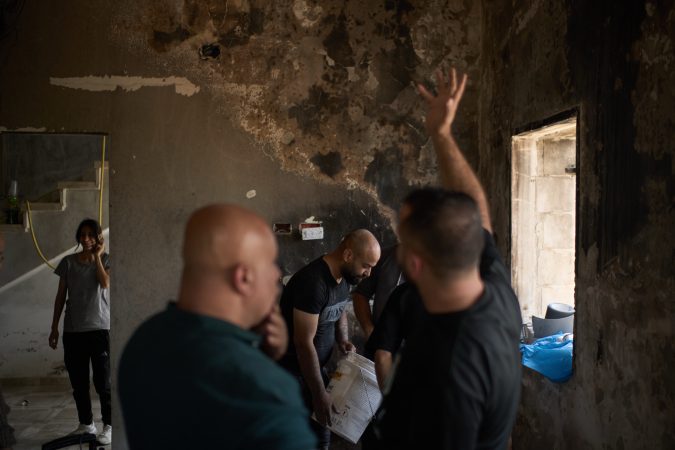
    Soldiers remained in the village of Tell, in the northern West Bank, where Friday’s clashes were centered. Palestinians described searches that included raids of a hospital in the city of Nablus, one of the territory’s most violent areas.

    Palestinians in the West Bank have faced violence as Israel’s hard-line government, dominated by settler leaders and supporters, has overseen a surge in settlement construction over the past four years. The international community overwhelmingly considers the Israeli settlement construction illegal and an obstacle to peace.

    Soldiers make arrest during raid at West Bank hospital

    “More than 50 armed soldiers and officers stormed the hospital, terrifying the patients,” Ghassan Barkat, director of Nablus Specialty Hospital, told journalists. He said soldiers on Friday detained, bound, and insulted staff and patients, raided hospital departments, and arrested a seriously injured man, Ali Hussein Ali Ramadan.

    “This should not happen in a healthcare institution,” said Barkat, adding that women and children were present.

    An Israeli military statement did not mention the hospital, but it said over 300 locations were searched and what it described as affiliates of the Hamas militant group, arms traffickers, “terrorists,” and others were detained.

    The circumstances of Friday’s events remained unclear, but Israeli media reports and interviews with local Palestinian officials suggested a group of settlers entered Tell and were confronted by residents fearful of an attack. The village is off-limits to Israelis as part of Area B under the 1993 Oslo Accords.

    The Palestinian Health Ministry said Israeli soldiers shot and killed four Palestinians in Tell, while the military reported the deaths of two soldiers, one of them a settler in a local defense squad. Two other Israelis and four more Palestinians were wounded, health officials said.

    The Israeli military on Saturday said it detained 11 suspects in Tell.

    Over 80 Palestinians were arrested across the territory, said Amin Shuman, president of the Palestinian higher commission for the affairs of prisoners, calling the arrests “an attempt to impose collective punitive measures and retaliatory policies” against Palestinian citizens after Friday’s events.

    More than 700,000 Israelis live in the occupied West Bank and east Jerusalem, territories captured by Israel in 1967 and sought by the Palestinians for an independent state along with the Gaza Strip.

    Israeli strikes kill at least 4 in Gaza

    Israeli strikes on Saturday killed at least four Palestinians and wounded at least 15 others across Gaza, according to Palestinian health officials.

    In the southern city of Khan Younis, an airstrike killed a man and a woman, whose bodies were taken to Nasser Hospital, the hospital said.

    In northern Gaza, a strike on a vehicle in the Jabaliya area killed one person and wounded two others, according to officials at Shifa Hospital, where the casualties were taken.

    A strike on a motorbike in Gaza City’s Sheikh Radwan neighborhood killed the director of the area’s police force, according to the Interior Ministry and Shifa Hospital.

    A strike in the central Gaza refugee camp of Nuseirat wounded three people, according to the Belgian field hospital, which received the casualties.

    And Israeli drones struck the vicinity of Al-Aqsa Martyrs Hospital in the central city of Deir al-Balah, wounding 10 people, the hospital said. Chaotic scenes unfolded as severely wounded men covered in blood were rushed into the hospital by bystanders.

    Israel’s military said it struck a member of Hamas’ military wing near Al-Aqsa hospital. The military did not immediately respond to a request for comment on the other strikes. Militants have carried out shooting attacks on troops, and Israel says its strikes are in response to that and other violations.

    While the heaviest fighting has subsided since a fragile ceasefire took hold in October following two years of war between Israel and Hamas, Israeli forces have carried out repeated airstrikes, killing at least 1,191 Palestinians, according to Gaza’s Health Ministry.

    The ministry, part of the Hamas-led government, maintains detailed casualty records that are seen as generally reliable by U.N. agencies and independent experts. It does not give a breakdown of civilians and militants but says women and children make up most of the dead.

    Five Israeli soldiers have been killed since the ceasefire.

    The Oct. 7, 2023, attack by Hamas-led militants on Israel killed some 1,200 people and saw 251 taken hostage, sparking the war. Israel’s retaliatory offensive in Gaza has killed more than 73,317 Palestinians, including those killed since the ceasefire, Gaza’s Health Ministry said.

  • Houthis fire missiles and drones at Saudi Arabia in response to strikes on a Yemeni city

    Houthis fire missiles and drones at Saudi Arabia in response to strikes on a Yemeni city

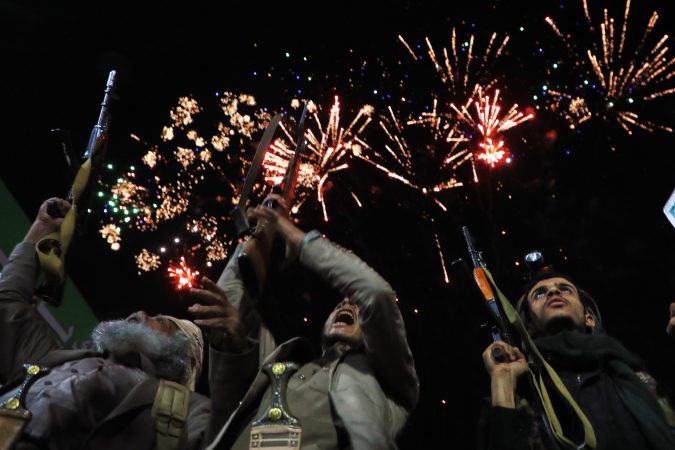
    CAIRO — Yemen’s Iran-backed Houthi rebels said Saturday that they fired missiles and drones at Saudi Arabia in response to Saudi airstrikes on the strategic Red Sea city of Hodeida, in an escalation over vital shipping routes in the Middle East while the United States and Iran vie for control of the Strait of Hormuz.

    Brig. Gen. Yahya Saree, the Houthis’ military spokesperson, said in a recorded statement that the attack targeted facilities in the Red Sea cities of Yanbu and Jizan that belong to Aramco, the world’s largest oil company.

    Saudi Arabia’s civil defense said alerts sounded multiple times early Saturday in both cities, but the kingdom didn’t comment further.

    There were no reported strikes overnight in Iran, in an apparent break from nearly two weeks of consecutive nights of U.S. attacks.

    Red Sea escalation further threatens global shipping

    The Houthis have said they would close the Bab el-Mandeb Strait to Saudi-linked shipping in retaliation for the kingdom’s blockade on Yemen and a recent attack on the international airport in Yemen’s rebel-held capital, Sanaa.

    “Nothing short of ending the aggression and lifting the blockade, otherwise, it’s all illusion and mirage,” Mahdi al-Mashat, head of the Houthi-led Supreme Political Council governing rebel-controlled territories in Yemen, said of what it would take for the Houthis to not blockade the Bab-El-Mandeb.

    That strait, at the southern tip of the Arabian Peninsula, is a vital shipping chokepoint connecting the Red Sea to the Gulf of Aden. Around 12% of the world’s trade, including a quarter of its container traffic, passes through the narrows.

    The Houthis targeted two Saudi oil tankers in the Red Sea this week. In response, Saudi Arabia struck Hodeida, the Saudi-led coalition opposing the rebels said Saturday. The strikes late Friday hit the port and the state-run telecommunications corporation, injuring two people, said Anees al-Asbahi, a spokesperson for the Houthi-run health ministry.

    The Saudi-led coalition said it didn’t hit the port but struck “legitimate military targets” in Hodeida province that “were linked to threats to commercial vessels in the Red Sea.”

    Iran’s foreign minister, Abbas Araghchi, called for “diplomacy and dialogue” to solve the Yemen conflict without “military confrontations” in an interview published Saturday by the state-run newspaper called Iran.

    Iran condemns Ukrainian attack on commercial vessel

    “Iran had a peaceful night,” Hossein Kermanpour, a spokesperson for Iran’s Health Ministry, posted on X.

    U.S. Central Command didn’t immediately respond to a request for comment. Unlike the previous 13 nights, it didn’t announce new strikes.

    But Iran’s foreign ministry condemned what it called a Ukrainian attack Saturday on an Iranian commercial vessel in the Caspian Sea, saying one person was killed and another was hurt and calling it an act of aggression. In a separate statement, Araghchi said he spoke with European Union foreign policy chief Kaja Kallas about it and that Tehran demanded a response.

    Ukrainian President Volodymyr Zelensky earlier said on X that Ukraine “achieved very strong results with long‑range strikes in the Caspian Sea — including vessels used in military cargo shipments involving Iran.”

    While efforts at mediation between the U.S. and Iran continue, Israeli Prime Minister Benjamin Netanyahu plans to travel to the United States next week and meet with President Donald Trump in Washington on Tuesday, his office said Friday. They last met in Washington in February, weeks before they launched the war.

    Over 7,000 people have been killed, including in Lebanon

    A tenuous ceasefire that halted major operations for weeks has seemed to unravel this month. The U.S. accused Iran of striking three ships in the Strait of Hormuz and responded by striking dozens of targets in Iran, which retaliated by firing at U.S.-allied Gulf Arab states.

    The U.S. military has renewed its blockade of Iran’s ports. Iran’s Revolutionary Guard has advised residents of neighboring countries to stay away from bases with U.S. troops.

    The war has killed more than 3,400 people in Iran, according to its Health Ministry. Eighteen U.S. service members, 24 civilians in Israel, and smaller numbers of civilians including foreign workers and mariners have been reportedly killed across the region.

    In Lebanon, more than 4,000 people have been killed since Iran-backed Hezbollah militants fired at Israel in support of the Islamic Republic two days after the war began and Israel responded with strikes and ground forces. Thirty-eight Israeli troops have also died.

  • Trump orders warning signs near Smithsonian, escalating fight over history

    Trump orders warning signs near Smithsonian, escalating fight over history

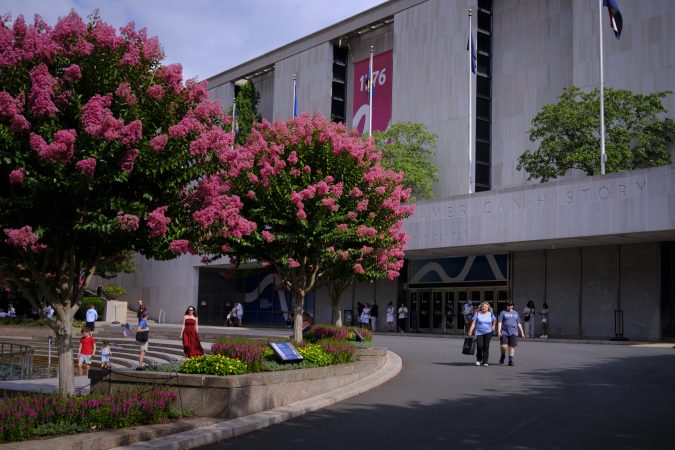
    President Donald Trump on Friday ordered the installation of signs outside the Smithsonian’s National Museum of American History that warn people that the museum does not accurately reflect American history while pointing them to material that does — a dramatic escalation in his campaign to wrest control of how the nation’s story is told.

    The executive order, signed at the end of a week of contentious congressional hearings on the museum, directs Interior Secretary Doug Burgum to erect temporary signage along the National Park Service-controlled sidewalks and walkways the public uses to reach the museum. The signs would inform visitors of the White House’s criticisms, tell them the museum’s exhibits “should be renovated,” and direct them elsewhere “to locations and resources for accurate information regarding America’s history.”

    The move marks a new front in a 16-month pressure campaign against the Smithsonian Institution that has included museum content reviews, funding threats, and a successful effort to push out a museum director. Now the White House is moving to plant a competing government narrative on the ground outside one of the country’s most visited museums — an approach historians say has no precedent.

    Trump grounded the order in the White House Domestic Policy Council’s July 4 report, “Saving America’s Story,” which he said “demonstrates that the Smithsonian leadership does not present American history as a shared national inheritance to be taught and celebrated, but instead views American history as a ‘prime tool’ to advance ideas of social justice and the radical transformation of our society.”

    A companion White House statement went further, accusing the Smithsonian and its history museum of veering “toward extreme political activism, rooted in Marxism, to divide, dispirit, and discourage Americans.” It said that “in the last decade, Americans have witnessed a concerted effort to rewrite American history and force our Nation to adopt a factually baseless ideology aimed at discrediting American heroes and diminishing American achievement.”

    Trump also accused the museum of failing to appropriately honor the 56 signers of the Declaration of Independence during the country’s 250th anniversary year, and directed Burgum to install temporary exhibits or signage on Park Service land that “corrects inaccurate information presented in the Museum.”

    The Smithsonian declined to comment. Its leaders have said the White House’s report mischaracterizes the museum, and that they are committed to accuracy and nonpartisan scholarship.

    The order drew swift condemnation from Democrats who oversee the institution. Rep. Melanie Stansbury (D., N.M.), ranking member of the House Administration Committee, called it “one of the dumbest and most bizarre Executive Orders we have ever read.”

    “This EO is a clear political overreach, driven by an ideological agenda to rewrite American history,” Stansbury wrote on X. “Our Smithsonian institutions do not belong to the President, but to the American people and so does our nation’s history.”

    Sarah Weicksel, executive director of the American Historical Association, said the plan to station government material outside the museum was “an absolute affront to the professionals who work in that building” and likened the signage to issuing a trigger warning to visitors before they encounter exhibits such as the Star-Spangled Banner.

    “There’s no precedent for this,” Weicksel said. She noted that the Smithsonian has weathered exhibit controversies before — most famously over its presentation of the Enola Gay and the bombing of Japan — but said the executive branch had never before sought “to present a completely alternative narrative” to the one told inside the national museum.

    The report and order rested on “a very narrow and very circumscribed definition of patriotism,” Weicksel added, one at odds with the founding generation the administration invokes. The nation’s founders, she said, understood that “one’s love of nation is tied to recognizing where it has gone wrong, where it can do better.”

    Her deepest worry, she said, was that the campaign would erode public trust in an institution that teachers and researchers have relied on for more than 150 years.

    “The White House is essentially telling the American public not to trust the Smithsonian Institution,” she said.

    Conservatives who have long pressed for change at the Smithsonian welcomed the order, though some hoped it would go further. Mike Gonzalez, a senior fellow at the Heritage Foundation who testified at both congressional hearings this week, said the provisions he valued most were those naming administration officials, including Domestic Policy Council chief Vince Haley, and directing them to use “any and all available authorities” to force corrections.

    “If they can use this EO to clean house and get rid of the leadership, then that would be great,” Gonzalez said, adding that he thought installing the signs “is a clever thing.”

    When asked if he had consulted with the White House on the report or the executive order, Gonzalez said any such conversations would be “private.”

    The order is the latest chapter in a fight that has escalated steadily since Trump’s March 2025 executive order demanding “improper ideology” be removed from the Smithsonian. Since then, the White House has launched reviews of the content of several Smithsonian museums, criticized specific exhibits and wall texts, and threatened to withhold funds already approved to the institution if it fell short.

    As a public-private institution, the sprawling museum and research complex is historically independent, with a federal budget appropriated by Congress. But those funds are disbursed by the White House’s budget office, and the administration has said all spending must align with the president’s orders.

    The White House report’s footnotes signal the pressure will continue, promising a “future update” on the Smithsonian’s approach to diversity, equity, and inclusion.