Category: Nation & World

  • Judge rules singer D4vd must stand trial in killing of 14-year-old Celeste Rivas Hernandez

    Judge rules singer D4vd must stand trial in killing of 14-year-old Celeste Rivas Hernandez

    LOS ANGELES — A judge ruled Monday that there is enough evidence to put D4vd on trial in the killing and dismemberment of 14-year-old Celeste Rivas Hernandez, who authorities said had threatened to expose their relationship and crater the indie-pop singer’s rising career just a few days before his debut album dropped.

    “i will end ur career and ur life,” she told him in a text message sent the night before her death.

    Los Angeles Judge Charlaine Olmedo decided that evidence presented during a preliminary hearing provided probable cause for a trial on charges of murder, continuous sexual abuse of a child under 14, and unlawful mutilation of human remains.

    The dark and disturbing details presented over five days brought tears, gasps, and horror to the courtroom. The evidence included grisly autopsy photos, explicit descriptions and depictions of sexual abuse, and a stark picture of the final texts she sent minutes before she died and her phone went permanently silent.

    The ruling was a major step in the 10-month investigation and prosecution of D4vd that began when the dismembered and decomposing body of a girl was found in the trunk of his Tesla in the Hollywood Hills in September while he was on tour.

    D4vd shows no emotion as decision is read, and now heads to trial

    D4vd, the 21-year-old whose legal name is David Burke, showed no emotion when the judge issued her ruling, watching calmly and intently in his orange jail clothes and glasses as he had throughout the proceedings.

    He has pleaded not guilty. His lawyers argued that the murder evidence was insufficient, but did not argue against the other two charges. They declined to comment outside court.

    Prosecutors argued that the evidence was overwhelming.

    “Based on the mountains of evidence presented,” Deputy District Attorney Beth Silverman said, “all of the allegations have been proved way beyond the standard required.”

    Los Angeles District Attorney Nathan Hochman said outside court that prosecutors presented only a “small fraction” of the evidence they have. They are still weighing whether to seek the death penalty, but Burke is eligible for it after Olmedo also found probable cause for lying in wait, killing for financial gain, and killing a potential witness, special circumstances in a crime that allow for a death sentence.

    Olmedo ordered that Burke continue to be held without bail. An arraignment is to be held on Aug. 31, and a trial could happen as soon as 60 days later.

    The last night of Celeste Rivas Hernandez

    Before the decision, prosecutors gave a moment-by-moment account of Rivas Hernandez’s last night.

    As she neared his Hollywood home shortly after 10 p.m. on April 23, 2025, in an Uber he had sent to pick her up, she sent her final text: “girly pop i’m almost there open ur door if ur home.”

    Prosecutors allege Burke stabbed her to death when she came through the door.

    The night before, the two argued via text about his relationship with a woman. She sent him an angry and profanity-riddled text saying she will tell her dad so many lies about him and that she would “end ur career and ur life.” She had sent several similar messages around the same time.

    Prosecutors said that Burke met Rivas Hernandez when she was 11, and began sexually abusing her when she was 13 and he was 18. A year before her death, the pair also exchanged messages about how she had become pregnant — she assured him the baby was his — and that she had an abortion.

    During the preliminary hearing, prosecutors introduced photos of the two of them kissing and lying in bed. The pictures showed that she had “David” tattooed in red ink on a finger — one of two that had been cut off when her body was found.

    Prosecutors said they have records showing Burke ordered chain saws and wading pools that he used to dismember her body in his garage, and that her DNA was found there on blood stains.

    They said he then drove around for weeks and even months with the body in his trunk before the seemingly abandoned Tesla was towed from the Hollywood Hills.

    Defense argues there’s insufficient evidence for murder

    The defense argued that the evidence didn’t show the kind of malice that was required for murder.

    “There’s no evidence that Mr. Burke harbored a deliberate intent to kill Miss Hernandez,” said Burke’s attorney, Marilyn Bednarski.

    She said the communications between Burke and Rivas Hernandez showed “no threat, no evidence of a history of violence” and that he had “the opposite of homicidal malice” toward her.

    She argued that a medical examiner ruling that her death was a homicide from two puncture wounds was too vague and inconclusive to be evidence of murder. The defense did not directly give an alternative theory on how she died and isn’t required to.

    The defense also established that she had asked seven times to come to see him in the days before her death, and he reluctantly agreed only after she demanded it, and that she had threatened to kill Burke and to mutilate him.

    Silverman told the judge that “the defense tried numerous times throughout these proceedings to dirty up the victim” despite her being a child.

    Farrell, the detective, also said under defense questioning that the parents of both Burke and Rivas Hernandez knew about their relationship, that he had attended church with members of her family, and that her parents had given their consent for her to go to London with him for a week.

    Patrick Steinfeld, an attorney for Rivas Hernandez’s family, said after the hearing that they were “horrified that the defense attorneys brought up evidence to put the blame on a 14-year-old girl.”

    Her parents sat in the front row through most of the hearing, but sat out some of the more graphic parts and left in the middle of the sexual testimony after her mother began crying.

    D4vd’s career was reaching new heights at time of killing

    D4vd (pronounced “David”) became an online musical phenomenon as a teen with a blend of indie rock, R&B, and lo-fi pop. He had huge followings on TikTok, Soundcloud, and Spotify, where his top songs, including his 2022 breakthrough “Romantic Homicide,” have more than a billion plays.

    In 2024 he played the Coachella music festival and released his first full-length album, Withered, two days after authorities say Rivas Hernandez was killed.
  • Ex-Olympian charged with damaging Reflecting Pool sees ‘irregularities’ in grand jury proceedings

    Ex-Olympian charged with damaging Reflecting Pool sees ‘irregularities’ in grand jury proceedings

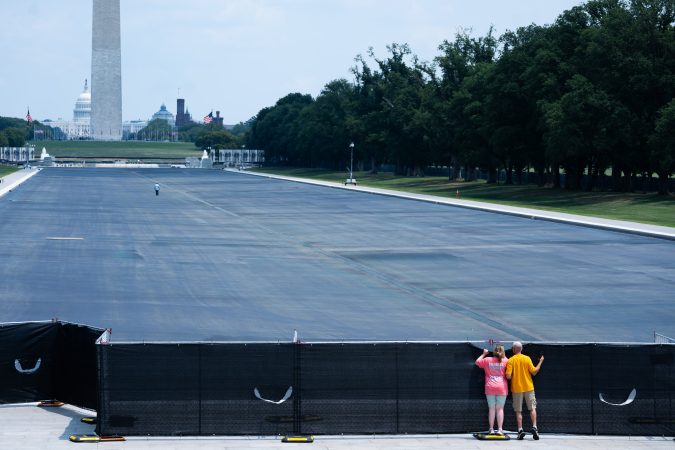
    WASHINGTON — A former Olympian charged with deliberately damaging the Lincoln Memorial Reflecting Pool is seeking access to all of the closed-door testimony that led to his indictment, pointing to “irregularities” in those grand jury proceedings.

    In a court filing Monday, David Hearn’s attorneys requested an order for the government to turn over a complete transcript of all grand jury proceedings. They also want prosecutors to disclose the legal instructions they gave to grand jurors about the elements of Hearn’s alleged crime.

    Hearn pleaded not guilty earlier this month to one felony count of property destruction and has a trial scheduled to start Sept. 28 in D.C. Superior Court. The charge, which carries a maximum prison sentence of 10 years upon conviction, accuses Hearn of causing at least $1,000 in damage to the pool.

    But his lawyers question whether prosecutors properly presented the grand jury with adequate evidence to support the amount of damage alleged in Hearn’s indictment. A National Park Service official testified that the pool already was damaged before Hearn allegedly touched it, couldn’t quantify any damage attributable to Hearn and said the same repairs would have been required regardless of his conduct, defense attorneys said.

    “The witness’s testimony established that the pool had substantial preexisting damage requiring repair before any alleged conduct by Mr. Hearn,” his lawyers wrote. “According to the witness, the pool was leaking more than one million gallons of water per week; its expansion joints had exceeded their service life; and the liner already contained a rip.”

    Hearn’s attorneys are basing those arguments on their limited review of grand jury testimony. They want court-ordered access to all the proceedings.

    A spokesperson for U.S. Attorney Jeanine Pirro’s office in Washington didn’t immediately respond to an email seeking comment on Hearn’s arguments.

    Hearn previously asked the court to dismiss the case, which stems from the troubled multimillion-dollar renovation project championed by President Donald Trump. His attorneys argued the government has failed to properly preserve important physical evidence from the Reflecting Pool.

    Trump, a Republican, has claimed that vandals have damaged the pool, but administration critics attribute the problems to shoddy repair work. During a speech Monday at General Motors in Michigan, Trump claimed a “sick” person cut the liner in the pool but said the attraction is receiving treatment.

    “It’s in the hospital now, but it’s going to get better very soon,” Trump said. “It’s almost ready to open.”

    Hearn and his supporters claim his prosecution is a politically motivated attempt by the Trump administration to deflect blame and scapegoat others.

    Hearn told The Associated Press he was detained by National Guard troops and U.S. Park Police for five hours after stopping by the pool during a bike ride on June 19. He said he reached in to examine the pool’s newly peeled coating and briefly touched a chunk attached to the side of the pool, but said he obeyed a park worker who told him to let go of it.

    Hearn, 67, of Bethesda, Maryland, competed in three Summer Olympics, earning his best finish, ninth, at the 1996 Atlanta Olympic Games, the U.S. Olympic and Paralympic Committee says on its website.

    At least three other people have been charged in the same court with misdemeanors for allegedly removing pieces of paint from the pool.

  • 15-year-old arrested at Seattle food festival shooting was armed with a ghost gun, police say

    15-year-old arrested at Seattle food festival shooting was armed with a ghost gun, police say

    SEATTLE — The 15-year-old arrested after a shootout at a food festival near Seattle’s Space Needle over the weekend was armed with a ghost gun with an extended magazine, police said Tuesday.

    Police Chief Shon Barnes told a news conference that the weapon was a 9 mm gun from Polymer80 — a now-defunct company that was once a leading manufacturer of ghost gun parts.

    Investigators also recovered two other weapons and 14 shell casings that had been fired by weapons of two different calibers, he said.

    Shooting killed 3 people and injured 4, including a toddler

    The shooting in the waning hours of the three-day Bite of Seattle festival left three people dead, including a 19-year-old gunman, and at least four people injured, including a toddler. Authorities say they believe the violence was gang-related, and they are reviewing any available surveillance video and interviewing victims and witnesses in an effort to identify others who may have been involved.

    An eighth person with a possible gunshot wound checked themself into a Seattle hospital after the shooting, but checked out before investigators could conduct an interview, Barnes said. Legal obstacles have prevented detectives from obtaining the patient’s identity, he added. It’s unclear if the injury was related to the festival shooting or whether the person might have been involved in it, but Barnes asked for the person to come forward and speak with investigators.

    Ghost guns lack serial numbers law enforcement can use to trace them

    Ghost guns are privately made — often homemade — firearms that lack serial numbers used to trace them. They have often been purchased without a background check. Law enforcement officials say ghost guns, including those made with 3D printers, have been used in violent crimes across the U.S.

    Lawsuits and state-level bans eventually pushed Polymer80 out of business in 2024, and last year, the U.S. Supreme Court upheld a rule adopted under former President Joe Biden requiring companies to treat gun kits like other firearms by adding serial numbers, running background checks, and verifying that buyers are 21 or older.

    The weapon the 15-year-old had been shooting when he surrendered to police was equipped with an extended 33-round magazine, Barnes said. The magazine still had 19 rounds in it.

    At the scene Sunday night, police also recovered a 9 mm handgun that they do not believe was used in the shooting.

    And on Monday, as food vendors were allowed to return to the area to clean up and collect their equipment, a third weapon was discovered: a Glock 45 model 9 mm with a switch allowing it to fire fully automatically, Barnes said. Police believe that gun was fired during the shooting. It had an extended 40-round magazine, with 21 rounds remaining in it.

    Police believe there were at least 3 shooters

    In a document filed in juvenile court in Seattle on Monday, police said they believed there were at least three shooters: the 15-year-old, an acquaintance who died at the scene, and “at least one other unknown suspect.” Authorities had earlier said they believed there were two.

    A judge on Monday ordered the 15-year-old to be held in juvenile detention for investigation of assault and firearms charges pending further hearings. The King County prosecutor’s office said it expected to receive the case from police on Wednesday for a charging decision. Hong Tran, a public defender assigned to the teen’s case, declined to comment in an email to the Associated Press on Tuesday.

    The King County Medical Examiner’s Office on Monday identified the dead as Carlos Israel Sanchez Villalba, 44; Ashley Whitehead, 56; and Junior Cee Niko Semo, 19.

    Victims remembered as a kind man, and a ‘free spirit’

    Villalba was a husband and father of three known for his kindness and willingness to help others, according to a GoFundMe campaign launched Monday to help his family with funeral expenses. He died from a gunshot wound to his torso, while Whitehead died from a gunshot to her pelvis, and Semo died from multiple gunshot wounds, according to the medical examiner’s office.

    Whitehead had just moved to Washington from Alabama a year ago and was enjoying the festival with one of her adult daughters when she was shot, her cousin Michelle Whitehead told the Associated Press. She was taken to the hospital and died in surgery, she said.

    Ashley Whitehead adored her two adult daughters, and also loved nature and arts and crafts, her cousin said.

    “I would consider her just a free spirit. She had the best sense of humor, the best gorgeous smile,” she said.

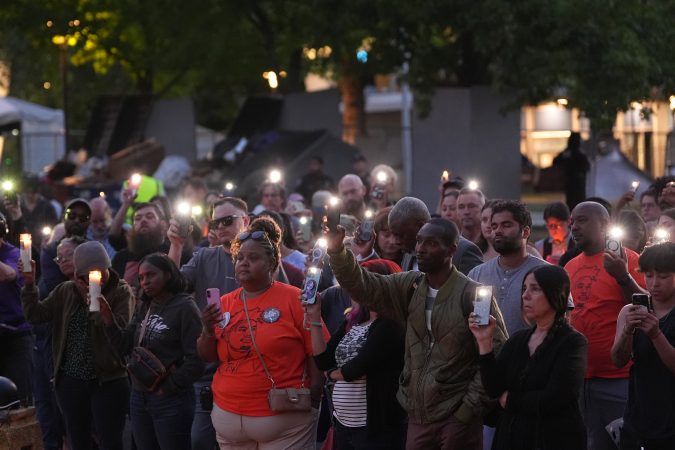
    During a vigil Monday night at the center, Michelle Whitehead stood among dozens of others with a sign that said “Whitehead Strong” as the group held a moment of silence and raised up flashlights on their phones to honor those that had been killed. Candles and flowers were arranged around them.

    The four wounded included a 2-year-old boy, two men, ages 23 and 27, and a woman, 39, all of whom were discharged, a hospital spokesperson said.

    One of the victims was walking a bicycle when struck, the court document said. The toddler was with his mother.

  • Zelensky has a ‘good meeting’ with Trump at the White House as he seeks more cooperation with U.S.

    Zelensky has a ‘good meeting’ with Trump at the White House as he seeks more cooperation with U.S.

    WASHINGTON — President Donald Trump and Ukrainian President Volodymyr Zelensky met Tuesday ahead of Sen. Lindsey Graham’s funeral, with the two leaders discussing ways for Ukraine to produce its own powerful weapons and “other ideas that could help” in its ongoing war against Russia.

    The sit-down in the Oval Office, which was closed to the media, followed a consequential meeting at the NATO summit earlier this month in Ankara, Turkey, where Trump announced that the U.S. will give Ukraine a license to make Patriot defense systems — a long-running request from Kyiv to counter Russian missile attacks.

    In a post on social media after the meeting, Zelensky thanked Trump for the “good meeting” and the Republican administration’s efforts to aid Kyiv in the long-running war, which began more than four years ago when Russia invaded Ukraine.

    “The President and I discussed licenses for Patriot interceptor production and several other ideas that could help,” said Zelensky, who also noted that he offered condolences to Trump for the death of Graham, a close ally. “We also spoke about diplomacy – it’s important that the diplomatic process be reinvigorated.”

    White House press secretary Karoline Leavitt said both the Zelensky meeting and a separate, later sit-down with Israeli Prime Minister Benjamin Netanyahu were “positive and productive.”

    Trump welcomed Zelensky to the White House as the Ukrainian leader traveled to Washington to honor Graham, whose final act as a public official was visiting Kyiv and securing an agreement on a package of sanctions that seek to punish countries that purchase Russian oil, gas, and other exports.

    In a Fox News Channel interview on Tuesday, Trump recalled Graham’s hawkishness and said the Republican South Carolina senator’s support for Ukraine never wavered. Trump said Graham had suggested it was time to make a deal with Iran but had no similar suggestion for the Russia-Ukraine war.

    “Ukraine, he’s very militant about,” Trump said on Fox & Friends. “I mean, Lindsey liked war, to be honest with you.”

    The Trump administration’s embrace of Zelensky comes as a far-right activist with the U.S. president’s ear had a recent, widely publicized change of heart on Russia’s war against Ukraine.

    Laura Loomer, known primarily for her incendiary social media posts and her influence with Trump, has been traveling through Ukraine, witnessing Moscow’s barrage firsthand, and interviewing Zelensky while admitting she was “bamboozled by Russian propaganda.”

    Loomer said she spoke to Trump after she met with Zelensky in Ukraine last week and she expects to meet with the U.S. president once she returns from her trip.

    “It’s looking good for Ukraine, right?” Loomer said during an interview with the Associated Press. “Going into this meeting next week at the Oval Office is looking pretty good.”

    Ahead of the meeting, Zelensky also warned that Russia has been aiding Iran as the war persists by capturing satellite imagery of U.S. bases in the Gulf region that later appear in Iran. The Ukrainian president also asserted that there was a “clear correlation” between Russia’s images and subsequent Iranian strikes.

    “The purpose is clear,” Zelensky said earlier this month. “None of us in the world should turn a blind eye to one very simple fact: Evil always seeks ways to make things worse and spread further.”

    But on Monday, Trump downplayed any impact of potential Russian assistance for Iran.

    “I don’t think they’ve been doing it, certainly not at a high level,” Trump told reporters on Air Force One as he traveled to Michigan. “And if they have, it has been very un-impactful.”

    Still, he said he would raise the issue with Russian President Vladimir Putin.

    Zelensky has a busy itinerary during his latest visit to Washington. Besides his White House meeting, Zelensky was to head to the Capitol to meet with senators on Tuesday evening after Graham’s funeral at Washington National Cathedral, according to a person with knowledge of the meeting who was not authorized to discuss it publicly and spoke on the condition of anonymity.

    Republican leadership is hoping to advance Graham’s sanctions legislation this week, although the Senate is juggling several other priorities before lawmakers leave Washington for their August recess.

    The bill has dozens of backers from both major political parties and is seen as the main policy tribute to Graham, who died unexpectedly this month from a tear in his aorta. It imposes tariffs on goods from the world’s top five purchasers of Russia oil or natural gas, including China and India.

    The legislation also includes sanctions against Putin; senior Russian political and military leaders; and Russian financial institutions and energy projects.

  • Lawmakers seek ban on using campaign funds to fight sexual harassment claims

    Lawmakers seek ban on using campaign funds to fight sexual harassment claims

    Federal politicians would be barred from using campaign contributions to fight or settle sexual misconduct allegations under a bill announced Tuesday by two House members from opposite sides of the political spectrum.

    The proposal, from Reps. Ro Khanna (D-California) and Anna Paulina Luna (R-Florida), aims to further shape the debate over how Congress should move forward from a spate of sexual misconduct scandals this spring, which prompted the creation of a bipartisan working group to revise the policies protecting Capitol Hill staffers. Both Khanna and Luna have been active on the issue.

    Khanna said politicians would behave better if they had to rely on their own financial resources when they get into trouble rather than being able to dip into campaign accounts or legal-defense funds.

    “That creates this culture of impunity where people think they’re untouchable,” Khanna said in an interview.

    “There’s such a power asymmetry,” he said, because of “the extraordinary legal advantage that elected officials have.”

    The progressive Khanna came into national prominence last fall as he helped force the release of federal investigative files related to financier and sex offender Jeffrey Epstein, over the objections of President Donald Trump.

    Khanna is collaborating on the bill with the conservative Luna, one of several Republican women lawmakers who have begun demanding more consequences for alleged sexual misconduct by their colleagues. She led the charge in April against Sen. Ruben Gallego (D-Arizona), filing a complaint with the Senate that was dismissed last month with no findings that he violated federal law or broke Senate rules.

    The bill would prohibit elected officials and candidates for federal office from using campaign donations or a legal-defense fund to cover legal fees related to claims of sexual assault, sexual abuse or sexual harassment. If they are not held liable, they could be reimbursed for expenses.

    Luna said the proposed change is overdue and would serve as a “massive deterrent” amid a culture of sexual misconduct on Capitol Hill that has gotten out of hand.

    “It is not what the Founding Fathers intended for members of Congress,” she said. “It’s a perversion of the system.”

    The proposal would also make campaign contributions off-limits for paying settlements or court-ordered judgments for sexual misconduct claims, as well as for private investigators and other research into the accusers.

    Khanna said that politicians would still be able to tap into their savings to defend themselves like most other Americans but that they should not be allowed to fundraise for what frequently amounts to public relations activities more than actual legal work.

    “In most of the cases, they’re being used to smear survivors,” he said.

    The bill emerged from conversations with activists supporting women who have come forward in recent months with accusations of sexual misconduct by politicians, including former congressman Eric Swalwell (D-California).

    In April, the San Francisco Chronicle spoke to a former Swalwell staffer who said he sexually assaulted her. CNN reported more allegations of inappropriate behavior, and a second woman accused Swalwell of raping her. He has categorically denied the allegations of sexual misconduct, calling them a political hit job, though he acknowledged some “mistakes in judgment.”

    Swalwell dropped out of the race for California governor and then resigned from office within days. But he has since spent $50,000 from an old congressional campaign account, as well as hundreds of thousands from contributions to his gubernatorial bid, on prominent defense attorney Sara Azari. Her firm hired a private investigator to look into the allegations, according to NOTUS.

    “Many of those women were forced back into hiding, and this ordeal is still not over for them,” said Cheyenne Hunt, an influencer who worked with some of the accusers and subsequently launched the advocacy group Reckoning Action.

    That’s retaliation, Hunt said, and a “bad-faith use” of campaign funds.

    “No donor gives to a campaign thinking, ‘Yes, I want my money to go toward harassing a survivor,’” she said. “This truly feels like such a no-brainer.”

    Despite bipartisan support for the bill, its prospects are uncertain. Congress has struggled to pass major legislative priorities this year, and only two months of floor time remain for the rest of the session.

    Other ideas for improving how Capitol Hill handles sexual misconduct complaints are also circulating. A group that says it represents more than 1,500 congressional staffers released a letter this month calling to expand legal representation for employees, make independent investigations easier to trigger, and provide more time to file workplace claims.

    With the blessing of congressional leadership, the Republican and Democratic women’s caucuses united in the spring to develop recommendations for making Congress a safer work environment. Their proposed solutions are forthcoming.

    House Speaker Mike Johnson (R-Louisiana) recently said he would support banning lawmakers from having sexual relationships with any congressional staffers, not just their own subordinates.

  • Asylum seekers could be sent directly to deportation under new federal rule

    Asylum seekers could be sent directly to deportation under new federal rule

    The Trump administration launched a plan Tuesday to channel hundreds of thousands of asylum seekers directly into deportation proceedings, a change that some attorneys said could lead to people being removed from the United States without a hearing.

    Trump officials introduced a rule designed to reduce the 1.4 million asylum cases pending in U.S. Citizenship and Immigration Services, the Department of Homeland Security agency that processes immigration applications, by nearly a third. The rule took effect immediately, before the public could weigh in.

    In the past, asylum seekers who entered the U.S. legally or were never charged with an immigration violation had the opportunity to apply for refuge in an office before a trained asylum officer. The officer could refer them to immigration court for removal proceedings if they were rejected, or allow them to continue proceedings and potentially get on a path to obtaining U.S. citizenship.

    Under the new rule, officials say as many as 444,724 cases could be transferred directly to one of the Justice Department’s immigration judges. Trump officials have empowered judges to dismiss certain cases without a hearing, so attorneys say it is possible that many asylum seekers will be deported without a chance to be heard.

    Trump officials said in a statement that the rule is necessary because the asylum system is facing a “crisis.”

    “For far too long the asylum system has been exploited for purposes of delay and work authorization, not legitimate claims of protection,” USCIS Director Joseph B. Edlow said in a statement. “America’s asylum system exists to protect individuals who genuinely fear persecution and this rule will help ensure that resources are directed to the timely adjudication of those claims instead of to those seeking to use the system as a loophole.”

    The measure is the latest means through which the Trump administration has sought to transform the asylum system. President Donald Trump, in one of his first acts in office, barred asylum seekers’ entry into the United States by declaring an “invasion” at the U.S.-Mexico border.

    He has also targeted those who are already living inside the U.S., including hundreds of thousands of people who probably arrived legally and followed the rules to apply for asylum.

    Trump officials are preparing to terminate work permits for Haitians and Syrians in the coming days after the Supreme Court enabled officials to allow their temporary protected status to expire. If those immigrants also applied for asylum and their cases are referred to the courts, lawyers say, the threat of deportation could be imminent.

    “It’s all part of a plan to take legal people and make them illegal,” said Ira Kurzban, one of the attorneys who represented Haitians in the case that went to the Supreme Court. “That’s what they’ve essentially done.”

    The United States is a signatory to the 1967 United Nations protocol on refugees, which prohibits member countries from expelling immigrants to nations where they face serious threats to their lives.

    Trump officials, Kurzban said, are betraying that principle and turning the asylum system into “a joke.”

    “At a 30,000-foot level it sure looks like a deportation machine,” he said.

    Trump officials argue that smugglers have exploited the U.S. asylum system, flooding it with weak applications so that immigrants may live and work legally in the United States as their cases drag through the system.

    Asylum creates a path to U.S. permanent residency and, eventually, citizenship. To be eligible, applicants must show that they face persecution in their homeland based on their race, religion, nationality, political opinion, or another trait that makes them a specific target. They also must pass background checks and apply within one year of arrival.

    The more than 400,000 pending asylum cases before USCIS that could be sent to deportation proceedings largely involve individuals who filed for refuge after being in the United States for more than a year, officials said in announcing the rule.

    Federal law says asylum seekers must apply within a year of arriving, and officials contend that most late applicants referred to immigration judges in the past few years have been ineligible for an exception to that requirement.

    Advocates for immigrants have long argued that people fleeing for their lives are not well versed in the intricacies and deadlines of U.S. immigration laws, and note that the immigration courts do not assign them public defenders. Sometimes bona fide applications are filed late, they say, and federal law allows judges to overlook that in extraordinary cases.

    Though the new rule took effect immediately Tuesday, USCIS said it will accept public comments and later issue a final rule with its responses.

  • Betye Saar, artist who shattered stereotypes of Black women, dies at 99

    Betye Saar, artist who shattered stereotypes of Black women, dies at 99

    Betye Saar, who scoured flea markets for ordinary items – clocks and window frames, plastic dolls, miniature ships and masks — from which she crafted works of art that explored and exploded images of Black women in America, died Sunday in Los Angeles. She was 99 and would have celebrated her 100th birthday on Thursday.

    Her death was announced by Roberts Projects, the Los Angeles gallery that represented her.

    Ms. Saar, a lifelong Californian, was 93 when she became an art world star in 2019. That year, the Museum of Modern Art in New York and the Los Angeles County Museum of Art mounted simultaneous exhibitions of her work. Reviewing the Los Angeles show in The Washington Post, art critic Sebastian Smee wrote that her “modestly scaled assemblages address racism and female labor with excoriating intensity and moody finesse. But they also vibrate with spiritual yearning.”

    By then, she had been an artist for more than 50 years. In interviews, Ms. Saar described the assassination of the Rev. Martin Luther King Jr. in 1968 as the event that politicized her and gave her work purpose. “I was a mother with young children,” she told the New York Times. “I couldn’t walk in protest, but I did have a weapon, and that was art.”

    She began collecting likenesses of Aunt Jemima, Uncle Tom, Little Black Sambo and other caricatures that she described as “Black derogatory images.” She incorporated them into collages and assemblages, transforming the scavenged items into statements of political and social protest.

    The most famous of those works was “The Liberation of Aunt Jemima” (1972), in which she depicted the apron-wearing “mammy” with one hand holding a broom and the other a gun.

    “It’s like they abolished slavery but they kept Black people in the kitchen as Mammy jars,” Ms. Saar told the Los Angeles Times. “I had this Aunt Jemima, and I wanted to put a rifle and a grenade under her skirts. I wanted to empower her. I wanted to make her a warrior.”

    Ms. Saar worked in a variety of media, but her assemblages — collections of objects she found on the street or at swap meets — attracted the most notice. She was inspired by a 1967 visit to the Pasadena Art Museum (now the Norton Simon Museum), where she saw assembled works by a master of the form, Joseph Cornell. Ms. Saar said she recalled thinking: “Hey, I can do that. I’ve got all this fantastic stuff.”

    Some of her pieces told stories, and some didn’t. “I prefer it when they don’t tell a story so the viewer can invent their own,” she told the New York Times. Some assemblages displayed materials that belonged to Ms. Saar’s female ancestors, who were African American, Irish, and American Indian. Others referenced events in her life. In “Black Girl’s Window” (1969), a Halloween skeleton, alluding to her father’s death when she was 5, accompanies Ms. Saar’s self-portrait, among other images.

    Still others were overtly political. In his review of the Los Angeles exhibition, Smee focused on an assemblage called “The Edge of Ethics,” from 2010.

    A dark green birdcage contains an armless black figurine chained to a glass bottle and standing on outsize bird’s feet. Smee called the work “a masterpiece,” and he observed that “it makes a bald statement about slavery and incarceration.” He added, “It is more succinct, more poignant and more pressingly urgent than a roomful of research papers, a month of Sunday sermons, a year of news reports.”

    Ms. Saar’s work often referred to such religious traditions as shamanism and voodoo, as well as astrology, palmistry, phrenology and tarot. In a 1977 documentary about Ms. Saar, Los Angeles-based artist John Outterbridge, remarking on her interest in ancient beliefs, said, “She could be a daughter to one of the pharaohs.”

    Betye Irene Brown was born in Los Angeles on July 30, 1926. Around the time of her father’s death, her family moved in with relatives in Pasadena. She spent summers with her paternal grandparents in the Watts neighborhood of Los Angeles, where she watched the construction of Simon Rodia’s Watts Towers, a major work of architectural sculpture.

    Ms. Saar said Rodia, an Italian immigrant, influenced her by his use of broken dishes, seashells, rusty tools, even corn cobs that he pressed into cement, creating an art of assemblage and presaging her own eclecticism.

    At the University of California at Los Angeles, she majored in interior design. “Being from a minority family,” she told the Los Angeles Times, “I never thought about being an artist. But I could tell people how to buy curtains.”

    After graduating in 1949, she created a greeting card line and founded an enamelware business. She started graduate school in graphic design, but an encounter with printmaking changed her trajectory. The form was “liberating,” she told the Los Angeles Times. “It gave me the freedom to experiment.” She began creating color etchings, ink drawings, and intaglio prints.

    In 1952, while in graduate school, she married Richard Saar, a ceramicist. They soon had three daughters: Tracye Saar-Cavanaugh, now a writer, and Alison and Lezley Saar, both artists. In 1962, the family moved to L.A.’s bohemian Laurel Canyon, where Ms. Saar continued to live after she and her husband divorced.

    In addition to her daughters, survivors include six grandchildren.

    During a 1970 trip to Chicago, Ms. Saar studied the African artifacts in the basement of the Field Museum. From then on, many of her works incorporated objects and artworks from Africa.

    In 1974, she received a grant from the National Endowment for the Arts. It made her feel “like an artist for the first time,” she said. “Before I was just making stuff.” A year later, she was the subject of a small exhibition at the Whitney Museum of American Art in New York.

    Although she mostly avoided art world disputes, Ms. Saar led a letter-writing campaign in 1997 to protest the awarding of a MacArthur “genius grant” to Kara Walker, an African American artist whose silhouetted images included depictions of enslaved people as participants in debauchery with their masters.

    In an interview for the PBS series “I’ll Make Me a World,” Ms. Saar called Walker’s work “sort of revolting and negative and a form of betrayal to the slaves, particularly women and children, and that it was basically for the amusement and the investment of the White art establishment.”

    She subsequently explained to the International Review of African American Art: “Here we are at the end of the millennium seeing work that is very sexist and derogatory. … The trend today is to be as nasty as you want to be: TV, Rodman, rap. … There is no personal integrity. … Aunt Jemima is back with a vengeance.”

    But mostly, when she had something to say, Ms. Saar did so through her art. In her later years, her assemblages sometimes grew into room-size installations. “I’m basically a recycler,” she told the New York Times. “I’m a person who walks looking down, because you can find lots of great things on the ground.”

  • A desert town may run out of water. Others could face the same fate.

    A desert town may run out of water. Others could face the same fate.

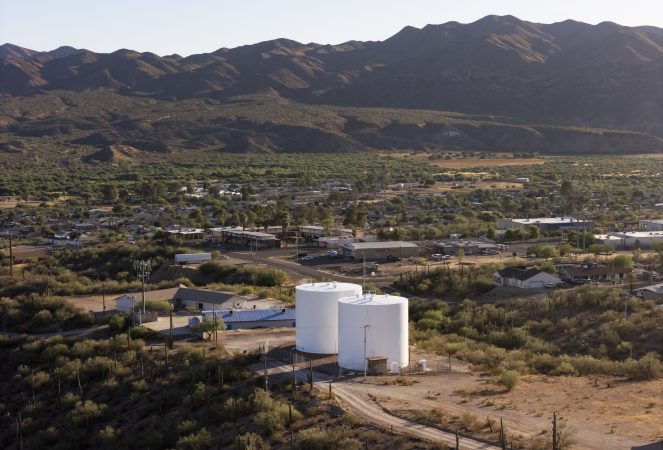
    KEARNY, Ariz. — Mayor Curtis Stacy starts every morning checking two websites that tell him how much he needs to worry about water.

    One site tells him about the reservoir that supplies his tiny desert town — it’s effectively empty. The other site tells him if the town gets additional water that other communities with more senior rights aren’t using; right now, the answer is yes.

    But Stacy tries to remind Kearny’s roughly 2,000 residents that they could easily tip back into crisis mode, just like this spring. In newsletters, he underscores that fragility with no fewer than 20 exclamation points. If other communities call for more water, they will have to cut back again.

    “!!!!!!!!!!THIS SITUATION IS ALMOST CERTAINLY TEMPORARY!!!!!!!!!!” he wrote in one bulletin posted on the Kearny Facebook page and taped up and down the glass doors of the town office.

    Kearny is an extreme example of the water crunch facing communities across the West as states and cities stare down a future of “megadrought” and fight over scarce resources. An unusually dry winter this year left the Southwest parched, with not enough water for everyone laying claim to it. In the complex web of water rights that govern how that short supply is distributed, the tiny town of Kearny comes last.

    Other cities around the West could face similar challenges and cutbacks. The federal government is set to release a plan for the shrinking supply of Colorado River water this summer that could force dramatic cuts.

    The plan, part of which the Bureau of Reclamation described in an Environmental Impact Statement early on Friday morning, comes at a time of escalating crisis for the Colorado River, a crucial water source for seven states, 30 Native tribes and a swath of northwestern Mexico.

    Arizona, California, and Nevada will be required to curb their use of the water from the Colorado River by a combined 20% over the next two years — and could ultimately face even larger cuts, according to three officials familiar with negotiations over a long-awaited federal plan to rescue the depleted waterway.

    Kearny is not directly affected by the Colorado River negotiations, officials say, but its dilemma shows how dwindling resources — and water-rights rules that can feel arbitrary to those most affected — can upend daily life.

    Kearny usually uses about 280 acre-feet of water a year; this year, it was allocated 77 acre-feet (one acre-foot supplies about three homes annually). Town officials realized they were on track to run out of water in July.

    The crisis forced steep reductions in water use and now hangs over the town’s future, testing residents’ ability to adapt to shortage. It has also consumed much of Stacy’s final year in charge, giving him new gray hairs and new worries about his hometown, a community where everyone knows everyone and where you can get ahold of the mayor by walking into his office.

    Stacy thought he had seen Kearny’s worst crisis in 2024, when a wildfire blazed toward the edge of town. He ran from house to house getting people out while embers blew above their heads. But the water shortage has been, in many ways, worse.

    “It’s like a slow death,” Stacy said, “instead of an actual emergency happening right in front of your eyes where you can actually help.”

    The town tried to prepare residents late last year for what was coming. In a Dec. 29 letter, officials warned that the reservoir fed by their primary water source, the Gila River, was running low.

    The first question in the FAQ section was, “What happens if our allotment is zero?”

    Answer: “Severe restrictions will be imposed.”

    Light snowfall had left the reservoir, San Carlos Lake, at about 1% of its capacity, and Kearny’s rights to that small supply were “junior” to other communities under the complicated water-rights system laid out by a court in 1935, before the town was founded.

    Soon, Kearny was on track to run out of water by midsummer.

    “For years, they’ve been telling us that cutbacks were coming,” said Eric Armenta, Kearny’s public works director. “But it never did come until now. And it came drastically.”

    In late March, Kearny imposed “Level 5″ restrictions on water — the most stringent possible. A declaration of emergency told residents they could use water only for the essentials; the mayor went door to door to convey the situation’s gravity. There would be no washing of cars, no kiddie pools, and no watering of grass. Even the Little League field would go dry.

    “Laundry — wear it a second or even third day,” the mayor advised in another bulletin days later. “Bathing/Showers — no better time to connect with your significant other.”

    “What is the Town doing about this?” he wrote in the next note. “This emergency is our entire focus.”

    By the end of April, the message was sinking in and the town was using 30% less water. But when relief came later in the spring, town leaders were torn.

    The authority that oversaw river rights had given Kearny extra water, but only because those with higher priority were not requesting water. The moment that changed, Kearny would need to cut back again.

    The town council voted to go back to “Level 1” restrictions, which meant cutbacks were optional. “Flush, shower, keep the trees alive, launder your clothes, live a normal life again,” the mayor wrote.

    Not everyone thought the reprieve was a good idea. “We knew exactly what was going to happen — people were just going to use it freely,” said Armenta, the public works director.

    Kearny was not yet in the clear.

    Bits of grass around town were starting to turn green again in early July, but mostly the yards were still parched. Public works supervisor Jake Acton looked away when he drove by the Little League field — still dead and brown.

    Kearny officials were no longer worried about running out of water in the short term, but their broader challenge lingered.

    Fourth of July fireworks were canceled due to “dry conditions and limited water”; fire damage aside, Kearny could not afford the thousands of gallons it might take to put out a wildfire. And some officials worried news of their water woes would scare away businesses, scare away homeowners, and make it even harder to recruit teachers.

    Armenta stopped by an old rehabilitated well set to start pumping in a matter of weeks. No one knew how much it would produce until it started functioning, and they were trying not to get their hopes up.

    “We want above 50 gallons per minute,” Armenta said over the roar of a machine clearing sand and debris. “Below that, it’s a waste of time.”

    Armenta was spending some 90 hours a week, he said, on the public works job — a position he took early this year because he knew the city was headed for trouble. He did it because his family is here, and he doesn’t want to leave.

    “My mom still lives here. My sister lives here. I want to live here,” he said. “My kids, I want them to be able to always come back to Kearny.”

    At the bar across the street from the Little League field, people wondered when the monsoon season would bring some real rain. But everyone thought the town would get through the water crisis. When Kathy Taft asked her friend Dave Olsen if the town was “really going to run out of water,” Olsen answered without hesitation.

    “No,” he said. “I just don’t see that happening.”

    The well, when it began operating in mid-July, was a letdown. At 40 gallons a minute, it would cover only a fraction of the town’s need.

    San Carlos Lake, meanwhile, remains close to empty. The lake closed to the public in June after it grew so dry that -— in the words of the local recreation department — “approximately 100% of the fish population” died.

    Now the mayor was worrying about 2027. If the lake didn’t recover, Kearny’s apportionment of river water next year could be zero.

    “We got 77 [acre-feet] this year and we were able to stretch that,” Stacy said. “You can’t stretch zero.”

    What then? There were still other avenues to try. Hydrologists were looking for well sites farther out; a local mining company could give Kearny some of its water. Wastewater could be put back into the ground and reused.

    And the monsoon rains were picking up. Away on a trip to Minnesota, Stacy watched with interest as a flood watch went into effect for much of the Gila River Basin, which includes Kearny.

    With some strong storms, the town’s fortunes could change again.

  • France evacuates 4,000 people as heat threatens wildfire fight

    France evacuates 4,000 people as heat threatens wildfire fight

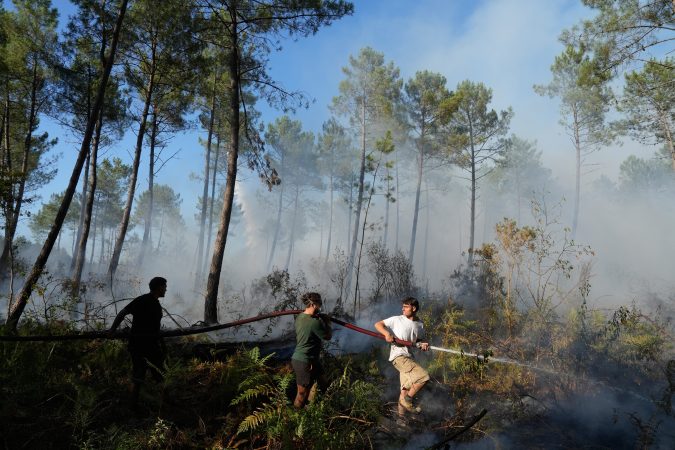
    LEGE-CAP FERRET, France — French authorities ordered nearly 4,000 people evacuated Tuesday from tourist sites on France’s Atlantic coast as returning heat threatened firefighters’ fragile hold on a vast wildfire west of Bordeaux.

    The order underscored a wildfire emergency of exceptional scale across southwestern Europe.

    Fires in France and Spain have forced roughly 330,000 people to evacuate. Spain braced for its fourth heat wave of the summer, with several blazes still out of control, including its largest on record.

    Firefighters held the French blaze in check through a calm night, bringing flare-ups near coastal dunes under control and keeping the burned area unchanged at 162 square miles.

    Authorities described the Gironde fire as stabilized, not fixed, meaning it could still spread again as temperatures rose and humidity fell.

    The precautionary evacuation order covered campsites, holiday villages, tourist residences and leisure parks around the resort of Lacanau, including Lacanau Ocean and both shores of Lacanau lake, Gironde regional authorities said.

    “We are at a point of fragility,” Eric Brocardi, spokesperson for France’s national firefighters federation, told BFMTV on Tuesday. “We will continue attacking this fire despite the forecast rise in temperatures.”

    France’s national weather service placed Gironde under a yellow heat warning from midday Tuesday, forecasting inland temperatures of 33 to 35 Celsius (91 to 95 Fahrenheit). Southeast winds were expected across Gironde, with westerly sea breezes along the coast.

    More than 448 square miles have burned across France this year, according to the Interior Ministry.

    Europe is the world’s fastest-warming continent, heating at more than twice the global average, according to the European Union’s Copernicus climate service and the World Meteorological Organization.

    Western Europe recorded its hottest June on record, with extreme heat and widespread dryness contributing to the spread and intensification of fires in France and Spain, Copernicus said.

    The Gironde blaze has been raging since last week and has proven wildly unpredictable, transforming at times into a self-feeding firestorm. It has burned an area four times the size of Paris and prompted the evacuation of 220,000 people.

    Officials warned that smoldering vegetation, rising temperatures and falling humidity could produce fresh outbreaks along the vast perimeter.

    Military engineers and forest-fire prevention crews resumed work early Tuesday on firebreaks designed to prevent the flames from spreading. Authorities said 103 kilometers (64 miles) of firebreaks had been completed.

    A total of 93 firefighters have been injured, the prefecture said.

    The A63 highway remained partly closed, while rail traffic south of Bordeaux was suspended except on the route toward Toulouse.

    Thousands return as second fire stops advancing

    In neighboring Landes, thousands of evacuees were allowed home after a separate wildfire stopped advancing. The fire had displaced more than 30,000 residents and vacationers.

    “The fire is fixed, which is good news in the Landes,” French President Emmanuel Macron said Monday evening. Regional authorities said that meant its advance had been stopped and there were no new fire starts.

    About 15,000 people were authorized to return home Monday night in Sanguinet, Parentis-en-Born and some parts of Biscarrosse.

    Residents of Biscarrosse’s aviation village and a large campground were among those allowed back, although several other neighborhoods remained inaccessible.

    The return marked a significant step for communities evacuated as flames swept through forests and tourist areas during the height of the summer vacation season.

    Authorities warned that the Landes fire was not extinguished.

    Residual hot spots, wind and drought could cause flare-ups, and surveillance and damping-down operations were expected to continue for days or possibly weeks.

    Spain braces for worsening conditions

    Hundreds of firefighters backed by military emergency brigades and water-dropping aircraft continued battling several major wildfires in Spain.

    Spanish Interior Minister Fernando Grande-Marlaska said Tuesday that nonstop work through the night left him “reasonably positive,” but warned that conditions could deteriorate as temperatures rose again.

    Spain’s national weather service said the country was bracing for its fourth heat wave of the summer, with temperatures expected to exceed 104 F in some areas.

    Authorities have evacuated about 79,000 people and ordered another 30,000 to remain in their homes. The government declared a national emergency over the fires.

    The greatest concern remained two large fires that had at times come close to merging into a single blaze in wooded hills about an hour’s drive west of Madrid.

    Another fire in the eastern province of Castellón also forced mass evacuations.

    A fire burning through hilly, rural terrain in Ávila, west of Madrid, has become Spain’s largest on record, scorching more than 193 square miles, the government said.

    “Look at how the valley is burned. Look at the houses, the people,” said David Gonzalez, a 48-year-old gardener who used his van to deliver supplies to firefighters in Ávila.

    “We are feeling a lot of anger and helplessness. It’s something inhuman,” he said.

    Fires have burned 590 square miles this year in Spain, Ecology Minister Sara Aagesen said.

    Spanish Prime Minister Pedro Sánchez has called for a national pact to fight wildfires, saying climate change is making them worse.

  • US looks to boost anti-China spending worldwide by hundreds of millions, documents say

    US looks to boost anti-China spending worldwide by hundreds of millions, documents say

    WASHINGTON — The Trump administration is preparing to ramp up funding by hundreds of millions of dollars for programs designed to counter China’s growing influence around the world, after it had put a halt to many of those initiatives last year during a flurry of budget and personnel cuts.

    The administration notified Congress late last week that it intends to spend $175.8 million to replace outdated and aging undersea telecommunications cables in the Caribbean and Central America to prevent China from moving in. The Associated Press obtained a copy of the notification on Monday.

    The administration has expressed deep concern about China’s activities in the Americas, pushing back on Chinese ownership of ports at either end of the Panama Canal, infrastructure projects funded by China’s Belt and Road initiative in the region, and Chinese investment in the telecommunications sector.

    A State Department official said China’s economic activities in the Western Hemisphere pose risks to U.S. national security and prosperity. The official, who was not authorized to speak publicly to the subject and spoke on condition of anonymity, said China’s offerings may seem cheaper but in the end wind up being more expensive due to cost overruns, hidden maintenance fees and poor performance.

    The underseas cable funding appears to be part of a broader push to restore support for initiatives aimed at blunting Chinese influence globally that would cost many hundreds of millions of dollars more. That is even as President Donald Trump and Chinese leader Xi Jinping put on a show of cooperation and Xi prepares to visit the U.S. this fall.

    US weighs wider spending to counter China globally

    The State Department is considering spending nearly half a billion dollars more on programs aimed at China throughout the Western Hemisphere, Africa and Asia, according to an internal State Department document obtained by AP.

    “The United States must respond to the CCP’s growing economic, technological, and diplomatic leverage around the world which undermines our national interests,” the document says, using the acronym for the Chinese Communist Party.

    Many of those proposed programs are designed to “reclaim diplomatic leverage” through investments in areas where the U.S. had previously been spending money but stopped as the Elon Musk-led Department of Government Efficiency, or DOGE, carried out deep cuts to government budgets and personnel last year.

    Those cuts, which dismantled the U.S. Agency for International Development and eliminated several hundred diplomatic posts worldwide, also affected previously approved projects, including some aimed at countering China.

    Chinese Foreign Ministry spokesperson Lin Jian said that China’s cooperation with other regions “is not about wooing or rivaling anyone, but about safeguarding world peace, promoting global development, upholding international order and building a community with a shared future for humanity.”

    A senior U.S. official, who spoke on condition of anonymity to discuss future administration plans, confirmed the Trump administration’s intent to boost funding on countering China but could not speak to specifics. The official acknowledged discussions of large-scale projects but said many were still in the discussion phase.

    Congress told about undersea cable project to keep China away

    The program described to Congress on Friday is called the “Countering CCP Control of Caribbean and Central America Undersea Cables project.”

    It will “fund the installation of strategically selected undersea cable infrastructure” and support foreign governments in partnering with private sector undersea cable installers, according to the notification. The money will “support replacement of outdated undersea telecommunications cables in the Caribbean and Central America region with secure, U.S. and trusted alternatives,” it said.

    Even as it pursues the war with Iran and peace efforts in Gaza and Lebanon, the Trump administration has put a focus on the Western Hemisphere, capturing Venezuelan leader Nicolás Maduro earlier this year, ramping up pressure on Cuba’s socialist government in the months since and imposing severe sanctions on the government in Nicaragua.

    Under the new program, funding is anticipated to be given to or in support of undersea cable projects benefiting El Salvador, Guatemala, Honduras, Nicaragua and Haiti, the document said. The U.S. has tenuous ties with Nicaragua and would not be working with the government there.

    Lin said undersea cables benefit people globally and that China is ready to work with the rest of the world to promote their construction and protection.

    “Turning it into a political or security issue will only disrupt international market rules and threaten global digital connectivity and cybersecurity, which serves no one’s interests,” he said in Beijing.

    Other anti-China efforts could focus on cyber and critical minerals

    At the same time, the administration has drawn up plans to spend more than $340 million for over 50 specific anti-China projects around the world, including many in the Western Hemisphere, according to the internal State Department document outlining various proposals.

    The administration notified Congress in May that it had spent several hundred million dollars in counter-China funding from the 2024 budget that was approved by the Biden administration. However, many other projects funded for 2024 and 2025 had been put on hold.

    Among the plans to be resurrected are the creation of security operations centers in Argentina and Belize to monitor Chinese threats to critical infrastructure and cyber platforms throughout the region. Also coming back would be initiatives to protect Ecuador, Jamaica, Mexico, Paraguay, Peru and Uruguay from alleged Chinese attempts to infiltrate port operations and illegally exploit offshore fishing and critical minerals extraction.

    More broadly, the proposal, which is still under consideration, would work against Chinese influence in the selection of a successor to the Dalai Lama “by developing proprietary technology to ensure secure communications and information collection.” It also would go after international support for China’s space program and push back against Chinese firms seeking to export surveillance and censorship technology.

    The document did not describe the initiatives in detail.

    Trump is expected to meet with Xi in September around the time of the annual U.N. General Assembly gathering of world leaders in New York. To prepare for that meeting, Secretary of State Marco Rubio met with Chinese Foreign Minister Wang Yi last week at a regional security conference in the Philippines.

    Trump has oscillated between anger and elation with Xi, whom the U.S. leader has sought to cultivate as an ally even while China pursues goals antithetical to many of his administration’s. The ultimate impact of the proposed new programs won’t be known for many months or years.