Category: Nation & World

  • Fed leaves interest rate unchanged but with 3 dissents as Warsh praises ‘good family fight’

    Fed leaves interest rate unchanged but with 3 dissents as Warsh praises ‘good family fight’

    WASHINGTON — The Federal Reserve left its key interest rate unchanged Wednesday, although three officials dissented in favor of higher rates as the central bank wrestles with how to deal with persistently high inflation.

    The Fed’s rate-setting committee reached its decision after two days of deliberations, marking the fifth straight meeting at which the benchmark rate was kept at around 3.6%.

    Some economists and Wall Street analysts had predicted the Fed would hike its rate by a quarter point. But while the decision to stand pat could be seen as good news for consumers, they might not feel much relief with the average credit card rate still near 20% and mortgage rates the highest since last August.

    Inflation has been stuck above the central bank’s 2% target for more than five years. The Iran war has generated uncertainty over the economic outlook and has driven energy prices higher, intensifying inflationary pressure and creating a quandary for Fed policymakers. In addition, the vast amounts of money being spent by technology companies on artificial intelligence are both driving manufacturing and have resulted in increased prices for items such as computer chips and electricity. President Donald Trump’s tariffs on foreign goods are also adding to inflation pressures.

    The three officials who dissented — Beth Hammack, president of the Federal Reserve Bank of Cleveland; Neel Kashkari, president of the Minneapolis Fed; and Lorie Logan, president of the Dallas Fed — had previously called for or signaled that they would be open to raising rates to combat high prices.

    “The dissents send a clear message: The Fed is not yet convinced the inflation battle has been won,’’ said Seema Shah, chief global strategist at Principal Asset Management.

    At a news conference following the rate decision, Fed Chair Kevin Warsh reiterated the Fed’s commitment to combating inflation. At the same time, Warsh said, “We have no magic wand. This isn’t something we’re going to be able to carry out in days or weeks.”

    Warsh said he welcomed vigorous debate at the committee meeting. “I asked for a good family fight and I got one,’’ he told reporters at a news conference.

    Warsh, who was appointed by President Donald Trump, has sought to bring a number of changes to the Fed including giving financial markets fewer signals about the Fed’s thinking on interest rates. He said he believed that reticence was a factor in the bond market pushing up yields in the past few weeks as it weighed new economic data. The yield on the 10-year Treasury has risen from around 4.50% in mid-June to 4.64% just ahead of the Fed’s rate decision.

    The market is “learning to play the ball and not the referee,” Warsh said.

    Coming into Wednesday, traders on Wall Street saw a 33% chance the Fed would issue a rate hike, although most expected policymakers to hold off, reluctant to risk disrupting financial markets. But they give a 55% chance of a rate hike in September, according to data from CME.

    Trump, who had persistently pressured the Fed to cut rates, voiced support for Warsh. “He’s fantastic. He’s a brilliant guy. Smart. I know he’d love to see lower interest rates, but he’s got a board and it’s a political board and they want to keep rates up,” Trump told reporters.

    Fed officials likely want to see more economic data before changing the benchmark rate. On Thursday, the Commerce Department delivers the first look at April-June economic growth and it will also publish the Fed’s preferred inflation measure — the personal consumption expenditures (PCE) price index — for June.

    Adding uncertainty to the Fed’s decision-making process is the rising violence in Iran. The price of oil briefly blasted past $100 a barrel last week on intensifying fighting. It’s since settled down on hopes the United States and Iran can find some way to reduce tensions.

    Yet early Wednesday, Jordan intercepted missiles launched from Iran early just hours after the U.S. military said it knocked down another Iranian barrage launched against American forces in the Middle East, ending a brief pause in fighting.

    After the U.S. and Israel attacks on Feb. 28, Iran shut down the Strait of Hormuz — through which a fifth of the world’s oil and natural gas pass. That caused the greatest disruption in oil supplies in history and sent energy prices surging. They’ve since bobbed up and down depending on the ever-changing state of the conflict and negotiations to de-escalate it, but the average cost for a barrel is $10 to $15 more today than it was at this point last year.

    Inflation has exceeded the Fed’s 2% target since early 2021 when the U.S. economy overheated as it roared back from COVID-19 lockdowns. Inflation peaked at just over 9% in mid-2022 and began to drop in the face of 11 rate hikes by the Fed in 2022 and 2023. But progress has more or less stalled.

    So-called core inflation — which excludes volatile food and energy prices — cooled in June, partly because apartment rents aren’t rising as fast as they had been. And a temporary drop in gasoline prices last month also helped contain overall inflation.

    But several Fed policymakers have been arguing that the Fed will have to raise rates to return inflation to the 2% target.

    “Sternly staring at inflation until it melts before our withering gaze is not an option,’’ Christopher Waller, an influential member of the Fed’s governing board, said in a speech this month.

  • Southern Europe burns as 3 firefighters die and France battles blaze 4 times the size of Paris

    Southern Europe burns as 3 firefighters die and France battles blaze 4 times the size of Paris

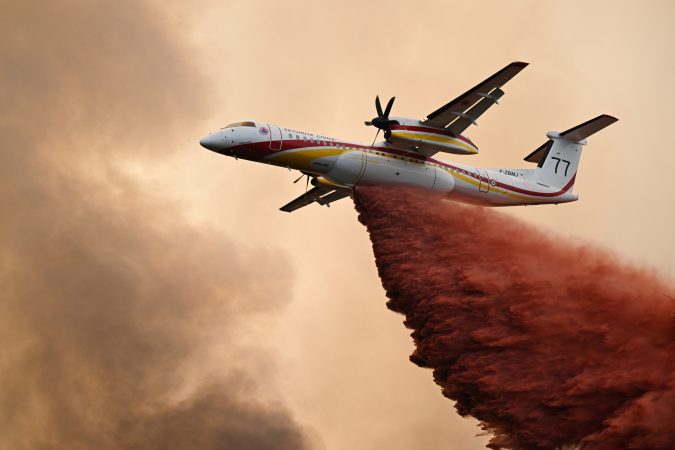
    LEGE-CAP FERRET, France — An uncontained wildfire four times the size of Paris threatened to surge again in southwest France on Wednesday — as three firefighters died in Greece and crews across southern Europe confronted a punishing mix of heat, drought, and strong winds.

    The deaths on Crete brought a fatal new dimension to a wildfire emergency stretching from the Atlantic coast to the eastern Mediterranean. At the peak of the evacuations, a third of a million people were driven from homes and vacation sites in France and Spain.

    In France’s Gironde region, the country’s biggest blaze had not spread during a calm night, authorities said. But as temperatures approached 104 F Wednesday afternoon and winds strengthened, the reprieve threatened to be short-lived.

    The landscape was so combustible that investigators believe routine brush-clearing work near a high-voltage line may have sparked the inferno, even though the work appeared to comply with regulations.

    At the command center in Lège, firefighters bent over maps spread across a car hood, tracking three danger zones: northern Cap-Ferret; the wooded corridor around Marcheprime, Cestas, and Saint-Jean-d’Illac; and a military site near Martignas, where a major outbreak forced a large deployment.

    Both firefighters and residents mobilize

    More than 2,200 firefighters and over 20 aircraft remained mobilized, backed by crews from across France and European partners.

    “We strike quickly and strike hard at any new smoke emissions,” Gironde fire commander Matthieu Jomain said.

    Beyond the command center, civilians were trying to hold the line themselves. At Souge, volunteers flooded the edges of dirt tracks while a local digger driver plowed through still-burning soil, trying to keep flames from crossing back when the expected west wind arrived. In Lacanau, residents pumped water from a lake into tanks headed for hot spots and firefighters’ cisterns.

    “If one day the fire starts in our neck of the woods, I know very well that all the people here would do the same for us,” said Flavien Dubuch, 33, who drove from Saint-Émilion with his father to help.

    Hottest day this week

    The advance of major fires in the Landes and Var regions has been halted. That left Gironde as France’s biggest remaining wildfire battle, Interior Minister Laurent Nuñez said.

    The Gironde fire forced 220,000 people to flee at the peak of the crisis. Tens of thousands have since been allowed home, but authorities warned that the danger had not passed.

    Extreme heat strips moisture from vegetation and drives down humidity, turning grasses, brush and forest litter into faster-burning fuel.

    Investigators believe contractors working near a high-voltage line for power-grid operator Enedis ignited the blaze while using a brush-cutting machine, Bordeaux prosecutor Renaud Gaudeul said.

    Météo-France said Wednesday would be the hottest and driest day of the week, with elevated wildfire danger across every region of France. Drought now covers mainland France and Corsica, with soils nearing the record dryness reached in August 2022.

    Smoke from the Gironde and Landes fires also pushed particulate pollution higher across both departments, regional air-quality monitors said.

    More evacuations ordered in France

    Gironde authorities ordered 4,000 more people out of tourist sites along the Atlantic coast on Tuesday, widening what may be France’s largest peacetime evacuation.

    “The situation remains complicated. That’s clear. We’re not out of the woods,” said Gironde prefect Sophie Brocas, who also authorized 60,000 evacuees to return to three Bordeaux suburbs untouched by fire.

    The opposing movements — thousands ordered out of coastal resorts as others returned with mobile phones on and emergency bags packed — captured how precarious the situation remains.

    The disruption was spreading beyond the burn zone into Bordeaux’s peak tourism season.

    Edouard le Grix de la Salle, who runs Château du Grand Verdus with his brother, said official appeals to avoid the region threatened its wine-tourism trade. “How did they not think about protecting that sector?” he told The Associated Press.

    At one point the Gironde blaze created a black thundercloud, electrified and lit from within, that generated lightning, violent winds and new fires beyond the original front. The pyrocumulonimbus was the first recorded in France.

    Fire in Greece turns deadly for firefighters

    Two firefighters died Wednesday while battling a wildfire in the Rethymno region of Crete, Greece’s fire department said. They were among about 125 firefighters confronting flames fanned by strong winds, with four helicopters and four water-dropping planes deployed.

    The circumstances of their deaths were not immediately clear. The department said they died “in the line of duty to protect the lives and property of citizens and the natural environment.”

    A third firefighter also died Wednesday outside the fire perimeter, after tackling a separate blaze in Greece’s southern Peloponnese region.

    Tens of thousands return home in Spain

    At the height of the crisis, roughly 330,000 people were driven from homes and vacation sites across France and Spain.

    Tens of thousands of people began returning home in central Spain after firefighters made progress around Madrid and Ávila. Evacuation orders were lifted for about 20,000 people in the Madrid region, while stay-at-home restrictions ended for another 14,000.

    But 10,000 people remain under evacuation orders in Castellón, where a fire was still out of control as Spain braced for its fourth heat wave of the summer.

    More than 1,160 square kilometers (448 square miles) have burned across France this year, according to the Interior Ministry.

    Europe is the world’s fastest-warming continent, warming at more than twice the global average, according to the European Union’s Copernicus climate service. Western Europe recorded its hottest June on record, with extreme heat and widespread dryness contributing to the spread and intensification of fires in France and Spain, Copernicus said.

  • ‘Once’ Oscar winner and Irish musician Glen Hansard dies in motorcycle crash

    ‘Once’ Oscar winner and Irish musician Glen Hansard dies in motorcycle crash

    LONDON — Irish singer-songwriter Glen Hansard, who won an Academy Award for the 2007 film Once, died in a motorcycle crash on the outskirts of Dublin early Wednesday, his management said. He was 56.

    ATC Management told broadcaster RTE that Mr. Hansard’s family was “deeply shocked and heartbroken.”

    News of his death brought tributes from fellow musicians including Bruce Springsteen, who said on Instagram he was “heartbroken” at the loss of “a great musician, a good friend and a generous and gracious man.”

    Irish police said a man in his 50s died in single-vehicle motorcycle crash in Lucan, on the western outskirts of the Irish capital, before 4:30 a.m. Wednesday. The man, who they did not name, was treated at the scene but pronounced dead a short time later.

    Mr. Hansard combined acting and a musical career. He played a member of a Dublin soul band in the hit 1991 movie The Commitments and won an Oscar in 2008 for the song “Falling Slowly,” which he co-wrote for the indie musical Once with co-star Markéta Irglová.

    Once, a love story about two struggling musicians, was later adapted for Broadway, again with songs by Mr. Hansard and Irglová. It won eight Tony Awards in 2012, including best musical.

    Mr. Hansard was long-serving front man for rock band The Frames, half of rock duo The Swell Season with Irglová, and released solo albums including Didn’t He Ramble, which was nominated for a Grammy for Best Folk Album in 2016.

    Ireland’s President Catherine Connolly said he was one of Ireland’s great singer-songwriters.

    “Glen was one of the vital driving influences of the Irish music world, bringing people together in the sharing of live music,” Connolly said. ”He will be sorely missed by all who knew him or experienced his work.”

    Actor-comedian Chris O’Dowd said Mr. Hansard’s “energizing melodies and soulful, searching voice made the tough times more manageable, the stagnant times more beautiful, and the joyful times even more memorable.”

    Mr. Hansard started out as a busker on the streets of Dublin. He became famous for leading the Christmas Eve busk outside Dublin’s Gaiety Theatre, where members of the public gathered to see famous Irish musicians perform in aid of a homelessness charity.

    Former Irish president Michael D. Higgins said Mr. Hansard was a “wonderful musician and performer” who also “placed great emphasis throughout his life to the importance of tackling the problems of society.”

    At the funeral of The Pogues frontman Shane MacGowan in 2023, Mr. Hansard performed a rousing version of The Pogues’ song “Fairytale Of New York” with Irish singer Lisa O’Neill that had the congregation dancing in the aisles of the church.

    Mr. Hansard is survived by his wife, Finnish poet Maire Saaritsa, and their 3-year-old son, Christy.

  • Trump administration seeks $10 million more for Freedom 250 events

    Trump administration seeks $10 million more for Freedom 250 events

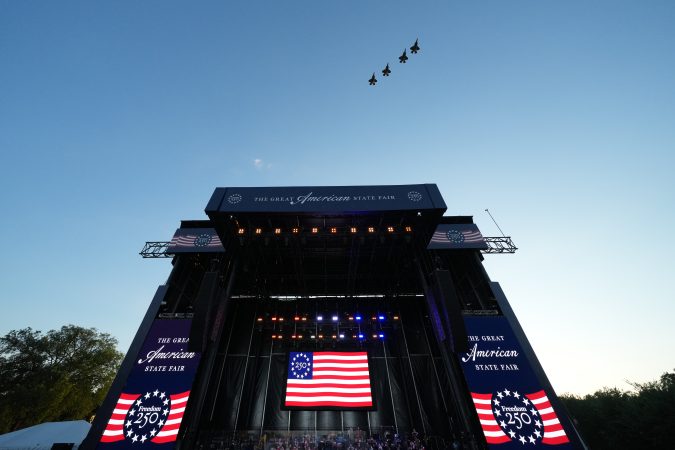
    The Trump administration is asking Congress for an additional $10 million to cover costs related to Freedom 250 events recently held on the National Mall, including a prayer event, a fair and a fireworks show.

    Sen. Jeff Merkley (D, Ore.), the top Democrat on the Senate Appropriations subcommittee that oversees funding for the Mall, said an earlier request from the administration was presented to Congress last week as part of a broader request for short-term funding across the government. That request, which asked for an unspecified amount of funding “to recoup costs associated with support of events celebrating America’s Semiquincentennial,” prompted questions about why the additional funds were needed, Merkley said.

    In a briefing with Merkley’s office, Interior Department staff said that the money was needed to cover routine National Park Service costs incurred during the Rededicate 250 prayer event, the Great American State Fair, and the July Fourth Salute to America, according to Merkley.

    Those events were organized by Freedom 250, a public-private partnership launched by the White House in December to mark the nation’s 250th anniversary. The group — which has partly supplanted a bipartisan group created by Congress a decade ago to help coordinate anniversary events – has organized initiatives and projects shaped by President Donald Trump, such as the July Fourth fireworks show that Trump pledged would be the largest in history. The Great American State Fair, a 16-day event extolled by the president, was beset by poor weather and saw periods of strikingly low attendance.

    Asked about the funding request, the Interior Department told The Washington Post on Wednesday that the extra funding was needed to help address security needs, citing recent threats against high-profile events such as the UFC event held outside the White House and the attempted shooting at the White House correspondents’ dinner.

    “Given the elevated security threats against high-profile events in Washington, D.C. …an elevated security posture was needed to ensure the safety of the public at these events. This funding would help address the expenditures associated with the elevated security posture,” the department wrote in an email.

    Merkley on Wednesday wrote to Interior Secretary Doug Burgum, asking how past funds set aside for Freedom 250 had been spent, in a letter shared with The Post. The One Big Beautiful Bill, which Republicans passed last summer without Democratic votes, set aside $150 million for the Interior Department for events and activities related to the semiquincentennial.

    Much of that funding has been redirected to Freedom 250, which has also solicited donors and received financial support from major corporations.

    “It is unacceptable to ask the American people to bail out Freedom 250,” Merkley wrote, asking for more details on why the administration was requesting the funds and how past money had been spent. “Congress already appropriated $150 million — without bipartisan input — with the administration promising that private donors would help finance the rest.”

  • Iran launches renewed missile attacks as U.S. and Saudis strike Tehran-backed militias in Iraq

    Iran launches renewed missile attacks as U.S. and Saudis strike Tehran-backed militias in Iraq

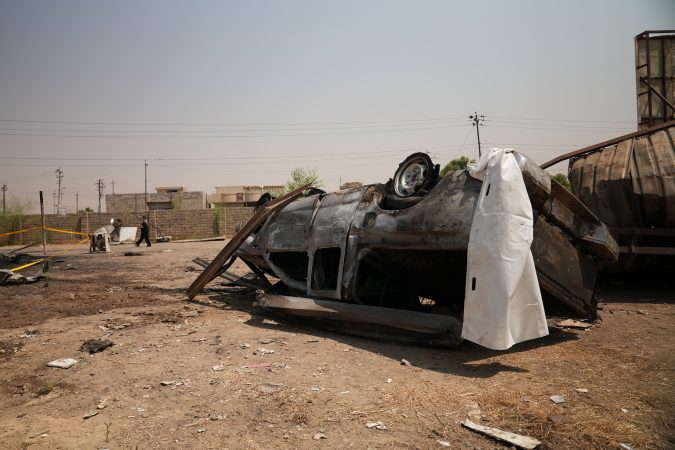
    CAIRO — Iran launched a barrage of missiles at American forces in the Middle East early Wednesday as the U.S. partnered with Saudi Arabia to strike Tehran-backed militias in neighboring Iraq, killing at least 20 fighters.

    Six Iranian advisers were also killed in the U.S.-Saudi strike, two Iraqi militia officials told the Associated Press. They spoke on condition of anonymity because they were not authorized to comment publicly.

    The flare-up on multiple fronts, after several days of relative calm, raised the risk of a return to all-out war. It also underscored the difficulty of winding down a five-month conflict that has jolted the world economy and is unpopular among Americans. The fighting was also likely to add to concerns that the U.S. is further drawing down already diminished stockpiles of sophisticated munitions needed to defend its bases and allies.

    Meanwhile, a Fox News reporter said in an on-air segment that he spoke with President Donald Trump who, using a series of vulgarities, told him the U.S. will hit back hard in response to the Iranian attacks.

    Saudi Arabia had accused the Iraqi militias of firing drones against its oil facilities over the past two days. An umbrella group of Iraqi militias initially denied the allegations, while another Iran-backed group — the Houthi rebels in Yemen — said they had attacked Saudi energy facilities as part of a separate but related conflict.

    Before the latest eruption, mediators had expressed optimism about bringing the U.S. and Iran back to the negotiating table. An interim agreement collapsed in recent weeks over renewed fighting in the Strait of Hormuz, a crucial waterway for global energy supplies that Iranian attacks have again effectively closed.

    A regional official said mediators are “still trying with both sides” to restore calm and get the ceasefire back on track. He gave no details on whether progress was being made and spoke on condition of anonymity to discuss the closed-door diplomacy.

    The renewed hostilities sent oil prices spiking. Brent crude, the international standard, jumped 3.1% to $84.58 a barrel.

    Jordan intercepts missiles and US strikes militias in Iraq

    Iran’s paramilitary Revolutionary Guard said it fired ballistic missiles at Jordan’s Muwaffaq Salti Air Base, a key U.S. military hub for the region, in a statement carried by the state-run IRNA news agency.

    Jordan’s military said five Iranian missiles had been intercepted and destroyed. There were no immediate reports of casualties or damage.

    The U.S. military later announced that American and Saudi fighter aircraft had struck multiple logistics and weapons sites in eastern Iraq in response to the alleged drone attacks on Saudi Arabia. The Saudi Defense Ministry warned that it “does not seek escalation but will respond to any aggression.”

    The Popular Mobilization Forces, a coalition of primarily Shiite, Iran-backed armed groups that is officially under the command of the Iraqi military, said at least 20 fighters were killed and 32 others wounded in the overnight strikes.

    Those groups joined the fight against the Islamic State group after it seized large sections of Iraq in 2014. The Iraqi government later designated it as an “independent military formation” within the armed forces, but the militias have significant autonomy, and some have attacked U.S. facilities.

    The office of Iraqi President Nizar Amidi condemned Wednesday’s U.S.-Saudi airstrikes, calling them “an unacceptable attack and a blatant violation of Iraq’s sovereignty, targeting its official security institutions.”

    Iraq’s National Security Council also condemned the strikes, saying in a statement that they had been carried out “while the Iraqi government was in contact with relevant parties to investigate and address all the concerns raised by the Saudi and American sides.” It said “a number of innocent people” had been killed and wounded.

    A visit to Saudi Arabia by Iraqi Prime Minister Ali al-Zaidi that had been scheduled for Thursday was postponed indefinitely, said two Iraqi government officials on condition of anonymity because they were not authorized to comment publicly.

    Attacks on Saudi oil facilities could worsen global energy crisis

    Saudi Arabia is also locked in a renewed conflict with the Houthis. The rebels have declared a blockade of Saudi shipping that could choke off another crucial Middle East trade route, the Bab el-Mandeb strait from the Red Sea into the Gulf of Aden.

    On Monday, the Houthis said they had launched drones targeting oil facilities used to transport oil across Saudi Arabia to the Red Sea port city of Yanbu, a key bypass for Saudi exports blocked by Iran’s chokehold on the Strait of Hormuz.

    The rebels said their attack was in response to a Saudi drone they said had breached Yemen’s airspace.

    Planet Labs satellite imagery from Monday analyzed by The Associated Press showed damage to Saudi Aramco’s Abqaiq oil-processing facility. The massive facility is capable of processing approximately 7 million barrels of crude oil per day.

    In 2019, attacks on Abqaiq claimed by the Houthis disrupted production of 5.7 million barrels per day, spiking global oil prices and demonstrating the vulnerability of Saudi oil facilities to missile and drone attacks.

    Separately, a regional official said an oil refinery in Jazan, on Saudi Arabia’s Red Sea coast, has temporarily shut down due to “relatively significant” damage from a Houthi attack on Saturday. The official, who was not authorized to brief journalists and spoke on condition of anonymity, said it would take several days to be repaired. The refinery produces 400,000 barrels per day.

    The Texas-based IIR Energy consultancy said the refinery was tentatively expected to restart on Aug. 15.

    Iran rejects Oman proposal for managing Strait of Hormuz

    The Strait of Hormuz has been a major flashpoint in the conflict. Iran’s deputy foreign minister said his country rejected a proposal by Oman, which lies on the other side of the strait, to jointly manage ship traffic.

    In an interview with Iran’s state-run television, Kazem Gharibabadi said Oman’s proposal included dividing the strait into two routes, each allowing the transit of half the shipping through the waterway.

    Iran offered a counterproposal with a temporary plan for transit of vessels through its territorial waters, he said, adding that Tehran’s policy is for the strait “never to return to its prewar situation,” when ships moved freely.

  • Rescuers search for survivors after a 7.1 quake kills 18 in southwestern Japan

    Rescuers search for survivors after a 7.1 quake kills 18 in southwestern Japan

    KUMAMOTO, Japan — Soldiers and emergency workers combed through a badly damaged shopping mall and collapsed houses looking for trapped survivors Wednesday after a powerful earthquake that killed at least 18 people, including a foreigner, in southwestern Japan.

    The magnitude 7.1 earthquake that hit a day earlier in the Kumamoto area on the southern main island of Kyushu also left at least 62 people injured, six of them seriously, the prefectural government said. The tally has been steadily growing, fanning fears it may continue to rise.

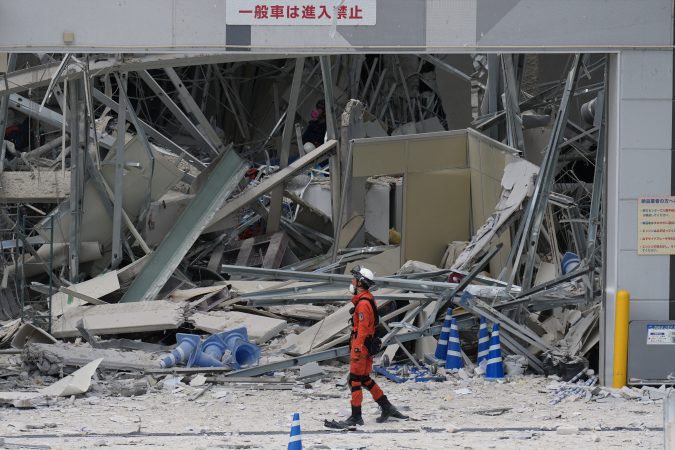
    Some of the most serious damage was at the Aeon Mall shopping center in the town of Kashima, which was bustling with thousands of people when the quake happened. The company said some 3,000 customers were evacuated to a parking lot before a gas explosion happened in another part of the mall, where some people were still working.

    Fumika Ono was shopping at a mall with her older sister when the ground shook so fiercely she lost her balance and ducked. Children began screaming and goods scattered on the floor.

    The 19-year-old was among the crowd of shoppers who managed to escape safely.

    The sweltering weather heightened worries about the survivors as rescuers braved the heat. It remained unclear how many people might still be missing.

    The mall’s second floor collapsed, trapping people. Witnesses said the explosion shook the area as much as the quake.

    Three people remained missing, while four deaths were confirmed at the mall site, according to Aeon President Akio Yoshida.

    “We take it seriously that an explosion happened and precious lives were lost,” Yoshida told a news conference in Kumamoto, where he bowed deeply along with two other executives.

    Japanese media footage of the mall showed that part of the ceiling had caved in, and metal pieces and other debris were scattered about as helmeted and masked rescue workers searched the area.

    Kiyoshi Matsunaga, 74, who lives in the mall’s neighborhood and was at a supermarket just a few blocks away, said Tuesday’s quake reminded him of a deadly quake 10 years ago that hit Kumamoto and killed 50 people.

    He stopped in his tracks when the shaking began while he was pushing his cart toward a cash register. Things scattered from the shelves. He could not move, he recalled.

    “I was frightened,” he said.

    Japan is one of the most quake-prone nations in the world.

    In the Nuyamazu district, a pair of temple gates at a 16th-century Buddhist temple collapsed. They had just been repaired five years ago.

    Yuki Kiyozumi, deputy chief priest at the temple, recalled how she had to crawl on the floor because the shaking was so violent. She had just returned home from a meeting and was about to feed her cat.

    “I don’t even know if or how we can rebuild them again,” she said, while cleaning up damaged ornaments and furniture.

    In nearby Yatsushiro, a chimney collapse at a Nippon Paper Industries factory killed five people while seven others were rescued from the debris, according to the Kumamoto prefectural government disaster team.

    Four people were still believed to be trapped there, it said.

    In the first reported death of a foreign national, a Vietnamese technical intern was killed after a crane fell on him at a factory where he worked, according to the Vietnamese government. He had arrived in Japan in January. Seven other Vietnamese technical interns at the factory evacuated safely

    Separately, a Vietnamese woman married to one of the workers was injured when a wall collapsed and was being treated at a hospital.

    Nearly 34,900 homes were still without electricity and some 15,000 homes without running water, Kumamoto officials said. More than 8,800 people left their homes to stay in over 400 shelters, where power sources were being added to provide air conditioning.

    Aerial police footage showed some homes in residential areas were completely flattened, including a few that crumbled into a nearby river.

    Japan’s Self Defense Forces joined rescue workers in the search and rescue operations. Hundreds of professionals were helping with the effort, including firefighters from Taiwan.

    “There are people who are still waiting to be rescued, and it’s a race against time,” Prime Minister Sanae Takaichi said. “We will go all out to find and rescue as many people as we can.”

    Takaichi said the government was preparing to deliver food and other necessities to hard-hit areas. She also offered her condolences to the victims and sympathy to their relatives, while urging those affected by the quake to take care of themselves under the hot weather.

    Bullet train services remained suspended. Although operations at Aso Kumamoto Airport resumed Wednesday, some airlines canceled flights as a precautionary measure.

  • Senate confirms Jay Clayton as new intelligence czar

    The Senate confirmed Jay Clayton as the director of national intelligence Tuesday, ending the tenure of Bill Pulte, a housing official and Trump loyalist, who held the role for more than a month.

    The 51-to-47 vote was more partisan than expected after Trump nominated Clayton in June. Many Democrats initially welcomed the pick and signaled they would support him.

    But their attitude changed after Clayton’s July confirmation hearing, where multiple Democrats pressed him to acknowledge that Joe Biden won the 2020 presidential election. Clayton repeatedly said that Biden had been “certified” as the victor but declined to answer the question directly.

    The question became a flash point for Democrats concerned about President Donald Trump’s use of the intelligence community to further his baseless claims that the 2020 election was rigged.

    Clayton previously served as the U.S. attorney for the Southern District of New York and chaired the Securities and Exchange Commission during the first Trump administration.

    His background has been less controversial than that of Pulte, who used his time leading the Federal Housing Finance Agency to further allegations of mortgage fraud against Trump’s perceived political enemies. But some Democrats have still argued that Clayton, like Pulte, lacks the national security experience required by law for the position.

    The director of national intelligence oversees the 18 agencies that span the U.S. intelligence community. Lawmakers established the role after the 9/11 terrorist attacks to try to prevent future lapses in intelligence sharing and interagency coordination.

    Pulte used his five weeks as acting intelligence chief to cut positions in the Office of the Director of National Intelligence, fulfilling Trump’s desire to vastly reduce its size. Since June 1, The Washington Post has reported, he has eliminated about 200 jobs within the ODNI.

    Pulte said in a posting on X on Tuesday that he had conducted “a 5th and Near Final Round of TERMINATIONS, an approximately 30% Staff Reduction from Weeks Ago.” ODNI has shrunk from around 2,000 people at the start of Trump’s second term to less than 1,300. The workforce’s precise size is classified.

    Clayton will take over an organization that has endured near nonstop upheaval in recent weeks, since the departure of former DNI Tulsi Gabbard in mid-June. Morale is low, former senior intelligence officials have said, noting they fear that ODNI’s recent politicized leadership and the firing of veteran analysts have discouraged independent analysis that clashes with White House narratives.

    Clayton’s confirmation could unlock a deal to renew Section 702 of the Foreign Intelligence Surveillance Act, a warrantless spy program that lapsed for the first time in June after Democrats protested Pulte’s temporary appointment and voted down the legislation. Civil libertarians and privacy advocates have long opposed the tool, arguing it needs firmer guardrails to protect American citizens from government surveillance.

    Lawmakers from both parties had sought to accelerate Clayton’s confirmation hearing in June to avoid having Pulte ever step into the acting director role. Trump abruptly canceled the previously scheduled session only hours before it was set to begin, instructing Clayton not to appear.

    The president instead called on the Senate to pass a voting restrictions bill and threatened to blockade future legislation without it. The Senate has not yet done so.

  • Investigators in Comey seashells case omitted key facts and distorted others, defense lawyers allege

    Investigators in Comey seashells case omitted key facts and distorted others, defense lawyers allege

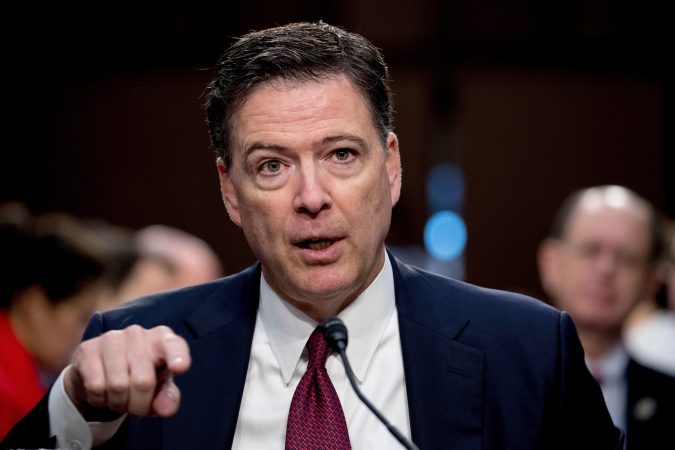
    WASHINGTON — Federal officials involved in the prosecution of James Comey misled judges, submitted false statements and withheld key facts during the course of the investigation, according to new defense filings that seek the dismissal of a case charging the former FBI director with threatening President Donald Trump on social media.

    Lawyers for Comey made the allegations of misconduct in motions filed late Tuesday that also call the case a vindictive and selective prosecution, request access to transcripts of grand jury proceedings to expose what they say are “irregularities” in how the indictment was secured, and describe “unlawful” surveillance of Comey by the Secret Service.

    Taken together, the new motions, along with an earlier one this week that called Comey’s social media post protected speech and not a threat, represent a multiprong defense effort to dismantle a case that defense lawyers say exemplifies a Trump administration retribution campaign targeting one of the president’s most vocal critics.

    “Ample objective evidence — much of which comes directly from government officials’ own public statements and admissions — establishes that the President’s animus toward Mr. Comey led to this vindictive and selective prosecution,” Comey’s lawyers wrote in one of the filings.

    A picture of seashells on the beach

    Comey was charged in April with threatening Trump through a photo he posted on Instagram a year earlier depicting seashells he said he found on the beach in North Carolina in the numerical arrangement of “86 47.”

    The Justice Department has said the photo constituted a threat against Trump, the 47th president. Comey deleted the post shortly after he put it up, saying he did not know that anyone interpreted the numbers as a call to violence. His lawyers have said that the slogan has long meant to “get rid of” or “eject” and has been featured on thousands of items sold online and regularly displayed at protests.

    Defense lawyers say investigators who tried to prove that Comey intended a physical threat, or knew that the number “86” suggested violence, repeatedly came up empty but withheld that from federal magistrates as they applied for warrants to search the digital accounts of Comey and his wife.

    For instance, the FBI searched an internal database of information about open and closed investigations for any indication of an association between Comey and the term “86” but found inconclusive results. An FBI agent also requested a review of the FBI file for the case against reputed mobster John Gambino, which Comey worked on as a young prosecutor, but found no references to the term “86.”

    Investigators also interviewed a key government cooperator in the case, Salvatore Gravano, who said he did not recall ever discussing the term “86” with Comey or hearing it in connection with the trial.

    “Evidence obtained during discovery supports at least a substantial preliminary showing that the affidavits submitted in support of two of the search warrants contained intentionally false statements and material omissions, and that those defects vitiate any conceivable showing of probable cause,” Comey’s lawyers wrote.

    Defense lawyers say case is rooted in Trump’s personal animus

    In addition, defense lawyers say the warrant applications distort statements made to investigators by a person who knew Comey but has been now estranged from him for years.

    The person, whose name is not revealed in the court filings, is described in the affidavit as saying that they immediately perceived Comey’s post to have a violent meaning. But investigators omitted from the affidavit that the person had said their initial impression was that “86” referred to being “out of something on the menu” and only later concluded that it could be understood as a call to violence.

    The person said that view was influenced by having listened to an episode of Rudy Giuliani’s online show in which the Trump loyalist claimed that Comey had worked on mob cases as a prosecutor in which mafia members used “86” to mean “kill.” But the FBI’s own investigation determined Giuliani’s claims to be untrue, defense lawyers said.

    The seashells case against Comey was the second in months targeting the ex-FBI director, a long-running Trump foe whom the president over the years has called a “corrupt piece of garbage” and other epithets.

    An earlier case in Virginia accusing Comey of lying to Congress was dismissed in November after a judge concluded that the prosecutor who charged him and another Trump adversary, New York Attorney General Letitia James, was illegally appointed to the job.

    Comey’s lawyers describe the prosecutions as rooted in Trump’s own personal animus, with the Secret Service closely coordinating with the Justice Department and with Trump, who received frequent updates on Air Force One.

    As Comey returned to Washington with his wife to be interviewed by law enforcement about his post, Secret Service agents were directed to conduct “unlawful” electronic surveillance, “including as they stopped to visit the grave of their deceased son,” his lawyers said. The surveillance had been requested by a senior Justice Department official.

    Comey was the FBI director when Trump took office in 2017, having been appointed by then-President Barack Obama and serving before that as a senior Justice Department official in President George W. Bush’s administration. Trump fired Comey in May 2017 during an FBI investigation into potential ties between Russia and Trump’s presidential campaign. The men have been openly at odds ever since.

    The Justice Department will have an opportunity to respond to the defense filings. The department has not elaborated on any evidence of intent the government has. But acting Attorney General Todd Blanche said earlier this year that prosecutors in every case prove intent with “witnesses, with documents, with the defendant himself to the extent it’s appropriate.”

    “And that’s how we’ll prove intent in this case,” Blanche said in April, shortly after he was elevated to lead the department after Pam Bondi’s ouster.

  • Schools are adding pepper-spraying drones to help combat active shooters

    Schools are adding pepper-spraying drones to help combat active shooters

    Schools in at least three states will be equipped with drones this year that can zoom through halls, smash windows, and pepper-spray active shooters if teachers report a threat.

    At least nine schools — three in Florida, five in Georgia, and one in Colorado — will have storage boxes that house the plastic, nonlethal aircraft made by Austin-based Mithril Defense. The drones, which can be activated by teachers, are capable of reaching a shooter within 15 seconds.

    The aircraft are designed to distract their targets by flashing strobes, blaring sirens, spraying them with pepper gel, or ramming into them at 60 mph.

    “Once I get the drones on you, you just can’t escape them,” said Bill King, a retired Navy SEAL and Mithril Defense co-founder.

    The programs continue a wave of spending on high-tech security on campuses — a multibillion dollar industry fueled by threat of school shootings. Nearly 400,000 students have experienced gun violence at school since the 1999 attack at Columbine High School in Colorado, according to a Washington Post tracker, which has recorded 435 shootings over that period.

    Deltona High School, a public school just north of Orlando, with about 1,700 students, became the first campus to install the system at the end of last school year. Two more Florida schools — Boyd H. Anderson High School near Fort Lauderdale and Godby High School in Tallahassee — were also tapped by the state to complete the $557,000 pilot spearheaded by state legislators.

    Five schools in Georgia will also test the drone systems after state legislators there approved a roughly $500,000 pilot program with Mithril Defense. The state has not finalized the schools that will participate, but Mithril said the systems will come online during the upcoming school year.

    Georgia state Rep. Matt Dubnik (R), chairperson of the House appropriations education subcommittee, said the technology could protect schools that don’t have resource officers on campus. The pilot will be tested in schools with and without the officers, he said.

    “I’m a believer in the technology,” Dubnik said, adding that hundreds of other state legislators agreed when they voted to pass the budget, which included the funding for the program.

    And in Colorado, John Adams Academy — a public charter school in Sterling Ranch for students in kindergarten through grade 12 — will self-fund a drone program for its inaugural year.

    Teachers will have an app or classroom panic buttons to summon the drones. Mithril Defense’s professional drone pilots can then fly them remotely.

    The drones have been tested in simulations but never by a shooting.

    Justin Marston, Mithril’s founder and CEO, said the massacre at an elementary school in Uvalde, Texas, where 19 students and two teachers were killed in 2022 as law enforcement waited over an hour to enter the classroom, inspired the project.

    When he learned of the Russian and Ukrainian military forces using cheap drones to attack each other, Marston said he figured a nonlethal version might have saved lives in Uvalde.

    “The first 120 seconds are incredibly critical, because that’s when most of the shooting happens,” Marston said.

    While the drones could be activated any time, they’re meant specifically for potentially lethal situations. The drones wouldn’t break up a schoolyard fight, Marston said. But if one of the students pulled a knife, they could.

    Schools across the country have embraced a range of defense technologies from artificial intelligence-powered cameras to weapons detectors amid the threat of campus shootings. But some say military-grade equipment, like Mithril’s drones, don’t belong on campuses packed with children.

    School security consultants have, for years, cast doubt on high-tech solutions to school shootings, arguing that low-tech measures, like simply locking external doors, are just as effective.

    Curtis Lavarello, who leads the School Safety Advocacy Council, a security consultancy firm, said he worried that Mithril’s drones might accidentally target a fleeing student instead of a shooter. Or that remote pilots, in a split-second decision, might mistake a law enforcement officer for a shooter, especially if teachers initiate a false alarm.

    “It’s almost like where gaming and school safety collide,” Lavarello said. “I have some really serious reservations about the deployment of drones in schools.”

    Mithril isn’t the first company to attempt to place anti-shooter drones in school. In 2022, Axon Enterprise halted development of taser-equipped drones after a mass resignation of its ethics board, which worried that the devices would stun innocent students or be abused by hackers.

    Jaclyn Corin, who survived the 2018 Marjory Stoneman Douglas High School shooting in Parkland, Florida, that killed 17, said she’d prefer to see officials prioritize policies that help prevent gun violence instead of responding to it.

    “School districts have finite budgets and limited attention,” said Corin, executive director and co-founder of March for Our Lives, a youth-led organization advocating for strict gun control. “If we spend significant resources on technologies designed to respond after shooting begins, we have to ask what we’re not investing in instead.”

    Nicole Lawrence said she found out from a local TV news story that her child’s Atlanta-area high school was solicited by Georgia to host Mithril’s drones this year. (District officials said they do not yet have specific plans for installing the devices.) Lawrence said she’s unsure whether the drones will be effective but is willing to give them a chance.

    “I’ve put $100,000 toward worse things,” Lawrence said.

    Florida plans to review the number of violent incidents at the schools and measure response times to threats. The state will also survey parents, students, and staff about whether they feel safer under the pepper-spraying, window-smashing devices.

    As the drones sat in Deltona High School this summer awaiting their first action, the state approved another $564,000 for the following school year.

  • Pete Hegseth is resurrecting a brand of military masculinity that dominated debates a century ago

    Pete Hegseth is resurrecting a brand of military masculinity that dominated debates a century ago

    On July 15, Defense Secretary Pete Hegseth announced that his department will test all military personnel over the age of 30 for low testosterone. In his video posted on X, he explained the move in terms of military dominance. It would give U.S. soldiers an “edge of lethality” and ensure they “have the biological foundation” to maximize their performance.

    This decision ties into larger concerns on the political right about the need to foster manhood, emphasizing aggression and physical strength. Testosterone has long served as a cultural marker of traditional masculinity, so it’s not surprising that Hegseth would focus on the hormone. After all, he’s performed pull ups on camera and issued a DOD-HHS fitness challenge with Secretary Robert F. Kennedy Jr.

    Yet, Hegseth’s move isn’t just a reflection of his personal priorities for the military. It’s also part of a long history of rhetoric about American manhood in military medicine that has elevated traditional ideas about masculinity and aimed to exclude gay men and women from military service. Indeed, dating back to the late 19th century, decisions about U.S. soldiers’ health have exposed fierce debates over definitions of American manhood.

    At the dawn of the 20th century, disagreements over imperialism dominated American politics. Proponents of American expansionism, like Sen. Albert J. Beveridge (R-Ind.), wanted to see the U.S. acquire territories in the Caribbean and the Pacific.

    Worries about manhood and the health of military personnel were at the core of these debates. Many Americans linked military power to the male body and, in turn, the inability or unwillingness to fight or govern “dependents” to boyhood. Champions of imperialism like Beveridge associated the physical strength of enlisted men as synonymous with the strength of the nation, and they framed territorial acquisitions as a way for the U.S. to demonstrate its manliness to other nations.

    Even anti-imperialists, who opposed territorial expansion, worried about American manhood. One of their main arguments against acquiring the Philippines was that it would degrade both individual and national manhood. They feared an imperial project in the Pacific would mean American soldiers would succumb to drunkenness and venereal infections in the tropics.

    Army officers, for their part, argued that the military could improve the nation’s men. During the 19th century, many people had seen military service as debasing partly because low pay and harsh punishments meant those who joined the Army were men on the margins of society with few alternatives. But now, medical officers explained, through efficient military hygiene, soldiers would become better citizens as they learned discipline, cleanliness and order.

    The imperialists won the foreign policy debate. After the Spanish-American War of 1898, Spain relinquished all claims on Cuba and the U.S. gained sovereignty over Puerto Rico, Guam and the Philippine Islands. Yet, that didn’t end the contest over manhood.

    In fact, once the U.S. took over these lands and sent military personnel abroad, concerns over soldiers’ behavior and masculinity only intensified.

    Gendered rhetoric saturated debates about whether enlisted men’s consumption of alcohol would improve or harm their health. Purity Reformers cheered the passage of legislation that ended the sale of alcohol at the army canteen. They saw drunkenness as unmanly. Additionally, inebriated men contracted sexually transmitted infections (STIs) at higher rates, which, the reformers believed, emasculated soldiers by rendering their bodies weak and infertile.

    Military medical officers who opposed the anti-canteen law feminized their male political opponents, complaining that these “abstinence ladies” were trying to tell officers how to run the army.

    These debates became especially intense over the Philippines, which U.S. troops oversaw in the years after the war. The problem was, by 1907, roughly one in three enlisted men serving in the Philippines had an STI. For those who saw the experience of military service not only as a place to prove one’s manhood but also to improve it, these rates of infection posed a problem that was at once medical and gendered.

    In response, the U.S. military followed in the footsteps of European colonizers and launched a system of regulated prostitution whereby medical officers inspected women who sold sex to soldiers, sent them to a designated hospital if they found signs of infection and, otherwise wrote “free from disease” on their inspection booklets. The Army thus sanctioned a manhood marked by heterosexual sex with Asian women in a colonized territory.

    When reports of this approach hit the anti-imperialist and temperance press in America, however, the public outcry pressured political and military leaders to stop the most visible aspects of this program. Progressive Era reformers fiercely opposed what they saw as government-run prostitution. They decried the sexual double standard that punished women suspected of selling sex but did nothing to stop either the men profiting from women’s sexual labor nor the male consumers. They also challenged claims that men had to have sex with women in order to be healthy.

    Made By History sponsors. FOR USE ON MADE BY HISTORY STORIES ONLY.Inquirer Staff

    While the efforts to regulate prostitution didn’t completely abate, the military also launched a push to divert enlisted men in the Philippines away from sex and the risk of STIs, especially by creating alternative avenues for recreation. Military authorities built boxing rings and established baseball diamonds to fill men’s leisure time with traditionally masculine physical activities marked by aggression, strength and speed.

    By the time the U.S. joined the First World War in 1917, social reformers had formed the American Social Hygiene Association to fight prostitution and stop the spread of STIs. Many occupied positions of leadership in the Army, and a definition of military masculinity based on restraint held political sway.

    General John J. Pershing, for example, who led the American Expeditionary Force, declared the French maisons tolérées off-limits to his soldiers. The military also enacted strict protocols requiring men who admitted to sexual activity with women in France to report to prophylaxis stations immediately following “exposure” to prevent the spread of disease.

    At the same time, Raymond B. Fosdick, a Progressive reformer, served as chairman of the Commission on Training Camp Activities (CTCA) overseeing educational and recreational programming for enlisted men. He promoted competitive sports as crucial to ensuring soldiers’ health. Fosdick claimed, “it does not do any good in dealing with red-blooded young men merely to erect a series of verboten signs along the roadside; you must have something positive for them to do.”

    As in the Philippines, U.S. troops constructed arenas for boxing and wrestling, along with football and baseball fields at camps in France. In 1917, the Army released Fit to Fight, an educational film for soldiers. The film’s hero Billy Hale was a former college quarterback who refused contact with prostitutes, embodying the ideal of strength in chastity.

    It was a vivid example of how military leaders tried to frame the combination of athletic pursuits and sexual restraint as the key to healthy manhood and military success. They also argued that living up to this ideal was a necessity so that soldiers could become husbands and fathers after the war.

    As reformers and officers openly discussed manhood and soldiers’ health they simultaneously painted a bleak portrait of womanhood. They saw women near training camps as sexual predators with dangerous intentions and as the locus of disease. Meanwhile, women at “home” had a purity that needed protection from soldiers who had worked elsewhere. In neither case were women “fit to fight.”

    A full century later, testosterone testing is resurrecting many of the stereotypes that saturated these debates. It paints a picture of soldiers as masculine and virile in a way that excludes openly gay men and women. And this is coming only a decade after all combat jobs opened to women and 15 years after the end of Don’t Ask Don’t Tell, which had required gay and lesbian soldiers to hide their sexual orientation. Additionally, it links the health of male soldiers — through their sex drives and sexual activities — to the bodies of women.

    Hegseth’s emphasis on testosterone follows on the heels of striking women from promotions lists in both the Army and Navy. Testosterone testing, in tandem with this move, as well as Hegseth’s criticisms of women in combat roles and his aversion to openly gay men in the military, bolsters a manhood that reserves power for cisgender, heterosexual men and relegates women to roles with less authority.

    Experts have pointed out the decision’s departure from evidence-based medicine. Testosterone levels are actually poor indicators of actual strength. But the decision nevertheless has political purchase thanks to longstanding images about what constitutes the ideal soldier.

    Pamela Maddock is an affiliate of the History Department at the University of Sydney and is working on a book, “Access to Women: Sex, Race, and Disease in the U.S. Army, 1853-1919,” that examines the U.S. Army’s management of sexually transmitted infections in different geographic contexts outside the US. She teaches at the Williston-Northampton School.

    Made by History takes readers beyond the headlines with articles written and edited by professional historians. Opinions expressed do not necessarily reflect the views of The Inquirer.