Category: Nation & World

  • 8 takeaways and surprises from Florida, Wyoming, and Alaska primaries

    8 takeaways and surprises from Florida, Wyoming, and Alaska primaries

    Many of the highest-profile elections on Tuesday night went just as expected. But across the country and down the ballot in four states, there were some surprises.

    In a onetime battleground state that has shifted firmly to the right, Florida Democrats took dueling approaches as they attempt to win statewide for the first time since 2018. They picked a democratic socialist to run for Senate and a former Republican to run for governor.

    GOP voters picked one House incumbent to succeed Gov. Ron DeSantis, a Republican, and ousted another mired in scandal whom DeSantis declined to support.

    A Democrat is locked in a tight race for a special election for a heavily Republican Pennsylvania state House district, and President Donald Trump’s pick for Wyoming governor lost to a state lawmaker.

    Here’s a rundown from Tuesday’s elections.

    Scandal in Washington topples a GOP incumbent in Florida

    Of eight Florida House incumbents who faced primary challenges, only one lost: Republican Cory Mills.

    Mills, a two-term lawmaker from the Daytona Beach area, faces mounting allegations of sexual misconduct, domestic abuse, and campaign finance violations. The House Ethics Committee said it authorized more than 20 subpoenas as it investigates him.

    As DeSantis stayed out of the race, Trump stopped publicly backing Mills, and some of Mills’ House GOP colleagues endorsed a challenger. Primary voters in his district followed suit: They picked former news anchor Ryan Elijah by a margin of 13 percentage points, signaling voter distaste for incumbents’ scandals.

    In a Truth Social post Wednesday morning, Trump endorsed Elijah.

    “I told Congressman Cory Mills of Florida, a friend of mine, to get out of the Race, but he wouldn’t listen,” Trump wrote. “He thought he could win, so who can blame him? We now have a great candidate, Ryan Elijah, running in his place! Ryan stands for EVERYTHING MAGA, and is respected by ALL.”

    Democrats pick a former Republican and a new DSA member

    Democrats haven’t won statewide in Florida since 2018, and they face long odds this year. A pair of wild cards who won over primary voters will try to reverse the party’s losing streak.

    David Jolly, a Republican turned independent Trump critic turned Democrat, beat challengers from the left to take on Rep. Byron Donalds (R) in the governor’s race.

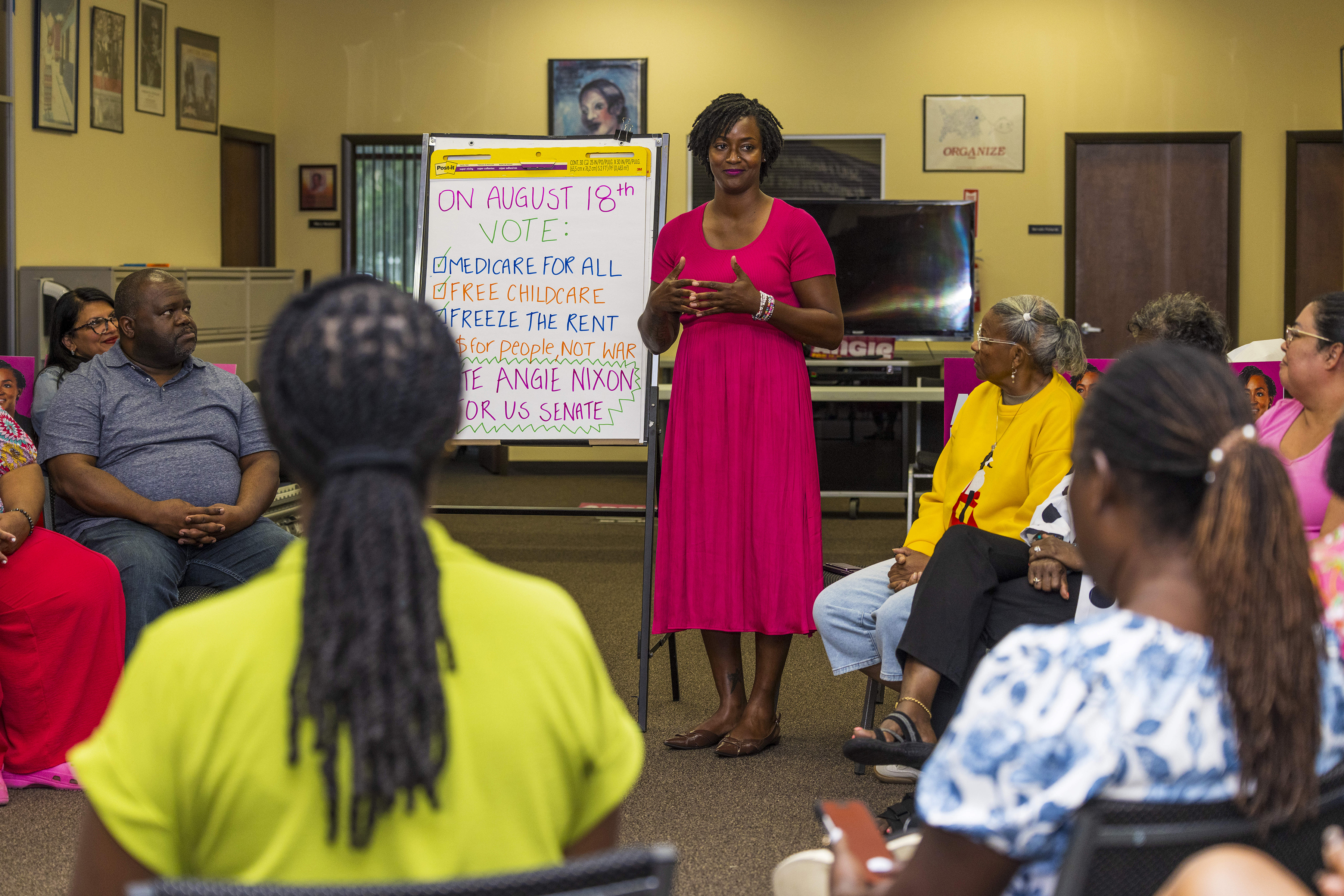
    He’ll be on the ballot alongside Angie Nixon, a progressive state lawmaker from Jacksonville who recently joined the Democratic Socialists of America but had not been endorsed by the group or any of its chapters. Facing Alexander Vindman, a key witness in Trump’s first impeachment trial, she overcame a massive disadvantage in fundraising and spending. She will face Sen. Ashley Moody (R), who is in her second year in Congress after being appointed to fill the seat left open when Marco Rubio became secretary of state.

    Donalds and Moody will be heavily favored. Although this election will herald the end of DeSantis’ ironfisted leadership in Florida, he has managed to turn the former swing state into a conservative bastion.

    Florida House Democrats hold on for now

    DeSantis’s move to redraw the state’s congressional map and give the GOP a boost scrambled the field for many House races.

    But some of the incumbents whose districts were splintered managed to hang on: Rep. Debbie Wasserman Schultz (D), who faced criticism for shifting to run in a predominantly Black seat, beat four Black candidates.

    Rep. Jared Moskowitz (D), a moderate, ran in a new district, a battleground where he defeated a democratic socialist. He will now face a self-described “America First” mayor.

    As in that race, Democrats are expected to fight for other seats that were redrawn to favor Republicans: In Tampa, Rep. Kathy Castor (D) is facing former state lawmaker Mike Beltran, while an empty seat in southern Florida pits restaurant franchisee Casey Askar (R) against Pia Dandiya (D), a tech executive and former teacher.

    The GOP’s best flip opportunity is likely to come in the Orlando area, where the Republican primary to take on Rep. Darren Soto (D) was too close to call early Wednesday.

    Another loss for Trump in a governor’s race

    The power of Trump’s endorsement took another blow after his preferred candidate in Wyoming’s gubernatorial primary, Megan Degenfelder, lost to state Sen. Eric Barlow.

    Degenfelder, the state’s superintendent of public instruction, secured Trump’s endorsement before she even announced her campaign. But Barlow had years of experience in party leadership in the state legislature, as well as the cash advantage.

    Gubernatorial candidates in Iowa, Minnesota, South Carolina, and Georgia also lost GOP primaries despite Trump’s backing.

    Mixed results for Wyoming’s right wing

    In a deep red state like Wyoming, political fights are usually about how far right Republicans should go.

    State Rep. Rachel Rodriguez-Williams, chair of the ultraconservative Wyoming Freedom Caucus, accused Barlow of being insufficiently conservative during his time as House speaker and opposed his gubernatorial run. Others in Wyoming’s right flank did well on Tuesday.

    Rep. Harriet Hageman, Trump’s pick for the open Senate seat vacated by the retiring Sen. Cynthia Lummis, won her race handily. Secretary of State Chuck Gray, aligned with the Freedom Caucus, won the crowded primary for the state’s sole House seat, vacated by Hageman, a conservative who unseated the fierce Republican Trump critic Liz Cheney in 2022.

    A surprising showing for Democrats in Pennsylvania

    In a Pennsylvania special election, Democrat Brandon Dukes held a narrow lead over Republican Scott Timko in a state House district that Trump carried by 18 percentage points in 2024. The race remained uncalled early Wednesday morning.

    The district includes parts of Butler County close to the site where Trump was shot at during a campaign rally two years ago. Tuesday’s winner will complete the months left in the term of a lawmaker who stepped down. Dukes and Timko are also competing in November for a full term.

    While special elections generally have low turnout, Tuesday’s contest could be an early sign of shifting political sentiments in the swing state. Pennsylvania is home to several battleground congressional districts in the fight for control of the U.S. House.

    Democrats have won or overperformed expectations in special elections in the past year, including an upset in a Florida state legislative district that includes the president’s Mar-a-Lago estate.

    AIPAC makes a difference

    The force of the American Israel Public Affairs Committee was on display in a California special election where the pro-Israel lobby’s last-minute intervention may have thinned the margin between two Democrats competing for the seat vacated by Eric Swalwell (D).

    AIPAC’s super PAC, the United Democracy Project, swooped in and spent millions of dollars on advertising in the final two weeks of the race. The election was too close to call Tuesday despite state Sen. Aisha Wahab, a critic of Israel, finishing with a double-digit lead over her opponent, Melissa Hernandez, in the primary.

    AIPAC’s involvement in races has become controversial, including in Michigan, where Democratic Senate nominee Abdul El-Sayed turned its super PAC’s massive spending against him into a rallying cry for his supporters. Tuesday’s outcome showed that despite its polarizing brand, AIPAC still wields power in congressional races.

    Alaska sets up competitive Senate showdown

    Sen. Dan Sullivan (R) and former representative Mary Peltola (D) advanced to the general election in Alaska’s Senate race.

    The state’s unusual ranked-choice system means two additional candidates who finished lower in the primary will also make the general election ballot. But it remained unclear Wednesday morning who the final two candidates will be.

    Sullivan is one of Democrats’ biggest targets this year in their bid to retake control of the Senate. Peltola, who was previously the state’s sole House member, was recruited by Senate Minority Leader Chuck Schumer (New York) and has been an adept fundraiser.
  • Americans are destroying license-plate cameras as surveillance backlash grows

    Americans are destroying license-plate cameras as surveillance backlash grows

    Adam Heimerman kept seeing the surveillance cameras on his way to work as a river guide in East Tennessee, and the sight rankled him.

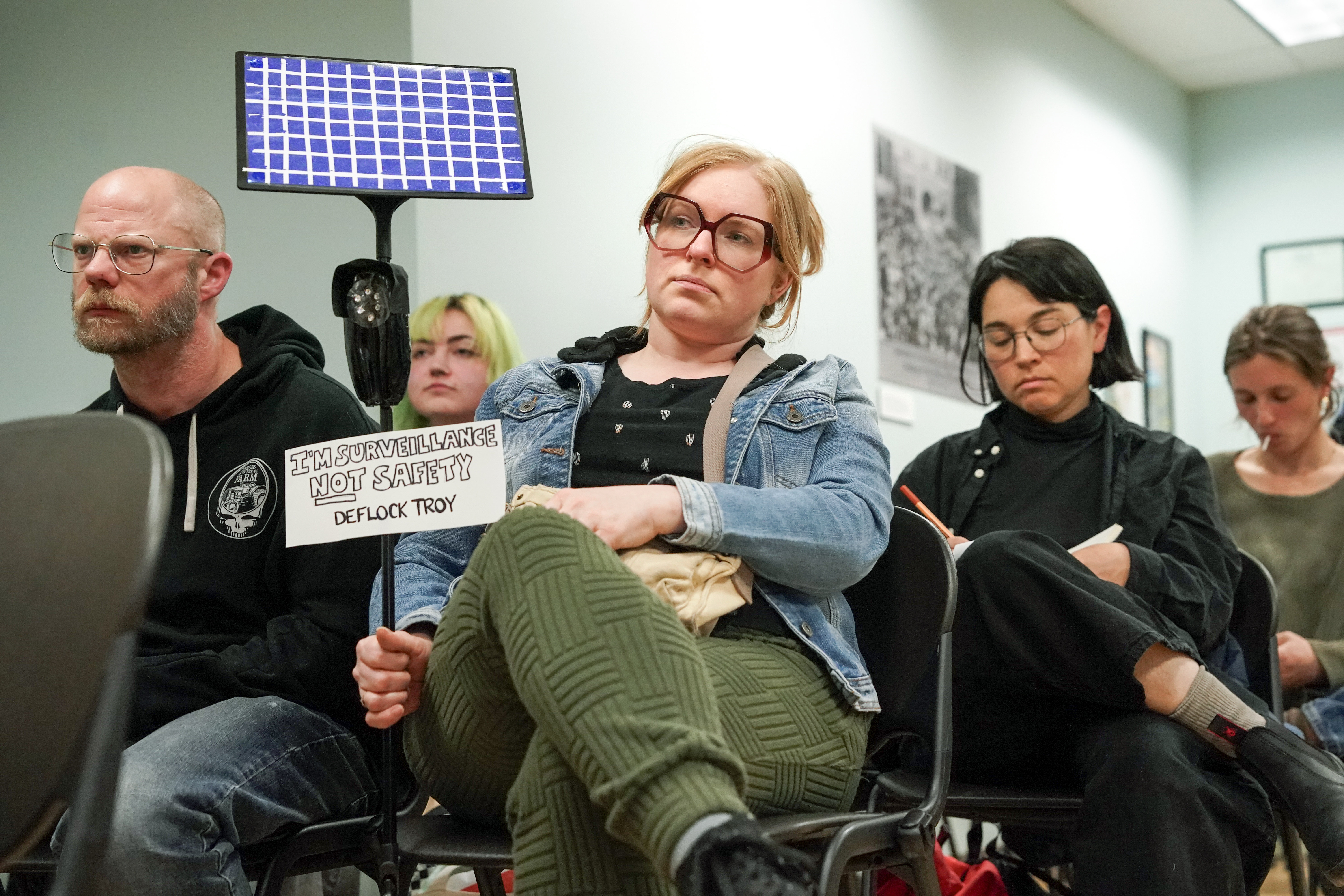
    More than 130,000 of the automatic license-plate readers now dot the country, according to the crowdsourced tracker DeFlock.org. The artificial intelligence-assisted devices have been embraced by law enforcement as powerful investigative tools but widely denounced by the public over privacy concerns.

    For Heimerman, who’s 37 and running as an independent candidate for Congress, the cameras were one more sign that the United States was becoming a police state, he said in an interview. Then in July, the Blount County Sheriff’s Office alleges, Heimerman shot four of the cameras — including one near a church where worshipers sat inside.

    Heimerman declined to discuss specifics of his case, but he said he believes there’s widespread frustration over local governments that keep using the cameras despite community pushback. That has fueled a wave of recent vandalism across the country, he said.

    “When people act out in a manner that we’re witnessing, things have gotten bad and they no longer feel like they’re being heard,” Heimerman said. “People are tired of being told to sit down and be quiet and write a letter.”

    “How-to” videos have spread online that demonstrate how to disable the cameras from collecting footage using wire cutters and heavy gloves. People from an array of backgrounds — college students, computer engineers, a U.S. Air Force engineer — have been accused of vandalizing the devices.

    Cameras were recently damaged in communities around Detroit. In Winona, Minn., all eight of the city’s readers were cut down and stolen.

    Flock Safety, one of the largest players in technological surveillance, is often the target of the ire. The company operates cameras in more than 6,000 communities across the country that record 20 billion plate scans a month. Critics concerned about the information the devices collect and store say the cameras aren’t just tracking license plates, but people’s personal movements as they visit places like gun ranges, doctor’s offices, or marijuana purveyors.

    That criticism cuts “across partisan lines,” said Eleni Manis, the research director of the Surveillance Technology Oversight Project, a nonprofit that fights government surveillance.

    “As Americans we drive where we want and when we want,” Manis said. “Tracking ruins that for all of us. And that’s partly why this has gotten under everyone’s skin.”

    Flock, which did not return requests for comment, has defended its product and said that it has been used to solve countless crimes, including helping to uncover the identity of the mass shooter at Brown University last year.

    But misuse is rampant, a Washington Post report this month found. Authorities have charged or accused at least 50 law-enforcement officers of using license-plate readers for unauthorized purposes, including to stalk their exes. U.S. Immigration and Customs Enforcement officers have also accessed Flock’s nationwide database through local partners to conduct immigration searches.

    Last week, the company announced it was enacting major changes to prevent abuse by law enforcement, including requiring officers to label searches with criminal case numbers and reducing the amount of days data is stored from 30 to seven.

    Community backlash against the cameras has been fierce, with 100 jurisdictions around the country pausing or canceling contracts in recent months, according to data compiled by DeFlock.org.

    Despite that, some have turned to vigilantism — spray painting the devices red, ramming their pole mounts with pickup trucks, and slapping on stickers to block the camera lenses.

    Online videos even suggest the tools one might need to rip down cameras or disrupt their feeds with green laser pointers.

    A number of prominent influencers have applauded the vandalism, including right-wing pundit Tucker Carlson.

    Rick Wilson, the co-founder of the anti-Trump Lincoln Project political action committee, recently described in detail on a podcast the kind of “cheap green laser pointer” that can easily be purchased online to interfere with devices.

    “There are a lot of tools for citizens to express their discomfort of these things that are knowable and available,” Wilson said in an interview. “I’m not suggesting that people break the law. I’m suggesting that you are not helpless against a surveillance state that does not have your best interests in mind.”

    Carlson has portrayed the vandals as grassroots heroes fighting back against government overreach.

    “It’s not drug-addicted kids,” Carlson said on his podcast recently. “It’s sober, decent patriot Americans who believe the promises of their country. Flock was not part of the country they signed up for. No one asked their permission to steal their images and to spy on their conversations. They don’t think that makes them safer. They understand that it’s to strip them of their most basic humanity.”

    Last month, when a 20-year-old from West Virginia was arrested and charged with defacing Flock cameras, a host of Facebook commenters rushed to his defense, offering fake alibis.

    “He was saving my neighbors dog from a fire all day couldn’t be him,” one Facebook user wrote.

    “That man is innocent,” wrote another. “I saw him serving at a soup kitchen at the time of the incident.”

    In that case and others, images of the alleged vandals were captured on the very cameras they sought to deface, a fact law enforcement has been quick to point out.

    In a February news release announcing destruction of property charges against a 24-year-old in Michigan, the Waterford Police department noted, “Ironically, Detectives discovered one of the [cameras] had captured an image of the vehicle and license plate driven by the suspect at the time the cameras were damaged.”

    “[No] one is entitled to maliciously destroy property of another, including that of the Waterford Police Department,” the statement said.

    Heimerman, the congressional candidate and lifelong East Tennessee resident, said he’s running to represent the state’s 2nd District because he is worried that the needs of ordinary citizens are getting lost amid rampant corporate greed. His Republican opponent, Rep. Tim Burchett, earlier this month introduced legislation to ban federal money from being spent on the cameras.

    Heimerman, who vaguely recalls voting for Barack Obama, said he has written his own name in for president on the ballot for decades. A GoFundMe organized for his legal defense has raised over $13,000.

    Heimerman says he’s grateful for the attention his case has received, hoping it means that people are “waking up” to the need to pay attention to what local government is doing, not just those at the federal level.

    “It kind of brings a highlight to how much a boiling point we are at,” he said. “People are fed up.”

  • Trump says U.S. and Canada have reached last-minute deal to delay 50% U.S. tariffs on Canadian imports

    Trump says U.S. and Canada have reached last-minute deal to delay 50% U.S. tariffs on Canadian imports

    WASHINGTON — President Donald Trump said Tuesday he was delaying 50% U.S. tariffs on $20 billion worth of Canadian imports after the two countries reached a last-minute deal hours before the sanctions were to go into effect.

    The announcement, which Trump made on his social media platform, buys time for more negotiations and avoids, for now, another strain in already tense relations between the historic allies.

    “I have paused the 50% Tariffs against Canada, that were scheduled to kick in tomorrow morning for a three day period, based on the fact that Canada and the U.S.A., subject to the finalization of documents, have a DEAL!” Trump posted on Truth Social less than two hours before the 12:01 a.m. Wednesday deadline.

    If they had gone into effect as scheduled at 12:01 a.m. Wednesday, Trump’s import taxes would have hit Canadian products ranging from hockey sticks to tongue depressors.

    But the political impact would likely have been bigger than the economic one. Canada had threatened to retaliate against any new tariffs with levies of its own, aggravating a trade fight between countries that sold each other $880 billion worth of goods and services last year.

    Canadian officials did not immediately respond to requests for comment Tuesday night.

    Canadian Prime Minister Mark Carney and Trump had spoken twice by phone in the past two days about the ongoing negotiations, including a call Tuesday afternoon, Carney’s office said, underscoring the last-minute push for a deal.

    Both countries had reason to step back from the brink. Nearly 72% of Canada’s goods exports last year went to the United States. And the Trump administration would be taking a risk by imposing a hefty new tariff — paid by U.S. importers who try to pass along the cost to consumers via higher prices — ahead of November’s midterm elections. U.S. voters are already frustrated with the high cost of living.

    “I don’t think either side really wants these tariffs to come into effect,’’ Ryan Majerus, a partner at King & Spalding and a former U.S. trade official, said before the delay was announced. “There’s a pretty strong push on both sides to find an off-ramp here.’’

    Trump’s approach to dealing with Canada marks an extraordinary departure from the traditionally cooperative relationship between the two countries. Trump has hit Canadian goods with tariffs — in a push to bring manufacturing back to the U.S. — and has repeatedly made inflammatory comments about turning Canada into America’s 51st state.

    Trump has made tariffs the centerpiece of his second-term economic agenda. Last year, he imposed double-digit import taxes on almost every country, justifying them by declaring the longstanding U.S. trade deficit a national emergency. The Supreme Court in February ruled that he’d overstepped his authority, striking down those tariffs and setting the stage for the federal government to pay refunds to importers.

    So Trump has looked for other legal authority to impose tariffs.

    To hit Canada, he reached back to the Great Depression, invoking Section 338 of the Tariff Act of 1930 to threaten 50% tariffs on products that account for about 5% of Canadian exports to the United States.

    Nearly a century ago, with the U.S. and world economies in collapse, Congress passed the 1930 tariff law, imposing taxes on imports from around the world. Known as the Smoot-Hawley tariffs, named for their congressional sponsors, they are notorious among economists and historians for limiting world commerce and making the Great Depression worse.

    Section 338 tariffs have never been used before.

    Section 338 authorizes the president to impose tariffs of up to 50% on imports from countries that have discriminated against U.S. businesses. No investigation is required to justify the levies. Nor is there any limit on how long the tariffs can stay in place.

    The U.S. is renegotiating a North American trade pact — the US-Mexico-Canada Agreement — that Trump strong-armed America’s neighbors into accepting in his first term. The threat of Section 338 tariffs gives the United States leverage to seek fresh concessions from Ottawa.

  • Trump’s ballroom is rising at breakneck speed: 20 hours a day, 7 days a week

    Trump’s ballroom is rising at breakneck speed: 20 hours a day, 7 days a week

    WASHINGTON — With the fate of his ballroom tied up in court, President Donald Trump is racing against the clock.

    He has enlisted a team of 250 workers to push ahead with construction 20 hours a day, seven days a week to complete as much work as quickly as possible. This week, there are plans to install 1 million pounds of rebar and pour 3,000 cubic yards of concrete for a project that is now two-thirds complete, the administration said in a court filing.

    Now, with the matter pending before the Supreme Court, the Trump administration is making a practical appeal to the justices: The ballroom is simply too far along to be stopped now.

    “His strategy clearly is to change the reality on the ground so that instead of preserving the status quo, those who rightly invoke the law against what he’s doing are put in a position of having to undo something that is already a fait accompli,” said Laurence H. Tribe, an emeritus university professor of constitutional law at Harvard.

    For years, Trump has argued that the White House should have its own ballroom, saying it was a matter of prestige on the world stage. A ballroom, he said, would allow officials to hold big events for special guests without needing to erect a tent on the South Lawn.

    In recent months, as preservationists and other critics have tried to halt or at least slow down the project, Trump has offered a new justification: national security. Essentially, Trump is treating the ballroom and the military bunker underneath it as one and the same.

    The bunker — officially known as the Presidential Emergency Operations Center, or PEOC — was built during World War II beneath what was once the East Wing, which Trump tore down last year to make way for his ballroom.

    Now, he speaks about the two projects in the same breath.

    After an armed man rushed the White House Correspondents’ Association dinner in April, for example, Trump said on social media that the mayhem had proved the need for “the Militarily Top Secret Ballroom currently under construction at the White House.”

    Trump demolished the East Wing last October without seeking any approvals or submitting construction or demolition plans to Congress. While he did bring the project before two review panels whose leaders he had appointed, Trump has continued to change the plans from the designs they authorized.

    Several federal court rulings have found that the president exceeded his authority by moving ahead without congressional approval, but the decisions have been paused pending appeals — which means the construction can go on at least until Friday, when an appeals court order to halt the aboveground construction goes into effect.

    The case is also pending before the Supreme Court.

    Last week, the Trump administration told the Supreme Court the president was adding flashy golden seals on the outside of the ballroom, a design element that was never submitted to the Commission of Fine Arts.

    Joshua Fisher, the director of White House management and administration, told the court that a concrete-and-steel superstructure had already been built that stretches five stories deep and 70 feet high.

    Fisher said 80% of the rebar for the project had been placed, and the concrete poured.

    He said $335 million of the $400 million needed for the project had been raised from private donors. He estimated the construction was 65% complete.

    Fisher said that the ballroom’s columns were being carved by renowned Italian artists, and that the building would be sturdy enough to withstand a nuclear blast.

    “Given the current progress, the superstructure is beyond the point of return,” Fisher wrote. He added that even if the Supreme Court ordered the plans for the building altered or the building taken down, “there would be no way to do so.”

    The message was clear: The ballroom cannot be undone.

    But in a filing Tuesday, the preservationists challenging the project told the justices that the administration was trying to “outrun judicial review” by suggesting that it was too late to stop the construction.

    “They tell this court that because the ballroom is being built with the type of concrete used ‘in nuclear power plants,’ it will soon be ‘virtually impossible to deconstruct,’” according to the filing.

    Lawyers for the National Trust for Historic Preservation in the United States, a nonprofit chartered by Congress to guard America’s historic buildings, said the administration had intentionally accelerated construction “in an effort to put their illegal ballroom” beyond judicial intervention.

    They have pointed to the Constitution and several federal laws that state Congress must approve such a project. One federal law says, “A building or structure shall not be erected on any reservation, park or public grounds of the federal government in the District of Columbia without express authority of Congress.”

    Lower court judges have sided with the preservationists, ruling that Congress must first sign off on the expansion and renovation of the White House complex.

    “Efforts to foil judicial review and arrogate Congress’ exclusive powers should not be rewarded with a stay that allows petitioners to complete a ballroom they lacked any authority to commence in the first place,” said the trust’s lawyers, led by Thaddeus A. Heuer.

    In its filing Tuesday, the trust suggested that the Supreme Court temporarily halt the aboveground work and then quickly schedule oral arguments for October or November to formally decide whether the project can proceed. If the justices do not press pause now, the trust said, the project is on track to be substantially finished this fall and it will be too late.

    D. John Sauer, the solicitor general, has argued that the ballroom is inextricably linked to the broader national security needs of the White House complex. He said the structure is built with hardened concrete, steel, and rebar; protective missile-resistant columns, roofs, and beams; droneproof ceilings and roofs; and bullet-, ballistic- and blastproof glass. It includes bomb shelters, state-of-the-art hospital and medical facilities, protective partitioning between all areas of the building, top secret military structures and equipment, military-grade venting, a single integrated air-conditioning and heating system, sniper nests, and a drone port on top.

    Sauer has also pushed back on the assertion in the unfavorable appeals court ruling that Trump is a temporary tenant, not the owner, of the White House. “The president of the United States of America is not a tenant, but rather the sole, elected head of the executive branch,” he wrote, adding that other presidents had taken steps to renovate the White House.

    The Supreme Court’s conservative majority has often been receptive to the Trump administration’s efforts to expand presidential power, but it has also ruled against some of Trump’s signature initiatives. The justices are expected to issue an order before the appeals court ruling that would halt construction takes effect Friday.

    Kimberly Wehle, a law professor at the University of Baltimore, said that Trump had been pushing to expand the powers of the presidency for years, and that attempting to construct a massive new building on White House grounds without lawmakers’ approval is his latest step.

    “It’s so symbolic that he literally bulldozes the White House and says, ‘What are you going to do about it?’” she said. “They’re making this general generic argument that ‘I’m the president, so it’s national security, I can do whatever I want.’ That is a very steep, slippery slope into unlimited power in the presidency.”

    This article originally appeared in the New York Times.

  • Whistleblower alleges political pressure, lack of evidence in antisemitism probes targeting schools

    Whistleblower alleges political pressure, lack of evidence in antisemitism probes targeting schools

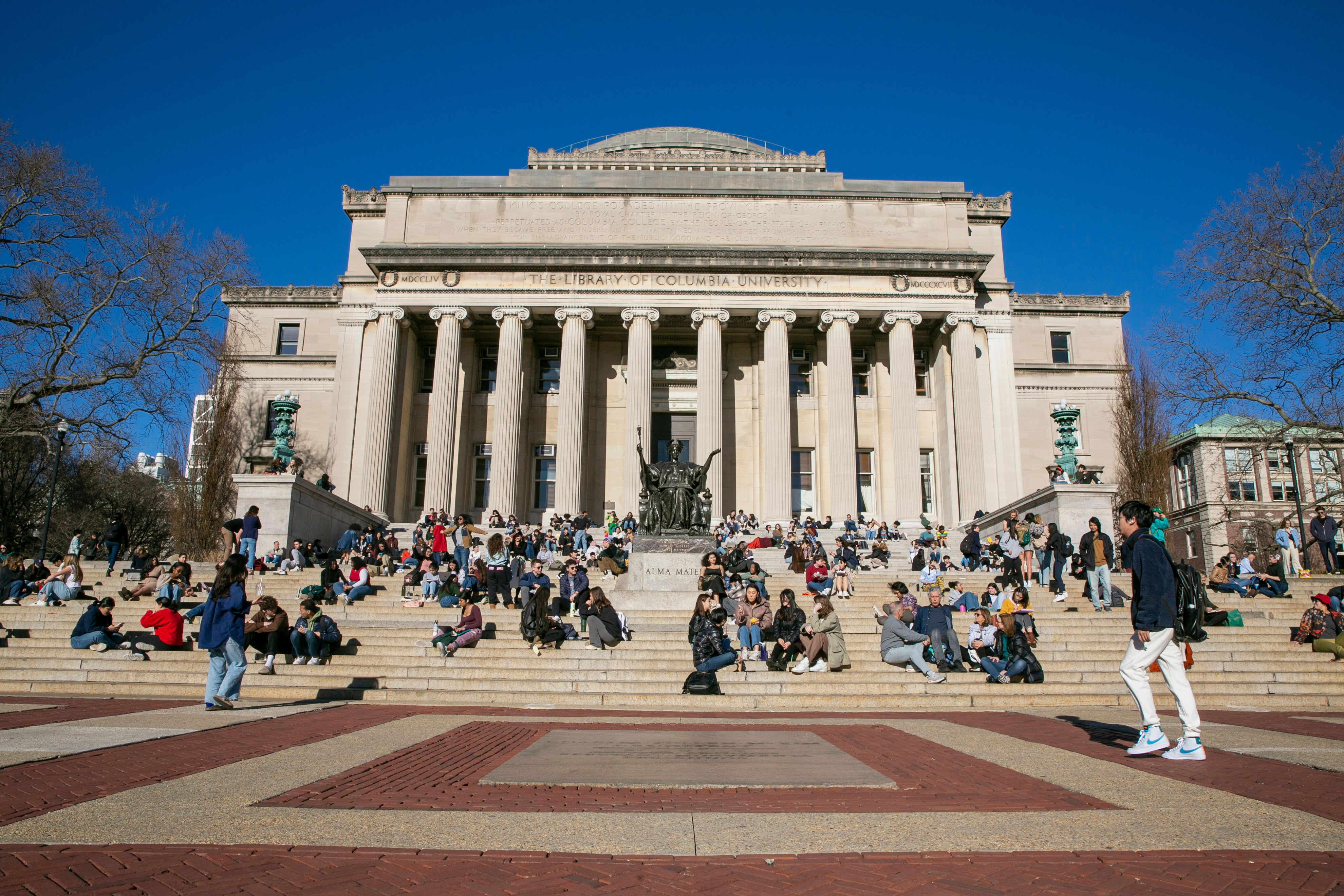
    WASHINGTON — A Trump administration task force created to combat antisemitism pushed for settlements with Ivy League universities despite government investigations that were rushed and incomplete or that failed to establish legal violations by the schools, a former Justice Department lawyer alleged in a whistleblower disclosure obtained by the Associated Press.

    The complaint alleges that the investigations into some of the nation’s most prestigious academic institutions were designed to strong-arm the schools into cutting deals for political purposes. Outcomes of the investigations were “predetermined, without regard to the evidence” in a “politically mandated effort” to extract money from schools through settlement demands and funding freezes under the pretext of rooting out antisemitism, the complaint alleges.

    The work of the multiagency task force, launched by the Justice Department under then-Attorney General Pam Bondi in February 2025, was “marked by extraordinary procedural irregularities, predetermined outcomes without factual or legal support” and disregard for the law and Constitution, lawyers for the former government attorney wrote in seeking watchdog investigations into their client’s complaints.

    The complaint taps into a broader public discussion about the administration’s efforts to confront allegations of antisemitism at colleges, a problem that received renewed attention during campus protests over Israel’s war in Gaza that some Jewish students said made them feel unsafe. President Donald Trump returned to the White House with a goal of rooting out antisemitism that he said had gone unchecked during the Biden administration, but critics have called his government’s response heavy-handed and said it infringed on free speech rights and coerced concessions from public institutions.

    A key House Democrat is publicizing whistleblower’s allegations

    Lawyers for the former Justice Department attorney, identified as Haley Van Erem, filed the disclosure Tuesday with the inspectors general at the departments of Justice and Health and Human Services and the Office of Special Counsel.

    Van Erem spent nearly a decade working in the Justice Department’s Civil Rights Division before being involuntarily assigned to HHS to work on the Title VI investigations into the universities, the complaint says.

    The health department assignees were initially told to scrutinize allegations of antisemitism at medical school commencement ceremonies — the lawyers were advised of a New York Post story describing antisemitic conduct at graduation events, the complaint says — but the inquiries were later expanded to focus on the entire schools in the cases of Columbia and Brown, according to Van Erem’s account.

    She left the Justice Department in May 2025 because she was “unwilling to be made vulnerable to further participation in politically motivated investigations unsupported by facts and contrary to law,” says the complaint, which also accuses the task force of having targeted Muslim professors.

    Kiersten Pels, a Justice Department spokesperson, said the department “stands behind the integrity” of its investigations. A spokesperson for the Health and Human Services Department did not immediately respond to requests seeking comment Tuesday.

    Rep. Jamie Raskin, the top Democrat on the House Judiciary Committee, wrote separately to Harmeet Dhillon, who as the assistant attorney general in charge of the Justice Department’s Civil Rights Division has been a public face of the department’s efforts to counter antisemitism. In his letter, Raskin said antisemitism at colleges and medical schools is a real problem that needs to be investigated.

    “But,” he told Dhillon, “your ‘investigation’ into antisemitism was fake, a pre-baked frame-up operation thoroughly political in nature.”

    Raskin wrote that “the whole project was designed to harass professors and administrators at major universities, to curtail their freedom of speech and academic freedom, and to strip targeted institutions of hundreds of millions of dollars in grants that they had already been awarded on the merits of their applications.”

    Scrutiny over the handling of investigations into elite schools

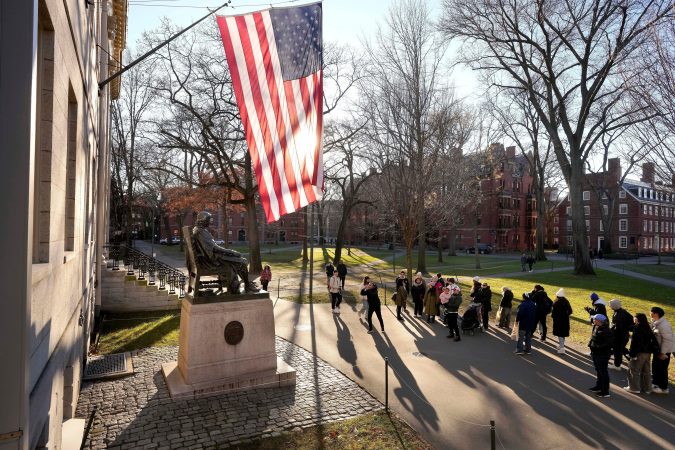
    The whistleblower complaint deals chiefly with investigations into three Ivy League universities: Brown, Harvard, and Columbia.

    It alleges that in the case of Brown, the investigative team did not find evidence to support a violation of Title VI, the section of the Civil Rights Act that bars discrimination on the basis of race, color, or national origin in programs that receive federal funding, but that “leadership refused to permit a notice of no violation and instead sought some form of settlement or resolution despite acknowledging the absence of a legal basis for doing so.”

    Investigators did find evidence of discrimination at Columbia, the complaint says, but the investigation was done on an accelerated timetable before adequate factual development and legal review were completed and relied on allegations that “were unsupported, based on news reports or litigation filings, or that implicated protected First Amendment activity.”

    Columbia University agreed to pay the government $200 million as part of an agreement restoring access to federal funding. Brown University separately agreed to pay $50 million to Rhode Island workforce development organizations to end the three federal investigations involving allegations of antisemitism and racial bias in admissions, with no findings of wrongdoing.

    In the investigation into Harvard, Trump administration officials discussed “extraordinary funding freezes and sweeping proposed settlement terms” before an investigation had been completed that could establish Title VI violations. Sean Keveney, then-HHS acting general counsel, said he believed Harvard would settle because they were “over a barrel,” according to the complaint.

    A federal judge last year ordered the Trump administration to reverse its cuts of more than $2.6 billion in research funding for the university, saying the government “used antisemitism as a smokescreen for a targeted, ideologically-motivated assault on this country’s premier universities.” And a different judge last week dismissed a Trump administration lawsuit that accused Harvard University of turning a blind eye to harassment of Jewish students.

  • Trump says U.S. has no talks planned with Iran, says Strait of Hormuz is open

    Trump says U.S. has no talks planned with Iran, says Strait of Hormuz is open

    U.S. President Donald Trump said Tuesday the U.S. has no talks planned with Iran but insisted the Strait of Hormuz remains “open and operating,” despite limited traffic and a reported strike on a ship exiting the waterway.

    Earlier this week, Trump threatened to bomb Oman as the country sought a deal with Iran to manage shipping traffic through the strait, two regional officials said Tuesday, a day after Trump reportedly leveled the threat if Oman “gets in the way.” Iran says the waterway will not be reopened until the U.S. meets its conditions.

    As talks between Iran and Oman continue, a projectile hit a ship in the strait and Iran-backed Houthi rebels claimed they fired drones at an oil refinery in Saudi Arabia.

    Trump looms over negotiations to reopen Strait of Hormuz

    As Oman and Iran say they are nearing a deal to reopen the Strait of Hormuz, Trump said on social media Tuesday that the U.S. blockade of Iranian ports remains “in full force and effect,” but asserted that all water mines have been removed and that other marine traffic was free to pass.

    Trump posted a map depicting the strait as U.S. territory.

    Iranian Deputy Foreign Minister Kazem Gharibabadi appeared to respond to Trump’s post.

    “Just as Trump correctly wrote the name of the eternal Persian Gulf, soon his delusion regarding the Strait of Hormuz will either be corrected or we will correct the delusions of this deluded man,” he wrote on X.

    The Trump administration has told Oman it opposes parts of the yet-to-be-announced deal, according to officials briefed on the U.S. position. Those include joint Iranian and Omani management of the passage’s exit route and the collection of voluntary fees from vessels, even if the money is used for security and maritime environmental protection.

    The officials spoke on condition of anonymity because they were not authorized to talk to journalists.

    The White House on Tuesday referred to Trump’s remarks in the Oval Office and declined to comment further about Oman.

    Egypt says Iran-Oman agreement could open door to Iran-U.S. deal

    The Egyptian Foreign Ministry said Tuesday that the Iranian-Omani deal could pave the way for Washington and Tehran to return to negotiations for a “comprehensive and permanent deal that addresses all concerns and enhances regional security and stability.”

    The statement came after a meeting between Egyptian Foreign Minister Badr Abdelatty and Omani counterpart Badr al-Busaidi. But it did not address Trump’s latest threat against Oman.

    The 60-day negotiating period ended this week between the U.S. and Iran with no clear end to the war in sight.

    Ship traffic drops significantly in Strait of Hormuz

    Ship traffic through the Strait of Hormuz dropped significantly last week, with confirmed crossings falling 19.5% to 95 transits. Only three vessels made it through the waterway on Sunday, according to shipping data platform Kpler.

    The ships used the Iranian-designated route through the strait, with no crossings recorded through the Omani routes.

    Crossings through the Bab el-Mandeb Strait increased 6.7% to 254 transits, while so-called dark transits, in which ships turn off the transponders that broadcast their location, fell from 40 to 16, Kpler said.

    Projectile damages ship in strait causing casualty

    An unidentified projectile damaged the engine room of a ship in the Strait of Hormuz near Oman and “resulted in a crew casualty,” according to the British military’s U.K. Maritime Trade Operations center.

    The maritime monitoring agency did not release any details about the ship or its cargo, and it was not clear whether the crew member was killed or wounded.

    No environmental damage has been reported and the agency said the Omani Coast Guard was assisting other crew members and authorities were investigating.

    Iran-backed Houthis claim an attack on a Saudi oil refinery

    Yemen’s Iran-backed Houthi rebels claimed they fired drones at an oil refinery in neighboring Saudi Arabia, the latest attack threatening to reignite Yemen’s civil war and open another front in the Middle East.

    The attack targeted a facility run by Saudi Aramco, Saudi Arabia’s state-owned oil company, according to a report by the Houthi-run SABA news agency. There were no immediate reports of damage or comment from Saudi Arabia.

    The Houthis have escalated attacks against government forces in Yemen and oil facilities in Saudi Arabia, which supports the Yemeni government, and the kingdom’s shipping in the Red Sea, an important alternative to the Strait of Hormuz.

    Israel strike on Gaza City kills 7 people

    An Israeli strike hit Gaza City on Tuesday, killing six people, including a child, and wounding 14 others, according to Shifa Hospital, where the casualties were taken.

    The Israeli military said it struck Hamas commanders in the Shati area who it said were planning to carry out attacks against Israeli forces.

    The heaviest fighting has subsided since a ceasefire in the more than two-year war took hold in October. Israeli forces have carried out repeated airstrikes since then, killing at least 1,266 Palestinians, according to health officials in Gaza.

    The Gaza Health Ministry, which is part of the Hamas-led government, maintains detailed casualty records that are seen as generally reliable by U.N. agencies and independent experts. But it does not give a breakdown of civilians and militants.

    Missiles fired at the United Arab Emirates

    The defense ministry of the United Arab Emirates said two ballistic missiles were launched from Iran toward the UAE on Tuesday.

    One landed outside of the country’s waters, and the other landed within them, the Emirati Defense Ministry said. It was unclear whether the missiles were shot down by air defenses or fell. No damage or injuries were reported. There was no immediate statement from Iran.

    In the weeks after the U.S. and Israel launched a war against Iran on Feb. 28, the UAE was frequently targeted by Iranian missiles and drones, but Tuesday’s reported attack was the first in weeks.

  • Pentagon orders audit of 30 universities’ partnerships with foreign institutions

    Pentagon orders audit of 30 universities’ partnerships with foreign institutions

    The Department of Defense has ordered 30 U.S. universities to audit their partnerships with mostly Chinese universities and military training institutions as the Trump administration scrutinizes the country’s growing global influence.

    If the schools don’t complete a review and terminate any arrangements deemed problematic within the next two weeks, they face losing funding. The goal is to protect taxpayer-funded research from theft and exploitation, the Pentagon said Monday.

    “The Department of War has zero tolerance for academic partnerships that compromise our national security,” Emil Michael, the Pentagon’s chief technology officer, said in a news release.

    The release didn’t name the schools, but a U.S. official who spoke on condition of anonymity to discuss internal matters said they include Harvard University, the Massachusetts Institute of Technology, and Johns Hopkins University.

    The schools didn’t immediately respond to emails from the Associated Press seeking comment.

    Sarah Spreitzer, vice president at the American Council on Education, which represents college and university presidents, raised concerns that the announcement suggests, without any evidence, that the schools are engaged in wrongdoing.

    The order comes after the Pentagon last month released an updated list of 130 foreign institutions it accused of engaging in “activities that increase the likelihood of U.S. government-funded research and development efforts being misappropriated.”

    While the vast majority were Chinese, such as the University of Science and Technology of China and the country’s Academy of Military Medical Sciences, several Iranian and Russian institutions also appeared on the list.

    The first version of the list was developed during Trump’s first term, with the help of the American Council on Education, Spreitzer said.

    She said most of the council’s member institutions moved away from research partnerships with those institutions in the years that followed. She said she worries U.S. schools will be held liable for partnerships that predate the creation of the list.

    “We don’t appreciate the implication that we are not good partners on research security, given that we helped create this list, and given that we’ve always partnered with the federal government when there has been national security concerns,” she said.

    The audit comes as the Trump administration continues to express deep concern about China’s activities in the Americas, pushing back on Chinese ownership of ports at either end of the Panama Canal, infrastructure projects funded by China’s Belt and Road initiative in the region, and Chinese investment in the telecommunications sector.

    The Justice Department also is investigating whether Harvard University is allowing Chinese donors to create scholarships that exclude American students, adding to the barrage of federal inquiries the Trump administration has opened in its battle against the Ivy League school.

    A spokesperson for the Chinese embassy said in a statement that the country opposes what it described as the politicization of “normal scientific, educational, and academic exchanges.”

    “The U.S. side,” the statement continued, “should abandon the Cold War mentality and foster an open, fair, and non-discriminatory environment for educational, scientific, and people-to-people exchanges between China and the United States.”

  • Minnesota attorney general sues Texas governor to compel extradition of ICE agent for trial

    Minnesota attorney general sues Texas governor to compel extradition of ICE agent for trial

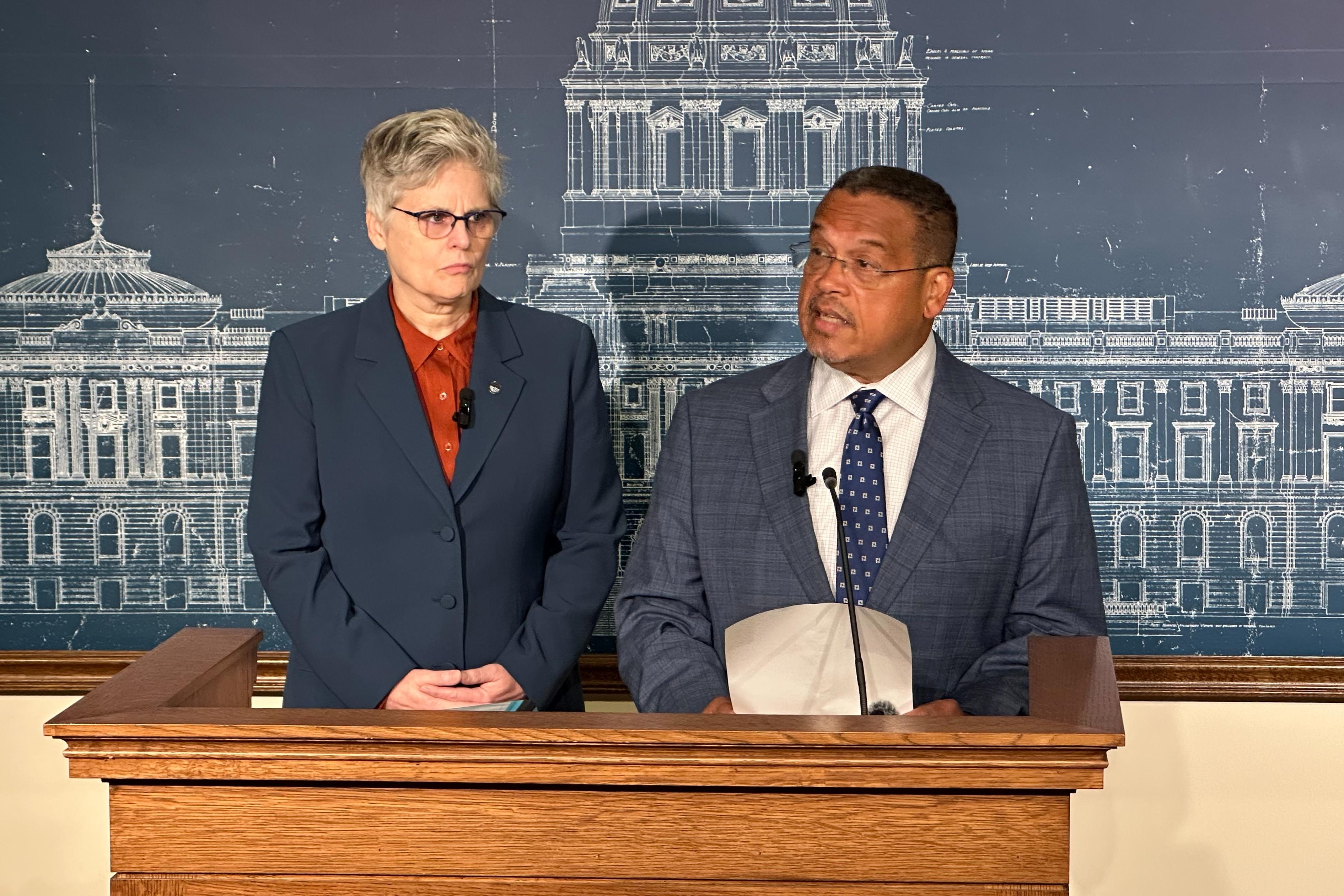
    ST. PAUL, Minn. — Minnesota’s attorney general sued the governor of Texas on Tuesday, seeking to compel the extradition of an Immigration and Customs Enforcement agent charged with wounding a man and then lying to justify the shooting during the agency’s crackdown in Minneapolis.

    Attorney General Keith Ellison is asking a federal judge to bar the sheriff in Cameron County, Texas, from releasing ICE agent Christian Castro, and to order Texas Gov. Greg Abbott to sign his extradition warrant so that Minnesota officers can take custody.

    Minnesota officials have clashed with the federal government over who has jurisdiction to investigate and prosecute federal officers for on-duty conduct. Ellison is a Democrat and Abbott is a Republican ally of President Donald Trump.

    Castro was arrested in Texas in May on Minnesota charges of assault and falsely reporting a crime in the Jan. 14 wounding of Julio Cesar Sosa-Celis. Castro, 52, is accused of firing a gun through the front door of a Minneapolis home, striking Sosa-Celis in the leg with a bullet that lodged in a child’s bedroom wall. Prosecutors say Castro then falsely accused Sosa-Celis and another man of attacking an ICE officer with a broom handle and a snow shovel.

    Minnesota officials fear ICE agent could flee

    Ellison told a news conference that unless he’s extradited, Castro could be released from jail next week — 90 days since he was detained — under Texas law. And if he’s freed, Castro could slip into Mexico from the border town where he’s being held, Ellison said. The lawsuit said Castro has been making calls from jail to a woman in Mexico, talking “about marrying her and buying a house in Mexico when he is released.”

    “Christian Castro has been charged with breaking the law in Minnesota,” Ellison said. “He must face justice in Minnesota. Gov. Abbott should have granted Gov. Walz’s extradition request long ago and is required to do so now.”

    It was not immediately known if Castro had a lawyer who could speak for him. Online court records in Minnesota and county jail records in Texas did not list a defense attorney.

    Abbott’s office said in a statement that it would not comment on “pending extradition matters.”

    Hennepin County Attorney Mary Moriarty said the legal action to compel Castro’s extradition “should be a completely unnecessary lawsuit.” She said jail officials and prosecutors in Texas have been “very cooperative,” and that an extradition “is not supposed to be controversial.”

    The office of Cameron County Sheriff Manny Trevino declined to comment Tuesday on the case.

    Federal agency has called agent’s prosecution a ‘political stunt’

    Authorities say Sosa-Celis was shot after Castro and another officer chased a different man, Alfredo Alejandro Aljorna, to the Minneapolis apartment duplex where he and Sosa-Celis lived. Sosa-Celis and Aljorna were legally in the U.S., according to Minnesota officials.

    Federal authorities initially accused Sosa-Celis and Aljorna of beating an officer. A federal judge later dismissed the charges, and ICE and the Justice Department opened an investigation into whether agents lied about what happened.

    Regardless, the U.S. Department of Homeland Security has called Moriarty’s prosecution of Castro “unlawful and nothing more than a political stunt,” saying only federal authorities have jurisdiction in the case.

    The federal government took a similar stance following the fatal shootings of Renee Good and Alex Pretti during the Minneapolis enforcement surge. Moriarty sued the Trump administration to gain access to evidence in those cases before federal prosecutors turned it over last month.

    The extradition lawsuit Ellison filed in U.S. District Court in Texas cites a 1987 U.S. Supreme Court ruling that compliance with the Constitution’s extradition clause is mandatory, affording no discretion to the governor or courts of a state where a defendant is being held.

    Moriarty said that since Castro’s arrest, Texas has extradited three unrelated criminal defendants without incident to Minnesota.

    “Gov. Abbott has received communication with us on an ongoing basis, including recently,” Ellison said. “We have to take the position that they are refusing to honor the extradition request.”

  • Trump administration moves to allow logging in pristine national forests

    Trump administration moves to allow logging in pristine national forests

    WASHINGTON — The Trump administration on Tuesday advanced a plan to open nearly 45 million acres of wilderness in national forests to road construction and logging, removing protections that had been in place for a quarter century.

    The proposal by the U.S. Forest Service would repeal the 2001 “roadless rule,” enacted during the Clinton administration to preserve the wild nature of forest land. It comes as President Donald Trump pressures the agency to increase logging and to thin forests to prevent wildfires.

    The repeal would hand a major victory to Republican-led states and industry groups that have argued for years that the prohibitions have hindered economic development. More than a dozen lawsuits have unsuccessfully sought to strike down the rule.

    During his first term, Trump stripped protections from Alaska’s Tongass National Forest, the largest intact temperate rainforest in the world, only for the Biden administration to restore them in 2023.

    This time, the Forest Service is eliminating protections for the 9 million undeveloped acres within the Tongass, as well as millions more acres of pristine wilderness across the rest of the United States.

    “For too long, outdated restrictions have kept tens of millions of forested acres off-limits to the very treatments that improve forest health and reduce wildfire risk to our communities,” Brooke Rollins, the secretary of the Agriculture Department, which includes the Forest Service, said in a statement.

    Environmentalists said the plan would destroy untouched landscapes, including crucial habitats for migratory species and headwaters for major municipal water supplies. Multiple advocacy groups are expected to sue to block the repeal.

    “By ripping protections from some of our oldest intact forests, the Trump administration is endangering the drinking water supplies of tens of millions and threatening wildlife habitats and recreation opportunities in almost every state,” said Drew McConville, a senior fellow at the Center for American Progress, a liberal research organization.

    Roadless areas make up about 30% of all national forest land, encompassing nearly 60 million acres of America’s last wild areas and old-growth forests. They are home to more than half of imperiled wildlife, including grizzly bears, wolves, elk, salmon, and wolverines. Forest land in the United States also absorbs millions of tons of carbon per year, helping slow climate change.

    The proposal would affect the management of 44.7 million acres nationally. Idaho and Colorado have their own regulations that supersede the federal rule and insulate those states from being affected by any change in national policy.

    Damien Schiff, a senior attorney with the Pacific Legal Foundation, a libertarian public interest law firm that has been fighting the roadless rule in the Tongass National Forest, said he believed the federal protections had harmed mining, timber production, and other economic development. In Alaska, he argued, restrictions around the Tongass have made it difficult for surrounding communities to connect to electric grids.

    “It has had a depressing impact on the use of the national forest for productive activity generally,” Schiff said.

    The Trump administration and many Republicans argue that the ability to build roads would enable firefighters to more easily reach forest fires.

    “For 25 years, the heavy thumb of Washington, D.C., has hindered Montana’s ability to properly manage wildfire risk and road development on nearly 60% of Forest Service land across the Treasure State,” Montana Gov. Greg Gianforte, a Republican, said in a statement.

    Ecologists largely agree that the government needs to improve the ways it manages forest land. But experts do not agree that cutting down pristine forests to build more roads is the best way to do it.

    In fact, some warned, roads could actually increase the threat of wildfires — partly because roads bring people. Nearly 85% of wildfires begin with human activity such as discarded cigarette butts, burning debris, or sparks from equipment, research has shown. Roads can also be corridors for invasive species, including flammable grasses.

    “Introducing roads and human activities in areas that are otherwise undisturbed will increase wildfires where the risk is currently low,” said Alexandra D. Syphard, a senior research ecologist at the Conservation Biology Institute, a nonprofit group based in Oregon. “The unintentional impact of this could actually be creating a worse situation.”

    Camille Stevens-Rumann, director of the Colorado Forest Restoration Institute and an associate professor of fire ecology at Colorado State University, added that new roads would not necessarily help address the most destructive wildfires because they tend to ignite near existing roads. Fires in remote areas, which often are sparked by lightning strikes, tend to burn far fewer acres, she said.

    “We have smokejumpers for one, that’s how you get into those remote areas,” said Sen. Martin Heinrich (D., N.M.). He noted that prescribed burns, pruning and other treatments are routine across millions of acres of forests, and those areas are afterward closed again to motorized access.

    Democrats from Western states said they believed wildfire arguments were designed to hide the administration’s real goal: enabling more logging.

    Trump has made timber production a top priority. Last year, he called for a 25% increase in logging from national forests and directed agencies to bypass endangered species protections and other environmental regulations to make it possible.

    Rollins then issued a secretarial memo declaring an “emergency situation” in national forests, establishing a process for the Forest Service to fast-track logging by cutting short public participation and legal reviews.

    After the proposal is published in the Federal Register, which is expected later this week, the Forest Service will accept public comments before making the rule final.

    This article originally appeared in the New York Times.

  • The Moscow region is hit by a drone blitz as Russian missiles kill 10 in a Ukrainian village

    The Moscow region is hit by a drone blitz as Russian missiles kill 10 in a Ukrainian village

    KYIV, Ukraine — Ukrainian forces launched one of their biggest drone attacks on Russia since Moscow’s invasion over four years ago, firing almost 800 drones only two days after a similar salvo, officials said Tuesday.

    Meanwhile, a Russian missile strike on a village in northeastern Ukraine’s Kharkiv region killed at least 10 people and wounded 17 others as the barrage demolished homes, officials said.

    The countries are locked in an escalating duel of long-range aerial strikes. Fighting on the roughly 780-mile front line in eastern and southern Ukraine is restricted by large numbers of drones and ground robots threatening troop movements, and neither side is making significant battlefield progress, analysts say.

    Putin resists pressure for peace talks

    In the past year, Ukraine has devised and deployed domestically produced long-range drones for strikes deep inside Russia. Its drone technology has impressed governments and defense manufacturers around the world.

    Officials in Kyiv aim to make the Russian public feel the war’s consequences and pressure Russian President Vladimir Putin into negotiating a peace settlement. Putin has so far shown no sign he intends to stop the invasion.

    “Putin continues to drag out the war instead of accepting Ukraine’s realistic ceasefire proposals and ending the bloodshed,” Ukrainian Foreign Minister Andrii Sybiha said in a post on X.

    Russian air defenses overnight intercepted 791 Ukrainian drones over a number of regions, as well as annexed Crimea and the Black and the Azov seas, the Defense Ministry in Moscow said, in what was the second-largest drone attack since January 2025, according to an Associated Press tally.

    More than 600 Ukrainian drones flew toward the Moscow region, where 180 were shot down, Moscow Mayor Sergei Sobyanin said without elaborating.

    Officials reported no deaths or major damage. Ukraine has increasingly launched swarms of hundreds of drones to try to overwhelm Russian air defenses.

    In the region that surrounds the capital, three people were wounded, Gov. Andrei Vorobyov said.

    Three people were also wounded in the adjacent Ryazan region where three private houses were damaged, Gov. Pavel Malkov said.

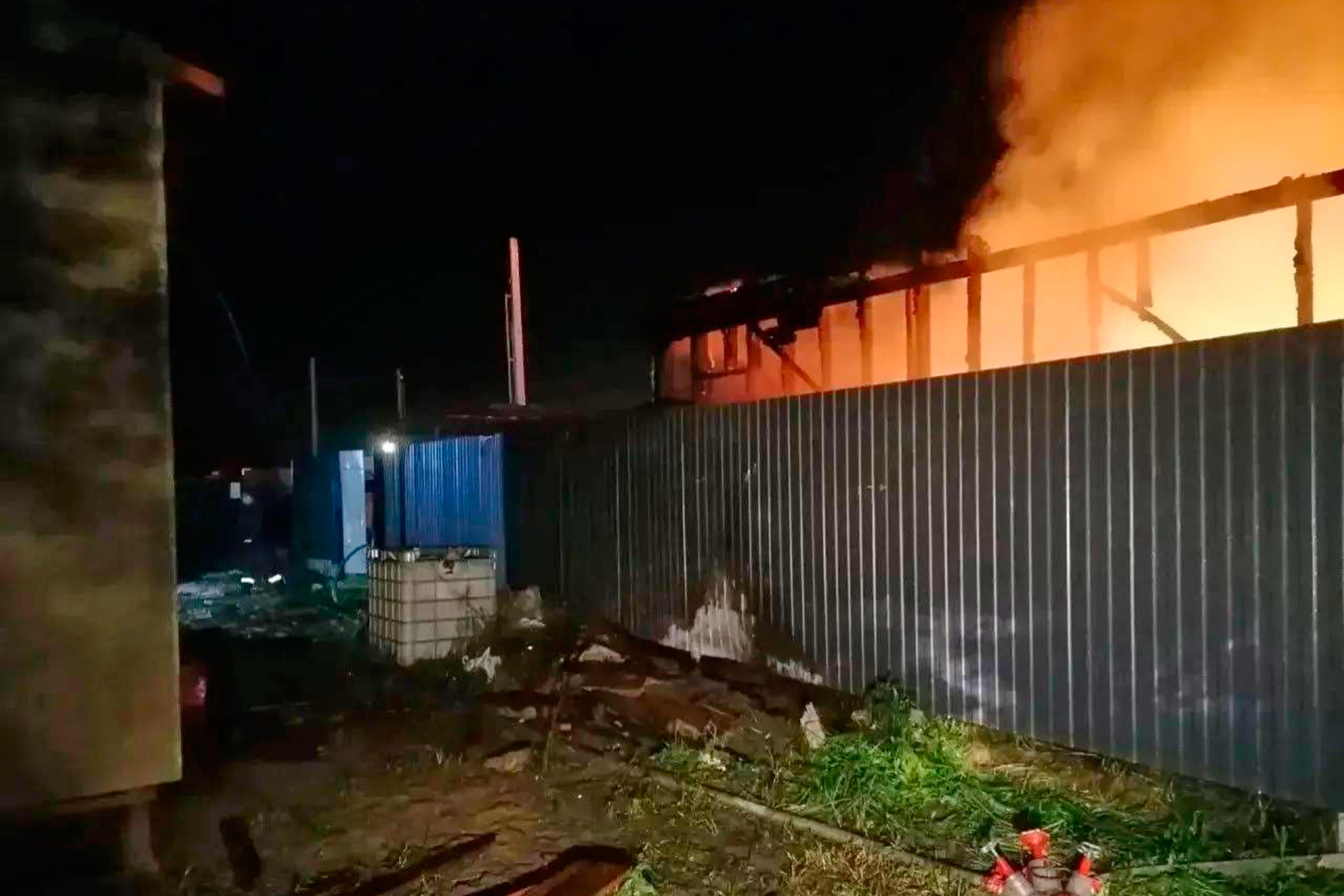
    The overnight attack started a fire at a warehouse of Wildberries, Russia’s biggest online retailer, in an industrial zone. Ukraine has repeatedly targeted the company, which it says helps supply the Russian military, an allegation Moscow denies.

    Wildberries said its facility sustained “insignificant damage.”

    Russian TV doesn’t report news of the attack

    Coverage of the attack in state and Kremlin-backed Russian media was mostly muted, as is often the case. Russia’s main TV channels — state-run Russia 1 and Channel One — did not mention the attack at all in their morning news bulletins.

    But Russian state news agency RIA Novosti featured it among the main news on its website’s homepage, describing it as “one of the most large-scale attacks on Moscow since the beginning of the summer.”

    State newspaper Rossiyskaya Gazeta on its website prominently featured a roundup of what Moscow regional Gov. Andrei Vorobyov reported about the attack, describing it as “massive” in the headline. Pro-Kremlin tabloid MK featured a news brief about it on its home page.

    Zelensky accuses Russia of a ‘brutal attack’ on civilians

    A Russian missile strike on the village of Pechenihy in Ukraine’s Kharkiv region killed 10 civilians, according to preliminary information, said Oleh Syniehubov, head of the Kharkiv regional military administration.

    Another 17 people were wounded, he said. Ukrainian President Volodymyr Zelensky called it “a brutal attack” that damaged 10 homes, a cafe, a post office, a store, and at least seven vehicles, according to Syniehubov.

    “We will definitely respond to this Russian strike,” he said on social media.

    Also, three people were killed and three others were wounded over the past day in Russian attacks on Ukraine’s Sumy region, Ukraine’s National Police said.

    U.K. vows continued Ukraine support

    British Prime Minister Andy Burnham, who took office last month, said the U.K. will continue to stand by Ukraine after Russia said that Kyiv’s reported use of British drones for attacks on Russian soil would bring unidentified consequences.

    “We are providing support so that Ukraine can defend itself, and that’s been the British position all the way through this conflict by previous prime ministers,” Burnham said. “It remains the case with me.”

    British newspaper the Sunday Times reported that two U.K. companies made drones used by Ukraine to hit Russia.

    Following the report, the Russian Embassy in the U.K. said in a statement that “London’s actions will inevitably carry consequences.”

    Russian Foreign Minister Sergey Lavrov told Russian state TV that Moscow has the right to view British involvement in strikes on Russian territory as “participation in the war, with all the ensuing consequences.”