Category: Nation & World

  • Rescuers retrieve flood survivors caked in mud as death toll in Nepal-China border disaster climbs

    Rescuers retrieve flood survivors caked in mud as death toll in Nepal-China border disaster climbs

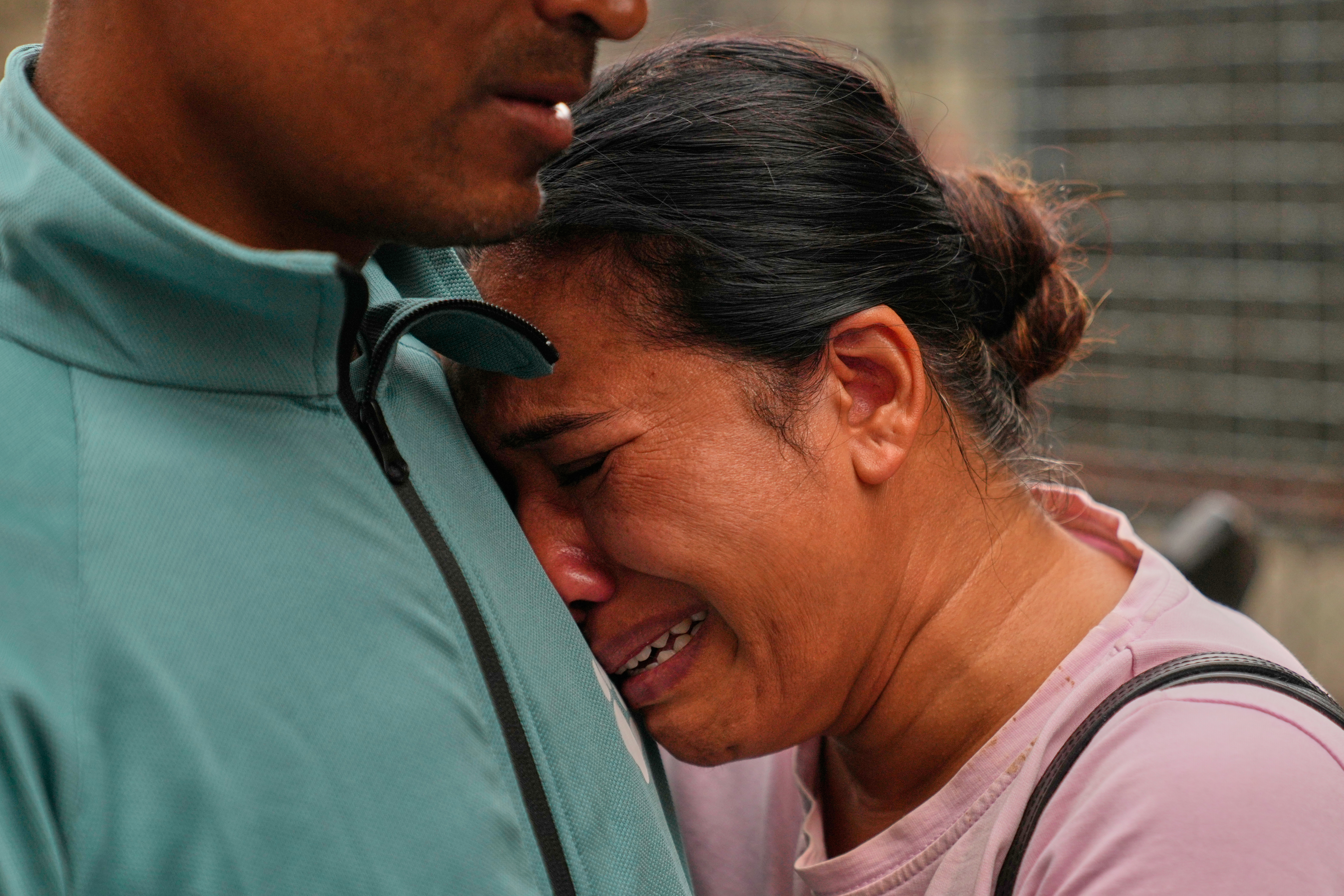
    KATHMANDU, Nepal — Rescuers pulled out survivors caked in dark brown mud and helicopters lifted stranded people to safety, as Nepal and China raced to respond to catastrophic flash floods that killed nearly 600 people and left almost 2,500 missing.

    The rescue efforts included a team that rappelled into a severely damaged checkpoint area on the Chinese side of the border between the two countries. Rescuers were on high alert for more flooding from a new lake that formed high up in the Himalayan mountains after the initial floods Wednesday. Experts warned that the lake, created after a glacier collapse that triggered the floods, was starting to overflow.

    Nepal’s army was deployed to help rescue more than 100 people believed trapped inside a tunnel at a hydropower plant located in the country’s worst-hit district. Like elsewhere in the disaster zone, their work was complicated by thick layers of mud that covered the site.

    The rappelling rescue team descended into the once-bustling border-crossing area from wooded mountain slopes, the state broadcaster China Central Television said.

    “As far as I can see, it’s nothing but debris,” rescue official Zou Mingqi told state media. The area where travelers went through border control to enter or leave China has been flattened to a muddy area, according to satellite images.

    The floods have killed 579 in Nepal, the country’s disaster-management authority said Friday. Nepali police later put the number of deaths at 553. There was little information on survivors on the Chinese side, where the death toll rose to five Friday as state media showed evacuations of villages and leaders’ efforts to direct the relief response.

    More than 3,700 people have been rescued in Nepal so far. Meanwhile, the number of people who were unaccounted for in the country nearly doubled to 1,924 as more local residents were added to the tally. China’s state media previously said 558 people were missing on the Chinese side. Hundreds of the missing are foreigners in the area to work, trek, or make a pilgrimage to a sacred peak.

    Authorities warn of flooding from a new lake

    Nepali police issued a fresh alert Friday after receiving information that a dam on the Tibet side had burst. Security personnel and rescue and relief workers were told to stay on high alert and move to a safe location if necessary.

    It was unclear if the dam bursting was related to flooding concerns over the lake that formed after the initial flash floods. Chinese broadcaster CCTV said the newly formed lake, located more than 6 miles from Gyirong Port, the hard-hit border crossing with Nepal, sits at an elevation of 9,680 feet.

    Nepali and Chinese authorities earlier warned of more flooding from the lake, which was already overflowing. Rescue workers heading to the disaster zone were ordered to stop temporarily Friday due to concern the lake would release more water and debris, and people in potentially affected areas were urged to move to safer ground.

    Monitoring data from the Chinese Ministry of Water Resources later showed that the lake had dwindled in size. The water level dropped by 32 feet from the high point on Thursday morning, the state broadcaster said.

    Some 680 rescuers eventually reached the Gyirong area by foot and via rafts. Some were dropped down from drones flown to the area, CCTV footage showed. “Anyone, anyone?” rescuers yelled, according to footage by the broadcaster.

    It was not immediately known how many people were at the border checkpoint building when the floods hit.

    Thousands have been evacuated while others await rescue

    In Nepal’s Rasuwa district, Nepali army rescuers struggled to help more than 100 people believed to be trapped by thick mud in a tunnel that’s part of the Upper Trishuli-1 Hydropower Project. The army said it had rescued 350 people from the tunnel so far.

    Video from the scene showed rescuers helping a man covered in mud out of the tunnel by pulling and pushing.

    “It is complicated to find the entry and exit points of the tunnel because everything has been covered by mud,” Army spokesperson Brig. Gen. Raja Ram Basnet said.

    Nepal’s disaster-management authority said 3,253 people had been airlifted by helicopter from the disaster area.

    The search-and-rescue efforts have been supported by an outpouring of financial support from neighboring countries, including small, poorer countries like Sri Lanka, said Kanni Wignaraja, the United Nations development agency’s regional director for Asia and the Pacific.

    “Sri Lanka has its own huge fiscal problems, but it has just sent $1 million immediately to the Nepal government,” Wignaraja said. “So you can see that while this devastation is happening, it has also really brought together countries in that neighborhood, who have stepped in for each other.”

    Some felt the ground shake, then saw a ‘black storm’

    Scientists who studied satellite images said bedrock underneath a glacier high in the Himalayan region had collapsed, taking part of the glacier with it. The rockfall was so extreme that it registered as magnitude 5.2. The rocks and melted water then swelled the rivers in the valleys below, causing a torrent of water that swept buildings, bridges, and earth downstream in Tibet and Nepal.

    Customs officer Karbir Gaire was among some of the survivors in Timure, the closest Nepalese village to the border with China, where some 1,500 people had lived.

    Gaire reached his office around 8 a.m. Wednesday and was working on his computer when he first felt the ground shake.

    “Right after the shake, I noticed a black storm coming towards us,” he recalled from Kathmandu, where he is back with family. “We all immediately started running out, and within a few seconds, we were climbing uphill on the opposite side of our office building. I think those 10 or so seconds saved some of us.”

    Fifteen of Gaire’s colleagues are missing. “It was like a Hollywood movie scene. I don’t call it a flood. It was a tsunami.”

    Families around the world hope for news of loved ones

    Nepal’s tourism board has said that among the missing are more than 500 foreigners.

    While the Nepal government shared a public list of people they rescued, there was little information about victims on the Chinese side of the border.

    Chinese government officials stuck to their tight media controls. Information about major disasters is typically released with a delay and without personal stories of victims. State media has focused on stories of rescuers working to reach the disaster site or reporting on instructions from top leaders.

    About 90 Americans were unaccounted for.

    Some of the missing may have been on a pilgrimage to Mount Kailash in Tibet, a sacred site for Hindus, Buddhists, and others.

    Vishnuram Ramaswamy, who works at a private company in the southern Indian city of Puducherry, said that he last spoke to his mother and two sisters who were on that pilgrimage Wednesday morning. It was a highly anticipated trip, something his mother had always wanted to do, he said.

    “My mother said they were on their way towards the border area and said they’ll reach their hotel and call us,” he said. He’s in touch with government officials and the travel agency, but there’s been no news.

    “This was the last we spoke to them. They have been unreachable since.”

  • Postpartum mental illness has a 19th century history

    Postpartum mental illness has a 19th century history

    The murder of three young children by their own mother lies at the center of an ongoing trial that has gripped the nation. Lindsay Clancy, a white, 36-year-old former labor and delivery nurse from Duxbury, Mass., stands accused of first-degree murder for strangling her 5-year-old daughter, Cora, and sons, 3-year-old Dawson and 8-month-old Callan, at their home on Jan. 24, 2023.

    Following the deaths, Clancy attempted suicide by jumping from a second-story window, an act that has left her paralyzed from the waist down. The prosecution argues that Clancy’s actions were premeditated. Her defense team says that a months-long struggle with severe postpartum mental illness culminated in Clancy’s violent, psychotic break.

    The gravity of these allegations has garnered widespread attention and shocked the public. Significantly, the case has also reignited a familiar public debate: Can postpartum mental illness explain an act that many find unimaginable?

    The Clancy case is hardly the first to provoke this question. Twenty-five years ago, Andrea Yates infamously drowned her five children in the bathtub of her Houston home, prompting many commentators to draw comparisons between the two cases. Initially found guilty of capital murder, Yates successfully appealed the verdict on the grounds of insanity after her defense argued that she had experienced severe postpartum depression and psychosis.

    But the roots of this debate about postpartum mental illness and its role in mitigating or eliminating criminal responsibility go back even further. Beginning in the 19th century, when postpartum mental illness was explicitly linked to white motherhood, race shaped which mothers were afforded psychiatric explanations for acts of maternal violence.

    Lindsay Clancy watches jurors as they enter the courtroom to start their second day of deliberations in her murder trial at Plymouth Superior Court on Aug. 28 in Plymouth Mass.Greg Derr/The Patriot Ledger

    In the early 19th century, French psychiatrist Jean-Étienne Dominique Esquirol and English obstetrician Robert Gooch independently helped establish the diagnosis of puerperal insanity, a term used to describe psychiatric disturbances associated with pregnancy, childbirth, and the postpartum period. Physicians’ descriptions of the disorder sound remarkably familiar today.

    Women diagnosed with puerperal insanity were described as experiencing persistent sadness, anxiety, hopelessness, confusion, hallucinations, delusions, or dramatic behavioral changes. In severe cases, they also documented women who neglected, harmed, or even killed their children.

    Despite being categorized as a disorder of childbearing, puerperal insanity was not believed to threaten all childbearing women. Rather, American physicians saw mental illness through a racial lens. Puerperal insanity was framed as a disorder of “civilization,” reflecting physicians’ belief that modern society weakened white, middle- and upper-class women’s reproductive systems and increased their vulnerability to mental illness.

    The diagnosis allowed physicians to reconcile anti-maternal behaviors such as neglect and violence with one of the 19th century’s most deeply held assumptions: that white, middle- and upper-class mothers were naturally nurturing, domestically oriented, and morally respectable.

    While this racial construction of puerperal insanity was widely accepted within the medical sphere, it posed a challenge in the courtroom.

    During the 1840s and 1850s, the M’Naghten Rule — which held defendants not criminally responsible if mental illness prevented them from understanding either the nature of their actions or that those actions were wrong — became the dominant legal standard in the United States. But the line between ordinary psychological changes associated with pregnancy and legally recognizable insanity was often far less clear than the courts required. For example, in 1847, physician James MacDonald aptly observed that “during pregnancy, women without being considered insane, are often in that state of mind which precedes, if it do[es] not in fact constitute, the first stage of mental derangement.”

    Sympathetic physicians and legal reformers argued that puerperal insanity rendered otherwise respectable white women temporarily incapable of exercising moral judgment.

    Patrick Clancy reacts as images of himself and his children on vacation a month before they were killed is shown in the courtroom at Plymouth Superior Court in Plymouth, Mass., July 27.Greg Derr

    In her widely circulated 1887 article “Forensic Relations of the Puerperal State,” physician Harriet C.B. Alexander condemned that “the mental state of the puerperal female has not received the attention its forensic importance merits” and contended that it was “obvious” that pregnant women were “subject to influences that weaken her will, engender emotional mobility, render apathetic natural affection, and give rise to […] perverted sensations and propensities” that legally predisposed them to commit murder and infanticide.

    In other words, white women’s violence was recast as the temporary consequence of a psychiatric illness.

    For instance, in 1893, Lena Brown stood trial in Bordentown, N.J., for strangling her own son and her neighbor’s two children. Although she admitted to committing the deed, she was unable to explain why and was ultimately found not guilty by reason of insanity. The defense successfully argued that she was suffering from puerperal insanity and had been “in a delicate condition at the time” of the killings. When Brown gave birth to another child in prison and “treated [the infant] with the utmost tenderness,” her behavior was offered as further evidence that her violence was temporary and that she was a good mother.

    The same could not be said for women whom physicians considered racially inferior. Black women, in particular, were often characterized as habitual criminals, rather than patients, who frequently committed infanticide because they were naturally violent and had no regard for the sanctity of children.

    In 1905, for example, Lottie Hawkins was imprisoned for allegedly throwing her two-week-old child into the Anacostia River. Records documented that she had been admitted to and treated at St. Elizabeth’s Hospital, a psychiatric asylum in Washington, D.C., two days after giving birth and released the day before the killing. Yet no one suggested that she might have been suffering from puerperal insanity. Instead, prosecutors emphasized that she “wanted to get rid of the baby” because she neither wanted to provide care or financial support and that she consumed large amounts of cocaine and whiskey on the day of the killing to take away her senses.

    Made By History sponsors. FOR USE ON MADE BY HISTORY STORIES ONLY.Inquirer Staff

    In short, debates over maternal mental illness have never been simply about diagnosis or criminal responsibility. They have also been shaped by enduring assumptions about race, class, motherhood, and which women are recognized as deserving of medical explanation, public sympathy, and legal recognition.

    Just four years ago, Latarsha Sanders, a Black mother from Brockton, Mass., was convicted of first-degree murder and sentenced to life without parole for the deaths of her two sons, Edson, 8, and La’Son, 5. Earlier this year, the Massachusetts Supreme Judicial Court ruled that Sanders had been denied a fair trial after evidence documenting her history of mental illness was excluded from the proceedings.

    The Clancy trial’s visibility reflects the enduring political and cultural significance of motherhood in the United States. That significance also helps explain why some cases of maternal violence become national spectacles that generate public debate over the role of postpartum mental illness, while others — like Sanders — are met with comparatively little public attention or a far stronger presumption of guilt.

    Udodiri R. Okwandu is an assistant professor of Women’s, Gender, and Sexuality Studies at Rutgers University–New Brunswick and a historian of medicine whose current work examines how racialized medical knowledge about maternal mental illness has shaped ideas about acceptable motherhood in the United States since the 19th century.

    Made by History takes readers beyond the headlines with articles written and edited by professional historians. Opinions expressed do not necessarily reflect the views of The Inquirer.

  • President Donald Trump loses again in bid to erase his hush money conviction

    President Donald Trump loses again in bid to erase his hush money conviction

    NEW YORK — A federal judge on Friday once again spurned Donald Trump’s effort to erase his hush money conviction, rejecting the president’s bid to move the state court case to federal court and have it dismissed on presidential immunity grounds.

    Judge Alvin K. Hellerstein reiterated his earlier finding against Trump, saying that the reasons Trump cited for renewing his request were “neither new nor legally sufficient.”

    The judge added: “He has failed to show good cause and diligence.”

    It is the third time Hellerstein has blocked Trump from having the U.S. District Court in Manhattan seize control of the case from the New York court where he was tried and convicted.

    And, like before, Trump will appeal, according to a spokesperson for his legal team who called Hellerstein’s ruling “baseless and lawless.”

    “The Supreme Court’s historic decision on Immunity, the Federal and New York State Constitutions, and other established legal precedent mandate that the Witch Hunt perpetrated by the Manhattan DA be removed to federal court, and immediately overturned and dismissed,” a statement issued on behalf of the legal team said. “President Trump will be filing a powerful appeal, and will continue defeating Democrat weaponization at every turn.”

    The guilty verdict, reached in May 2024 while Trump was between terms, made him the first former — and now current — U.S. president to be convicted of a crime. Trump is also challenging his conviction through the state court appellate process, which is pending.

    Hellerstein’s decision came after a federal appeals court last year ordered him to reconsider his prior denial. The judge previewed his ruling during oral arguments in February, slamming Trump’s lawyers for legal maneuvers that amounted to taking “two bites at the apple.”

    State prosecutors did not immediately respond to a request for comment.

    Case centered on a payment to Stormy Daniels

    Trump was convicted in May 2024 of 34 felony counts of falsifying business records to conceal a $130,000 hush money payment to adult film actor Stormy Daniels, whose claim of a sexual encounter with Trump a decade earlier had threatened to upend his 2016 presidential campaign.

    Trump was sentenced to an unconditional discharge, which left his conviction intact but spared him any punishment. He had long denied Daniels’ claim and said he did nothing wrong. He has sought to get the conviction overturned both by attempting to move the case to federal court and through the appeals process in state court, which is pending.

    Hellerstein rejected Trump’s requests to move the case twice before. The first was after Trump’s March 2023 indictment. The second was after Trump’s trial, as his lawyers sought to nix his conviction in the wake of the Supreme Court’s July 2024 ruling that presidents and ex-presidents can’t be prosecuted for official acts and prosecutors can’t use official acts as evidence that unofficial actions were illegal.

    Trump appealed Hellerstein’s posttrial ruling and, last November, the 2nd U.S. Circuit Court of Appeals ordered the judge to reconsider his decision, finding that he had failed to consider “important issues relevant” to the president’s request to move the case.

    A three-judge appellate panel said it expressed no view on how he should rule but instructed Hellerstein to closely review evidence that Trump claimed was related to official acts and whether Trump could argue those actions were taken as part of his White House duties.

    The judges also instructed Hellerstein to determine if Trump had “diligently sought” to have the case moved to federal court and whether the case can even be moved to federal court now that Trump has been convicted and sentenced in state court.

    Judge questioned the Trump legal team’s strategy

    During oral arguments in February, Hellerstein took issue with the Trump legal team’s decision-making after the Supreme Court ruling.

    Instead of immediately seeking to move the case to federal court, he noted, Trump’s lawyers first asked the trial judge in state court, Juan Merchan, to throw out the verdict on immunity grounds. Normally, such a request must be made within 30 days of an arraignment, but a federal appeals court in Washington, D.C. has ruled that exceptions can be made if “good cause” is shown.

    Trump, a Republican, did not attend the arguments.

    Trump lawyer Jeffrey Wall argued that prosecutors rushed to trial instead of waiting for the Supreme Court’s presidential immunity decision and that Trump’s legal team was crunched for time after the high court’s ruling because his sentencing was scheduled for just 10 days later.

    Trump’s lawyers did not ask Hellerstein to intervene until nearly two months later, while their request to Merchan was still pending. The judge called that a “strategic decision” and suggested that by going to the state court first, Trump’s lawyers cost him the right to pursue remedies in federal court.

    “No, your honor,” Wall replied. “It is what any sensible litigant would do” in that situation.

    “Not so,” Hellerstein replied.

    “That is a decision on your part,” the judge added. “You didn’t have to do that. You could have come right to the federal court. Just by filing a notice of removal, there would be no sentencing.”

    Trump’s lawyers “made a choice,” Hellerstein said, “and you sought two bites at the apple.”

    In his written ruling Friday, Hellerstein said Trump was asking for a “‘second bite at the apple,’ a result the law disfavors.”

    The judge added that “Trump’s delay in filing for removal constitutes a ‘quintessential strategic decision,’ and the ‘fact that he later came to view that decision as a poor one is not sufficient, by itself, to establish cause.’”

  • Judge excludes key confession in Sept. 11 case

    Judge excludes key confession in Sept. 11 case

    In a major blow to the U.S. case against Khalid Sheikh Mohammed, the man accused of plotting the Sept. 11 attacks, a military judge ruled Friday that the prisoner’s confessions to FBI agents were not voluntary and cannot be used against him at trial.

    Prosecutors have described Mohammed’s interrogations in 2007 at the U.S. Navy base in Guantánamo Bay, Cuba, as the government’s most crucial evidence in the long-running death penalty case.

    The ruling, just before the 25th anniversary of the attacks, could further delay the start of a trial if prosecutors decide to appeal to reinstate it. Aging survivors and families of victims have said they worry they may never see a final resolution to the case.

    Just this week, the judge set a trial date of June 5, 2028.

    Mohammed is accused of being the mastermind of the hijacking attacks that killed nearly 3,000 people in New York, Pennsylvania, and the Pentagon.

    He was brutally interrogated by the CIA in secret overseas prisons after his capture in 2003 and held incommunicado until his transfer to Guantánamo in 2006. Prosecutors excluded statements from those interrogations from the case.

    But the trial judge, Lt. Col. Michael Schrama, went further, concluding that Mohammed’s subsequent interrogations in 2007 at Guantánamo were also inadmissible.

    “The prosecution has failed to prove by a preponderance of the evidence that Mr. Mohammad’s statements to the FBI were voluntarily given,” Schrama wrote in the conclusion of his 45-page ruling, which was not immediately released to the public but whose unclassified contents were confirmed by several lawyers who had seen it.

    Schrama cited several factors, including an “unbroken continuation of the CIA’s psychological conditioning and severe coercion” at the time of Mohammed’s questioning at Guantánamo in 2007.

    He also found that FBI agents intentionally failed to explicitly tell Mohammed that he had a right to be silent and to consult a lawyer, and that what he told them could be used against him at a trial.

    The chief prosecutor, Rear Adm. Aaron C. Rugh, said his team would review the ruling “and will make a decision on whether to appeal in the near future.”

    The judge gave prosecutors five days to decide but said they could request an additional five days.

    The question of the taint of torture has hung over the case for years.

    Defense lawyers had argued that Mohammed was essentially conditioned by the CIA through torture coupled with years of isolation and solitary confinement to later tell the FBI what it wanted to hear. He was not allowed to consult a lawyer until long after he had confessed and was charged.

    Schrama has yet to rule on the confessions of two other defendants in the Sept. 11 case, Walid bin Attash and Mustafa al-Hawsawi. An earlier judge, Col. Matthew McCall, threw out the confessions of Mohammed’s nephew, Ammar al-Baluchi, who is accused of helping some of the 19 hijackers with finances and travel arrangements.

    A different judge, Col. Lanny Acosta, suppressed the confession of the defendant in the USS Cole bombing case, Abd al-Rahim al-Nashiri, in an explicit finding that he had been tortured by the CIA. His death penalty trial in the 2000 attack, which killed 17 U.S. sailors, is scheduled to start in October.

    The Sept. 11 case has been mired in pretrial proceedings since arraignment in 2012. Over the years, four other judges gathered evidence on the question Schrama decided Friday. An earlier judge found a fifth man, Ramzi Binalshibh, mentally incompetent to stand trial, a condition the defendant’s lawyer blamed on torture.

    This article originally appeared in the New York Times.

  • Judge will hear recantation of sexual abuse claim against ex-Penn State coach Jerry Sandusky

    Judge will hear recantation of sexual abuse claim against ex-Penn State coach Jerry Sandusky

    BELLEFONTE, Pa. — A judge has granted a hearing to explore claims that a man wants to recant allegations of sexual abuse years ago by Penn State assistant football coach Jerry Sandusky.

    Sandusky, 82, has been serving a decades-long prison sentence since he was convicted of 45 counts of sexual abuse involving multiple boys in 2012. He has repeatedly lost efforts to get a new trial.

    A man identified in court documents as R.R. said he was coached extensively by authorities.

    “I was told — both directly and indirectly — that trauma may have fragmented my memory, and that I could safely affirm details I did not fully recall. I was assured this was common and even expected,” R.R. said in an affidavit filed by Sandusky’s attorneys.

    A court hearing in Centre County has been scheduled for Sept. 8. Messages left with attorneys were not immediately returned Friday. State prosecutors said Sandusky’s petition is untimely.

    Sandusky coached the defense at one of the country’s top football programs under Hall of Fame head coach Joe Paterno. The scandal led to Paterno’s firing, and the university paid more than $100 million to people who said they had been abused by Sandusky. He has repeatedly declared his innocence.

    “I apologize that I’m unable to admit remorse for this because it’s something that I didn’t do,” Sandusky said during a 2019 court appearance.

    Authorities said Sandusky found and groomed victims at the Second Mile, a charity that he started for at-risk youth. Eight young men testified against him.

    At trial, R.R. was 25 years old. He testified that he was 11 when Sandusky performed oral sex in the coach’s basement in 1998, a transcript shows.

    “He told me that if I told anybody that I would never see my family again,” said R.R., who was in foster care at the time.

    Sandusky later apologized and said “he loved me,” R.R. testified.

  • Trump used to say he saw a quick end to his Iran war, but 6 months later he claims he’s in no hurry

    Trump used to say he saw a quick end to his Iran war, but 6 months later he claims he’s in no hurry

    WASHINGTON — President Donald Trump arrives at an awkward moment for his presidency on Friday as the U.S.-Israel war against Iran reaches the six-month mark, a notable milestone for a conflict that the Republican leader repeatedly assured Americans would be a “little excursion” lasting a matter of weeks.

    The war isn’t over, though Trump claims that through bombs and blockade, he has already devastated Iran’s leadership, military and economy.

    And this week his administration said it would turn its focus to increasing economic pressure — rather than military action — to try to finish off Iran. The shifting strategy centers on threats to punish any country or entity that continues to conduct business with Tehran.

    The turn to using sanctions as the cudgel of choice comes as the administration weighs diminished munitions stockpiles after months of war, sparking concerns that the prolonged conflict could undermine U.S. military readiness in other parts of the globe.

    As the conflict grinds on, Trump’s talk of finding a quick end to the war also appears to be fading. He stressed this week that he’s “not in a hurry” to get Iran back to the negotiating table, and he continues making the case that the Islamic Republic’s leadership is on the ropes.

    “They’re not paying their troops. They’re in deep trouble. They have very little capacity,” Trump told reporters Thursday. “We don’t want to speak to them. We’re not looking to meet or anything,” he said.

    It’s unclear how — or if — Trump will address the six-month anniversary of a conflict that has already cost the United States more than $37.5 billion and done damage to his popularity ahead of critical November elections for his party. The president is spending Friday in Houston, where he’ll honor the Artemis II NASA crew for their 10-day mission around the moon earlier this year.

    Trump is declaring ‘mission accomplished’ — a phrase that hurt a Republican predecessor

    On its face, the moment is complicated for the “America First” leader who fiercely criticized his White House predecessors for wasting American taxpayer money and U.S. troops’ lives in Middle East conflicts and vowed on the campaign trail to keep the military out of “endless wars.”

    But Trump has bristled at suggestions that this war — in which no American troops have deployed into Iran — can be compared with the yearslong wars in Iraq and Afghanistan in which more than 7,000 Americans were killed.

    His Republican predecessor, President George W. Bush, was widely mocked for a 2003 speech aboard the USS Abraham Lincoln beneath a White House-produced banner that read “Mission Accomplished.” It came to symbolize a premature declaration of victory for the Iraq War, which would go on for nearly nine more years. More than two decades later, there are still U.S. troops stationed in Iraq.

    Trump’s war has stretched on far longer than he told Americans it would. It didn’t stop him from sharing a social media post this week declaring “MISSION ACCOMPLISHED 2026.” The AI-generated image features Trump against a backdrop of U.S. fighter jets, a warship and American flags above smaller images of Bush and former Iranian Supreme Leader Ayatollah Ali Khamenei, who was killed in an Israeli strike in the opening salvos of the war.

    Trump has consistently emphasized that the U.S. and Israel campaign has been devastating for Iran’s navy and air force. Iranian officials have said the country has suffered $270 billion in direct and indirect damage. Israeli military strikes in the first weeks of the war wiped out much of the theocratic government’s leadership structure, including Khamenei.

    But Iran has found leverage through its own strikes in the critical Strait of Hormuz, where relatively few vessels carrying oil and liquefied natural gas are risking passage. Trump again declared Thursday that the “Strait of Hormuz is open,” saying 24 vessels passed through a day earlier. That’s a fraction of the roughly 130 vessels that passed through the vital waterway daily before the war began.

    Trump is showing little interest in talks

    Mediators Qatar and Pakistan continue to press for a diplomatic off-ramp from the two sides. Qatar’s prime minister, Sheikh Mohammed bin Abdulrahman Al Thani, was in Tehran on Thursday to discuss a proposed plan between Iran and Oman to boost traffic through the Strait of Hormuz.

    But in Washington, Trump has shown little interest in getting back to the preliminary deal reached in June that aimed to reopen the strait and launch talks about Iran’s nuclear program. That deal fell apart within weeks after Iran started attacking ships.

    At the same time, Trump says the U.S. effort to economically choke off Tehran is working, with a U.S. naval blockade preventing Iranian oil from making it to market as the trickle of vessels carrying oil from other Gulf nations pass through.

    “We have control and we have the blockade,” Trump said. “Iran is not getting anything. Nothing is going through.”

    Iran is badly battered, but has a history of showing resilience

    There’s no doubt that the strikes combined with decades of international sanctions have battered Iran, said Aarathi Krishnan, a geopolitical risk analyst at RAKSHA Intelligence Future.

    But as Trump tries to turn to a new chapter in the war, Krishnan argues the Republican may be misguided in concluding that more pressure on Tehran — which has spent decades adapting to international economic sanctions — will produce the political outcome he wants.

    Indeed, Iran’s economy in the run-up to the start of the war was mired in surging inflation, according to the International Monetary Fund. National income per person had fallen from about $8,000 in 2012 to $5,000 in 2024, according to World Bank data.

    But Tehran has also shown resilience, selling discounted oil and establishing opaque shipping and financial networks, Krishnan said.

    “This administration has completely underestimated the Iranian resolve,” Krishnan said. “This is not new to the Iranian regime.”

    Trump must decide how far he’s willing to go with sanctions

    Richard Goldberg, who served as a senior adviser on Iran at the National Security Council during Trump’s first White House term, argues that Iran now finds itself in “uncharted waters” if the administration follows through with a truly biting campaign to pressure Iranian trade partners.

    “What we should be seeing is an attempt to seal off every escape hatch the regime has left,” said Goldberg, who is now at the Foundation for Defense of Democracies, a hawkish Washington think tank. “Use the economic power of the United States to layer a naval blockade with an air and land embargo while dropping the hammer on anyone who gives the regime access to hard currency — whether that’s in the Middle East, China or even Europe.”

    But it remains to be seen how far the administration is willing to go.

    Treasury Secretary Scott Bessent this week unveiled a campaign the White House calls “Operation Economic Outcast,” but only issued warnings to nations to cut trade and has yet to announce any secondary sanctions. Bessent told reporters the administration wanted countries to have a chance to shift away from Iran before it was too late — and acknowledged there was economic risk to the U.S., too, in moving ahead.

    China, which is Iran’s biggest trade partner and oil buyer, responded by expressing its opposition to “illegal unilateral sanctions.”

    Pressed Thursday about why he wasn’t already sanctioning Chinese banks, Trump offered a cryptic response.

    “Who said I’m not? You don’t know if I’m doing it,” Trump said. “I don’t have to announce everything, do I?”

  • Death toll rises in Nepal-China border disaster as a lake poses new flood threat

    Death toll rises in Nepal-China border disaster as a lake poses new flood threat

    KATHMANDU, Nepal — Rescuers pulled out survivors caked in dark brown mud and helicopters lifted stranded people to safety Friday as Nepal and China raced to respond to catastrophic flash floods that killed more than 500 people and left more than 1,500 missing.

    Nepal’s disaster management authority said the death toll there rose to 538, and that more than 3,700 people have been rescued. Nepali police later put the number of deaths higher at 547.

    Meanwhile there was little information on survivors on the Chinese side, where the death toll rose to five Friday as state media showed evacuations of villages and leaders’ efforts to direct the relief response.

    China’s state media previously said 558 people were missing. Across the border, Nepal’s disaster management authority said Friday that 977 people were still unaccounted for. Hundreds of them were foreigners in the area to work, trek or make a pilgrimage to a sacred peak.

    Authorities warn of further flooding from a new lake

    Nepali police issued a fresh alert Friday after receiving information that a dam on the Tibet side has burst. Security personnel and rescue and relief workers were told to stay on high alert and immediately move to a safe location if necessary.

    It is unclear if the dam bursting is related to flooding concerns over a barrier lake that formed after the initial flash floods, high up in the Chinese side of the Himalayan mountains. Chinese broadcaster CCTV said the lake was at an elevation of 2,950 meters (9,680 feet.)

    Nepali and Chinese authorities earlier warned of further flooding from the barrier lake, which was already overflowing. They urged people in potentially affected areas to move to safer ground.

    Nepal police spokesperson Abi Narayan Kafle told The Associated Press that the rescue operation was continuing but with high alert. “It hasn’t stopped,” he said.

    Although the new lake is located more than 10 kilometers (6 miles) from Gyirong Port, the hard-hit border crossing with Nepal, rescue workers heading to the disaster zone were ordered to stop temporarily Friday morning owing to concern the lake would overflow.

    Some 680 rescuers eventually reached the hardest-hit area at Gyirong by foot and via rafts after much effort. Some were dropped down from drones flown to the area, CCTV footage showed.

    Thousands of people have been evacuated, others await rescue

    Nepali Army rescuers were working to help people trapped in a hydropower tunnel in Rasuwa, part of the Upper Trishuli-1 Hydropower Project.

    Video from the scene show rescuers helping the man, covered in dark brown mud, out of the tunnel by pulling and pushing. He was one of likely dozens trapped in the tunnel.

    Army spokesperson Brig. Gen. Raja Ram Basnet told the AP the focus was on survivors.

    “It is complicated to find the entry and exit points of the tunnel because everything has been covered by mud,” Basnet said. “Our first priority is rescuing the stranded people.”

    Nepal’s disaster management authority said 3,253 people had been airlifted by helicopter from the disaster area. Survivors, including injured people, were taken to Kathmandu and other locations.

    Some felt the ground shake, then saw a ‘black storm’

    Scientists who’ve studied satellite images said bedrock underneath a glacier high in the Himalayan region had collapsed, taking part of the glacier with it. The rockfall was so extreme that it reached a magnitude 5.2 seismic measurement. The rocks and melted water then swelled the rivers in the valleys below, causing a torrent of water that swept buildings, bridges and earth downstream in Tibet and Nepal.

    Customs officer Karbir Gaire was among some of the survivors in Timure, the closest Nepalese village to the border with China, where some 1,500 people had lived.

    Gaire reached his office around 8 a.m. Wednesday and was working on his computer when he first felt the ground shake.

    “Right after the shake, I noticed a black storm coming towards us,” he recalled from Kathmandu, where he is back with family. ”We all immediately started running out, and within a few seconds, we were climbing uphill on the opposite side of our office building. I think those 10 or so seconds saved some of us.”

    Gaire doesn’t remember exactly how many people were in the office when the disaster struck, but 15 colleagues have gone missing. “It was like a Hollywood movie scene. I don’t call it a flood, it was a tsunami.”

    Families around the world hope for news of loved ones

    Nepal’s tourism board has said that among the missing are more than 500 foreigners.

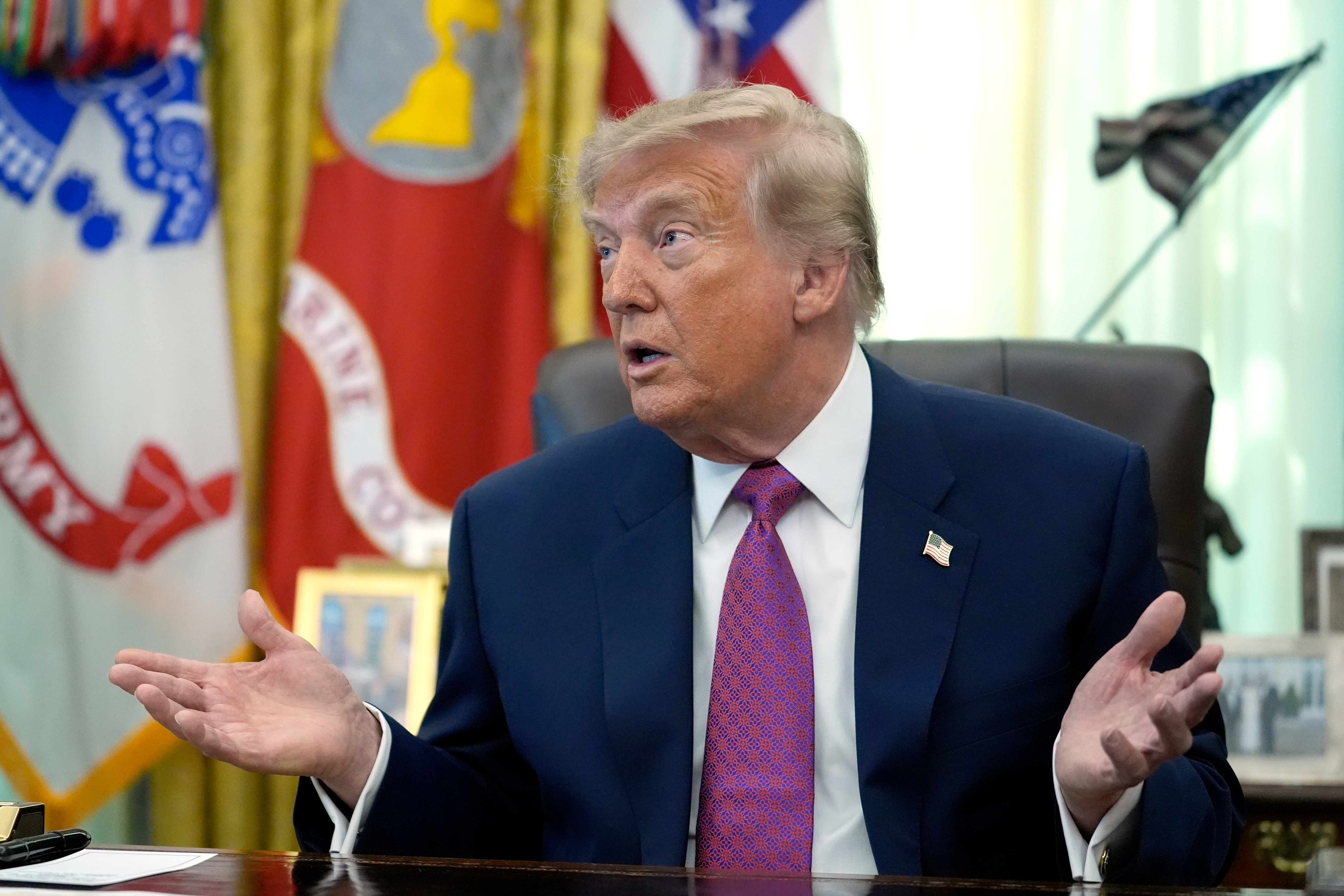
    About 90 Americans were unaccounted for. U.S. President Donald Trump said the flooding was terrible to see, and he told reporters in the Oval Office he offered to provide Nepalese leaders “anything they want.”

    Rajan Tamang, a restaurant owner in New York City, said he learned from family in Kathmandu that his mother and sister were among those who died, while many other relatives and friends remained missing.

    “My family was just waking up, and they didn’t even get any information, and suddenly this flood came. Some of them are missing, some of them lost their life and only a few is alive,” he told the AP after a vigil in New York.

    Some of the missing may have been on a pilgrimage to Mount Kailash in Tibet, a sacred site for Hindus, Buddhists and others.

    Vishnuram Ramaswamy, who works at a private company in the southern Indian city of Puducherry, said that he last spoke to his mother and two sisters who were on that pilgrimage Wednesday morning. It was a highly anticipated trip, something his mother had always wanted to do, he said.

    “My mother said they were on their way towards the border area and said they’ll reach their hotel and call us,” he said. While he’s in touch with government officials, and the travel agency, there’s been no news.

    “This was the last we spoke to them. They have been unreachable since.”

  • ICE awards $16.7M contract to buy 6,000 pairs of gloves that deliver electric shocks

    ICE awards $16.7M contract to buy 6,000 pairs of gloves that deliver electric shocks

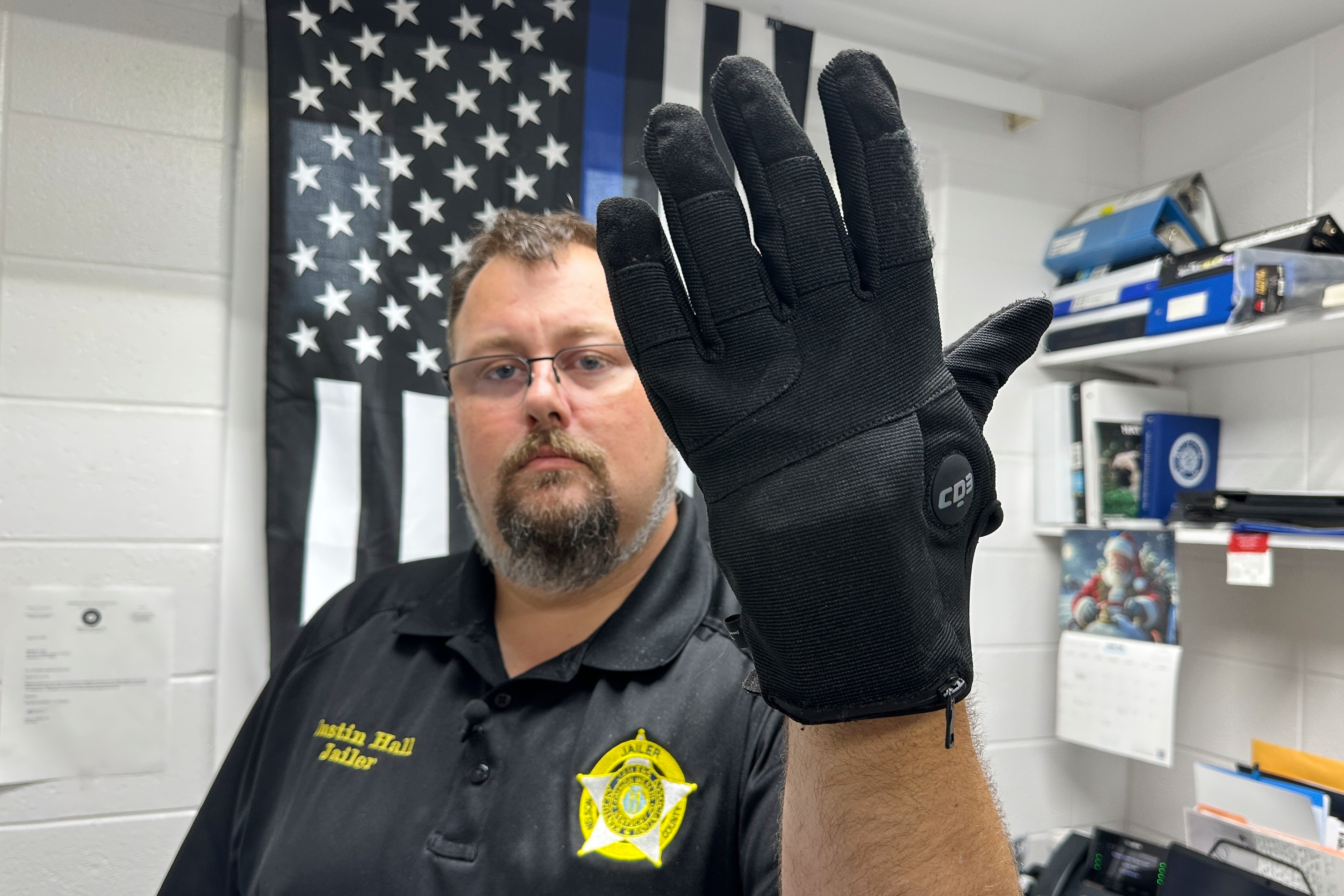
    U.S. Immigration and Customs Enforcement has awarded a $16.7 million contract to purchase 6,000 pairs of gloves that can deliver painful electric shocks, saying officers would use them to control detainees and protesters who resist.

    ICE moved forward with the purchase despite opposition from civil rights advocates and Democratic members of Congress, who said ICE officers cannot be trusted to use them appropriately.

    A notice published in a federal database Thursday said ICE entered into a no-bid contract to purchase the gloves from Compliant Technologies LLC, a Kentucky-based firm that manufactures them. The deal includes acquiring 6,000 of the devices along with support equipment and services over the next six months.

    Civil rights advocates have said ICE officers already face criticism for their use of force with little oversight or accountability while enforcing President Donald Trump’s immigration crackdown.

    ICE published the notice hours after a group of U.S. senators, led by Democrat Catherine Cortez Masto of Nevada, urged the agency to cancel its plan to buy the gloves. In a letter to ICE’s acting director Thursday, Cortez Masto and 15 of her colleagues in the Democratic caucus questioned ICE’s need for the devices.

    “The blatant and tragic misuse of force in Los Angeles, Chicago, Minneapolis, Houston, Maine, and other locations around the country raises significant skepticism about the agency’s professional capability to safely deploy a new tool that could be used to harm Americans without cause,” the letter said.

    The senators were the latest to express opposition to the plan, which became public this month when ICE published a notice outlining its intent to purchase thousands of “conductive distraction and de-escalation devices” for officers and investigators.

    The devices are normal patrol gloves until an officer presses a button to activate the electrical mode. They must be applied directly to someone’s skin to produce a shock that causes pain, which is promoted as a way to gain compliance from people who are resisting. They have been used by some local jails and police departments in recent years.

    ICE’s notice said officers would use them in “high-tension environments,” including while making arrests, transporting combative detainees and responding to civil disturbances outside detention facilities.

    “It will be used when a subject is actively or passively resisting and an officer needs to gain control quickly to prevent injuries to both parties,” the document said.

    It said that the shocks would help “maintain control over inmates and prevent aggression or escape attempts,” allow officers to handcuff people hiding their hands, and assist in crowd control. The goal would be to avoid using “more severe force,” including firearms. The notice said the gloves would be used with “approved policy, training, and accountability standards,” but it did not elaborate.

    Cortez Masto and the other senators said in their letter that the device “presents substantial risks if deployed during civil arrests — even more so if it is deployed without clear limits, appropriate training, and comprehensive oversight.” They said ICE must make public details about how officers will be trained and how use of the gloves will be documented and reviewed internally to avoid misuse.

    ICE’s parent agency, the Department of Homeland Security, reacted defiantly Thursday to critics of the purchase.

    “Sanctuary politicians attempting to ban our federal law enforcement from any safety equipment is despicable and a deliberate attempt to undermine and endanger our officers,” the agency said in a statement.

  • Shackled Tate brothers in court asking to be released from jail during extradition fight

    Shackled Tate brothers in court asking to be released from jail during extradition fight

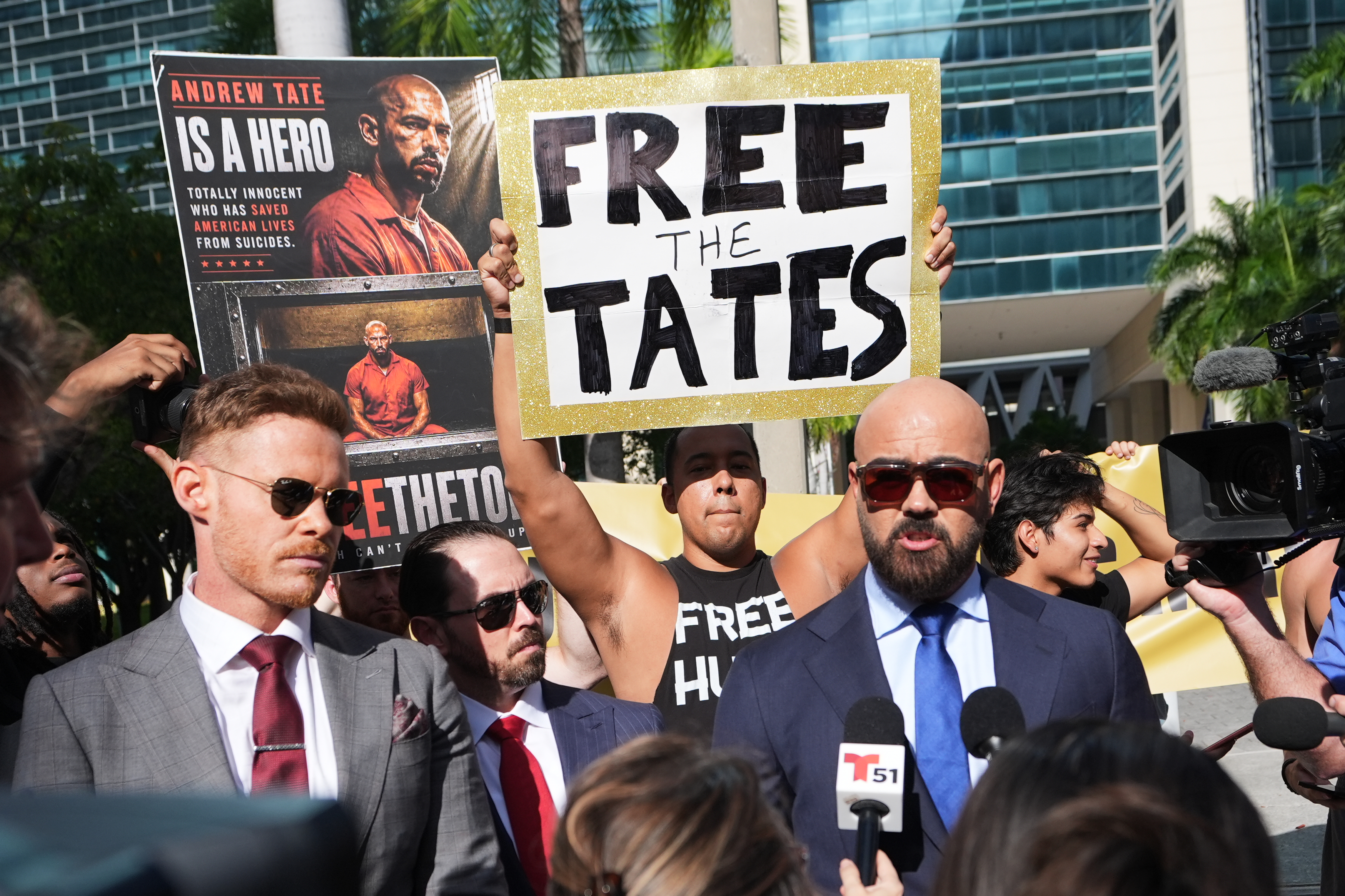
    MIAMI — Social media influencer Tristan Tate took the witness stand in federal court on Thursday and said he and his brother Andrew can’t adequately defend themselves from criminal sex charges if they have to remain in a Miami jail while fighting extradition to the United Kingdom.

    Lawyers for the Tates are asking a judge to allow them to be freed from custody at least until an extradition hearing can be held on their U.K. rape and trafficking charges. They have remained in a federal detention center in Miami since they were arrested July 18.

    Prosecutors say Tates bragged about wealth and multiple passports

    Prosecutors said they appear to have money and have bragged about multiple passports. Their attorneys argued that their high profile and active social media presence make it nearly impossible for them to flee, and they have shown they won’t run through cooperating in a separate sex crime case in Romania.

    The Tates have become among the world’s most polarizing internet personalities by promoting wealth, male dominance, and misogyny through their social media empire.

    Andrew Tate, 39, has said women who are sexually assaulted should bear some responsibility for the attacks and shared graphic descriptions of how he might attack women. Tristan Tate, 38, has worked with his brother on multiple businesses, including the production of online webcam pornography.

    No date for an extradition hearing has been set. The U.K. has until mid-September to provide evidence to the State Department.

    Tristan Tate says he needs to be out of jail to prove his innocence

    On his way into court Thursday, defense attorney Joseph McBride told reporters he hasn’t heard of a case where U.S. Magistrate Lauren Louis has allowed someone out on bail while awaiting an extradition hearing.

    But while the odds aren’t in their favor, McBride felt like the truth was. He called them innocent, good men who have never run from the law.

    In court, Tristan Tate was called to the stand Thursday and said he can’t prove he is innocent if he is kept in jail.

    “I need to clear my name. I need to take part in these proceedings, I can’t do that from the secure housing unit,” he said.

    Tristan Tate also complained of conditions at the Miami jail. He said there are ants and the only toilet in his cell is where anyone walking by can see him. He said he has lost 14 pounds eating mostly junk food in the nearly six weeks he has been in custody.

    The brothers were wearing tan prison clothes and shackled for Thursday’s hearing.

    Defense lawyers say the brothers have complied in Romania case

    Their lawyers said the U.K.’s request was out of line because their criminal case in Romania is going first. Romanian officials have let them remain free until the proceedings conclude and they have not tried to flee and are complying with all court restrictions.

    The judge reminded defense attorneys she has to follow U.S. laws.

    Attorneys for the Tates said they largely exaggerated their claims of wealth to boost their social media personas, their claims of multiple passports were satirical and a “$50 million superyacht” featured in one of the brothers’ videos does not actually belong to them. The expensive luxury cars, including a $2.1 million Aston Martin, that were featured in other videos were rented, the defense says.

    The brothers have long claimed that their violent and misogynistic statements have been taken out of context or were intended as jokes.

    “That is not the real Andrew Tate, the person Andrew Tate,” said his lawyer Howard Srebnick, who in court Thursday compared Tate on social media to Sacha Baron Cohen’s confrontational Ali G character.

    The former professional kickboxers, who have dual U.S. and U.K. citizenship, have millions of social media followers and are vocal supporters of President Donald Trump. The White House has said the brothers shouldn’t expect any help from the president.

  • U.S. Patriot missile stocks in Europe are ‘beyond critical’ due to Iran war, officials say

    U.S. Patriot missile stocks in Europe are ‘beyond critical’ due to Iran war, officials say

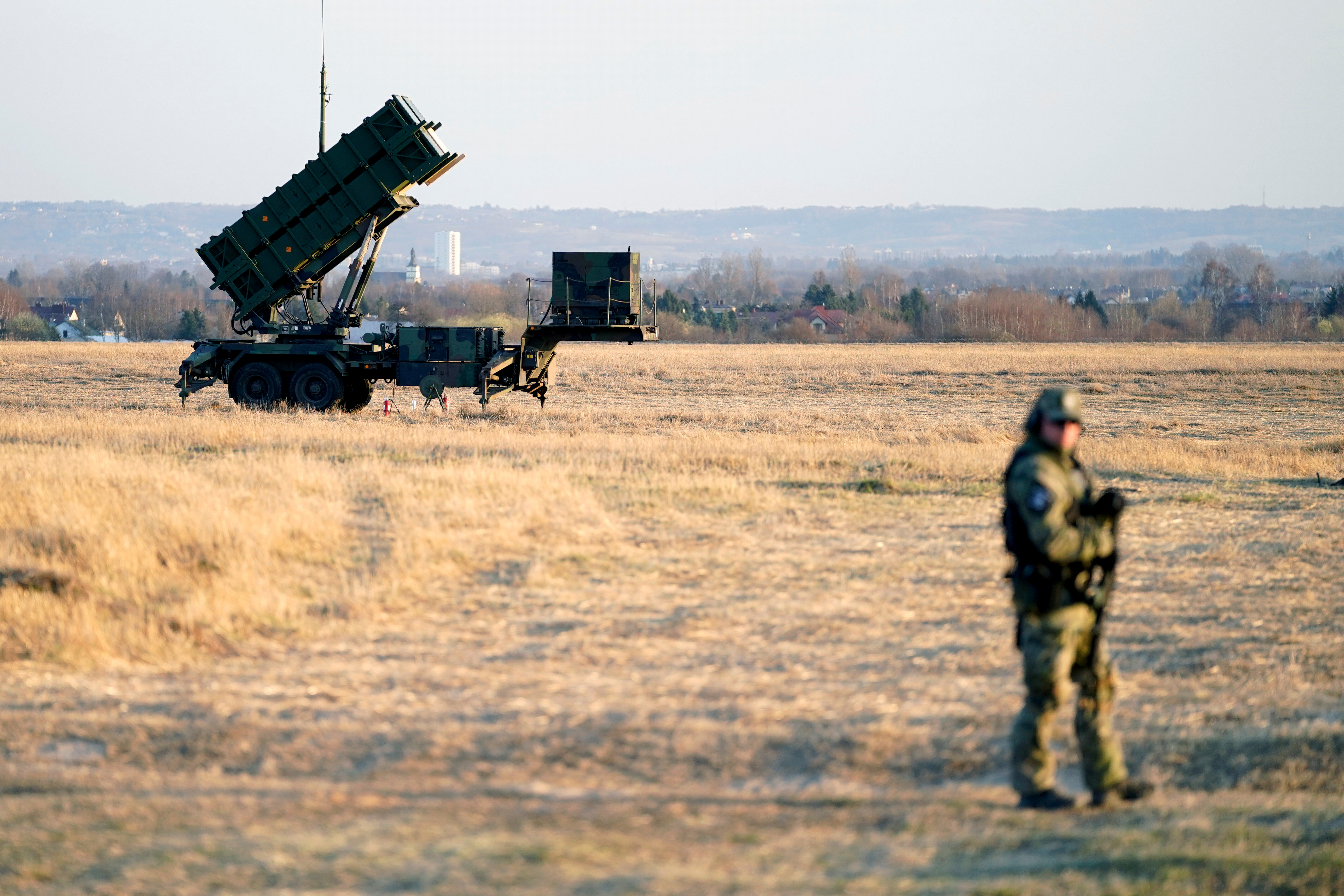
    WASHINGTON — The U.S. military is experiencing a “beyond critical” shortage of advanced missile interceptors in Europe largely driven by President Donald Trump’s war with Iran, a U.S. defense official in Europe and a NATO official told The Associated Press, raising concerns about vulnerabilities in NATO countries to a potential Russian attack.

    The U.S. defense official said the most concerning shortfall involves Patriot missile interceptors, which can shoot down Russia’s high-speed ballistic missiles. The NATO official confirmed the low inventories of Patriots among American and NATO forces in Europe. Both spoke on condition of anonymity to discuss sensitive military matters.

    In the event of a Russian ballistic missile assault on, for example, a military headquarters or power plant, NATO could be in a similar position to Patriot-starved Ukraine and be forced “to take punch after punch in the mouth,” the U.S. defense official said.

    In Europe, the American military “definitely” does not have enough Patriots to stop any possible sustained ballistic missile attack and would have “very limited” capability to defend against a single ballistic missile strike or a stray Russian missile that goes off course, the U.S. official said.

    It illustrates the cascading fallout from Trump’s decision to launch a war against Iran, a conflict that reaches the six-month mark on Friday. U.S. missile stocks in Europe have been moved to the Middle East, where U.S. and Gulf allies have fired off significant numbers of interceptors, including Patriots, to thwart Iran’s drones and missiles. Some of those attacks have killed and wounded American troops.

    Though a Russian ballistic missile attack against NATO countries is not imminently expected, CIA Director John Ratcliffe went to Moscow this week to warn Russia not to attack, The Wall Street Journal reported.

    Asked by reporters Thursday whether Ratcliffe delivered that message to Russian President Vladimir Putin, Trump offered a roundabout response.

    “I don’t want to comment on that, but they’re not going to attack,” Trump said.

    European and NATO officials say Russia could be in a position to attack countries in the alliance by 2030. Patriot stockpiles are projected to rebound by then. In the meantime, Russia’s war in Ukraine could hinder its ability to carry out any missile attack on Europe as it would be a challenge for Moscow to fight an air war on two fronts.

    U.S. Patriot transfers to Ukraine played a role in the drawdown, but the Iran war wasn’t expected

    U.S. Army Col. Martin O’Donnell, a senior NATO military spokesperson, said it is “simply not the case” that the number of Patriot missiles in Europe is beyond critical.

    NATO, he said, is able to “block punches” and has enough air defense munitions available to defend itself as well as to donate to Ukraine.

    Chief Pentagon spokesman Sean Parnell said in a statement Thursday that claims of U.S. munition shortages “are false.”

    “We have everything required to strike at the time and place of the President’s choosing,” Parnell said. “Across multiple combatant commands, we have already executed successful operations while maintaining a deep, ready arsenal to defend our people and our interests.”

    Officials in Ukraine, however, are begging for more Patriots to defend against Russian missile attacks, while previous U.S. transfers to Ukraine have drawn down some of the American supply of the interceptors.

    Kyiv says only U.S.-made Patriots can stop Russia’s advanced ballistic missiles, which increasingly are getting through Ukrainian defenses, including as part of a barrage overnight into Thursday.

    The U.S. supplied hundreds of Patriot missiles to Ukraine over the course of the 4 ½-year-long conflict, but the Iran war was the tipping point for shrinking inventories, said Ed Arnold, senior associate fellow at the Royal United Services Institute, a military think tank in London.

    The supply to Ukraine was planned for and reasonably measured, he said, whereas stocks in the Middle East have been unexpectedly and quickly drained, exposing supply chain constraints.

    The U.S. military in Europe also is grappling with critical shortages of the Army Tactical Missile System, or ATACMS, a medium-range ballistic missile designed to strike behind enemy lines, the two officials said. But the overall munitions picture in Europe is less dire than on air defenses alone because some European militaries have their own offensive missiles, such as the Taurus and Storm Shadow, which are both long-range air-launched bunker-busting missiles.

    Europe has few alternatives while stocks are low

    The dearth of Patriot interceptors in Europe would leave few alternatives for shooting down Russia’s more advanced ballistic missiles, which can be combined with swarms of inexpensive drones to overwhelm defenses, experts say.

    Ukraine and some allies already use systems that can destroy slower-moving drones without expensive missiles. But ballistic missiles are a challenge because they dive steeply toward targets at more than five times the speed of sound, leaving little time to stop them.

    The Patriot system tracks the missile, predicts its path and launches within minutes, all while carrying out complex calculations to ensure the interceptor finds its target. One Patriot battery can only cover a limited area: for example, a small military base but not a whole city.

    One alternative could be France and Italy’s SAMP/T NG air defense system. France has promised to speed up the delivery of the system — the upgraded version of the current SAMP/T — to Ukraine, which the manufacturer says is better able to counter ballistics.

    The new iteration, however, has not yet been battle tested and the current version of the SAMP/T has a smaller range than the Patriot.

    While U.S. and European militaries have warships that can serve as mobile air defense, they may be too far from a target to protect it and could risk getting sunk.

    Patriot stocks have plunged during the Iran war

    Ukraine has received Patriots from American and European stockpiles since Russia’s 2022 invasion, with the U.S. providing about 600 of the interceptors during the Biden administration, said Mark Cancian, a retired Marine colonel who is now senior adviser at the Center for Strategic and International Studies, a Washington think tank.

    But the greatest expenditure has been during the Iran conflict, which has used up 65% of U.S. Patriots, amounting to roughly 1,500 of the nation’s 2,330 interceptors, CSIS says. About 600 missiles, including those destined for Europe, should be made this year, with a production goal of 2,000 Patriot missiles a year set for 2030, Cancian said.

    NATO says Europe’s first Patriot missile production facility is expected to open in Germany in September, with deliveries possibly beginning early next year. The first deliveries should go to countries that have already placed orders, including Germany, the Netherlands, Romania and Spain, the U.S. defense official said.

    But for now, that means some countries, such as Germany, have bought expensive Patriot systems but are in the “ridiculous” position of not having any ammunition to fire from them, said Arnold of the London think tank.

    Germany’s defense ministry said it does not comment on stockpiles.

    Russia also has limitations

    Moscow likely cannot carry out a sustained air assault on a NATO target while it launches almost nightly attacks on Ukraine, Arnold said.

    Ukraine’s recent strikes into Russia also have exposed weaknesses in Russia’s air defenses, which could prompt Putin to think twice about provoking a retaliatory attack.

    “The uncomfortable truth is possibly the best air defense that we have is Russian constraints,” Arnold said.