Category: Nation & World

  • Why colleges are cutting Black studies departments, majors, and classes

    Why colleges are cutting Black studies departments, majors, and classes

    U.S. colleges are increasingly slashing their African American studies and related programs, citing low enrollment and limited funding, at a time when the federal government is exerting intense pressure to end racial diversity efforts.

    Some academics blame politics, pointing out that Republicans and the Trump administration have taken aim at scholarships, admissions policies, and other efforts to boost diversity. At least a dozen schools, including private colleges and public flagship universities, have scaled back Black, African, or African American studies programs since Trump signed an executive order targeting diversity, equity, and inclusion programs, a Washington Post review found.

    “Politics is the engine, not a factor,” said Jafari Sinclaire Allen, director of the Institute for Research in African American Studies at Columbia University.

    Allen, whose institute has surveyed colleagues around the country, says the cuts are so deep that they could damage the pipeline for important research and training for new scholars for years to come.

    “They are not cutting at the fringe,” said Allen, who is also a professor of African American and African diaspora studies at Columbia. “They are striking the foundations.”

    Universities that have closed or merged African American studies units over the past two years include the University of Iowa, the University of Texas at Austin, and the University of Kansas.

    Others have eliminated or begun phasing out majors and degrees, including Kennesaw State University, the University of Toledo, and Indiana University at Bloomington. Several colleges have also trimmed classes, removed them from the core curriculum, or cut staff.

    Enrollment in the programs has been falling in recent years, data shows.

    For three straight years, students received fewer than 700 degrees in African American studies nationally, the lowest level in the last two decades, according to an analysis of federal data through 2025 by a researcher at the American Academy of Arts & Sciences. That’s despite the fact that the number of schools offering degree programs has gradually risen during the same span.

    “It is quite puzzling,” said Robert Townsend, director of humanities, arts, and culture programs at the academy, an honorary society and policy research center.

    Low enrollment has made the programs a target for cuts at some schools.

    Take the University of North Texas (UNT), which projected a $45 million shortfall for the fiscal year ending this month. The university blamed falling enrollment, especially among international graduate students, and cuts in state funding for instruction and operations.

    “UNT is facing a significant budget challenge,” the school said on its website.

    To help balance the budget, the school said it would close or consolidate a long list of programs, including undergraduate minors in Africana studies, Asian studies, Mexican American studies, LGBTQ studies, women’s and gender studies, and degrees related to linguistics.

    Some states have passed laws requiring schools to review and cull programs that yield few degrees. For instance, the University of Toledo cited such a law in Ohio when it suspended admissions to its bachelor’s program in Africana studies last year.

    And the University of Iowa noted that there were only nine students in the bachelor’s program for African American studies when it decided to eliminate the major. It also closed its African American studies program.

    But department chairs point out that the cuts are coming at a time when some states have also passed laws restricting courses focused on race or ethnicity.

    For instance, a Florida law enacted in 2023 bars core general education classes — select courses required for graduation — from teaching “identity politics.” A North Carolina law passed this year generally bars public universities from requiring courses “related to divisive concepts” involving race or gender. And Texas A&M canceled eight courses, citing new policies governing race and gender instruction. The canceled courses included “Introduction to Race and Ethnicity” and several courses focused on diversity.

    On the federal level, the Trump administration has attacked diversity, equity, and inclusion programs, arguing that they amount to race discrimination that violates civil rights laws. As part of the anti-DEI effort, the administration blocked many research grants related to race.

    The Education Department did not respond to a request for comment on the cuts to African American studies programs.

    Erica R. Edwards, chairperson of Black studies at Yale University, said such programs have become a target because “the field is unapologetic in its critiques of fascism, antiblackness, sexism and antitransness, and anti-immigration.”

    “Given the concerted attempts of our current administration and its allies to suppress history and silence truth, it comes as no surprise that Black Studies programs are facing challenges from the inside — cuts, intense scrutiny, censorship, and consolidation — as well as attacks from the outside,” Edwards wrote in an email to the Post.

    Some say the cuts are part of a broader ideological attack on the humanities.

    “Although conservative attacks on the humanities have recurred periodically over the past several decades, the present moment is markedly different in scale and coordination,” said the executive committee for the American Studies Association, a scholarly organization, in a recent public statement.

    Neetu Arnold, a policy analyst for the conservative Manhattan Institute, said the cuts are probably driven by low enrollment rather than politics. Still, Arnold said she believes that Black and African American studies departments have blurred the line between scholarship and advocacy.

    “It’s hypocritical for department chairs to deride the cuts as political when they’re the ones who have allowed their departments to become highly politicized hotbeds of scholar-activism,” Arnold said.

    To be sure, some cuts may be temporary. The University of Louisville in Kentucky paused admissions to three graduate programs, including its Pan-African studies Ph.D., because of tight funding. But a spokesperson said it is likely that admissions will reopen when more funding is available.

    And some universities said they are continuing to offer classes and fund research in the field, despite consolidation and other administrative cuts.

    Consider Northwestern University in Illinois. The school recently decided to move its African studies program from its research office to its provost’s office and eliminate two positions that supported the program. The move received national attention in part because the university says the program, founded in 1948, is the oldest of its kind in the United States.

    Despite the changes, a Northwestern spokesperson said the program will continue to conduct research, offer a certificate for graduate students, and sponsor both a major and minor for undergraduates.

    “None of that is changing — it will all continue,” said spokesperson Jon Yates. “To be clear: The program is not being downgraded.”

    Still, more cuts could be coming to African or African American studies programs across the country.

    For instance, the University of Georgia said it is evaluating whether to drop low-enrollment programs as part of a regular review.

    That includes its African American studies major.

  • Dolly Parton’s other legacy: A fortune given away, dollar by dollar

    Dolly Parton’s other legacy: A fortune given away, dollar by dollar

    When fires swept through the Great Smoky Mountains in 2016, killing 14 and displacing thousands, a local legend answered the call to help.

    Dolly Parton, the country music luminary, who died this week at 80, offered $1,000 per month to families who had lost their homes in Sevier County. The money kept flowing for months, and the songwriter and star behind hits including “My Tennessee Mountain Home” ultimately sent $12.5 million back to the county where she was born.

    Parton’s support for the fire victims was just one node in a constellation of charitable activities that distinguished her as one of pop culture’s most prolific philanthropists. With cash gifts, benefit concerts, and telethons, Parton supported causes that included early childhood literacy, wildlife conservation, and the development of the COVID-19 vaccine.

    She became so effective at distributing her own money that the ultrawealthy asked her to distribute theirs. In 2022, Amazon founder Jeff Bezos and his future wife, Lauren Sanchez, gave Parton $100 million to distribute to causes of her choosing. And this summer, Taylor Swift and Travis Kelce gave Parton’s Imagination Library $2 million to fund the distribution of children’s books.

    “Her philanthropy was so much more significant and serious than what you see from other celebrities,” said Stacy Palmer, CEO of the Chronicle of Philanthropy. “As a woman, she was a standout giver, and she gave to the kinds of causes that a lot of rich people don’t give to, ones that were based on her life experience.”

    Parton started her own charitable organization, the Dollywood Foundation, in 1988, the same year that Trio, her album with Emmylou Harris and Linda Ronstadt, won album of the year at the Academy of Country Music Awards.

    The foundation was initially focused on reducing school dropout rates in Sevier County, in part by offering $500 gifts to graduates. Cold, hard cash proved a powerful incentive; high school dropout rates plummeted to just 6% in the county, from 35%. The Dollywood Foundation, which reported $141 million in assets last year, also offers local high school graduates $15,000 scholarships.

    “She gave cash gifts to people in need long before it was popular,” Palmer said. ”She trusted the people that she wanted to help.”

    At her theme park, Dollywood, Parton opened a special attraction: a 30,000-square-foot aviary to house rehabilitated bald eagles that could not be released into the wild.

    In 1995, Parton started the Imagination Library, a program that sent one book per month to children in Sevier County from birth until their first year of school. The inspiration for the effort came from Parton’s father, who didn’t know how to read.

    “As we see all these superwealthy people thinking about strategic plans, her brilliance was just making it so easy for people to read,” Palmer said. “Send them the book.”

    The program expanded across the world, and last year, the Imagination Library said it had distributed some 305 million books.

    “I just give from my heart,” Parton said in 2022, when accepting the Carnegie Medal of Philanthropy in New York. “I never know what I’m going to do or why I’m going to do it. I just see a need and if I can fill it, then I will.”

    Parton often saw need in the aftermath of disasters. After Hurricane Helene cut a swath of devastation across the Southeast, she personally donated $1 million to the Mountain Ways Foundation to support flood victims, while her businesses and the Dollywood Foundation pledged $1 million more.

    She announced her gift in a Walmart parking lot in Newport, Tenn., not far from where she was born, and sang a Hurricane Helene-themed version of her classic song “Jolene” to the crowd.

    “There’s any number of celebrities who could give money after disasters, and don’t,” said David Callahan, the founder of Inside Philanthropy, a news site that writes about charitable giving. “But she had a powerful sense of empathy.”

    In the months after the COVID-19 virus emerged, Parton learned that Vanderbilt University in Nashville was helping with the early trials of the vaccine made by Moderna, and she gave $1 million to support the effort.

    “It was a shot in the arm,” said Mark Denison, emeritus professor of pediatrics at the Vanderbilt School of Medicine. “We were starting this work but we didn’t have specific funding for it, and she recognized that this was a critical human problem that was going to impact the country and the world. It allowed us to quickly scale up and get into the lab.”

    For the staff at Vanderbilt, her gift was also an enormous morale booster.

    “We’re all in Nashville, and there were some people who were serious fans,” Denison said. “The fact that she was supporting our work was something that you could not put a price on.”

    The next year, she made a $1 million gift to Vanderbilt to support work on infectious diseases in children, and the year after that, she created an endowment to support additional research.

    “This is an area that is undersupported and not really popular for charity,” Denison said. “But she was really good at recognizing short-term needs but maintaining a long-term vision.”

    In 2021, Denison and his wife had dinner with Parton. Over the three-hour meal, she mostly asked questions about their work and why they had chosen their careers, he said. Denison has traded on the story ever since.

    “I got more credibility with my family and friends from that one interaction than I did from 40 years of research,” he said.

    Parton’s support for medical issues went well beyond the COVID-19 vaccine.

    In 2007, she performed at a benefit concert for a new hospital in Sevier County, and the Dollywood Foundation donated funds for the new building as well. When the hospital opened in 2010, it featured a 30,000-square-foot Dolly Parton Center for Women’s Services.

    In 2017, following the release of a children’s album, I Believe in You, Parton donated $1 million to the Monroe Carell Jr. Children’s Hospital at Vanderbilt University Medical Center. The gift was made honor of her niece, who was treated for leukemia at that hospital.

    In February, officials at the East Tennessee Children’s Hospital in Knoxville renamed it the Dolly Parton Children’s Hospital after receiving what they called a “generational commitment” from Parton. The amount has not been disclosed.

    “Sometimes philanthropists have tons of fundraisers who come to them and say, ‘Put your name on this building, do this important thing, and it’ll get you access to a museum or the other people you want to hang out with,’” Palmer said. “She just never really forgot about the roots that she grew up in, and this obligation she felt to the people who helped her thrive in life.”

    Palmer said the question now was what will become of Parton’s remaining fortune, which is estimated to be about $500 million, according to Forbes.

    “She did so much while she’s alive, but I’m super curious what her will says,” Palmer said. “Because she had so much wealth, and she did not have children. So we may yet see more of her.”

    This article originally appeared in the New York Times.

  • Catastrophic floods kill over 350 in Nepal and Tibet, with more than 1,300 missing

    Catastrophic floods kill over 350 in Nepal and Tibet, with more than 1,300 missing

    DEVIGHAT, Nepal — Rescue teams and military helicopters searched Thursday for hundreds of missing people along the mountainous Nepal-China border, where a deadly torrent of water and mud several stories high swept through communities a day earlier following a glacier collapse.

    Videos of the disaster showed people running before the floodwaters swallowed them up and washed out buildings and bridges. More than 390 people were killed, according to authorities in Nepal and China, and more than 1,400 were missing, including hundreds of foreigners and pilgrims. Hundreds of others have been displaced across the Himalayan region.

    The steep slopes and lush valleys below the Himalayan mountain range — home to many of the world’s highest peaks and remaining glaciers — are especially vulnerable to flooding and landslides. Melting glaciers have become more common because of human-caused climate change.

    Images showed what appeared to be the second floors of buildings in Nepal’s hard-hit Nuwakot district slathered in mud after the torrent rushed by. Riverbanks and village streets were covered in mud. Debris hung from tree branches and wires. Vehicles were buried, and some stunned survivors were caked in mud.

    Before-and-after images aired by state broadcaster China Central Television showed a multistory building and more than a dozen vehicles covered in mud. A two-lane road running along a river in a valley in Tibet’s Shigatse prefecture was completely buried. Aerial footage also showed that a lake had formed and expanded on the China-Nepal border, with authorities warning of a possible dam break.

    Nirajan Paudyal, a journalist based in Nepal’s capital of Kathmandu, worried for his parents and other relatives in the district’s village of Soley.

    “I fear there won’t be any update,” Paudyal said.

    U.S. President Donald Trump said the flooding was terrible to see, describing how “strong, well-built buildings were wiped out like they were toothpicks.”

    Speaking to reporters in the Oval Office, Trump said the U.S. spoke with Nepalese leaders and offered to provide “anything they want.”

    Helicopters deployed for rescue because of damaged roads

    The torrential floods that ran miles through mountains left at least 389 people dead and more than 460 injured in Nepal, according to police. Another 910 people are reported to be missing in Nepal. Authorities in Tibet, an autonomous region of China, reported at least three dead and 558 missing.

    Nepalese officials said dozens of bridges were destroyed and nearly 25 miles of roads were damaged, complicating search efforts.

    The Nepalese army has rescued more than 100 people by helicopter, army spokesperson Brig. Gen. Raja Ram Basnet said. Army teams also evacuated people trapped inside facilities linked to the Trishuli hydropower project, he added.

    Dozens of injured people were transported to Kathmandu for medical care.

    Rescuers found bodies in Chitwan district hundreds of miles downstream from the hardest-hit areas.

    Bishal Kumar Bhandari, chairman of the Nepal Red Cross Society, said the agency has shifted its focus from rescue to large-scale relief operations in the flood-hit districts. He said that around 1,200 people were displaced from at least three villages.

    In Tibet, the roaring mudslide that struck Wednesday engulfed a multistory port building and swallowed a bus parking lot at the land border crossing of Gyirong Port. Mud left in the surrounding areas was more than 5 feet deep on average, Chinese state broadcaster CCTV reported. Roads leading to the crossing were all damaged, while secondary collapses or landslides might occur as rain continued in the area, it added.

    China’s premier, Li Qiang, arrived Thursday in Gyirong to direct rescue efforts, alongside 500 military and paramilitary personnel. Military helicopters circled overhead, searching for survivors, assessing the disaster and mapping out possible rescue and evacuation routes.

    Chinese authorities also warned that the newly formed lake at the confluence of the Tsogyal and the Purupqiangzangbu rivers is overflowing and may burst. The lake contained 70 million cubic feet of water as of Thursday morning and was expected to receive another 106 million cubic feet in the next three days, China’s Ministry of Water Resources said.

    The ministry warned there was a high risk the dam could fail, causing further flooding.

    The United Nations’ humanitarian chief, Tom Fletcher, announced Thursday on X that he ordered the release of $2 million from the U.N.’s Central Emergency Response Fund to help with medical care, shelter, and water. He called the floods “horrifying.”

    “We pledge to support national efforts to deliver emergency aid and support,” U.N. Secretary-General Antonio Guterres told reporters.

    More than 1,400 are missing, including hundreds of foreigners

    Many people in the disaster zone waited to hear whether their loved ones were alive.

    Shova Shrestha, 33, has spent more than a day seeking word of her husband, Rajan Shrestha. She said his phone rang when she first called after the floods, but it later became unreachable. Since then, she has watched every helicopter that landed in Bidur, the capital of Nuwakot district, hoping he might be among the survivors.

    “I keep looking at each helicopter, hoping he will step out of it,” Shova said.

    Among the missing are 517 foreigners, according to Nepal’s tourism board.

    They include 178 people from India, more than 60 from the U.S., and people from 30 other countries, including Ukraine, the U.K., South Africa, and Japan, the board said.

    Many of the missing may have been on a pilgrimage to Mount Kailash in Tibet, a sacred site for Hindus, Buddhists, and others.

    Seventy-seven people from one pilgrimage group were caught in the floods at the immigration office at the border, according to a post on X from Indian spiritual guru Sadhguru Jaggi Vasudev.

    A visibly emotional Sadhguru said in a video that the group included 22 Americans and others from various countries. He said that there was no official information on their whereabouts.

    The U.S. State Department said 90 Americans were unaccounted for in China and Nepal after the flood. The department said it was unaware of any U.S. deaths and that three Americans had been rescued.

    The Indian Ministry of External Affairs said Thursday that 288 of the country’s people, including some workers on a power project, were missing.

    Chinese Ministry of Foreign Affairs spokesperson Lin Jian said that nearly 100 Chinese citizens were missing in Nepal. According to preliminary information, 260 of those missing in Tibet were foreigners, he said.

    A glacier collapse may have caused floods

    The U.S. Geological Survey first reported a magnitude 4.4 earthquake early Wednesday, about 40 miles north of Kathmandu, near the border.

    The agency later updated its analysis to say the seismic event was instead a magnitude 5.2 glacier collapse that sent debris flowing downstream.

    Climate experts at the Kathmandu-based International Center for Integrated Mountain Development said an avalanche from a glacier likely caused Wednesday’s flash flood.

    In an emailed statement, they said water levels at one point on the Trishuli River rose by as much as 27 feet in half an hour.

    The increasingly unstable Himalayan ice system threatens communities, infrastructure and water supplies across one of the world’s most densely populated regions.

    The region saw similar flash floods in August 2025, when a glacial lake in Tibet overflowed because of high temperatures. Nine people were killed, and critical infrastructure, including a bridge connecting Nepal and China, was damaged.

  • Democrats want to draw more safe House seats. It could cost Black lawmakers.

    Democrats want to draw more safe House seats. It could cost Black lawmakers.

    A clash over Black representation in a recent South Florida congressional primary brought national attention to an increasingly urgent debate within the Democratic Party, as it searches for ways to counter the off-cycle nationwide redistricting campaign that President Donald Trump launched last year.

    Republicans have added more than a dozen conservative-leaning House districts across the country, giving them an outside shot at holding on to their threadbare majority in November — and leaving Democrats, who have limited options to offset those gains, desperate to catch up.

    Searching for places to create new blue seats, Democrats are considering breaking up urban districts drawn to elect Black members in liberal states such as Illinois, New York and Maryland, then moving some of those voters to Whiter, more conservative suburban districts. Some within the party vehemently oppose this idea because they fear it could further reduce the number of Black Americans in Congress, which is already set to take a hit from Republican redistricting.

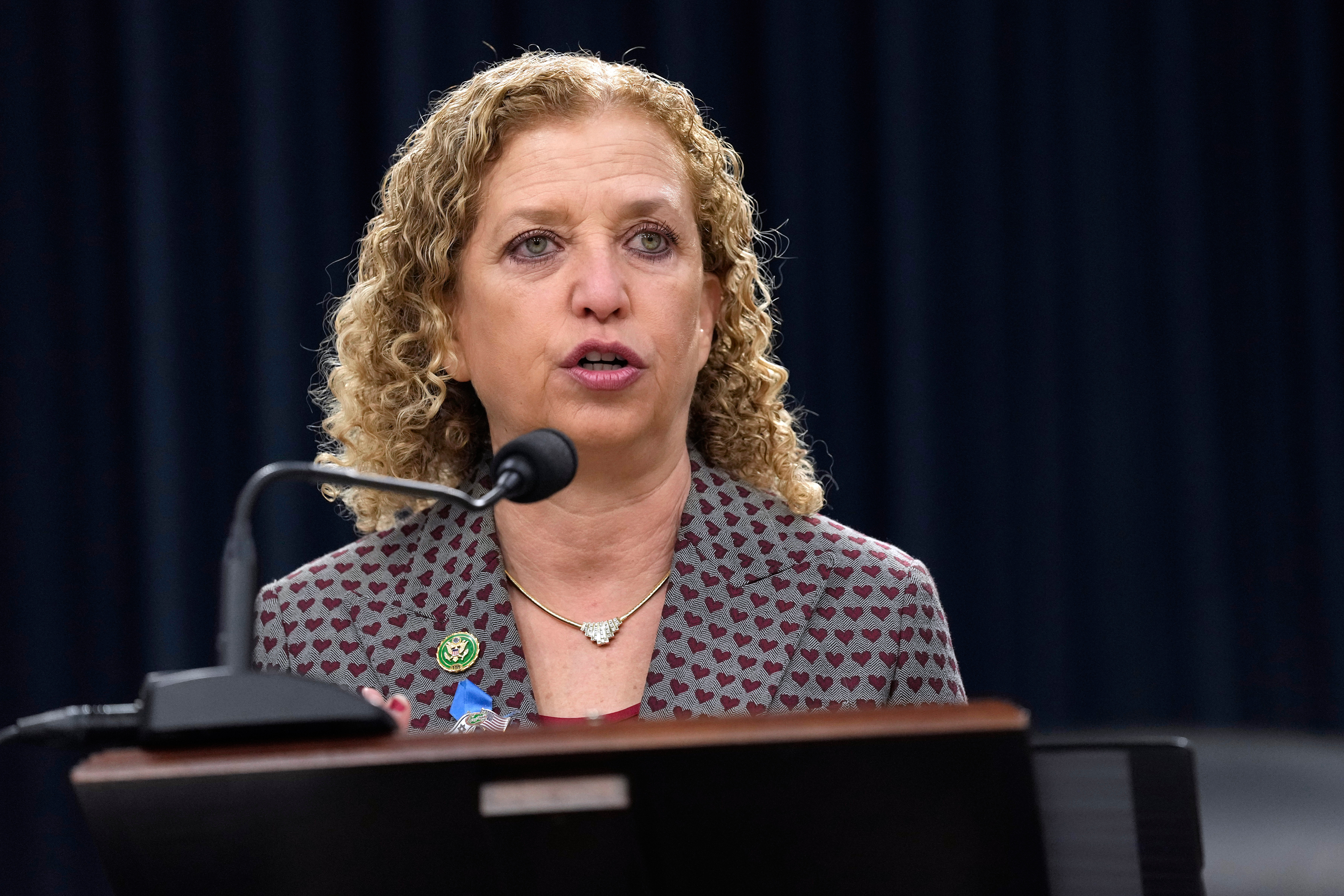
    In Florida, Black politicians criticized Democratic Rep. Debbie Wasserman Schultz, who is White, for decamping from a more competitive seat to a safely Democratic but heavily Black district nearby after state Republicans redrew congressional lines this year to benefit the GOP.

    Whether the seat — one of only about three dozen nationwide with a Black majority or plurality — should continue to have a Black representative, as it did for decades, became a major point of contention in the competitive primary, which Wasserman Schultz ultimately won.

    Democrats are now facing a conundrum as they chart a path forward: When control of the House is on the line, how much can they afford to prioritize diversity in their ranks?

    It’s a political headache for a party that prides itself on being powered by Black voters. About three-quarters of Black people lean Democratic, according to the Pew Research Center, nearly double the rate of White people. All but a handful of the five dozen Black members of Congress are Democrats.

    “If we’re going to be in this together, then let’s truly be in this together. Let’s not do the pick and choose,” said Florida Rep. Felicia Robinson (D), chair of the state’s Legislative Black Caucus, who once called Wasserman Schultz’s decision to move districts “a slap in the face” to the Black community.

    While she agreed that Democrats should prioritize maximizing House seats, Robinson said that, if the party silences Black voters in the process, “you make it kind of easy or more appealing for people” to become independents or Republicans instead.

    House Minority Leader Hakeem Jeffries (D-New York), who declined an interview request, and his allies argue that Democrats may need to sacrifice some predominantly Black districts in order preserve Black political power on the whole.

    They contend that winning back Congress is more important than protecting individual seats, because congressional control would allow Democrats to stop Republicans from further dismantling civil rights protections, including the extreme gerrymandering that has decimated Black representation across the South.

    Chris Taylor, a spokesperson for the Congressional Black Caucus, acknowledged that redistricting could shift some of their members’ seats. But the interests of the Black community, he said, are not served if Republicans subservient to Trump remain in control of Congress.

    “The shared goal of the caucus is to ensure that we’re able to fight for the American people,” Taylor said.

    The matter is especially sensitive in the wake of an April Supreme Court decision that cleared the way for Republican states such as Tennessee, Louisiana and Alabama to eliminate Black-majority districts once protected by law. Without those seats, membership of the Congressional Black Caucus, which reached a historic peak this session, is poised to decrease next year. Some Democrats worry their party’s redistricting efforts could accelerate that decline.

    “There could be backlash to the Democratic Party if they started trying to dilute Black voting power,” said Christian Grose, a professor of political science at the University of Southern California and director of its Democracy and Fair Elections Lab, who published a book on race and representation in Congress. “They are core members of the party.”

    A new intraparty debate is stirring

    One early effort to expand the number of safe Democratic seats already snagged over concerns about diversity.

    In Illinois, the push for another Democratic-leaning district — perhaps by shifting voters from a safe, historically Black seat on Chicago’s South Side to a Republican-leaning district in the outer suburbs — faded last fall partly because of opposition from Black state lawmakers, who objected to a new map that might diminish Black representation.

    “How much more juice can you get out of that squeeze? I mean, there’s nothing left here,” said Rep. Jonathan Jackson (D-Illinois), who has held the South Side seat for two terms and opposes redrawing it. “The people don’t have an interest in that. The answer is no.”

    Jackson said it’s important to preserve the distinct character and legacy of districts like his, which has had Black representation for nearly a century. Democrats should instead consider other strategies to flip Republican seats, he said, including reengaging with rural Americans and holding year-round voter registration drives to boost turnout.

    “Let’s go play the rest of the map,” Jackson said. “This represents urban America.”

    But Democrats are also under tremendous pressure from their increasingly restive liberal base to match Republican gains. While the GOP has already drawn itself more favorable lines in 16 districts since last year, Democrats have only picked up an advantage in six more.

    In May, after the Supreme Court ruling that kicked off renewed Republican redistricting, a Politico poll found 45 percent of Democratic voters favored maximizing new seats over preserving majority-minority districts, compared to 32 percent who said it was more important to protect the voting power of Blacks and other minorities.

    Jeffries and other Democratic leaders have waved off concerns about what redistricting will do to Black representation by noting that dozens of Black members, including Reps. Lauren Underwood of Illinois and Janelle Bynum of Oregon, were elected from districts with small Black populations, some of which are majority White. Unpacking predominantly Black seats, they say, does not necessarily mean wiping out Black members.

    Political scientists like Grose agree that Democrats could reduce the number of Black voters in some districts while maintaining their decisive role in elections, because the Democratic primary electorate is more Black than the general voting population.

    The proportion of Black voters needed to elect their preferred candidate to a House district in northern states is significantly lower than in the South, where voting trends are more racially polarized, said Andra Gillespie, a political science professor who directs the James Weldon Johnson Institute for the Study of Race and Difference at Emory University. That could allow Democrats to unpack heavily Black seats without losing their incumbents.

    “You can put a multiracial Democratic coalition together,” Gillespie said.

    Debate about Black districts isn’t going away

    Whatever the outcome of Democrats’ redistricting campaign, the consequences for Black voters could be significant.

    Grose, the USC professor, said that while race does not appear to be a significant factor in congressional voting records, it does make a difference for constituent services. His research found that Black Democrats tend to allocate more resources, including federal funding, to Black communities than White Democrats in similar districts. He attributed that to “electoral coalitions” — Black members are more dependent on Black voters to win and consequently prioritize them more.

    “What you end up doing as a member of Congress is you support your base,” he said.

    More serious conflicts over representation likely loom after the 2030 Census. Populous and diverse Democratic states, such as California and New York, are projected to lose seats through reapportionment, potentially forcing them to combine majority-White and majority-minority districts and pitting incumbents against each other.

    “What does that mean when you’ve got to figure out who loses a congressional seat?” Gillespie said. “That’s where I expect to see the fight happen.”

    But this trade-off may ultimately matter more to politicians, whose careers are on the line, than the voters they represent.

    Despite the furor in South Florida, Wasserman Schultz won her primary handily. Meanwhile, Black voters in Memphis returned Rep. Steve Cohen (D-Tennessee), who is White, to Congress for two decades.

    Cohen, who is retiring this year after Republican state legislators cracked apart his majority-Black district, called it a “splendid example of people voting based on your work ethic, what you produce and the content of your character” rather than race. He said he earned the trust of his Black constituents with a long track record of supporting issues that mattered to them.

    When Willie Herenton, the first Black mayor of Memphis, launched a primary challenge to Cohen in 2010, arguing that at least one member of Tennessee’s congressional delegation should be Black, Cohen still beat him by nearly 60 percentage points.

    “Maybe the Black politicians want it, because it’s going to give them more clout,” Cohen said. “The proof is in the voters and they elected me over and over again.”

  • Here’s what is changing for teens on Instagram and Facebook

    Here’s what is changing for teens on Instagram and Facebook

    SAN FRANCISCO — Meta said Wednesday that it would change how teenagers use Instagram and Facebook as part of a landmark settlement with 47 states, the District of Columbia and U.S. territories over social media addiction claims.

    Instagram and Facebook currently allow anyone 13 or older to open accounts. Users younger than 18 are automatically directed into Teen Accounts, which are set to private by default and limit certain types of harmful content.

    The settlement is expected to alter the apps further. Meta said new features will be introduced in the next six months, while other changes, like how the company verifies user ages, could take up to a year. In the past year, Meta had already started to introduce some changes mentioned in the settlement.

    Here’s a guide to what to expect.

    Time limits

    Teenagers will be limited to just two hours a day on Instagram and Facebook, unless a parent goes into their settings to give permission for more time. Young users will also be automatically restricted from using the apps overnight, between midnight and 6 a.m.

    In addition, Instagram and Facebook notifications will be silenced during school hours of 8 a.m. to 3 p.m.

    Turning features off

    For the first time, young users will be able to turn off “autoplay,” a feature that automatically plays content while a user watches. They can instead elect to tap or swipe to see the next photo or video on the app. Until now, users were not able to turn that feature off.

    Teenagers will also gain the ability to switch off a setting that gives them an algorithmic, personalized feed. Instead, they can choose to be shown content that is not personally catered to them. This is another option that did not previously exist.

    And every time a user younger than 18 is on Instagram or Facebook for 15 consecutive minutes, that person will receive a prompt on the screen, though Meta did not detail what it would say. The prompts will also appear after 60 minutes and 90 minutes of use, the company said.

    Meta said it would also disable “like” counts, which some people have said can cause anxiety, and block teenagers from using “extreme makeup filters” and filters that mimic cosmetic surgery.

    Extra protections

    Meta said it would roll out stronger protections against “unwanted contact from strangers,” including restricting adults from messaging teenagers or viewing their content. The company did not explain how the protections and restrictions would work.

    Meta also promised to give teenagers a new way to report harmful content and pledged to respond to 90% of those reports within six hours.

    Meta agreed to maintain and improve the tools it offered parents to see how much time their children spent on the apps, what content they were searching and the kinds of contact they made with adults. Parents will be alerted when their children create new accounts or have interactions with accounts the company deems suspicious.

    Age verification

    Social media apps have long struggled to figure out how old their users are, and Meta and others have been developing tools to confirm the ages of new users. Last week, OpenAI announced “ChatGPT for Teens,” a new mode for the chatbot with more protections for young users, and said it tracked more than 2,000 signals to detect whether a user was younger than 18.

    As part of Wednesday’s settlement, Meta said it will invest more in age verification technology to identify which users are teenagers and remove those who it believes are younger than 13.

    This article originally appeared in The New York Times.

  • Hearing to review Bill Cosby’s assets as he faces $59 million judgment

    Hearing to review Bill Cosby’s assets as he faces $59 million judgment

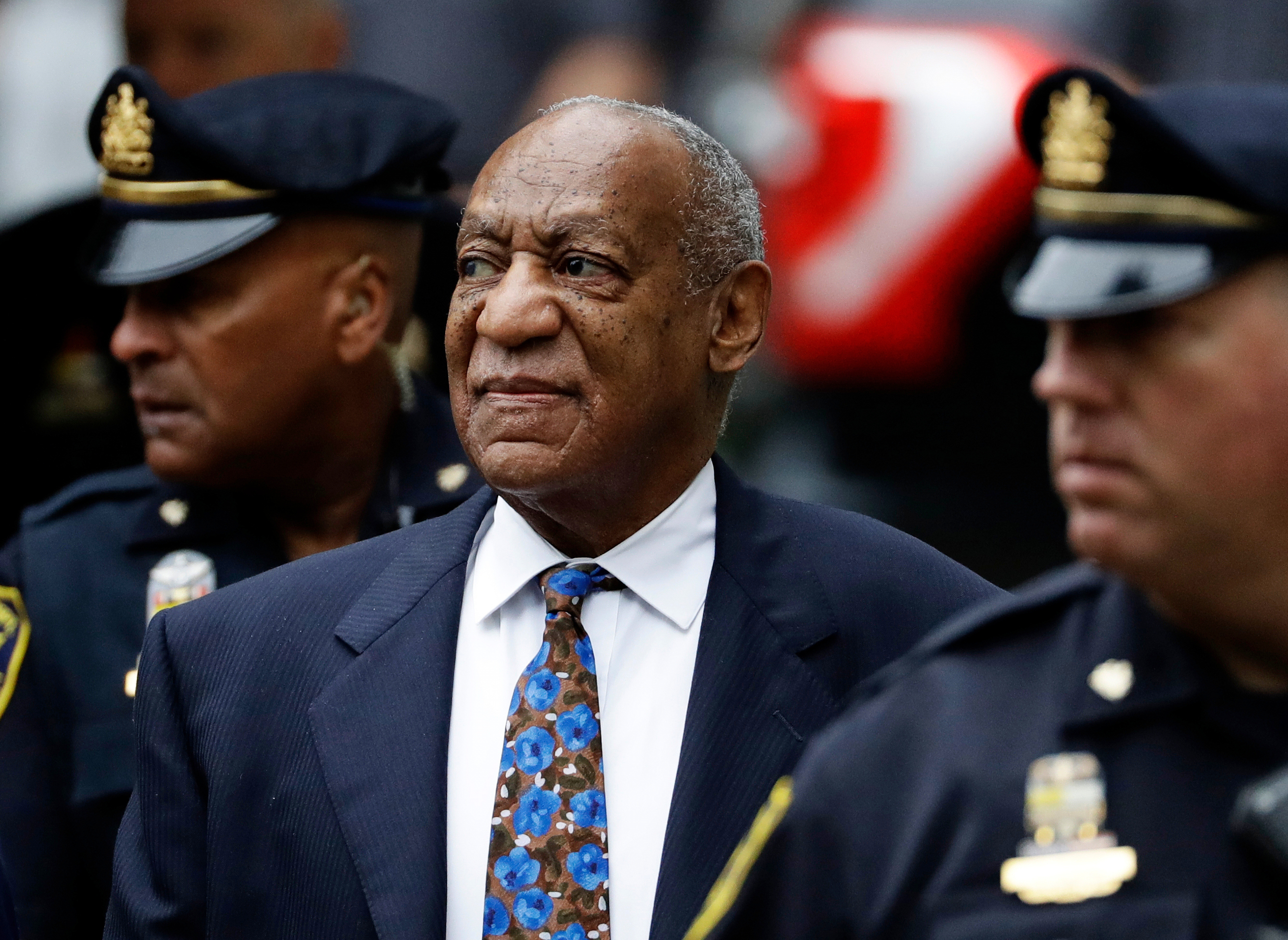
    A judge in California has ordered Bill Cosby or his lawyers into court next month to address questions about his assets as a woman who sued him for sexually assaulting her seeks to enforce payment of a $59 million judgment she was awarded earlier this year.

    In March, a civil jury made the award after finding that Cosby had drugged and sexually assaulted the woman, Donna Motsinger, a former server at a Sausalito restaurant, after escorting her to one of his comedy shows in 1972.

    In court papers, lawyers for Motsinger said Cosby, 89, hasn’t paid anything toward the judgment and, citing bank records, raised concern that in the past he and his family had moved assets around in a way that could hinder their ability to collect the judgment.

    “Cosby has paid none of the judgment, while showing a clear record of liquidating assets and then immediately dissipating the proceeds,” Motsinger’s lawyers wrote in court papers.

    Lawyers for Cosby did not respond to a request for comment.

    A hearing in the effort to enforce the judgment had originally been scheduled for January in Los Angeles Superior Court. But Motsinger’s lawyers, citing the financial transactions outlined in the court papers, asked the judge in the case, Bradley S. Phillips, to move up the date. In an order issued Tuesday, the hearing was set for September.

    Cosby has consistently maintained that any sexual contact he had with women was consensual. He has lodged an appeal of the trial finding.

    Judgments become due at the time they are awarded, though enforcement of them is left to the party who won to arrange. The lawyers for Motsinger wrote in the complaint that Cosby had failed to respond to post-judgment questions meant to identify his assets.

    One of the lawyers, Jesse Creed, detailed financial transactions in court papers that, while they occurred before the award of the judgment, were indicative, he argued, of an effort to transfer assets in ways that could prevent them from being subject to an enforcement action. For example, he cited bank records obtained by subpoena that showed that proceeds from the sale of a New York town house were wired into a Cosby account last November and within 48 hours, $1.29 million was transferred to other accounts, including those belonging to friends.

    Though dozens of women have come forward to accuse Cosby of sexual abuse, he was only criminally charged in one case. He was convicted, but in 2021 that conviction was overturned for procedural reasons after Cosby had served three years of a three- to 10-year sentence at a prison outside Philadelphia.

    In that case, he was convicted of drugging and sexually assaulting Andrea Constand, a former Temple University employee to whom Cosby had become a mentor. He was freed after the Pennsylvania Supreme Court ruled that a “non-prosecution agreement” with a previous prosecutor meant he should not have been charged.

    Cosby promoted the Pennsylvania Supreme Court decision as a full exoneration, and over the years, Cosby’s lawyers have depicted him as someone who unfairly became a target of the emotions stirred by the #MeToo movement.

    But the Motsinger case is one of two recent civil court findings that reinforce an image of him as a person who wielded his celebrity to take advantage of women.

    After his release from prison, Cosby was the subject of a civil trial in 2022 brought by another accuser, Judy Huth. In that case, the jury found that Cosby had sexually assaulted Huth in 1975, when as a 16-year-old girl she accepted his invitation to join him at the Playboy Mansion in Los Angeles.

    In Motsinger’s lawsuit, she described how Cosby had attacked her when they were both in their 30s, after giving her wine and a pill that had left her incapacitated. Cosby did not testify at the trial.

    Years ago, Motsinger’s case would have been time-barred because she did not make the accusation until after the expiration of the statute of limitations for such suits. But her case became possible because California is among the states that have amended the statutes in sexual assault cases so accusers can come forward even after a lengthy passage of time.

    Cosby says he has recently run into financial difficulties. During a deposition in the Motsinger case, he described being unable to get the high-profile work he once enjoyed as a comedy star whose television series “The Cosby Show” became a major success.

    But an expert witness Motsinger’s lawyers called to the stand before the jury’s final decision this year estimated that Cosby was worth roughly $128 million.

    This article originally appeared in The New York Times.

  • Judge denies Minnesota’s bid to compel the extradition of an ICE officer from Texas

    Judge denies Minnesota’s bid to compel the extradition of an ICE officer from Texas

    BROWNSVILLE, Texas — A federal judge on Wednesday refused to order Texas to extradite an Immigration and Customs Enforcement officer charged with shooting a man and lying about it during the immigration crackdown in Minneapolis.

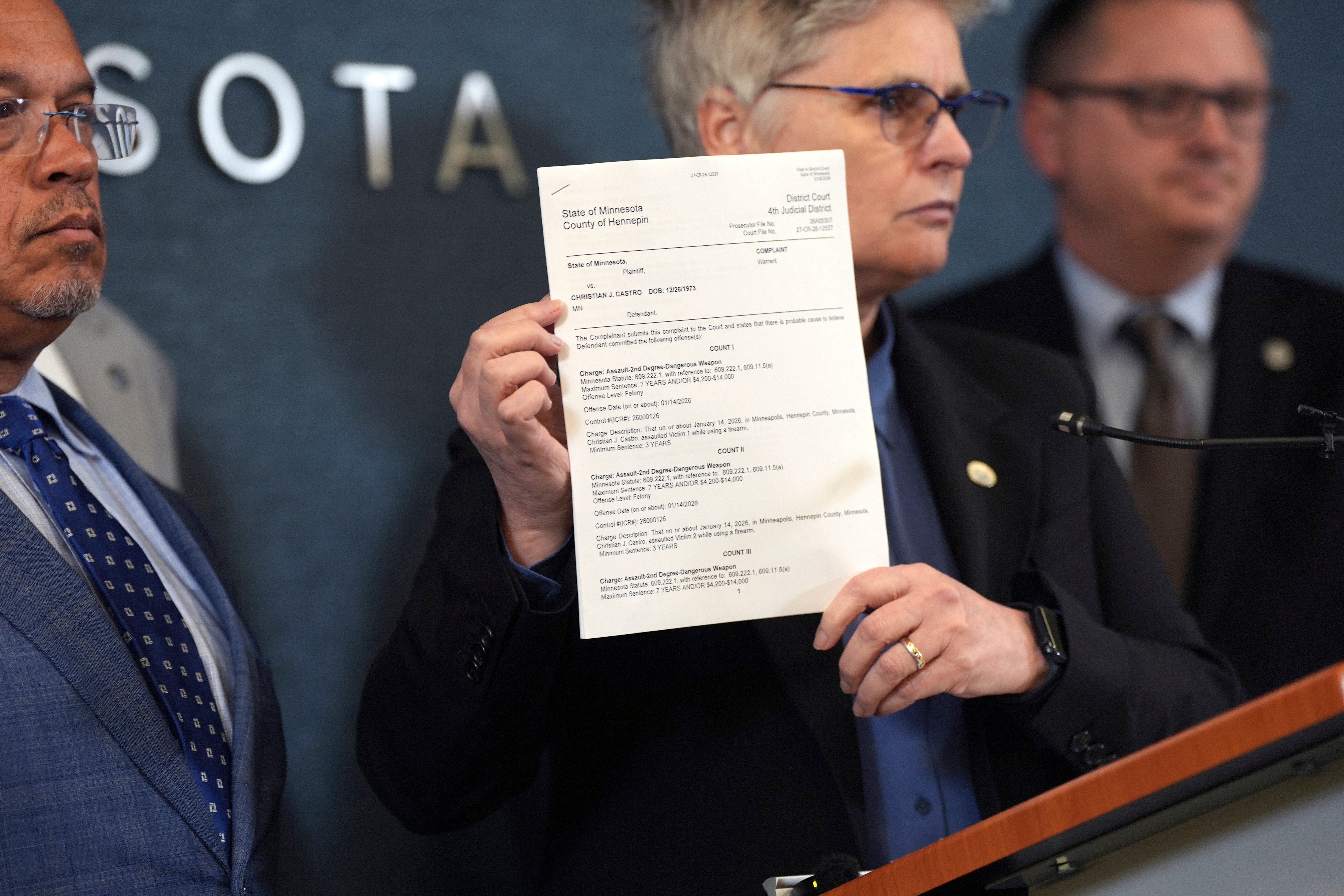
    Christian Castro is charged in Minnesota with assault and falsely reporting a crime in the Jan. 14 shooting of 24-year-old Julio Cesar Sosa-Celis. Minnesota authorities have sought his extradition since his arrest, but he remains in custody in Brownsville, Texas, a city bordering Mexico.

    Under Texas law and barring extradition, Castro must be released after 90 days of detention, which is Thursday.

    Minnesota Attorney General Keith Ellison filed a request for a temporary restraining order last week, asking a federal judge to prevent the sheriff in Cameron County, Texas, from releasing Castro, and to order Texas Gov. Greg Abbott to sign his extradition warrant.

    Minnesota officials believe Castro could flee the country, citing calls he made from jail to a woman in Mexico, talking “about marrying her and buying a house in Mexico when he is released,” according to the lawsuit.

    Castro is accused of firing a gun through the front door of a Minneapolis home, shooting Sosa-Celis in the leg. Prosecutors say Castro also falsely accused Sosa-Celis and another man of attacking an ICE officer with a broom handle and a snow shovel.

    At a federal hearing in Brownsville on Tuesday, attorneys with the Minnesota Attorney General’s Office argued it would be hard to compel Castro to face charges in their state if he is released, and they fear Castro may flee the country, citing his phone conversations with a woman who lives in Mexico.

    Texas Gov. Greg Abbott said last week he would not respond to the extradition request, citing the ongoing investigation into fraud in government social service programs in Minnesota, which President Donald Trump used to justify his immigration crackdown there.

  • Fire in a hospital nursery kills 14 newborns in Pakistan’s capital

    Fire in a hospital nursery kills 14 newborns in Pakistan’s capital

    ISLAMABAD — A fire triggered by an exploding air conditioner killed 14 newborns in a hospital nursery in Pakistan’s capital on Wednesday, officials said.

    One baby of the 15 who were in the nursery at the Pakistan Institute of Medical Sciences was rescued, the hospital said.

    Television footage showed rescue workers using ladders to reach the third-floor nursery through broken windows. Grieving parents and relatives gathered at the hospital, some weeping while others demanded answers about how the fire began and whether the nursery had adequate firefighting equipment.

    The government has opened an investigation, and Prime Minister Shehbaz Sharif ordered Health Secretary Aslam Ghauri, the Health Ministry’s highest civil servant, to be removed from office.

    A woman who identified herself as Mrs. Mohammad Sami said she gave birth three days earlier and her baby was receiving intensive care in the nursery when the fire broke out.

    “I don’t know what to say or whom to blame,” she said through tears. “I have lost my child.”

    The fire was confined to the hospital’s nursery

    The fire was confined to the nursery at the institute, which is one of Islamabad’s largest public hospitals. The rest of the facility was unaffected with no other injuries reported, according to hospital officials and witnesses. The blaze was later extinguished, Islamabad Chief Commissioner Suhail Ashraf said.

    It was among Pakistan’s deadliest recent tragedies involving children. In June, 14 schoolchildren were killed when the roof of a tutoring center under construction collapsed in the eastern city of Lahore.

    Health Minister Mustafa Kamal, who confirmed the death toll, told the Geo News channel that he was traveling from Karachi to Islamabad to oversee the investigation.

    Dr. Aneeza Jalil, a hospital spokesperson, said a doctor rescued one baby. She said the bodies of six babies had been handed over to their families, while the remaining bodies would be released soon.

    The government is investigating how the fire started and the response

    The Islamabad district magistrate appointed a fact-finding committee and asked it to submit a report within 24 hours. The panel will investigate the cause of the fire and its spread, determine whether adequate fire-safety measures were in place, and evaluate the emergency response, according to a government order.

    Interior Minister Mohsin Naqvi and Sharif, the prime minister, expressed sorrow over the fire.

    “A tragedy involving children is an irreparable loss,” said Sharif, who held a high-level meeting with officials from relevant agencies hours after the fire.

    President Asif Ali Zardari also offered condolences to the families, describing the deaths as “heartbreaking and an irreparable loss.” He called for those responsible to be brought to justice and urged hospitals to ensure effective fire-safety measures and emergency procedures.

  • Testimony concludes in Lindsay Clancy’s murder trial. Jury to hear closing arguments Thursday

    Testimony concludes in Lindsay Clancy’s murder trial. Jury to hear closing arguments Thursday

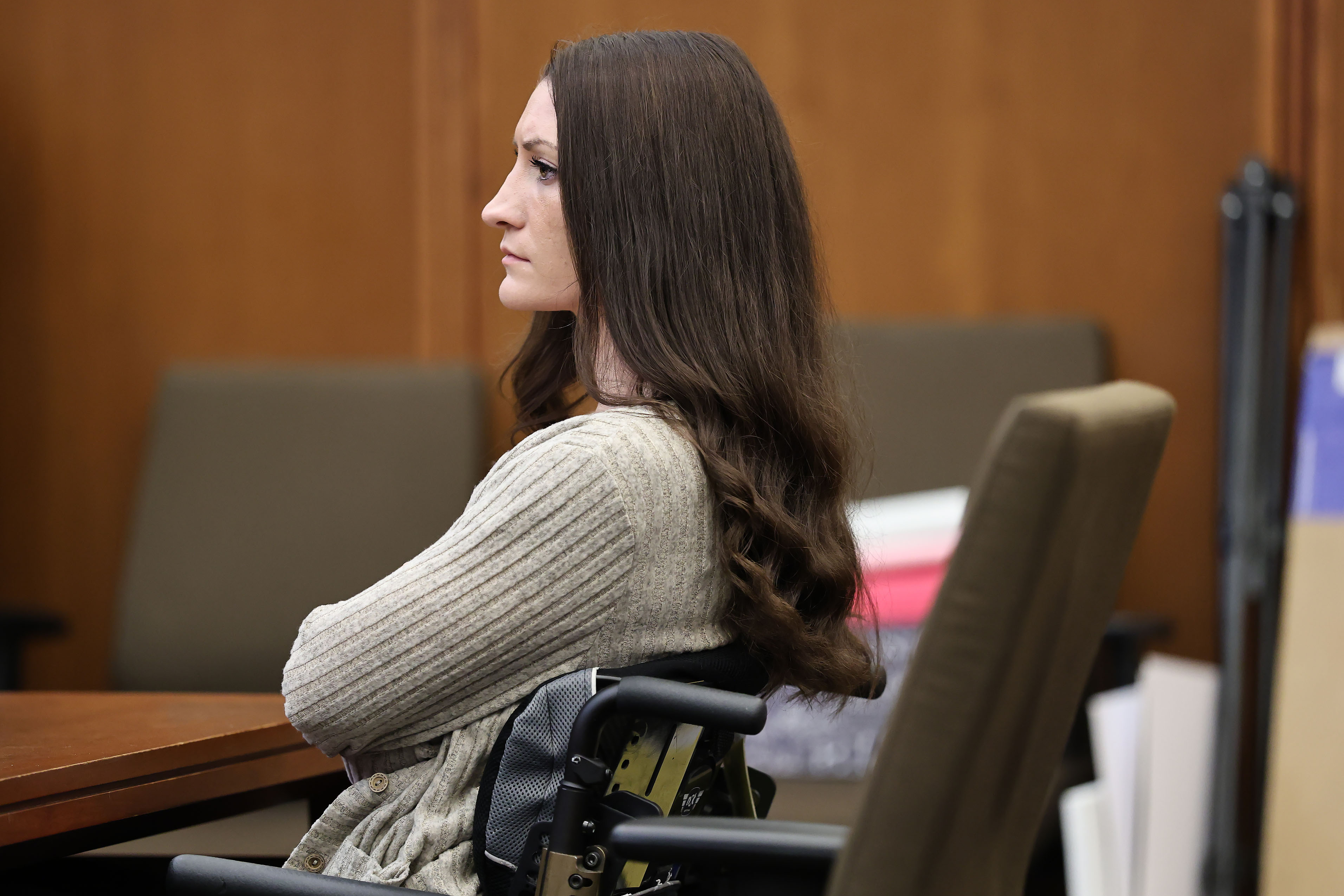
    Testimony concluded Wednesday in the murder trial of Lindsay Clancy, a mother accused of strangling her three young children in a case that has drawn attention to postpartum mental health.

    Closing arguments are expected to begin Thursday, before the jury begins deliberating.

    Clancy, 36, has pleaded not guilty by reason of lack of criminal responsibility, with her lawyers arguing she was experiencing postpartum psychosis when she killed 5-year-old Cora, 3-year-old Dawson and 8-month-old Callan Clancy at the family’s home in coastal Duxbury, Massachusetts, in January 2023. The rare mental illness is linked to the stress, sleep deprivation and hormonal changes that follow childbirth.

    ___

    EDITOR’S NOTE: This story includes discussion of suicide. If you or someone you know needs help, the national suicide and crisis lifeline in the U.S. is available by calling or texting 988.

    ___

    Prosecutors say Clancy planned the killings and understood her actions were wrong.

    Clancy did not testify during the trial, which is in its fifth week. The defense called 10 witnesses, including some of Clancy’s friends and relatives, while prosecutors called more than 70 witnesses, including her then-husband.

    Testifying as the final rebuttal witness for the prosecution, a forensic psychiatrist at the University of Virginia and a senior psychiatrist for the FBI’s Behavioral Analysis Unit said Wednesday that he did not believe Clancy’s account that a voice ordered her to kill the children.

    Prosecutor Jennifer Sprague asked Dr. Gregory Saathoff a series of questions about Clancy’s account: Did the voice tell her where to kill the children? How to kill them? What to use? In what order? Saathoff answered no each time.

    “Having no instructions as to how to do it, but being able to execute those decisions … that is surprising that she’s able to accomplish all of this without any other kind of direction or plan,” he said.

    All three children were strangled with exercise bands in the family’s basement before Clancy tried to kill herself while her husband was getting takeout and at a pharmacy on Jan. 24, 2023. Saathoff said her ability to accomplish everything she did without direction indicated Clancy “had control, control of the sequence of what she was doing throughout.”

    “In the small amount of time that Miss Clancy had in the home without her husband, it was important, in order to carry this out, as well as her suicide, to do this quickly, methodically, and alike,” he said.

    On Tuesday, Saathoff said he found it unusual that Clancy said the voice stopped once she was done strangling the children, that the voice was constant rather than intermittent and that she never previously reported hearing a voice to her medical providers. She also gave a different timeline to other evaluators about when she first heard the voice that day, he said.

    “Committing the act is not curative of the voice,” Saathoff said of the voice stopping abruptly. “I’ve not ever seen that.”

    Defense attorney Kevin Reddington began his cross-examination of Saathoff on Wednesday by trying to cast doubt on Saathoff’s expertise in postpartum psychosis and portray him as someone closely aligned with law enforcement, questioning him about his work with prisons, the Justice Department and the Virginia attorney general’s office.

    Saathoff testified that he treated women with postpartum psychosis while working at a state hospital in the 1980s and 1990s, while much of his more recent research has focused on such subjects as extremist violence, national security and political radicalization.

    Reddington also asked Saathoff about Clancy’s attempts to search online for information about postpartum depression, her visits to multiple maternal and mental health providers, disclosures to her mother and then-husband that she was suicidal and feared that she would harm her children, and calls to a suicide hotline — all attempts that Reddington contended establish Clancy realized something was seriously wrong and made a sincere effort over time to get help.

    Reddington asked whether Saathoff believes that Clancy decided to kill her children because she “no longer liked the life she thought she wanted” and was making “a selfish choice” to “manipulate her providers, seek out a quick and easy fix when she was feeling depressed and anxious.”

    “I think that statement that you read really minimizes what she was going through,” Saathoff responded.

  • Tim Curry, star of ‘Rocky Horror’ and much more, dies at 80

    Tim Curry, star of ‘Rocky Horror’ and much more, dies at 80

    Tim Curry, the British-born actor whose gift for garish eccentricity lit up stage and screen, most notably as the outlandish, cross-dressing mad scientist in the midnight cult film The Rocky Horror Picture Show, died Tuesday at his home in Los Angeles. He was 80.

    The death was confirmed by Marcia Hurwitz, his longtime agent and manager. In 2012, Curry suffered a serious stroke, from which, he said last year, “I’ve been recovering for quite a long time.”

    With a mischief-maker’s good looks, a casual athletic grace, and a supple and resonant voice, Curry was a favorite in roles calling for expressive villainy or general cartoonishness.

    In the first screen version of Annie (1982), adapted from the comic strip turned stage musical and directed by John Huston, he brought more than a dollop of slime to the part of Rooster Hannigan, the con artist who concocts a plot to kidnap the plucky orphan of the title.

    In Clue (1985), a suspense spoof derived from the popular board game, he played Wadsworth, a logorrheic butler who leads a cast full of murder suspects (played by Madeline Kahn, Christopher Lloyd, Martin Mull, Eileen Brennan, and others) around a spooky mansion with the speed-talking fervor of a manic Sherlock Holmes.

    As a greedy gazillionaire presumed to be the chief malefactor in Charlie’s Angels, the 2000 movie adaptation of the television series about three female detectives, Curry laid on the oily self-satisfaction until the moment he was killed by the real bad guy.

    And in Spamalot, the stage musical based on the Monty Python troupe’s bottomlessly goofy retelling of the King Arthur legend, which opened on Broadway in 2005, he played Arthur himself and was nominated for a Tony Award. It was the most straight-faced role in the show, and yet, as Ben Brantley wrote in his review in The New York Times, he was “the best of the cast at translating classic Python style into a musical-comedy idiom.”

    “His stalwart, plummy-voiced Arthur wears a smile as inflexible as armor,” Brantley wrote, “and it deflects any suggestion that this manly king is in on the show’s jokes.”

    No other role marked Curry’s career as emphatically, however, as Dr. Frank-N-Furter, the “sweet transvestite from Transsexual, Transylvania,” as he proclaimed himself in The Rocky Horror Picture Show, the 1975 screen adaptation of The Rocky Horror Show, the hit London stage musical that played for seven years in different theaters, and in which Curry originated the role in 1973. He also starred in the premiere American production in Los Angeles in 1974 and on Broadway in 1975, where it was a notable flop, closing after 45 performances.

    Although Frank-N-Furter would become Curry’s signature role, he initially had doubts about taking it. “I was hesitant in that, if it worked, it might be a difficult image to shake off,” he said in a television interview in England just as The Rocky Horror Picture Show was opening in 1975. “But then, really, I’ve always thought it wasn’t worth doing unless you took a risk, really. So I just took the risk.”

    Forty years later, when he received a lifetime achievement award from the Actors Fund, Los Angeles magazine asked him to reflect on his career-making role. How did he look at it in retrospect?

    “With a sort of bemused tolerance,” he said. “It’s neither a blessing nor a curse. I was lucky to get it.”

    FILE — British actor and author Tim Curry in Los Angeles, Sept. 18, 2025. Curry, the British-born actor whose gift for caricature and garish eccentricity informed a variety of performances on stage and screen, notably as the puerile Mozart in the original Broadway production of “Amadeus” and as the outlandish cross-dressing mad scientist in the midnight cult film “The Rocky Horror Picture Show,” died on Tuesday, Aug. 25, 2026. He was 80. (Maggie Shannon/The New York Times)MAGGIE SHANNON
    FILE — Michael McGrath, left, as Patsy and Tim Curry as King Arthur in “Spamalot” at the Shubert Theater in New York, Feb. 12, 2005. Curry, the British-born actor whose gift for caricature and garish eccentricity informed a variety of performances on stage and screen, notably as the puerile Mozart in the original Broadway production of “Amadeus” and as the outlandish cross-dressing mad scientist in the midnight cult film “The Rocky Horror Picture Show,” died on Tuesday, Aug. 25, 2026. He was 80. (Sara Krulwich/The New York Times)SARA KRULWICH
    FILE — Tim Curry, center, as King Arthur in “Spamalot” at the Shubert Theater in New York, Feb. 12, 2005. Curry, the British-born actor whose gift for caricature and garish eccentricity informed a variety of performances on stage and screen, notably as the puerile Mozart in the original Broadway production of “Amadeus” and as the outlandish cross-dressing mad scientist in the midnight cult film “The Rocky Horror Picture Show,” died on Tuesday, Aug. 25, 2026. He was 80. (Sara Krulwich/The New York Times)SARA KRULWICH
    FILE — Tim Curry on screen during a silent disco showing of “The Rocky Horror Picture Show” at Damrosch Park in New York, Aug. 7, 2015. Curry, the British-born actor whose gift for caricature and garish eccentricity informed a variety of performances on stage and screen, notably as the puerile Mozart in the original Broadway production of “Amadeus” and as the outlandish cross-dressing mad scientist in the midnight cult film “The Rocky Horror Picture Show,” died on Tuesday, Aug. 25, 2026. He was 80. (An Rong Xu/The New York Times)AN RONG XU
    FILE — Tim Curry and Marcia Hurwitz, his longtime agent and manager, at a Museum of the Moving Image event in New York, Feb. 11, 2011. Curry, the British-born actor whose gift for caricature and garish eccentricity informed a variety of performances on stage and screen, notably as the puerile Mozart in the original Broadway production of “Amadeus” and as the outlandish cross-dressing mad scientist in the midnight cult film “The Rocky Horror Picture Show,” died on Tuesday, Aug. 25, 2026. He was 80. (Hiroko Masuike/The New York Times)HIROKO MASUIKE
    FILE — Tim Curry as King Arthur in “Spamalot” at the Shubert Theater in New York, Feb. 12, 2005. Curry, the British-born actor whose gift for caricature and garish eccentricity informed a variety of performances on stage and screen, notably as the puerile Mozart in the original Broadway production of “Amadeus” and as the outlandish cross-dressing mad scientist in the midnight cult film “The Rocky Horror Picture Show,” died on Tuesday, Aug. 25, 2026. He was 80. (Sara Krulwich/The New York Times)SARA KRULWICH