Category: Nation & World

  • Trump administration proposes changes to census that could exclude millions

    Trump administration proposes changes to census that could exclude millions

    Millions of residents could be excluded from the U.S. census, congressional representation could be reshaped, and federal funds could be reallocated across states under changes proposed by the Trump administration.

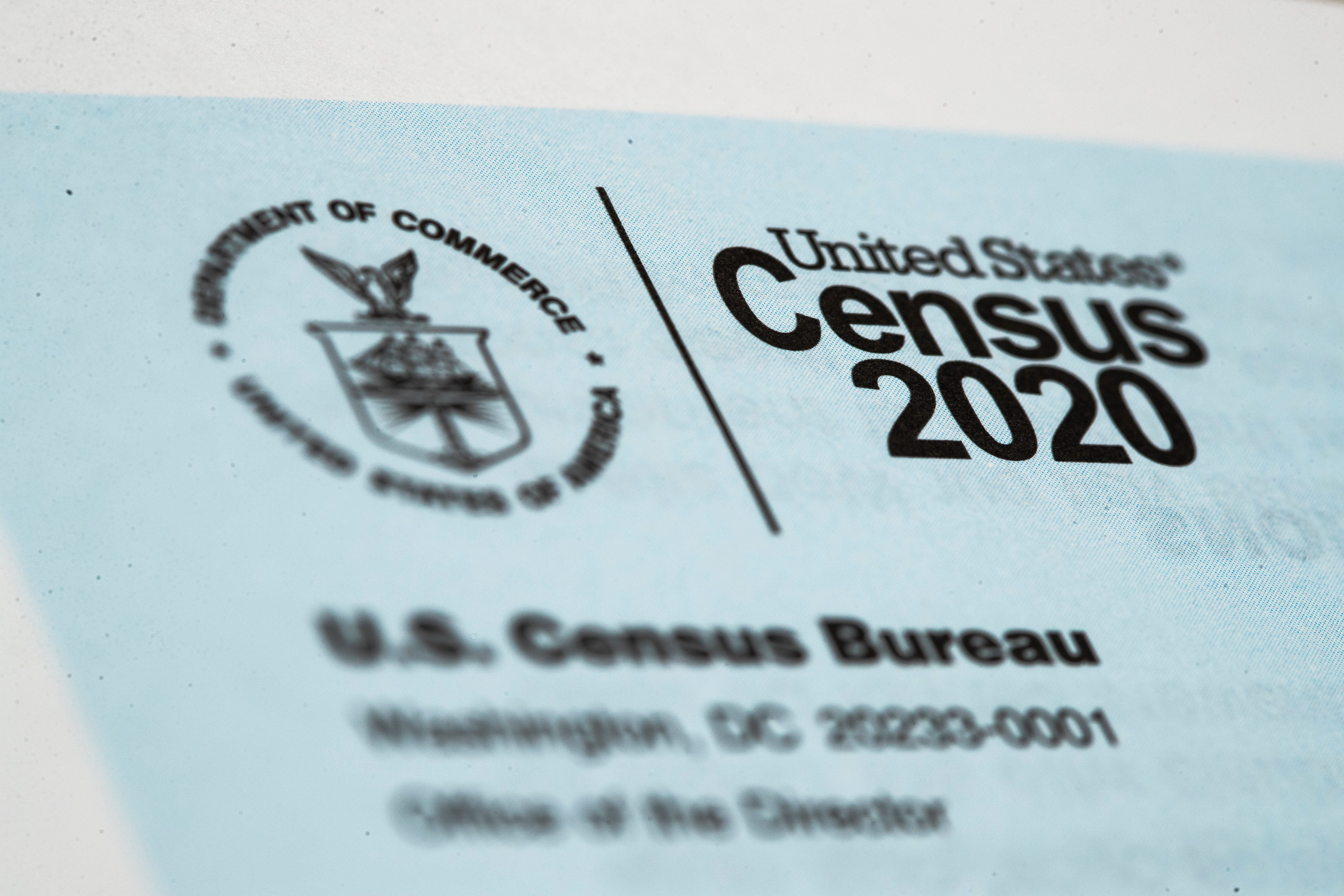
    In the proposal posted to the federal register Wednesday, the Census Bureau suggested adding a citizenship question to the decennial questionnaire, which President Donald Trump has wanted since his first term.

    The proposal argues that the census count should exclude any undocumented immigrants and noncitizens without permanent residency because they are “not true inhabitants, members of the body politic, or persons with a ‘usual residence’ in the United States due to their lack of a sufficient tie and allegiance to the United States.”

    Under the newly proposed rules, refugees and asylum seekers would be excluded from the population count.

    Trump administration officials also want to prohibit the Census Bureau from asking certain demographic questions, including about race, ethnicity or sexual orientation, claiming the survey “should be colorblind and should not be distorted in any way by questions about immaterial personal characteristics.”

    The census has collected data on race and ethnicity since 1790.

    Trump has for years pushed to alter how the American population is tallied every decade, including unsuccessful efforts to add a citizenship question to the 2020 Census. The Supreme Court ultimately froze that plan, saying Trump officials had provided a “contrived” reason for wanting such information.

    Trump later said the citizenship question was needed to affect the redistricting process, an argument the Justice Department did not use in its legal defense. Census results every 10 years determine how the House’s 435 seats are allocated among states.

    “Number one, you need it for Congress — you need it for Congress for districting,” Trump said in 2019. “You need it for appropriations — where are the funds going? How many people are there? Are they citizens? Are they not citizens? You need it for many reasons.”

    Last August, Trump announced he was directing the Department of Commerce to again overhaul the census, amid a nationwide redistricting battle.

    “People who are in our Country illegally WILL NOT BE COUNTED IN THE CENSUS,” he wrote on Truth Social then.

    The Trump administration’s latest proposal will almost certainly face legal challenges. The 14th Amendment of the U.S. Constitution mandates that representatives in Congress be apportioned to states based on “the whole number of persons in each state,” without specifying citizenship or immigration status.

    Currently, the U.S. census counts native-born U.S. citizens, naturalized U.S. citizens, non-citizen U.S. nationals, lawful permanent residents and temporary migrants, such as foreign students, refugees, asylum seekers and undocumented immigrants.

    New York Attorney General Letitia James, who led a lawsuit against Trump’s efforts to change the 2020 Census, said Wednesday the state is again exploring legal options to fight back against the administration’s proposed changes to the 2030 Census.

    “The Constitution is clear. Every person living in the United States, regardless of immigration status, must be counted in the census,” she wrote on X.

    Civil rights and public health groups have also warned against the removal of questions about race and ethnicity from the census, saying doing so would hamper officials’ ability to address health disparities, starting with how to appropriately allocate federal funding.

    “If you change what the census counts, then you change where the money can help most,” Vi D. Le and Melanie Klein of the Federation of American Scientists wrote last week.

    “Removing race and ethnicity data does not make health disparities go away,” they wrote. “It merely makes them harder to find, harder to measure, and harder to fix.”

  • U.N. nuclear watchdog board reports Iran to the U.N. Security Council for the first time in 20 years

    U.N. nuclear watchdog board reports Iran to the U.N. Security Council for the first time in 20 years

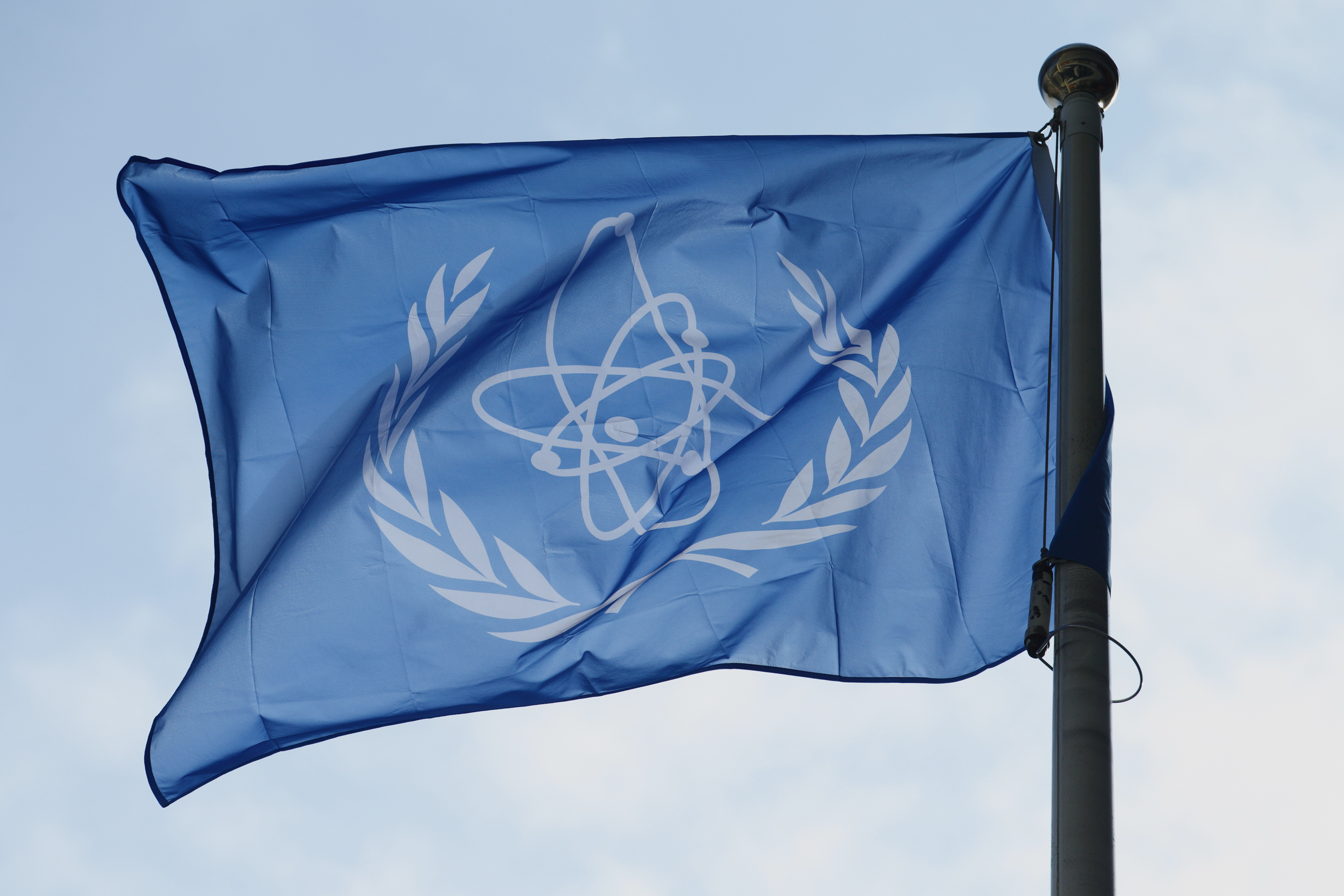
    VIENNA — The U.N. atomic watchdog’s board on Wednesday reported Iran to the U.N. Security Council for the first time in 20 years, citing it for failure to cooperate in a long-running investigation into uranium traces detected by inspectors at undeclared sites.

    Western officials suspect that the traces could provide evidence that Iran had a secret nuclear weapons program until 2003. Iran says that it’s not pursuing nuclear weapons, and that its program is entirely peaceful.

    Reporting Iran to the Security Council opens the country to possible sanctions and asset freezes, though such punitive measures are unlikely because Iran’s allies Russia and China hold veto power on the panel.

    Twenty-three countries on the International Atomic Energy Agency’s 35-member board of governors voted for Wednesday’s resolution at IAEA headquarters in Vienna.

    China, Russia, and Niger opposed it, while eight countries abstained and one didn’t vote as it was in arrears, according to diplomats who spoke on condition of anonymity to describe the outcome of the closed-door vote.

    The resolution was put forward by the United States, Britain, France, and Germany.

    The diplomatic move has been under consideration since June 2025, when the IAEA board found Iran officially in noncompliance with its nonproliferation obligations because of Tehran’s lack of cooperation in the investigation.

    Iran’s ambassador to the U.N. in Vienna, Reza Najafi, rejected the resolution, describing it as a “political tool” and saying that it ruined confidence in the IAEA’s “independence, impartiality, and credibility.”

    He suggested that compliance with any obligation to allow U.N. inspections of nuclear sites inside Iran was, in any case, impossible at the moment because of the country’s continuing war with the U.S. and Israel.

    The U.S. this week destroyed five Iranian oil tankers and Tehran hit back at American targets in Jordan, the latest burst of back-and-forth strikes that have lurched the sides back toward open hostilities in a more than 6-month-old war.

    The draft resolution, which was seen by The Associated Press, requested IAEA Director General Rafael Grossi to report the agency’s concerns “to the Security Council and the General Assembly of the United Nations, in accordance with the relevant provisions of the IAEA Statute.”

    The resolution also reiterated its call upon Iran “to urgently remedy its non-compliance” with previous agreements and to take steps deemed necessary by the IAEA to assure “the non-diversion of nuclear material.”

    Since Israel and the U.S. struck Iran’s nuclear sites during the 12-day war in June 2025, Iran hasn’t given IAEA inspectors access to nuclear sites that were affected by the strikes. The IAEA also has been unable to verify the status of Iran’s stockpile of near weapons-grade uranium since the June bombing.

    Najafi said that airstrikes by the U.S. and Israel made safe access for inspectors to Iran’s nuclear sites “materially impossible.” He said that Iran has “neither stopped nor suspended its safeguards obligations,” adding that “performance is currently impossible under continuing military operations and persistent threats.”

    Iran’s Deputy Foreign Minister Kazem Gharibabadi echoed that sentiment in an post on X.

    “They attack Iran’s safeguarded nuclear facilities, disrupt the normal verification process, and then use that very disruption as a pretext to pass a resolution at the IAEA Board of Governors,” he said.

    According to the IAEA, Iran maintains a stockpile of 972 pounds of uranium enriched up to 60% purity — a short, technical step away from weapons-grade levels of 90%.

    That stockpile could allow Iran to build as many as 10 nuclear bombs, should it decide to weaponize its program, IAEA chief Grossi warned in an interview last year with the AP. He said that it doesn’t mean that Iran has such a weapon.

  • The psychological toll of Cuba’s multiple crises is pushing many islanders to the breaking point

    The psychological toll of Cuba’s multiple crises is pushing many islanders to the breaking point

    HAVANA — Sweltering nights. Water and power shortages. Dwindling fuel and crumbling homes. Limited public transportation and weak cell phone signals.

    The psychological toll of daily life in Cuba is pushing many to their breaking point on this island of nearly 10 million people, with no relief in sight as a U.S. energy embargo persists and longtime economic and financial troubles deepen.

    “Before there was hope,” Yomeidis Felicó Riverón said. “Right now, what people have lost is exactly that.”

    Felicó Riverón is a primary care physician, but she has embraced an additional role as Cubans grind through their days.

    “They come and cry about their troubles, because they have no one else to vent to,” she said of her patients. “We end up having to play psychologist.”

    Children attend a workshop to make gift bags and perfume in Havana last month.Ramon Espinosa

    Parents shield children from Cuba’s realities

    On a recent sunny afternoon, six girls and one boy crowded around a table as their parents sat in the background, trying to fan away the stifling heat.

    The children were learning how to make gift bags and perfume, a free workshop that offered them a brief respite from Cuba’s realities.

    “My son doesn’t know if there’s food or if there’s no food,” Felicó Riverón said, confiding that she never tells him when she doesn’t have money to buy something he wants.

    Instead, she distracts him: “Let’s go play, let’s go to the park. We’ll come back another day.”

    Dianne Tamayo was among the mothers present that day. The workshop served as an oasis for her and her daughter. Tamayo socialized and temporarily forgot what awaited at home.

    “My husband is my rock,” she said. “When I’m going crazy, my husband tells me, ‘Sit down, breathe … let’s put on some music.’”

    He sometimes has to remind Tamayo that their daughter is coming home from school soon, and that they need to keep their troubles, anxieties, and frustrations to themselves.

    “I do the best I can with the tools I have, but there’s still a moment where I get overwhelmed,” she said.

    Tears fell as she confided that she doesn’t have anything in her life that relaxes her, and that she has never questioned how to release her feelings about life in Cuba.

    “They are exterminating us,” she said, “and we remain complacent.”

    U.S. Embassy issues health alerts

    Cuba’s crises worsened after President Donald Trump announced in late January that he would impose tariffs on any country that sells or provides oil to the Caribbean country. Longtime U.S. sanctions also have taken their toll, Cuba’s government said.

    From March 2025 to the end of February, “the U.S. policy of economic strangulation” amounted to more than $8 billion, “a record figure,” according to Cuban Foreign Affairs Minister Bruno Rodríguez.

    Island-wide blackouts have increased this year, and daily outages now surpass 24 hours. As a result, water is often scarce, and small protests have erupted, despite the fear of being detained, as anger and frustration boil over.

    The situation has worsened to a point that the U.S. Embassy recently issued two public health alerts.

    On Aug. 28, the embassy noted that “Cuba’s water supply infrastructure is increasingly unstable ” and that there are “residential neighborhoods experiencing long periods without water from municipal or public sources.”

    On Friday, the embassy warned of an increase in gastrointestinal illnesses linked to the “degradation of the water and energy infrastructure. …. Recent cases have included E. coli, norovirus, Shigella, and other gastrointestinal pathogens.”

    Water and power shortages persist, but 81-year-old Havana resident Oscar Joaquín López said that he doesn’t dwell on what he lacks.

    “Why?” López said. “Because it drives you crazy, and nobody is going to drive me crazy.”

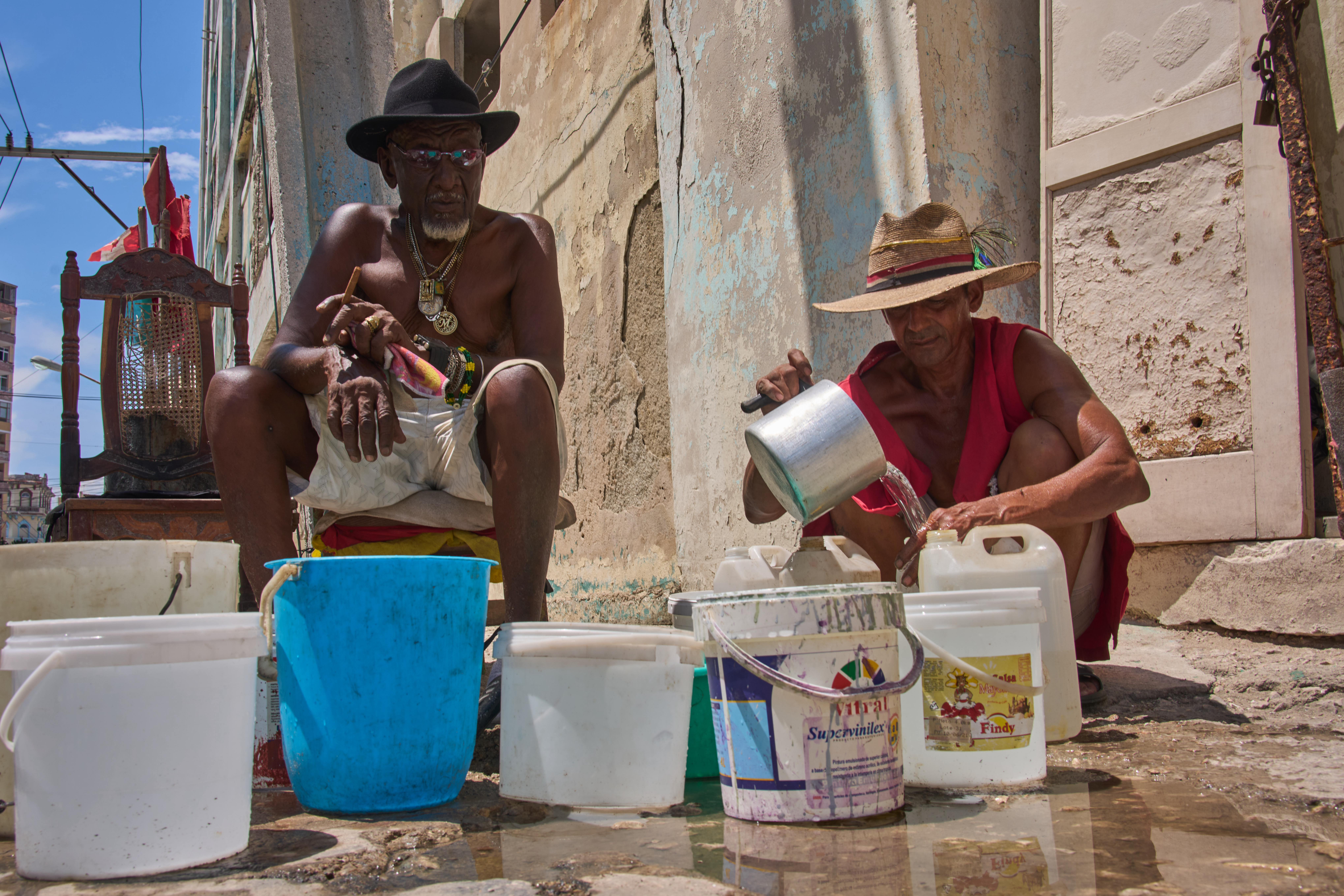
    On a recent afternoon, he leaned against the doorframe of his home as he watched his 58-year-old roommate fill up nearly a dozen plastic containers with water that flowed from a pipe on the street. They had been without water for several days, so they acted quickly.

    With temperatures hovering above 90 degrees, López said that he sits in his doorframe until midnight to catch a breeze from the nearby ocean, a steel pipe nearby to ward off any intruders. After midnight, he goes to bed, hoping the wooden slat he wedged into his window will catch any wind, however slight.

    Nearby, 62-year-old mason José Laó Faviel dug through overflowing garbage on the street, looking for food to feed his pig and her 10 piglets, because he had none to give them.

    “What are you going to do?” he said. “We’re living through difficult times.”

    Minutes later, another man rifled through the same pile of garbage. After opening several bags, he found something to eat.

    Cubans find solace in family

    Sweat gathered around Armando Lafita’s brow as the 60-year-old pushed a cart through the crumbling buildings in Old Havana. Authorities have evacuated some residents in the area for safety reasons, but those with nowhere else to live now sleep on the street, ducking inside their building when they need something.

    Lafita’s cart was filled with red roses and white ginger lilies, Cuba’s national flower. He sells them for 10 to 40 cents a bunch, but sometimes he goes home without a single sale.

    “Everybody is fighting to survive here,” he said. “It’s getting harder every day.”

    Like many Cubans, Lafita said the only thing that keeps him going is family: his 19-year-old son.

    José Manuel Borroto Díaz, 70, and his 93-year-old mother, Teresita del Rosario González Ricardo, lean on each other to keep going.Ramon Espinosa

    It’s the same reason that 70-year-old José Manuel Borroto Díaz and his 93-year-old mother, Teresita del Rosario González Ricardo, keep going: They have each other.

    “Our situation is like something out of a movie, but we’re going to press on,” said Borroto, a retired aviation official who was in Angola during Cuba’s military intervention in the 1970s.

    Across the island, Cubans are pressing on even as the crises deepen, including 90-year-old Lázaro Alfonso Oviedo. He recently attended a weekly gathering to help raise the spirits of elderly people.

    Oviedo danced and sang in a deep, robust voice “to forget for a little while the suffering the empire puts us through,” he said, referring to the United States.

    “We are not going to give up,” he said as he praised Cubans’ unwavering resilience. “We get it precisely from the spirit forged by the revolution itself — a revolution spanning more than 60 years.”

  • Hours after a Russian attack destroys their home, a Ukrainian couple gets married

    Hours after a Russian attack destroys their home, a Ukrainian couple gets married

    KYIV, Ukraine — On the eve of her wedding, Liudmyla Ryzhak pressed her delicately embroidered dress, laid out a full white tulle skirt and her soon-to-be husband’s traditionally patterned shirt, then hung them on the bedroom door.

    After repeated delays caused by the war with Russia, she was only hours away from marrying her partner, a 43-year-old Ukrainian soldier, in a ceremony in the capital.

    But as the couple slept, a Russian strike hit a warehouse across the street from their building, sending a blast wave through the apartment and threatening to stop the wedding scheduled for Tuesday morning.

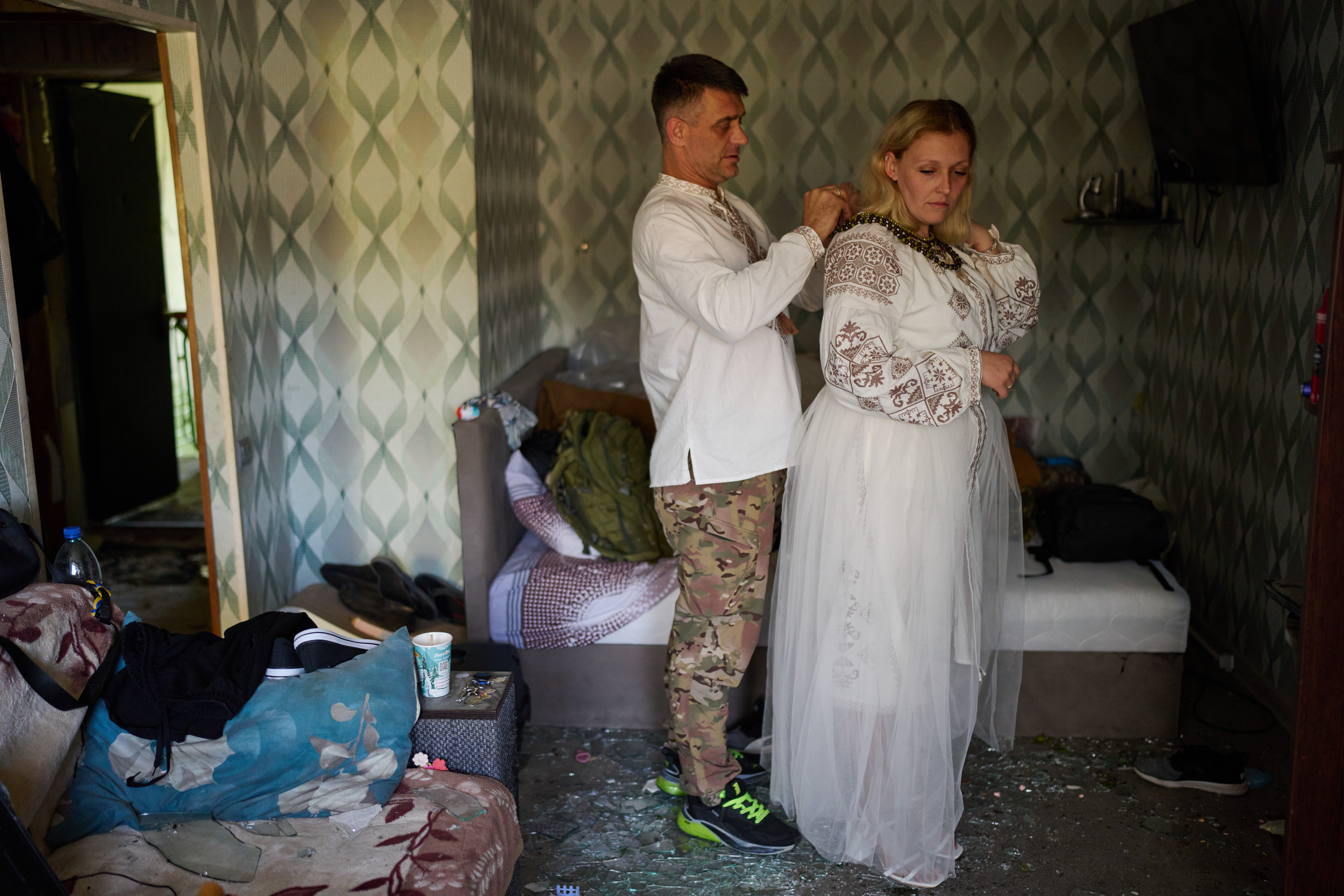
    The pair were soon digging their wedding clothes out of the rubble. Ryzhak, 33, had to pull her skirt from beneath the debris, shaking off pieces of broken glass.

    Strike followed visit by U.S. envoys

    The strike came soon after U.S. envoys visited Ukraine on Sunday, a trip that brought a lull in Russian attacks. The assaults then resumed with drones and missiles. Explosions were heard in Kyiv for almost five hours overnight. Strikes continued during the day Tuesday.

    Like many others in Kyiv, the couple decided the attacks would not derail their lives and forged ahead with the ceremony. It had taken a long time for her fiancé, Leonid Ryzhak, to make it back from the front lines in eastern Ukraine.

    “If God gave me a continuation of life, then why should I put it off?” the bride said. “For someone, it ended. And who can guarantee this won’t happen again tomorrow? That tomorrow won’t come for us? At least for now, I have the right to be happy. Both him and me.”

    Liudmyla and Leonid awoke from the blast, which blew out the apartment’s windows and scattered its furniture. A burned curtain hung in shreds.

    Their ears deafened by the explosion, the couple’s only immediate thought was the risk of a second strike. They fled to a shelter with Liudmyla’s 6-year-old daughter and two guinea pigs but without the cat, which had hidden in fright and could not be found.

    They were lucky: By the time the second strike hit, they were already safe. The apartment was rendered uninhabitable until repairs are made.

    A friendship deepened into love

    The two met three years ago through mutual friends, coming together as adults who weren’t looking for anything serious. Both had children from previous marriages.

    But the friendship deepened. She supported him through his deployments to the front, and slowly the relationship grew into love. Leonid Ryzhak, who serves as part of a team that deploys bomber drones in the Pokrovsk area, arrived in Kyiv for a long-awaited vacation a week and a half earlier, just as near-constant air-raid alerts and daytime attacks began disrupting life in the capital.

    For six days straight, the couple went to the registry office but could not submit their documents because of constant air-raid sirens.

    When they finally succeeded, they were assigned Sept. 8. Nobody could have predicted that their apartment would be badly damaged on the same day.

    It wasn’t the first time for Liudmyla, who owns a Kyiv pet store. She had already lived through one attack, on Aug. 20, when a strike cut the gas lines and shattered windows in her home. She was badly frightened and for a time was afraid to go back.

    Eventually, ordinary life pulled her back in: The wedding was coming, and the children had to go to school.

    More attacks hit as they wait at registry office

    Eventually, the two put on their wedding clothes and headed to the registry office.

    Leonid tried to keep their spirits up. What mattered most to him, he said, was for his bride to be smiling.

    “It’s fine. We’ll get through it,” he said.

    When they stepped outside their apartment, the courtyard looked almost apocalyptic, with a column of black smoke rising behind a brightly colored children’s playground. Neighbors clearing debris stopped to congratulate the couple.

    “We should all be celebrated, that we survived,” Liudmyla replied.

    The couple arrived at the registry office on time, at 10:40 a.m.

    Leonid wore an embroidered vyshyvanka, a traditional Ukrainian shirt, with a pattern that matched the one on Liudmyla’s dress.

    In place of black dress pants, he wore army trousers — he couldn’t dig his own out of the rubble — and black sneakers with fluorescent yellow soles and laces, for the same reason. Liudmyla’s white tulle overlay had tiny, barely visible holes that were torn as she pulled it out from the rubble and broken glass.

    Shortly after they arrived, a siren sounded: Another attack had begun, and the registry office closed for safety. The couple waited in the courtyard, unsure how long it would last.

    Explosions echoed nearby as strikes hit surrounding districts and fires broke out. Almost three hours passed before the alert finally ended, and the couple hurried back inside.

    Against all odds, they became husband and wife

    Just before entering the hall for the ceremony, they paused, trading nervous jokes.

    “I didn’t even get to finish the repairs at home,” Leonid joked about their now-wrecked apartment.

    “I’ve never had such a spectacular day,” his bride replied.

    The ceremony went ahead as the officiant told them, “Love is when two people become a team.”

    Moments later, the two were officially married.

    “We’re gaining a new life, because we survived,” Liudmyla said. “You could probably call [it] a new life because it could have ended today, and none of this would happen.”

    In a different scenario, “I wouldn’t be wearing this dress. Someone would be picking out something else for me instead, something darker.”

  • Trump gave $45,000 cash gifts to Natalie Harp, two other close aides

    Trump gave $45,000 cash gifts to Natalie Harp, two other close aides

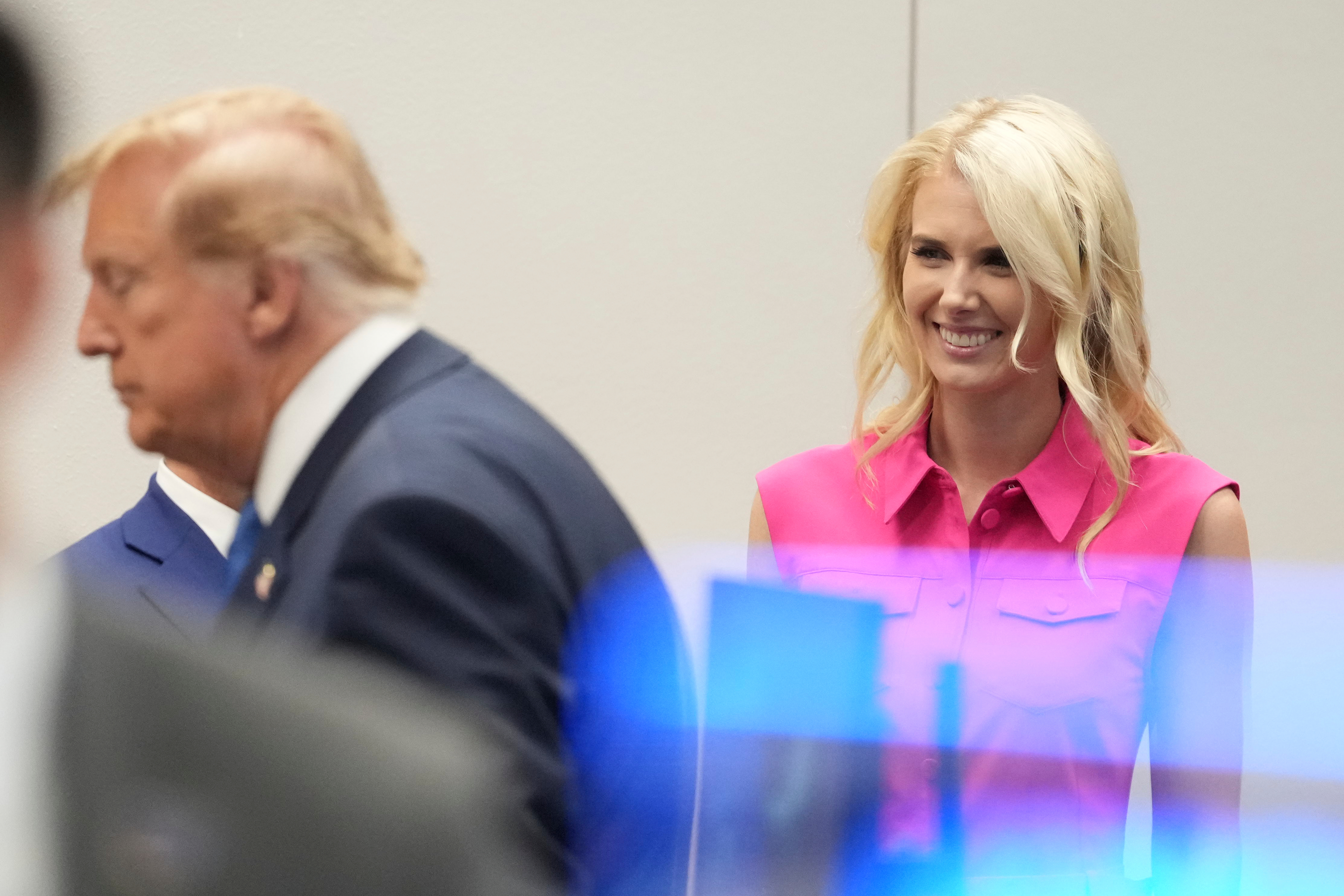
    President Donald Trump gave $45,000 cash gifts to his executive assistant Natalie Harp and two of his other young, loyal White House employees, according to financial disclosures released by the administration.

    On their disclosure forms, which were released publicly late last week, the three women described the payments as “Cash Gift for Holidays.” The gifts amount to about one-third of the $150,000 salaries they each earn from their White House positions, according to an annual report to Congress.

    Richard Painter, the former chief White House ethics lawyer for President George W. Bush and a critic of Trump, said the payments appear to violate a federal statute that prohibits the supplementation of federal employees’ salaries from outside sources.

    “He’s clearly trying to make it easier for them financially to work in government service at the White House,” Painter said. “You can’t do that.”

    A White House spokesperson denied that the payments violated any rules.

    “The President has a longstanding practice of giving Christmas gifts to people in his orbit, including at times employees and aides, both in government and in his time in the private sector,” White House spokesperson Davis Ingle said. “The gifts at issue here have nothing to do with any of these individuals’ official government duties, and therefore are entirely permissible under relevant legal and ethical standards.”

    The three recipients of Trump’s gifts did not immediately respond to requests for comment.

    Harp, a 35-year-old aide who rarely leaves Trump’s side, is known within the White House as the “human printer” because she carries a portable device to provide Trump with his preferred hard copies of news articles and social media posts.

    She has come under increased scrutiny since the Washington Post reported last month that she was one of a handful of close staffers who accompanied Trump on a catering truck that transported him under concealment as he secretly swapped planes to depart Turkey in response to a potential Iranian assassination threat.

    Days after the Post report, Sen. Jon Ossoff (D., Ga.) said at a campaign rally that Trump would rather “travel with Natalie on their apparently defenseless flying palace” — a reference to the airplane given to Trump by the Qatari royal family — as he accused the president of neglecting his duties. The remark sparked backlash from the White House and conservative media figures that intensified the spotlight on Harp.

    Trump also gave $45,000 to Margo Martin, a 31-year-old communications adviser who often gets closer to the president than his Secret Service detail to film his daily activities for social media, and Chamberlain Harris, a 26-year-old White House aide who serves as Trump’s executive assistant. Trump in February appointed Harris to the U.S. Commission of Fine Arts, which has oversight of his White House ballroom and other Washington-area construction projects.

    Trump aide Margo Martin listens as the former president speaks to staff and reporters during a 2023 flight.Jabin Botsford

    Walt Nauta, the director of Oval Office operations, reported a $20,000 gift from the president. Nauta, who earns $175,000, also accompanied Trump on the catering truck in Turkey. He served as a valet in the first Trump White House and was a key witness and co-defendant in the Justice Department’s probe of Trump’s handling of classified documents at Mar-a-Lago. A judge dismissed the charges in 2024, ruling that special counsel Jack Smith, who had brought the case, was improperly appointed.

    There are no other public instances of U.S. presidents giving staff employed by the White House large cash payments. Government ethics experts said they were not aware of any other payments of this scale from a superior to a subordinate government worker.

    Traditionally, government ethics officials worry about situations in which a company that previously employed a federal official tries to provide additional money to make it easier for them to serve in government, Painter said.

    When employers give a holiday gift to a person who works in their house, that is considered part of their income, he added.

    “It’s not like tipping the doorman on Fifth Avenue,” he said. “These are U.S. government employees. If you want a job where you get tips, you shouldn’t be working for the U.S. government.”

    Under the law, both the person who pays the supplemental income and the person who receives it are liable. The Trump Justice Department might decline to enforce the law, but the statute of limitations is five years. Trump’s term ends in a little over two years.

    Federal employees are also subject to restrictions on what gifts they can give or receive to ensure government decisions remain impartial.

    Don Fox, the former acting director of the Office of Government Ethics (OGE) in the Obama administration, said it was not clear from the available facts that the payments violate the prohibition on supplementation. He said that would be the case if Trump made the gifts after one of the employees said they were leaving for the private sector because they couldn’t live on what they were making, and he gave them a supplement to level the disparity in salaries.

    There are rules that restrict employees from giving gifts to their superiors over concerns they could be abused to curry favor. But a large payment to a subordinate is “not a circumstance that OGE ever really envisioned,” Fox said. “This just doesn’t happen.”

    He said the most expensive gift he remembered receiving as a federal employee from a superior was a fruit basket around the holidays.

    Even in the absence of any violation, however, Fox said he still found the payments “troublesome” because they could leave the aides indebted to Trump.

    “I would feel somewhere between really uncomfortable and then beholden to the person who gave me such a large gift,” he said.

    Harp, Martin, Harris, and Nauta all have ties to Trump dating from his first term, and they were all among a small inner circle of aides who worked for Trump in Florida in between his presidencies. Harp, Martin, and Harris have limited work experience that isn’t tied to Trump.

    Harp gained national attention in 2019 for a LinkedIn post in which she credited a law Trump signed in 2018 expanding access to experimental treatments with saving her life following a Stage 2 bone cancer diagnosis. Medical experts have cast doubt on those claims. Harp spoke about the experience at the 2020 Republican National Convention. As an anchor with One America News, she frequently promoted Trump’s false claims that he won the 2020 election. She began working for Trump in 2022 after leaving the network.

    Martin began working for the Trump White House as a press assistant in 2019 and continued to work as a press secretary for Trump after the inauguration of President Joe Biden. Harris began her career at the White House and was known as the “receptionist of the United States” during Trump’s first term.

    Nauta is a Guam native who enlisted in the Navy in 2001. By 2021, he was promoted to the rank of senior chief culinary specialist, according to military records. Nauta was working in the White House at that time, and Trump promoted him to be his valet, according to court records. Valets are often known as “body men,” following politicians closely so that they can provide them with everything from snacks to schedules.

    They each reported that they had no income or employment assets from a spouse in their disclosures.

  • A bad year for bees gets worse as Trump’s tariffs hit Canada’s honey belt

    A bad year for bees gets worse as Trump’s tariffs hit Canada’s honey belt

    EDMONTON, Alberta — In central Alberta, where the heaviest rains in more than a century kept worker bees inactive for much of the summer, Mike deJong, a beekeeper, was already facing a bleak honey harvest.

    Then President Donald Trump imposed 50% tariffs on honey and hundreds of other Canadian products.

    The tariffs took effect after trade negotiations between the two countries collapsed Aug. 21. Trump said the move punishes Canada for discriminating against U.S. exports.

    “This year humbled me,” said deJong, the owner of Busy Bee Farm Ltd., which, at 20,000 hives, is one of the largest operations in central Alberta. The province produces 40% of Canadian honey.

    Walking briskly around his sprawling honey house, deJong gestures to machinery, steel drums, wooden boxes, and other supplies that, ordinarily purchased from U.S. suppliers, now cost farmers more at checkout — because Canada retaliated with tariffs of up to 50% on hundreds of U.S. exports.

    While far from Canada’s most significant agricultural commodity — it represented roughly $175 million in production value last year — the honey industry and its 16,300 beekeepers are foundational to farming. Beehives are contracted out to pollinate fields of alfalfa, clover, and the multibillion-dollar canola crop. The sector also illustrates how the trade war is playing out on the ground, far from Canada’s capital of Ottawa and Washington.

    About 70% of the honey Canada has exported this year went to the United States. Yet of all the honey that the United States imports, only 2% comes from Canada, making it a puzzling target, beekeepers say, by the Trump administration.

    The trade upheaval has left beekeepers scrambling at the end of a difficult harvest, when they would normally be selling honey and hauling barrels of it across the border. Rural communities are enduring pain acute enough that some farmers are questioning Prime Minister Mark Carney’s handling of the negotiations.

    “At the last minute, they blew the whole deal up,” said Ron Greidanus, the owner of Greidanus Honeybee Farm in Stettler, Alberta. “And we are the sacrificial pawn.”

    Greidanus pulled his white flatbed truck into his farm Thursday evening after an eight-hour drive from Polson, Mont. He had crossed the border with $32,500 worth of pine for hive frames, which would soon be subject to a 25% Canadian tariff and would have cost him about $8,100 more.

    Rain fell outside as Greidanus’ teenage son and another worker offloaded the wood, enough to keep his staff building frames for about two months over the winter. The weather inspired a metaphor: that each small farming business is a raindrop that, when collected together, has an amplified effect.

    “My business, it’s just a raindrop. But it matters to Pablo, it matters to Tanya, it matters to Tony,” said Greidanus, listing his staff, most of whom are seasonal foreign workers, and the local businesses that depend on his patronage. He plans to visit the United Arab Emirates this fall to explore new markets, though he has accepted that no one can replace the United States as a prime customer given its proximity.

    The economic pain from tariffs is especially personal in small Canadian towns like Warburg, a village of about 700 people southwest of Edmonton surrounded by endless canola fields and cattle ranches — the kind of place where Wild Hive, a local beeswax candle maker, has its name etched in the ice at the curling rink and on a sign at the hockey arena.

    “When you live in a small town, that’s all you got,” said Candice Prins, Wild Hive’s owner, surrounded in her garage studio by fragrant tapered candles, each hand-dipped, the traditional way, 16 times in hot beeswax.

    Prins quit her job last year as an agricultural inspector specializing in honeybees as her wholesale business took off, with American buyers accounting for 40% of sales and allowing her to hire three women from town. Since the most recent tariffs began, she has had only one sale from the United States.

    “We can’t give back or do as much for our community, which was kind of the goal when I started,” she said.

    Prins buys most of her beeswax from Good Morning Honey, a short drive north in Parkland County, Alberta. Its owner, Richard Ozero, has been diversifying his farm to offer retail products such as honeycomb and bee pollen, while exporting about 20% of his honey south.

    “We’re not eating their lunch, we’re not affecting their bottom line, so I don’t know how beekeeping got thrown into the cage here in this trade dispute,” Ozero said from behind the wheel of his pickup, on the way to visit his hives in a nearby hay field. “It kind of came out of nowhere.”

    Margins to absorb a 50% price increase are not built into the system, said Ozero, who likened the tariffs to closing the border. It has made preparing for the winter a challenge farmers cannot simply postpone.

    “The bees aren’t going to say, ‘OK, just call us when you’re ready,’” Ozero said.

    Consumers can also bear consequences of the trade spat beyond price fluctuations, industry experts warn, because honey is one of the most adulterated food products in the world.

    Fake honey, made with rice syrups, made up about 22% of imported samples tested in Canada last year, according to the national food inspection agency, while domestic honey tested 100% authentic.

    Canada exports more honey than it imports, but one byproduct of the trade war is that the two countries, which normally cooperate to protect the integrity of their honey supply, are now at odds. The clash could open the door to more fake honey entering the market, said Rod Scarlett, the executive director of the Canadian Honey Council.

    Canada also relies on states such as California and Hawaii, which, because of their warmer climate, are leading producers of the queen bees necessary for laying thousands of eggs and keeping colonies populated.

    Canada imports about 300,000 queen bees annually, 85% of them from the United States, according to federal data. The bees themselves are not subject to tariffs, but reliance on U.S. suppliers is another source of unease as beekeepers plan for winter and beyond.

    “Canadian and American farmers have spent generations building a continental food system,” Ozero said. “You can disrupt that system with a tariff overnight, but rebuilding those relationships could take years.”

    This article originally appeared in the New York Times.

  • Families grieve in the ruins of an Iranian school where a U.S. strike killed dozens of children

    Families grieve in the ruins of an Iranian school where a U.S. strike killed dozens of children

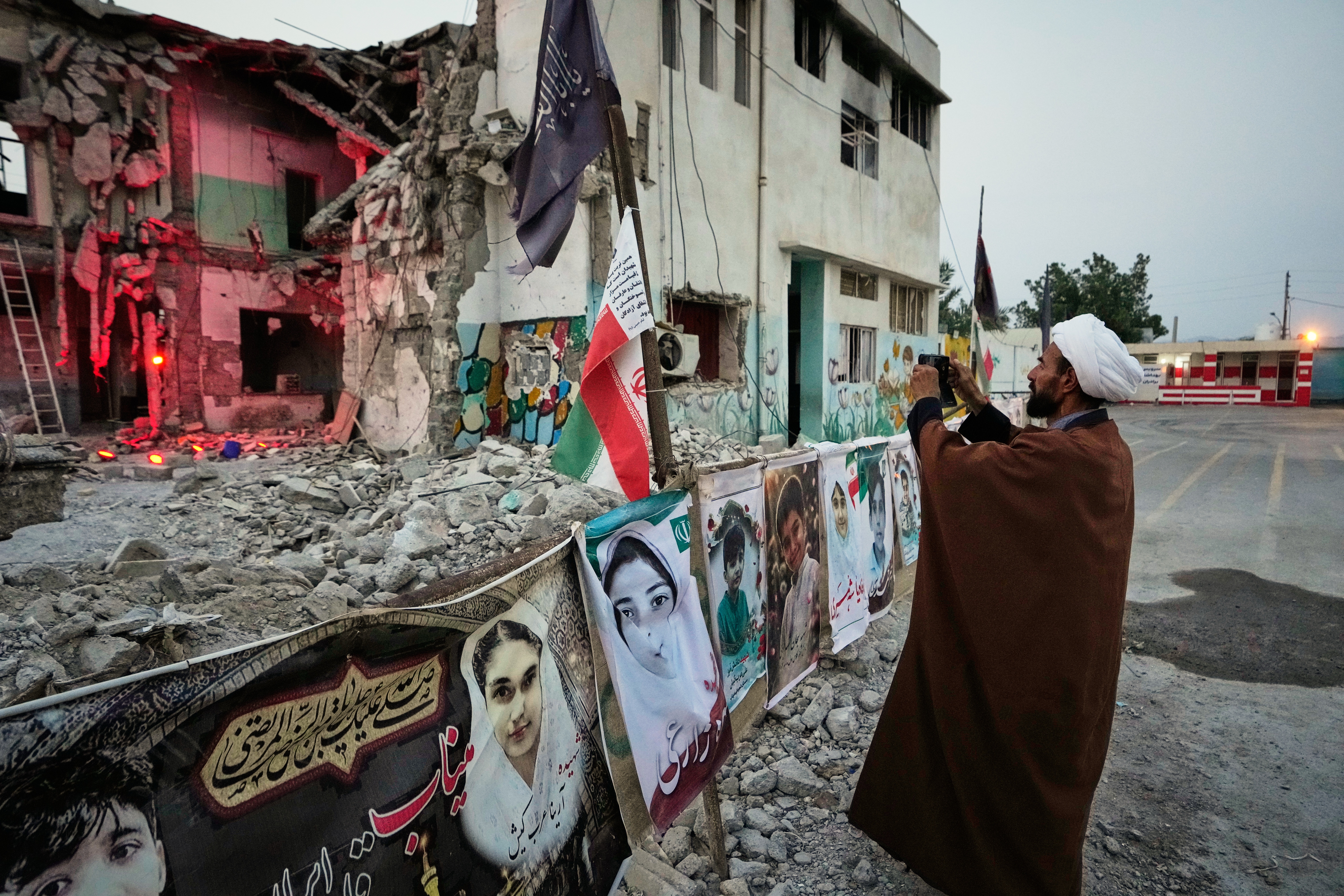
    MINAB, Iran — The sun set over this southern Iranian city, and Heydar Sadeghi was where he can be found almost every evening: on a bench next to the shattered remains of his grandson’s school. His face was soaked with tears.

    A banner strung around the rubble showed the faces of children and teachers killed here by an American airstrike on Feb. 28, the first day of the war on Iran. Among them are Sadeghi’s 11-year-old grandson Hami and the boy’s mother, Neda Salehizadeh.

    “I searched the bodies for my kids, thinking maybe one would be among them,” Sadeghi said Monday evening as he recounted how he rushed to the school in the moments after the explosions. He called out their names, saying, “’Come with me! I’ve come to get you.’ They weren’t there,” he said, weeping.

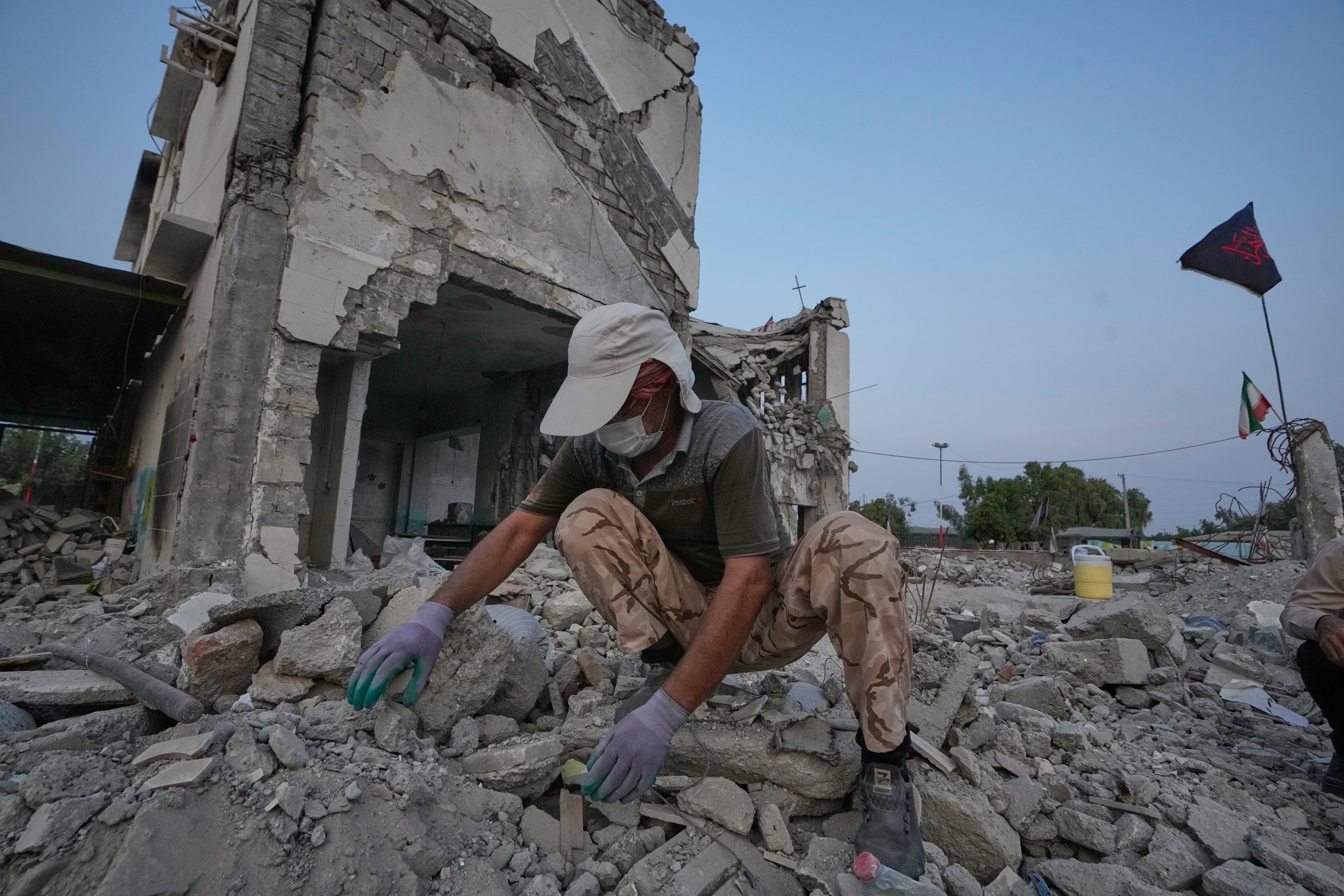
    The Shajareh Tayyebeh school has become a place to wrestle with grief and preserve the memories of the dead. Here, relatives try to comprehend the incomprehensible — how around 120 of their children could be snuffed out, just after they’d been dropped off for a day of classes.

    At least one U.S. missile hit the school that morning in Minab, according to an Associated Press investigation, but there has been no final accounting of what happened. Iranian state media have said 168 people were killed in the strike, most of them children.

    The Trump administration has yet to directly accept the blame or release findings of a Pentagon investigation into the bombing.

    A grandfather grieves every day

    For Sadeghi, the day of the strike began as every school day did.

    He drove Hami and the boy’s 9-year-old sister Nila to school along with their mother, his daughter-in-law Salehizadeh, who was a teacher. As usual, he planned to pick them up at 1 p.m.

    “But the bell was rung early — by Trump,” he said.

    Hami was a fifth grader who loved soccer and riding his bicycle, Sadeghi said. His body was so mangled in the blast, they could only identify him from the clothes he was wearing, he said.

    Nila was pulled alive from the rubble.

    “Thank God, she is physically fine,” Sadeghi said. “But mentally, no.”

    The girl and her father have moved in with Sadeghi and his wife. The slightest, unexpected noise frightens her. She often goes to bed in her grandmother’s arms but lies awake for much of the night.

    Sadeghi said he often invites Nila’s friends to come spend the night, hoping their presence will distract her.

    He wants to see Nila smile. So he grieves here at the school away from her.

    “I come here and cry,” he said. “Then I go home and dance in front of the girl.”

    The site is becoming a memorial to the dead

    The school had a girls’ school upstairs and a boys’ school and preschool on the ground floor. Some of the students were children of officers at a Revolutionary Guard base located next to the school; many were local children from Minab, which is populated predominantly by members of Iran’s Baluch ethnic minority.

    The banner at the site listed 120 students killed — 47 girls and 73 boys — and 26 teachers and staff. Three more children are presumed dead but their bodies were never found.

    The governor of Hormozgan province, where Minab is located, has said the damaged building would be preserved to be turned into a memorial and war museum.

    Several dozen visitors there Monday evening included relatives of the dead but also out-of-towners who had come to see.

    In a government-sponsored mourning ceremony held every evening, men and women — including one in the Guards uniform — took turns at a microphone, telling wrenching stories about those who died and describing in graphic detail the day of the attack. Some visitors broke down weeping from their accounts.

    A separate section of Minab’s cemetery has also been set aside for those killed at the school. Every grave has a photo of the dead, with a shade overhead and artificial grass around so families can sit with their loved ones. Some lay flowers and prayer beads on the graves. Others bring dishes of “shuleh-zard,” a saffron rice pudding eaten at funerals.

    One teacher tried to protect her students

    At the cemetery, Fatemeh Barani sat by the grave of her daughter, Nasim Neyestani, a second-grade teacher at the school. Barani comes several times a week to be with her daughter.

    She thinks about her daughter’s last hours, which school staffers later described to her, and how everything could have turned out differently.

    At around 9 a.m. news came of the airstrikes in the capital Tehran that had hit the compound of Iran’s supreme leader. They didn’t know it at the time, but those initial Israeli strikes killed Ayatollah Ali Khamenei and much of the top military leadership.

    Neyestani was alarmed, fearing wider strikes, and urged the principal to cancel classes and call parents to come collect their children, Barani said, according to what she was told by other staffers. The principal didn’t think that was necessary. But Neyestani began calling the parents of her 22 students herself, urging them to come get their children, Barani said.

    Fourteen of Neyestani’s children were picked up before the strike, Barani said. The parents of eight others did not get there in time.

    Neyestani took the eight children into the schoolyard, her mother said. But the principal told her to take them into the school’s prayer room, thinking it would be safe.

    The prayer room was hit. Barani said her daughter and all eight children with her were killed.

    “My daughter’s classroom was mostly left intact,” she said. “Probably if she had been in that classroom, she would not have been killed.”

    Details of Barani’s account could not be independently verified, but it meshes with other accounts. The AP’s investigation of the strike found that several teachers called parents to pick up their children before Iran’s government ordered schools closed nationwide at 10:15 a.m. The first missile hit the school about an hour later. Accounts of the strikes posted on banners at the school say three missiles struck. The principals of both the boys and girls schools were among those killed.

    A teacher’s mother is overwhelmed with grief

    After the strikes, Barani’s husband and sons went to the school; later, they told her her daughter had been killed.

    They found Neyestani’s bag. But Barani said her sons have hidden it from her because they fear seeing it would only hurt her more.

    Parents of students who escaped the school because Neyestani had called them visited the family to pay their condolences, but Barani said she was so overwhelmed with grief that she doesn’t remember any of their visits.

    She said she still hasn’t been able to enter her daughter’s bedroom.

    She talked about how her daughter, who had not married, was rarely idle. She taught in the mornings and worked as a salesperson at a cosmetics store in the evenings. At home, she stayed busy with her hobby making handicrafts, particularly “minakari,” a traditional art of decorating objects with enamel. The enamel work relaxed her, Barani said.

    The enamels are still there around the house, a reminder of her daughter.

    “Every day, this grief feels fresh again,” Barani said.

  • Trump widens trade war with Canada beyond tariffs. Here’s what to know.

    Trump widens trade war with Canada beyond tariffs. Here’s what to know.

    TORONTO — The United States sharply escalated its trade war with Canada on Tuesday, banning some Canadian dairy products and motorcycles as well as most alcoholic beverages after retaliatory Canadian tariffs took effect on about $20 billion in U.S. goods.

    U.S. President Donald Trump also moved to shut Canadian products out of large, long-term U.S. government contracts, broadening the confrontation beyond tariffs as relations between the longtime allies deteriorate further.

    The outcome could resonate far beyond Canada, showing other governments whether a smaller U.S. ally can withstand Trump’s economic pressure.

    Canadian Prime Minister Mark Carney says U.S. demands could hollow out key Canadian industries and limit the country’s independence, while Trump’s threats to Canadian sovereignty have rallied the public behind him.

    “Carney and Canada have become symbolic of resistance to him,” Canadian historian Robert Bothwell said. “And what he’ll want to do is make an example of Carney and Canada and theoretically terrify everybody else while in fact showing them that they need to remove themselves even further from the United States.”

    The latest U.S. bans take effect Sept. 29 and cover various Canadian wines and spirits, some motorcycles and mopeds, dairy products including whey, and some types of molasses.

    Here’s what to know.

    Canada retaliates with tariffs on hundreds of US products

    Canada says its tariffs match Washington’s dollar for dollar and rate for rate. They took effect at 12:01 a.m. Tuesday and cover about $20 billion in American goods, roughly 6% of the $333.6 billion the United States exported to Canada last year.

    The tariffs hit hundreds of American products, including steel, aluminum, cheese, appliances, clothing, cosmetics and farm equipment, at rates of 15%, 25% or 50%.

    Canada has already gone beyond tariffs in other ways. Eight of its 10 provinces continue to restrict or ban sales of U.S. alcohol. The Distilled Spirits Council says U.S. spirits exports to Canada fell more than 70% year over year after those restrictions took effect.

    Trump responds with import bans and government-contract restrictions

    The White House responded Tuesday by announcing outright bans on some Canadian products rather than simply imposing higher tariffs. The restrictions on Canadian alcohol, dairy products and motorcycles take effect Sept. 29.

    Some Canadian provinces’ restrictions on U.S. alcohol prompted the U.S. ban on various Canadian wines and spirits.

    Trump also directed the U.S. General Services Administration to declare Canadian products ineligible for large, long-term federal contracts until Canada allows what he called “full and fair reciprocity” for American products.

    Since Canada-U.S. trade talks collapsed Aug. 21, Trump and his administration have unleashed a barrage of tariffs, threats and personal attacks portraying Canada as weak and dependent.

    Trump previously warned that Canada’s economy could collapse if Carney continued treating him as “the enemy.”

    Trump even renamed Lake Ontario “Lake America,” a change ignored and ridiculed in Canada. Google and Apple bent to Trump’s pressure and changed their maps for U.S. users.

    “After renaming a gulf and a lake, maybe the next step for him is to rename a river?” said Daniel Béland, a political scientist at McGill University.

    Trump’s pressure is hardening resistance in Canada

    Trump’s trade war and repeated talk of making Canada the 51st state have fueled anger and rallied support for Carney. Canadians have sharply cut travel to the United States and boycotted U.S. goods.

    The current trade war began after Trump returned to office and imposed a series of tariffs on Canadian goods despite having negotiated and repeatedly praised the North American trade agreement during his first term. Many of those tariffs violate the pact.

    The rupture is especially striking because the countries have long shared one of the world’s closest relationships, with deeply integrated economies, close defense and security cooperation, vast cultural ties and, before relations deteriorated, about 400,000 people crossing the border each day.

    Carney said Tuesday that Canada’s response is increasingly about reducing its dependence on the United States rather than simply weathering the latest tariffs.

    “It’s about ensuring that no country can hold us hostage. And that we can live how we want to live,” he said.

    Carney has said talks can resume when the Americans “stop doing memes, stop throwing shade, stop trying to be tough” and become serious.

    So far, Trump’s pressure has backfired in Canada, strengthening support for Carney rather than forcing concessions.

    Carney is becoming a global voice for standing up to Trump

    At the World Economic Forum in Davos in January, Carney warned that great powers are using economic integration to coerce smaller countries. The speech helped establish him as the leading voice among countries looking for ways to resist Trump.

    Trump responded a day later by saying Canada “lives because of the United States” and warning: “Mark, remember that next time you make your statements.”

    Carney will address the European Parliament next week as Canada explores deeper ties with the European Union that could stop just short of membership.

    “The Canadian public is behind the Carney government and the world is watching what will happen next,” said Béland, the McGill political scientist. If Canada’s defiant approach succeeds, he said, it “could be used as a template” for resisting the Trump administration’s trade policies.

    The fight is also about whether Canada keeps its factories

    Trump has also threatened 50% tariffs on Canadian vehicles, auto parts and steel next year if Canada does not “fall in line,” a potentially devastating escalation for industries built around deeply integrated North American supply chains.

    A 50% auto tariff could hammer Canadian plants and raise vehicle prices across North America because parts and finished vehicles cross the border repeatedly during production.

    Carney says Washington’s terms could leave Canadian industries “gradually wound down in Canada and wiped out.”

    Could Canada actually win?

    Canada starts at a disadvantage: The U.S. economy is roughly 13 times larger, and Canada sends more than 70% of its exports south of the border.

    But Béland said this is not a normal trade fight. He pointed to Trump’s domestic unpopularity, the approaching midterms and court challenges that could undo more U.S. tariffs.

    “Under normal conditions, this would be a very long shot for Canada,” he said.

    But Washington has vulnerabilities too. U.S. refineries rely on 4 million barrels of oil a day from Canada, and American farmers depend heavily on Canadian potash fertilizer. So far, however, Canadian leaders have ruled out using some of that leverage by taxing or restricting critical exports.

    Canada entered this round with some economic momentum. Its economy grew at a 3.2% annualized rate in the second quarter, more than twice the 1.5% pace in the United States.

    Industry Minister Mélanie Joly put the government’s ambition plainly:

    “I’m convinced that we will be able to show the world that Canada will win this trade war.”

  • Three jurors in Clancy trial describe frustration with holdout

    Three jurors in Clancy trial describe frustration with holdout

    It had looked like the end of deliberations in the murder trial of Lindsay Clancy.

    Eleven of 12 jurors had agreed not to convict Clancy. Then the one holdout “admitted he had reasonable doubt,” the jury’s foreperson, Roni Carlson, said in an interview with television station NBC10 in Boston on Tuesday.

    According to the judge’s instructions, if jurors had considered all the evidence but still had reasonable doubt about the charges against Clancy, they had to acquit her.

    So Carlson, a retired teacher, started to fill out the three verdict forms, she said in the interview. She got as far as writing her signature on each sheet. But then, Carlson recalled, the holdout juror said, “I’m still not going to say that she’s not guilty by reason of insanity.”

    In the first public statements by jurors since the monthlong trial, Carlson and two other jurors opened up about the grueling week of deliberations in which the jury of nine women and three men were deadlocked, prompting Judge William Sullivan to declare a mistrial.

    Clancy has not denied that she strangled her children — Cora, Dawson, and Callan — at their Massachusetts home in 2023. Instead, her trial in Plymouth, Mass., was over whether she should be held criminally responsible for their deaths.

    Her lawyer argued that she had suffered from postpartum psychosis when she strangled her children with exercise bands on Jan. 24, 2023. The prosecution disputed the severity of her condition and said Clancy had planned to kill her children before attempting to die by suicide.

    The three jurors said in a group interview with the station that they believed the evidence showed that Clancy clearly loved her children and repeatedly sought help for her mental health struggles.

    “Everything proved that she loved her children, so she had to have snapped,” Carlson said in the interview.

    The juror who disagreed with the other 11 does not yet appear to have been publicly identified or interviewed.

    One of the three jurors interviewed, Kellie Farina, a chef for a senior center, told NBC10 Boston that the holdout juror “had the hardest time getting off the fact that Lindsay viciously killed her children.”

    The third juror interviewed, Paula Devlin, who works for a defense contractor, said the holdout “completely disregarded” information that nurses on the jury provided to help interpret medical reports from the hospital where Clancy stayed after she killed her children.

    The jurors said that the testimony and evidence presented at the trial were brutal at times. Farina described the 911 call made by Patrick Clancy, Clancy’s then husband, the night the children were killed as “horrific.”

    “When we heard it again in the jury room, we were crying again,” she said.

    The jurors were critical of the prosecution, with Farina describing it as “harsh,” compared with the defense’s style, which she described as “compassionate.”

    Farina said the prosecution presented a lot of medical experts but no witnesses that said Clancy was a bad mother, a factor that weighed heavily with the three women.

    The jurors said that Clancy’s lawyer, Kevin Reddington, was arrogant, but they also found him compassionate and occasionally entertaining.

    The case has deeply divided Americans, with some supporting the prosecution and others — especially women who report negative experiences with the postpartum mental healthcare system — expressing sympathy for Clancy.

    Clancy, who was paralyzed from the waist down after her suicide attempt, is being held at Tewksbury Hospital, a state-run psychiatric facility.

    Prosecutors have not yet announced whether they will retry the case.

    This article originally appeared in The New York Times.
  • Iran signals readiness to escalate fight in face of rising U.S. pressure

    Iran signals readiness to escalate fight in face of rising U.S. pressure

    Iran has signaled that it is willing to escalate its fight with the United States, with senior leaders issuing increasingly sharp warnings in recent days after attacking U.S. warships for the first time.

    The country’s leaders are taking a more aggressive approach as Iran faces mounting economic pressure and they worry that their grip on the Strait of Hormuz is slipping. The U.S. blockade is making it nearly impossible for Iran to ship oil, its main money source. And in effect, Iran sees escalation as the primary leverage it has against the United States.

    The situation, analysts say, raises the risk that a series of recent clashes could reignite a full-blown war.

    On Saturday, Iran said it had attacked two U.S. military vessels with ballistic missiles, prompting U.S. forces to respond by striking three Iranian oil tankers.

    A day later, Mohammad Bagher Qalibaf, Iran’s lead negotiator and the speaker of parliament, told lawmakers that the era of “proportionate responses” to U.S. attacks was over. “From now on, any aggression against Iran’s interests and security will be met with a response that is faster, heavier, and more painful,” he said.

    Soon after, Iran’s security chief, Mohsen Rezaei, announced plans to impose a “restricted zone” for shipping in the Persian Gulf that would go beyond the country’s efforts to control the Strait of Hormuz.

    Iran has largely withstood the heavy military campaign launched by the United States and Israel in February. But the war of attrition in recent months has created an economic threat that is now pushing the government to intensify its rhetoric and attacks.

    A U.S. naval blockade has prevented Tehran from exporting much of its oil, the country’s main source of revenue, making a long-standing economic crisis even worse. On Tuesday, the government raised some gasoline prices because of fuel shortages, a move that is expected to further roil a country already struggling with soaring inflation and unemployment, and a rapidly depreciating currency.

    At the same time, U.S. naval escorts have enabled a trickle of oil tankers to pass through the Strait of Hormuz, undercutting Iran’s closure of the waterway, which has caused global oil prices to rise sharply. The number of ships getting through is small, and the effort is extremely costly for the United States, but it has prevented oil prices from rising further and blunted Iran’s ability to impose economic pain on Washington.

    “How do you regain the momentum? You escalate,” said Farzan Sabet, an Iran analyst at the Geneva Graduate Institute, a research group. Iran will likely attempt to intensify the military confrontation, he said, while seeking to avoid a return to full-out war. “It’s highly damaging, but at the same time, they hope it raises global oil prices or fully recloses the Strait of Hormuz,” he said.

    ‘Make or break moment’

    Senior Iranian officials have said they are open to negotiating a return to the fragile Memorandum of Understanding that halted the war in April and was meant to lead to talks on an Iranian nuclear deal.

    But President Donald Trump has said he has no interest in negotiations, preferring to maintain his strategy of attrition and suffocating Iran economically.

    Iran’s leadership believes that now may be the best moment to raise the stakes, as the U.S. midterm elections in November approach and an unpopular war could hurt Trump and the Republican Party.

    “All signs point to a make or break moment,” said Mohammad Ali Shabani, an Iran analyst and editor of the regional news website Amwaj.media. “I’m not sure the Iranians are going to wait until after the elections to be attacked if diplomacy fails.”

    Iran’s move to strike two U.S. warships with ballistic missiles was a significant escalation, said Hamidreza Azizi, a senior Iran analyst at the International Crisis Group.

    Iranian forces had previously made no serious effort to target U.S. naval ships and seemed reluctant to conduct attacks that could cause heavy American casualties. “These calculations have obviously changed,” he said.

    The U.S. decision to retaliate by striking three Iranian oil tankers — and sinking one of them — was an indication of how seriously Washington took the Iranian attack.

    “Both sides are trying to dictate their red lines and trying to push the red lines of the other side as far back as they can,” Azizi said.

    It was also a recognition that Iran’s military capabilities have evolved. Before the war started, the United States did not think Iran could target U.S. military bases in the region with precision, he said. But in recent months, Iran has shown it can do so, including with a strike on a U.S. base in Jordan in July that killed two American soldiers.

    Iran could become similarly adept at targeting naval fleets, Azizi said.

    Iran has also been very public about its efforts to capture and learn from its enemy’s weapons. On Tuesday, Iran’s state news agency IRNA announced that naval forces of the powerful Revolutionary Guard had seized a U.S. submarine drone known as the Dive-LD. Iran has previously managed to reverse-engineer weapons offered to it by its allies or captured from its enemies.

    U.S. Central Command said the drone was an older model that had malfunctioned and “neither collected sensitive data nor carried any classified sonar or radar equipment.”

    Hours later, a U.S. official said American forces had struck multiple Iranian oil tankers in retaliation for Iranian attempts to strike a U.S. Navy warship for the second time in days. Iranian state media said tankers were hit off the coast of Kharg Island, the hub of the country’s oil industry, and Jask, a port city on Iran’s southern shore.

    Rezaei’s announcement of a new “prohibited zone” in the Persian Gulf was another attempt to ratchet up the confrontation.

    The security chief offered few details about the plan, but Mohamed Ghaderi, a Tehran-based foreign affairs expert, said it was designed to increase the cost for vessels passing through the strait with a U.S. naval escort and warn them they may not be safe even once they do.

    “Compliance with Iran’s new rules can be a condition for safe and consequence-free passage,” he said.

    These escalatory moves come amid fresh regional turmoil, with Iran’s Houthi militia allies in Yemen launching attacks that wounded dozens in the south of Saudi Arabia on Tuesday, and the kingdom vowing to retaliate. Whether coordinated with Tehran or not, renewed conflict in Yemen would help Iran in its goal of putting more pressure on global energy prices.

    Economic crisis

    For Iran’s leaders, what they have called a U.S. “economic war” has become a domestic security risk that has prompted them to take a more aggressive stance.

    A rising sense of economic despair among Iranians could spark a new wave of anti-government protests. Last December, a currency crisis triggered nationwide demonstrations, which security forces crushed with deadly force.

    Iranian officials are anxious that Israel may exploit any discontent to support dissidents or an insurgency, said Hadi Borhani, a professor of Israeli and Middle East studies at the University of Tehran.

    He pointed to recent statements by Israel’s defense minister, Israel Katz, and Prime Minister Benjamin Netanyahu, who said this week that “there is still more to complete. I mean, first and foremost, the toppling of the regime. This regime in Iran — its end is near.”

    The Iranian government does not want to wait for Israel to act.

    “They believe Iran should change the situation, possibly through a more damaging or aggressive move that can raise regional tension,” Borhani said.

    Some Iranian leaders also believe now is a good moment to act because Trump will return to war after the midterms anyway. The president will either feel vindicated by an unexpected electoral victory or feel that he has nothing more to lose by pursuing his own strategy, several of the analysts said.

    Sabet, however, expects that worsening global economic conditions will eventually push the Trump administration to ease tensions.

    Even though the U.S. naval escorts through the Strait of Hormuz have allowed some oil to move, he said, global crude stockpiles are not being replenished fast enough, and natural gas and other critical oil derivatives are not getting through. Those shortages are likely to inflict more pain on the global economy.

    “That is when I see them muddling their way toward some kind of limited or de facto deal,” he said. “Don’t think of it as an MOU plus — think MOU minus.”

    This article originally appeared in The New York Times.