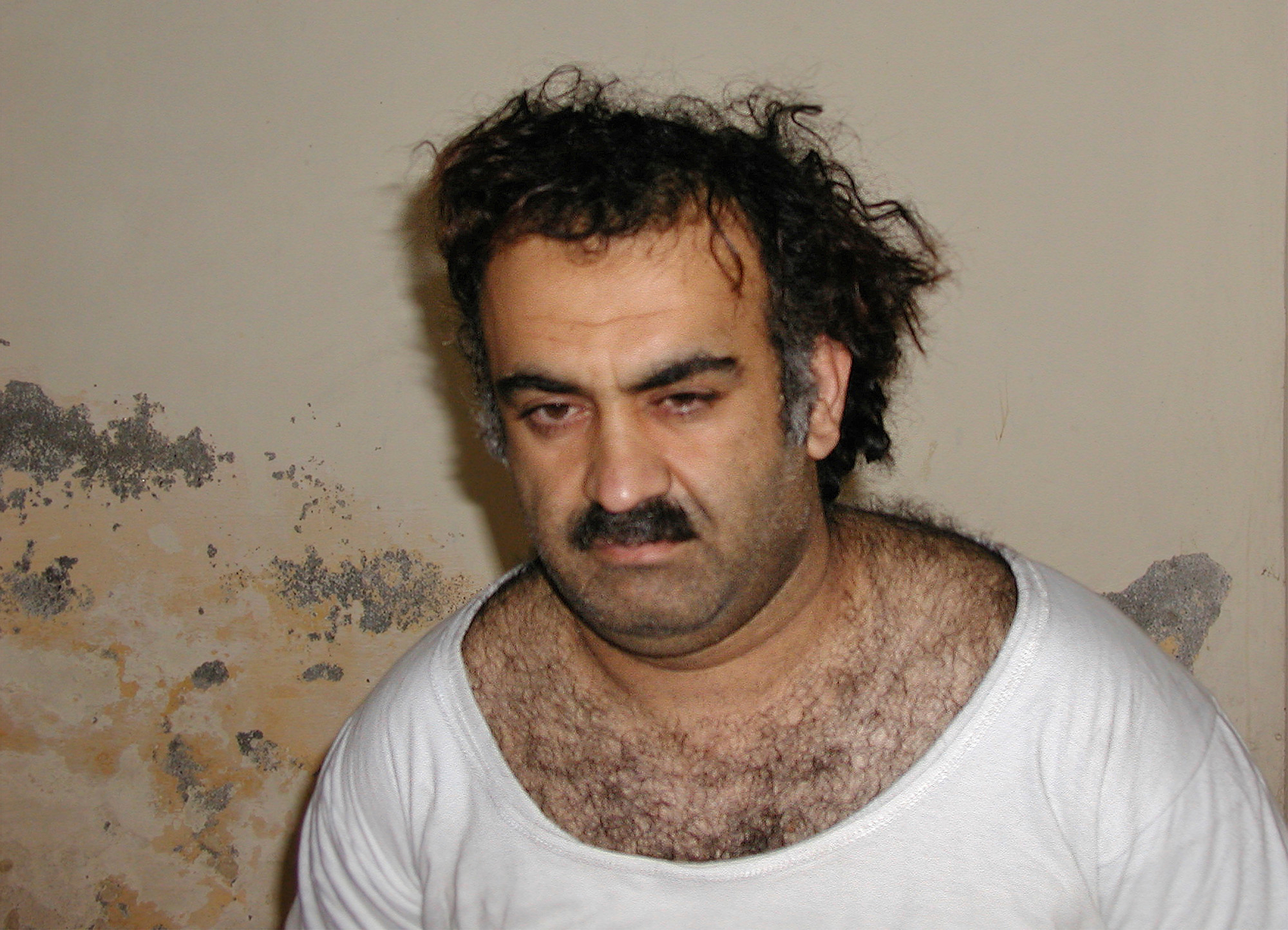
NEW YORK — Two decades after U.S. authorities locked Khalid Sheikh Mohammed away at a military detention center in Cuba, the purported mastermind of the Sept. 11 attacks sometimes seems barely any closer to being put on trial than the day he arrived.
A judge recently set a 2028 date for Mohammed to finally be tried before a military tribunal, but some lawyers predict it will never happen — not that year or any other year. They say the maze of legal issues that arose because Mohammed was tortured following his 2003 capture in Pakistan is too twisted to ever be straightened out.
A fleeting bid to put him on trial in a civilian court in New York City was shouted down years ago over security concerns.
“It’s all contaminated by politics and the lack of accountability on torture,” said Joshua Dratel, an attorney who played a part in assuring that Mohammed has proper legal representation.
In late August, the U.S. military judge who set a June 5, 2028, trial date for Mohammed and three others charged in the Sept. 11 attacks ruled that prosecutors could not use an alleged confession he made to the FBI in 2007. Those statements were deemed tainted because Mohammed was subjected to “enhanced interrogation techniques” overseas, including the simulated drowning technique called waterboarding.
While the ruling was a blow to the prosecution, the U.S. government decided not to appeal, in part because doing so could have further delayed a possible trial.
Meanwhile, Mohammed remains jailed in Guantanamo Bay, where he was brought on Sept. 5, 2006, following more than three years in secret prisons in other countries.
Victims’ families still hope a trial will happen
Terry Strada, whose husband, Tom, died at the World Trade Center on Sept. 11, said that she and other people who lost family members still hope a trial will someday happen.
“We very much want to see this come to an end at some point. We do want to see justice served. It’s just as important as 25 years ago,” she said.
But Strada, the national chair of the group 9/11 Families United, also said she would rather have Mohammed rot at Guantanamo Bay indefinitely than get behind a resolution that would involve dropping the death penalty as a possibility. Strada said she worries that if Mohammed is not executed, future U.S. leaders might someday be tempted to swap him for Americans held prisoner elsewhere in the world.
The death penalty, she said, “fits the crime and it would prevent that from ever happening. And that’s important to me.”
Mohammed was captured in Pakistan in 2003, accused of developing and directing the 9/11 attacks, as a leader of the Islamic militant group al-Qaeda. Some of the delays in his legal proceedings have stemmed from his treatment after he fell into U.S. control. A U.S. Senate report pointed to his extended torture in CIA custody, including 183 sessions of waterboarding.
Plans for a civilian trial were dropped
For a time in 2009, it seemed Mohammed was headed to New York after then-Attorney General Eric Holder announced plans to try him and four other men charged in the Sept. 11 attacks in a Manhattan courthouse just blocks from the World Trade Center site.
Then-President Barack Obama, who had pledged to close the Guantanamo detention center, said Mohammed would face “the most exacting demands of justice.”
Almost immediately, opposition arose. Some critics predicted Mohammed would use a trial as a platform to spread hateful views of America and its allies. Others cited security concerns, saying it could again make New York a terrorist target. Former New York City Mayor Rudy Giuliani, a Republican, called the plan unwise and said it showed “a lack of concern for the rights of the public.”
Plans for a civilian trial were dropped.
“It was a charade in many respects,” Dratel said.
The military tribunal system, he said, has proven itself to be a worse solution, unable to function efficiently, without a proper structure, and without fidelity to federal courts.
“Each time you reach an impasse, no one knows what to do,” he said.
David Raskin, a Washington lawyer now in private practice who would have led the government’s prosecution of Mohammed in New York if it hadn’t been abandoned, said in an essay published in the Washington Post on Wednesday that he is confident a civilian trial would have ended with a conviction. The military commissions, on the other hand, “became a defense lawyer’s dream,” beset by “endless litigation over their legality and procedures.”
“I predict there will never be a completed military commission trial for Mohammed and the other Sept. 11 defendants,” he said.
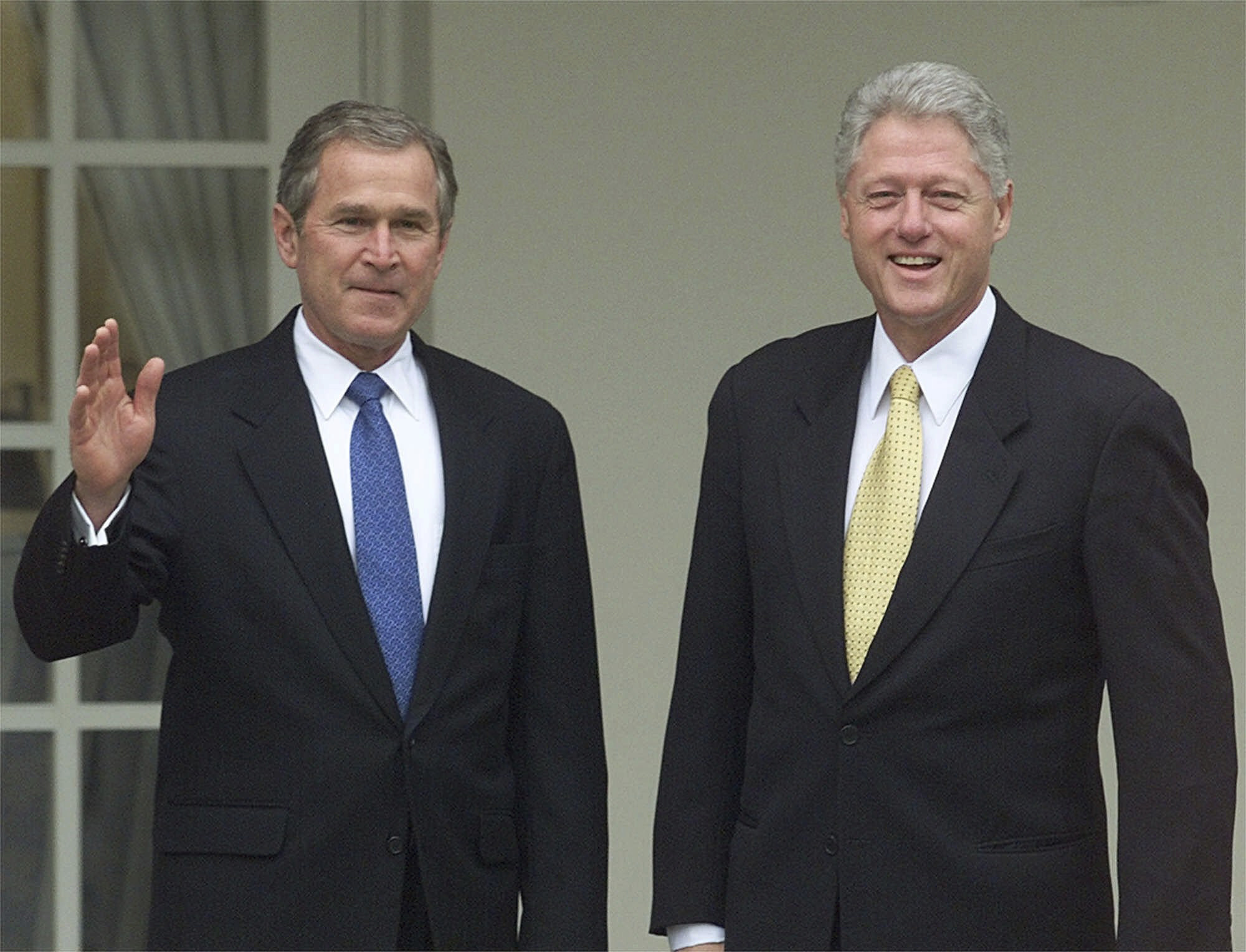
WASHINGTON — Tucked at the end of a Sept. 10, 1998, intelligence report sent to President Bill Clinton’s White House was a warning about al-Qaida that more than a quarter-century later seems prescient.
Al-Qaida, a CIA analyst wrote, “may fly an explosive-packed airplane into a U.S. city.”
On Friday, the 25th anniversary of the Sept. 11, 2001, terrorist attacks, the CIA released 69 never-before-seen presidential intelligence briefs detailing what it had discovered about Osama bin Laden and al-Qaida in the run-up to the day.
The release, according to agency officials, is their largest focused on the Sept. 11 attacks. The intelligence analyses that were sent directly to the president and senior policymakers are among the agency’s most closely guarded documents, and the CIA’s standard practice is to release them only after about 40 years, to ensure no sources are compromised and minimize any potential tension with allies.
The documents do not appear to contain major new revelations, and they remain redacted to obscure the sources of the information. But the briefings provide details of what the CIA was telling Presidents Clinton and George W. Bush in the months and years before the attacks, along with an intelligence report provided in the early morning hours of Sept. 12.
The documents released Friday reinforce the central findings of the National Commission on Terrorist Attacks Upon the United States and its 2004 report: U.S. intelligence agencies warned about al-Qaida consistently but failed to understand the scale of the attack the group had in mind.
John Ratcliffe, the CIA director, said the documents were being released to honor the memory of those killed on Sept. 11, along with the CIA officers who subsequently gave their lives.
“Twenty-five years ago, the 9/11 attacks struck a blow to our nation, but they did not break us,” Ratcliffe said. “Generations of CIA officers have since dedicated their careers to securing justice for our fallen Americans and ensuring al-Qaida would never again harm our country.”
Still, the documents demonstrate that the CIA repeatedly brought to Bush and Clinton the threat posed by bin Laden to directly attack the United States.
In a briefing Thursday, CIA analysts said that before Sept. 11, terrorist threats were not a primary focus to collect intelligence on, and reporting on bin Laden and al-Qaida was limited. Reading the old reports, the analysts said, it was clear that the agency knew al-Qaida wanted to attack America. But what that would look like, intelligence officials said, was not clear, with a large amount of noise obscuring the clues.
Working through the newly released documents, dating from Feb. 13, 1998, to Sept. 12, 2001, various strands of threat intelligence rise to the surface and then disappear. The 1998 intelligence about the explosive-laden plane, for example, does not make another prominent appearance in the warnings given to the White House.
The CIA analysts said it was rare that the agency could follow the full story arc of a threat or plot. Various threats come and go from the agency’s warnings.
Part of the problem was finding ways to provide effective warnings, said a senior CIA official, who spoke on the condition that their name not be used, in keeping with the agency’s practice. As the CIA wrote more presidential-level reports on al-Qaida, there were concerns about “warning fatigue,” the CIA official said.
A senior CIA counterterrorism analyst said collection from human sources before the attacks was “not fantastic.” The overall collection on al-Qaida, CIA officials said, was spotty.
A small group of intelligence analysts worked on terrorism threats. But it was nothing like the priority it became on Sept. 12, 2001. As a result, there was a steady drumbeat of warnings, yet almost all were frustratingly vague.
The idea that the intelligence community was aware of plotting around explosive-laden planes in September 1998 has been known. The commission mentions a report circulating about al-Qaida’s interest in using an airplane with explosives aboard to attack the United States, but it did not say the report reached the president.
Bush and Clinton told the commission they understood the threat of al-Qaida, although the final report concluded that “we do not believe they fully understood just how many people al-Qaida might kill, and how soon it might do it.”
The CIA released one document from after the fact, a “situation report” for the president sent to the White House at 4 a.m. on Sept. 12. Such updates are supposed to be factual, with minimal analysis. And despite the gravity of what happened on that day 25 years ago, the analysts wrote in their usual detached style.
Before the attack, analysts wrote regularly about the threat, but the CIA officials acknowledged that their warnings did not capture the scope of what al-Qaida had in mind. That was in part because the reporting was not there. But the commission said this also resulted from a failure of imagination.
The senior CIA counterterrorism analyst said the agency since Sept. 11 had come a long way and was better at “thinking outside the box.” The lesson of Sept. 11, she said, was that intelligence agencies had to think more creatively.
Those intelligence failures, as well as the others identified by the commission such as a lack of information sharing between the CIA and FBI, led to a reorganization of the federal government’s national security structure. The Department of Homeland Security was created, bringing together various law enforcement agencies, as was the Office of the Director of National Intelligence, which works to improve collaboration among the FBI, the CIA, and other spy agencies and set analytical standards.
The postattack reviews also changed how intelligence reports were written. The documents released Friday reflect the earlier era. Today, intelligence reports are peppered with assessments of analysts’ “confidence level,” how well-sourced a particular conclusion is. Although it is clear from the old reports that the CIA had high confidence in al-Qaida’s goal to strike the United States, and doubts about the specifics of various plots, that assessment was not made explicit for policymakers.
Two members of the commission were allowed to review the presidential daily briefs from the time leading up to the attacks, but the agency fought against distributing them more widely. Two briefs were released amid pressure from the commission and the public.
Jamie Gorelick, a commission member who reviewed the presidential daily briefs, said the summary of the documents that she co-wrote informed the commission’s work, although the commission was not allowed to release or quote the documents.
These presidential briefs “are consistent with the commission’s assessment of the preattack intelligence,” said Gorelick, who served as deputy attorney general in the Clinton administration.
Still, even if the underlying material has been well understood, the newly released documents are likely to be closely examined by historians of the intelligence agency.
A July 1998 document, given to Clinton five weeks before al-Qaida attacked two embassies in Africa, outlined the group’s intent to attack America. That document tracked the warning repeated years later in the Aug. 6, 2001, presidential briefing released by the government under pressure from the 9/11 Commission.
That 1998 report cited four “questionable sources” but said al-Qaida’s ambitions to strike the United States were “plausible,” given bin Laden’s comments.
A document from Aug. 3, 1999, discussed the possibility that the intelligence being collected on al-Qaida could be a deception. That document was generated in response to questions from senior Clinton administration officials. The analysis noted that because so many potential targets came up in intelligence collection, al-Qaida could have been engaged in “a deliberate effort to mislead us.”
“The diverse targets mentioned in the reporting, combined with a high incidence of Bin Ladin-related walk-ins, suggest a deliberate effort to mislead us,” the CIA wrote, using the government’s spelling for bin Laden.
The commission also highlighted the intelligence community’s worries about deception, noting that Defense Secretary Donald Rumsfeld had leaned into the theory that al-Qaida was spreading misinformation that it intended to attack.
A presidential intelligence document from July 24, 2001, appeared to describe the lull that the commission outlined in its report. The document reported that for the second time in two weeks, “an expected imminent Bin Ladin-sponsored terrorist operation has been postponed, but preparations for other near-term attacks may still be in train.”
The intelligence report noted suspicious activity among individuals who had received a cryptic message the previous month. At the time, the collection was fuzzy. After the fact, the report looks like a missed warning.
The last document release by the agency before the Sept. 11 attacks came on Aug. 28, 2001. That document in some ways read like a follow-up to the Aug. 6 report, potentially explaining why no attack had occurred despite the earlier warning.
The report insisted that al-Qaida remained a threat, though it made no mention of attacks on the homeland or attacks with planes. Instead, the presidential note mentioned “assassination, kidnapping, the use of rockets, mortars and other longer-range weapons, as well as crude chemical or biological attacks.”
The intelligence report also discussed how Qaida operations could be delayed or disrupted.
In a final note that foreshadowed how bin Laden would ultimately be found nearly a decade later, the Aug. 28 report concluded that “inexperienced couriers or suicide bombers also make mistakes that expose plot details.”
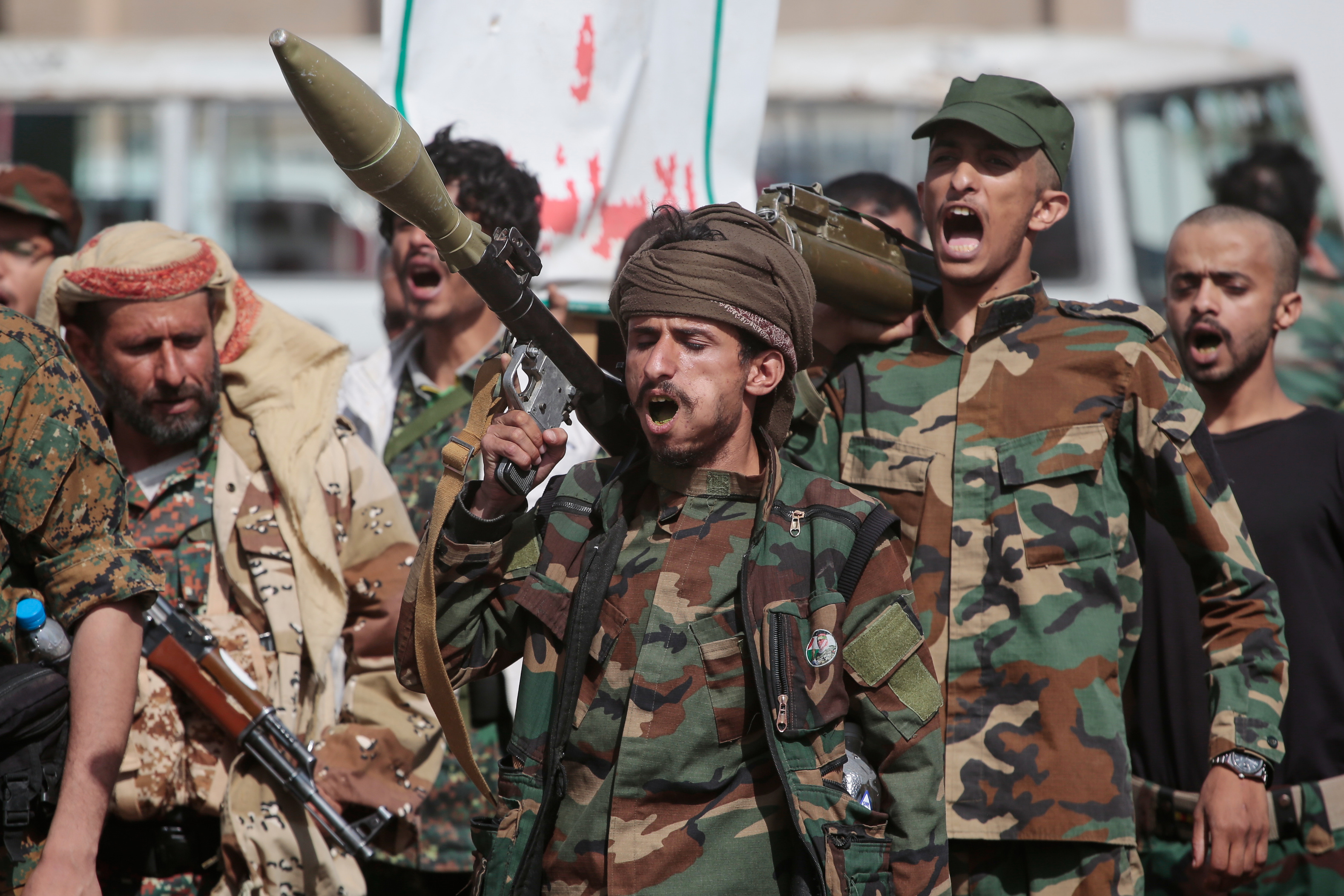
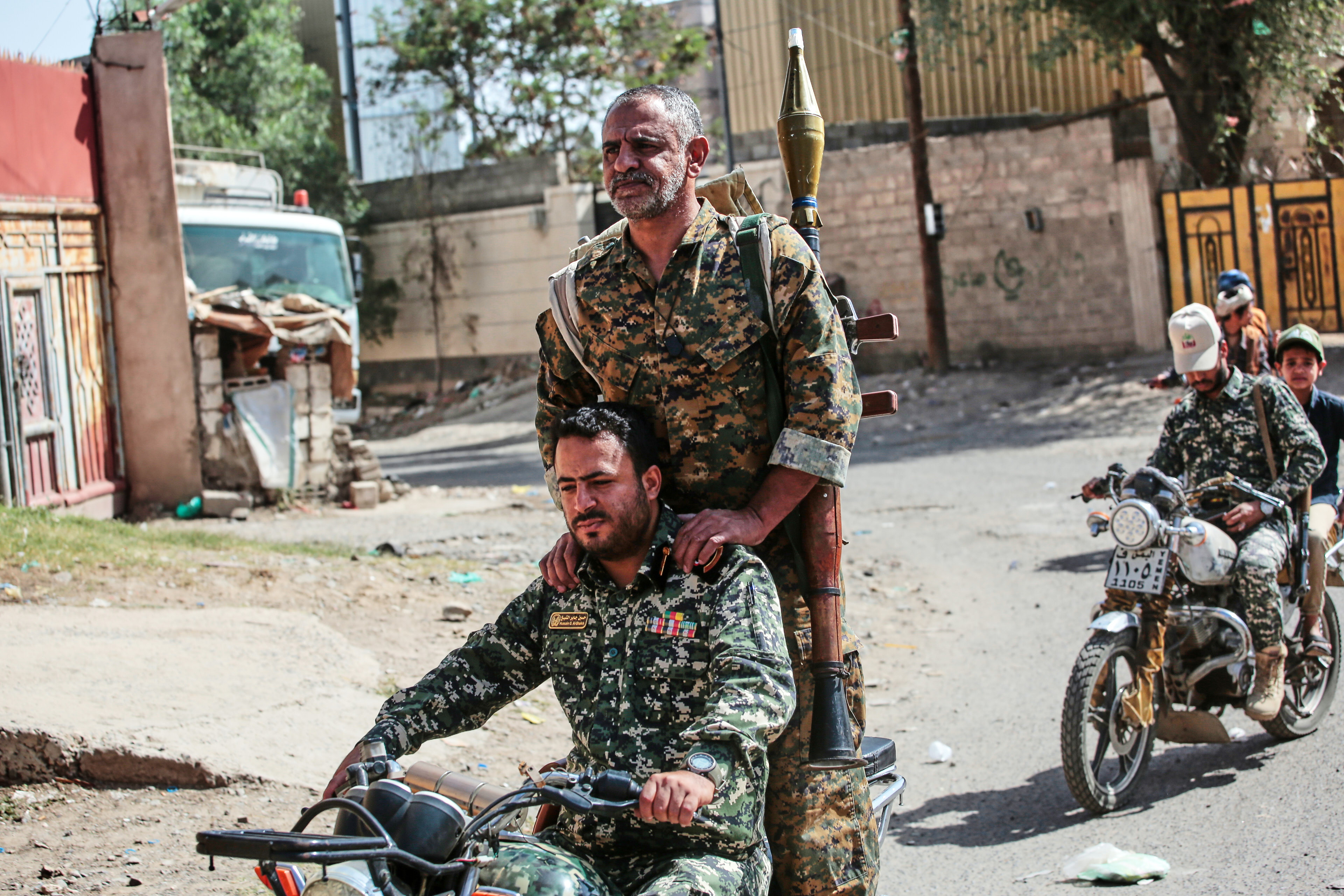
FRANKFURT, Germany — The capture of the Red Sea port of Mokha and a strategic island by Iran-backed Houthi rebels in Yemen brings their forces to the heart of a key choke point for the global economy: the Bab el-Mandeb Strait leading out of the Red Sea.
The Houthis took Mokha on Thursday and on Friday captured Mayun, also known as Perim, off Yemen’s coast, two officials said, in a swift advance that extends their reach near one of the world’s key commercial lanes.
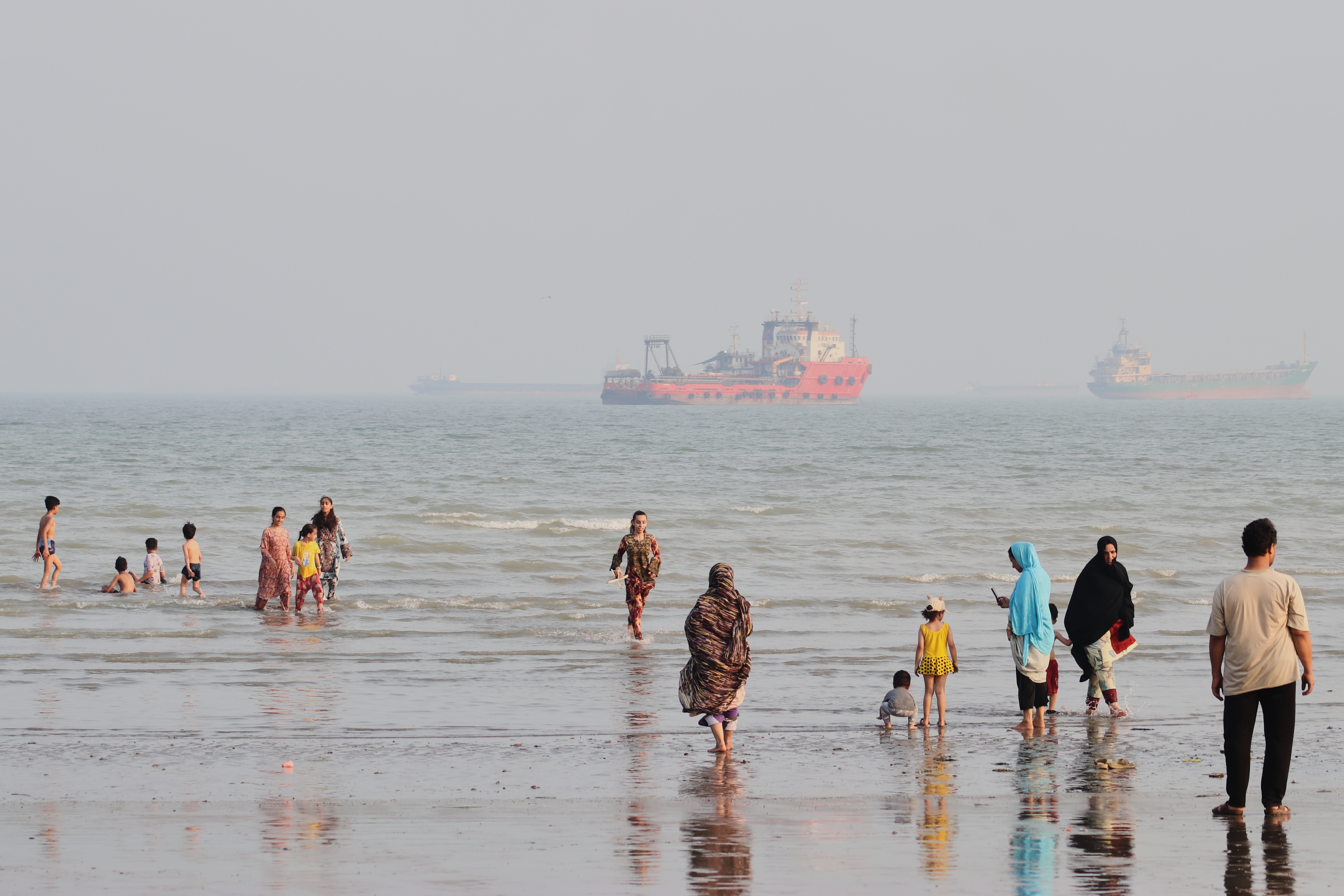
The strait had been a vital route for crude oil supplies from Saudi Arabia to Asia after shipping through the Strait of Hormuz was restricted due to threat of Iranian attack — until Houthi targeting of Saudi tankers largely ended that safety valve.
The Houthi advance is focusing renewed attention on the Bab el-Mandeb Strait and further risks to shipping there, despite efforts by the Houthis to reassure shipowners that vessels other than those covered by their embargo on Saudi-linked shipping remain safe.
Bab el-Mandeb was key workaround for Saudi oil exports
The Strait of Hormuz was long the main highway for Saudi oil. But when Iran choked off most ship traffic at the Strait of Hormuz, the Saudis ramped up shipments through a pipeline running across the desert to Yanbu on the Red Sea.
Oil loaded on tankers in Yanbu could head out of the Red Sea through the Bab el-Mandeb Strait and then east to Asia. That helped the Saudis maintain a share of their exports to customers there.
The Red Sea route helped keep global oil prices in check, along with other improvised alternatives. In recent weeks the U.S. military has guided tankers through the Strait of Hormuz in defiance of Iranian demands that ships pass through a vetting lane near the Iranian coastline. And the United Arab Emirates has used a pipeline to Fujairah on the Gulf of Oman to skirt the Strait of Hormuz.
Houthi attacks on shipping through the Bab el-Mandeb Strait started in late 2023 over Israel’s war in Gaza, leading many companies to abandon the route because of safety concerns. Traffic overall remains down some 60% from levels before then, although it remains a key freight route for goods moving between Asia and Europe.
Alternate routes helped restore much of Middle East oil flows
In August, alternative routes helped restore some two-thirds of the roughly 15 million barrels that transited Hormuz before the war. That took some of the economic pressure off the U.S. amid politically sensitive higher gas prices ahead of the midterm elections.
However, Houthi threats have weighed heavily on Saudi oil exports in the Red Sea. In August, Red Sea oil loadings fell from 3.8 million barrels per day to 2.2 million barrels per day, according to the International Energy Agency. Overall, Saudi supply fell 2.3 million barrels per day to 6 million barrels, the lowest in three decades, according to the IEA.
By now, “Saudi shipping has largely routed away from this risk anyway,” said Richard Meade, editor-in-chief of Lloyd’s List.
While the Houthi advance “doesn’t change the immediate risk profile” because Saudi and Israeli shipping is already high risk, it does raise the question of whether the Houthis, who have insisted that other shipping is safe, will expand their threats if they face further attack, Meade said.
“It puts the Houthis in a strong position to take further control if they want to,” he said.
Meanwhile, increased attacks on shipping in the Strait of Hormuz this week have put use of the U.S. route on hold. Iran said it attacked 10 ships there Wednesday after the U.S hit five Iranian tankers.
Suez Canal is a workaround for the workaround
With the Houthis threatening Bab el-Mandeb, Saudi tankers have turned northwest instead of southeast from Yanbu and headed for the Suez Canal.
Tankers that are too big to pass through the canal have offloaded oil at Ain Sokhna in Egypt to a pipeline to Sidi Kerir on the Mediterranean coast, where the oil is picked up by tanker. Some 70% of Yanbu crude exports are now heading that way, either by pipeline or by tanker, according to Lloyd’s.
That, however, is a time-consuming and expensive workaround for customers in Asia, since ships must then transit the Mediterranean, pass the Strait of Gibraltar and sail around the Cape of Good Hope at the southern tip of Africa. The Suez route enables the Saudis to redirect as much as 3 million barrels per day.
But that more than doubles transit time to an Asian destination like South Korea, from 24 days to 54 days, according to senior research analyst Victoria Grabenwöger at energy data firm Kpler.
That adds to the cost, given that tankers cost tens of thousands of dollars per day to charter even in normal times, while prices have risen in some cases above $100,000 per day during the current global energy turmoil.
Recently, the Strait of Hormuz has become a flashpoint in the escalating conflict between the United States and Iran, with the Trump administration alternating between military strikes and threats of further attacks amid negotiations.
This waterway is one of the world’s most important shipping corridors. It connects Persian Gulf energy producers to global markets and carries a substantial share of the world’s energy trade. This applies further pressure on the need to keep it “open,” even as that story is far more complicated than it appears.
The strait is more than a physical waterway. It is also an institutional and commercial corridor sustained by trust, pricing, financing, commodity markets, and insurance premiums. In a modern economy, a waterway like the Strait of Hormuz allows merchant ships to function as part of the circulatory system of global commerce. But passage requires more than the physical opening of the waterway. It also depends on whether insurers, lenders, shipowners, crews, and governments are willing to price, bear, and distribute the risks associated with the passage.
The Trump administration is focusing primarily on one end of the problem: suppressing Iran’s ability to alter the threat landscape in the strait. Crucially, it has paid far less attention to the other end of the equation: owning, transferring, or guaranteeing the residual risk that American military forces cannot eliminate. The history of the Suez Canal crisis shows the consequences of a similar conceptual mistake. It demonstrates how military control of a strategic waterway can prove insufficient when broader risks remain unresolved.
In 1956, Egyptian President Gamal Abdel Nasser nationalized the Suez Canal after the United States and Britain withdrew their financial support for the construction of Aswan High Dam. Nasser announced that, in the absence of external financing, canal revenues would be used to fund the project. Suez was vital for European trade and Middle Eastern oil supplies, so Britain and France saw these actions as a direct challenge to their strategic influence in the region. And so, in coordination with Israel, they took military action against Egypt to seize control of the Canal Zone. Their calculation was that if Nasser were removed and the canal returned to British and French control, then their broader geopolitical problem would be resolved.
Militarily, this plan worked. Their forces advanced rapidly. Israel swept across the Sinai while British and French troops established air superiority and took Port Said at the northern mouth of the canal.
Despite this success, the broader strategic goal remained beyond their reach. Britain’s military might masked a far weaker financial position. The sterling was still a major international currency, but defending its value depended on Britain’s dwindling gold and dollar reserves. American opposition to the invasion, mounting pressure on sterling, disruptions to oil supplies, and Britain’s dependence on external financial support ultimately made the operation unsustainable. As the dollar and oil reserves declined, London increasingly needed the very international financial cooperation, especially from the United States, that the invasion had put at risk.
The crisis left both European powers, particularly Britain, politically humiliated. They had been willing to assume the military risks of invading Egypt, but they overlooked the financial, diplomatic, and alliance risks that also had to be absorbed to sustain the operation and turn their military success into durable strategic control of the canal.
Three decades later a comparable problem surfaced in the region, but this time, the United States responded differently. In 1987, during the “Tanker War” phase of the Iran-Iraq War, Kuwait’s oil exports were increasingly threatened by repeated Iranian attacks on its tankers. With limited options, the Kuwaiti government sought protection from both the United States and the Soviet Union because neither Kuwait nor any private commercial actor could adequately absorb or manage the risk alone.
By July of that same year, Ronald Reagan took action, but he did not rely on warships alone. Instead, he approved Operation Earnest Will, under which eleven Kuwaiti tankers were reflagged as American vessels and escorted through the Persian Gulf. This action did not eliminate Iranian mines, missiles, or the possibility of further attacks. In fact, during the first convoy, one of the reflagged tankers struck a mine. Although no one died and the tanker completed its voyage, the incident made clear that the danger remained real.
Certainly, reflagging the vessels changed the legal and political meaning of these voyages. Sailing under American colors placed U.S. sovereignty and military credibility behind the Kuwaiti vessels. The United States did not absorb every commercial loss, but it assumed enough of the political and strategic residual risk to make continued passage more credible. Operation Earnest Will did not eliminate risk. It instead gave the residual risk a more capable owner.
Made By History sponsors. FOR USE ON MADE BY HISTORY STORIES ONLY.Inquirer Staff
This does not mean that the military dimension is insignificant. But military measures are not the only instruments available. Washington can also strengthen the ability of governments, private firms, and financial markets to absorb the risk that remains through tools like sovereign war-risk insurance or reinsurance, multinational risk pools, and lender guarantees. These mechanisms can help distribute, transfer, and absorb the residual risk that remains, even when real danger persists.
The region has changed significantly since Operation Earnest Will. Through the 1990s and early 2000s, the United States established an enduring presence in the Persian Gulf while Iran increasingly relied on asymmetric capabilities to offset its conventional military disadvantage. The result is a different strategic environment with the same underlying problem. Even with a superior military presence, Iran’s asymmetric capabilities continue to inject uncertainty into the region in ways that American military power alone cannot eliminate.
As it has done before, the United States can use military power to make Iran less capable of creating risk. But it must also make insurers, lenders, shipowners, and governments more capable of carrying the risk that will inevitably remain. Force can make passage possible, but a durable strategy for keeping Hormuz commercially open will require both.
Oscar Blanco is a historian who teaches history and cybersecurity risk management at Miami Dade College and Florida International University. He holds a Ph.D. in history and researches U.S. foreign policy and United States relations with Latin America.
Made by History takes readers beyond the headlines with articles written and edited by professional historians. Opinions expressed do not necessarily reflect the views of The Inquirer.
NEW YORK — Once-friendly neighbors started to keep their distance. Undercover police officers began to monitor community events. And passersby would give them dirty looks on the street, and sometimes harass them, when they left home in hijabs or other religious garb.
Many American Muslims have faced a quarter-century of suspicion and hostility since the Sept. 11 attacks, which reshaped life for all Americans.
In New York, a generation of Muslim New Yorkers responded to the Islamophobia by organizing their communities. Mosques hosted makeshift legal clinics. Small businesses became hubs in a citywide civil rights network. Muslims of different racial, ethnic and linguistic backgrounds formed alliances the city had not seen before.
Their political organizing helped, years later, to elect the city’s first Muslim mayor, Zohran Mamdani. But anti-Muslim prejudice endures, echoing the Islamophobia that arose in the earliest days after Sept. 11.
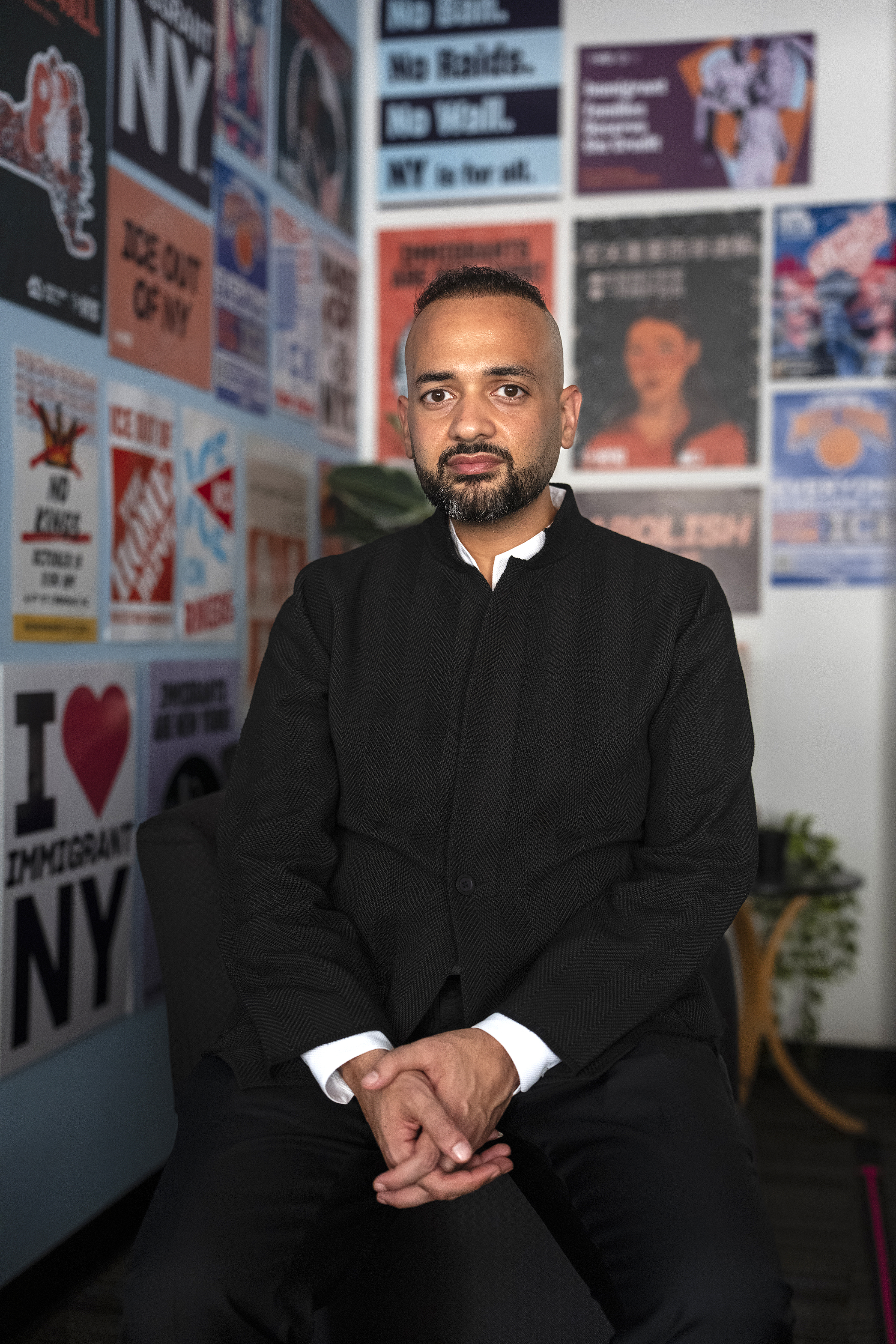
Murad Awawdeh was 14 in September 2001. The post-9/11 backlash, and the grassroots response of his friends and neighbors, led him to trade his biochemistry studies — and his mother’s American dream of having a doctor in the family — for a career in civil rights.
“I think that day belongs to everyone who lived it and what came after belongs to a smaller group of us,” said Awawdeh, 39, who is now the president and chief executive of the New York Immigration Coalition and a confidant of Mamdani. “That part of the story this country still has not told itself honestly.”
The Sept. 11 attacks left many Muslim American communities scarred by heavy-handed law enforcement tactics and the suspicion, if not outright hostility, of classmates, co-workers, elected officials and cable news commentators who blamed all Muslims for the terrorism they, too, had experienced that day. That experience spurred many to take political action.
“If you look at prior to 9/11, for the most part, Muslim Americans were not politically involved,” said Afaf Nasher, the executive director of the New York chapter of the Council on American-Islamic Relations. But, she added, “When you’re pushed against the wall, you’re either going to run in fear or you’re going to push back, and political empowerment was certainly one way that we are pushing back.”
The ascent of Mamdani has turned New York into perhaps the most prominent example of American Muslim success in the post-9/11 world. But the history of the city since the attacks has also highlighted the many challenges that Muslims in the United States continue to face.
Those include a history of police surveillance, backlash faced by high-profile Muslims in politics or the arts, and attacks on Islamic religious expression, including the construction of mosques and the wearing of religious clothing such as hijabs. Those biases have also affected followers of other faiths, in particular observant Sikh men, whose turbans are often mistaken for a form of Islamic dress.
Such sentiments have compounded in many ways since the start of the war in the Gaza Strip, which most Muslim Americans have vigorously opposed. Opponents of that war have been accused of terrorist sympathies, and some, including Columbia University protester Mahmoud Khalil, have been arrested and threatened with deportation for their advocacy. That has led some Muslims to say the war in Gaza has created an environment akin to the months and years after Sept. 11, when Muslim Americans feared that they could be marked as terrorist sympathizers for speaking out against the war on terror.
After Sept. 11, many Muslims in New York found themselves under covert police surveillance. Asad Dandia, 33, a public historian, was a plaintiff in a 2013 class-action lawsuit against the Police Department over its surveillance of the city’s Muslim neighborhoods, a program that was assisted by the CIA.
He had come under police surveillance after starting a charity as a teenager to feed poor families in his neighborhood. The police spying program was exposed in 2011 and caused a public uproar that led to its ending by 2018 after a series of legal settlements and other initiatives.
Today, Dandia is the official historian of the borough of Brooklyn and an informal adviser to Mamdani. One of his lawyers in the 2013 lawsuit, Ramzi Kassem, is the mayor’s chief legal counsel.
“We went in the span of 10 years from suing the government to being the government,” Dandia said. “And I think that is a classic and quintessential New York and American story.”
Mamdani is one of several Muslims who have become prominent in American public life in recent years. Others include Reps. Ilhan Omar and Rashida Tlaib, Michigan Senate candidate Abdul El-Sayed, Academy Award-winning actor Mahershala Ali, model Bella Hadid, and comedians Ramy Youssef and Hasan Minhaj.
“Muslim America now has a greater cultural footprint, more institutional power and a lot more support from allies, comrades and friends all throughout the country,” Dandia said. “Now when people think of Muslim America, they have names and faces they can point to.”
But despite these successes, many challenges remain. Mamdani, who was 9 on Sept. 11, has said the Islamophobic backlash to the attack lingered and “became a fact of life.”
According to a Pew Research Center survey conducted this year, 43% of American adults said Muslims are less patriotic than other Americans, and 42% said Muslim Americans are having a negative impact on the country. When asked to explain their views, respondents often cited the Sept. 11 attacks.
By some measures, the survey showed that public attitudes toward Islam were more negative now than they were immediately after the attacks. In March 2002, 25% of American adults said Islam was more likely than other religions to encourage violence, but that number rose to 51% in the survey conducted this year.
Those views have become highly polarized, with Republicans expressing far more negative views of Islam than Democrats, a change from after the attacks when supporters of both parties held similar views. Today, anti-Muslim sentiments have surged anew in some parts of the country with almost every election cycle.
Donald Trump campaigned for president in 2016 on a pledge to bar immigrants from Muslim countries and has restricted immigration from those nations and others that he views negatively during both his first and second administrations. In his second term, Trump has cracked down on students and universities over protests against the war in Gaza, portraying student demonstrators as supporters of terrorism and equating their arguments with antisemitic hate speech.
That has included the arrest of young Muslim activists, including Khalil at Columbia and Rumeysa Ozturk, who helped write an opinion piece critical of Israel for the student newspaper at Tufts University.
Kambiz GhaneaBassiri, a professor of religion and politics at Washington University in St. Louis, said the embrace of Islamophobia by the Trump administration posed a serious threat to Muslim Americans. But for Americans who are skeptical or critical of Trump, it may have also helped to undermine anti-Muslim arguments.
“People forget now the degree to which Islamophobia was not something that was just on the right but was present on both sides,” GhaneaBassiri said.
As an example of the reaction to Trump’s policies, he pointed to protests at airports against the president’s immigration restrictions in 2017 as a moment that “kind of shocked” some Muslim activists and organizations. They had become accustomed to pushing for their rights with few allies and little positive coverage in the news media, but the airport protests were filled with non-Muslims.
“Before that moment, if they criticized the state, their loyalty was always questioned by people on both the right and the left,” GhaneaBassiri said.
But in New York, Mamdani’s election has shown the resilience of anti-Muslim suspicion in both parties.
During last year’s mayoral campaign, Mamdani was accused of supporting terrorism by critics in both parties, including the campaign of former Gov. Andrew Cuomo, his main rival in the race, and Sen. Kirsten Gillibrand, who apologized after she falsely claimed in an interview that he had made “references to global jihad.”
The hate is nothing new to the mayor’s allies. Shahana Hanif, who in 2021 was the first Muslim woman elected to the New York City Council, was in elementary school when the attacks took place. She came of age as American policy and cultural attitudes shifted against the nation’s Muslims.
At age 10, she wrote a letter to President George W. Bush asking him to put a stop to the hate that seemed to engulf so much of the country. For Hanif, a Bangladeshi native of Brooklyn, it was an early form of organizing that helped inform her political career decades later.
“Seeing the injustice my community experienced” propelled her into progressive political organizing, Hanif said. “I can’t take away the Muslim part of it and just say, ‘Oh, no, this is only happening to us because we’re Bangladeshi immigrants,’ or ‘This is only happening to us because I’m a daughter of immigrants or I’m a woman of color,’” she said. “That association of being Muslim is certainly part of it.”
New York’s Muslim political and civil rights leaders said they also saw opportunities to keep building on their post-9/11 organizing work.
Nasher, the executive director of CAIR, said that her group and others like it saw their efforts as an outgrowth of the discrimination they faced and a way to guard against its happening to others.
“That’s not just because we’re Muslim — it’s because we’re American,” she said. “And you would think that as our fellow Americans, people would want every American to be politically engaged.”
CAIRO — Yemen ‘s Iranian-backed Houthi rebels captured a strategic island in the Bab el-Mandeb Strait at the entrance of the Red Sea, two officials said Friday in a swift advance that further threatens Saudi oil exports through one of the world’s key commercial lanes.
Saudi Arabia responded with airstrikes against the airport in the key port city of Mokha that the Houthis seized on Thursday, a Houthi broadcaster said. There was no immediate report of damage or deaths.
The capture of Mayun, a tiny, barren volcanic island in the strait, was confirmed by a senior military official with Yemen’s internationally recognized government and by a Houthi official. Both spoke on condition of anonymity because they were not authorized to talk to journalists.
The island, also known as Perim, is about 3.5 kilometers (2 miles) off Yemen’s west coast.
The strait is a key alternative to the Iran-choked Strait of Hormuz. But there is “no need for international concern,” Hazam al-Assad, a member of the rebels’ political bureau, told The Associated Press, saying they are responding to Saudi aggression, and “our forces have a bank of big important targets” in case Riyadh keeps up the strikes.
Earlier Friday, Iran’s government called for an end to Saudi Arabia’s blockade of Yemen, throwing its support behind its ally, the Houthis. In its first statement since the rebels entered the port, Iran’s Foreign Ministry also called for a return to negotiations between Saudi Arabia and the Houthis.
There was no immediate Saudi comment on Friday.
The rebels’ capture of Mokha, overlooking tanker routes out of the Red Sea, could boost Iran’s strategy of driving up world oil and gas prices to pressure the United States, experts say. It also raises concerns of a new front opening after more than six months of war in the region – one in which Saudi Arabia is forced to respond.
Experts say the developments in Yemen could give Tehran more leverage in any negotiations with the U.S. On Wednesday, the spokesperson for Iran’s powerful Revolutionary Guard called for any negotiated settlement with the U.S. to include Yemen, the first explicit reference to that front.
Events threaten a key Strait of Hormuz alternative
The Houthis’ entry into Mokha on Thursday was their biggest territorial gain in years against their Saudi-backed Yemeni opponents. It brought them within 50 miles (80 kilometers) of the Bab el-Mandeb, a strait that has become an important alternative for global shipping as Iran targets vessels in the Strait of Hormuz.
A senior military official with Yemen’s internationally recognized government told the AP they were stunned that the Saudi air force didn’t strike the Houthis earlier, as they were advancing on Mokha. He assessed that Saudi Arabia didn’t get a green light from the U.S. to embark on a large-scale air campaign.
The official, who spoke on condition of anonymity because he wasn’t allowed to speak to the media, also blamed “lack of coordination” between Yemen’s army and allied forces, saying it gave the Houthis “a priceless opportunity.”
The Houthis had already attacked Saudi shipping in the Bab el-Mandeb and Red Sea since declaring a blockade there in July, as well as oil infrastructure inside Saudi Arabia. The Houthis said it was in response to the kingdom’s blockade of Houthi-held parts of Yemen, in place for years.
New disruption to the waterway could mean trouble for all shipping and for the price of crude oil, which has now soared again. Saudi Arabia has increasingly relied on the Red Sea and Bab el-Mandeb to export its crude since Iran has been targeting vessels in the Strait of Hormuz. About 12% of the world’s goods are typically shipped through the strait.
Shipping through the Bab al-Mandeb had fallen by about 60% since the Houthis began attacking some ships there in late 2023 while expressing solidarity with Palestinians in Gaza. Shipping increased this year as Saudi Arabia sought alternatives to the Strait of Hormuz, but renewed Houthi threats have “curtailed” that activity, according to Lloyd’s List Intelligence.
Saudi Arabia, which earlier this week said it had always offered “opportunities for negotiation,” also has said it has the right to defend itself in response to the Houthis’ blockade. The foreign ministers of Iran and Saudi Arabia spoke Thursday about diplomatic efforts to “restore stability” to the region, Iran’s Foreign Minister Abbas Araghchi said on social media.
The fighting risks a return to civil war
In a statement released Friday, the National Defense Council of Yemen’s Saudi-backed and internationally recognized government on Thursday strongly condemned the Houthis’ renewed attacks on Saudi Arabia.
The council also acknowledged that Yemen’s government is on the front line of freedom of navigation, and called for international support as the Houthis swept along the Red Sea coast toward the Bab el-Mandeb.
The escalating fighting threatens to end a fragile truce that had largely halted Yemen’s civil war since 2022.
At stake are the 40 million people in the Arab world’s poorest country who fear a return to the conflict that killed 150,000 and brought many others to the brink of famine.
The surge in fighting in the past week has sent over 46,000 people fleeing, and “overnight, large numbers of people were reportedly seen leaving Mokha with their belongings,” the U.N. migration agency said Friday.
The Houthis have been at war with Yemen’s government since 2014, when the rebels swept from their mountainous heartland and seized much of northern and central Yemen, and the capital of Sanaa. Saudi Arabia entered the war the following year on behalf of the government.
Kathryn Pilgrim knew the century-old Victorian she bought in Dunkirk, New York, came with old plumbing. She replaced pipes she suspected of containing lead and later installed a kitchen filter designed to remove heavy metals.
But six years after buying the house, she still can’t be sure that her tap water is lead-free because she doesn’t know what material was used for the pipe that runs under her front yard and connects to the city water supply. Dunkirk is nearly two years behind schedule on an inventory that would give Pilgrim and other residents that information.
Dunkirk, which supplies water to about 5,000 homes and businesses, is one of more than 1,300 public water systems cited by the U.S. Environmental Protection Agency for failing to meet an October 2024 deadline to hand in an inventory of the water lines that could be leaching the heavy metal into Americans’ drinking water, an Associated Press analysis of the agency’s enforcement data shows.
Roughly 6,300 water systems serving 3.8 million Americans have still not submitted a required list of how many lead service lines remain in use.
Those inventories are critical for cities to replace all lead pipes by an upcoming 10-year deadline. Failing to document the lines also means residents won’t know if their homes have a potential source of lead exposure.
Pilgrim, a special education teacher who has fostered teenagers, had been educated on the dangers of lead, especially in paint. The colon cancer survivor’s concerns extended to her drinking water.
“I just thought there was some stuff in the water that might not be great,” she said.
Officials with the city of Dunkirk did not respond to requests for comment.
Lead pipes are abundant across New York and many communities around the country with older infrastructure. The city of Buffalo’s data shows 45% of its service lines — which connect homes and businesses to the water supply — are made of lead, the third-highest rate of any major city. The city of Fredonia, which neighbors Dunkirk, reported 28%.
Lead is a priority under Trump administration
Lead is a neurotoxin that can stunt children’s development, lower IQ scores, and increase blood pressure in adults. Roughly 4 million homes and businesses are still connected to water utilities via lead pipes, according to the EPA’s latest estimate.
How much lead is entering the building depends on factors like the water chemistry and the pipe’s condition, but lead service lines remain the most significant source of the heavy metal, according to the EPA.
The EPA has touted its work on lead lines as a key environmental win. About three-quarters of the drinking water enforcement orders issued by the EPA since President Donald Trump’s return to office were related to missing inventories.
Most water systems with missing inventories are small — 84% provide drinking water to fewer than 500 people, the AP analysis shows. Many are small housing developments, mobile home parks, or schools.
The EPA said it turned to enforcement only after efforts to help water systems comply were unsuccessful. Utilities need the inventories to prepare for a 2027 deadline requiring most drinking water providers to replace their lead lines within 10 years, the agency said. The Trump administration has also defended that aggressive deadline, enacted under Biden, in court.
Rob Hayes, a senior director with Environmental Advocates of New York, said it is a rare environmental regulation the Trump administration has not sought to scrap.
“It speaks to the universal popularity of getting lead out of drinking water,” he said.
Inventories are not easy
About 3,500 water systems reported they don’t know what their service lines are made of. One in five service lines nationwide were reported as having unknown materials.
Many utilities are racing to identify unknown pipes by next year, when they must begin replacing them.
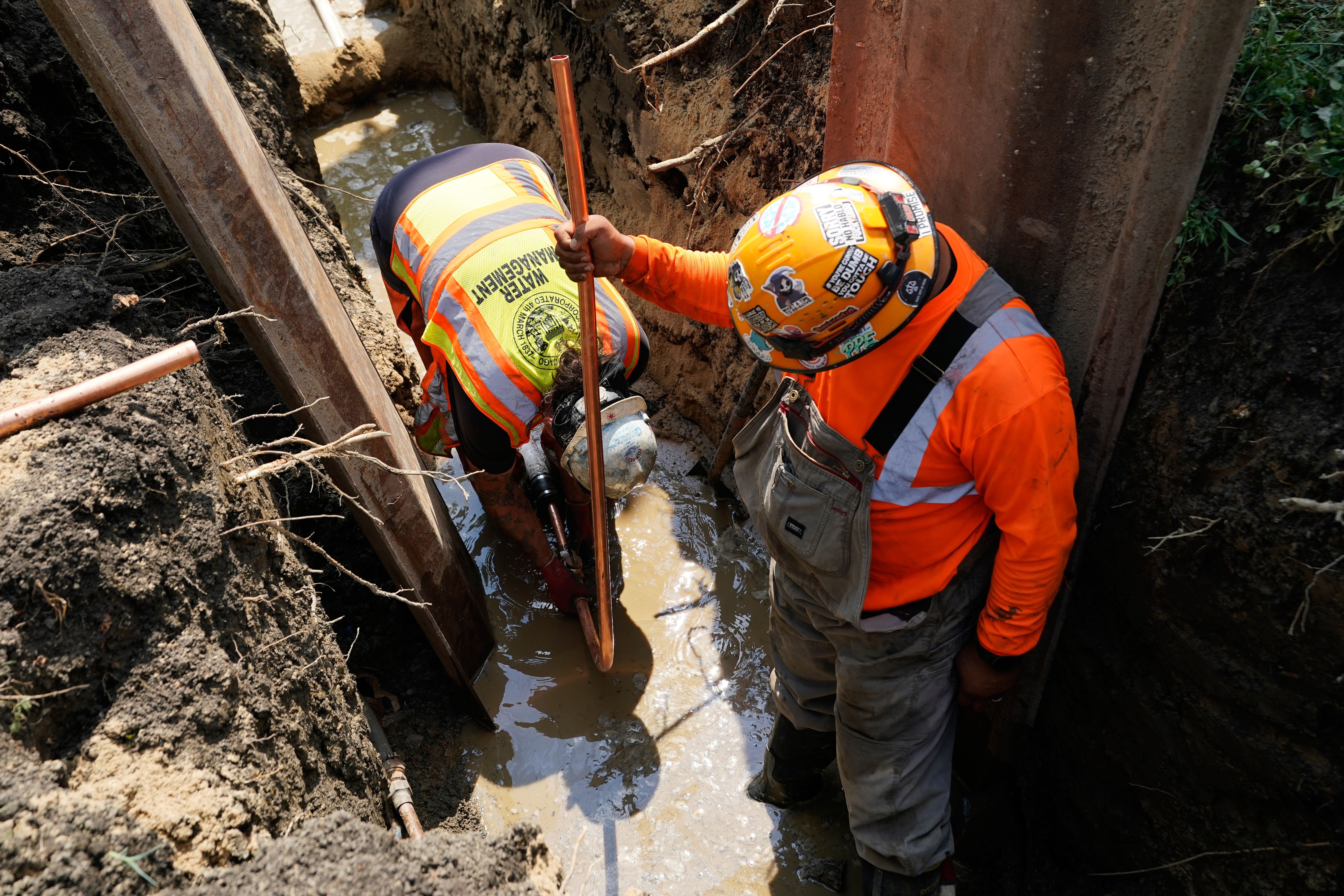
In Chicago, home to the most lead lines of any city in the country, crews are working block-by-block, digging up the pipes that branch off from the utility’s main line. The city still doesn’t know the material of close to one in 10 service lines. So in those cases, crews may have to excavate them to check the material, said Patrick Schwer, the city’s water quality director.
“We are digging through every single piece of information that we have associated with every single service line trying to find any indications of the material,” he said. “We’re scouring millions of work orders, trying to pull at little threads of information.”
Lead pipes for public water date as far back as the late 1800s and were prevalent all the way to the 1950s. Lead was a preferred material at the time because it was resistant to corrosion, and as a result, the original lines remain in use decades later.
Chicago advises residents with unknown lines to assume they are made of lead if their building predates 1986, when it was banned under the U.S. Safe Drinking Water Act.
Records of the installations were often lost, incomplete, or illegible. Lapses in recordkeeping have made it difficult for some utilities to complete their inventories, said Joshua Klainberg, senior vice president with the New York League of Conservation Voters.
Still, Klainberg said, leaving residents in the dark about whether they should take precautions by not submitting an inventory at all is “unforgivable.” Even an incomplete inventory can alert people they may have a lead service line, allowing them to take precautions such as running the tap, using filters — the highest-quality of which can remove most lead — and cooking only with cold water, he said.
Limited funds for replacements
For utilities, not knowing what is in the ground will carry an even stiffer consequence beginning in 2027. Starting then, they are required to replace 10% of lead water pipes each year, usually with copper or plastic pipes. But lines made of unidentified materials will be included in that target, said Erica Galante-Johnson, a lead policy analyst with the Environmental Policy Innovation Center.
“The more unknowns, the more lines a system needs to replace every year,” Galante-Johnson said.
In Chicago’s case, “the city is actively going after every single dollar that we can,” from the federal and state governments, Schwer said. The city still needs to replace about 393,000 lead service lines.
Most funding for identifying and replacing lead pipes comes from the 2021 bipartisan infrastructure law, with states distributing it. This is the final year of dedicated federal funding for lead projects, though previously allocated money will continue flowing to communities.
Water systems without an inventory will fall even further behind as national efforts shift toward replacements, Hayes said.
“If they can’t even get an inventory together, how the heck are they going to get the resources and the manpower and the kind of coordination between governments together to actually get workers out on the street and dig these pipes out of the ground?” he said.
Two images, which were created by Populous, the global design firm responsible for the arena’s conception, showed fans attending basketball and hockey games in the new state-of-the-art digs. But somefans say the Flyers’ rendering was missing one key detail: female fans. What ensued was a Where’s Waldo? level of analysis by people on the internet. The Flyers have sinceupdated the rendering.
The original Sixers rendering had a handful of what appeared to be female-presenting fans, wearing crossbody purses over their jerseys, with long hairstyles and ponytails. The Flyers version was more ambiguous. There appeared to be some women sitting toward the top of the image, in clusters across the stairs, but none wearing Flyers gear.
A Populous spokesperson said the company accepted responsibility for the oversight and worked quickly to update the rendering as soon as it became aware of the issue.
“The website now reflects the updated image,” the spokesperson said.
Camille Barrière was one of the initial critics who pointed out the apparent lack of women via an X post. Barrière, who lives in Paris, studied architecture and is pursuing her master’s degree inmedia design at the School of Design Nantes Atlantique, with a focus on the delegitimization of women and non-male sports fans.
When the renderings came out, Barrière saidonline that it was “new source material” for her thesis. Her post has been viewed nearly 200,000 times on X and has since spread to other social media platforms, particularly Reddit and Instagram among women’s sports pages.
Some fans worry the lack of visibly female fans in the original rendering was more than an innocent mistake and is actually indicative of the male-centric way sports fandoms are still stereotypically viewed. Others say it’s not that serious and this much intense dialogue based off a rendering is laughable.
“As a woman, I’m hyper aware of the amount of men in public spaces, and it’s for that reason that the image struck me. I continued searching and couldn’t find a single woman in Flyers gear in that picture,” Barrière told The Inquirer.
no women in the flyers render …. new source material for my masters thesis just dropped https://t.co/FppeyyaJEO
Creating architectural renderings is not one size fits all and the process can vary considerably, but the final product can help represent the future of a space and who it belongs to, says Rashida Ng, an architecture professor at the University of Pennsylvania’s Stuart Weitzman School of Design.
“I wouldn’t presume to know how or why the particular Flyers image was produced, or suggest that the omission was intentional,” she said. “But something can be unintentional and still be meaningful. If an image of a major public venue inadvertently leaves out a substantial part of the public, I think it’s worth asking how that happened.”
The Gist and Togethxr, two popular women-founded sports media brands, called out the original renderings on Instagram. Reports show women are one of the fastest-growing audiences in sports.
“They’re buying season tickets, filling arenas, creating fan communities, and shaping sports culture across every major league. The future of sports already includes women,” the Gist wrote in its post. “The renderings should too.”
Ng says she sees the rendering debacle as a “teachable moment.”
“Design is not neutral. The spaces we create — and the images we use to imagine and communicate them — both reflect and shape ideas about who belongs, who is welcome, and whose experiences matter,” she said. “That doesn’t mean every design decision or omission is intentional, but it does mean that designers have a responsibility to think critically about the worlds their work helps to envision.”
Thursday morning, the Flyers updated the rendering on its website with a new version, one that added many new visibly female fans.
As for Barrière, she’s shocked that a non-fan’s observation from across the world sparked discussion.
“If my silly tweet that was just meant for my 40 followers can initiate a discussion on the issue, then I’m all for it,” she said. “I think inclusivity in hockey spaces, whether online or in real life, still has a long way to go, and calling out the teams directly is one of the ways we can help move the conversation forward in a positive direction.”
And thinking about those women fans is particularly pertinent for the new arena — it’s also the future home of Philadelphia’s new WNBA franchise.
Twenty five years ago, Osama bin Laden led the planning of al-Qaeda’s attacks on Sept. 11, 2001, from a Taliban stronghold in Afghanistan, where he lived as their guest.
Now, the Taliban rule over Afghanistan once again, trying to present a more modern face to the world.
But despite the veneer, the Taliban have not changed their ideology, and armed groups, including dozens of al-Qaeda members, remain in Afghanistan. Many of the conditions that made the Sept. 11 attacks possible remain.
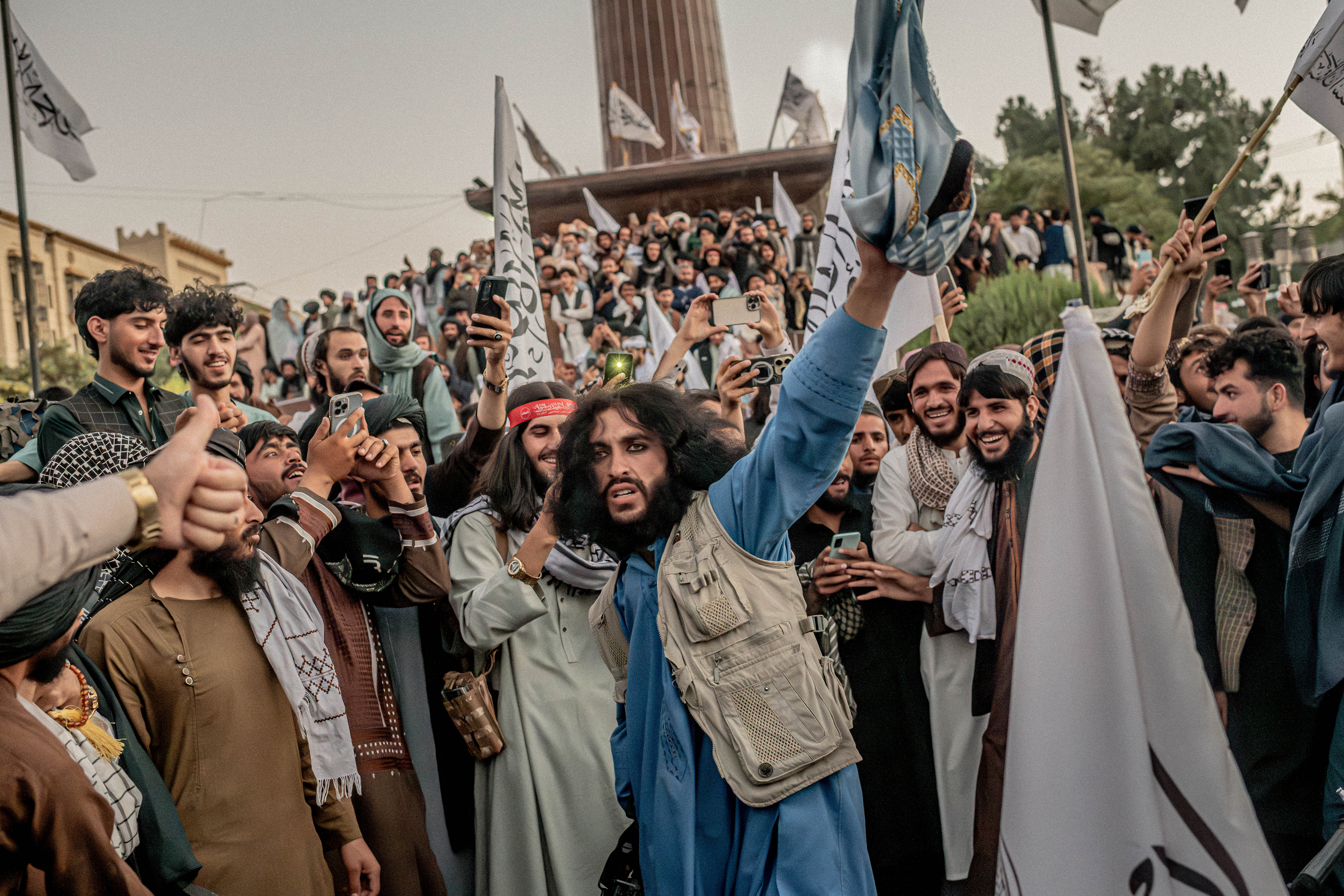
The Taliban outlasted the U.S. war to oust them and are now ruling over 45 million Afghans. They use the latest iPhones to contact European and U.S. diplomats. They travel to the Persian Gulf and Turkey, and promote trade with Uzbekistan and India. Their fighters now patrol Afghanistan’s cities, some using abandoned U.S. military gear.
And when Taliban officials receive foreign visitors in their gilded offices in Kabul, the capital, they insist that they want peaceful relations with the world. They repeat the commitments they made in 2020 during peace talks with the United States, not to allow another major attack to take root on Afghan soil.
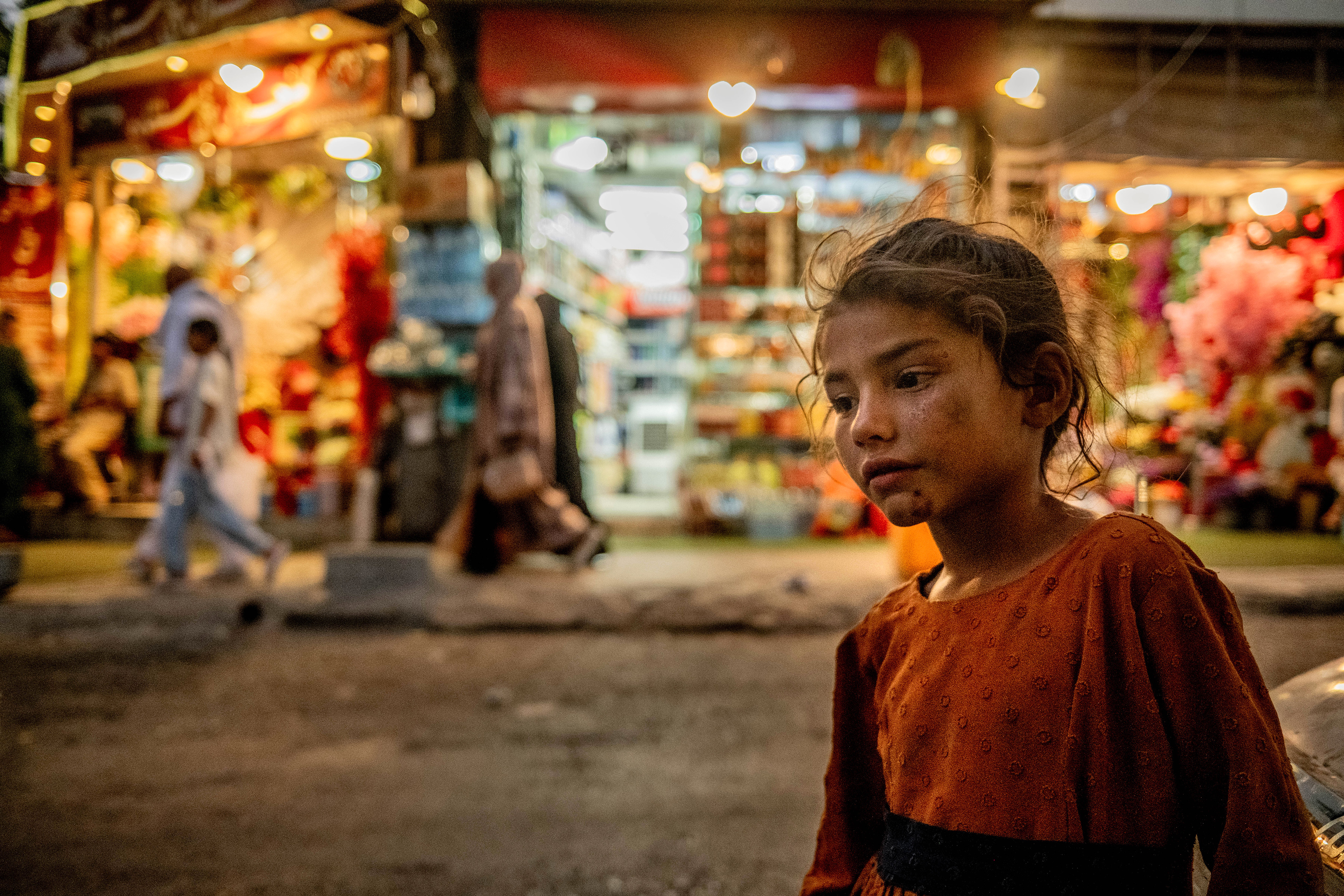
Marwa, an Afghan girl, begging on a recent evening in an area near Ziyafat. Half of Afghanistan’s population needs humanitarian aid.TOMAS MUNITA
“We consider the chapter of war to have come to an end,” Afghanistan’s foreign minister, Amir Khan Muttaqi, said in a recent interview in Kabul.
But the United States, the European Union and most other governments are not ready to trust them.
Their promises about security are similar to the ones Mullah Mohammad Omar, then the Taliban’s leader, made months before 9/11, when he told a journalist that bin Laden “does not operate against anyone from the soil of Afghanistan.”
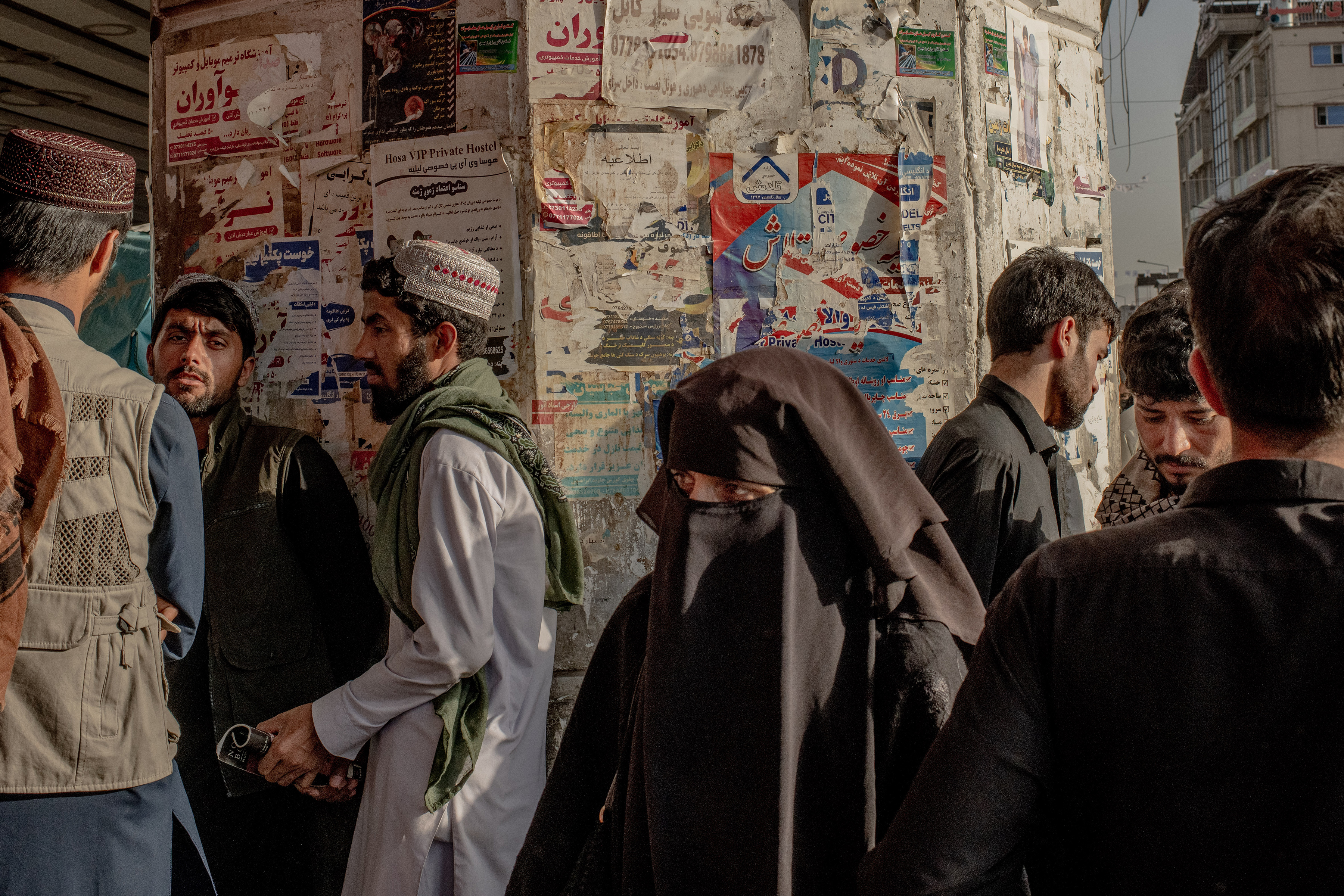
The Taliban have imposed increasingly severe orders on how women should dress in Afghanistan. They remain excluded from most public spaces and can’t work most jobs.TOMAS MUNITA
Al-Qaeda and other militant groups remain in Afghanistan, although without a leader as powerful as bin Laden and without their past influence over the Taliban.
And there is a troubling intelligence vacuum. Security officials and diplomats acknowledge that they lack the full picture of what is happening inside Afghanistan. It has again become a dark room where, they warn, new threats could emerge unnoticed.
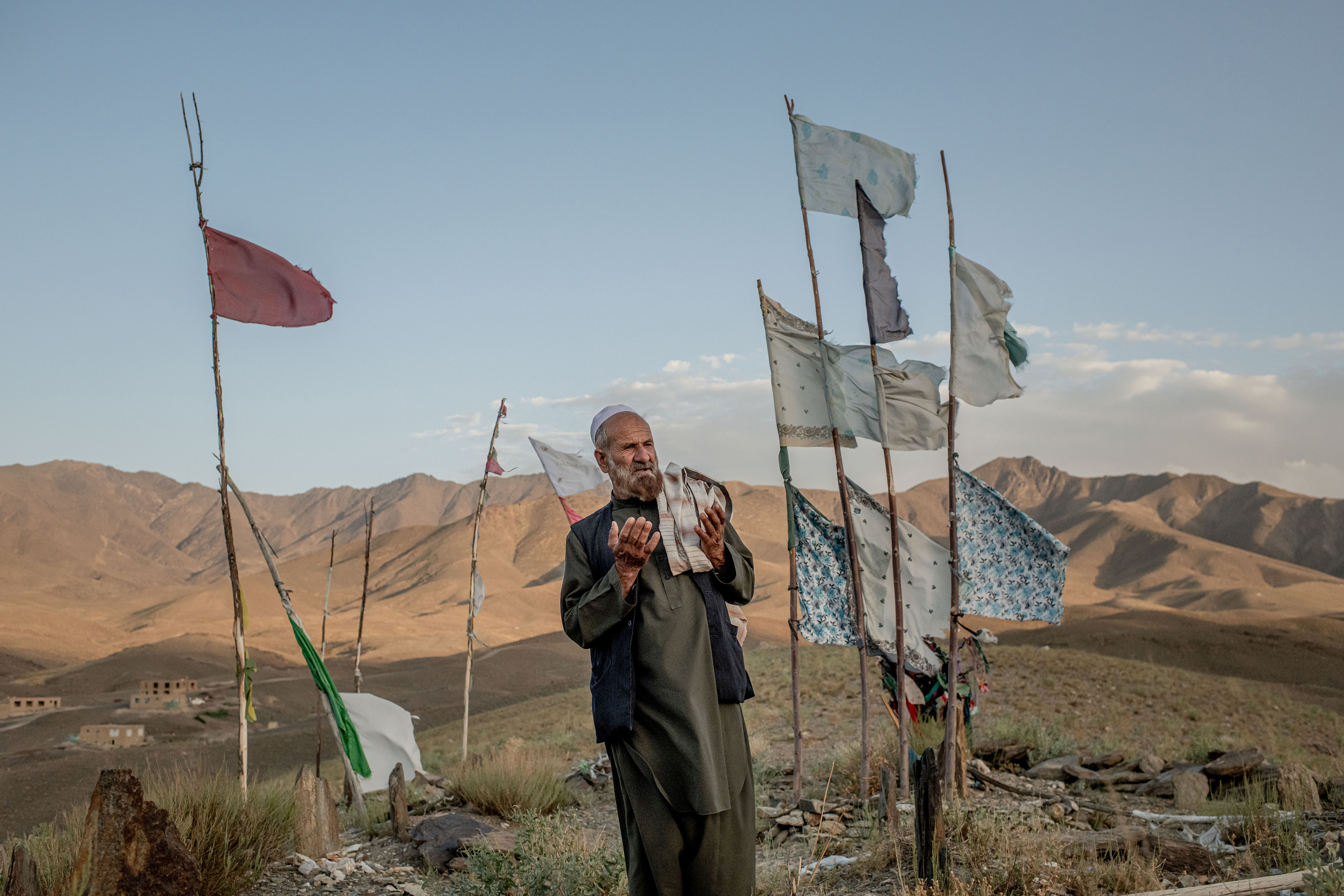
Sherin Jan Haidari, 55, praying in Wardak Province, west of Kabul, at the grave of his two nephews and niece killed by Afghan soldiers during the U.S.-led war.TOMAS MUNITA
What security means now
In conversation, Afghans often describe life in their country by what it is no longer: at war. Roads are safe. Mining deals are welcome. The sound of gunfire is less common. Civilians are no longer in constant danger of being killed by drones or crossfire, though the threat from unexploded devices remains. Kabul has seen an influx of new money and new restaurants that mimic the glitter of Dubai in the United Arab Emirates.
That is the Taliban’s message: Calm, not chaos, permeates Afghanistan.
But that is only one part of the story. Extremist armed groups still have a home in Afghanistan, according to the United States, China, Russia, and the United Nations.
The militant threat in Afghanistan is much less significant and visible than in the years leading up to 9/11, experts and security officials say, when up to 30,000 militants and fighters were in the country.
Still, United Nations experts estimate that 15,000 to 20,000 militants are scattered among about 20 groups in Afghanistan. Russia says they could number up to 23,000.
Al-Qaeda has only a few dozen members, according to estimates from the United Nations and security experts, but some of them live freely in Kabul. The Afghan authorities have issued national identity cards to the leadership of al-Qaeda’s South Asian branch, according to the United Nations’ group of experts monitoring terrorist networks.
Thousands of Islamic State group militants also roam the rugged borderlands between Afghanistan and Pakistan.
Most numerous are the thousands of militants from Tehrik-e-Taliban Pakistan, known as the Pakistani Taliban, or TTP, who navigate the porous border to stage attacks on Pakistani security forces. Security experts and officials attribute a sharp increase in attacks on Pakistan to the permissive environment provided by the Afghan Taliban since 2021.
Though in far lower numbers than in the 1990s, foreign fighters have also recently traveled to Afghanistan from Syria and Somalia.
The Taliban in Afghanistan deny backing the Pakistani Taliban but privately say that they could not rein in the group even if they wanted to.
Pakistan has been a close ally of the United States under President Donald Trump, and the United States has accused the Taliban of breaking their counterterrorism promises. Even China, long a staunch supporter of pragmatic engagement with the Taliban, has urged the group to “resolutely eliminate all terrorist forces.” The European Union wants it “to do more to convince the world that Afghanistan is not a potential threat.”
Intelligence diplomacy
The continued presence of thousands of militants is one of the main reasons for the Taliban’s continued isolation from the rest of the world. Most security analysts believe that they pose a threat mainly to the region, not the West, but al-Qaeda and the Islamic State group still promote a global ideology.
The Taliban claim they work closely with foreign intelligence services to fend off the Islamic State’s group’s Afghanistan affiliate. A senior Afghan intelligence official, speaking on the condition of anonymity to discuss national security matters, called this “intelligence diplomacy.”
The two groups are enemies because the affiliate adheres to an extremist jihadi ideology that views the Taliban as apostates for accommodating religious minorities and seeking international engagement. The affiliate claimed responsibility for the attack near the Kabul airport during the U.S. withdrawal in August 2021 that killed 13 U.S. troops and more than 170 Afghan civilians. It has repeatedly targeted Shiite communities in Afghanistan and has claimed deadly attacks in Kabul and Islamabad, Pakistan’s capital, this year.
The Taliban have deployed special forces teams to infiltrate areas controlled by the Islamic State group, according to Antonio Giustozzi, a senior research fellow at the Royal United Services Institute in London who follows militant groups in the region.
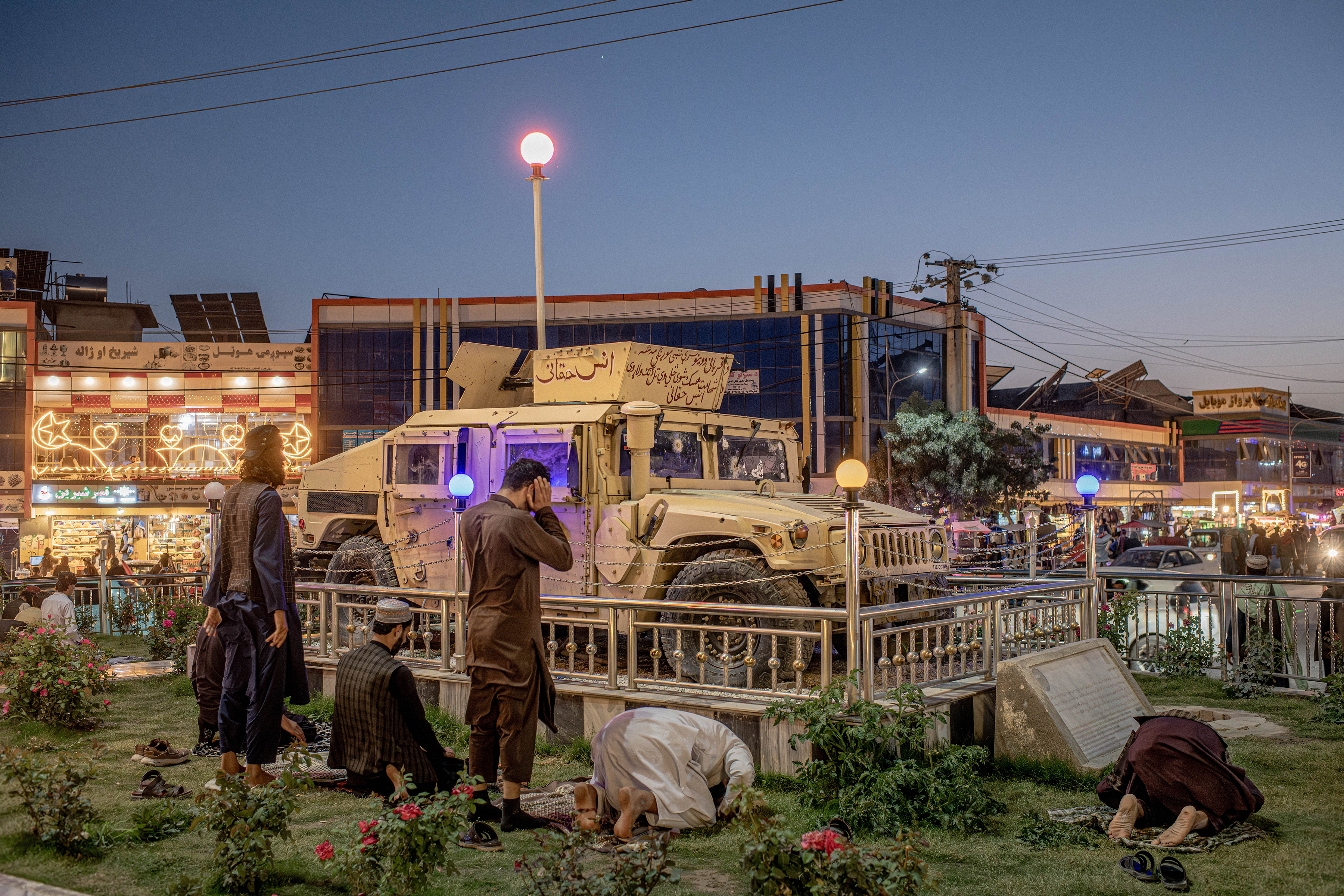
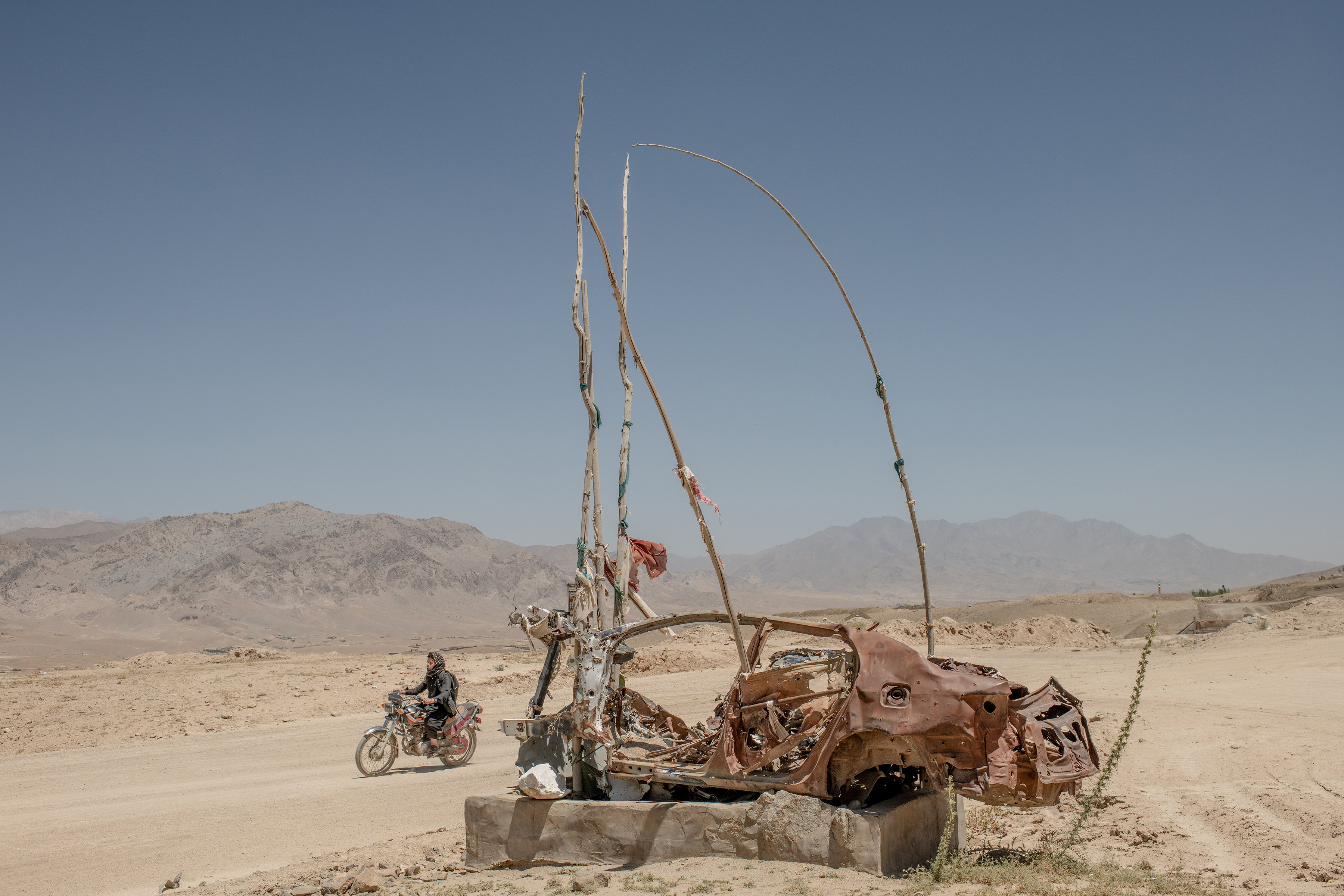
Afghans praying in the central square of Gardez, eastern Afghanistan, near an American Humvee from the war. The writing on the vehicle reads in part, “I hope the tower of martyrdom will stay high and shining in the sky.”TOMAS MUNITA
Experts and security officials say the affiliate no longer has the capacity to mount a large-scale assault. They attribute this to the work of the Taliban and Pakistan, as well as a broader loss of momentum by the group.
“Kabul, to its credit, is waging a fierce armed struggle against Islamic State,” Sergei K. Shoigu, Russia’s former defense minister and now the secretary of its Security Council, said this year.
The Taliban’s relationship with al-Qaeda is of another nature.
U.S. counterterrorism officials have in recent years called Afghanistan a “nursing home” for al-Qaeda’s senior members and defined the group’s threat from the country as being at its “lowest point” in decades.
But its influence persists.
Al-Qaeda never abandoned the Taliban during their 20-year insurgency, and the Taliban have not abandoned al-Qaeda in power.
A few dozen Qaeda members remain in Kabul and along the Pakistani border, training the Pakistani Taliban, according to the United Nations’ monitoring group on terrorist networks.
(Bin Laden’s successor, Ayman al-Zawahri, was killed in a U.S. drone strike on his balcony in Kabul in 2022.)
“The exact role of al-Qaeda Afghanistan? It’s very hard to say,” said Colin Smith, the coordinator of the U.N. group, which collects information from more than 40 intelligence agencies for its biannual reports.
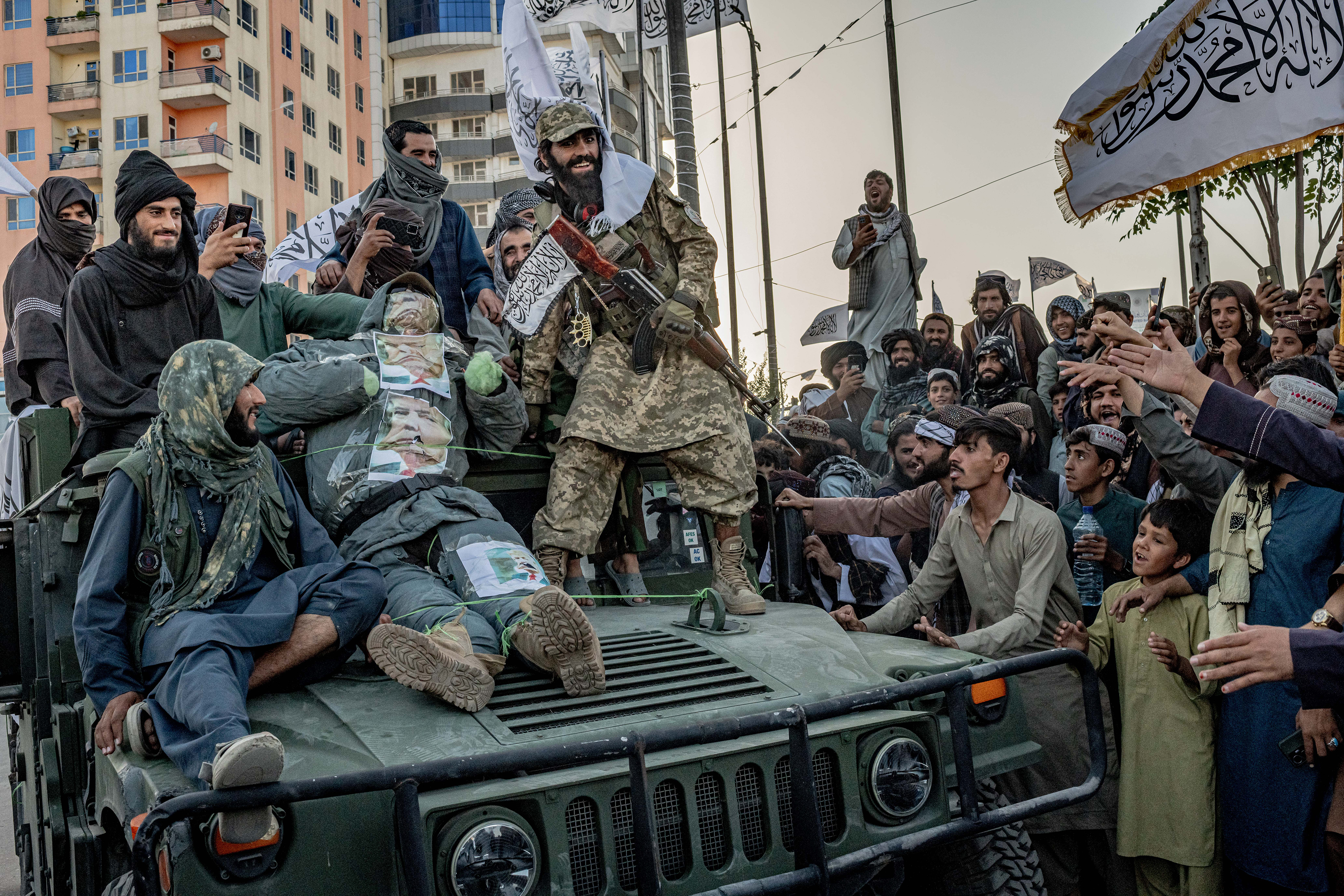
Taliban soldiers paraded in Kabul with an effigy of President Donald Trump on Aug. 15, in celebration of their return to power five years earlier. The soldiers later stabbed the effigy.TOMAS MUNITA
In April, al-Qaeda declared support for the Pakistani Taliban and renewed its endorsement of the Taliban government in Kabul, hailing the group as “a modern role model.” By backing the Taliban, al-Qaeda is buying time and space in Afghanistan, Giustozzi said.
Cumbersome allies
The Taliban’s relationship with militant groups keeps alive a long-running debate: Are the Taliban an insurgent group engaged in statecraft; a state-ruling entity that hasn’t shed its insurgent past; or a mix of both?
That uncertainty reflects the balancing act at the heart of the Taliban’s survival. Allowing Afghanistan to serve as a launchpad for international terrorism is not in the Taliban’s interest — as they learned after 9/11. But out of hospitality, ideological zeal and a lack of resources, they have so far been unable, and in part unwilling, to expel them.
The Pakistani Taliban are forcing the Taliban to face the consequences. The two fought side by side during the U.S.-led war, and the Pakistani Taliban now expect a return on investment: support to establish a similar stronghold in Pakistan.
If the Taliban withdraw support to their Pakistani counterparts, they risk seeing more of their disgruntled fighters join the Pakistani Taliban. Most of the Taliban’s rank and file now control checkpoints and patrol cities. The Pakistani Taliban are offering a new jihad, right next door.
“We sacrificed our generation to bring peace,” said Farhad Sangari, the Taliban commander of a special forces unit in Kabul, on a recent evening as he led a traffic patrol. He added, “I miss the memories of jihad and the front line.”
Many experts and security officials also fear that the vast network of religious schools that has expanded across Afghanistan since the Taliban takeover is teaching a violent, expansionist agenda.
“How many hundreds of thousands of men have been exposed to the Taliban ideology glorifying jihad?” said Michael Semple, a longtime Afghanistan expert at Queen’s University Belfast in Northern Ireland.
Afghans are now living with a situation they haven’t faced in decades. They are somewhat safe at home, but Afghanistan is once again exporting insecurity.
The return of gunfire
Whatever its exact nature, the relationship between the Taliban and militant groups now threatens to destabilize Afghanistan.
Fed up with relentless attacks from the Pakistani Taliban, the Pakistani military has retaliated with dozens of airstrikes on Afghan security and civilian infrastructure this year, including in Kabul.
A senior Pakistani intelligence official, speaking on the condition of anonymity to discuss national security matters, said his country’s leadership had concluded Pakistan’s domestic security would not improve until it “sorted out” the Taliban. Over the past few months, Taliban officials have grown increasingly concerned about the possibility of a Pakistani-backed attempt at regime change in Afghanistan.
Anti-Taliban resistance groups waiting in the wings now see an opportunity. Three groups, led by former members of the U.S.-backed Afghan military, have claimed responsibility for more than 50 attacks on Taliban officials, checkpoints and buildings across Afghanistan since July.
The leader of one of them, speaking on the condition of anonymity to discuss the attacks, described them in an interview as targets of opportunity, aimed at cracking the veneer of security that the Taliban have so far maintained.
The scattered attacks do not yet pose a regime-ending threat, but at least two local officials have been killed by anti-Taliban forces in recent weeks.
They are another reminder that in Afghanistan, war is not yet a distant memory.
Tal, Oren, and Alon Alexander, three prominent brothers convicted of running a decadeslong sex-trafficking scheme in New York earlier this year, have enlisted lawyer Alan Dershowitz in their apparent pursuit of a pardon from President Donald Trump.
They retained him in March 2025, nearly 11 months before their trial began in New York federal court, and since then have paid him hundreds of thousands of dollars, according to financial documents obtained by The New York Times.
Those documents include a copy of a check for $250,000, as well as a wire transfer receipt and an invoice from Dershowitz requesting an additional $250,000.
Dershowitz confirmed to the Times that he was working for the Alexander family, but said he had not yet discussed options for a pardon with them, describing his role as a consultant on “legal, constitutional, and sentencing issues.” According to a letter reviewed by the Times, written by Dershowitz to the mother of the men, his work also includes pursuing options of “executive clemency and judicial reversal.”
He had not discussed their case with President Donald Trump, Dershowitz said, and although he had visited the brothers in prison and held regular conversations with their criminal defense lawyers, he had not yet explored avenues for a pardon with them. The brothers each face a minimum of 15 years and a potential life sentence. Their sentencing is scheduled for Oct. 6.
“My work has been purely on legal issues completely,” Dershowitz said in a phone interview, but added, “I would be happy to provide consultation services on any aspect.” Dershowitz said he took on the case because he knew Shlomi and Orly Alexander, the brothers’ parents. He confirmed that he was working on behalf of all three brothers.
“I saw that they were facing very serious consequences,” he said. “I don’t ever turn down a case based on the government’s allegations.”
Lawyers for the Alexander brothers, in a joint statement, said they were not aware of any efforts to contact the White House on behalf of their clients. “Our sole focus has been on preparing for sentencing,” they wrote.
Dershowitz, 88, a high-profile lawyer, has ties to Trump, having helped to defend him during his first impeachment trial, where he was acquitted, and advising him at times on foreign policy.
In Trump’s first term, Dershowitz was credited with shaping more of the president’s clemency decisions than almost any other advocate. He played a role in at least 12 clemency grants, including two pardons, which wipe away most consequences of convictions, and 10 commutations, which reduce prison sentences.
He was sought after by other clemency seekers looking for an edge in a system in which connections to the president are seen as a way to skip to the front of the line. Lawyers and lobbyists with ties to the president have charged steep rates to people seeking to avoid or shorten prison sentences.
Dershowitz, who once described himself as a “liberal Democrat” but announced this year that he was joining the Republican Party, has also provided advice to others seeking clemency this year. He counseled OneTaste, a wellness company described by critics as a sex cult. The company’s founder and director of sales were convicted of forced labor conspiracy last year, and they are in federal prison in Brooklyn.
It is not clear if Dershowitz — whose decadeslong career has included representing Jeffrey Epstein — has had as much success in helping to secure clemency grants in the second Trump administration.
The brothers — Tal Alexander, 40, and the twins Oren and Alon Alexander, 39, who were raised in Florida — have their own connections in Trump’s orbit. Oren Alexander and Tal Alexander, who had been among the highest-earning real estate brokers in the country before their arrest, represented Jared Kushner and Ivanka Trump in their purchase of a $24 million Florida mansion in 2021.
The Alexanders began exploring avenues for seeking pardons before they were found guilty of sex trafficking and assault against both women and girls.
Last year, a person close to the brothers made inquiries with the Tzedek Association, a Jewish group that has been influential in shaping Trump’s clemency grants and criminal justice policies. The Tzedek Association, which was involved in at least one commutation granted this year, worked with Dershowitz on clemency issues during the first Trump administration.
Less than three months after their arrest, the documents show, the Alexander family paid Dershowitz’s retainer of $250,000. The Times reviewed a photograph of a check dated March 5, 2025, made out to Dershowitz and signed by Orly Alexander. The Times also reviewed a receipt from a wire transfer showing a transaction on that same day of $500,000, with a handwritten note scrawled below noting the funds had been wired after selling stocks belonging to Alon Alexander. “Send 250k to Dershowitz,” it noted.
More than a year later, Dershowitz sent a letter to Alexander, the mother, and to Inbal Rosenthal, who is the family’s accountant, according to a person with knowledge of the matter who agreed to speak under condition of anonymity to protect their privacy. He was owed more money, he wrote.
“Between March 1, 2025, and June 11, 2026, I have devoted 142 ¾ hours” on behalf of the Alexander brothers, Dershowitz noted. His work included visiting them personally, meeting with their lawyers and reviewing options for clemency and pardons, he wrote. He noted that his hourly fee had increased to $2,750, but he was billing at his previous rate of $2,500 and was now owed an additional $106,857 on top of the retainer.
“Please wire an additional retainer of $250,000,” he wrote.