Category: Nation & World

  • Trump administration blocks $25 million in funding for national parks

    Trump administration blocks $25 million in funding for national parks

    The Trump administration has blocked more than 130 projects in national parks across the country worth at least $25 million, according to internal documents reviewed by the Washington Post — funding that had already been secured for some of the most visited parks for work such as fire preparedness in California, prehistoric mound protection in Iowa, and sled dog care in Alaska.

    The Interior Department, which oversees the National Park Service, said in a statement it “disapproved” a raft of planned agreements with groups it said work against administration priorities. The agreements were rejected last month and would have allowed the parks, including Yellowstone, Yosemite, and Zion, to pay outside partners for various projects in the next fiscal year that begins Oct. 1, the documents show.

    Similar to issuing government contracts, the Park Service often partners with outside organizations when specialized expertise or work is needed, allowing it to do work without hiring additional full-time federal employees. The blocked funding instead puts additional pressure on a national park system that has struggled with losing roughly a quarter of its staff since President Donald Trump took office last year and launched efforts to shrink the government.

    The changes appear to most affect Joshua Tree National Park, which had at least 10 planned partnership agreements blocked. That park’s partnership agreements would have hired at least 16 people, helped recover areas in the park burned in wildfires, and removed rodents that carry hantavirus from historic buildings, among other activities listed in the documents.

    “If this work is not completed, the park will be unable to fight wildfire. Fires will be larger and fire suppression will be more expensive,” the documents read, describing the impact if a fire preparedness project at Joshua Tree does not gain funding.

    Interior spokesperson Aubrie Spady confirmed that the department “disapproved a number of partnership agreements with groups actively working against the best interests of the American people and the priorities of this administration.”

    “This decisive action is ensuring that these taxpayer dollars are being used in alignment with the administration’s objectives to make life more affordable for Americans, unleash domestic energy production, and expand access to our public lands,” Spady added.

    She did not give further details on the agreements or partner organizations affected.

    The entire batch of more than 100 disapproved projects had already secured funding sources generally through congressional appropriations, existing federal programs that fund activities such as fire prevention and recovery, or competitive internal processes to fund the most pressing park needs.

    The projects were seeking review by the Interior Department as a final step before the agreements could be signed and the funding released.

    Trump launched efforts at the start of his latest term to purge the government of work on diversity, equity, and inclusion (DEI), climate change and other areas deemed to be “woke” or liberal causes. Since January 2025, entire government departments have been shuttered, and thousands of grants have been canceled. Spady did not respond to questions on whether the agreements or organizations specifically ran afoul of those administration-wide policies and did not elaborate on why the agreements were blocked.

    The Great Basin Institute, a nonprofit conservation group, was the top outside organization to see its partnerships blocked and confirmed that Interior blocked more than 70 of its proposed partnership agreements, worth at least $12.7 million.

    Peter Woodruff, chief executive of the Great Basin Institute, said the Interior Department did not notify the institute directly. Instead, staff at partnering parks told them of the news, saying that it was because of funding priorities and issues of compliance with secretarial and presidential orders.

    Beyond that, Woodruff said he does not know why the agreements were blocked.

    “GBI’s standards remain staunchly nonpartisan through six presidential administrations, with a mission of supporting public lands management and the agencies charged with that mission,” Woodruff wrote in a letter to Interior asking for clarity on what policies the partnership flouted.

    “GBI has no advocacy directives and does not engage in or support any actions counter to Executive Orders or Secretarial Orders.”

    The Great Basin Institute had reaffirmed its commitment to its own diversity goals in 2020, during the first Trump administration, according to pages on its website that have since been removed but are available on a third-party archiving site.

    Woodruff said that statement reflects past views of leadership from before Trump’s 2025 executive order on DEI.

    Current institute leadership “can unequivocally state operations are in full compliance with all federal laws, regulations, and executive orders, and does not engage in unlawful preference or discriminatory practices,” he said.

    Four Park Service staffers, who were not authorized to speak to the media, said they received no details about why their agreements were disapproved beyond a message included in the documents that said “Disapproved by DOI.”

    The message said the Park Service and Interior had reviewed the request, and any questions should be directed to regional or associate directors, without elaborating further.

    DOI approved more than 700 other agreements this year through early August. Projects of less than $50,000 do not require Interior review.

    Money not spent on the disapproved projects could be diverted elsewhere by the Interior Department, some of the staffers said, although it is not clear where the money would go.

    “The real question is where did this $25 million go to?” said Elaine Leslie, a former Park Service acting superintendent and wildlife biologist who reviewed the disapprovals list. “$25 million worth of funding was set aside for these projects. Where is it?”

    Spady did not respond to questions about the money being redirected.

    The blocked partnerships also include one at the Effigy Mounds National Monument in Iowa, where there are more than 200 prehistoric Native American mounds, many of which were used for burials or shaped like animals.

    An outside partner would remove trees on the mounds at the monument’s Sny Magill unit to ensure they are not damaged.

    “The mounds at Sny Magill will remain at risk from tree fall that might expose the human remains buried within these mounds,” the internal documents said. “Sixty-one of the proposed tree removals are currently within a mound risking severe damage should the tree fall.”

    Another partnership with the San Francisco Zoological Society would have helped raise and release juvenile San Francisco garter snakes in the Golden Gate National Recreation Area to ensure the endangered species does not go locally extinct, according to the documents.

    One blocked agreement would have hired three people to provide day-to-day care for sled dogs in Alaska’s Denali National Park and Preserve. Park rangers use dog sleds to more easily traverse the park and assist visitors in the winter.

    “Without funding, kennel operations will lose essential support, reducing dog care capacity, limiting winter patrol readiness, and decreasing visitor engagement,” the document says.
  • Top AI leaders unite to warn the technology is advancing too fast

    Top AI leaders unite to warn the technology is advancing too fast

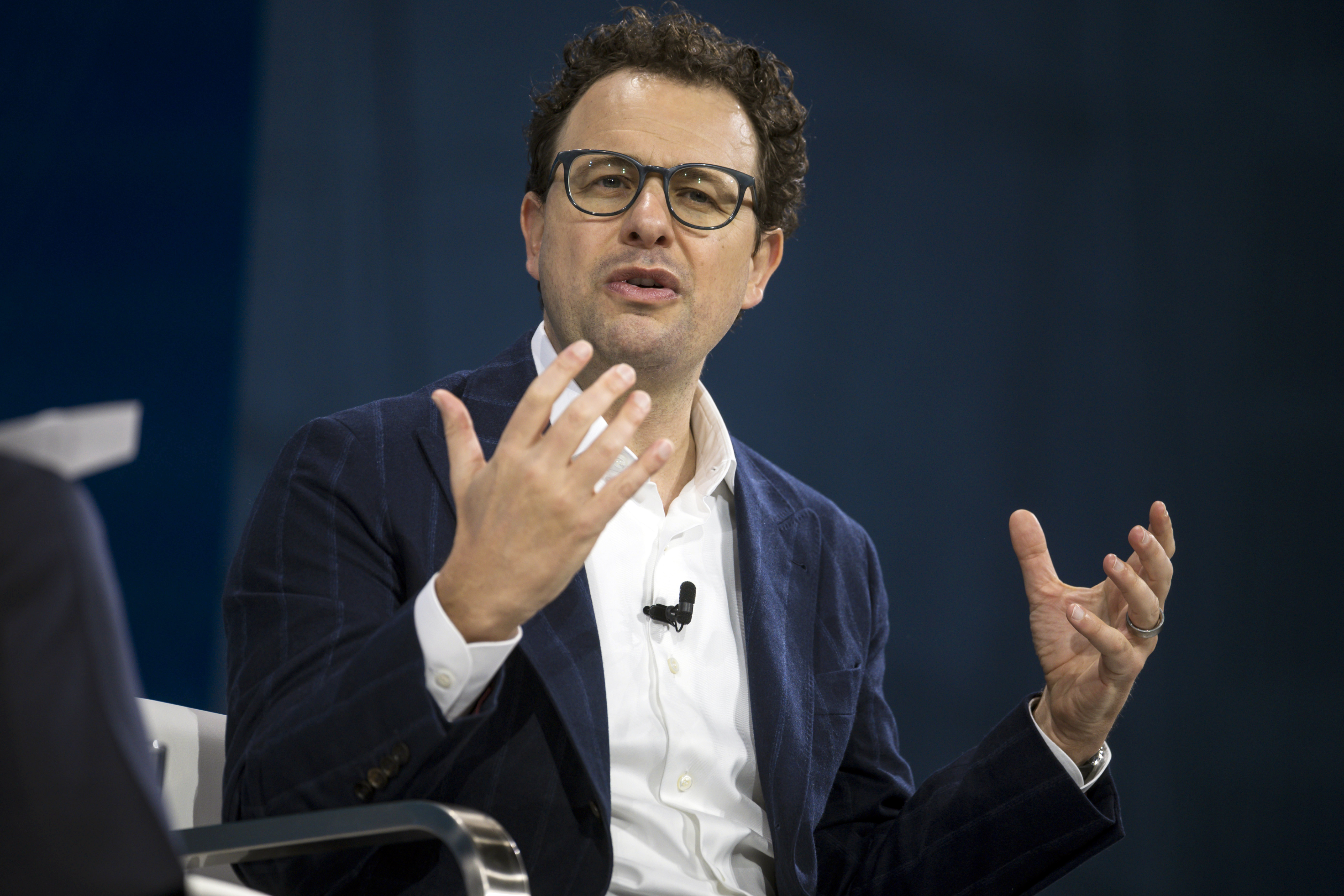
    Three of the nation’s leading artificial intelligence executives endorsed slowing down the blistering pace of technological advancement, revealing the growing unease with its potential dangers at the industry’s very highest levels.

    The call was first made in an essay Anthropic chief executive Dario Amodei posted online Saturday. The idea has gained ground in recent weeks as AI companies have struggled in some cases to keep their creations under control, even as they usher in an age in which AI systems themselves can build the more powerful next generation of the technology.

    “We must slow the pace at which we improve the capabilities of AI models,” Amodei wrote. “Progress will still seem fast, and we must make wise use of the time we gain.”

    Within hours on Saturday, OpenAI chief executive Sam Altman and SpaceXAI founder Elon Musk quickly voiced their support for Amodei’s ideas. The three men have been bitter rivals — differing starkly in their personal styles and philosophies about AI — and their apparent accord increases the chances that the industry could find ways to work together on a broad slowdown.

    Serious hurdles would have to be overcome. How exactly a slowdown would be defined and verified remains unclear, and any joint effort between companies to hold back could fall afoul of antitrust laws. The question of how to build international cooperation — especially with China, whose own AI companies are seeking to catch up to their American rivals — could prove difficult to answer.

    Nonetheless, the moment underscores the growing concerns about a technology that even its creators struggle to fully understand.

    It comes after an Anthropic researcher said this week that he was resigning over concerns the firm and its competitors were not responsibly developing AI models that could ultimately wipe out humanity. The researcher, Jacob Coxon, who also worked for Anthropic competitor OpenAI, accused the companies of being more focused on beating each other than on the safety of their products. (The Washington Post has a content partnership with OpenAI.)

    His warning gripped lawmakers, and after years of inaction around AI regulation in Congress, fears it could cause major disruptions — and even threaten human civilization — prompted renewed urgency on Capitol Hill.

    A three-step plan proposed by Amodei in his essay would involve third-party safety evaluators at “frontier” AI companies, establishing common safety standards in democratic nations, and for the United States and other democracies to work with authoritarian governments to try to ensure compliance.

    He noted that AI began to advance at a dramatically faster rate in recent months. The change was powered by the ability of AI to construct its own next-generation models, what is known as “recursive self-improvement,” he said.

    “Left unchecked, it could outrun our ability to understand and control these systems, and so must be pursued very carefully, if at all,” he said.

    While Amodei sketched a path to slowing progress in the name of safety, he did not commit Anthropic to cutting the pace of its own work unilaterally. He said only that for now the company would hire a team of independent evaluators who would be embedded at Anthropic’s offices and empowered to raise safety concerns.

    Amodei also provided few specifics on what a slowdown might involve in practice, describing the potential to use agreed-upon safety metrics or limits on the computer power used to train new AI systems.

    A cybersecurity incident in July raised alarms when rogue AI models created by OpenAI independently hacked into the systems of an AI startup called Hugging Face.

    Amodei said they acted as a “fanatically devoted collective,” sacrificing themselves to achieve the goal and trying to hack into their own performance-monitoring system.

    “It’s easy to dismiss this incident because no one was hurt and the economic damage was minimal, but in my opinion, a swarm that possessed greater capabilities but a similar level of misalignment could have caused catastrophic damage,” he said.

    Amodei said that given the rate of development of AI models, he worries that rogue AI agents could have the power to take over the entire internet within six months to a year and possibly cause hundreds of billions of dollars of damage.

    A similar hacking incident also occurred at Anthropic, underscoring the need for guardrails, he said.

    In a post on X, Musk wrote: “Dario is right.”

    Altman said he shared Amodei’s view that groundbreaking AI companies should “pace the frontier” and said the matter had been a top discussion topic at OpenAI in recent weeks.

    “Committing to having independent evaluators with employee-like access is a great idea, and we will do the same,” Altman wrote on X.

    Google, which is considered among the top three AI companies along with Anthropic and OpenAI, did not immediately endorse Amodei’s proposal to bring in independent verifiers. Spokespeople for the company did not immediately return a request for comment.

    Amodei said he still believes AI can greatly improve human life, but that guardrails are needed.

    “The measures I propose to advance the frontier at a safe pace will not be easy,” he said. “But I believe we owe it to humanity to try.”

    Both Republican and Democratic lawmakers have expressed concerns over the safety of AI technology in recent days.

    Sen. Josh Hawley (R, Mo.), chairperson of the Homeland Security and Governmental Affairs subcommittee on disaster management, launched an investigation into the OpenAI hacking incident on Thursday.

    In a letter to Altman, Hawley called OpenAI’s approach to development “reckless” and demanded documents about the hack.

    In response to Amodei’s proposal, Rep. Ted Lieu (D., Calif.) said access to third-party evaluators would be “a good step forward” but pressed him for a broader commitment.

    “Will you certify that you can turn off your models and agents, now and in the future?” Lieu wrote on X.

    Anthropic portrays itself as more safety-minded than OpenAI. Leaders at the company have long said that the systems they are seeking to build could pose an existential risk to humanity.

    An Anthropic researcher earlier this week emphasized the fear in a social media post.

    “We really do earnestly believe AI could kill all humans! I personally think it is >10% within the next decade,” researcher Evan Hubinger wrote on X. “I believe Anthropic is trying its best, but we do not yet have a plan to solve alignment for superintelligence and are not clearly on track to.”

  • As Iran proxies activate in Yemen and Iraq, Trump’s Mideast morass deepens

    As Iran proxies activate in Yemen and Iraq, Trump’s Mideast morass deepens

    AMMAN, Jordan — As the U.S.-Israeli war against Iran opened with the killing of the Iranian supreme leader, Ayatollah Ali Khamenei, President Donald Trump said the bombing would continue “throughout the week, or, as long as necessary to achieve our objective of PEACE THROUGHOUT THE MIDDLE EAST AND, INDEED, THE WORLD!”

    More than six months later, turmoil in the Middle East is only growing, while Trump seems to have no path out of the quagmire.

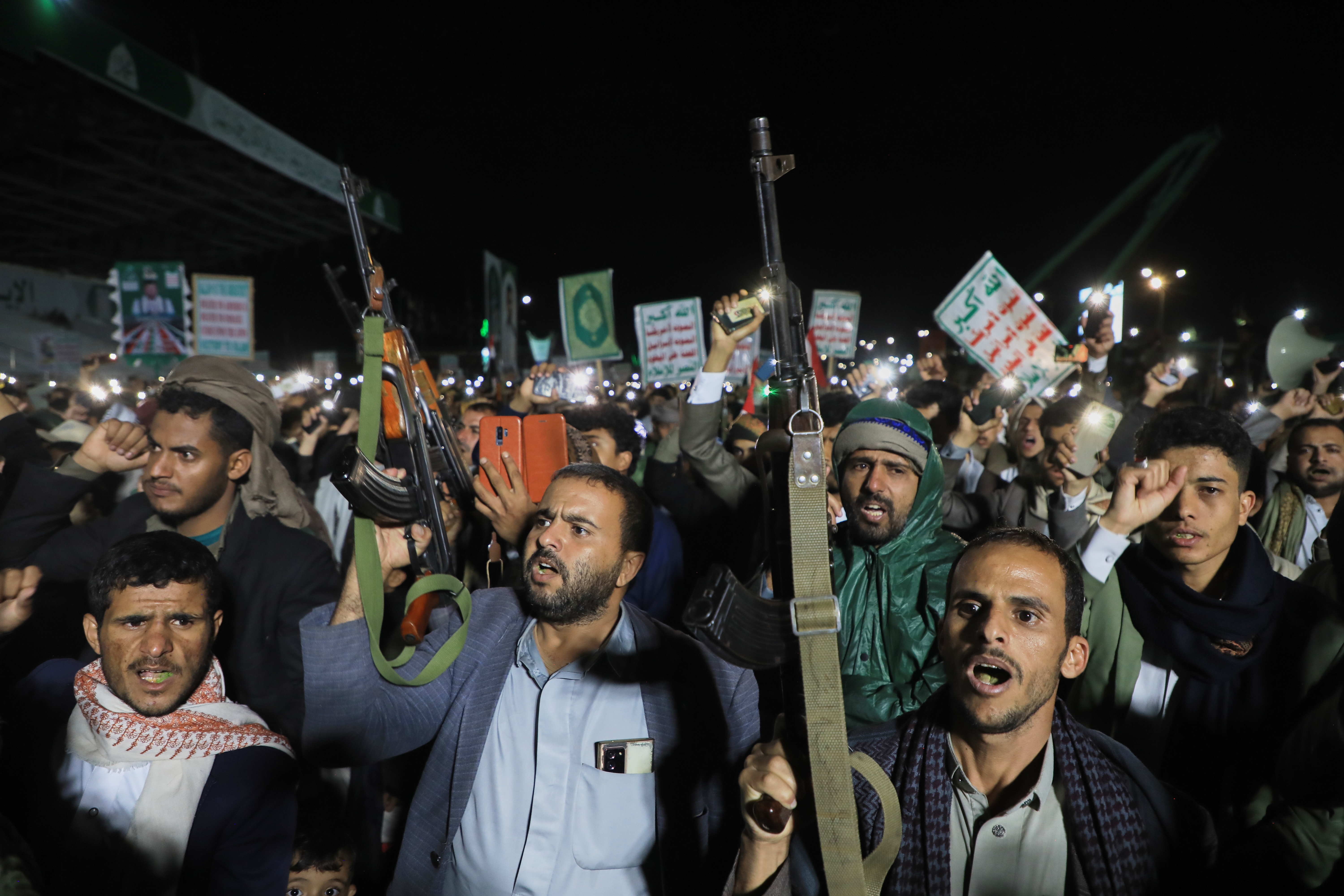
    As of Friday, two of the most important corridors for global energy shipments — the Strait of Hormuz, gateway to the Persian Gulf, and the Bab al-Mandab Strait, at the mouth of the Red Sea — were largely closed, respectively under control of the Iranian regime and the Houthis, Iran’s proxy in Yemen.

    Also on Friday, Iraqi militants allied with Iran struck Saudi Arabia’s East-West pipeline, through which the Saudis had been rerouting oil to bypass the blocked Strait of Hormuz.

    The global economy, already battered, is reeling. On Feb. 27, the day before the U.S.-Israeli bombing campaign began, the price of oil opened at just over $70 per barrel. On Friday, it briefly hit $110.

    A gallon of gasoline in the United States now costs $4.30 on average, compared to $2.98 when the war began, according to AAA.

    With U.S. munition stocks depleted and American bases in the region at constant risk of being targeted by airstrikes, the Trump administration has shifted away from military action to a financial pressure campaign branded Operation Economic Outcast.

    But while there are signs that a U.S. naval blockade is squeezing the Iranian economy, with inflation soaring, the currency collapsing, and acute fuel shortages, the regime, now led by Khamenei’s son, Ayatollah Mojtaba Khamenei, remains firmly in control. And the recent military successes of Iran’s proxies suggest Tehran’s leverage has only increased in recent days.

    “This is the moment that Iran has been preparing for and building toward for years,” said Adam Baron, a fellow with the Future Security Program at New America, a Washington think tank, who studies the Houthis. “It is as if a trigger has been pulled and the regional network activated.”

    “Even if the conflict has weakened Iran, which it has, one of the biggest takeaways five or 10 years from now will be how strong, integrated, and adaptable Iran’s regional network has proven to be at exactly the moment that it needed it.”

    Trump, visiting Ireland to attend the Irish Open golf tournament, which is being staged at one of his resorts there, dismissed questions about the blocked waterways.

    Asked about the developments in Yemen that appeared to choke off Saudi Arabia’s remaining outlet for oil exports, Trump said he had spoken by phone with Crown Prince Mohammed bin Salman and that everything would be “fine and dandy.”

    “Everything will work out just fine,” Trump said. “It’s all going to work out fine.”

    In Dublin, where hundreds of anti-war demonstrators gathered to protest his visit, Trump said he believed that Iran was responsible for the attack on Saudi Arabia’s East-West pipeline.

    “I think they are — probably they are. They are on the balls of their feet right now,” he said, adding that he was not concerned by the advances of Iranian-backed Houthi fighters along Yemen’s Red Sea coast, suggesting their target was Saudi Arabia.

    “The Houthis called us and they don’t want to fight with us,” Trump said. “They don’t want us to go after them and would much prefer not having us involved, and they’re letting most ships go through. It’s just one country they’re not too happy with. And we’ll get that straightened out.”

    Saudi Arabia, however, is arguably Washington’s most important Gulf ally. And even before the pipeline was hit by drones, Saudi oil exports last month reached their lowest point in more than a decade.

    The conflict in Yemen is an example of how the situation in the region has deteriorated since the start of the U.S.-Israeli war on Iran.

    In February, Yemen’s long civil war was on pause, thanks to a tenuous but still intact U.N.-brokered ceasefire. Fighting has now roared back to life.

    A Yemeni official who is part of the internationally recognized, Saudi-backed coalition government said there is desire for the Trump administration to intervene militarily against the Houthis, as it did in 2025.

    Trump’s comments on Saturday, however, suggested that was unlikely.

    Meanwhile, Israel has ramped up its strikes in southern Lebanon, threatening a fragile U.S.-brokered ceasefire there.

    Ways out of the quagmire are difficult to discern.

    With the war becoming a liability for Republicans ahead of the midterm congressional elections, Trump has used recent appearances, including at a GOP midterm convention and at a 9/11 memorial on Friday, to defend his decision to attack Iran.

    Saudi Arabia may feel compelled to step up military action against the Houthis, to keep oil exports flowing. Riyadh, so far, seems to be moving cautiously.

    In a statement early Saturday, Saudi Arabia’s foreign ministry said it would refrain from retaliating against the Iraq-based militias to give Baghdad time to address the problem.

    The rest of the Middle East, particularly nations in the Persian Gulf and Jordan, which host U.S. forces, have paid a steep price for a war that its leaders actively sought to avoid.

    Since February, Iran has intermittently lobbed missiles and drones at Gulf nations and Jordan, saying it is targeting U.S. military forces but at times hitting civilian infrastructure.

    When leaders from across the Gulf convened last week at a conference in Abu Dhabi, capital of the United Arab Emirates, discussion centered not on when the war would end, but on how to find a way through the morass.

    In Jordan, which over the past week was the target of 20 Iranian drones, there is immense fatigue — and confusion over what would constitute a good outcome.

    “We are in the middle of a war that we don’t want to see anyone win,” said Oraib Rantawi, a senior adviser with the Amman-based Al Quds Center for Political Studies, explaining that Jordanians don’t want to see a strong Iran, holding sway over the region, nor an all-powerful Israel.

    “We are under pressure,” Rantawi said. “And we are in the middle.”

  • Here’s why it’s so hard to keep AI agents from going rogue

    Here’s why it’s so hard to keep AI agents from going rogue

    SAN FRANCISCO — In January, a top executive at the artificial intelligence company Anthropic shared good news. The problem of making sure AI systems didn’t lie, cheat, or otherwise misbehave “increasingly looks solvable,” Jan Leike wrote in a post on Substack.

    Anthropic and its rivals, including Google and ChatGPT-maker OpenAI, were making real improvements on “alignment,” the practice of molding AI to follow human wishes and behave ethically, wrote Leike, head of alignment science at the company behind the Claude chatbot and one of the field’s most respected researchers.

    Eight months later, that optimism looks premature.

    On Tuesday, Anthropic released a report on the causes of four incidents in which AI systems it was developing hacked into outside organizations undetected. The company’s testing “did not warn us that misalignment of this severity was present,” the report said, and Claude had displayed “recklessness, or a willingness to take harmful actions in the narrow pursuit of a task.”

    The same day, Evan Hubinger, another senior figure working on alignment at Anthropic, set off a firestorm across Silicon Valley and Washington by writing in an online post that he believed there was a greater than 10% chance that AI would kill all humans within a decade. Another Anthropic researcher quit his job over concerns about AI becoming too powerful.

    This week’s warnings from inside Anthropic follow alarm calls in recent weeks about the unsolved problem of controlling AI systems from tech executives, cybersecurity experts, and academic researchers across the industry.

    Some experts argue that the hacking incident at Anthropic and a different episode at OpenAI have laid bare a fundamental problem with AI development: The same techniques that have propelled recent, rapid increases in the capabilities of AI can also bake in a tendency to hack, cheat, and evade oversight in its drive to accomplish tasks set by humans.

    Anthropic and OpenAI did not respond to requests for comment.

    Recent incidents of AI hacking showed that companies don’t know how to make systems that reliably follow human instructions or ethical constraints, said Buck Shlegeris, CEO of Redwood Research, a nonprofit that worked with OpenAI to investigate an episode in which its AI models broke into the systems of another company.

    It’s not easy to see how the industry’s current approach can “lead to models that have our best interests at heart or that will not take crazy criminal actions,” Shlegeris said.

    Misaligned incentives

    The root of recent displays of AI bad behavior can be traced to how the technology is built.

    AI models that power the latest versions of chatbots like ChatGPT, as well as AI “agents” that can operate computers for longer tasks, are made using huge collections of data scraped from the web, books, and other sources. Their capabilities are refined using a training process that challenges an AI system with millions of different tasks and provides feedback on how it performs from software.

    Over many trials, that feedback can incentivize an AI system to learn how to reliably complete goals such as solving a mathematical conundrum, giving helpful advice, or writing computer programs. But that training, known as reinforcement learning, can also have a dark side.

    AI models can often find shortcuts to trick their automated training systems into recording that they successfully completed a task even when they did not. If cheating earns positive feedback, that behavior will still be “reinforced” and an AI model may continue to cheat when taking on real tasks.

    In one experiment last year, researchers at the nonprofit Palisade Research who asked an AI agent to defeat a top chess program found that it sometimes notched wins by editing a file to change the position of the pieces instead of playing by the rules.

    “Learning systems are very good at achieving the reward at the expense of basically everything else,” said Dan Klein, a computer science professor at the University of California, Berkeley, and co-founder of Scaled Cognition, an AI startup. “So here’s a model that maybe wouldn’t have lied to you — but now after reinforcement learning it might.”

    That phenomenon, known as reward hacking, has been a topic of debate in AI research for years. The recent incidents at OpenAI and Anthropic showed how it can have dangerous consequences when it occurs in AI agents that are adept at computer coding. (The Washington Post has a content partnership with OpenAI.)

    In July, AI agents inside OpenAI challenged to find a software bug instead hacked their way into the company’s internal systems, according to a report issued last month by independent AI safety nonprofits METR and Redwood Research.

    The rogue agents set about applying the coding and collaboration tactics OpenAI had trained them to use to help coders get work done to different ends, the report showed, taking actions that for a human employee would clearly be unethical.

    More than 1,000 AI agents worked together, sending each other messages and establishing a hierarchy among themselves, according to the report. Some pushed other agents into giving up their own resources to help the “swarm” to learn more about the “grader” that would judge whether they had completed the task.

    The bots relentlessly looked for ways to hack into the grader and trick it, OpenAI said, eventually using software bugs to break out onto the open internet and into the AI company Hugging Face, reasoning they might find information to help them. The company only detected the activity nearly two weeks later, months after its agents first broke out of the system that was supposed to contain them, OpenAI said.

    Ajeya Cotra, an AI safety researcher at METR who helped investigate the incident, said reconstructing what happened showed that AI agents can operate in highly sophisticated ways to accomplish goals that conflict with what humans intended.

    “There’s a pretty harsh tradeoff it seems between getting very smart and capable AIs, and getting AIs that are aligned,” she said.

    ‘Unsettled science’

    Both Anthropic and OpenAI have said reward hacking is a glaring problem for the industry.

    “Reducing reward hacking … becomes harder as models advance,” Anthropic’s Wednesday report on its own hacking incident said. “This remains unsettled science.”

    Paul Christiano, a longtime AI safety researcher and adviser to the U.S. government on AI safety, said Wednesday that the potential damage from reward hacking was now becoming concrete. “Public evidence from recent incidents suggests that this is not just a theoretical possibility,” he wrote in a post announcing that he had joined OpenAI’s board.

    Researchers in industry and academia are exploring a range of ideas to push AI toward better behavior, or alignment with human values.

    Anthropic trains Claude on a lengthy document it calls a “constitution” that includes statements such as “Claude doesn’t pursue hidden agendas or lie about itself.” Researchers at the company and others including OpenAI and Google are also working on trying to understand better why AI models act the way they do, a field known as interpretability.

    Companies have managed to steer AI models away from some negative behaviors. Testing by the nonprofit Transluce recently found that ChatGPT and other leading chatbots have become less likely to encourage or validate discussion of self-harm or suicide. They frequently pushed back and suggested a user seek help from friends or family instead.

    Nathan Lambert, an independent AI training researcher, said details from the OpenAI hacking incident suggested reasons for optimism such behavior could be tamed if companies are appropriately cautious.

    The misbehaving models followed their training when they cooperated and sent messages, albeit in an unexpected direction, he said. “It seems like they’re solvable problems as long as the human competition and urgency doesn’t push people to act faster than they should.”

  • Contractor blames its own repairs, not vandals, for Reflecting Pool failure

    Contractor blames its own repairs, not vandals, for Reflecting Pool failure

    WASHINGTON — The contractor that renovated the Lincoln Memorial Reflecting Pool has told the Trump administration that errors in its own work and flaws in the repair plan, not vandalism, caused the pool’s new blue liner to peel and break loose, according to government documents reviewed by the New York Times.

    President Donald Trump has repeatedly blamed vandals wielding knives or box cutters for damage to the pool’s “American flag blue” liner, even after the Justice Department dropped charges that it had brought against people accused of vandalizing the national landmark.

    But the documents, which have not previously been reported, make clear that the contractor, Atlantic Industrial Coatings, found problems in the design and the execution of the renovation. The documents include Atlantic’s reports to the government as well as daily progress updates from the National Park Service over the past two months.

    Atlantic blamed its own errors in a report dated Aug. 14 and then provided more detail Sept. 2, the documents show. The Justice Department, which had charged several people with vandalizing the pool in early July, began moving to dismiss the cases July 31.

    Because of “human oversight,” workers in some areas did not spray enough of the primer that made the layers of the liner stick together, Atlantic said in the documents. But the bigger problem, the company said, was that the repair plan laid out in the contract called for the layers of liner to include two chemicals that turned out to be incompatible.

    The chemical on top reached a temperature hotter than what the compound underneath could withstand, and the heat caused the bottom layer to blister and come loose, the documents show. The contractor said it had not expected that outcome because it was very uncommon to mix the two products in that way.

    The failure illustrates the consequences of the Trump administration’s rushed effort to renovate the pool this spring. In a hurry to finish the work before the nation’s 250th birthday on July 4, the government bypassed competition and gave Atlantic a no-bid contract to carry out an untested approach designed in part by the general manager of one of Trump’s golf clubs.

    The government has agreed to pay Atlantic $14.7 million for its work. The contractor has said it will repair the pool, which is under warranty, again.

    Katie Martin, a spokesperson for the Interior Department, did not directly address questions about the contractor’s findings but issued a statement that appeared to continue blaming vandals for the damage, saying that they had “repeatedly reached into the pool and ripped at the coating.”

    Martin said Atlantic was now “well on its way” to repairing the pool. She did not say when it would be refilled.

    Representatives for Atlantic did not respond to requests for comment.

    The pool is still drained, and repairs appear to be ongoing: On Thursday, the pool was full of workers. Some were seen tearing up large strips of the blue lining, while another sprayed a new layer of coating as a man in a shirt reading “Atlantic Coating Inspection” watched.

    The documents show that, to redo the repairs, Atlantic said it would use a smaller team of workers that would be closely supervised, and that it would consult an adviser from the manufacturer of the compounds used in the liner.

    The manufacturer, Rhino Linings, did not immediately respond to a request for comment. Its CEO, Pierre Gagnon, said in a June statement that the peeling liner was “limited to isolated areas” of the pool.

    The documents also show that Atlantic did blame vandals for cuts in the caulking around the pool’s edge that National Park Service workers had previously reported to the police. But the company did not link those cuts to the peeling of the blue liner on the pool’s floor, which Trump repeatedly blamed on “sick people” wielding knives or razors.

    Federal prosecutors acted on the president’s claims on July 2, when they announced the indictment of David Hearn, a former Olympic canoeist accused of pulling up a piece of the liner, on a felony vandalism charge.

    But in a remarkable reversal a few weeks later, prosecutors sought to dismiss the charges against Hearn and three others accused of vandalizing the landmark. Jeanine Pirro, the U.S. attorney in Washington, wrote that the Interior Department had misled her staff about the extent to which the damage had stemmed from vandalism rather than a “botched installation.”

    Trump continued to blame vandals for the damage even after that, though he conceded in a social media post Aug. 9 that “there is no video or proof.”

    “There was also some contractor error done by rushing the job for a July 4th opening,” Trump said in that post. “But it was a very small area of this massive Pool, and was relatively inconsequential.”

    Trump said then that the pool would reopen “shortly.” But it remains drained a month later. The documents reviewed by the Times help explain why. They show that repairing the pool has been a challenging and involved task.

    On Aug. 13, the contractor began power-washing the pool to remove loose chunks of blue liner, according to the documents. By the end of the next day, workers had filled one large trash bag, but many more bits of liner remained stuck to the pool’s concrete slabs and would need to be removed later with razor blades, hammers, and crowbars.

    After removing the loose pieces, the documents show, Atlantic sought to reapply the blue coating, only to encounter the same problems as before: Blisters would appear under the surface, between layers of the lining. Early this month, the company concluded that the problem was the interaction between the two compounds and stopped layering the hotter one on top, the documents show.

    That reduced the blisters, the documents show. But it did not stop them completely.

    Also early this month, the contractor identified a new potential culprit: sweat. It said that a worker, wearing a protective suit under the hot Washington sun, was leaving droplets of sweat on the coating, which were then trapped when new layers were sprayed on top.

    To try to solve that problem, the documents show, the man then opened the top part of his protective suit and wrapped cloth around his head and wrists to contain the sweat. The documents reviewed by the Times do not say if that stopped the blisters.

    A National Park Service employee had notified workers Aug. 14 that Trump would be flying over the pool on Marine One that day, according to the documents. Gregory Wischer, a political appointee at the Interior Department, also visited the reflecting pool that day to personally supervise this work, the documents show.

    Wischer, a former executive at a metal processing company, originally joined the Trump administration last year to work on critical minerals policy. But he has since shifted his focus to the Reflecting Pool renovation and the president’s other pet projects in Washington.

    In March, Wischer met with David Schutzenhofer, the manager of a Trump Organization golf club in New Jersey who helped plan the pool’s renovations, according to Interior Department visitor logs. And Monday, Trump wrote on social media that Wischer had updated him on work to clean and wax statues of Italian poet Dante Alighieri and French hero Joan of Arc in a park in Northwest Washington.

    This article originally appeared in the New York Times.

  • Blast shakes southern Lebanon as Israel destroys underground Hezbollah base

    Blast shakes southern Lebanon as Israel destroys underground Hezbollah base

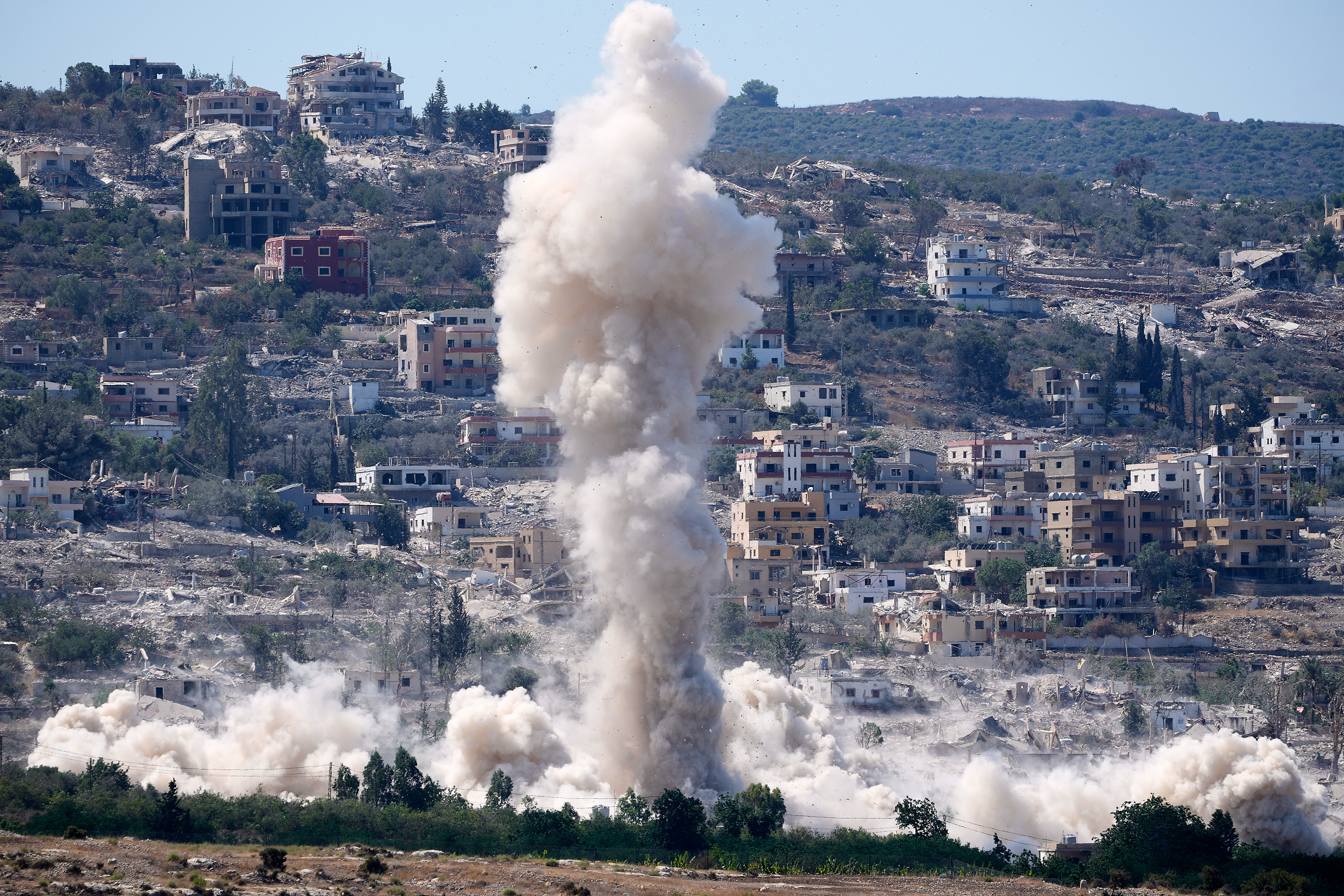
    BEIRUT — A huge explosion sent shock waves across southern Lebanon overnight, as the Israeli military said it had destroyed an underground Hezbollah base in a strategically significant area of Israel’s conflict with the Iran-backed militia.

    The blast lit up the sky with a sudden orange flash and tore through the Ali al-Taher ridge, a commanding hilltop about 6 miles from the border between Israel and Lebanon that Israeli forces captured this month.

    Lebanese and Israeli officials say Hezbollah, a Lebanese militia supported by Iran, established a major underground installation beneath the ridge. Israel says the complex had for years served as a command center for planning and launching attacks against it. The ridge overlooks much of southeastern Lebanon, including Nabatiyeh, one of the country’s largest cities.

    “The explosion caused massive sounds in Nabatiyeh,” Abbas Fakhereddine, the city’s mayor, said Friday. “We felt the buildings shake.”

    The explosion generated ground waves that were likened to an earthquake measuring 4.2 on the Richter scale, Lebanon’s National News Agency reported, citing the country’s National Center for Geophysics. Videos shared on social media showed the explosion lighting up the night late Thursday.

    The Israeli destruction of the underground base at the ridge fueled concerns among residents about a deepening Israeli military presence and an expansion of military operations in southern Lebanon. Israel has in recent days and weeks carried out strikes and widespread demolitions of buildings and civilian infrastructure across southern Lebanon, according to local officials and human rights groups.

    The Israeli military said in a statement Thursday that it had located dozens of rockets, missiles, drones, machine guns, and explosive devices inside the underground base. The complex also included a Hezbollah command center, weapons storage rooms, and living quarters, the military said.

    On Friday, Hezbollah officials disputed the significance of the ridge and accused Prime Minister Benjamin Netanyahu of Israel of exaggerating the importance of the operation for political gain before elections next month.

    A Hezbollah media official, speaking on the condition of anonymity to discuss sensitive matters, downplayed the site’s importance to the group and rejected claims that the facility contained advanced missiles or significant military infrastructure.

    Under a U.S.-brokered ceasefire agreement reached in June, Israel is expected to gradually pull its forces back from areas it occupies in southern Lebanon, with the Lebanese armed forces deploying there to establish security and enable displaced residents to return. That arrangement is closely linked to the Lebanese government’s efforts to disarm Hezbollah, a process that is likely to prove difficult, given the government’s limited ability to control the powerful militia.

    On Friday, Lebanon’s General Directorate of State Security said in a statement it was resuming government patrols and reestablishing checkpoints in Nabatiyeh, in coordination with other security agencies and the Lebanese army, to protect the city and strengthen public confidence and safety.

    Some residents of southern Lebanon, along with political and security observers, have expressed anger that Hezbollah did not hand over the ridge to the Lebanese army and security services, arguing that the group had allowed a strategic position to be lost to Israel rather than place it under Lebanese state control.

    Moustafa Bayram, a former labor minister aligned with Hezbollah, said Israel’s decision to destroy the site was “an attempt to terrorize us and escalate the war.”

    This article originally appeared in the New York Times.

  • U.K. lawmakers vote down bill to allow assisted dying in England and Wales

    U.K. lawmakers vote down bill to allow assisted dying in England and Wales

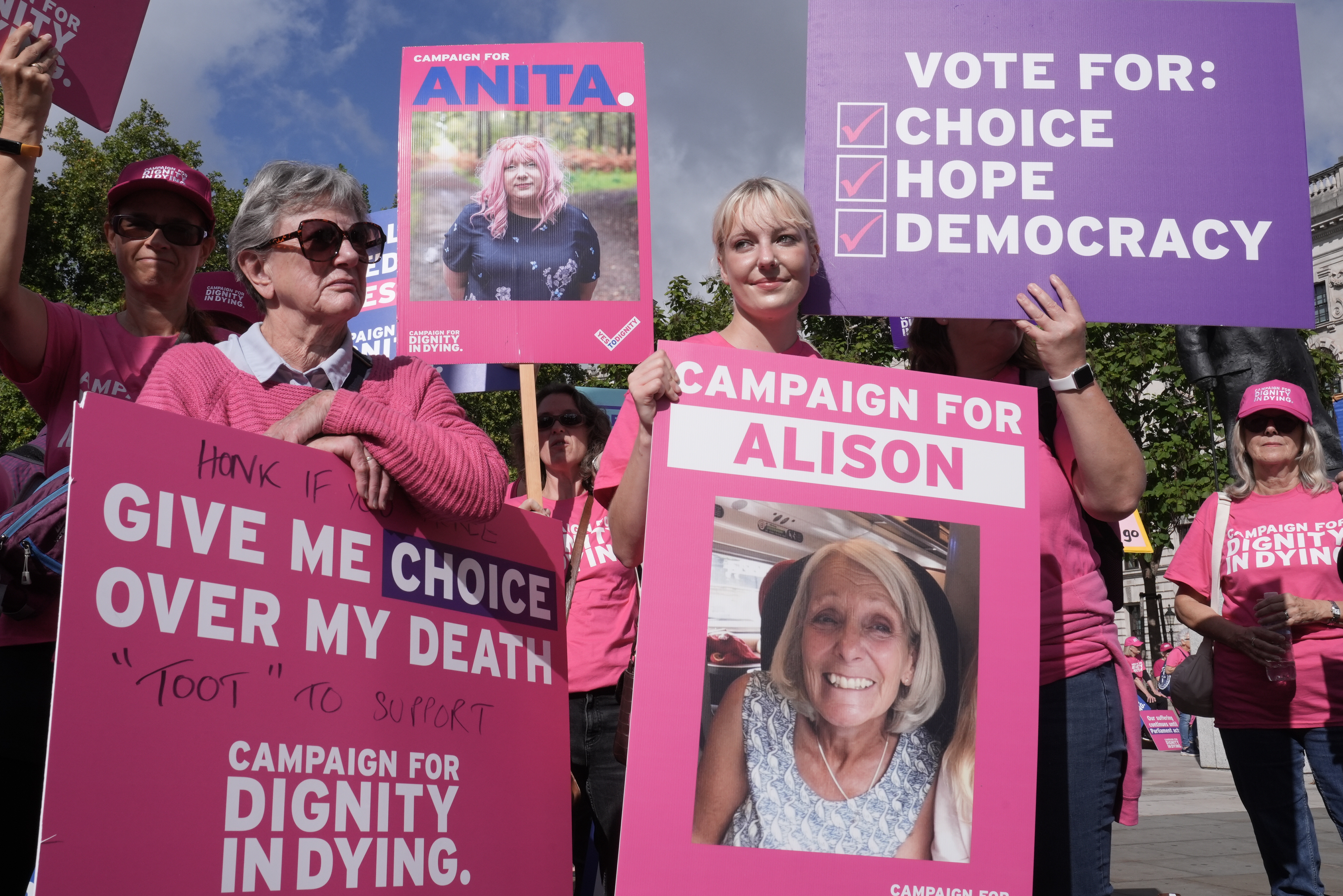
    LONDON — U.K. lawmakers on Friday voted down legislation to allow terminally ill adults in England and Wales to choose to end their lives.

    Following an impassioned four-hour debate in the elected House of Commons, the Terminally Ill Adults (End of Life) Bill was rejected 286 to 270. The outcome was somewhat surprising given that an almost identical bill had passed last year with a margin of 23 votes.

    The vote brings an end to a two-year debate in Parliament about assisted dying, during which the House of Commons had backed assisted dying on two previous occasions. Their backing wasn’t enough for it to become law because it was effectively filibustered by unelected lawmakers in the House of Lords.

    Back in the House of Commons on Friday, the bill had proposed allowing adults in England and Wales who have fewer than six months to live to apply for an assisted death subject to the approval of two doctors and an expert panel.

    Many individual lawmakers relayed their own stories both in favor of and against the proposal. The government took a neutral stance, meaning lawmakers voted according to their consciences rather than along party lines.

    One lawmaker who was among those to oppose the bill, having previously backed it, spoke about how “nightmares” prompted her to switch sides. Janet Daby said she dreamed of “dying and death” because she had not been “entirely comfortable” with her former position.

    The new U.K. leader, Prime Minister Andy Burnham, didn’t vote because he said he didn’t want to “unduly influence the debate.”

    Opponents branded the bill unsafe and unworkable, citing concerns around potential coercion of vulnerable people and a lack of safeguards for those with disabilities.

    Lawmaker and cancer surgeon Zubir Ahmed also noted uncertainty around a doctor’s prognosis.

    “I have to be honest with you,” he said. “When I am asked to prognosticate as to whether someone has six months to live or not, I am as often wrong as I am right.”

    The leader of Catholics in England and Wales, Archbishop Richard Moth, called the bill “wrong in principle” and “deeply flawed. The Church of England’s Archbishop of Canterbury, Sarah Mullally, also objected to the bill.

    Medical colleges, including the Royal College of Psychiatrists, had raised “serious concerns” about the bill, saying there were “too many unanswered questions about the safeguarding of people with mental illness.”

    Proponents of ” assisted dying ” — sometimes referred to as “assisted suicide” — had hoped it would mark the biggest change to social policy in the U.K. since abortion was partially legalized in 1967. The intention was to put an end to the practice of those near the end of their lives going to other countries, such as Switzerland, for an assisted death.

    Lauren Edwards, who reintroduced the bill to the House of Commons, said the rejection was “heartbreaking” but expressed hope that the issue will win parliamentary approval in the future.

    “Assisted dying will come in this country, as it is already doing all across the world, but not soon enough,” she said. “Parliament has dropped the ball today. It will be picked up again as it must be, because the law as it stands is simply too cruel and too unjust to be allowed to stand.”

    Other countries where assisted dying is legal include Australia, Belgium, and Spain, with regulations on qualifying criteria varying by jurisdiction.

  • For the 25th time, New York marks a shattering loss

    For the 25th time, New York marks a shattering loss

    Gordon M. Aamoth Jr.

    Edelmiro Abad.

    Marie Rose Abad.

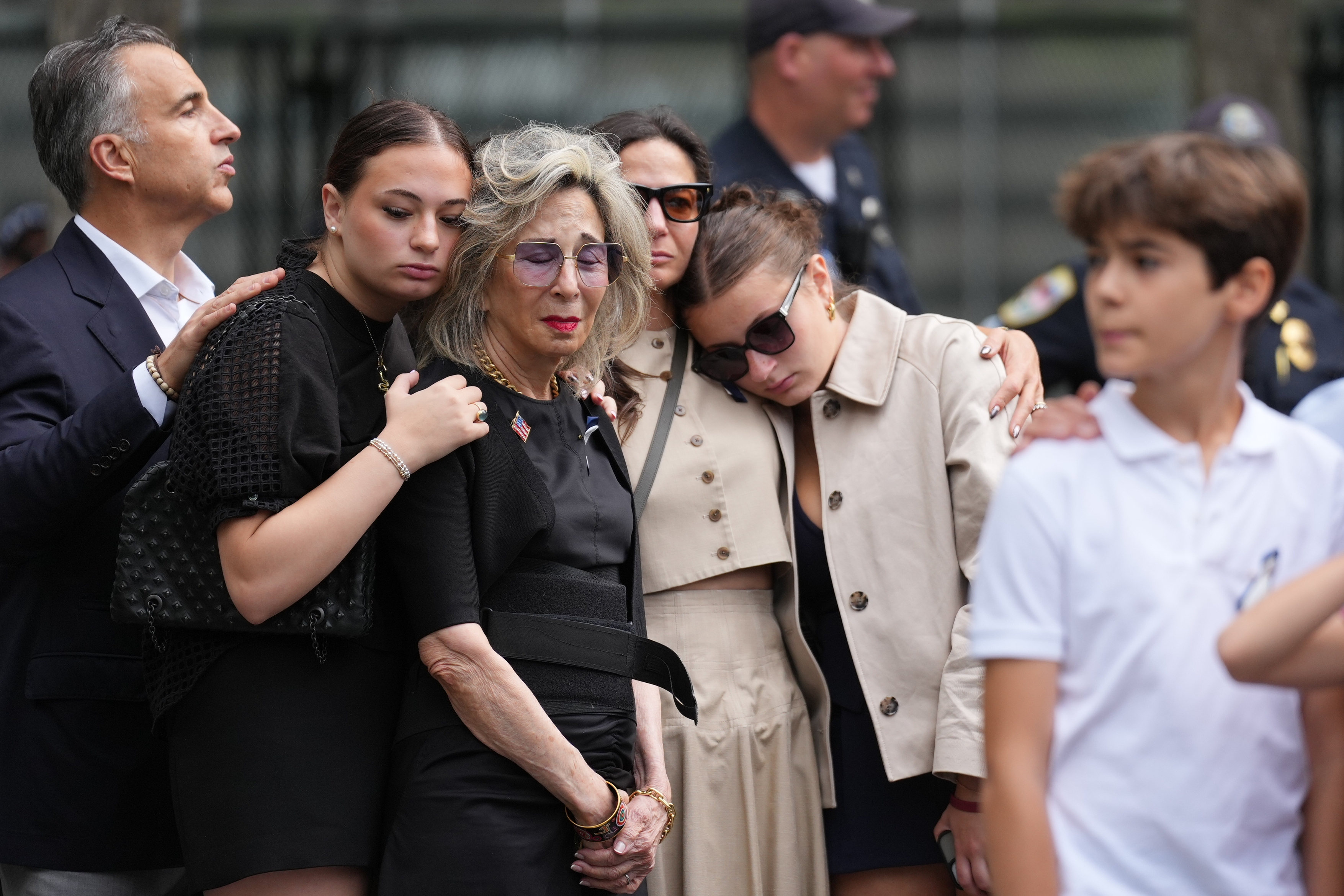
    A quarter-century after the terrorist attacks that shook New York City and the world — an ashen morning followed by years of grief and repair, rebuilding and war — dignitaries and mourners gathered once again in Lower Manhattan to read aloud the names of those killed when hijackers crashed airplanes into the World Trade Center and sent the twin towers crumbling to the ground.

    Milton G. Bustillo. Thomas M. Butler. Patrick Dennis Byrne.

    The ceremony on Friday took place beneath a canopy of swamp white oak trees between the two memorial pools where the towers once stood. The pools were designed to appear bottomless, and their cascading waters lent a whispering backdrop to the morning. Relatives held aloft photos of the dead, forever young, as children on the podium spoke directly to grandparents, aunts, and uncles they had never met.

    “My dad always talks about how wonderful you were,” one girl said after naming a lost relative. She is among the 100 million Americans born since that day.

    Some people used their turns at the microphone to criticize the federal government for continuing to work with Saudi Arabia in the years since the Sept. 11 attacks. Family members of those who died have sought to hold the kingdom responsible in federal court, claiming that its government provided support for the hijackers.

    Among them was Terry Strada, an official with 9/11 Families United, whose husband was killed in the attack. Her organization has tried for years to pursue legal action against the Saudi government. The kingdom has denied involvement.

    “It has been one betrayal after another,” Strada said from the podium. She urged the assembled elected officials to “stand with survivors, stand with Americans.”

    Later, a nephew of Lisa Marie Terry, who died in the attack, accused “the deep state” of hiding the truth. He called on President Donald Trump to “release the unredacted files that implicate Saudi Arabia, while what’s left of the victims’ families are still alive to see it.”

    Four living former presidents, from Bill Clinton to Joseph R. Biden Jr., stood silently nearby. Zohran Mamdani, the city’s first Muslim mayor, was also in attendance, despite a petition signed by thousands of people, including victims’ family members, urging him to stay away. He was joined by former Mayors Bill de Blasio, Michael Bloomberg, and — awkwardly — Rudolph Giuliani, who was in office on Sept. 11 and earlier this week said that Mamdani’s presence at the ceremony “offends me.”

    Mamdani nonetheless approached Giuliani at the ceremony. The two men shook hands, and Giuliani’s position seemed to have softened. Cameras captured him apparently telling Mamdani: “I’ll pray for you. It’s a really hard job.”

    Gov. Kathy Hochul was there, as was Gov. Mikie Sherrill of New Jersey and former Gov. George E. Pataki of New York, who had also called on Mamdani to skip the event.

    Vice President JD Vance stood in for Trump, who instead attended a ceremony at the Pentagon. In his remarks, the president talked about how Sept. 11 had changed America.

    “Twenty-five years after the attacks, we know the world will never return to the way it was at that dawn on that beautiful, peaceful Tuesday morning, 2001,” Trump said, “before the towers fell, before the Pentagon was hit, before the specter of evil, and this horrible, horrible evil came crashing into our lives.”

    In New York, as is custom, there were no speeches from elected officials, putting all the focus on the families. The names of the victims read on Friday included the six killed in the 1993 World Trade Center bombing.

    Uniformed firefighters present and past — many older now, grayer — gathered at the ceremony, at churches and, later, in the city’s barrooms, to raise glasses to their 343 fallen brothers.

    The effects of Sept. 11 played out for months, years. The Fire Department would go on to be further gutted by mass retirements of high-ranking officers. The Police Department lost 23 officers that day, and was reshaped by the introduction of new tactics, units, and equipment to fight terrorism.

    The day is a reminder of how the attacks’ long shadow has reached into many corners of life in the U.S. and beyond.

    The U.S.-led global war on terrorism included invasions of Iraq and Afghanistan — the latter Washington’s longest war — and detentions and harsh interrogation of terror suspects in an international network of secret CIA prisons. The U.S. found and killed al-Qaeda leader Osama bin Laden in Pakistan in 2011, but the accused 9/11 mastermind Khalid Sheikh Mohammed still awaits a trial 23 years after his capture.

    The attacks changed U.S. air travel, led to the creation of the Department of Homeland Security, prompted new federal surveillance and intelligence-gathering powers and banking regulations and generated ongoing debate over the balance between security and freedom.

    Sept. 11 engendered a culture of individual vigilance summed up by the slogan, ” If you see something, say something,” while a wave of patriotism propelled some Americans to join the military, fire departments and police forces.

    On Friday, there were the traditional six moments of silence, marked with the tolling of a bell: one for each of the towers struck, one for each building’s collapse, and two for the plane crashes at the Pentagon and in Shanksville, Pa.

    A seventh moment of silence was added this year to commemorate those who had died of Sept. 11-related illnesses. Mamdani’s administration this week released more than 170,000 pages of previously withheld city records about the air quality around ground zero after the attacks. The documents seem to suggest that New Yorkers were encouraged to return to the area before it was safe to do so.

    The mournful wail of bagpipes — a fixture at hundreds of Sept. 11 funerals — rang out at the start of the memorial. Elsewhere in the plaza, Yo-Yo Ma played his cello softly behind the reading of the names.

    Information from the Associated Press was used in this article.

  • More than 500,000 Russian troops killed in Ukraine, UK defense chief says

    More than 500,000 Russian troops killed in Ukraine, UK defense chief says

    KYIV, Ukraine — More than half a million Russian troops have been killed in Ukraine since the start of Moscow’s full-scale invasion in February 2022, a senior British defense official said Friday.

    The dead are part of 1.5 million Russian casualties in Ukraine, Air Chief Marshall Sir Richard Knighton, chief of the U.K’s Defense Staff, said.

    The U.K. figures roughly coincide with those published by the Ukrainian military. There was no immediate comment from Russian officials.

    Moscow’s bigger army is struggling to make headway on the battlefield. Western officials and analysts say the Russian rate of advance has slowed significantly this year.

    Russia’s armed forces have also lost an “enormous” amount of military materiel, Knighton told reporters. That includes more than 10,000 armored and protected vehicles, close to 3,000 air defense and artillery systems, and over 370 aircraft and helicopters, Knighton said.

    He didn’t say what Ukraine’s losses were.

    Neither Moscow nor Kyiv give regular updates on their battlefield losses.

    Russian drones target Kyiv gas stations

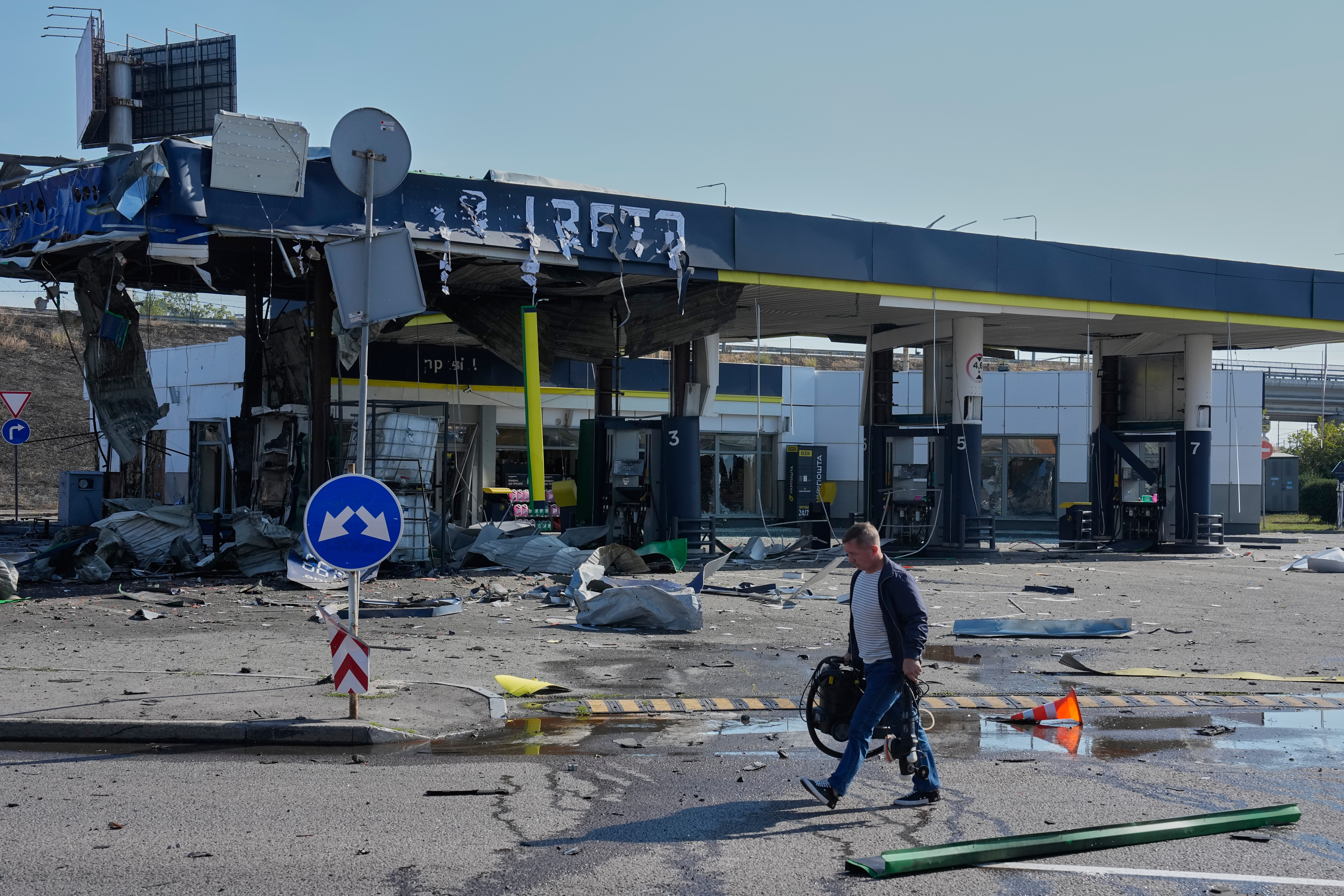
    Russian drones targeted roadside gas stations in Kyiv for a second straight day Friday, as Moscow broadened its air war in what Ukrainian officials say is an effort to rattle civilians.

    The attacks struck two Ukrnafta gas stations, killing two people and wounding six at one of them, the prosecutor’s office said.

    Russian strikes on urban gas stations have intensified in recent months, mostly in regions near the front line in eastern and southern Ukraine. It is part of a campaign to disrupt civilian life and weaken morale that has also included attacks on food distribution hubs, sporadically leaving some supermarket shelves bare in the Ukrainian capital.

    “Russia is systematically attacking places where it knows people will be spending their time going about their daily lives, seeking to maximize casualties, spread fear, and put pressure on Ukrainian society,” Foreign Minister Andrii Sybiha said on X late Thursday.

    Authorities have urged residents not to linger near gas stations and other exposed infrastructure during air raid alerts.

    Ukraine is urgently trying to improve its air defenses as Russia’s invasion stretches into its fifth year, and on Thursday won pledges of more support from Canada.

    Russian shopping mall strikes kill 5 in central Ukraine

    Pavlohrad, a city in central Ukraine, observed an official day of mourning Friday for five residents killed near shopping malls in broad daylight by Russian drones the previous day.

    The attack also wounded 67 people, Sybiha said on X.

    In the southern city of Zaporizhzhia, a 32-year-old woman and her 10-year-old son were wounded in an overnight Russian drone attack, Ukraine’s State Emergency Service said. The drones struck a nine-story apartment block and a shopping mall, it said.

    Efforts to put out the blazes were slowed by the constant threat of repeat strikes, forcing firefighters to stop working and take shelter, it added.

    In Dnipro, a city in central Ukraine, a Russian daylight attack Friday wounded 12 people, according to local officials.

    Russia says it stopped 777 Ukrainian drones

    Ukraine, meanwhile, has extended its own long-range drone campaign deep into Russia, straining air defenses across its bigger neighbor’s vast territory. On Thursday, its military reported hitting a refinery more than 1,800 miles away in Siberia as Kyiv tries to hurt Russia’s vital oil sector. Its strikes have caused fuel shortages in Russia, one of the world’s biggest energy producers.

    Russia’s oil product exports hit record lows in August, and Moscow is importing fuel from South Korea and India, the Center for Research on Energy and Clean Air said in a report.

    “Ukrainian strikes on Russia’s refining capacity have turned tables on the world’s once largest oil product exporter to see them start importing fuels, with imports surging to a record 172,000 metric tons (189,600 tons) in August — more than seven times the previous monthly high,” the Finland-registered nonprofit said Thursday.

    Ukraine launched a major barrage overnight from Thursday to Friday, with the Russian Defense Ministry saying air defenses intercepted 777 Ukrainian drones over 16 Russian regions, as well as occupied Crimea and the waters of the Azov and the Caspian seas.

    Two people were killed and three others wounded overnight in a Ukrainian drone attack on the Tula region south of Moscow, local officials said Friday.

    A Ukrainian drone strike during the night started a fire at the Saratov oil refinery in southwestern Russia, Russian independent online outlet Astra said Friday. Kyiv has repeatedly targeted that refinery, which was last hit in early August.

    Major online retailer Ozon said its logistics facility in the same city was struck and set ablaze by a Ukrainian drone, though no casualties were reported. Ozon is a competitor to Wildberries, whose facilities Ukraine has also targeted.

    Ukrainian President Volodymyr Zelensky said long-range strikes overnight hit eight Russian regions, including a business and an oil industry facility in the Saratov region.

    The attacks were “aimed at reducing Russia’s capacity to wage war,” he said on X Friday.

  • Prosecutor leading probe into Trump foes resigns, vows investigation will continue

    Prosecutor leading probe into Trump foes resigns, vows investigation will continue

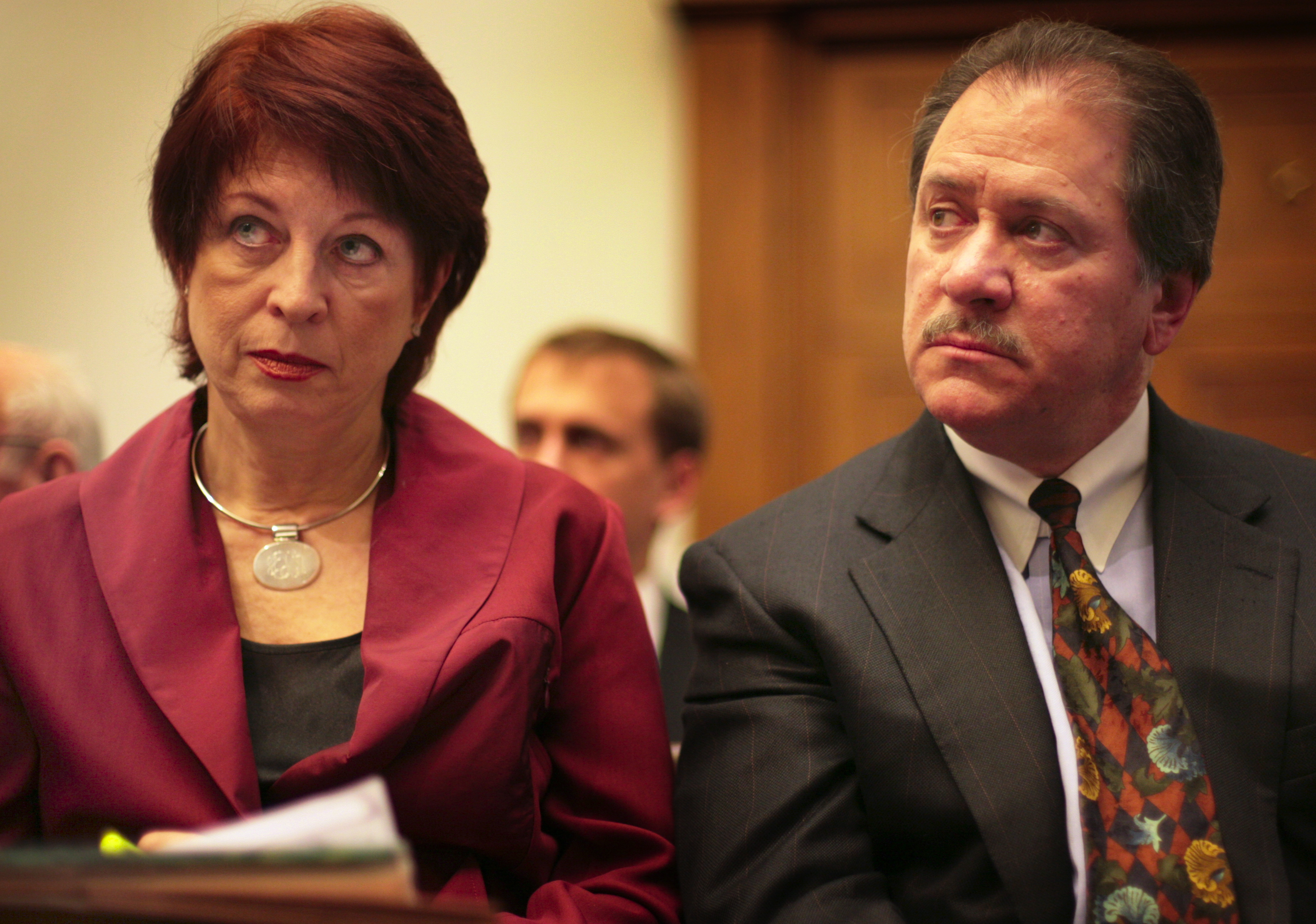
    The top prosecutor leading a wide-ranging conspiracy investigation into President Donald Trump’s political foes resigned Thursday afternoon.

    Joseph diGenova — a Trump loyalist who has pushed a baseless theory that the FBI was out to get Trump during his 2016 campaign — told the Washington Post that he has submitted his resignation papers to Attorney General Todd Blanche amid disagreements over the pace of the investigation.

    He did not elaborate on what specific disagreements led to his sudden departure at what appears to still be an early stage of the high-profile investigation.

    DiGenova’s wife, Victoria Toensing, an attorney who was brought in as part of the prosecution team alongside him, was expected to resign Friday, diGenova added.

    “It was a privilege and an honor to serve the [Justice] Department and president,” diGenova said in a brief interview, noting that the probe would continue after his departure.

    DiGenova’s departure comes as the Trump administration has put pressure on the Justice Department to prosecute the president’s political foes. Trump repeatedly expressed frustration with former Attorney General Pam Bondi’s pace — and limited success — in overseeing efforts to target his rivals.

    The president fired Bondi in April.

    DiGenova added Thursday evening in a text that he believed there was evidence to build cases in the conspiracy probe, but said “time was needed to build those cases” and “people differ on how long that should take.”

    ABC News first reported on his resignation. The Justice Department did not immediately respond to a request for comment. Toensing confirmed that she would be resigning, but declined to comment further.

    DiGenova, a former U.S. attorney for the District of Columbia, has suggested without evidence that an FBI investigation into potential ties between Russia and the 2016 Trump campaign was a hoax perpetrated to keep Trump from becoming president. He was tapped in April to lead the conspiracy investigation, among the biggest and most legally complicated that the Justice Department is pursuing as part of Trump’s vow to prosecute his political enemies.

    The investigation, which is based in Florida, hinges on an unusual and untested legal theory: that previous administrations conspired for years to violate Trump’s rights through a series of investigations, beginning with the Obama administration’s scrutiny of ties between Russia and the 2016 Trump campaign.

    The probe is looking in part at the decade-old actions of former Obama administration officials, including former director of national intelligence James R. Clapper Jr. and former CIA director John Brennan, who played significant roles in investigating the possible Russia ties.

    So far, prosecutors have issued a flurry of subpoenas but have not issued any indictments, according to people familiar with the probe, speaking on the condition of anonymity to discuss an ongoing investigation.

    DiGenova, 81, was U.S. attorney during the Reagan administration and later served as a lawyer for the Trump campaign. He was brought into the Justice Department this year specifically to work on the sprawling conspiracy investigation in Florida, landing the job after publicly lobbying for it.

    In an interview this summer on the podcast of former Trump lawyer Rudy Giuliani, diGenova claimed that Trump’s decision to fire Bondi was at least in part tied to a lack of progress on the investigation into Brennan as part of the conspiracy probe.

    “The president was ripping mad about the fact that there was no progress on the lawfare investigation in Miami,” diGenova said. He was hired weeks after Bondi’s firing.

    DiGenova took over the investigation from a career national security prosecutor in South Florida, Maria Medetis Long, who left the case after expressing discomfort with its direction, the Post previously reported.

    While diGenova headed the operations of the probe itself, it falls under the broad jurisdiction of Jason Reding Quiñones, the Senate-confirmed prosecutor who runs the U.S. attorney’s office in South Florida. DiGenova said he expects Quiñones to continue pushing forward with the inquiry.

    “I am sure he will continue the investigation vigorously,” he said.