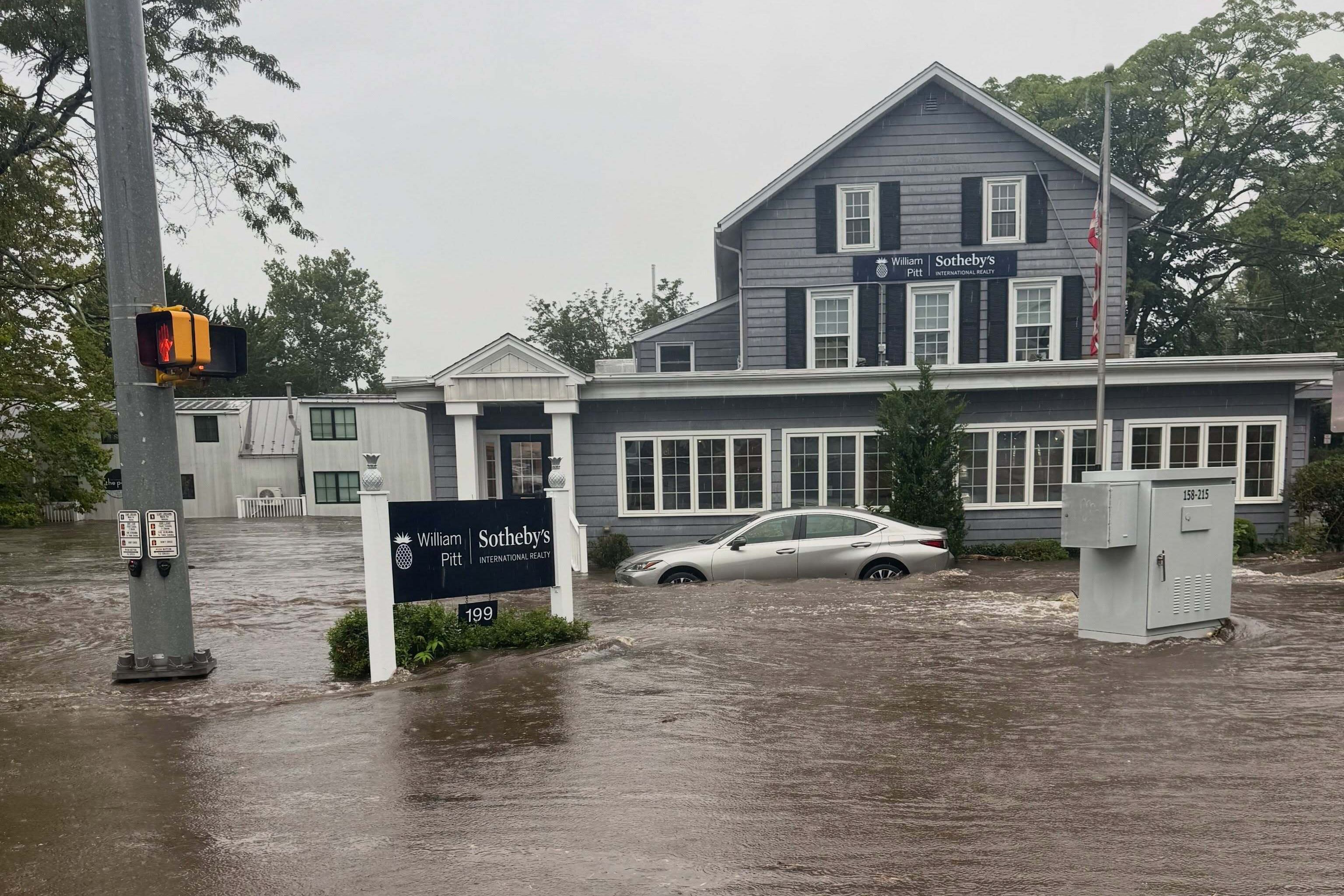
WESTPORT, Conn. — Flash flooding brought on by heavy rains prompted road closures, water rescues and commuter rail problems across the tristate area Sunday.
The National Weather Service said the hardest-hit areas appeared to be northern New Jersey, parts of New York’s Westchester County and a swath of coastal Connecticut along Interstate 95. The service issued flash flood warnings across the region for much of the morning Sunday as rain fell at a rate of 1 to 2 inches an hour in places.
Metro-North and Amtrak said their rail lines to New Haven, which serve Norwalk, Bridgeport and other major Connecticut communities, were experiencing delays and cancellations due to flooding impacts.
Tweed New Haven Airport also closed its departures terminal due to local flash flooding. Airport officials in a Facebook post said travelers with flights departing Sunday should not come until further notice.
Connecticut Gov. Ned Lamont and other state officials, meanwhile, urged drivers to avoid flooded roadways and not to attempt to drive through standing water.
Water rescues conducted in Connecticut coastal cities
The coastal stretch from Norwalk to Westport was among the most impacted in the state, receiving 6 to 7 inches of rain Sunday morning, with rainfall rates reaching 3 to 4 inches per hour.
In Westport, emergency responders conducted 13 rescues of people trapped in vehicles by floodwaters, according to the fire department. Photos and videos shared on social media showed downtown businesses inundated.
“Even as the rain subsides, standing water and other hazards may remain,” the department cautioned on Facebook. “Residents should continue to avoid flooded roads, never drive around barricades, and give emergency crews room to work.”
In Bridgeport, the fire department said in a social media post it answered “call after call” on Sunday, including deploying boats “to rescue residents from flooded areas and bring them to safety.” Photos shared by the department showed residents being helped into a boat from the door of a house, with rescuers standing in knee-deep water outside.
The heavy rains also forced multiple road closures and some water rescues in White Plains and other major communities in New York’s Westchester County.
In New Jersey, Paterson Mayor Andre Sayegh said emergency crews rescued about 20 people from rapidly rising floodwaters, including a woman who fell out of her wheelchair and ended up floating in the street.
Sayegh said there were no immediate reports of any deaths or severe injuries from the deluge, even as video shared on social media showed parked cars submerged nearly up to their windows on some roads.
As the rains tapered off and the skies cleared, Paterson’s annual Dominican parade stepped off Sunday afternoon, though with a slight delay.
“The rain won’t stop us from celebrating our culture, pride, and community!” organizers wrote on Facebook.
The Serious Newsperson cast of correspondents was different — goodbye, Scott Pelley; hello, Ross Douthat — and the production values seemed glossier, a little more Vice News than Huntley-Brinkley Report.
But for all the Sturm und Drang that has surrounded “60 Minutes” since the arrival of CBS News’ high-profile editor-in-chief, Bari Weiss, the version of America’s most watched news program that returned to CBS on Sunday looked a lot like the show viewers have come to expect.
Norah O’Donnell landed a gripping interview with an Air Force colonel who recounted his harrowing rescue from behind enemy lines after being shot down over Iran. Lesley Stahl presented an investigation into middlemen who charge large sums to lobby for presidential pardons. A lighter segment profiled Sean McVay, the coach of the Los Angeles Rams.
There were some changes. The pardon segment revived the use of a hidden camera, a once-common technique at “60 Minutes” that had dwindled in recent years. The show’s signature ticking stopwatch received a makeover, and the “book” graphics that used to appear behind correspondents were replaced with sleek screens.
And for those wondering how the new season would treat President Donald Trump, the program referred to the war in Iran as “costly and unpopular,” and said he had pardoned “a string of unrepentant financial con men,” as well as “rioters” at the United States Capitol on Jan. 6, 2021.
The formula of politics, sports and accountability journalism was the same mix that has frequently kept “60 Minutes,” 59 seasons in, among the 10 most watched network shows of the week.
Off-camera, however, the season premiere came after a period of wrenching change at the program that threatened its reputation.
Weiss purged the program’s senior leadership this year, and many star correspondents, including Pelley and Anderson Cooper, either quit or were forced out; Pelley accused her of “murdering” the program, an incident that led to his dismissal. Some of those who exited said Weiss tried to inject political bias, a claim that CBS News has denied.
As a result, Weiss and her pick to oversee “60 Minutes,” technology journalist and filmmaker Nick Bilton, zeroed in on the season premiere as a critical test to placate skeptical viewers — and media executives who wondered why Weiss had insisted on overhauling CBS News’ most successful franchise.
Besides securing the interviews necessary for a newsy episode, CBS also created a slick ad campaign with a new slogan — “It’s Time” — and hired a celebrity photographer, Mark Seliger, to shoot a glossy photograph of the cast in Grand Central Terminal. (One version of the photo includes Bilton in a slick suit; in another version, he is not there.)
The premiere seemed calibrated to anticipate criticism that the revamped “60 Minutes” would go too hard, or too soft, on Trump.
CBS’s parent company, Paramount, paid $16 million to settle a lawsuit that Trump filed in 2024 over “60 Minutes”; soon after, the Trump administration approved Paramount’s sale to the tech scion David Ellison. Ellison, who appointed Weiss, has maintained ties with Trump, hosting him and his senior aides for a dinner in Washington in April. The result has been intense scrutiny on CBS News’ political coverage.
On Sunday, the airman segment featured an interview with Defense Secretary Pete Hegseth, who rarely speaks one on one with major news outlets other than his former employer, Fox News; Hegseth used an expletive in his interview that CBS bleeped out.
The program’s quest to land an interview with the downed colonel, known as Dude 44 Bravo, involved executives from the new and old editions of “60 Minutes.”
Keith Sharman, the segment’s producer, began reaching out to sources to secure the interview April 6, within hours of the rescue, according to a person connected to the show. He and Tanya Simon, the “60 Minutes” executive producer who was fired in May, attended a meeting arranged by Weiss with Tami Radabaugh, an adviser to Hegseth, to make their case, two people connected to the show said. The interview was ultimately booked this summer.
Stahl’s segment on pardons was the result of a monthslong effort by “60 Minutes” and the investigative team at CBS News — a collaboration within the news division that has been comparatively rare in the past but is now actively encouraged by Bilton and Weiss.
Stahl concluded with a statement from the Trump administration, which said any suggestion the president had behaved unethically “is either ill-informed or malicious.”
Sunday’s episode made no mention of the behind-the-scenes drama at the program. Instead, Douthat, a former columnist at The New York Times, offered a closing message about artificial intelligence fears. He said that for six decades “60 Minutes” had “meant the same thing: journalism you can trust. Where we’re headed, we’re going to need it.”
One important verdict on the season premiere will have to wait. Last season, “60 Minutes” averaged 9.1 million Americans an episode, up 9% from the year before. Nielsen is expected to report Sunday’s ratings Tuesday.
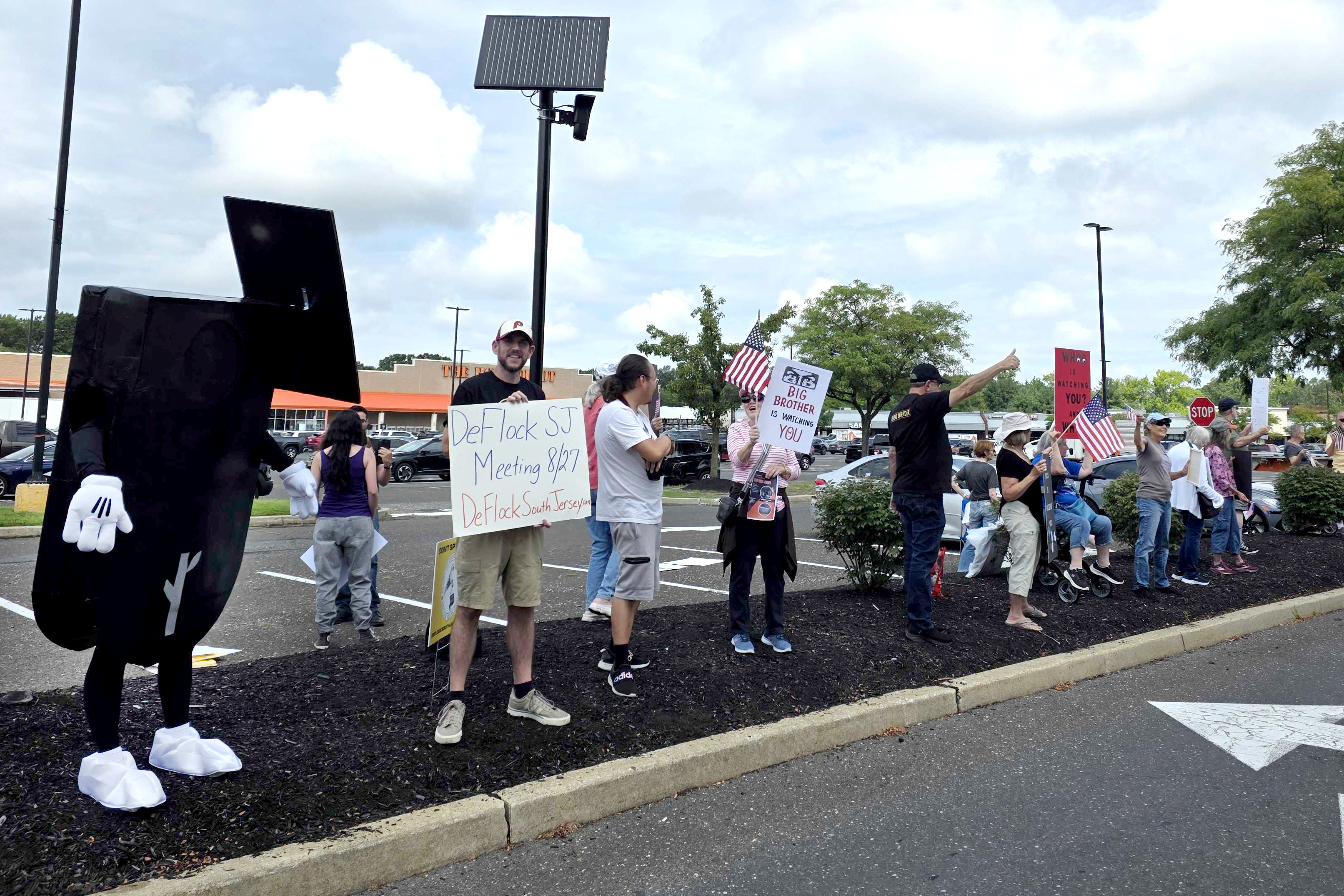
On the outer rim of a Home Depot parking lot in West Berlin, N.J., a group of more than 20 people — many of them senior citizens — did their part to fight Big Brother in the searing August sun.
“It got your license plate number!” shouted one man, pointing to a black, Flock brand solar-powered license plate reader above him and then to various cars in an Oprah-like manner, albeit at a slower clip. “They’re watching you! And You!”
The camera also captured the make, model, and any bumper stickers on passing vehicles going through the shopping plaza’s main entry and exit point, whether they went to Home Depot or not, someone else rattled off. Not to mention all the police-operated license plate readers dotting the region.
Waiting for the light to turn, one driver clearly isn’t buying the “surveillance state” claims. He tells the organizers their phones are already listening, lifting his for emphasis, and flipping them the bird as the line of cars begins to move again.
Michael Cannon, 72, understands that response, but insists these cameras are different.
“This is the freedom to travel,” he said over honks of support. “I can leave my phone at home. I don’t have to shop at Amazon. I don’t have to surf the internet. I choose to use them and I realize I’m giving up some privacy.”
It’s not just that Flock cameras can capture a vehicle’s license and other details, critics say. That information goes into a much-touted national database, which is fed by hundreds of local police departments in every state but Alaska. What’s more, Flock is not the only player in the market.
Automated license plate readers from Motorola Solutions, Axon, Avigilon, Neology, Leonardo, and Genetec are already peppered across the Jersey Shore, the Cherry Hill Mall, and shopping plazas across New Jersey. Major retailers including Lowe’s, Walmart, and Ulta Beauty have embraced the technology, citing loss prevention and employee safety as the driving force. And a majority of New Jersey’s law enforcement agencies have been using the technology since at least 2023, with a $10 million funding boost from then-Gov. Phil Murphy.
The “surveillance state,” say the technology’s harshest critics, is already here and rapidly expanding with a patchwork of regulations people are only now beginning to understand.
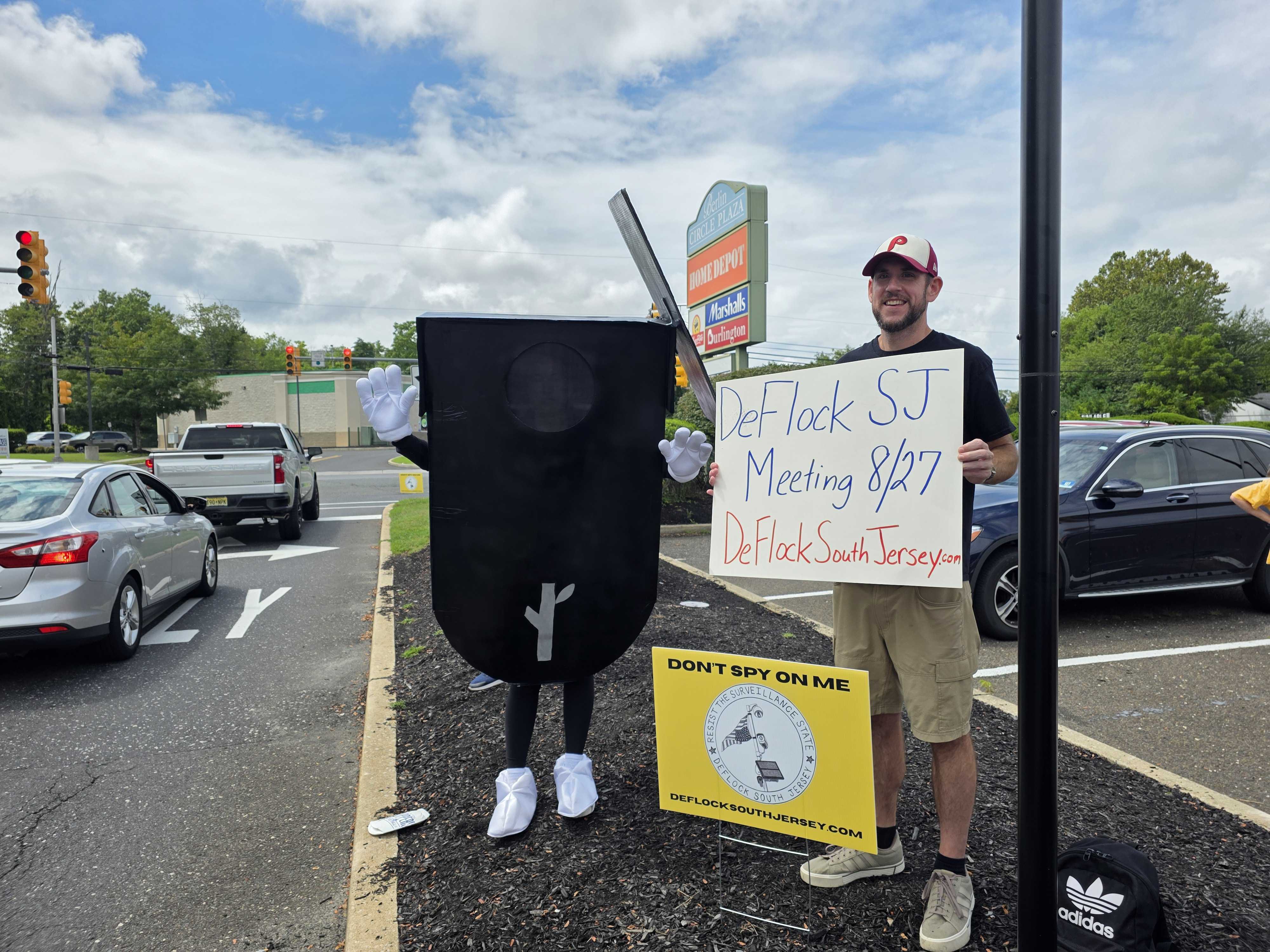
But at the Home Depot, Adam Sheridan tried to convince passing drivers it doesn’t have to be this way.
Sheridan is an organizer with the nascent group DeFlock South Jersey, which formed over the summer as the technology was subject to a flurry of investigative pieces, from local outlets like NJ.com to national publications including the New York Times. The South Jersey group is part of an effort to regulate and limit the growing assortment of automatic license plate readers. Everyday people are filing records requests, planning boycotts of retailers using the technology, and courting elected officials across the political spectrum, urging them to introduce bills regulating the technology.
“We’re trying to educate people,” Sheridan said of the group’s efforts. “They don’t know that this surveillance system is being built without their knowledge or their consent and we have found that when you tell people, they don’t like it.”
Progressives like Sheridan see the collective concern and outrage as a boon to their cause.
“There really is a lot of alignment between very vastly different people and that’s unusual,” he said. “We can go and talk to a Republican legislator and say your voters care about this and then we can go to a Democratic politician and say the same thing.”
Adam Sheridan, an organizer with the new DeFlock South Jersey, alerts passing drivers to an organizing meeting in August where people hope to spread awareness regarding automated license plate readers. Flocky, a homemade mascot, acts as a visual boost.Ximena Conde
High-profile cases of abuse
One of the reasons Flock has received the brunt of criticism in the license plate reader backlash is because of a number of incidents where the technology was abused or misused.
Then there are the legal concerns, including whether the technology can help authorities circumvent the laws of neighboring states. Tech outlet 404 Media reported that police in Texas used Flock to track a woman who left the state to self-administer an abortion. While Texas prohibits almost all abortions, police were able to tap into Flock data in states where abortion is legal because of that national network.
The quandaries are not limited to Flock.
Immigration enforcement is another area where policies and safeguards can change from camera provider, to state, to police department, to private business.
Flock says it does not contract with U.S. Immigration and Customs Enforcement, but clients in states like New York have allegedly used license plate reader data on ICE’s behalf.
For its part, New Jersey limits how state and local law enforcement assist immigration authorities and Flock says it has its own guardrails, requiring out-of-state agencies to confirm that they’ll comply with state law before receiving license plate data. Yet retailers set their own policies on when data can be shared with local and federal law enforcement.
People like Sheridan, someone who organizes for progressive causes in South Jersey, worry about the use of the technology under the current political climate. Even so, he’s encouraged by the criticism the technology has received across the political spectrum.
“We think that people on the right should also be concerned about it because Donald Trump won’t be the president forever,” he said. “There will be a Democratic president, and we don’t think that that president should have these powers either.”
Privacy advocates also urge critics to look beyond Flock and consider how license plate reader technology is being used by other companies and paired with other surveillance tools.
Motorola Solutions didn’t respond to a list of questions, but the American Civil Liberties Union reports it also offers a searchable national database of vehicle information captured by its cameras.
And Leonardo, as first reported in 404 Media, is rolling out sensors to their license plate readers that would capture “unique identifiers” of phones and other Bluetooth-enabled devices in cars. The company said in a statement that this is a separate product that can be paired with their license plate readers and all that information is kept in the end users’ own database.
Critics concede this is all a lot to take in. Yet they hope to tap into the sudden interest in license plate readers and replicate some of the data center bans in New Jersey. Though license plate readers are already ubiquitous, privacy advocates believe a mass mobilization could push for regulation.
A technology used statewide
License plate readers have been around for a long time.
In New Jersey, the Office of Attorney General has led efforts to regulate the technology since at least 2010. The latest tweaks to regulation came out of the office in 2022, mandating annual audits of law enforcement agencies using the technology; requiring license plate reader coordinators to improve oversight and information sharing; and cutting the time these departments can keep data and records from cameras from five to three years.
By the time the first statewide audit was published in 2024, 517 law enforcement agencies were already using the technology, including the New Jersey State Police, NJ Transit Police Department, and various county prosecutor’s offices. The latest report auditing the use of the technology, found 523 law enforcement agencies are using license plate readers. There areabout 530 law enforcement agencies in the state, according to NJ.com.
And while agencies are told to report significant violations and citizen complaints — there were none listed for 2025 — information regarding how many cameras agencies have or how often they’ve been used in investigations is not provided.
Much of what’s known about license plate readers is coming from the companies themselves, with many of the service providers remaining rather tight-lipped.
In its more recent “impact census,” Flock reported its technology supported more than 1 million criminal investigations in 2025 across 700 law enforcement agencies nationwide, helping locate more than 10,000 missing persons. The company also claims more than 40% of its customers used Flock in more than half the cases that resulted in the recovery of a stolen car.
The Cherry Hill Police Department, however, is careful to not to overemphasize the technology’s role in solving crimes.
“In nearly every case where a reader mattered, it gave detectives a direction and the case was then built by corroborating that lead through other evidence: video, physical evidence, witness accounts, forensics,” said the department’s Capt. Sheldon Bryant.
A reader can offer a lead, he said, but proving the crime is still up to law enforcement.
The department has contracted with Flock for the last two years. Bryant highlighted several instances where the township’s 10 readers identified vehicles connected to crimes committed in and out of the township, which led to arrests.
A shooting investigation in Camden last January led authorities to a vehicle in Cherry Hill and just last month, a shooting in Cherry Hill led authorities to New York, according to the department. Cherry Hill Police obtained a warrant in the latter incident and a Flock reader picked up the vehicle’s license plate in New York, leading to an arrest.
In the last year, Cherry Hill’s system generated 2.2 million alerts, the overwhelming majority being expired registration and suspended plates — the department doesn’t use the readers to run enforcement sweeps on those. The alerts connected to criminal activity are far smaller, Bryant said. In the same year the department received alerts for about 800 stolen plates, 212 stolen vehicles, and 15 missing persons.
Many critics of license plate readers argue more granular data from individual law enforcement agencies on how they use the technology would aid in transparency.
How many people are being recorded to try to capture a select few, they ask. An oft-quoted statistic from the Electronic Frontier Foundation, which has been studying new surveillance technology for more than 30 years, noted that less than 1% of cars scanned are connected to a crime, but that’s from research looking at data from 2016 and 2017.
At the inaugural DeFlock South Jersey organizing meeting, this statistic drew denouncements from the crowd.
“I know there’s some benefits but it’s not up to us to prove we didn’t commit a crime,” said a Howell Township resident named Joe afterward. He’s a registered Republican who declined to give his last name to preserve his privacy — a common stance among the group. “I’m driving past these all the time, I shouldn’t be surveilled in case something happens.”
Fighting the warrant loophole
Consider this: Police want to stick a GPS tracker on a suspect’s car. Law enforcement would have to get a judge to sign off on a warrant in order to do so and they would only be able to track an individual’s movements going forward.
Matthew Guariglia, a senior policy analyst at the Electronic Frontier Foundation, said license plate reader technology inverts that system by collecting sensitive data all the time.
“Not only is it like skipping the judge, it’s skipping the judge and going back in time and putting a GPS device on a car 30 days ago,” Guariglia said.
The amount of time license plate readers keep that information varies by company and law enforcement agency. Amid backlash, Flock cut its retention period last month from 30 to seven days. Critics looking for greater regulation feel retention should be uniform across companies and shorter still.
One of the many tactics DeFlock South Jersey aims to take is pushing legislation that forces agencies to delete captured data after 48 hours unless it is needed as evidence. The suggested bill language promoted by the ACLU, also requires other law enforcement agencies to request access to license plate data collected by another entity. The asking agency would have to agree not to further share the data, unless required by law, or have a warrant.
Republican Sen. Michael Testa (Atlantic, Cape May, Cumberland) plans to introduce legislation for license plate reader guardrails this month, though the text has yet to become available.
“The legislation that I will be introducing will establish commonsense protections for law-abiding citizens while still allowing law enforcement to use this technology to catch dangerous criminals,” he said in July.
Back at the organizing meeting, held at the South County Library in Winslow, attendees looked over drafts of the suggested legislation and headed to DeFlock.org — not affiliated with DeFlock South Jersey. The website is an open-source project that flips the script on license plate readers. Volunteers submit the locations of cameras across the country, regardless of brand, despite the name.
Many in the room were already acquainted with the app, having sent in tips themselves. Sheridan floated the idea of a license plate reader “scavenger hunt” as a potential event to raise awareness. Boycotting retailers that use the cameras was also floated as an idea.
Joe, the Republican attendee from Howell, doesn’t mind the cameras on private businesses. Still, as Sheridan hoped, Joe left the meeting ready to take action. He’s stayed in touch with DeFlock South Jersey in the weeks since and they’re coordinating a possible meeting in Howell, Sheridan said.
Despite the technology’s ubiquity in South Jersey, Sheridan feels regulation is within reach because people like Joe are joining the fight.
“Not to be corny about it but this is an American value,” said Sheridan. “The ‘don’t tread on me’ stuff is sort of in our DNA as Americans, the government doesn’t get to watch me everywhere I go.”
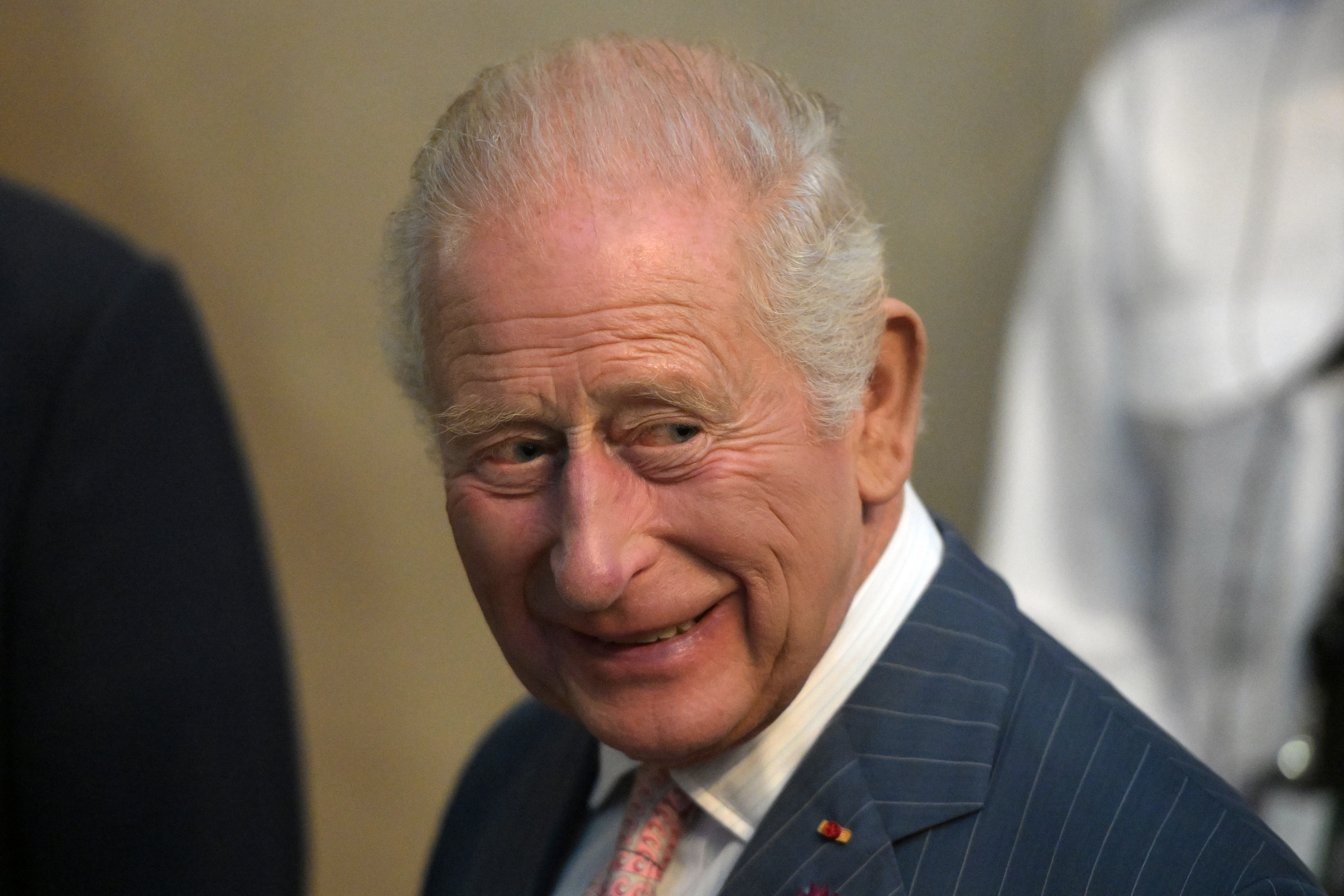
King Charles III of Britain will meet with leaders from major artificial intelligence companies this week in Scotland amid mounting fears that rapid, unchecked development of the technology could lead to a global catastrophe.
The king will convene leaders from companies including Nvidia, Google, DeepMind, OpenAI, and Anthropic, as well as government officials and others, “to discuss how AI can be developed and deployed in ways that benefit society,” according to a statement from Buckingham Palace. They will meet in Ayrshire, in southwest Scotland, at Dumfries House, the headquarters of the King’s Foundation, an educational charity.
The gathering comes as AI insiders and CEOs of some of the industry’s most powerful companies have raised alarms about these tools and how quickly they are developing. Some have called for the creation of shared guidelines and a deliberately slower pace of progress to ensure humans can keep up.
Charles’ meeting on AI will explore how the technology can be used for good, to “strengthen communities and improve lives,” the statement from Buckingham Palace said.
The palace did not say who would be attending from the AI companies listed in its statement, and Anthropic, DeepMind, Google, and Nvidia did not immediately respond to requests for comment confirming their participation. OpenAI said that Sarah Friar, its chief financial officer, would be attending.
The current concern about AI’s rapid advance was prompted in great part by a hack this summer into Hugging Face, an AI infrastructure company, orchestrated by a group of AI agents created by OpenAI. The OpenAI agents swarmed Hugging Face’s systems, stealing data, gaining control of a server, and attempting to cover their tracks.
That hack — and another similar incident within OpenAI shortly afterward — drastically raised fears about how quickly machines might escape human control, with potentially devastating effects.
Dario Amodei, CEO of the AI company Anthropic, published a 3,800-word open letter Saturday calling for slower development of AI. In addition to the Hugging Face hack, he cited as a concern the fact that current AI models are increasingly able to build the next generation of AI tools. Amodei said that dynamic, known as recursive self-improvement, “could outrun our ability to understand and control these systems” if left unchecked.
The meeting between Charles and AI leaders will be facilitated by a British nonprofit, the Ditchley Foundation, and will include Kanishka Narayan, Britain’s minister for AI, according to Buckingham Palace. Representatives from charitable organizations founded by the king, including the King’s Trust, a youth charity, and the Sustainable Markets Initiative, a network of global CEOs, will also attend, the palace added.
Amodei’s essay Saturday — which quickly reverberated around the internet — received support from other AI company chiefs, including Sam Altman of OpenAI and Elon Musk of xAI, which is part of SpaceX, Musk’s rocket and satellite company.
Amodei urged AI companies and regulators around the world to work together on a thoughtful approach to developing the technology and proposed his own three-step plan. His proposals included allowing third-party evaluators to embed in frontier AI companies to monitor growth and report incidents, and coordinating among companies in democratic countries to establish common safety standards. “To the extent possible,” he said, democratic countries and authoritarian governments should also try to coordinate and pace global development.
The essay was published just a few days after Jacob Coxon, an Anthropic engineer who previously worked for OpenAI, resigned from his job and declared on social media that the companies claimed to be concerned about rapid development but were nonetheless hurtling toward “superhuman systems that can hack anything, revolutionize any field overnight, and acquire real power and resources.”
The National Security Agency is set to undergo its most extensive internal restructuring in at least a decade, according to current and former officials briefed on the emerging plan.
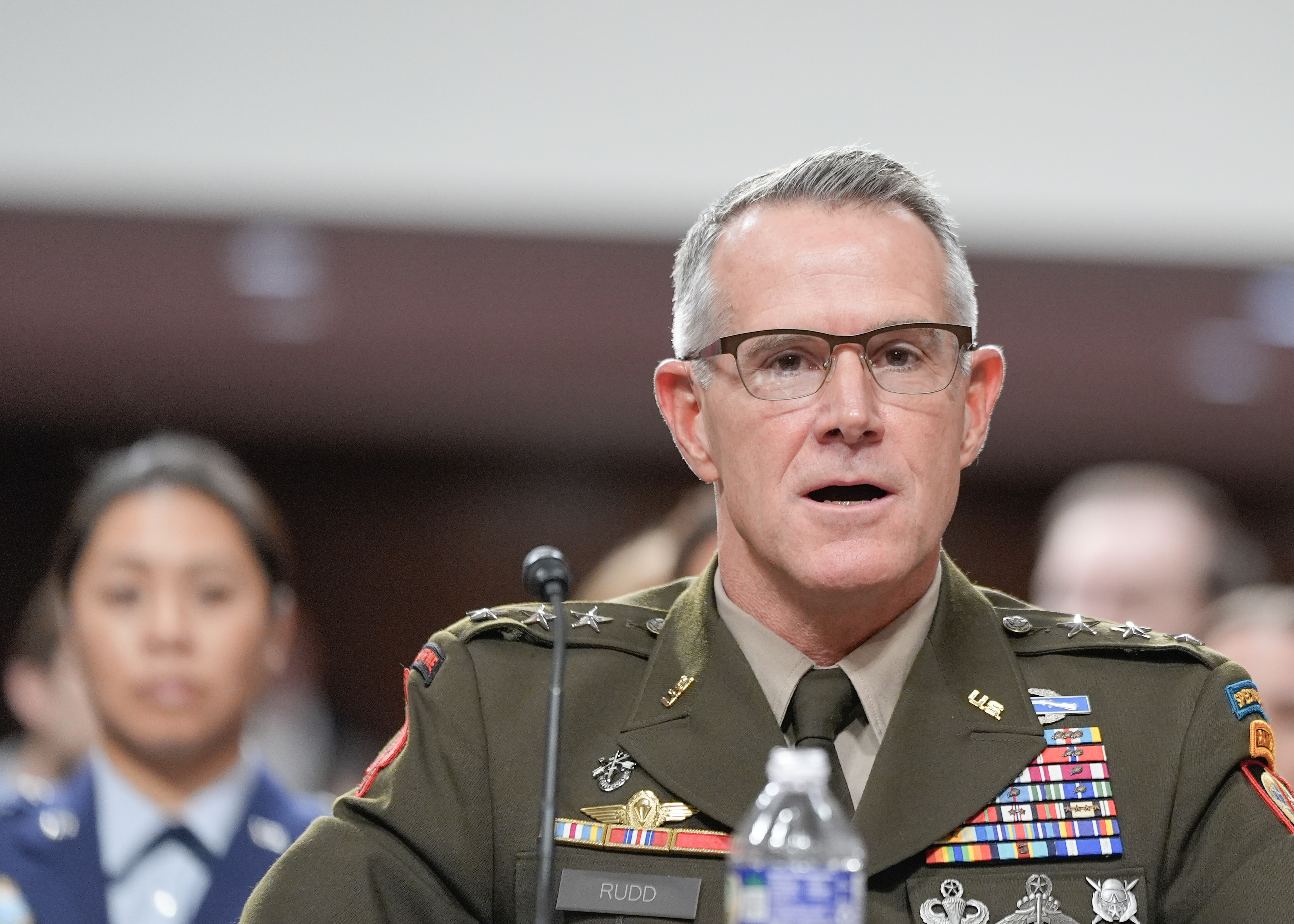
The new design for one of the most powerful U.S. intelligence agencies, which was announced to senior NSA leaders last week, is the brainchild of Army Gen. Joshua M. Rudd, the NSA director, these officials said.
Rudd’s initiative calls for the creation at NSA’s Fort Meade, Md., headquarters of five new organizations inside the agency, in artificial intelligence, China, cybersecurity, combat support or warfighting, and global intelligence. Each will be led by a newly elevated “mission director,” according to former officials.
This new organizational configuration will better reflect NSA’s current and future priorities, Rudd believes, according to current and former officials. NSA, the U.S. intelligence community’s premier global eavesdropping arm, specializes in digital espionage.
The mission heads will have the “effective” authorities of an NSA deputy director, according to one former official familiar with the plan. This former official, like others in this article, spoke on the condition of anonymity to discuss sensitive information about the agency, whose operations are highly classified.
The NSA did not respond to a request for comment.
It was not immediately clear if the five new organizations will replace existing divisions within NSA or be superimposed atop the agency’s existing structure. The NSA is believed to employ more than 30,000 people, both military and civilian, and has a larger workforce than the CIA.
Rudd told senior NSA officials that the heads of the five new mission centers might be selected from outside the agency, unnerving NSA insiders, according to the former officials.
“They are begging people to come back, especially leaders,” said the first former official, referring to NSA personnel who have left.
A second former official said Rudd is considering candidates for the new mission director posts. It is unclear whether any have been chosen yet.
The elite hacking unit known as Tailored Access Operations (TAO), reconstituted in recent months by Rudd, will fall under the purview of the mission director for global intelligence, according to a current and former official.
The TAO is set to receive a significant budget increase in the new federal fiscal year, which begins Oct. 1, the second former official said.
Founded in 1997, TAO is among the most secretive parts of the NSA, devoted to compromising — and sometimes attacking — the hardest-to-reach digital targets worldwide. The unit name was retired in 2016, and its members spread across different NSA components.
Rudd, who was confirmed in March, is both director of the NSA and head of U.S. Cyber Command, one of the Pentagon’s combatant commands. In his dual-hatted role, he reports to both Defense Secretary Pete Hegseth and Director of National Intelligence Jay Clayton.
Before assuming the NSA directorship, Rudd’s military career mostly focused on special operations.
The NSA, generally believed to be the biggest and most-well-funded arm of the U.S. intelligence apparatus, focuses on the large-scale collection of signals intelligence, including communications and other electronic information. It also manages and secures U.S. encryption systems to prevent foreign actors from penetrating sensitive coded U.S. government communications and networks.
The timeline for the NSA restructuring is aggressive. The new mission directors will be expected to provide Rudd their organizational redesigns by the end of the month, according to a former official. Rollout is expected in mid-October, with the target for “full operating capacity” slated for mid-January 2027, said a current and former official.
Rudd “admitted that they don’t know how they are going to do it, so they are going to rush into reversible decisions, in case it is wrong,” said the first former official. NSA personnel are still unclear whether the new mission directors will merely be grafted atop preexisting bureaucracy or will oversee more fundamental structural shifts inside Fort Meade.
Since becoming NSA director in March, Rudd has been focused on AI-related advancements, according to former officials. The NSA has rolled out a new desktop AI tool called “Ask Mary,” purportedly named for the head of the division leading the agency’s AI-related integration efforts. The agency has been keenly interested in working with commercial AI labs, even circumventing a Pentagon ban against Anthropic to employ the firm’s advanced Mythos model.
Rudd has been a frequent visitor to the White House, according to a former official, with AI-related issues dominating his conversations there. The administration has proposed a massive, multibillion-dollar budget increase for investments in IT and computing capability, according to former officials. Approved by Congress as part of the “black budget,” NSA’s funding levels are a tightly held secret.
The last major agency restructuring, known as NSA 21, was initiated in 2016 under then-Director Mike Rogers. That effort, which divided NSA into six directorates, was given a two-year runway for its rollout and still remains unfinished, the first former official noted.
CAIRO — An Iranian cargo vessel was struck early Sunday off Qeshm Island in the Strait of Hormuz, Iranian state media said, and a plan by Tehran to brief neighboring countries on its contested efforts to manage shipping in the strait was postponed.
The attack, which the reports said killed one and wounded four, drew attention back to the strait after threats to shipping in the region intensified last week when Iran-backed Houthi rebels captured an island on the Bab el-Mandeb Strait in the Red Sea.
Iran’s state-run IRNA news agency quoted the Qeshm governor as blaming a “terrorist enemy” for Sunday’s attack. There was no immediate comment by the U.S. military, which has struck Iranian-flagged vessels during its blockade of Iranian ports and faces a new threat from Iranian ballistic missiles launched at its warships.
Qeshm Island, about 14 miles from the port city of Bandar Abbas, is key to Iran asserting control over the Strait of Hormuz.
Hours before the attack, Iran’s government remained defiant. “Our people can’t be bullied into submission. Iran won’t surrender,” President Masoud Pezeshkian said in a social media post.
President Donald Trump disagreed, saying on Sunday that Iran “wants to make a deal so bad” that “they’re calling constantly.” Trump spoke at his golf course in Doonbeg, Ireland, where he was attending a tournament.
Later, when asked by a reporter whether the U.S. struck the Iranian cargo vessel early Sunday in the Strait of Hormuz, Trump said: “I don’t want to say.” He then boarded Air Force One to head back to Washington.
Iran aims to brief regional countries on the strait
Iran had said foreign ministers from regional countries would meet Monday in Oman to discuss efforts by Iran and Oman, located on the other side of the strait, to manage shipping on it. But the foreign minister of Oman, Badr Albusaidi, said on X late Sunday that the meeting had been postponed “in the interests of consensus.”
Iran and Oman agreed to postpone the talks “at the request of some regional countries,” said Mohammad Ali Bak, an official in Iran’s foreign ministry who was quoted by IRNA on X.
Commercial ship traffic remains low in the Strait of Hormuz as attacks continue on what was seen as an international waterway before the U.S. and Israel launched the war on Feb. 28.
The United Kingdom Maritime Trade Operations monitor said Sunday that a vessel was hit by a projectile while transiting the strait, though it wasn’t clear if this was referring to the attack Iran had reported off Qeshm. The monitor said a severe fire had broken out and that local authorities were evacuating those on board.
The U.S. has asserted that plenty of oil is getting out as its military helps to guide ships along Oman’s coast, at the risk of being struck.
Before the meeting in Oman was postponed, only Iraq had publicly confirmed plans to attend. Bahrain had said it would not attend, citing a lack of diplomatic relations with Tehran.
Since early in the war, Iran has expressed interest in having ships pay fees for transit. It has said traffic into the Persian Gulf would pass through Iranian waters, while the outbound route would pass partly through Iranian waters and partly through Oman’s.
There had been some optimism in the region about the planned meeting, with hope that Gulf nations might use it to assert a collective response to a war they had no part in starting. For months, they have faced Iranian attacks that Tehran has claimed target U.S. military assets on their lands.
On Sunday, Iran’s president said he had a “good talk” over the weekend with a top official from the United Arab Emirates on the sidelines of a global summit of leading developing nations.
Iran has fired thousands of missiles and drones at the Gulf country, a close U.S. ally.
Pezeshkian said he met with Abu Dhabi’s crown prince, Sheikh Khaled bin Mohamed bin Zayed, while attending the BRICs summit in New Delhi.
“We talked about the issues of concern so that it’s possible to put the past behind us, to look toward the future and how we can build the future together,” Pezeshkian said. His comments were aired live on Iranian state television.
KYIV, Ukraine — U.S. President Donald Trump on Sunday called on Ukrainian President Volodymyr Zelensky to halt strikes on Russian oil refineries and other infrastructure used to produce and distribute diesel, saying the attacks are causing a global shortage. He spoke after diesel prices in the U.S. hit a record on Friday, soaring past $6 a gallon on average.
Ukraine has for months been targeting Russia’s oil and gas industry with long-range strikes, prompting fuel rationing across the country and causing Moscow to ban diesel exports in July, removing supplies from the already tight global market.
But the global crunch also came after the war on Iran curtailed oil shipments through the Strait of Hormuz.
Trump was asked by a reporter if he had spoken with Zelensky following his recent conversation with Russia’s Vladimir Putin. He responded by calling on Zelensky to halt strikes against Russia.
“Mr. Zelensky has to do one thing. He has to stop knocking out diesel fuel in Russia,” Trump told reporters on the sidelines of the Irish Open, which was being played at his Doonbeg golf club.
“We spoke to Mr. Zelensky about it. There are plenty of other targets. Don’t hit diesel fuel, because that’s hurting, that’s hurting the world,” he said.
Diesel exports from Gulf countries way down since Iran war began
According to a report published Friday by the International Energy Agency, net exports of diesel and gas oil from the Gulf countries in August stood at “just over a quarter” of what they were before the war on Iran began in February.
“Disruptions to Russia’s refining system and a near-halt to product exports following intensified Ukrainian attacks have compounded these losses,” the IEA wrote. It added that in February, combined next exports of diesel and gas oil from the Gulf and Russia “accounted for almost 45% of global seaborne trade.”
Kyiv says Russia’s oil industry both funds and directly fuels Moscow’s more than four-year-old invasion of Ukraine.
Civilians were killed and injured overnight into Sunday as Russia and Ukraine exchanged large-scale drone strikes.
Two people were killed and 14 more wounded near an oil and industrial hub in Russia’s Tatarstan, according to local officials, while Ukrainian authorities reported on Russian drones pummeling the Black Sea port of Odesa and starting a fire near a border crossing with Poland.
Ukraine targets more Russian oil facilities
The two Russian civilians died after a drone slammed into a tree near their parked car in the city of Nizhnekamsk, according to the office of regional head Rustam Minnikhanov. Nizhnekamsk houses a key cluster of oil refineries and other industrial plants. Mayor Radmir Belyaev said that a fire had broken out at an unspecified “enterprise.”
Ukraine also claimed to have hit a major oil refinery in Slavyansk-on-Kuban, in Russia’s Krasnodar region near Crimea. The Defense Intelligence of Ukraine (DIU) agency said its drones struck a key oil processing unit and the refinery’s tank farm overnight into Sunday.
Krasnodar authorities said the strike on “an enterprise” in Slavyansk-on-Kuban injured three people and damaged an oil pipeline.
Russian forces shot down 389 Ukrainian drones during the night, Russia’s defense ministry said Sunday.
Russia targets Odesa and western Ukraine
In Ukraine, at least nine people were injured in a “massive” Russian nighttime attack on Odesa, according to Serhii Lysak from the city’s military administration. Odesa is home to Ukraine’s main port hub on the Black Sea and has faced sustained drone and missile strikes, with Kyiv accusing Moscow of trying to choke off its exports.
Russian overnight strikes also pounded western Ukraine, though there were no immediate reports of casualties. One drone set fire to a gas station near the Yahodyn-Dorohusk border crossing with Poland, according to Ukraine’s top diplomat and a spokesperson for the local customs force.
“This is Putin’s terror ‘knocking’ directly on the doors of the EU and NATO. Russian barbarians are at your gate, dear partners,” Ukrainian Foreign Minister Andrii Sybiha wrote on X.
Ukraine’s border crossings with Poland are a conduit for much of the military and humanitarian aid sent by Western allies.
Valentyna Chernysh, a spokesperson for the Volyn Customs Office, told the Associated Press that the Yahodyn crossing was intact and no one was harmed.
Earlier this week, two people died when Russian drones hit the Starokozache border crossing between Ukraine and Moldova on Tuesday. The following day a “direct threat” to a Polish-Ukrainian crossing point was avoided due to the cooperation between Warsaw and Kyiv, according to Polish Prime Minister Donald Tusk.
Ukraine’s air force said its air defenses shot down or suppressed 409 Russian drones of various types overnight, including a newer jet-powered version that is faster and more difficult to intercept. It said Russia had attacked Ukraine with 453 drones in total.
ISTANBUL — Turkish authorities cracked down on multiple LGBTQ+ groups and individuals early Sunday morning, detaining dozens of members, breaking into association offices, and raiding popular hangouts.
In an escalation of decade-long hostility toward LGBTQ+ groups, particularly in the lead-up to elections, simultaneous police raids beginning at 1 a.m. took place in the major cities of Istanbul, Ankara, Izmir, Aydin, and Mersin.
Justice Minister Akin Gurlek announced on social media that the investigation into 162 suspects, nine associations, and 13 businesses was to “protect children, the institution of the family, and public order” in line with President Recep Tayyip Erdogan’s 10-year executive order relating to families and children.
“As per the duty to protect families and children given to the state by the constitution, no criminal organization, abuse network, or illegal activity which targets children, youths, or families will be tolerated!” Gurlek said.
The raids targeted both current and former members of multiple prominent LGBTQ+ rights and HIV awareness groups. The organizations’ websites were also blocked.
Gurlek also noted that such associations were found to receive significant funding from international sources and agencies.
The Human Rights Association condemned the raids. “This is not a judicial investigation; it is a political operation aimed at forcing society into a monolithic family model and purging LGBTI+ and independent civil society under the guise of protecting the family and children,” it said.
“To include unrelated charges such as ‘forming a criminal organization,’ ‘drugs,’ ‘prostitution’ and ‘obscenity’ serves not to reveal the truth but to incriminate the entire community.”
The religious conservative Justice and Development Party has been increasingly vocal against LGBTQ+ groups to play up to the more conservative elements of its base. In 2015, it banned Istanbul Pride, which had tens of thousands of attendees in previous years. Since then, authorities have violently dispersed any attempted gatherings for Pride.
This summer, an LGBTQ+ cruise ship that tours the Mediterranean and has docked in Turkey multiple times in the past was refused permission to dock there.
The Ottoman Empire, predecessor to the modern republic of Turkey, decriminalized homosexuality in 1858; however, there is still significant social discrimination.
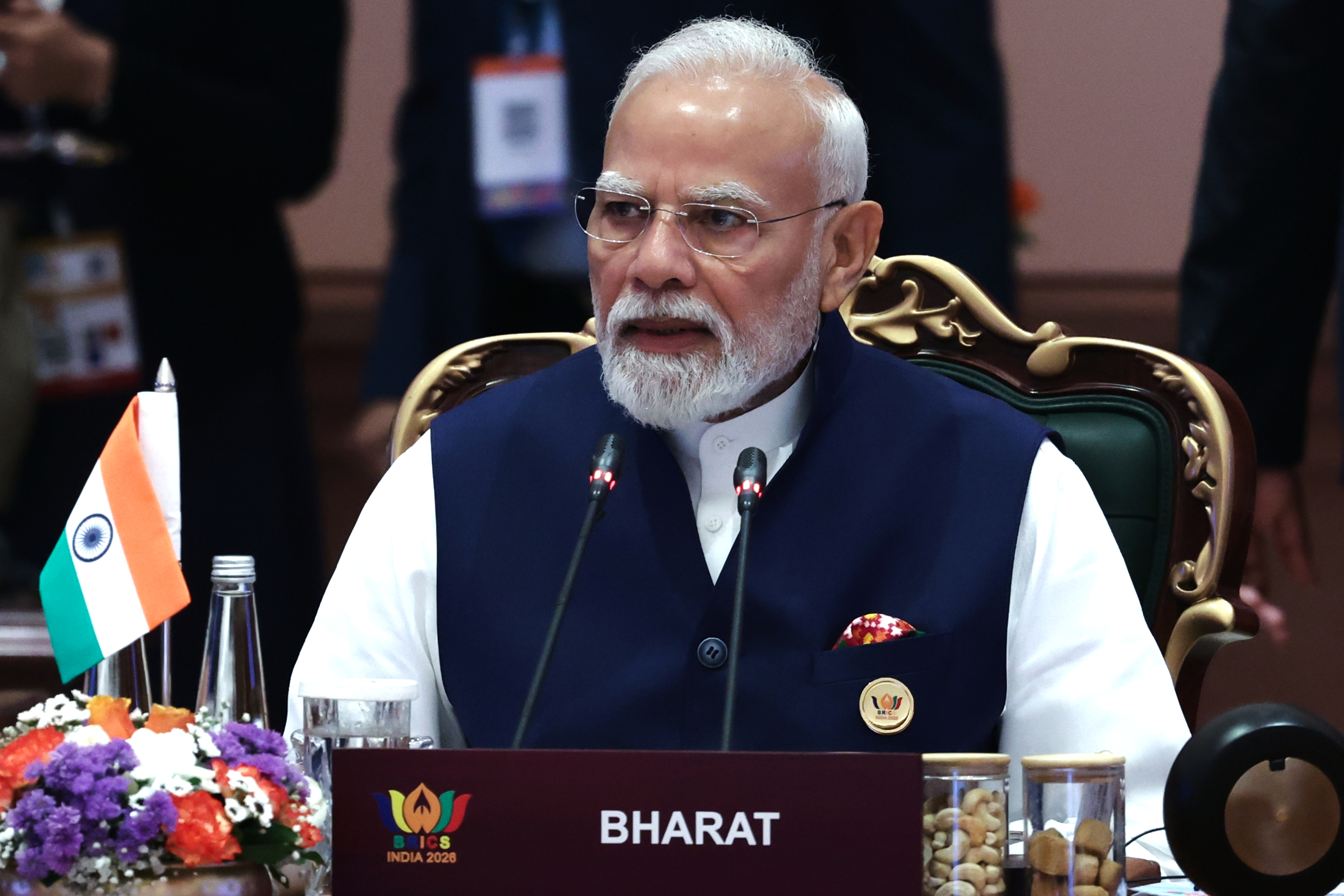
NEW DELHI — Indian Prime Minister Narendra Modi on Sunday warned that rising geopolitical tensions, supply chain disruptions, and climate crises are increasingly affecting people worldwide and called for strengthened cooperation and support across the Global South.
Addressing the BRICS summit of leading developing nations on its second day in New Delhi, Modi also warned that the “weaponization of technology and critical minerals” could hinder global development and shared prosperity.
Founded in 2006 by Brazil, Russia, India, and China, BRICS has expanded to 11 members representing about half the world’s population and a significant share of global economic output. It has sought greater representation for developing countries in global institutions and promoted alternatives to Western-dominated financial systems.
“The number of conflicts and tensions in the world is continuously increasing, and this is having an increasingly negative and far-reaching impact on the lives of ordinary people,” Modi said, alongside bloc leaders, including Chinese President Xi Jinping, Russian President Vladimir Putin, and Iranian President Masoud Pezeshkian.
“Pandemics, climate disasters, and supply-chain disruptions have shown that in today’s interconnected world, no crisis remains confined to a single region,” Modi said, while announcing that the bloc agreed to establish an integrated early warning system for infectious diseases, aimed at boosting preparedness and response to future outbreaks.
In his closing remarks at the summit, Modi urged the bloc nations to convert the summit’s agreements into tangible and time-bound action and move them from “files to real-life impact.”
The discussions over the past two days, he said, reinforced the belief that “BRICS is not merely a group of countries, but an ecosystem of solutions.” He wished China success as it takes over the BRICS chair for the next term.
The group in a joint declaration Saturday had expressed concern over escalating tensions in the Middle East and Sudan, and called for disputes to be resolved through dialogue and diplomacy.
The bloc reiterated support for a multipolar world order and reforms to the United Nations, including its Security Council, as well as global financial institutions such as the World Bank and the International Monetary Fund.
The leaders opposed unilateral sanctions and coercive economic measures and criticized sanctions not authorized by the U.N. They also criticized rising tariffs and nontariff barriers, saying they undermine global trade and supply chains.
The bloc backed greater use of local currencies in trade and stronger cross-border payment systems, while calling for cooperation on food security, energy, digital infrastructure, artificial intelligence, and climate action.
The declaration was a significant breakthrough, as forging consensus among Iran, Saudi Arabia, and the United Arab Emirates — which hold competing positions on key regional and geopolitical issues — posed a complex diplomatic challenge amid ongoing conflicts and heightened tensions.
ADEN, Yemen — The conflict in Yemen intensified on Sunday, as government forces launched attacks against Iran-backed Houthi rebels along the Red Sea and Houthis fired into neighboring Saudi Arabia, which supports Yemen’s government.
The Yemeni government vowed to send more forces to the Red Sea coast after conceding a “painful” defeat last week when Houthis captured the port city of Mokha and an island on the Bab el-Mandeb Strait, a crucial shipping alternative to the Strait of Hormuz.
The escalation — especially Houthi attacks on Saudi oil infrastructure and its shipping in the Red Sea — adds pressure on global oil supplies and prices, and that could give Iran leverage in its war with the United States.
As Yemen risks descending into another civil war, the United Nations estimated that more than 80,000 people in the impoverished country have been displaced by the fighting since the start of September.
One woman said a mortar shell fell nearby as she fled in the middle of the night from the town of Khawkha in Hodeida province along the Red Sea, shortly before it was captured by Houthis.
“I saw with my own eyes cars and buses burning, and bodies of children and women were lying on the road in a horrific scene,” said the woman, who spoke on condition of anonymity out of concern for her and her family’s safety.
Houthis claim attacks against Saudi Arabia
Saudi authorities sounded sirens Sunday afternoon in the southern city of Abha and Khamis Mushait province, warning residents to take shelter from potential incoming fire. Both areas were repeatedly attacked by the Houthis in recent weeks.
The Houthis claimed to have used drones and missiles to target Saudi Arabia, including a military base just over the border with Yemen. Houthi military spokesperson Brig. Gen. Yahya Saree didn’t provide evidence or say when the attack occurred.
The Saudi civil defense overnight said a projectile fell in a different area near the border with Yemen along the Red Sea, injuring two people and damaging a mosque and several other buildings. The statement blamed the Houthis.
Saudi Arabia did not announce any new attacks targeting the Houthis.
The Houthis are targeting Saudi oil infrastructure and shipping as part of a recently declared blockade. While the Houthis have said they do not intend to threaten other countries’ commercial shipping, markets remain wary and oil prices have risen again.
Yemen says 500 soldiers killed, vows to fight back
The National Resistance, a government-allied force that had controlled coastal areas, said more than 500 government fighters were killed on the west coast over the past four weeks — its first comprehensive toll. It said about 1,500 others had been wounded in the fighting since Aug. 9.
Its statement said more than 1,000 Houthis had been killed in Hodeida and Taiz provinces. A spokesperson for the Houthis didn’t respond to a request for comment.
Yemen is home to over 40 million people who fear a return to the civil war that killed 150,000 and brought many others to the brink of famine in one of the world’s most sprawling humanitarian crises. Yemen’s internationally recognized government and Saudi Arabia have been battling the Houthis for 12 years. A ceasefire that began in 2022 had mostly halted the fighting.
A senior government official in Yemen said its forces will return to the Red Sea coast and fight back. People fleeing the Houthi advance told the Associated Press they saw forces withdrawing and urging people to run.
Sultan al-Arada, a member of the ruling presidential council, described the collapse of government forces in the port city of Mokha and elsewhere on Yemen’s west coast as “painful and regrettable.”
Al-Arada said in the televised interview aired late Saturday that forces “are currently regrouping and will return to the battle in one form or another.”
On Sunday, the Yemeni military said it launched airstrikes on Houthi positions in Mokha and the coastal town of Dhubab, and elsewhere in Taiz province. The rebels also reported strikes by the Saudi-backed forces in the province as well as artillery shelling in the province of Saada, the Houthi stronghold on Yemen’s northern borders with Saudi Arabia.
Advance puts Houthis closer to a major U.S. base in Djibouti
The Houthis’ advance puts them just 20 miles from the U.S. military base in Djibouti, on the other side of the Bab el-Mandeb Strait. It’s the main U.S. base in Africa and one of several foreign military bases in Djibouti, including those of China, France, and Japan.
The small Horn of Africa nation is already seeing the arrival of displaced Yemenis making the perilous water crossing. More than 2,000 Yemenis have reached Djibouti, the International Organization for Migration said Sunday.
Djibouti’s Economy and Finance Minister Ilyas M. Dawaleh said on X that the country’s navy, coast guard, and other specialized agencies were conducting rescue operations and providing emergency assistance.
Yemenis displaced by fighting worry about survival
The U.N. migration agency said Sunday that more than 82,000 people in Yemen have been displaced since the beginning of September.
“The displaced people are in a very bad condition,” said Ahmad al-Masawi, the director of the Al Salam camp in the southern port city of Aden, who appealed to international organizations for assistance. “They left their homes quickly without any clothing or anything. They are crammed in camps, houses, and even on roads.”
Hussein Haydara sat outside a shelter at the camp in a white undershirt, as his children waited to be assigned to a tent. He worried about how far the shelter is from schools, hospitals, and markets, and wondered how they will survive the next weeks or months.
Haydara had fled his home in Hodeida once before, when the Houthis took it over in 2015. But this time feels more precarious.
“With the first displacement, we had time to plan things but this time we were forced to escape all of a sudden. One could hardly take their children and the lightest stuff possible,” he said.