Category: Nation & World

  • Centenarians living in Japan exceed 100,000 for the first time

    Centenarians living in Japan exceed 100,000 for the first time

    TOKYO — The number of people aged 100 or older in Japan surpassed a record 100,000 this year, the latest government figures show, underscoring the country’s rapidly aging and declining population.

    The Health and Welfare Ministry statistics released Tuesday show Japan now has 107,677 centenarians, up 7,914 from the previous year and exceeding the 100,000 mark for the first time. Nearly 88% of them are women.

    Kyoto resident Fuyo Kishimoto was recently recognized as the oldest Japanese woman at age 114. Japan’s oldest male is 112-year-old Hikaru Kato from Kumamoto in southern Japan.

    The figures were released to mark this year’s Sept. 15 Respect the Aged day, when healthy and active centenarians are honored by the government with a letter from Prime Minister Sanae Takaichi and a silver sake cup.

    “I’m very pleased that many people are living a long, healthy and active lives,” Health Minister Kenichiro Ueno told reporters Tuesday, citing progress in medical technology, healthy lifestyle, and diet as contributing factors.

    Ueno noted the importance of maintaining a sustainable social security system as the population continues to age and decline.

    Many younger people, however, are not optimistic about their future.

    The National Institute of Population and Social Security Research last week released the results of a survey indicating more than 20% of both men and women who are single and aged between 18 and 34 have no intention of ever marrying, with nearly half saying they see no benefit in marriage.

    Ueno acknowledged the reasons for marriage reluctance among young people include the high costs of raising and educating children and the mental and physical burden on working parents. He said the government will continue addressing their concerns and attempt to turn around problems related to Japan’s aging population and dwindling births.

    Japan’s drastic population decline is inevitable, experts say, noting the country’s total fertility rate dropped to a record low 1.14 in 2025, far below the 2.1 children needed to be born to each Japanese woman to maintain the current population.

    Japan’s total population during the 2020 census stood at 126 million, almost 30% of which were 65 or older. Experts estimate there will be a decline to 87 million by 2070 with nearly 40% aged 65 or older, according to the national institute.

    There were 153 people aged 100 or older in Japan when centenarian surveys began in 1963. They exceeded 1,000 in 1981 and surpassed 10,000 in 1998, according to the Health and Welfare Ministry.

  • Saudi Arabia calls attempted attack on Mecca a ‘red line’ as Iran-backed Houthis deny they did it

    Saudi Arabia calls attempted attack on Mecca a ‘red line’ as Iran-backed Houthis deny they did it

    CAIRO — Saudi Arabia accused Yemen’s Iran-backed Houthi rebels of trying to attack Islam’s holiest city, as the region responded with condemnation Wednesday but no sign of military support. The kingdom, a key U.S. ally, declared Mecca a “red line” as it slid deeper into the new front of the Iran war.

    With the world’s biggest oil exporter under fire from the rebels backed by the Saudis’ regional adversary, the kingdom needs a safe outlet for its crude as well as military assistance. There’s no clear path to either.

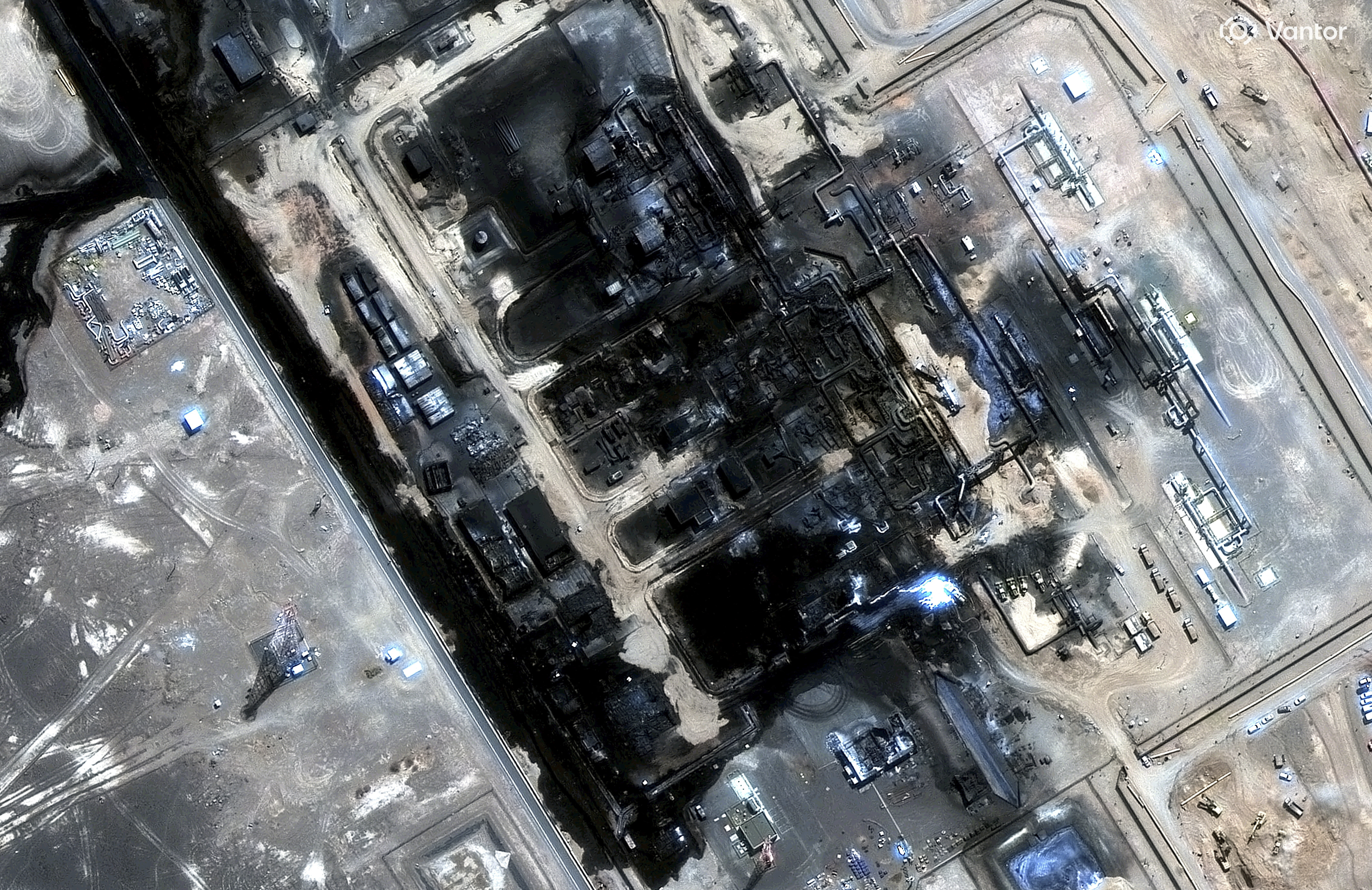
    A crucial Saudi pipeline has been shut down, reportedly for weeks, after an attack by Iranian-backed militias in Iraq. The Houthis have been targeting infrastructure in the kingdom and its shipping on the Red Sea, where they have seized several islands in the Bab el-Mandeb Strait. And Iran is still targeting ships in the Strait of Hormuz. Oil prices remain above $100 a barrel.

    The Houthis denied firing drones toward Mecca, about 1,100 kilometers (680 miles) from Yemen’s border. The Saudis said they intercepted and destroyed the drone before it entered the airspace over the birthplace of the Prophet Muhammad.

    Turkey and Pakistan say the Saudis haven’t asked for help

    The attacks are the first test of a new defense pact among Saudi Arabia, NATO member Turkey and nuclear power Pakistan. But officials from Turkey and Pakistan told The Associated Press they have not received a Saudi request for support in response to the Houthis’ escalation.

    The Turkish official said efforts to “institutionalize” the alliance need to be completed before the pact becomes operational. The officials spoke on condition of anonymity because they were not authorized to speak publicly on the issue.

    Amid the condemnation of the attempted attack on Mecca, Pakistani Prime Minister Shehbaz Sharif said his country and the Saudis stand “unwaveringly, shoulder to shoulder.” Turkey’s foreign minister expressed solidarity and said no country can “remain indifferent,” state-run Anadolu Agency reported.

    Criticism also came from the Organization of Islamic Cooperation, representing over 57 Muslim states, which said the attempt violates the “sanctity of holy sites.”

    This was the second attempted attack by the Houthis against Mecca after the rebels fired a ballistic missile toward the city in 2017, according to Col. Turki al-Maliki, spokesperson for the Saudi-led military coalition fighting the rebels.

    Houthis claim shooting down an F-15 fighter jet

    Later Wednesday, the rebels claimed, without offering evidence, that they shot down an F-15 fighter jet operated by the Saudi-led coalition over Yemen’s central province of Marib.

    Houthi military spokesperson Brig. Gen. Yahya Saree didn’t say when it occurred, and The Associated Press could not independently verify the claim. The rebels at times take days to claim attacks.

    Spokespeople for the Saudi-led coalition and the Saudi government didn’t immediately respond to a request for comment.

    For now, the US is staying out of the fight

    The United States has sold billions of dollars in weapons to Saudi Arabia and has committed to providing training and other support to protect the kingdom, but top U.S. officials in recent days have indicated a lack of desire to get involved in the conflict.

    “The Houthis called us, and they don’t want to fight with us,” U.S. President Donald Trump said Saturday, adding that the rebels appear focused on the Saudis.

    Vice President JD Vance on Monday said Washington had been in “constant contact” with the Saudis and had been “engaged in direct conversations with the Houthis themselves,” calling it “a very fluid and dynamic thing” to be monitored.

    On the ground, forces with Yemen’s internationally recognized government have said they are regrouping to combat the Houthis after fleeing the rebels’ advance. But those forces are a collection of armed groups with varying aims.

    The number of Yemeni civilians fleeing the fighting in the Arab world’s poorest country soared once again to over 100,000 people, the International Organization for Migration said, as fears grow over a return to civil war.

    Iran’s top diplomat is in China

    While Saudi Arabia appeared to face the choice of pursuing diplomacy or taking the fight to the Houthis, the top diplomat for rival Iran was in China, the biggest buyer of Iranian oil.

    Chinese Foreign Minister Wang Yi called on the U.S. and Iran to exercise restraint and reopen the Strait of Hormuz as soon as possible, and expressed China’s concern about the spread of the fighting to Yemen and the Red Sea, according to China’s Foreign Ministry.

    Iran’s Foreign Minister Abbas Araghchi said in a statement after the meeting that Tehran seeks “the restoration of calm to the region and friendly and peaceful relations with our neighbors.”

    “In this regard we have begun dialogue with the countries of the region,” he added.

    China has avoided direct involvement in the war, but President Xi Jinping at the BRICS summit in New Delhi over the weekend again offered Beijing’s help in ending it.

    Oil flows through the Strait of Hormuz have recovered somewhat as tankers risk using a route near Oman on the other side of the waterway, with guidance from U.S. forces. Estimates vary because ships can turn off location systems but range from 5 million to 7 million barrels per day on average.

    That’s less than half the amount before the war began with U.S. and Israeli strikes on Iran on Feb. 28.

  • Satellites show Earth lost more than 12 trillion tons of ice from Greenland, Antarctica in 47 years

    Satellites show Earth lost more than 12 trillion tons of ice from Greenland, Antarctica in 47 years

    About 12.5 trillion tons of ice from glaciers in Greenland and Antarctica have melted since 1979, which is enough frozen water to stack ice 5 feet deep across the continental United States, according to a major scientific report.

    A warming Earth is accelerating the melting of the planet’s two major ice sheets, with five-sixths of the melt not coming from hotter air, but from warmer waters eating away at the ice sheets from below and the sides, with glaciers flowing into the oceans, according to a study in Wednesday’s journal Scientific Data. That’s bad news for future sea level rise, the study’s authors said.

    “The ice sheets are melting away fast,” said study co-author Eric Rignot, an ice scientist at University of California, Irvine. “We are melting the polar regions, sea level is rising worldwide and will exacerbate the vulnerability of coastal regions.”

    Huge numbers for ice melt, people flooded

    The numbers behind the melt are both mind-bogglingly huge and deceptively small.

    All that melted ice turned into nearly 3 quadrillion gallons of water, which pushed global sea levels up about an inch since 1979, on top of other climate factors raising ocean heights, the report said.

    An inch may not sound like much, but for every third of an inch (or centimeter) of sea level rise, another 2 to 3 million people get flooded at least once a year, said lead study author Ines Otosaka, an ice scientist at Northumbria University in England.

    The Jakobshavn glacier in Greenland is now retreating up to 164 feet a day, Otosaka said.

    The international collaboration of polar scientists, headed by the European Space Agency, had in the past only looked at ice sheet melt since the 1990s based on European satellite data. But by incorporating NASA satellites, the scientists were able to chart ice sheet volumes in Antarctica back to 1979 and in Greenland back to 1972.

    The melting is accelerating

    “There is a clear trend that the ice sheets are losing more mass and it has been increasing from decade to decade, especially if you look at the ice being discharged to the ocean,” Otosaka said. “And that’s quite clear that there’s a link to climate change.”

    It showed that in the 1970s, 1980s and into the 1990s, the ice sheets were relatively stable, but then melt started happening and it really kicked in during the 2010s, Otosaka said.

    “That’s something to be concerned about as it shows that the changes are tracking decades behind global warming, which means we can expect them to continue for decades more — even if we are able to stop heating the planet,” said study co-author Andrew Shepherd, also of Northumbria.

    The accelerating numbers seemed to pause from 2020 to 2023, but the study’s authors said it more reflected short-term weather variations not long-term trends. Otosaka said the study stopped with 2023 data, but she’s looked at measurements since and found the accelerating trend has picked back up.

    A lot of the stability in Antarctica was because East Antarctica had record snowfall, which compensated for the rapid melting in the less stable West Antarctic Ice Sheet, the authors said.

    The three-year hiatus was “just a bump in the record,” Rignot said. “The long rise is climate and the threat is crystal clear.”

    Worrying about a collapse scenario

    The biggest changes scientists saw are in what they call dynamic processes, which are more abrupt and active than the slow steady melting from the air, and that’s something prone to trigger runaway “tipping points,” Otosaka said.

    New York University ice scientist David Holland said that’s what concerns him “because most of the ice loss is dynamical and that is exactly what you would expect in an ice sheet instability collapse scenario.”

    The international team used 45 independent surveys and 27 different satellites. “The use of relatively independent methods gives me greater confidence in the result,” said Holland, who wasn’t part of the study. “The upward trend is real.”

    “The ‘wild cards’ of Antarctic mass loss continue to pose a challenge for human management of the planet — a clear and present danger, but many decades in the future,” said University of Colorado ice scientist Ted Scambos, who wasn’t part of the study. “We are now as a society smart enough to know the future, but not prudent enough to act upon the knowledge.”

  • Driver arrested in bus collision that happened before news helicopter crash in LA

    Driver arrested in bus collision that happened before news helicopter crash in LA

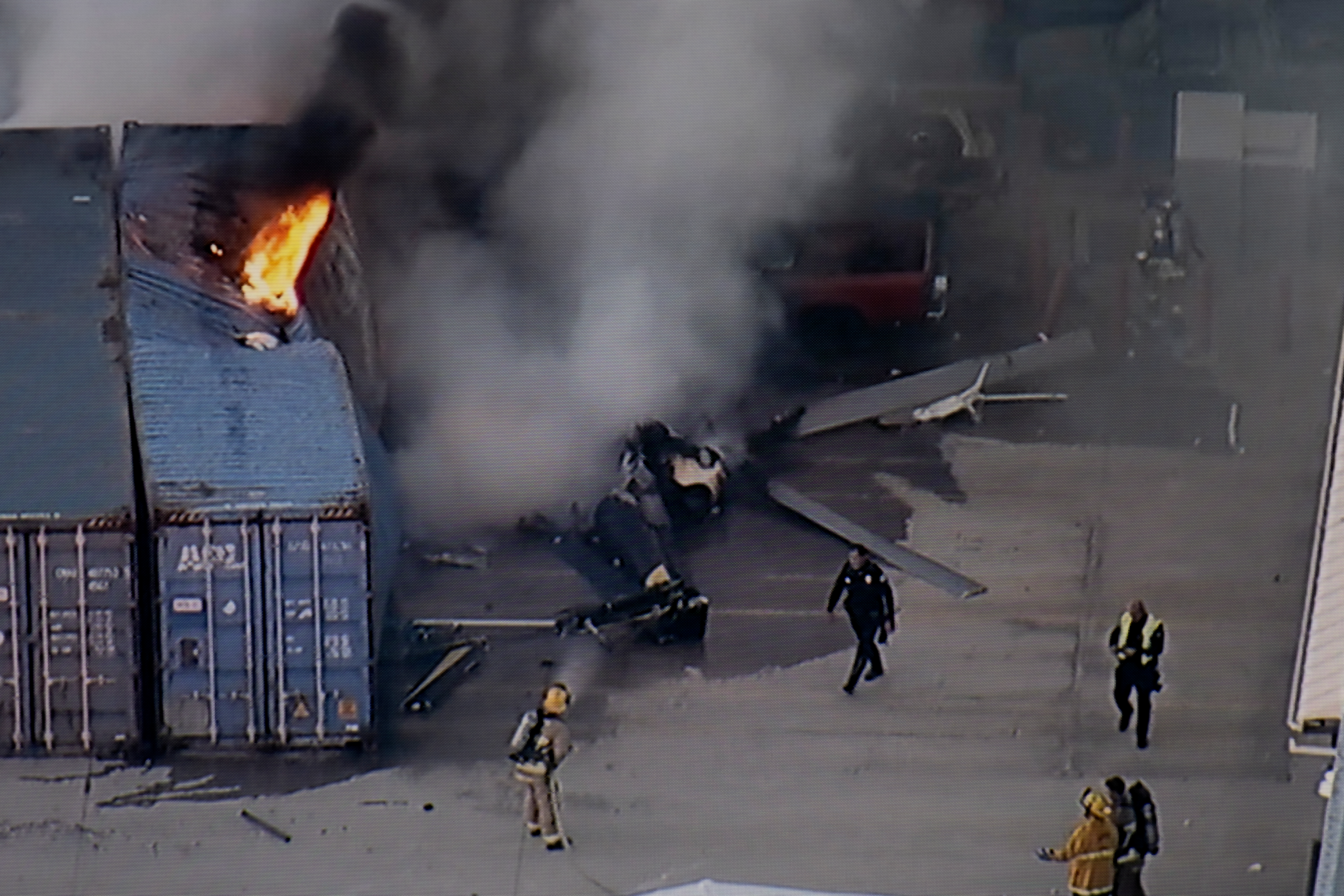
    LOS ANGELES — A motorist was arrested on murder charges after authorities say she slammed her SUV into a city bus in Los Angeles, killing at least two people and injuring six others in a prelude to a second deadly tragedy: the fiery crash of a TV news helicopter that was covering the collision.

    Bailee Lynn Rios, 36, of Simi Valley, was arrested Monday night and is being held at a Los Angeles jail with bail set at $4 million, police said. The case is being forwarded to the district attorney’s office, which will decide whether to file the charges in court or pursue different ones. Information on a lawyer who could speak on her behalf wasn’t immediately available.

    The helicopter, which was used by NBC and Telemundo, crashed about two hours after police say Rios drove her 2004 Ford Expedition the wrong way down a busy avenue, ran a red light and struck a vehicle before hitting the bus. One passenger was fully ejected from the bus and another was partially ejected, police said.

    NBC4 Los Angeles reported that two people aboard the helicopter — reporter Eliana Moreno and pilot George Marciniw — were killed when the chopper went down Tuesday in the Chatsworth neighborhood in the San Fernando Valley north of downtown. A person on the ground, identified as 29-year-old Edy Gutierrez Mejia, died in a parking lot, the Los Angeles County Medical Examiner’s Office said.

    The crash happened as news crews were reporting on the collision.

    There were no immediate details on what caused the helicopter crash, but an alarm could be heard sounding inside the helicopter’s cockpit as it lost altitude in the final seconds of video the crew broadcast before the crash.

    Just after the beeping noise starts, a woman’s voice says “uh oh.” The helicopter moves quickly away from the bus crash site and starts losing altitude. The woman says “You can’t pull up?” before the video stops as the chopper nears the ground.

    The helicopter, a Eurocopter AS350, went down near a large storage facility. At least four cars and two storage containers burned after the helicopter caught fire. NBC4 reporter Robert Kovacik was at the bus scene, saw black smoke, and rushed to the helicopter crash site.

    News station identifies those on the helicopter

    The station identified the helicopter crash victims as Moreno, a familiar voice for NBC4 and Telemundo 52 during the station’s aerial coverage, and Marciniw. Both were employees of Angel City Air, which operated the chopper for the station.

    Moreno, born in Orange County, joined Angel City Air in 2010, the same year she earned a broadcast journalism and political science degree from Chapman University. She reported for several news outlets and began flying with Marciniw in 2023, the NBC4 website said.

    Marciniw grew up in Southern California and graduated from Burbank High School in 1974.

    “I think a lot of us are still trying to process what happened, this terrible loss,” NBC4 reporter Lauren Coronado told viewers early Wednesday as she stood near the crash site. A hazmat crew was cleaning up jet fuel, she said.

    In a tribute to Moreno and Marciniw, the newscast referred to them as “the team in the sky,” saying Moreno would often post videos from her job and was in awe of the view.

    In an interview with the station, Esteban Jimenez, a pilot, said he had known Marciniw since the 1990s. He said Marciniw had been his instructor.

    “I just talked to him on Sunday. We were talking about the aviation business and retiring,” he said.

    Expert talks about what may have caused the crash

    Aviation safety expert Jeff Guzzetti said the alarm sounding in the helicopter’s final video sounds like the low rotor RPM warning horn that signals the main rotor is no longer spinning enough to keep the helicopter in the air.

    “It just has all the earmarks of a potential loss of engine power and a dangerous decrease in the main rotor speed,” said Guzzetti, who used to investigate crashes for both the NTSB and FAA.

    Guzzetti said the pilot appeared to be trying to perform an emergency maneuver to use the wind to force the rotor to spin again much like a breeze turns a windmill. Doing that can create a bit of lift that could help cushion the impact, but Guzzetti said there would have been little opportunity to do that because the helicopter had been hovering at a low altitude beforehand.

    There are risks to news helicopters particularly in a major city like Los Angeles where multiple helicopters respond to an incident, but the pilots all coordinate closely over the radio to ensure they maintain a safe distance from each other. The industry also shares best practices to help keep these news flights safe.

    Condolences for the victims and their families

    NBC4 and Telemundo 52 Los Angeles said in a statement they “are deeply saddened” and extended “heartfelt condolences to the families, friends and colleagues of those who lost their lives.”

    “Losing five Angelenos is very painful,” Los Angeles Mayor Karen Bass said. “And I know this community of Chatsworth, hit hard, will be grieving for some time.”

    California Gov. Gavin Newsom thanked the emergency crews responding to both crashes and said in a post on X that “our hearts are with the victims and families.”

    The National Transportation Safety Board and the Federal Aviation Administration said personnel will arrive Wednesday to begin an investigation into the cause of the helicopter crash.

  • Maduro ally Alex Saab pleads guilty in a $195M money laundering case, agrees to cooperate

    Maduro ally Alex Saab pleads guilty in a $195M money laundering case, agrees to cooperate

    MIAMI — A close ally of former Venezuelan President Nicolás Maduro long described by U.S. officials as the ousted leader’s frontman pleaded guilty Tuesday to a single count of money laundering tied to an alleged bribery conspiracy to win lucrative government contracts in the South American country.

    As part of the plea deal, Alex Saab agreed to cooperate in continuing federal investigations, paving the way for his eventual cooperation against his former protector. He also agreed to forfeit $195 million in criminal proceeds from the corruption scheme.

    Saab, 54, was deported in May by Venezuela’s acting President Delcy Rodriguez to the U.S., which has been targeting the Colombian-born business owner for more than a decade.

    The money laundering offense carries a maximum 20-year penalty but prosecutors agreed to recommend a sentence at the low end of the recommended range and seek additional reductions should his cooperation prove substantial.

    Saab was previously charged during the first Trump administration in 2019 and then arrested during a refueling stop in Cape Verde on what the Venezuelan government described as a high-level humanitarian mission to Iran.

    But President Joe Biden pardoned Saab in 2023 in exchange for the release of several imprisoned Americans in Venezuela. The deal, part of a failed effort by the Biden White House to lure Maduro into holding a free presidential election, was harshly criticized by Republicans and federal law enforcement officials, who immediately began investigating Saab for other alleged crimes not covered by the narrowly tailored pardon.

    “This case sends a clear message: Political connections, wealth, and proximity to a corrupt regime will not put anyone beyond the reach of American justice,” said Jason A. Reding Quiñones, U.S. attorney for the Southern District of Florida, who attended Tuesday’s proceedings along with more than a dozen federal agents.

    The new indictment centers on contracts for the so-called CLAP program set up by Maduro to provide staples — rice, corn flour, cooking oil — to poor Venezuelans at a time of rampant hyperinflation and a crumbling currency.

    High-level protection offered in exchange for bribes

    In an eight-page statement of facts submitted as part of the plea deal, Saab admitted to skimming at least $195 million from at least six contracts awarded to companies he controlled to import food and medicine.

    The scheme “had the approval, participation, and protection of some of the Venezuelan government’s highest ranking public authorities,” including from an individual described only as “Government Official 1A,” who designated a surrogate — one of four unnamed co-defendants — to receive bribe payments on their behalf.

    Also receiving $17 million in kickbacks was former Gov. Jose Gregorio Vielma Mora, a Maduro ally who with Government Official 1A’s support secretly awarded a Saab-controlled company a contract in 2016 to deliver 10 million boxes of food rations in Tachira state, prosecutors allege. Vielma Mora was previously charged in the conspiracy in 2021.

    To conceal the criminal activity and hide the payments, Saab said, he and his associates falsified shipping records and set up a network of shell companies and bank accounts in countries including Antigua, Bulgaria, Liechtenstein, the Marshall Islands, Montenegro, Switzerland, Turkey, the United Kingdom, and the United Arab Emirates.

    Over time, as U.S. sanctions deepened the country’s financial woes, Saab and his associates received payment in the form of Venezuelan oil, gold, and other natural resources.

    In court Tuesday, Saab told Judge Kathleen Williams that he takes the antidepressant Zoloft and other medicines daily for what he described as “post-traumatic stress disorder” following his 2020 arrest.

    Saab could become a witness against Maduro

    U.S. officials have long described Saab as Maduro’s “bag man” and could ask him to serve as a character witness against the former president, who is awaiting trial on drug charges in Manhattan after being captured in a raid by the U.S. military in January.

    The new U.S. prosecution of Saab and Maduro is taking place as the Trump administration overhauls relations with Venezuela, focusing its attention on tapping into Venezuela’s vast oil reserves. This month, Trump announced a partnership with Venezuelan oil entrepreneur Alejandro Betancourt in which the U.S. government will gain a stake in and access to at-cost crude shipments from oil fields with a potential to produce 65 billion barrels.

    Saab was little known even in Venezuela until after his first arrest, in 2020, when Maduro’s government invested huge resources rallying public support for his release.

    Rodríguez, then serving as Maduro’s vice president, helped mount an international campaign in which she referred to Saab as an “innocent Venezuelan diplomat” who had been illegally “kidnapped” by the U.S.

    But after Maduro’s capture, Rodríguez distanced herself from Saab, firing him from her cabinet and stripping him of his role as the main conduit for foreign companies looking to invest in Venezuela.

    Saab amassed a fortune through Venezuelan government contracts but became even more valuable to Maduro as U.S. sanctions forced Venezuela to conduct much of its oil sales and foreign trade outside of Western financial institutions.

  • Gulf Arab states explore new options as U.S. bases fail to deter Iran

    Gulf Arab states explore new options as U.S. bases fail to deter Iran

    RIYADH, Saudi Arabia — Gulf Arab countries have long relied for their security on the U.S. military bases that they host.

    But after six months of war, the repeated pummeling of those countries by Iranian missiles and drones has made the limitations of U.S. security guarantees abundantly clear.

    Iran and its allies have nearly destroyed some of the U.S. bases, set luxury hotels ablaze, and, most recently, knocked offline one of the most critical pieces of energy infrastructure in the world, an oil pipeline that stretches across Saudi Arabia.

    Their backs against a wall, Gulf Arab officials are now trying to cobble together different ways to avoid attacks by Iran and its allies, including direct diplomacy with the Islamic Republic.

    Even that option faces challenges. On Sunday night, a meeting that was scheduled for Monday between Iran and the Gulf Arab states was abruptly postponed. The delay came after Saudi Arabia and Iran reached an impasse in discussions about the Strait of Hormuz — a crucial route for Gulf energy exporters — according to a senior Gulf official, who spoke on the condition of anonymity to discuss sensitive diplomacy.

    Analysts say the region’s leaders have no choice but to seek different security options after the U.S.-Israeli war with Iran exposed the vulnerabilities of the Gulf Arab countries and emboldened the Islamic Republic.

    “We’re stuck in this position of trying to build something new while maintaining some of the old,” said Bader Al-Saif, an assistant professor of history at Kuwait University. “We need to snap out of this external protector syndrome.”

    The island nation of Bahrain, for example, has been host to a major U.S. naval base for decades in the hopes of protecting itself from Iran. But as in other Gulf countries, the base became a target instead.

    The base was nearly destroyed in February, on the first day of Iran’s retaliatory attacks against the assault launched by the United States and Israel. Most of the sailors stationed there were evacuated to Florida, leaving a skeleton crew, according to a U.S. military official, who spoke on the condition of anonymity to discuss operational matters.

    Some sailors in Bahrain were evacuated so rapidly that the U.S. Navy is still trying to reunite them with their belongings, Adm. Daryl Caudle, chief of naval operations, said at a recent town hall meeting. It is unclear when they will return, he said.

    For the United States and its allies in the Middle East, the war has incurred steep costs. Iran’s effective closure of the Strait of Hormuz represents a major strategic failure and an economic setback for Gulf energy exporters. The inability of U.S. forces to fend off attacks by Iran is another strategic failure, which could have significant consequences for those countries and for the United States’ projection of power.

    Yet Bahrain and the other Gulf countries, including Saudi Arabia, the United Arab Emirates, and Kuwait, have no clear, single alternative to the United States as the guarantor of their security.

    Their militaries are smaller and weaker than Iran’s, despite spending hundreds of billions of dollars on advanced weaponry in recent decades, including American F-15 fighter jets and Patriot missile defense systems.

    China and Russia have not stepped in to defend the Gulf countries, despite close ties with many of them.

    Many Gulf officials are calling for greater regional self-sufficiency in defense. But efforts to bolster regional security — like a new defense pact among Saudi Arabia, Pakistan, and Turkey — are unproven. It remains unclear whether any of these countries will be willing and able to come to each other’s aid.

    The most realistic option for Gulf countries is to build defense partnerships that will “supplement, rather than replace, the U.S. security umbrella,” said Yasmine Farouk, Gulf and Arabian Peninsula project director at the International Crisis Group.

    Gulf analysts and officials say that without U.S. assistance and American weaponry, such as air defenses, the damage to the Gulf states would have been far worse. Dozens of people were killed in the Iranian attacks, instead of hundreds or thousands. Flights carrying tourists and businesspeople were canceled and delayed but have started to resume.

    Still, Iran’s campaign wreaked havoc on the energy-rich economies of the Gulf countries, cracking their images as safe havens in a volatile region.

    The war proved that the Gulf’s advanced defense systems are not “leak proof,” and that Iran can “impose major costs” on the countries by using large numbers of relatively cheap drones, said Kristian Alexander, a senior fellow at the Rabdan Security & Defence Institute, a government-linked research institution in the UAE.

    Facing fierce counterattacks from Iran, the United States “prioritized protecting its personnel and defending Israel,” Alexander added. “These priorities did not always coincide with the Gulf’s needs to protect airports, ports, desalination plants.”

    The short supply of U.S. missile interceptors globally also posed a challenge for the Gulf Arab states in the early weeks of the war, and they have tried to fill the gap by turning to Ukraine and other European countries. But even enhanced air defenses against relatively inexpensive Iranian drones cannot provide complete protection.

    Anna Kelly, a White House spokesperson, said President Donald Trump is “in constant communication” with regional partners and that the United States “maintains stronger bonds with these countries than ever before.”

    She dismissed the idea that U.S. military protection for the Gulf countries has been insufficient, saying that analysts who assert that “are not privy to sensitive diplomatic conversations and have no idea what they are talking about.”

    This article originally appeared in The New York Times.

  • Pollution spikes after Trump halted global air-monitoring efforts, report says

    Pollution spikes after Trump halted global air-monitoring efforts, report says

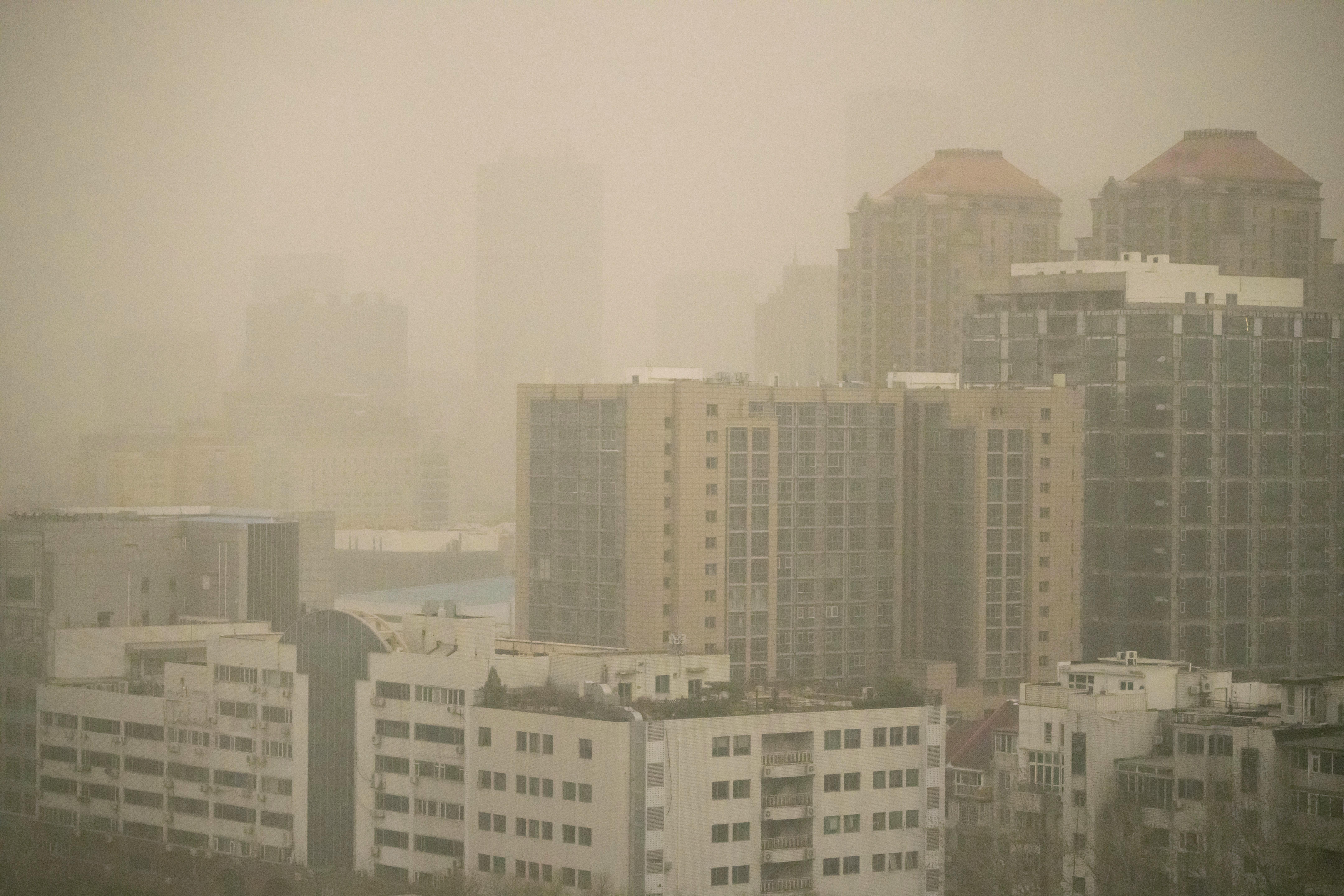
    Air pollution in dozens of cities around the world rose after U.S. embassies and consulates stopped monitoring air quality readings last year, according to a study published Monday.

    The Trump administration halted the program that published independent air quality data at more than 80 U.S. diplomatic sites in March 2025, citing budget constraints.

    Later that year, local air pollution levels increased by between 24% and 33% in 46 of those cities, according to Monday’s study, published in the Proceedings of the National Academy of Sciences.

    “This is such a big loss,” said Zoey Zhou, an assistant professor of climate at Columbia University and one of the study’s authors. “Not only for the data, but also for the health impacts and also for accountability.”

    The State Department’s program had been linked in a previous study to lower air pollution levels in the cities where it was active. Its pullback came amid other moves the administration has made to curtail climate change research and regulations on air quality. The Environmental Protection Agency repealed limits on greenhouse gas emissions for coal and natural gas power plants on Monday.

    The State Department did not respond to a request for comment on the recent findings and on whether the monitoring program will resume.

    The program originated in 2008 when the U.S. Embassy in Beijing began to share air quality information from a monitor installed on its roof. The readings, which sometimes topped the Chinese government’s reported levels, drew local anger and pressured Chinese officials to act.

    A 2022 study of 50 cities where U.S. embassies began monitoring air quality found that it led to significantly lower air pollution and increased local Google searches for terms like “air quality.”

    “The US Embassy monitoring program provided high quality and credible information to the public about the state of their air, often where there were no other sources of such information,” Andrea La Nauze, an associate professor of economics at Deakin University in Australia and one of the authors of the 2022 study, wrote to the Washington Post. (La Nauze was not involved in the most recent report.)

    Experts said the monitoring was valuable in cities and countries where local governments did not provide air quality information or offered inaccurate reports.

    “This has been very valuable to the citizens of those countries to be able to understand what are the levels of air pollution, and how much trust should they place in the numbers that are published by the national government or by the city or region,” said Kristie Ebi, a professor at the Center for Health and the Global Environment at the University of Washington. “And that has been useful then for people to take action.”

    Monday’s study investigated whether air quality gains would continue when that information disappeared, the authors wrote. They used satellite imagery to estimate air pollution levels in 46 cities where U.S. embassies and consulates halted monitoring in March 2025.

    By September that year, the aerosol optical depth — a measure of particles in the air derived from satellite imagery that is correlated with levels of PM 2.5, pollutants small enough to enter the bloodstream — around those cities had increased by about 33%. By November 2025, pollution levels had decreased but were still around 24% higher than before monitoring stopped.

    A 33% increase in aerosol optical depth corresponds to an increase of about 2 micrograms per cubic meter of PM 2.5, according to the study. The World Health Organization’s global air quality guidelines recommend that average PM 2.5 levels not exceed 5 micrograms per cubic meter each year.

    Grouped by region, the largest average increases in aerosol optical depth appeared at sites in Southeast Asia, sub-Saharan Africa, and South Asia, according to Zhou, the study co-author. She cautioned that the number of sites in each region was small and that the study was not designed to isolate particular countries or cities, where readings could have been affected by other local factors.

    Zhou wrote that the reduction in air pollution between September and November 2025 could suggest that other sources of air pollution information gradually filled the gap after U.S. embassies stopped their monitoring. But she said the pullback by American diplomatic missions, which issued highly visible and trusted air quality reports, was still a large loss.

    Zhou added that her study did not perform a full cost-benefit analysis of the air quality monitoring program for the U.S. embassies involved.

    Ebi of the University of Washington, who was not involved in the new study, said that the U.S. embassies’ data was also invaluable to researchers investigating other climate trends affected by air pollution, such as the spread of wildfire smoke and heat waves.

    “As a scientist, I don’t understand why there is such a strong focus on removing information,” Ebi said. “Of moving to a situation where people are more ignorant, less knowledgeable about the harms they may be facing … and what actions to take to help reduce those harms.”

  • Trump’s planned sale of controversial bombs to Israel is largest in years

    Trump’s planned sale of controversial bombs to Israel is largest in years

    The Trump administration is preparing a multibillion-dollar sale of 2,000-pound bombs to Israel in the largest single sale of the controversial munition in recent years, a U.S. official told the Washington Post.

    The $2.8 billion package, which would be purchased with U.S. taxpayer dollars, includes 40,000 bombs that weigh 2,000 pounds each, including 20,000 MK-84s and 20,000 BLU-117s, said the official, who like others spoke on the condition of anonymity to discuss military matters. The sale also includes 20,000 I-2000 Penetrator warheads.

    Among the most destructive munitions in Western military arsenals, an MK-84 explosion sends metal fragments in every direction for thousands of feet, can rip through metal and thick concrete, and often creates large craters in the earth.

    The pending transaction has been informally notified to congressional committees, setting up a potential litmus test for Democrats as frustrations with Israeli Prime Minister Benjamin Netanyahu have created unprecedented strain in the U.S.-Israel relationship.

    Though described as a sale, the transaction is financed through a mechanism known as Foreign Military Financing, in which the United States provides the money that Israel uses to buy the weapons.

    When asked about the humanitarian concerns, a senior administration official said: “All foreign arms sales are moving through the appropriate process. We do not comment on pending sales.”

    The Israeli Embassy did not respond to a request for comment.

    The size of the package eclipses previous sales of 2,000-pound munitions to Israel during the Biden administration and the Trump administration, including a controversial $2.04 billion sale in 2025 that bypassed the normal congressional review process.

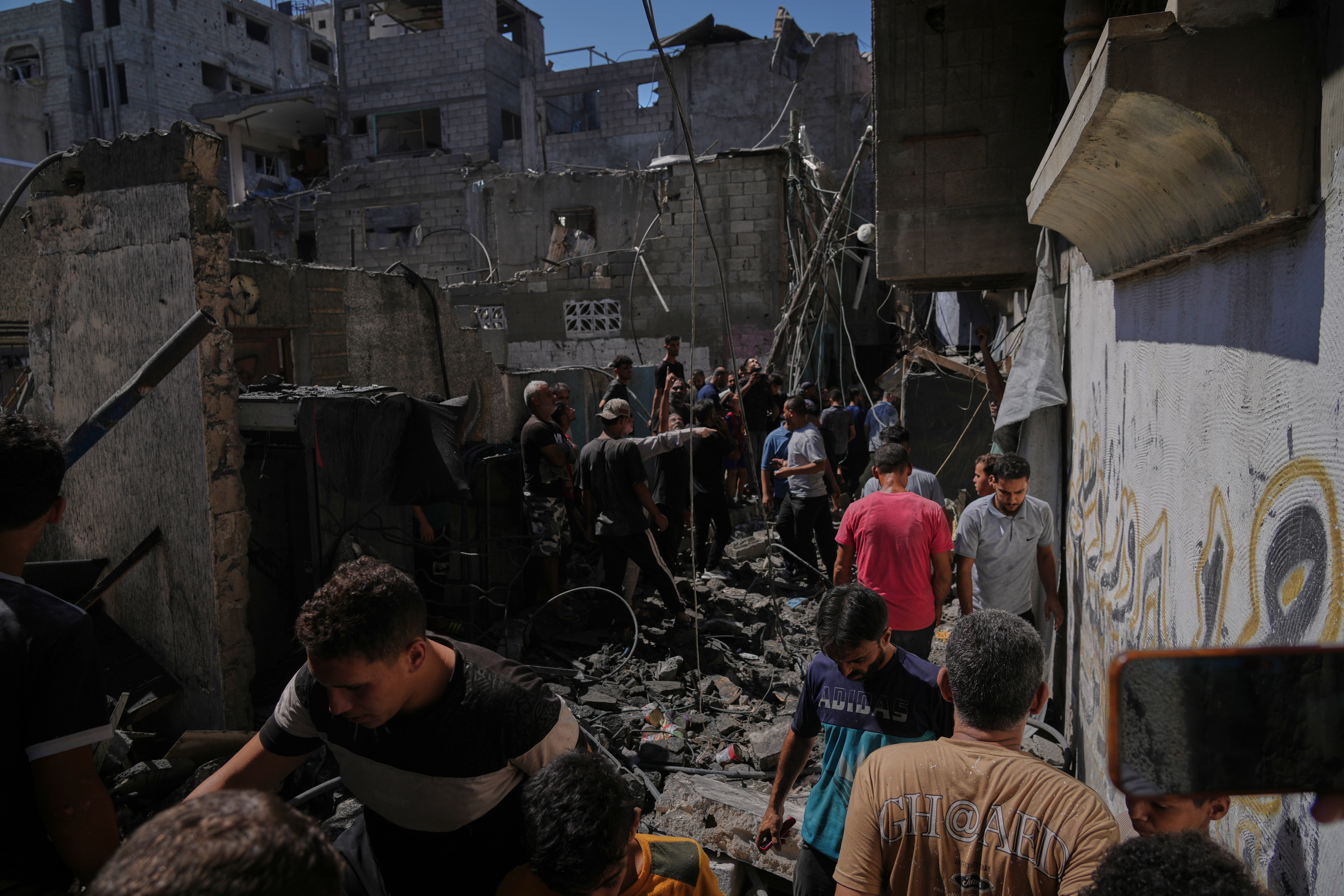
    The 2,000-pound bombs have been employed by Israel on hundreds of occasions in Gaza and Lebanon, playing a significant role in the death toll of those conflicts. Israel has drawn criticism for routinely dropping MK-84s in zones it designated as safe for civilians in Gaza.

    “They do like to use them a lot when they’re trying to target any building,” said Trevor Ball, a former explosive-ordnance-disposal technician for the U.S. Army. “If Hezbollah or whoever is in a building, an MK-84 will bring down the whole building.”

    Nicknamed the “hammer” by U.S. pilots in the first Gulf War, it is the only munition that President Joe Biden’s administration stopped sending to Israel during the Gaza war out of concern about the killing of Palestinian civilians. That involved suspending a single shipment of the munitions in the spring of 2024. The policy was immediately reversed by President Donald Trump in January 2025, his first month back in office.

    “Given the way Israel conducted its air war in Gaza and, to some extent, in southern Lebanon, there are real concerns about how such weapons would be used in densely populated areas,” said Brian Finucane, a senior adviser at the International Crisis Group. “That’s assuming that you have valid military targets to start with because there are concerns about what Israel deems to be valid military targets.”

    U.S. support for the sale comes despite several areas of tension between Israel and the Trump administration, including over the violent attacks on Palestinians by Israeli settlers in the West Bank, and ongoing concerns about Israeli military operations in Lebanon and Syria. Israelis also have spurned Trump’s peace plan for Gaza, which involves Hamas disarming in exchange for a withdrawal of Israeli forces.

    When the Trump administration struck a short-lived deal with Iran aimed at ending the war there, allies of Netanyahu harshly criticized the agreement and attacked Vice President JD Vance for negotiating it.

    As the conflict has dragged on ahead of the midterm elections, Trump and his aides have grown increasingly frustrated with Netanyahu, who pushed for the war on the promise of a quick and decisive victory.

    Though the delivery time for such orders can be multiple years, approving such sales sends a broader signal about the bilateral relationship.

    “If the Trump administration’s goal is to calm things down in the Middle East, the timing of this is unusual,” Finucane said. “Whether they intend to or not, it sends a vote of confidence to Israel.”

    The Trump administration is pressing the leaders of the Senate Foreign Relations Committee and the House Foreign Affairs Committee to approve the sale.

    Republican and Democratic leaders historically have backed such sales, but they are starting to face resistance from rank-and-file members regarding U.S. support for Israel stemming from the unpopularity of the wars in Gaza and Iran.

    Polls consistently show most Americans oppose the war in Iran, which has raised energy costs and increased inflation. In July, more than 100 House Democrats voted to end all U.S. aid to Israel, signaling a historic shift in the party’s opposition to the country.

    Republicans are more unified in their support for Israel, but a growing number of conservative commentators, including Megyn Kelly, Tucker Carlson, and Candace Owens, have questioned Washington’s steadfast backing and the $3.8 billion of aid the U.S. sends to Israel every year.

    Besides the MK-84, the sale includes I-2000s, a penetrating bomb body used to attack hardened structures, and BLU-117s, a variant of the MK-84 that has thermal protective coating to make it safer for naval storage.

  • Iranian strikes have damaged hundreds of structures at U.S. bases, watchdog says

    Iranian strikes have damaged hundreds of structures at U.S. bases, watchdog says

    Iranian strikes have damaged or destroyed hundreds of buildings and other structures at U.S. bases across the Middle East, and caused about $184 million worth of damage at U.S. diplomatic facilities, according to a Pentagon watchdog report.

    The inspector general’s report to Congress on Operation Epic Fury — the Trump administration’s name for the war with Iran — also details the extent of U.S. munitions shortages, in the first comprehensive public accounting of the war, which is now in its seventh month.

    The report, released Monday, covers operations through June 30. It contains input from the departments of Defense and State and other agencies to provide the most complete picture yet of the cost and military impact of the ongoing conflict.

    Buildings and other structures at U.S. bases in Kuwait, Bahrain, Qatar, UAE, Saudi Arabia, Iraq, Oman, and Jordan were damaged or destroyed in the war, the report stated, adding that U.S. diplomatic facilities in Iraq, Kuwait, Saudi Arabia, and the United Arab Emirates also sustained damage.

    The mounting costs of the war and impact on U.S. munitions stockpiles has already come under scrutiny. In July, Defense Secretary Pete Hegseth told a Senate hearing that the war has cost $37.5 billion and defended the administration’s request for a further $67 billion to restock the Pentagon’s arsenal and avoid looming budget shortfalls.

    The latest report details how the war has “resulted in strategic inventory shortfalls” of munitions and “revealed industrial base bottlenecks for munitions resupply.”

    It said the Defense Department is working to “streamline” procurement and production processes, as well as stockpile critical materials, components, and munitions to mitigate the shortage. But while these efforts have begun, the defense industrial base requires “significant lead time” to expand production.

    “The most persistent bottlenecks remain in the production of solid rocket motors, the availability of high-grade explosives and propellants, and the recruitment of skilled manufacturing labor,” it states.

    The expenditure of U.S. munitions is increasingly worrying U.S. allies and Pentagon officials in the Indo-Pacific region who fear the war in Iran could undermine readiness for a potential conflict with China. The weapons drain has become a source of tension between President Donald Trump and Hegseth, though Trump has denied U.S. weapons are running low.

    On Monday, Trump touted U.S. weapons stockpiles in a post on Truth Social, saying he had received a report noting the U.S. is producing “more Exquisite and Elite Weapons than at any time in our History” that were being delivered to U.S. forces.

    “A primary focus of this production has been Patriots, THAAD Systems, Tomahawks, and other Standard Missile Systems, of which we already have large numbers in stock,” he said.

    The Pentagon and the White House did not immediately reply to requests for comment early Tuesday.

    The Washington Post reported in May that the U.S. had depleted much of its inventory of advanced missile-defense interceptors, using up roughly half of the Pentagon’s total inventory of Terminal High Altitude Area Defense, or THAAD, interceptors. The U.S. military also fired more than 850 Tomahawk cruise missiles in the first four weeks of war, a rate that has alarmed some Pentagon officials.

    The extent of the munitions the U.S. has used during Operation Epic Fury illustrates the “magnitude and complexity” of the challenge posed by Iran, the report said, noting Iran’s large armed forces, extensive underground facilities, and decades of building a domestic defense industry.

    The U.S. launched Operation Epic Fury on Feb. 28 in joint strikes with Israel that killed Iran’s leader at the time, Ayatollah Ali Khamenei. The war has now entered its seventh month, with Iran retaining leverage over the Strait of Hormuz, a critical waterway for oil and gas flows from the Persian Gulf. A recent lightning offensive by Houthi rebels in Yemen, supported by Iran, has threatened to further imperil shipping through the Bab al-Mandab Strait.

    Dozens of U.S. aircraft have been damaged or destroyed during the operation, including four F-15E fighter jets, one F-35A damaged in enemy fire over Iran, and several other aircraft and helicopters, the report said.

    More than 50,000 U.S. service members have been deployed throughout U.S. Central Command’s area of responsibility in support of the operation, the watchdog report said. A total of 18 have died, the report said, including several in July. It said 417 service members were wounded between Feb. 28 and June 30.

    The State Department has also incurred around $113 million in costs, including nearly $80 million responding to events such as the evacuation of U.S. citizens and State Department personnel, the report said, adding that about 9,000 Americans have left the region on charter flights and buses.

    The war has also had an “immediate negative impact” on U.S. assistance across the Middle East, including agriculture, food, health, nutrition, and water sanitation, because of the departure of embassy staff, the report said.

  • FBI Director Kash Patel suggests agents may be sent to the polls

    FBI Director Kash Patel suggests agents may be sent to the polls

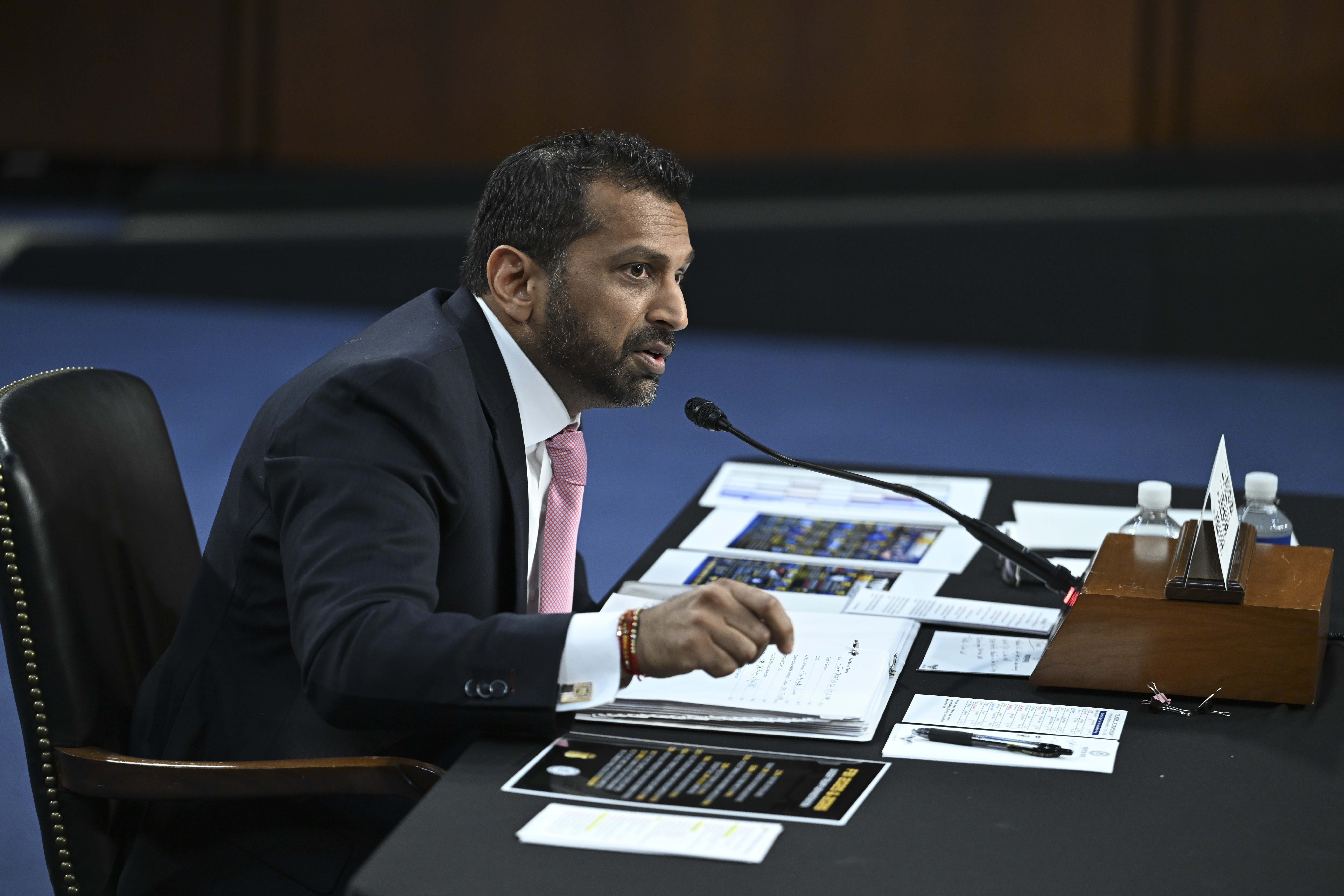
    WASHINGTON — FBI Director Kash Patel suggested Tuesday that he was open to sending federal agents to polling places, raising alarms from Democrats that the Trump administration would act aggressively to assert greater control over the coming elections.

    The remarks, made during testimony before the Senate Judiciary Committee, stood at odds with earlier comments indicating that he did not intend to send federal agents to polling places around the country. However, when Sen. Peter Welch (D., Vt.) pressed the issue, Patel seemed to reverse course.

    “I thought you weren’t going to be sending people to the polls,” Welch said.

    “When did you hear that? Just another lie,” Patel declared, raising his voice.

    Welch revisited the issue. “So you are sending FBI agents to the polls?”

    “We have election crisis coordinators manned at all 56 field offices,” Patel replied, appearing to refer to what are known as election crime coordinators. “Election integrity is of paramount importance. This FBI will not shy away from that effort.”

    Under the law, armed federal officers or military personnel are barred from being deployed “at any place where a general or special election is held.” The chair of the Joint Chiefs of Staff said in a letter to a Democratic senator last month that there were “no plans” for the armed forces to deploy troops to polling stations for the midterm elections.

    As President Donald Trump has ramped up his efforts to cast doubt on the integrity of the vote in an election his party might lose, Democrats have sought assurances from Trump administration officials that they will follow the law, which carries a potential five-year prison sentence for any violations.

    The president regularly declares the 2020 election he lost was “rigged,” and has said the only way Democrats can win control of Congress this year is by cheating. The claims have fueled broader concerns that loyalists within the administration may wage a pressure campaign against state officials to produce election results favorable to Trump’s party.

    When he was first asked about the issue at the hearing, Patel vowed to “follow the law.”

    “If there’s a reason to go there because there’s been a violation, we will, otherwise we won’t,” he added, noting that “we’re going to house our agents and intel analysts in our field offices.”

    Historically, the Justice Department used workers at its public integrity unit to consult with prosecutors and agents around the country on sensitive investigative issues around elections. But the Trump administration dismantled that unit last year, leaving it unclear who in the department and the FBI would handle such critical decisions in the final days of the election cycle.

    Welch expressed alarm at Patel’s responses, saying they suggested he could harness the power of the federal government to try to affect election outcomes.

    “This is about whether the United States citizens — Republicans, Democrats, independents — are the deciders of this election or there is election interference led by the FBI and the Trump administration,” Welch said.

    The senator prodded further. “Do you pledge that you will not in any way interfere in the will of the American people when they go to the polls in November?”

    Patel sidestepped the issue, saying instead: “I pledge unequivocally that I will not participate in your charade of lies.”

    An angry argument ensued, with the pair exchanging attacks. The senator denounced the FBI director as a “panderer” to Trump, and Patel suggested Welch’s personal finances were suspicious.

    “Let’s knock it off,” said Sen. John Cornyn (R., Texas) as he tried to lower the temperature in the hearing room.

    It did not work.

    “Everybody sees you for the complete and total fraud you are,” Patel said angrily to Welch.

    The Vermont senator then challenged Patel over his travel, in which he often combines work with recreational activities. During a trip to Italy, Patel spent time at the Olympics in Milan, during which he was filmed chugging a beer with the men’s hockey team after they won gold.

    “I go where I want to go, after delivering the most prolific crime reduction in U.S. history,” Patel said. “What you’ll never understand is the players who are my friends invited me to the locker room.”

    Patel was also pressed on whether counterintelligence agents had opened an investigation into how a wealthy Russian oligarch paid for part of the wedding celebrations for Trump’s son Donald Trump Jr.

    “It may involve some intelligence degradation, and I would like to know what steps you are taking to investigate,” said Sen. Richard Blumenthal (D., Conn.).

    He added, “I think there’s a potential for compromise in intelligence and also the possibility of improper influence.”

    Patel was noncommittal.

    “We will look at whatever information comes our way,” he said.

    In one of the stranger exchanges, Patel repeatedly fielded questions about bestiality, part of a recent change in FBI policy that loosened hiring standards, including by no longer automatically disqualifying job candidates who have participated in sexual activity with animals. The change, he said, was made out of consideration for people who may have been forced, either as children or sex-trafficking victims, to participate in such conduct.

    “We did not want to punish victims of bestiality, victims who were trafficked,” Patel said. While he did not elaborate, there have been cases in which children or others were forced to engage in sex with animals.

    Previously, the director said, the FBI had automatically disqualified anyone who had engaged in such conduct, no matter the circumstances. Lawmakers seemed flummoxed by the explanation.

    “Either side of what, the bestiality?” Sen. John Kennedy (R., La.) asked. “So you disqualified the animal?”

    Patel replied, laughing: “We have great K-9s, but we’re not going to disqualify them.”

    At other points, the hearing veered into sniping.

    Sen. Cory Booker (D., N.J.) said Patel had acted “like a thug” in using law enforcement agents to subpoena reporters.

    “We are not targeting reporters at any point in time,” Patel replied.

    “We don’t have an FBI director, we have a lackey here, and frankly not even a good lackey, he’s an incompetent lackey,” Booker said. “This is a mockery and a sham.”

    As the two men argued, Sen. Chuck Grassley (R., Iowa) sought to end the exchange.

    “Are you done now? Are you ready to shut up?” Grassley growled at Booker.

    This article originally appeared in the New York Times.